Walk down almost any older street in summer and the houses people slow down to look at often share one thing: a box of flowers under the front windows. A row of red blooms, a ribbon of trailing green, and suddenly a plain wall looks cared for and full of life.
Window planters do a lot for a small investment. They add color at eye level, soften hard siding and brick, and let you garden even when you have almost no yard. They’re also easy to change, so the same box can carry spring bulbs, summer flowers, fall foliage, and winter greens over a single year.
These 19 window planter ideas cover classic flower combinations, formal evergreen boxes, shade solutions, edible plantings, seasonal swaps, and practical choices for materials, mounting, and watering. Pick one for a single window or mix several across the front of your home.
1. Fill a Window Box With Red Geraniums and Trailing Ivy
The timeless look that never goes out of style
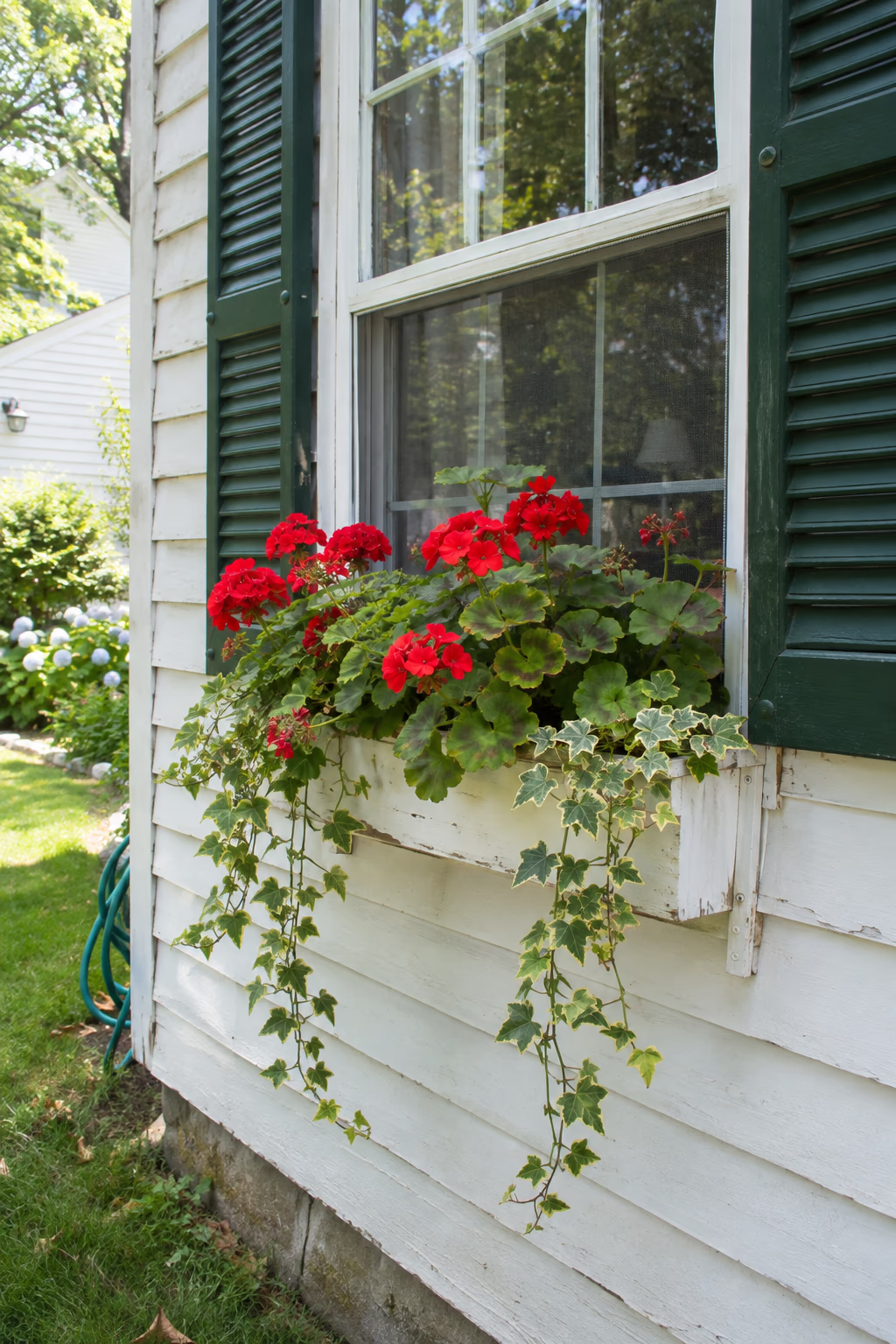
Few combinations say “window box” as clearly as bright red geraniums with green ivy tumbling over the front edge. For a 36-inch box, plant three to four zonal geraniums along the back and center, then tuck variegated ivy or silver dichondra along the front lip so it can trail 12 to 18 inches down the wall.
The appeal comes from contrast. Red flowers pop against white siding, gray shingles, or brick, and the trailing foliage blurs the hard line of the box. Geraniums also tolerate a little dryness, which helps in a container that bakes in the afternoon sun.
Give this box at least six hours of direct sun and pinch off spent flower clusters every week or so to keep new blooms coming. In regions where English ivy spreads into woodlands, choose dichondra, trailing vinca vine, or ivy-leaf geranium instead.
2. Line Up Boxwood Cones in a Zinc Window Box
Clean, formal structure that looks good all year
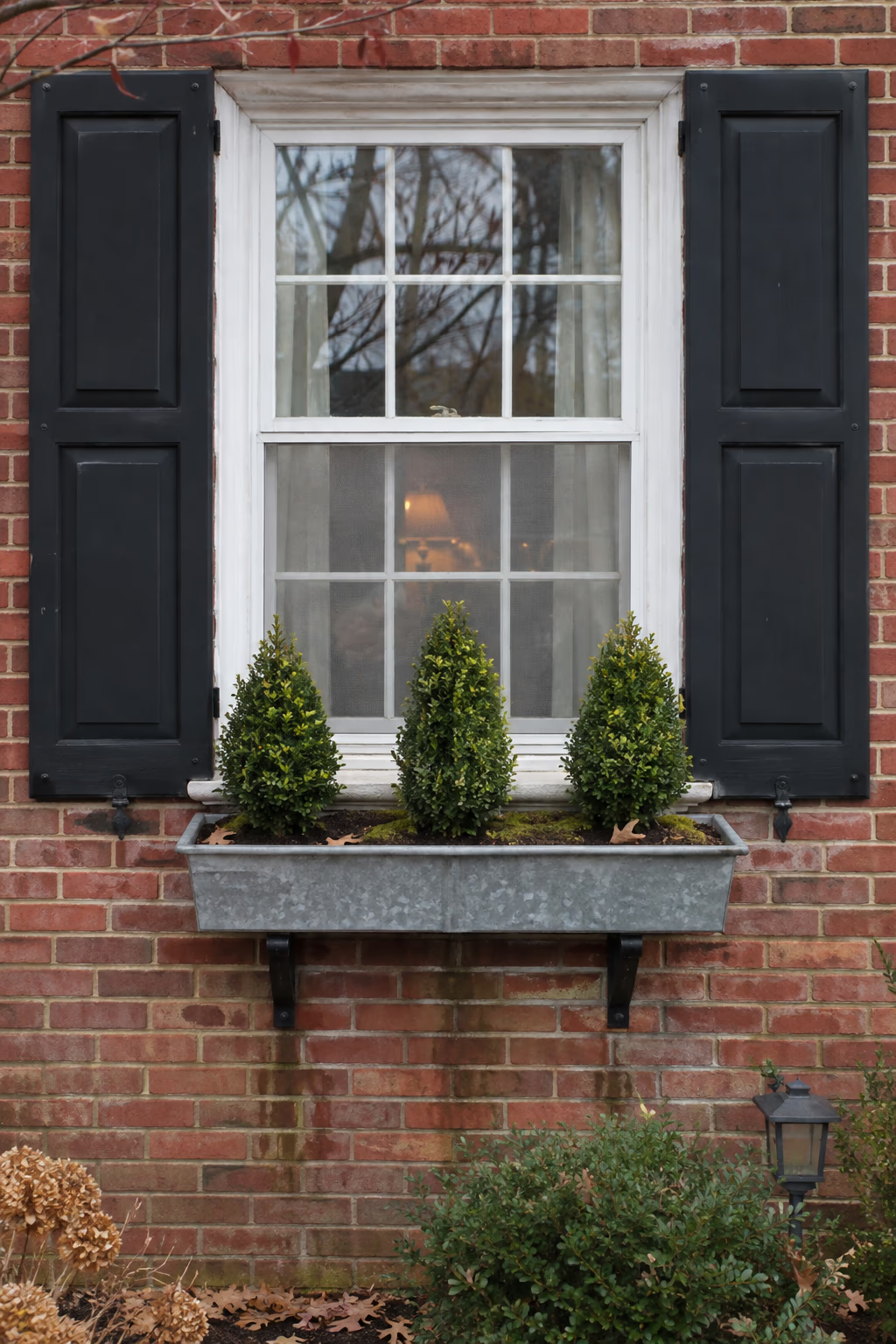
For a tailored look, set three small boxwood cones or globes in a row inside a zinc or galvanized steel window box. Plants about 12 to 18 inches tall suit most standard windows, and the evenly spaced shapes echo the rhythm of window panes and shutters.
This style works well on colonial, Georgian, and modern farmhouse homes where crisp lines matter. Because the plants are evergreen, the box still looks finished in January, and you can add a few white flowers or trailing ivy around the base in summer if you want softness.
Roots in a box get much colder than roots in the ground, so choose shrubs rated at least one or two USDA zones colder than your own. Water evergreens before the soil freezes in late fall, and avoid placing metal boxes where the reflected afternoon heat could scorch the foliage.
3. Let Trailing Foliage Spill Down the Siding
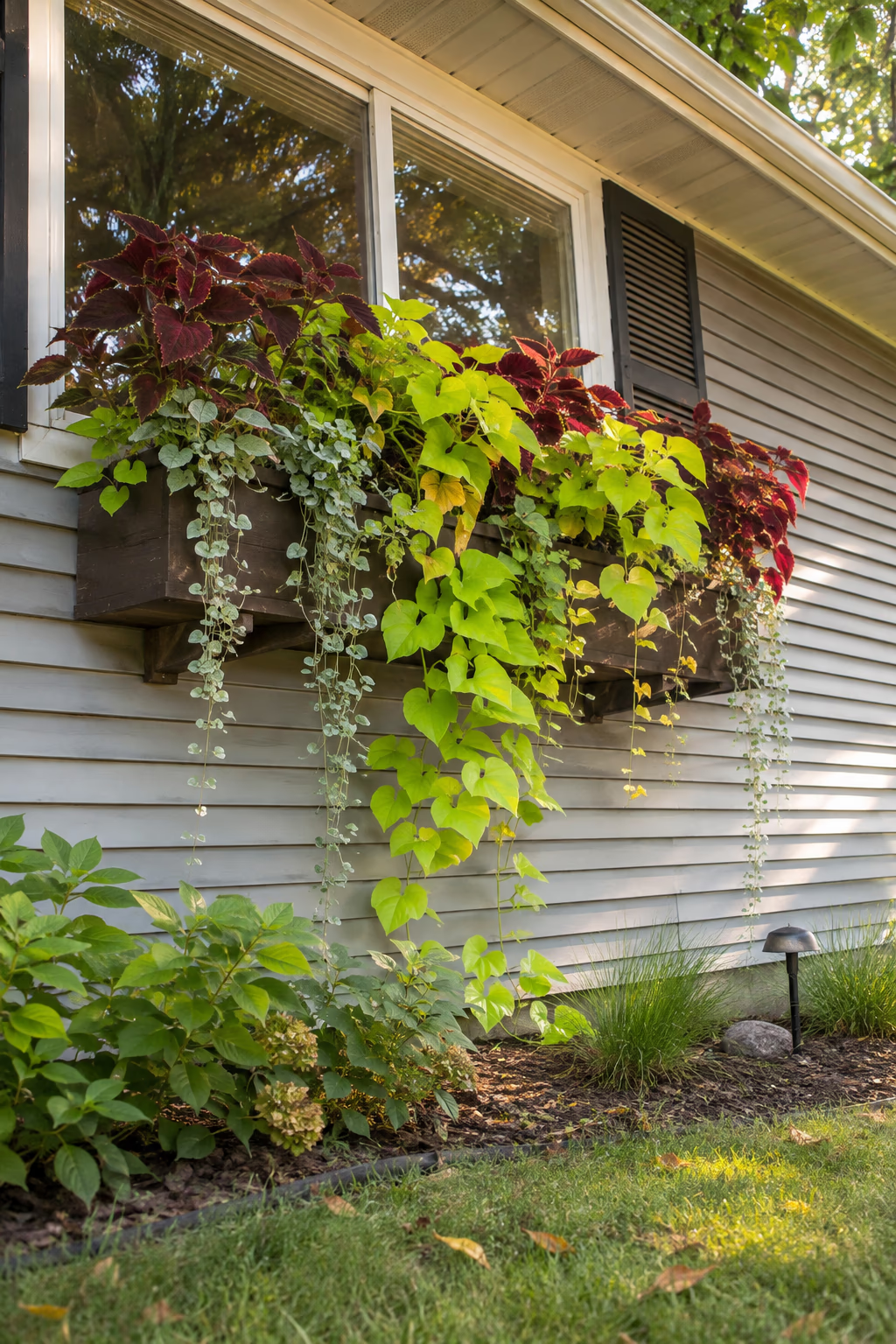
A soft green curtain that does the decorating for you
Sometimes the most striking window planter has very few flowers at all. Fill the box with lime-green sweet potato vine, silver dichondra, trailing coleus, and creeping Jenny, and by midsummer the stems can drape 2 to 3 feet below the box like a living curtain.
Foliage boxes stay full from planting day to frost because they don’t depend on bloom cycles. Mixing leaf colors, such as chartreuse, silver, and deep burgundy, gives plenty of interest even without flowers, and the look reads clearly from the street.
Fast trailers can swamp slower plants, so trim long stems every few weeks. Keep vines from creeping onto wood siding or window frames, where trapped moisture can encourage rot, and check local lists before planting creeping Jenny, which is invasive in some wet areas.
4. Paint the Window Box to Match the Shutters
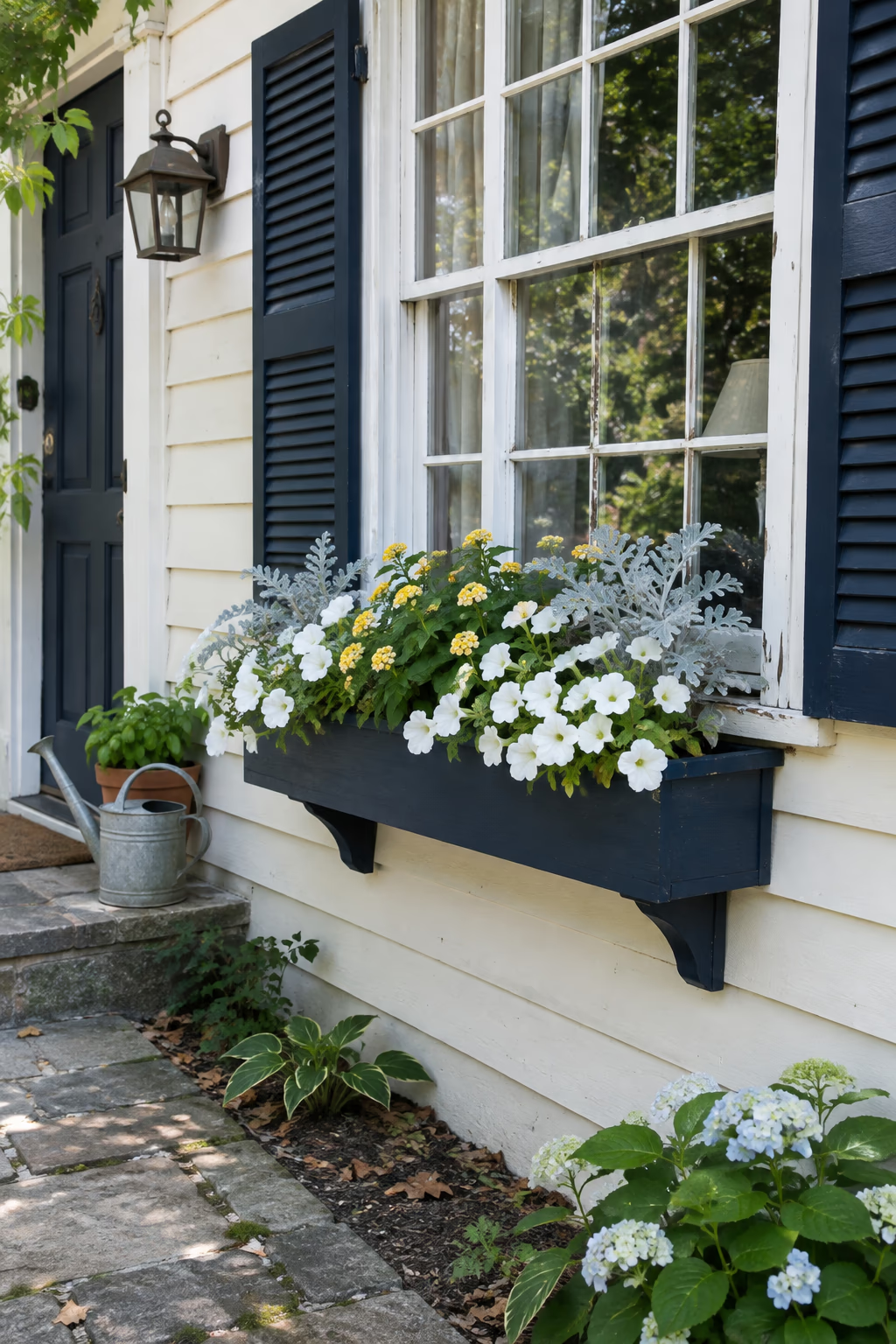
Make the planter look like part of the house
A window box painted the same color as your shutters or front door instantly looks intentional, as if it came with the house. Navy, black, forest green, and barn red are popular choices, while a crisp white box matched to the trim gives a clean cottage feel.
Choose the plants after the paint. White and soft yellow flowers glow against navy, hot pink and lime pop against black, and white, blue, and silver stand out against a red box. Repeating one plant color from the front door or a nearby flower bed ties the whole facade together.
Use exterior-grade primer and paint on wood boxes, and seal all sides, including the inside, before planting. If you live in a historic district or a neighborhood with an HOA, check whether exterior color changes need approval before you paint.
5. Plant a Monochrome Box in Shades of Purple
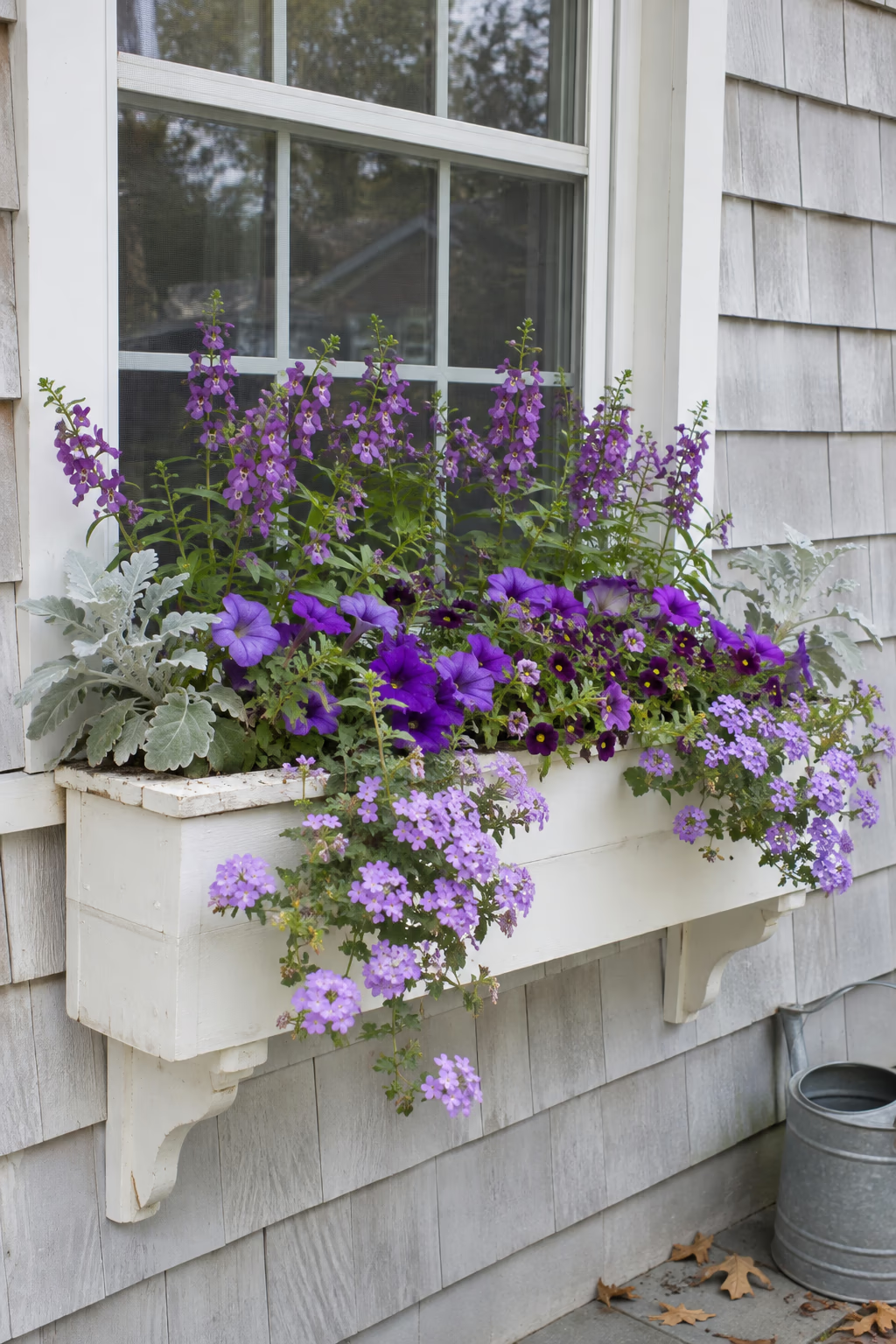
One color, many layers, big impact
A single-color window planter looks surprisingly sophisticated. For a purple scheme, pair upright angelonia or dwarf lavender in the back with purple calibrachoa and petunias in the middle and trailing purple verbena or lobelia over the front edge.
Working within one color family lets you play with shades, from pale lilac to deep violet, without the box ever looking busy. Different flower shapes and leaf textures keep it interesting, and silver foliage such as dusty miller makes the purples look even richer.
The same approach works with pink, white, yellow, or orange. Just keep every plant’s light and water needs similar so one doesn’t sulk while the others thrive.
6. Brighten a Shady Window With Ferns and Begonias
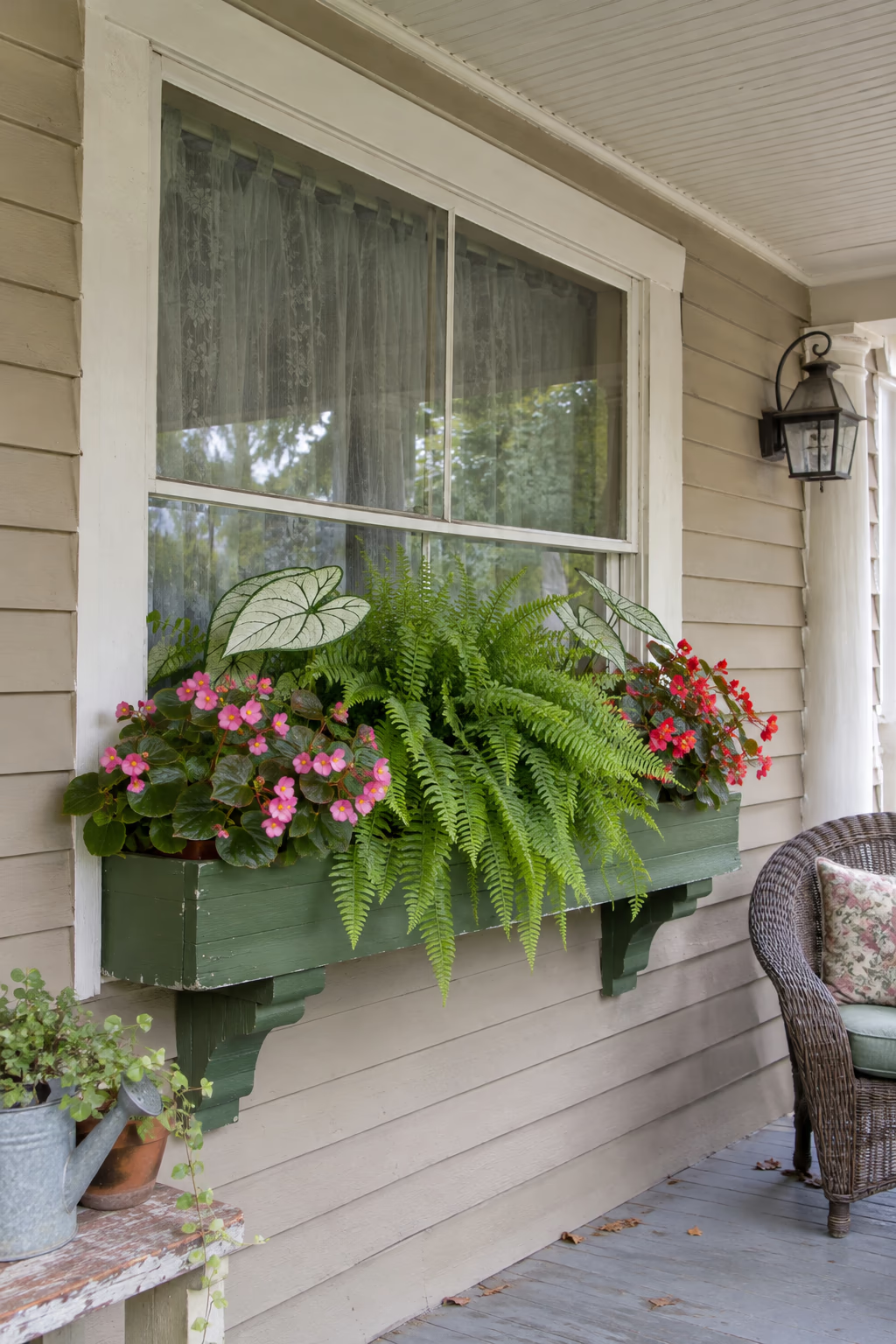
Lush color for windows that miss the sun
North-facing windows and those under deep porches can still have full, colorful boxes. Plant a Boston fern or autumn fern for texture, add begonias or impatiens for color, and tuck in caladiums for bold pink, white, or red leaves.
Shade plants tend to have large, glossy, or patterned foliage that looks lush without much direct light. Because shady boxes dry out more slowly, they’re also easier to keep watered through a hot summer.
Avoid overwatering, which is the most common problem in shade. Push a finger an inch into the soil and water only when it feels dry, and use a box with good drainage holes so roots never sit in soggy mix.
7. Grow Kitchen Herbs Right Outside the Window
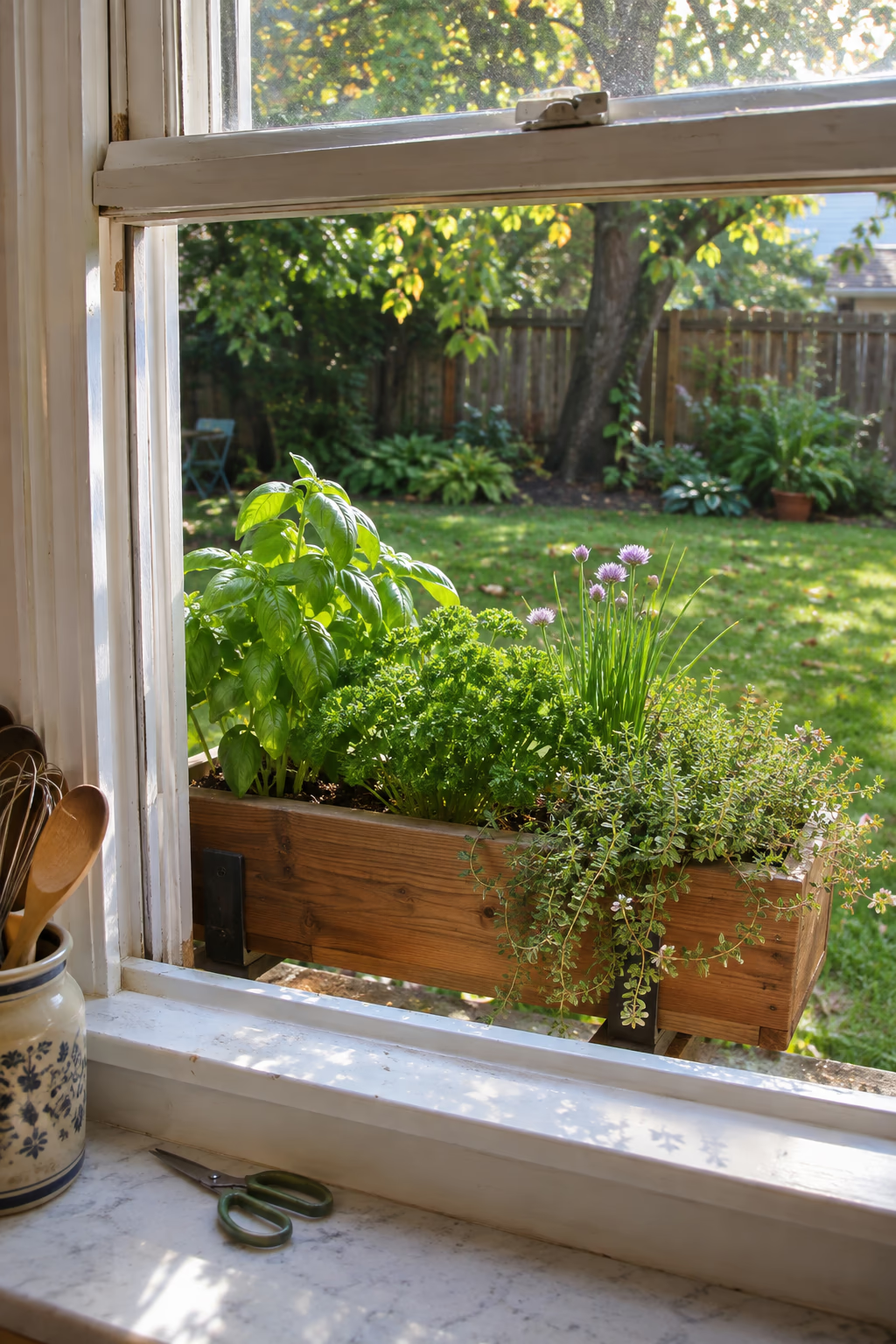
Fresh flavor within arm’s reach of the stove
A window box mounted outside a kitchen window that opens easily makes a handy herb garden. Basil, parsley, chives, thyme, and oregano all fit comfortably in a box 8 inches deep and 30 to 36 inches long.
Being able to snip herbs without walking outside means you’ll actually use them, and regular harvesting keeps the plants bushy. Trailing oregano or thyme along the front edge softens the box just like ornamental trailers do.
Most culinary herbs need at least six hours of sun. Group Mediterranean herbs like thyme and rosemary, which like drier soil, separately from thirstier basil and parsley, and keep mint in its own pot so it doesn’t take over the box.
8. Swap In Mums, Ornamental Kale, and Pansies for Fall
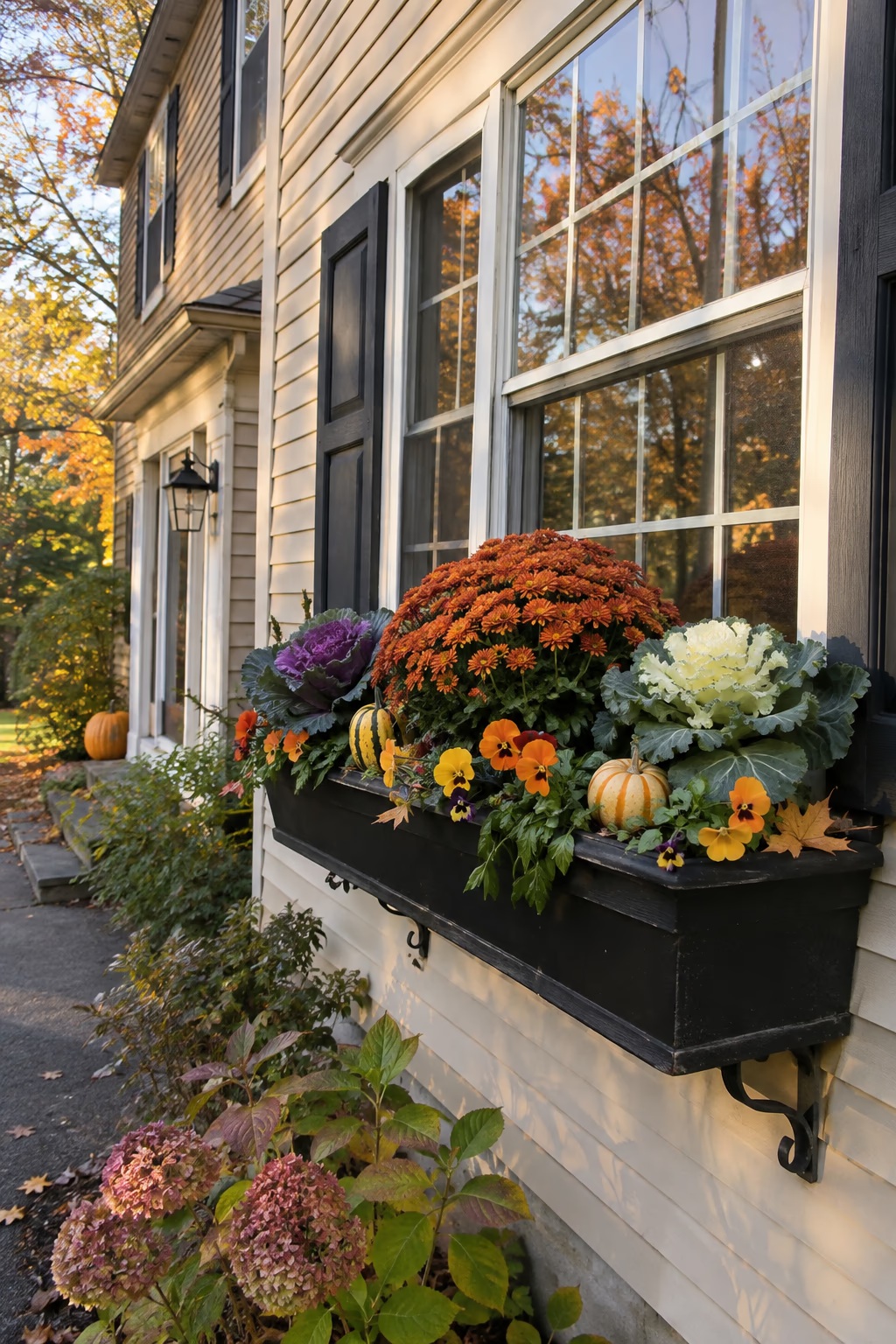
Keep the box colorful long after summer annuals fade
When summer flowers start looking tired in September, pull them out and replant with fall color. A compact garden mum in rust, gold, or burgundy makes a good centerpiece, with ornamental kale or cabbage on either side and pansies or violas along the front.
These plants handle cool nights and light frosts, so a fall box can look good for six to ten weeks. Adding a few small gourds or a trailing ivy keeps the display full and ties it to autumn porch decor.
Buy mums with plenty of unopened buds so the flowers last longer. Pansies planted in fall often survive mild winters and bloom again in early spring, especially in the southern half of the country.
9. Stuff the Box With Evergreen Boughs for Winter
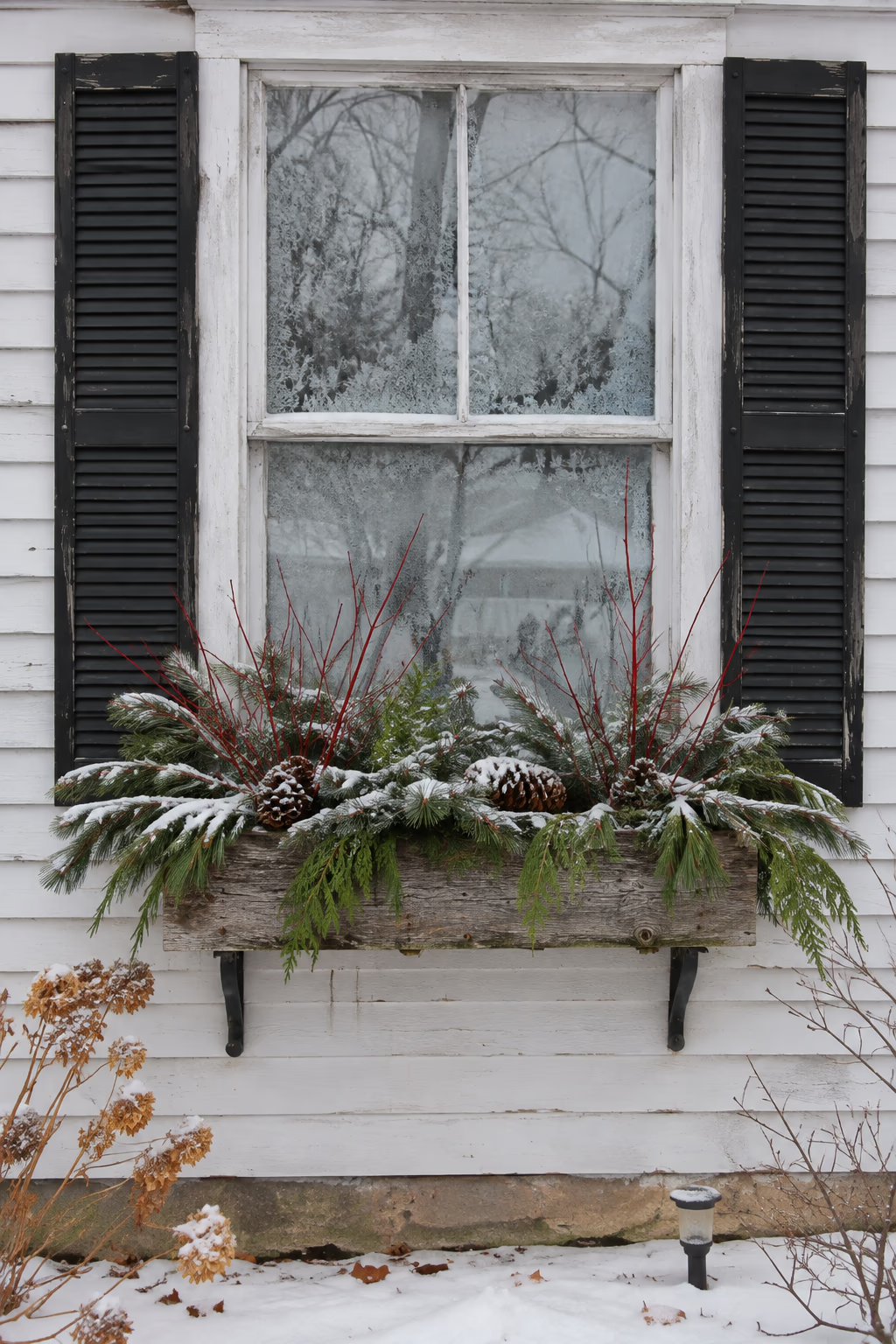
A festive display that needs no watering
Window boxes don’t have to sit empty all winter. Before the soil freezes, push cut boughs of pine, fir, cedar, and boxwood into the leftover potting mix, then add red twig dogwood stems, pinecones, and dried seed heads for height and color.
Cut greens hold their color for weeks in cold weather, and the soil anchors them against wind. The arrangement can carry from Thanksgiving through February, especially if you add a ribbon or small lights for the holidays and remove them in January.
Collect trimmings from your own shrubs or buy bundles at a garden center. If the soil is already frozen, wedge the stems into a block of wet floral foam set inside the box, or pack them in with damp sand.
10. Welcome Spring With Tulips, Daffodils, and Violas
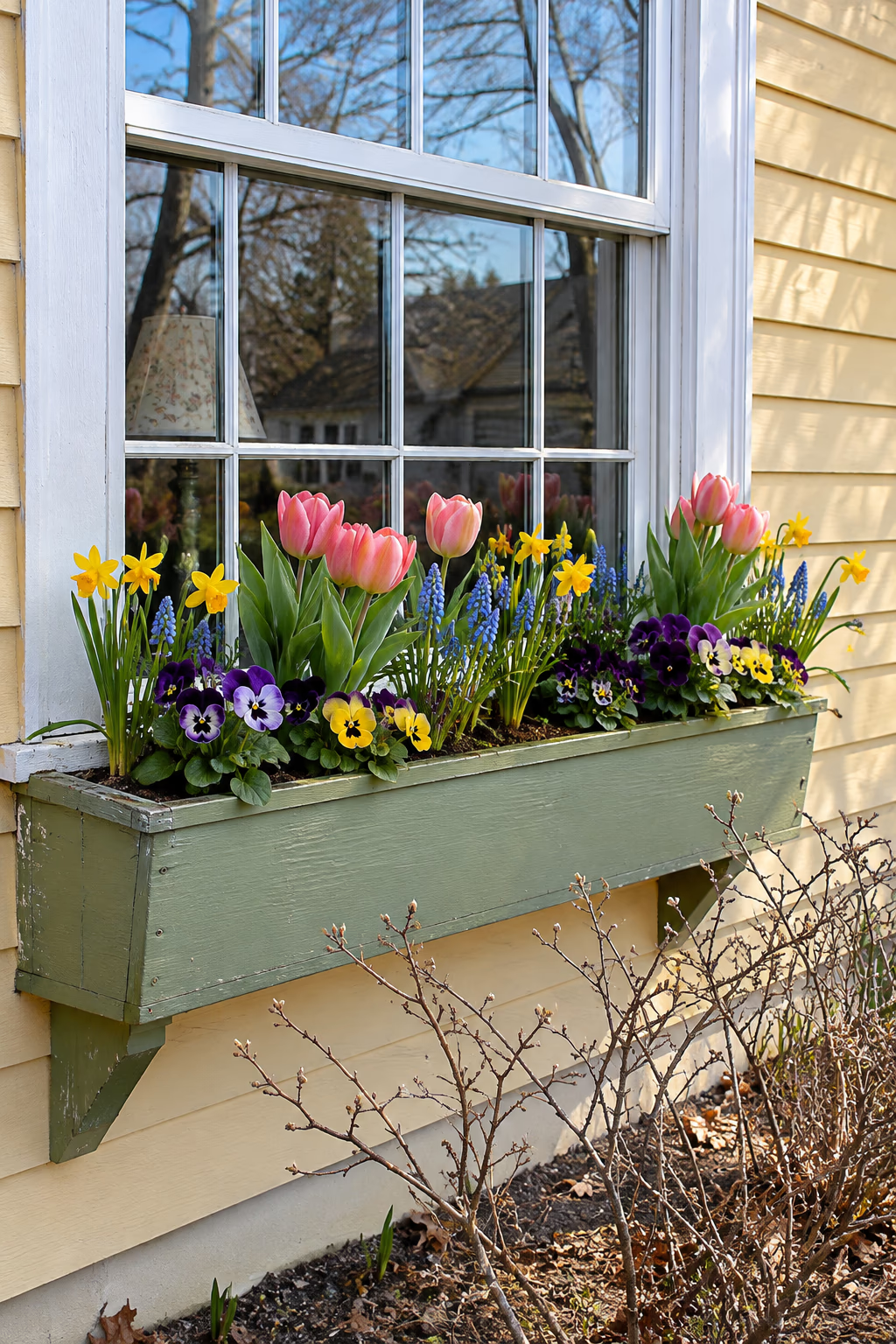
The first burst of color after a long winter
A spring window planter filled with short tulips, miniature daffodils, grape hyacinths, and violas is one of the most cheerful sights of the year. Dwarf varieties around 6 to 12 inches tall stay in proportion with the box and stand up better to wind.
The easiest route is buying bulbs already growing in nursery pots in early spring and setting them into the box. You get instant flowers without waiting, and you can rearrange the colors until they look right.
Planting dry bulbs in fall also works in mild climates, but in cold regions an exposed window box can freeze solid and damage them. Once the bulbs fade, move them to a garden bed and replant the box with summer annuals.
11. Build a Simple Cedar Window Box With Brackets
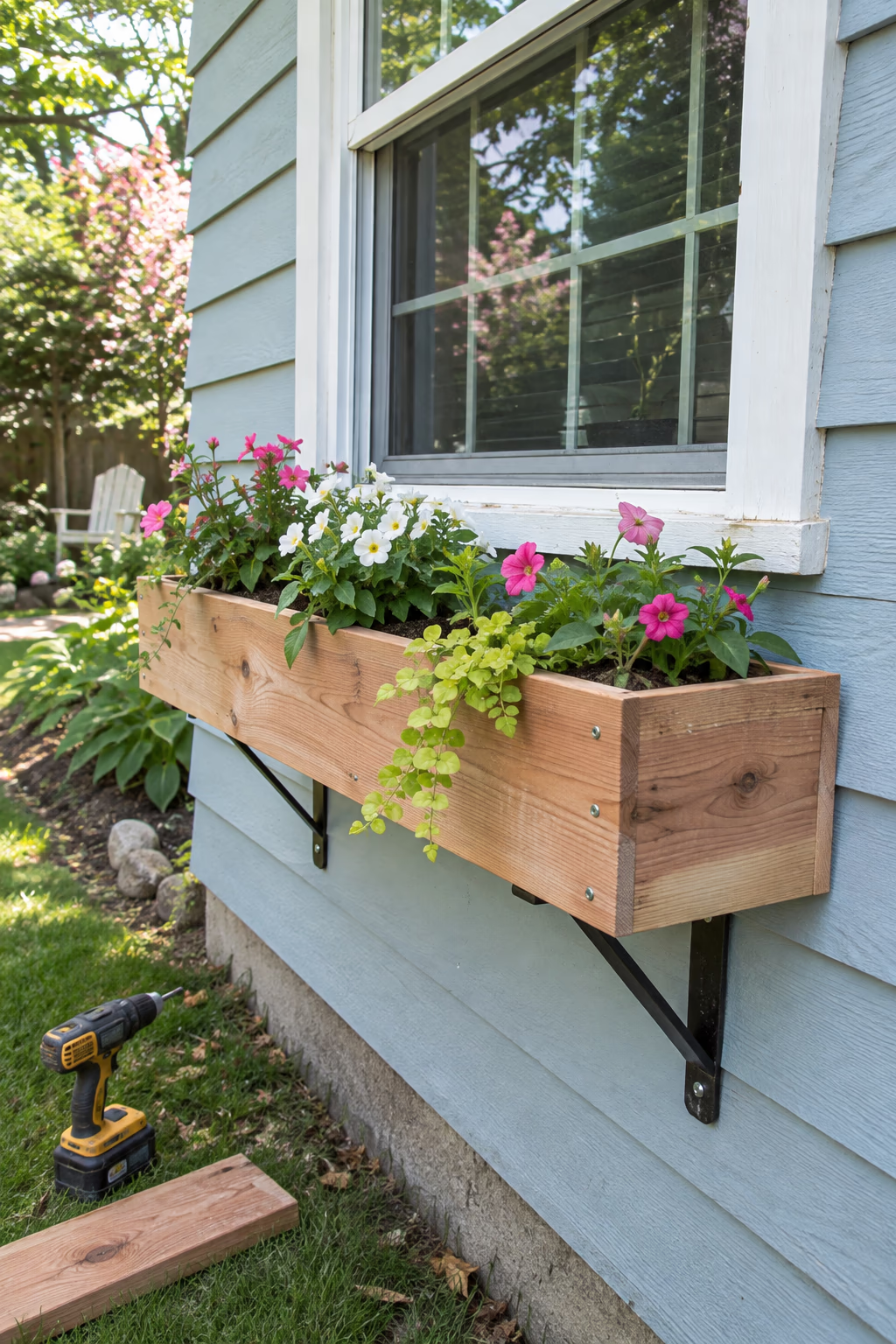
A custom fit for a fraction of the price
Store-bought window boxes rarely match unusual window widths, but a basic cedar box is an easy weekend project. Use 1×8 cedar boards for the front, back, and ends, a bottom with several half-inch drainage holes, and exterior screws, then make the box roughly the width of the window including its trim.
Cedar naturally resists rot and insects, weathers to an attractive silver-gray if left unfinished, and takes stain or paint well. Building your own also lets you choose a deeper box, which holds more soil and dries out more slowly.
A box full of wet soil can weigh well over 50 pounds, so mount it with sturdy steel brackets screwed into wall studs or anchored into masonry. Leave a small gap between the box and the siding so water can drain and air can circulate.
12. Hang a Coco-Lined Hayrack Planter for Cottage Charm
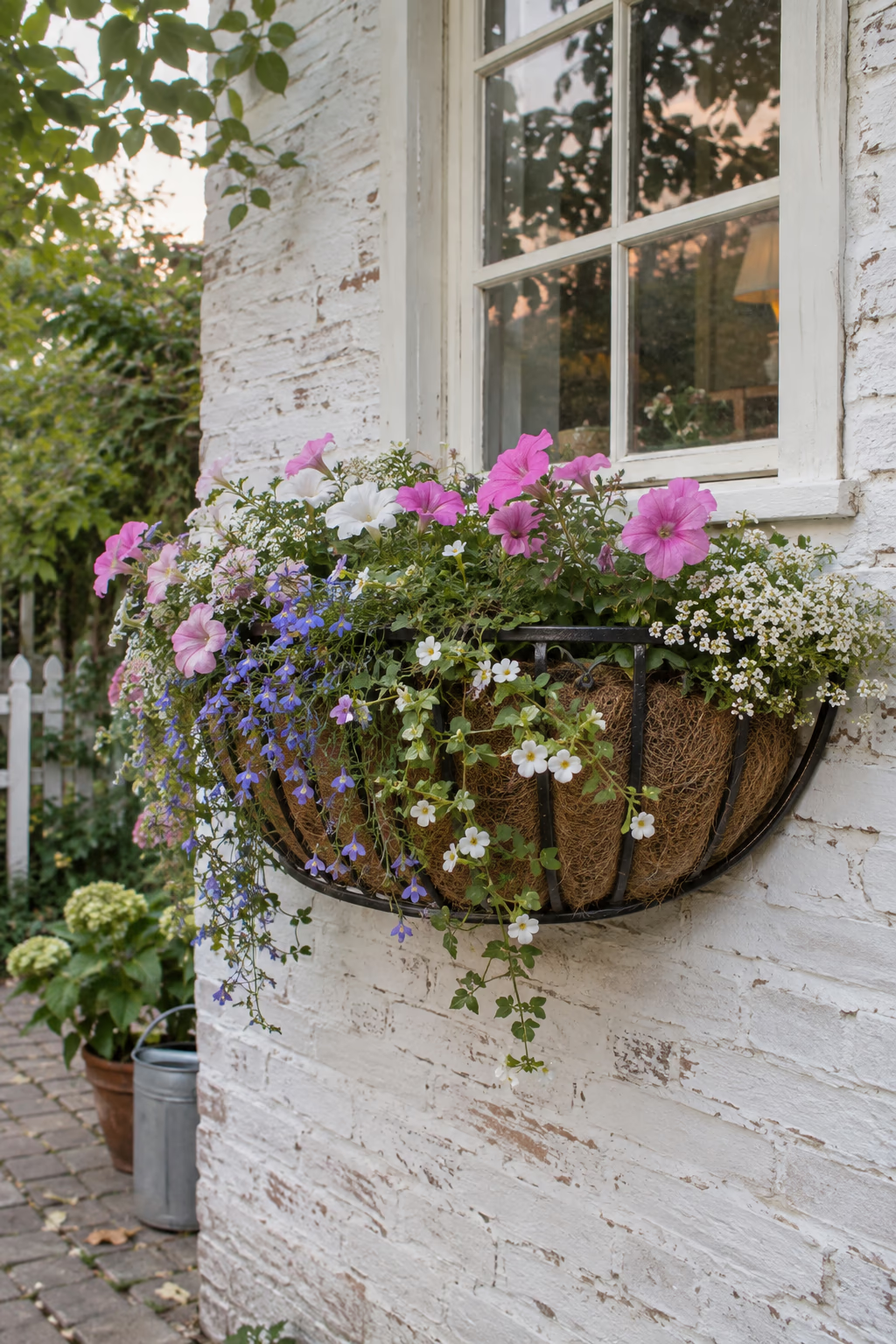
An airy, European-style look with room to plant the sides
A hayrack planter is an open, half-round metal frame lined with a coconut fiber mat. It gives windows a relaxed English cottage look, especially when filled with petunias, trailing lobelia, bacopa, and sweet alyssum that spill out in loose mounds.
The open frame shows off the natural brown liner, and you can cut small slits in the coco mat to plant trailing flowers through the sides. That creates a fuller ball of blooms than a solid box can.
Coco liners dry out quickly, so expect to water daily in hot weather. Lining the inside of the mat with a perforated plastic sheet helps hold moisture, and replace the liner every year or two as it breaks down.
13. Plant a Low-Water Succulent Window Box
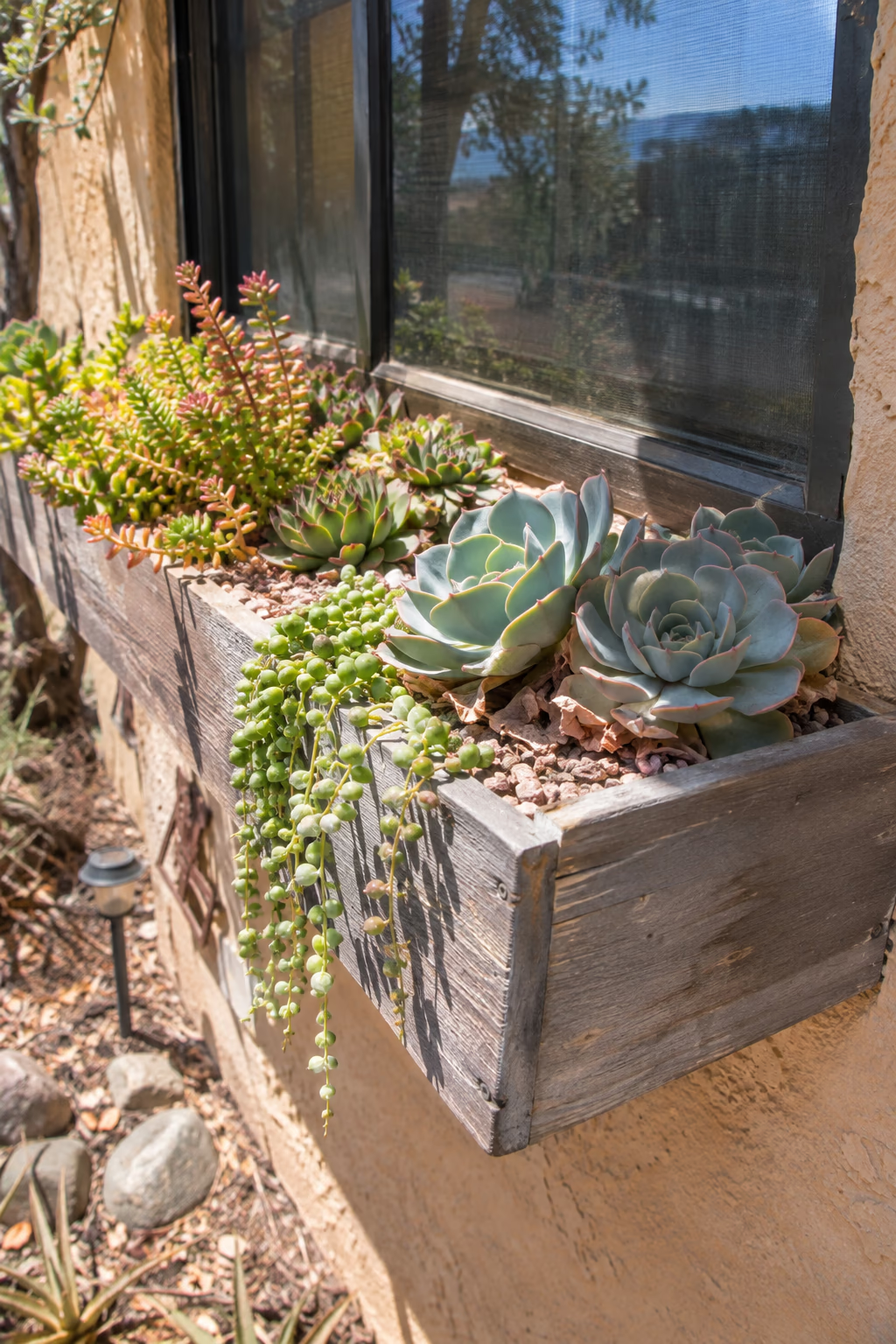
Sculptural plants that forgive a missed watering
For hot, sunny windows or busy owners, a succulent window planter is a smart choice. Combine hens and chicks, sedums, echeveria, and trailing string-of-pearls or creeping sedum in a gritty cactus mix.
Succulents bring a modern, textural look with soft blue, green, purple, and red tones. Many can go a week or more between waterings once established, which makes them ideal for windows that are hard to reach.
Drainage matters more than anything else here, because succulents rot in wet soil. In cold climates, use hardy sedums and hens and chicks, or treat tender echeveria as annuals or bring them indoors before the first frost.
14. Invite Pollinators With Lavender, Salvia, and Lantana
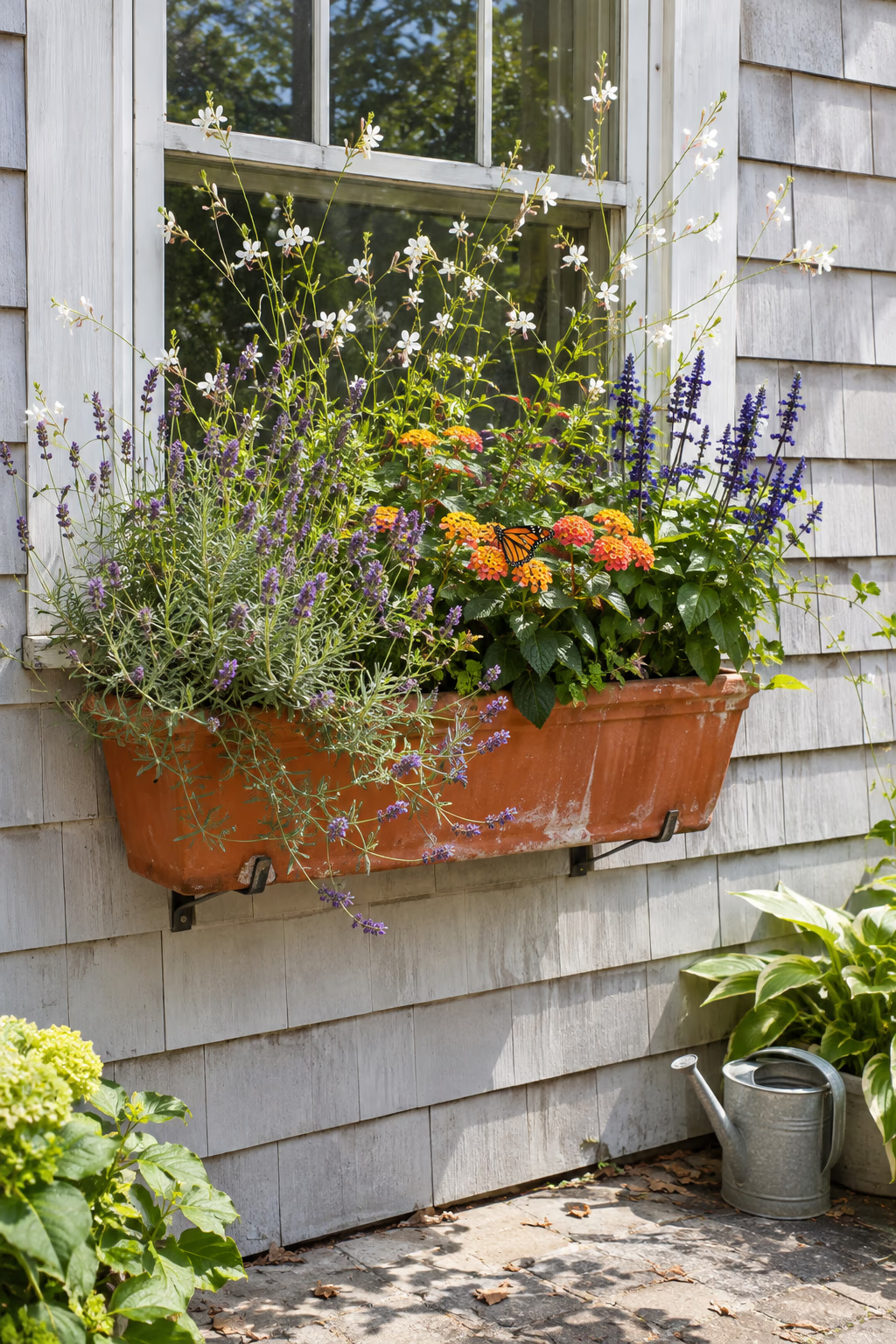
A window box that buzzes with life
A pollinator-friendly window planter brings bees, butterflies, and even hummingbirds right up to the glass. Plant compact lavender, a dwarf salvia, and lantana, and add verbena or gaura for airy height.
These plants bloom heavily through summer and thrive in sunny, slightly dry conditions. Watching visitors from inside the house is part of the fun, and the mix of purple, red, and gold looks great against most siding colors.
If anyone in the household is allergic to bee stings, put this box on a window that doesn’t open often. Skip systemic insecticides, and ask the nursery whether plants have been treated before buying.
15. Grow Salad Greens and Strawberries Under the Sill
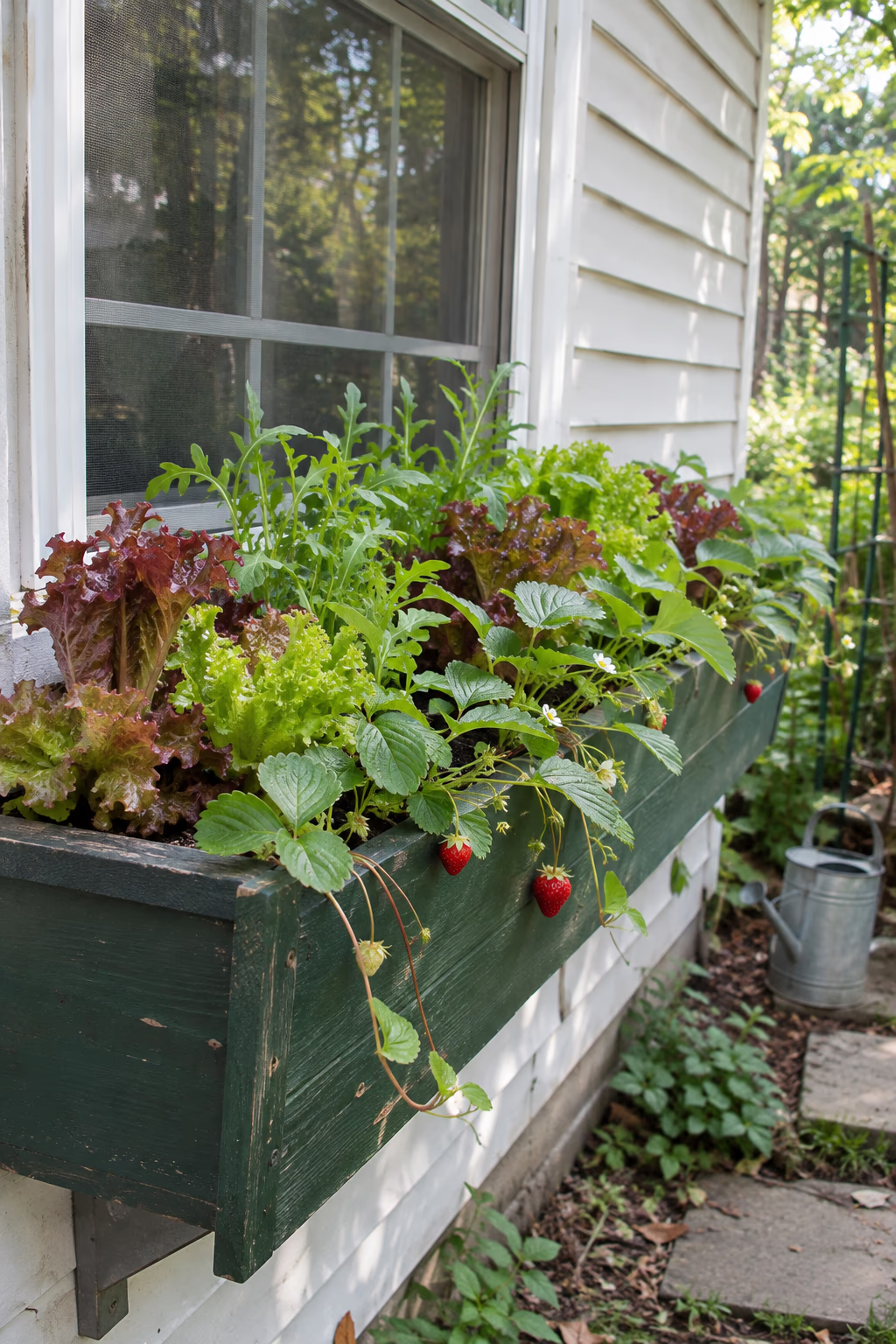
A small harvest from a tiny space
A window box can grow more food than you might expect. Plant loose-leaf lettuce, baby spinach, and arugula in the cooler months, and tuck in a few everbearing or day-neutral strawberry plants along the front edge so the berries dangle over the side.
Leafy greens have shallow roots that suit a box about 8 inches deep, and you can cut them a few leaves at a time for weeks. Strawberries hanging off the edge stay clean and dry, and they’re easy to spot when ripe.
Lettuce tends to bolt in summer heat, so grow it in spring and fall or move it to a box with afternoon shade. Birds love strawberries, so a light netting over the box may be needed once fruit starts to color.
16. Run One Long Box Across a Bay or Window Pair
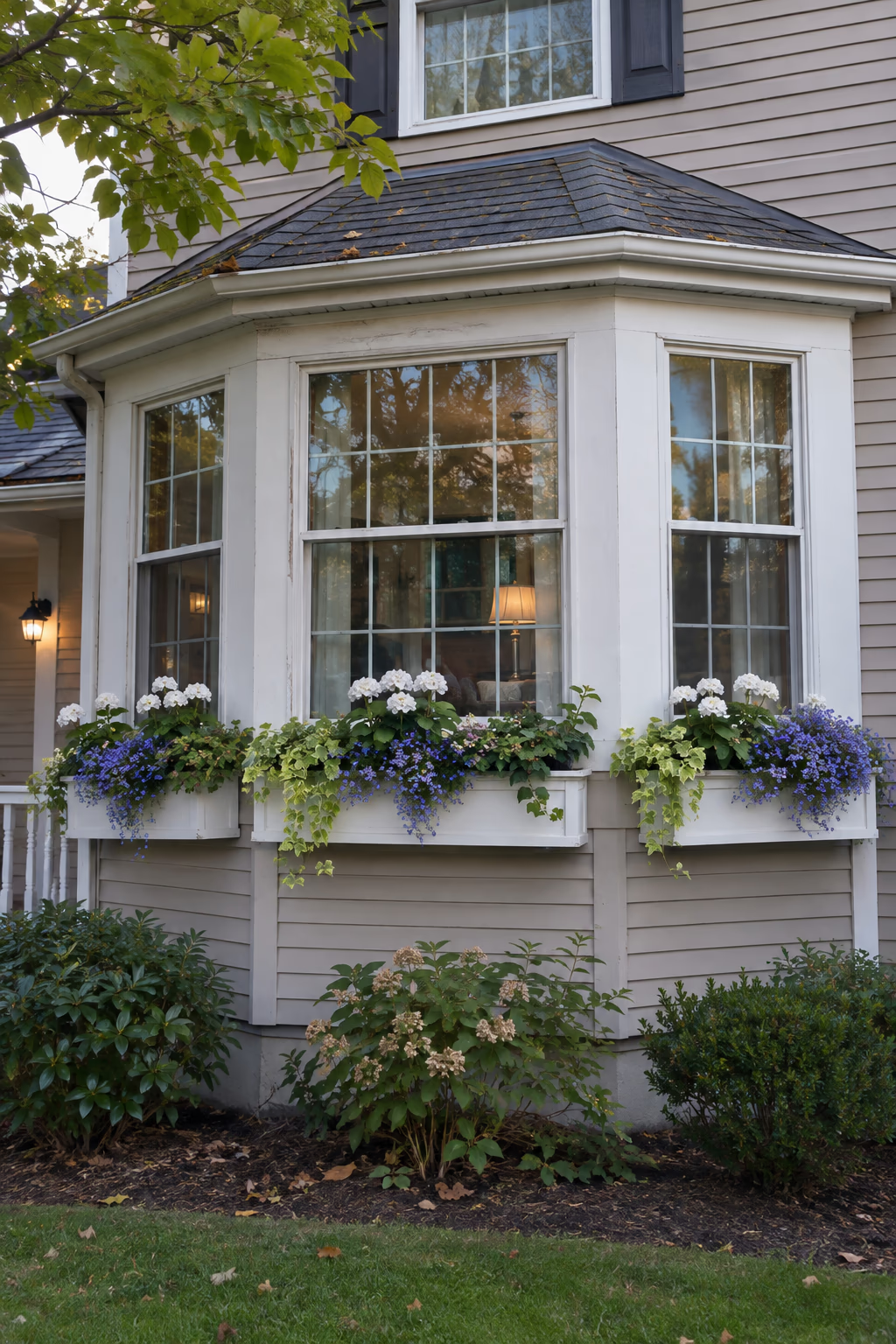
One continuous line that makes the facade feel bigger
When two or three windows sit close together, a single long planter spanning all of them often looks better than several small boxes. On a bay or bump-out, three boxes can follow each angled face so the planting wraps continuously around the front.
The unbroken line of plants emphasizes the width of the house and gives it a more custom look. Repeating the same plant every 12 to 18 inches along the length creates rhythm and keeps it from looking cluttered.
Long boxes are heavy, so use extra brackets every 16 to 24 inches and consider splitting very long runs into two sections that butt together. Shorter sections are easier to lift, empty, and replace.
17. Mount Black Metal Troughs for a Modern Look
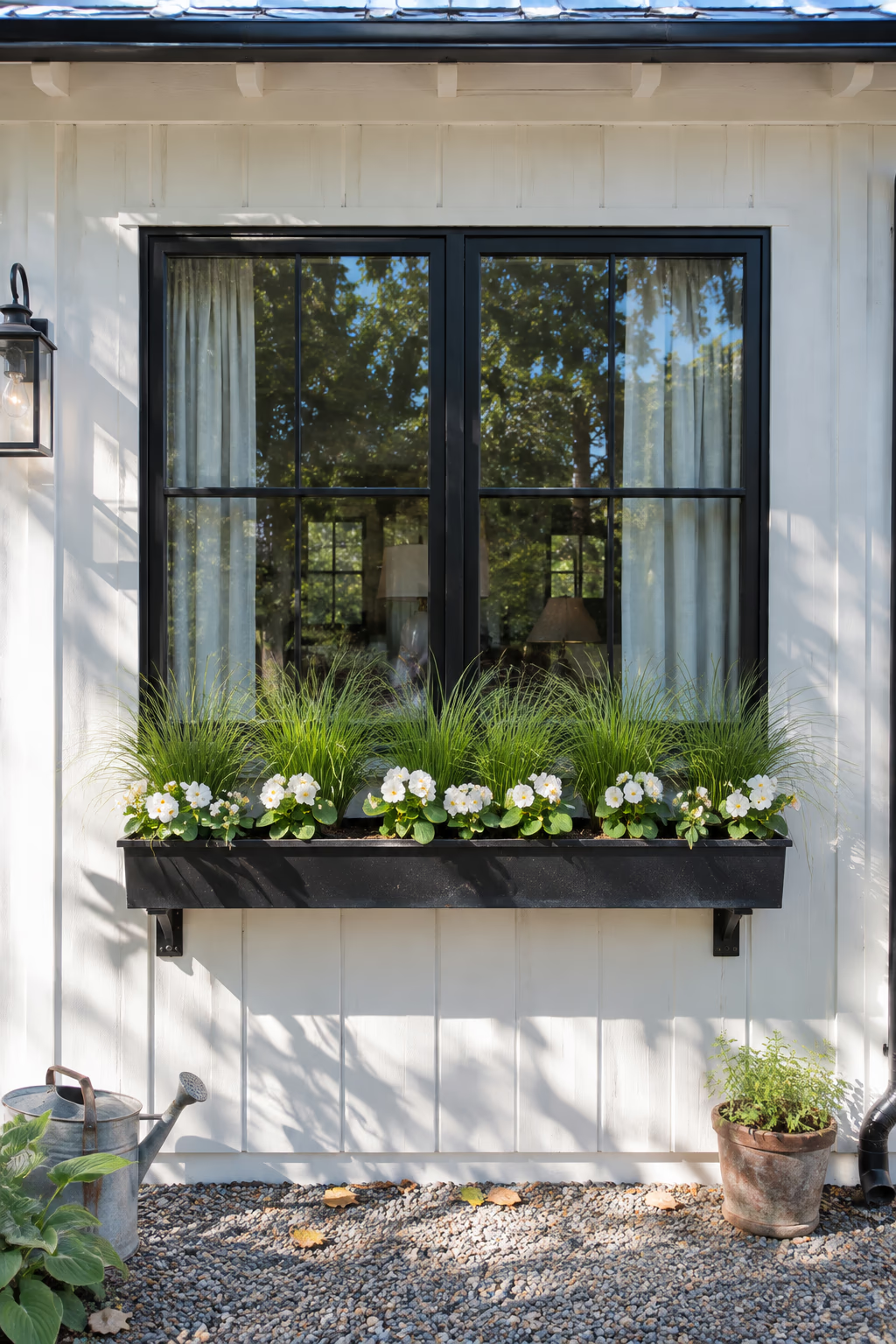
Sleek lines for contemporary homes
Slim black powder-coated steel or aluminum troughs suit modern farmhouses, mid-century homes, and contemporary builds. Fill them with tidy plantings such as ornamental grasses, silver dusty miller, white begonias, or a single row of one plant.
Black metal frames windows like a picture frame and makes green and white plants stand out sharply. A restrained planting scheme fits the minimalist look better than a wild mix of colors.
Dark metal heats up in full sun and can cook roots, so line the trough with a plastic insert or foam panels, or reserve it for windows with morning sun. Choose rust-resistant finishes and stainless or coated hardware.
18. Drop In Self-Watering Liners to Cut Chores
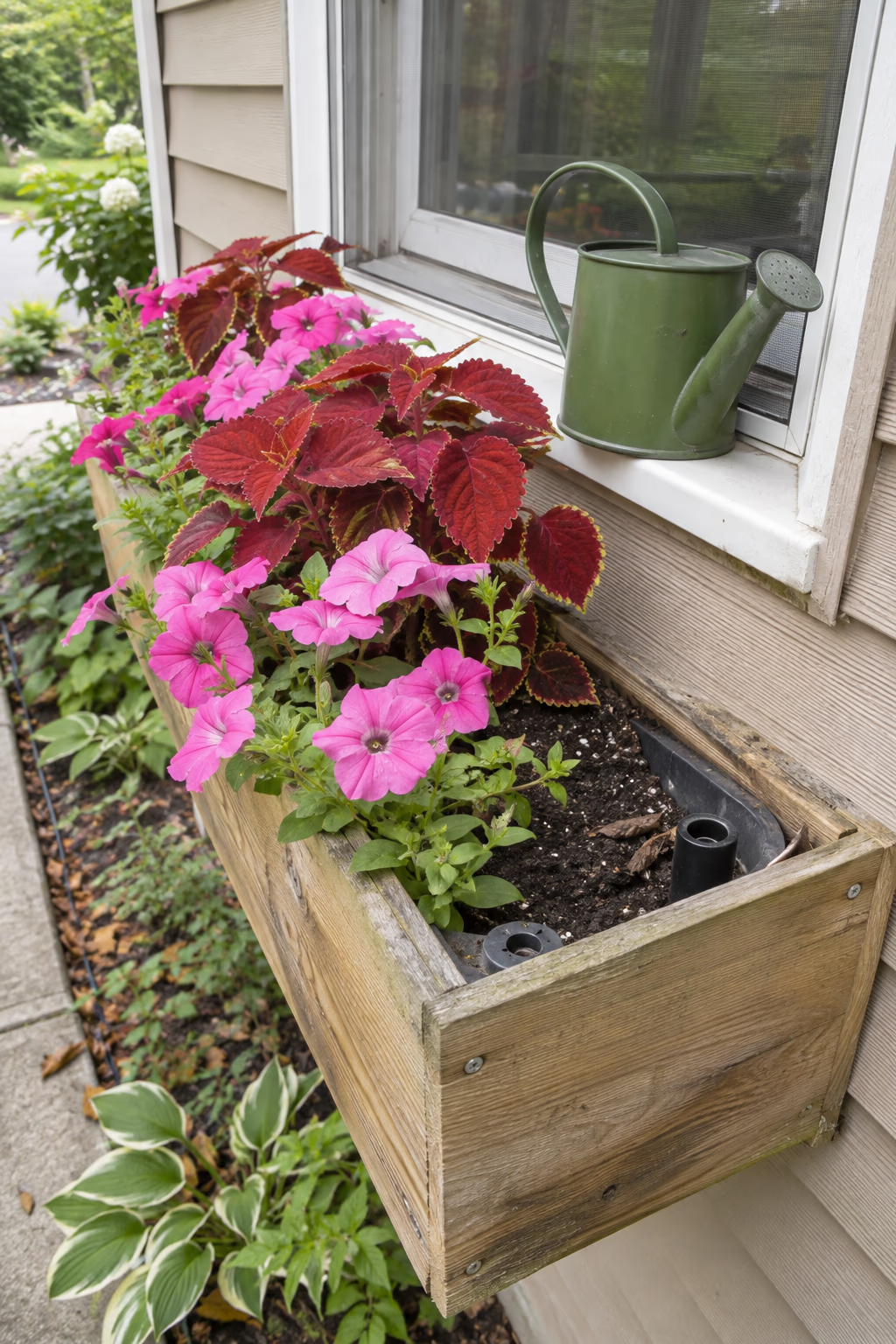
Healthier plants with less daily attention
Self-watering liners sit inside an existing window box and hold a water reservoir below the soil. Plants draw moisture up through a wick or soil column, and an overflow hole prevents flooding during heavy rain.
Window boxes dry out fast because they hold relatively little soil, and many sit in full sun or wind. A reservoir can stretch watering from daily to every few days in midsummer, which helps if you travel or have hard-to-reach windows.
Measure the inside of your box carefully before buying a liner, and fill the reservoir through the fill tube rather than from the top. Succulents and other dry-loving plants are not a good match for self-watering setups.
19. Set a Standing Trough Beneath a Low Window
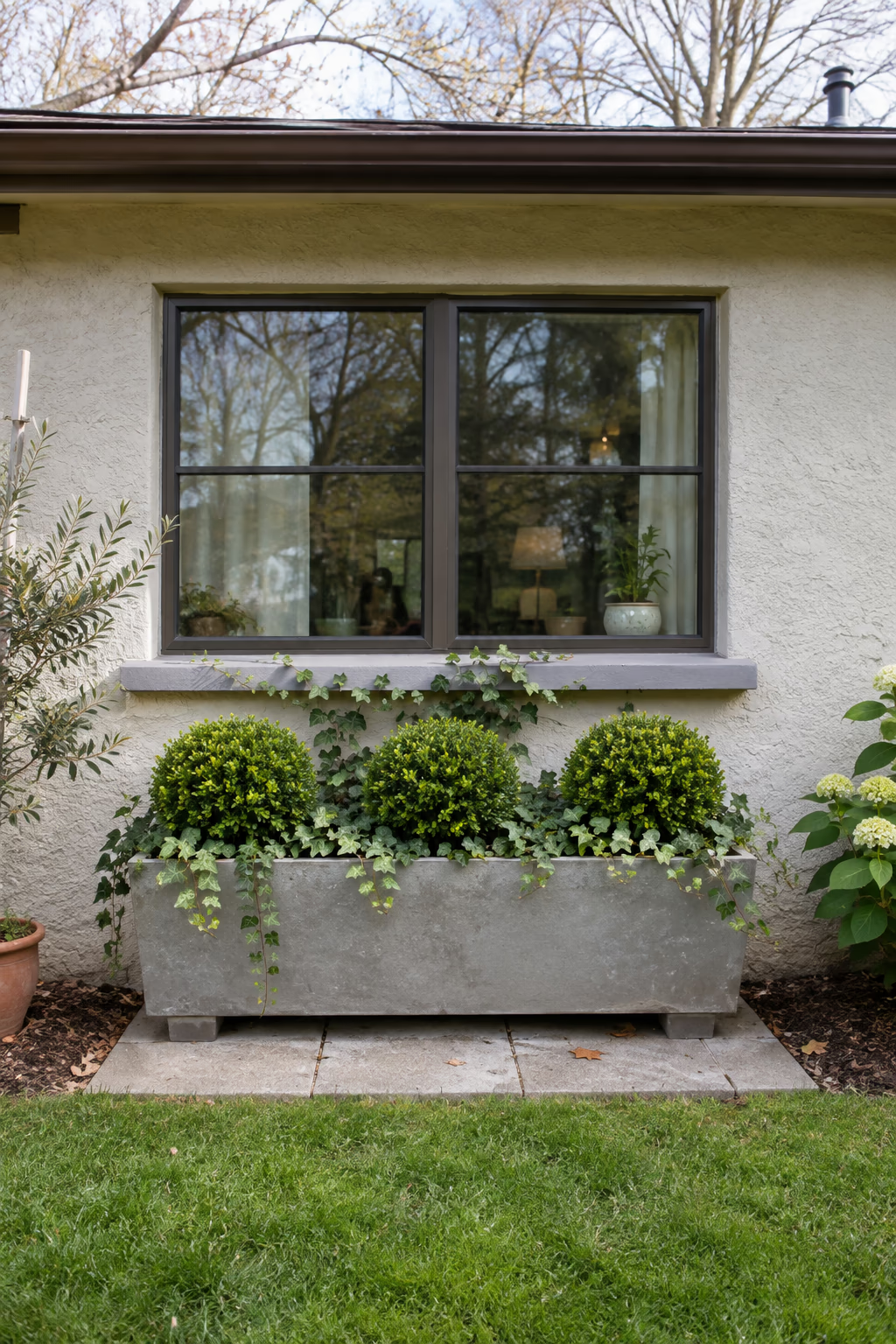
A window box look without mounting anything
When a window sits too close to the ground for a mounted box, or the wall is vinyl or stucco you’d rather not drill, place a long freestanding trough or raised planter right under the sill. Fill it with boxwood globes, ivy, or seasonal flowers that reach the bottom of the window.
This approach gives the same framed effect as a hanging box but rests safely on the ground, so weight is never a concern. It’s also renter-friendly and easy to move if you change your mind.
Choose a trough with feet or set it on pavers so water drains away from the foundation. Keep the planter a few inches from the siding so moisture and bugs don’t have an easy path into the wall.
How to Plan Your Window Planters
A little planning before you buy brackets and plants will help your window boxes look great and last for years.
- Size the box to the window. Aim for a box about as wide as the window including trim, and at least 8 inches deep so plants have enough soil to stay moist.
- Mount it securely. Screw brackets into studs or masonry anchors, and remember that wet soil and plants are heavy. Leave a small gap behind the box to protect siding.
- Match plants to the light. Note how many hours of direct sun each window gets, then choose sun-loving or shade-loving plants accordingly.
- Insist on drainage. Every box needs drainage holes and fresh potting mix, not garden soil, which compacts and holds too much water.
- Plan your watering. Boxes in sun may need daily water in summer. Upper-story windows should be reachable from inside or with a long-reach watering wand.
- Check rules and local plant lists. Some HOAs and historic districts regulate exterior changes, and some popular trailers, such as English ivy and creeping Jenny, are invasive in certain regions.
Frequently Asked Questions
How deep should a window planter be?
Aim for at least 8 inches of depth and width inside the box. Deeper boxes hold more soil, which means more room for roots and less frequent watering, so 10 inches is even better for mixed plantings.
What are the easiest plants for window boxes?
Geraniums, petunias, calibrachoa, begonias, sweet potato vine, and dusty miller are forgiving choices for beginners. For shade, try impatiens, begonias, and ferns, and for hot, dry spots, try succulents and lantana.
How often should I water my window box?
In summer, sunny window boxes often need water every day, and sometimes twice during heat waves. Check the soil with your finger and water when the top inch feels dry, until water runs out the drainage holes.
Can I put window boxes on vinyl siding?
Yes, but the brackets must be fastened through the siding into wall studs or solid sheathing behind it, not into the vinyl alone. Special bracket systems and spacers are available that help protect the siding from cracking and moisture.
What should I do with window boxes in winter?
In mild climates, you can plant cold-tolerant pansies, cyclamen, or small evergreens. In colder regions, fill boxes with cut evergreen boughs and branches, or empty them and store removable liners to protect the boxes from freeze damage.
Final Thoughts
The best window planter ideas are the ones that suit your house, your light, and the time you have to care for them. A single box of red geraniums, a tidy row of boxwood, or a cascade of trailing foliage can make your home look brighter and more welcoming from the street.
Start with one window, see how the plants grow through the season, and build from there. Before long, you’ll be changing the display with each season and enjoying the view from both outside and in.