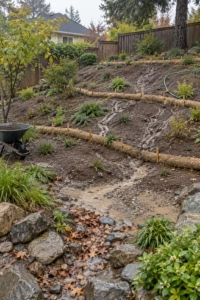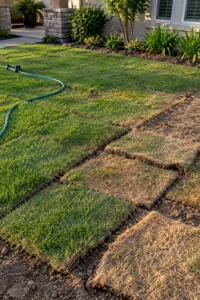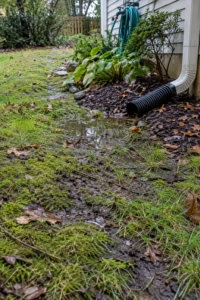
After a summer thunderstorm, most yards show their weak spots right away. Water sheets off the roof, pools in the same low corner of the lawn, and cuts a muddy groove down the slope. A dry creek bed turns that runoff path into a winding ribbon of stone that looks like it has always been there.
Part of the appeal is that it does two jobs at once. On dry days, it reads as a natural garden feature full of texture, boulders, and soft plantings. When it rains, it carries water where you want it to go, slows erosion, and keeps soggy patches from swallowing your grass. It also needs no pump, no liner, and no weekly mowing.
These 21 dry creek bed landscaping ideas cover bridges and stepping stones, sloped yards and soggy low spots, front yard makeovers, planting combinations for sun and shade, and finishing touches like lighting and driftwood. Pick one that solves a real drainage problem, or combine a few to build a creek that becomes the highlight of your yard.
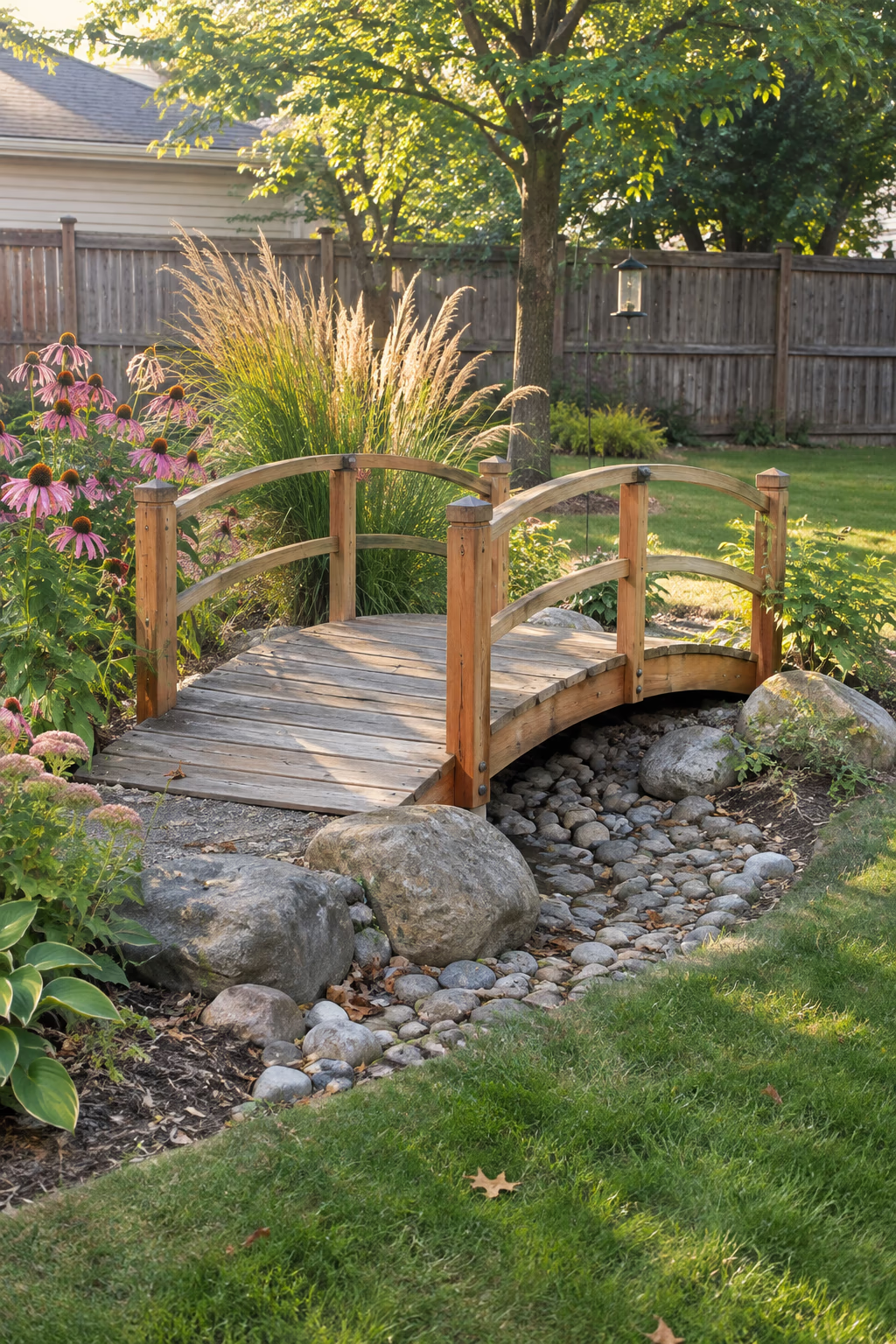
1. Span the Creek With a Simple Wooden Footbridge
The storybook detail everyone notices first
A small footbridge instantly tells visitors that the stones below are meant to be a stream. For most yards, a bridge 3 to 4 feet wide and 6 to 8 feet long is plenty. Cedar, redwood, or pressure-treated lumber all work, and a gentle arch looks more charming than a flat plank deck.
Place the bridge where a path already crosses the creek so it feels useful rather than decorative. Set the ends on buried concrete pavers or a gravel pad so the wood stays off the soil, and frame each end with a pair of medium boulders to hide the transition.
Leave enough clearance underneath for storm flow, and check that the bridge doesn’t dam debris. Wood near wet stone can get slick, so choose a grooved deck surface or add grit strips if the bridge gets regular foot traffic.
2. Wind a Boulder-Lined Creek Down a Sloped Yard
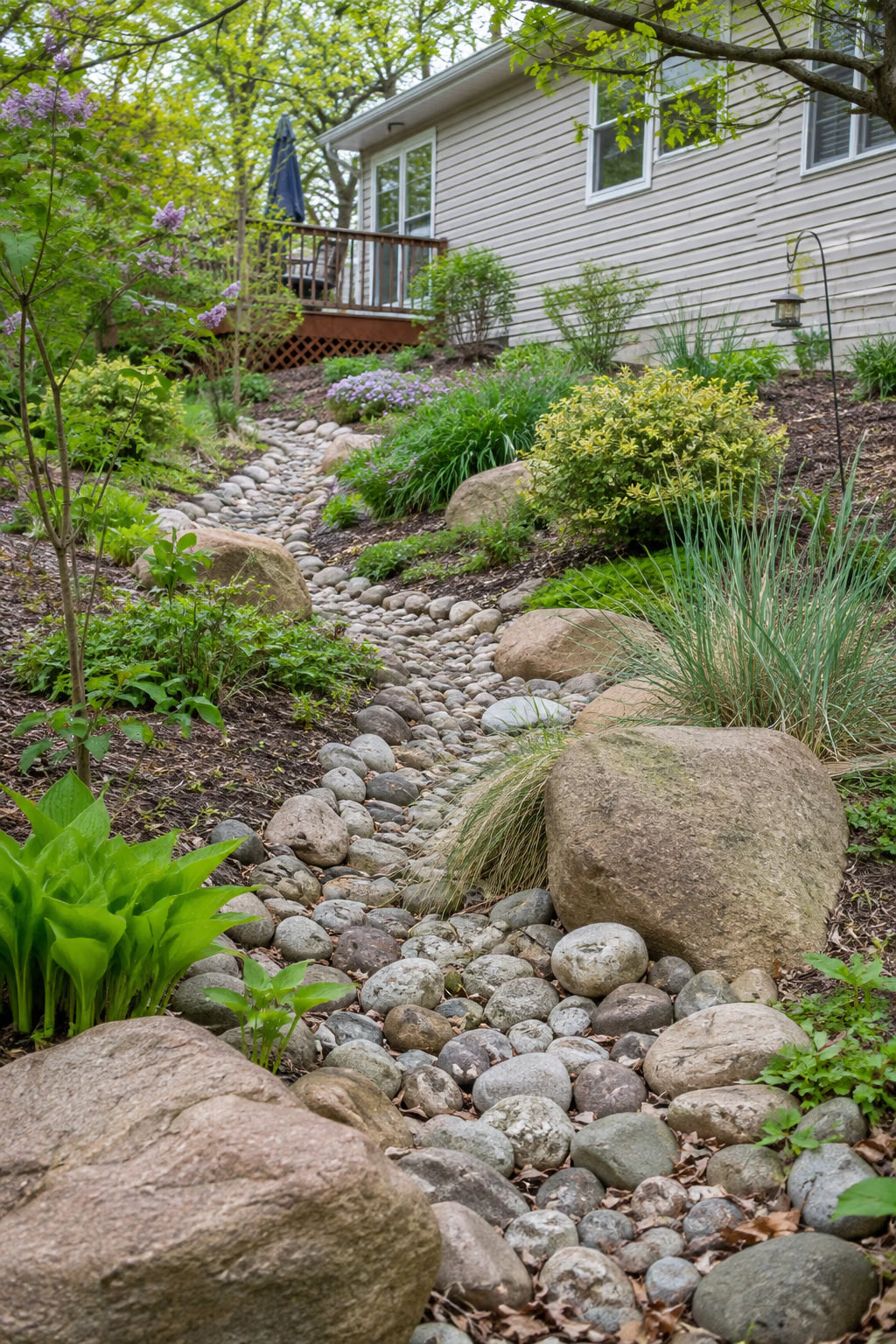
Slow fast runoff and stop erosion
A slope is the most natural home for a dry creek. Instead of letting water race straight down the hill, lay out a channel that bends gently from side to side, with each turn anchored by a boulder 18 to 30 inches across. The curves slow the water, and the boulders protect the outside bank where flow hits hardest.
Dig the trench roughly twice as wide as it is deep, such as 3 feet wide and 12 to 18 inches deep, then line it with 2- to 6-inch river rock. Bury every boulder by at least a third so it looks settled and won’t roll during a downpour.
Keep the curves irregular. Real streams wander unevenly, with long straight runs and sudden bends, so avoid evenly spaced S-curves. On steep grades, add a few larger stones across the channel as low check dams to break up the flow.
3. Soften the Banks With Ornamental Grasses and Native Perennials
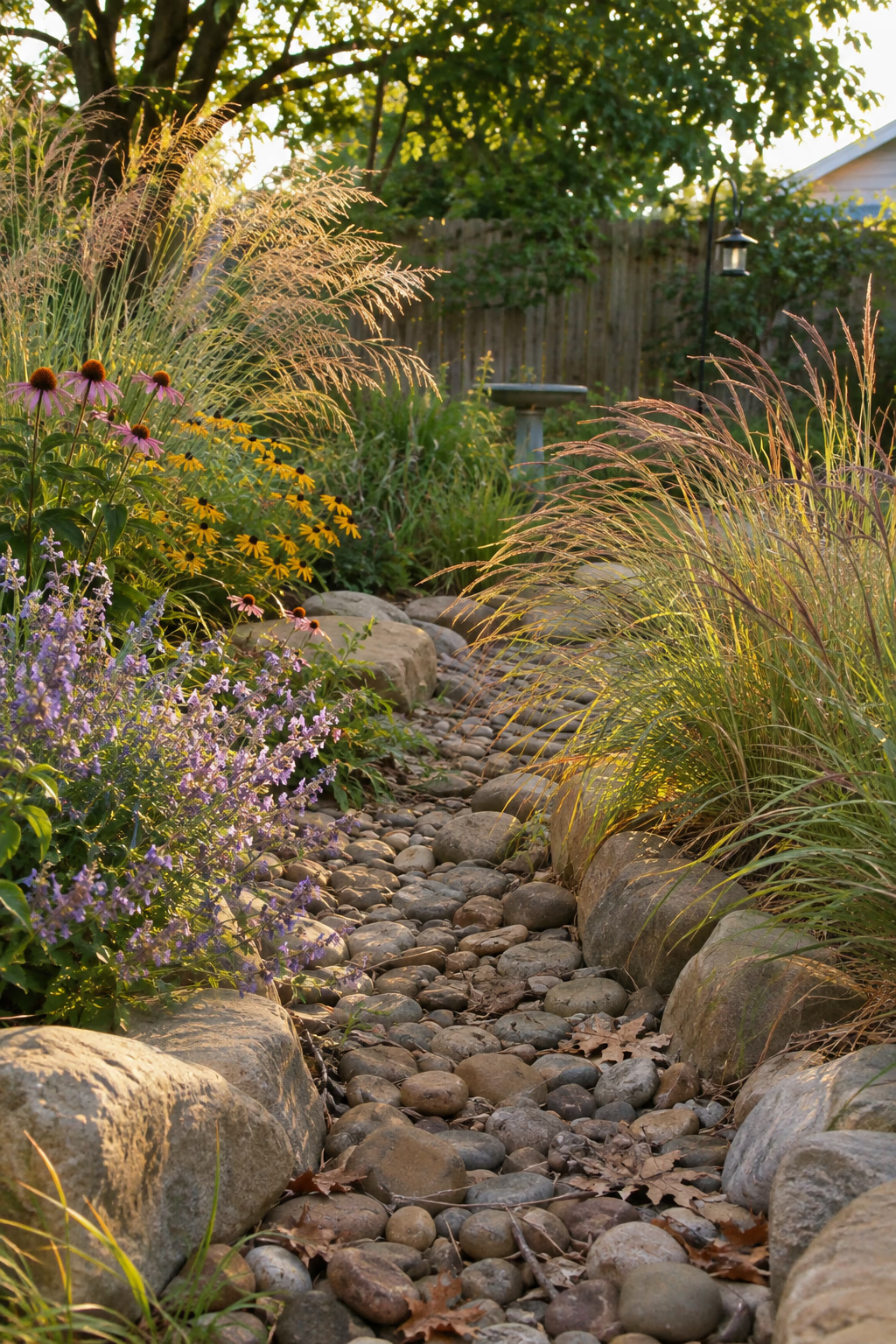
Plants make the stone look natural
Bare rock alone can look like a construction project. Planting the banks turns it into a landscape. Feather reed grass, little bluestem, switchgrass, and prairie dropseed give movement and fine texture, while purple coneflower, black-eyed Susan, and catmint add color through summer.
Plant in loose drifts of three to seven rather than single dots, and let some plants spill over the edge stones so the line between creek and garden blurs. Grasses with arching habits are especially good at hiding the hard edge of the rock.
Plants right at the creek edge get wet during storms and dry out quickly afterward, so choose species that handle both conditions. Keep the tallest grasses on the far side of the bed so they don’t hide the stones from your main viewpoint.
4. Turn a Soggy Low Spot Into a Creek That Ends in a Rain Garden
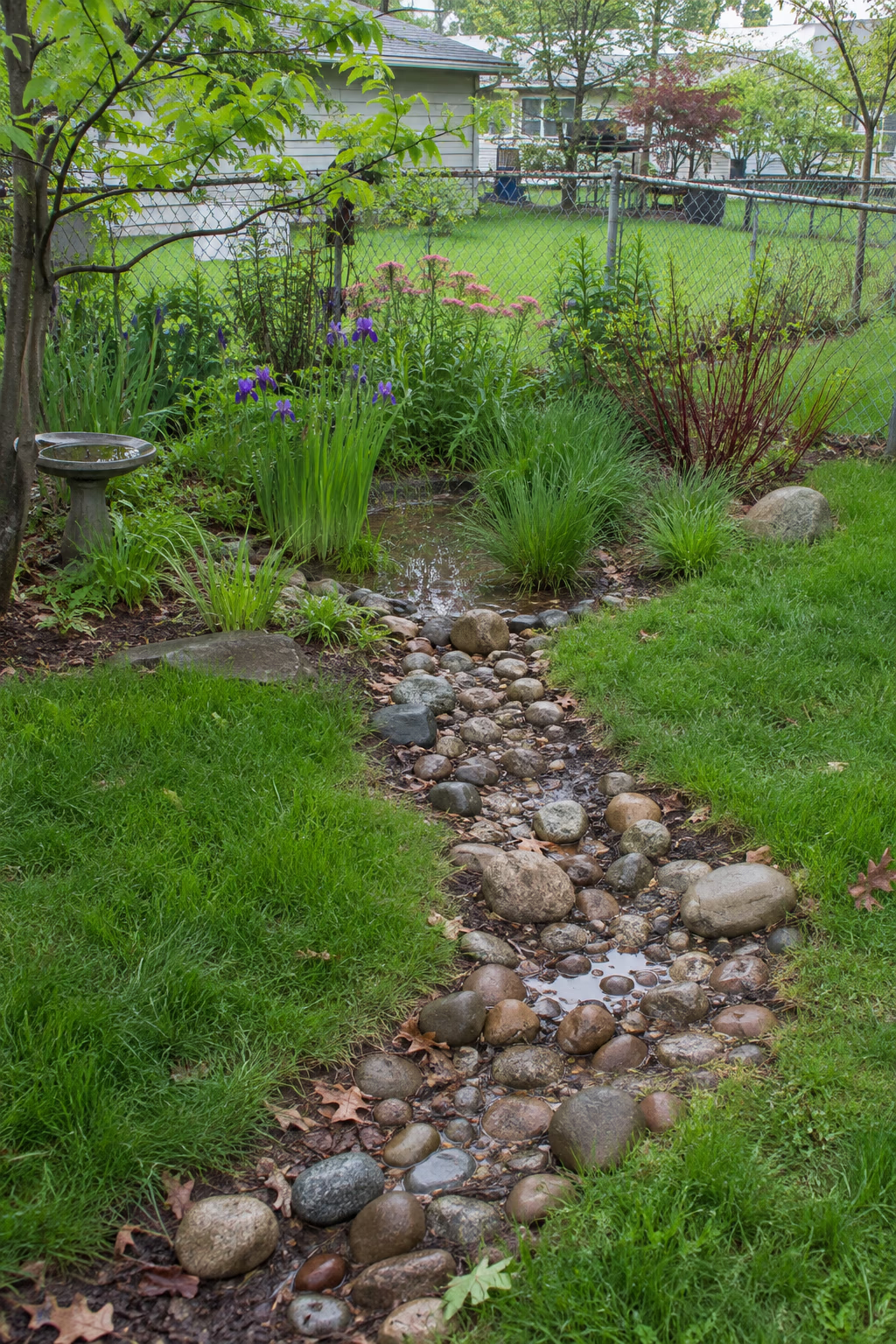
Give runoff a place to soak in
If one corner of your yard stays wet for days after rain, a dry creek can collect that water and send it to a shallow rain garden where it soaks into the ground. The rain garden is simply a planted depression, often 4 to 8 inches deep, filled with plants that tolerate brief flooding.
Good rain garden plants include swamp milkweed, blue flag iris, sedges, joe-pye weed, and red twig dogwood. Amend heavy clay with compost so the basin drains within a day or two, which also keeps mosquitoes from breeding.
Site the rain garden at least 10 feet from your foundation and away from septic fields. Before you dig, do a simple percolation test: fill a test hole with water and make sure it drains within about 24 hours.
5. Replace a Front Lawn Strip With a Meandering Dry Creek
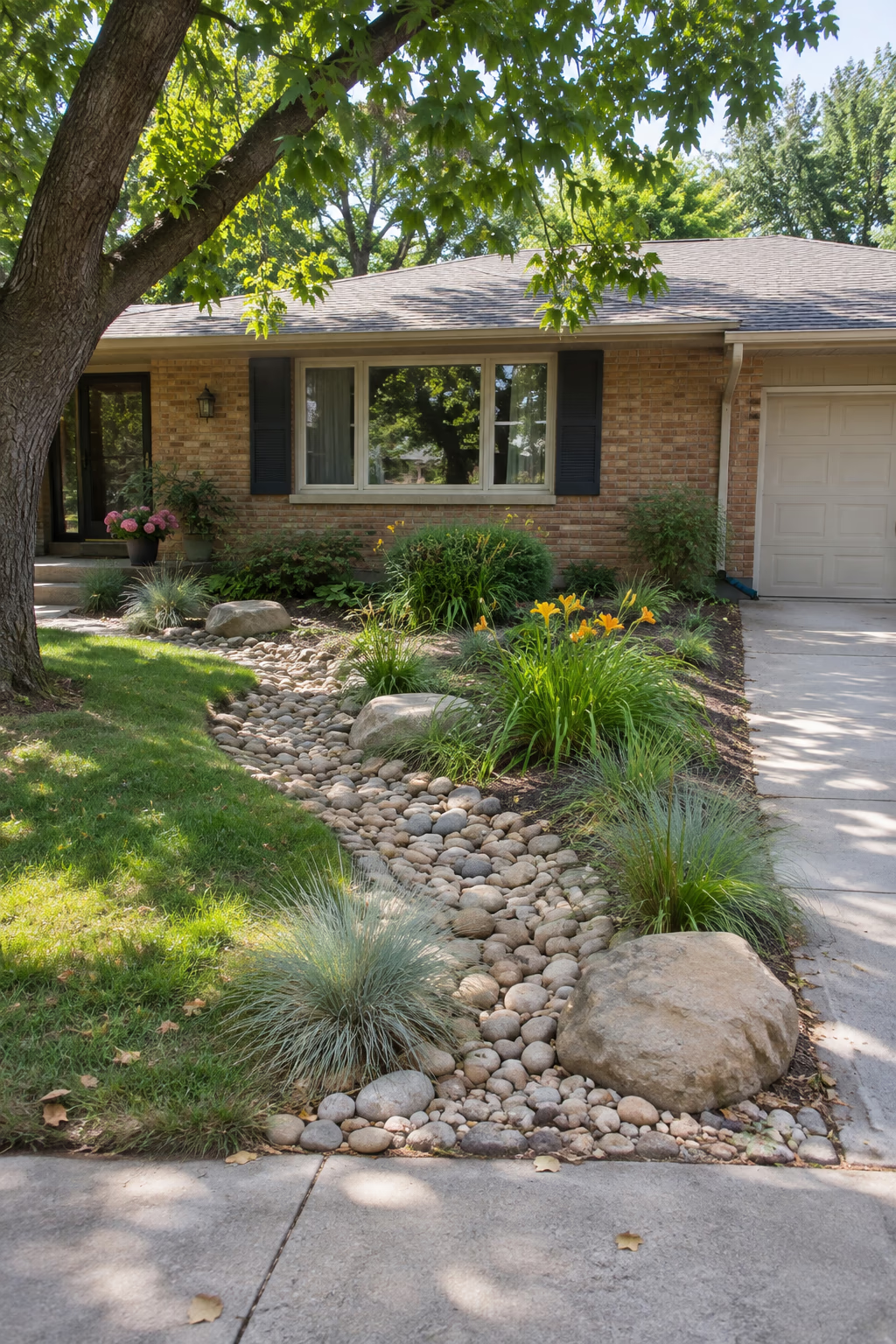
Curb appeal with less mowing
A front yard strip that is hard to mow or always patchy is a great candidate for a dry creek. A shallow bed of rounded river rock running diagonally across the yard, with low grasses and flowering perennials on each side, adds instant character from the street.
Keep the scale modest in a front yard. A creek 2 to 3 feet wide with a few boulders reads as intentional without overwhelming the house. Repeat a stone color found in your foundation, walkway, or porch so it ties into the home.
Check HOA rules before removing lawn, since some communities require approval for hardscape changes. Also make sure the creek doesn’t send water toward the sidewalk, driveway, or a neighbor’s yard.
6. Carry Downspout Runoff Away in a Rock-Lined Channel
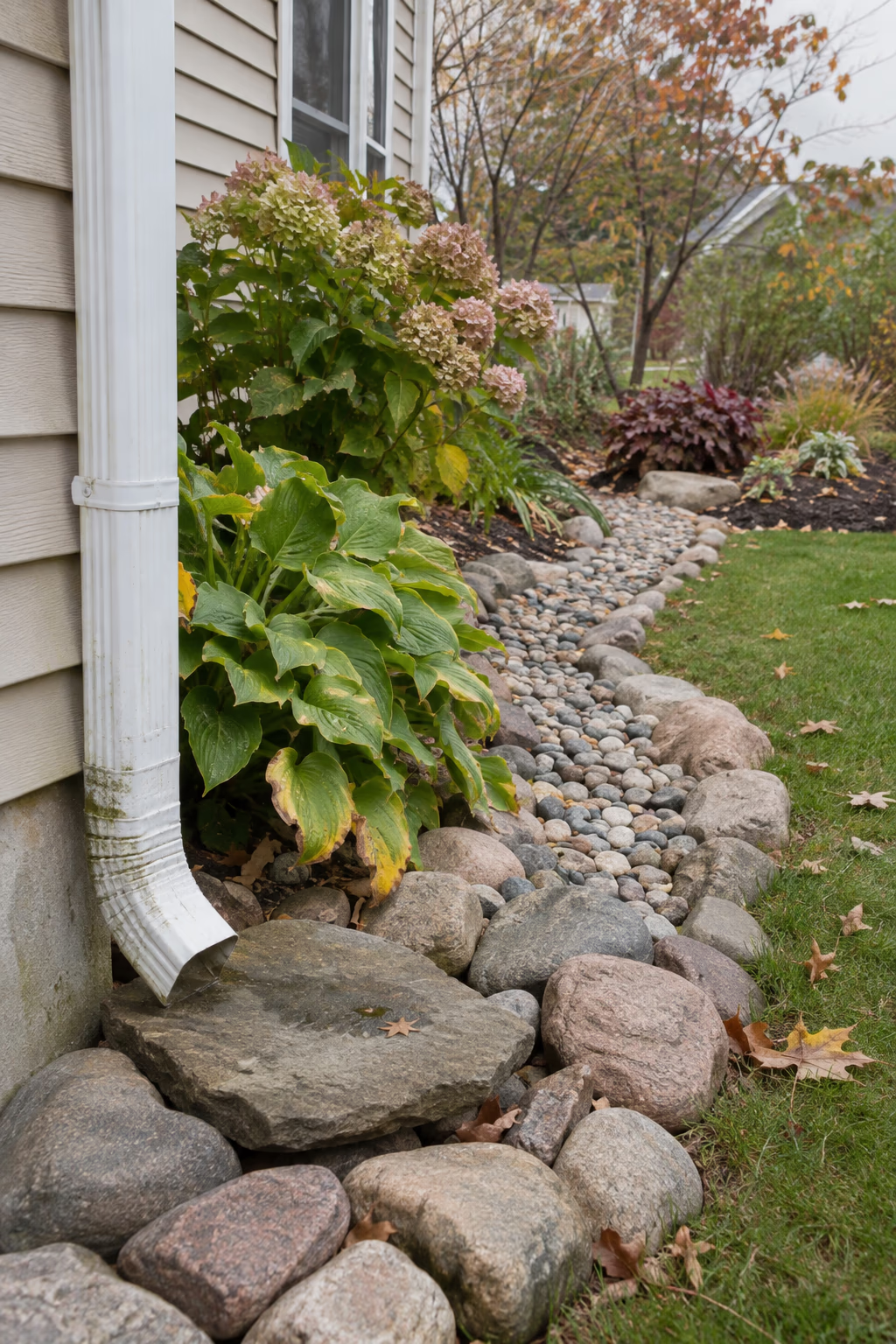
Protect the foundation in a good-looking way
Roof runoff is one of the most common reasons homeowners build a dry creek. Start the creek at the downspout outlet, with a splash rock or flat stone to absorb the force of the water, then run the channel away from the house on a gentle downhill grade.
Aim to release the water at least 10 feet from the foundation, ideally into a planted area, rain garden, or lawn that can absorb it. A slope of about 1 to 2 percent is enough to keep water moving without causing scouring.
Use larger stones near the downspout, where the water hits hardest, and smaller rock farther down. If the soil near your house slopes toward the foundation, fix that grading first, or the creek will only move part of the problem.
7. Cross the Bed With Flat Stepping Stones
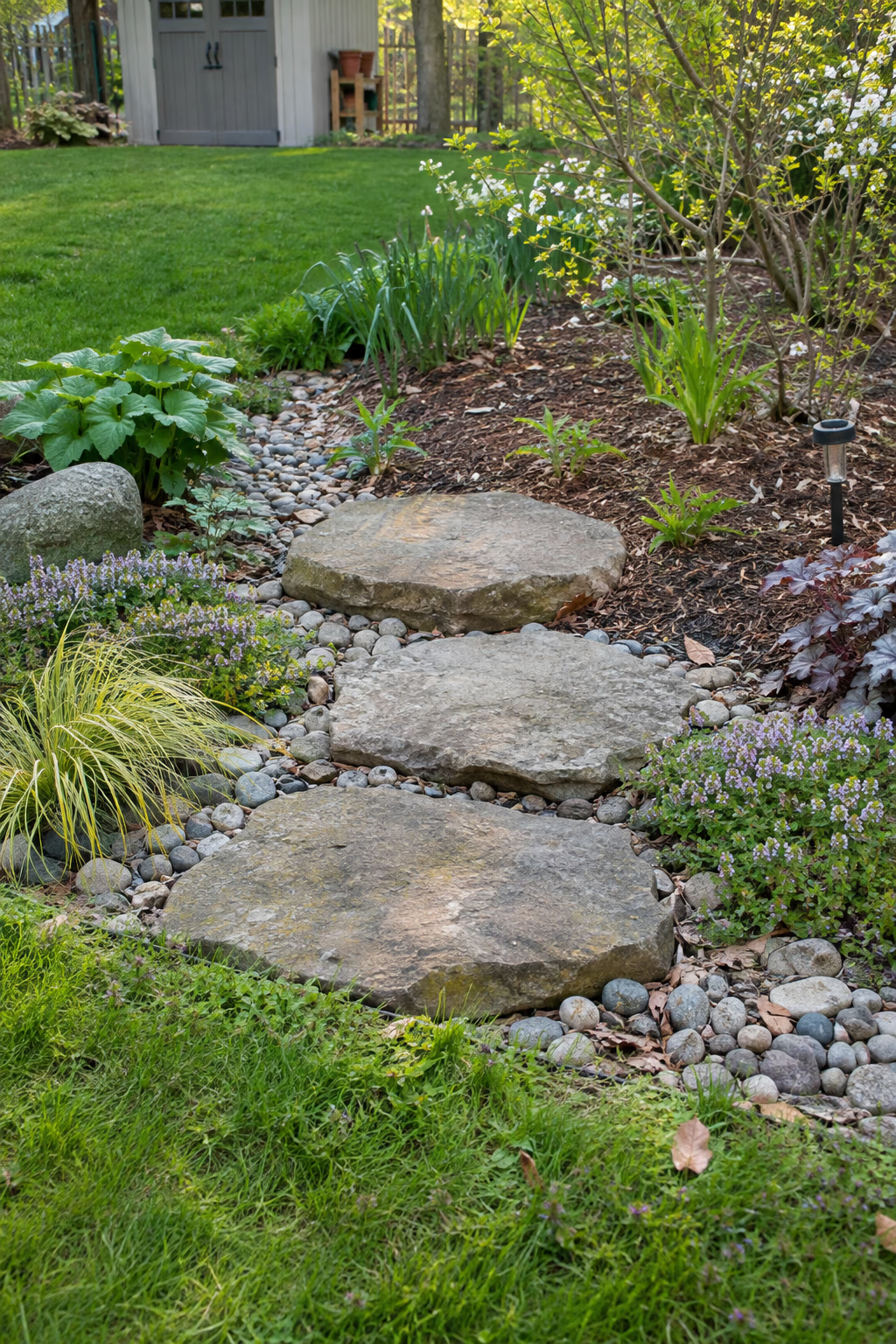
A low-cost crossing that looks natural
If a bridge feels too big for your yard, a few flat stones can do the job. Choose thick flagstone or fieldstone pieces at least 2 inches thick and 18 to 24 inches across, so they feel solid underfoot.
Set the stepping stones slightly higher than the surrounding river rock, bedded into compacted gravel so they don’t wobble. Space them about 20 to 24 inches center to center, which matches a comfortable adult stride.
Stepping stones can become slippery when wet or covered in moss. Choose stones with a rough surface, and avoid placing them on the steepest part of the creek where fast water could undermine them.
8. Build a Dry Waterfall Where the Grade Drops
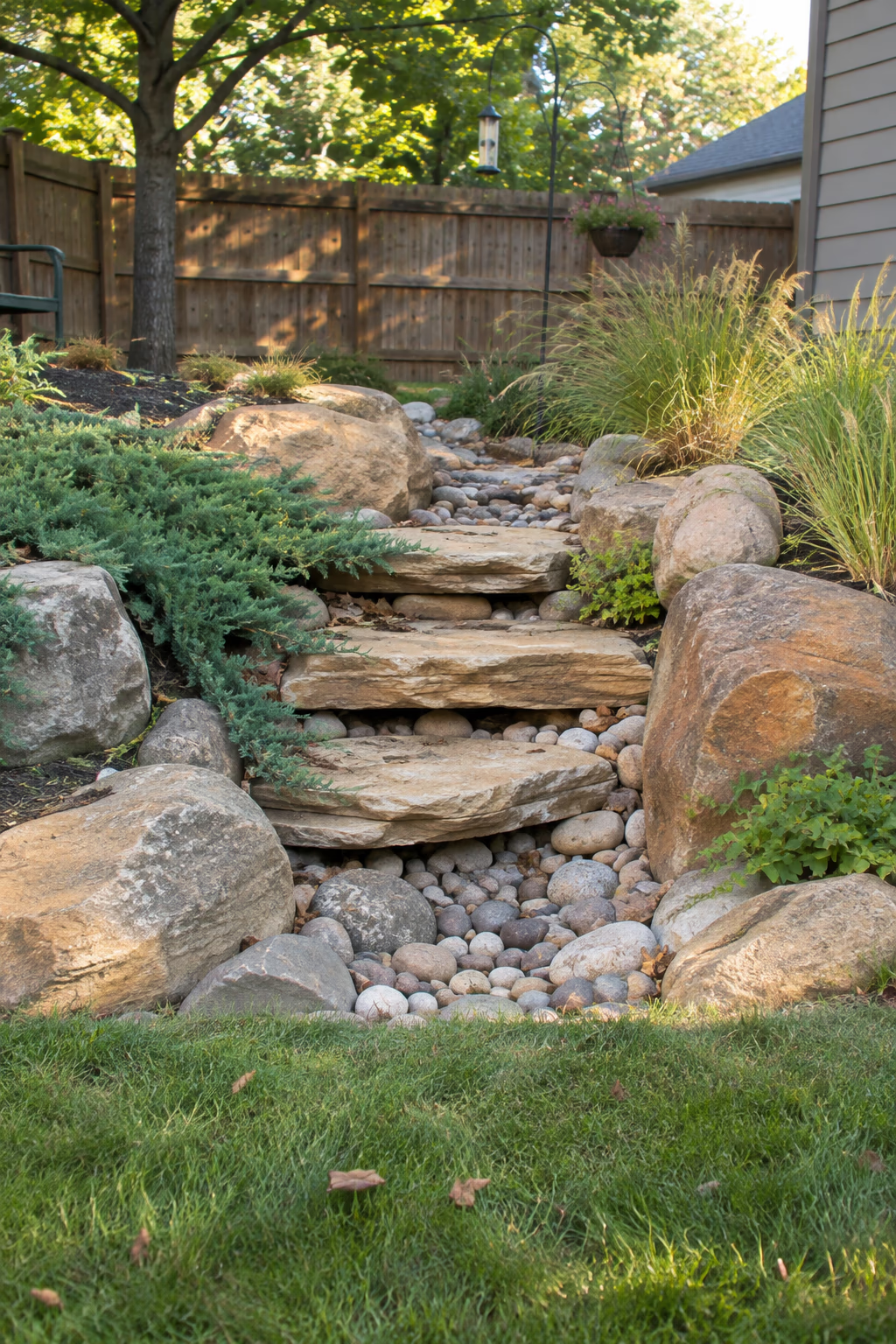
Add drama to a steep spot
Where your yard has a sudden change in level, stack flat stones into a series of small ledges so the creek appears to tumble downhill. Even a drop of 12 to 24 inches can create a convincing dry waterfall.
Use wide, flat stones for the ledges and set them on a well-compacted base. Place larger boulders on each side to frame the falls and hold the soil in place. A small pool of rounded cobbles at the bottom gives the look of a splash basin.
During heavy storms, water will move fast over the drop, so each ledge stone should be firmly seated and slightly tilted back into the slope. For drops taller than a couple of feet, consider having a landscape contractor build the stone structure.
9. Grade the Stones From Boulders to Pebbles
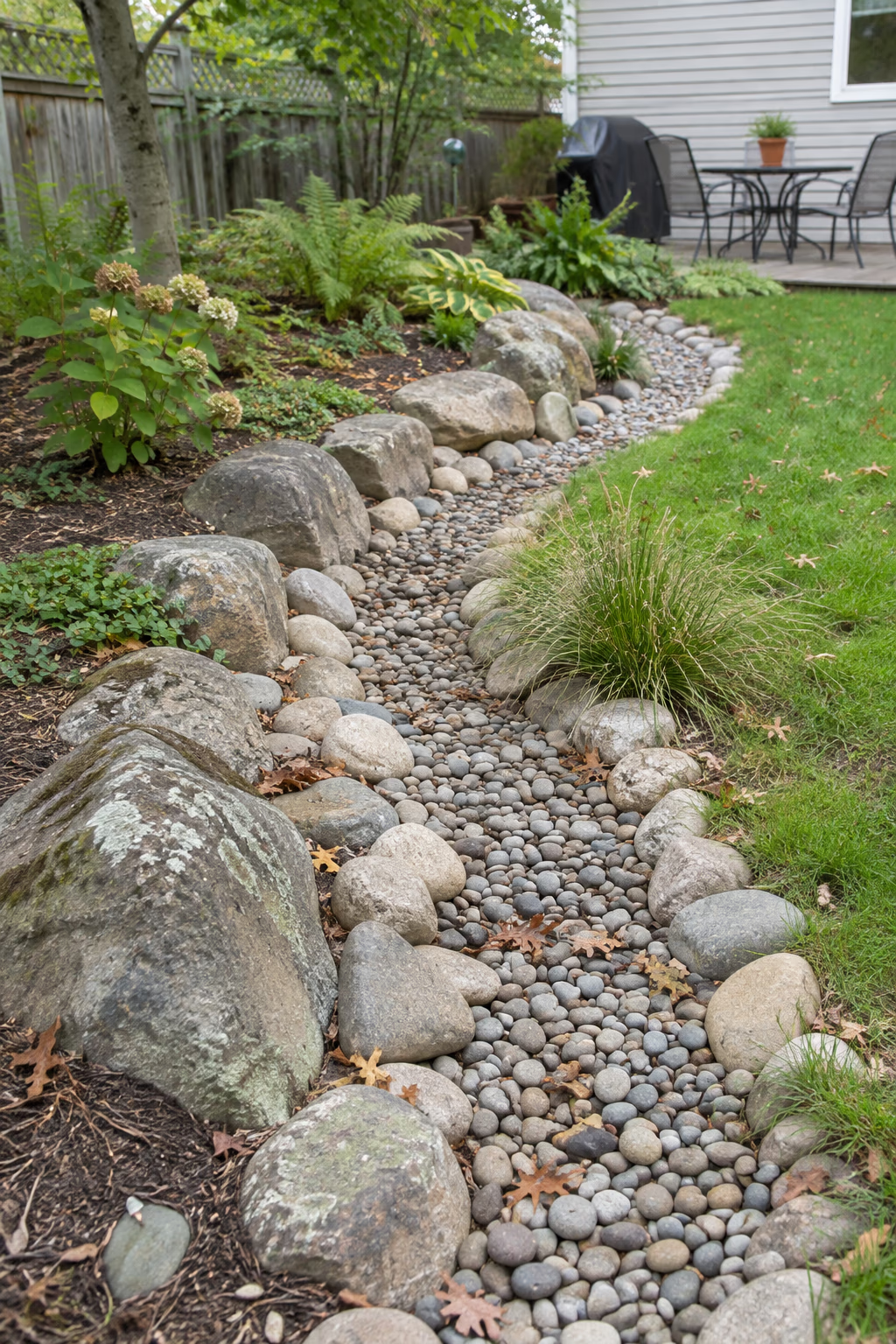
Mixed sizes make the creek believable
The quickest way to make a dry creek look fake is to fill it with one size of rock. Real streambeds sort stone naturally, with heavy boulders on the outer banks, cobbles along the edges, and smaller pebbles settled in the center and at the slow inside curves.
A good mix is roughly 10 percent boulders, 30 percent 4- to 8-inch cobbles, and 60 percent 1- to 3-inch river rock. Place the large stones first, then the cobbles, and finish by raking smaller rock into the gaps.
Buy stone by the ton from a local landscape supplier rather than by the bag, which gets expensive fast. Ask the yard how many square feet a ton covers at your planned depth so you don’t run short halfway through the job.
10. Light the Creek With Low Solar Path Lights
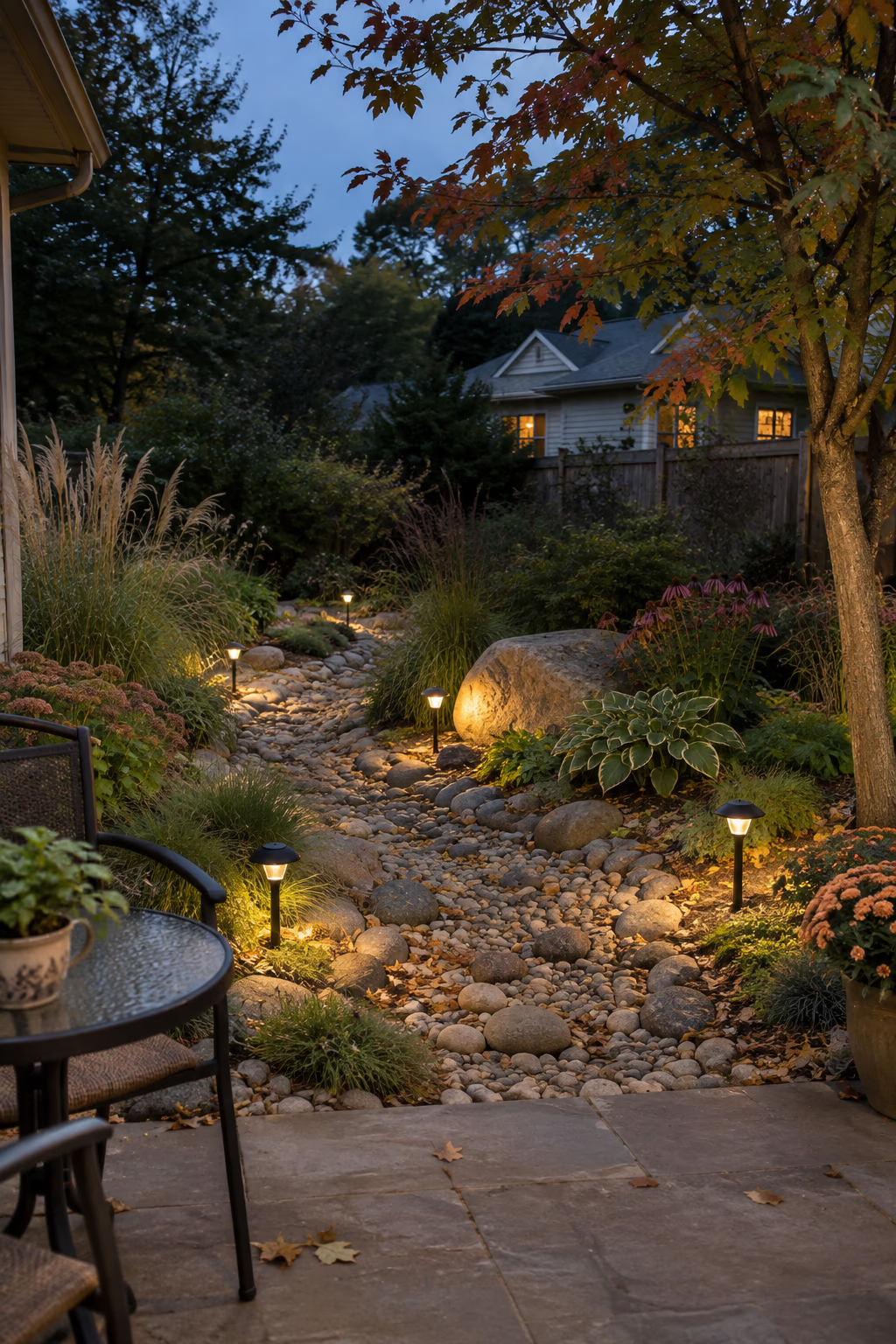
Enjoy the stones after dark
A few small lights along a dry creek turn it into an evening feature. Low solar path lights tucked between plants on the banks cast pools of light across the stones, and the shadows make the rock texture stand out.
Space lights 6 to 10 feet apart and stagger them on both sides rather than lining them up like runway lights. Warm white bulbs look more natural than cool blue-white ones, and a single uplight aimed at a key boulder or bridge adds depth.
Solar lights need several hours of direct sun to charge, so they may be dim in shady spots or during short winter days. For brighter, more reliable lighting, low-voltage wired fixtures are worth the extra cost.
11. Lay Driftwood and a Weathered Log Along the Banks
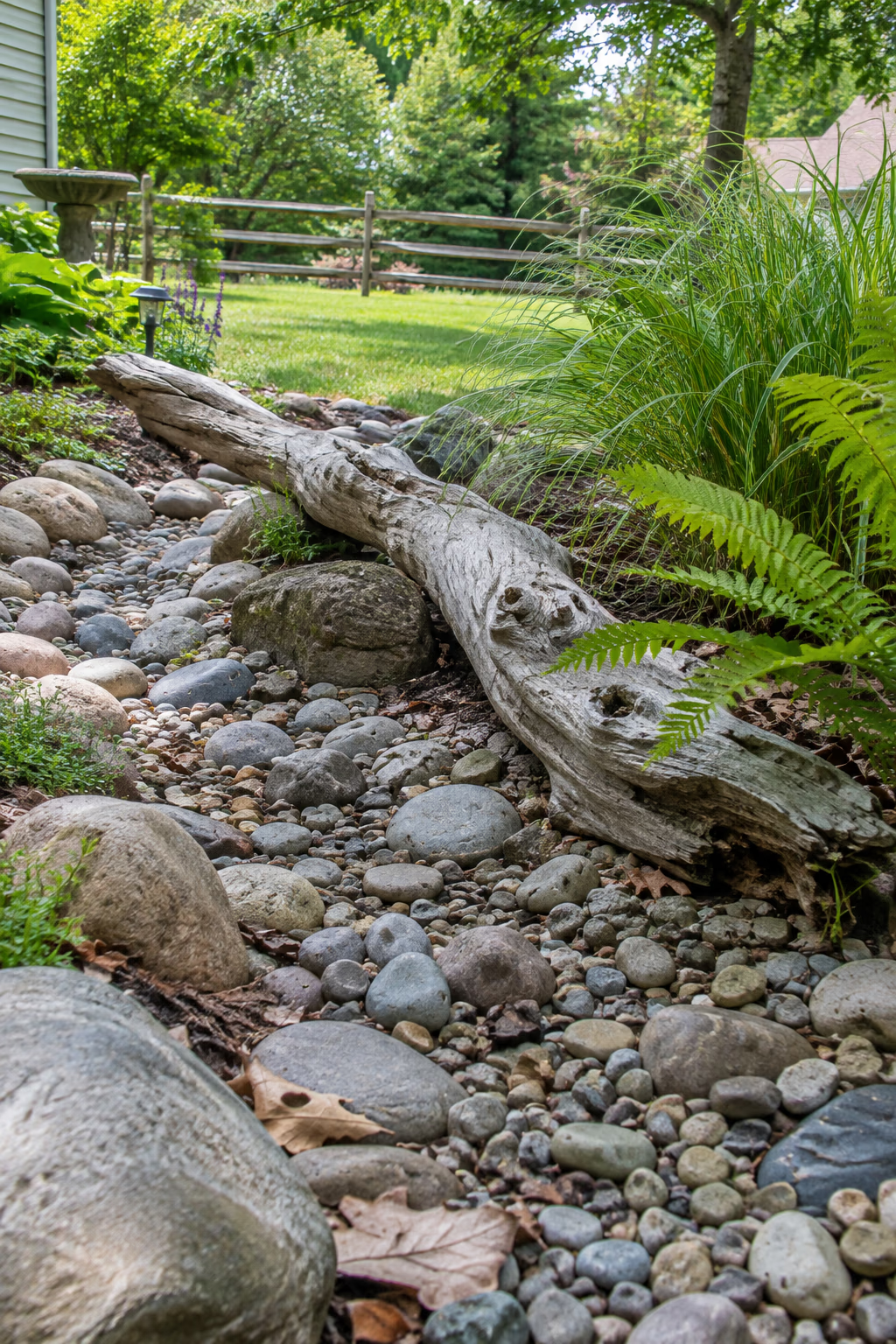
Natural texture that tells a story
A piece of driftwood or a weathered log resting on the bank makes the creek look as though floodwater carried it there. Silvery, sun-bleached wood contrasts nicely with brown and gray stone and adds a soft, organic shape.
Set the wood at an angle across a bend or half-buried in the rock instead of lying perfectly parallel to the creek. Pair it with a clump of grass or a fern so it looks settled in place.
Wood will eventually break down, especially in damp shade. Rot-resistant species like cedar and black locust last longer. Don’t collect driftwood from protected beaches or parks where removal is prohibited.
12. Plant Ferns and Moss Along a Shady Creek
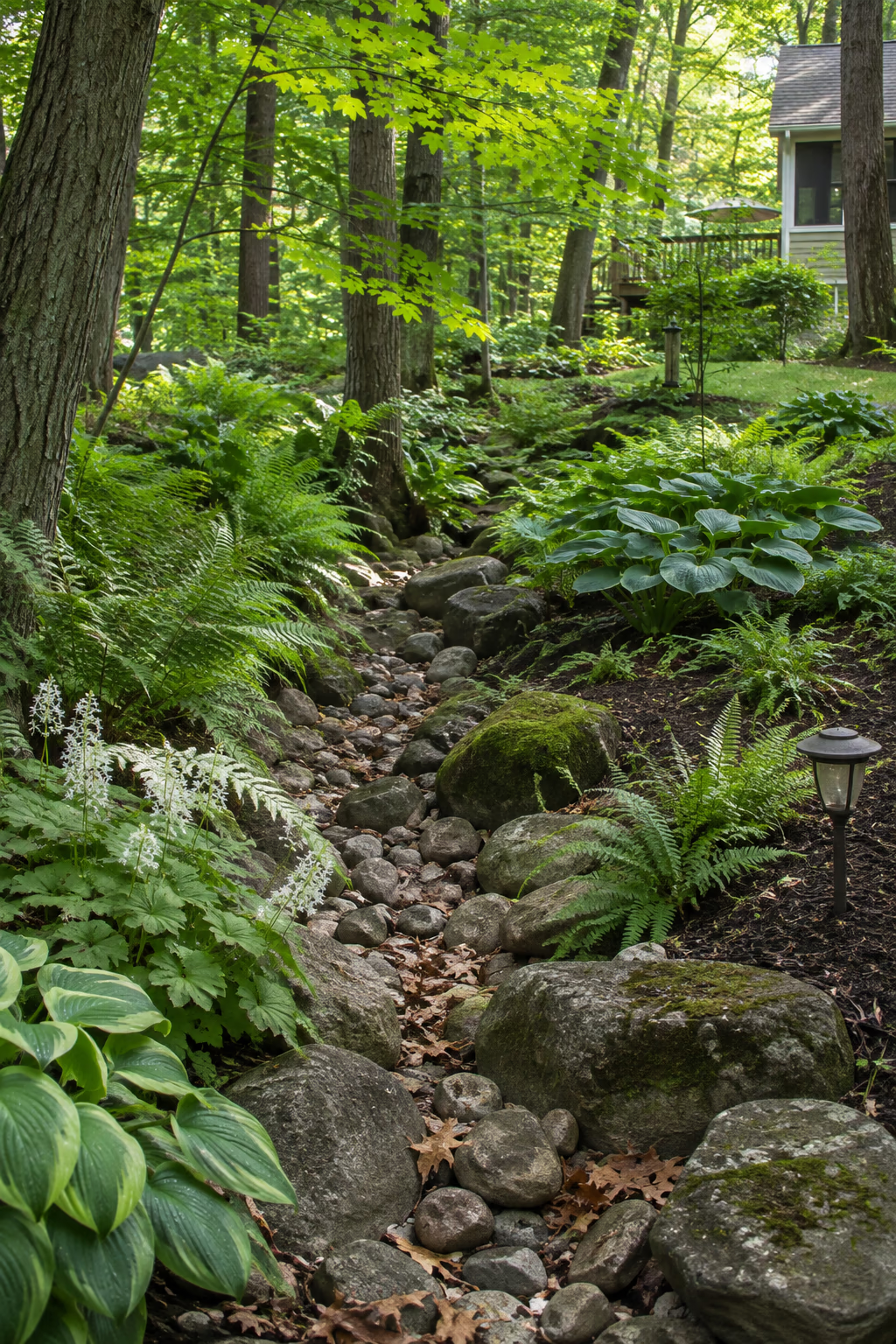
A cool woodland look under trees
Under tall trees, a dry creek can look like a forest stream. Line the banks with Christmas fern, autumn fern, or lady fern, then add hostas, foamflower, and wild ginger. Moss will often colonize damp stone on its own in shady, humid spots.
Use darker gray or mossy fieldstone rather than bright, rounded river rock, which can look out of place in the woods. Let fallen leaves collect in places, and use a light touch when tidying the creek in autumn.
Tree roots make digging tough. Dig carefully by hand near trunks and avoid cutting roots larger than about 2 inches in diameter. A shallower creek bed is better than injuring a mature tree.
13. Pair the Creek With Desert Plants for a Xeriscape Look
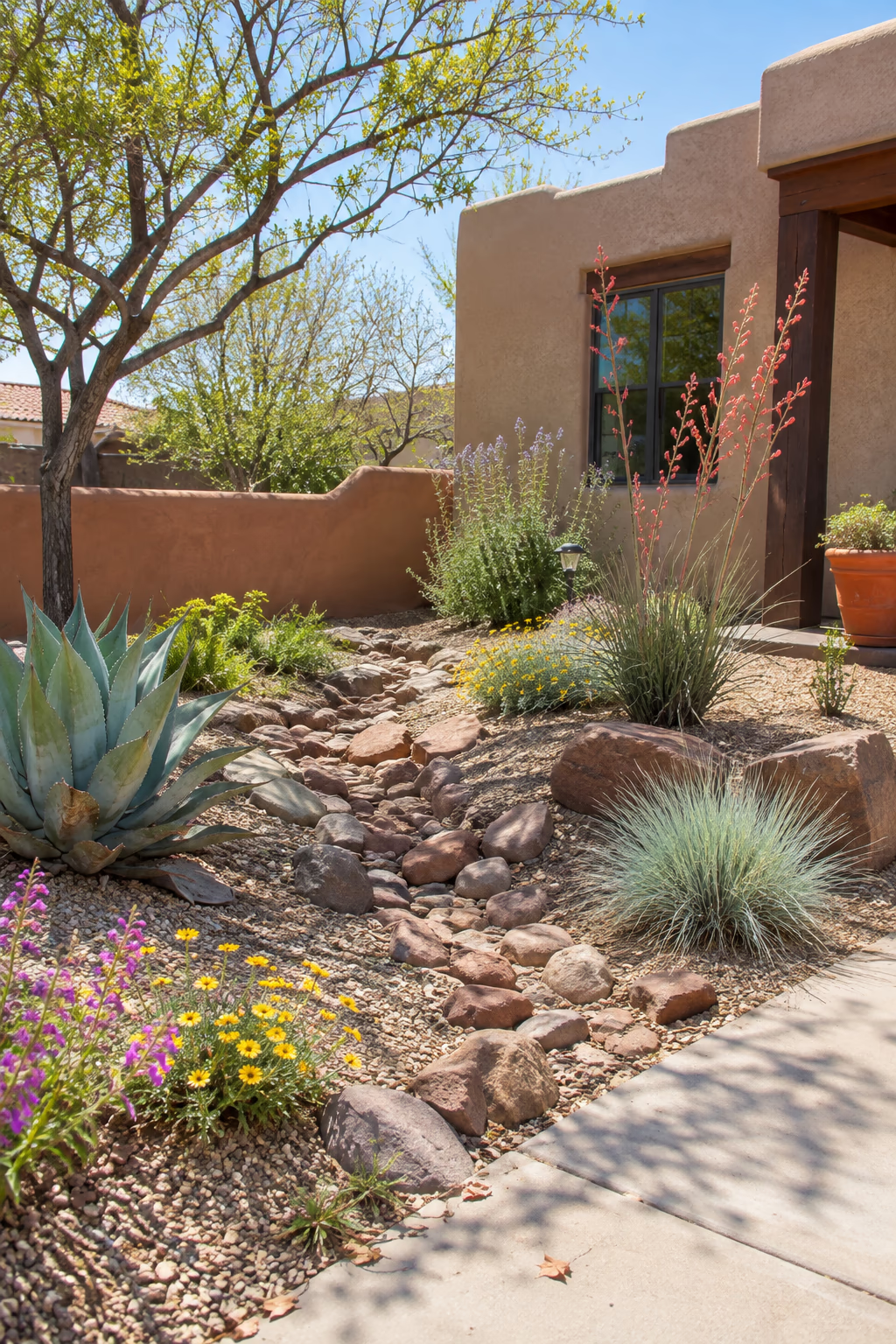
Perfect for hot, dry regions
In the Southwest and other dry climates, a creek of tan or rust-colored stone fits right in with drought-tolerant plants. Agave, yucca, red yucca, blue fescue, desert marigold, and penstemon thrive in the lean, fast-draining soil along the edges.
Use decomposed granite around the plants and a mix of angular and rounded stone in the creek. In desert regions, those rare heavy monsoon rains move a lot of water quickly, so the creek can provide important drainage even if it is dry most of the year.
Plant spiny agaves and yuccas a few feet back from paths and bridges so no one brushes against them. Check your local water district, since some offer rebates for replacing lawn with drought-tolerant landscaping.
14. Run a Narrow Creek Down the Side Yard
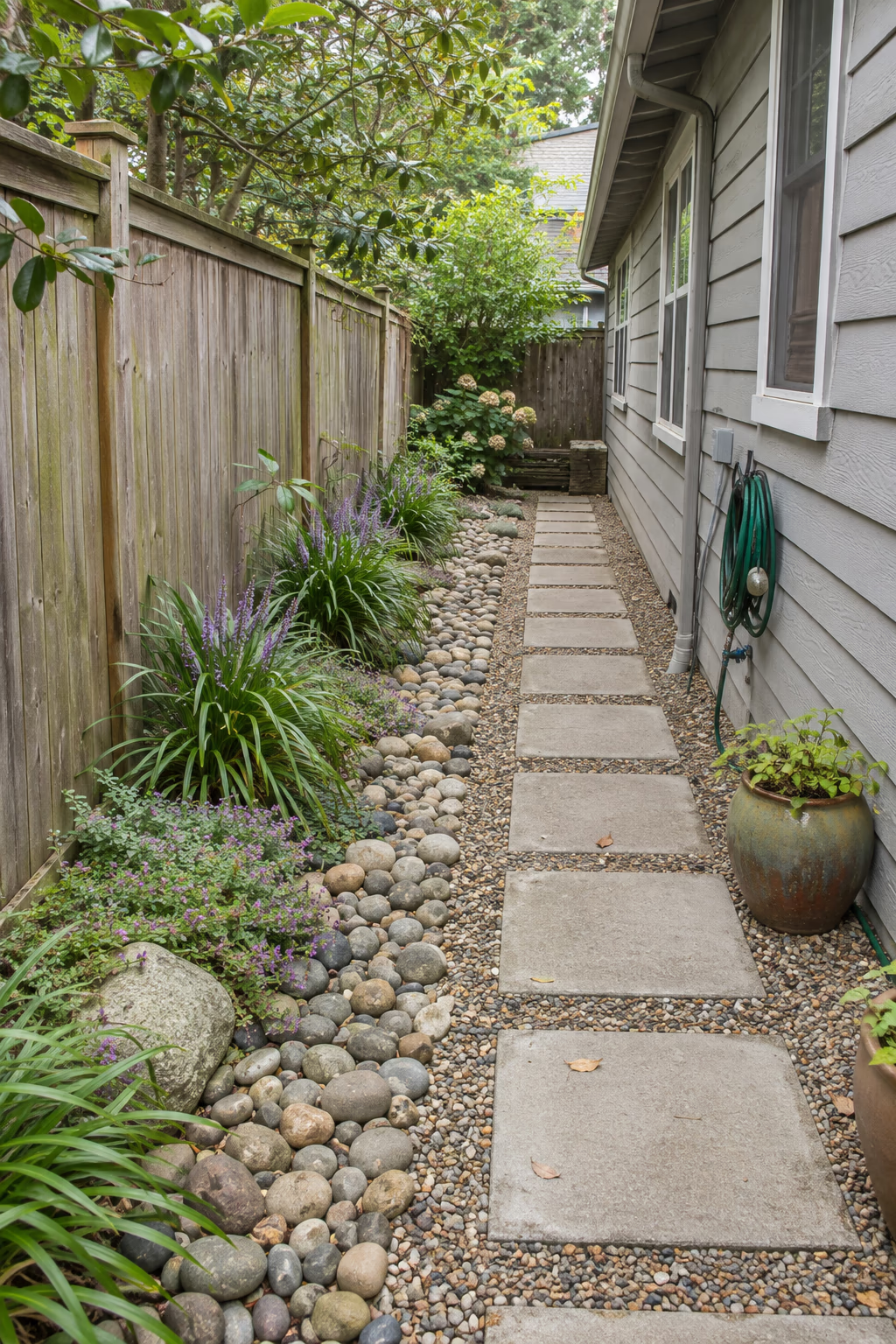
A practical fix for a tight, wet strip
Side yards often collect runoff from two roofs and stay muddy. A narrow dry creek, only 18 to 24 inches wide, can carry that water toward the street or back yard while turning a forgotten corridor into a garden path.
Run a strip of stepping stones or pea gravel beside the creek for walking, and plant compact grasses, liriope, or creeping thyme between the path and the fence. Keep the stone color consistent so the narrow space feels calm rather than cluttered.
Make sure the side yard slopes away from the house and doesn’t direct water onto your neighbor’s property. In many areas, discharging concentrated runoff onto adjoining land can lead to disputes, so check local drainage rules.
15. Widen the Creek Into a Pebble Pool Beside a Bench
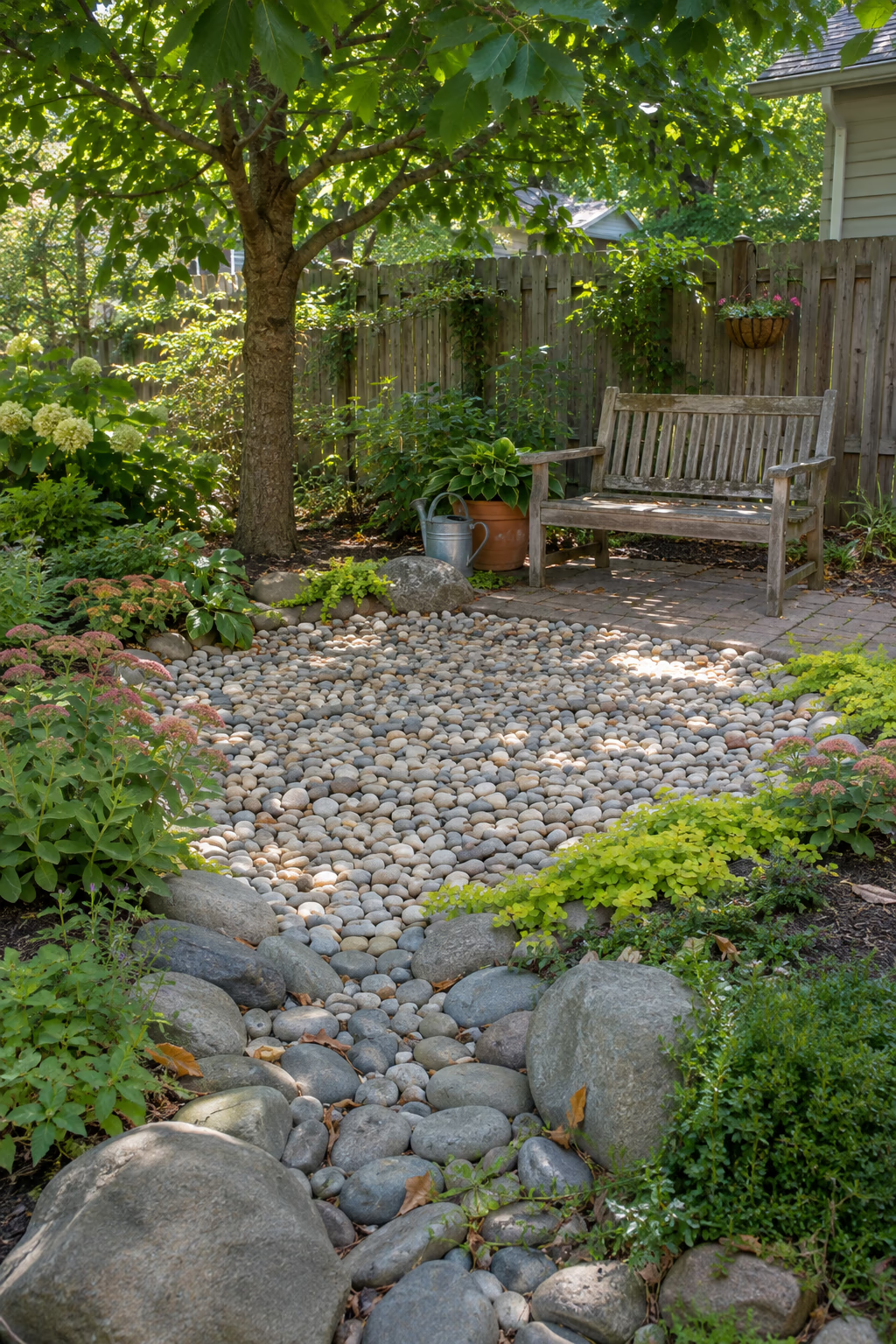
Make the creek a place to sit
Natural streams widen and slow down in places. Recreate that by flaring the creek bed into a broad, shallow pool of smooth pebbles 5 to 6 feet across, then place a simple wood or stone bench at its edge.
Fill the pool with flat, rounded beach pebbles in a slightly lighter color than the main creek so it reads as a calm eddy. A few low plants like sedum or creeping Jenny around the edges soften the shape.
Put the bench on a level, compacted gravel pad or a few pavers so it doesn’t sink into the soil. Choose a spot with afternoon shade if you want the bench to get regular use in summer.
16. Give the Creek a Japanese Garden Feel With a Maple and Lantern
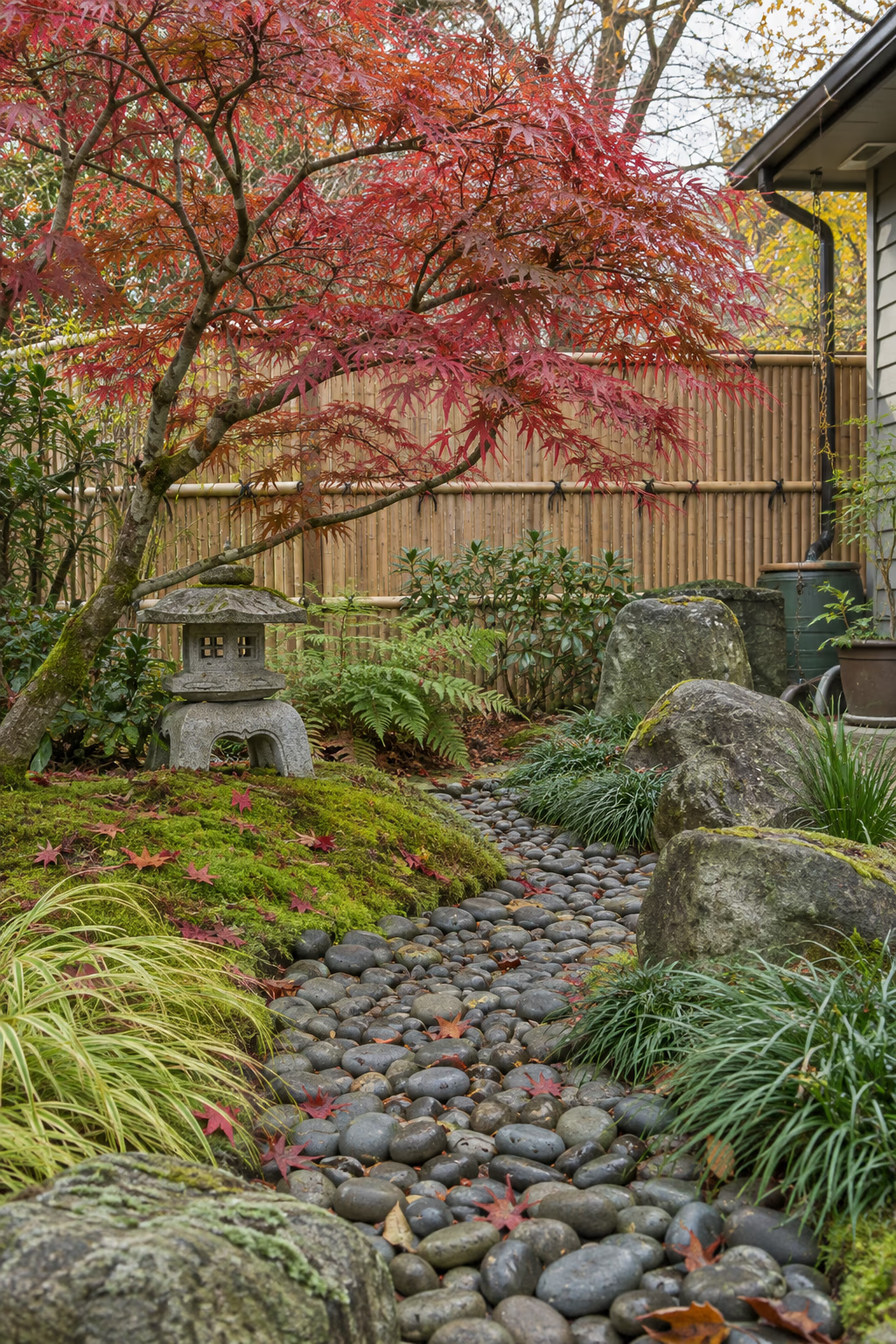
A quiet, contemplative mood
A dry creek fits naturally into a Japanese-inspired garden, where stone often stands in for water. Combine dark, smooth river stones with a Japanese maple leaning over the bed and a small stone lantern on the bank.
Keep the planting restrained. Mounds of moss, Japanese forest grass, mondo grass, and a few clipped evergreens are enough. Use a few large boulders placed in odd-numbered groups rather than many small accents.
Japanese maples prefer some afternoon shade in hot climates and need well-drained soil, so plant them on the higher bank instead of at the bottom of the creek, where water collects after storms.
17. Set Flagstone on Edge to Suggest Rippling Water
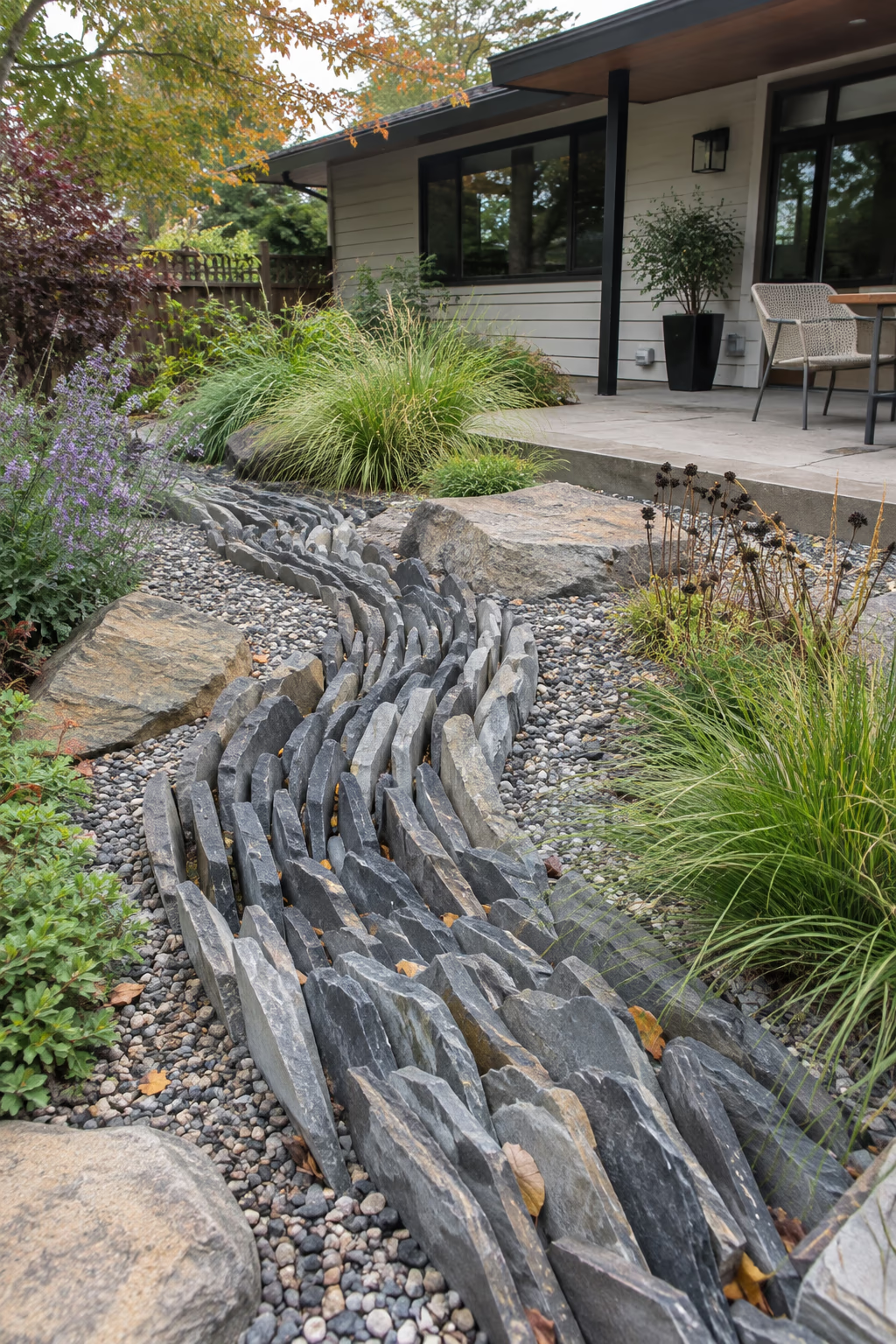
A modern, artful twist
For a more contemporary look, stand thin pieces of flagstone or slate on edge, packed tightly together in rows that curve along the creek. From a distance, the vertical stone edges look like ripples moving downstream.
Set the stones in a compacted gravel base and lock them together with polymeric sand or fine gravel in the joints. Vary the height slightly and angle the rows in the direction of flow for the most convincing effect.
This design is labor intensive and works best for decorative creeks or areas with light runoff. In channels that carry a lot of water, mix the edged flagstone with open rock sections so water can still drain through.
18. Curve the Creek Around a Fire Pit Patio
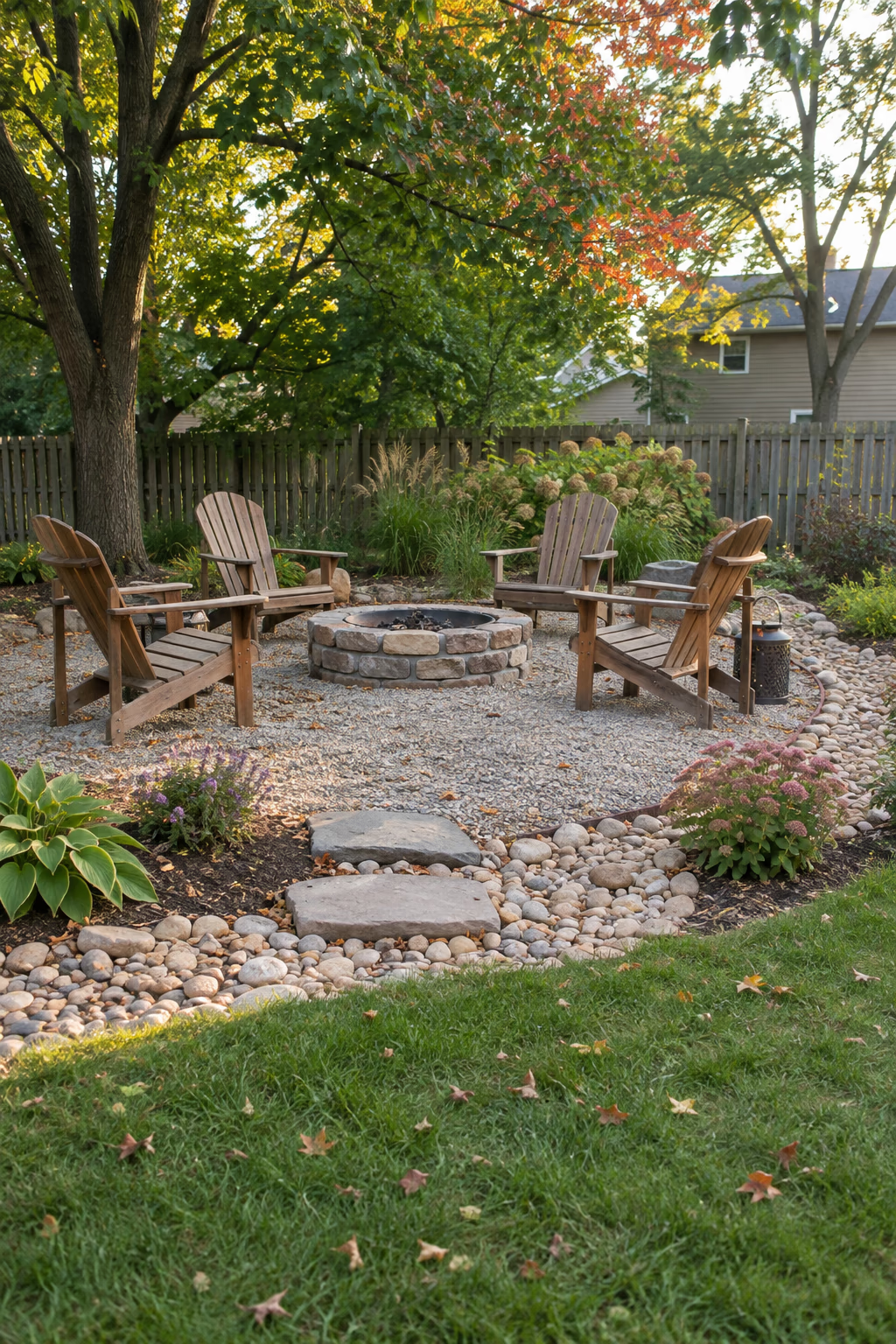
Tie your gathering spot into the landscape
A dry creek that sweeps around a gravel or paver fire pit patio makes the seating area feel like a clearing beside a stream. It also helps drain the patio, so the space dries quickly after rain.
Use the same stone family for the fire pit ring, patio gravel, and creek bed, varying only the size. Add a short bridge or a pair of stepping stones where the main path crosses the creek to reach the seating area.
Keep plants with dry foliage and tall grasses well back from the fire pit, at least 10 feet if possible. Check local burn rules and any HOA restrictions before building a permanent fire feature.
19. Hang a Rain Chain at the Head of the Creek
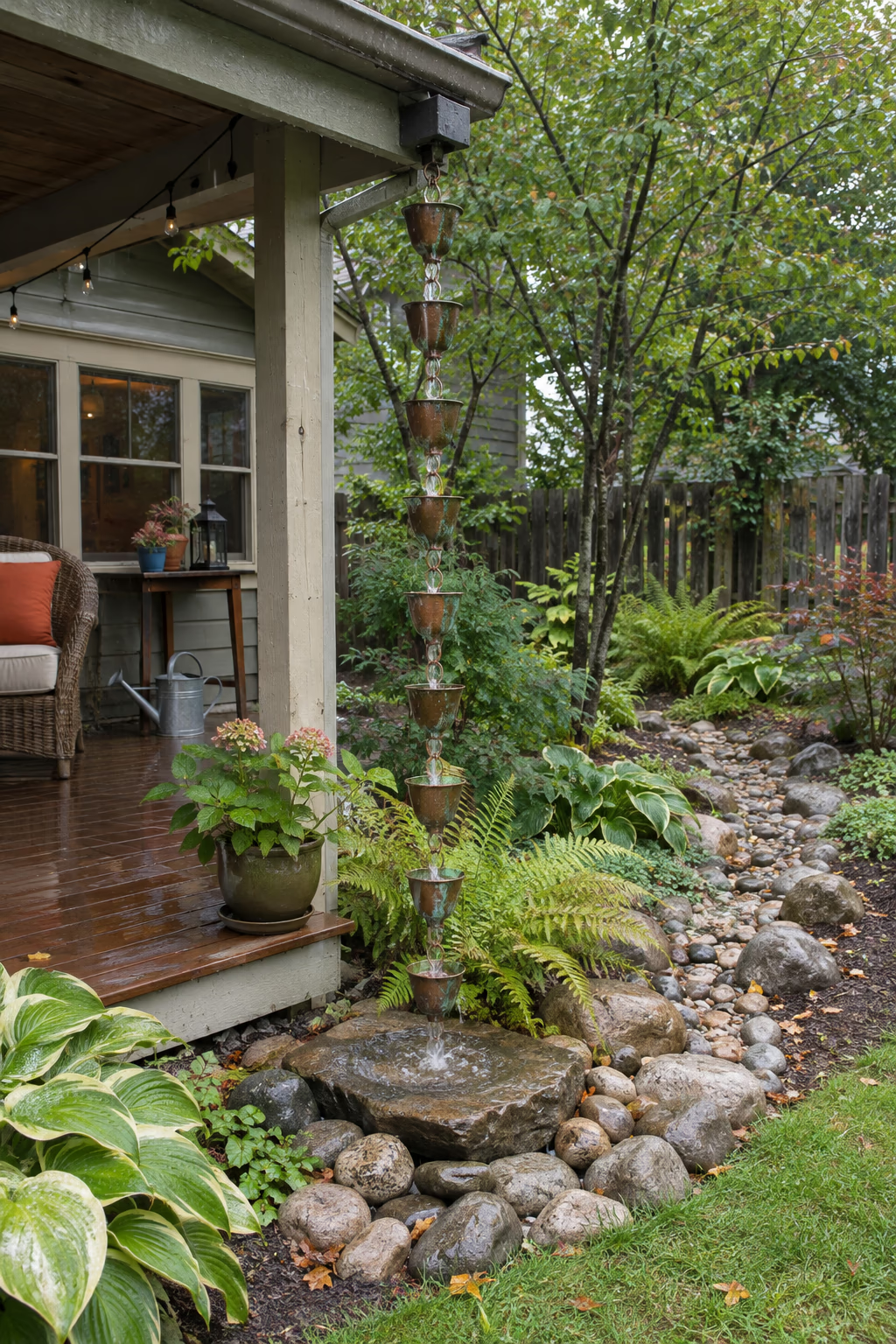
Watch the rain become part of the design
A rain chain swapped in for a standard downspout guides water down a series of cups or links into a stone basin at the start of the creek. It turns every rainstorm into a small show and draws attention to the creek.
Place a large flat stone, a shallow basin, or a ring of cobbles under the chain to catch the splash, and start the creek bed right there. Copper chains weather to a soft brown-green patina that pairs well with natural stone.
Rain chains handle less water than an enclosed downspout, so they can splash in heavy storms. They work best on smaller roof sections, such as a porch or garage, and should be anchored at the bottom so wind doesn’t swing them.
20. End the Creek at a Bubbling Fountain Basin
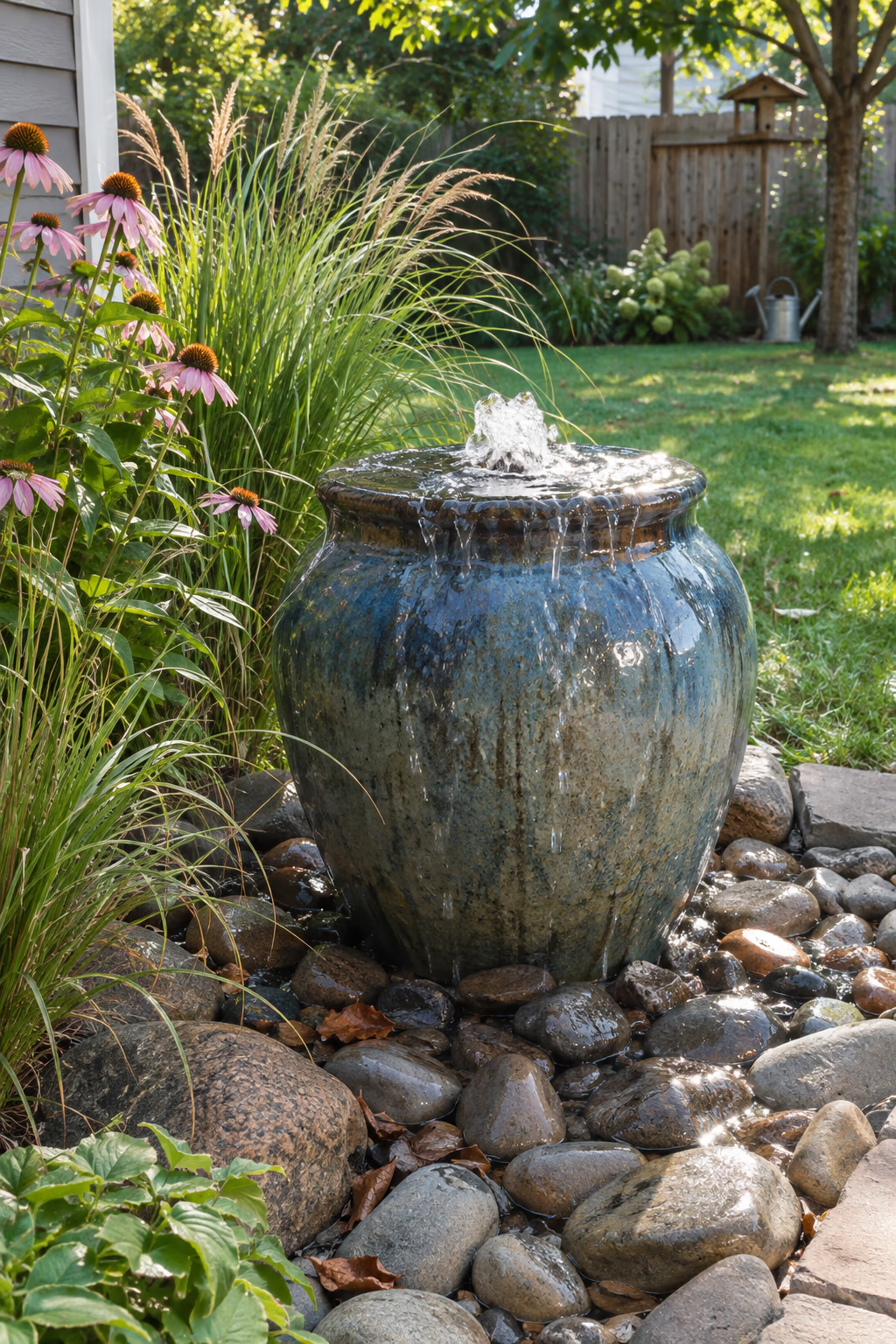
A trickle of sound without a pond
To hint at real water, end a decorative creek at a small, recirculating fountain. A buried reservoir basin covered with grate and stones hides the water, while a bubbling urn or drilled boulder spills over the rocks and drains back into the reservoir.
Kits for these disappearing fountains are widely available and need only a small pump and an outdoor GFCI outlet. The sound of moving water pairs beautifully with the dry stone and attracts birds.
Top off the reservoir during hot weather, and in cold climates drain the pump before freezing temperatures arrive. Electrical work should follow local codes, so hire an electrician if you need a new outdoor circuit.
21. Choose Warm Earth-Tone Stone Over Bright White
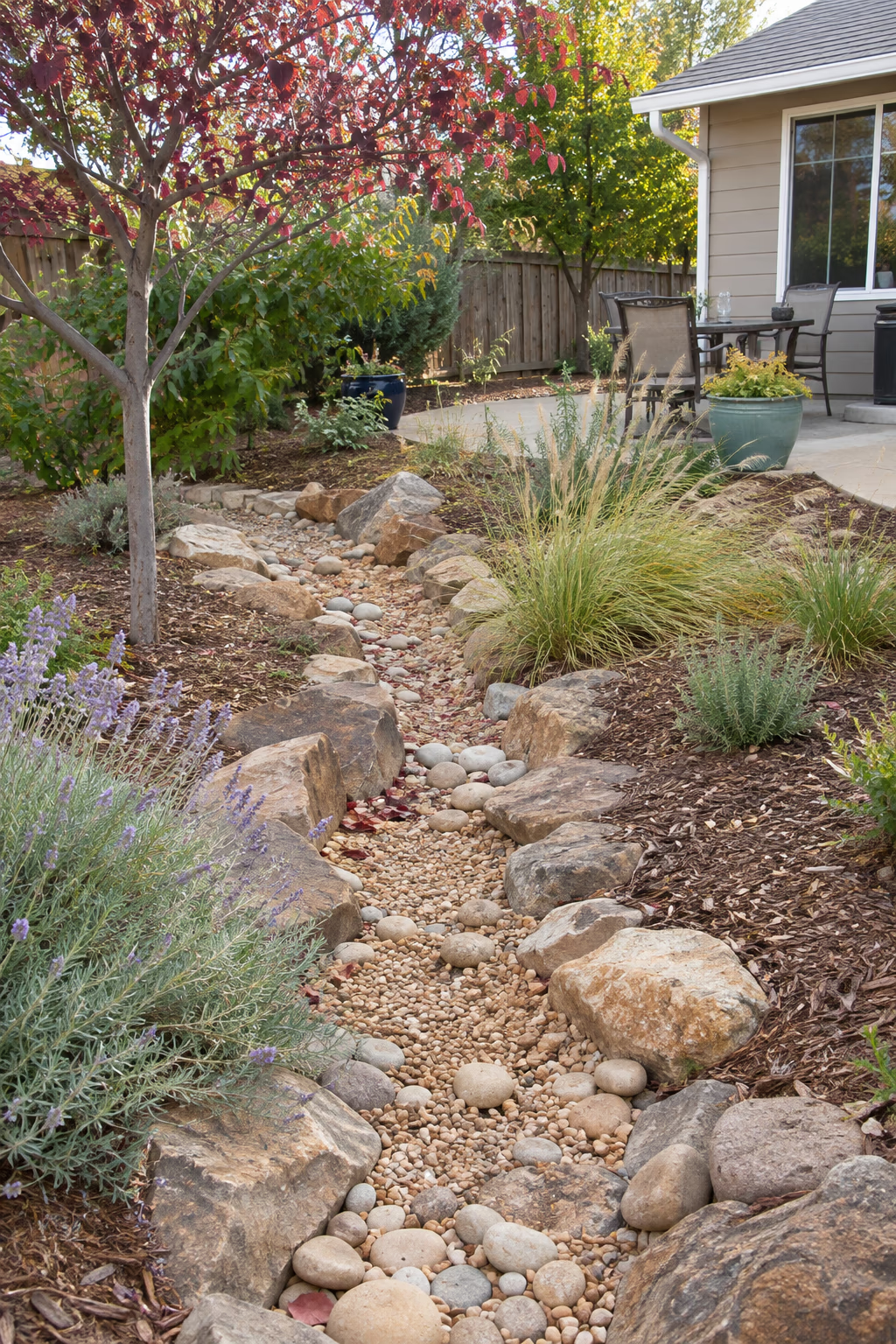
A softer palette that blends in
Bright white stone can look stark and show dirt quickly. Warm tan, buff, rust, and gray-brown river rock blends more naturally with soil, mulch, and plants, and many homeowners are moving toward these earthy colors.
Pick one color family and vary the texture instead of mixing many colors. For example, combine tan pea gravel, buff cobbles, and brown boulders. Looking at wet and dry samples helps, since stone often looks richer and darker after rain.
Local stone is usually the most affordable and the most natural looking because it matches the native landscape. Visit a nearby stone yard to see the materials in person before ordering a full load.
How to Plan Your Dry Creek Bed
A dry creek bed looks simple, but a little planning ensures it handles water well and looks natural for years.
- Watch your yard in the rain. Note where water enters, collects, and leaves your property, and follow those paths when laying out the creek.
- Plan the start and finish. Every creek should begin at a water source, such as a downspout or slope, and end somewhere water can safely go, like a rain garden, lawn, or approved drainage area.
- Size it to the water. A general rule is to make the trench about twice as wide as it is deep. Larger roofs and steeper slopes need wider, more heavily armored channels.
- Use the right base. Line the trench with a permeable landscape fabric to reduce weeds and keep stones from sinking. Avoid plastic sheeting, which blocks water from soaking into the ground.
- Budget for stone. Rock is heavy and is usually priced by the ton. Delivery may cost extra, and large boulders may need professional placement.
- Check rules and utilities. In the United States, call 811 before digging, and check with your town or HOA before changing drainage patterns or sending water toward a street, ditch, or neighbor.
Frequently Asked Questions
How deep should a dry creek bed be?
Most residential dry creek beds are 12 to 24 inches deep and about twice as wide. Shallower beds work for decorative creeks, while beds that carry heavy roof or slope runoff may need to be deeper and wider.
Do I need landscape fabric under a dry creek bed?
Fabric is not required, but a permeable landscape fabric helps keep stones from sinking into soil and reduces weeds. Avoid plastic liners, which prevent water from soaking into the ground and can cause runoff to overflow.
What kind of rock is best for a dry creek bed?
Rounded river rock looks most like a natural stream. Use a mix of boulders, cobbles, and smaller pebbles. Locally sourced stone is usually the most affordable and blends best with your surroundings.
How much does a dry creek bed cost?
A small DIY creek can cost a few hundred dollars in stone and fabric. Large creeks with boulders, bridges, grading, and professional installation can cost several thousand dollars or more, depending on size and access.
Will a dry creek bed fix drainage problems?
A dry creek bed can redirect surface runoff and slow erosion, but it can’t fix every drainage issue. Poor foundation grading, high water tables, or very heavy clay may also need regrading, French drains, or professional help.
Final Thoughts
A well-planned dry creek bed is one of the few landscape features that solves a problem and adds beauty at the same time. Whether you start with a simple downspout channel or a winding creek with a bridge, it can make your yard feel more natural and more functional.
Begin by watching how water moves through your yard, choose stones and plants that suit your climate, and build the creek in stages if needed. With time, the plants will fill in, the stones will settle, and your dry creek will look like it was always part of the landscape.