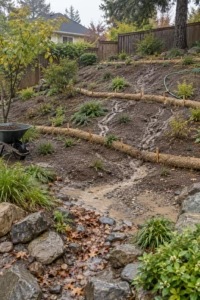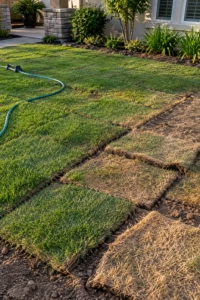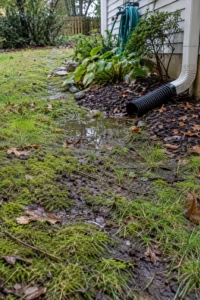
After a summer thunderstorm, most yards send water rushing off the roof, across the driveway, and down the street drain. A rain garden catches that water in a shallow, planted dip instead, and a few hours later it holds nothing but flowers, grasses, and the birds and bees that visit them.
That’s why rain gardens have become so popular with homeowners. They fix real problems, like soggy lawn patches, eroded mulch beds, and gutters that spill toward the foundation, and they look like an ordinary flower bed while they do it. Most use native plants that need little care once they’re established, and a basic one is an easy weekend project.
These 25 rain garden ideas cover the whole range, from rain chains, dry creek beds, and stone runnels to colorful native plantings, shady fern gardens, stock tank planters, and small basins for slopes, curb strips, and coastal yards. Pick one that fits a wet spot you already have, or combine several into a garden that works with every storm.
1. Hang a Rain Chain Over a River Rock Basin
Turn every storm into a show
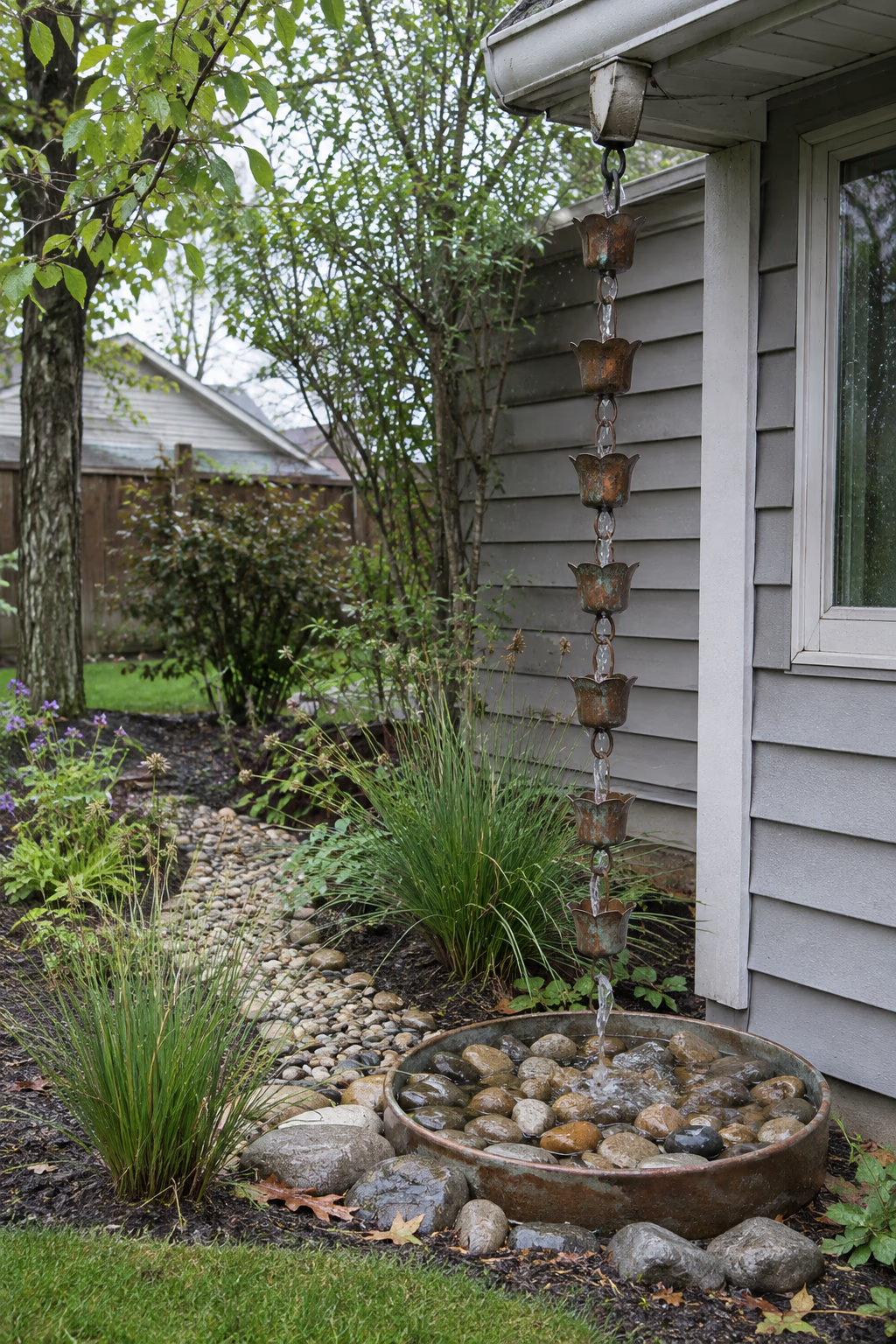
Swap one downspout for a rain chain made of copper cups or linked loops, and set a shallow basin of river rock right below it. Water runs down the chain where you can see it, splashes onto the stones, and then flows through a gravel-lined trench or shallow channel into the planted rain garden at least 10 feet from the house.
The rocks keep falling water from digging a hole and splashing mud on your siding. A ring of 2- to 4-inch stones about 2 feet across works for most single-story roofs.
A rain chain carries less water than a closed downspout, so it works best on a small roof section or a covered porch. In cold climates ice adds weight, so anchor the bottom of the chain to a stake.
2. Build a Dry Creek Bed That Leads Runoff to the Garden
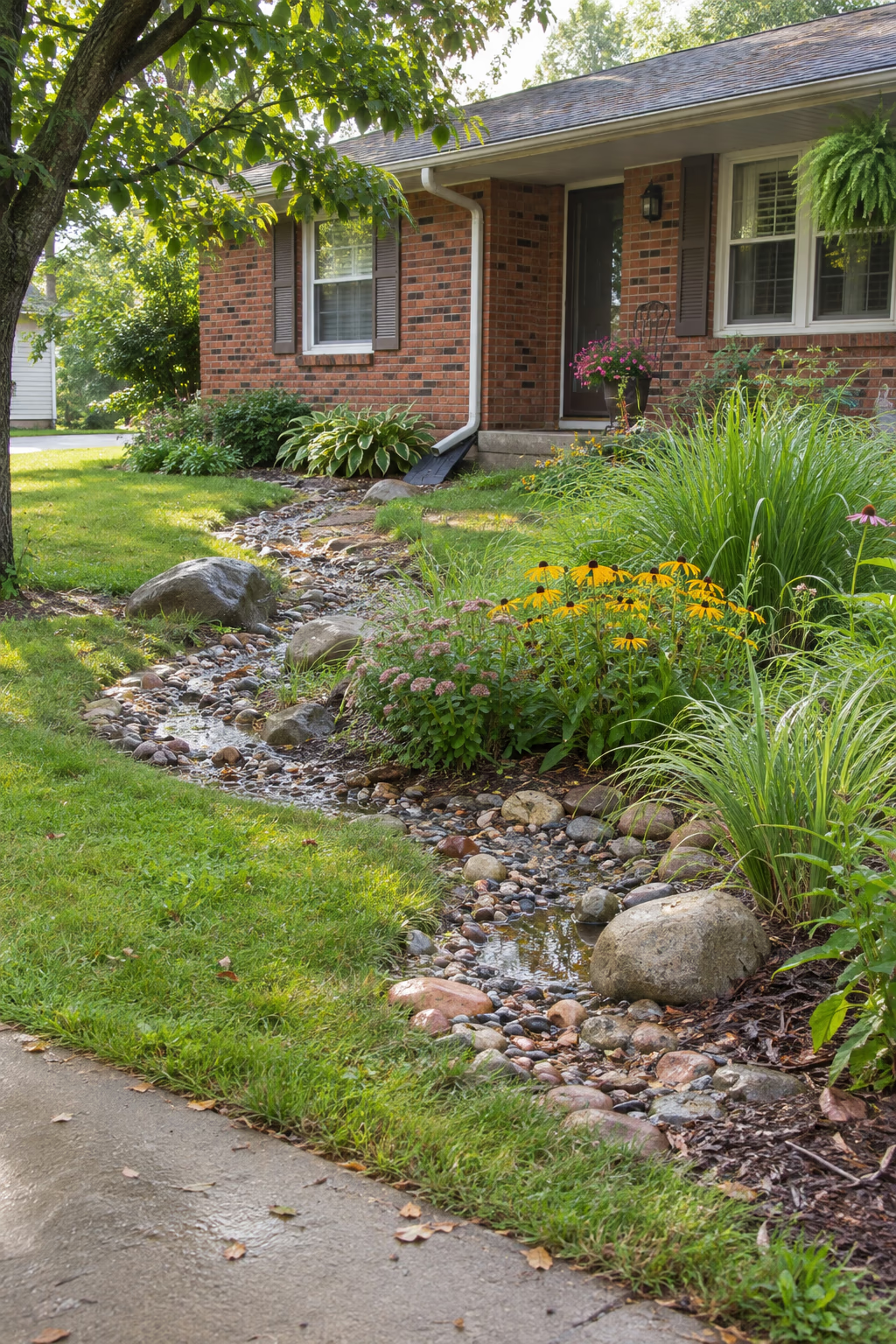
Handsome when dry, useful when wet
A dry creek bed is a shallow, winding channel lined with stones that carries water from a downspout or low spot into the rain garden. Dig a trench about 2 to 3 feet wide and 8 to 12 inches deep, lay a permeable landscape fabric, and fill it with a mix of river rock in several sizes, from pea-size gravel to a few 12-inch stones along the banks.
It gives fast-moving water a clear path and slows it down at the same time. Curves look more natural than straight lines, and a wider spot partway down makes room for a boulder or a clump of grass.
Give the channel a gentle drop of about 1 to 2 percent, bury the edge stones partway so they look settled, and plant the banks so the bed doesn’t read as a gravel ditch.
3. Fill the Basin With Purple Coneflowers and Blazing Star
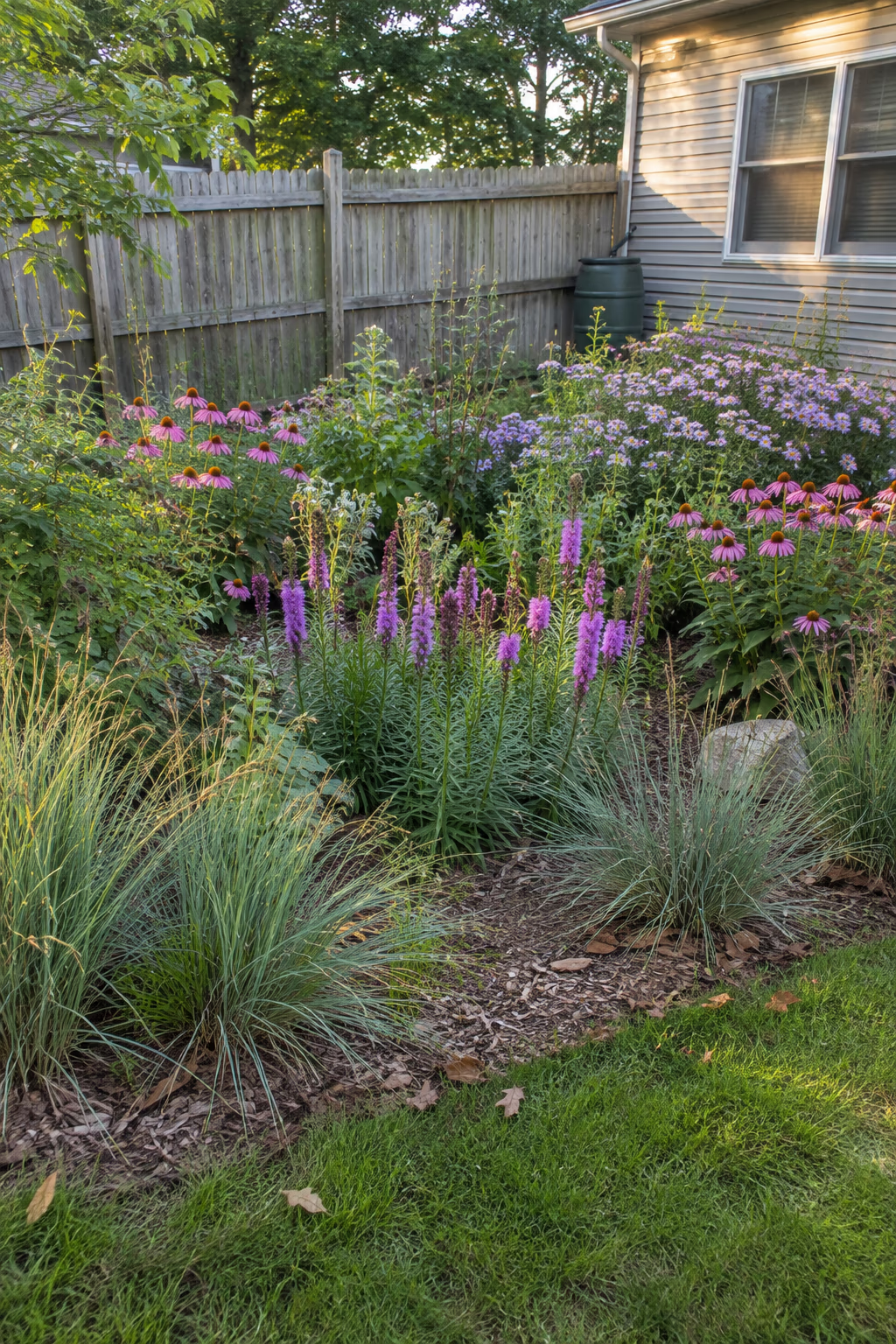
A purple palette that pulls in pollinators
A purple-themed rain garden looks great from midsummer through fall. Plant dense blazing star along the bottom and lower sides, where its purple spikes put up with short periods of standing water, then add purple coneflower, New England aster, and a few clumps of little bluestem higher on the slopes.
Repeating the same color makes even a small 8-by-10-foot basin look planned. Bees and butterflies visit all summer, and in winter goldfinches pick at the coneflower seed heads if you leave them standing.
Coneflowers like good drainage, so keep them on the upper edge rather than the wettest center. Space plants 12 to 18 inches apart and use shredded hardwood mulch, which floats away less than chips.
4. Plant a Curving Rain Garden in the Front Lawn
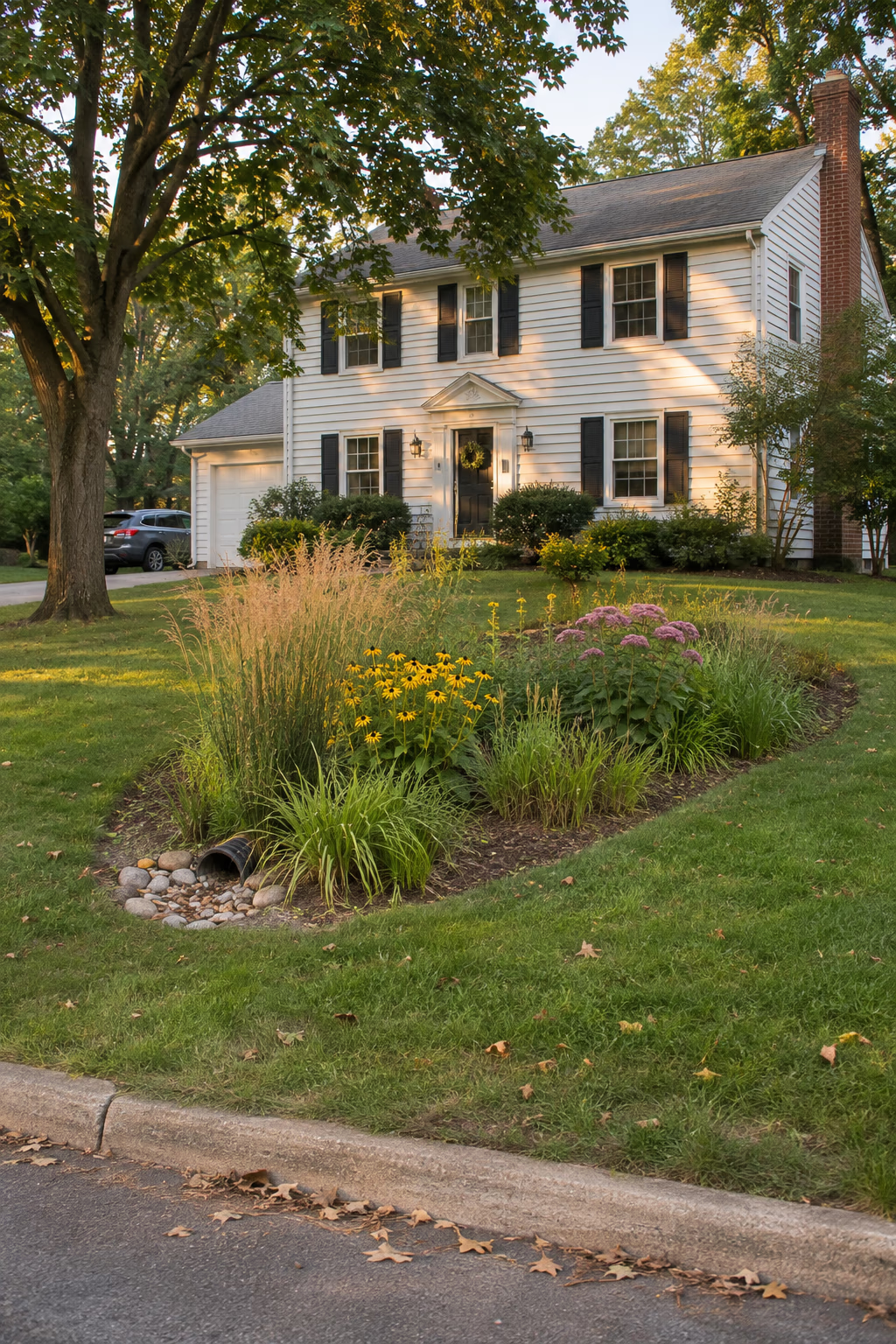
Curb appeal that soaks up the roof
A kidney- or teardrop-shaped bed in the front lawn is one of the most common rain garden layouts, and for good reason. Place it at least 10 feet from the foundation, where a downspout extension or buried pipe can reach it. Then dig a basin about 6 inches deep with gently sloping sides.
The curving outline makes it look like a regular flower bed, so neighbors see a garden, not a drainage project. A common rule of thumb is to size the garden at roughly 20 to 30 percent of the roof area that drains into it, and to go bigger in clay soil.
Before you dig, call 811 to have underground utilities marked, and stay away from septic fields and wells. If your HOA reviews front-yard changes, show them a simple sketch with the plant list first.
5. Channel a Downspout Through a Stone-Lined Runnel
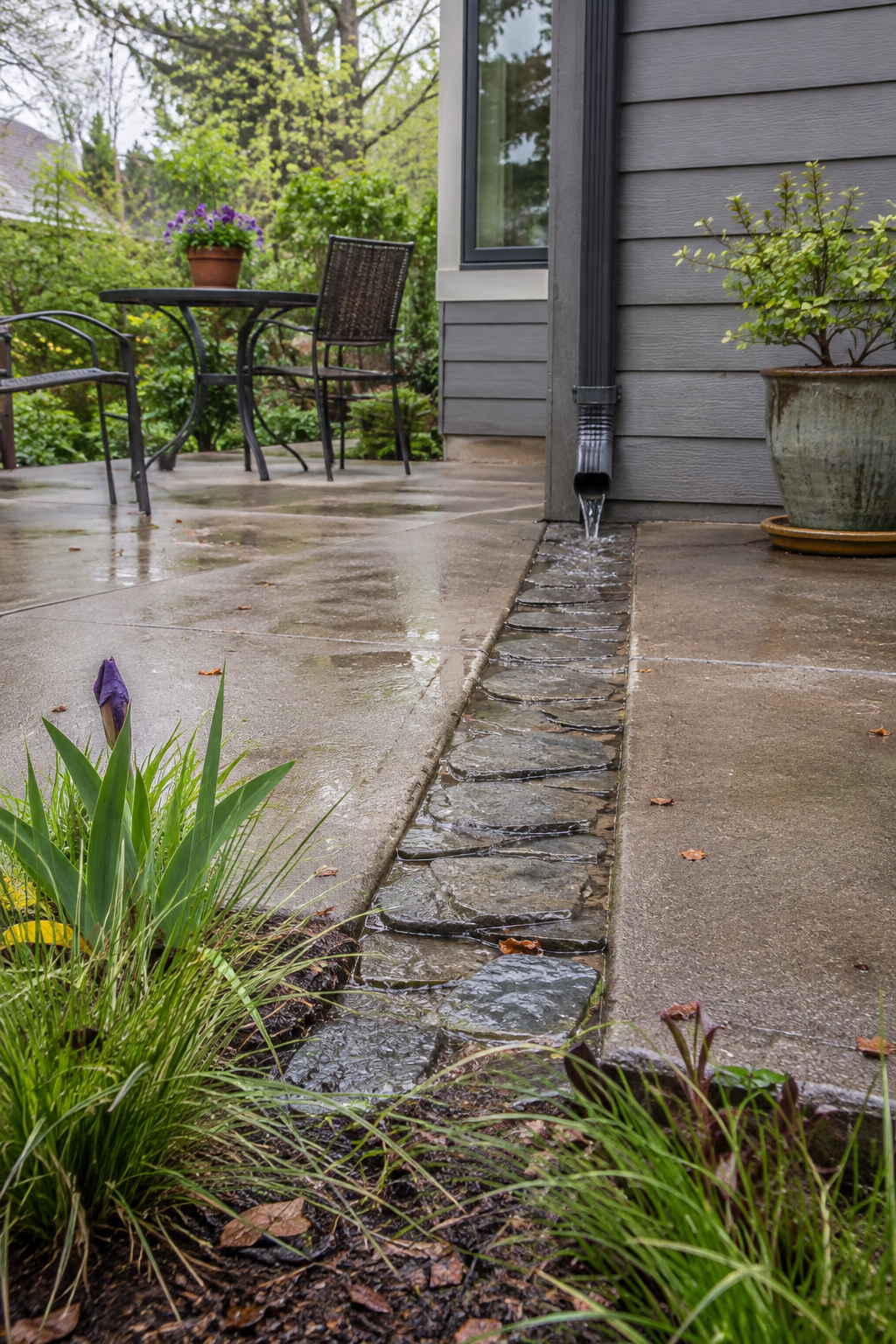
A crisp, modern way to move water
A runnel is a narrow, shallow channel, often only 6 to 8 inches wide, that carries water across a patio or path toward the garden. Make one from a precast concrete channel, a row of flat stones set in mortar, or a steel channel laid flush with the ground.
It suits modern and small yards where a wide creek bed would take up too much room, and on dry days the clean line still works as a design detail.
Runnels need a steady slope and an open end so water doesn’t back up. Where one crosses a path, cover it with a grate so nobody trips, and clear out leaves every fall.
6. Cross the Rain Garden With a Simple Wooden Bridge
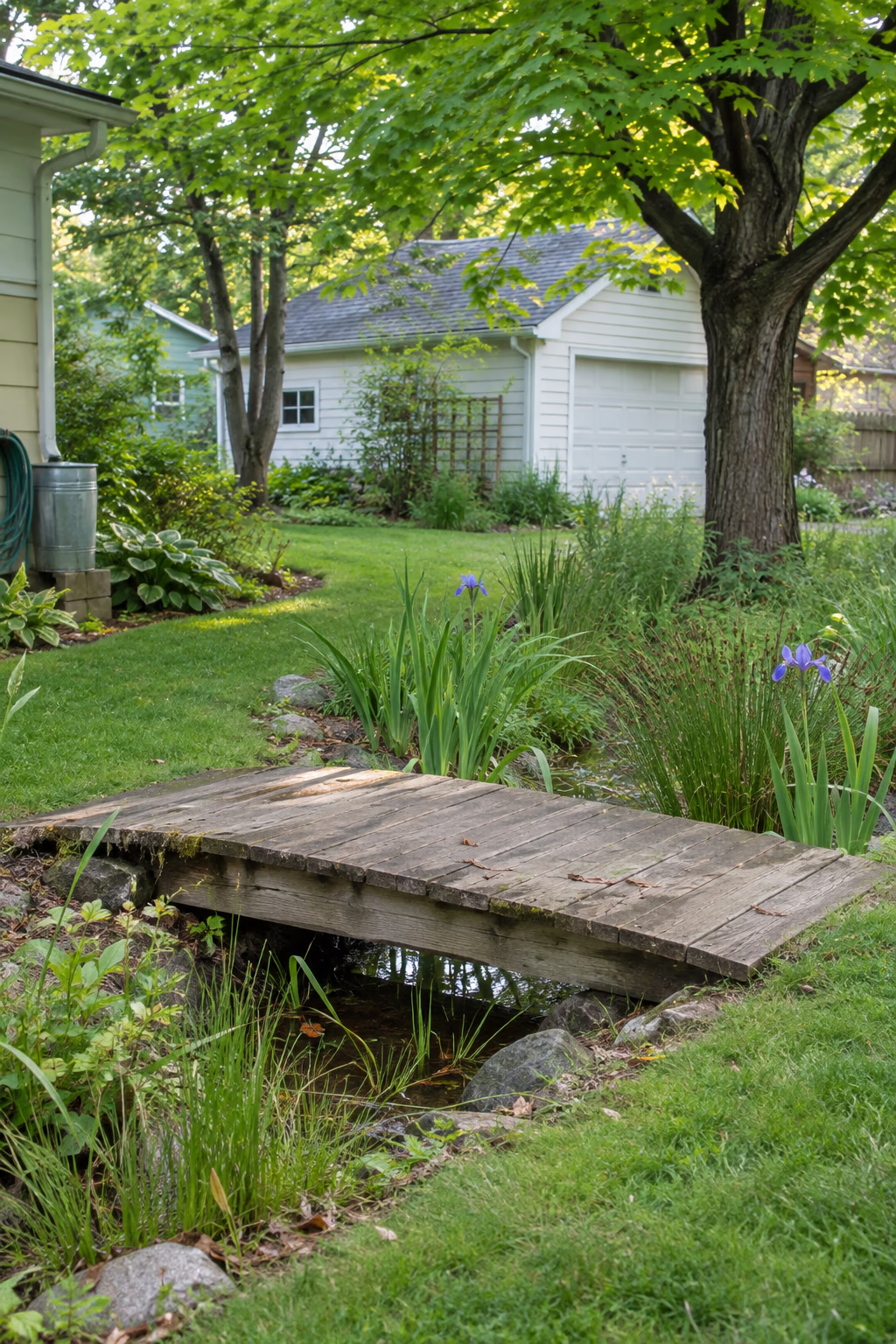
A charming focal point that stays dry underfoot
When a rain garden sits in the middle of a walking route, a small footbridge lets you cross without stepping on wet soil. A plain cedar or pressure-treated bridge about 3 feet wide and 6 to 8 feet long, set on concrete pavers or a gravel base, is enough for most yards.
A bridge gives the garden a clear purpose and makes a great spot to stand and watch the water after a storm. Weathered gray wood looks good next to sedges, iris, and stone.
Keep the footings outside the wettest part of the basin so the wood isn’t sitting in water. Use exterior-rated hardware, and if anyone in the house is unsteady on their feet, add a low handrail.
7. Layer Plants by Wet, Middle, and Dry Zones
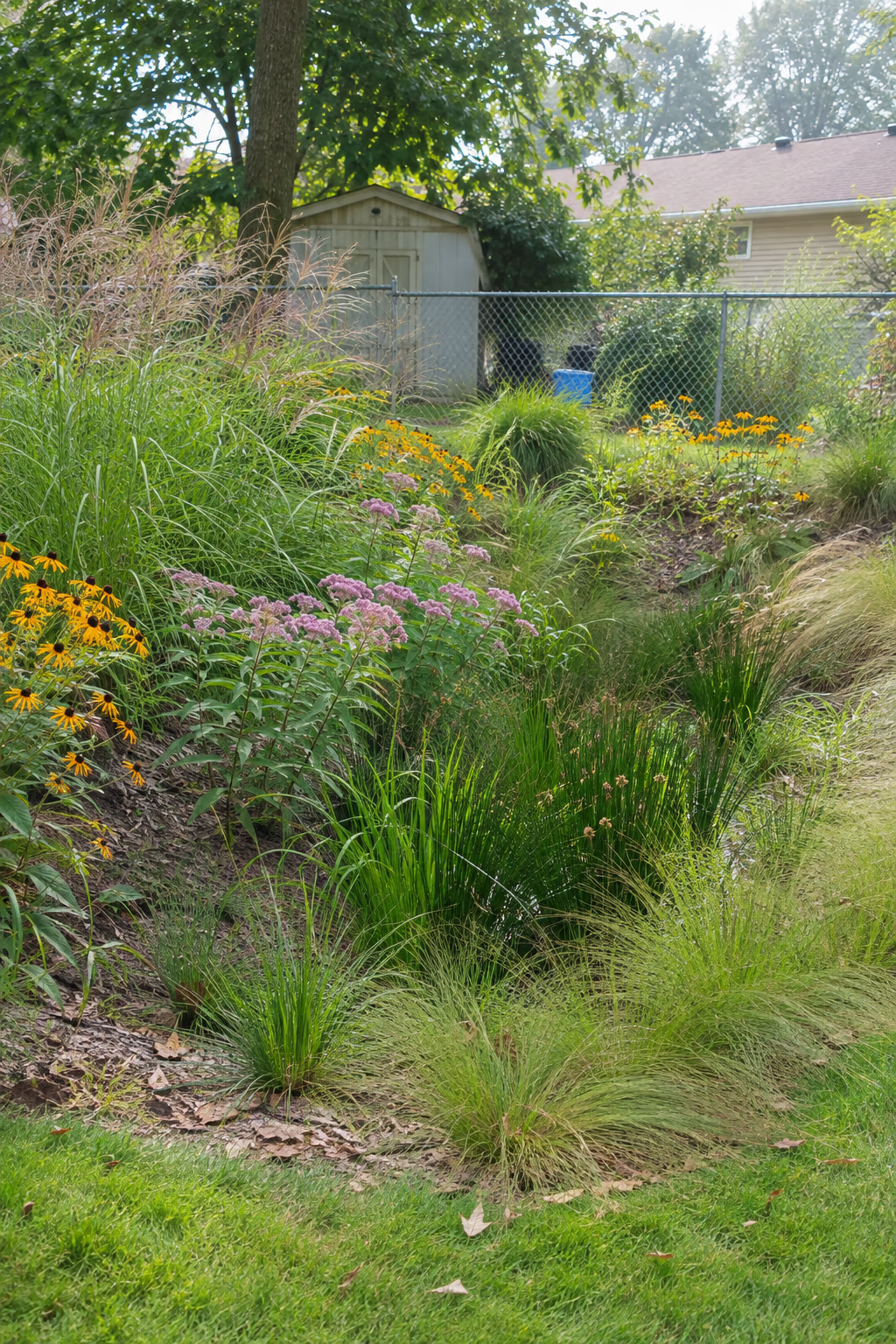
The right plant for every inch of the slope
Every rain garden has three moisture zones. The bottom stays wet the longest, the sloped sides dry out between storms, and the top edge stays fairly dry. Plant tough wet-tolerant species like soft rush, fox sedge, and swamp milkweed in the center, then black-eyed Susan and switchgrass on the slopes, and shorter edging plants like prairie dropseed along the rim.
Matching plants to their zone is the main thing that keeps a rain garden healthy, because nothing ends up drowning or baking.
Sketch the zones on graph paper before you shop. Native plugs bought in groups of three to five cost far less than gallon pots and usually fill in within two seasons.
8. Keep It Minimal With Sedges, River Rock, and Mulch
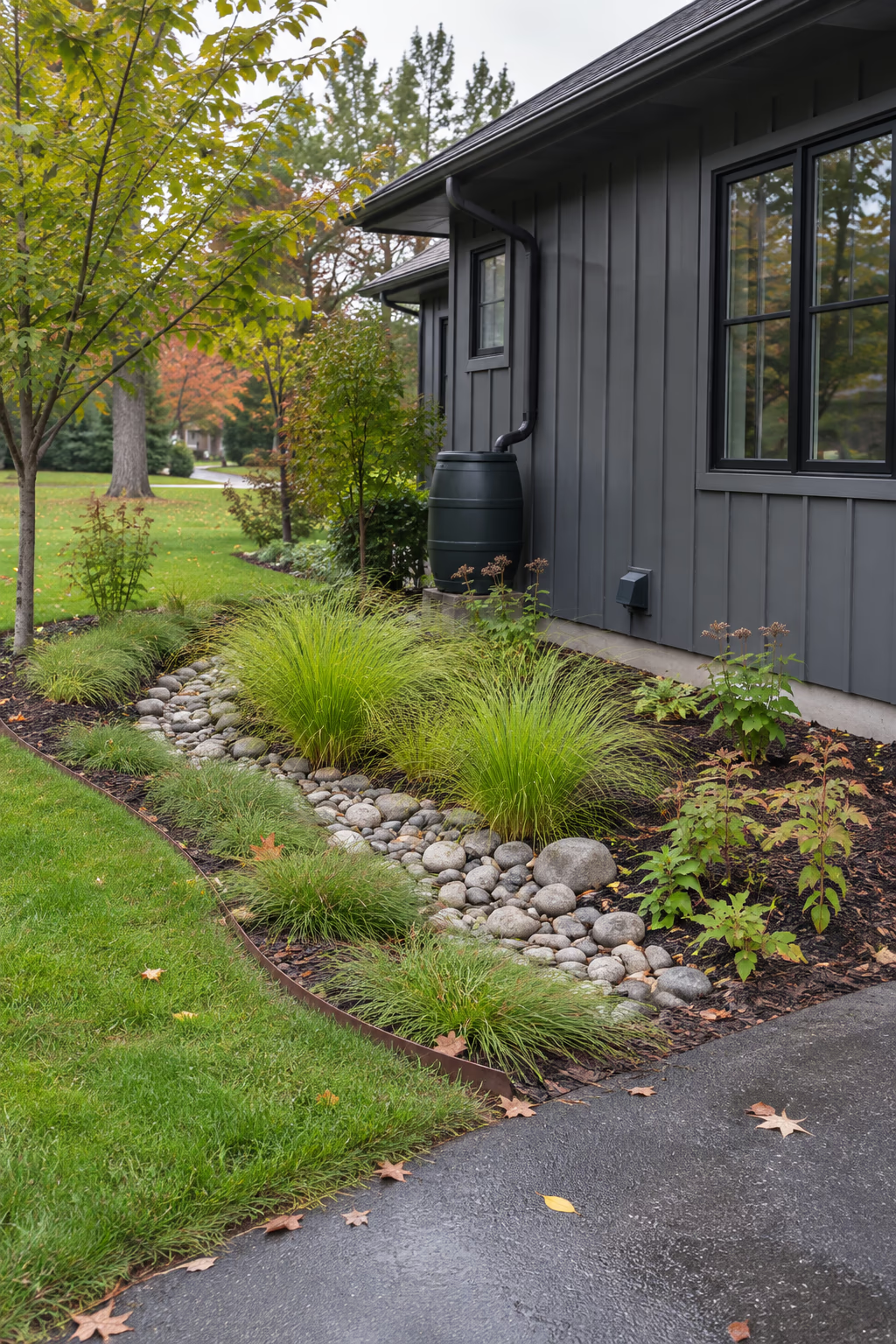
A clean look that’s easy to maintain
Not every rain garden needs dozens of flowers. Plant a simple pattern of one or two native sedges, like fox sedge in the basin and Pennsylvania sedge on the drier rim, and add a band of gray river rock and dark mulch. It suits modern houses and anyone who prefers a calm, uncluttered look.
Sedges have deep, fibrous roots that hold soil in place, tolerate both wet and dry spells, and look neat for most of the year. Fewer kinds of plants also means less guessing about what’s a weed.
Plant densely enough that the sedges close in within a couple of years, because bare mulch invites weeds. Top up the mulch each spring and pull weed seedlings while they’re small.
9. Let a Trio of Bold Perennials Carry the Show
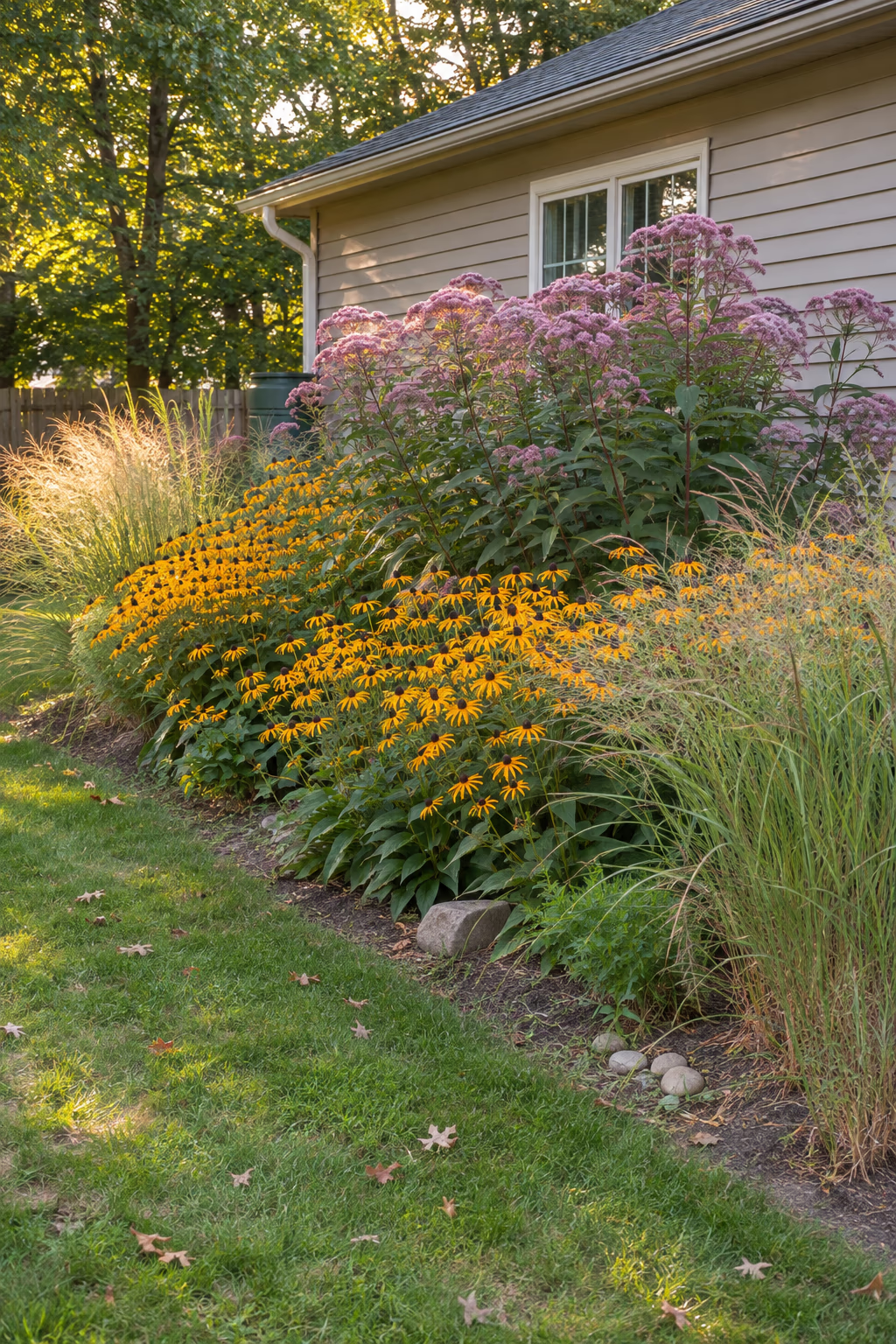
Big impact with very little fuss
Choose three strong performers and plant them in generous groups. Try Joe Pye weed in the center for height, black-eyed Susan in the middle for gold color, and switchgrass on the edges for movement. Large drifts of a few plants look more relaxed than one of everything.
Joe Pye weed can reach 5 to 7 feet and handles wet soil well, black-eyed Susans bloom for weeks, and switchgrass looks good well into winter.
Tall plants can block a window or view, so check mature heights. Compact Joe Pye weed varieties stay closer to 3 or 4 feet.
10. Turn the Curb Strip Into a Mini Bioswale
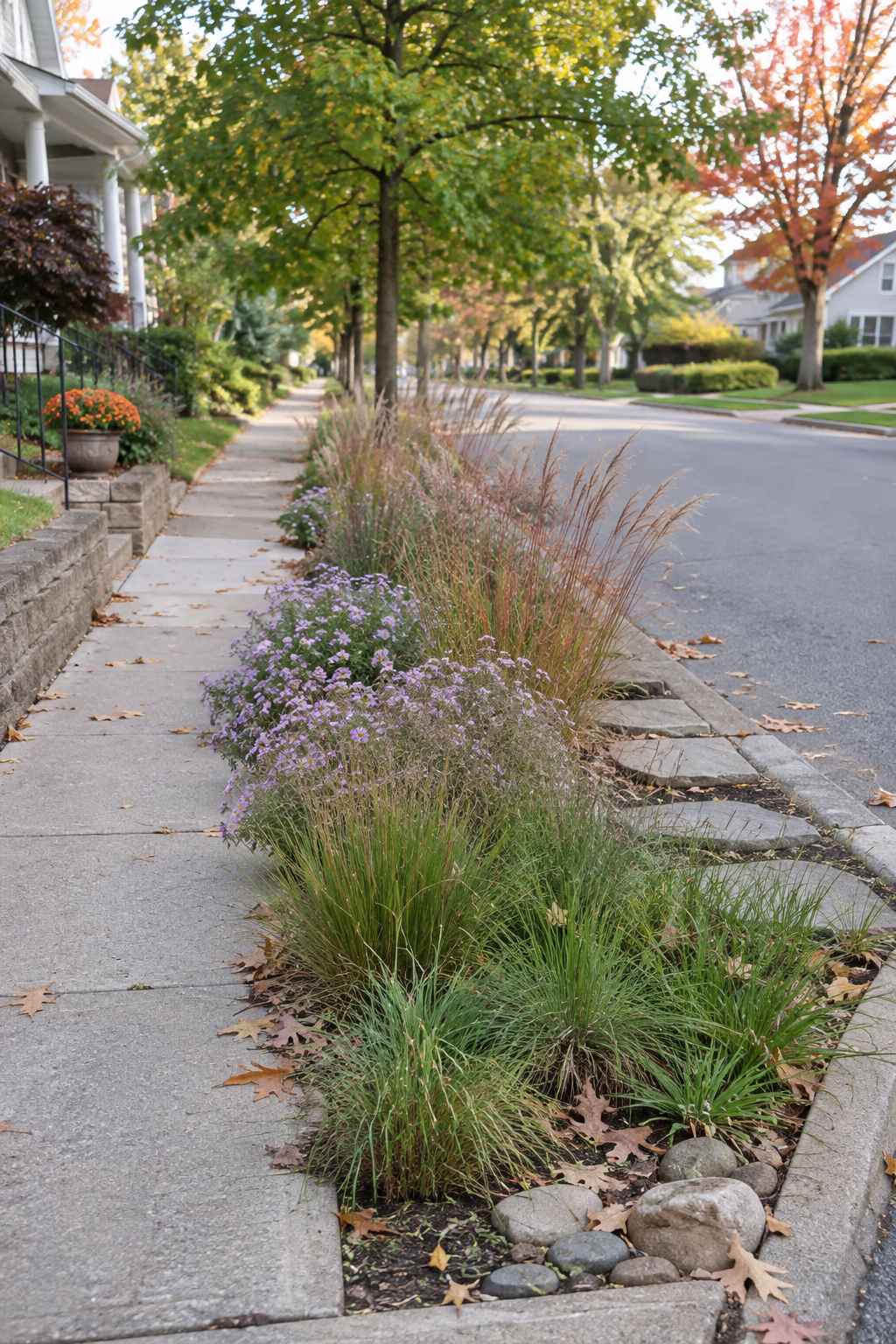
Catch street-side runoff before it reaches the drain
The narrow strip of grass between the sidewalk and the street is hard to mow and often gets a lot of runoff. Turn it into a long, shallow swale planted with low grasses, sedges, and tough perennials like aromatic aster and little bluestem, with stone at the low end to slow the water.
A long, narrow swale moves and filters water at the same time, and replacing that strip of lawn saves mowing. Low plants under 2 feet tall keep sight lines open for drivers and leave room for car doors.
The curb strip often belongs to the city, and many towns have rules on plant height, curb cuts, and what can go near the street. Check with your local public works office before digging, and leave a stepping-stone gap where people get out of parked cars.
11. Create a Shady Rain Garden With Native Ferns
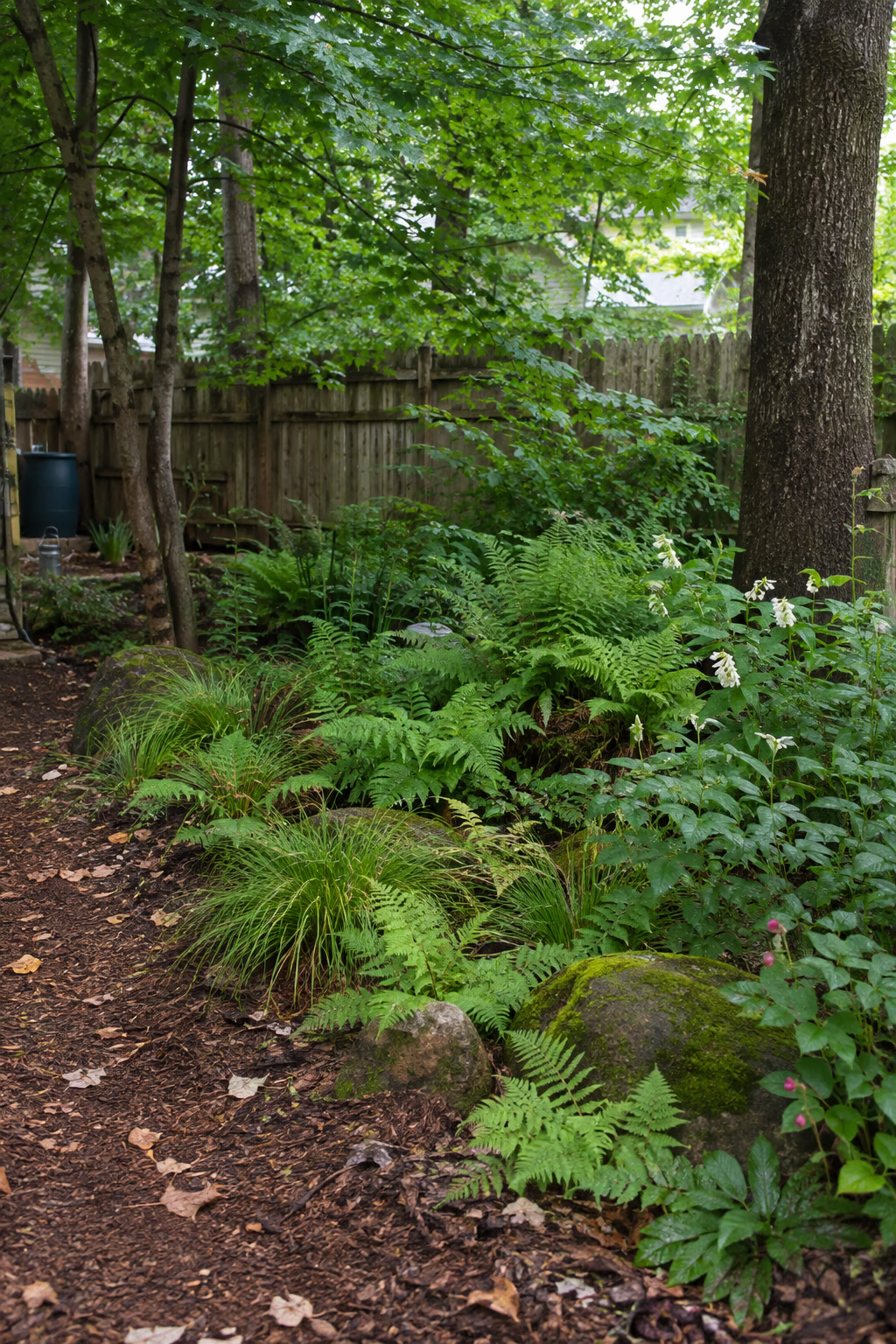
A cool, woodland feel under trees
Rain gardens don’t need full sun. In a damp spot under deciduous trees, plant cinnamon fern, lady fern, and sensitive fern, then add turtlehead, Virginia bluebells, and sedges for flowers and texture. Lay a few mossy rocks on top to complete the woodland look.
Ferns and woodland natives like moist, rich soil, and layered shades of green look calm and lush even without many flowers.
Dig by hand around big trees and avoid cutting roots thicker than an inch or two. Sensitive fern spreads quickly, so give it room.
12. Edge the Basin With Blue Flag and Siberian Iris
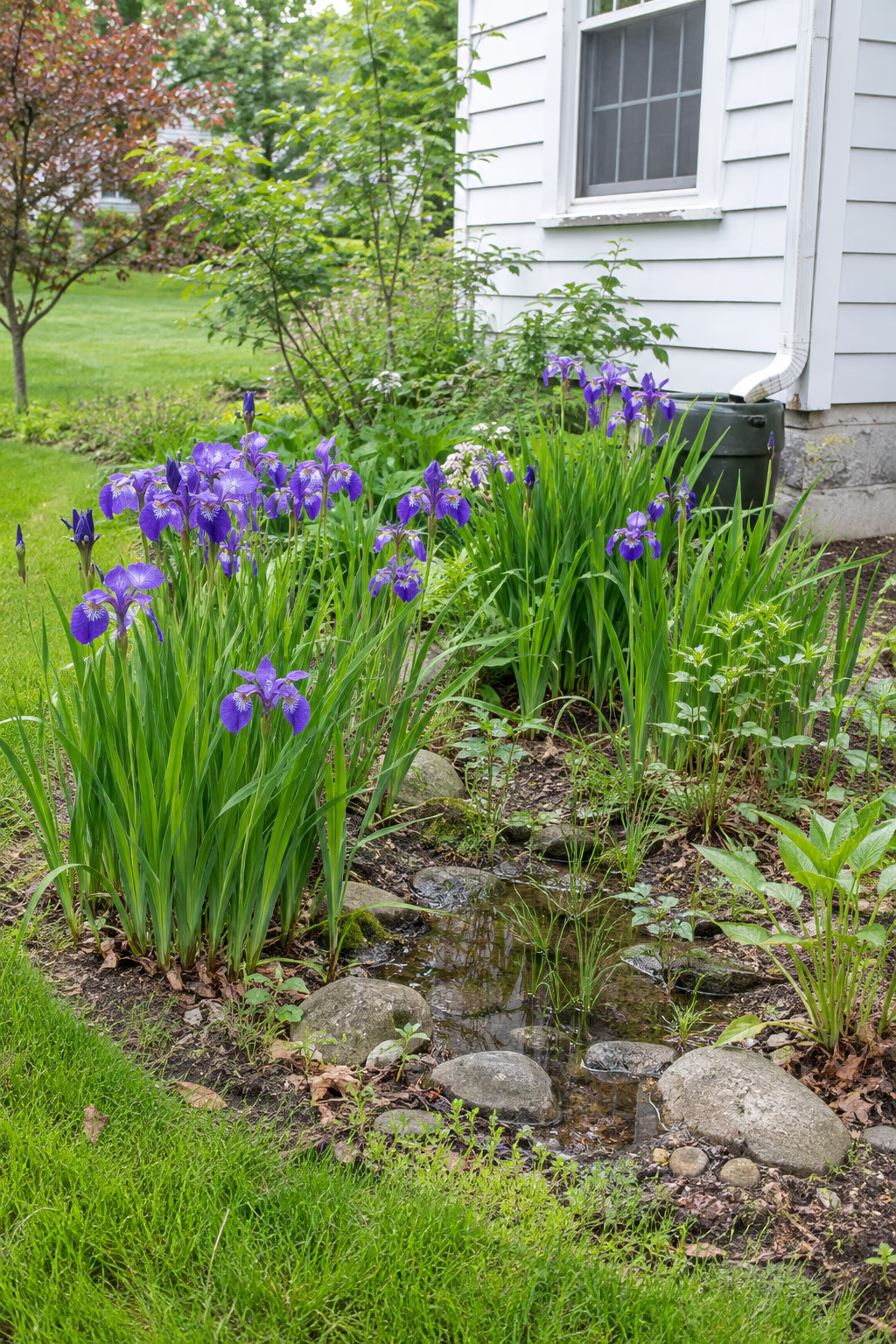
Elegant spring flowers that like wet feet
Irises are a natural choice for the wet zone. Native blue flag iris grows well in the lowest, wettest spot, and Siberian iris can go a little higher on the slope. Both have violet-blue spring flowers and upright, sword-like leaves that stay attractive long after they bloom.
Their thick roots hold soil in place during heavy rain, and the strong vertical shape looks good next to softer grasses and rounded perennials. Once they’re settled, clumps grow bigger every year.
Don’t plant yellow flag iris, which is invasive in many parts of the United States and spreads into wetlands. Divide crowded iris clumps every few years after flowering to keep them blooming well.
13. Anchor the Garden With Red-Twig Dogwood
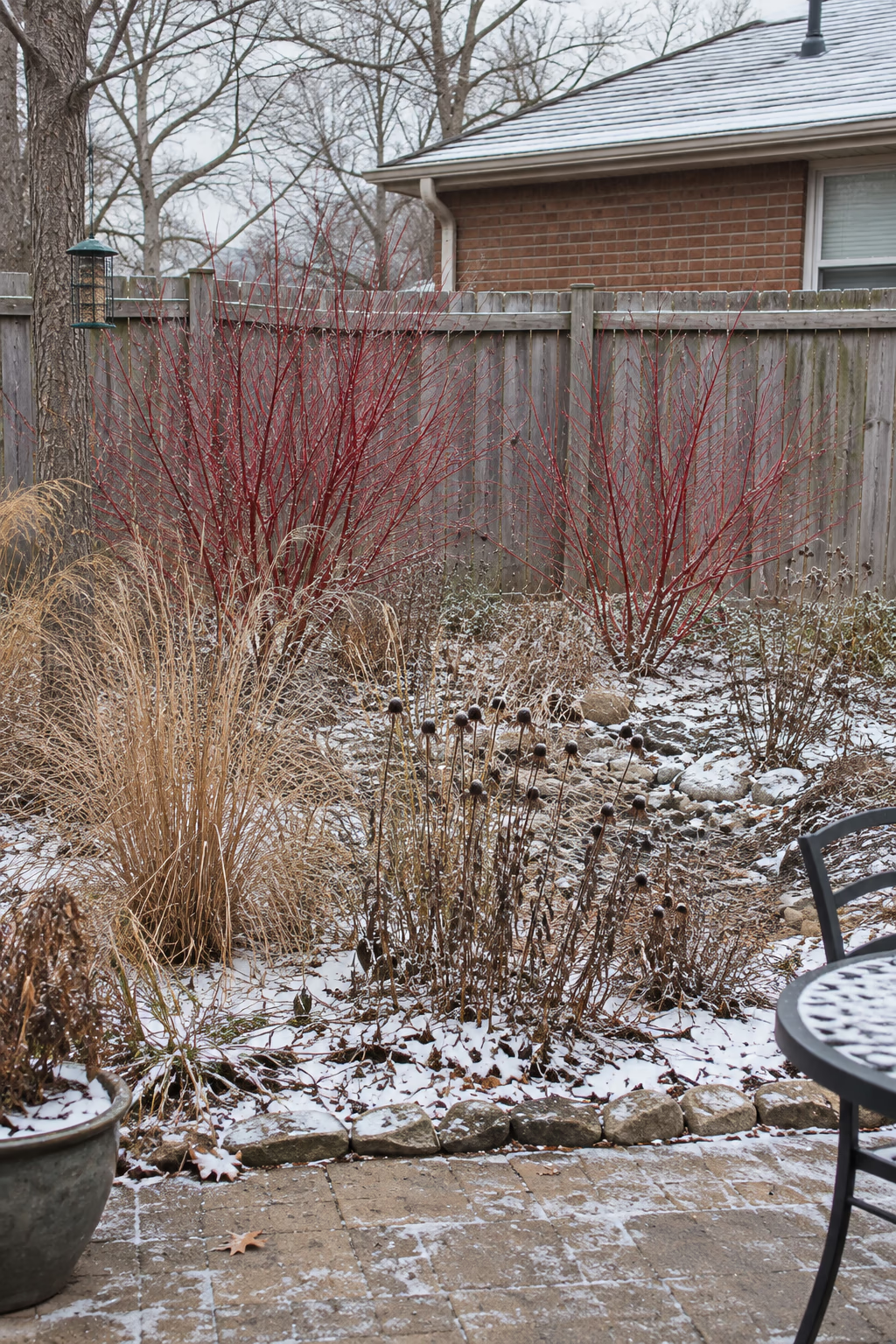
Year-round structure and bright winter color
A rain garden full of perennials can look flat in winter. Plant one or two red-twig dogwoods at the back or on a high corner. These native shrubs handle wet soil, have white spring flowers and berries for birds, and show bright red stems once the leaves fall.
Shrubs give the garden structure, and their roots soak up a lot of water during the growing season. Against snow or brown grasses, the red stems really stand out.
Red-twig dogwood can grow 6 to 9 feet tall and wide, so give it space or choose a compact variety. The brightest color is on young stems, so cut out a few of the oldest stems at the base every late winter.
14. Convert a Galvanized Stock Tank Into a Flow-Through Planter
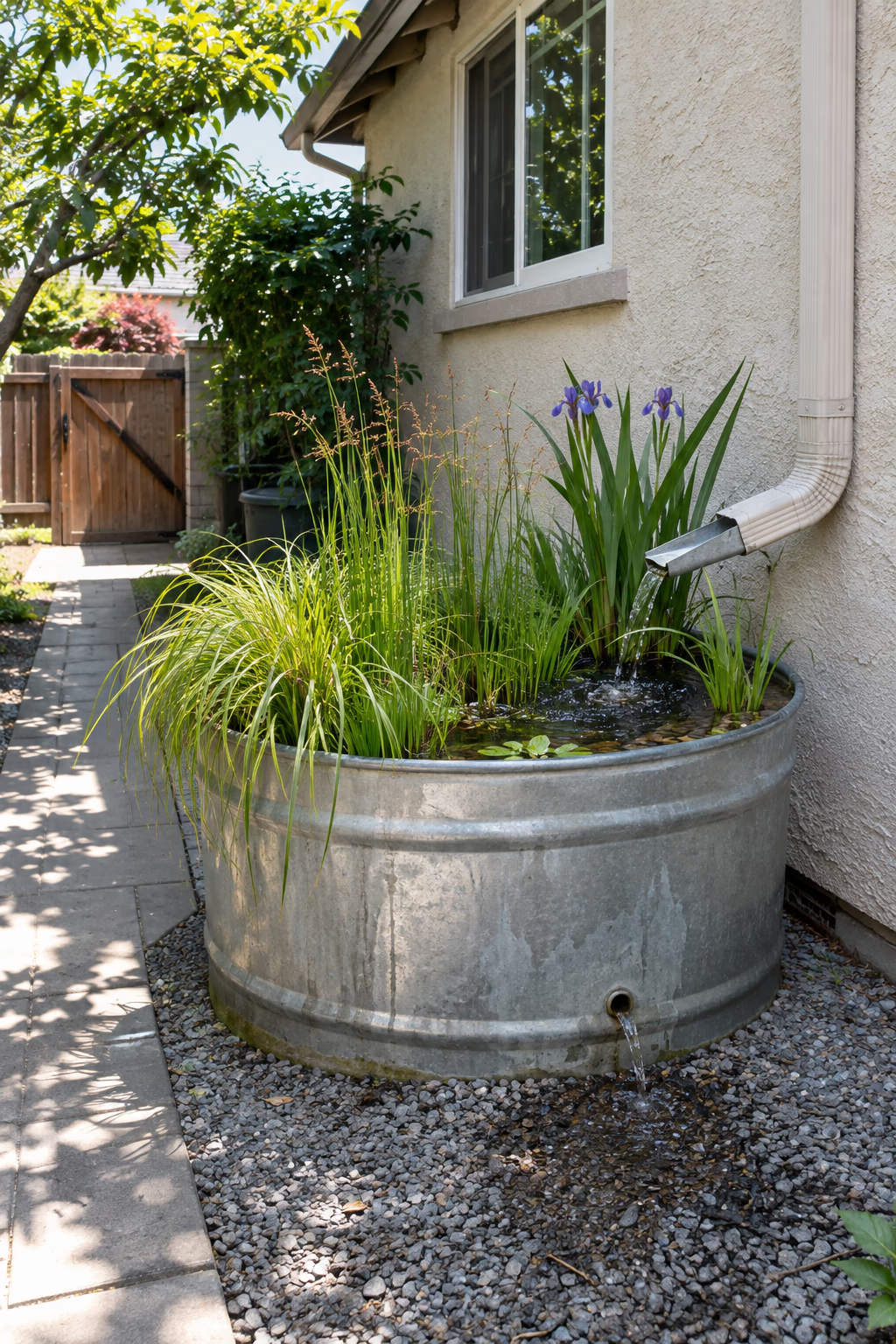
A rain garden for patios and tight spaces
If you don’t have room to dig, set a galvanized stock tank under a downspout and use it as a raised rain garden. Drill drainage holes in the bottom, add a few inches of gravel, then fill with a sandy soil mix and plant sedges, iris, or other moisture-tolerant plants. Water soaks through the soil and drains out the bottom.
The planter slows and filters roof water close to where it lands, and the metal tank suits farmhouse and modern homes alike.
Because water exits the bottom, set the tank on gravel or pavers that slope away from the house, and cut an overflow slot near the top for heavy storms.
15. Send Rain Barrel Overflow Straight Into the Garden
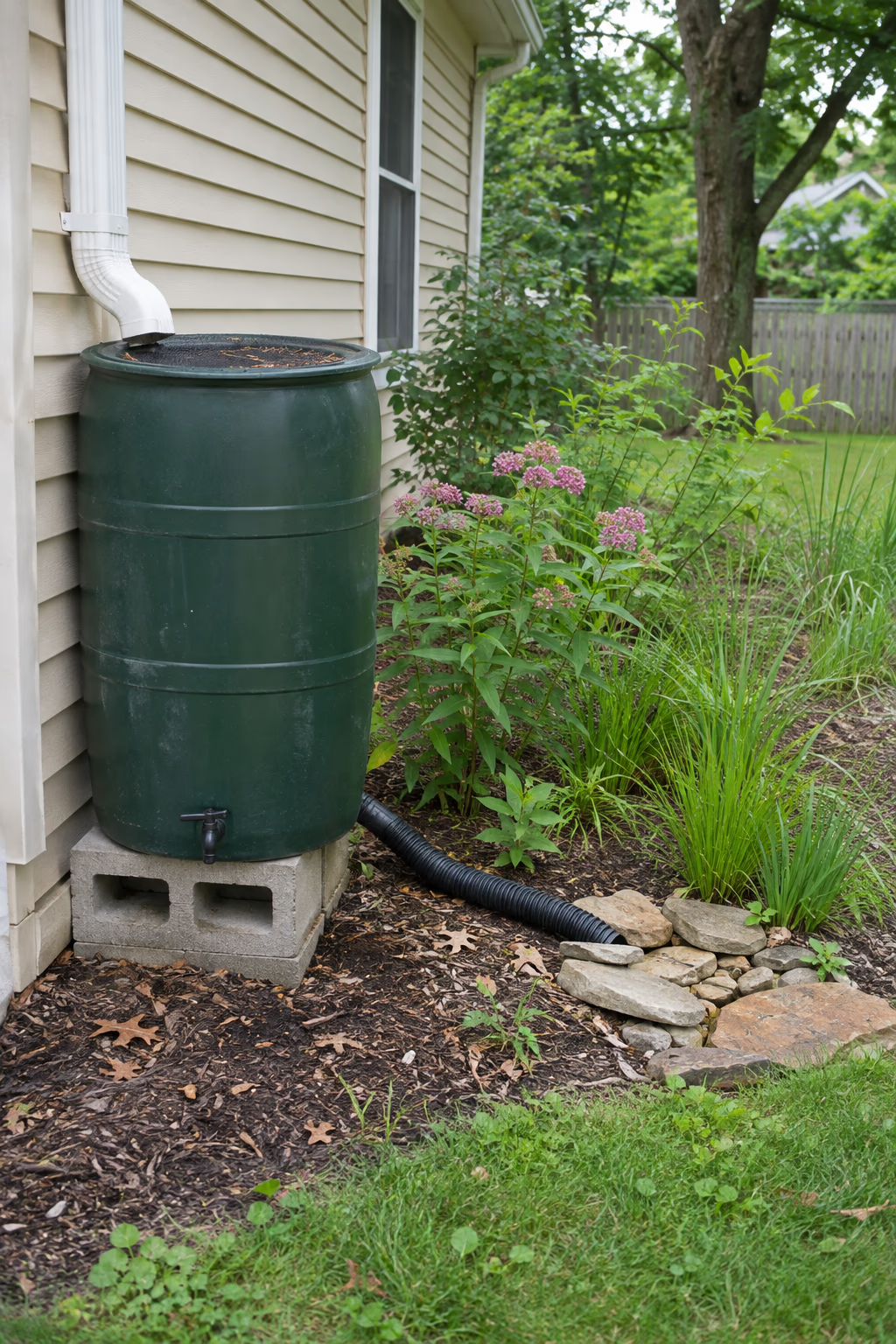
Save some water, let the rest soak in
Rain barrels fill fast. A single inch of rain on a small roof section can fill a 50-gallon barrel. Attach a flexible overflow hose or pipe to the barrel and run it into a stone-lined inlet at the rain garden, so the extra water has a useful place to go.
You get stored water for pots during dry spells, and the garden handles the rest.
Use a barrel with a screened lid to keep out mosquitoes and debris, and set it on a firm, level base, since a full barrel weighs about 400 pounds. Check local rules, because a few places regulate rainwater collection.
16. Shape a Low Berm on the Downhill Side
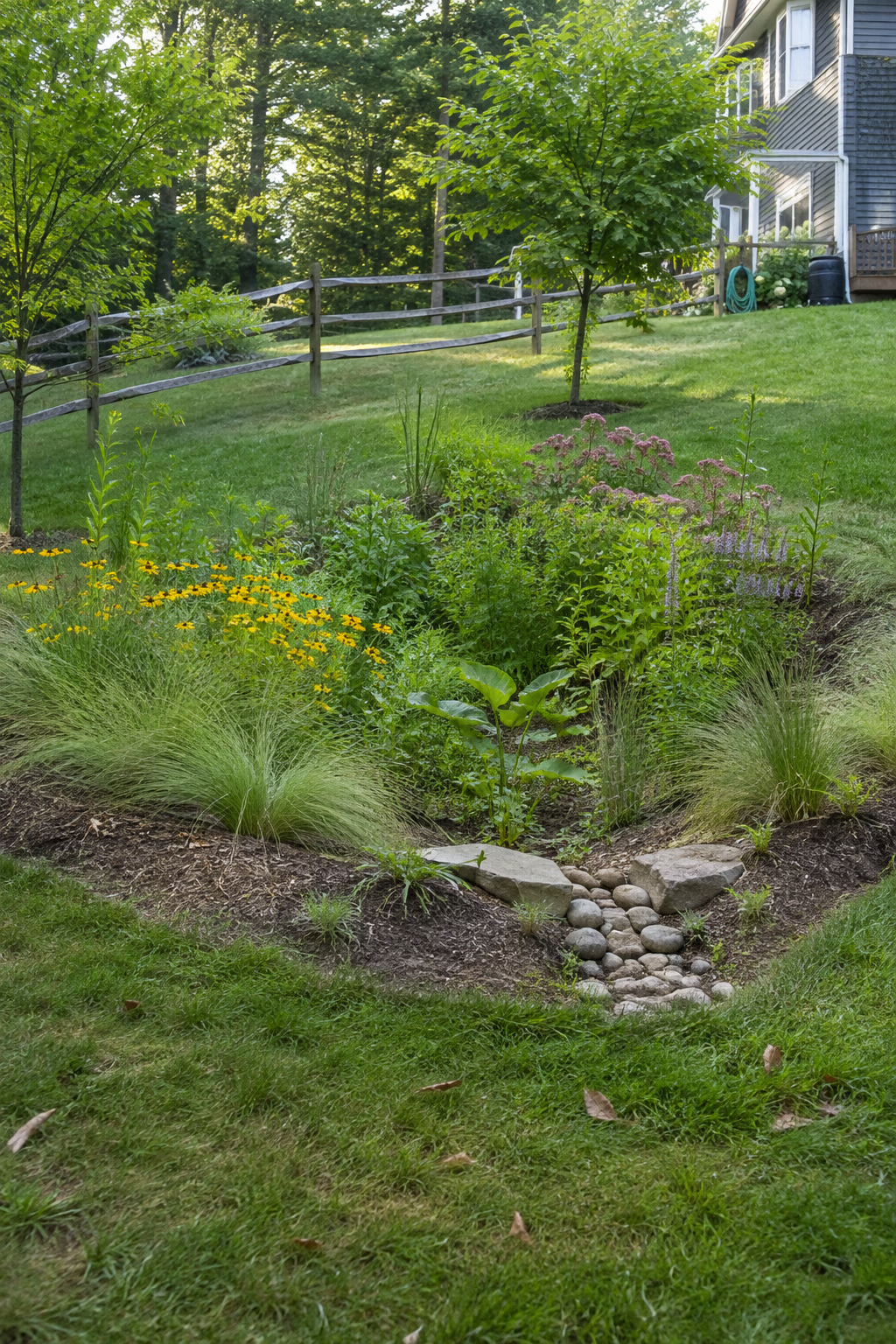
Hold water in place on a gentle slope
On a slightly sloping lawn, use the soil you dig out to build a low, curving berm along the downhill edge. A berm about 6 to 12 inches tall with gradual sides keeps water in the basin long enough to soak in instead of running out the low end.
It’s a free way to use the soil you remove, and once planted, the berm gives the garden a raised edge for plants that prefer drier ground, like coreopsis, prairie dropseed, or little bluestem.
Pack the berm firmly and plant or mulch it right away so it doesn’t wash out in the first storm. Leave one low, stone-lined spot in the berm as an overflow so big storms drain away in a controlled way instead of breaking through.
17. Step a Chain of Small Basins Down a Gentle Slope
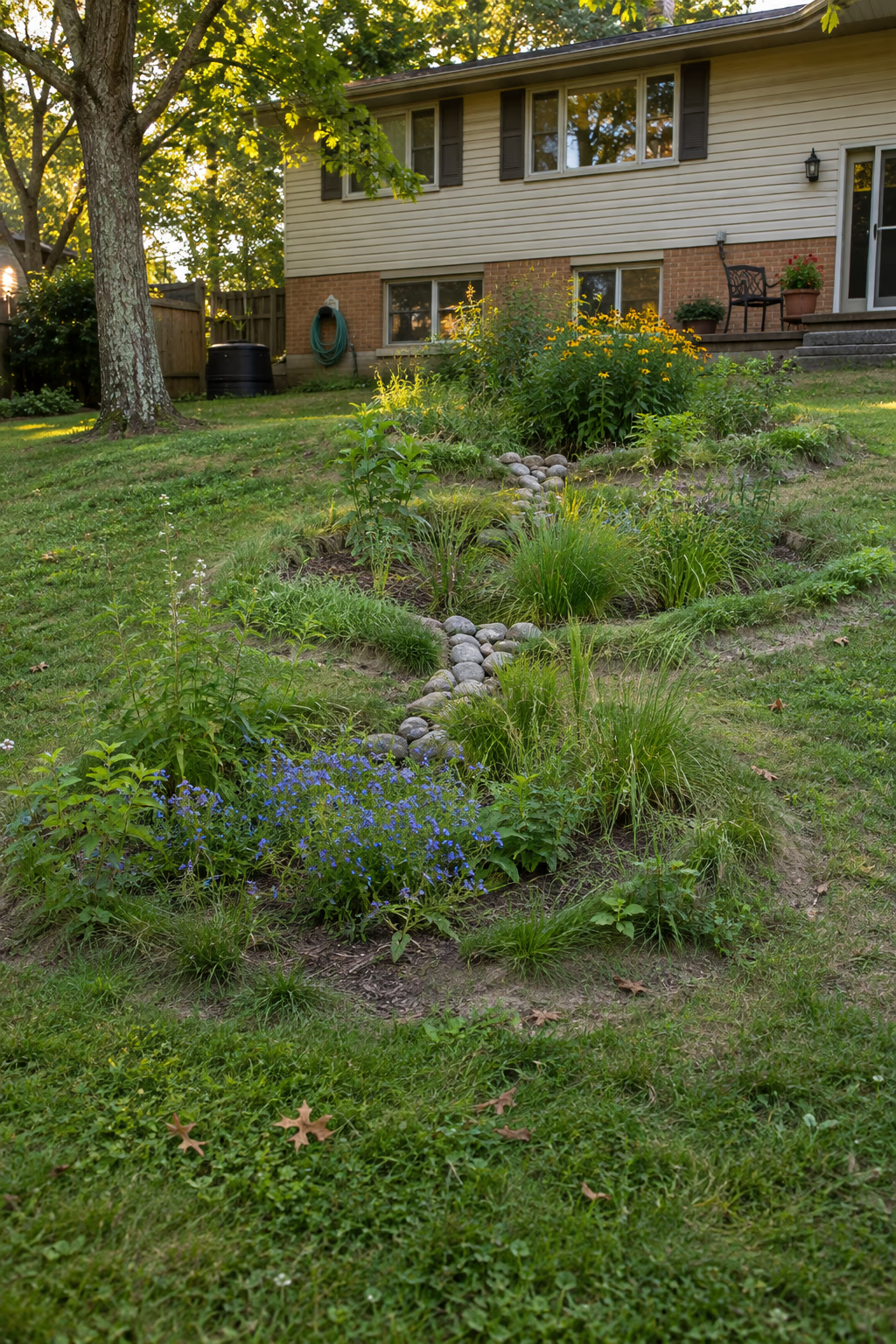
Slow water down one pocket at a time
A single large basin is hard to level on a slope. Build two or three smaller basins along the hill, each with its own low berm and overflow, so water fills the top basin first and then spills into the next one through a short rock chute.
Each basin soaks up part of the water, so the series slows runoff and cuts down on erosion.
This works best on slopes of about 12 percent or less. Steeper hills usually need retaining walls or professional grading. Keep every basin at least 10 feet from the house and well away from a neighbor’s property line on the downhill side.
18. Set a Shallow Birdbath at the Garden’s Edge
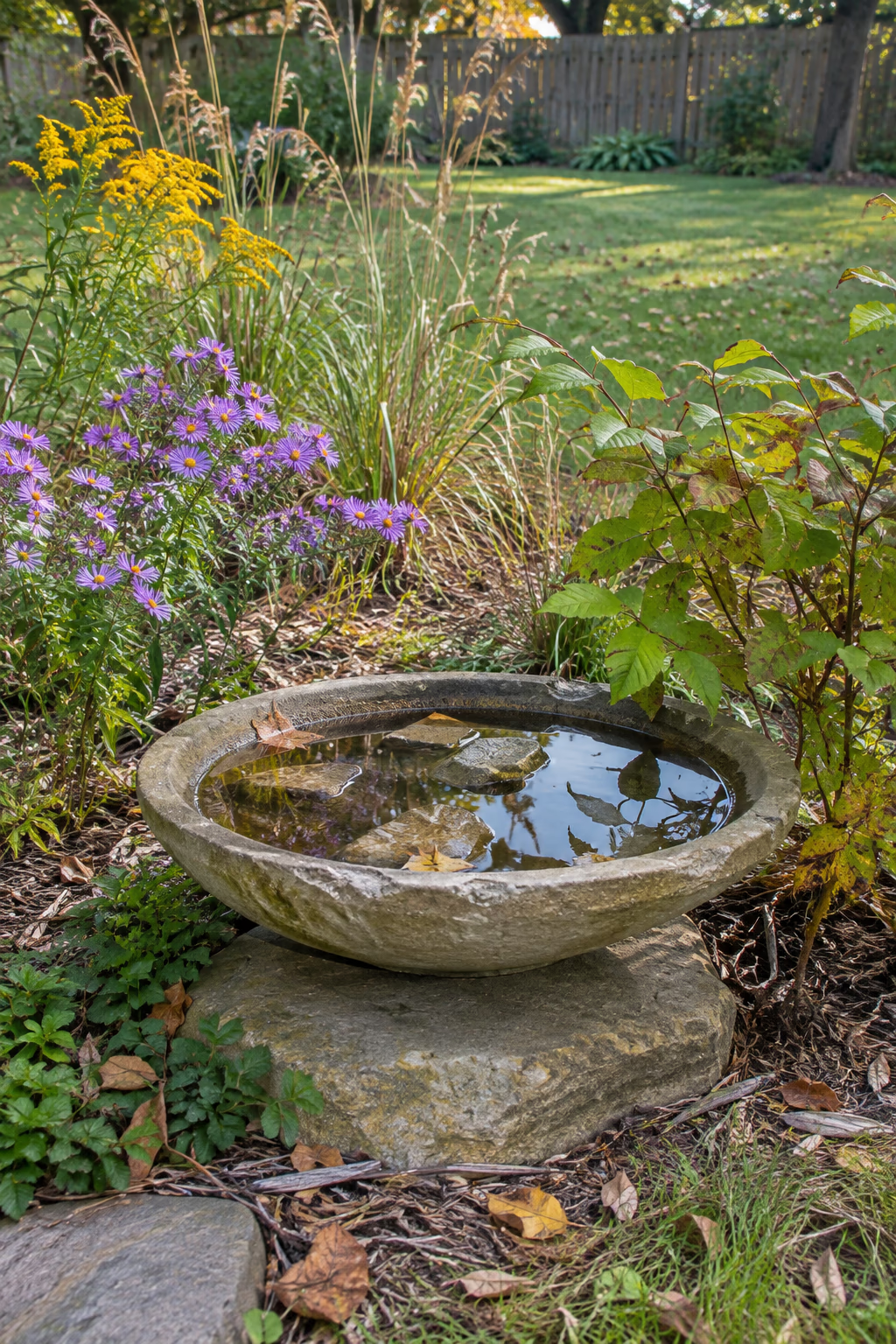
Bring wildlife in year-round
A rain garden full of native plants attracts birds, and a shallow birdbath gives them a place to drink and bathe between storms. Choose a wide stone or concrete bowl no more than 2 inches deep, and set it on a flat stone or low pedestal at the drier edge of the garden.
Birds feel safer with cover nearby, so a spot beside a shrub or clump of grasses works well.
Change the water every two or three days to prevent mosquitoes and algae, and scrub the bowl now and then. A few flat stones in the water give small birds and bees a safe place to land.
19. Armor the Inlet and Overflow With Flat Fieldstone
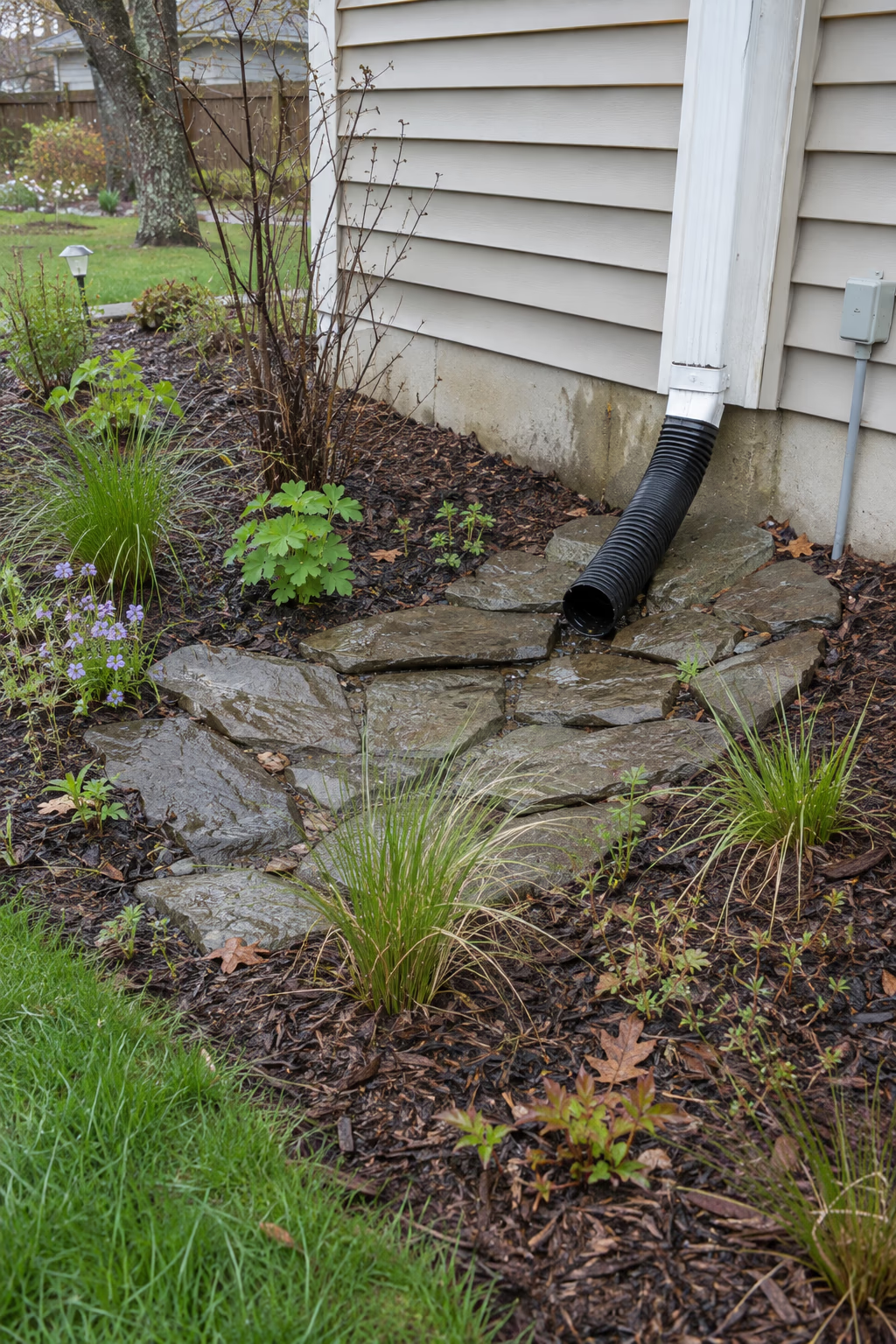
Stop erosion where water enters and leaves
The two places where rain gardens most often fail are where water comes in and where it goes out. Line the inlet with flat fieldstone or large cobbles in a fan shape, and do the same at the overflow so fast water hits stone instead of bare soil.
Stone slows and spreads the water and keeps mulch and soil in the basin, while hiding the end of a downspout pipe.
Set the stones into the soil so their tops sit level with the grade, with gravel underneath so they don’t wash away. Point the overflow toward a lawn area, street, or storm drain, never toward your house or a neighbor’s foundation.
20. Lay Permeable Pavers That Drain Toward the Garden
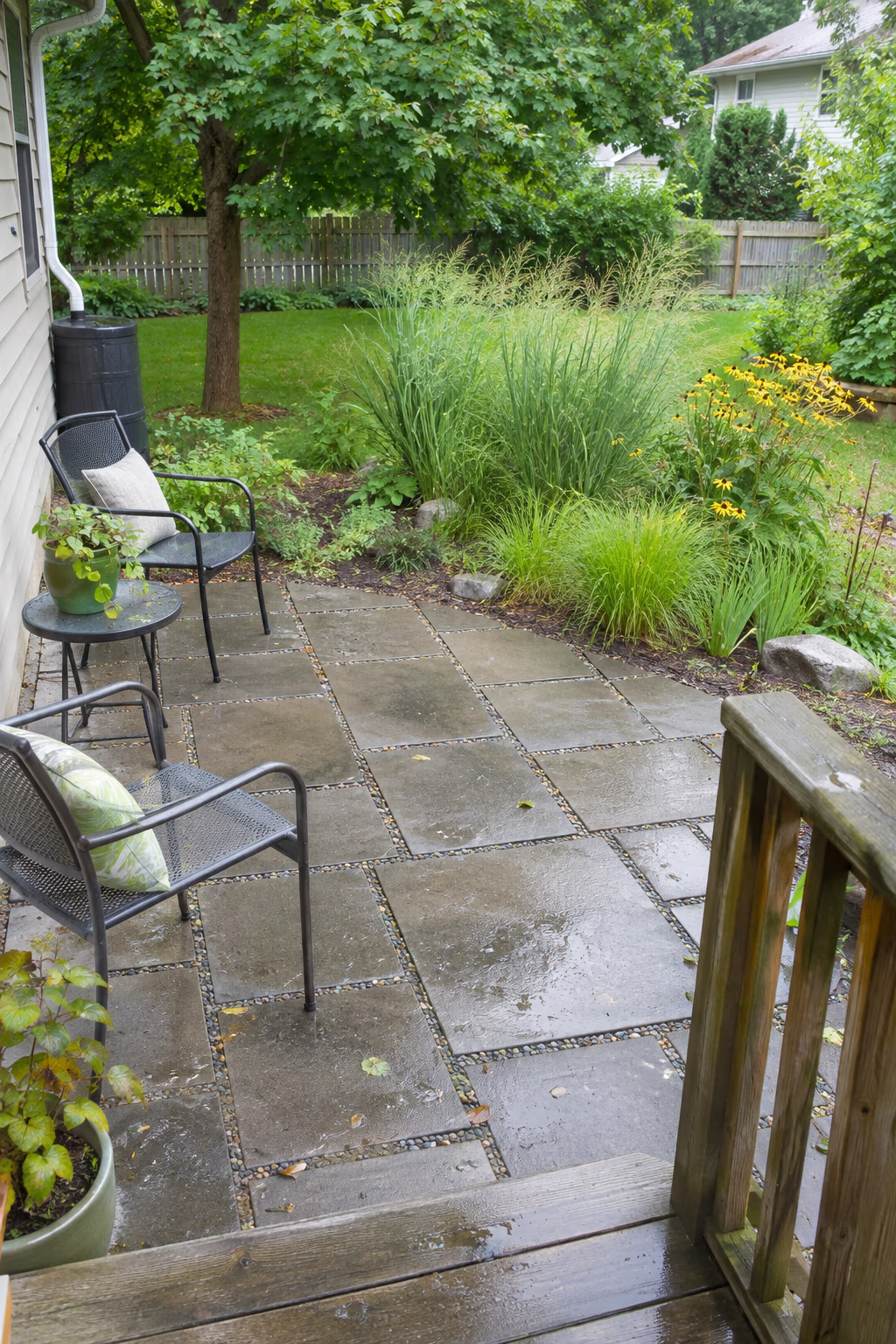
A patio that helps the garden work
Permeable pavers have gaps filled with small gravel, so water soaks through rather than running off. Use them for a patio, walkway, or parking pad next to the rain garden, and grade the surface gently toward the planted basin to carry extra water into it.
This combination cuts runoff from hard surfaces, which is often the biggest source of water in a yard. It also looks neat and holds up to foot traffic and, with the right base, cars.
Permeable paving needs a deep gravel base, often 8 inches or more, so it costs more than a standard patio. Plan to sweep the joints and refresh the gravel every few years so they don’t clog.
21. Plan for Winter With Grasses and Winterberry
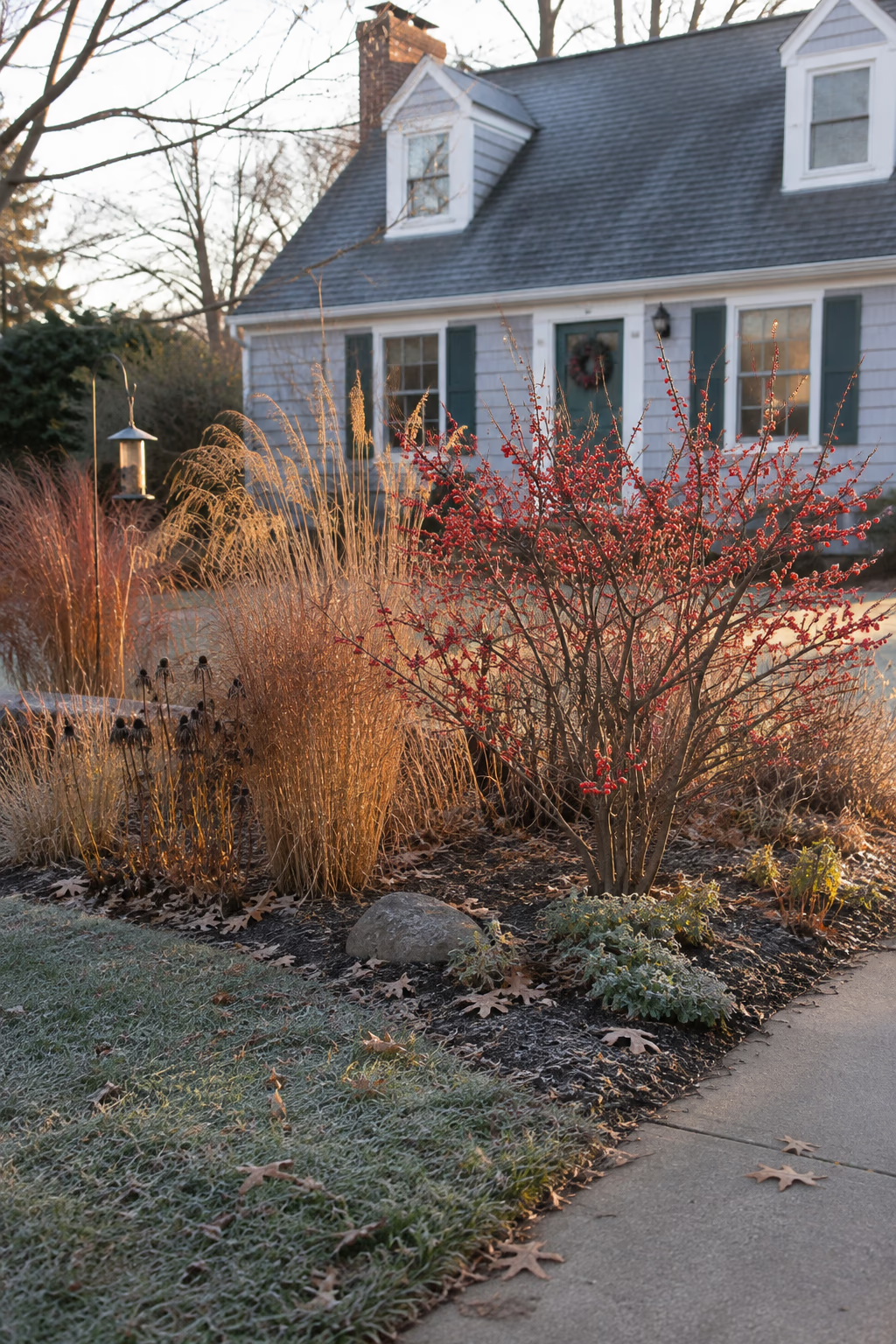
Interest that lasts after the flowers fade
A rain garden can still look good in the cold months. Plant native winterberry holly, which loses its leaves in fall and leaves branches covered in bright red berries, and surround it with switchgrass and little bluestem that turn bronze and copper and stay upright through snow.
Leaving grasses and seed heads standing until spring gives birds food and shelter and saves a fall cleanup.
Winterberry plants are either male or female, and only females have berries. Plant one male within a reasonable distance of several females, and check with the nursery that the varieties bloom at the same time.
22. Share a Rain Garden Along the Property Line
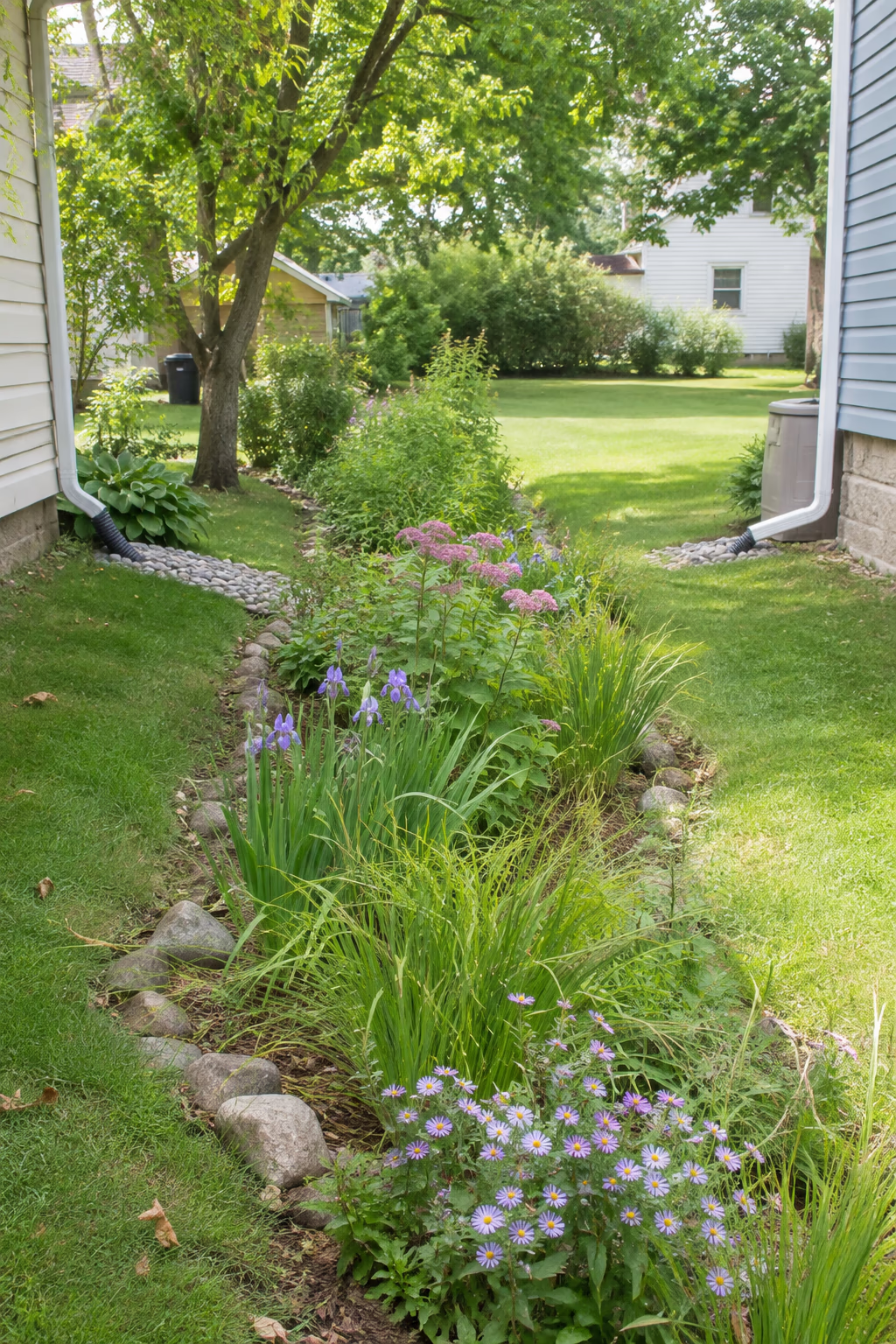
One garden, two yards, double the benefit
If runoff flows between your yard and a neighbor’s, a shared rain garden along the property line can solve the problem for both of you. Each house sends a downspout into one long planted basin, and you split the work and cost of plants and digging.
A bigger garden handles more water, looks better than two small beds, and works as a soft, low border between yards.
Get the property line confirmed and put a simple written agreement on paper covering maintenance and overflow. Make sure the overflow goes somewhere both households agree on, and keep the garden at least 10 feet from both foundations.
23. Tuck a Compact Rain Garden Beside the Back Deck
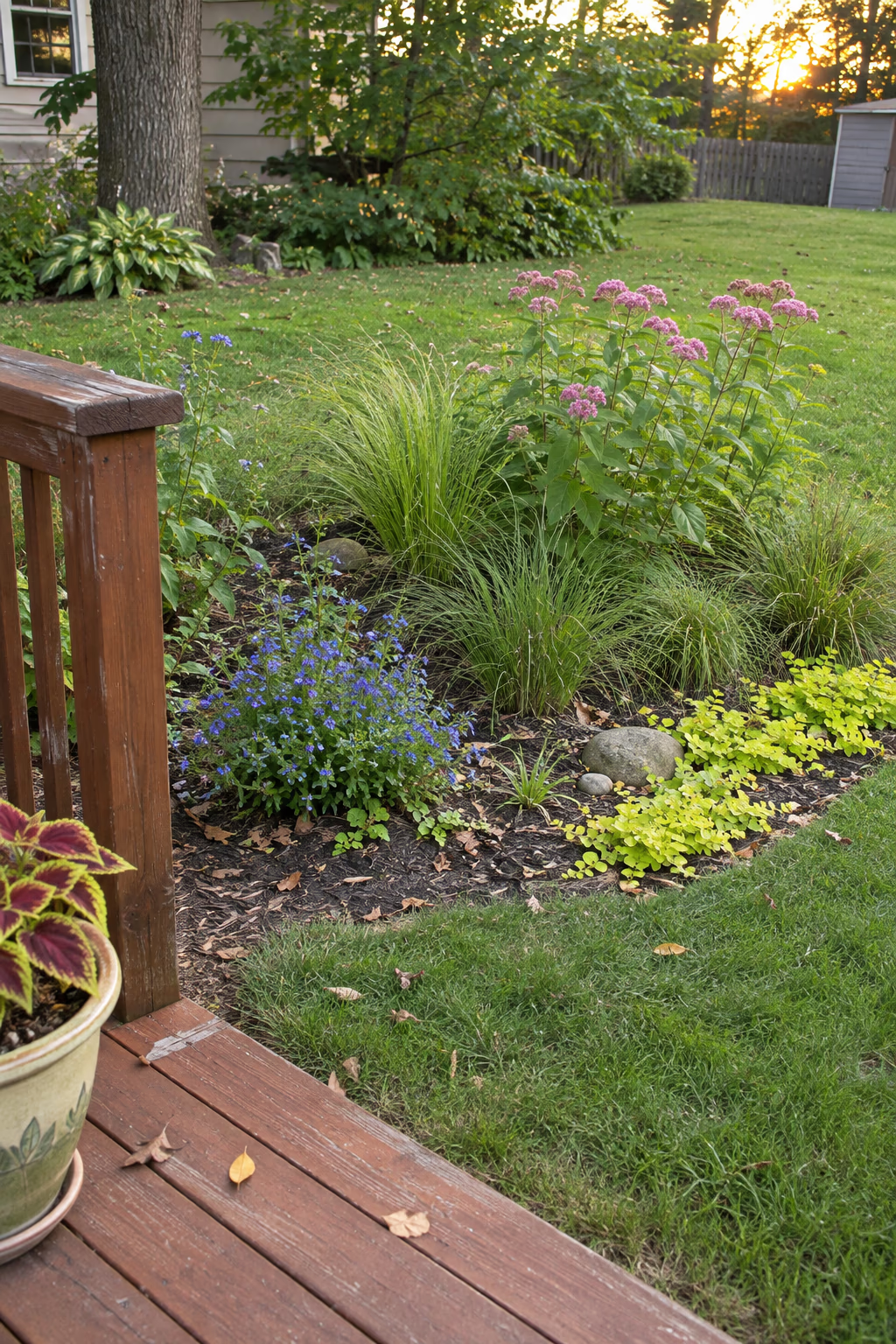
Fix a soggy spot right where you relax
The low ground near a deck or porch often stays wet because roof water lands there. A small rain garden of 40 to 80 square feet, a few feet out from the deck edge, can soak up that water and give you something pretty to look at from your chair.
Fill it with compact plants that look good up close, like blue lobelia, swamp milkweed, dwarf sedges, and creeping Jenny along the drier edge where it can’t spread into lawn. A few smooth stones make it look finished.
Keep the basin far enough from the deck footings and the house that water doesn’t collect around them. If the deck is close to the foundation, use a buried pipe to carry water to a spot farther out in the yard.
24. Draw Hummingbirds With Cardinal Flower and Red Bee Balm
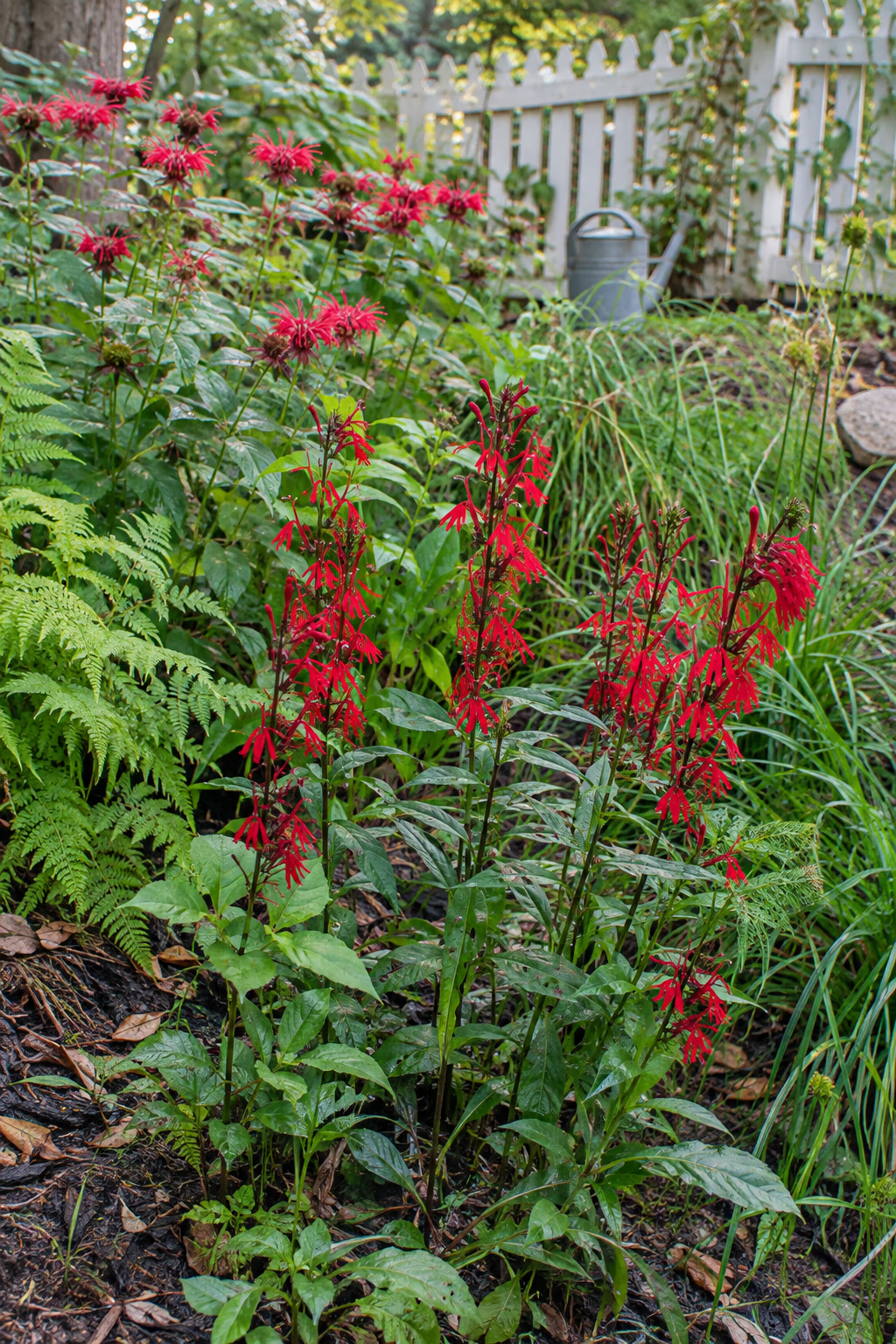
Bright red blooms in the wettest spot
Cardinal flower has tall spikes of scarlet blooms in late summer, and it grows best in damp soil, which makes it a great fit for the low part of a rain garden. Pair it with red bee balm a little higher on the slope for a long run of red flowers that hummingbirds love.
Hummingbirds favor red, tube-shaped flowers, and a cluster is far easier for them to find than a single plant.
Cardinal flower often only lives a few years, but it will reseed if you leave some bare, damp soil around it. Bee balm can get powdery mildew in humid summers, so give it room for air to move and look for mildew-resistant varieties.
25. Plant a Coastal Rain Garden With Salt-Tolerant Natives
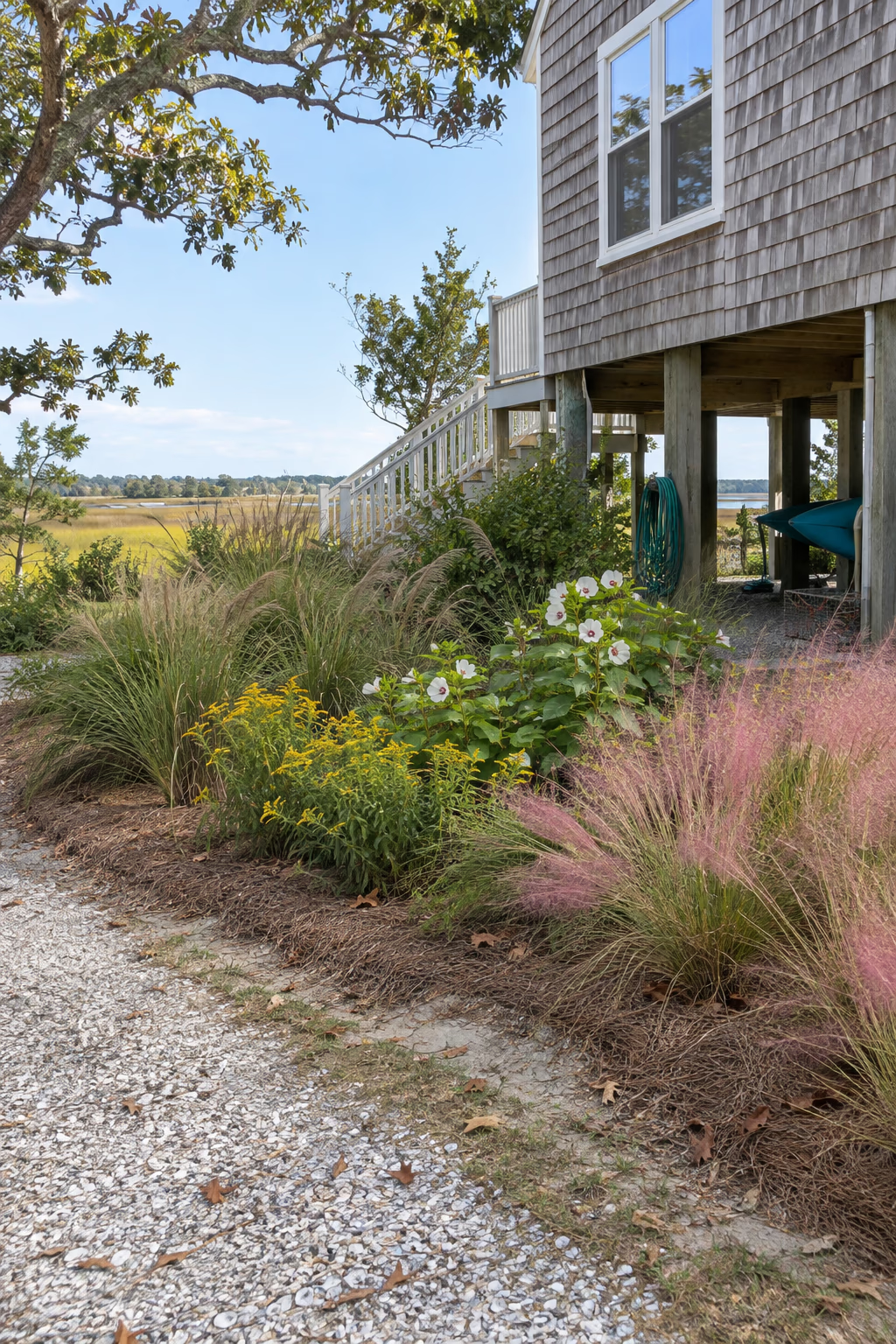
Handle storms and salt spray at the shore
Coastal yards get heavy rain and salty wind, and often have sandy soil. Choose natives that handle all of it, like switchgrass, seaside goldenrod, swamp rose mallow in the wet center, and pink muhly grass on the drier rim in warm southern zones.
Sandy soil drains quickly, so coastal rain gardens can be smaller and shallower than those inland. The grassy look fits beach homes and helps filter runoff before it reaches nearby marshes and waterways.
Many coastal areas have rules about digging near dunes, wetlands, or shorelines, so check local rules before you start. Use shredded mulch or pine straw, and avoid anything light enough to wash or blow away.
How to Plan Your Rain Garden
A rain garden only works if the water drains, so a little planning before you dig saves a lot of trouble later. These basics apply to almost any yard.
- Watch your yard in the rain. Notice where water flows from your downspouts and driveway, and where it collects. The best spot is along that path but at least 10 feet from the house.
- Test drainage first. Dig a hole about 8 inches deep, fill it with water, and see how long it takes to drain. If water is still standing after a day, amend the soil with compost, choose a different spot, or make the garden larger and shallower.
- Size it to the roof. A typical residential rain garden is around 100 to 300 square feet, but small gardens fed by one downspout can be much smaller. Clay soils need more area than sandy soils.
- Keep it shallow. Most rain gardens are only 4 to 8 inches deep with a level bottom. They should drain within 24 to 48 hours, which is too short for mosquitoes to breed.
- Choose natives for each zone. Ask your local extension office or native plant society for a list of plants that suit your region, and match wet-tolerant plants to the center and drier-ground plants to the edges.
- Check rules and utilities. Call 811 before digging, avoid septic systems and wells, and check with your city or HOA about curb strips, front yards, and where overflow can go. Some towns offer rebates for rain gardens, so ask about those too.
Frequently Asked Questions
Will a rain garden attract mosquitoes?
A properly built rain garden should not. It drains within a day or two after rain, and mosquitoes need several days of standing water to complete their life cycle. If water sits much longer than that, the soil likely needs improvement or the garden needs to be larger.
How deep should a rain garden be?
Most home rain gardens are 4 to 8 inches deep, with 6 inches being a common target. Very deep basins hold water too long, while very shallow ones overflow quickly. Keep the bottom level so water spreads out evenly.
How much does it cost to build a rain garden?
A small DIY garden planted with native plugs can cost a few hundred dollars. Larger gardens with stone, pipes, permeable paving, or professional digging can cost a few thousand. Check with your city or water utility, because some offer rebates or free plants.
Do rain gardens need to be watered?
Water new plants regularly during the first growing season, especially during dry spells. Once established, most native rain garden plants only need watering during long droughts.
Can I put a rain garden in clay soil?
Yes, but it takes more work. Clay drains slowly, so make the garden wider and shallower, mix in compost, and choose plants that tolerate both wet and dry conditions. A drainage test will show you how much space you need.
Final Thoughts
Rain gardens turn runoff from a problem into something worth looking at. Whether you start with a rain chain splashing into river rock, a winding dry creek bed, or a basin of purple coneflowers and blazing star, the idea is the same: slow the water down, let it soak in, and plant something beautiful where it does.
Start with one downspout and one wet spot, choose plants that suit your region, and watch how the garden handles the next few storms. Once you see water soaking in where it used to puddle, you may find yourself looking for the next spot to try.