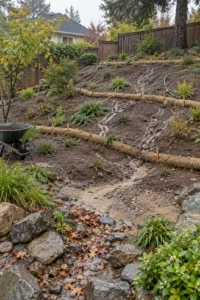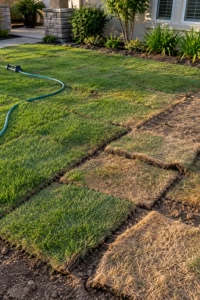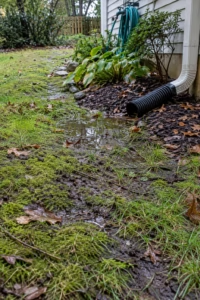
Small holes in a lawn usually come from animal foraging, insects, worms, rodents, drainage, or mechanical damage. The hole’s diameter, depth, edge, soil mound, nearby tunnel, and appearance over time identify the cause more reliably than size alone. A shallow cone-shaped divot suggests digging, while a clean opening with a runway suggests a rodent.
Key Facts / Quick Answer
Pinholes under 1 centimeter often indicate insects, worms, or emerging cicadas.
Cone-shaped pits measuring 2-5 centimeters commonly result from skunks, raccoons, squirrels, birds, or armadillos searching for food.
Clean openings with runways or ridges point more strongly to voles, rats, moles, or other burrowing animals.
Earthworm castings are beneficial soil deposits, not usually a pest infestation.
Fill and reseed only after identifying the cause, or new holes may appear within days.
Typical DIY repair costs $10-$60; professional wildlife or pest work commonly costs $150-$400.
What Small Lawn Holes Mean
Small lawn holes are openings or depressions that interrupt turf, thatch, and topsoil. Their causes range from harmless earthworm activity to repeated wildlife excavation, and the practical distinction depends on whether the soil was pushed up, removed, tunneled beneath, or simply compressed.
A lawn opening is not automatically evidence of a pest. Earthworms improve soil aeration, while solitary bees may use small, temporary nesting entrances without damaging established grass. Conversely, a 3-centimeter hole can represent a vole runway, a skunk feeding pit, or an old drainage void, so diameter alone cannot provide a reliable diagnosis.
The most useful observations are:
- Diameter: Measure the widest point in millimeters or centimeters.
- Depth: Probe gently with a wooden skewer, never with your hand.
- Shape: Note whether the opening is round, oval, funnel-shaped, or collapsed.
- Soil pattern: Look for a mound, scattered soil, scraped turf, or no displaced soil.
- Location: Check tree roots, lawn edges, mulch beds, fences, and wet areas.
- Timing: Record whether new damage appears overnight, after rain, or during a particular season.
- Associated evidence: Look for tracks, droppings, grass runways, castings, wings, or chewed roots.
Why Hole Shape Matters More Than Hole Size
Hole shape reveals how the opening formed. A funnel-shaped depression means something removed soil from above, while a neat vertical pinhole may be an insect entrance or an emerging insect exit. A slit beneath flattened grass usually represents a tunnel rather than an isolated hole.
In practice, fresh soil provides better evidence than an older opening. Rain rounds edges, mower wheels collapse tunnels, and irrigation can wash away the mound that originally identified the culprit.
How Can You Identify the Culprit by Size?
Hole diameter provides a useful first filter, but the surrounding evidence determines the diagnosis. Openings under 1 centimeter are usually associated with insects, worms, or small soil invertebrates; openings from 2-5 centimeters more often involve small mammals or animal foraging.
| Hole appearance | Typical size | Likely cause | Strongest confirming clue |
|---|---|---|---|
| Vertical pinhole | 1-5 mm | Solitary bee, wasp, insect emergence | Bare soil collar, no torn grass |
| Small mound opening | 2-10 mm | Earthworm activity or insect burrow | Granular castings or loose soil |
| Cone-shaped pit | 2-5 cm | Skunk, raccoon, squirrel, bird | Scattered soil and lifted turf |
| Clean round opening | 2-5 cm | Vole, rat, field mouse | Runway, droppings, or nearby cover |
| Raised tunnel or ridge | 3-8 cm wide | Mole or larger burrowing animal | Continuous surface ridge |
| Large excavation | More than 8 cm | Groundhog, armadillo, rabbit, pet, drainage failure | Deep cavity, tracks, or nearby shelter |
These ranges are typical field measurements, not biological rules. A juvenile animal may make a smaller opening, while a collapsed tunnel may appear wider than the original entrance.
Insect and Worm Openings
Earthworm activity commonly produces small granular mounds rather than empty holes. The deposits contain soil and organic material, and they often appear after rain or irrigation when worms move through moist upper soil. Earthworms generally improve aggregation, infiltration, and nutrient cycling, so pesticide treatment is inappropriate unless another confirmed pest is present.
Cicadas can leave pencil-width emergence holes surrounded by loose soil, particularly in late spring or summer depending on the species and region. Solitary bees and wasps may create narrow entrances in bare, compacted, or sandy soil. These insects are usually temporary lawn occupants, and broad insecticide applications can create more ecological damage than the holes themselves.
A dish-soap flush can reveal surface-active larvae and insects, but it is not a universal diagnostic test. A typical mixture is about 2 tablespoons of ordinary liquid dish soap in 1 gallon of water applied to roughly 1 square meter. Test a small area first because concentrated soap can burn grass, and do not use the method near ponds or sensitive plants.
Foraging Pits From Skunks, Raccoons, and Birds
Foraging pits are shallow, irregular depressions created when an animal searches for grubs, earthworms, beetle larvae, or other prey. Skunks often make multiple small conical holes overnight, while raccoons may peel back sections of turf or leave broader torn patches.
Birds usually create tiny punctures or shallow pecks without removing much turf. Squirrels produce scattered, shallow holes when burying or recovering nuts, particularly beneath mature trees. Armadillos, where present, can create numerous larger pits and may disturb a wider area than skunks.
The presence of grubs does not prove that grub control will stop the damage. Wildlife may continue searching for earthworms, beetle larvae, or moist soil even after a grub population declines.
Rodent Openings and Runways
Rodent openings are usually cleaner and more repeatable than feeding pits. Voles often use narrow, shallow runways through grass and may create openings near dense vegetation, mulch, woodpiles, or retaining walls. Rats and field mice may use larger holes, especially near compost, feed storage, sheds, or drainage structures.
Moles are commonly misidentified. Moles create raised surface ridges and soil mounds while hunting soil invertebrates, but they do not usually feed on grass roots. A visible tunnel ridge therefore calls for a different response than a vole runway or a skunk pit.
Gophers, where geographically present, typically produce larger soil mounds and plugged openings. Their damage can affect roots, irrigation lines, and ornamental plants, which makes professional identification more valuable.
Larger Excavations and Non-Wildlife Causes
A hole wider than 8 centimeters deserves a deeper inspection. Groundhogs, armadillos, rabbits, pets, and large rodents can create substantial openings, but so can broken drainage pipes, eroded soil, tree-root voids, and abandoned utility trenches.
Do not reach into a cavity. Use a flashlight from a distance, check whether the opening extends beneath a walkway, and contact the relevant utility or drainage professional if the ground feels hollow or collapses under light pressure.
When Does Lawn Damage Reveal Its Cause?
The timing of new holes narrows the diagnosis because animal behavior and insect development follow seasonal patterns. Overnight damage suggests nocturnal foragers such as skunks or raccoons, while gradual ridges and runways point to repeated animal movement rather than a single feeding event.
| Timing or pattern | More likely causes | What to inspect |
|---|---|---|
| New holes after one night | Skunk, raccoon, armadillo | Torn turf, tracks, scattered soil |
| Spring pinholes | Bees, wasps, worms, emerging insects | Bare soil, soil collars, nearby flowers |
| Late spring emergence | Cicadas or beetles | Pencil-width holes, shed skins, trees |
| Summer dry-weather runways | Voles or mice | Flattened grass, droppings, dense cover |
| Autumn scattered pits | Squirrels, skunks, raccoons | Nuts, grubs, tree lines |
| Holes after heavy rain | Worms, erosion, drainage failure | Castings, washout, saturated soil |
Moisture changes animal behavior. Overwatered turf keeps worms and larvae near the surface, but reducing irrigation will not eliminate every animal problem. Water deeply and infrequently when grass and soil conditions require it, while correcting compacted soil and drainage problems that keep the surface wet.
What Happens If You Ignore the Holes?
Ignoring a few shallow insect or worm openings usually causes little harm. Repeated excavation, however, can destroy turf crowns, expose roots, create mower hazards, and leave voids that enlarge during rain.
Rodent tunnels may dry soil around roots and undermine small plants. Surface ridges can become trip hazards, while deep cavities near retaining walls, patios, or drains may signal structural erosion rather than lawn pest activity.
A useful threshold is recurrence. If new holes appear in the same area for three or more consecutive days, treat the pattern as an active cause rather than historical damage. Filling the opening without removing the attractant usually produces cosmetic improvement only.
How Should You Inspect the Lawn Safely?
A controlled inspection prevents misidentification and avoids contact with wildlife, stinging insects, or contaminated soil.
- Photograph each opening beside a ruler or coin for scale.
- Mark the location with a small flag so new holes can be distinguished from old ones.
- Measure width, depth, and distance from nearby cover or structures.
- Examine the soil for castings, tracks, droppings, hair, feathers, or chewed vegetation.
- Check at dawn for nocturnal damage and at midday for active bees or wasps.
- Probe only the surface with a stick, never with fingers or a metal tool.
- Apply a small dish-soap flush only when insects are suspected and runoff is controlled.
- Choose treatment after identifying the likely animal, insect, drainage defect, or soil condition.
Expert insight: The first inspection should happen before watering or mowing. Water erases tracks and softens edges, while mowing removes the visual difference between a tunnel ridge and a shallow divot.
Which Treatment Works Best?
The best treatment targets the cause, not the visible depression. Wildlife exclusion can stop repeat damage quickly, while grub management helps only when a confirmed grub population attracts the animal.
| Strategy | Typical cost | Typical timeframe | Best use | Main limitation |
|---|---|---|---|---|
| Topsoil and compost repair | $10-$30 per bag | 1-2 hours | Small, inactive depressions | Does not stop recurrence |
| Beneficial nematodes | $30-$60 | 1-3 weeks | Confirmed susceptible soil pests | Requires suitable moisture |
| Castor-oil repellent | $20-$40 | Days to weeks | Short-term animal deterrence | Rain reduces persistence |
| Wildlife inspection | $75-$200 | 1-3 days | Repeated animal damage | Diagnosis may need follow-up |
| Wildlife removal or exclusion | $150-$400 | 3-7 days | Active nuisance animals | Rules vary by location |
| Aeration and overseeding | $150-$300 | 4-8 weeks | Compaction and broad turf thinning | Poor timing reduces germination |
Prices are typical United States consumer ranges and vary by region, lawn size, access, species, and licensing requirements. Milky spore is not a universal grub solution; its performance depends on grub species, climate, soil conditions, and label directions. Bacillus thuringiensis products also work only against specified insect groups and life stages.
When Should You Use Repellents or Barriers?
Repellents make sense for temporary pressure, but exclusion provides more durable control when a defined entry point exists. Seal gaps beneath sheds, remove dense debris, protect compost, and reduce food or shelter sources before relying on a spray.
Do not trap or relocate wildlife without checking local regulations. In many jurisdictions, raccoons, skunks, groundhogs, and other species require licensed handling, and trapping a mother can leave dependent young behind.
When Is Pest Treatment Unnecessary?
Treatment is unnecessary when the evidence indicates earthworms, occasional solitary bees, or harmless seasonal emergence. Removing beneficial organisms can reduce soil quality and may increase future pest pressure by disrupting natural predators and decomposers.
A lawn with healthy earthworm castings may look less uniform but often has better infiltration than a lawn maintained through repeated broad-spectrum pesticide applications.
How Do You Repair the Turf?
Repair should begin only after the opening stops changing. A typical repair uses screened topsoil blended with compost, followed by seed suited to the local grass type and season.
For a shallow hole, rake loose edges, remove stones and debris, fill in 1-centimeter lifts, and firm each layer lightly. Keep the finished surface level with adjacent turf so mower wheels do not drop into a depression. Do not pack pure clay or pure sand into the opening because either material can create a poor root zone.
For a deeper cavity, fill gradually with compatible soil and investigate the reason for the void. A deep hole beside a foundation, path, drain, or tree root requires more than topdressing.
| Repair condition | Fill approach | Seed or turf action | Typical recovery |
|---|---|---|---|
| Less than 2 cm deep | Topsoil-compost blend | Overseed and keep surface moist | 3-6 weeks |
| 2-8 cm deep | Layered fill, lightly firmed | Seed after settling | 4-8 weeks |
| Repeated collapse | Diagnose drainage or tunnel | Delay seeding | Variable |
| Broad torn turf | Level soil and replace sections | Patch or overseed | 4-8 weeks |
| Active runway or mound | Control cause first | Repair afterward | Begins after control |
Seed germinates best when soil temperature and moisture suit the grass species. Cool-season grasses generally recover during favorable spring or autumn conditions, while warm-season grasses recover most actively during sustained warmth.
Expert insight: Overfilling is a common repair error. Loose soil settles after irrigation, leaving a second depression that looks like fresh animal damage. Fill slightly, water once, allow settling, and finish the surface level.
What Are the Main Mistakes to Avoid?
The most expensive mistake is treating a visual symptom before identifying the mechanism. Three other errors repeatedly prolong damage:
- Spraying pesticides on earthworm castings.
- Filling vole, skunk, or raccoon holes without changing the attractant.
- Using pure sand, heavy clay, or unamended excavated soil as a plug.
- Applying grub control without confirming grubs or checking the product label.
- Removing all vegetation near the lawn, which can increase erosion and reduce habitat for beneficial predators.
- Ignoring holes beside drains, foundations, paths, or retaining walls.
- Handling wildlife or reaching into a burrow.
A lawn product label is the controlling instruction for application rate, timing, personal protection, re-entry interval, and permitted sites. State extension services, county agriculture offices, and licensed wildlife professionals can help confirm region-specific species and legal requirements.
When Should You Call a Professional?
Professional help is appropriate when holes are deep, rapidly multiplying, connected to structures, associated with aggressive animals, or impossible to identify from surface evidence. A wildlife specialist is more suitable than a lawn-care technician when tracks, droppings, nocturnal activity, or persistent excavation dominate the pattern.
Call a drainage or structural contractor when the ground collapses, water disappears into a cavity, a path becomes unstable, or the opening lies near a foundation or buried service. Contact a pest professional when stinging insects occupy a high-traffic area or when rodent activity enters a building.
Seek urgent assistance when you find exposed electrical wiring, a damaged gas or water line, a large unstable void, or an animal behaving abnormally.
Frequently Asked Questions About Why Are There Small Holes in My Lawn?
Are small round holes in grass caused by snakes?
Small round holes are rarely created by snakes. Snakes may use abandoned rodent burrows, but they generally do not excavate clean lawn openings. Check for runways, droppings, soil mounds, and nearby cover before attributing holes to snakes.
Will watering make lawn holes disappear?
Water can soften and settle a shallow depression, but it does not remove an active cause. Excess irrigation may bring worms and insect larvae closer to the surface and can worsen erosion or drainage voids. Repair the source first, then water new seed according to its germination needs.
Do coffee grounds stop animals from digging?
Coffee grounds have no dependable, species-wide effect on skunks, raccoons, squirrels, or rodents. They may alter soil texture slightly when composted, but they should not replace exclusion, food-source management, or legal wildlife control.
Can pets create small holes in the lawn?
Dogs can create shallow divots while digging, chasing insects, or burying objects. Pet-made holes often occur near fences, resting areas, gates, or recently disturbed soil and lack the consistent runway or mound pattern associated with rodents.
How long does it take grass to cover repaired holes?
Small repairs typically fill in within 3-6 weeks during suitable spring or autumn growing conditions. Cold soil, drought, shade, poor seed contact, and repeated animal activity can extend recovery to 8 weeks or longer.
Should I fill a hole before identifying its cause?
Fill a hole immediately only when it creates a trip or mower hazard, and mark the area first. Otherwise, document its shape and surrounding evidence before repair. New openings after filling confirm that the underlying animal, insect, tunnel, erosion, or drainage problem remains active.
Conclusion
Why Are There Small Holes in My Lawn? The answer depends on the complete pattern: diameter, depth, shape, mound, runway, location, and timing. Diagnose first, protect people and pets from unsafe openings, address wildlife or insect causes appropriately, then repair the turf with a screened soil-compost blend and suitable seed.