Imagine stepping out the back door with a pair of kitchen scissors and finding basil, thyme, chives, and parsley lined up at eye level on the wall beside you. No kneeling, no hunting through a weedy bed, just a quick snip and you’re back at the stove before the pan cools.
That’s why growing herbs up instead of out has caught on with so many home cooks. Most culinary herbs are compact, shallow-rooted, and happy in small containers, which makes them ideal for walls, ladders, railings, and stacked planters. A vertical setup also turns a bare fence corner or blank patio wall into something green and fragrant, and it keeps tender leaves away from slugs and digging dogs.
These 21 vertical herb garden ideas cover everything from rustic pallet walls and terracotta grids to stacking towers, rain gutter planters, and indoor shelves under grow lights. Some cost almost nothing to build from salvaged materials, while others take an afternoon and a drill. Pick one that suits your light, your space, and the herbs you actually cook with.
1. Turn a Wooden Pallet Into a Patio Herb Wall
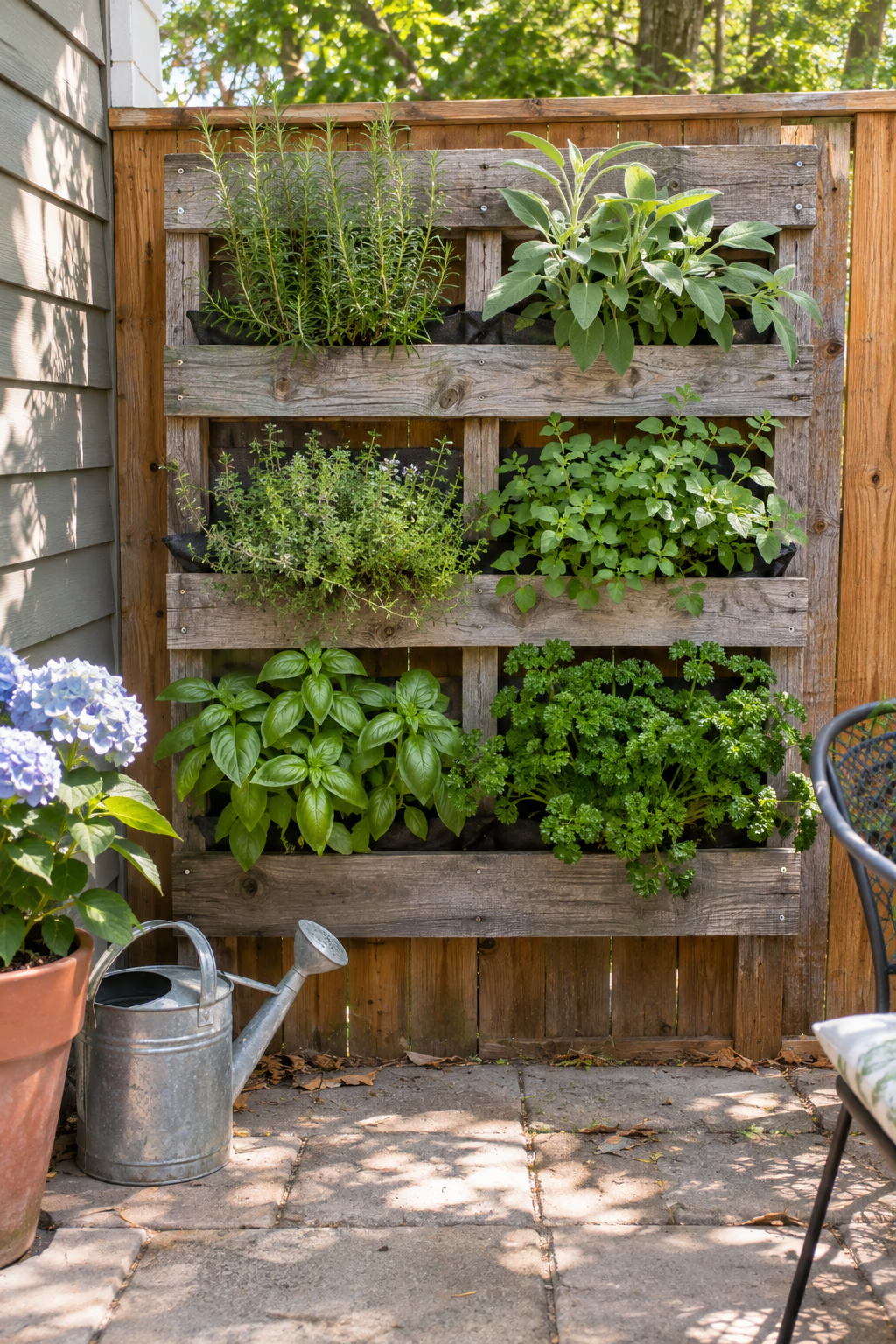
A cheap, rustic wall that holds a dozen herbs
A standard pallet is about 40 by 48 inches, which gives you room for three or four rows of herbs. Sand off splinters, staple heavy landscape fabric across the back, bottom, and sides of each slat opening to form pockets, then fill with a light potting mix and plant small herb starts packed fairly close together.
Put the drought-lovers like rosemary, sage, and thyme in the top row, where soil dries fastest, and moisture-lovers like parsley, chives, and basil toward the bottom. Lay the pallet flat for two to three weeks so roots can knit the soil together before you stand it upright against a sunny wall.
Only use pallets stamped “HT,” which means heat-treated. Skip any marked “MB” (methyl bromide) or ones with stains or unknown spills, since you’ll be eating what grows in them. A planted pallet is heavy, so screw it to studs or fence posts rather than just leaning it.
2. Hang Terracotta Herb Pots on a Steel Wall Grid
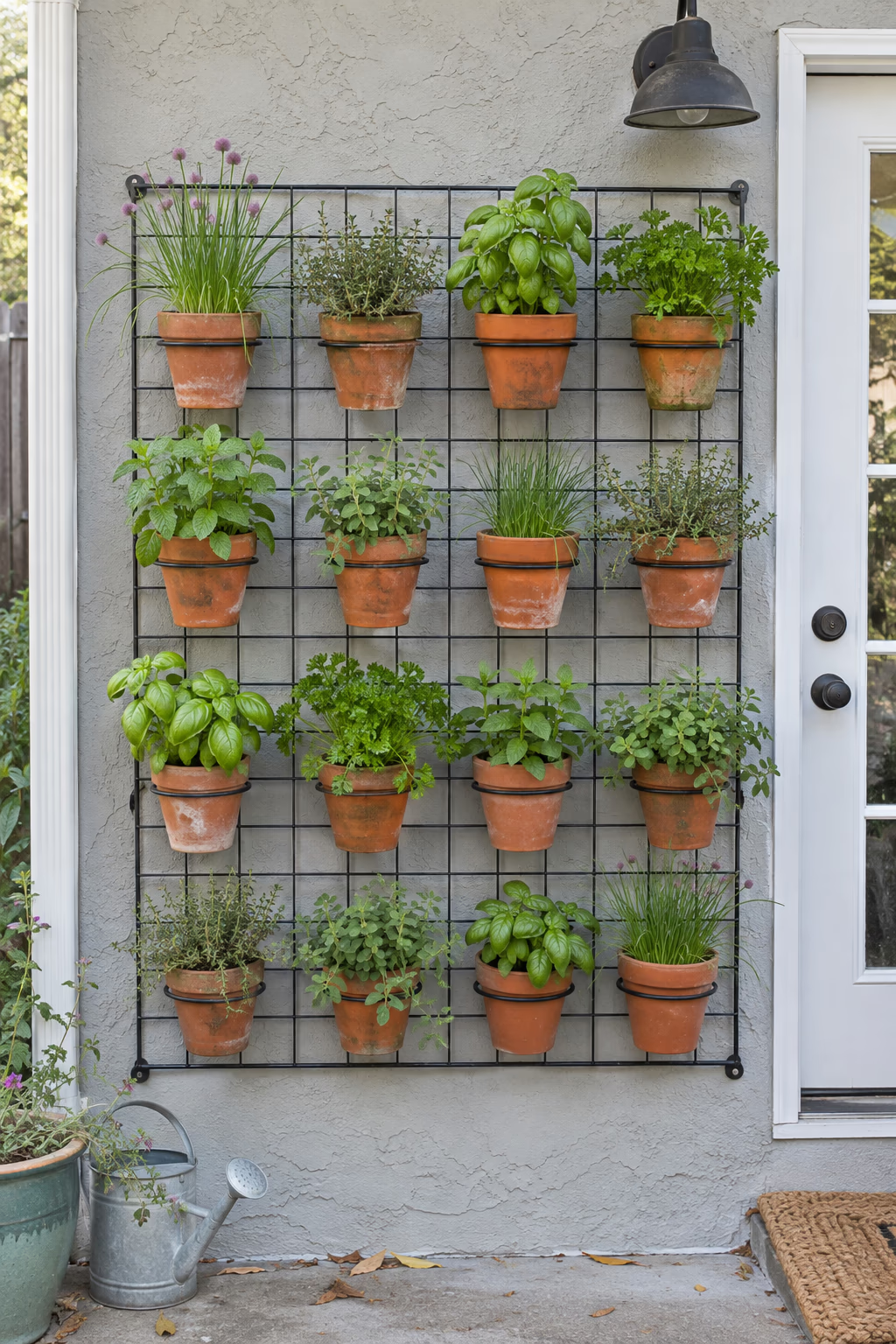
Clean rows that look like a design feature
A welded wire grid panel, the kind sold for garage organization or as a cattle panel offcut, makes a sturdy backer for a wall of clay pots. Mount it on spacers about an inch off the wall, then hang 4- to 6-inch terracotta pots using pot hanger rings or simple wire hooks in neat, evenly spaced rows.
The repetition is what makes this look so good. Matte black steel against warm orange clay reads modern, while a galvanized grid with weathered pots feels more farmhouse. Each pot can be lifted off for watering, trimming, or swapping out a basil plant that has bolted.
Small clay pots dry out quickly in summer sun and may need water every day in July. Grouping them on an east-facing wall, with morning sun and afternoon shade, cuts down on that chore considerably.
3. Mount Mason Jar Herbs on a Reclaimed Barn Board
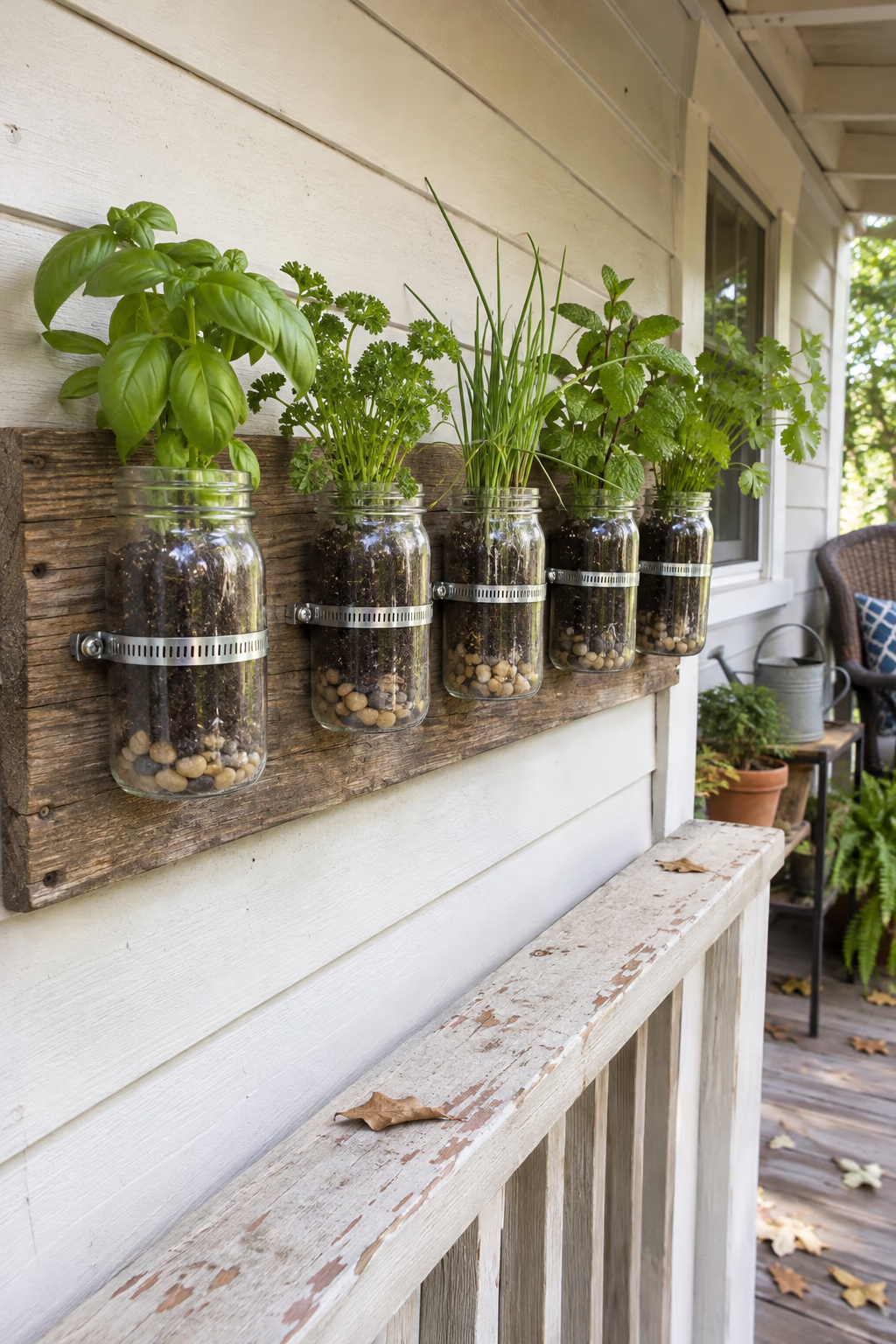
Farmhouse charm right by the kitchen
Choose a weathered board about 3 to 4 feet long and seal it with a clear exterior finish. Attach pint or quart mason jars with stainless steel hose clamps screwed into the wood, spacing them 8 to 10 inches apart so each herb has elbow room.
The trick is drainage, since jars have no holes. Add an inch of pebbles in the bottom, use a fast-draining mix, and water lightly, or better yet, slip a small plastic nursery pot inside each jar so you can pull it out to drain. Basil, parsley, chives, and mint do best here because they’re easy to harvest often and stay compact.
This idea works well on a covered porch or inside by a bright window. In an open, rainy spot, jars can fill with water and drown the roots, so keep them sheltered.
4. Hang Herb Pots From the Rungs of an Old Ladder
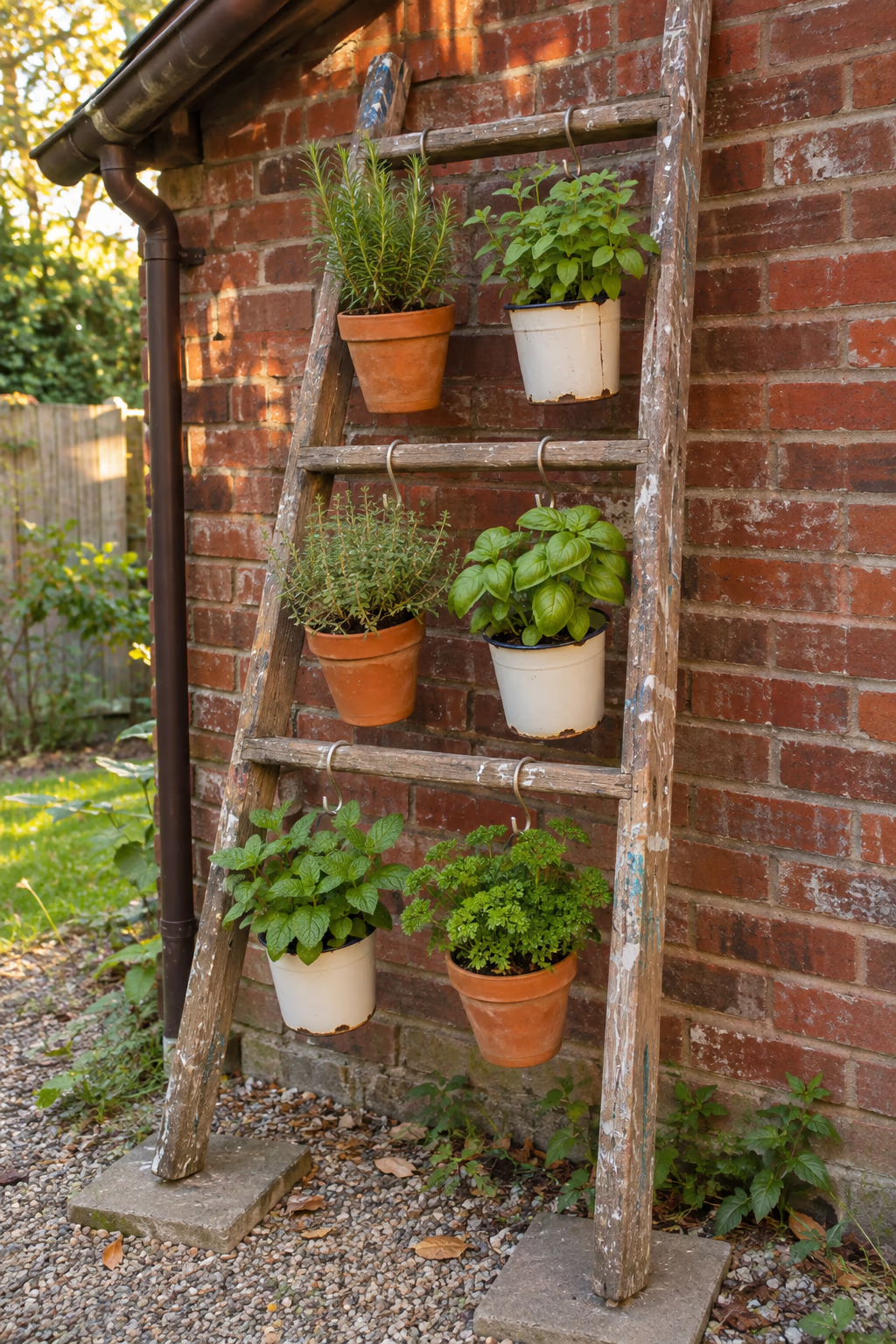
Instant height with almost no building
An old wooden stepladder or a straight ladder leaned against a sunny wall gives you a ready-made frame. Hang pots from each rung using S-hooks or metal pot hangers, or set planks across an A-frame stepladder’s steps to create shelves for rows of pots.
Ladders suit renters because nothing gets screwed into the house, and you can move the whole thing to chase the sun as the seasons change. Put sun-hungry herbs like rosemary and oregano on the top rungs and shade-tolerant mint and parsley near the bottom.
Secure the top of a leaning ladder to the wall or fence with a hook and eye so wind or a bumping hose can’t tip it. If the wood is old, check for rot at the feet and set them on pavers to keep them off wet ground.
5. Hang Painted Rain Gutters on Rope for Shallow-Rooted Herbs
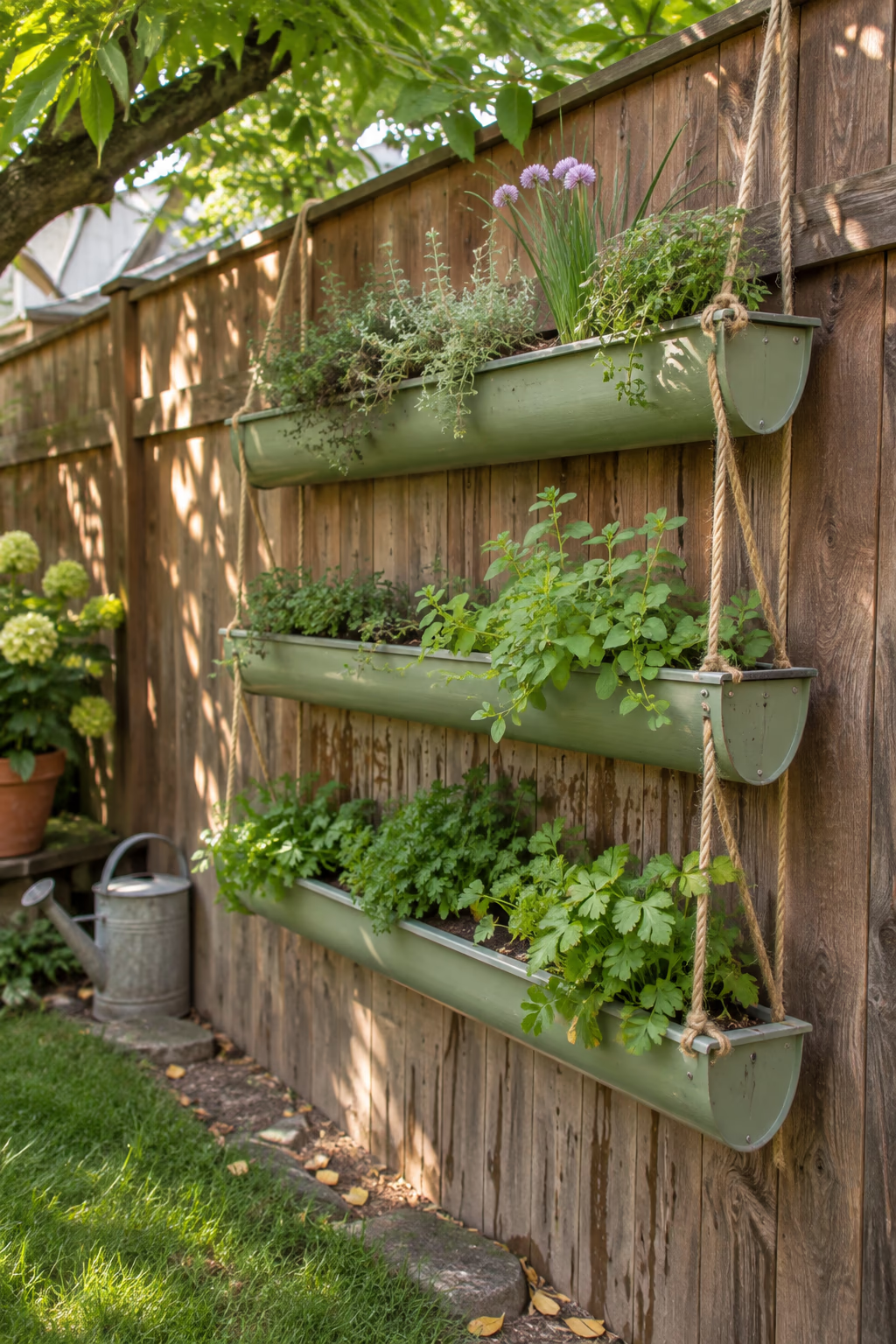
Long, narrow planters that float on a wall
Standard vinyl or aluminum gutter sections, about 4 to 5 inches deep, make tidy trough planters. Cap the ends, drill drainage holes every 6 inches along the bottom, and paint the outside in a soft color like sage green or charcoal. Then suspend three or four lengths one above another with marine rope or hang them on gutter brackets screwed to a fence.
Gutters are best for shallow-rooted herbs like thyme, chives, oregano, parsley, and cilantro. Stagger the rows at least 10 to 12 inches apart vertically so upper troughs don’t shade the ones below too heavily.
The shallow soil dries out fast and heats up in full sun, so this setup prefers a spot with some afternoon shade. Skip deep-rooted herbs like rosemary and lovage, which will quickly run out of room.
6. Frame a Living Herb Picture Beside the Grill
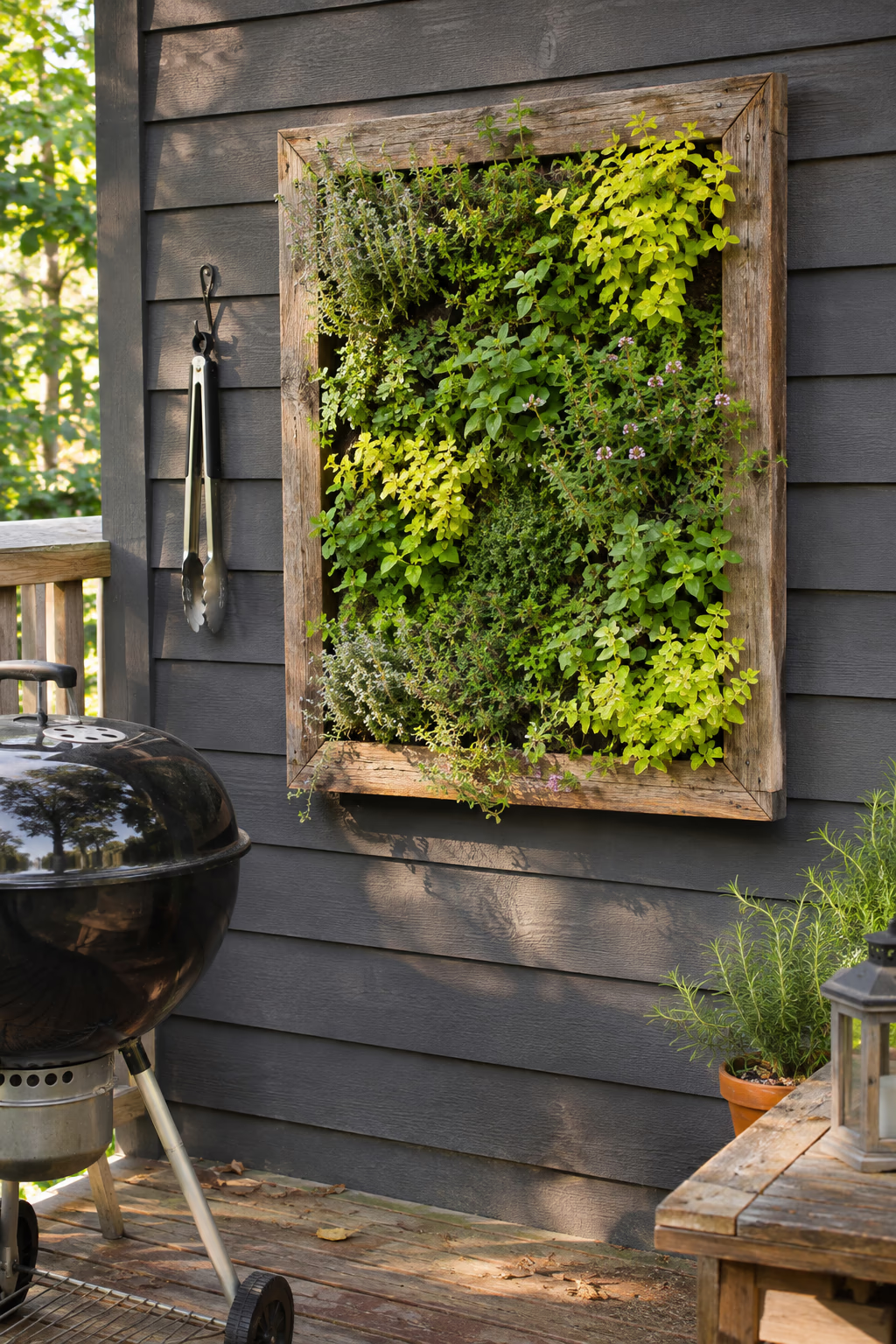
Herbs displayed like artwork where you cook
Build a shallow box about 18 by 24 inches and 3 to 4 inches deep, staple hardware cloth across the front, and add a wide picture-style frame around the edge. Fill with potting mix, then poke small plugs of creeping thyme, oregano, and marjoram through the wire in a pattern.
Hanging it beside the grill means the herbs you use most on meat and vegetables are within arm’s reach. Low, mat-forming herbs fill in to form a soft, textured surface that really does look like a framed piece of art once established.
Keep the frame flat for about a month until roots hold the soil in place. Water by taking it down and soaking it horizontally, and keep it a safe distance from the grill’s heat and grease spatter.
7. Grow a Kitchen Herb Tower in a Stacking Planter
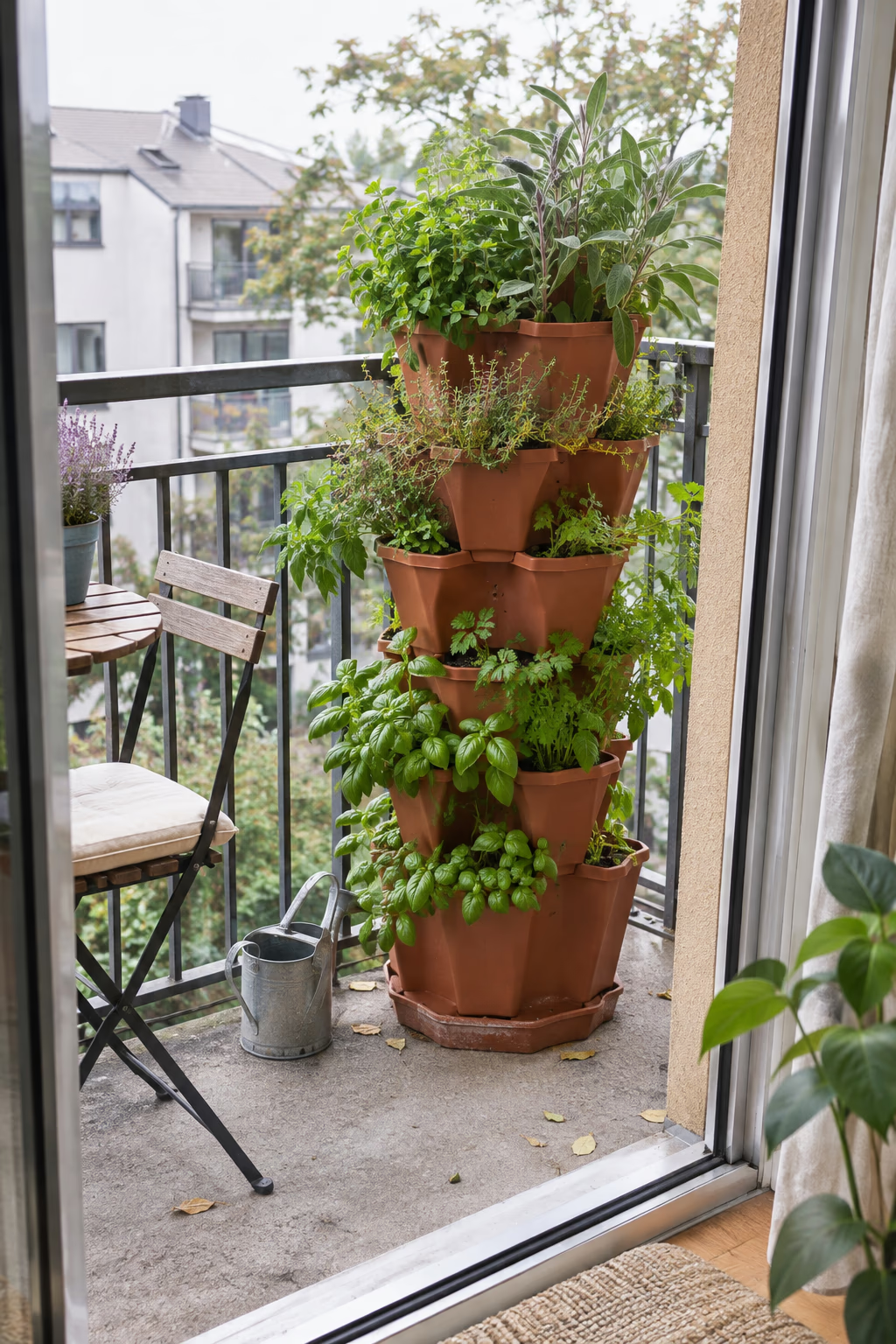
Lots of herbs in a 2-foot circle
Stacking planters are plastic or terracotta-look tiers that interlock into a column, each with several planting pockets. A five-tier tower can hold 15 to 30 herbs in a footprint smaller than a patio chair, which makes it a favorite for balconies and small decks.
Water poured into the top trickles down through each tier, so you can plant the thirstiest herbs, like basil, parsley, and cilantro, lower down and the Mediterranean types near the top. Many models have a rotating base so every side gets a turn in the sun.
Look for deep pockets that give roots real room, and expect to water daily in hot weather. Mint can still overrun its neighbors, so give it its own tier or keep it in a separate pot.
8. Fill Felt Wall Pockets With Everyday Cooking Herbs
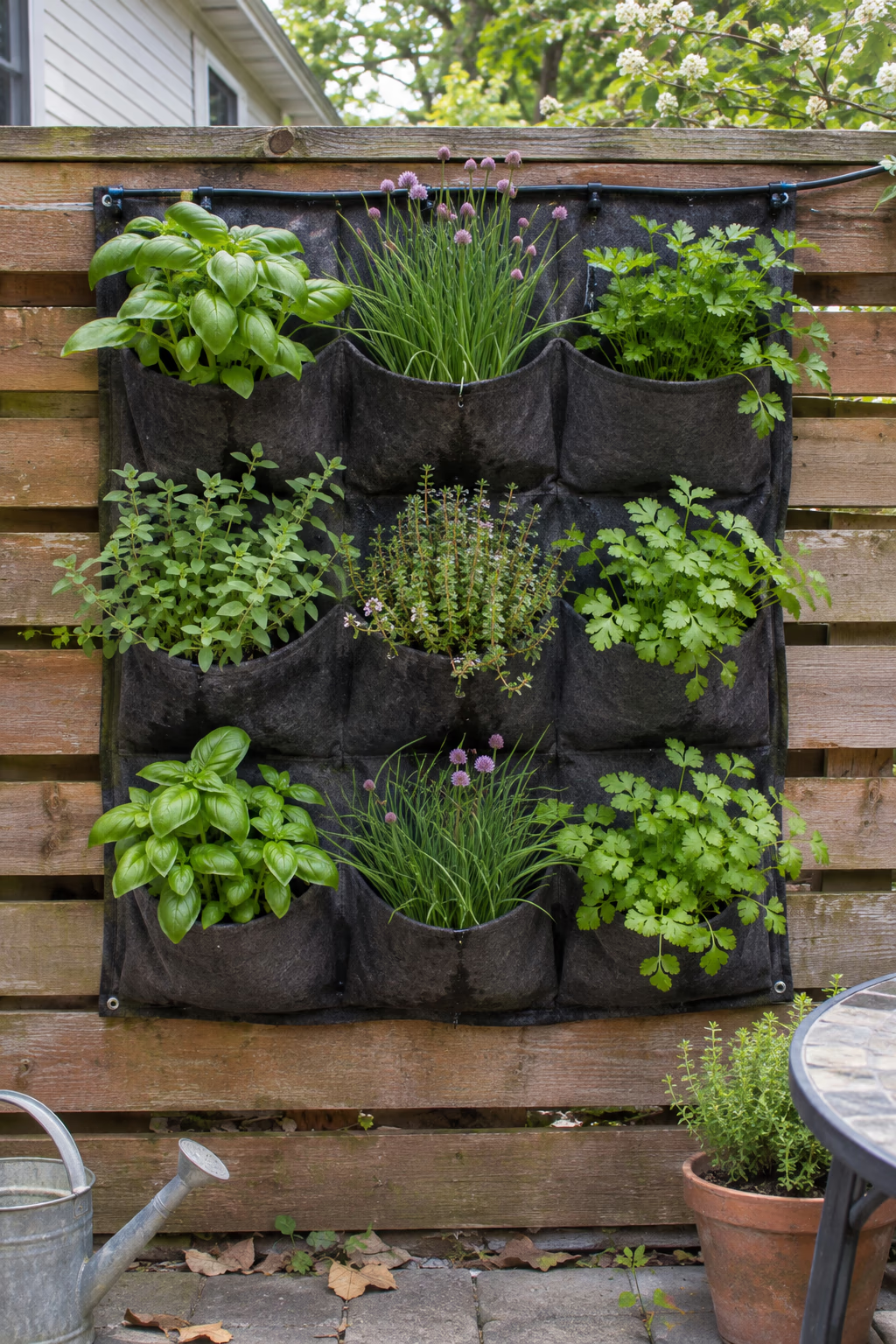
A soft, lightweight wall for renters and small yards
Felt pocket panels are made from recycled fabric with rows of planting pouches, and they hang from a couple of screws or a rod. A 3-by-3-foot panel with 12 to 18 pockets is enough for a cook’s set of basil, chives, parsley, thyme, oregano, and cilantro.
The fabric breathes, which helps roots stay healthy, and the panel weighs little enough to hang on a fence or a deck wall without heavy brackets. Over a few weeks the herbs spill over the pockets and hide the fabric completely.
Felt wicks moisture out of the soil quickly, so pockets can dry out in hours on hot days. Adding a simple drip line along the top row, or choosing a panel with a waterproof backing, prevents both dry plants and stained siding.
9. Stack Clay Pots on a Rebar Spine for a Tipsy Herb Tower
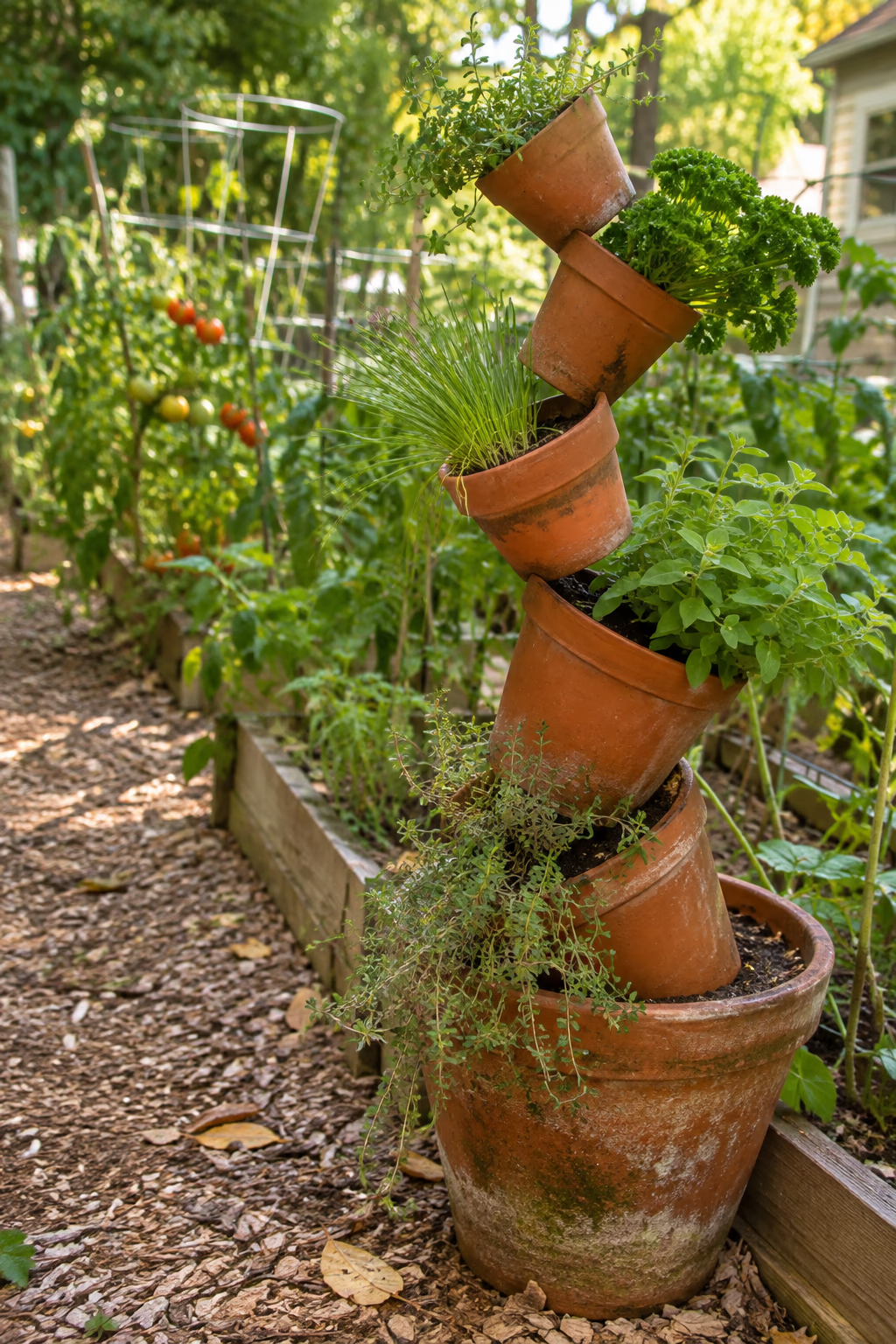
A playful, leaning column that anchors a bed
Drive a 4- to 5-foot length of rebar about 18 inches into the ground or into a large base pot filled with soil. Slide clay pots of decreasing size onto it through their drainage holes, tilting each one in a different direction and filling each with soil as you go.
The tipped pots create pockets on alternating sides, perfect for trailing thyme, oregano, chives, and parsley. The finished tower looks whimsical yet sturdy, and it fits right in a sunny corner of the yard or at the end of a vegetable bed.
Cap the top of the rebar with a plastic safety cap or the top pot so nobody gets scratched. Clay pots can crack if left full of wet soil through hard freezes, so in cold climates empty them or bring them under cover in late fall.
10. Build a Stepped A-Frame Herb Stand
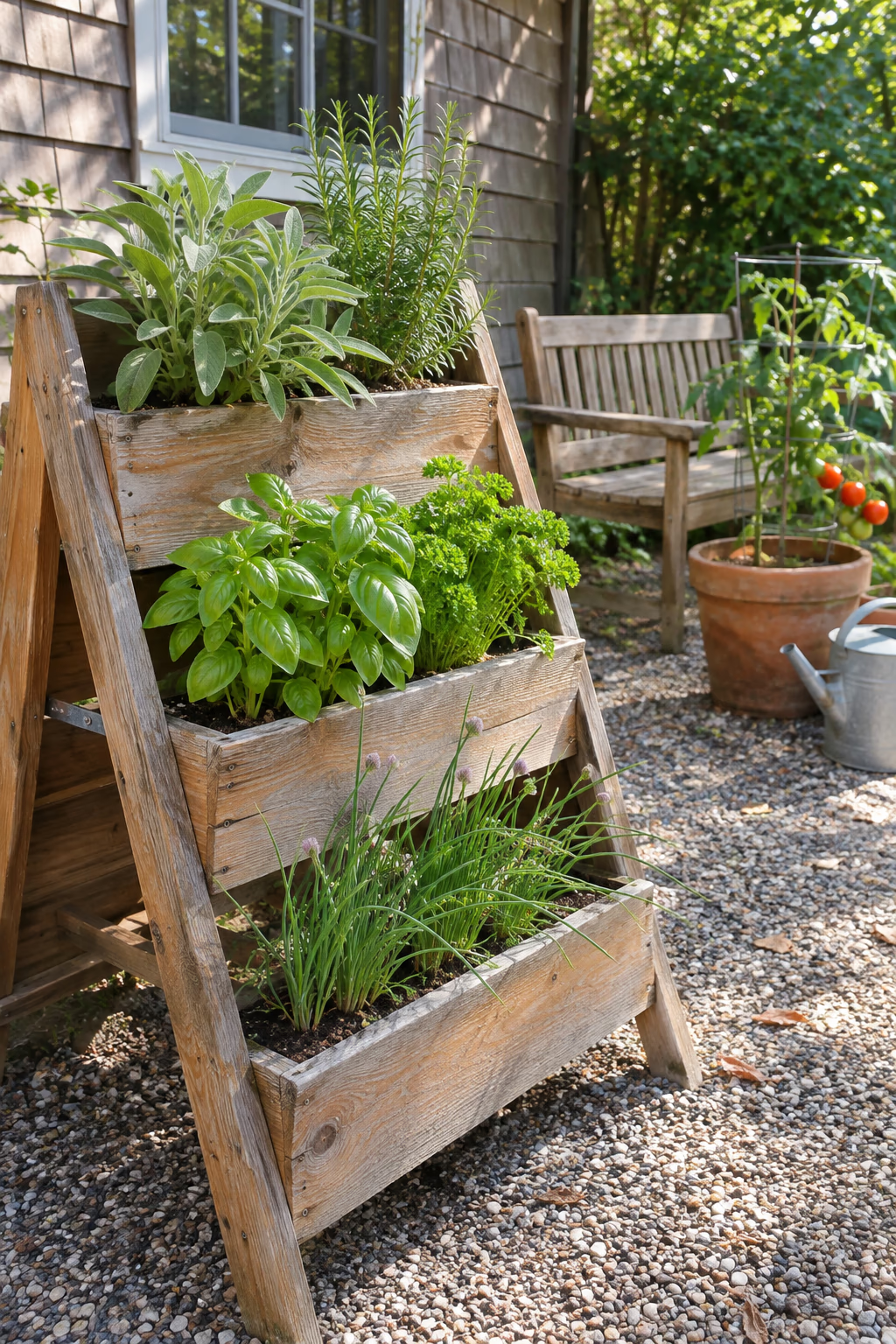
Tiered shelves that give every herb its share of sun
An A-frame stand has two angled sides joined at the top, with planter boxes or shelves stepping down each face. A simple version uses cedar 2×4 legs and three 6-inch-deep boxes per side, about 3 feet tall and 3 feet wide.
Because the tiers step back, the upper boxes don’t shade the lower ones much. Set the stand with its faces pointing east and west and both sides will get several hours of sun, letting you grow sun-lovers on one side and parsley, mint, and chives on the other.
Use untreated cedar or redwood for anything holding edible plants, and drill drainage holes in every box. It’s freestanding, so it can sit on a patio, deck, or gravel pad without any wall at all.
11. Stack Wooden Crates Into an Herb Bookcase
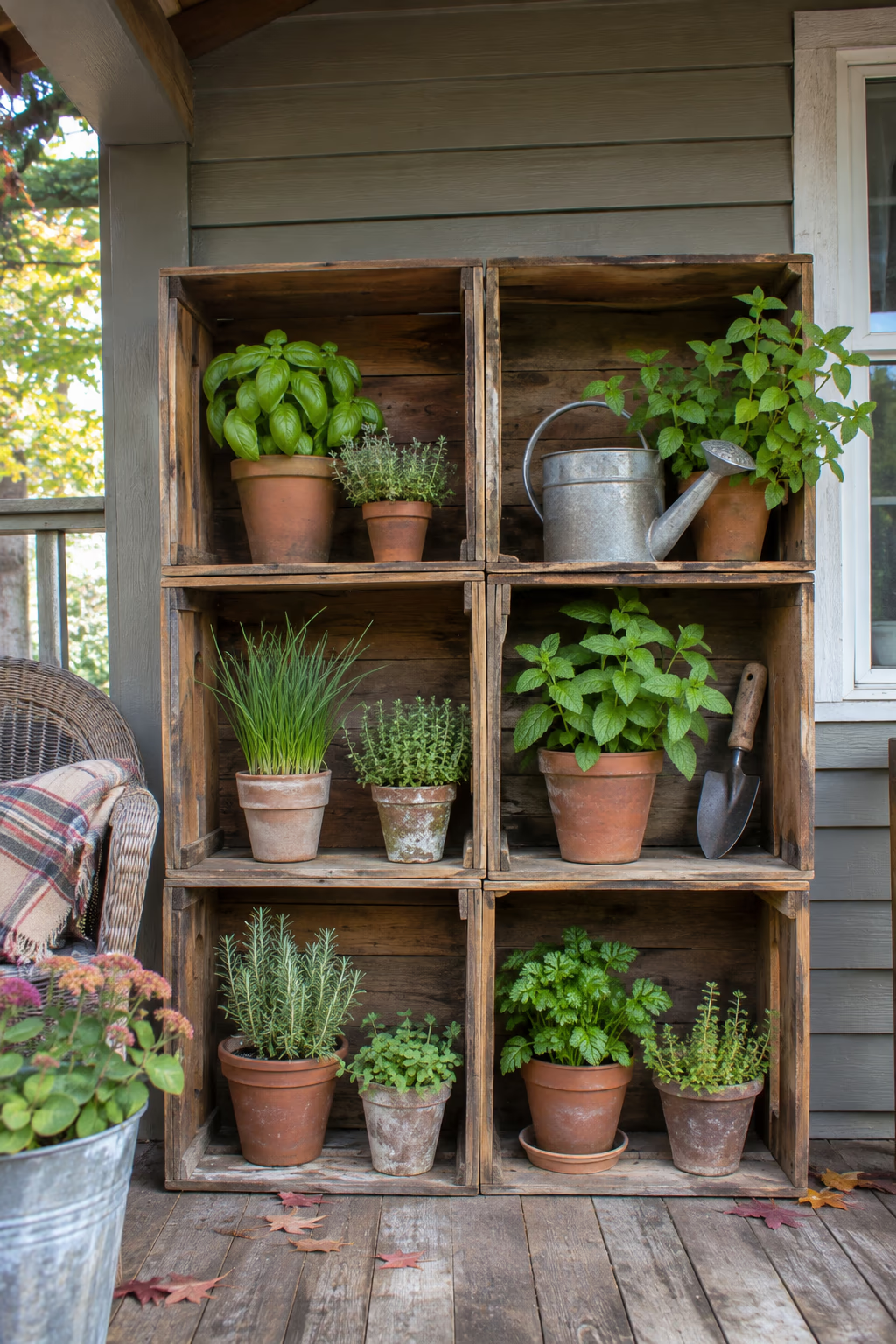
Flexible shelving you can rearrange anytime
Wooden produce crates stacked on their sides and screwed together make an instant open bookcase. Set pots of herbs inside each cubby, and turn a few crates the other way to plant directly, lining them with landscape fabric first.
The cubbies create a cozy, organized look, especially with a mix of pots, a watering can, and a trowel tucked among the herbs. Crates are easy to find at craft stores and are light enough to rearrange whenever the sun shifts.
Most craft crates are made from thin pine that weathers quickly outdoors. A coat of exterior wood sealer helps, and placing the stack under an eave or on a covered porch will make it last several seasons longer.
12. Hook Galvanized Buckets Along a Shed Wall
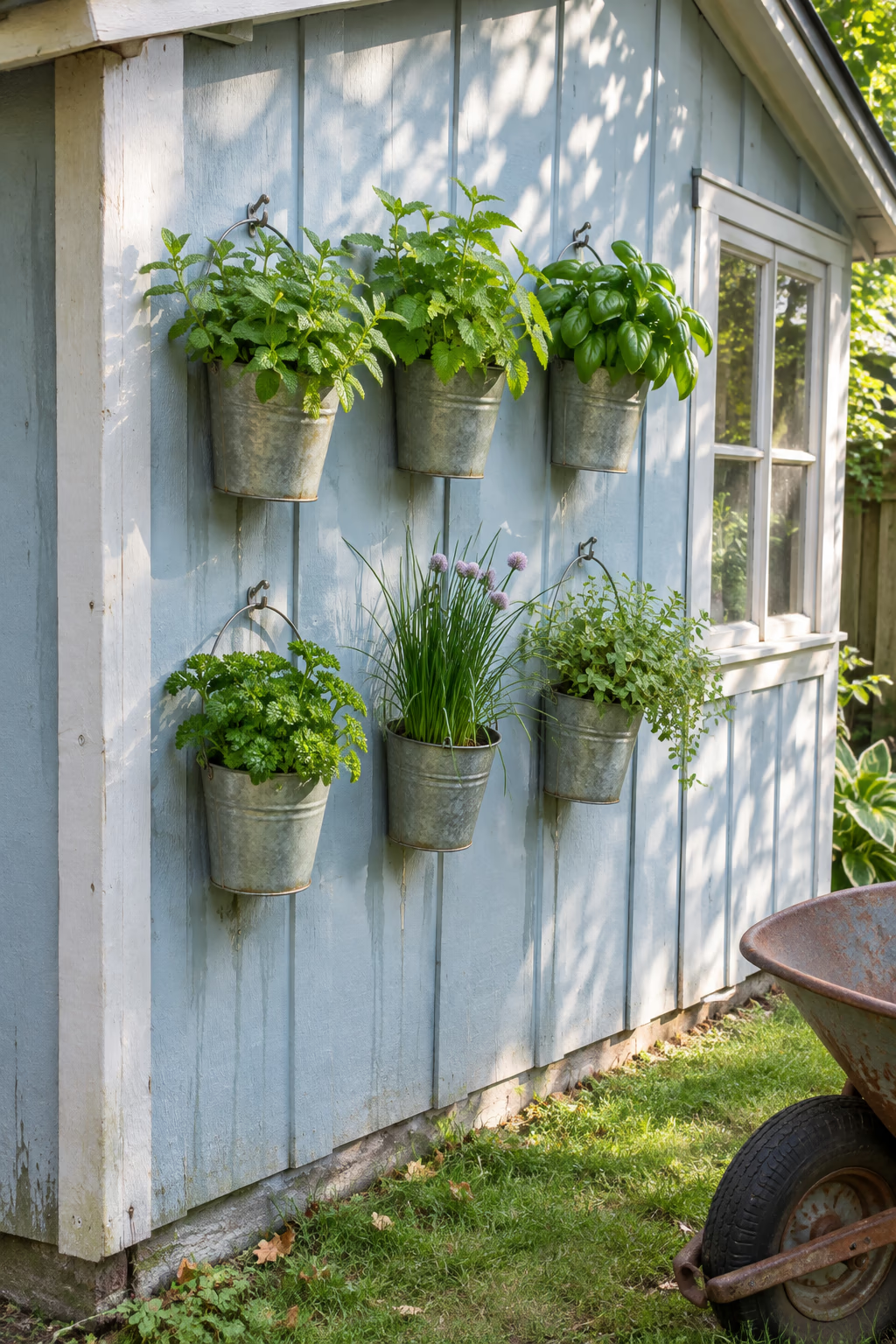
Farm-style containers that brighten a plain wall
Small galvanized pails, about 1 to 2 gallons each, look great hung in staggered rows on the sunny side of a garden shed or garage. Drill four or five drainage holes in the bottom of each, then hang them from sturdy screw hooks or a horizontal rail with S-hooks.
Each pail holds one generous herb plant, which makes this a good home for herbs that like their own space, such as mint, lemon balm, or a bushy basil. The silver metal pairs nicely with green foliage and weathered wood siding.
Metal heats up in strong afternoon sun, which can stress roots. An east-facing wall is ideal, or you can line the pails with a thin layer of burlap or newspaper before adding soil for a bit of insulation.
13. Hang Herb Pots From a Curtain Rod in a Sunny Window
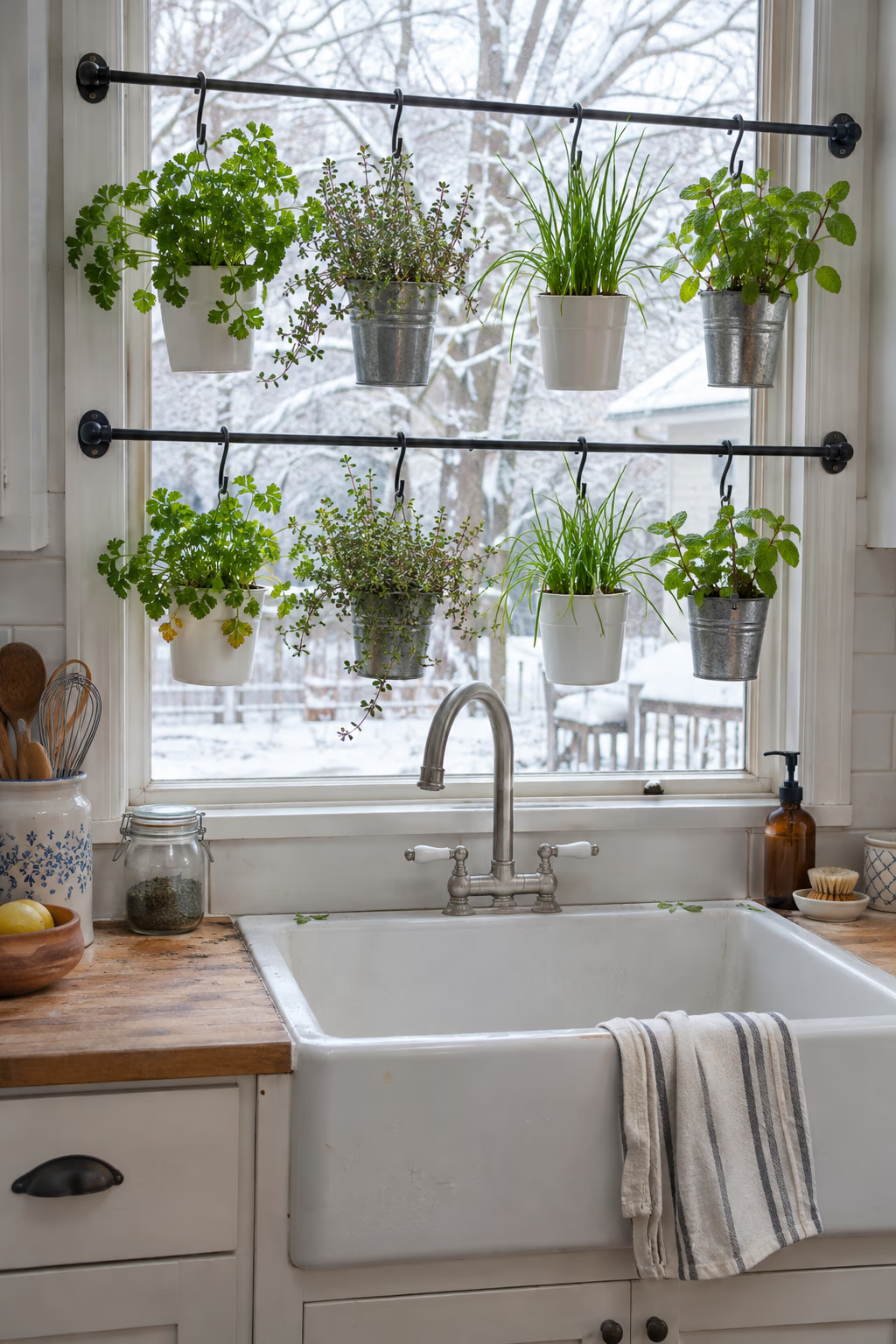
A winter herb garden right at the kitchen sink
Mount two or three sturdy curtain rods across a south- or west-facing kitchen window at different heights. Hang small pots or tin buckets from S-hooks so herbs sit in a stepped arrangement across the glass.
This keeps parsley, chives, mint, and thyme growing through fall and winter when outdoor herbs are dormant. It also frees up counter space and makes the window feel like a bit of garden even in January.
Use pots with attached saucers or water them in the sink so nothing drips on the floor or sill. Leaves touching cold glass can get damaged in winter, so leave a few inches between plants and the window.
14. Plant Every Pocket of a Strawberry Jar With Herbs
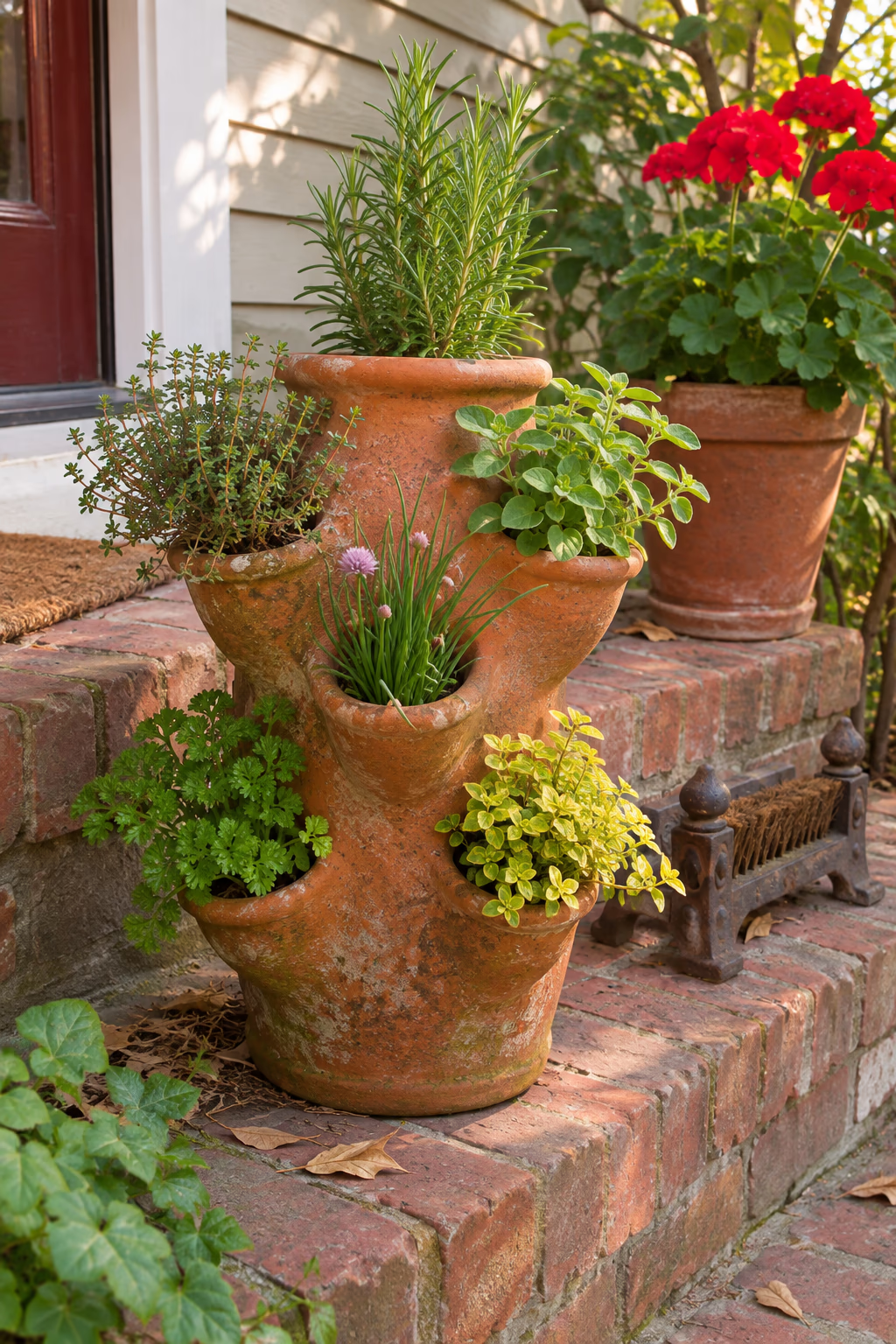
A classic pot that grows a whole herb collection
Strawberry jars are tall clay pots with cup-shaped side pockets, and they work just as well for herbs as for berries. A 16- to 20-inch jar can hold one herb on top and six to eight more in the pockets around the sides.
Plant as you fill, adding soil up to each row of pockets, tucking in a plant, and continuing. Thyme, oregano, chives, parsley, and marjoram are perfect for the side pockets, while a small rosemary or sage looks handsome crowning the top.
Water tends to run past the bottom pockets before soaking in. Before filling, stand a length of PVC pipe drilled with holes in the center, then fill it with gravel and pull the pipe out, leaving a watering channel that reaches every level.
15. Suspend Small Herb Pots From a Driftwood Branch
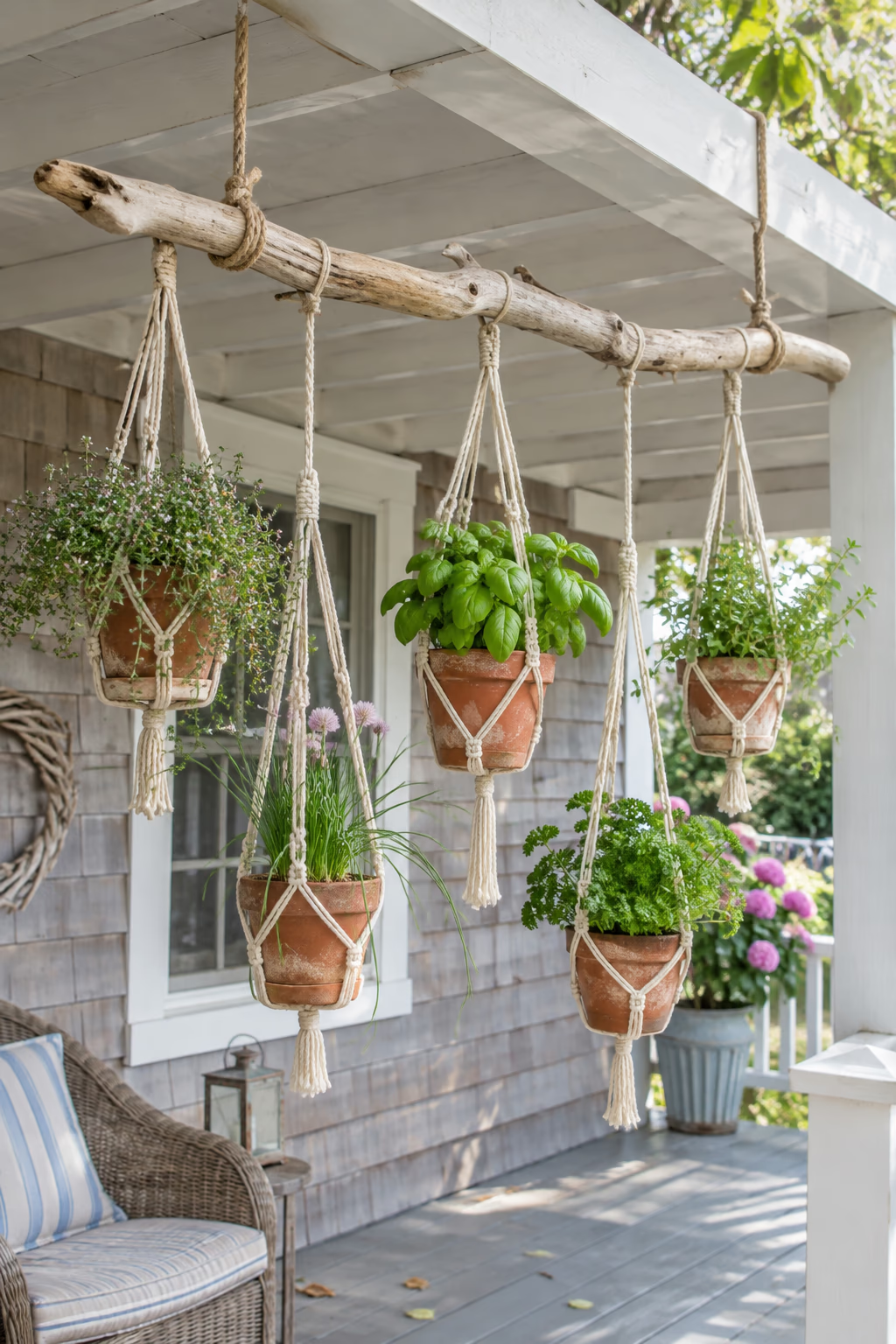
A natural, beachy mobile for a porch or pergola
Find a sturdy, dry branch or piece of driftwood about 3 feet long and hang it horizontally from a porch beam with two lengths of rope. Then drop small terracotta pots in rope or macramé hangers at staggered heights below it.
The look is relaxed and organic, a nice change from straight rows. It works well for compact herbs like thyme, chives, and dwarf basil, and the pots catch light differently as they turn slightly in the breeze.
Wet soil adds a surprising amount of weight, so test the branch before hanging and use a rated ceiling hook screwed into solid wood. Hanging pots dry quickly, so check them every day or two in summer.
16. Light Up an Indoor Herb Shelf With LED Grow Lights
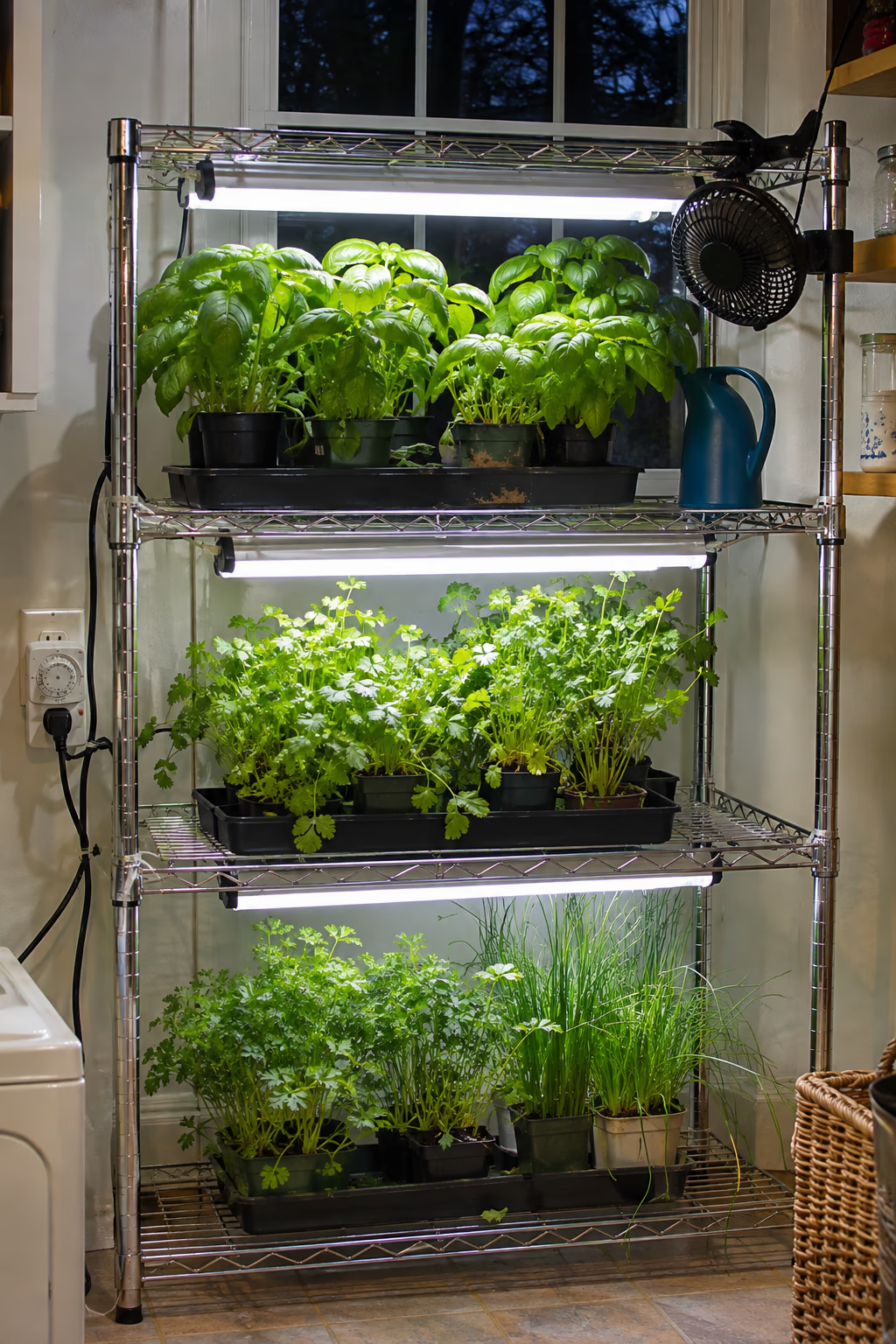
Fresh herbs year-round, whatever the weather
A simple wire or wooden shelving unit with three or four shelves becomes a full indoor herb garden when you add LED grow light strips under each shelf. Set the lights about 4 to 6 inches above the plants and put them on a timer for 12 to 16 hours a day.
Herbs grown this way stay compact and leafy instead of stretching toward a dim window. It’s a great way to keep basil, cilantro, parsley, and chives coming through winter, especially in northern states with short days.
Place trays under the pots to catch drips and run a small fan nearby for air movement, which discourages fungus gnats and mildew. Full-spectrum LEDs draw modest power, but expect a small bump on your electric bill.
17. Convert a Folding Drying Rack Into a Freestanding Herb Stand
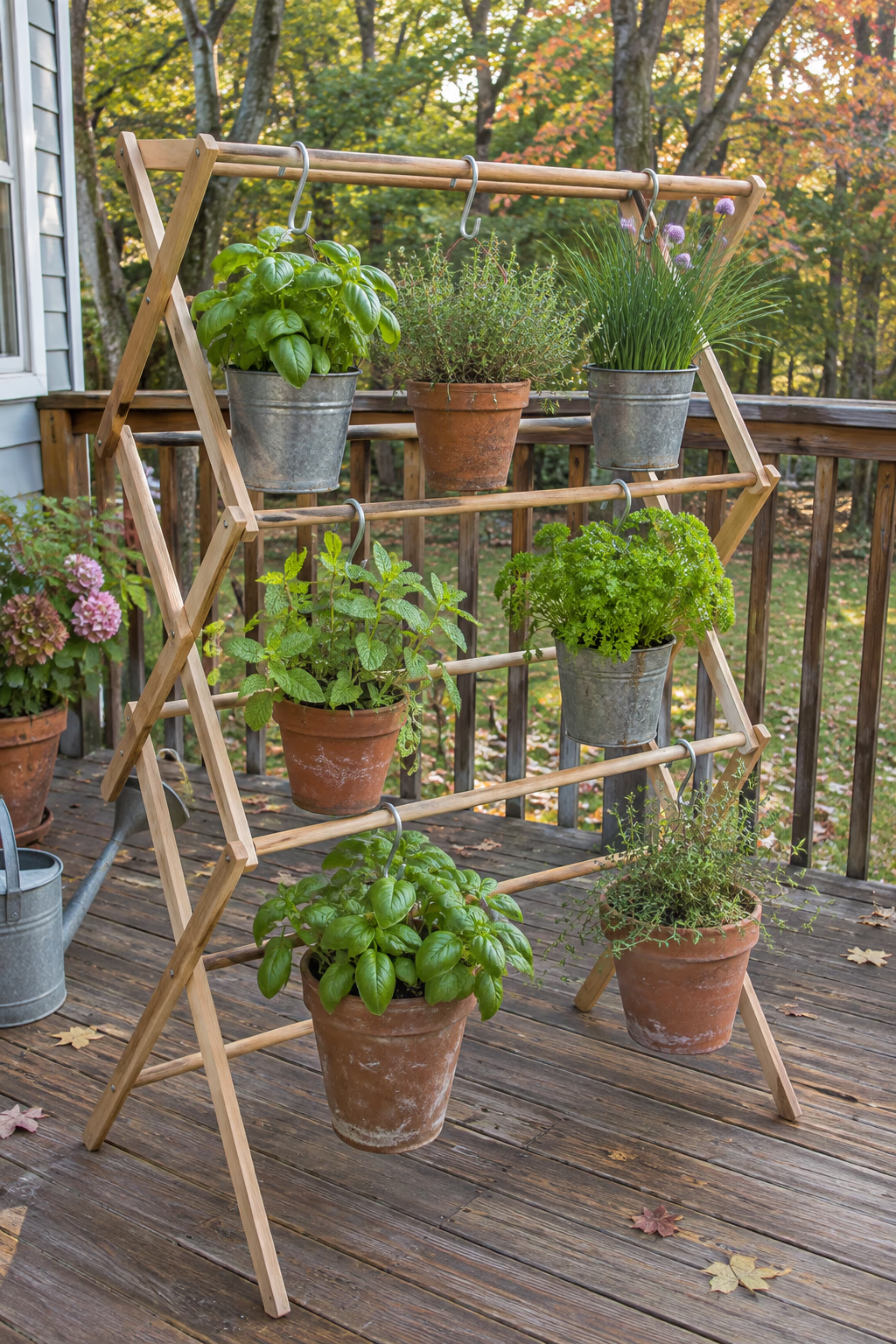
A movable frame that folds away in winter
An accordion-style wooden or metal clothes drying rack has crossbars at several heights, which are perfect for hanging small pots. Open it on a sunny patio, add S-hooks or pot hangers along each bar, and fill it with a mix of herbs.
It’s inexpensive, needs no tools, and you can shift it around as the sun moves. At the end of the season, harvest what’s left, move the pots, and fold the rack flat for storage in the garage.
A loaded rack can tip in the wind. Keep heavier pots on the lowest bars, balance the weight on both sides, and tie the frame to a railing or post in breezy spots.
18. Hang a Three-Tier Wire Basket of Herbs on the Porch
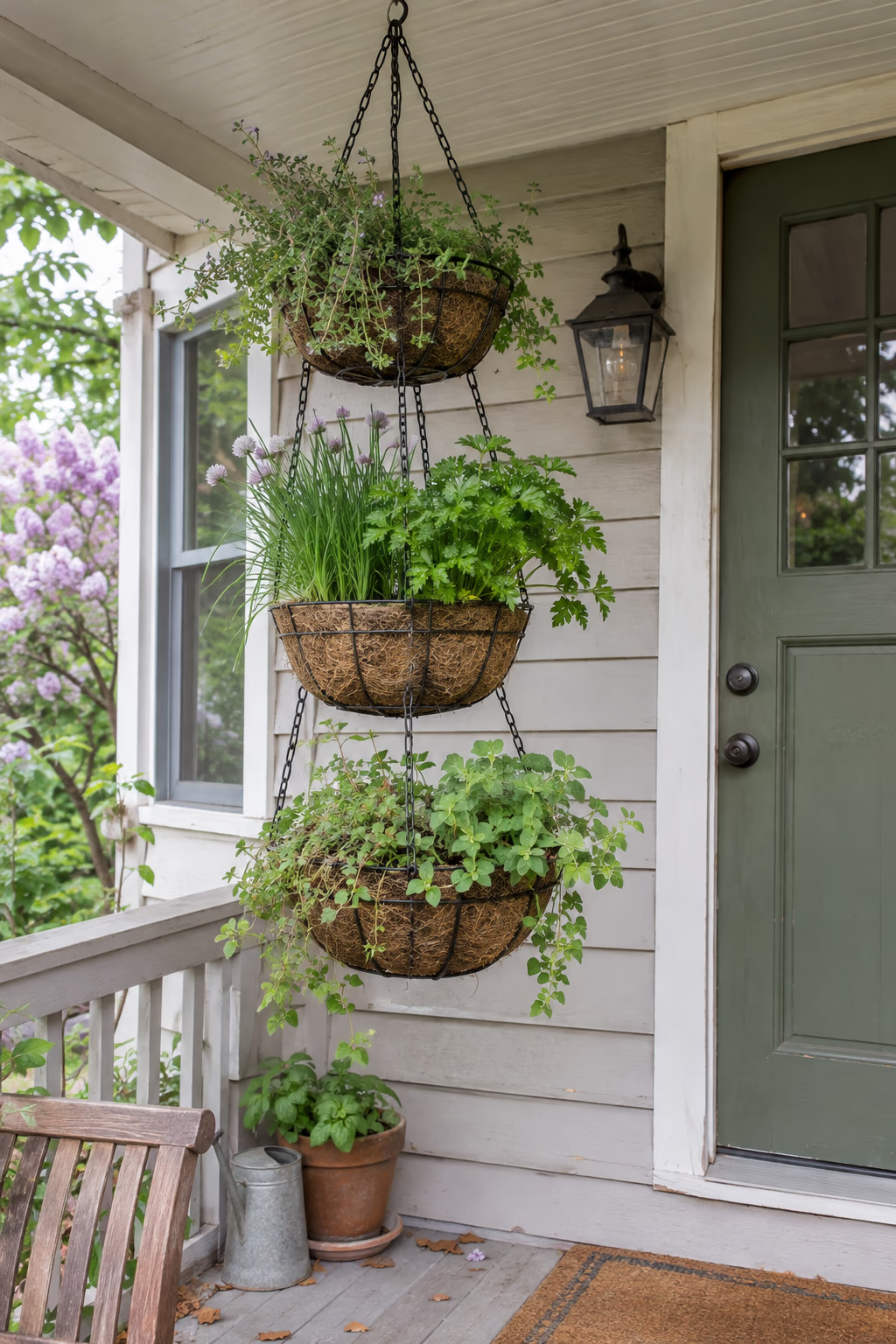
A space-saving herb chandelier by the door
A three-tier hanging wire basket, usually sold for fruit or kitchen storage, makes a charming porch planter. Line each tier with coco coir liners, fill with potting mix, and plant two or three herbs per tier.
Trailing herbs like creeping thyme and oregano soften the edges, while chives and parsley add upright texture. Hung near the front or back door, it puts fresh herbs within reach every time you head into the kitchen.
The top tier tends to stay dry while water collects below, so water slowly and check each level. Choose a sturdy basket rated for weight, and hang it from a ceiling joist rather than a thin trim board.
19. Tuck Creeping Herbs Into a Dry-Stacked Stone Wall
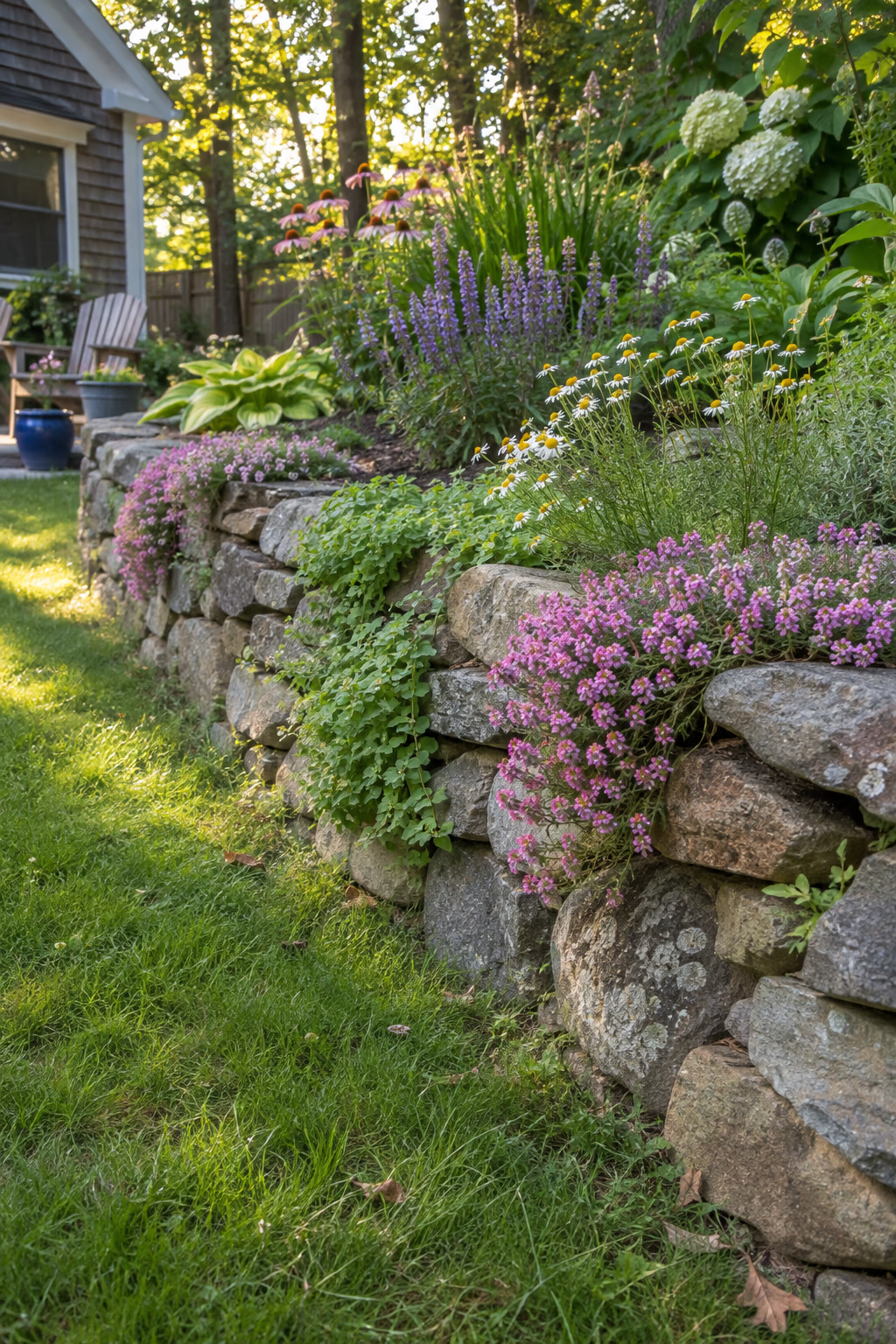
A living wall that’s part of the landscape
If you have a low retaining wall or garden edge made from dry-stacked stone, the gaps between stones are ideal planting spots for small herbs. Pack a little gritty soil into the crevices and slip in rooted pieces of creeping thyme, oregano, or Roman chamomile.
These herbs love the sharp drainage and warmth stored by the stone, and they slowly spread into fragrant cushions that spill down the face of the wall. It’s one of the lowest-maintenance vertical herb gardens once established.
Plant in spring and mist the crevices often until roots take hold. Avoid disturbing structural stones in a retaining wall taller than about 3 feet, and check with local codes before building or altering larger walls.
20. Chain Metal Tool Boxes Into a Hanging Herb Column
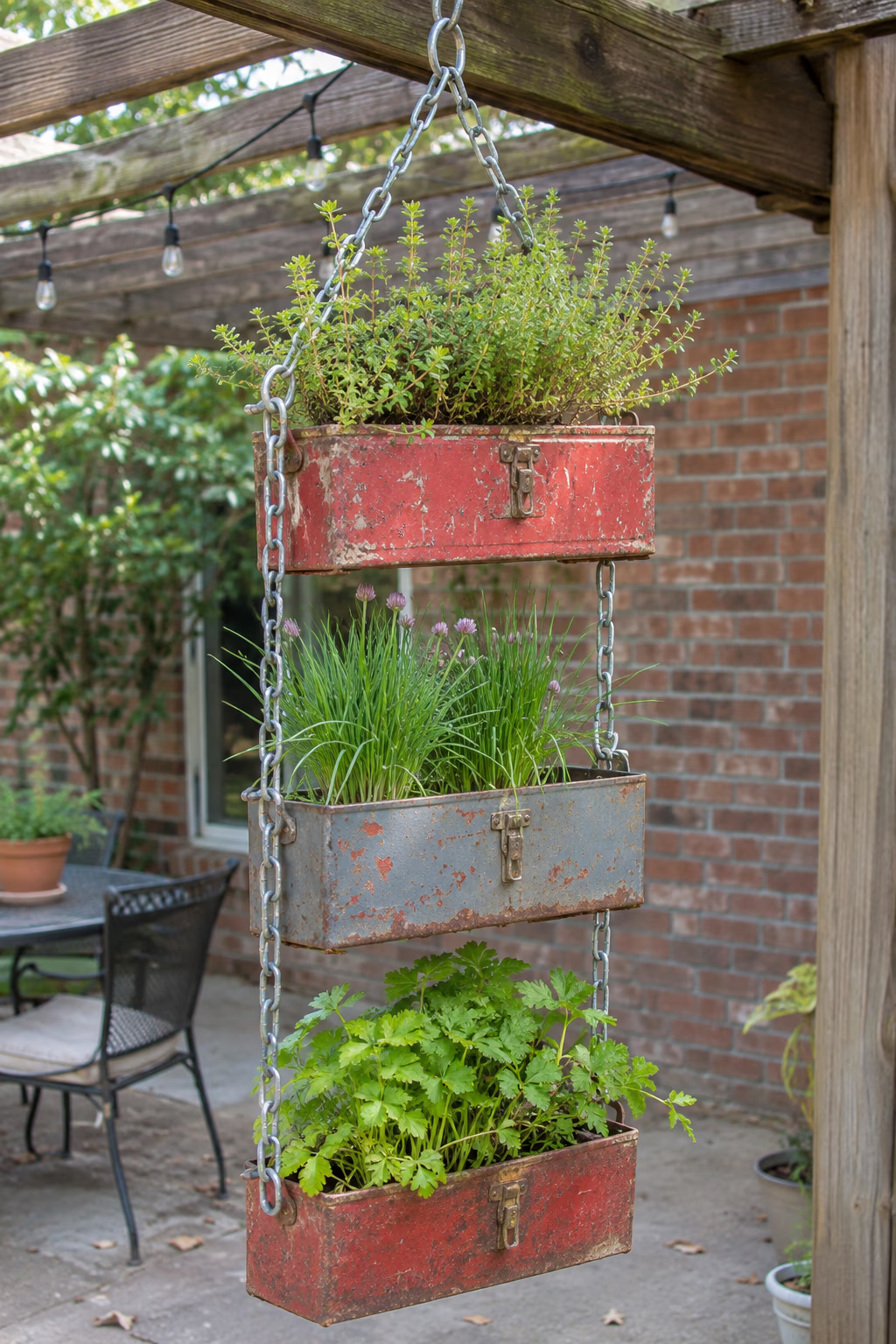
Industrial character from thrift-store finds
Old metal tool boxes or small steel storage cans make tough little planters. Remove the lids, drill drainage holes, and connect several boxes one below another with heavy chain bolted through each end, then hang the column from a pergola beam or a sturdy wall bracket.
Chipped paint and a bit of rust give the setup a garage-workshop charm that suits modern farmhouse or industrial patio styles. Compact herbs like thyme, chives, and parsley fit nicely in the narrow boxes.
Avoid containers that once held chemicals or that have flaking lead-based paint on the inside. A quick coat of food-safe or exterior primer on the interior helps protect both the plants and the metal.
21. Turn Recycled Bottles Into a Self-Watering Herb Wall
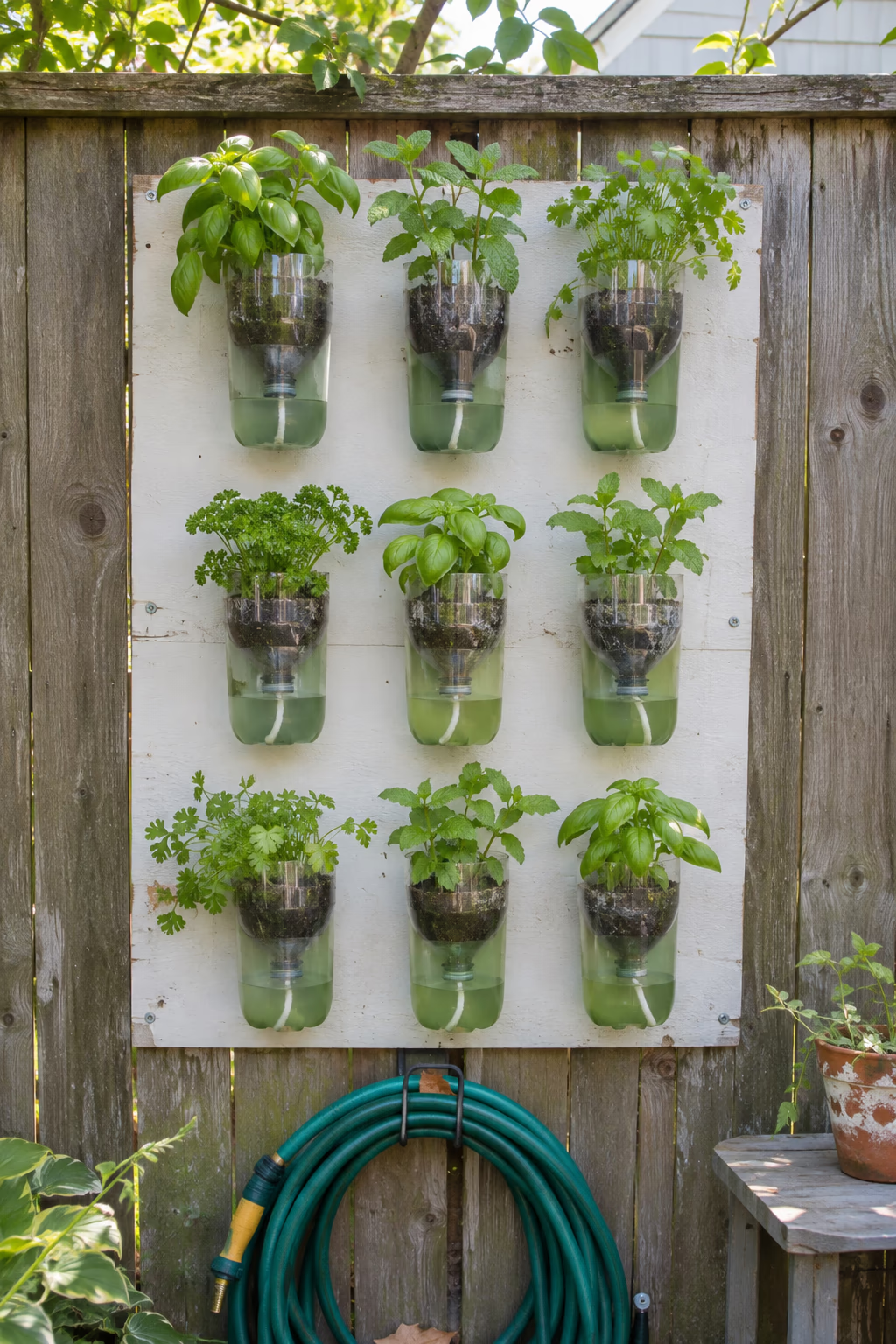
A budget build that waters itself
Cut 2-liter plastic bottles in half crosswise, then flip the top half upside down into the bottom half so the neck sits in a reservoir of water. Thread a strip of cotton or felt through the cap as a wick, fill the top with potting mix, and plant a single herb in each.
Screw the bottles in rows to a board or fence panel and you have a wall that pulls water up from below as plants need it. It’s a great project for kids and a smart way to keep moisture-loving basil, mint, and parsley evenly watered.
Clear plastic lets light reach the reservoir, which can grow algae. Wrapping or painting the bottom halves fixes that, and replacing the bottles every couple of seasons keeps the wall looking fresh as the plastic weathers.
How to Plan Your Vertical Herb Garden
A vertical herb garden is only as good as the spot it lives in and the plants you choose. A bit of planning up front saves you from wilted basil and soggy siding later.
- Find the light first. Most culinary herbs need at least 6 hours of direct sun. Watch your wall or fence for a full day before building, and use grow lights for indoor setups.
- Put herbs where they’ll thrive. Place dry-loving rosemary, sage, thyme, and oregano at the top, and moisture-loving basil, parsley, chives, and mint toward the bottom where water collects.
- Plan for watering. Small containers dry quickly. Make sure you can reach every level with a hose or can, and consider drip lines or self-watering designs for larger walls.
- Protect your walls. Mount planters on spacers or a separate backer board so moisture doesn’t sit against siding, and keep drainage from dripping onto doors or patio furniture.
- Check the weight. Wet soil is heavy. Anchor wall systems into studs, fence posts, or masonry with the proper hardware, and if you rent or have an HOA, check the rules before drilling.
- Grow what you cook. Choose the five or six herbs you use most and add more later. A few well-tended plants are more useful than a wall full of struggling ones.
Frequently Asked Questions
Which herbs grow best in a vertical garden?
Compact, shallow-rooted herbs perform best, including thyme, oregano, chives, parsley, basil, cilantro, marjoram, and mint. Larger, deep-rooted herbs like rosemary, sage, and lovage need bigger containers, so give them deeper pots or the top tier of a stand.
How often should I water a vertical herb garden?
In summer, small vertical containers may need water every day, sometimes twice in extreme heat. In cooler weather, every two or three days is often enough. Push a finger into the soil, and water when the top inch feels dry.
Can a vertical herb garden survive winter?
Hardy perennial herbs like thyme, oregano, chives, and sage can survive mild winters outdoors, but the small soil volume in vertical planters freezes faster than ground soil. In colder zones, move containers to a sheltered spot or bring tender herbs indoors under lights.
Will a vertical herb garden damage my house siding?
It can if moisture sits against the wall. Mount planters on spacers or a separate board, use waterproof backing on pocket systems, and make sure drainage drips away from the house. Freestanding stands and ladders avoid the issue entirely.
How much does it cost to build a vertical herb garden?
Upcycled projects like pallets, bottles, or ladders can cost little beyond soil and plants, often under $50. Stacking towers, felt pocket systems, and cedar stands typically run from about $50 to $200, plus herbs and potting mix.
Final Thoughts
The best vertical herb garden ideas turn small or overlooked spaces into something useful and good-looking at the same time. A pallet on the patio, a grid of clay pots by the back door, or a strawberry jar on the steps can keep your kitchen stocked with fresh flavor all season.
Start with one setup in your sunniest spot, plant the herbs you cook with most, and expand as you learn how your space behaves. Before long, reaching for a handful of fresh basil or thyme will feel like the most natural part of making dinner.