Walk into a vegetable garden in late July and the best harvest often hangs at eye level: green beans swinging from a pole, cucumbers dangling below their leaves, and tomatoes ripening on vines that climb toward the sun instead of sprawling across the soil.
Growing up instead of out is one of the easiest ways to get more food from the same patch of ground. Vines held off the soil get better airflow, stay cleaner, suffer less rot and slug damage, and are far easier to pick. A good trellis also adds height and structure, so the garden looks tidy and intentional even before anything ripens.
These 23 vegetable garden trellis ideas cover simple bean teepees, leaning cucumber ladders, string systems for tomatoes, walk-through squash tunnels, melon slings, recycled-material builds, and small-space supports for patios. Most can be built in an afternoon with basic tools, and many cost less than a single bag of fertilizer.
1. Build a Bamboo Teepee for Pole Beans
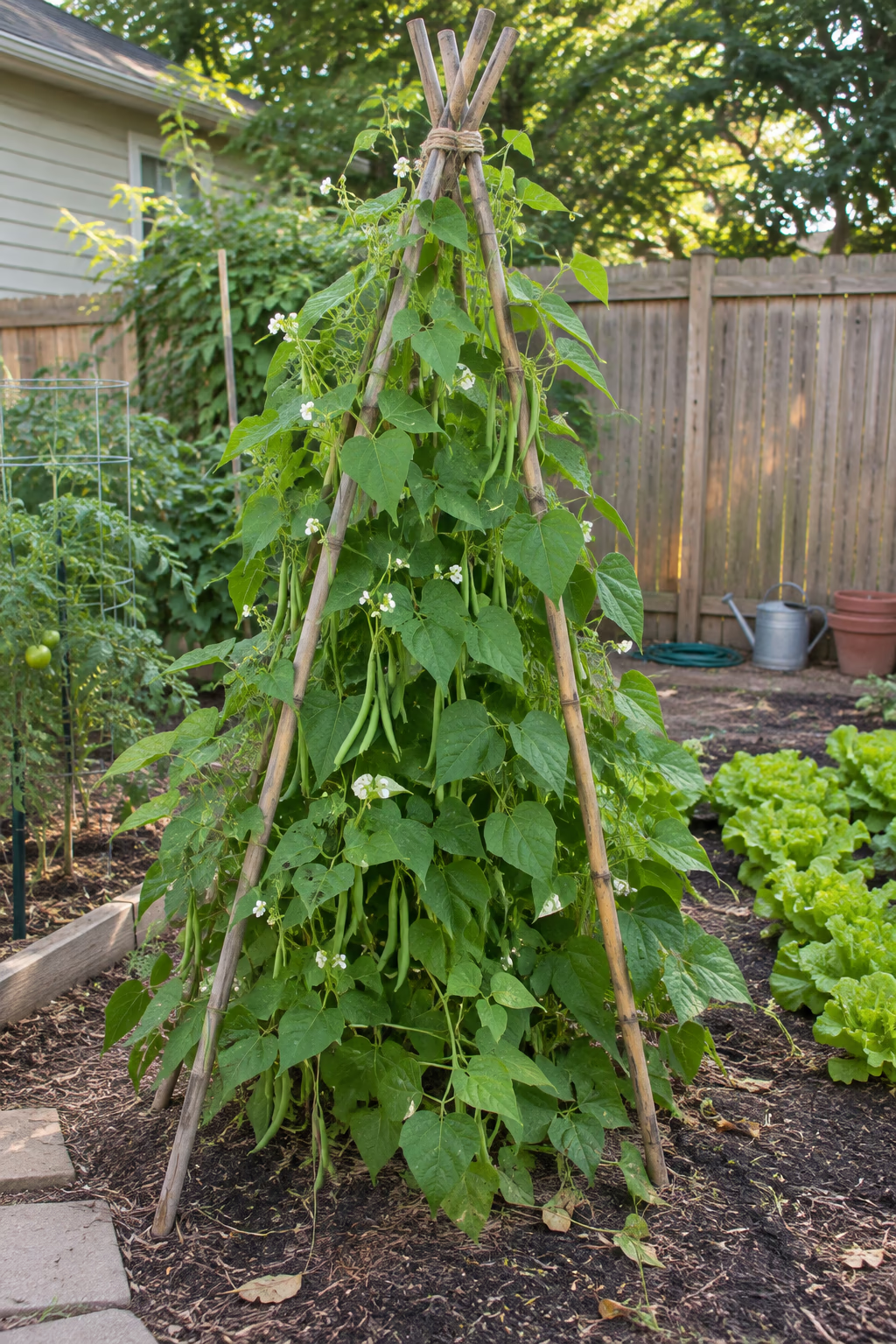
The easiest bean support you can make
A teepee is just a cluster of tall poles tied together at the top. Push five or six 7- to 8-foot bamboo canes about 10 inches into the soil in a circle roughly 3 to 4 feet across, lean them inward, and lash the tops with garden twine or a zip tie. Sow three or four pole bean seeds at the base of each pole once the soil has warmed in spring.
Beans twine naturally, so they find the poles with almost no help. Within a few weeks the frame turns into a leafy cone, and the pods hang on the outside where they are easy to spot and pick. Because the shape is self-bracing, it rarely blows over.
Leave one gap in the circle without a pole if you want children to crawl inside. Bamboo canes usually last two or three seasons; store them dry over winter to stretch their life.
2. Lean a Wooden Ladder Trellis Against the Fence for Cucumbers
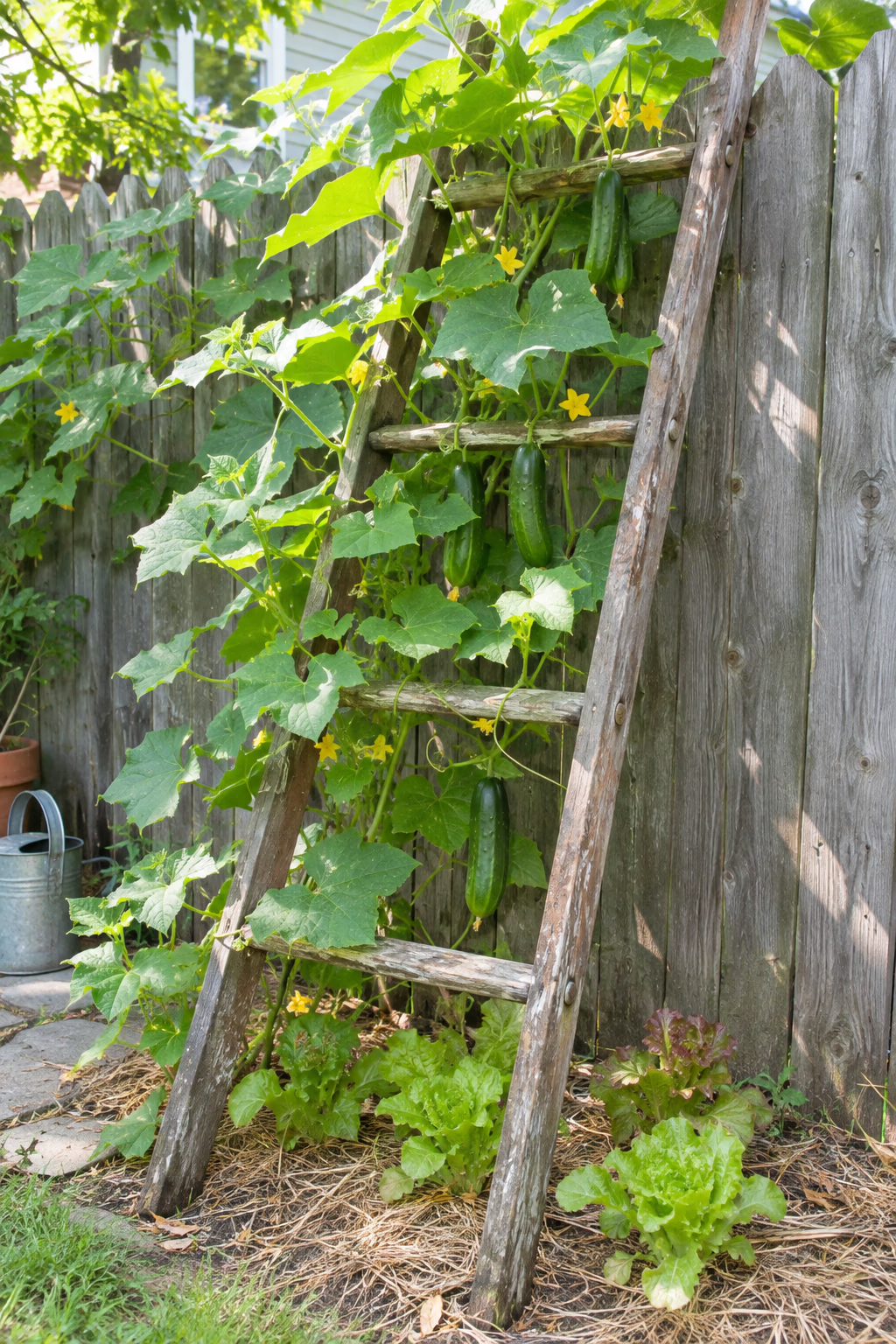
Straight fruit and easy picking in a tight spot
An old wooden stepladder or a simple homemade ladder of two 2×4 rails and 1×2 rungs makes a sturdy cucumber support. Set the feet in the bed about 2 feet out from a fence, lean the top against the rails, and screw or wire it in place so wind cannot knock it down.
Vining cucumbers grab the rungs with their tendrils and climb quickly. Fruit that hangs freely grows straighter and cleaner than fruit lying on the ground, and the slanted shape lets you harvest from the front while shade-tolerant lettuce grows underneath.
Skip ladders with flaking old paint, which may contain lead, and avoid placing the ladder where it will shade other crops for most of the day. Adding a few strands of twine between the rungs gives young tendrils more to grip.
3. Hang Tomatoes From an Overhead String Trellis
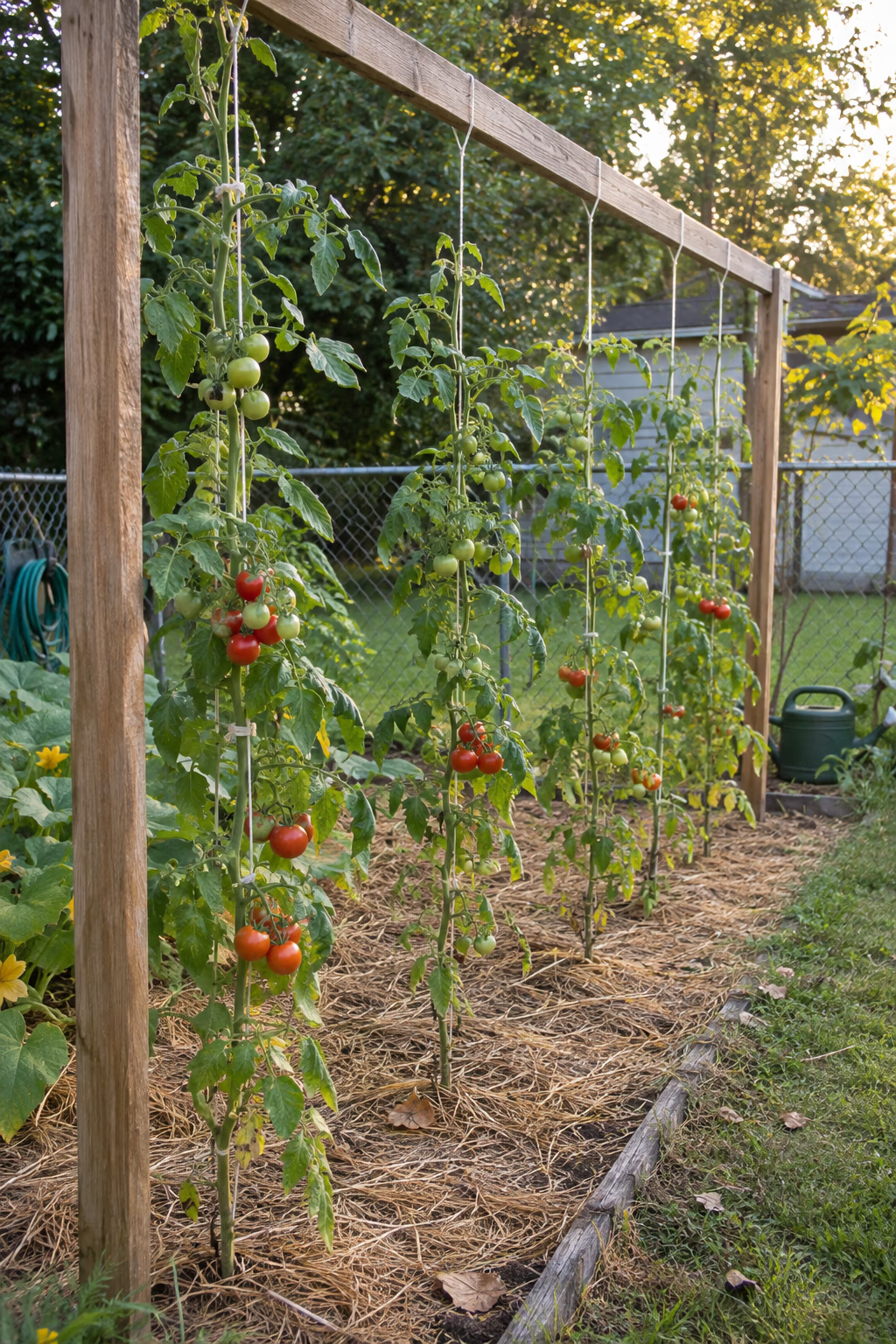
A greenhouse-style system for big indeterminate vines
Set two sturdy posts at each end of a tomato row and run a horizontal pipe, 2×4, or heavy wire between them about 7 feet off the ground. Tie one length of strong twine per plant to the crossbar and anchor the bottom end loosely under the root ball at planting time or to a short stake.
As each indeterminate tomato grows, wind the main stem gently around the string or clip it on every foot or so. Pruning to one or two main leaders keeps the plants slim, lets light reach the fruit, and makes it easy to see disease early.
This system takes weekly attention, since vines grow fast in midsummer. Make sure the end posts are set at least 2 feet deep and braced, because a row of loaded tomato plants is surprisingly heavy.
4. Arch Poly Pipe Hoops Into a Walk-Through Squash Tunnel
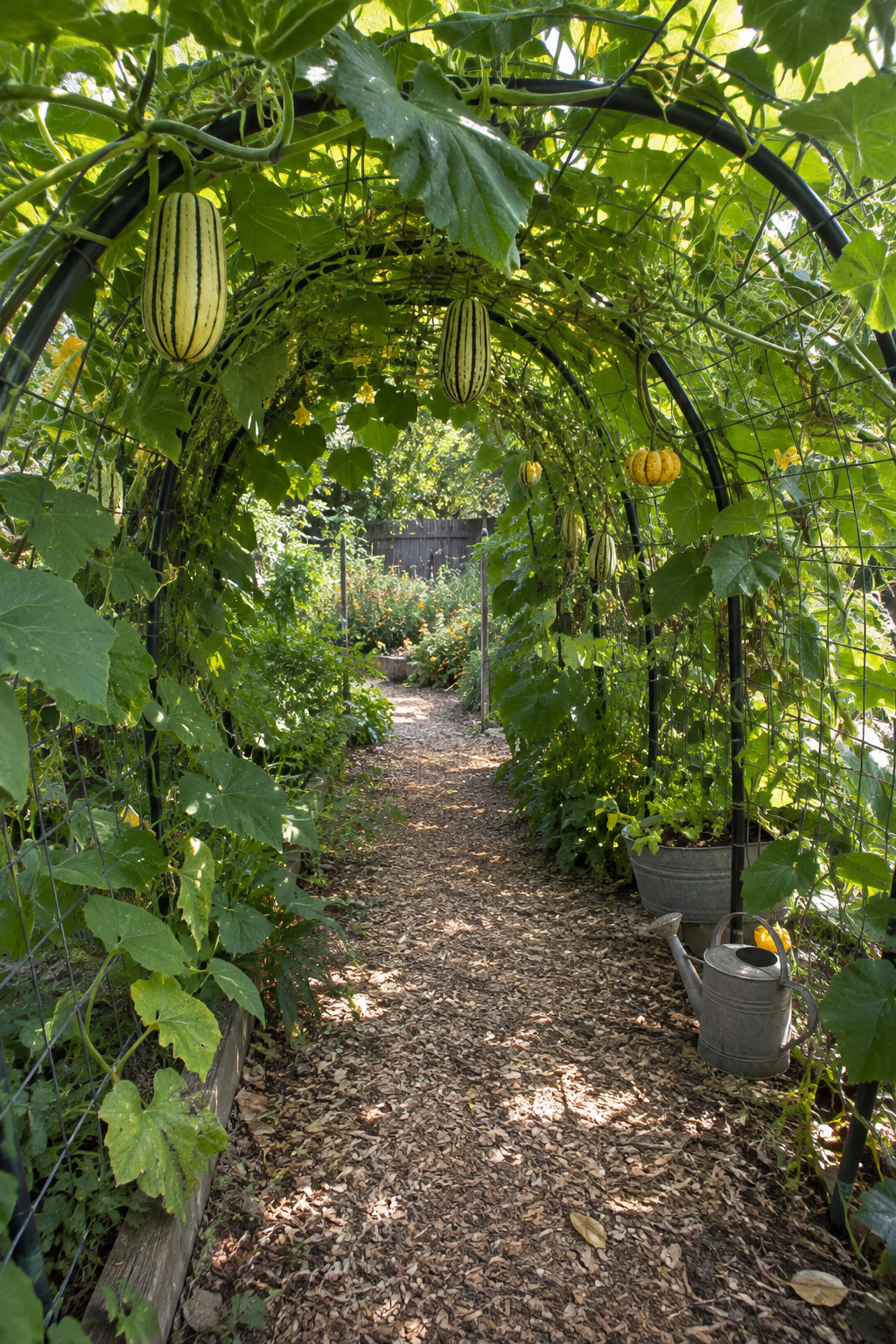
A shady green corridor that holds a lot of vines
Slide lengths of 1-inch black poly pipe or schedule 40 PVC over pieces of rebar driven into the ground on both sides of a garden path, spacing the hoops 2 to 3 feet apart. Tie welded wire or heavy trellis netting over the top and sides, then plant vining squash, cucumbers, or small gourds at the base on each side.
Vines meet overhead by midsummer, and the fruit hangs down inside the tunnel where it is easy to find. The tunnel also turns a plain path into the most memorable spot in the yard.
Pipe hoops suit lighter crops such as delicata squash, cucumbers, and small gourds. For heavy winter squash, use cattle panels or add a ridge board for strength, and support large fruit with slings.
5. Grow Mini Pumpkins Over a Cedar Arbor at the Garden Entry
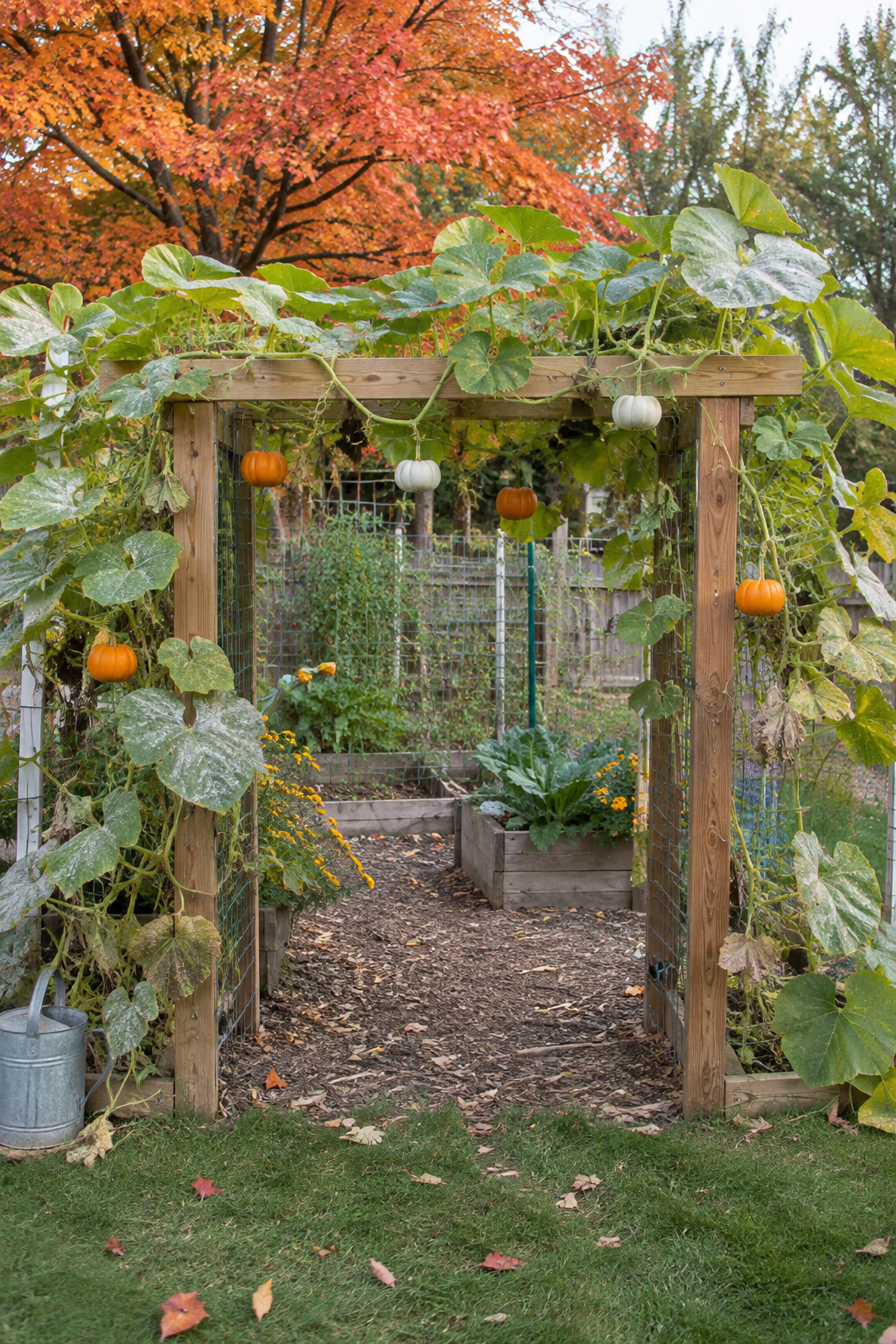
A harvest-season welcome into the vegetable patch
A simple cedar arbor, about 4 feet wide and 7 feet tall with a wire panel set into each side, makes a cheerful entrance to a fenced vegetable garden. Plant two or three miniature pumpkin vines at each leg after the last frost, and guide the vines up the sides as they grow.
Small pumpkins and ornamental squash weigh only a few ounces to a pound or two, so they can hang directly from the vine. By early fall, the arbor is draped with orange and white fruit that looks ready for a porch display.
Pumpkin leaves are prone to powdery mildew. Water at the base of the plants in the morning, and choose mildew-resistant varieties where available.
6. Cradle Melons in Slings on a Sturdy Wood Frame
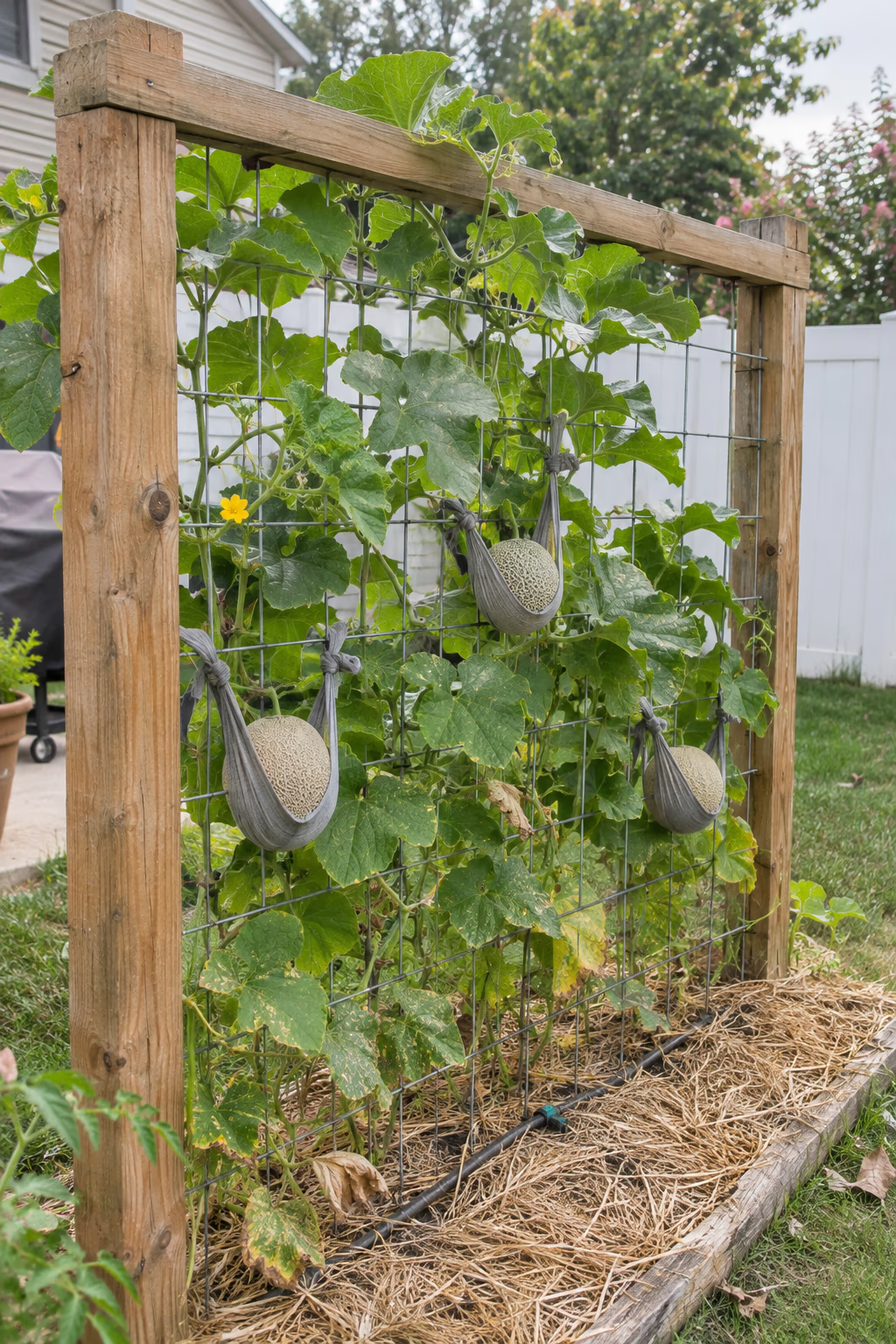
Vertical melons without broken vines
Build a freestanding frame from two 4×4 posts set 2 feet deep and topped with a 2×4 crosspiece, then staple a 6-foot welded wire panel across the face. Plant small-fruited cantaloupes or personal-size watermelons along the base and tie the vines to the wire as they lengthen.
Once the fruit reaches the size of a tennis ball, cradle each one in a sling made from old T-shirt fabric, onion bags, or pantyhose, and tie the ends to the wire above. The sling takes the weight so the stem does not tear before the melon ripens.
Stick with varieties that mature at 1 to 5 pounds. Full-size watermelons are too heavy for most home trellises and are better left to sprawl.
7. Stack a Square Wooden Tomato Tower
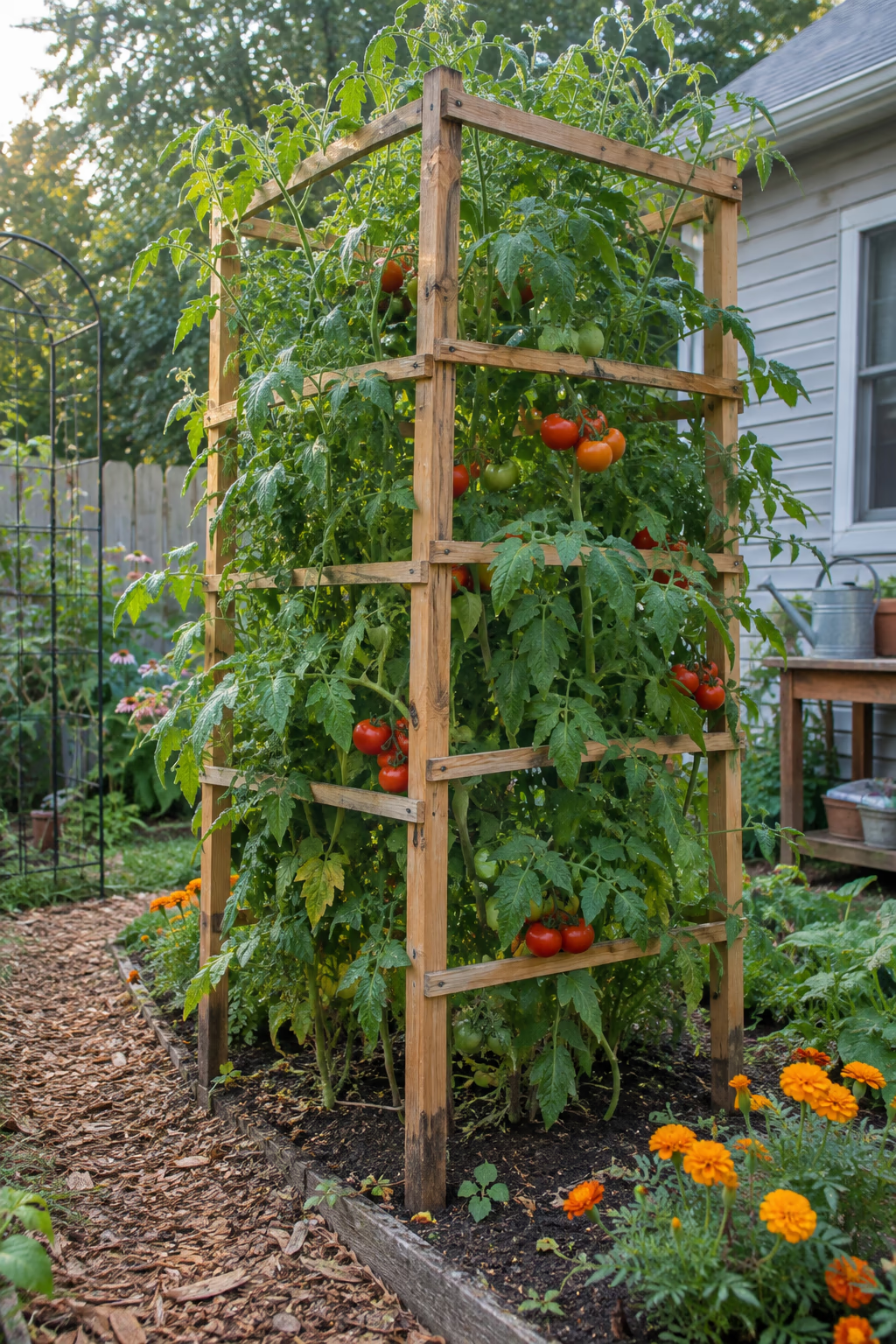
A sturdy, good-looking upgrade from wire cones
Make a tower from four 6-foot cedar 2×2 corner posts joined by horizontal 1×2 rungs every 12 inches, creating a square about 18 to 24 inches across. Set it over a young tomato plant and push the legs 8 to 12 inches into the soil.
The wide, square shape supports large indeterminate tomatoes far better than the narrow cone cages sold at most garden centers. As the plant grows, tuck branches through the rungs so they rest on the crosspieces.
Untreated cedar weathers to soft gray and lasts several seasons. On windy sites, drive a metal stake beside one leg and tie it on for extra stability.
8. Weave a Rustic Trellis From Pruned Branches
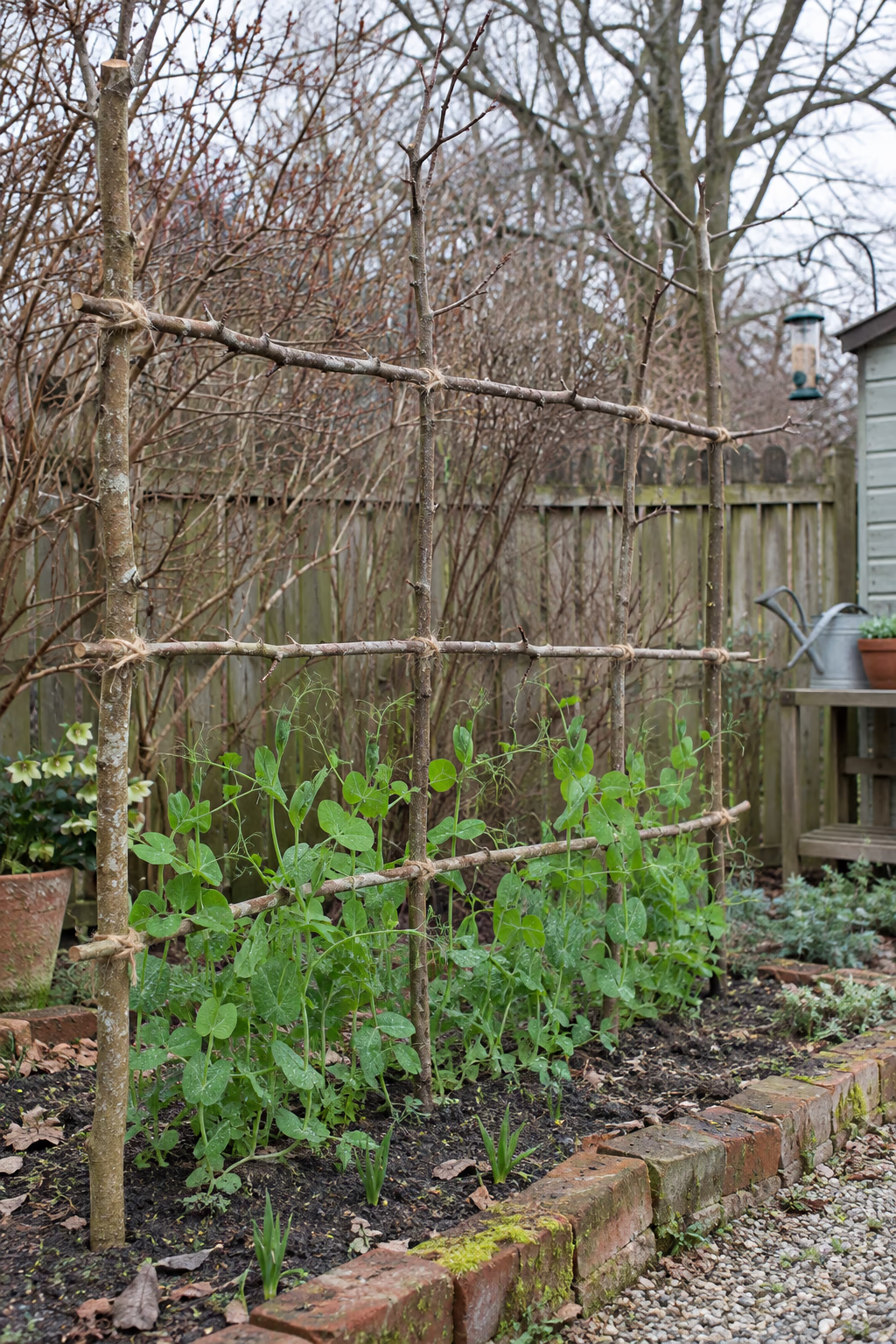
A free trellis that suits a cottage-style plot
Save straight branches from winter pruning, such as willow, dogwood, maple, or saplings, and lash them together into a grid or fan with jute twine. A frame about 5 feet tall and 4 feet wide works well for peas, pole beans, or small cucumbers.
Twiggy tops left on the branches give pea tendrils dozens of extra grip points, which is why gardeners have used brush supports for peas for centuries. The natural look blends into the garden instead of standing out.
Fresh willow cuttings may root if pushed into moist soil, so strip the bark from the buried ends or use dry branches. Expect a branch trellis to last one or two seasons before you rebuild it.
9. Let Corn Stalks Support Beans in a Three Sisters Bed
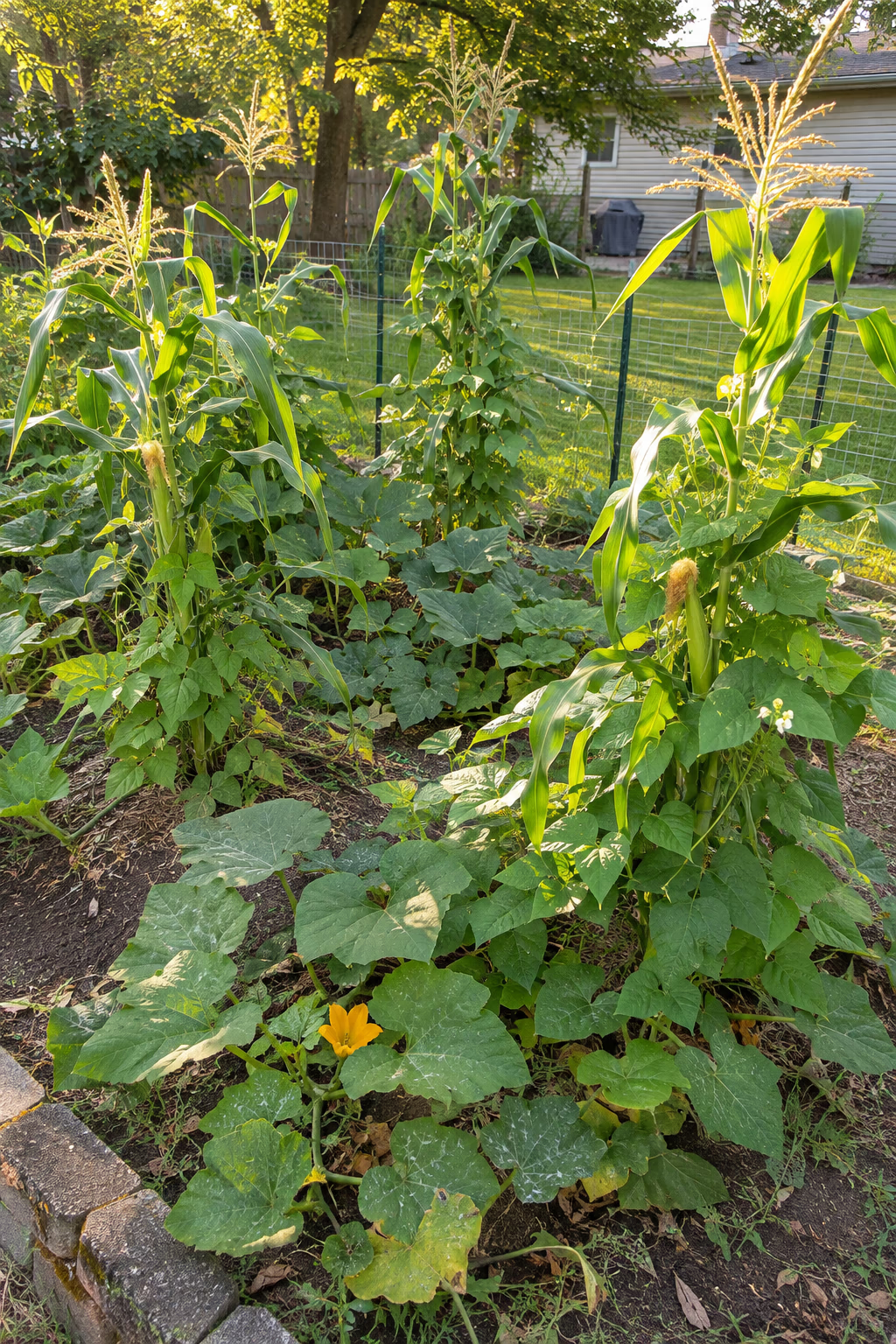
A living trellis that feeds three crops at once
In this traditional Indigenous planting method, corn is sown in small mounds about 4 feet apart. When the stalks are 6 inches tall, pole beans are planted around them, and squash is planted between the mounds to shade the soil and discourage weeds.
The cornstalks become the bean poles, and the squash leaves act as a living mulch. It is a space-efficient way to grow three staples together, and it makes a striking, layered patch by midsummer.
Give the corn a two- to three-week head start so vigorous beans do not pull it down. Tall field or flour corn holds up better than short sweet corn varieties.
10. Stretch Pea Netting Between Two Wooden Posts
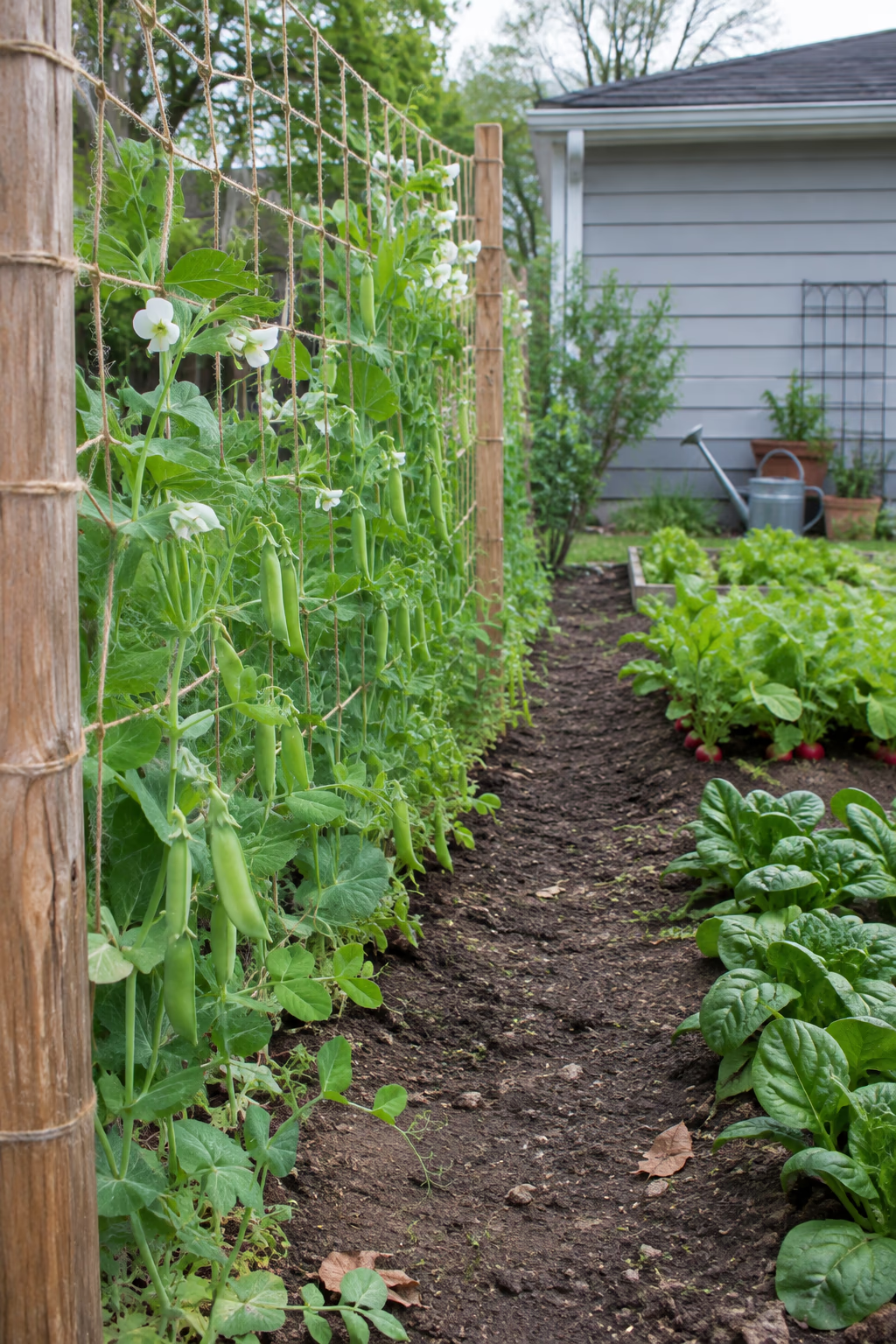
Quick, inexpensive support for spring peas
Drive two 6-foot wooden stakes or metal T-posts at each end of a row, run a taut wire or cord along the top and bottom, and hang 4- to 6-inch mesh netting between them. Sow peas 2 inches apart on both sides of the net as soon as the soil can be worked in early spring.
Pea tendrils wrap around the thin netting easily, and a single net can carry a double row of snap, snow, or shelling peas. Tall varieties reach 5 to 6 feet, so plan the height before buying netting.
Plastic netting is tough to clean once vines dry onto it. Jute or cotton netting can go straight into the compost pile with the spent vines at the end of the season.
11. Turn the Garden Fence Into a Bean Wall
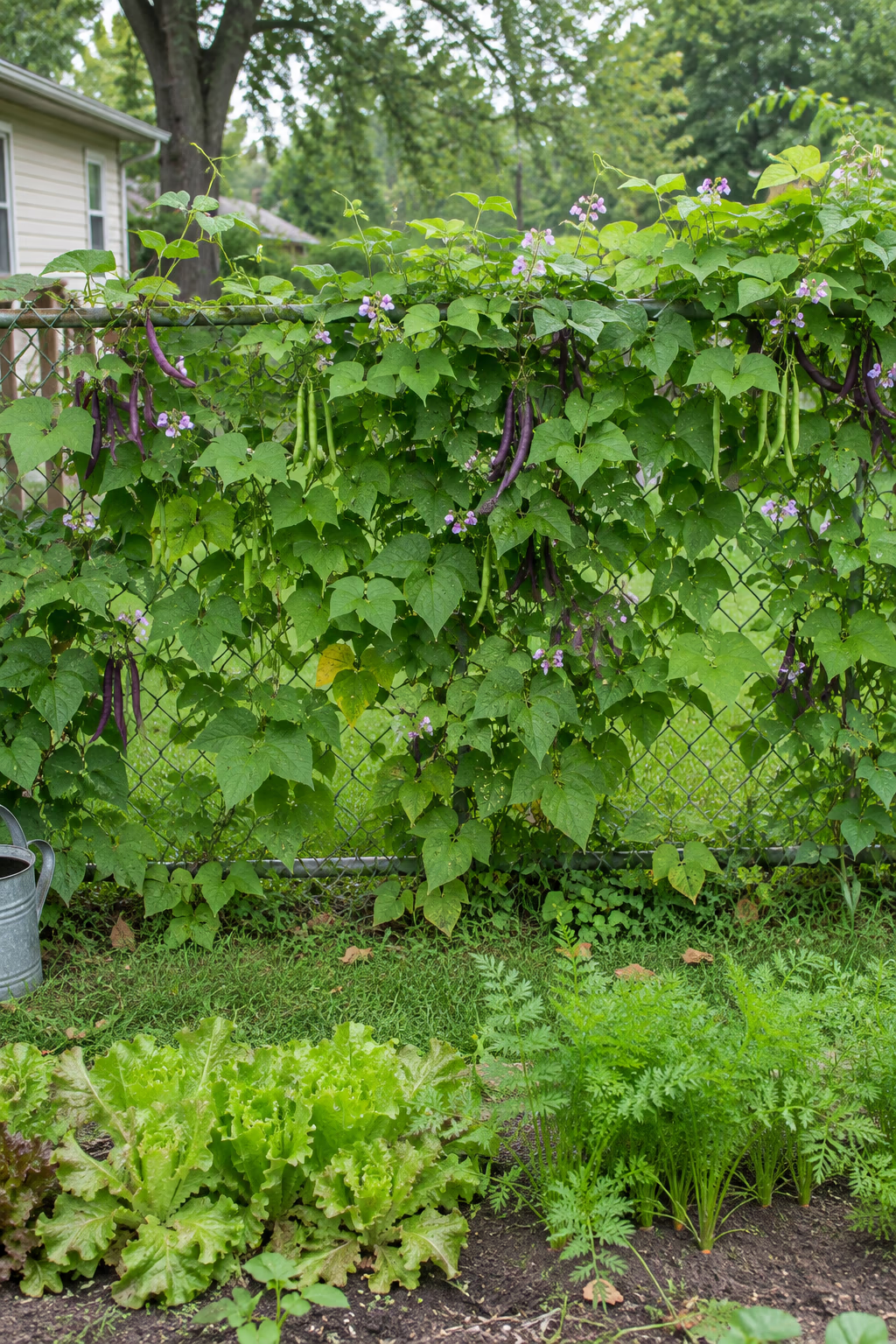
Use the support you already have
A chain-link, wire, or picket fence around the vegetable garden can carry pole beans, peas, cucumbers, or Malabar spinach without any new structure. On solid wood fences, add a few horizontal wires spaced 12 inches apart, held by screw eyes, so vines have something to climb.
Fence trellising costs almost nothing and frees up interior bed space for crops that grow low. It also softens a plain fence with a green wall that changes through the season.
Choose the sunniest side of the fence, and check with neighbors or your HOA before growing over a shared boundary. Avoid vigorous perennial vines that are hard to remove later.
12. Set a Hog Wire Panel in a Cedar Frame as a Bed Divider
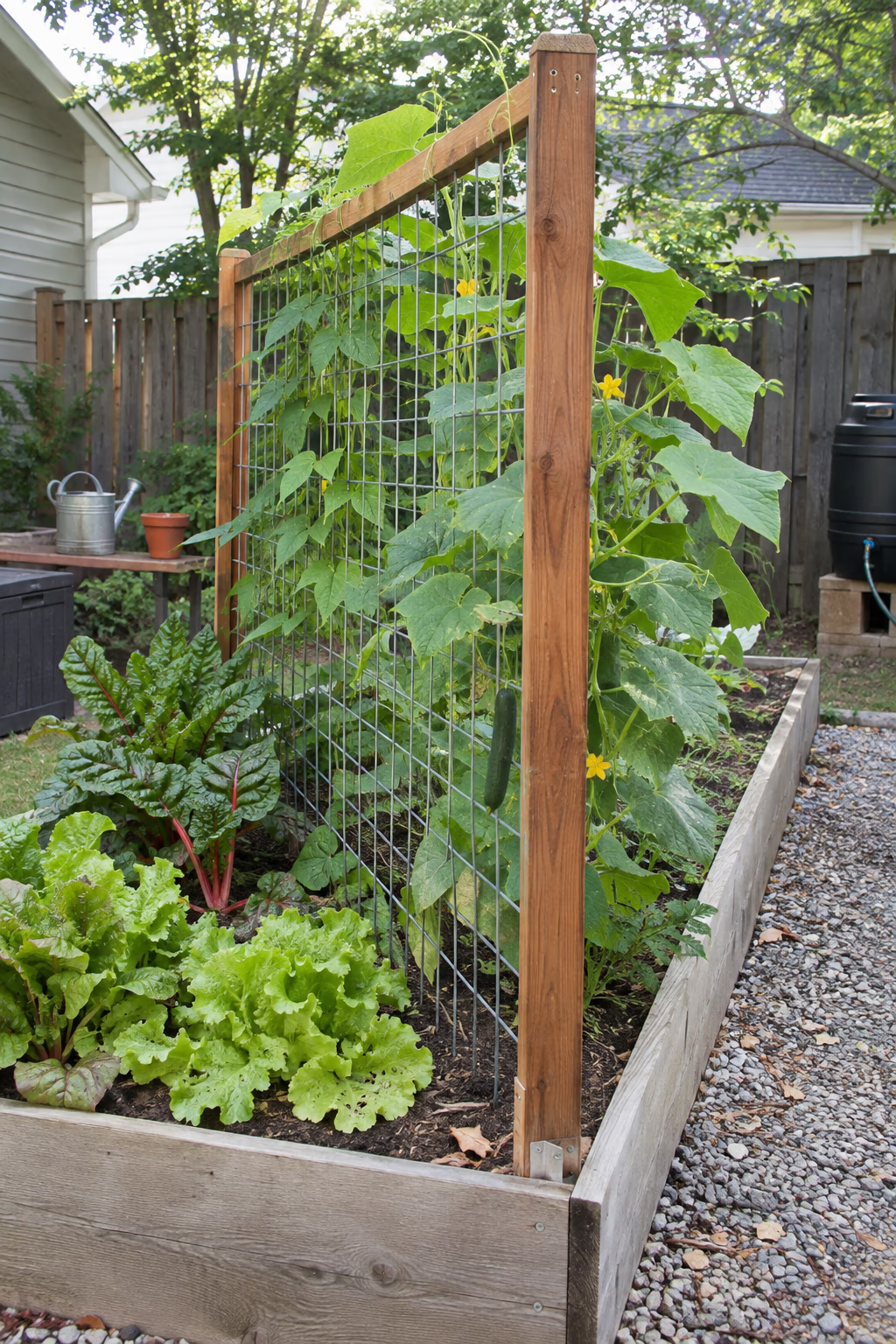
A clean, modern trellis that splits the garden into rooms
Set two cedar 4×4 posts 2 feet deep and 6 to 8 feet apart, frame the top and sides with 2x4s, and fasten a galvanized welded wire panel with 4-inch openings inside the frame. Place it down the middle of an in-ground vegetable bed so it divides the plot into two growing areas.
The open grid is strong enough for cucumbers, pole beans, and small squash, and the wood frame makes it look finished. Tall crops on the frame can also shade cool-season greens planted on the north side in summer.
Cedar posts in contact with soil will eventually rot. Setting them in gravel for drainage or using metal post anchors extends their life considerably.
13. Roll Concrete Reinforcing Mesh Into Extra-Tall Tomato Cages
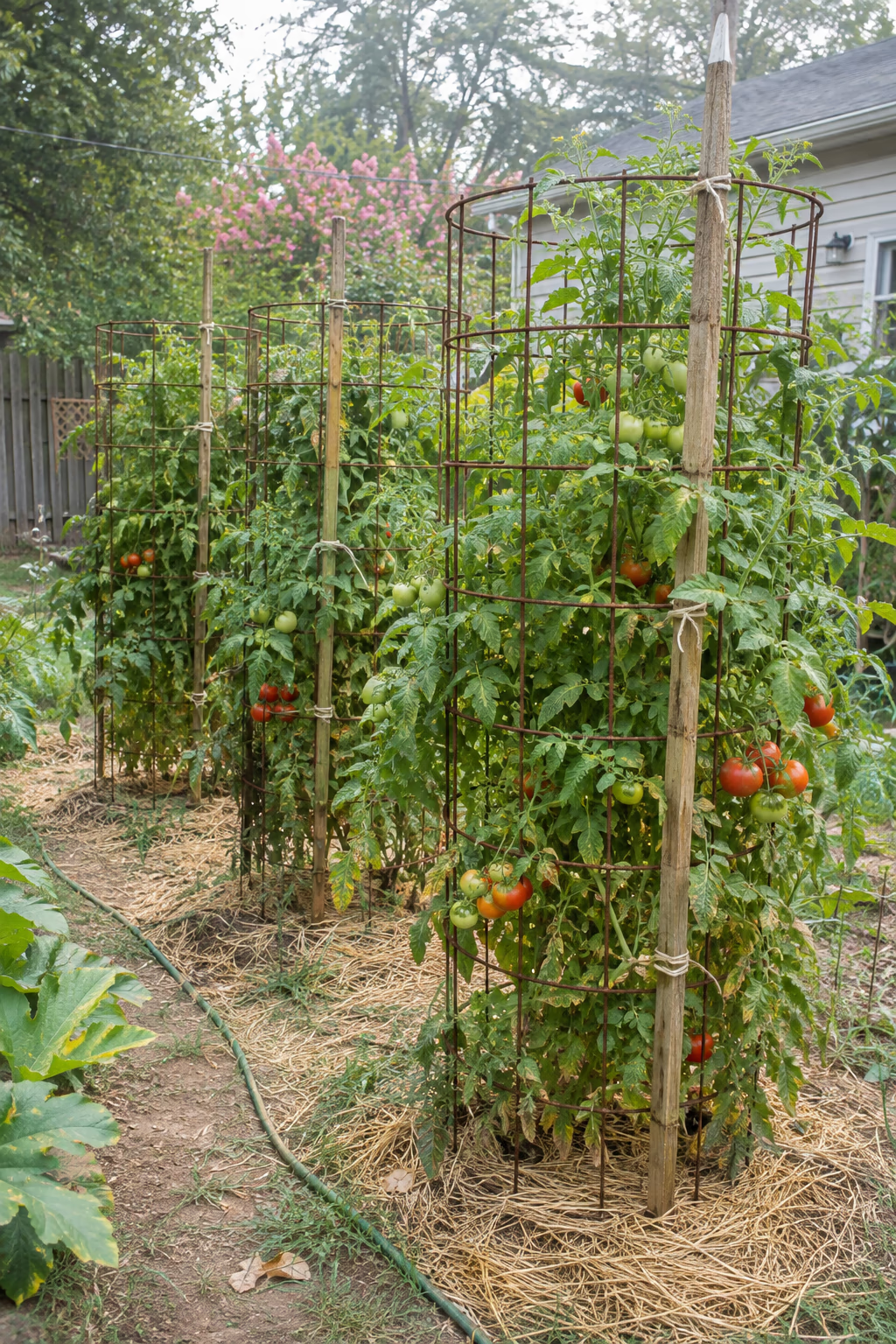
Heavy-duty cages that last for years
Concrete reinforcing mesh, sold at home centers in rolls or sheets, has 6-inch openings that are wide enough to reach through for harvesting. Cut a length about 6 feet long and bend it into a cylinder roughly 2 feet across, then use bolt cutters to snip off the bottom horizontal wire so the vertical tines can be pushed into the soil.
These cages handle large, heavy indeterminate tomatoes that topple flimsy store-bought cones. They also stack flat for winter if you cut and hinge them with wire ties.
The mesh rusts quickly, which is harmless to plants but can stain hands and clothes. Wear gloves when cutting, and secure each cage to a stake so storms cannot tip it over.
14. Run a Florida Weave Down a Row of Tomato Stakes
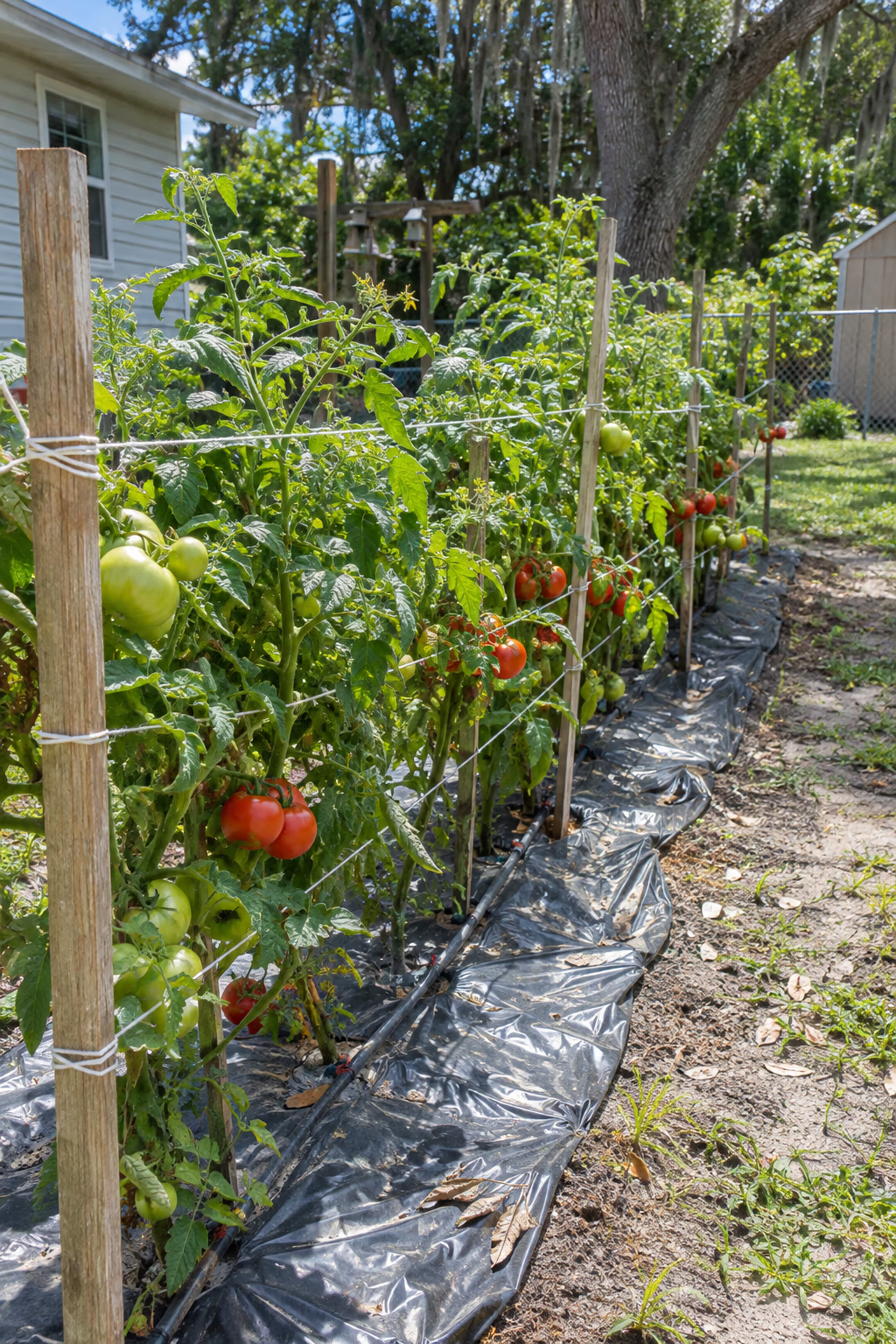
Support a whole tomato row with just stakes and twine
Drive a sturdy 5- or 6-foot stake after every one or two tomato plants. When plants are about a foot tall, tie twine to the end stake and weave it along one side of each plant and around each stake, then come back along the other side so the stems are sandwiched between strands.
Add a new level of twine every 8 to 10 inches as the plants grow. The method works best for determinate and compact tomatoes, as well as peppers, and uses far less material than individual cages.
Keep the twine snug so plants do not flop between strands. Use a heavy-duty end post, since the whole row pulls on it once fruit sets.
15. Grow Zucchini Vertically on a Single Sturdy Stake
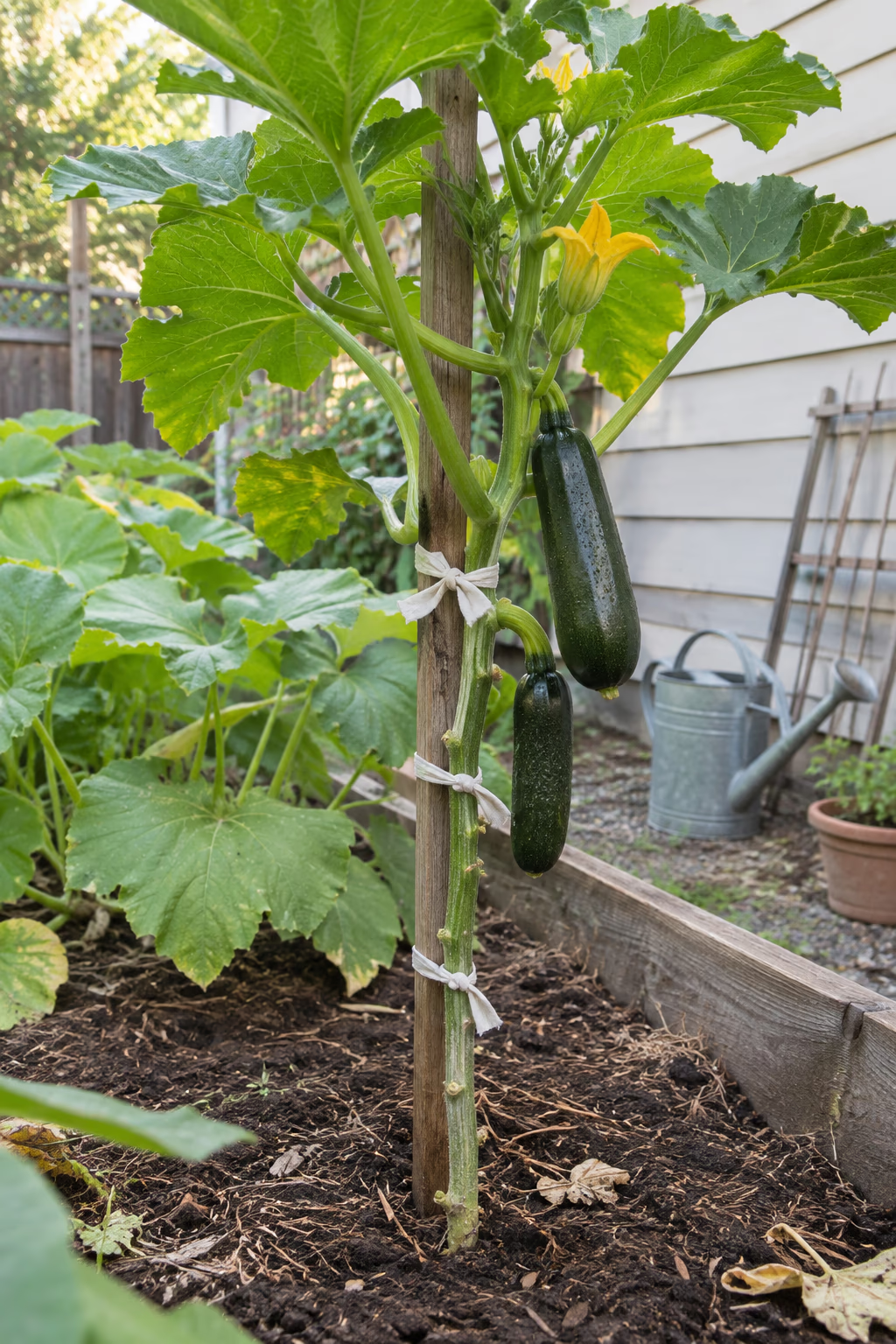
Save space and reduce mildew on summer squash
Drive a 5- or 6-foot wooden stake or metal T-post beside a young zucchini or yellow squash plant. As the main stem grows, tie it loosely to the stake every 6 to 8 inches with soft cloth strips, and remove the lowest, oldest leaves once they yellow.
A staked plant takes up about half the ground space of a sprawling one, and the open center gets more airflow, which helps slow powdery mildew. Fruit is easy to see, so fewer zucchini grow into baseball bats while hidden under leaves.
Squash stems are hollow and can snap, so tie gently and never bend the stem sharply. Leave a few leaves at the top for the plant to keep producing.
16. Repurpose an Old Garden Gate as a Pea Trellis
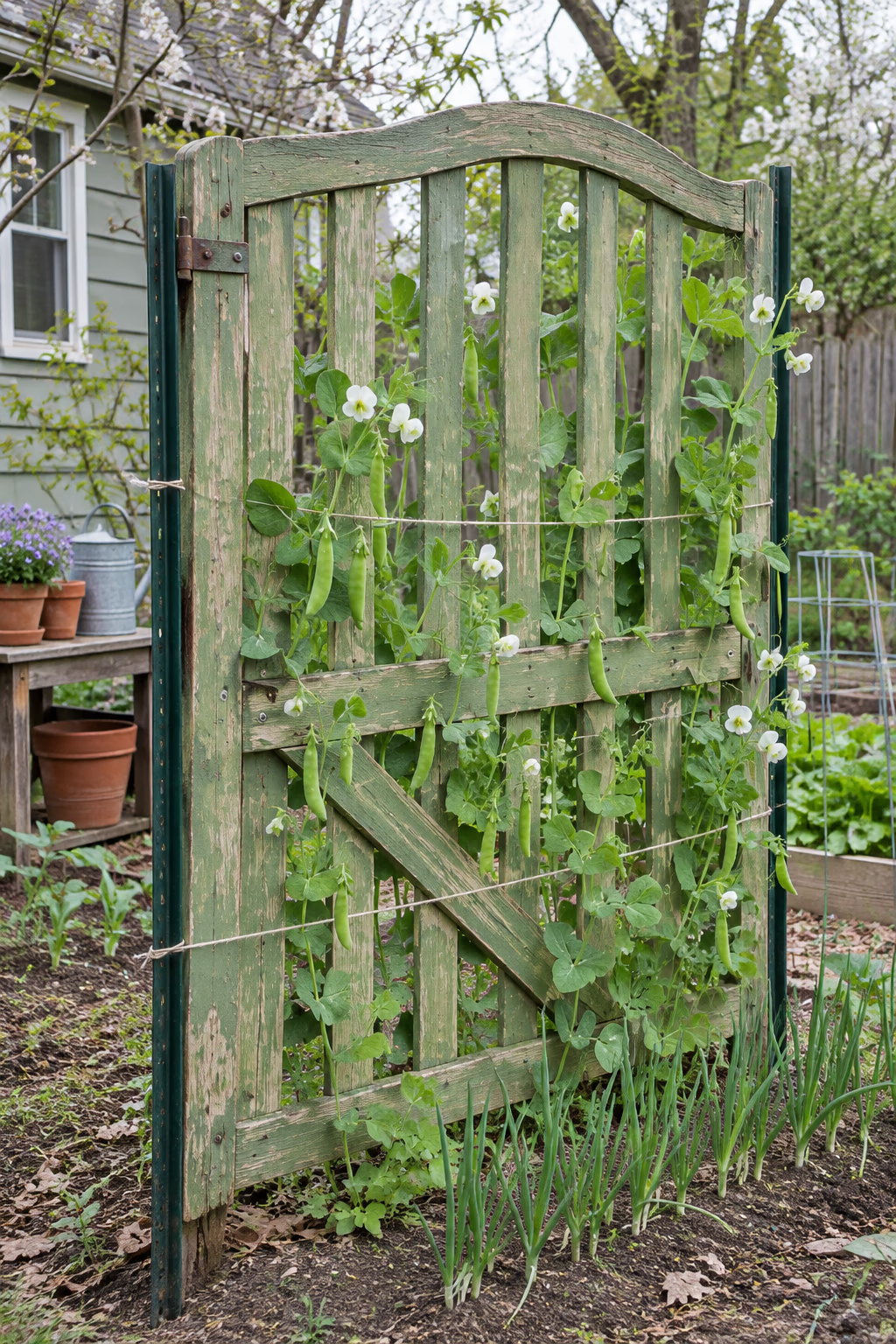
Salvaged charm with a practical purpose
A spare wooden or wrought-iron gate from a salvage yard or yard sale makes a ready-made trellis panel. Stand it upright in the bed and secure each side to a T-post or wooden stake driven 18 inches into the ground.
Peas, sugar snaps, and lightweight cucumbers climb the bars easily, especially if you add a few horizontal strings across wide openings. The gate brings a vintage, collected look to an otherwise utilitarian vegetable garden.
Scrape and seal any chipping paint on old gates before using them near food crops, since older paint may contain lead. Metal gates can heat up in full summer sun, so they suit spring and fall crops best.
17. Fan Scarlet Runner Bean Strings From a Center Pole
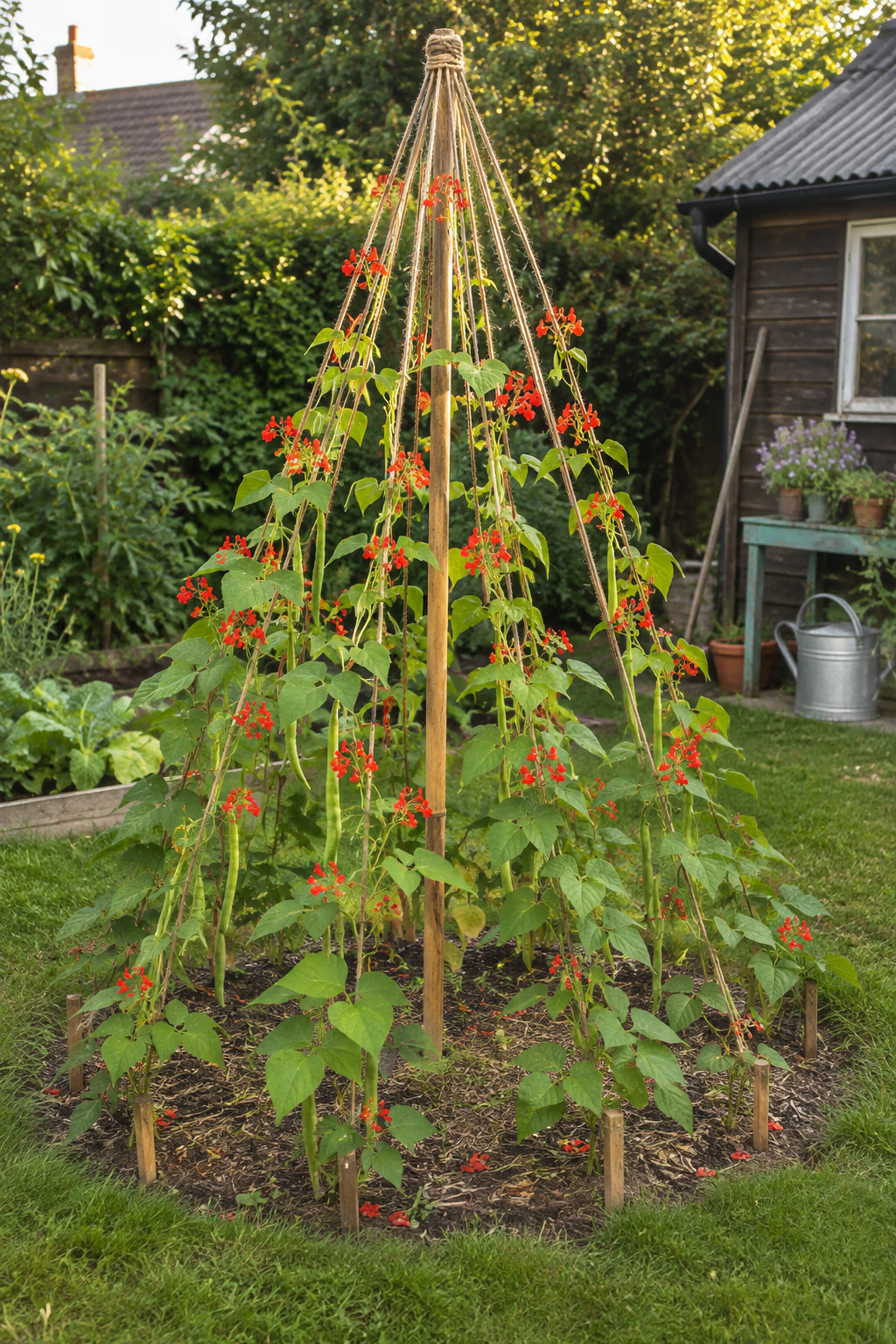
Edible beans with bright red flowers for hummingbirds
Set an 8-foot wooden pole or metal pipe firmly in the ground, add a screw eye at the top, and run 8 to 12 strings out to small stakes in a circle about 5 feet across. Plant runner beans at the base of each string after the last frost.
The result looks like a maypole wrapped in leaves and scarlet blossoms. The flowers attract hummingbirds and pollinators, and the young pods and dried beans are both edible when properly cooked.
Runner beans set pods best in mild summers and may drop flowers during long stretches above 90 degrees. In hot regions, plant them where they get afternoon shade.
18. Convert an Old Canopy Frame Into a Vine Pergola
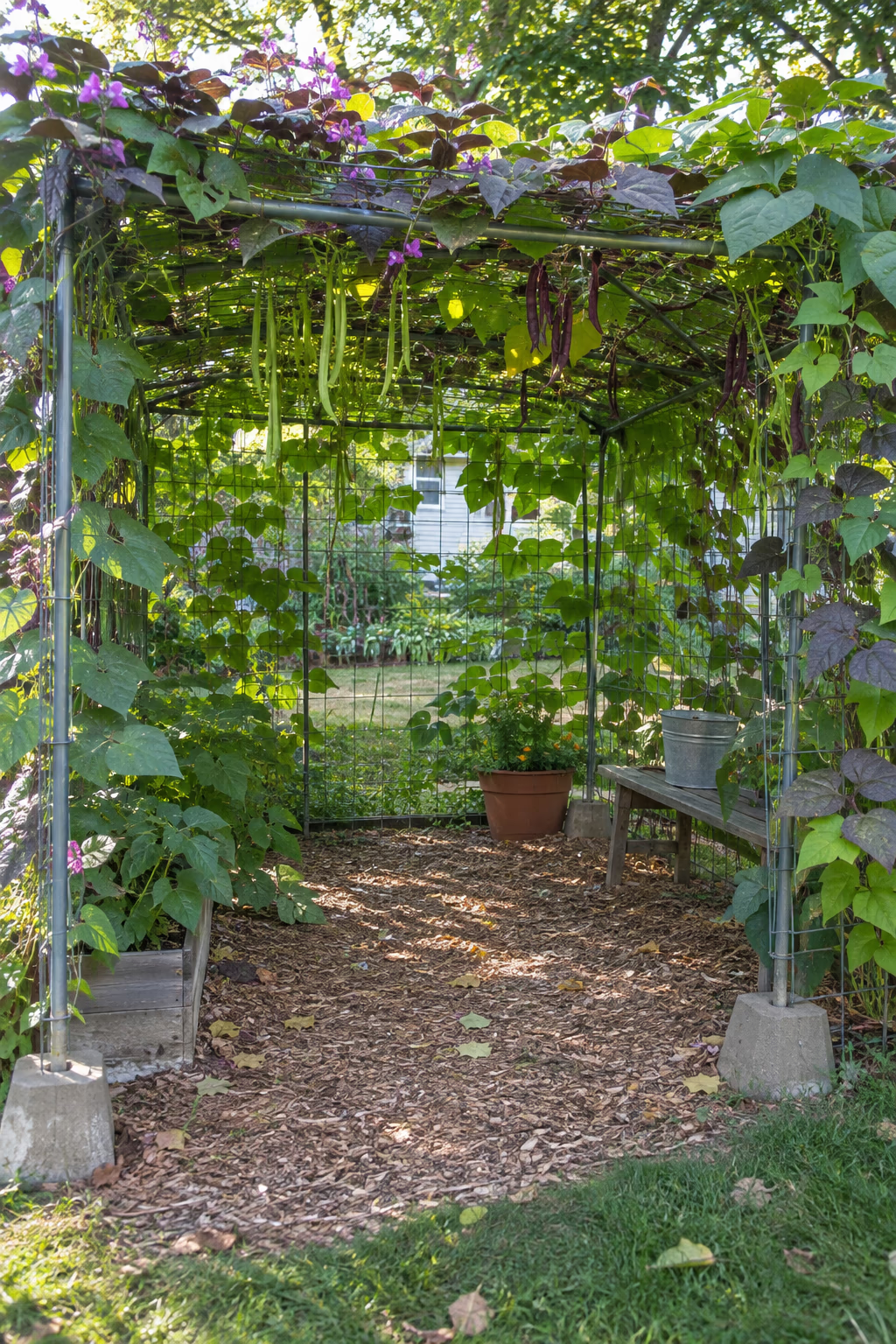
Give a retired gazebo frame a second life
When the fabric top on a metal canopy or pop-up gazebo wears out, keep the frame. Wrap the top and sides with welded wire or heavy trellis netting, anchor the legs with stakes or concrete blocks, and plant cucumbers, pole beans, or hyacinth beans at each post.
By midsummer the frame becomes a shady, living pergola with vegetables dangling overhead. It is a low-cost way to get a large, sturdy structure without building one from scratch.
Lightweight frames are not designed for heavy squash or strong winds when covered in foliage. Stick with lighter crops, and anchor the legs well before vines fill in.
19. Lean a Cattle Panel Against the Shed for Gourds
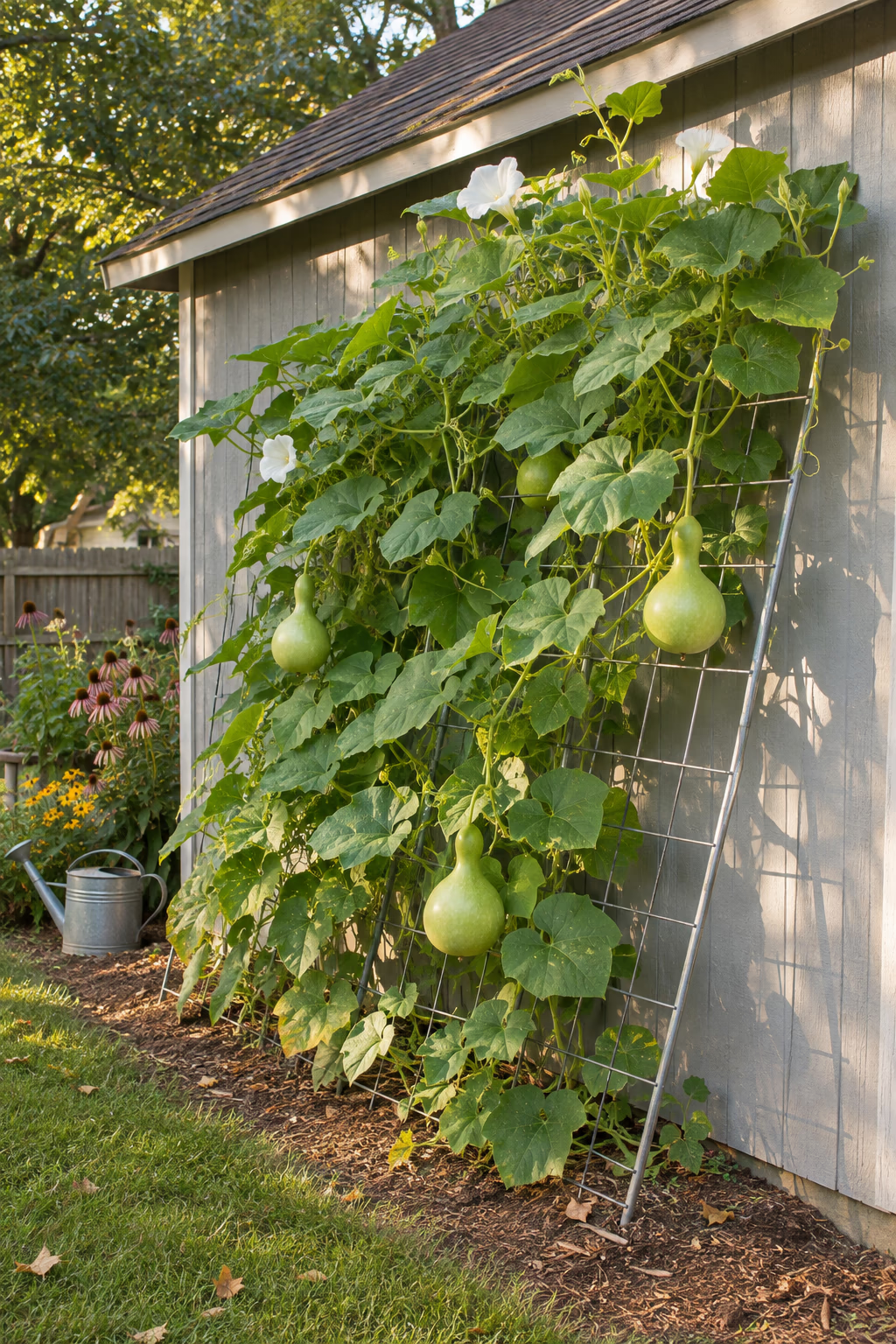
Put a sunny shed wall to work
Cut a 16-foot cattle panel in half with bolt cutters and lean one 8-foot section at an angle against a south- or west-facing shed wall, leaving at least 12 inches of air space between the panel and the siding. Secure the base to two short T-posts and the top to the shed with sturdy hooks.
Birdhouse, dipper, and luffa gourds need a long, warm season and lots of room to roam. The angled panel gives them both, and the hanging gourds dry well in the sun on the vine.
Keep vines off the shed roof and away from siding and gutters, where trapped moisture can cause damage. Large gourds may need slings as they gain weight.
20. Lash a Bamboo Grid for Yardlong Beans and Malabar Spinach
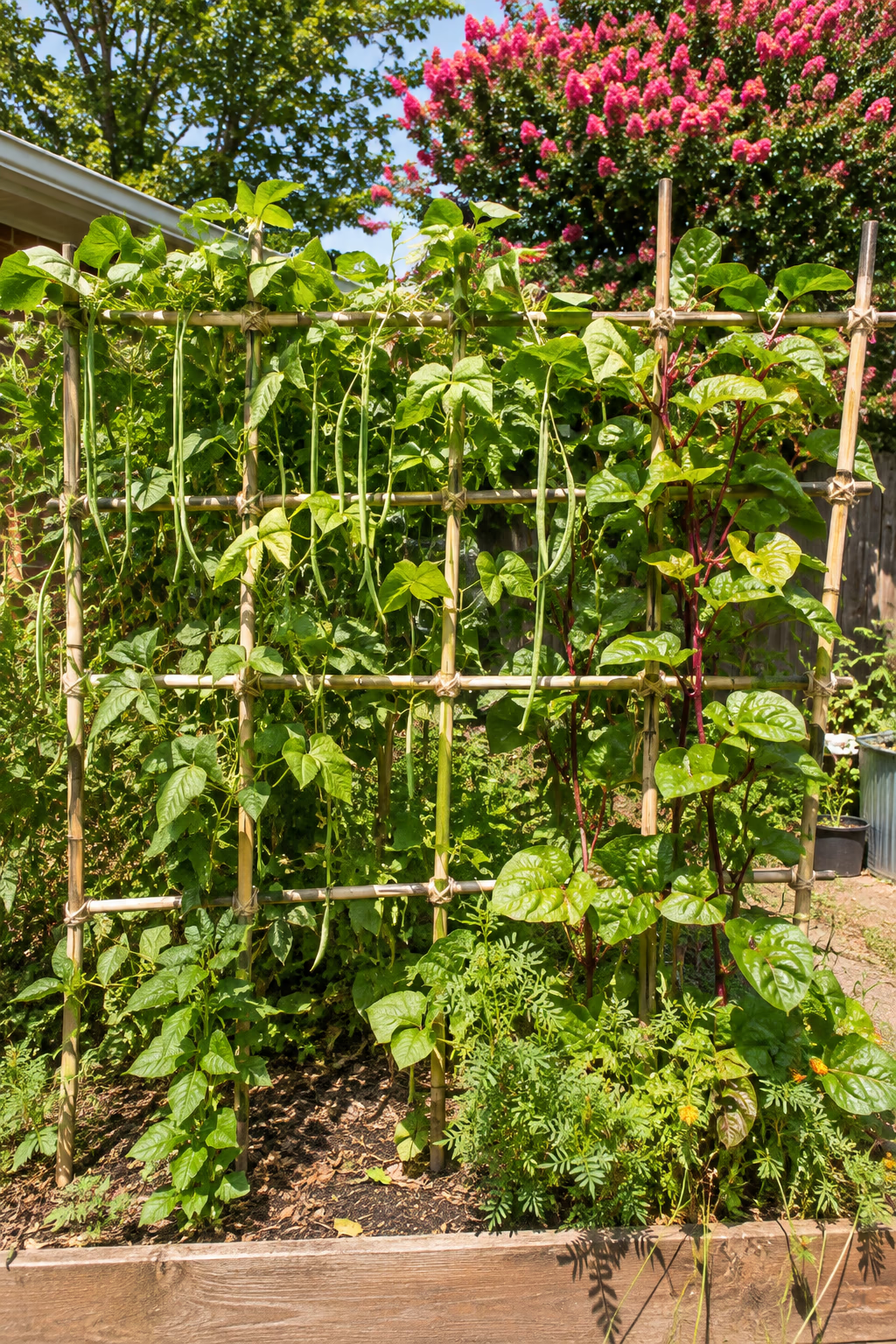
Heat-loving climbers for long Southern summers
Push 7-foot bamboo canes into the soil about 12 inches apart, then lash horizontal canes across them every foot with jute twine to form a square grid. Plant yardlong beans and Malabar spinach at the base once nights stay above 60 degrees.
Both crops thrive in the heat that makes peas and lettuce give up, so the grid keeps producing greens and beans through July and August. The glossy red-stemmed spinach and dangling 18-inch beans make a lush, tropical-looking screen.
Yardlong beans grow fast and heavy, so reinforce the grid with a T-post at each end. Pick pods young and slender for the best texture.
21. Pair a Fan Trellis With a Patio Cucumber Container
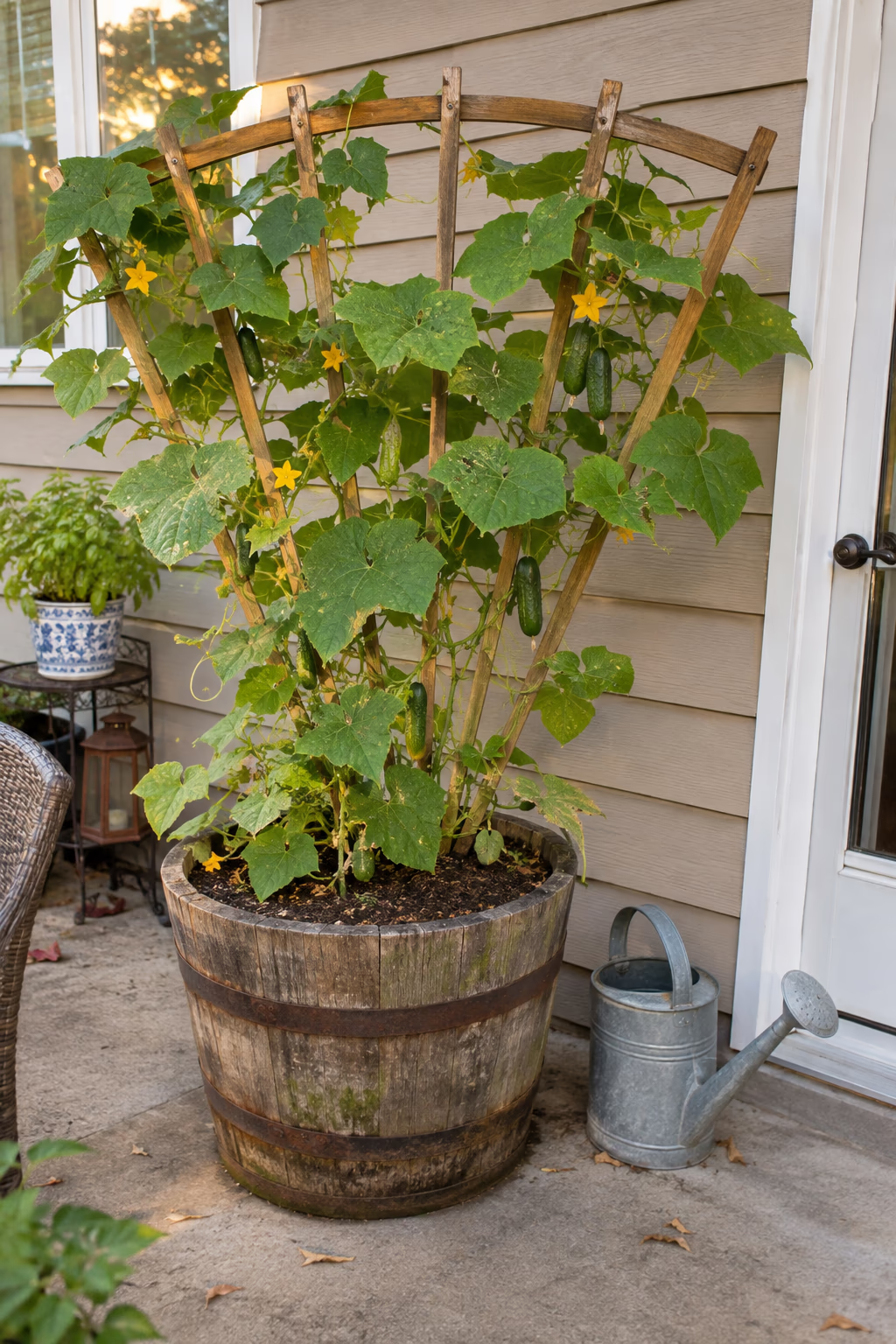
A compact trellis for small yards and decks
Set a 4- to 5-foot wooden or metal fan trellis into a container that holds at least 5 gallons of potting mix, and plant one compact vining cucumber at its base. A large whiskey-barrel-style planter or a wide plastic pot works well.
The fan shape spreads the vines out so leaves get even sun, and the pot can sit on a sunny patio, deck, or driveway edge close to the kitchen. It is a practical choice for renters and anyone without in-ground beds.
Containers dry out quickly in summer heat, so expect to water daily in July. Push the trellis legs all the way to the bottom of the pot so a breeze cannot tip it over.
22. Corral Peppers and Eggplants With Stakes and Twine
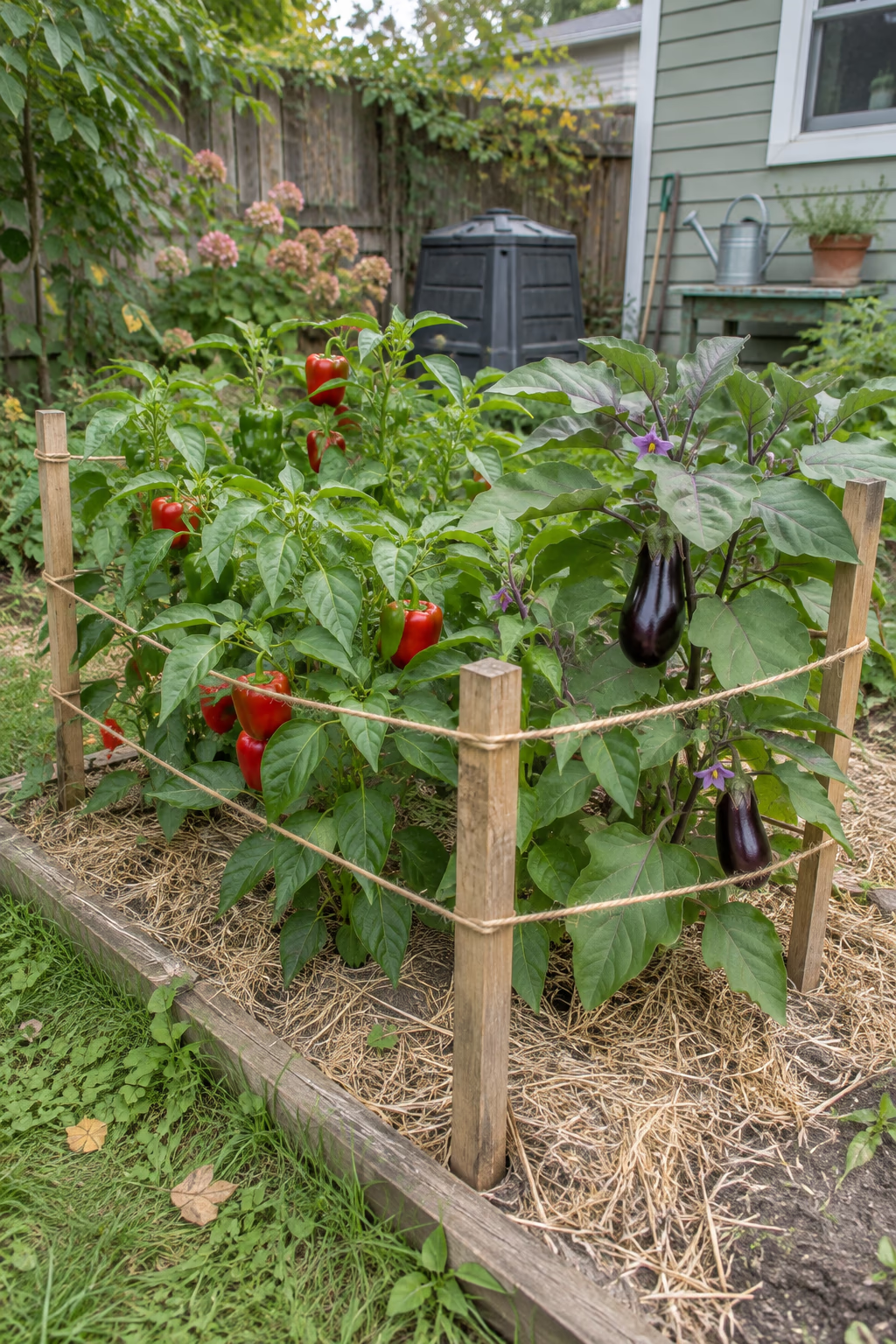
Keep heavy bushes from toppling
Peppers and eggplants are not climbers, but plants loaded with fruit often split or flop after storms. Drive four 3- to 4-foot stakes around a block of plants and run two or three rows of twine around the outside, about 12 inches apart, to form a corral.
The corral holds stems upright without tying each plant individually, and it can be expanded as the plants grow. It also keeps fruit off the soil, which reduces rot and pest damage.
Install the stakes when plants are small to avoid damaging roots later. Hot weather peppers grow more slowly in cool springs, so do not rush planting.
23. Paint Your Trellises a Bold Garden Color
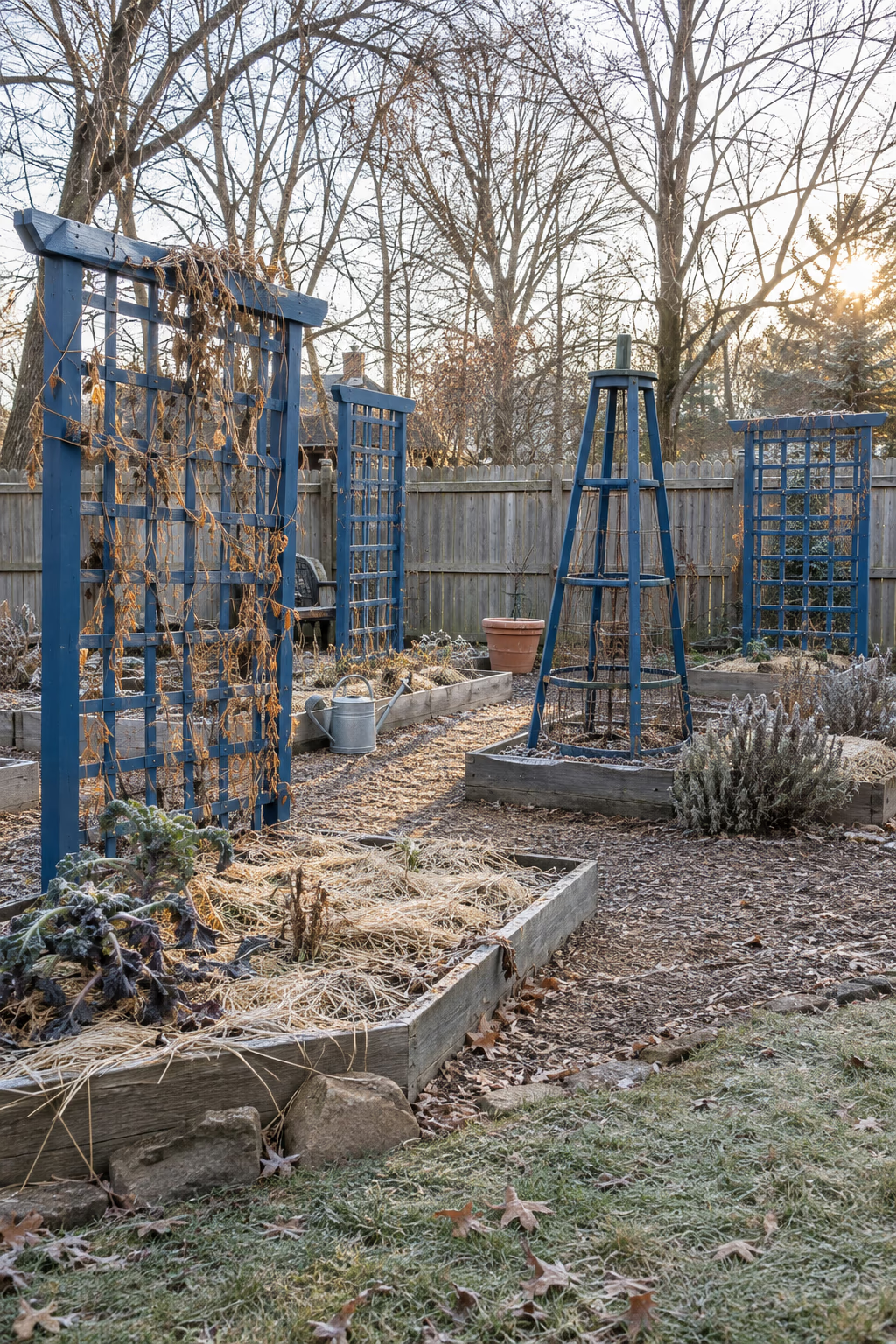
Structure that looks good even in winter
A coat of exterior paint or stain turns plain wooden trellises, towers, and frames into garden features. Deep blue, sage green, barn red, or black all stand out against foliage in summer and against bare soil in winter.
Colored trellises give the vegetable garden a designed look year-round and tie different structures together. Painting also protects the wood from moisture and adds a few years to its life.
Use exterior paint or stain on untreated wood and let it cure fully before planting. Avoid old pressure-treated lumber of unknown age for food gardens, since older wood may have been treated with chemicals that are no longer approved for home use.
How to Plan Your Vegetable Garden Trellis
The right trellis depends on what you grow, how much space you have, and how much weight it needs to hold. A few planning steps will keep your supports sturdy and productive all season.
- Match the trellis to the crop. Peas and beans need thin supports for tendrils or twining stems, while tomatoes, squash, and melons need heavy-duty frames.
- Place it on the north side. Put tall trellises on the north or east side of beds so they do not shade shorter crops for most of the day.
- Build it before planting. Installing a trellis after plants are established can damage roots and stems.
- Anchor it well. Wind and a full crop of fruit add a lot of weight, so sink posts at least 18 to 24 inches deep and brace end posts.
- Leave room to harvest. Keep at least 2 feet of path space beside trellises so you can reach the fruit and work around plants.
- Check local rules. Tall permanent structures may be subject to HOA guidelines or setback rules, and in the United States you should call 811 before digging post holes.
Frequently Asked Questions
Which vegetables grow best on a trellis?
Pole beans, peas, cucumbers, indeterminate tomatoes, small melons, vining squash, gourds, Malabar spinach, and yardlong beans all grow well on trellises. Bush beans, determinate tomatoes, and most root crops do not need climbing support.
How tall should a vegetable trellis be?
Most vegetable trellises work well at 5 to 7 feet tall, which is high enough for pole beans and cucumbers but still easy to reach. Peas typically need 3 to 6 feet depending on the variety, while indeterminate tomatoes can easily use 6 to 8 feet.
When should I put up a trellis in the vegetable garden?
Set up trellises before or at planting time. Waiting until vines are established can damage roots and makes it harder to guide young stems onto the support.
What is the cheapest way to trellis vegetables?
Bamboo teepees, twine strung between stakes, netting, pruned branches, and existing fences are all inexpensive options. Salvaged materials such as old gates, ladders, and canopy frames can also work if they are sturdy and safe for food crops.
Can I reuse a trellis from year to year?
Yes. Metal, cedar, and wire trellises can last many seasons. Remove dead vines in fall, scrub off any diseased plant debris, and rotate crops so the same plant family does not grow in the same spot every year.
Final Thoughts
The best vegetable garden trellis ideas make the most of every square foot while making harvests easier and plants healthier. A simple bean teepee, a ladder of cucumbers, or a tunnel of squash can transform both the look and productivity of your garden.
Start with one or two supports for your favorite climbing crops, then add more as you learn what works in your space. With a little planning, your garden will grow up, fill out, and reward you with more fresh food each season.