Some garden paths feel temporary, but a stone path looks like it has always been there. Weathered flagstones warm in the afternoon sun, low plants creep in at the edges, and every step lands on something solid and cool underfoot.
Stone has a lot going for it. It lasts for decades, handles foot traffic and freezing winters better than most materials, and gets better looking as it ages. It also suits almost every house style, from a farmhouse with fieldstone walls to a modern ranch with crisp bluestone, so you can match the path to the home instead of the other way around.
These 25 stone garden path ideas cover puzzle-fit flagstone, bluestone in gravel, granite cobbles, slope-taming steps, mosaics, side-yard walks, and planting partners that soften hard edges. Each one includes practical tips on materials, sizes, and upkeep, so you can pick a path that fits your yard, your climate, and your budget.
1. Fit Irregular Flagstones Into a Tight Puzzle Walk
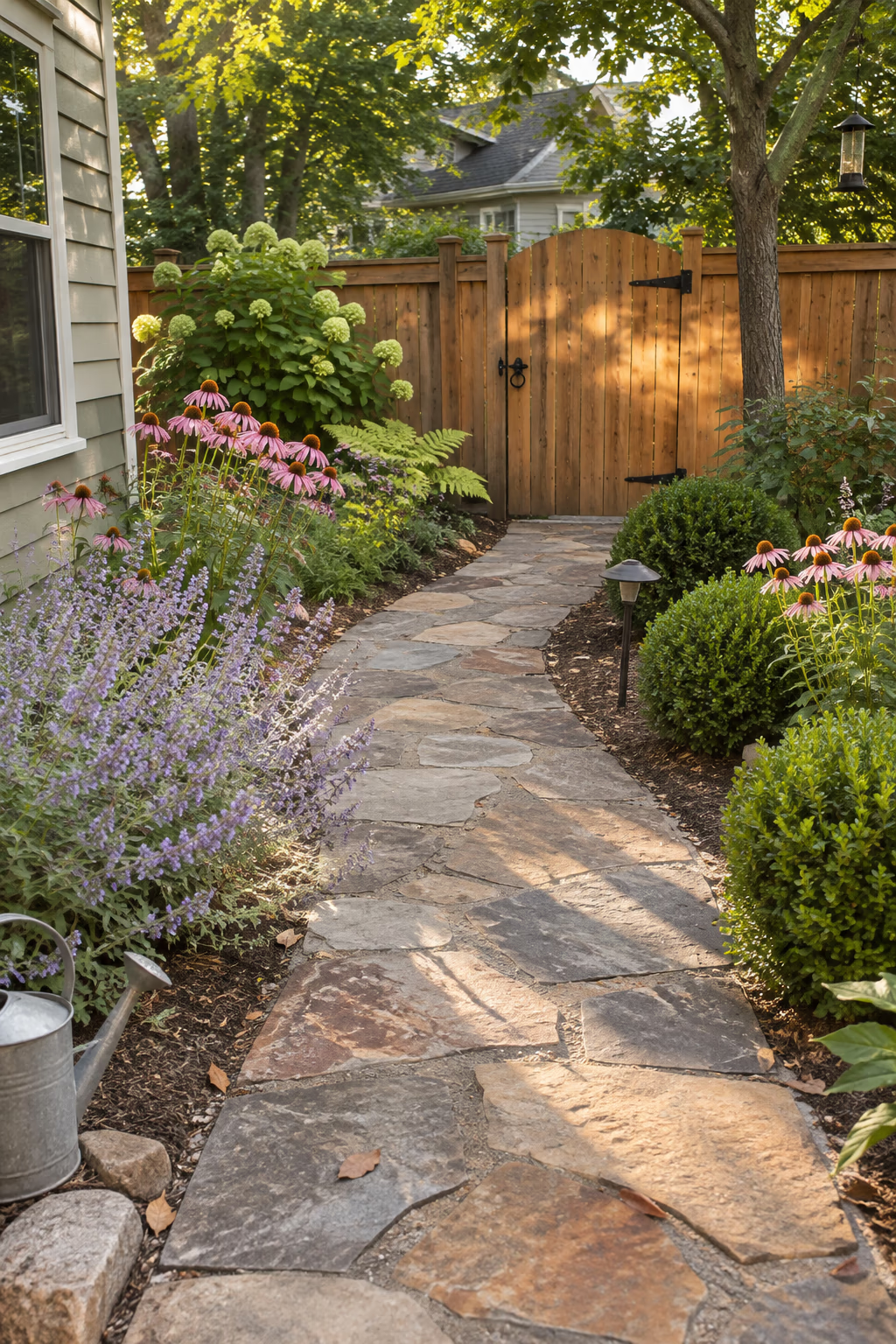
The classic natural stone look that never dates
Irregular flagstones fitted closely together, like pieces of a jigsaw, make the stone path most people picture first. Choose stones 1.5 to 2 inches thick and at least 18 inches across so they stay stable, then arrange them with joints of about 1/2 to 1 inch.
Lay them over 4 inches of compacted crushed gravel topped with an inch of stone dust, and tap each piece level with a rubber mallet. Lay all the stones out on the lawn first and pick pieces whose edges roughly match before setting them, which saves a lot of cutting.
Fill the joints with stone dust or polymeric sand for a tidy finish. Expect to top up joints every year or two, since rain and frost slowly wash and heave the fill.
2. Set Broken Bluestone Into Fine Gravel
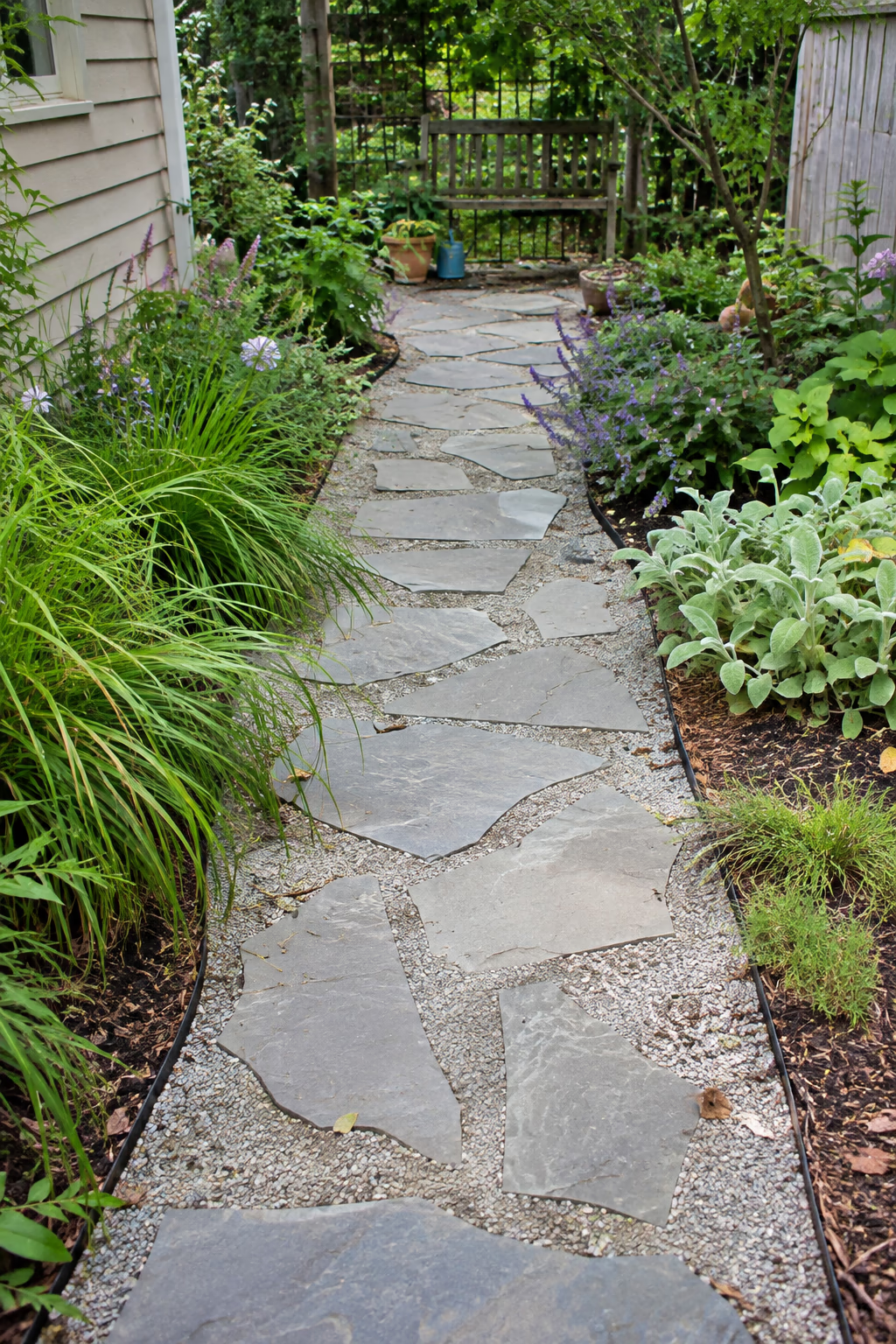
A relaxed, budget-friendly mix of slab and crunch
Broken pieces of blue-gray bluestone set into a bed of fine gravel give you the look of a flagstone walk for far less money and labor. The gravel fills irregular gaps, so the stones don’t need to fit tightly, and offcuts or seconds from a stone yard often cost less than full slabs.
Use crushed gravel in the 1/4- to 3/8-inch range rather than round pea gravel, because angular pieces lock together and stay put underfoot. Set the stone slightly proud of the gravel so it sheds water and doesn’t get buried.
Install sturdy edging, such as steel or set stone, to keep the gravel out of beds and lawn. Snow shovels can catch on loose gravel, so this style works best for garden walks rather than the main winter entry.
3. Lay a Granite Cobblestone Path for Old-World Charm
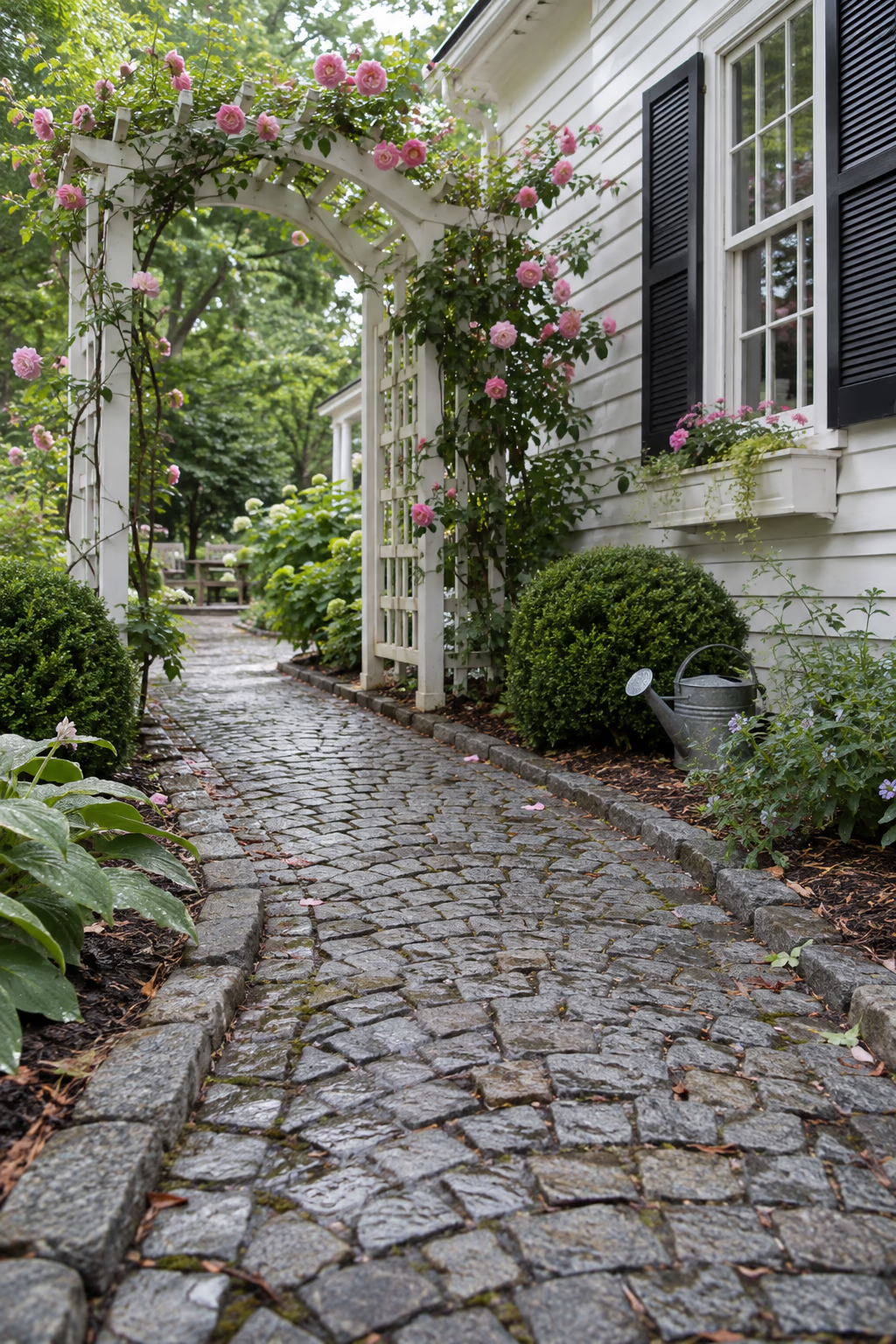
Make a new garden feel a century old
Gray granite cobbles, also called setts, are small blocks usually around 4 by 4 or 4 by 7 inches. Laid in a running bond or soft arc, they give a path the slightly bumpy, timeworn texture of an old European lane.
Cobbles are nearly indestructible and handle freeze-thaw cycles well, which makes them a smart choice in cold regions. Set them in a bed of sand or stone dust over a compacted gravel base, and use edging cobbles set deeper in concrete to keep the field from creeping sideways.
The texture that gives cobbles their charm can be tricky for wheelchairs, strollers, and high heels. Choose sawn-top setts if you want the look with a smoother walking surface.
4. Extend Patio Flagstones Into a Break-Away Path
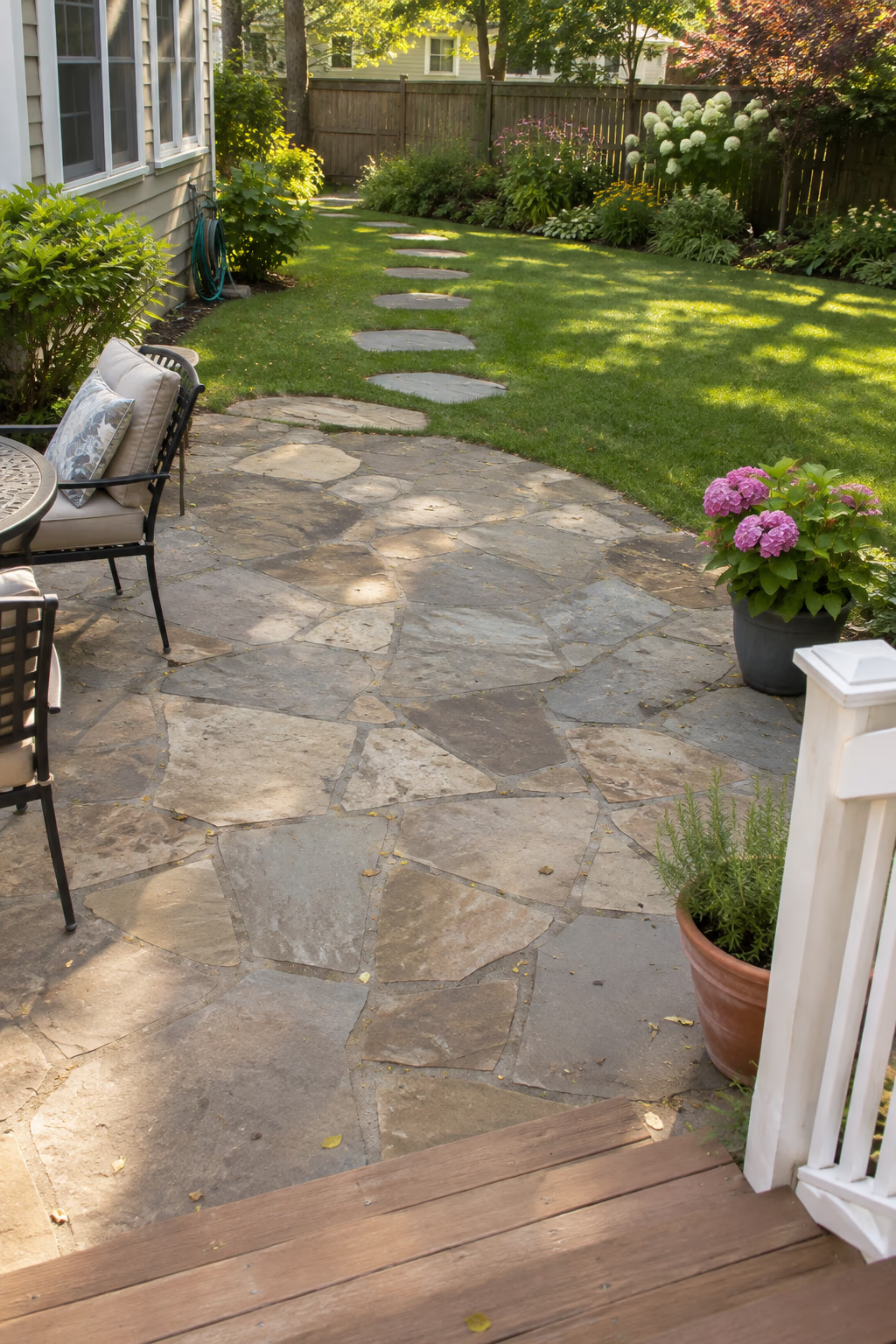
Blur the line between patio and garden
Instead of ending a flagstone patio with a hard edge, let the stones break apart gradually into a path. Close-fitted stone at the patio loosens into wider gaps and then into individual steppers that lead out across the lawn or into the beds.
Using the same stone keeps the whole backyard looking planned, and the loose transition feels natural rather than abrupt. Ask your supplier for extra stone from the same batch, since color can vary between quarry runs.
Keep the steppers’ tops level with the soil so a mower can pass over them. Spacing stones about 24 inches center to center matches a comfortable adult stride.
5. Build Natural Stone Steps Into a Sloped Yard
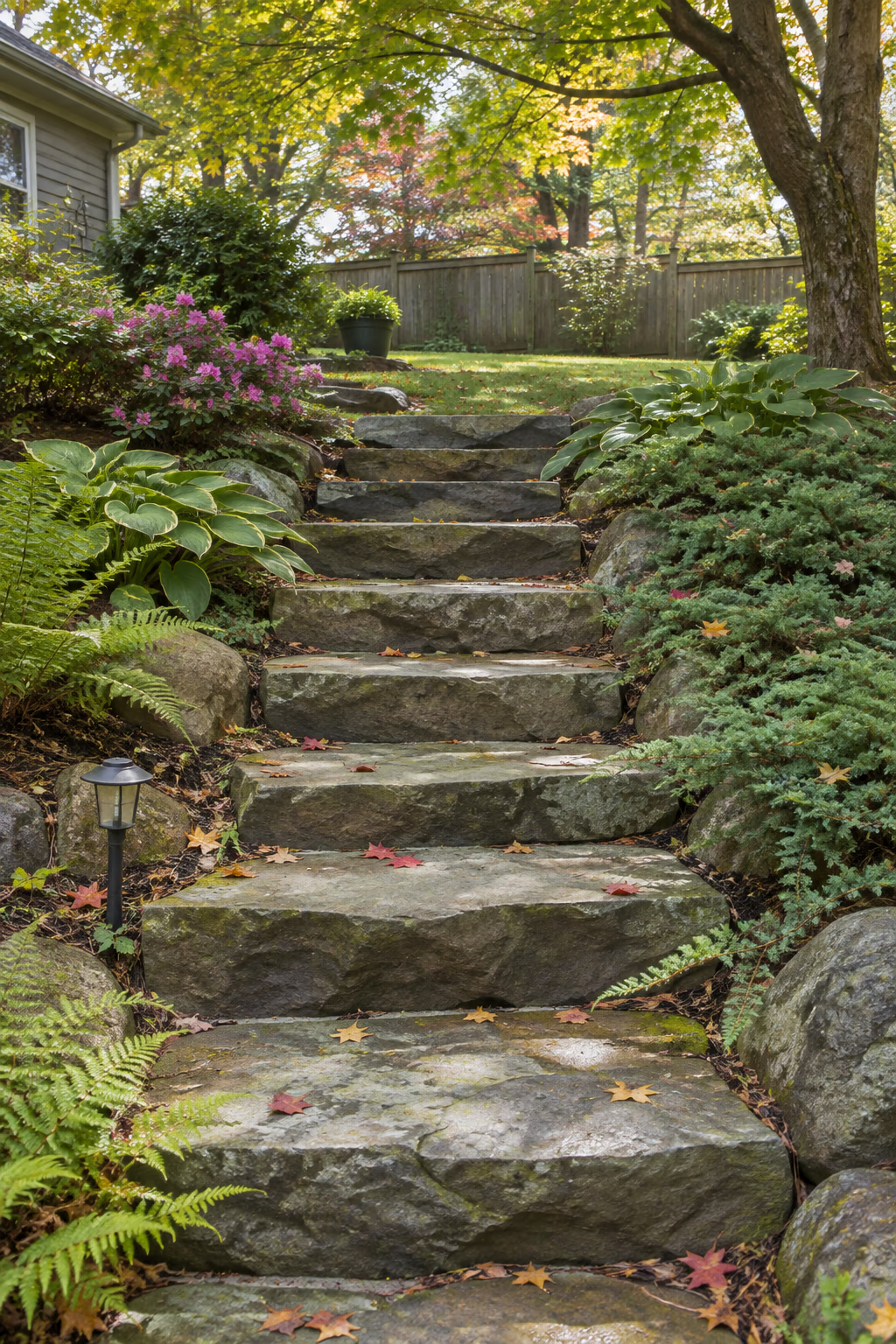
Turn a slippery slope into a safe climb
Thick stone slabs set into a hillside turn an awkward grade into an inviting climb. Use solid steps at least 4 to 6 inches thick, or stack thinner flagstone treads over block or stone risers.
A comfortable outdoor step usually has a riser of about 5 to 7 inches and a tread of 12 to 18 inches deep. Keep every step in a run the same height, because uneven risers are a leading cause of trips. Plant the sides with low shrubs or ground covers to hold the soil between steps.
Steps are heavy work, and large slabs may need a small machine to move. If the slope is steep or the steps lead to a main entry, check local codes for handrail requirements before you build.
6. Combine Three Stone Types in a Mosaic Walk
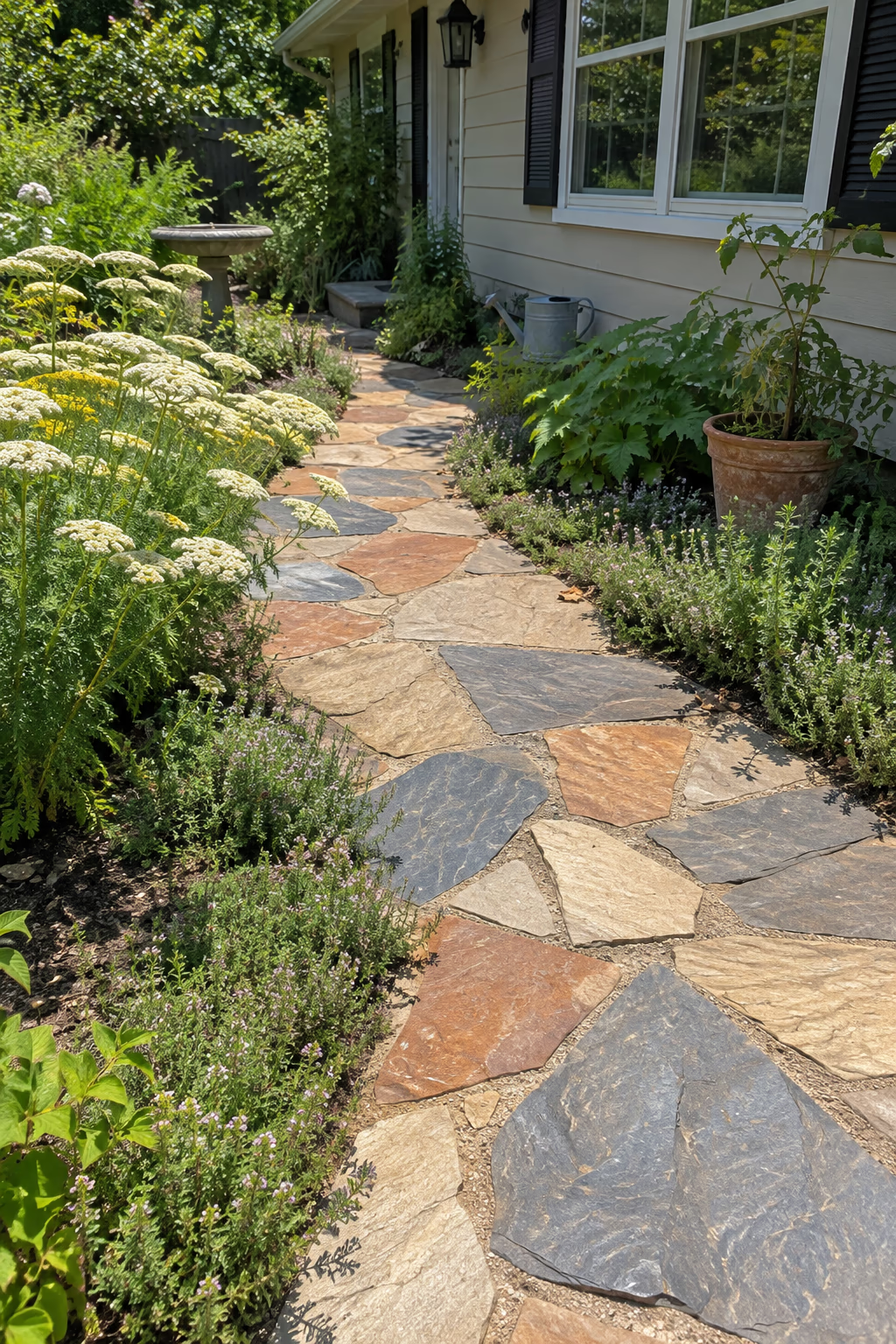
Create a one-of-a-kind path with texture and color
Mixing two or three stones, such as buff sandstone, blue-gray bluestone, and rusty quartzite, turns a simple walk into a patterned feature. You can scatter the colors at random or group them into bands and panels.
The trick is to keep the stones a similar thickness so the surface stays flat, and to repeat each color several times along the path so the mix looks intentional rather than leftover. Lay out the whole design dry before setting anything.
Limit yourself to three stone types at most. More than that can look busy, especially in a small yard or beside a home with a lot of brick or siding detail.
7. Frame a Flagstone Walk With Brick Edging
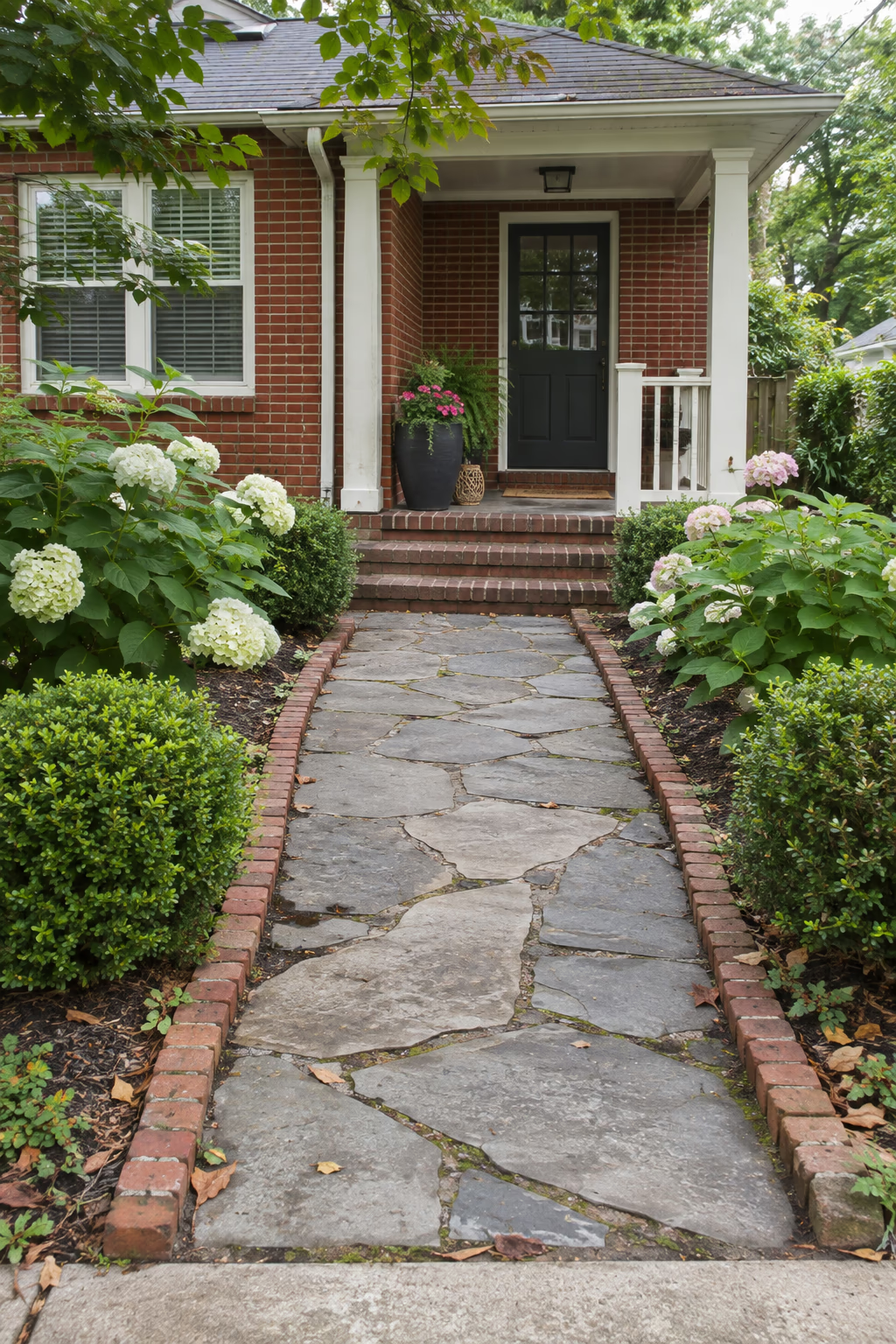
A neat border that adds warmth and order
A soldier course of red clay brick running along both sides of a flagstone path gives the irregular stone a crisp outline. The warm brick tone also ties the path to a brick house, chimney, or garden wall.
Set the edging bricks on end or flat in a narrow concrete footing so they don’t shift, then fit the flagstones inside the frame. The border hides ragged stone edges, which means less cutting at the sides of the path.
Use solid paving brick rated for ground contact. Ordinary wall brick can absorb water and flake apart after a few freeze-thaw winters.
8. Lay Cut Bluestone Slabs for a Crisp Modern Walk
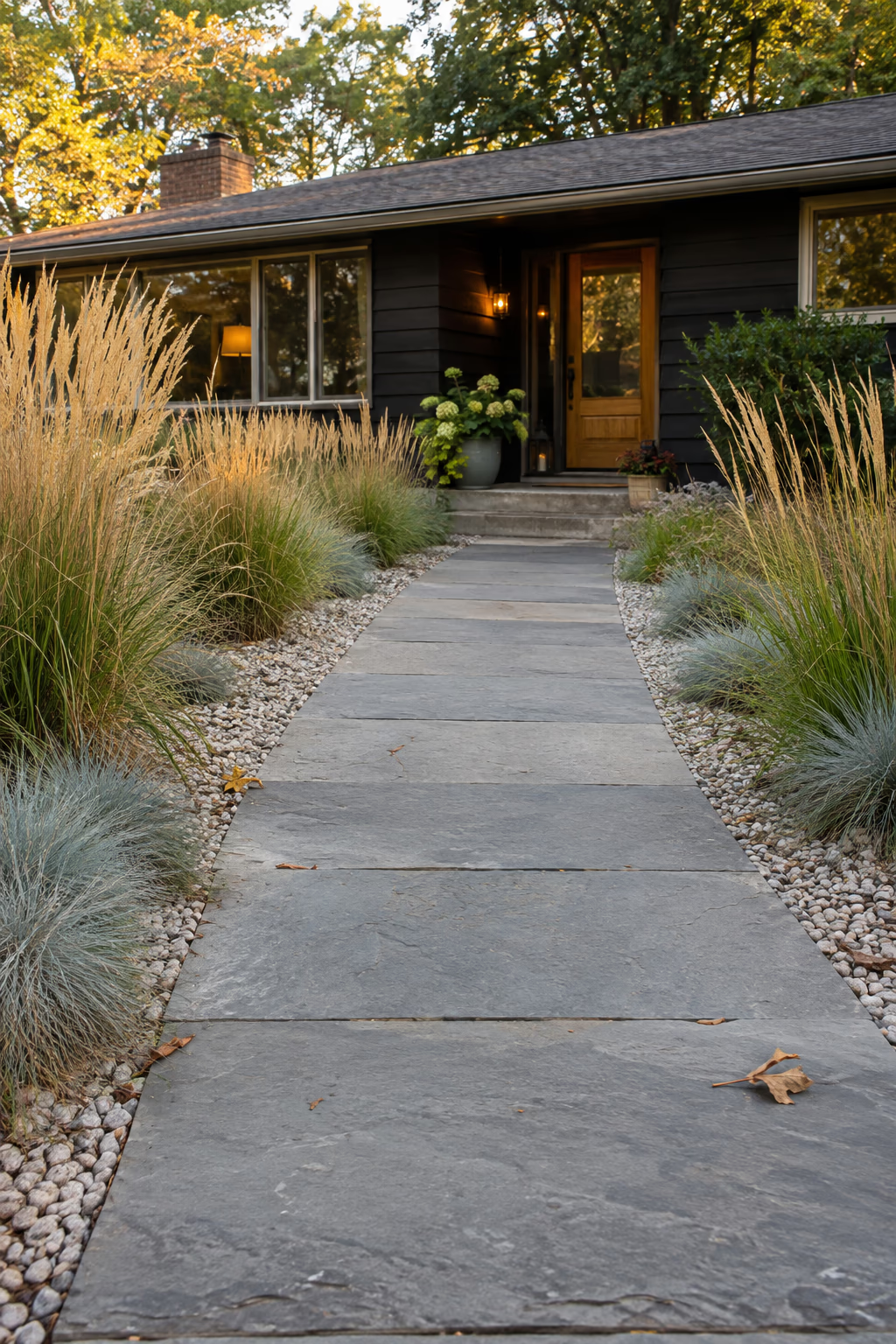
Clean lines for contemporary homes
Rectangular bluestone slabs in a single size, such as 24 by 36 inches, laid end to end with narrow joints, create a sleek walk that suits modern and midcentury houses. Thermal-finished bluestone has a slightly textured surface that is less slippery when wet than smooth natural cleft.
The calm, even color reads as sophisticated without being flashy, and the straight geometry pairs well with ornamental grasses, boxwood, or a simple bed of gravel along the edges.
Bluestone absorbs heat and can get hot in full summer sun, so lighter stones may be a better pick in desert climates. Cut stone also costs more than irregular flagstone, so get quotes before committing.
9. Plant Dwarf Mondo Grass in Wide Stone Joints
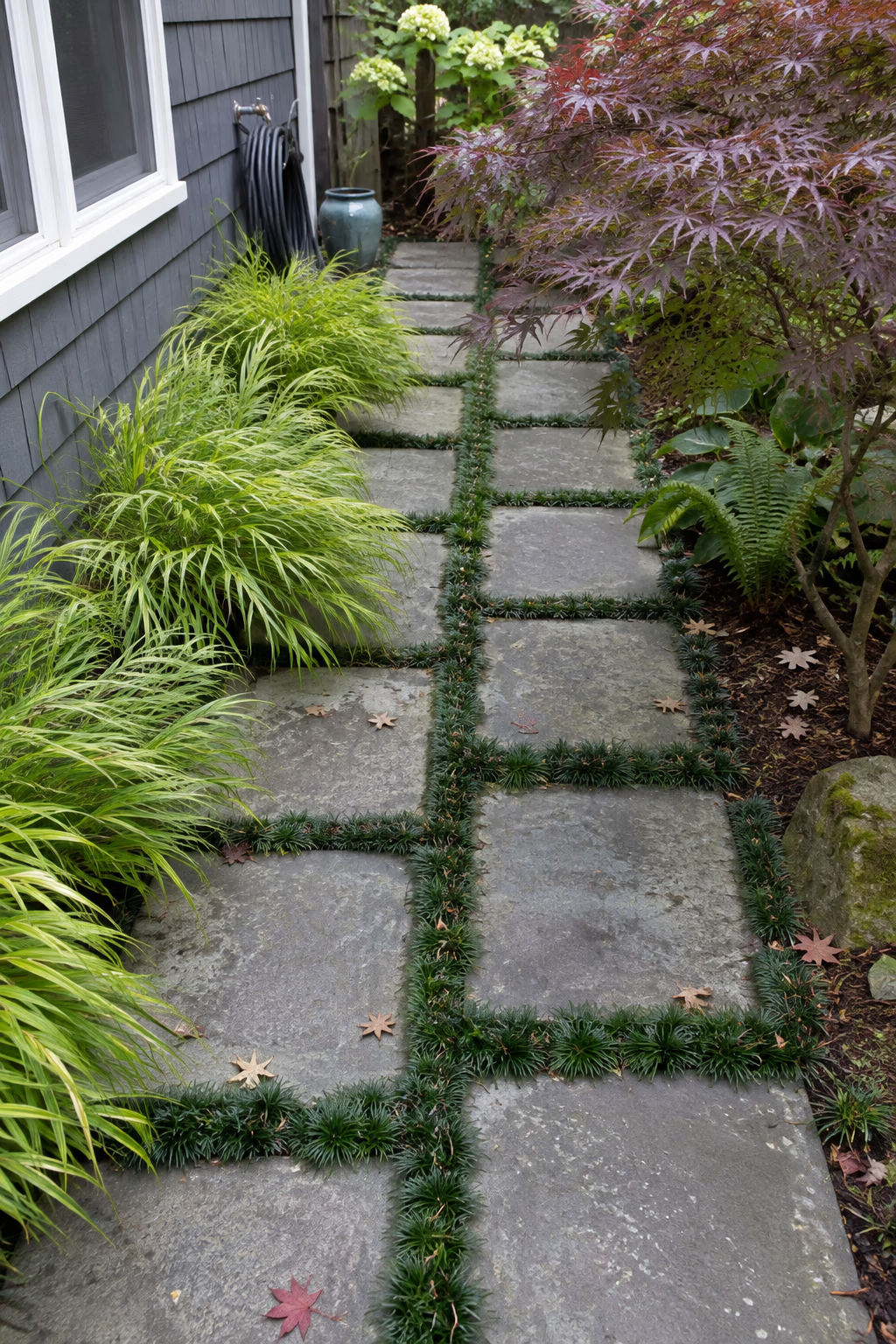
Lush green seams that stay neat all year
Leaving 2- to 3-inch gaps between square or rectangular stones and filling them with dwarf mondo grass creates a tidy grid of green. The plant forms dense, low tufts just a few inches tall and stays evergreen in mild climates.
Dwarf mondo grass handles light foot traffic, needs no mowing, and grows well in partial shade. Plug small divisions into the joints with rich soil and water regularly until they fill in.
It is generally hardy in USDA zones 6 or 7 through 10 and grows slowly, so buy enough plugs to space them closely. In colder zones, try a hardy ground cover such as creeping wire vine or a low sedum instead.
10. Brighten a Shady Walk With Pale Sandstone
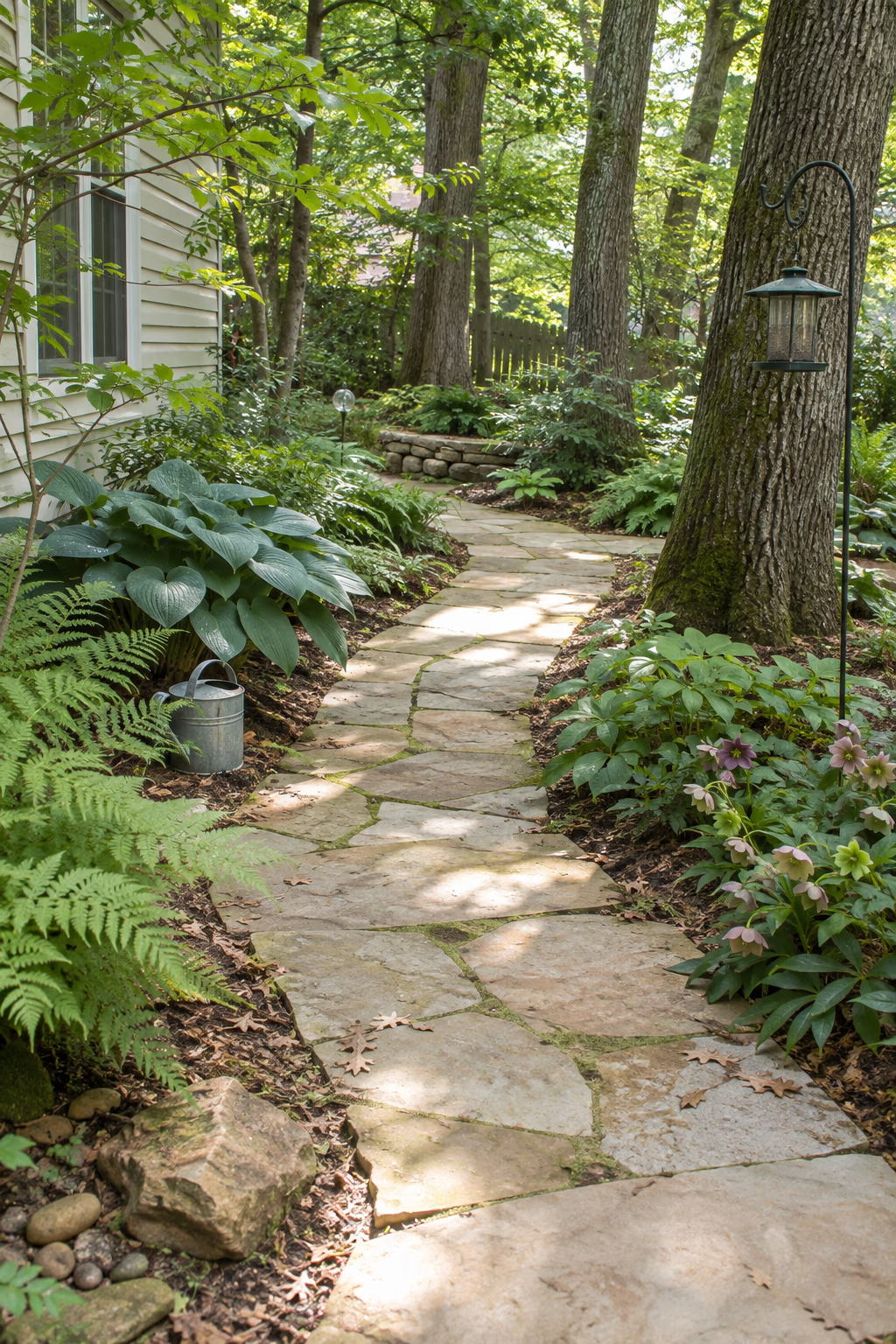
Light-colored stone that glows under trees
Buff, cream, or golden sandstone reflects what little light filters through trees, making a shady side garden feel brighter and more open. It pairs beautifully with ferns, hostas, and hellebores.
The warm tone keeps a woodland path from feeling gloomy, and the naturally gritty surface offers decent grip. Choose stone rated for exterior paving in your climate, since some soft sandstones crumble in hard freezes.
Shade and moisture encourage algae and moss on any pale stone. Plan on an occasional scrub with a stiff brush and a gentle stone cleaner, and avoid pressure washing too close, which can erode the surface.
11. Let Plants Spill Over a Broken-Edge Stone Walk
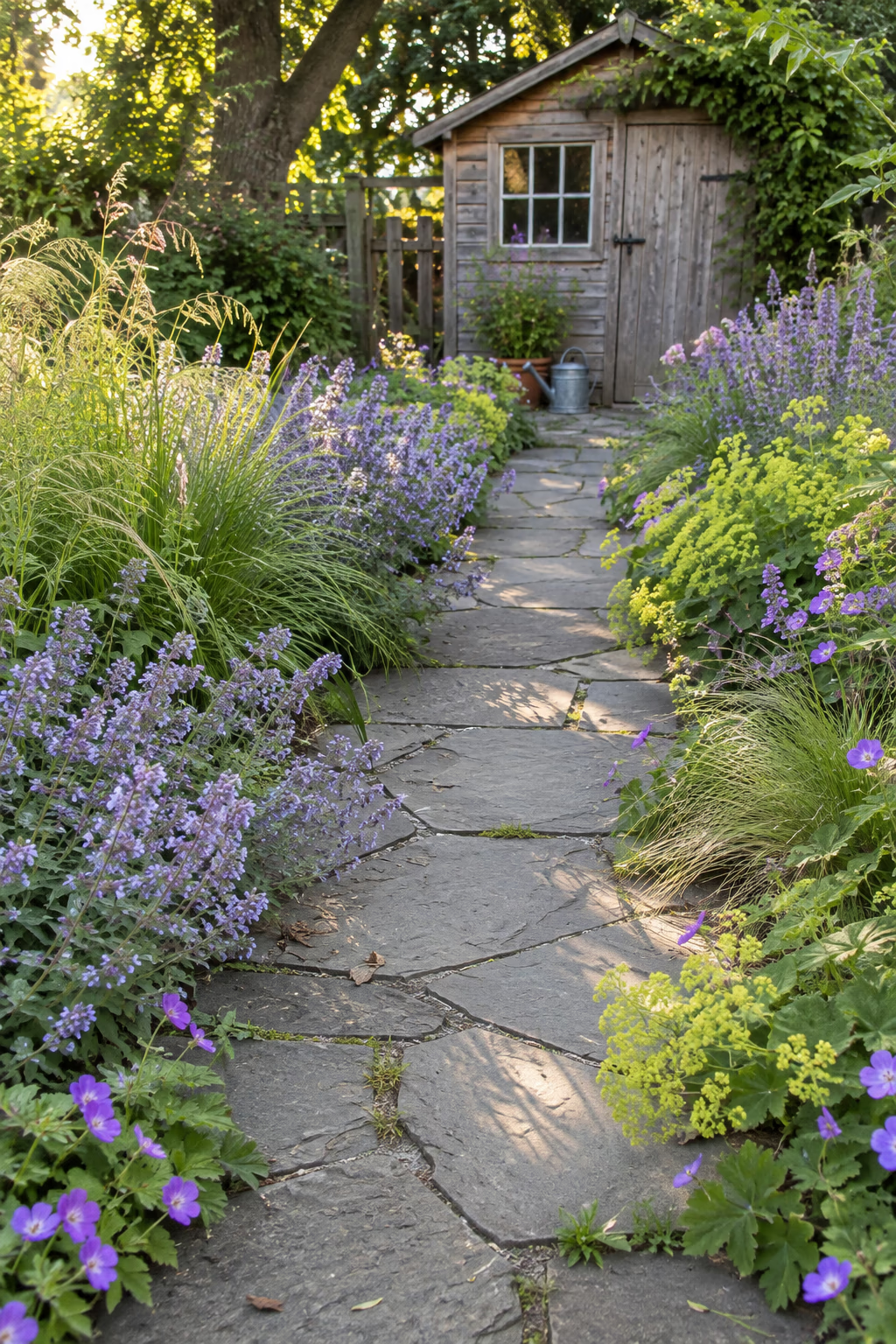
A soft, garden-first look
Instead of cutting the outer edges of a flagstone path straight, leave them jagged and plant right up to the stone. Lady’s mantle, catmint, hardy geraniums, and low ornamental grasses will drape over the ragged edge and blur where path ends and border begins.
This style makes even a new path feel settled and generous. It also saves time, since the outside stones need no trimming.
Keep the walking width at least 3 feet after plants fill in, and trim back sprawling growth a few times a season so the path stays usable, especially after rain when wet foliage brushes your legs.
12. Inlay a River Pebble Mosaic Into the Path
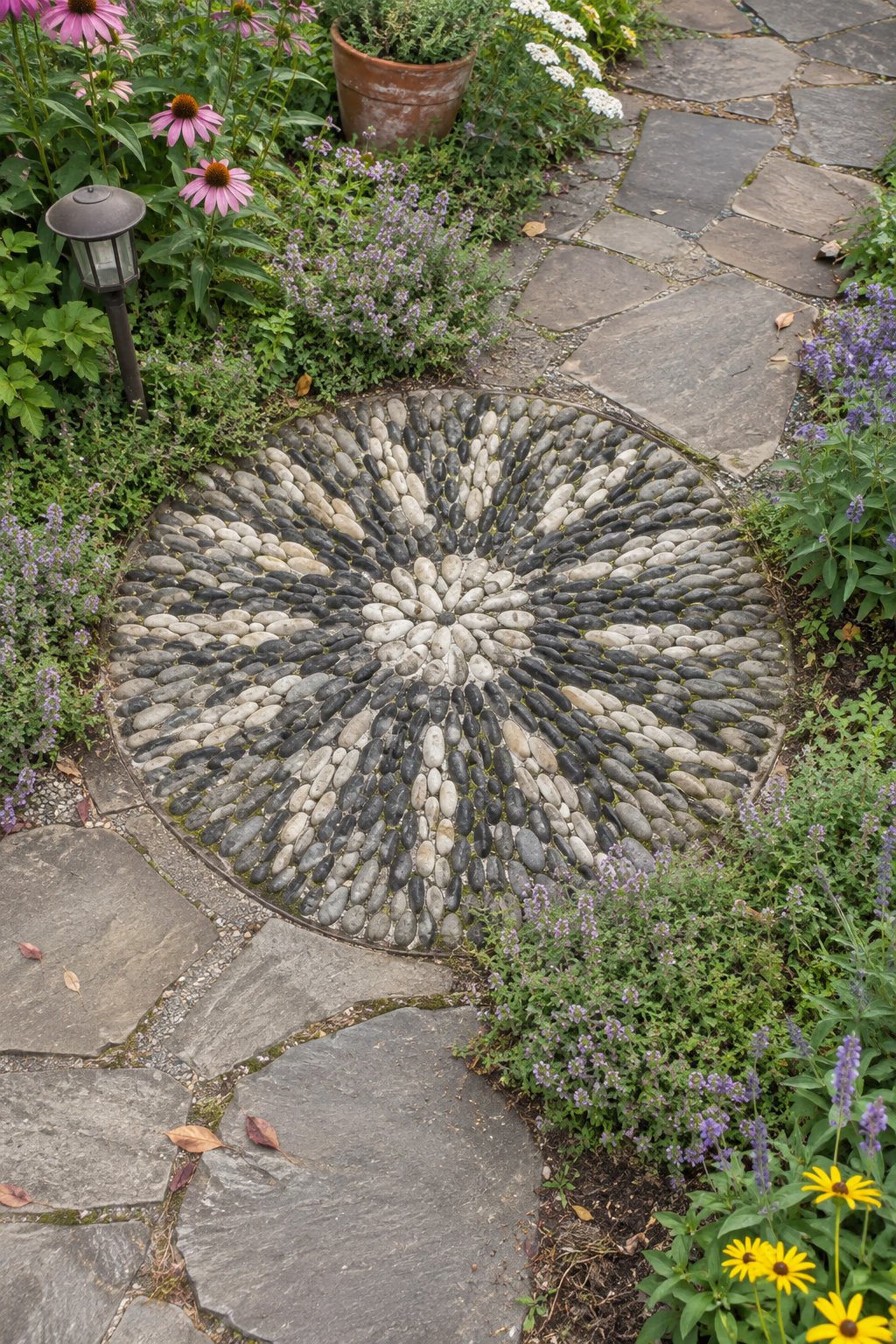
A handmade focal point you can walk on
Smooth river pebbles set on edge in mortar can form a compass, spiral, or simple sunburst in the center of a stone path or at a junction where two paths meet. Sort pebbles by color, such as black, gray, and white, before you start.
A mosaic panel of about 3 by 3 feet is a manageable weekend project and gives the path a personal, artisan feel. Pack the stones tightly so their tops are flush, and keep the mortar slightly below the pebble tops.
Work in small sections so the mortar doesn’t set before you finish, and mist the panel for several days while it cures. Pebbles set on edge grip much better underfoot than flat-laid ones.
13. Dry-Lay a Fieldstone Path for a Farmhouse Yard
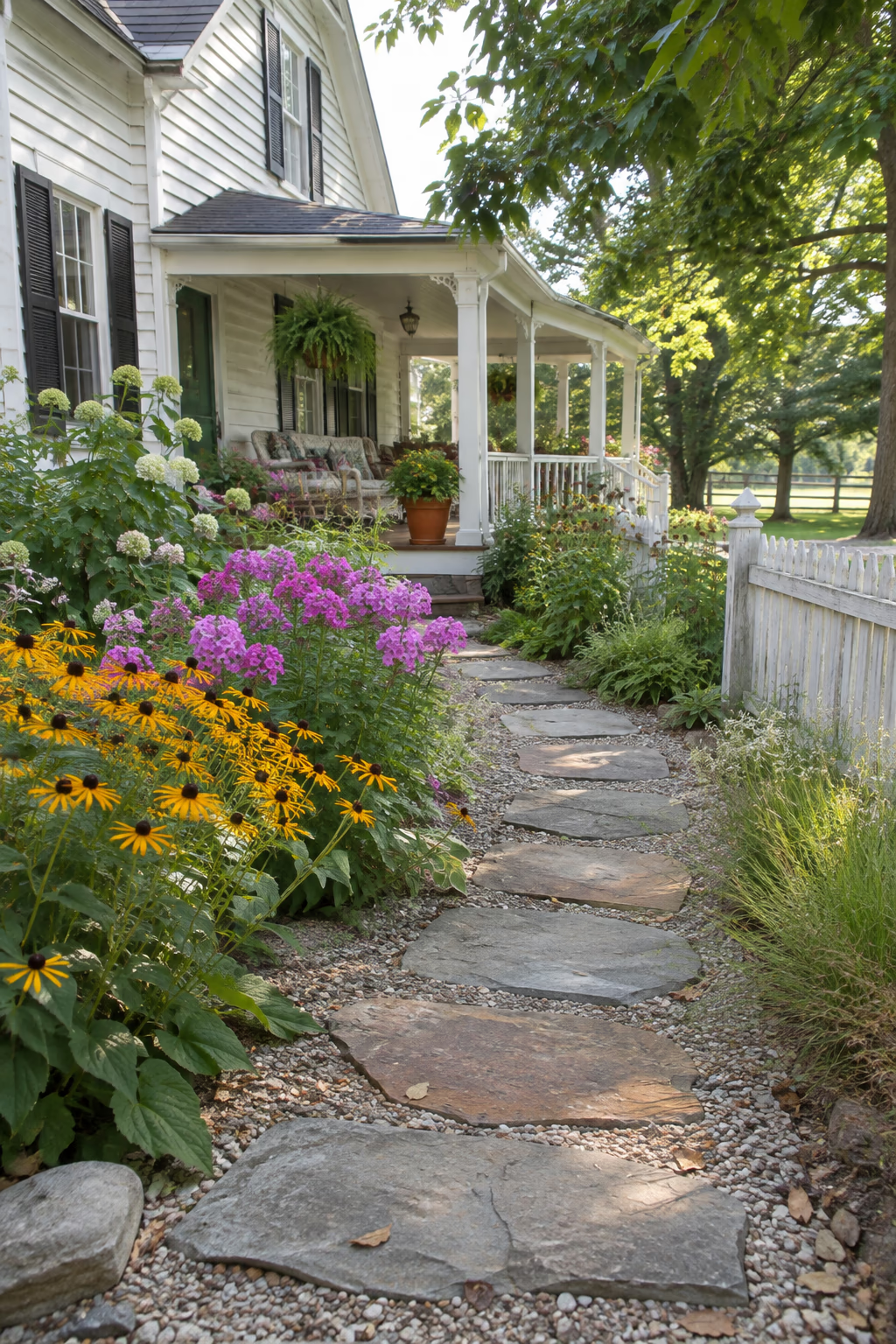
Rustic, local, and full of character
Fieldstone, the rounded and flat-topped rock found in many farm fields, gives a path an easygoing country feel. Pick stones with at least one fairly flat face and set them that side up in a gravel or sand base.
Fieldstone is often less expensive than quarried flagstone, especially if you have a local source, and its mix of grays, browns, and rust tones blends naturally with barns, picket fences, and old-fashioned perennials.
Because the tops are rarely perfectly flat, fieldstone paths are better for casual garden walks than for a main entry. Dig each stone in deep enough that it doesn’t rock when stepped on.
14. Line the Path With Low Dry-Stacked Stone Walls
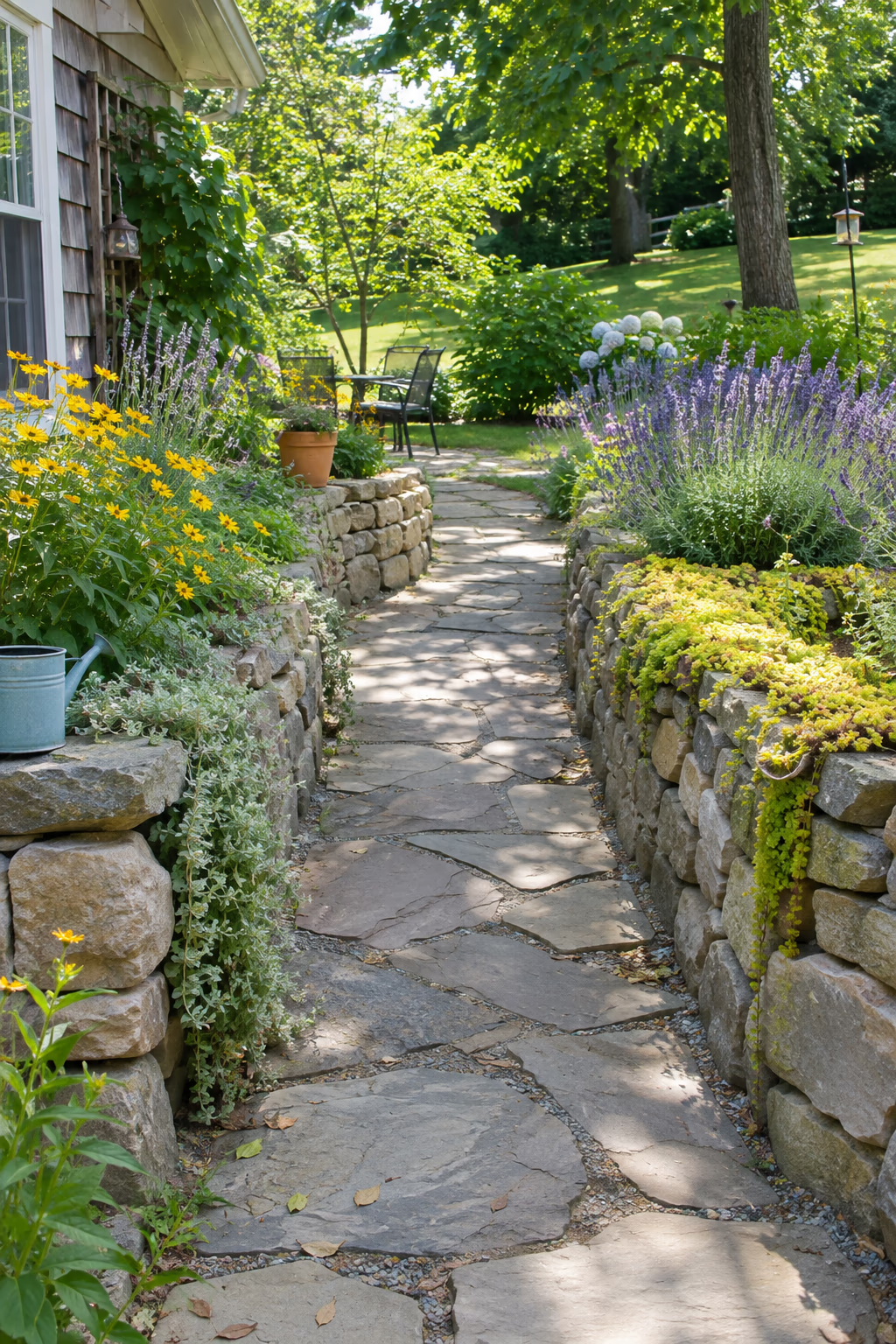
Raise the beds and define the walk
Low walls of stacked stone, about 12 to 18 inches high, on one or both sides of a path create raised planting beds and give the walk a sense of enclosure. Use the same stone for the walls and the path surface for a unified look.
Raised beds bring flowers closer to eye level, improve drainage, and offer a handy spot to sit while weeding. Set the bottom course in a shallow trench on compacted gravel and lean each course slightly back into the soil.
Dry-stacked walls taller than about 2 to 3 feet or holding back significant slopes may need engineering or a permit, so check local rules for anything bigger.
15. Keep a Wide, Level Stone Walk for Easy Access
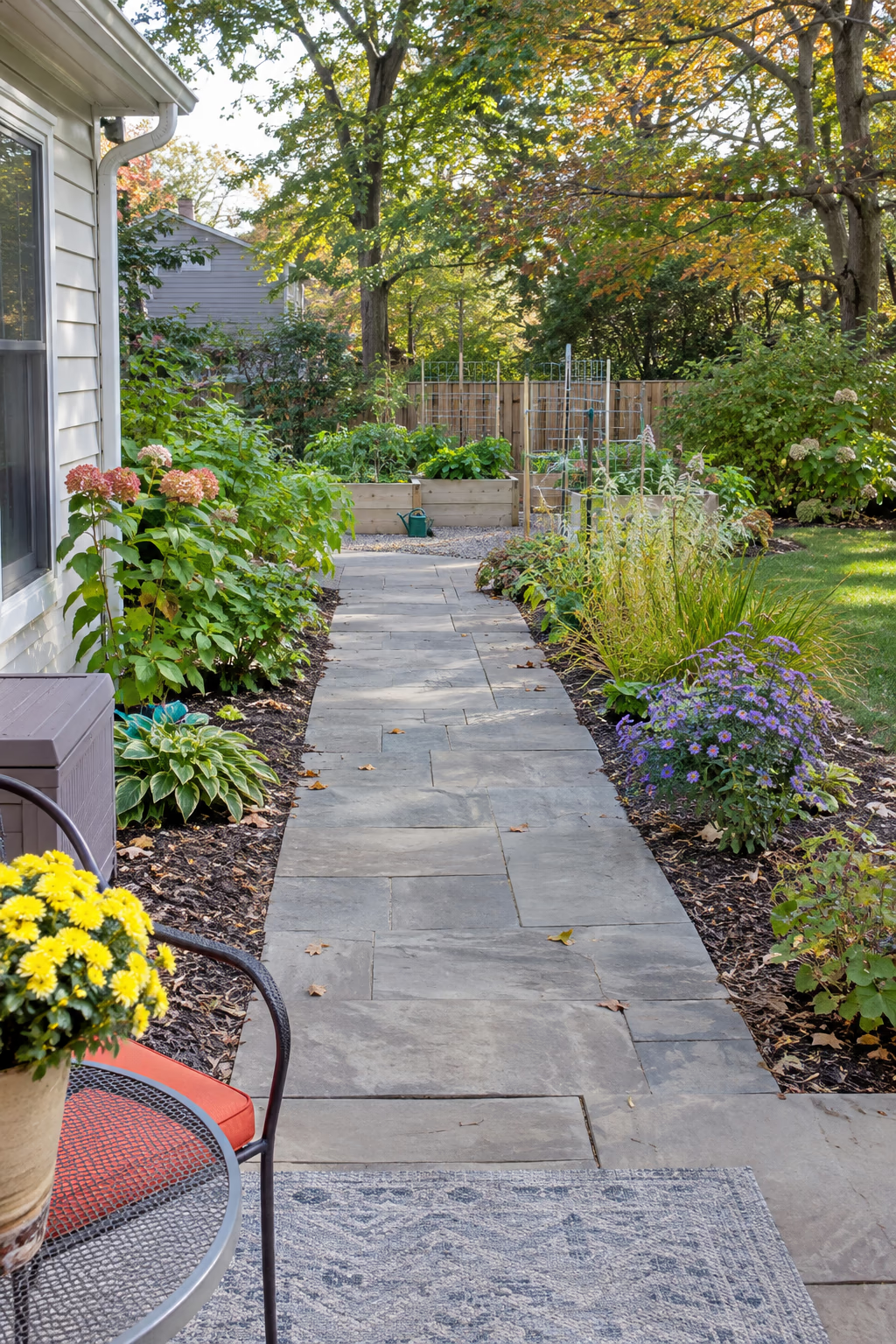
A path everyone can use comfortably
A smooth, level path at least 36 inches wide, and ideally 48 inches, works for wheelchairs, walkers, wagons, and wheelbarrows. Choose sawn or thermal-finished stone with tight joints so wheels don’t catch.
Keep the slope gentle, ideally no steeper than about 1 inch of rise per 20 inches of length, and avoid steps by grading the route gradually. This approach also makes the garden easier to enjoy as you age.
A mortared or concrete-set installation stays flatter over time than dry-laid stone. Add a slight cross slope of about 1/4 inch per foot so rain runs off instead of puddling.
16. Light the Way With Low Fixtures Along the Stones
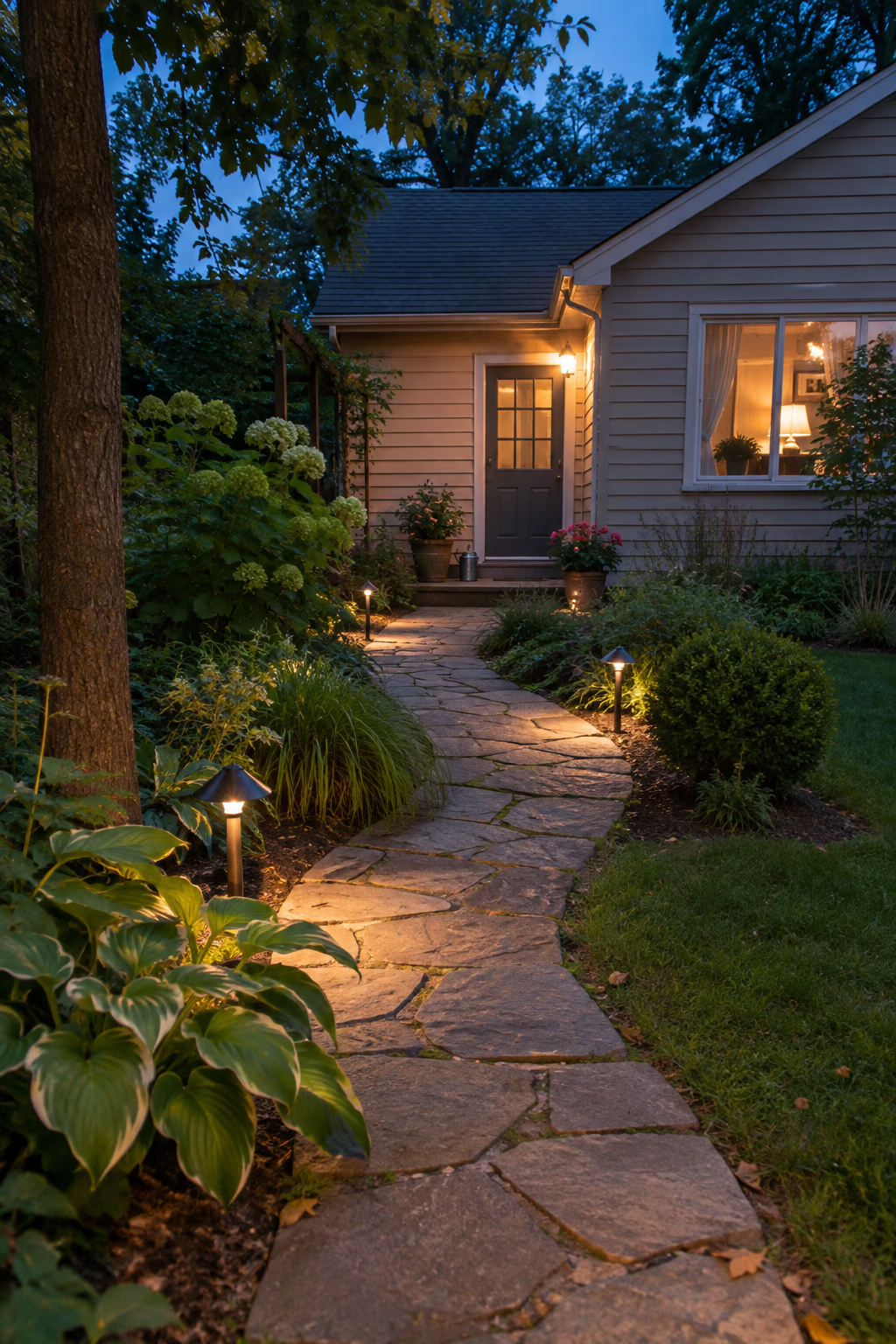
Safer steps and a beautiful evening glow
Low-voltage or solar path lights placed every 6 to 10 feet along a stone path make it safe after dark and bring out the texture of the stone. Downward-facing fixtures reduce glare and light pollution.
Staggering lights on alternating sides looks more natural than lining them up like a runway. Small well lights recessed between stones or step lights tucked into risers are good options for stairs.
Plan wiring before setting the stones so cables can run beneath the base or along the edge. Low-voltage systems are DIY-friendly, but any new outdoor outlet should be installed by a licensed electrician.
17. Lay Tumbled Travertine for a Warm Mediterranean Look
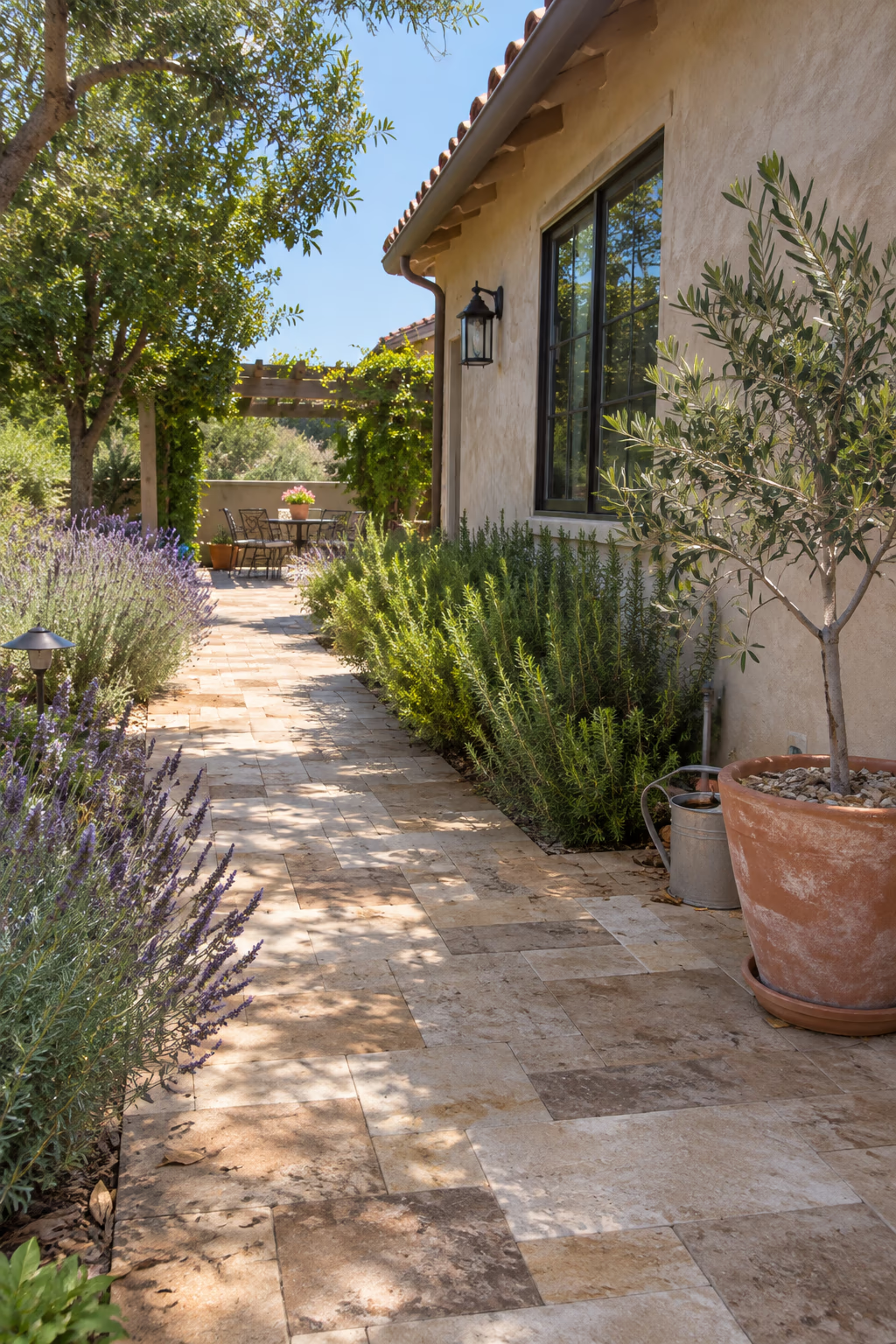
Soft edges and sunny, honey-colored tones
Tumbled travertine pavers have softly rounded edges and a gently pitted surface in shades of ivory, walnut, and gold. Laid in a French pattern, which mixes several rectangle sizes, they give a path a relaxed Mediterranean feel that pairs well with olive trees, rosemary, and lavender.
Light-colored travertine stays cooler underfoot than darker stone, making it a favorite in warm, sunny climates and around pools.
Travertine is porous and can be damaged by acidic cleaners. In cold regions, choose thicker pavers rated for exterior use, at least 1.25 inches, set on a well-drained base, and apply a penetrating sealer if your supplier recommends it.
18. Squeeze a Slate Walk Into a Narrow Side Yard
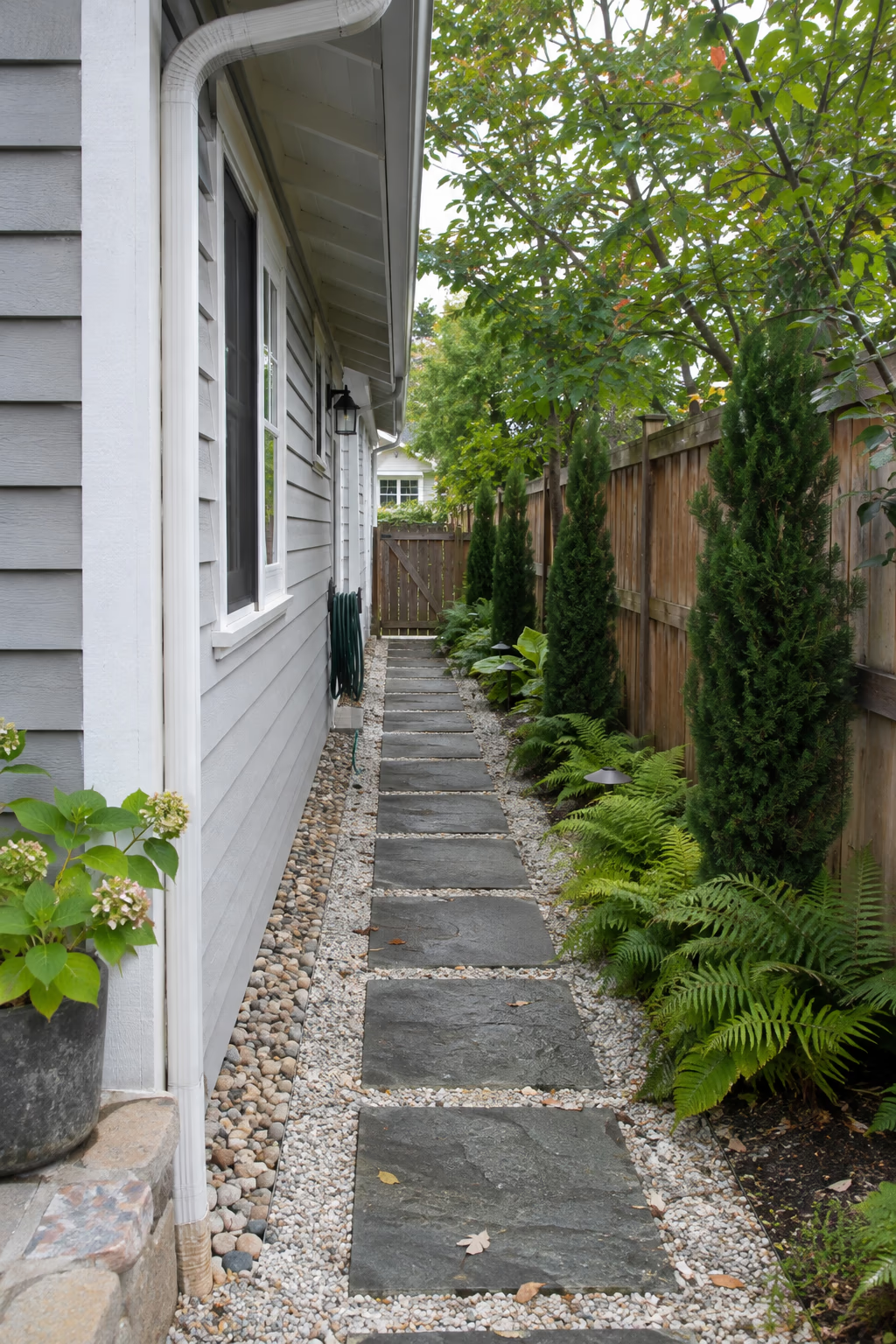
Turn a forgotten strip into a usable passage
Many side yards are just 4 to 6 feet wide and end up as a muddy trash-can alley. A run of rectangular gray or charcoal slate set in a gravel bed turns that strip into a clean, practical passage between front and back yards.
Dark slate looks sharp next to light siding and narrow plantings such as columnar shrubs, ferns, or a vine on the fence. A strip of gravel along the house foundation helps drainage.
Smooth slate can be slick when wet, so choose a natural cleft finish. Make sure the path slopes away from the house, and check that it won’t block an existing drainage swale between properties.
19. Mortar Flagstones Over Concrete for a Formal Front Walk
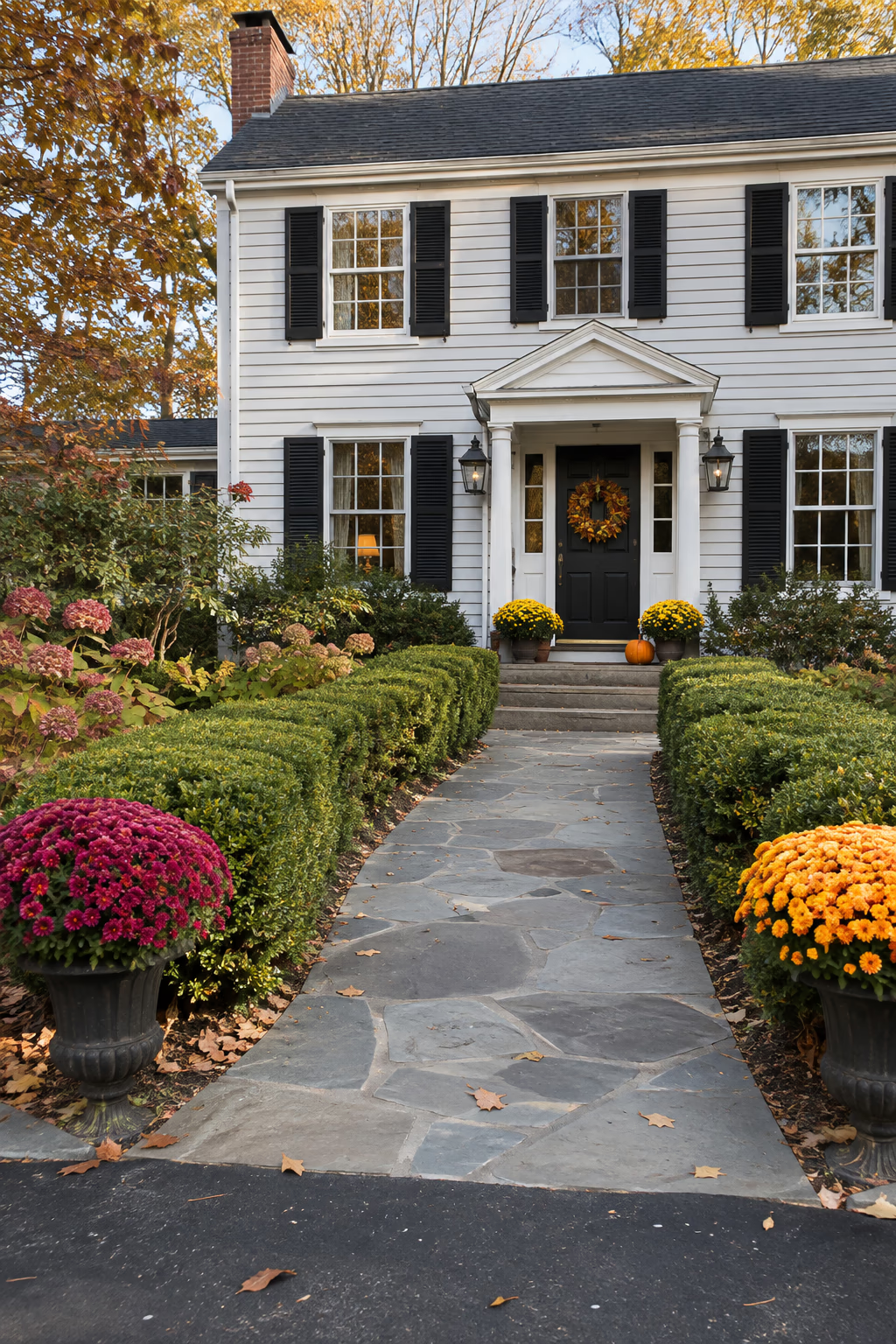
A polished, permanent entry
For a front walk that needs to look sharp and stay perfectly flat, flagstones can be set in mortar over a 4-inch concrete slab, with mortared joints about 1/2 inch wide. The result is crisp, weed-free, and easy to sweep and shovel.
A mortared walk handles daily traffic, rolling bins, and snow removal better than dry-laid stone, and it gives the front of the house a finished, formal look.
This is the most expensive and least forgiving way to lay stone. Cracks in the slab will eventually show through the joints, so the concrete must have a proper gravel base, control joints, and good drainage. Many homeowners hire a mason for this one.
20. End the Path at a Flagstone Seating Circle
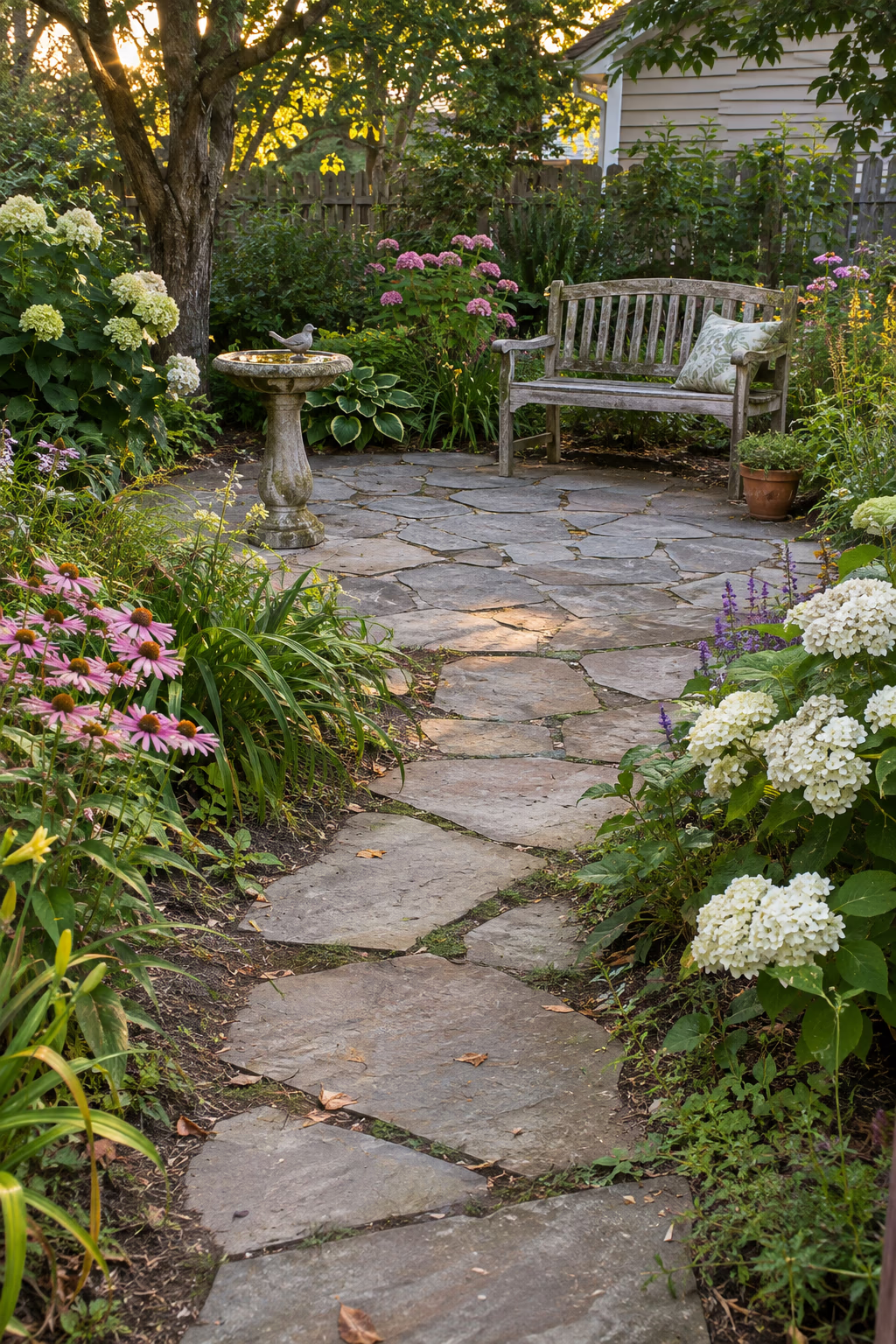
Give the walk a reason to exist
A path feels more inviting when it leads somewhere. Widen the end of a stone walk into a small circle about 8 to 10 feet across and add a bench, two chairs, or a birdbath.
The circle creates a destination at the back of the yard and draws people out into the garden. Use the same flagstone as the path so the two flow together, and surround the circle with shrubs or tall perennials for a sense of privacy.
If you plan to add a fire pit, check local burn rules and keep it well clear of fences, overhanging branches, and structures.
21. Piece Together Reclaimed Stone for a Patchwork Path
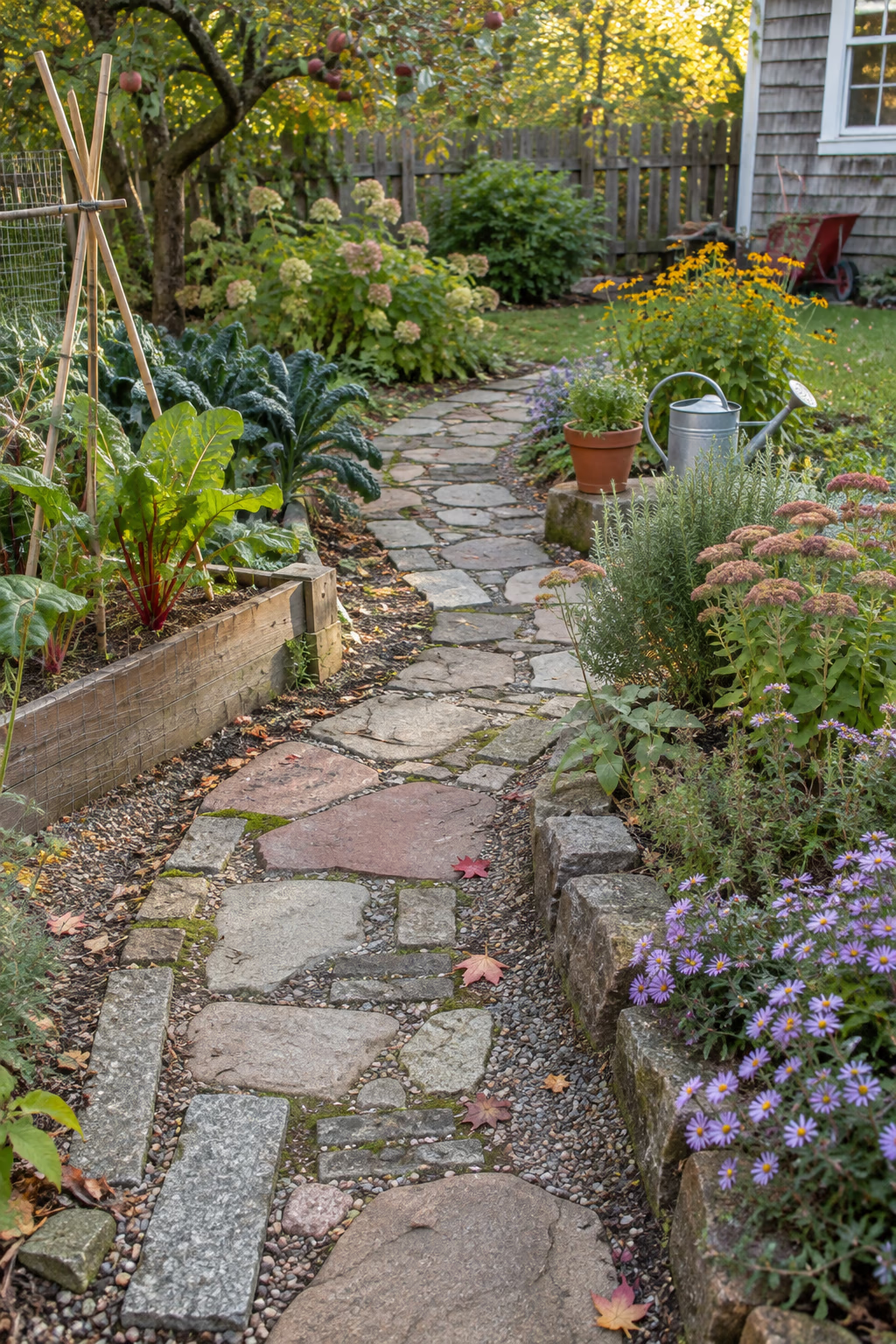
Eco-friendly and full of history
Salvaged stone, such as old curbing, broken slabs, leftover flagstone, and reclaimed cobbles, can be pieced together into a patchwork path with real character. Look for materials from demolition sites, salvage yards, or online listings.
Using reclaimed stone keeps material out of landfills and can save money. The mixed colors and shapes look intentional when you repeat materials along the path and group similar pieces together.
Reclaimed pieces vary in thickness, so dig the base deeper under thinner stones to bring the tops level. Inspect for cracks before setting and skip any piece that seems fragile.
22. Lead Across the Lawn to the Shed With Flagstone Steppers
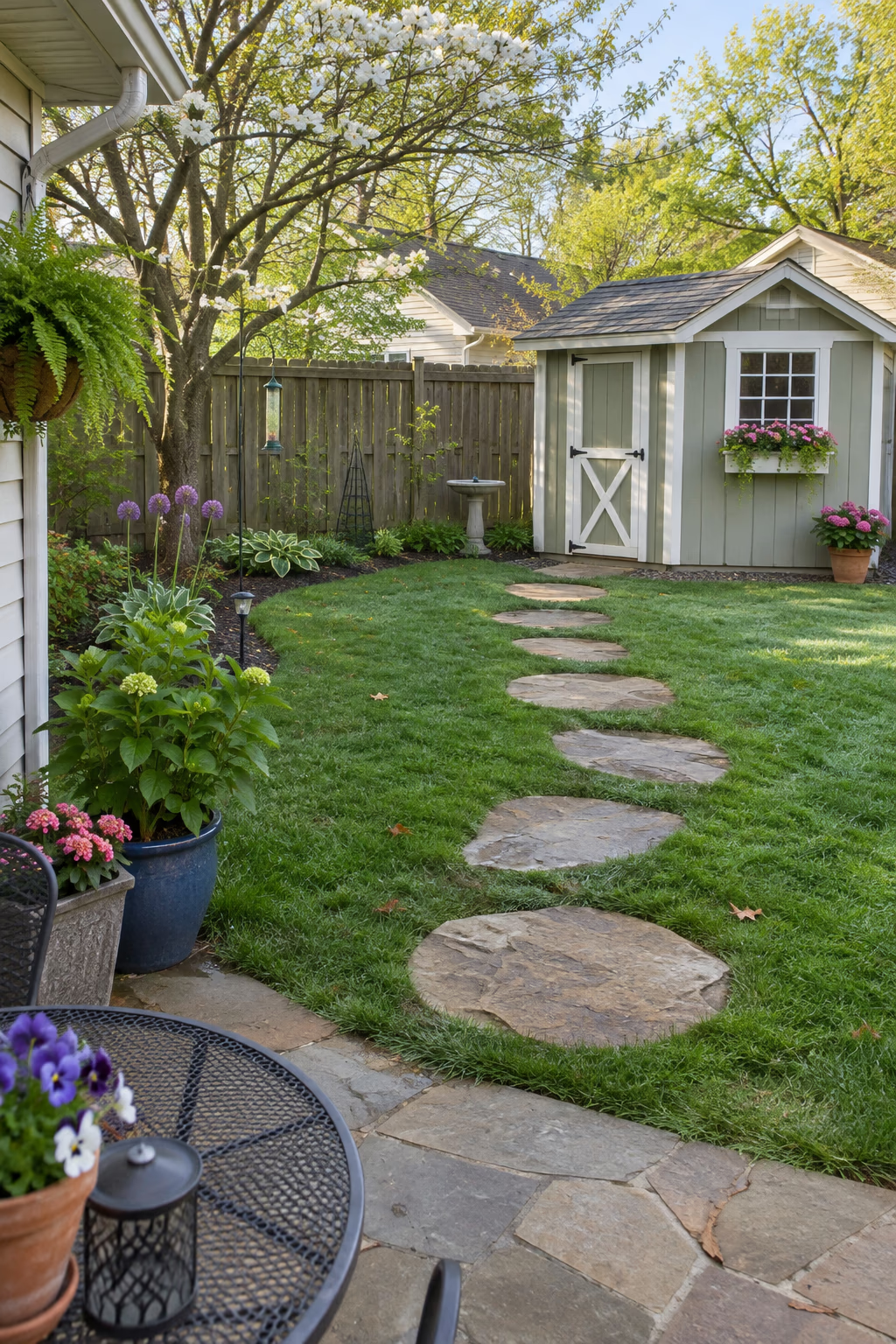
Protect the grass along a daily route
A worn line in the lawn between the back door and the shed or garden gate tells you exactly where a path belongs. A row of large natural flagstone steppers, each about 20 to 24 inches across, set flush with the turf, stops the wear without paving the whole route.
Cut around each stone with a spade, remove the sod, and set the stone on an inch or two of sand so the top sits slightly below the grass. The mower can then roll right over.
Trim the grass around the stones with a string trimmer every few weeks, or the lawn will slowly creep over them.
23. Edge a Decomposed Granite Path With Fieldstone
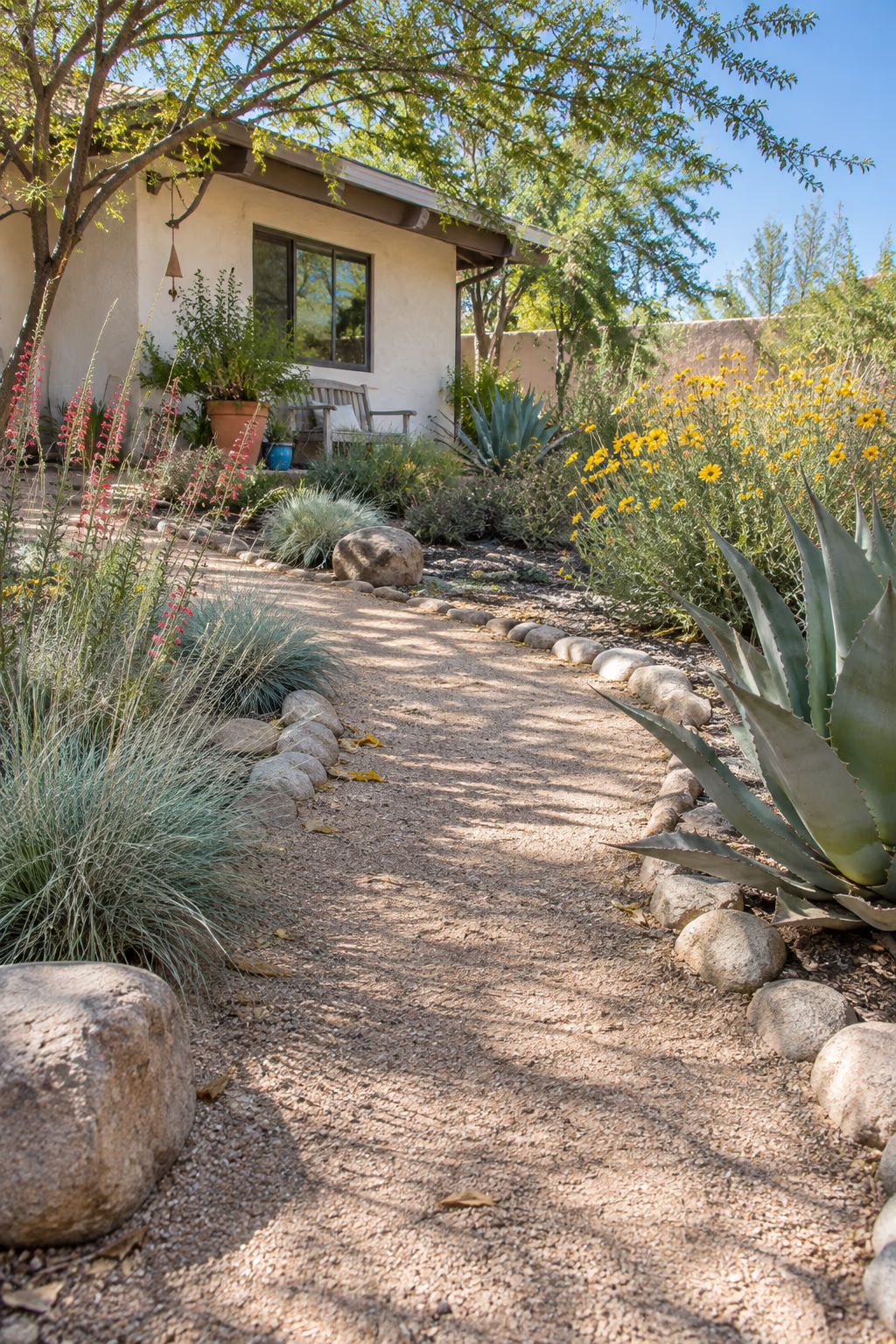
A firm, natural surface with a rugged border
Decomposed granite, a fine crushed stone in tan or gold, makes a smooth, firm path when compacted. Lining it with a row of half-buried fieldstones or small boulders keeps the granite in place and gives the walk a natural, rocky frame.
Stabilized decomposed granite, which includes a binder, is firmer and less dusty than plain material and can work for wheelchairs if properly installed. It suits dry Western yards especially well.
The fine particles can track indoors on shoes, so it is best kept away from the front door. Rake and recompact low spots after heavy rains.
24. Weave Flagstone Steppers Through a Kitchen Herb Bed
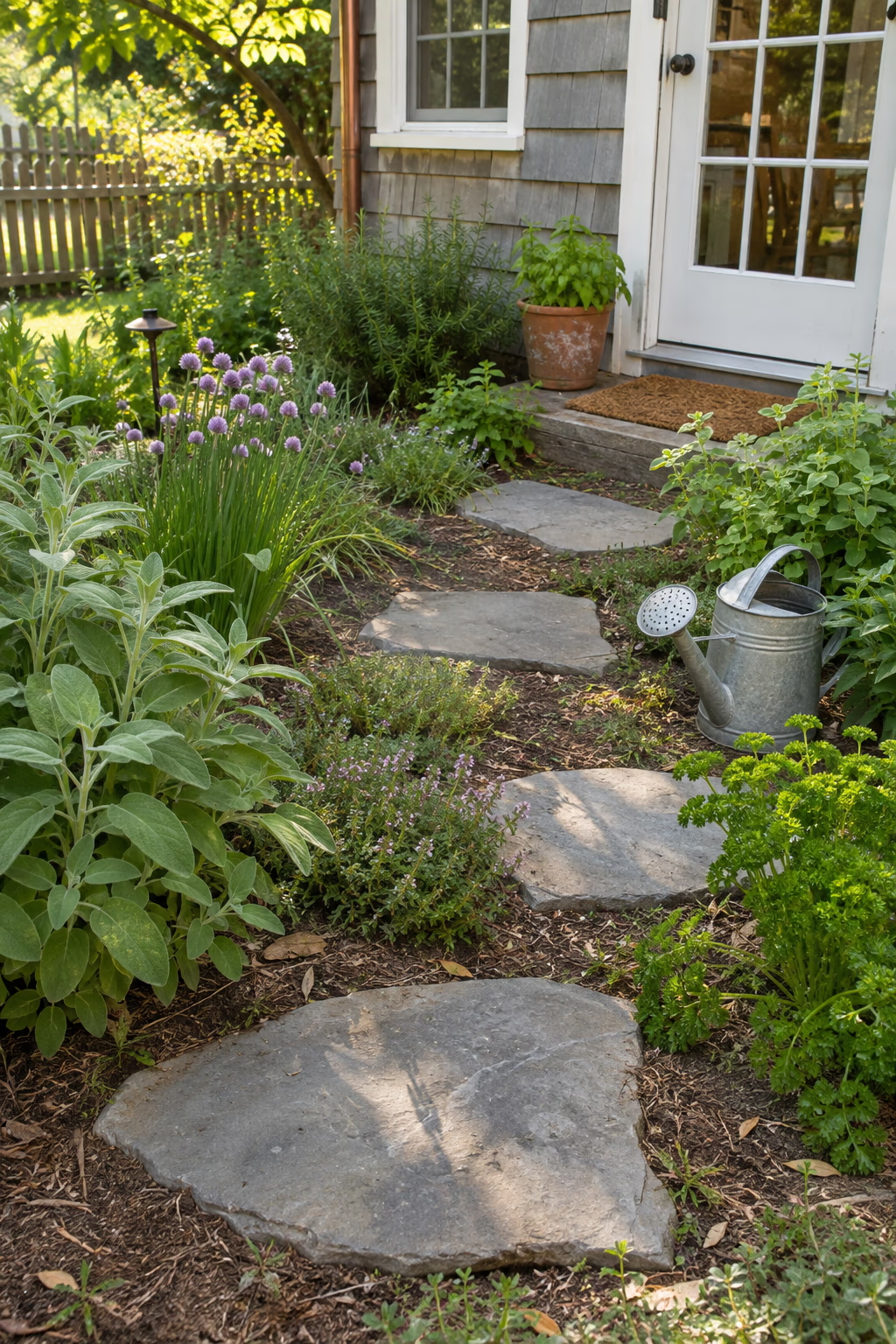
Reach every plant without trampling the soil
A few flat stones placed through a wide herb or vegetable bed give you somewhere to stand while harvesting, weeding, and watering, without compacting the soil around your plants.
Sage, oregano, chives, and thyme around the stones release their scent when brushed, and the stones absorb warmth that Mediterranean herbs enjoy. Set steppers about 2 feet apart so you can reach the full bed from them.
Avoid placing stones directly over drip lines or irrigation tubing. Keep aggressive spreaders like mint in pots, or they will quickly fill the gaps between stones.
25. Pair Pale Limestone With Silver and White Plants
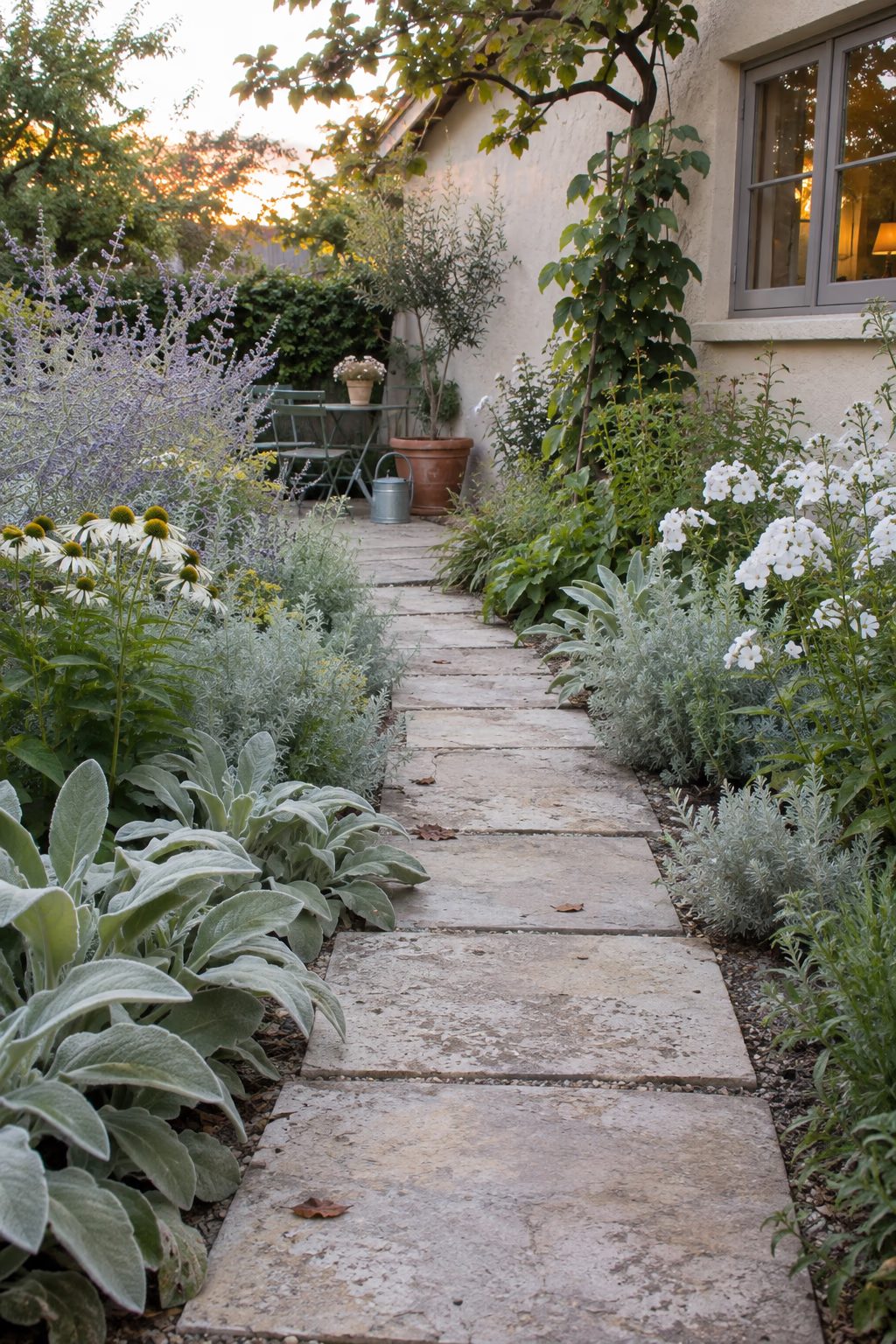
A soft, luminous palette for evening gardens
Cream or pale gray limestone paired with silver-leaved plants such as lamb’s ear, artemisia, and Russian sage, plus white blooms like white coneflower or white phlox, creates a calm, glowing look. The pale tones catch moonlight, so the path stays visible at dusk.
This restrained palette makes a small garden feel bigger and more refined, and silver-leaved plants are often drought tolerant and suited to sunny paths.
Limestone can etch from acidic spills and may show stains from fallen leaves or berries. Rinse off stains promptly and use only stone-safe, pH-neutral cleaners.
How to Plan Your Stone Garden Path
A stone path is one of the longest-lasting features you can add to a yard, so it pays to plan before ordering a pallet of stone. These steps help you get the details right the first time.
- Follow the natural route. Watch where people already walk, and design the path along those lines so it actually gets used.
- Pick the right width. Main walks work best at 36 to 48 inches wide, while secondary garden paths can be 24 to 30 inches.
- Choose stone for your climate. In freezing regions, use dense stone such as granite, bluestone, or quartzite, and ask your supplier which local stones handle freeze-thaw cycles.
- Build a solid base. Most dry-laid stone paths need 4 to 6 inches of compacted crushed gravel, more in clay soils or cold climates, to prevent settling and heaving.
- Plan for drainage. Slope the path slightly so water runs off, and direct runoff away from your home’s foundation and neighboring properties.
- Check rules and utilities first. Review HOA guidelines for front-yard changes, check local codes for steps and walls, and call 811 before digging.
Frequently Asked Questions
What is the best stone for a garden path?
Flagstone, bluestone, granite, slate, and sandstone are all popular choices. Granite and bluestone are very durable in cold climates, while sandstone, limestone, and travertine offer warmer colors but may need sealing or more careful selection where winters are harsh.
How much does a stone garden path cost?
Prices vary widely by stone type, region, and installation method. A DIY path of gravel with set stones can cost a few dollars per square foot, while professionally installed mortared flagstone or cut stone can run many times that. Get quotes from several local stone yards and contractors.
Should I set stones in sand or concrete?
Dry-laid stone on a compacted gravel base with a sand or stone dust bed is easier, cheaper, and drains well, making it ideal for most garden paths. Concrete and mortar give a flatter, more permanent surface for front walks and high-traffic areas but cost more and need careful installation.
How do I keep weeds out of a stone path?
A thick, compacted base, tight joints, and polymeric sand all help reduce weeds. You can also fill joints with ground covers that crowd out weeds. Pull any seedlings early before their roots take hold.
How thick should flagstone be for a walkway?
For dry-laid paths, stones about 1.5 to 2 inches thick are sturdy enough to resist cracking. Thinner stone, around 1 inch, is generally used only when it will be mortared onto a concrete slab for support.
Final Thoughts
The best stone garden path ideas work with your house, your yard, and the way you move through it. A puzzle-fit flagstone walk, a ribbon of bluestone in gravel, or a few steppers across the lawn can turn an ordinary yard into one that feels finished and welcoming.
Start with a solid base and a stone that suits your climate, then let plants, moss, and time do the rest. A well-built stone path will reward you for decades, looking a little better with every season that passes.