Some of the prettiest planting on any street fits into a space smaller than a parking spot. A knee-high stone wall holding a mound of salvia, a mailbox post wrapped in daylilies, or a cheerful strip of zinnias beside the steps can stop people mid-stroll.
Small beds are easy to love because they are easy to finish. You can dig one in an afternoon, fill it for the cost of a few flats of plants, and keep it looking sharp with a few minutes of weeding each week. Every plant gets noticed, so a little thought goes a long way.
These 23 small flower bed ideas cover raised stone beds, upcycled stumps, mailbox and front-step plantings, pollinator pockets, shady nooks, bulb layers, smart color schemes, and edging tricks. Use one to fix an awkward bare spot or combine a few to give your whole yard more bloom without more work.
1. Raise a Small Bed Behind a Low Stone Wall
Instant structure and better soil in one move
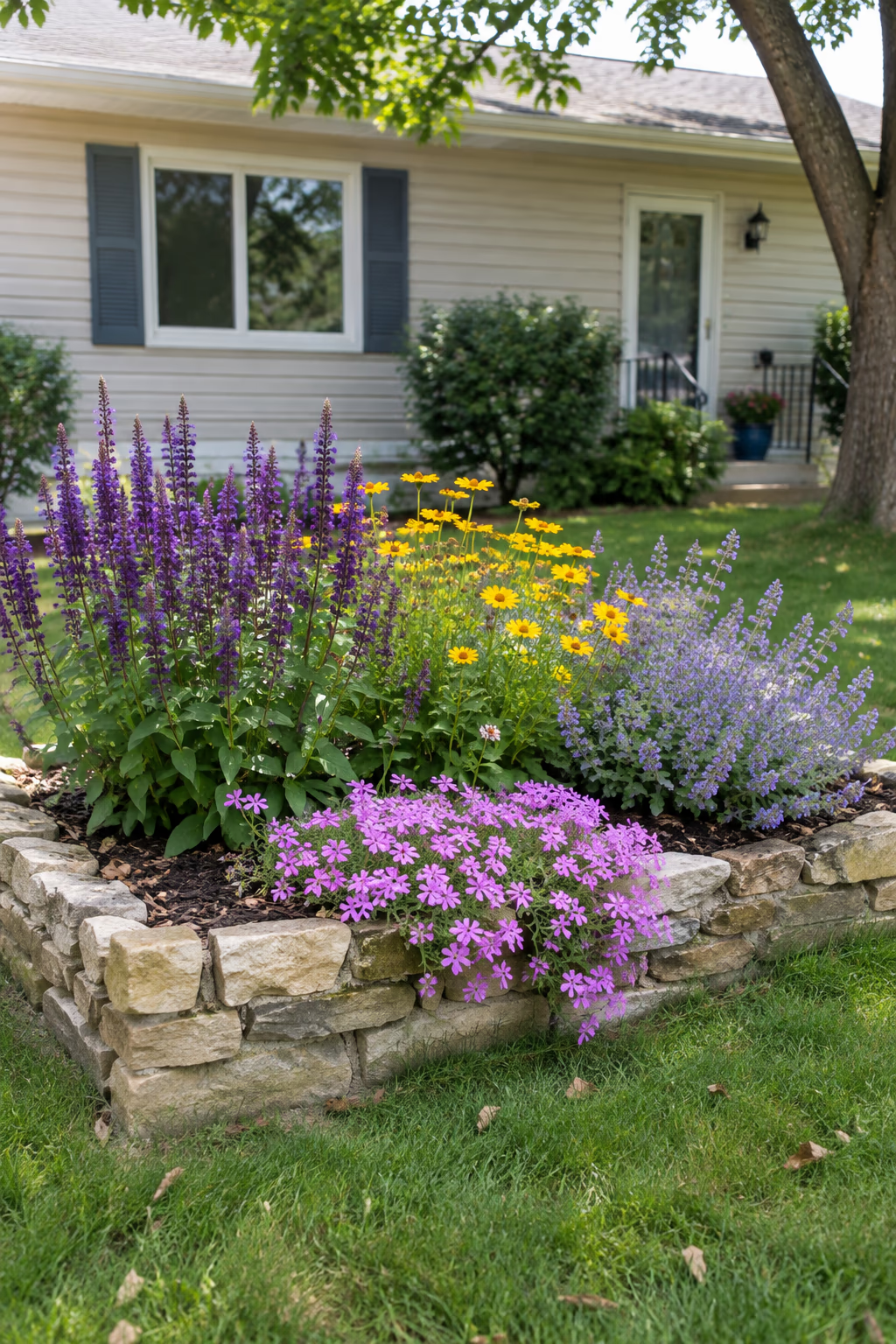
A low dry-stacked wall of flat fieldstone or tumbled limestone, 12 to 18 inches tall, turns a plain patch of lawn into a proper garden feature. A bed about 4 by 6 feet is plenty. Set the first course slightly below grade on a few inches of compacted gravel, tilt each course back a little toward the soil, and fill the inside with a mix of topsoil and compost.
The raised soil drains well and warms early in spring, which suits salvia, coreopsis, catmint, and low sedums. Trailing plants like creeping phlox can tumble over the front edge and soften the stone.
Stone is heavy and priced by the ton, so buy a little more than you think you need and pick through pieces at the yard. Walls this low rarely need a permit, but check local rules if the bed sits near a property line.
2. Turn an Old Tree Stump Into a Flower Bed
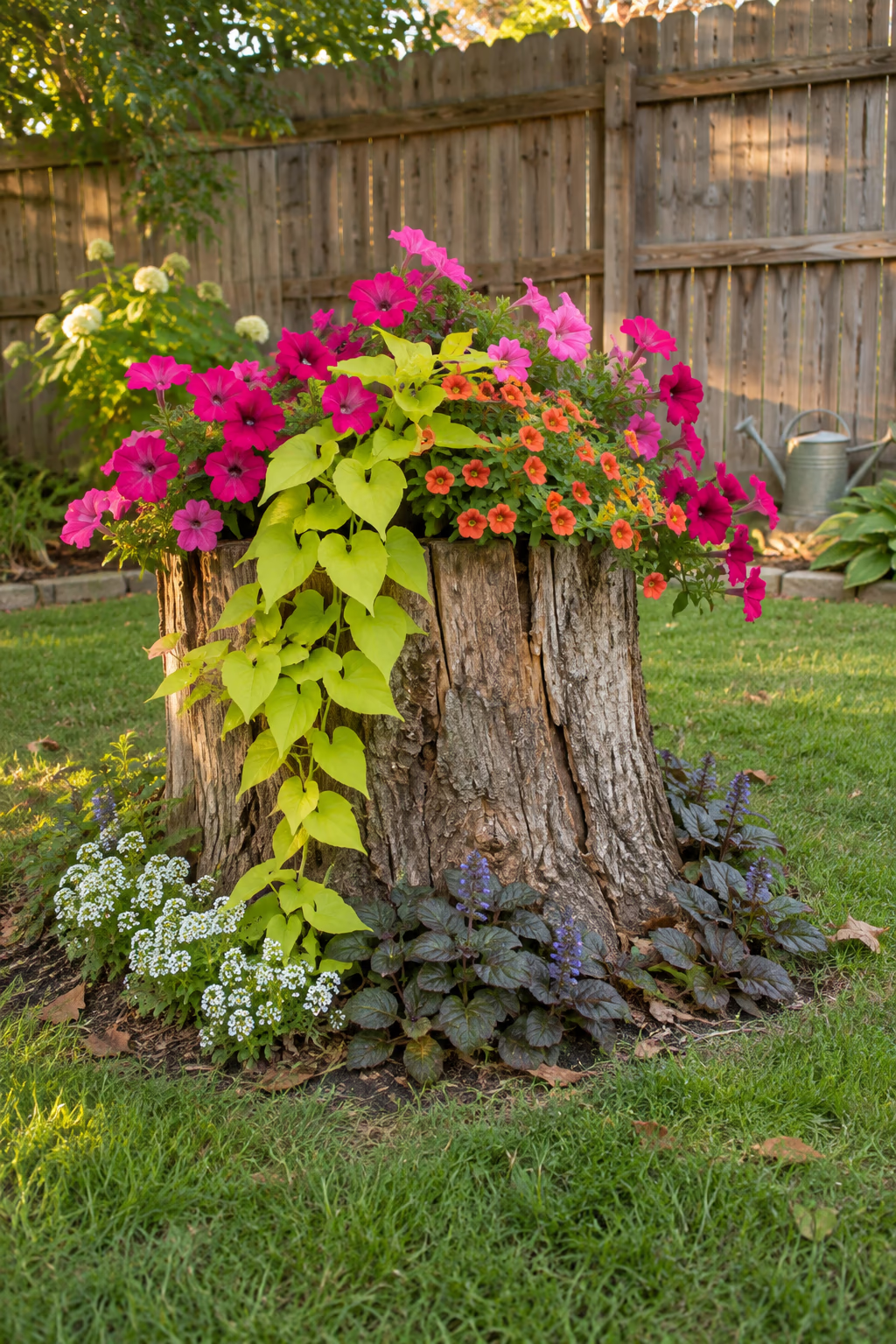
A free focal point you already own
Instead of paying to grind out a stump, let it hold flowers. If the center is soft, scoop out a bowl 6 to 10 inches deep with a chisel or drill several large holes and break out the wood between them. Drill a couple of drainage holes down through the bottom, fill with potting mix, and plant trailing petunias, calibrachoa, or sweet potato vine.
Ring the base with a small circle of soil and low plants like alyssum or ajuga so the stump looks planted rather than abandoned. The result reads as a rustic sculpture with color spilling down its sides.
A stump bed lasts a few seasons before the wood breaks down, and decaying wood can attract carpenter ants or fungi. Keep it well away from the house, and treat it as a charming temporary feature rather than a permanent one.
3. Ring the Mailbox Post With a Mini Flower Bed
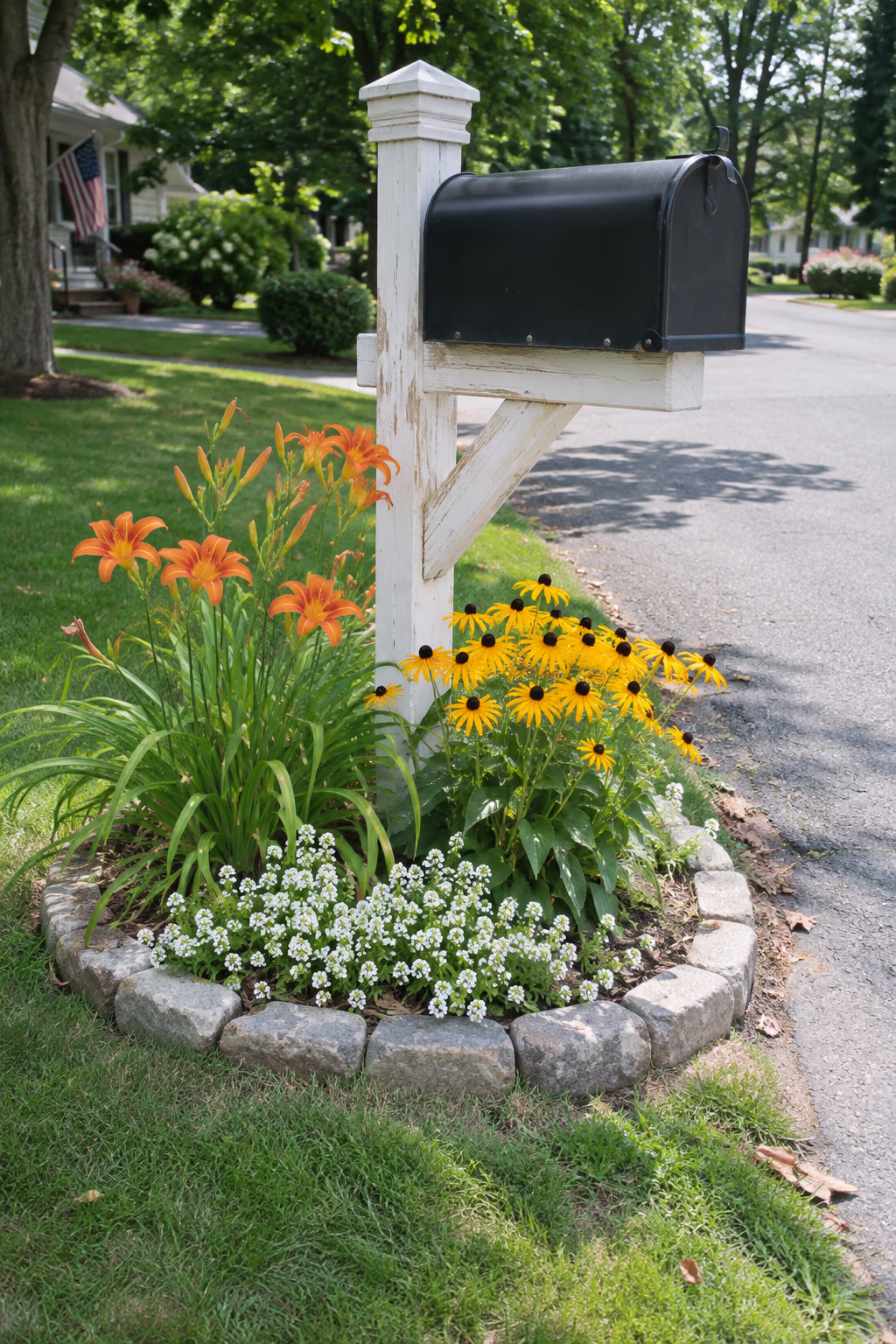
Curb appeal right where everyone looks
A bed about 3 to 4 feet across around the mailbox post is one of the easiest ways to dress up a front yard. Outline a circle or a simple square, edge it with pavers or stones, and plant a low mix of reblooming daylilies, black-eyed Susans, and a skirt of sweet alyssum or creeping thyme.
The post gives the planting a built-in vertical element, and the bed hides the trimmer-scarred grass that usually collects there. A small climbing clematis on a slim trellis can add height without crowding the box.
Keep the door and the approach side clear so your carrier can reach the box easily, and skip thorny plants or bee-magnet shrubs right at hand height. Roadside beds also take salt spray in snowy areas, so choose tough, salt-tolerant perennials.
4. Pack a Pocket Pollinator Bed With Compact Natives
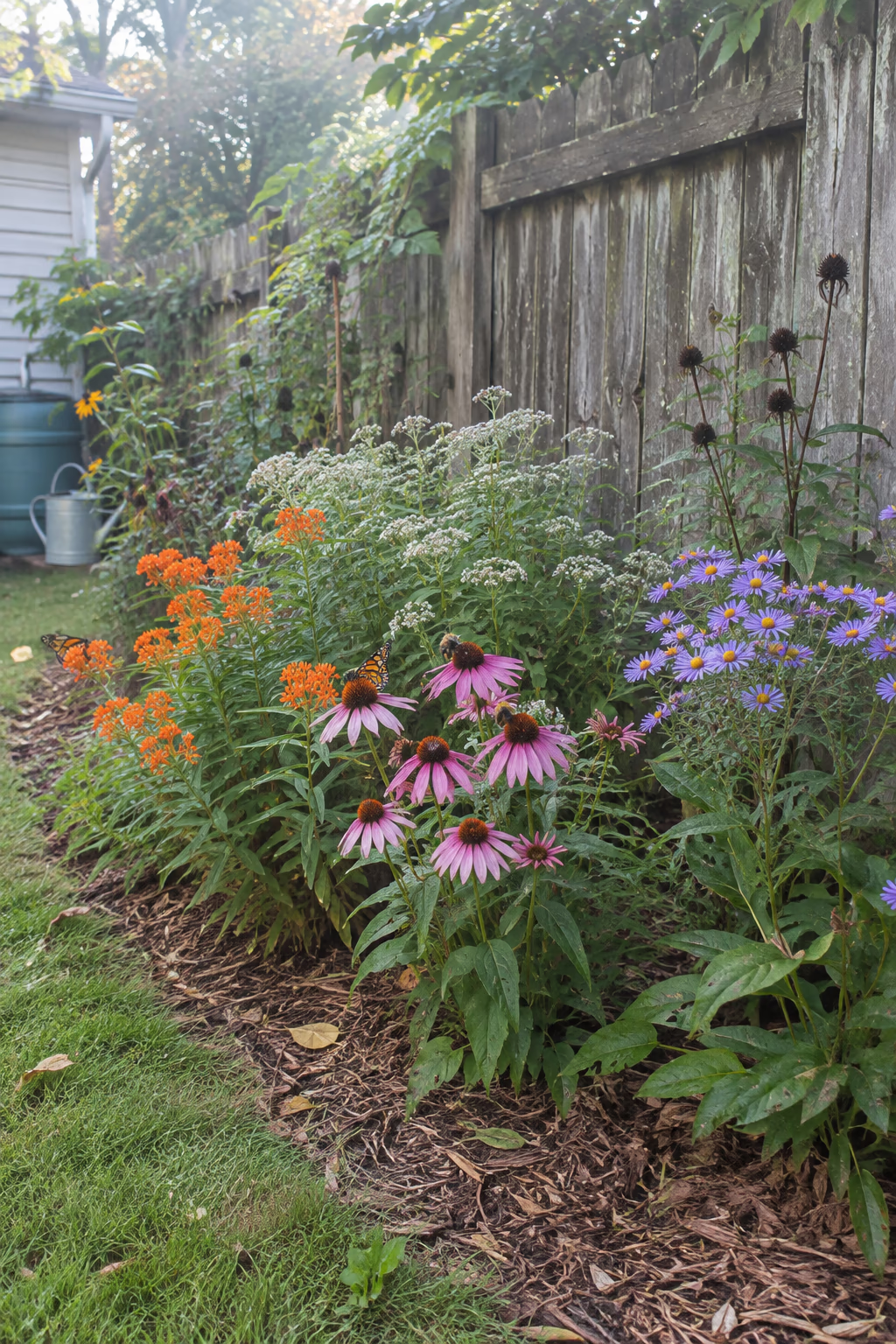
Big wildlife value from a few square feet
Even a 4-by-6-foot sunny bed can feed bees and butterflies from spring to frost. Choose compact native perennials such as dwarf coneflower, butterfly weed, short-statured asters, mountain mint, and blue false indigo, then tuck in a few annuals like lantana for nonstop nectar.
Plant at least two or three of each kind so pollinators can find a meaningful patch of the same flower. Layer bloom times so something is open in May, July, and September.
Skip pesticides in this bed, and expect a slightly looser look than a formal border. Leaving some stems standing over winter gives native bees a place to nest, so tidy up in late spring instead of fall.
5. Anchor the Bed With a Single Dwarf Hydrangea
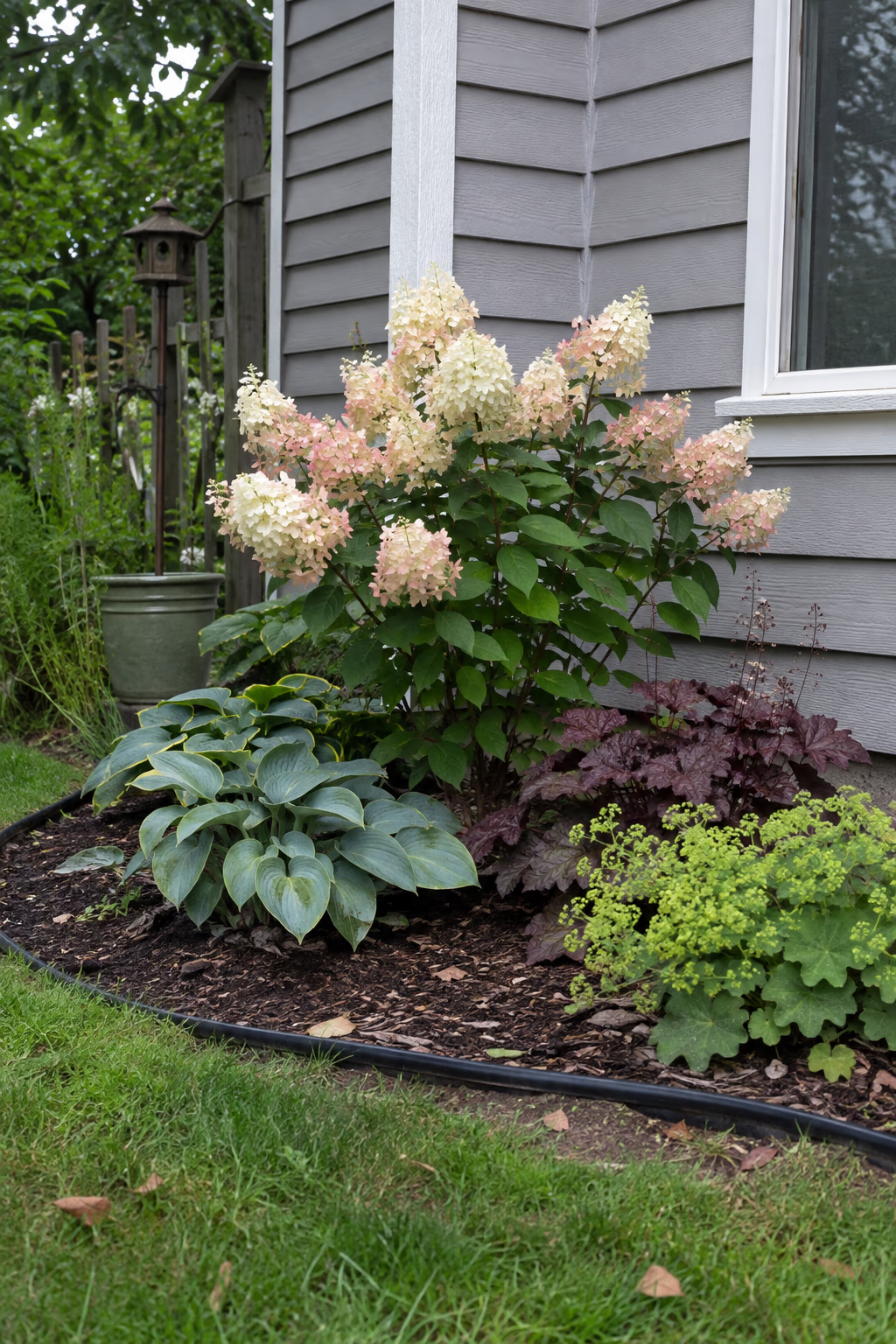
One star shrub keeps a small bed from looking busy
Dwarf panicle and smooth hydrangeas stay around 2 to 4 feet tall and wide, making them ideal centerpieces for small beds. Set one slightly off center or at the back, then fill around it with low hostas, heuchera, or lady’s mantle that won’t compete for attention.
The big summer flower heads give the bed a strong focal point, and panicle types hold their dried blooms well into winter. Panicle hydrangeas handle more sun, while smooth hydrangeas prefer afternoon shade.
Read the plant tag closely for the mature size, since full-size cultivars can swallow a small bed in two seasons. Water deeply during hot spells, as hydrangeas wilt quickly when dry.
6. Limit the Bed to Two Flower Colors
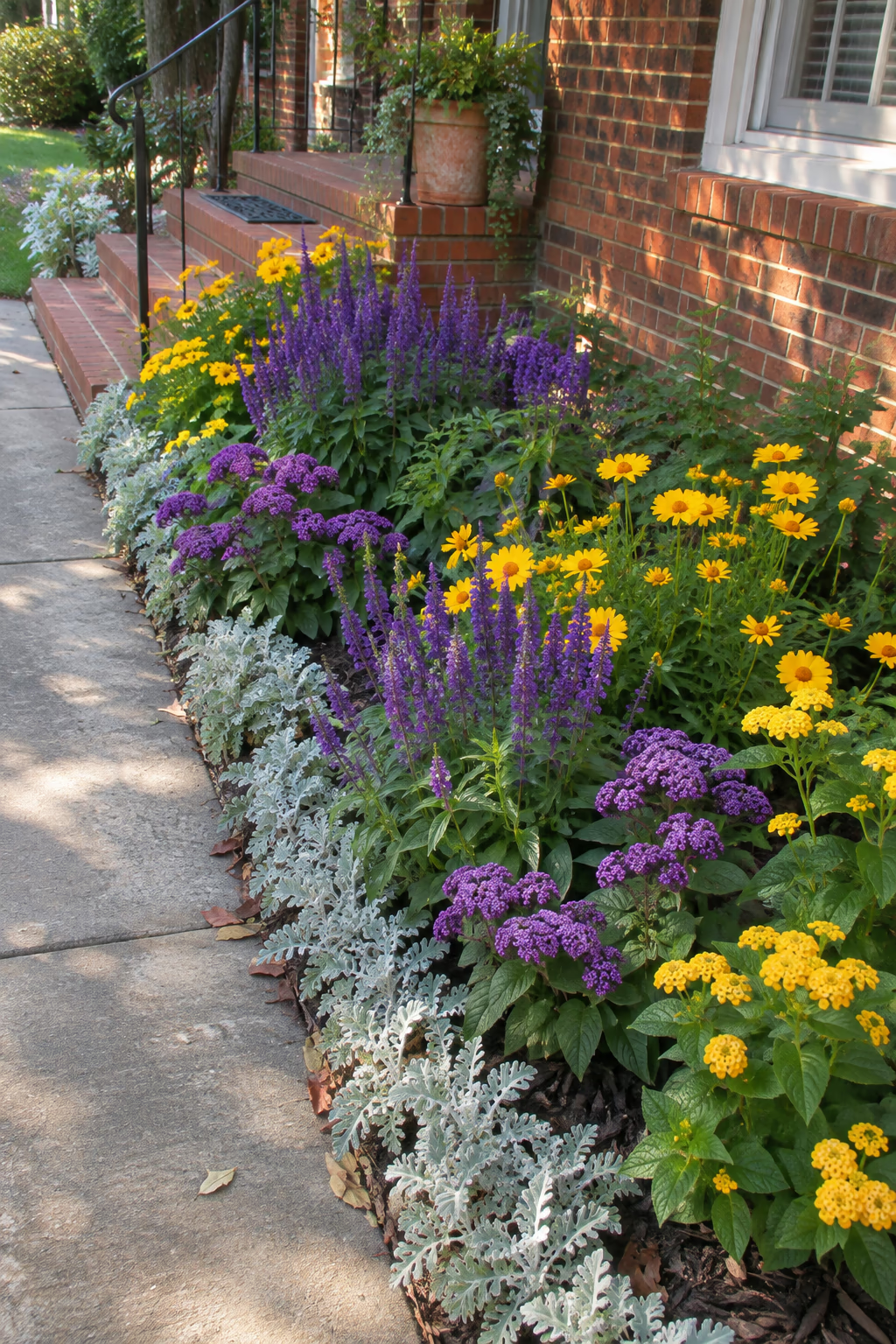
A tight palette makes a tiny space look intentional
Too many colors in a small bed can look like a seed packet exploded. Pick two that contrast, such as violet and golden yellow, or two that blend, such as soft pink and burgundy. A purple-and-yellow bed might pair salvia and heliotrope with coreopsis and yellow lantana.
Repeating just two colors lets the eye travel across the bed calmly and makes even inexpensive annuals look designed. Silver or green foliage, like dusty miller or lamb’s ears, acts as a neutral that ties everything together.
Bloom colors on plant tags are not always accurate, so buy flowering plants in person when you can. If a plant blooms in the wrong shade, move it to another bed rather than letting it break the scheme.
7. Layer Spring Bulbs Under a Blanket of Pansies
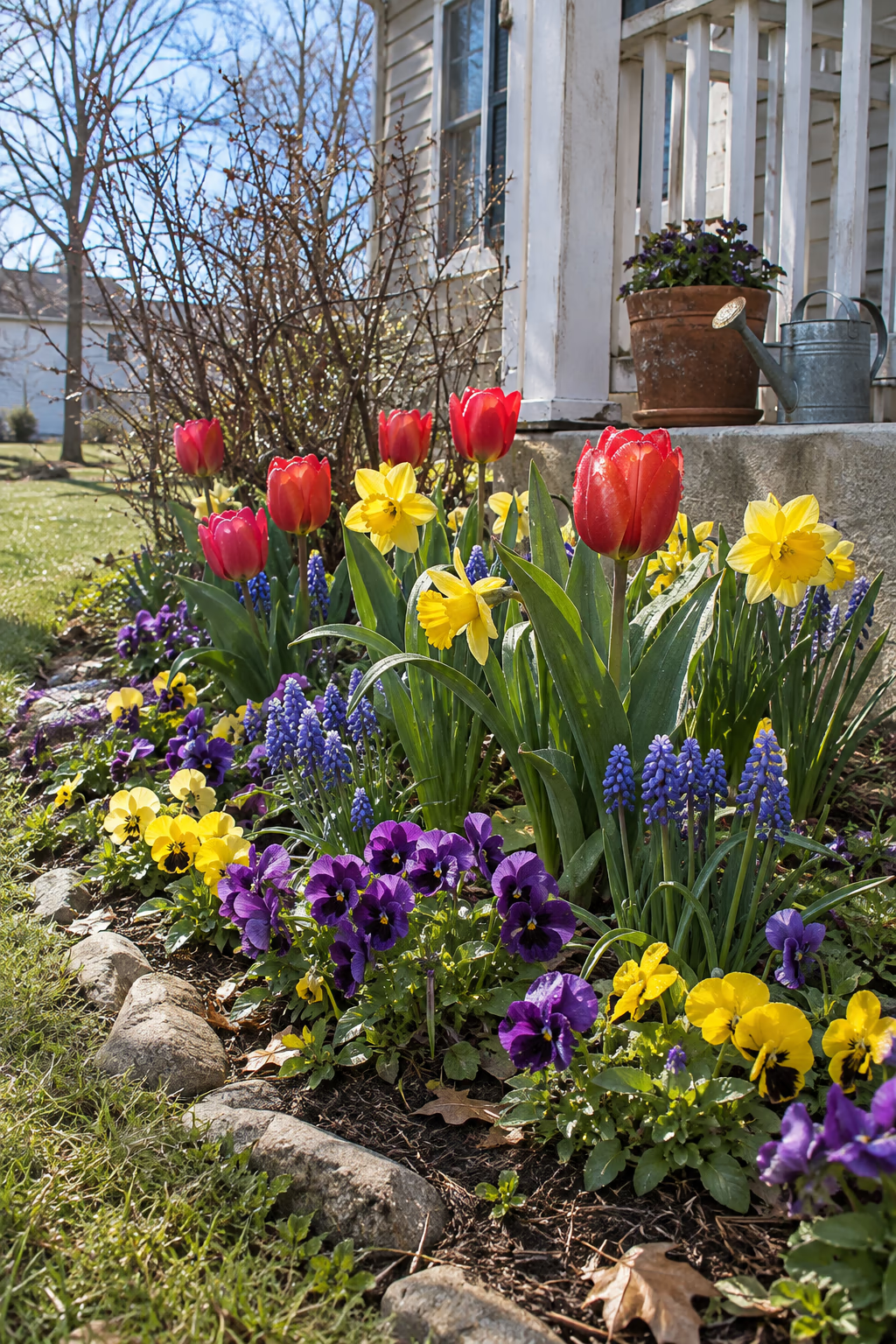
Two seasons of color in the same square feet
In fall, plant bulbs in layers: tulips or daffodils about 6 to 8 inches deep, smaller bulbs like grape hyacinth or crocus 3 to 4 inches deep above them, then pansies or violas on top. In a 3-by-4-foot bed, two to three dozen large bulbs and a flat of pansies make a full display.
The pansies give color through mild fall and winter weather, then the bulbs push up through them in spring for a layered, overflowing look without needing extra space.
Squirrels and deer love tulips, so use daffodils and alliums where pests are a problem. Let bulb foliage yellow naturally for about six weeks after bloom before cutting it back, and plan a summer annual to fill the gap afterward.
8. Tuck a Shallow Bed Beneath the Front Window
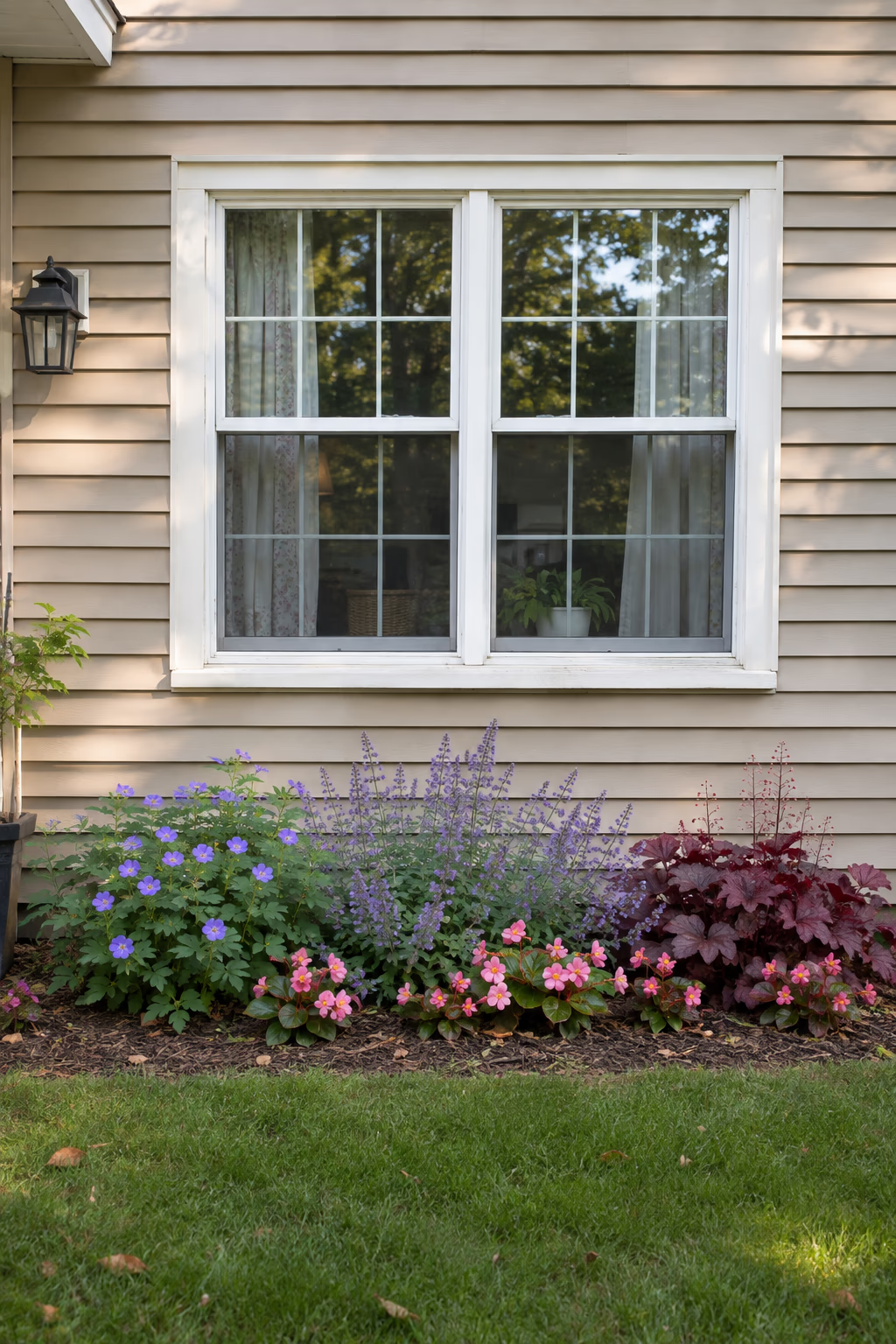
Pretty views from inside and out
A bed 2 to 3 feet deep running under a front window frames the house like a window box at ground level. Plant low mounding perennials such as hardy geranium, dwarf catmint, and coral bells, with a row of annuals like wax begonias or impatiens along the front.
Keep plants shorter than the windowsill so they don’t block light or views. The bed also softens the hard line where the siding meets the ground.
Leave at least 12 inches between plants and the foundation for air flow and access, and keep mulch a few inches below the siding to discourage moisture and insects. Roof overhangs can block rain, so check the soil often.
9. Flank the Front Steps With Matching Mini Beds
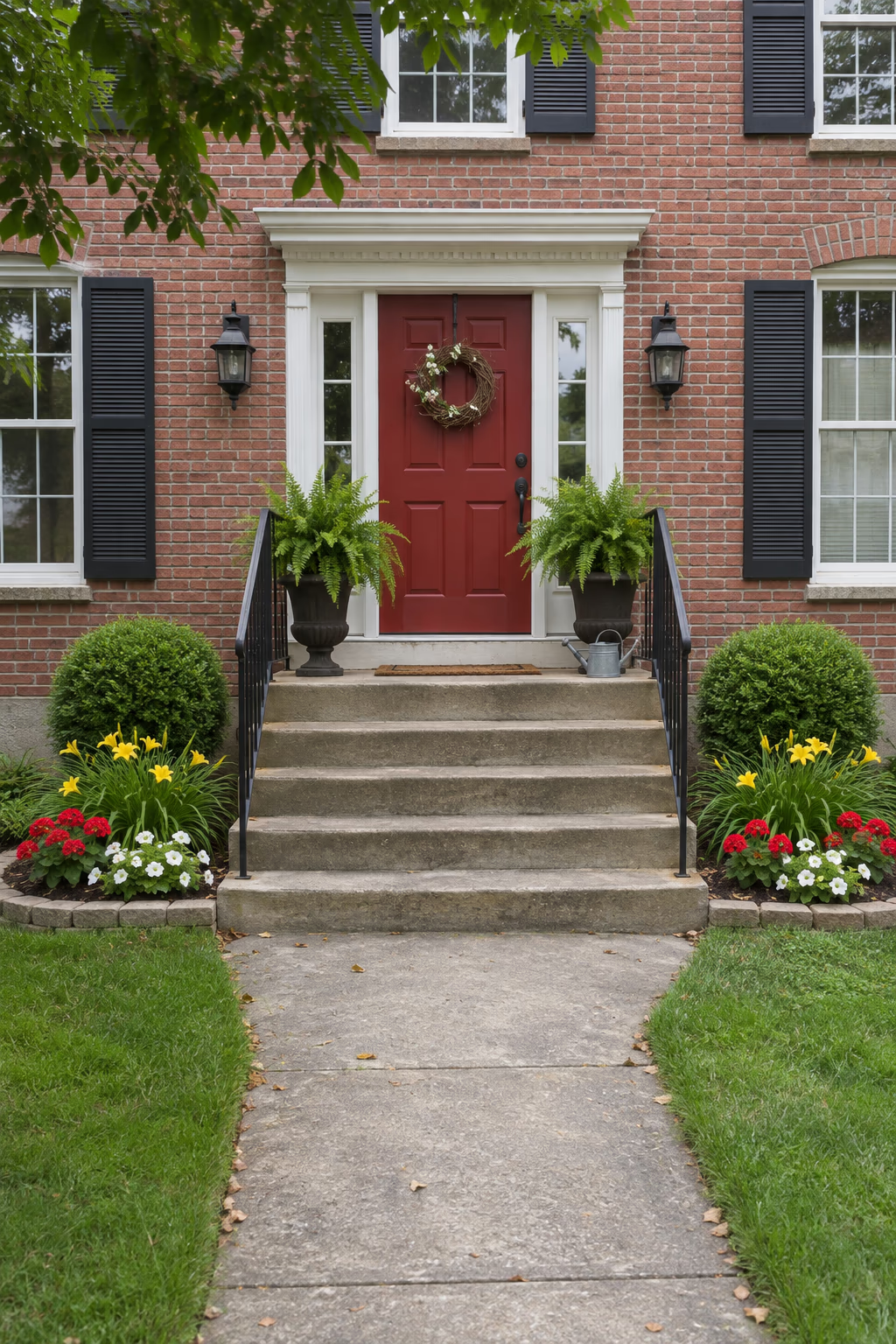
Symmetry that welcomes guests home
Two small beds, each about 3 feet square, on either side of the front steps create a balanced, polished entry. Plant them as mirror images: a dwarf boxwood or small rounded shrub at the back, a low perennial like reblooming daylily in the middle, and seasonal annuals at the front edge.
Symmetry reads as tidy and deliberate, which is why it works so well at a front door. Swapping the front-edge annuals each season keeps the entry looking fresh with very little cost.
Keep plants trimmed back from the step edges so nobody brushes wet foliage or trips on spilling stems. If one side gets more sun than the other, choose plants tolerant of both conditions so the pair stays even.
10. Step Up a Tiny Slope With a Two-Tier Bed
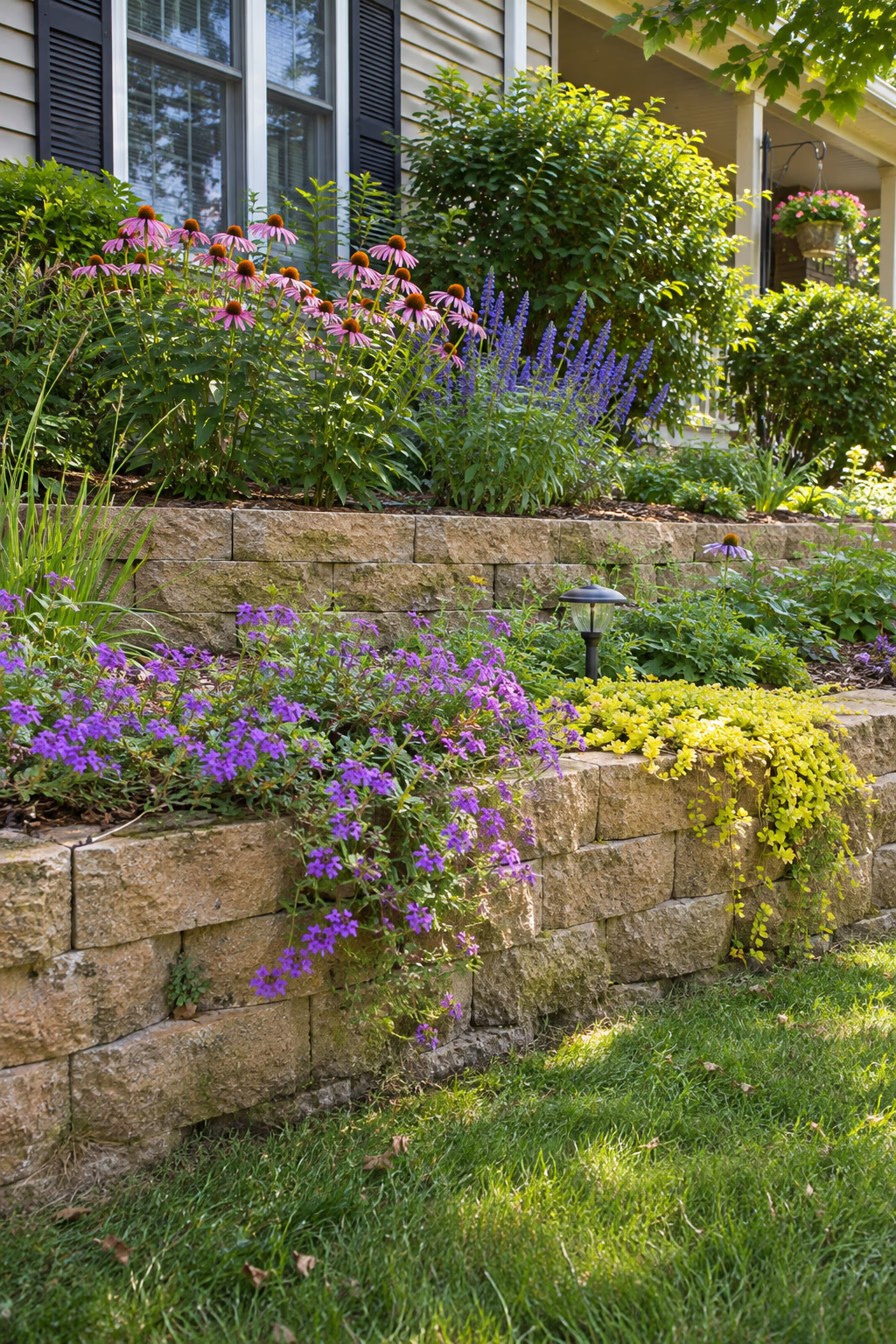
Turn a hard-to-mow bank into a showpiece
On a gentle slope, build two low tiers with landscape blocks or timbers, each 8 to 12 inches high. A footprint of about 4 by 6 feet works well, with the upper tier set back roughly 2 feet from the lower one.
Plant taller flowers like coneflowers and salvia in the upper tier and trailing or low plants such as creeping phlox, verbena, or sedum in the lower tier so color spills over each step. The levels hold soil in place and make watering more even.
Low tiers are a reasonable DIY project, but walls over about 3 feet tall usually need engineering and possibly a permit. Leave a gravel drainage layer behind each tier so water doesn’t push the blocks out of line.
11. Set a Birdbath in the Middle of the Blooms
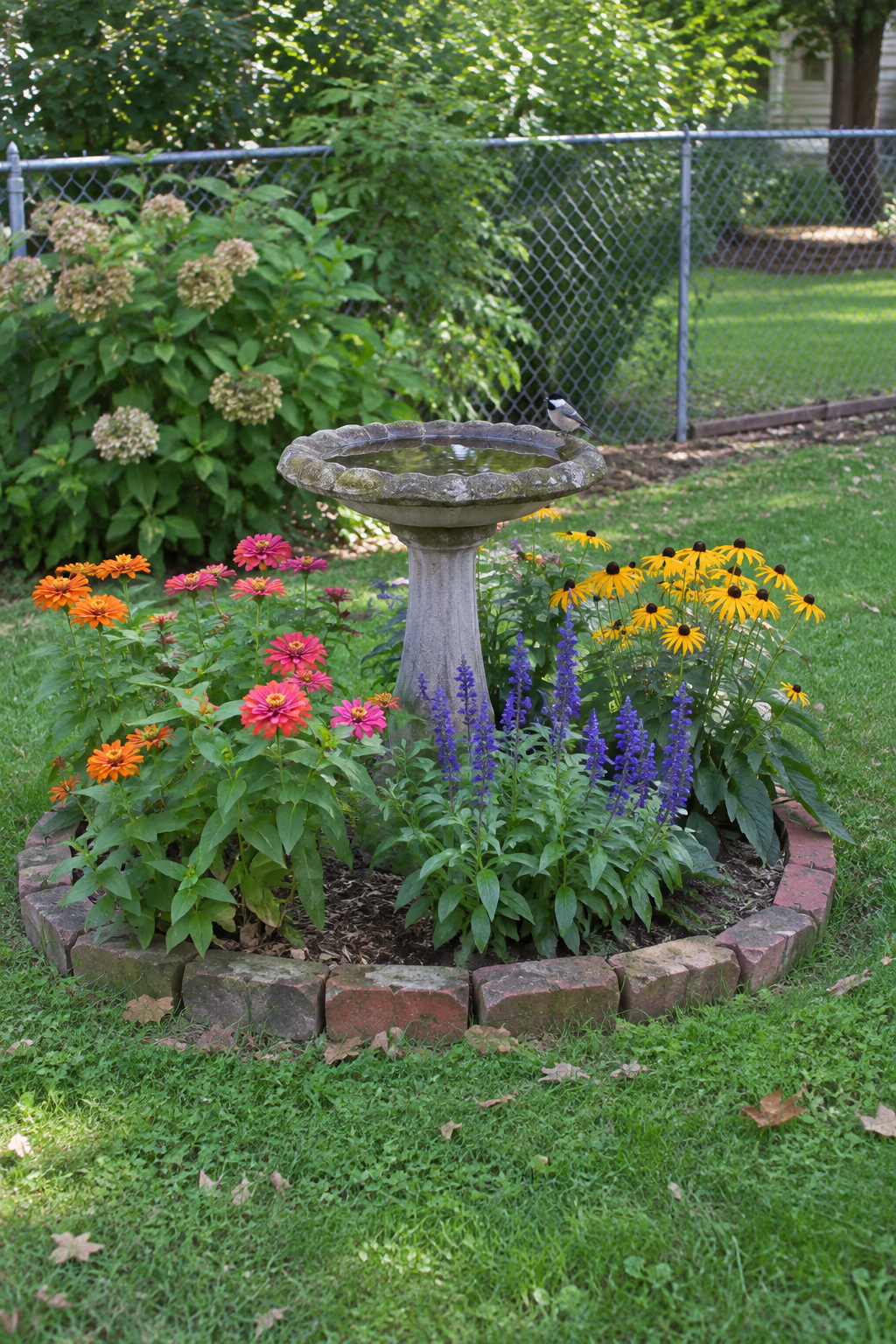
A classic centerpiece that brings the bed to life
A pedestal birdbath gives a small round or square bed instant height and a reason to look closer. Set it on a level paver base in the center, then plant lower flowers around it such as zinnias, salvia, and black-eyed Susans that birds and butterflies both visit.
Moving water and visiting birds add sound and motion that plants alone can’t provide. Concrete, cast stone, or glazed ceramic all look at home in an ordinary yard.
Change the water every two or three days to keep it clean and stop mosquitoes from breeding. Keep the bath a few feet away from dense shrubs where cats might hide, and empty ceramic bowls before a hard freeze to prevent cracking.
12. Brighten a Shady Nook With Hostas and Astilbe
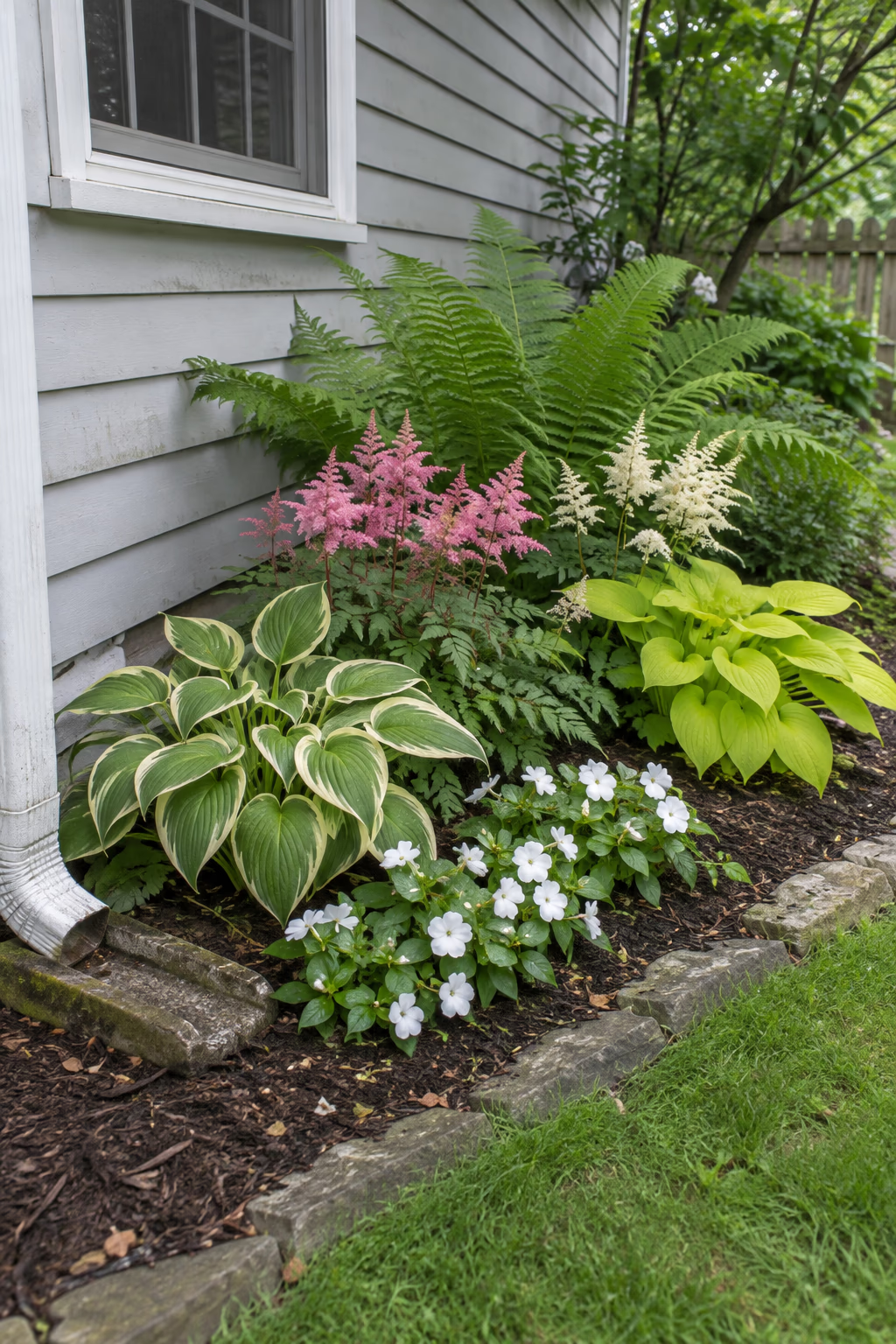
Color and texture where sun-loving flowers fail
A small bed on the north side of the house or under a deck’s edge can still glow. Combine variegated or chartreuse hostas with astilbe’s feathery pink, white, or red plumes, then add ferns and a front edge of impatiens or begonias.
Light-colored leaves bounce what little light there is and make the corner look brighter. The mix of broad hosta leaves, lacy ferns, and fluffy astilbe gives the bed texture even when few flowers are open.
Astilbe needs steady moisture, so mulch well and water during dry spells. Slugs and deer love hostas; use iron phosphate slug bait and consider deer-resistant alternatives like heuchera and lungwort if browsing is a problem.
13. Mound a Mini Rock Garden With Creeping Alpines
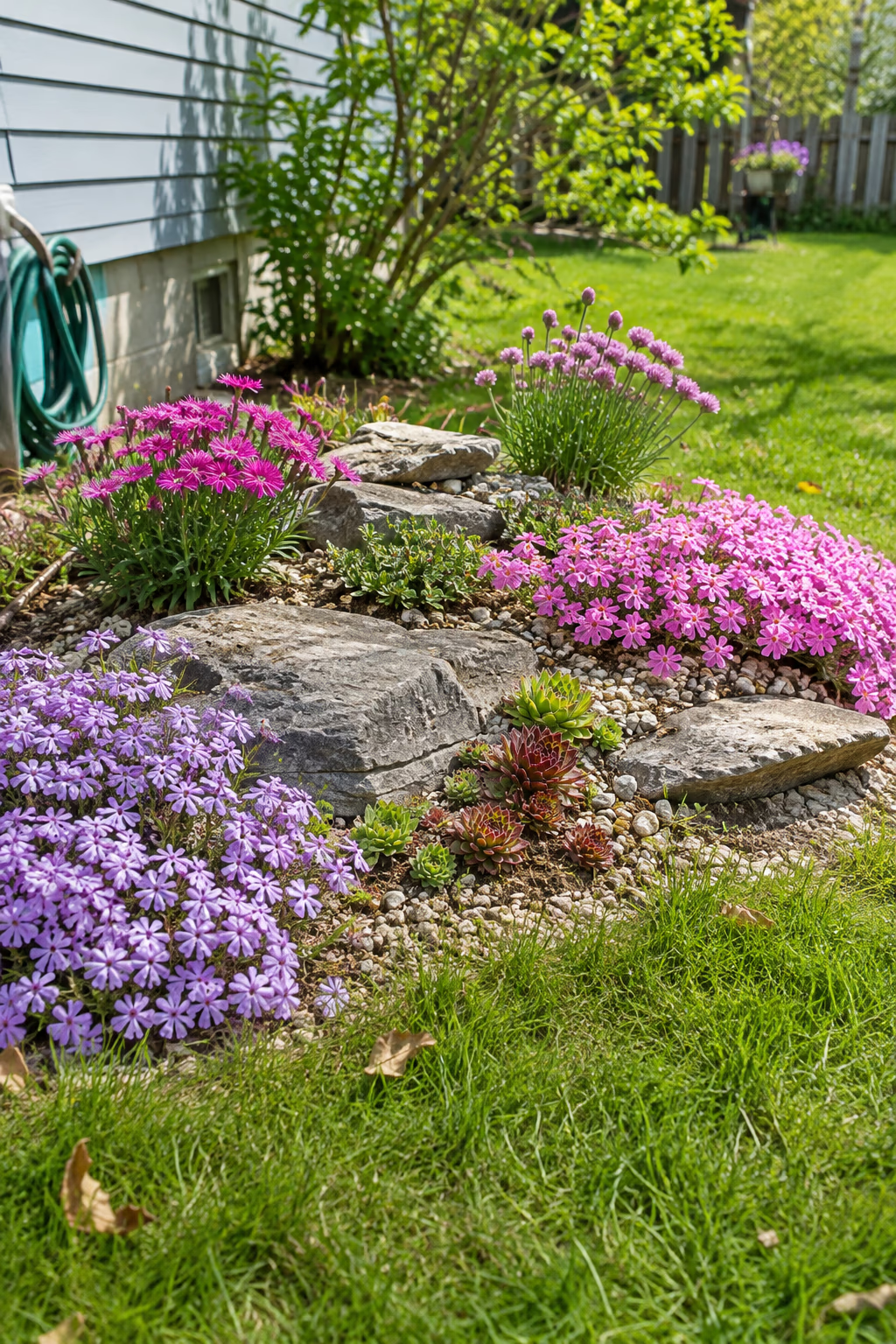
A tiny mountain landscape for sunny, dry spots
Build a low mound about 4 feet across and 12 to 18 inches high with gritty soil, then nestle in several flat stones as if they were outcrops. Fill the pockets between stones with creeping phlox, hens and chicks, dianthus, thrift, and dwarf creeping thyme.
The mound and stones give excellent drainage, which these small, tough plants need, and the scale suits a small yard perfectly. In spring, creeping phlox turns the whole mound into a carpet of pink, purple, or white.
Rich, wet soil will kill most alpines, so mix in coarse sand or small gravel and avoid heavy mulch. Pull weeds while they’re tiny, since roots can wedge deep between rocks.
14. Plant a Fragrant Bed Beside the Patio
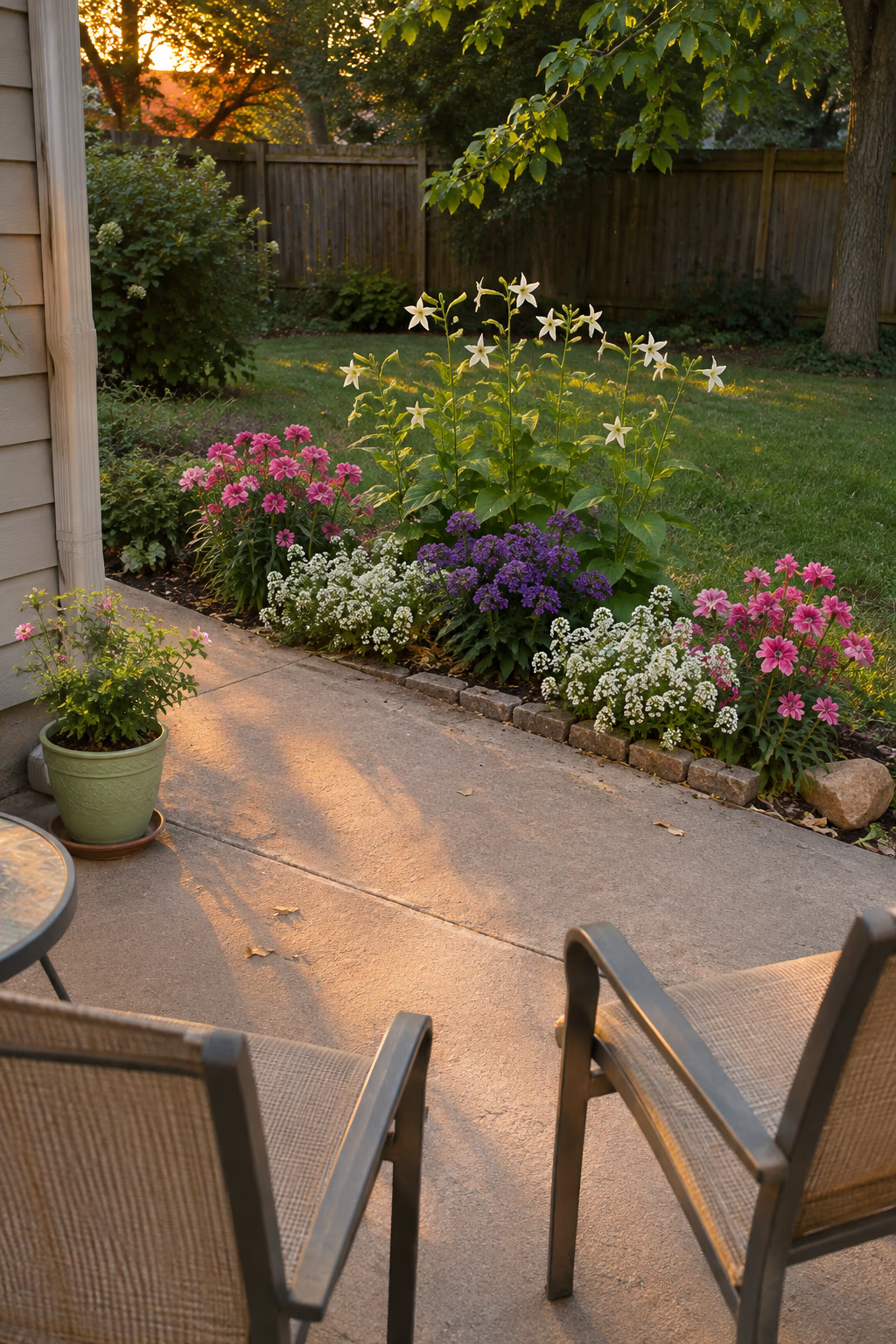
Scent you can enjoy from your chair
A small bed right next to where you sit lets fragrance do as much work as color. Plant clove-scented dianthus, honey-sweet alyssum, heliotrope, and evening-scented stock or nicotiana, which release their perfume around dusk.
A bed about 2 by 6 feet along the patio edge is enough. Placing fragrant plants close to the seating means you notice them every time you step outside instead of only when you walk past.
Some fragrant annuals, like stock, fade in hot summer weather, so plant them for spring and fall and fill with heat-tolerant alyssum in midsummer. Keep strongly scented plants away from the grill and dining table if strong smells bother anyone in your home.
15. Sow a Dwarf Zinnia Patch From Seed
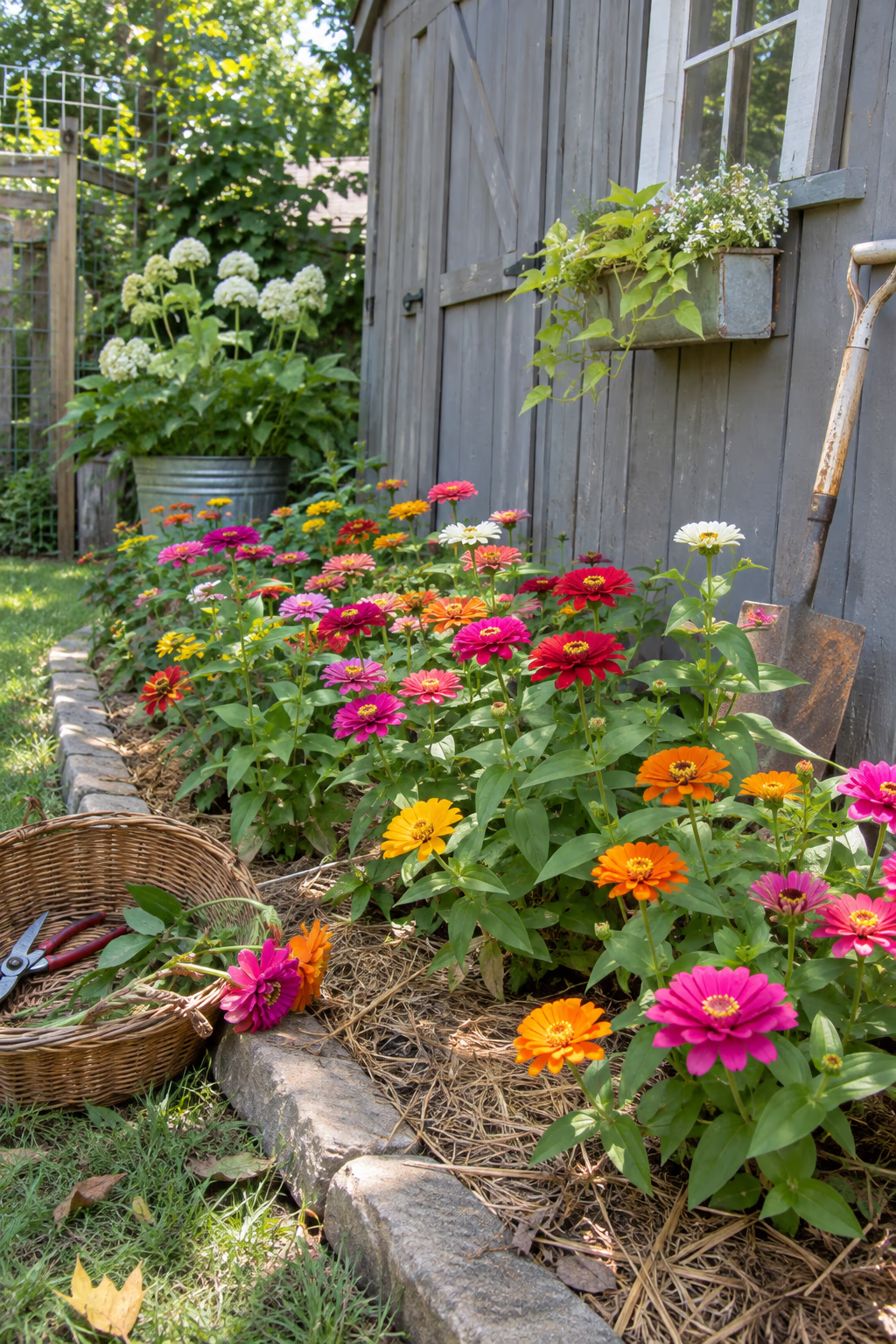
Months of color for the price of a seed packet
Dwarf zinnias stay about 8 to 18 inches tall and bloom from early summer until frost in sunny spots. After your last frost date, rake a bed smooth, sow seeds about a quarter inch deep, and thin seedlings to 6 to 9 inches apart.
A single packet can fill a small bed with orange, pink, red, and yellow flowers, and the blooms attract butterflies. Cutting a few for a vase actually encourages more flowers.
Zinnias are prone to powdery mildew in humid weather, so choose mildew-resistant types, give them space, and water at the soil rather than overhead. Seeds sown in cold soil often rot, so wait until the ground has warmed.
16. Group Plants in Odd-Numbered Clusters
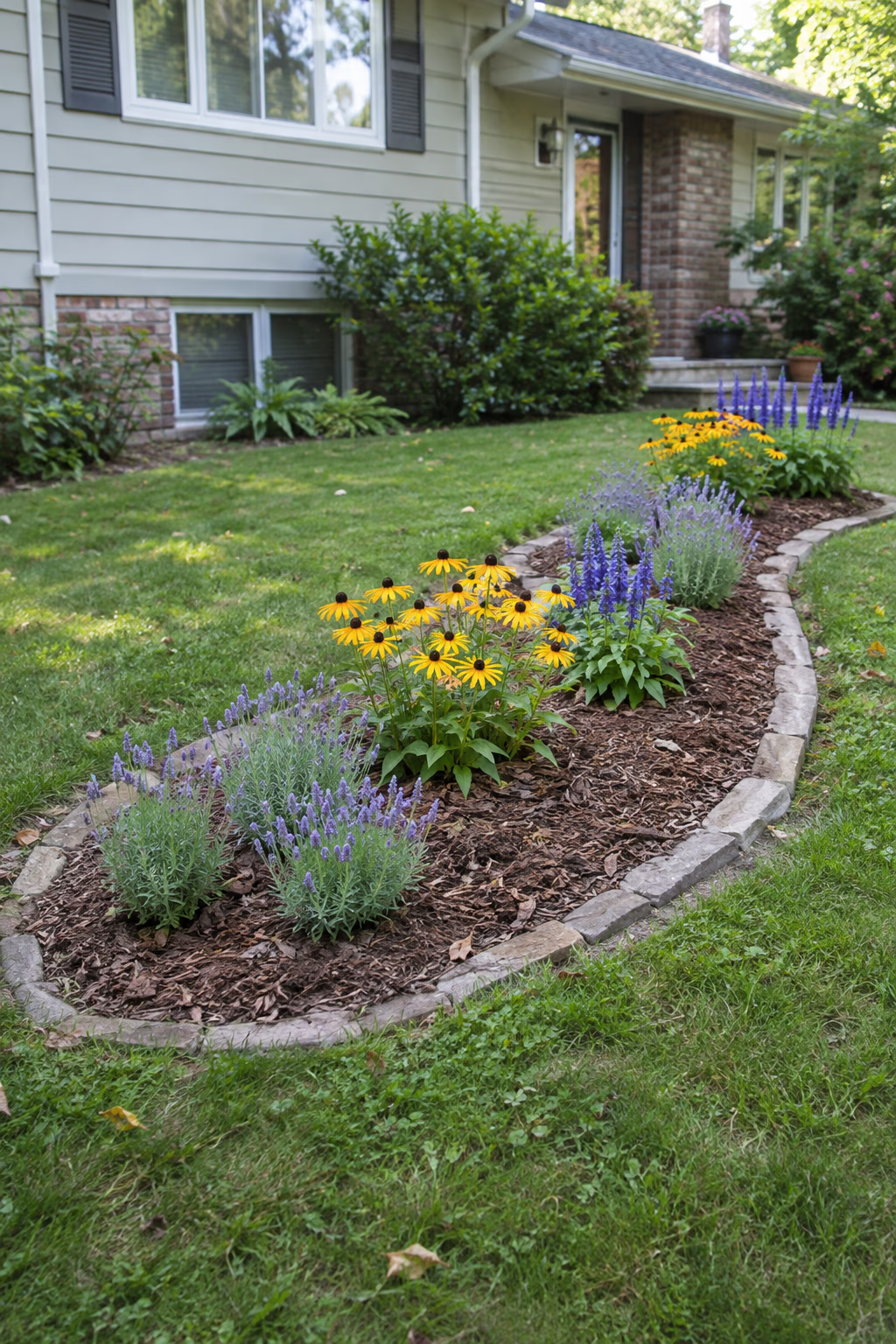
A designer trick that makes small beds look fuller
Instead of dotting single plants across the bed, plant in groups of three or five of the same variety. In a small bed, three clusters of lavender, black-eyed Susan, and blue salvia look far richer than nine different single plants.
Groups create bold drifts of color the eye can rest on, and odd numbers look more natural than rigid pairs. Repeating one cluster on both ends of the bed adds rhythm.
Space plants according to their mature width, not their pot size, so clusters fill in without crowding. Spread a layer of mulch between young plants to block weeds while they grow together.
17. Edge the Bed With Bricks Set on End
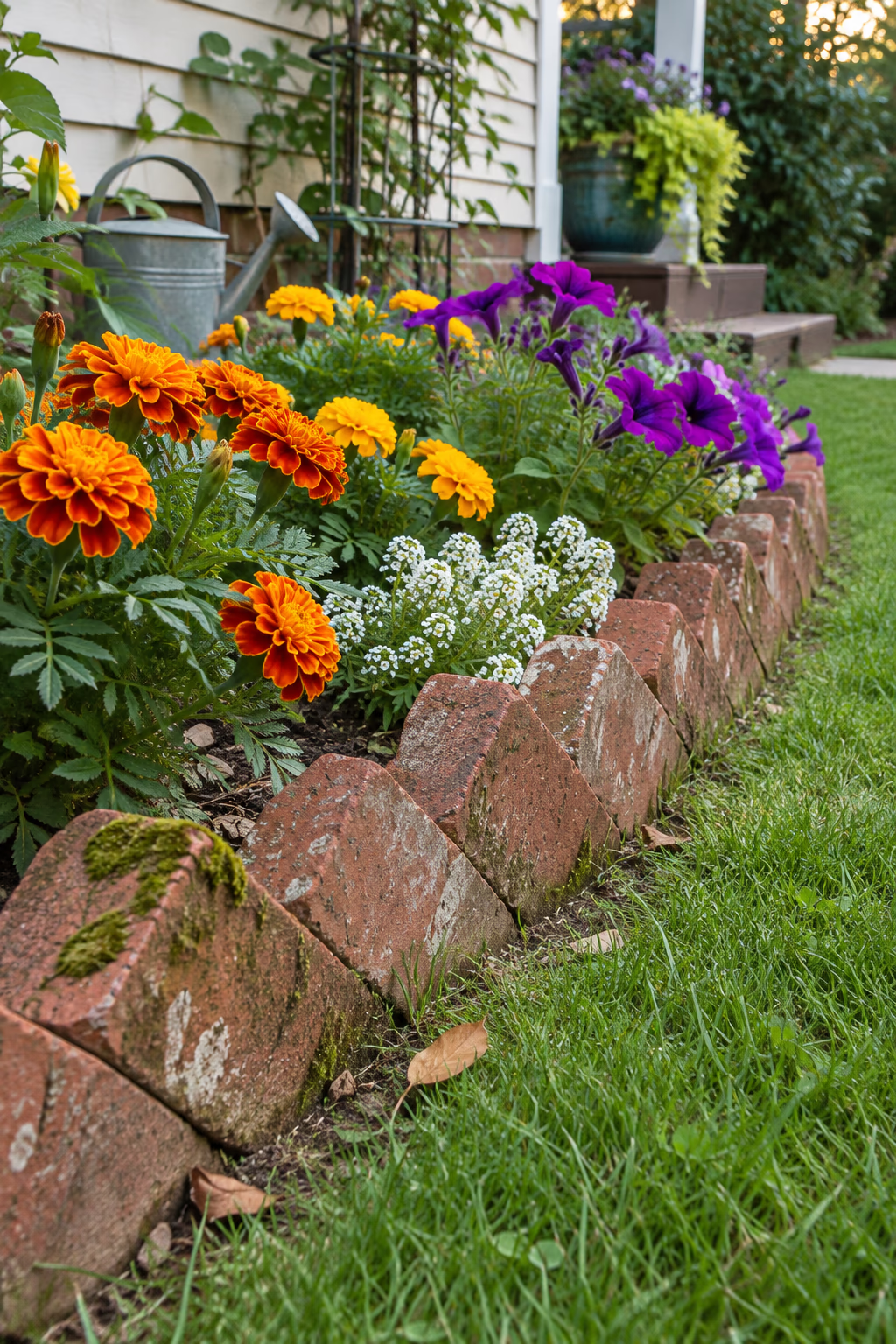
A crisp, classic border that costs little
Standing bricks upright in a narrow trench, either straight up or tilted at an angle for a sawtooth look, gives a small bed a tidy, old-fashioned edge. Dig a trench about 4 inches deep, add a little sand, set bricks tight together, and backfill firmly.
Brick suits almost any home style and is easy to find secondhand from salvage yards or neighbors finishing projects. A clean edge stops grass from creeping in and makes even a simple planting look cared for.
In cold climates, frost can heave loose bricks, so expect to reset a few each spring. Use solid bricks rated for outdoor use, since some old interior bricks crumble when wet.
18. Frame a Modern Bed With Weathered Steel Edging
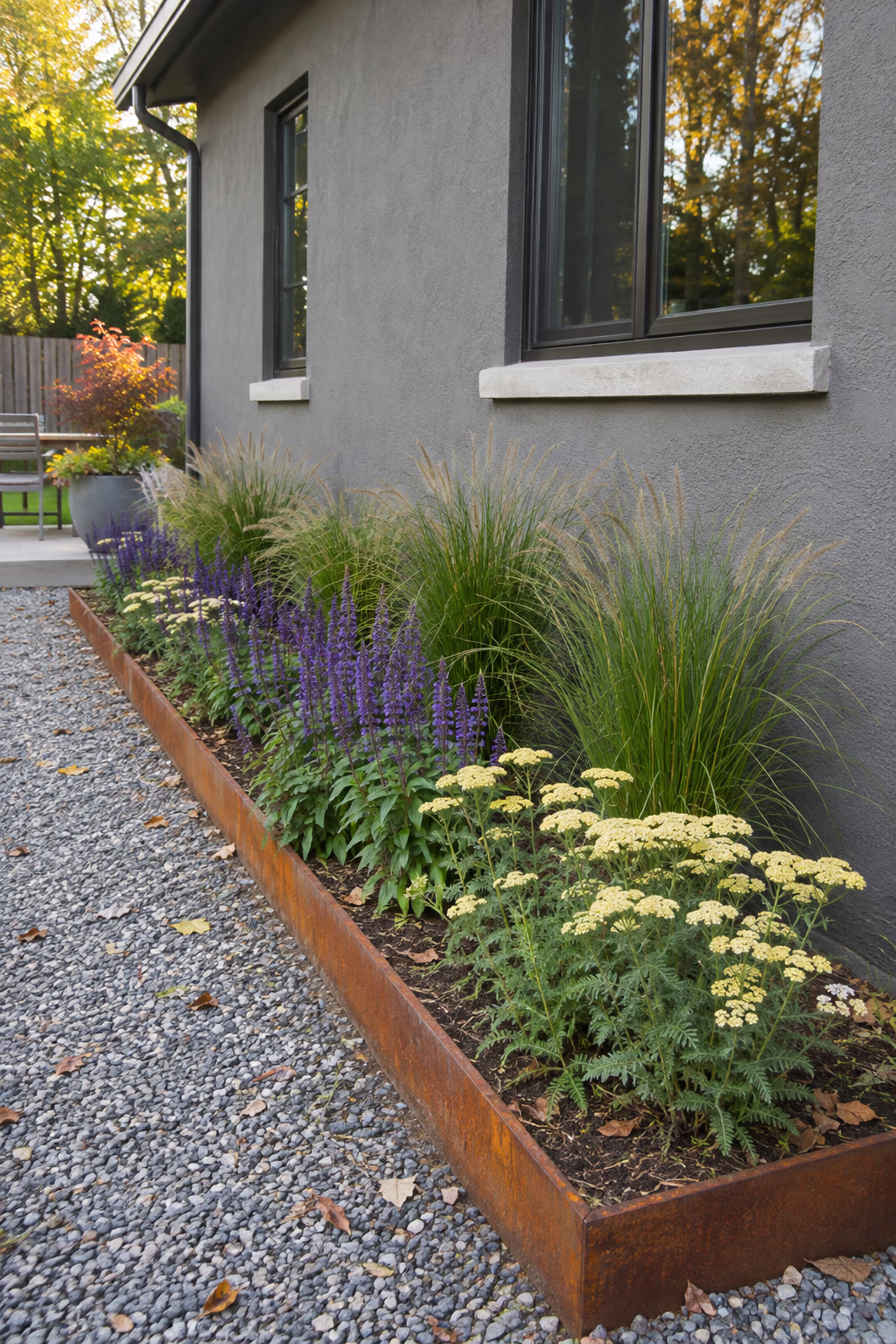
Clean lines and warm rust tones
Weathering steel or rusted metal strips, 4 to 8 inches tall, create a sleek, crisp outline for a rectangular or L-shaped small bed. The warm brown-orange patina pairs well with modern homes, gray gravel, and ornamental grasses.
Plant in simple, repeated rows such as a line of dwarf fountain grass behind a ribbon of purple salvia or yarrow. Thin metal edging takes up almost no space, so more of a small bed goes to plants.
New steel releases rust-colored runoff while it weathers, which can stain nearby concrete and stone. Choose edging with a rolled or capped top edge for safety, and wear gloves during installation.
19. Fill a Narrow Driveway Strip With Tough Bloomers
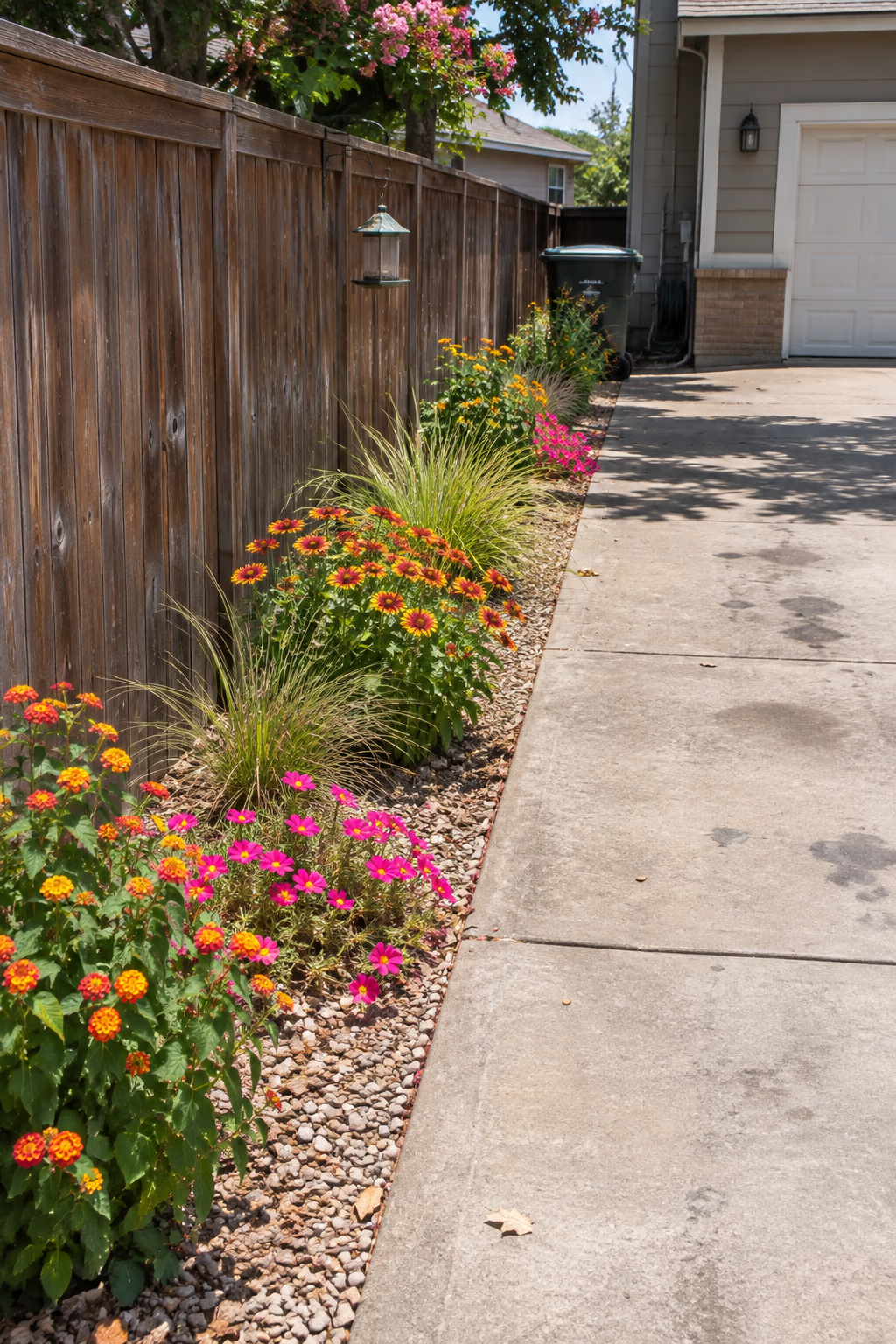
Put a wasted strip to work
The narrow strip between a driveway and a fence or neighbor’s yard is often bare dirt or struggling grass. A bed 12 to 24 inches wide can hold tough, heat-loving plants like lantana, portulaca, sedum, blanket flower, and dwarf ornamental grasses.
Concrete reflects heat, so these drought-tolerant plants actually do better here than delicate flowers. A uniform row of one or two plants keeps the strip looking neat and intentional.
Keep plants low and compact enough that car doors and tires won’t crush them. In snow regions, avoid plants where snow gets piled, or use only hardy perennials that can handle salt and weight.
20. Save a Small Bed for Fall Color
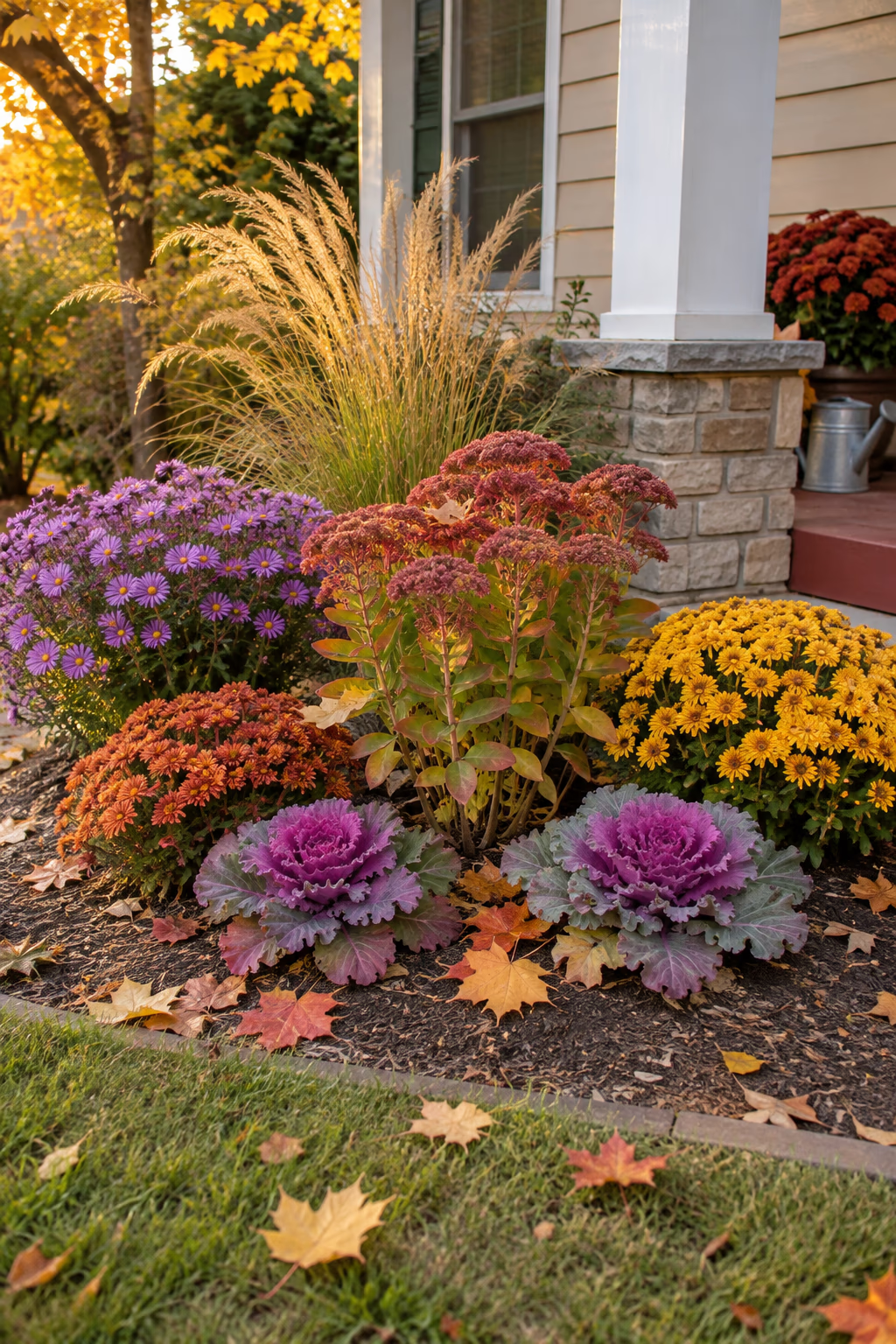
Keep the show going after summer fades
Plan one small bed just for late-season bloom. Asters, upright sedum, hardy mums, Japanese anemone, and ornamental grasses all peak in September and October, and a few ornamental kale plants add color well into cold weather.
While other beds wind down, this one gets its moment, which gives your yard a second peak and feeds late pollinators preparing for winter.
Many fall perennials get tall and floppy by autumn. Pinch asters and mums back by about half in early summer to keep them compact. Garden-center mums sold in bloom are often treated as annuals, so plant early-season hardy types if you want them to return.
21. Give the Bed a Backbone of Dwarf Evergreens
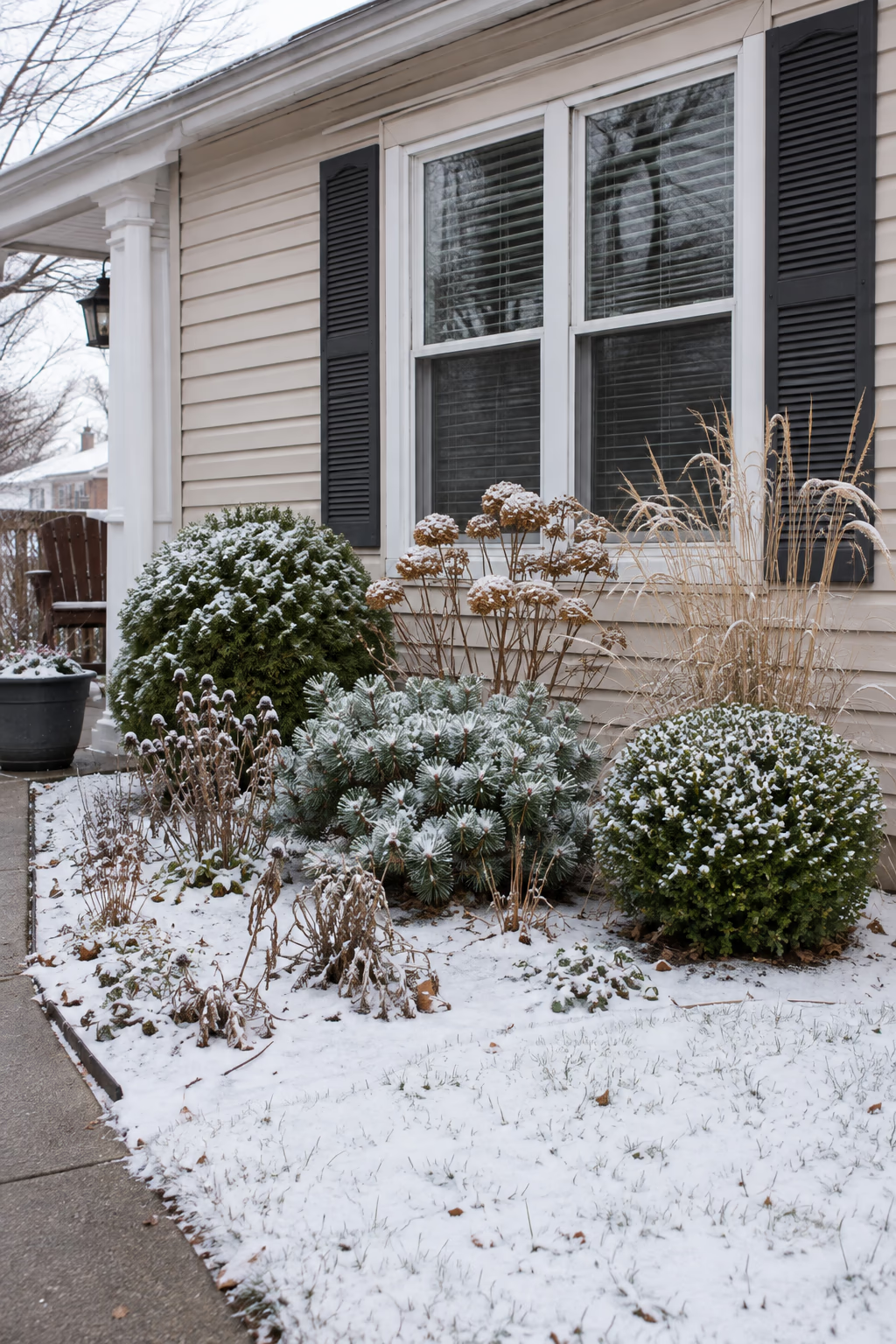
Structure that looks good in January
A small bed full of perennials can look empty for half the year. Add two or three dwarf evergreens, such as dwarf globe arborvitae, dwarf mugo pine, or compact boxwood, as permanent anchors, then plant flowers around them.
The evergreens provide shape and green color through winter, hold snow beautifully, and make the bed look finished even while perennials are dormant. In summer they act as a calm backdrop for colorful blooms.
Check mature sizes carefully, since “dwarf” can still mean 4 feet wide after 10 years. Water evergreens deeply in fall before the ground freezes to help prevent winter browning.
22. Plant the Hellstrip Between Sidewalk and Street
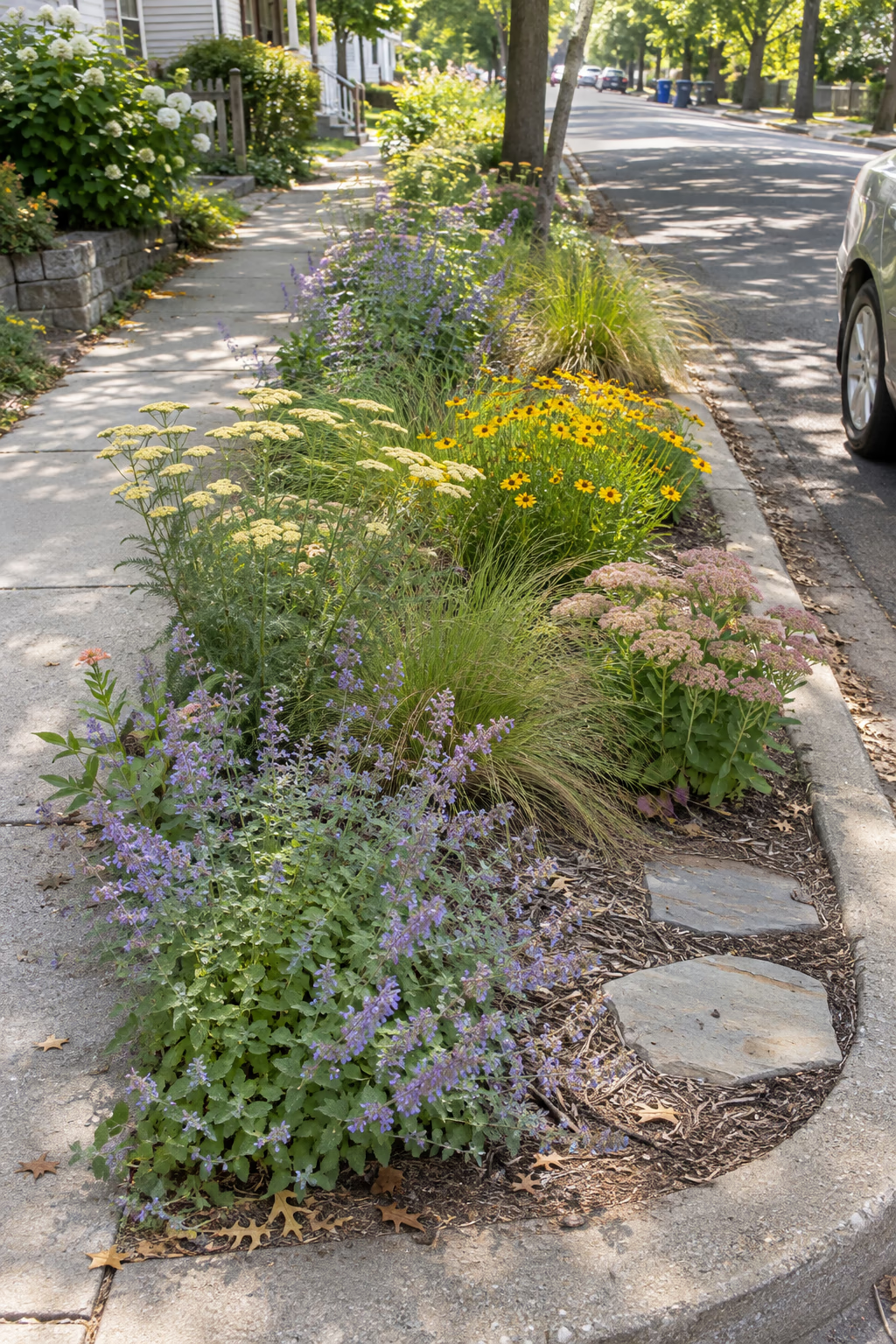
Swap patchy grass for a strip of flowers
The narrow strip between sidewalk and curb is hard to mow and often dried out. Replace the turf with tough, low-growing plants such as catmint, yarrow, coreopsis, sedum, and short native grasses.
A planted strip adds curb appeal, cuts down on mowing, and gives pollinators another stop. Repeating the same few plants along the strip makes it look cohesive.
Many cities own this strip or regulate plant height, usually keeping plants under 24 to 30 inches for driver sight lines. Check local rules and your HOA, leave stepping spots for people getting out of parked cars, and call 811 before digging, as utility lines often run here.
23. Soften the Utility Corner With a Low Bed
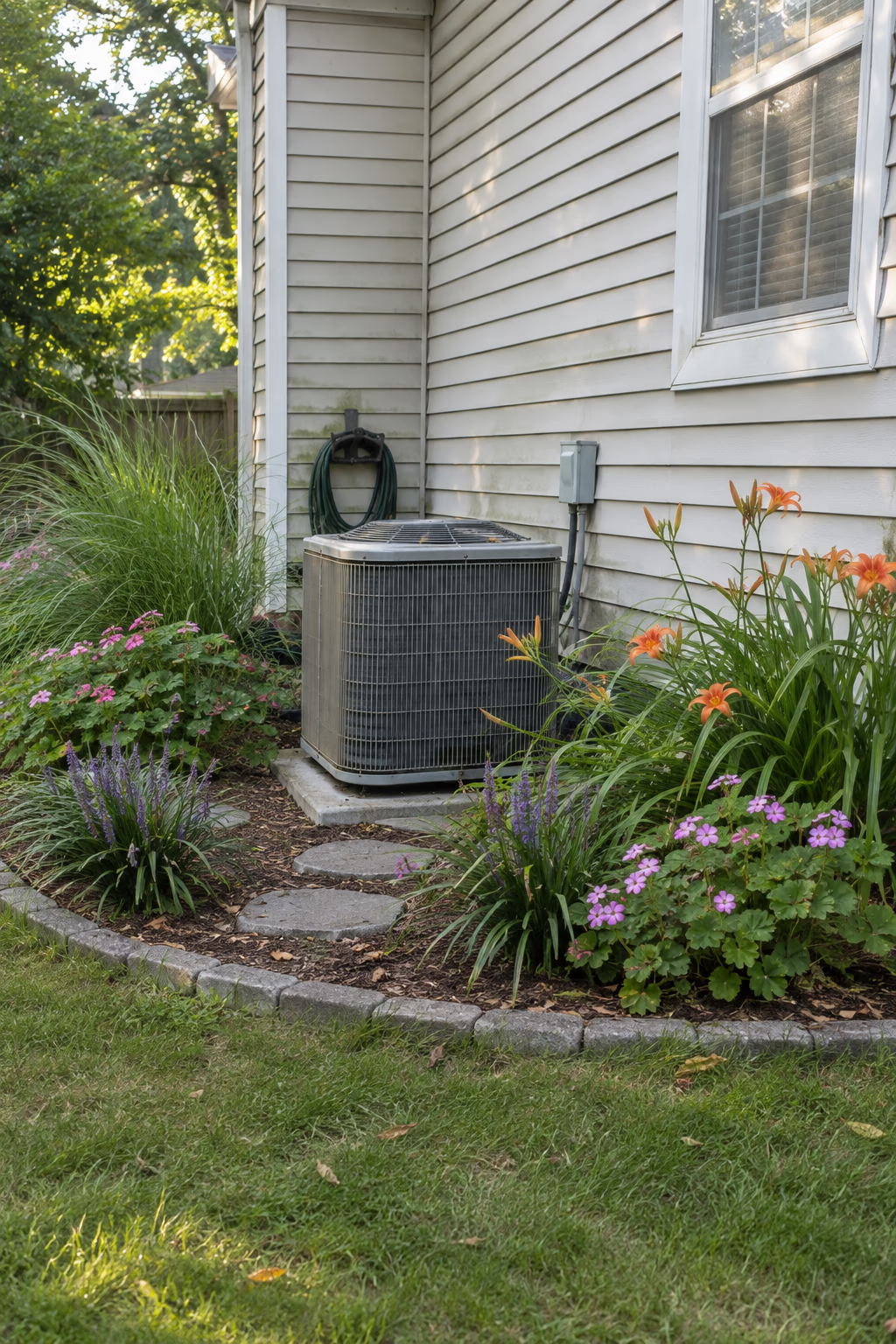
Hide what you can, decorate what you can’t
A small bed around an air conditioner, meter, or hose spigot can turn an eyesore into a pleasant corner. Plant low perennials like daylilies, hardy geranium, or liriope a safe distance from the equipment, with a few taller grasses on the side facing the street.
Plants draw the eye away from metal boxes and pipes and help the area blend into the rest of the yard. A path of stepping stones keeps access easy for maintenance.
Air conditioners typically need about 2 feet of clear space on all sides, and meters must stay reachable for service, so never crowd them with plants. Follow the equipment manufacturer’s clearance guidelines and your utility’s rules.
How to Plan Your Small Flower Bed
A small bed comes together faster when you match the plants and materials to the exact spot before you buy anything.
- Watch the light first. Track how many hours of direct sun the spot gets. Six or more means full sun, and less than four calls for shade plants.
- Keep the scale small. Choose plants with mature sizes that fit the bed, and favor dwarf or compact cultivars so you aren’t constantly cutting them back.
- Improve the soil once. Work 2 to 3 inches of compost into the top 8 inches of soil before planting, since small beds dry out and lose nutrients quickly.
- Plan for multiple seasons. Mix spring bulbs, summer perennials, fall bloomers, and an evergreen or two so the bed doesn’t go blank for months.
- Define the edge. Stone, brick, steel, or even a clean cut edge keeps grass out and makes the bed look intentional.
- Check rules and utilities. Confirm HOA or city guidelines for front yard and curb strips, and call 811 at least a few days before digging.
Frequently Asked Questions
How big should a small flower bed be?
Most small beds fall between about 3 by 3 feet and 4 by 8 feet. Keep the depth to around 3 or 4 feet if you can only reach it from one side so you can weed without stepping on the soil.
What flowers bloom the longest in a small bed?
Annuals like zinnias, lantana, petunias, alyssum, and begonias bloom from late spring to frost. Long-blooming perennials include catmint, reblooming daylilies, coreopsis, salvia, and black-eyed Susans, especially when spent flowers are removed.
How many plants do I need for a 4-by-6-foot bed?
It depends on mature size, but a 24-square-foot bed often holds about 12 to 20 perennials and annuals at 12 to 18 inches apart. Use the spacing listed on each plant tag and fill early gaps with inexpensive annuals.
Should I put landscape fabric under a small flower bed?
It’s usually better to skip it. Fabric can trap soil on top where weeds still grow and makes it harder for perennials to spread and to add new plants. A 2- to 3-inch layer of shredded bark or leaf mulch controls weeds well.
When is the best time to plant a small flower bed?
Plant perennials and shrubs in spring or early fall when temperatures are mild. Set out tender annuals after your last frost date, and plant spring bulbs in fall before the ground freezes.
Final Thoughts
A small flower bed proves you don’t need a big yard to enjoy a lot of color. Whether you raise a bed behind a stone wall, plant around a mailbox, or tuck a fragrant strip beside the patio, a few well-chosen plants in the right spot can change how your home looks and feels.
Start with one bed this season, choose plants that suit your light and climate, and add another idea next year. Over time, those little patches of bloom will add up to a yard full of personality.