Picture a summer morning in the vegetable garden: cucumbers hanging straight and clean from a wire grid, pole beans climbing over an arch you can walk under, and room left over for lettuce at ground level. Nothing is sprawling across the path, and harvest takes minutes instead of a crouching treasure hunt.
That’s what a trellis does for a raised bed. Beds already give you loose soil, good drainage, and tidy edges, but their footprint is limited. Growing up instead of out lets a 4 by 8 foot box produce far more, improves airflow around leaves, and adds height and structure that make the whole garden look finished.
These 21 raised garden bed trellis ideas range from cattle panel arches and north-side wire panels to A-frames, string trellises, obelisks, upcycled headboards, and simple twiggy pea brush. Each one includes practical tips on materials, sizing, plants, and the caveats worth knowing before you build.
1. Bend a Cattle Panel Arch Between Two Raised Beds
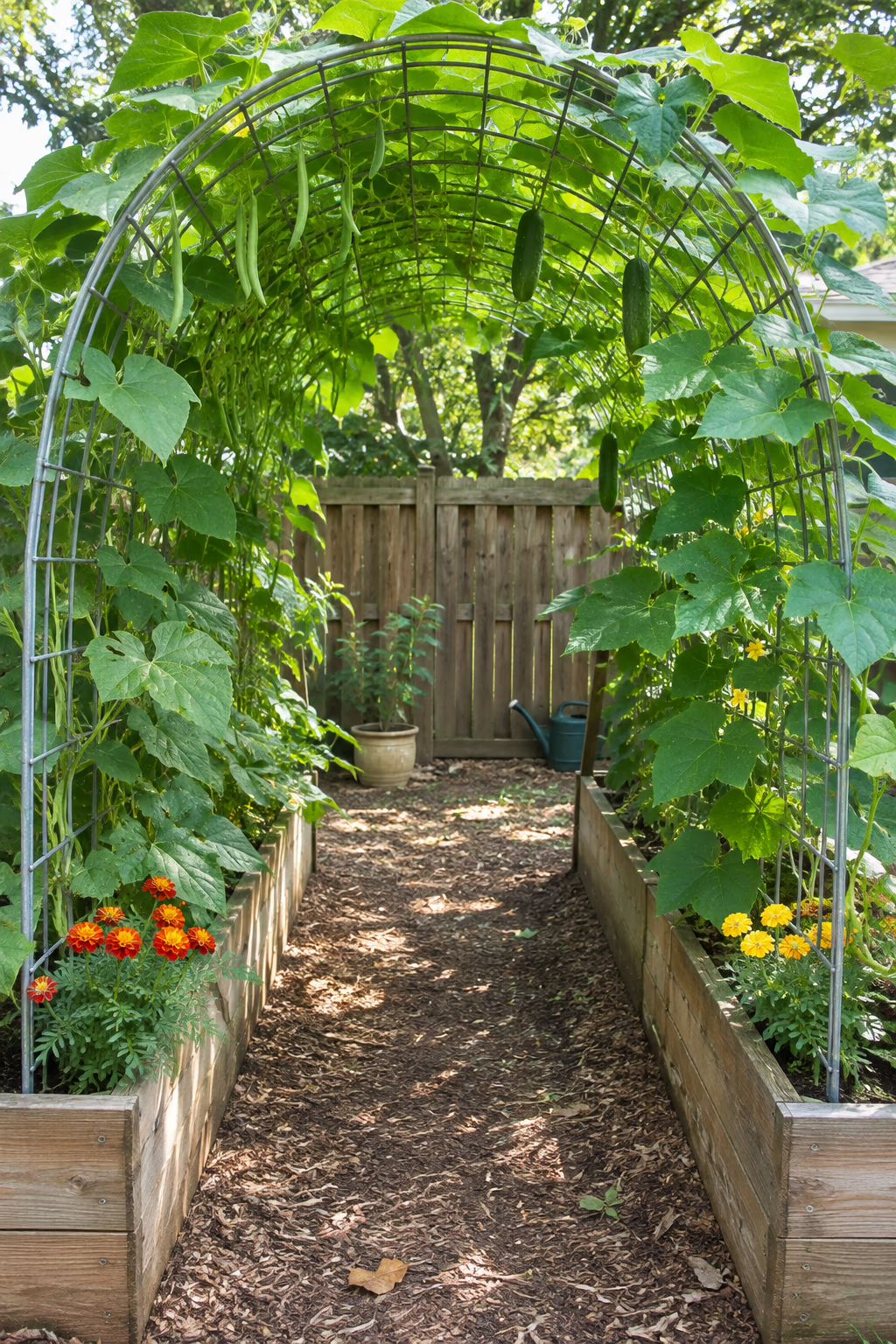
A walk-through tunnel that doubles your growing space
Set two raised beds parallel with a path about 3 to 4 feet wide between them, then bow a 16-foot cattle panel so each end drops inside a bed. Fasten the panel to the inside walls with fence staples or pipe straps, and drive a length of rebar or a T-post beside each end for extra hold. The result is a sturdy tunnel roughly 6 to 7 feet tall.
Plant pole beans, cucumbers, small winter squash, or gourds along both sides. As they climb, the vines meet overhead and the fruit dangles inside the tunnel, where it is easy to spot and pick. Underneath, the shaded path stays cool on hot afternoons.
Cattle panels are heavy and springy, so bending one is a two-person job and gloves are a must. Closer beds give a taller, narrower arch; wider spacing gives a lower curve, so test the shape before attaching anything.
2. Mount a Wire Panel Trellis Along the North Edge
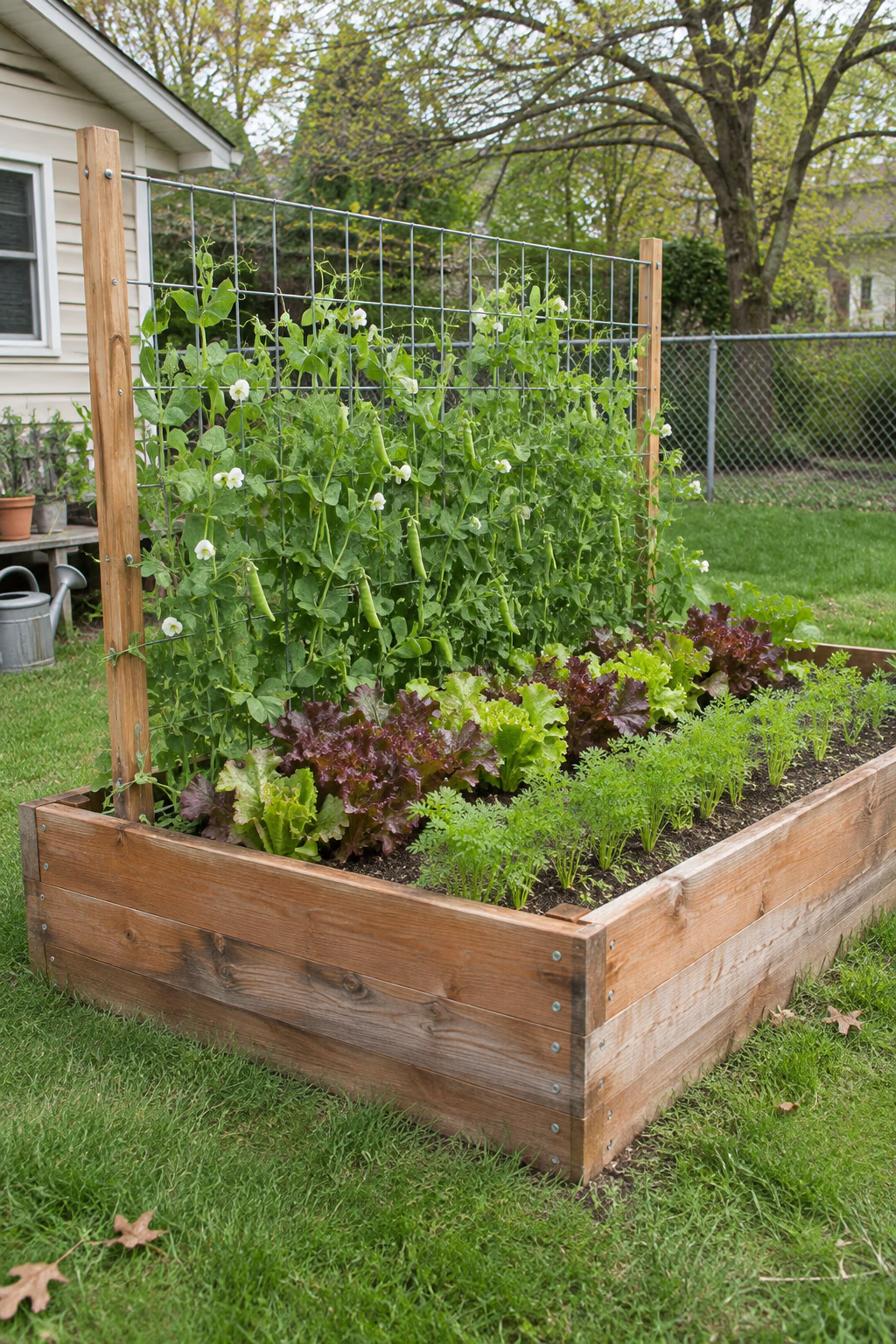
Tall crops without shading the rest of the bed
Screw two or three 2×2 or 2×4 cedar stakes to the inside of the bed’s north wall, then attach a 4 by 8 foot welded wire or cattle panel with galvanized wire or heavy-duty ties. The panel stands upright along the back of the bed like a green wall.
Because the sun travels across the southern sky in the US, tall plants on the north side won’t cast shade on shorter crops in front. Peas in spring and pole beans or cucumbers in summer fill the panel, while carrots, lettuce, and bush basil grow in the sunny front portion.
Leave the panel’s bottom edge a few inches above the soil so you can work compost in each season. Galvanized panels last for years, though they will eventually develop a dull gray patina that many gardeners actually prefer.
3. Set an A-Frame Trellis Over Cucumbers and Greens
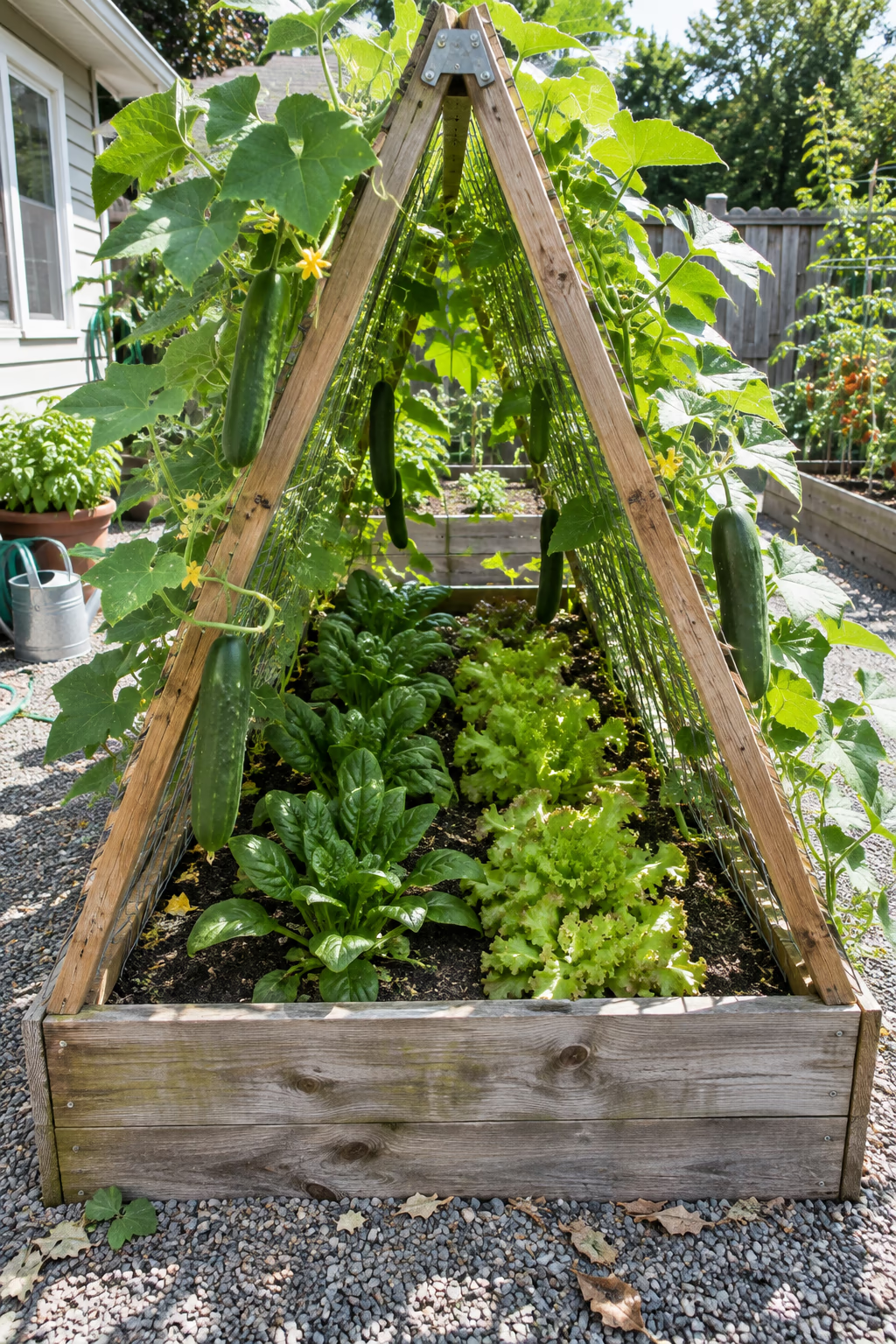
Two growing surfaces and a shady pocket underneath
Hinge two wood frames, each about 4 feet wide and 5 to 6 feet tall, at the top and cover them with wire mesh or netting. Stand the A-frame inside the bed with the feet pushed a few inches into the soil, and plant vining cucumbers along both outside bases.
The angled sides let cucumber fruit hang straight and clean, and the triangle of space underneath stays shaded in midsummer. That pocket is perfect for spinach, lettuce, or arugula, which tend to bolt in full July sun.
A-frames are easy to fold flat and store in the garage over winter, which extends the life of wood frames. In windy spots, stake each leg so a full load of vines doesn’t tip the frame.
4. Build a Cedar Frame With Trellis Netting
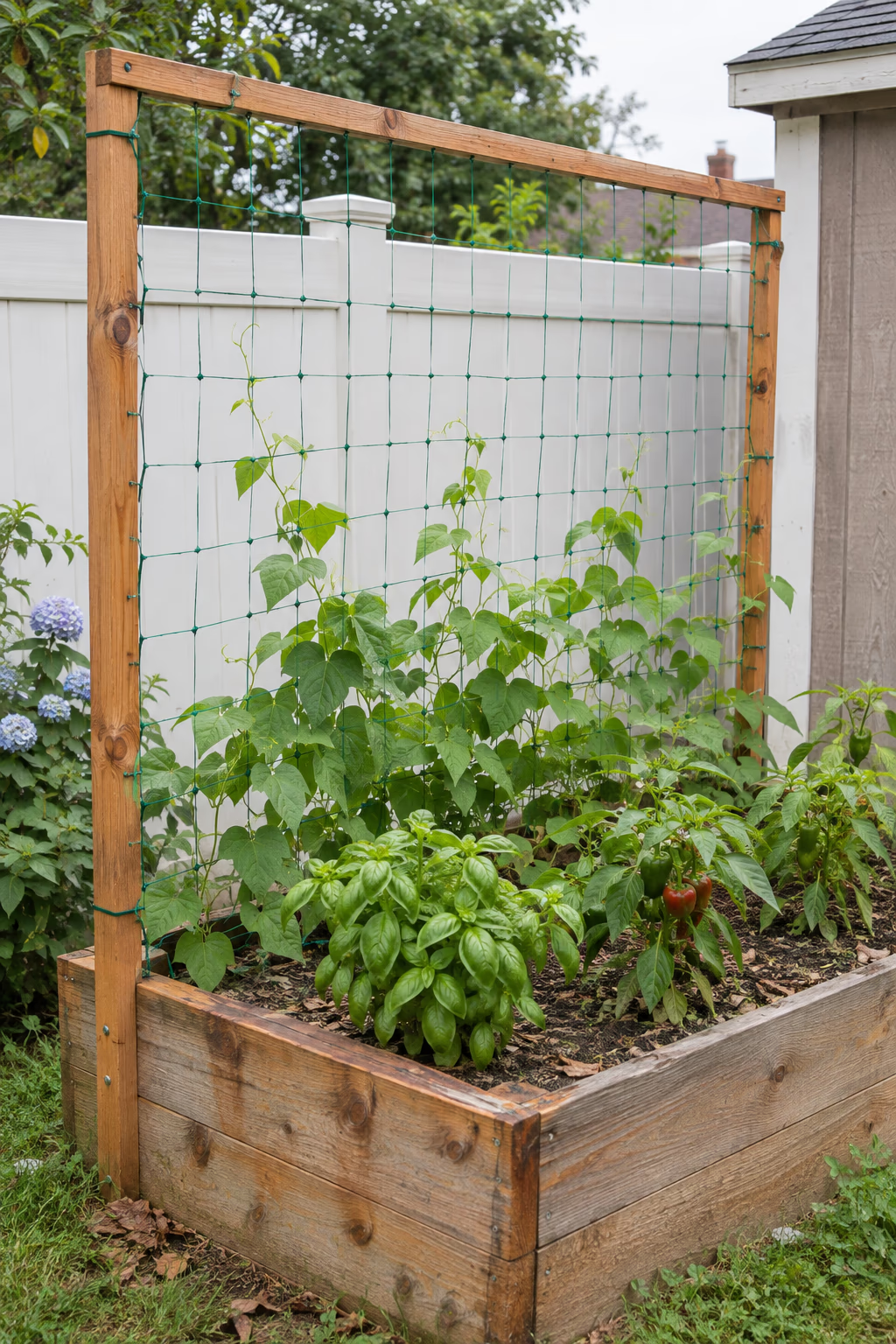
The cheapest sturdy trellis you can build in an afternoon
Fasten two 6-foot cedar 2×2 uprights to the inside corners of one long side of the bed, add a crosspiece across the top, and stretch nylon or polypropylene trellis netting with 6-inch openings across the frame. Staple or tie it every few inches.
Netting is light, inexpensive, and ideal for peas, pole beans, and smaller cucumbers whose tendrils grip it easily. The wooden frame gives the setup a clean, finished look that holds up season after season.
Plant tendrils wrap tightly, so pulling dead vines out of netting in fall can be tedious. Many gardeners simply cut the netting down with the vines and replace it each spring, keeping the frame in place.
5. Run Twine From an Overhead Bar for Tomatoes
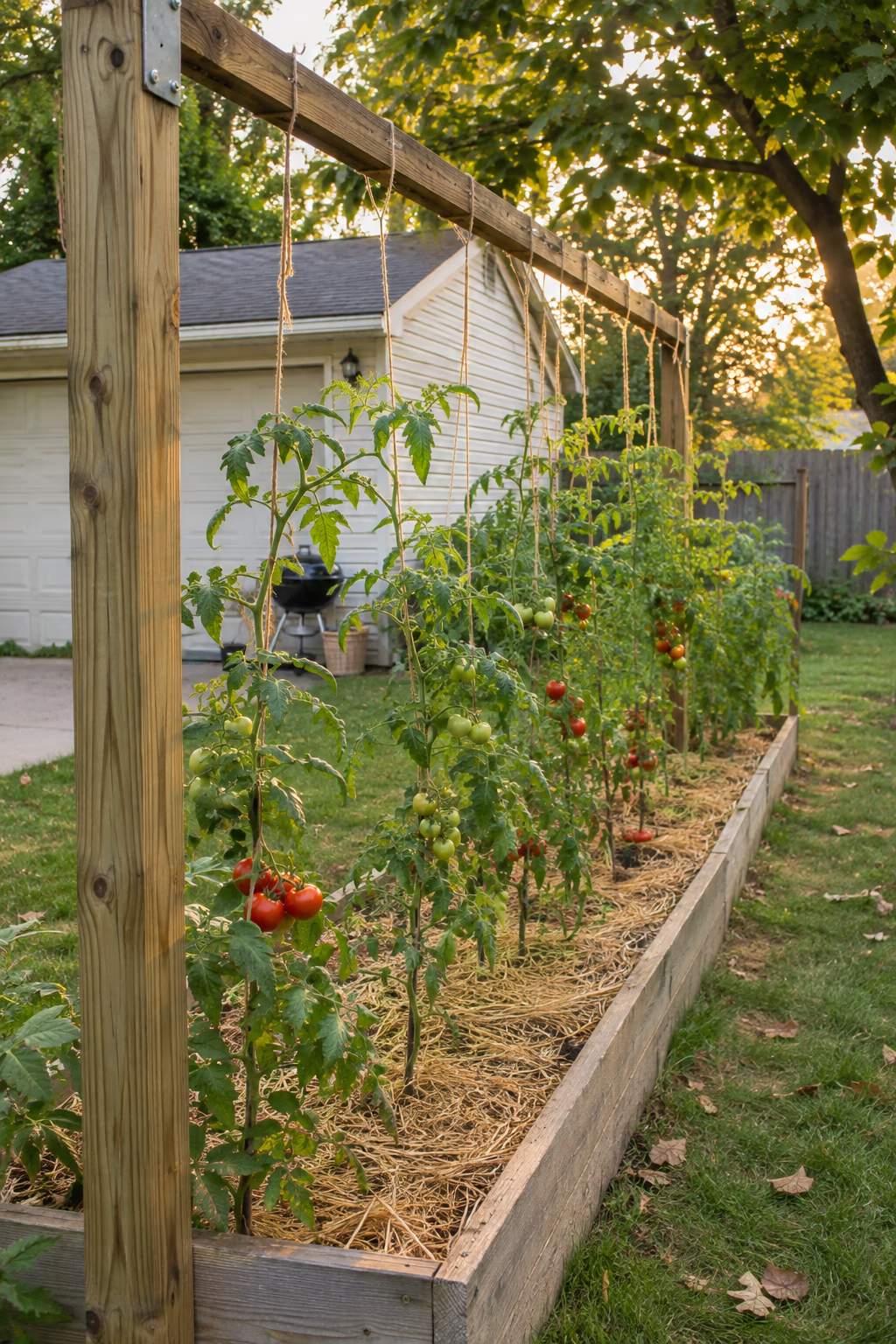
The tidy way growers keep tall tomatoes upright
Build a simple goalpost frame with 4×4 posts at each end of the bed and a sturdy 2×4 or metal pipe crossbar about 7 feet up. Drop one length of strong garden twine per plant, tie the bottom loosely around the stem or to a ground stake, and wind the stem around the twine as it grows.
This string method works beautifully for indeterminate tomatoes pruned to one or two main stems. Plants stay narrow, sun reaches the fruit, and you can space tomatoes about 18 inches apart along the bed.
Winding takes a few minutes every week, so plan on regular attention. Choose cotton or jute twine if you want to compost the vines whole at season’s end, and polyester twine if you want something stronger.
6. Tie a Bamboo Teepee in the Center of a Square Bed
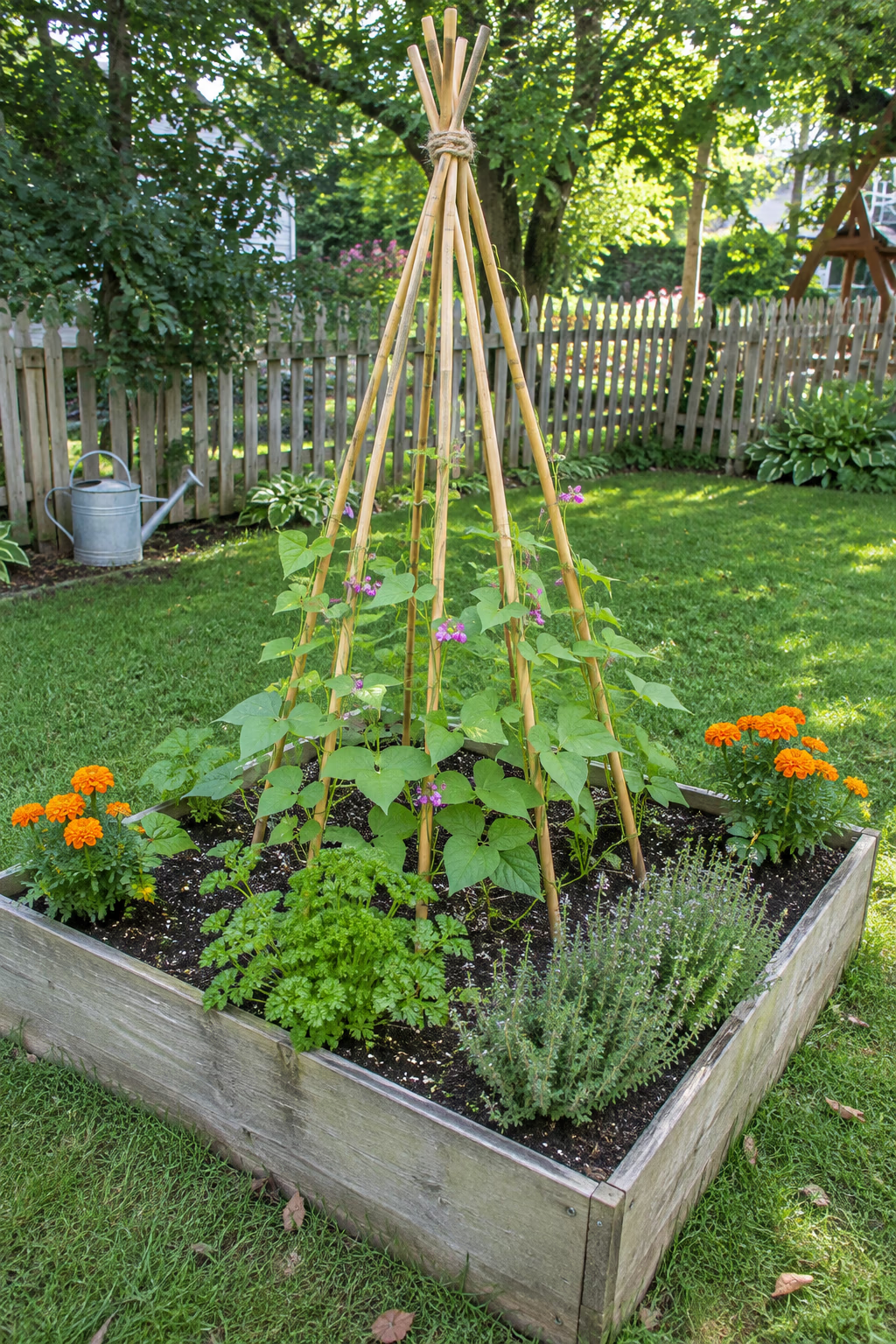
A low-cost focal point for beans and flowering vines
Push six to eight 7- or 8-foot bamboo canes into a circle about 3 feet across in the middle of a 4 by 4 foot bed. Lean them together and lash the tops tightly with twine, then plant two pole bean seeds at the base of each cane.
The teepee adds instant height and a cottage-garden look, and it leaves the corners of the bed free for lettuce, herbs, or marigolds. Morning glories, sweet peas, or climbing nasturtiums also work if you want flowers instead of food.
Bamboo canes typically last two or three seasons before splitting at the soil line. Store them dry over winter, and check each one for rot before setting up in spring.
7. Stand a Metal Obelisk in a Round Raised Bed
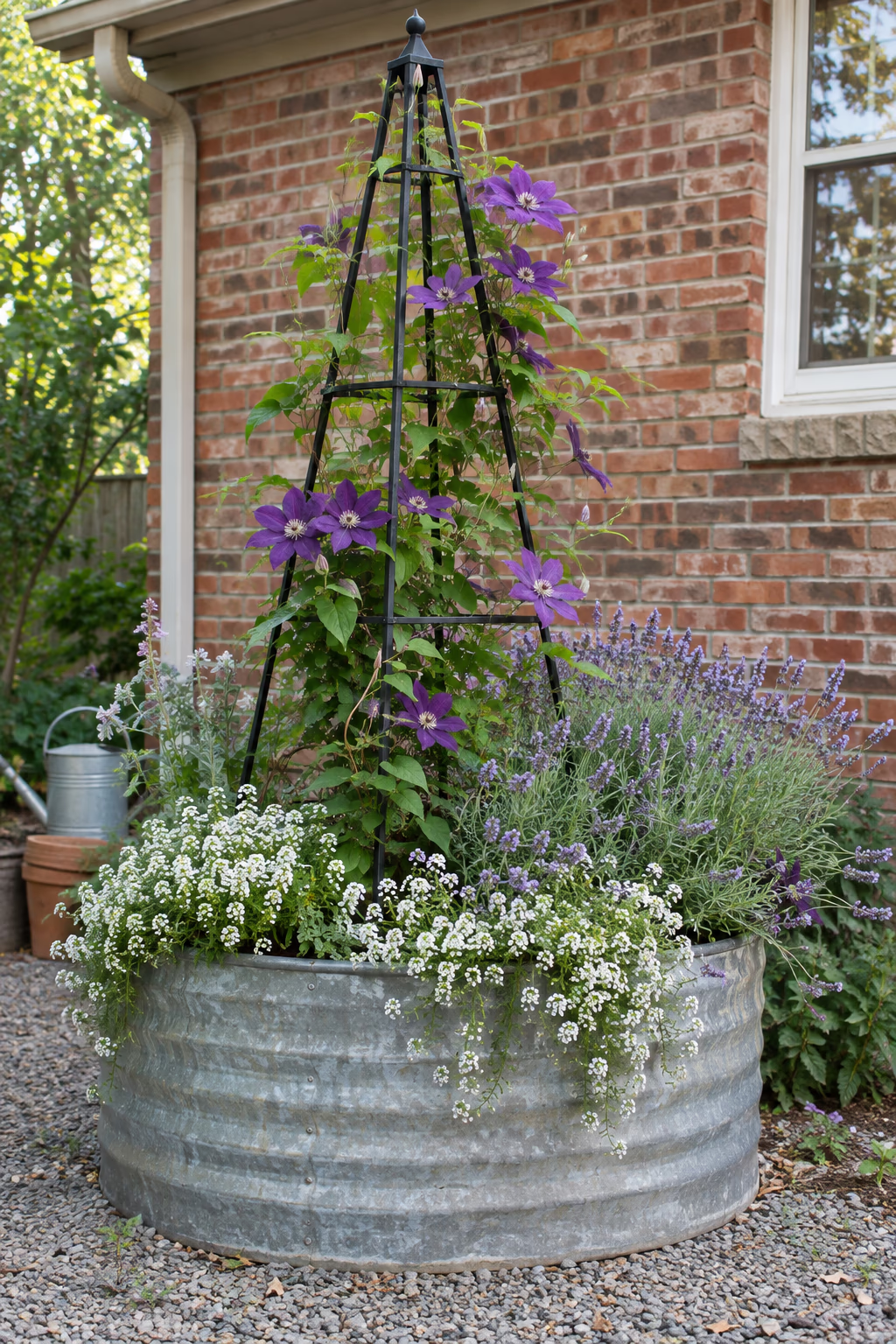
Garden-art height for a small, round bed
A round galvanized or corrugated metal bed about 3 to 4 feet across pairs naturally with a tapered metal obelisk 5 to 6 feet tall. Push the legs deep into the soil or zip them to the bed walls, then plant a clematis, a compact climbing rose, or a few cucumber vines around its base.
The obelisk gives a modest bed real presence, especially when a few bush herbs or trailing flowers fill the soil around it. Black powder-coated steel looks crisp year-round, even in winter when the vines are gone.
Obelisks are top-heavy once covered in growth. Choose one with ground spikes or anchor it with landscape staples so a summer storm doesn’t lay it over.
8. Back a Long Bed With Lattice for Privacy
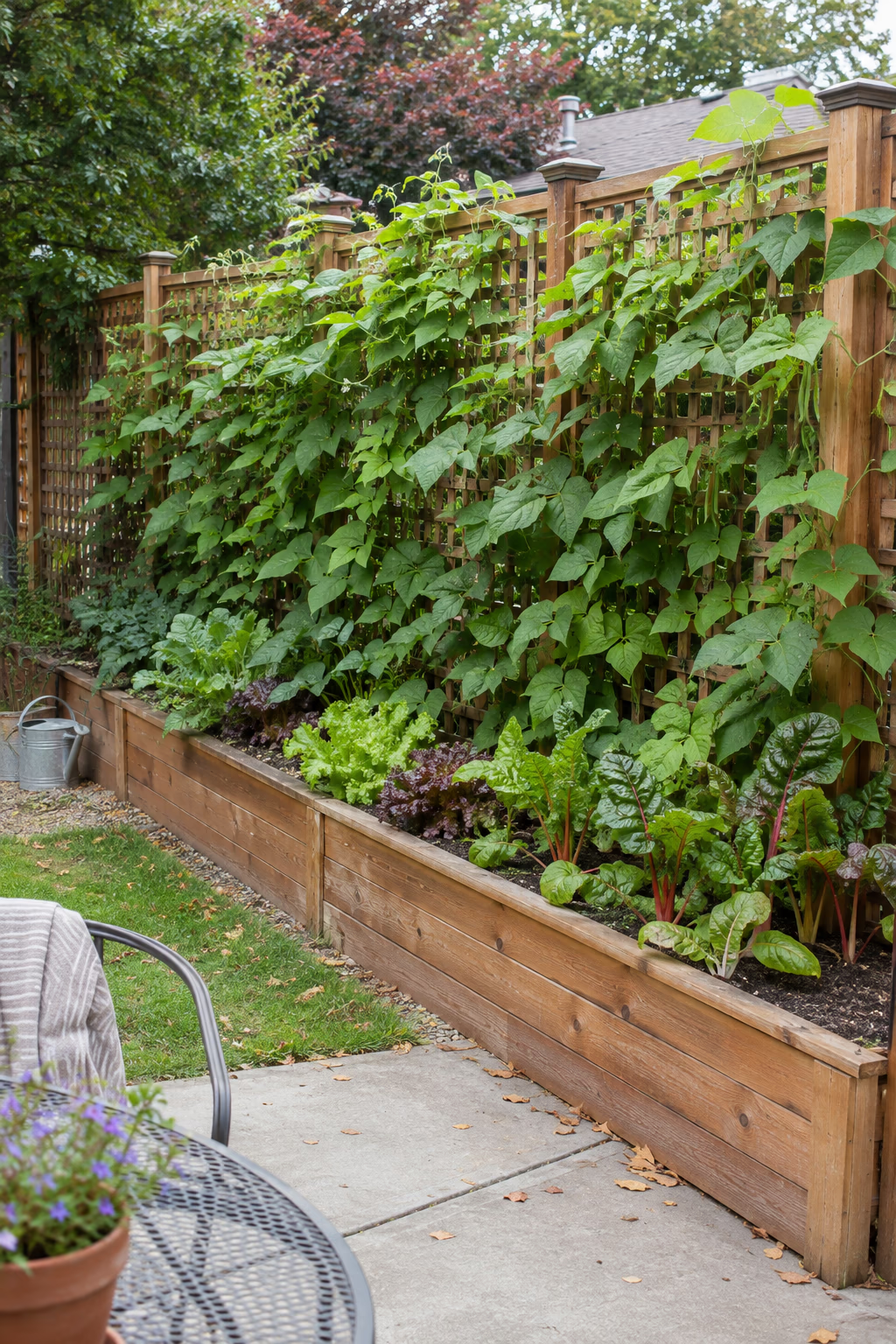
A green screen that also grows food
Attach 4×4 cedar posts to the back corners of a long raised bed and fill the space between them with a framed panel of square cedar or vinyl lattice about 6 feet tall. Set the bed along a property line or beside a patio, and plant pole beans, hops, or scarlet runner beans to cover it.
By midsummer, the lattice becomes a living screen that blocks a neighbor’s view or hides utility boxes, while still producing a harvest. In winter, the bare lattice keeps the space looking defined.
Solid lattice catches more wind than open wire, so sink the posts at least 2 feet into the ground below the bed or brace them firmly. Check HOA rules if a tall screen sits near the street or a shared fence line.
9. Attach an End-Cap Trellis to a Short Bed
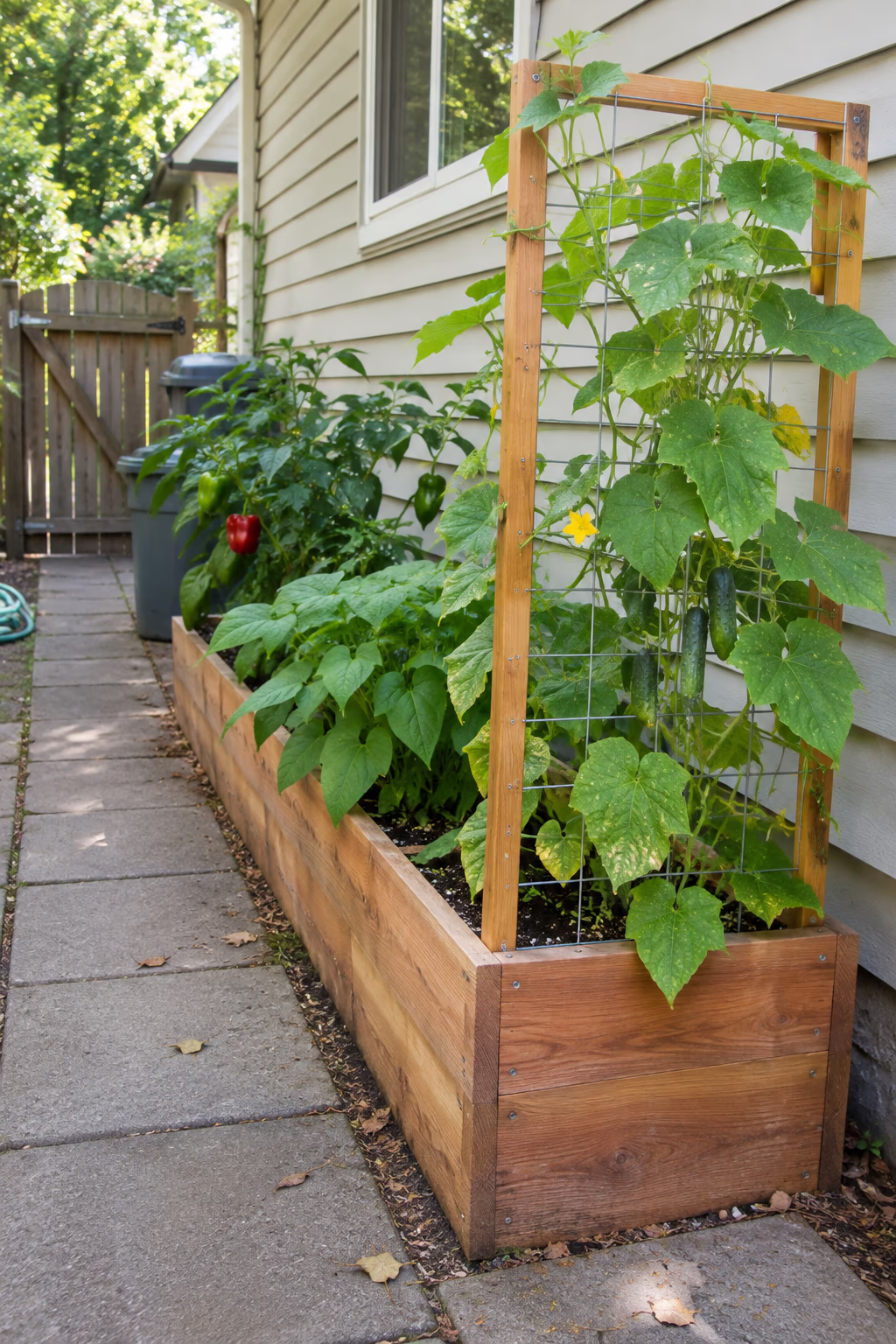
A space-saving option for small yards and side yards
Instead of running a trellis along the long side, fix a narrow panel to one short end of the bed. A 2 by 6 foot section of welded wire framed in cedar, screwed to the end board and braced with a pair of stakes, is enough for a few cucumbers or a row of peas.
This layout keeps the long sides open for easy reach and suits beds placed along a walkway, where a full-length trellis would feel like a wall. It is also handy for 2 by 6 foot or 3 by 6 foot beds in tight spaces.
Place the end cap on the north or east end where possible. A south-facing end cap will shade part of the bed through late afternoon.
10. Fan a Wooden Trellis Behind a Raised Flower Bed
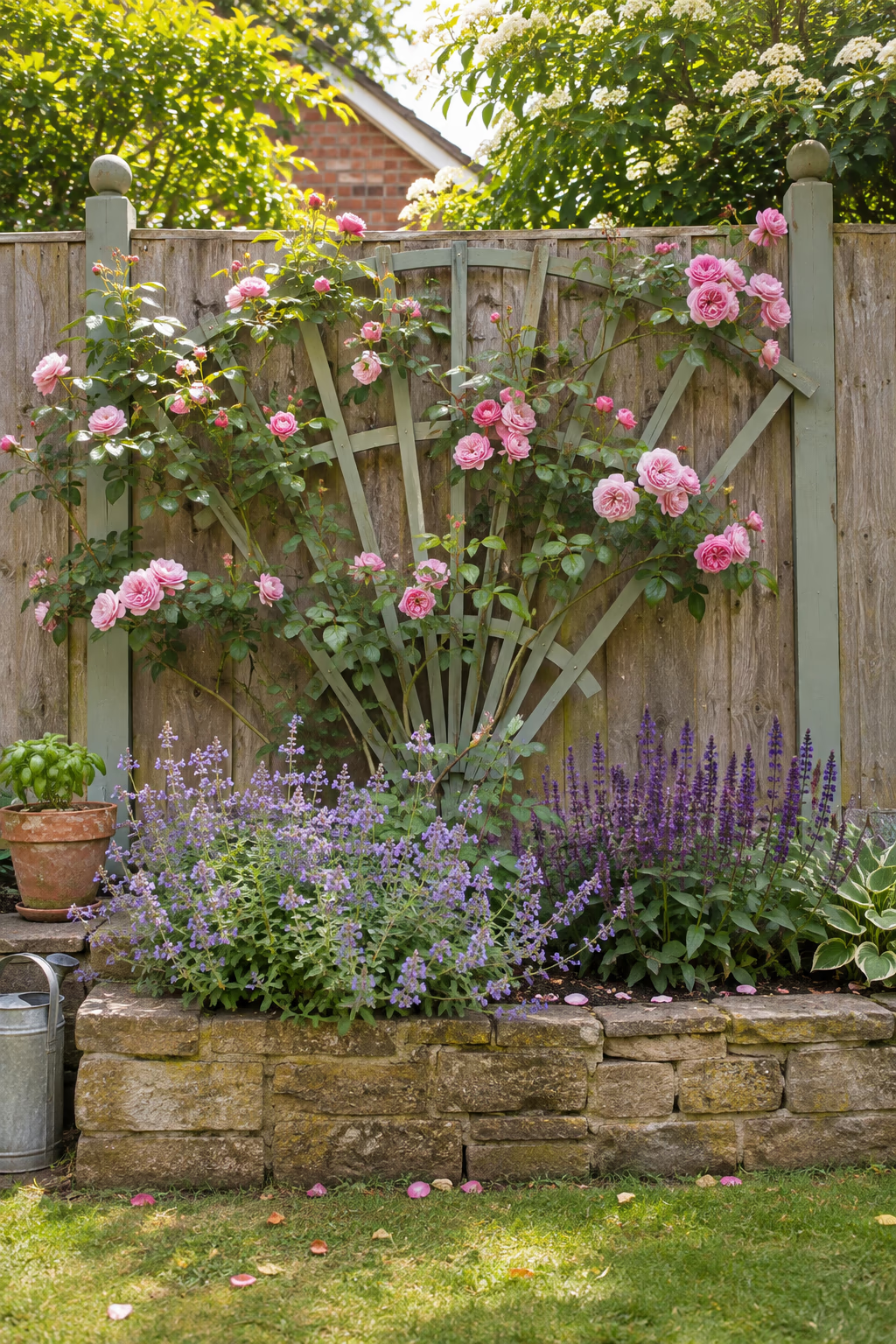
Classic cottage style for climbing blooms
Raised beds aren’t just for vegetables. A fan-shaped wooden trellis, painted soft sage green or left natural, set behind a raised flower bed gives climbing roses, clematis, or sweet peas a graceful structure to follow.
The spreading slats encourage canes to fan out sideways, which leads to more flowering along each stem. Lower perennials such as catmint, lady’s mantle, or salvia fill the front of the bed and hide the bare lower stems of the climber.
Fan trellises are lighter than they look, so screw them to sturdy posts rather than just pushing the legs into soil. Painted wood needs a fresh coat every few years, which is easier if the trellis can be unscrewed and laid flat.
11. Shape Copper Pipe Into an Elegant Grid Trellis
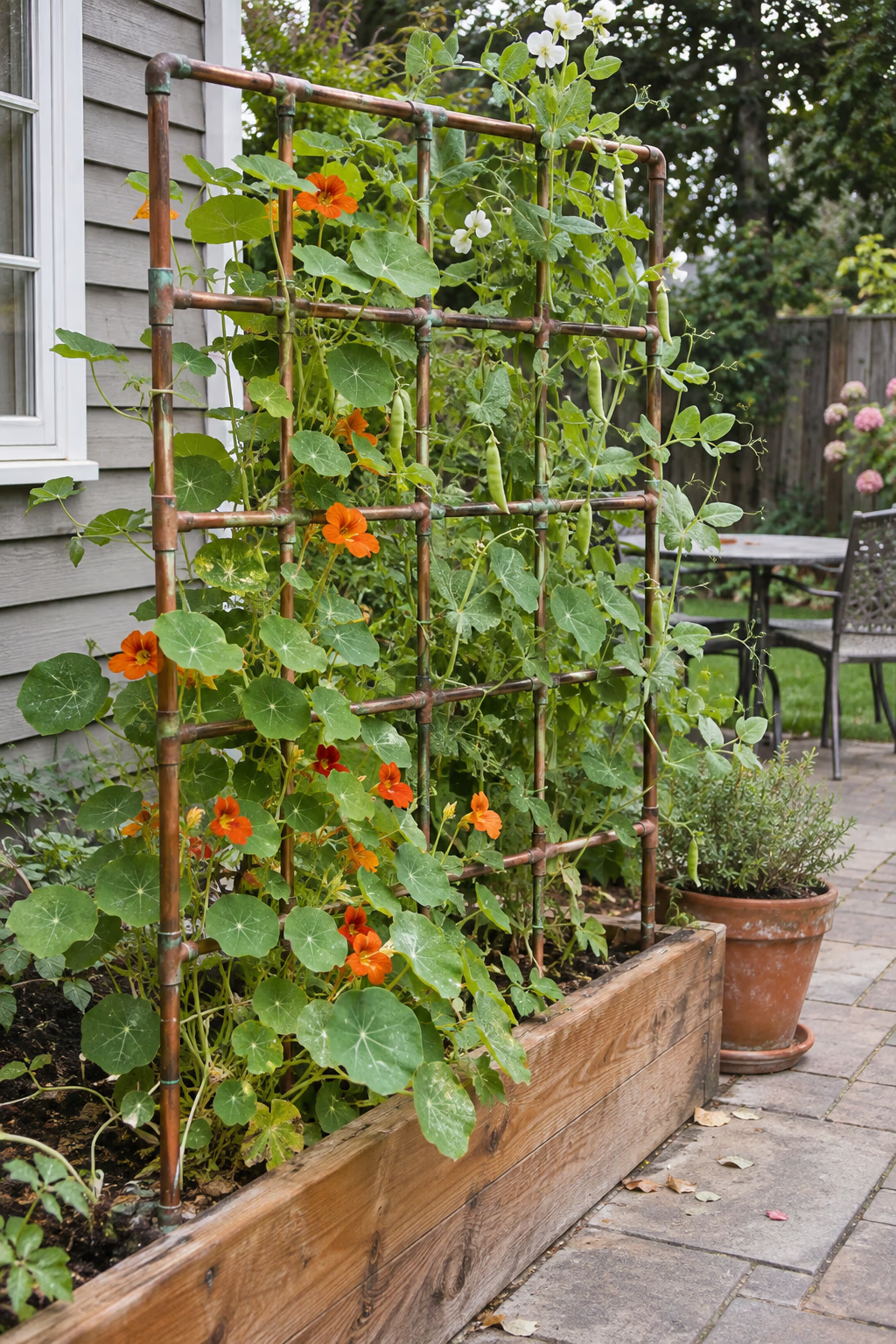
A trellis that looks better as it ages
Cut half-inch copper pipe into uprights and crosspieces and join them with copper tees and elbows to make a simple grid about 3 feet wide and 5 feet tall. Push the long legs into the soil of a cedar bed and plant peas, cucumbers, or a climbing nasturtium at the base.
New copper is bright and shiny, but it gradually darkens to brown and eventually a soft green patina. Against green foliage and warm cedar, that aging finish looks refined without being fussy.
Copper costs noticeably more than wire or wood, so this is best for a featured bed near a patio. Dry-fitted joints can loosen; outdoor-rated epoxy keeps the frame rigid without soldering.
12. Lean a Ladder Trellis Against the Bed Frame
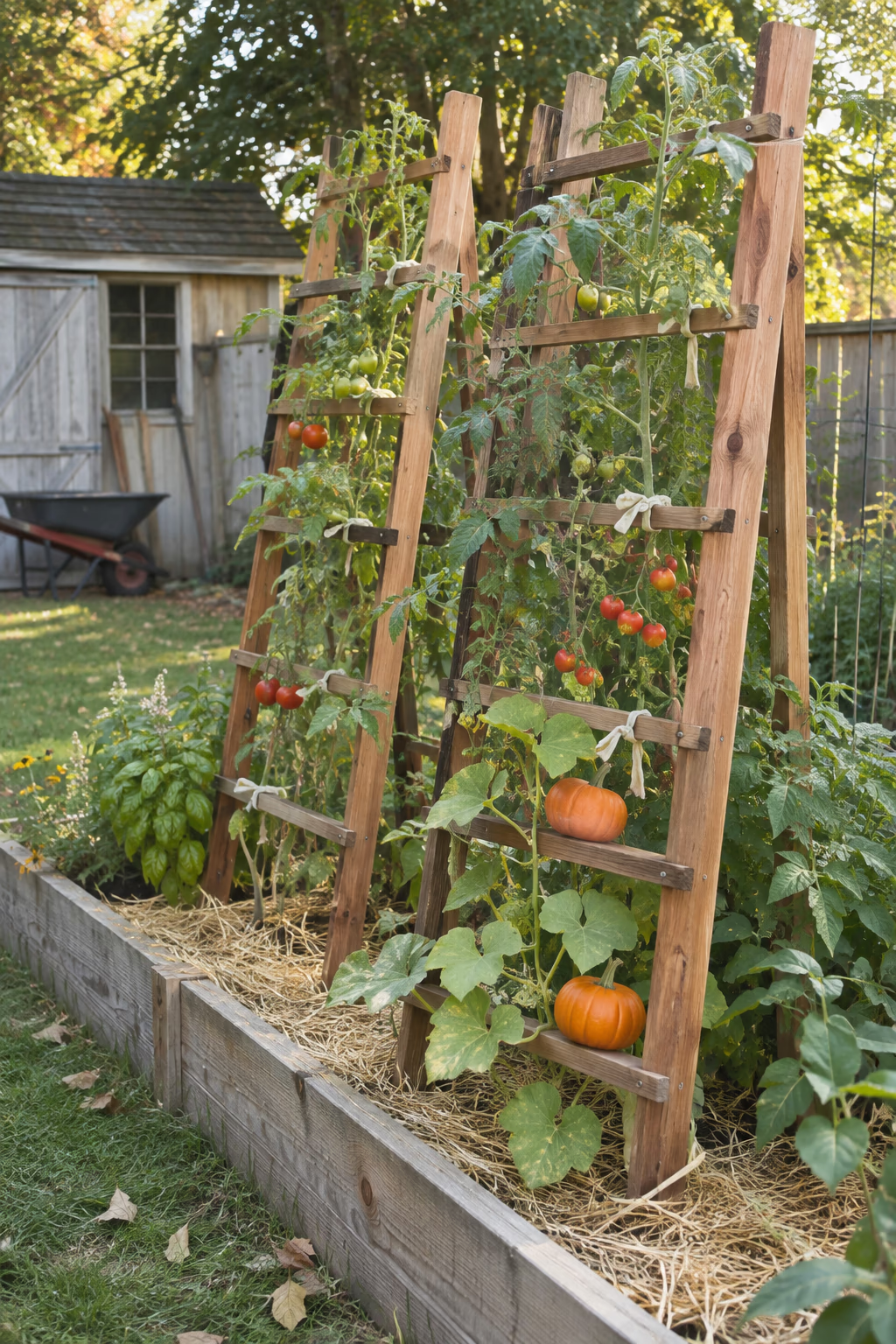
Simple rungs for tomatoes, mini pumpkins, and more
A ladder trellis is two upright rails with evenly spaced rungs, either purchased in metal or built from cedar 1x2s. Set two or three in a row inside the bed, angled slightly, or stand them upright in pairs and tie the tops together for extra stability.
The rungs give you ready-made tie points for tomato stems and a place to rest small pumpkins, cucumbers, or Malabar spinach. Ladders also look charming on their own, adding vertical rhythm along a bed even early in the season.
Single ladders can twist under a heavy crop. Brace each one with a stake behind it, and tie stems with soft strips of cloth rather than wire, which can cut into growing vines.
13. Cradle Small Melons in Slings on a Sturdy Panel
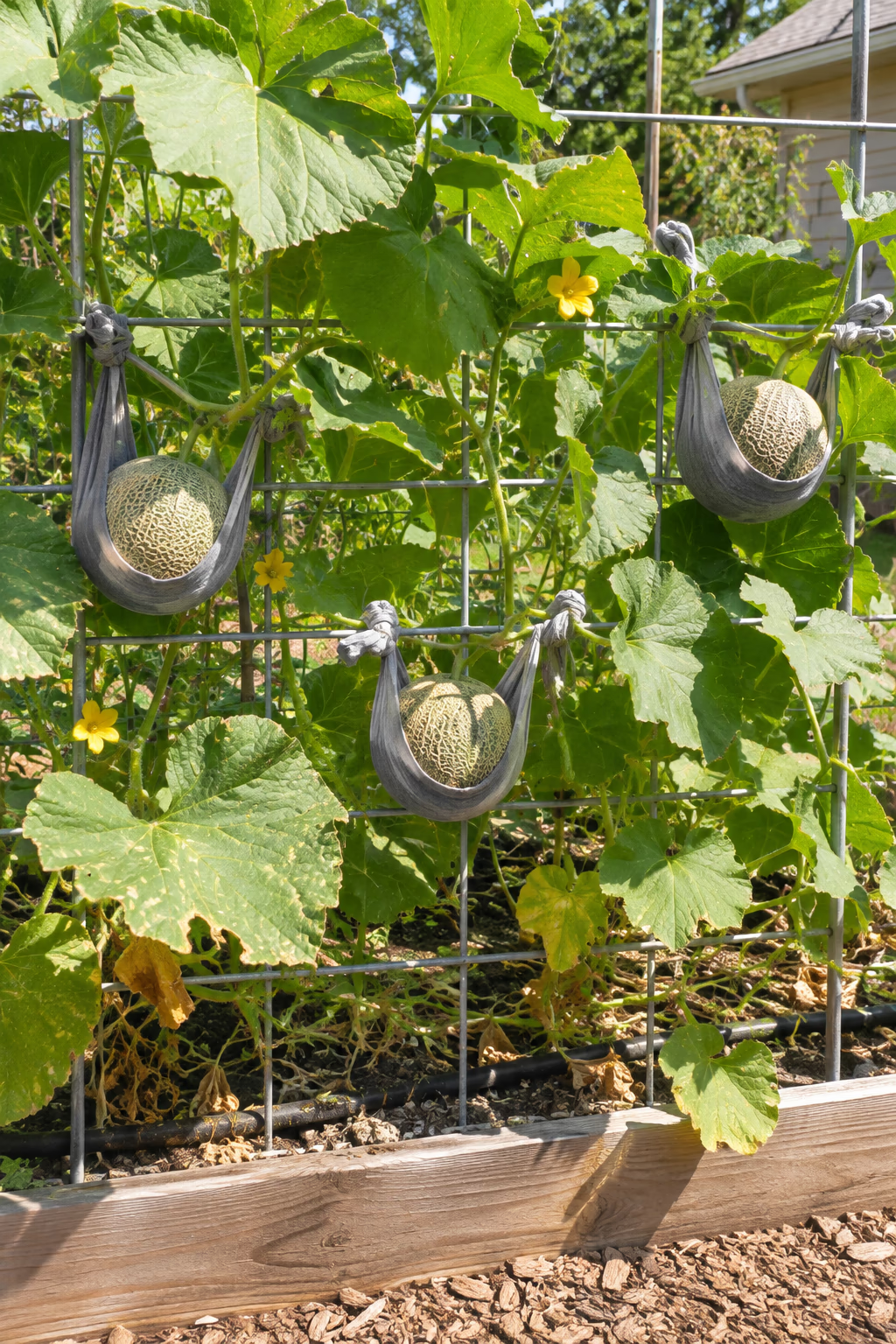
Grow melons up and keep the fruit off the soil
Small-fruited melons, such as personal-size cantaloupes and icebox watermelons, can climb a cattle panel or heavy welded wire fixed to the bed. As each fruit reaches about the size of a tennis ball, slip it into a sling made from old T-shirt fabric, mesh produce bags, or pantyhose and tie the ends to the panel.
The sling carries the weight so the vine doesn’t tear, and fruit hanging in the air ripens evenly without rotting on the ground. Growing up also frees most of a 4 by 8 foot bed for other crops.
Melons need heat and full sun, so this works best on a south-facing or open bed. Skip large watermelons and full-size winter squash; they are too heavy for a vertical setup.
14. Give an Elevated Planter Box a Built-In Trellis Back
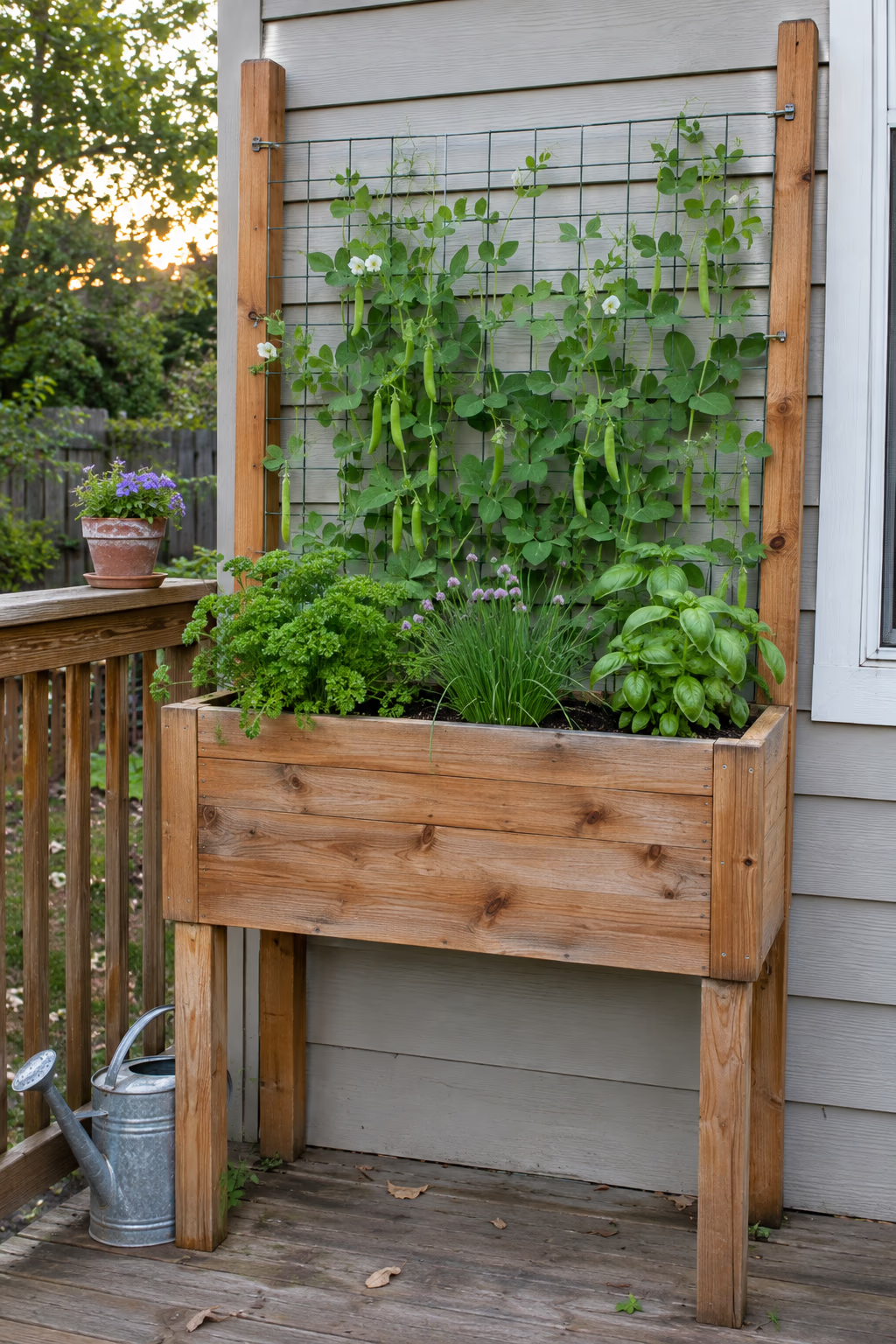
Vertical growing at patio height
Elevated planter boxes on legs are popular for decks and patios, and adding a trellis back makes them far more productive. Extend the rear legs up to about 6 feet, or screw a pair of cedar 2x2s to the back, and fill the space with welded wire or wooden slats.
Plant compact pole beans, snap peas, or a patio cucumber against the back and herbs in front. The whole setup fits against a railing or house wall and lets you harvest without bending.
Elevated planters hold less soil, so they dry out fast in summer heat. Water daily in hot weather, and confirm that the deck or balcony can safely support the weight of wet soil.
15. Turn Concrete Remesh Into a Rusty Rustic Grid
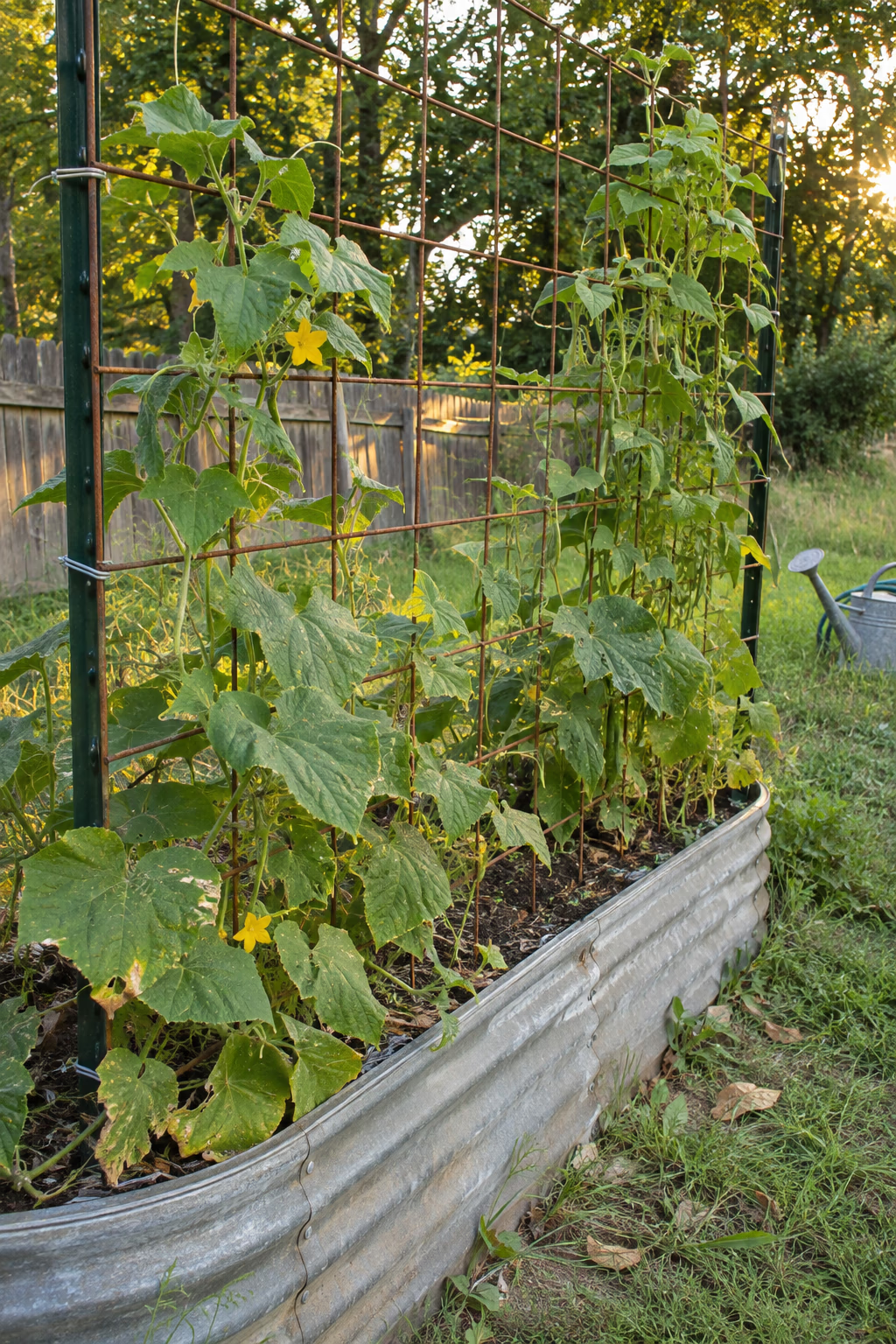
A budget-friendly heavy-duty trellis with farmhouse character
Concrete reinforcing mesh, sold in sheets at home improvement stores, has 6-inch square openings and is very strong for its price. Wire it to T-posts or wooden stakes at the back of a bed, and it will quickly weather to a warm rusty brown.
The large openings make it easy to reach through to pick cucumbers, beans, and small squash, and the stiff steel holds heavy late-summer growth without sagging. The rust color looks especially good with weathered wood or galvanized beds.
Cut edges are sharp, so wear gloves and file or bend over any exposed ends. The rust is surface-level and doesn’t harm plants, though it can stain light-colored stone or concrete nearby.
16. Repurpose an Old Iron Headboard as a Bed Trellis
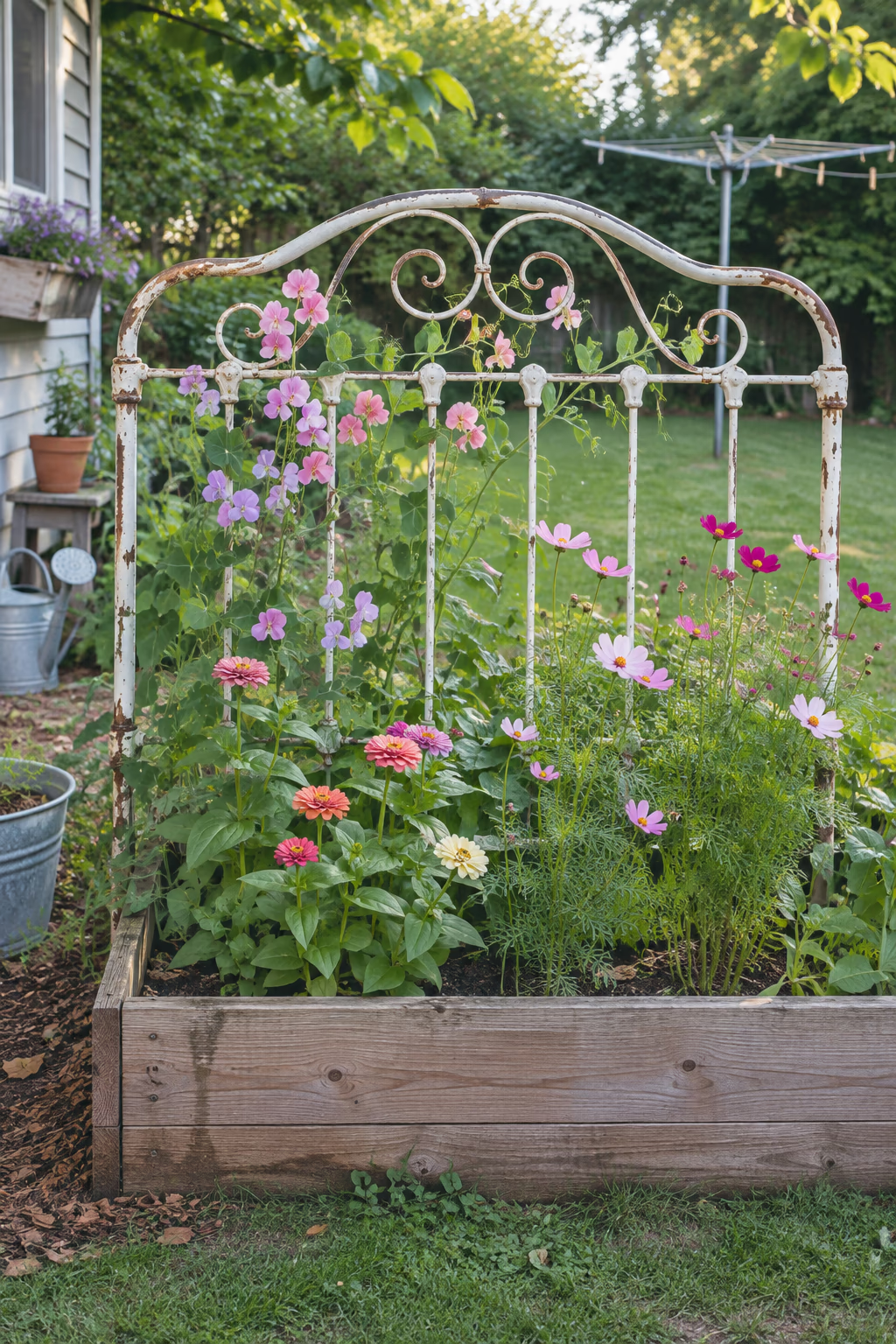
A conversation piece that costs next to nothing
Thrift stores, yard sales, and curbside finds often turn up old metal headboards. Push the legs into the end of a raised bed or bolt them to the bed frame, and let sweet peas, morning glories, or pole beans climb the scrolls and spindles.
The old-fashioned shapes give a vegetable bed personality and a playful nod to the term “garden bed.” Chippy paint and a little rust only add to the charm.
Old painted metal may contain lead paint. Strip or seal it before using it near edible crops, or reserve the headboard for a flower bed.
17. Hinge a Trellis Panel So It Folds Down for Winter
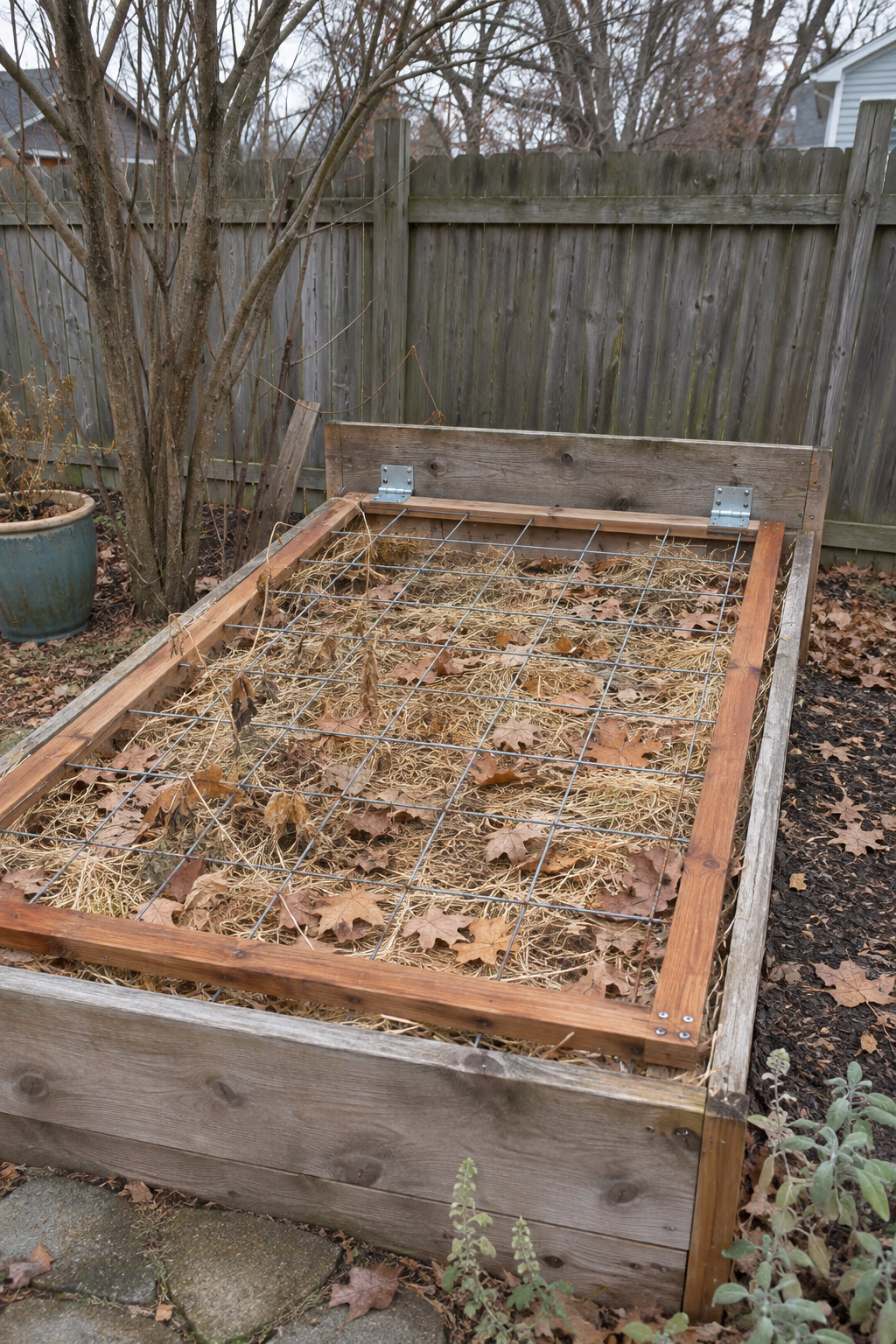
Easier cleanup and storage at season’s end
Attach a framed wire or wooden trellis panel to the back of a bed using heavy-duty exterior hinges at the base. In the growing season, hold it upright with a hook-and-eye or a removable brace; in fall, unhook it and lay it flat across the bed.
Folding the trellis down makes it easy to clear spent vines, protects the panel from winter wind, and leaves the bed ready for a frost cloth or cold frame cover. Some gardeners also tilt it halfway down to make reaching the top of the crop easier.
Choose galvanized or stainless hardware to avoid rust, and keep the frame light enough for one person to lift. A heavy panel slamming down is a pinched-finger hazard.
18. Push Twiggy Pea Brush Into an Early Spring Bed
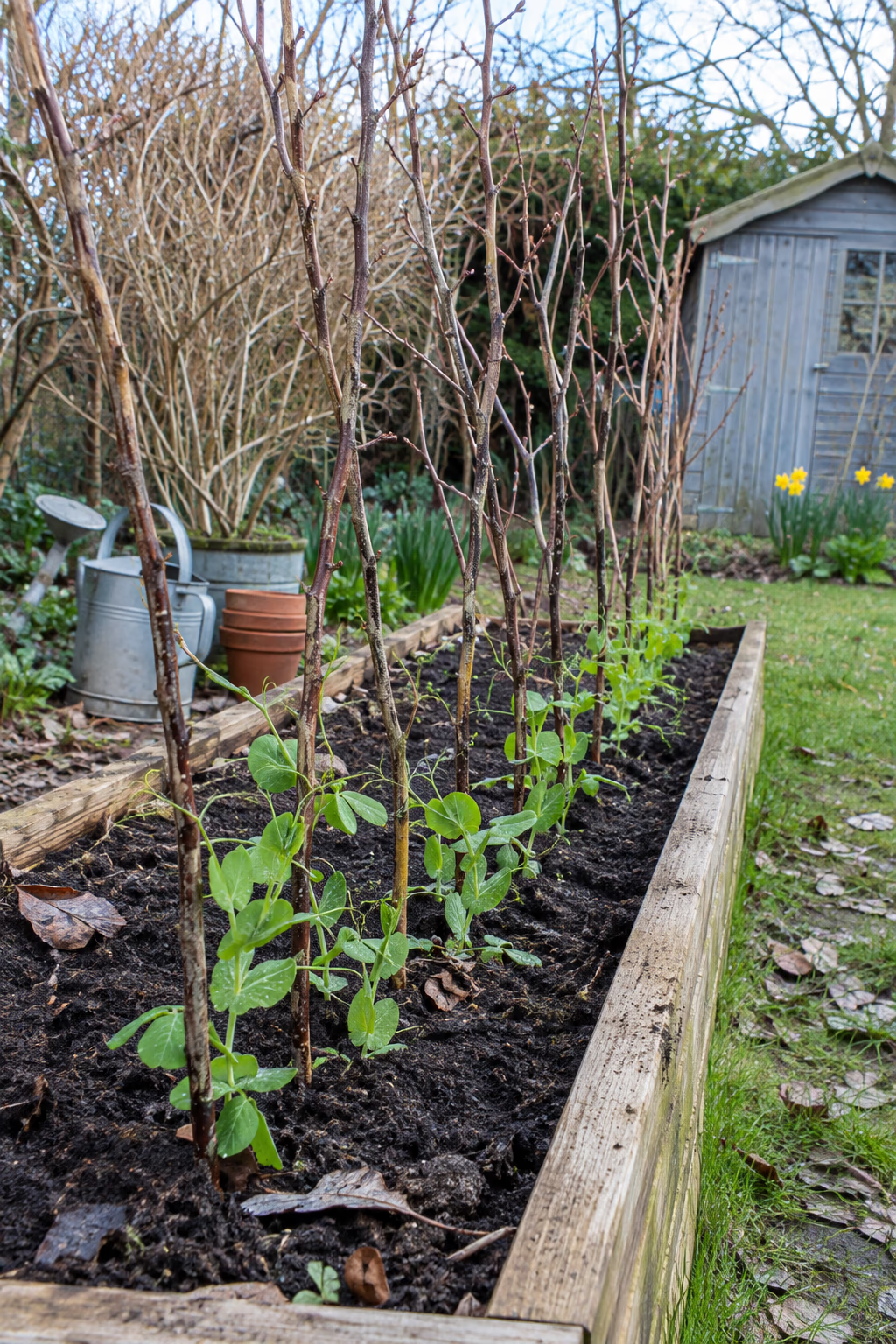
A free, natural support from your own pruning pile
Save branchy prunings from shrubs and trees such as birch, hazel, or forsythia in late winter. Push them upright into the bed, about 4 to 5 feet tall and close together, then sow peas at their base.
Pea tendrils grip the fine twigs readily, and the bundle of branches looks rustic and seasonal in a bare spring garden. When peas are finished in early summer, the brush can go straight into the compost or brush pile.
Pea brush is best for peas and sweet peas. It isn’t strong enough for heavier crops and usually lasts only one season.
19. Weave a Florida Twine Trellis Between Stakes
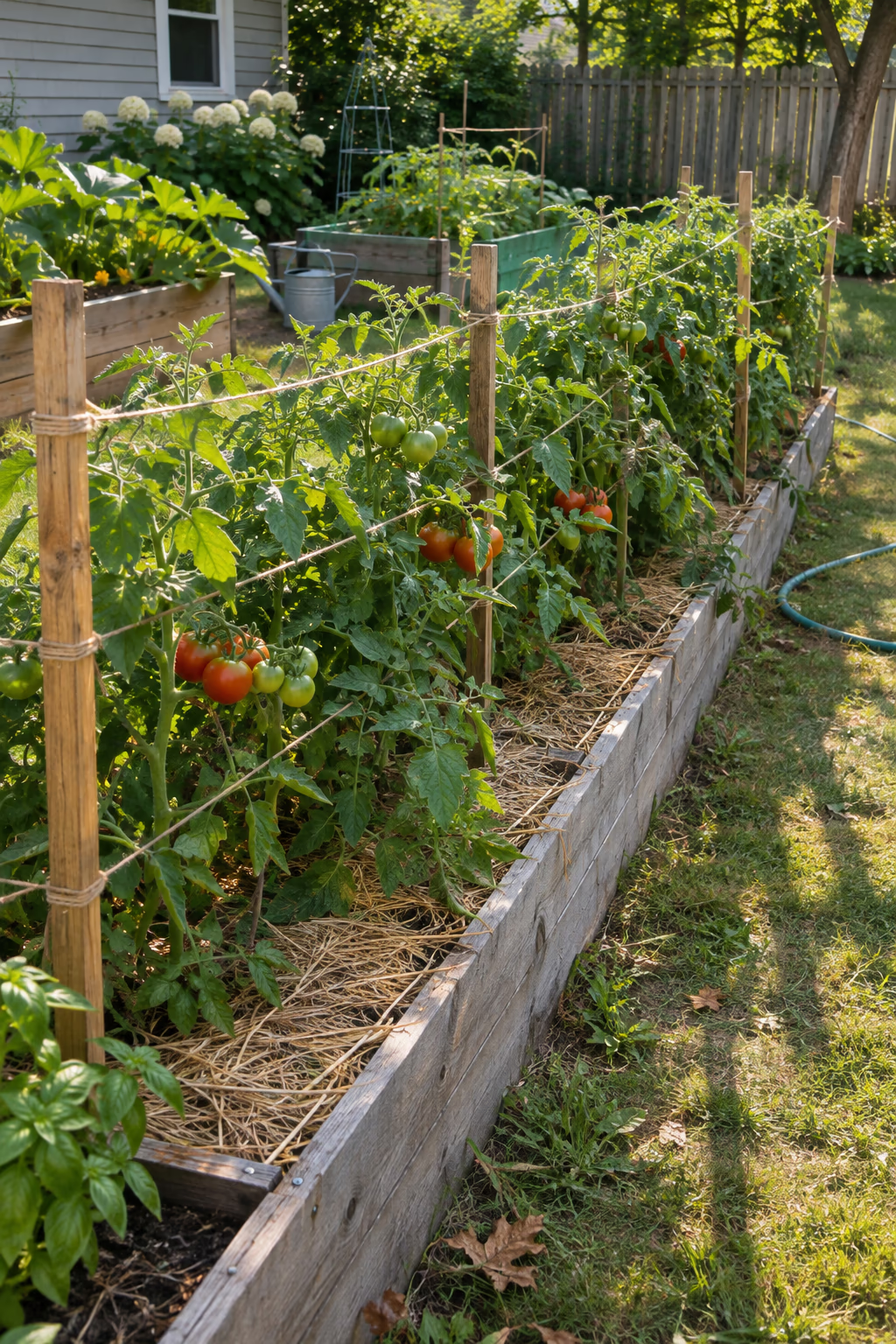
Fast support for a full row of bush tomatoes
Drive a sturdy wooden or metal stake at each end of the bed and another between every two tomato plants. Starting about 8 inches above the soil, run twine along the row, weaving in front of and behind each plant, then wrap it around each stake. Add a new line every 8 to 10 inches as plants grow.
This “basket weave” holds determinate and compact tomatoes upright with very little cost, and it works well on long, narrow raised beds where cages would crowd each other.
Keep the twine snug, since loose lines let plants flop. It’s not a great match for tall indeterminate tomatoes, which outgrow the stakes by midsummer.
20. Mix Runner Beans and Nasturtiums on a Pollinator Trellis
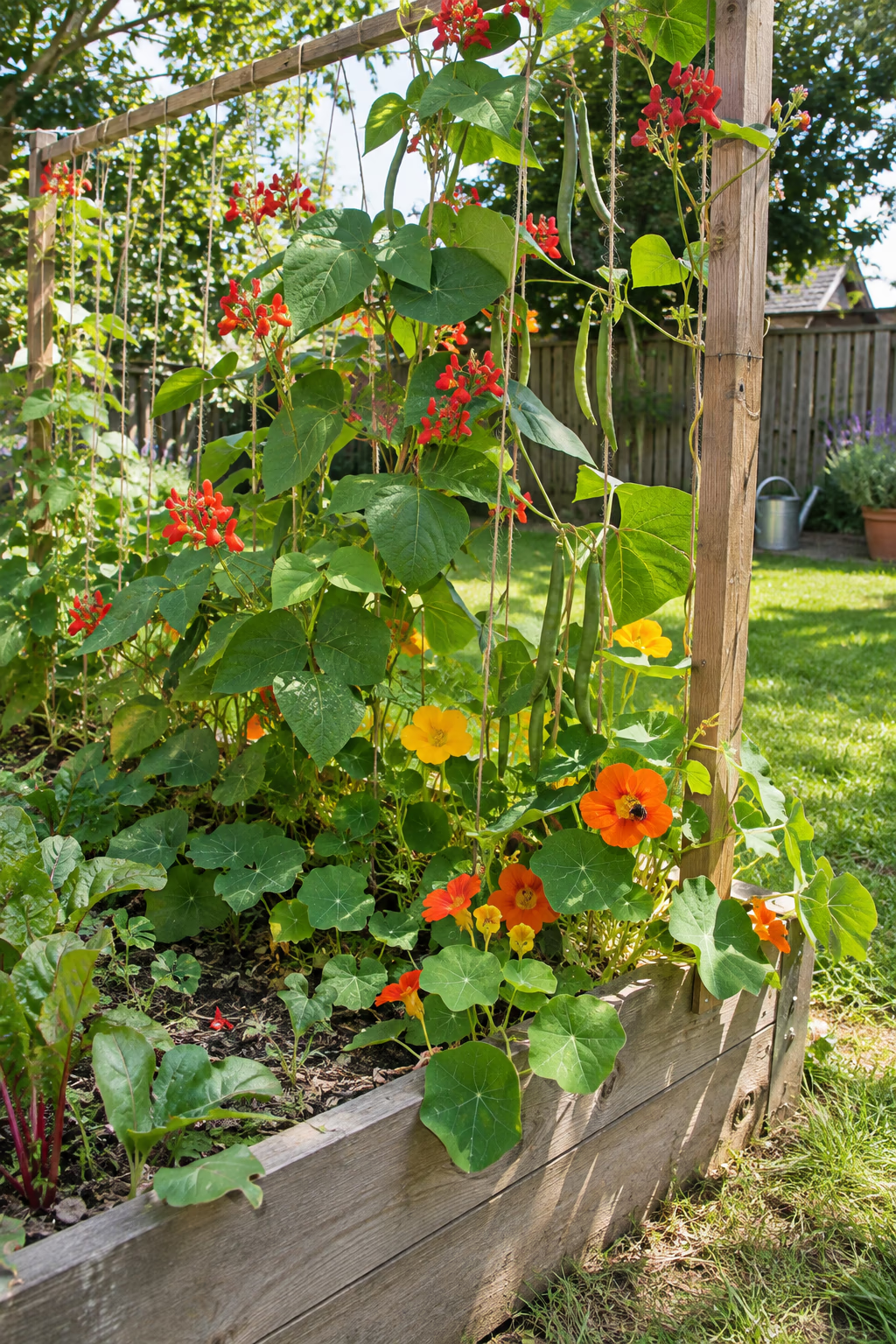
Color and harvest on the same structure
Scarlet runner beans produce vivid red flowers that hummingbirds visit, followed by edible beans. Grow them on a simple wire or string trellis at the back of the bed and add climbing nasturtiums at the base for orange and gold blooms.
The combination turns a working vegetable bed into an eye-catching display that draws pollinators, which can help with fruit set on nearby squash and cucumbers. Nasturtium leaves and flowers are edible too.
Runner beans can drop blossoms in very hot weather. In southern regions, plant them where they get some afternoon shade, or grow them as a spring and fall crop.
21. Stretch Horizontal Netting Over Peppers and Eggplant
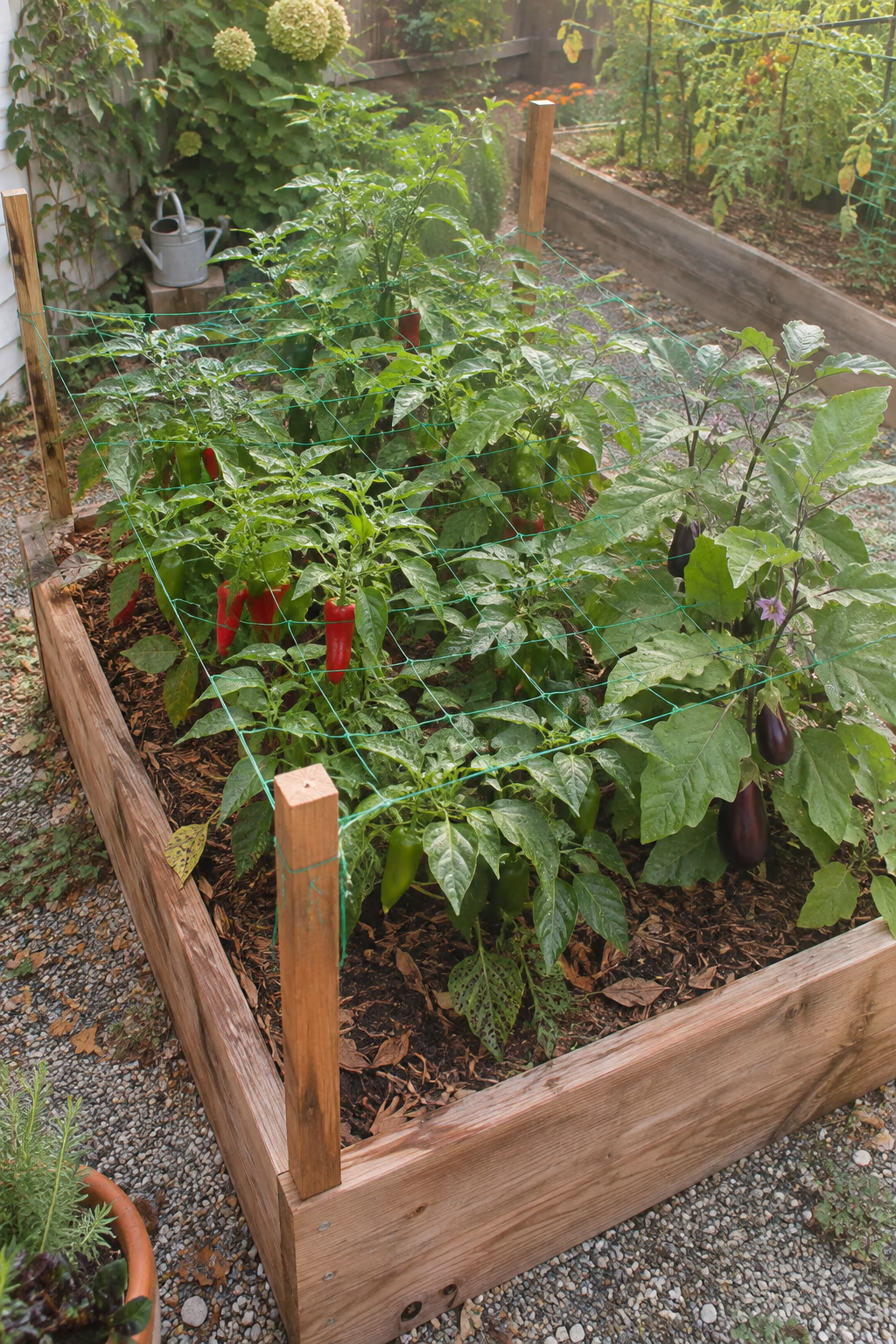
Support for bushy crops that tend to flop
Not every trellis has to stand upright. Set a corner post in each corner of the bed and stretch trellis netting horizontally about 12 to 18 inches above the soil. Plant peppers, eggplant, or bush beans so they grow up through the squares.
The netting holds stems steady once they’re loaded with fruit, preventing broken branches after summer storms. Many flower growers use the same method for tall cut flowers like zinnias and snapdragons.
Install the netting soon after planting, before stems get large. Fitting it over full-grown plants is frustrating and can snap branches.
How to Plan Your Raised Garden Bed Trellis
A good trellis is matched to your bed, your crops, and your sun. A few minutes of planning helps it last for years and keeps your garden productive.
- Decide what will climb. Peas and morning glories are light, while cucumbers, small melons, and squash get heavy. Match the trellis strength to the heaviest crop you plan to grow.
- Put tall structures on the north side. In the US, a trellis on the north edge of a bed won’t shade lower crops in front.
- Install before you plant. Setting posts and panels first avoids disturbing roots and lets young vines find support right away.
- Anchor for wind. A trellis full of leaves acts like a sail. Use rebar, T-posts, or posts set below the bed to keep it upright through summer storms.
- Choose durable, food-safe materials. Cedar, galvanized steel, and powder-coated metal last longer than untreated pine or thin wire. Avoid old painted wood or metal of unknown origin near edibles.
- Leave room to harvest. Keep paths at least 2 to 3 feet wide and limit trellis height to what you can comfortably reach, usually 6 to 7 feet.
Frequently Asked Questions
Which crops grow best on a raised bed trellis?
Peas, pole beans, cucumbers, indeterminate tomatoes, small melons, small winter squash, and Malabar spinach all climb well. Flowering vines like sweet peas, morning glories, clematis, and climbing nasturtiums are good choices for ornamental beds.
How tall should a trellis be for a raised bed?
For most vegetables, 5 to 6 feet above the soil is plenty. Remember to add the bed’s height, since a 6-foot trellis on a 2-foot bed puts the top 8 feet off the ground, which can be hard to reach.
Can I attach a trellis directly to my raised bed?
Yes, for light to medium crops. Screw uprights to the inside of a wood bed or use pipe straps on metal beds. For heavy crops or tall panels, add stakes, T-posts, or rebar driven into the ground below for extra support.
Is it safe to use treated wood for a vegetable trellis?
Modern pressure-treated lumber is generally considered acceptable for garden use, but many gardeners prefer naturally rot-resistant cedar or metal for anything touching edible crops. Avoid old railroad ties and lumber treated with older preservatives.
How much does a raised bed trellis cost?
Prices vary widely. Pea brush and twine are nearly free, a netting frame or bamboo teepee often costs under $30, and a cattle panel arch typically runs from about $40 to $100 depending on local prices. Copper and decorative metal designs cost more.
Final Thoughts
The right trellis turns a raised bed from a simple box of soil into a productive, good-looking vertical garden. Whether you bend a cattle panel arch, prop an A-frame over cucumbers, or push a few twiggy branches in for spring peas, growing up gives you more harvest in the same space.
Start with one structure that suits your favorite climbing crop, place it where it won’t shade the rest of the bed, and anchor it well. Once you see how much easier picking becomes, you’ll probably want a trellis on every bed in the garden.