A bare slab of concrete or pavers can feel more like a parking spot than a place to relax. Add a few well-placed planters, though, and the same patio starts to feel like an outdoor room, with green edges, a hint of fragrance, and color right where you sit.
Planters are one of the easiest ways to change a patio because they don’t require digging, permits, or a full landscaping project. You can move them, swap the plants with the seasons, and build up the look a little at a time. They also solve real problems, from blocking a neighbor’s view to keeping fresh herbs within reach of the grill.
These 25 patio planter ideas cover long border boxes, tall privacy planters, herb pots, planter benches, rolling boxes, fragrant seating corners, small trees, winter displays, and more. Each one includes practical sizes, materials, and plant suggestions so you can pick the ideas that suit your patio, climate, and budget.
1. Edge the Patio With Long Rectangular Planter Boxes
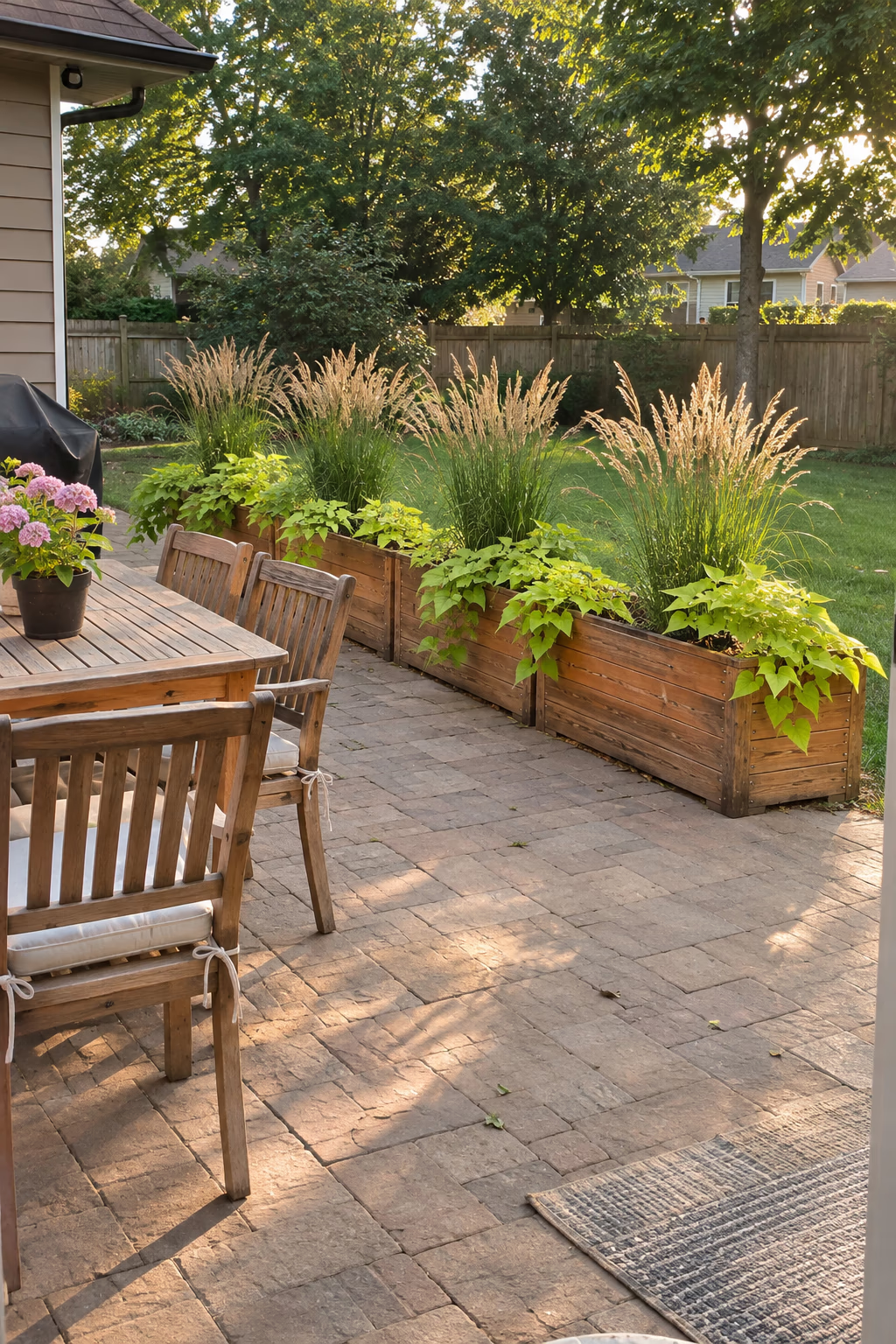
Give the patio a clear, finished border
Long, low planter boxes set along one or two sides of a patio act like a living wall that frames the space without closing it in. Boxes about 36 to 48 inches long, 16 to 18 inches wide, and 16 to 24 inches tall hold enough soil for healthy roots and look substantial next to outdoor furniture.
Line them up end to end along the patio edge and repeat the same planting in each one, such as a row of feather reed grass with a skirt of sweet potato vine or creeping thyme. Repetition is what makes the edge look intentional rather than cluttered.
Choose cedar, powder-coated metal, fiberglass, or recycled plastic lumber for durability. Leave a gap for foot traffic where the patio meets the lawn or path, and make sure each box has drainage holes so water doesn’t pool on the paving.
2. Screen the Seating Area With Tall Planters and Grasses
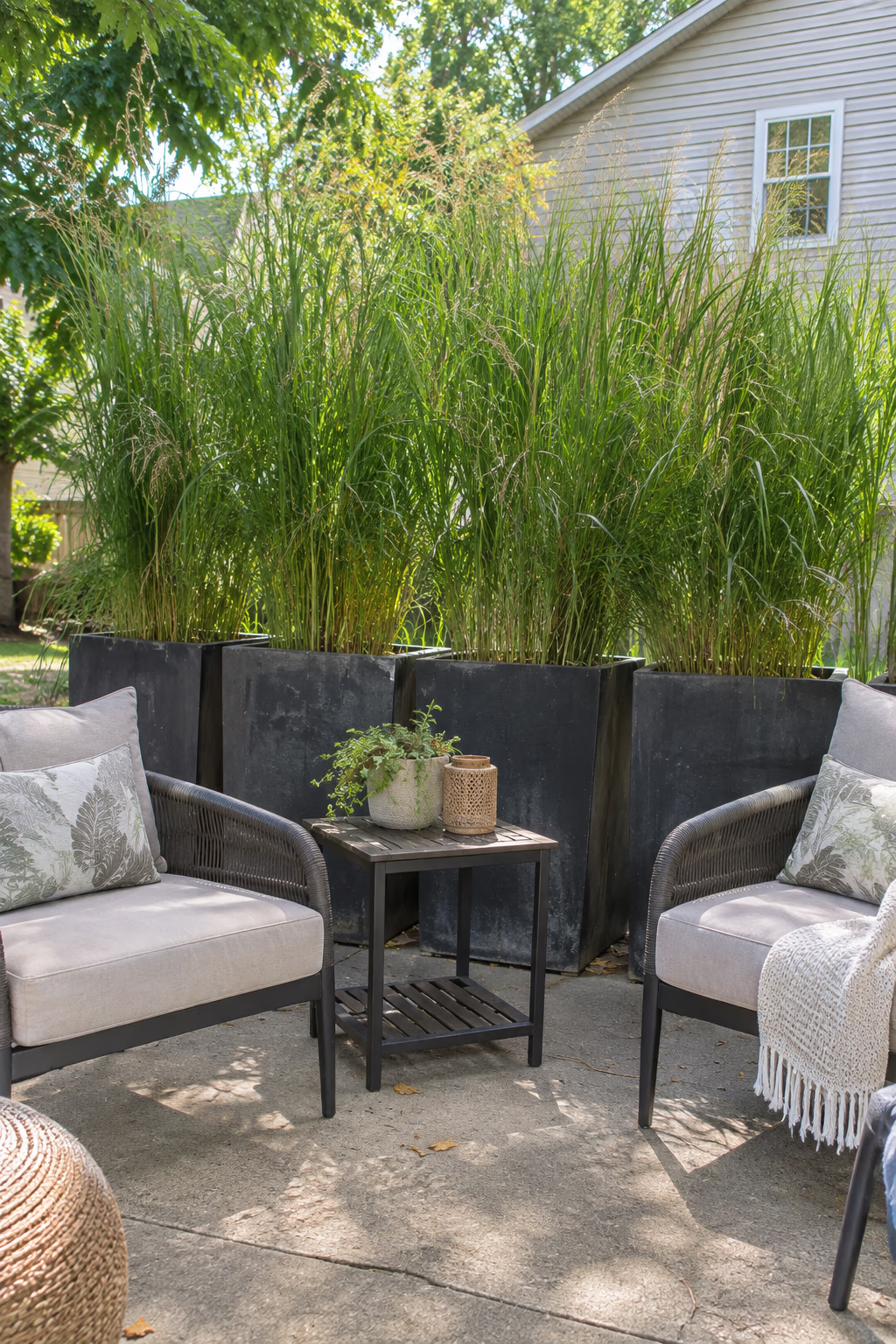
Privacy that grows instead of a fence
If your patio faces a neighbor’s window or a busy alley, a row of tall planters can create a soft screen in a single season. Planters 30 to 36 inches tall raise the plants so that a 4-foot grass ends up close to eye level for anyone sitting down.
Good screening choices include clumping bamboo in large containers, tall ornamental grasses such as switchgrass or miscanthus, columnar arborvitae, and sky pencil holly. Plant three to five planters in a straight row and keep them close together so the foliage knits into one green band.
Tall containers catch the wind, so pick heavy materials or weight the bottom with stones. Avoid running bamboo even in pots, since it can escape through drainage holes, and check HOA rules if your screen will sit near a property line.
3. Grow a Kitchen Herb Planter Beside the Grill
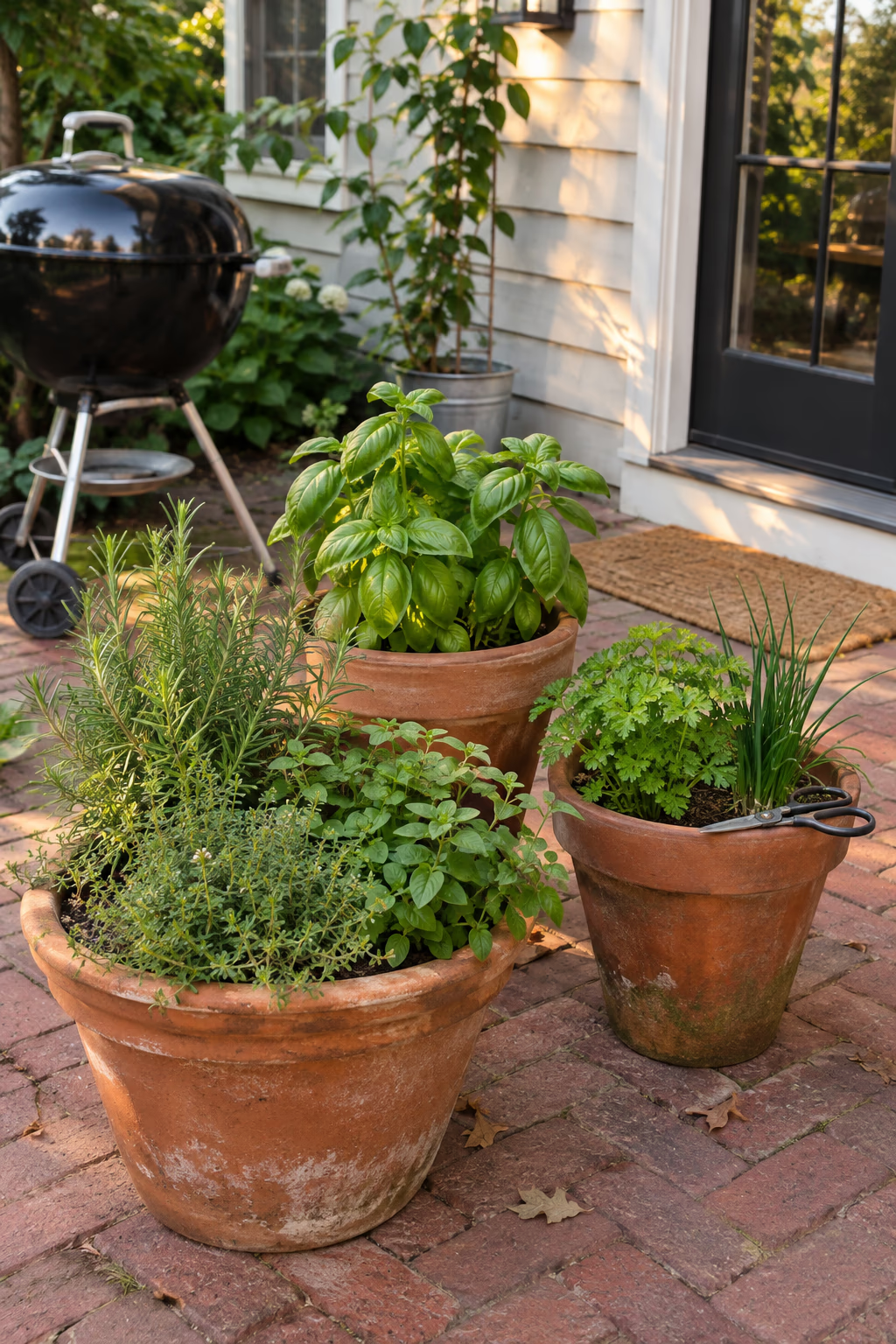
Fresh flavor a few steps from the cooking
A planter of herbs next to the grill makes it easy to snip a handful of basil or rosemary while dinner cooks. A wide planter about 24 to 30 inches across, or two or three medium pots grouped together, holds enough herbs for regular summer cooking.
Group plants by their water needs. Rosemary, thyme, oregano, and sage like sharp drainage and can share a clay pot with gritty potting mix, while basil, parsley, and chives prefer steadier moisture and do better together in a separate container.
Herbs need at least six hours of sun to stay compact and flavorful. Keep the planter a few feet away from the grill itself so heat and grease don’t scorch the leaves, and plant mint in its own pot so it doesn’t crowd out everything else.
4. Build a Planter Bench for Seating and Greenery
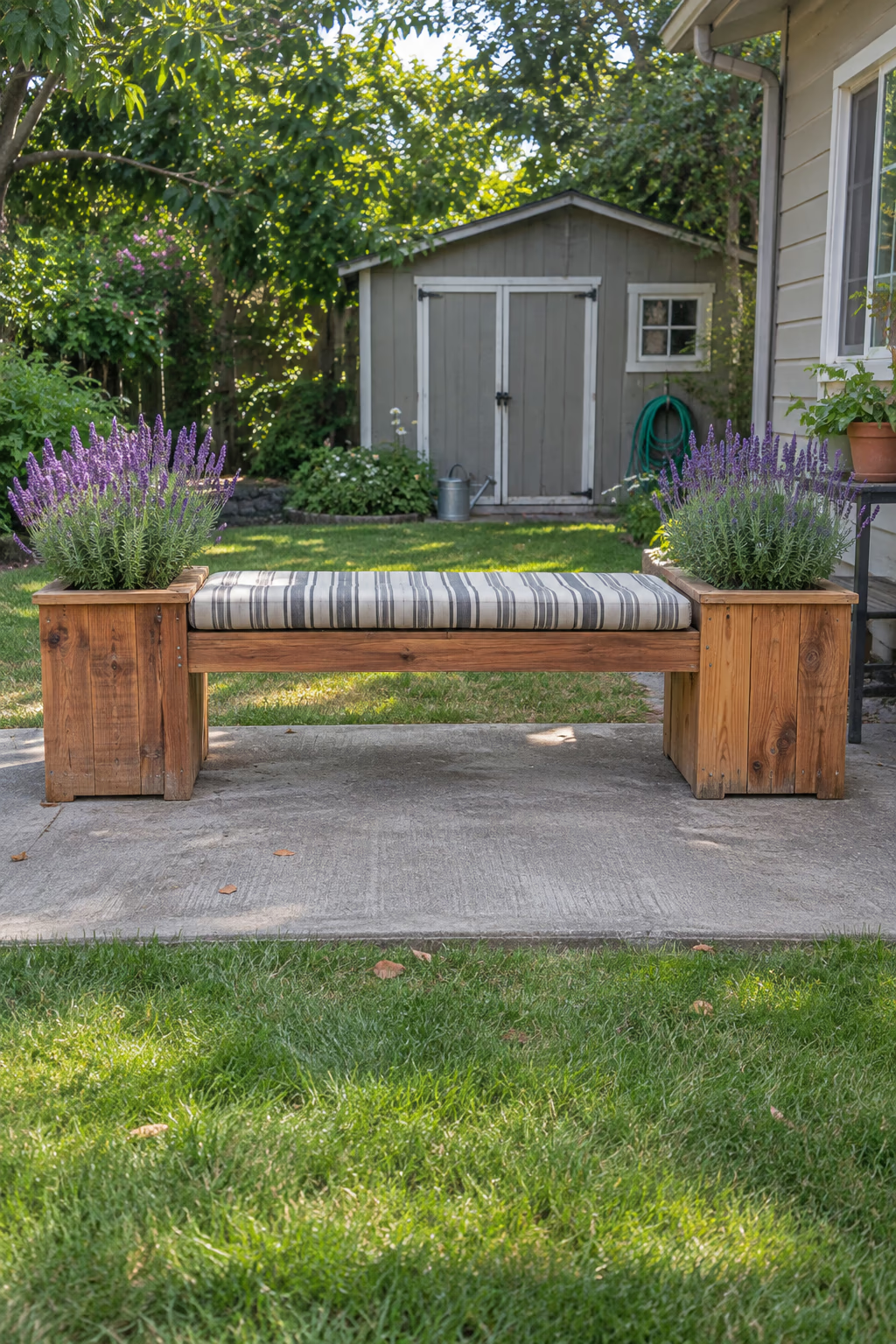
Two jobs in one compact footprint
A planter bench pairs a simple wooden seat with a planter box at each end, giving you extra seating and built-in greenery in the same space. It’s a popular weekend project made from cedar or pressure-treated lumber, with two boxes about 16 inches square and a 4- to 6-foot bench board spanning between them.
Plant the end boxes with something that won’t snag clothing, like lavender, dwarf grasses, coleus, or trailing calibrachoa. Placing the bench against the patio edge also helps define the space, much like a low wall would.
Line the inside of the boxes with landscape fabric or a plastic liner with drainage holes so wet soil doesn’t rot the wood quickly. Seal or stain the bench boards to keep them from splintering.
5. Put Planter Boxes on Casters for a Flexible Layout
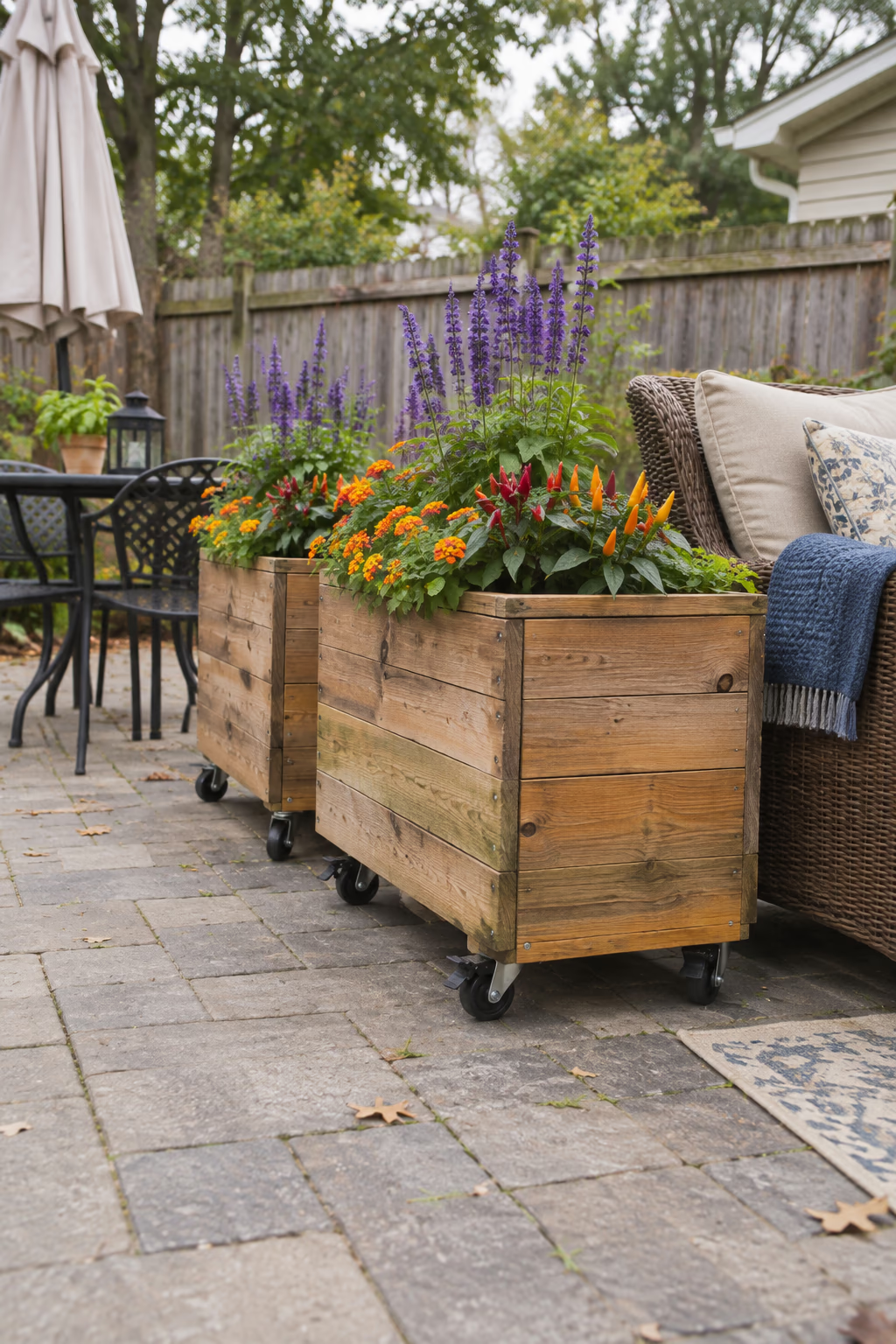
Rearrange the patio whenever you want
Mounting planter boxes on heavy-duty locking casters lets you roll them aside for a party, chase the sun, or move tender plants under cover before a storm. Many planters come with wheels, or you can screw casters onto a sturdy wooden base underneath an existing box.
Rolling planters work well as movable room dividers between a dining table and a lounge area. Fill them with lightweight potting mix and choose plants with plenty of foliage, such as salvia, lantana, ornamental peppers, or a compact hydrangea.
Wet soil is heavy, so pick casters rated well beyond the planter’s full weight. Lock the wheels when the planter is in place, especially on sloped patios.
6. Stage Pots on Plant Stands at Different Heights
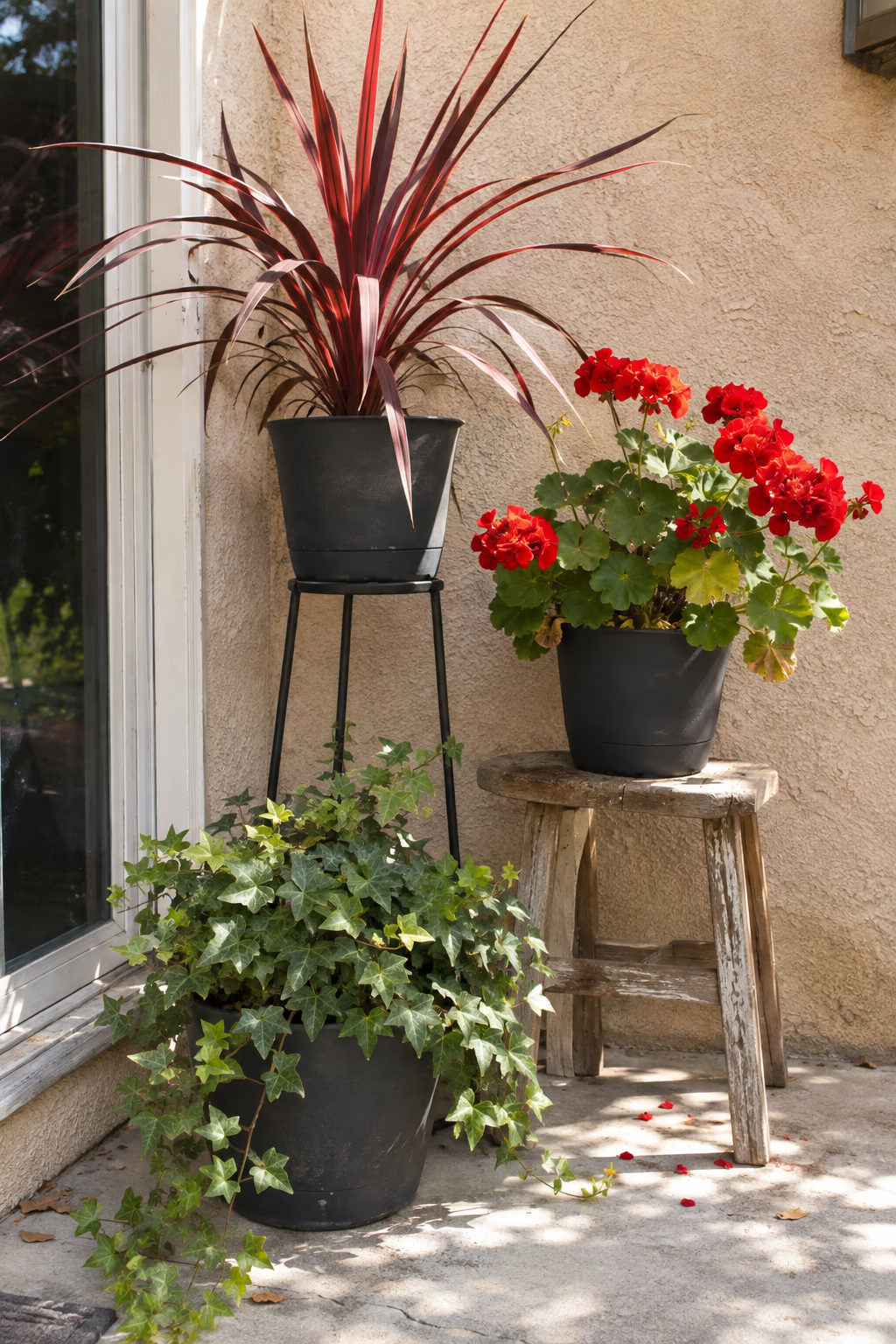
Turn a few pots into a curated display
Placing several pots on stands of different heights instead of setting them all on the ground creates a layered arrangement that looks fuller with fewer plants. Mix a tall metal stand, a medium wooden stool, and a pot sitting directly on the patio for three distinct levels.
Keep the pots related through color or material, such as all matte black or all warm clay, and vary the plants. A spiky cordyline on top, a mounding geranium in the middle, and trailing ivy at the bottom read as one composition.
Elevated pots dry out faster in wind and sun, so check them daily during hot spells. Choose stands with wide bases, and avoid perching heavy pots on spindly legs in exposed spots.
7. Train a Flowering Vine Up a Trellis Planter
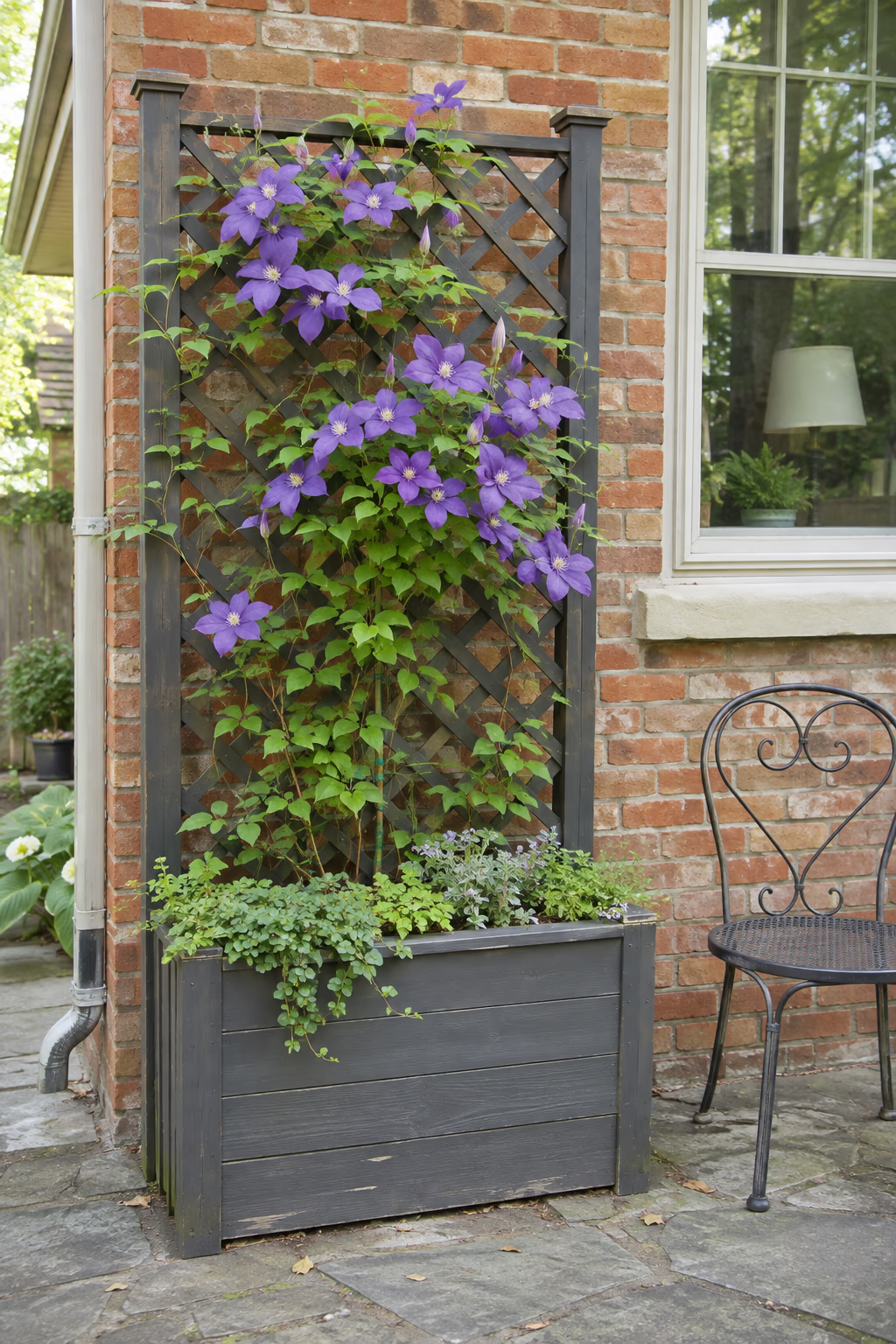
Vertical color from a single container
A trellis planter combines a deep box with an attached trellis, letting you grow a climbing vine on a patio with no garden bed. A box at least 18 inches deep with a 5- to 6-foot trellis gives a vine enough room to fill out by midsummer.
Good container climbers include clematis, mandevilla, black-eyed Susan vine, sweet peas in cool weather, and compact climbing roses. Tie young stems to the trellis loosely with soft garden ties and guide them sideways early so the flowers spread across the whole frame.
Clematis likes cool roots and sunny tops, so shade its soil with a few low plants or mulch. Mandevilla is tropical and won’t survive frost outdoors in most of the country, so treat it as an annual or bring it inside before cold nights.
8. Plant a Fragrant Planter Next to Your Favorite Chair
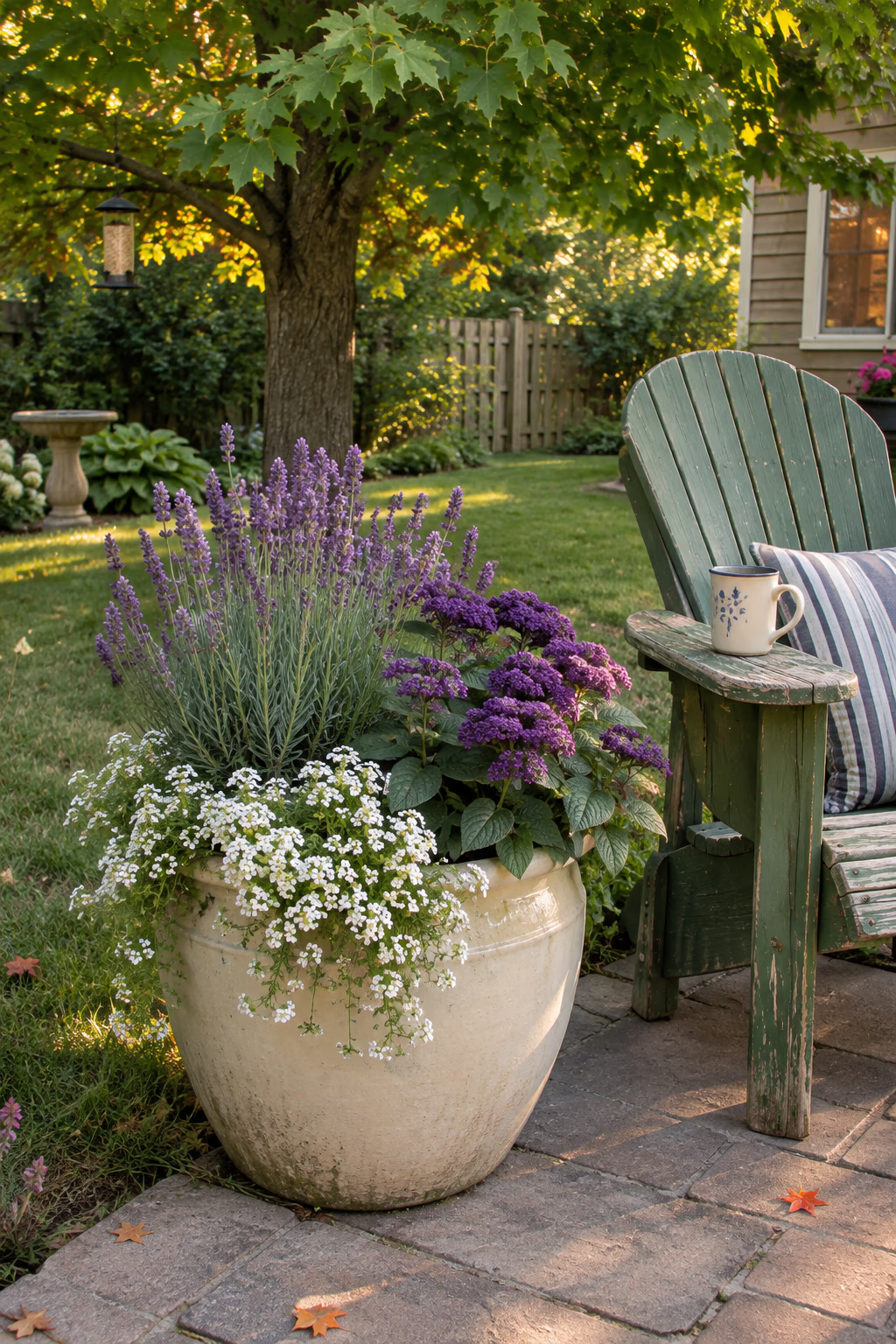
Scent right where you relax
Fragrance is easy to miss in a garden bed across the yard but hard to ignore in a pot beside your chair. Choose one medium or large planter and fill it with plants known for scent, such as lavender, heliotrope, sweet alyssum, nicotiana, or a potted gardenia.
Place the planter where you’ll brush against it or sit downwind of it, and consider evening-scented flowers like four o’clocks or moonflower vine if you mostly use the patio after work.
Gardenias need acidic soil, steady moisture, and protection from harsh afternoon sun, and they are only winter hardy in warm zones. Lavender is the opposite and wants sharp drainage and full sun, so don’t plant the two together.
9. Grow a Dwarf Citrus Tree in a Glazed Pot
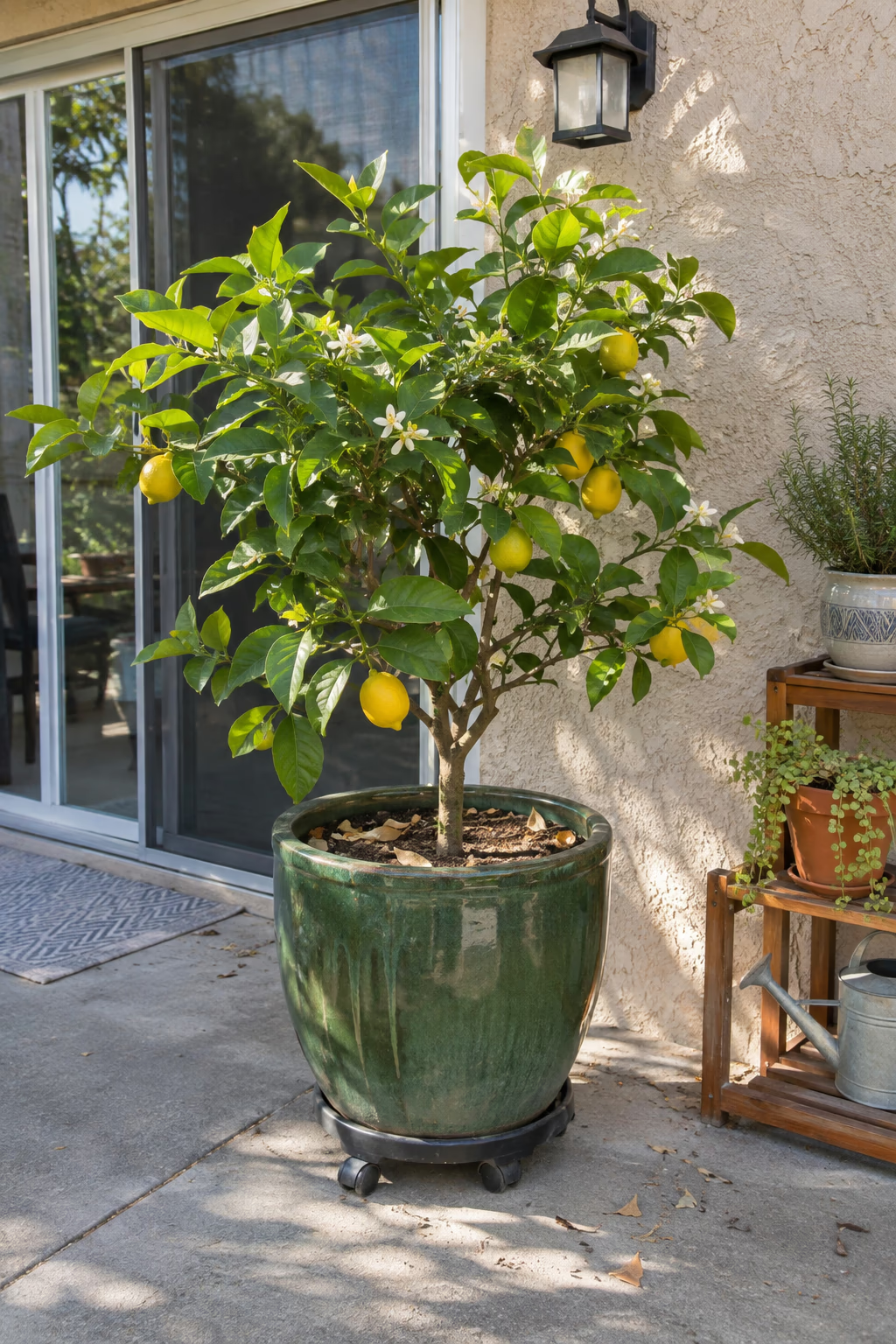
Glossy leaves, sweet blossoms, and real fruit
A dwarf lemon, lime, or kumquat in a large glazed pot brings evergreen foliage, fragrant flowers, and colorful fruit to a sunny patio. Start with a pot at least 18 to 20 inches wide and fill it with a fast-draining citrus or cactus mix.
Meyer lemon and Bearss lime are reliable choices for containers. Feed with a citrus fertilizer during the growing season and water deeply when the top couple of inches of soil are dry.
Most citrus can’t handle hard frost, so outside the warmest parts of the South and West plan to move the tree indoors or into a bright, unheated sunroom for winter. Putting the pot on a rolling plant caddy makes that seasonal move much easier.
10. Add Color With Cobalt and Aqua Glazed Pots
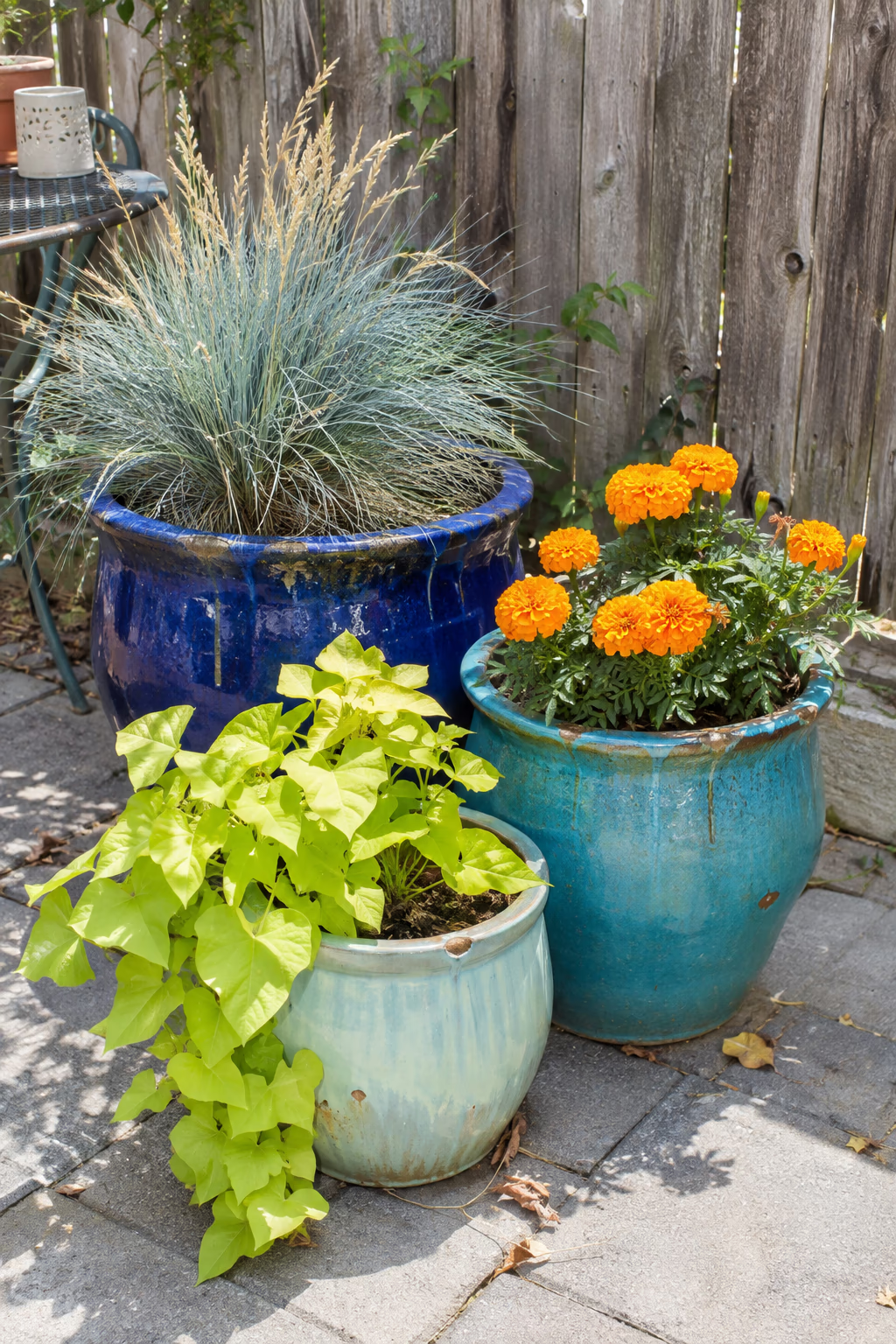
A cool, saturated accent against neutral paving
Glazed ceramic pots in cobalt, turquoise, or aqua bring instant color to gray concrete or tan pavers, and cool blue tones are showing up widely in current outdoor decor. A group of two or three pots in related blues looks deliberate and calm.
Plants with silver, chartreuse, or orange tones look especially striking in blue containers. Try blue fescue, lime-green sweet potato vine, orange marigolds, or a silver-leaved artemisia.
Glazed pots are heavier and more expensive than plastic, and cheaper ones can crack in freezing weather. In cold climates, empty them or move them into a garage or shed for winter, and choose pots labeled frost resistant if you plan to leave them out.
11. Shape a Pair of Boxwood Topiaries for a Tailored Look
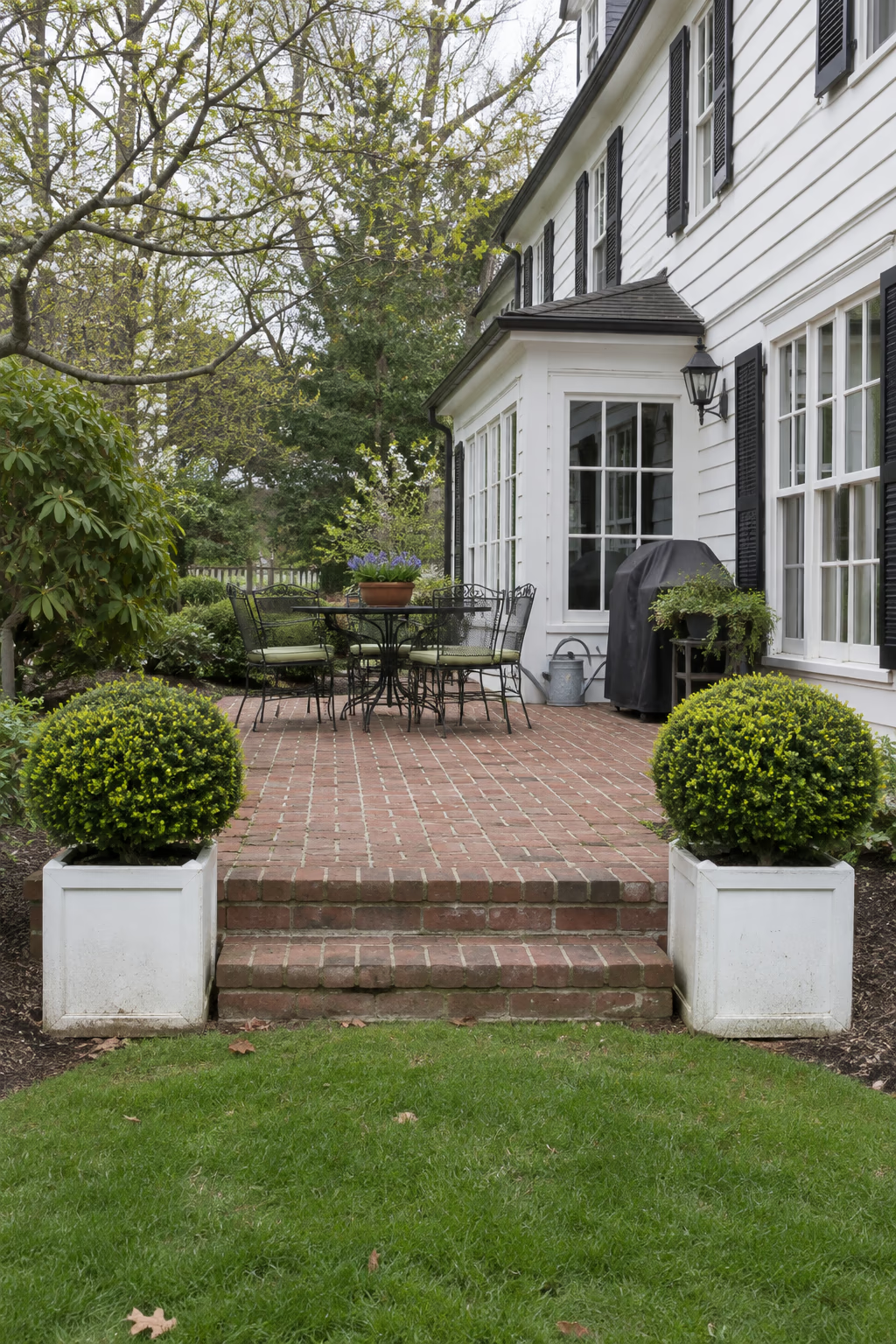
Formal structure that stays green all year
A matched pair of boxwood balls, cones, or spirals in square planters gives a patio crisp, polished structure. Place them at the edges of the patio steps, at either side of a garden gate, or at the ends of an outdoor dining table.
Choose planters slightly wider than the topiary’s root ball, at least 16 to 18 inches square, so the plant has room to grow. Shear lightly once or twice a year, usually in late spring and again in midsummer, to keep the shape tidy.
Boxwood in containers is less cold hardy than boxwood in the ground, because roots in pots freeze more easily. In colder zones, use thick frost-resistant planters, group them against a wall, or wrap the pots in burlap for winter.
12. Line Woven Basket Planters for a Relaxed Boho Vibe
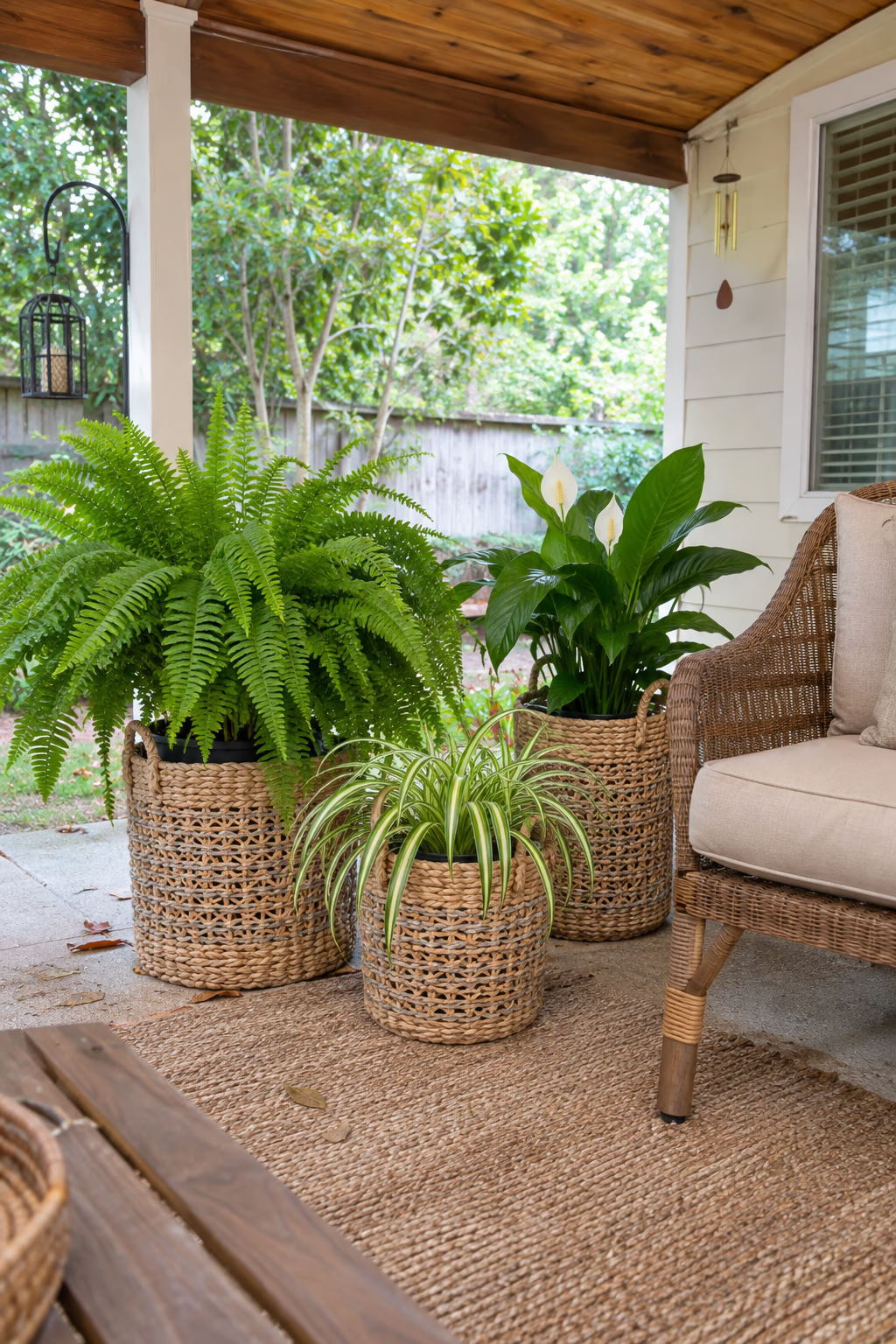
Natural texture that softens hard surfaces
Woven seagrass, rattan, or synthetic wicker planters add warmth and a casual, relaxed look to a covered patio or a lounge corner. They pair nicely with wood furniture, jute rugs, and cushions in sandy or earthy tones.
Natural fibers rot when they stay wet, so set a plastic grower pot inside the basket rather than filling it with soil. Lift the inner pot out to water and drain it, then set it back in.
For exposed patios that get regular rain, choose all-weather resin wicker instead of natural fiber. Leafy plants such as Boston fern, peace lily for shaded spots, or a variegated spider plant suit the style.
13. Soften a Bare Corner With a Potted Japanese Maple
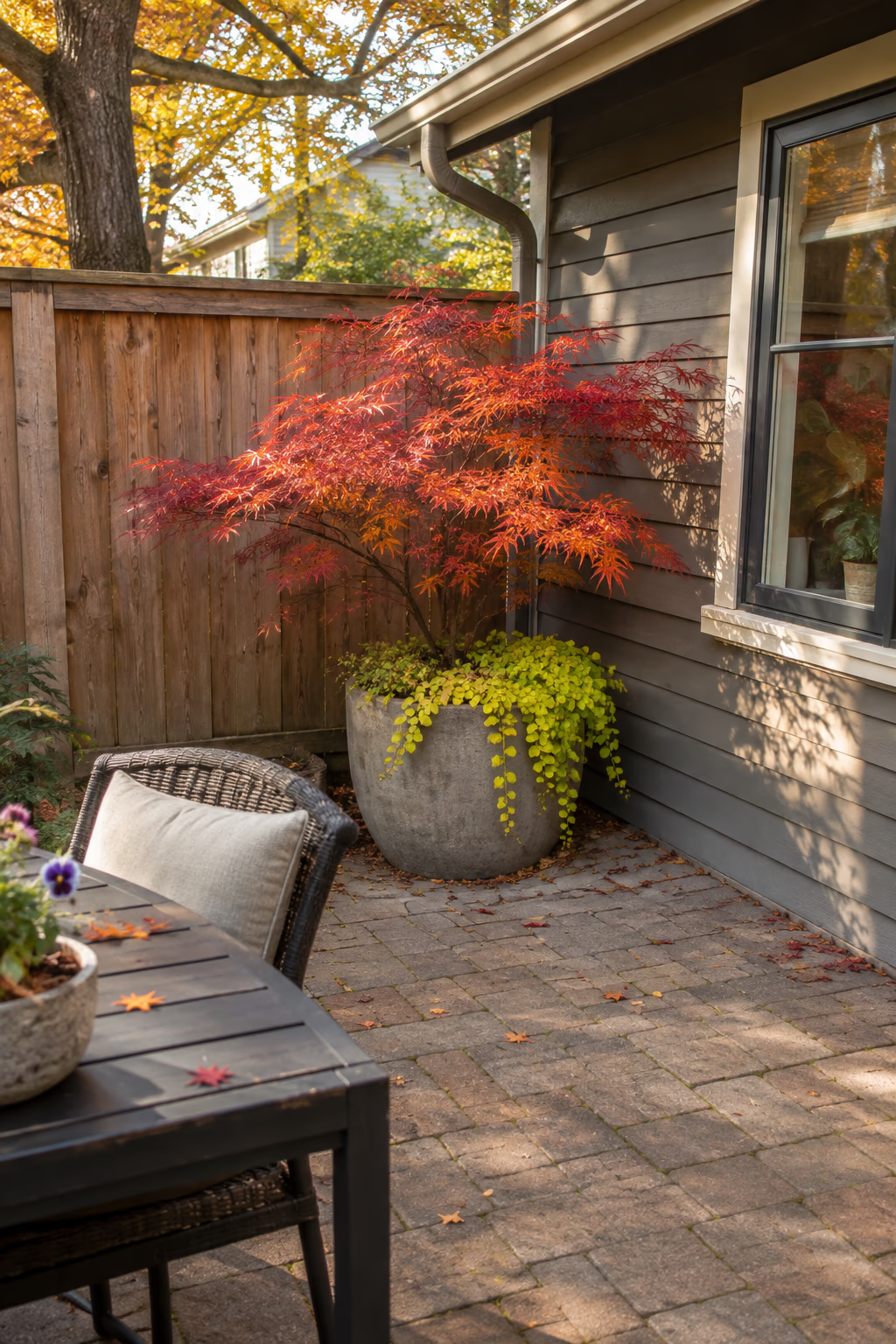
A small tree that feels like a focal point
An empty patio corner is the perfect spot for a single small tree in a generous planter. Dwarf Japanese maples stay compact for years in a pot and offer fine-textured leaves in red, green, or orange, plus beautiful fall color.
Use a planter at least 20 inches wide and deep with good drainage, and look for slow-growing varieties sold as dwarf or container types. Underplant with low groundcovers like creeping Jenny or ajuga to cover the soil.
Japanese maples dislike hot afternoon sun and drying wind, which can scorch their leaves. An east-facing corner with morning sun and afternoon shade is ideal, and roots need protection from deep freezes in colder zones.
14. Plant a Low Concrete Bowl as a Miniature Landscape
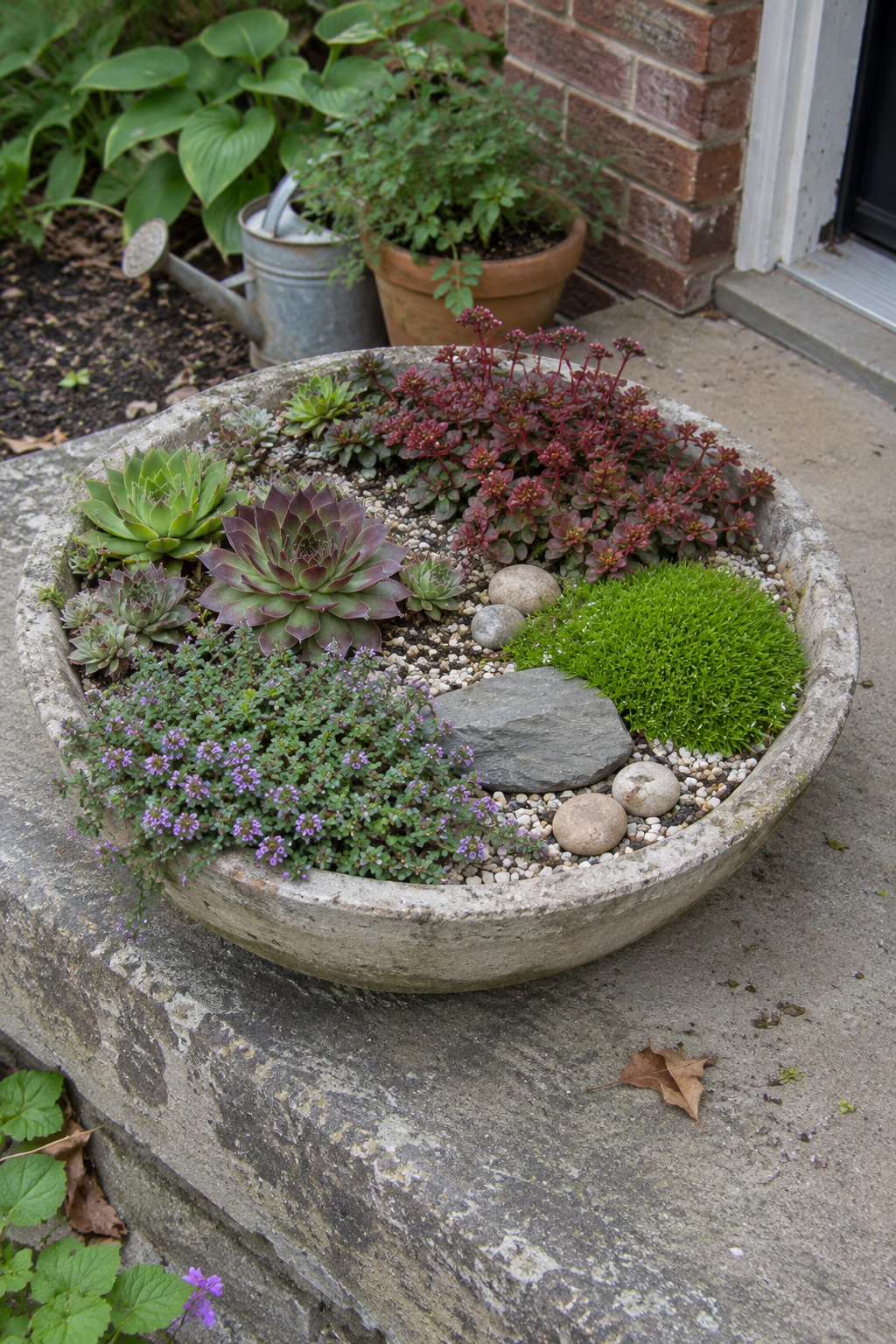
A tiny garden scene at knee height
A wide, shallow concrete bowl about 18 to 24 inches across can hold a miniature landscape of low plants and stones. It works on a patio step, a low side table, or directly on the pavers near a seating area.
Combine creeping thyme, hens and chicks, sedum, and Irish moss with a few small pebbles or a flat stone. Because the bowl is shallow, stick with plants that have small root systems and like to dry out between waterings.
Make sure the bowl has a drainage hole, since shallow containers flood quickly after a heavy rain. A thin layer of fine gravel on top of the soil keeps the look tidy and helps prevent rot at the base of the plants.
15. Set a Narrow Trough Planter on the Patio Table
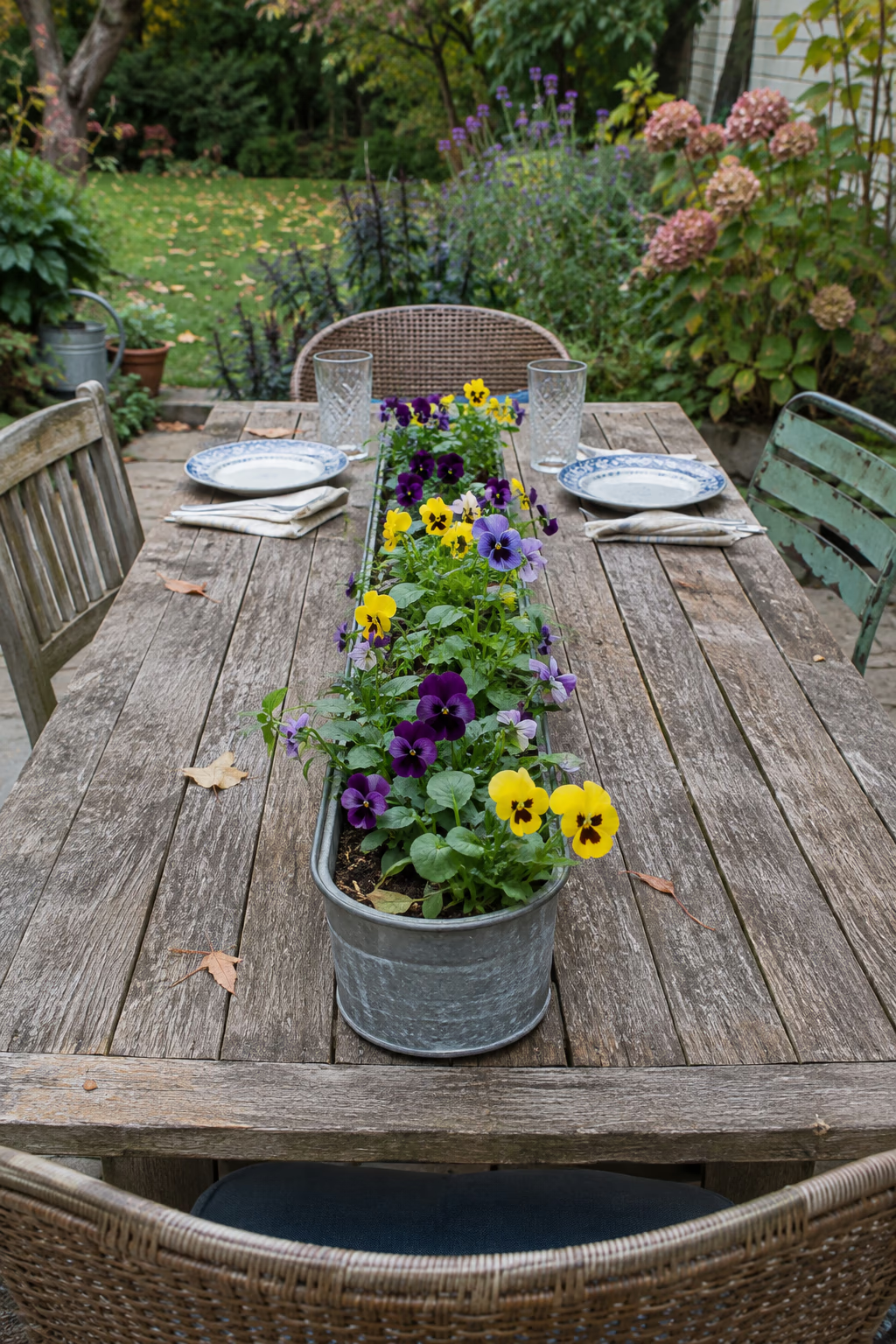
A living centerpiece that stays low
A narrow trough planter, about 6 inches wide and 20 to 30 inches long, makes a long-lasting centerpiece for an outdoor dining table. It stays low enough that guests can see and talk across the table.
Fill it with compact plants that stay under 8 inches, like violas and pansies in spring and fall, or dwarf marigolds, sweet alyssum, and small succulents in summer. A trough of mixed lettuces is another fun option that guests can admire before a meal.
Small containers dry out fast, so check soil moisture every day in hot weather. If your table has an umbrella, move the trough to a sunnier spot between meals so the plants don’t stretch.
16. Clip Rail Planters Onto a Raised Patio or Deck Edge
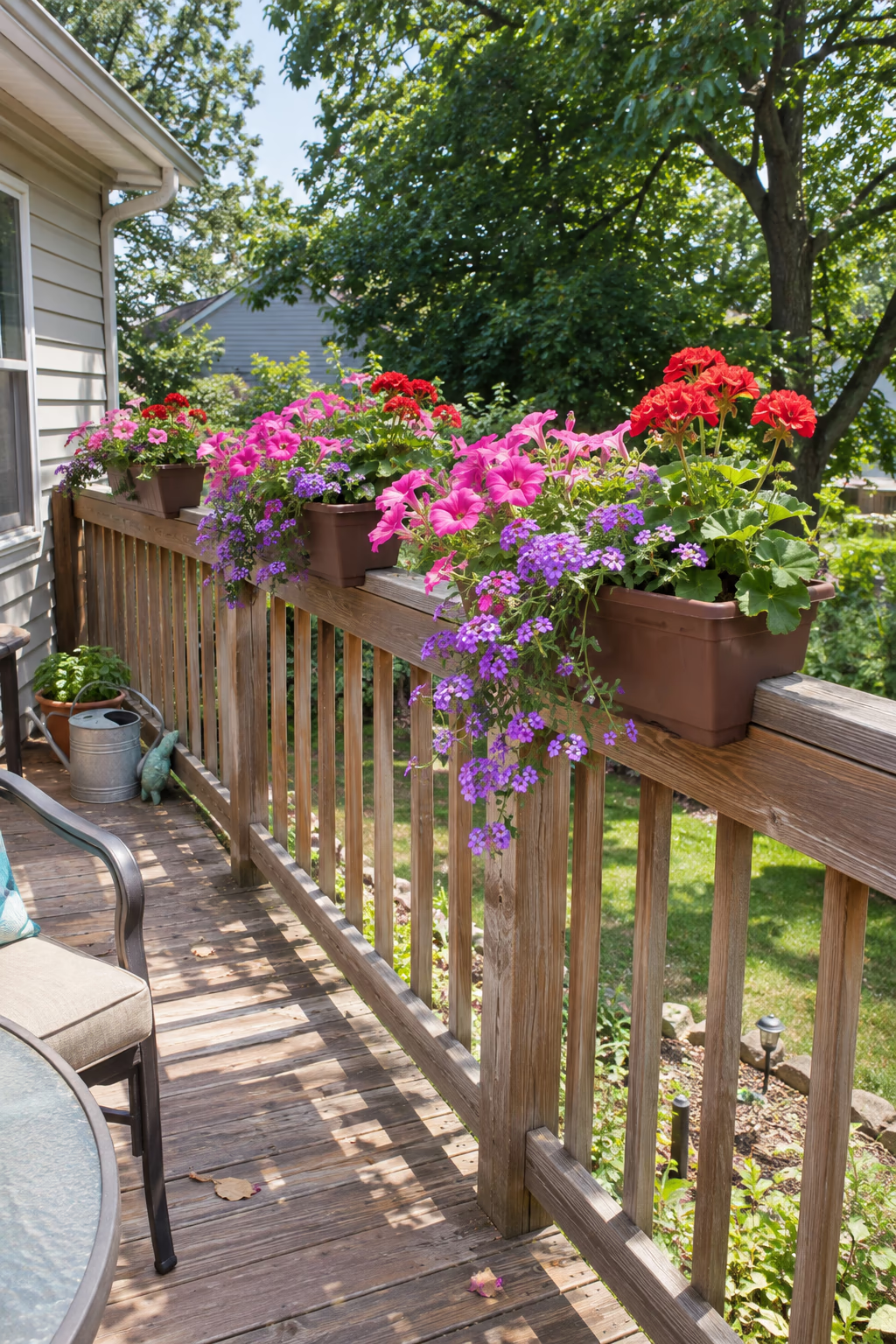
Color without using any floor space
If your patio is raised or has a railing, rail planters that straddle or hook onto the top rail add color at eye level without taking up room on the floor. They’re especially useful on small patios where every square foot counts.
Choose planters sized to your rail width and fill them with heat-tolerant, trailing plants like petunias, verbena, portulaca, or ivy geraniums. Repeat the same combination along the railing for a cohesive look.
Rail planters are exposed to wind and sun, so they need frequent watering. Check that the brackets are rated for the weight of wet soil, and don’t overload older or wobbly railings.
17. Grow Salad Greens and Cherry Tomatoes in Self-Watering Boxes
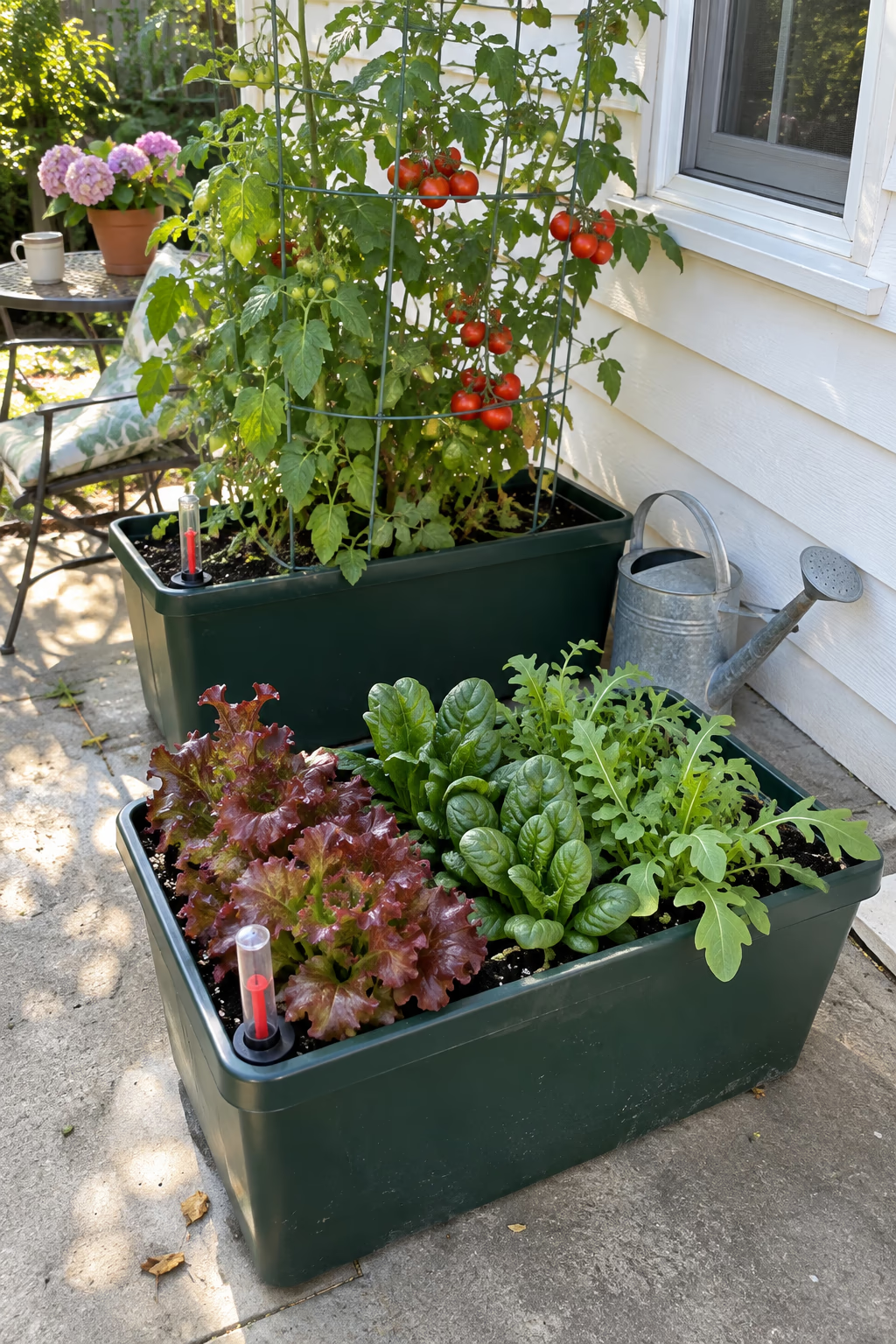
A small patio harvest with less watering
Self-watering planters have a water reservoir in the base that wicks moisture up into the soil, which helps thirsty vegetables stay evenly watered. A box about 24 to 30 inches long can grow a cherry tomato plant with a cage, or several rows of lettuce, spinach, and arugula.
Plant cool-season greens in early spring and again in late summer, and use the box for compact tomatoes or peppers in the heat of summer. Cherry tomato varieties bred for containers stay manageable and produce steadily.
Use potting mix, never garden soil, and fill the reservoir regularly in summer. Tomatoes need at least six to eight hours of sun, so place the box on the brightest side of the patio.
18. Build a Low Cinder Block Planter Wall
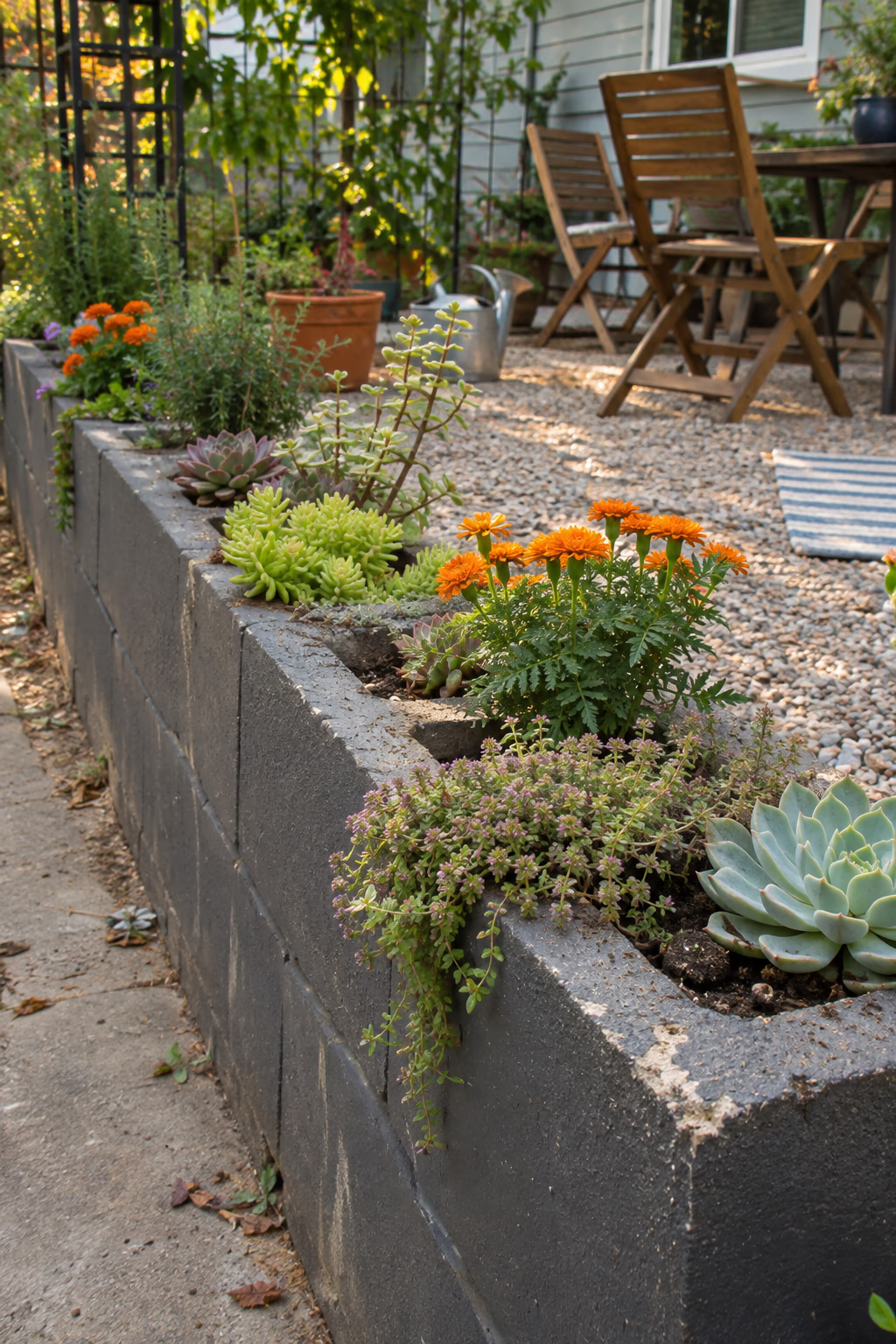
A sturdy, budget-friendly edge
Standard concrete blocks stacked with their holes facing up create a planter wall that’s inexpensive, durable, and easy to build in an afternoon. A single or double row along the patio edge provides a low seat wall and dozens of small planting pockets.
Fill the cavities with potting mix and plant succulents, creeping herbs, or compact annuals. Paint the blocks with masonry paint in charcoal, white, or terracotta for a more finished look.
Keep a dry-stacked wall low, no more than about two blocks high, unless you use construction adhesive or mortar. Concrete can raise soil pH slightly, so it’s best for plants that tolerate neutral to alkaline conditions.
19. Fill a Shady Patio Planter With Ferns and Begonias
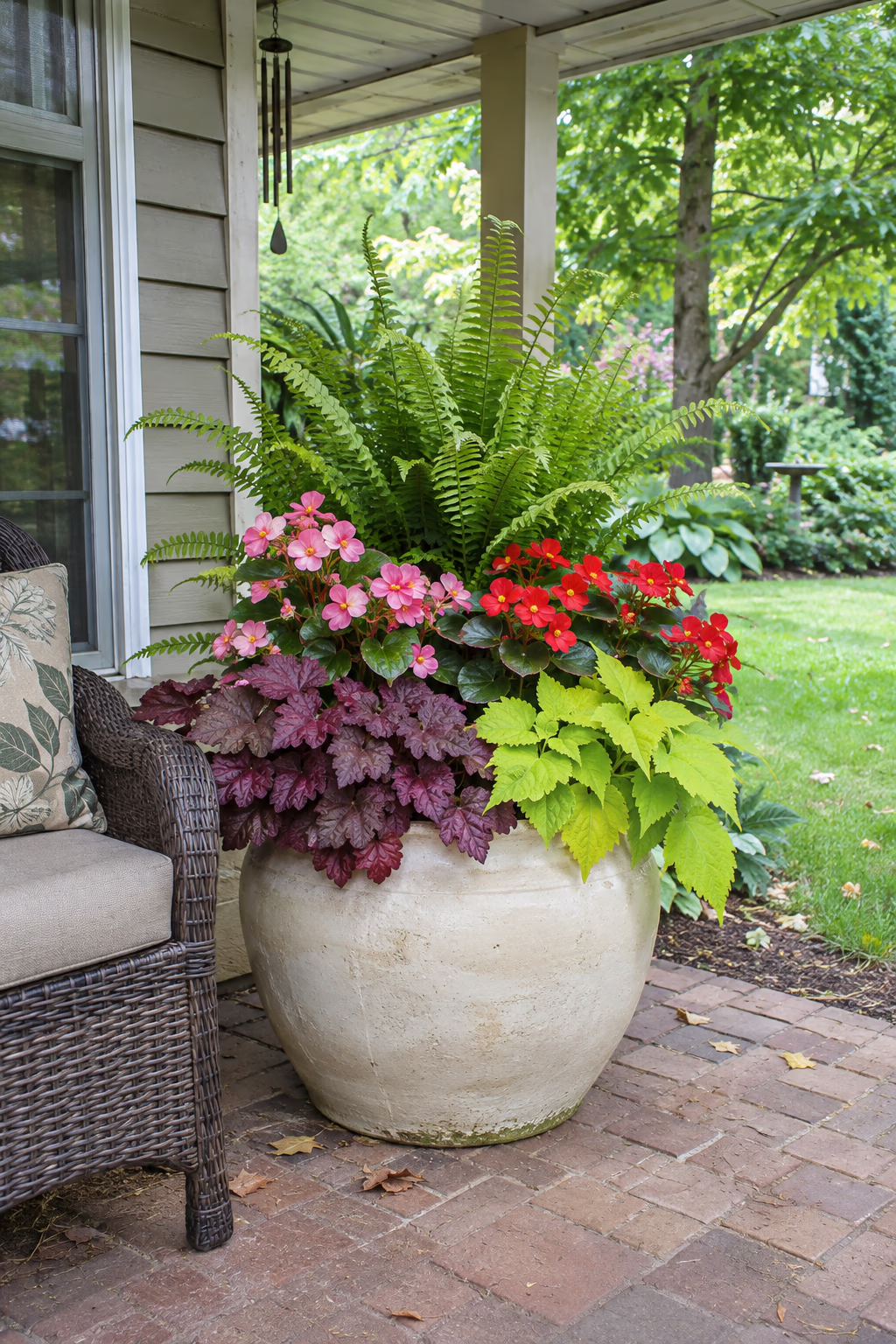
Lush color for covered or north-facing spots
Covered patios and spaces on the north side of a house often struggle with sun-loving plants. Instead, fill a large planter with shade lovers like ferns, begonias, impatiens, caladiums, coleus, and heuchera for rich foliage and steady color.
Mix leaf shapes and colors for interest, such as a tall fern, mounding begonias, and the purple or lime foliage of heuchera. Light-colored planters in cream or pale gray help brighten a dim corner.
Even shade plants need water, and pots under a roof won’t catch rain. Check them regularly, and watch for slugs, which like the cool, damp conditions that shade planters provide.
20. Plant a Pollinator Planter for Bees and Butterflies
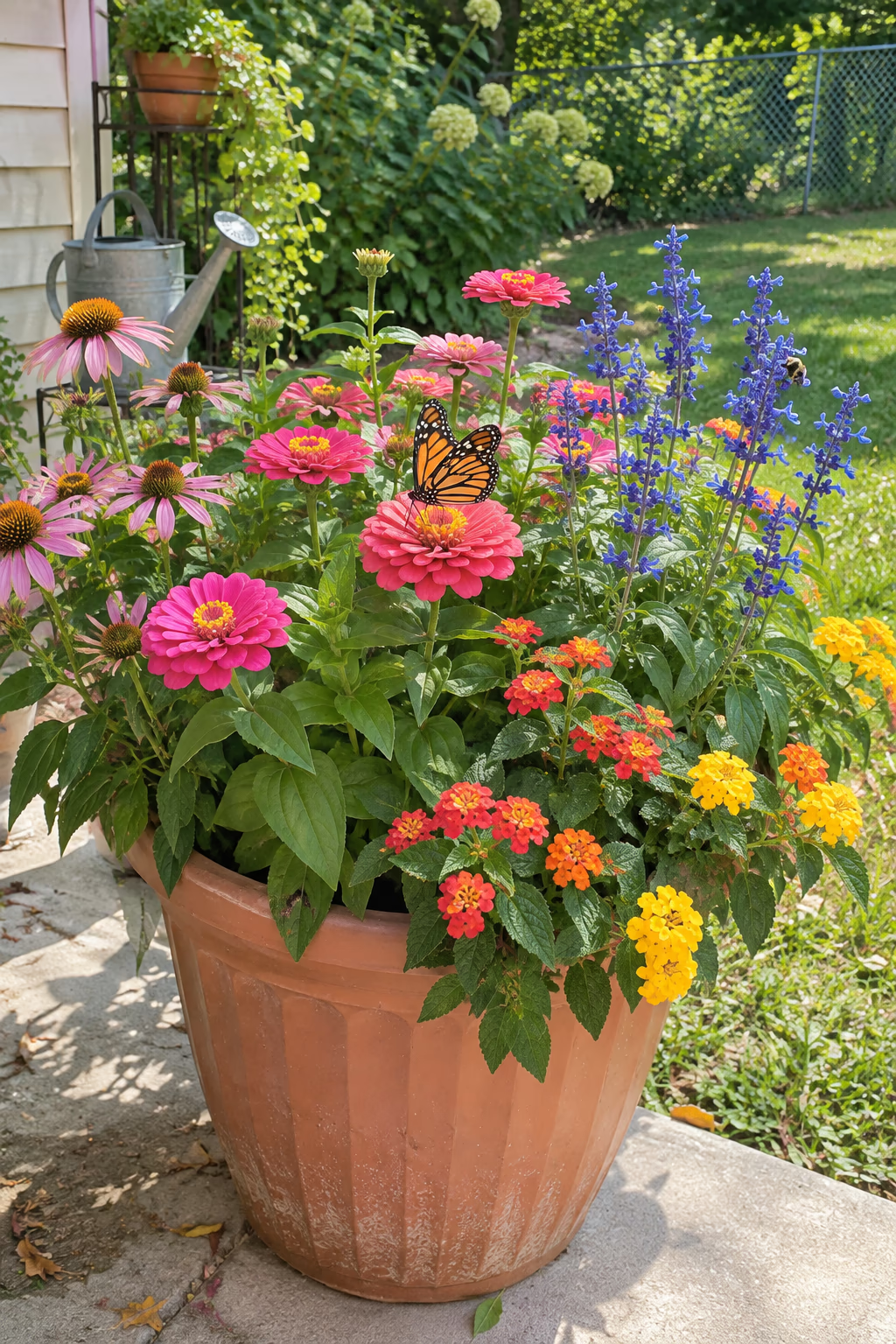
A busy, cheerful container full of life
A sunny planter filled with nectar-rich flowers can attract bees, butterflies, and hummingbirds to your patio. Good choices include salvia, lantana, coneflower, zinnias, pentas, and lavender, with a mix of bloom times for color from spring through fall.
Plant in a container at least 18 inches wide so you can include several types of flowers. Grouping flowers of the same kind together makes it easier for pollinators to find them.
Skip pesticides on these plants, and deadhead spent blooms to encourage more flowers. If anyone in your household is allergic to bee stings, place the planter at the edge of the patio rather than right next to seating.
21. Showcase an Agave in a Tall Modern Planter
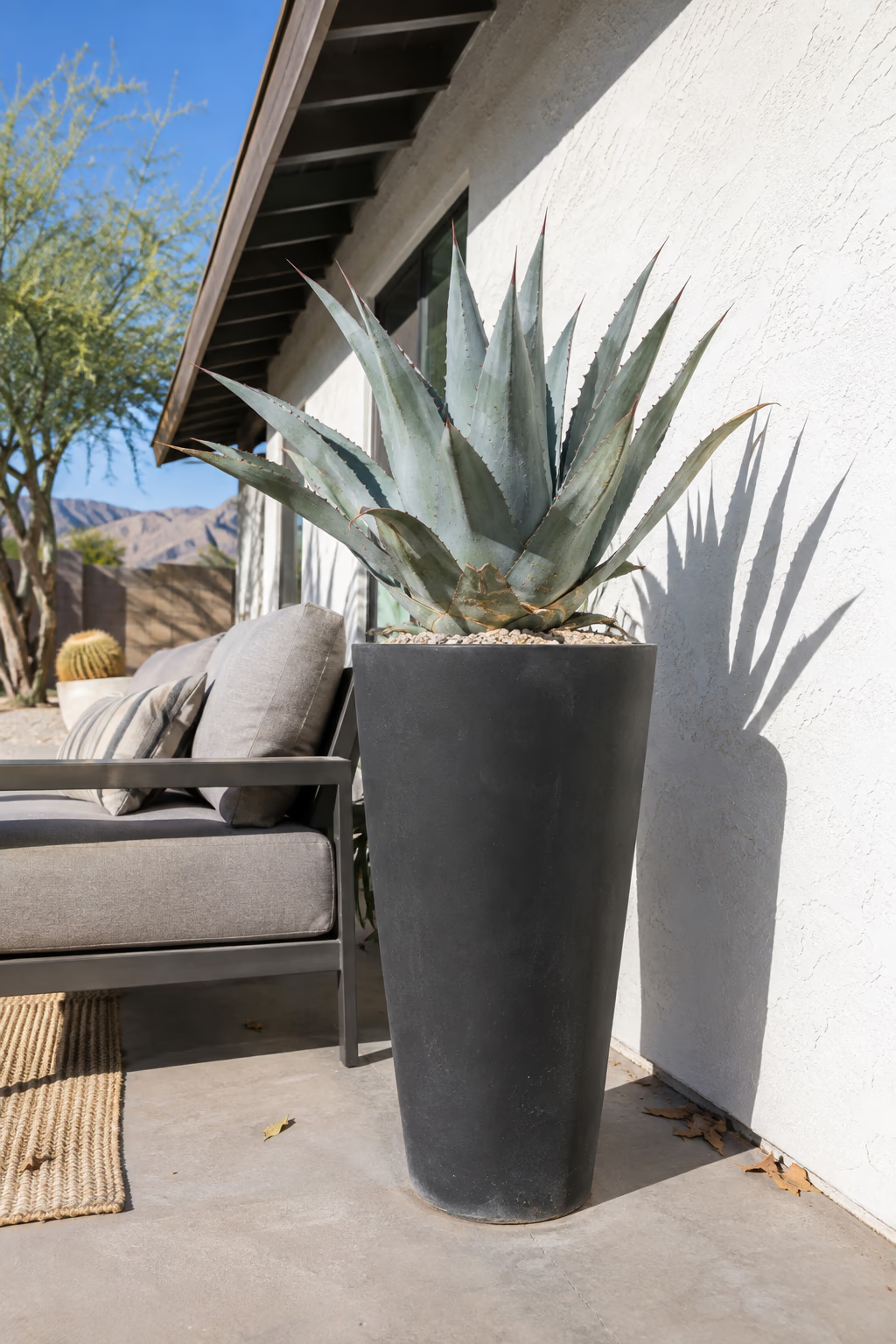
Sculptural drama with very little watering
A single agave in a tall, slim planter adds bold architectural shape to a modern patio. The rosette of thick leaves looks especially sharp against a smooth fiberglass or concrete planter in black, white, or charcoal.
Use a cactus and succulent mix and top the soil with gravel. Agaves need full sun and very little water, which makes them ideal for hot, dry climates. In colder regions, choose a smaller species and move the planter into a garage or sunny window for winter.
Many agaves have sharp spines at the leaf tips, so keep them away from walkways and play areas. Some gardeners carefully trim the very tips with clippers for safety.
22. Upcycle Wooden Crates Into Rustic Planters
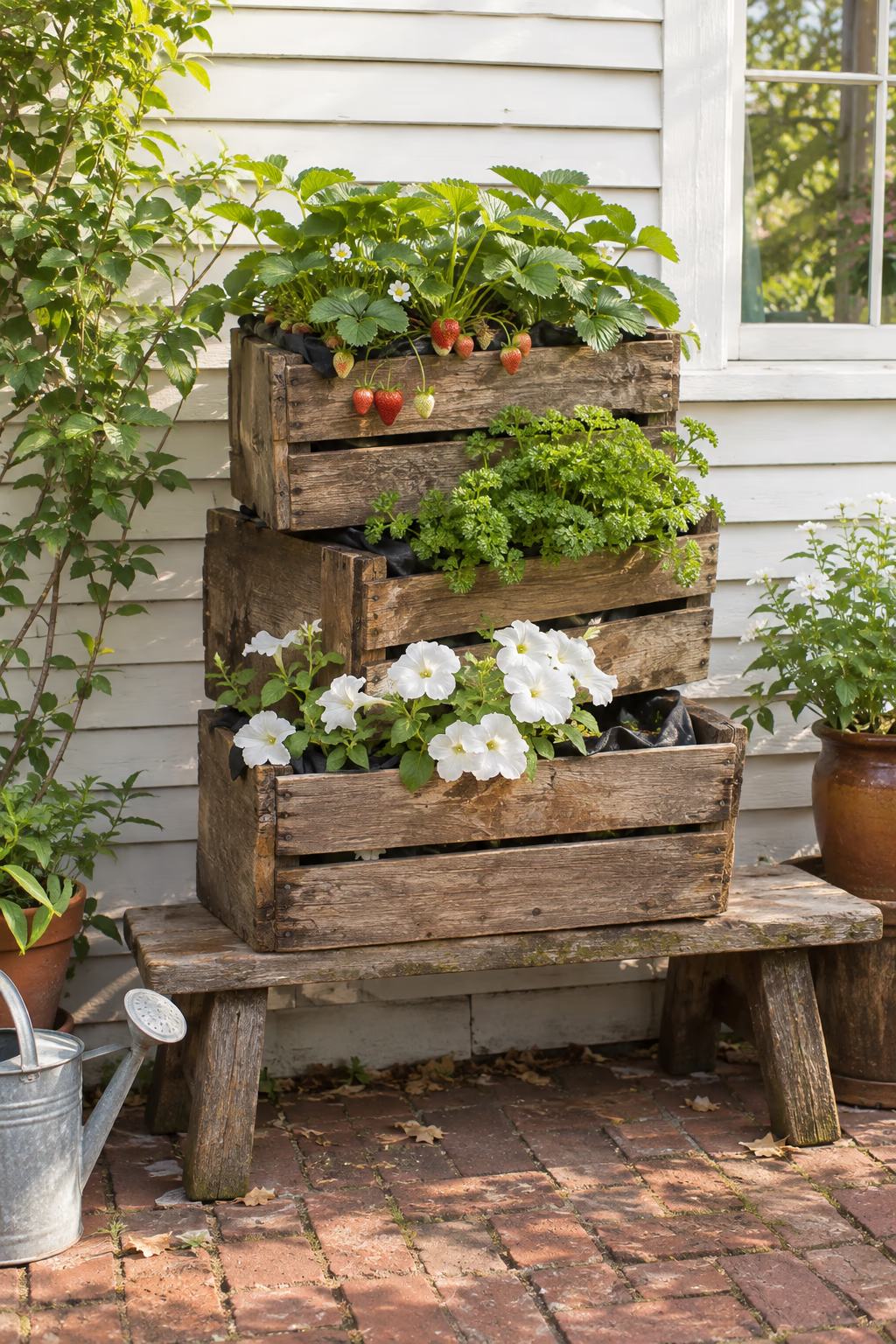
Farmhouse charm on a shoestring budget
Old wooden fruit or wine crates can be turned into charming planters for a rustic or farmhouse patio. Stack two or three crates at different angles or set them on a low bench to create a casual display.
Line the crates with landscape fabric or a plastic liner with drainage holes punched in it, then fill with potting mix and plant annuals, herbs, or strawberries. A coat of exterior wood sealer helps them last more than a season or two.
Avoid crates that are cracked or show signs of mold, and skip old pallets or wood marked with treatment codes you’re unsure about if you plan to grow edibles.
23. Choose Lightweight Planters for a Rooftop or Balcony Patio
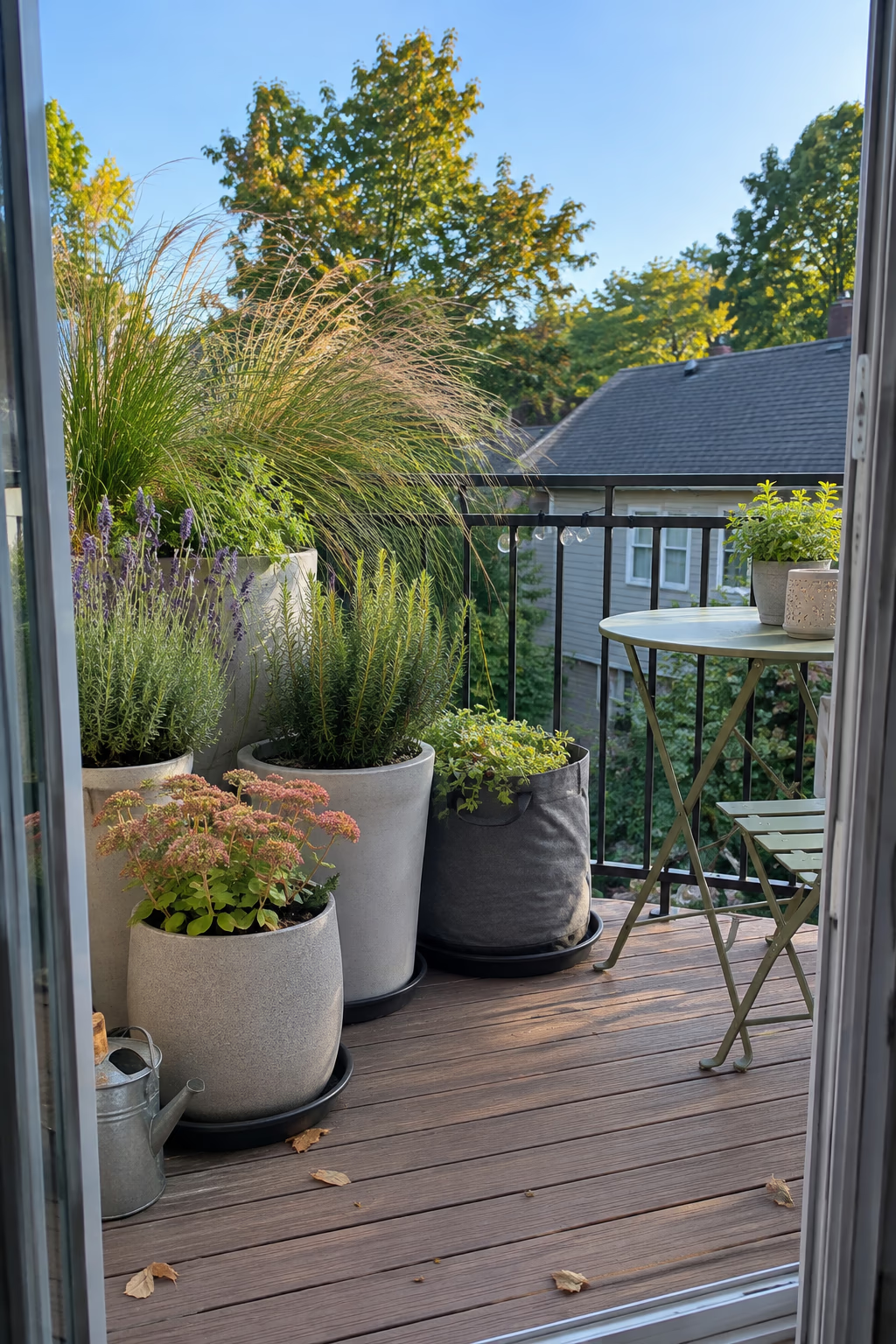
Big containers without the heavy load
On a rooftop, balcony, or raised deck, weight matters. Fiberglass, resin, and fabric planters look like stone or ceramic but weigh a fraction as much, and filling them with a lightweight potting mix reduces the load further.
Choose wind-tolerant plants such as ornamental grasses, lavender, rosemary, and sedum, which handle the extra exposure on higher patios. Group planters close together so they shelter one another.
Check your building rules or HOA guidelines before adding large planters, and ask about weight limits for balconies. Use saucers or drip trays so water doesn’t drain onto neighbors below.
24. Light Your Planters for Evening Glow
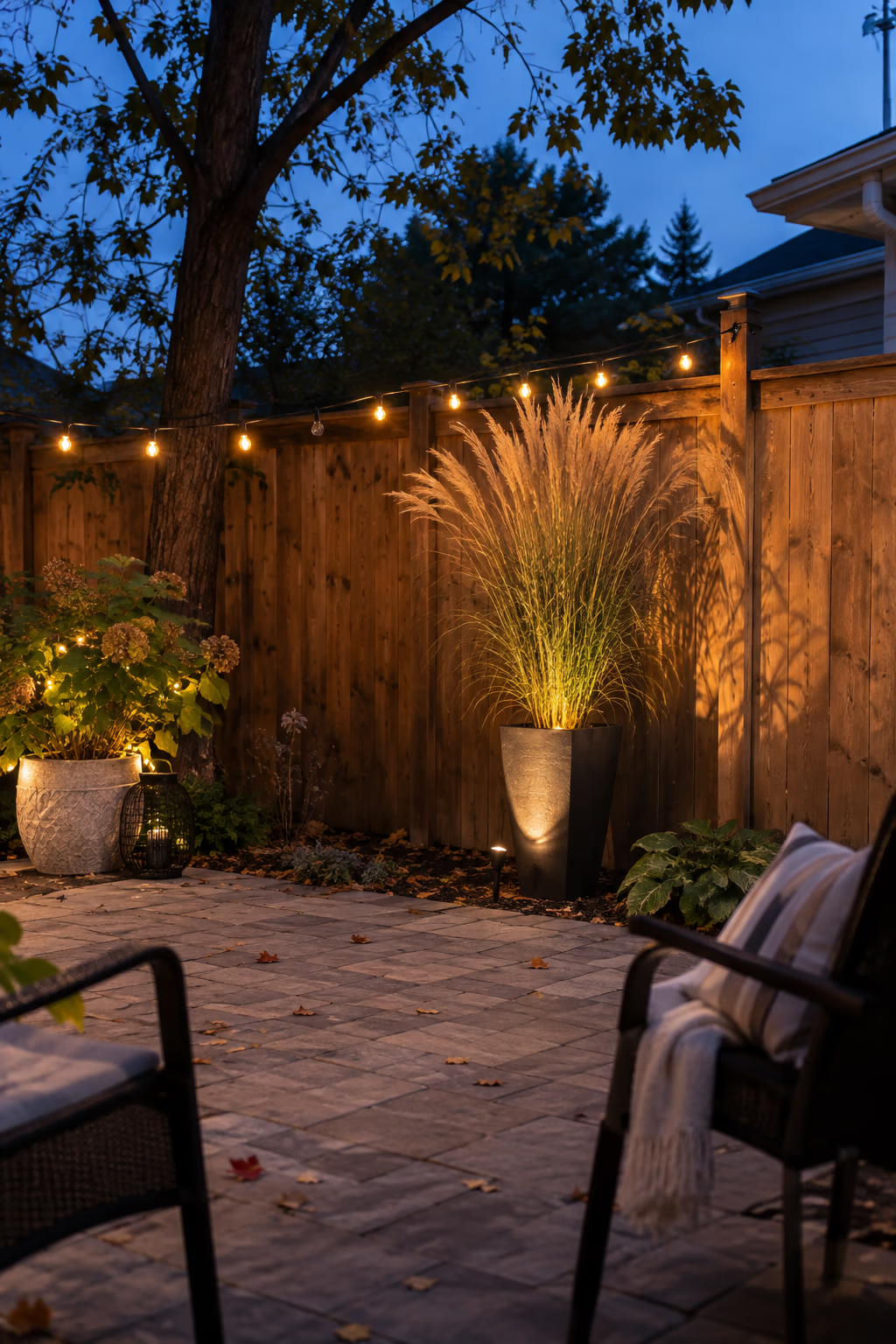
Keep the patio inviting after dark
Small solar spotlights, low-voltage uplights, or string lights tucked into planters let you enjoy your patio greenery at night. Aim a spotlight up through a tall grass or small tree to cast soft shadows on a wall or fence.
Illuminated planters with built-in lights are another option. They glow from within and double as gentle path lighting along the edge of the patio.
Solar lights work best in planters that get full sun during the day. For hardwired low-voltage systems, use outdoor-rated fixtures and connections, and hire an electrician if you need a new outdoor outlet.
25. Refresh Planters With Evergreens for Winter
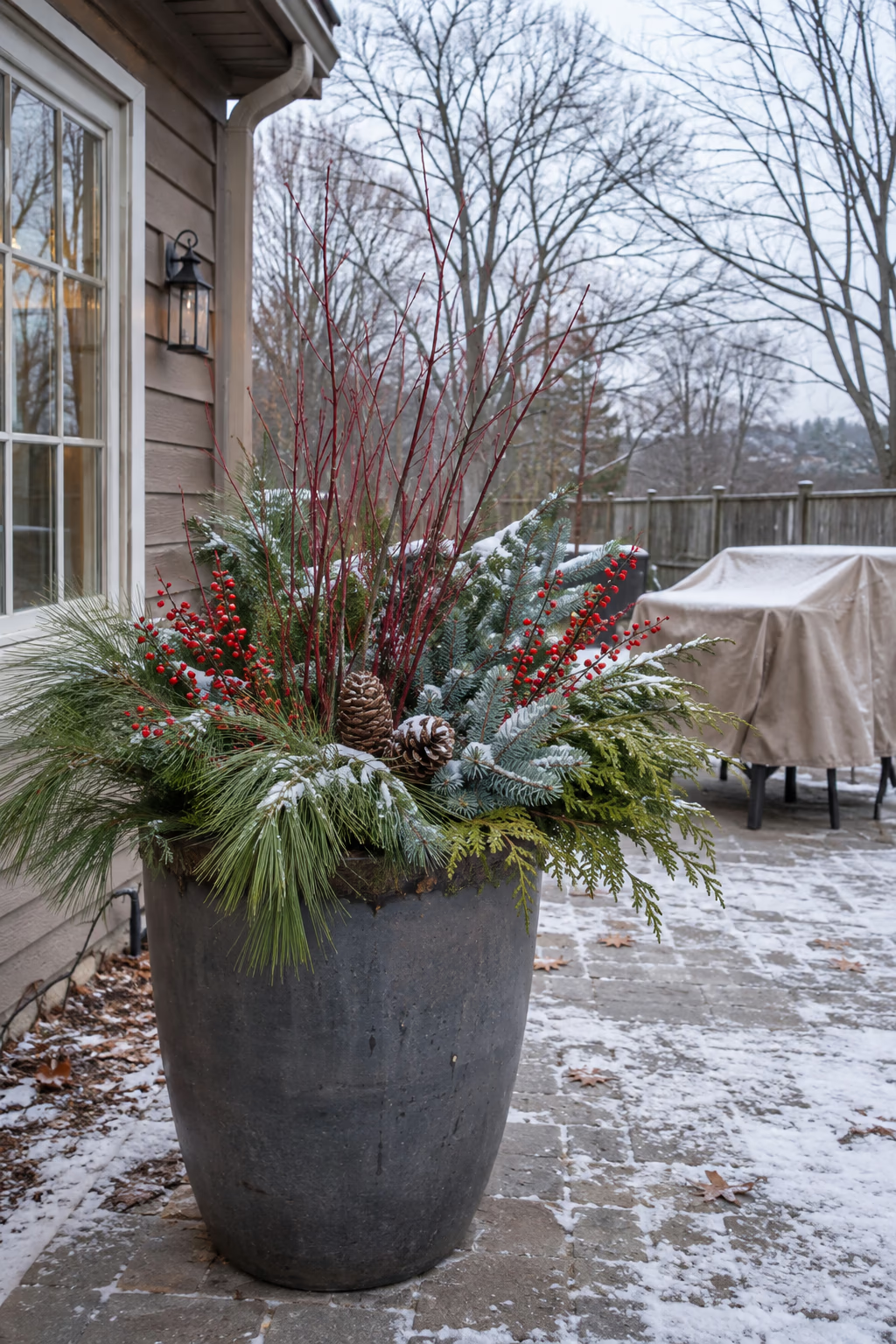
Keep the patio looking alive in the cold months
When summer annuals fade, fill your planters with cut evergreen branches, red twig dogwood stems, pine cones, and berried branches. Tuck the cuttings into the existing soil before it freezes so they stay upright through winter.
Mix textures for interest: soft white pine, flat cedar, blue spruce tips, and glossy magnolia leaves. Small live evergreens like dwarf Alberta spruce or wintergreen also work in larger, frost-resistant pots.
Clay and thin ceramic pots can crack when wet soil freezes. Use frost-resistant planters for winter displays, and water live plants when the soil isn’t frozen.
How to Plan Your Patio Planters
The best patio planter setups start with a quick look at how you use the space, how much sun it gets, and how much time you have for watering. A few guidelines make the planning easier.
- Match plants to the light. Track how many hours of direct sun each part of the patio gets, then choose sun or shade plants accordingly.
- Scale planters to the space. Small pots get lost on a big patio, while oversized ones can crowd a tiny one. A few large planters usually look better than many small ones.
- Prioritize drainage. Every planter needs drainage holes, and potting mix rather than garden soil. Raise pots slightly with feet to prevent stains on the patio surface.
- Plan for watering. Group thirsty plants close to a hose bib, and consider self-watering planters or a simple drip kit if you travel often.
- Think about winter. Choose frost-resistant materials if planters will stay outside, and plan where tender plants and fragile pots will go during freezing weather.
- Stick to a palette. Repeating two or three planter colors or materials keeps the patio looking cohesive even when the plants change each season.
Frequently Asked Questions
What size planter is best for a patio?
Larger planters, about 18 inches wide or more, hold more soil, dry out more slowly, and look more balanced next to furniture. Use small pots in groups or on tables, and save the big planters for corners, edges, and focal points.
How do I keep patio planters from staining concrete or pavers?
Set planters on pot feet, small risers, or a rolling caddy so water can drain freely and air can circulate underneath. Saucers also help, but empty them after heavy rain so roots don’t sit in water.
What are the easiest plants for patio planters?
Ornamental grasses, lantana, salvia, coleus, sedum, rosemary, and geraniums are forgiving choices for sunny spots. In shade, try ferns, begonias, and heuchera. Pick plants suited to your USDA hardiness zone if you want them to come back each year.
How often should I water patio planters?
In hot summer weather, many planters need water every day, and small pots may need it twice. Push a finger into the soil, and water deeply when the top inch or two is dry.
Can I leave planters outside in winter?
Fiberglass, resin, metal, wood, and thick frost-resistant concrete planters usually handle winter well. Terracotta and many glazed ceramics can crack when wet soil freezes, so empty them or store them in a sheltered spot.
Final Thoughts
The right planters can turn a plain patio into a space that feels lush, private, and personal. Whether you start with a row of border boxes, a tall planter screen, or a single pot of herbs by the grill, each addition makes the patio more inviting.
Start with one or two ideas that solve your biggest need, then add more as you learn what grows well in your light and climate. With a little planning and regular watering, your patio planters will reward you with color and greenery season after season.