Step out the back door on a warm evening and the patio smells like jasmine. A clematis is climbing the pergola post, a stack of pots fills the corner with leaves, and there’s a tall planter of flowers within reach of your chair. There’s no garden bed anywhere. Everything is growing in a container.
A container garden suits patio life. Pots go where the soil can’t, and you can move them when the sun shifts. They let you try a new color scheme every season without digging up a lawn. They also turn a bare slab of concrete or pavers into an outdoor room that feels finished, which is why so many homeowners now treat the patio as an extension of the house.
These 25 patio container garden ideas cover layered pergola corners, potted shrubs that last all year, hanging baskets, wall planters, edible pots, fall and winter displays, and practical upgrades like plant caddies and drip lines. Mix and match them to suit your space, climate, and budget.
1. Fill a Pergola Corner With Layered Containers
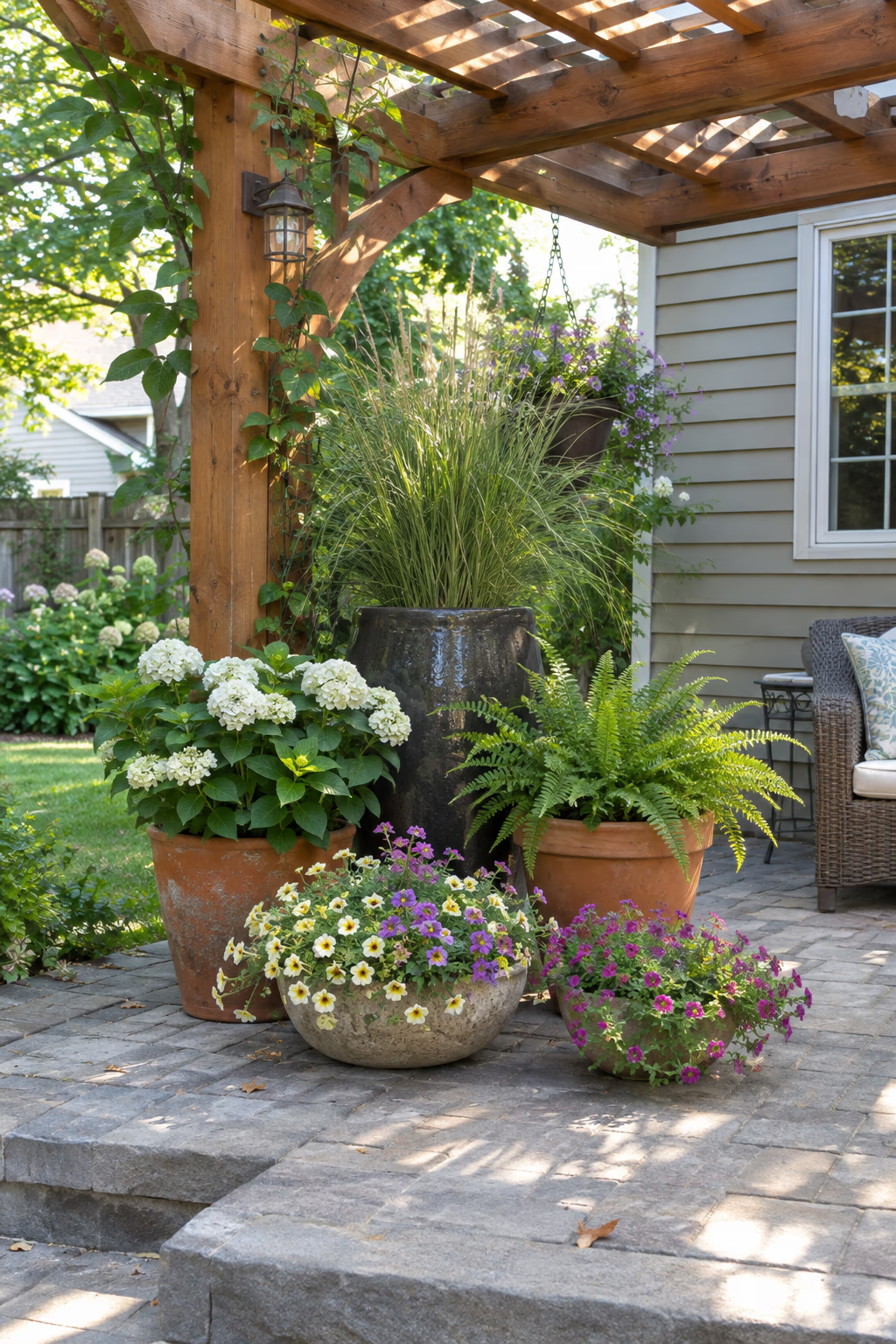
Turn an empty corner into a lush green backdrop
The corner of a pergola or covered patio is a natural frame for a dense group of pots. Start with one tall container, about 24 to 30 inches high, at the back. Add two medium pots in front, then finish with a few low bowls at the front edge. Mixing heights this way builds a slope of leaves that looks like a planted bed.
Plants you can see from the house go in the back and middle: a potted hydrangea, a tall grass, or a fern if the corner is shaded. Keep the pots in one or two materials, such as terracotta and charcoal glazed ceramic, so the group looks planned rather than random.
Check how much light the corner gets before you buy plants. A pergola with slats or a vine on top can turn a sunny spot into partial shade by midsummer.
2. Build a Four-Season Patio Garden From Potted Shrubs
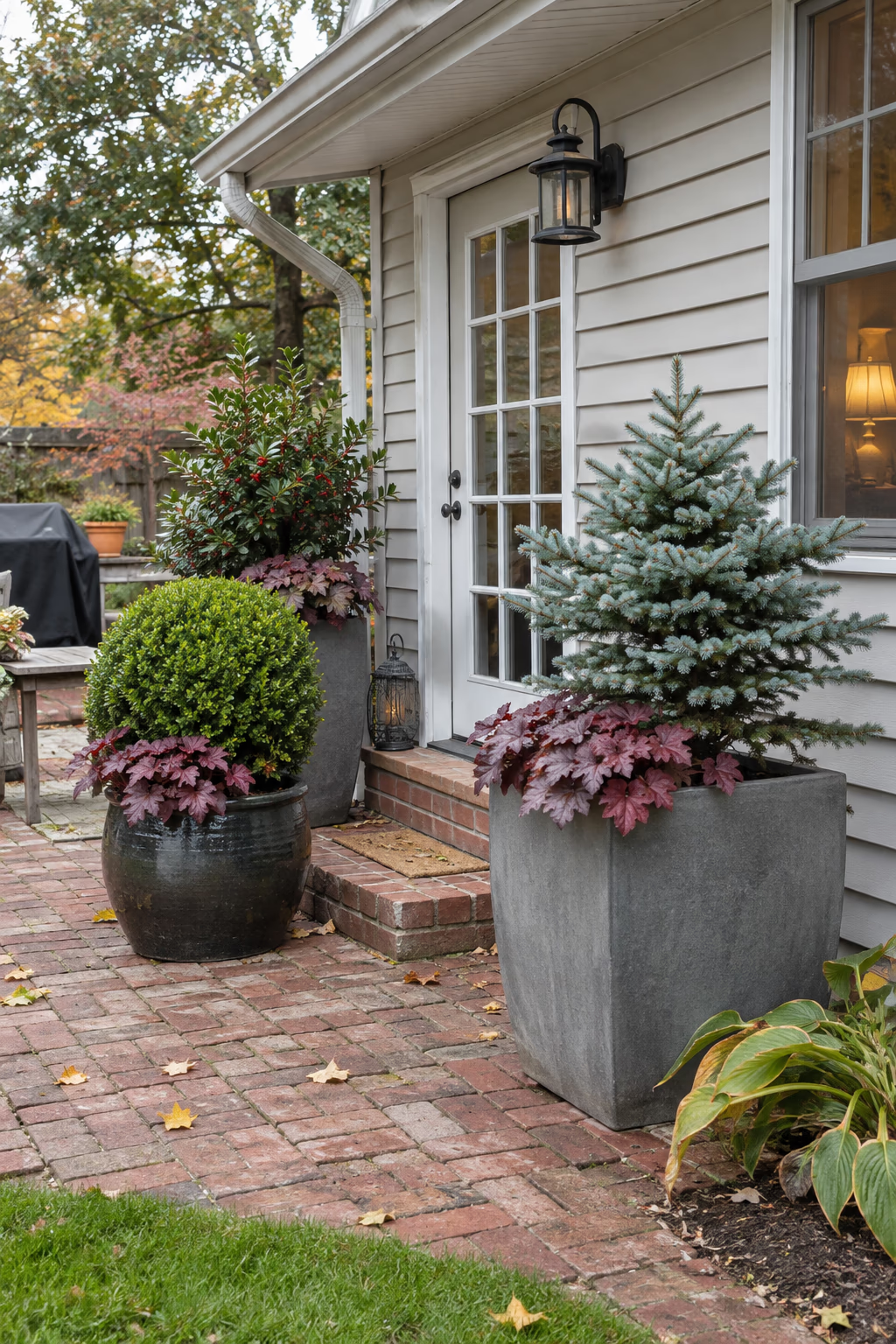
Permanent structure that doesn’t disappear in fall
Instead of replanting annuals every spring, give the patio a backbone of shrubs in large pots. Dwarf conifers, compact boxwood, dwarf hydrangeas, and small evergreen hollies all handle container life when they have at least 18 to 24 inches of soil. Add a hardy perennial or two, such as heuchera or hellebore, at their feet.
The shrubs give the patio shape in every month, so the space never looks bare after frost. You can still slip a few seasonal flowers in around the edges for extra color.
Roots in a pot are more exposed to cold than roots in the ground. As a rule, choose shrubs rated one or two USDA zones colder than your own if they’ll stay outside all winter, and use frost-proof pots made of fiberglass, resin, or high-fired ceramic.
3. Surround the Outdoor Sofa With Pots on Plant Stands
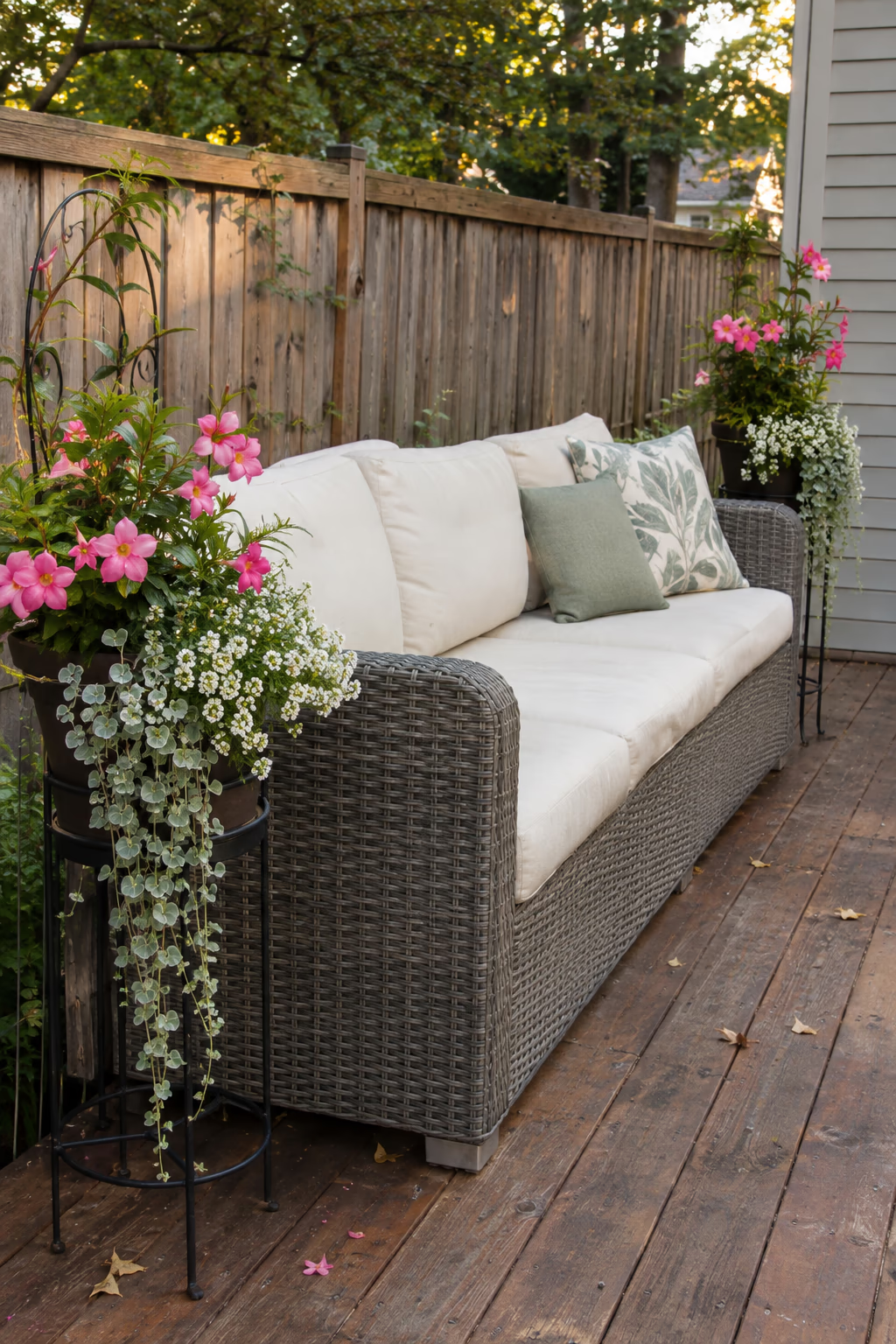
Bring flowers up to eye level where you actually sit
Set a pair of potted flowers on metal or wooden plant stands at each end of the outdoor sofa, about as high as the armrest or a little higher. Mandevilla, lantana, petunias, or a silver trailing plant spilling over the rim all look good from a seated position.
Raising the pots puts the color right beside your shoulder instead of down at your ankles, and it frames the seating area like end tables would. Stands also keep the pots off wood decking, which helps prevent moisture stains.
Choose stands with a wide, stable base and keep the pots no larger than the top of the stand. A top-heavy planter can tip over in a strong gust or when someone bumps it.
4. Underplant a Potted Ornamental Tree With Trailing Annuals
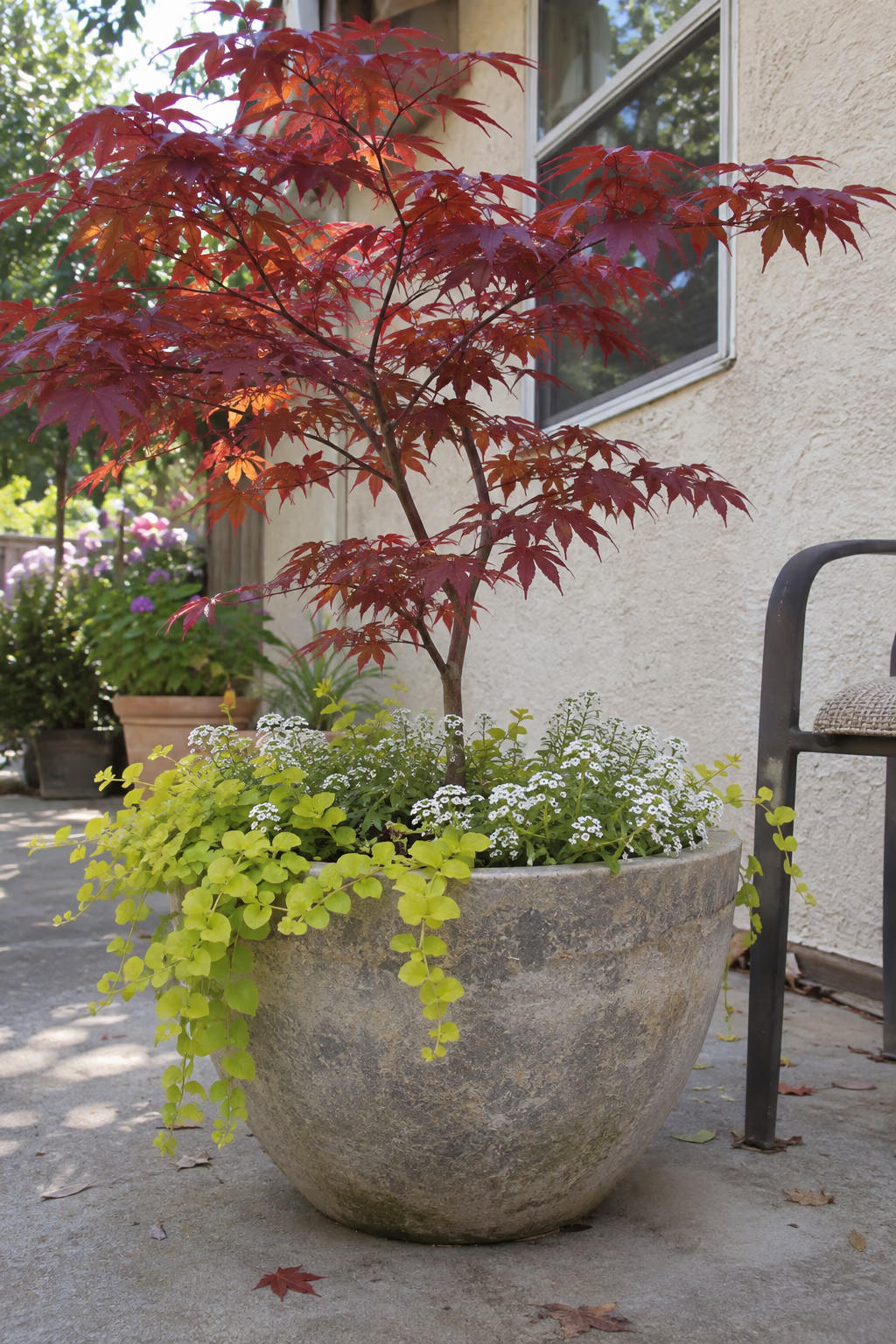
One tall statement with a skirt of color
A small ornamental tree adds height to a patio that’s mostly low furniture. A Japanese maple, a columnar crabapple, a serviceberry, or a dwarf redbud can grow for several years in a container at least 20 to 24 inches wide. Once it’s planted, tuck shallow-rooted trailing plants such as creeping Jenny, sweet alyssum, or trailing lobelia around the base.
The underplanting hides the bare soil and softens the trunk. It also gives you a way to change the look each season without touching the tree.
Underplanted pots dry out faster because many roots share the same soil, so water deeply and often. Plan to root-prune or move the tree up to a larger pot every two to three years.
5. Hang Flower Baskets From the Pergola Beams
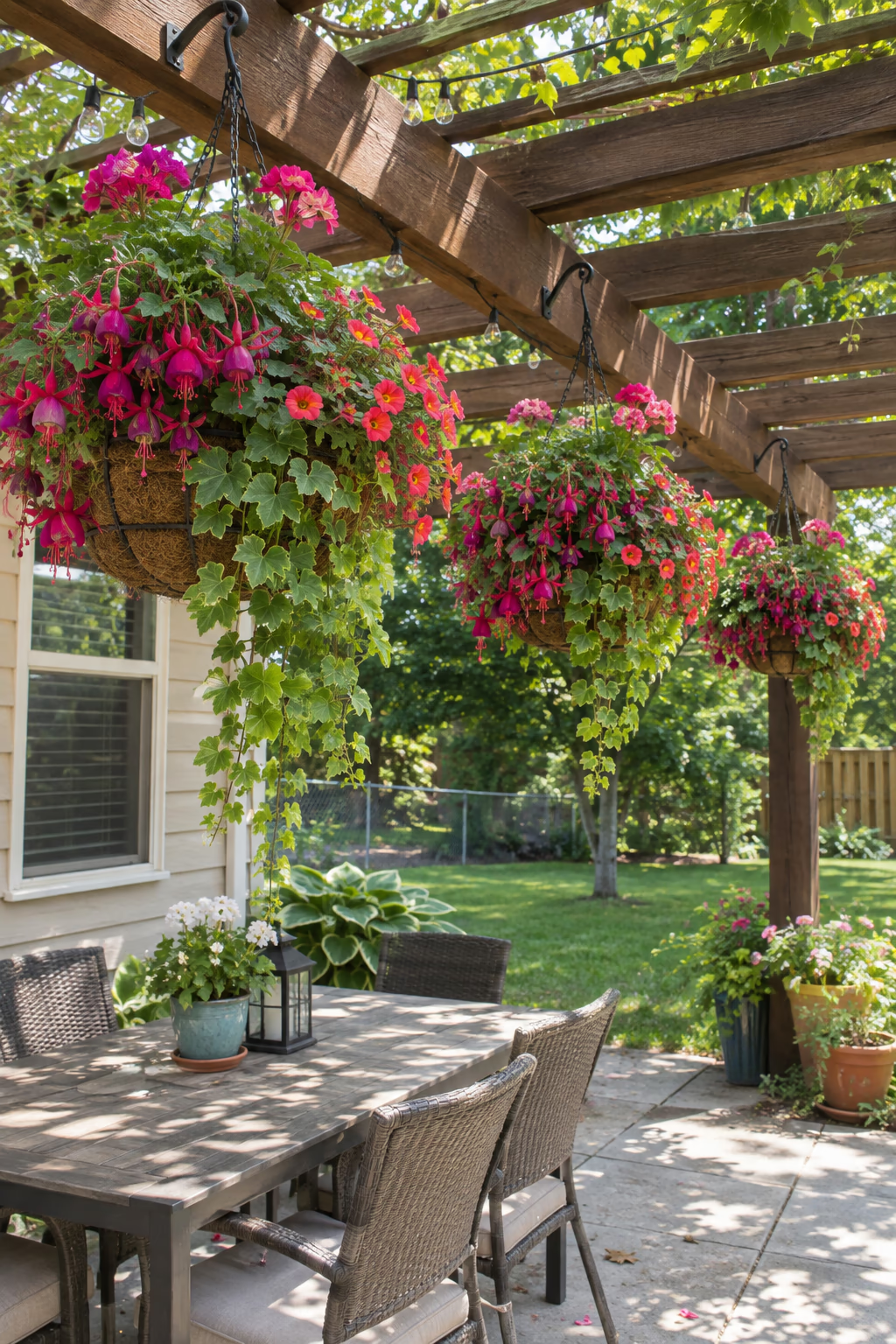
Color overhead without giving up floor space
If the patio floor is already full of furniture, plant upward. Hang three or five matching baskets from the pergola beams or porch ceiling on heavy-duty hooks. Fill them with trailing plants such as calibrachoa, fuchsia, ivy geranium, trailing verbena, or sweet potato vine.
Hanging baskets put the flowers at a height where you can see them from both the patio and indoors. A row of matching baskets also adds rhythm along the length of a beam.
A wet 14-inch basket is heavier than it looks, so screw hooks into solid framing rather than thin trim. A pulley-style hanger or watering wand with a long reach makes daily watering in summer much easier.
6. Mount Metal Planters on a Bare Patio Wall
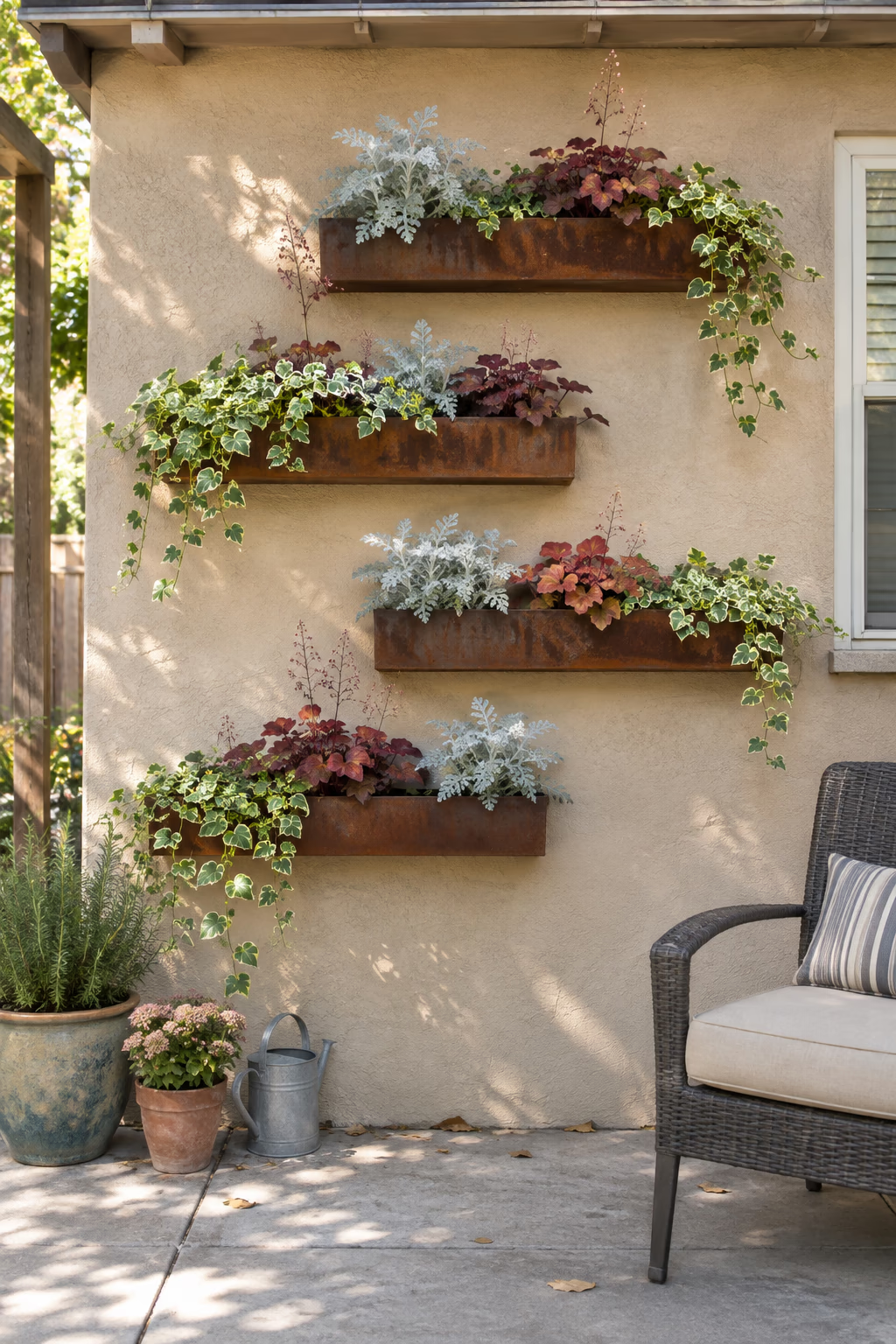
Turn blank siding or stucco into living art
Weathering steel, galvanized, or powder-coated wall planters turn a plain wall beside the patio into a garden. Hang three or four long, shallow boxes in a staggered pattern or a neat grid. Plant them with compact choices such as dusty miller, trailing vinca, coral bells, small ornamental grasses, or strawberries.
Wall planters use space that’s otherwise wasted and draw the eye upward, which can make a small patio feel bigger. The metal also looks good against brick, stucco, and painted siding.
Use masonry anchors or screw into studs, and leave a small gap between planter and wall so moisture doesn’t stain the siding. Shallow planters dry out fast in full sun, so check them daily during heat waves. Renters should ask before drilling.
7. Train a Potted Vine Up a Pergola Post
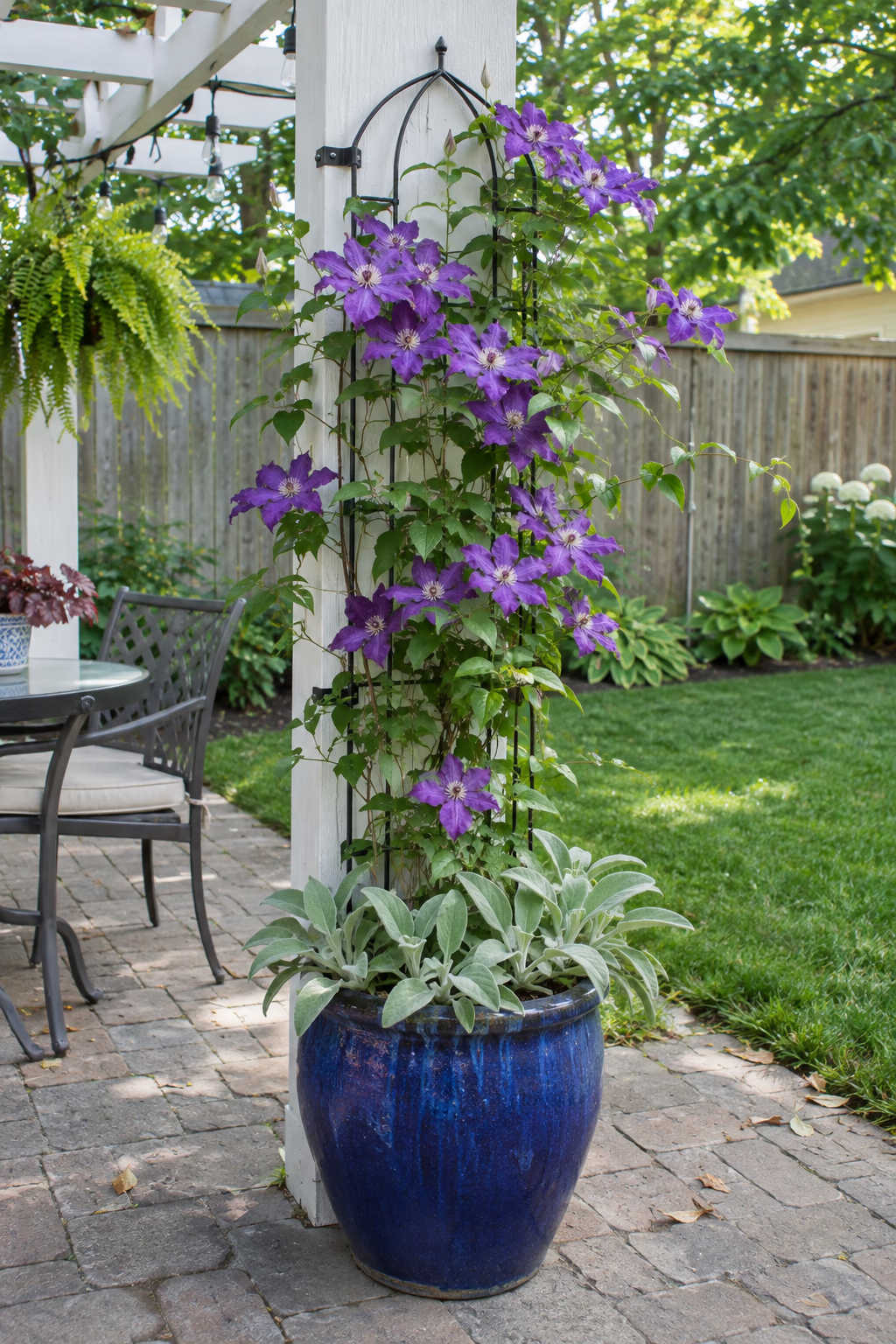
Soft flowers climbing the structure you already have
Set a large pot, about 18 to 24 inches across, at the base of a pergola post. Plant a clematis, mandevilla, star jasmine, or climbing rose in it, and guide the stems up the post with a slim trellis panel or a few vertical wires. In a single season, the vine can soften the wood and start reaching toward the beams.
This gives you the look of a vine-covered pergola without planting in the ground, which is ideal when the post sits on concrete.
Clematis likes cool roots and sunny tops, so tuck a low plant around its base. Mandevilla and star jasmine won’t survive a hard freeze, so in colder zones grow them as annuals or bring them into a bright garage for winter.
8. Plant a Dusty Pastel Palette in Weathered Pots
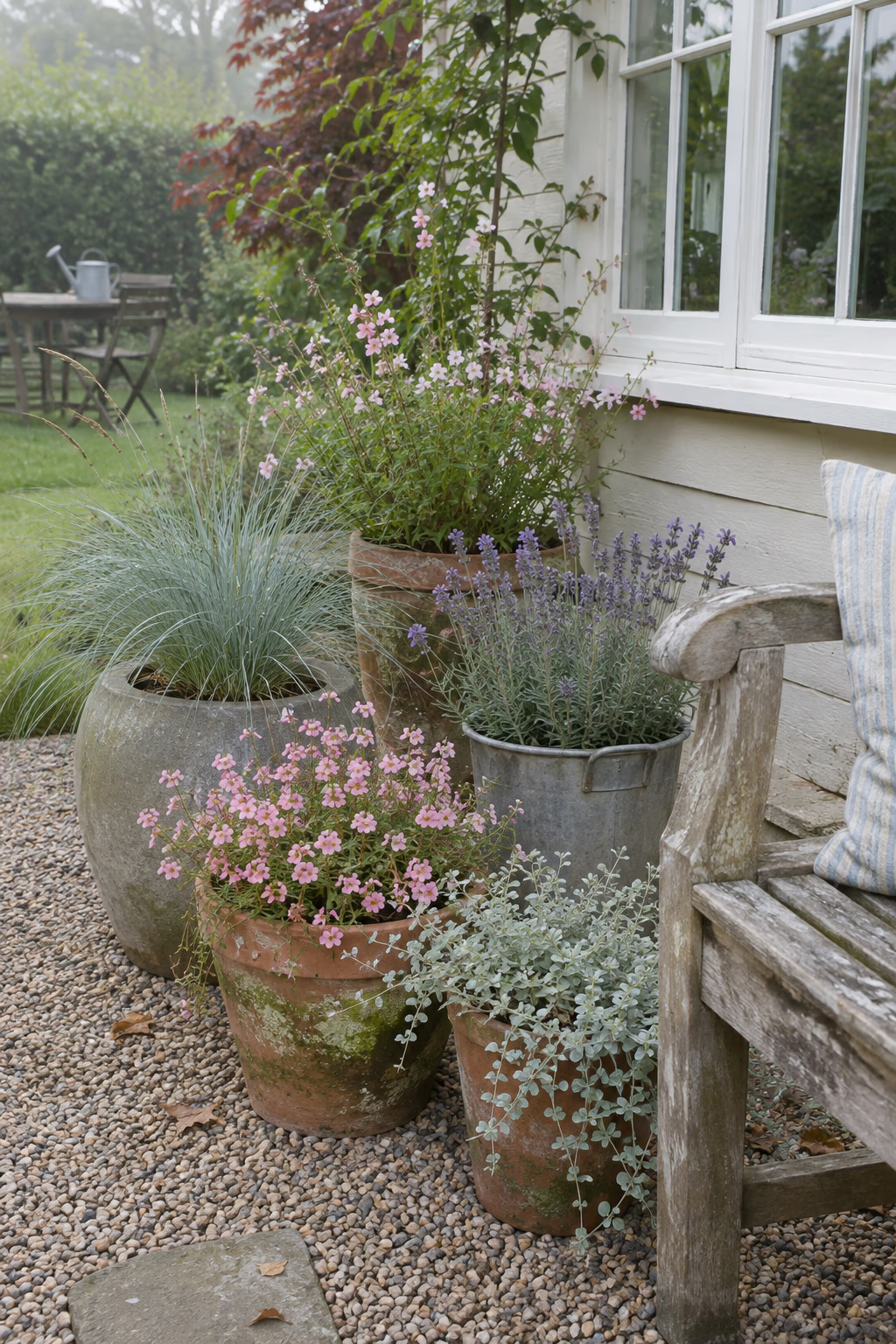
A calm, muted color scheme that feels current
Soft, muted colors are a big trend for 2026: ash pink, powdery blue, pale lavender, and silvery green. Try pale pink diascia, lavender, nemesia, blue fescue, and silver licorice plant together in aged terracotta, gray fiberstone, or weathered zinc pots.
This palette is restful to look at and pairs well with natural materials like wood decking, gravel, and stone pavers. It also photographs beautifully in early morning or evening light.
Very dark pots can overpower soft flower colors, so stick with pale or weathered finishes. If you want a little contrast, add a single plant with deep burgundy leaves rather than a bright, saturated flower.
9. Grow a Patio Snack Garden of Berries and Figs
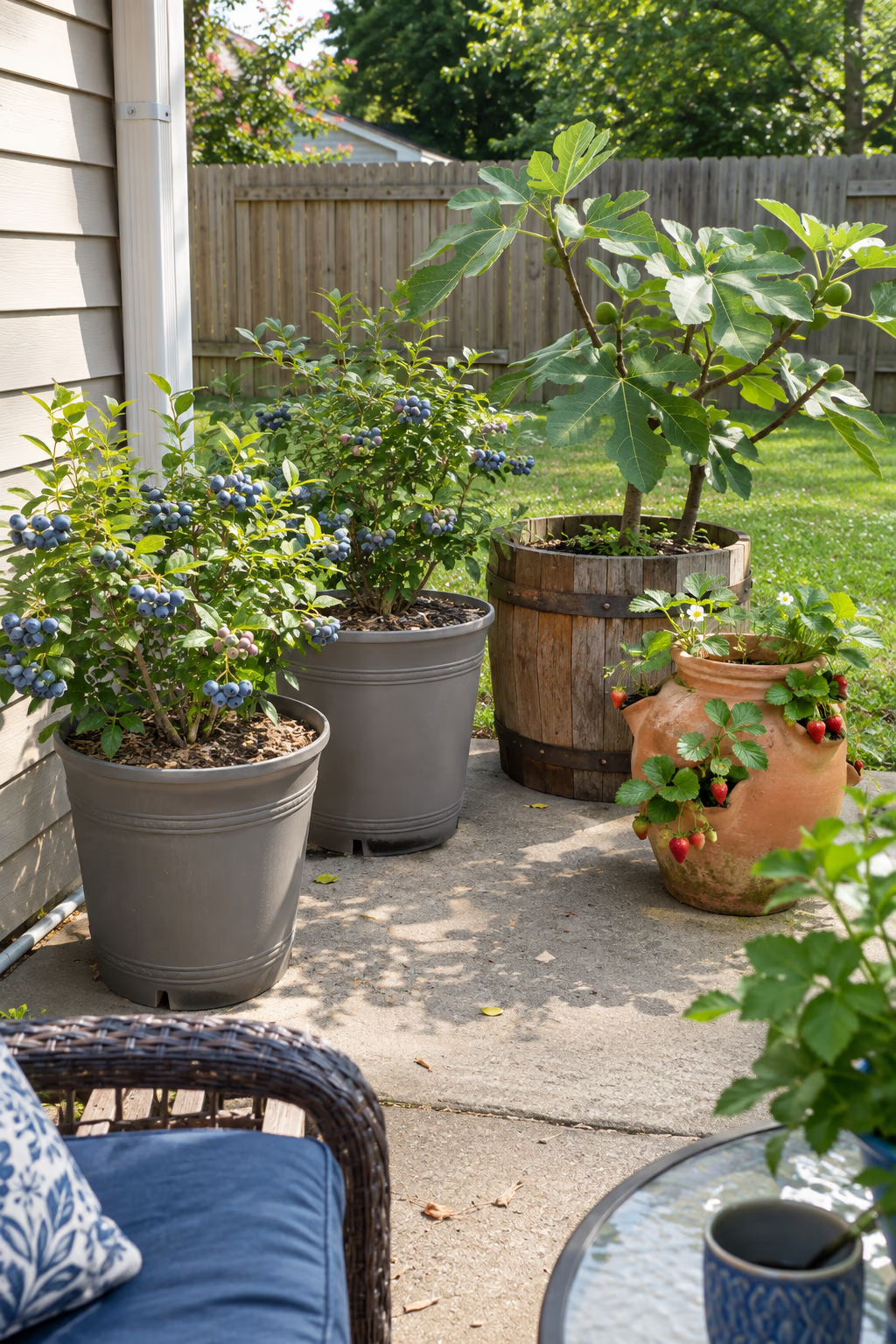
Edible shrubs you can pick from your chair
Fruiting shrubs are a fun way to make a patio garden useful. Compact blueberry varieties grow well in 18- to 20-inch pots filled with an acidic potting mix. Dwarf figs do well in a half-barrel-sized container, and everbearing strawberries can spill out of a strawberry jar or a hanging basket.
These plants have attractive leaves, flowers, or fall color too, so they look good even when they aren’t producing fruit. Kids especially love being able to pick berries right off the bush.
Many blueberries crop better with a second variety nearby for cross-pollination. Figs need winter protection in cold climates, so roll the pot into an unheated garage once it goes dormant. Netting may be needed if birds find the berries first.
10. Group Mediterranean Plants in Terracotta for Hot Patios
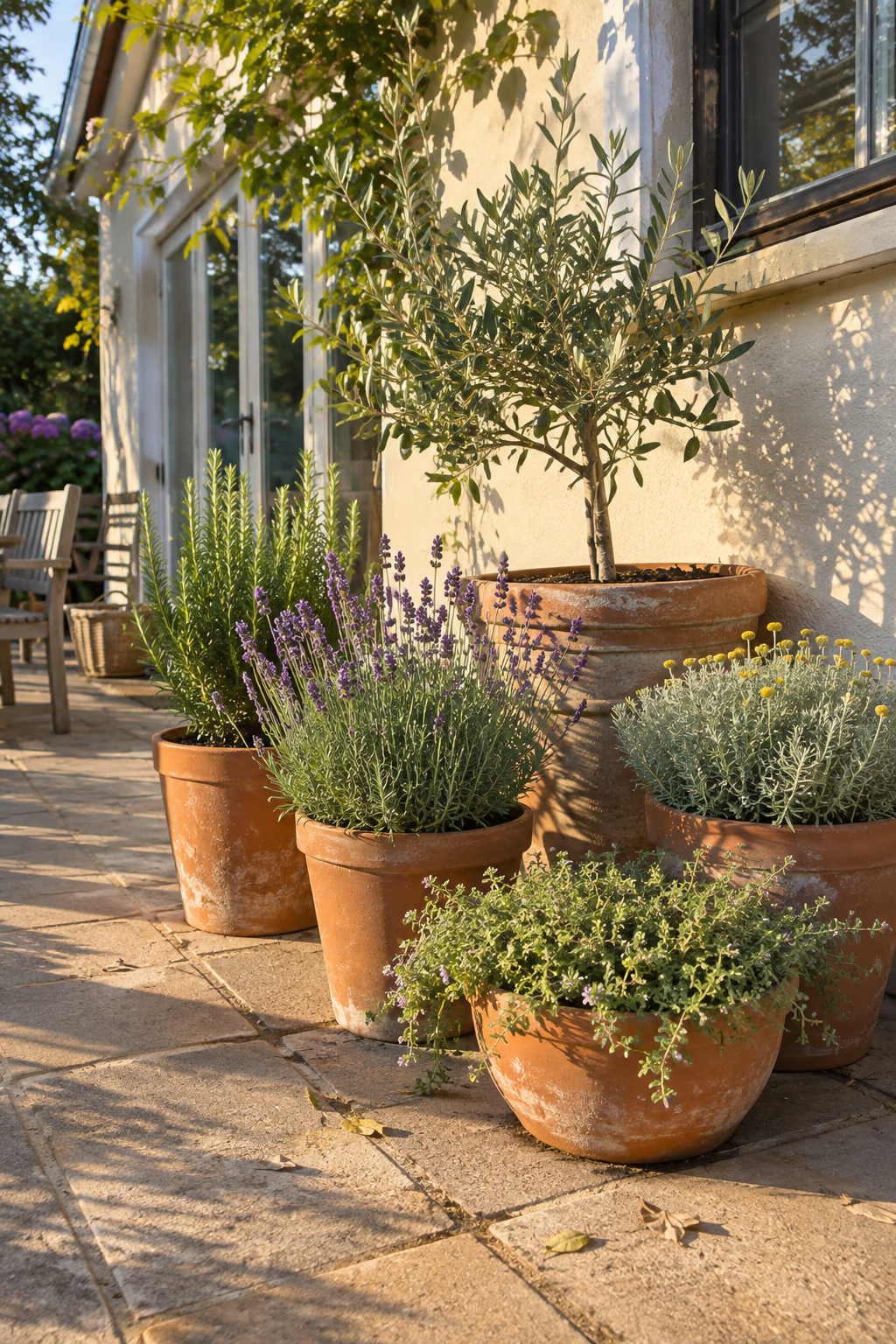
Tough, fragrant plants that handle reflected heat
A south- or west-facing patio can bake in summer, with heat bouncing off concrete and walls. Mediterranean plants handle those conditions well. Group a dwarf olive, lavender, rosemary, santolina, and a trailing thyme in unglazed terracotta pots of various sizes.
These plants thrive on sun and don’t mind drying out a little between waterings. Their silvery leaves and natural scents make the patio feel like a vacation spot, and terracotta lets the roots breathe.
Use a gritty, fast-draining potting mix and never let the pots sit in saucers of water. Olives and rosemary are only hardy in mild winters, so in colder zones move them to a cool, bright spot indoors before frost.
11. Plant a Green-and-White Palette That Glows at Dusk
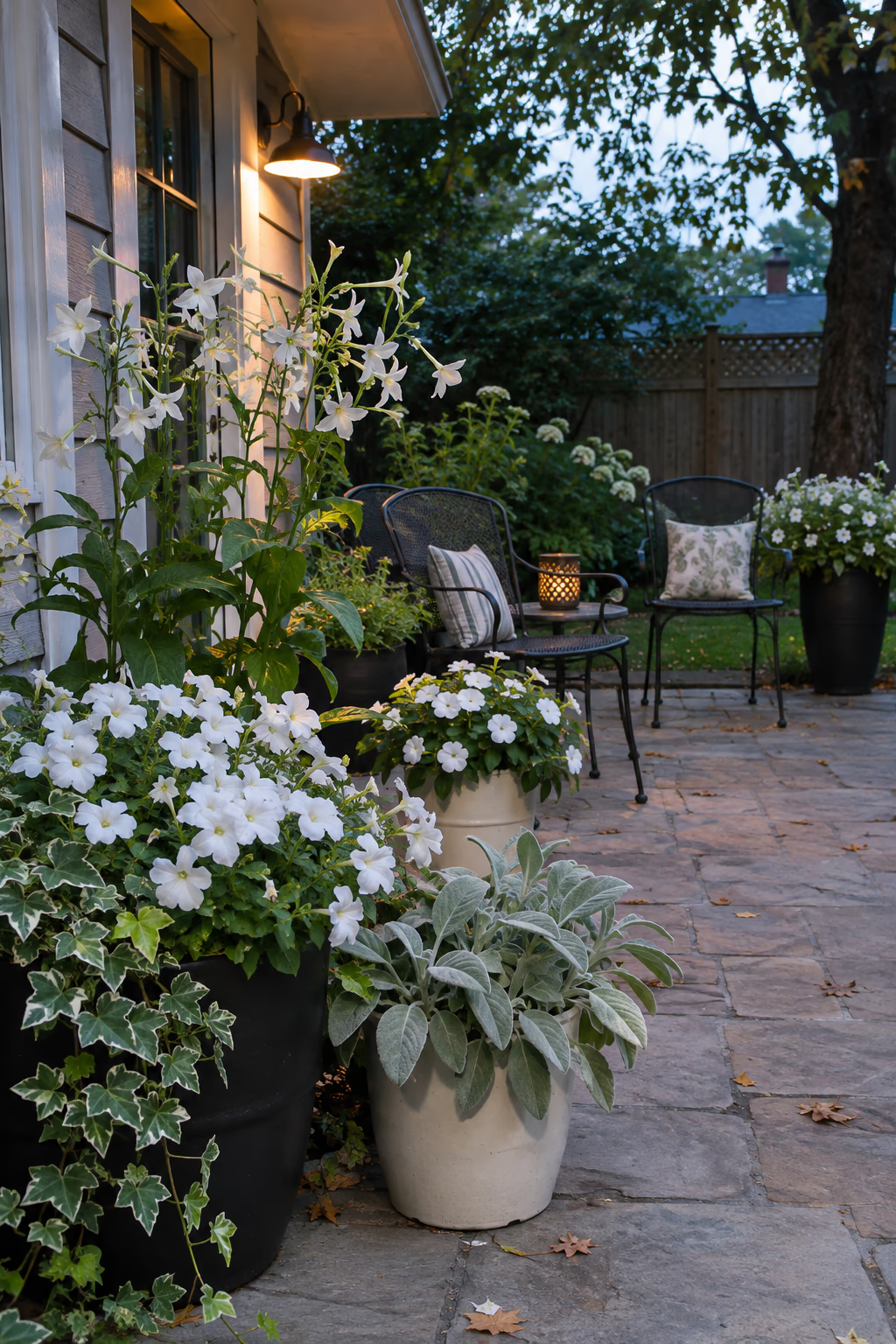
Flowers that shine just when you head outside
If you mostly use the patio after work, plant for the evening. White flowers and silver or variegated leaves reflect the last light of day and seem to glow after sunset. Try white nicotiana, white petunias, airy white euphorbia, white impatiens, variegated ivy, and lamb’s ear in cream, gray, or matte black pots.
A restrained green-and-white scheme looks crisp and tidy at any hour. It also blends well with almost any outdoor furniture or cushion color.
Some white flowers, like nicotiana and night-scented stock, are most fragrant at night, so place a pot or two near the seating. Deadhead white petunias often, because faded blooms show more on white than on darker colors.
12. Repeat One Pot Style Up the Patio Steps
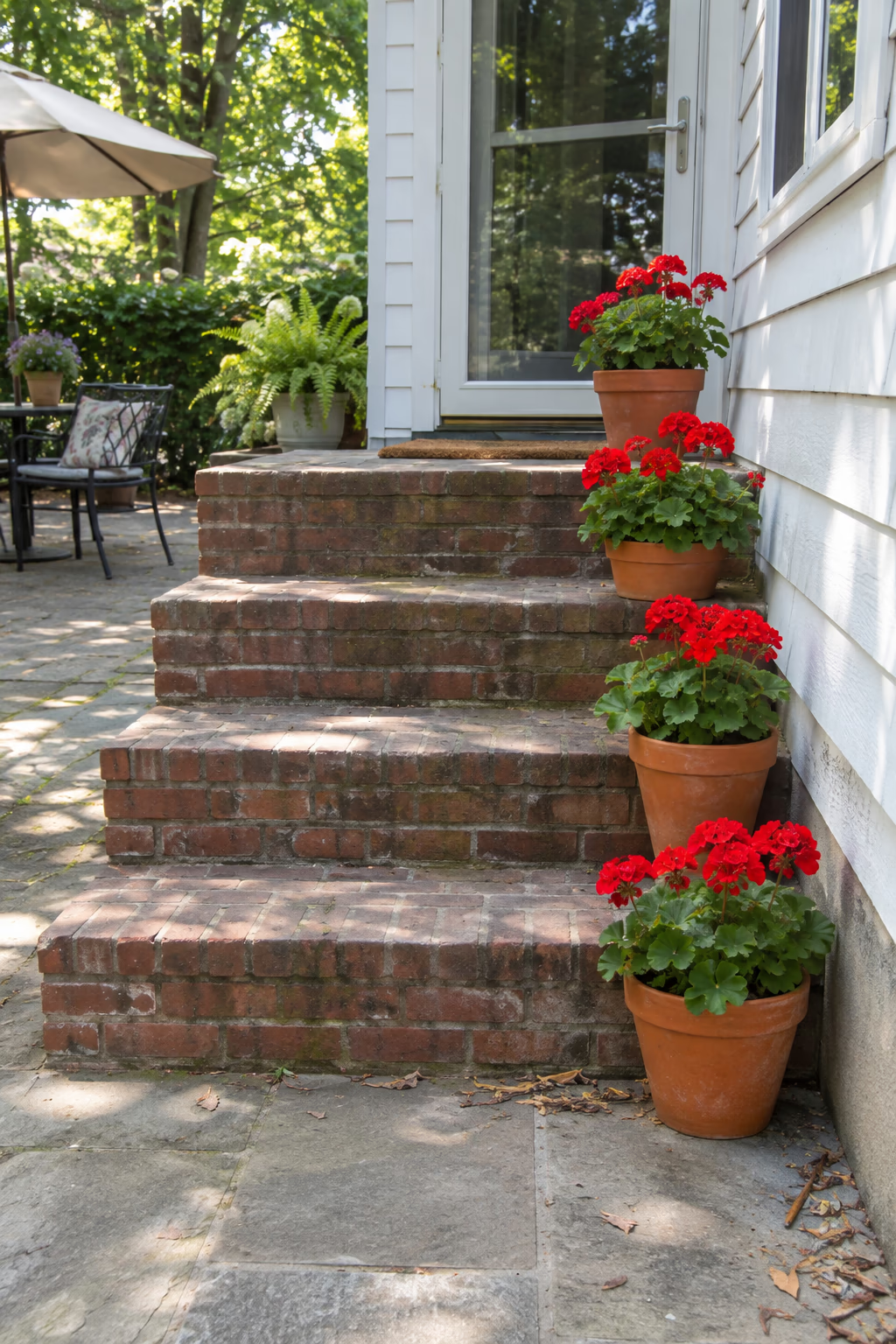
Simple repetition that looks polished
If the patio has a few steps down to the yard or up to the back door, put one matching pot on each step. Plain terracotta, 10 to 14 inches wide, is affordable and easy to replace. Plant every pot the same, such as red geraniums, white begonias, or a single boxwood ball.
Repetition creates a strong, tidy look for very little money. The line of pots also guides the eye along the steps and marks the edges.
Keep the pots to one side of each tread so there’s a clear, safe walking path. Small pots on steps dry out quickly, so use a moisture-holding potting mix and water every day during hot weather.
13. Tuck Fragrant Plants Right Beside the Seating
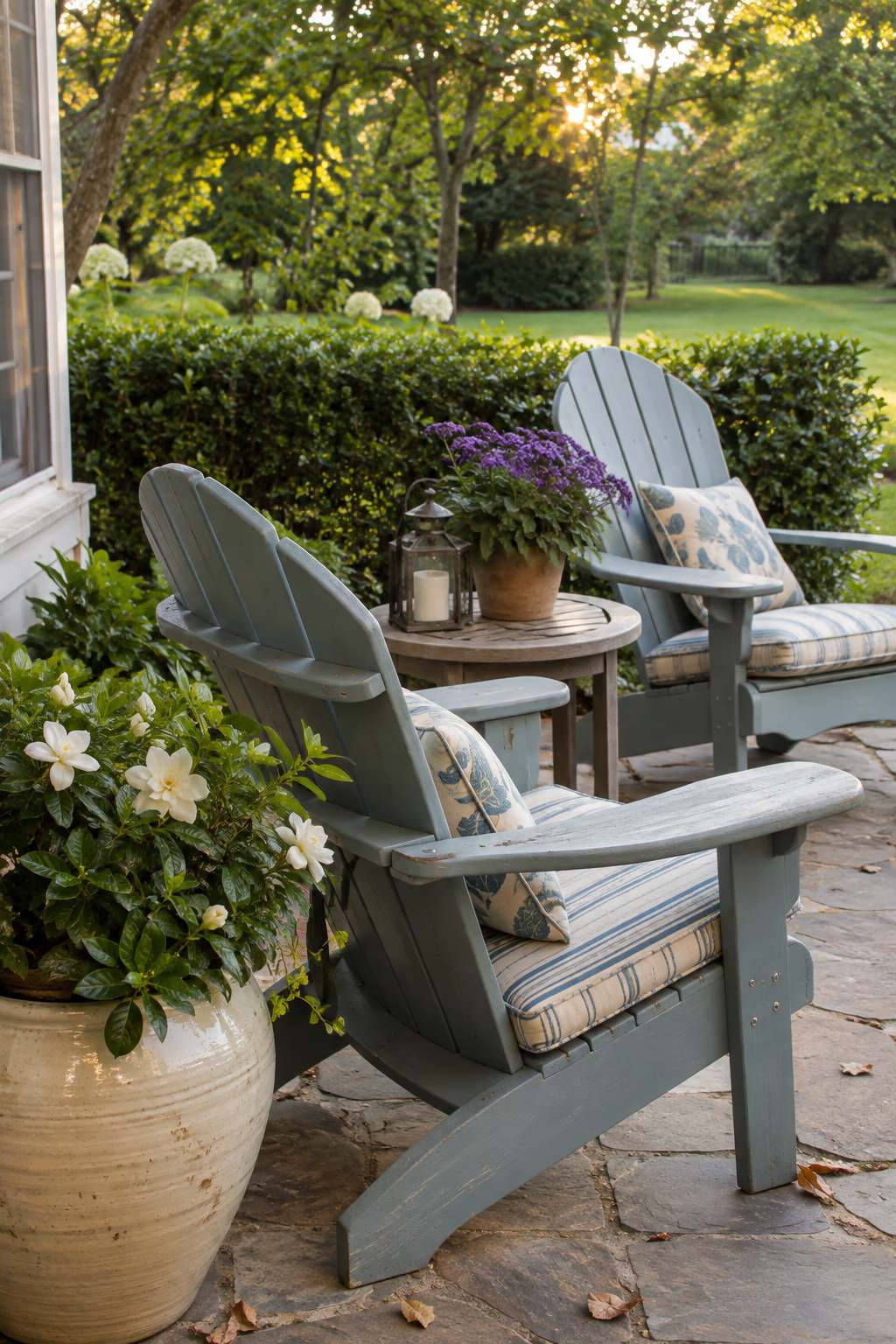
Scent is half the pleasure of sitting outside
Place fragrant plants within an arm’s reach of the chairs and dining table. Gardenia, star jasmine, heliotrope, lemon verbena, scented geraniums, and sweet-smelling stock all grow well in containers. Use pots at least 14 inches wide so the plants can fill out.
A planting can look nice from across the yard, but fragrance only works up close. A pot right beside the chair delivers the scent every time you brush past it or catch the breeze.
Don’t overdo it. Two or three fragrant plants are plenty, and several strong scents competing at once can be overwhelming at the dinner table. Gardenia and star jasmine need frost protection in colder climates.
14. Display Small Pots on a Tiered Plant Ladder
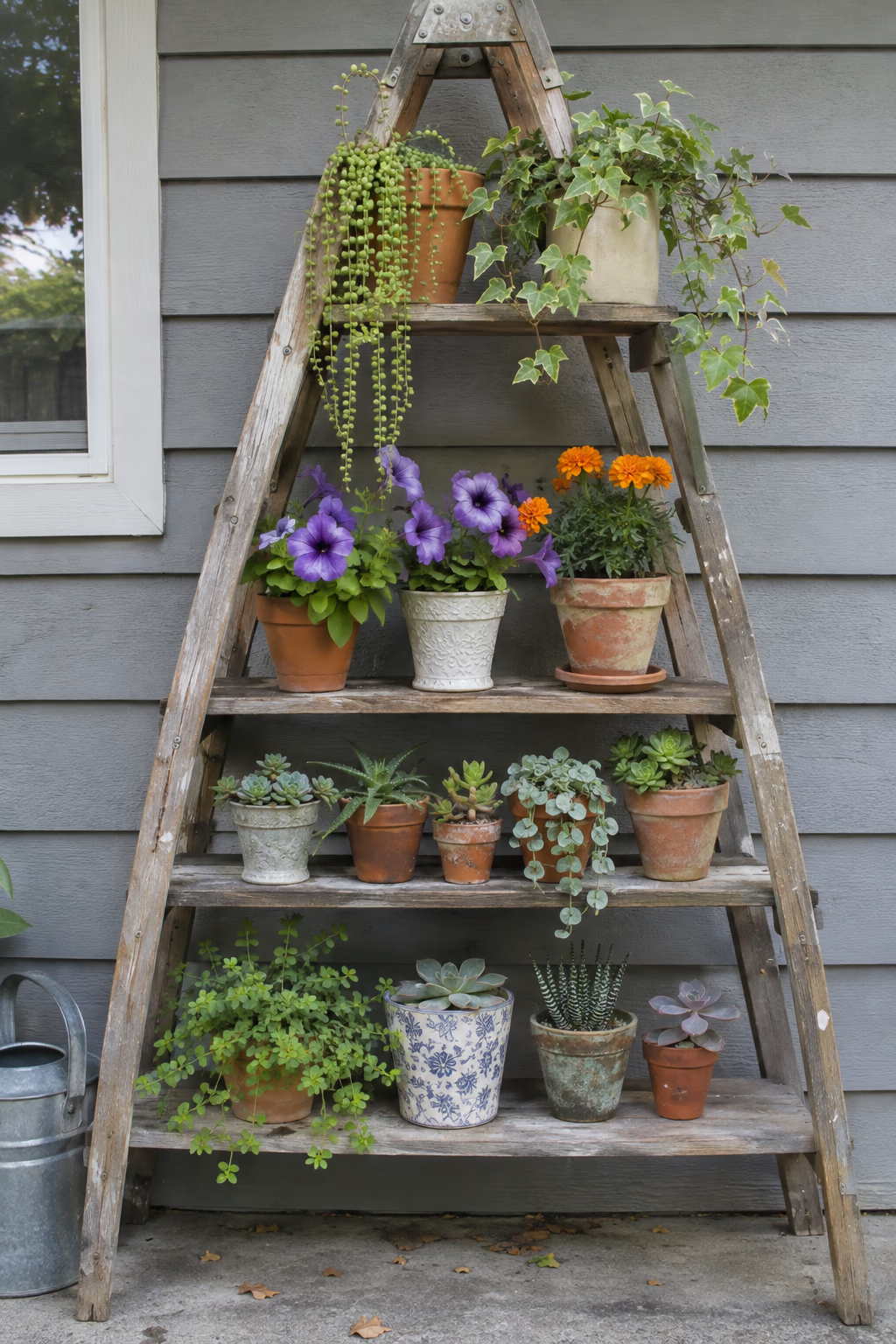
Lots of plants in a footprint the size of a chair
A wooden or metal plant ladder, or a set of tiered shelves, holds a dozen small pots against a wall without taking up much patio floor. Fill the top shelf with trailing plants, the middle with flowering annuals, and the lower shelves with succulents or plants that like a bit of shade.
A ladder like this makes a great showcase for a collection of small pots, like mismatched thrift-store finds, painted cans, or terracotta seed pots. It also brings plants up off the ground where they’re easier to admire and water.
Tiered stands can tip when the top shelf is heavy, so anchor taller models to the wall and put the heaviest pots on the bottom. Use pots with drainage holes and saucers so water doesn’t drip onto the plants below.
15. Light the Containers With Low-Voltage and Solar Accents
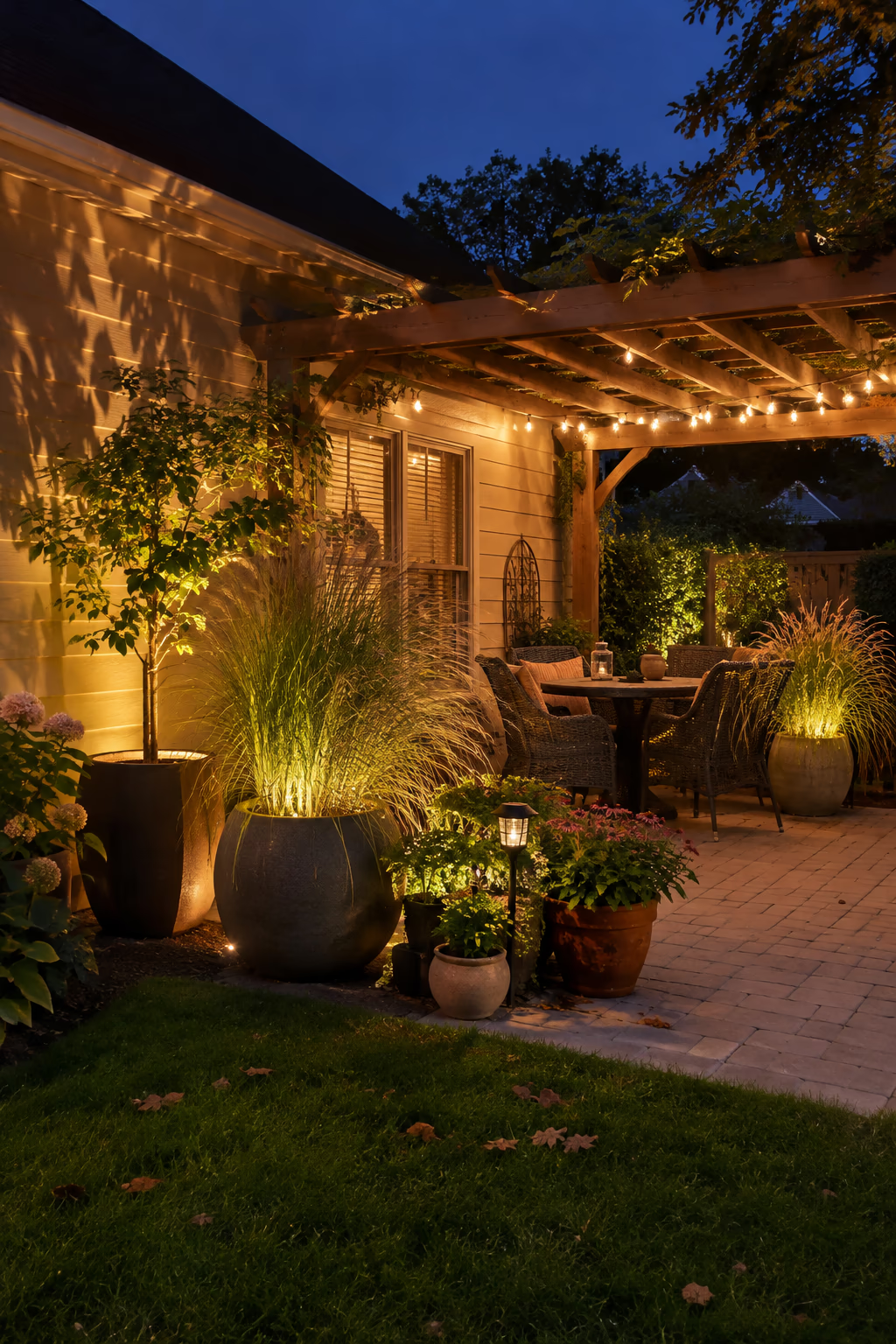
Keep enjoying the plants after dark
Garden lighting is a growing trend, and containers are an easy place to start. Tuck small solar or low-voltage spotlights behind your biggest pots so they wash light up through the leaves. Add a few warm-white string lights overhead, or set solar lanterns among a group of pots.
Up-lighting a tree or a grass in a large container creates dramatic shadows on walls and the pergola. It also makes the patio feel more welcoming at night and lets you see steps and pot edges.
Choose warm-white bulbs, around 2700K, rather than harsh cool-white light. Solar lights need several hours of direct sun to charge, so they may dim on a covered patio. Hire an electrician for any new outdoor outlets.
16. Make a Mini Water Garden in a Glazed Pot
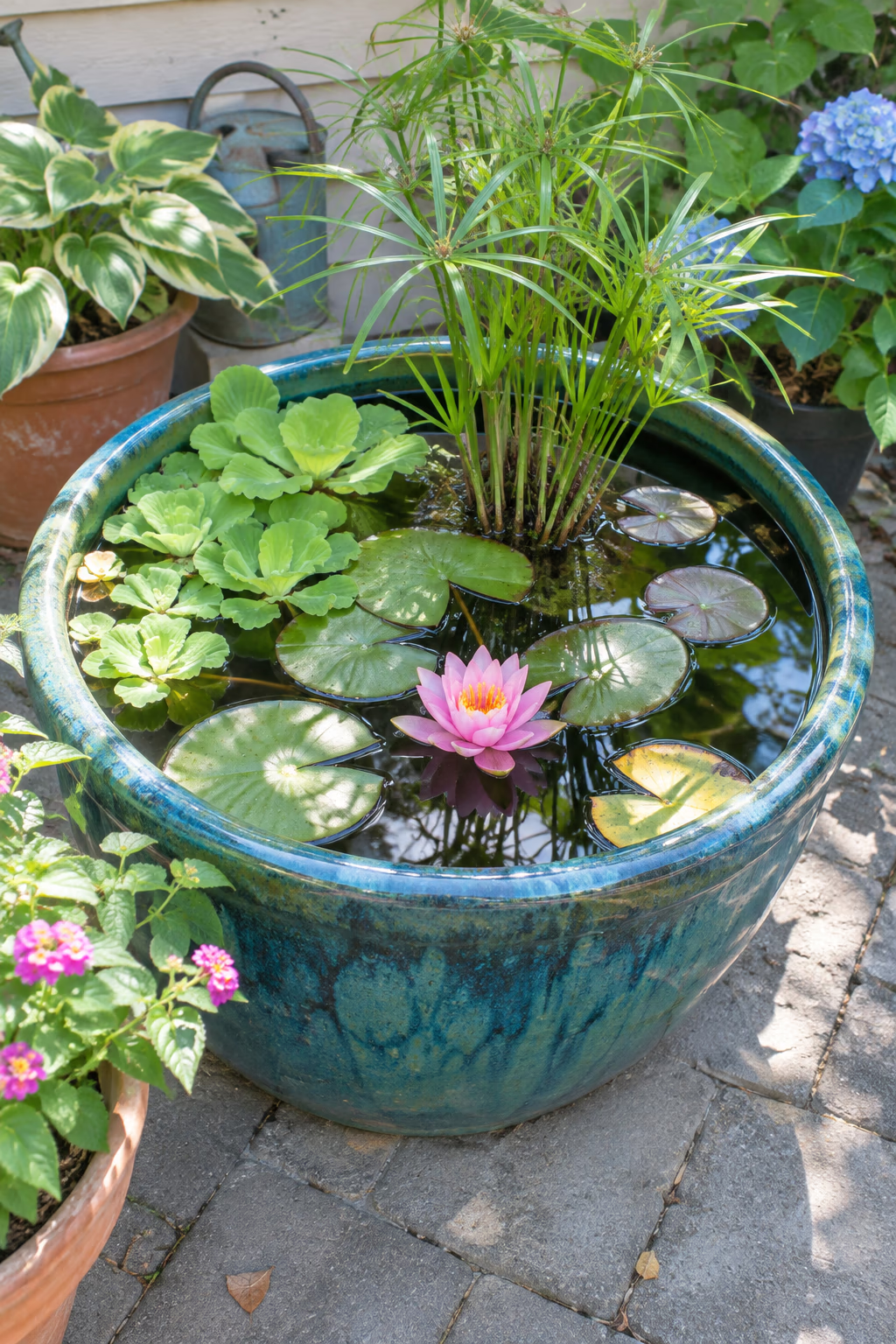
The sound and shimmer of water without digging a pond
A glazed ceramic pot without a drainage hole, about 20 to 24 inches wide, can hold a small water garden. Add a dwarf water lily or water lettuce on the surface, plus a short upright plant like dwarf papyrus or a small rush. A tiny solar fountain pump adds gentle movement.
Water adds a cool, calming element to a hot patio and attracts birds and dragonflies. It’s also a striking change of texture among the leafy pots around it.
Seal any drainage holes with a rubber plug or silicone, and top up the water as it evaporates. A moving pump or a mosquito dunk designed for ponds keeps mosquitoes from breeding. Empty the pot before a hard freeze so the ceramic doesn’t crack.
17. Set a Living Centerpiece on the Patio Table
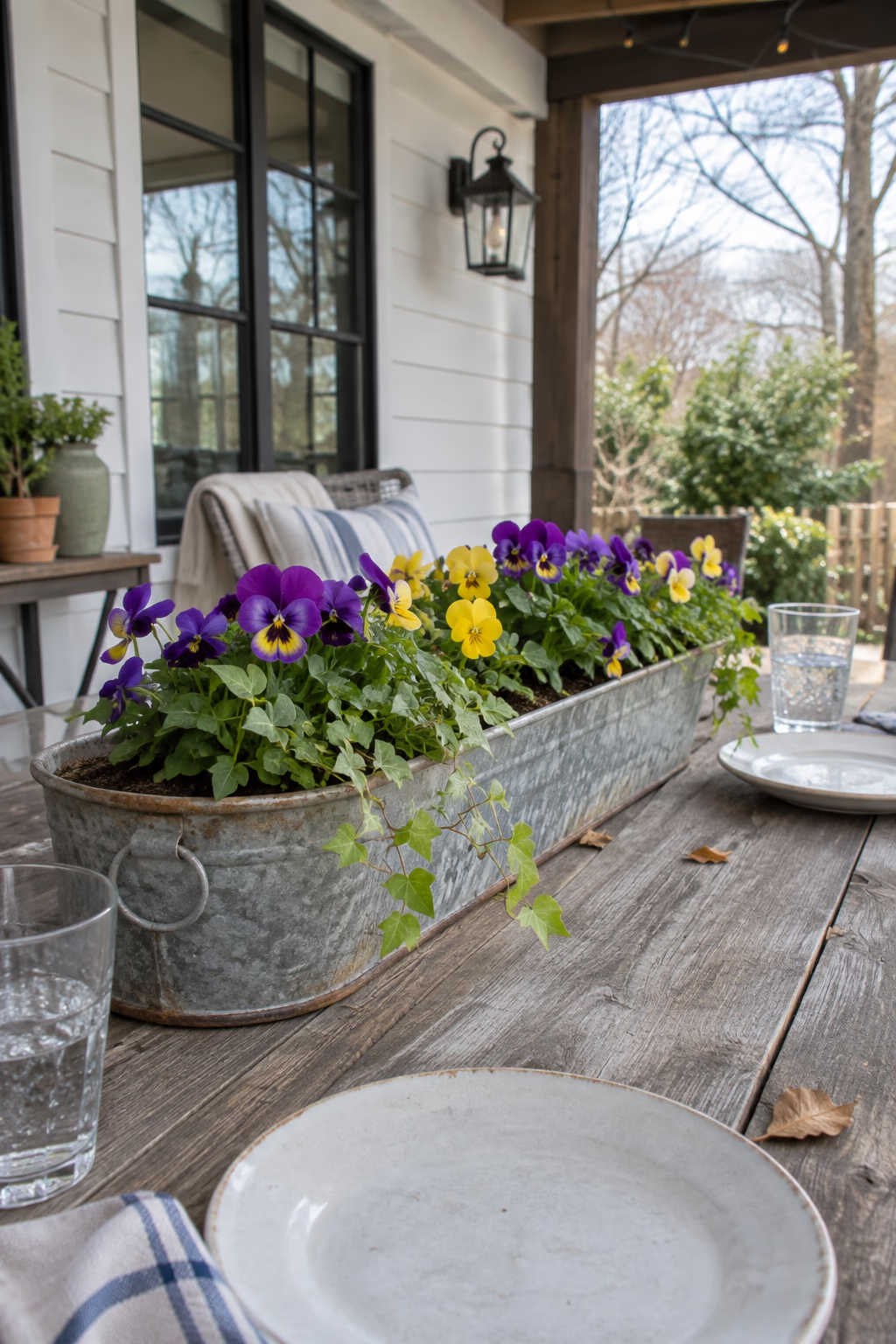
Fresh flowers on the table every week of the season
A long, shallow planter or a low bowl makes a centerpiece that’s still alive months later. In spring and fall, try violas, pansies, and small trailing ivy. In summer, use compact flowers like dwarf zinnias or a mix of sweet alyssum and small grasses. Keep the planting under about 10 inches tall so it doesn’t block conversation.
A living centerpiece looks charming at every meal and costs far less over time than buying cut flowers. When it fades, just replant it for the next season.
A small planter in sun dries out fast, so check it daily. Put a waterproof tray under it to protect the table, and remember to move it when you open the umbrella or set out serving dishes.
18. Swap in Ornamental Cabbage and Mums for Fall
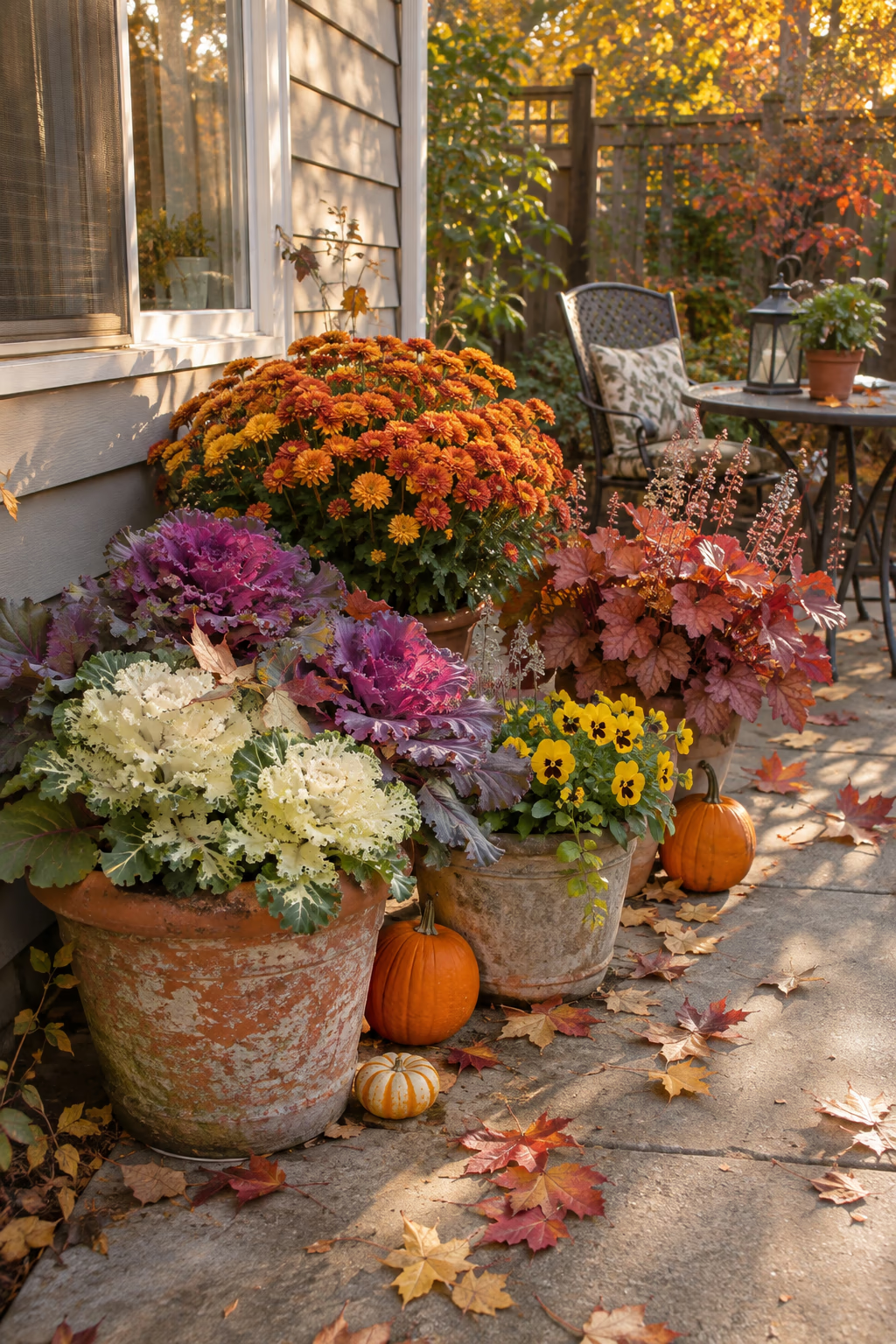
Fresh color when summer annuals give out
When summer flowers start to fade, refresh your patio pots instead of letting them go bare. Ornamental cabbage and kale come in ruffled purple, pink, cream, and green shades, and they hold their color into late fall. Pair them with hardy mums, pansies, and a few ornamental grasses or heuchera for a full fall look.
Ornamental cabbages actually get more colorful as the nights grow cooler, so they peak when most annuals are fading. Swapping out just the top layer of a pot is fast and cheap.
Plant mums with their buds still tight so they bloom longer on the patio. Most potted mums are best treated as annuals. Ornamental kale can be eaten, but if it came from a garden center it may have been treated with chemicals not meant for food plants.
19. Keep the Patio Green in Winter With Evergreen Pots
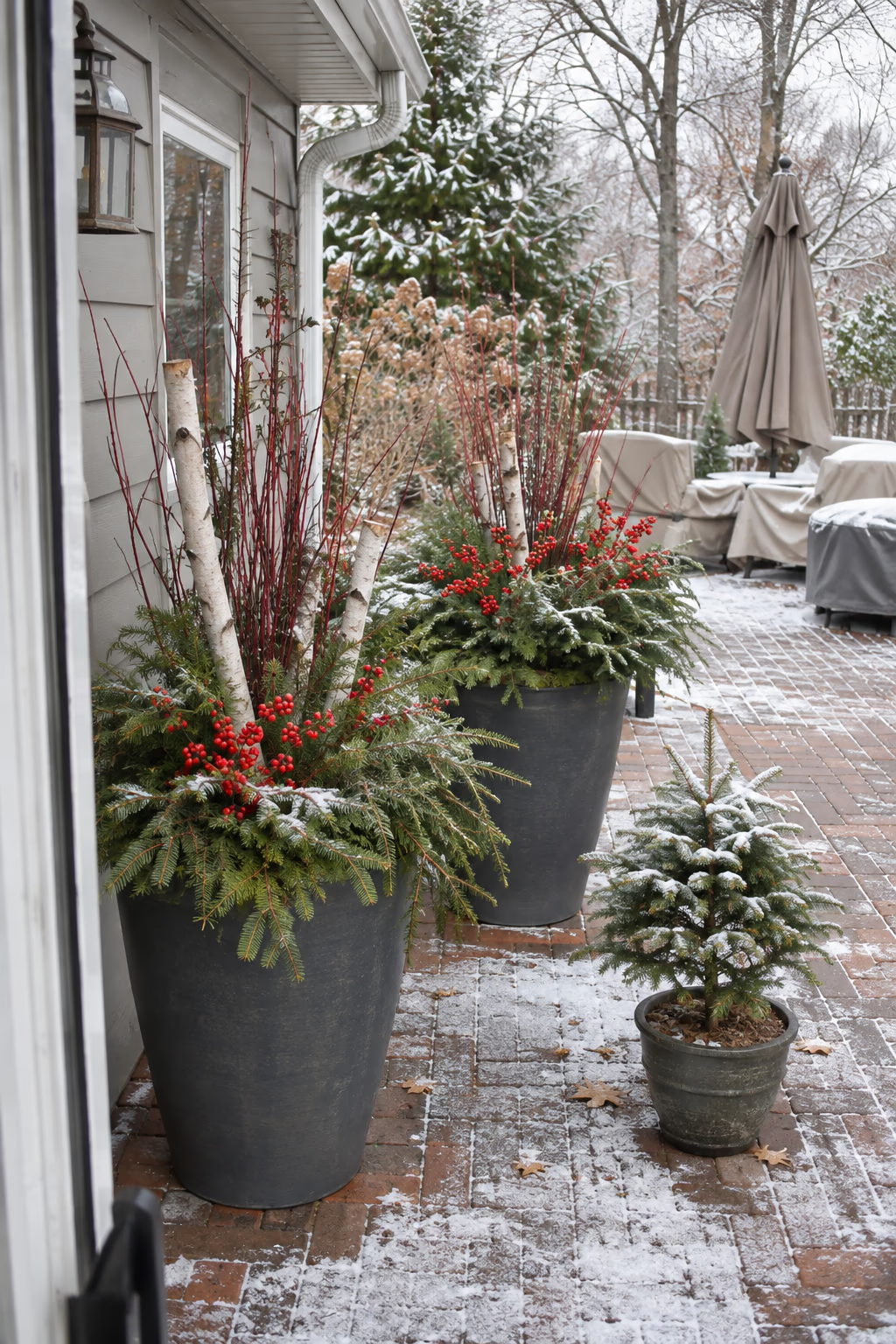
Something to look at through the window all winter
In cold climates, the patio sits empty for months, but the containers don’t have to. Fill frost-proof pots with cut evergreen boughs, red-twig dogwood stems, birch branches, pinecones, and winterberry. Or plant a dwarf spruce or arborvitae and leave it out year-round.
A winter display gives you something cheerful to see from the kitchen window. It also keeps the patio feeling like part of the home instead of a forgotten space.
Push cut stems into soil before it freezes so they lock in place. Empty terracotta and thin ceramic pots and store them in a shed or garage, because water in the soil expands when it freezes and can crack them.
20. Turn a Potting Bench Into a Container Display
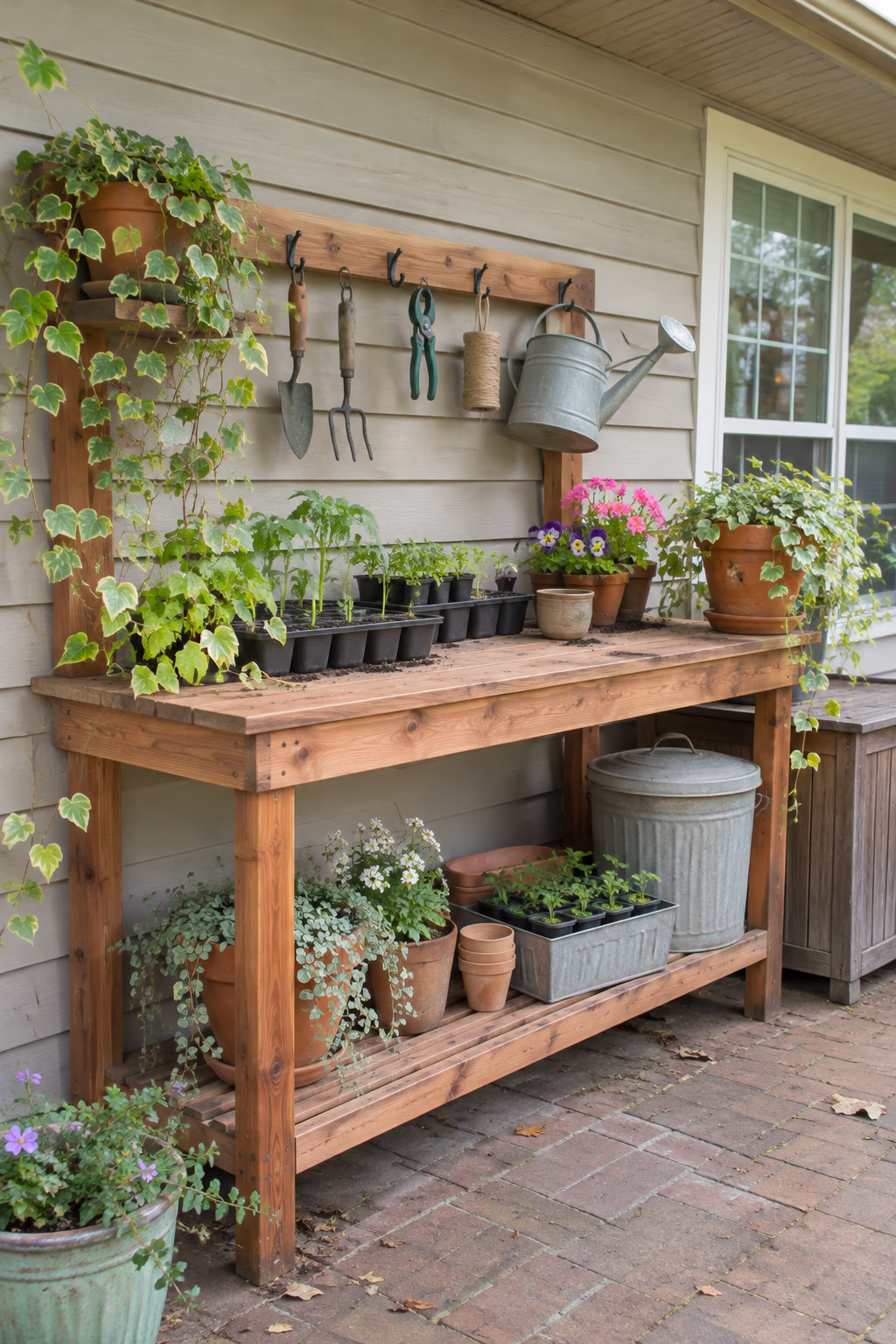
A working station that looks good too
A potting bench along a patio wall can hold your tools and soil and also show off some plants. Line the top and lower shelf with seedlings, potted herbs, and trailing plants, and hang small tools and a watering can from hooks above. A secondhand table or old dresser frame can stand in for a store-bought bench.
Having a place to repot, divide plants, and store supplies right on the patio makes it much easier to keep a container garden going. The display looks charming and lived-in.
Choose rot-resistant wood like cedar, or seal the bench, and keep it under the eaves if possible. Store bags of potting mix and fertilizer in a lidded bin so rain and pests can’t get in.
21. Put Heavy Pots on Rolling Plant Caddies
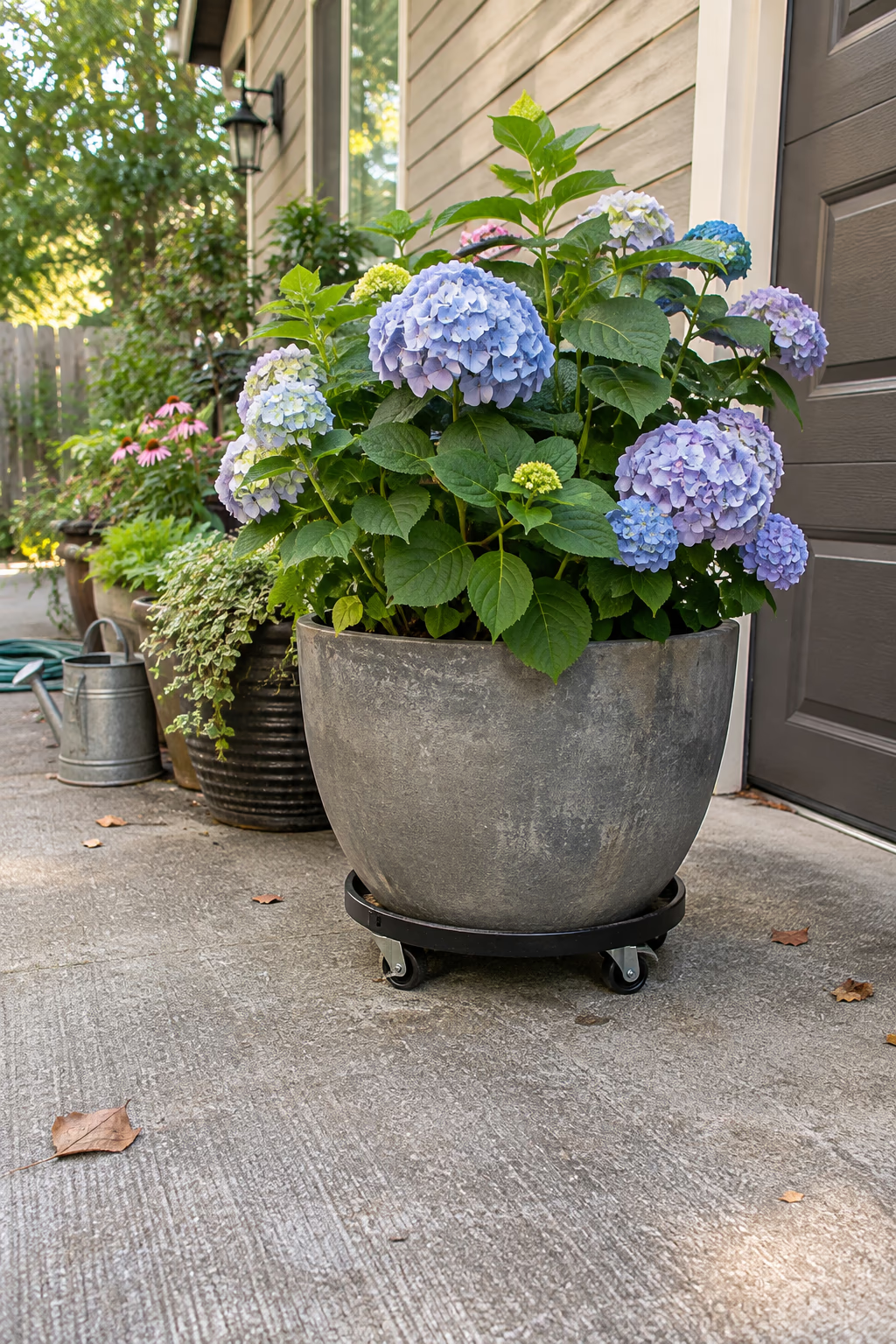
Rearrange the patio without straining your back
Large planters filled with damp soil can weigh well over 100 pounds. Before planting, set big pots on low rolling plant caddies with locking casters. You can then push them into the sun, out of a storm, or into the garage for winter.
Caddies make it easy to rearrange the patio for a party or to follow the sun as it shifts through the seasons. They also lift pots slightly off the surface, so water drains freely and doesn’t stain pavers or decking.
Check the weight rating on the caddy and pick one rated well beyond the planted pot’s weight. Lock the casters once the pot is in place, especially on a patio with even a slight slope.
22. Plant a Native Perennial Pot for Butterflies
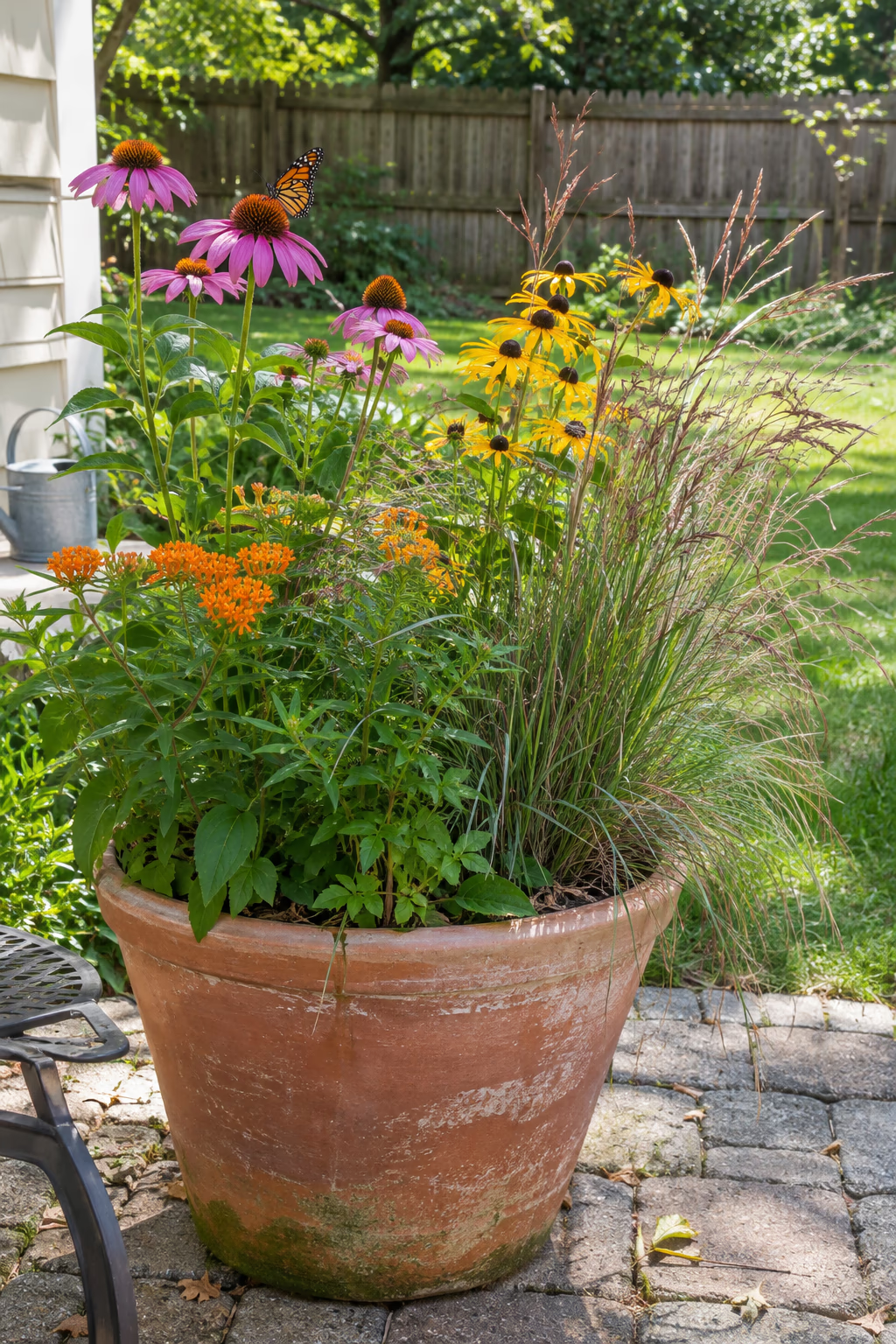
A small habitat right on the patio
A large pot of native flowering perennials can attract butterflies and bees even on a small patio. Good choices for many regions include purple coneflower, black-eyed Susan, a short aster, butterfly weed, and a little bluestem grass. Use a container at least 18 inches wide and deep.
Native plants are usually tough, and once established in a pot they handle summer heat well. Watching butterflies land a few feet from your chair is a quiet pleasure.
Check a native plant list for your region, since what’s native in Ohio may not be in Arizona. Skip pesticides on this pot, and leave seed heads in place in fall for birds to enjoy.
23. Hang Railing Planters Along a Patio Fence
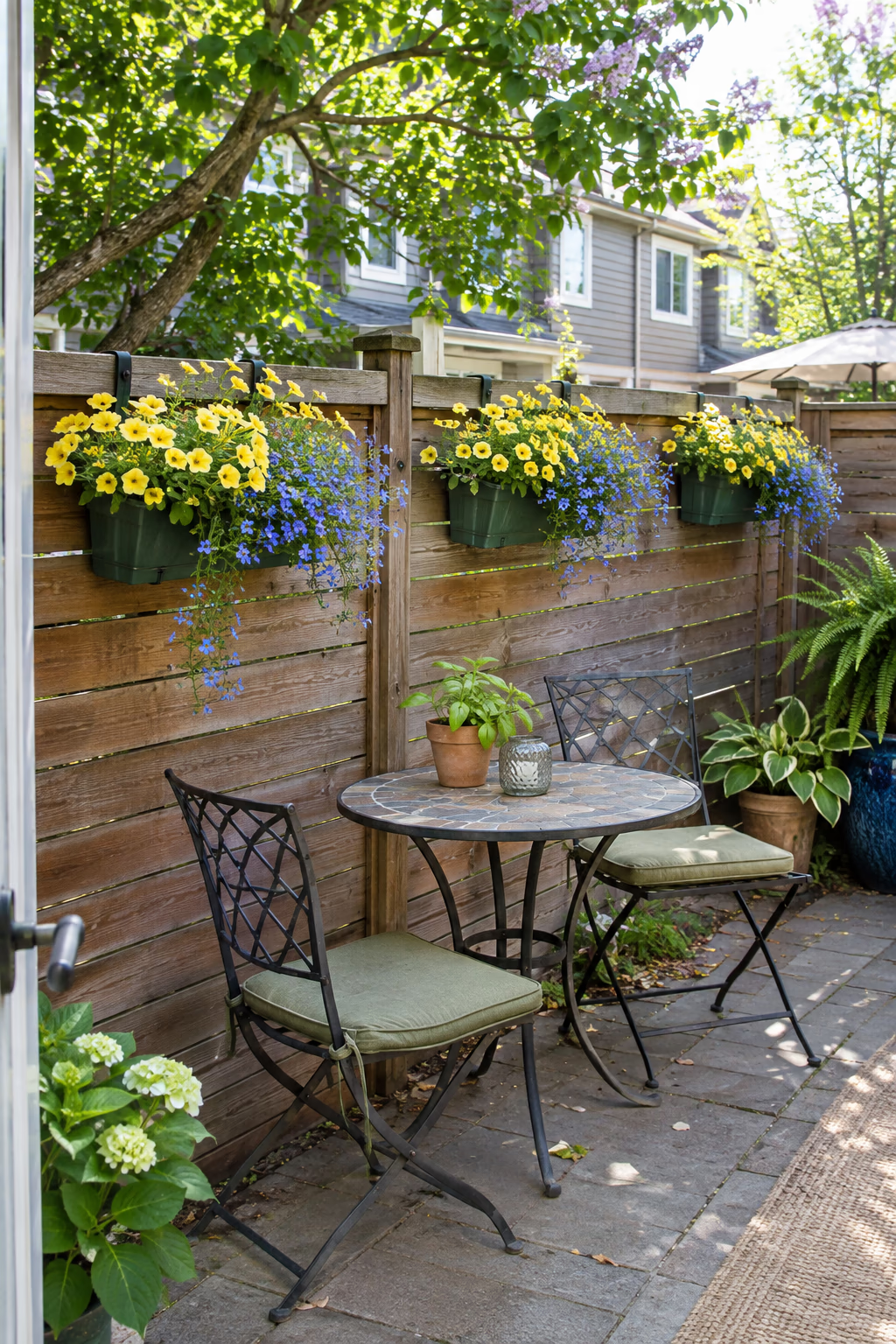
A narrow strip of color for the tightest spaces
Railing planters that hook or bracket over a fence, deck rail, or balcony edge add a ribbon of flowers without using any floor. Fill them with compact, heat-tolerant plants like calibrachoa, dwarf marigolds, lobelia, or trailing petunias in a single color for a clean line.
This idea suits apartment patios, townhouse decks, and small yards where every inch of ground is needed for furniture.
Match the bracket size to your rail or fence board width so the planter sits securely. Check HOA or building rules before hanging anything on an outward-facing railing, and position planters so water won’t drip onto a neighbor’s patio below.
24. Disguise the AC Unit With a Row of Tall Pots
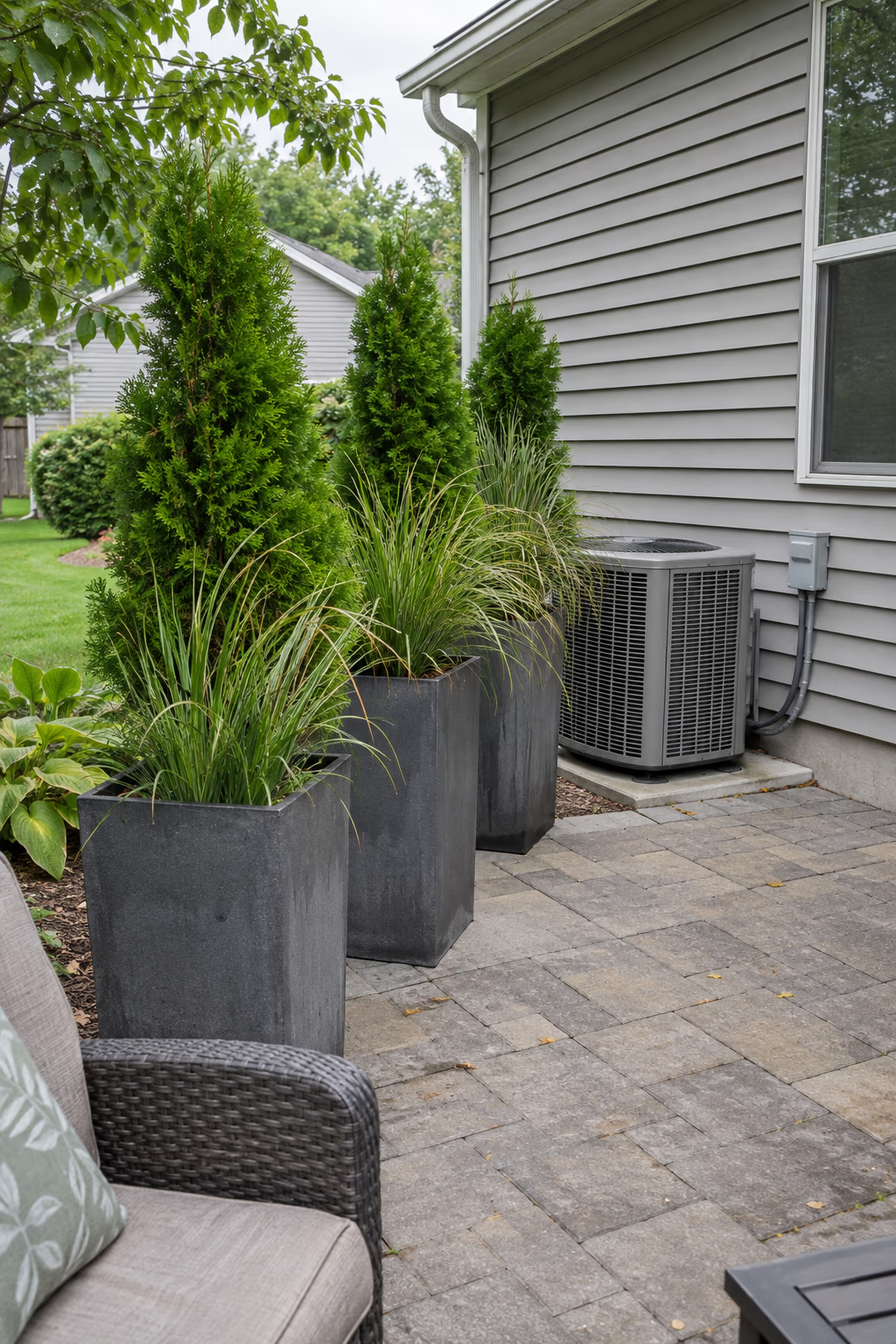
Hide the eyesore and keep the airflow
An air-conditioning condenser, propane tank, or trash bin can spoil a nice patio view. Line up two or three tall planters, about 30 inches high, a short distance in front of it. Fill them with upright plants like dwarf arborvitae, tall grasses, or canna to create a living screen.
Unlike a fixed fence or wall, the pots can be rolled aside when a technician needs access. They also add greenery to an area that usually looks bare.
Air conditioners need open space to breathe, and manufacturers usually call for clearance of at least 2 to 3 feet around the unit. Check your model’s manual, and keep falling leaves and flowers out of the unit.
25. Run Drip Irrigation to Every Patio Pot
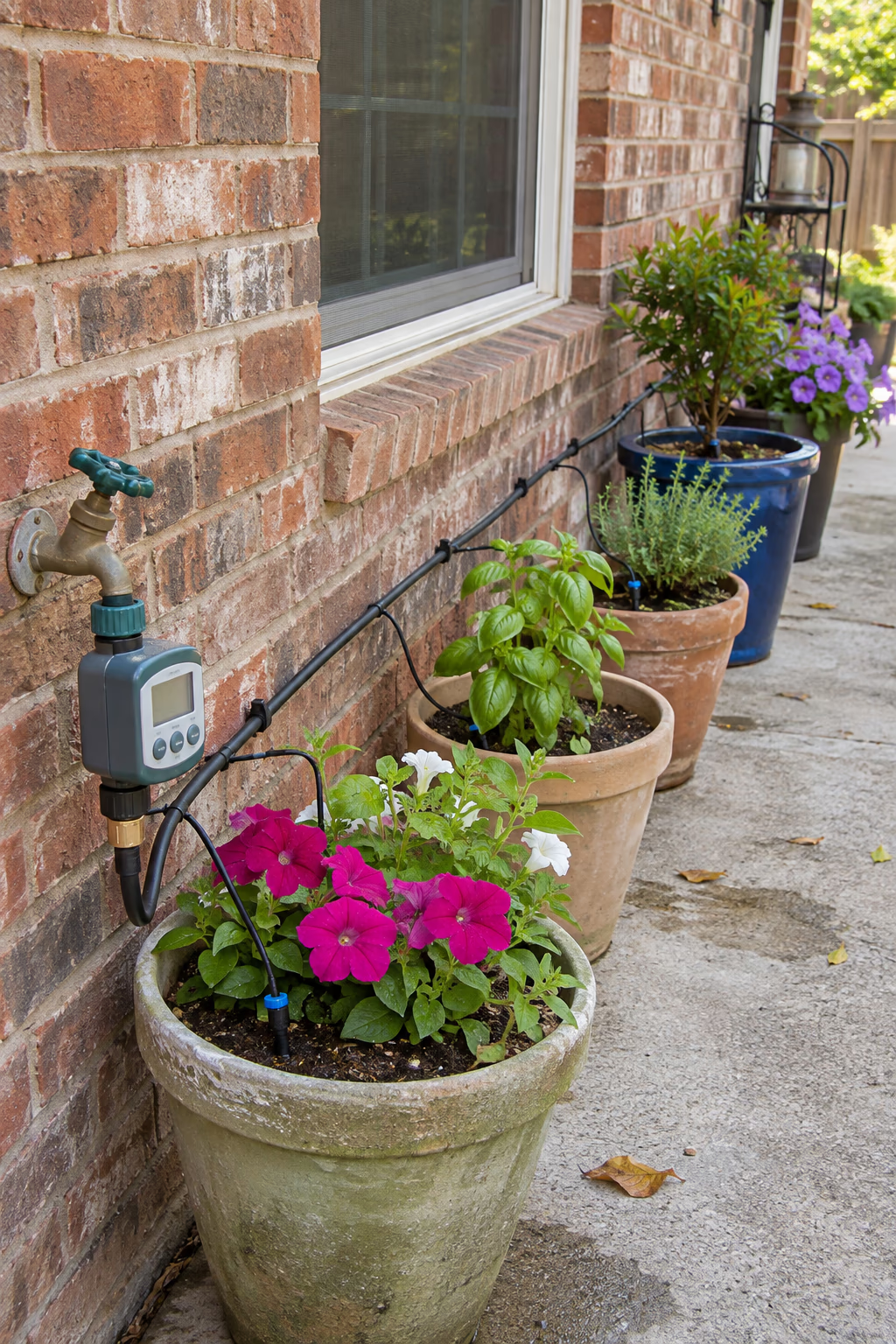
Healthier plants and fewer watering chores
Watering is the hardest part of a big patio container garden. A simple drip kit with a battery-powered hose timer can water every pot on schedule. Run a main line along the base of the wall and add a thin feeder tube with an adjustable emitter to each container.
Drip irrigation delivers water slowly right to the soil, so less runs off and the leaves stay dry, which helps prevent disease. It also keeps the garden alive when you’re away for a weekend.
Hide tubing behind pots or along wall edges so no one trips on it. Adjust emitters as plants grow, check them every few weeks for clogs, and drain the system before the first hard freeze.
How to Plan Your Patio Container Garden
A patio container garden works best when it’s planned around how you use the space. Before you buy pots and plants, think about light, weight, watering, and how the garden will look in every season.
- Track the sun first. Note how many hours of direct sun each part of the patio gets, and choose plants labeled for full sun, partial shade, or shade to match.
- Go bigger on pots. Larger containers hold more soil and moisture, so the plants are less stressed and you’ll water less often than with lots of small pots.
- Insist on drainage. Every pot needs a drainage hole and quality potting mix. Garden soil compacts in containers and can suffocate roots.
- Match pots to your climate. In freezing areas, choose frost-proof materials for anything left outside, and pick perennials and shrubs rated colder than your zone.
- Mind the weight. Check the load limits on decks, balconies, and rooftop patios, and use lightweight fiberglass or resin pots where weight matters.
- Plan the watering. Group thirsty pots near a hose bib, use saucers sparingly, and consider drip lines or self-watering pots if you travel in summer.
Frequently Asked Questions
What plants grow best in patio containers?
Many flowering annuals, compact shrubs, ornamental grasses, herbs, and dwarf fruiting plants grow well in containers. Choose plants that match the sun on your patio and, for anything left outside all year, are hardy at least one zone colder than yours.
How big should patio pots be?
For mixed flowers, a pot 14 to 18 inches wide is a good minimum. Shrubs and small trees need 18 to 24 inches or more. Bigger pots dry out more slowly and protect roots from heat and cold.
How often should I water patio containers?
In summer heat, many pots need water daily and small ones may need it twice a day. Push a finger an inch into the soil and water when it feels dry, until water runs out the drainage hole.
Can I leave patio pots outside in winter?
Yes, if the pots are frost-proof and the plants are hardy enough. Empty or move terracotta and thin ceramic pots, and shelter tender plants in a garage or indoors before hard frost.
How do I keep patio containers from staining pavers or decking?
Raise pots on pot feet, plant stands, or rolling caddies so water drains freely and air can circulate. Avoid saucers that hold standing water against wood, and clean up spilled potting mix promptly.
Final Thoughts
The best patio container garden ideas turn a plain slab into an outdoor room you’ll want to use every day. A layered pergola corner, a few potted shrubs, or a pair of flowering stands beside the sofa can make a remarkable difference in a single weekend.
Start with a few large containers in the spots you see most, choose plants suited to your sun and climate, and add more as you go. Season by season, your patio will become the greenest, most welcoming room of the house.