Think of the most memorable gardens you’ve walked past. Usually something is climbing: roses spilling over a tall frame, a vine softening a bare brick wall, or a green screen that turns an open corner into a cozy hideaway. That climb almost always starts with a simple trellis.
A trellis is one of the easiest ways to add height, structure, and color without giving up much ground. It turns blank vertical surfaces into growing space, gives your eye somewhere to land, and can hide, frame, or divide parts of the yard. Many designs cost less than a single shrub, and plenty can be built in an afternoon.
These 27 garden trellis ideas cover classic obelisks and wall lattice, modern metal and cable systems, salvaged and rustic supports, and clever ways to use a trellis on porches, decks, garages, and even the mailbox post. Each one includes plant suggestions and practical tips so you can pick the right support for your space and climate.
1. Train Climbing Roses Up a Painted Wooden Obelisk
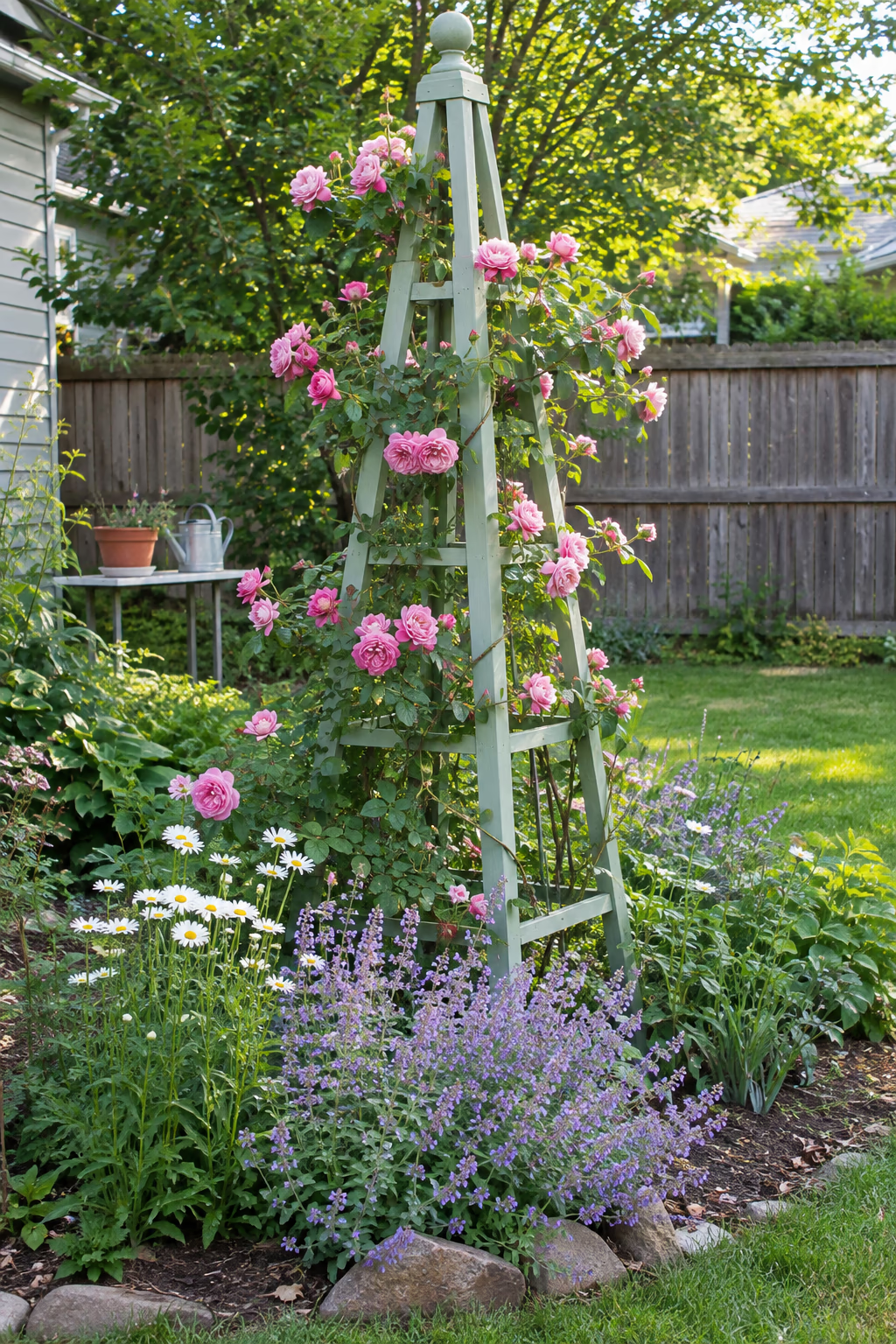
A romantic focal point for the middle of a bed
A four-sided obelisk about 6 to 8 feet tall gives a climbing rose a home in the middle of a border, visible from every side. Build it from 2×2 cedar and paint it sage green, cream, or charcoal so it still looks good in winter.
Pick a compact climber that tops out around 8 to 10 feet, and spiral the canes around the frame instead of tying them straight up. Angled canes produce more side shoots and more flowers.
Sink the legs at least 12 inches into the ground or anchor them to metal stakes. A rose in full leaf catches a lot of wind, and a top-heavy obelisk can tip in the first summer storm.
2. Dress a Plain Brick Wall With a Lattice Trellis
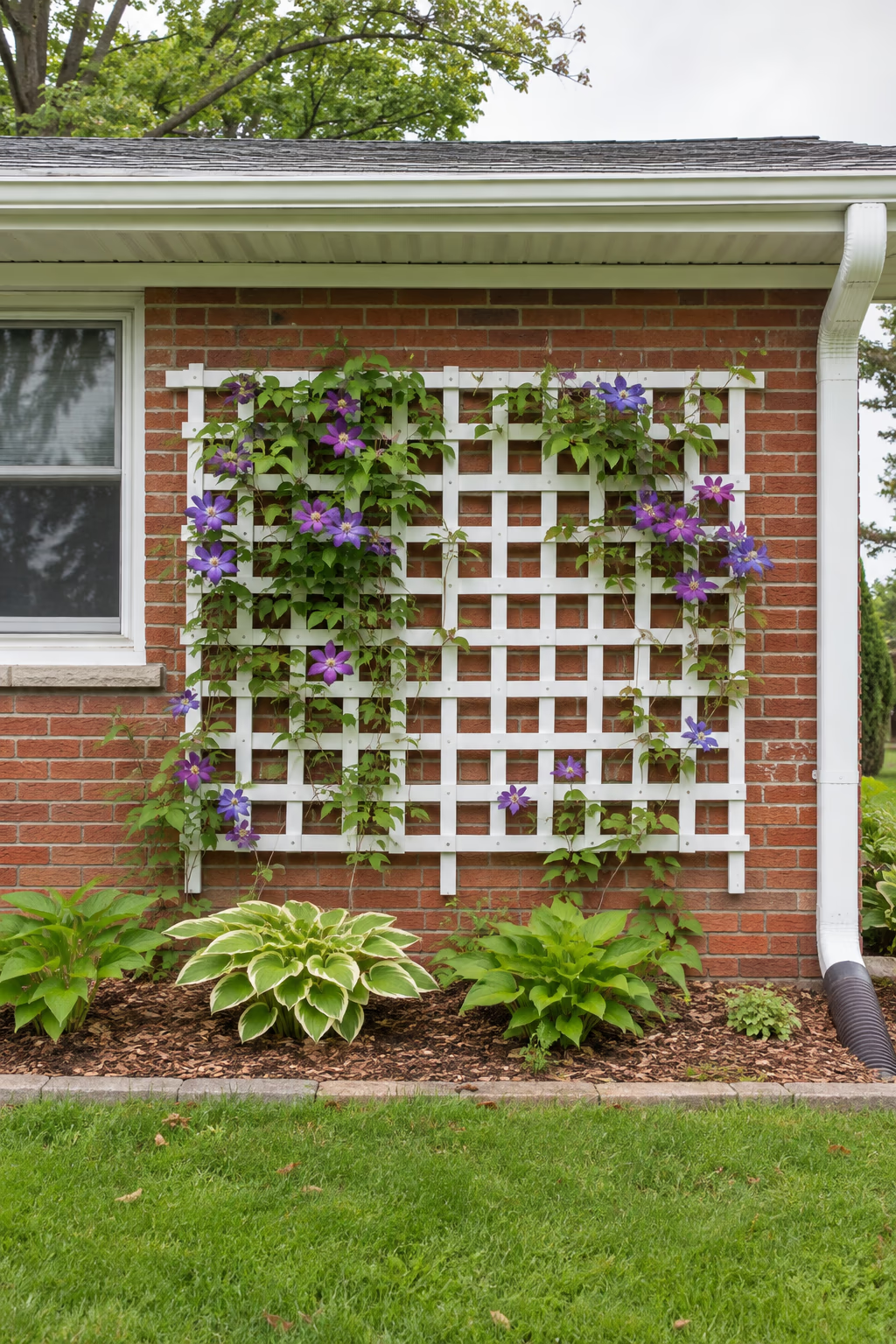
Turn a blank surface into a living backdrop
A wide expanse of brick on a house, garage, or garden wall can feel heavy. Mounting square or diamond lattice panels across part of it breaks up the surface and gives climbers like clematis, climbing roses, or annual sweet peas something to hold.
Fix 1×2 or 2×2 wooden battens to the wall with masonry screws, then attach the lattice to the battens so it sits 1 to 2 inches out from the brick. That gap lets air circulate, keeps moisture off the wall, and gives tendrils room to wrap.
Paint or stain the lattice before you plant. Once a vine is established, refinishing becomes a tangled job. Some gardeners hinge the bottom edge so the panel can tilt forward for wall maintenance.
3. Craft a Copper Pipe Trellis for a Warm Metallic Glow
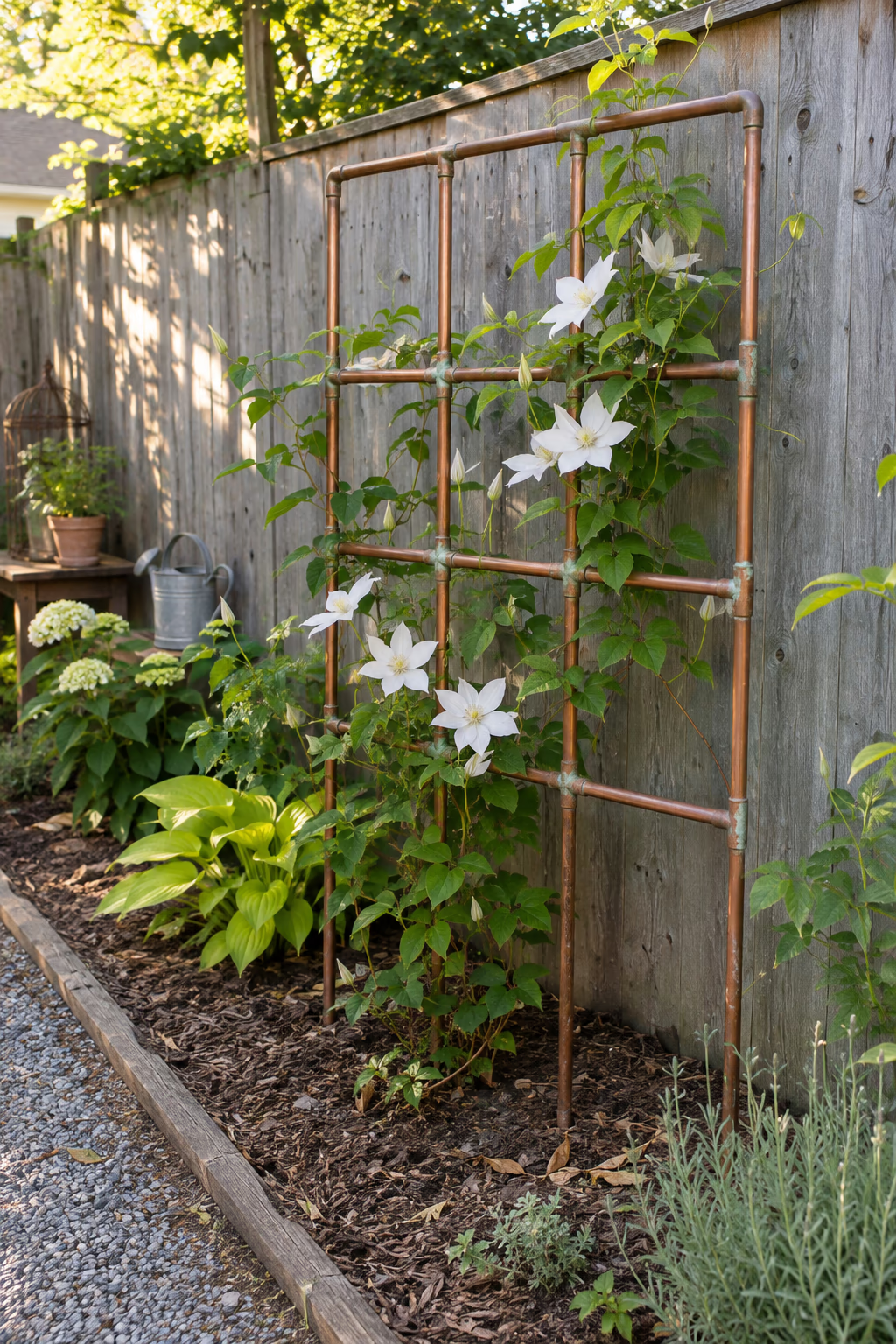
A long-lasting support that ages beautifully
Copper pipe and fittings from the plumbing aisle can be assembled into a clean grid, a ladder shape, or a simple rectangle with crossbars. Half-inch pipe is light enough to cut with a tubing cutter and strong enough for clematis, morning glories, or climbing nasturtiums.
Join pieces with tees and elbows using a strong outdoor epoxy or by soldering, then drive the two legs into lengths of rebar pounded into the soil. Bright copper shines for the first season before mellowing to brown and, eventually, a soft green patina that pairs well with foliage.
Copper has become expensive, so price out your design before you start. A simple 2 by 6 foot frame is affordable; an elaborate grid can add up quickly.
4. Weave String Lights Through a Vine-Covered Trellis
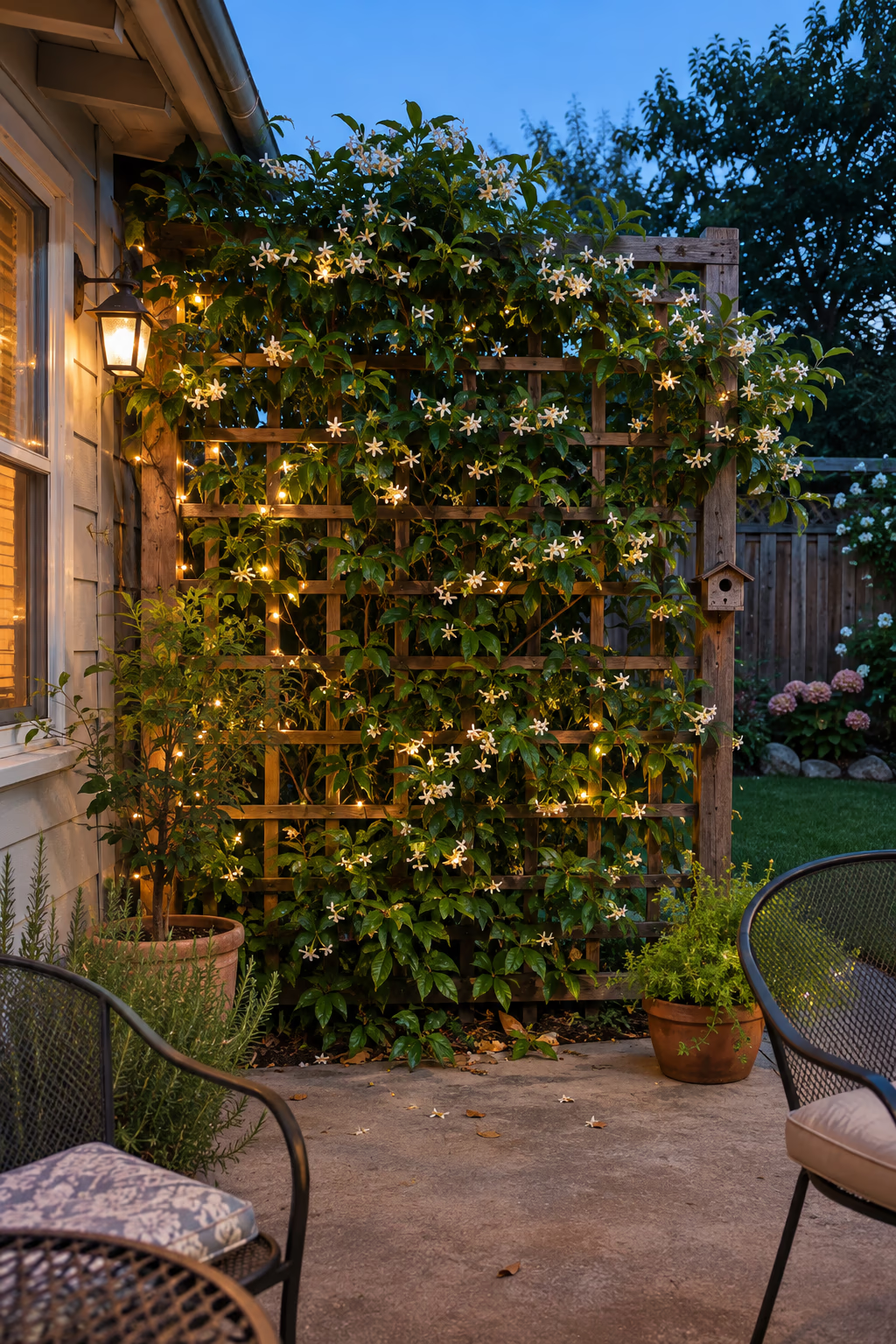
Keep the garden glowing after sunset
Thread warm white micro LED or small-bulb strands through a leafy trellis and it becomes a soft wall of light that disappears into the foliage by day.
Run the lights along the grid before the vine fills in so you don’t crush stems later. Pair them with fragrant evening bloomers such as moonflower or jasmine for a garden that’s just as pleasant at night.
Use only outdoor-rated lights and plug them into a GFCI-protected outlet. Solar strands are an easy alternative where no outlet is close by, though they are usually dimmer.
5. Espalier a Fruit Tree Against a Wire Trellis
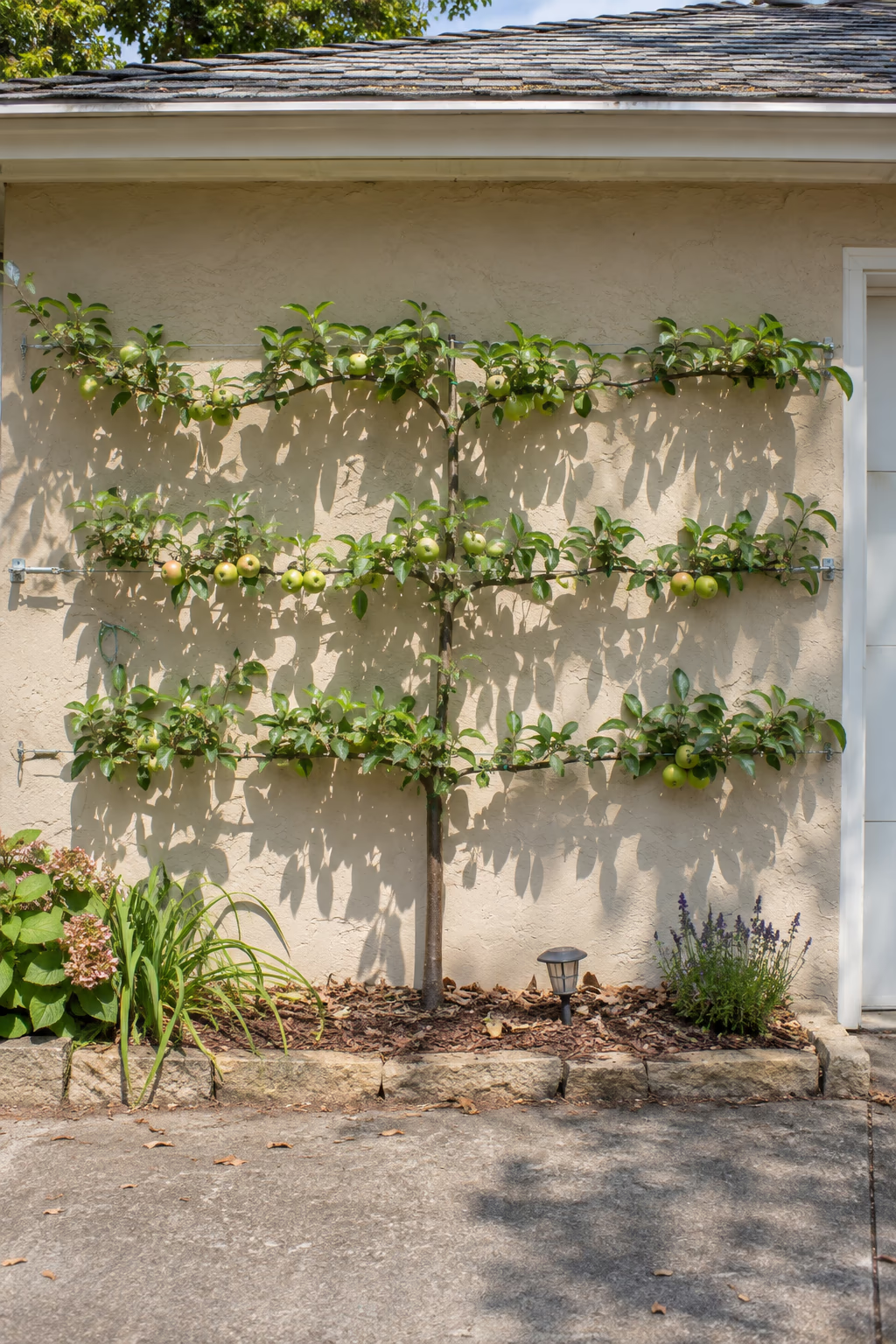
Fresh fruit and living art on a sunny wall
Espalier trains a tree flat along horizontal wires, creating tiers of branches that look sculpted. Apples and pears on dwarfing rootstock are the classic choices because they flower and fruit on short spurs that suit the shape.
Install eye screws or wall anchors and run galvanized wire in rows about 18 inches apart. Plant the young tree 6 to 12 inches from the wall, then bend and tie one pair of branches to each wire over the next few years.
Espalier takes patience and regular summer pruning to keep its shape. A south- or west-facing wall gives the most fruit, but in very hot climates a wall that reflects afternoon sun may scorch the fruit.
6. Frame a Front Window With Fan Trellises and Star Jasmine
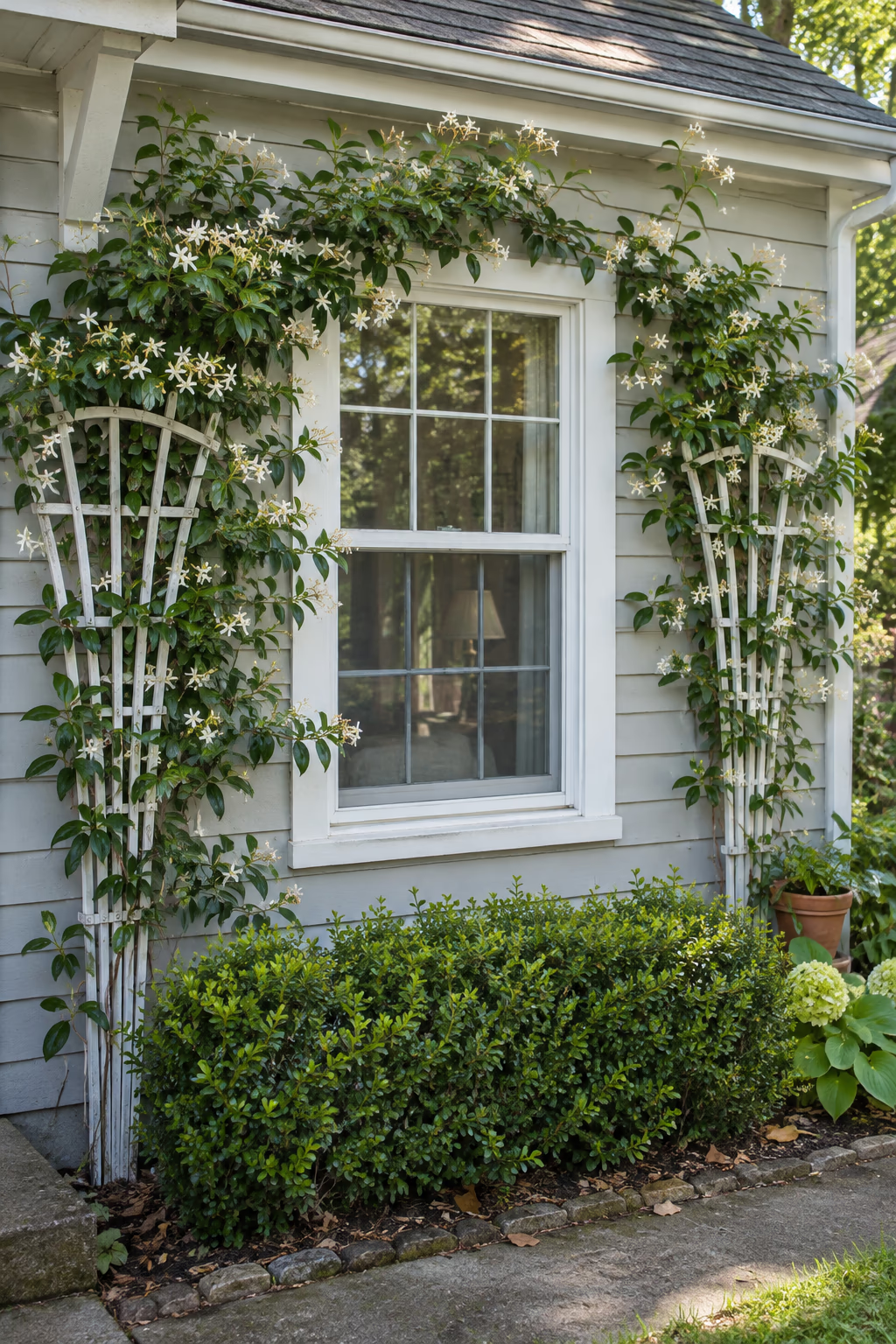
Cottage charm right at eye level
Two narrow fan trellises on either side of a front window soften the facade. Star jasmine adds glossy evergreen leaves and sweet white flowers in late spring.
Keep each fan 4 to 6 inches off the siding and train shoots outward so they frame the glass rather than cover it.
Star jasmine is reliably hardy only in about USDA zones 8 to 10. In colder areas, clematis, climbing roses, or annual vines like mandevilla give a similar effect.
7. Enclose a Cozy Seating Corner With Lattice Panels
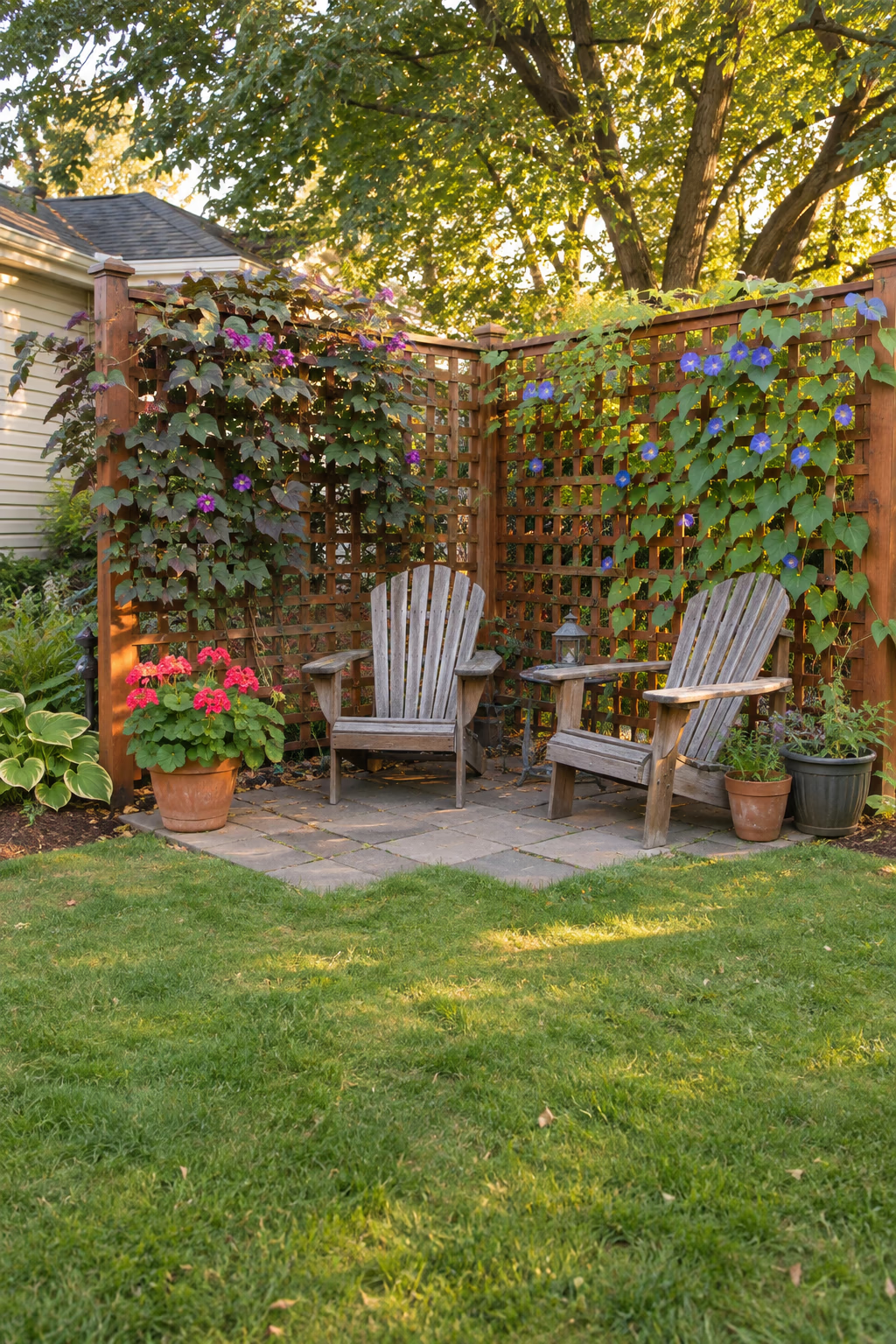
A private nook without building a wall
Set two lattice panels in an L-shape at the back corner of a garden bed, and you suddenly have walls for a small seating spot. Add a pair of chairs on pavers or gravel, and plant climbers at the base of each panel.
Use 4×4 posts set in concrete or metal post anchors for each panel, since freestanding lattice acts like a sail in the wind. Fast growers like hyacinth bean or morning glory fill in during the first summer while slower perennial vines establish.
Choose lattice with smaller openings, around 1 to 2 inches, if privacy matters most. Wider openings let in more light and breeze but feel less enclosed.
8. Hang a Fretwork Panel for Shadow Play on a Wall
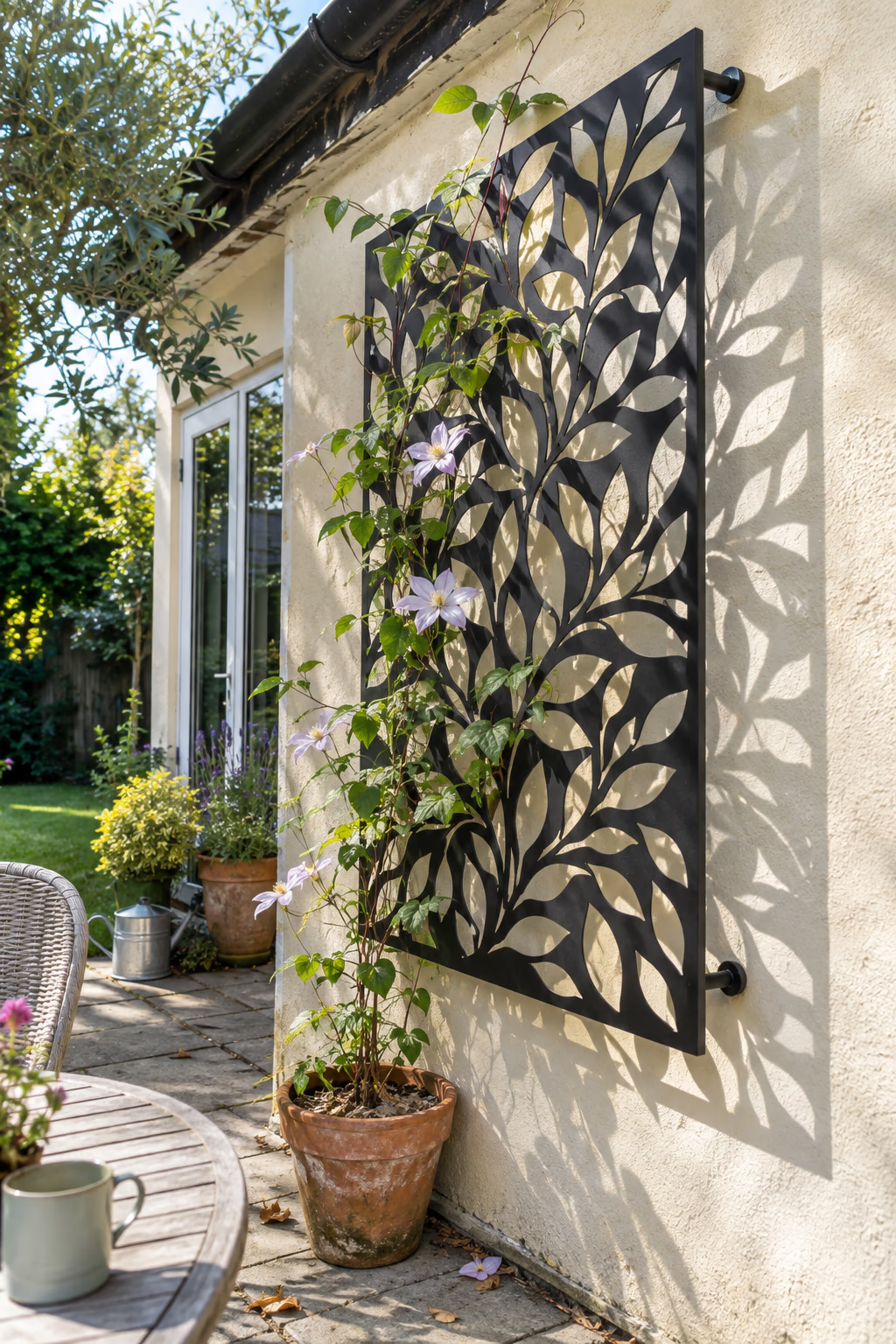
Pattern that works even before plants arrive
Decorative screen panels with cut-out leaves, circles, or Moroccan-style shapes add interest on their own, casting moving shadows in sun.
Choose outdoor-rated aluminum, powder-coated steel, or PVC panels rather than interior plywood, which delaminates in rain. Mount them on spacers so the pattern throws shadows onto the wall behind.
Pick lighter climbers like clematis, black-eyed Susan vine, or climbing nasturtium. Heavy woody vines can bend thin decorative panels and hide the pattern entirely.
9. Lash a Bamboo Grid Trellis With Natural Twine
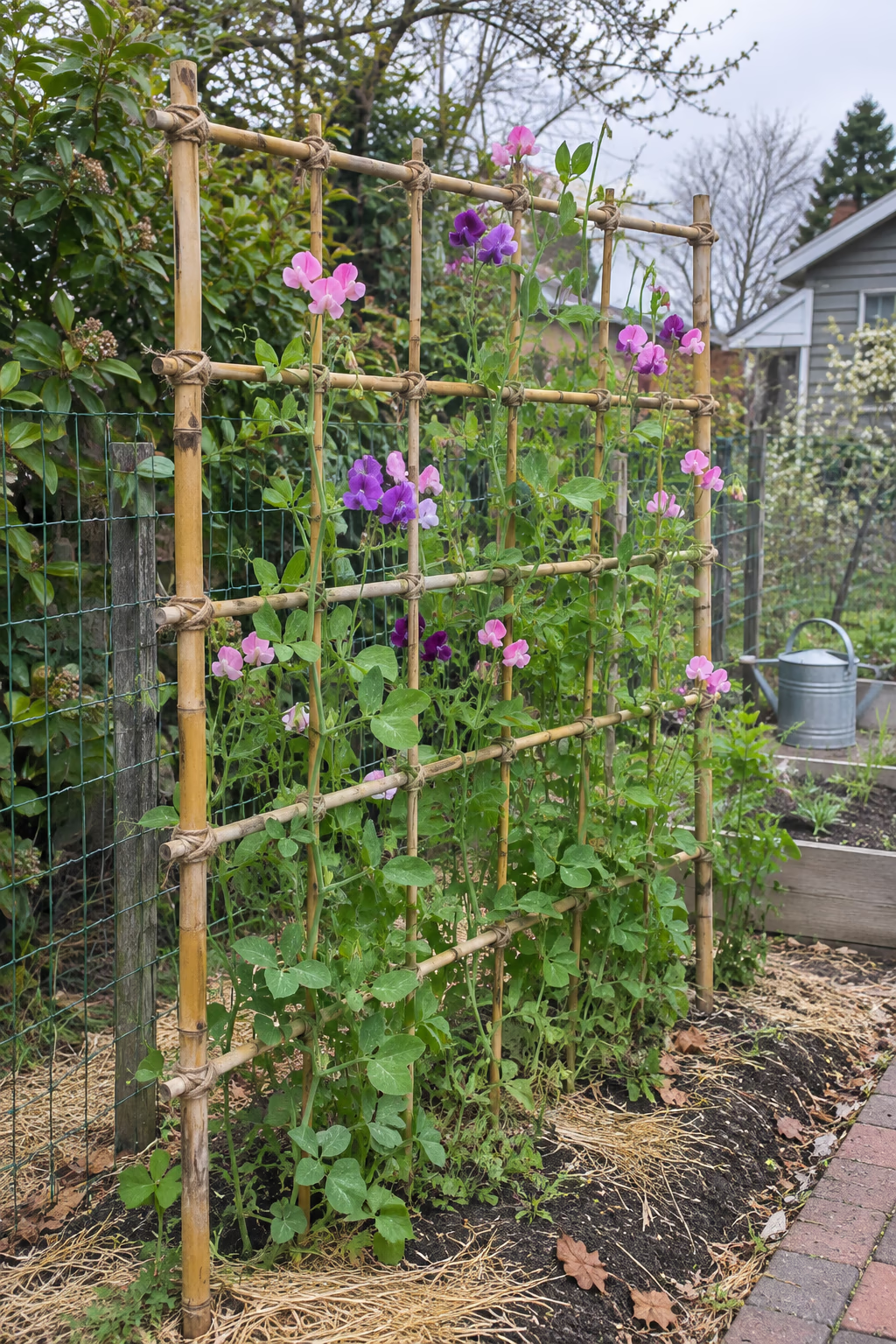
Cheap, natural, and quick to build
Bamboo canes tied into a simple square grid make a light, airy trellis with a relaxed, handmade feel. Push 6-foot vertical canes into the soil about 12 inches apart, then lash horizontal canes across them with jute or sisal twine.
A square lashing, wrapped in a figure eight a few times at each crossing, keeps the grid from wobbling. The finished trellis suits peas, sweet peas, climbing beans, and other light annual vines.
Bamboo usually lasts two to four seasons outdoors before the bases rot. Store canes in a dry shed over winter to stretch their life.
10. Divide the Yard With a Freestanding Trellis Screen
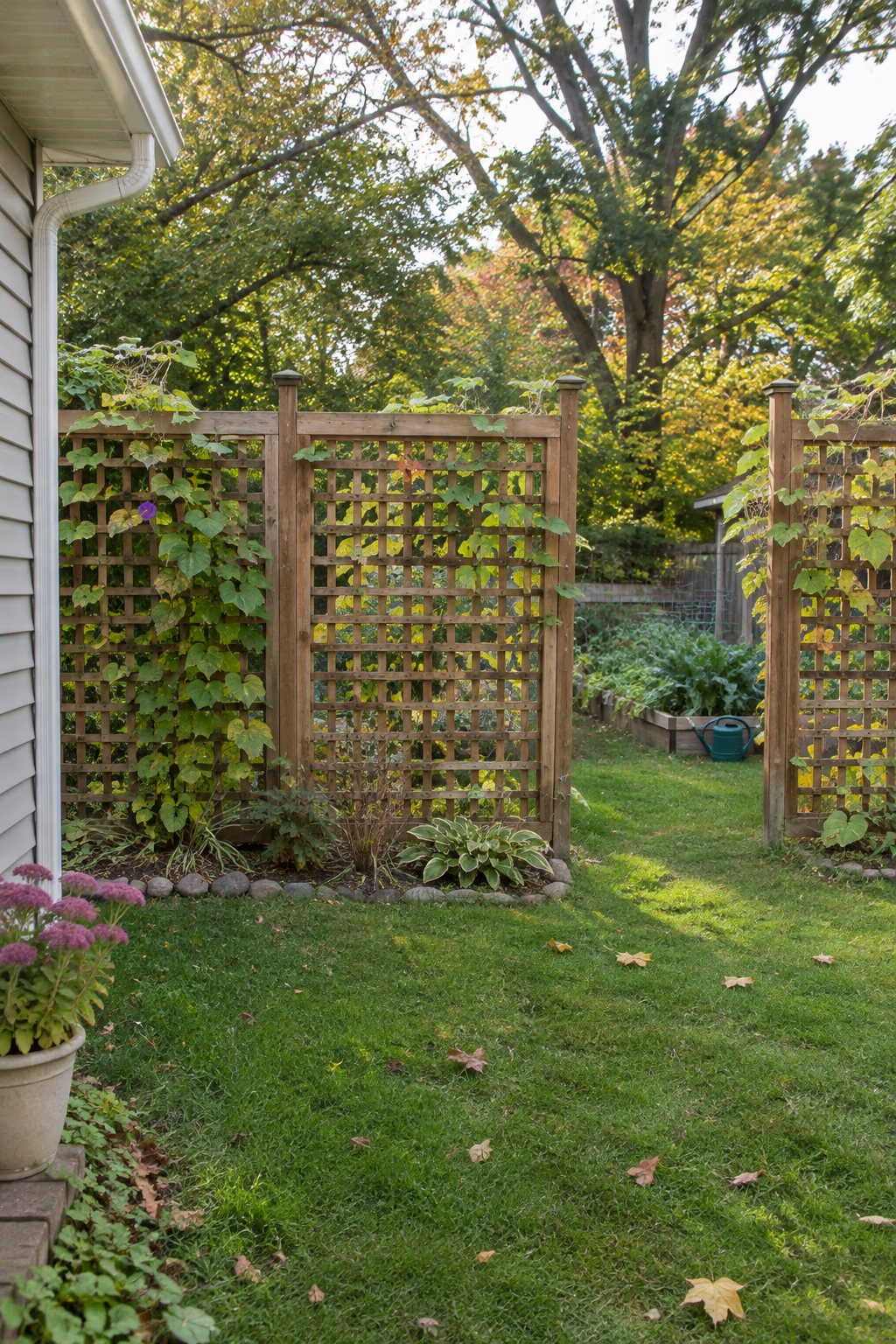
Create garden rooms with a see-through wall
A row of freestanding trellis panels can separate a vegetable plot from the lawn or a play area from the patio while still letting light through. Hiding part of the yard makes it feel larger.
Build panels about 6 feet tall from cedar frames filled with lattice or square grid, mounted on 4×4 posts set at least 2 feet deep. Leave a gap or a path opening so the space flows.
Plant a mix of perennial and annual climbers so the screen stays partly covered in winter. Check property lines before setting posts, and call 811 before digging in the US.
11. Stretch Stainless Steel Cables Across Modern Siding
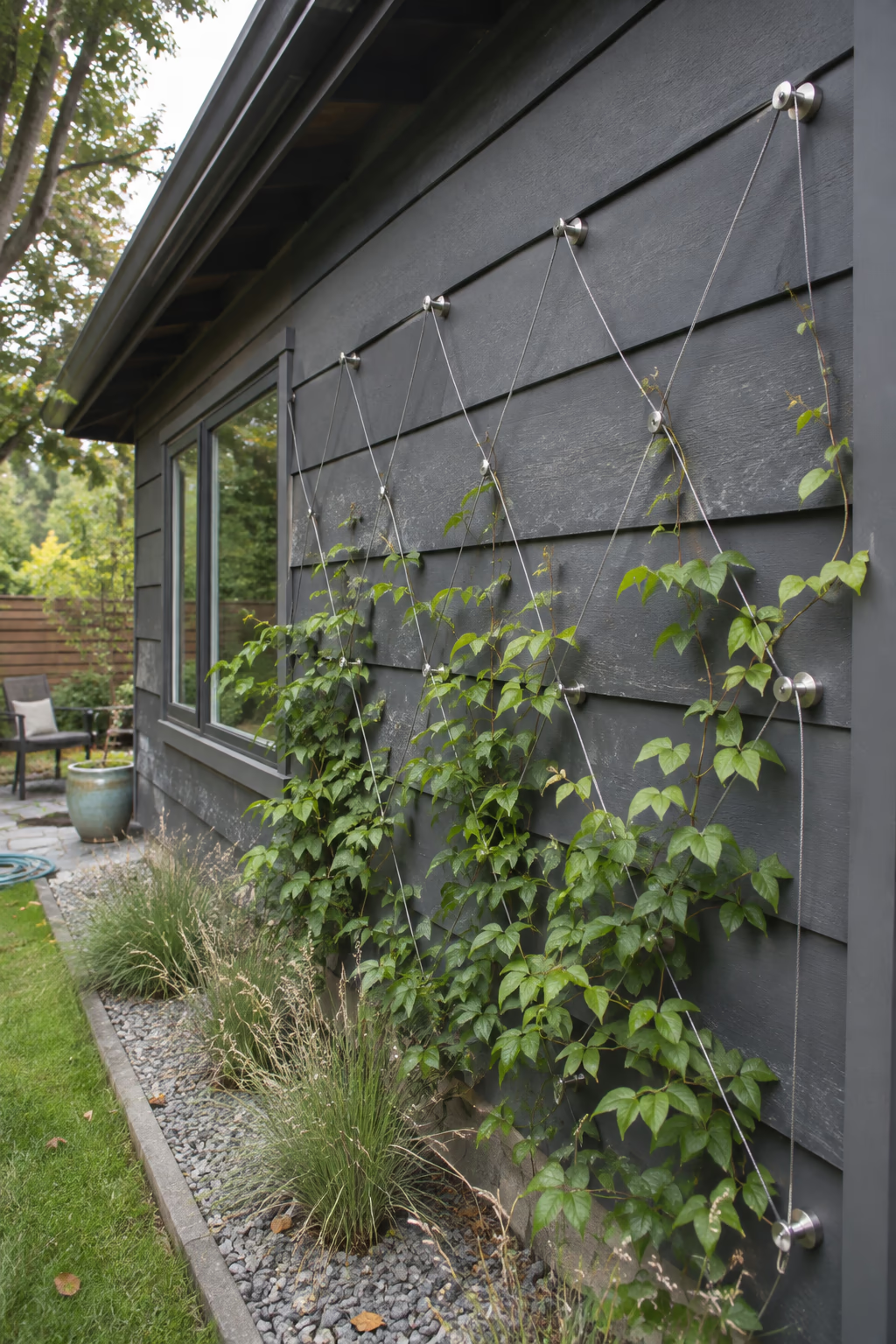
A nearly invisible support with clean lines
Thin stainless steel cables strung between wall standoffs create a minimal trellis that almost disappears, leaving the vine to do the talking. The look suits contemporary homes with smooth stucco, fiber cement, or painted siding.
Kits use 1/8-inch cable, standoff brackets, and turnbuckles to keep lines taut. Run cables vertically, horizontally, or in a diamond pattern, spaced about 12 to 18 inches apart.
Anchor the brackets into studs or masonry, not just siding. A mature vine on a tensioned cable system can be surprisingly heavy, and stainless hardware costs more than wood, though it lasts for decades.
12. Mount a Vintage Wagon Wheel for a Rambling Clematis
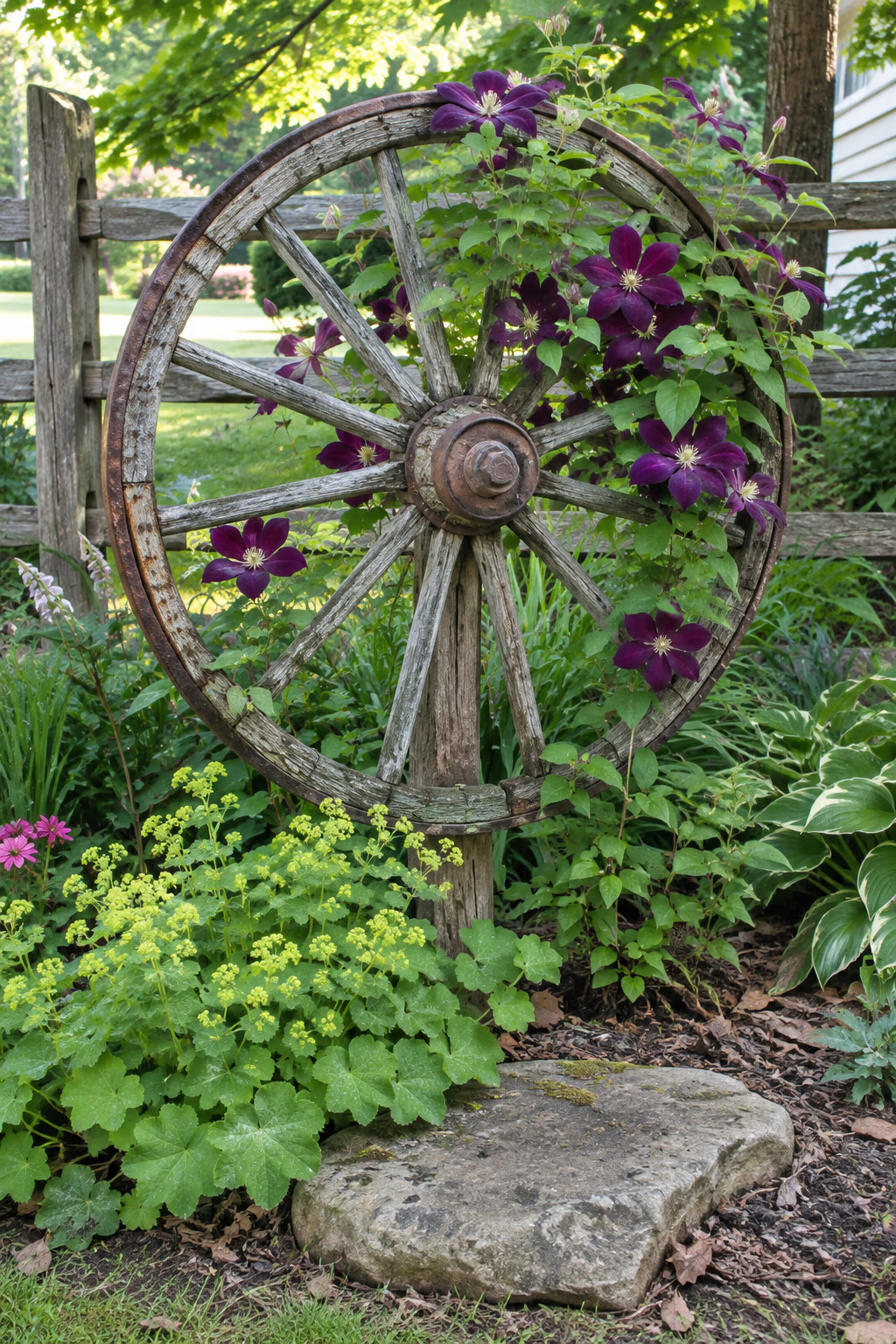
Rustic character with a story
An old wooden or iron wagon wheel set upright in a bed gives clematis or a small climbing rose a charming circular frame. The spokes act as a ready-made trellis, and the wheel adds farmhouse charm even in winter.
Secure the wheel to a sturdy post or to two pieces of rebar driven deep into the ground. Old wheels can be heavy and top-heavy once a vine covers them, so a solid anchor is important.
Clematis likes its roots shaded and its top in sun. Plant low perennials or set a flat stone at the base to keep roots cool.
13. Add a Horizontal Cedar Slat Trellis to a Patio Wall
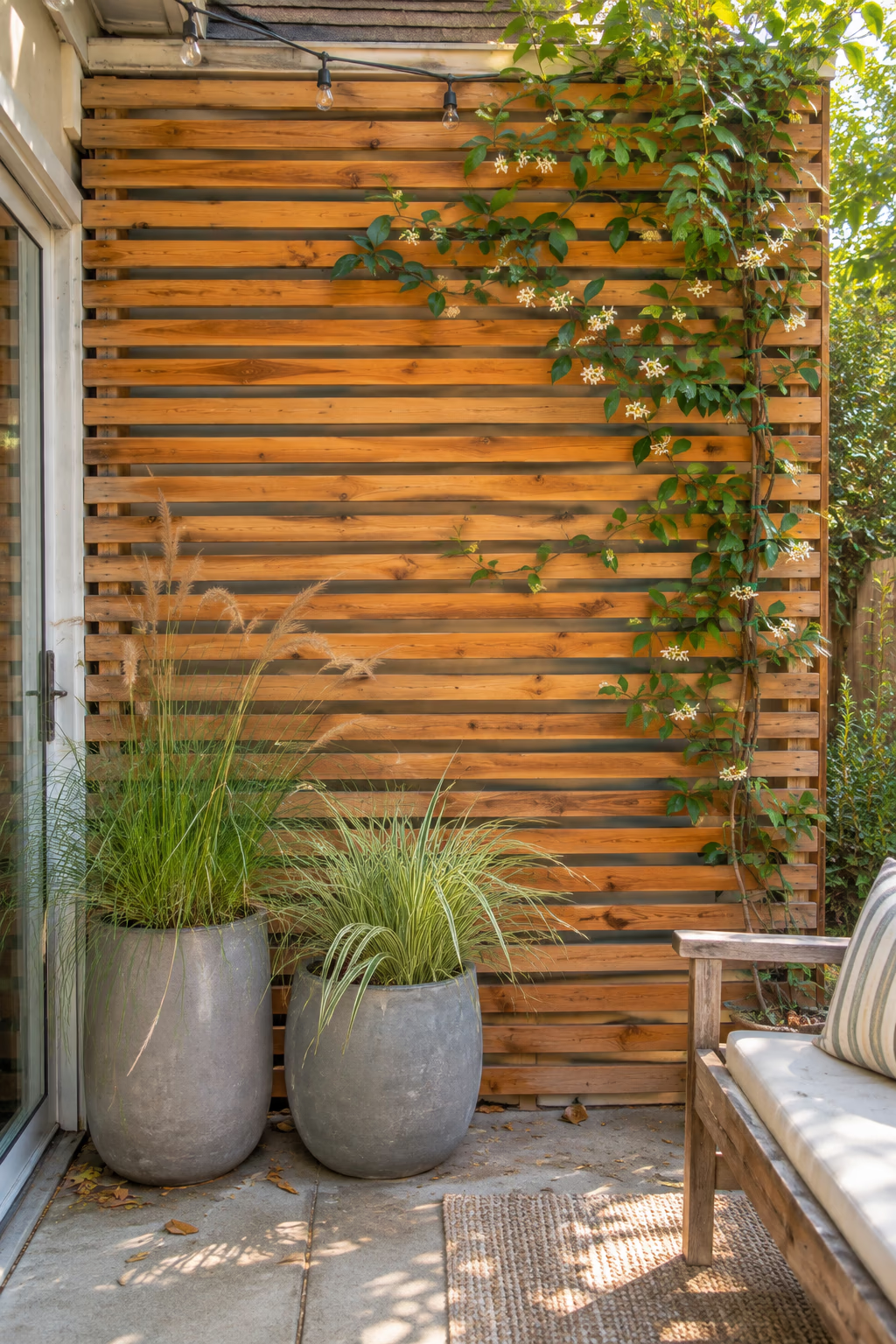
A modern look that feels warm, not stark
Horizontal slats of cedar spaced about 1 to 2 inches apart give a wall or fence section a sleek, contemporary rhythm. It works especially well on a bare wall beside a patio, where it becomes a backdrop for planters and seating.
Use 1×2 or 1×3 cedar boards fastened to vertical furring strips with stainless or coated screws. A clear sealer keeps the warm color longer, while unsealed cedar weathers to a soft silver gray.
Vines with tendrils have trouble gripping flat slats, so tie stems in or choose twining plants and wall shrubs. Horizontal designs also cast pleasant dappled shade on shady-side gardens.
14. Prop a Salvaged Iron Gate in a Flower Bed
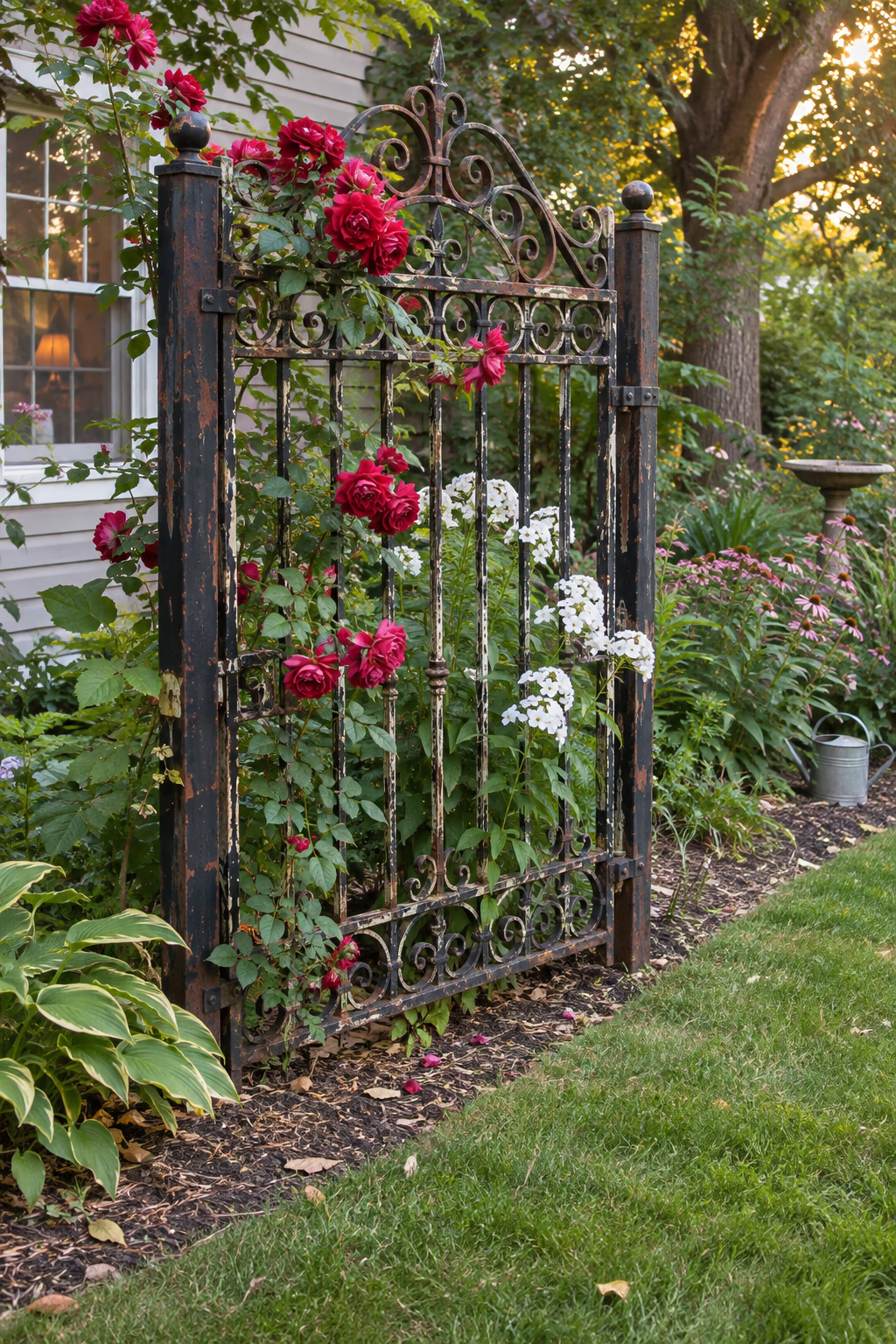
An instant antique trellis
An old wrought iron gate found at a salvage yard, flea market, or estate sale makes a beautiful freestanding trellis. Its scrolls and bars give climbing roses, clematis, or annual vines plenty to grab.
Stand the gate upright and bolt it to two metal fence posts or T-posts driven at least 18 inches into the soil. Remove flaking paint with a wire brush and coat it with rust-inhibiting paint if you prefer a fresh look, or leave the patina.
Older gates may have lead-based paint. Test it before sanding, and avoid using it to support food crops if you’re unsure.
15. Grow a Grapevine on a Sturdy Post-and-Wire Trellis
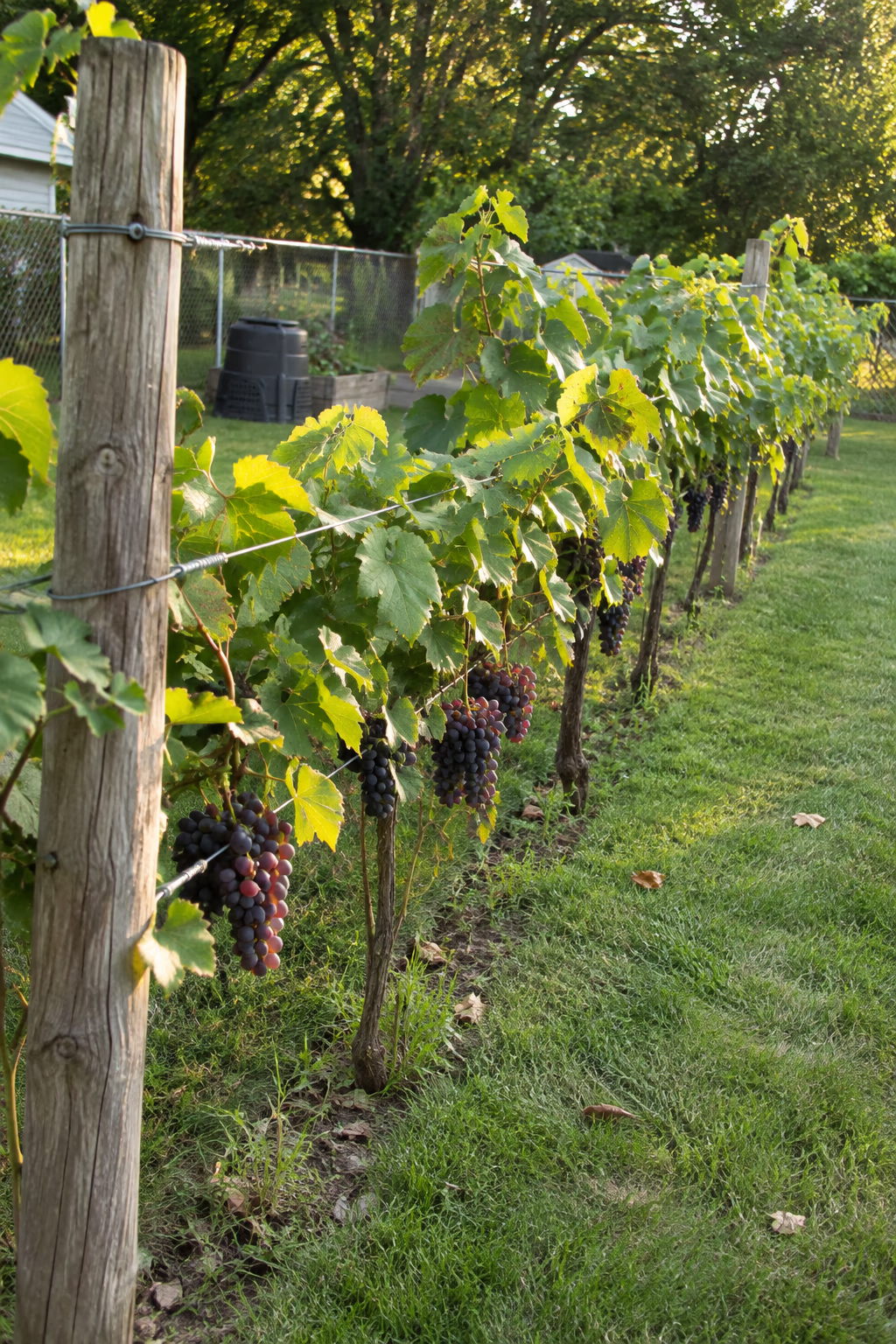
A backyard vineyard row with real harvests
Grapes need strong support, and a post-and-wire system is the classic answer. Set posts about 8 feet apart in full sun and stretch heavy galvanized wire at roughly 3 and 5 feet.
Brace the end posts well, since tensioned wire pulls hard on them. Train a single trunk up to the top wire and let two arms spread along it in each direction.
Grapes need full sun, good air flow, and serious pruning every winter, often removing most of the previous year’s growth. Choose varieties suited to your region, as cold hardiness and disease resistance vary widely.
16. Lure Hummingbirds With Coral Honeysuckle on a Metal Panel
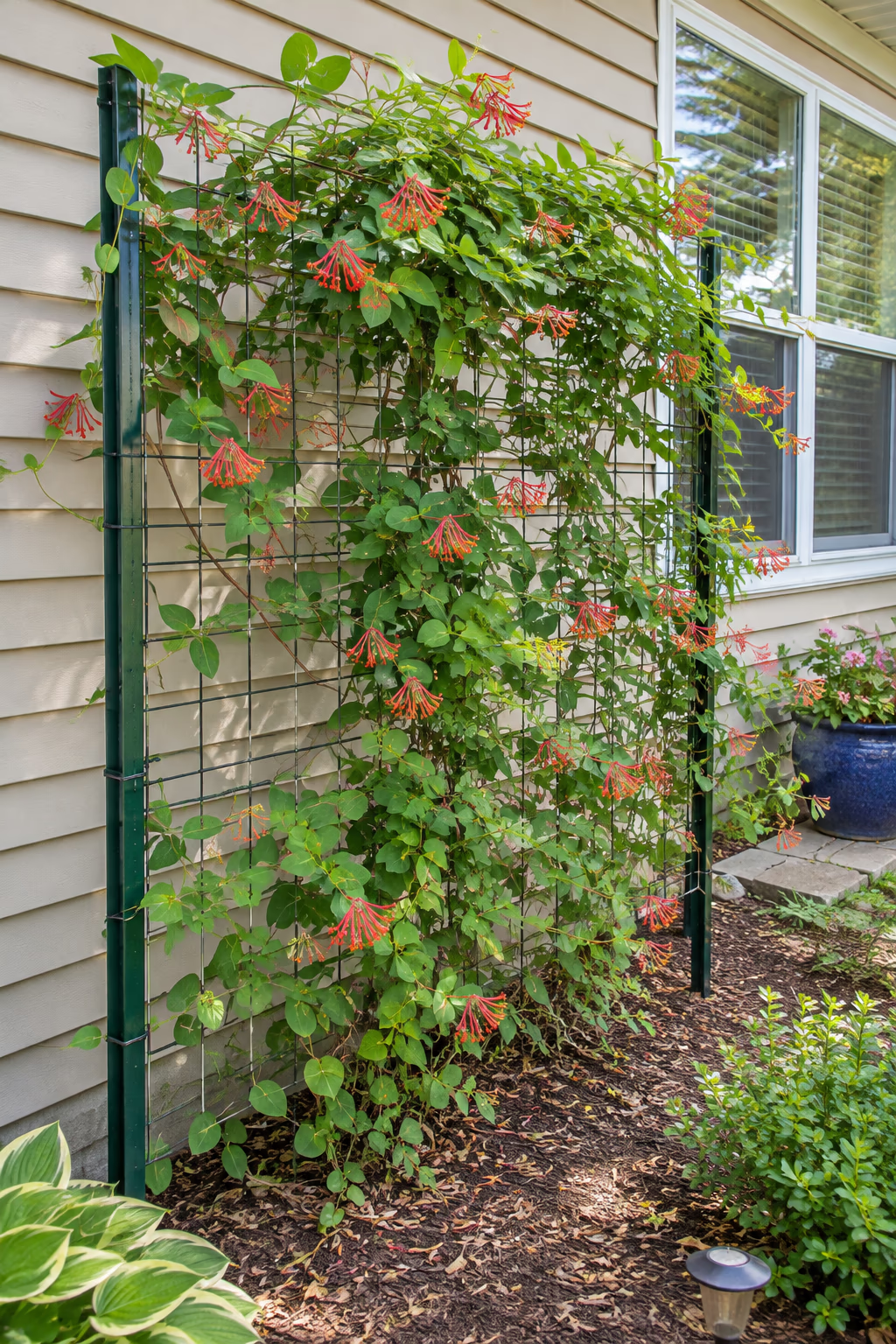
A native vine that feeds wildlife
Coral honeysuckle is a North American native with tubular red or orange flowers that hummingbirds love. Unlike invasive Japanese honeysuckle, it stays well behaved and doesn’t run through the woods.
A freestanding welded wire or steel panel about 4 by 6 feet, attached to two T-posts, gives it a simple support near a window where you can watch visitors. It blooms most heavily in spring, with lighter flushes through summer.
Plant it in full sun to part shade, and expect it to grow 10 to 15 feet. It’s hardy in roughly zones 4 to 9 and tends to be semi-evergreen in the South.
17. Build a Rustic Branch Trellis From Garden Prunings
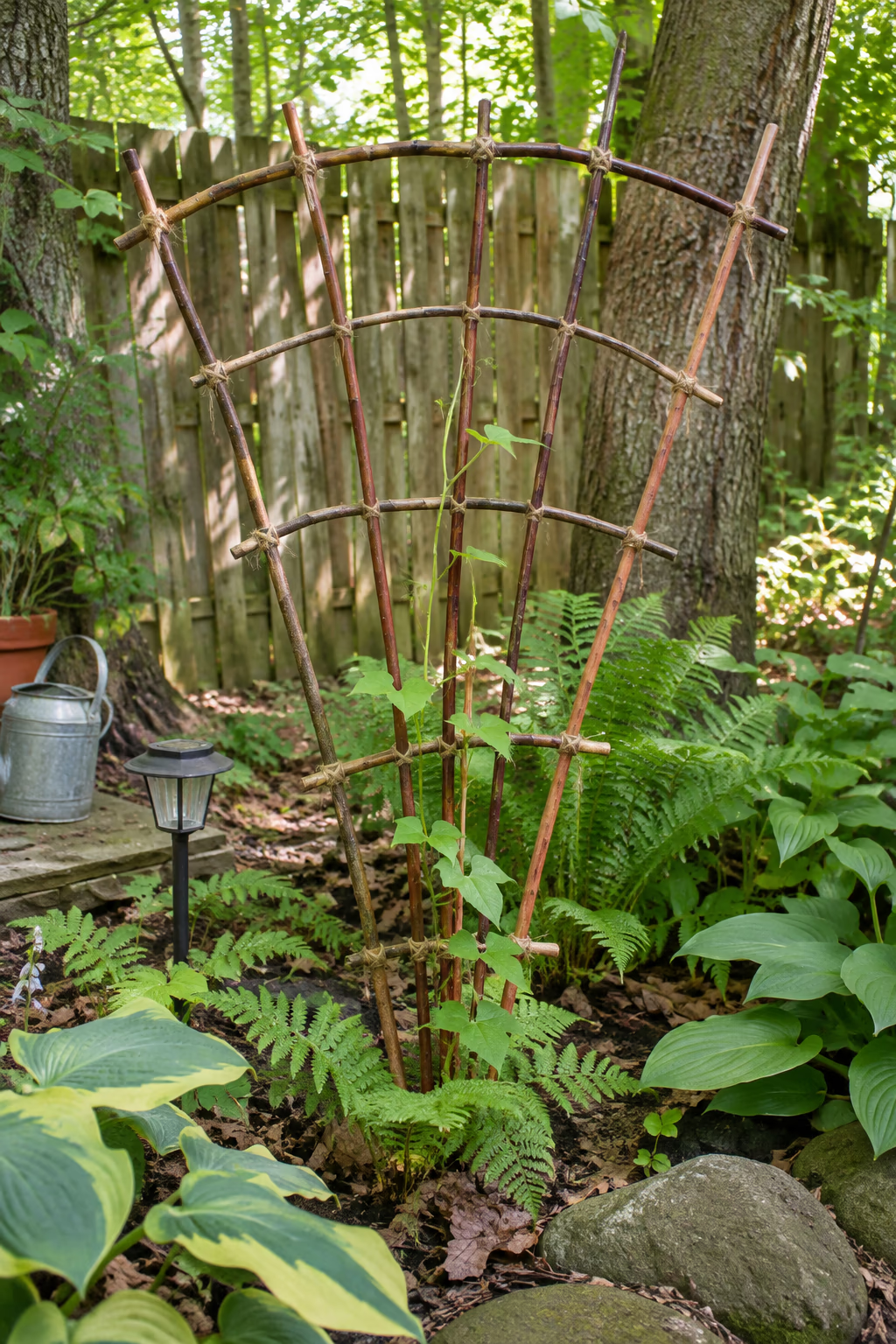
Free materials and a natural woodland feel
Straight branches cut while pruning shrubs and trees can be lashed together into a fan, grid, or teepee trellis. Willow, dogwood, hazel, and other straight-growing shoots work well when cut about 1/2 to 1 inch thick.
Push the thicker ends into the ground, overlap thinner branches across them, and tie each crossing with wire or twine. The irregular shape looks right at home in cottage and woodland gardens.
Fresh willow cuttings may root and sprout where they touch soil. Strip the bark from the bottom or let the stems dry for a few weeks if you don’t want a living trellis.
18. Lean an Old Wooden Ladder Against the Wall for Climbers
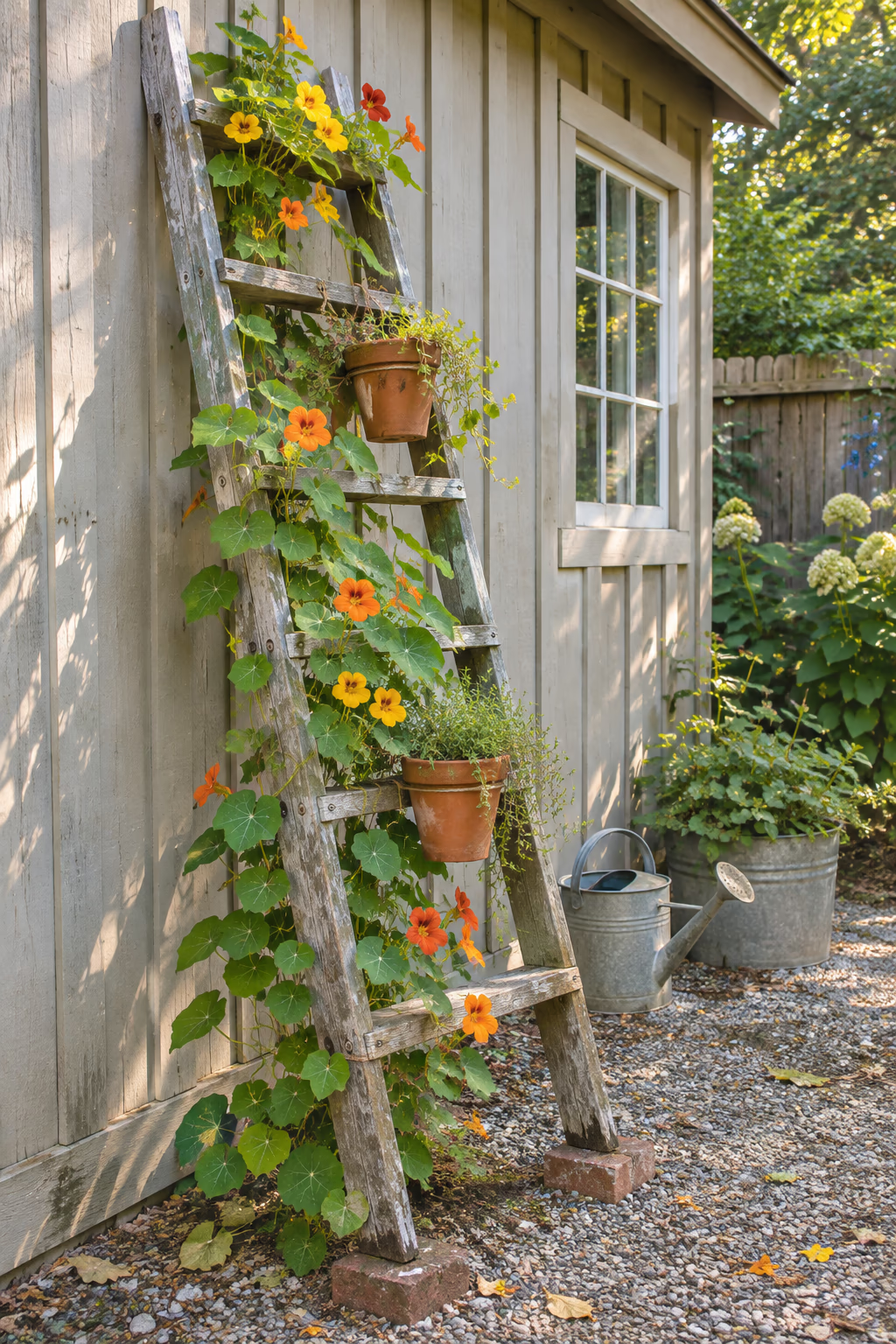
A quick upcycle with built-in rungs
A retired wooden ladder leaned against a fence or shed wall makes an easy trellis. The rungs give vines a natural place to twine, and you can hang small pots from the steps.
Set the feet on bricks or pavers to slow rot, and tie the top to the wall with screw eyes and wire so it can’t slide. Annuals like morning glory, climbing nasturtium, or sweet peas suit its modest size.
Don’t use the ladder for climbing again once it’s outdoors. Weathered wood becomes too weak to safely hold a person.
19. Train Climbing Hydrangea on a Shady Wall Trellis
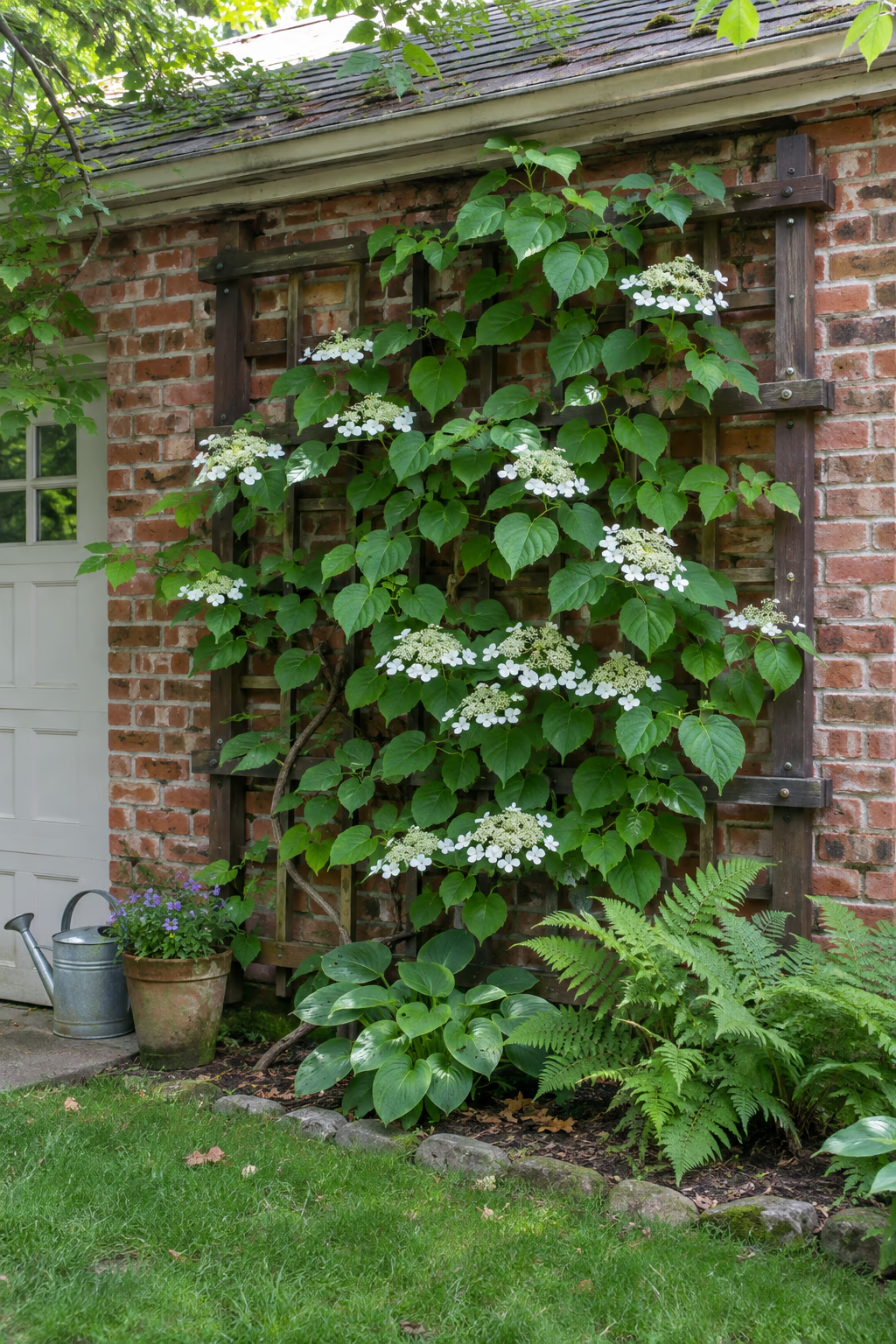
Elegant white blooms where little else climbs
Climbing hydrangea is one of the few flowering vines that thrives in shade, with white lacecap flowers in early summer and peeling bark in winter.
A heavy-duty wood or metal trellis anchored firmly to the wall helps guide young stems until the aerial roots take hold. Mature vines become thick and heavy, so the support must be sturdy.
Expect slow growth for the first two or three years before it takes off. It’s best on masonry or a freestanding structure, since the clinging roots can mar painted siding. Hardy in about zones 4 to 8.
20. Sink a Fan Trellis Into a Big Pot of Mandevilla
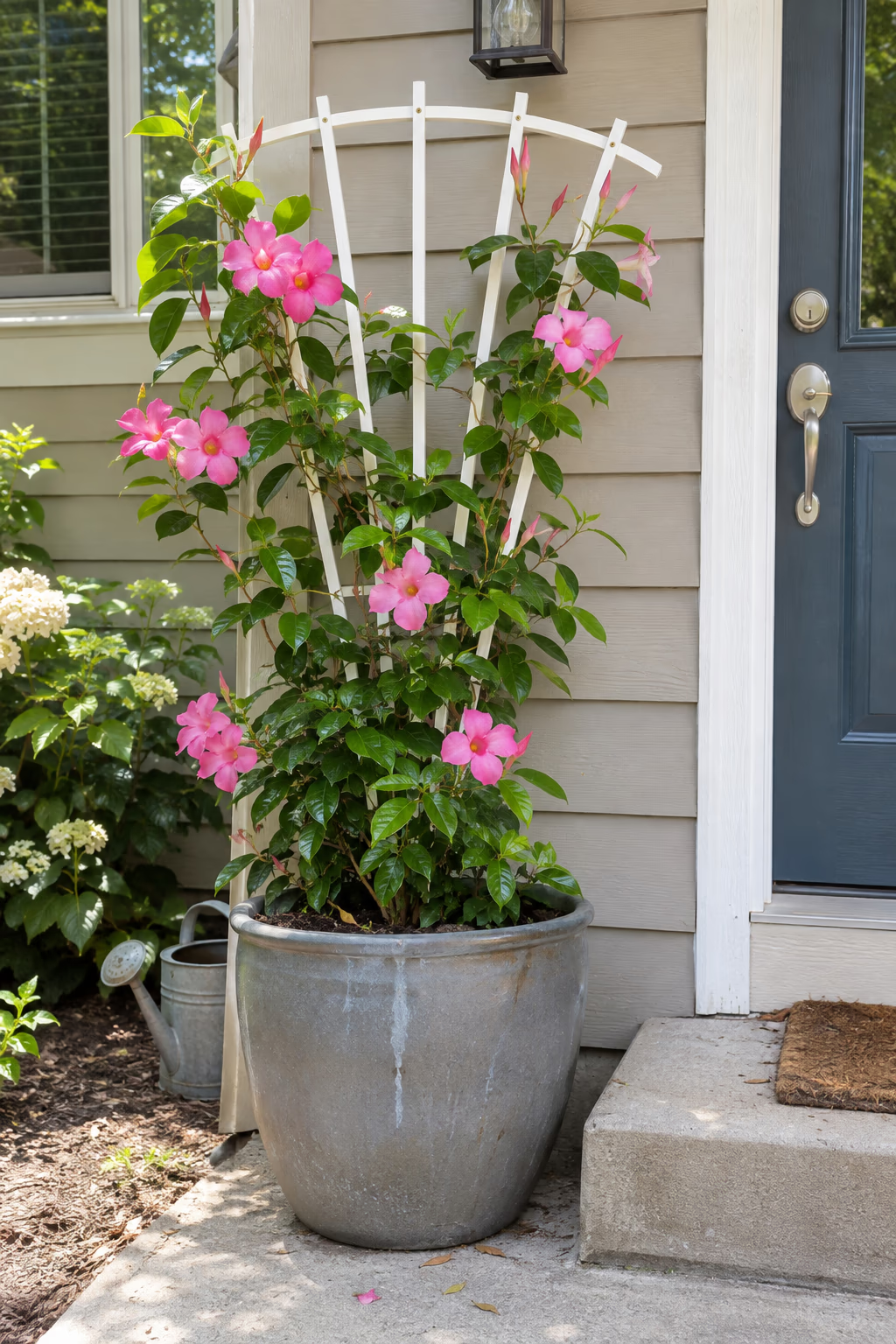
Tropical color for patios and front steps
Mandevilla produces large pink, red, or white trumpet flowers from early summer to frost. Pushing a 4-foot fan trellis into a 16- to 20-inch pot gives it a vertical frame that works well beside a door or on a sunny patio.
Insert the trellis at planting time so you don’t damage roots later, and wind the twining stems through it as they grow. Use a quality potting mix and water often, since pots dry out quickly in summer heat.
Mandevilla is hardy only in about zones 10 and 11. Elsewhere, treat it as an annual or bring the pot indoors to a bright window before the first frost.
21. Install a Circle-Pattern Metal Trellis as Garden Art
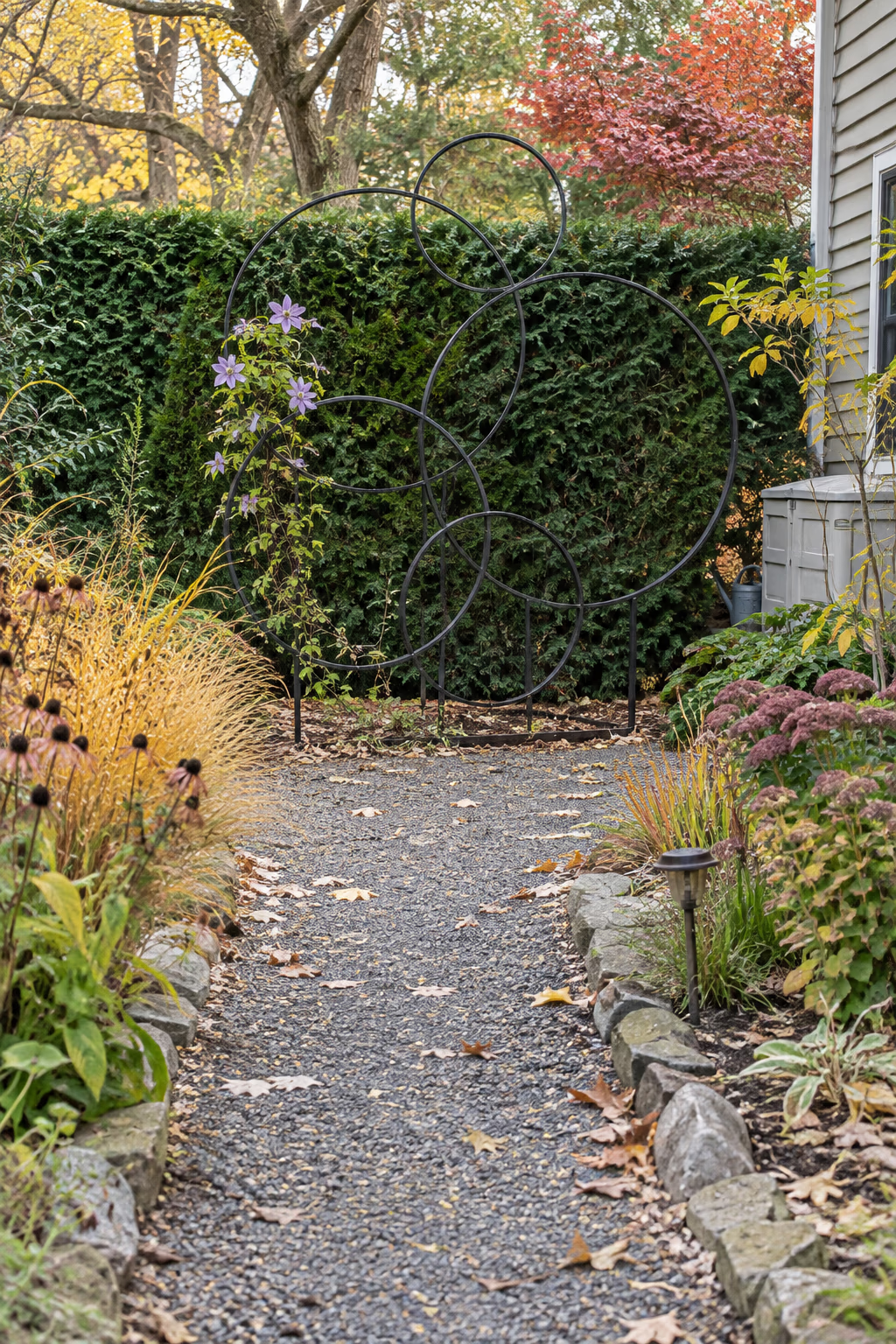
Sculpture first, plant support second
Trellises made of overlapping metal rings or bubble-like circles look like art even when bare. Placed at the end of a path or against a hedge, they create a focal point that works through every season.
Powder-coated steel in black, rust, or a bold color holds up well. Plant airy climbers such as clematis or black-eyed Susan vine that decorate the rings without hiding the shape.
Sculptural trellises tend to cost more than standard panels. Expect to invest in one statement piece rather than a whole row.
22. Hide the AC Unit Behind a Trellis Screen
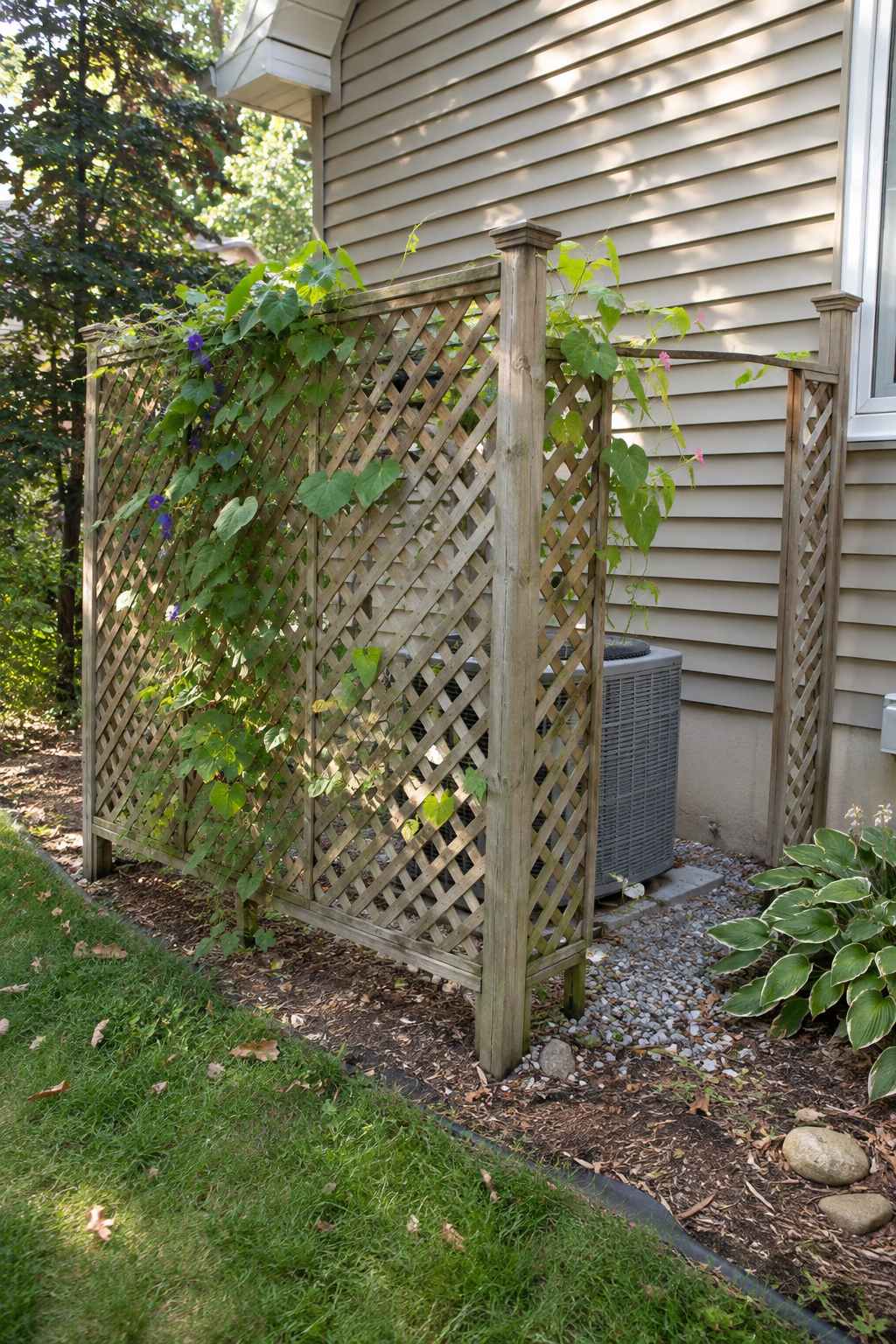
A practical cover-up for yard eyesores
A three-sided trellis screen can disguise an air conditioner, trash cans, or utility boxes. It blocks the view without completely enclosing the equipment, and climbing plants make it blend into the garden.
Leave plenty of space around the unit; many manufacturers recommend about 2 to 3 feet of clearance for air flow and service access. Make one side removable or hinged so technicians can reach the equipment.
Choose lighter annual vines for screens near AC units, and trim them back regularly so leaves and debris don’t get sucked into the coil.
23. Raise Fence Height With a Lattice Trellis Topper
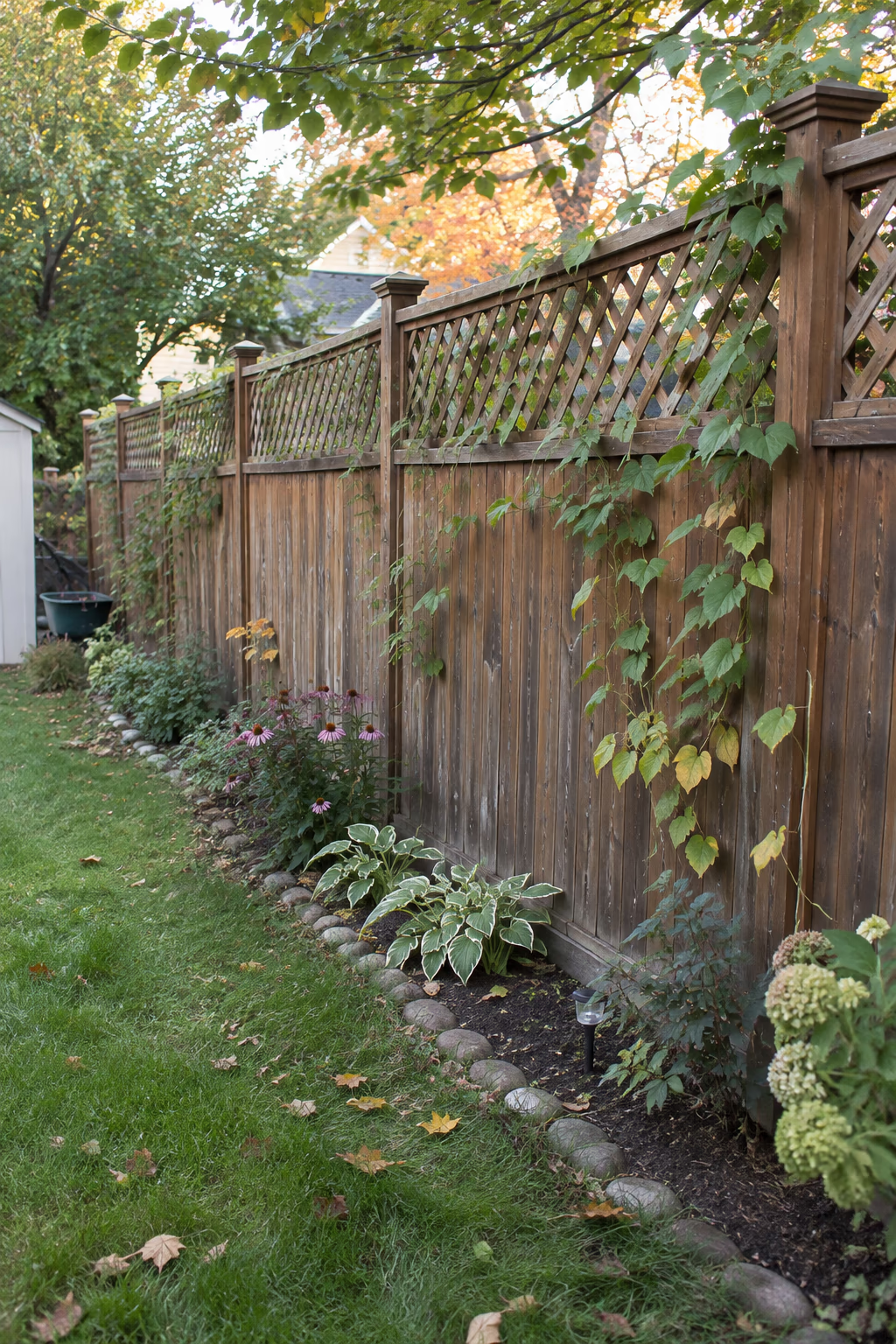
More privacy without a solid wall
A strip of lattice 12 to 24 inches tall fastened along the top of an existing fence adds height and a decorative finish. Vines trained up from the fence below soften the line and add privacy.
Attach the lattice to extended posts or post-top brackets rather than to the fence boards alone, so the extra weight and wind load are supported. Matching the stain or paint ties the old and new parts together.
Many towns and HOAs limit backyard fence height to about 6 feet and may count the topper, so check local rules before adding height.
24. Run Twine Up Porch Posts for Morning Glories
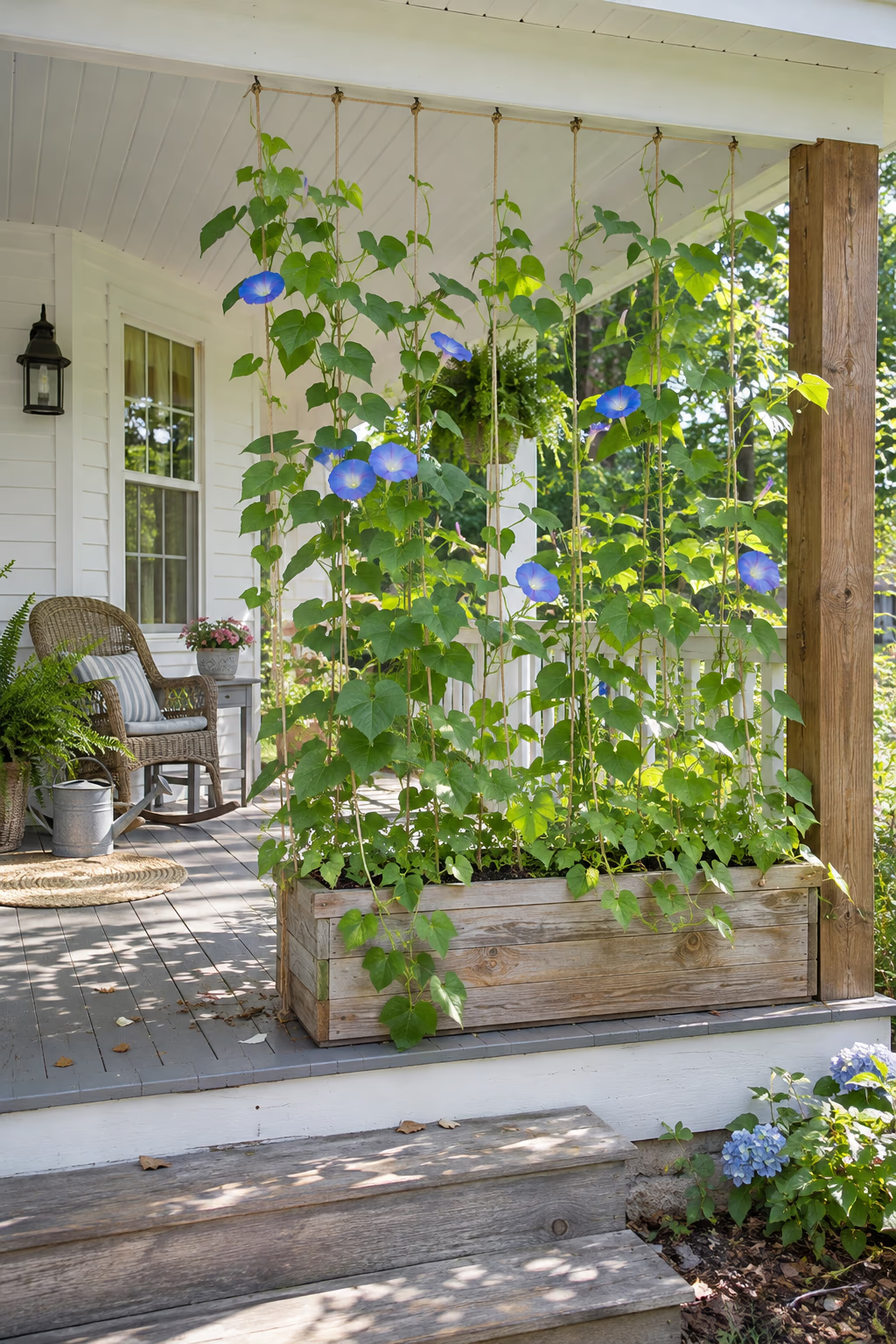
The easiest trellis you’ll ever make
Jute twine strung from hooks under the porch ceiling to stakes in a planter makes a nearly invisible trellis. Morning glories climb it fast, forming a curtain of blue or purple flowers by midsummer.
Soak seeds overnight and sow after frost in a sunny spot. At season’s end, cut it all down and compost the twine with the vines.
Morning glories self-seed freely and can pop up for years. Pull spent flowers before seeds mature if you want to limit volunteers, and note that the seeds are toxic if eaten.
25. Grow Carolina Jessamine on a Garage Wall Trellis
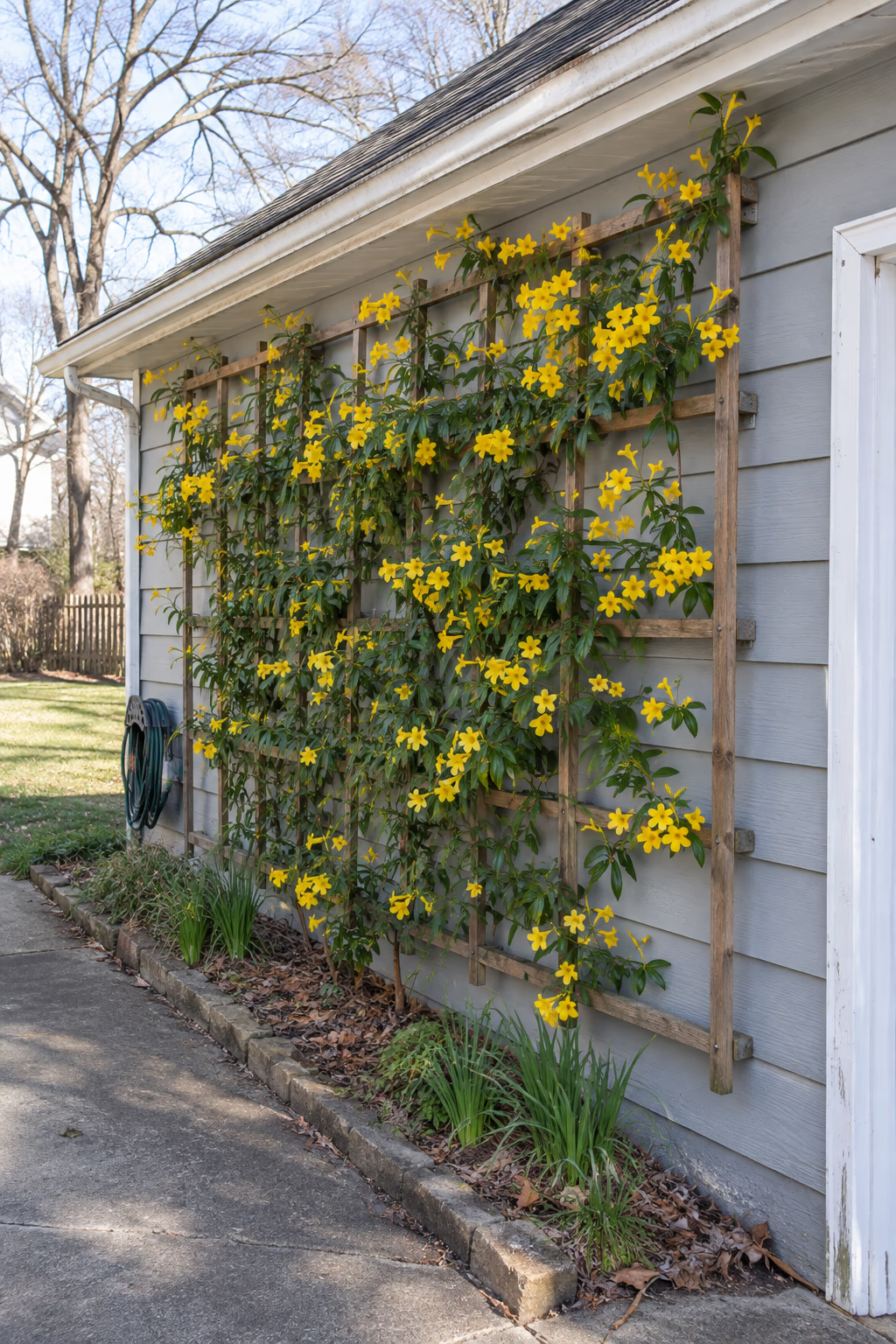
Evergreen leaves and early yellow flowers
Carolina jessamine is a native evergreen vine with fragrant golden flowers in late winter and early spring, brightening a blank garage wall when little else blooms.
Mount a wood or metal grid trellis 2 to 3 inches from the wall and tie in the first stems. It grows about 10 to 20 feet and twines on its own after that.
It’s hardy in roughly zones 7 to 10. All parts of the plant are toxic if eaten, so place it away from areas where children or pets might chew on it.
26. Clip a Trellis to the Deck Railing for Black-Eyed Susan Vine
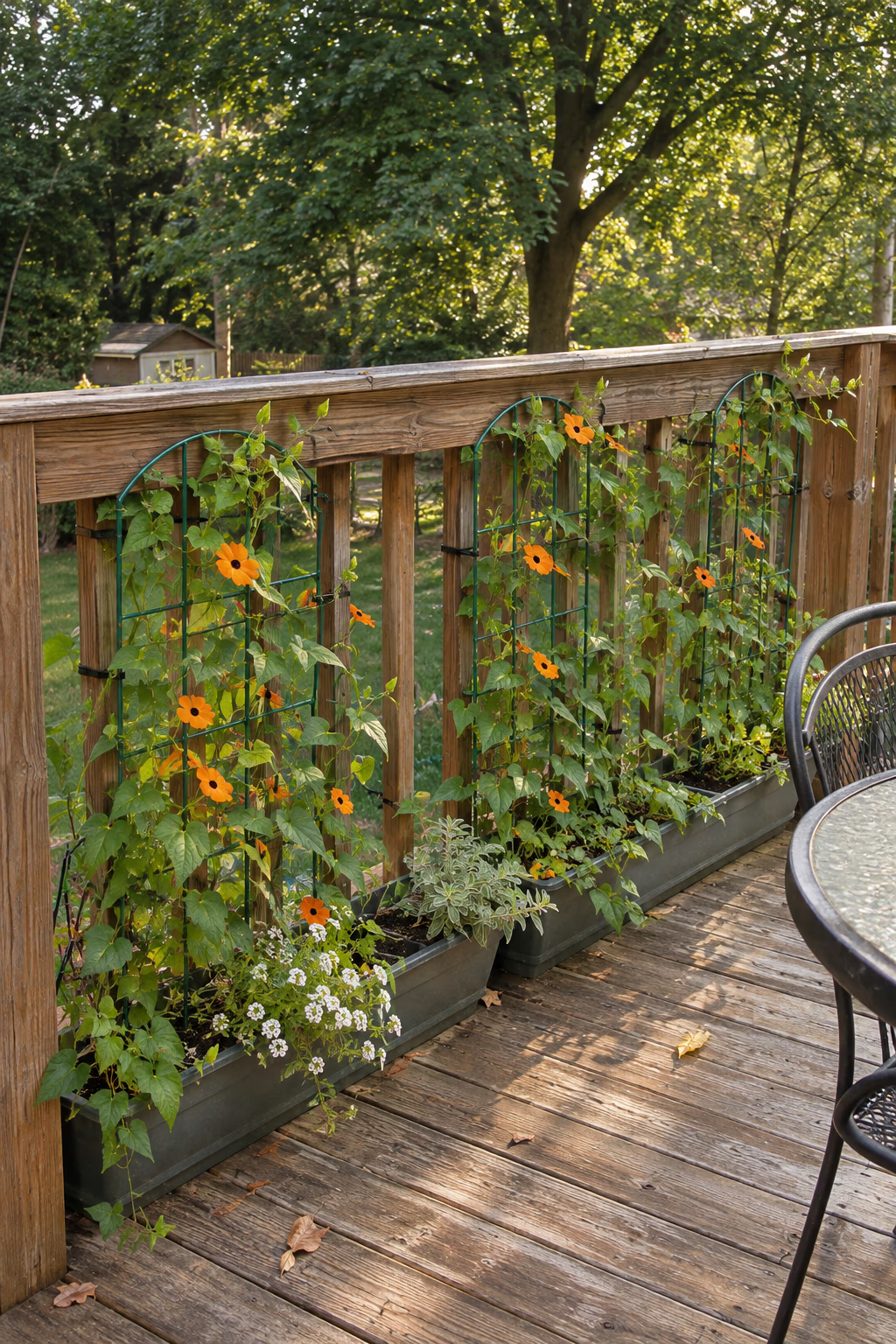
Add flowers and privacy to the deck
Black-eyed Susan vine has cheerful orange, yellow, or white flowers with dark centers. Plant it in rail-mounted planters or long boxes and attach small trellis panels to the railing to support it.
Fasten panels with zip ties or brackets so they are easy to remove at season’s end. The vine grows quickly in warm weather and blooms from summer to frost.
It’s usually grown as an annual in most of the US. Check deck railing strength and avoid blocking views or emergency exits.
27. Dress the Mailbox Post With a Slim Trellis and Cardinal Climber
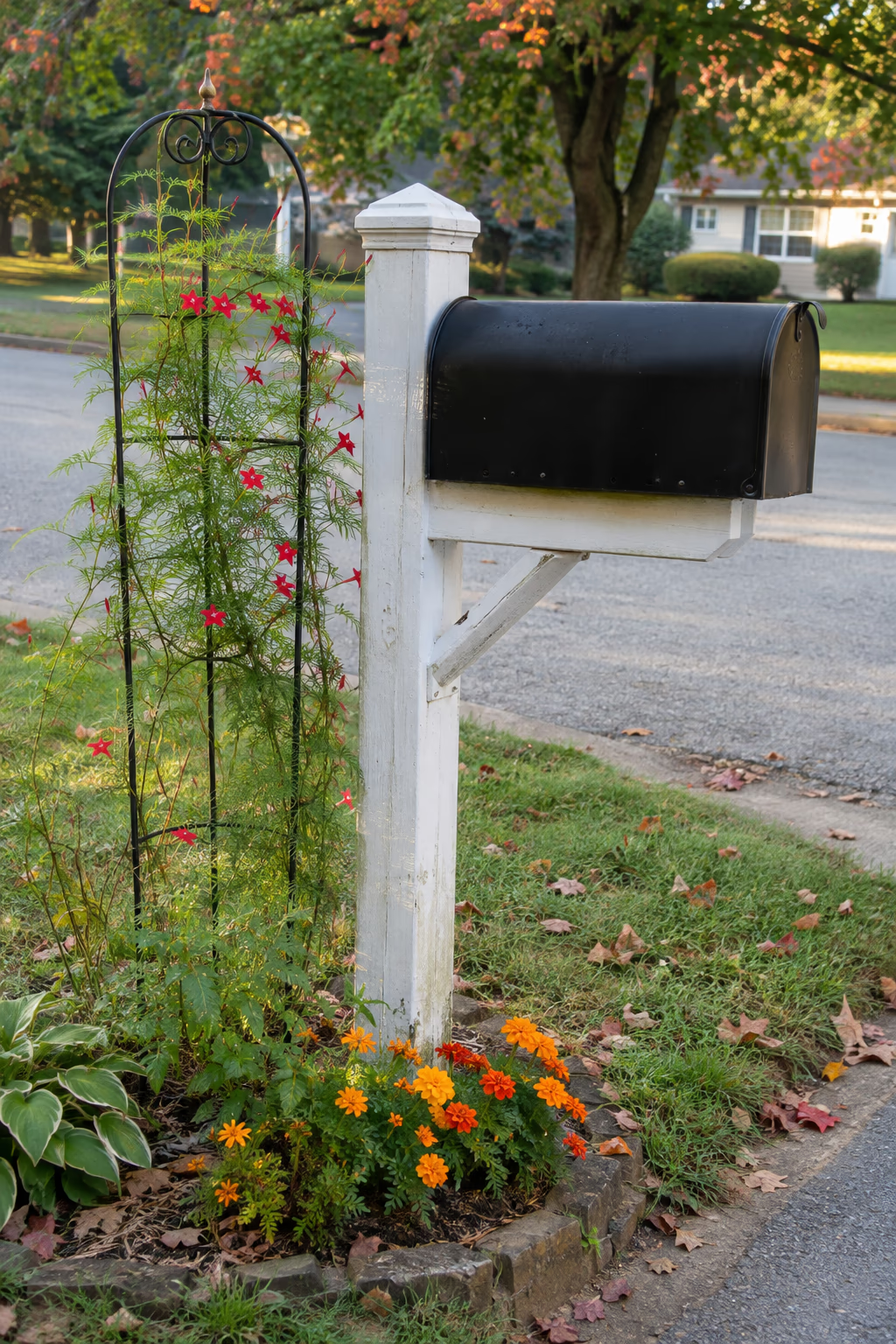
Curb appeal at the end of the drive
A narrow trellis set beside the mailbox post gives an ordinary roadside spot a pop of color. Cardinal climber, with ferny leaves and small scarlet flowers, is a lightweight annual that won’t overwhelm it and attracts hummingbirds.
Use a slim metal or wood trellis 4 to 5 feet tall, and plant a small bed of low flowers at the base. Keep growth trimmed back from the mailbox door and flag.
Mail carriers need clear access, so keep vines off the box and the path to it. Cardinal climber can self-seed in warm areas.
How to Plan Your Garden Trellis
The right trellis depends on the plant you want to grow, where it will stand, and how much upkeep you’re willing to do. Keep these points in mind before you buy or build.
- Match the support to the vine. Twining and tendril vines need thin supports to grab, while roses and wall shrubs need to be tied in. Heavy woody vines need much stronger structures than annuals.
- Size it for the mature plant. Check the expected height and spread on the plant tag. A vigorous vine on a small trellis will quickly outgrow it.
- Anchor it well. A covered trellis catches the wind like a sail. Set posts deep, use metal anchors, or fasten to studs and masonry, not just siding.
- Leave a gap from walls. Mount trellises 1 to 3 inches out from walls and fences to improve air flow, reduce moisture, and make maintenance easier.
- Choose materials for your climate. Cedar and metal hold up longer than untreated pine or bamboo. In wet regions, metal and composite supports cut down on rot.
- Check rules and utilities. HOAs and local codes may limit fence and structure heights. In the US, call 811 before digging post holes.
Frequently Asked Questions
What is the best material for a garden trellis?
Metal, such as steel, iron, or copper, usually lasts the longest and supports heavy vines. Cedar is a good wooden option that resists rot. Bamboo and branches are inexpensive but last only a few seasons.
Which climbing plants grow best on a trellis?
Clematis, climbing roses, morning glories, sweet peas, and black-eyed Susan vine are popular choices. Native options such as coral honeysuckle and Carolina jessamine also work well, depending on your zone.
How far from a wall should a trellis be mounted?
About 1 to 3 inches is ideal. That small gap lets air move behind the plant, keeps moisture off the wall, and gives tendrils room to wrap around the supports.
How tall should a garden trellis be?
Most garden trellises are between 5 and 8 feet tall. Choose a height that fits the plant’s mature size and the space, keeping in mind local height limits for fences and screens.
Can a trellis damage my house?
It can if a heavy or clinging vine grows directly on siding, under shingles, or into gutters. Mount the trellis with a gap, choose suitable plants, and prune regularly to keep vines away from the roofline.
Final Thoughts
A good trellis does more than hold up plants. It adds height, frames views, hides eyesores, and turns walls, fences, posts, and railings into growing space. Whether you choose a painted obelisk, a copper grid, or a simple twine curtain, the right support can transform a flat yard.
Start with one spot and one plant that suit your light and climate, and build from there. In a season or two, your garden will have the layered, lived-in look that only climbing plants can bring.