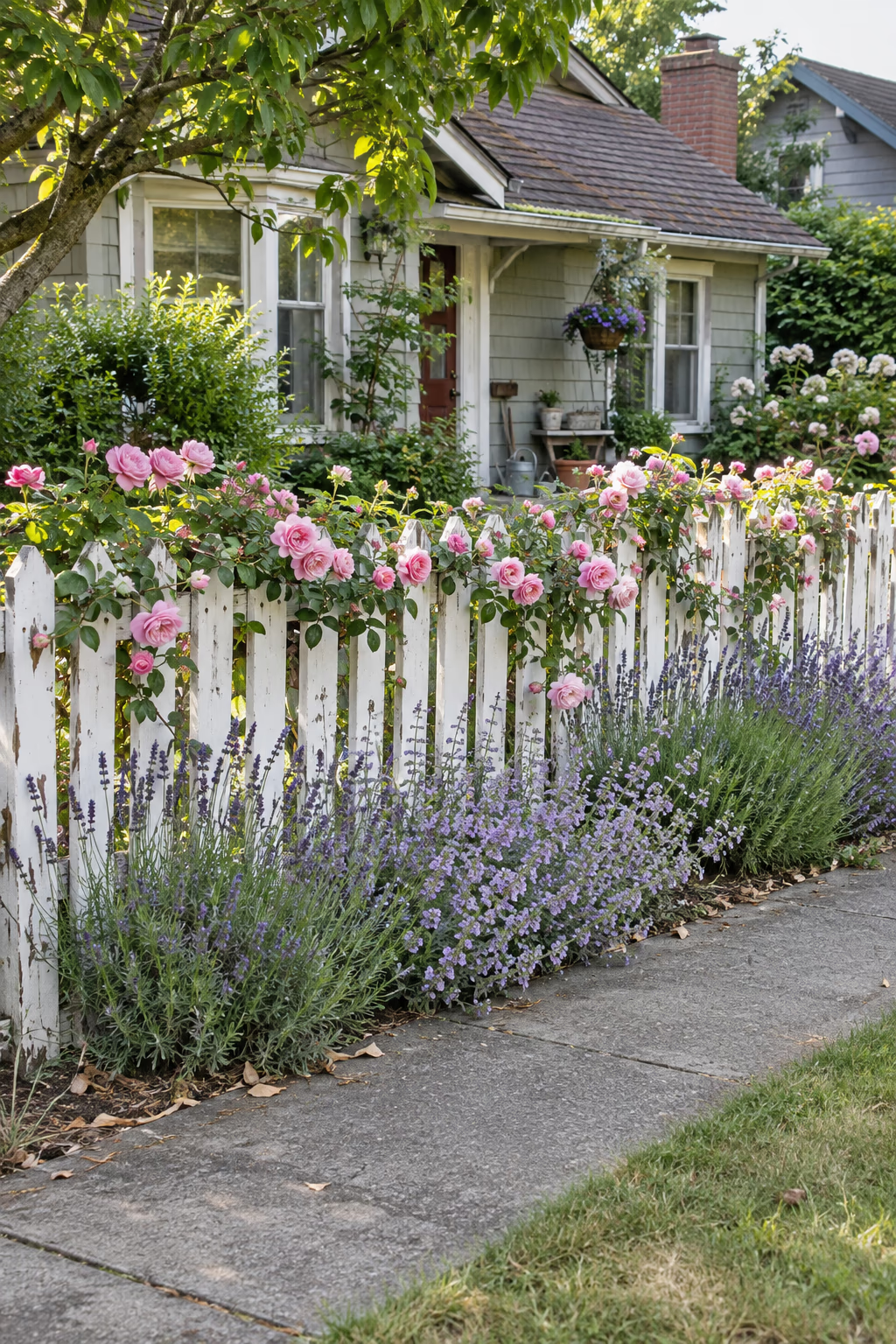
Imagine walking out on a June morning and finding pink roses spilling over a row of white pickets, bees working the lavender along the base, and a little gate standing half open. Even before you notice any plants, the fence tells you this part of the yard is a garden.
A good fence does more than mark a property line. It frames the plants, gives climbers something to hold, keeps deer and rabbits away from your harvest, and adds structure in winter when beds are bare. Because it’s one of the largest surfaces in the yard, even a small change, like a new paint color or a row of lights, can make a big difference.
These 27 garden fence ideas include cottage pickets, modern cedar slats, woven willow, critter-proof wire, living hedges, stone, and steel. Whether you want to enclose a vegetable patch, edge a flower border, or give a front garden more character, you’ll find practical ideas for ordinary yards and realistic budgets.
1. Train Climbing Roses Along a White Picket Fence
The cottage look everyone loves
A 3- to 4-foot white picket fence covered with climbing roses is the classic garden boundary. Plant climbers 6 to 8 feet apart, about 12 inches in front of the fence, and as the long canes grow, tie them loosely to the top rail with soft garden ties.
Train the canes as close to horizontal as you can. Roses flower along the length of bent-over canes, so you’ll get far more blooms than you would by letting them shoot straight up. Repeat-blooming, disease-resistant climbers suit a white backdrop especially well.
Painted pickets need fresh paint every few years, and rose canes make that job awkward. Before planting, give the fence a good coat of exterior paint, or choose a cellular PVC picket that never needs repainting.
2. Install Horizontal Cedar Slats for a Modern Look
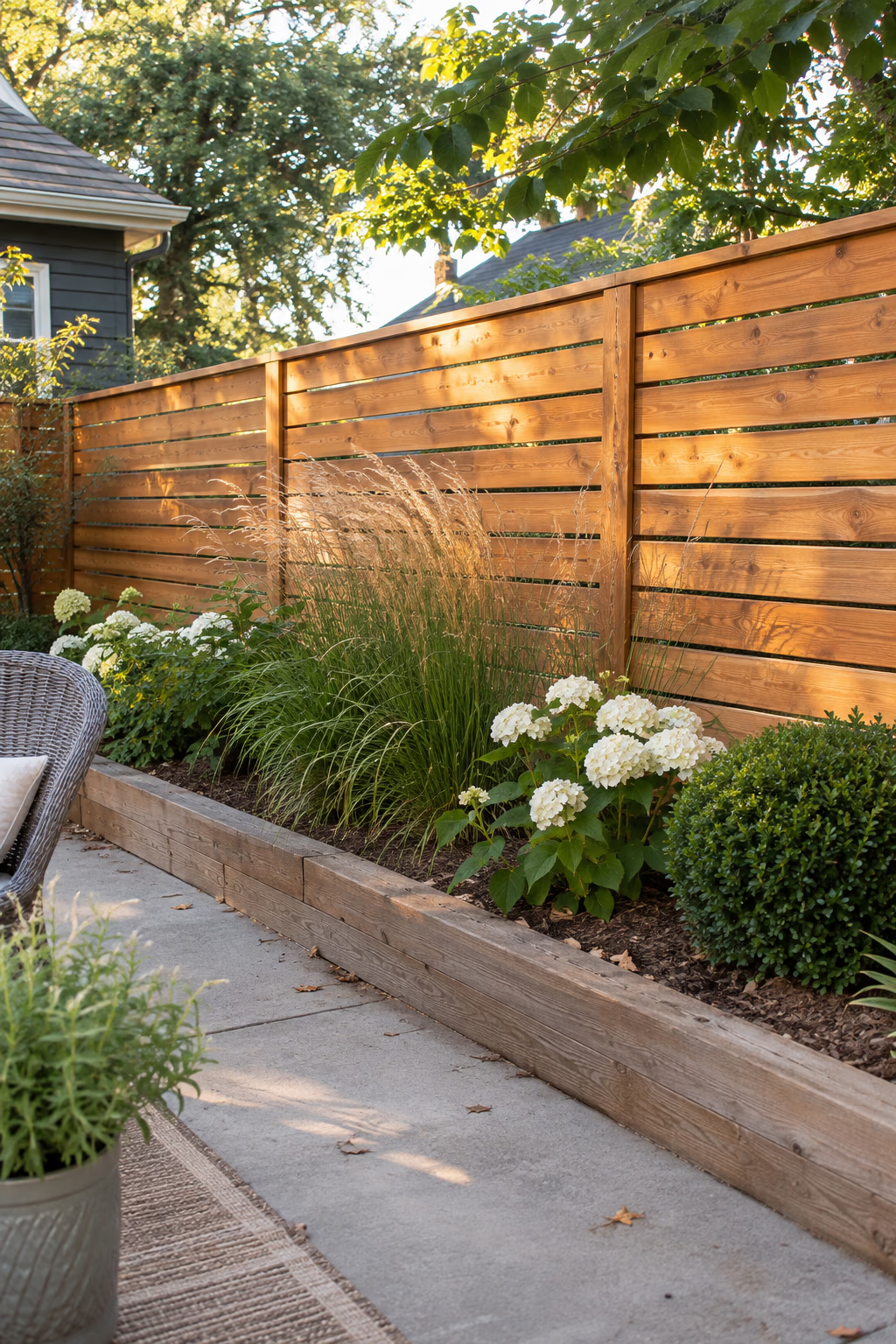
Clean lines that make a yard feel wider
For a crisp, modern garden fence, run 1×4 or 1×6 cedar boards horizontally between posts and leave 1/2-inch to 3/4-inch gaps. Horizontal lines draw the eye sideways, which can make a narrow backyard feel wider and gives planting beds a calm, tailored backdrop.
Cedar resists rot and insects naturally and weathers to a soft silver if you leave it untreated. To keep the warm honey color, apply a penetrating oil stain every two to three years.
Long horizontal boards can sag over time, so space posts no more than 6 feet apart or add a center support. Use ground-contact pressure-treated posts and stainless or coated screws so the boards don’t develop black streaks.
3. Paint the Fence Black to Make Plants Pop
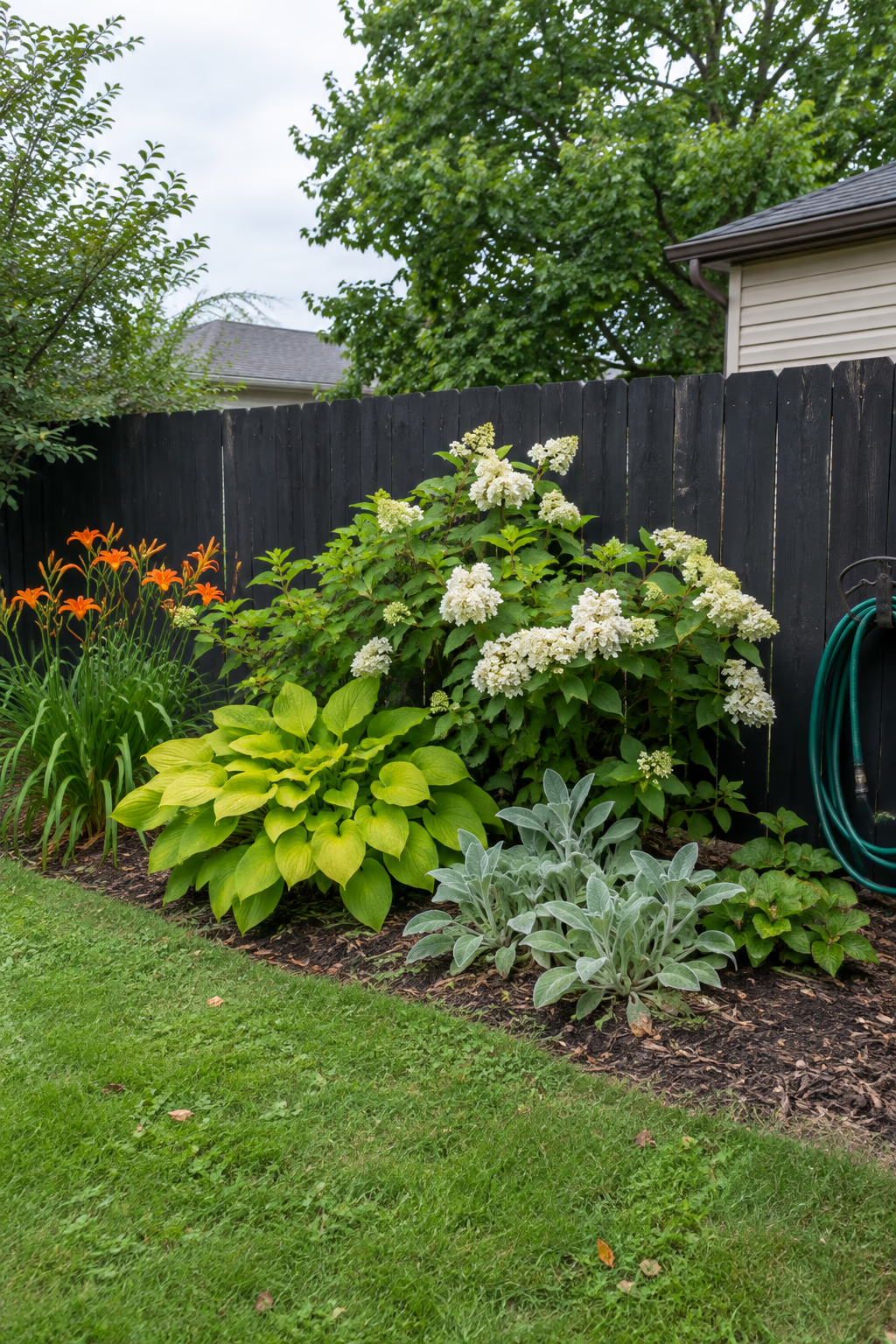
A dark backdrop that makes greens look brighter
A black or deep charcoal fence seems to recede visually, so the plants in front of it stand out. Chartreuse hostas, silver lamb’s ear, white hydrangeas, and bright orange daylilies all look stronger against a dark backdrop than they do against plain brown wood.
Use a solid exterior stain or exterior latex paint made for wood. A paint sprayer saves hours on board fences and covers the gaps more evenly than a brush.
Dark colors absorb heat, so plants in a hot, south-facing bed may get even warmer. In very sunny climates, pick heat-tolerant plants for that bed or soften the look with charcoal gray rather than pure black.
4. Weave a Willow Wattle Fence Around Flower Beds
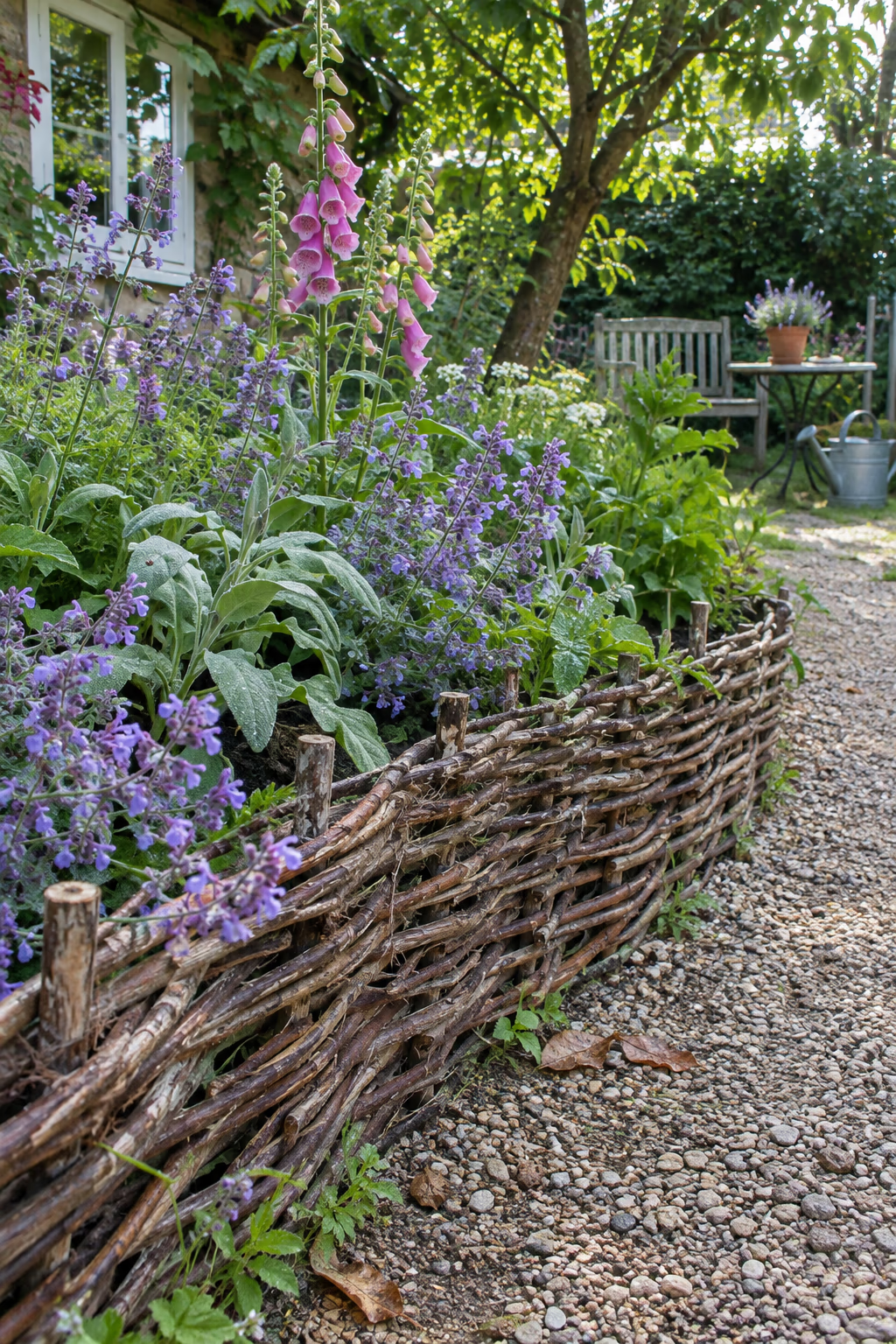
Old-world craft with a soft, natural texture
Wattle is made by weaving flexible willow or hazel rods between upright stakes. Low wattle edging 12 to 24 inches tall looks lovely around herb beds or cottage borders, and you can buy ready-made panels or weave your own.
The woven texture blends into the planting, and the natural brown color looks good in every season. It’s especially attractive around beds that already lean informal, with catmint, foxgloves, or sprawling herbs.
Wattle is not a long-term structure. Expect several years outdoors before rods start to rot, especially where they touch damp soil. Use freshly cut willow only if you don’t mind it rooting and sprouting.
5. Enclose the Vegetable Patch With Wood and Wire
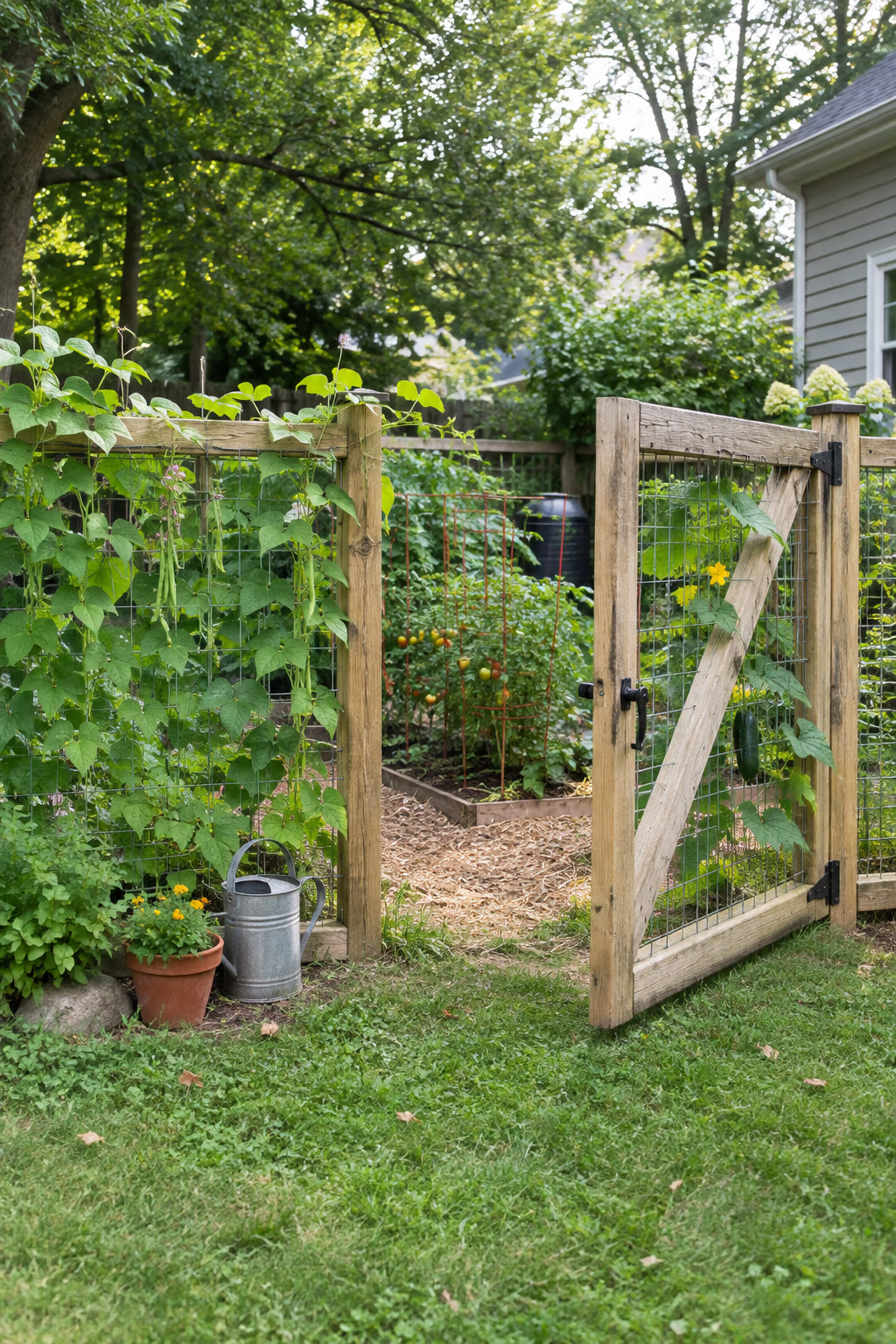
A sturdy kitchen-garden fence that still looks good
Set 4×4 posts every 8 feet, add a top rail and a bottom rail, and staple welded wire or galvanized hog panels between them. A fence 4 to 5 feet tall keeps out dogs and curious kids, and the open mesh doesn’t block sun from your vegetables.
The wood frame makes a utilitarian enclosure look finished, and peas, cucumbers, and pole beans can climb the wire for free. A matching wood gate wide enough for a wheelbarrow, at least 4 feet, makes daily chores easier.
Wood and wire alone won’t stop determined deer or rabbits. Add a buried wire skirt for rabbits, and in deer country, plan for more height.
6. Edge a Wildflower Border With a Split-Rail Fence
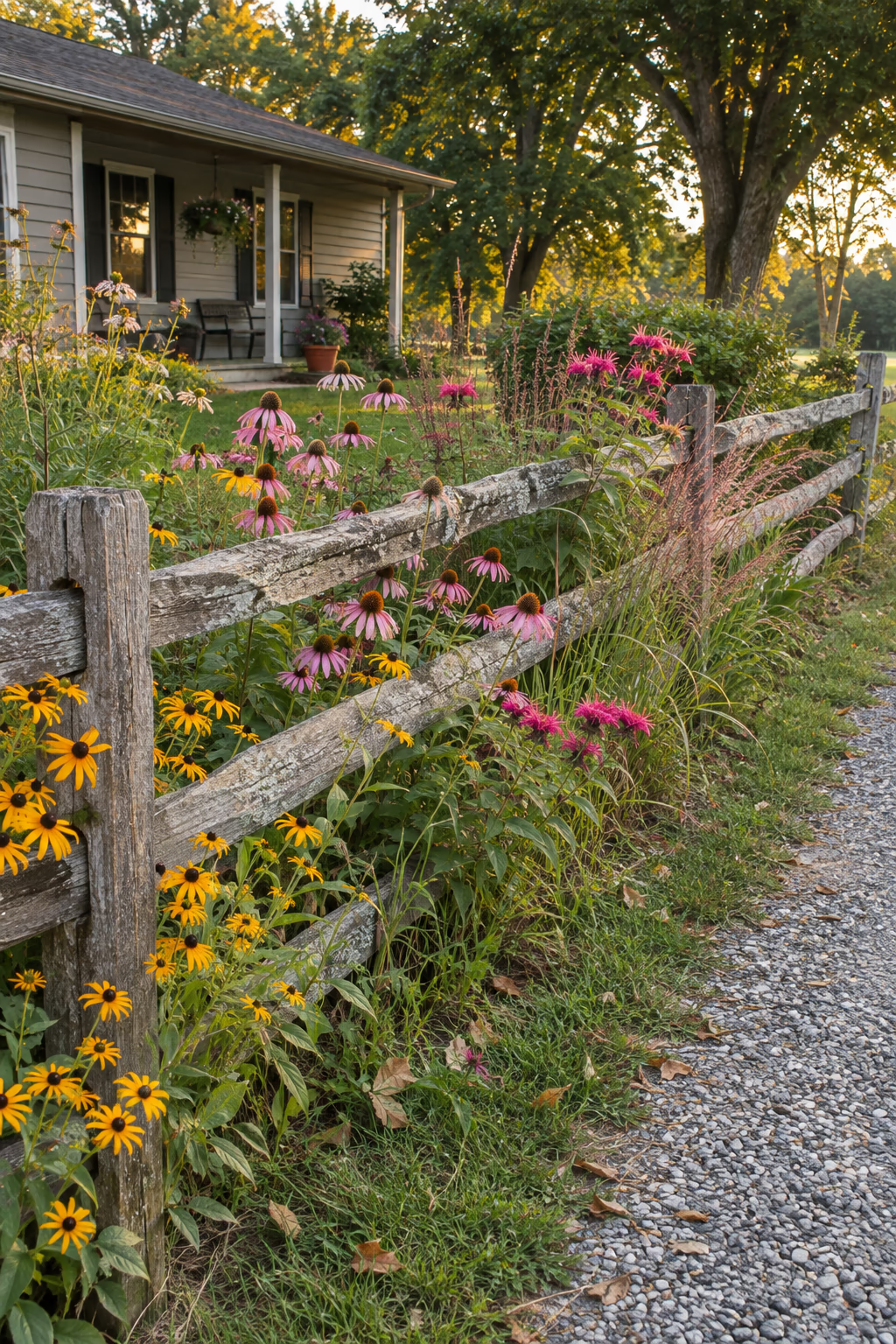
Rustic, open, and easy to build
A two- or three-rail split-rail fence marks a boundary without hiding anything. Plant a loose band of black-eyed Susans, coneflowers, bee balm, and native grasses along it, and the rails will look as though they’ve always been there.
Split-rail fences need no nails because the rails slot into mortised posts, so a section goes up quickly. They suit rural lots, long front yards, and corner properties where you want definition rather than privacy.
Pets can walk straight through. If you need to contain a dog, attach welded wire mesh to the inside of the rails, where it will disappear into the flowers.
7. Make the Garden Gate the Focal Point
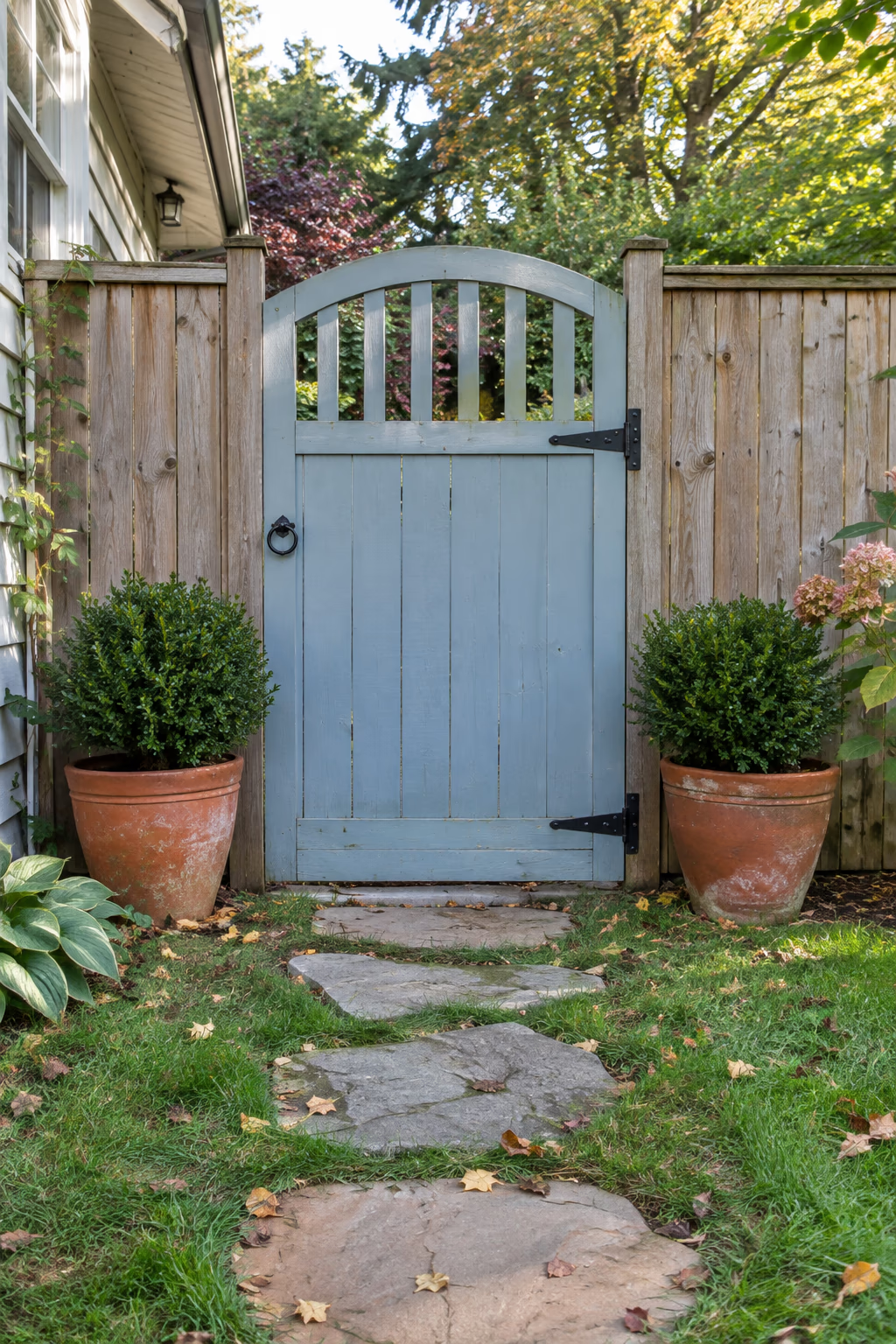
One special feature that welcomes visitors in
A plain fence becomes memorable when the gate stands out. Try a curved-top wooden gate, a gate painted a cheerful blue or soft yellow, or a gate with a wrought-iron insert that frames a view of the garden beyond.
Flank the opening with a pair of matching shrubs or big pots to emphasize the entrance. A short path of stepping stones leading to the gate makes it even more inviting.
Gates take the most wear of any part of a fence. Use heavy-duty hinges, a diagonal brace running from the bottom hinge side up to the latch side, and set the gate posts in concrete so they don’t lean.
8. Outline Beds With Low Black Metal Fencing
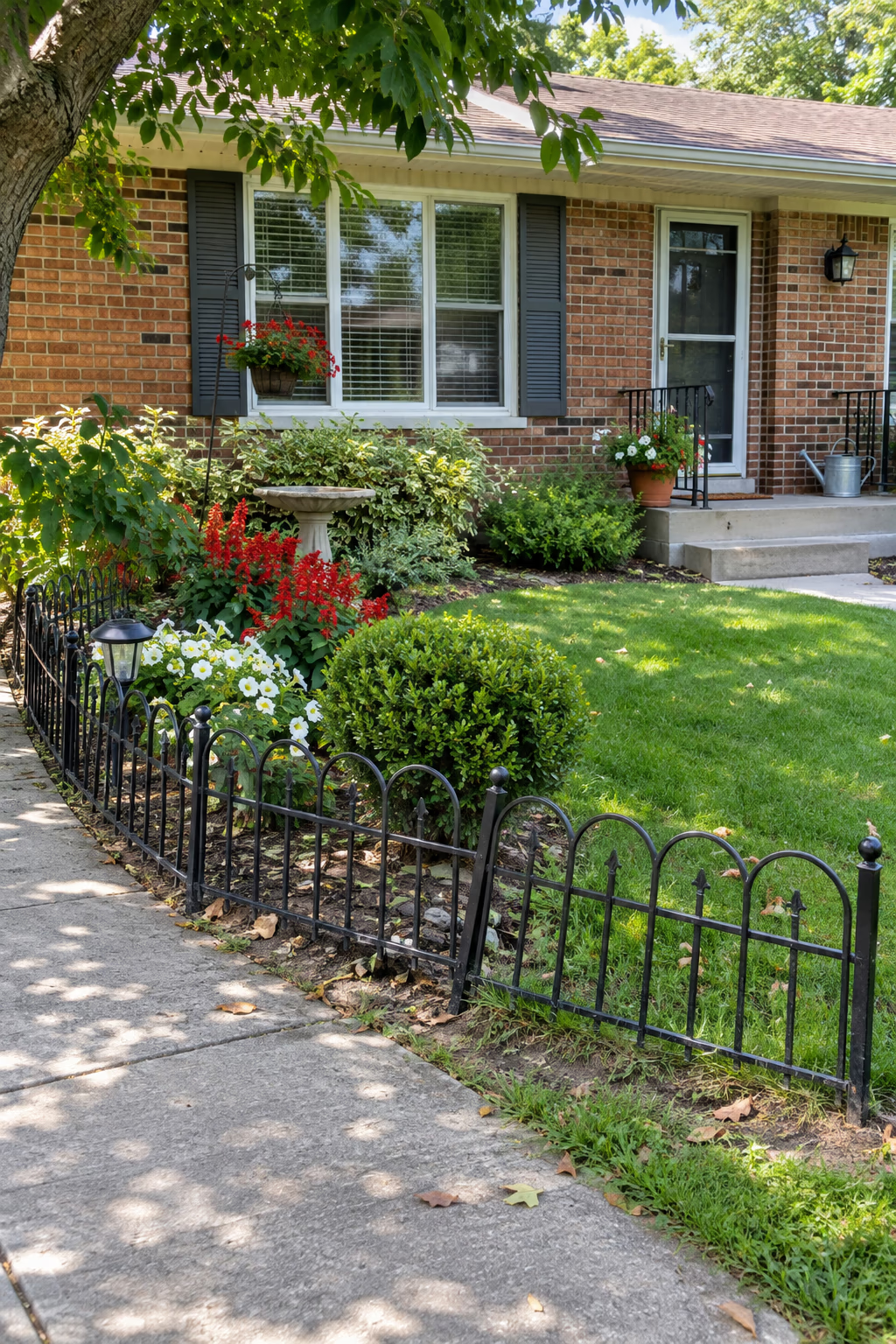
Crisp edges that keep feet out of the flowers
Low powder-coated steel or aluminum fencing 18 to 30 inches tall gives a front-yard bed a neat, finished outline. Hoop-top or spear-top panels in black look traditional, and many simply push into the soil without digging post holes.
A short metal fence sends a polite signal to dogs, delivery drivers, and kids cutting across the lawn. Its thin profile also lets the planting stay the star.
Lightweight no-dig panels can lean after frost heave or a hard knock. For a straighter, sturdier line, set the end posts in a little concrete and check the panels each spring.
9. Paint the Fence Sage Green to Blend With Plants
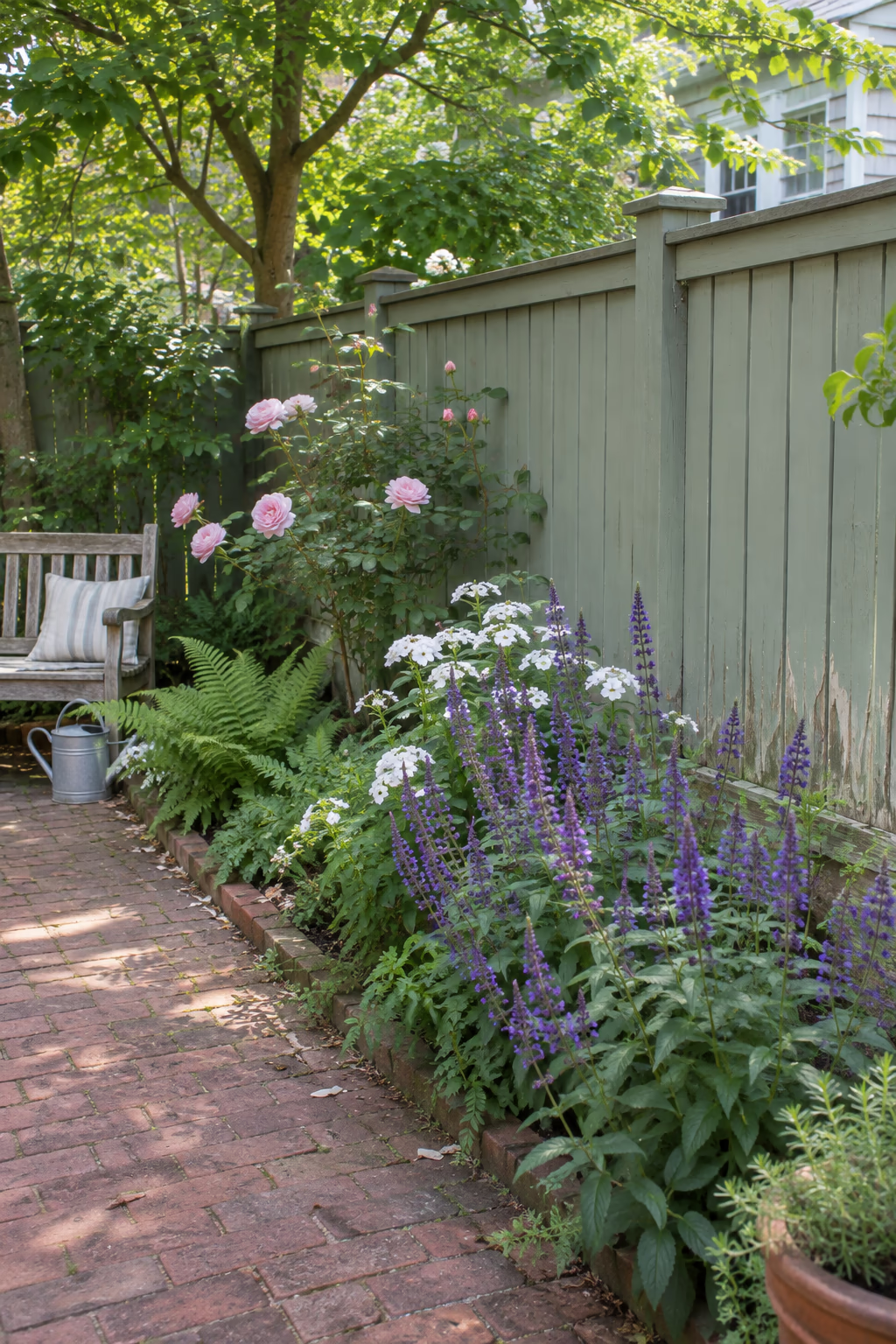
A soft color that makes a boundary disappear
Muted greens, from sage to deep olive, help a fence fade into the planting so the garden feels larger and the edges less obvious. It’s an easy way to calm a busy backyard or make a small lot feel less boxed in.
Green works with nearly every flower color and looks especially good behind white, purple, and pale pink blooms. It also hides dirt and mildew better than white does.
Test a few sample swatches on the fence and check them at different times of day. Greens can look gray in shade and much brighter in full sun.
10. Drape String Lights Along the Top Rail
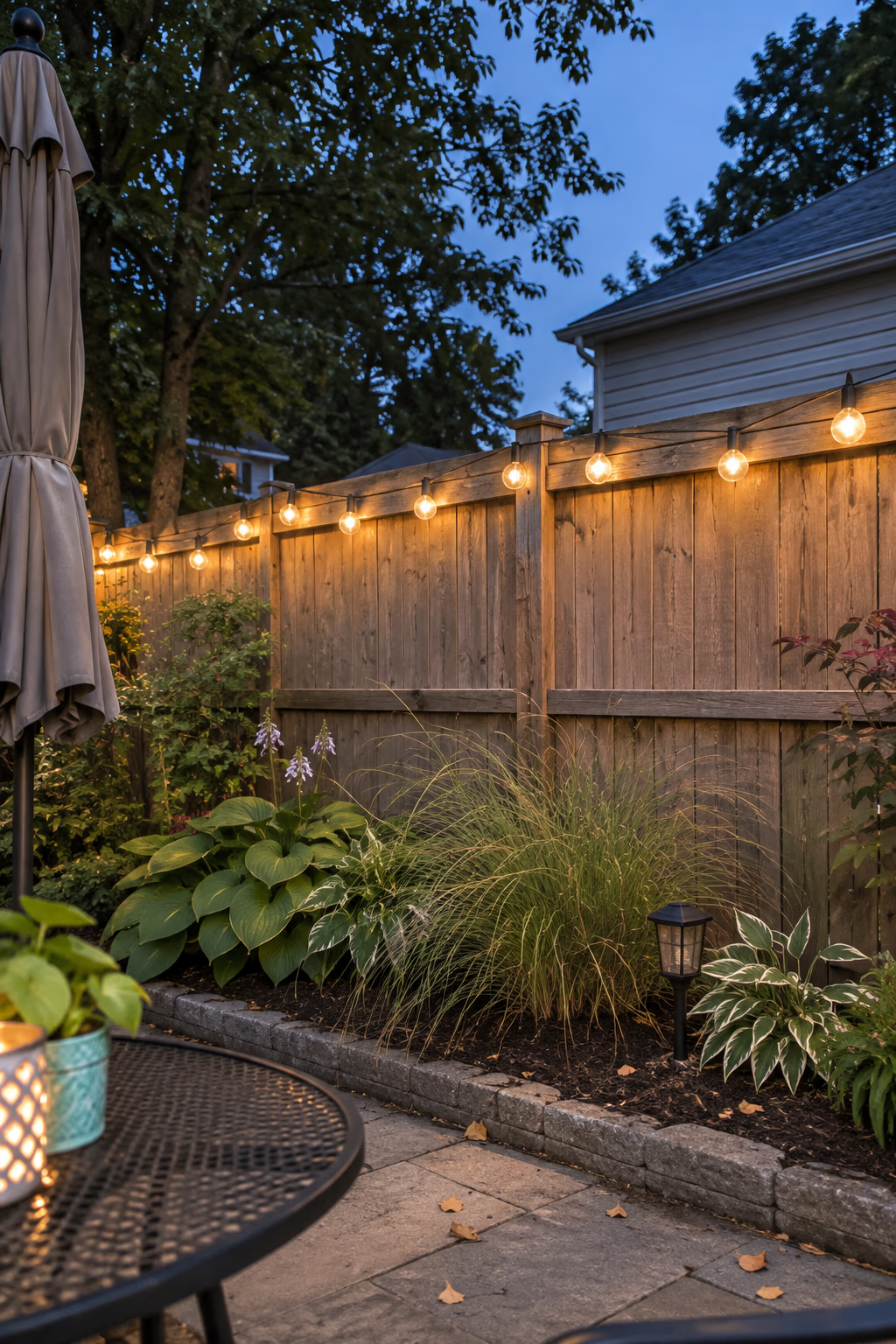
Warm evening glow for summer nights
Weatherproof string lights clipped along the top of a fence turn the garden into a place to linger after dark. Warm white bulbs with a color temperature of about 2,700K look softer and more flattering than cool white.
Fence lights don’t need any overhead structure, so they’re one of the easiest ways to light a garden. Solar strings work along sunny fences, while plug-in strings are brighter and more reliable.
Use outdoor-rated lights and a GFCI-protected outlet, and keep cords away from mower paths. Screw-in hooks or adhesive-free clips protect painted wood better than staples.
11. Grow a Living Hedge Instead of a Fence
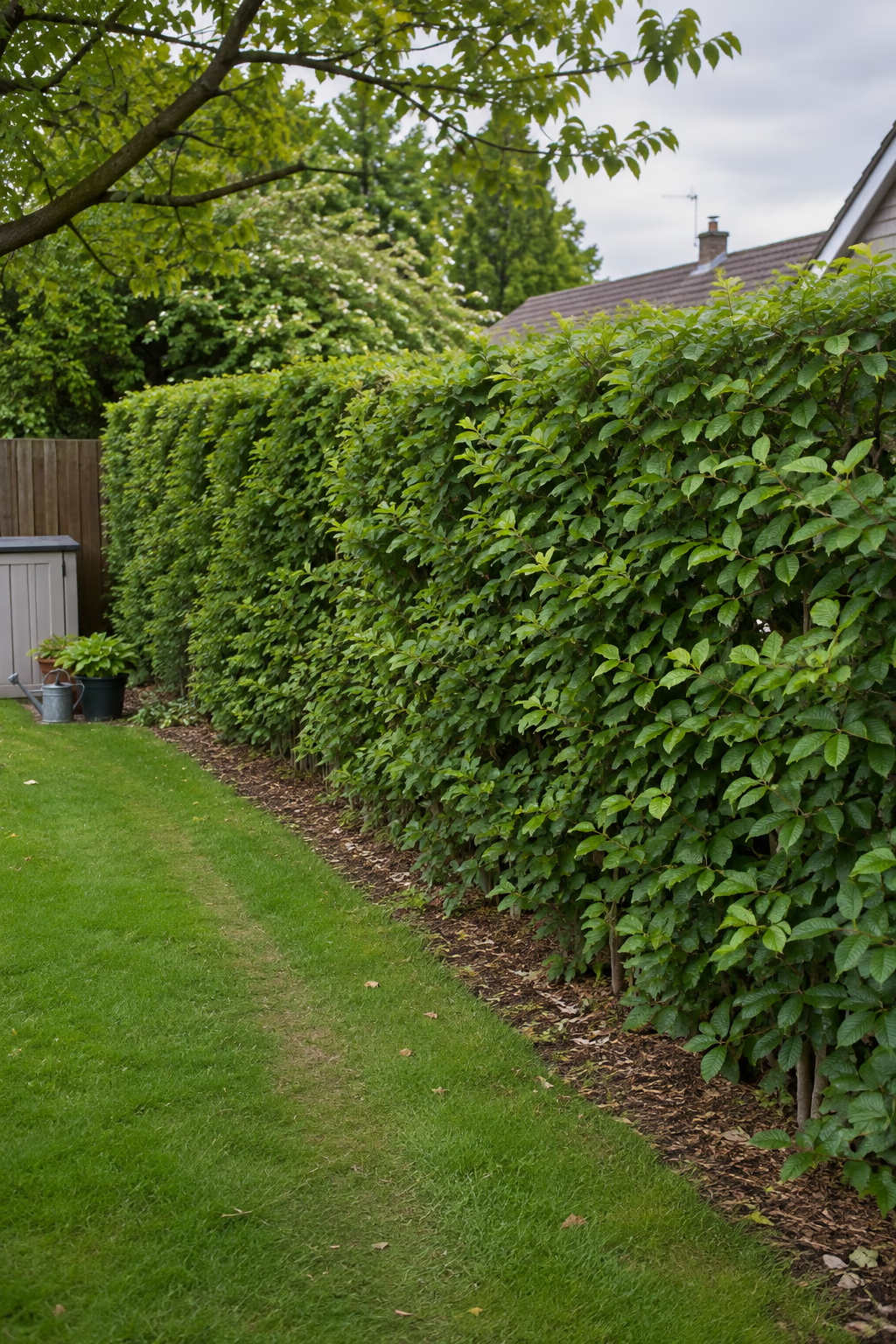
A green boundary that feeds birds and pollinators
A clipped or informal hedge can do the job of a fence while adding habitat. Good choices include American hornbeam, inkberry holly, arborvitae, yaupon holly in the South, and mixed flowering shrubs such as ninebark and viburnum.
Plant shrubs about 2 to 3 feet apart in a staggered double row for a denser screen. A hedge softens wind, muffles noise, and changes through the seasons in a way that boards can’t.
Hedges take a few years to fill in and need regular trimming. Avoid privet and other plants listed as invasive in your state, and check your local extension service for the best natives.
12. Espalier Fruit Trees Along a Post-and-Wire Fence
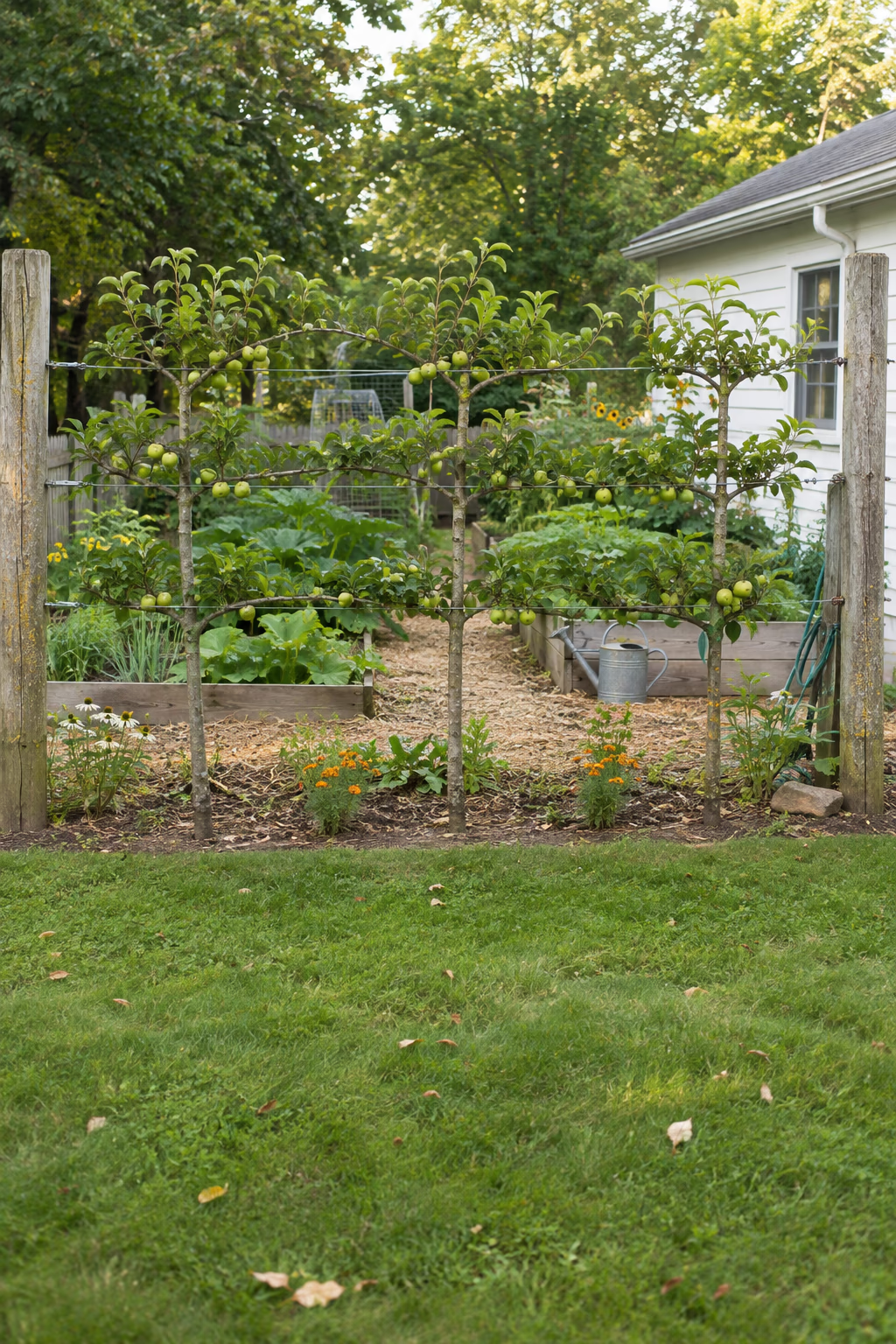
A productive boundary that grows apples
Espalier means training a tree flat against a support. Stretch three or four horizontal wires about 18 inches apart between sturdy posts, then train young apple or pear trees along them in tiers or a diamond pattern.
An espalier fence is open, elegant, and fruitful, and it takes up only about a foot of depth. It’s a smart choice for dividing a vegetable garden from a lawn or edging a narrow side yard.
Espalier needs patience. Expect to prune in both summer and winter and wait several years for a full pattern. Starting with dwarf or semi-dwarf rootstocks keeps the work manageable.
13. Pair Corten Steel Panels With Ornamental Grasses
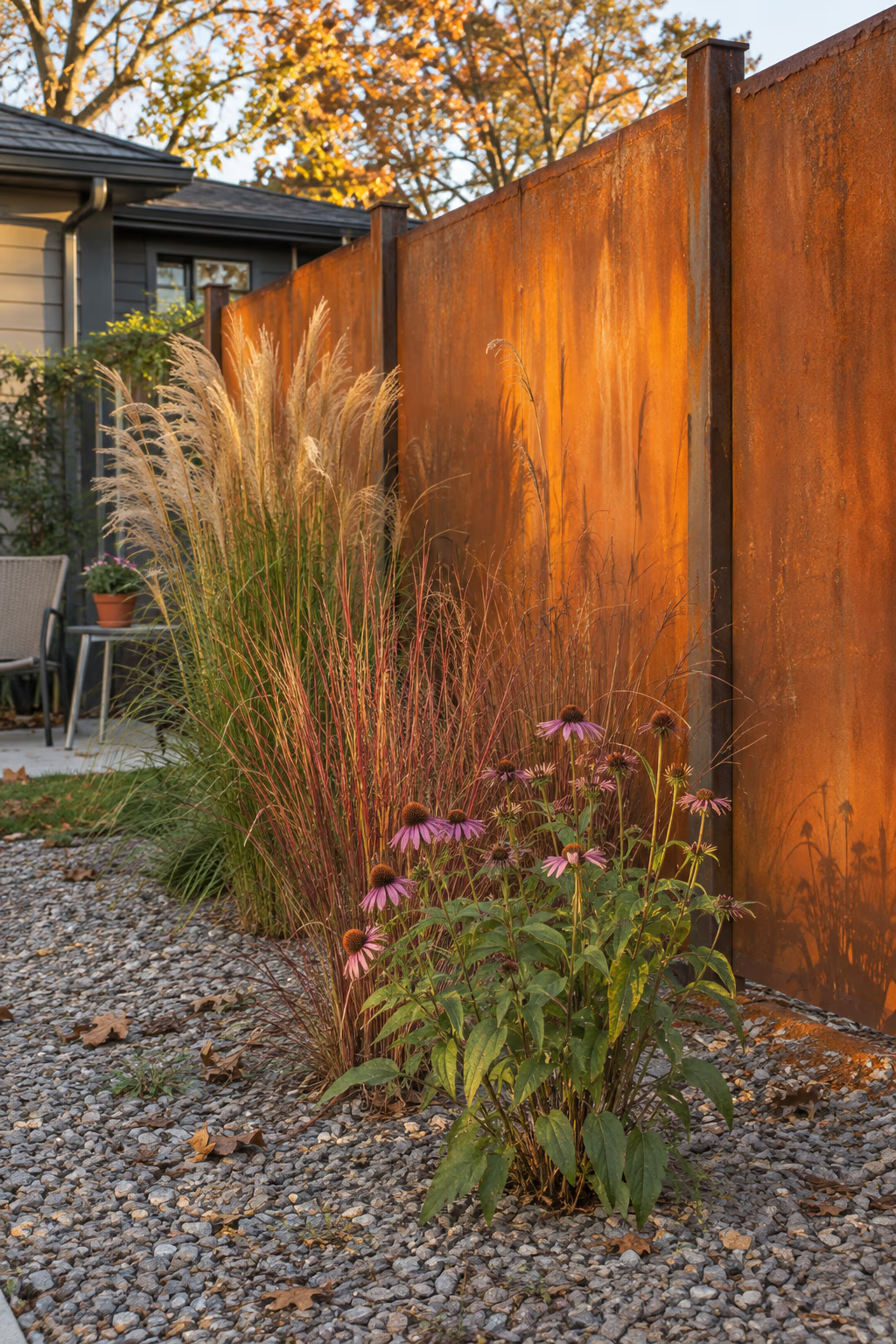
Rusty modern texture with a warm glow
Weathering steel develops a stable orange-brown rust layer that protects the metal underneath. Solid or laser-cut Corten panels set between steel posts make a striking garden fence, especially with feather reed grass, little bluestem, and purple coneflower in front.
The warm rust color glows in late-afternoon light and fits modern, desert, and prairie-style gardens. Once the patina forms, the panels need almost no maintenance.
New Corten steel releases rust-colored runoff that can stain concrete, pavers, and siding. Keep it away from light hardscape, or let the panels weather before installation. Steel panels also cost more than wood.
14. Top a Board Fence With a Lattice Topper
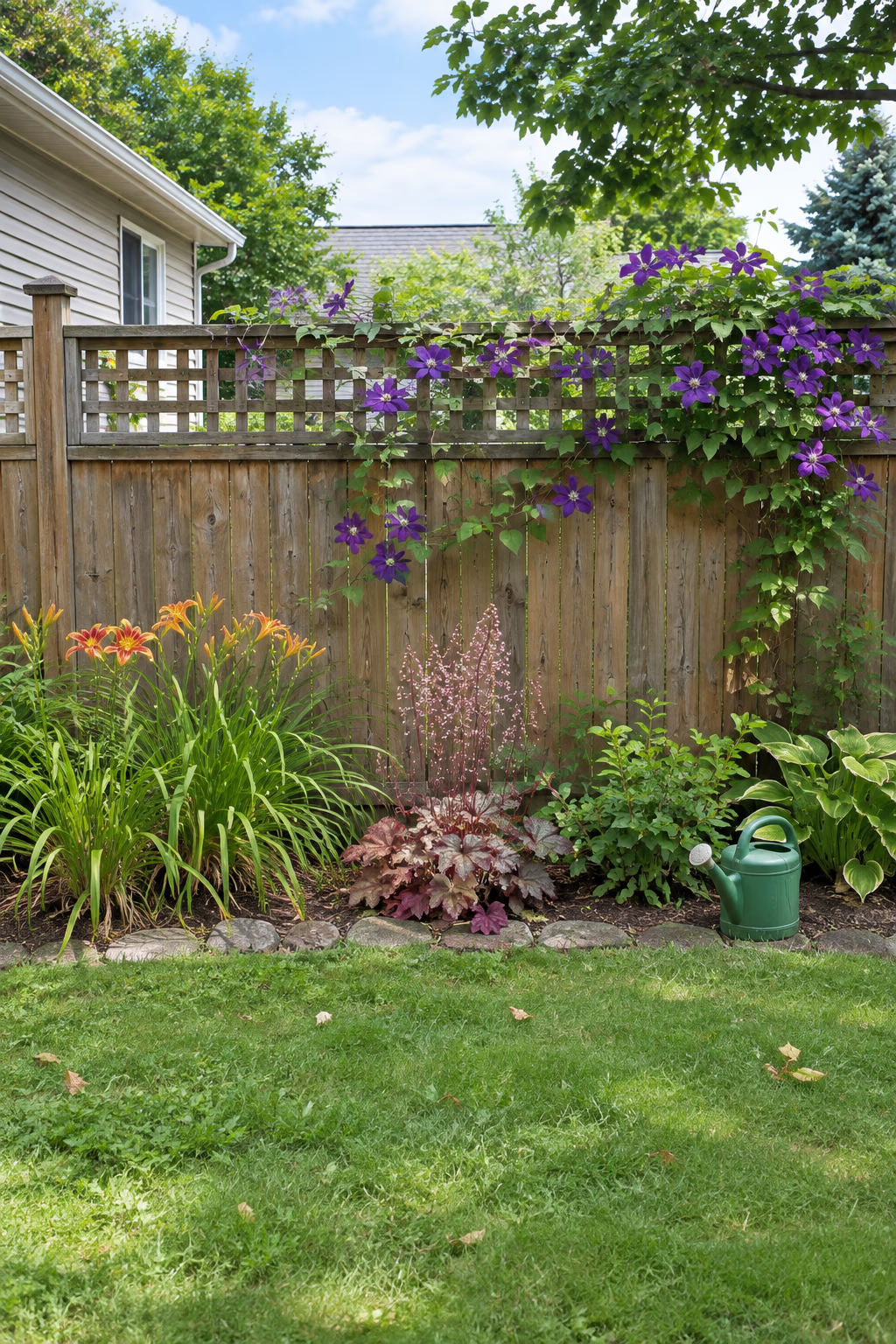
Extra height that still lets light through
Adding a 1- to 2-foot lattice topper above a solid board fence breaks up a tall, plain wall and gives clematis or honeysuckle a place to weave. Square-grid lattice looks more modern than diagonal.
The open top lets in more light and air than solid boards, which helps beds along the fence grow better. It also gives the fence a finished, custom appearance.
Many towns cap backyard fences at 6 feet and count the topper in that height. Check local codes and HOA rules before adding height.
15. Roll Out Bamboo Fencing for a Quick Natural Screen
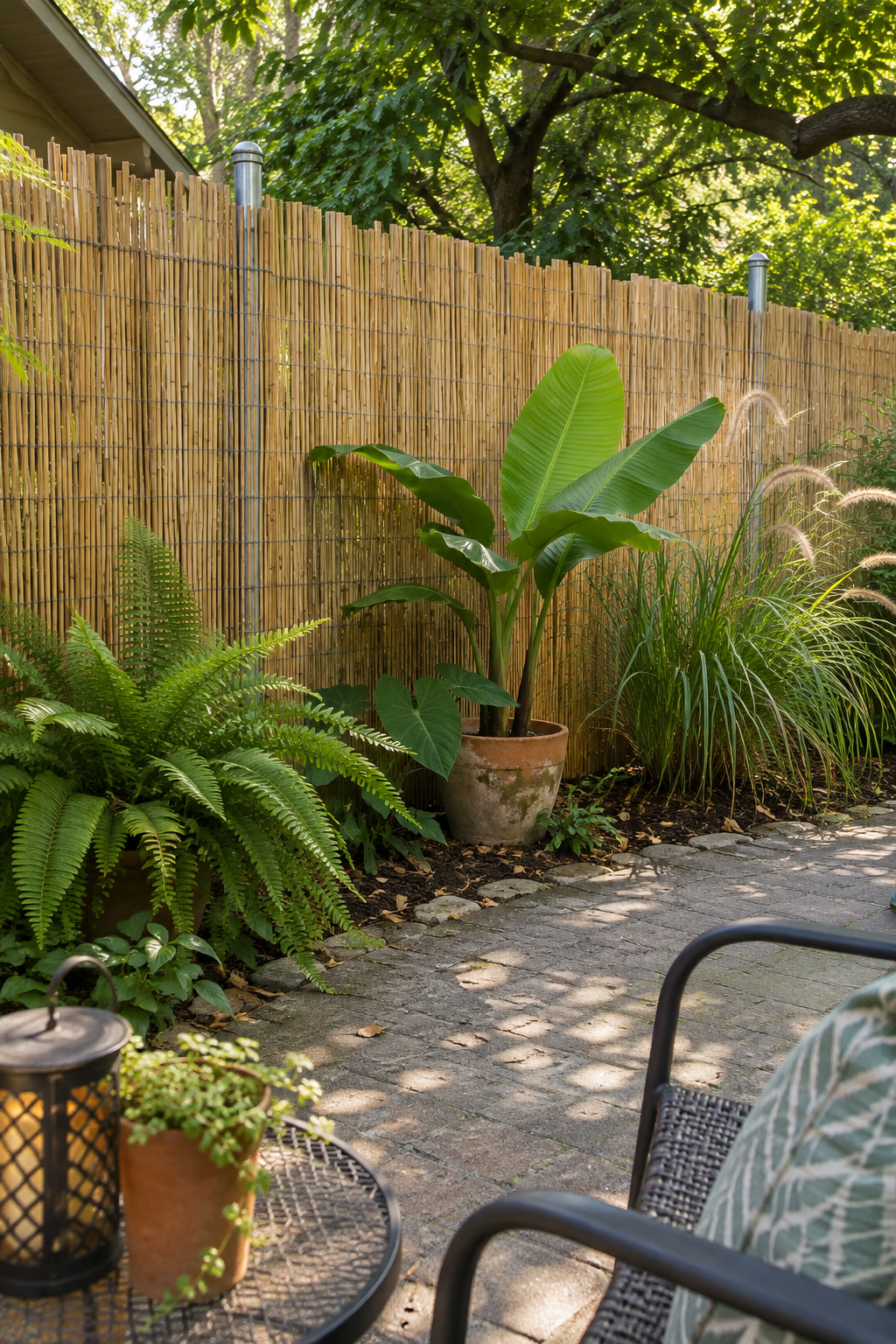
An affordable weekend upgrade
Rolled bamboo fencing comes in heights of about 4 to 6 feet and can be wired onto an existing chain link or wood frame. It brings warm texture to a tired fence, a patio garden, or a utility corner in a single afternoon.
Bamboo works well with tropical plants, ferns, grasses, and Asian-inspired plantings, and it’s a quick and inexpensive way to change the look of a fence.
Rolled bamboo fades to gray and breaks down faster than solid wood, especially where it touches soil. Lift the bottom edge an inch or two above the ground and expect to replace it after several years.
16. Build a Budget Fence From Reclaimed Pallets
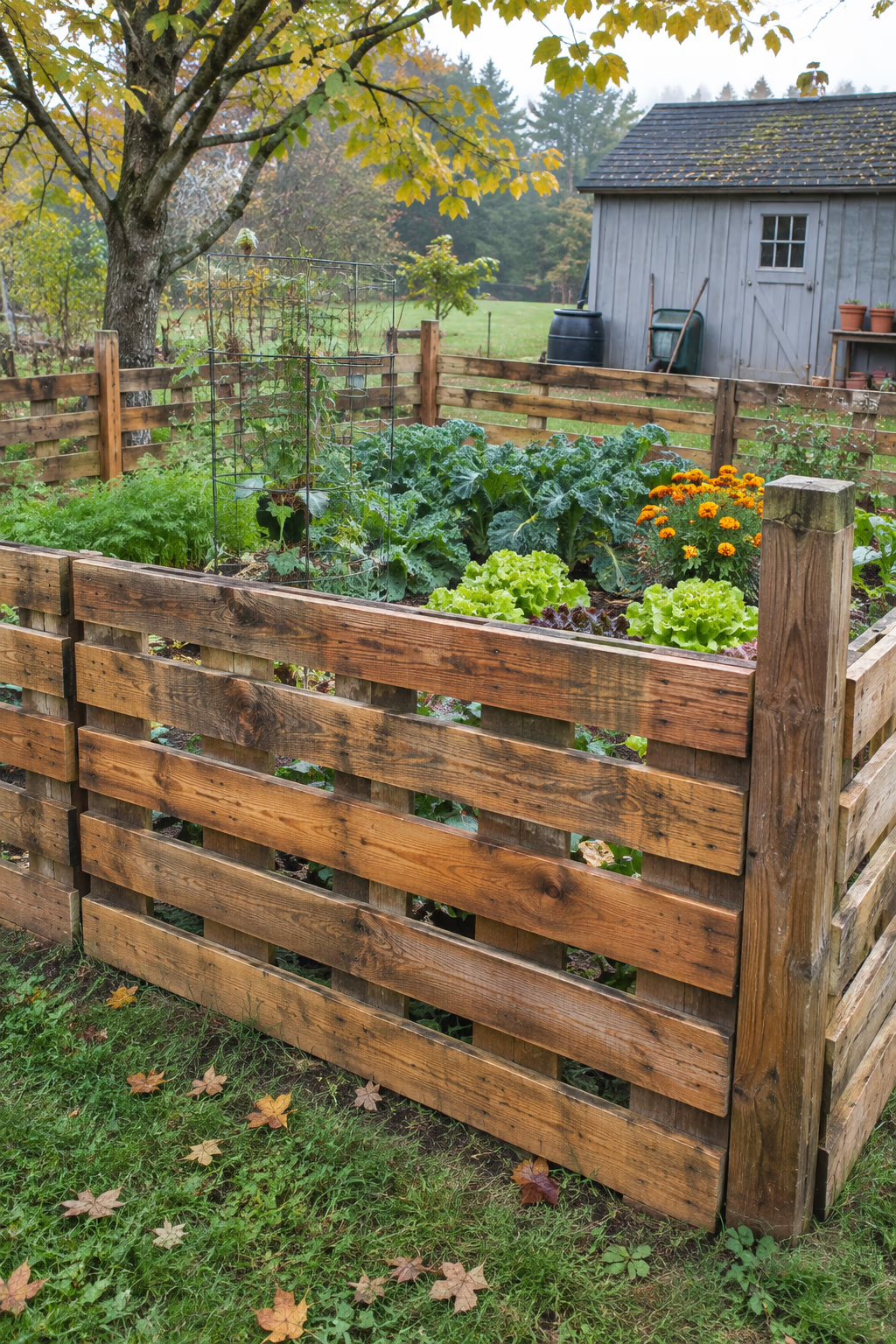
Cheap, sturdy, and full of character
Pallets can be stood on end and joined between posts, or taken apart and reused as boards for a rustic picket or board fence. Sanded and stained in a warm brown, a pallet fence looks charming around a vegetable plot or chicken run.
Pallets are often free from local businesses, which makes this one of the cheapest ways to enclose a garden. It’s also a satisfying beginner project.
Use only pallets stamped “HT,” meaning heat-treated. Avoid any marked “MB,” which were treated with a chemical fumigant. Unstained pallet wood weathers quickly, so seal it.
17. Stack a Low Dry Stone Wall as a Garden Boundary
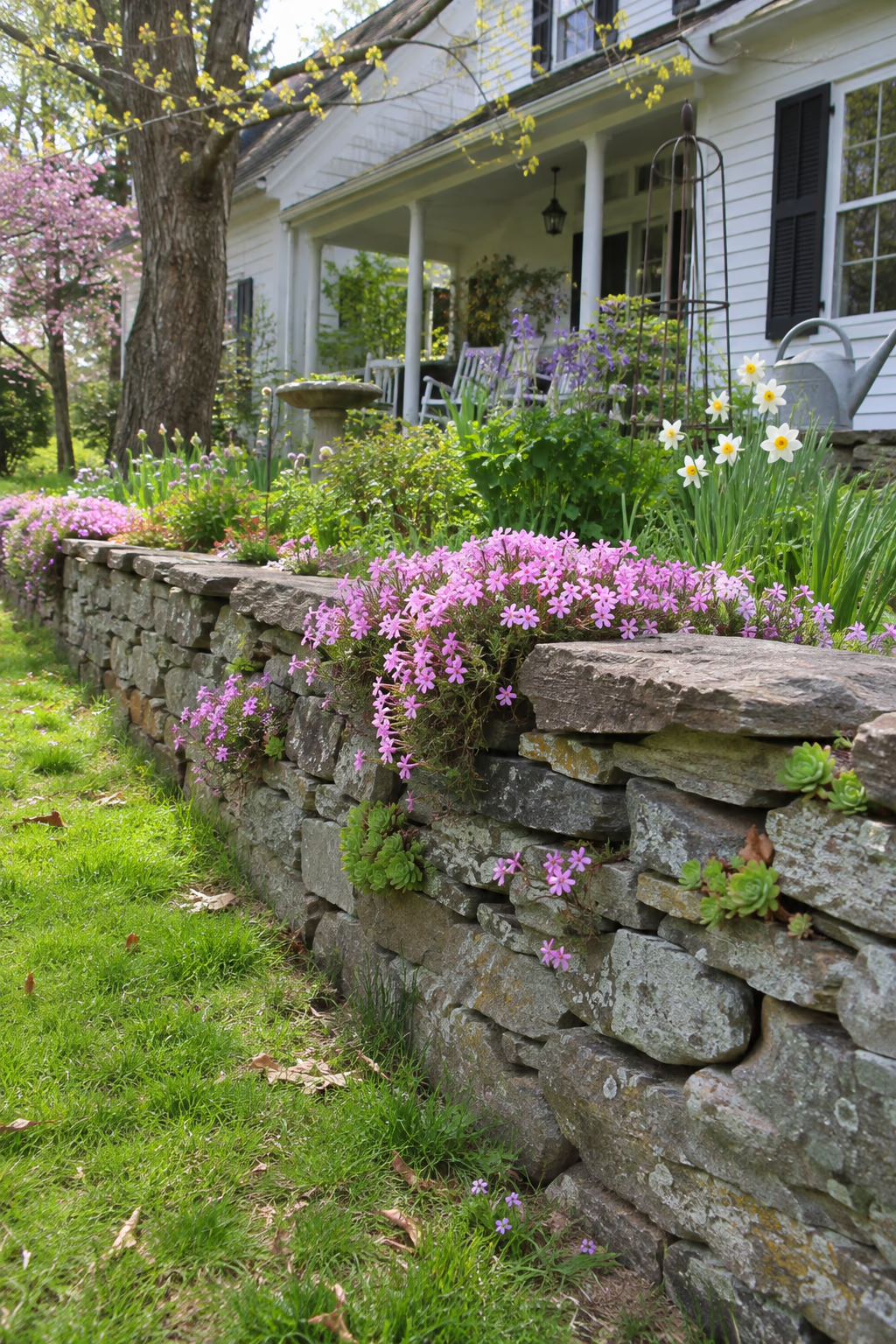
A permanent edge that lasts for generations
A dry-laid fieldstone wall 2 to 3 feet tall makes a sturdy, timeless garden boundary. Set a wider base course in a shallow trench of compacted gravel, tilt the stones slightly inward as you stack, and cap the top with flat stones.
Stone suits rural and older homes and needs almost no upkeep. Sedum, creeping phlox, and thyme tucked into the crevices or planted along the top soften the look.
Stone is heavy and slow to build. Buy more than you think you’ll need, lift carefully, and hire a professional for any wall that holds back soil or stands taller than about 3 feet.
18. Cut Window Openings Into a Solid Fence
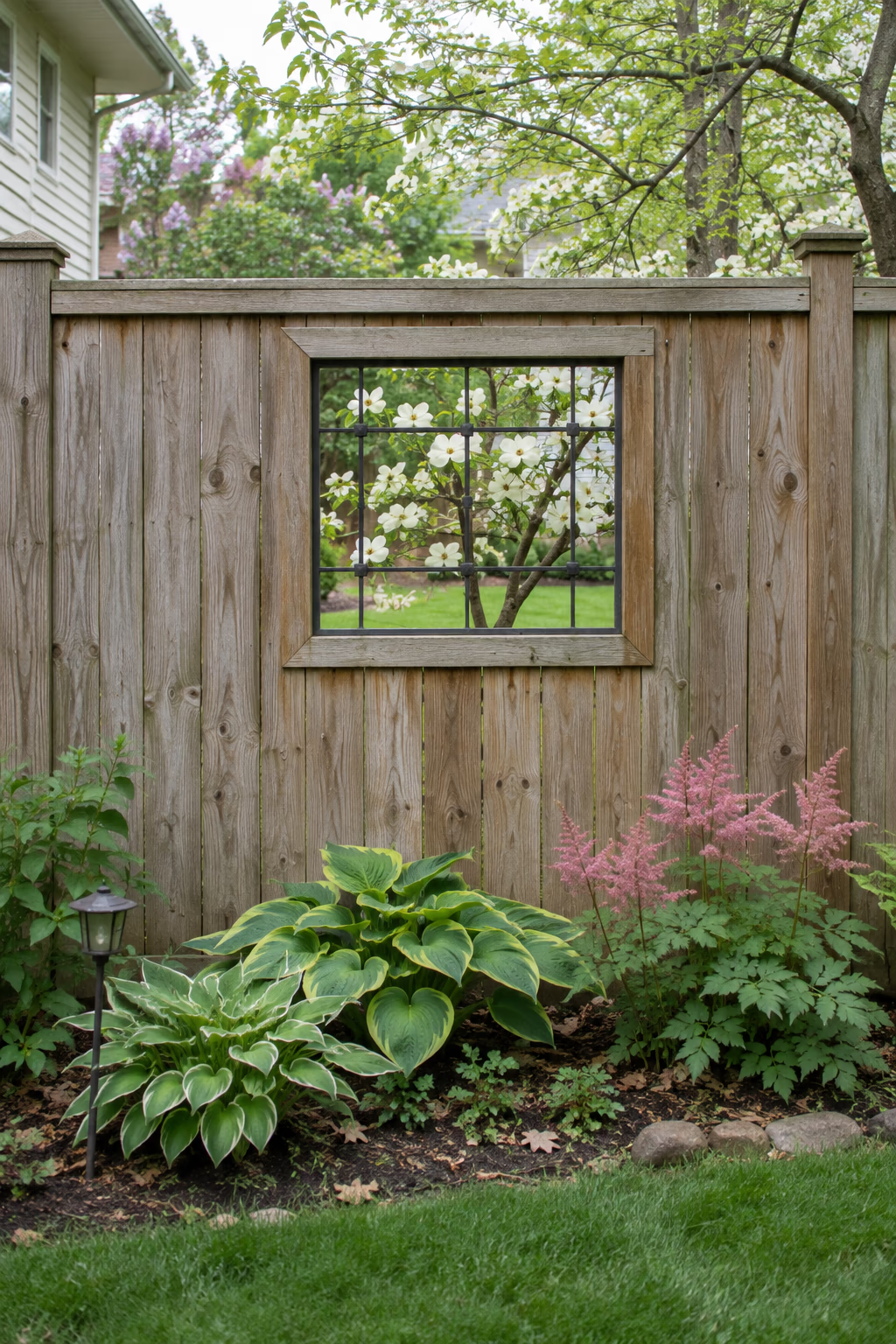
Framed glimpses of the garden beyond
Swapping a few boards for a framed opening creates a “window” in a solid fence. Fill it with a small piece of metal grille or leave it open to frame a view of a tree, a neighbor-friendly lawn, or the next garden room.
Windows break up a long run of boards, let air move through, and add a playful, custom touch. They work best at eye level in a spot where there is something worth seeing.
Build a sturdy frame from 2x4s around the opening so the boards don’t twist. Talk with neighbors before opening a view onto their yard.
19. Keep Deer Out With a Tall Black Mesh Fence
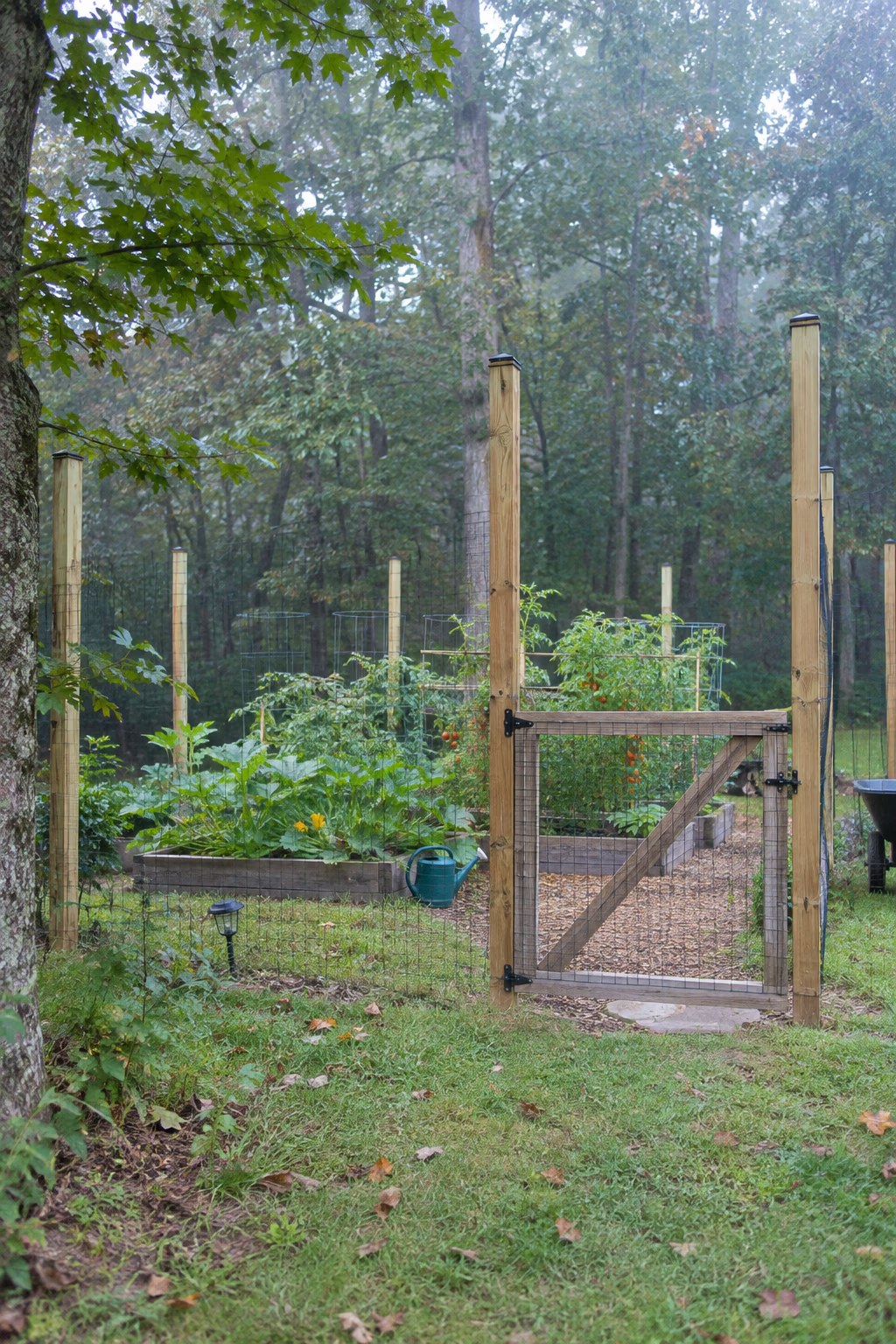
Serious protection that almost disappears
Deer can jump surprisingly high, so effective deer fencing is usually 7 to 8 feet tall. Black polypropylene or coated steel mesh attached to tall posts or tree trunks is inexpensive and nearly invisible from a distance.
A dedicated deer fence is often the only reliable way to protect vegetables, hostas, roses, and young fruit trees where deer pressure is heavy. Black mesh blends into shadows much better than shiny wire.
Secure the bottom edge so deer can’t push under it, and check for holes regularly. Lightweight plastic mesh may not stop deer that are already used to feeding in your yard, so steel mesh is worth the extra cost in those areas.
20. Add a Rabbit-Proof Wire Skirt Along the Base
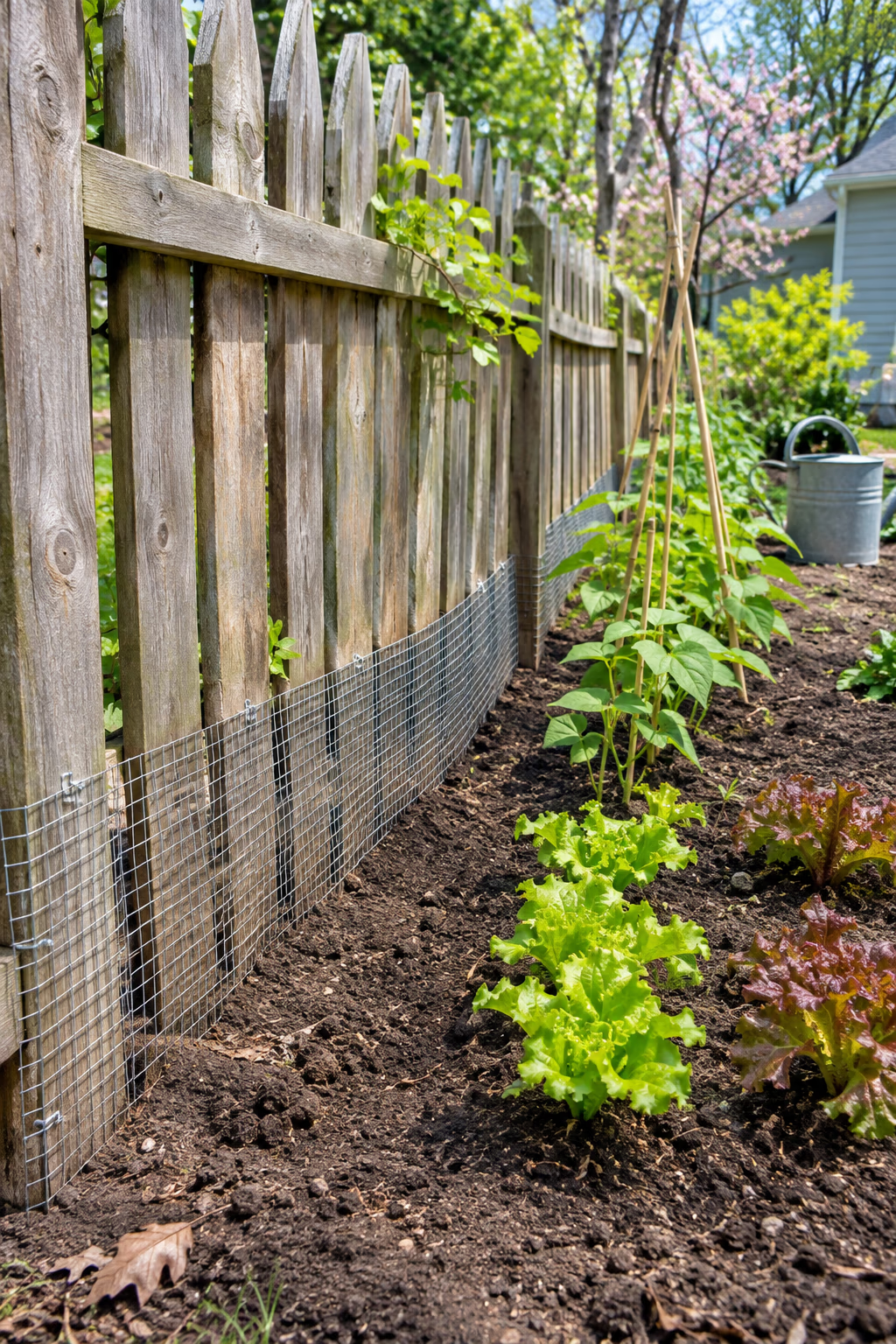
Stop nibblers before they reach the lettuce
Rabbits squeeze through small gaps and dig under fences. Attach 2-foot-tall galvanized wire mesh with 1-inch or smaller openings to the bottom of your fence, bury it about 6 inches deep, and bend the buried edge outward like an L.
This simple addition works with nearly any fence style, from wood pickets to split rail, and it protects young beans, lettuce, and tulips.
Groundhogs and voles need stronger measures, such as a deeper skirt or hardware cloth below raised beds. Call 811 before digging along a fence line.
21. Build a Gabion Fence Filled With Local Stone
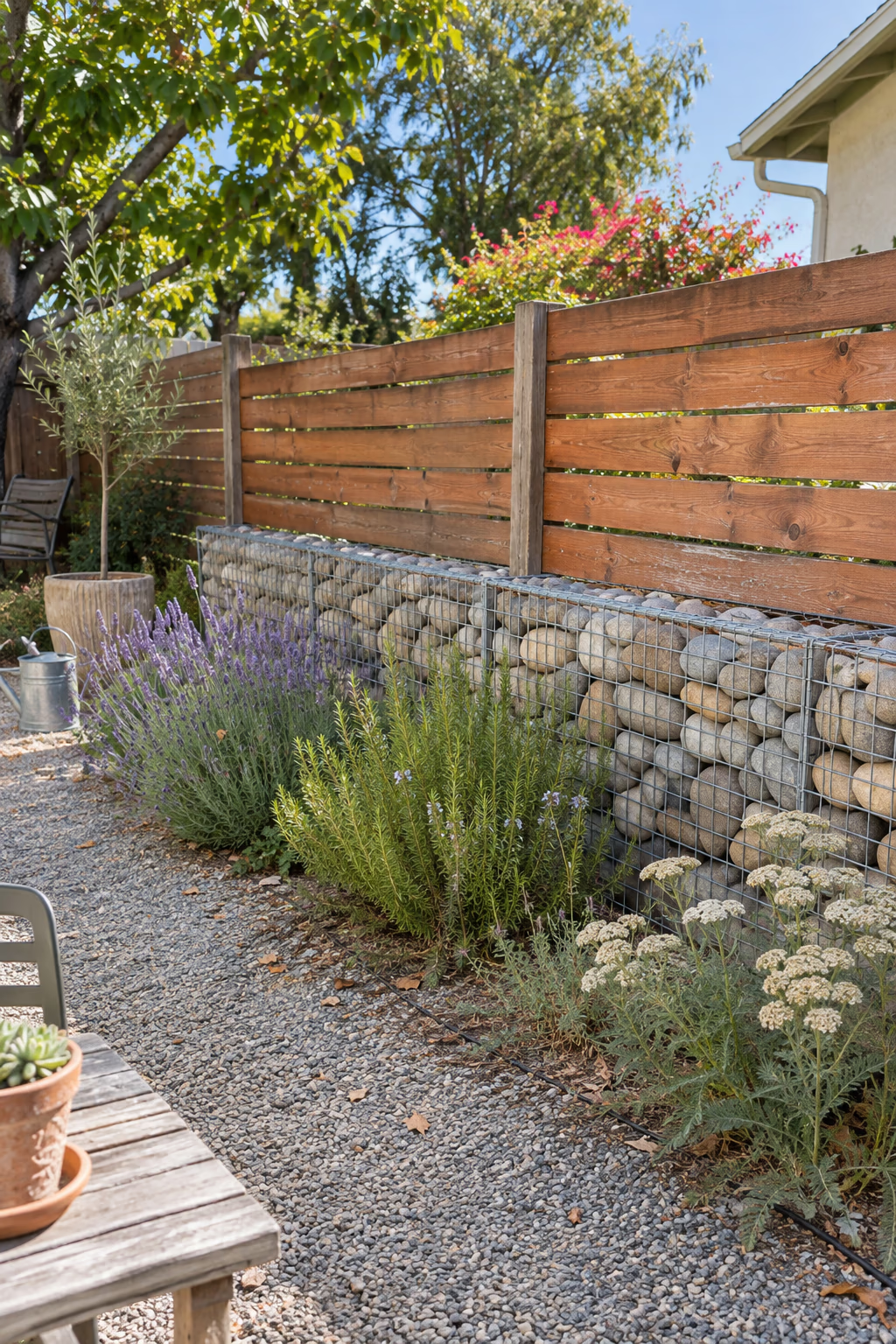
Industrial style with natural texture
Gabions are welded wire baskets filled with stone. Use 12-inch-deep baskets filled with river rock or crushed stone as low walls, or mix them with wood panels for a modern fence that feels grounded.
Gabions use local materials, drain freely, and need no paint. They also hold heat, so they’re a good backdrop for Mediterranean herbs and drought-tolerant plants.
Filled gabions are extremely heavy. Set them on a level, compacted gravel base and choose heavy-gauge galvanized wire so the baskets don’t bulge.
22. Alternate Board Widths for a Custom Rhythm
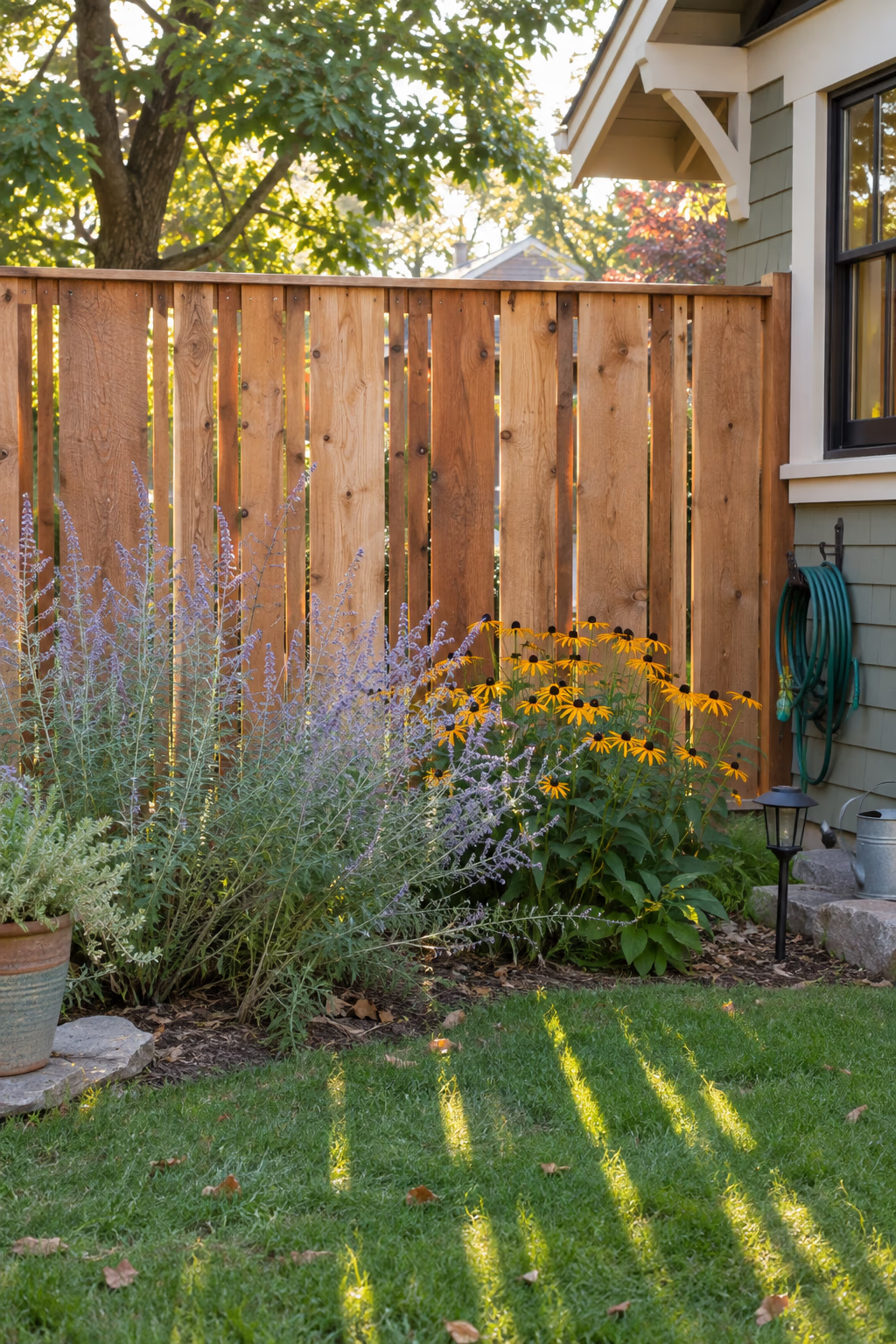
A simple trick that looks designer-made
Instead of using identical boards, alternate 1×2, 1×4, and 1×6 boards in a repeating pattern. Vertical boards with varied widths give an ordinary fence a rhythm that looks custom without costing much more.
The pattern catches light and shadow throughout the day and suits both modern and craftsman-style homes. A clear or lightly tinted stain lets the grain show.
Lay the pattern out on the ground before attaching it, and keep a spacer block handy so the gaps stay even from post to post.
23. Plant a Layered Flower Border Along the Fence Line
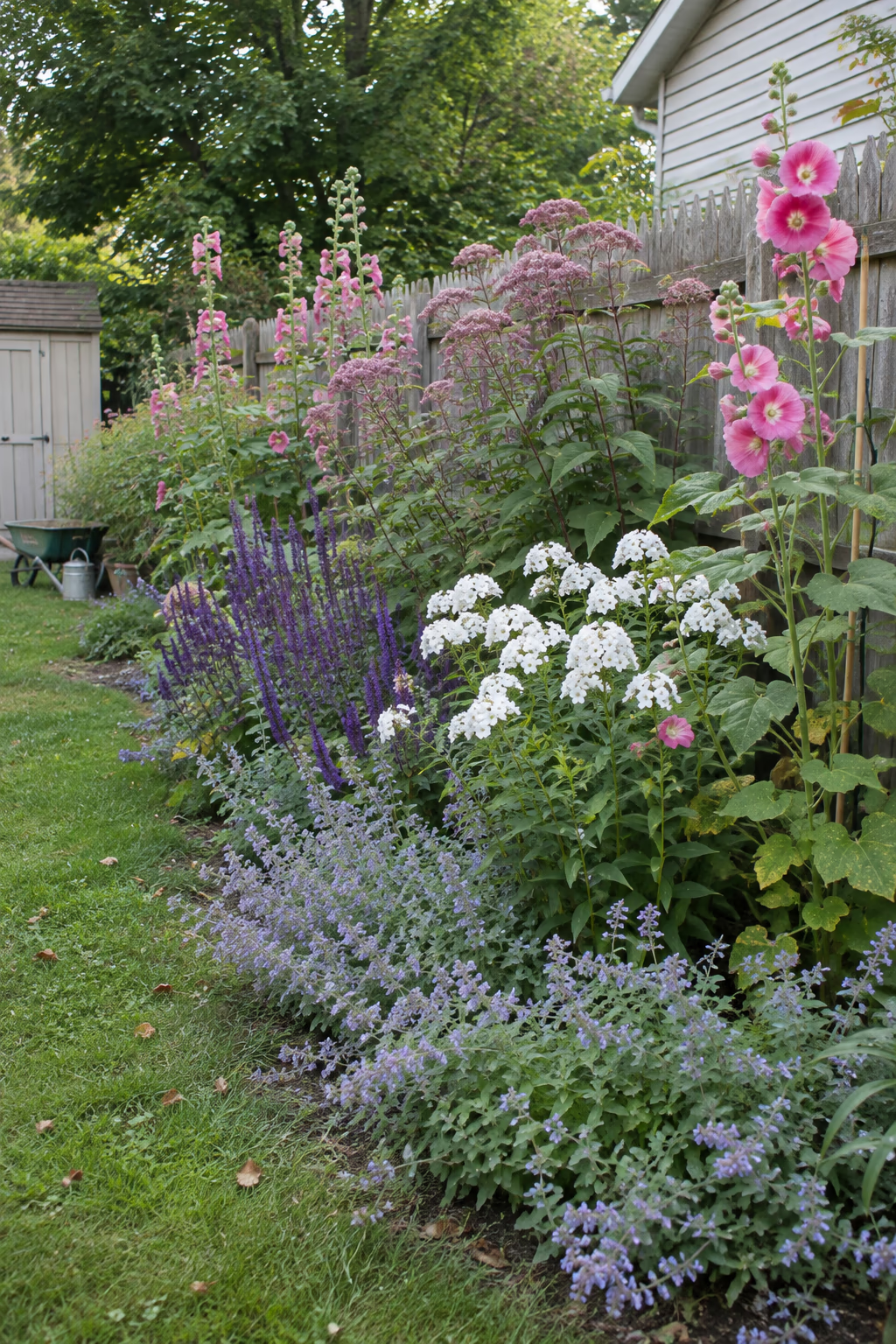
Soften every board with flowers
A fence makes the perfect backdrop for a border. Leave a deep enough bed, at least 3 feet, then plant tall perennials such as hollyhocks or Joe Pye weed at the back, mid-height salvias and phlox in the middle, and low catmint or geraniums at the front.
The fence shelters tall plants from wind and helps show off their shapes. Even an ordinary chain-link or stockade fence looks better once flowers fill the space in front of it.
Leave a narrow gap of about 12 inches between the fence and the plants. It improves airflow and gives you room to reach the fence for repairs and painting.
24. Choose Vinyl Pickets for an Easy-Care Front Garden
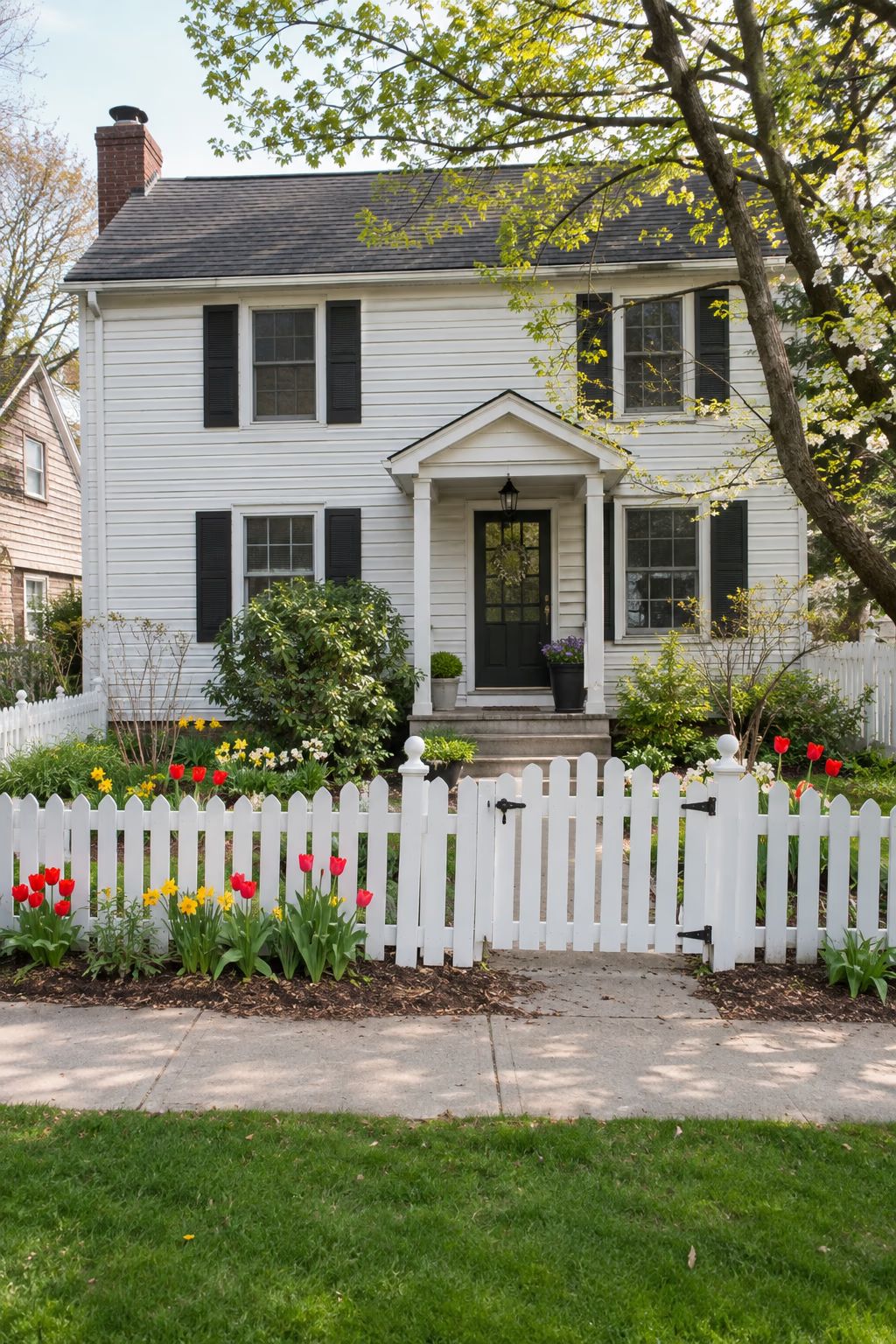
The classic look without the painting
Vinyl picket fencing gives you the cottage look with very little upkeep. It never needs paint, won’t rot, and usually just needs an occasional wash with a hose and soft brush.
Panels come in heights from about 3 to 4 feet, with straight, scalloped, or pointed tops. They’re a practical choice for front gardens, rental properties, and humid climates where wood rots quickly.
Vinyl costs more upfront than basic wood and can crack from hard impacts in very cold weather. Choose thicker panels with reinforced rails, and check HOA rules on color and style.
25. Dress Up Posts With Decorative Caps and Finials
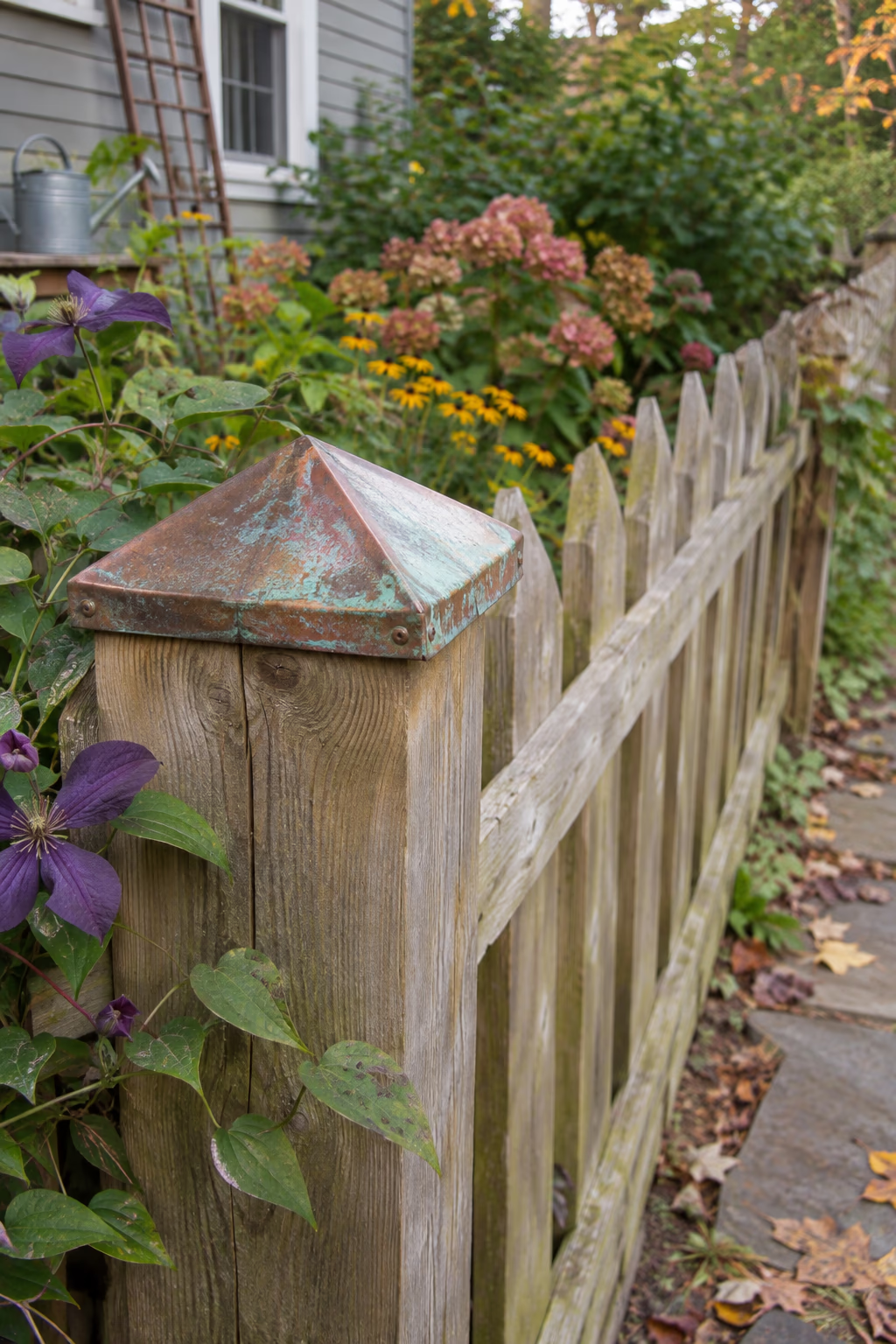
Small details that finish the look
Post caps are an inexpensive way to upgrade a fence. Copper caps weather to a soft brown or green, pyramid wood caps look traditional, and ball finials add old-fashioned charm to a picket fence.
Caps also protect posts by keeping water from soaking into the exposed end grain, which helps them last longer. Solar post caps add a gentle glow along a garden path.
Measure your posts before buying. A nominal 4×4 post is actually about 3 1/2 inches square, and caps are sized to match.
26. Disguise Chain Link With Fast-Growing Annual Vines
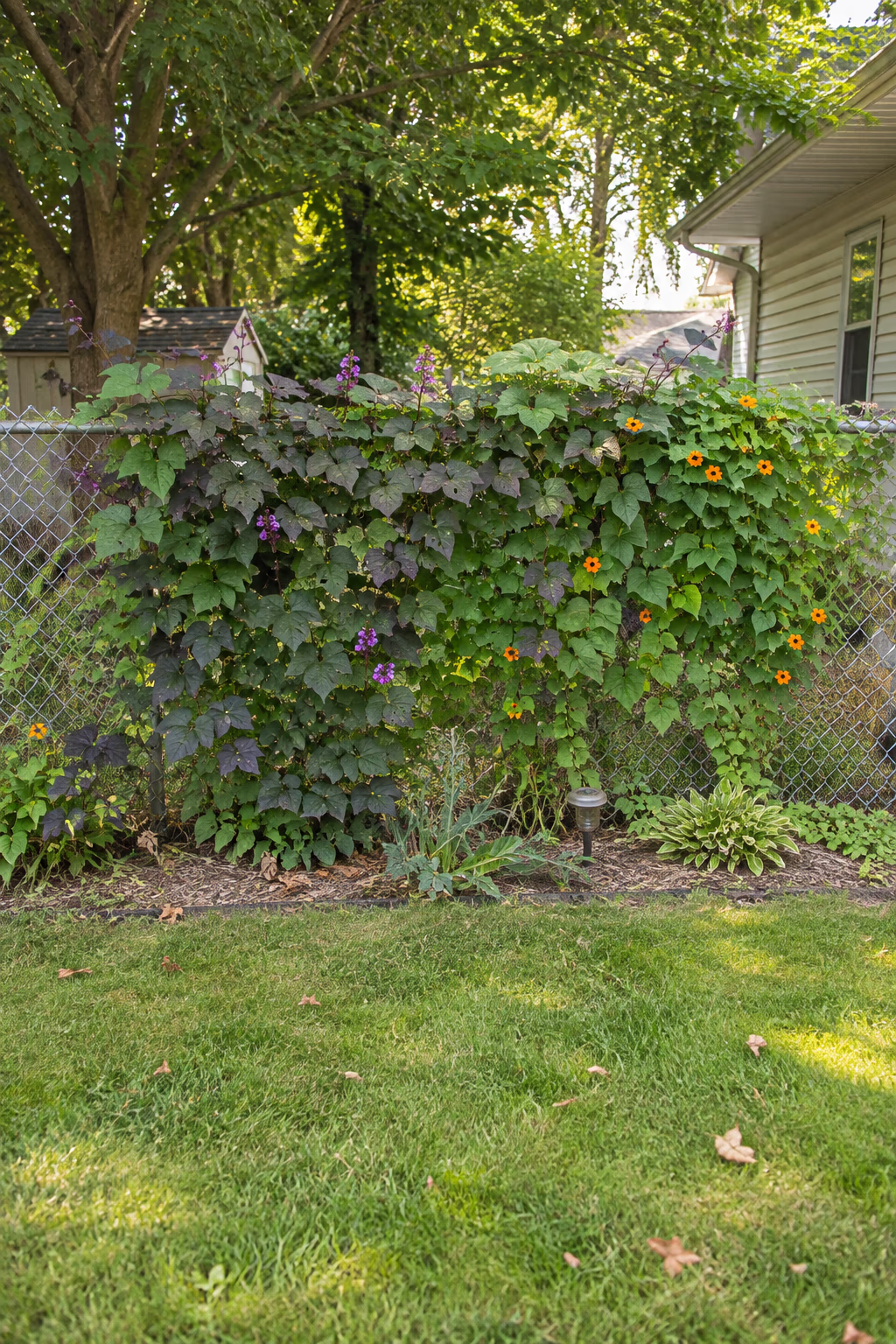
A quick fix for a fence you can’t replace
Chain link is practical but not pretty. Annual vines such as hyacinth bean, scarlet runner bean, black-eyed Susan vine, and moonflower can cover several feet of mesh in a single summer.
Annual vines are inexpensive, start easily from seed, and let you try a new color scheme every year. Beans add the bonus of flowers that pollinators love.
Some vines, including morning glory, reseed heavily, so deadhead them if that’s a problem. Avoid planting aggressive perennial vines that can damage chain link or spread into neighboring yards.
27. Install Glass Panels to Keep a Garden View Open
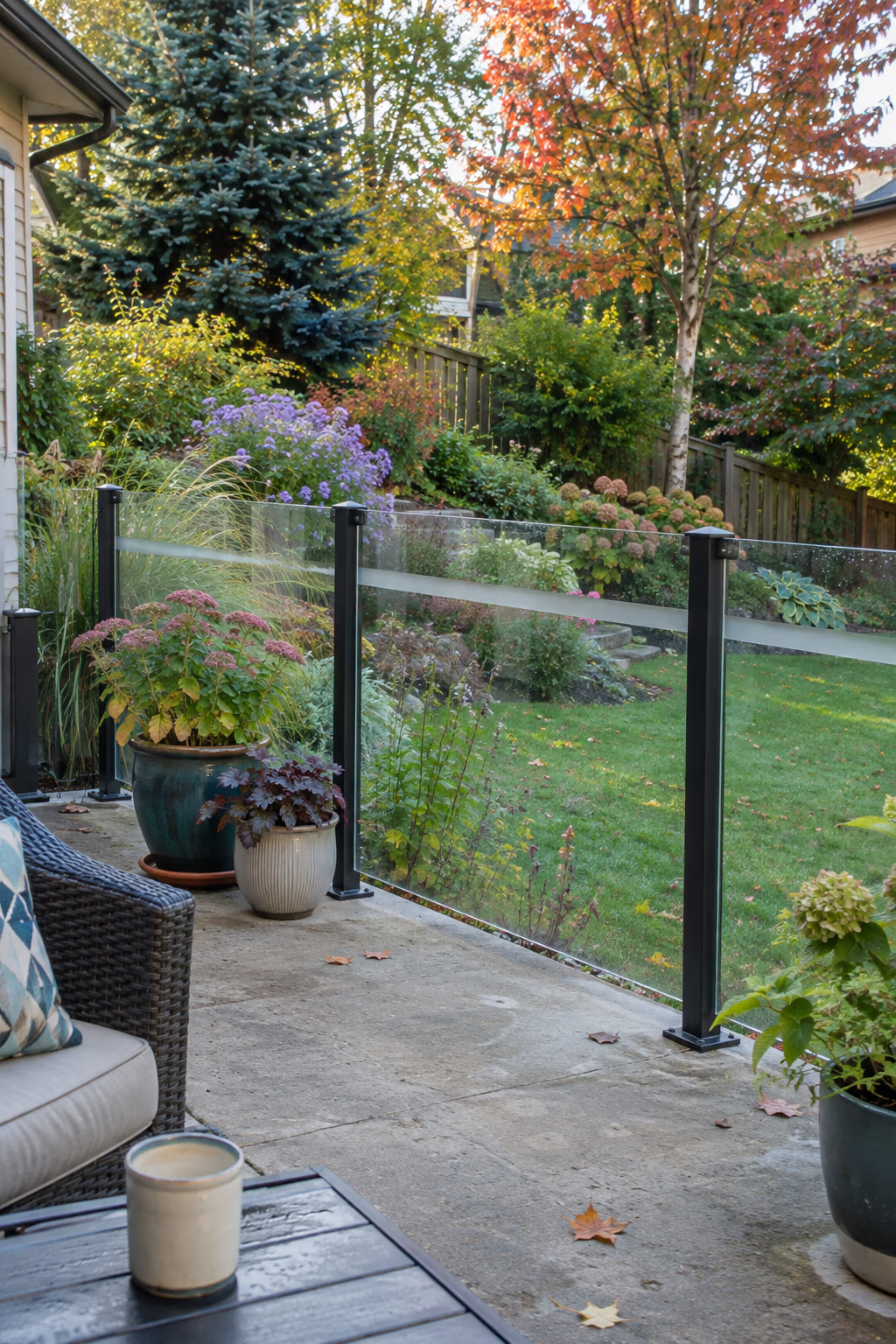
Protection from wind without blocking the view
Tempered glass panels set between metal posts block wind while keeping the view open. They’re a good fit beside a patio overlooking a garden, along a deck edge, or anywhere a solid fence would hide the scenery.
Glass makes a small garden feel larger and lets sunlight reach plants on both sides.
Glass is one of the most expensive fencing options and needs regular cleaning. Birds can fly into clear panels, so choose etched or patterned glass or add bird-safe window decals. Confirm local code requirements before you buy.
How to Plan Your Garden Fence
A garden fence is a long-term investment, so a little planning helps you choose the right height, material, and placement before you start digging.
- Define the main purpose. Decide whether the fence is mainly for keeping animals out, containing pets, decoration, or defining space, because that determines height and material.
- Check codes, HOA rules, and property lines. Many towns limit fence height, especially in front yards, and some require permits. Confirm the property line before you build near it.
- Call 811 before digging. In the United States, a free call or online request marks underground utility lines so post holes don’t hit gas, water, or electrical lines.
- Match the style to your home. Pickets suit cottages and colonials, horizontal slats suit modern homes, and split rail suits rural properties. Pulling a color or material from the house ties everything together.
- Budget for posts and gates. Strong posts set below the frost line in your area and well-braced gates matter more than the boards between them, so don’t cut corners there.
- Plan the plantings with the fence. Leave room for a border, decide which climbers will grow on it, and make sure gates are wide enough for a wheelbarrow or mower.
Frequently Asked Questions
How tall should a garden fence be?
A decorative fence around flower beds can be 18 to 36 inches tall, while a vegetable garden fence for dogs and kids works at 4 to 5 feet. To keep deer out, you’ll usually need 7 to 8 feet. Check local height limits before building.
What is the cheapest way to fence a garden?
Wood posts with welded wire mesh, reclaimed pallets, and rolled bamboo are among the most affordable options. A simple post-and-wire fence you build yourself typically costs far less than a professionally installed wood or vinyl fence.
What is the best low-maintenance garden fence material?
Vinyl, powder-coated aluminum, and galvanized wire need the least care. Cedar left to weather naturally is also fairly easy, while painted wood needs repainting every few years.
How do I keep rabbits out of my garden with a fence?
Use wire mesh with openings of 1 inch or smaller, at least 2 feet tall. Bury the bottom about 6 inches deep and bend it outward so rabbits can’t dig underneath.
Do I need a permit to build a garden fence?
It depends on where you live. Low decorative fences often don’t require one, but taller fences, front-yard fences, and fences in historic districts or HOA neighborhoods may. Call your local building department before you start.
Final Thoughts
The right garden fence frames your plants, protects your harvest, and gives the yard structure in every season. A rose-covered picket, a run of warm cedar slats, or a coat of dark paint can change how the whole garden looks.
Start with the purpose, choose materials that suit your climate and budget, and let the plants grow up around it. In a season or two, your fence will look like it has always been part of the garden.