There’s a moment on a summer evening when the yard work is done, the sprinkler has gone quiet, and you just want somewhere to sit down. A simple bench in the right spot, maybe under a tree or beside a bed of roses, turns that moment into a habit.
A garden bench takes up little room, doesn’t cost much, and makes your yard feel like a place to spend time, not just a place to keep up. It gives your eye a resting point, gives guests somewhere to gather, and makes the best views in your yard easy to enjoy.
These 23 garden bench ideas include wraparound tree seats, arbor benches, planter benches, built-ins, swings, and clever DIY builds from logs, blocks, and salvaged pieces. Whatever your style or budget, you’ll find a few garden bench ideas worth trying this season.
1. Build a Wraparound Bench Around a Shade Tree
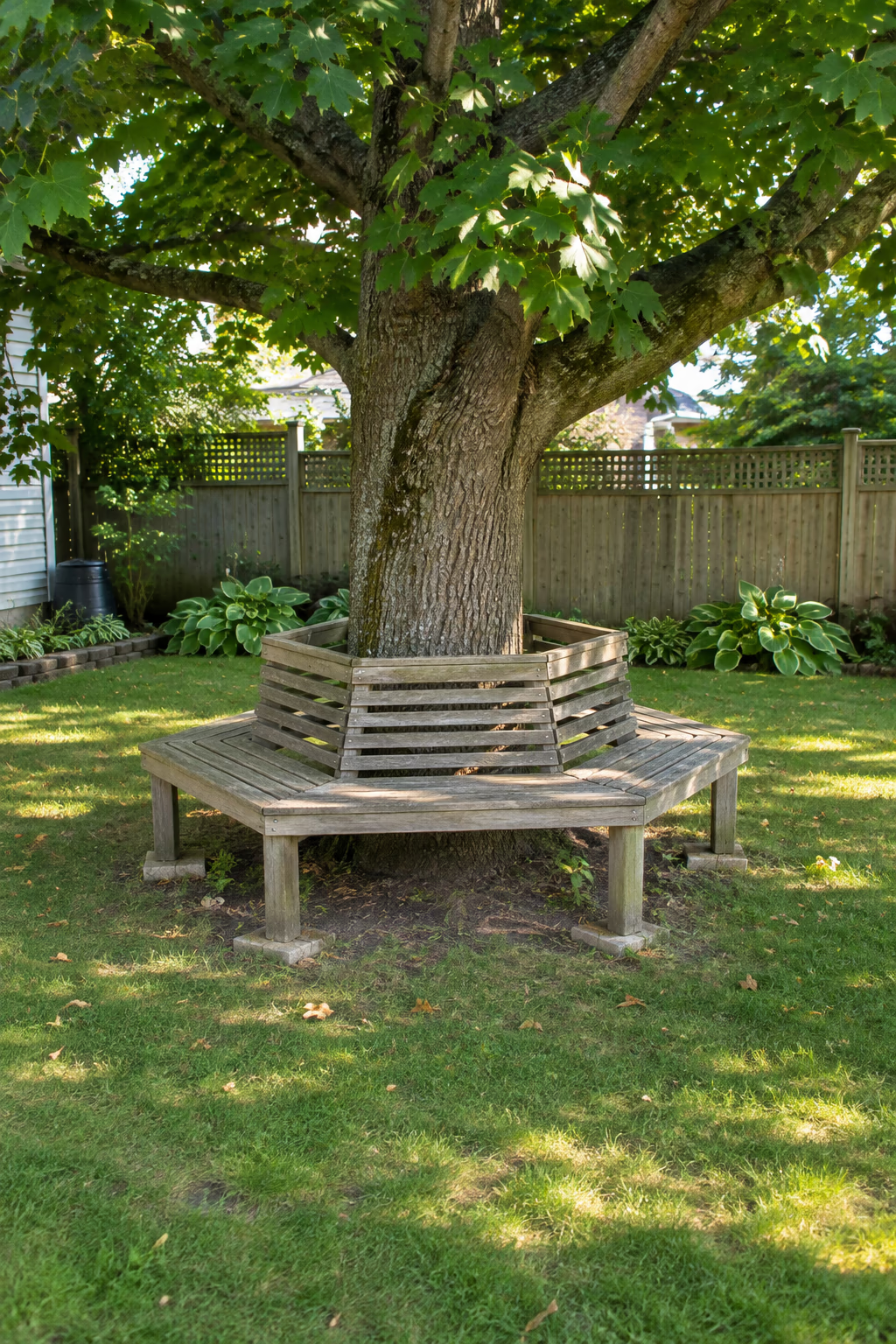
A storybook seat in the coolest spot in the yard
A wraparound bench circles the trunk of a mature tree, usually as a hexagon or octagon of slatted cedar or pressure-treated pine set on its own legs. Seat height is around 18 inches, and many designs add a low back that faces outward so you can sit on any side and follow the shade around the trunk.
It works because the tree is already a natural gathering spot. On a hot afternoon, the ground under a maple or oak can feel noticeably cooler than an open lawn, and the bench makes that comfort usable.
Protect the tree. Never nail or screw the bench to the trunk, leave at least 4 to 6 inches of space around the bark for growth, and set the legs on small pavers instead of pouring a concrete footing over the root zone.
2. Tuck a Bench Under a Vine-Covered Arbor
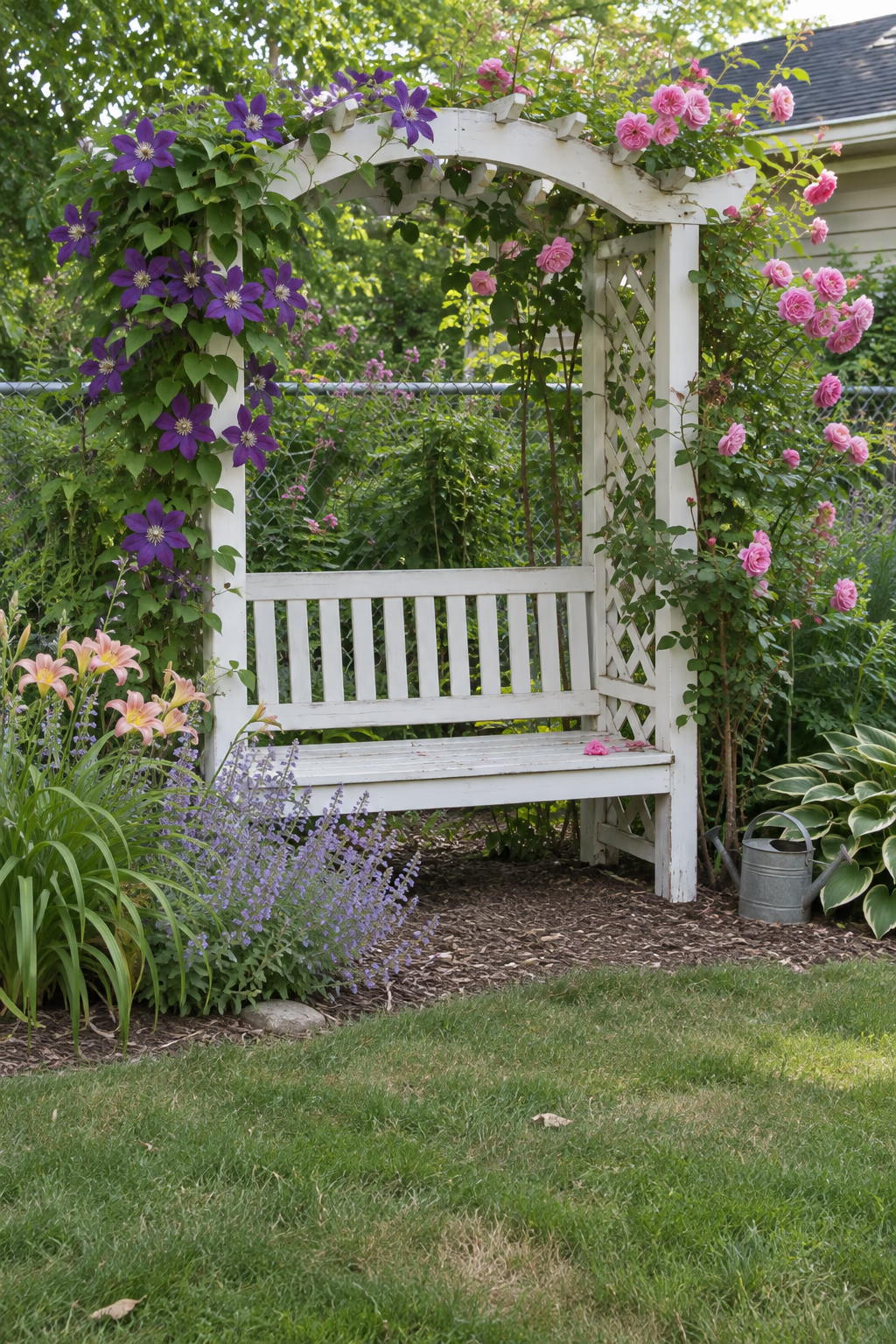
Instant shade and a frame of flowers
Pair a wooden arbor with a 4-foot bench that fits snugly between its posts, or buy an arbor bench sold as one unit. Plant a climber at each post, such as clematis, a repeat-blooming climbing rose, or native coral honeysuckle, and tie the new stems to the lattice as they grow.
Within two or three seasons, the vines soften the frame and create a leafy roof that turns an ordinary bench into a private little room. It’s one of the most photographed bench setups for good reason.
Anchor the arbor posts firmly, because a vine-covered frame catches a lot of wind. Skip heavy climbers like wisteria, which can crush light arbors and is invasive in many regions, and choose a vine that suits the amount of sun the spot gets.
3. Flank a Cedar Bench With Built-In Planter Boxes
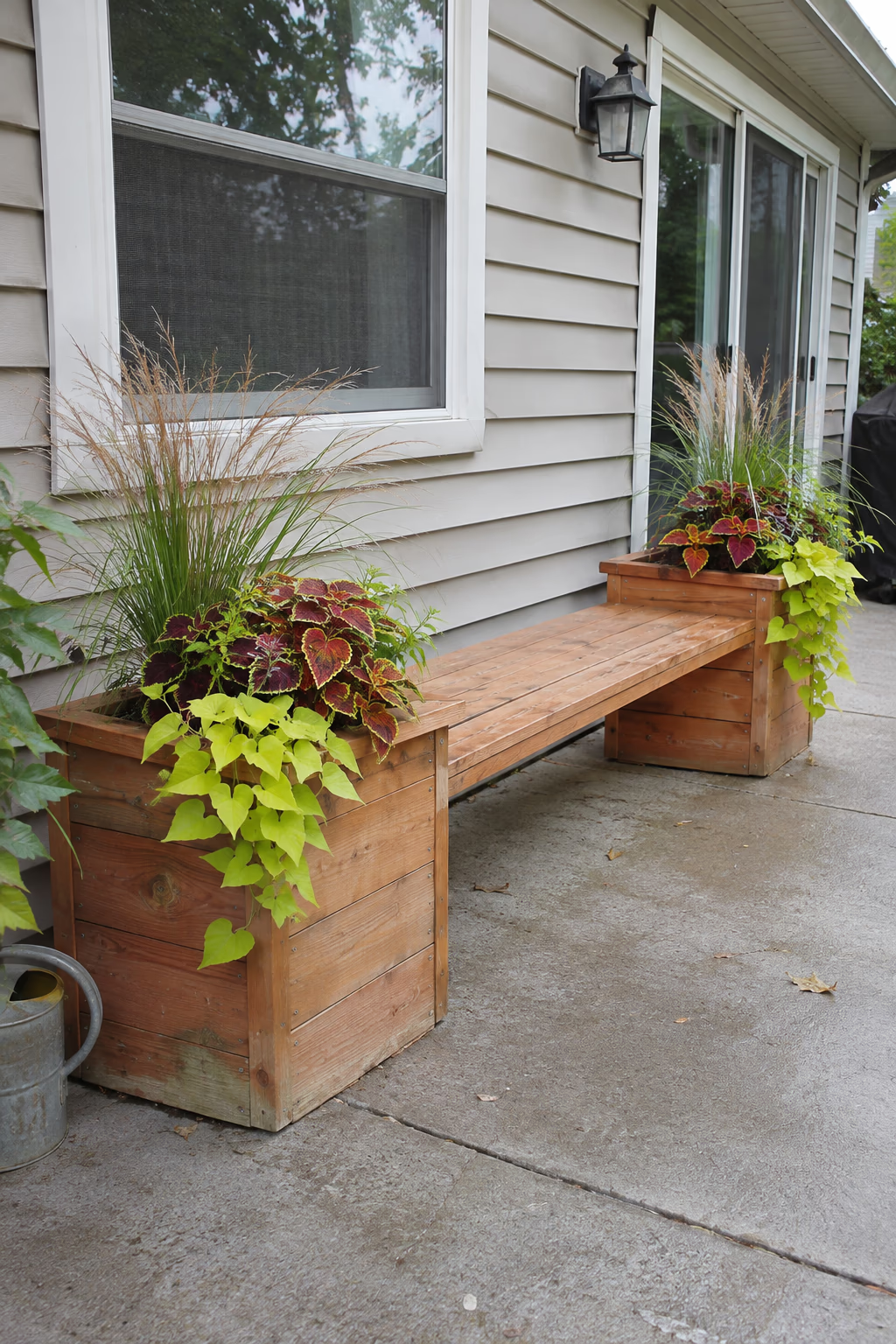
Seating and planting space in one build
A planter bench sets a seat, usually 2×6 cedar boards, between two square boxes about 16 to 20 inches wide. Fill the boxes with ornamental grasses, boxwood, herbs, or seasonal annuals, and the bench looks finished from the first day.
This idea suits patios and decks where there’s no soil to plant into. The boxes also give the bench visual weight, so it reads as a permanent feature rather than a stray piece of furniture.
Drill drainage holes in the bottoms and line the inside walls with heavy plastic or a fabric liner to slow rot. A full planter is heavy, so build it where it will stay, and use a lightweight potting mix rather than garden soil.
4. Restore a Vintage Cast Iron Bench
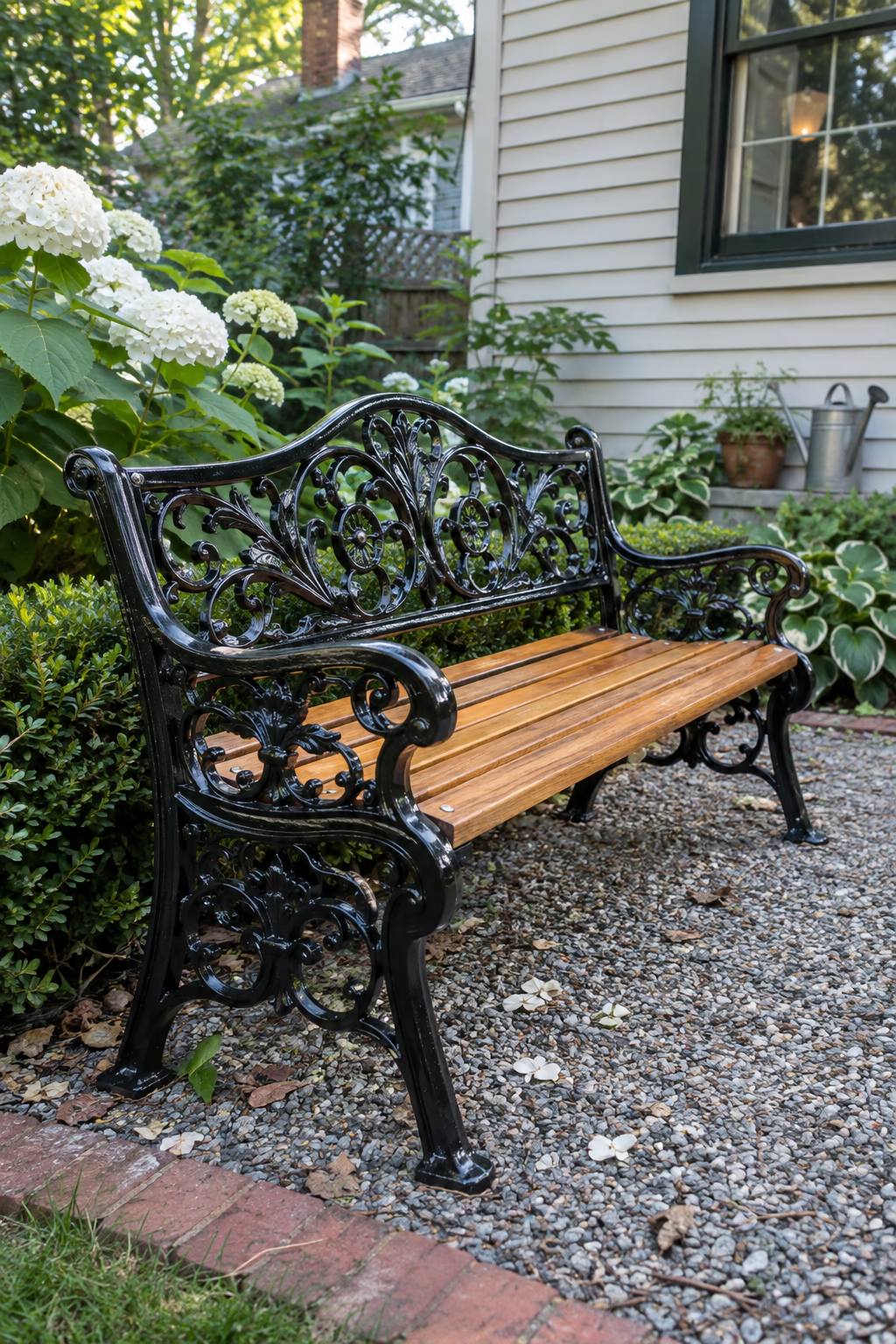
Old-fashioned curls with a long life ahead
Ornate cast iron and wrought iron benches turn up at estate sales, flea markets, and online marketplaces, often for less than a new bench. Many have slatted wood seats that can be replaced with fresh cedar or white oak cut to the same size.
Strip loose paint and rust with a wire brush, treat remaining rust with a rust converter, then apply a primer and enamel made for metal. Glossy black and white are classic, while deep green looks right at home in a cottage-style garden.
Old benches may have lead paint, so test before sanding and use wet scraping and a mask if it turns up positive. Cast iron can also crack, so check the joints and legs before you trust it with a full load.
5. Paint a Wooden Bench a Bold Color
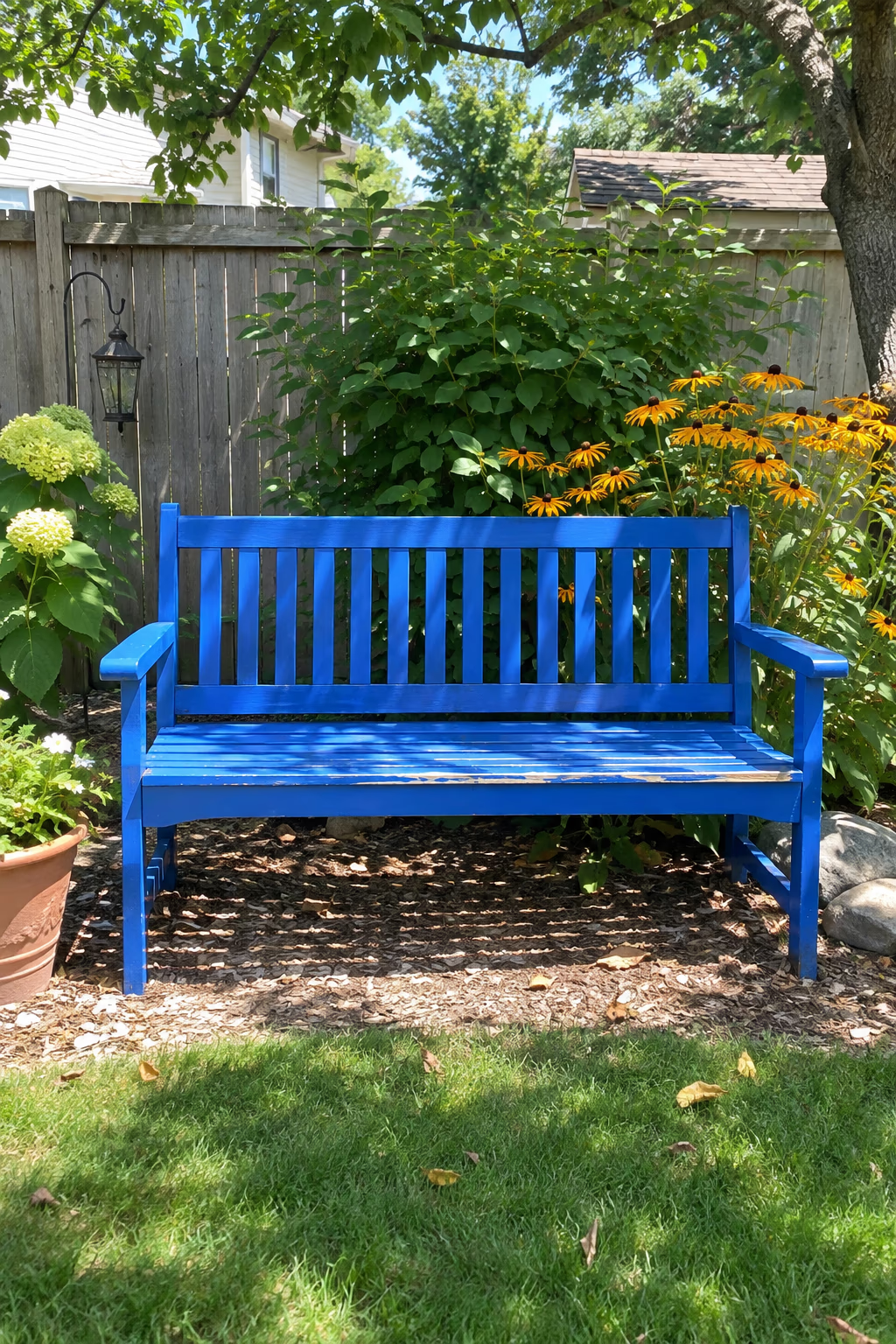
A pop of color that works all year
A plain wooden bench painted cobalt blue, sunny yellow, coral, or deep teal becomes a focal point, especially in a green garden. Choose a color that contrasts with nearby flowers rather than matching them, so the bench stands out instead of disappearing.
It’s one of the quickest ways to refresh a tired bench. In winter, when beds are bare, a bright seat gives the yard something cheerful to look at from the kitchen window.
Sand the wood, prime with an exterior primer, and use two coats of exterior paint. Expect to touch up the seat every couple of years, because the flat top takes the most sun and rain.
6. Cantilever a Bench From a Low Retaining Wall
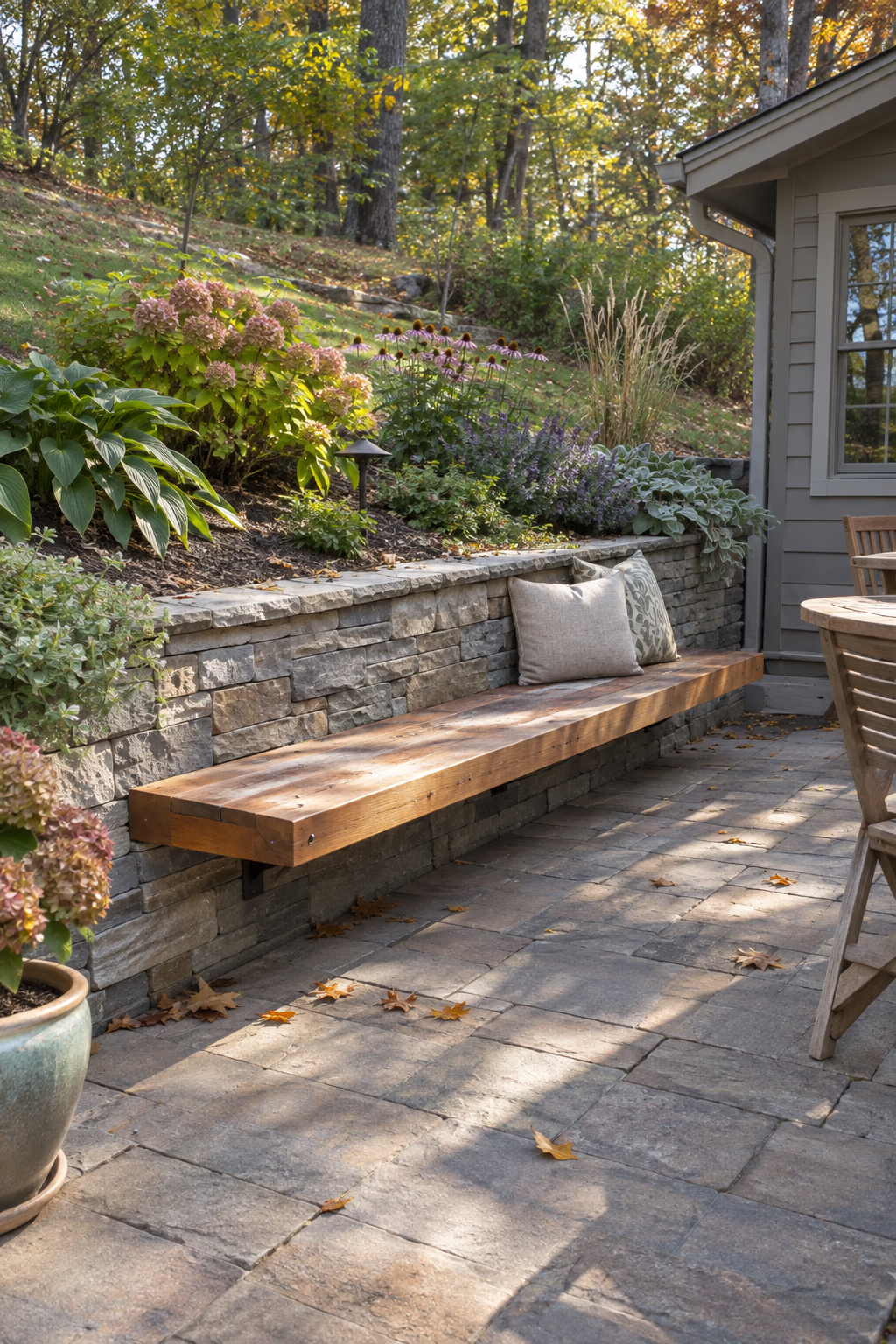
Built-in seating that saves floor space
If you already have a low stone or block retaining wall, a wood seat can be mounted along its face on steel brackets so it appears to float. Another option is to cap a wall that’s already about 18 to 20 inches tall with a wide stone or wood top so the wall itself becomes the seat.
Built-in seating is a major trend because it holds a lot of guests without crowding a patio with loose chairs. It also makes a slope feel planned and useful.
Don’t drill into a retaining wall without knowing how it was built, because some walls depend on their structure to hold back soil. Ask a contractor if you’re unsure, and check local codes, since taller walls often need a permit.
7. Build an L-Shaped Bench in a Sheltered Corner
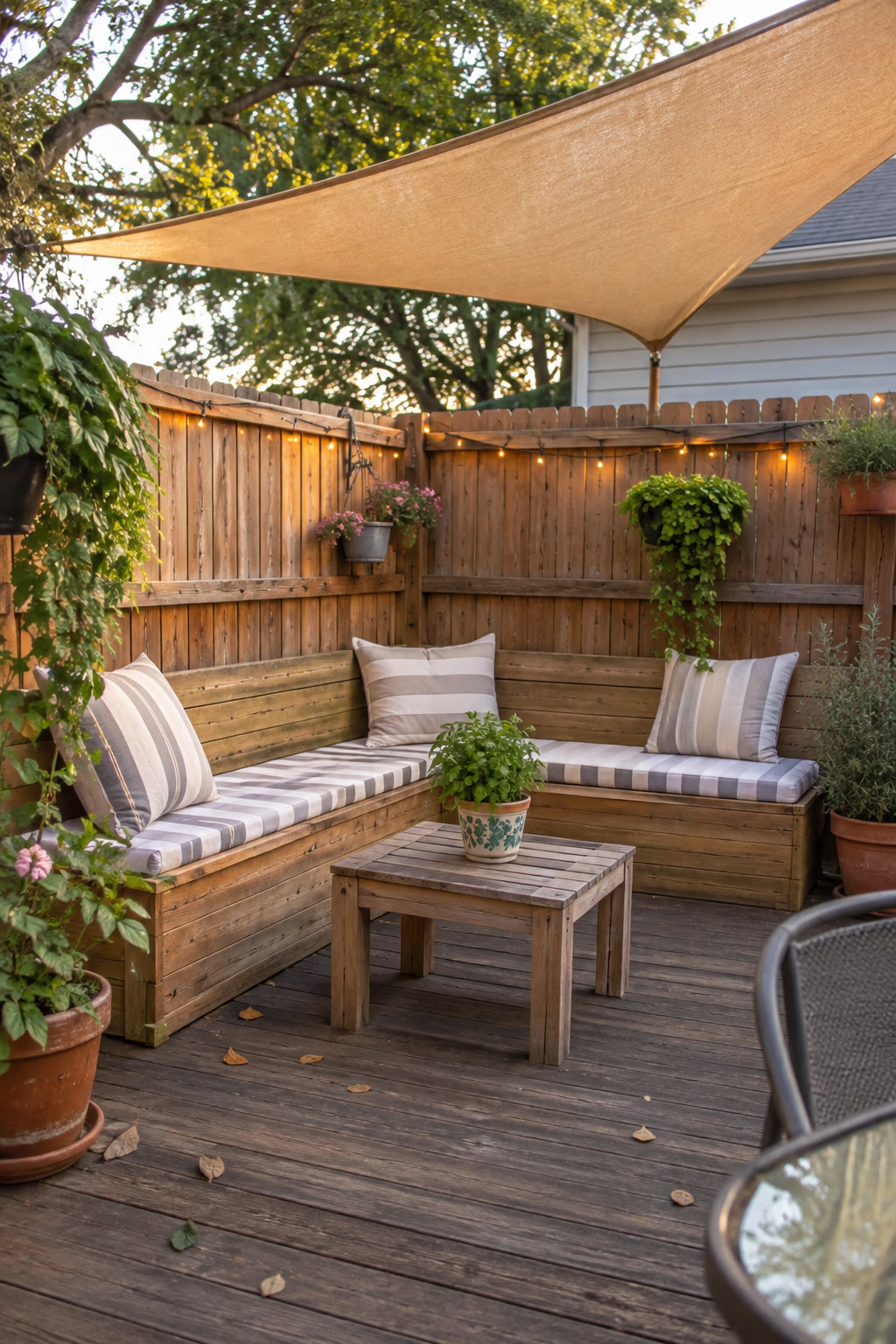
A sociable nook for friends and family
Two benches joined at a right angle fit neatly against a fence corner or deck rail and seat five or six people. Add a small square table in front, and you have a casual dining or conversation spot that takes up much less space than a full sofa set.
The corner provides a natural backrest and a sense of shelter, which makes people want to linger. A shade sail or patio umbrella above it makes the spot usable in midsummer.
Make the seat at least 18 inches deep if you’ll add back cushions, and leave enough space in front for legs and a table. Raised gaps between seat boards help rain drain quickly.
8. Curve Backless Benches Around a Fire Pit
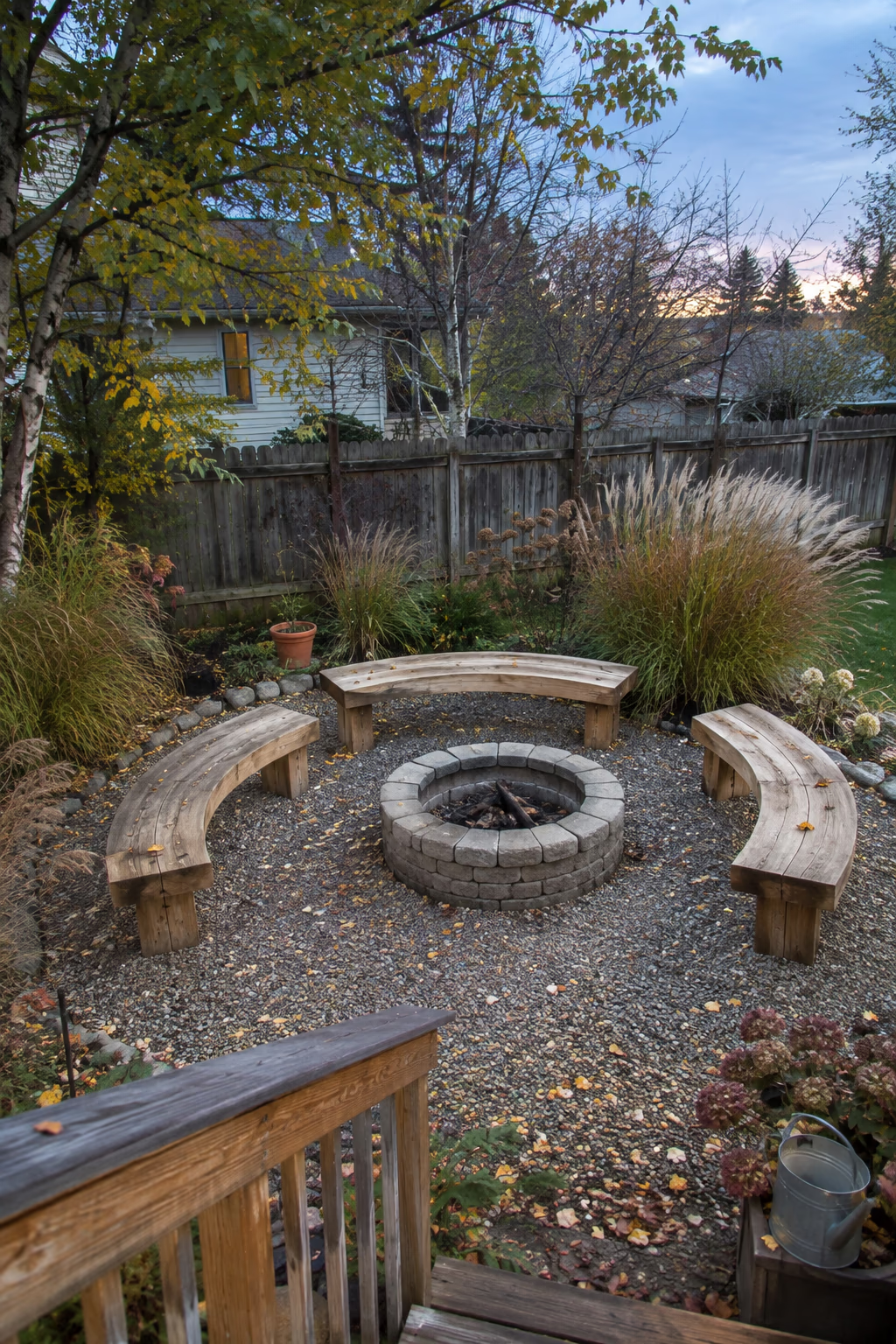
Easy, flexible seating for evening fires
Curved backless benches arranged in a partial circle around a fire pit make a cozy gathering area. Without backs, they let people face the fire or turn around to face the yard, and they’re easy to step over.
Curves soften the hard lines of patios and gravel pads and naturally pull people toward the center. Two or three curved sections can seat more people than the same number of chairs.
Keep benches at least 3 to 4 feet from the edge of a wood-burning fire pit and use a spark screen. Check local burn rules and HOA guidelines before building a permanent fire feature.
9. Choose a Lift-Top Storage Bench for Cushions and Tools
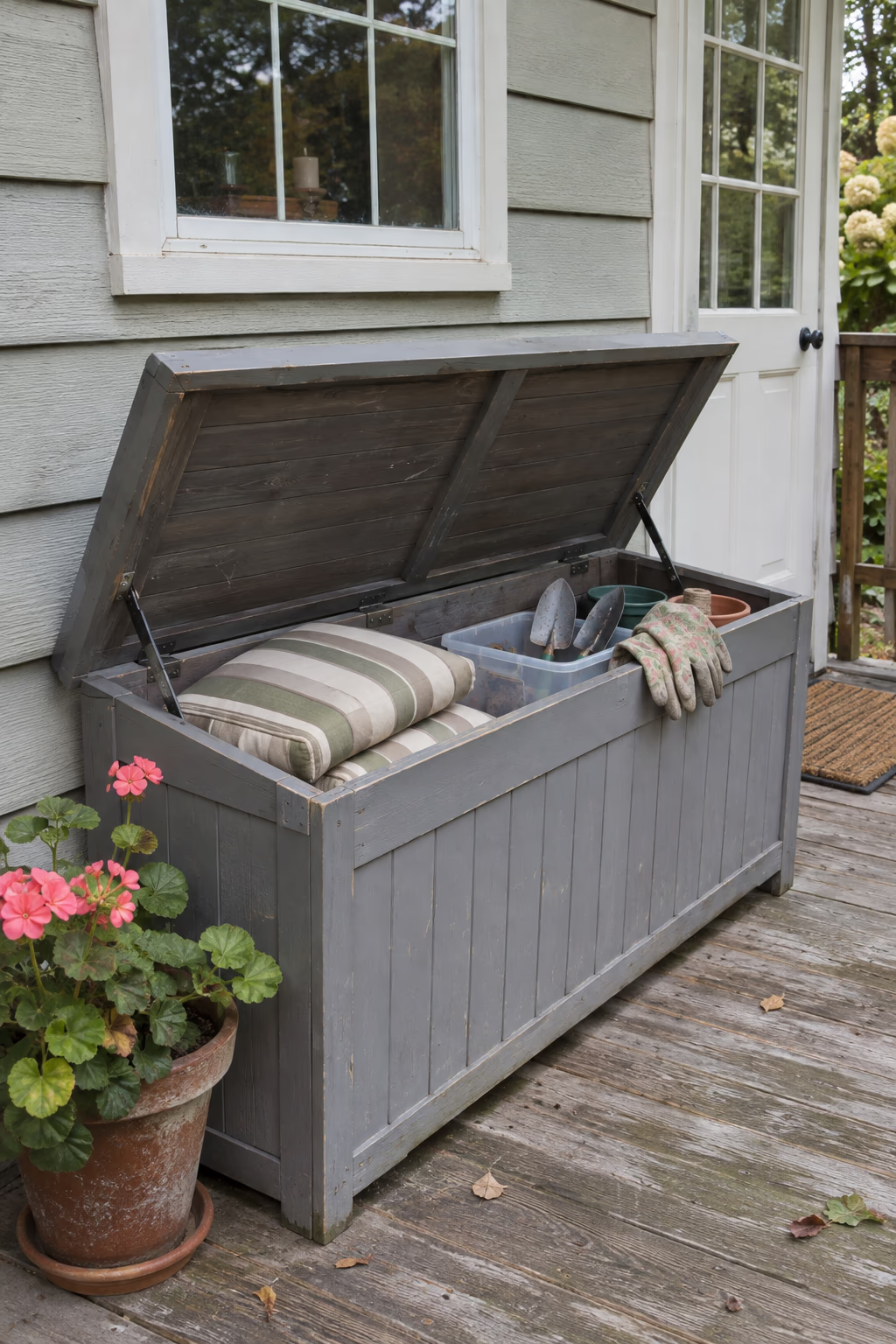
Hidden storage where you need it most
A storage bench has a hinged seat that lifts to reveal a deep box underneath. It’s perfect for cushions, hand tools, kneeling pads, and kids’ outdoor toys, and it keeps clutter out of sight on a deck or patio.
Wooden versions look more traditional, while resin storage benches resist rot and need almost no maintenance. Place one by the back door or next to a raised bed so it’s both a resting spot and a tool box.
Most storage benches are not fully waterproof, so a little moisture can get in during storms. Add a few small vent holes, keep items in plastic bins inside, and use slow-close hinges to protect fingers.
10. Hang a Swing Bench From a Sturdy A-Frame
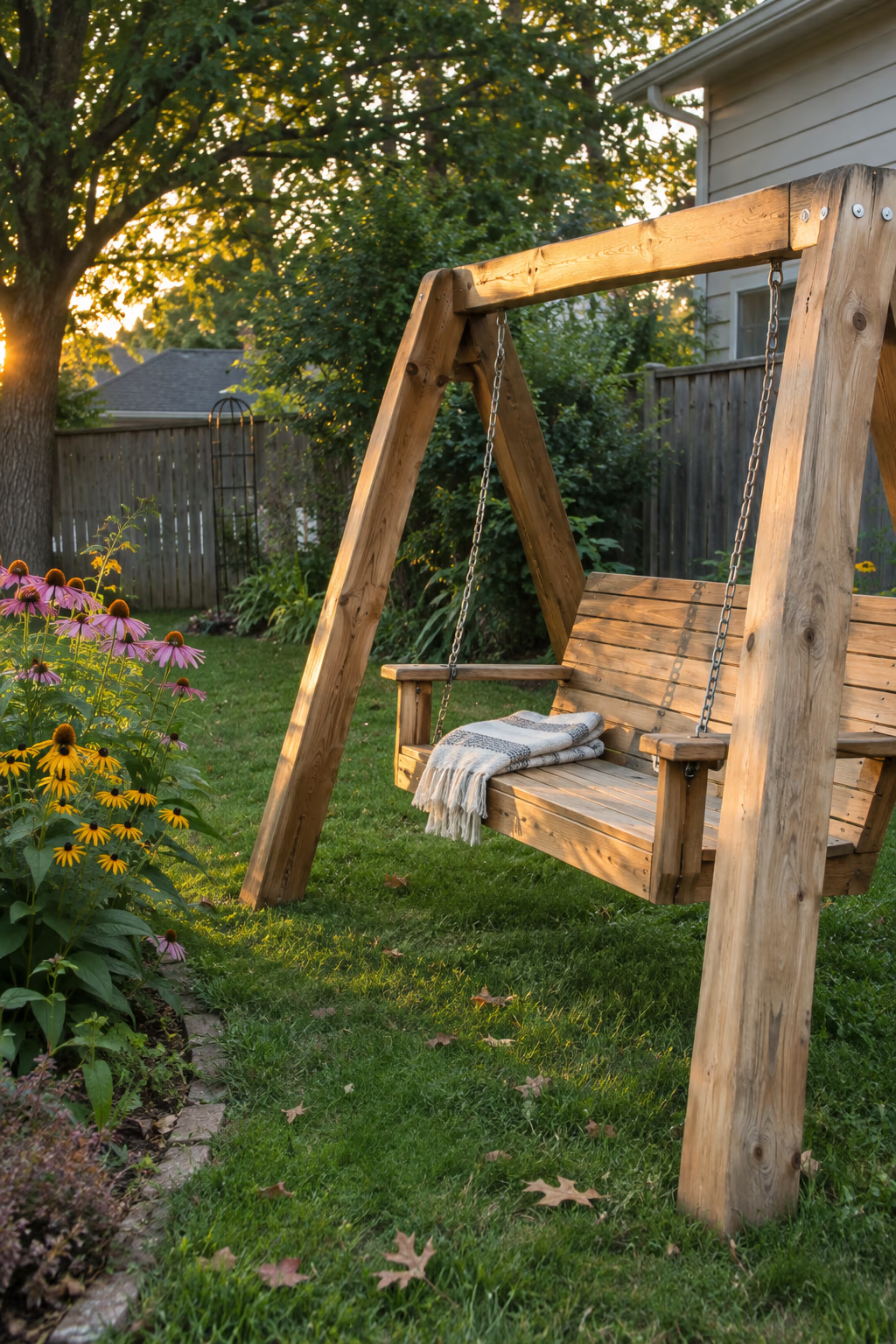
Gentle motion for lazy afternoons
A porch-style swing bench doesn’t need a porch. Hang it from a freestanding A-frame made of 4×6 or 6×6 lumber, place it on a level patch of ground, and point it toward your favorite view or flower bed.
The rocking motion makes a swing one of the most relaxing spots in any yard. It’s a natural place to read, chat, or watch the sunset after dinner.
Use swing hangers and chains rated well above the weight they’ll carry, and leave enough room in front and behind so the swing doesn’t hit anything. Check bolts and chains every spring for rust or wear.
11. Soften a Teak Bench With Weatherproof Cushions
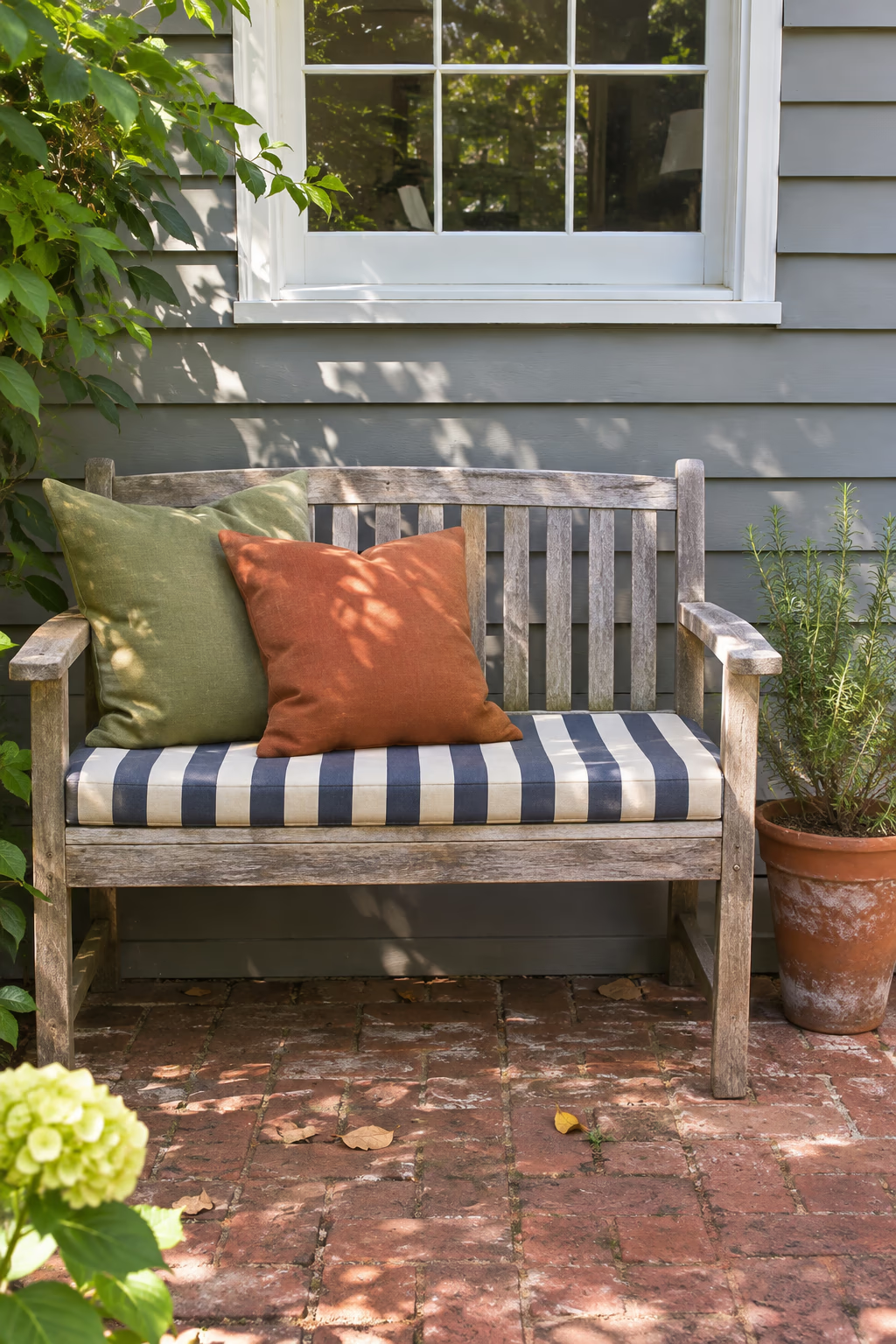
Comfort that makes people stay
Teak is a classic bench wood because its natural oils help it resist rot and insects. Add a seat cushion and a couple of throw pillows in outdoor fabric, and a hard bench becomes a spot you’ll actually sit in for an hour.
Solution-dyed acrylic and other outdoor fabrics resist fading and dry faster than indoor fabrics. Stripes, solid navy, sage green, and warm terracotta pair well with weathered silver teak.
Even outdoor cushions last longer if you bring them in or store them during long rainy spells and winter. Teak can be oiled to keep it honey-colored or left to weather to a soft gray, which many people prefer.
12. Set a Bench at the End of a Path as a Focal Point
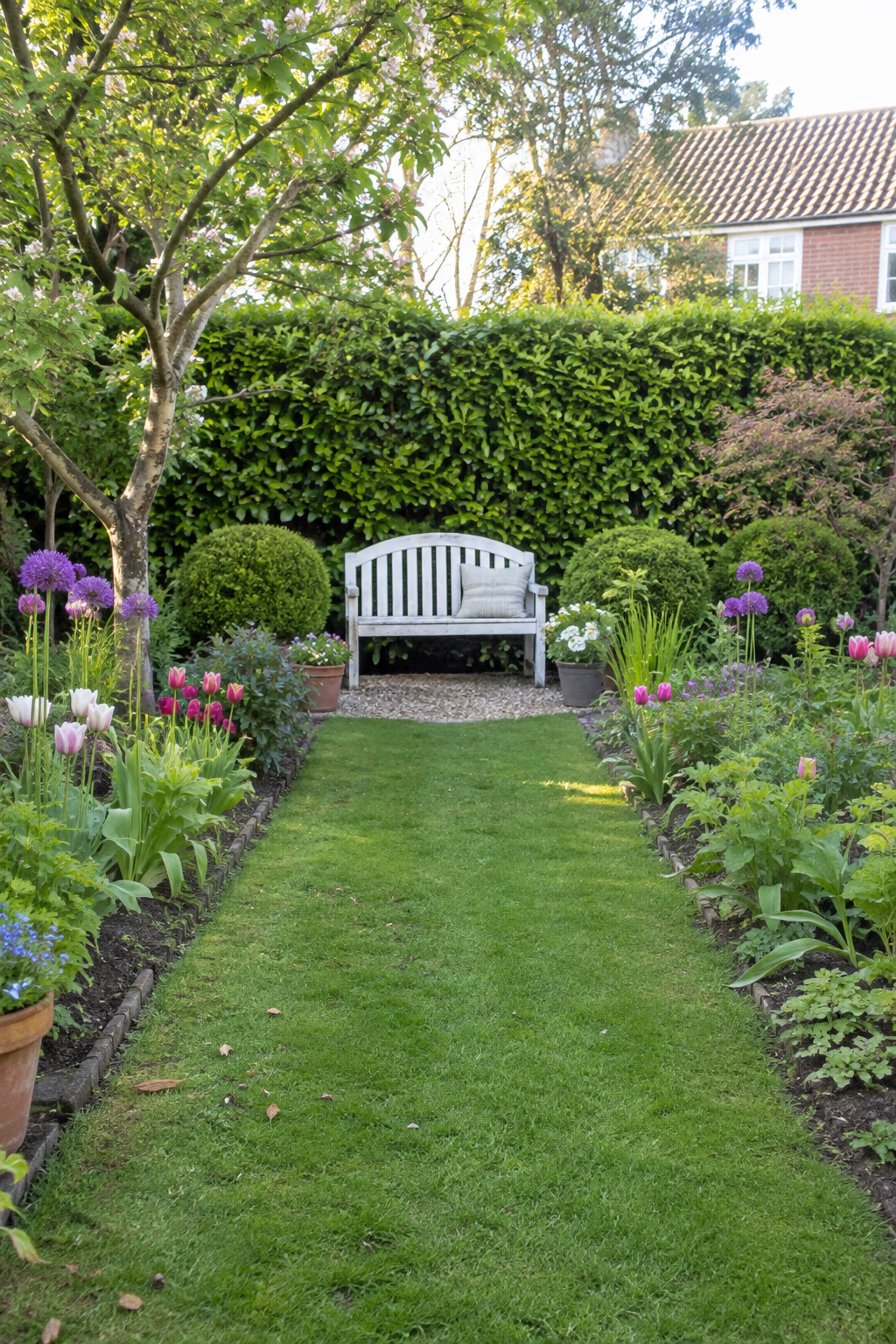
Give the eye and your feet a destination
A bench placed at the far end of a straight path, lawn, or view line gives the yard a clear destination. Even a simple bench looks deliberate when it’s framed by a pair of shrubs, two matching urns, or a hedge behind it.
This trick makes a yard feel deeper and more designed, and it rewards anyone who walks out to that spot with a view back toward the house.
Set the bench on a small pad of pavers or gravel so the legs don’t sink into the lawn and mowing around it is easier. A light-colored or painted bench shows up better from far away.
13. Surround a Bench With Fragrant Plants
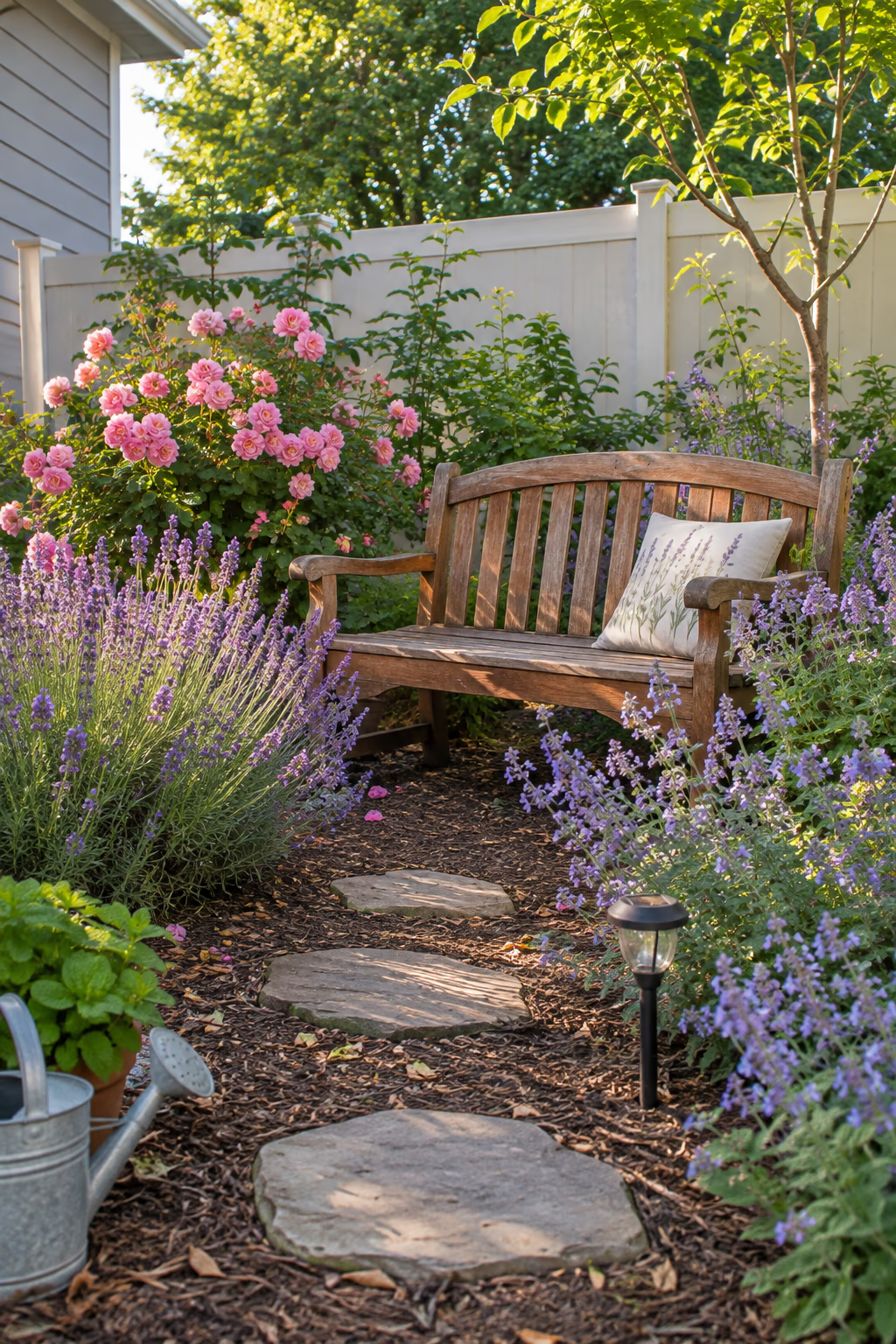
A seat that smells as good as it looks
Plant lavender, roses, catmint, or heliotrope near a bench so every visit comes with fragrance. Evening-scented plants like nicotiana, night phlox, and moonflower are especially good next to a bench you use after work.
Scented plants make a bench feel like a retreat, and they attract butterflies and bees during the day. Brushing against rosemary or thyme beside the seat releases extra scent.
Keep bee-heavy plants a step or two away from where people sit if anyone in your household is allergic to stings. Choose perennials that suit your USDA hardiness zone and the light the spot gets.
14. Choose a Sleek Concrete Bench for a Modern Yard
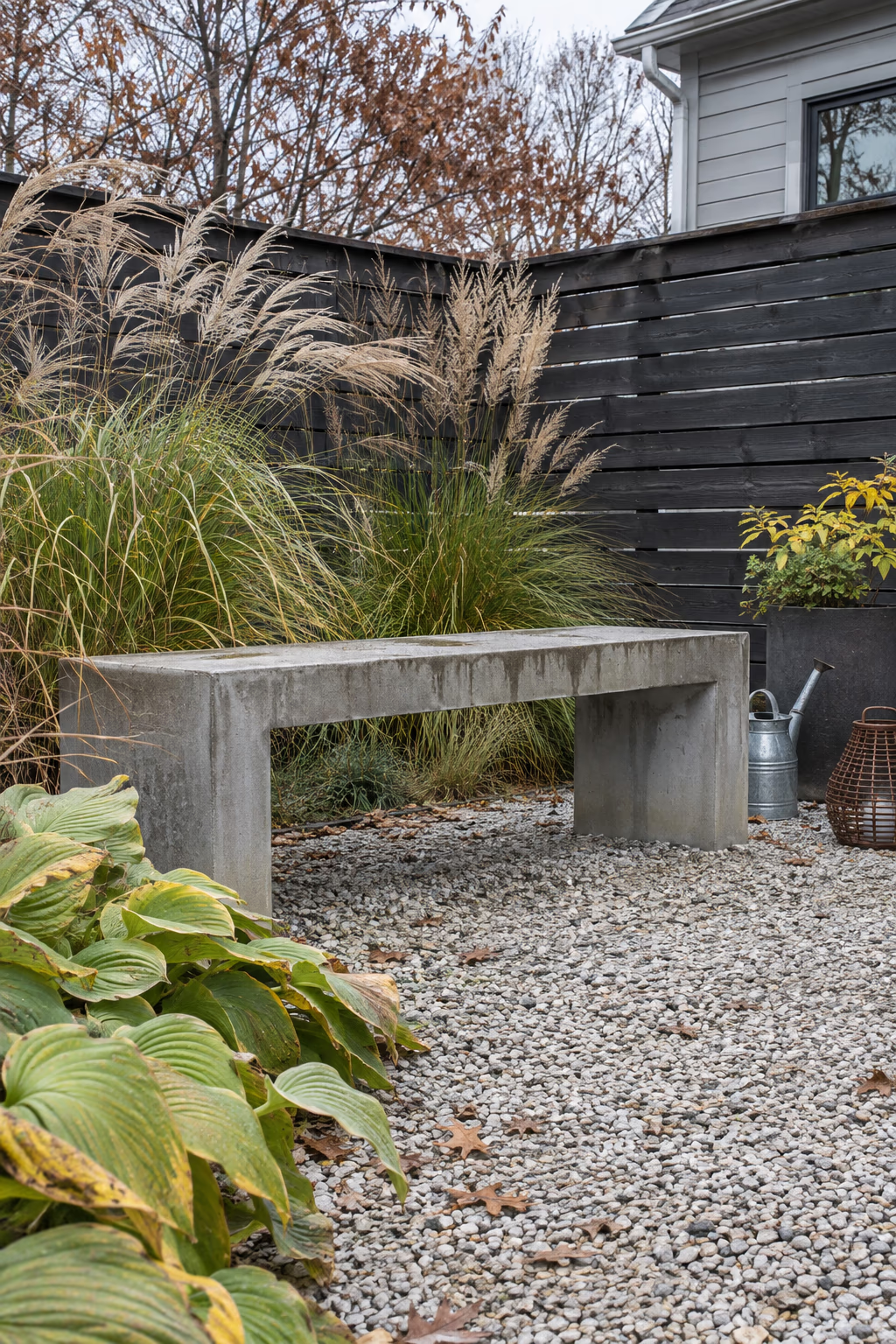
Clean lines that last for decades
A precast or poured concrete bench with simple, squared edges fits modern and minimalist yards. Pair it with ornamental grasses, gravel, and a few large-leaved plants for a calm, uncluttered look.
Concrete doesn’t rot, won’t blow over, and needs little care beyond an occasional scrub. It also becomes a strong sculptural element in the garden.
Concrete benches are extremely heavy, so plan delivery and placement carefully. They can feel cold or hot depending on the season, so keep a couple of outdoor cushions handy.
15. Stack Cinder Blocks and Lumber Into a Budget Bench
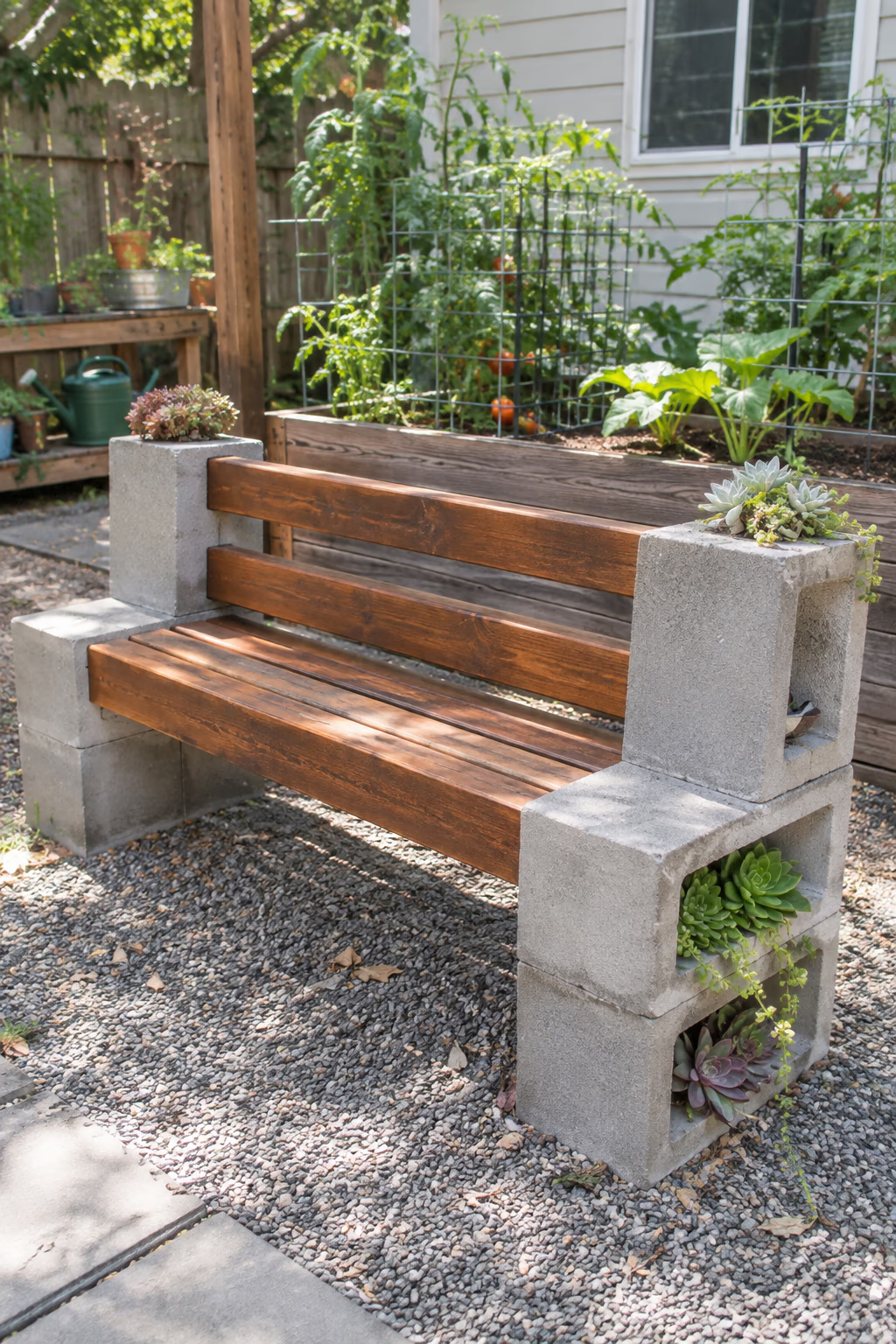
A sturdy seat for less than most store-bought benches
This popular DIY uses concrete blocks stacked on their sides so the holes face forward, with 4×4 posts slid through the openings to form the seat and back. A common setup uses about 12 blocks and four or five 8-foot 4x4s, cut to the length you want.
It’s fast, needs few tools, and can be taken apart and rebuilt elsewhere. Paint the blocks or tuck small succulents into the end openings for extra charm.
Set the bottom blocks on level, compacted ground, and use construction adhesive between blocks for stability. Lift blocks with care, as each one is heavy.
16. Turn a Fallen Log Into a Rustic Seat
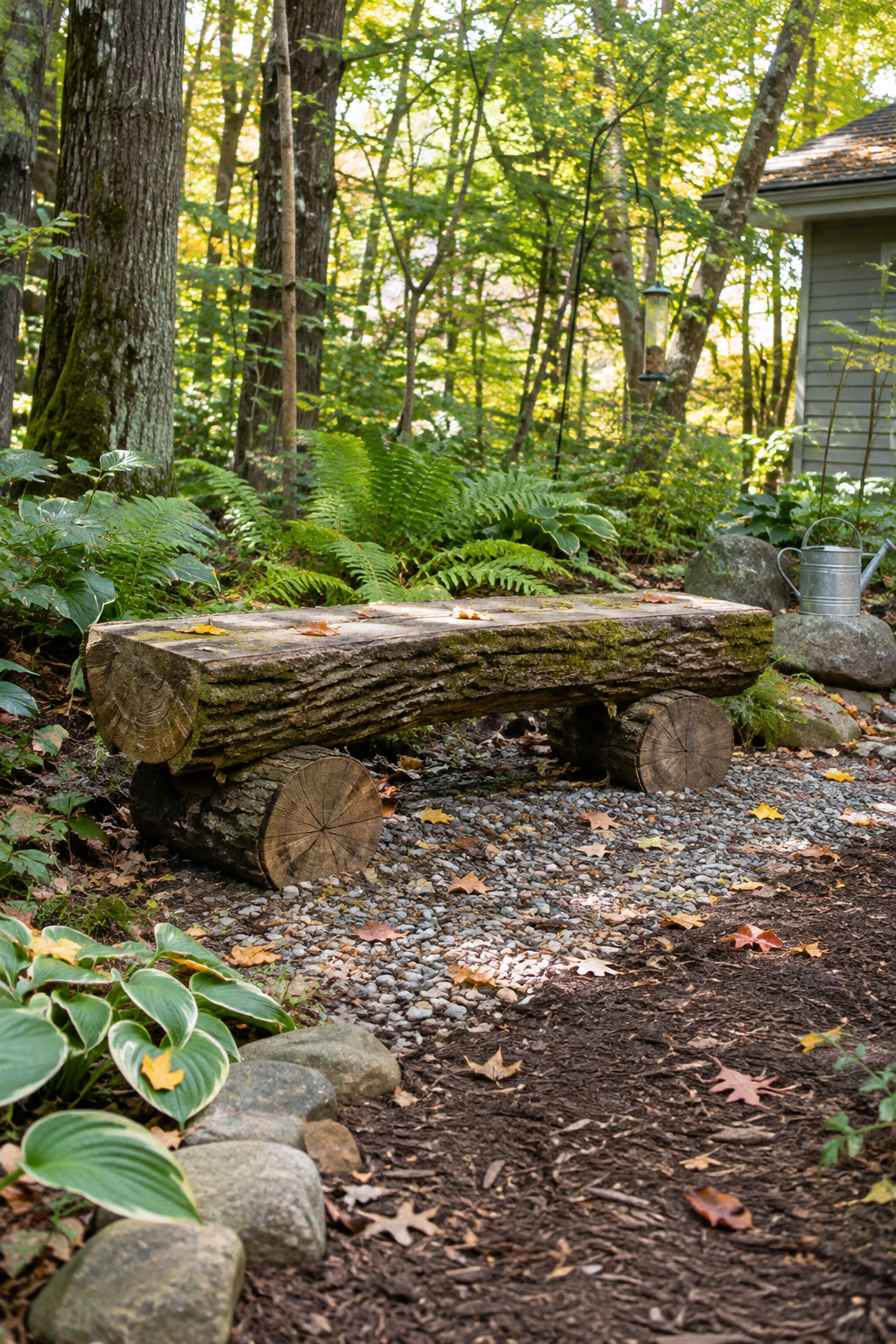
Woodland charm with almost no cost
A large section of trunk from a downed tree can become a natural bench. Cut a flat seat along the top with a chainsaw, or set two short log rounds as legs with a thick split log on top.
Log benches fit naturally into woodland gardens, shady corners, and paths through native plantings. They also weather into the landscape and look better each year.
Chainsaw work is dangerous, so hire a tree service or arborist if you’re not experienced. Hardwoods like oak and locust last longest, and logs set on gravel last longer than those resting on bare soil.
17. Build a Twig Bench From Pruned Branches
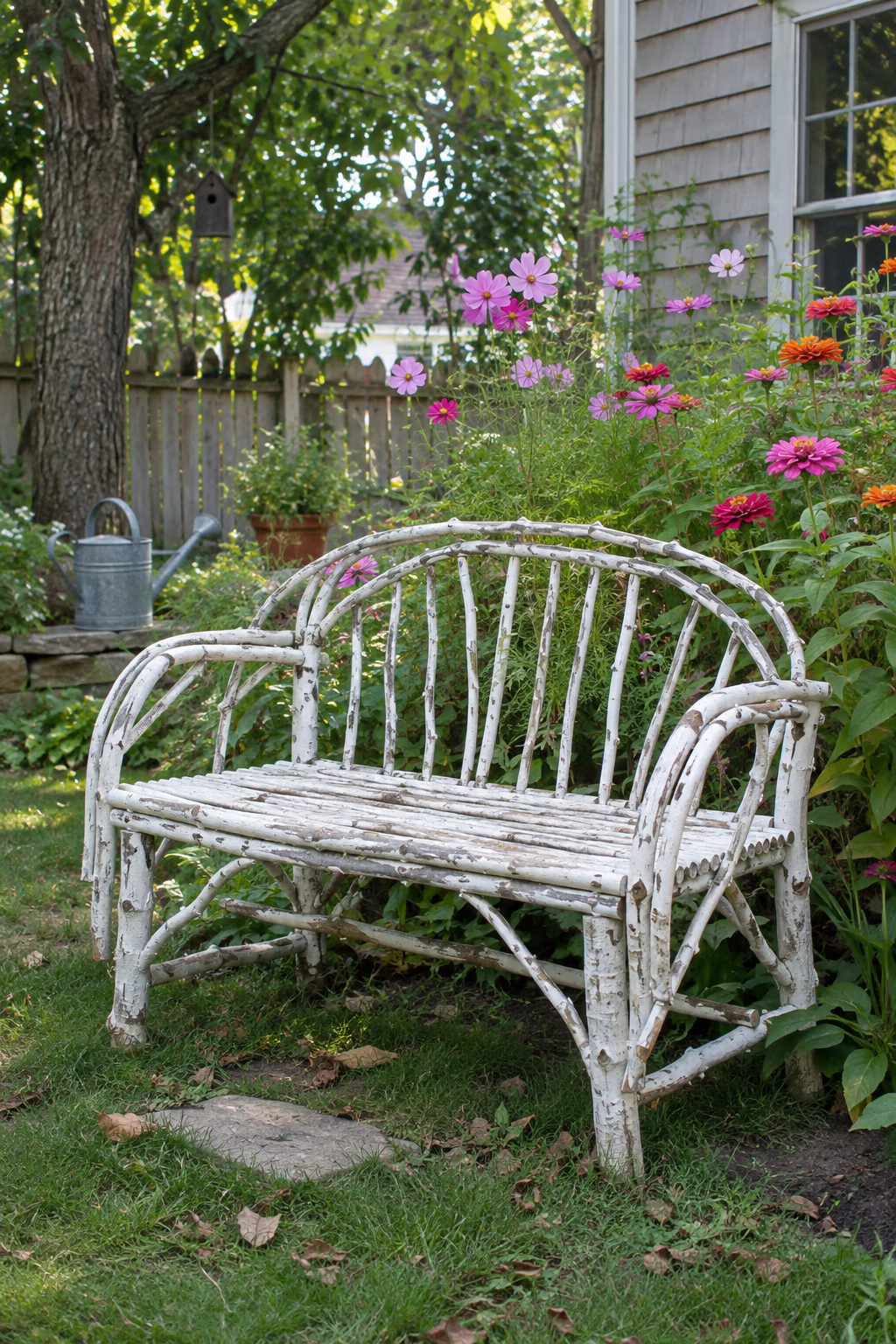
Turn yard trimmings into handmade furniture
A twig bench uses straight branches and bendable shoots for legs, arms, and a curved back. Willow, hickory, and cedar branches are popular because they’re strong and easy to work with.
Each twig bench is one of a kind, and it suits cottage gardens, cabins, and natural play areas. Painting it white gives it a lighter, more cheerful look.
Twig benches are lighter than lumber benches, so they’re best for occasional use rather than daily heavy wear. Use exterior screws and a sealer to help them last.
18. Repurpose an Old Headboard Into a Garden Bench
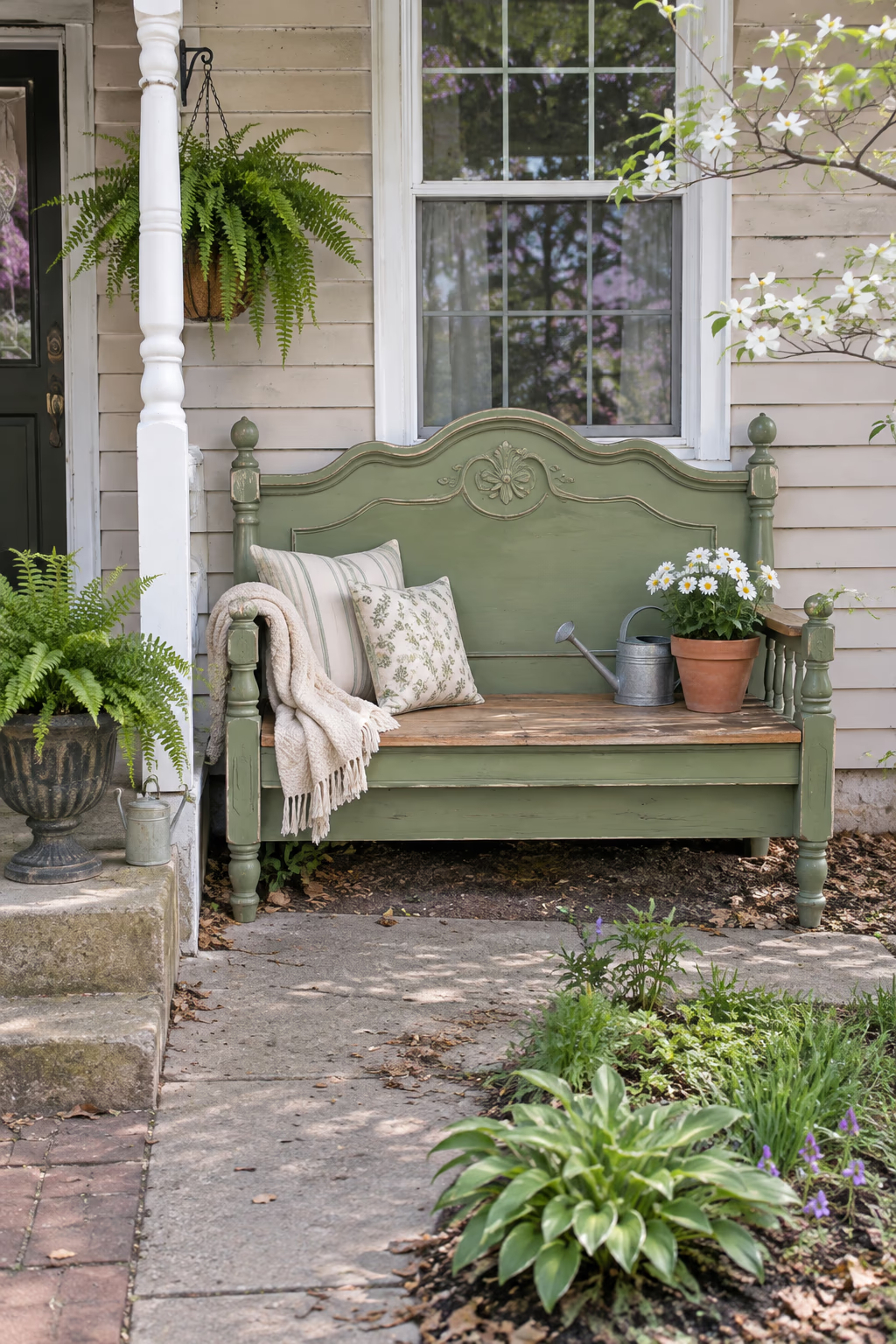
A charming upcycle with real personality
A wooden or metal bed frame can become a garden bench: the headboard forms the back, the footboard is cut in half to create arms, and new boards form the seat. Painted bed benches look great beside cottage gardens and porches.
This upcycle keeps an old piece out of the landfill and gives your yard a cozy, vintage feel that store-bought benches rarely match.
Only use solid wood or metal frames, not particleboard, which falls apart outdoors. Metal frames may need welding, so wood versions are easier for most DIYers.
19. Fill Gabion Baskets for a Stone-Based Bench
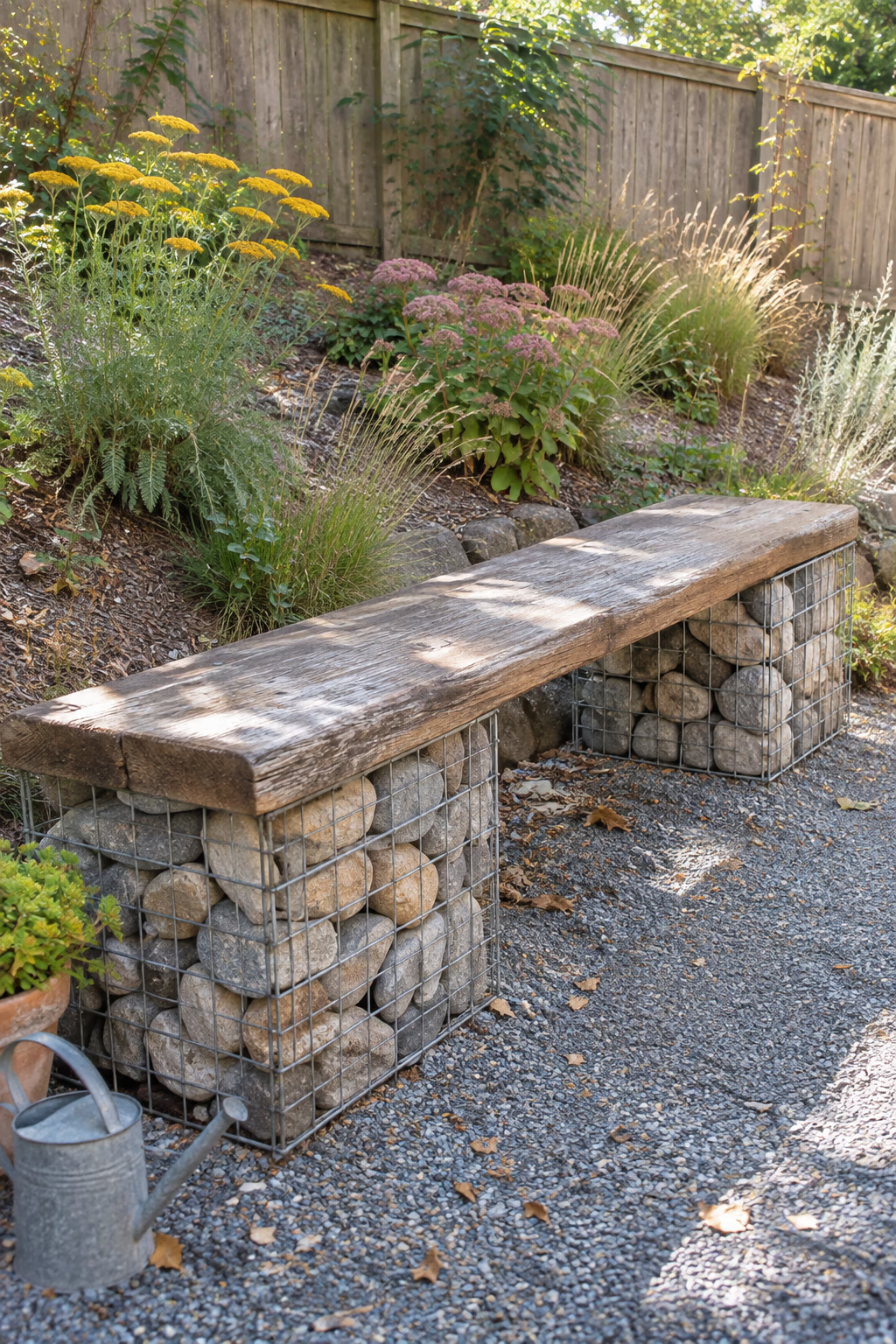
A rugged, modern look with natural stone
Gabions are welded wire cages filled with stone. Two or three cages topped with a thick wooden plank create a bench that’s both industrial and natural.
Gabion benches suit modern landscapes, slopes, and dry gardens. You can fill them with local stone, river rock, or broken concrete for a low-cost look.
Use heavy-gauge galvanized wire baskets so they don’t bulge, and set them on a level, compacted base. A filled gabion is very heavy, so fill it in place.
20. Upcycle Pallets Into a Weekend Bench
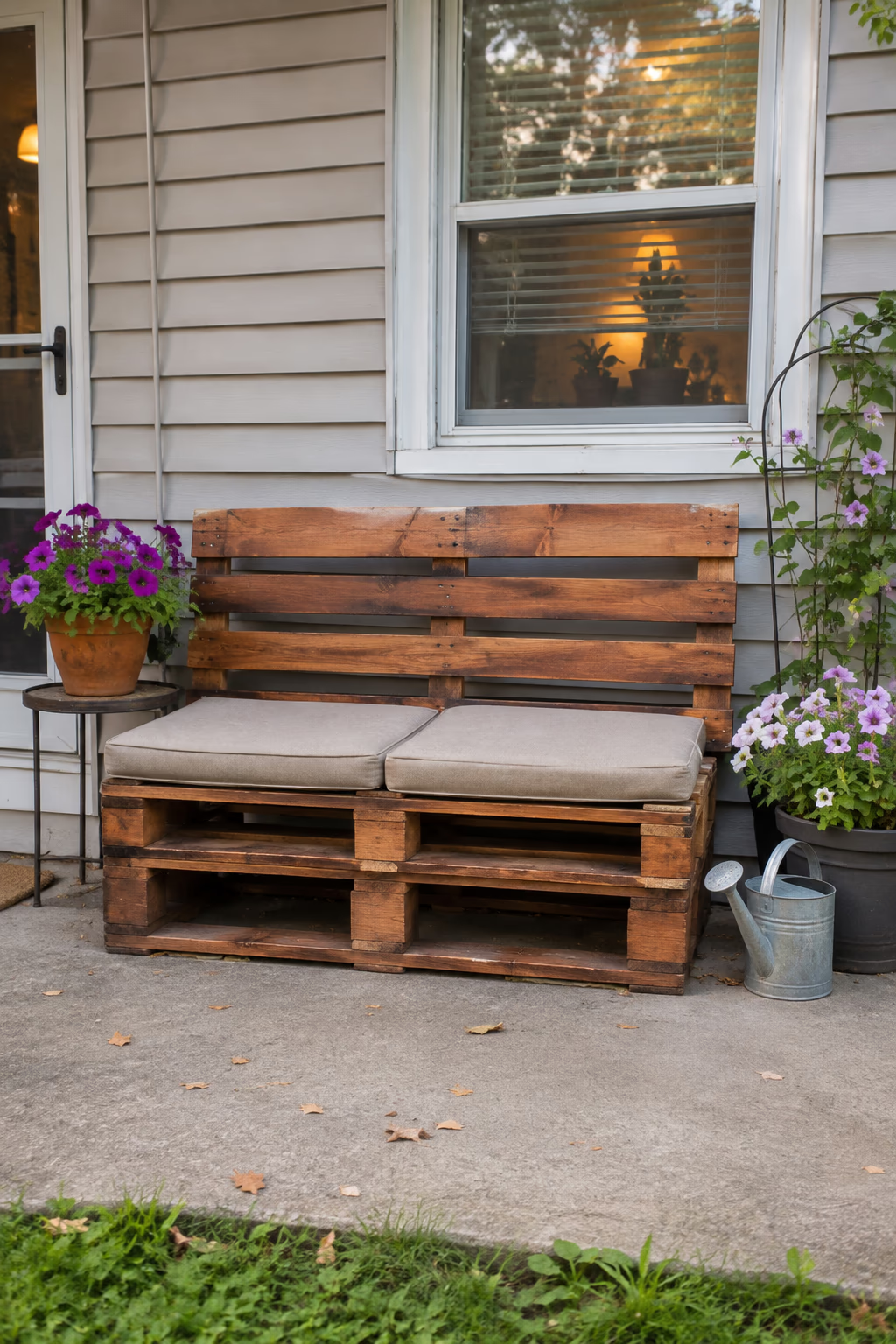
A low-cost project for beginners
Shipping pallets can be cut and stacked to make a simple bench with a slatted back. Sand the wood smooth, add a coat of exterior stain, and finish with outdoor cushions for a casual lounge.
Pallet benches are great for budget patios, rental yards, and anyone who wants to try a first woodworking project.
Only use pallets stamped HT, which means heat-treated, and avoid ones marked MB, which were treated with methyl bromide. Skip pallets with stains or strong smells.
21. Convert a Wine Barrel Into a Curved Seat
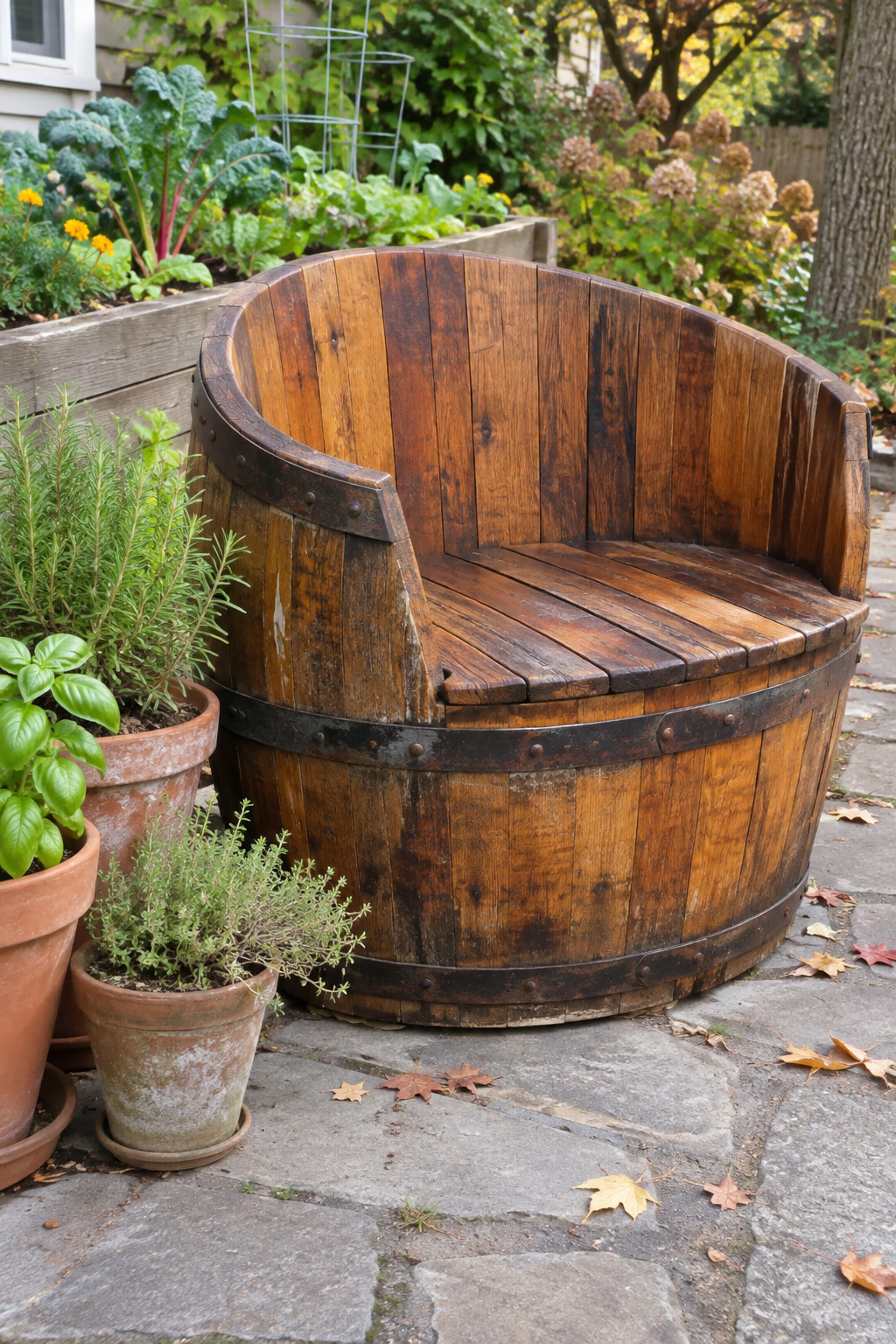
Rustic character from a reclaimed barrel
Oak wine and whiskey barrels can be cut to make a curved seat, with the staves forming the back. Some DIYers cut the barrel in half lengthwise to create a bench seat on a wood frame.
Barrel benches add warmth and texture to patios and pair well with potted herbs or a vegetable garden.
Cutting barrels takes some skill because the metal hoops hold the staves together. Secure the hoops with screws before cutting, and sand the edges to avoid splinters.
22. Pick a Bench That Flips Into a Picnic Table
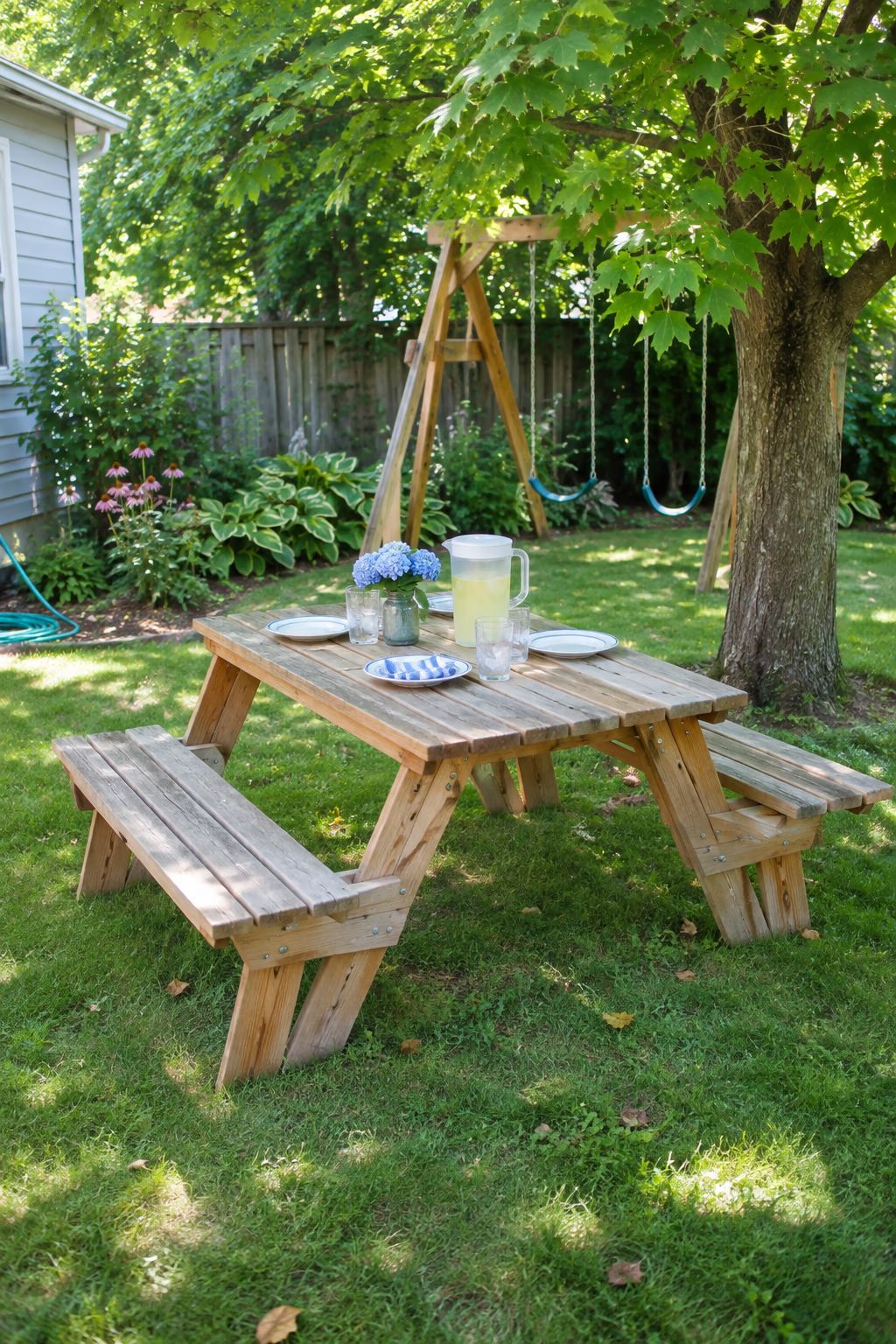
Two pieces of furniture in one
A convertible bench has a back that folds down to become a tabletop. Two of them side by side make a small picnic table in seconds.
These benches are perfect for small yards, family gatherings, and spaces where a full table won’t fit year-round.
Look for sturdy hinges and solid hardware, and check that the bench sits level in both positions. Expect to tighten bolts from time to time.
23. Light a Built-In Bench With Under-Seat LED Strips
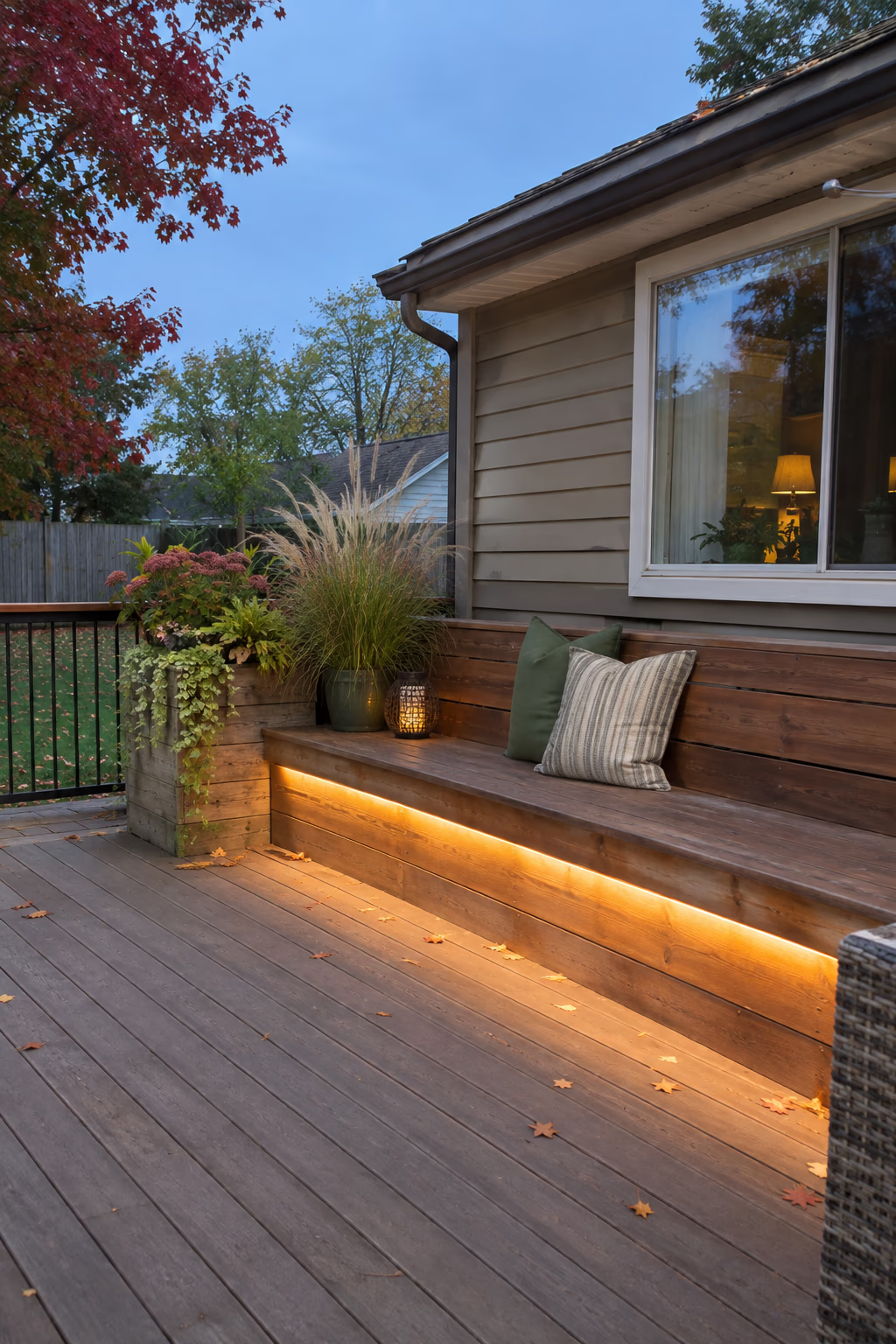
A soft glow that extends your evenings
Low-voltage LED strips mounted under the lip of a built-in bench cast a warm glow across the patio or deck. The light makes seating easy to find at night and adds a polished, modern look.
It’s a subtle way to make a yard feel welcoming after dark without bright floodlights.
Use outdoor-rated, waterproof strips and a low-voltage transformer, and plug into a GFCI-protected outlet. Hire an electrician for hardwired setups.
How to Plan Your Garden Bench
A garden bench is easy to add, but a few decisions up front help it look good and last for years.
- Pick the spot first. Sit in a few places at different times of day and choose the one with the best view, shade, or morning sun.
- Size it to the space. Allow about 18 to 24 inches of seat width per person and a seat height of 17 to 19 inches for comfort.
- Choose materials for your climate. Teak, cedar, metal, and concrete hold up well outdoors, while softwoods need regular sealing.
- Give it a solid base. Pavers, gravel, or a small concrete pad keep legs from sinking and make mowing easier.
- Plan for upkeep. Budget time each spring to clean, tighten bolts, and refresh paint, oil, or sealer.
- Check rules before building. Large built-ins, fire features, and electrical work may need permits or HOA approval, and you should call 811 before digging.
Frequently Asked Questions
What is the best material for an outdoor garden bench?
Teak and cedar are popular because they resist rot naturally. Powder-coated aluminum, cast iron, resin, and concrete are also durable options. The best choice depends on your climate, budget, and how much maintenance you want to do.
How long should a garden bench be?
A two-seat bench is usually about 4 feet long, and a three-seat bench is around 5 to 6 feet. Measure your space and leave room for walking around it.
Can a garden bench stay outside all winter?
Metal, concrete, teak, and cedar benches can usually stay out year-round, though covering them extends their life. Bring cushions inside and store painted or softwood benches under cover if possible.
How do I keep a wooden bench from rotting?
Keep it off wet soil by setting it on pavers or gravel, apply an exterior sealer or oil every year or two, and clean off leaves and dirt that trap moisture.
Where is the best place to put a garden bench?
Good places include under a shade tree, at the end of a path, beside a flower bed, or in a corner with a view. Choose a level spot that gets the light you enjoy most.
Final Thoughts
The best garden bench ideas create a place you genuinely want to sit. Whether it’s a cedar planter bench, a vintage iron seat, or a log under the trees, a bench invites you to slow down and enjoy the yard you’ve worked so hard on.
Start with one well-placed bench, then add cushions, plants, or lighting over time. Before long, it may become your favorite spot for morning coffee or evening conversation.