Most backyard fences spend their lives as plain brown backdrops. They mark the property line, block the view of the neighbor’s trash cans, and fade a little more every summer. Yet that long stretch of boards is often the biggest unused growing surface on the whole lot.
Turning a fence into a garden makes sense for almost any yard. It adds color at eye level where you actually notice it, frees up ground space for a patio or play area, and softens hard lines without planting a hedge that takes years to fill in. Small yards, side yards, and rental homes with tiny patios benefit the most, but even large lots look better when the boundary is alive with plants.
These 25 fence vertical garden ideas cover mounted planter boxes, pot rings, succulent frames, climbing vines, living wall panels, espaliered fruit, and simple budget tricks for wood, vinyl, and chain-link fences. Each one includes practical notes on plants, weight, and watering so your fence stays sturdy while it blooms.
1. Line the Fence With Rows of Cedar Planter Boxes
A tidy, built-in look that holds real soil
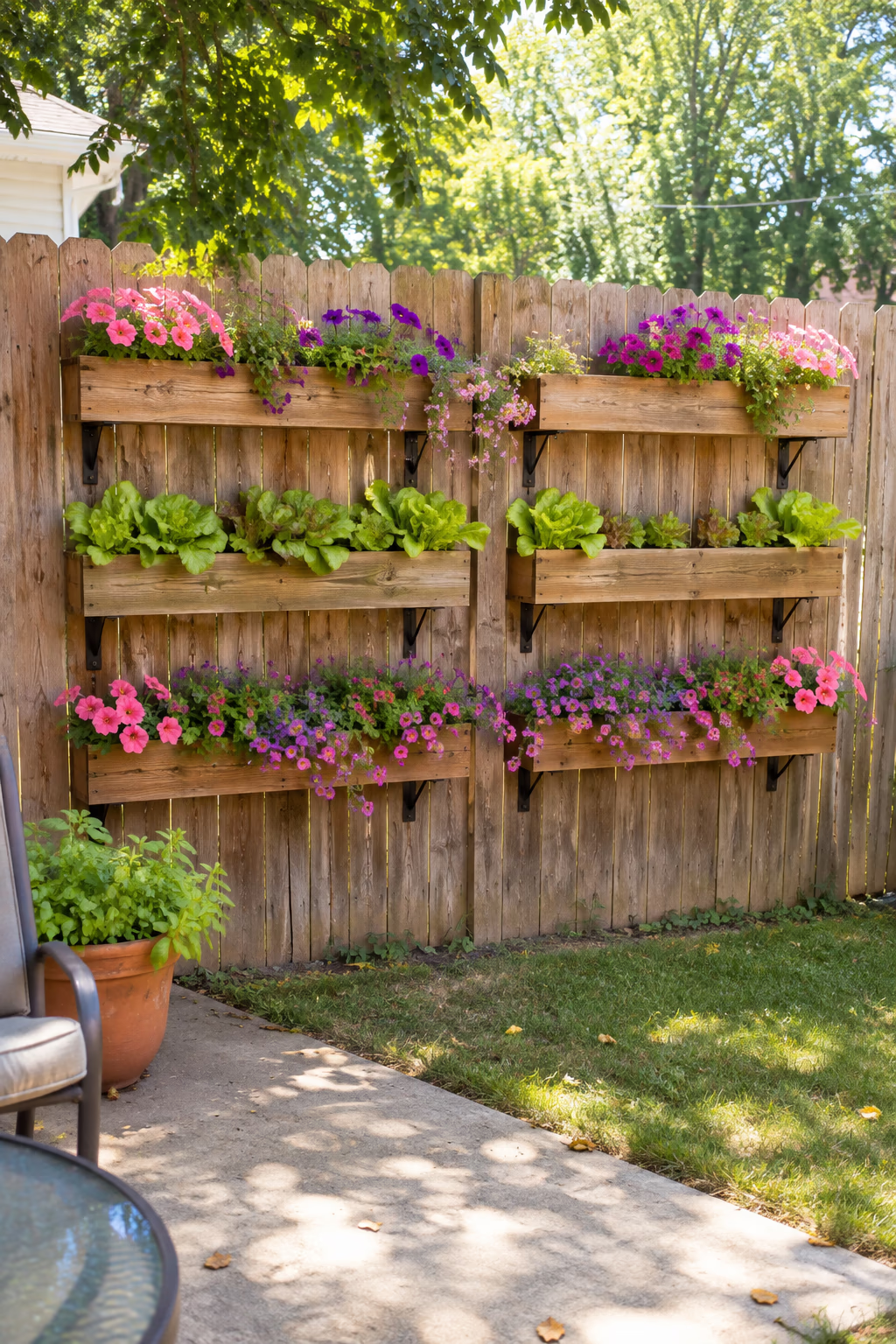
Long, narrow planter boxes mounted in two or three horizontal rows turn a fence into a tiered flower bed. Boxes about 30 to 36 inches long and 6 to 8 inches deep fit neatly between posts and hold enough soil for petunias, calibrachoa, lettuce, or compact herbs. Untreated cedar weathers to a soft silver and resists rot better than pine.
Repeating the same box size across several panels creates rhythm, so the fence reads as one designed feature instead of a random collection of containers. Space the rows 16 to 20 inches apart so upper plants don’t shade the lower ones too heavily.
Weight is the big caveat. A filled box can weigh well over 50 pounds when wet, so screw heavy-duty steel brackets into the fence posts or horizontal rails rather than thin pickets. Drill drainage holes and add a small spacer behind each box so water doesn’t sit against the fence boards.
2. Hang Terracotta Pots in Metal Ring Holders
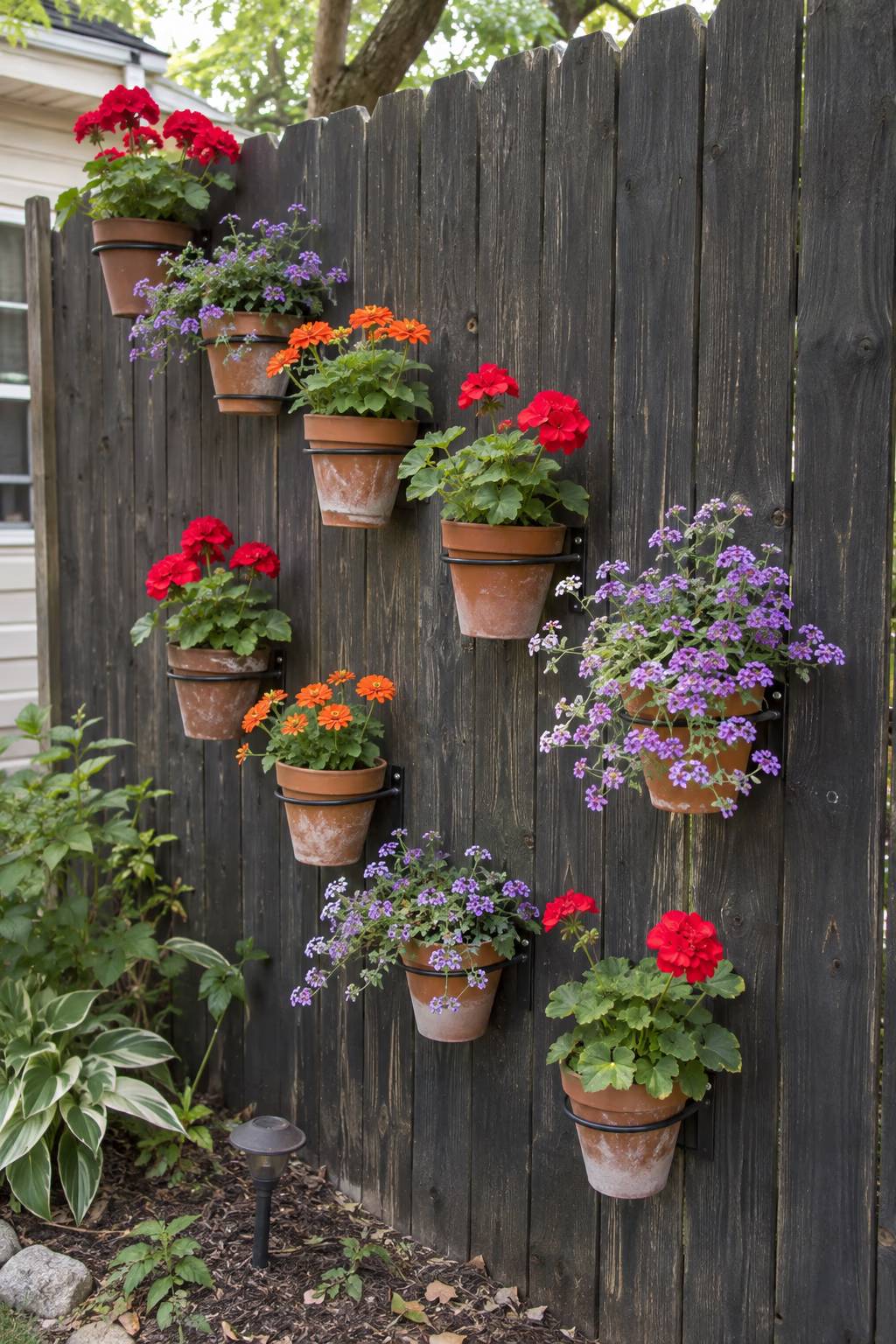
Classic clay pots with a clean, gallery-wall feel
Simple wall-mounted metal rings let ordinary 6- or 8-inch terracotta pots float on the fence. Arrange them in a loose grid or a diagonal cascade and fill them with geraniums, trailing verbena, or bright zinnias. Black or bronze rings disappear against dark-stained boards, while white rings pop on a natural cedar fence.
The appeal is flexibility. Pots lift in and out of the rings, so you can rotate plants as they finish blooming or move tender ones indoors before frost. Terracotta’s warm orange tone also flatters nearly every flower color.
Clay dries out quickly in summer, especially in small sizes. Expect to water daily during heat waves, or choose glazed pots for thirstier plants. Bring terracotta into a garage over winter in cold climates, because freeze-thaw cycles can crack it.
3. Mount a Succulent Shadow Box on a Sunny Fence
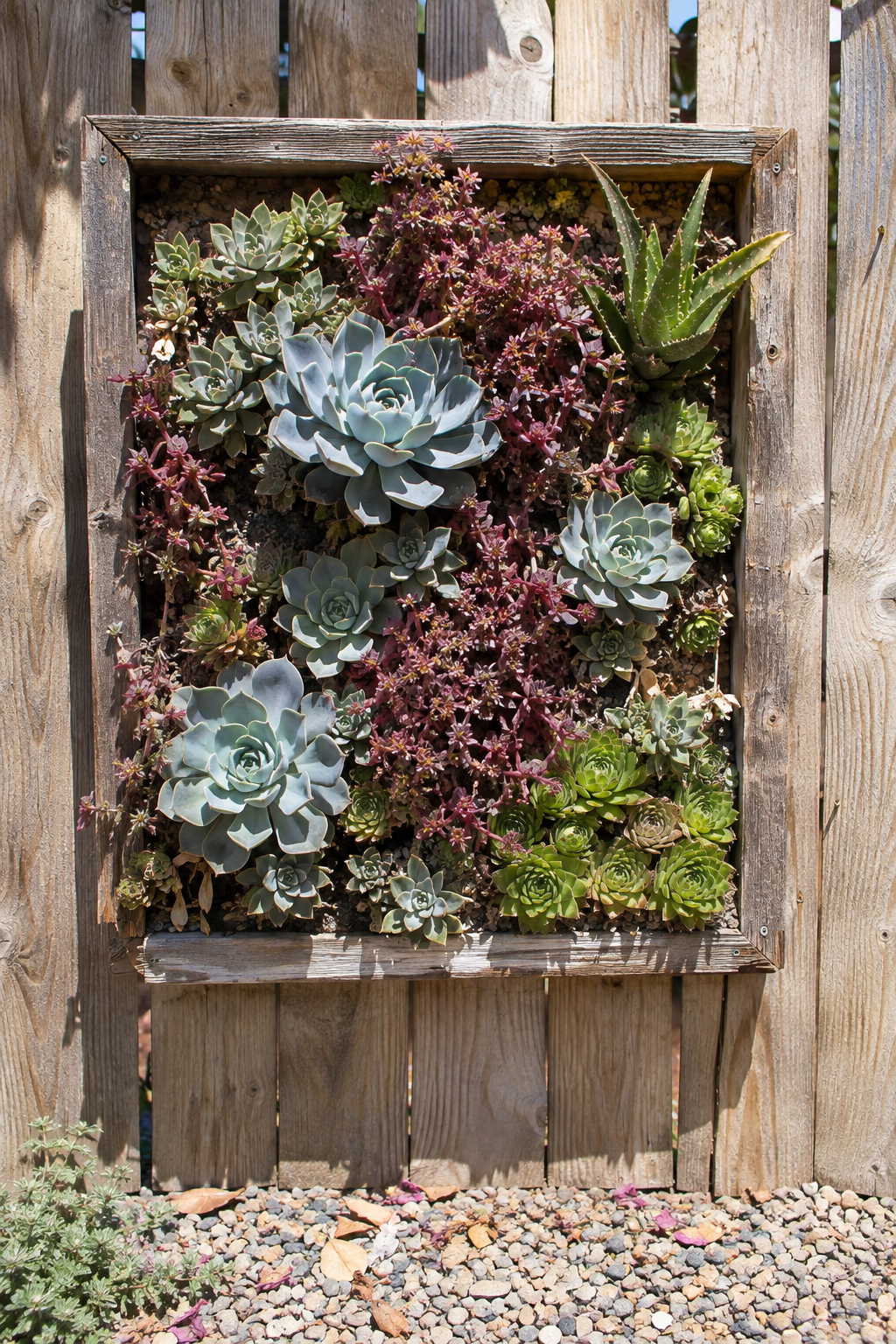
Living art that shrugs off heat
A shallow wooden frame about 2 inches deep, backed with wire mesh and packed with cactus mix, becomes a living picture of echeveria, sedum, sempervivum, and small aloes. Plant it flat, let the roots knit together for four to six weeks, then hang it on a south- or west-facing fence.
Succulents are ideal for hot fences that bake other plants. Their varied rosettes, blue-gray and burgundy tones, and slow growth keep the design looking sharp for months with little trimming.
In zones colder than about 7, most echeverias and aloes won’t survive winter outdoors. Use hardy sempervivum and sedum there, or take the frame down and store it in a bright, cool spot. Water only when the mix is dry an inch down.
4. Train Clematis Up Stainless Steel Cables
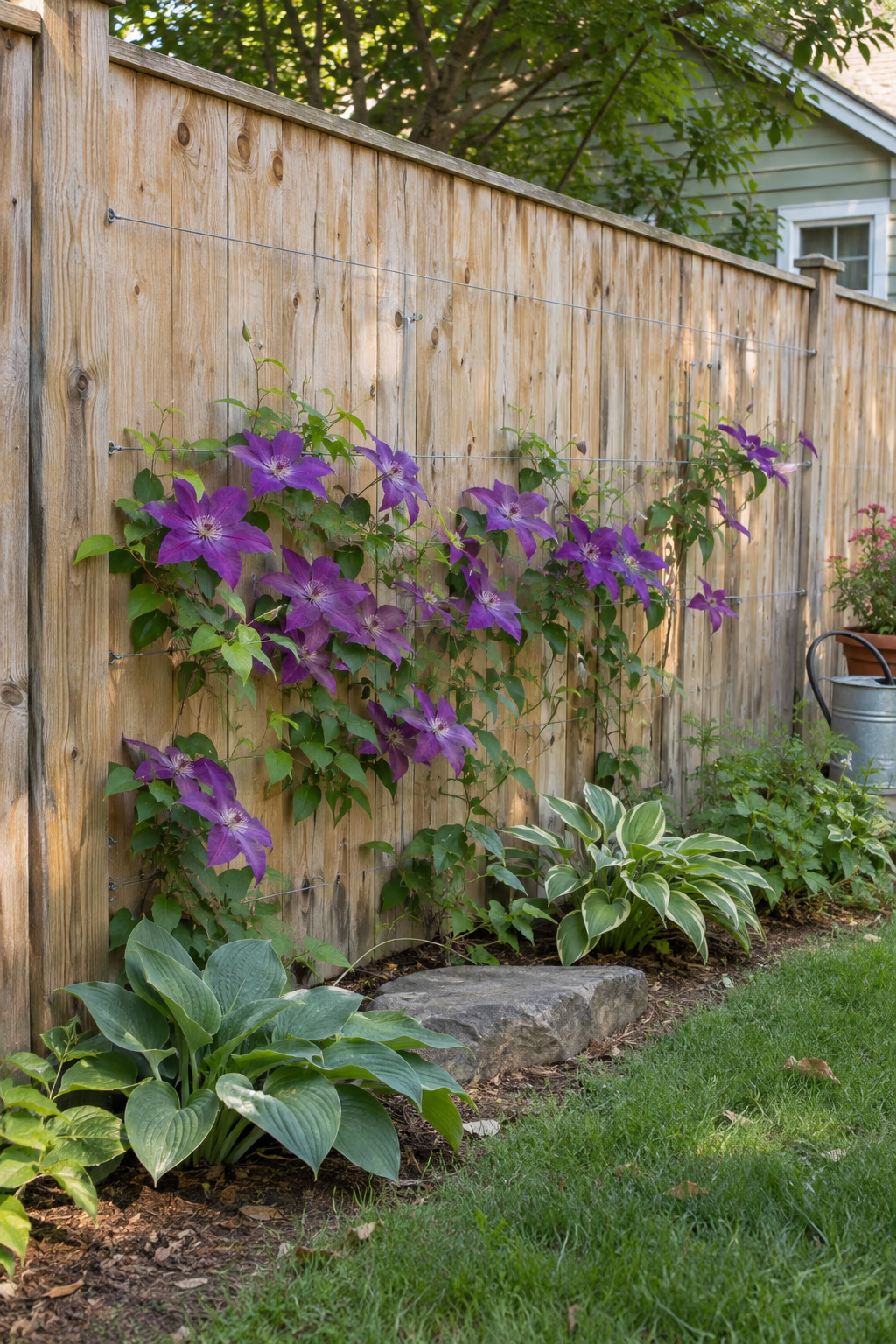
Big blooms on a nearly invisible support
Stainless steel cable stretched horizontally every 12 inches between eye screws gives clematis a clean framework that almost disappears once the vine fills in. Plant the clematis at the base of the fence in rich soil and guide the first stems onto the wires with soft ties.
Clematis comes in purple, deep red, white, and pink, and many varieties bloom for weeks. Because it climbs by twisting leaf stalks rather than clinging roots, it won’t damage wood the way some self-climbing vines can.
Clematis likes its roots cool and its top in sun. Shade the base with a low perennial or a flat stone. Check the plant tag for its pruning group, since some bloom on old wood and should not be cut back hard in spring.
5. Hang Coir Half Baskets Spilling With Trailing Flowers
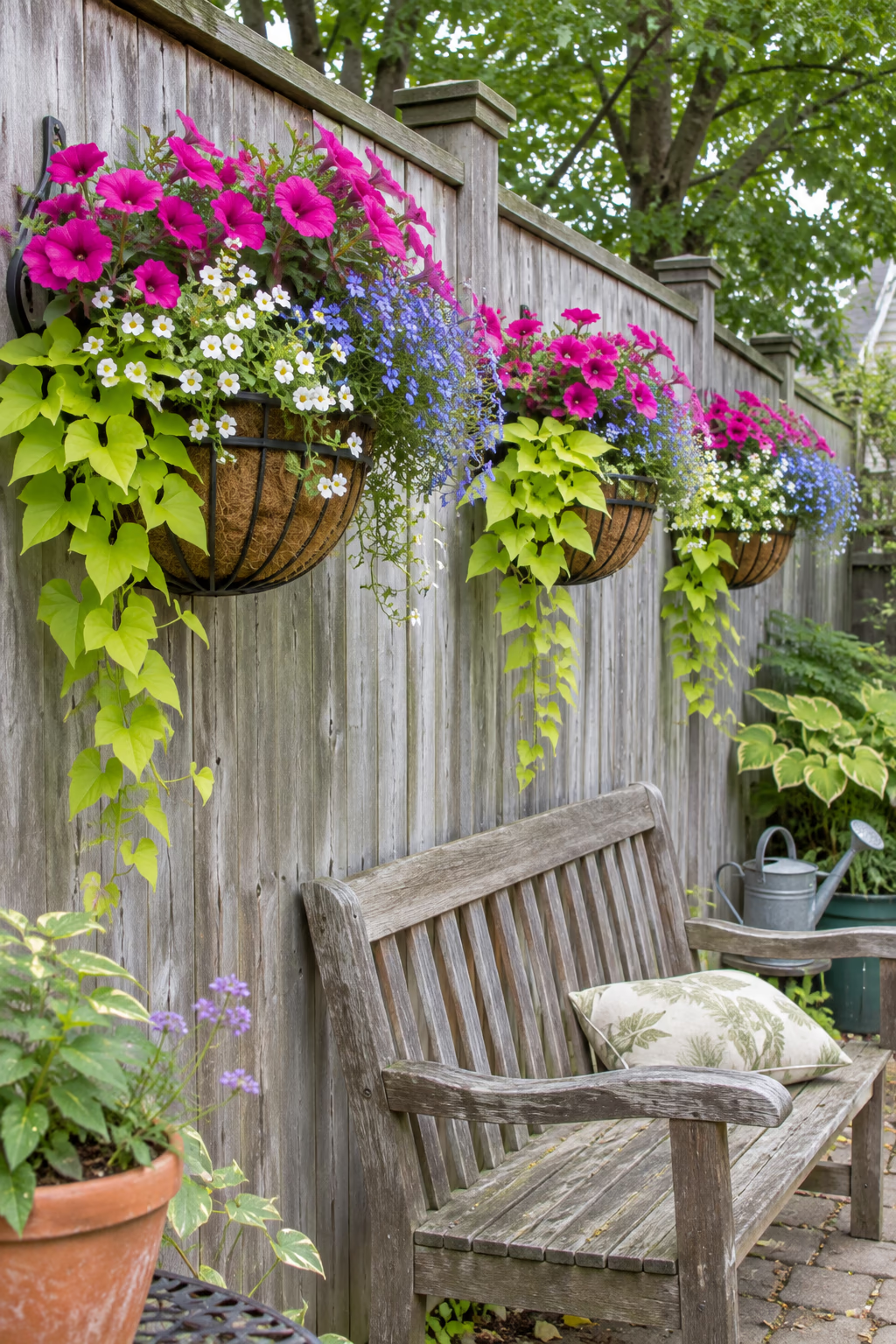
Soft, overflowing color for a cottage feel
Wire half baskets lined with coconut coir mount flat against a fence and hold a surprising amount of soil. Fill them with trailing petunias, bacopa, lobelia, and sweet potato vine so the plants tumble over the edges and hide the frame by midsummer.
Half baskets are lighter and cheaper than wooden boxes, and grouping three or five of them along one panel gives an abundant, overflowing look. They work especially well beside a gate or above a bench.
Coir liners drain fast, which is good for roots but means frequent watering. Mix a slow-release fertilizer and a moisture-holding potting mix into each basket, and replace liners every season or two as they break down.
6. Add Floating Shelves for a Layered Pot Display
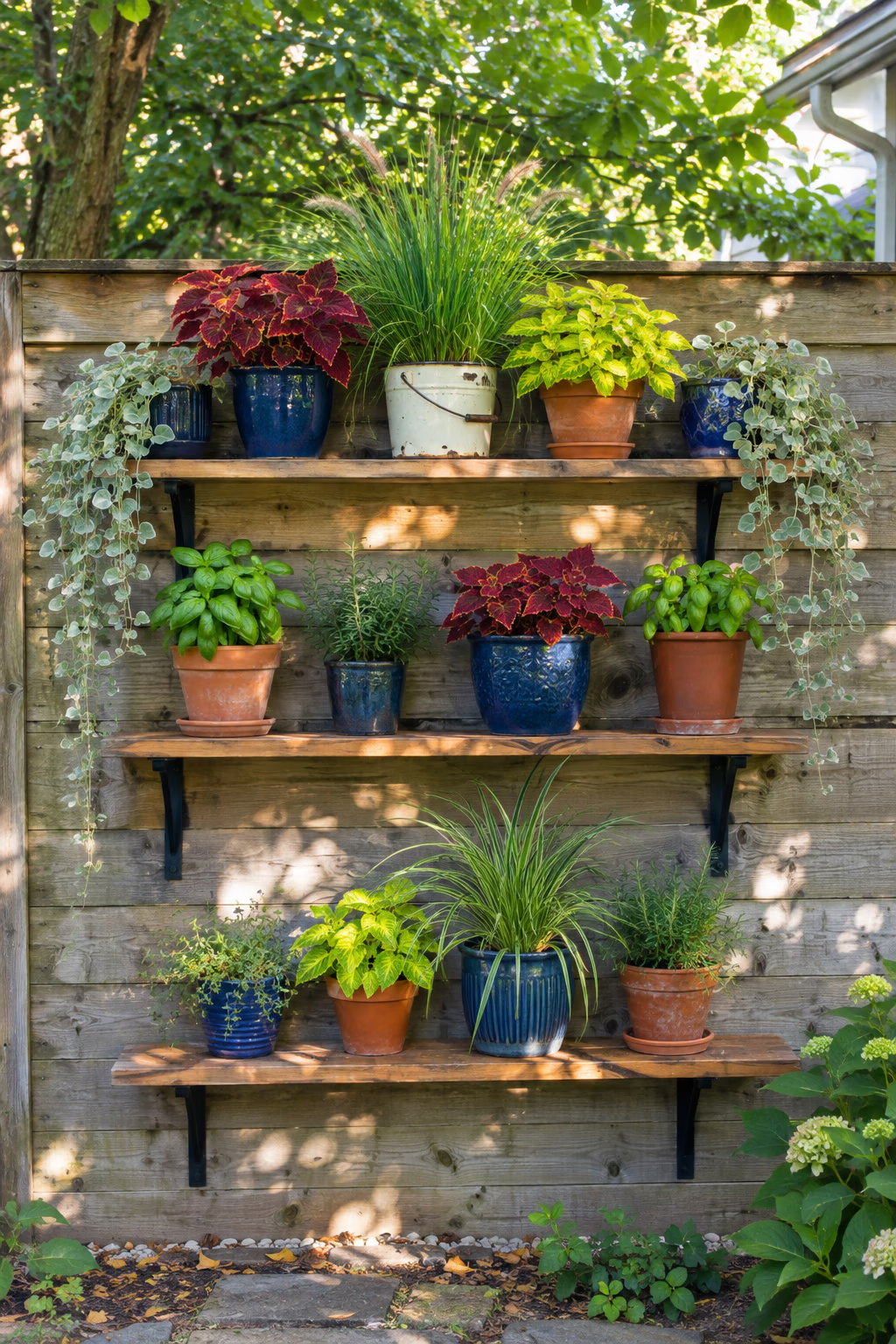
Room for pots of every shape and size
Two or three outdoor shelves, made from 1×8 cedar or composite boards on sturdy brackets, turn a fence panel into a display stand for mixed containers. Combine upright grasses, rounded coleus, small herbs, and a trailing plant at each end.
Shelves let you show off pots you already own, from glazed ceramic to vintage enamel, without drilling a separate mount for every one. Changing the arrangement takes minutes.
Add a slight forward lip or a strip of trim along the front edge so wind doesn’t knock pots off. Keep the heaviest containers on the lowest shelf and screw brackets into posts or rails for strength.
7. Grow Strawberries in Stacked Fence Troughs
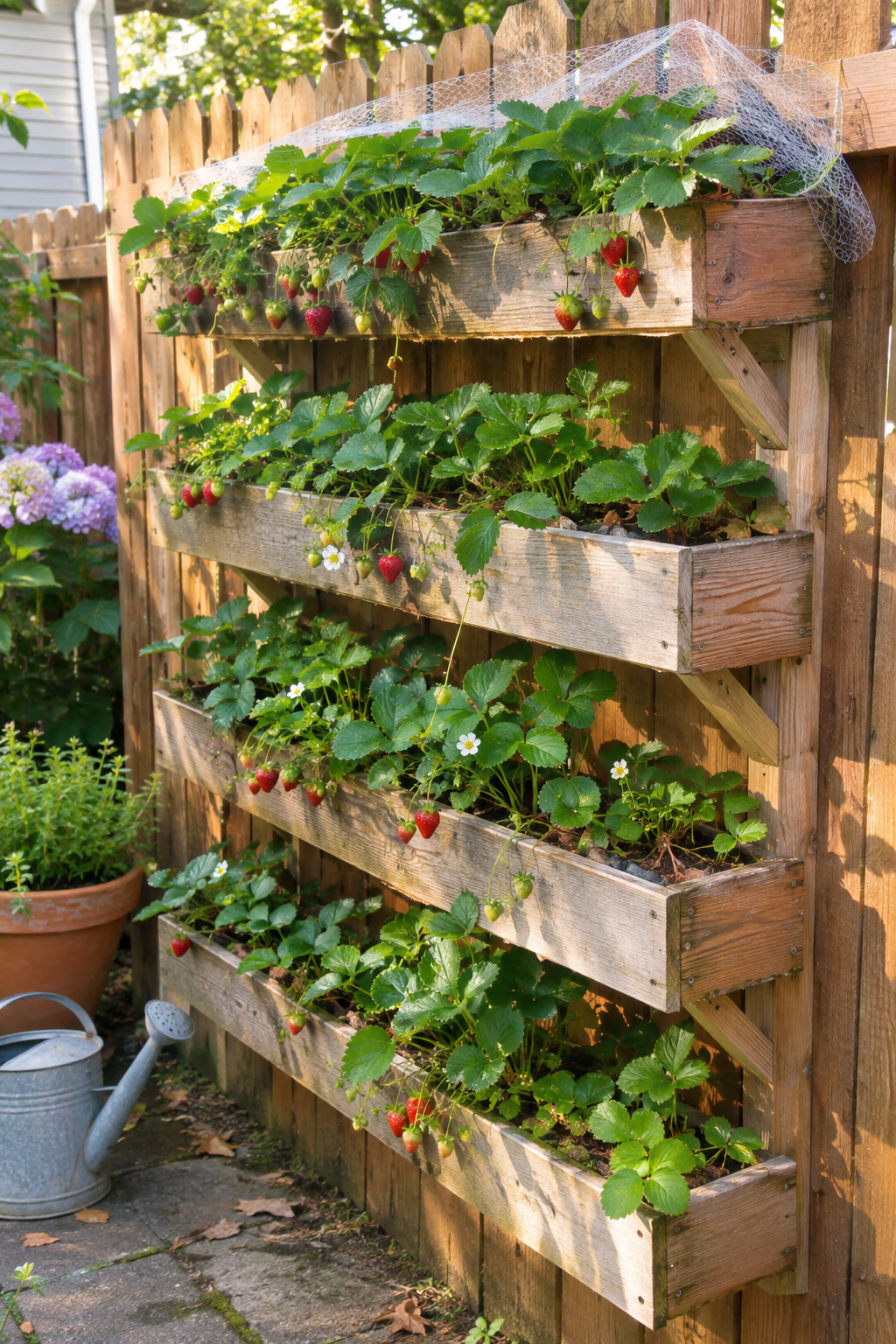
Fresh berries kept off the ground
Three or four shallow troughs, about 6 inches deep, mounted one above the other on a sunny fence make a tidy strawberry wall. Everbearing or day-neutral varieties produce through much of summer, and the runners can dangle over the edges.
Lifting strawberries off the soil keeps the fruit clean, reduces rot, and puts the harvest at picking height. Slugs have a harder time reaching the plants too.
Strawberries need at least six hours of sun and steady moisture. Birds will find them, so drape lightweight netting over the troughs as fruit ripens. Replace plants every three years or so, since older crowns produce less.
8. Turn Exposed Fence Rails Into Planter Ledges
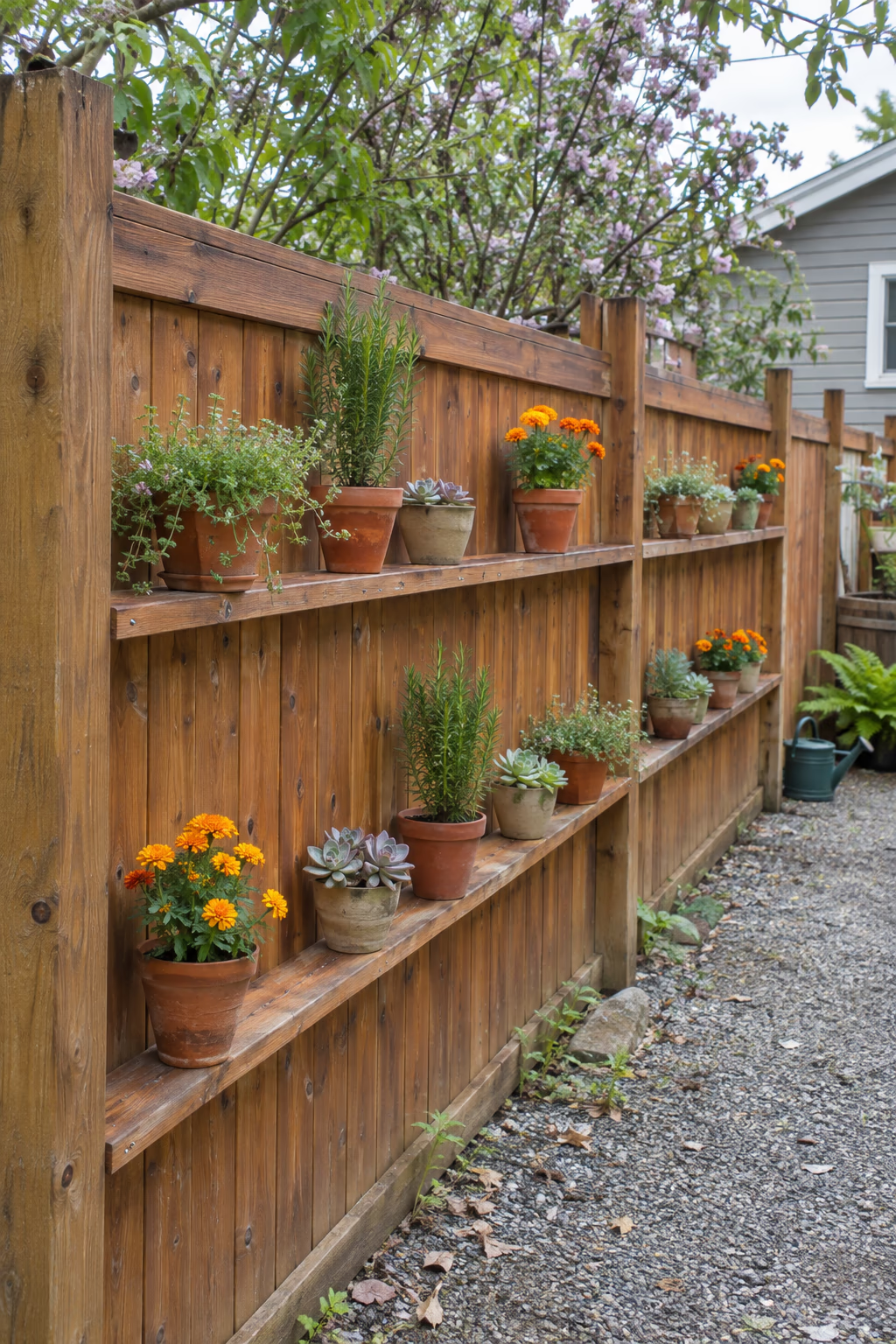
Use the side of the fence that usually gets hidden
If you face the rail side of your fence, those horizontal 2x4s are ready-made ledges. Screw a narrow board to the top of each rail to widen it to 5 or 6 inches, then line it with small pots of herbs, succulents, or annuals.
This approach uses the fence’s existing structure, so you need very little lumber and no complicated brackets. It also turns an awkward, unfinished-looking side into something intentional.
Rails sit between posts and can sag under heavy loads, so stick to small pots and leave a gap between each one for air circulation. A coat of exterior stain on the new boards helps them match and last.
9. Install a Drip-Irrigated Modular Living Wall
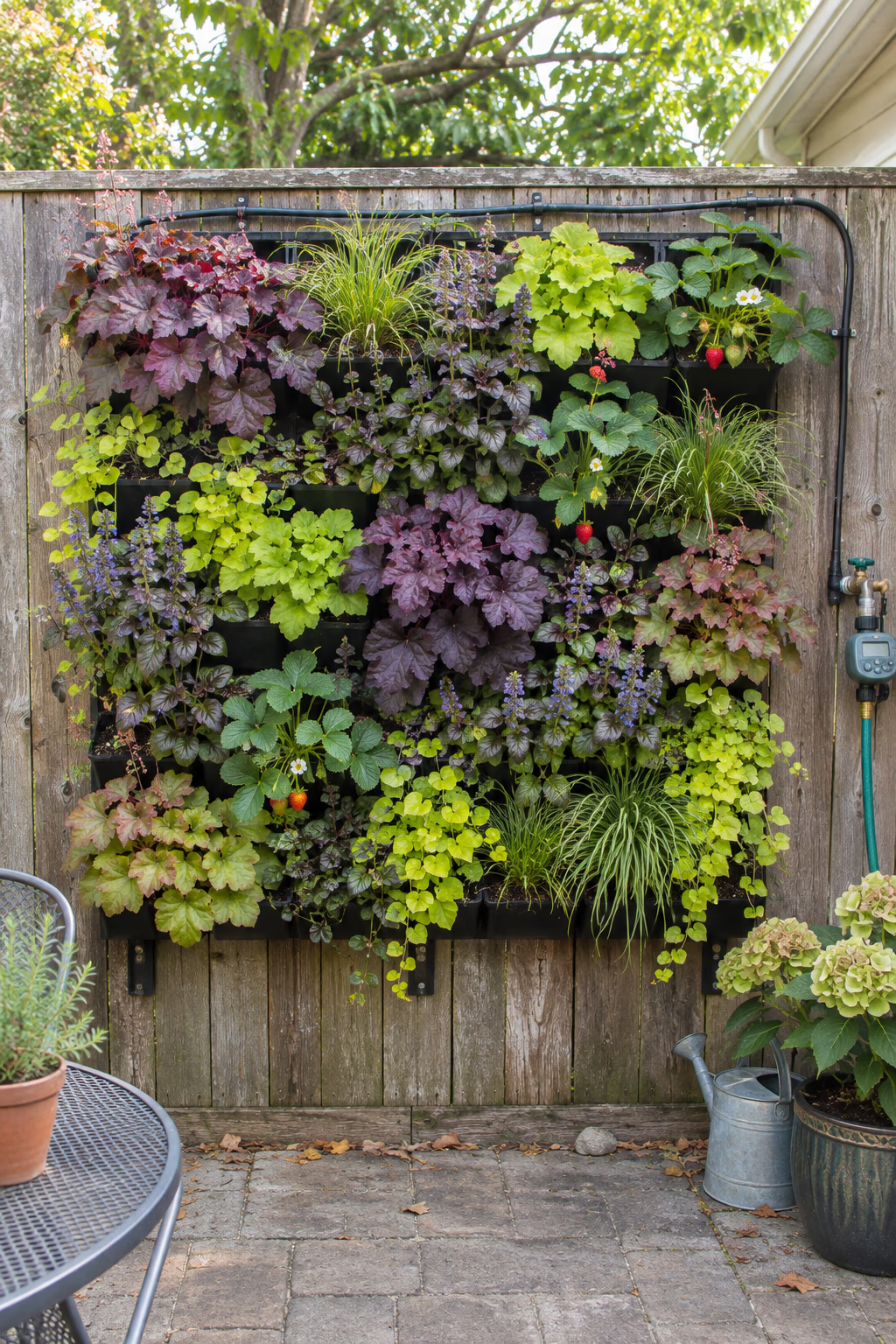
A dense green tapestry that waters itself
Modular living wall systems use interlocking plastic cells that hang on a rail and hold plants at a slight angle. Fill them with heuchera, ajuga, creeping Jenny, ornamental grasses, and strawberries for a carpet of foliage, then run a drip line along the top row connected to a hose-end timer.
Built-in irrigation is what makes a dense wall practical. Water trickles down from cell to cell, so the whole panel stays evenly moist without daily hand watering.
These systems cost more than simple planters and need regular checks for clogged emitters and tired plants. Mount the panel on standoffs so air can move behind it, protecting the fence from constant dampness, and add a backflow preventer at the spigot.
10. Pair Corten Steel Planters With a Horizontal Slat Fence
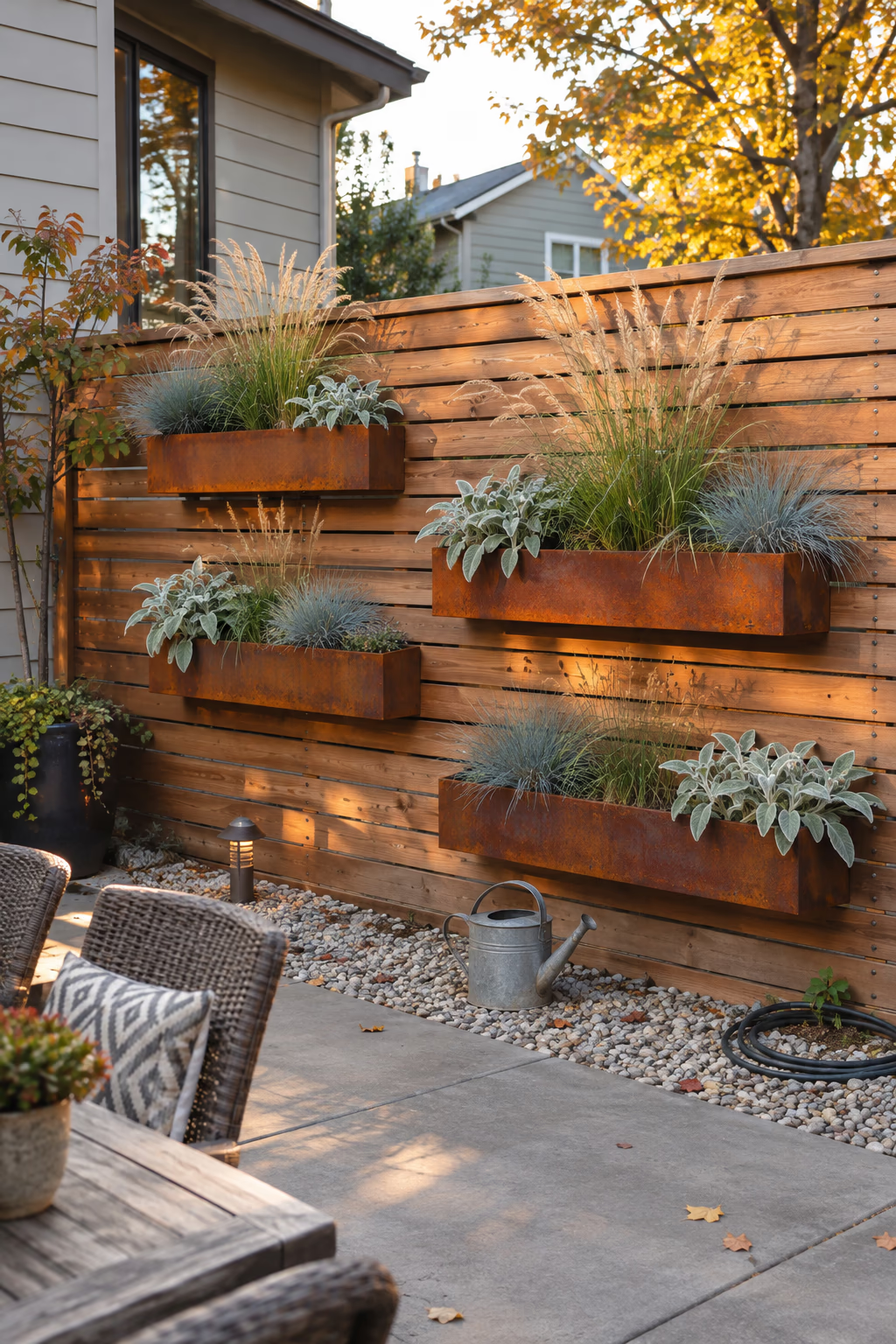
A modern look with warm, rusty texture
Weathering steel planters develop a stable orange-brown patina that looks striking against a horizontal cedar or dark-stained slat fence. Mount long, slim boxes in a staggered pattern and plant them with feather reed grass, blue fescue, or silvery lamb’s ear.
The combination of clean lines, rust tones, and fine-textured grasses suits contemporary homes and makes a narrow yard feel designed rather than leftover.
Rust runoff can stain concrete and light pavers below, especially in the first year. Let new planters weather before installing, or place them over gravel. Steel also heats up in strong sun, so choose heat-tolerant plants.
11. Plant a Fern Wall on a Shady North-Facing Fence
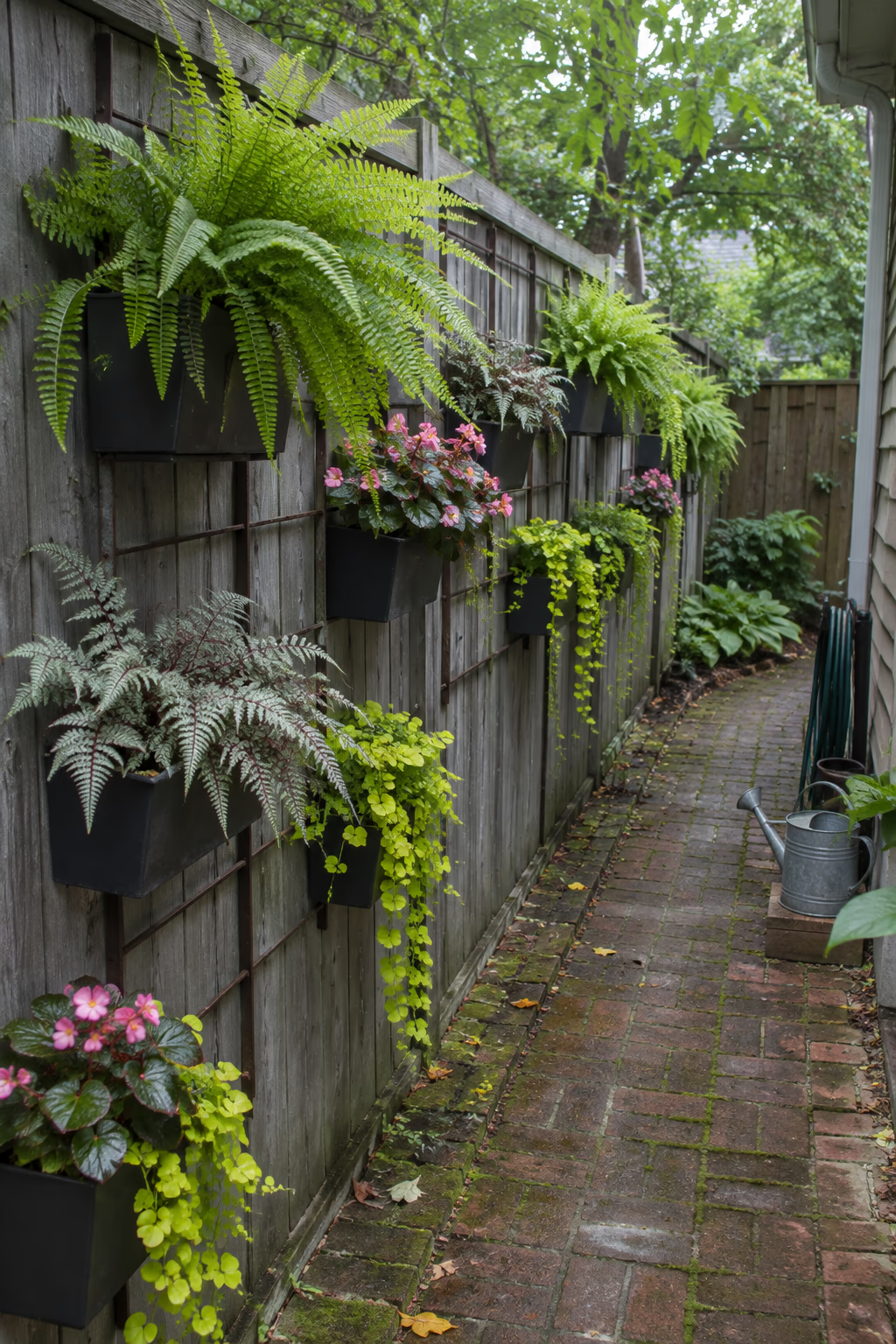
Cool, lush green where flowers struggle
A fence that rarely sees direct sun is perfect for ferns, begonias, impatiens, and small hostas. Hang a grid of planters or wall pockets and fill them with Boston ferns, Japanese painted fern, and a trailing edge of golden creeping Jenny or variegated vinca.
Layered fern fronds create a soft, woodland mood that brightens a dark side yard. Variegated or silver foliage reflects what little light reaches the area.
Ferns hate drying out, so plan to water often even though the site is shady. In cold climates treat Boston ferns as annuals or bring them indoors, and plant truly hardy ferns in the ground rather than small containers that freeze solid.
12. Espalier a Fruit Tree Against a Sunny Fence
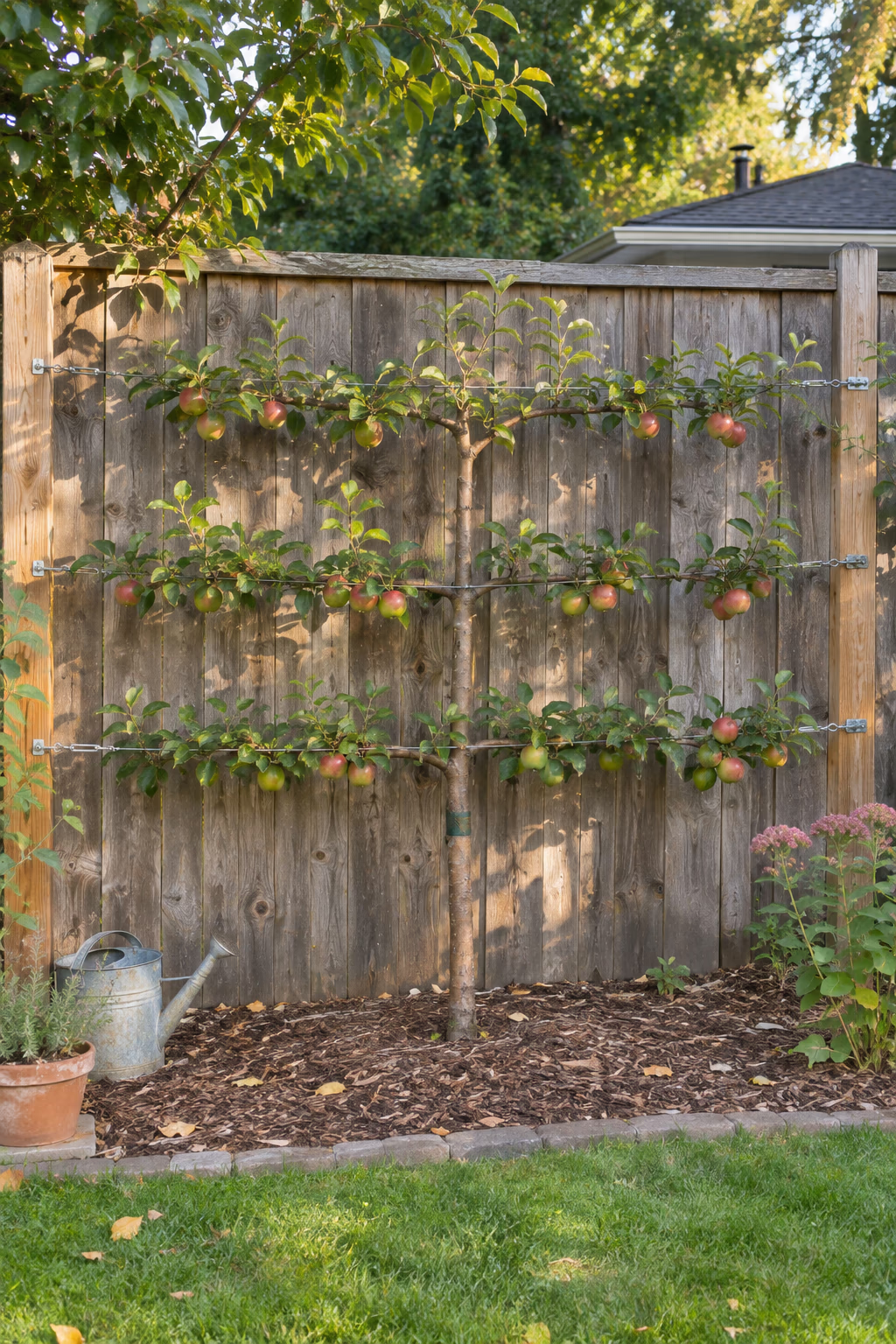
Homegrown apples in a flat, elegant form
Espalier trains a tree into flat horizontal tiers or a fan shape against a support. Plant a dwarf apple or pear 8 to 12 inches in front of a sunny fence, stretch wires at about 18-inch intervals, and tie the young branches along them.
The result is part sculpture, part orchard. An espaliered tree takes up only a foot or so of depth yet can produce a useful harvest, and it looks handsome even in winter when the branch pattern shows clearly.
Espalier requires patience and summer pruning every year. Choose a fence that will outlast the tree, since replacing panels behind an established espalier is difficult, and check whether your variety needs a second tree nearby for pollination.
13. Stagger Planters in a Checkerboard Pattern
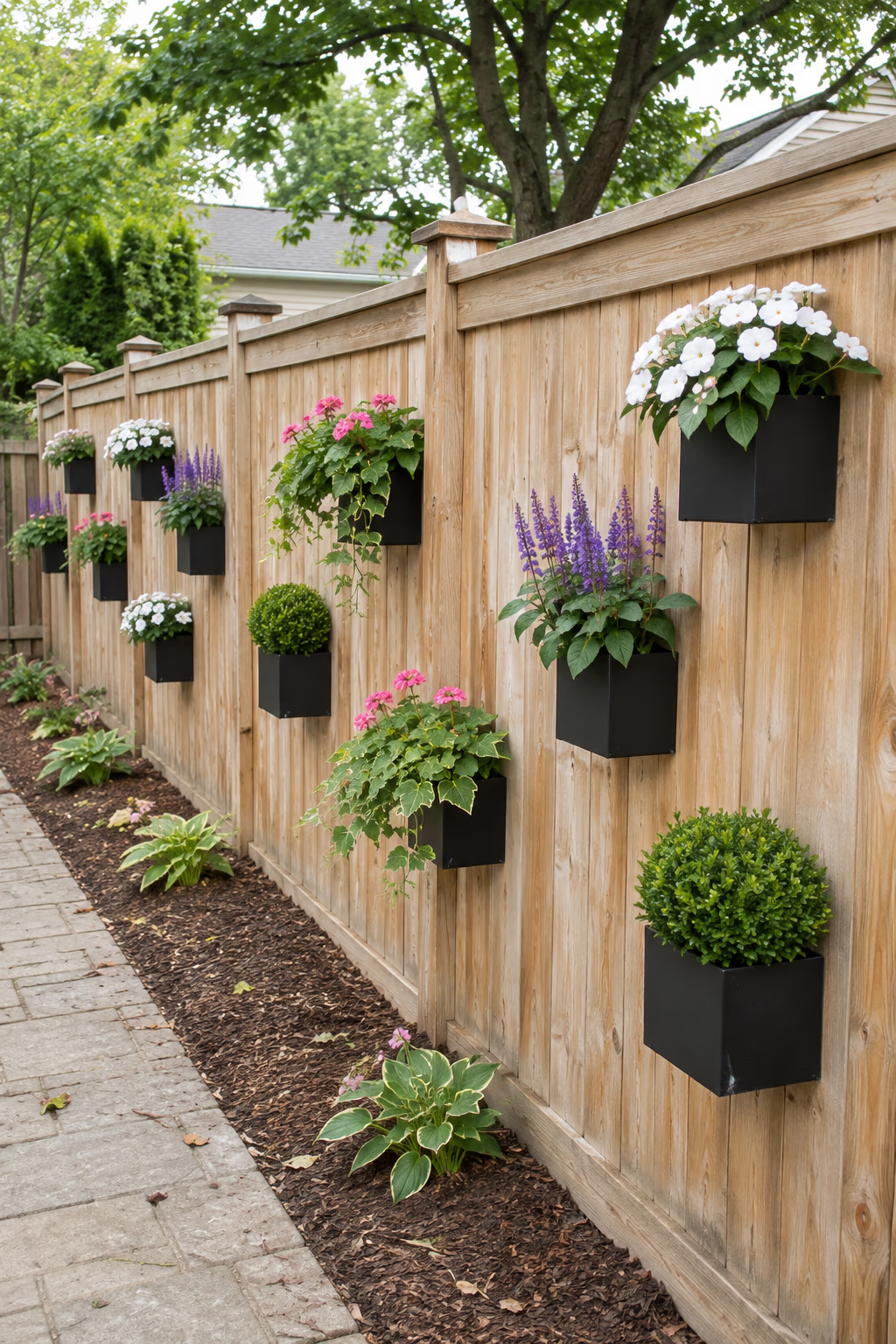
Playful structure that fills a long fence
Instead of straight rows, mount square planters or boxes in alternating positions, like squares on a checkerboard. Use identical containers in one color, such as matte black or white, and plant each with a single variety for a crisp, graphic look.
The offset layout gives every plant more light and room to spill, and it covers a long fence with fewer containers than full rows would require.
Measure and mark the layout with painter’s tape before drilling. Mount each planter into a rail or add a horizontal backer board between posts so you aren’t relying on thin pickets.
14. Cover the Fence With an Evergreen Climber
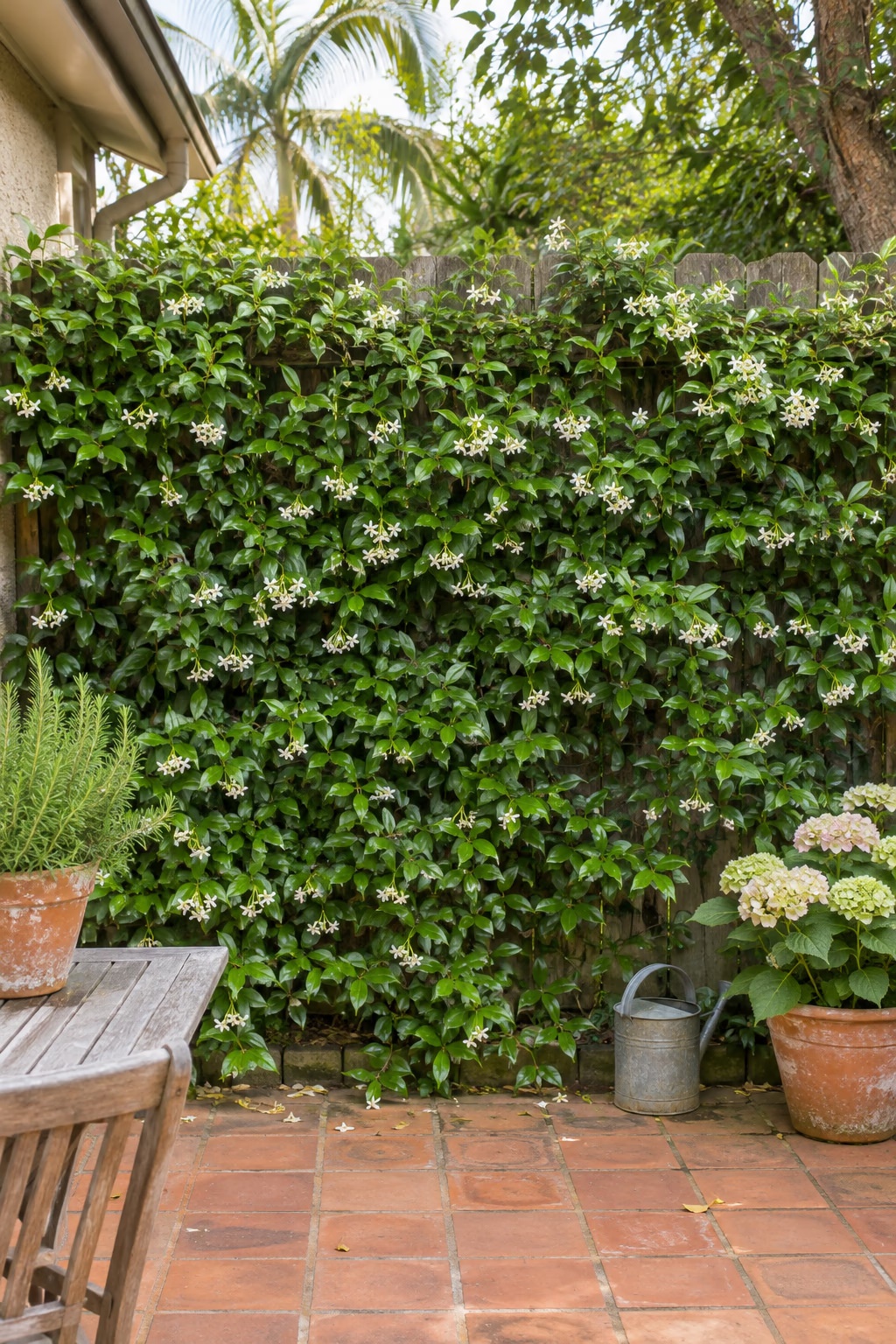
Year-round green that hides worn boards
Evergreen vines keep a fence clothed through winter. In warm regions, star jasmine offers glossy leaves and fragrant white spring flowers, while Carolina jessamine and native crossvine add yellow or orange blooms across a wider range of zones.
A single vine can eventually cover a full fence panel, softening an old or uneven fence without replacing it. Evergreen leaves also buffer street noise a bit and give birds shelter.
Avoid English ivy, which is invasive in many states and works its way into wood. Carolina jessamine is toxic if eaten, so consider it carefully around children and pets. Give vines wires or trellis rather than letting them grip the boards directly.
15. Grow Fast Annual Vines on Garden Netting
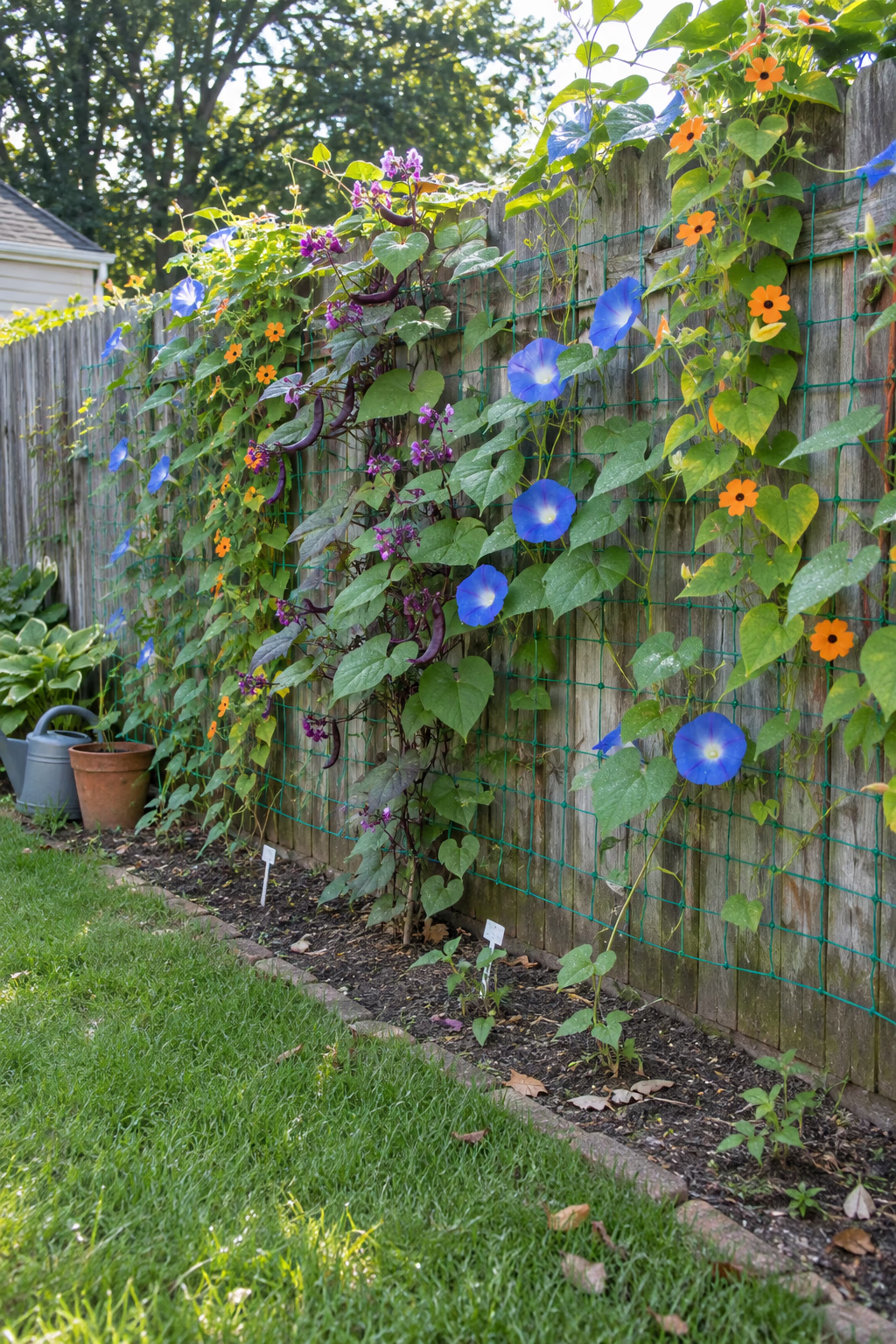
A full green screen in a single season
For the quickest coverage, staple or tie plastic garden netting to a fence and sow annual climbers at the base after the last frost. Morning glory, hyacinth bean, black-eyed Susan vine, cardinal climber, and scarlet runner bean can climb 6 feet or more by midsummer.
Annual vines are inexpensive, grow from seed, and let you try a new color scheme every year. They’re a smart choice for renters or for a fence you plan to replace soon.
Some morning glories reseed heavily, and hyacinth bean seeds are toxic raw. Pull spent vines in fall before they turn soggy against the fence, and check that netting doesn’t trap birds by keeping it taut.
16. Hang Galvanized Buckets From S-Hooks on a Rail
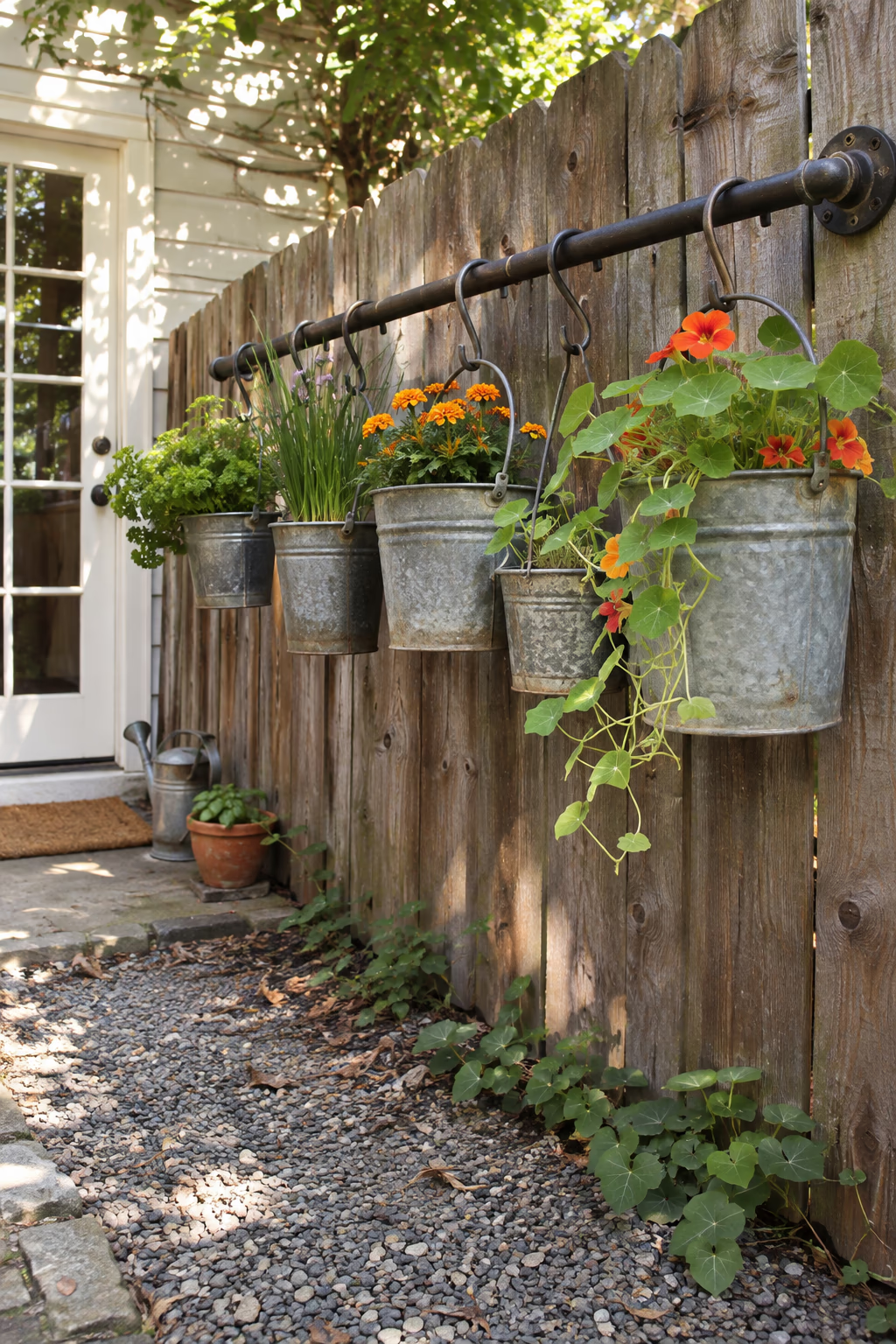
Farmhouse charm that’s easy to rearrange
Mount a length of 1-inch metal pipe or a sturdy wood rail across the fence, then hang galvanized buckets from heavy S-hooks. Drill drainage holes in the bottoms and plant them with herbs, marigolds, or trailing nasturtiums.
Buckets bring a relaxed farmhouse look and can be lifted off the rail for watering, harvesting, or moving to a sunnier spot. Mixing a few sizes adds visual interest.
Metal heats quickly in full afternoon sun, which can stress roots. Choose a spot with some afternoon shade, or line buckets with a thin layer of coir before adding soil.
17. Build a Slatted Panel for Movable Pots
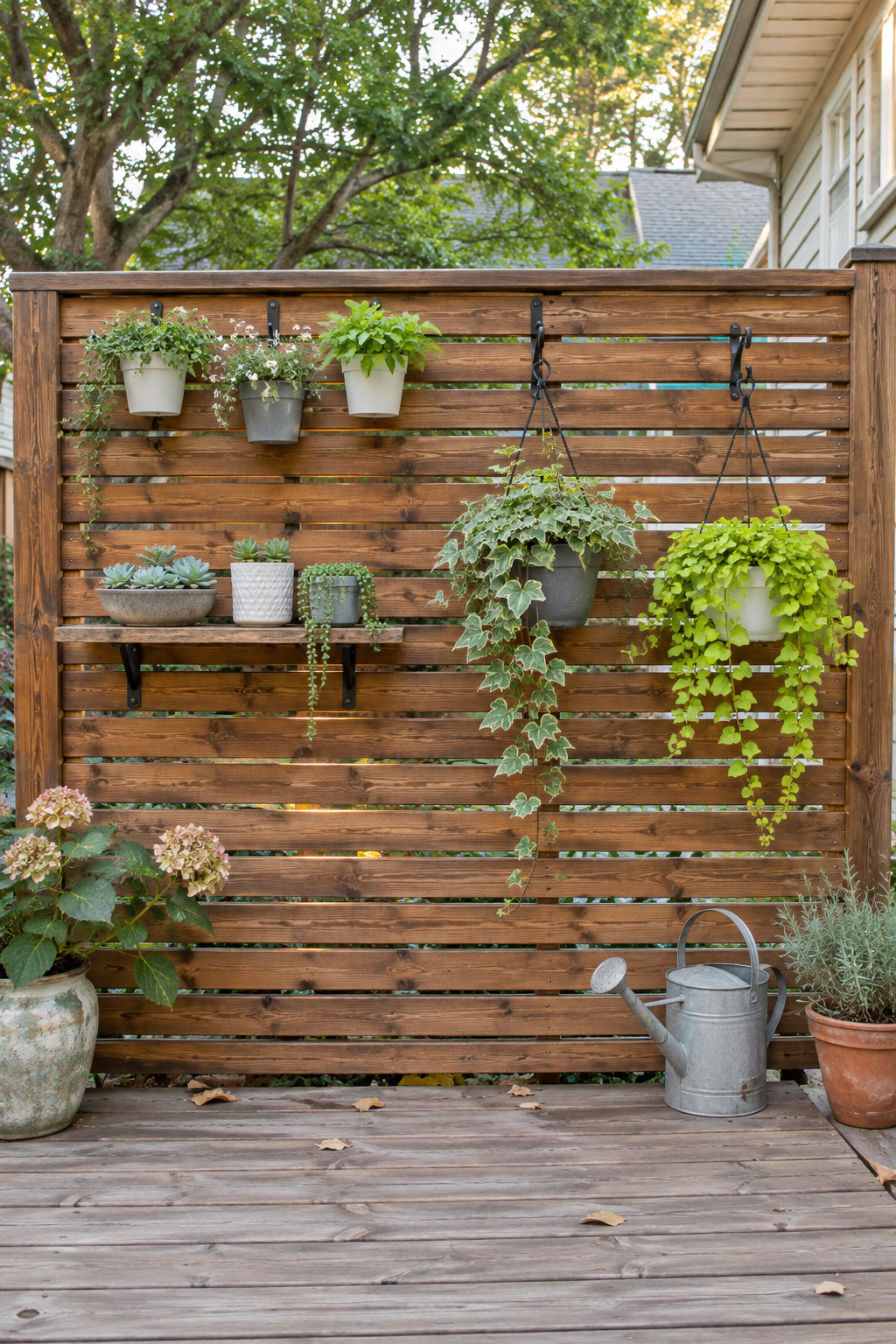
A flexible backdrop you can change anytime
Screw horizontal 1×3 or 1×4 slats to your fence posts with small gaps between them, creating a panel that looks like a modern screen. Clip-on pot hangers, hooks, and small shelves can then attach anywhere along the slats.
This design lets the vertical garden grow and change. Start with a few pots and add more each season without drilling new holes into the original fence.
Use rot-resistant wood or composite slats, and stain or seal them before mounting. Leaving a small gap between the slats and the original fence keeps moisture from getting trapped.
18. Hook Planters Over the Top Rail of a Vinyl Fence
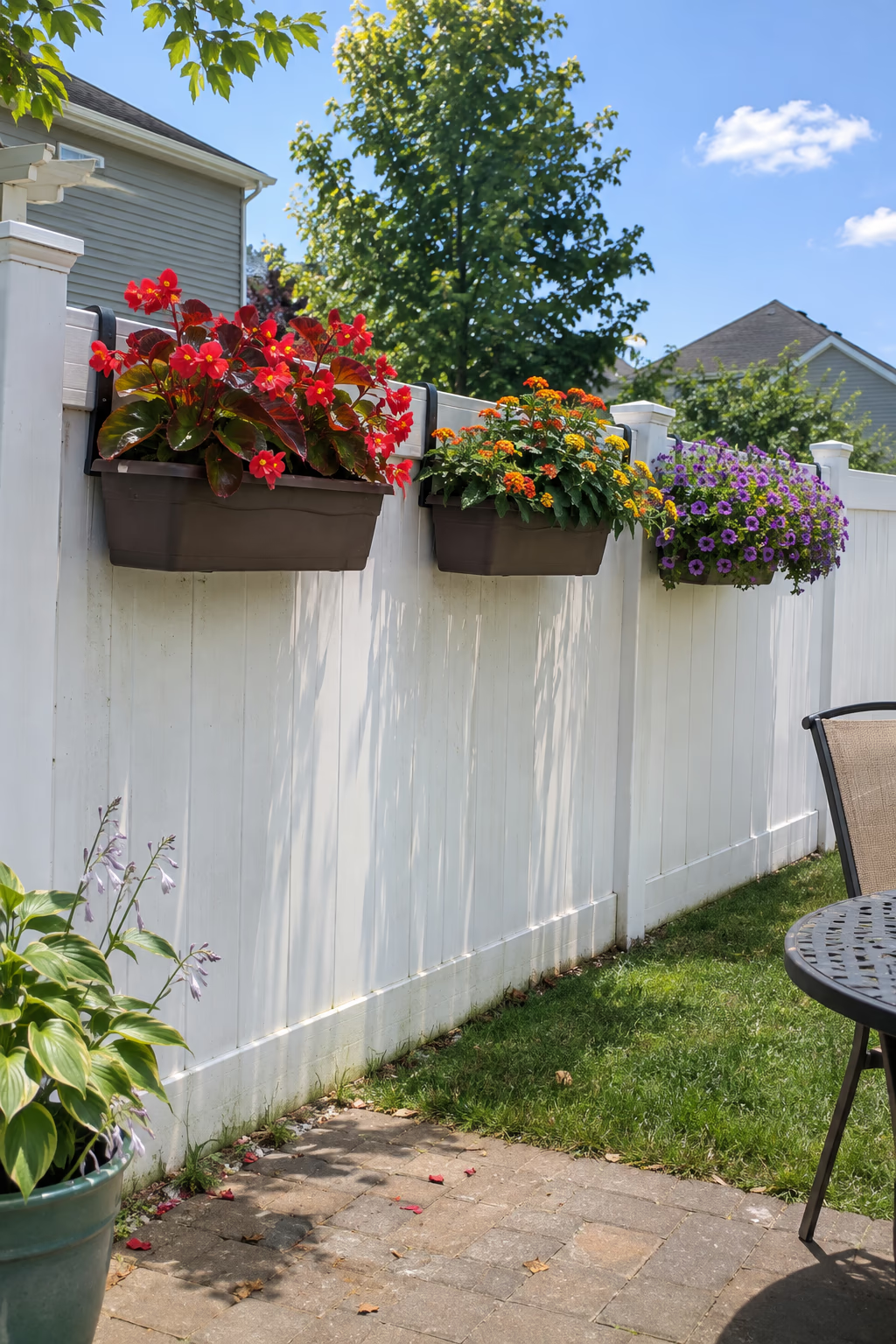
No drilling, no damaged panels
Vinyl fences don’t take screws well, and drilling can void a warranty. Over-the-rail planters solve that by hanging from adjustable brackets that grip the top of the fence. Fill them with bright annuals such as begonias, lantana, or million bells.
This approach adds color in minutes and leaves no permanent marks, which also makes it a great option for renters.
Measure the top rail width before buying, since bracket sizes vary. Keep planters modest in size because vinyl panels can flex under heavy weight, and check that plants won’t spill onto a neighbor’s side.
19. Clip Window Boxes Onto a Chain-Link Fence
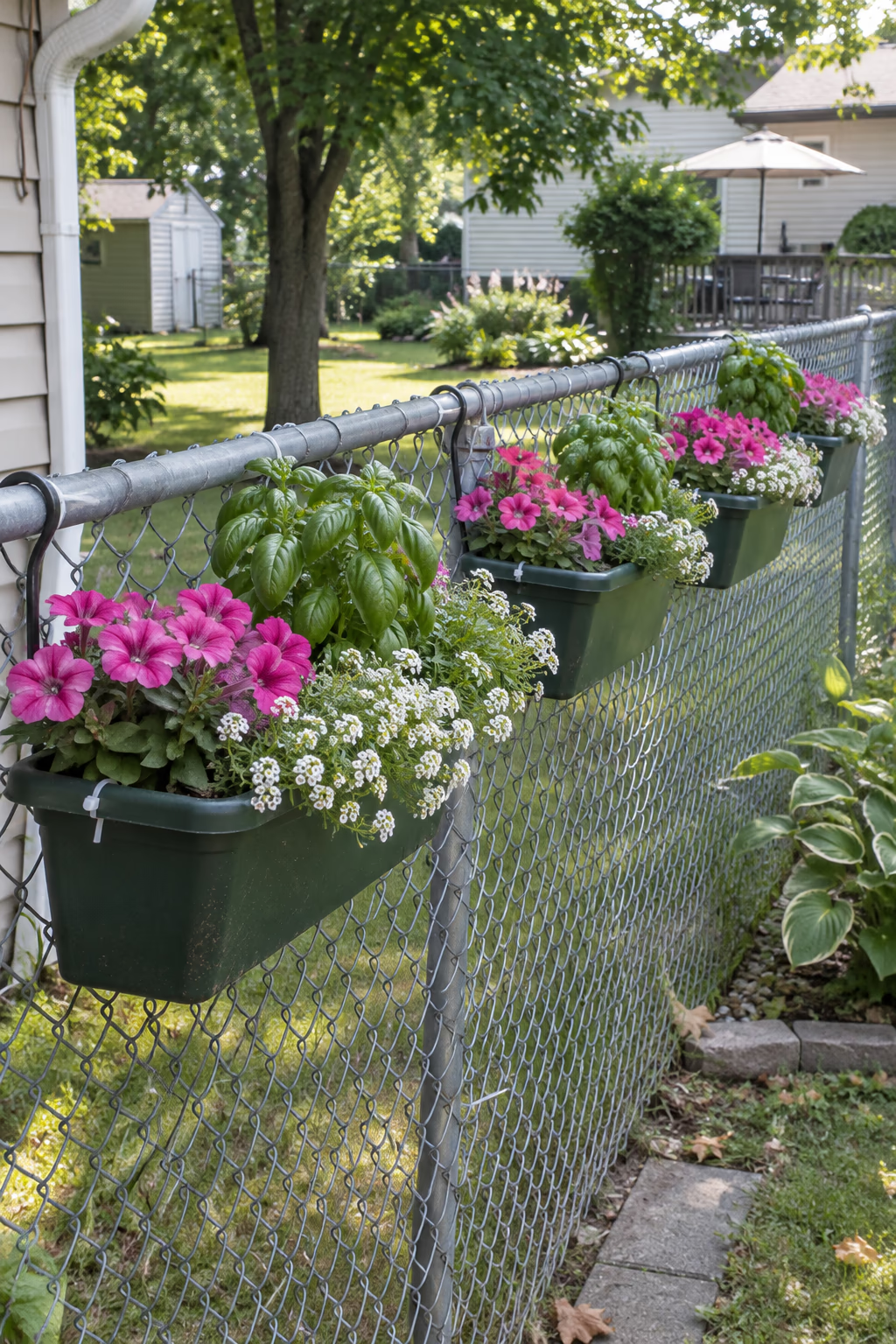
Turn a utilitarian fence into a flower border
Chain-link is strong and see-through, which makes it easy to dress up. Hang lightweight resin or metal window boxes with hook brackets designed for wire fences, or secure them with UV-resistant zip ties at both ends.
Filling a row of boxes with petunias, sweet alyssum, or herbs draws the eye to the flowers instead of the wire behind them, softening a fence that often feels industrial.
Because chain-link is open to wind, choose sturdy, compact plants and secure each box at several points. Avoid weaving vigorous vines through the mesh, since thick stems can bend the wire and are hard to remove later.
20. Plant a Narrow Bed at the Fence Base to Anchor the Wall
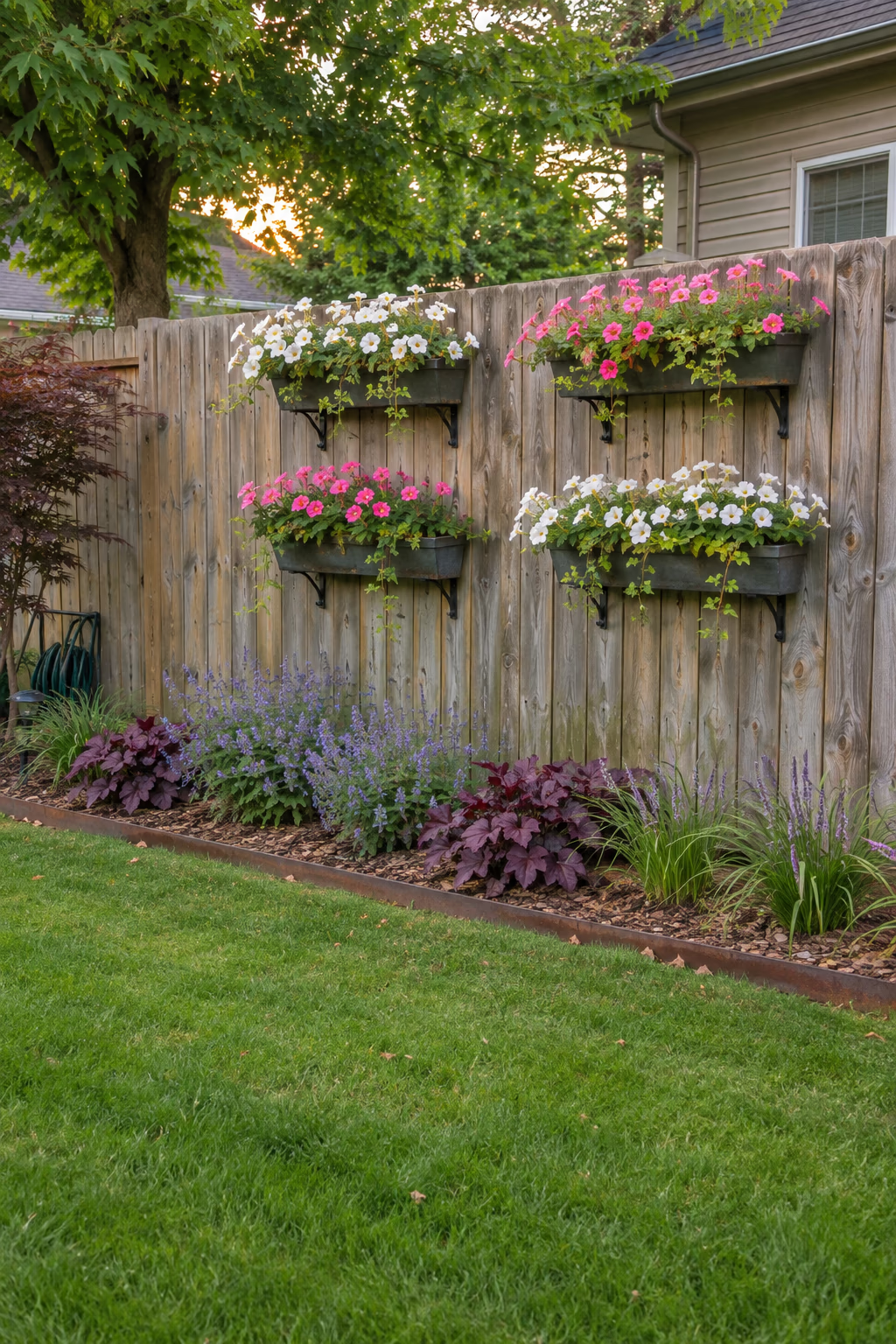
Connect the vertical garden to the ground
A strip bed about 12 to 18 inches wide along the bottom of a planted fence ties the whole display together. Fill it with low edgers like catmint, coral bells, or liriope, and use it as the planting spot for any climbers above.
Without a base planting, a fence garden can look like it’s floating. A narrow bed grounds the design and hides mounting hardware and drip lines near the bottom.
Keep soil and mulch a few inches below the lowest fence boards to prevent rot, and use a metal or stone edging to stop grass from creeping in.
21. Refresh Fence Planters With Fall Color
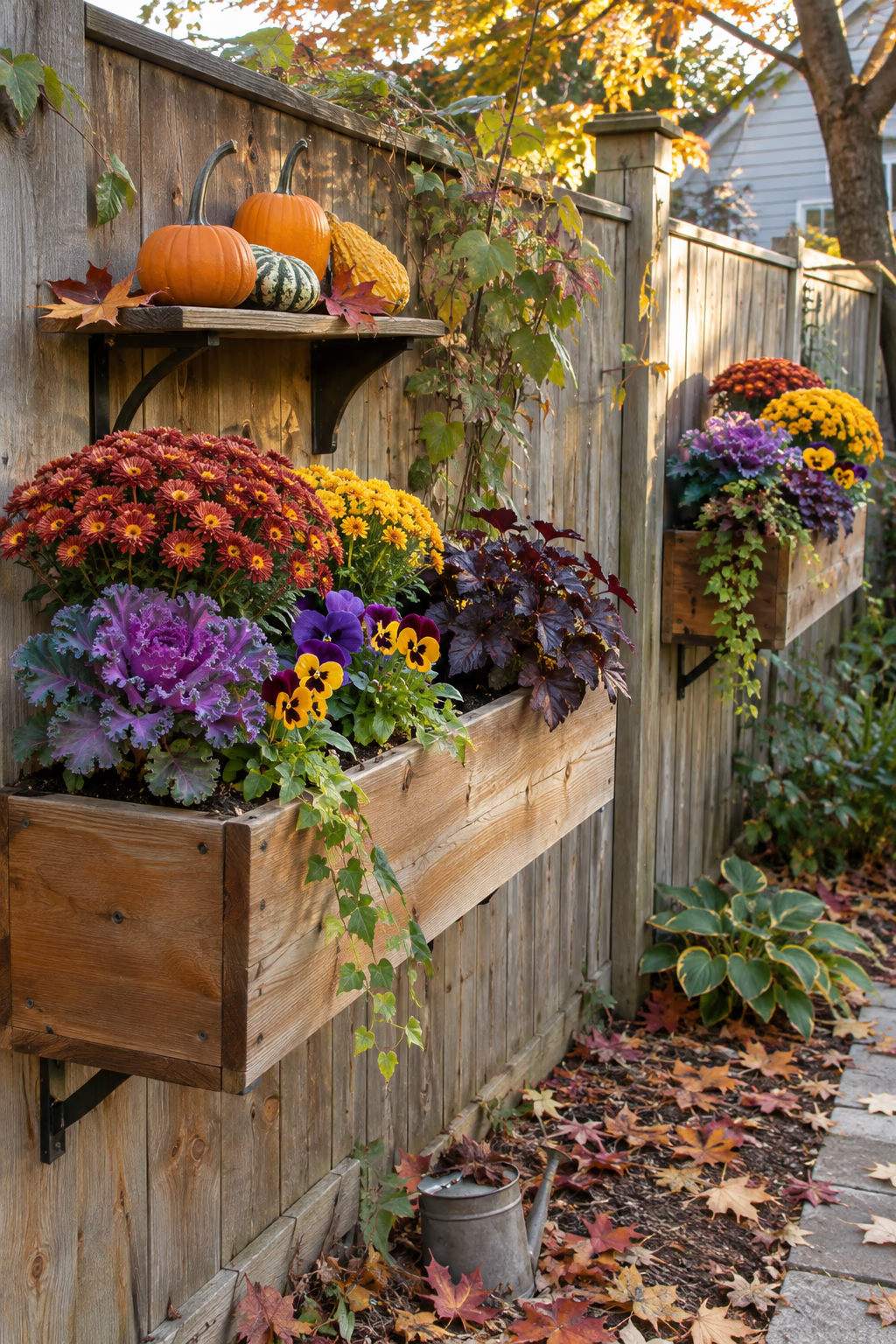
Keep the wall going after summer annuals fade
When petunias and impatiens wind down, pull them and replant fence boxes with mums, pansies, violas, ornamental kale, and purple heuchera. Tuck in a few small pumpkins or gourds on shelves for extra seasonal color.
Swapping in cool-season plants extends your fence garden by two months or more in many regions, and pansies often bounce back after light frosts.
Water fall planters less often than summer ones, since evaporation slows. In cold zones, empty or cover terracotta and ceramic containers before hard freezes so they don’t crack.
22. Repurpose Colanders and Tin Cans as Quirky Planters
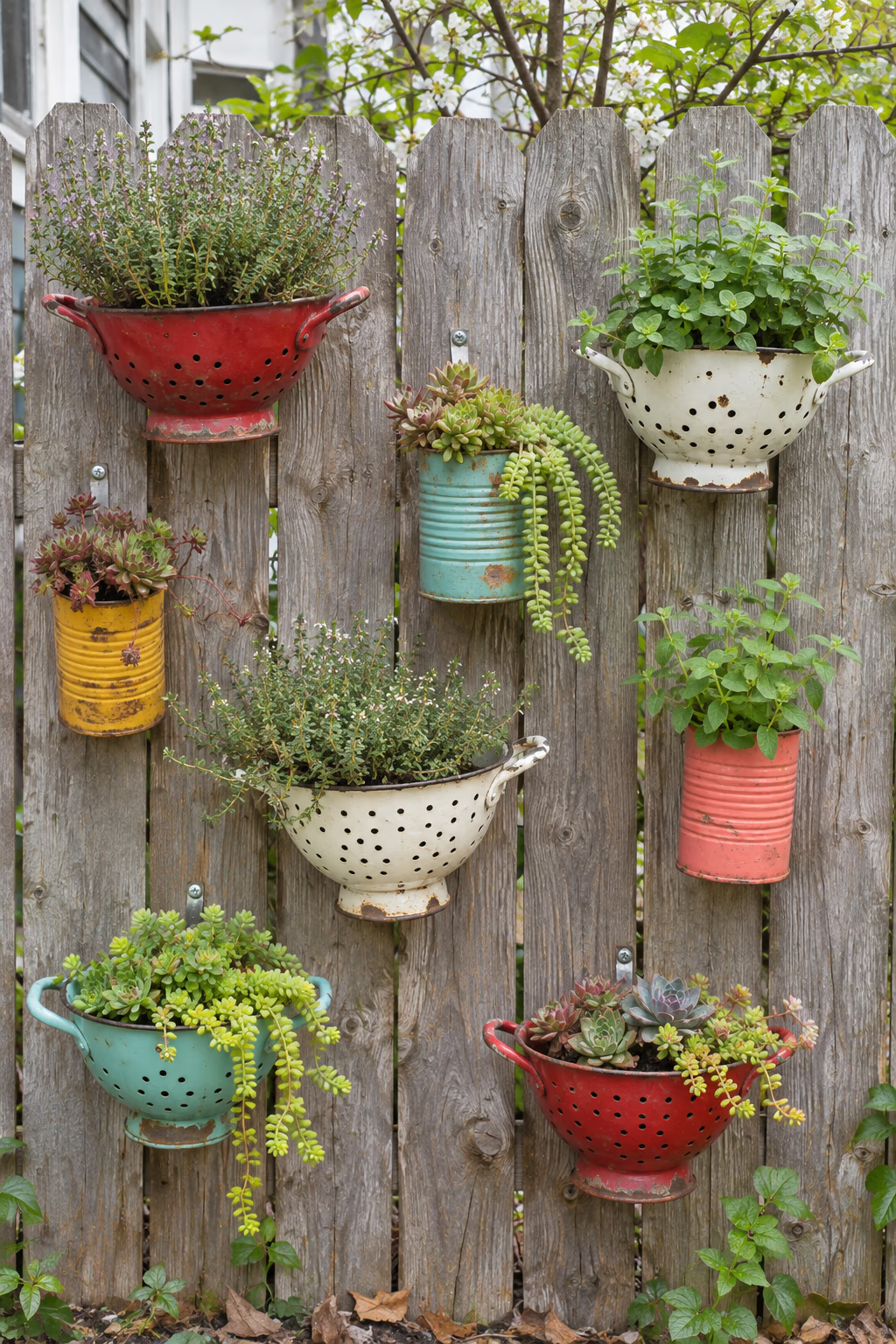
Budget-friendly character with built-in drainage
Old enamel colanders, large tin cans, and vintage kitchen pans make cheerful fence planters. Colanders already drain well; cans just need a few holes punched in the bottom. Paint cans in coordinating colors and hang them from screws or small hooks.
Thrifted containers give a fence personality at almost no cost, and they suit herbs, succulents, and small annuals perfectly.
Line colanders with coir or landscape fabric so soil doesn’t wash out, and file down any sharp can edges. Small containers dry out fast, so group them where you’ll remember to water.
23. Dress the Garden Gate With a Hanging Planter
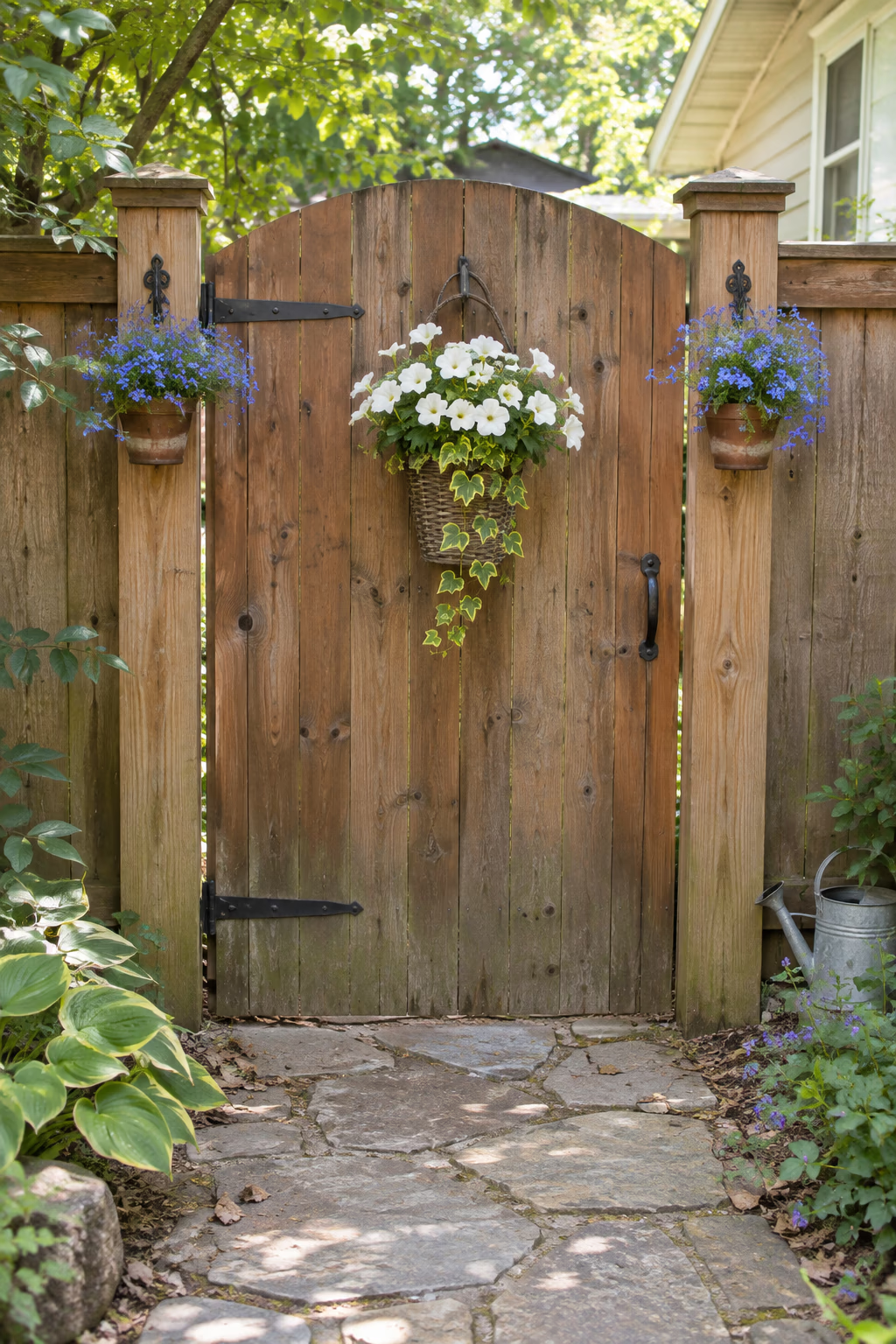
A welcoming focal point at the entry
A garden gate is a natural place to start a fence garden. Hang a single wall basket or narrow wooden planter at eye level on the gate and match it with planters on the fence posts on either side.
Framing the entrance with plants makes guests feel welcome and gives the eye a clear focal point along a long fence.
Keep gate planters lightweight so they don’t strain the hinges or cause the gate to sag. Plants should be compact enough that they don’t catch on clothing or get crushed every time the gate swings.
24. Hang Outdoor Mirrors Among the Planters
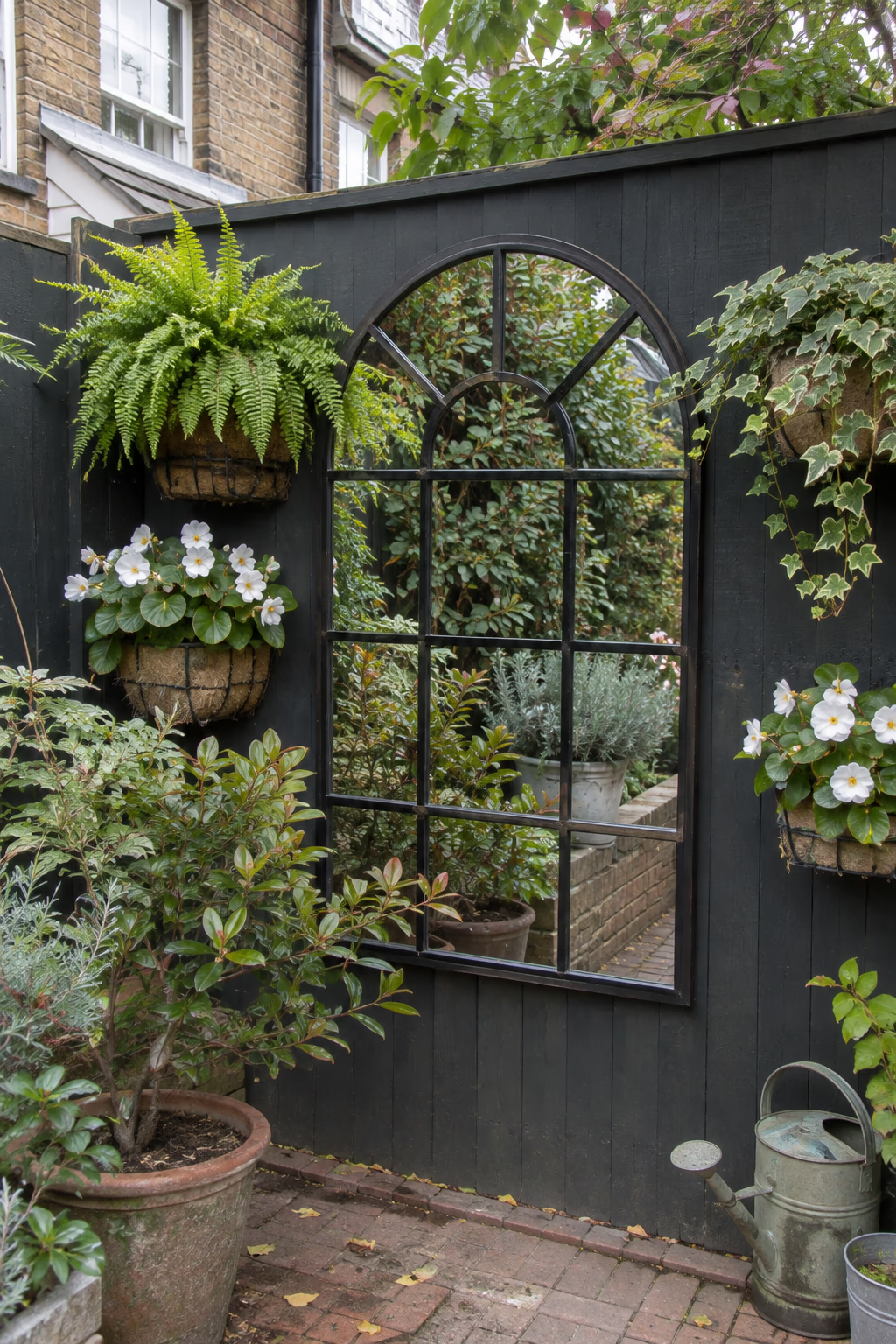
Double the greenery in a tight space
A weatherproof acrylic mirror or framed outdoor mirror set among fence planters reflects foliage and light, making a narrow yard or side passage look larger. Arched or window-pane frames add a whimsical secret-garden look.
The reflection seems to extend the garden beyond the fence, which works especially well in small courtyards and townhouse patios.
Birds can fly into mirrors that reflect open sky. Angle the mirror slightly downward, place it where it reflects plants rather than open space, and add plants in front of it to break up the reflection. Avoid glass mirrors in high-wind areas.
25. Weave Solar Lights Through the Fence Garden
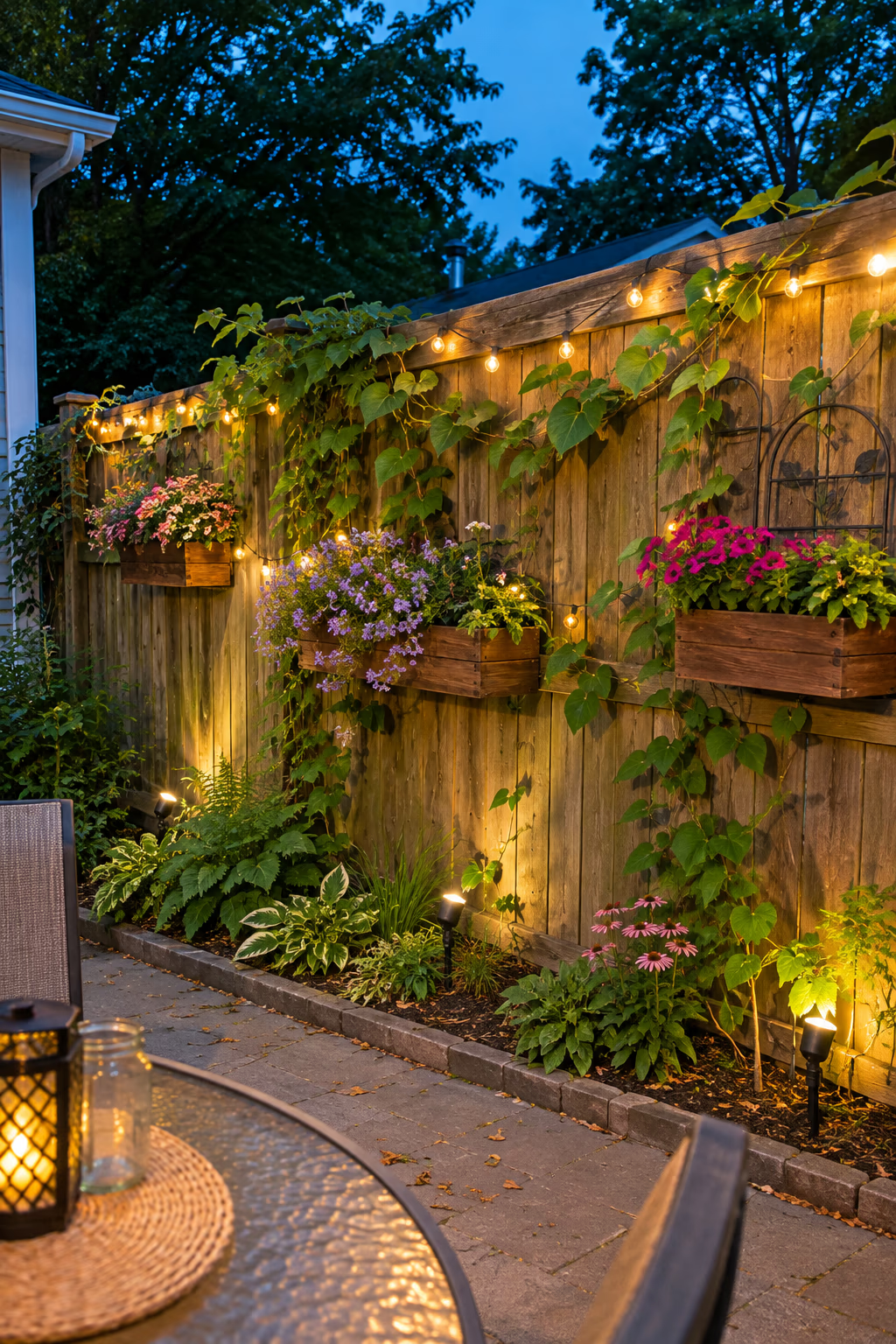
Extend the show into the evening
Solar string lights draped between planters or along the top rail make a fence garden glow after dark. Small solar spotlights at the base can also uplight climbing vines or espaliered branches.
Lighting turns your vertical garden into a backdrop for evening dinners and makes the yard feel warmer and more welcoming year-round.
Solar panels need a few hours of direct sun to charge, so place them where they receive light even if the fence itself is shaded. Use clips or hooks rather than staples, which can damage the wiring.
How to Plan Your Fence Vertical Garden
A fence garden looks effortless when it’s finished, but a few decisions up front will keep plants healthy and protect the fence itself.
- Check fence strength first. Wiggle each post and inspect boards for rot. Old or leaning fences may need repairs before they can carry wet soil and plants.
- Know who owns the fence. If the fence is shared with a neighbor or governed by HOA rules, get approval before drilling or attaching anything.
- Map the sunlight. Track how many hours of direct sun each section gets. Choose succulents and sun-loving annuals for hot spots and ferns or begonias for shade.
- Plan for watering. Vertical containers dry out faster than beds. A drip line on a timer saves time and keeps plants consistent through summer heat.
- Protect the wood. Use spacers behind planters, keep soil and mulch off boards, and seal or stain the fence so moisture doesn’t cause rot.
- Start with one panel. Test plants, watering, and mounting methods on a single section before expanding along the whole fence.
Frequently Asked Questions
Will planters damage my wood fence?
They can if water sits against the boards. Leave a small air gap behind each planter, use drainage holes, and keep soil off the fence. Screwing into posts and rails rather than pickets also prevents sagging and cracked boards.
What plants grow best in a fence vertical garden?
Good choices include petunias, calibrachoa, geraniums, herbs, strawberries, succulents, ferns, and trailing plants such as bacopa or creeping Jenny. Match plants to how much sun the fence receives and how often you can water.
How do I water plants on a fence?
Small setups can be watered with a hose wand or watering can. Larger walls benefit from a drip irrigation line connected to a timer, which delivers water to each container automatically.
Can I attach planters to a neighbor’s side of the fence?
Only with permission. A fence that belongs to a neighbor or sits on a shared line may need consent before you drill or hang anything, and some HOAs regulate what you can mount on fences.
How much does a fence vertical garden cost?
A few thrifted cans, hooks, and annuals can cost under fifty dollars, while cedar planter rows, Corten steel boxes, or modular living walls with irrigation can run several hundred dollars or more. Starting with one panel keeps the budget manageable.
Final Thoughts
A plain fence doesn’t have to stay plain. With a few planter boxes, a row of terracotta pots, or a climbing vine trained along wires, it can become the most colorful part of your yard and give you more growing space without giving up any ground.
Choose one or two ideas that match your fence type, sunlight, and how much watering you’re willing to do, then build up over time. Season by season, your boundary line can turn into a living wall that you enjoy every time you step outside.