Imagine stepping out the back door on a July evening, snipping a few cherry tomatoes, a handful of basil, and a glossy pepper, and carrying dinner inside without ever touching a shovel. Everything came from pots lined up along the patio, the driveway, or a sunny balcony rail.
That’s why container vegetable gardening keeps growing in popularity. Pots don’t need good native soil, a big yard, or a weekend of digging. They warm up faster in spring, they’re easier to protect from weeds and burrowing pests, and you can move them to follow the sun. Renters, condo owners, and busy families can all grow real food this way.
These 23 container vegetable garden ideas cover easy theme pots, budget grow bags and buckets, self-watering setups, root crops, fall color, and simple watering tricks. Each one includes container sizes, plant suggestions, and honest tips so your pots stay productive from spring through fall.
1. Plant a Salsa Garden in Three Big Pots
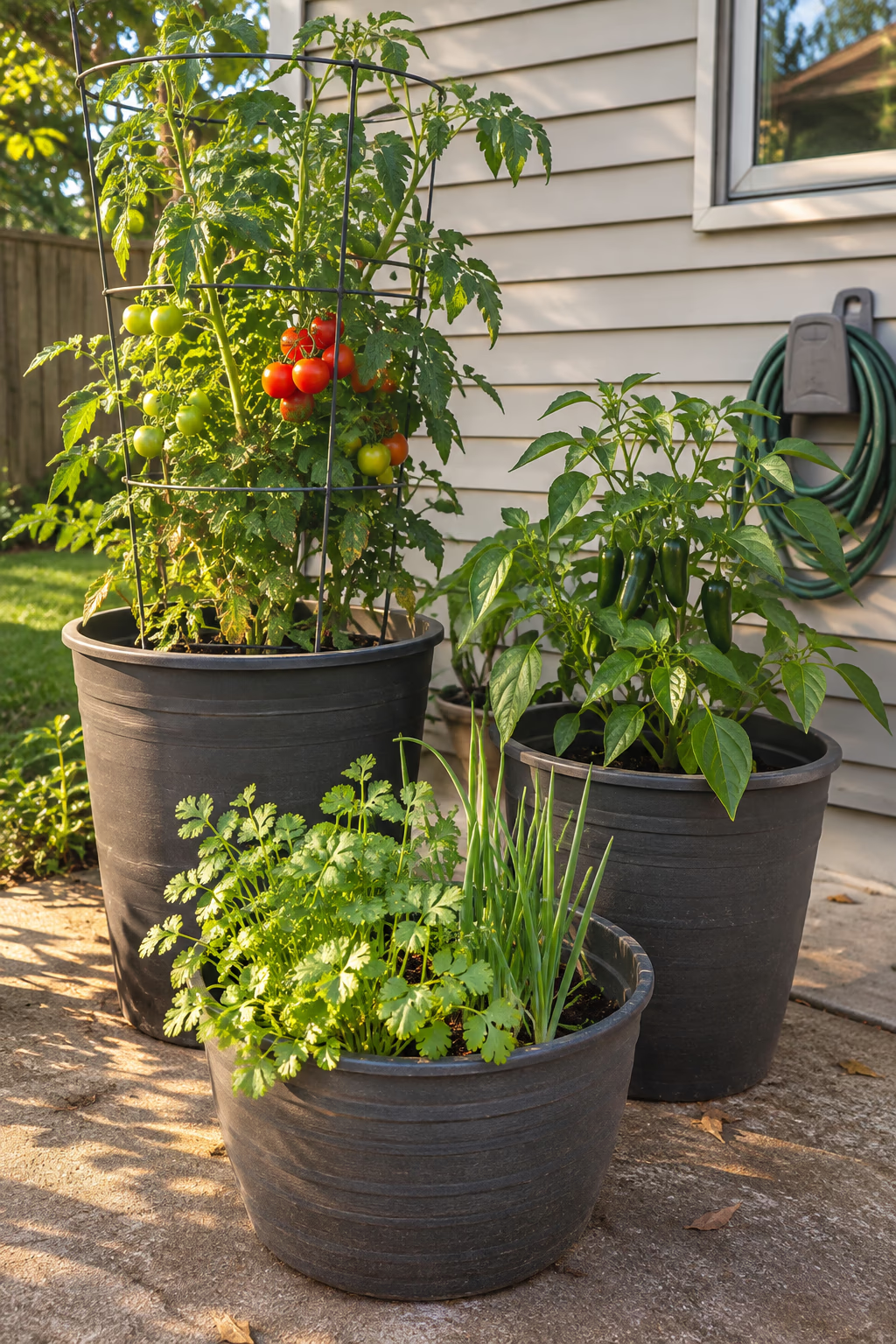
Everything for fresh salsa in one sunny corner
Group three large containers together: a 15- to 20-gallon pot for a slicing or Roma tomato, a 5-gallon pot for a jalapeño or other hot pepper, and a wide 3-gallon pot for cilantro and a few green onions. Choose matching colors, such as charcoal or terracotta, so the cluster reads as one planned garden.
Splitting the crops into separate pots keeps the tomato from shading or out-competing its neighbors, and it lets you water each plant the way it prefers. Set the tallest pot at the back and stake or cage the tomato at planting time.
Cilantro bolts quickly in summer heat, so sow it in spring and again in late summer, and give its pot a spot with a little afternoon shade if you live in a hot climate.
2. Line a Sunny Driveway With Fabric Grow Bags
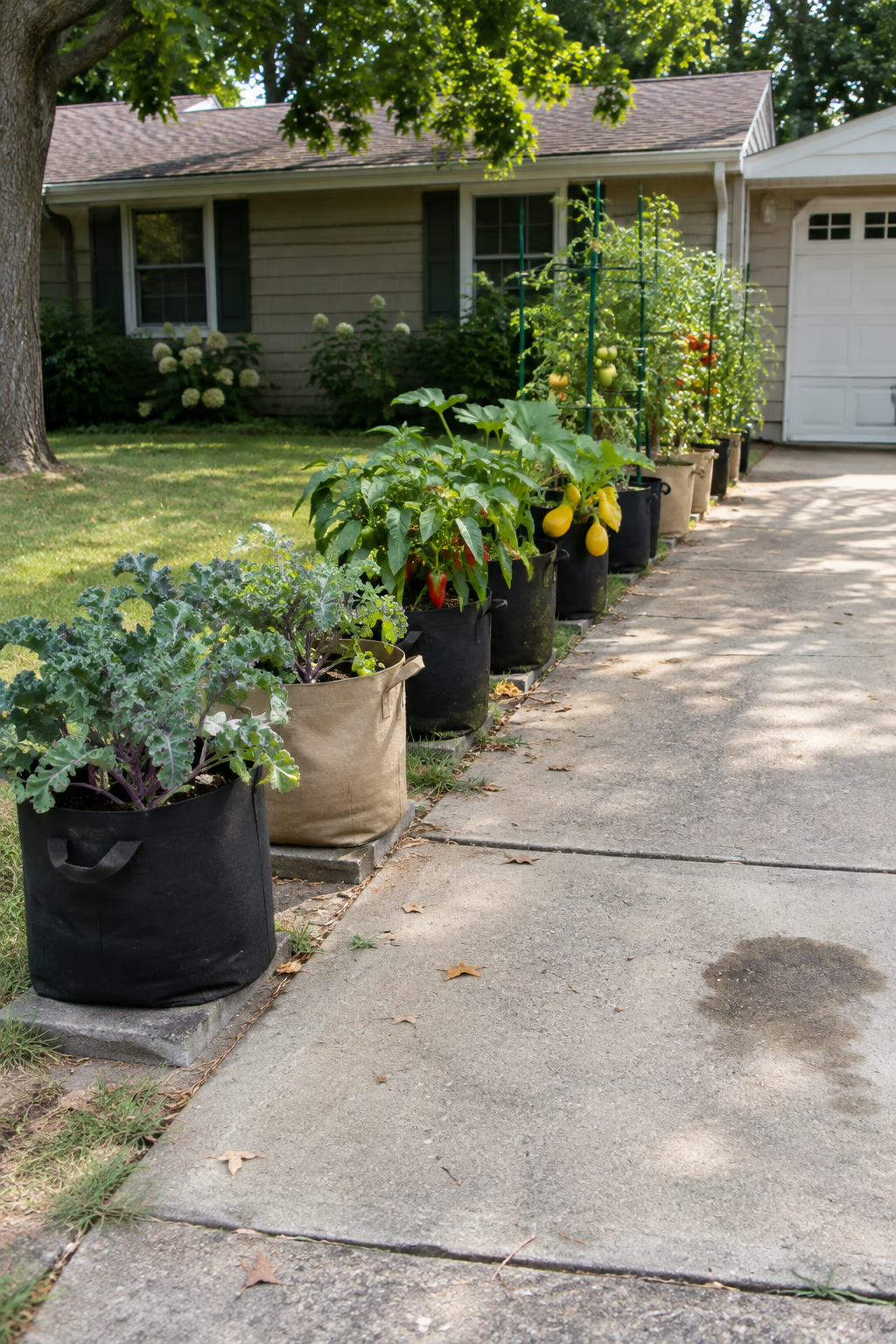
Turn unused pavement into a productive strip
A driveway edge or side apron often gets more sun than anywhere else on the property. Line it with 10- to 20-gallon fabric grow bags in black, tan, or olive green, and fill them with tomatoes, peppers, squash, and greens.
Fabric breathes, so roots get air pruned instead of circling, and excess water drains away easily. The bags have handles, so you can shift them when you need to park a trailer or make room for guests, and they fold flat for winter storage.
Fabric dries out faster than plastic, especially on hot asphalt. Expect to water daily in midsummer, and set the bags on a few pavers or a scrap board if the surface gets scorching.
3. Paint 5-Gallon Buckets for a Budget Tomato Row
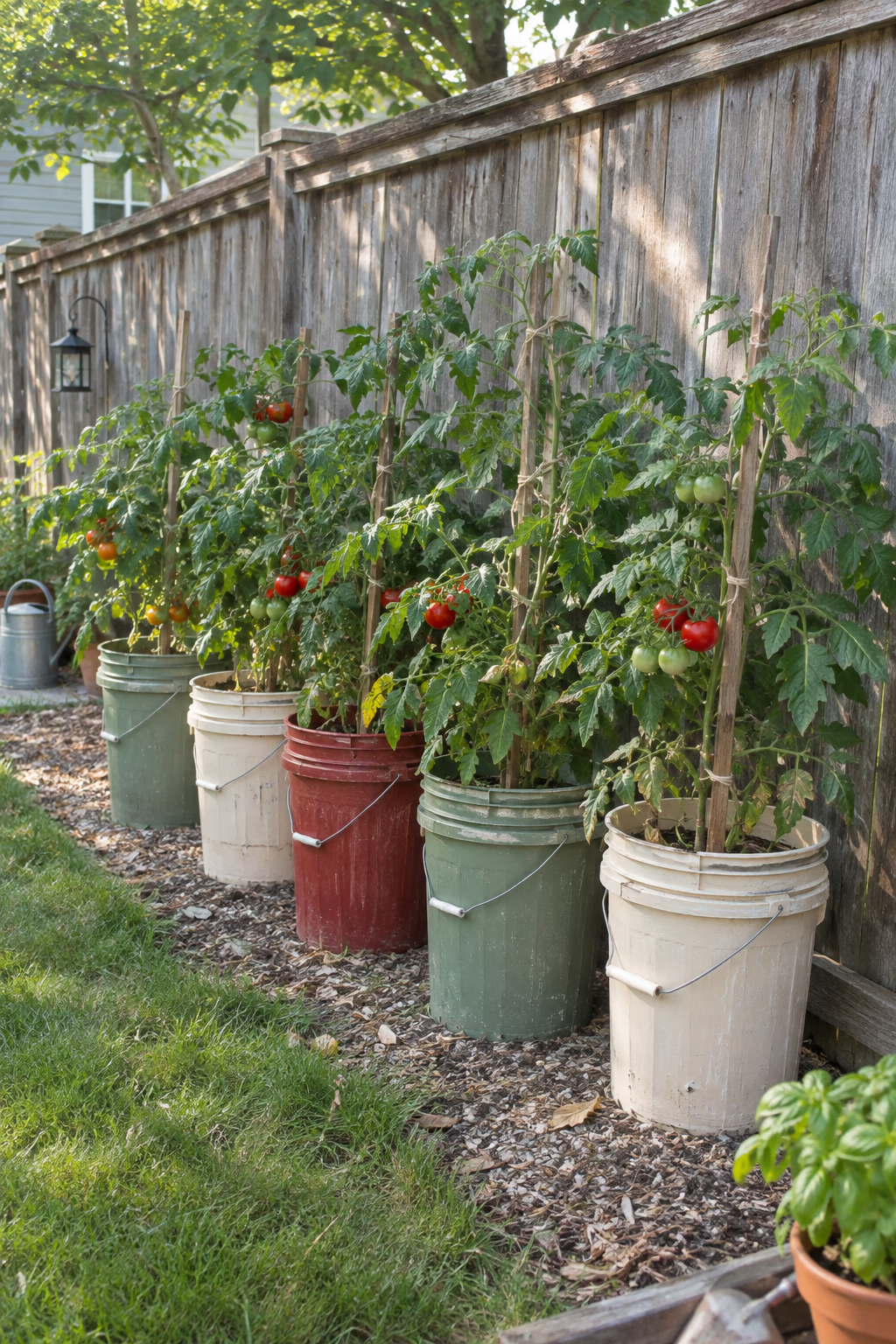
The cheapest big container you can find
Food-grade 5-gallon buckets, often free from bakeries and delis, are just big enough for one determinate tomato, a pepper, or a bush cucumber. Drill five or six half-inch holes in the bottom, then brush on exterior paint in soft sage, cream, or barn red so a row of them looks intentional.
Painting the outside a light color also helps keep roots cooler in full sun, which is a real advantage over bare dark plastic. Line the buckets up along a fence or patio edge and add a sturdy stake to each one.
Avoid buckets that held paint, solvents, or chemicals. Look for the number 2 recycling symbol and a food-safe label, and paint only the outside.
4. Build Self-Watering Planters From Storage Totes
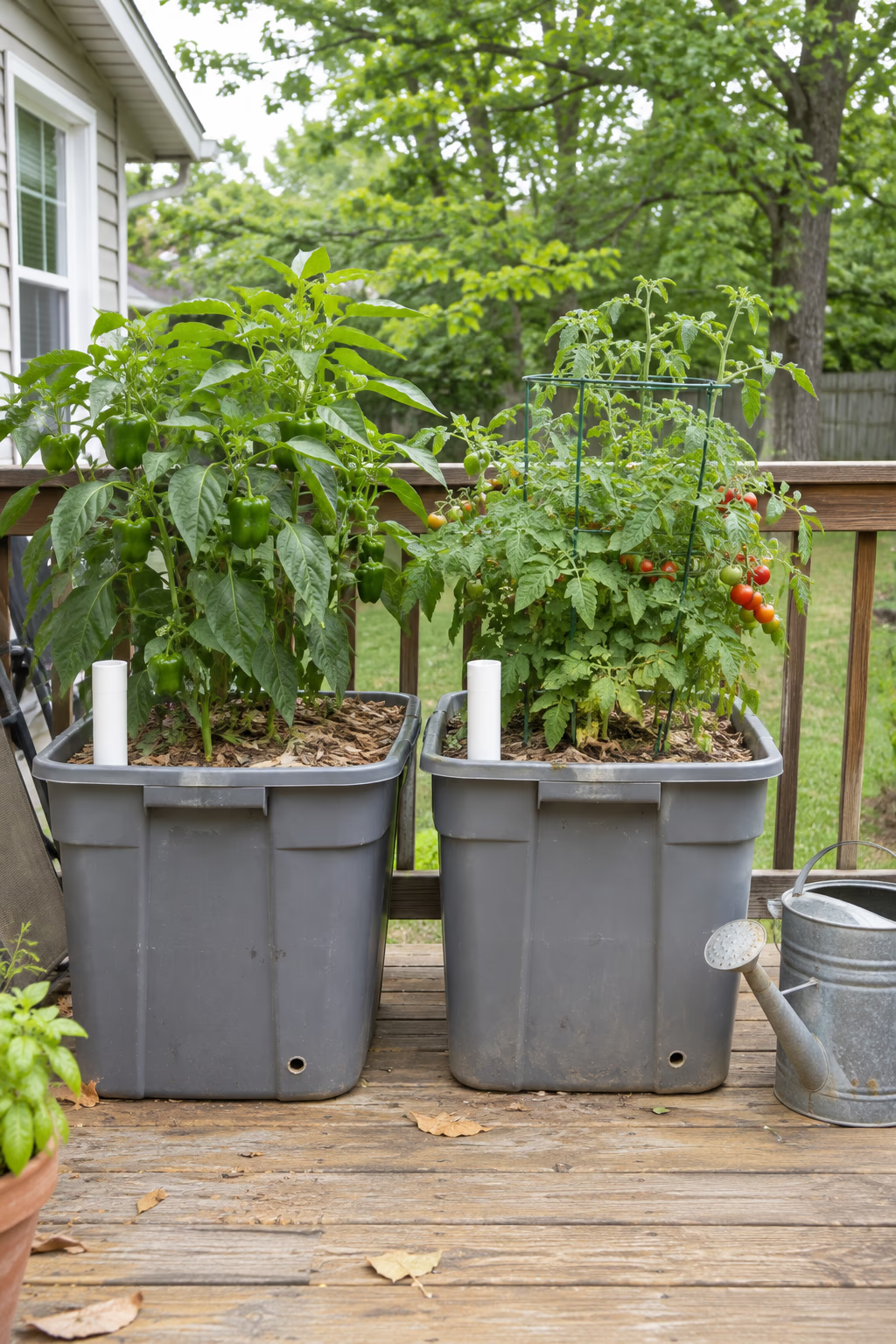
Fewer watering trips in the heat of summer
A large plastic storage tote can become a self-watering planter. A perforated platform sits a few inches above the bottom, a small basket of soil wicks moisture up from the reservoir, and a fill tube lets you top off the water from above. Drill an overflow hole just below the platform so rain can’t drown the roots.
Because plants drink steadily from below, they’re less likely to swing between bone-dry and soggy. That consistency helps prevent cracked tomatoes and blossom-end rot, and it’s a lifesaver if you work long days.
Use a sturdy, opaque tote, and check the reservoir often during heat waves. In rainy spells, empty excess water so the soil doesn’t stay saturated.
5. Stack Soil Around Potatoes in a Tall Grow Bag
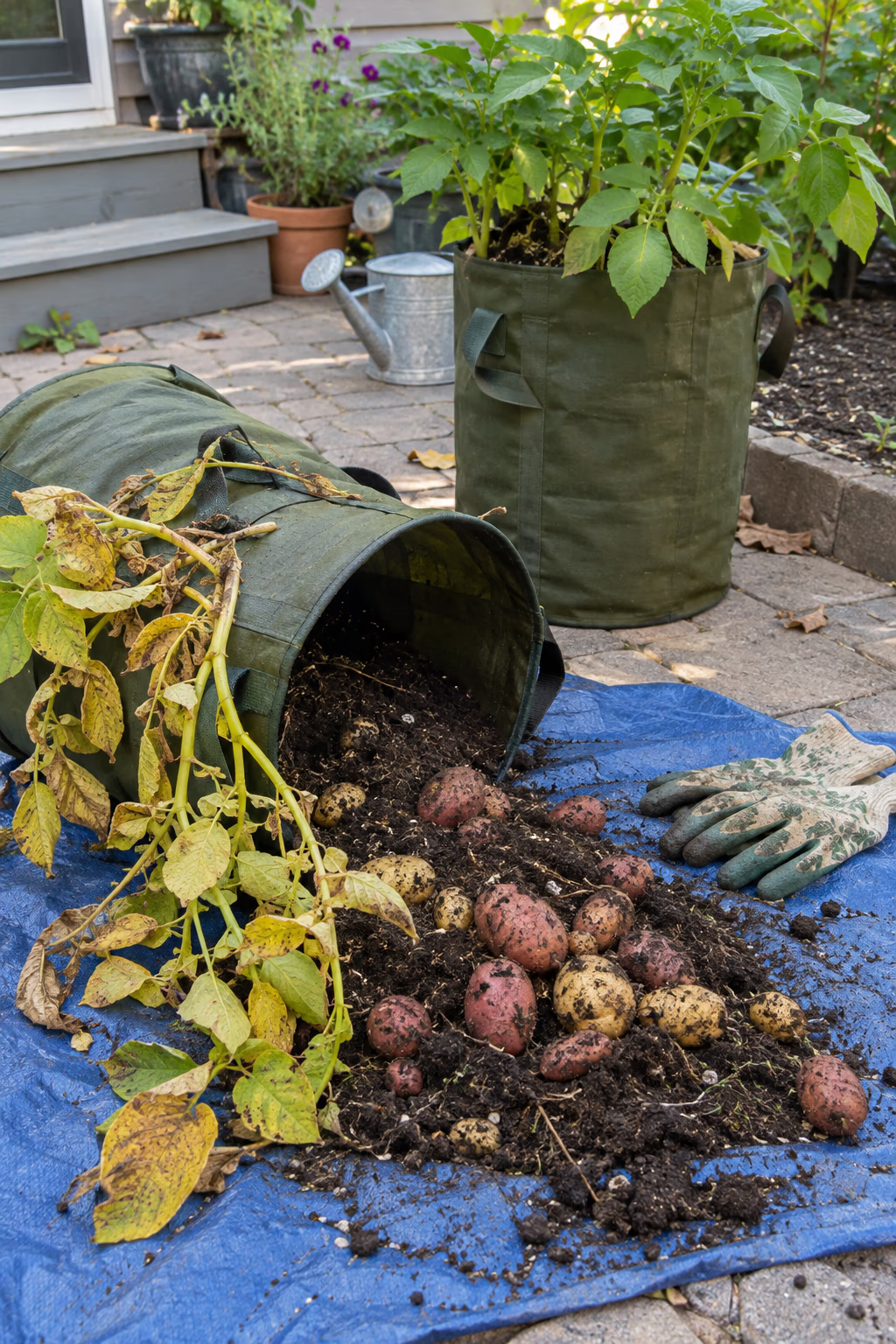
Tip the bag over at harvest time and collect
Roll down the sides of a 15- to 20-gallon potato bag, add about 4 inches of potting mix, and set in three or four seed potato pieces. As the stems grow, add more mix so only the top few inches of leaves show, unrolling the sides as you go.
The bag keeps the crop off compacted ground, and there’s no digging at harvest. When the foliage yellows and dies back, simply tip the bag onto a tarp and sift out the potatoes.
Buy certified seed potatoes rather than grocery store spuds, which may carry disease or be treated to slow sprouting. Keep the soil evenly moist, because uneven watering can lead to knobby or hollow tubers.
6. Mix Peppers and Rainbow Chard in Glazed Pots
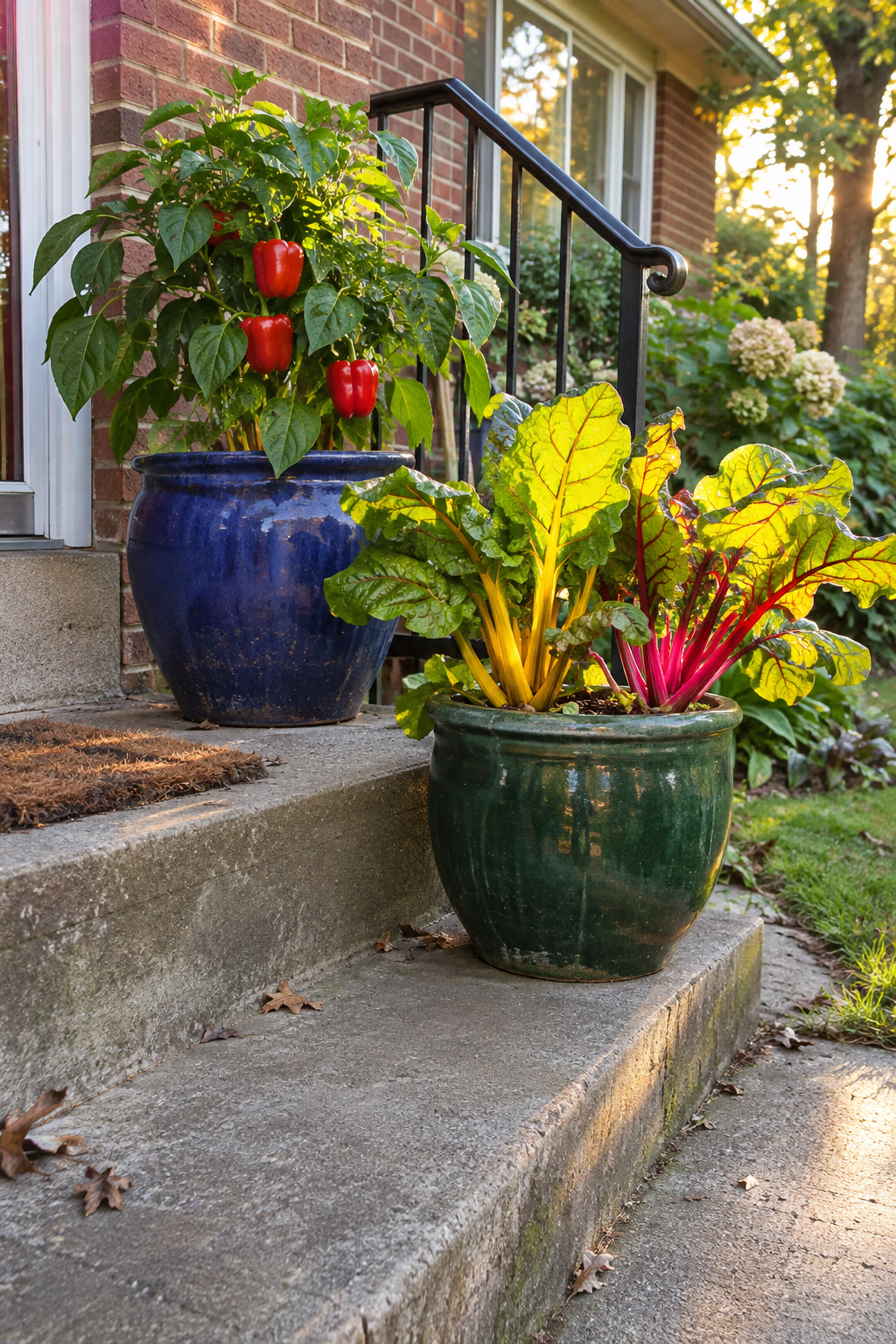
Edibles that look as good as flowers
Some vegetables are pretty enough to sit by the front steps. Plant a red or purple bell pepper in a cobalt or deep green glazed pot, and fill a neighboring pot with rainbow chard, whose yellow, pink, and red stems glow when the sun hits them.
Glazed ceramic holds moisture better than unglazed clay, and the bold colors make the produce pop. Chard is also forgiving: cut the outer leaves and new ones keep coming from the center for months.
Glazed pots are heavy and can crack if they freeze while full of wet soil. Empty them or move them into a garage or shed before a hard winter.
7. Fill a Window Box With Cut-and-Come-Again Lettuce
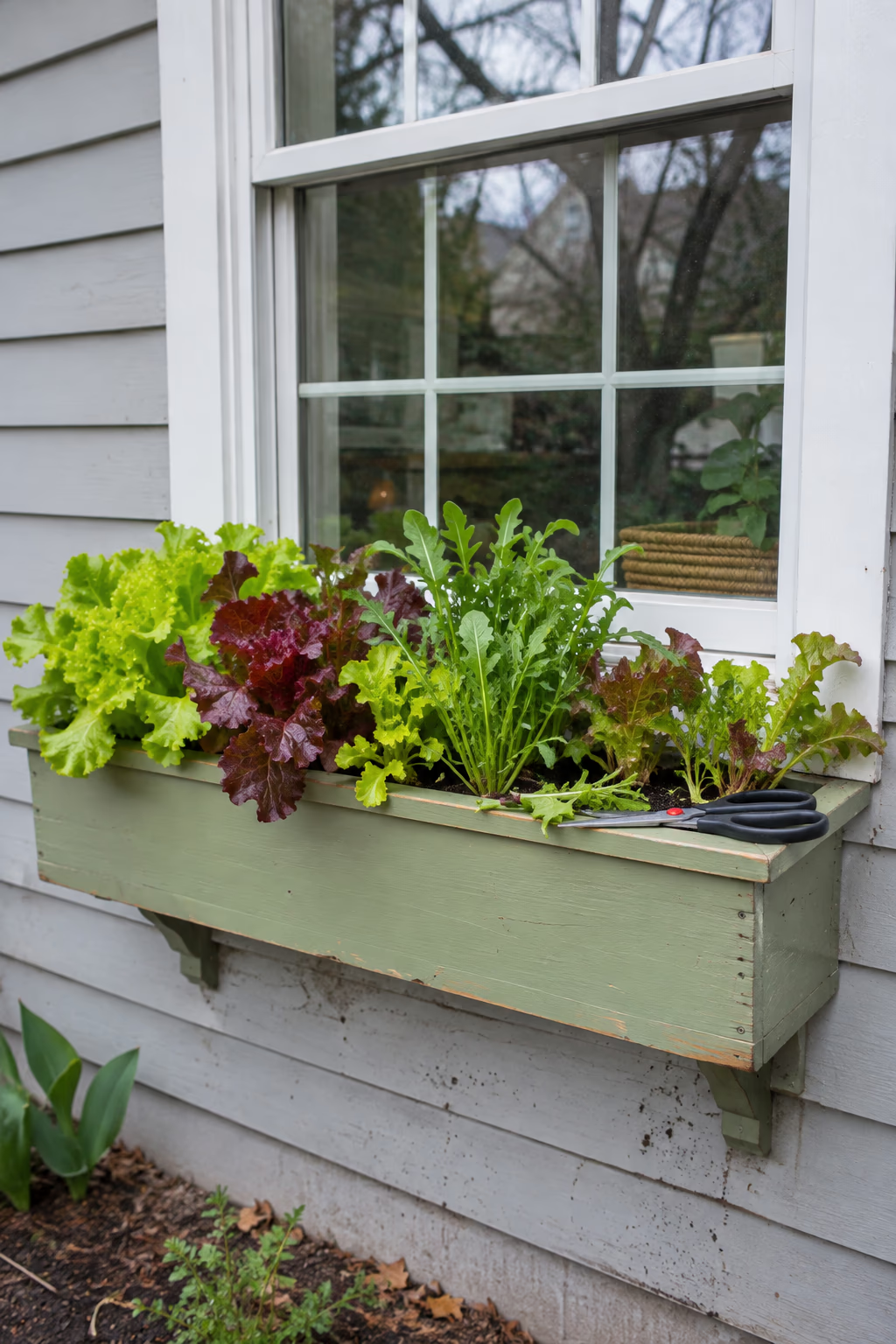
A salad bar right outside the window
A window box or railing planter about 6 to 8 inches deep is perfect for loose-leaf lettuce, arugula, and mesclun mixes. Scatter seed thinly, cover lightly, and keep the surface damp until seedlings appear.
Once leaves reach 4 inches, cut them about an inch above the soil with scissors. Most plants regrow for two or three more harvests, so one box can supply side salads for weeks.
Lettuce turns bitter and bolts in hot weather. Plant in spring and fall, or move the box to a spot with afternoon shade during summer.
8. Give Eggplant a Terracotta Pot in the Hottest Spot
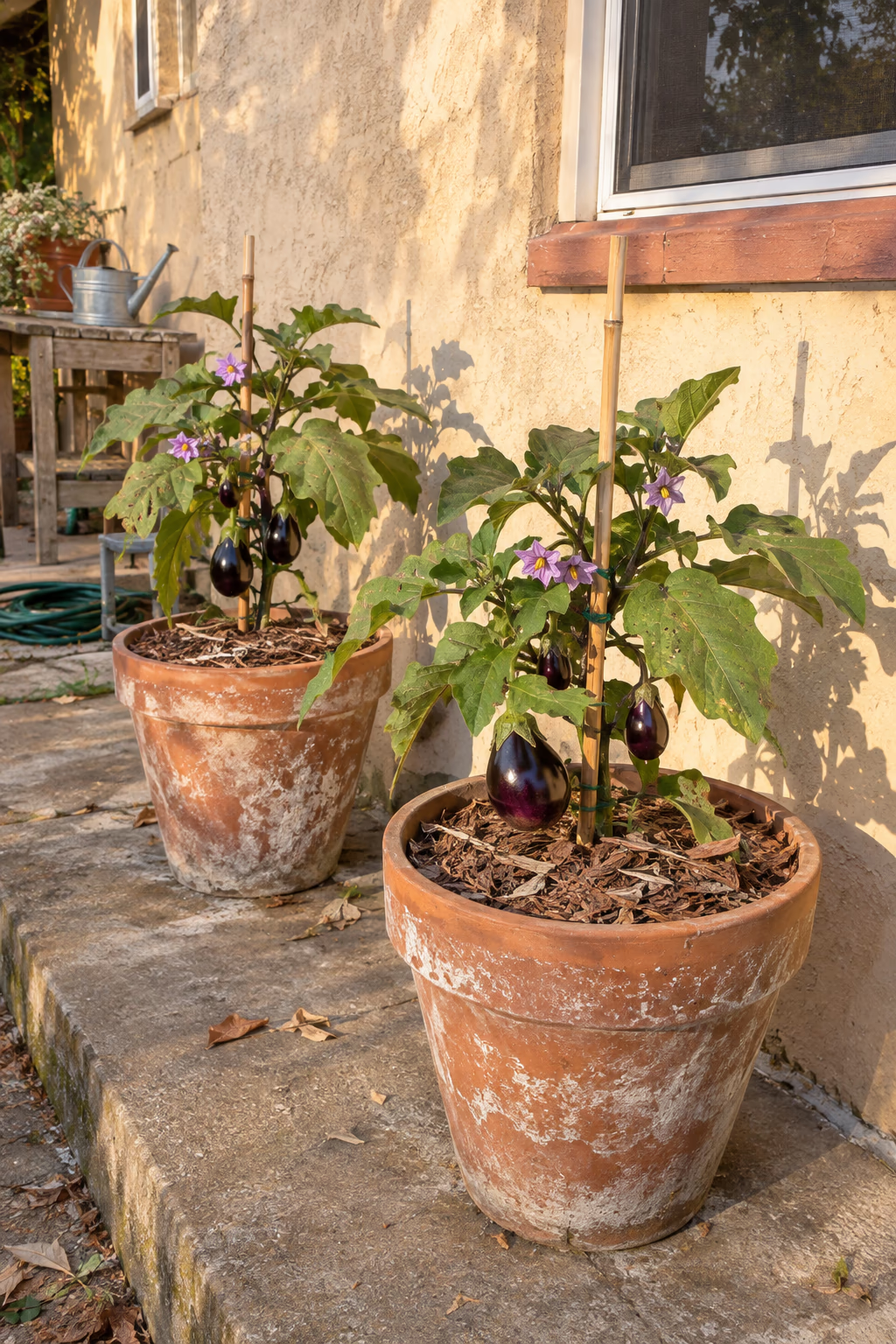
Heat-loving plants for your sunniest wall
Eggplant thrives where many vegetables struggle: against a south- or west-facing wall that bakes all afternoon. Plant one compact or Japanese-type eggplant per 5-gallon terracotta pot, and use a short stake to hold up the heavy fruit.
The warm clay and the purple fruit look beautiful together, and the reflected heat from the wall speeds up growth. Compact varieties bred for containers stay bushy and fruit well in limited space.
Unglazed terracotta wicks water out of the soil quickly. Water deeply every day in summer, and add an inch of shredded mulch on top to slow evaporation.
9. Hang Trailing Cherry Tomatoes by the Kitchen Door
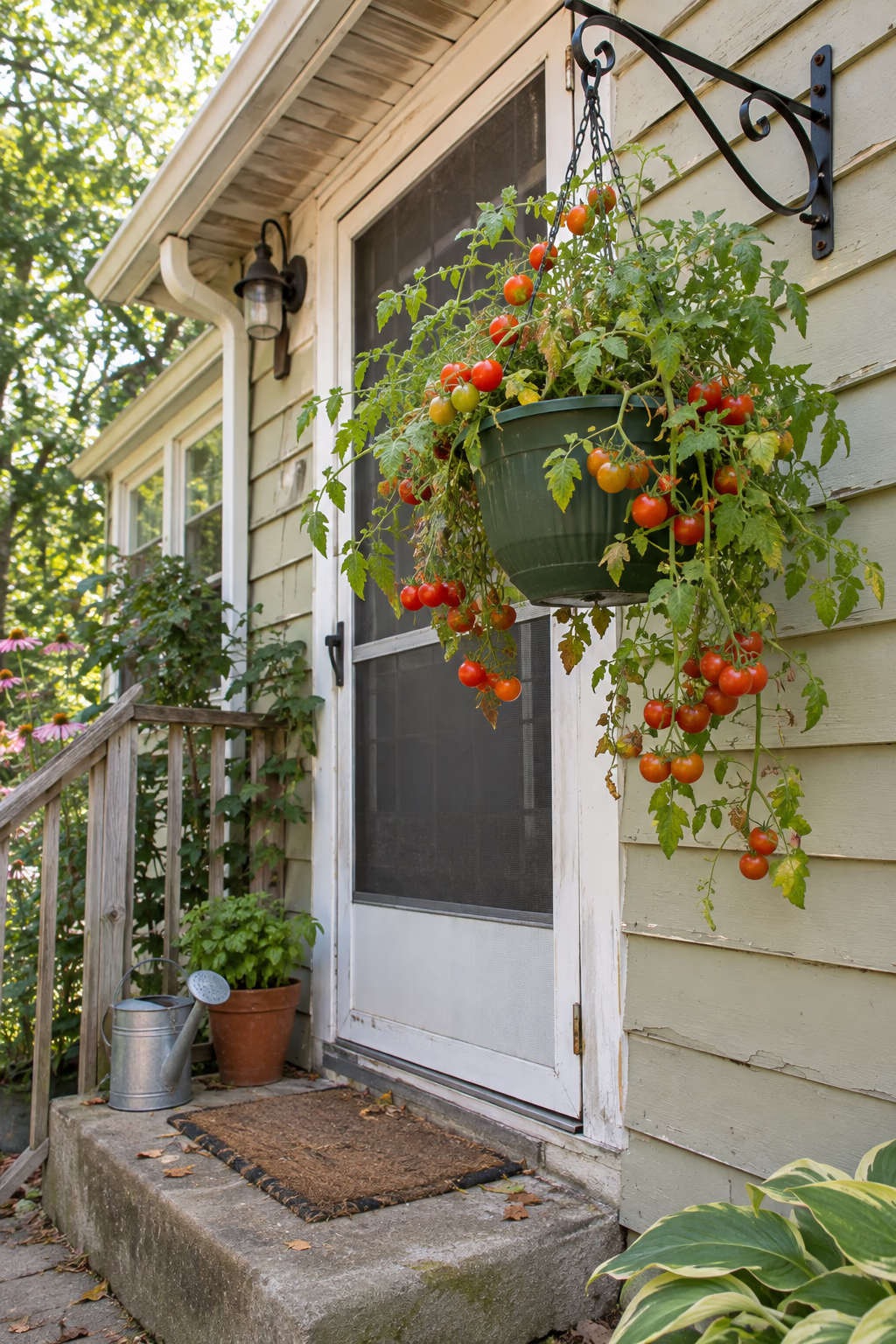
Sweet snacks at eye level
Trailing cherry tomato varieties bred for baskets spill over the edge instead of climbing. Plant one per 12- to 14-inch hanging basket and hang it from a sturdy bracket or porch hook near the kitchen door.
Getting tomatoes off the ground keeps fruit clean and away from slugs, and having them by the door means you’ll actually pick them at their best. It’s an easy way to grow food even if you have no floor space at all.
A wet basket is heavy, so use hardware rated for at least 30 pounds. Hanging baskets dry fast, so plan on watering once or twice a day in July.
10. Grow Bush Zucchini in a Half Whiskey Barrel
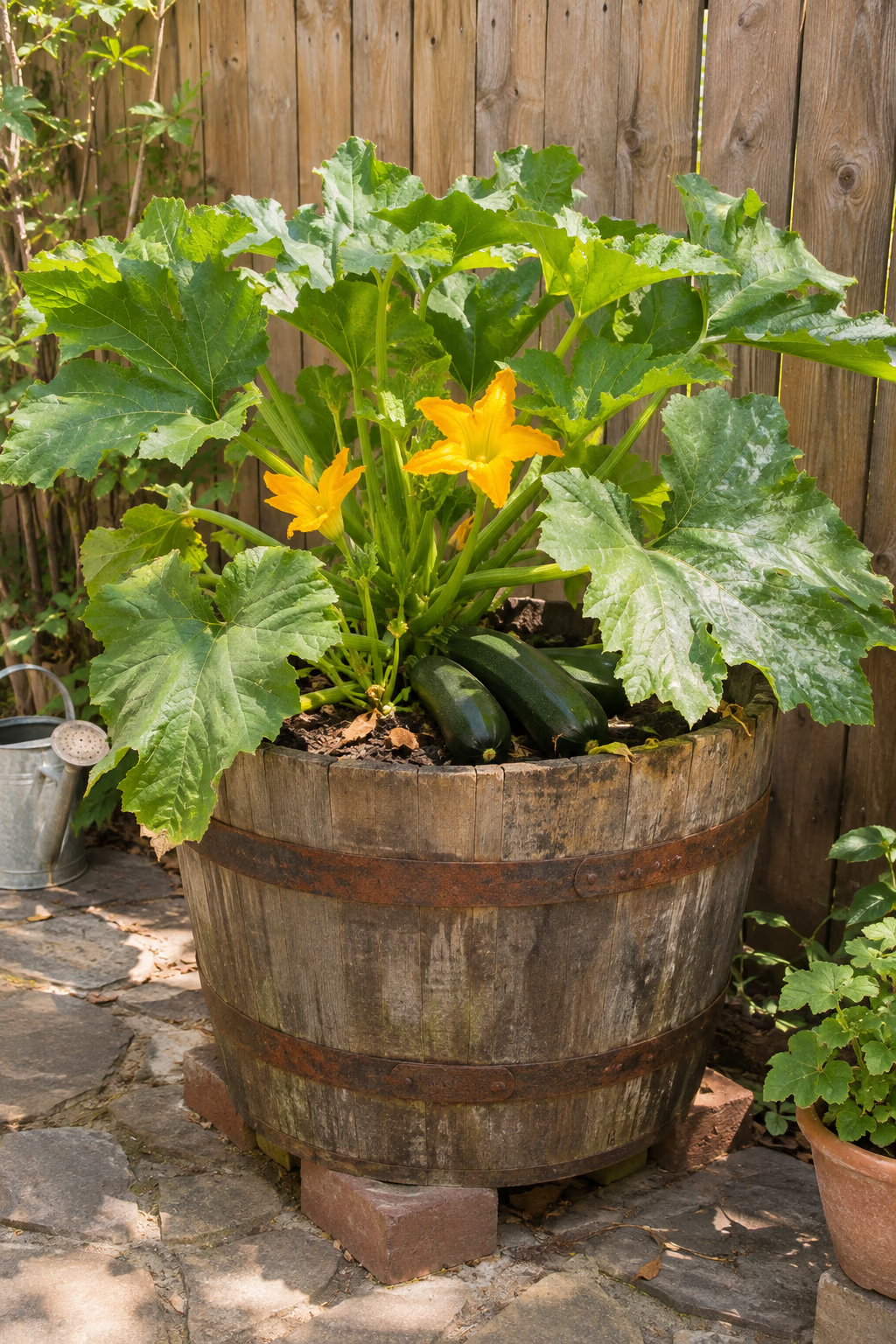
One big container for one big plant
Zucchini grows enormous leaves, so give a single bush-type plant a half barrel of about 20 to 25 gallons. Drill several drainage holes in the bottom and set the barrel on pot feet or bricks so water can escape.
The weathered oak looks great on a patio, and the deep soil keeps roots cool and evenly moist. Compact bush varieties stay tidy and still produce more squash than most families can eat.
Powdery mildew is common late in summer. Water at the soil line rather than over the leaves, and leave a few feet of open space around the barrel for airflow.
11. Hide Plastic Pots Inside a Cedar Box Surround
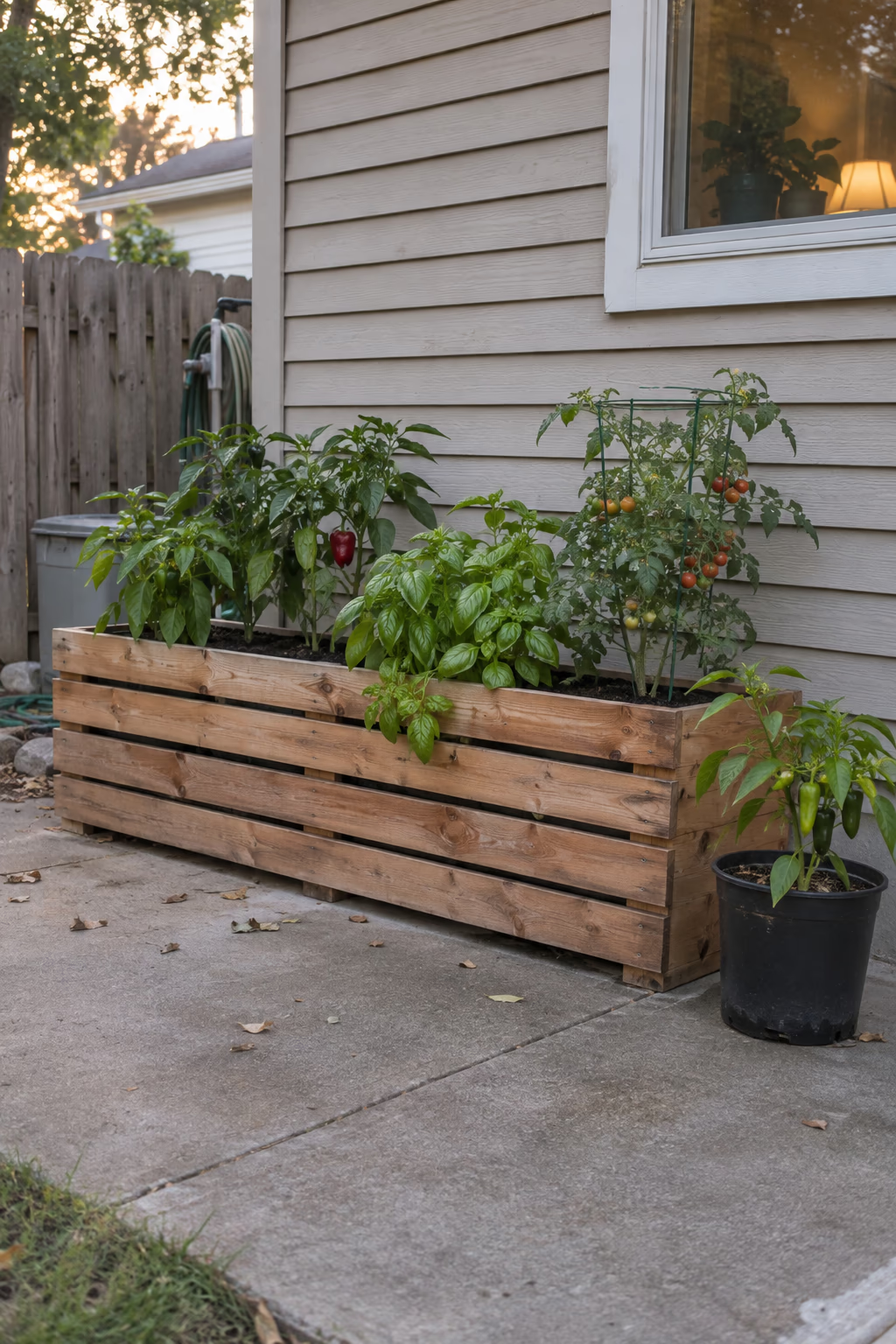
Practical pots with a furniture-like finish
Plain black nursery pots and buckets work well, but they aren’t pretty. Build a simple cedar box, slatted or solid, sized to slip over a row of 5-gallon pots, and leave the bottom open so the pots drain onto the patio.
The wood dresses up the patio and shades the plastic, which keeps roots cooler in full sun. You can also lift out a single pot to replace a finished crop without disturbing the rest.
Leave a little gap around each pot for air, and use untreated cedar or a plant-safe finish. Scrap fence pickets are an inexpensive source of lumber.
12. Tuck Edible Flowers Between Container Vegetables
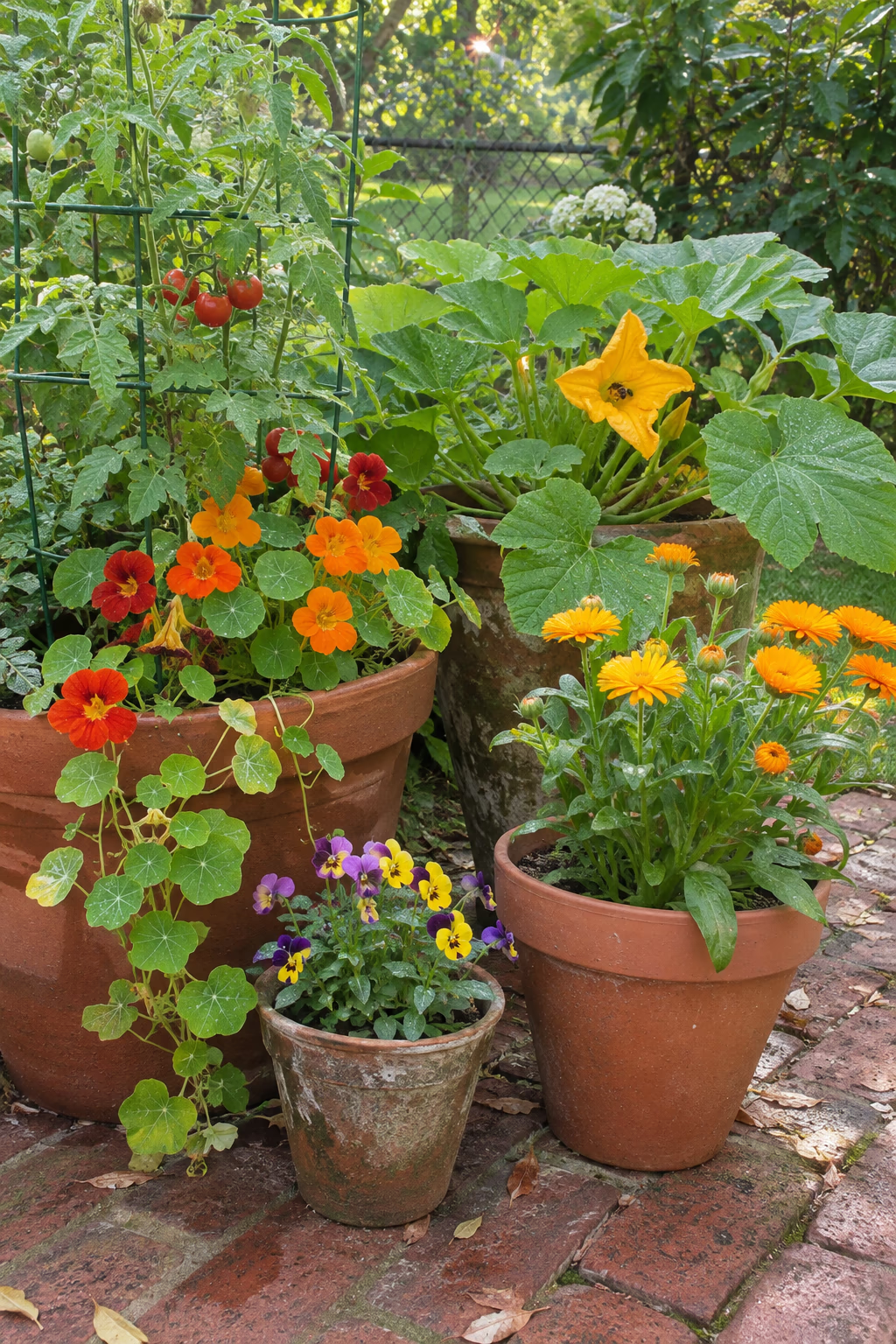
Color, pollinators, and garnish in one move
Fill small pots or the edges of larger ones with nasturtiums, calendula, and violas. Their orange, gold, and purple blooms brighten a cluster of green vegetables, and every one of them is edible when grown without pesticides.
Flowers draw bees and other pollinators that squash, cucumbers, and peppers depend on. Nasturtiums can also act as a trap crop, drawing aphids away from your vegetables.
Only eat flowers you’ve grown yourself or know are untreated, and identify each plant correctly. Not every garden flower is safe to eat.
13. Grow Short Carrots in a Deep Rectangular Planter
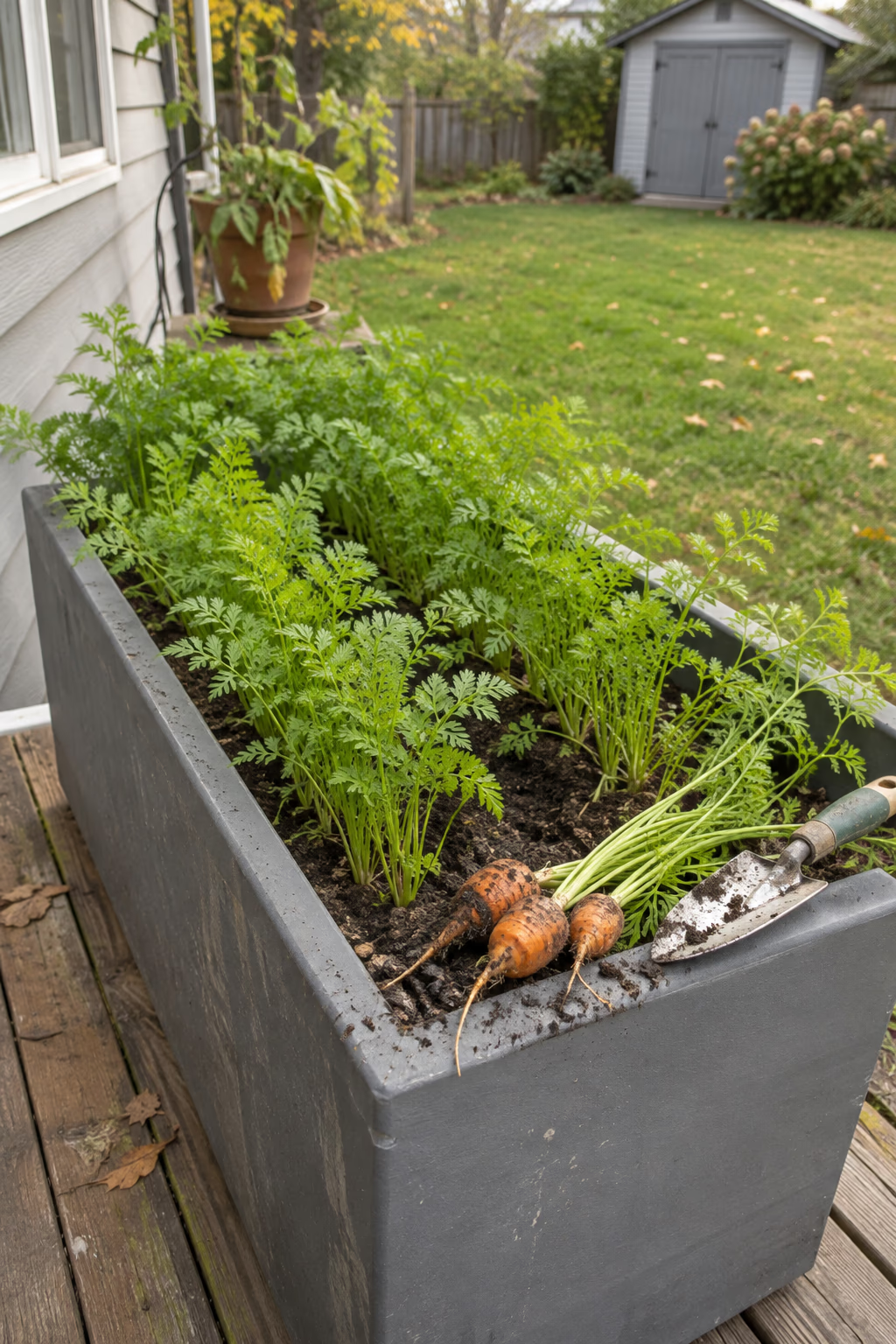
Sweet roots without rocky soil
Rocky or clay ground produces forked carrots, but a container gives them loose, perfect soil. Use a rectangular planter at least 12 inches deep and sow round or half-length varieties in rows about 3 inches apart.
Containers make thinning and weeding easy, and you can pull a few at a time as they size up. Kids especially love checking the orange shoulders as they push out of the soil.
Carrot seed is tiny and slow to sprout. Keep the surface constantly damp for up to two weeks, and cover it with a piece of burlap until the seedlings appear.
14. Line Old Wooden Crates for Radishes and Baby Greens
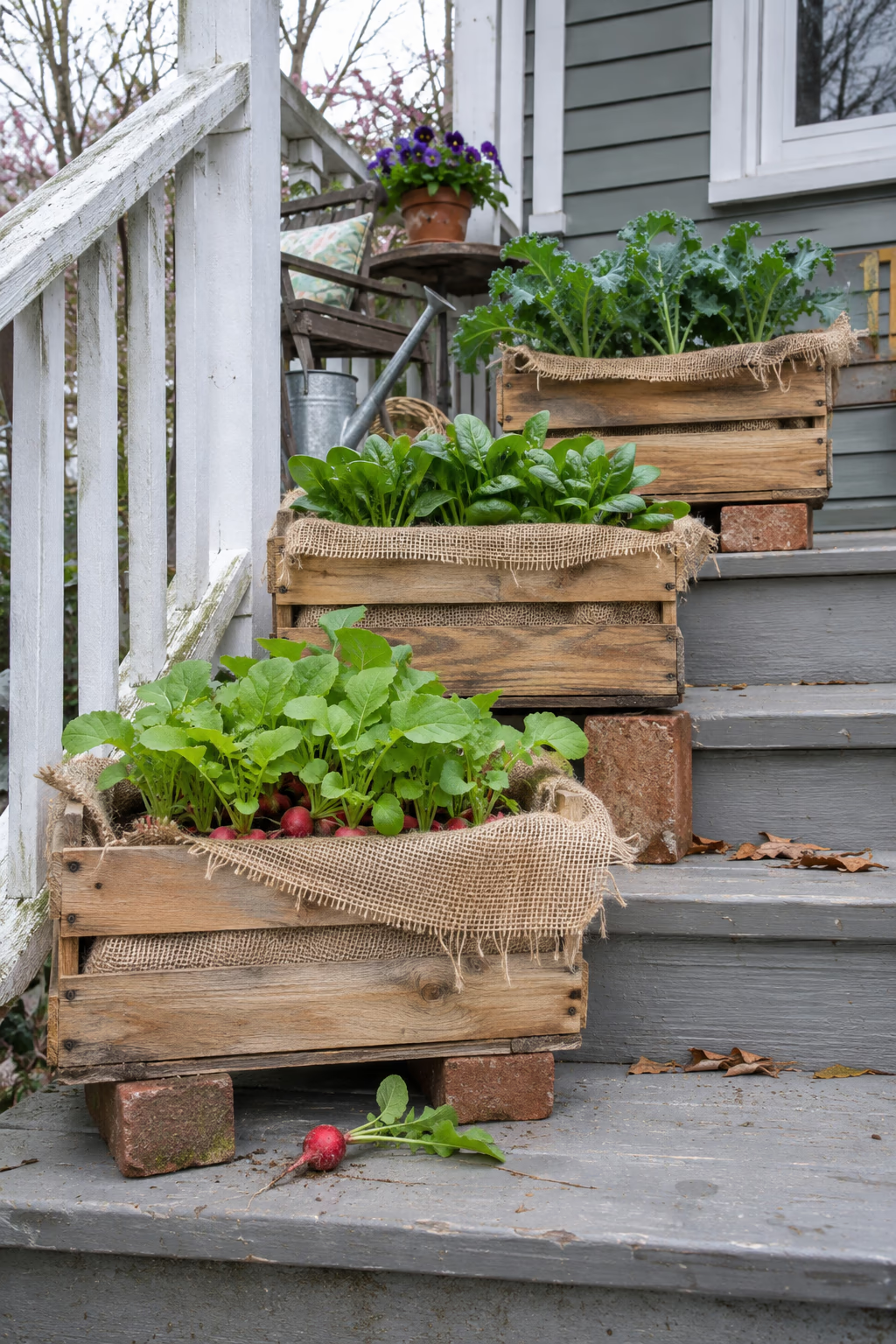
Rustic containers for quick crops
Vintage fruit crates or new unfinished crates make charming planters for shallow-rooted crops. Line them with landscape fabric or burlap, fill with potting mix, and sow radishes, spinach, or baby kale.
Radishes are ready in about four weeks, so a crate can produce several crops in one season. Stack a few at different heights on a bench or steps for a farmstand look.
Wood in constant contact with wet soil eventually rots. Raise crates on bricks for airflow, and skip painted antique crates that may contain lead paint.
15. Cage Bush Cucumbers in a Wide Patio Pot
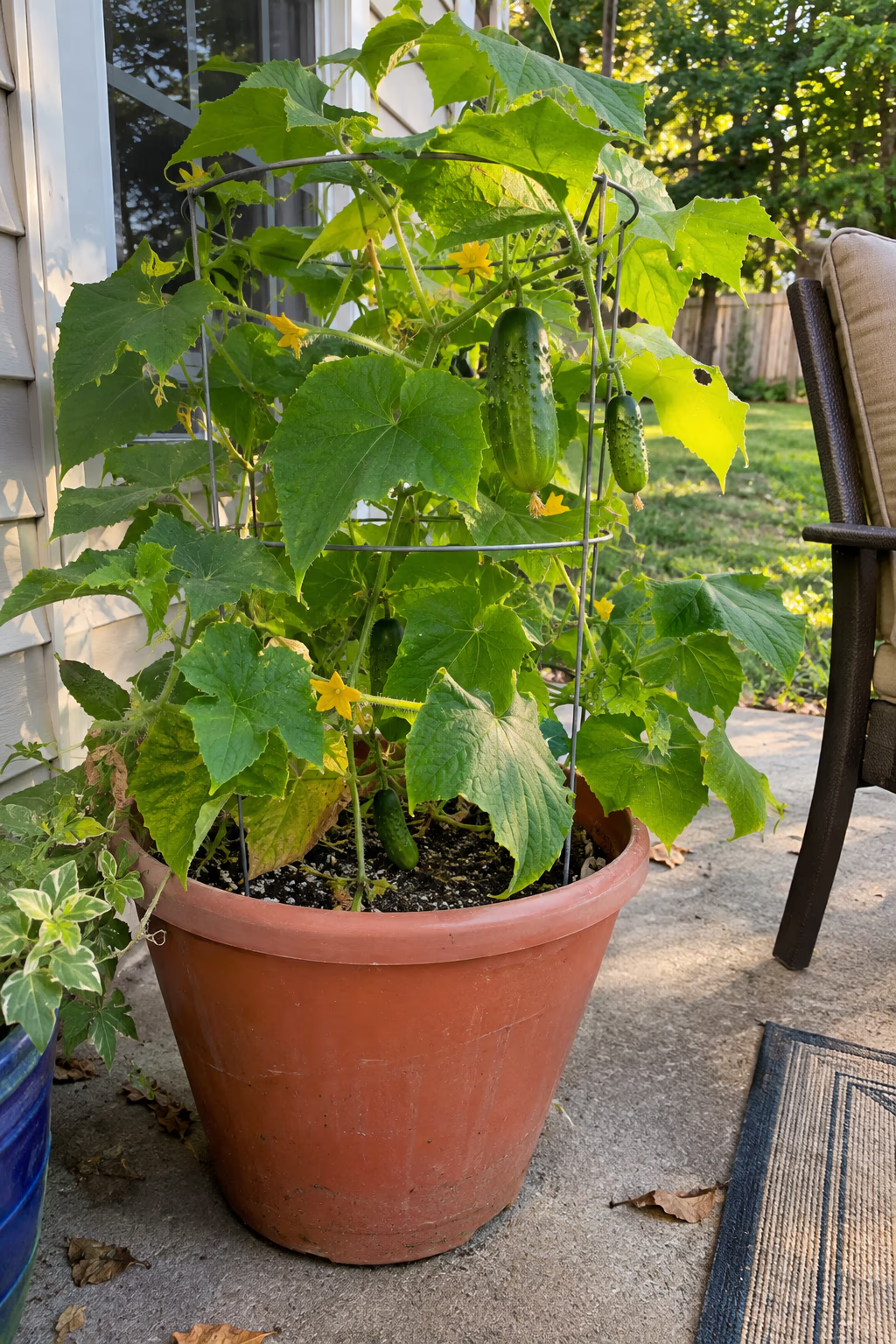
Crisp pickles from a compact plant
Bush cucumber varieties stay shorter than vining types and fit nicely in a pot at least 12 inches wide and deep, holding 5 gallons or more. Push a small wire tomato cage into the pot at planting time and let the stems scramble up through it.
The cage keeps fruit off the soil, makes picking easy, and lets air move through the leaves. One healthy plant can keep a household in salads and quick pickles.
Cucumbers turn bitter when they’re stressed by drought. Water deeply and consistently, and pick fruit often so the plant keeps producing.
16. Plant Cabbage and Kale for Fall Container Color
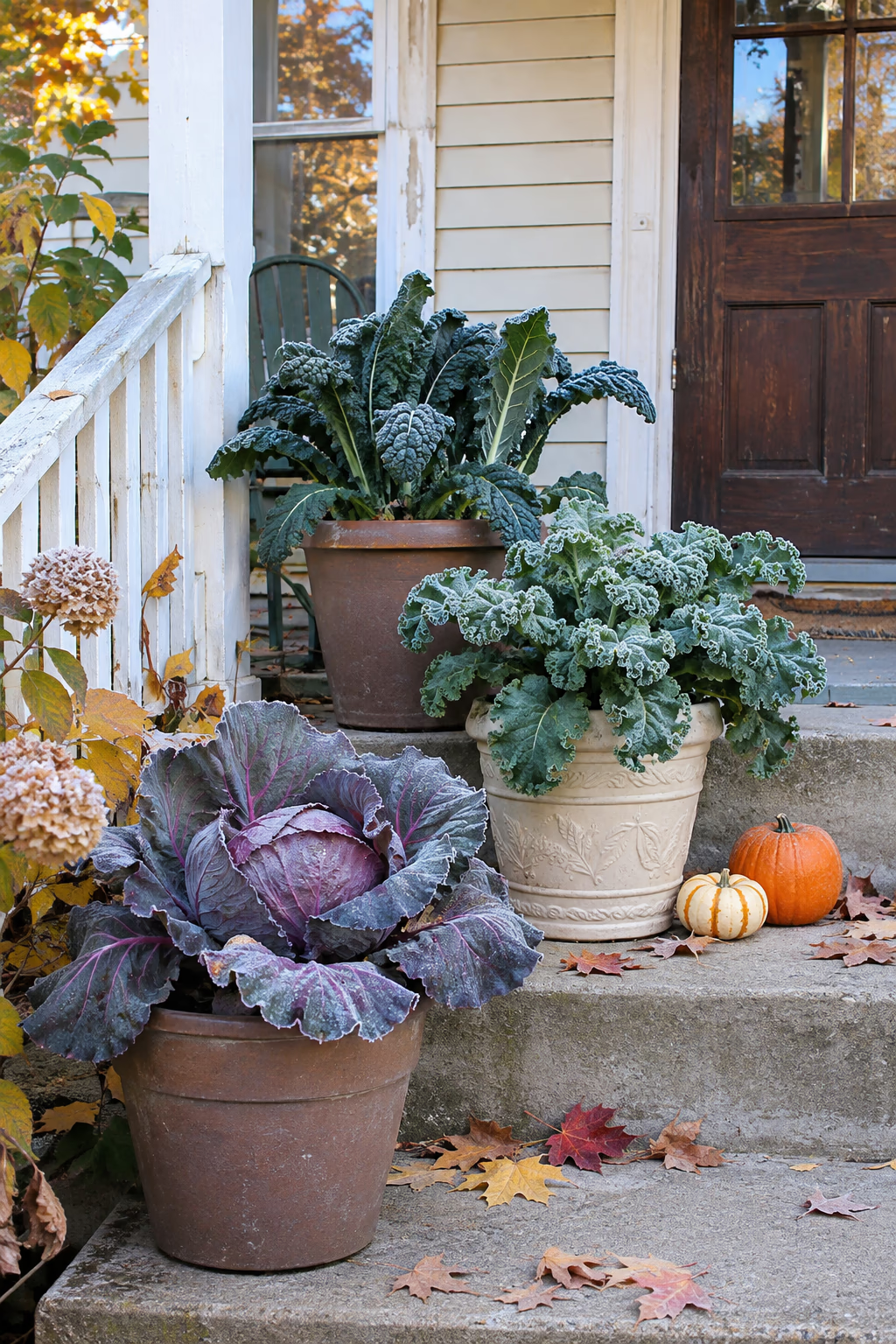
Cool-season edibles that outlast summer annuals
When tomatoes fade, refresh pots with red cabbage, curly or Tuscan kale, and purple-tinged collards. One plant per 5-gallon pot gives each one room to form a full, ruffled head of blue-green and plum leaves.
These crops handle light frost, and many taste sweeter after a cold night. They look as handsome as ornamental mums on porch steps, but you can harvest them for soup.
Cabbage worms are the main pest. Cover pots with lightweight row cover fabric or check under leaves regularly and pick off the green caterpillars.
17. Sow Microgreens in Shallow Trays on a Porch Table
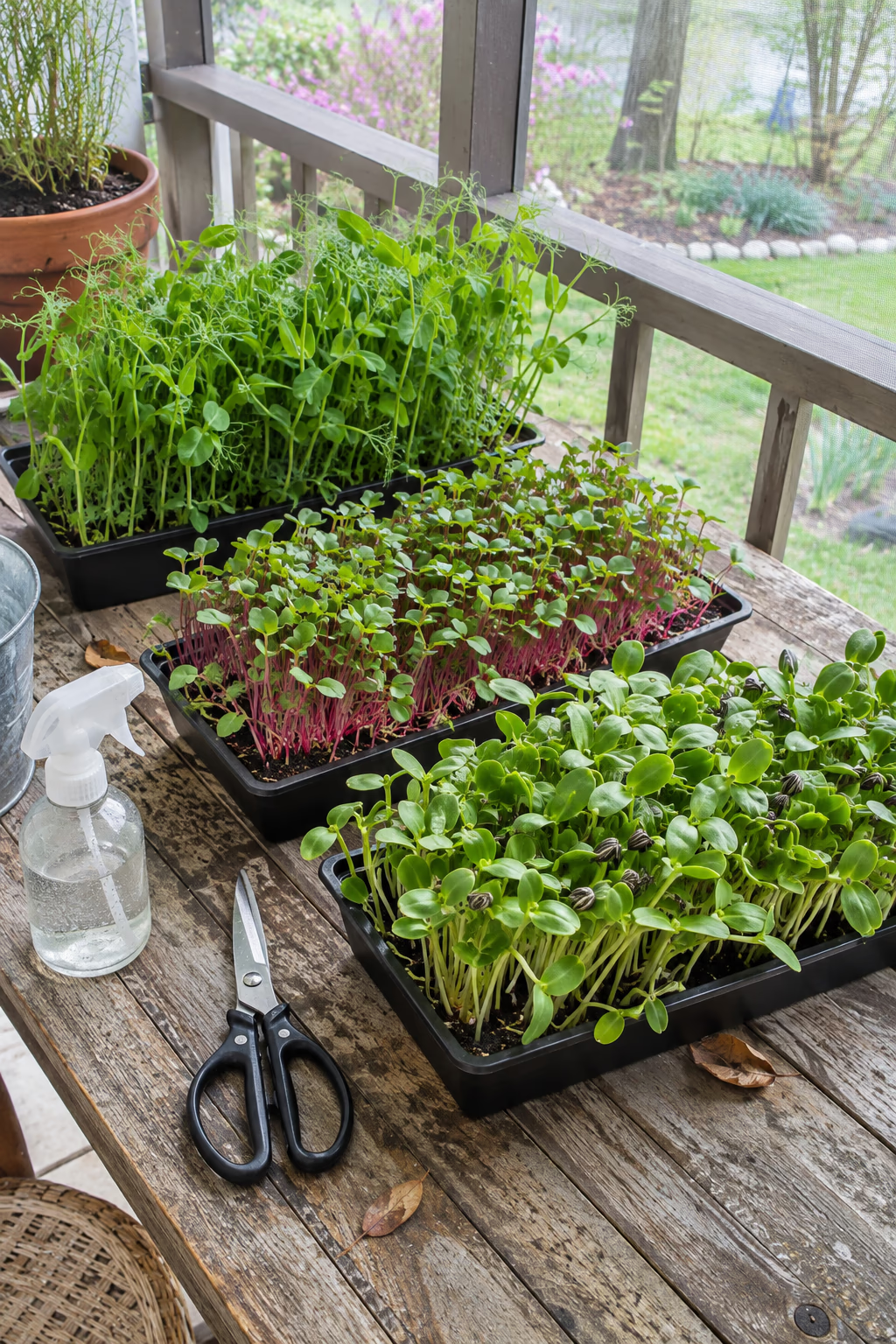
A harvest in two weeks
Microgreens are vegetable seedlings cut when they have their first leaves. Fill a shallow tray with an inch or two of fine potting mix, scatter seed thickly, and harvest pea shoots, radish, sunflower, or broccoli greens in roughly 10 to 21 days.
They need little space, almost no fertilizer, and they’re packed with flavor. A sheltered porch table in spring or fall, or a bright windowsill in winter, keeps them going year-round.
Buy seed sold for sprouting or microgreens, and water from below or with a gentle mister so the tiny stems don’t flop over.
18. Roll Heavy Pots on Caddies to Chase the Sun
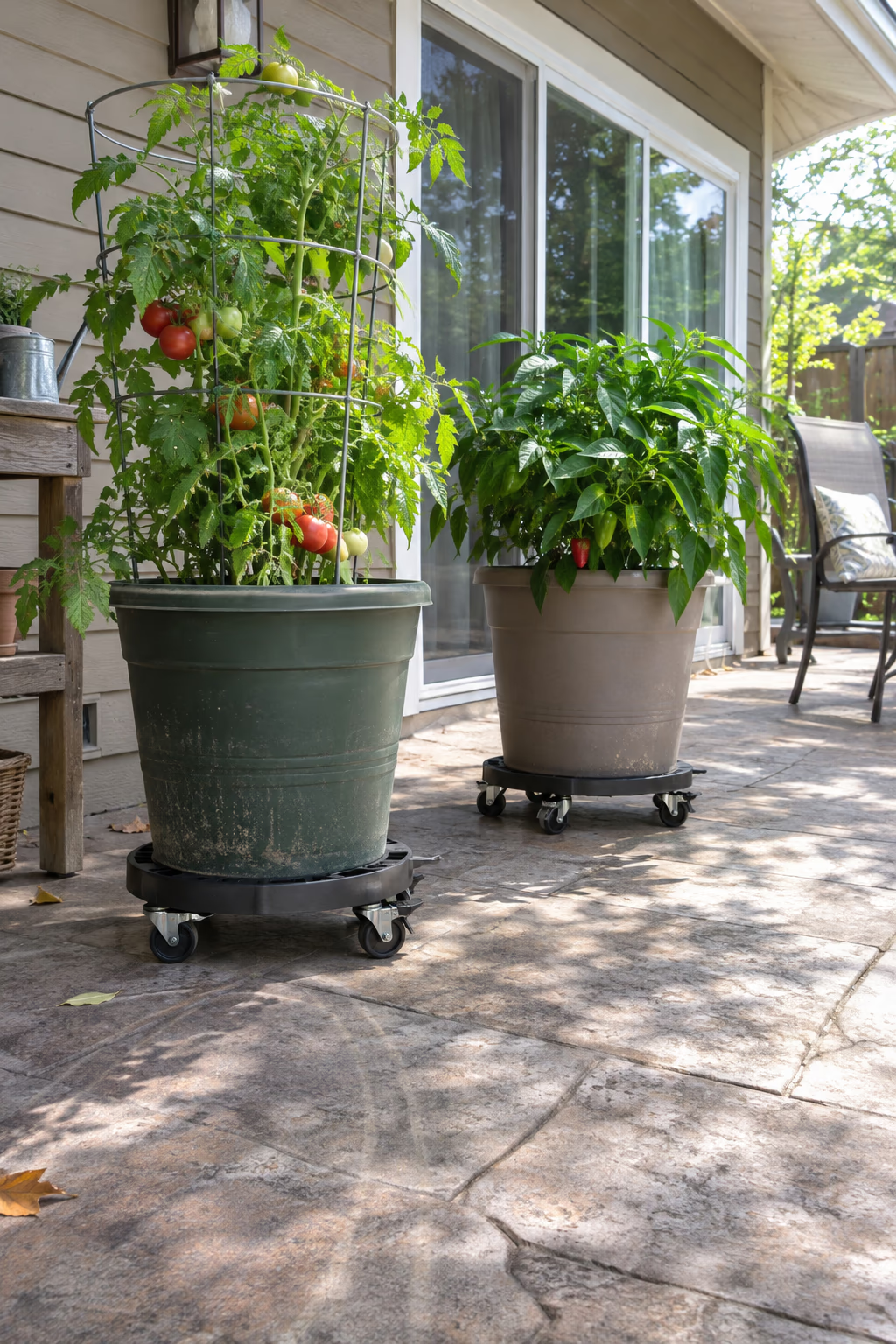
Mobile containers for tricky light
Many patios get full sun in one spot in spring and another in summer. Set your biggest pots, such as tomatoes and peppers, on rolling plant caddies with locking casters so you can move them to the brightest spot.
Mobility also helps you dodge hail, wheel plants into the garage on a frosty night, and sweep the patio without straining your back. It’s one of the smartest upgrades for renters, too.
Choose caddies rated well above the weight of a wet pot; a 20-gallon container can weigh over 150 pounds. Lock the wheels so pots don’t drift on sloped surfaces.
19. Plant Bush Beans in a Galvanized Washtub
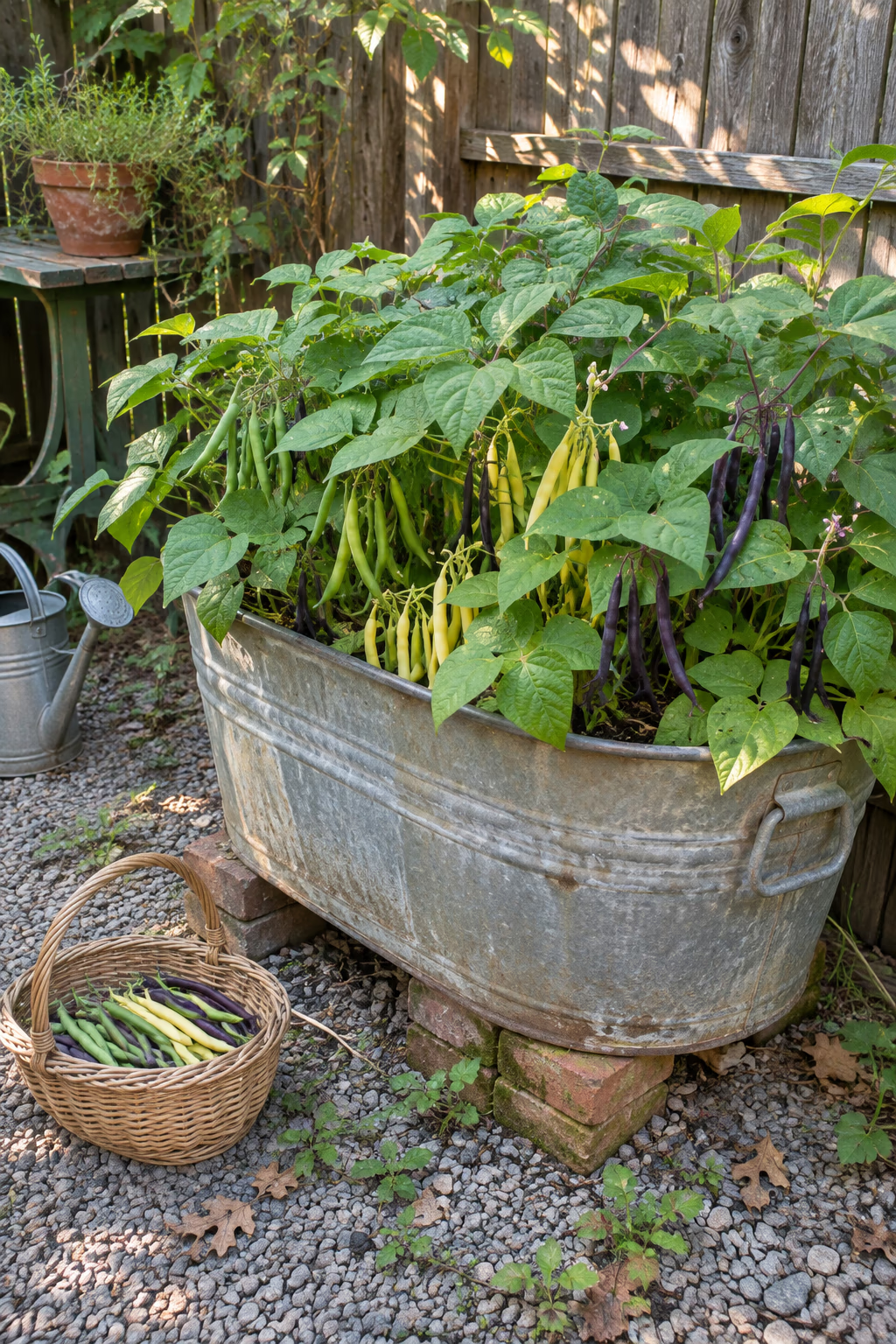
Farmhouse charm with a steady harvest
An old metal washtub or new galvanized tub makes a wide, roomy container for bush beans. Drill drainage holes, fill with potting mix, and sow seed about 3 inches apart across the surface for a dense green canopy.
Bush beans don’t need support, and a single tub yields handfuls of beans every few days at peak season. Yellow wax and purple pod varieties add extra color.
Metal heats up in strong sun. Use a lighter-colored tub, place it where it gets some afternoon shade in hot regions, or line the sides with cardboard before filling.
20. Grow Scallions and Garlic in a Long Trough Planter
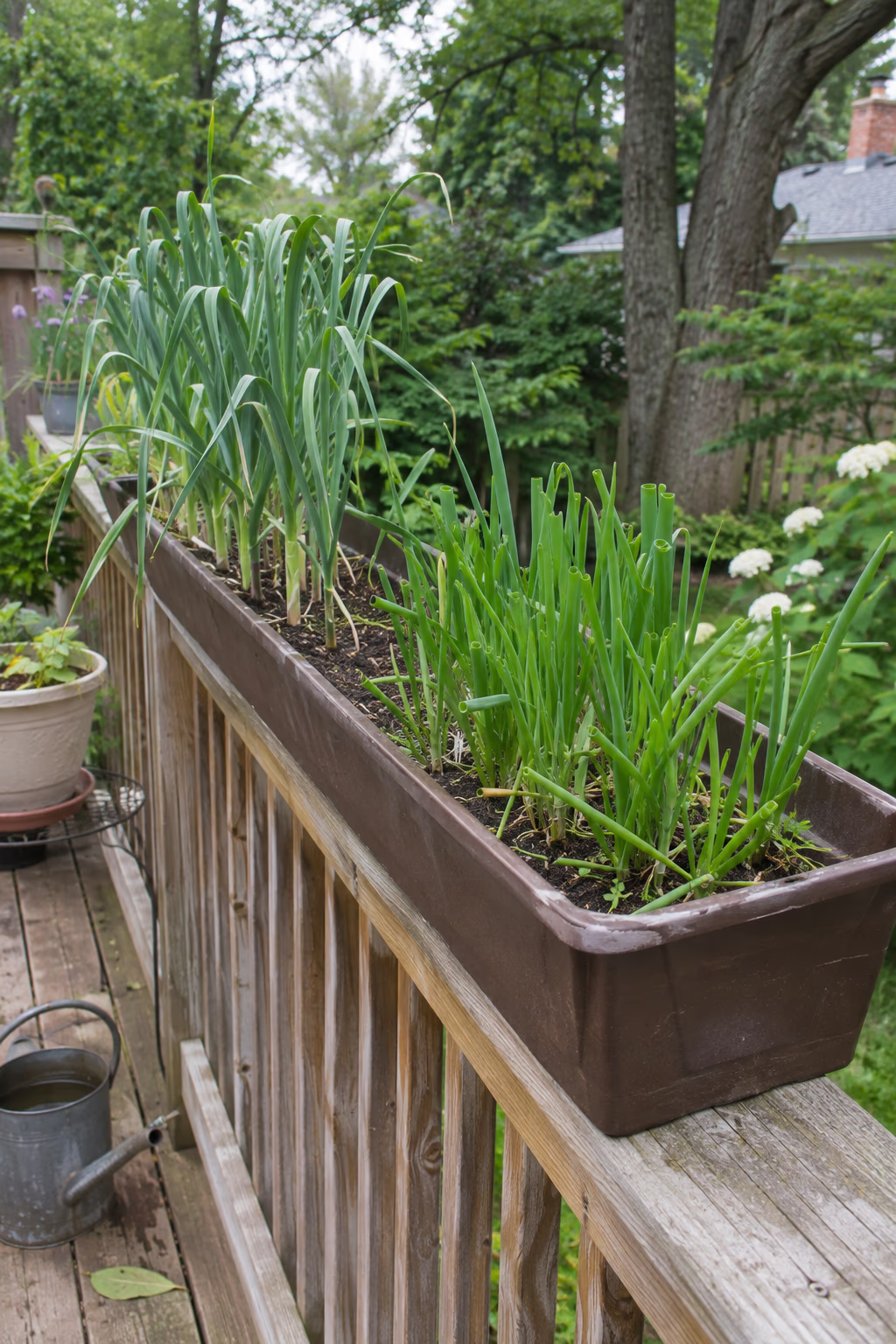
Kitchen staples that hardly need room
A long, narrow trough planter about 8 inches deep fits along a deck rail or the edge of steps. Plant garlic cloves 4 inches apart in fall for a summer harvest, and fill the other end with scallions you can snip all season.
Alliums are tidy, upright, and rarely bothered by pests. Scallions also regrow after cutting, so one sowing keeps giving.
In very cold regions, move the garlic trough against the house or into an unheated garage during deep freezes, since roots in containers aren’t insulated like roots in the ground.
21. Run a Drip Line Through Your Container Vegetables
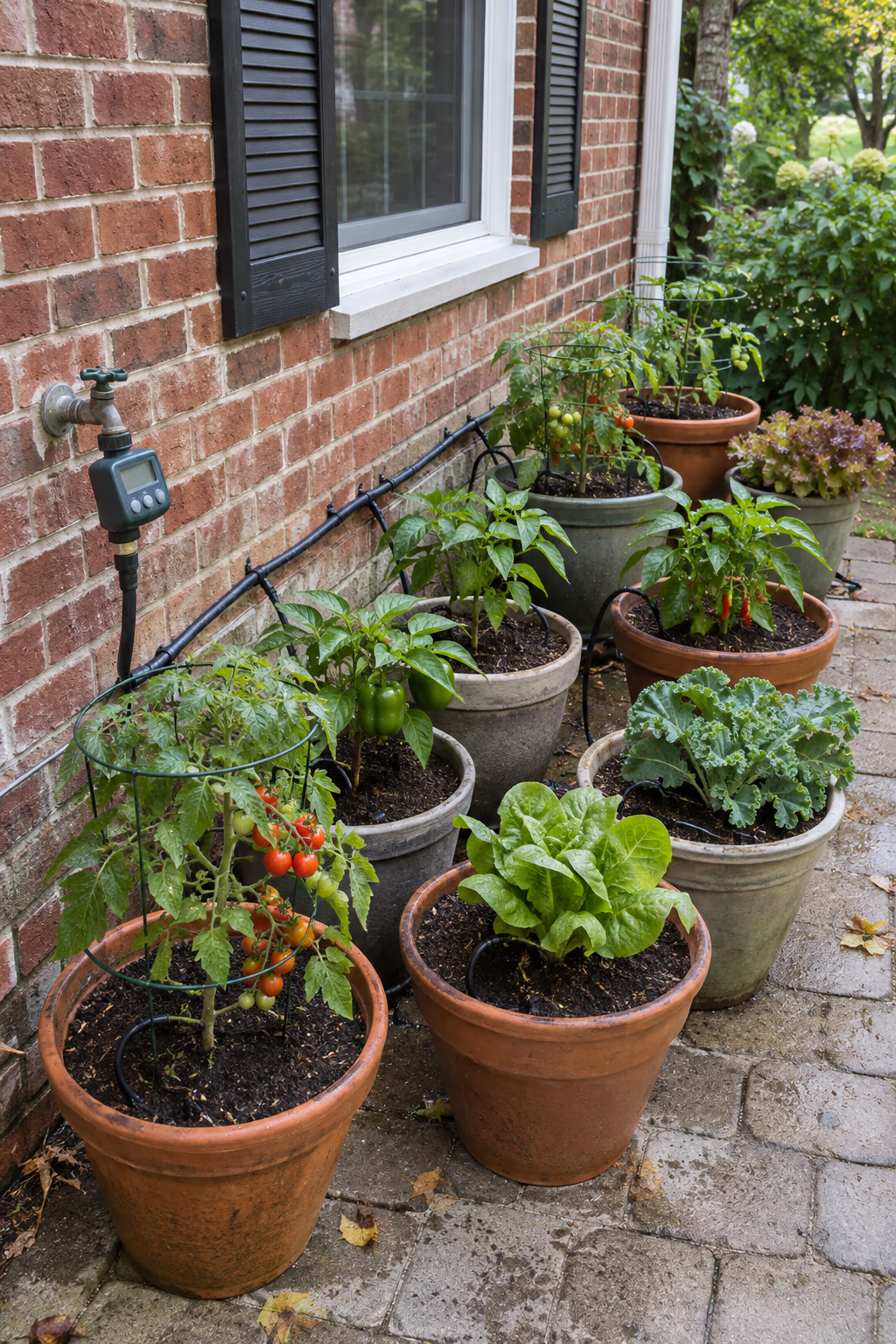
Automatic watering for a cluster of pots
A simple drip kit connected to an outdoor faucet can water a dozen pots at once. Run half-inch main tubing behind the containers and branch quarter-inch lines into each pot, ending with an emitter or a small loop of drip tubing so water spreads evenly.
Add a battery timer and plants get a steady drink every morning, even when you’re away for the weekend. Consistent moisture means healthier, more productive plants.
Check emitters every week for clogs, and adjust the schedule as the season changes. Drain and store the tubing before freezing weather.
22. Turn a Straw Bale Into a Plant-Ready Container
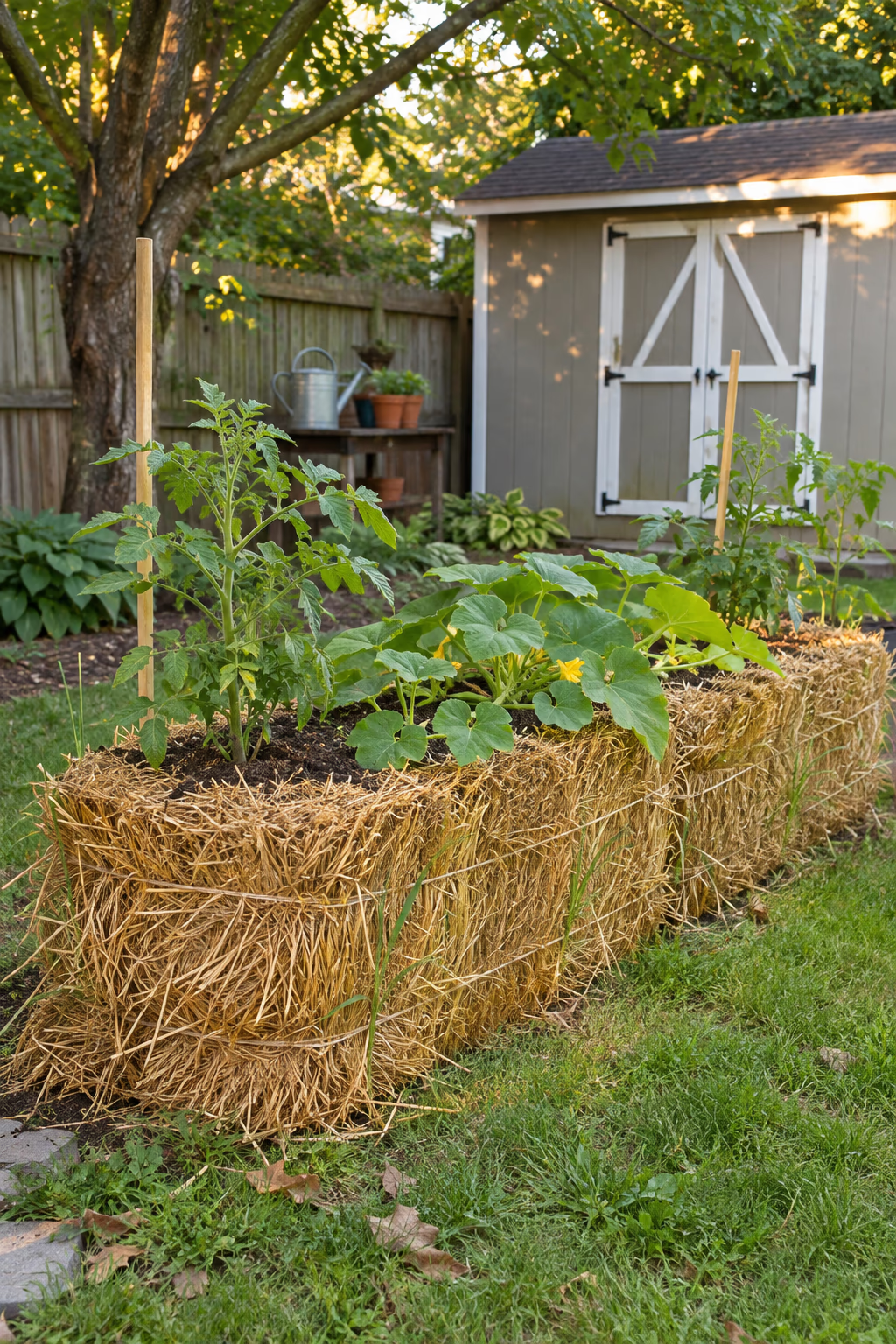
A container that becomes compost
A tightly bound straw bale works as both pot and growing medium. Condition it for about two weeks by soaking it daily and adding a nitrogen fertilizer, then plant tomatoes, squash, or peppers into pockets of potting mix on top.
The decomposing straw warms the roots, and the height makes planting and picking easier on your knees. At the end of the season, the bale breaks down into excellent mulch or compost.
Use straw, not hay, which is full of weed seed. Bales can sprout leftover grain, so pull those seedlings as they appear.
23. Stagger Sowings in Matching Pots for Nonstop Greens
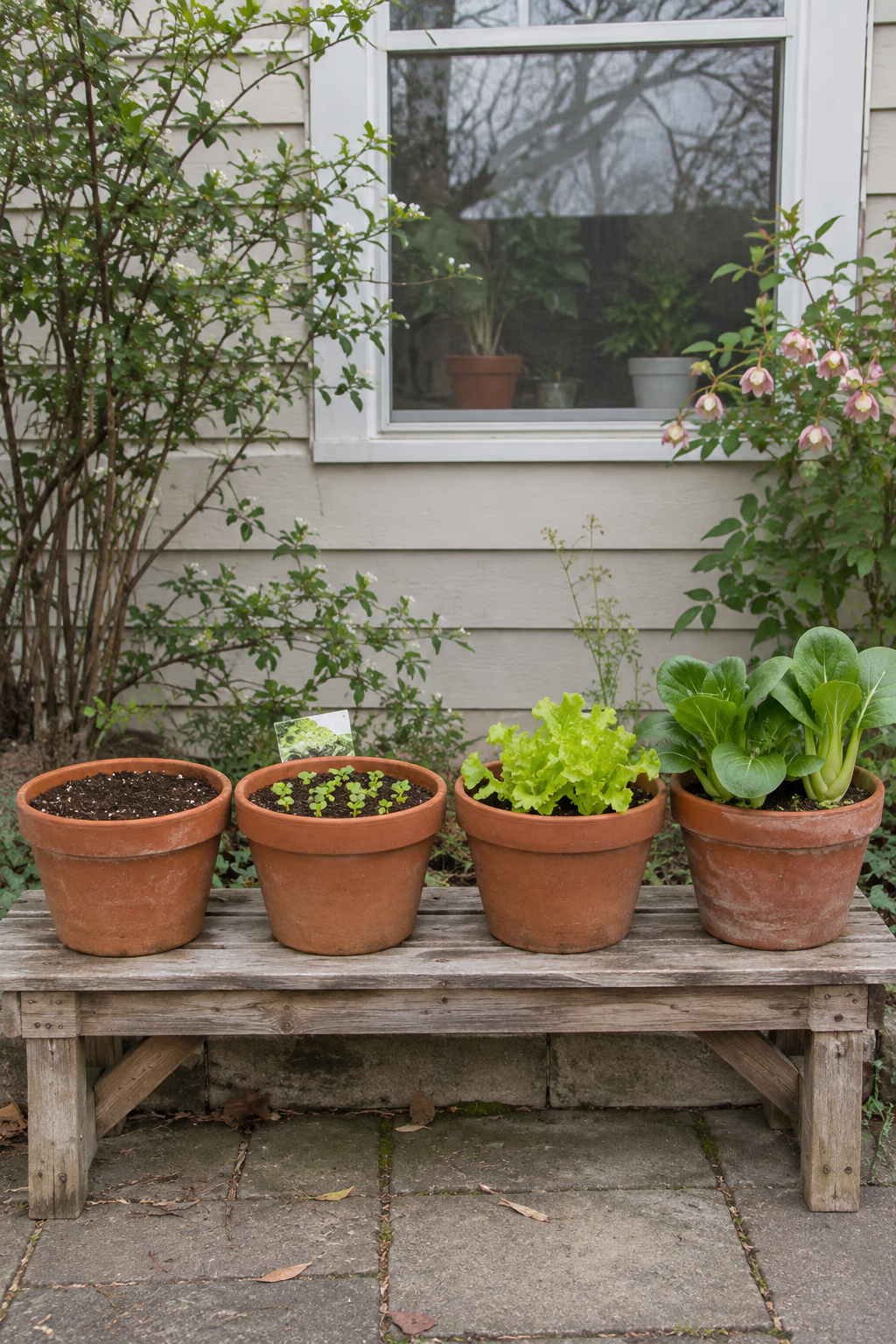
Small harvests every week instead of one big glut
Line up four matching pots and sow spinach, lettuce, or bok choy in a new pot every 10 to 14 days. By the time the first pot is picked clean, the next is ready, and you can resow the empty one.
Succession sowing makes a few containers feel like a much bigger garden. It also spreads the work out so you’re never stuck with more greens than you can eat.
Refresh each pot with a few inches of compost between sowings, and switch to heat-tolerant greens such as Swiss chard or amaranth in midsummer.
How to Plan Your Container Vegetable Garden
A little planning before you buy pots and plants will save you money and frustration. Use these tips to set up containers that keep producing all season.
- Follow the sun. Fruiting crops like tomatoes, peppers, and squash need 6 to 8 hours of direct sun, while lettuce, chard, and other greens can manage with 4 to 6.
- Go bigger than you think. Larger containers hold more water and nutrients. Plan on 10 gallons or more for full-size tomatoes and at least 5 gallons for peppers, cucumbers, and eggplant.
- Use potting mix, not garden soil. Bagged container mix stays loose and drains well, while yard soil compacts and smothers roots in a pot.
- Insist on drainage. Every container needs holes in the bottom, and pot feet or bricks help water escape on patios and decks.
- Feed regularly. Frequent watering flushes nutrients out of containers, so mix in slow-release fertilizer at planting and add a liquid feed every two to three weeks.
- Check your rules and weight limits. Balconies and decks have load limits, and some HOAs and landlords restrict front-yard or balcony containers, so confirm before filling heavy pots.
Frequently Asked Questions
What vegetables grow best in containers?
Cherry tomatoes, peppers, bush beans, lettuce, chard, kale, radishes, green onions, and compact bush cucumbers and zucchini all do well in pots. Look for seed packets and plant tags labeled bush, compact, dwarf, or patio.
How often should I water container vegetables?
Check pots daily by pushing a finger an inch into the soil. If it’s dry, water until it runs out the bottom. In midsummer heat, many pots need water every day, and small or fabric pots may need it twice.
Can I reuse potting mix next year?
Yes, if the previous plants were healthy. Remove old roots, mix in about one-third fresh compost, and add fertilizer. If tomatoes or potatoes had soilborne disease, discard the mix and start fresh.
Are plastic or terracotta pots better for vegetables?
Both work. Plastic and glazed pots hold moisture longer and weigh less, while unglazed terracotta breathes but dries out quickly. In hot climates, choose light-colored plastic or fabric; in cool areas, terracotta and darker pots help warm roots.
Can I grow container vegetables on a balcony?
Yes, as long as the balcony gets enough sun and can safely carry the weight. Use lightweight plastic or fabric pots, place heavy containers near walls, and use saucers so drainage water doesn’t drip onto neighbors below.
Final Thoughts
The best container vegetable garden ideas start with a sunny spot and a few generous pots. A salsa trio, a row of painted buckets, or a window box full of lettuce can put fresh food on your table within weeks, without digging up a single square foot of lawn.
Begin with two or three crops you love to eat, keep the soil evenly moist, and add new containers as your confidence grows. By next season, you may find your patio or driveway has become the most productive spot on your property.