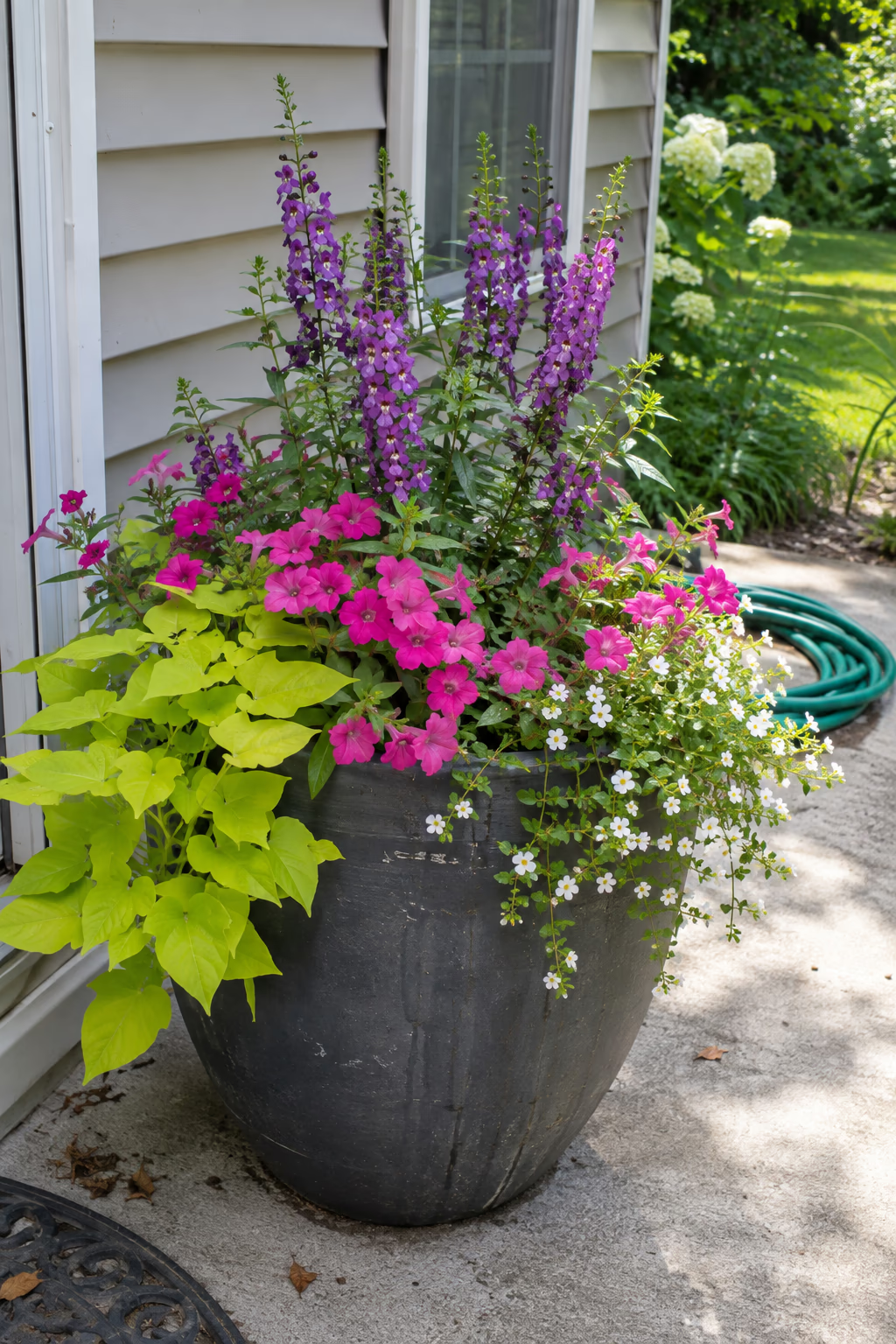
Imagine walking up to your front door past a big pot packed with flowers: a spike of purple angelonia in the middle, pink petunias filling in around it, and lime-green vine hanging over the rim. It’s only a pot, but it makes the whole entry look cared for and welcoming.
Flowers in containers suit almost any home. You don’t need a big yard, good soil, or a free weekend to dig a bed. Pots let you garden on a concrete patio, a rented balcony, or a set of porch steps. They’re easy to move into better light, and you can switch the plants out every season without starting from scratch.
These 25 container flower garden ideas include classic layered pots, entry urns, window boxes, hanging baskets, color-themed mixes, bulb pots, hummingbird plantings, and seasonal swaps. Each one comes with suggested plants, pot sizes, and honest notes on watering and weather, so you can pick the ideas that fit your space and how much care you want to give.
1. Layer a Thriller, Filler, and Spiller in One Big Pot
A simple formula for a full, balanced look
This is the go-to method for mixed flower pots. Pick one tall, upright plant for the center or back (the thriller), two or three bushy plants to circle it (the fillers), and a trailing plant along the edge to soften the rim (the spiller). A sunny pot could use purple angelonia or fountain grass as the thriller, pink geraniums or wave-type petunias as fillers, and chartreuse sweet potato vine or white bacopa as the spiller.
The formula works because it gives the pot three levels of interest at once. The tall plant draws the eye, the fillers bring mass and color, and the spiller ties the planting to the container. Use a pot at least 18 inches across, since bigger pots hold more soil and dry out more slowly.
Put plants with the same light and water needs together. If you mix a drought-tolerant plant with one that wants constant moisture, one of them will struggle all season.
2. Flank the Front Door With Matching Flower Urns
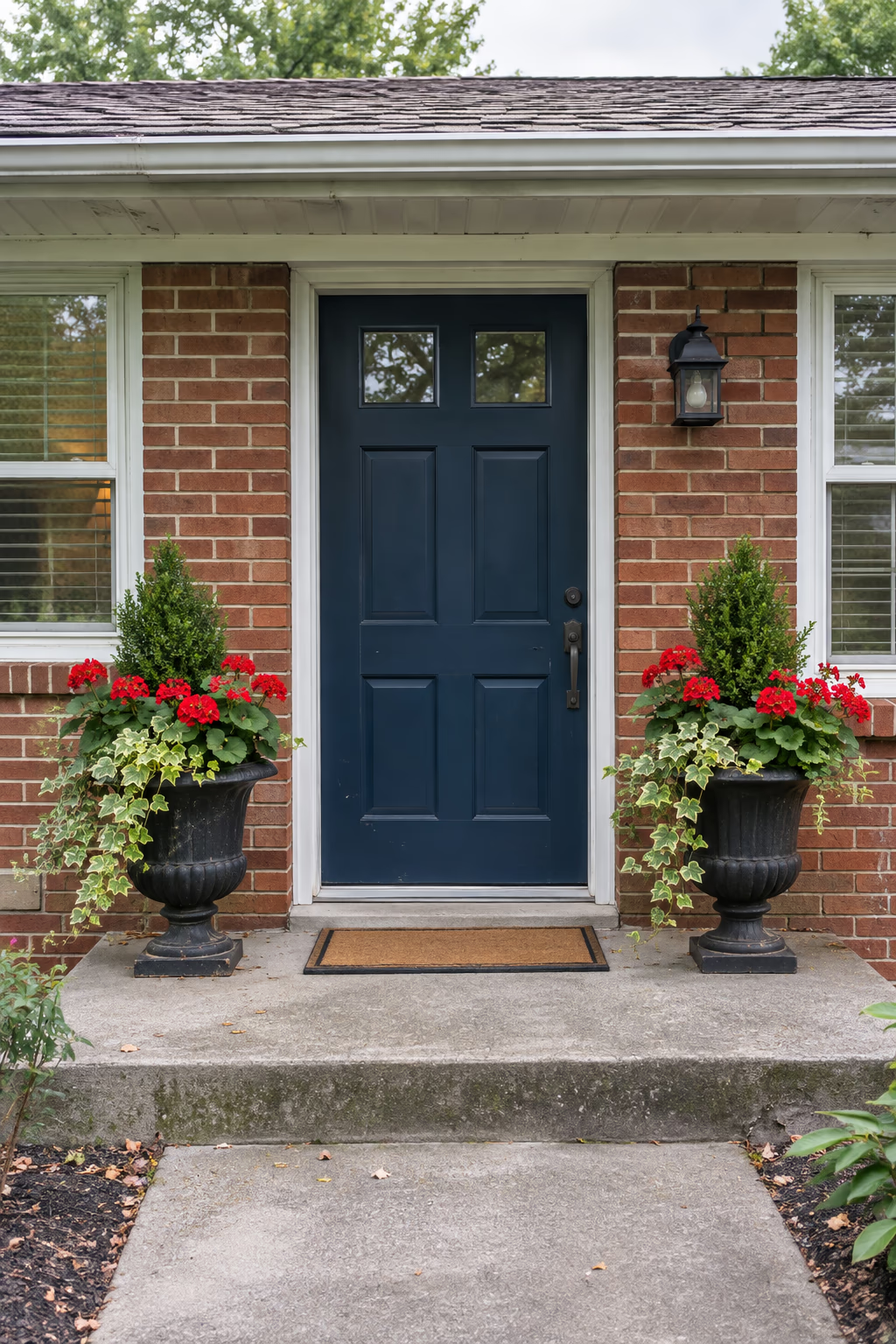
Instant curb appeal with classic symmetry
Two identical urns or tall pots, one on each side of the front door, make the entry feel formal and finished. Plant both the same way, for example a dwarf boxwood or upright grass in the center, red or white geraniums around it, and trailing ivy or creeping jenny spilling over the edge.
Symmetry reads as tidy and intentional from the street, even if the rest of the yard is simple. Choose a pot color that suits the house: black or charcoal works on most siding, terracotta looks good beside brick, and cream or white stands out against dark doors.
Check how much sun each side actually gets before you buy plants. Porches are often shadier than they look, and one side may get several more hours of light than the other. If so, use shade-tolerant fillers like begonias in both pots so they still match.
3. Overflow a Window Box With Geraniums and Trailing Petunias
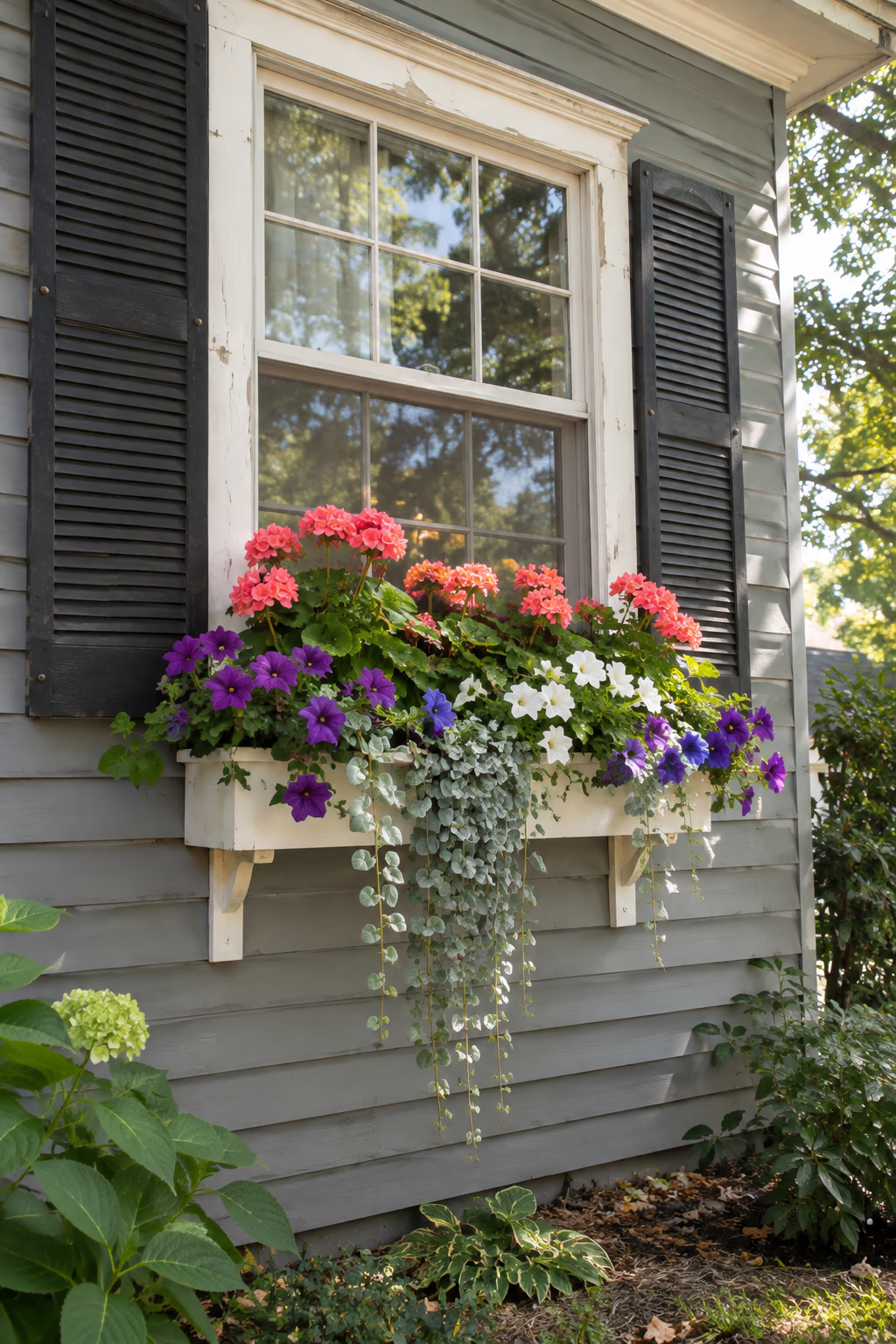
Charming color you can see from inside and out
A window box packed with upright geraniums and trailing petunias is one of the most cheerful looks a house can have. Plant geraniums in a row toward the back, tuck petunias or calibrachoa along the front edge, and add a few sprigs of silver dichondra or variegated vinca to hang down the siding.
Choose boxes at least 8 inches deep and wide, with drainage holes, so the roots have enough room and the soil doesn’t dry out by noon. Window boxes also let you enjoy the flowers from your kitchen or living room, not just from the yard.
Secure the box with heavy-duty brackets screwed into framing, not just siding, since wet soil is heavy. Plan to water daily in hot weather, and leave a small gap between the box and the wall so moisture doesn’t rot the trim.
4. Hang Calibrachoa Baskets Along the Porch
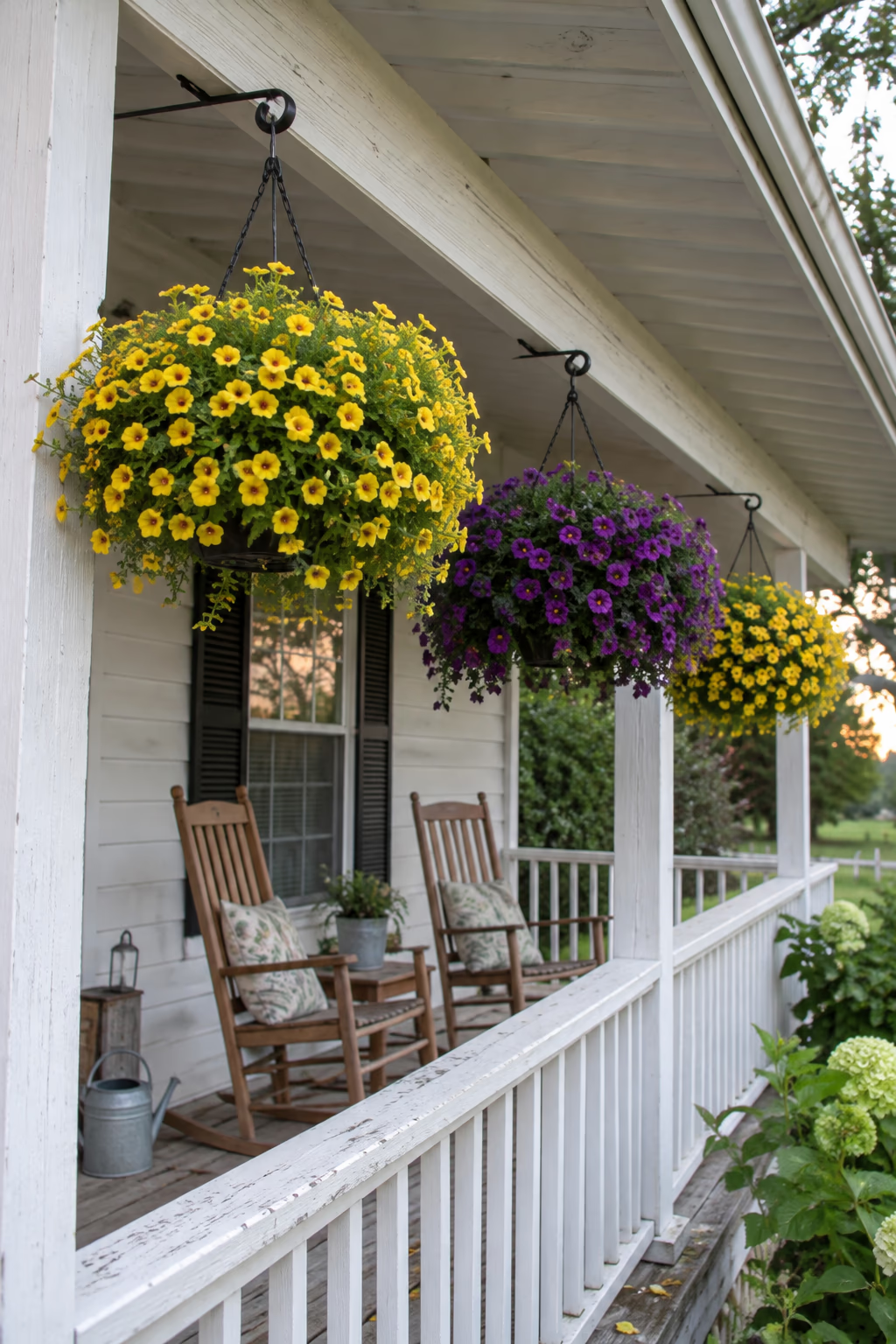
Cascading blooms at eye level
A row of hanging baskets along a porch beam turns empty air into a wall of color. Calibrachoa, sometimes called million bells, is ideal because it blooms nonstop and spills over the sides in a soft ball of tiny petunia-like flowers. Try one color per basket, or mix two that contrast, such as yellow and deep purple.
Use baskets at least 12 to 14 inches across, which hold more water than small ones. Hang them on sturdy hooks screwed into solid wood, and keep them high enough that nobody bumps their head but low enough that you can reach them with a watering can or wand.
Hanging baskets dry out fast, especially in wind and full sun, so expect to water once or twice a day in midsummer. Calibrachoa also needs regular feeding with a liquid fertilizer to keep flowering.
5. Mix Orange Lantana With Purple Fan Flower for a Sunset Pot
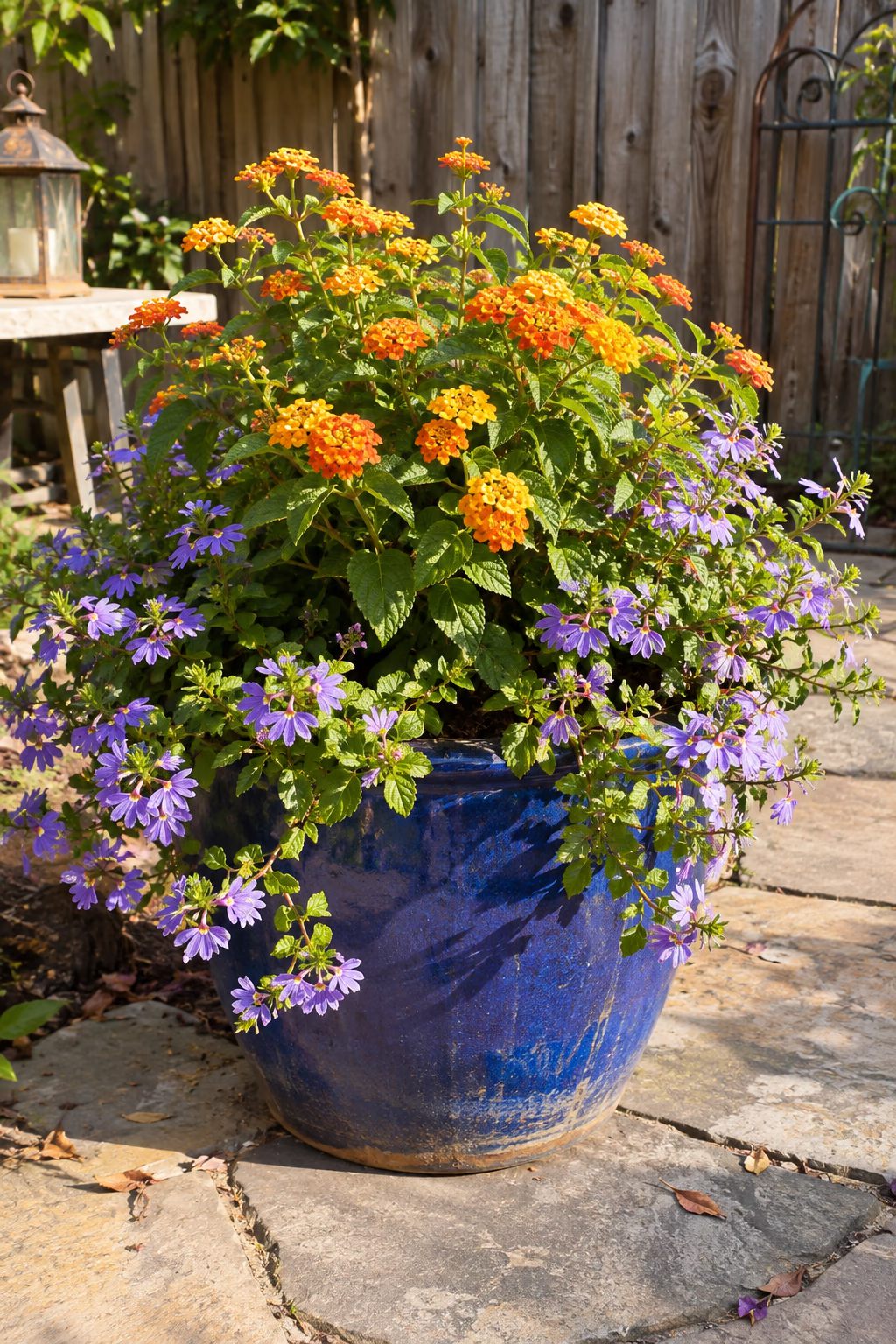
A bold, heat-loving color pairing
Orange and purple sit opposite each other on the color wheel, so they make each other look brighter. Plant golden-orange lantana in the center of a large pot and surround it with purple-blue fan flower (scaevola) cascading over the rim. A cobalt or deep blue glazed pot makes the combination pop even more.
Both plants love heat and full sun, handle short dry spells better than many annuals, and attract butterflies. They also keep blooming through the hottest weeks of summer, when cooler-season flowers give up.
Lantana grows quickly and can crowd out its neighbors, so trim it back by a third in midsummer if it starts to take over. Lantana berries are toxic, so keep that in mind if young children or pets spend time near the pot.
6. Grow Border Dahlias in Deep Patio Pots
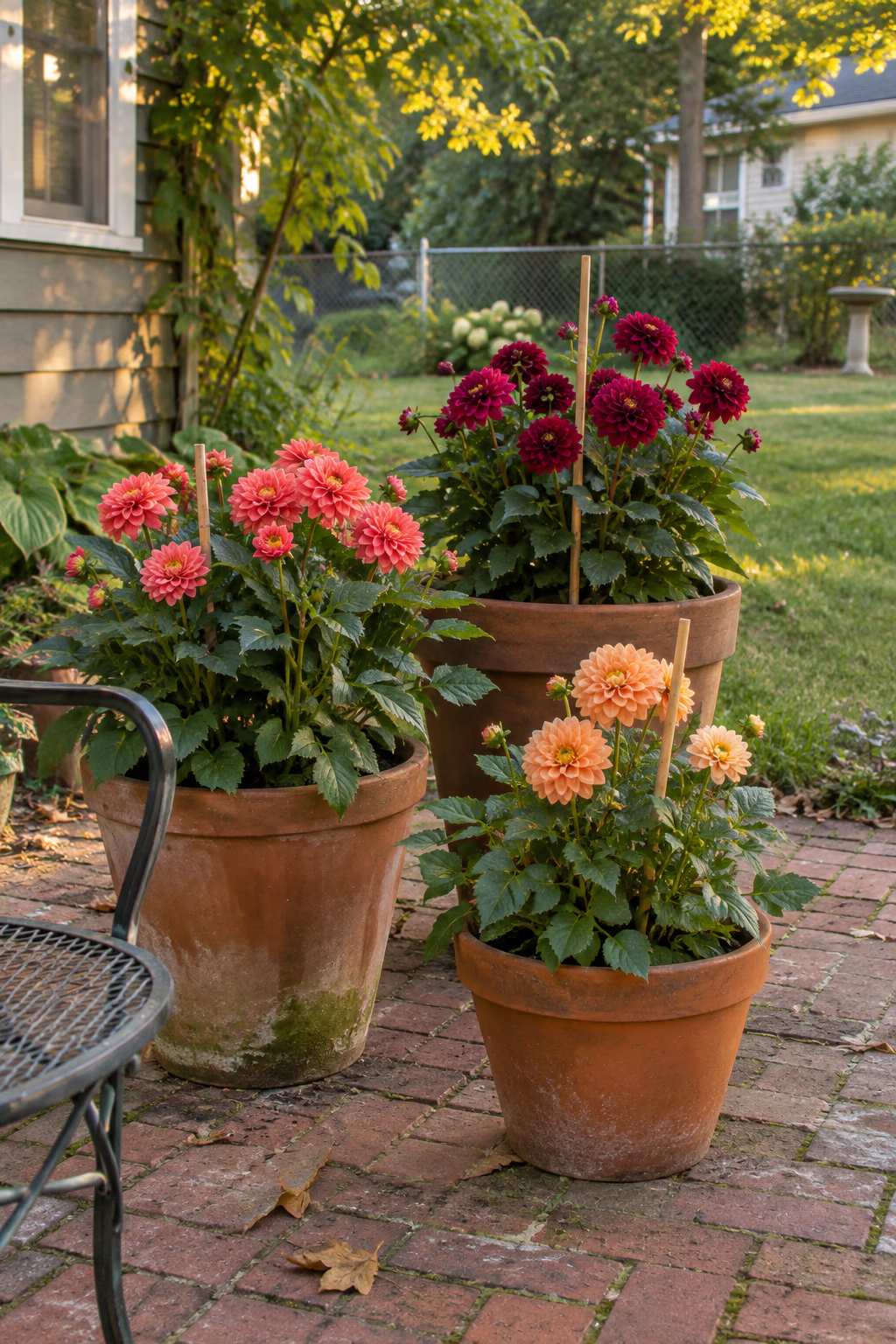
Big, showy blooms without a cutting bed
Dahlias are often grown in garden beds, but shorter border types that reach 1 to 3 feet tall do very well in containers. Plant one tuber per pot at least 12 to 16 inches deep and wide, using a well-drained potting mix. Choose colors that suit your patio, such as coral, burgundy, or soft apricot.
Container dahlias give you large, dramatic flowers from midsummer until frost, and you can cut a few for a vase without leaving a gap in a bed. Pots also warm up faster in spring, which helps the tubers get going.
Wait to plant until the soil is warm and frost danger has passed. Water lightly at first, since tubers can rot in soggy soil before they sprout. In most of the country the tubers aren’t winter hardy, so dig them up after the first frost and store them in a cool, dry place.
7. Pack a Hummingbird Pot With Salvia and Cuphea
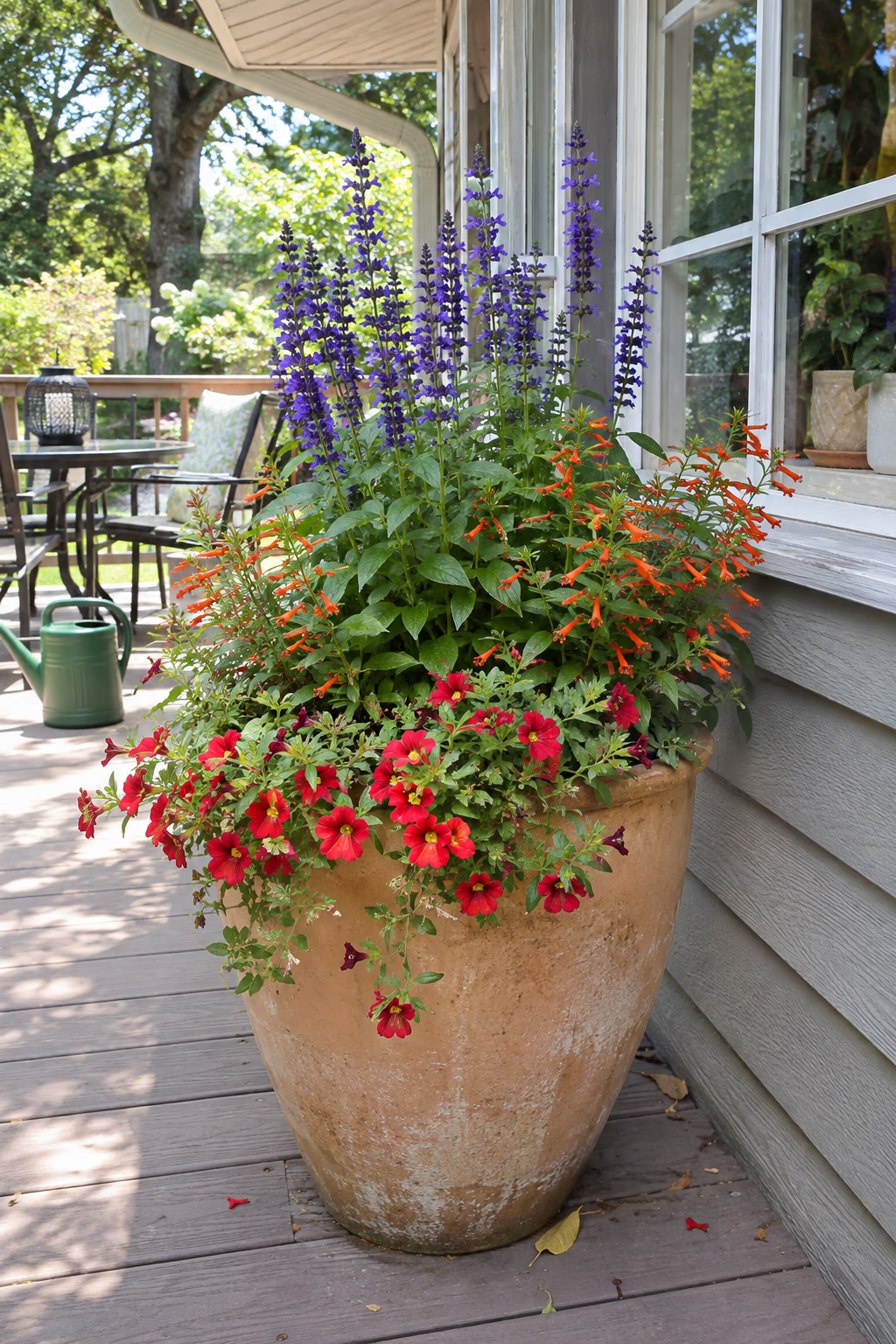
A living feeder right on your patio
Hummingbirds are drawn to tubular red, orange, and purple flowers. Fill a large pot with an upright blue or red salvia in the center, add cuphea (cigar plant) as a bushy filler, and finish the edge with trailing red calibrachoa or petunias.
A pot near a window or seating area brings the birds close enough to watch. Salvia and cuphea both flower for months and handle summer heat well, so the nectar supply stays steady.
Skip pesticides on this planting, since they can harm the birds and the insects they eat. Deadhead the salvia now and then to keep new flower spikes coming.
8. Layer Spring Bulbs in a Lasagna Pot
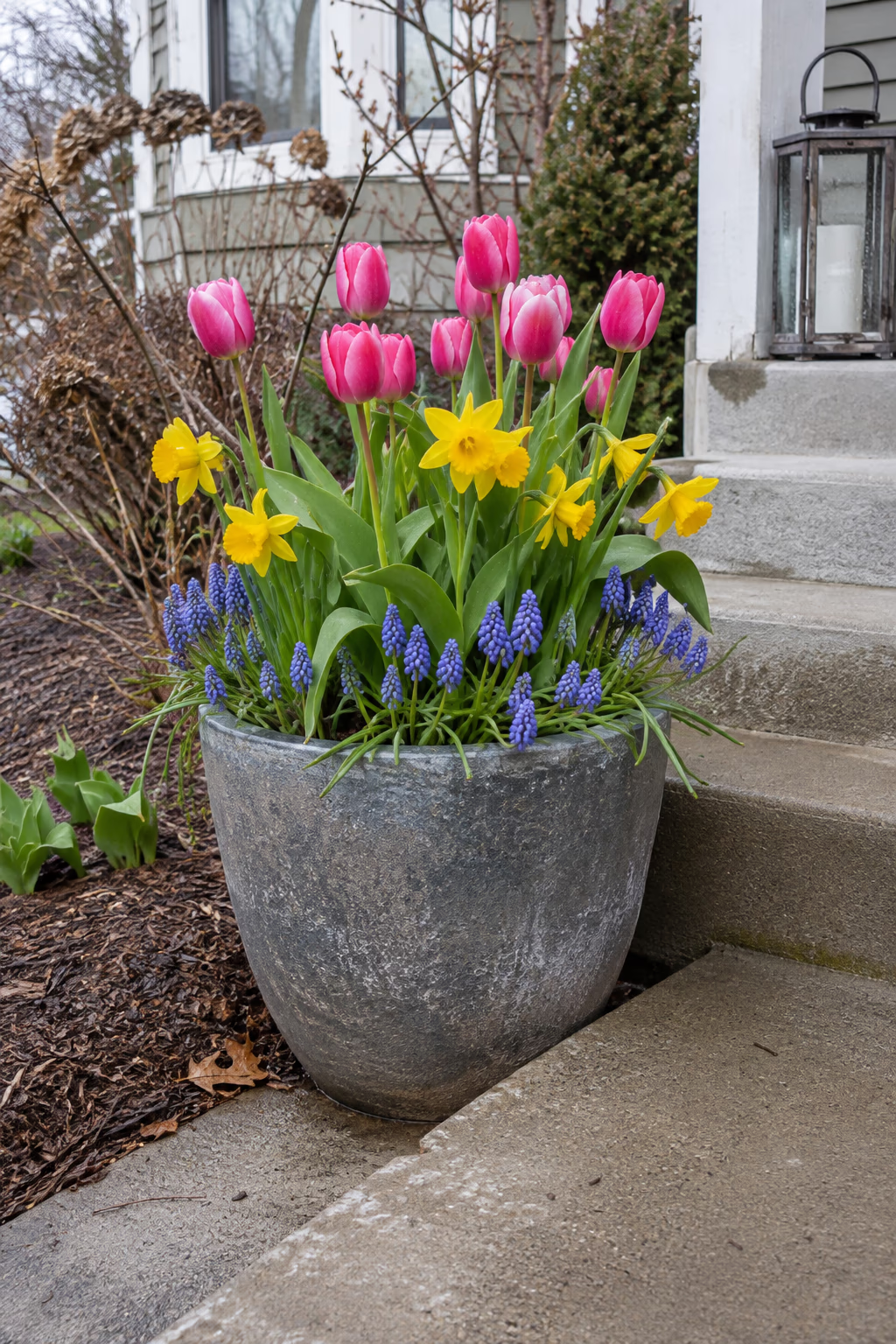
Weeks of spring flowers from a single container
A bulb lasagna stacks different bulbs at different depths in one pot so they bloom one after another. In fall, put a few inches of potting mix in a deep pot, add a layer of tulips about 8 inches from the top, cover with soil, add daffodils above them, then finish with crocus or grape hyacinth near the surface.
As the season goes on, the small early bulbs bloom first and the taller tulips push up through them later. You get color from early to late spring in a pot that’s easy to place by the front steps once it starts to bloom.
In colder regions, pots can freeze solid and harm the bulbs. Move the planted pot into an unheated garage or shed for winter, or bury it in a mulched bed, then bring it out when shoots appear. Water lightly whenever the soil is dry and not frozen.
9. Step Up the Porch Stairs With a Pot on Every Tread
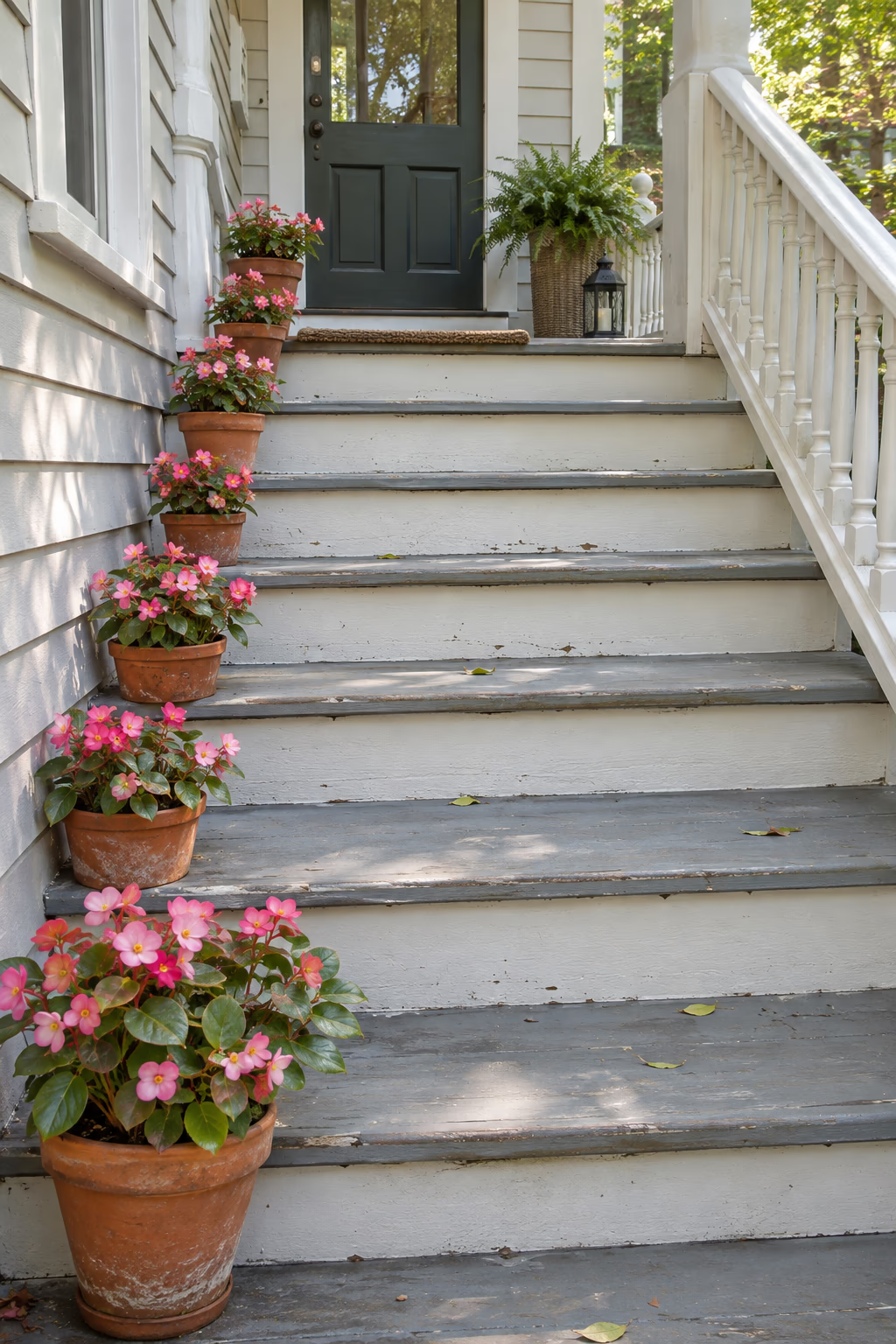
A welcoming path of color to the door
If you have wide front steps, set a flower pot on one side of each tread, so a line of color climbs to the door. Use pots of the same style in two or three sizes, with the largest at the bottom, and plant them with the same flowers, like pink begonias or yellow marigolds, for a unified look.
Repeating plants and pots up the stairs leads the eye toward the entry and makes an ordinary set of steps feel special. It also works on steps leading to a deck or back door.
Leave plenty of room to walk, especially if anyone in the household uses a cane or carries groceries. Saucers can trap water and make steps slippery or stain concrete, so use pot feet instead.
10. Fill a Galvanized Trough With Zinnias and Cosmos for Cutting
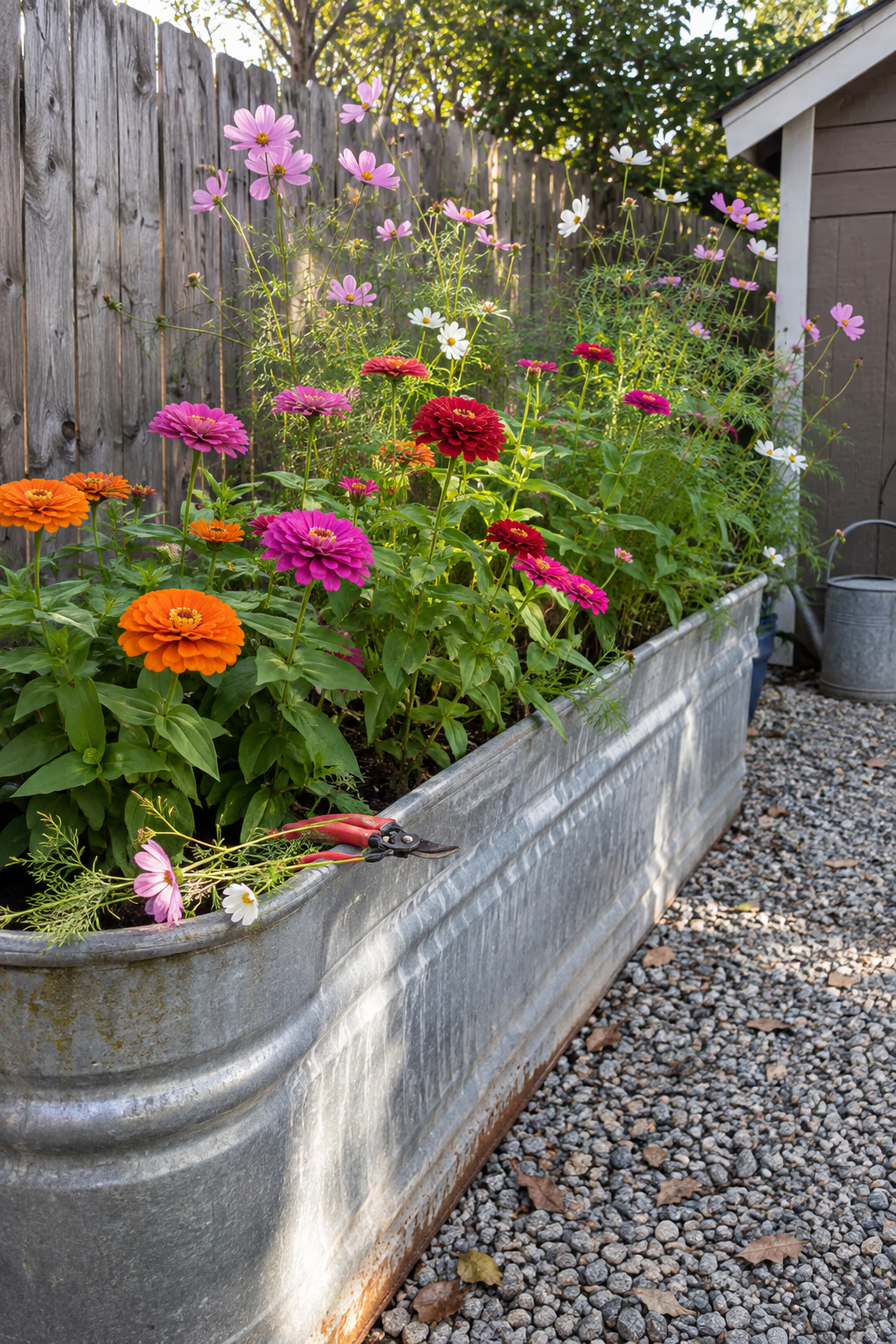
A mini cutting garden that fits on a patio
A large galvanized stock tank or long metal trough gives you enough soil to grow flowers for bouquets. Plant zinnias, cosmos, and celosia from seed or small transplants, putting taller cosmos toward the back and shorter zinnias in front.
These annuals grow quickly, love sun, and bloom more the more you cut them. The farmhouse look of galvanized metal suits many yards, and the large soil volume helps the plants handle summer heat better than small pots.
Drill several drainage holes in the bottom before filling. Metal heats up in strong sun, so keep the soil surface mulched and water deeply rather than in quick splashes. A full trough is very heavy, so set it in its final spot first.
11. Underplant a Standard Rose Tree With Sweet Alyssum
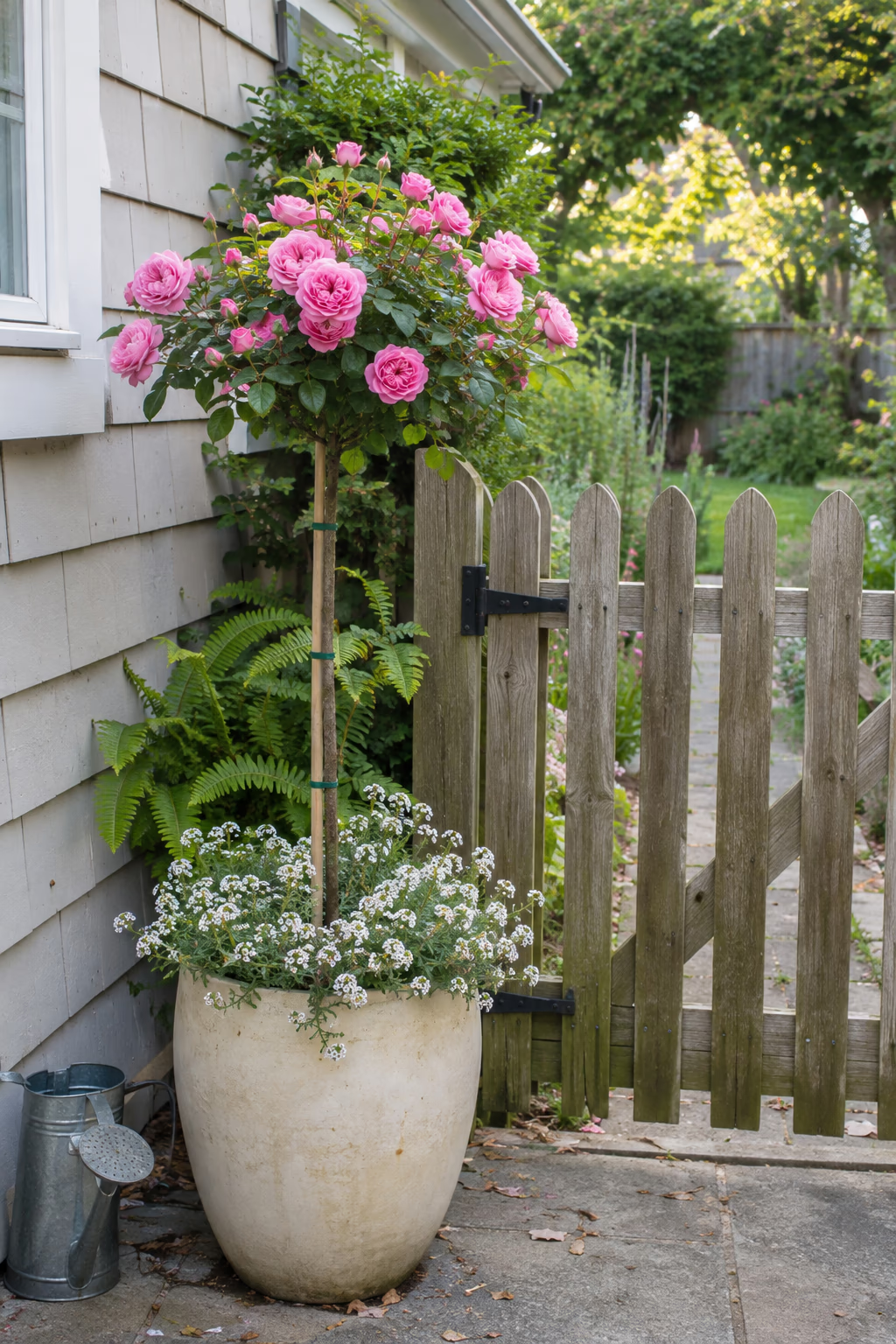
An elegant focal point with a soft, fragrant base
A standard, or tree, rose is a rose grafted onto a tall single stem so it looks like a small lollipop tree. Plant one in a large pot at least 20 inches wide and circle the base with white sweet alyssum, which forms a low, honey-scented carpet around the trunk.
The tall stem gives height and structure, while the alyssum hides bare soil and softens the look. A pair of these pots works well on either side of a gate or garden bench.
Tree roses need a stake to keep them steady in wind. The graft at the top is vulnerable to cold, so in areas with hard freezes, move the pot to an unheated garage or wrap the head for winter. Alyssum may sulk in peak heat; trim it back and it often recovers when temperatures drop.
12. Pot Up Pansies, Snapdragons, and Violas in Cool Pastels
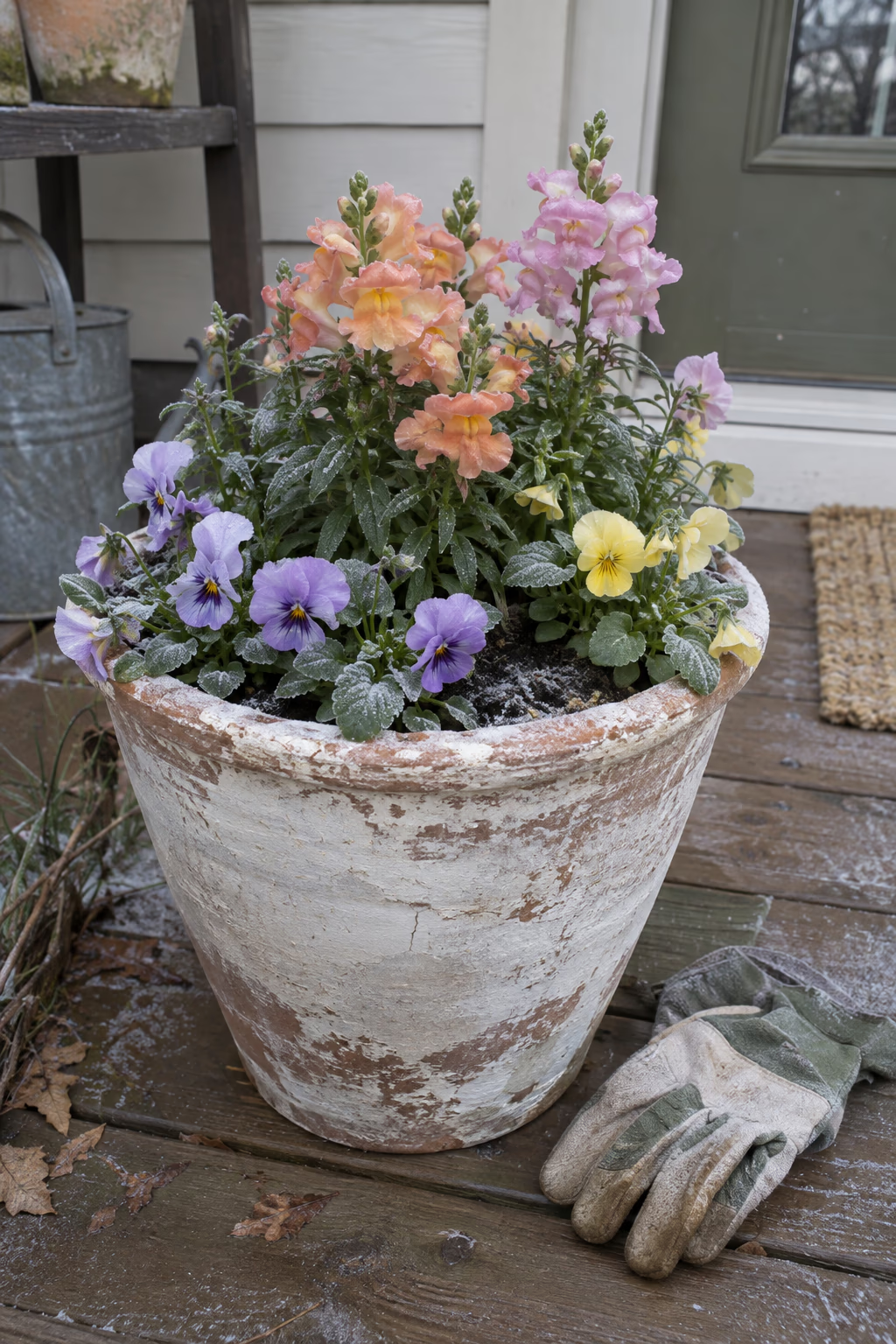
Soft color for chilly spring and fall days
Before summer heat arrives, pansies, violas, and snapdragons give you color that can handle light frost. Choose a soft palette of lavender, pale yellow, and apricot, with snapdragons rising in the center and pansies and violas filling the edges.
These cool-season flowers let you start your container garden weeks before warm-weather annuals can go outside. In mild winter regions, they can bloom from fall through spring.
Expect them to fade when nights stay warm. When they get leggy in early summer, pull them out and replant the pot with heat lovers rather than trying to nurse them along.
13. Let One Bougainvillea Spill From a Glazed Bowl
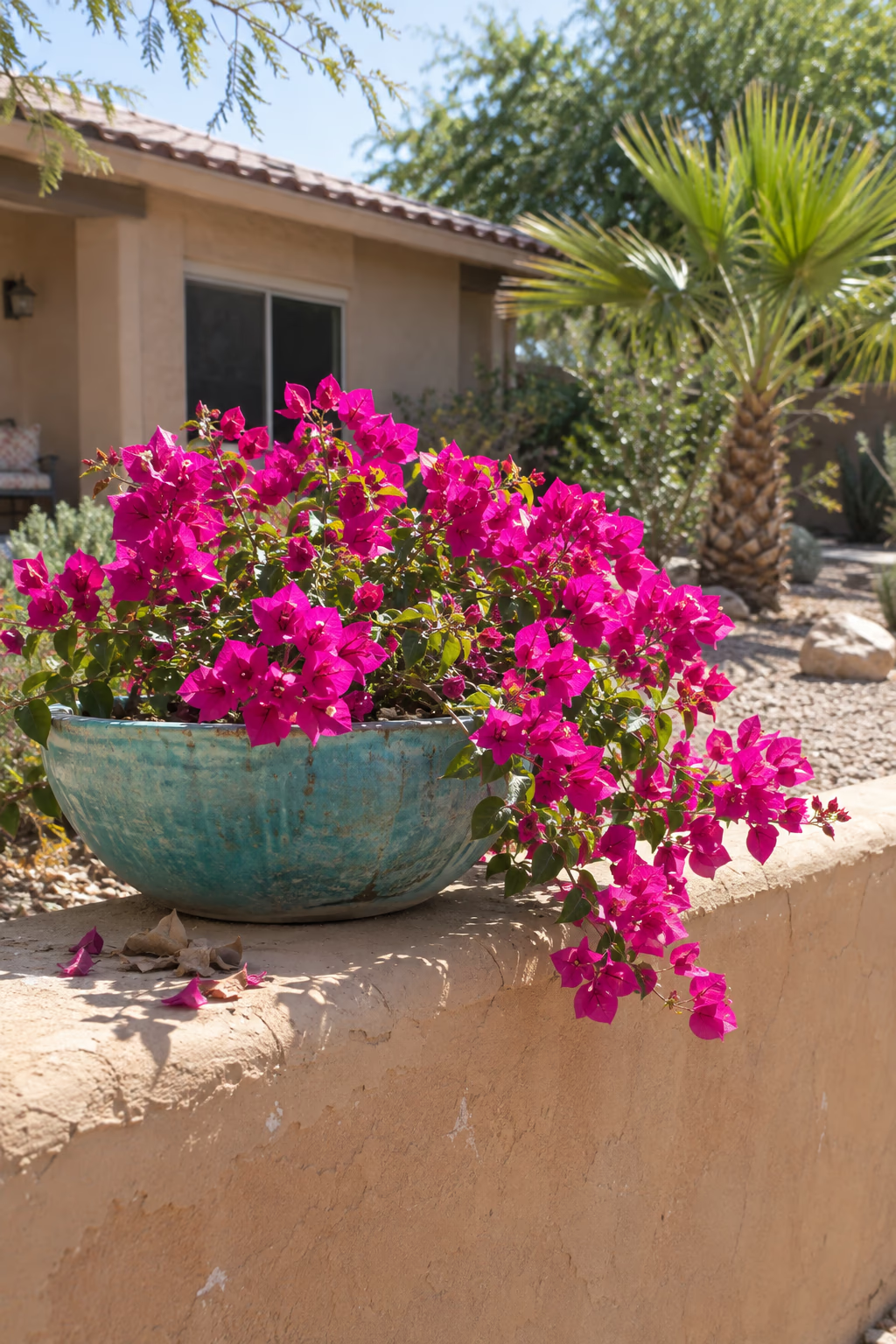
A single plant that makes a statement
Sometimes one plant is enough. A dwarf or mounding bougainvillea in a wide glazed bowl creates a cloud of magenta, orange, or white papery bracts that tumble over the rim. Set the bowl on a low table, wall, or plinth so the color can hang down.
A single-plant pot looks clean and modern and is easy to care for, since there are no competing plants to manage. Bougainvillea thrives on heat and actually blooms better when its roots are a bit crowded and the soil dries between waterings.
Bougainvillea is hardy only in the warmest parts of the country, roughly USDA zones 9 to 11. Elsewhere, treat it as a summer plant or bring it into a bright, cool room for winter. The stems have sharp thorns, so wear gloves when pruning.
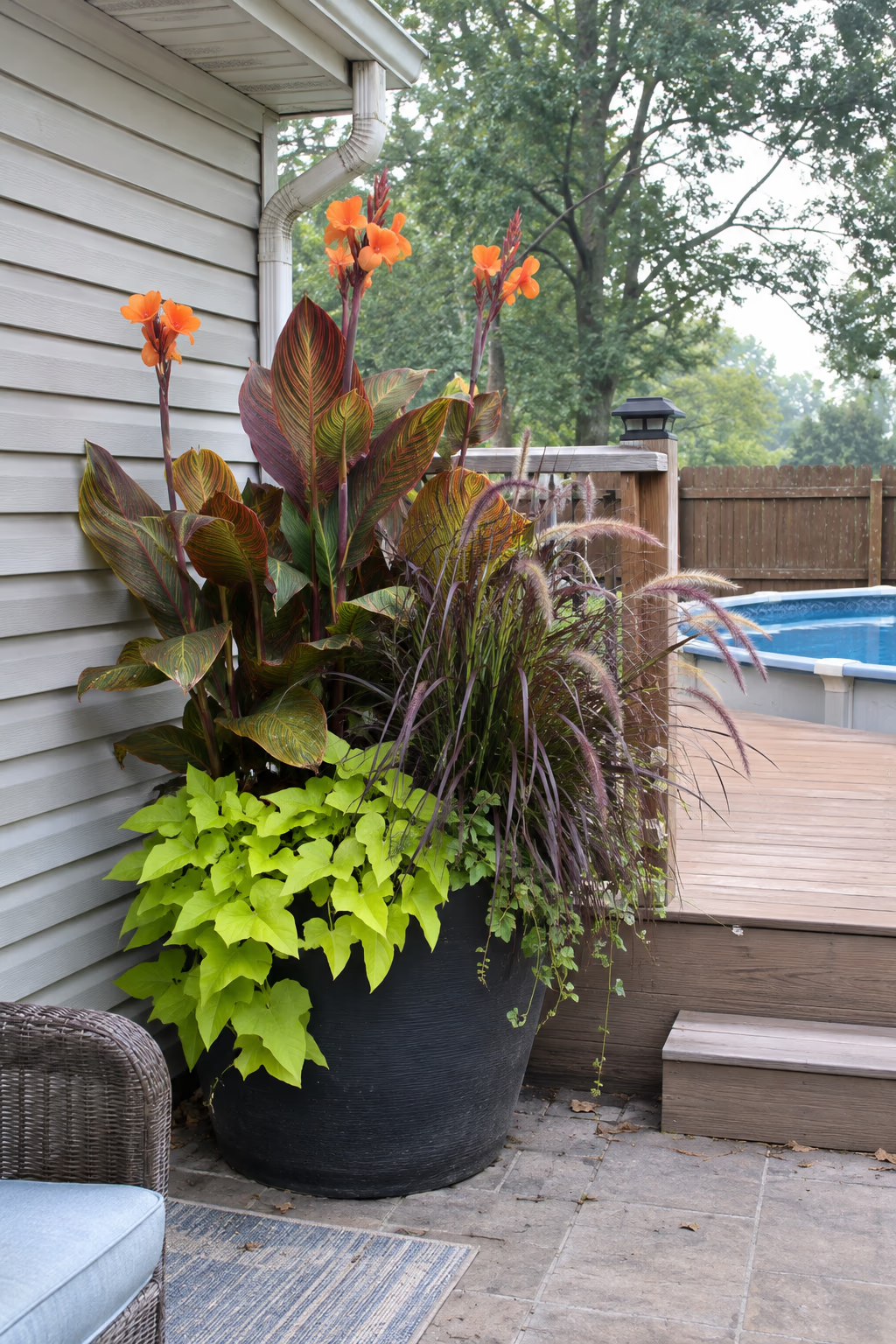
14. Go Bold With Cannas and Purple Fountain Grass
Tropical drama in a large container
For a big, eye-catching pot, combine tall cannas with bronze or striped leaves and red or orange flowers with arching purple fountain grass. Add a trailing plant like lime sweet potato vine to fill in the base and spill over the side.
Both plants grow fast in heat and can reach 4 to 5 feet by late summer, making the container feel like a small tropical garden. It’s a great choice for a corner of the patio or beside a pool where you want height.
A planting this tall needs a heavy, wide pot, at least 24 inches across, so it doesn’t tip over in wind. Purple fountain grass is usually grown as an annual outside the warmest zones, and canna rhizomes can be dug and stored indoors over winter.
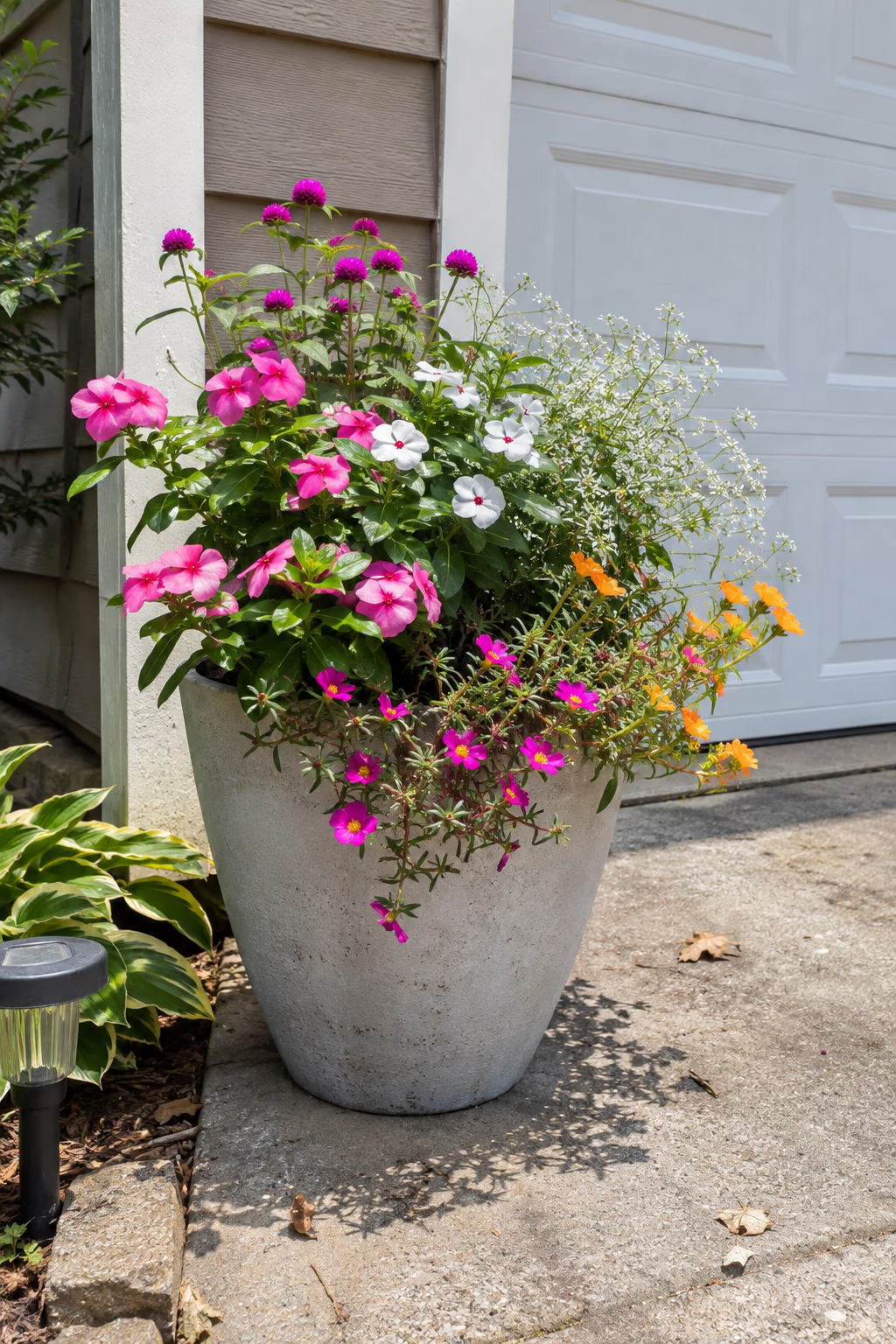
15. Fill a Heat-Proof Pot With Drought-Tough Bloomers
Color that survives a forgotten watering
If your pots sit on a hot driveway or south-facing wall, choose flowers that can handle it. Annual vinca, portulaca, gomphrena, and lantana all bloom in blazing sun and recover well after short dry spells. A white euphorbia with tiny airy flowers makes a soft filler between them.
These plants keep the container colorful during heat waves when petunias and geraniums tend to struggle. They also suit people who travel on summer weekends or prefer a lower-maintenance garden.
Drought-tolerant doesn’t mean no water. Pots still dry faster than the ground, so water deeply when the top inch or two of soil is dry. Light-colored or glazed pots stay cooler than dark plastic ones in full sun.
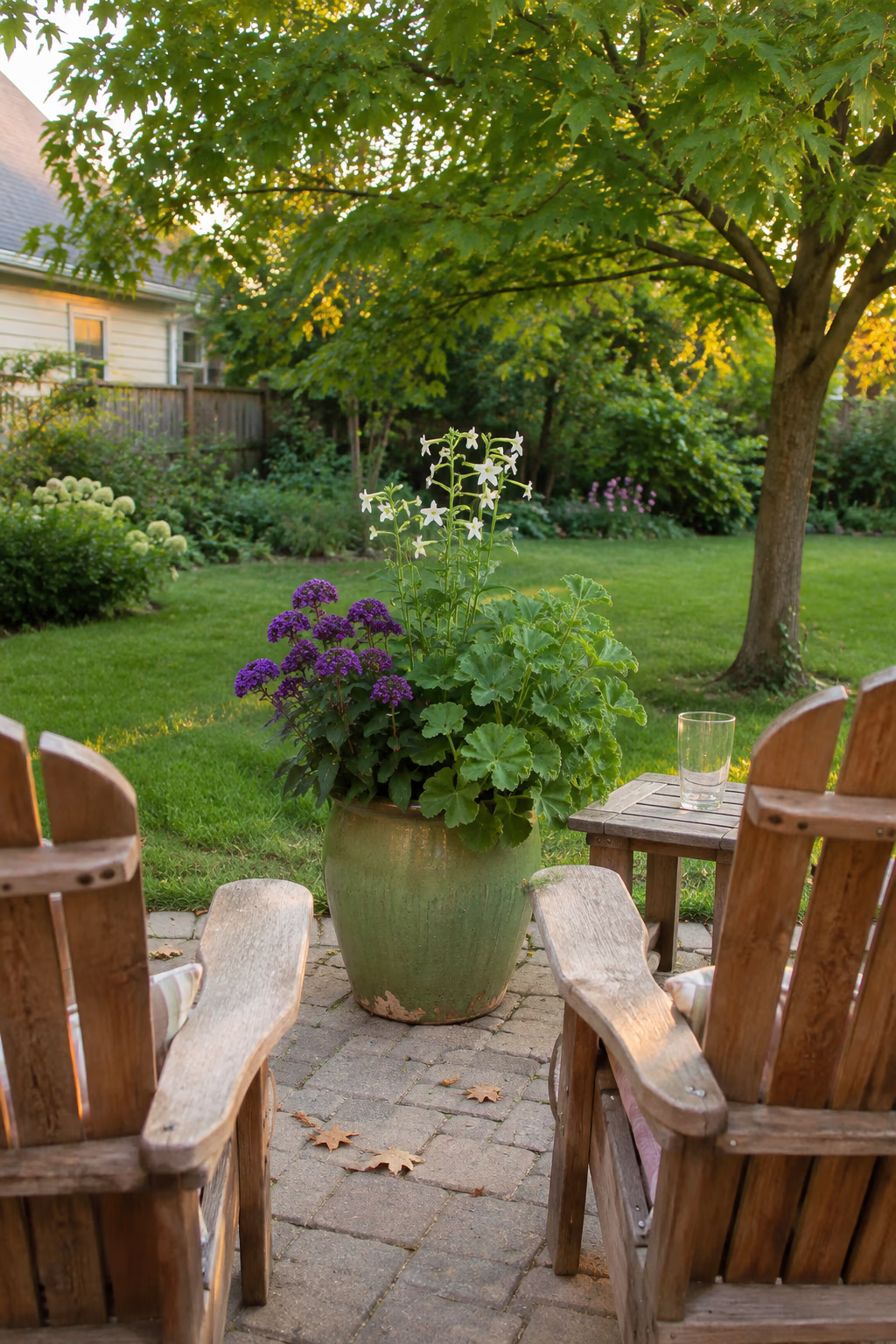
16. Plant a Fragrant Pot Beside the Patio Seating
Sweet scent right where you relax
Place a container near your outdoor chairs and fill it with flowers chosen for scent. Heliotrope has a vanilla-like fragrance, stock smells spicy-sweet, flowering tobacco (nicotiana) is most fragrant in the evening, and scented geraniums release their aroma when you brush the leaves.
Fragrance is easy to overlook in container design, but it makes sitting outside much more enjoyable. A pot within arm’s reach lets you enjoy the scent without leaving your seat.
Some fragrant plants, such as stock, prefer cooler weather and fade in summer heat. Heliotrope is toxic if eaten, so keep the pot away from curious pets.
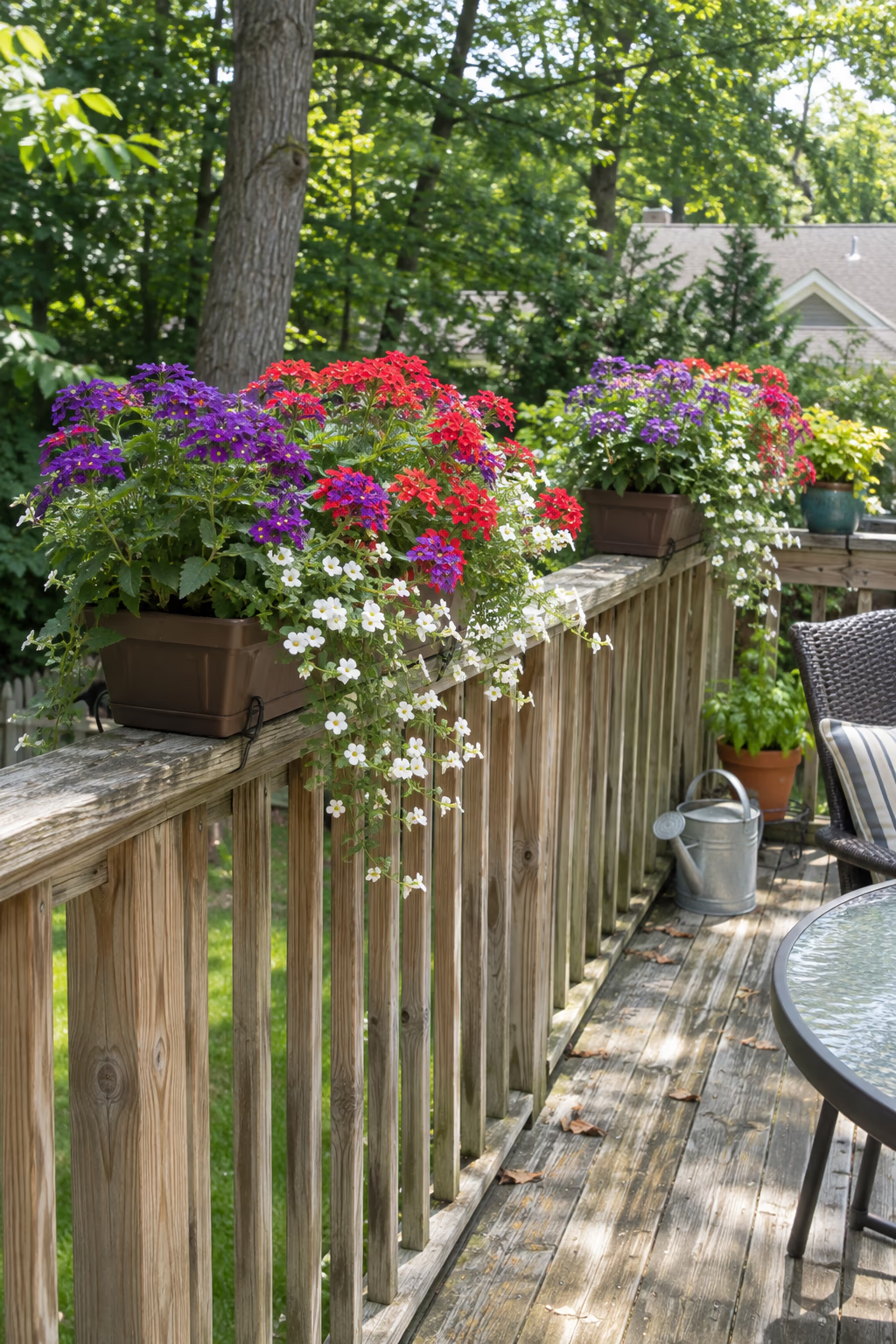
17. Hang Railing Planters of Trailing Verbena on the Deck
A flower border for decks and balconies
Long planters that hook over a deck or balcony railing turn a plain rail into a flower box. Trailing verbena in purple, red, or pink spills over both sides, and white bacopa or lobelia can be tucked in between for contrast.
Railing planters add color without taking up any floor space, which is ideal for small balconies and narrow decks. Verbena loves sun and attracts butterflies.
Make sure the brackets fit your rail width and are firmly secured, especially on upper floors. Many apartment and condo buildings have rules about planters on railings, so check with your building or HOA first. Position the planters so drainage water doesn’t drip onto neighbors below.
18. Train a Compact Clematis Up an Obelisk in a Pot
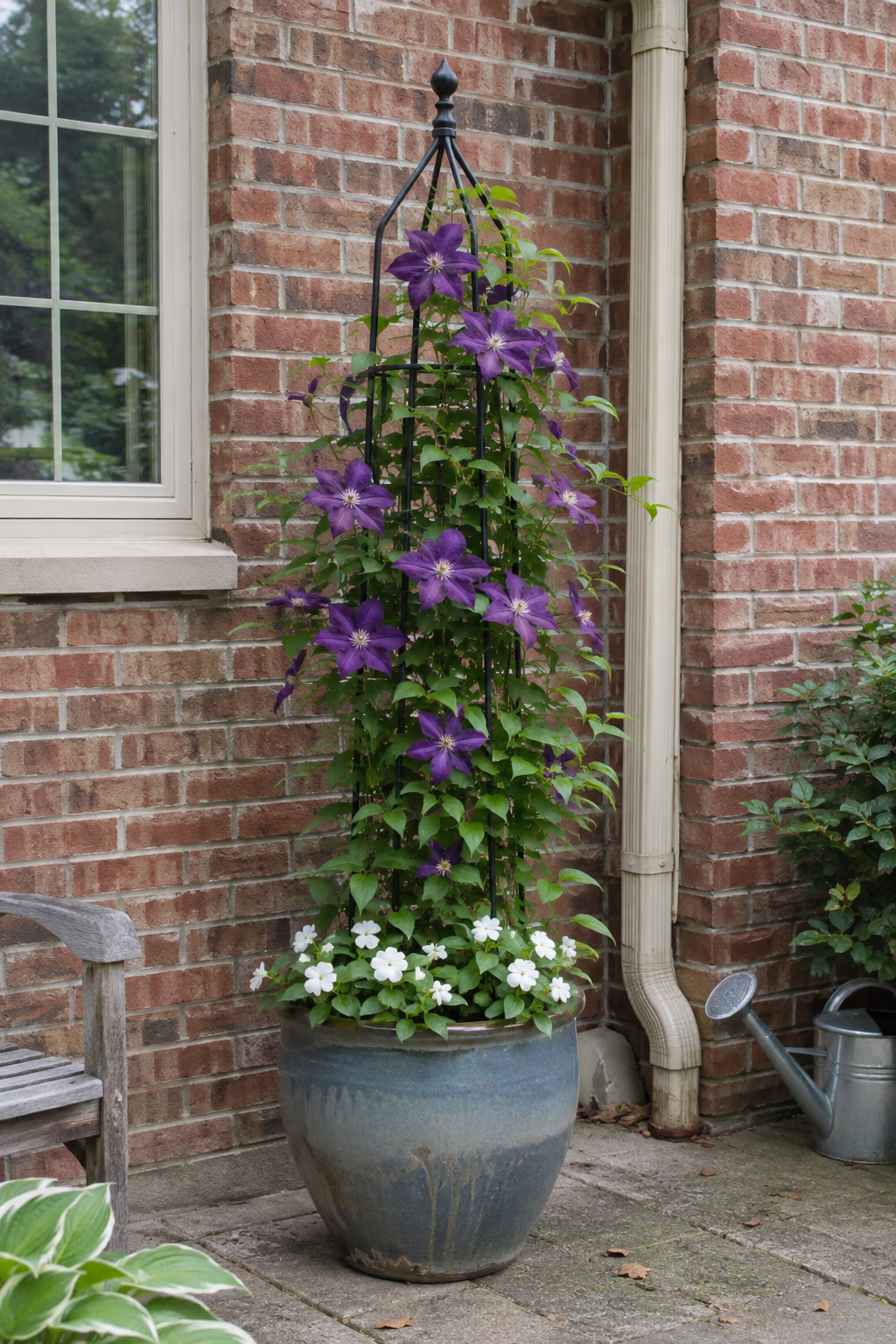
Vertical blooms in a small footprint
Clematis isn’t just for fences. Compact varieties bred for containers grow 4 to 6 feet tall and can be trained up a metal or wooden obelisk set right in the pot. Choose a container at least 18 inches deep and wide to give the roots room.
The vine adds height and big star-shaped flowers in purple, pink, or white to a patio corner. It works where there’s no wall or fence to climb, and the obelisk itself looks attractive in winter.
Clematis likes its flowers in sun but its roots cool. Plant low annuals around the base or set smaller pots in front to shade the container. In very cold areas, protect the pot over winter by moving it against the house or into an unheated garage.
19. Plant a Red, White, and Blue Summer Planter
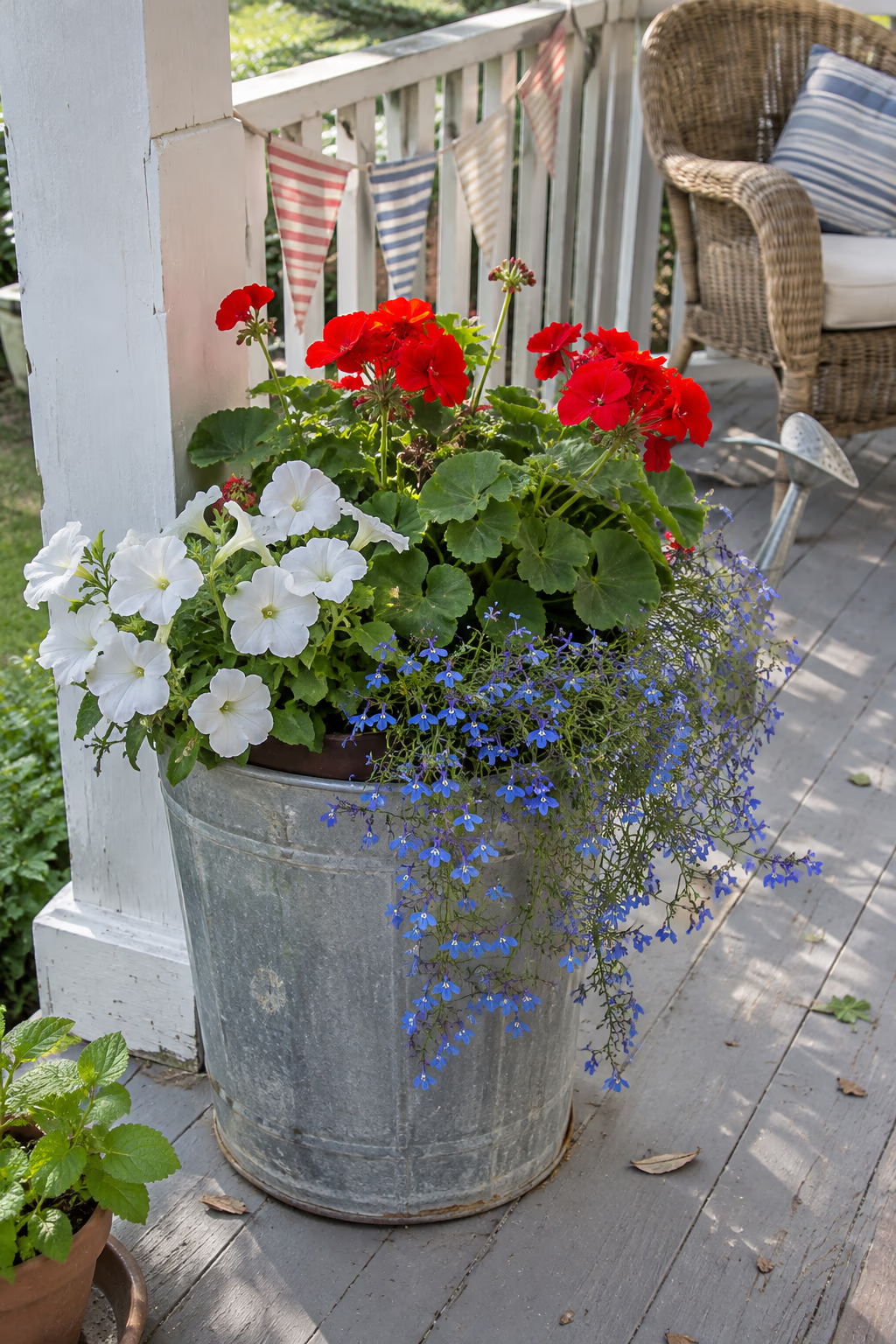
A festive look for summer holidays
For a patriotic container, combine red geraniums or salvia, white petunias or bacopa, and blue lobelia or fan flower. A galvanized bucket, a white pot, or a navy glazed container all suit the theme.
It’s a fun way to dress up a porch for Memorial Day, the Fourth of July, and Labor Day, and the colors look crisp all summer. The same plants are widely sold and easy to find in early summer.
Blue lobelia often fades in strong heat, so give it afternoon shade or swap in fan flower, which handles heat better. Plant it a few weeks before the holiday so it has time to fill out.
20. Refresh Pots for Fall With Mums, Peppers, and Pansies
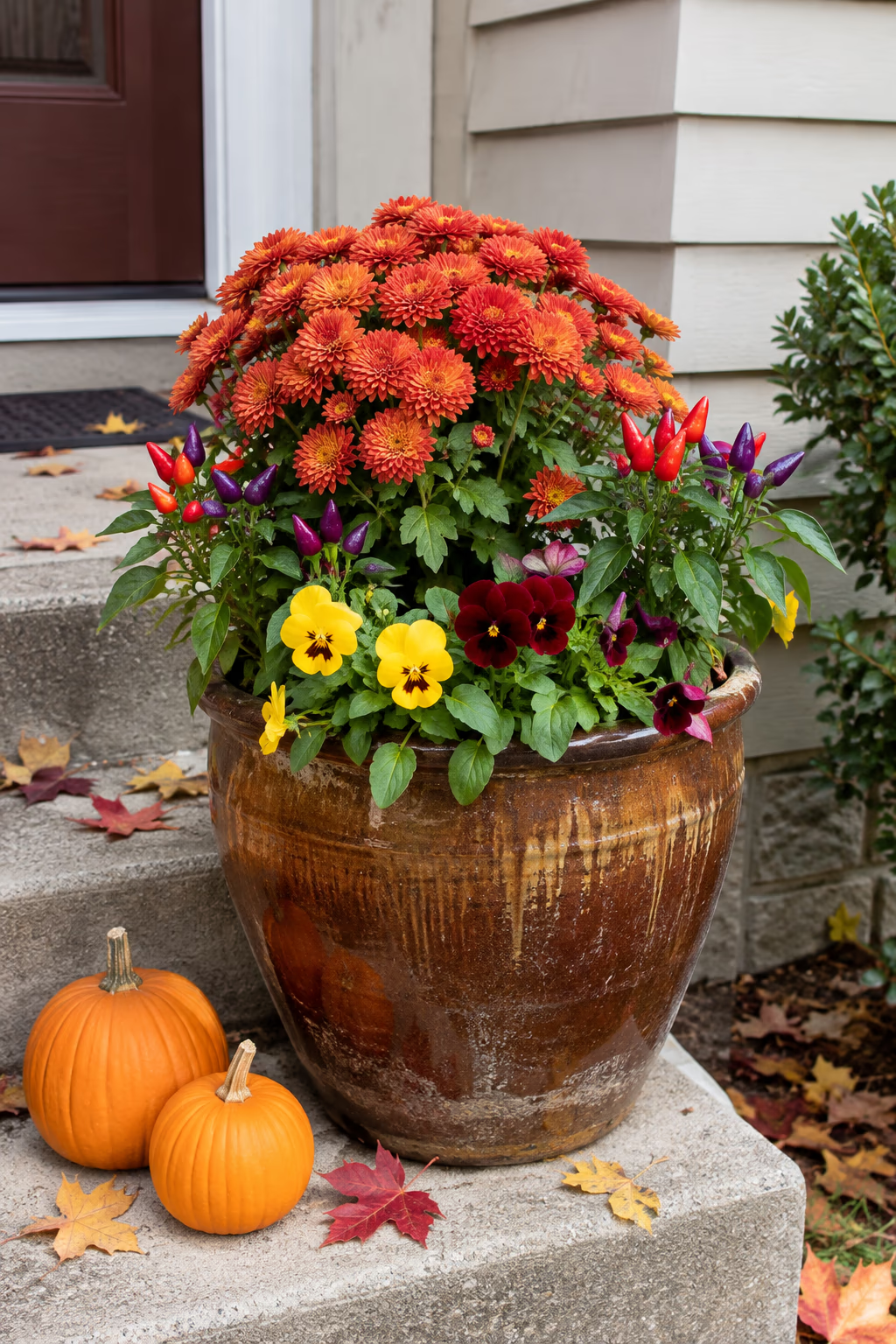
Keep containers colorful after summer
When summer annuals start to look tired, replant your containers with fall flowers. A garden mum in rust or gold makes a strong center, ornamental peppers add glossy red and purple fruit, and pansies fill the edges with color that lasts into cool weather.
Swapping plants keeps your pots looking good for two or three more months. Add a small pumpkin, gourds, or ornamental kale nearby for a seasonal display on the steps.
Mums bought in full bloom tend to last only a few weeks, so pick plants with some buds still closed. Ornamental peppers are killed by frost, while pansies can keep going through light freezes.
21. Repeat Matching Terracotta Pots Along a Walkway
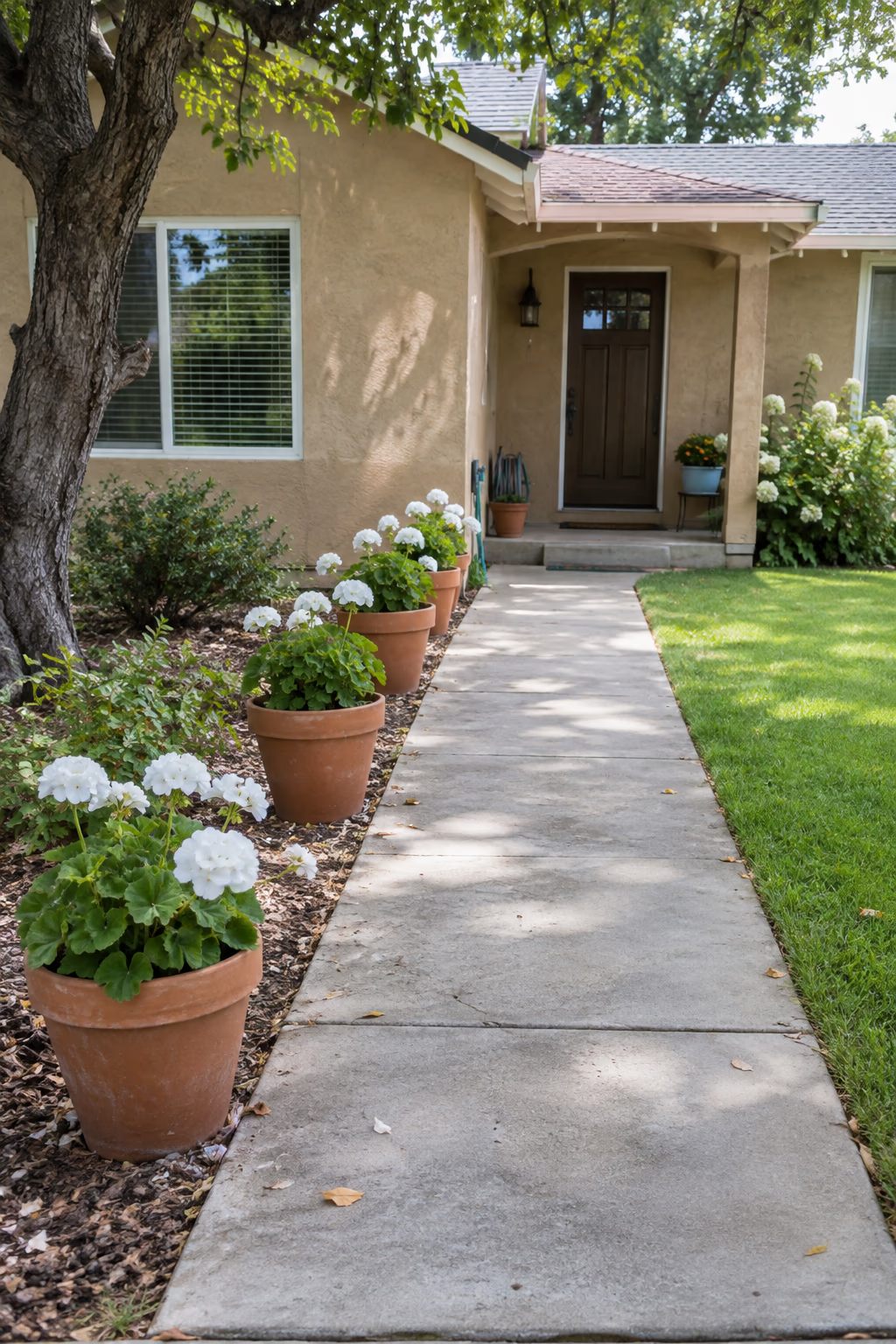
Rhythm and order along a path
A row of identical terracotta pots spaced evenly along a front walk, driveway, or patio edge creates a sense of order. Plant each with the same flower, such as white geraniums, lavender, or yellow marigolds, so the repetition reads clearly.
Repeating the same pot and plant is a designer trick that makes even a small space look planned. It’s also budget-friendly, since basic terracotta is one of the least expensive pot materials.
Terracotta is porous and dries out faster than glazed or plastic pots, so check soil moisture often. It can also crack in hard freezes, so empty the pots or store them indoors over winter in cold areas.
22. Plant an All-White Moon Pot for Evening Glow
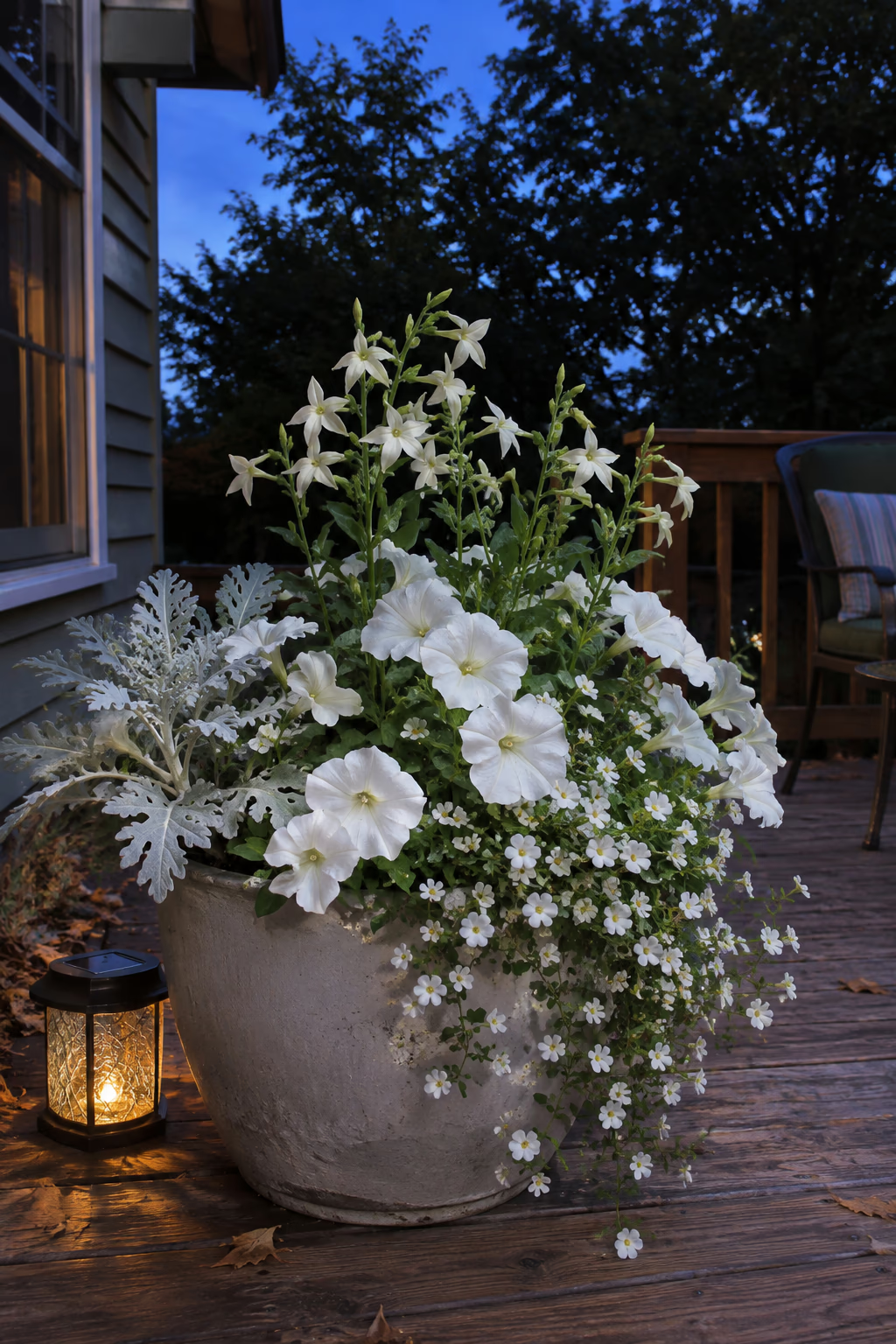
Flowers that shine after sunset
White flowers seem to glow at dusk, so a container planted entirely in white and silver makes a beautiful sight on a deck or patio in the evening. Combine white petunias, white nicotiana, bacopa, and silvery dusty miller in a pale gray or white pot.
A moon pot is perfect for people who spend more time outside after work than during the day. Many white flowers, like nicotiana, are also fragrant at night.
White blooms show browning more than colored ones, so pinch off spent flowers regularly to keep the planting looking fresh. Add a solar light nearby for even more glow.
23. Grow Hardy Perennials in a Pot That Returns Each Year
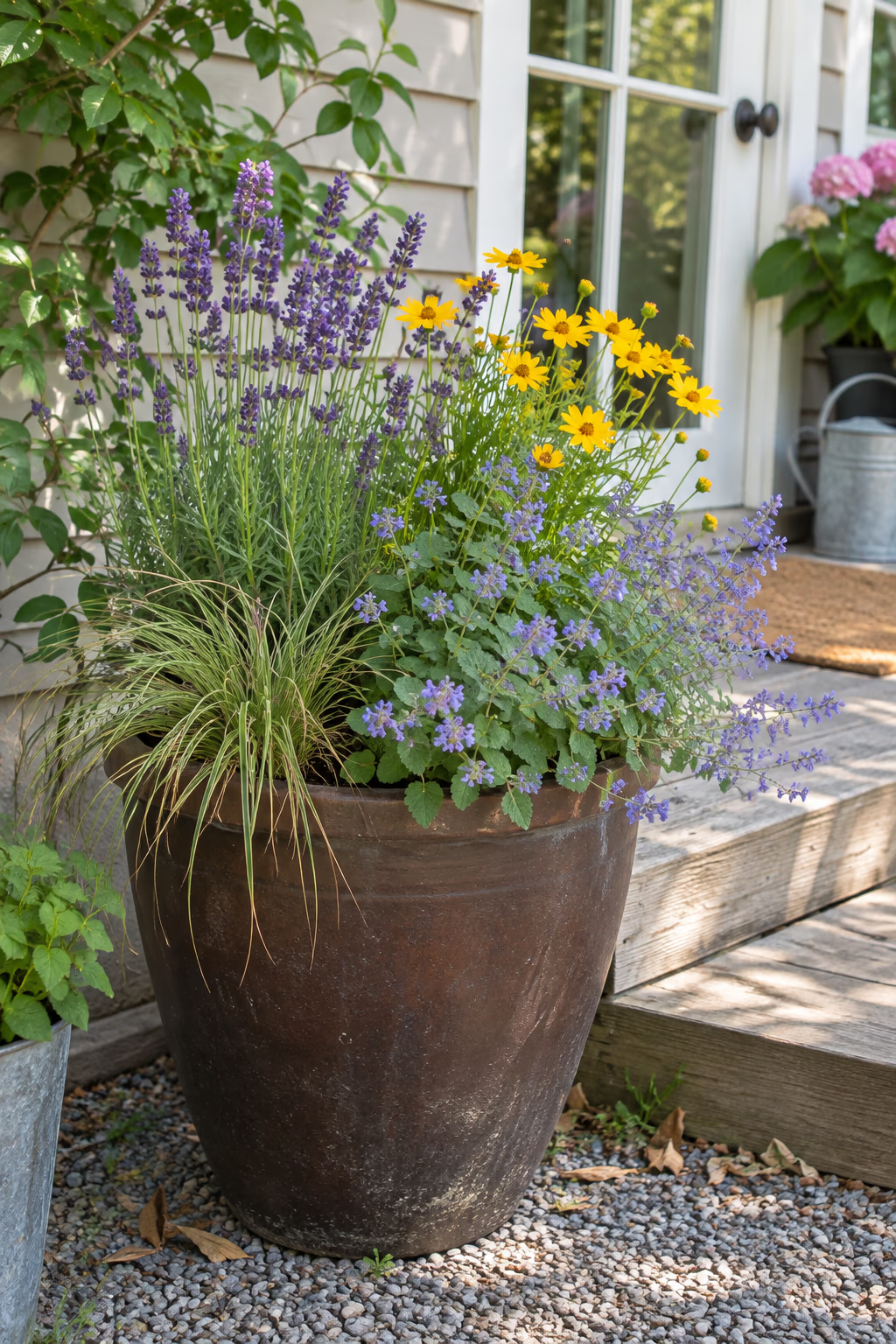
Less replanting and lower long-term cost
Instead of buying annuals every spring, fill a large pot with perennials that come back. Lavender, coreopsis, catmint, hardy salvia, and small ornamental grasses all grow well in containers and bloom year after year.
Perennial pots cost more upfront but save money and effort over time. They also give the container a more natural, textured look, which fits current trends toward relaxed planting.
Roots in pots are more exposed to cold than roots in the ground. Choose plants rated at least one to two zones colder than your USDA zone, use a frost-resistant pot, and group pots against the house or mulch around them in winter.
24. Turn a Weathered Wooden Crate Into a Flower Box
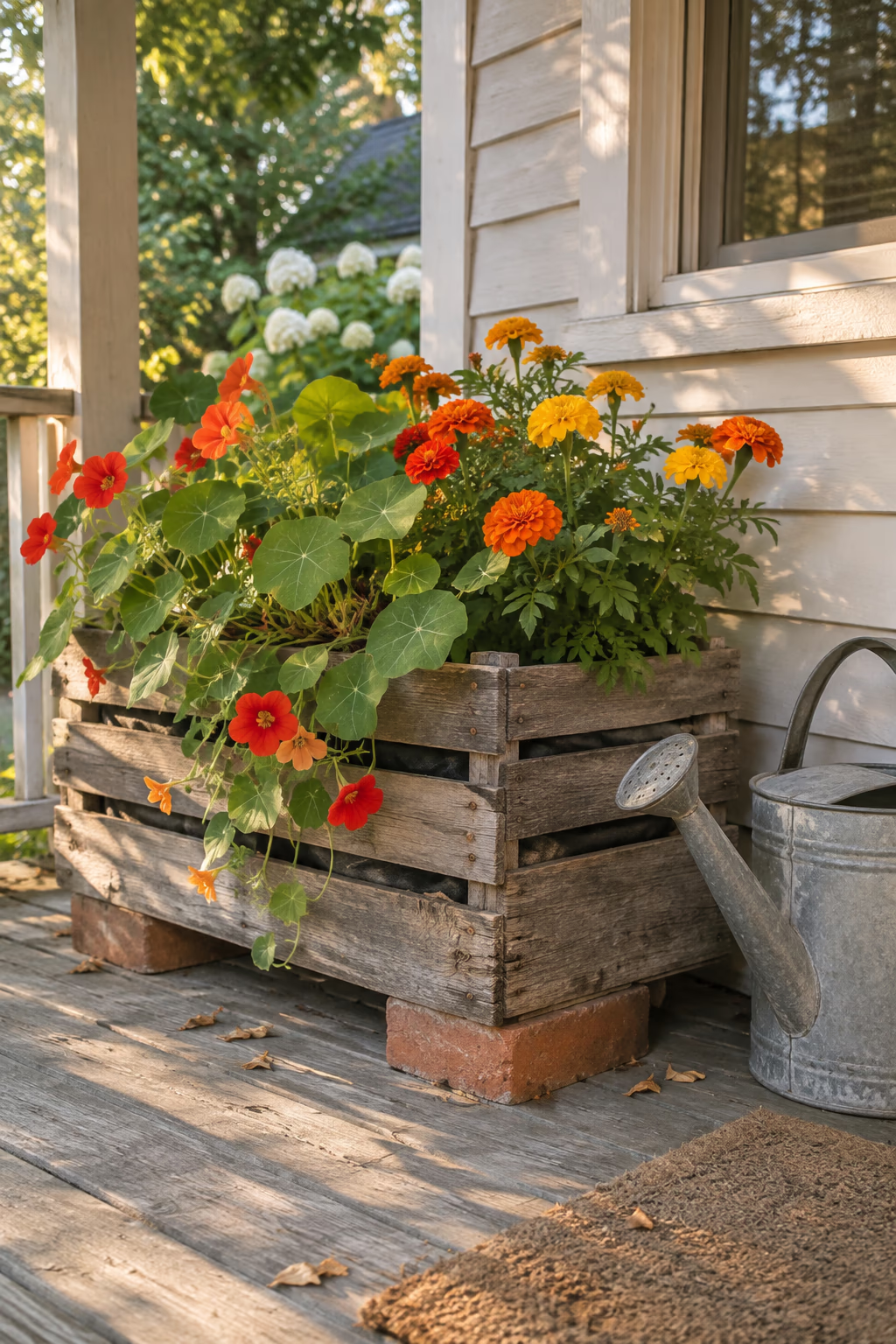
Rustic charm on a tiny budget
An old wooden crate or fruit box makes a charming planter for a porch or garden shelf. Line it with landscape fabric or heavy plastic with holes punched in the bottom, fill with potting mix, and plant with marigolds, petunias, or nasturtiums.
Upcycled containers add personality and cost little or nothing. The rough wood and loose, cheerful flowers suit farmhouse, cottage, and vintage styles.
Untreated wood will rot eventually, usually within a few seasons. Raise the crate on bricks or pot feet so it doesn’t sit in water, and avoid old wood that may have been treated with chemicals or painted with lead paint.
25. Stack Small Flower Pots on a Tiered Plant Stand
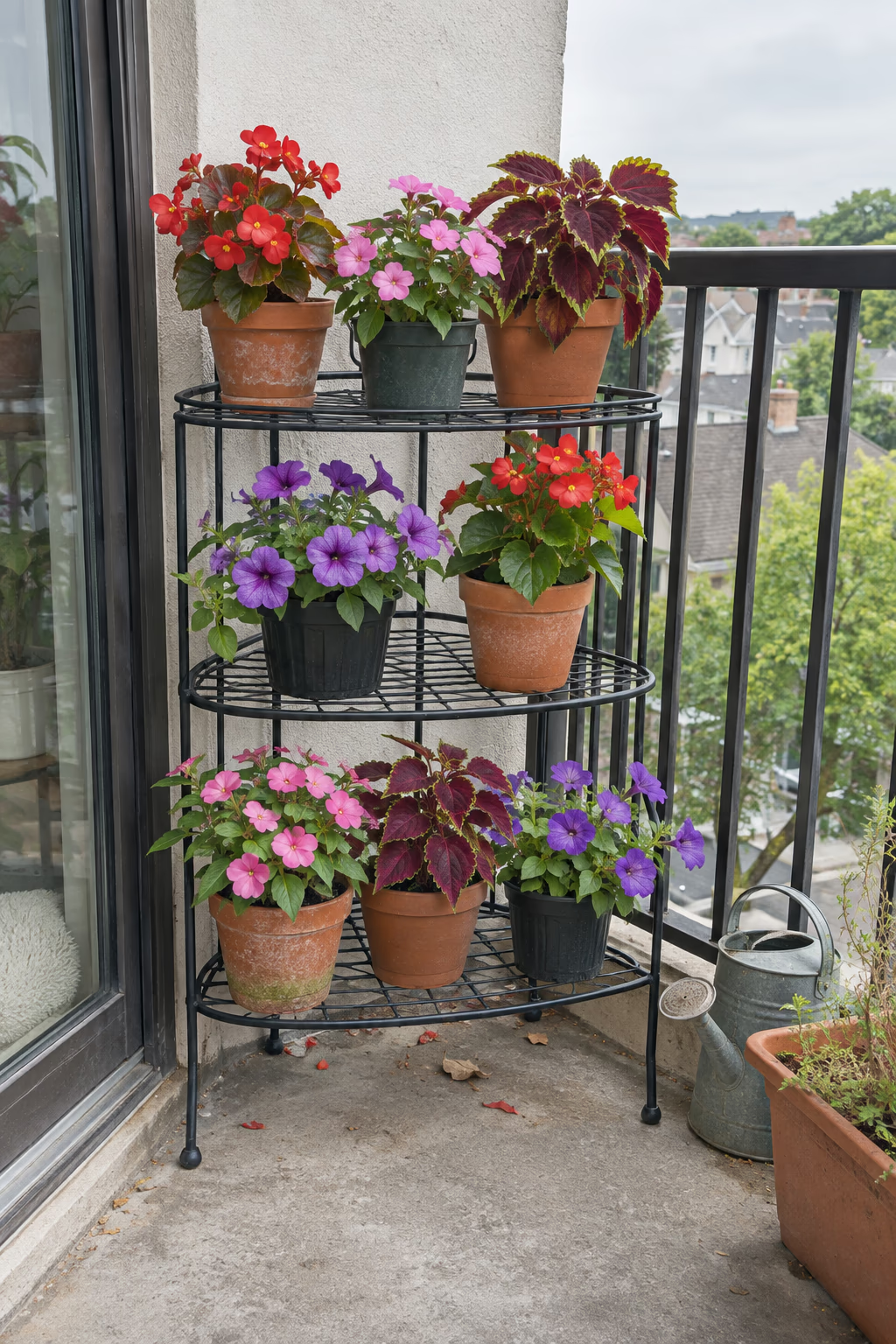
A lot of color in a small corner
A tiered plant stand lets you display many small pots in the space of one large one. Arrange 6- to 8-inch pots of begonias, impatiens, coleus, or petunias on each level, mixing colors or sticking to one theme.
Stands make it easy to fill a narrow porch or balcony corner with flowers. You can rearrange the pots, swap in new plants, or move a struggling one to a better spot without disturbing the rest.
Small pots dry out quickly, so plan to water every day in summer. Choose a stand with a wide, stable base and anchor it to the wall if it’s tall or in a windy spot.
How to Plan Your Container Flower Garden
A few decisions before you shop make container flowers easier to grow and better looking all season.
- Watch your light first. Track how many hours of direct sun each spot gets, then choose plants to match: full-sun flowers need six or more hours, while begonias and impatiens prefer shade.
- Go bigger on pots. Containers 16 to 24 inches wide hold more soil and water, so plants are less stressed and you water less often.
- Insist on drainage. Every container needs holes in the bottom. Without them, roots sit in water and rot.
- Use potting mix, not garden soil. Bagged potting mix stays light and drains well, while garden soil compacts in pots and can carry weeds and disease.
- Feed regularly. Frequent watering washes nutrients out of pots. Mix in a slow-release fertilizer at planting and add a liquid feed every two weeks in summer.
- Plan for watering and weight. Place pots where a hose or watering can reaches easily, and remember that large pots are very heavy once filled, so set them in place before planting.
Frequently Asked Questions
What flowers bloom all summer in pots?
Petunias, calibrachoa, geraniums, lantana, angelonia, begonias, zinnias, and annual vinca are reliable choices that flower from late spring to frost with regular watering, feeding, and occasional deadheading.
How many plants should I put in a flower container?
As a rough guide, a 12-inch pot holds three to four plants and an 18- to 24-inch pot holds five to eight. Containers look fuller when planted a little more closely than garden beds, but leave enough room for water to reach the soil.
How often should I water container flowers?
Check the soil daily in summer by pushing a finger into it. Water when the top inch feels dry, until water runs out the bottom. Small pots and hanging baskets may need water once or twice a day in hot weather.
Can I reuse potting soil from last year?
You can reuse it if the plants were healthy. Remove old roots, loosen the soil, and mix in about a third fresh potting mix or compost. If plants had disease or pest problems, start with new mix.
What is the best pot material for flowers?
Each has tradeoffs. Terracotta is affordable and breathable but dries quickly and can crack in frost. Glazed ceramic looks great but is heavy. Plastic and fiberglass are light and hold moisture well, making them good for large pots and hanging baskets.
Final Thoughts
The best container flower garden ideas suit your light, your style, and the time you have for watering. A single layered pot by the door, a window box of geraniums, or a basket of calibrachoa on the porch can brighten your home in a single afternoon.
Start with a few large pots, choose plants that thrive in your conditions, and change the display with the seasons. Each year you’ll learn which combinations you love most, and your porch, patio, or balcony will look better every time.