Look out over a plain stretch of lawn and your eye has nowhere to land. Cut a neat circle into that grass, fill it with flowers, and suddenly the whole yard has a center of gravity, a spot you want to walk toward with a cup of coffee in the morning.
Round beds have a quiet magic. A circle has no front or back, so it looks good from the patio, the kitchen window, and the street. It softens the straight lines of fences, driveways, and houses, and it is one of the easiest shapes to lay out with nothing more than a stake, a string, and a can of marking paint.
These 21 circular flower bed ideas cover everything from lawn island beds and metal-edged rings to tiered circles, spiral plantings, herb rounds, and driveway islands. Each one includes practical sizes, plant suggestions, and honest tips, so you can pick the design that fits your yard, your climate, and your weekend budget.
1. Plant a Lawn Island Bed Around a Tall Centerpiece
Give the yard a natural focal point
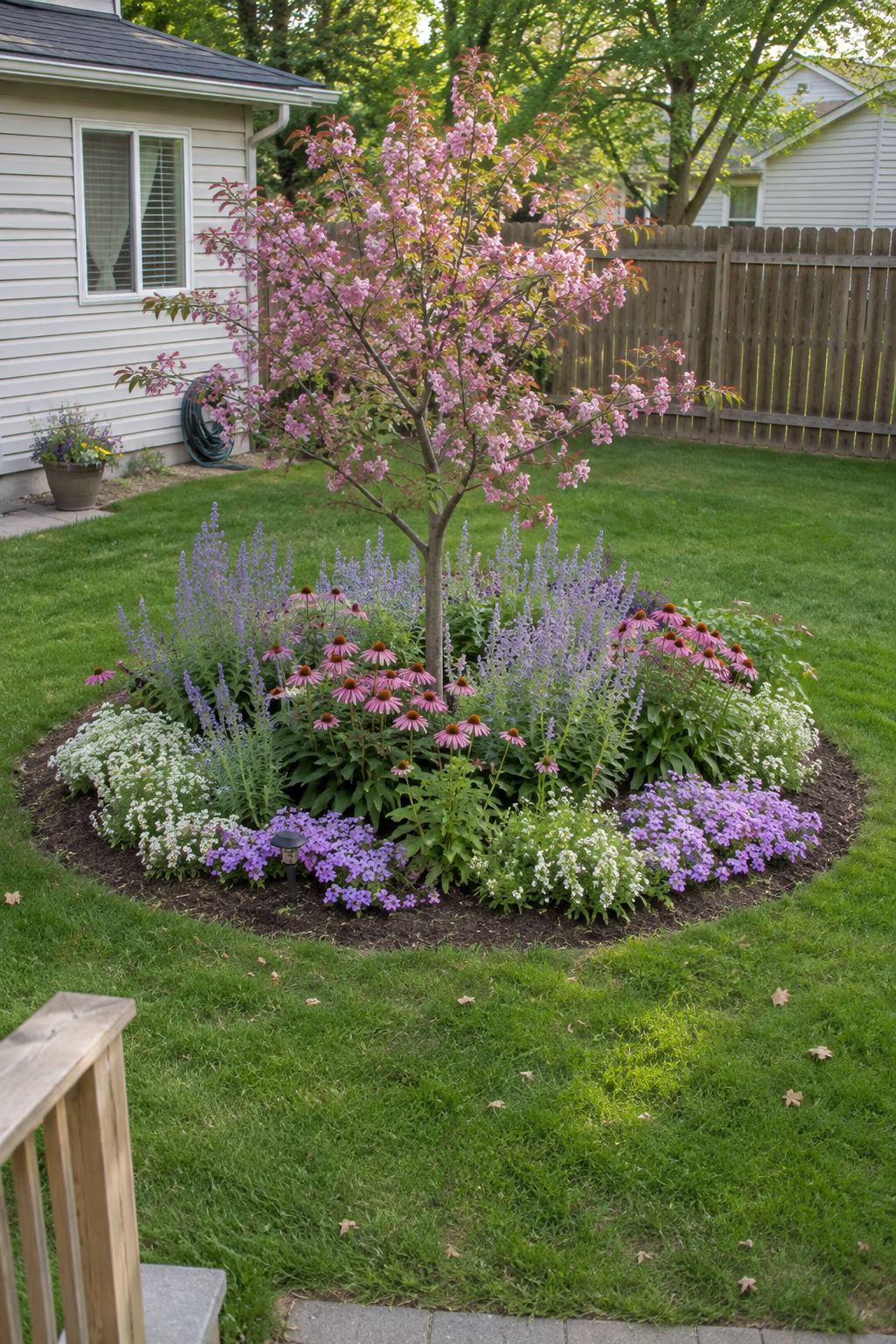
A round island bed in open lawn is the classic circular design, and it works because it gives the eye something to settle on. Since there is no fence or wall behind it, the bed needs its own anchor. Place one tall element at the center, such as a dwarf crabapple, a serviceberry, a clump of tall switchgrass, or a painted wooden obelisk covered in a climbing annual like morning glory.
Around that centerpiece, step the plants down in height. Medium perennials such as coneflower, Russian sage, or daylilies fill the middle, while low edgers such as creeping phlox, sweet alyssum, or hardy geraniums soften the rim. A diameter of 8 to 12 feet suits most suburban backyards.
Before digging, stand at the back door and the main window to check sight lines. A bed slightly off center often looks more natural than one placed dead in the middle, and it leaves room for mowing paths and play space.
2. Edge the Circle With a Corten Steel Ring
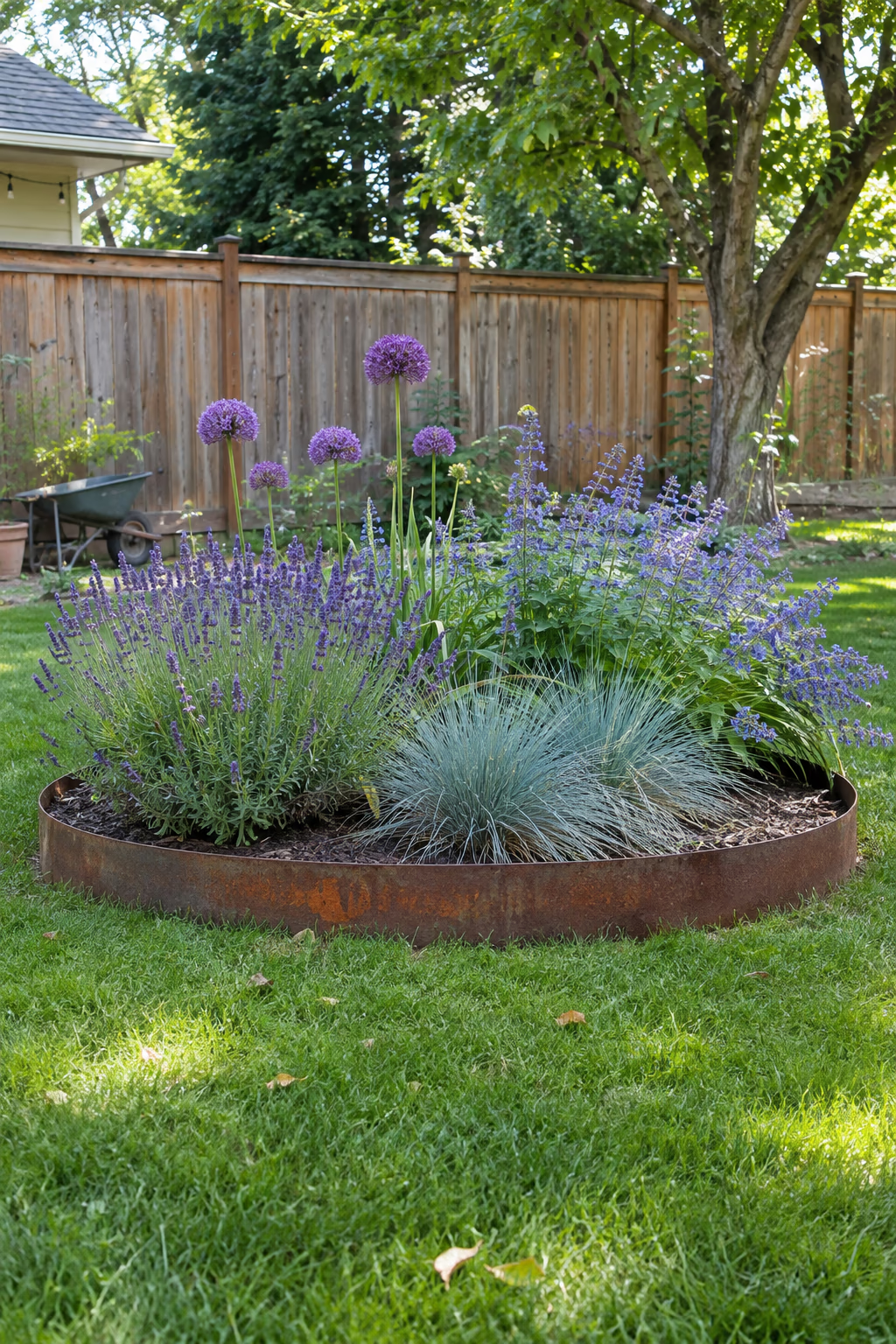
A crisp modern outline that stays put
Weathering steel, often called corten, develops a stable rust-brown patina that looks warm against green grass. Pre-rolled steel landscape rings come in diameters from about 3 to 10 feet and heights of 4 to 18 inches, and they slot together with simple tabs or bolts. Set the ring a couple of inches into the soil so the mower wheel can ride along the top edge.
The rusty tone pairs beautifully with silvery and purple plants. Try lavender, catmint, alliums, and blue fescue, or go bolder with orange coneflowers and bronze sedges for a fall-toned bed.
New weathering steel sheds rust runoff for the first several months, which can stain concrete and light-colored pavers nearby. Keep it a little away from hard surfaces, and wear gloves when handling it because cut edges can be sharp.
3. Stack a Tiered Circular Bed in Two or Three Levels
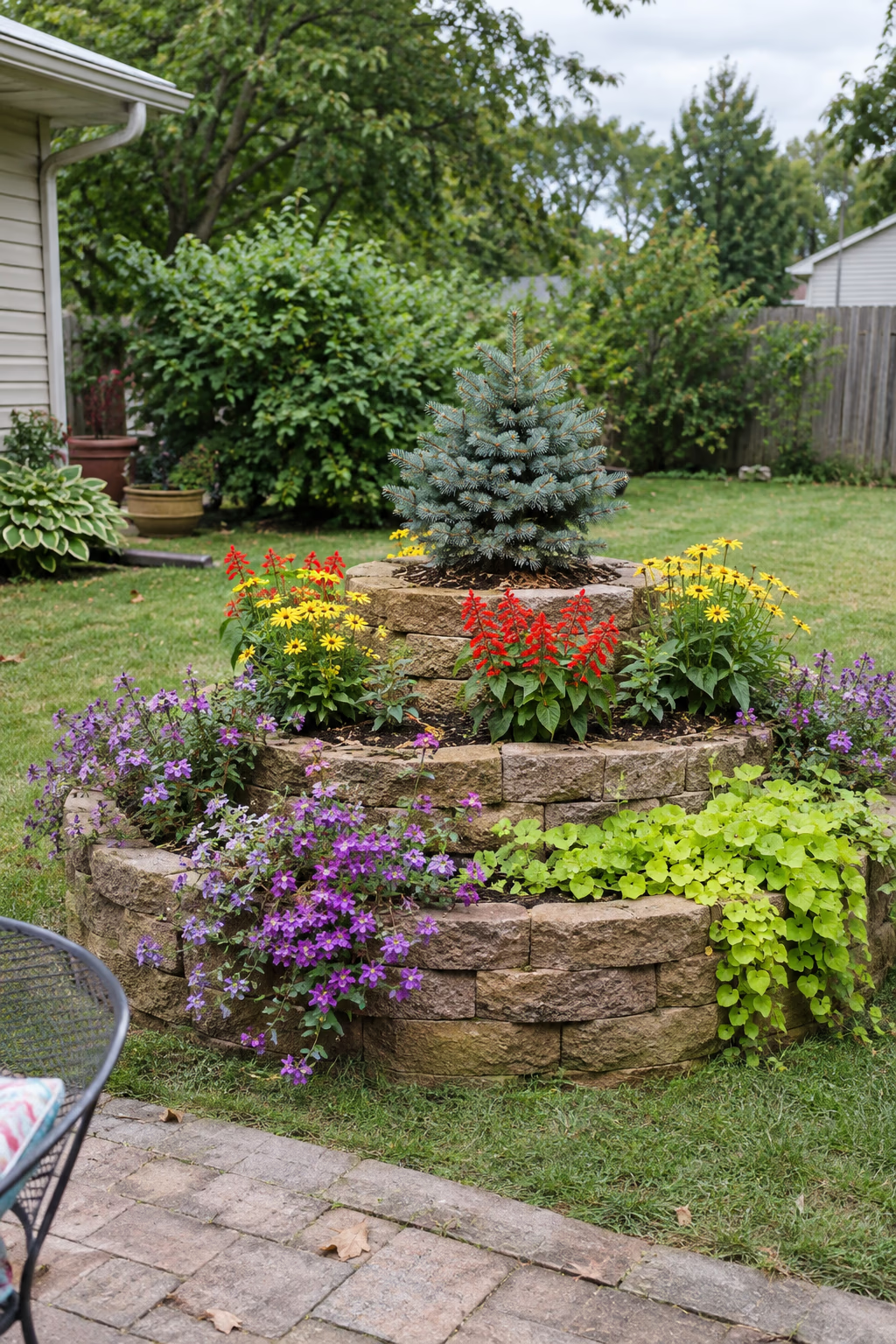
Add height and drama to a flat yard
A tiered bed is like a wedding cake for plants. Build a wide bottom ring about 6 feet across, then set a smaller ring of about 4 feet on top, and finish with a 2-foot ring at the peak. Steel rings, curved concrete blocks, or stacked stone all work. Each tier only needs to be 8 to 12 inches tall to make a strong impression.
Plant trailing flowers such as calibrachoa, verbena, or creeping jenny on the lowest level so they spill over the edge, medium perennials such as salvia or coreopsis in the middle, and a single upright plant like a dwarf conifer or ornamental grass on top.
The top tier dries out faster than the bottom, so choose drought-tolerant plants for the peak or run a soaker hose spiral through each level. Fill the interior with a mix of topsoil and compost rather than pure bagged potting mix, which settles and shrinks over time.
4. Frame the Bed With a Low Clipped Boxwood Hedge
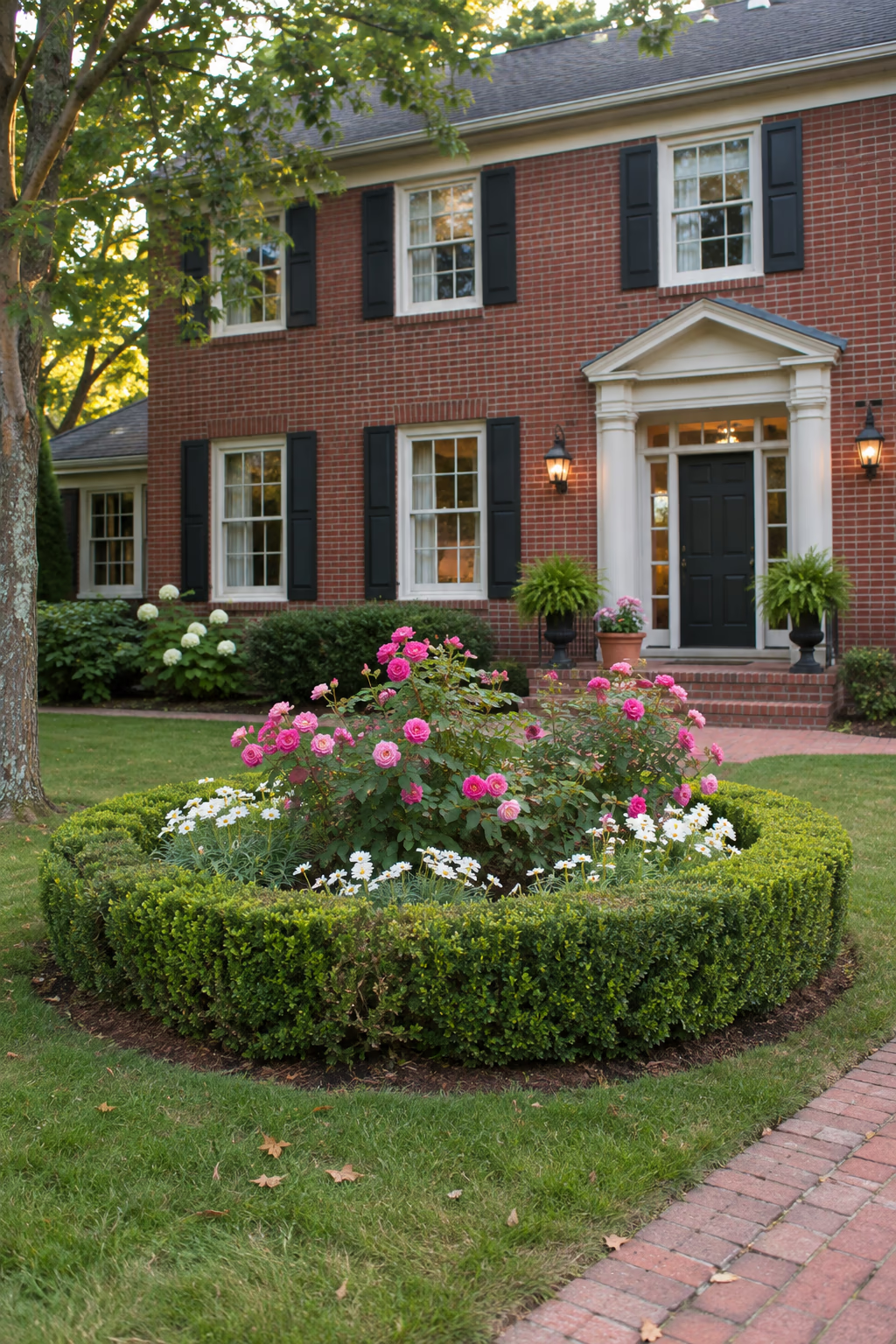
Formal structure that looks good all winter
A ring of small evergreen shrubs gives a round bed a tidy, finished look even when the flowers inside are dormant. Space dwarf boxwood plants about 12 to 18 inches apart around the perimeter and keep them clipped to roughly 12 to 18 inches tall. Inside, plant roses, tulips, or a bright summer mix that shows off against the green frame.
The hedge works especially well in front of colonial, Georgian, or traditional brick homes, where it echoes the symmetry of the architecture.
Boxwood blight and the box tree moth are problems in parts of the country, so check with your local extension office first. Dwarf yaupon holly, inkberry holly, or dwarf Japanese holly are good substitutes in many regions, and all of them handle shearing well.
5. Set a Brick Soldier Course Around the Edge
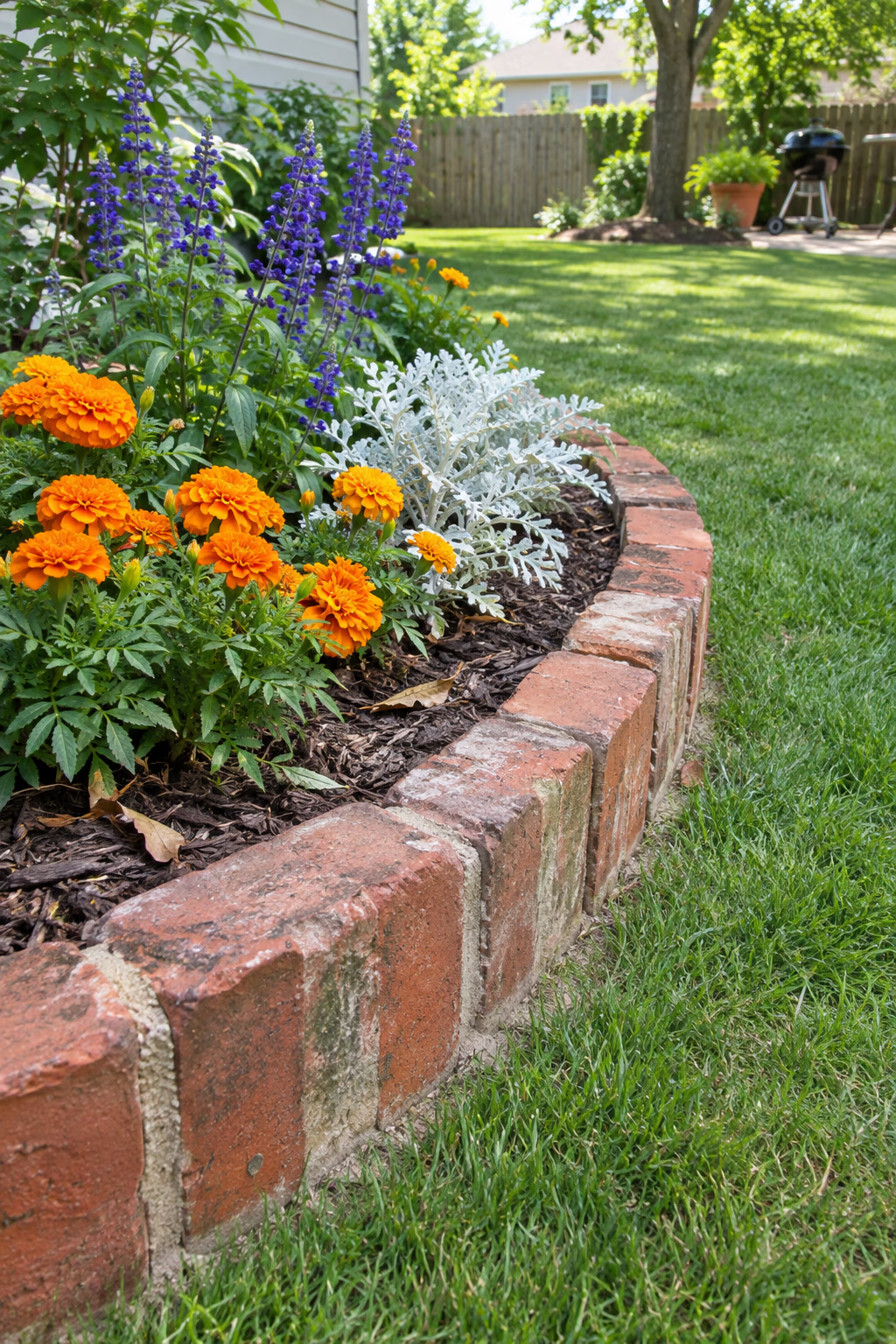
A traditional edge that also makes mowing easier
Bricks stood on end, side by side, create what masons call a soldier course, and it bends neatly around a circle because each brick is narrow. For a mowing strip instead, lay the bricks flat at ground level so the mower can run over them and you skip most of the trimming.
Dig a trench about 6 inches deep, add 2 inches of compacted paver base and an inch of sand, then tap the bricks in with a rubber mallet. Small gaps on the outside of the curve are normal and can be filled with sand. Reclaimed bricks add instant character and are often cheaper than new ones.
A 10-foot circle needs roughly 90 to 100 standard bricks set on end, so count before you buy. In freeze-thaw climates, use bricks rated for ground contact so they don’t crumble after a few winters.
6. Center the Circle on a Sundial or Gazing Globe
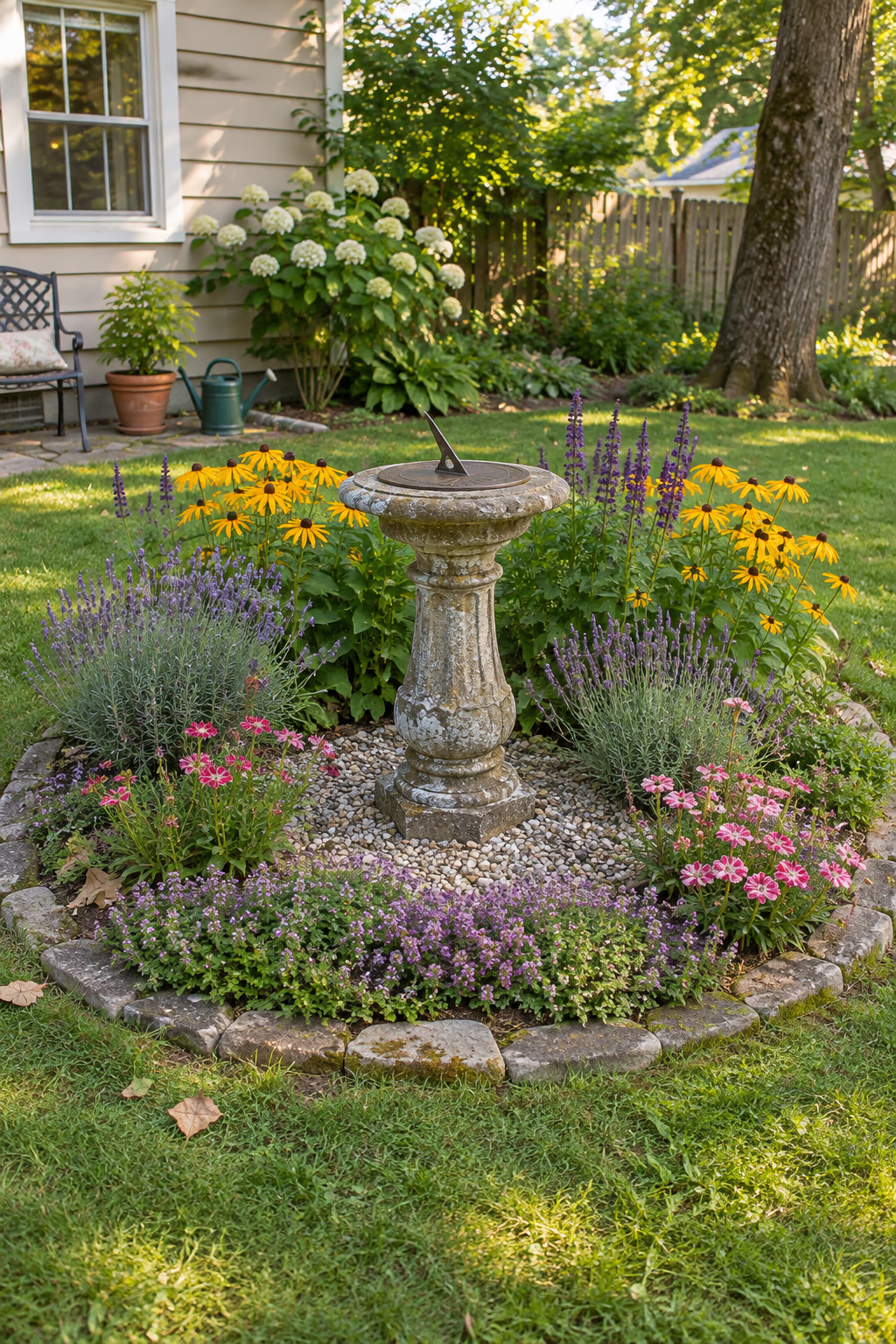
A classic ornament that marks the middle
A round bed naturally pulls attention toward its center, so it is the perfect setting for a garden ornament. A pedestal sundial, a glass or stainless gazing globe on a stand, or a simple birdbath gives the bed a permanent focal point that never needs deadheading.
Surround the ornament with a small paved or gravel pad, about 2 feet across, so you can reach it for cleaning without stepping on plants. Then ring it with low, fragrant plants such as thyme, dianthus, or dwarf lavender, followed by taller flowers toward the outer edge for a reverse-tier effect.
Set the pedestal on a level concrete paver or a few inches of compacted gravel so it doesn’t lean as the soil settles. A sundial only tells accurate time in full sun and when oriented correctly, so place it where shade from trees won’t fall across it.
7. Plant the Whole Circle in One Color Family
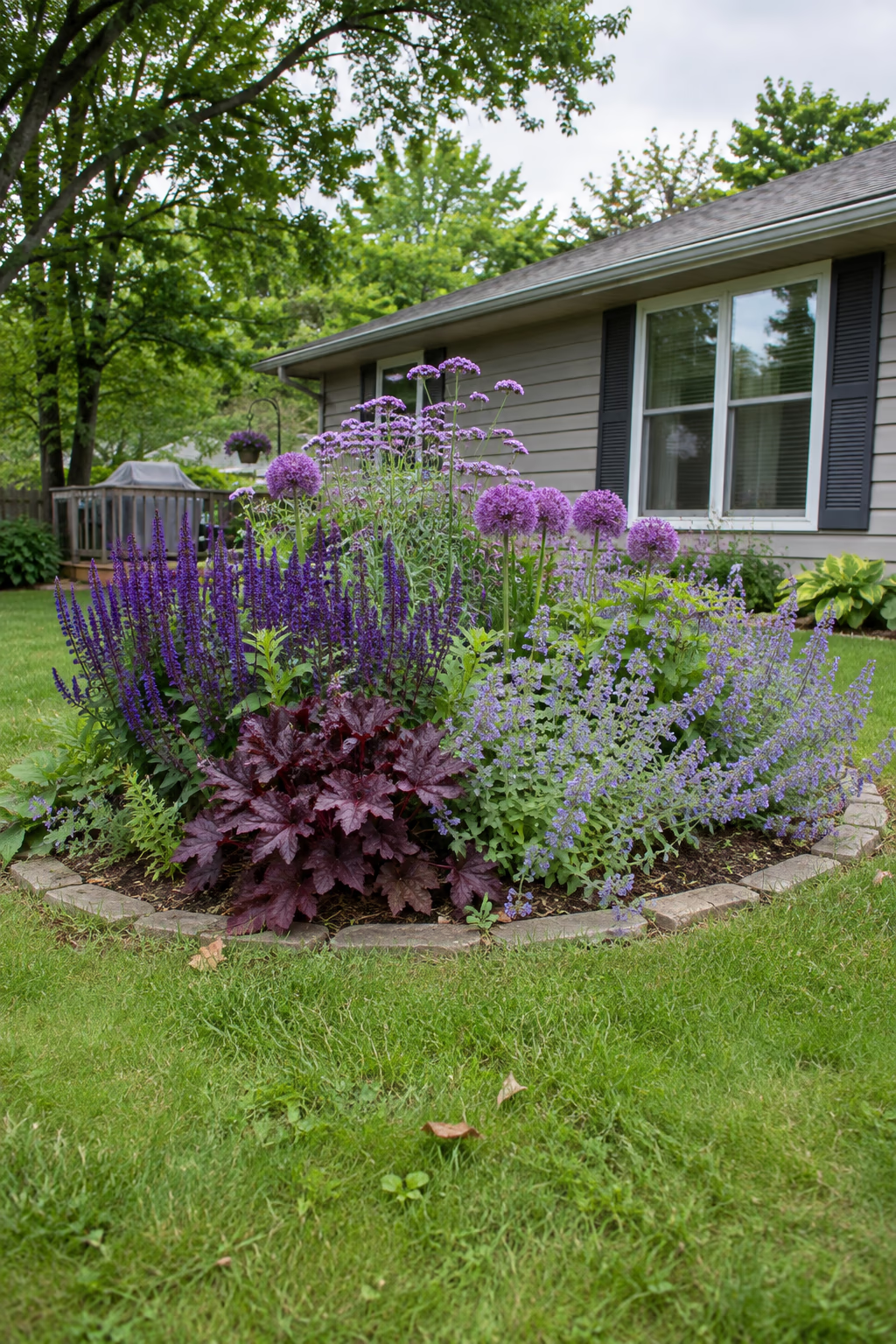
A calm, polished look that is trending now
Single-color beds are one of the big garden looks for 2026, and a circle is an ideal frame for them because the shape already feels unified. Pick one color family and use many shades of it. A purple circle might combine salvia, verbena, allium, catmint, and dark-leaved heuchera, while a hot circle could blend orange zinnias, marigolds, lantana, and red-orange daylilies.
Variety in height, flower shape, and leaf texture keeps a single-color planting from looking flat. Mix spiky blooms with round ones and add plain green foliage as a resting point for the eye.
Cool colors such as blue and lavender tend to recede and look best up close, while warm colors stand out from a distance. If the bed sits far out in the lawn, a warm palette will read better from the house.
8. Layer Concentric Rings From Tall to Short
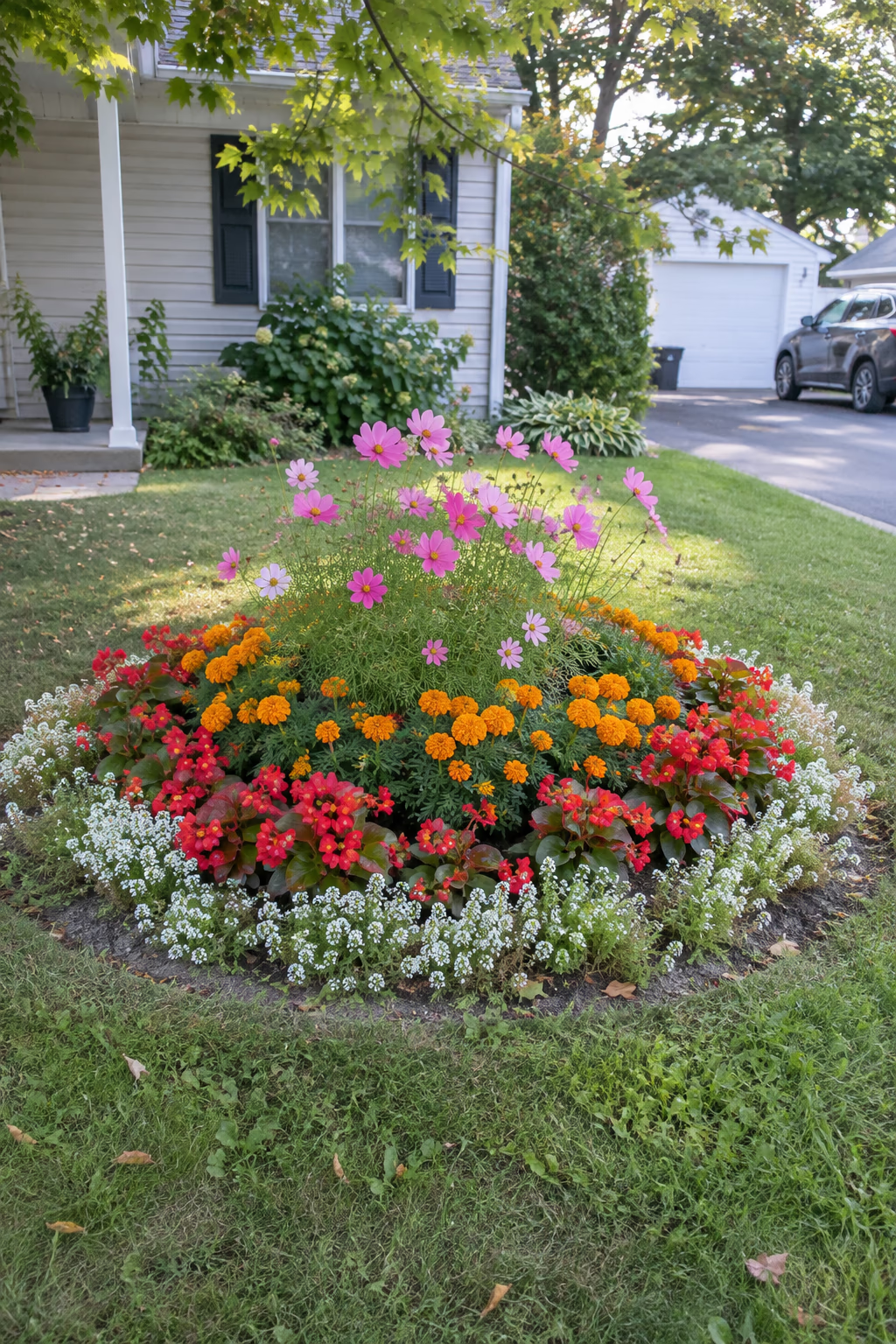
A bull’s-eye of color you can see from every side
Instead of a loose mix, plant the circle in distinct bands like a target. Start with a tall ring near the center, such as cosmos or tall zinnias, then a ring of medium plants such as marigolds or salvia, and finish with a low ring of sweet alyssum or begonias at the edge. Each band can be a different color for a bold, playful effect.
Annuals make this design easy to change every year, and they bloom from late spring until frost in most of the country. A 6-foot circle with three rings needs roughly 40 to 60 small plants, depending on spacing.
Use the string you laid out the bed with to mark each inner ring with flour or sand before planting. Even spacing within each band is what makes the pattern look intentional.
9. Sweep the Planting Into a Spiral
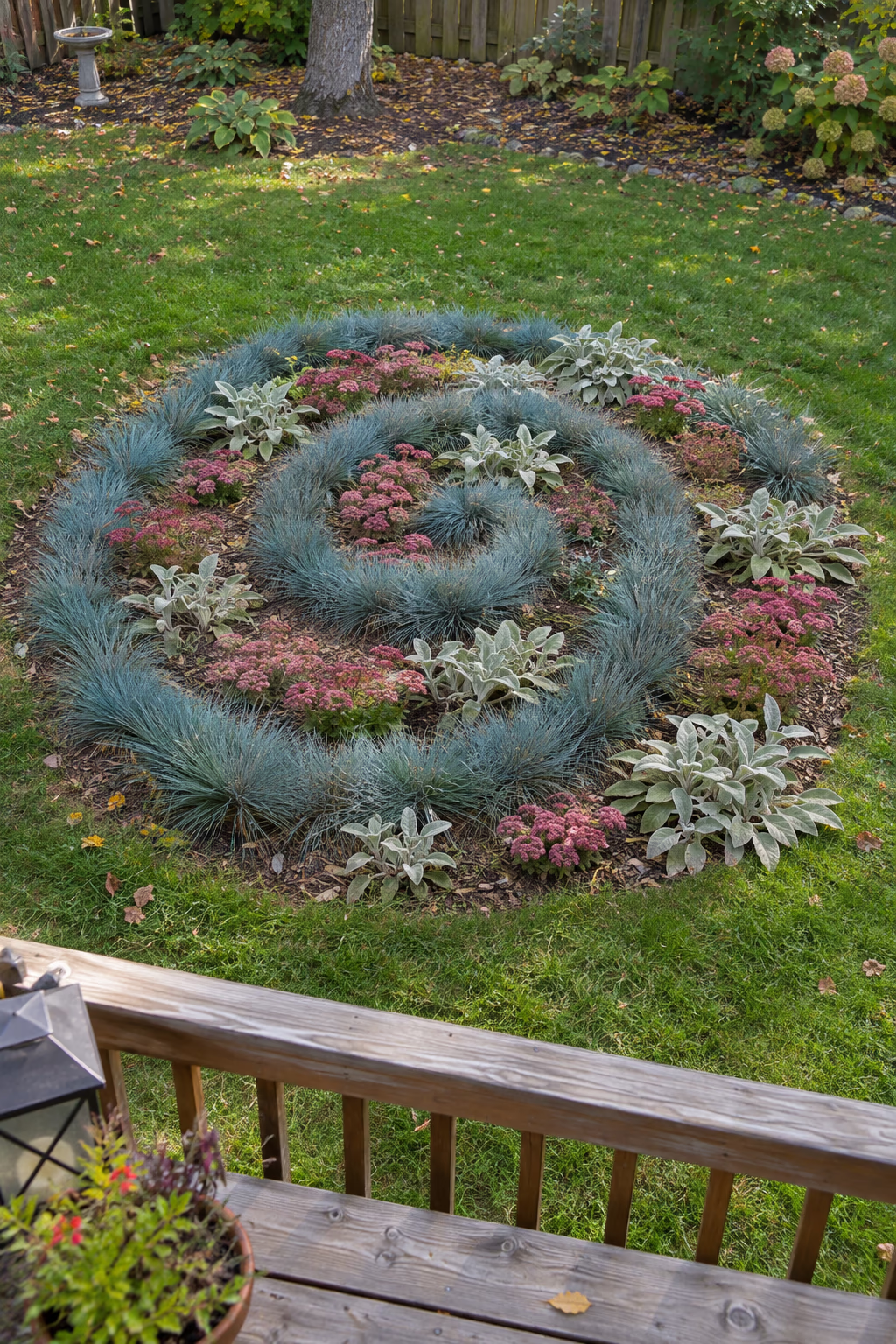
Movement and whimsy in a simple shape
A spiral turns a round bed into something that looks almost like it is turning. Mark a curving line that starts at the center and winds outward to the edge, then plant one continuous ribbon of a single plant along it, such as blue fescue, lamb’s ear, or dwarf mondo grass. Fill the spaces between the coils with a contrasting color or texture.
The design reads best from slightly above, so it is perfect for a bed you can see from a deck, a second-story window, or the top of a slope. Low, compact plants show the pattern most clearly.
Spirals depend on clean lines, so tall or floppy plants will blur the effect within a season. Choose plants that stay under about 12 inches, and trim anything that wanders across the curve.
10. Divide the Circle Into Pie-Slice Wedges
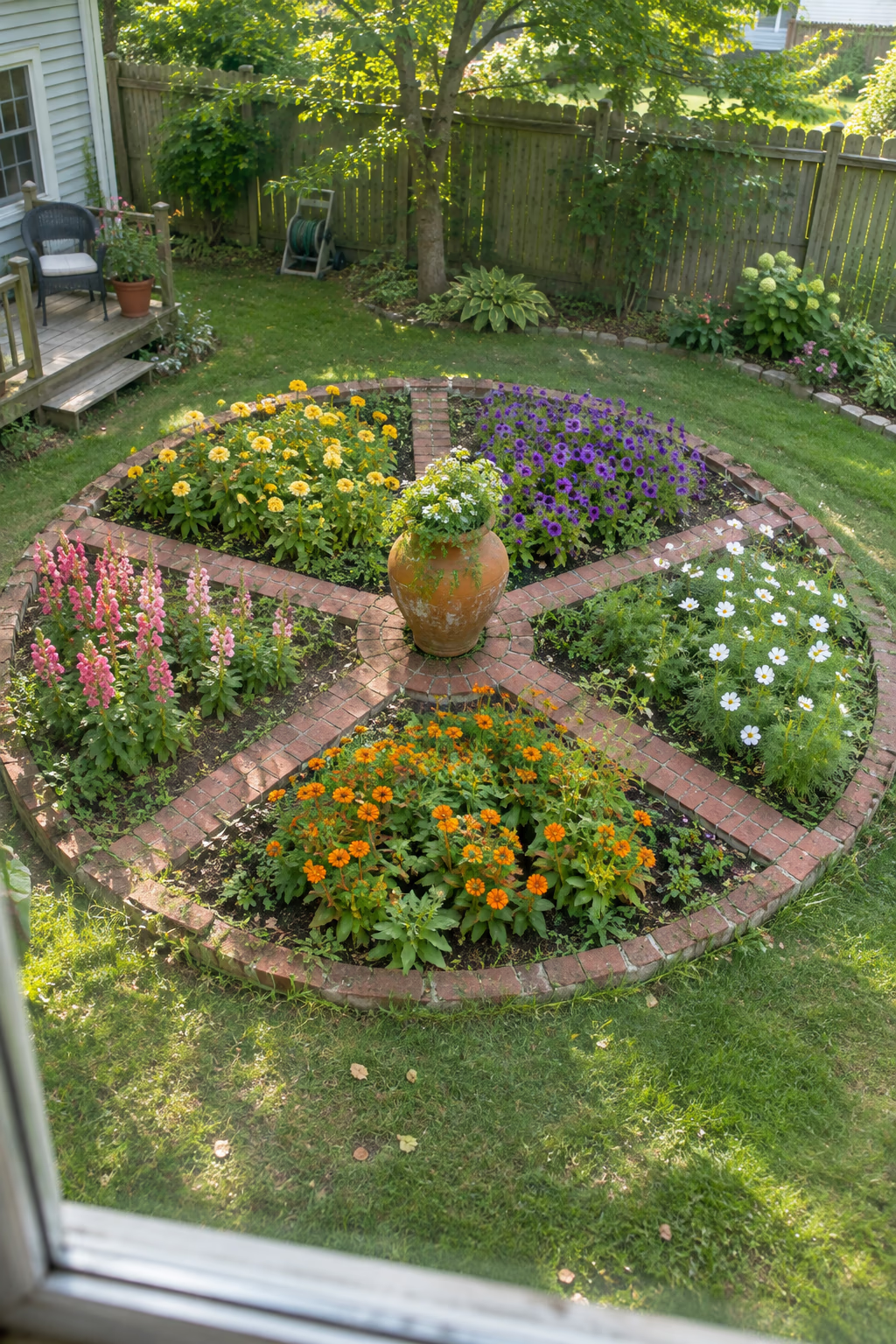
Organized sections that are easy to plant and tend
Split the circle into four, six, or eight wedges with narrow stepping stone paths or rows of bricks running from the center out to the edge. Each wedge becomes a small, manageable bed, and the paths let you reach every plant without stepping on soil.
The layout works for flowers, cutting gardens, or a mix of both. Plant each wedge in its own color, or alternate two colors for a pinwheel effect. A large container or small ornament at the hub ties the sections together.
Wedges taper at the center, so plant smaller or slower-growing plants near the hub and bigger ones toward the wide outer ends. A circle of at least 10 feet gives each slice enough room to be useful.
11. Mix Herbs and Edible Flowers in a Kitchen Circle
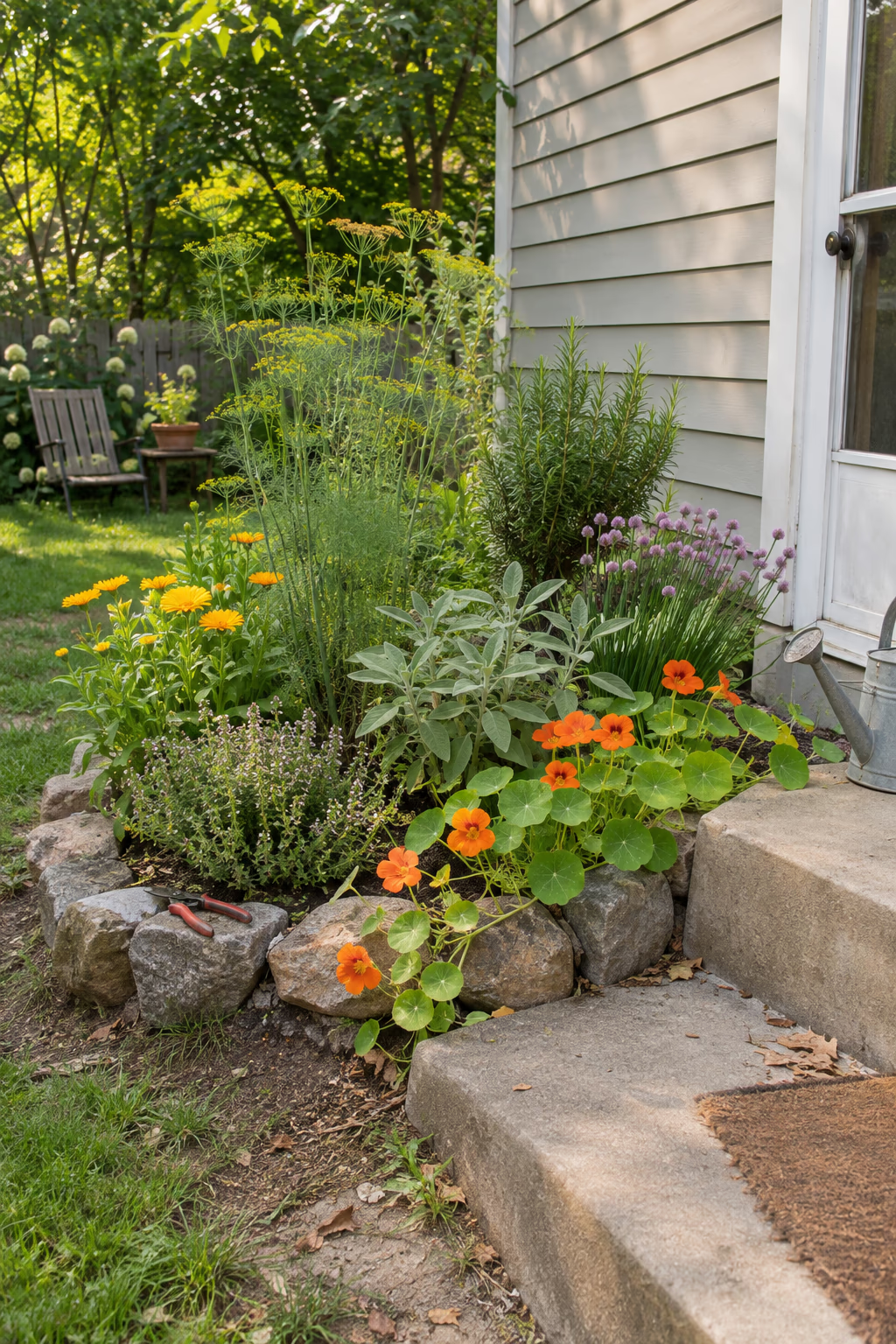
Pretty to look at and useful for dinner
A small round bed near the back door is ideal for herbs you snip often. Combine rosemary, sage, thyme, oregano, and chives with edible blooms such as nasturtiums, calendula, and violas. Put a taller plant like dill, fennel, or a potted bay laurel in the middle for height.
Most culinary herbs come from sunny, dry climates, so give the circle at least six hours of sun and well-drained soil. They need little fertilizer, which keeps their flavor stronger.
Mint, lemon balm, and oregano spread aggressively. Plant mint in a buried pot with the rim above soil level so it doesn’t take over the whole circle. Rosemary is only reliably hardy in warmer zones, so treat it as an annual or grow it in a pot in colder areas.
12. Ring a Round Fire Pit Patio With Flowers
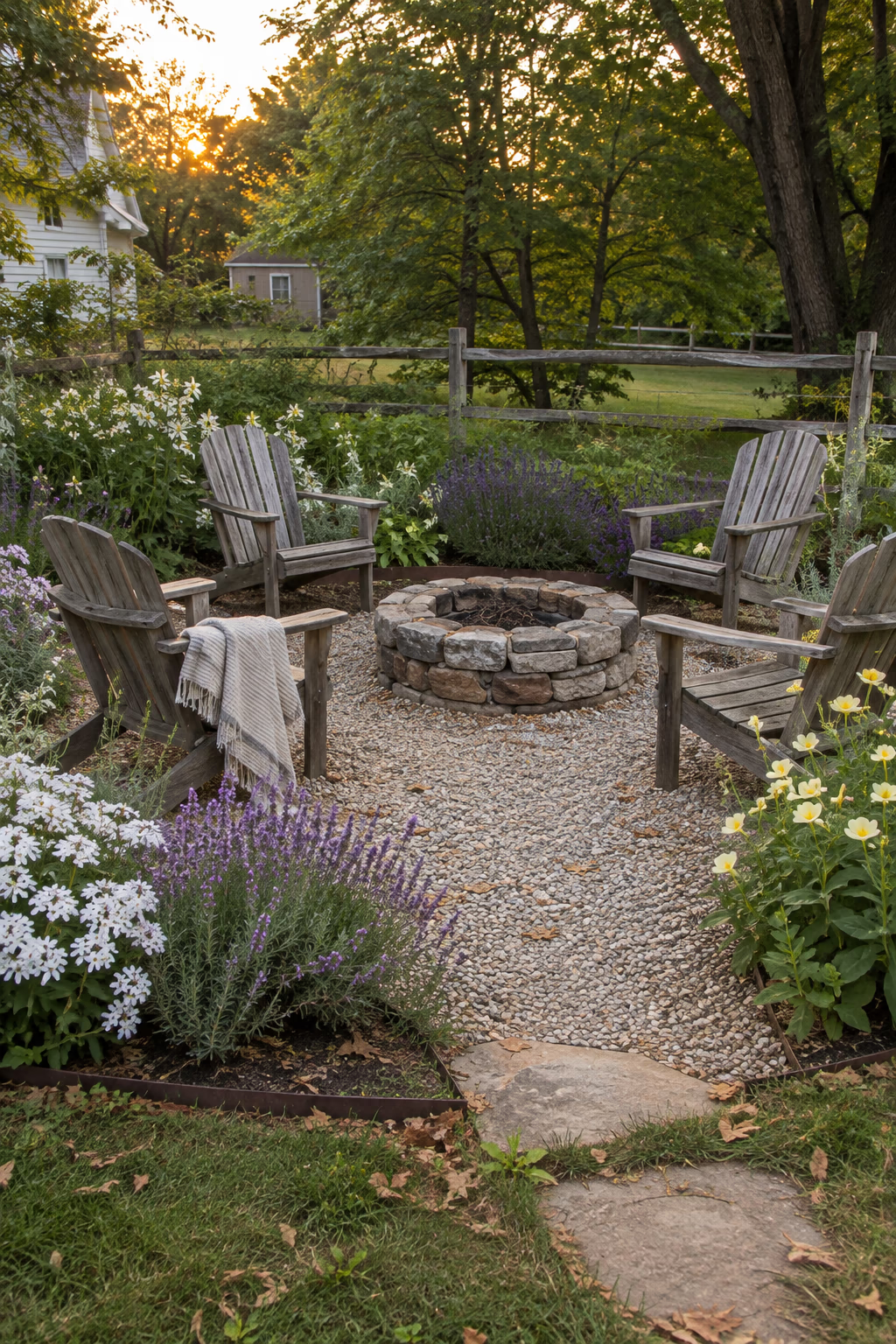
Soften a hard seating area with a living border
If you have a circular gravel or paver patio around a fire pit, a ring-shaped flower bed around the outside makes the space feel like an outdoor room. Plant a band 2 to 3 feet wide around the patio edge, leaving one or two openings for paths.
Choose plants that look good in the evening when you use the fire pit most. White and pale flowers such as white phlox, nicotiana, and moonflower vine glow in low light, and fragrant plants like lavender and evening primrose add scent.
Keep at least 10 feet between the fire and anything flammable, and avoid dry ornamental grasses right next to the seating area. Check local fire codes and HOA rules before building a wood-burning pit, since some towns restrict open burning.
13. Repeat Three Small Circles Across the Lawn
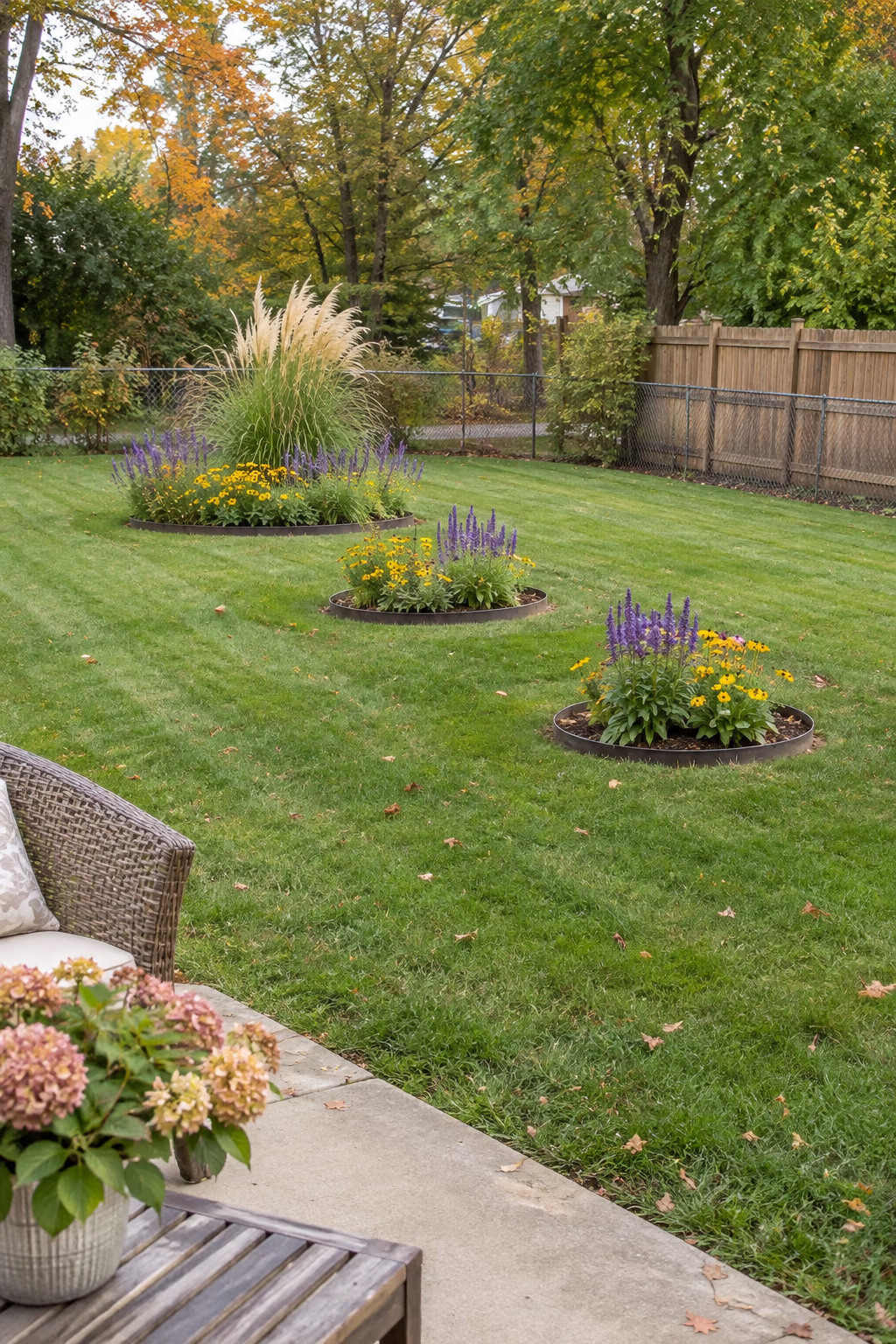
Rhythm and flow instead of a single big bed
Three smaller circles, often 4 to 6 feet across, can feel more playful and modern than one large bed. Arrange them in a loose diagonal line or a gentle triangle, and vary the sizes slightly so the group looks natural rather than stamped.
Repeat the same plants or the same edging material in all three circles so they read as a set. One simple approach is a single small tree or large grass in the biggest circle and matching low flowers in the other two.
Leave at least one mower-width of grass between circles so mowing is easy. If the gaps are too narrow, you’ll end up trimming by hand around every bed.
14. Fill a Gravel Circle With Succulents and Grasses
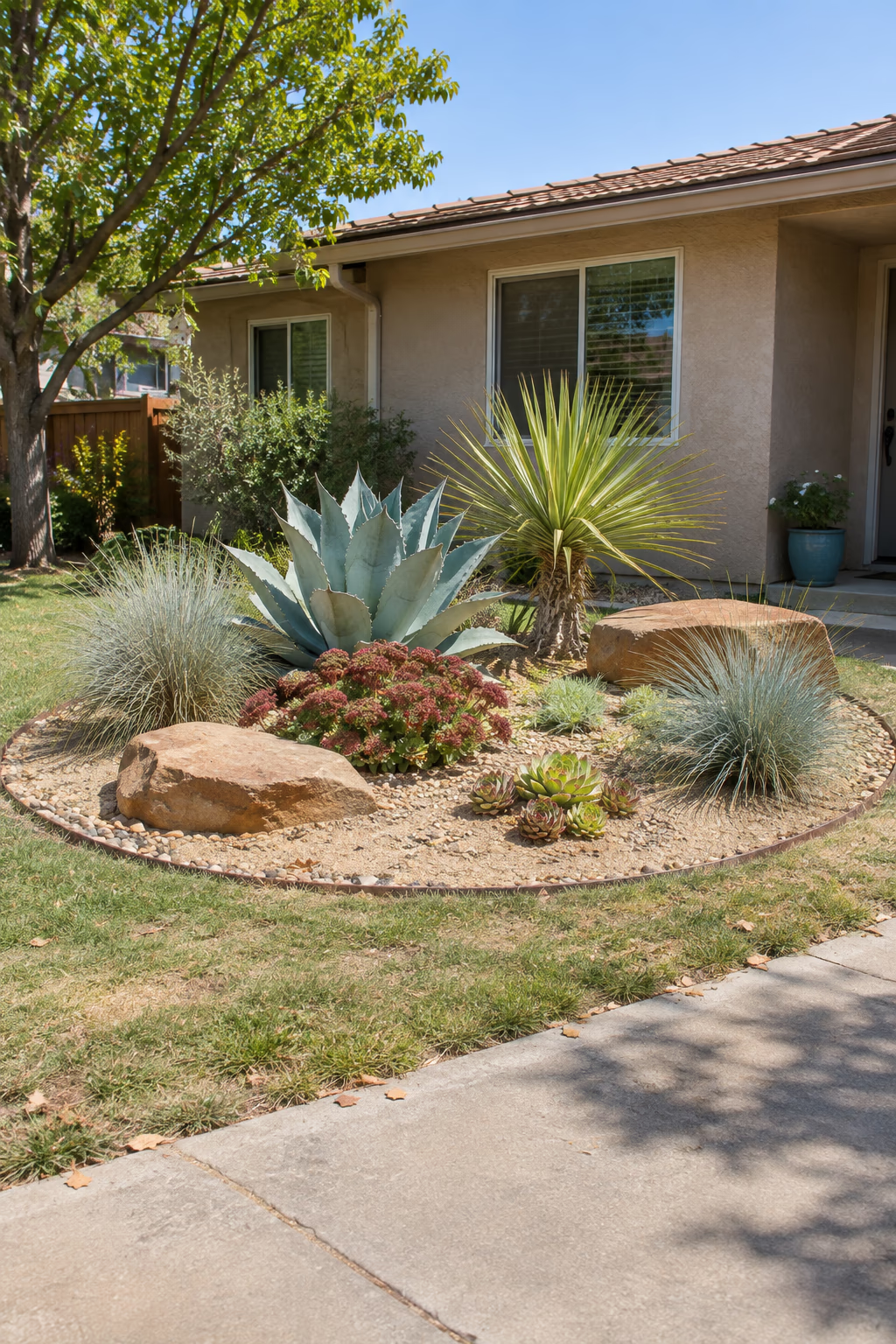
A modern, low-water round bed
For a dry, sunny yard, a circle filled with gravel and drought-tolerant plants looks sleek and saves water. Remove the sod, mix coarse sand or fine gravel into the top few inches of soil for drainage, and top-dress with 2 inches of pea gravel or decomposed granite.
In warm regions, use agave, yucca, aloe, and blue senecio. In colder areas, choose hardy sedum, hens and chicks, blue oat grass, prairie dropseed, and ice plant where it is hardy. A few flat boulders add structure.
Gravel makes a poor surface for fallen leaves, so this design works best away from big deciduous trees. Pull weeds while they are small, because roots that settle into the gravel are harder to remove later.
15. Raise a Round Bed With Curved Retaining Blocks
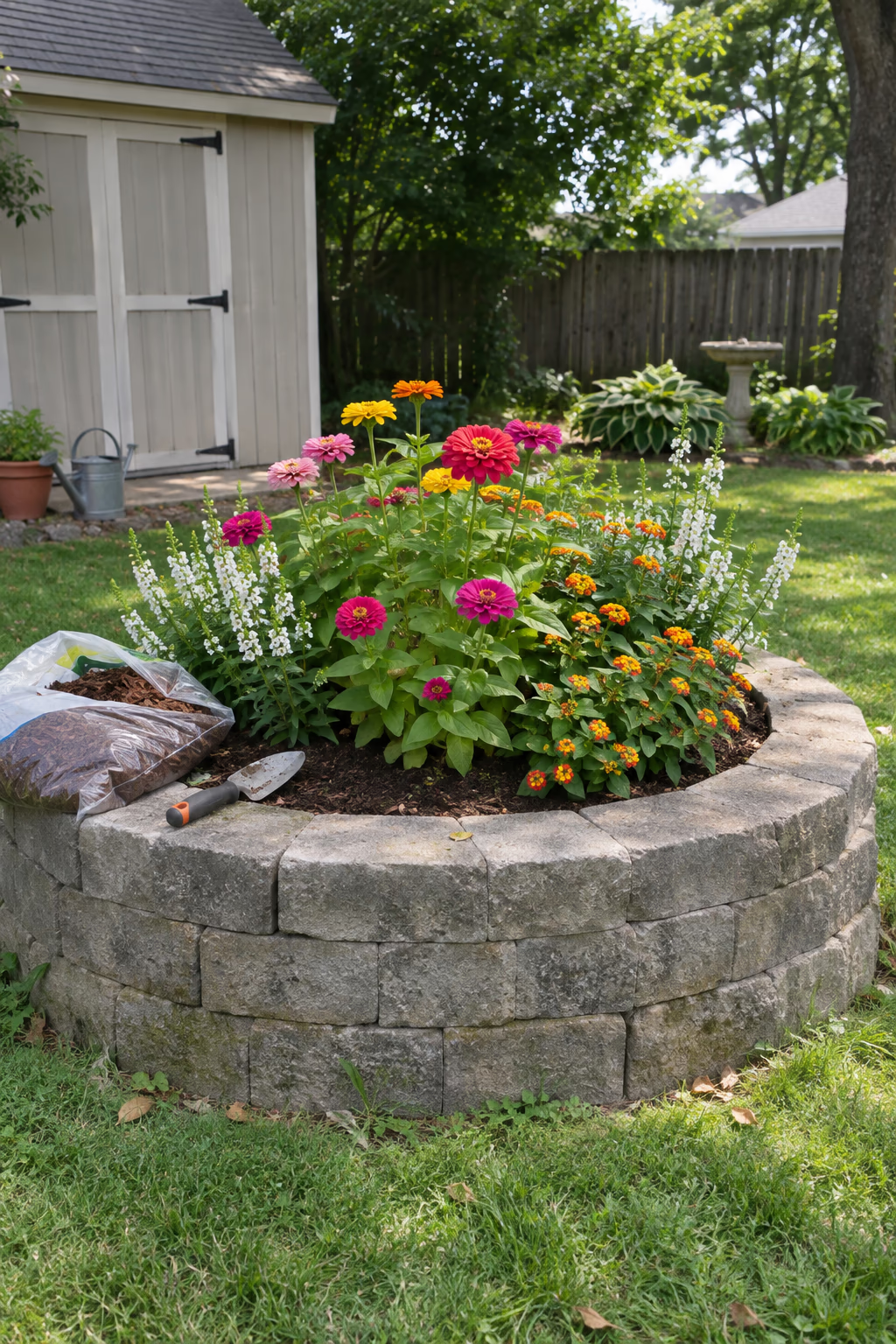
A budget-friendly raised circle you can build in a weekend
Tapered concrete wall blocks are designed to fit together in a curve, so they make a sturdy round raised bed without mortar. Two or three courses create a bed 12 to 18 inches high, which improves drainage over heavy clay and makes planting and weeding easier on your back.
Level the first course on 2 inches of compacted gravel. That first row determines how straight the rest of the bed will be. Glue the top course with masonry adhesive so the blocks stay in place when people sit or lean on the edge.
Low garden walls rarely need a permit, but taller retaining walls often do. If you plan anything above about 3 feet, check local building codes. A 6-foot raised circle also needs a surprising amount of soil, so have it delivered in bulk instead of buying dozens of bags.
16. Plant a Native Pollinator Circle
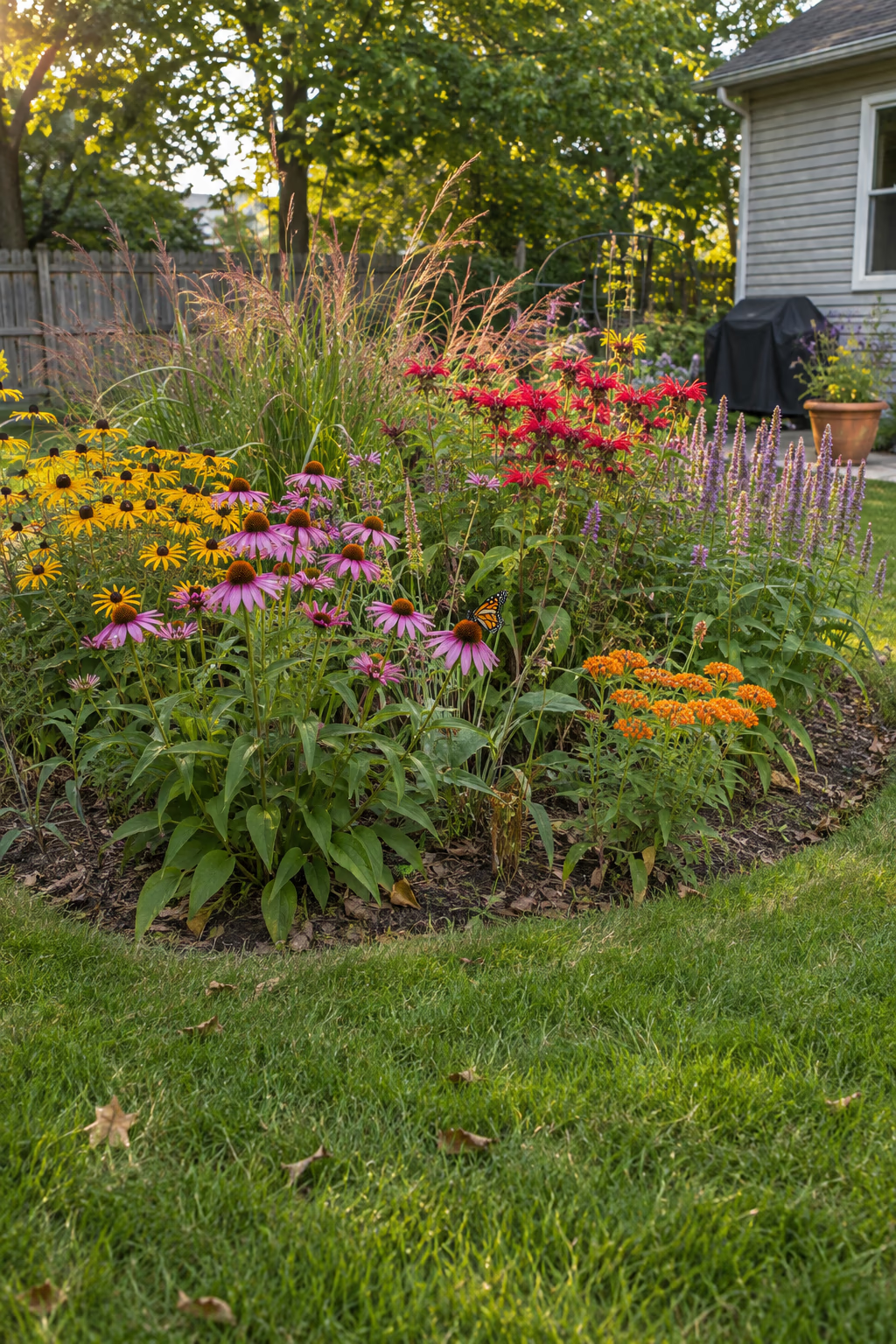
A round bed that feeds bees and butterflies
A circle of native perennials brings bees, butterflies, and hummingbirds right into the middle of the yard. In much of the US, good choices include purple coneflower, black-eyed Susan, bee balm, butterfly weed, anise hyssop, aster, goldenrod, and little bluestem for structure.
Plant in drifts of three to five of each kind, and choose species that bloom in spring, summer, and fall so food is available all season. Leave the seed heads standing over winter to feed birds and shelter beneficial insects.
A crisp edge, such as a steel ring or a mowed strip, helps a natural planting look intentional to neighbors and HOAs. Avoid pesticides on the bed, and check your state’s native plant society for species suited to your region.
17. Rotate Seasonal Annuals Through a Formal Round Bed
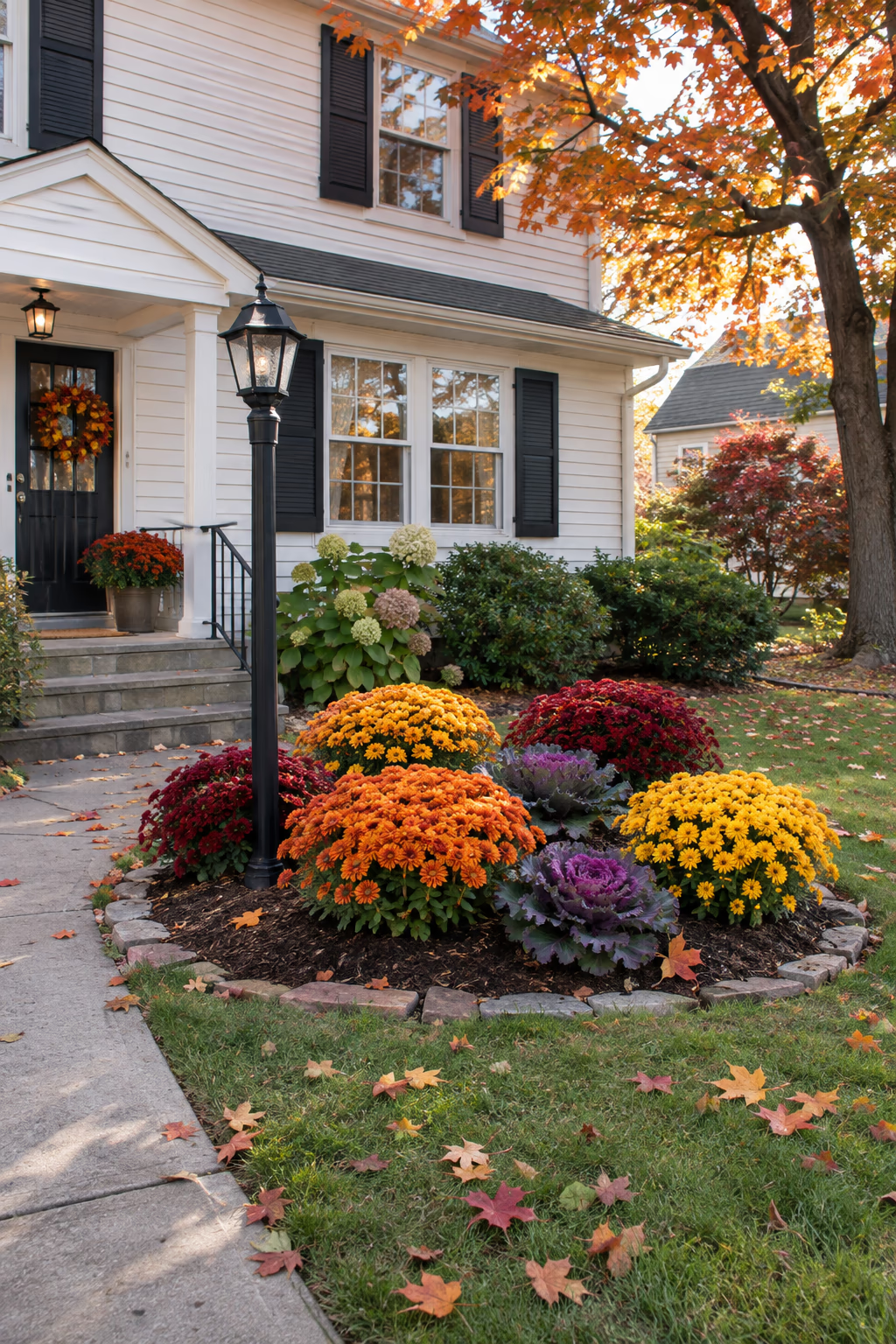
Fresh color for spring, summer, and fall
Many public gardens change their round display beds several times a year, and the idea scales down well for a front yard. Start with pansies and violas in early spring, swap them for summer annuals such as begonias, petunias, or zinnias after the last frost, and finish with mums and ornamental kale in fall.
Keeping the bed small, around 5 to 6 feet across, keeps plant costs manageable for each swap. Work a little compost into the soil between plantings to keep it healthy.
This is the highest-maintenance idea on the list, since you replant two or three times a year. It rewards people who enjoy garden center trips, but a perennial bed is a better choice if you want less work.
18. Circle the Bed With a Gravel Walking Path
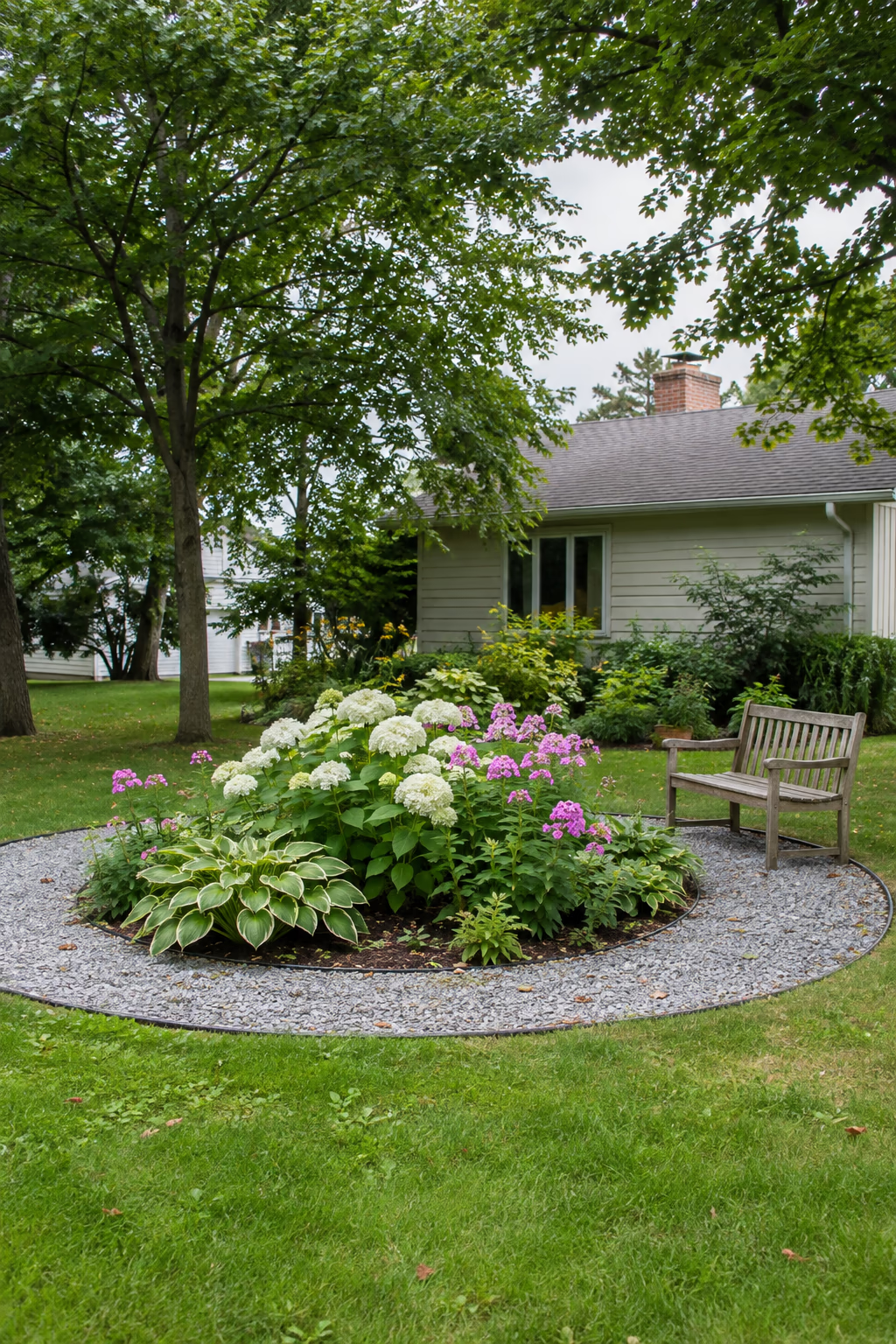
Walk all the way around and enjoy every angle
A ring-shaped path around a circular bed lets you admire it from every side and reach the plants without trampling the lawn. Make the path 2 to 3 feet wide and surface it with pea gravel, crushed stone, or mulch over landscape fabric.
Use edging on both sides of the path to keep gravel out of the bed and the lawn. A bench at one point on the circle turns the bed into a small destination garden.
Gravel paths can be tricky to shovel in snowy regions and may scatter onto the lawn. Compacted crushed stone stays in place better than round pea gravel, especially on a slight slope.
19. Turn a Round Stock Tank Into a Raised Flower Bed
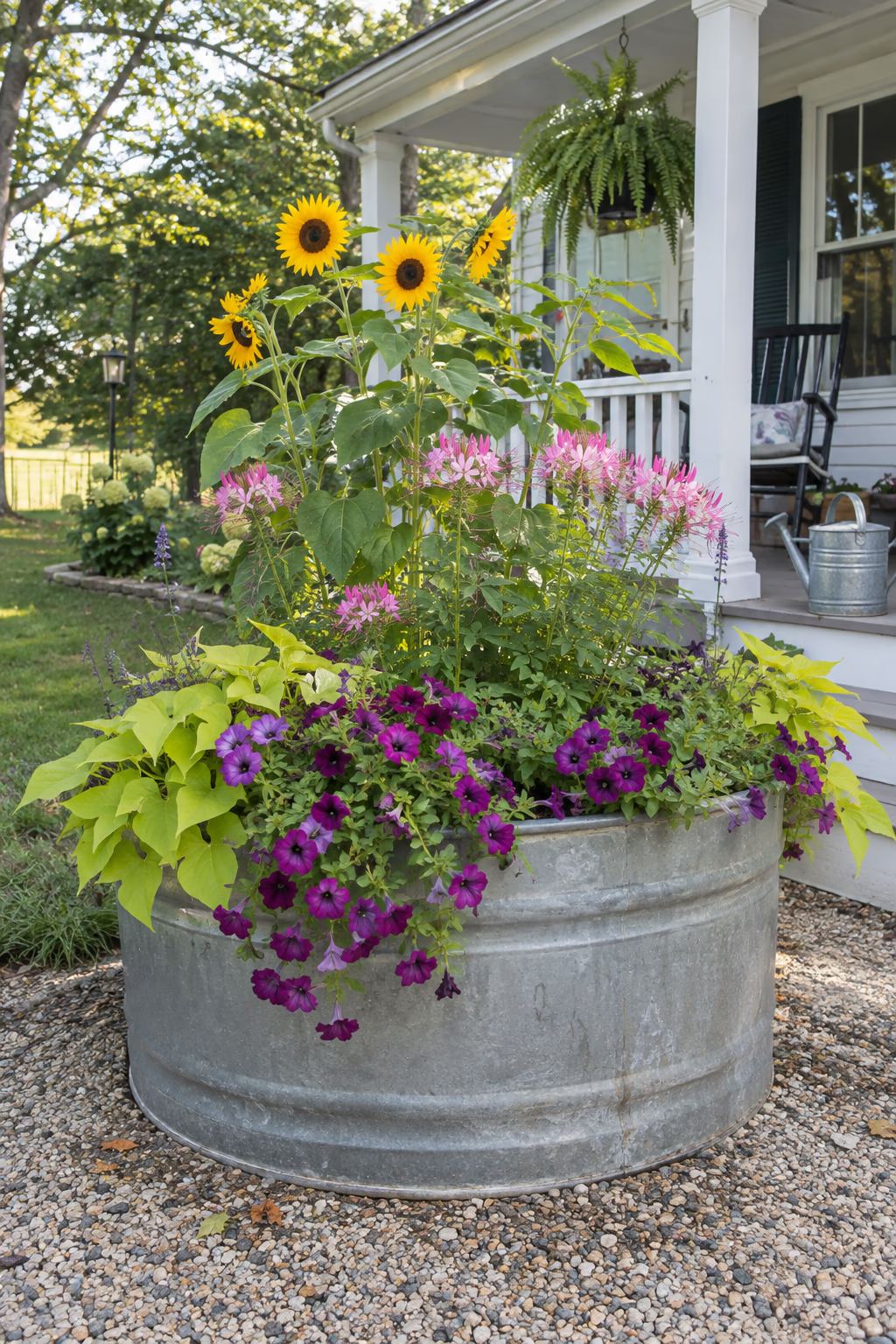
Farmhouse style with instant height
Round galvanized stock tanks, sold at farm supply stores, make durable raised beds in sizes from about 2 to 8 feet across. They suit farmhouse, cottage, and modern homes alike, and they need no construction beyond drilling drainage holes in the bottom.
Fill the lower third with coarse material such as wood chunks or leaves to save soil, then add a blend of topsoil and compost. Plant tall flowers like sunflowers or cleome in the center and trailing petunias or sweet potato vine around the rim.
Metal heats up in strong sun, which can dry out roots near the sides. In hot climates, place the tank where it gets afternoon shade or plant a dense edge to shade the metal. Large tanks are very heavy once filled, so set them in their final spot first.
20. Plant a Tough Driveway Turnaround Island
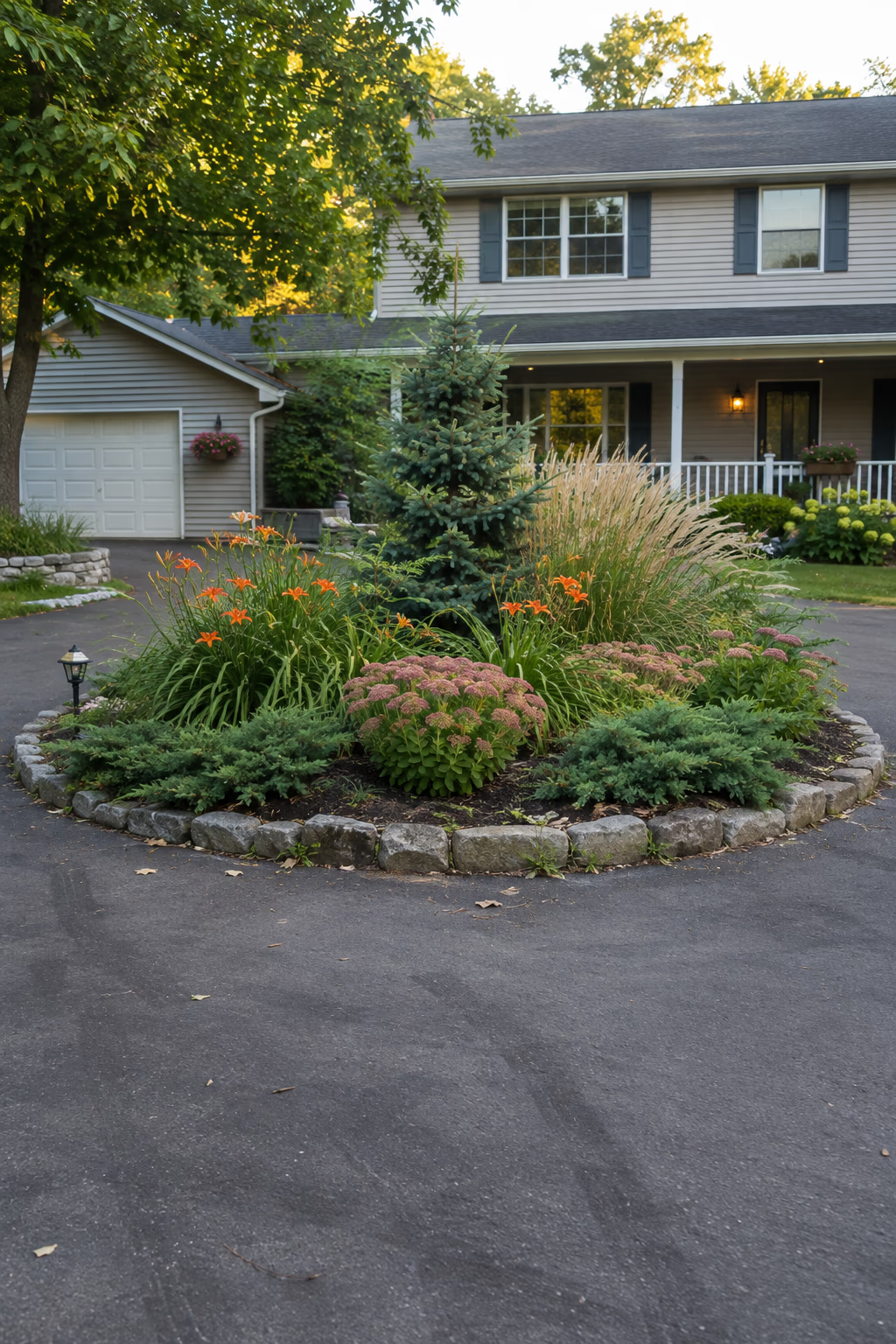
Make a circular drive look welcoming
The round island in the middle of a circular driveway is a natural spot for a flower bed, but it is also a harsh one. Reflected heat, road salt in winter, and car tires at the edge all test plants. Choose tough, low-care plants such as daylilies, sedum, ornamental grasses, shrub roses, and salt-tolerant junipers.
A sturdy curb or a ring of fieldstone protects the bed from wheels, and a single small tree or upright evergreen in the middle gives the island presence from the street.
Keep plants near the edges below about 3 feet so drivers can see around the island, especially if children play nearby. Add a few inches of mulch to keep roots cool next to hot pavement.
21. Edge the Circle With Upright Log Rounds
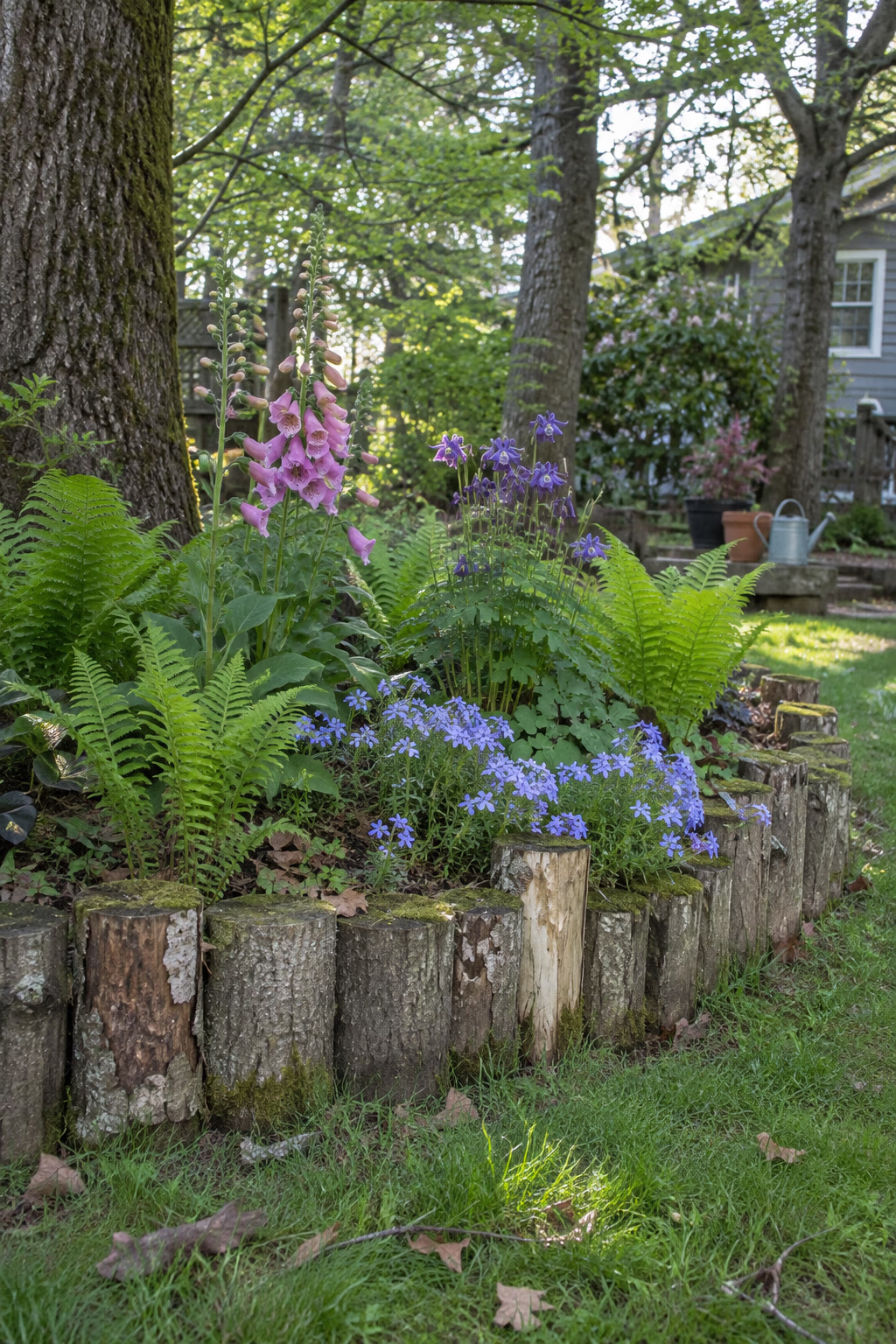
A rustic border made from free materials
Short sections of logs, cut 8 to 12 inches long and set upright in a shallow trench, create a charming woodland-style edge. If you have a tree taken down, ask the crew to leave you some straight branch sections 3 to 5 inches thick.
Pair the rustic edge with relaxed, natural plants such as ferns, foxglove, columbine, and woodland phlox in partial shade, or black-eyed Susans and asters in sun.
Untreated wood rots in a few years, especially in damp climates, so plan to replace logs over time. Cedar and black locust last longer than most softwoods. Avoid old railroad ties or chemically treated wood near flower beds.
How to Plan Your Circular Flower Bed
A round bed is simple to lay out, but a little planning keeps it in proportion with your yard and easy to maintain for years.
- Size it to the space. In most backyards, a circle 6 to 12 feet across looks balanced. Lay a garden hose in a circle first and view it from the house before you dig.
- Mark a true circle. Drive a stake at the center, tie a string to it at the length of your radius, and walk around while spraying marking paint along the end of the string.
- Keep it reachable. You can comfortably reach about 2 to 3 feet into a bed. For larger circles, add stepping stones or a center path so you can weed without crushing plants.
- Match plants to sun and zone. Watch how much sun the spot gets during the day and check your USDA hardiness zone before buying perennials and shrubs.
- Prepare the soil. Remove sod, loosen the soil 8 to 12 inches deep, and mix in 2 to 3 inches of compost. Finish with 2 to 3 inches of mulch, keeping it away from plant stems.
- Call before you dig. In the US, call 811 a few days ahead to have underground utility lines marked, and check HOA rules if you plan structures, ornaments, or a large bed in the front yard.
Frequently Asked Questions
How big should a circular flower bed be?
For most yards, 6 to 12 feet in diameter works well. A small front yard may suit a 4- to 6-foot circle, while a large open lawn can handle 12 to 15 feet. If the circle is wider than about 6 feet, plan an access path so you can reach the center.
What do you put in the middle of a round flower bed?
Choose something taller than the plants around it, such as a small ornamental tree, a large ornamental grass, a shrub, an obelisk with a climbing plant, or an ornament like a sundial, birdbath, or large urn.
How do you keep grass from growing into a circular bed?
Use a physical barrier such as steel edging, bricks, concrete edging, or a deep spade-cut trench. Edge the line every few weeks during the growing season, and keep the bed well mulched to block runners.
Which flowers bloom all summer in a round bed?
Reliable long-blooming options include zinnias, petunias, begonias, lantana, salvia, catmint, coreopsis, black-eyed Susan, and repeat-blooming shrub roses. Deadheading spent blooms helps many of them flower longer.
How much does a circular flower bed cost?
A simple DIY circle with compost, mulch, and small perennials can cost under a few hundred dollars. Steel rings, retaining blocks, stock tanks, larger shrubs, and delivered soil raise the cost, and professional installation can run much higher depending on size.
Final Thoughts
A circular flower bed is one of the simplest ways to give a yard shape and a sense of purpose. Whether you choose a lawn island with a small tree at its heart, a modern steel ring, or a playful spiral of low plants, the round form instantly draws attention and ties the space together.
Start with a size you can comfortably care for, pick plants that suit your sun and climate, and add edging, paths, or ornaments as you go. With a string, a stake, and a free weekend, you can turn a plain patch of grass into the favorite spot in your yard.