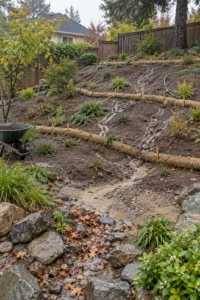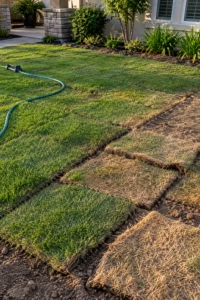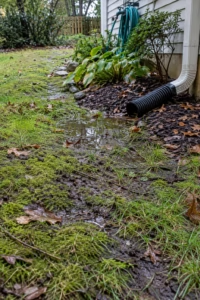
How to stop soil erosion on a sloped backyard requires controlling runoff, protecting exposed soil, and establishing deep-rooted vegetation. The most reliable solution combines an upslope drain or swale, surface protection such as a coir blanket, and plants suited to the soil, climate, and slope grade. Structural work may be necessary on steep or unstable ground.
Key Facts / Quick Answer
Measure slope grade before choosing a treatment: vegetation often suits slopes below 10%, while slopes above 33% may need terracing, geocells, or engineered stabilization.
Divert concentrated water before adding mulch, seed, rock, or retaining walls. Roof downspouts and driveway runoff can destroy otherwise sound repairs.
Erosion-control blankets protect newly seeded soil immediately, while plants commonly need one to three growing seasons to develop dependable cover.
Typical installed costs range from $2-$6 per square foot for seeding, $15-$35 for riprap, and $40-$150 or more per linear foot for retaining walls.
Retaining walls need a compacted base, drainage aggregate, geotextile separation, and a safe outlet for water. Weep holes alone do not solve poor drainage.
Active gullies, soil moving toward a foundation, saturated slopes, leaning trees, and cracking walls justify an on-site assessment by a qualified professional.
How Slope Erosion Works
Soil erosion is the detachment and movement of soil particles by water, wind, ice, or gravity. The USDA Natural Resources Conservation Service describes erosion in those terms because a sloped yard usually experiences several forces at once: rainfall detaches particles, runoff transports them, and gravity accelerates movement downslope.
A slope does not need to look dramatic to erode. Bare soil, compacted footpaths, clay that sheds water, and a single downspout can concentrate flow into a narrow channel. Sheet erosion removes a thin layer across the surface first, followed by rills, gullies, exposed roots, and undercut edges.
Slope grade is more useful than visual judgment. A 10-foot horizontal run with a 2-foot rise has a 20% grade, calculated as rise divided by horizontal run multiplied by 100. An inclinometer or smartphone level can improve the estimate, but survey equipment is preferable where a wall, property boundary, or foundation is involved.
Signs That a Backyard Slope Is Actively Eroding
Active erosion leaves physical evidence rather than merely making a hill look untidy. Inspect the slope during and immediately after heavy rain, when flow paths and saturated areas are easiest to identify.
Look for:
- Soil deposits at the bottom of the slope or against a fence
- Narrow channels deeper than about 2 inches
- Exposed roots, stones, or utility lines
- Muddy water leaving the property
- Bare patches that expand after each storm
- Soil separation beneath patios, steps, or retaining walls
- Tilting trees, newly formed cracks, or bulging ground
- Water emerging halfway down the slope rather than only at its base
A shallow rill can often be repaired with grading, seed, and a blanket. A gully that repeatedly reforms indicates an unresolved water source or inadequate hydraulic capacity.
Control Water Before Stabilizing Soil
The best first step is to identify where water enters, concentrates, and exits the backyard. Surface stabilization fails when a roof, driveway, neighbor’s yard, or leaking irrigation line continues delivering concentrated flow onto the same area.
How Should Runoff Be Redirected?
Runoff should be slowed, dispersed, or safely conveyed before it reaches exposed soil. A grass-lined swale can intercept broad sheet flow, while a solid pipe or channel is more appropriate for concentrated water from a downspout or paved surface.
Use this sequence:
- Map every water source, including roof downspouts, sump-pump outlets, irrigation zones, driveway edges, and upslope properties.
- Mark the natural drainage path and the intended discharge point.
- Separate clean water from sediment-laden water where possible.
- Use a swale, drain, or pipe sized for the expected flow.
- Protect the outlet with vegetation, rock, a level spreader, or another energy-dissipating feature.
- Test the system with a hose before covering or planting it.
- Inspect the first major storm and repair any concentrated flow immediately.
A French drain is not a universal answer. It intercepts subsurface or shallow groundwater when properly designed, but it can become clogged with sediment, overwhelmed by stormwater, or discharge water beside another foundation.
| Drainage Method | Best Use | Typical Size or Slope | Typical Installed Cost |
|---|---|---|---|
| Grass-lined swale | Broad surface runoff | 1-3 feet wide, 1-5% longitudinal grade | $10-$30 per linear foot |
| Solid downspout extension | Roof runoff | 4-6 inch pipe, outlet away from slope | $5-$20 per linear foot |
| French drain | Shallow groundwater or seepage | 6-12 inch perforated pipe, gravel trench | $30-$90 per linear foot |
| Rock-lined channel | Concentrated runoff | 6-24 inches wide, sized to flow | $15-$50 per linear foot |
| Level spreader | Dispersing outlet flow | 6-20 feet wide, nearly level | $20-$60 per linear foot |
The listed prices are typical United States residential ranges, not bids. Access, excavation depth, buried utilities, disposal, and local labor can change the total substantially.
When Is a Swale Better Than a French Drain?
A swale is usually better when water travels across the surface, while a French drain is better when water moves through shallow soil. Installing a buried drain for visible sheet flow can increase cost without solving the actual problem.
Keep a swale shallow and broad enough to mow or maintain. Line it with dense turf, deep-rooted plants, stone, or an erosion-control blanket where velocity is high. Never route water toward a neighboring foundation, septic field, retaining wall, or unstable slope without confirming the discharge path.
Choose Surface Protection and Vegetation
Vegetation is the most economical long-term treatment for mild and moderate erosion when roots can establish. Plants reduce raindrop impact, slow surface flow, bind soil with roots, and add organic matter, but newly planted vegetation provides limited protection until it covers the ground.
Which Plants Stabilize a Sloped Yard?
Plants for slope stabilization should match the local climate, soil drainage, sunlight, mowing needs, and expected root depth. Native grasses, sedges, low shrubs, and spreading groundcovers usually outperform a single ornamental species because mixed roots occupy different soil layers.
Choose plants with these characteristics:
- Dense stems and leaves near the soil surface
- Perennial growth rather than short-lived annual cover
- Root systems suited to the local soil depth
- Drought tolerance for exposed upper slopes
- Tolerance of periodic saturation at the slope toe
- Noninvasive behavior verified through a local extension service
- Low maintenance requirements on terrain that is difficult to mow
Avoid planting large trees at the crest or toe without professional advice. Mature roots can help reinforce soil, but windthrow, saturated ground, and added weight can worsen instability. Invasive groundcovers can also spread beyond the property and reduce ecological value.
| Surface Treatment | Suitable Grade | Protection Starts | Full Establishment | Typical Cost |
|---|---|---|---|---|
| Seed and straw mulch | 0-10% | Partial, after installation | 1-3 growing seasons | $0.50-$2 per square foot |
| Hydroseeding | 0-20% | Partial, after installation | 1-2 growing seasons | $0.50-$2 per square foot |
| Native plugs | 10-33% | Immediate root contact, low cover | 1-3 seasons | $2-$8 per square foot |
| Coir erosion blanket | 10-50% | Immediate surface cover | Depends on plants | $0.75-$1.50 per square foot |
| Stone mulch or riprap | 20-50% | Immediate | Not applicable | $4-$8 per square foot |
Hydroseeding is useful on broad, accessible areas where irrigation can support germination. It is not a substitute for drainage, and seed slurry can wash away from compacted clay or a slope with concentrated runoff.
How Do Erosion-Control Blankets Work?
Erosion-control blankets hold seed and surface soil in place while vegetation develops. Straw blankets typically biodegrade within one growing season, while coconut-coir products commonly last from two to five years, depending on sunlight, moisture, and product weight.
Prepare the surface before installation. Remove loose debris, fill rills, lightly compact the soil, apply seed, and place the blanket in direct contact with the ground. Secure the upper edge in a trench and use manufacturer-recommended staples, with closer spacing along channels, edges, and overlaps.
The most common installation error is insufficient anchoring. A blanket floating above the soil cannot stop concentrated flow, and loose ends can form a dam that redirects water beneath the mat.
Use Rock, Geocells, or Retaining Walls
Structural controls are appropriate when water velocity, slope grade, soil conditions, or nearby assets exceed what vegetation can handle. Hardscape controls cost more and can create new drainage problems if they are installed without a stable base and a designed outlet.
When Is Riprap Appropriate?
Riprap is appropriate where fast-moving water repeatedly scours a channel, outlet, swale, or slope toe. A properly installed layer uses angular, interlocking stone over a geotextile filter fabric so soil does not migrate through the rock.
Rounded decorative stone is less reliable than angular rock because flowing water can move it more easily. Stone size should match the flow and slope; a thin layer of small rock on a steep, active channel can wash out during the first major storm.
Riprap usually provides immediate surface protection and can last 30 years or more when the underlying soil and drainage are stable. It does not hold back a deep rotational landslide, stop groundwater pressure, or replace a retaining structure where soil is pushing laterally.
When Should a Slope Have Terraces or a Wall?
Terracing is worth considering when a slope is too steep to maintain safely, when usable yard area is important, or when runoff needs several shorter flow paths. Retaining walls under about 3 feet may be manageable for some homeowners, but wall height alone does not determine safety or permit requirements.
A retaining wall needs:
- A compacted, level base below disturbed soil
- Drainage aggregate behind the wall
- Filter fabric to reduce soil migration
- A perforated drain with a reliable outlet
- Adequate setback and, where required, reinforcement
- A cap or finish that sheds water
- A foundation that accounts for frost, expansive clay, and surcharge loads
Hydrostatic pressure is a frequent cause of wall failure. Water trapped behind a wall adds lateral force, and a wall can bow or overturn even when its visible blocks appear sound. Weep holes can help, but they do not correct an undersized base, clogged drainage, or a missing outlet.
| Structural Method | Best Application | Typical Lifespan | Typical Installed Cost |
|---|---|---|---|
| Riprap armor | Channels and slope toes | 30+ years | $15-$35 per square foot |
| Coir or straw blanket | Newly seeded slopes | 1-5 years | $3-$5 per square foot |
| Geocell confinement | Steep soil or gravel slopes | 25-50 years | $8-$25 per square foot |
| Segmental block wall | Terraces and grade changes | 50+ years | $40-$150+ per linear foot |
| Timber wall | Small, dry terraces | 10-25 years | $25-$75 per linear foot |
Geocells are three-dimensional honeycomb panels filled with soil, gravel, or aggregate. They confine fill and reduce downslope movement, but they still require a prepared subgrade, secure anchoring, surface drainage, and vegetation or rock cover.
Match the Treatment to Slope Grade
Slope grade provides a useful starting point, but it is not a standalone engineering rule. Soil type, rainfall intensity, slope length, groundwater, and the consequences of failure can make a gentle slope high risk.
| Slope Grade | Typical Condition | Usually Effective | Main Limitation |
|---|---|---|---|
| 0-10% | Mild lawn or garden slope | Vegetation, mulch, shallow swales | Bare soil still erodes during intense rain |
| 10-20% | Moderate residential slope | Seed, blanket, shrubs, drainage | Mowing and irrigation become difficult |
| 20-33% | Steep planted slope | Coir blanket, plugs, geocells, rock | Vegetation needs careful establishment |
| Over 33% | Very steep or unstable slope | Terraces, engineered wall, geocells | Gravity and access limit DIY work |
Loose sand drains quickly but can move readily when unprotected. Heavy clay may resist small raindrops yet shed intense runoff and become slick when wet. Fill soil, especially uncompacted construction fill, deserves extra caution because its density and drainage may vary sharply across a short distance.
Plan the Work, Cost, and Timeline
A small repair is cheaper when the water source is corrected before soil and plants are purchased. Typical residential costs range from several hundred dollars for seed, staples, and a short downspout extension to tens of thousands for excavation, drainage, walls, access, and engineering.
| Project Scope | Typical Materials | Typical Installed Total | Stabilization Time |
|---|---|---|---|
| Small bare patch, 200 square feet | Seed, blanket, compost, staples | $300-$1,200 | 1 growing season |
| Moderate slope, 500 square feet | Drainage, blanket, native plants | $2,000-$7,500 | 1-3 seasons |
| Riprap channel, 50 linear feet | Fabric, angular stone, excavation | $1,000-$4,000 | Immediate |
| Small terrace wall, 40 linear feet | Block, base, drainage aggregate | $2,000-$8,000 | Immediate structural support |
| Engineered multi-tier repair | Drainage, walls, geogrid, planting | $10,000-$50,000+ | Immediate structure, 1-3 seasons planting |
These are planning ranges rather than guaranteed prices. Disposal, narrow gates, stairs, hand excavation, utility locating, permits, engineering, and imported soil can each add materially to the bill.
A Practical Installation Order
The correct sequence prevents finished work from being damaged by later excavation.
- Photograph the slope during dry and wet weather.
- Measure grade, slope length, drainage areas, and property setbacks.
- Call the local utility-locating service before digging.
- Correct downspouts, irrigation leaks, and upslope runoff.
- Stabilize active channels with rock, a lined drain, or a designed outlet.
- Regrade shallow rills without burying healthy vegetation unnecessarily.
- Install geotextile fabric, a blanket, geocells, or wall drainage.
- Seed or plant during the locally recommended growing season.
- Mulch lightly where appropriate, keeping mulch out of flow channels.
- Water gently and inspect after every major storm during the first season.
Do not place compost, topsoil, or loose mulch over an active gully and expect planting to solve it. The material usually becomes sediment downstream, while the original channel deepens.
Know When DIY Is Unsafe
DIY work is reasonable for small bare patches, shallow rills, plant installation, and minor surface drainage when the homeowner can safely access the slope. Professional assessment is the safer choice when failure could affect a structure, public area, utility, neighbor, or large volume of moving soil.
Hire a qualified drainage contractor, landscape designer, geotechnical professional, or structural engineer when:
- The slope is higher than a person can safely access
- A wall is planned near a foundation, driveway, or property line
- Cracks, bulges, seepage, or leaning trees indicate mass movement
- Groundwater emerges from the middle of the slope
- A retaining wall is over local permit thresholds
- The repair requires excavation near utilities
- Soil is uncontrolled fill or remains saturated
- The planned discharge crosses a property boundary
- Erosion threatens a septic system, deck, pool, or foundation
A landscape contractor can install plants and blankets, but that qualification does not automatically include geotechnical design or structural wall engineering. Ask who will size the drainage, document the discharge, and accept responsibility for the wall or slope design.
Avoid Common Failure Modes
The most expensive mistakes usually involve water, not plant selection. A visually attractive slope can fail because a roof outlet concentrates flow behind a wall, an irrigation zone runs too long, or a blanket is pinned too sparsely.
Avoid these errors:
- Using fine bark or lightweight mulch on a steep, active slope
- Planting before repairing a leaking downspout
- Building a wall without a drainage outlet
- Covering a drain with soil that lacks filter fabric
- Choosing shallow-rooted lawn for a slope that cannot be mowed
- Using invasive plants because they spread quickly
- Discharging a French drain beside the slope toe
- Installing decorative rounded stone in a high-velocity channel
- Ignoring winter frost movement or expansive clay
- Removing all existing vegetation before replacement cover is ready
Expert insight: Heavy mulch can reduce raindrop impact on a gentle slope, yet mulch placed inside a concentrated flow path becomes mobile debris that blocks culverts and redirects water. The same material can help on one part of a yard and worsen erosion on another.
Expert insight: A wall does not remove water pressure. It changes where that pressure acts, so drainage behind the wall is part of the retaining system rather than an optional accessory.
Expert insight: The first storm is a commissioning test. Walk the site after rainfall and look for bypass flow, exposed blanket edges, ponding behind walls, and sediment deposits before the next storm magnifies a small defect.
Frequently Asked Questions About How to Stop Soil Erosion on a Sloped Backyard
Can grass stop erosion on a backyard hill?
Dense grass can reduce sheet erosion on mild and some moderate slopes when soil is prepared, seed is protected, and water is controlled. Standard shallow-rooted turf is less suitable for steep terrain, heavy shade, drought, or concentrated flow. Native grasses, sedges, and mixed groundcovers often provide better long-term coverage.
Is mulch or rock better for a sloped yard?
Rock is generally better in active channels and on steep, exposed surfaces because it resists displacement. Organic mulch is useful around plants on mild slopes, where it reduces raindrop impact and evaporation. Neither material fixes a drainage source, and both can fail when water is concentrated beneath or around them.
How long does erosion-control seed take to work?
Seed may germinate within 7-30 days under suitable temperature and moisture, but dependable erosion resistance usually takes one to three growing seasons. An erosion-control blanket provides immediate surface protection during establishment. Irrigation should apply gentle, frequent moisture without creating runoff.
Can I build a retaining wall beside my property line?
A retaining wall beside a property line may require setbacks, permits, drainage review, or written coordination with the adjoining owner. The wall also needs access for excavation and maintenance. Check local building and stormwater rules before construction, because requirements vary by jurisdiction and wall height.
What is the best treatment for a clay slope?
A clay slope usually needs runoff control, surface cover, and plants tolerant of alternating wet and dry conditions. Avoid compacting wet clay, which reduces infiltration and increases surface flow. A blanket, deep-rooted vegetation, and a properly designed swale often work better than simply adding loose topsoil.
Should erosion repairs be done before or after heavy rain?
Repair the water source as soon as possible, then stabilize exposed soil before the next major storm when safe access is available. Do not perform substantial excavation on saturated ground, because heavy equipment can compact soil, trigger slumping, and create new flow paths. Temporary straw wattles or blankets can protect vulnerable areas.
Conclusion
How to stop soil erosion on a sloped backyard begins with water management, not decorative planting. Measure the grade, locate every runoff source, protect channels and exposed soil, then establish suitable deep-rooted vegetation. Use riprap, geocells, terraces, or engineered retaining walls when slope geometry and site consequences exceed what plants can safely control.