Why is my new sod turning brown? New sod is transplanted turf with a severely reduced root system, so brown blades usually indicate moisture stress, poor soil contact, heat shock, disease, or failing roots. The lawn may recover if crowns remain alive, but dry or rotting roots require immediate correction rather than more water.
Key facts
Newly harvested sod can lose more than 80% of its functioning roots, making the first 14 days the highest-risk period.
The root zone should remain moist, not muddy, through approximately the top 2-3 inches of soil.
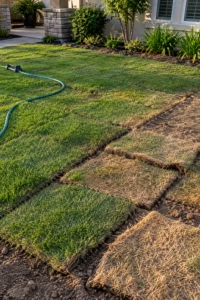
Brown seams and edges usually indicate faster drying or poor contact, while broad irregular patches can indicate disease, drainage, or installation problems.
Sod that lifts easily from dry soil needs water and firm contact; sod with rotten odor and saturated soil needs less water and better drainage.
Most new turf should not be mowed until it resists lifting and reaches the recommended height for its grass species.
Brown Bermuda grass may be dormant, while brown cool-season turf in wet soil may have disease or root damage.
What Brown New Sod Actually Means
Brown new sod is a symptom, not a diagnosis. Grass blades turn brown when leaf tissue loses water faster than roots can replace it, when roots cannot contact soil, when crowns are damaged, or when fungal infection destroys the plant’s water-conducting tissues.
Harvesting removes much of the mature root system. The remaining roots must stay hydrated while new roots grow into the prepared soil. That transition explains why established turf can survive a missed watering that freshly installed sod cannot.
A brown lawn is recoverable when the crown remains firm and living roots are present. Recovery is unlikely when crowns are black or mushy, the sod smells rotten, or the root mat has remained dry for several days during hot weather.
How to tell whether the grass is dead
Check a brown piece in three places, because a green edge can hide a dead center. Scratch the base of a grass stem with a fingernail. Living tissue is moist and green or cream-colored; dead tissue is uniformly brown, brittle, or black.
Use these field tests:
- Lift test: A rooted piece resists gentle lifting after roughly 10-21 days. Easy lifting suggests poor contact or failed rooting.
- Soil test: Insert a screwdriver 2-3 inches beneath the sod. Dry, hard soil indicates insufficient irrigation; shiny, muddy soil indicates excess water.
- Crown test: Firm, pale crowns may recover. Soft, dark crowns indicate decay.
- Odor test: A sour or rotten-egg odor suggests anaerobic, waterlogged conditions rather than simple thirst.
- Pattern test: Brown edges point toward drying; circular or expanding patches point more strongly toward disease or localized soil problems.
Why Is My New Sod Turning Brown?
The most common cause is a moisture imbalance in the root zone. Underwatering dries the shallow roots, while overwatering removes oxygen from saturated soil and encourages decay. Heat, air pockets, compacted soil, disease, poor-quality sod, and species mismatch can produce similar symptoms.
The timing and pattern provide useful evidence. Browning within 24-48 hours of installation often follows heat exposure, drying during transport, or inadequate first watering. Browning after several wet days raises the probability of drainage failure or fungal disease.
Underwatering and uneven irrigation
Underwatering is the leading correctable cause during establishment. Newly laid turf has limited roots, exposed seams, and a high leaf area, so hot wind can remove water faster than the root mat can absorb it.
Do not judge irrigation by sprinkler run time alone. A low-flow sprinkler may apply 0.15 inches in 20 minutes, while a high-flow zone may apply twice that amount. Place straight-sided tuna cans or catch cups across the zone and measure the actual depth.
Typical starting targets are:
| Establishment period | Typical frequency | Target condition | Main caution |
|---|---|---|---|
| Days 1-7 | 2-4 short sessions daily | Top 2-3 inches moist | Prevent runoff and puddling |
| Days 8-14 | 1-3 sessions daily | Sod stays damp between checks | Increase during heat and wind |
| Days 15-21 | 1-2 deeper sessions daily | Roots begin anchoring | Reduce frequency if soil stays wet |
| Day 28 and later | Deep watering as soil dries | Established root zone | Adjust for rainfall and species |
The 1-1.5 inches per day figure sometimes recommended for very hot installation conditions is a starting range, not a universal requirement. Heavy clay, shade, rainfall, low-flow irrigation, and cool weather may require less. Sandy soil, full sun, wind, and temperatures above 85°F may require more frequent applications.
Overwatering, poor drainage, and root loss
Overwatering causes browning when water fills the soil’s air spaces. Roots need oxygen for respiration; saturated soil prevents oxygen movement and creates conditions favorable to root rot and pathogens.
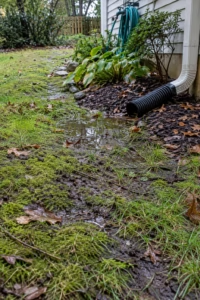
Look for footprints that remain visible, muddy soil, standing water, algae, a sour odor, and grass that feels loose despite frequent watering. Stop automatic irrigation temporarily, improve drainage where possible, and resume only when the upper root zone begins to dry.
A waterlogged lawn should not be treated by adding fertilizer. Nitrogen stimulates top growth while damaged roots remain unable to support it, and soluble fertilizer can increase salt stress.
Poor soil-to-root contact and air pockets
Sod roots cannot establish across an air gap. Uneven grading, stones, dry clods, buried wood, and failure to press the turf onto the soil leave sections suspended above moisture.
A lawn roller helps only when used correctly. Roll once after installation with a water-filled roller, using enough pressure to close gaps without compacting wet soil. Rolling repeatedly over saturated clay can create a dense layer that restricts drainage and future rooting.
Lift the corner of a brown section. Dry soil beneath indicates a contact and watering problem. A hollow feel, uneven surface, or visible gap indicates that the section may need to be lifted, the soil regraded, and the sod relaid.
Heat, wind, and transplant shock
Heat shock occurs when leaves lose water faster than the reduced root system can supply it. Installation above approximately 85°F increases risk, especially when rolls sit in the sun or remain stacked overnight.
Install cool-season sod during spring or early fall when possible. If installation must occur in hot weather, schedule delivery for the same day, lay turf promptly, water each completed section, and protect rolls from direct sun.
Wind worsens drying even when air temperature is moderate. Exposed corners, south-facing slopes, and wide seams often brown first because they have greater evaporation and less shade.
Fungal disease and contaminated soil
Brown Patch, caused by fungi in the Rhizoctonia group, often develops as expanding brown areas during warm, humid weather. Pythium diseases favor saturated soil, poor drainage, and prolonged leaf wetness. Disease cannot be diagnosed reliably from color alone.
Disease is more likely when browning forms rings or irregular expanding patches, leaves remain wet overnight, the soil is already moist, and roots do not improve after irrigation is corrected. Avoid routine fungicide applications without diagnosis. A local county extension service or plant diagnostic laboratory can identify pathogens more reliably than a color chart.
How Species Change the Diagnosis
Grass species changes the meaning of brown blades. Warm-season Bermuda grass commonly enters drought or winter dormancy, while cool-season fescue may brown from heat stress and St. Augustine may suffer disease in humid, overwatered conditions.
| Turf species | Establishment behavior | Common browning trigger | Recovery consideration |
|---|---|---|---|
| Kentucky bluegrass | Slow root knitting, strong cold tolerance | Heat, drought, slow establishment | Requires consistent moisture without saturated soil |
| Tall fescue | Deep-root potential, moderate shade tolerance | Heat, drought, poor drainage | Brown leaves can recover if crowns remain alive |
| Bermuda grass | Aggressive rooting, warm-season growth | Cold or drought dormancy | Green-up may wait for warm soil and active growth |
| St. Augustinegrass | Fast warm-weather growth, coarse blades | Fungal disease, cold, drought | Inspect stolons and crowns for living tissue |
| Fine fescue | Shade tolerance, fine leaves | Heat, excess moisture, traffic | Reduce irrigation in cool or shaded sites |
A species label also affects mowing height and watering transition. Bermuda generally prefers shorter mowing than tall fescue, while St. Augustine requires enough height to protect stolons and crowns. Follow the sod supplier’s cultivar guidance rather than applying one height to every lawn.
What Should You Do When New Sod Turns Brown?
Begin with diagnosis, then correct one limiting factor at a time. Adding water to dry sod is appropriate; adding water to saturated sod can accelerate root loss.
- Check the calendar and weather. Record installation date, daily temperatures, rainfall, wind, and irrigation.
- Inspect several locations. Compare a brown edge, a green area, a seam, and the center of a roll.
- Measure root-zone moisture. Probe 2-3 inches below the turf and inspect for dryness, mud, odor, and roots.
- Perform the lift test. Determine whether the sod resists lifting and whether roots touch the soil.
- Correct irrigation. Hand-water dry seams and corners; stop or reduce irrigation where soil is saturated.
- Improve contact. Re-lay isolated sections over smooth, moist topsoil and use a light roller pass.
- Protect the turf. Limit foot traffic, pets, furniture, and wheelbarrow loads during rooting.
- Delay fertilizer. Wait until the sod has rooted and shows active growth, unless a soil test or professional specifies otherwise.
- Mow only after rooting. The turf should reach the appropriate height and resist lifting during a test.
- Escalate persistent symptoms. Submit a sample if patches expand after moisture correction or roots smell decayed.
How much water does new sod need?
New sod needs enough water to keep the underlying soil consistently moist without creating standing water. During the first week, that may require 2-4 short applications daily; after root knitting begins, watering should become less frequent and deeper.
Water until the soil is moist below the full sod thickness, then check for runoff. Sloped or clay sites may need several short cycles separated by 15-30 minutes so water enters the soil instead of flowing away.
Rain changes the schedule. A quarter-inch shower rarely replaces a full irrigation cycle in hot conditions, while a sustained one-inch rainfall may eliminate watering for a day or more. Measure soil, not the weather app alone.
When can new sod be mowed?
Mow when the grass reaches roughly one-third above its intended height and the sod cannot be pulled up easily. For many installations, this occurs around 10-21 days, but cool weather, shade, species, and weak rooting can extend the interval.
Use a sharp mower blade and remove no more than one-third of blade height. Avoid turning sharply on wet turf, because newly forming roots shear easily at seams. Do not mow merely because the calendar says two weeks have passed.
Should you fertilize brown sod?
Do not apply high-nitrogen fertilizer to unrooted or drought-stressed sod. Fertilizer salts can draw water from already stressed roots, while excess nitrogen increases soft leaf growth that disease can exploit.
A soil test can identify phosphorus, potassium, pH, and salinity issues, but a test does not replace an irrigation inspection. Wait for root attachment and active growth, then follow the product label and local extension recommendations.
Which Brown Areas Need Replacement?
Replacement is justified when turf is dead in broad sections, crowns are rotten, sod quality was poor before installation, or the underlying grade and drainage cannot be corrected. Replacing grass without correcting soil or irrigation simply reproduces the failure.
Typical consumer costs vary by region, access, grass species, season, and preparation:
| Repair or replacement option | Typical material cost | Typical installed cost | Result timeframe |
|---|---|---|---|
| Small sod patch | $1.00-$2.50/sq. ft. | $3.50-$7.00/sq. ft. | Green immediately, roots 2-4 weeks |
| Full new sod installation | $1.00-$2.50/sq. ft. | $3.50-$7.00/sq. ft. | Rooting commonly 2-4 weeks |
| Hydroseeding | $0.15-$0.50/sq. ft. | $0.50-$2.00/sq. ft. | Germination about 7-21 days |
| Conventional grass seed | $0.05-$0.15/sq. ft. | $0.20-$1.00/sq. ft. | Germination about 14-30 days |
| Soil and grading correction | Varies by volume | Often $1-$5/sq. ft. | Drainage correction before turf |
Sod provides immediate soil coverage and better early erosion control than seed, but it costs more and can fail quickly if transported, stored, or irrigated poorly. Hydroseeding costs less and adapts to prepared soil, yet it needs longer weed control and cannot provide an instant finished surface.
Situations That Change the Diagnosis
Brown seams but green centers
Brown seams usually dry faster because exposed edges have more surface area and less overlapping moisture. Press seams closed, hand-water them, and check that the soil beneath each edge is level and firm.
Brown sod after heavy rain
Heavy rain does not rule out drought stress on sloped ground. Runoff can leave the sod surface wet while the root zone beneath a lifted edge remains dry. Conversely, flat compacted areas may stay saturated and develop root disease.
Brown sod in shade
Shade reduces evaporation but also slows drying. Reduce watering frequency, improve air movement, and inspect for prolonged leaf wetness. Tree roots may also compete for water while their canopy intercepts irrigation.
Brown sod near construction areas
Construction debris, buried concrete, compacted subsoil, and thin topsoil commonly create isolated dead spots. Dig beneath a persistent patch after ruling out irrigation. Remove debris, restore suitable soil depth, and correct compaction before replacing turf.
Brown sod after pet traffic
Urine creates localized salt and nitrogen injury, while repeated running damages unrooted seams. Rinse small urine spots with clean water, keep pets off during establishment, and repair compacted or torn sections after the turf roots.
Expert Rules That Prevent Repeat Failure
Measure irrigation output before changing the schedule. The same 20-minute setting can deliver very different volumes across zones, and applying more minutes to a clogged or misaligned sprinkler may still leave dry edges.
A wet surface does not prove a wet root zone. Thatch, a dry sod roll, or hydrophobic soil can shed water sideways. Lift a small corner and inspect the interface instead of relying on surface shine.
The first mowing is a rooting test. If mower wheels leave deep impressions or the turf shifts at seams, mowing is premature even when blades are tall enough.
Fungicide is not a substitute for drainage. Disease treatment may reduce symptoms, but saturated soil, overnight leaf wetness, and excessive nitrogen continue to favor recurrence.
Document installation immediately. Photograph brown sections, retain invoices, record delivery and laying dates, and note irrigation measurements. Those records help distinguish installation defects from later watering failures when a supplier warranty applies.
Frequently Asked Questions About Why Is My New Sod Turning Brown?
Can brown sod turn green again after drying out?
Yes, brown sod can recover after moderate drying if crowns and roots remain alive. Restore moisture gradually, hand-water dry seams, and inspect growth over 7-14 days. Brittle crowns, roots that crumble away, or uniformly dead tissue indicate replacement rather than recovery.
Why is new sod yellow instead of brown?
Yellow new sod commonly reflects low light, nitrogen limitation, excess water, or early root stress. Check soil moisture and drainage before fertilizing. Yellowing across a wet lawn points toward oxygen or disease problems, while pale new growth with healthy roots may reflect nutrition.
Can I walk on newly installed sod?
Limit walking until roots begin anchoring, commonly around 10-21 days under favorable conditions. Walking on wet or loose sod creates depressions, breaks seams, and compresses soil. If access is unavoidable, use temporary boards that distribute weight and remove them promptly.
Does brown sod need to be replaced immediately?
No. Test the crown, roots, soil moisture, and lifting resistance before replacing it. Brown leaves with living crowns can regenerate, especially in warm-season grasses. Replace turf when crowns are dead, decay is widespread, or the underlying drainage and grading problem cannot be repaired.
Why did new sod brown after I watered it?
Watering can expose an existing problem rather than cause it. Frequent irrigation may leave heavy soil oxygen-poor, while water can run off compacted slopes and fail to wet the root zone. Check depth, runoff, odor, and drainage instead of increasing the schedule automatically.
Should I contact the sod supplier?
Contact the supplier when browning began before installation, rolls arrived hot or dry, sections were diseased on delivery, or documented care followed the warranty instructions. Provide dated photographs, grass species, delivery conditions, irrigation records, and the affected percentage of the lawn.
Conclusion
Why is my new sod turning brown? In most cases, the cause is a mismatch between water loss and root uptake, poor soil contact, saturated roots, heat, or disease. Test the root zone and crown first, then adjust irrigation, contact, drainage, and traffic in that order. Brown blades do not automatically mean dead sod, but delayed diagnosis can turn recoverable transplant stress into permanent turf loss.