Step outside on a warm July morning and listen. In a yard planted for pollinators, the flower beds hum with bumblebees, a monarch drifts between pink coneflowers, and a hummingbird zips past to check the red salvia by the porch. It feels alive in a way a plain lawn never does.
That buzz is a big part of why pollinator gardens have become so popular. They’re colorful, they tend to need less water and fertilizer once established, and they give bees, butterflies, moths, and hummingbirds the food and shelter they’re losing in many neighborhoods. You don’t need acres to help, either. A single border, a curb strip, or a few pots on a balcony can make a real difference.
These 23 pollinator garden ideas cover flower borders, bee hotels, hummingbird beds, water sources, clover lawns, host plants for caterpillars, and simple habitat tricks that work in ordinary front yards, backyards, and small spaces. Pick one to start this season and add more as your garden grows.
1. Plant a Butterfly Border of Milkweed, Coneflowers, and Zinnias
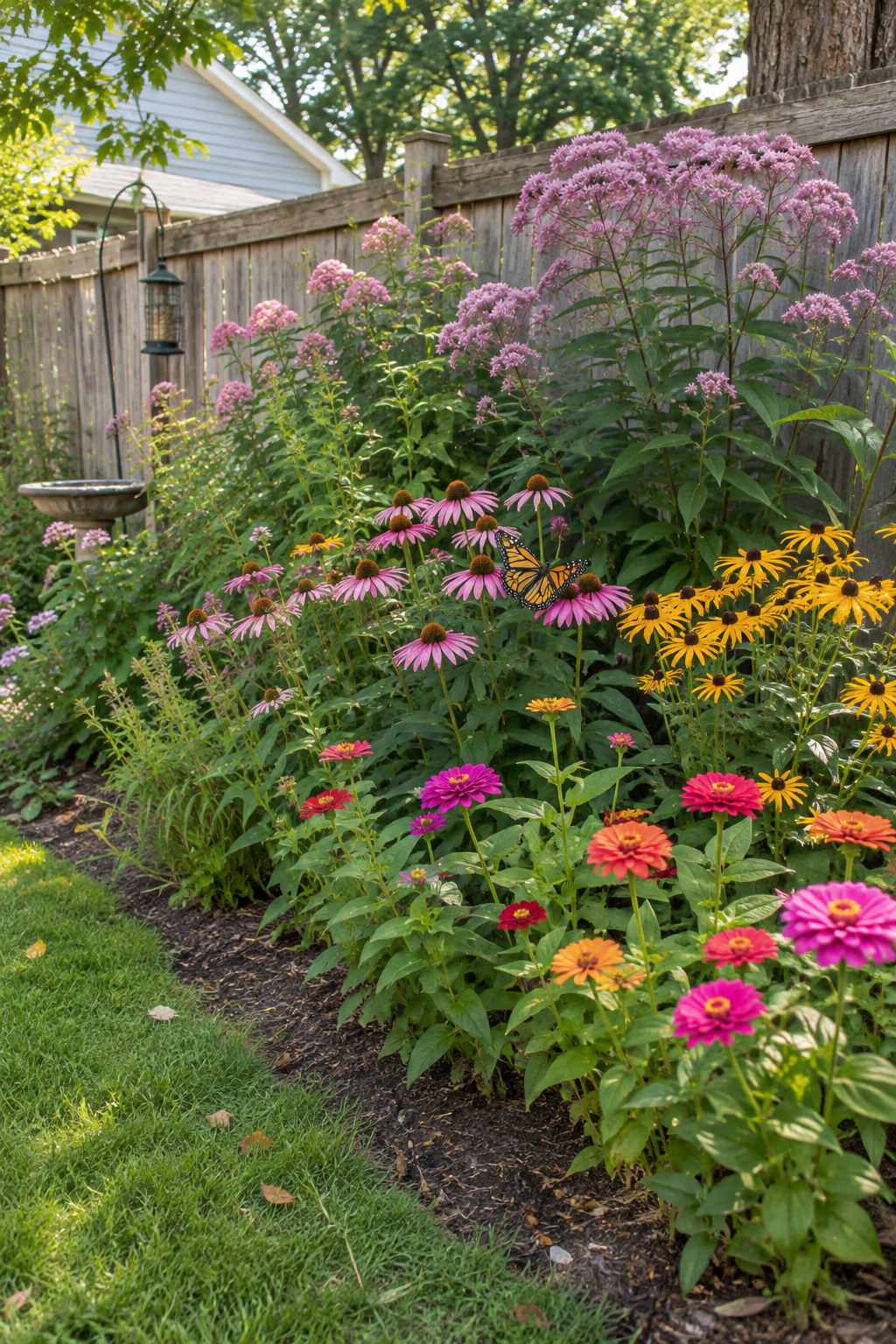
Nectar and host plants in one colorful bed
A butterfly border works best in full sun, at least six hours a day, in a strip about 4 to 6 feet deep along a fence, patio, or driveway. Put taller plants such as Joe Pye weed or native milkweed at the back, purple coneflowers and black-eyed Susans in the middle, and a front row of zinnias, which bloom nonstop from midsummer to frost and come in hot pinks, oranges, and reds.
The mix works because it feeds butterflies at two stages. Adults sip nectar from the flat, open flowers, and monarch caterpillars can only eat milkweed. Common, swamp, and butterfly milkweed are good native choices for most of the country.
Expect chewed milkweed leaves. That’s a sign the garden is doing its job. In warm Southern and coastal regions, skip tropical milkweed, which can stay green all winter and is linked to a parasite that harms monarchs.
2. Set Up a Bee Hotel Beside a Sunny Bed
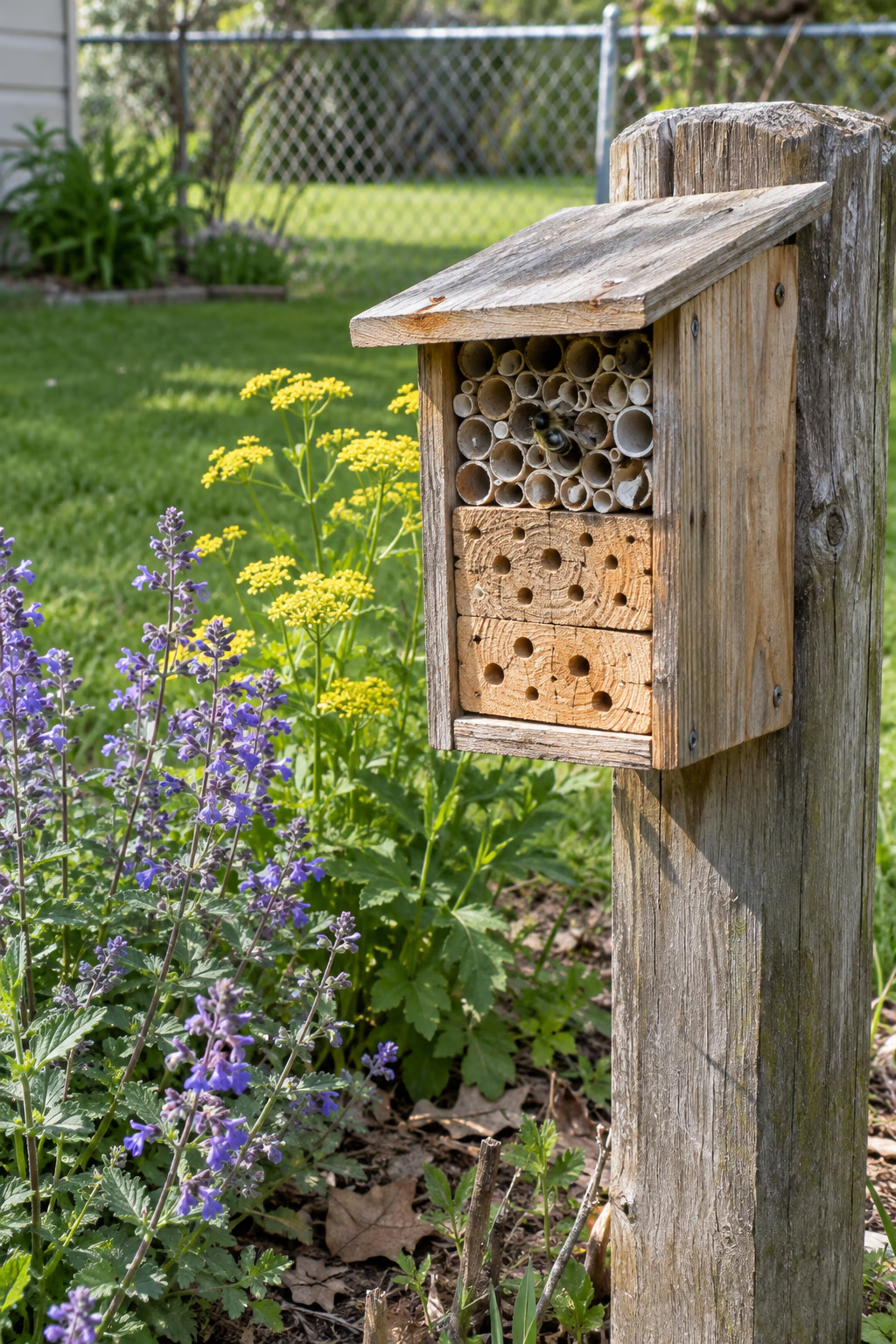
Nesting space for gentle, hard-working solitary bees
Mason bees and leafcutter bees don’t live in hives. They lay eggs in narrow tunnels, and a bee hotel gives them a ready supply. Mount a small wooden box filled with paper-lined tubes or drilled hardwood blocks on a fence post or wall 3 to 6 feet off the ground, facing south or east so it catches morning sun.
Holes about 5/16 inch wide and 6 inches deep suit mason bees, while slightly smaller holes attract leafcutters. A small roof keeps rain off, and placing the hotel within sight of spring blooms gives the bees food close to home.
Smaller is better. Large decorative hotels with pinecones and loose bamboo can spread mites and disease. Replace paper liners or tubes every year or two, and solitary bees are rarely aggressive, so a hotel near the patio is usually fine.
3. Plant a Hummingbird Bed of Red Tubular Flowers
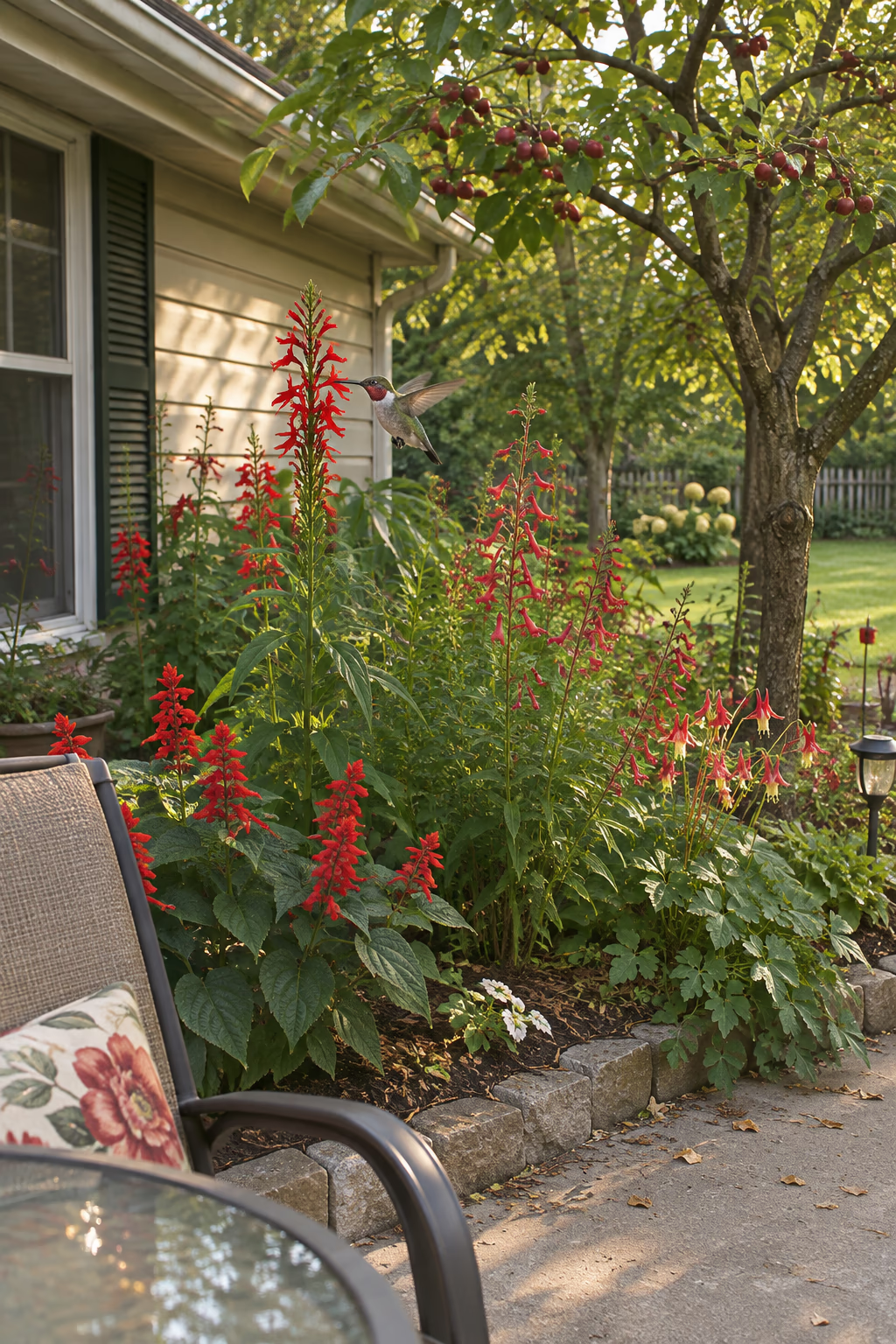
Bright color that brings hummingbirds in close
Hummingbirds are drawn to red, orange, and deep pink blooms shaped like narrow tubes, which hold nectar out of reach of most insects. Good choices include cardinal flower, red columbine, firecracker or scarlet penstemon, scarlet sage, and hummingbird mint. In hot regions, red salvias and coral-colored autumn sage keep blooming through summer.
Plant the bed where you can see it from a kitchen window or patio chair, ideally with a shrub or small tree nearby where the birds can perch between feeding runs. Grouping three or more of each plant creates a bold splash they’ll spot from a distance.
Cardinal flower likes consistently moist soil, while penstemon and agastache want sharp drainage, so plant each in the right spot. Avoid red-dyed sugar water if you also hang a feeder; plain sugar water is all hummingbirds need.
4. Mass Native Perennials in Bold Drifts
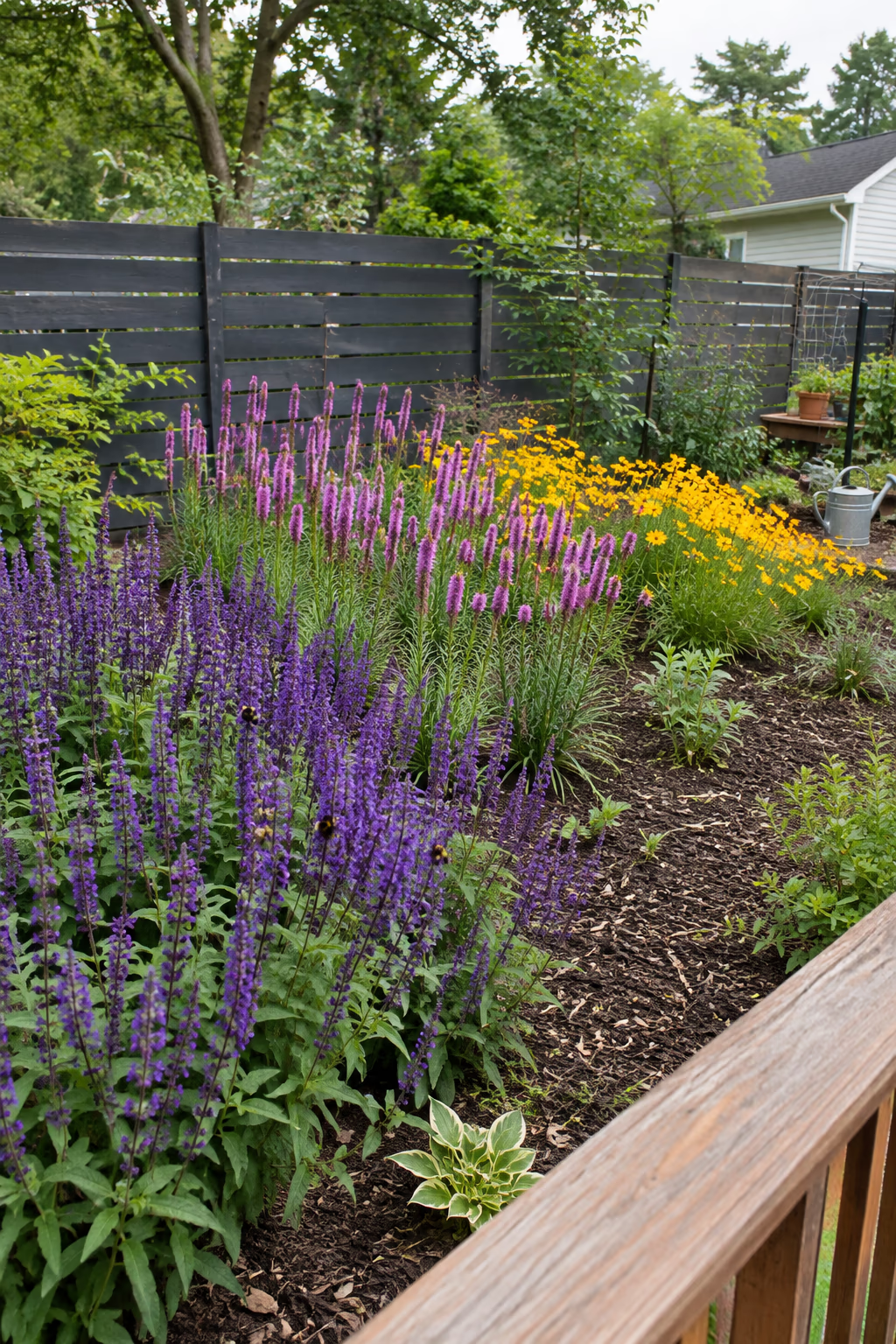
A calm, modern look that bees can find easily
Instead of dotting single plants around a bed, plant each variety in sweeping groups at least 3 feet across. A drift of purple salvia beside a drift of blazing star and another of golden coreopsis looks deliberate and polished, even in a casual garden.
Large patches of one flower are easier for bees and butterflies to find, and they can forage efficiently without flying from plant to plant across the yard. Sticking to three to five main species also gives the bed a clean, uncluttered style that suits modern and traditional homes alike.
Buying plants in flats or small plugs keeps the cost down when you need a dozen of each. Space them at the recommended distance, mulch lightly between them, and expect the drifts to knit together by the second or third summer.
5. Add a Shallow Bee Bath Filled With Pebbles
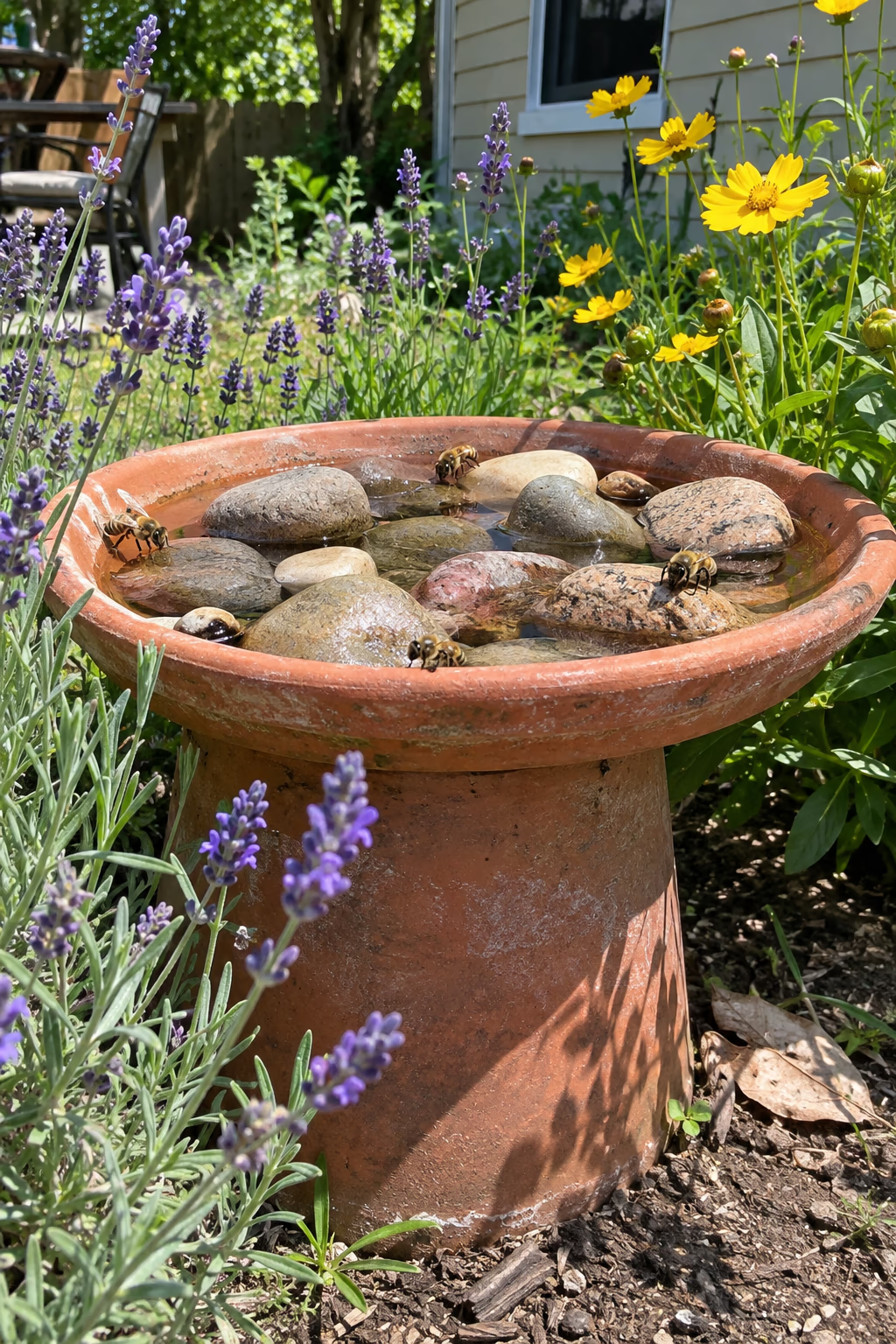
Safe drinking water on hot days
Bees and butterflies need water, but they can drown in a deep birdbath. A wide, shallow dish such as a terracotta saucer or an old pie plate filled with pebbles, marbles, or flat stones gives them a landing spot just above the waterline.
Set the dish on the ground or on an upturned pot among flowers, and add water until the tops of the stones stay dry. On a hot afternoon, bees will line the edges to drink and carry water back to cool their nests.
Refresh the water every two or three days to keep it clean and stop mosquitoes from breeding. A damp patch of sand or soil nearby also gives butterflies a place to puddle and pick up minerals.
6. Turn the Curb Strip Into a Pollinator Patch
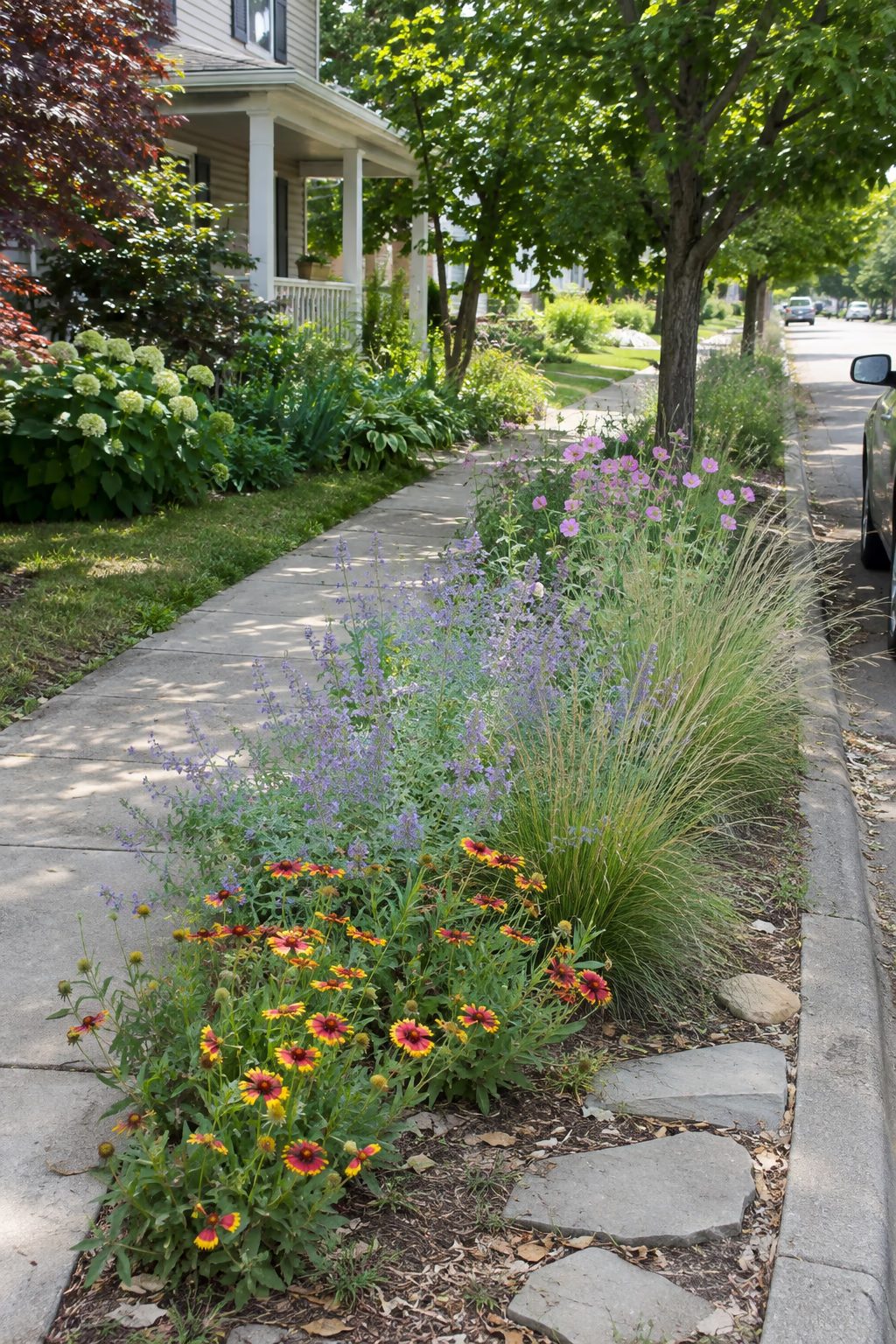
Put a forgotten strip of grass to work
The narrow strip between the sidewalk and street is often hot, dry, and hard to mow, which makes it a great place for tough pollinator plants. Replace the grass with low, drought-tolerant bloomers such as blanket flower, purple poppy mallow, catmint, short asters, and little bluestem.
A planted curb strip gets plenty of sun and helps connect your garden to your neighbors’ yards, creating stepping stones for bees as they travel. It also cuts down on mowing and watering in one of the most awkward parts of the lawn.
Check with your city first, since many have rules about plant height and what you can grow in the right-of-way. Keep plants under about 24 to 30 inches near driveways and corners so drivers can see, and leave a path or stepping stones for people getting out of parked cars.
7. Overseed the Lawn With Clover and Self-Heal
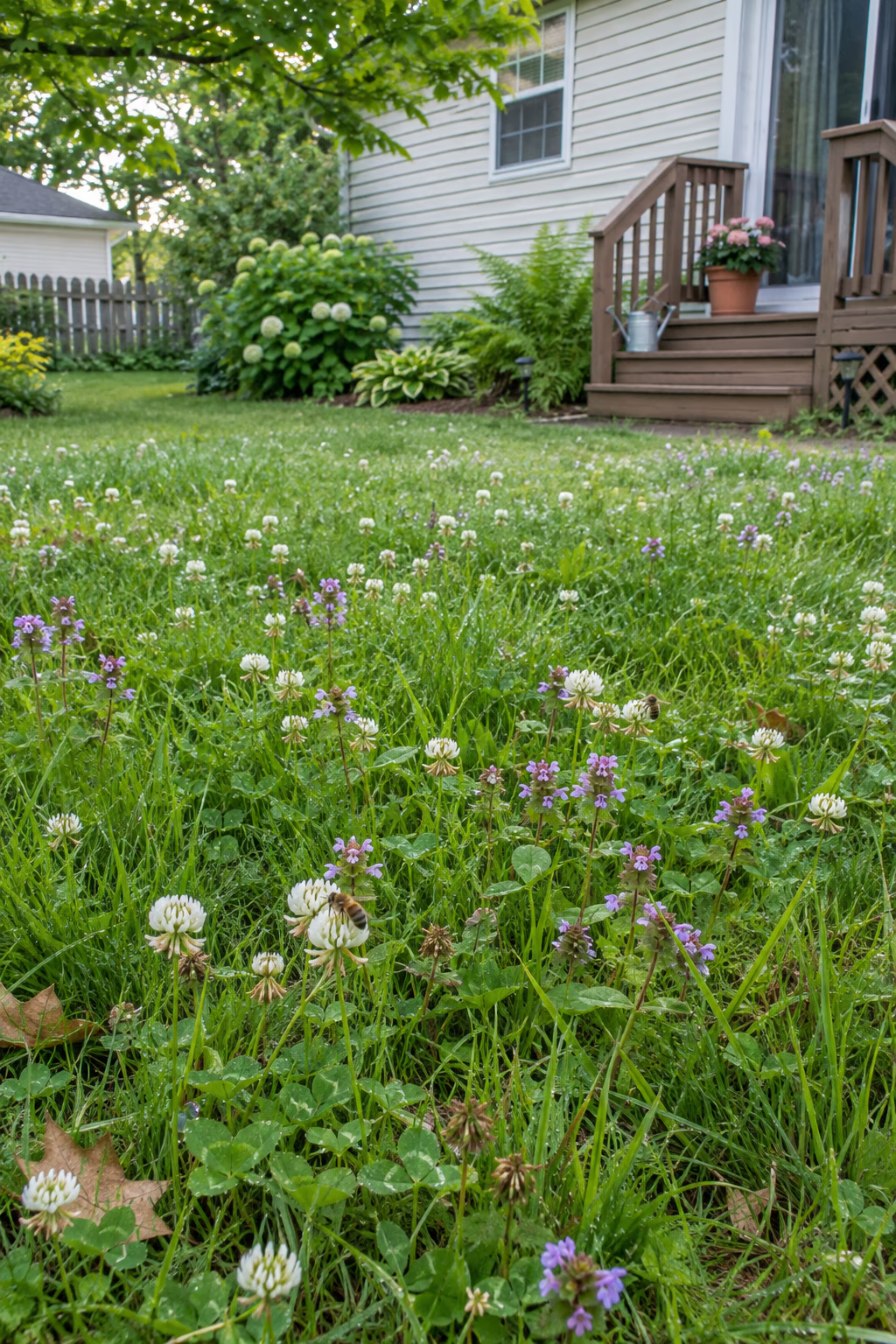
A bee-friendly lawn that still feels like grass
A bee lawn mixes low-growing flowers into existing turf. In fall or early spring, mow short, rake to loosen the soil, and overseed with white clover or microclover along with low bloomers like self-heal and creeping thyme where they’re suited to your area.
Clover stays green during dry spells, adds nitrogen to the soil, and flowers right in the grass where bees find it easily. Mowing at 3 to 4 inches high and less often lets the blooms come back between cuts.
Bees on the lawn mean sore feet for anyone who goes barefoot, so keep a pure grass play area if kids run around often. Clover can stain clothes and wear down in heavy-traffic spots, and some HOAs have lawn standards, so check before converting a front yard.
8. Interplant the Vegetable Garden With Insectary Flowers
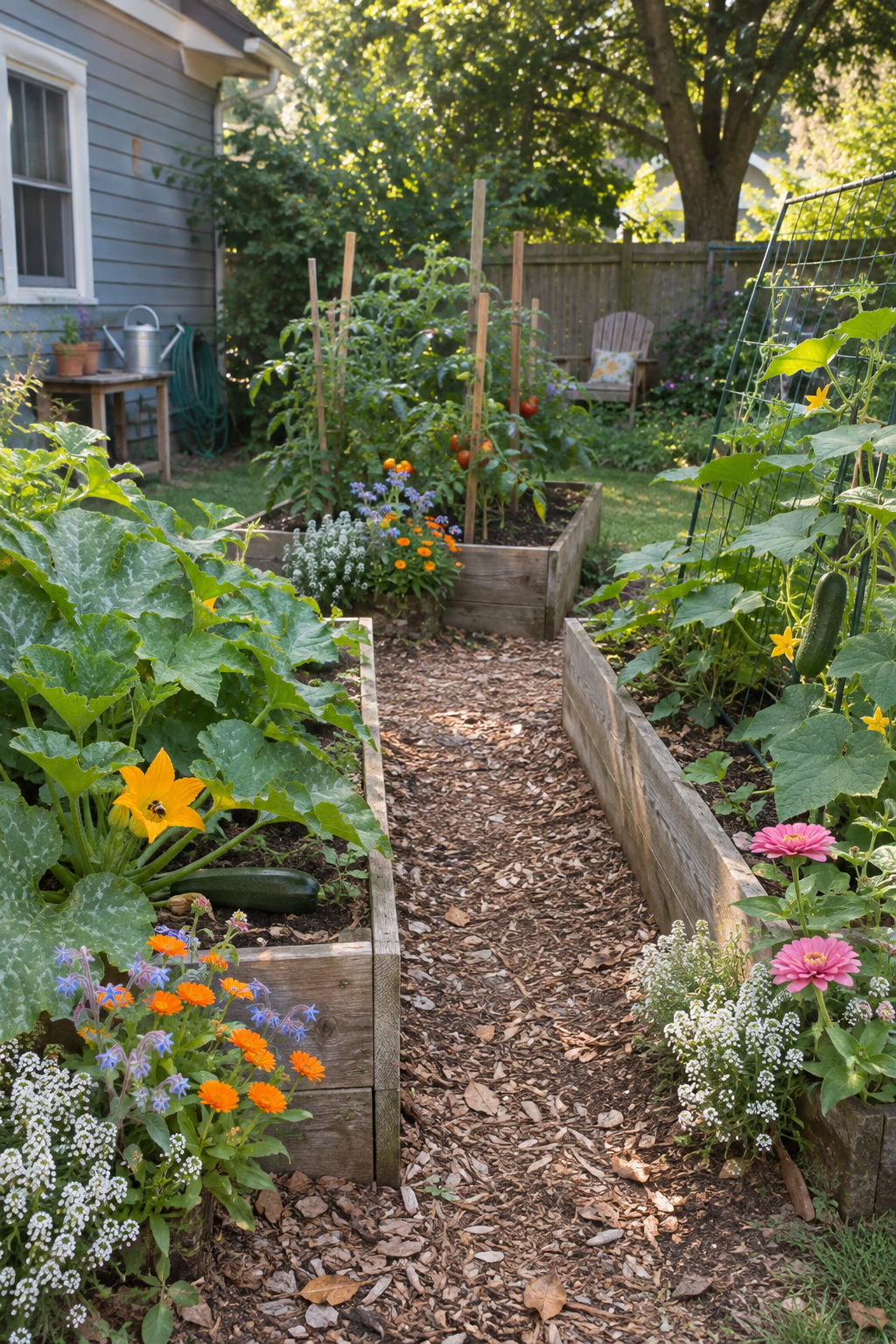
Better harvests from squash, cucumbers, and tomatoes
Many crops, especially squash, melons, cucumbers, and berries, depend on bees to set fruit. Tuck rows or clumps of flowers like sweet alyssum, calendula, cosmos, borage, sunflowers, and zinnias at the ends of raised beds or between crop rows.
These flowers bring in pollinators and also attract helpful insects such as hoverflies and tiny parasitic wasps that eat aphids and caterpillars. A few blooming plants near your squash can mean more fruit and fewer misshapen cucumbers.
Borage and some cosmos reseed heavily, so pull extra seedlings in spring. If you treat vegetables for pests, choose targeted methods and spray in the evening when bees aren’t active.
9. Stagger Bloom Times From Early Spring to Frost
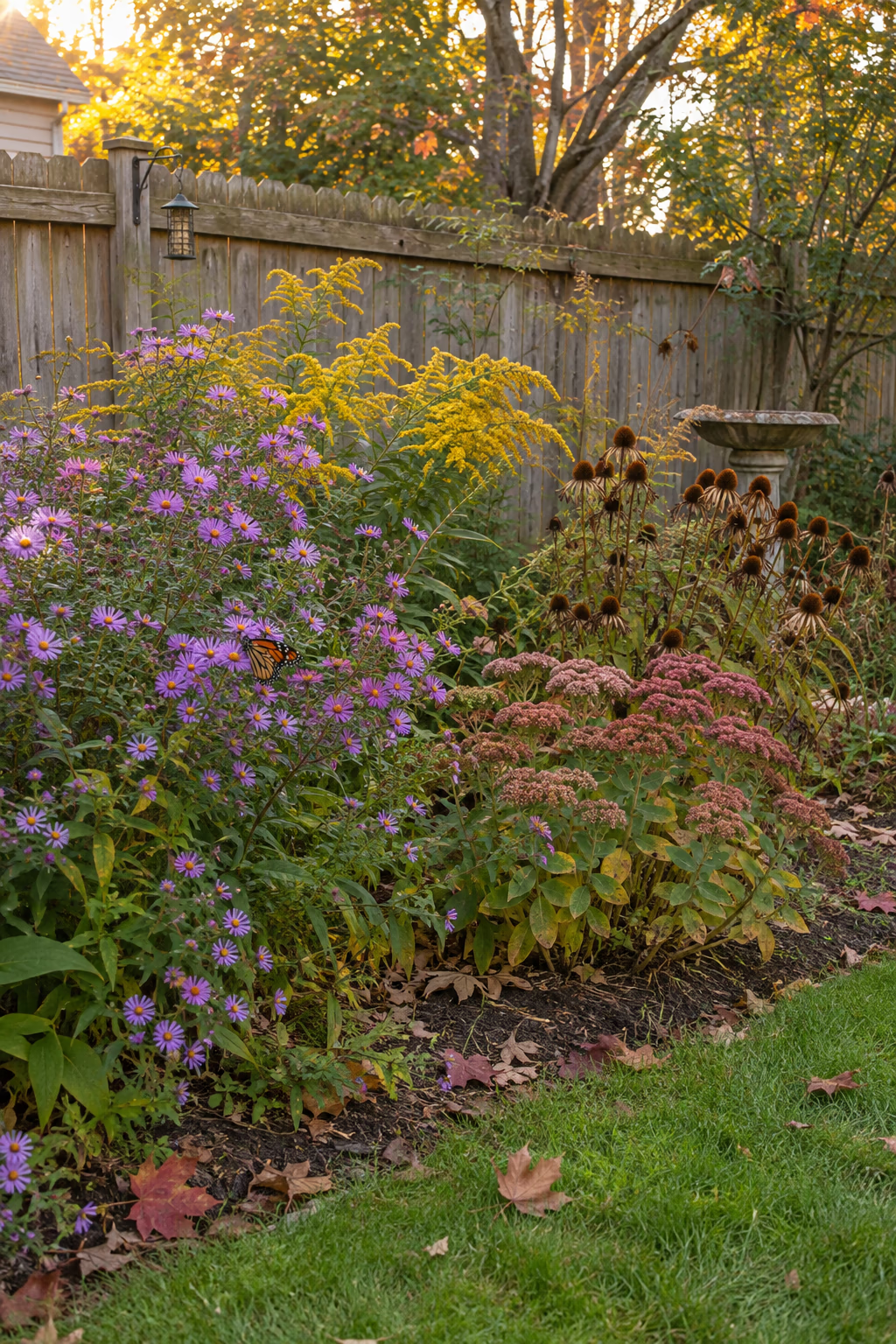
Food for pollinators in every season
A garden that blooms only in June leaves bees hungry the rest of the year. Plan for at least three flowers in bloom each season: crocus, willow, and serviceberry in early spring; salvia, coneflower, and bee balm through summer; and asters, goldenrod, and sedum in fall.
Queen bumblebees come out of winter hungry in early spring, and migrating monarchs need late nectar on their way south. Covering the whole season keeps a steady population of pollinators in your yard instead of a brief midsummer visit.
A simple notebook or phone note with bloom months helps you spot gaps. Walk the yard once a month and jot down what’s flowering, then fill the empty months with new plants next season.
10. Fill Balcony Pots With Pollinator Annuals
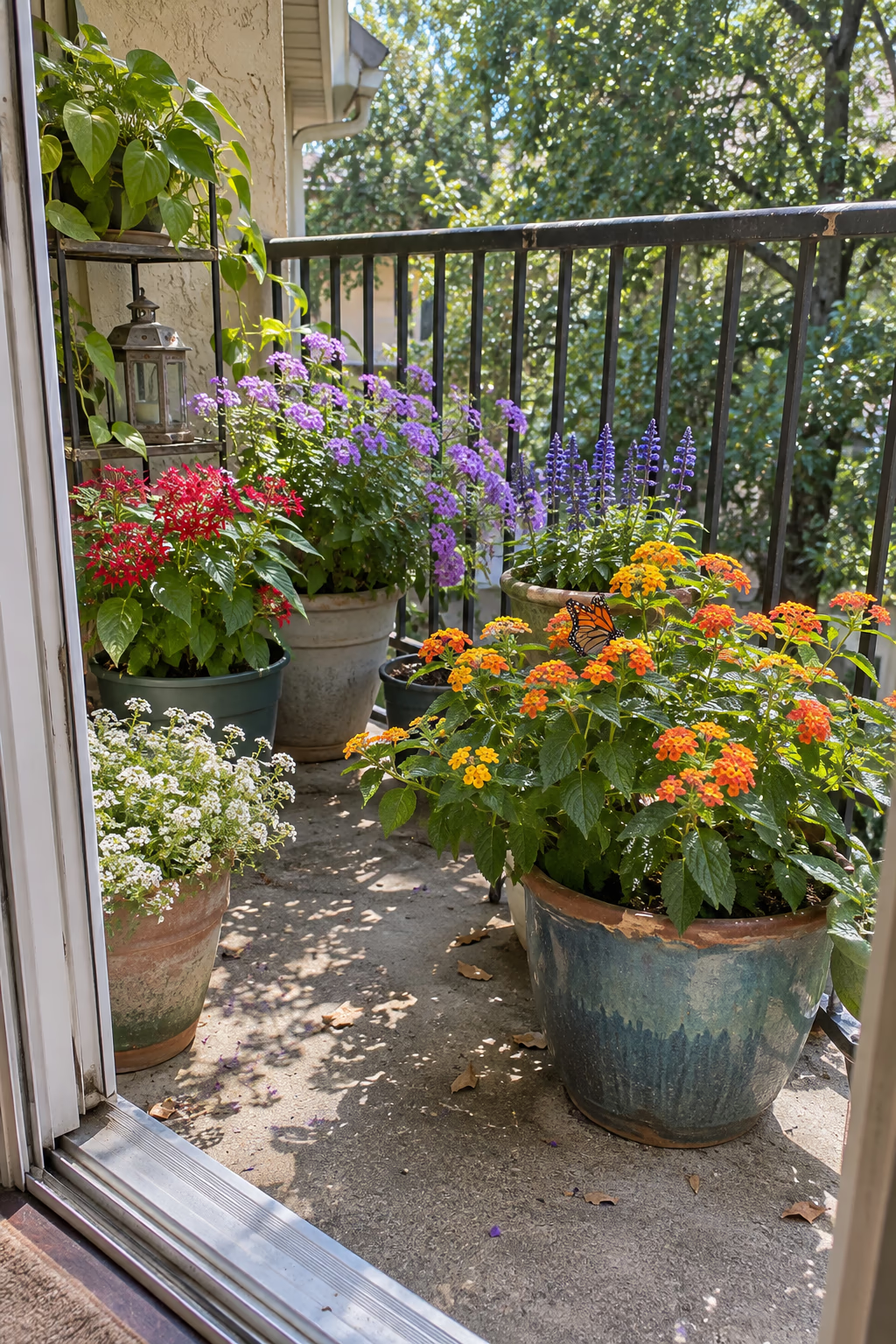
A bee garden for apartments and small patios
Even a sunny balcony can feed pollinators. Use containers at least 12 to 16 inches wide filled with fresh potting mix, and plant bee favorites like lantana, verbena, pentas, calibrachoa, sweet alyssum, and compact salvia.
Annuals bloom heavily all summer and are easy to replace, so a few pots can provide nectar for months. Grouping several containers in one spot creates a larger target that bees and butterflies spot more quickly.
Pots dry out fast in summer heat, so water daily during hot spells and feed lightly every few weeks. Check building rules about weight and dripping water, and use saucers to protect neighbors below.
11. Let Kitchen Herbs Flower Along the Patio
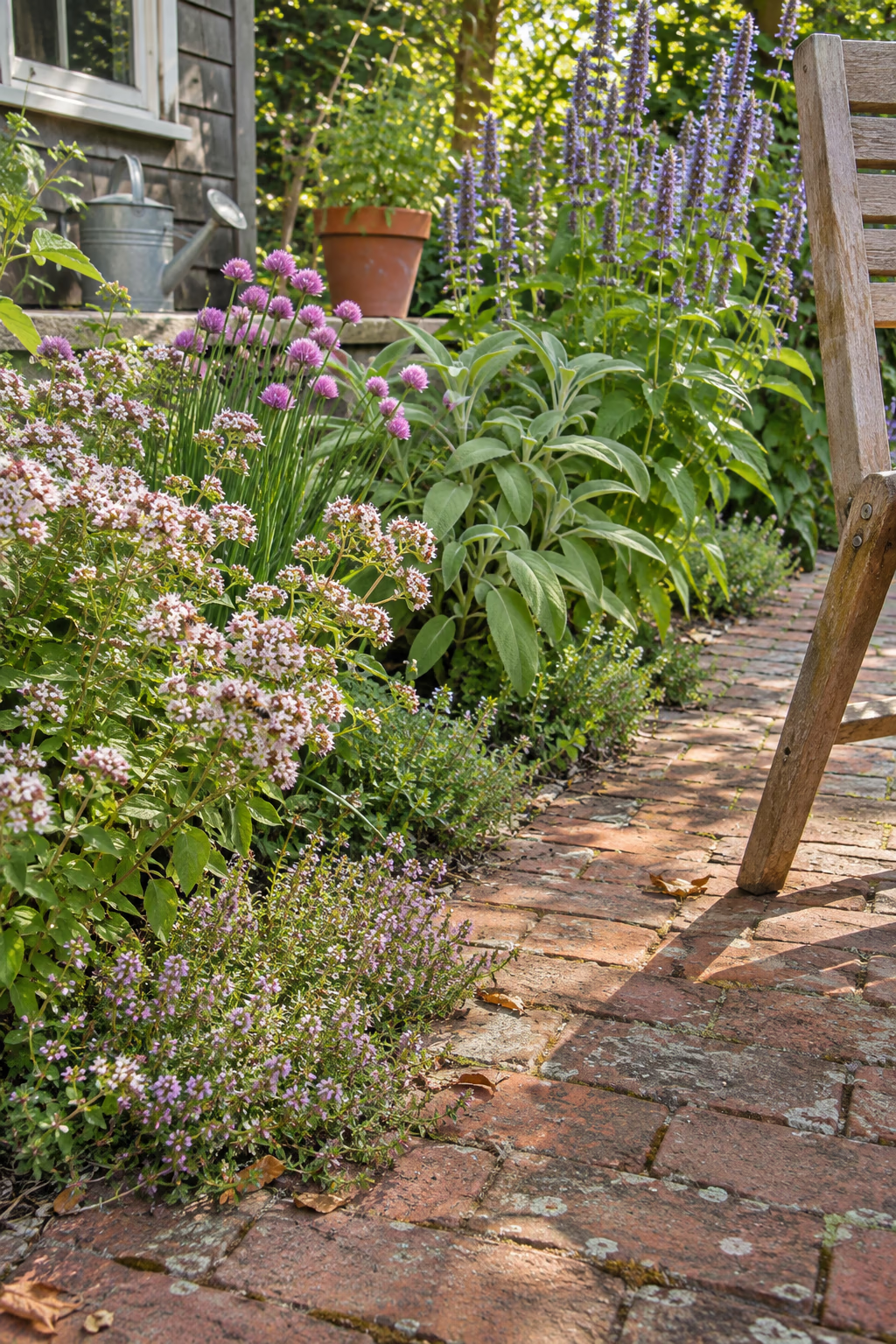
Fragrant blooms that serve the kitchen and the bees
Herbs like oregano, thyme, chives, sage, mint, dill, and anise hyssop produce small flowers that bees love. Plant them in a sunny strip along the edge of a patio or in a raised bed, and let some of them bloom instead of cutting them back all summer.
The tiny blossoms suit short-tongued native bees, which can’t reach nectar in deep flowers. You still get to harvest leaves before flowering, then let a portion of each plant bloom for pollinators.
Mint spreads quickly underground, so grow it in a pot sunk into the soil or on its own. Expect a lot of bee traffic near seating areas when oregano and thyme are in full flower.
12. Plant a Moonlit Garden for Night-Flying Moths
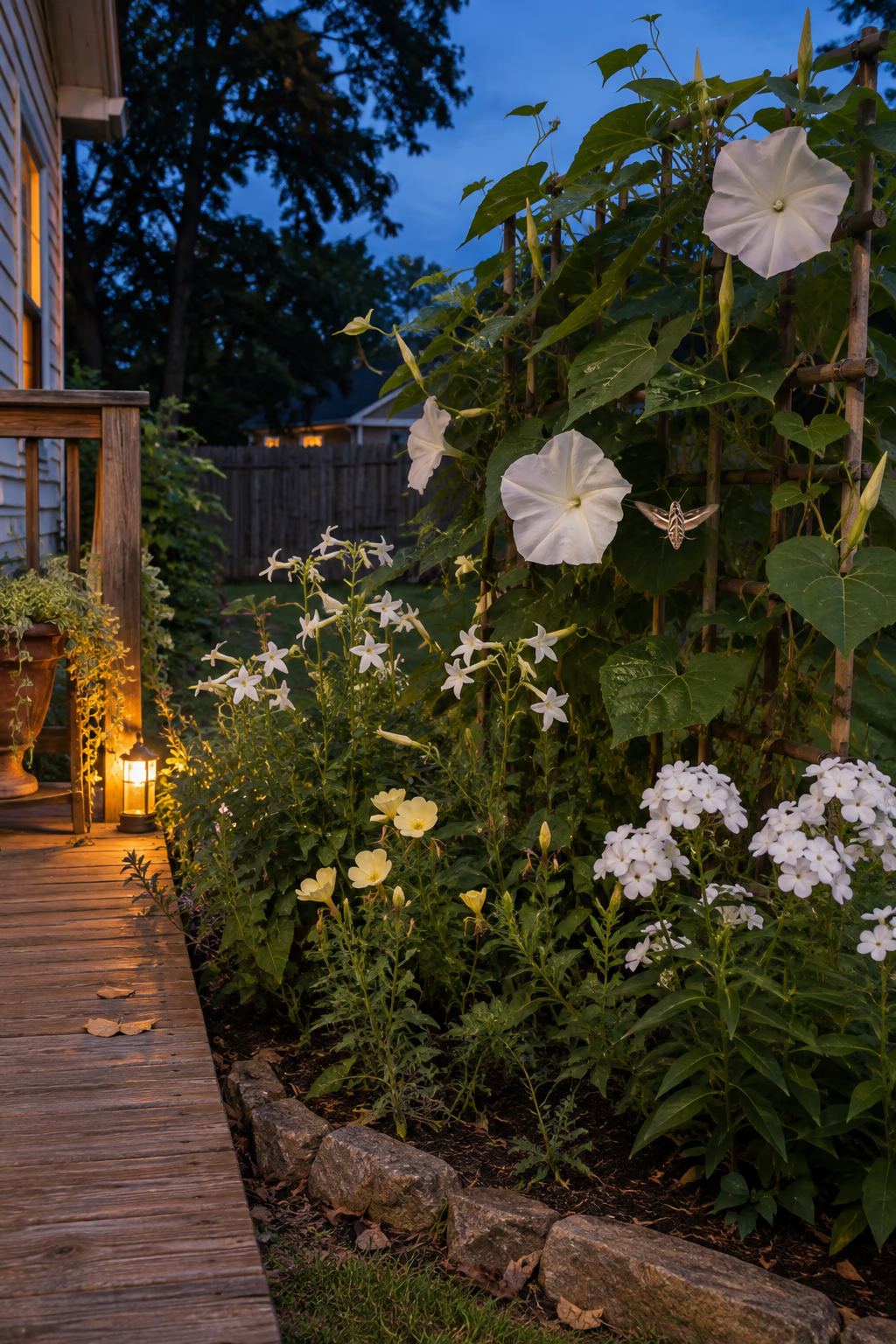
Pale, fragrant flowers for the evening shift
Moths are important pollinators that often get overlooked. Many are drawn to pale or white flowers with a strong evening scent. Try evening primrose, four o’clocks, flowering tobacco, moonflower vine, phlox, and white bee balm.
White blooms glow at dusk, so this garden is lovely near a patio where you sit in the evening. Big sphinx moths, which look almost like hummingbirds, may hover over the flowers on summer nights.
Keep outdoor lights low, warm-toned, and pointed down, or on motion sensors. Bright white lights confuse moths and pull them away from the flowers. Moonflower and four o’clocks are toxic if eaten, so plant them away from curious kids and pets.
13. Leave Patches of Bare Soil for Ground-Nesting Bees
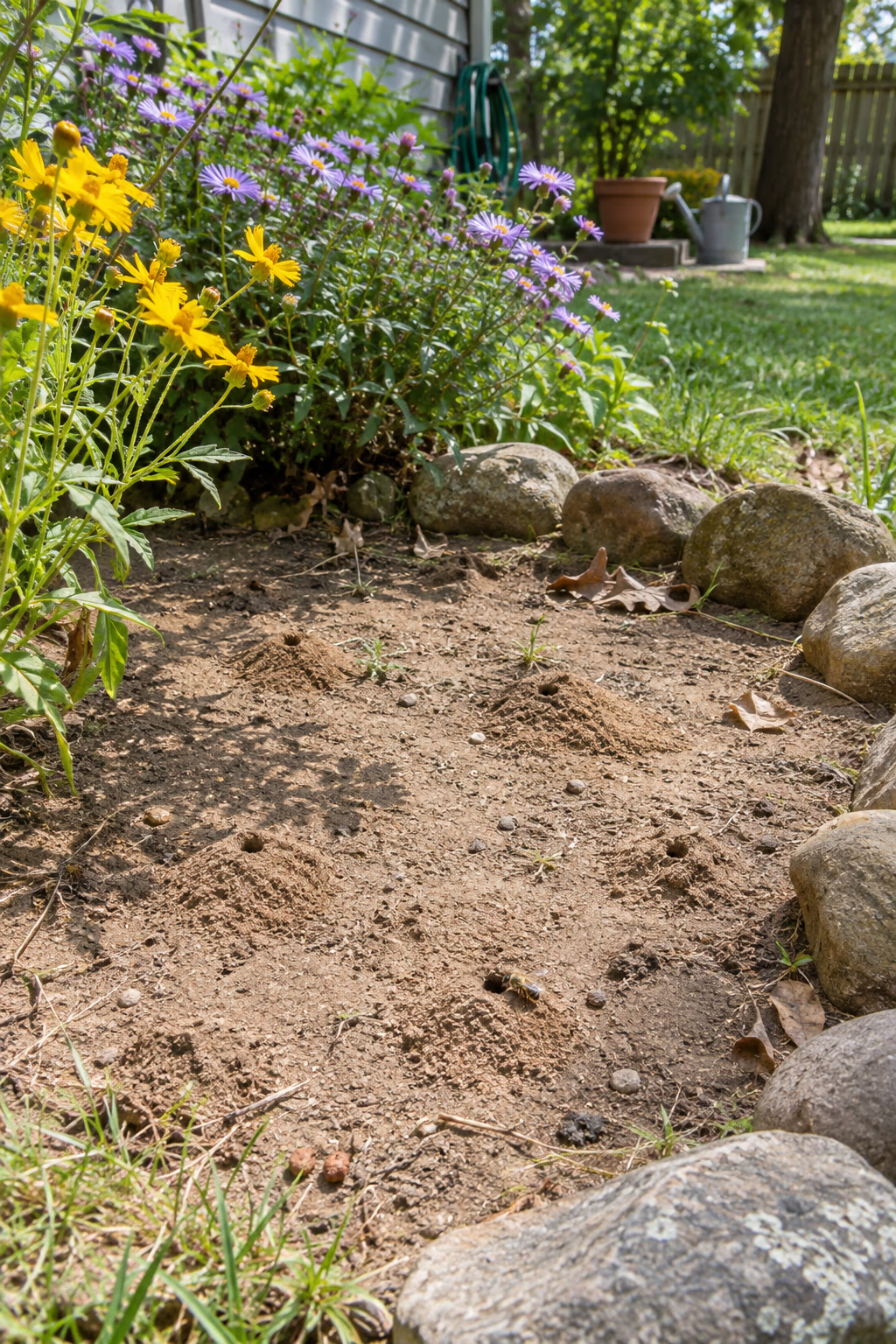
Nesting space most native bees actually use
Most native bee species nest in the ground, not in hives or hotels. They dig small tunnels in bare, sunny soil, and they can’t get through thick mulch, fabric, or dense turf.
Leave a few square feet of unmulched, well-drained soil in a sunny spot near your flowers, ideally on a slight slope or at the edge of a bed. Small mounds of soil with pencil-size holes are a sign that bees have moved in.
Ground-nesting bees are rarely aggressive, and most are active only a few weeks a year. If the bare patch looks untidy, edge it with a low stone border so it reads as intentional.
14. Leave Stems and Leaves Standing Through Winter
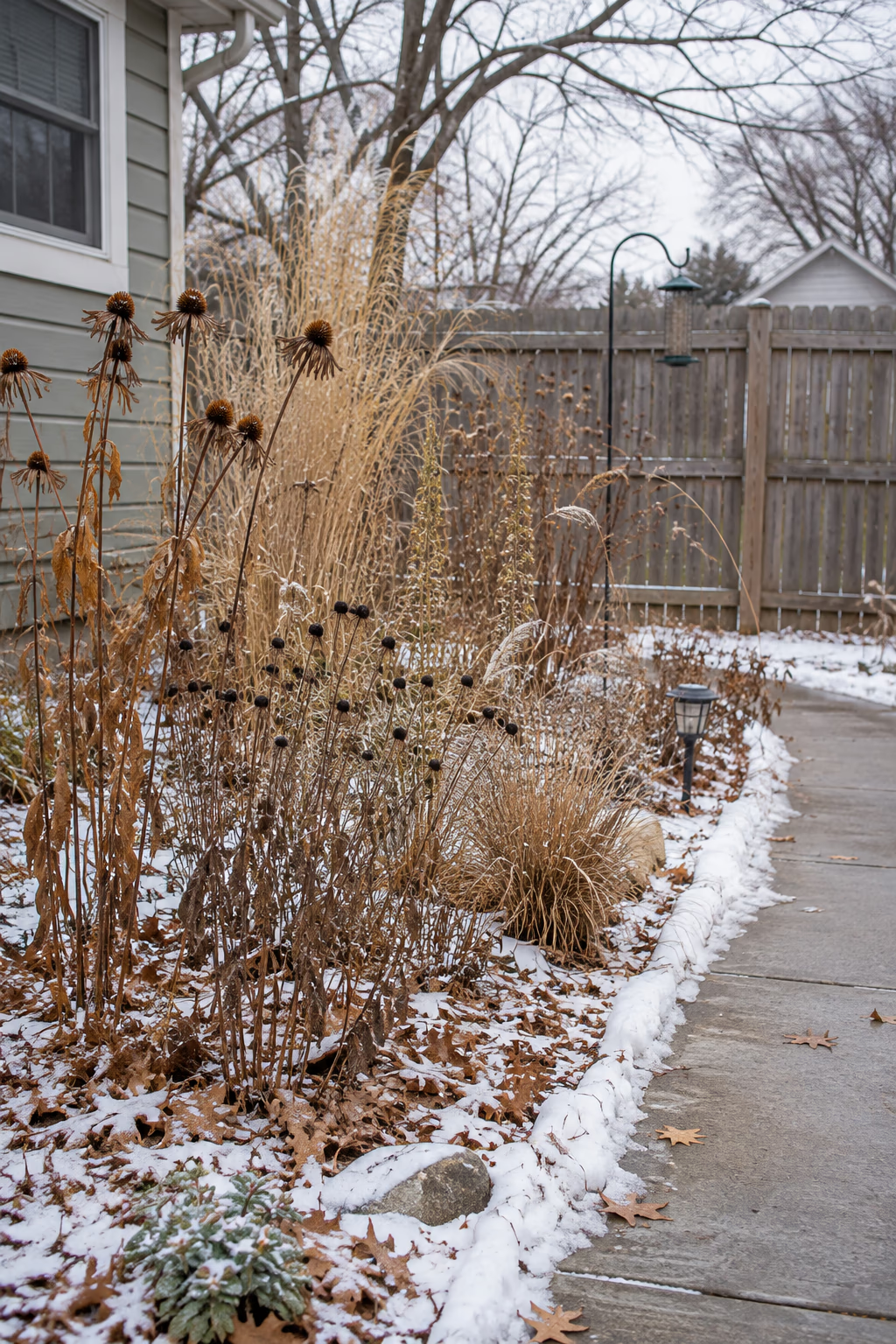
Shelter for the next generation of pollinators
Many bees overwinter inside hollow plant stems, and butterflies and moths spend the cold months as eggs or cocoons in fallen leaves. Leave perennial stems standing through winter, then cut them back to 12 to 18 inches in spring instead of to the ground.
The cut stems become nesting sites for small bees during the next season and get hidden by new growth within weeks. Raking leaves into beds instead of bagging them also adds organic matter to the soil.
A completely untouched bed can look messy in a front yard. Keep edges, walkways, and a few evergreens neat, and leave the rest a little wild. Wait until daytime temperatures stay in the 50s before cleaning up in spring.
15. Frame a Front Yard Pollinator Bed With Crisp Edging
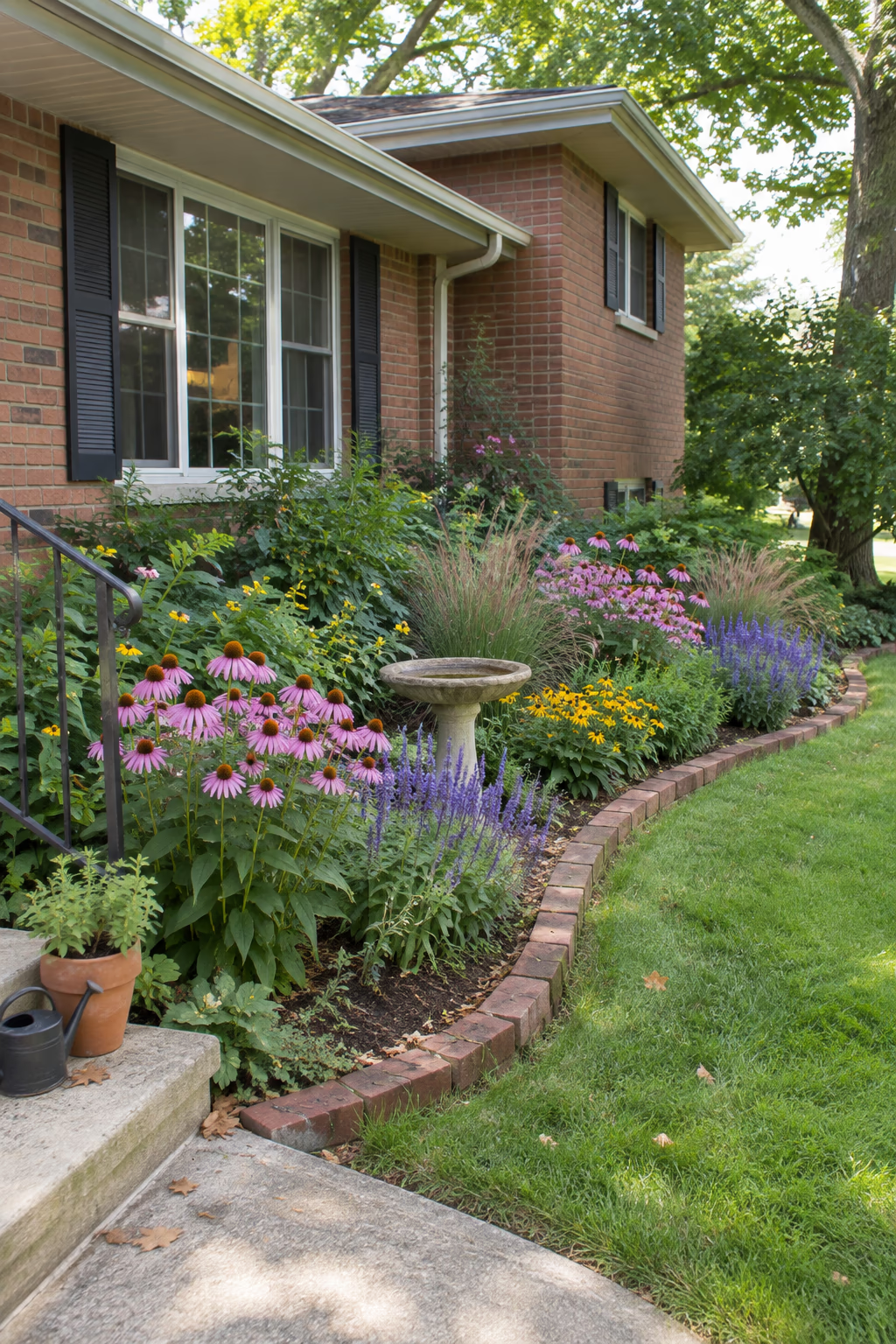
A wild garden that still looks cared for
Front yard pollinator gardens sometimes draw complaints because they look overgrown. Clean lines solve that. Edge the bed with brick, stone, or steel edging, keep a mowed strip of lawn or a defined path along it, and repeat a few plants in neat groups.
Defined edges make the planting look intentional, which helps with neighbors and HOAs. A small bench, a birdbath, or a low fence also signals that the garden is planned and cared for.
Before converting much of a front lawn, read your HOA rules and local weed ordinances. Some require approval for front yard changes, and plant height limits are common.
16. Ring the Mailbox Post With Bee Balm and Catmint
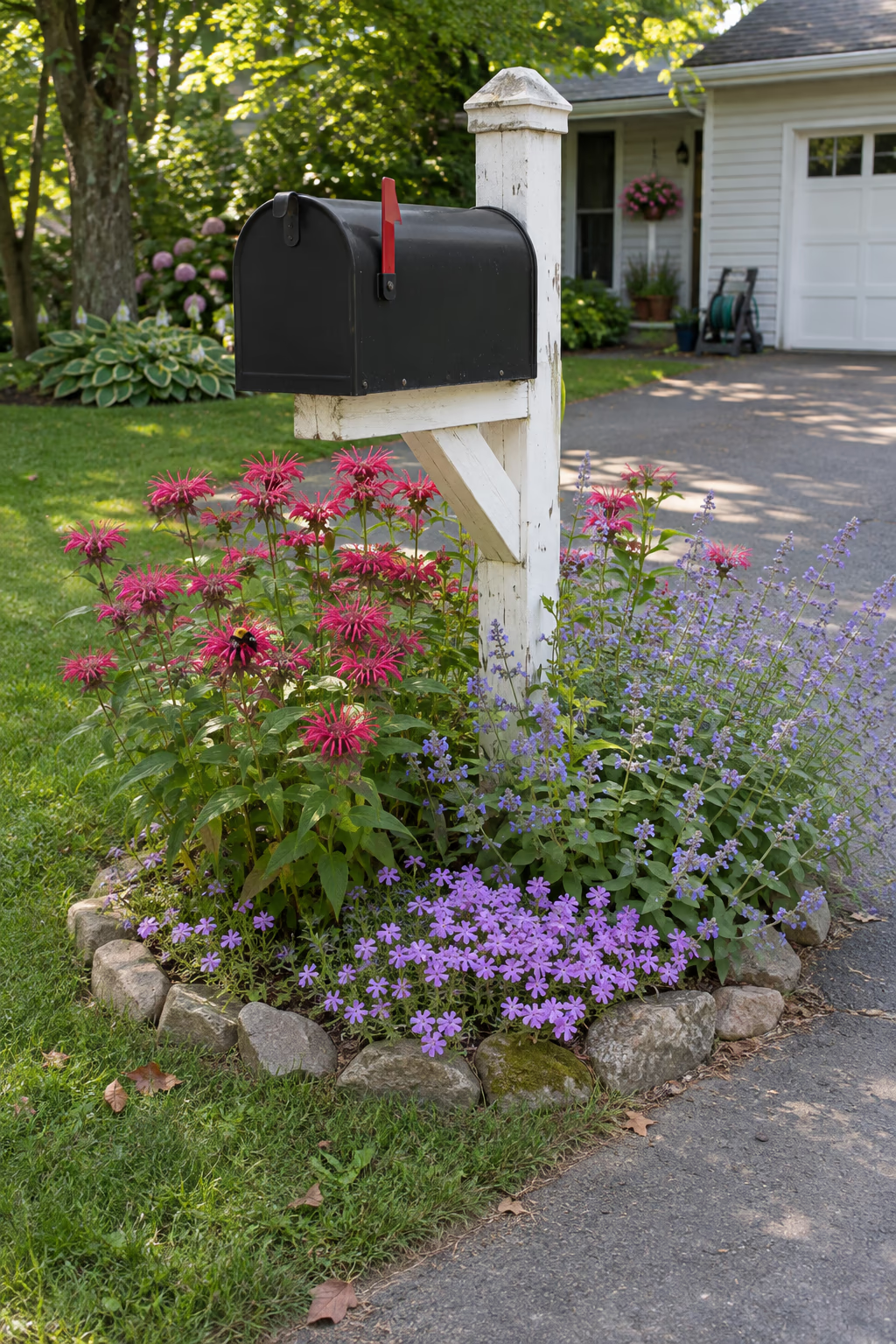
A small project with big curb appeal
A mailbox bed is a small, low-cost way to try a pollinator garden. Clear a circle about 3 to 4 feet across around the post and plant bee balm, catmint, and a low groundcover like creeping phlox or sedum.
Catmint blooms for months in soft lavender blue, and bee balm adds pink, red, or purple tufts that bumblebees and hummingbirds both visit. It’s a cheerful spot people see every day.
Bee balm spreads and can get powdery mildew, so choose mildew-resistant varieties and divide the clump every few years. Keep plants short enough that the mail carrier can reach the box without brushing against bees.
17. Plant a Flowering Native Shrub Hedge
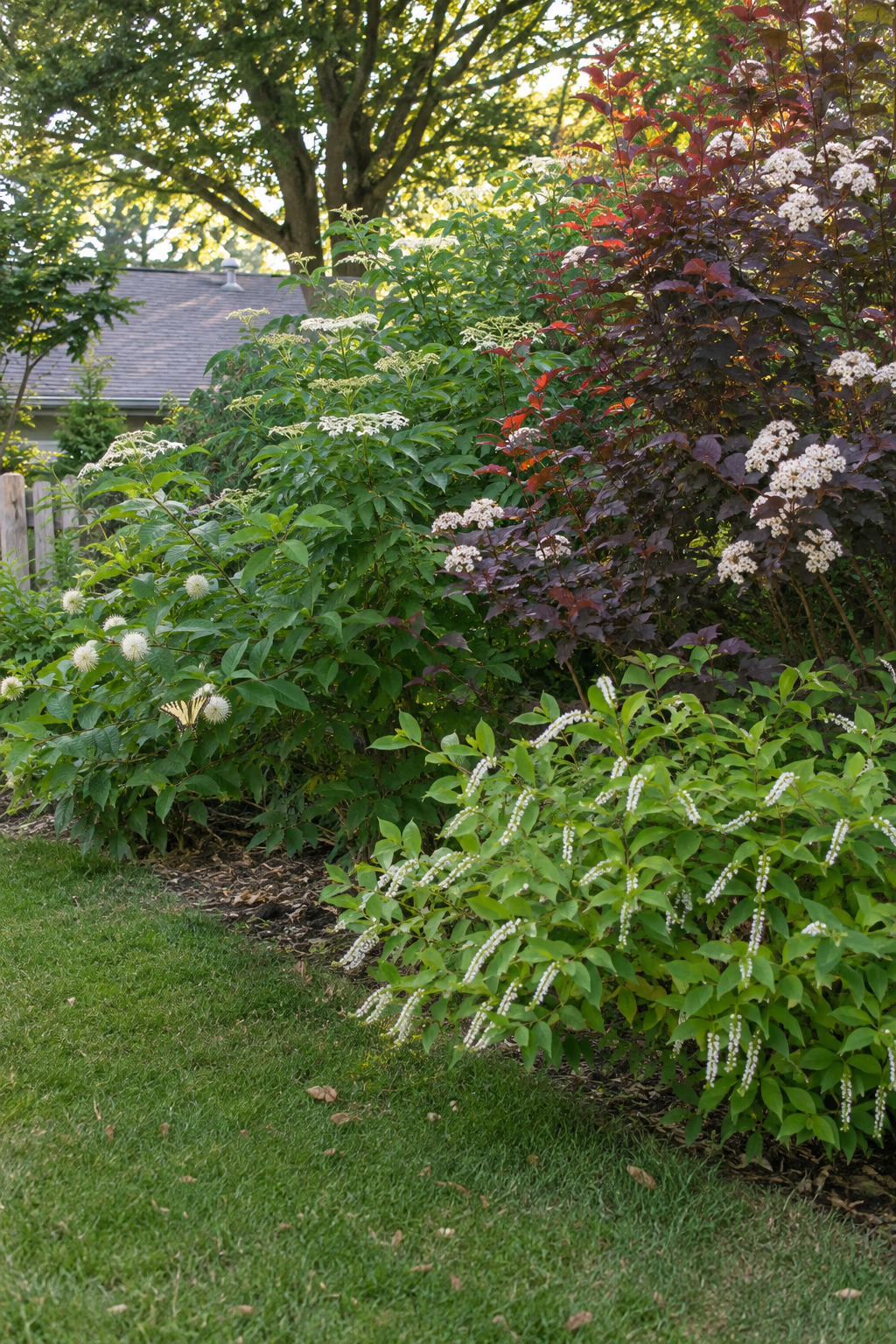
Privacy and pollinator food in one row
A hedge of native flowering shrubs gives you screening while feeding bees for weeks. Good choices include serviceberry for early spring, ninebark and New Jersey tea for late spring, buttonbush and elderberry for summer, and Virginia sweetspire for fragrant white spikes.
Shrubs produce many more flowers than a single perennial, and their berries later feed birds. Mixing several species in an informal row also spreads out bloom times and looks more natural than a clipped single-species hedge.
Butterfly bush attracts butterflies but is invasive in some states, so check local rules or choose sterile varieties. Leave enough room for each shrub’s mature width, often 6 to 8 feet.
18. Build a Pollinator Rain Garden in a Low Spot
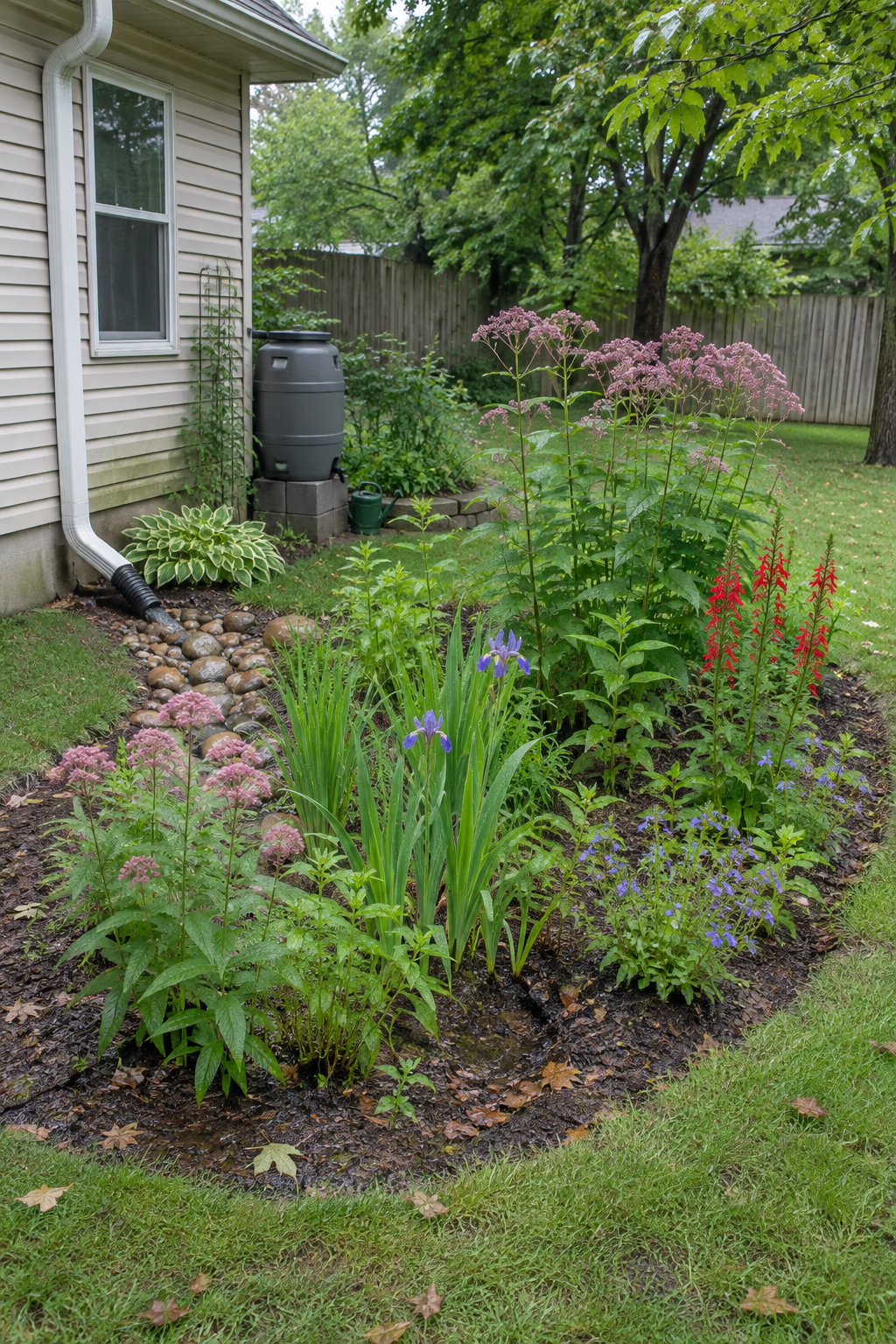
Catch runoff and grow wet-loving wildflowers
A rain garden is a shallow basin, usually 4 to 8 inches deep, that collects runoff from a downspout or slope. Planted with moisture-loving natives such as swamp milkweed, blue flag iris, Joe Pye weed, cardinal flower, and great blue lobelia, it becomes a lush pollinator bed.
The basin soaks up stormwater instead of sending it to the street, and the deep-rooted plants help water drain into the ground. Many wet-tolerant natives bloom in late summer, which fills an important gap.
Site the garden at least 10 feet from the foundation, and test drainage first: water should soak in within a day or two. Call 811 before digging to locate buried utilities.
19. Sow a Wildflower Patch in a Sunny Corner
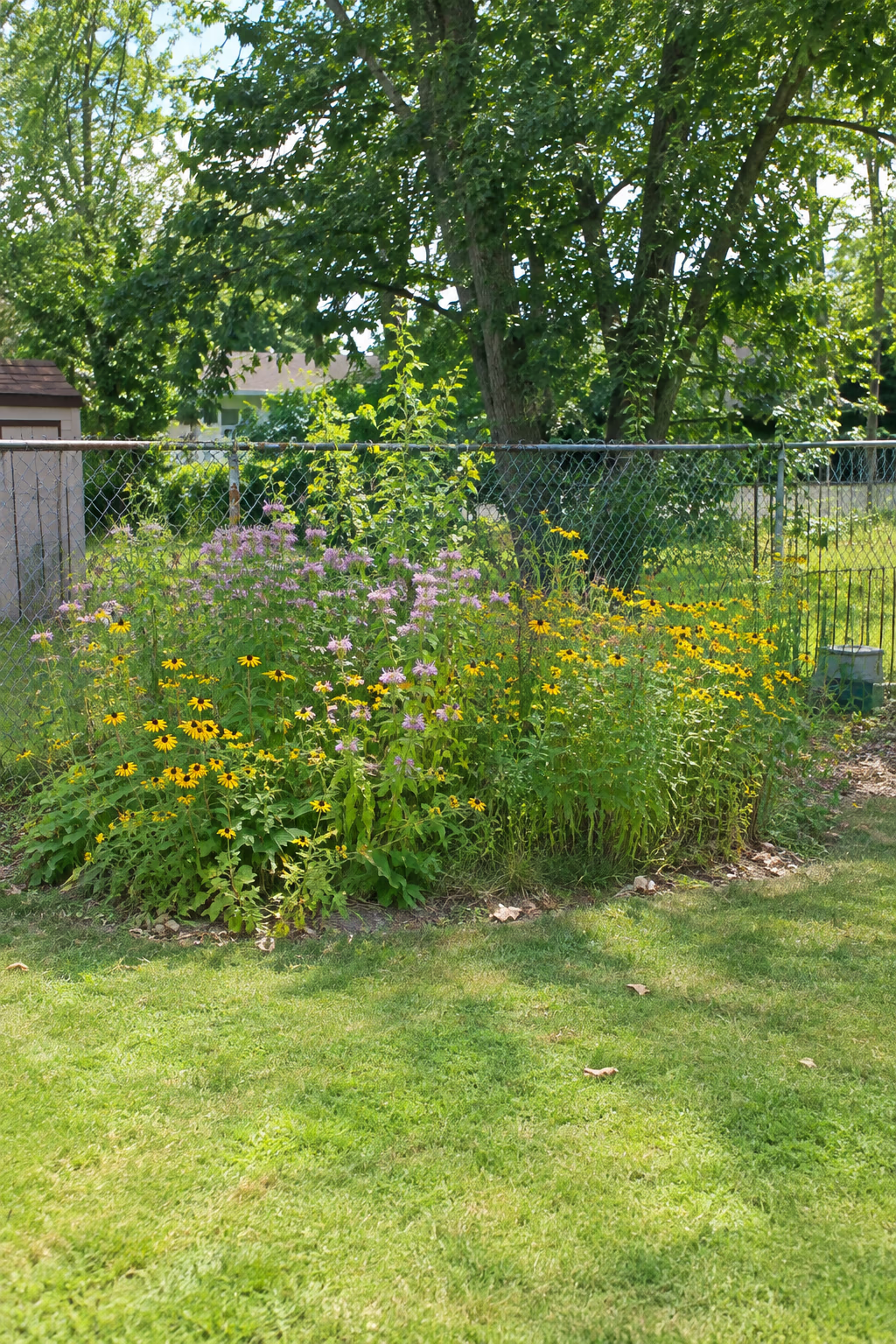
A cheap, colorful start from seed
A wildflower patch doesn’t need to replace your whole lawn. Pick a sunny corner about 10 by 10 feet, remove the grass, rake the soil smooth, and sow a regional native mix. Fall sowing works well for many natives because winter cold helps the seeds germinate.
Seed is much cheaper than plants, so you can cover a large area for little money. Annuals like plains coreopsis and partridge pea give color in the first year while perennials like black-eyed Susan and bergamot settle in.
Avoid cheap mixes that include non-native or invasive species. Weeding is the biggest challenge in the first two summers, so learn what your seedlings look like and pull competing weeds early.
20. Train Native Vines Up a Garden Arbor
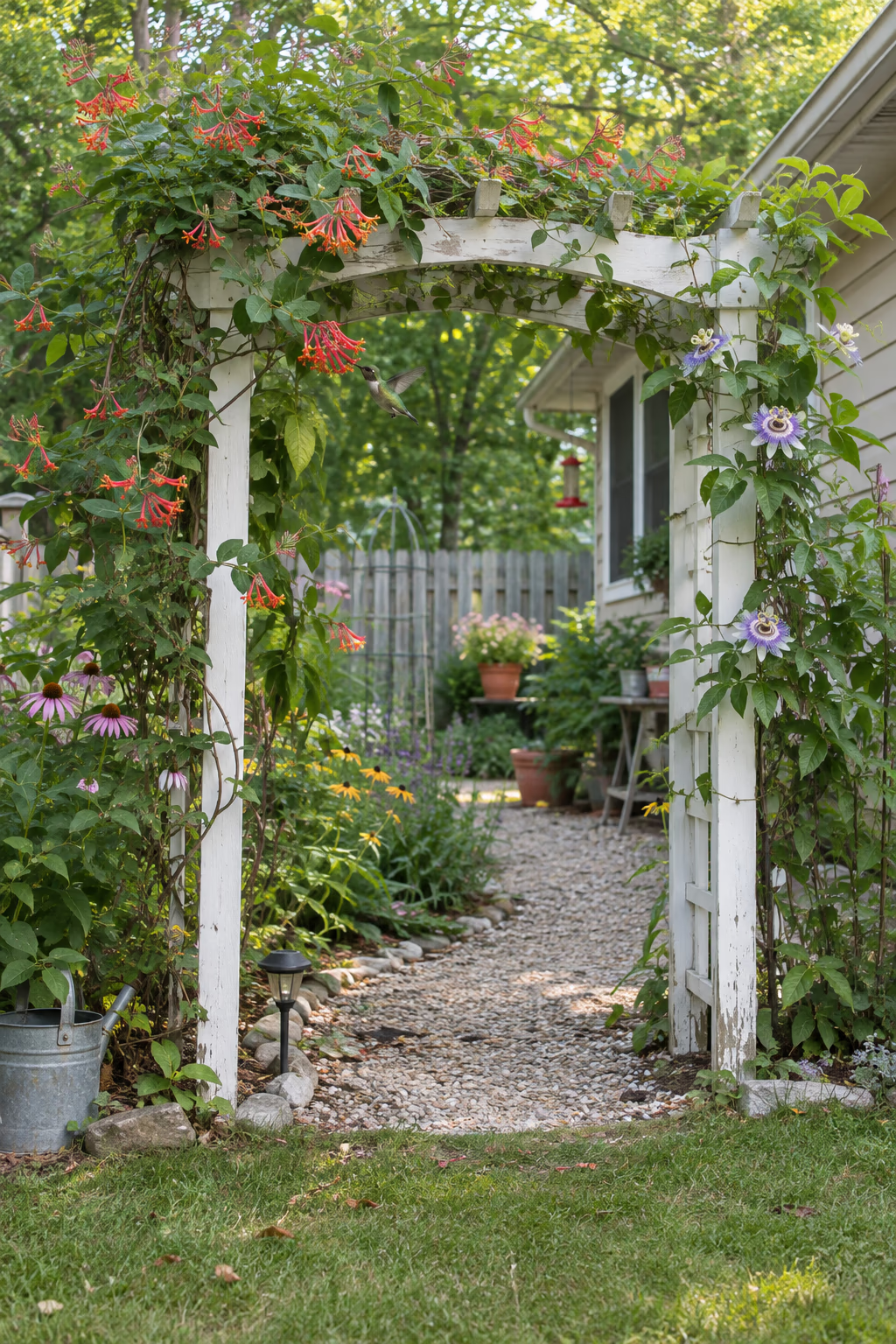
Vertical flowers in a small footprint
When ground space is limited, grow pollinator plants up. A simple wood or metal arbor at the entry to a garden can support native vines like coral honeysuckle, which has red tubular flowers for hummingbirds, or purple passionflower, which hosts gulf fritillary caterpillars.
Vines add height and color without taking up much space in the bed, and they bring pollinators up to eye level where you can watch them up close.
Avoid Japanese honeysuckle and Chinese wisteria, which are invasive. Trumpet vine is native in much of the country but spreads aggressively, so give it a sturdy structure away from the house, and keep passionflower in check since it suckers.
21. Brighten a Shady Corner With Woodland Natives
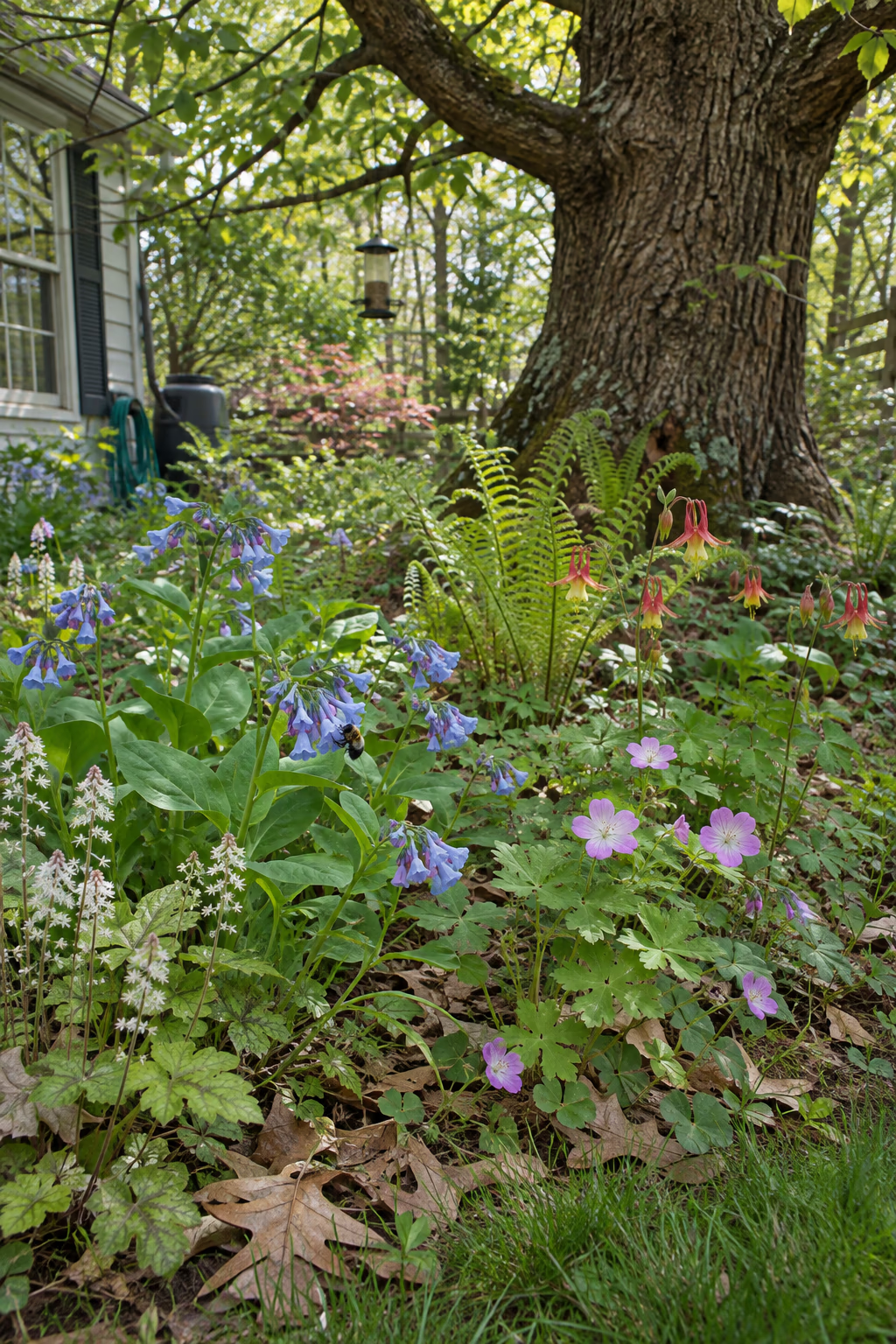
Pollinators visit shade gardens too
A shady yard can still help pollinators. Woodland natives such as Virginia bluebells, wild geranium, wild columbine, foamflower, and golden ragwort bloom in spring before trees fully leaf out, feeding early bees.
Many of these plants spread slowly into a soft groundcover under trees. Adding late-season options like white wood aster and zigzag goldenrod extends the bloom season in shade.
Shade plants usually like rich, moist soil, so add compost and leave fallen leaves in place as mulch. Virginia bluebells go dormant by midsummer, so pair them with ferns that fill the gap.
22. Weave Native Grasses Through the Flower Bed
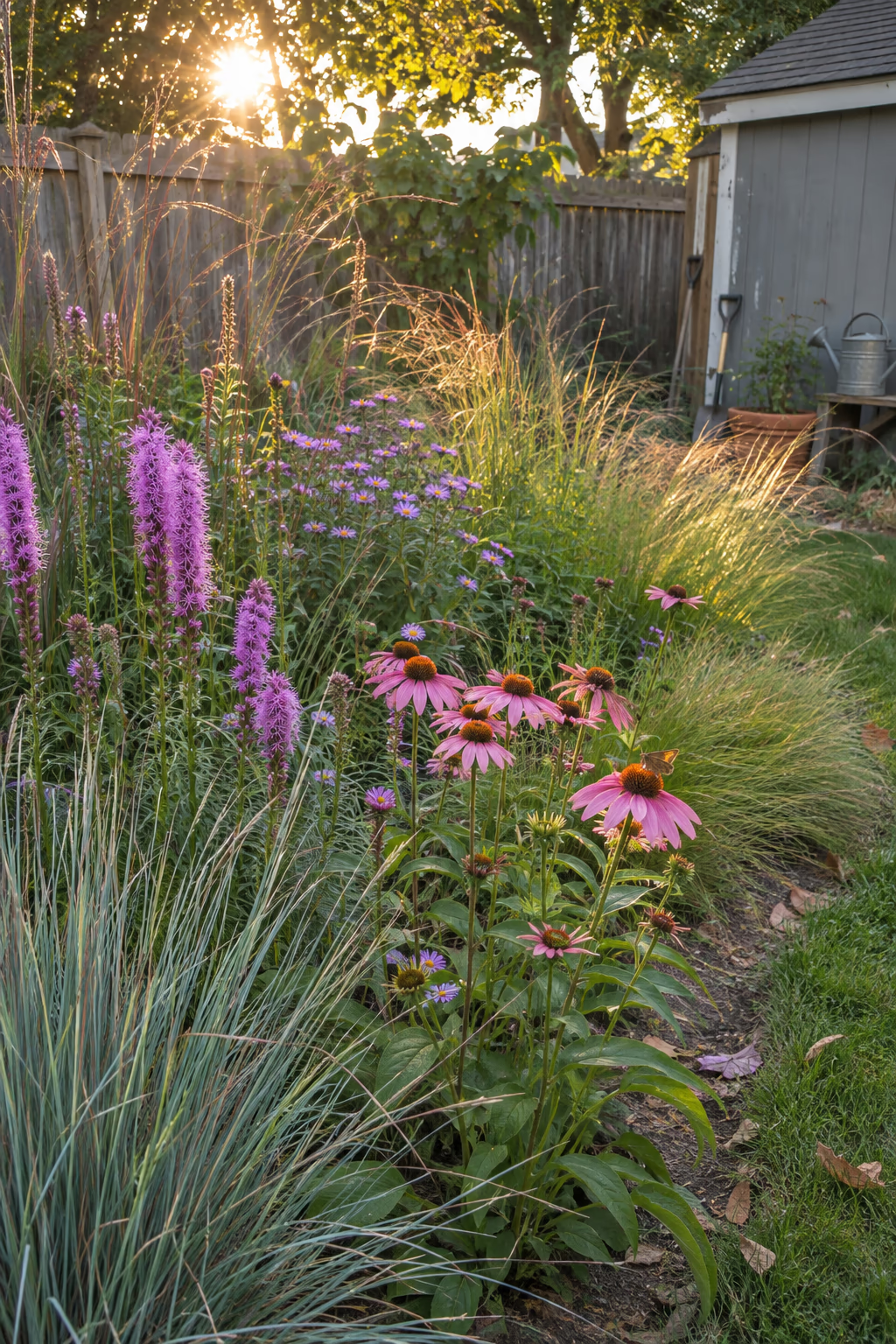
Structure, winter interest, and caterpillar food
Native grasses such as little bluestem, prairie dropseed, and switchgrass give a pollinator bed movement and structure. Plant them in groups between coneflowers, asters, and blazing star for a prairie-inspired look.
Grasses support flowers so they don’t flop, they shade the soil, and several are host plants for skipper butterflies. Their tan and copper stems also look beautiful through winter and shelter insects.
Cut grasses back in late winter or early spring before new growth appears. Switchgrass can get large and reseed, so choose compact varieties for small beds.
23. Grow a Caterpillar Host Patch of Dill, Fennel, and Parsley
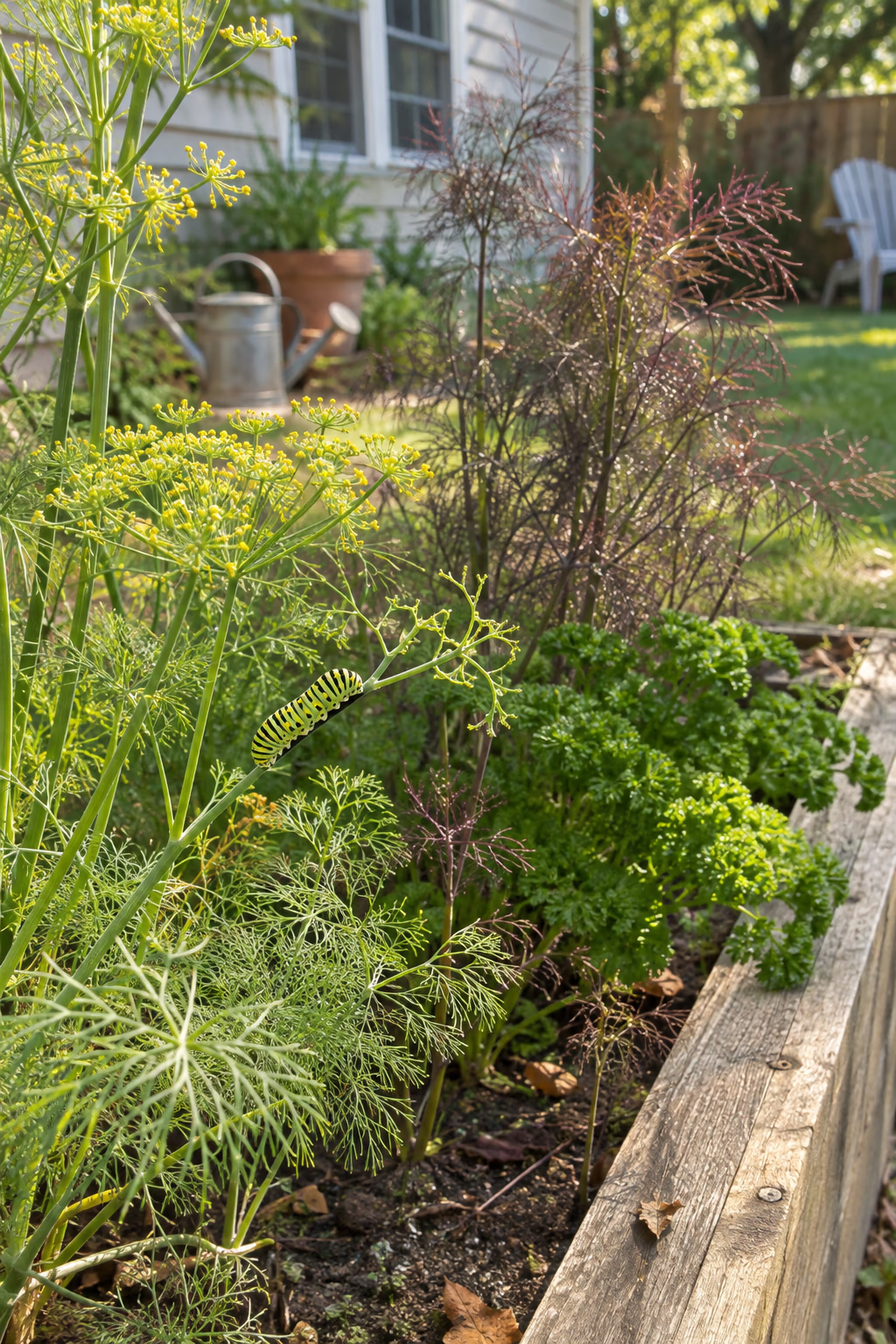
Raise swallowtails right in the garden
Black swallowtail butterflies lay their eggs on plants in the carrot family. Plant a small patch of dill, bronze fennel, and parsley in a sunny spot, and you’ll likely find green-and-black striped caterpillars feeding on them by midsummer.
Host plants are just as important as nectar flowers. Without them, butterflies have nowhere to raise the next generation, and the caterpillars become the butterflies you see later in the season.
Plant extra so you have enough for both the caterpillars and the kitchen. Don’t remove the caterpillars, and avoid any pesticide on or near the patch. Keep fennel away from dill if you save seed, since they can cross.
How to Plan Your Pollinator Garden
A pollinator garden is easiest to build when you start with your site and the needs of local wildlife. A few decisions upfront will make it more beautiful and more useful to the bees and butterflies you hope to attract.
- Start with sun. Most nectar flowers need at least six hours of direct sun. Watch your yard for a day and place the main beds in the sunniest areas.
- Choose natives for your region. Local native plants are best adapted to your soil and climate and support the specific insects in your area. Check with your state extension service or native plant society for lists.
- Plant in groups. Plant at least three of each variety, or in drifts several feet wide, so pollinators can find and work them easily.
- Cover all four needs. Include nectar flowers, host plants for caterpillars, nesting sites, and a shallow water source for a complete habitat.
- Skip the pesticides. Avoid broad-spectrum insecticides, and ask nurseries whether plants were treated with systemic insecticides before buying.
- Build in stages. Start with one bed or a curb strip, see what thrives, and expand each year. Check HOA rules and local ordinances before converting large areas of front lawn.
Frequently Asked Questions
What are the best plants to attract pollinators?
Reliable choices for much of the US include coneflower, black-eyed Susan, bee balm, milkweed, blazing star, salvia, asters, goldenrod, mountain mint, and native shrubs such as serviceberry and buttonbush. The best options depend on your region, so look for plants native to your state.
How big does a pollinator garden need to be?
Any size helps. A 4 by 8 foot bed, a curb strip, or a few large containers can feed bees and butterflies, especially if neighbors plant similar gardens nearby. Larger plantings support more species, but small spaces still make a difference.
When should I plant a pollinator garden?
Spring and fall are best for planting perennials and shrubs because temperatures are mild and rainfall is more reliable. Many native wildflower seeds are best sown in late fall or early winter so they experience the cold they need to sprout.
Will a pollinator garden attract wasps or stinging insects near my house?
You’ll see more bees, but most native bees are solitary and rarely sting unless handled or stepped on. Place the busiest beds a few feet from doors and seating areas if you’re concerned, and keep anyone with bee allergies informed.
Does a pollinator garden need a lot of maintenance?
Once established, native pollinator plants usually need less watering and fertilizing than lawn grass. Expect regular weeding the first couple of years, occasional dividing of spreading perennials, and a spring cleanup of old stems.
Final Thoughts
The most rewarding pollinator garden ideas combine color with purpose. A butterfly border, a bee hotel, a red hummingbird bed, or a patch of clover in the lawn can turn an ordinary yard into a place buzzing with life from spring through fall.
Start with a sunny spot and a few native plants, then add water, nesting spaces, and host plants as you go. Each season the garden will fill in, the visitors will multiply, and you’ll have a front-row seat to some of the busiest and most beautiful creatures in your neighborhood.