Walk under a curve of dark metal covered in pink roses and the garden changes around you. The path suddenly has a doorway, the lawn has a destination, and a simple stretch of yard starts to feel like a place you arrive at instead of just pass through.
A garden arch does all that with a small footprint. It adds height where most yards are flat, gives climbing plants a job, and frames whatever lies beyond it. Arches also come in every price range, from a basic kit you can assemble in an afternoon to a cedar arbor or a homemade frame built from branches.
These 23 garden arch trellis ideas cover classic rose arches, gate entries, lit vine arches, rustic willow and bamboo builds, modern steel frames, edible arches, shade-tolerant climbers, and smart planting at the base. Use one as a single focal point or combine a few to give your yard structure in every season.
1. Wrap a Black Metal Arch in Climbing Roses
The timeless pairing that never looks dated
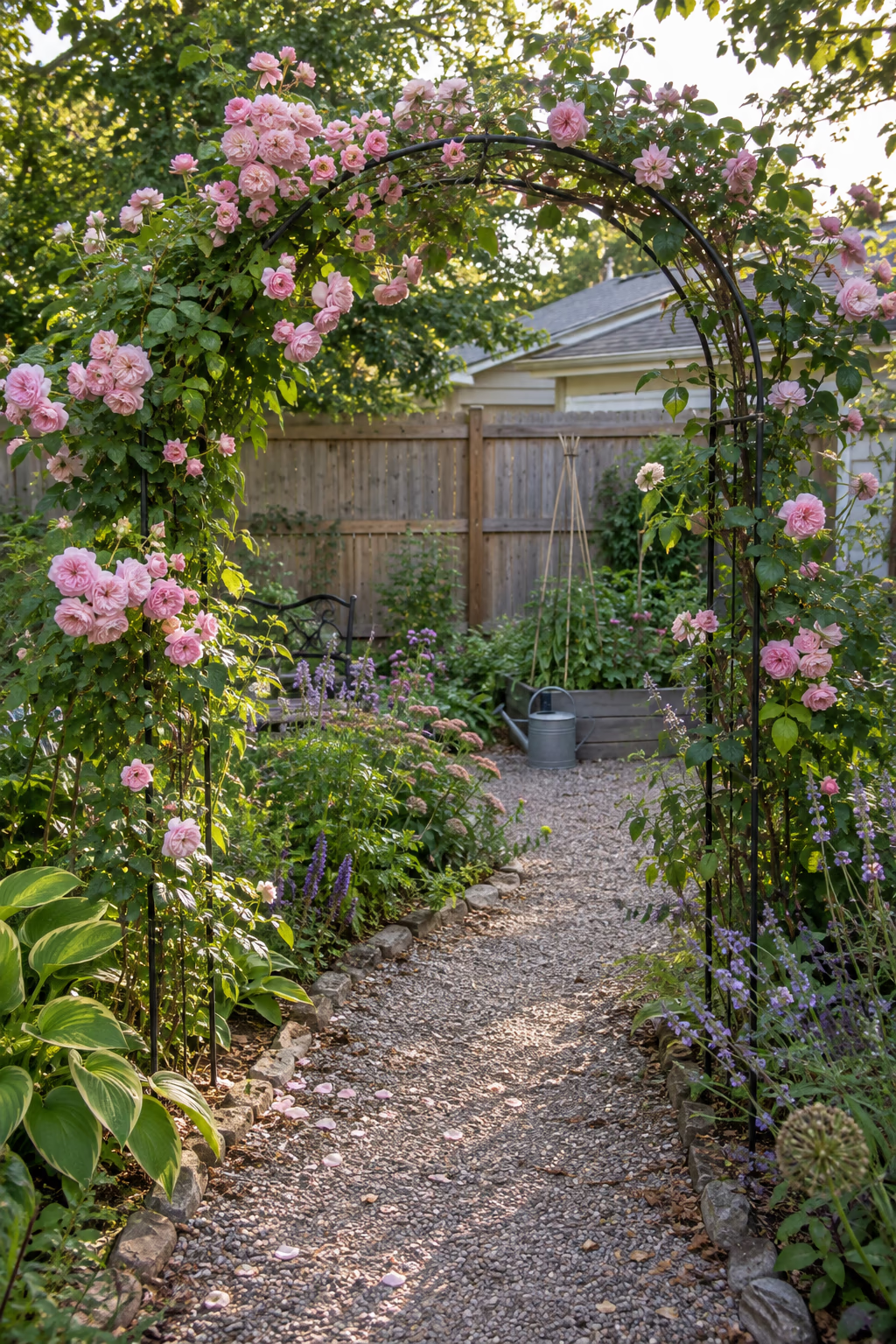
A slim black steel or iron arch about 7 to 8 feet tall and 4 feet wide is the backdrop that makes roses glow. Plant one climbing rose at the base of each side, about 12 to 18 inches out from the post, and tie the long canes to the frame with soft garden ties as they grow.
The dark finish almost disappears behind the foliage, so blooms in blush, white, apricot, or deep red seem to float in the air. Train canes as close to horizontal as the curve allows, since roses flower more heavily along canes that are bent rather than shooting straight up.
Choose a true climber rather than a large rambler, which can swamp a standard kit arch. Expect two to three seasons before the top fills in, and anchor the arch firmly because a rose in full leaf catches a surprising amount of wind.
2. Mark the Garden Gate With a White Wooden Arch
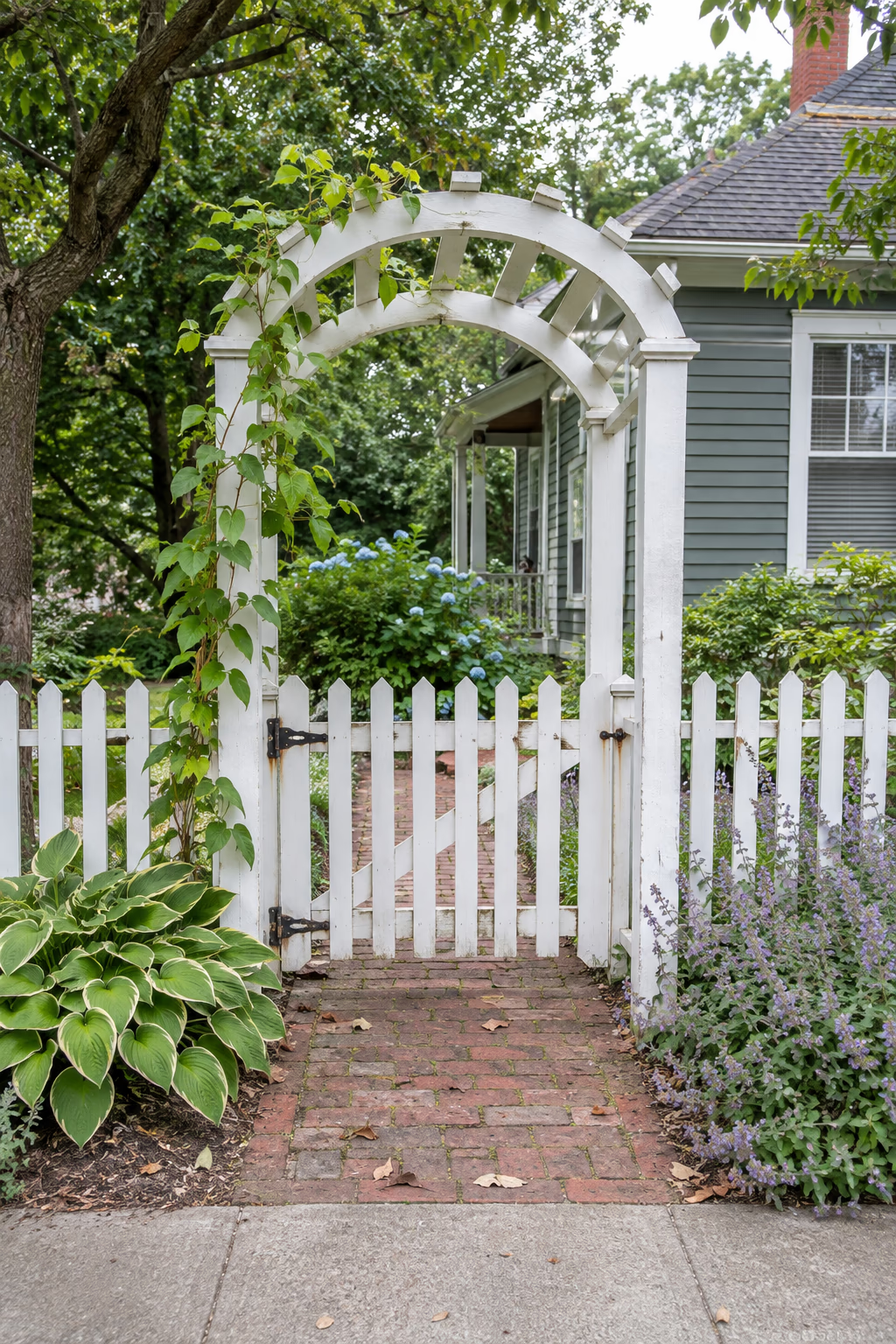
A welcoming cottage-style entrance
Set a white painted wooden arch over the gate in a picket fence or at the opening of a hedge, and the entry instantly looks finished. Many kits include a matching pair of gate doors, or you can build a simple arched top over 4×4 posts that stand just outside the existing gateposts.
White reads crisp against green foliage and stays visible at dusk, which makes it a good guide for where the path begins. It suits traditional homes, farmhouses, and Cape Cod styles especially well.
White paint shows mildew and scuffs, so plan on a quick wash each spring and a fresh coat every few years. Set posts at least 2 feet deep in gravel or concrete so the arch can handle the weight of a swinging gate.
3. Thread Globe Lights Through a Vine-Covered Arch
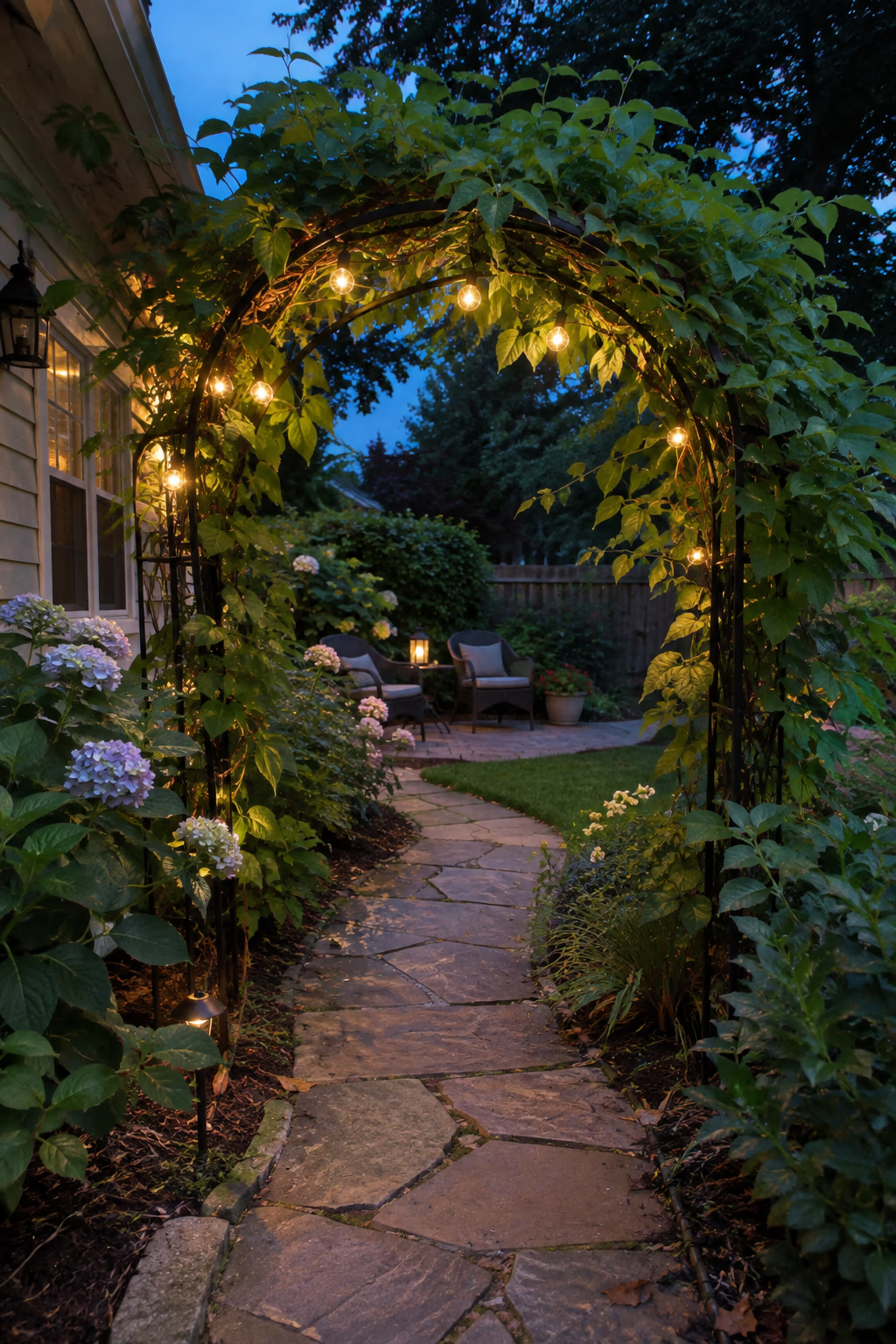
An evening glow that extends the garden day
Once an arch has a good leafy cover, weave a strand of warm white globe lights or a set of small solar lanterns through the vines. Run the string up one side, over the top, and down the other, tucking the cord behind stems so the bulbs peek through the leaves.
Lit from within, the arch becomes a glowing doorway on summer nights and a natural spot for a path to end at a patio or fire pit. Warm 2700K bulbs look far more natural than cool white ones.
Use lights rated for outdoor use, plug them into a GFCI-protected outlet, and avoid wrapping strands so tightly that growing stems are strangled. Solar strands are easier where there is no outlet nearby but need a sunny spot for the panel.
4. Bend Willow Branches Into a Rustic Arch
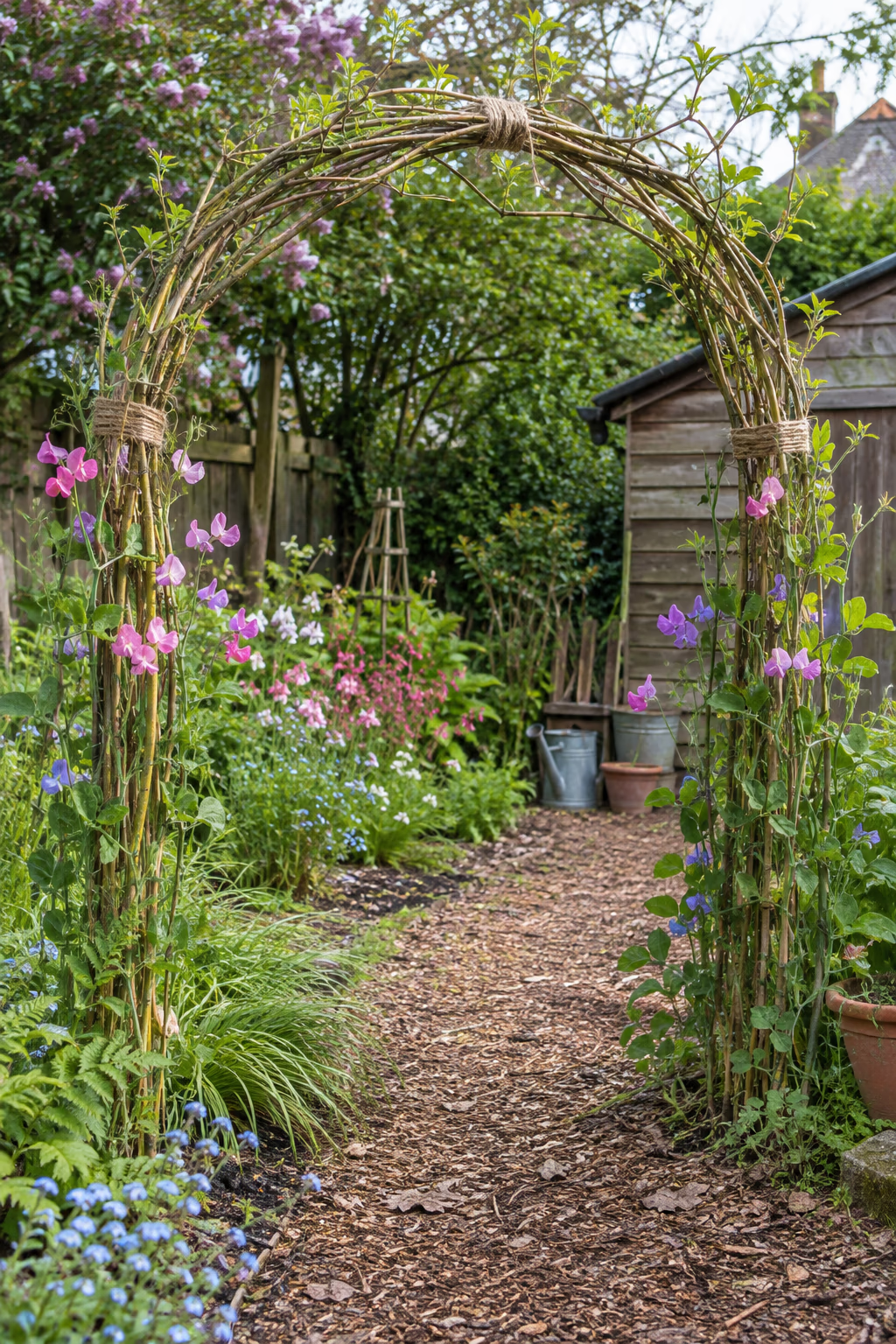
A handmade look that feels grown, not built
Freshly cut willow, dogwood, or other flexible branches can be pushed into the ground on both sides of a path and bent overhead, then lashed together with jute twine or wire where they meet. Use bundles of six to ten rods per side for a sturdy frame about 7 feet tall.
The irregular, woven texture suits informal cottage and woodland gardens, and it costs very little if you have trees to prune or a neighbor clearing brush. Light annual vines such as sweet peas or nasturtiums climb it happily.
Live willow pushed into moist soil will often root and sprout, which is lovely but means trimming every year. Keep rooting willow well away from water and sewer lines, and expect a dead-branch arch to last a few years before it needs rebuilding.
5. Tuck a Bench Beneath an Arched Arbor
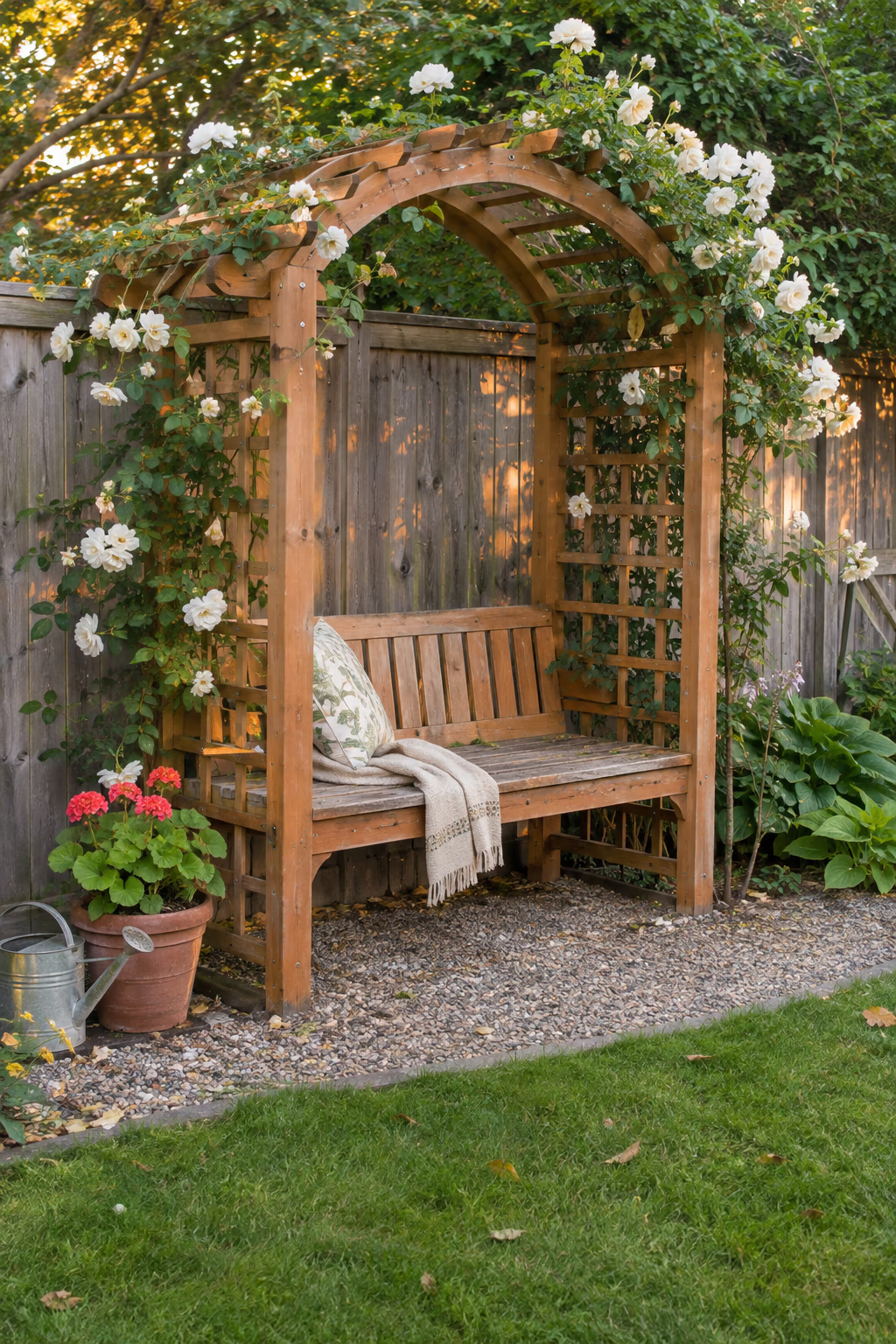
A sheltered seat framed in flowers
An arbor deep enough to hold a bench, usually about 2 feet front to back and 5 to 6 feet wide, turns a garden arch into a destination rather than a passage. Some kits include a built-in seat, or you can set a separate wooden or metal bench under a deeper arch.
Sitting beneath climbers puts fragrance and blooms right at eye level, and the side panels create a feeling of enclosure even in an open yard. Place it where you naturally want to pause, such as the end of a path or facing a favorite border.
Check weight limits on bench kits, and set the arbor on level pavers or compacted gravel so it does not rock. Thorny roses are best kept to the back and sides so they do not snag clothing.
6. Pair Clematis and Roses on the Same Arch
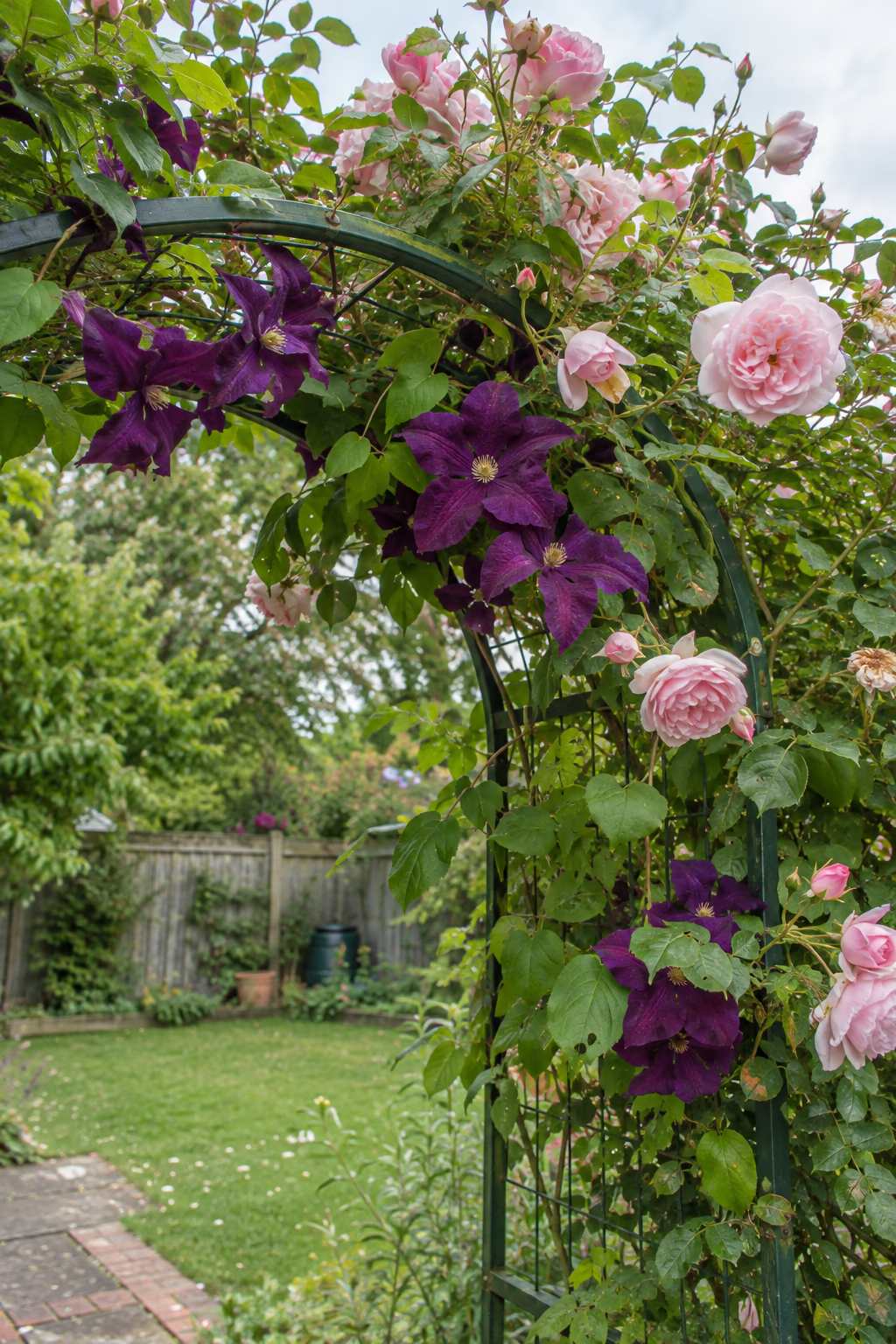
Twice the color from one structure
Plant a climbing rose on one side of the arch and a clematis on the other, or let a clematis scramble up through the rose canes. Deep purple clematis with blush or white roses is a classic combination, while a pale clematis against a red rose looks bold.
Clematis climbs by twisting leaf stalks, so it happily uses rose stems as support and fills the gaps where rose canes are sparse. Choosing a clematis that blooms after the roses can stretch the flowering season by several weeks.
Learn which pruning group your clematis belongs to before cutting it back, since some flower on old wood and others on new growth. Keep clematis roots cool with a layer of mulch or low plants, and plant it a little deeper than it sat in the pot.
7. Set an Arch Between Two Planter Boxes
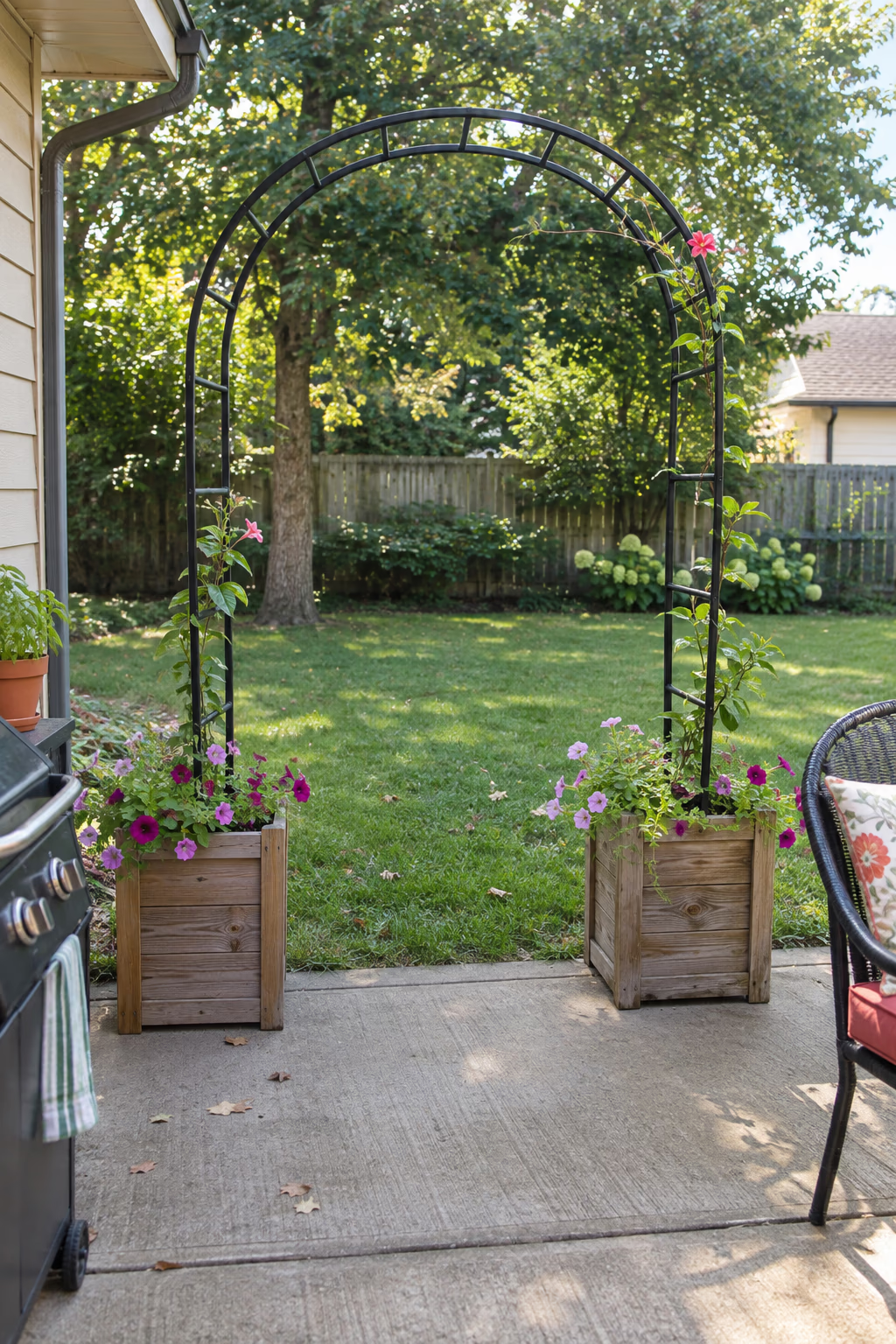
A garden entrance even where there is no soil
An arch with planter boxes at its feet works on a patio, deck, or paved path where you cannot dig. Buy a kit with integrated boxes or set the arch legs into two wooden planters at least 18 inches wide and deep, filled with quality potting mix.
The planters weigh the arch down, give climbers a home, and add a band of color at the base with trailing flowers. It is an easy way to create an entry between a patio and the lawn.
Container soil dries quickly, so plan on frequent watering in summer or add drip irrigation. Choose moderate climbers such as clematis, mandevilla, or annual vines instead of vigorous roses, which need more root room than most boxes offer.
8. Choose a Gothic Pointed Arch for Cottage Charm
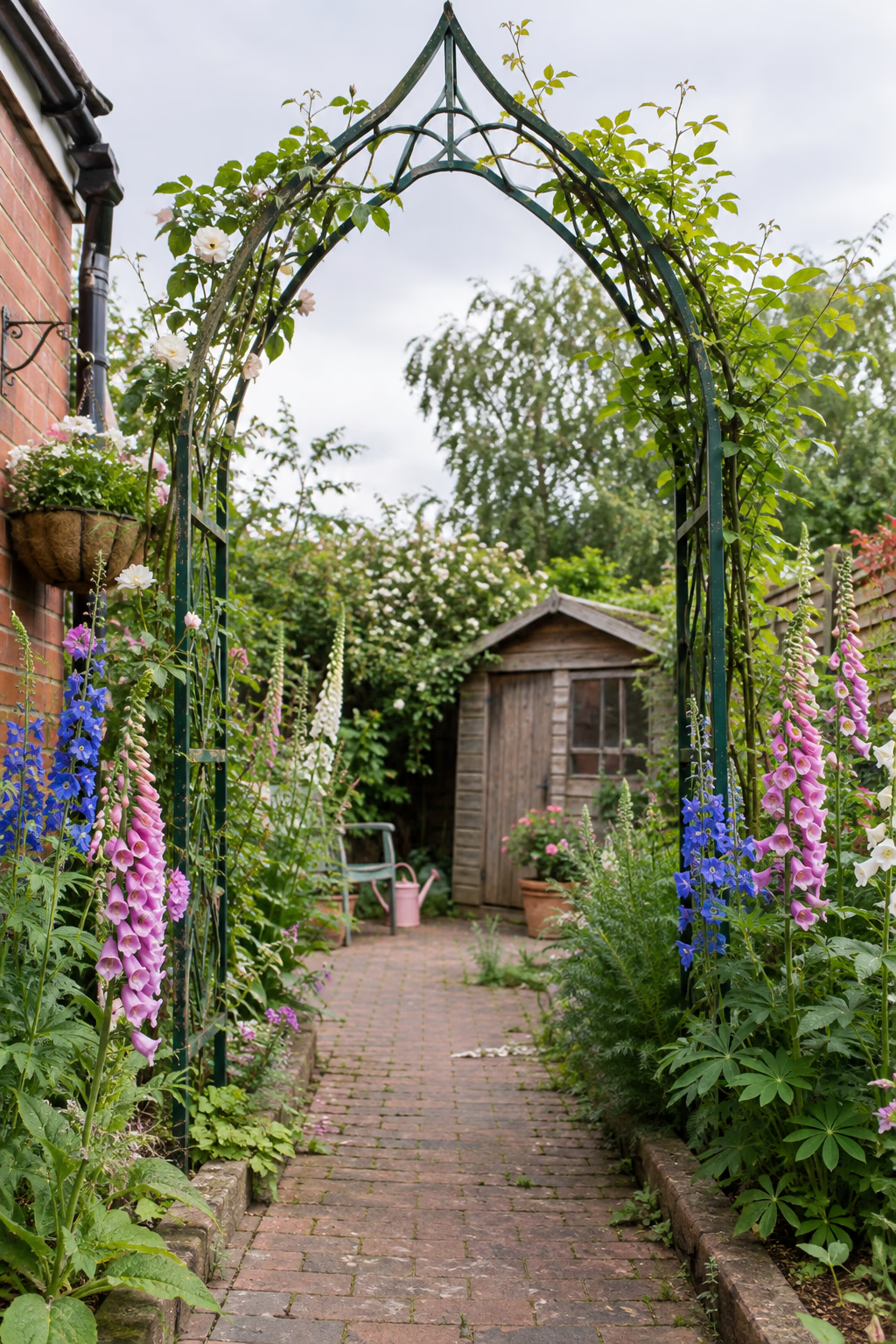
A peaked shape with old-world character
A gothic arch rises to a point instead of a smooth curve, echoing church windows and old English gardens. Metal versions often come in black or dark green and stand around 8 feet tall, which gives tall climbers more room at the peak.
The pointed top draws the eye upward and makes a modest garden feel taller and more romantic. It looks especially good over a gravel or brick path lined with tall perennials such as foxgloves and delphiniums.
Taller arches catch more wind, so drive the ground stakes deep or set the legs in concrete footings. Use the extra height for vigorous climbers, and keep the peak clear of overhead power lines.
9. Install a Circular Moon Gate Arch
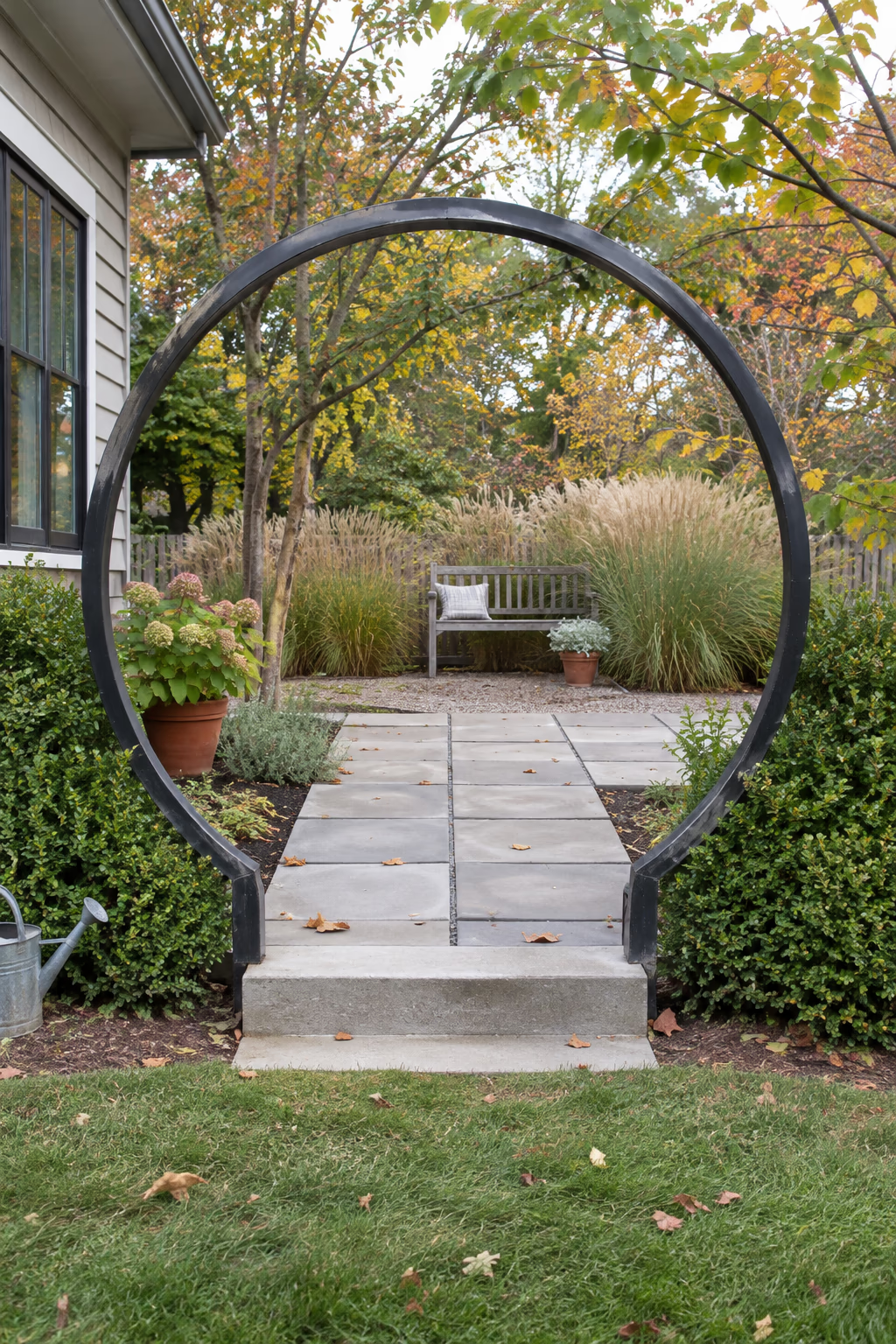
A sculptural ring that frames the view
A full circle about 6 to 7 feet in diameter, made of steel, timber, or set into a wall or hedge, creates a striking portal. The bottom of the ring usually sits just above a low step or threshold, so you step through it rather than under it.
The round shape feels calm and modern at the same time and turns whatever lies beyond into a framed picture. It works well with ornamental grasses, simple pavers, and restrained planting that lets the outline stay visible.
Moon gates are heavier and harder to anchor than standard arches, so most need solid footings. Keep climbers light and well trimmed, since a fully covered ring loses its crisp silhouette.
10. Frame a Distant Focal Point With an Arch
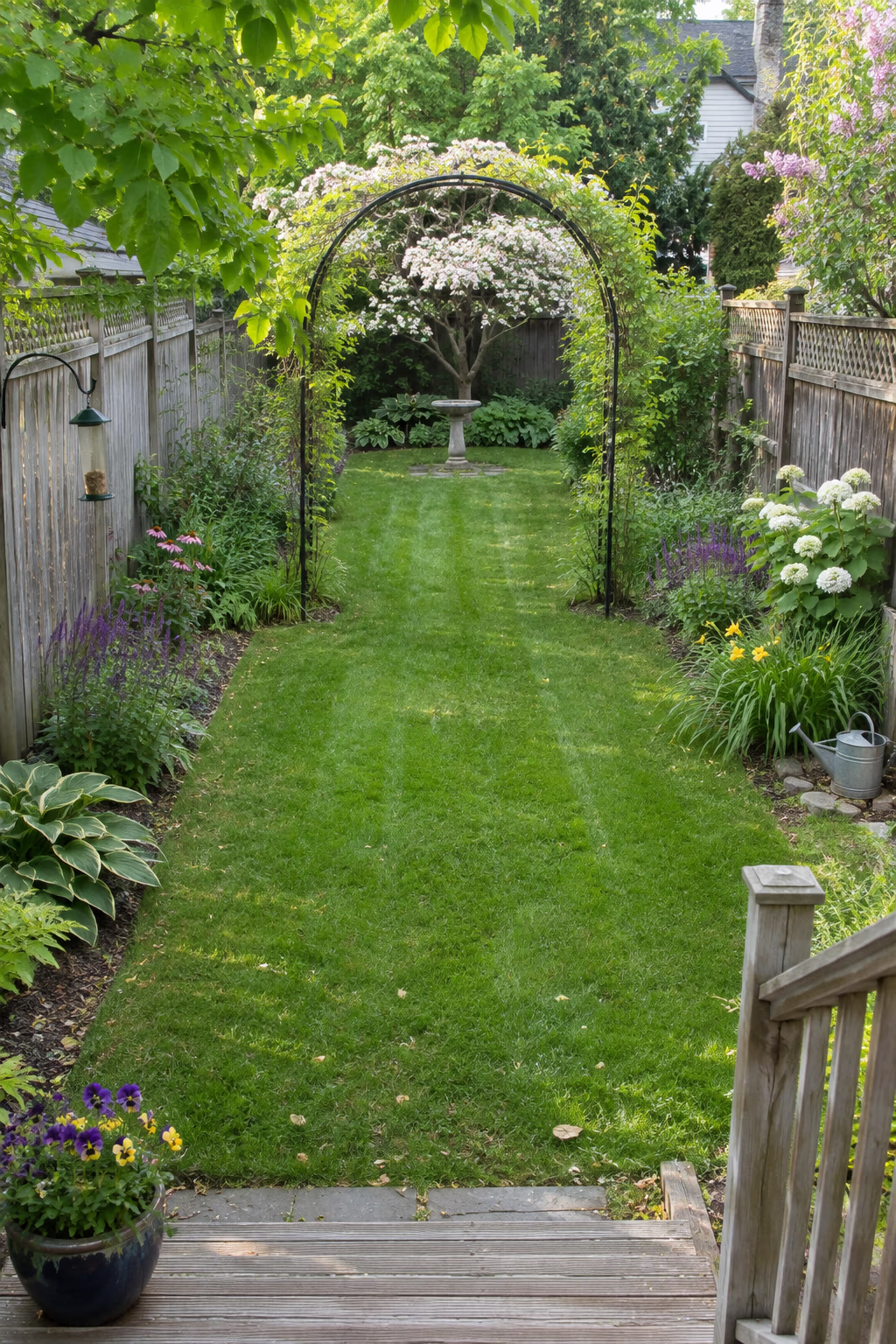
Give the eye somewhere to travel
Place an arch partway down the yard so that it frames a birdbath, bench, urn, or specimen tree in the distance. Line it up with the view from a back door or kitchen window so you see the composition every day.
This framing trick makes a yard feel deeper and more intentional, and it pulls people outdoors to see what is on the other side. Even a plain lawn gains a sense of journey with one well-placed arch.
Before installing, stand at your main viewpoint while a helper holds stakes in the planned spots. Small shifts left or right can change the framing dramatically, and it is much easier to adjust stakes than dig posts twice.
11. Go Modern With a Flat-Top Steel Frame
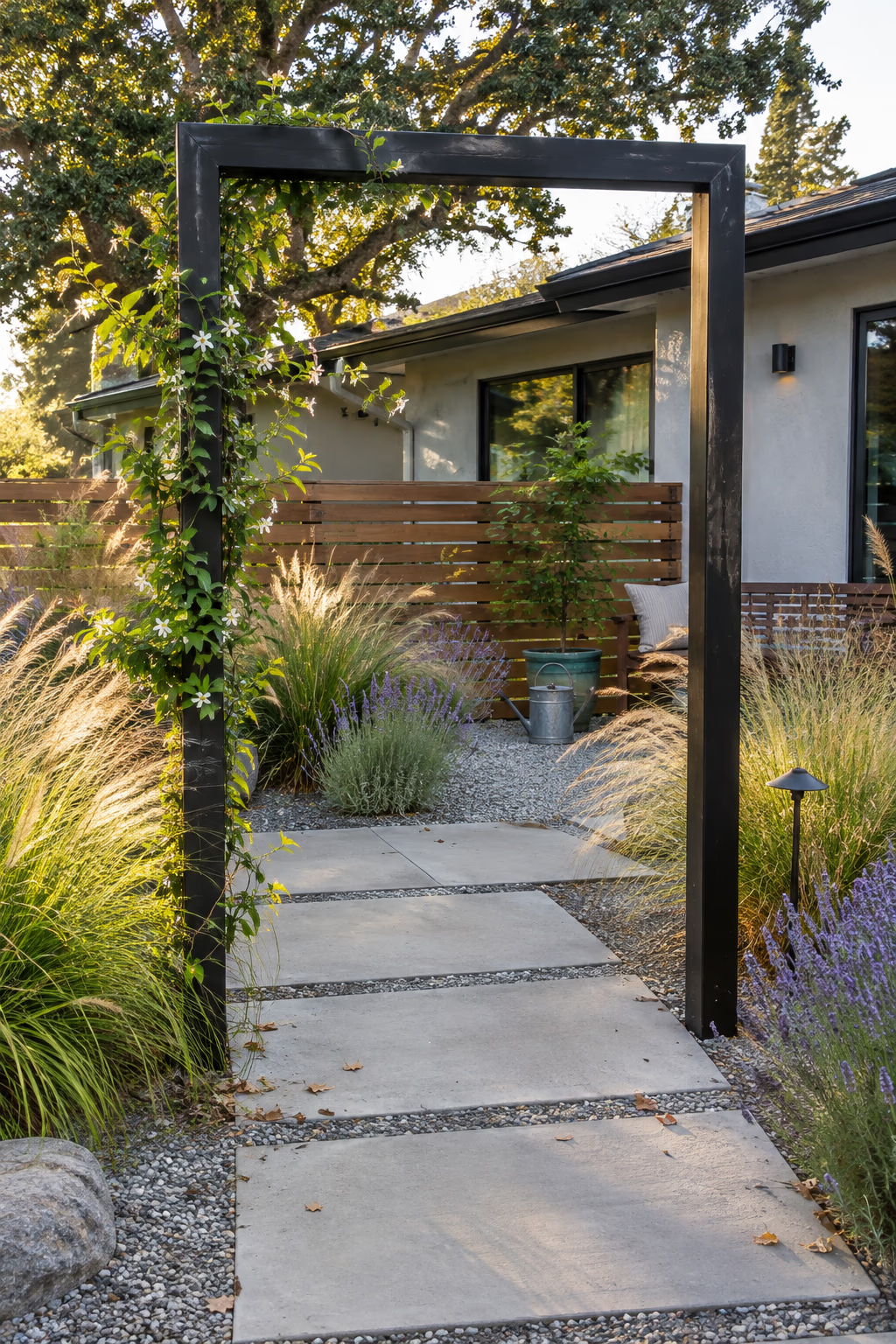
Clean lines for contemporary yards
Not every arch has to curve. A rectangular frame of square steel tubing, powder-coated black or left to weather, creates a crisp portal that suits modern homes. Pair it with large concrete pavers, gravel, and drifts of grasses.
The architectural shape looks good even bare, so it holds up in winter and needs only light planting. A single restrained climber, such as a star jasmine in warm zones or a light clematis, adds softness without hiding the lines.
Custom steel frames from a local fabricator cost more than kits but last for decades. Ask for a powder coat or galvanized finish if you want to avoid rust stains on light paving.
12. Grow Gourds and Pole Beans Over a Kitchen Garden Arch
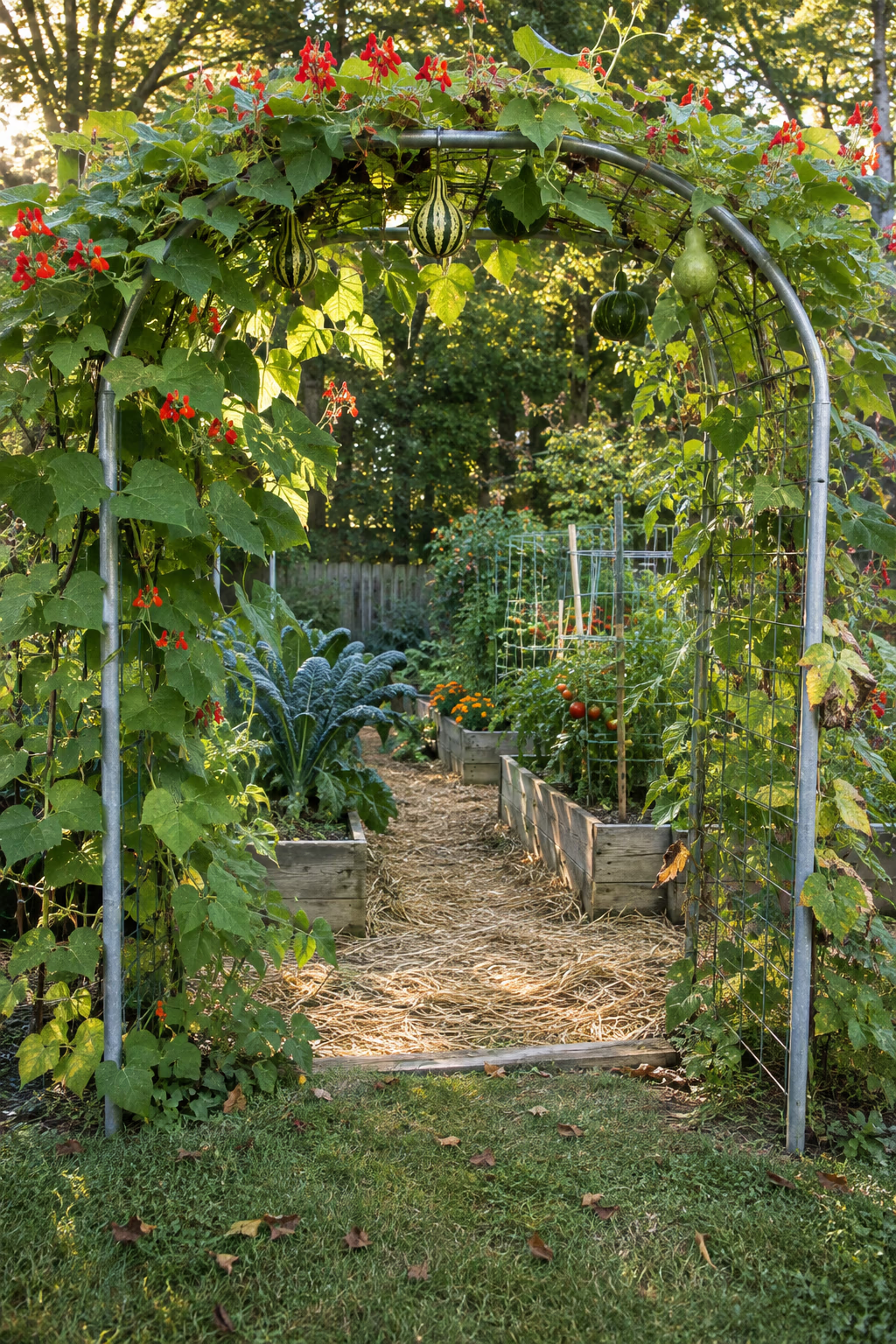
An entry that you can harvest
Set a sturdy metal arch at the entrance to the vegetable garden and plant pole beans, small gourds, or vining squash at its feet. As the vines climb, the crop hangs overhead where it is easy to see and pick.
Growing up instead of out saves bed space, keeps fruit off damp soil, and makes the vegetable patch feel like a garden room. Scarlet runner beans add red flowers that hummingbirds visit.
Heavy squash and gourds need a strong frame and sometimes fabric slings to support the fruit. A lightweight decorative kit can buckle under a full crop, so choose welded steel or a well-braced timber arch.
13. Perfume the Path With Honeysuckle or Star Jasmine
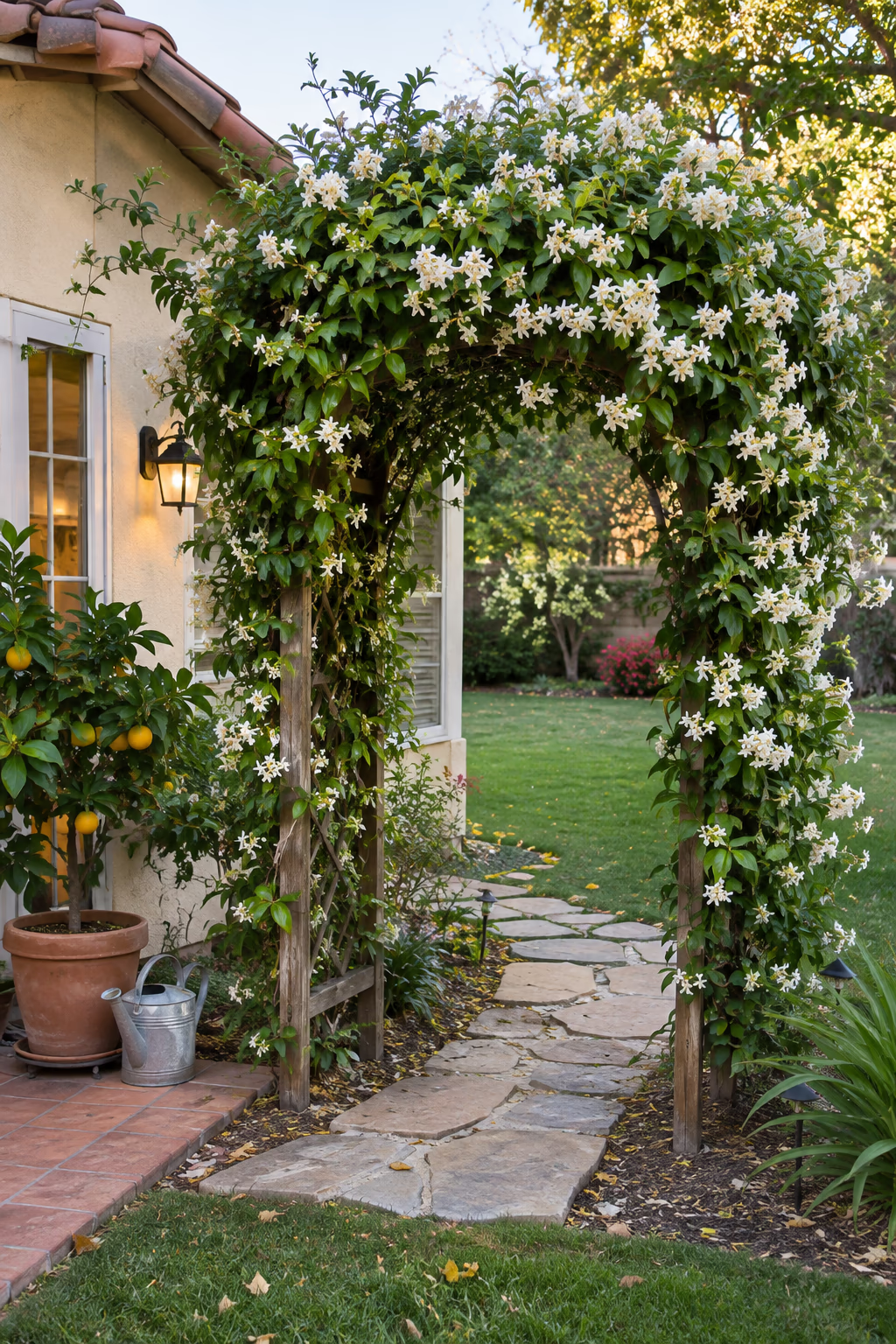
A scented passage you notice before you see it
Fragrant climbers make an arch something you experience as well as see. In warm climates, roughly zones 8 to 10, evergreen star jasmine covers a frame with glossy leaves and sweet white flowers in late spring. In colder areas, native trumpet honeysuckle offers red or coral tubular blooms beloved by hummingbirds.
Place a scented arch near a back door, patio, or along a path you use every evening, when many fragrant flowers are strongest.
Avoid Japanese honeysuckle, which is invasive in much of the US. Check your local invasive plant list, and remember that star jasmine needs winter protection or a container in colder regions.
14. Paint a Wooden Arch a Soft Garden Color
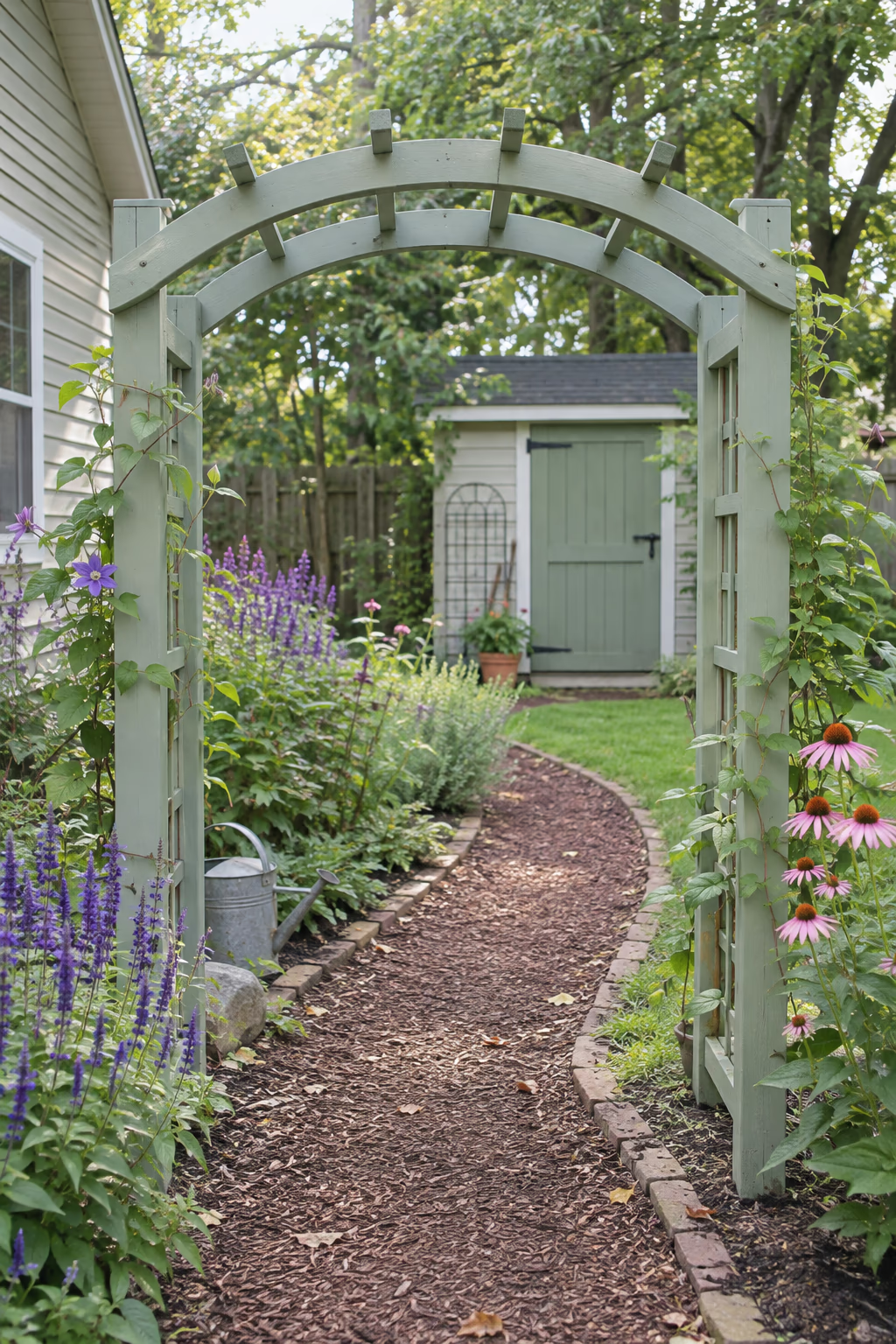
Gentle color that ties the garden together
Instead of white or natural wood, paint a wooden arch in sage green, dusty blue, soft gray, or muted lavender. Use exterior paint or solid stain, and match or complement a shed door, window trim, or garden furniture.
A soft color holds its own in winter when the vines are bare, and it blends with foliage rather than competing with it. It is an easy way to update an older weathered arch.
Prime bare wood first and paint before plants cover the frame, since repainting around established climbers is difficult. Lighter, softer colors also fade less noticeably than saturated ones in full sun.
15. Build a Cedar Arbor With Lattice Sides
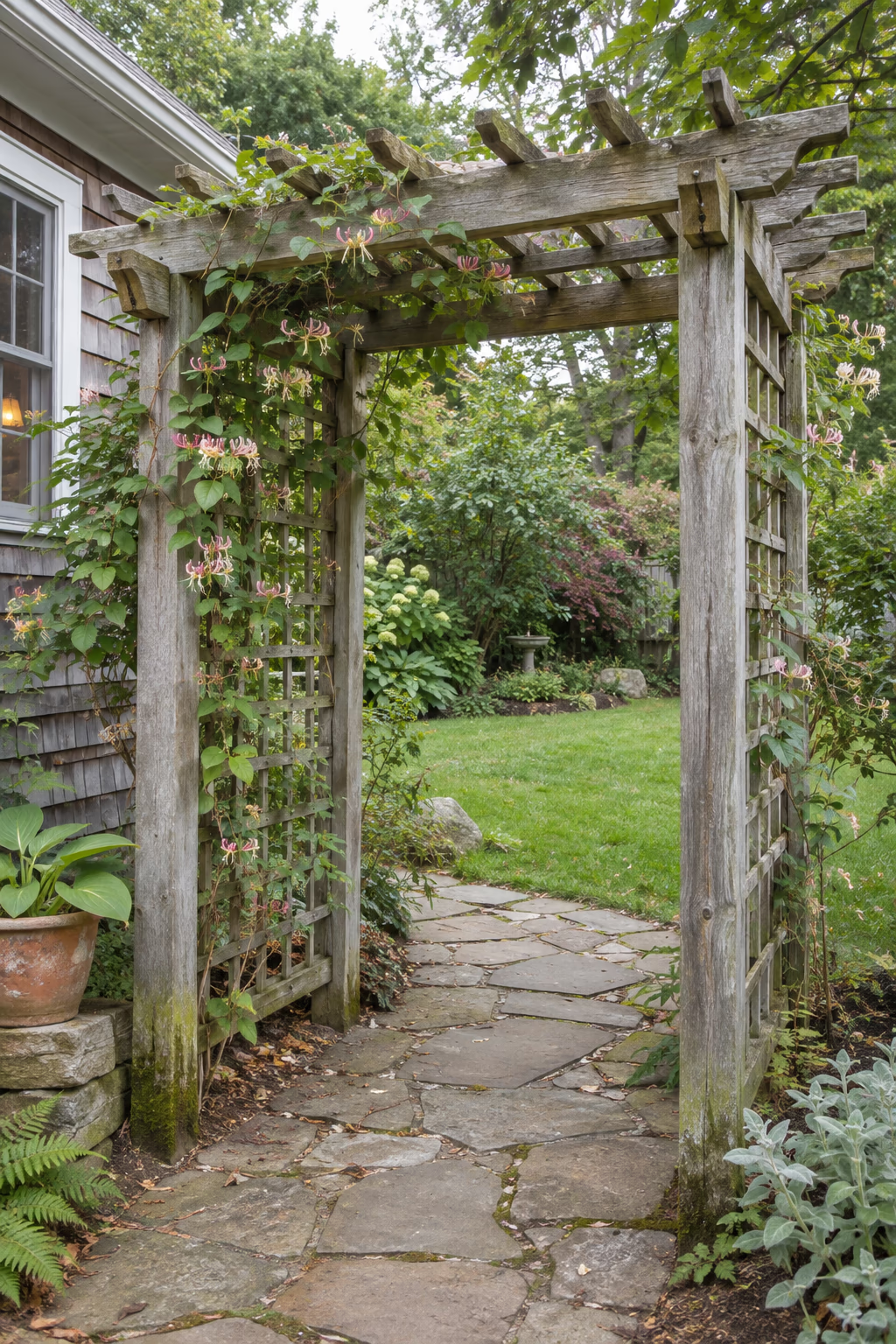
More climbing surface and a sense of enclosure
A cedar arbor with lattice side panels gives climbers far more to grab than two slim legs. A typical design uses four 4×4 posts, curved or stepped top rafters, and lattice panels about 2 feet deep on each side.
Cedar naturally resists rot and weathers to a soft silver gray if left unfinished. The deeper structure frames a path more fully and feels substantial enough to anchor a garden.
Lattice can look flimsy if it is thin, so choose heavier wood lattice with a sturdy frame. Set posts in gravel-filled holes or on metal post bases to keep the wood out of standing water.
16. Cut a Curved Arch Into the Fence Line
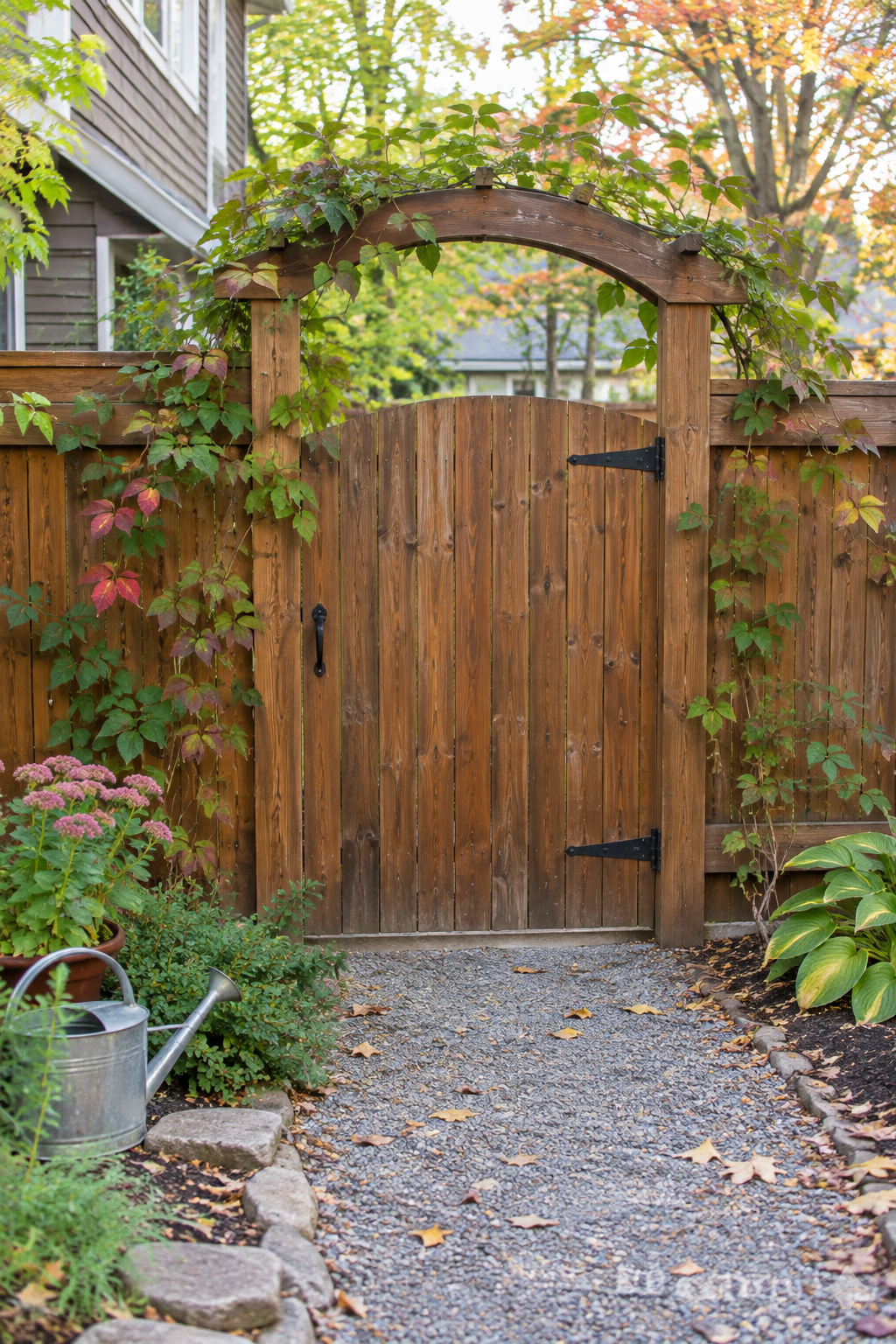
Turn a plain fence opening into a feature
Raise the posts on either side of a fence gate a little taller and connect them with a curved wooden top, or set a freestanding arch so it meets the fence on both sides. The fence then flows straight into the arch for a built-in look.
This links the structure to the rest of the yard and gives a side or backyard gate real presence. Climbers can stretch along the fence and up over the arch for continuous cover.
Check HOA rules and local codes for fence and structure height before building. Taller gateposts need deeper footings to handle the extra leverage of a curved top and any gate hardware.
17. Cover a New Arch Fast With Annual Vines
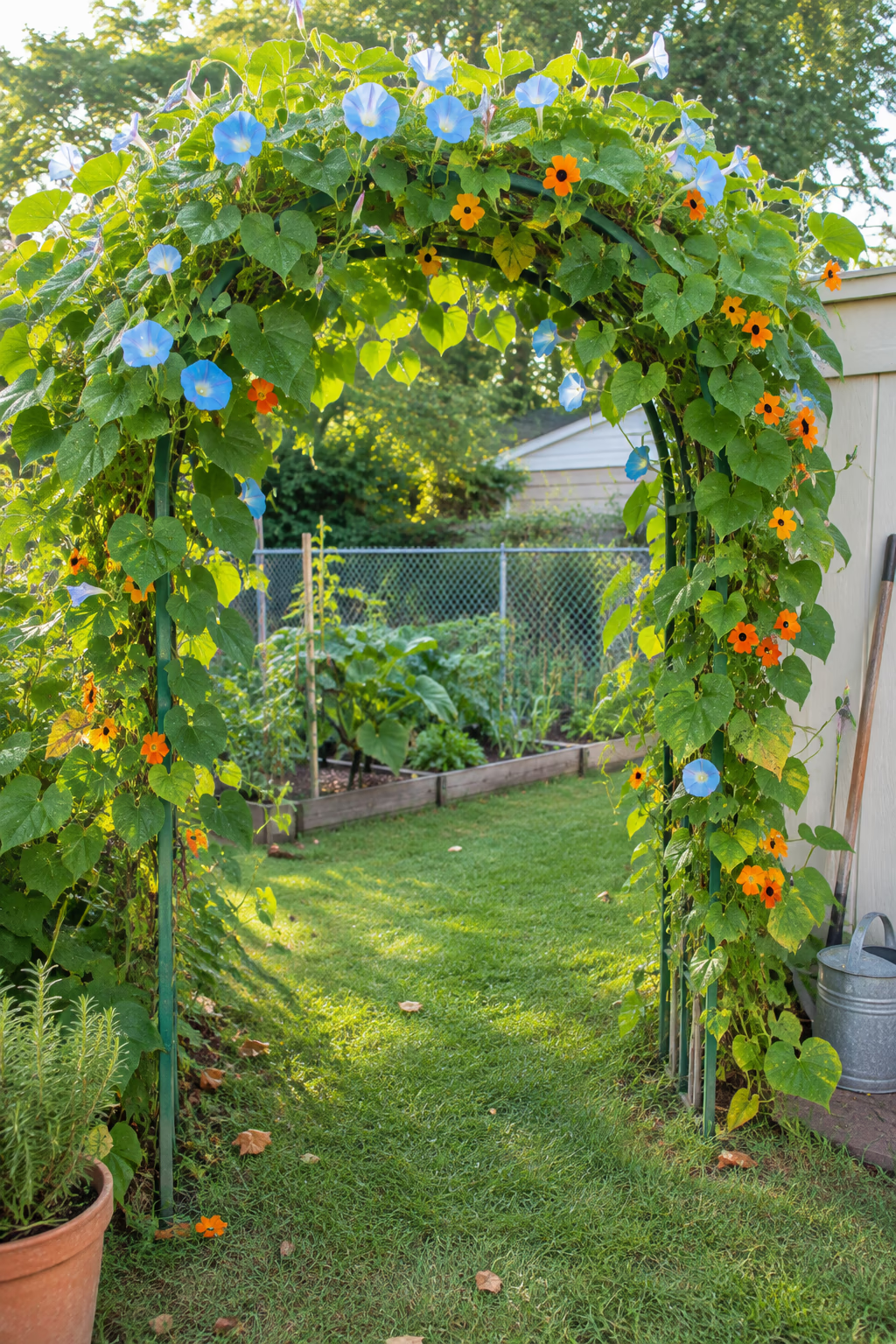
Full coverage in a single summer
Perennial climbers can take years to fill an arch, but annual vines can cover it in one season. Try morning glory, hyacinth bean, cypress vine, black-eyed Susan vine, or nasturtiums, sown directly at the base after the last frost.
Annuals let you test colors and see how much shade the arch will cast before committing to a long-lived rose or clematis. You can also mix them with a young perennial climber while it gets established.
Some morning glories reseed heavily, and hyacinth bean seeds should not be eaten raw. Pull spent vines in fall so the arch is clean for the next planting.
18. Shape a Rusty Rebar Arch for an Aged Look
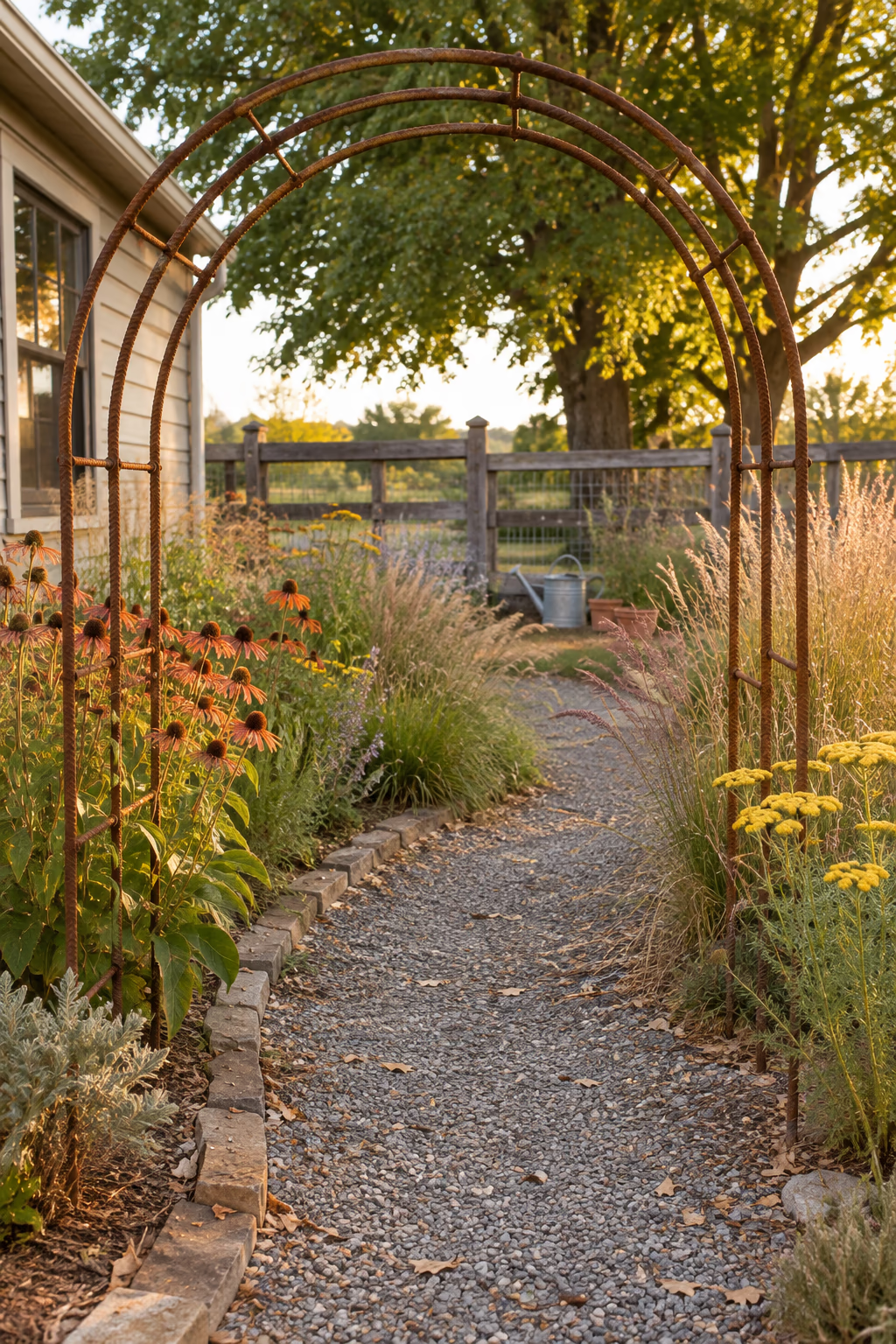
Industrial rust that looks like it has always been there
Lengths of rebar or rusted steel rod can be bent into a simple hoop and pushed into the ground or bolted to stakes. Two or three hoops spaced a foot apart and joined with cross pieces create a stable arch with a warm brown patina.
The rust color complements gravel, grasses, and orange or yellow flowers, and it looks especially at home in prairie, desert, and farmhouse gardens.
Rust can stain concrete, stone, and light pavers, so keep the legs in soil or gravel. Wear gloves when handling rebar, and cap any cut ends at head height to avoid scratches.
19. Grow a Living Arch From Trained Trees
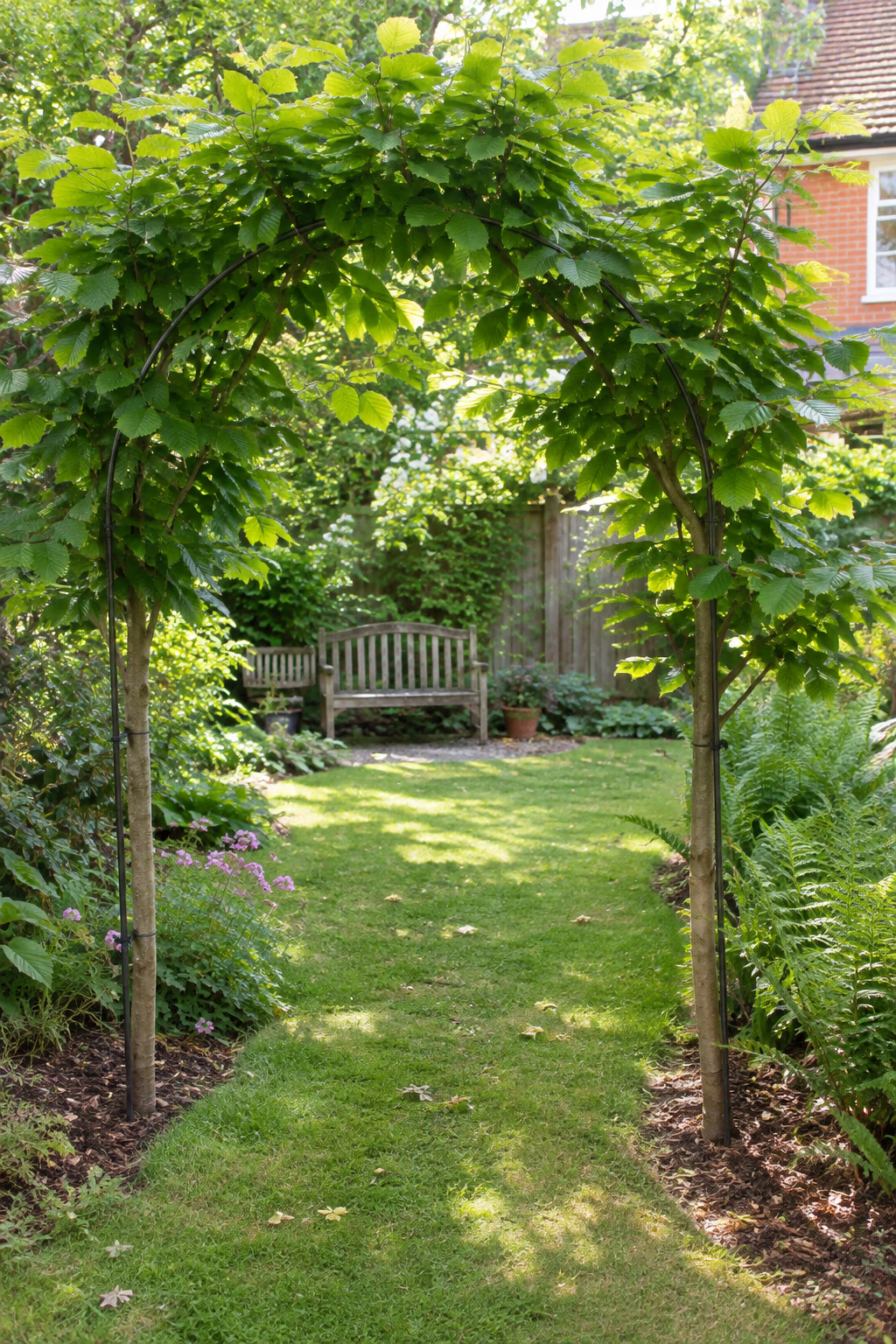
An arch made of branches and leaves
Plant two young trees, such as hornbeam, apple, or pear, on either side of a path and train their tops together over a temporary metal or bamboo frame. Over several years the branches knit into a living arch.
A trained tree arch has a quiet, storybook quality and offers spring blossoms, summer shade, and possibly fruit. Once mature, it needs only an annual pruning to keep its shape.
This is a long-term project, often five years or more before the arch looks complete. Choose trees suited to your zone, and use a structure strong enough to carry branches until they are self-supporting.
20. Lash Bamboo Poles Into a Budget Arch
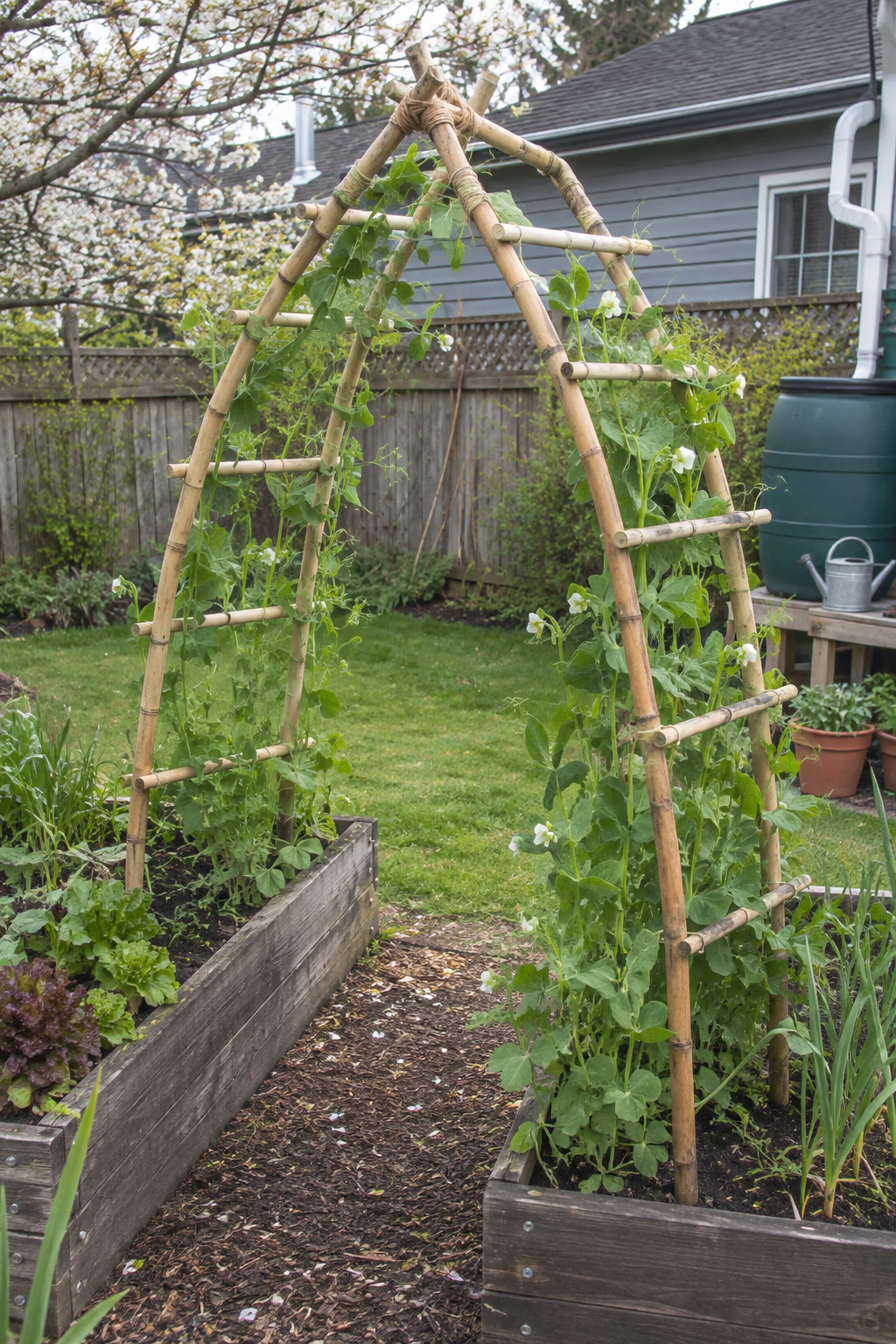
A low-cost DIY arch with a natural look
Thick bamboo poles, about 1.5 to 2 inches in diameter, can be pushed into the ground and tied together at the top to form a peaked arch. Add horizontal poles every 12 inches to create a ladder for climbers.
Bamboo is inexpensive, light, and easy to work with basic tools. It suits vegetable gardens and casual cottage borders and pairs well with peas, beans, and annual flowering vines.
Expect bamboo to last only a few seasons outdoors before splitting or rotting at ground level. Lashing with jute is attractive but weakens over time, so replace ties each spring.
21. Squeeze a Slim Arch Into the Side Yard
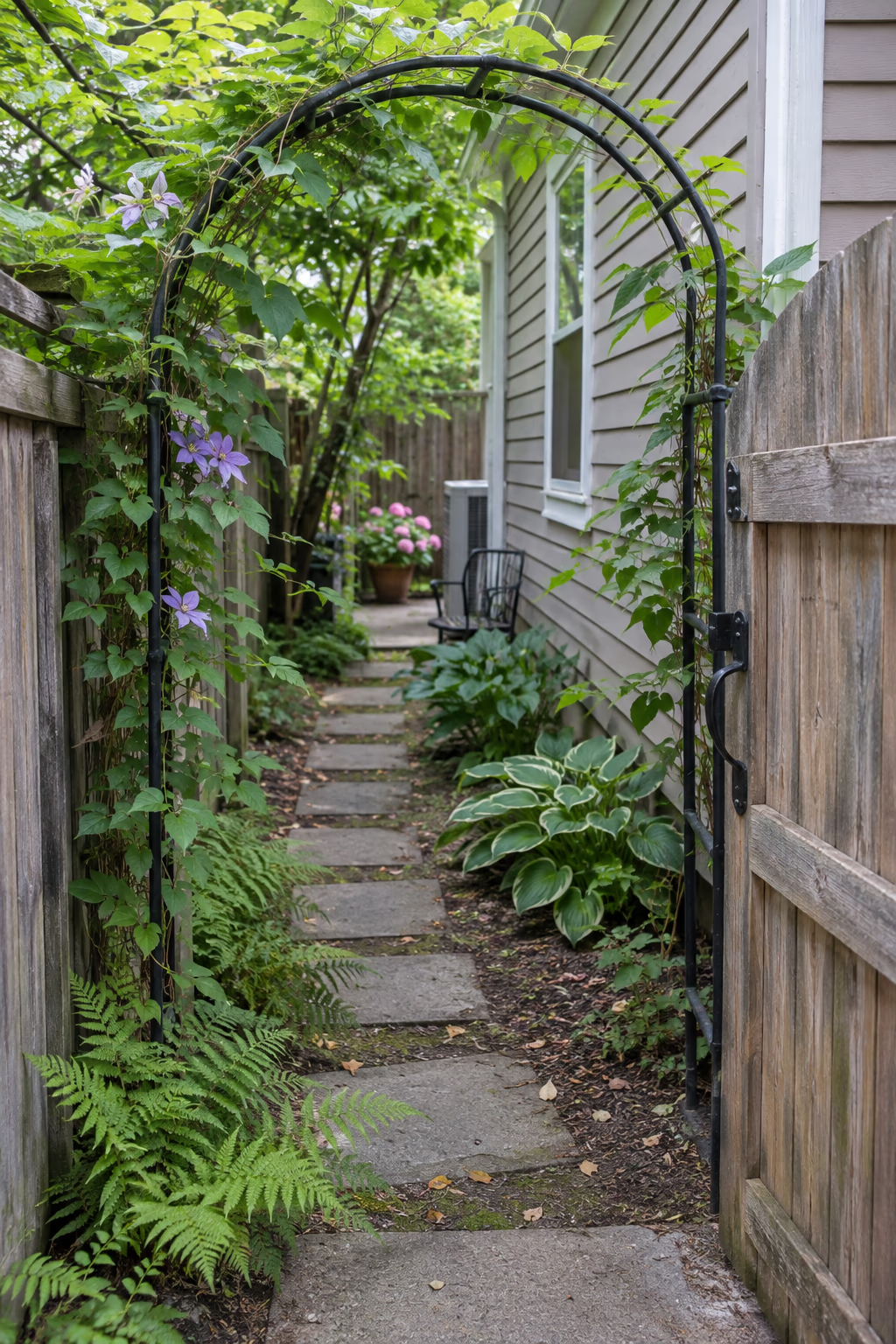
Turn a narrow passage into an entrance
Even a side yard just 4 or 5 feet wide can hold a slim arch with a 3-foot opening. Place it at the gate from the front yard to create a welcoming threshold into the back.
A narrow arch makes an awkward utility corridor feel intentional and gives climbers a vertical home where there is no space for wide beds.
Leave room to move trash bins, wheelbarrows, and mowers through the opening. Choose climbers that tolerate partial shade, since side yards often get limited direct sun.
22. Train Climbing Hydrangea Over a Shady Arch
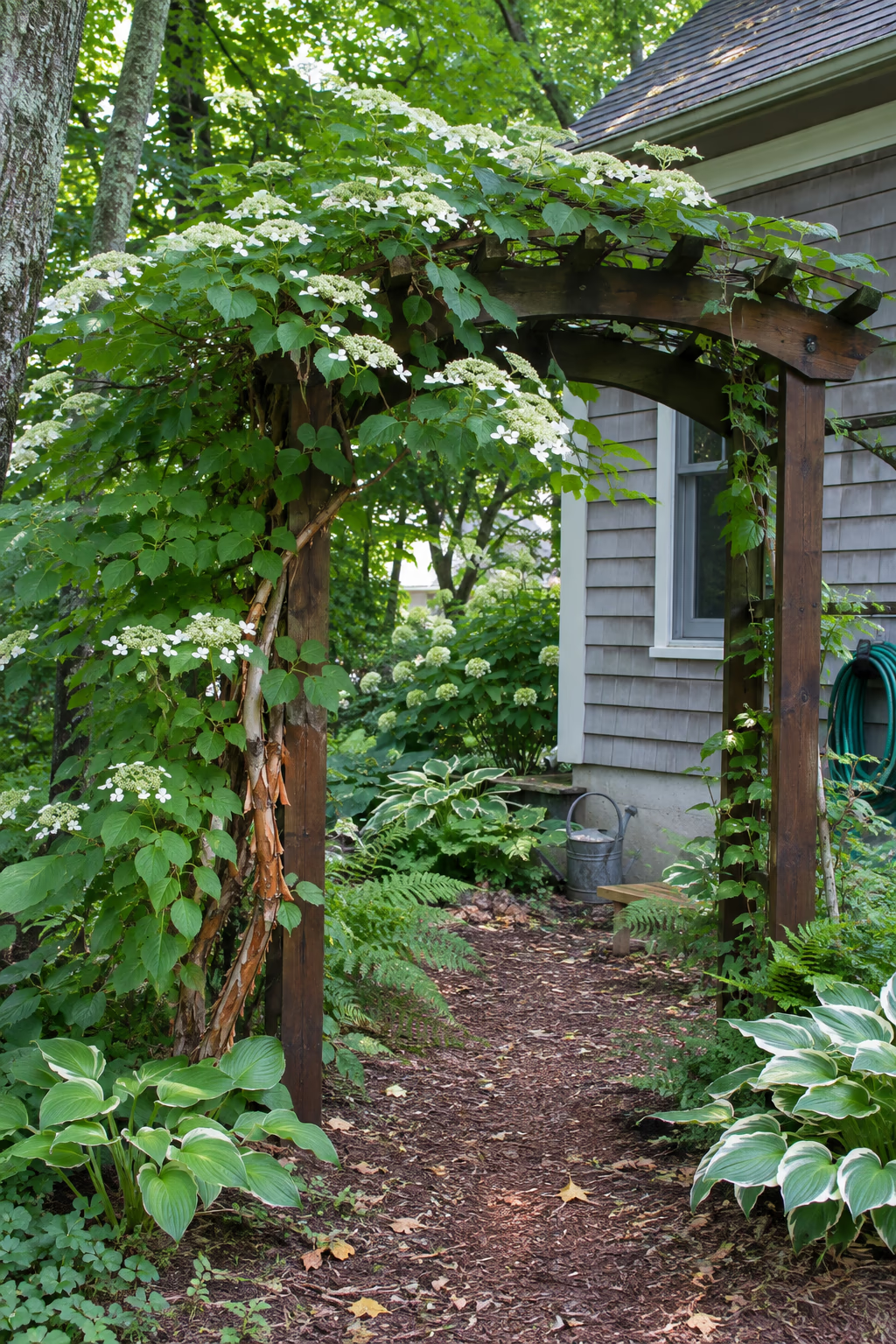
Lacy white flowers where roses will not bloom
Climbing hydrangea grows well in partial to full shade and produces flat clusters of white flowers in early summer. It is a good choice for an arch beneath trees or on the north side of a house.
The peeling cinnamon-colored bark adds winter interest, and the plant becomes a long-lived feature that rarely needs heavy pruning once established.
Climbing hydrangea starts slowly and can take a few years to bloom well. Mature plants are heavy, so use a sturdy timber or welded metal arch and tie stems to the frame because aerial roots grip walls more easily than smooth posts.
23. Edge the Arch Base With Lavender and Catmint
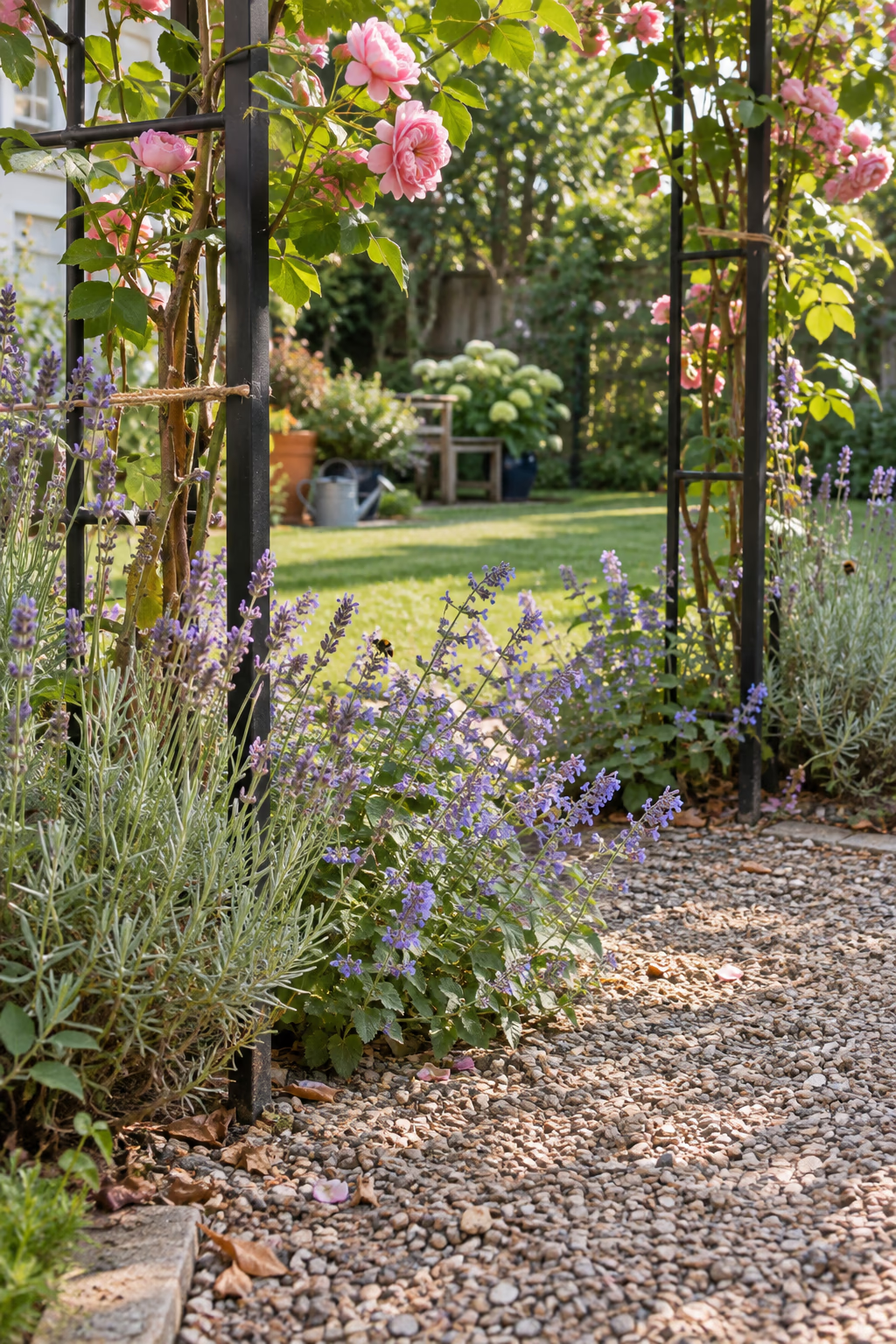
A soft, fragrant finish at ground level
The base of an arch often looks bare, especially while climbers are young. Plant lavender, catmint, or other low perennials in a small bed around each leg to hide hardware and soften the transition into the ground.
Silvery foliage and purple blooms pair well with pink roses and white clematis, and these plants attract pollinators. Low edging also frames the path as you approach the arch.
Leave space for climbers to grow and be tied in. Lavender needs full sun and excellent drainage, while catmint is more forgiving and easy to shear back after flowering.
How to Plan Your Garden Arch Trellis
A great garden arch fits the space, supports the right plants, and stays secure for years. Planning before you buy or build will help you avoid common mistakes.
- Allow enough headroom. Aim for an interior height of at least 7 feet, or 8 feet for vigorous climbers that hang down.
- Size it to the path. A 3 to 4 foot opening works for most garden paths, while wider arches suit main walkways and garden carts.
- Match the climber to the frame. Light vines suit kit arches, while roses, climbing hydrangea, and fruiting vines need heavier-duty supports.
- Anchor it securely. Use long ground stakes, buried posts, or concrete footings, especially in windy areas.
- Choose durable materials. Powder-coated steel, cedar, and galvanized metal usually last longer than thin painted metal or untreated softwood.
- Check codes and utilities. Confirm HOA rules for front yard structures, and call 811 before digging post holes.
Frequently Asked Questions
How tall should a garden arch be?
Most garden arches should be about 7 to 8 feet tall so people can walk through comfortably once plants grow over the top.
What are the best climbing plants for an arch?
Climbing roses, clematis, native trumpet honeysuckle, star jasmine in warm climates, climbing hydrangea for shade, and annual vines are reliable choices.
Do garden arches need to be anchored?
Yes. A covered arch can catch a lot of wind. Use the stakes included with a kit, sink posts into the ground, or set legs in concrete for a permanent installation.
Is a wooden or metal garden arch better?
Metal is slim, strong, and low maintenance, especially when powder coated. Wood looks warmer and more traditional but needs occasional sealing or painting.
Can I grow wisteria on a garden arch?
Most standard arches are too light for wisteria. If you love the look, choose a native American wisteria and a very sturdy structure, and avoid invasive Chinese and Japanese types.
Final Thoughts
The best garden arch trellis ideas combine a strong structure, the right climbing plants, and a placement that frames the yard in a new way. A rose-covered black arch, a white gate entry, or a glowing vine arch can transform a simple path.
Choose a style that fits your home and climate, anchor it well, and give climbers time to fill in. With a little patience, your arch will become one of the most welcoming and memorable parts of the garden.