You finally have the garden looking the way you want: tomatoes climbing their cages, a couple of chairs under the maple, a pot of basil by the back step. Then you sit down with your morning coffee and catch the neighbor’s kitchen window looking straight at you.
A good privacy fence fixes that without turning your garden into a box. The right fence becomes part of the planting. It gives climbers something to hold, hides the parts of the neighborhood you’d rather not see, and makes a small yard feel like an outdoor room that belongs only to you.
These 21 garden privacy fence ideas cover paint colors, living walls, mixed wood and steel, woven willow, evergreen hedges, budget fixes for chain-link, and clever ways to add height or block noise. Some are weekend projects, and others are worth hiring out. Pick one that suits your yard, your budget, and your local fence rules.
1. Paint the Privacy Fence a Soft Sage Green
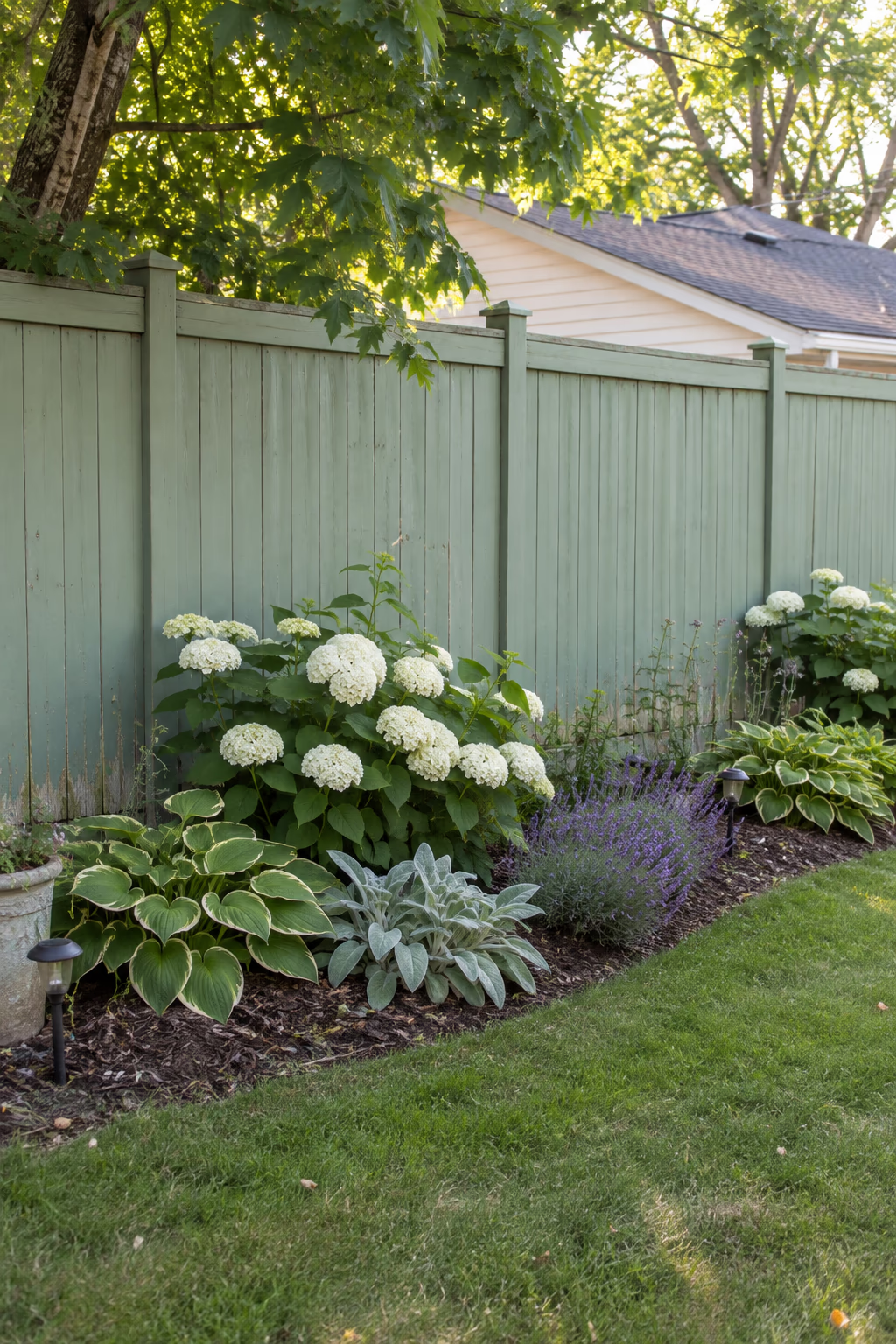
A tall fence that fades into the planting
A 6-foot wall of fresh orange-toned boards can feel like it’s looming over the garden. Painting or staining it a muted sage, olive, or gray-green makes the fence recede, so your eye lands on the plants in front of it instead of the boards behind them.
Green-gray tones work because they sit close to the color of foliage. Hydrangeas, hostas, ferns, and silver plants like lamb’s ears and lavender all look fuller against them. Use an exterior solid stain or a paint made for fences, and apply it on a dry, mild day with a sprayer or a wide brush.
Let new pressure-treated lumber dry for several weeks before coating it, or the finish may peel. Paint also needs touching up every few years, so if you hate maintenance, a semi-transparent stain in a similar tone is easier to refresh.
2. Turn a Plain Fence Into a Lush Living Wall
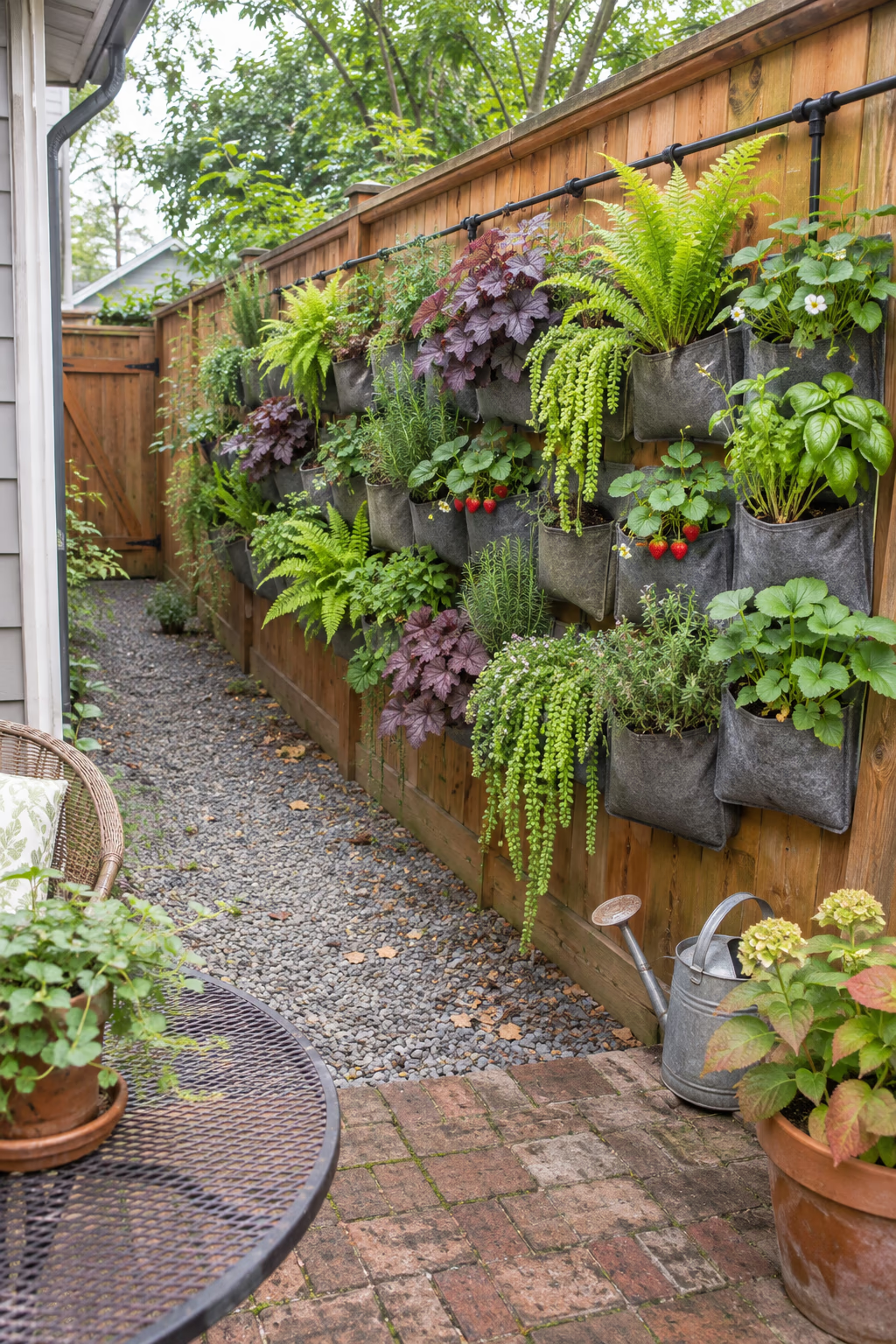
Privacy and planting in the same few inches
A living wall covers the fence face with plants, so the barrier itself becomes the garden. Fabric planter pockets, modular plastic planting panels, or a grid of wall-mounted pots can be screwed into the fence rails and filled with ferns, heuchera, trailing sedum, strawberries, or herbs.
This idea shines in small yards and narrow side gardens where there’s no room for a deep border. You get a thick, green screen that softens hard edges and adds color at eye level, right where you notice it most.
Vertical plantings dry out fast. Plan on a simple drip line with a battery timer, and add a waterproof backing or a spacer so constant moisture doesn’t rot the boards. Check that the fence posts are solid before you hang the weight of wet soil on them.
3. Mix Cedar Boards With Weathered Steel Panels
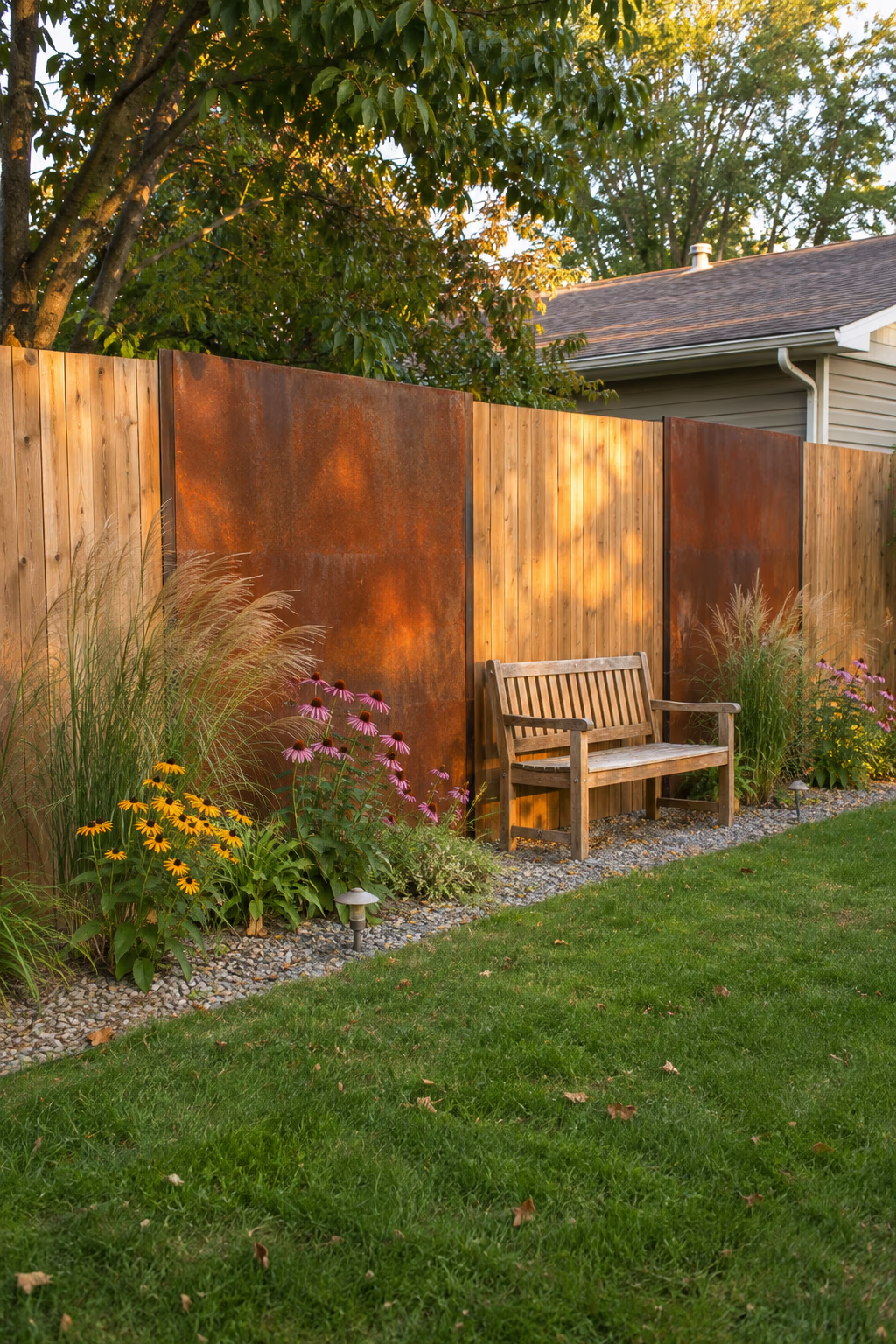
A modern fence with warmth and texture
Weathering steel develops a stable rusty-brown surface that pairs beautifully with the honey tone of cedar. Alternate full cedar sections with solid or laser-cut steel panels, or set a steel panel behind a seating area as a focal point between longer runs of wood.
The combination feels current without being cold. Grasses, black-eyed Susans, and coneflowers glow against the rust color, and the cedar keeps the whole fence from looking industrial.
Fresh weathering steel can leave orange streaks on concrete, stone, and light pavers while it develops its patina. Keep it over gravel or mulch, or pre-weather it before installing. Steel panels also cost more than wood, so using them as accents is a smart way to stretch the budget.
4. Build a Board-on-Board Shadowbox Fence
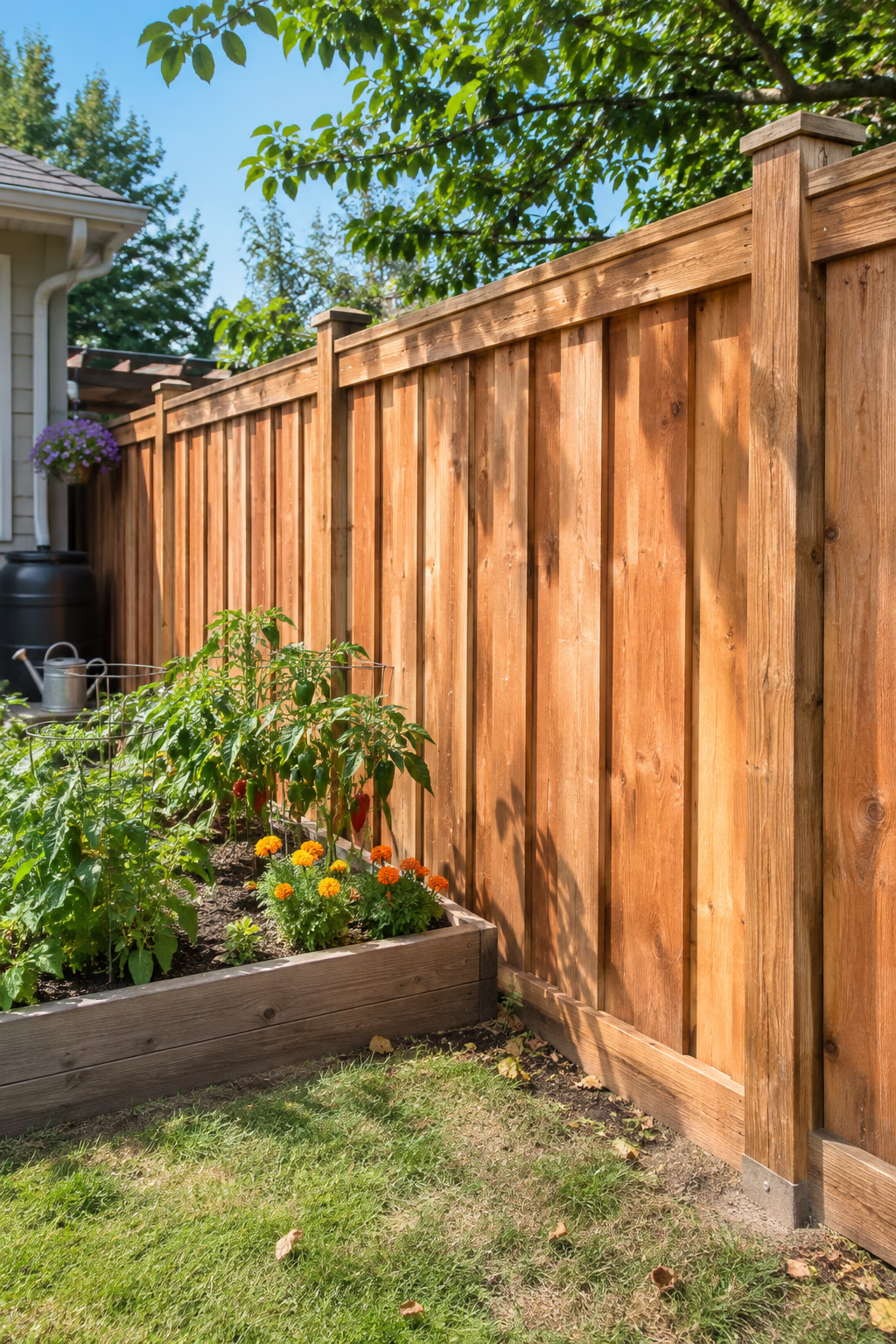
Full privacy with no gaps as boards shrink
In a board-on-board fence, pickets are attached to both sides of the rails, or in two overlapping layers, so each board covers the seam of the next. Even when wood shrinks in dry weather, there’s no gap to peek through.
It looks finished from both sides, which keeps the peace with neighbors, and the overlapping boards create soft shadow lines that look handsome behind a garden bed. Cedar and pressure-treated pine are the usual choices, with a top cap and trim to protect the end grain.
This style uses noticeably more lumber than a standard fence, and it catches a lot of wind. Set posts in concrete, about one-third of their length in the ground, and space them no more than 8 feet apart.
5. Add a Trellis Topper and Let Clematis Climb It
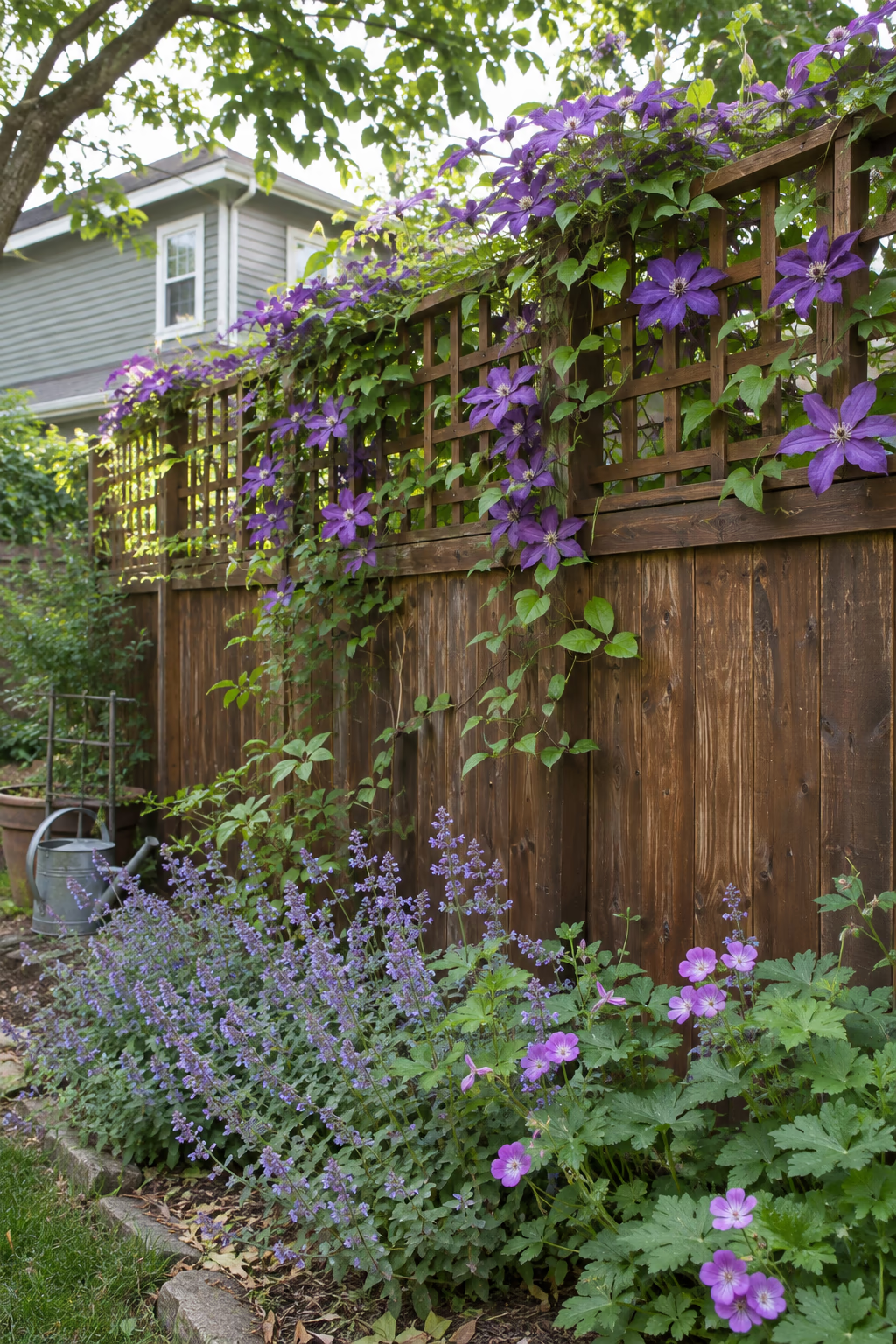
Extra height that still lets light through
If your fence is a foot too short to block a second-story window, a 12- to 18-inch lattice or square-grid trellis along the top can close the gap. Fasten it to extended posts or post sleeves rather than the top rail alone.
The open grid looks lighter than adding more solid boards, and it gives vines a place to wander. Clematis is ideal because it climbs by twisting leaf stems around thin slats. Pair an early bloomer with a summer variety for a longer show, and keep the roots shaded with low perennials.
Check local rules first. Many towns cap backyard fences at 6 feet and count the trellis as part of that height, and HOAs may have their own limits.
6. Weave a Willow Screen Around the Patio
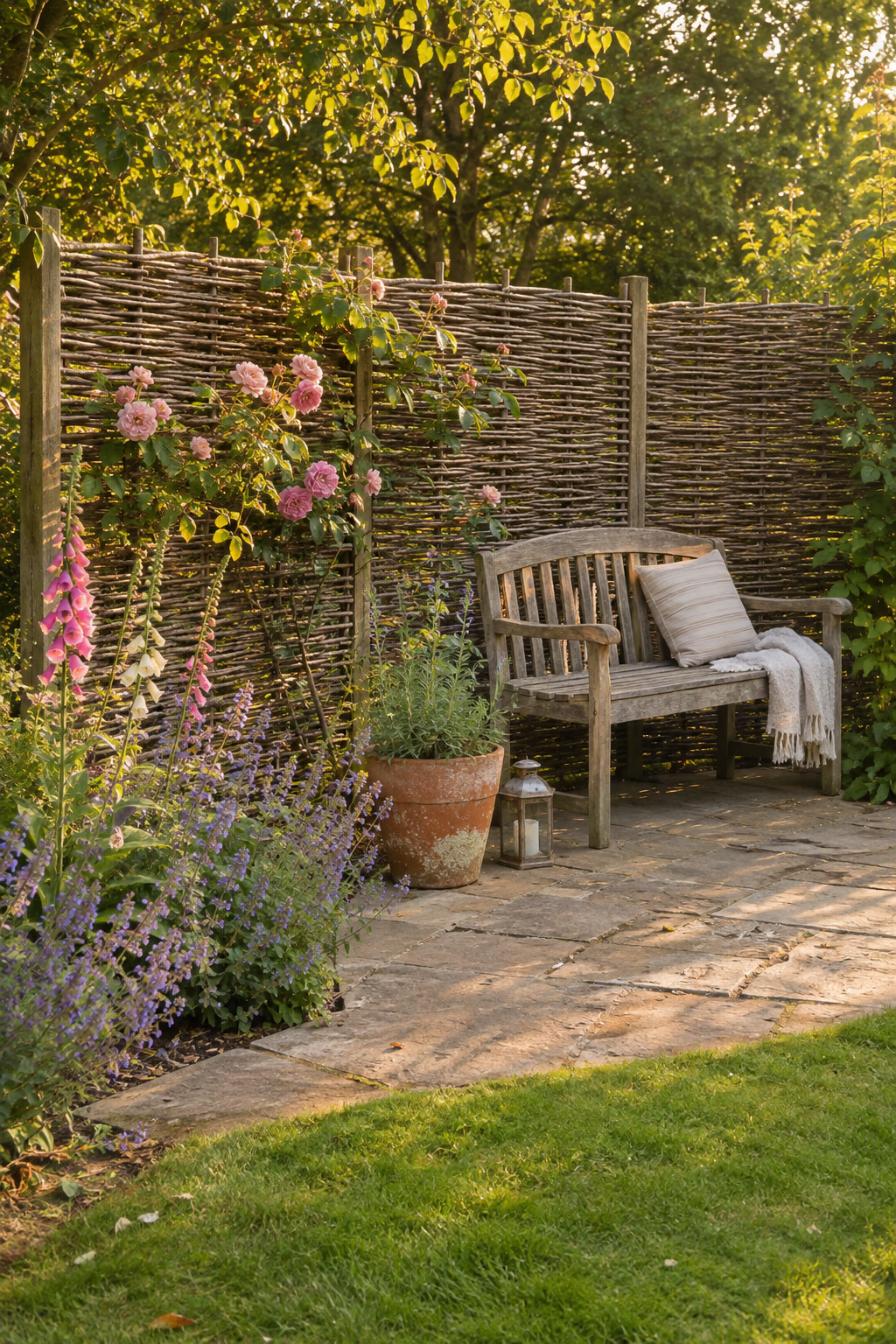
Natural texture for a cozy sitting spot
Woven willow panels, usually sold in 6-foot sections, have a rustic, handmade look that suits cottage gardens and wildlife-friendly yards. Attach them to sturdy posts around a patio or behind a bench to create a private nook without a heavy wall.
Willow softens the light and the breeze rather than blocking them completely, so the space stays airy. It looks great with roses, catmint, and foxgloves in front, and it weathers to a silvery brown over time.
Willow is a natural material and won’t last as long as lumber. Expect several years from a good panel, longer if it’s kept off the soil on a gravel strip. It’s best as a screen inside the yard rather than a boundary fence.
7. Plant an Evergreen Hedge as a Living Fence
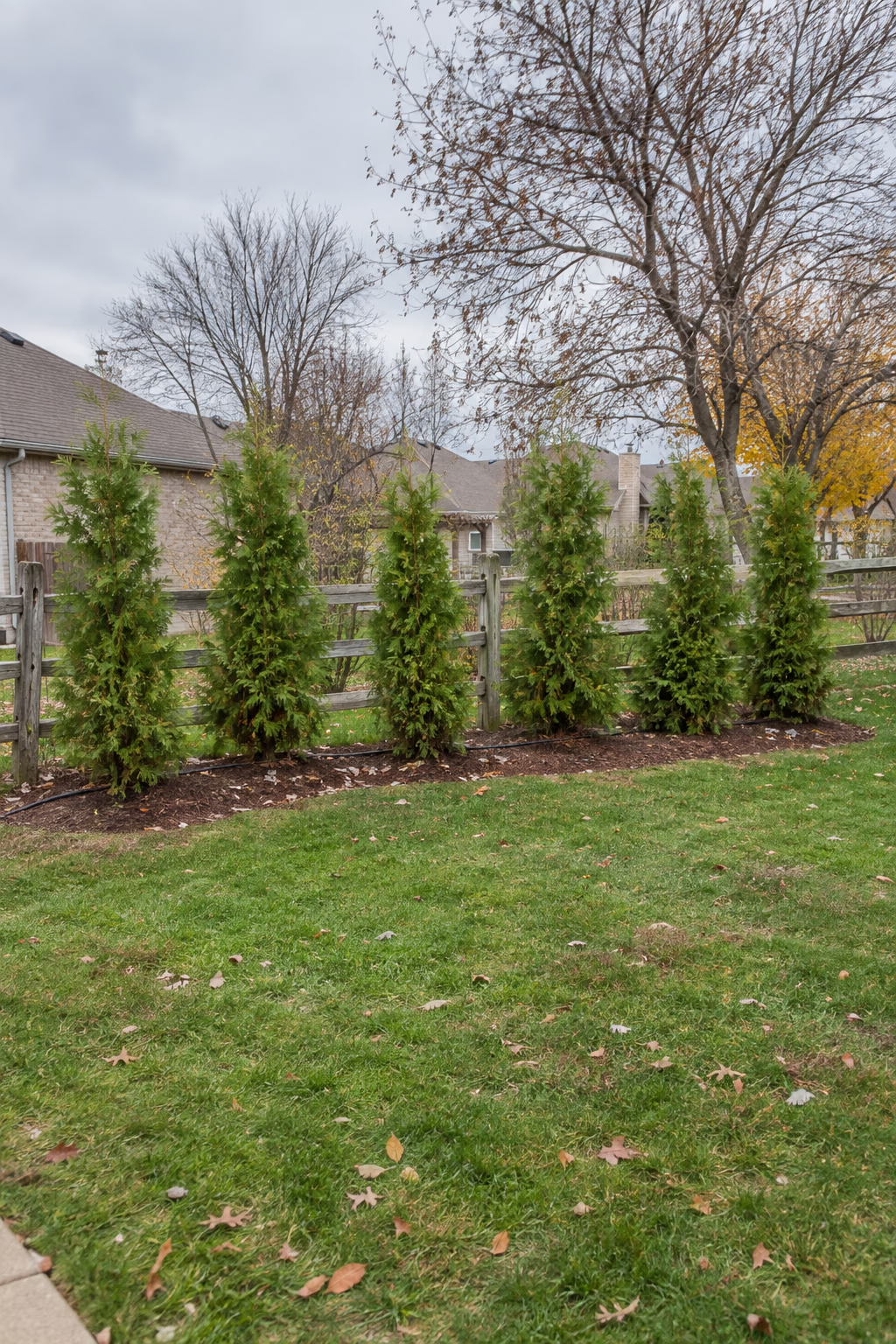
Year-round screening that grows with the garden
A row of evergreens can replace or back up a fence. Arborvitae, holly, skip laurel, and upright junipers are common picks, depending on your zone. Plant them about 3 to 5 feet apart, a few feet in from the property line, and give them deep watering through the first two summers.
A hedge absorbs some sound, shelters birds, and looks softer than any board. Many homeowners pair it with a low, inexpensive fence in front so the hedge has time to fill in while the boundary is already marked.
Plants take time. Buying larger specimens costs more, while small ones may take several years to reach privacy height. Check each shrub’s mature width, too, so it doesn’t swallow your path or crowd the neighbor’s side.
8. Build a Planter Ledge Into the Fence Line
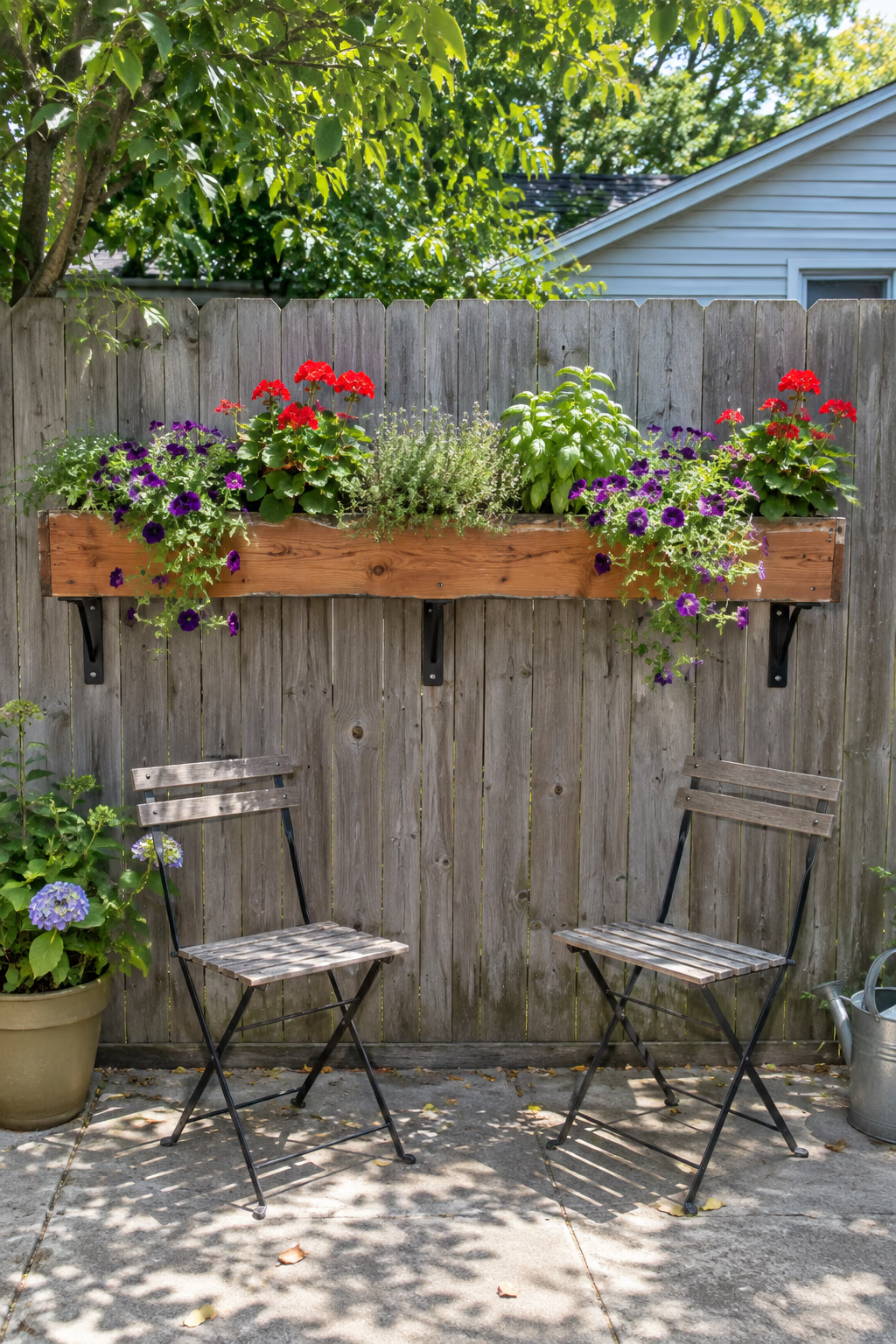
A built-in shelf for flowers at eye level
A narrow ledge or trough running along the fence, about 2 to 3 feet off the ground, turns a flat privacy wall into a display. Build it from the same boards as the fence, or mount a long cedar planter box on heavy brackets attached to the posts.
It breaks up the height of a tall fence and puts geraniums, trailing petunias, herbs, or succulents where you can enjoy them from a chair. The ledge also adds depth, which makes a small yard look more layered.
Line wooden planters with a liner and drill drainage holes, and leave a small gap between the planter and the fence boards so water drains away. Choose plants that suit the light on that side of the fence.
9. Espalier Fruit Trees Against a Sunny Fence
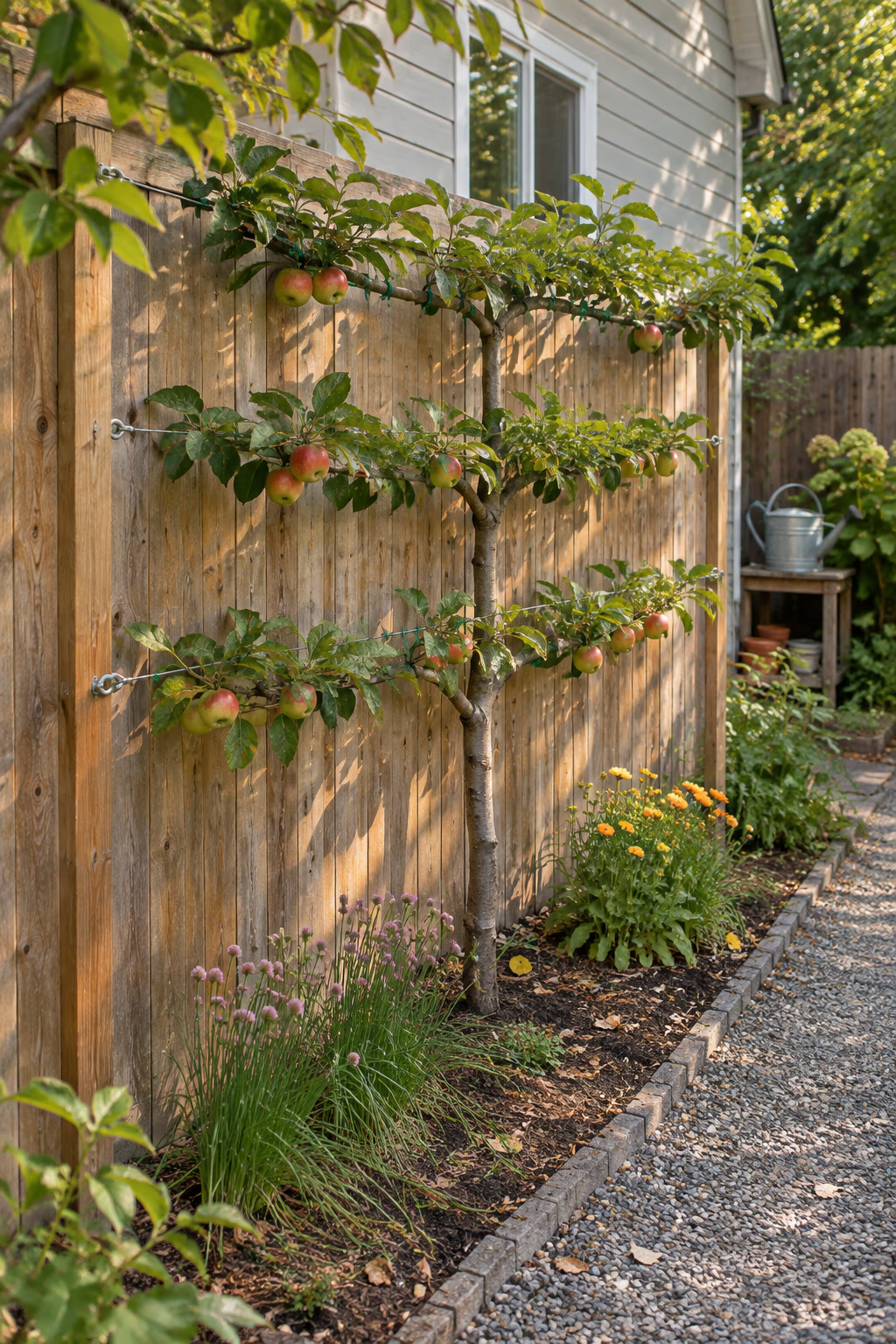
A screen that also gives you a harvest
Espalier is the old technique of training a tree flat against a support. Stretch horizontal wires 18 inches apart along a south- or west-facing fence, plant a dwarf apple or pear, and tie the branches out along the wires as they grow.
The result is a living lattice that adds height, leaves, blossoms, and fruit right against the boards. It’s perfect for gardens too small for a full-size tree.
Espalier takes patience and pruning, usually in summer and again in winter. Buy a young tree, or one already started as an espalier at the nursery, and choose varieties suited to your climate and pollination needs.
10. Hang a Garden Mirror on an Enclosed Fence
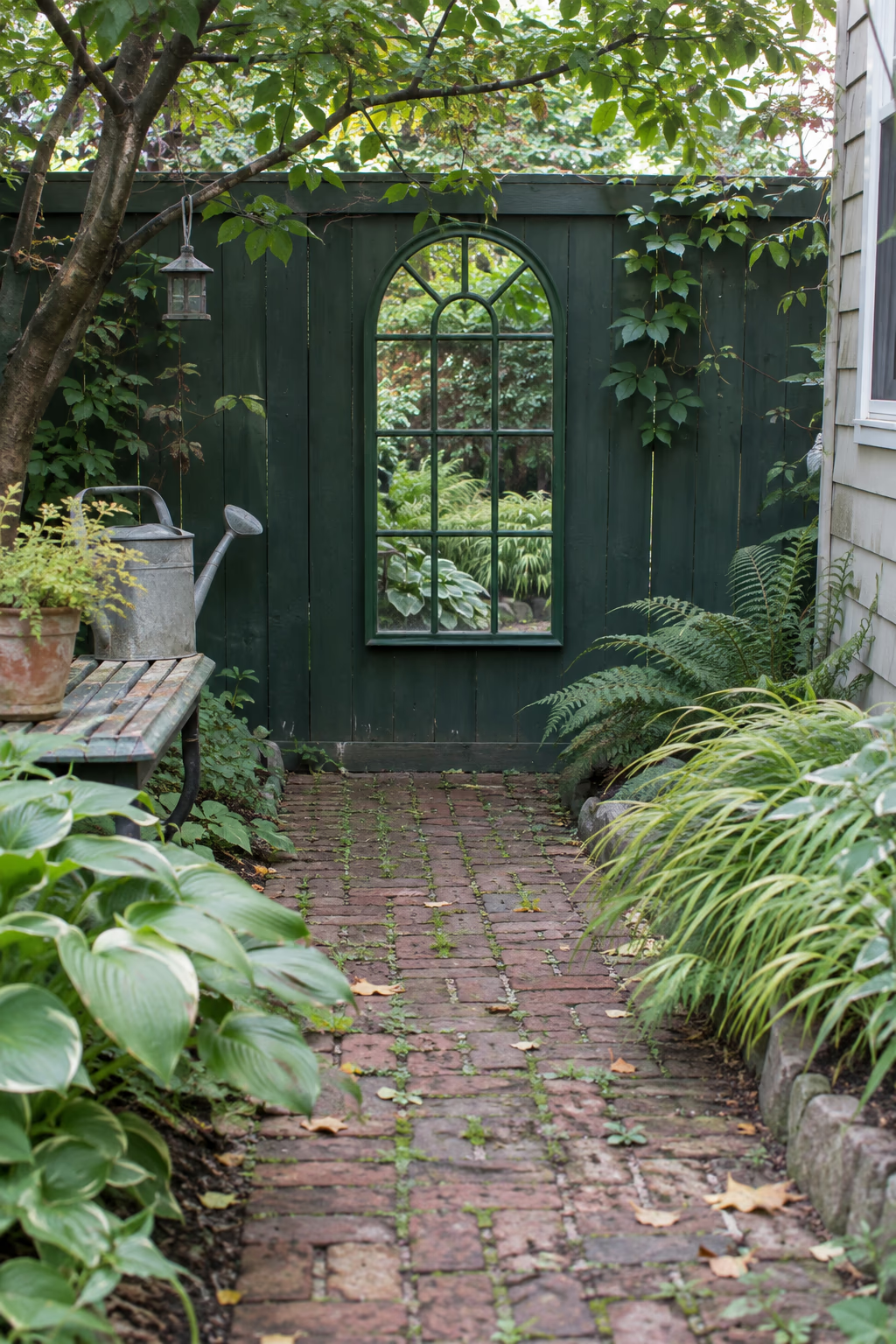
Bounce light around a small private yard
A tall privacy fence can make a tiny yard feel dim and boxed in. An outdoor mirror, especially one with a window-style frame, reflects plants and sky and tricks the eye into reading more space.
Mount it at the end of a path or behind a bed of ferns so it reflects greenery rather than your house. Painting the frame the same color as the fence makes it look built in.
Use acrylic or a mirror rated for outdoor use, and tilt it slightly downward so it doesn’t reflect harsh afternoon sun onto plants. Avoid spots where birds might fly straight toward it, such as across from a feeder or an open lawn.
11. Stack Timber Sleepers Into a Rustic Privacy Wall
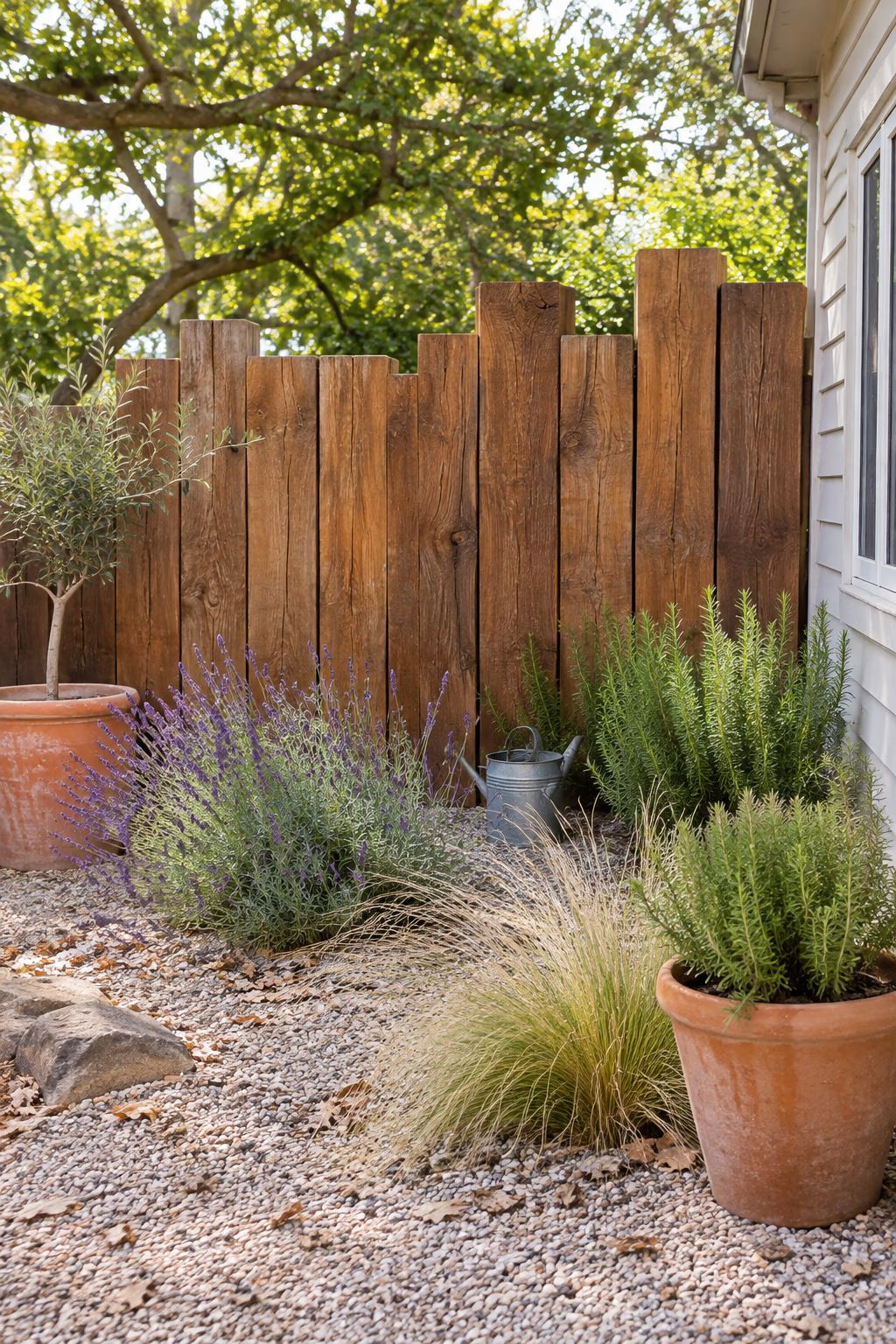
Heavy, solid, and full of character
Thick landscape timbers or new sleeper-style beams, set upright in a row or stacked between steel posts, create a chunky wall with a relaxed, rustic look. Varying the heights slightly gives the top edge a natural rhythm.
The mass of the wood blocks views completely and helps muffle sound better than thin boards. It pairs nicely with gravel, rosemary, lavender, and other drought-tolerant plants.
Avoid old railroad ties treated with creosote anywhere near food plants. Buy new, pressure-treated landscape timbers rated for ground contact instead, and expect the project to be heavy work.
12. Disguise a Chain-Link Fence With Evergreen Vines
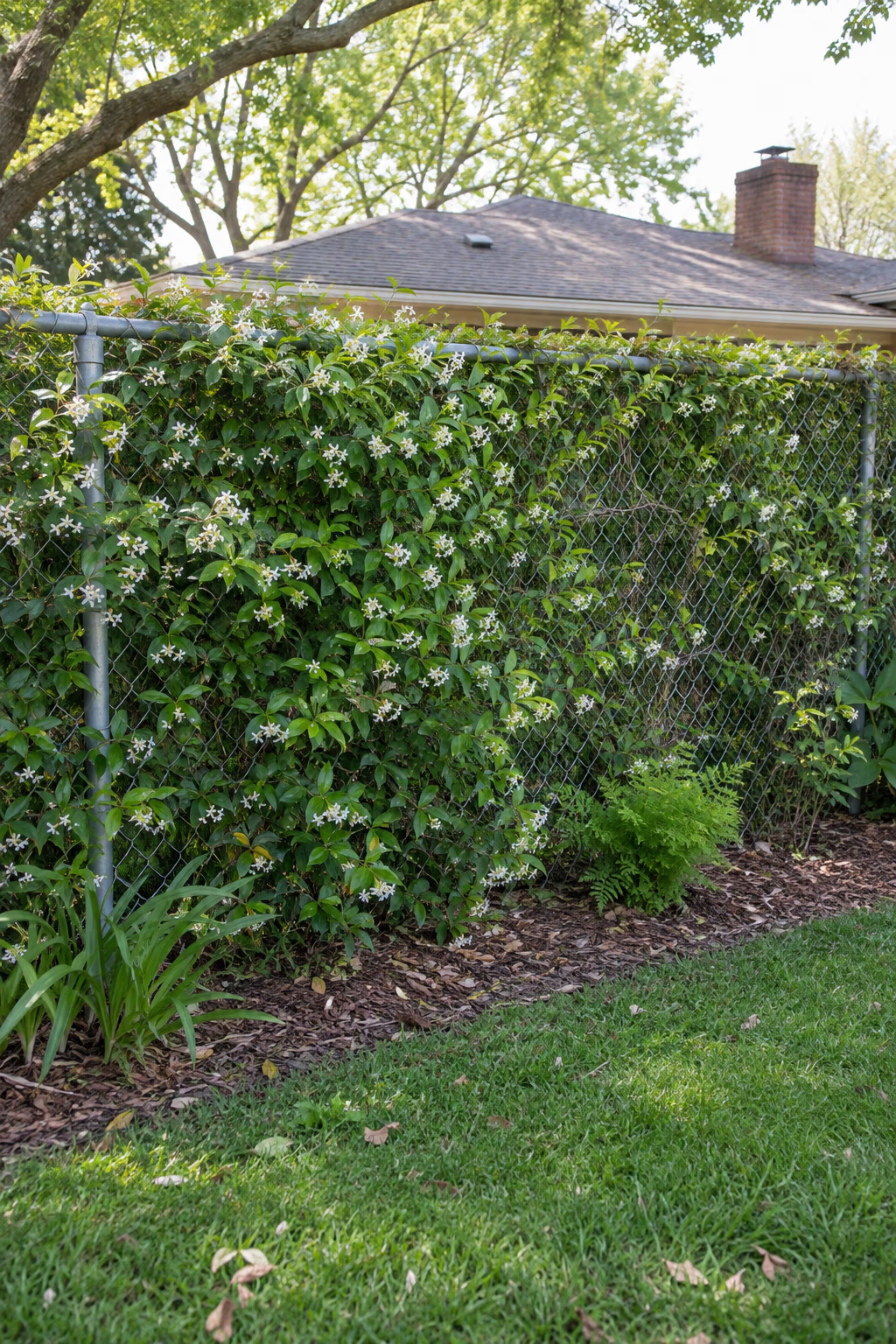
The budget fix for a fence you already have
Ripping out chain-link is expensive. Covering it is not. Evergreen climbers like star jasmine in warm zones, or semi-evergreen coral honeysuckle in many others, twine through the mesh and can hide it within a couple of seasons.
Plant vines every 4 to 6 feet and weave the young stems through the wire by hand to get them started. For quicker results, attach reed or bamboo rolls to the fence while the vines grow.
Skip English ivy and other aggressive vines that are invasive in many states. They’re hard to remove and can damage the fence. Your local extension office can recommend good regional choices.
13. Frame Corrugated Metal Panels in Rough-Sawn Wood
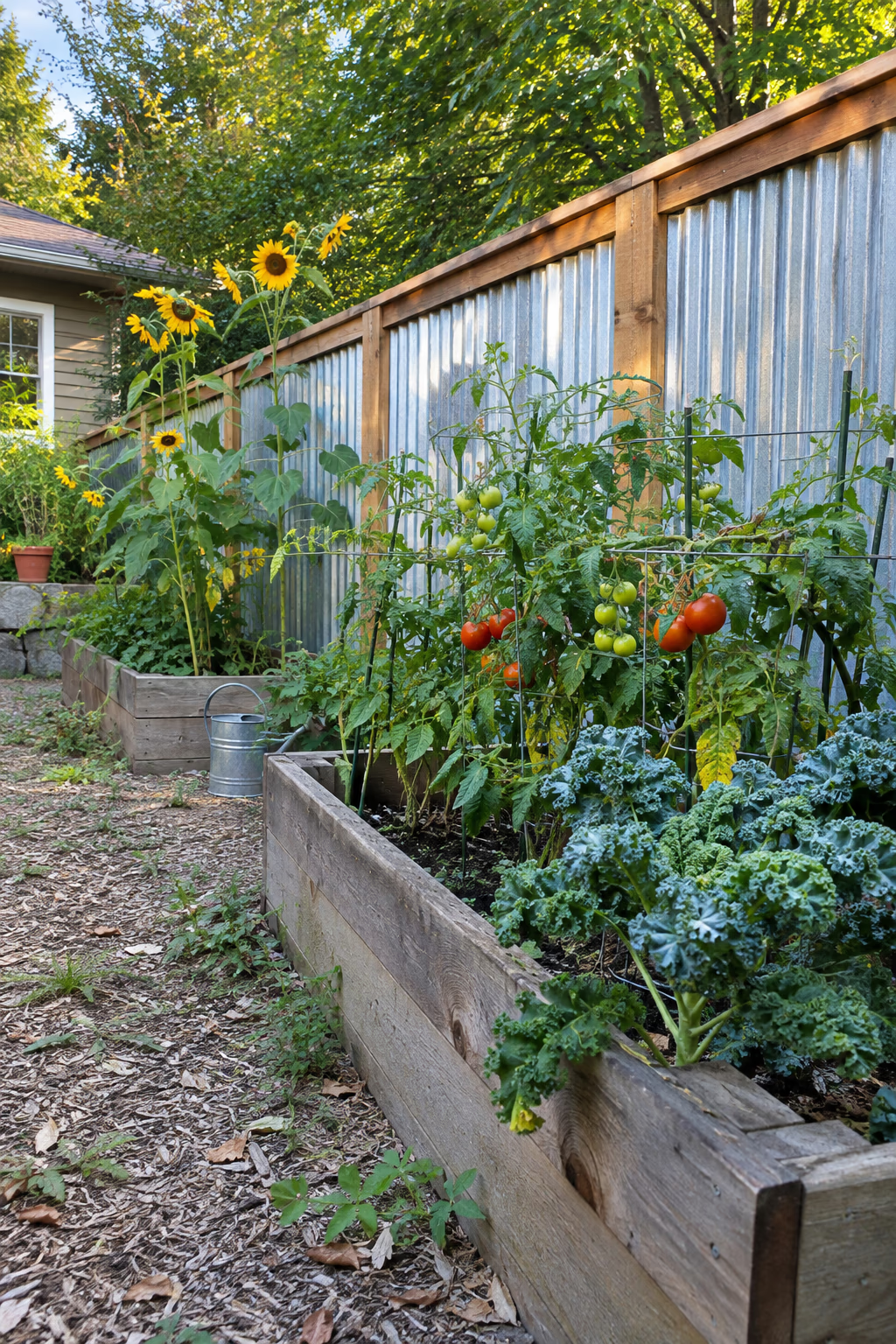
Total privacy with a farmhouse-industrial edge
Galvanized corrugated metal roofing panels, framed in rough-sawn cedar or treated lumber, make a solid fence that blocks every view. Run the ridges vertically, cap the top with a board, and the result looks crisp and intentional.
The silvery metal reflects light, which keeps the fence from feeling heavy, and it makes a great background for raised vegetable beds and sunflowers. Panels are often less expensive per foot than a fully wooden fence.
Metal edges are sharp, so wear gloves and cover cut edges with trim. The panels also heat up in full sun, so keep tender plants a foot or so away from the surface.
14. Fill a Gabion Wall With Stone for a Solid Screen
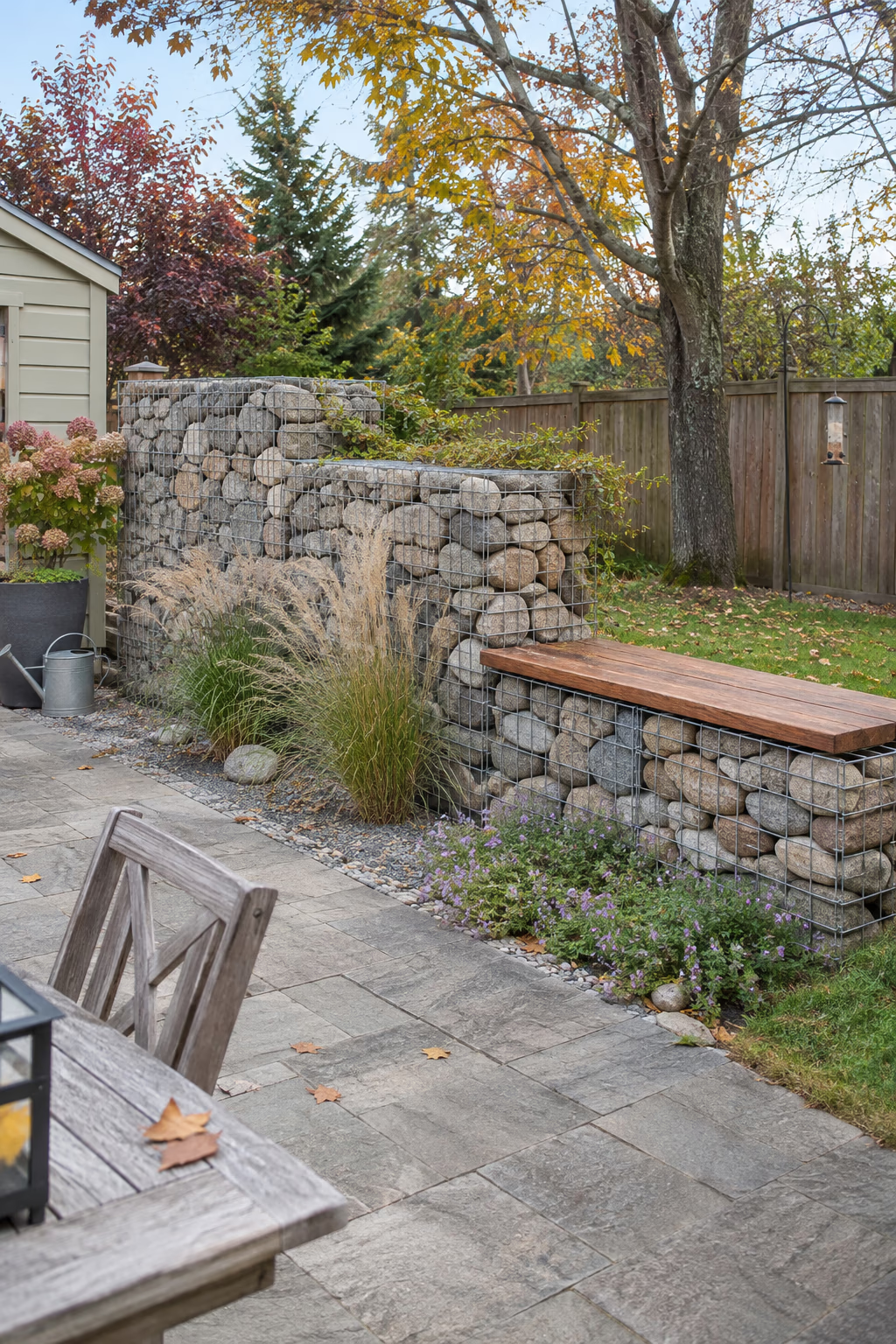
A modern stone barrier that lasts for decades
Gabions are wire mesh cages filled with rock. Stacked or set in a line, they form a sturdy, chest-high or taller wall that gives privacy, structure, and a clean, contemporary look.
Fill them with local river rock or fieldstone to keep costs and freight down, and plant grasses or creeping thyme at the base to soften the edge. A wood plank on top turns a low gabion into a bench.
Gabions are extremely heavy and need a level, compacted gravel base. Tall walls may require engineering or permits, so check with your building department before going above 4 feet.
15. Stagger Fence Panels at Different Heights
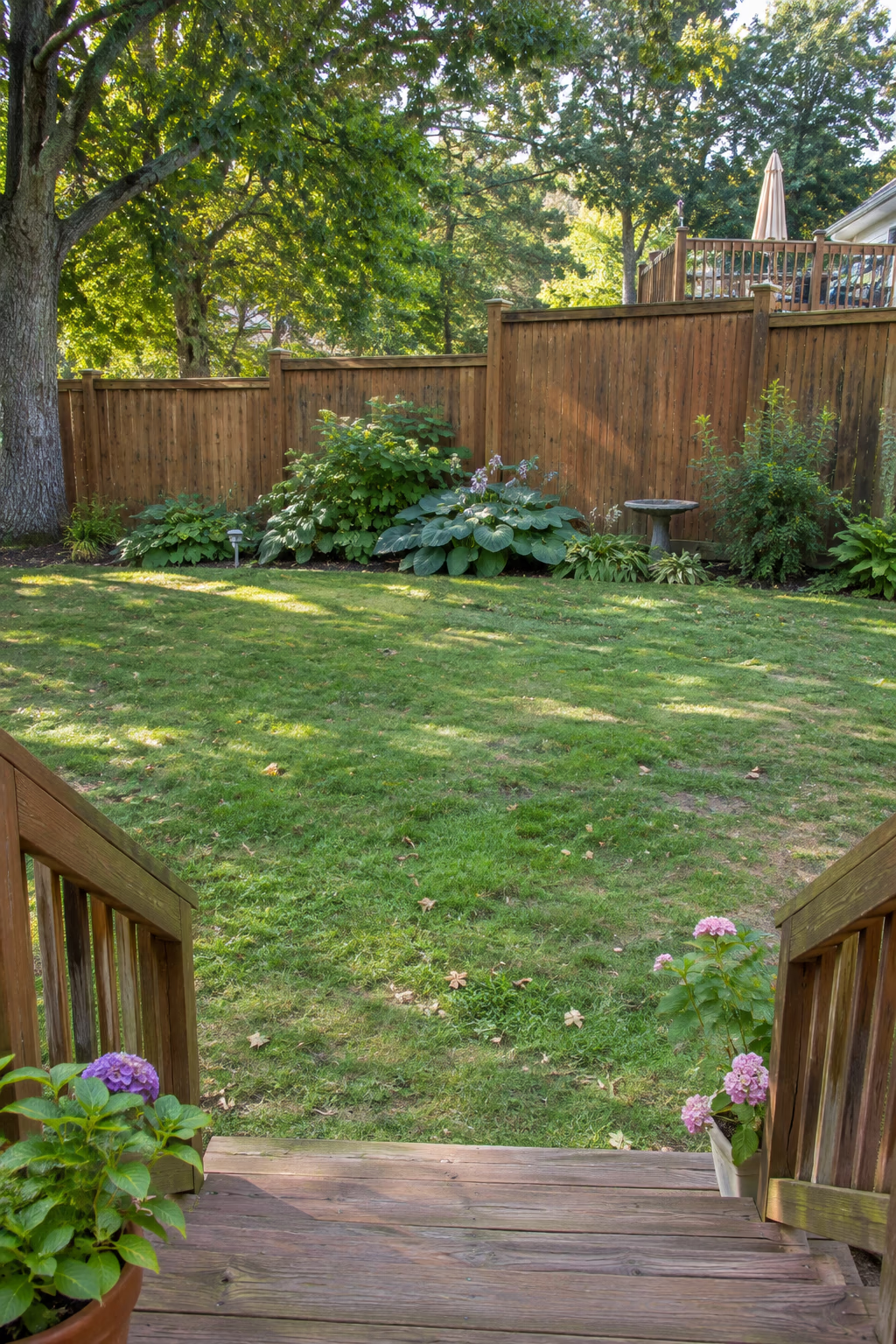
Privacy right where you need it most
Not every foot of fence needs to be the same height. Use tall 7- or 8-foot sections only where you need to block a window or deck, and drop to 5 or 6 feet elsewhere. Overlap the panels slightly so the transitions look planned.
Varying heights creates movement and keeps a long fence line from looking like a wall around a prison yard. It also saves money by using fewer tall boards.
Tall sections may need permits or special approval, and they catch more wind. Use heavier posts, and set them deeper, wherever the fence rises.
16. Step the Fence Down a Sloped Garden
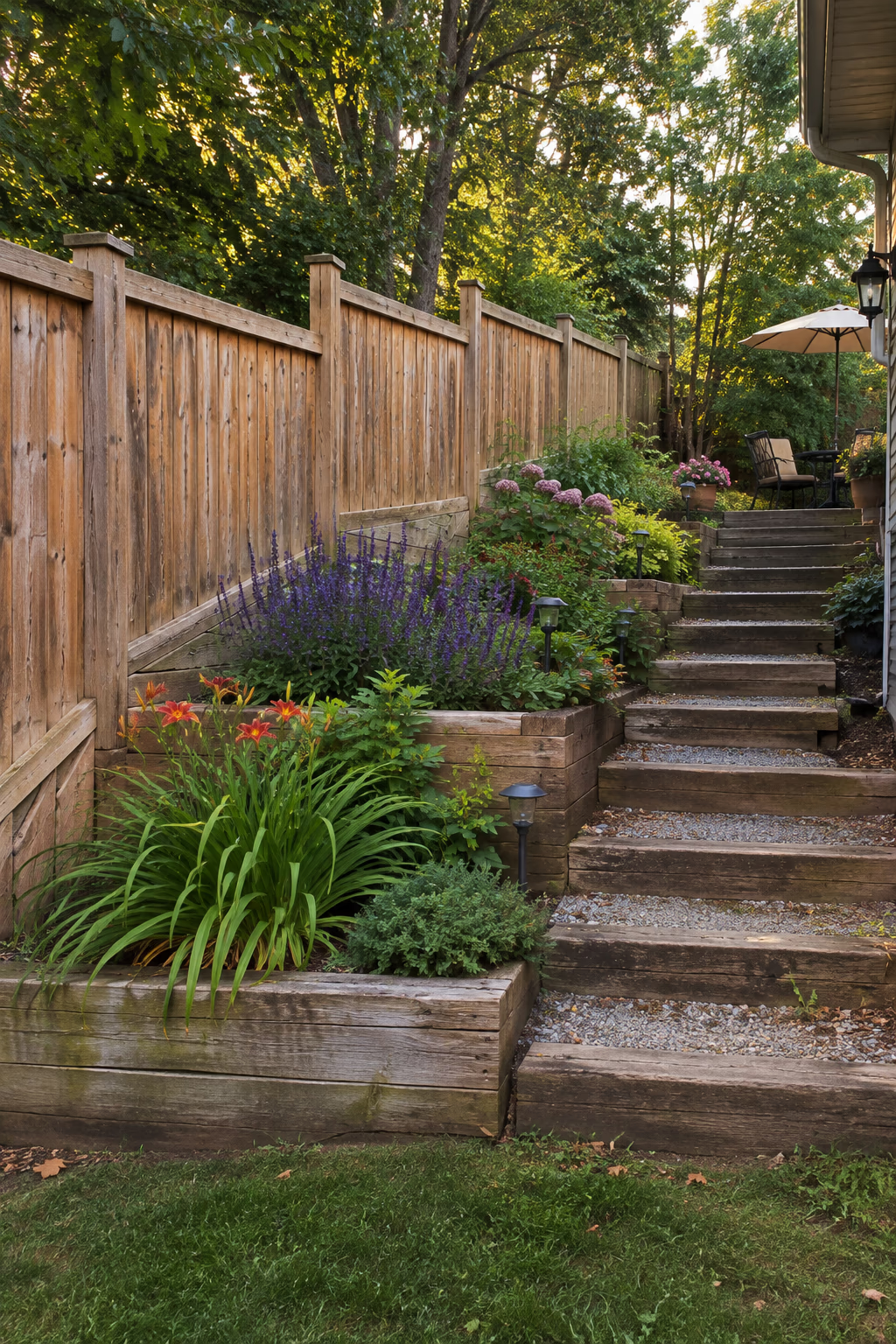
A level look on uneven ground
On a hillside, a stepped fence keeps each panel level and drops it a few inches at each post. It’s a tidy way to handle a slope and works well with terraced beds that follow the same steps.
Level panels look neat and give the yard a calm, ordered feel. Plant along each step, with lower perennials near the top of the slope and bushier shrubs toward the bottom, where the fence feels tallest.
Steep slopes leave triangle-shaped openings at the bottom. Fill them with a kickboard cut to fit, or with low shrubs or rocks, so pets and views can’t slip through.
17. Slip Rolled Bamboo Panels Into an Old Fence Frame
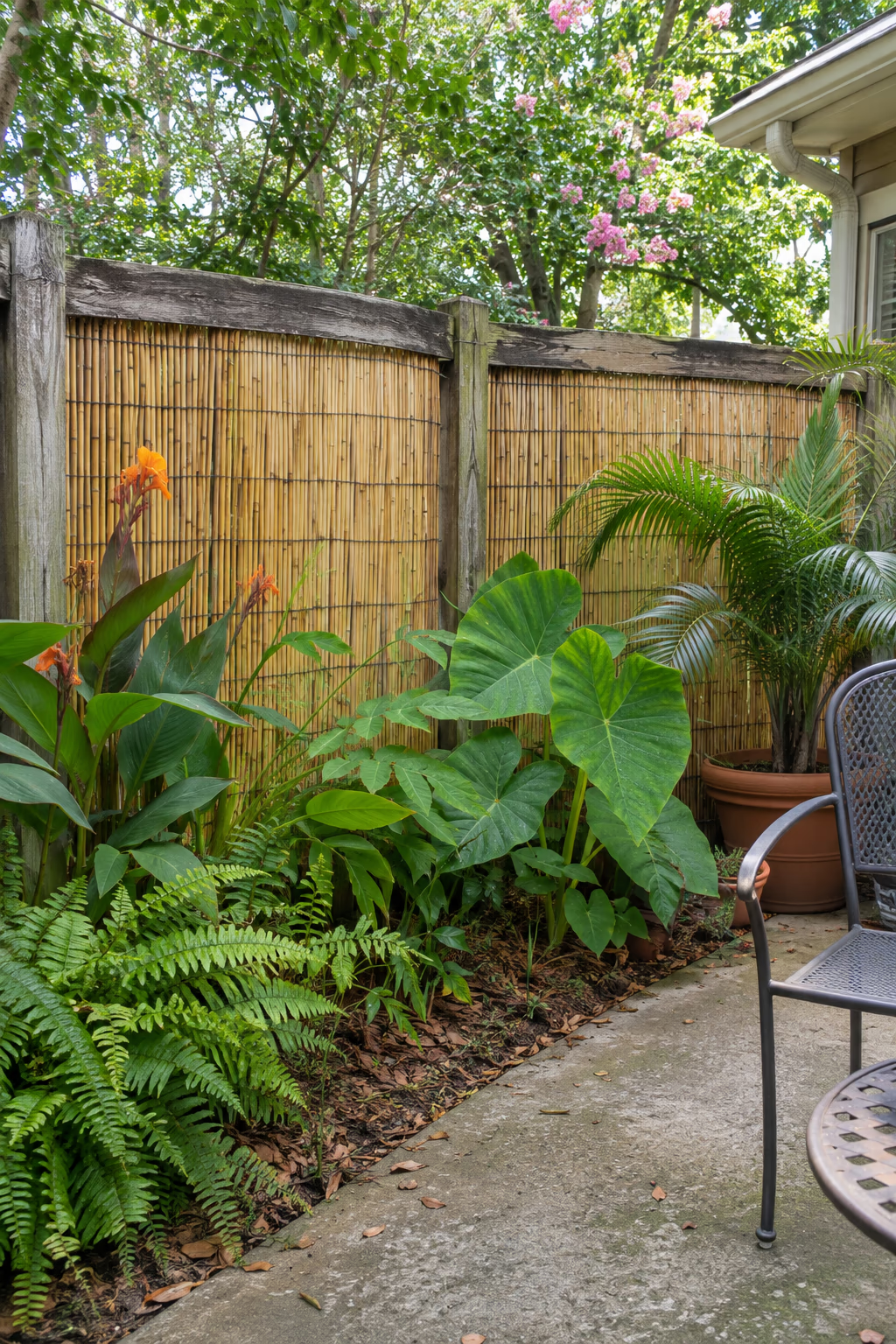
A fast update with a relaxed, tropical feel
Rolled bamboo or reed fencing comes in long rolls that can be wired or stapled onto an existing frame or chain-link fence. It instantly covers gaps and gives a warm, golden texture.
It’s one of the cheapest ways to get privacy fast, and it suits gardens with grasses, palms, ferns, and bold-leaved plants.
Rolled bamboo usually lasts only a few years outdoors, especially in wet or sunny climates, and it isn’t strong enough to stand on its own in high wind. Treat it as a quick fix or a short-term screen.
18. Grow a Fast Summer Screen With Climbing Beans
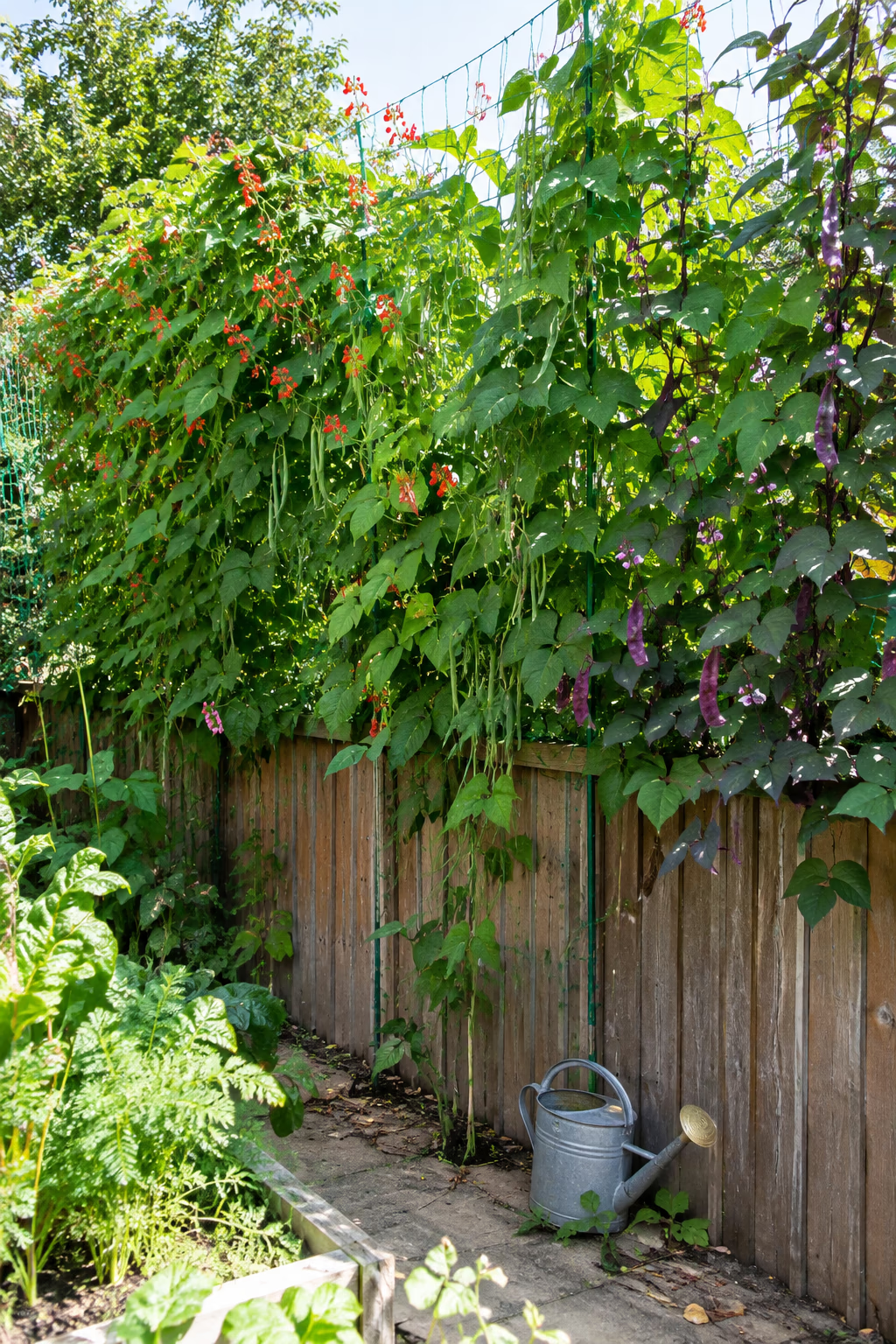
Seasonal privacy for the price of a seed packet
Scarlet runner beans and purple hyacinth beans can grow 8 feet or more in a single season. Stretch a net, string, or cattle panel along a low fence, sow seeds after frost, and let the vines rise above the boards.
They grow quickly, bloom in red or purple, and draw hummingbirds and bees. Runner beans also give you a harvest.
These vines die back with frost, so the screen disappears in winter. Use them where you mainly need privacy in summer, like around a patio or vegetable garden.
19. Crown a Fence Gate With a Small Pergola
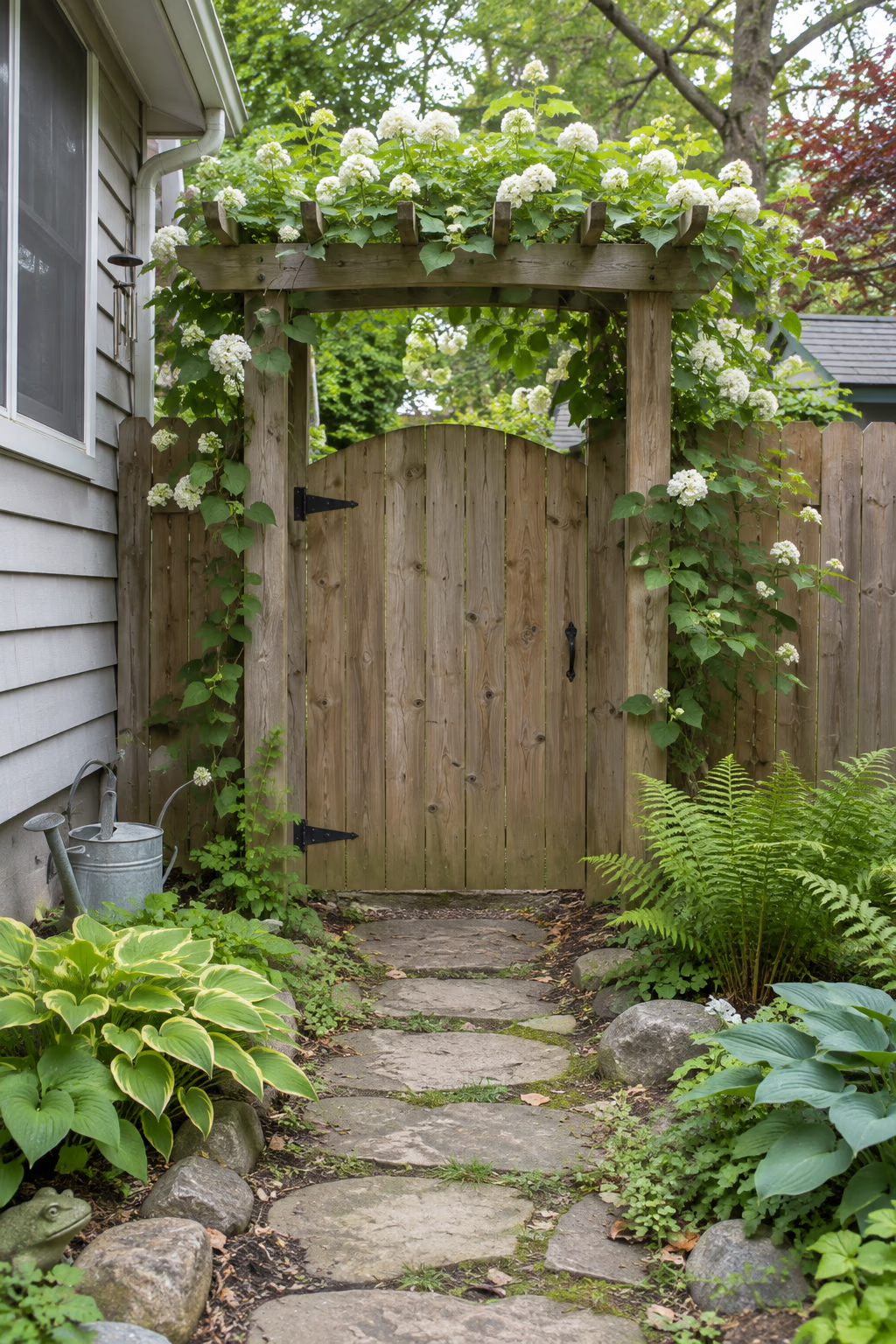
A private entrance that feels like a secret garden
A gate set into a tall fence can look plain. Add a small pergola or arbor over it, built from 4×4 posts and simple rafters, and the entry becomes a feature that frames the garden beyond.
Plant a climbing hydrangea, wisteria, or rose to cover the top, and the gate becomes a shaded, leafy doorway. It marks the boundary while making the garden feel inviting.
Wisteria is heavy and aggressive, so only use it on a sturdy structure and prune it twice a year. Keep the gate posts separate from the pergola posts if possible so the gate doesn’t sag.
20. Choose Solid Vinyl Panels to Buffer Street Noise
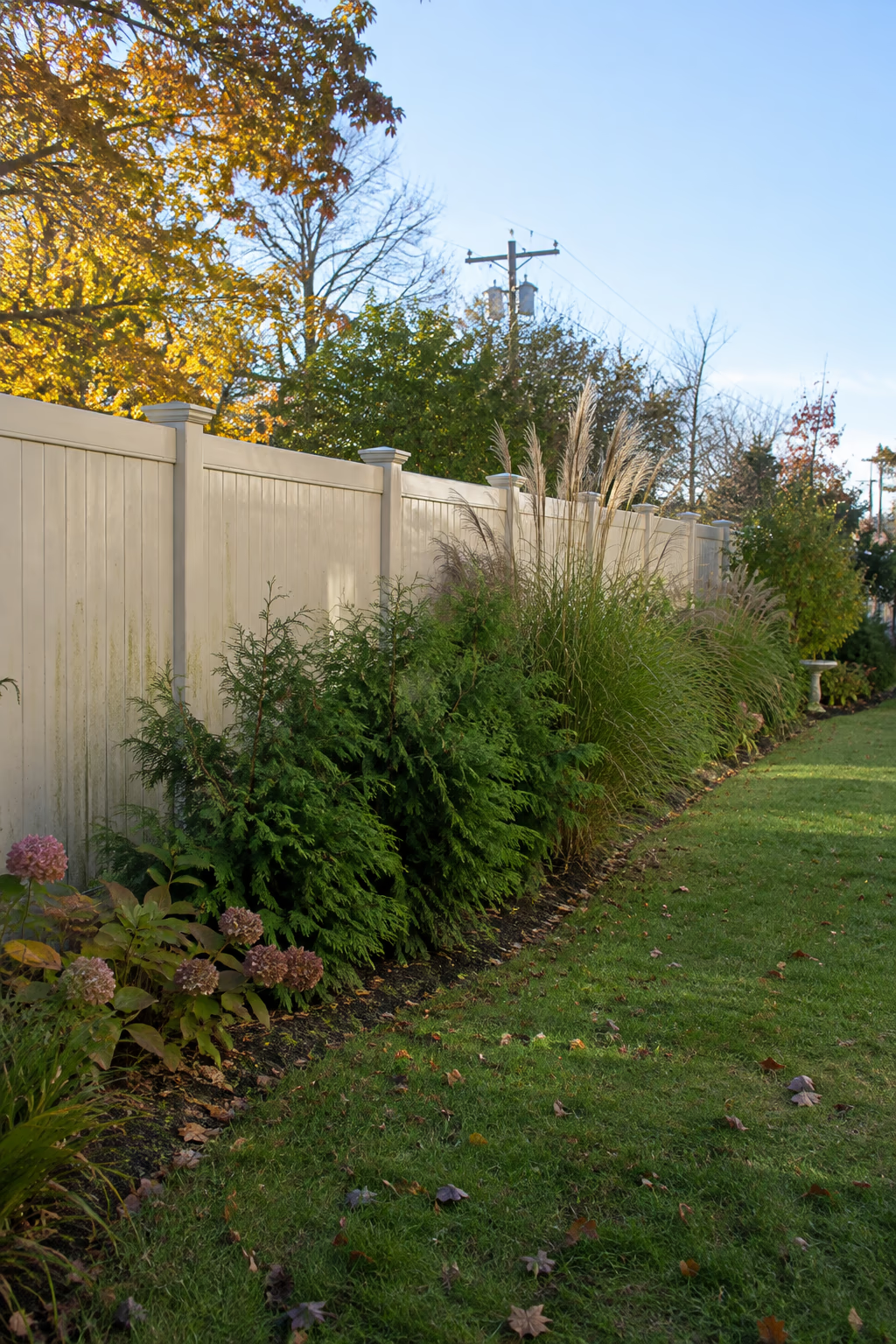
Low-maintenance privacy for busy roads
Solid vinyl privacy panels have no gaps between boards, so they block views completely and cut some traffic noise. They come in white, tan, gray, and wood-look finishes, and they never need paint.
A tall, solid fence won’t silence a highway, but it can take the edge off passing traffic, especially when combined with a border of shrubs and ornamental grasses in front.
Vinyl can crack in extreme cold and fade in strong sun, depending on quality. Look for thick panels and reinforced rails, and expect to pay more up front than for pine.
21. Fit Frosted Polycarbonate Panels Into a Cedar Frame
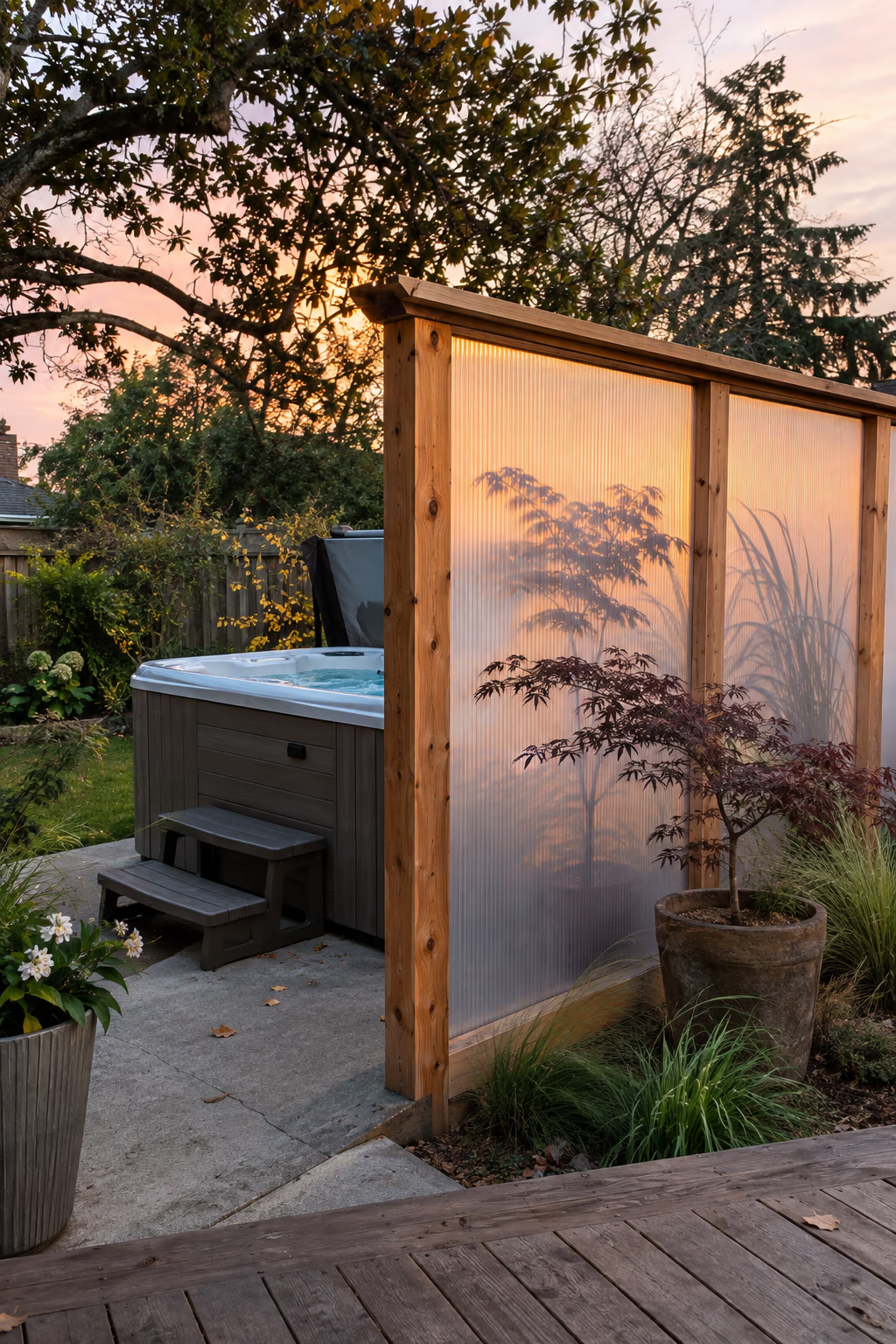
Privacy that lets the light shine through
Frosted polycarbonate sheets, set into a simple cedar frame, give the look of frosted glass at a fraction of the weight and cost. They’re perfect for screening a hot tub, outdoor shower, or patio corner where you don’t want to lose light.
The panels glow in the sun and cast soft shadows of nearby plants, which looks lovely at dusk. Pair them with a few tall grasses or a potted tree for a calm, modern look.
Use UV-stabilized polycarbonate so it doesn’t yellow, and leave room in the frame for the sheets to expand and contract with temperature changes.
How to Plan Your Garden Privacy Fence
A privacy fence is a big, long-term part of your garden, so a little planning saves money, avoids disputes, and gives you a fence you’ll enjoy for years.
- Know your rules. Check local fence height limits, setback rules, and HOA guidelines before buying materials. Many areas allow 6 feet in back and lower fences in front.
- Find your property line. Use your survey or plat map and talk with neighbors before you build. In the US, call 811 before digging post holes.
- Block only what you need. Sit in your favorite spots and note the exact views you want to hide. Sometimes a single screen or tall section works better than a whole new fence.
- Match materials to your climate. Cedar, treated pine, vinyl, metal, and natural screens all behave differently in heat, cold, humidity, and wind.
- Plan for plants. Leave room for beds, climbers, and hedges, and consider how a tall fence will shade your garden throughout the day.
- Budget for upkeep. Factor in stain, paint, repairs, and replacement over time, not just the initial cost of materials and labor.
Frequently Asked Questions
How tall should a garden privacy fence be?
Six feet is the most common height for backyard privacy and blocks most views at ground level. If you need to screen a second-story window or deck, a trellis topper, tall screen, or evergreen tree near your seating area often works better than raising the entire fence.
What is the cheapest way to add privacy to a garden fence?
Rolled bamboo or reed fencing, fast-growing annual vines, and trellis toppers are among the most affordable options. Painting an existing fence and adding a few tall planters can also make a big difference for a small investment.
Which plants grow well on a privacy fence?
Clematis, climbing hydrangea, star jasmine, coral honeysuckle, climbing roses, and annual vines like runner beans are popular choices. Choose plants that suit your zone, sun exposure, and the type of support your fence offers.
Will a privacy fence reduce noise?
A solid, tall fence with no gaps can reduce some noise, especially when combined with dense shrubs and hedges. It won’t block all sound, but mass and solid construction help more than open or slatted styles.
Do I need permission to build a privacy fence?
Often, yes. Many towns require permits for fences over a certain height, and HOAs may regulate materials, colors, and styles. Check with your local building department and HOA before you start.
Final Thoughts
The best garden privacy fence ideas don’t just hide the neighbors. They give your garden a backdrop, support your favorite plants, and make your yard feel like a private retreat you’ll actually want to use every day.
Start with the view that bothers you most, choose a material that fits your budget and climate, and let plants soften the edges over time. With a little planning, your fence can become one of the most beautiful parts of your garden.