Some yards are full of small pots that never quite add up to anything. Then one day a single big container shows up by the patio steps, holding a mass of foliage and color, and suddenly the whole space looks finished.
That’s what a large planter does. It has enough presence to work like furniture or garden art, it holds enough soil to grow plants that would struggle in a small pot, and it needs watering less often than a cluster of little ones. One well-chosen container can anchor a patio, frame a driveway, or hide something you’d rather not look at.
These 21 large outdoor planter ideas cover bold glazed pots, tropical and succulent plantings, container water gardens, potted olive and citrus trees, DIY cedar boxes, edible containers, and practical fixes for weight, watering, and winter. Pick the one that fits your space and climate, or combine a few for a yard that feels planned instead of scattered.
1. Anchor the Patio With a Giant Turquoise Glazed Pot
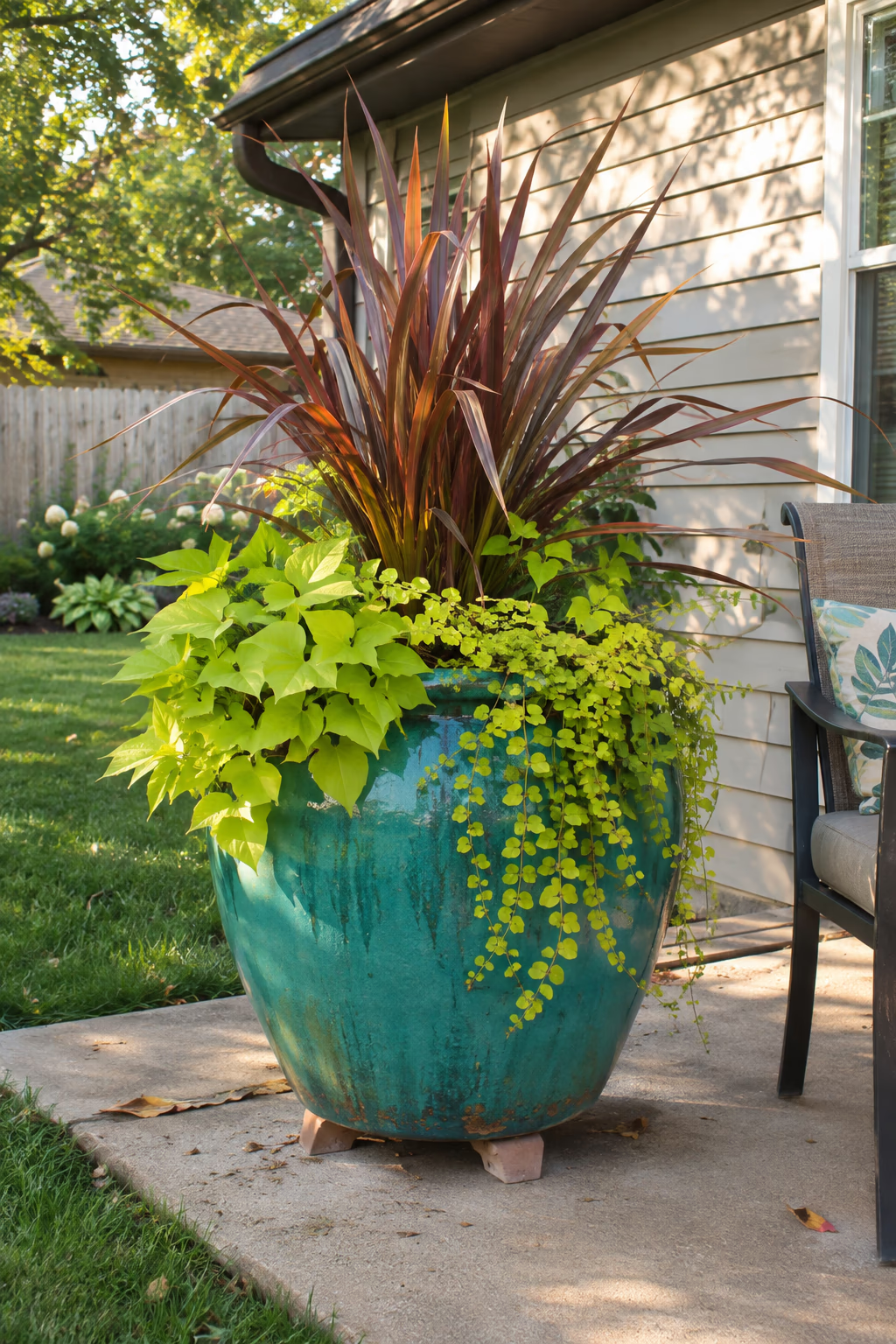
One bold color does the work of a dozen small pots
A glazed ceramic pot 24 to 30 inches across in turquoise, teal, or deep aqua stands out against concrete, brick, and wood decking. Set it at a patio corner or beside the steps and plant it simply: a clump of New Zealand flax or a tall ornamental grass in the center, with chartreuse sweet potato vine or creeping Jenny spilling over the rim.
The blue-green glaze makes foliage greens look richer, so you don’t need many flowers. Green, lime, and burgundy leaves all look good against it, and they stay attractive from spring until frost.
Glazed ceramic can crack when wet soil freezes and expands. In cold-winter areas, look for pots labeled frost-resistant, raise them on pot feet so they drain, and plan to empty them or move them into a garage before hard freezes.
2. Grow a Tropical Jungle in One Jumbo Container
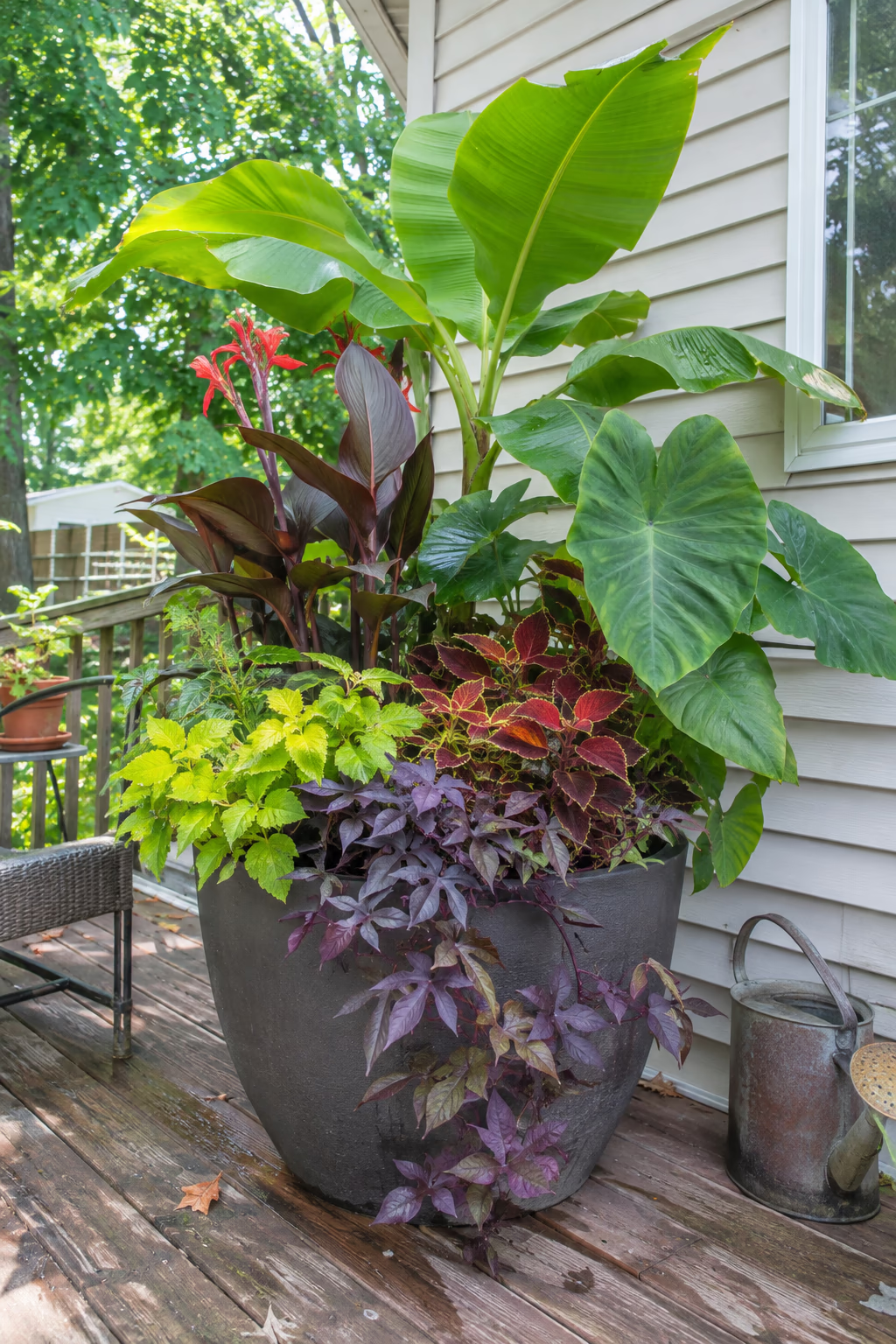
Big leaves create a vacation feel on an ordinary deck
Fill a container at least 24 inches wide and deep with layers of oversized foliage. Use a banana or a tall canna in the back, elephant ears or coleus in the middle, and sweet potato vine or trailing torenia at the edges. Large leaves look right in a large pot because they match its scale.
Tropical plants grow quickly in summer heat, so a single container can look full and lush by July. A mix with deep red, lime green, and dark purple foliage looks dramatic even before anything blooms.
This planting is thirsty. Expect to water daily during hot spells and feed every two weeks with a liquid fertilizer. Most of these plants are tender, so dig and store canna rhizomes and elephant ear tubers indoors over winter if you want to save them in colder zones.
3. Build a Succulent Landscape in a Wide Concrete Bowl
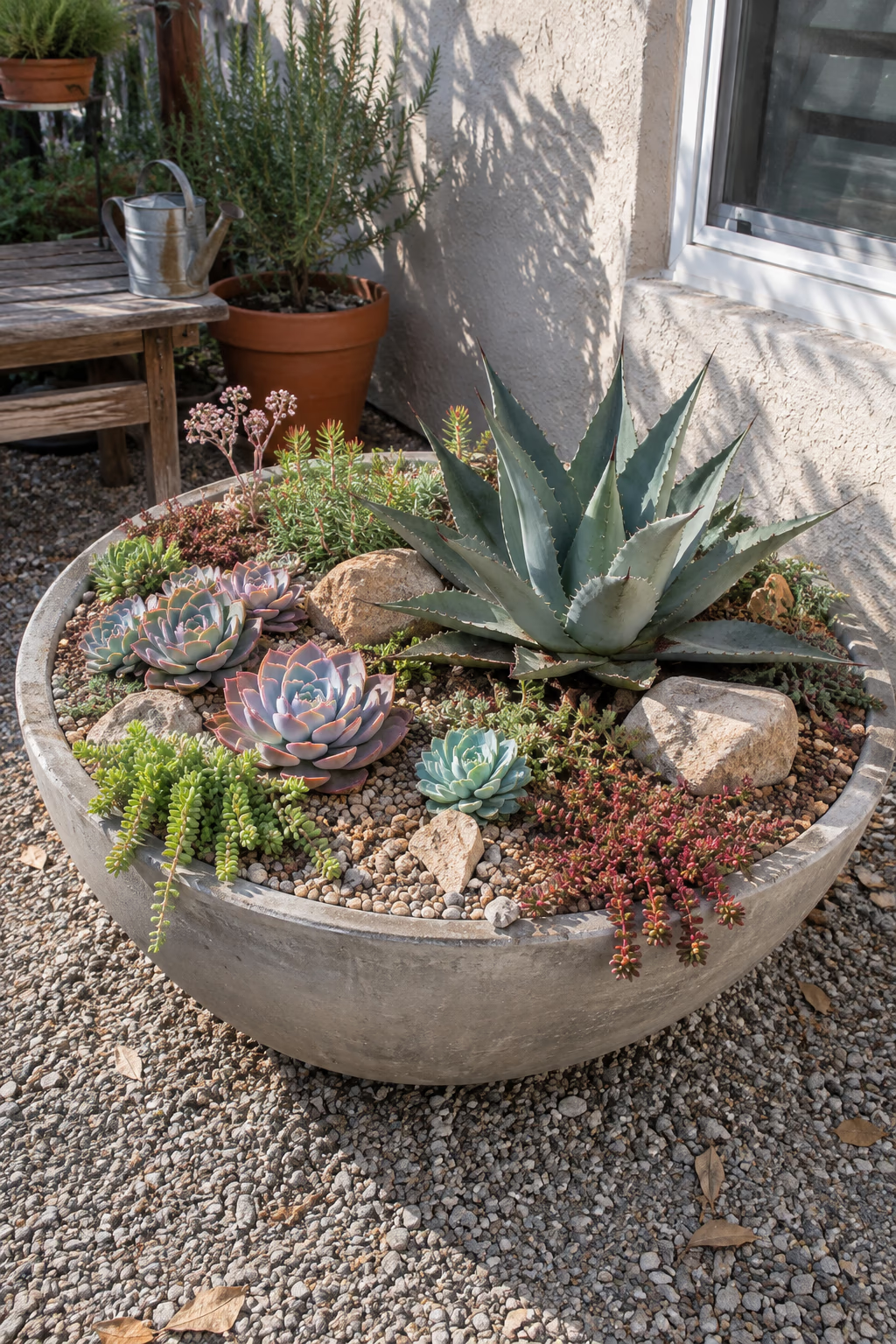
A miniature desert that shrugs off heat and missed waterings
A low, wide bowl in concrete or fiber concrete, about 24 to 36 inches across and 10 to 14 inches deep, can hold a tiny landscape. Set one larger agave or aloe off center, surround it with rosette succulents and trailing sedums, and top the soil with gravel and a few small rocks.
The gray concrete matches the muted blues, greens, and silvers of succulents, and the shallow depth suits their roots. Once established, the bowl needs watering only when the soil is dry an inch or two down.
Use a gritty cactus mix and make sure the bowl has a drainage hole, since soggy soil kills succulents faster than drought. In cold climates, plant hardy hens and chicks and sedums, or treat tender echeverias and agaves as summer plants and bring them indoors before frost.
4. Sink a Water Garden Into a Glazed Ceramic Basin
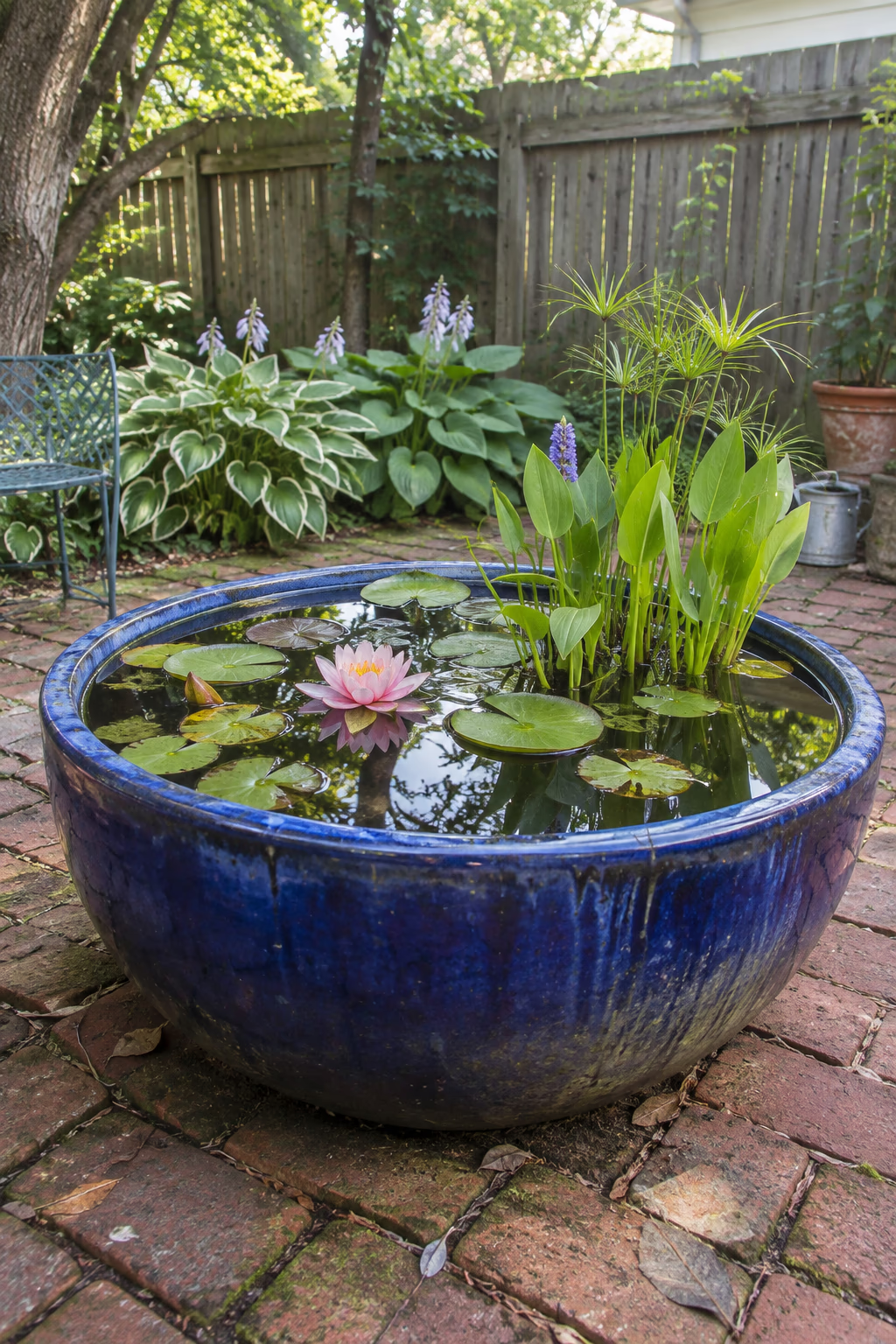
The sound and shine of a pond without digging one
A glazed pot or basin without a drainage hole, or one you seal with a rubber plug and outdoor silicone, can hold a small water garden. A container 20 to 30 inches wide is enough for a dwarf water lily or a few marginal plants such as dwarf papyrus, dwarf cattail, or pickerelweed, set on bricks so their pots sit at the right depth.
Still water reflects the sky and adds movement to a patio, and a small solar fountain pump can add a gentle trickle. It’s an easy way to try water gardening before committing to an in-ground pond.
A filled basin can weigh hundreds of pounds, so set it in its final spot first. Add a mosquito control product made with Bti, which is safe for plants and wildlife, top off evaporation weekly in summer, and drain the container before the water freezes solid.
5. Plant an Olive Tree in a Mediterranean-Style Jar
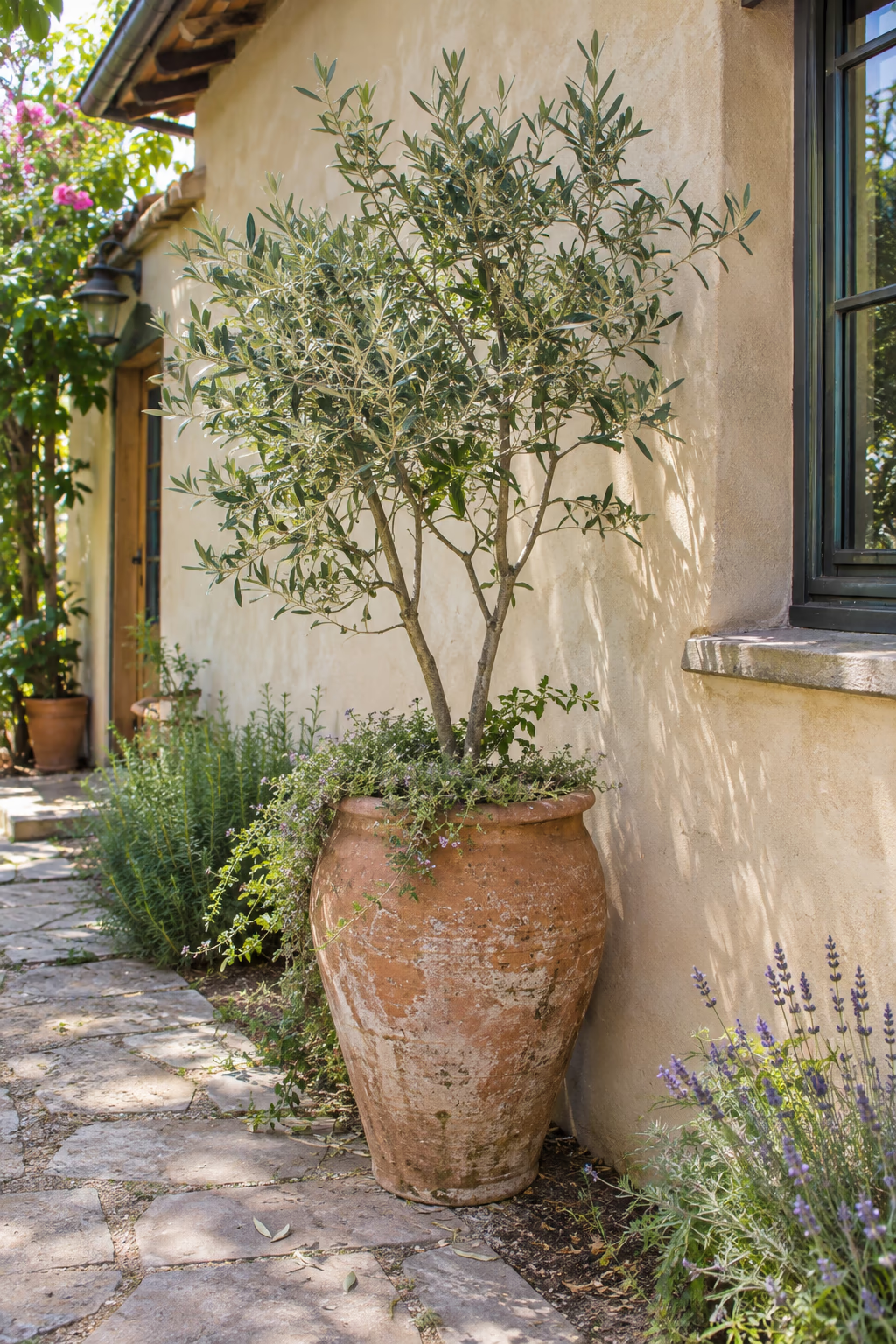
Silvery leaves and old-world style in a sunny corner
A tall terracotta or aged-finish jar 20 to 24 inches wide makes a natural home for a young olive tree. Its gray-green leaves and twisting trunk look good year-round, and a simple underplanting of thyme or creeping rosemary finishes the Mediterranean look.
Olives tolerate heat, wind, and dry spells better than many potted trees, which makes them a good fit for sun-baked patios and south-facing walls. They also take pruning well, so you can keep the tree at a manageable size for years.
Most olive trees are hardy only in milder climates, roughly zones 8 to 10. Elsewhere, roll the pot into a bright, unheated garage or sunroom when nights drop below about 25°F. Use a fast-draining mix, because olives dislike constantly wet roots.
6. Display an Oversized Clay Urn as Garden Sculpture
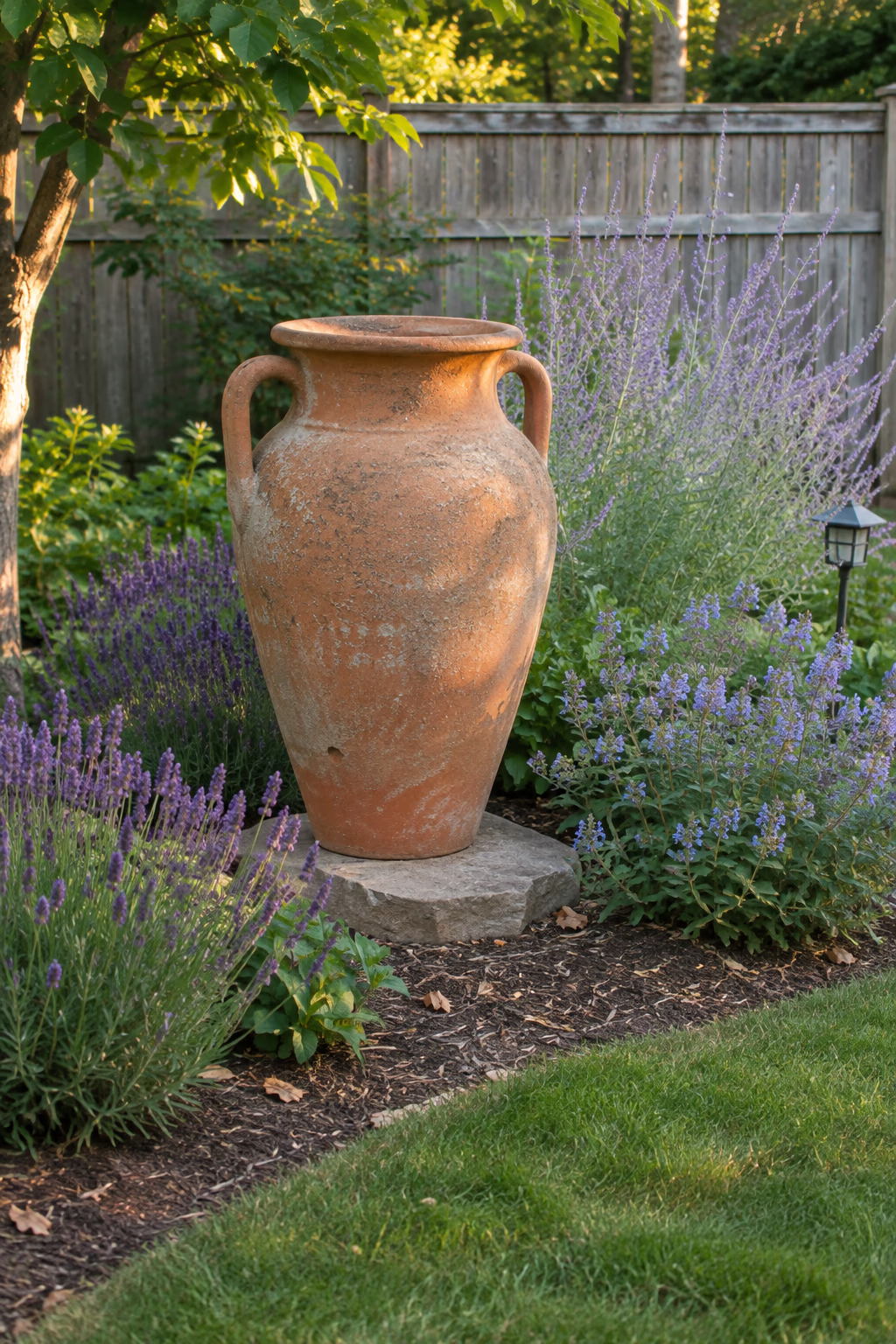
Sometimes the container itself is the star
A big clay urn or amphora-style jar, 30 inches tall or more, can stand alone as a focal point at the end of a path or in the middle of a flower bed. Leave it empty, or set it on its side with low plants spilling out of the mouth for a storybook look.
An empty urn never needs watering, and its curved shape and weathered surface add texture next to soft perennials such as lavender, catmint, or Russian sage. It works like a statue for a fraction of the cost.
Unglazed clay soaks up water and can flake or crack in freezing weather. In cold regions, tip an empty urn on its side or cover the opening so rain and snow can’t collect, and set it on a gravel pad or stone base so it stays level.
7. Mark the Driveway Entrance With Twin Tall Planters
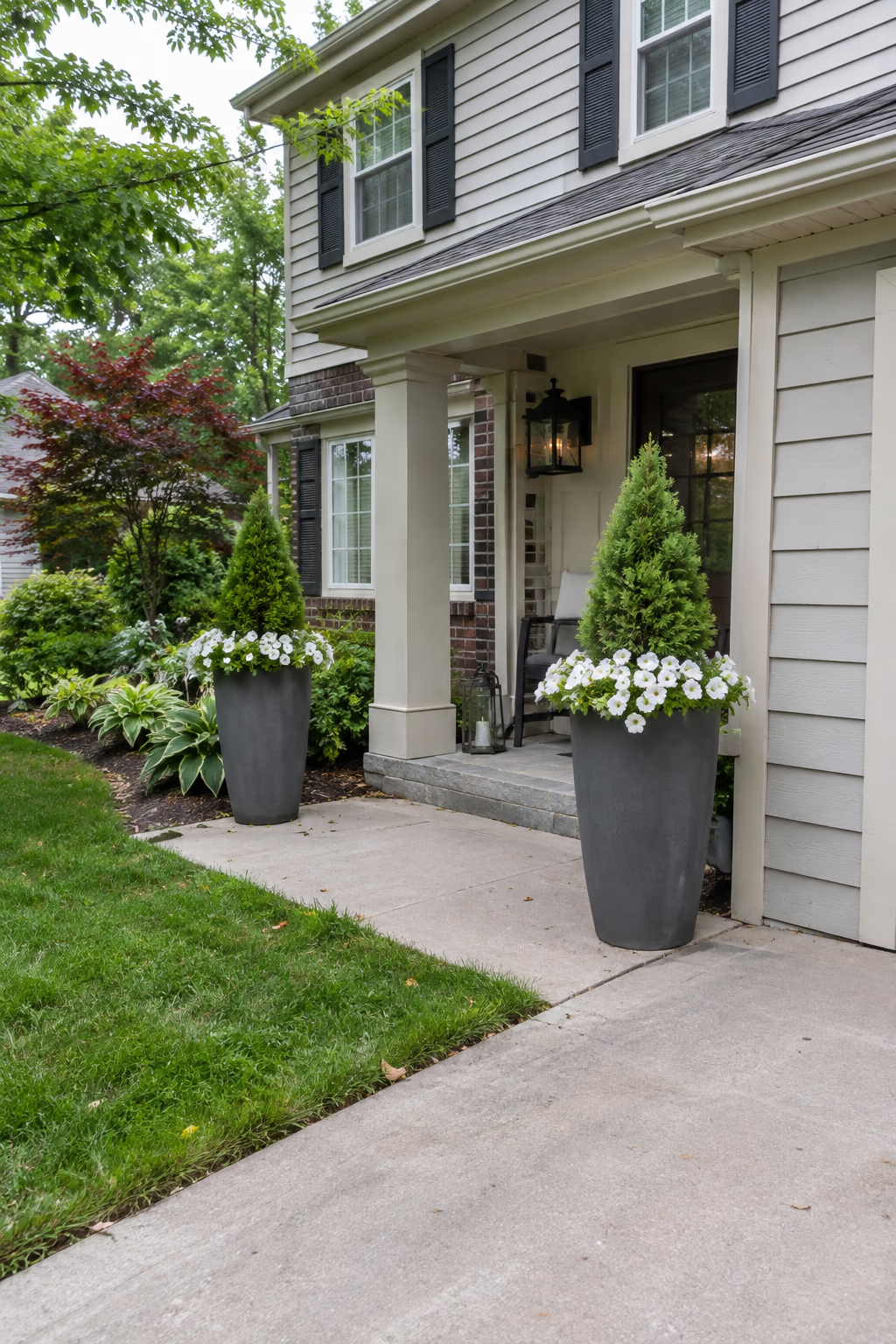
A matched pair makes the approach feel intentional
Two tall cylinders or barrel planters, around 28 to 36 inches high, placed on either side of where the driveway meets the walk give a home a polished arrival point. Plant each one with a narrow evergreen such as a dwarf Alberta spruce or columnar boxwood, plus a ring of seasonal annuals.
Repeating the same container and plant on both sides creates instant order, even if the rest of the front yard is casual. The height keeps the planters visible from the street and from the driver’s seat.
Keep them far enough back from the pavement that car doors, snowplows, and trash bins won’t hit them. Lightweight fiberglass or resin is easier to place, but fill the bottom with gravel or a weighted base so wind can’t tip a tall, top-heavy planter.
8. Pair a Ribbed Charcoal Planter With Silver Foliage
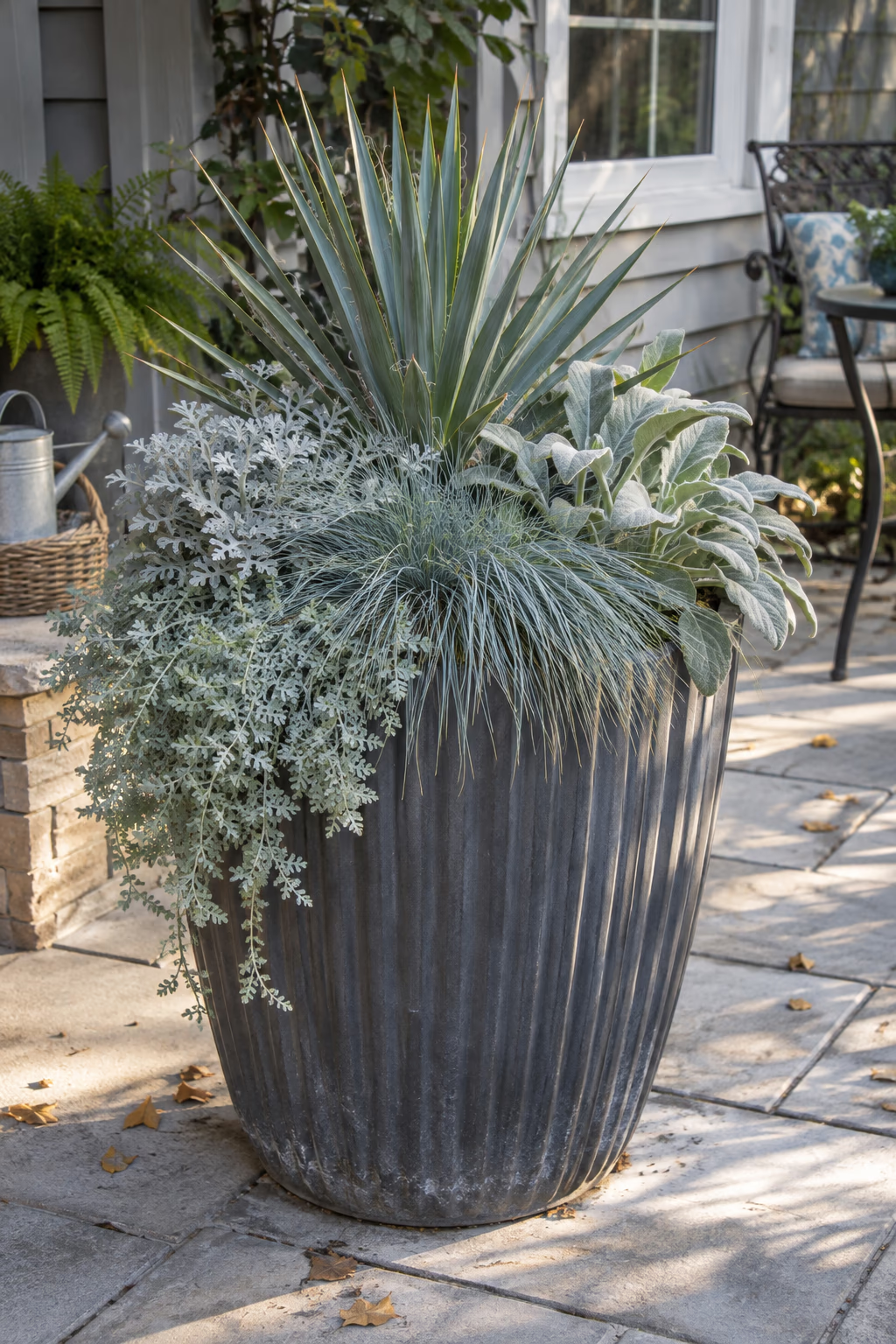
Textured dark pots make pale plants glow
A large charcoal or dark gray planter with a ribbed or ridged surface adds a desert-modern feel. Fill it with silver and blue-gray plants such as blue fescue, lamb’s ears, dusty miller, artemisia, and a blue agave or yucca in the center for structure.
The dark color makes silver leaves look brighter, and the ribbed texture catches side light in the morning and evening, so the pot itself has visual interest. Most silver-leaved plants are naturally drought tolerant, which helps in a container that sits in full sun.
Dark planters absorb heat, so soil can warm up fast in midsummer. Choose heat-loving plants, avoid placing the pot against a reflective west wall in very hot climates, and check moisture often during heat waves.
9. Grow a Pollinator Meadow in an Oversized Container
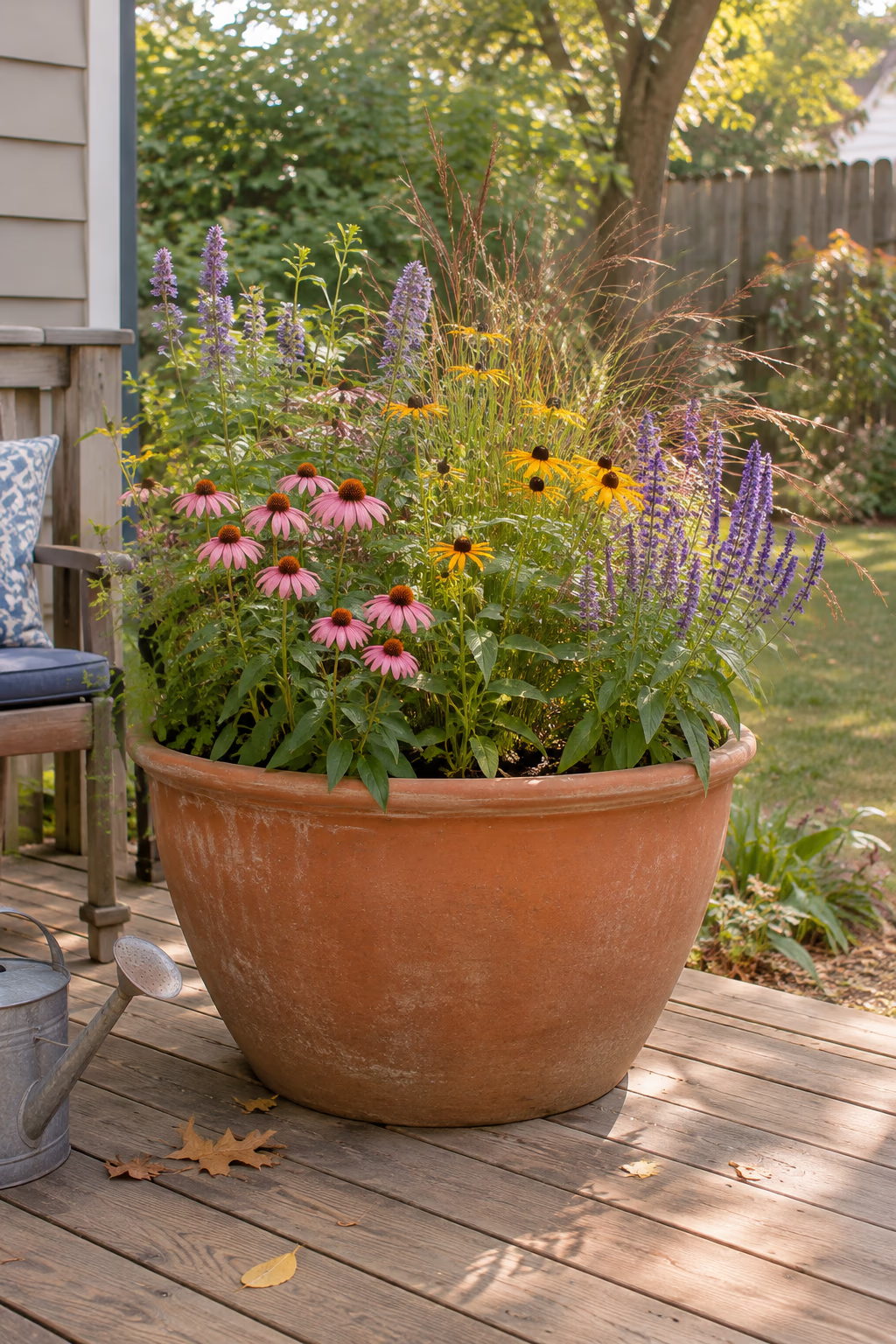
A loose, natural planting that buzzes all summer
Instead of a tidy arrangement, plant a large container 24 inches or wider like a tiny meadow. Combine compact native or pollinator-friendly perennials such as dwarf coneflower, black-eyed Susan, salvia, anise hyssop, and a small grass like little bluestem, letting them mingle.
Bees and butterflies find flowers in a container just as easily as in a bed, and a loose mix looks natural on a deck or balcony with no garden soil. Perennials also come back each year in many climates, which saves money on annuals.
Perennials in pots are less cold hardy than the same plants in the ground. Choose plants rated one or two zones colder than yours, or move the container against the house and mulch it heavily for winter. Skip pesticide sprays so pollinators stay safe.
10. Build a Cedar Planter Box With a Built-In Bench
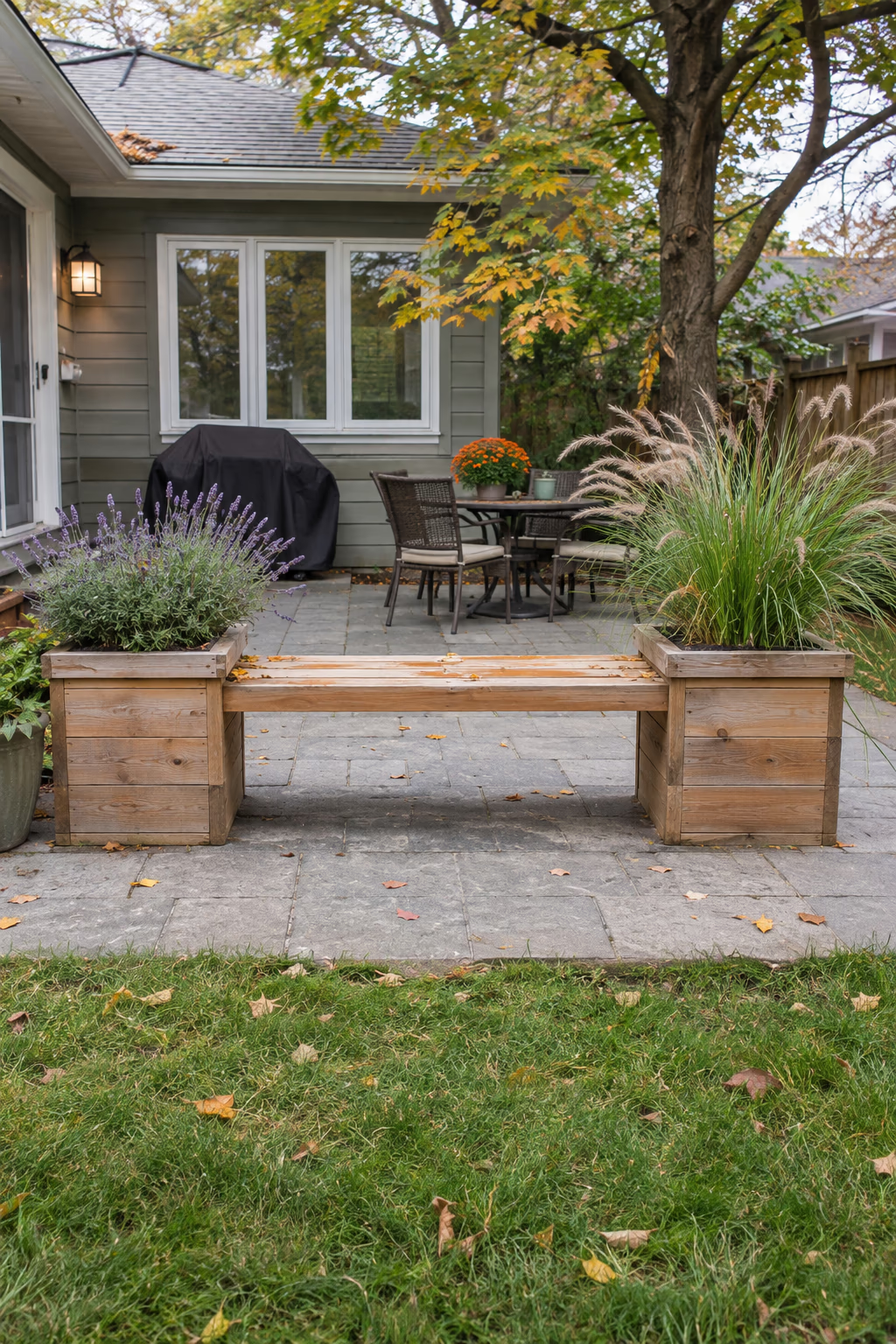
Seating and greenery in one weekend project
Build two cedar planter boxes, each about 24 inches square and 18 inches tall, and connect them with a bench seat made from cedar 2x6s spanning roughly 4 to 5 feet between them. Plant the boxes with ornamental grasses, lavender, or upright annuals that won’t sprawl onto the seat.
The planters double as the bench legs, so you get extra seating on the patio without buying furniture. Cedar resists rot naturally and weathers to a soft silver gray if you leave it unfinished.
Line the inside walls with heavy plastic or a pond liner, leaving the bottom open for drainage, to make the wood last longer. Use exterior-rated screws and make sure the seat is well supported in the middle so it doesn’t sag.
11. Grow Tomatoes and Basil in a Half Wine Barrel
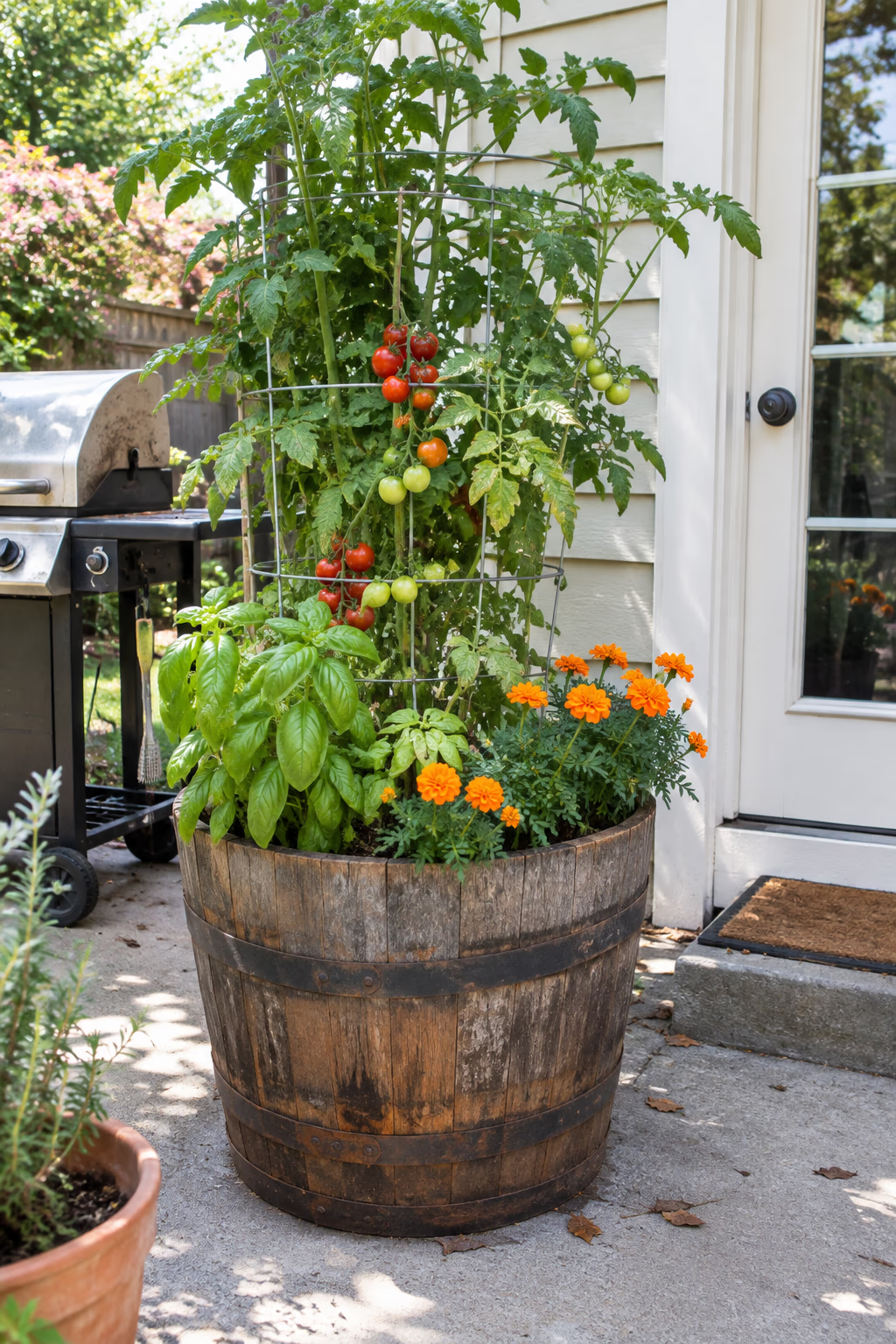
Enough soil for a serious harvest on a sunny patio
A half wine barrel holds roughly 25 gallons of soil, enough for one full-size tomato plant or two compact patio varieties, plus a few basil plants and marigolds around the edge. Add a sturdy tomato cage or stake at planting time and set the barrel in a spot that gets at least six to eight hours of sun.
The large soil volume keeps roots cooler and moisture steadier than a small pot, which helps reduce problems such as blossom end rot. The rustic oak looks good next to a grill or kitchen door.
Drill several drainage holes if the barrel doesn’t have them, and use fresh potting mix rather than garden soil. Barrels are heavy once filled, so set yours on a plant caddy or in its permanent spot before adding soil.
12. Train a Flowering Vine Up an Obelisk in a Big Pot
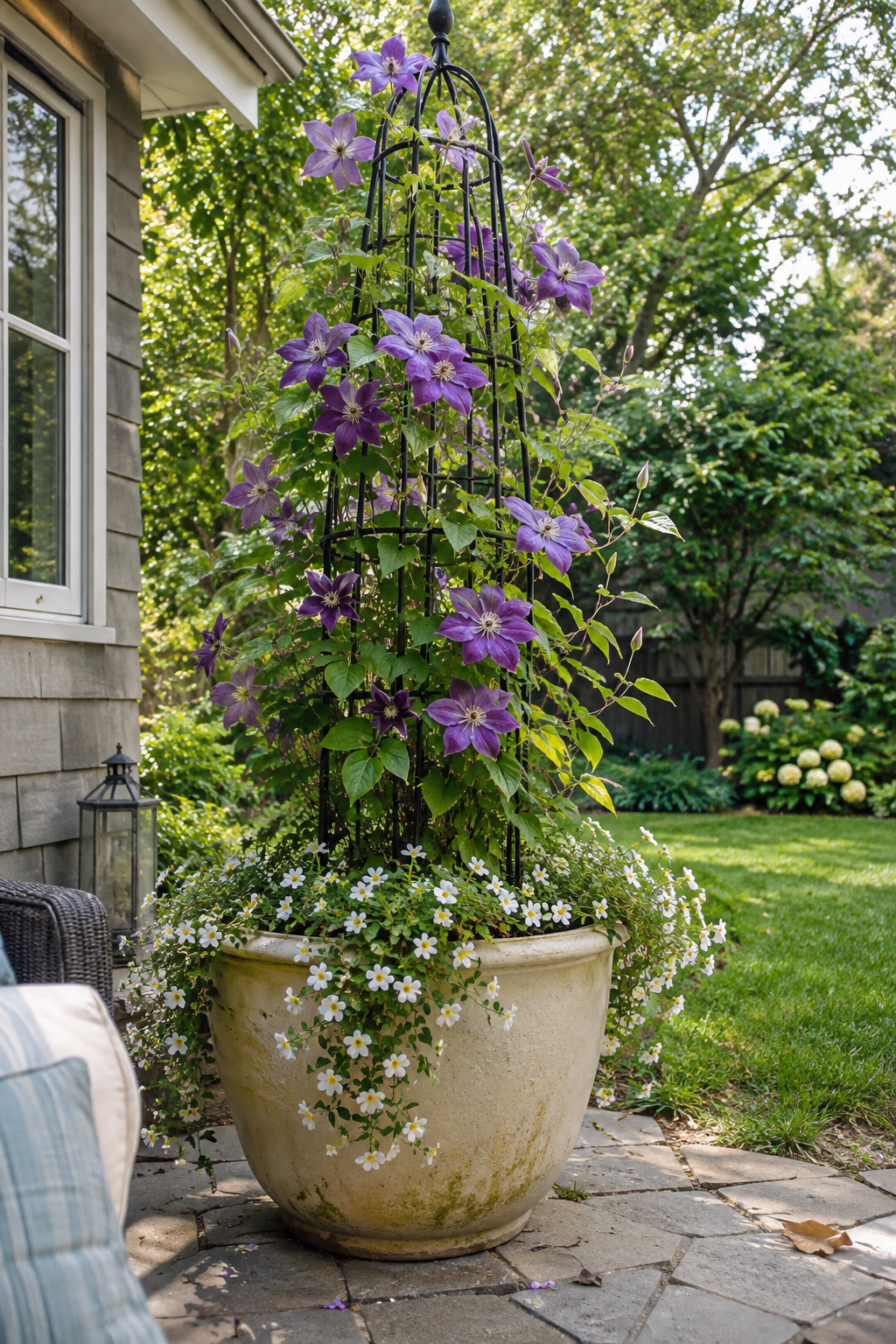
Add height and blooms without a wall or fence
Set a metal or wooden obelisk, 5 to 6 feet tall, into a planter at least 20 inches wide and plant a flowering vine at its base. Compact clematis, mandevilla, black-eyed Susan vine, or climbing nasturtium all work well, and you can tuck trailing annuals around the edge to cover the soil.
The vertical shape draws the eye up and adds height to a flat patio or deck. It’s a good choice where you want a tall accent but don’t have room for a tree.
Push the obelisk deep into the soil or secure it to the planter so it doesn’t lean when the vine fills out. Guide new shoots onto the frame every week or two in early summer, since many vines need help getting started.
13. Keep a Large Planter Green All Winter With Hardy Evergreens
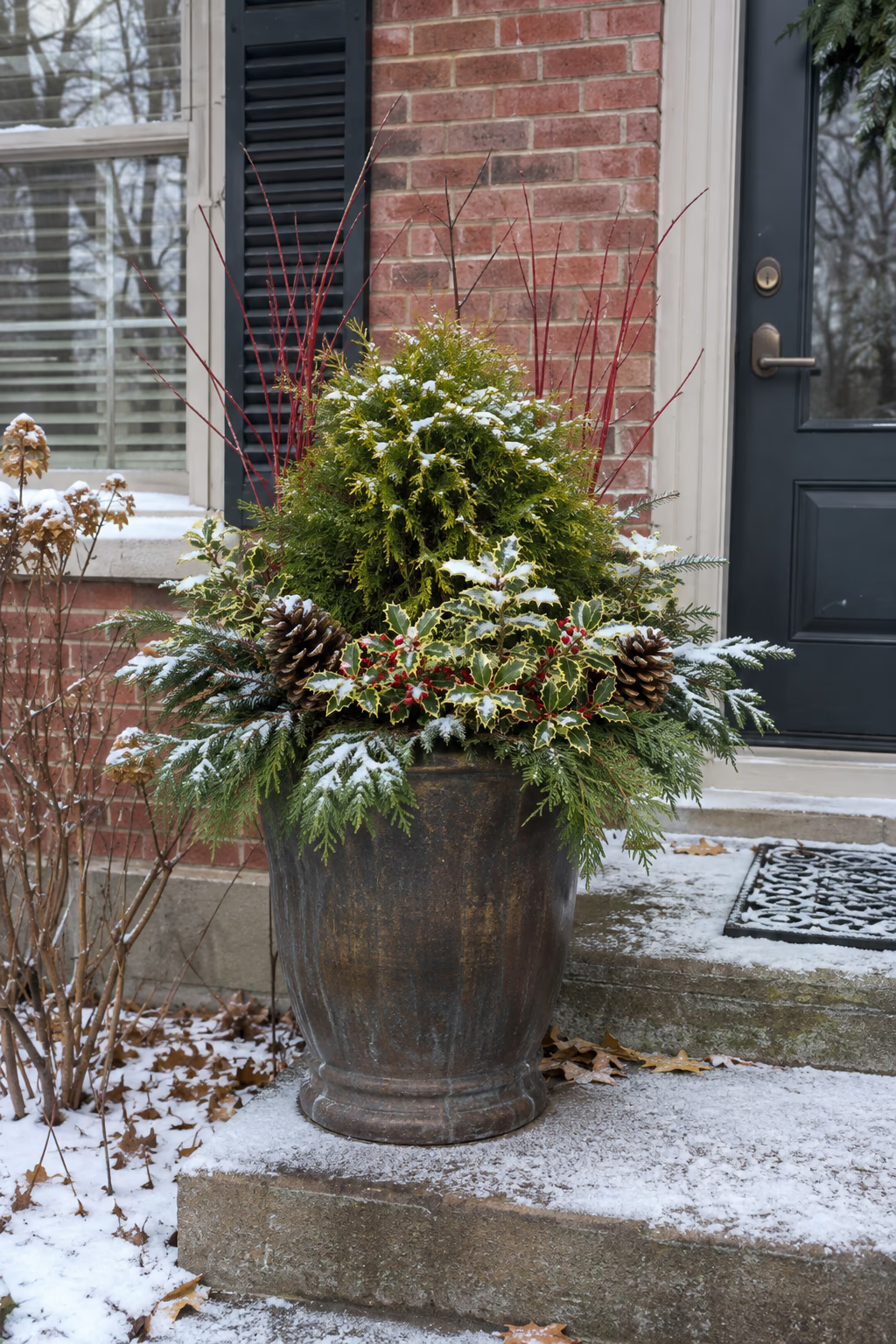
Year-round structure for the months when everything else rests
Plant a frost-proof planter with small evergreens that stay attractive through cold weather: a dwarf conifer such as a globe arborvitae or dwarf spruce, plus wintercreeper, holly, or heuchera. In late fall, add cut evergreen boughs, red twig dogwood stems, and pinecones for extra fullness.
Many large containers sit empty from November to April, and an evergreen planting keeps an entry or patio from looking bare. Snow on the branches makes it even prettier.
Roots in pots are exposed to colder temperatures than roots in the ground, so choose shrubs hardy at least two zones colder than your area. Water during dry winter spells when the soil isn’t frozen, because evergreens keep losing moisture through their needles and leaves.
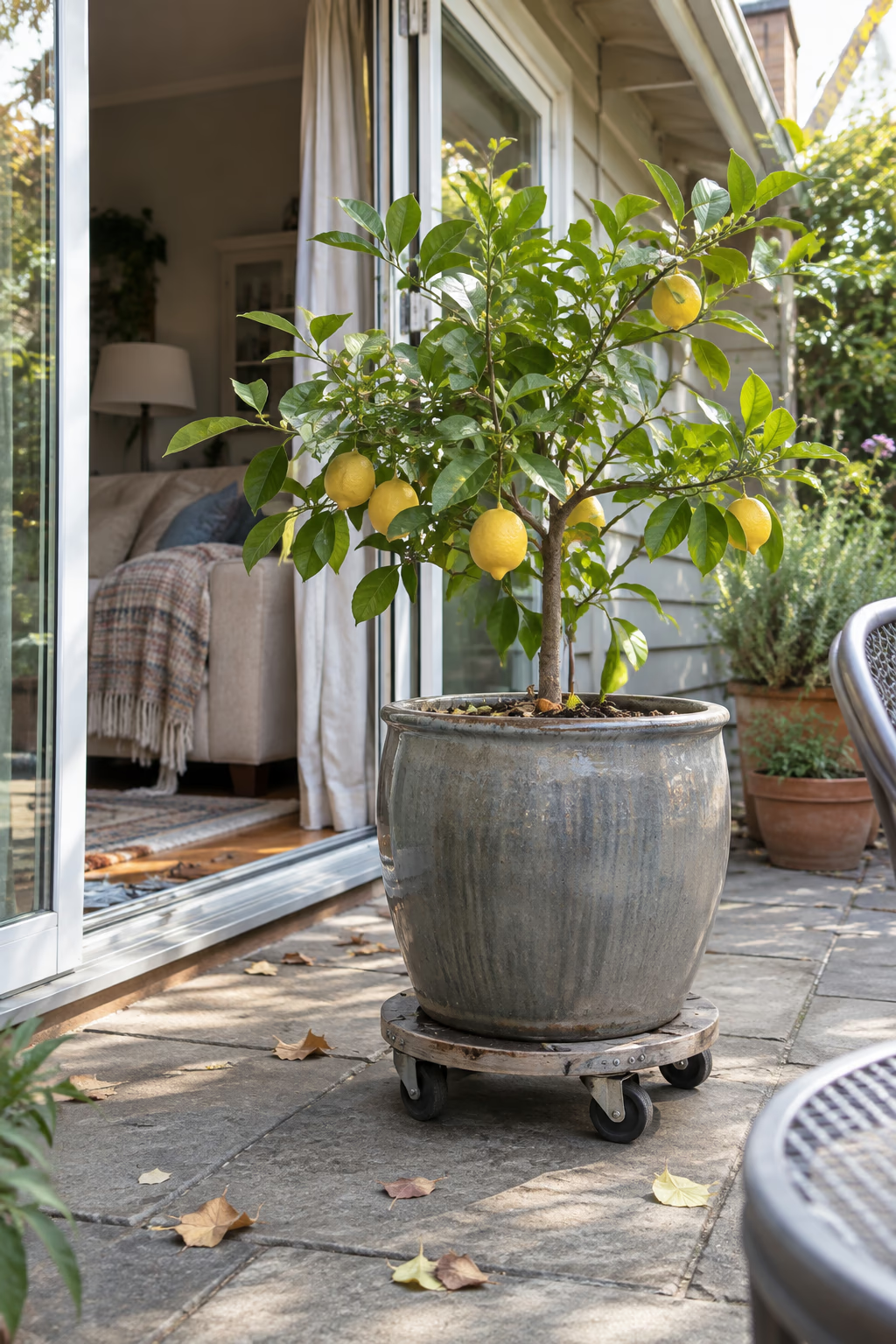
14. Roll a Dwarf Citrus Tree Indoors on a Plant Caddy
Fragrant blossoms and fruit, even in cold climates
Plant a dwarf Meyer lemon, kumquat, or calamondin in a container 18 to 24 inches wide and set it on a wheeled plant caddy. Summer it outdoors in full sun on the patio, where it will bloom and set fruit.
Citrus blossoms are wonderfully fragrant, the glossy leaves look good all year, and the fruit is a bonus. The caddy makes it easy to move a heavy pot without lifting or dragging it.
Bring the tree inside before nights drop much below 40°F, and give it the brightest window you have. Use a citrus fertilizer during the growing season, and let the top inch or two of soil dry before watering to avoid root rot.
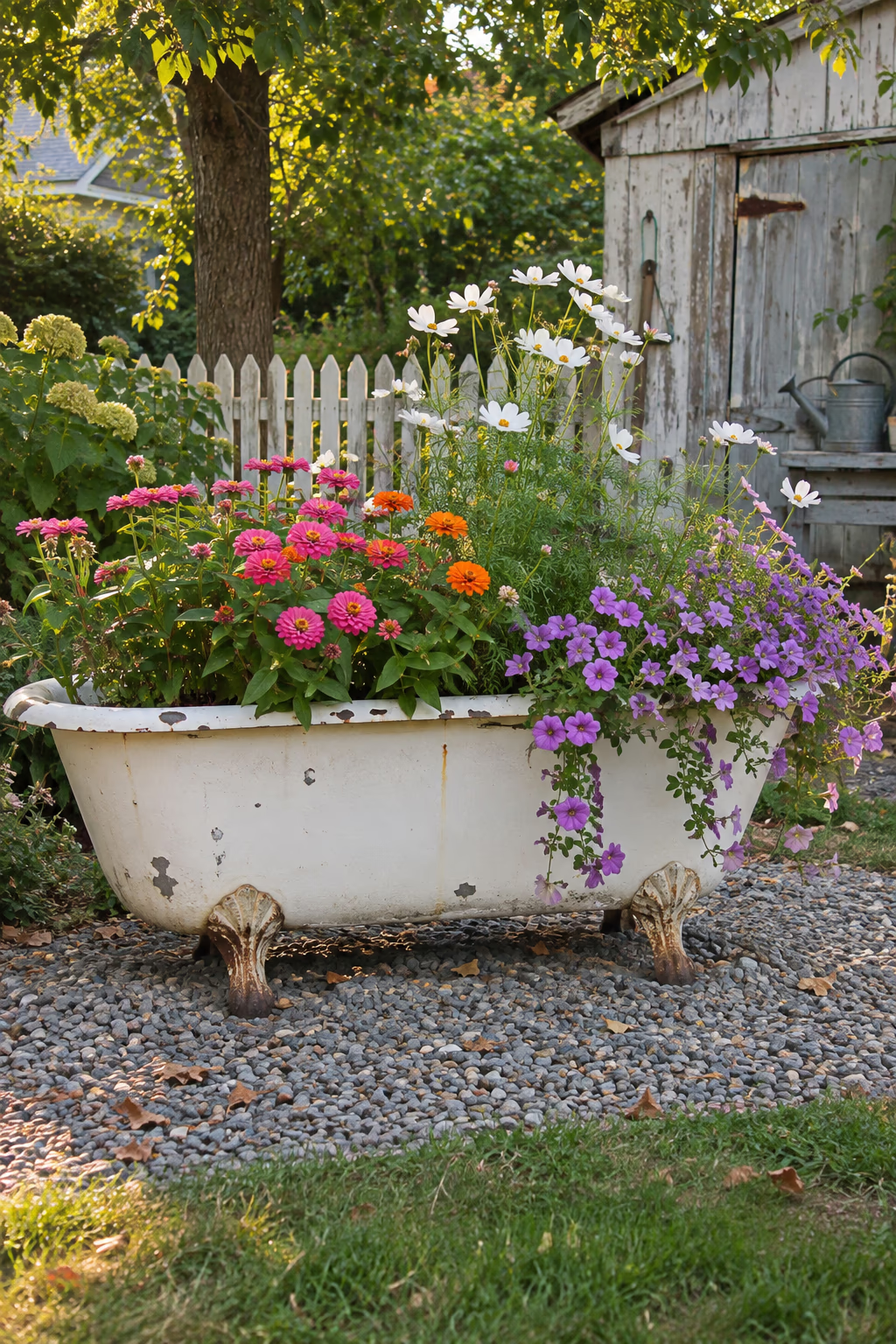
15. Repurpose a Vintage Clawfoot Tub as a Planter
A conversation piece with plenty of room to grow
An old clawfoot tub from a salvage yard or a remodel makes a long, deep planter for a cottage-style yard. The drain hole already provides drainage, so add a layer of landscape fabric over it and fill the tub with potting mix for flowers, herbs, or salad greens.
The curved shape and claw feet add charm, and the size works well for mass plantings of zinnias, cosmos, or petunias. It’s also a good way to reuse something that would otherwise end up in a landfill.
Cast iron tubs often weigh 250 pounds or more empty, so move them with several helpers or an appliance dolly. Old tubs may have lead in the enamel, so use them for flowers rather than food crops unless you have tested the finish.
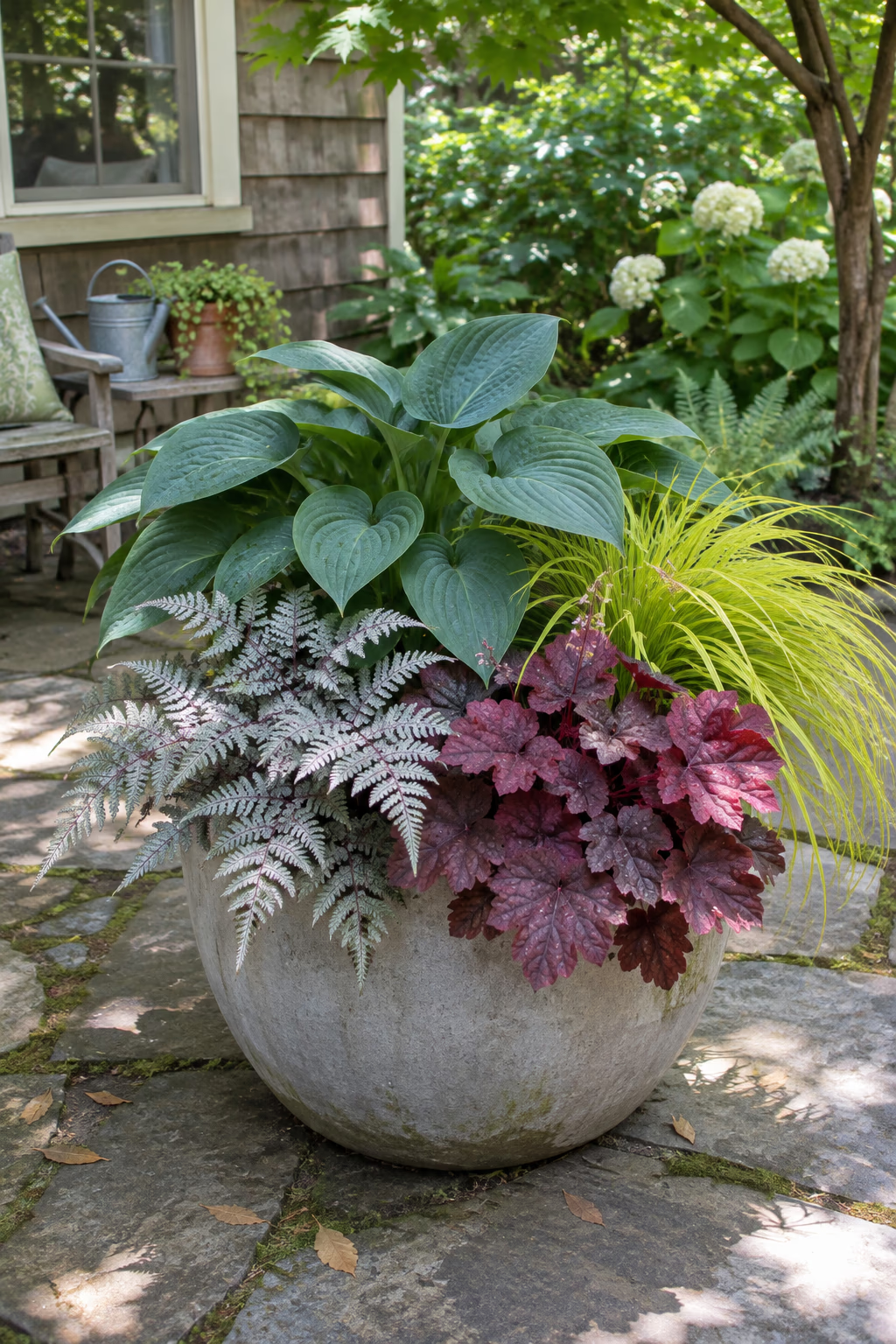
16. Brighten a Shady Corner With a Hosta and Fern Container
Big leaves and soft texture where flowers struggle
For a north-facing patio or a spot under trees, fill a large pot with shade lovers: a big blue or variegated hosta in the center, Japanese painted fern or autumn fern beside it, and heuchera or golden Japanese forest grass at the edge. A pale gray or cream container helps brighten the darker area.
Shade plants grow well in containers because the soil stays cooler and moisture lasts longer. Varied leaf shapes and colors keep the planter interesting without any flowers.
Slugs love hostas, so check under leaves on damp evenings and use an iron phosphate bait if needed. Hostas and ferns are hardy perennials, so you can keep the container going for years and divide the plants when they outgrow it.
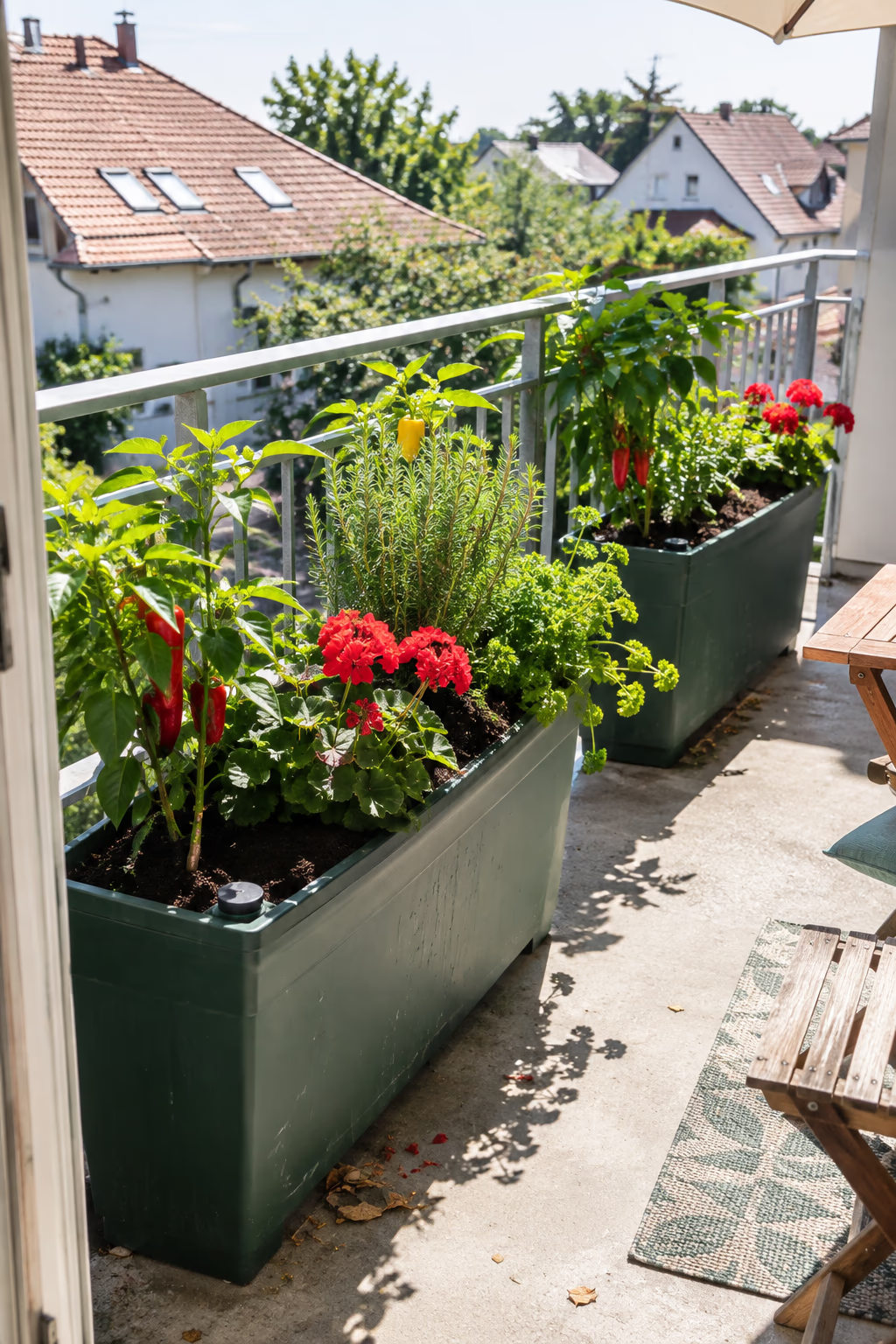
17. Choose Self-Watering Planters for Hot, Sunny Spots
A built-in reservoir saves daily trips with the hose
Self-watering planters have a water reservoir below the soil and a wick or soil column that draws moisture upward. Large rectangular or round models suit hot decks, balconies, and driveways where regular pots dry out by afternoon, and they work well for annuals, vegetables, and herbs.
The steady supply of moisture helps plants avoid the wet-dry swings that cause stress, and you may only need to refill the reservoir every few days in summer. That makes them a practical choice if you travel or work long hours.
Use a light potting mix rather than heavy soil so the wicking works, and make sure the overflow hole stays clear so rain doesn’t flood the roots. Empty the reservoir before winter in cold climates to avoid cracking.
18. Screen the AC Unit With a Row of Big Planters
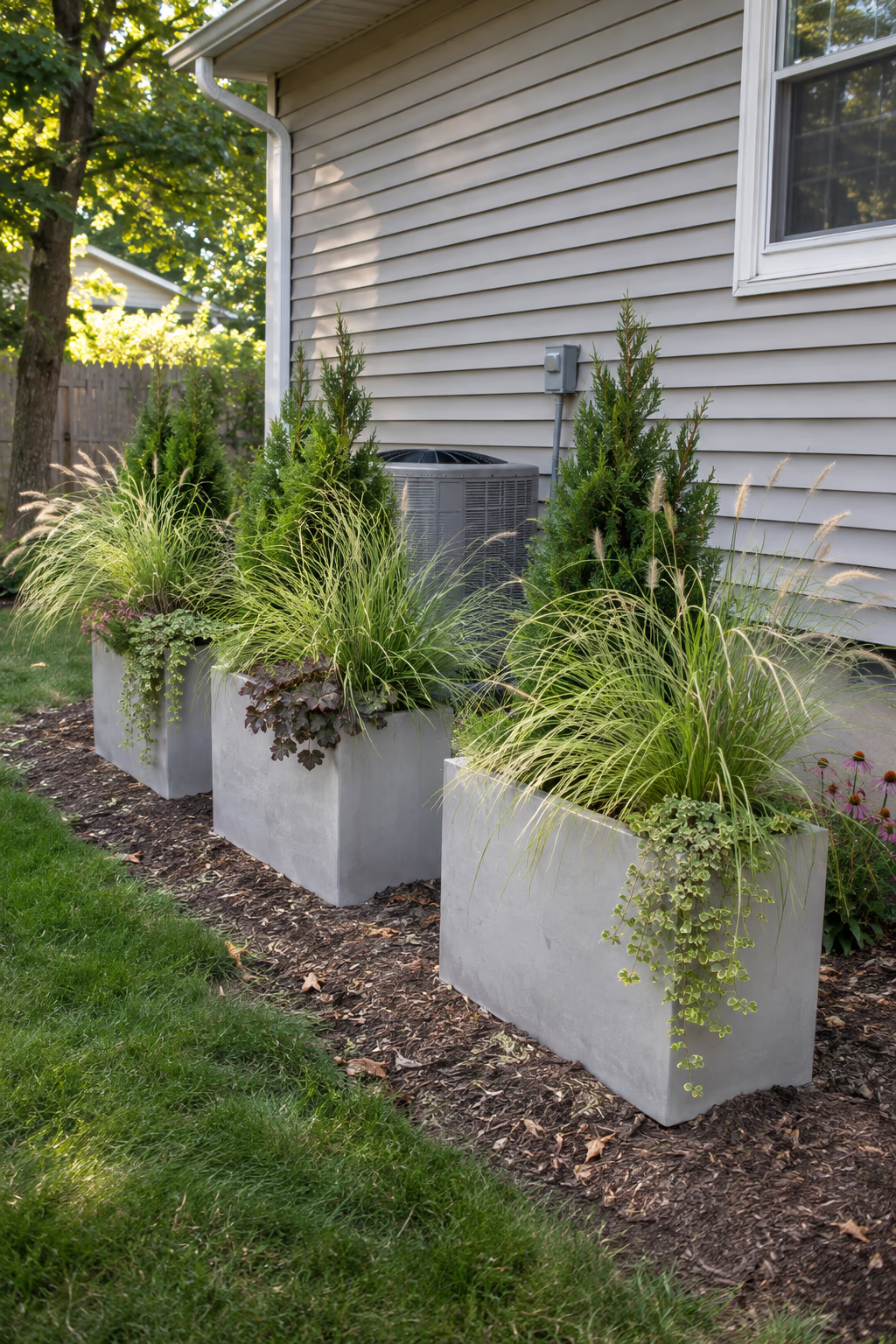
Hide the eyesore and keep the equipment working
A row of two or three large rectangular planters set in front of an outdoor air conditioner, pool pump, or utility box can block the view without building a fence. Plant them with ornamental grasses, upright evergreens, or tall annuals such as cleome that reach about 3 to 4 feet.
Planters are easy to move when a technician needs access, which is a big advantage over permanent shrubs. The greenery also softens the side of the house where the equipment usually sits.
Air conditioners need open space for airflow, so leave at least 2 to 3 feet of clearance around the unit, or whatever the manufacturer’s manual recommends. Never cover gas meters or electrical boxes, as utility workers need clear access to them.
19. Swap Seasonal Displays Using Grow-Pot Inserts
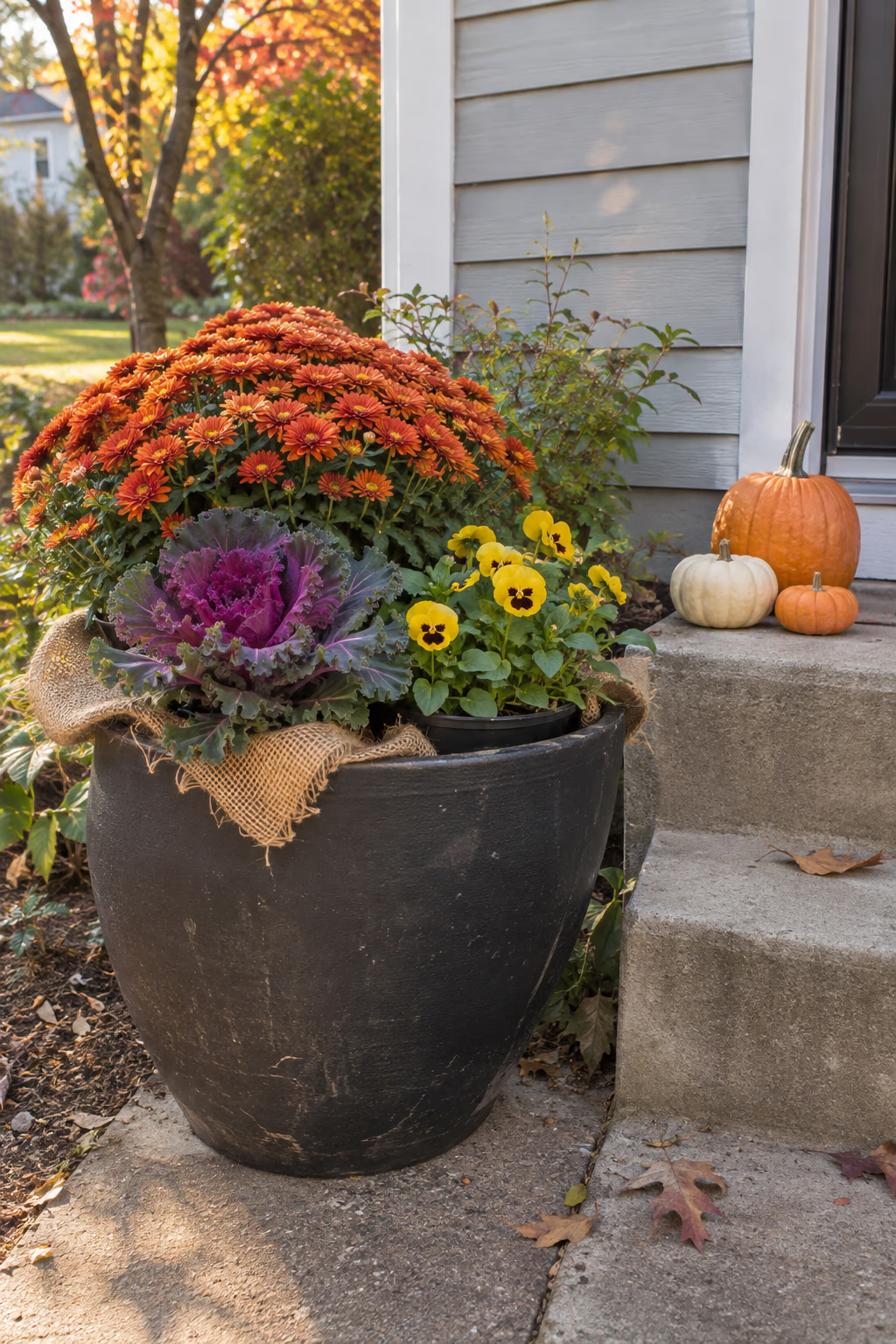
Change the look in minutes, not afternoons
Instead of replanting a big container every season, plant into plastic nursery pots that fit inside the decorative planter. Fill the space around them with mulch or burlap. Swap spring tulips for summer annuals, then fall mums, ornamental kale, and pansies, then winter greens.
This saves a lot of digging and soil, and it lets you grow the next season’s plants in the back yard until they look their best. A heavy decorative planter never has to move.
Check that the inner pots have drainage and that water can escape the outer planter too. Set the inserts on an upside-down pot or brick inside the container so they sit just below the rim.
20. Grow Blueberry Bushes in Large Acidic-Soil Pots
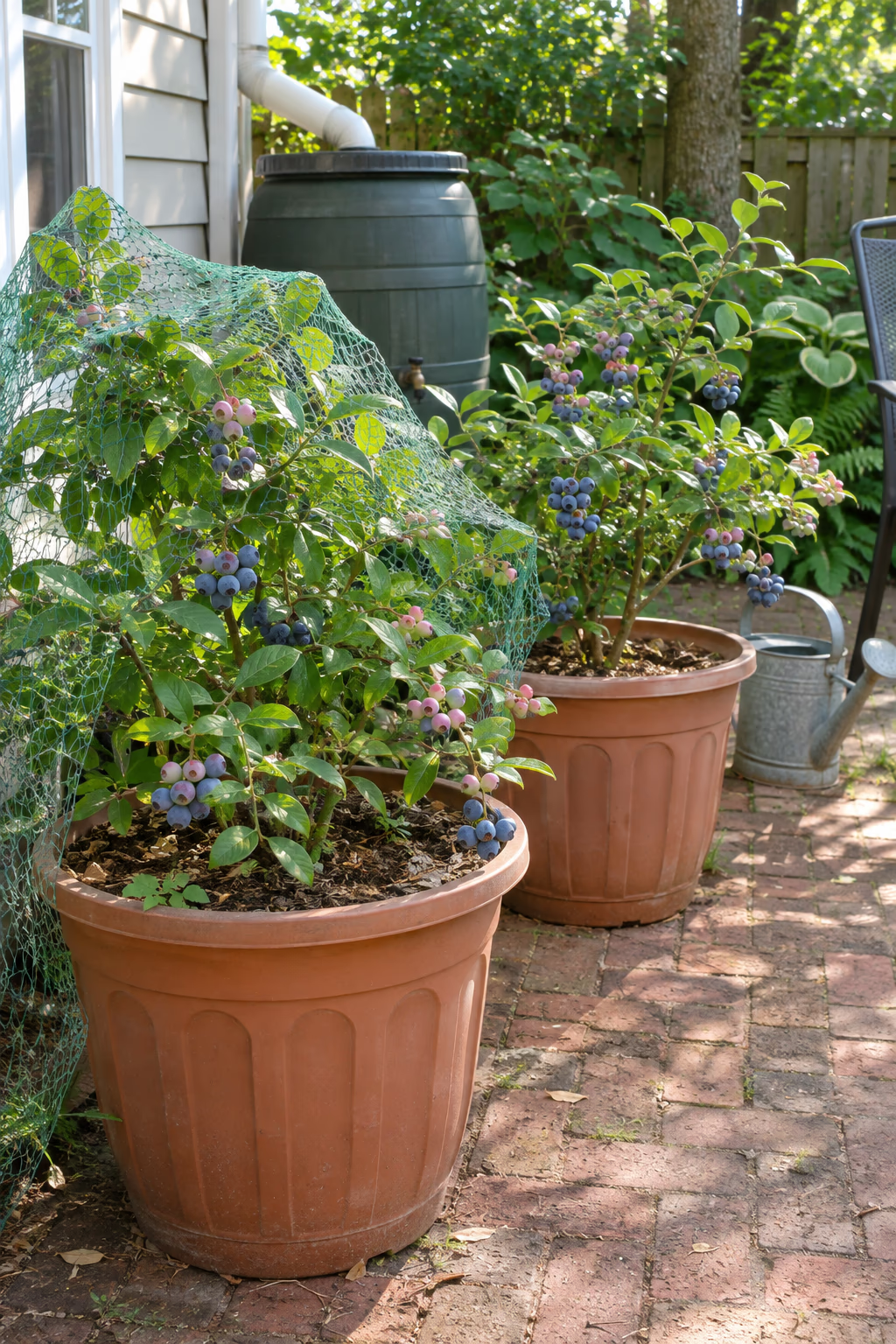
Fruit, flowers, and fall color in one shrub
Blueberries need acidic soil, which can be hard to provide in many yards but easy in a container. Plant a compact or half-high variety in a pot at least 18 to 24 inches wide, using a potting mix made for acid-loving plants with a pH around 4.5 to 5.5.
Blueberries give you white spring flowers, summer berries, and red to orange fall foliage, so the planter looks good across seasons. Growing two different varieties near each other usually improves pollination and harvest size.
Water with rainwater when you can, since hard tap water can raise the pH over time. Cover the bushes with bird netting as berries ripen, or the birds may get them first.
21. Fill Deep Planters With Lightweight Filler to Save Soil
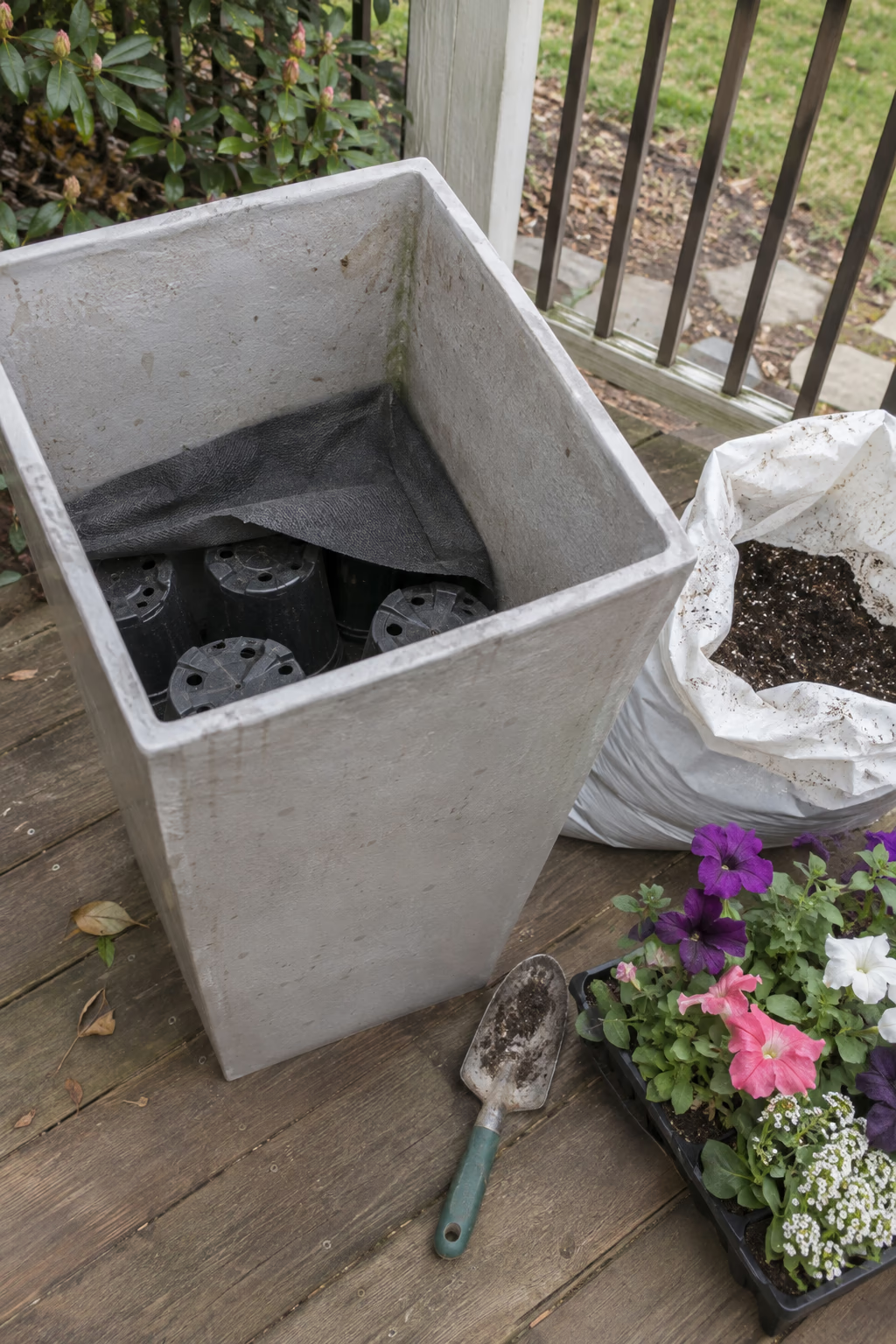
Cut the weight and the cost of a giant container
Annuals and shallow-rooted plants need only about 12 to 18 inches of soil, so a very tall planter doesn’t need to be filled to the bottom. Place empty plastic nursery pots upside down, crushed aluminum cans, or chunks of foam packing material in the bottom third, cover them with landscape fabric, and add potting mix on top.
This can save a lot of bags of soil and makes the planter much lighter to move. It’s especially useful on balconies and decks where weight matters.
Don’t use filler for trees, shrubs, or large perennials that need the full root depth. Also note that a layer of gravel does not improve drainage the way many people believe, since water collects above it anyway. A good drainage hole and a quality potting mix matter far more.
How to Plan Your Large Outdoor Planters
Big containers cost more and are harder to move than small ones, so a little planning keeps them looking good and lasting for years.
- Measure the space first. Check the width of paths, steps, and doorways, and leave room to walk around a planter once its plants fill out.
- Know the weight limits. A filled large planter can weigh several hundred pounds. On balconies, rooftops, and older decks, check with your building manager or a contractor before adding heavy containers.
- Pick materials for your climate. Fiberglass, resin, fiber concrete, metal, and frost-resistant high-fired ceramic handle cold winters better than unglazed terracotta and cheap glazed pots.
- Insist on drainage. Every planted container needs at least one hole. Raise pots slightly on feet to keep water from pooling underneath and staining patios.
- Match plants to light and zone. Note how many hours of sun the spot gets, and choose perennials and shrubs rated one or two zones colder than yours for pots that stay out all winter.
- Place before planting. Set the planter in its final position, or on a caddy, before you add soil and water. Check HOA rules if containers will sit at the curb or in shared areas.
Frequently Asked Questions
What size counts as a large outdoor planter?
Most retailers call planters about 16 to 24 inches across large and anything over 24 inches extra-large. For trees, shrubs, and full mixed plantings, a container at least 20 to 24 inches wide and deep gives roots enough room.
What is the best material for a large planter that stays outside year-round?
Fiberglass, resin, fiber concrete, powder-coated metal, and frost-resistant high-fired ceramic all handle weather well. Unglazed terracotta looks lovely but tends to crack in freezing climates unless it is emptied or stored.
How do I keep a large planter from getting too heavy to move?
Choose lightweight materials such as fiberglass or resin, use a light potting mix instead of garden soil, and fill the bottom of very deep planters with lightweight filler when you’re growing shallow-rooted plants. A wheeled caddy also helps.
How often should I water large outdoor planters?
Big containers dry out more slowly than small ones, but in summer heat many still need water every day or two. Push a finger into the soil, and water deeply when the top inch or two is dry.
Can I leave plants in large planters over winter?
Yes, if the container is frost-resistant and the plants are hardy at least one or two zones colder than your area. Move tender plants such as citrus and olives into a garage or bright room, and empty pots that might crack.
Final Thoughts
A large planter is one of the easiest ways to make an outdoor space feel finished. A glossy turquoise pot, a succulent-filled concrete bowl, or a barrel of tomatoes can give a patio or entry a clear focal point with just one container.
Start with a planter that suits your space, climate, and how much watering you’re willing to do, then build from there. With the right container and plants, your big pots will look better each season.