Walk past almost any home that looks cared for and you’ll notice the containers before anything else: a potted tree catching the afternoon light, a low bowl spilling with flowers, a row of clay pots guiding you down the path. Planters do a lot of work for very little space.
That’s why they’re so useful. A planter lets you garden where there’s no soil, change the look of a yard without digging a bed, and try new colors and plants every season. Moving a pot is a lot easier than moving a shrub, so mistakes are cheap and easy to fix.
These 27 outdoor planter ideas range from container trees, raised bowls, and lit-up pots to herb boxes, upcycled washtubs, mini water gardens, and frost-proof containers that stay out all year. Some are quick weekend projects and others are simple purchases, and every one of them works in an ordinary yard.
1. Plant a Small Tree in an Oversized Pot
Instant height and a living focal point
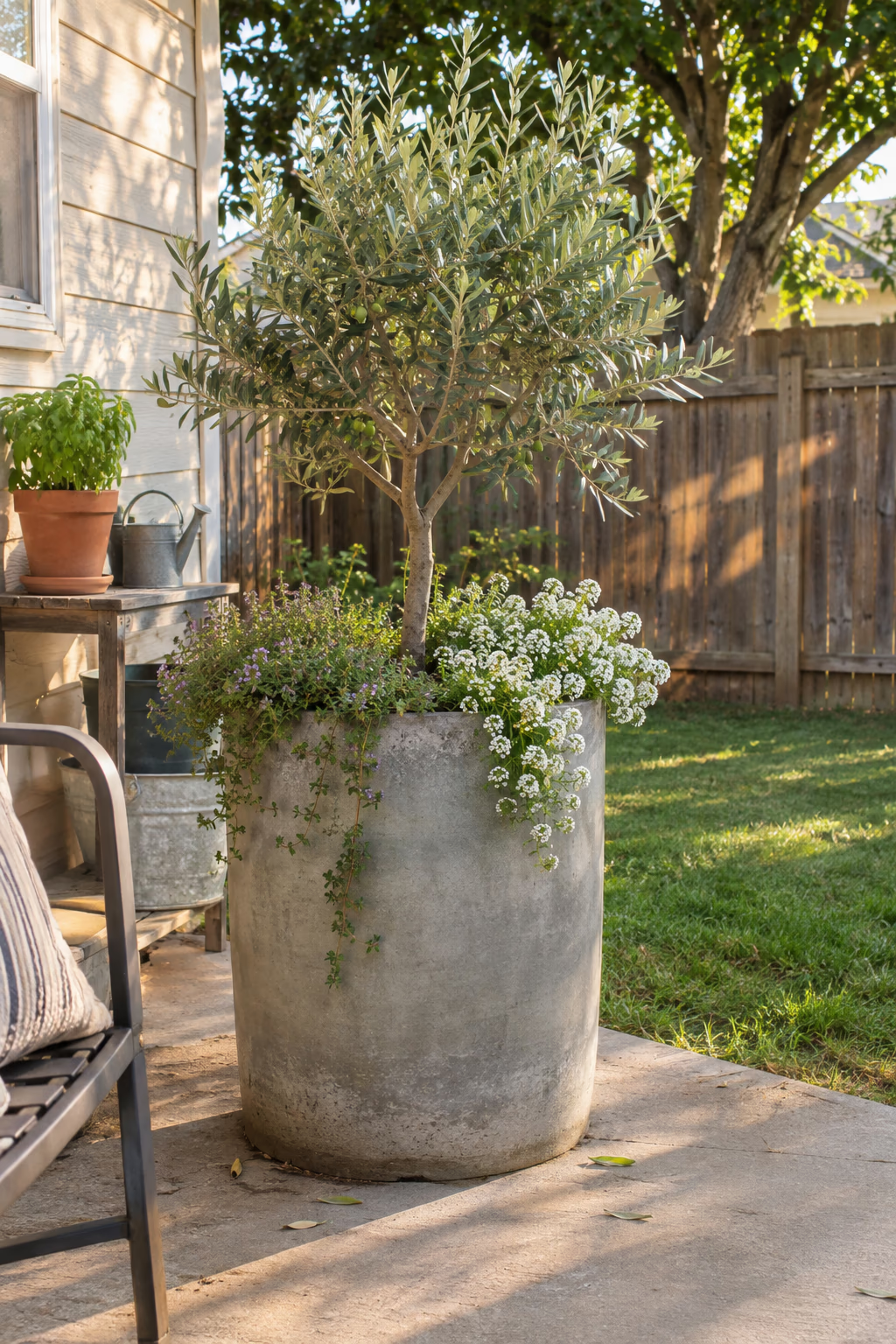
A small tree in a big container gives a yard structure fast. Choose a pot at least 20 to 24 inches wide and just as deep, and pick a tree that stays compact, such as a dwarf olive, Meyer lemon, Japanese maple, or a columnar crabapple. Then cover the soil with a loose skirt of trailing plants like creeping thyme, sweet alyssum, or nasturtium.
The tree draws the eye up, and the soft underplanting keeps the container from looking stiff. One well-planted tree can anchor a corner of the lawn, the end of a deck, or a gravel seating area.
Check your climate before you buy. Olives and citrus need to come indoors or into a garage when nights drop near freezing, and even hardy trees are more exposed to cold in a pot than in the ground. Container trees also need repotting or root pruning every few years.
2. Raise a Wide Bowl Planter on a Pedestal
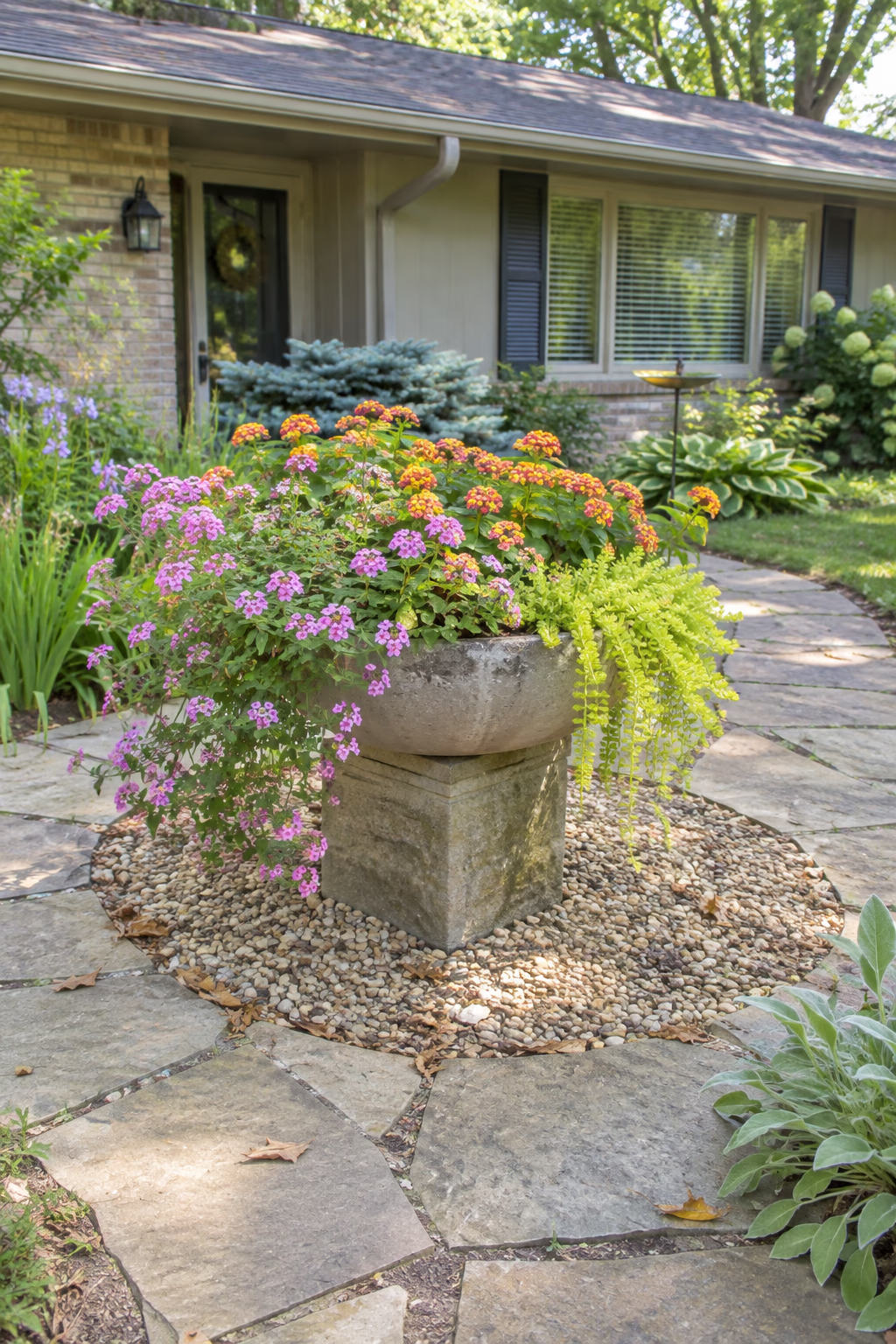
A low container that reads like sculpture
A wide, shallow bowl around 24 to 32 inches across looks especially good when it’s lifted off the ground. Set it on a concrete pedestal, a short stone column, or a stack of flat pavers so the rim sits at roughly knee to hip height. Surround the base with pea gravel to frame it.
Lifting the bowl puts the flowers closer to eye level and makes a simple planting look deliberate. It works well where paths meet, in the middle of a gravel patch, or as a centerpiece in a small front garden.
Shallow bowls dry out quickly, so fill them with plants that tolerate it, such as sedum, portulaca, lantana, or trailing verbena. Make sure the bowl has a drainage hole, and set it firmly on its base so it won’t tip.
3. Uplight Sculptural Planters for Evening Glow
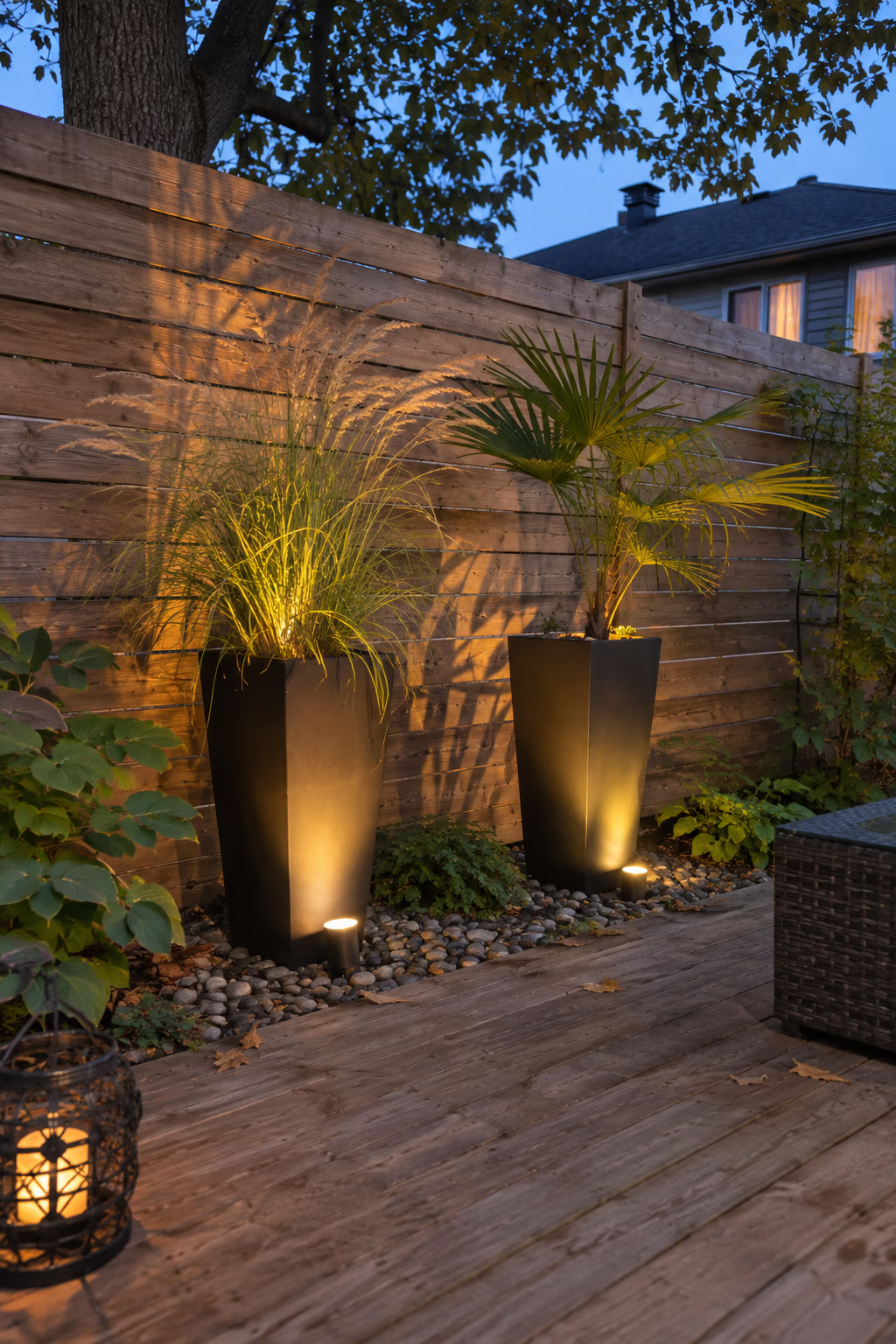
Your containers keep working after sunset
A small spotlight tucked into or beside a planter turns a bold plant into a nighttime feature. Aim a low-voltage or solar uplight up through the leaves of a palm, a grass, a small tree, or a big-leaved plant like elephant ear so the foliage casts shadows on the wall or fence behind it.
Lighting adds depth to the yard after dark and makes a seating area feel more finished. Tall, plain containers in black, charcoal, or white look especially dramatic with light washing up their sides.
Warm white bulbs, around 2700K, look more natural than cool blue light. Keep cords and connectors rated for outdoor use, and if you’re adding new low-voltage wiring, plan the cable route before you plant so you don’t have to dig around roots.
4. Fill a Round Charcoal Planter With Cottage Blooms
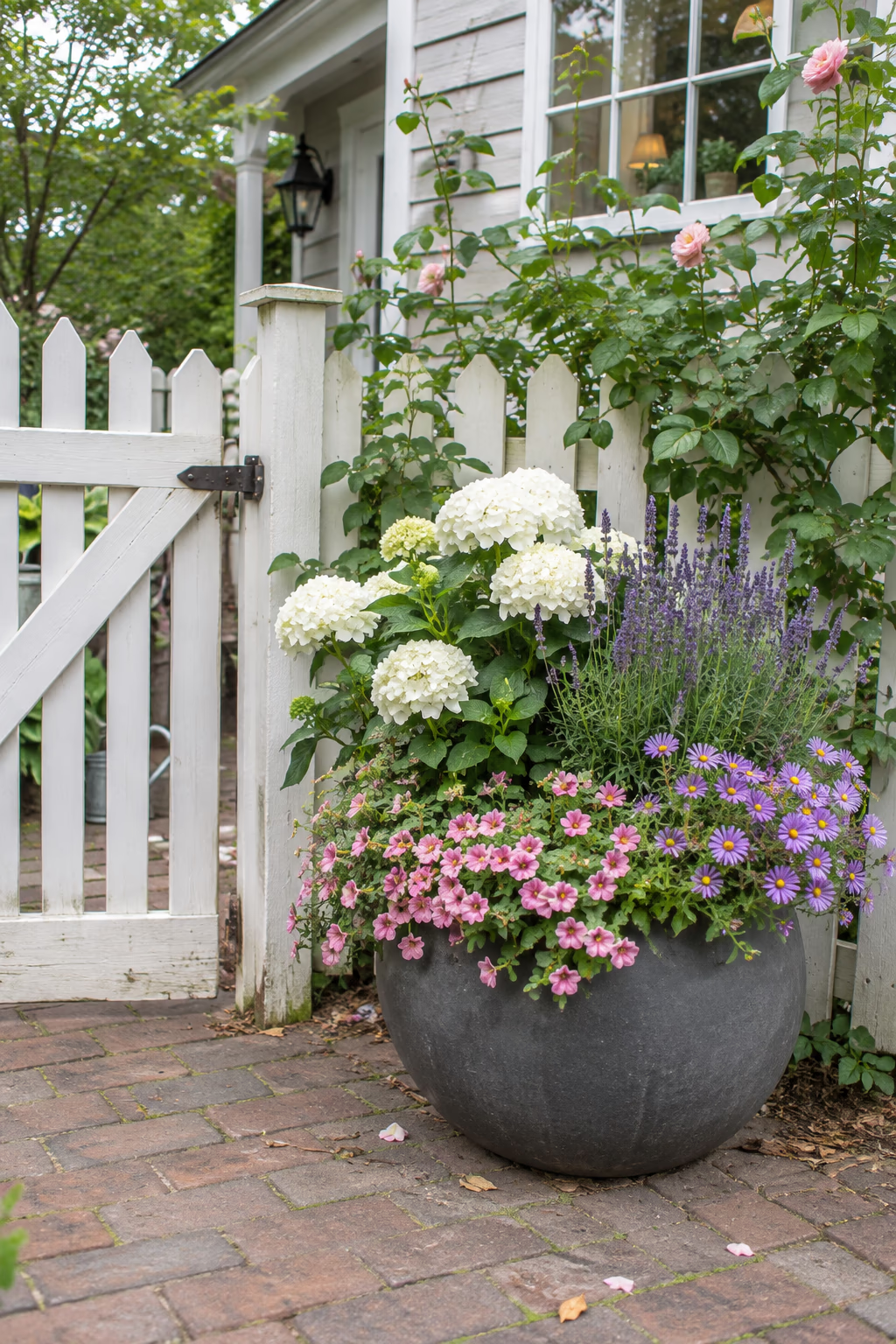
Soft flowers look richer against a dark pot
A round or globe-shaped planter in charcoal gray gives a loose cottage planting a modern frame. Fill it with mounding flowers such as dwarf hydrangea, lavender, calibrachoa, asters, or petunias in white, blush, and lavender tones.
The dark finish makes pale petals glow and keeps a casual mix of flowers from looking messy. A single sphere on a patio or near a garden gate is enough to set the mood.
Dark containers absorb heat in full sun, which can stress roots. In hot regions, place the pot where it gets afternoon shade, or choose a thick-walled fiberglass or concrete model that holds a steadier temperature.
5. Group Neutral Pots in Mixed Heights and Textures
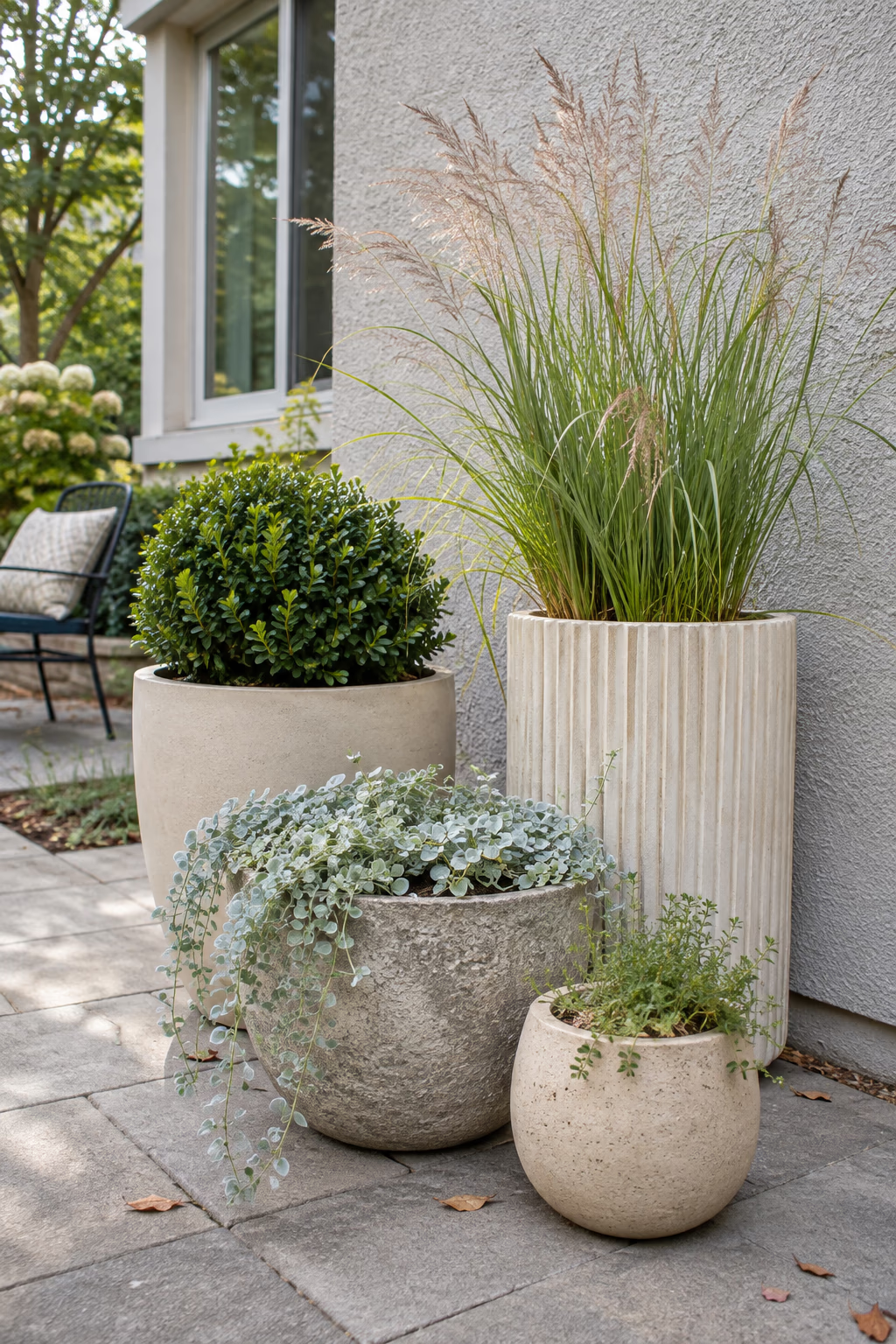
A calm cluster that looks collected over time
Instead of matching pots, gather three to five containers in cream, sand, stone gray, and soft taupe with different surfaces: one ribbed, one smooth, one rough cast stone. Vary the heights so the tallest sits in the back and the shortest sits in front.
Keeping the colors quiet lets the textures and plant shapes do the talking. Pair upright grasses with round boxwood and something trailing, and the group will look balanced from every angle.
Leave small gaps between the pots so air moves and water drains away. If you buy pots over time, bring a photo of your existing group to the store so the new piece fits the palette.
6. Choose Blue Glazed Pots for a Cool Color Pop
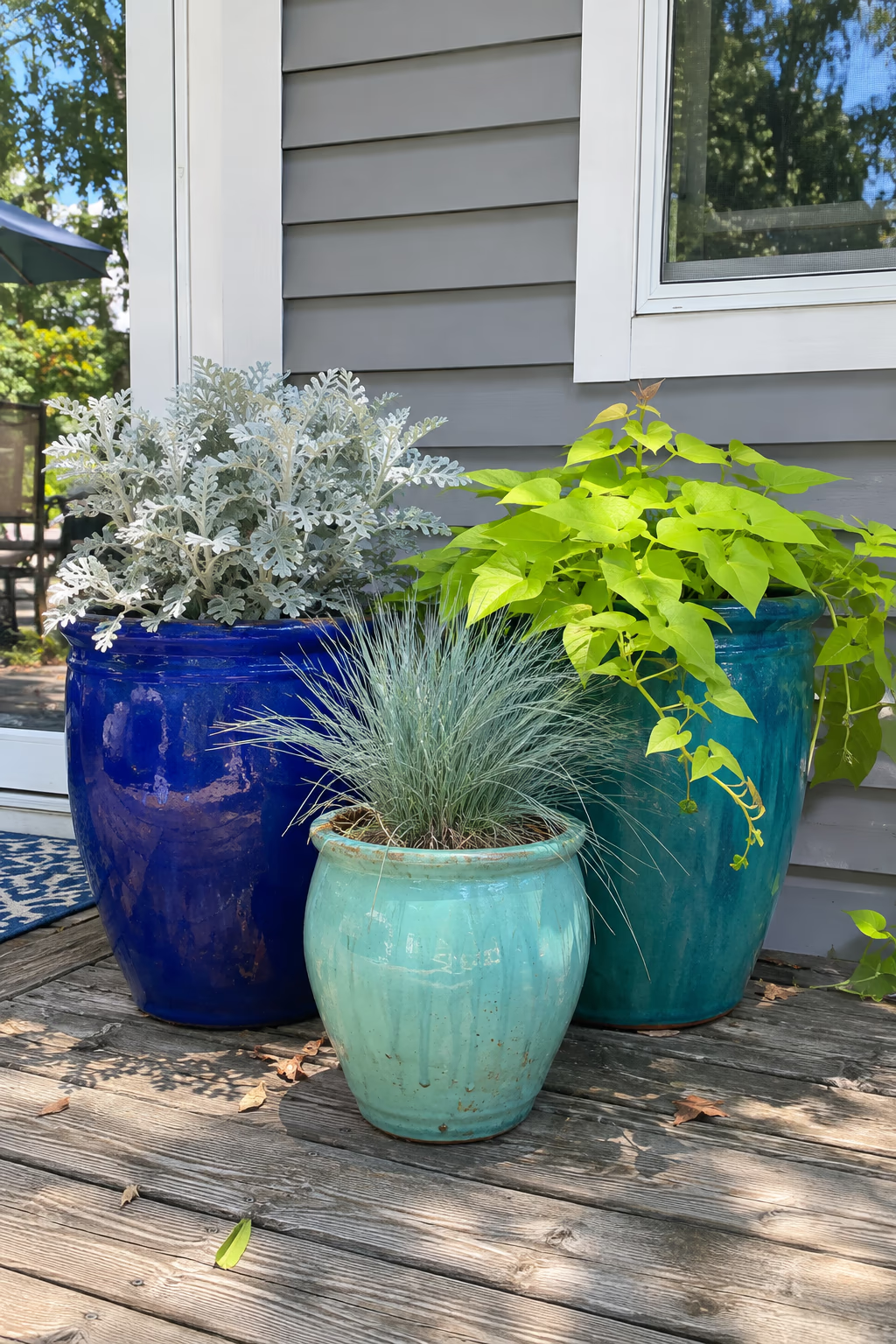
Water-toned glazes freshen up a plain yard
Glazed ceramic pots in cobalt, teal, turquoise, or soft aqua bring color into a yard even when nothing is in bloom. They look especially good with silver and chartreuse foliage, such as dusty miller, lamb’s ear, sweet potato vine, or blue fescue.
Cool blue tones pair well with gray siding, white trim, wood decks, and natural stone, and they make a small seating corner feel breezy. Two or three blue pots of different sizes look more relaxed than a matched set.
Glazed ceramic is heavy and can crack if water freezes inside it. In cold climates, empty and store these pots or move them under cover before the first hard freeze.
7. Line a Garden Path With Repeating Clay Pots
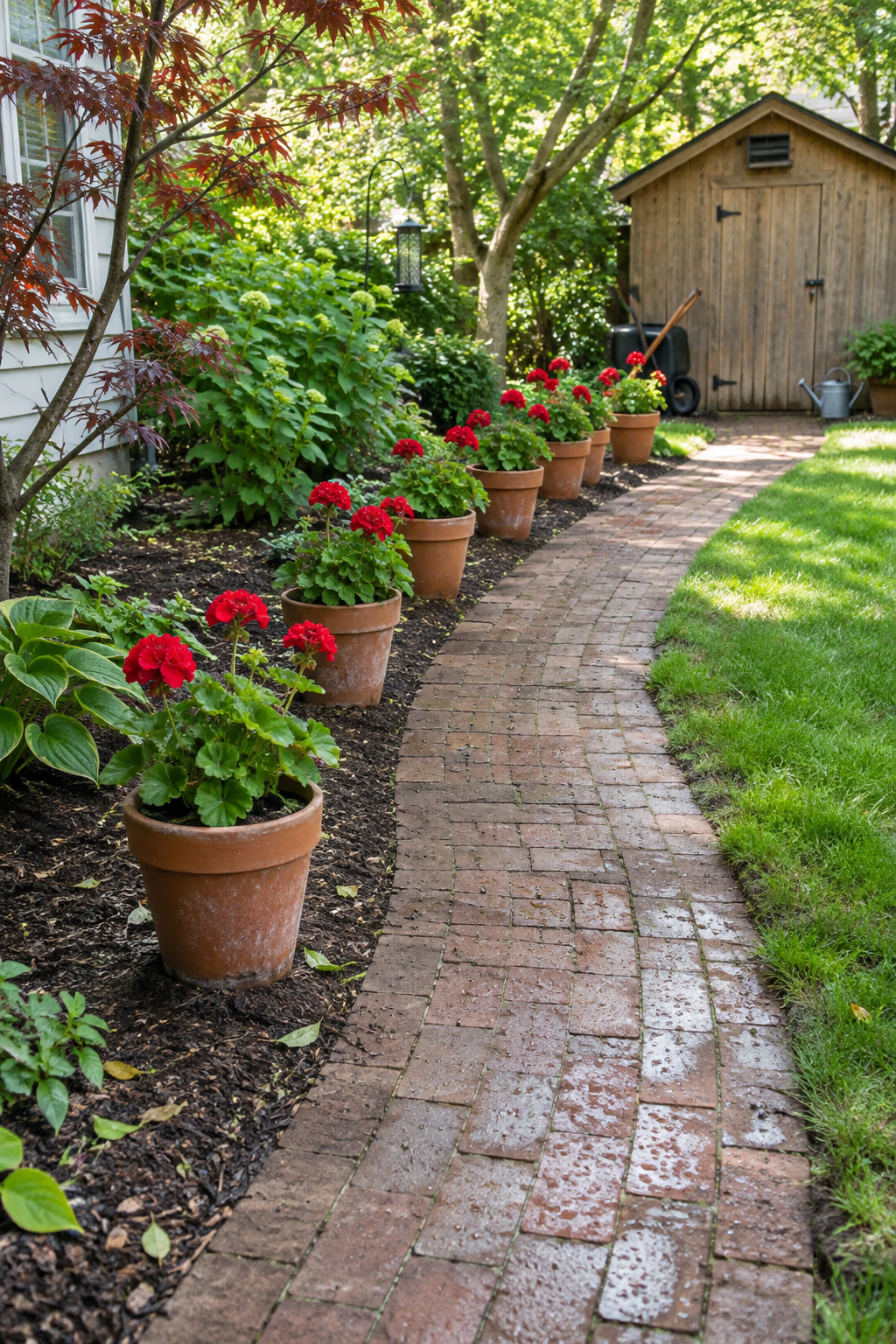
Repetition guides the eye and the feet
Place identical terracotta pots about 3 to 4 feet apart along the edge of a walkway, driveway, or garden path. Fill them with the same plant, or with one compact plant in a few colors, such as geraniums, dwarf zinnias, or rosemary.
Repeating the same pot creates rhythm and makes even a short path look planned. It’s also an easy way to edge a path where the soil is poor or compacted.
Unglazed clay dries out fast, so plan to water small pots daily in hot weather. Keep them a few inches back from the path so they don’t get kicked or clipped by a mower.
8. Build a Low Succulent Bowl Landscape
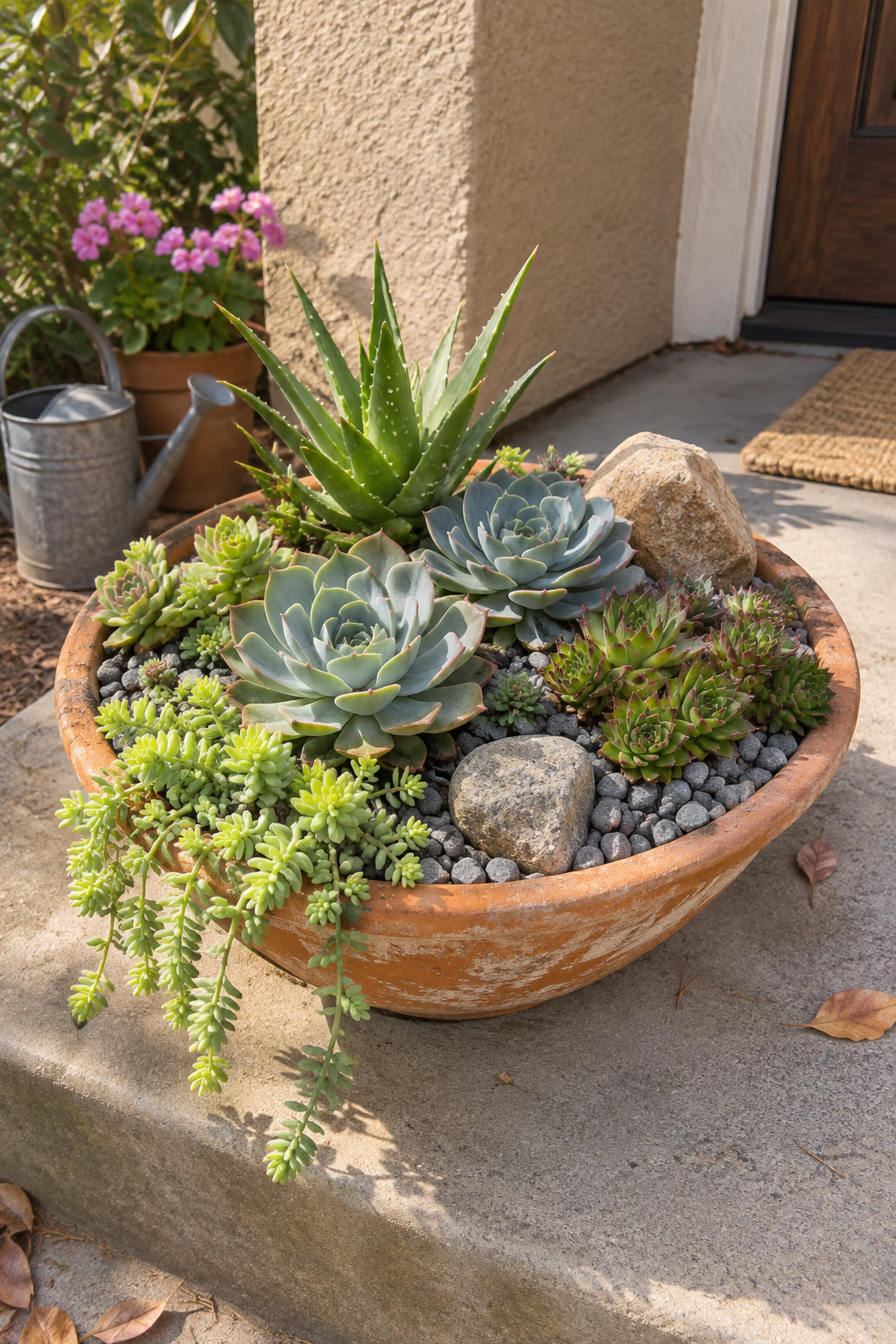
A tiny desert scene that rarely needs water
Fill a wide, shallow bowl with fast-draining cactus mix and arrange a few rosette succulents, like echeveria or hens and chicks, with trailing sedum and one taller accent such as aloe. Top the soil with small pebbles or crushed granite and tuck in a couple of rocks.
Succulent bowls look tidy for months and suit sunny steps, tables, and low walls. They’re one of the most forgiving outdoor planters for busy households.
Most succulents dislike sitting wet. Make sure the bowl drains, water only when the soil is dry an inch down, and bring tender types indoors before frost. Hens and chicks and many sedums can stay out through winter in colder zones.
9. Grow a Kitchen Herb Planter by the Back Door
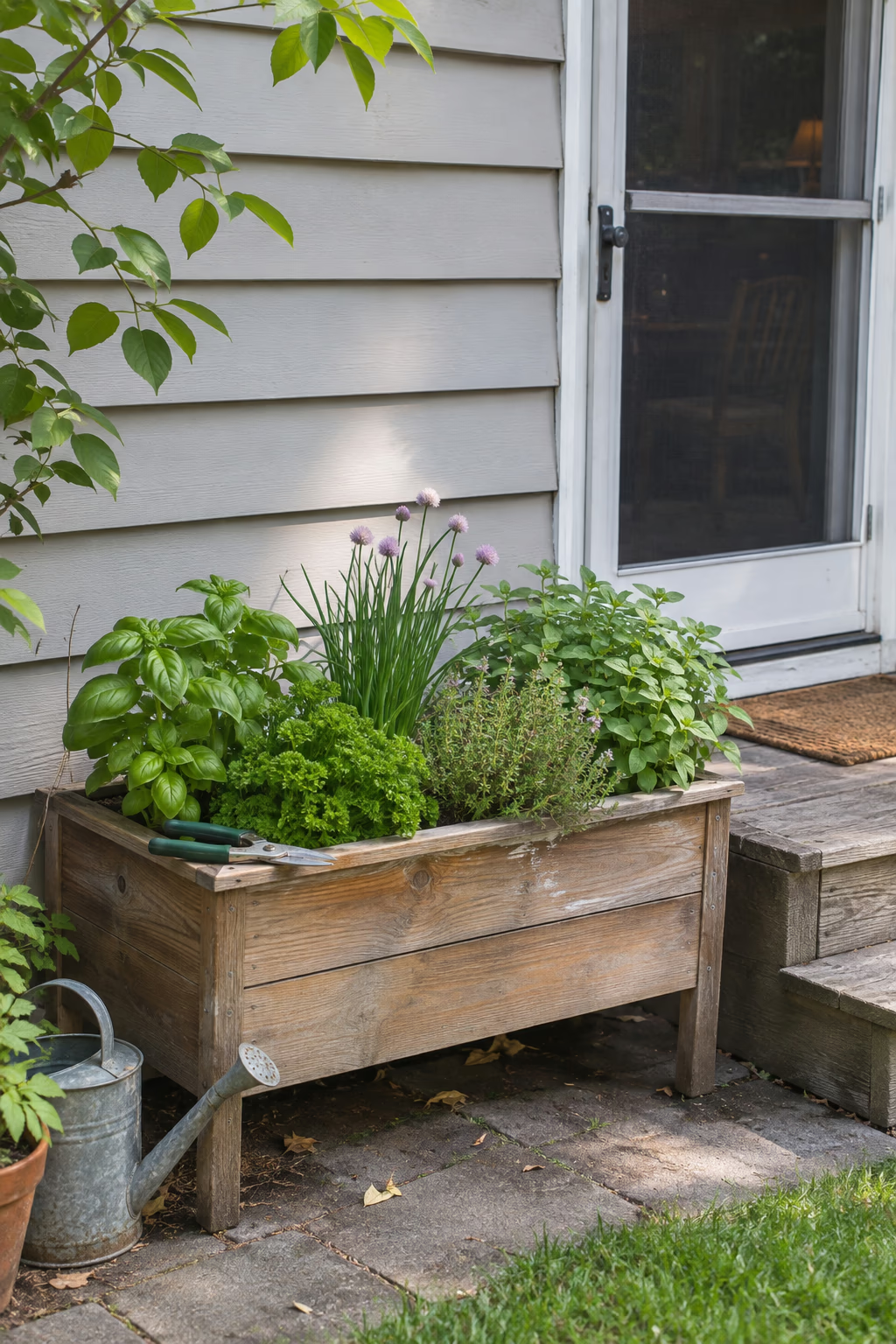
Fresh flavor just a few steps from the stove
A rectangular planter at least 8 inches deep, set in sun near the kitchen door, can hold basil, parsley, chives, thyme, oregano, and a few lettuce plants. Group herbs with similar needs: Mediterranean herbs like thyme and oregano prefer drier soil, while basil and parsley want steady moisture.
Being close to the house means you’ll actually use the herbs and remember to water them. Regular snipping also keeps the plants bushy and productive.
Give mint its own pot, since it spreads aggressively and will crowd out its neighbors. Most culinary herbs need six or more hours of sun to stay flavorful.
10. Turn a Vintage Washtub Into a Flower Planter
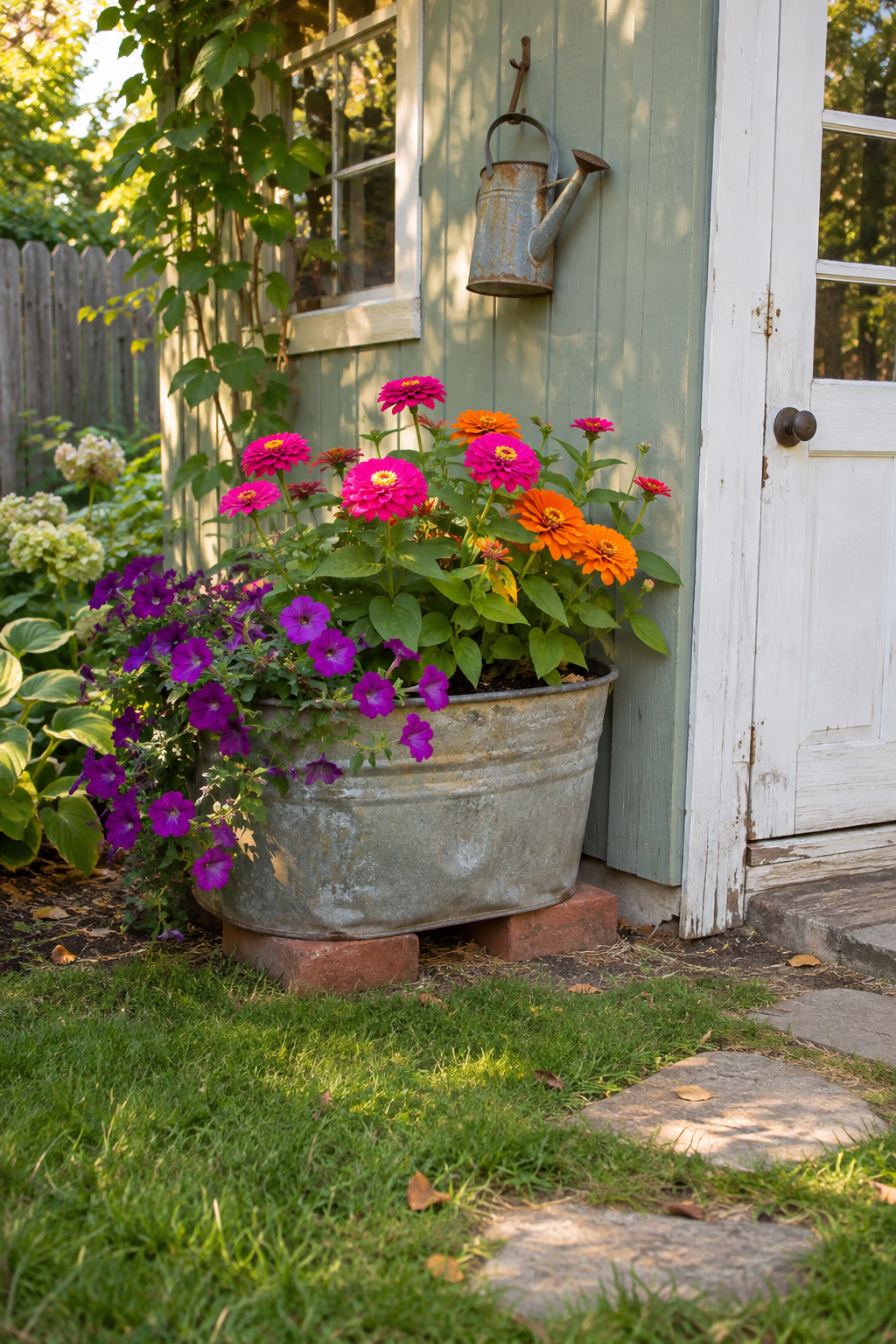
Farmhouse charm from a thrift-store find
Old galvanized washtubs and buckets make cheerful flower planters. Drill five or six half-inch drainage holes in the bottom, add an inch of gravel or set the tub on bricks, then fill it with potting mix and annuals such as zinnias, petunias, or marigolds.
The weathered metal adds character, and a single tub on a porch step or by a garden shed looks charming without much effort. Flea markets and yard sales are good places to find one for a few dollars.
Metal heats up in strong sun, so give the tub some afternoon shade in hot climates. If you plan to grow food, line the inside with a plastic nursery pot or liner rather than planting directly against old metal.
11. Build a Simple Cedar Planter Box
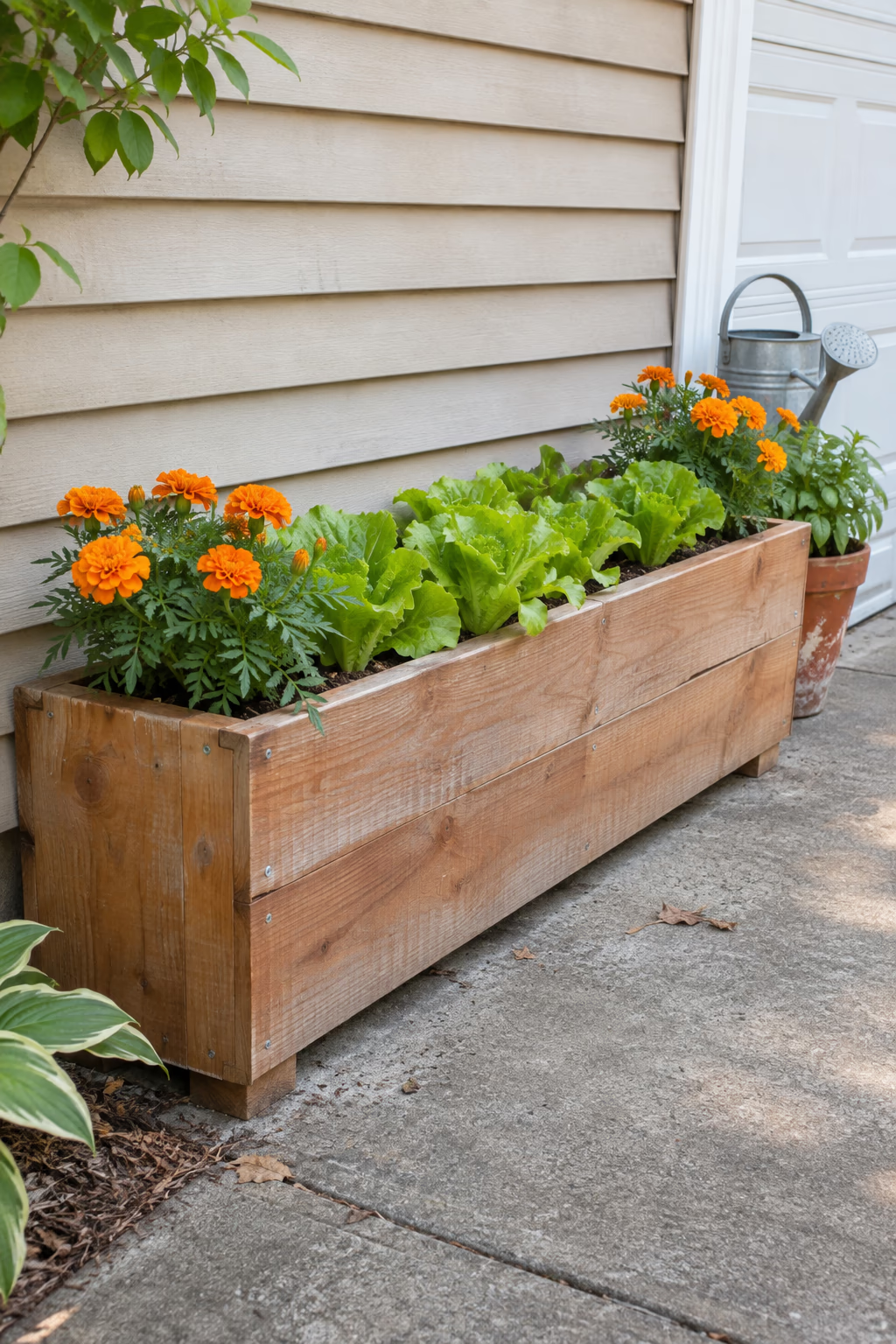
A budget-friendly DIY you can size to fit
A basic box made from cedar fence pickets or 1×6 boards can be built in an afternoon with a saw, a drill, and exterior screws. A common size is about 36 inches long, 12 inches wide, and 12 inches deep, with a few drainage holes and small feet to lift it off the ground.
Cedar resists rot naturally and turns a soft silver as it weathers. Building it yourself means you can match an awkward space, like a narrow strip along a garage or the top of a short retaining wall.
Lining the sides with landscape fabric or a plastic liner with holes helps the wood last longer. Avoid treating the inside with paint or stain if you’ll grow vegetables in it.
12. Divide the Yard With Long Planter Boxes
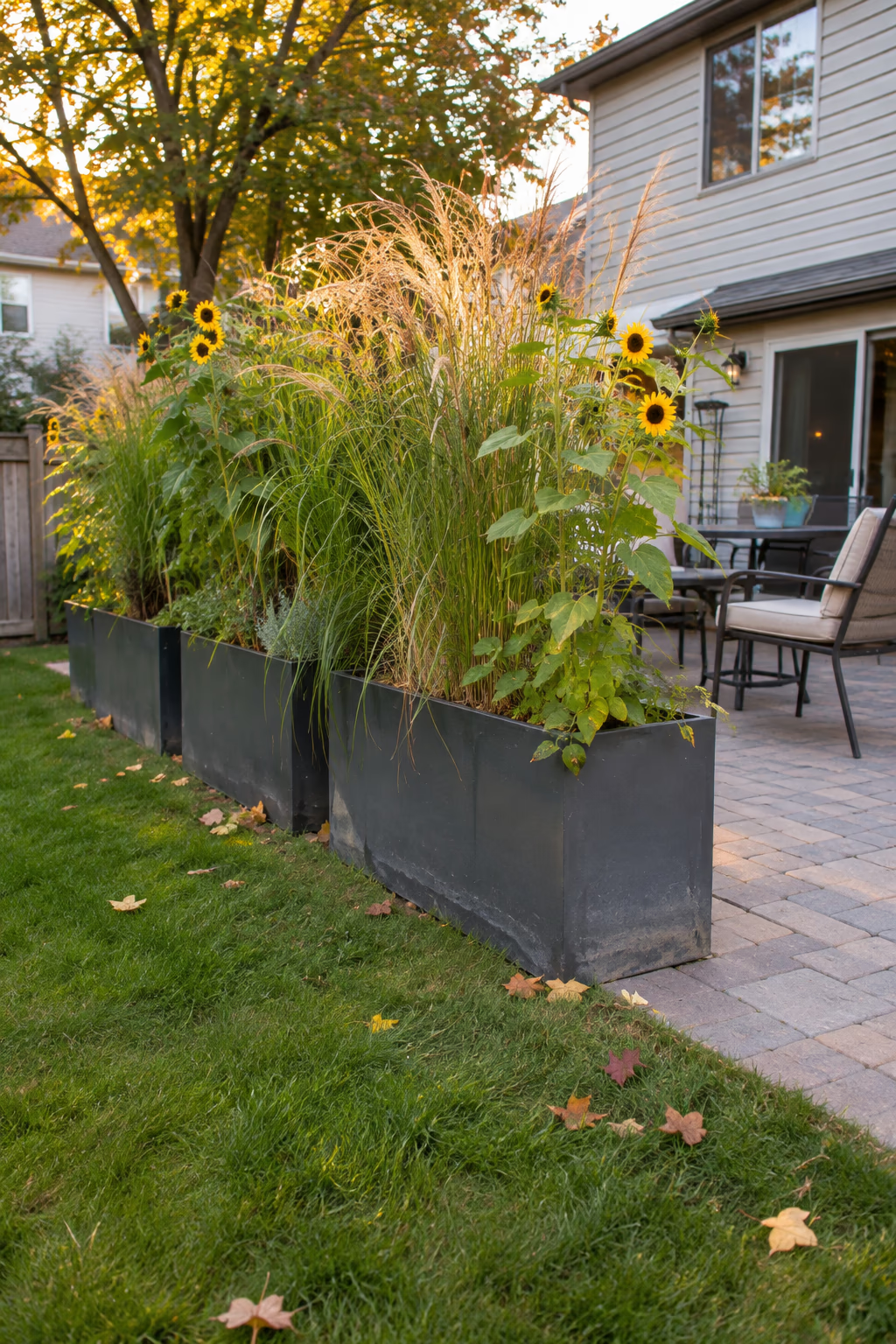
A movable green screen between lawn and seating
Two or three long rectangular planters, each around 4 to 6 feet long, can separate a lawn from a seating area or hide a trash can corner without building a fence. Plant them with upright, tidy plants such as ornamental grasses, Sky Pencil holly, or tall annuals like sunflowers and cosmos.
The planters create a sense of an outdoor room while still letting light and views through. Unlike a hedge, you can shift them later if you change the layout of the yard.
Filled boxes are heavy, so place them where they’ll stay before you add soil. Lightweight fiberglass or resin boxes make the job easier, and placing them on casters can help on hard surfaces.
13. Paint Plain Clay Pots in Bold Colors
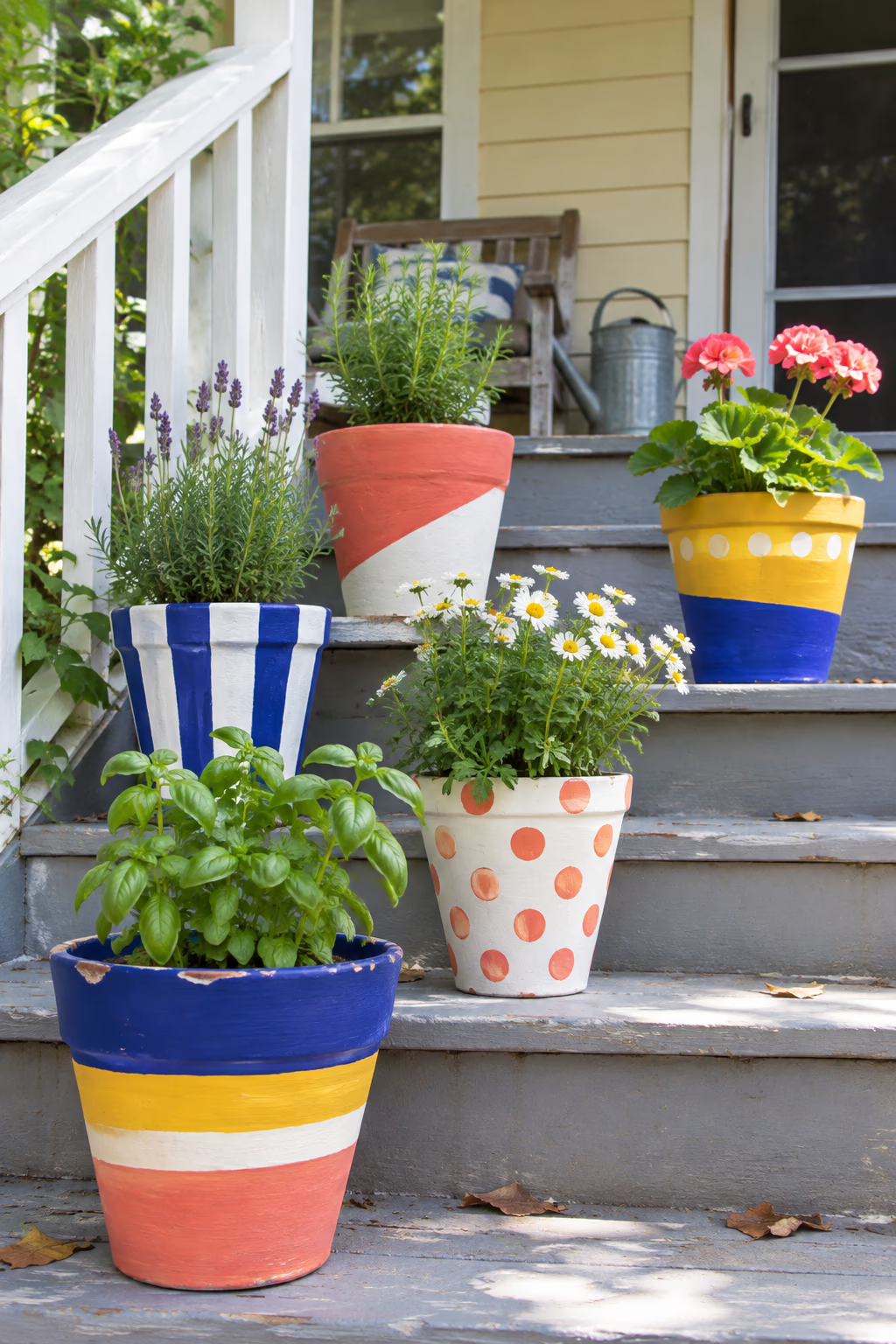
Custom color for the price of a sample can
Plain terracotta pots are inexpensive and take paint well. Clean them, let them dry fully, seal the inside with a waterproof sealer, and paint the outside with exterior acrylic in bright solids, stripes, color-blocked bands, or simple dots. Finish with a clear outdoor topcoat.
Painted pots let you match your door, shutters, or outdoor cushions, and they’re a fun project to do with kids. A row of painted pots on steps or a ledge adds instant personality.
Expect some peeling over time, since clay breathes and moisture works its way out. Sealing both sides helps, and touch-ups each spring keep them looking fresh.
14. Plant a Pollinator Pot With Native Perennials
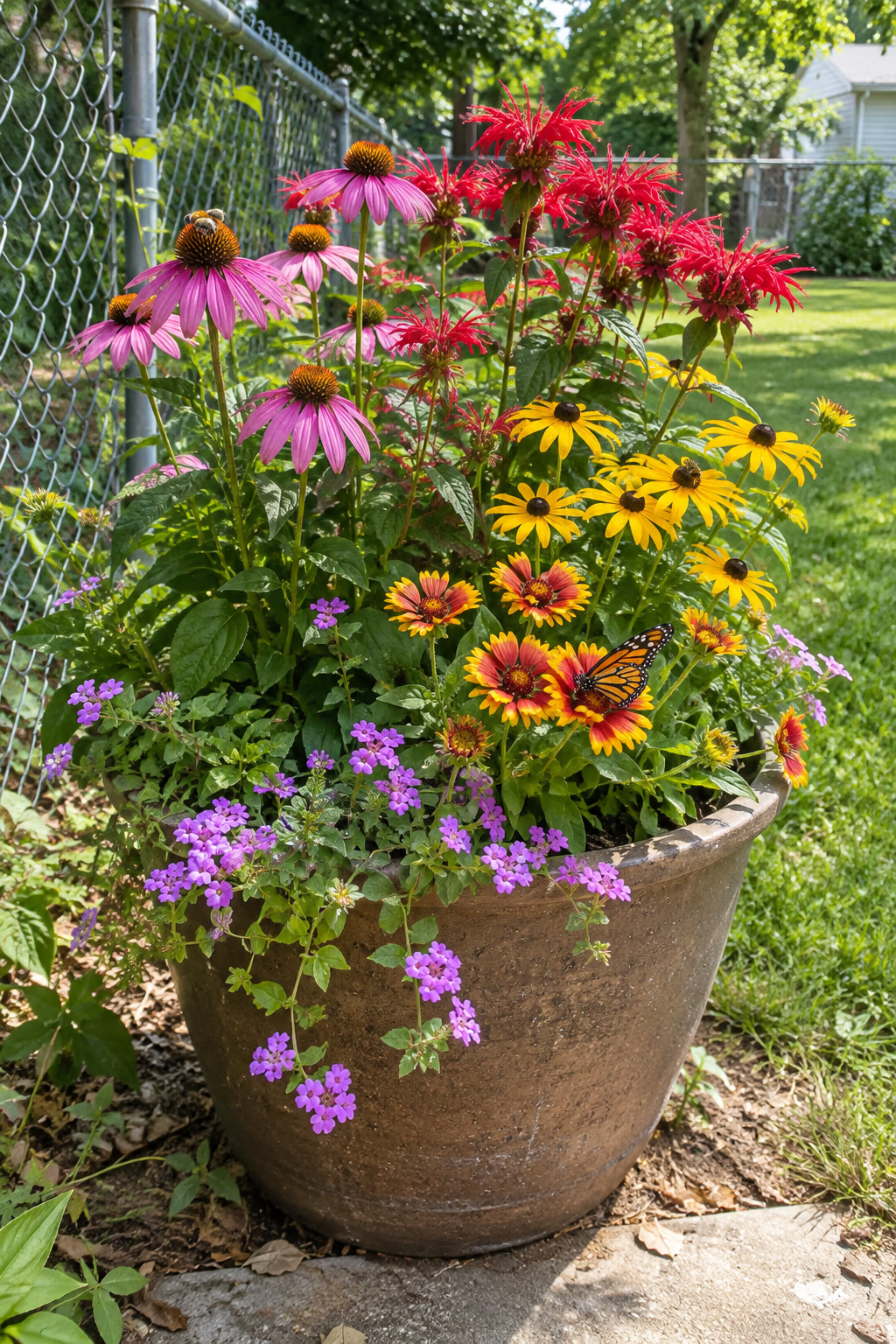
Bring bees and butterflies to a small space
A large container of at least 18 inches across can feed pollinators all summer. Combine native or pollinator-friendly perennials such as purple coneflower, bee balm, blanket flower, black-eyed Susan, and anise hyssop, and add a low trailer like annual lantana or verbena.
Flowering in waves from early summer into fall, a pollinator pot attracts a steady stream of visitors. It’s a great option for renters or anyone without space for a full pollinator bed.
Check which species are native to your region, and skip pesticides on these plants. Perennials in pots may need extra winter protection, such as moving the container against the house or into an unheated garage.
15. Lift Spring Bulbs Onto Metal Plant Stands
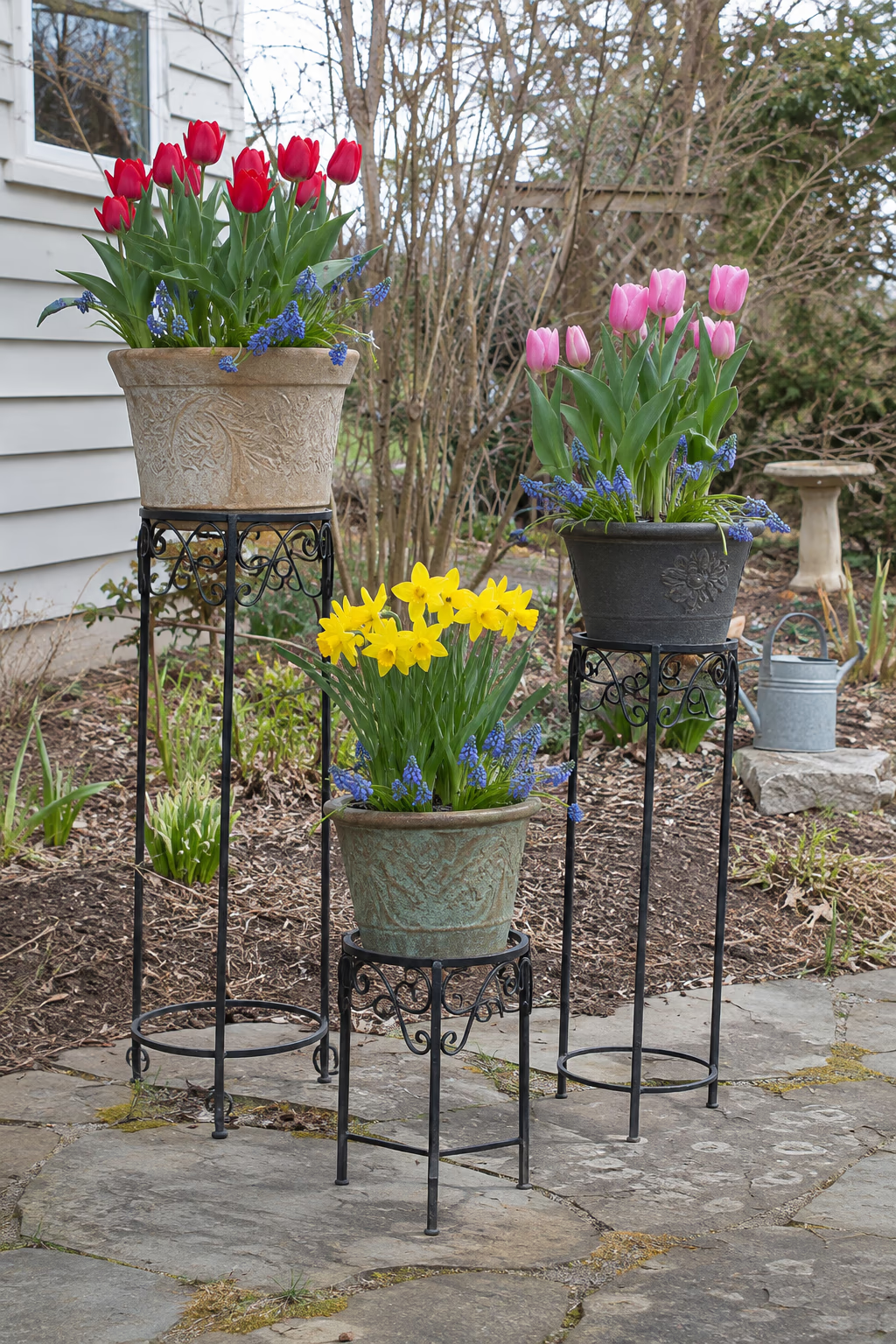
Tulips at eye level feel like a celebration
Plant tulips, daffodils, or hyacinths in fall in pots set on tall iron or steel plant stands. Layer the bulbs at different depths, with larger bulbs at the bottom and smaller ones such as grape hyacinth near the top, for a longer and fuller display in spring.
Raising the pots lets you see each bloom up close and creates height in an area that’s still bare in early spring. Rusted or black stands look good with nearly any flower color.
In cold zones, potted bulbs can freeze solid. Store the planted pots in an unheated garage or shed over winter and move them onto the stands once shoots appear. Squirrels love bulbs, so a piece of chicken wire over the soil helps.
16. Grow Tomatoes and Peppers in Fabric Grow Bags
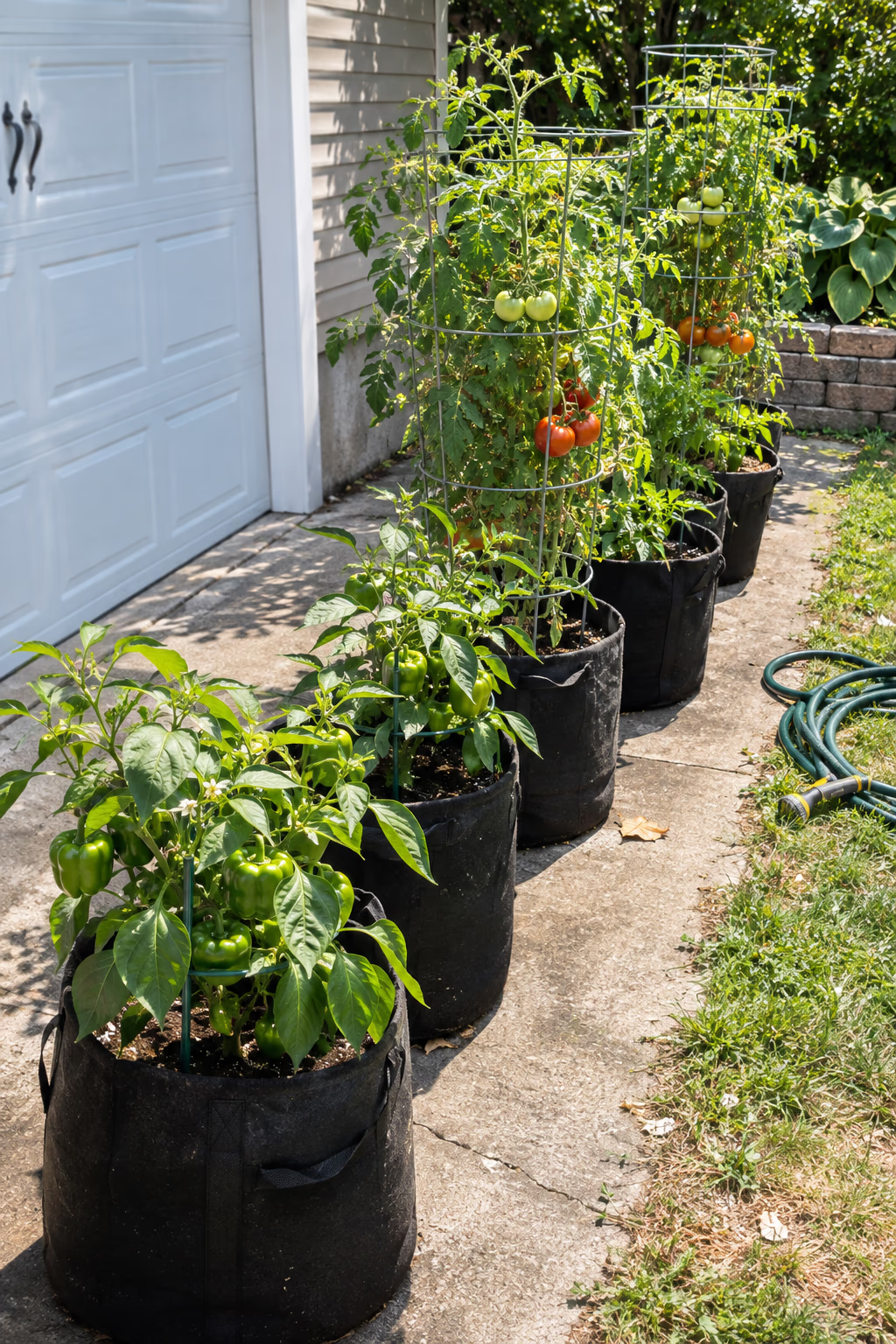
A light, cheap way to grow vegetables anywhere
Fabric grow bags are soft containers that breathe and drain well. Use at least a 10-gallon bag for a determinate tomato and 5 gallons for a pepper, filled with quality potting mix and set in a spot that gets eight hours of sun.
The fabric lets roots get air, which helps prevent them from circling, and the bags fold flat for storage in winter. They’re ideal for a sunny driveway, deck corner, or side yard.
Grow bags dry out faster than plastic pots, so you may need to water daily in summer. Set them on a tray or pavers to protect a deck from stains, and add a sturdy cage or stake for tomatoes at planting time.
17. Create a Mini Water Garden in a Glazed Pot
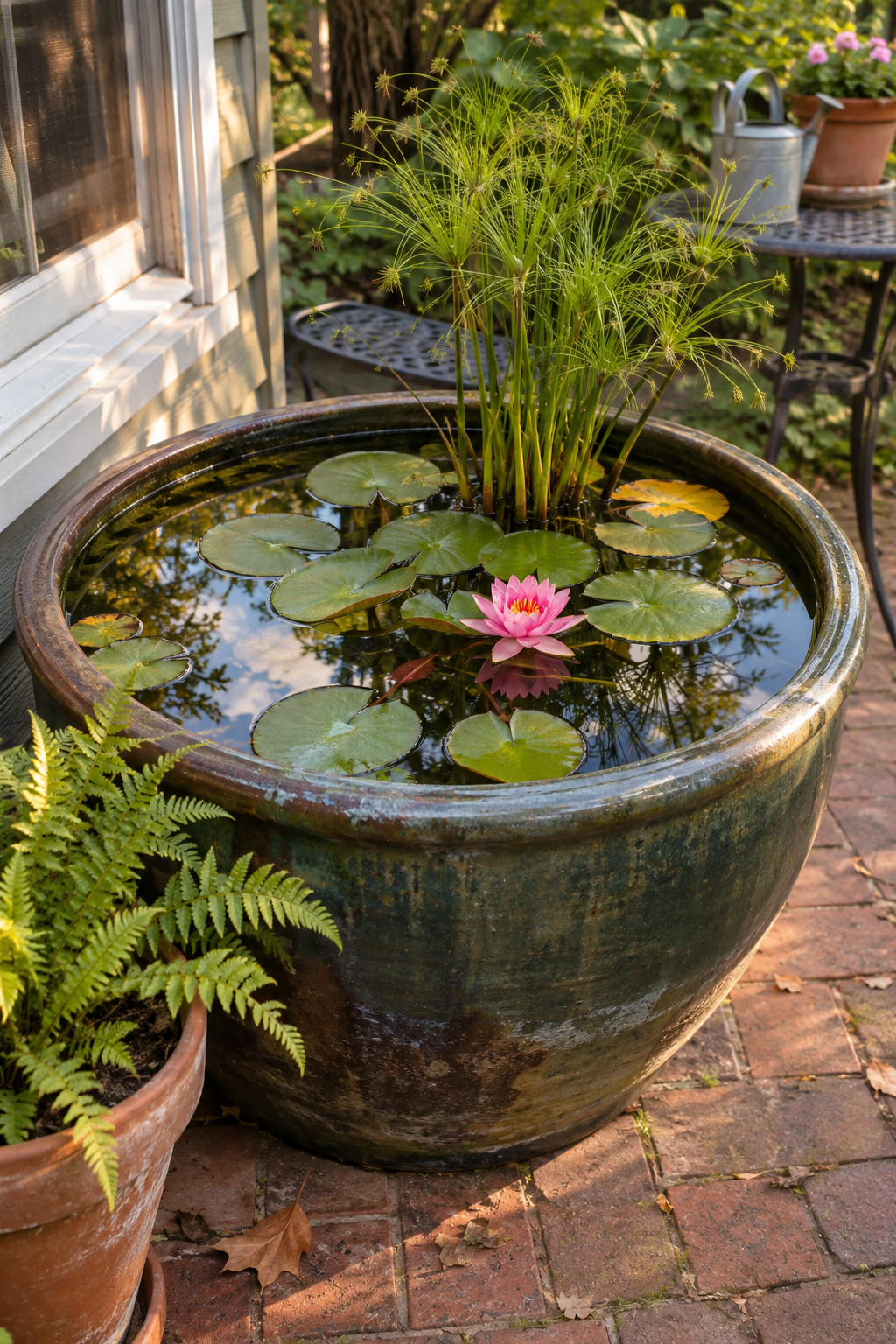
The sound and shimmer of water without a pond
A glazed pot 20 inches or wider with no drainage hole, or with the hole sealed with silicone, can hold a small water garden. Add a dwarf water lily or a miniature papyrus, with a few submerged plants to help keep the water clear. Place taller plants on an upturned pot or bricks so they sit at the right depth.
Water gardens bring reflections, movement, and visiting birds and dragonflies to even a small patio. Many water plants bloom best in at least six hours of sun.
Standing water can breed mosquitoes. A small solar fountain pump to keep the water moving, or mosquito dunks containing Bti, solves this. Empty and store the pot before a hard freeze in cold regions.
18. Tuck Ferns and Begonias Into a Shade Container
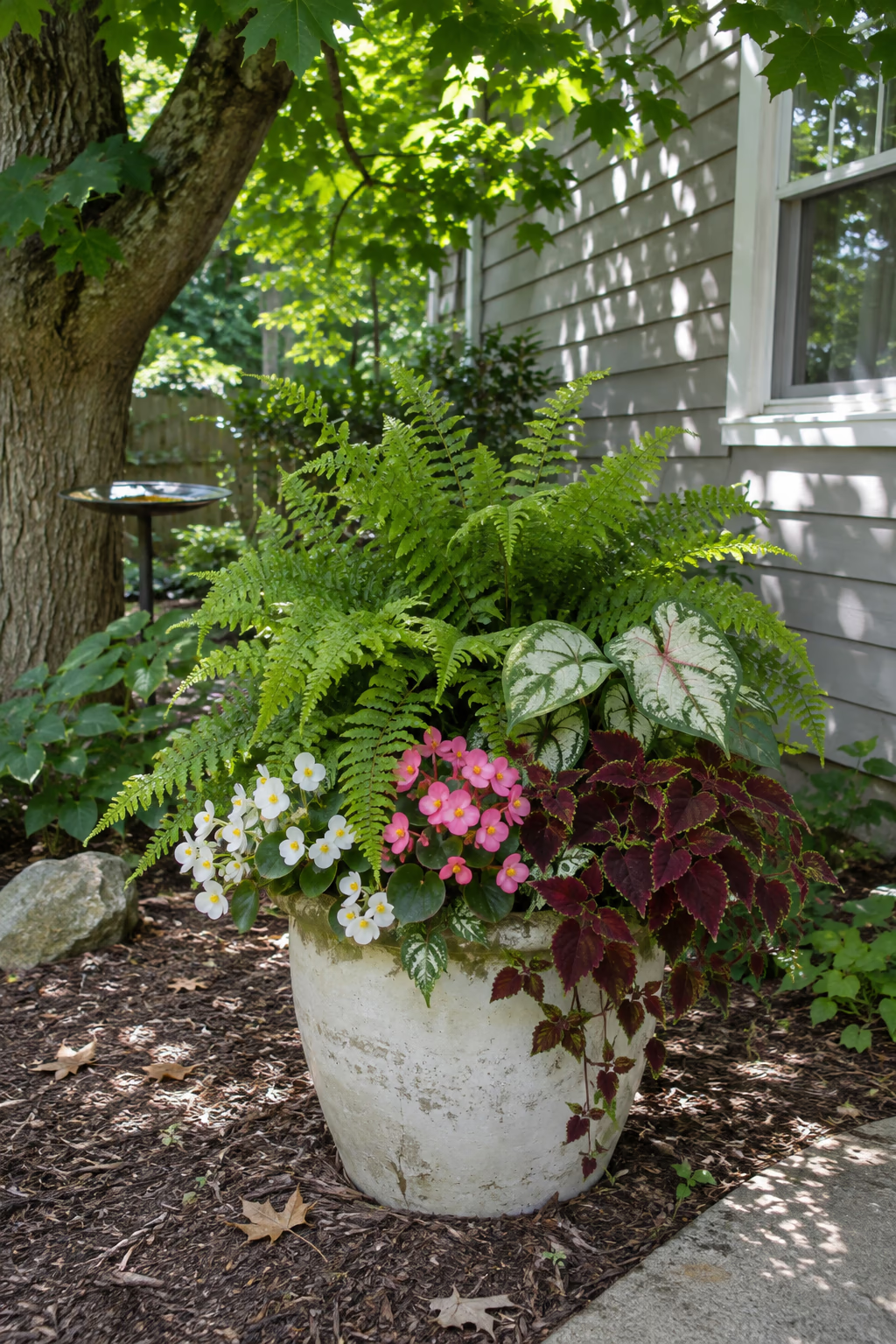
Lush color for spots the sun never reaches
North-facing walls, covered decks, and areas under trees can still hold a beautiful planter. Combine a Boston or autumn fern with begonias, caladiums, coleus, and impatiens for layers of leaf color and soft blooms.
Shade plants often have bold leaves, so the container stays colorful even between flowers. Light-colored pots in white or pale gray help brighten a dim corner.
Shade containers dry out more slowly than sunny ones, so check the soil with your finger before watering. Overwatering is a more common problem than underwatering in low light.
19. Hollow Out a Tree Stump for a Living Planter
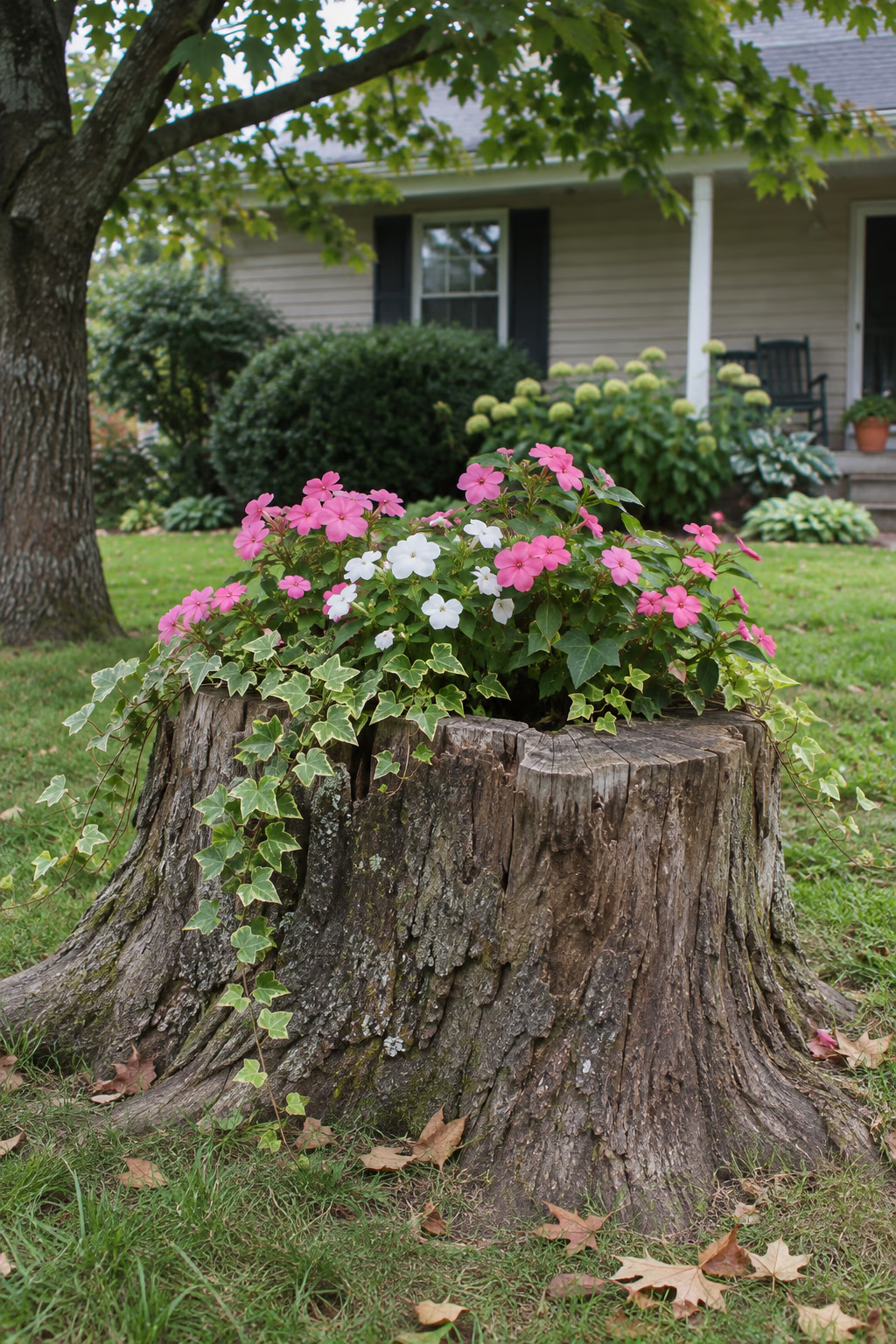
Turn a removal leftover into a garden feature
If a tree has been cut down, the remaining stump can become a planter. Use a drill with a large spade bit or a chisel to hollow out a bowl at least 6 to 8 inches deep, drill a drainage channel out the side, and fill it with potting mix and plants such as impatiens, sedum, or trailing ivy.
A stump planter looks natural and saves the cost of grinding the stump out. It fits right in with woodland gardens, cottage yards, and shady front lawns.
The stump will slowly rot over the years, which is part of its charm, but it can also attract insects. Avoid this idea if the stump is close to your house or shows signs of termites.
20. Hide Nursery Pots Inside Woven Baskets
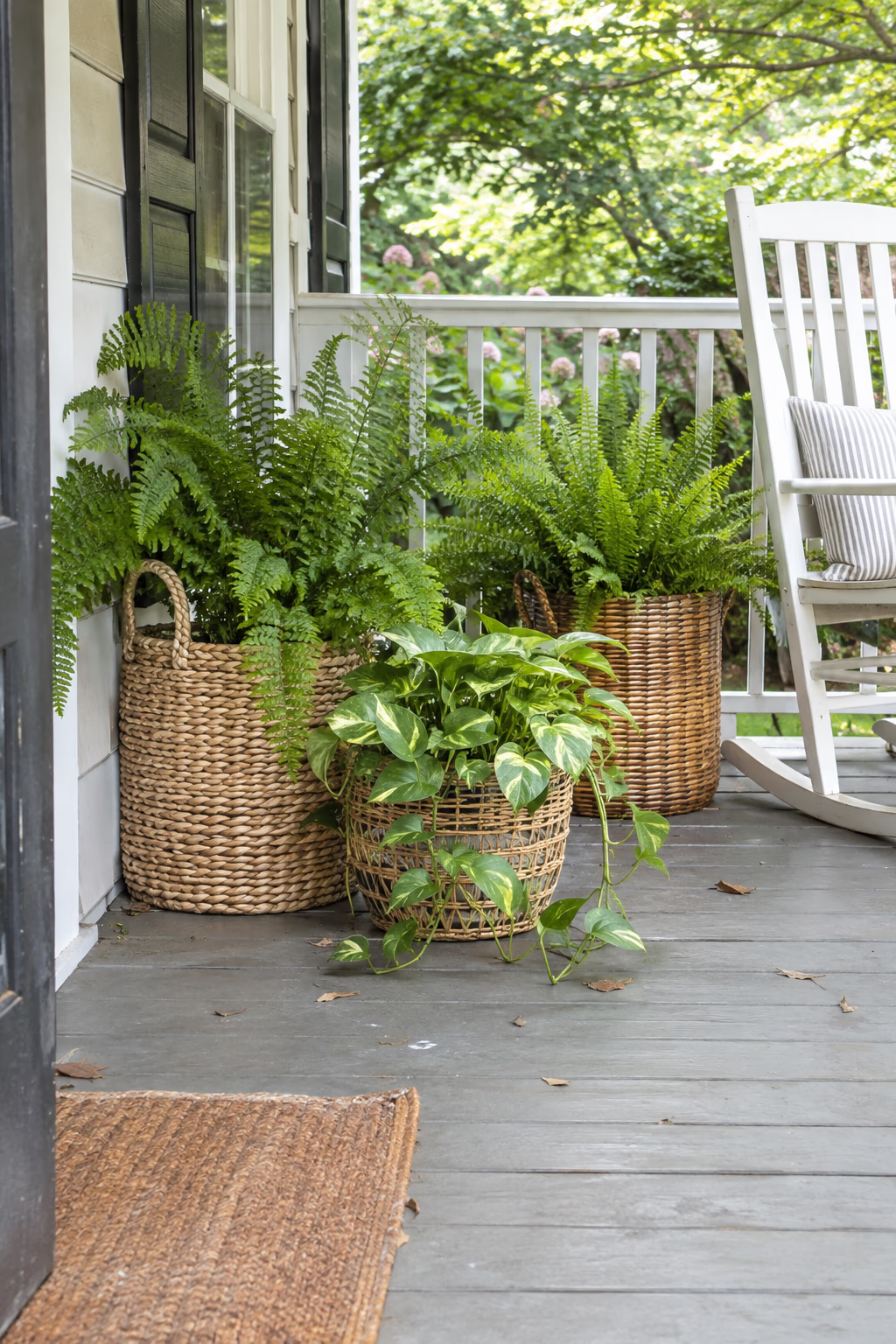
Soft texture for covered porches and patios
Seagrass, rattan, or resin wicker baskets make relaxed containers for ferns, pothos, or potted mums. Leave the plants in their plastic nursery pots, set them inside the baskets on a saucer, and swap them out as seasons change.
Baskets add warmth and texture that ceramic and metal can’t. The pot-in-basket method also makes rotating plants and watering at the sink easy.
Natural fibers will mildew or fall apart if they stay wet, so use real baskets only under a roof. For open areas, choose all-weather resin wicker that looks woven but handles rain.
21. Fill a Strawberry Jar With Herbs or Succulents
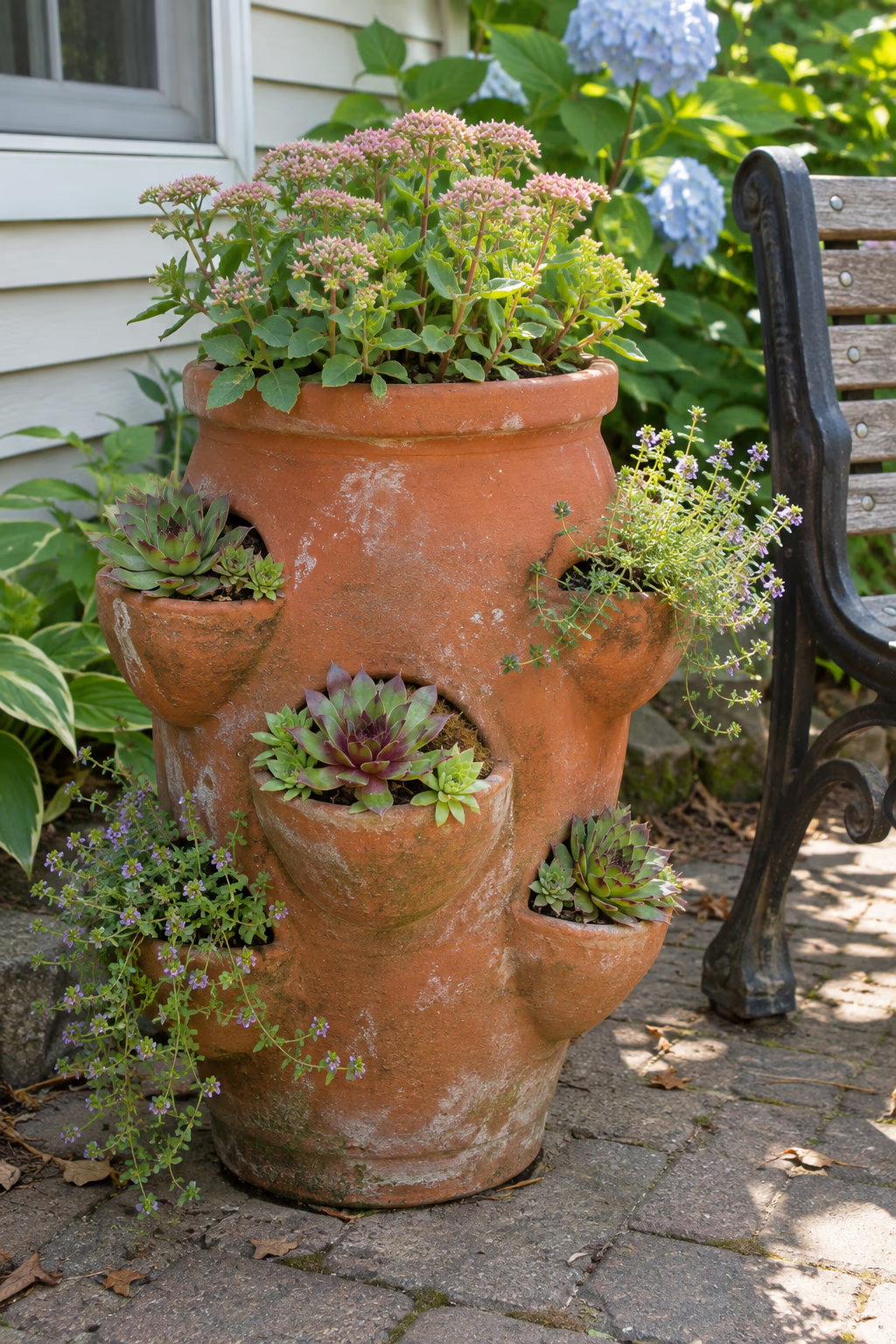
Lots of plants in a tiny footprint
A strawberry jar is a tall clay pot with small side pockets. Fill it with soil in stages, planting each pocket as you reach it, and finish with a larger plant on top. Strawberries, thyme, oregano, or hens and chicks all suit the pockets well.
The jar holds a dozen or more plants in less than 2 feet of floor space, making it a smart choice for a small patio or front step. It also looks pretty from every side.
Water tends to run out of the top pockets before it reaches the bottom. Before filling, place a length of perforated PVC pipe or a paper towel tube filled with gravel in the center so water spreads evenly down the jar.
22. Repurpose an Old Wheelbarrow as a Rolling Garden
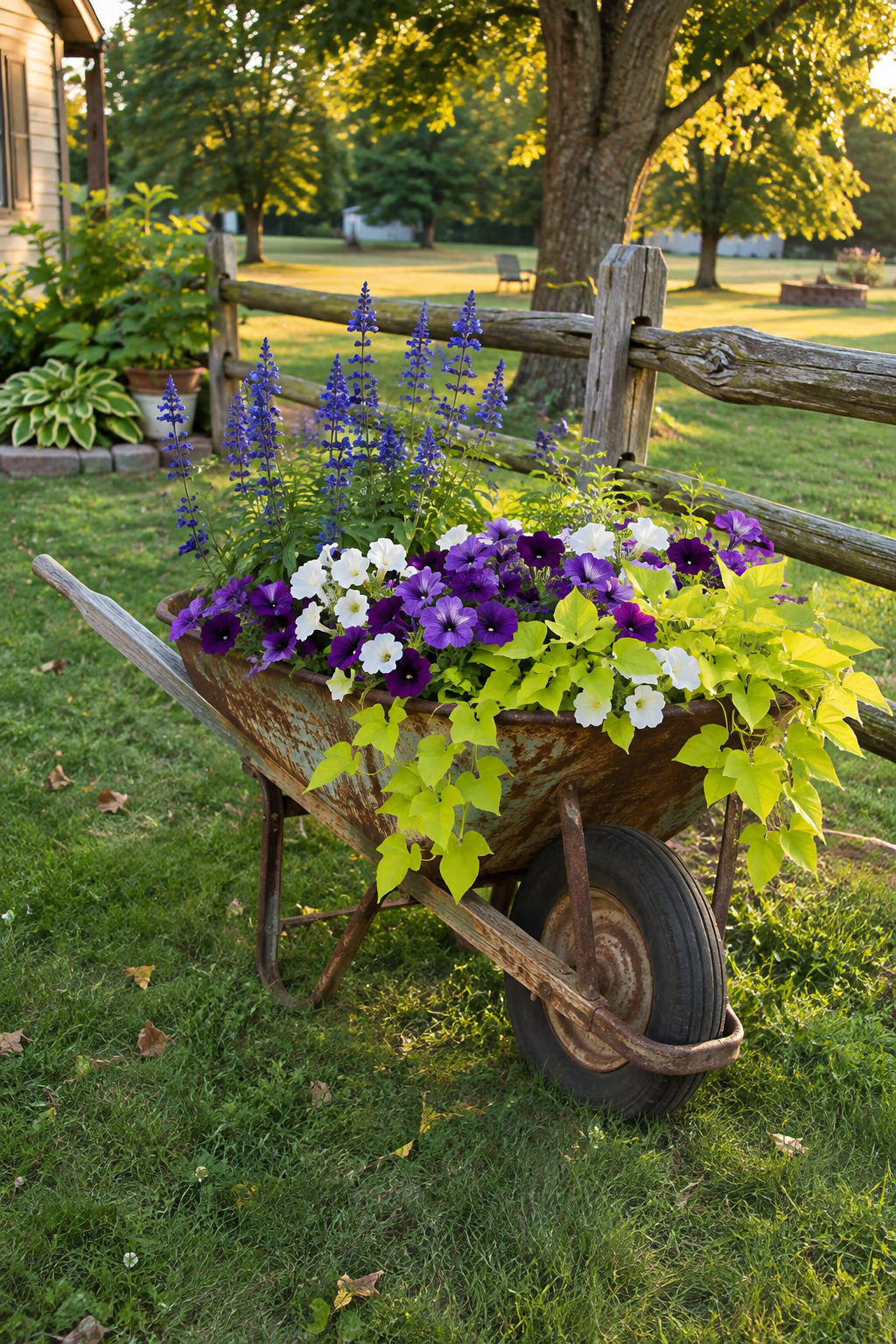
A planter you can move with the sun
A worn-out wheelbarrow with a rusty tray makes a playful, movable planter. Drill several drainage holes in the tray, fill it with potting mix, and plant it with petunias, sweet potato vine, and salvia, or with lettuce and herbs.
Because it rolls, you can follow the sun in spring, move it into shade in midsummer, or bring it near the porch for a party. It also looks right at home in a cottage or farmhouse-style yard.
A loaded wheelbarrow is heavy, so check that the tire holds air and the handles are solid before you fill it. A bag of lightweight potting mix makes moving it much easier.
23. Cast a Hypertufa Trough for Tiny Alpine Plants
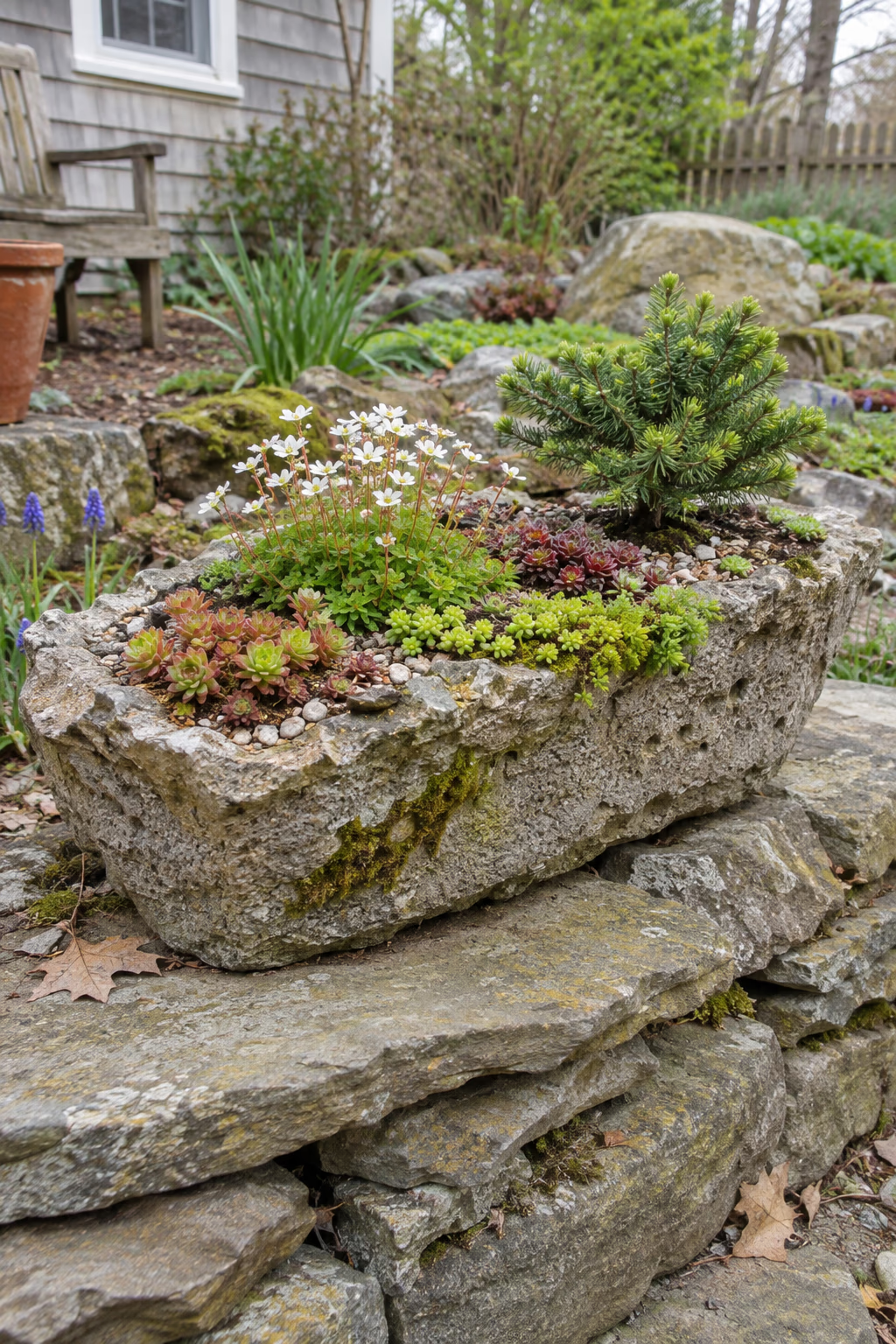
A handmade stone look for a fraction of the price
Hypertufa is a lightweight, stone-like mix of roughly equal parts portland cement, peat moss or coir, and perlite. Pack it into a mold such as a plastic tub or a cardboard box lined with plastic, keep the walls about 2 inches thick, and press a dowel through the bottom for a drainage hole.
Once cured, the trough looks like weathered stone and suits small alpine plants, sedums, saxifrages, and dwarf conifers. It weighs much less than real stone and develops moss over time.
Wear gloves and a dust mask when mixing cement. Let the trough cure slowly for several weeks, then rinse it a few times to wash out excess lime before planting.
24. Switch to Self-Watering Planters for Hot Summers
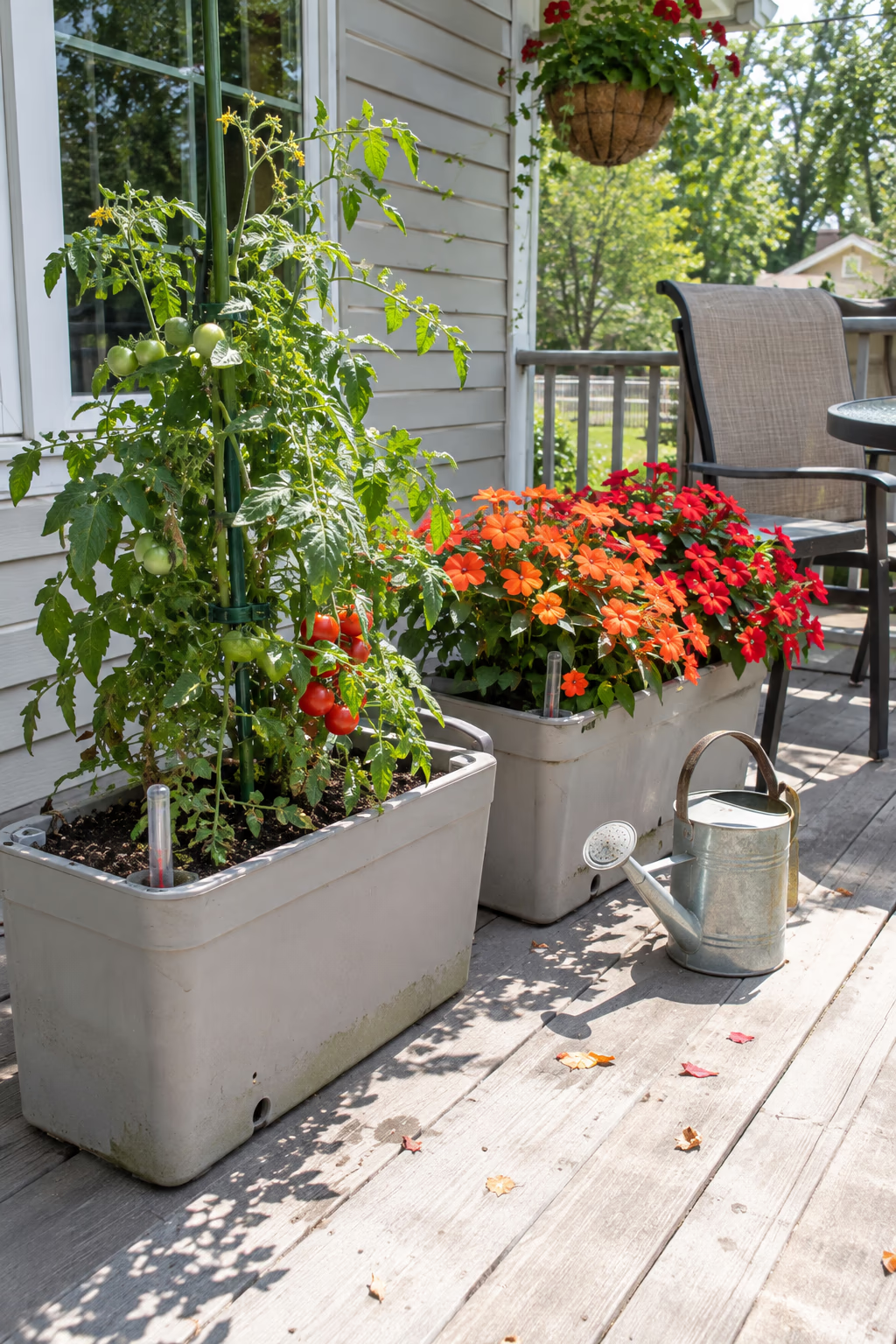
Fewer watering chores in the heat of July
Self-watering planters have a hidden reservoir in the base that feeds water up into the soil through a wicking chamber. You fill the reservoir through a tube, and an overflow hole keeps the roots from drowning after heavy rain.
They’re a smart choice for thirsty plants such as tomatoes, impatiens, and hanging-basket favorites, and for anyone who travels in summer. Many styles look like regular pots, so they blend in with the rest of your containers.
The reservoir can still run dry in a heat wave, so check it every few days. Flush the soil with plain water a couple of times a season to wash out any fertilizer salt buildup.
25. Leave Frost-Proof Planters Out All Winter
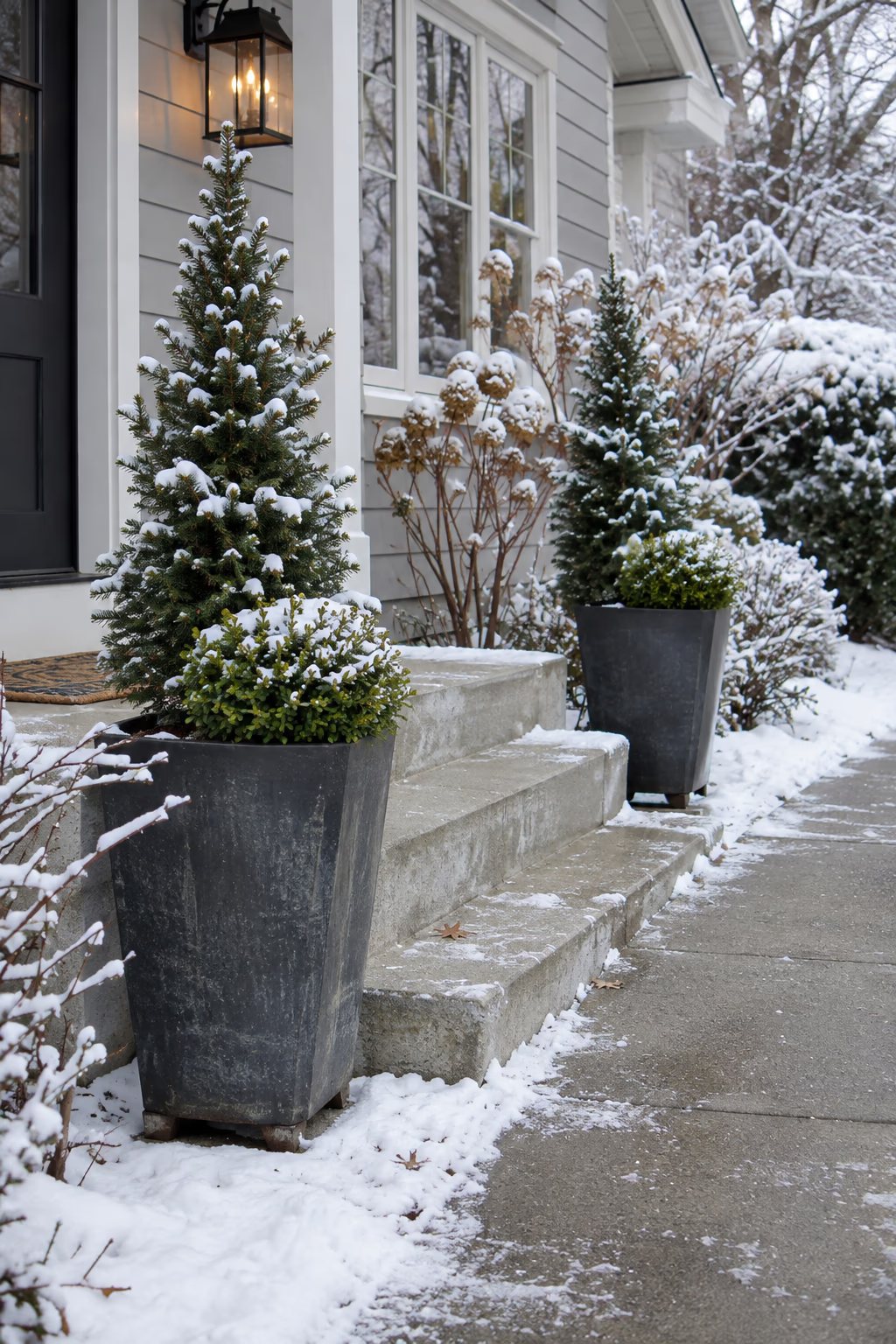
Year-round containers in cold climates
In freezing regions, pick containers made from fiberglass, resin, thick concrete, cast stone, or high-fired stoneware labeled frost resistant. These materials handle freeze-thaw cycles far better than unglazed terracotta or low-fired ceramic.
Durable pots mean you don’t have to haul everything into the garage each fall. Plant them with hardy evergreens like dwarf spruce, boxwood, or juniper and they’ll provide structure through the cold months.
Even tough pots can crack if water freezes in saturated soil, so make sure the drainage hole stays open and lift the pot on feet. Choose plants rated at least two USDA zones colder than yours to survive winter above ground.
26. Stuff Winter Containers With Fresh-Cut Evergreens
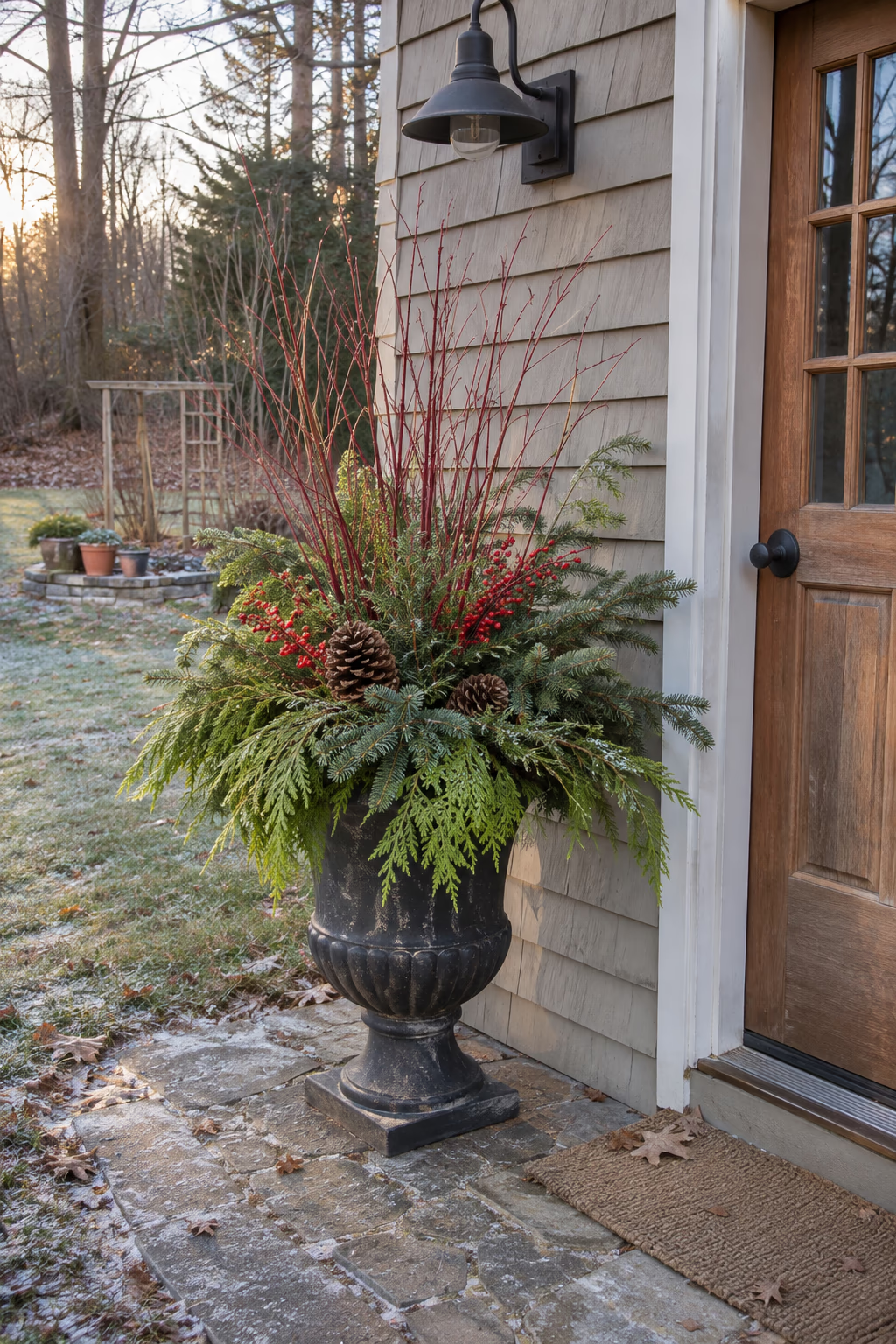
Keep planters green after the flowers fade
Once summer annuals are done, cut them back and leave the soil in place. Before the ground freezes, push fresh-cut boughs of pine, fir, cedar, and boxwood deep into the soil, then add red twig dogwood stems, pine cones, and branches of winterberry or faux berries.
The soil freezes around the stems and holds them in place, so the arrangement can last until early spring. It’s a quick way to keep pots looking festive through the holidays and beyond.
Many garden centers sell bundles of mixed greens in November and December. In mild climates, mist the greens or water the soil occasionally so they don’t dry out.
27. Style a Fall Planter With Mums and Ornamental Kale
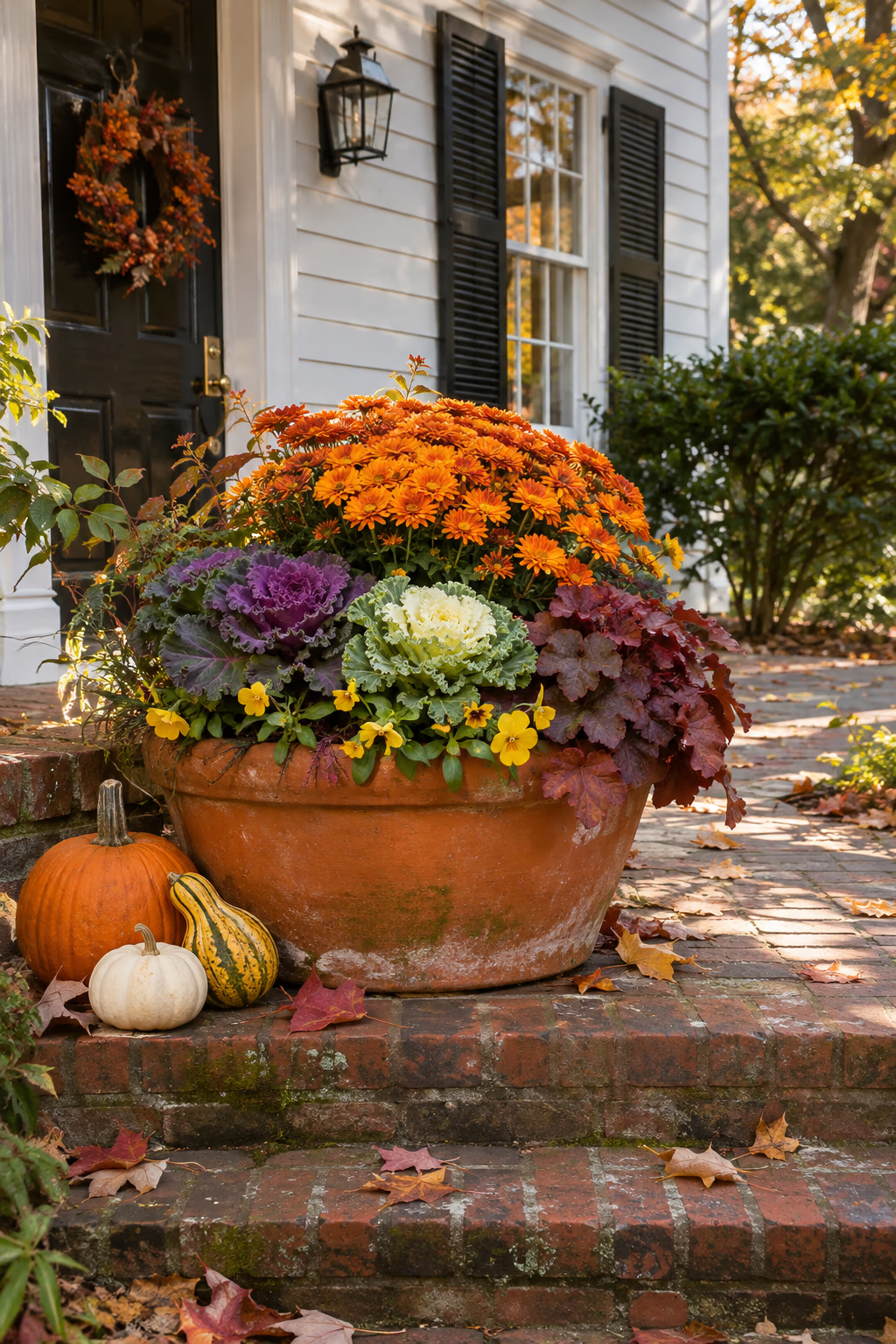
Autumn color that lasts until frost
Freshen tired summer pots by planting a potted mum in the center and surrounding it with ornamental kale or cabbage, heuchera, and pansies. Tuck in a few small pumpkins or gourds at the base for a seasonal finish.
Fall mums bloom for several weeks, and ornamental kale actually gets more colorful as temperatures drop. Pansies often survive light frosts and may bloom again in spring.
Buy mums with plenty of tight buds rather than full blooms so they last longer. Water them often, since mums sold in pots are usually root-bound and dry out quickly.
How to Plan Your Outdoor Planters
Good container gardens come down to matching the right pot, plant, and place. A little planning before you shop saves money and keeps plants healthier.
- Watch the sun first. Track how many hours of direct light each spot gets, then choose plants for full sun, part shade, or shade to match.
- Go bigger than you think. Larger pots hold more soil and moisture, so they need less frequent watering and give roots room to grow.
- Always plan for drainage. Every planter needs at least one hole, and pot feet or bricks underneath keep water from pooling and staining decks.
- Use potting mix, not garden soil. Bagged potting mix stays light and airy in containers, while garden soil compacts and drains poorly.
- Match materials to your climate. Choose frost-resistant pots in cold zones and lighter colors or thicker walls in hot, sunny spots.
- Check weight and rules. Filled planters can be very heavy, so confirm a deck or balcony can support them, and check HOA or lease rules before placing containers in shared or front-facing areas.
Frequently Asked Questions
What is the best material for outdoor planters?
It depends on your climate and budget. Fiberglass and resin are light and weatherproof, concrete and cast stone are durable but heavy, glazed ceramic is colorful but can crack in hard freezes, and terracotta is affordable but dries out quickly and may flake in cold winters.
Should I put rocks in the bottom of a planter?
It’s usually not necessary. A layer of rocks can actually raise the wet zone in the soil. Instead, use a pot with a drainage hole, fill it with quality potting mix, and cover the hole with a piece of mesh or a coffee filter to keep soil in.
How often should I water outdoor planters?
Check the soil daily in summer by pushing a finger an inch or two into it, and water when it feels dry. Small pots, clay pots, and containers in full sun may need water every day in hot weather, while large pots in shade may only need it a few times a week.
What plants do well in outdoor planters all year?
Evergreen shrubs such as boxwood, dwarf spruce, holly, and juniper hold up well year-round, along with hardy grasses and heuchera. Choose plants rated a couple of zones colder than yours, since roots in a pot are more exposed to cold than roots in the ground.
How do I keep large planters from being too heavy?
Choose lightweight fiberglass or resin pots, and fill the bottom third of very deep containers with upturned plastic pots or empty sealed bottles before adding potting mix. Leave enough soil depth for the plant’s roots, and place the pot in its final spot before filling it.
Final Thoughts
The best outdoor planter ideas don’t require a big yard or a big budget. A potted tree, a raised bowl of flowers, or a single washtub of zinnias can make a corner of your yard feel cared for and full of life.
Start with one or two containers in the spot you see most, choose plants that suit the light and your climate, and add more as you go. Swap plants with the seasons, and your planters will keep your yard looking fresh all year.