Every yard has that spot. The patio corner under the oak, the north side of the porch, the front step tucked behind a deep roof overhang. Petunias sulk there, geraniums stretch and stop blooming, and the pots slowly fill with nothing but leggy stems.
Shade isn’t a problem to fix, though. It’s an invitation to grow a different kind of plant. Begonias, fuchsias, ferns, hostas, coleus, and caladiums actually prefer those cooler, dimmer spots, and many of them offer brighter leaf color and lusher texture than sun-loving annuals ever will. Pots also let you put that color exactly where you want it, even on a deck or concrete slab with no soil at all.
These 19 shade container garden ideas cover flowering combinations, foliage-only planters, tropical looks, woodland-style pots, winter evergreens, and practical tricks for watering in low light. Pick one for a gloomy corner or mix several to turn your shadiest space into the best-looking part of the yard.
1. Pair Tuberous Begonias With Fuchsias and Maidenhair Fern
The classic flowering combo for bright shade
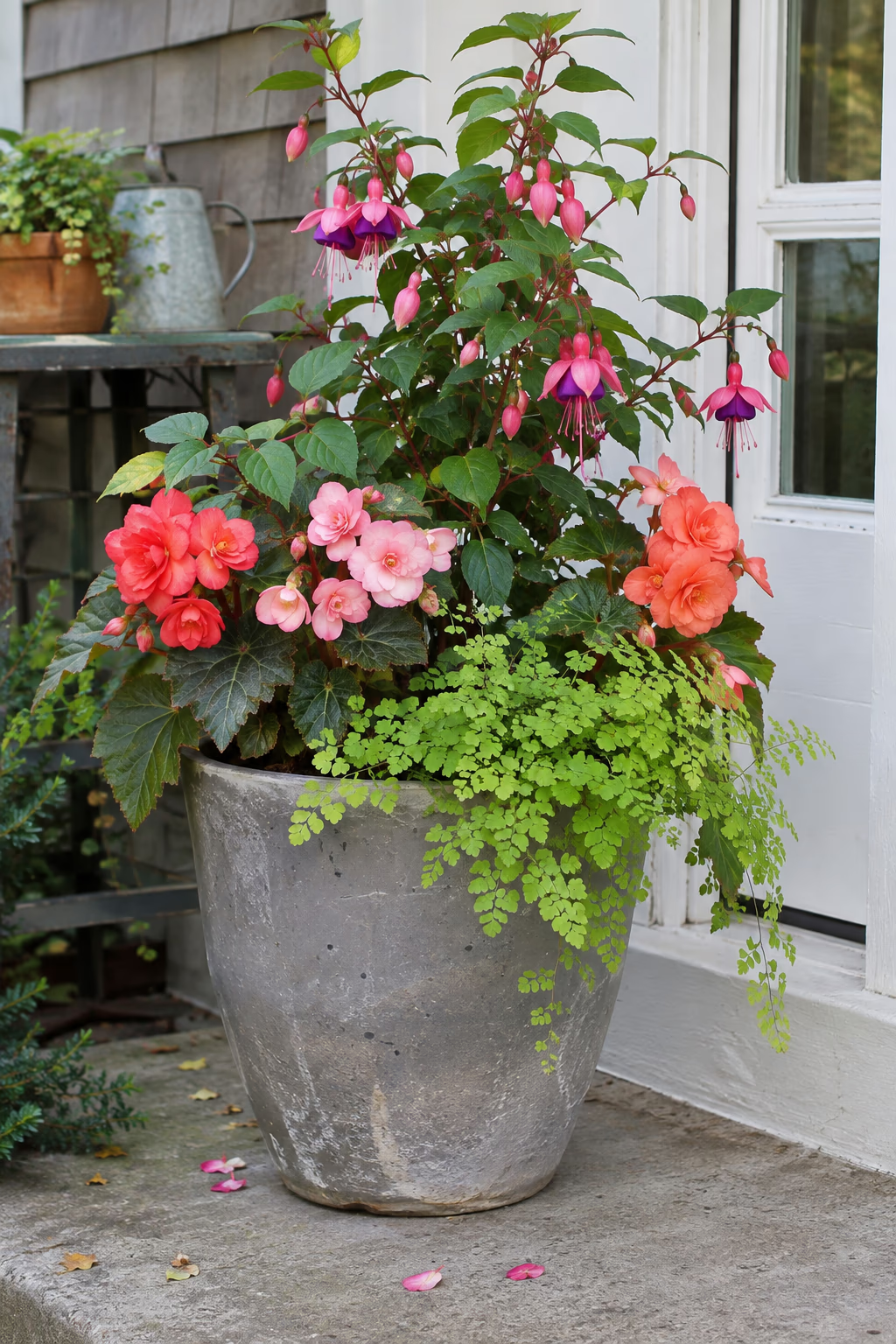
Few shade plants bloom as generously as tuberous begonias and fuchsias. Set an upright fuchsia in the center of a 16- to 18-inch pot, tuck two or three tuberous begonias in salmon, coral, or soft pink around it, and finish the front edge with a maidenhair fern whose fine, airy leaves soften the big flowers.
The combination works because all three plants like the same things: cool roots, steady moisture, and bright light without hot afternoon sun. The rounded begonia blooms and the dangling fuchsia flowers look like they were made for each other.
This trio struggles in extreme heat. Where summers regularly top 90°F, choose heat-tolerant begonias and move the pot to the coolest, best-ventilated spot you have. Feed every two weeks with a diluted liquid fertilizer, and pick off fallen begonia petals so they don’t rot on the leaves.
2. Pack a Pot With Coleus in Bold Leaf Colors
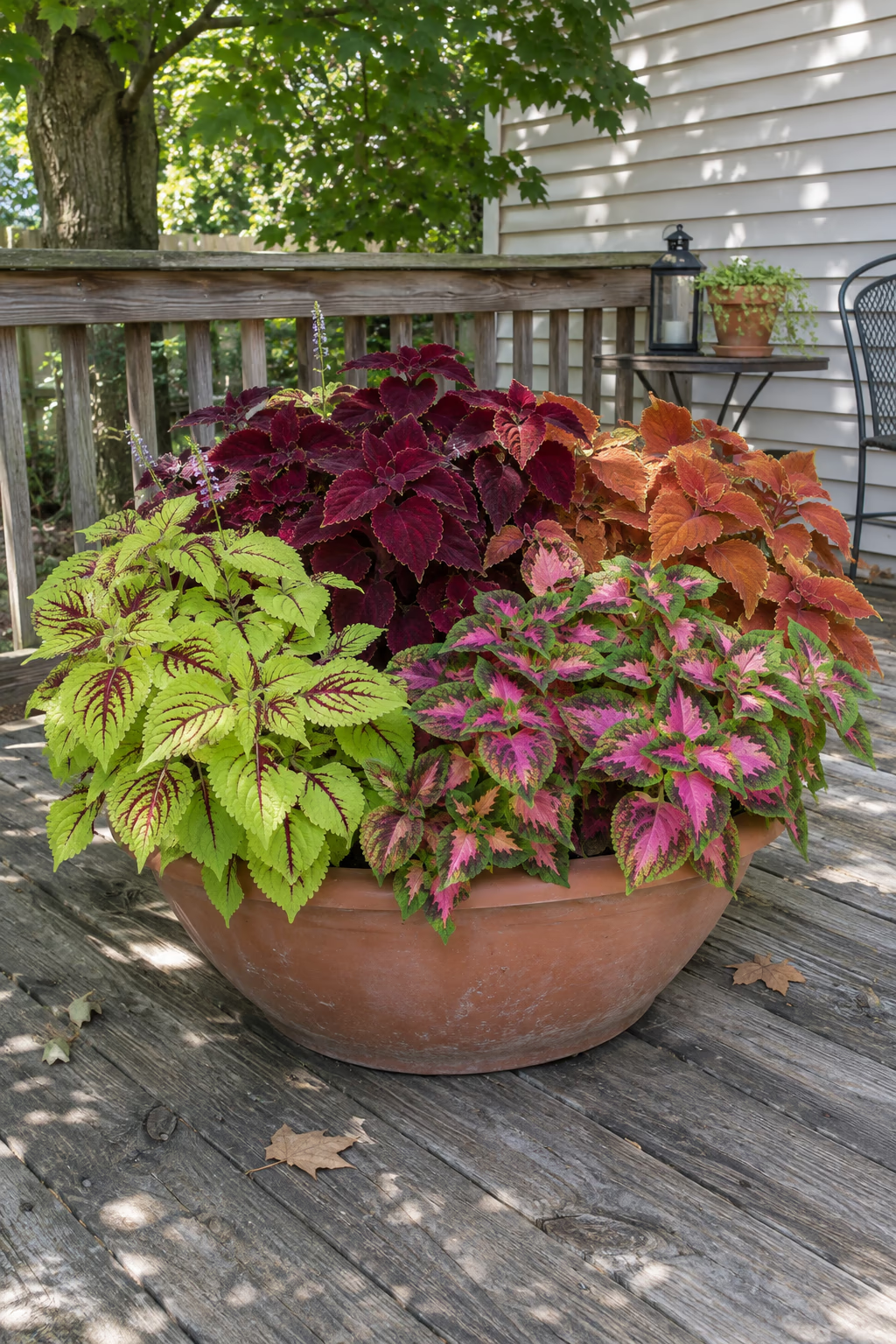
Nonstop color without waiting for flowers
Coleus gives you all-season color from the very first day you plant it. Choose three or four varieties with leaves in different colors and patterns, such as lime with red veins, deep burgundy, rusty orange, and pink splashed with green, and plant them together in a wide 18-inch bowl or a tall cylinder.
Because the color comes from foliage rather than blooms, the pot looks the same in July as it did in May. Coleus also handles everything from bright shade to fairly deep shade, and most types will grow full and bushy in just a few weeks.
Pinch the growing tips once or twice early in the season to keep plants compact, and snip off the spiky flower stalks as they appear so the plants keep putting energy into leaves. Coleus is frost tender, so treat it as an annual unless you take cuttings indoors in fall.
3. Brighten a Dark Corner With Chartreuse and Silver Foliage
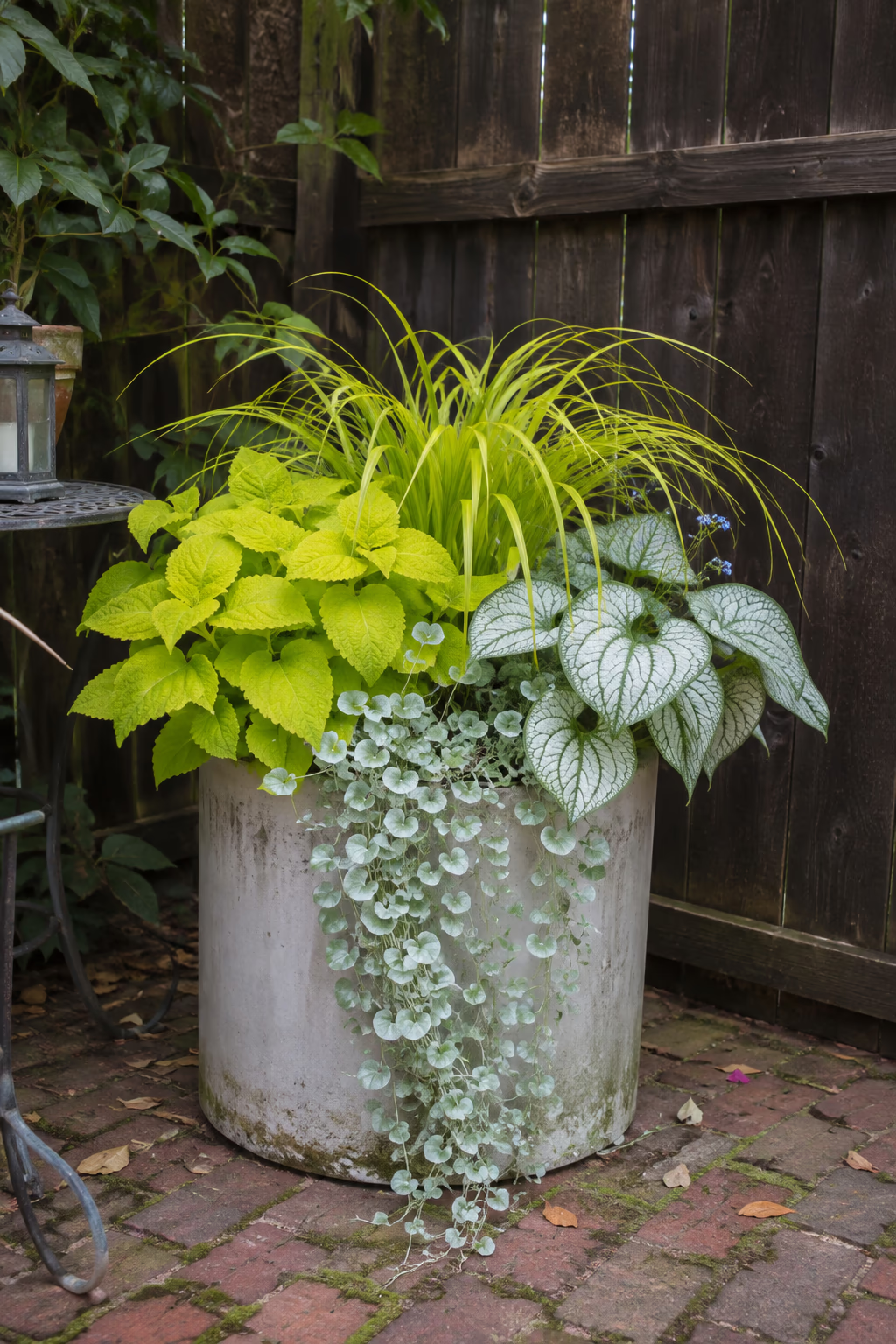
Light-colored leaves that glow in the shadows
Dark green leaves almost disappear in deep shade, but chartreuse and silver ones seem to light up. Build a pot around a gold-leaved coleus or golden Japanese forest grass, add a silver-spotted lungwort or a silver brunnera, and let silver dichondra or golden creeping Jenny trail over the rim.
These pale tones bounce what little light there is back toward the eye, which makes a dim corner feel brighter and more open. A light-colored pot, such as pale gray concrete or cream glazed ceramic, pushes the effect even further.
Gold foliage can scorch in strong afternoon sun, so this idea is best kept in true shade. Silver dichondra prefers to dry slightly between waterings, so tuck it at the edge of the pot where the soil drains fastest.
4. Hang Fuchsia Baskets Along a Covered Porch
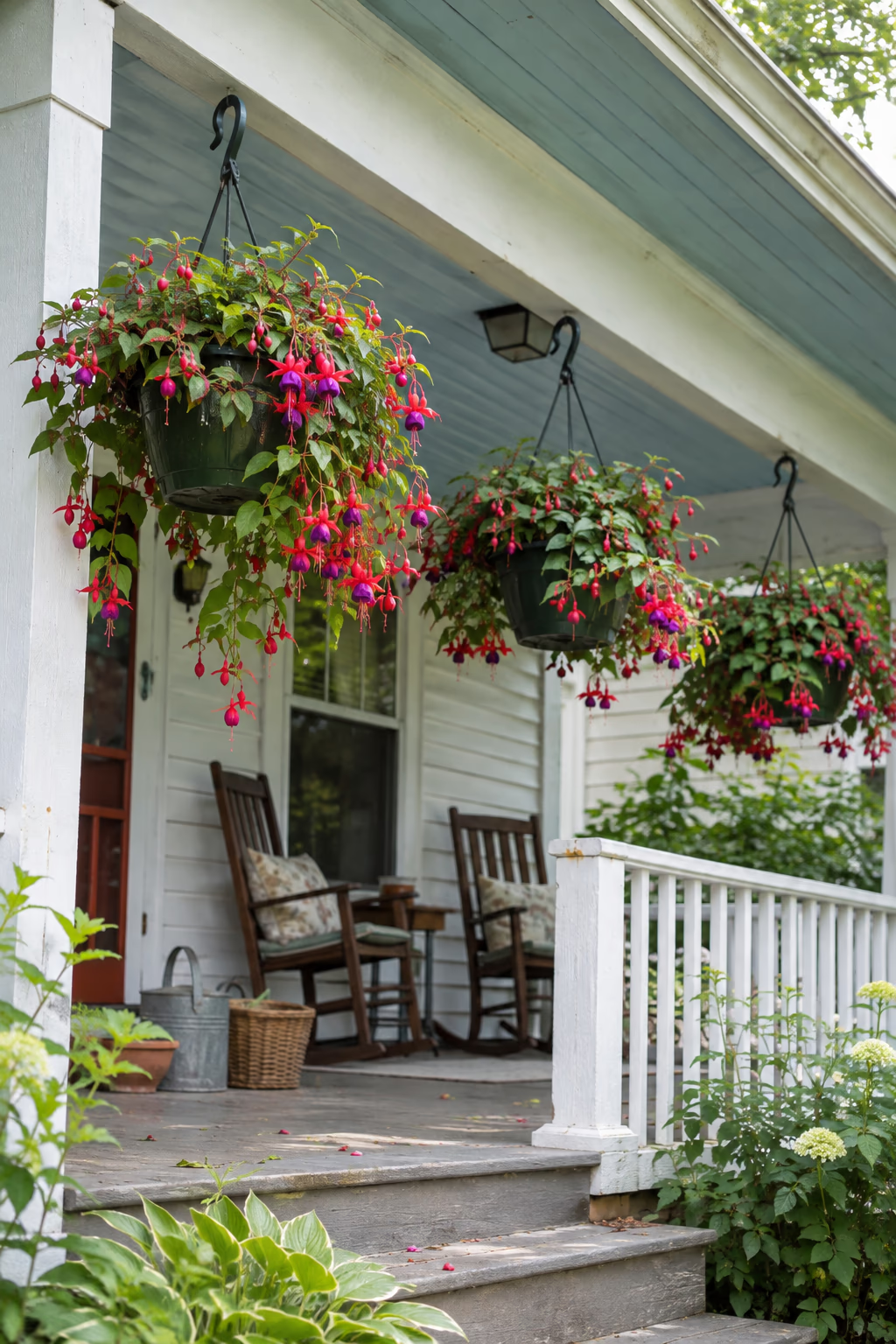
Eye-level blooms that hummingbirds love
Trailing fuchsias were made for hanging baskets. Their pendant, two-tone flowers in red and purple, pink and white, or solid magenta dangle over the edge and are best seen from below. Hang a row of 12- to 14-inch baskets from sturdy hooks along a covered porch beam for a display that greets you every time you come home.
A porch roof gives fuchsias exactly what they want: protection from hot midday sun and drying wind. Hummingbirds often find the tubular blossoms quickly, which adds a lot of life to a shady front entry.
Hanging baskets dry out fast, even in shade, and a waterlogged basket can weigh 20 pounds or more. Use screw-in hooks rated for the weight, check the soil daily in midsummer, and consider a hose wand so you don’t have to stretch from a ladder.
5. Collect Hostas in Glazed Ceramic Pots
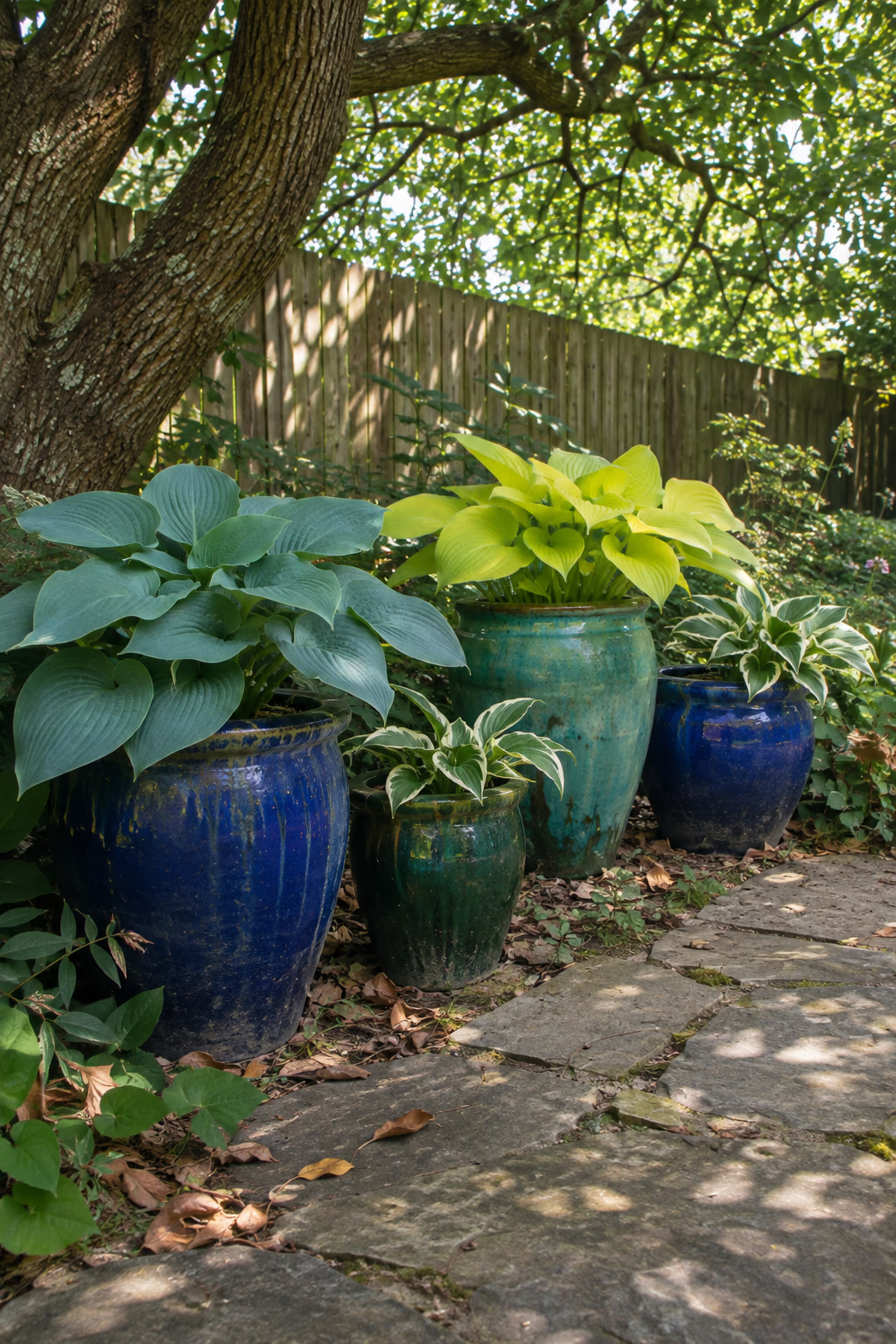
Bold leaves that look polished up off the ground
Hostas grown in pots look tidier and more sculptural than they often do in a bed. Plant one variety per container, choosing a mix of sizes and leaf colors, such as a large blue-leaved hosta, a gold one, and a small white-edged type. Glazed pots in cobalt, teal, or deep green make the leaves stand out.
Container hostas tend to suffer less slug damage than those in the ground, and raising them up shows off the leaf shapes and patterns. A group of three to five pots under a tree or beside a shady path creates a collector’s look without much work.
Glazed pots can crack if wet soil freezes inside them. In cold climates, move hosta pots into an unheated garage or shed after the leaves die back, or sink them into a mulched bed for winter. Water once a month while dormant so the roots don’t completely dry out.
6. Plant Caladiums for Big Painted Leaves
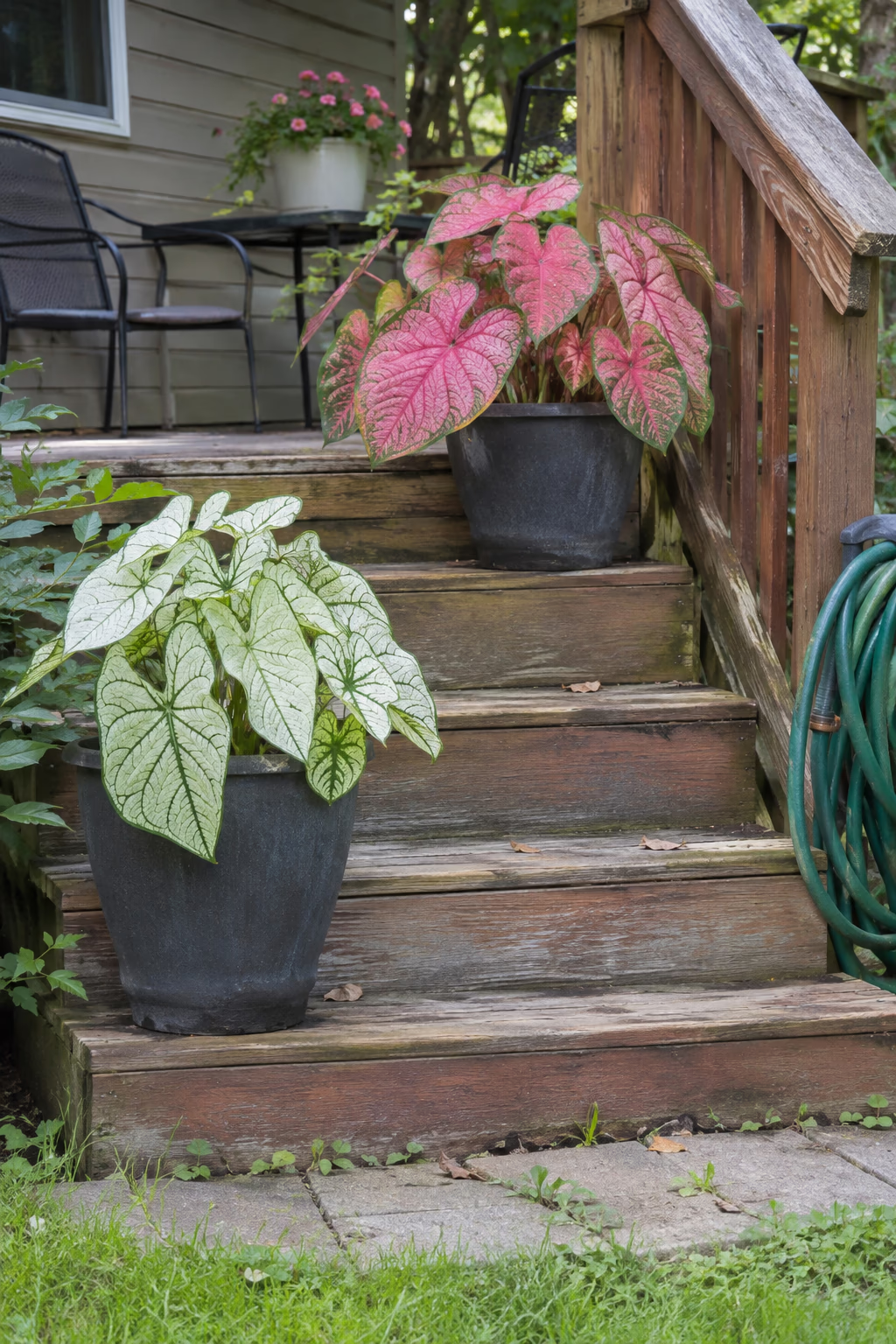
Heart-shaped foliage in pink, red, and white
Caladiums have large, papery leaves splashed and veined in pink, red, white, and green. Plant five to seven tubers in a 14-inch pot, all one variety for a bold, uniform look, or mix a pink and a white for contrast. They are especially striking along a shaded walkway or on the steps of a back deck.
These tropical plants thrive in warm, humid shade where many other annuals give up. Their leaves stay colorful from early summer until frost, and they need almost no grooming.
Don’t plant tubers until nights stay above about 60°F, or they will sit and rot. Starting them indoors a few weeks early gives you a head start. Caladiums are toxic if chewed, so keep them away from pets and small children.
7. Fill a North-Facing Window Box With Impatiens and Torenia
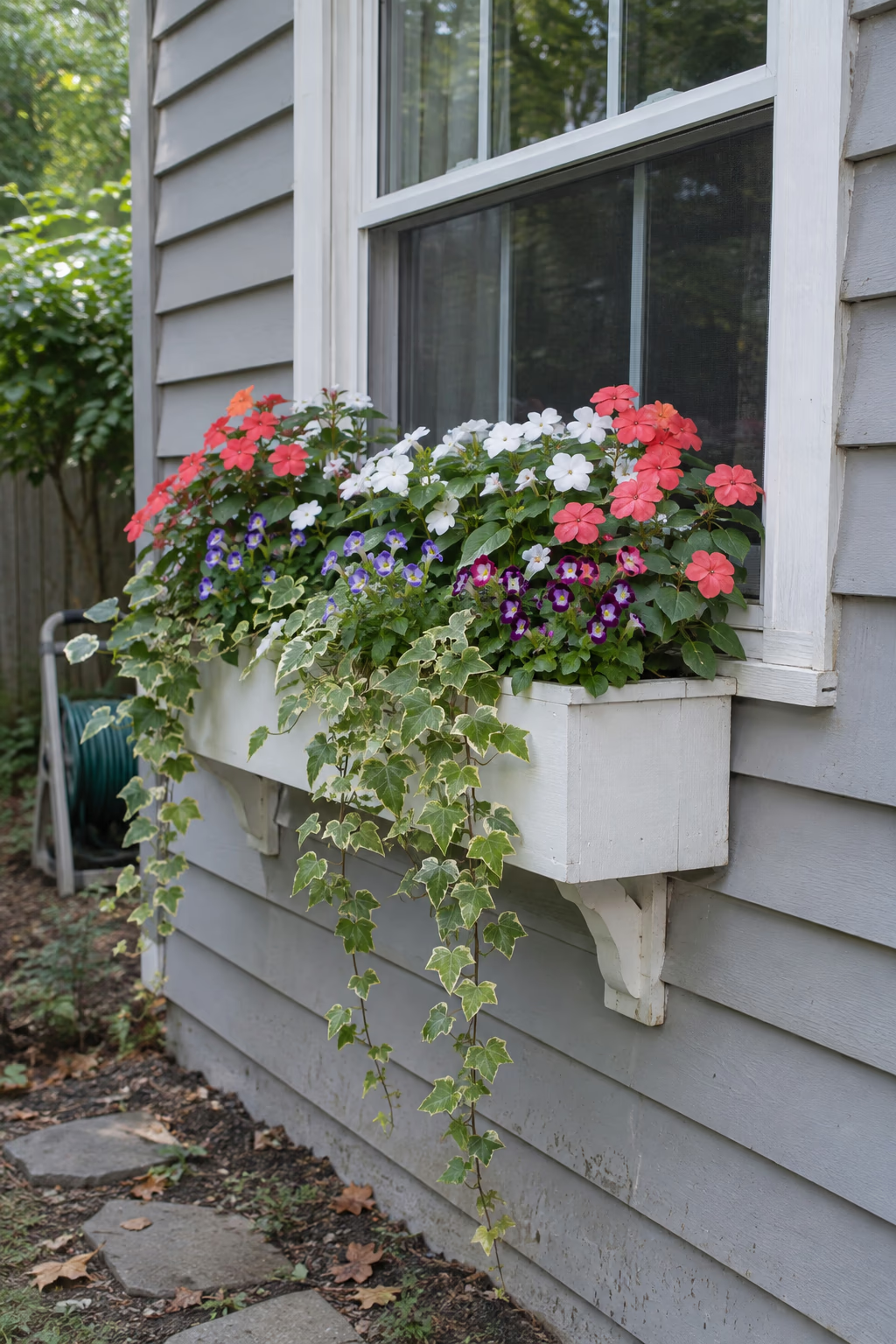
Cheerful flowers for the window that never gets sun
A north-facing window box can still overflow with flowers. Plant impatiens in coral, white, or pink across the back, add torenia, also called wishbone flower, in blue or purple along the front, and let a trailing vine like variegated ivy or sweet potato vine spill down the siding.
Both impatiens and torenia bloom steadily in shade without deadheading, so the box stays full all summer with little effort. The soft mix of warm and cool colors looks good against white, gray, or dark painted siding.
Garden impatiens have been hit by downy mildew in many regions. Look for varieties bred for resistance, or use New Guinea impatiens instead. Make sure the window box has drainage holes and is anchored firmly with brackets, since a soaked box is surprisingly heavy.
8. Mix Heuchera, Sedge, and Creeping Jenny in an All-Foliage Planter
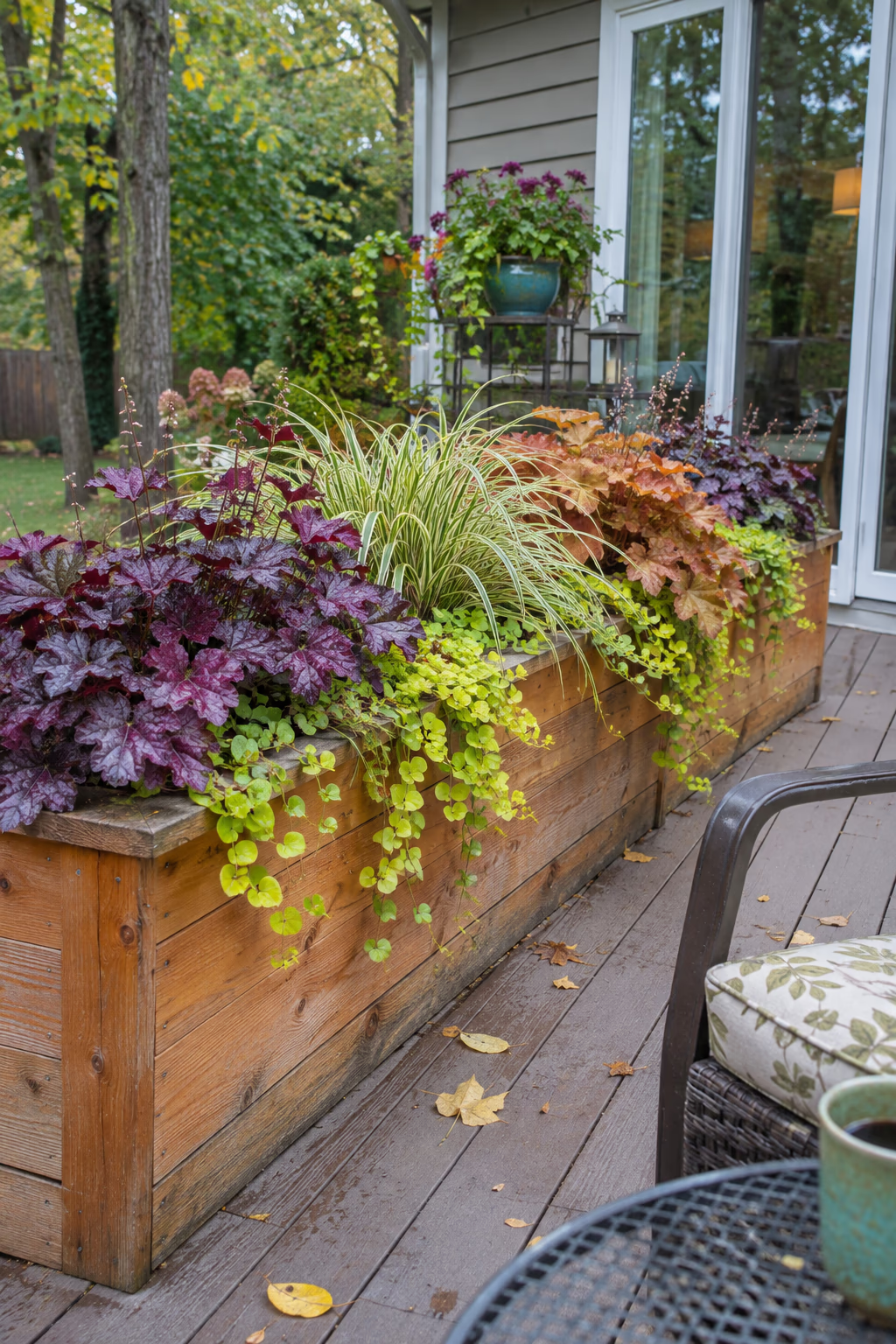
Texture and color that last well past summer
An all-foliage pot relies on contrasting leaf colors and shapes instead of flowers. Combine a purple or caramel heuchera, a fine-textured variegated sedge, and golden creeping Jenny trailing over the edge. A rectangular planter on a deck or a long trough along a shady wall shows this combination well.
Because these are all perennials in many zones, the planter looks good from spring through late fall, and you can often keep it going for several years. The ruffled heuchera, grassy sedge, and round creeping Jenny leaves create texture without any deadheading.
Creeping Jenny can be invasive when planted in the ground in some areas, so keep it in containers and don’t dump the pot into a garden bed at season’s end. Heuchera roots sometimes heave out of the soil; top them up with fresh potting mix each spring.
9. Grow a Dwarf Japanese Maple in a Large Rustic Pot
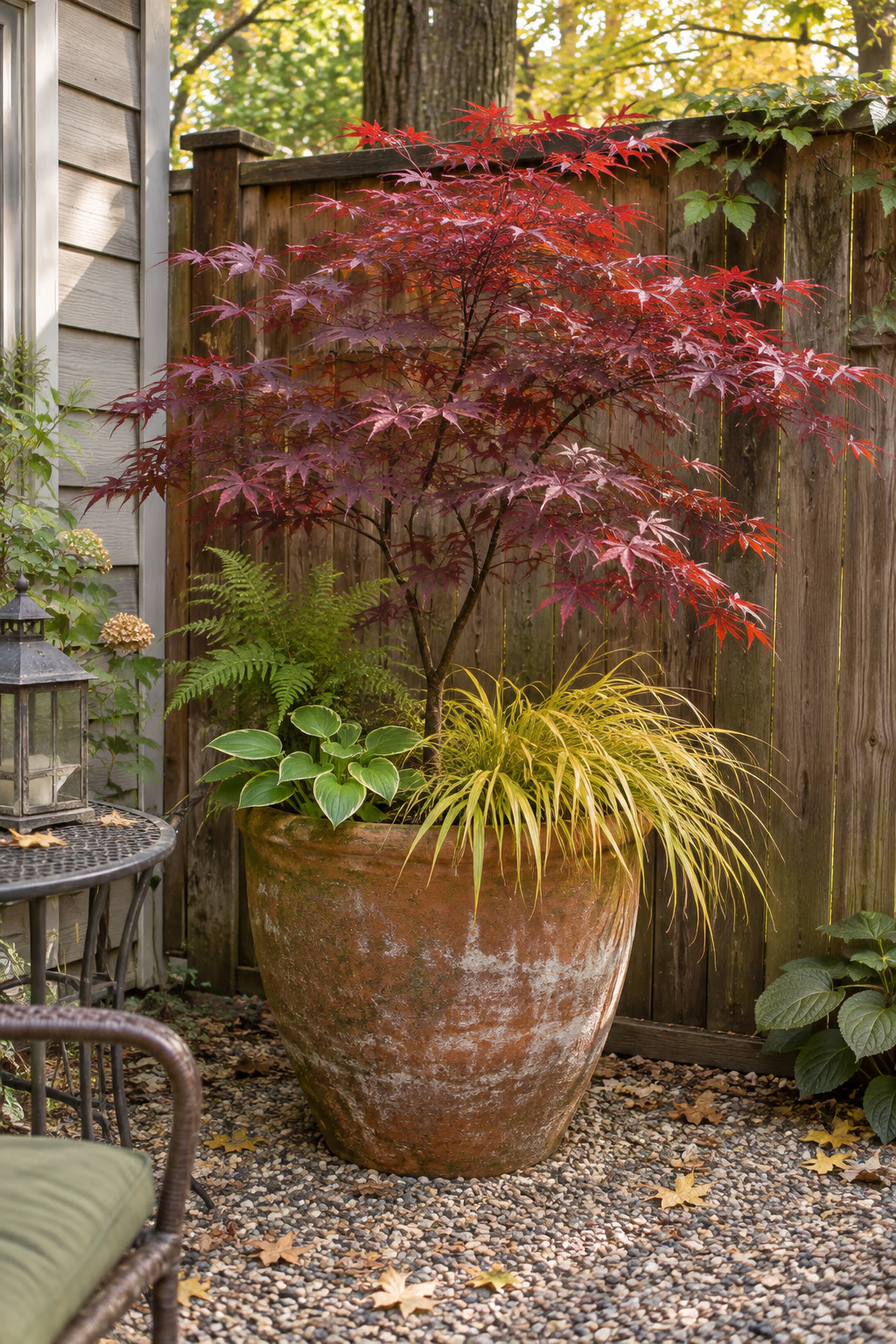
A small tree that gives the pot real presence
A dwarf Japanese maple turns a shade container into a focal point. Choose a compact variety that stays under 6 feet, plant it in a pot at least 20 inches across, and underplant with Japanese forest grass, small ferns, and a low hosta. A weathered wood, stone-look, or rough clay pot keeps the look natural.
Japanese maples appreciate dappled shade and protection from hot afternoon sun, which helps prevent leaf scorch. Planting a small tree in a big container is one of the most popular container looks right now, and it adds height that annual pots can’t match.
Potted trees are more vulnerable to winter cold than those in the ground, because the roots aren’t insulated by soil. In zone 6 and colder, move the pot to a sheltered spot against the house or wrap it with burlap and bubble wrap for winter. Repot every few years as the roots fill the container.
10. Create a Tropical Corner With Elephant Ears and Ferns
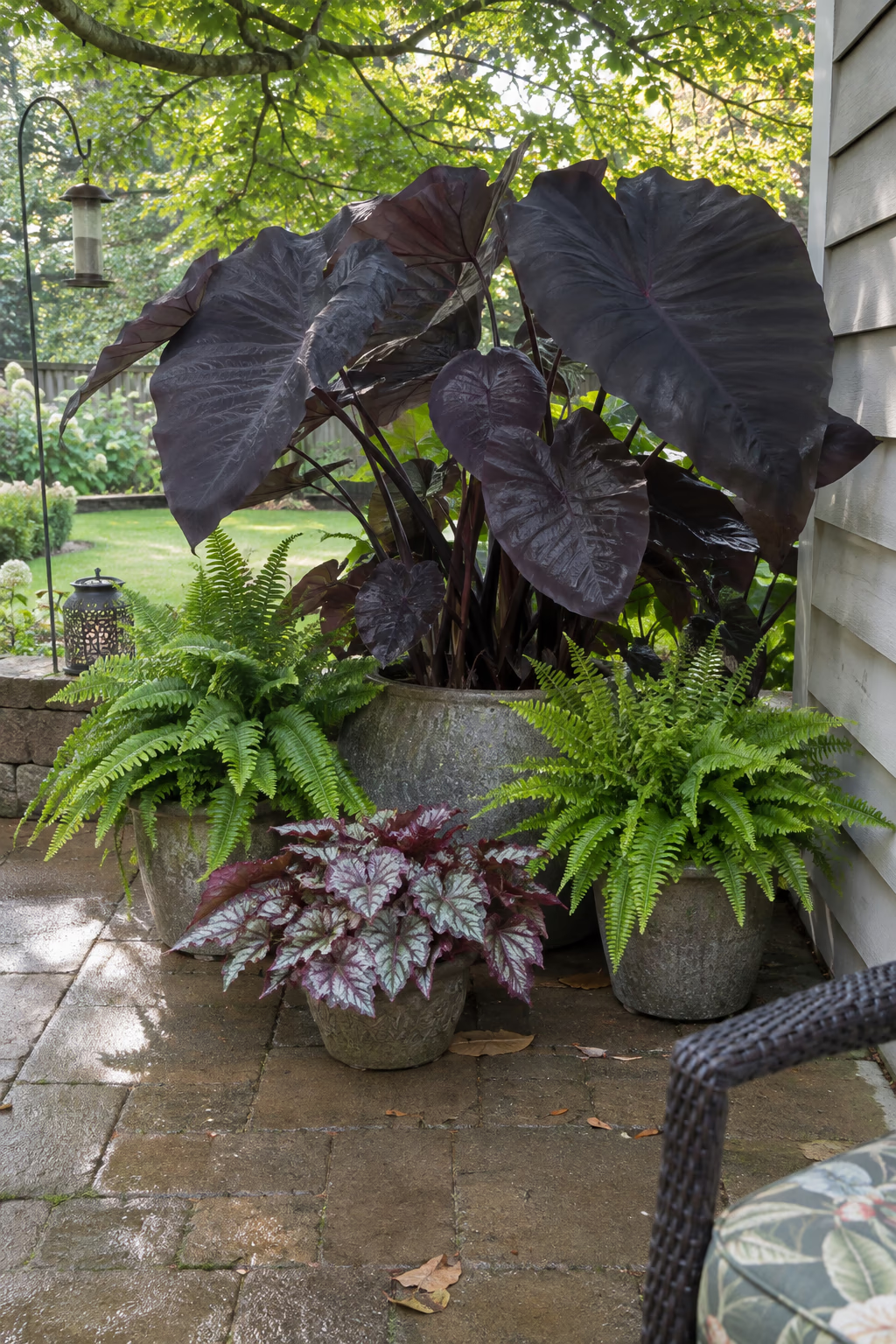
Jungle-size leaves on a shady patio
Elephant ears bring instant drama with leaves that can reach a foot or more long. Plant a dark-leaved type in a large 20- to 24-inch pot, surround it with Boston ferns in matching containers, and add a pot of rex begonias for patterned foliage at the front. The layered heights make a small patio corner feel like a lush garden.
Many elephant ears prefer partial shade and constant moisture, which suits a spot near a downspout or under a tree canopy. The big leaves contrast beautifully with fine fern fronds.
Elephant ears are heavy drinkers and feeders. Water deeply, sometimes daily in midsummer, and feed every couple of weeks. Their sap can irritate skin, and the plants are toxic if eaten. In cold zones, dig and store the tubers indoors or bring the whole pot into a frost-free space before frost.
11. Frame a Shady Front Step With Boxwood Topiary Planters
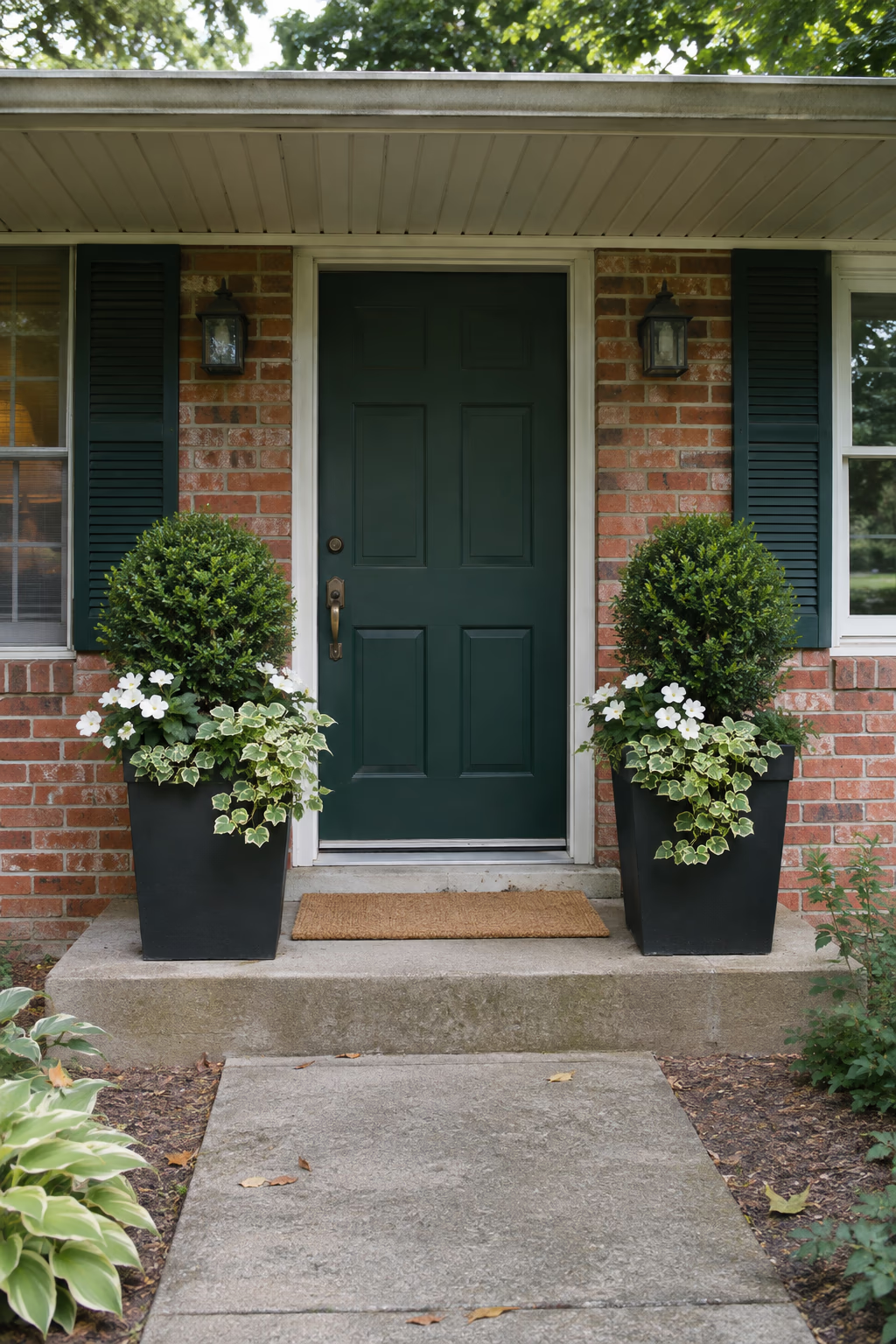
Formal structure that tolerates low light
Boxwood handles part shade better than many evergreens, which makes it a great choice for a front step under a deep overhang. Place a boxwood ball or cone topiary in a square planter on each side of the door, then underplant with white impatiens or trailing variegated Swedish ivy for summer.
The clipped evergreen shape gives the entry year-round structure, while the seasonal underplanting adds softness and a bit of color. Swap the impatiens for pansies or small ferns as the seasons change.
Boxwood in a container needs consistent watering, including during dry winter spells when the ground isn’t frozen. Choose a planter at least 16 inches wide, and in cold climates use frost-proof fiberglass or resin so it won’t crack. Trim lightly in late spring to keep the topiary shape crisp.
12. Turn a Hollow Log Into a Woodland Fern Planter
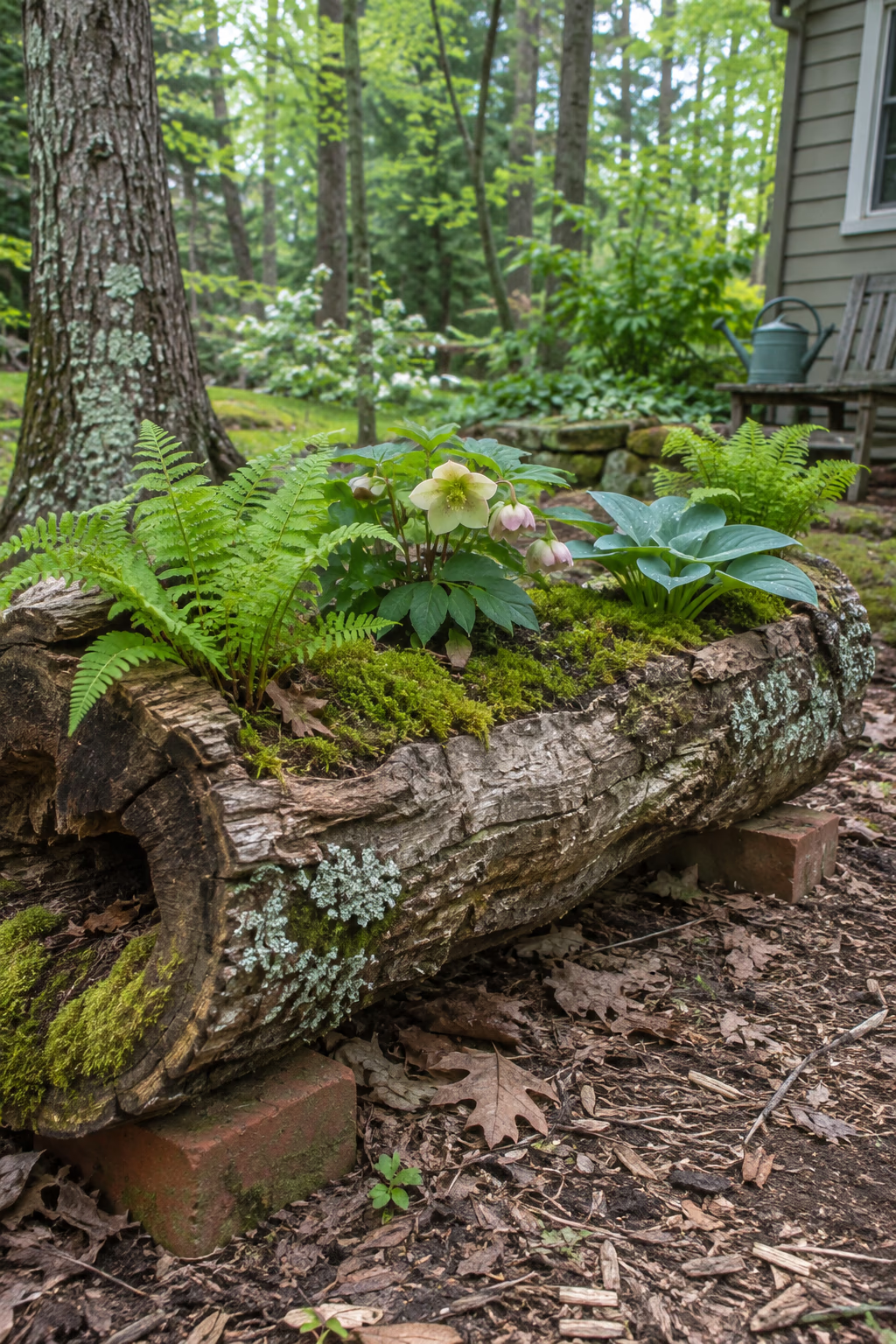
A naturalistic pot that looks like it grew there
An old stump, hollow log, or section of fallen trunk makes a charming container for a shady yard. Hollow out the center if needed, line it with landscape fabric, and fill it with potting mix. Plant small ferns, a hellebore, a dwarf hosta, and sheet moss to cover the soil.
The rough bark and natural shape fit perfectly into a wooded backyard or a shaded side yard, and the plants look like a little piece of forest floor. It’s an easy way to reuse wood from a tree removal project.
Wood decays over time, so expect the planter to last a few seasons before it starts to crumble. Drill a couple of drainage holes in the bottom, and avoid treated lumber or wood from diseased trees. Set it on bricks or pavers to slow rot.
13. Plant a Bigleaf Hydrangea in a Half-Barrel Tub
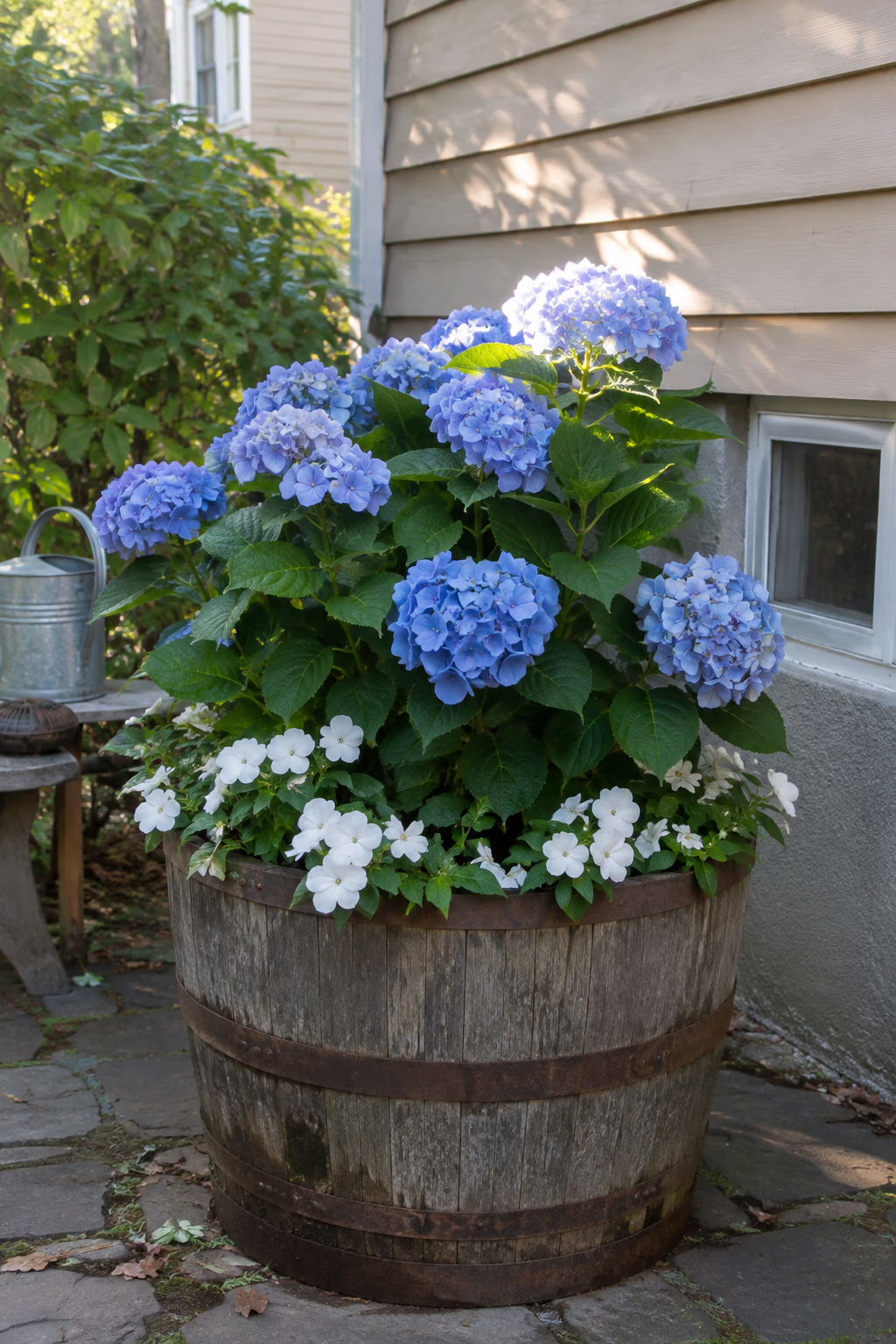
Huge blooms for a spot with morning sun
A bigleaf hydrangea in a wooden half-barrel or a large 24-inch tub gives you a shrub-size display without a garden bed. Compact varieties that stay under 4 feet are easiest to manage, and a ring of white impatiens or trailing lamium around the base finishes the look.
Hydrangeas thrive with morning sun and afternoon shade, which describes the east side of many houses and decks. The mophead or lacecap flowers last for weeks and often fade to attractive antique shades in fall.
Container hydrangeas are thirsty and may wilt on hot afternoons; check soil daily in summer. Because many bigleaf types bloom on old wood, protect the pot from hard freezes in winter by moving it into an unheated garage or wrapping it, or the next year’s flower buds may be killed.
14. Go Moody With Black and Burgundy Foliage
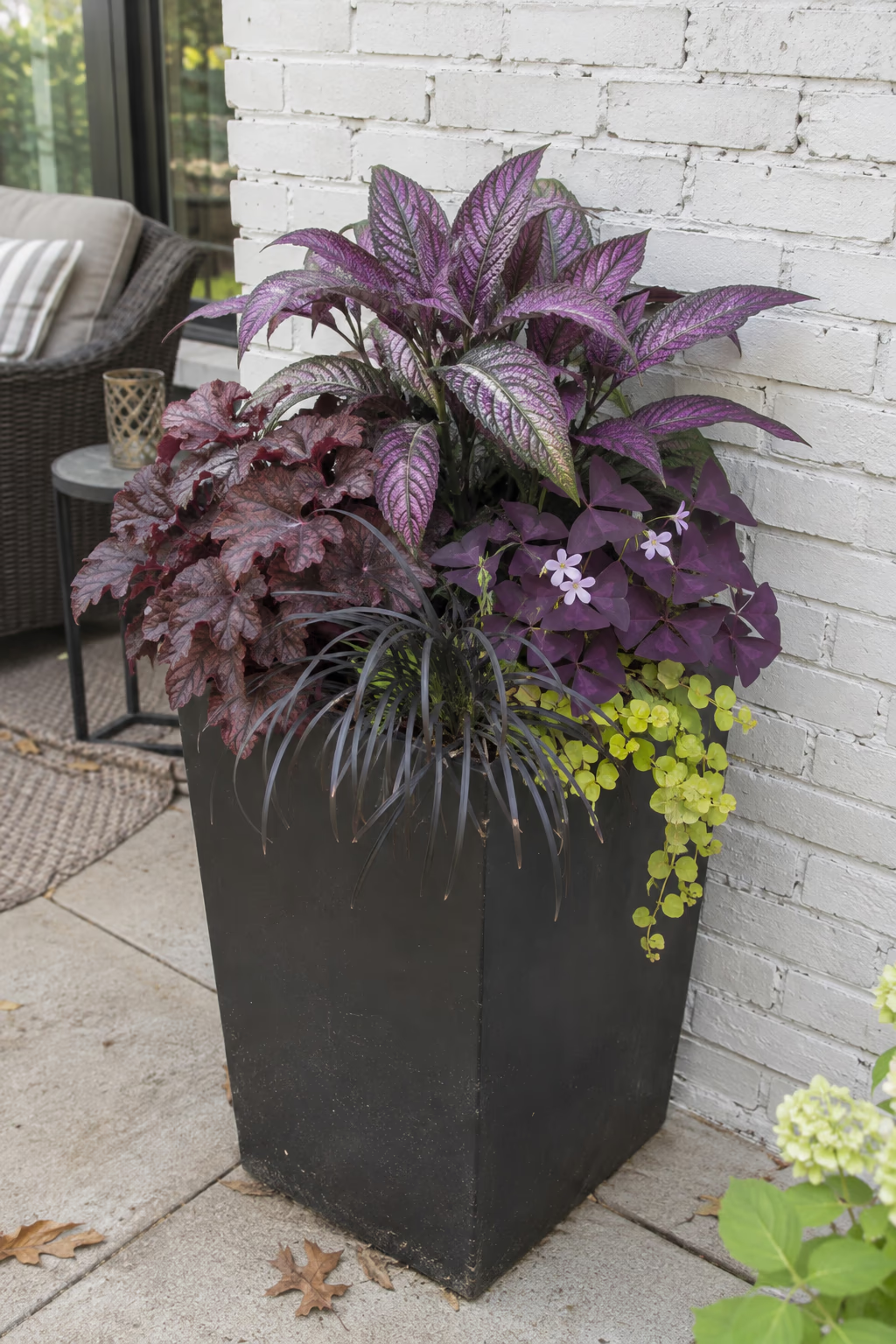
Dramatic contrast in a modern setting
For a more modern look, build a pot around dark leaves. Combine black mondo grass, a burgundy heuchera, purple oxalis, and Persian shield with its metallic purple leaves. A copper, charcoal, or matte black container emphasizes the rich tones.
Dark foliage looks sophisticated next to light-colored siding, pale pavers, or a white fence, and it pairs well with clean-lined furniture. A single lime-green plant such as golden creeping Jenny makes the dark colors pop.
Keep in mind that very dark leaves can get lost in deep shade or against dark backgrounds, so this idea works best in bright shade or against a light wall. Persian shield is a tender annual in most of the country, while mondo grass and heuchera can often be replanted in the garden in fall.
15. Keep the Porch Green All Winter With Evergreen Pots
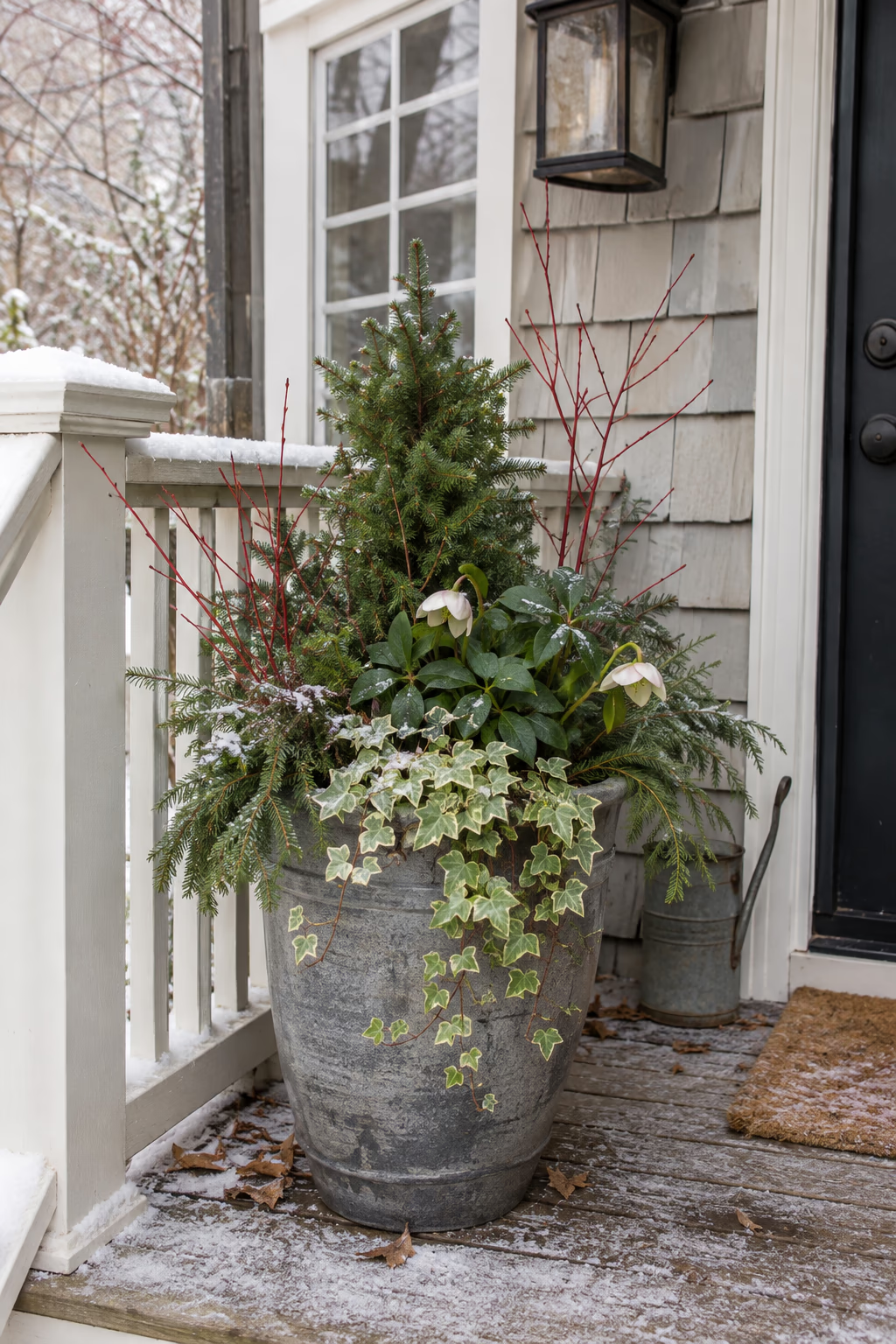
A container that doesn’t quit when frost arrives
Shade containers don’t have to be empty from November to April. Plant a dwarf conifer or a small holly in the center of a frost-proof pot, add a hellebore for late-winter flowers, and drape variegated English ivy or wintercreeper over the edges. Add cut evergreen branches and red twig dogwood stems in December for extra fullness.
Evergreen structure plants are a growing trend because they keep a space looking cared for year round with little work. Hellebores are especially valuable in shade, opening their nodding flowers when almost nothing else is blooming.
Choose plants rated at least one or two zones colder than your area, since roots in pots get colder than roots in the ground. Water during dry, thawed periods in winter. English ivy can become invasive in some regions, so keep it in the pot and trim it before it climbs.
16. Glow After Dark With an All-White Shade Container
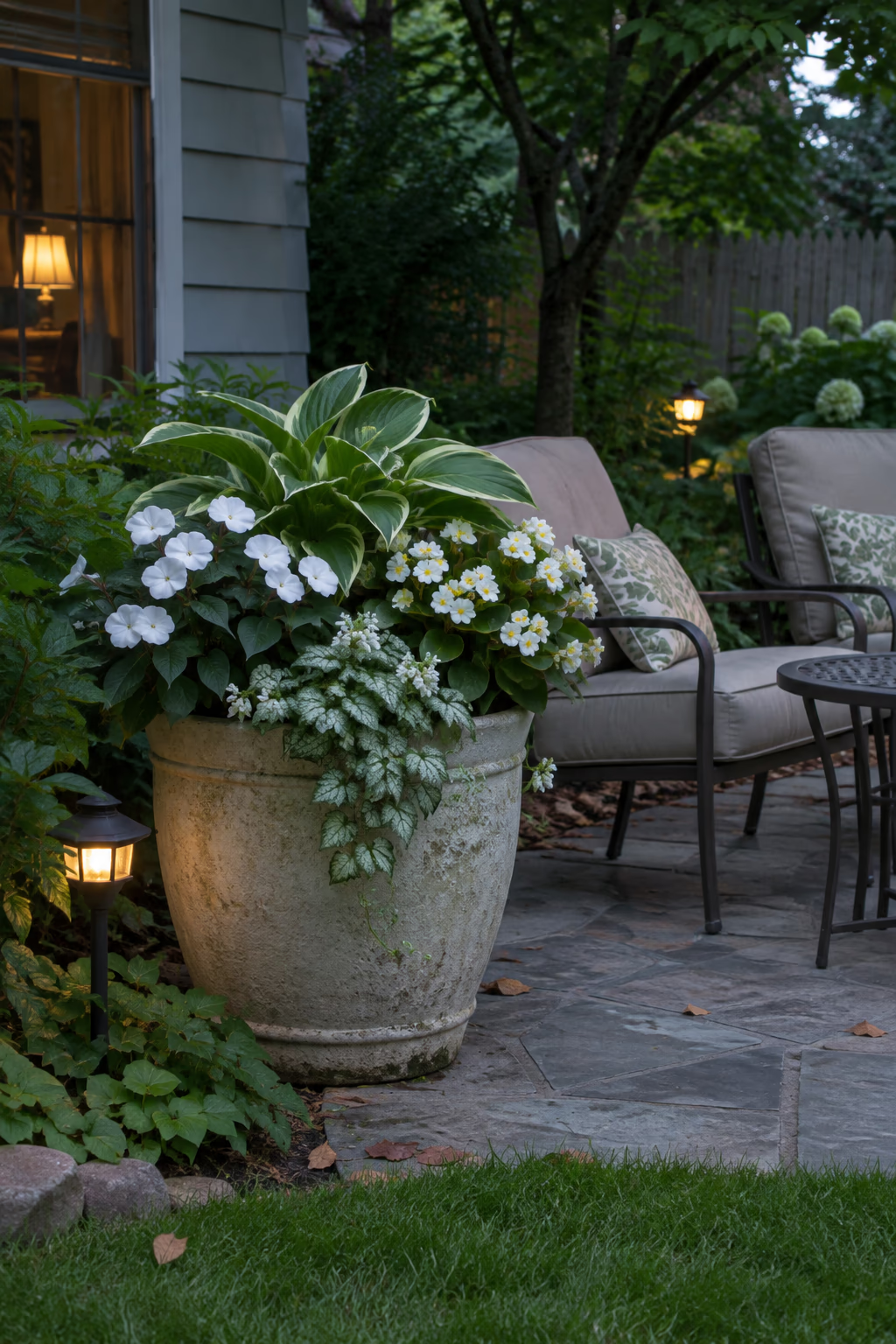
Pale blooms that shine in the evening
White flowers and variegated leaves seem to glow at dusk, which makes them perfect for a shady patio you use mostly in the evening. Fill a large pot with white New Guinea impatiens, white begonias, a white-edged hosta, and lamium with silver leaves and white flowers.
A single-color planting looks calm and elegant, and white reads clearly even in low light. Placed near seating or along a path, an all-white pot also acts as a soft visual guide after the sun goes down.
Remove spent white flowers regularly, since fading blooms turn brown and show more than on darker plants. Add a few solar path lights nearby to extend the effect into the night.
17. Move Houseplants Outside to a Shaded Patio for Summer
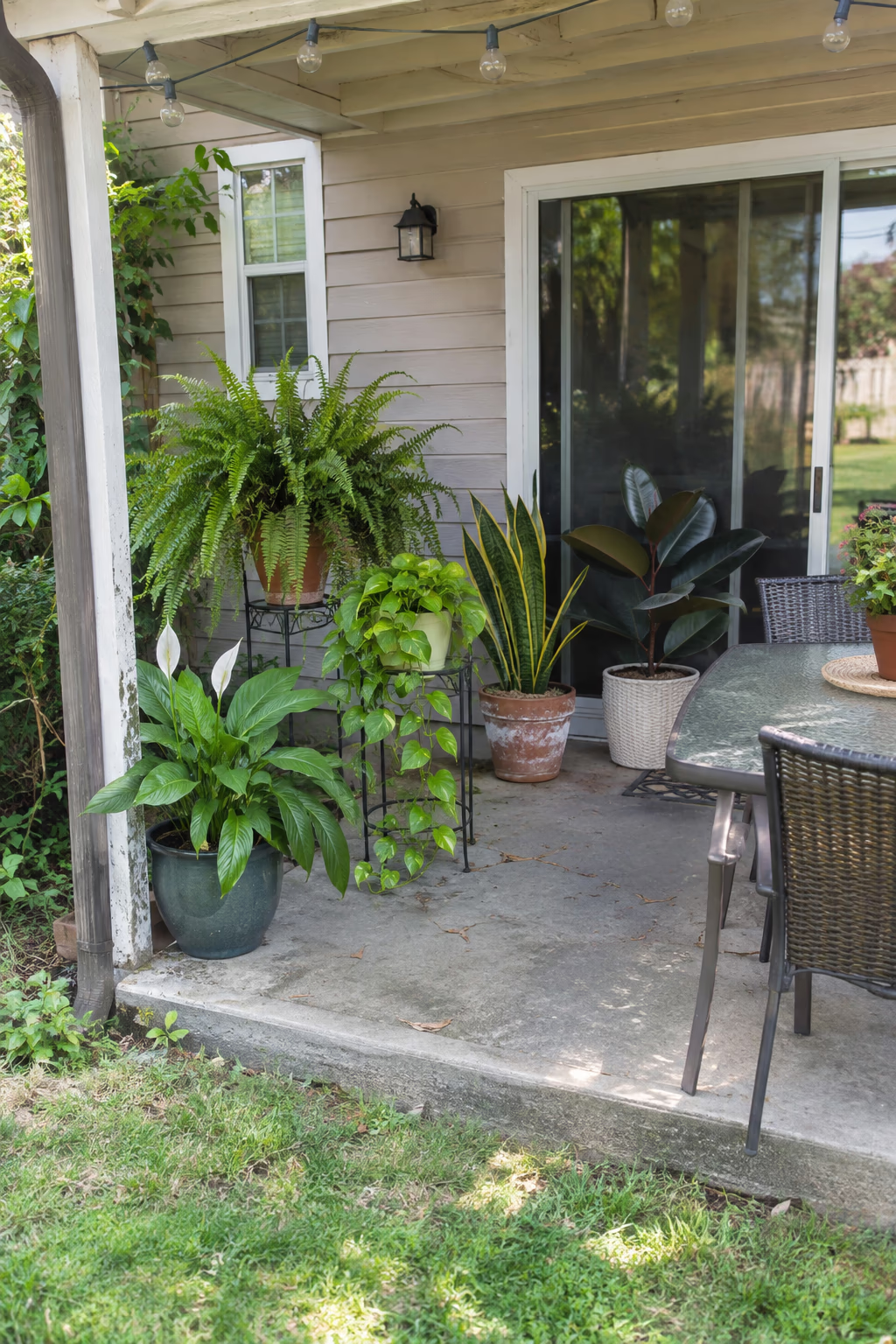
A lush look using plants you already own
Many common houseplants love a summer vacation in outdoor shade. Peace lilies, Boston ferns, pothos, snake plants, and rubber plants can all move to a covered patio or a spot under a tree once nights stay above about 55°F. Group them in mismatched pots on a plant stand or along the edge of a deck.
The extra humidity and fresh air often trigger a flush of new growth, and you get a lush, tropical look without buying a single new plant. It’s a budget-friendly way to fill a shady space quickly.
Move plants gradually so they don’t scorch, since even outdoor shade is brighter than most rooms. Check the leaves and soil for insects before bringing them back inside in early fall, and make sure pots have drainage holes so summer rain can escape.
18. Grow Lettuce and Leafy Greens in a Part-Shade Planter
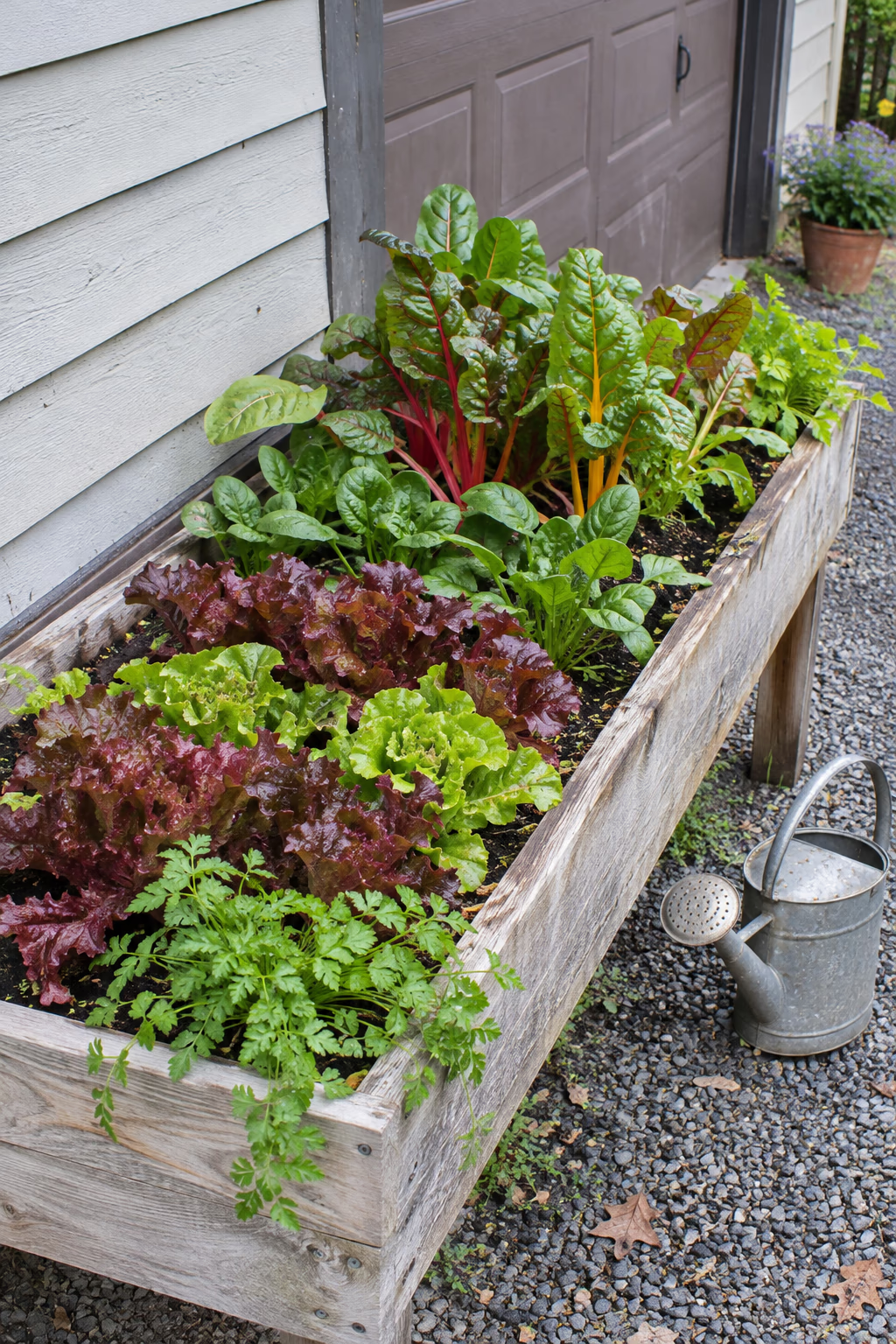
Fresh salads from a spot too shady for tomatoes
Leafy greens are one of the few edibles that tolerate partial shade. Sow loose-leaf lettuce, spinach, arugula, and chard in a 10- to 12-inch-deep rectangular planter, mixing red and green leaf types for a colorful look. Parsley and chives fit nicely along the edges.
Afternoon shade actually helps greens in summer, slowing bolting and bitterness. You can harvest the outer leaves for weeks and resow every few weeks for a steady supply.
Greens still need about three to four hours of direct light or bright, open shade to grow well; deep shade under a dense tree is too dark. Watch for slugs, and use a lightweight potting mix rather than garden soil.
19. Use Self-Watering Planters Under Eaves and Trees
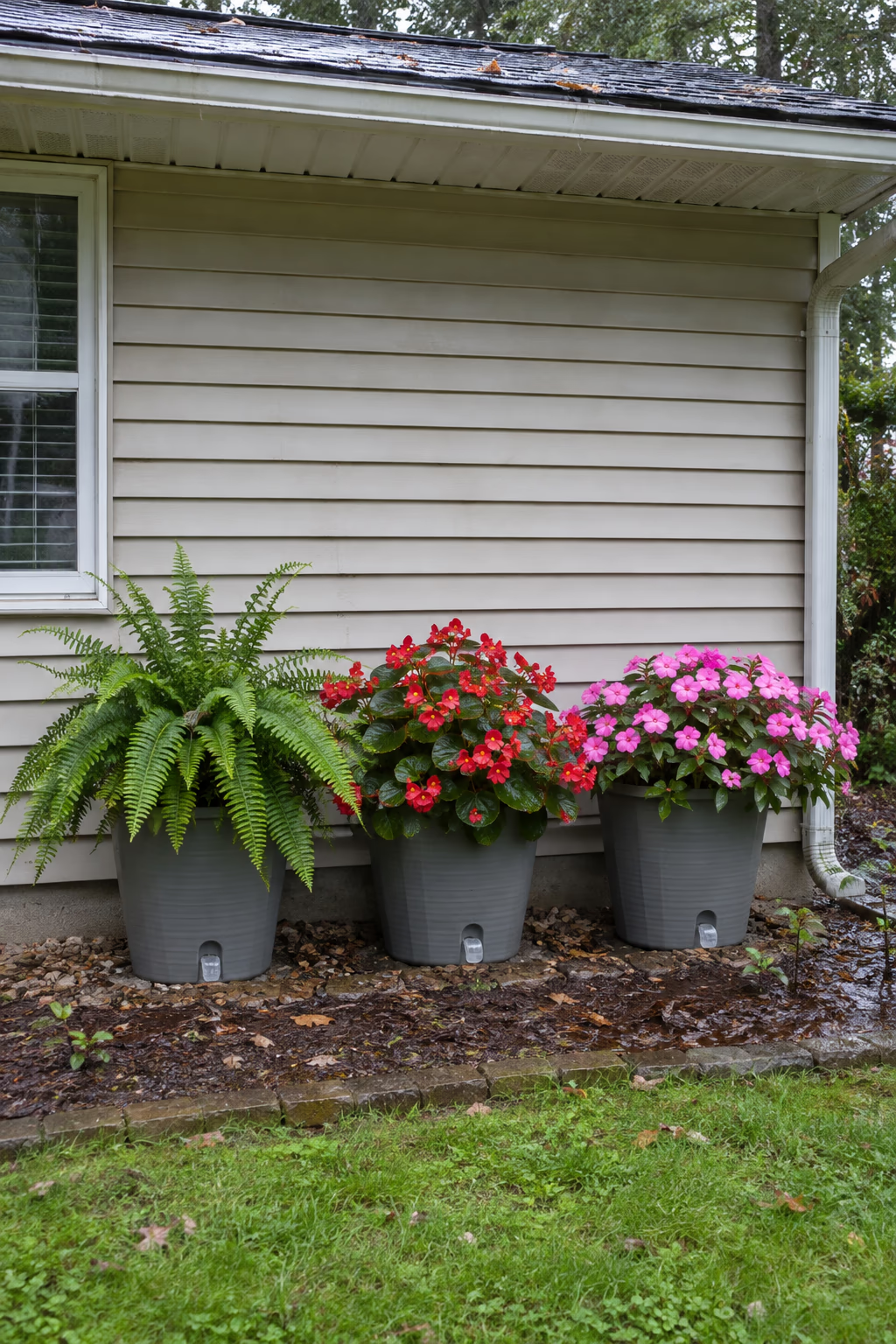
Steady moisture where rain can’t reach
Pots under a roof overhang or a dense tree canopy often stay dry even after a storm, because the rain never reaches them. A self-watering planter with a built-in reservoir solves this problem. Fill the reservoir every few days and plant moisture lovers such as ferns, impatiens, and begonias.
The reservoir keeps soil evenly moist, which shade plants prefer, and it stretches the time between waterings, so the pots survive a weekend away. It’s an especially smart choice for hanging baskets and window boxes, which dry out fastest.
In shade, soil dries more slowly overall, so the bigger risk can be overwatering. Check the overflow hole after heavy rain and empty the reservoir in fall before freezing weather to prevent cracking.
How to Plan Your Shade Container Garden
Great shade containers start with an honest look at how much light the spot gets and how easy it is to water. A few planning steps make the difference between thriving pots and struggling ones.
- Measure your light. Watch the spot through a full day. Bright or dappled shade with a few hours of morning sun supports begonias and hydrangeas, while deep shade is better for ferns, hostas, and coleus.
- Choose plants with matching needs. Group plants that like the same moisture and light in the same pot so one doesn’t drown while another dries out.
- Go bigger on pot size. Containers 16 inches or wider hold more soil, stay moist longer, and give perennials and shrubs room to grow.
- Use quality potting mix and drainage. Skip garden soil, which compacts in pots. Make sure every container has drainage holes, and raise heavy pots on pot feet.
- Feed regularly. Frequent watering washes nutrients out of potting mix. Use a slow-release fertilizer at planting and a diluted liquid feed every two to three weeks.
- Plan for winter. Pick frost-proof pots for perennials and shrubs that stay outdoors, choose plants hardy to colder zones than yours, and have a garage or shed spot ready for tender plants.
Frequently Asked Questions
Which plants bloom best in a shady container?
Tuberous and wax begonias, fuchsias, impatiens, New Guinea impatiens, torenia, browallia, and lobelia are among the most reliable flowering plants for shady pots. For spring and late winter blooms, hellebores and pansies are good options in many regions.
How often should I water containers in the shade?
Shaded pots usually need water less often than sunny ones, but there is no fixed schedule. Push a finger an inch into the soil and water when it feels dry. Check pots under trees and eaves even after rain, since they may stay dry.
Can I keep shade perennials in pots over winter?
Yes, many hostas, heucheras, ferns, and sedges can overwinter in containers if the pot is frost-proof and the plants are hardy to one or two zones colder than yours. In very cold areas, move pots into an unheated garage or bury them in mulch for extra protection.
What is the best container material for shade plants?
Glazed ceramic, fiberglass, and resin hold moisture well, which suits most shade plants. Unglazed terra-cotta dries faster and can help if your pots stay too wet. In cold regions, choose materials labeled frost-proof for anything that stays outside in winter.
Why are my shade container plants getting leggy?
Leggy growth usually means the spot is too dark for the plants chosen, or they need pinching. Pinch back coleus and impatiens to encourage bushier growth, and if stretching continues, move the pot to a slightly brighter spot or switch to plants that tolerate deeper shade.
Final Thoughts
The right shade container garden ideas can turn the gloomiest corner of your yard into a place you want to linger. A pot of begonias and fuchsias by the door, a glowing mix of chartreuse leaves under a tree, or a row of hostas along a shaded path proves that low light can be an advantage.
Start with one or two containers, match your plants carefully to the light you have, and keep an eye on watering through the season. Once you see how lush and colorful shade pots can be, you may find yourself looking for even more shady spots to fill.