Step out the back door on a summer evening, pinch a sprig of rosemary from the pot by the steps, and the whole patio smells like a Mediterranean hillside. A few seconds later you have fresh basil for the pasta and mint for the iced tea, and nothing had to come from a plastic clamshell.
Container herbs give you that luxury without a dedicated garden bed. Pots let you put plants exactly where the sun lands, keep spreading herbs under control, protect tender plants from cold snaps, and move everything closer to the kitchen. Most popular herbs are compact, forgiving, and happy in a well-drained pot, which makes them one of the easiest edible crops for beginners and renters.
These 21 container herb garden ideas cover themed recipe pots, classic strawberry jars, farmhouse washtubs, upcycled crates and baskets, balcony railing boxes, rolling carts, and a few larger statement planters. Each one includes the plants and materials that work, plus the practical details that keep your herbs growing all season.
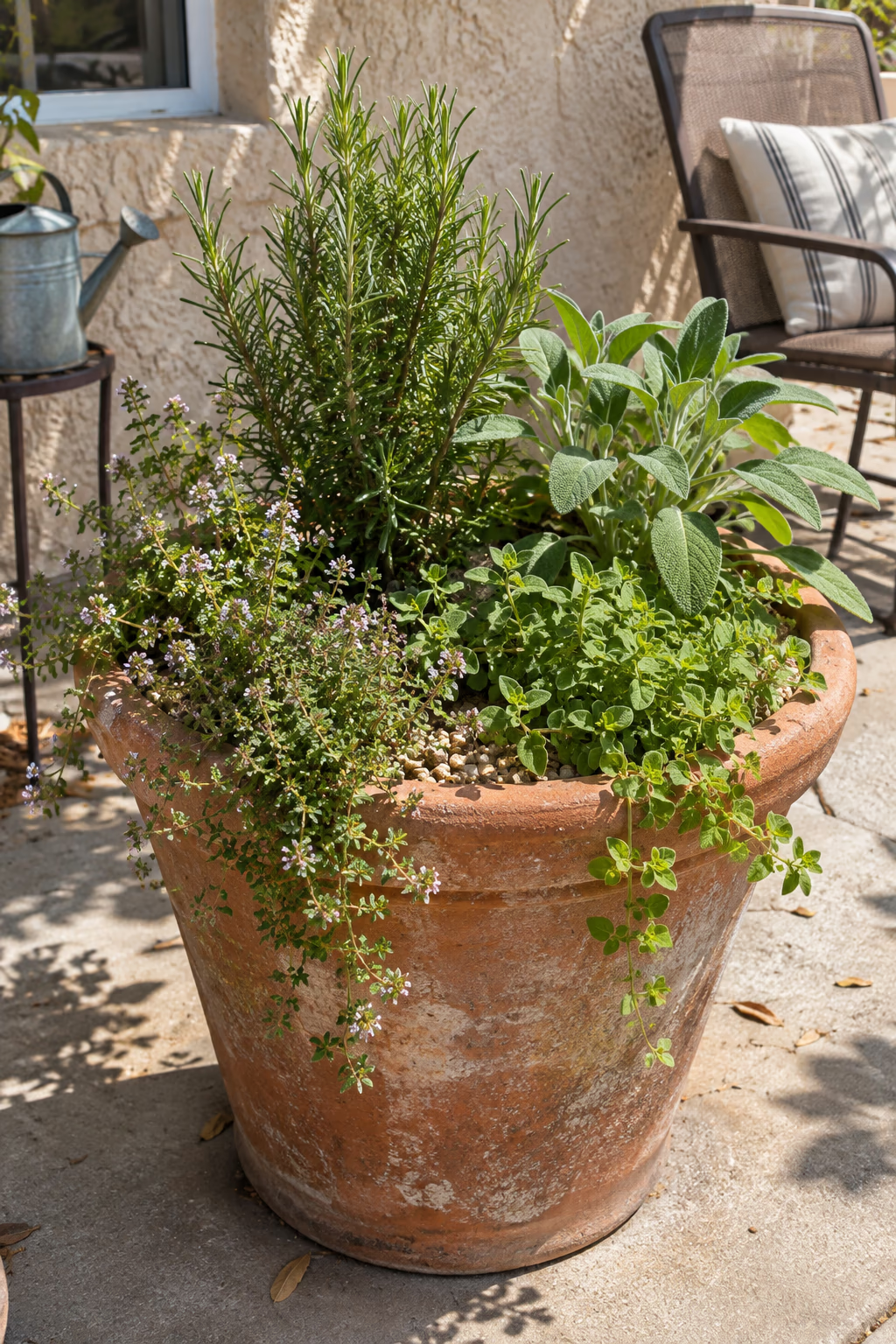
1. Plant a Mediterranean Herb Pot With Rosemary, Thyme, and Sage
Drought-tolerant flavor that thrives on neglect
Rosemary, thyme, sage, and oregano all come from dry, rocky, sunny regions, so they share the same needs and grow happily together in one container. Choose an unglazed terracotta pot at least 16 inches across, fill it with a gritty mix of two parts potting soil to one part coarse perlite or pine bark fines, and set rosemary in the center with sage beside it and thyme and oregano spilling over the rim.
The pairing works because these herbs prefer to dry out between waterings, and terracotta wicks away extra moisture. The silvery, gray-green, and soft purple foliage also looks good all season, even after you harvest. A topdressing of pea gravel adds a finished look and keeps the stems dry.
The most common mistake is overwatering. Wait until the top 2 inches of soil feel dry before you water. In zones colder than 7, expect to bring the rosemary indoors or replace it each spring, while the thyme, sage, and oregano usually survive in a protected spot.
2. Fill a Strawberry Pot With Six Kitchen Herbs
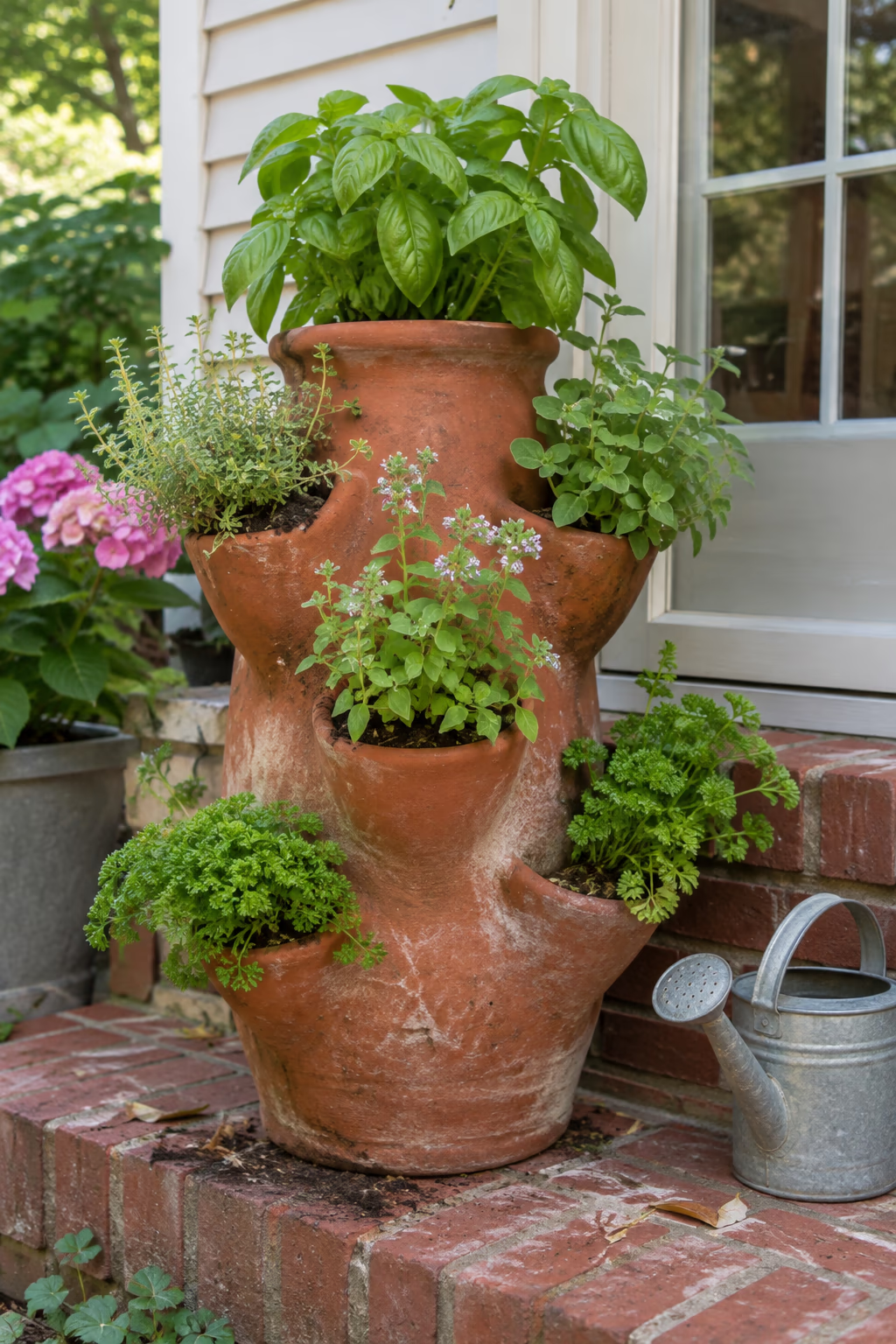
Lots of variety in one small footprint
A strawberry pot, the tall jar with cupped side pockets, can hold half a dozen herbs on a single square foot of patio. Tuck compact, trailing herbs such as thyme, oregano, marjoram, and parsley into the side pockets, then crown the top opening with a taller plant like basil, chives, or a small rosemary.
Plant from the bottom up. Fill the pot with soil to the lowest pocket, push a plant through from the inside, add more soil, and repeat. Choose a pot at least 14 inches tall so the roots have room, and skip mint, which will crowd out its neighbors.
The upper pockets dry out much faster than the bottom. Before planting, stand a length of 1-inch PVC pipe drilled with small holes down the center and fill it with gravel or leave it open, then pour water down the tube so moisture reaches every level.
3. Turn a Vintage Galvanized Washtub Into a Back-Step Herb Garden
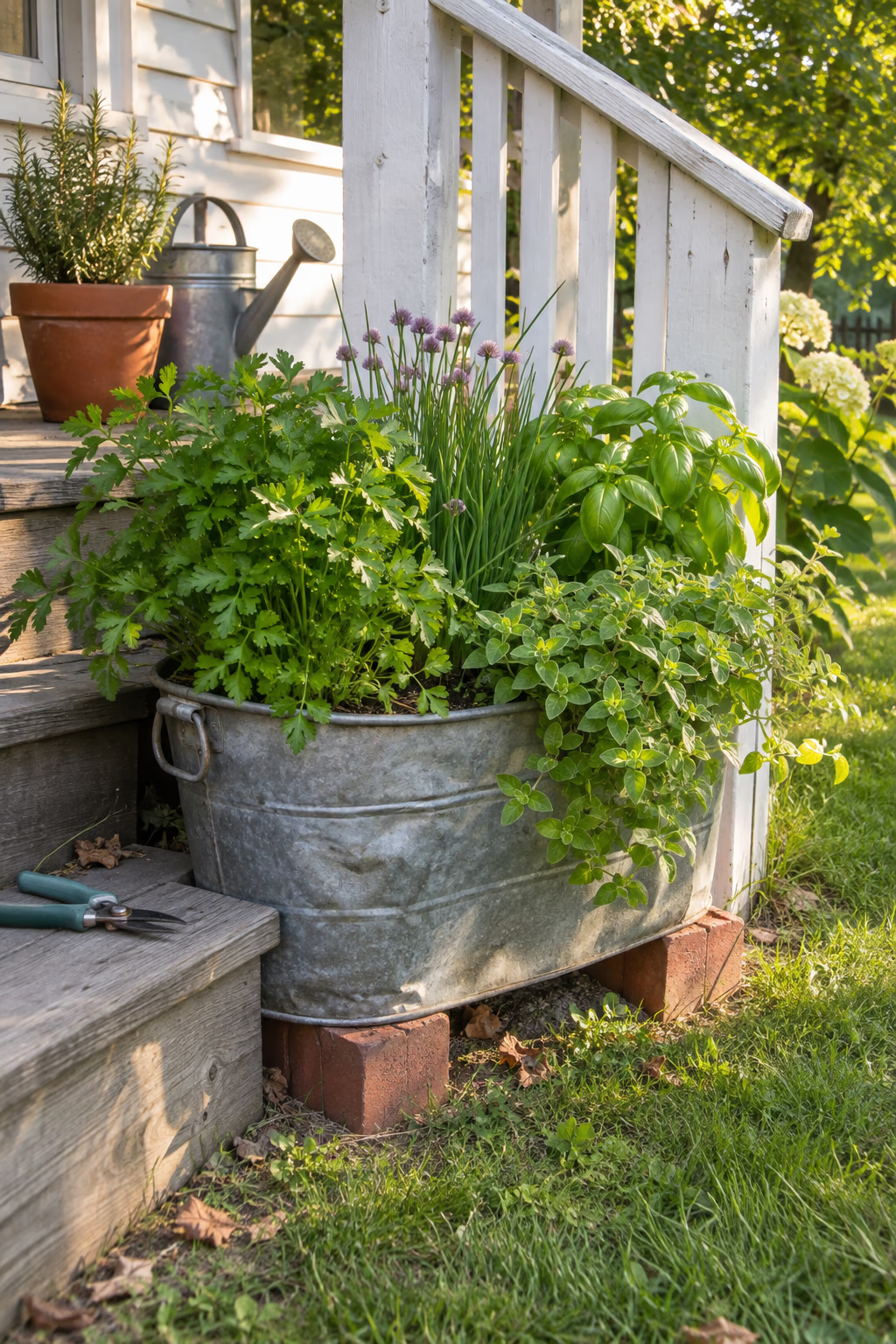
Farmhouse charm with plenty of root room
An old galvanized washtub or oval laundry tub holds enough soil for a mixed planting of parsley, chives, basil, thyme, and a trailing oregano. Flea markets and farm stores often carry them for less than the price of a large ceramic planter, and the soft gray metal flatters green leaves.
Drill six to ten 1/2-inch drainage holes in the bottom with a step bit, then raise the tub on bricks or pot feet so water can escape. A tub about 20 inches across and 10 to 12 inches deep is ideal for kitchen herbs, and placing it near the back steps means you will actually use what you grow.
Metal heats up quickly in hot sun, so in southern climates set the tub where it gets afternoon shade or line the sides with a layer of cardboard or burlap before filling. Avoid old tubs with flaking paint, which may contain lead.
4. Mix a Cocktail Herb Planter for the Patio Bar
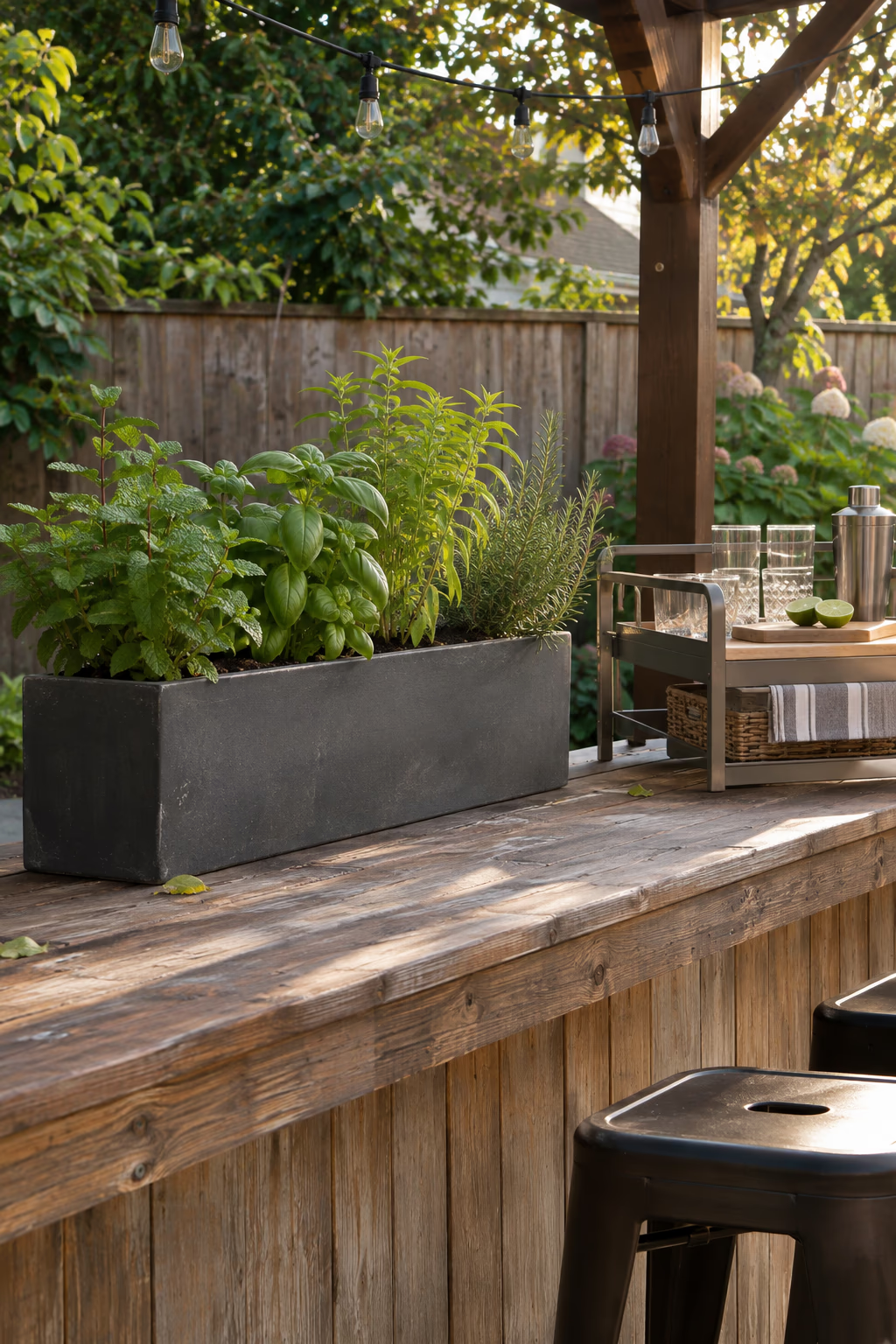
Fresh garnishes within arm’s reach
Group the herbs you use most in drinks into one handsome planter near the outdoor bar cart or grill: spearmint for mojitos, Thai or Genovese basil for smashes, lemon verbena for spritzers, and a small upright rosemary for gin cocktails. A rectangular planter about 24 inches long fits neatly on a ledge or wide railing.
Give the mint its own sunken plastic nursery pot within the planter so its roots stay contained. Lemon verbena grows fast and appreciates regular snipping, which keeps it bushy rather than leggy.
Basil and lemon verbena are cold-tender, so plant this combination after nights stay above 50 degrees Fahrenheit and plan to harvest heavily before the first frost.
5. Brew a Tea Garden in a Wide Glazed Pot
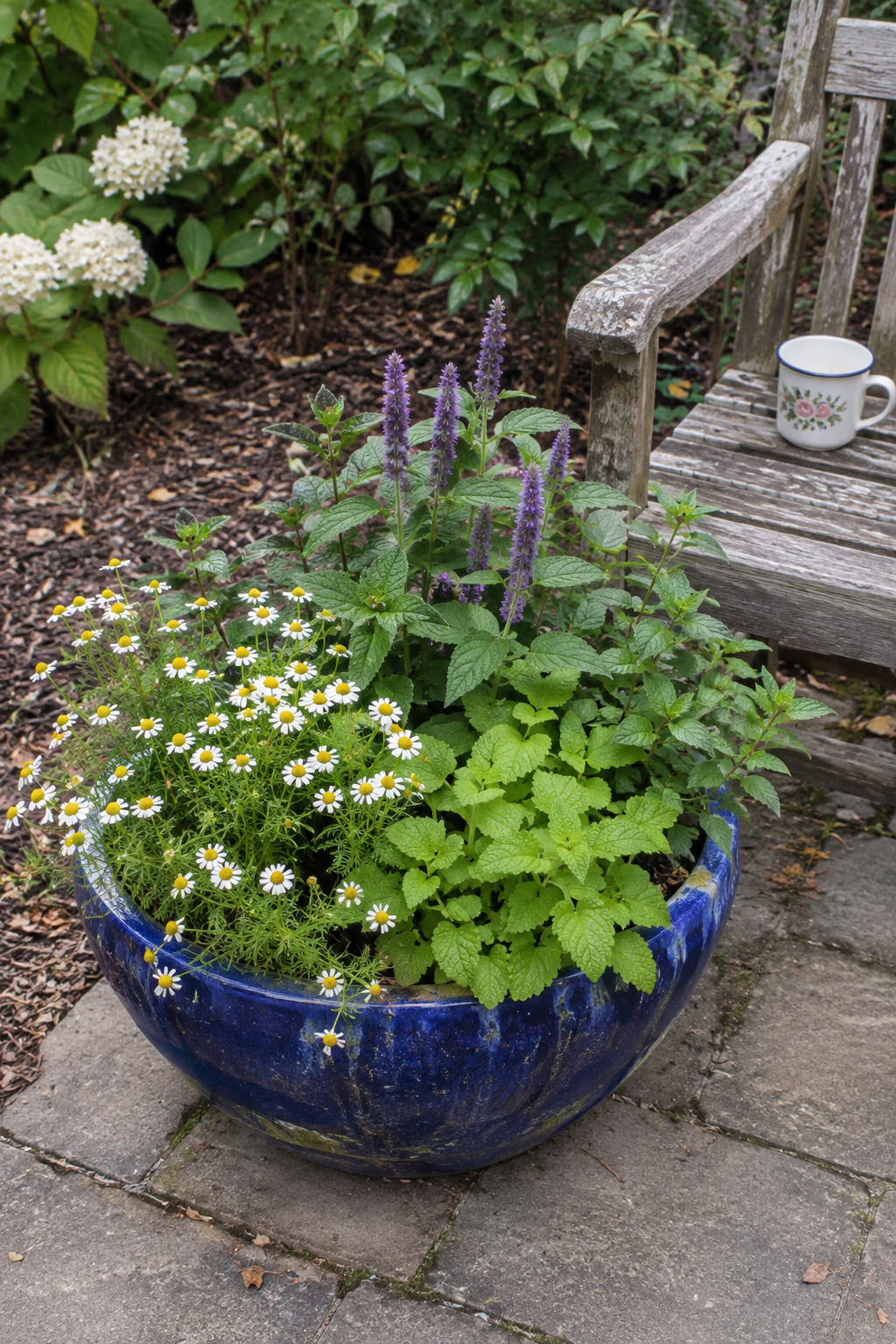
A calming planter you can sip from
Lemon balm, peppermint, German chamomile, and anise hyssop all make pleasant herbal tea, and they share a liking for moist soil and full to part sun. A wide, glazed ceramic bowl about 18 inches across holds moisture better than terracotta, which suits these thirstier plants.
Place the chamomile toward the sunniest edge so its daisy flowers can open fully, and keep the lemon balm and mint in buried nursery pots to slow their spread. Harvest chamomile flowers when the petals are fully open, and dry them on a screen in a shady, airy spot.
Lemon balm reseeds readily, so trim off its flower stems before they set seed if you do not want seedlings popping up in nearby cracks and beds.
6. Line a Sunny Windowsill With Matching Herb Pots
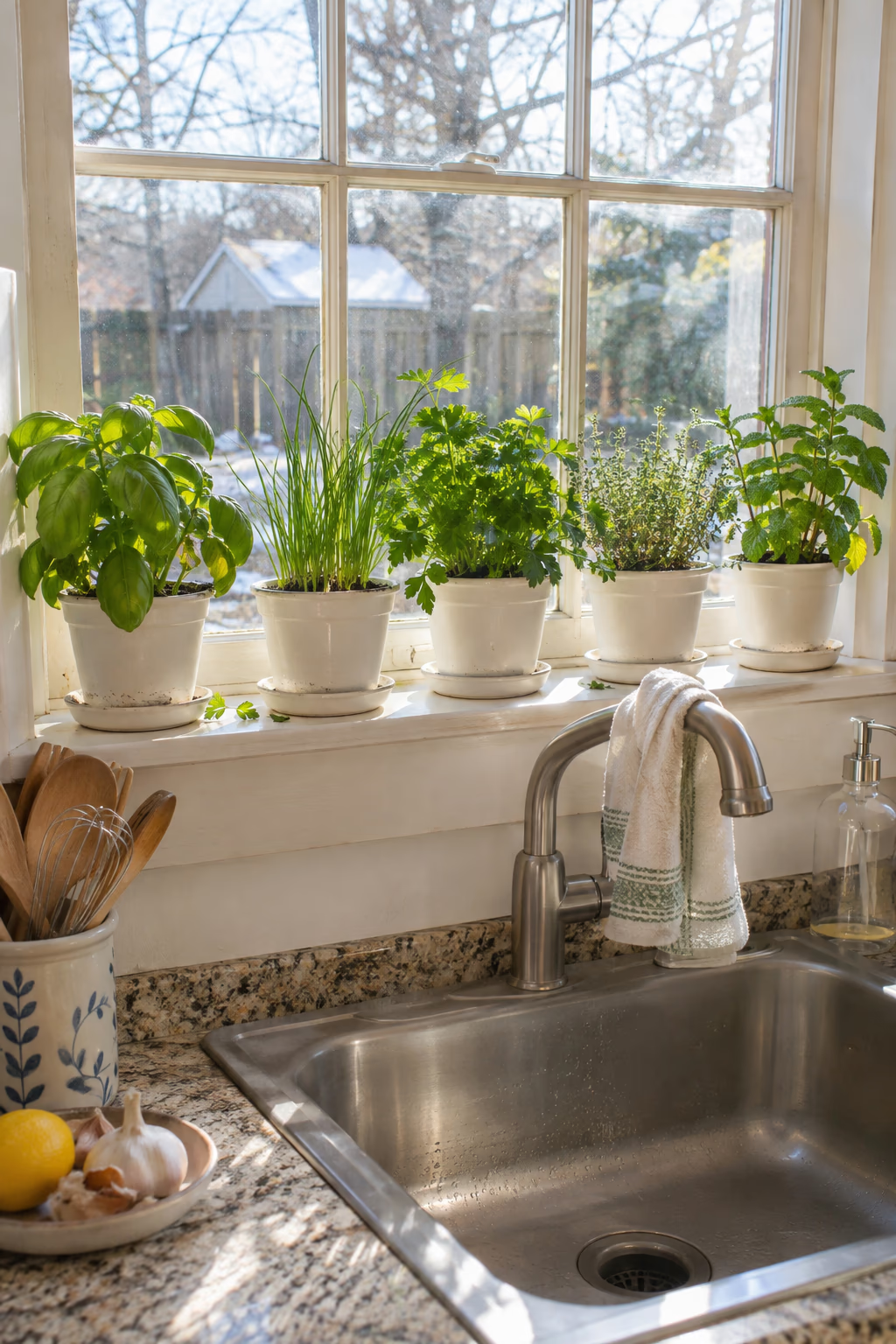
Year-round snipping right above the sink
A row of identical 4- to 6-inch pots on a south- or west-facing kitchen sill makes a tidy indoor herb garden. Chives, parsley, thyme, oregano, and mint handle indoor life better than most, while basil needs the brightest window you have.
Use pots with drainage holes and matching saucers to protect the sill, and rotate each pot a quarter turn every few days so the plants do not lean toward the glass. White, cream, or speckled ceramic keeps the look clean against most kitchen finishes.
Winter light is weak in much of the country, so herbs indoors grow more slowly. If stems get long and pale, a small LED grow light set 6 to 12 inches above the plants for 12 to 14 hours a day makes a noticeable difference.
7. Paint Terracotta Herb Pots With Simple Dots and Stripes
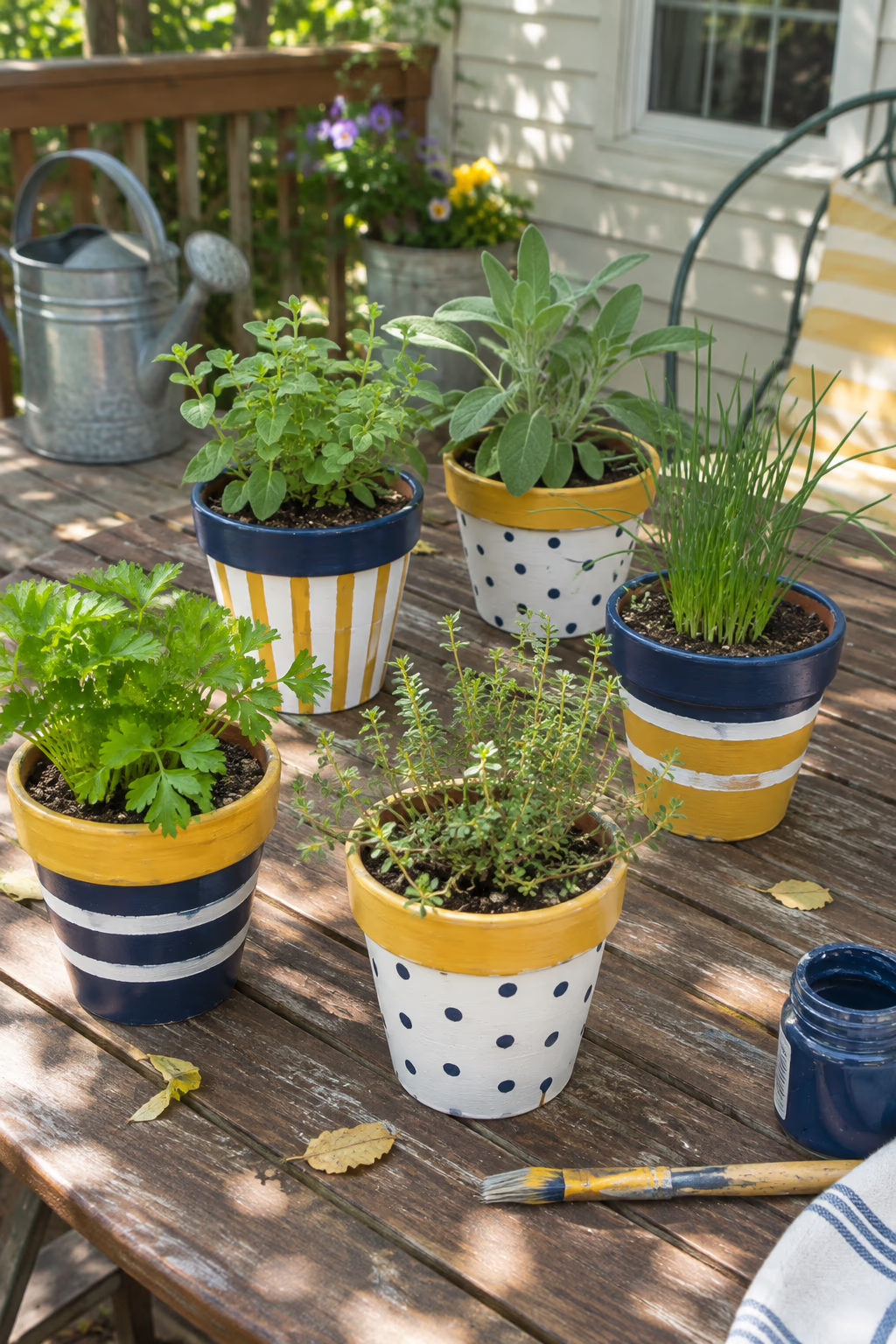
A weekend craft that brightens the patio
Plain clay pots are cheap, breathable, and perfect for herbs, and a little paint turns them into a playful collection. Use outdoor acrylic craft paint for bold bands of color, polka dots made with the end of a foam brush, or simple stripes masked off with painter’s tape.
Paint only the outside and the rim, and leave the inside bare so the clay can still breathe. Finish with two coats of clear, water-based outdoor sealer and let the pots cure for a few days before planting.
Sticking to two or three colors, such as navy, white, and mustard, keeps a group of mismatched herbs looking intentional. Expect some fading and flaking after a couple of seasons, which is easy to touch up.
8. Group Small Herb Pots on an Old Potting Bench
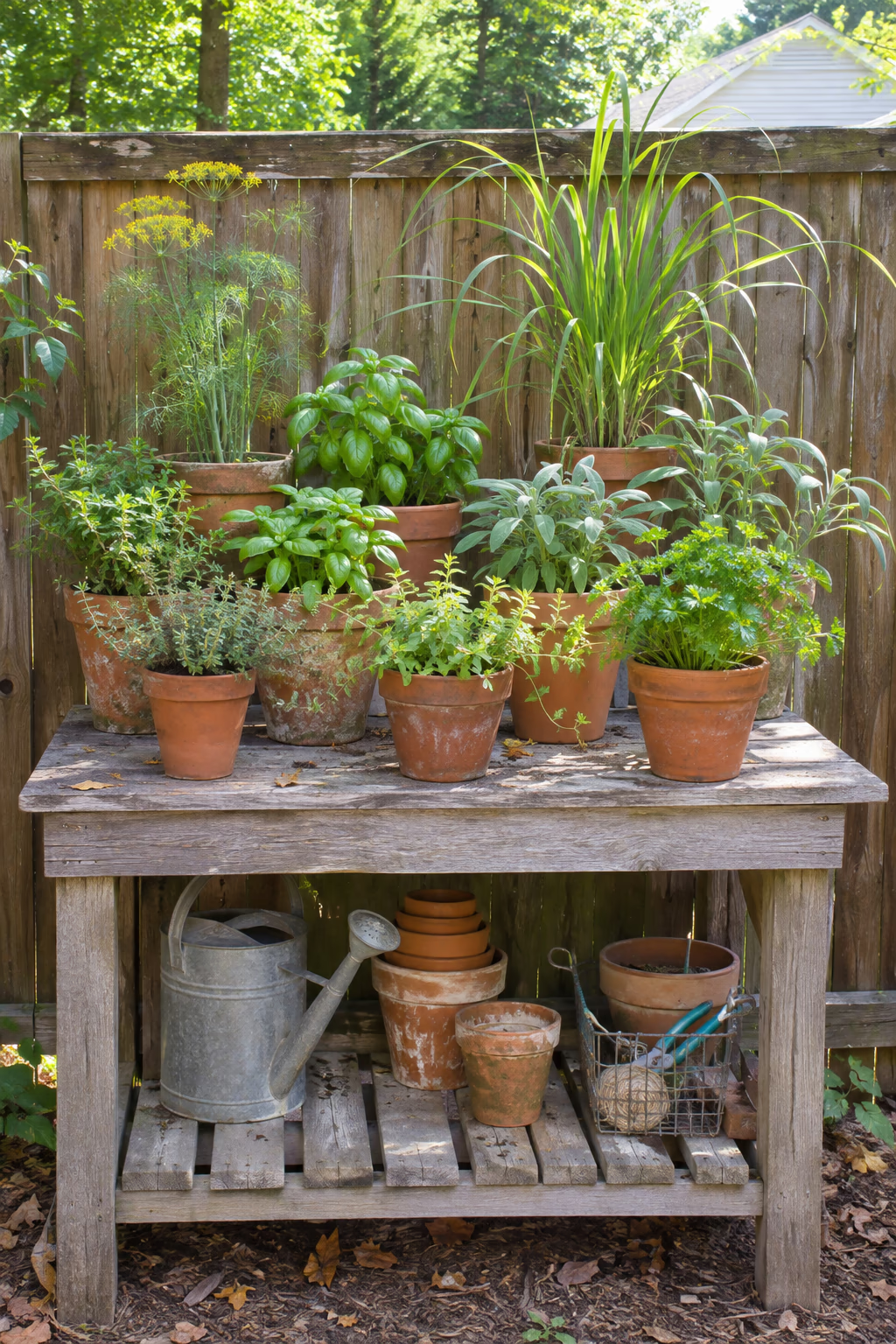
A working herb station that looks styled
A weathered potting bench or sturdy wooden table in full sun makes a natural home for a dozen small herb pots. Arrange them in loose rows with taller plants like dill and lemongrass at the back and low thyme and parsley at the front.
Keep a watering can, snips, and a small stack of extra pots on the lower shelf so the bench becomes a real workstation. Grouping containers this way also raises humidity slightly around the plants and makes daily watering faster.
Small pots dry out quickly, often daily in midsummer. Choose 6- to 8-inch pots rather than tiny 4-inch ones, and consider a simple drip line along the back edge of the bench if you travel often.
9. Turn a Wooden Wine Crate Into a Tabletop Herb Box
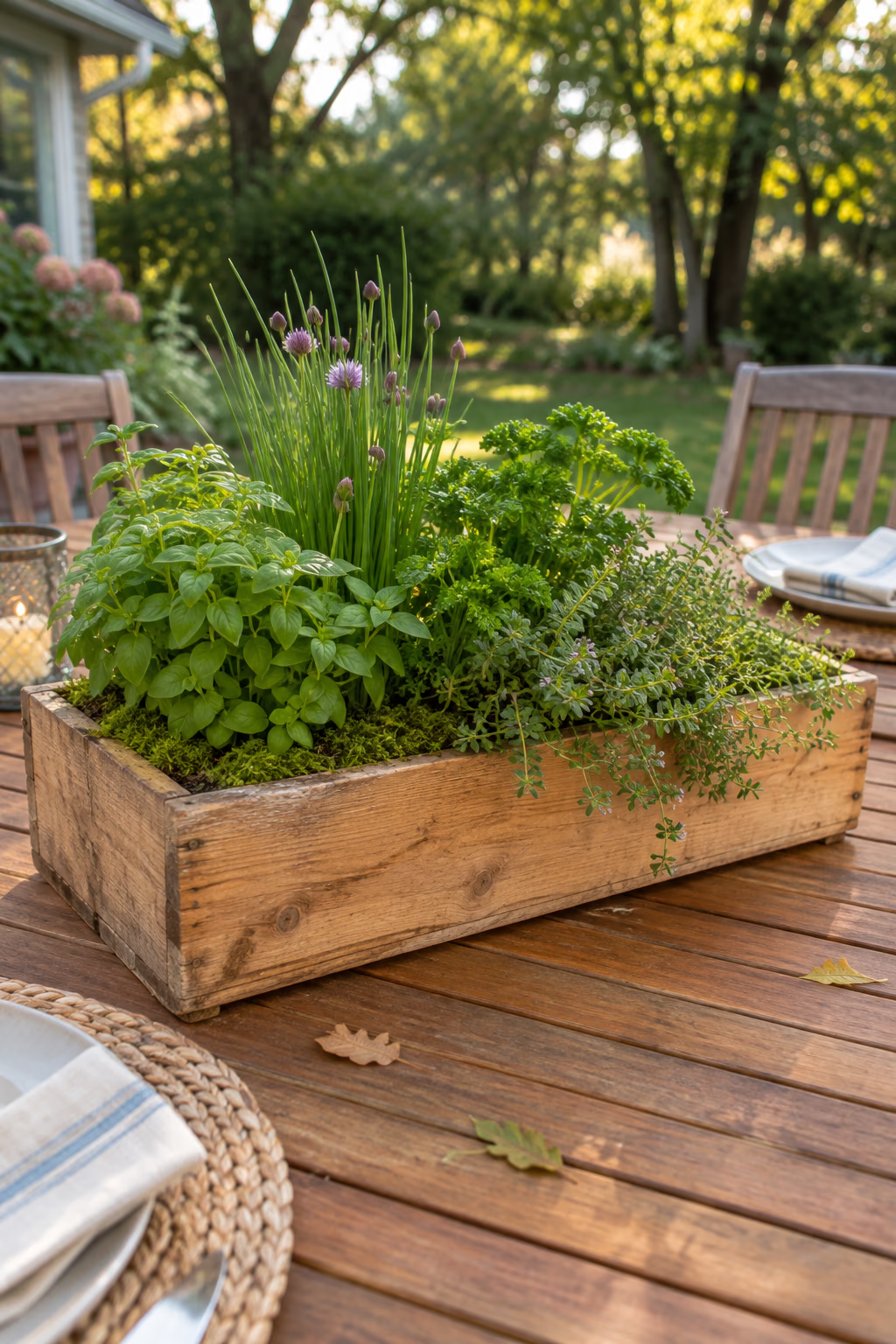
Rustic, portable, and perfect for the dining table
A shallow wooden wine or fruit crate makes a charming centerpiece planted with compact herbs like dwarf Greek basil, chives, parsley, and creeping thyme. It looks right at home on an outdoor dining table and can be carried to a sunnier spot when needed.
Drill a few drainage holes, staple a sheet of heavy plastic or pond liner inside with slits at each hole, and fill with potting mix. You can also simply nest three or four plastic nursery pots inside the crate and tuck sphagnum moss around them, which makes swapping plants easy.
Untreated wood will eventually rot in constant contact with damp soil. A coat of food-safe raw linseed oil or mineral oil on the outside slows weathering, and setting the crate on small feet helps it dry out.
10. Plant a Lined Basket for a Portable Herb Harvest
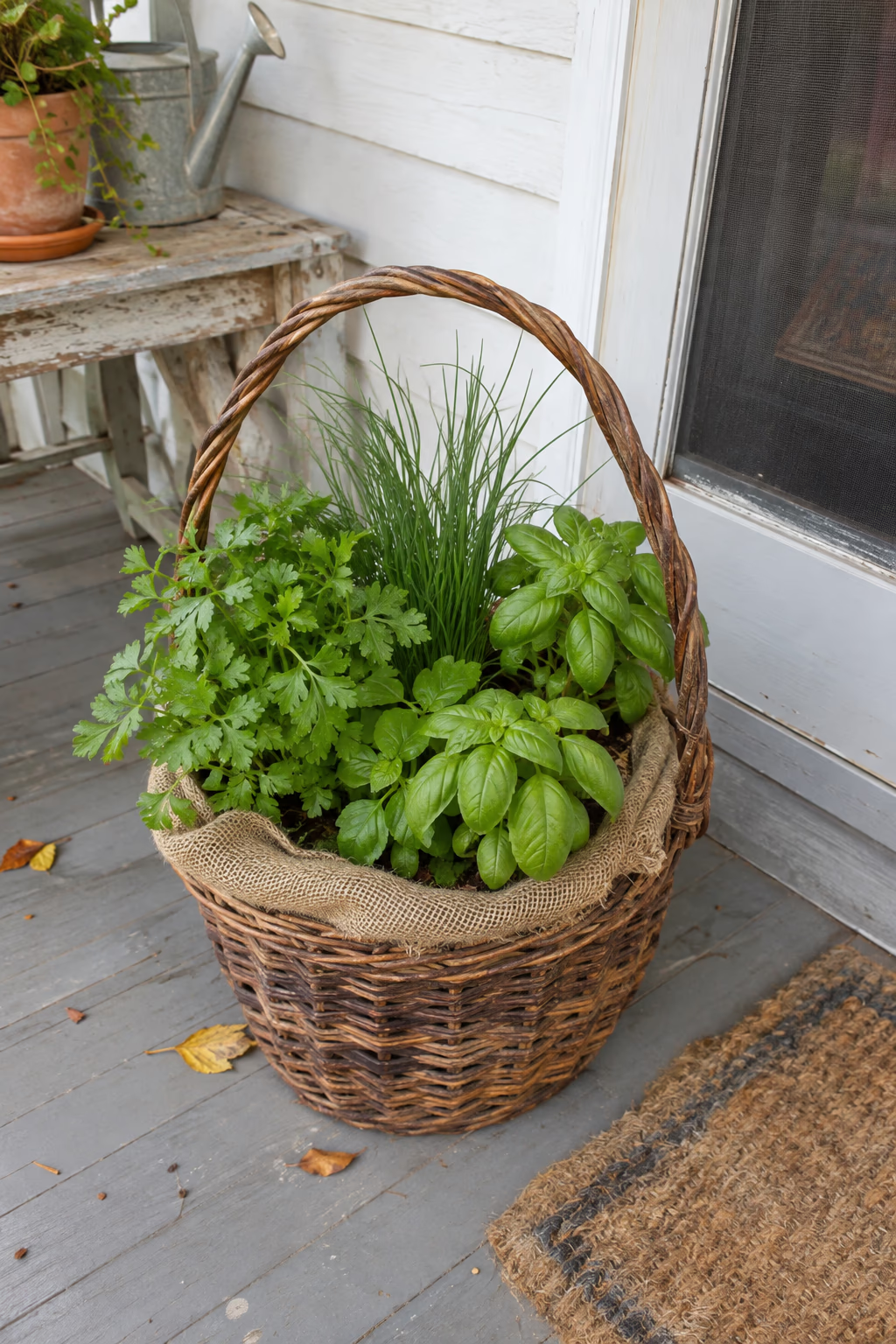
Grab the handle and carry the herbs inside
A sturdy wicker or willow basket with a handle becomes an herb planter you can carry from the porch to the kitchen counter. Line it with burlap or landscape fabric, add a layer of heavy plastic with a few slits in the bottom, and plant parsley, chives, and a couple of compact basil plants.
This idea is ideal for renters and for gardeners who want to shuttle herbs out of a sudden hailstorm or into a sunny spot on a cool spring day. A basket about 14 inches wide is light enough to lift when watered.
Natural baskets break down outdoors in a season or two. Spraying the outside with a clear outdoor sealer extends their life, and keeping the basket under a porch roof protects it from heavy rain.
11. Give Mint a Pot of Its Own
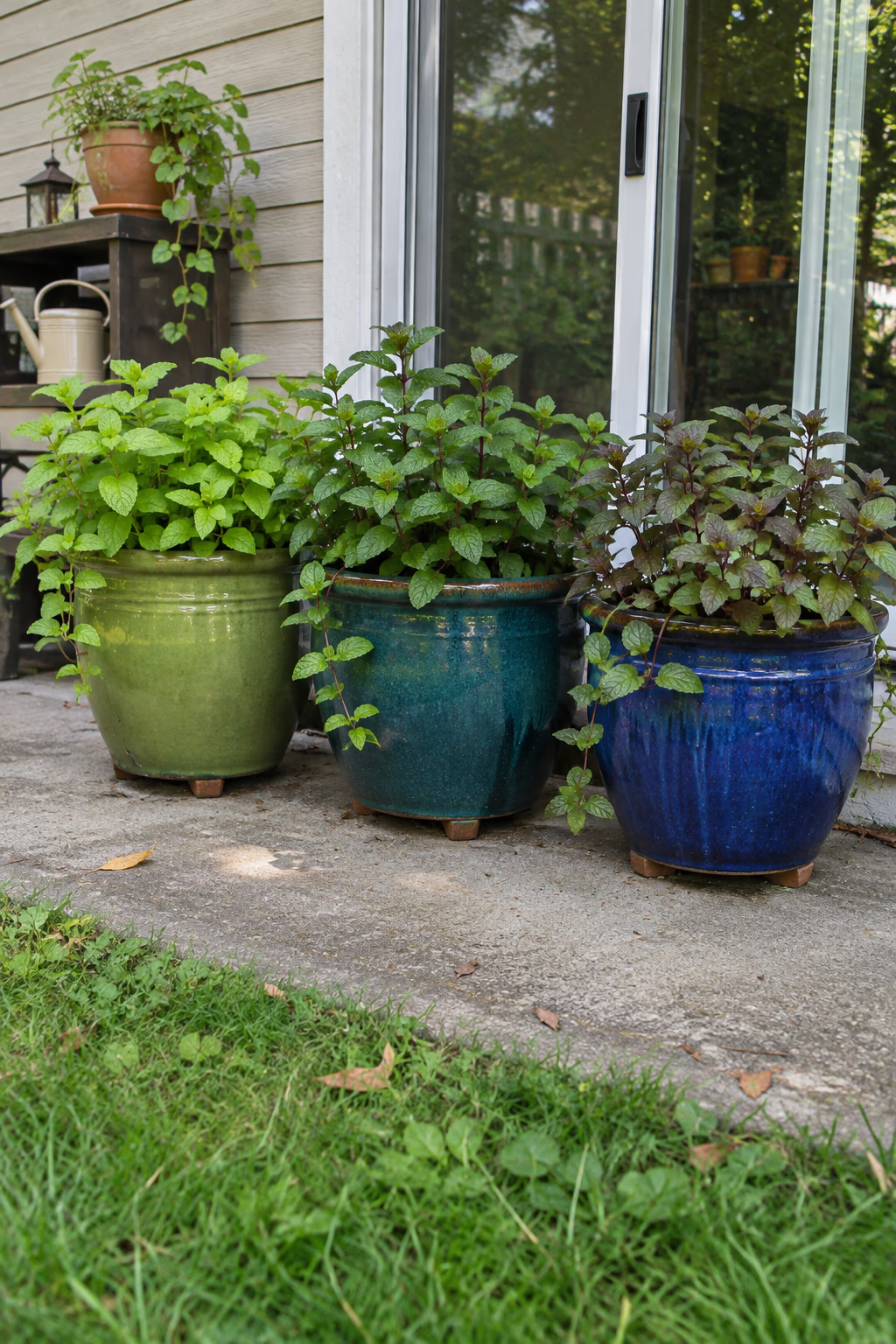
All the flavor without the takeover
Mint spreads by underground runners and can overrun a bed or a mixed planter in a single season. Giving each type, such as spearmint, peppermint, chocolate mint, or apple mint, its own pot keeps them in check and keeps their flavors distinct.
A row of three 10- to 12-inch glazed pots in different shades of green or blue makes an attractive mint lineup by the patio door. Mint tolerates partial shade and likes evenly moist soil, so it fits spots that are too shady for rosemary and thyme.
Set the pots on pot feet or a paver rather than directly on soil, because mint runners can escape through the drainage hole and root into the ground below. Divide and repot every spring or two to keep the plants vigorous.
12. Put Herbs on a Rolling Cart to Follow the Sun
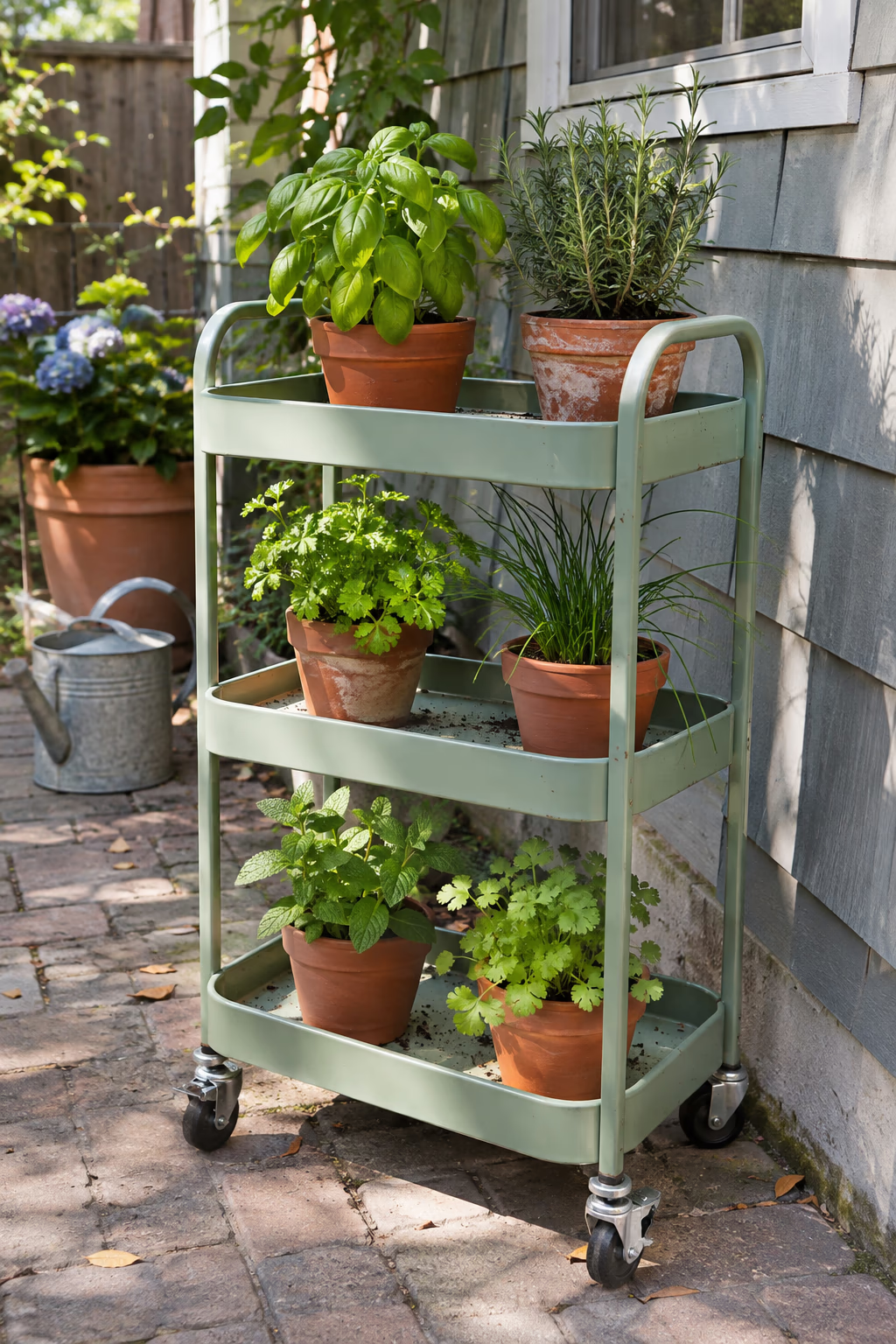
Move your garden instead of fighting the shade
A three-tier metal utility cart on locking casters turns a shady patio into a workable herb garden. Fill each shelf with 6- to 8-inch pots and wheel the cart into the brightest corner in the morning, under cover during storms, or into the garage on a frosty night.
Put sun-loving basil and rosemary on the top shelf, parsley and chives in the middle, and mint or cilantro on the lower shelf where light is softer. Saucers or a shallow tray on each level catch drips.
Carts with solid shelves can trap water, so drill a few holes in the trays or add pot feet. Choose a cart rated for at least 150 pounds, since damp soil is heavier than it looks.
13. Hang a Coir Basket of Trailing Herbs by the Door
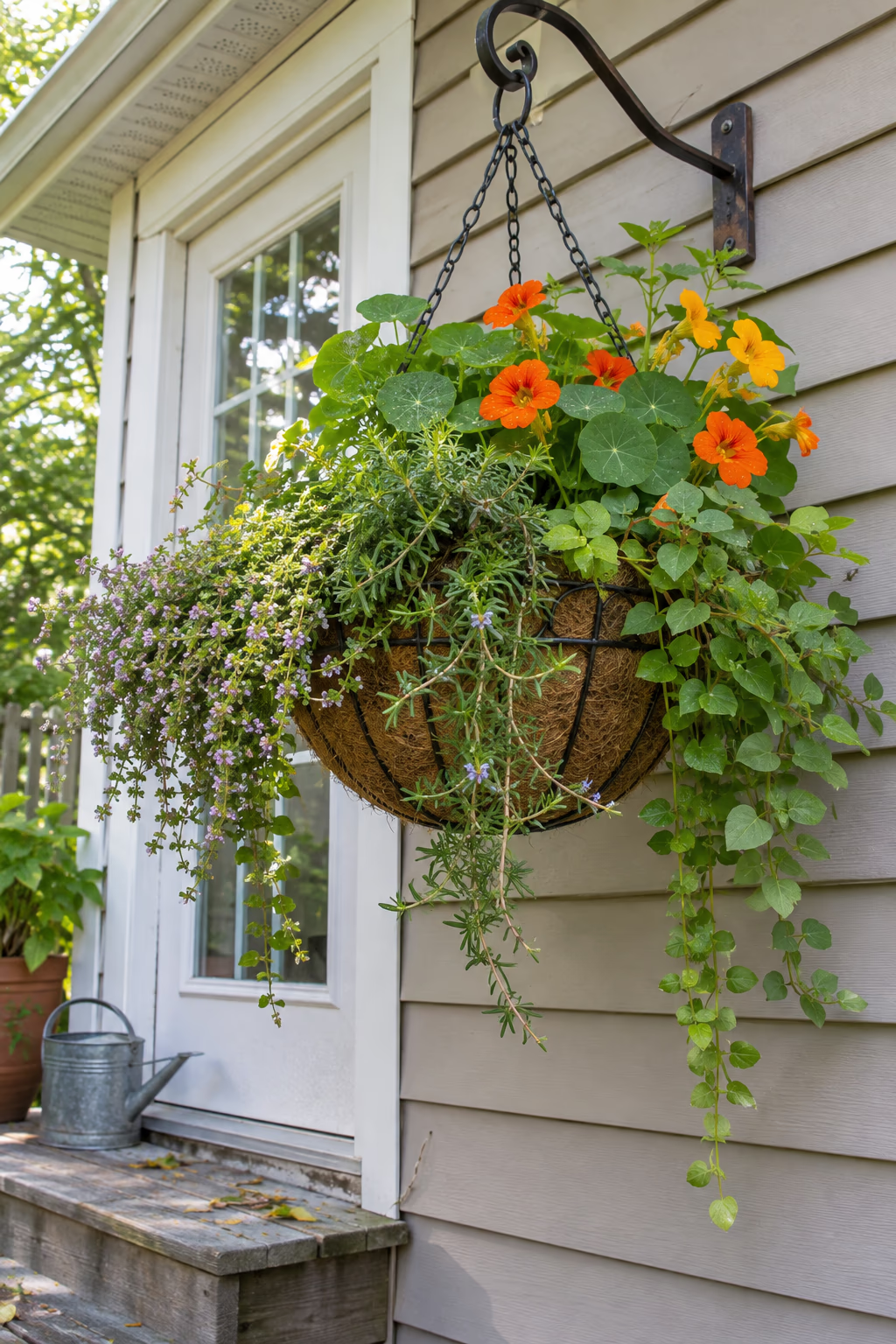
Cascading flavor at eye level
A 14-inch wire hanging basket lined with coconut coir looks lush when planted with herbs that drape over the edge: creeping thyme, trailing oregano, prostrate rosemary, and nasturtiums for peppery leaves and edible flowers. Hang it from a sturdy porch hook near the kitchen door.
Herbs at eye level are easy to snip and smell every time you walk by. Mixing in a little slow-release fertilizer at planting time keeps the basket full through midsummer.
Hanging baskets dry out faster than any other container. Expect to water daily in hot weather, and make sure the hook and ceiling joist can hold 20 pounds or more when the basket is soaked.
14. Clip Herb Boxes Onto a Balcony Railing
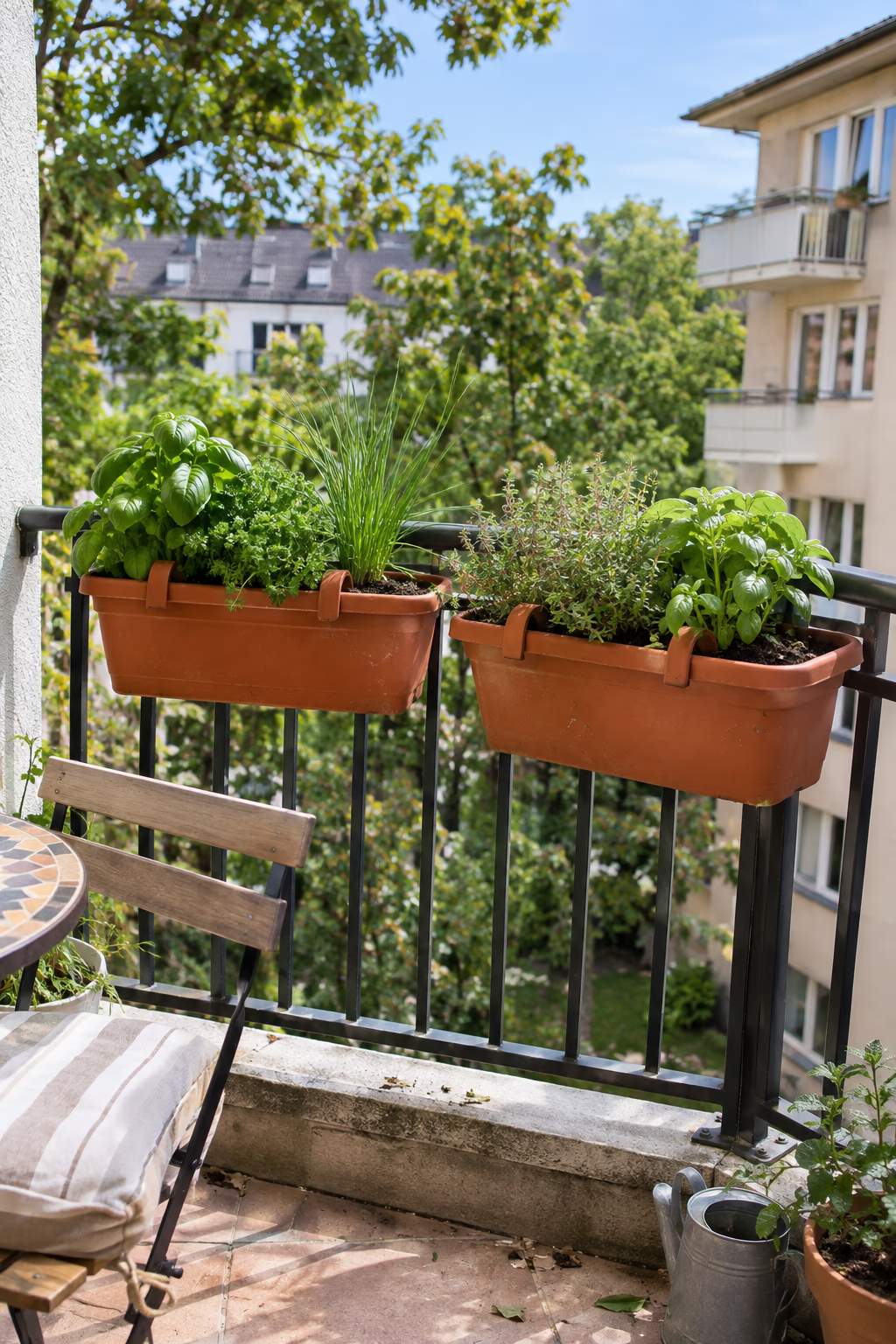
Turn a narrow apartment balcony into a kitchen garden
Railing planters that straddle the top rail or hook over it give balcony gardeners growing space without taking up floor area. A 24-inch box holds three or four herbs, such as basil, parsley, chives, and thyme, and two or three boxes along a sunny railing can supply most summer cooking.
Choose lightweight resin or powder-coated metal boxes with built-in drainage and adjustable brackets that fit your rail width. Mount them on the inside of the railing so nothing can fall onto neighbors or the sidewalk below.
Many apartment complexes, condos, and HOAs have rules about railing planters, weight, and dripping water, so check before buying. Wind is stronger on upper floors, which dries soil fast and can snap tall basil, so favor compact varieties.
15. Grow Basil in Self-Watering Planters
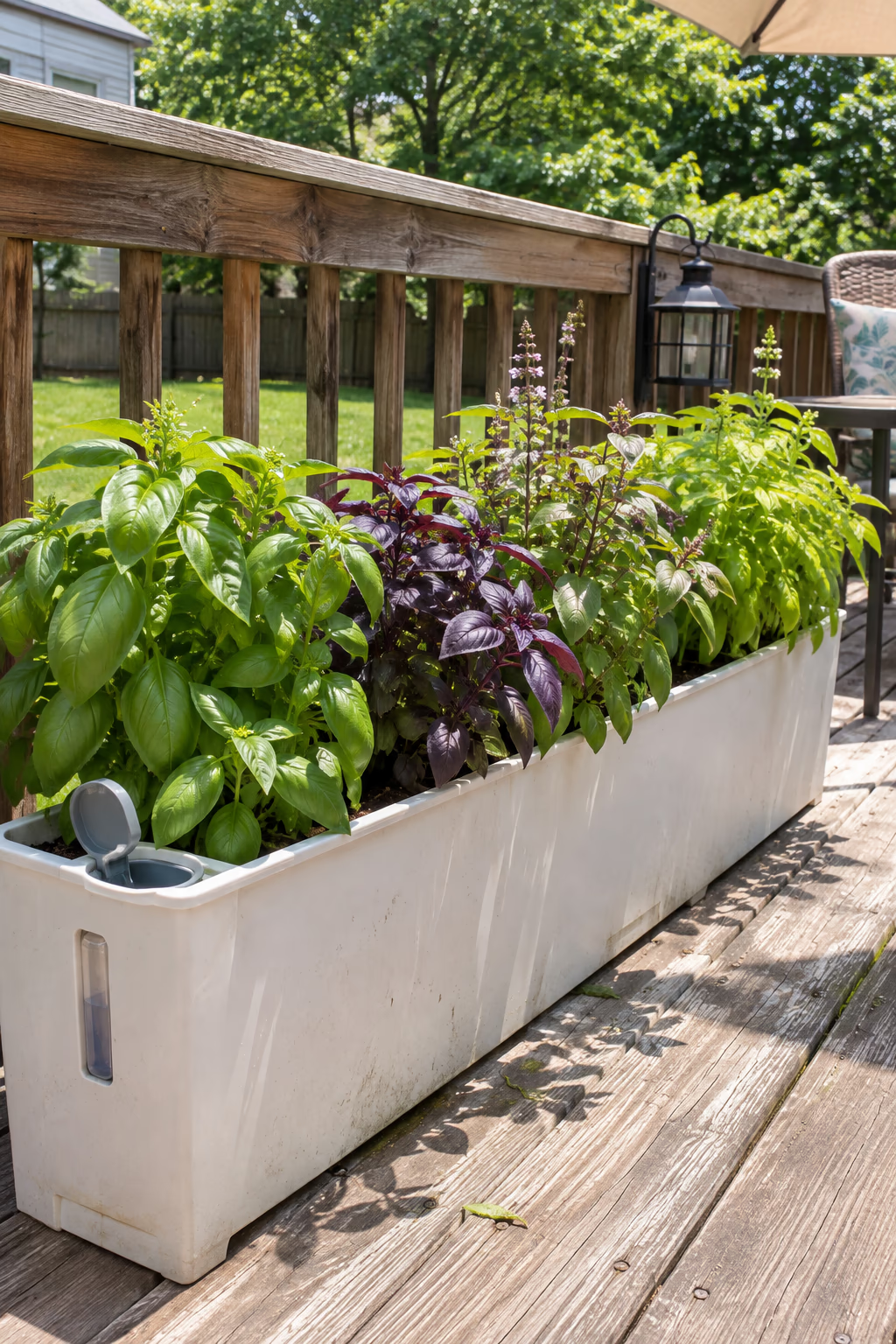
Steady moisture for the thirstiest herb
Basil wilts quickly when its soil dries out, and it turns bitter when stressed. A self-watering planter with a reservoir in the base keeps the roots evenly moist, so you can fill it every few days instead of watering twice a day in July.
Plant three or four basil varieties, such as Genovese, Thai, lemon, and purple, in a long self-watering box on a sunny deck. Pinch the top pair of leaves off each stem once plants reach 6 inches tall to encourage branching, and remove flower spikes as they form.
Self-watering pots are best for moisture lovers like basil, parsley, and chives. Do not use them for rosemary, lavender, or thyme, which prefer to dry out and may rot with constantly damp roots.
16. Turn a Half Barrel Into a Pizza Herb Garden
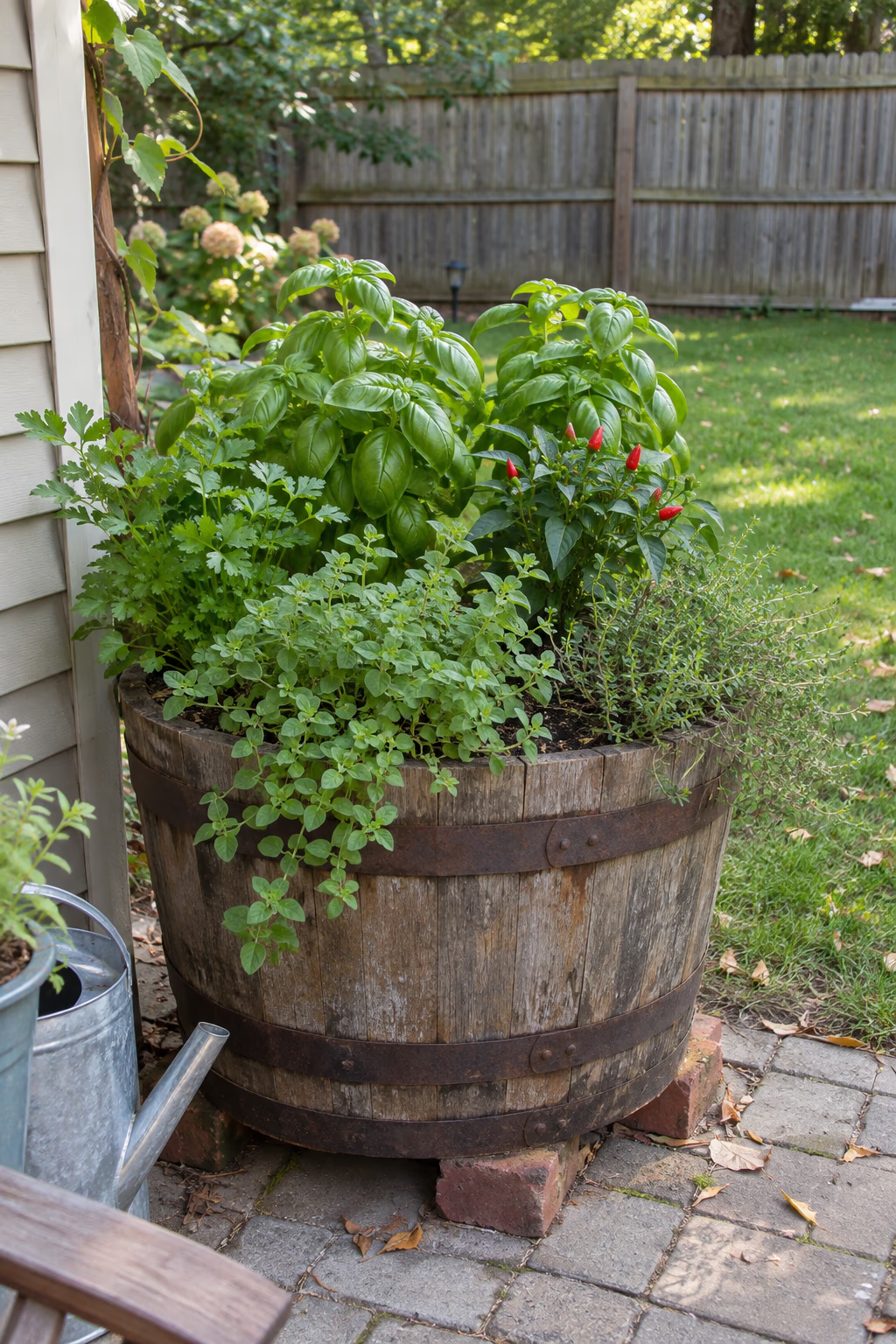
A big, generous planter for the family cook
A half wine or whiskey barrel holds roughly 20 to 25 gallons of soil, enough for a full pizza-topping garden. Plant a large Genovese basil or two in the center, oregano and thyme around the edges, flat-leaf parsley on one side, and a compact pepper plant for a little heat.
The deep soil holds moisture longer than small pots, so the barrel needs less frequent watering and gives herbs room to grow large. It also makes a strong focal point on a patio corner or at the edge of a lawn.
A filled barrel is far too heavy to move, so decide on its final spot before you add soil. Drill several 1-inch drainage holes if the barrel has none, and raise it on bricks to keep the base from rotting.
17. Stack a Tiered Metal Stand Beside the Grill
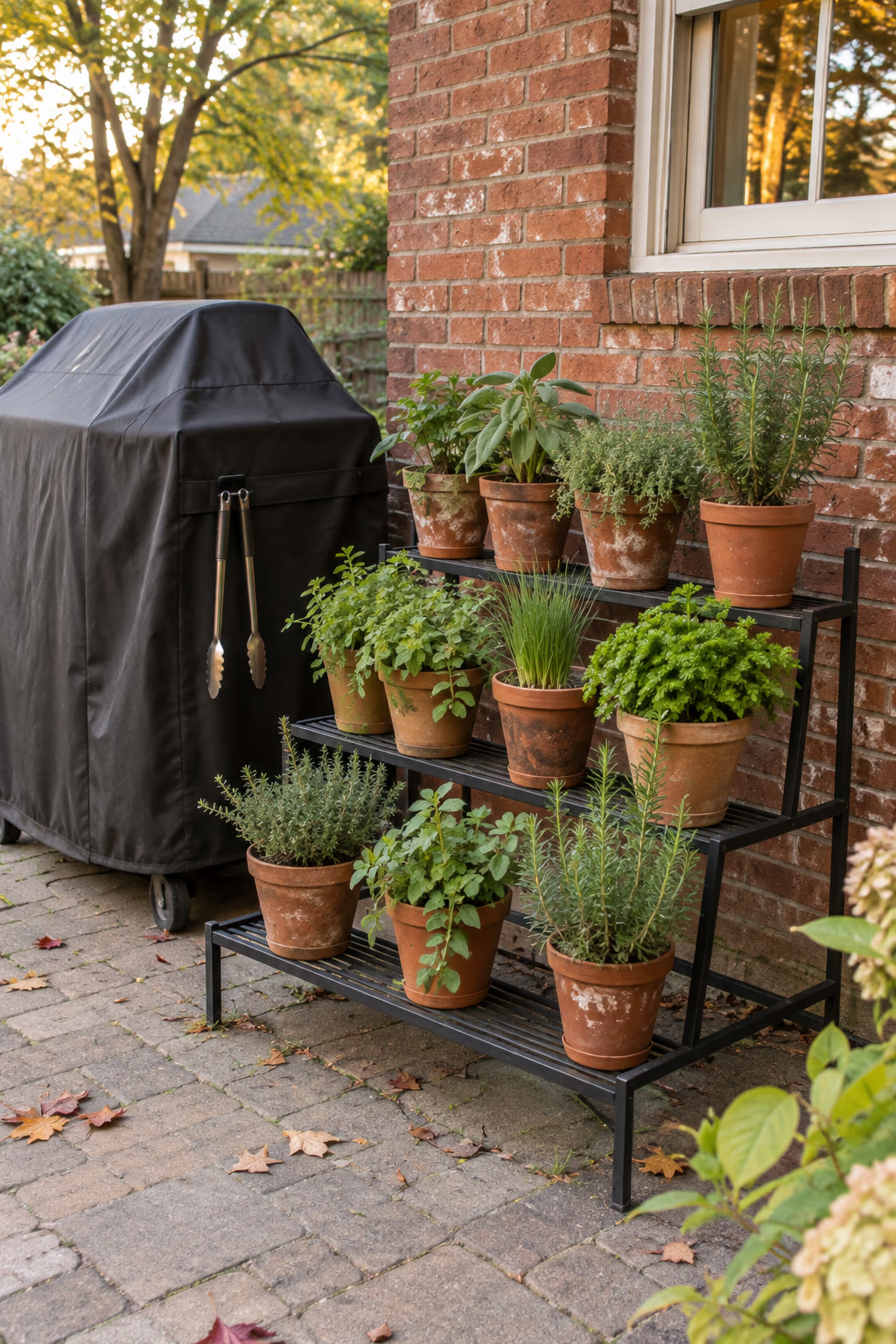
Grilling herbs right where you need them
A three-tier metal plant stand or stair-step rack placed near the grill holds a dozen small pots of rosemary, thyme, sage, oregano, and chives. The stepped shelves let each pot catch sun without shading the one below.
Group herbs by how you use them: woody herbs for meat marinades on one shelf, chives and parsley for finishing on another. Black or bronze metal stands blend well with most outdoor grills and furniture.
Keep the stand at least 3 feet from the grill so radiant heat does not scorch leaves or crack pots. Secure tall stands to a wall or railing if your patio gets strong gusts.
18. Use the Pot-in-Pot Method to Swap Herbs With the Seasons
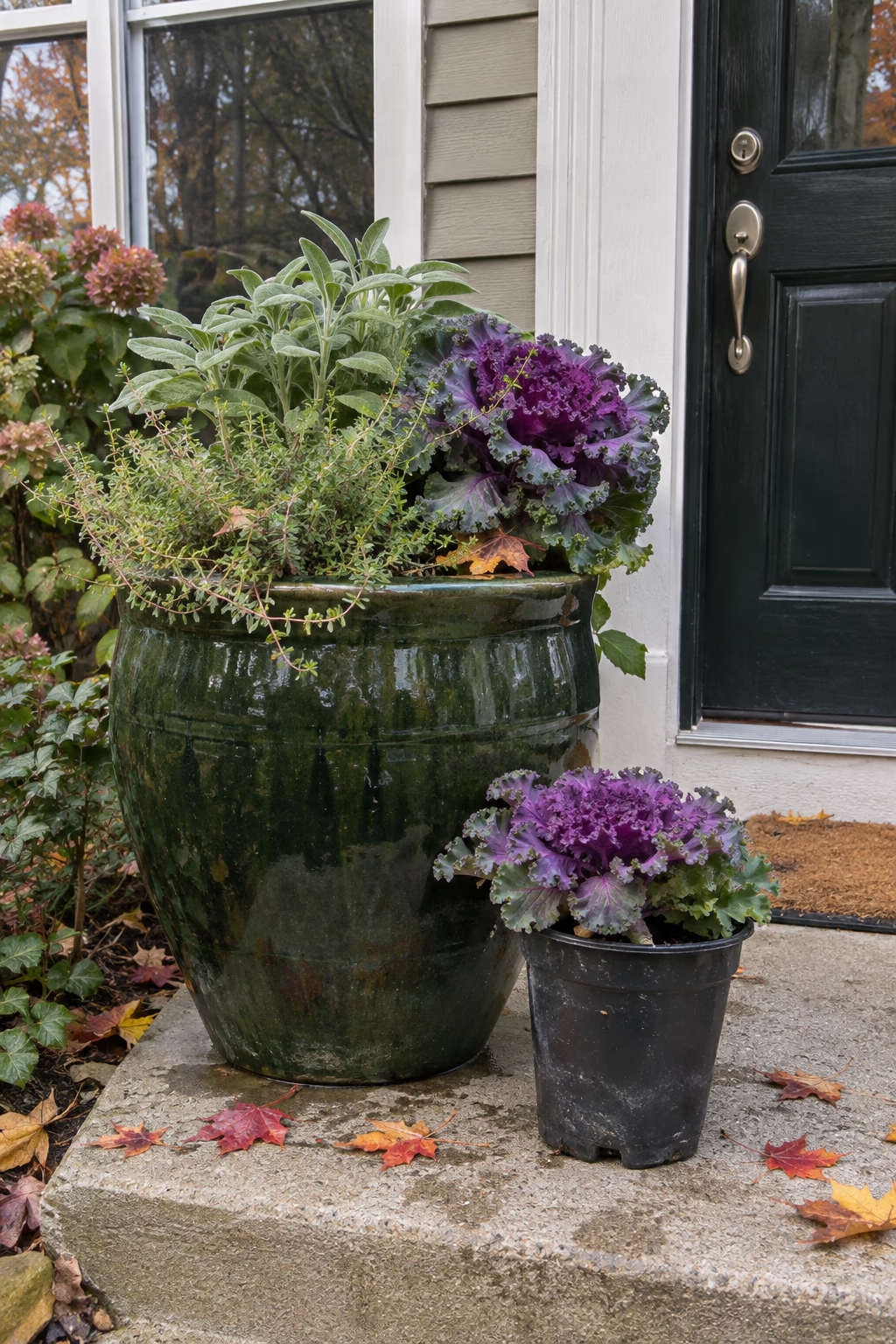
One beautiful planter, endless plant changes
Instead of planting directly into a large decorative container, sink plastic nursery pots inside it and fill the gaps with mulch, moss, or light potting mix. When the cilantro bolts or the basil gets hit by frost, simply lift it out and drop in a fresh plant.
This method is ideal for a pricey glazed pot by the front door because it keeps the display looking full all year: parsley and violas in spring, basil and lemon verbena in summer, and sage and thyme with ornamental kale in fall.
Make sure both the decorative container and the liner pots have drainage holes. Without them, water collects in the outer pot and rots the roots of everything inside.
19. Sow Cilantro and Dill in Succession Pots
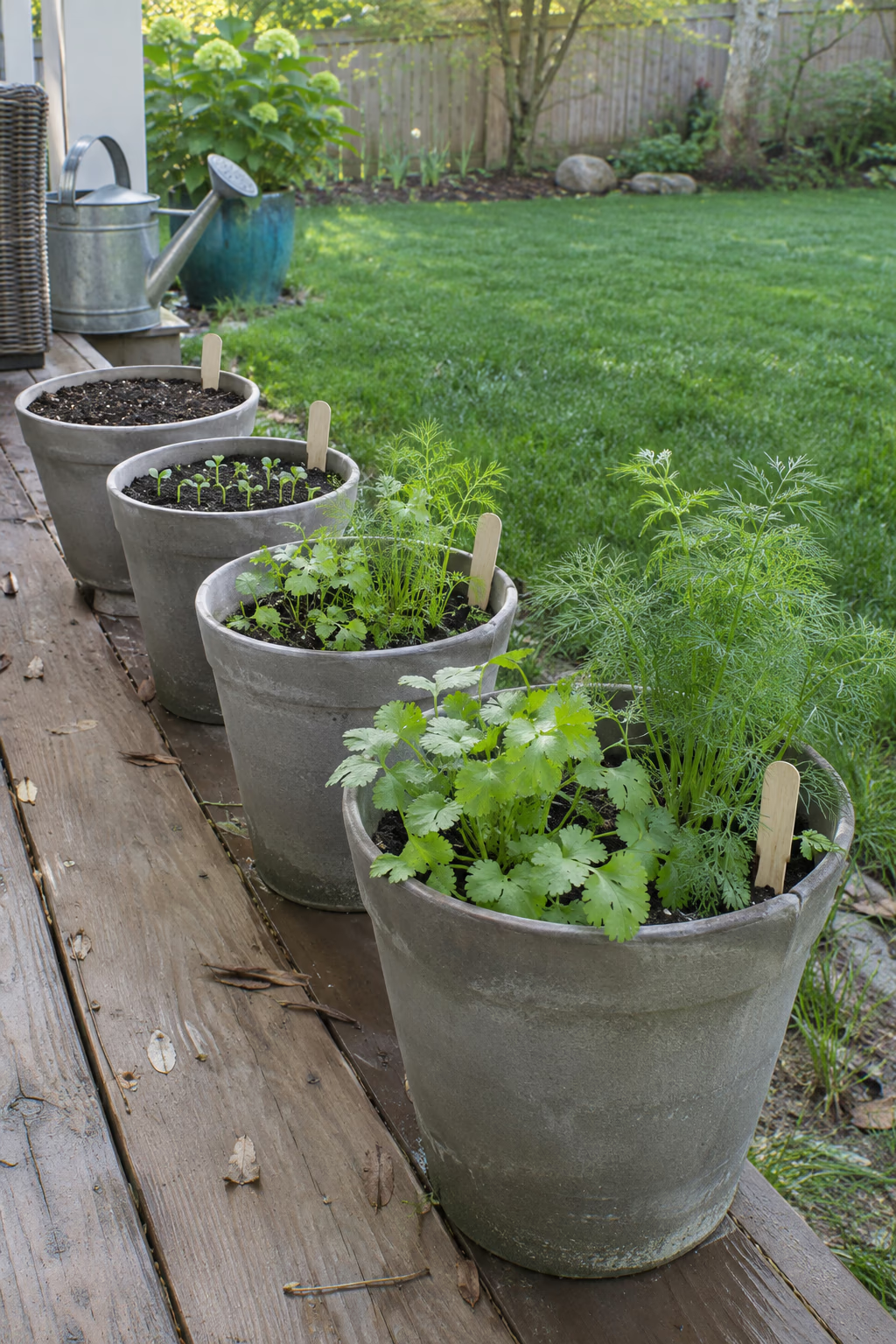
A steady supply of fast-fading herbs
Cilantro and dill grow fast and go to seed quickly, especially once the weather warms. Sowing a new 10-inch pot every two to three weeks in spring and again in early fall keeps fresh leaves coming instead of one big harvest followed by nothing.
Line up three or four matching pots and label them by sowing date with a simple wooden marker. Sow seeds directly, since both herbs dislike being transplanted, and keep the soil moist until seedlings appear.
In hot climates, give cilantro afternoon shade and grow it mainly in the cool seasons. If plants do flower, let a few set seed: dill flowers attract beneficial insects, and cilantro seeds are coriander.
20. Plant a Pollinator Herb Pot With Lavender and Borage
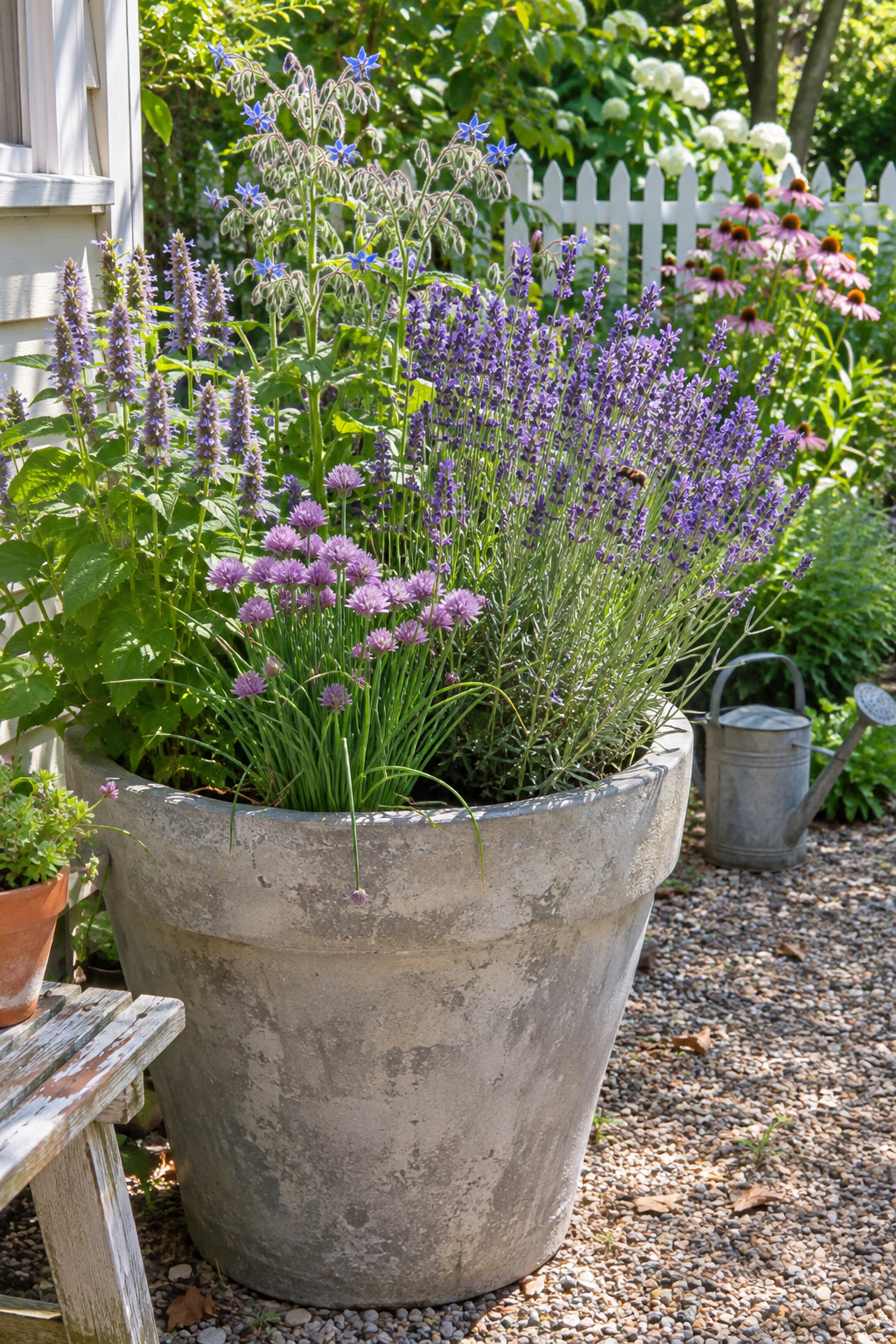
Herbs that feed you and the bees
Some herbs earn their place as much for their flowers as their leaves. A large pot with English lavender, borage, flowering chives, and anise hyssop buzzes with bees and butterflies from early summer on, while still giving you leaves and blossoms for the kitchen.
Use a 20-inch pot with a fast-draining mix, as lavender rots in soggy soil. Set the lavender on the sunniest side, borage at the back since it grows tall and floppy, and chives along the front edge.
Borage self-seeds generously, and its stems are prickly. Deadhead it regularly if you do not want seedlings, and cut lavender stems back by about a third after flowering to keep the plant compact.
21. Train a Potted Bay Laurel Into a Patio Standard
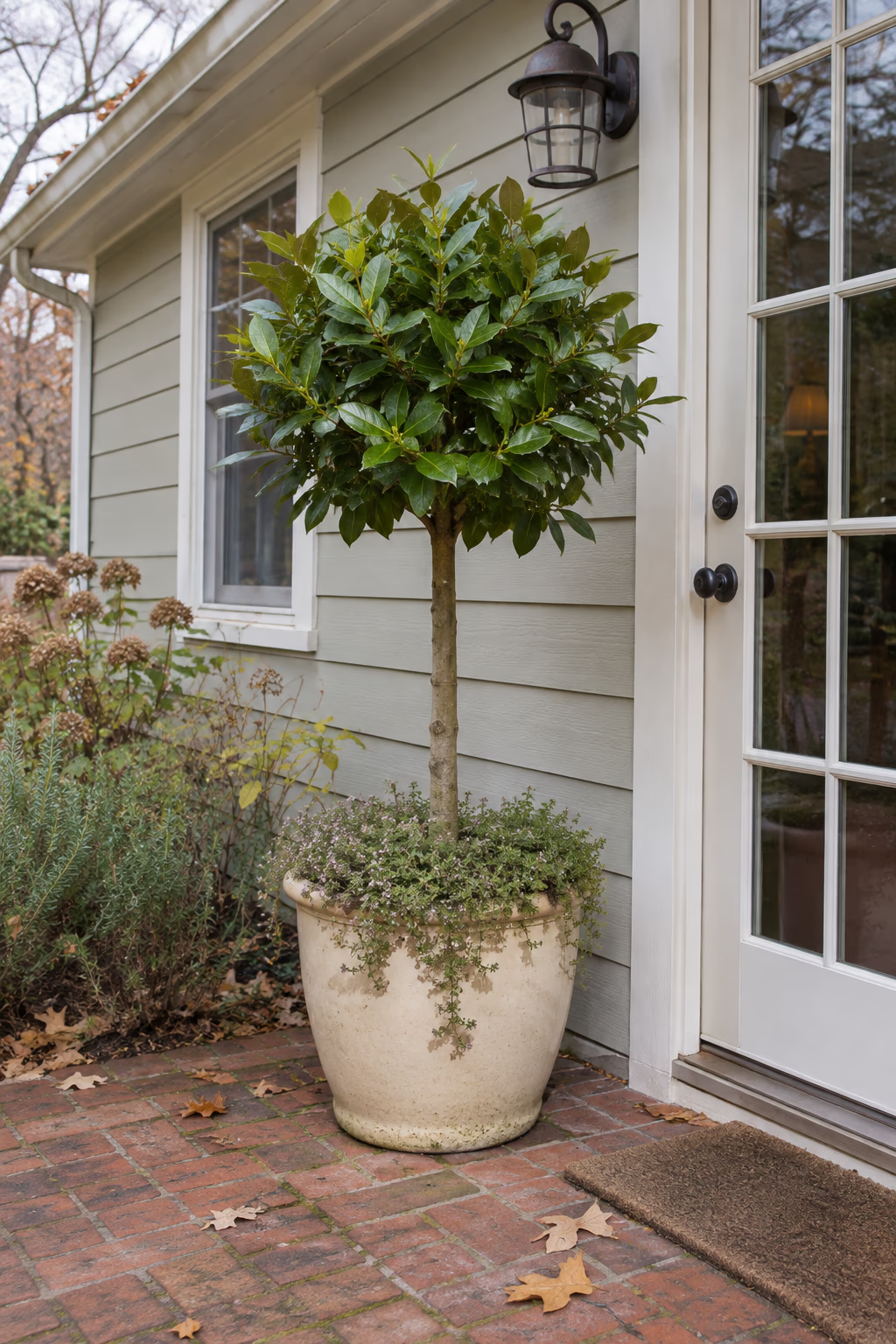
An elegant, evergreen herb with year-round structure
Bay laurel is a slow-growing evergreen whose leaves flavor soups and stews, and it adapts well to life in a pot. Trained as a lollipop standard with a clear trunk and a rounded head, it adds formal structure beside a door or at the corner of a patio.
Start with a young plant with a straight main stem, remove side shoots along the lower trunk, and pinch the top once it reaches the height you want. Plant it in a 16- to 20-inch container with a well-drained mix, and underplant with creeping thyme for a finished look.
Bay is hardy outdoors only in about zones 8 to 10. In colder areas, bring the pot into a bright, cool room or unheated sunporch for winter, and watch for scale insects on the undersides of the leaves.
How to Plan Your Container Herb Garden
A little planning before buying plants makes it much easier to keep potted herbs healthy and productive from spring through fall.
- Find your sunniest spot first. Most culinary herbs need at least 6 hours of direct sun a day, so watch your patio, deck, or balcony for a day before choosing locations.
- Group herbs by water needs. Keep dry-loving rosemary, thyme, sage, and lavender together, and pair thirstier basil, parsley, chives, and mint in separate containers.
- Choose pots with drainage. Every container needs holes in the bottom, and a light potting mix rather than garden soil, which compacts and stays soggy in pots.
- Size up when you can. Larger pots hold moisture longer and need less frequent watering, so a 12-inch or bigger container is easier to care for than several tiny ones.
- Feed lightly and harvest often. A diluted liquid fertilizer every few weeks is plenty, and regular snipping keeps herbs bushy and delays flowering.
- Plan for winter. Check your USDA hardiness zone, and decide which herbs will stay outside, which will come indoors, and which you will replant each spring.
Frequently Asked Questions
Which herbs are easiest to grow in pots?
Chives, parsley, thyme, oregano, mint, and basil are among the easiest for beginners. They grow quickly, tolerate a range of conditions, and recover well from frequent harvesting as long as they get enough sun and proper drainage.
How big should a container be for herbs?
A single herb does well in a pot at least 6 to 8 inches across, while mixed plantings need 12 to 20 inches or more. Larger herbs like rosemary, bay, and lemongrass benefit from pots 14 inches or wider.
Can different herbs share one container?
Yes, as long as they have similar needs. Mediterranean herbs like rosemary, thyme, sage, and oregano share well, as do basil and parsley. Keep mint in a separate pot because its runners crowd out other plants.
How often should I water potted herbs?
Check the soil daily in summer by pushing a finger an inch or two down. Water thoroughly when it feels dry for thirsty herbs like basil, and let woody herbs like rosemary dry a little more between waterings. Small pots and hanging baskets may need water every day in hot weather.
Can I keep container herbs alive over winter?
Many can. Hardy herbs such as thyme, sage, chives, oregano, and mint often survive outdoors in a sheltered spot in moderate climates. Tender herbs like basil, rosemary in cold zones, lemongrass, and bay do best indoors near a bright window or under a grow light.
Final Thoughts
The best container herb garden ideas put fresh flavor exactly where you cook and relax. A Mediterranean pot by the steps, a strawberry jar packed with kitchen favorites, or a washtub full of parsley and chives can make every meal feel a little more homemade.
Start with a few herbs you already love to cook with, give them sun and good drainage, and add new pots as your confidence grows. Before long, you will have a patio, balcony, or windowsill that smells wonderful and keeps your kitchen stocked all season.