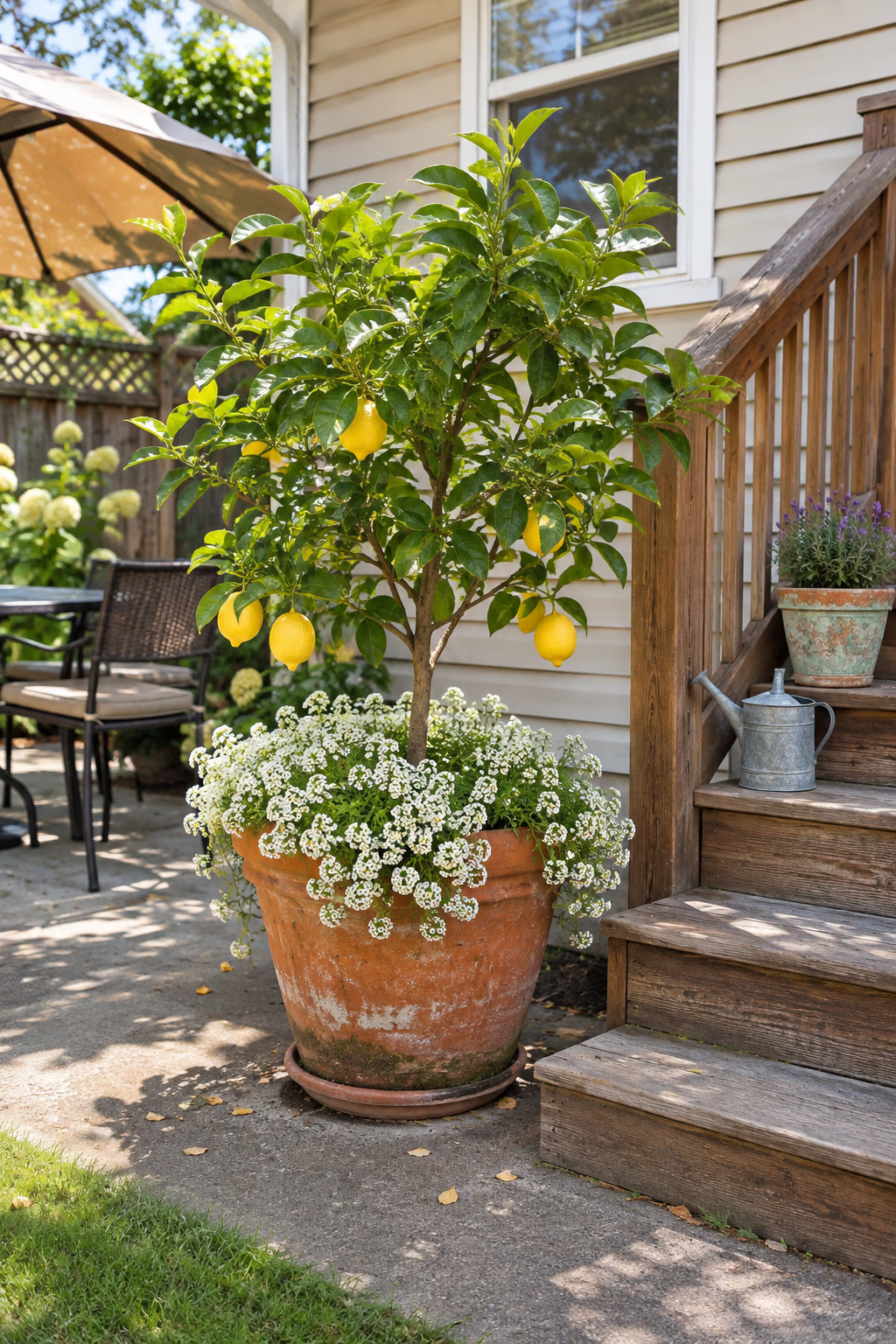
Step outside on a summer morning and the first thing you notice is a lemon tree in a big clay pot, its glossy leaves catching the light beside the back steps. Nearby, a few smaller pots hold silver foliage and trailing green. Nothing is planted in the ground, yet the whole space feels like a garden.
That’s what makes container gardening so appealing. Pots let you grow where you have no soil, such as a deck, a driveway edge, a balcony, or a concrete patch by the garage. You can move them toward the sun, swap plants each season, and take them with you when you move. They also let renters and busy homeowners garden without digging up a lawn.
These 27 container garden ideas cover statement trees in oversized pots, layered clusters, succulent bowls, water gardens in stock tanks, fruit pots, winter displays, and practical tricks that make watering and moving pots easier. Pick one to try this weekend, or mix several into a container garden that fits your space.
1. Plant a Dwarf Citrus Tree in an Oversized Pot
A fragrant, fruiting focal point for a sunny spot
A dwarf Meyer lemon, kumquat, or calamondin orange in a large pot is one of the most eye-catching things you can grow in a container. Choose a pot at least 18 to 20 inches wide with a drainage hole, fill it with a fast-draining citrus or cactus mix, and set it where it gets 8 or more hours of sun.
Underplant the edge with a low trailer such as creeping thyme or sweet alyssum to soften the rim. The blossoms smell wonderful in spring, and the fruit stays decorative on the branches for weeks.
Citrus is hardy outdoors year-round only in the warmest parts of the country, roughly USDA Zones 9 to 11. Elsewhere, roll it into a bright, cool room before temperatures drop near freezing, and water only when the top inch of mix is dry.
2. Cluster Mismatched Pots in Graduated Heights
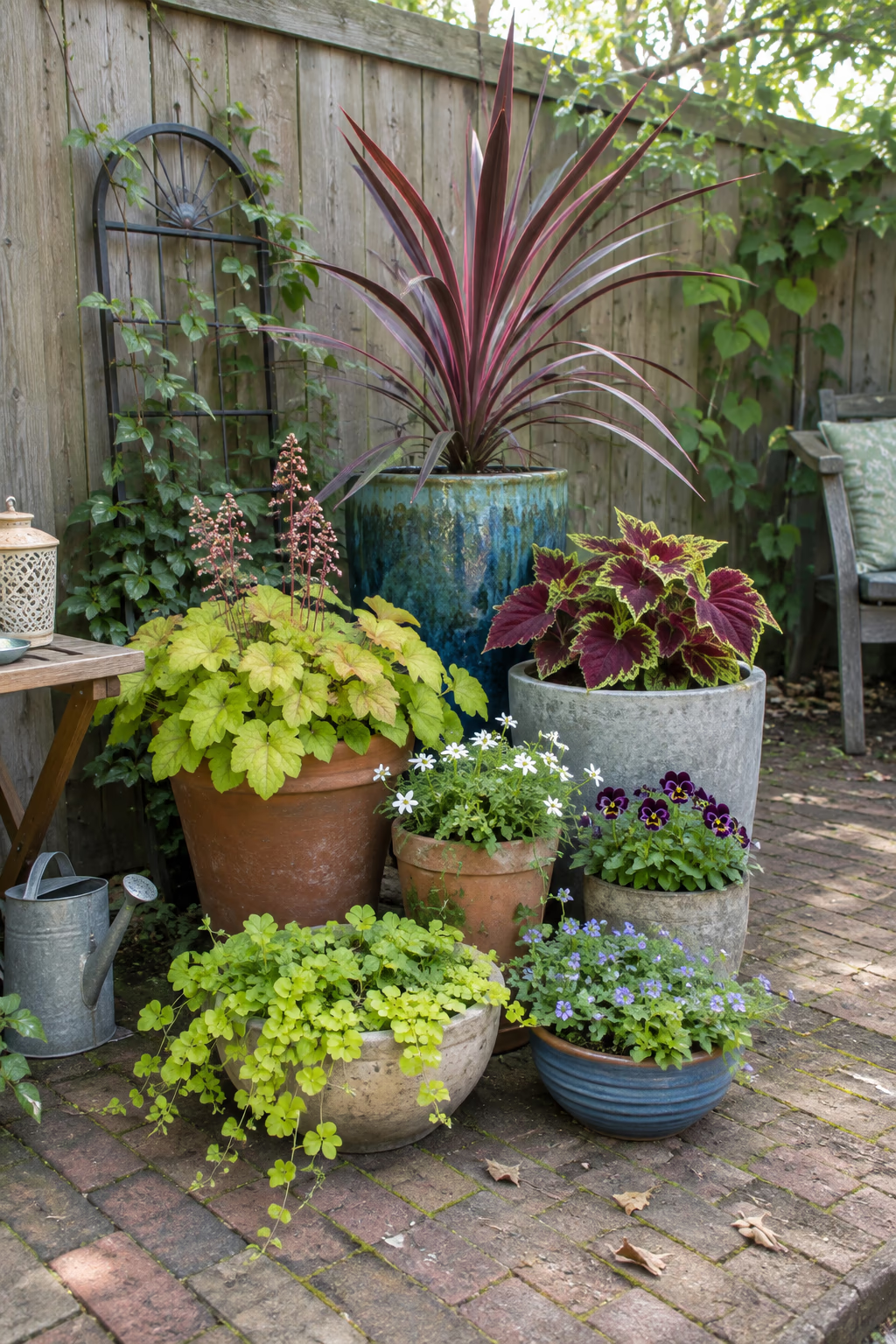
A collected look that feels relaxed, not fussy
Instead of buying a matching set, gather five to seven pots in different sizes, shapes, and finishes, such as terracotta, glazed ceramic, and weathered concrete. Place the tallest at the back or in a corner, mid-size pots in front, and a couple of low bowls at the edge so the group steps down like a staircase.
Keep the planting simple so the arrangement doesn’t look chaotic. One tall plant, a few mounding foliage plants, and one trailing plant per group is plenty. Repeating a single color, such as chartreuse or burgundy foliage, ties mismatched pots together.
Use bricks or upturned pots hidden behind the front row to raise smaller containers. This saves money on extra-tall planters and makes it easy to adjust heights later.
3. Pack a Low Terracotta Bowl With Succulents
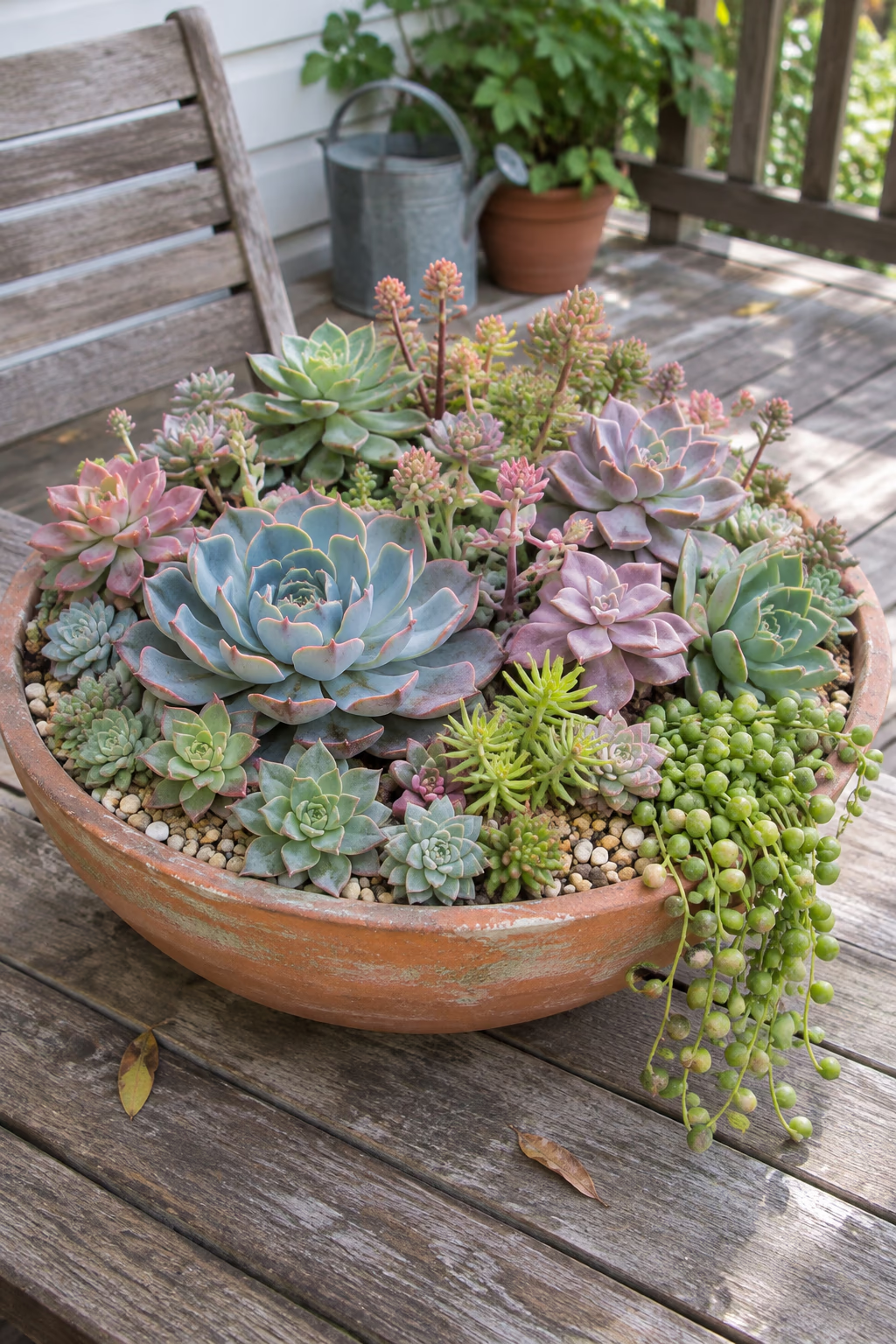
A living centerpiece that shrugs off neglect
A wide, shallow terracotta bowl about 14 to 18 inches across makes a perfect stage for succulents. Fill it with a gritty cactus mix, then tuck rosettes of echeveria, graptopetalum, and sedum close together so they read as one textured carpet.
Add a few stems of string-of-pearls or trailing sedum near the rim to spill over the edge, and top-dress bare soil with small pea gravel. The bowl looks great on an outdoor table, a low wall, or the top step of a stoop.
Shallow bowls dry quickly in summer heat but also hold water after storms, so a drainage hole is essential. Most soft succulents aren’t frost-hardy, so bring the bowl indoors to a sunny window for winter in cold climates.
4. Set One Oversized Clay Urn Where Paths Meet
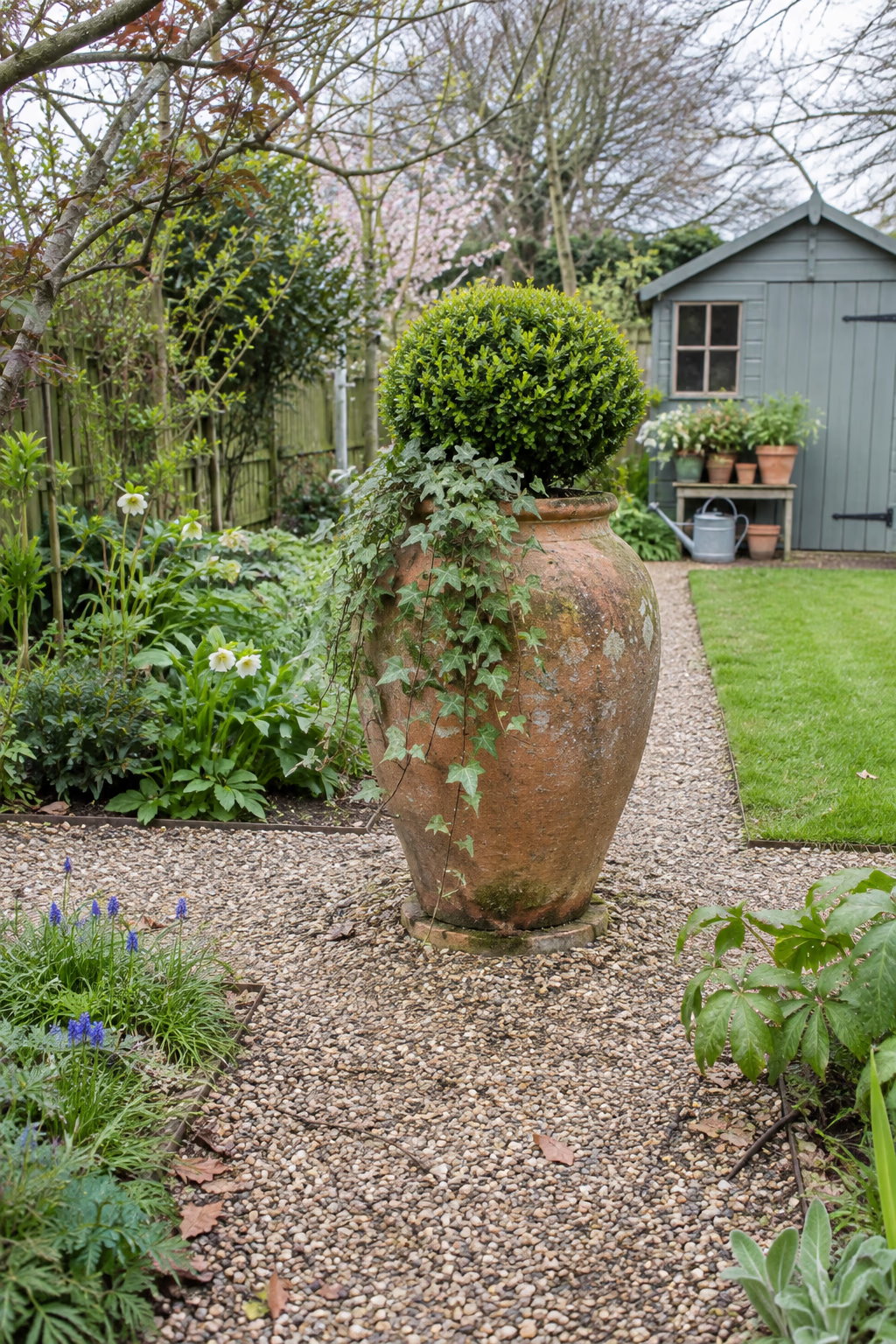
One bold piece instead of many small ones
A single large urn, 24 inches tall or more, placed where two paths cross or at the center of a gravel patch can do the work of a whole flower bed. The size alone draws the eye and gives the yard a clear center.
Plant it boldly with one upright plant such as a dwarf boxwood, a clipped holly, or a tall cordyline, then add a ring of trailing ivy or creeping jenny. Or leave a beautifully aged urn empty and treat it purely as sculpture.
Large clay pots get extremely heavy once filled. Set the urn in its final spot first, then fill it. If you live where the ground freezes, choose frost-resistant clay or concrete and keep the soil from staying soggy in winter, since trapped water can crack the pot.
5. Line a Walkway With Matching Terracotta Pots
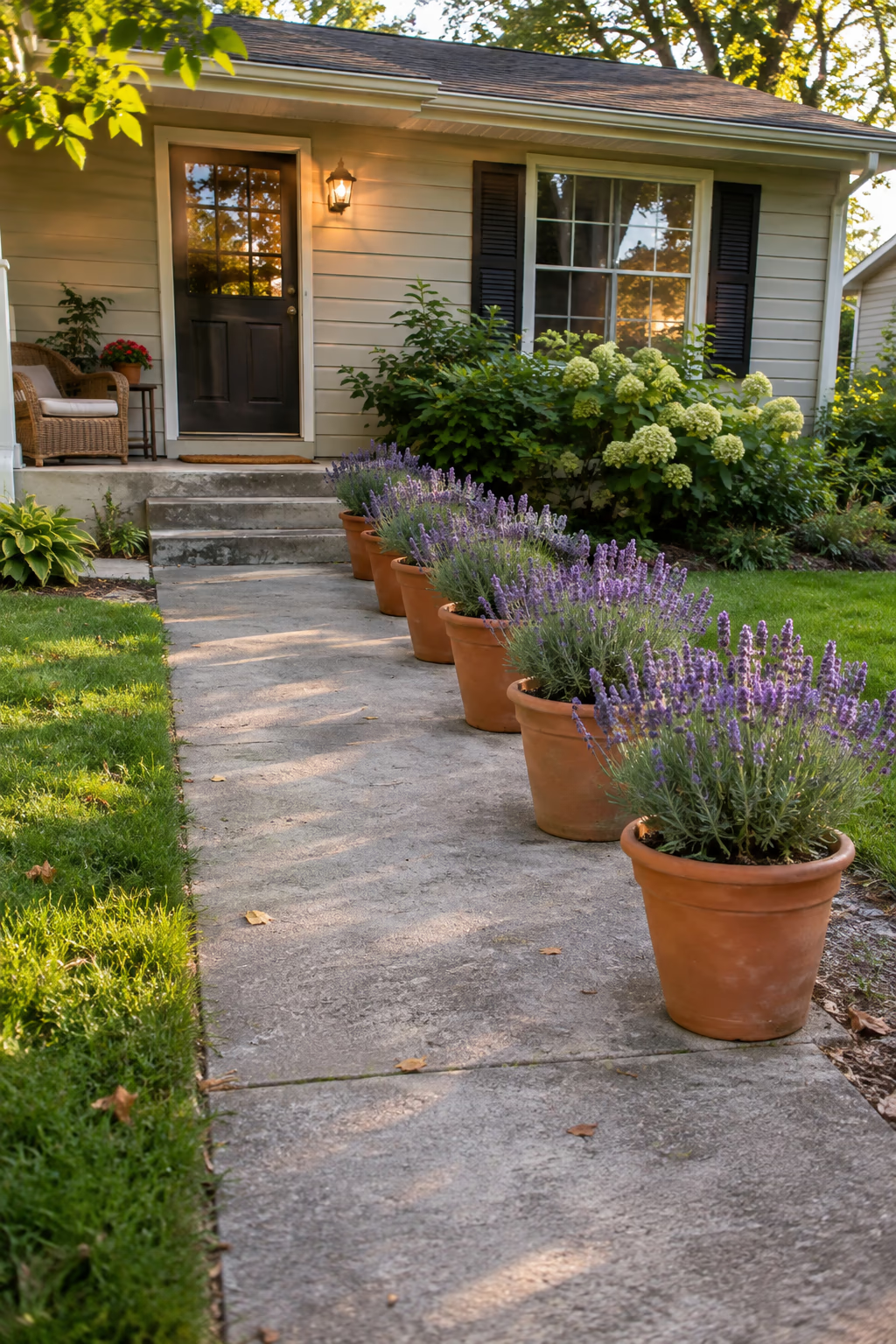
Repetition gives a simple path real rhythm
Set a row of identical terracotta pots, around 12 to 14 inches wide, along one or both sides of a walkway or driveway edge. Space them evenly, about 3 to 4 feet apart, so the repetition creates a clear line that guides visitors along.
Plant each pot with the same mounding plant, such as lavender, dwarf zinnias, or a compact boxwood, for a tidy look. For a looser cottage feel, keep the pots matching but vary the flowers inside them.
A row of pots is only charming if every one stays healthy. Choose plants that suit the light along the whole path, and check pots on the sunny end more often since they dry out faster.
6. Screen a Seating Area With Tall Trough Planters
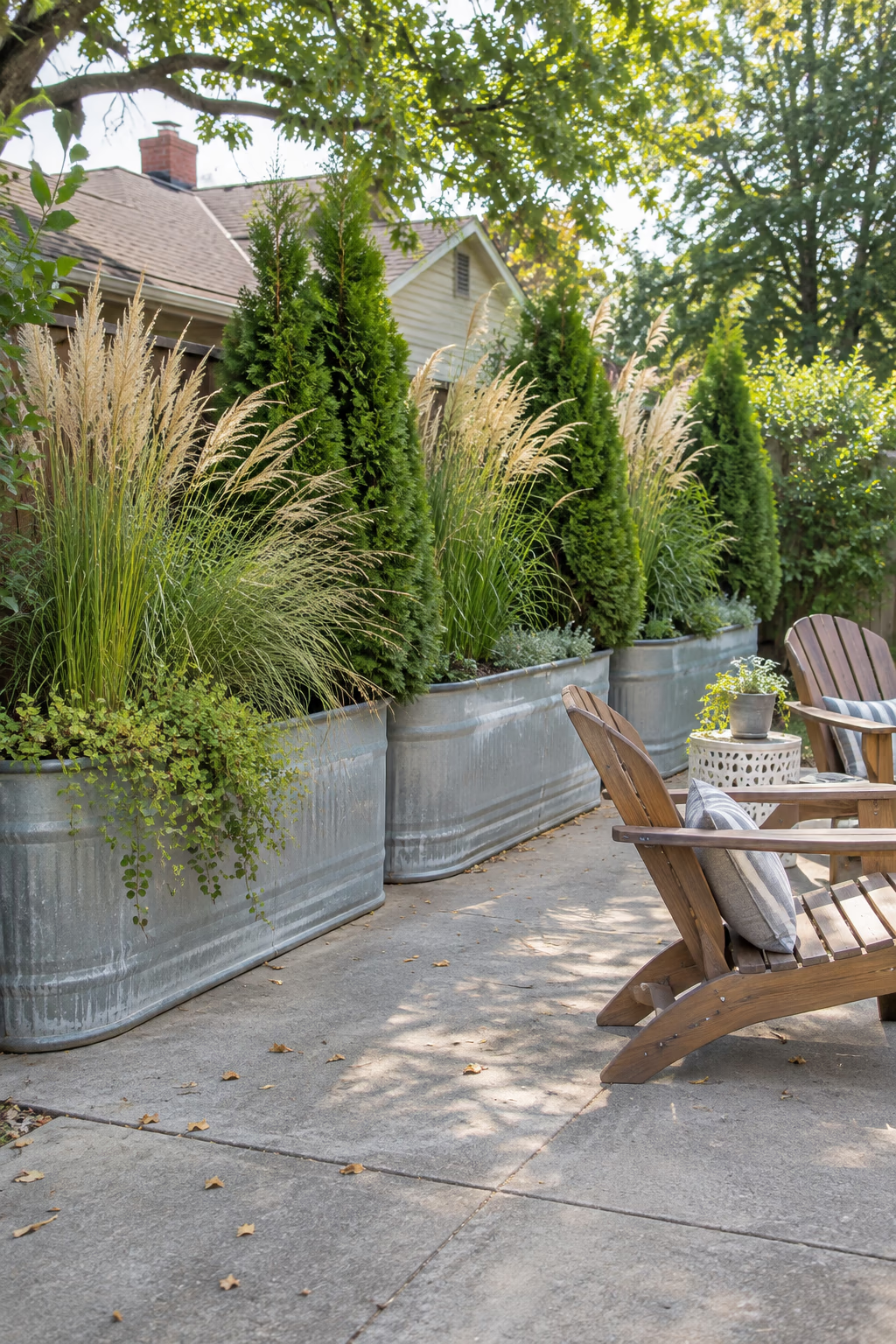
Privacy you can move when you need to
Long rectangular troughs, about 3 feet long and 16 to 24 inches tall, set end to end make an instant green wall beside a patio or along a property line. Fill them with upright plants like clumping bamboo, emerald arborvitae, tall ornamental grasses, or a sturdy trellis planted with annual vines.
Because the screen sits in pots, you can create privacy on a rented patio or concrete pad without any digging or fence permits. Galvanized steel, fiberglass, or cedar troughs all work well.
Tall plants in narrow pots catch the wind, so pick troughs with a wide base and add a layer of gravel at the bottom for weight. Avoid running bamboo, even in pots, since it can escape through drainage holes and spread aggressively.
7. Hang Metal Wall Planters Like Living Art
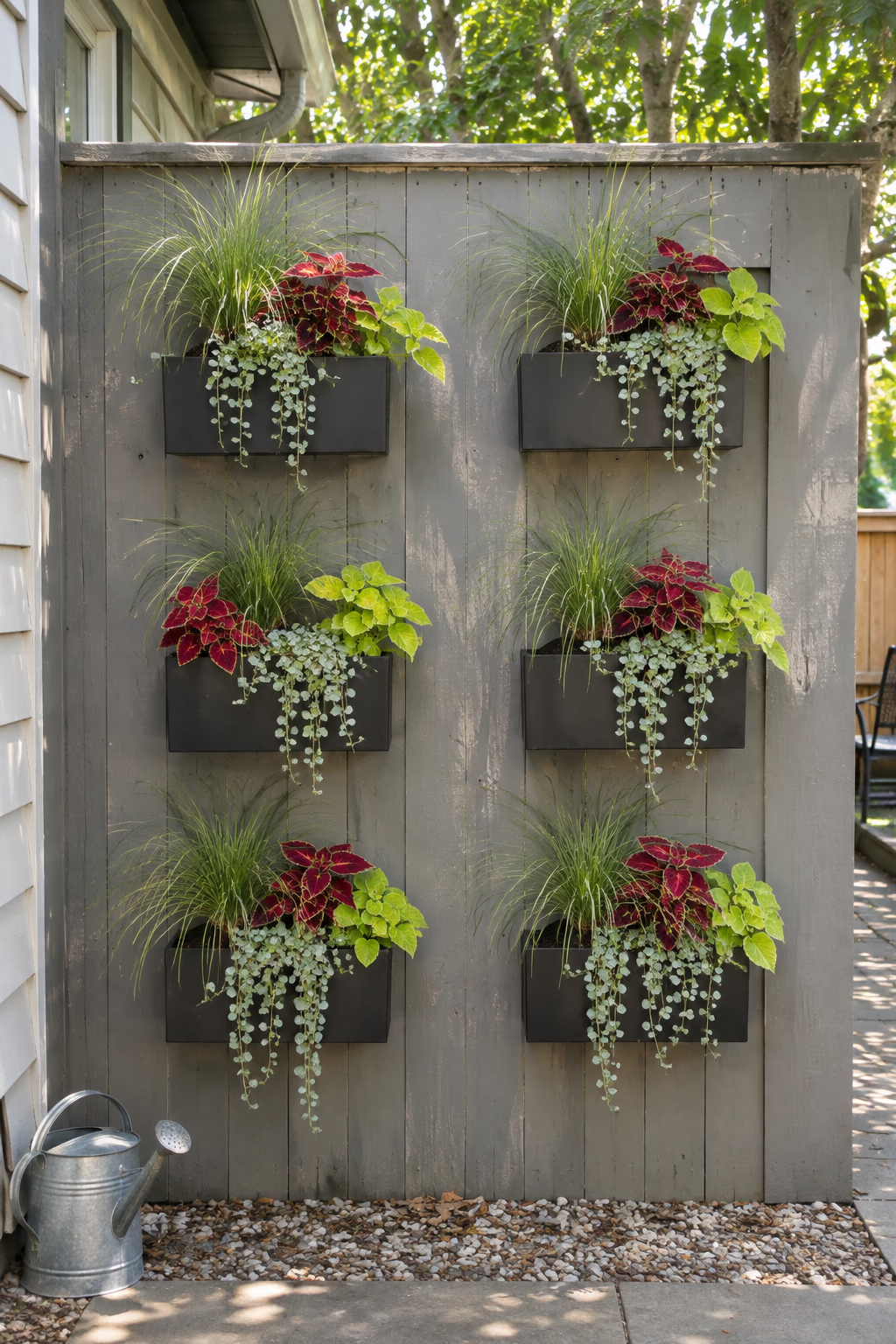
Turn a blank wall into a garden
A plain garage wall, the side of a shed, or a fence beside the patio can hold a grid of metal wall planters. Mount three to six of them in a neat row or staggered pattern, then plant each with a mix of spiky, colorful, and trailing plants, such as sedge, coleus, and silver dichondra.
Wall planters lift plants to eye level and leave the floor clear, which makes them ideal for narrow side yards and small patios.
Small wall pockets dry out fast, so expect to water daily in summer, or run a simple drip line. On house siding, use spacers so the planters don’t trap moisture against the wall, and let water drain away from the foundation.
8. Fill Empty Pots With Winter Greens and Red Twigs
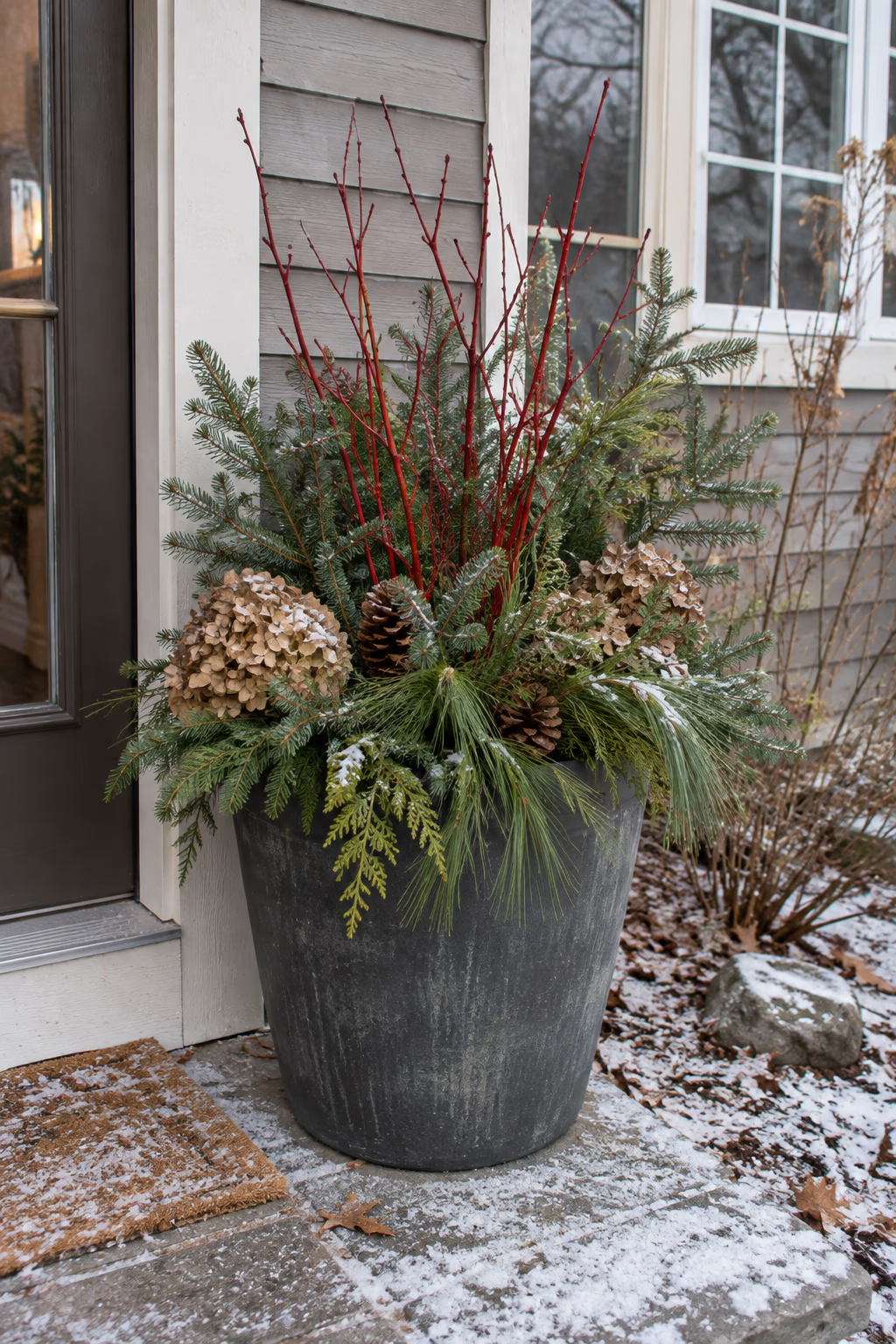
Keep containers beautiful after the frost
When summer annuals fade, don’t leave your pots empty. Pull the spent plants, leave the potting mix in place, and push in cut evergreen branches such as fir, cedar, pine, and boxwood. Add a few stems of red twig dogwood or birch branches in the center for height.
Pinecones, dried hydrangea heads, and small bunches of berried branches add texture. Because the stems are cut, there’s no watering needed once the soil freezes, and the display can last from late fall until spring.
Make the arrangement before the soil freezes so the stems go in easily, and water once to lock them in place. Move delicate glazed or terracotta pots to a sheltered spot and use the arrangement in frost-proof containers instead.
9. Turn a Galvanized Stock Tank Into a Mini Water Garden
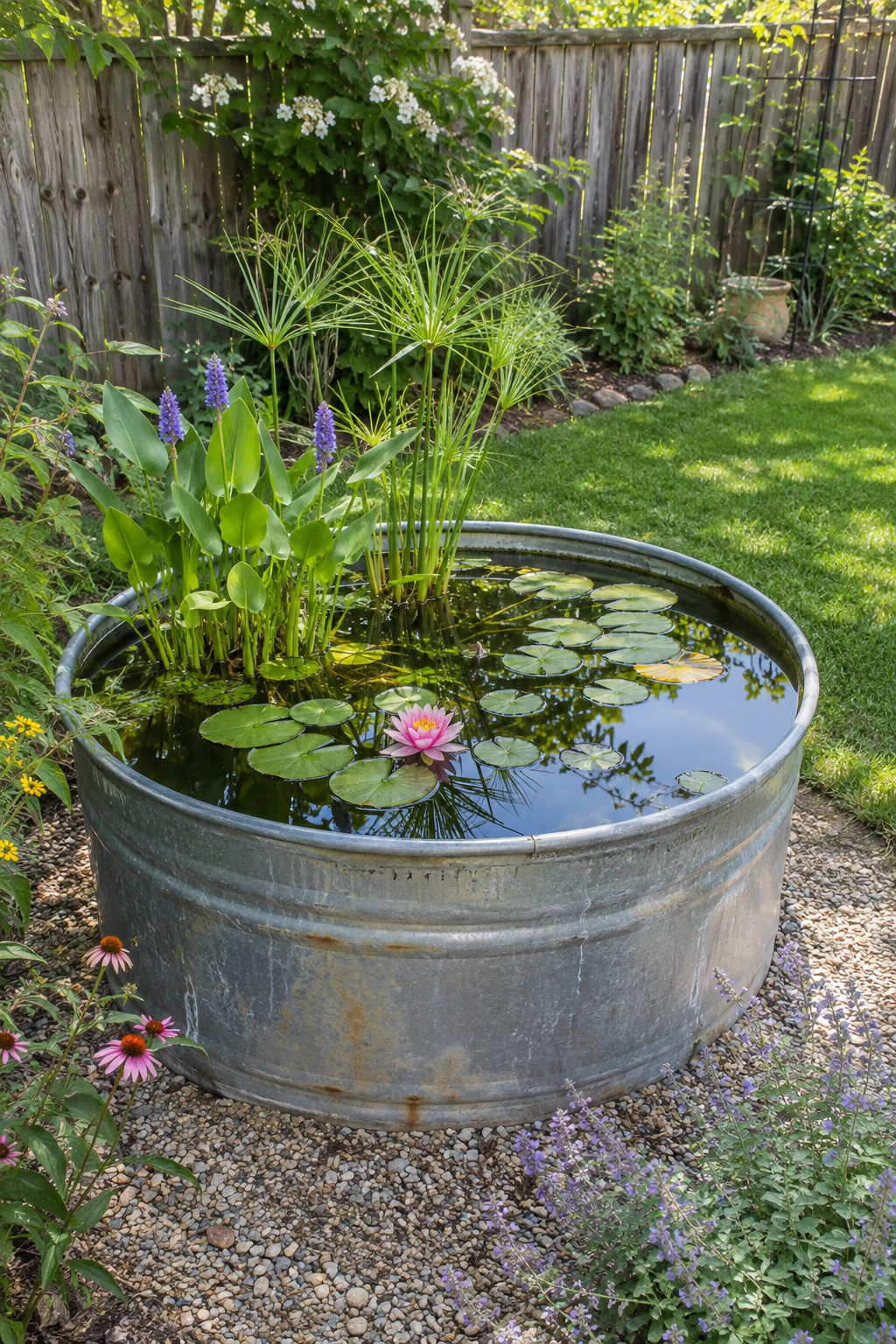
The sound and shimmer of water without digging a pond
A round galvanized stock tank 2 to 4 feet wide makes a sturdy, ready-made pond. Set it on level ground in a spot with at least 6 hours of sun, fill it with water, and add aquatic plants such as a dwarf water lily, pickerel weed, and dwarf papyrus, each in its own submerged pot.
A small solar fountain or bubbler adds gentle sound and keeps water moving. Within weeks, dragonflies and birds will start visiting.
Still water can breed mosquitoes, so keep it moving or add a mosquito control product containing Bti, which is safe for wildlife. Check local rules about water features near pools or fences, and note that a filled tank is very heavy, so it doesn’t belong on most decks or balconies.
10. Lift Spring Bulbs on Rusted Metal Plant Stands
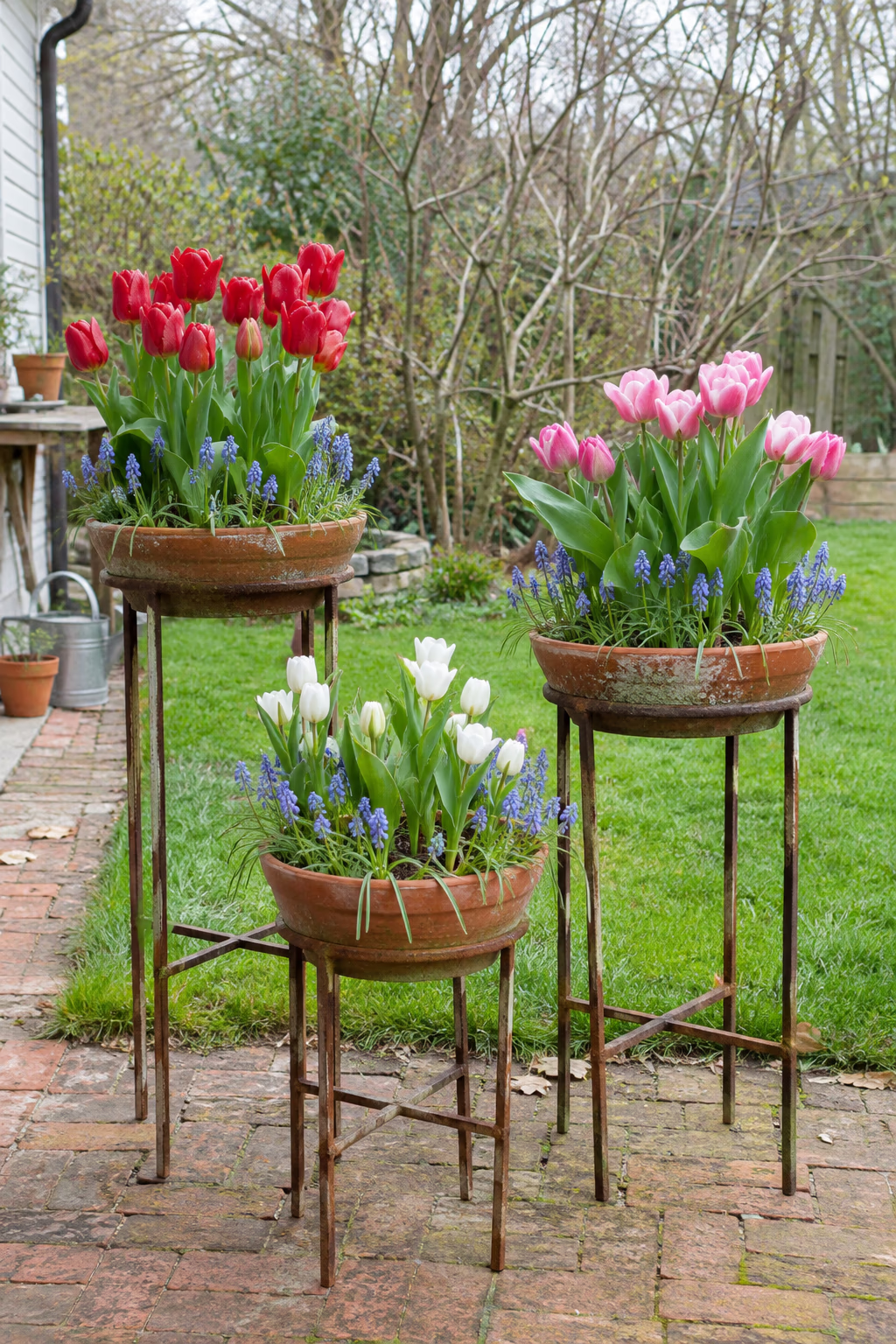
Seasonal flowers raised to eye level
Plant shallow bowls or medium pots with tulips, daffodils, or hyacinths in fall, then set them on tall rusted steel plant stands in spring. Raising the flowers 2 to 3 feet off the ground turns ordinary bulbs into sculptural accents.
Plant bulbs in layers, with larger tulips deep and smaller bulbs like grape hyacinths above, so the pot keeps blooming for several weeks. A rusty finish pairs well with both bright and pastel flowers.
Potted bulbs need cold to bloom but can freeze solid in exposed pots. In colder zones, store planted pots in an unheated garage over winter and water lightly until shoots appear.
11. Grow a Shrub Rose in a Large Deck Container
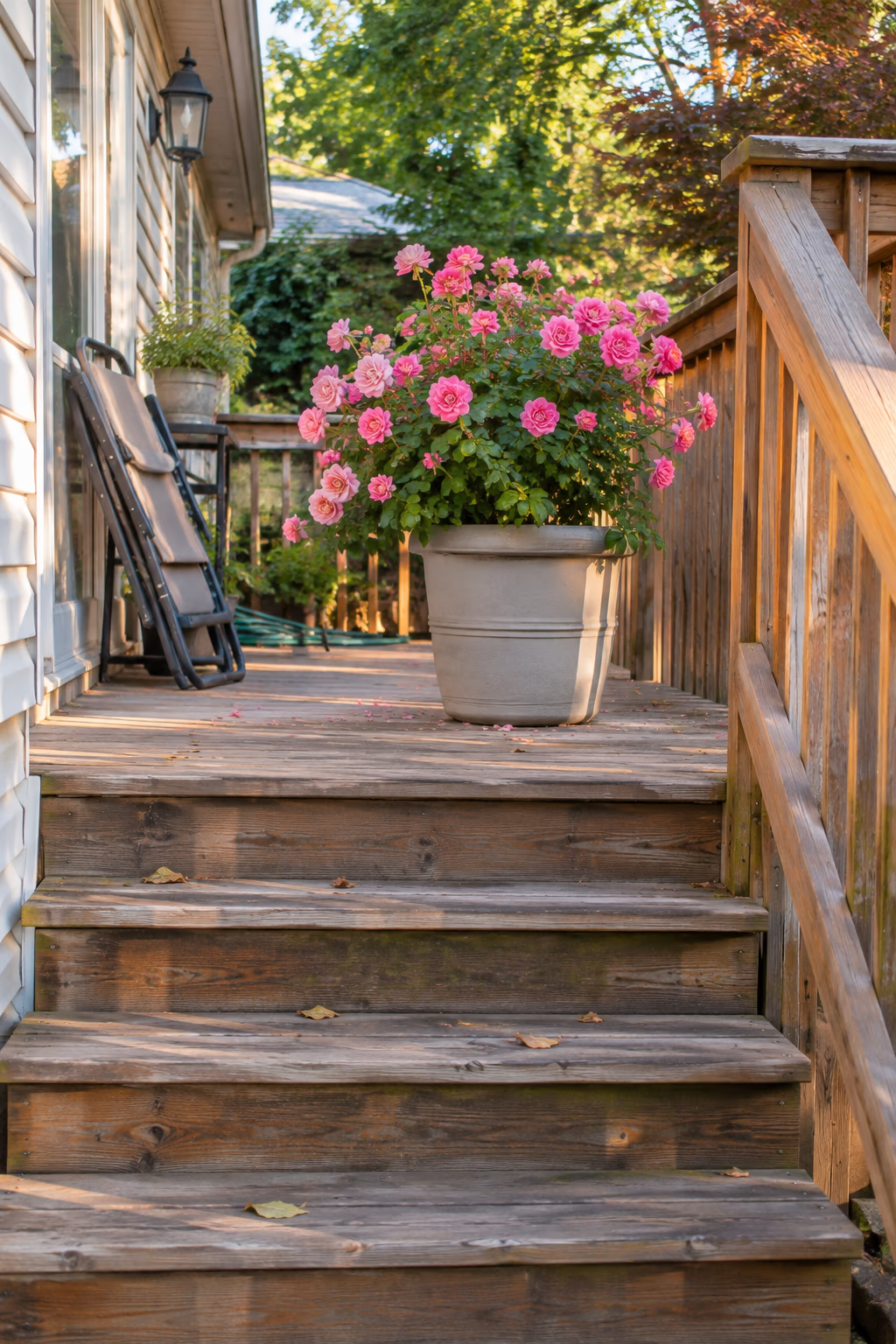
Classic roses without a dedicated bed
Compact shrub, floribunda, and patio roses grow surprisingly well in containers at least 15 to 20 gallons in size. Use a rich, well-drained potting mix, choose a disease-resistant variety, and give it 6 or more hours of direct sun.
A rose in a pot brings fragrance right next to seating, and a pair of them on either side of deck stairs looks especially polished.
Roses are heavy feeders and need regular watering. Feed them through the growing season with a balanced fertilizer and deadhead spent blooms. In cold climates, move the pot into an unheated garage or wrap it for winter protection.
12. Group an Olive Tree With Lavender and Rosemary Pots
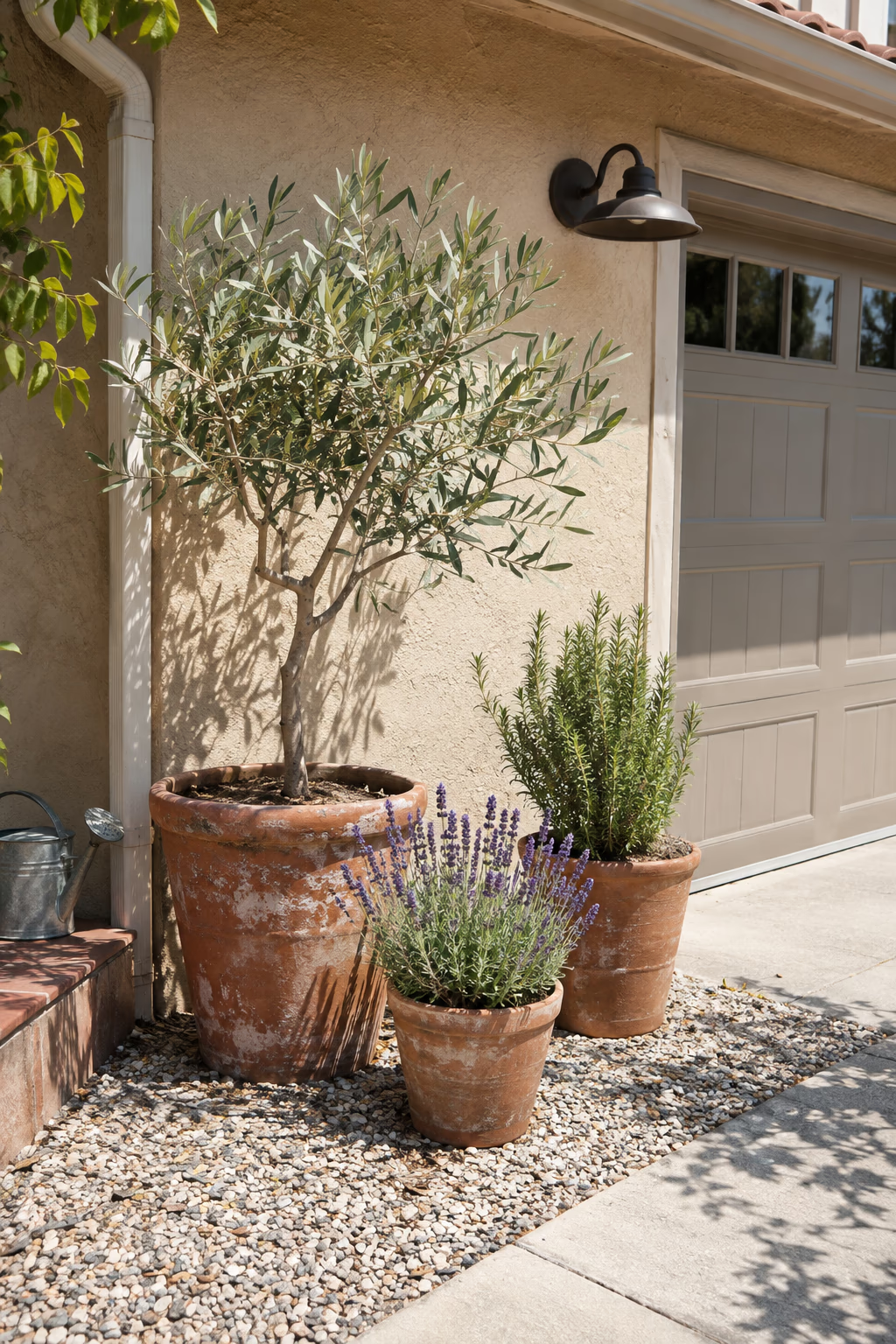
A Mediterranean corner for hot, dry spots
A small olive tree in a weathered terracotta or concrete pot sets a sunny, relaxed mood. Gather two or three smaller pots of lavender and upright rosemary around it, and add gravel at the base for a dry, coastal feel.
These plants all love full sun and sharp drainage, so they make a natural team for a south-facing wall or a hot driveway corner where other plants struggle.
Olive, lavender, and rosemary can rot in wet soil, so skip saucers that hold standing water. Most olive trees handle only light frost, so in colder zones bring the tree into a bright, cool room for winter.
13. Showcase Ornamental Grasses in Tall Cylinder Planters
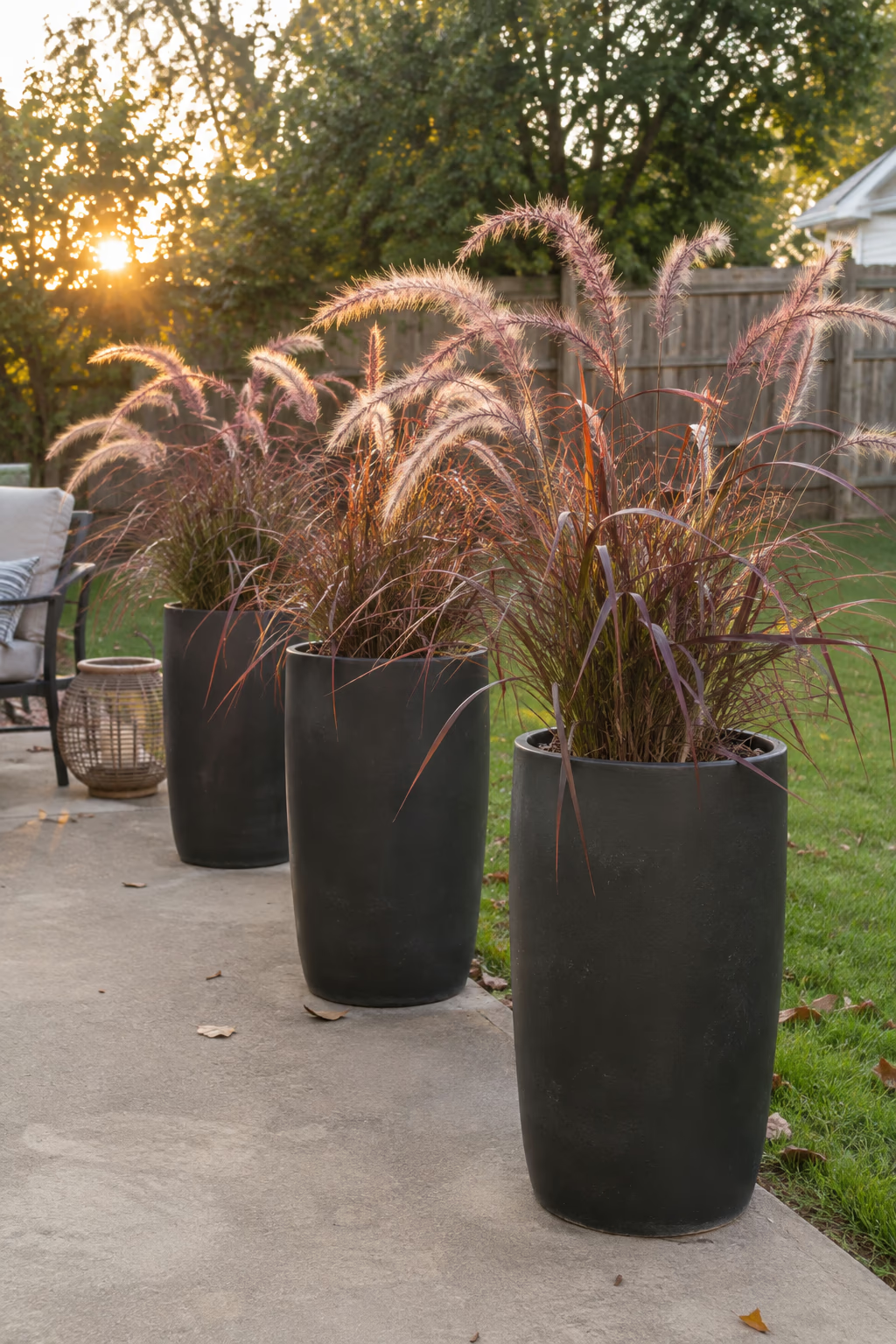
Movement and texture that looks good for months
Grasses look striking in tall, narrow cylinders because their arching leaves have room to spill. Try purple fountain grass, blue fescue, or a dwarf switchgrass in a matte black or white cylinder planter about 20 to 30 inches tall.
Line up three identical cylinders in a row for a modern look, or pair one tall grass with a low, rounded pot beside it for contrast. Grasses sway in the breeze and catch backlight beautifully at sunset.
Purple fountain grass is grown as an annual in most of the country. Avoid Mexican feather grass in areas where it’s considered invasive, and leave hardy grasses standing over winter, cutting them back in early spring.
14. Plant a Moon Garden Pot With White Blooms and Silver Leaves
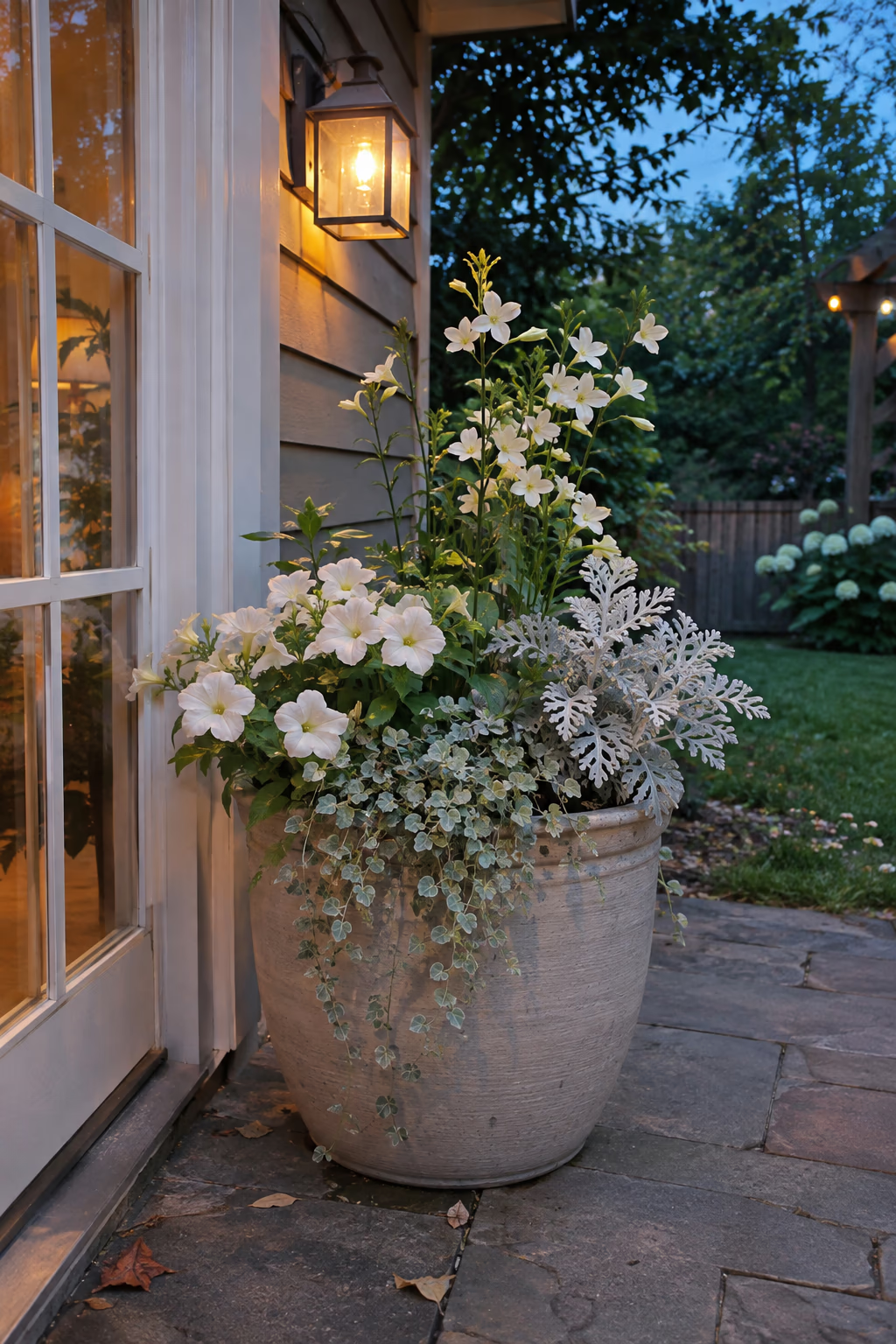
A container that glows at dusk
White flowers and silver foliage reflect what little light remains in the evening, which makes them perfect for pots near a back door or patio you use after work. Combine white petunias or white nicotiana with dusty miller, licorice plant, and silver dichondra.
Fragrant white flowers like nicotiana and white stock add scent that becomes stronger in the evening. A pale gray or white pot reinforces the soft, luminous effect.
If you add a moonflower vine on a small trellis, remember that its seeds are toxic, so it’s not the right choice where children or pets might nibble.
15. Build a Four-Season Pot Around a Dwarf Conifer
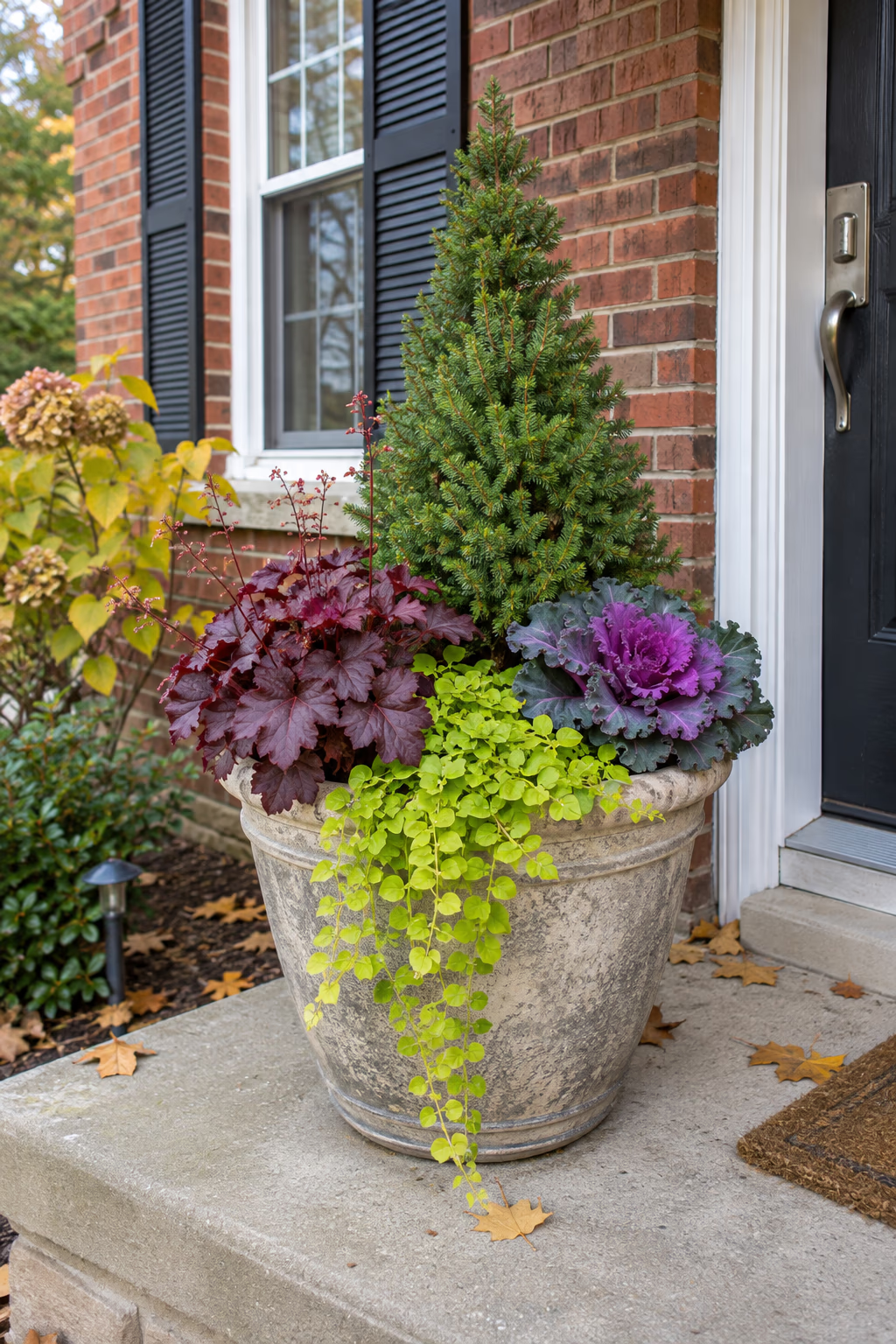
Year-round structure with seasonal accents
A dwarf conifer, such as a dwarf Alberta spruce, a dwarf hinoki cypress, or a blue globe spruce, gives a pot a permanent backbone. Plant it slightly off center in a pot 18 inches or wider and surround it with hardy perennials like coral bells and creeping jenny.
The evergreen stays put all year, while you can swap seasonal annuals around the edge, such as pansies in spring, coleus in summer, and ornamental kale in fall.
Plants in pots are less cold-hardy than the same plants in the ground. A good rule is to choose perennials and shrubs rated at least two zones colder than yours, and use frost-resistant pots that can stay outdoors.
16. Stack a Tiered Tower Planter With Strawberries
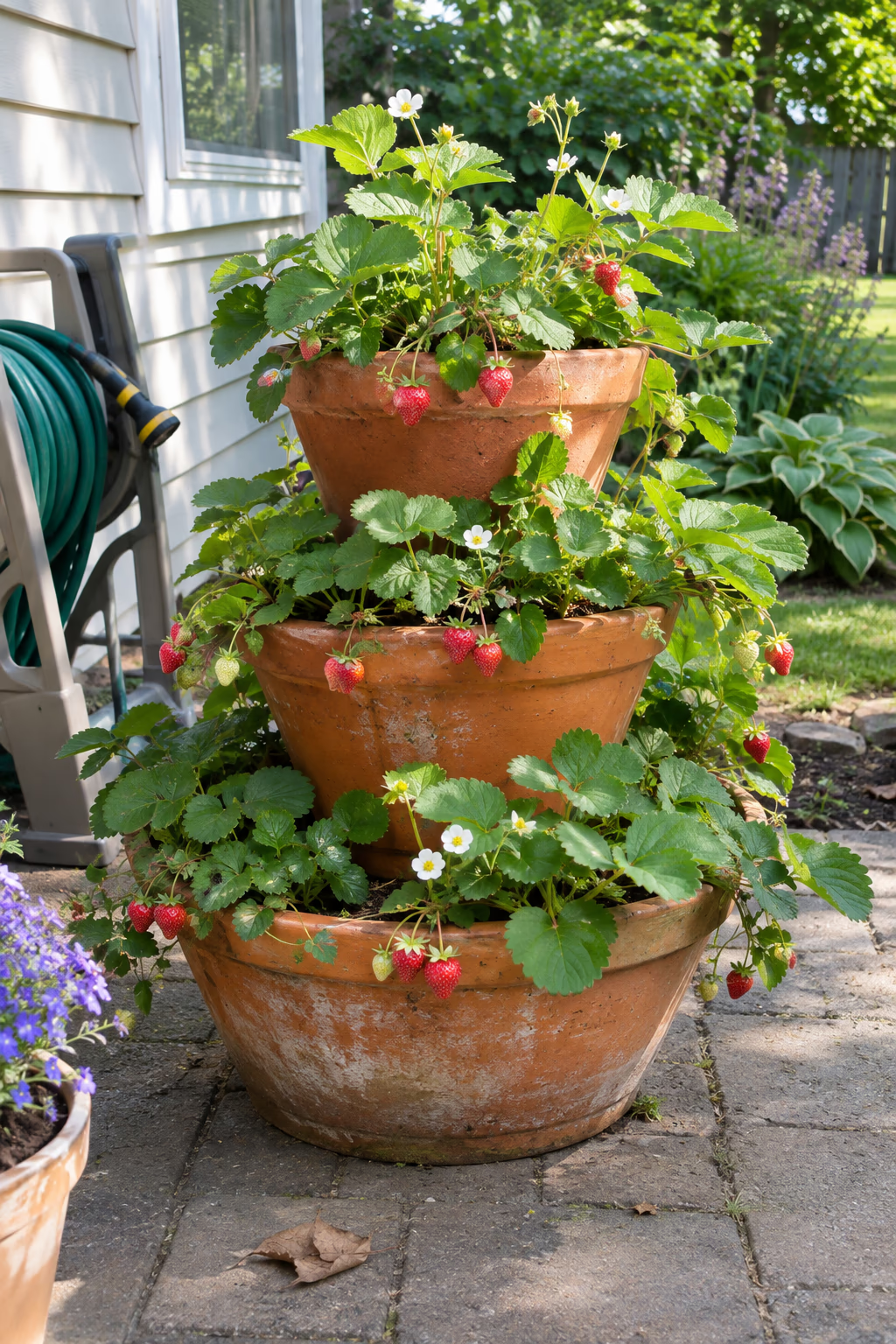
Sweet berries in a footprint of about two feet
Strawberries are well suited to stacking planters or classic strawberry jars with pockets around the sides. Fill the planter with quality potting mix and set one plant in each pocket and two or three on top.
Choose everbearing or day-neutral varieties, which produce fruit over a longer stretch than June-bearing types. Raising berries off the ground also keeps them cleaner and harder for slugs to reach.
Tall towers dry out faster at the top than at the bottom. Water slowly until it runs from the drainage hole, and rotate the tower every week or two so all sides get sun.
17. Grow Dwarf Blueberries in a Pair of Glazed Pots
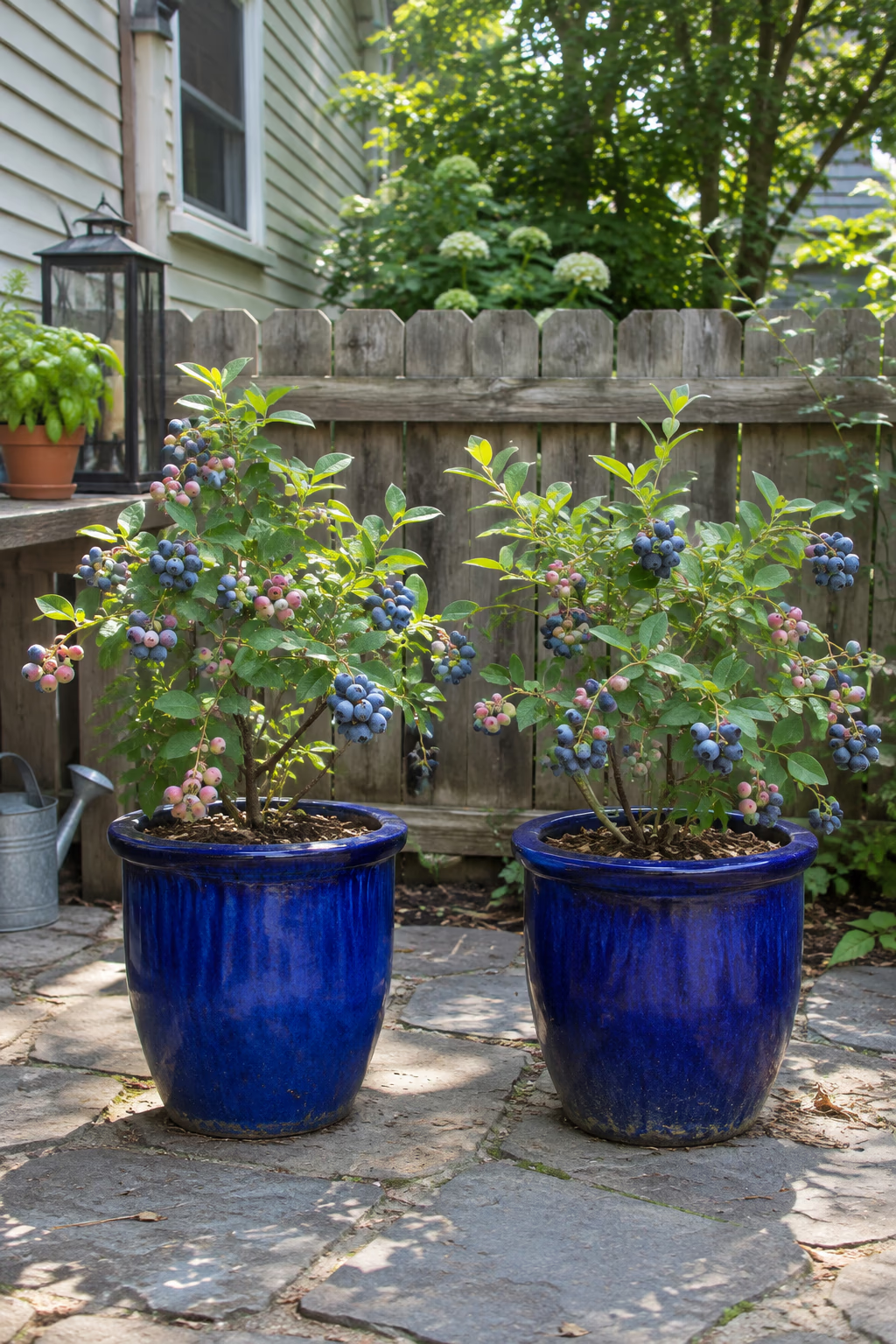
Edible shrubs with blooms, berries, and fall color
Compact blueberry varieties grow well in 16- to 20-inch glazed pots. They bring white spring flowers, summer berries, and red fall leaves, so they look good long after the harvest ends.
Blueberries need acidic soil, around pH 4.5 to 5.5, so use a potting mix designed for acid-loving plants. Planting two different compatible varieties often improves pollination and the size of your harvest.
Use rainwater when possible, since hard tap water can raise the soil pH over time. Cover ripening berries with netting if birds find them first.
18. Sink Potted Annuals Into Garden Beds for Quick Color Swaps
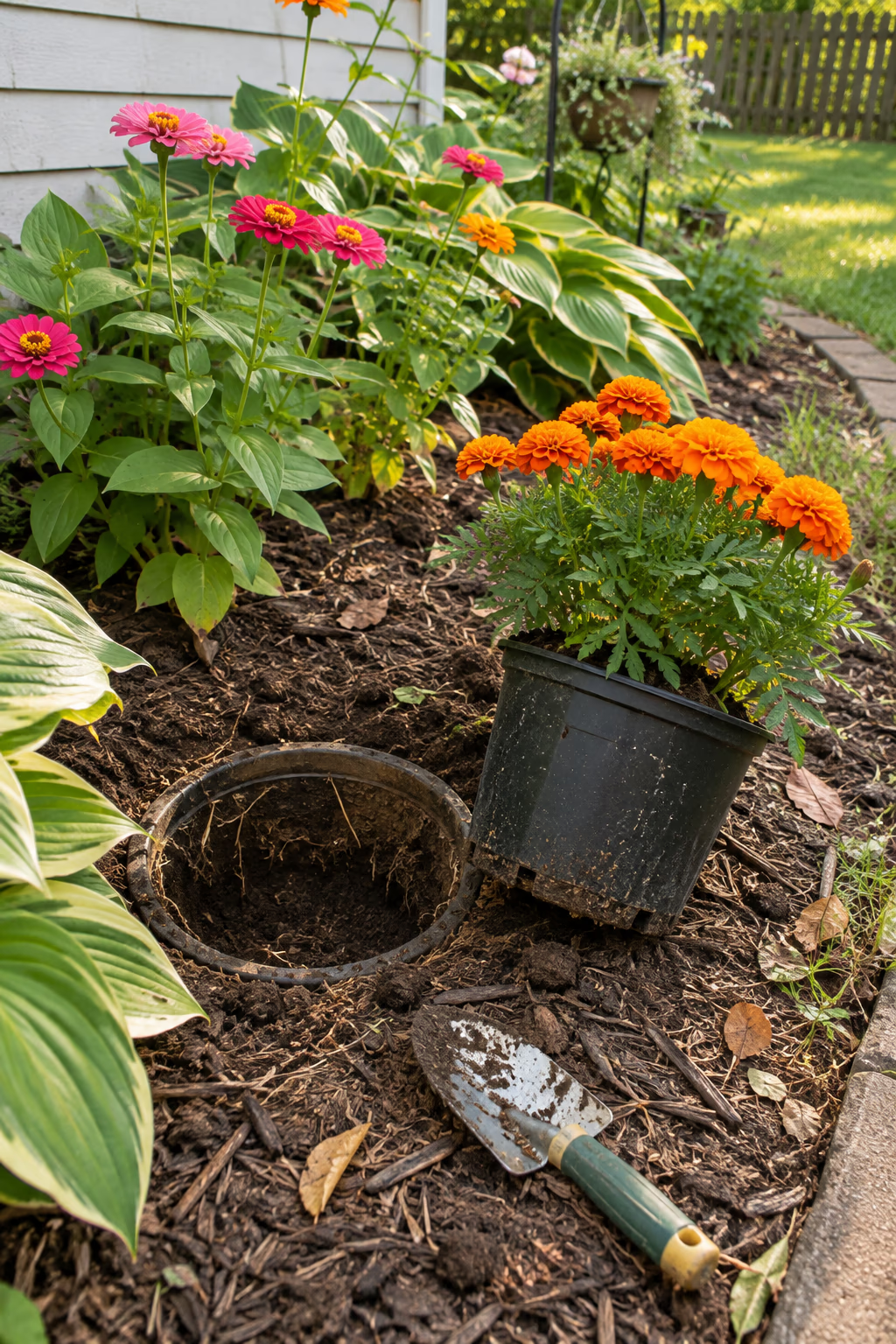
Refresh tired beds in minutes
Bury empty plastic nursery pots up to their rims in a garden bed, then drop in matching pots filled with blooming annuals. When one set of flowers fades, lift it out and slip in a new one.
This pot-in-pot method keeps beds looking fresh through the season. It’s especially useful for gaps left by spring bulbs or perennials that bloom early and then fade.
Sunken pots still need regular watering because their roots are confined. Make sure the outer pot has drainage holes so water doesn’t collect at the bottom.
19. Plant a Hummingbird Container With Tubular Flowers
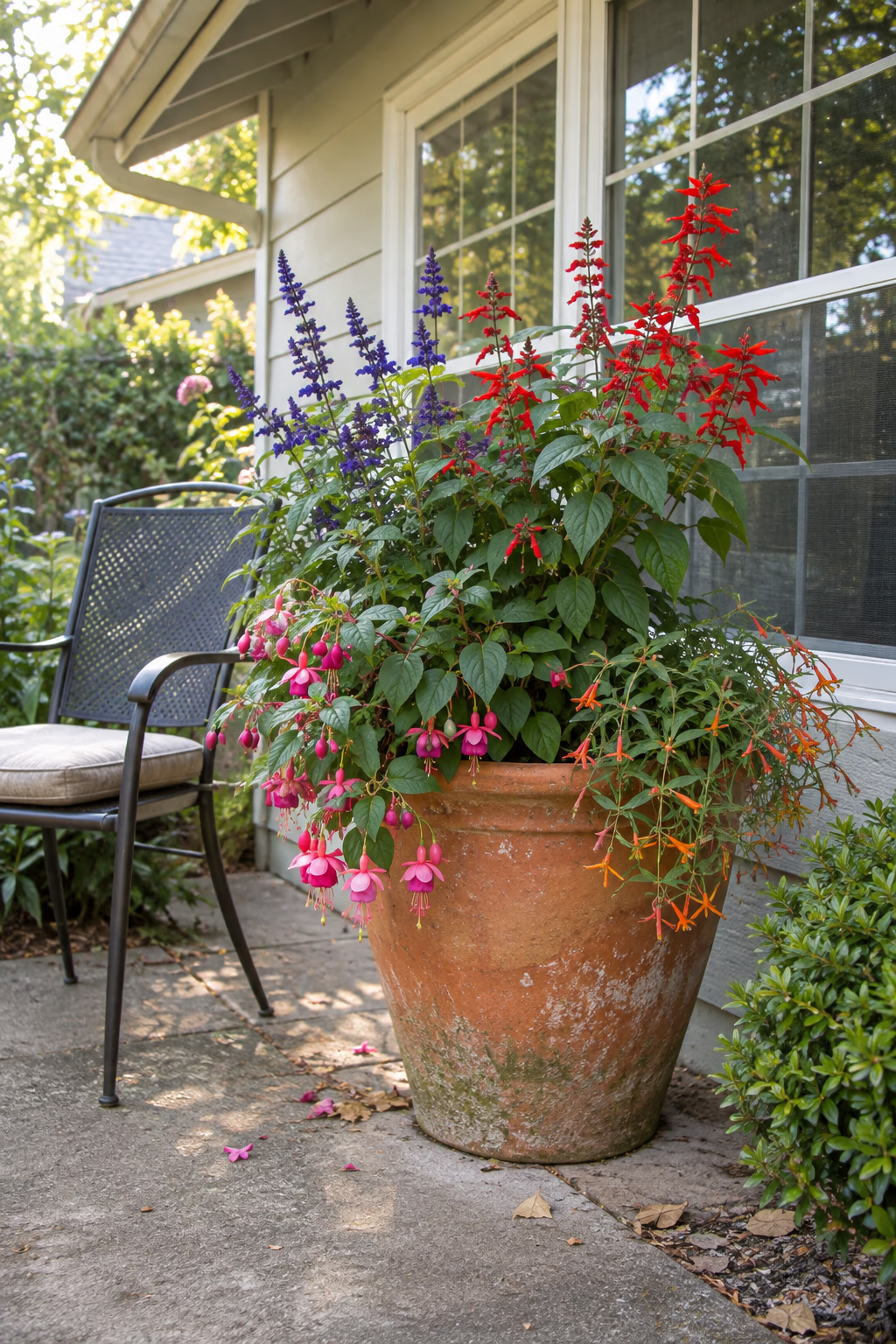
Bring tiny visitors right up to your chair
Hummingbirds are drawn to tubular flowers, especially red, orange, and purple ones. Fill a pot with salvias, cigar plant, fuchsia, or firecracker plant, and set it near a window or seating area where you can watch them visit.
Mixing plants that bloom at different times keeps nectar available from late spring until frost, and the pot doubles as a colorful accent.
Skip pesticides on these plants, since hummingbirds also eat small insects. If you have room, place the container near a shrub or small tree that offers the birds a perch.
20. Style a Potting Bench as a Container Display
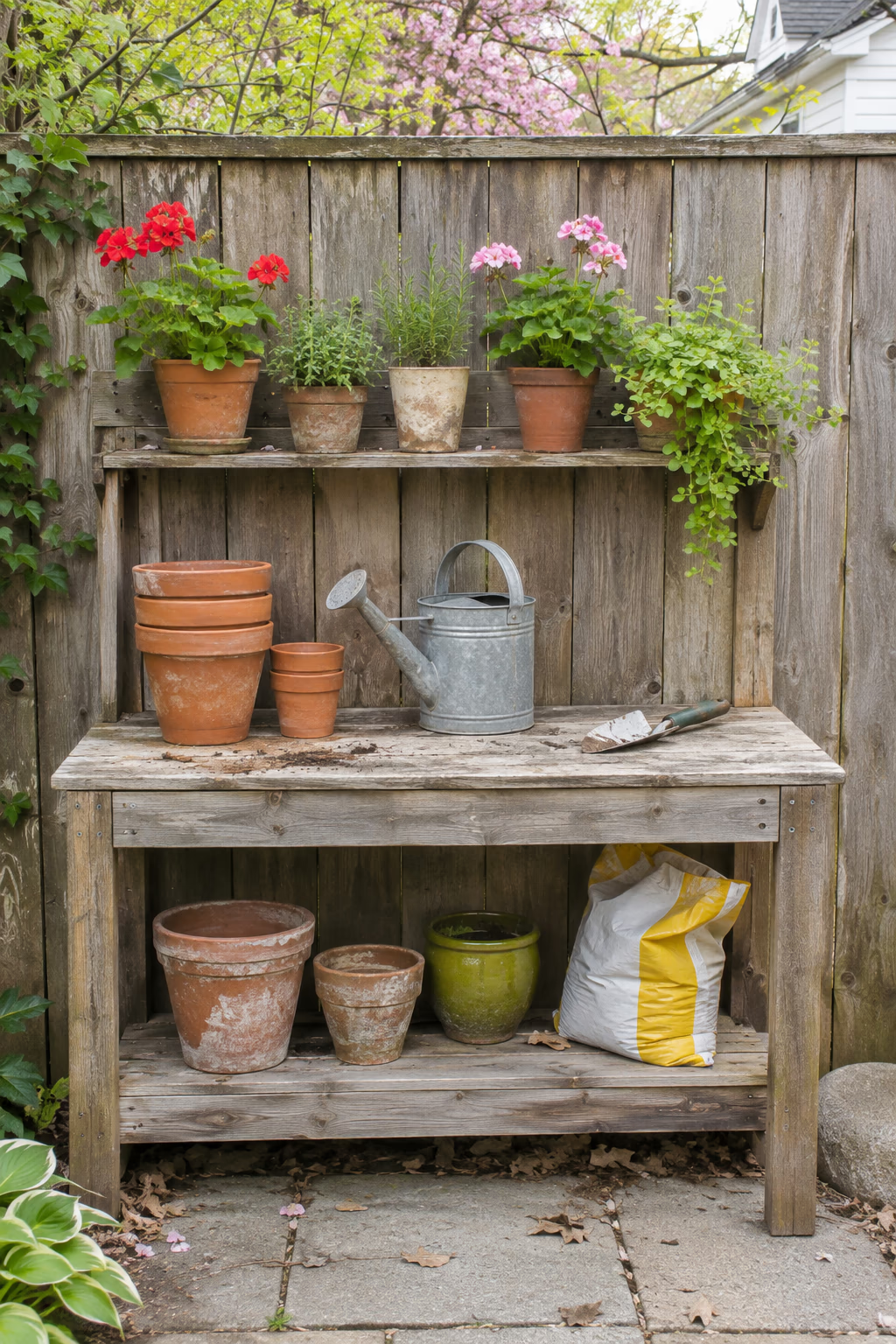
A practical workstation that looks good, too
A simple wooden potting bench or an old table against a fence can hold stacked terracotta pots, watering cans, and a few planted containers on the top shelf. It becomes both a work area and a decorative display.
Use the lower shelf for bags of potting mix and empty pots, and keep the upper shelves for plants in bloom. Rotate pots seasonally so the bench always looks fresh.
Untreated wood weathers quickly in rain and sun. Treat the bench with an exterior sealer once a year, or choose cedar or another rot-resistant wood.
21. Clip Rail Planters Onto a Balcony Railing
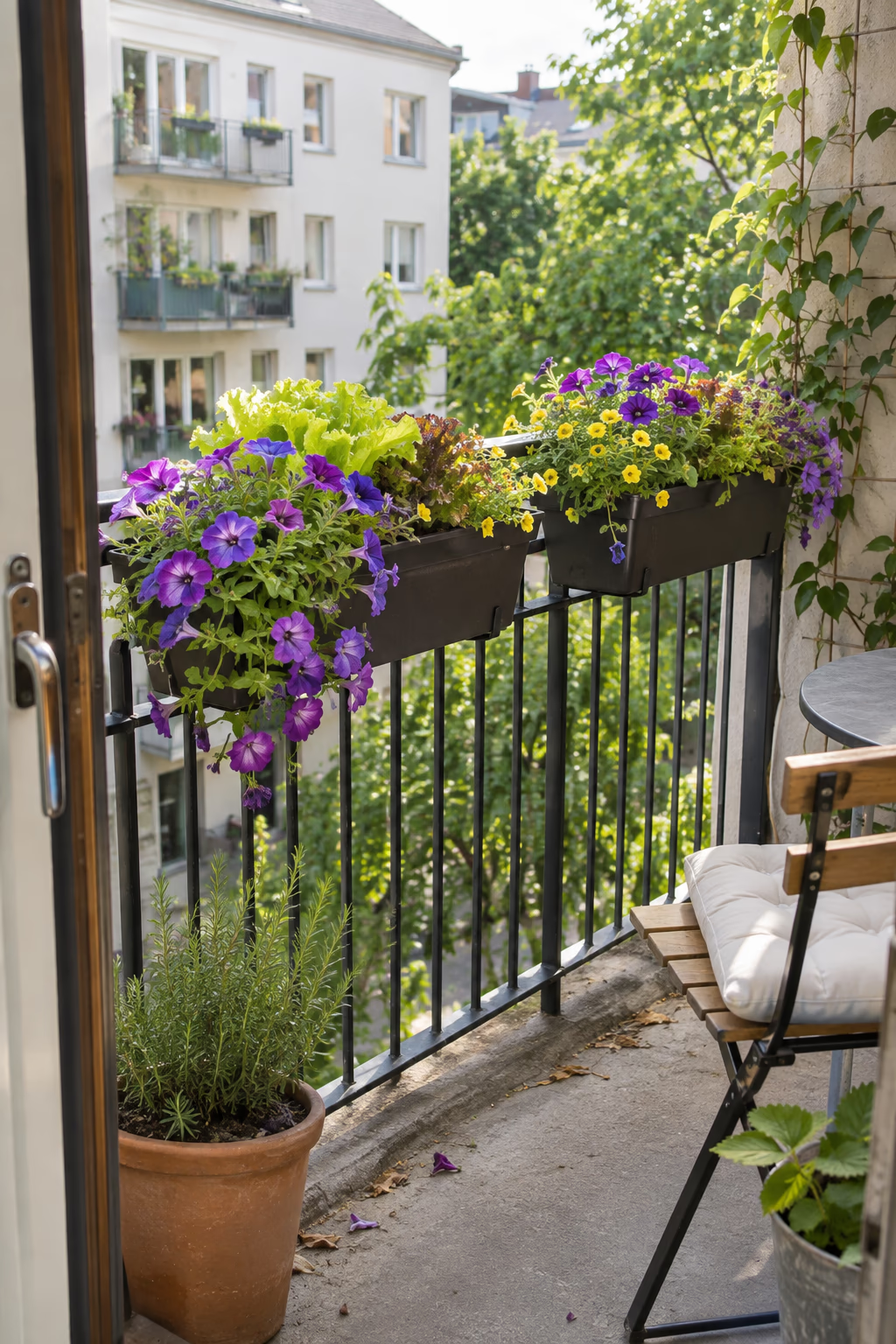
A garden that uses no floor space at all
Railing planters with adjustable brackets sit over balcony or deck rails, turning a bare railing into a flower box. Fill them with compact plants like trailing petunias, lettuce, calibrachoa, or herbs.
They’re great for apartments and condos because they free up floor space for seating and catch plenty of light.
Check lease and HOA rules before installing them, and make sure the brackets fit your railing securely. Place planters on the inside of the railing whenever possible so nothing can fall on people below.
22. Upcycle Wooden Crates Into Stacked Planters
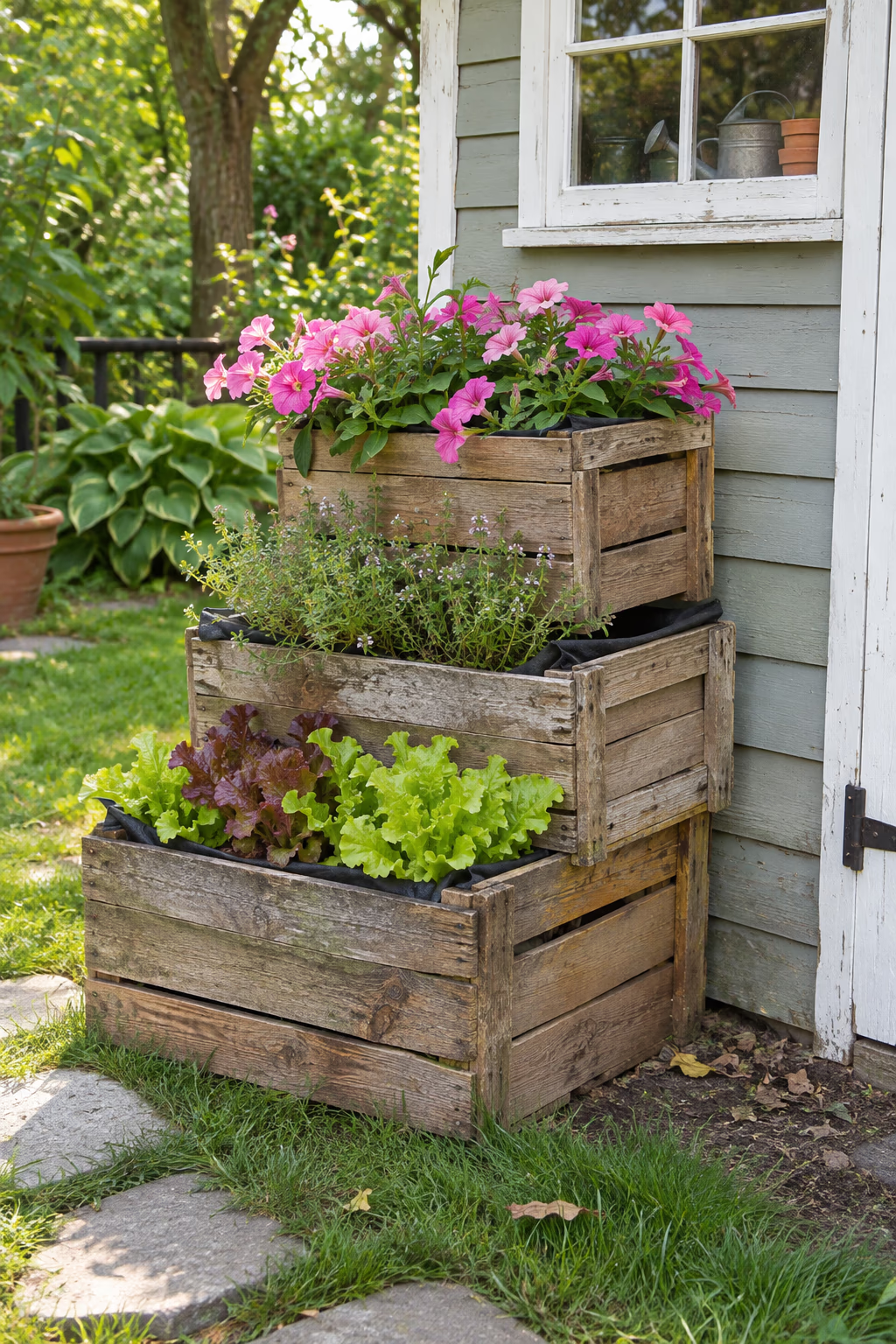
Rustic charm on a small budget
Old fruit crates or thrifted wooden boxes make inexpensive planters. Line each one with landscape fabric, add potting mix, and plant with petunias, herbs, or lettuce. Stack two or three in a staggered pyramid for a layered display.
Crates look especially charming on a back step, against a garden shed, or beside a potting area.
Wood in contact with wet soil eventually rots. Drill drainage holes if needed, seal the outside with an exterior finish, and expect to replace the crates after a few seasons.
23. Build a Fairy Garden in a Broken Clay Pot
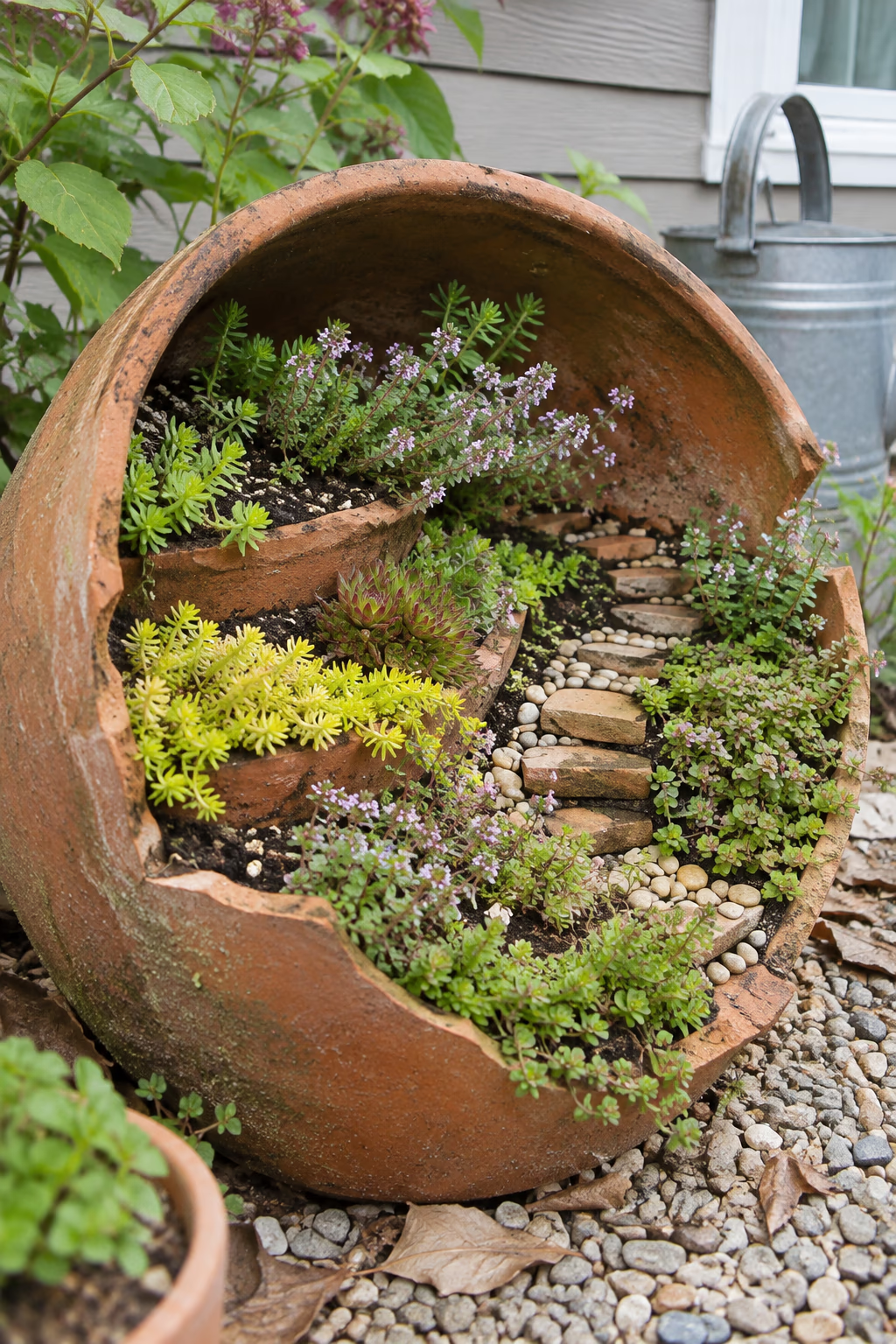
A miniature landscape full of character
Lay a large terracotta pot with a broken side on its edge, fill it with potting mix, and use the broken shards to build tiny terraces or steps. Plant miniature sedums, elfin thyme, and Irish moss, then add small pebbles as paths.
The result is a whimsical scene that’s fun to build and easy to maintain. It’s a great project to tackle on a rainy afternoon.
Use plants that like the same light and water. Low succulents need sun, while moss prefers shade and moisture, so pick one group rather than mixing both.
24. Cast Hypertufa Troughs for Alpine Plants
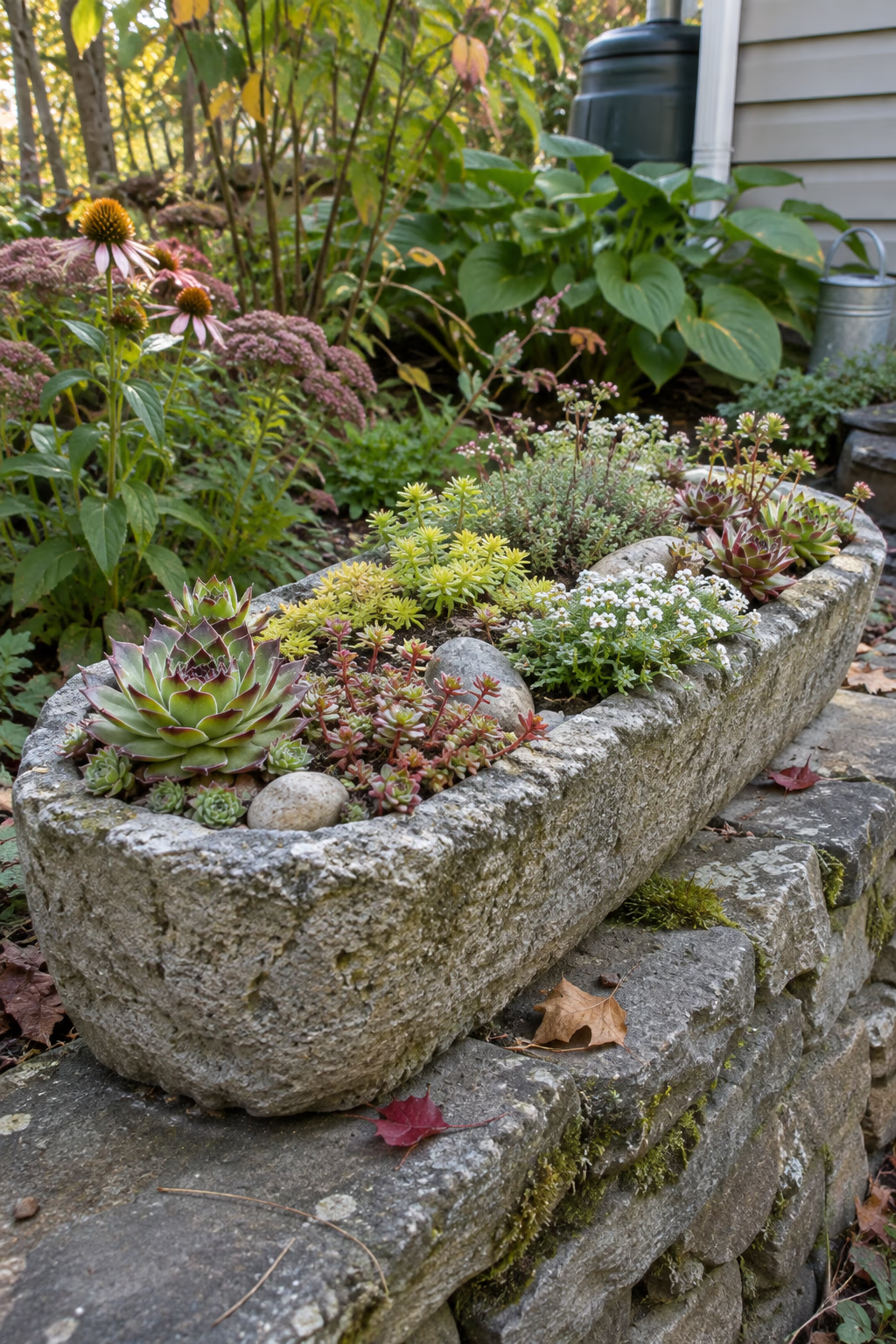
Lightweight, stone-like containers you make yourself
Hypertufa is a mix of Portland cement, peat moss or coir, and perlite. Combine roughly equal parts with water, pack the mix into a plastic or cardboard mold, and let it cure before removing it.
The finished trough looks like aged stone but weighs much less. Plant it with small alpine plants, dwarf sedums, and hens and chicks for a mountain-style miniature garden.
Wear gloves and a dust mask when mixing cement. Let the trough cure for several weeks and rinse it a few times before planting so excess lime doesn’t harm plants.
25. Paint Plain Plastic Pots One Unifying Color
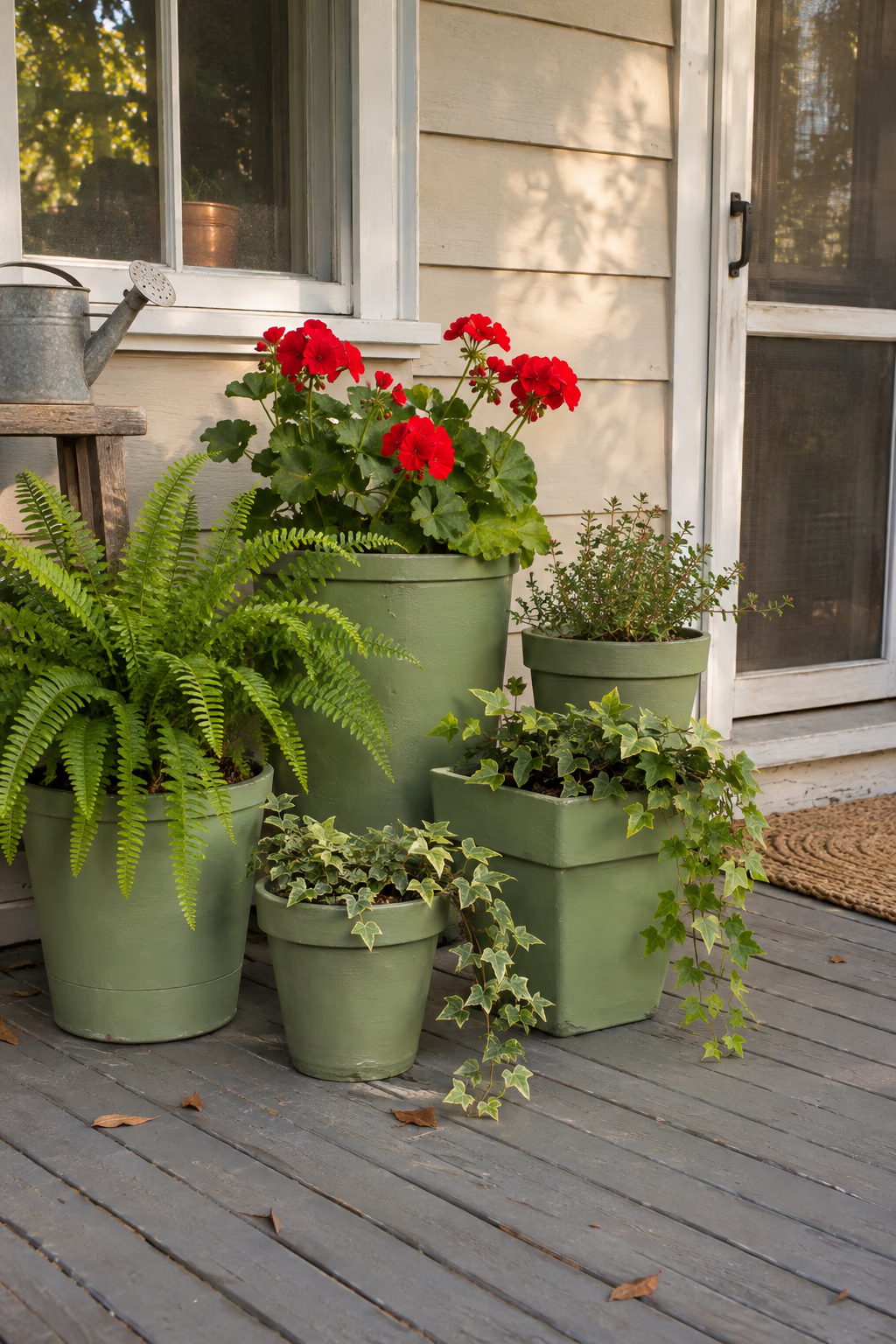
An inexpensive way to make a collection look intentional
Mismatched plastic and resin pots can look cluttered. Painting them all one color, such as matte black, deep navy, sage green, or terracotta orange, creates a polished, coordinated look on a tight budget.
Clean the pots, lightly sand the surface, and use a spray paint made for plastic. Let the paint dry fully before planting.
Dark colors absorb heat in full sun and can warm the soil, so lighter shades are better in hot climates. Expect to touch up chips after a season or two.
26. Use Self-Watering Containers in Hot, Sunny Spots
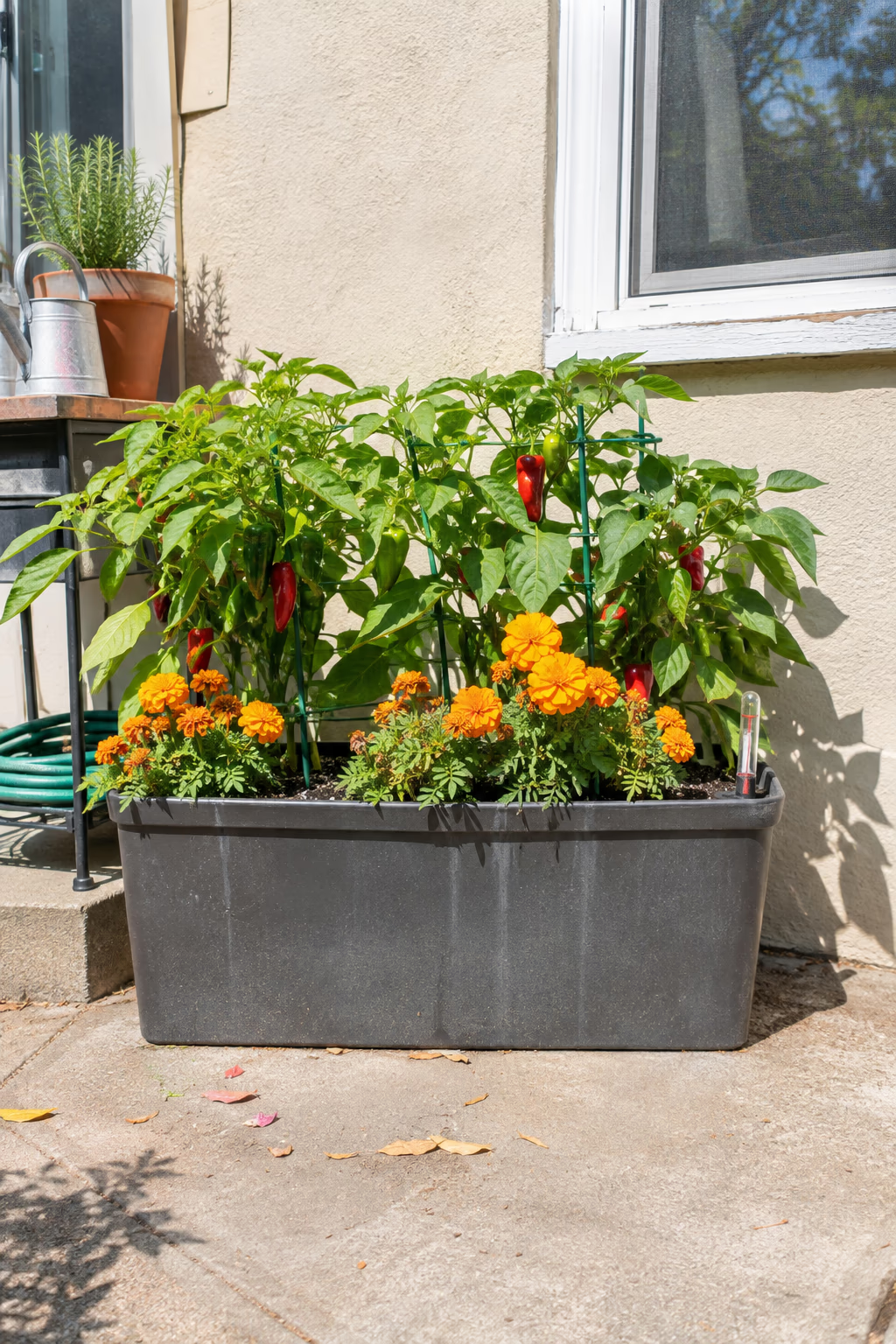
Less daily watering when summer heats up
Self-watering planters have a reservoir beneath the soil that lets plants draw up moisture as needed. They’re especially useful for thirsty plants on hot patios, rooftops, and south-facing balconies.
Fill the reservoir through the side tube and check the water level every few days. Many have an overflow hole to prevent waterlogging after rain.
They don’t eliminate watering entirely. In extreme heat, refill the reservoir often and flush the soil occasionally with fresh water to remove fertilizer salts.
27. Put Heavy Planters on Rolling Plant Caddies
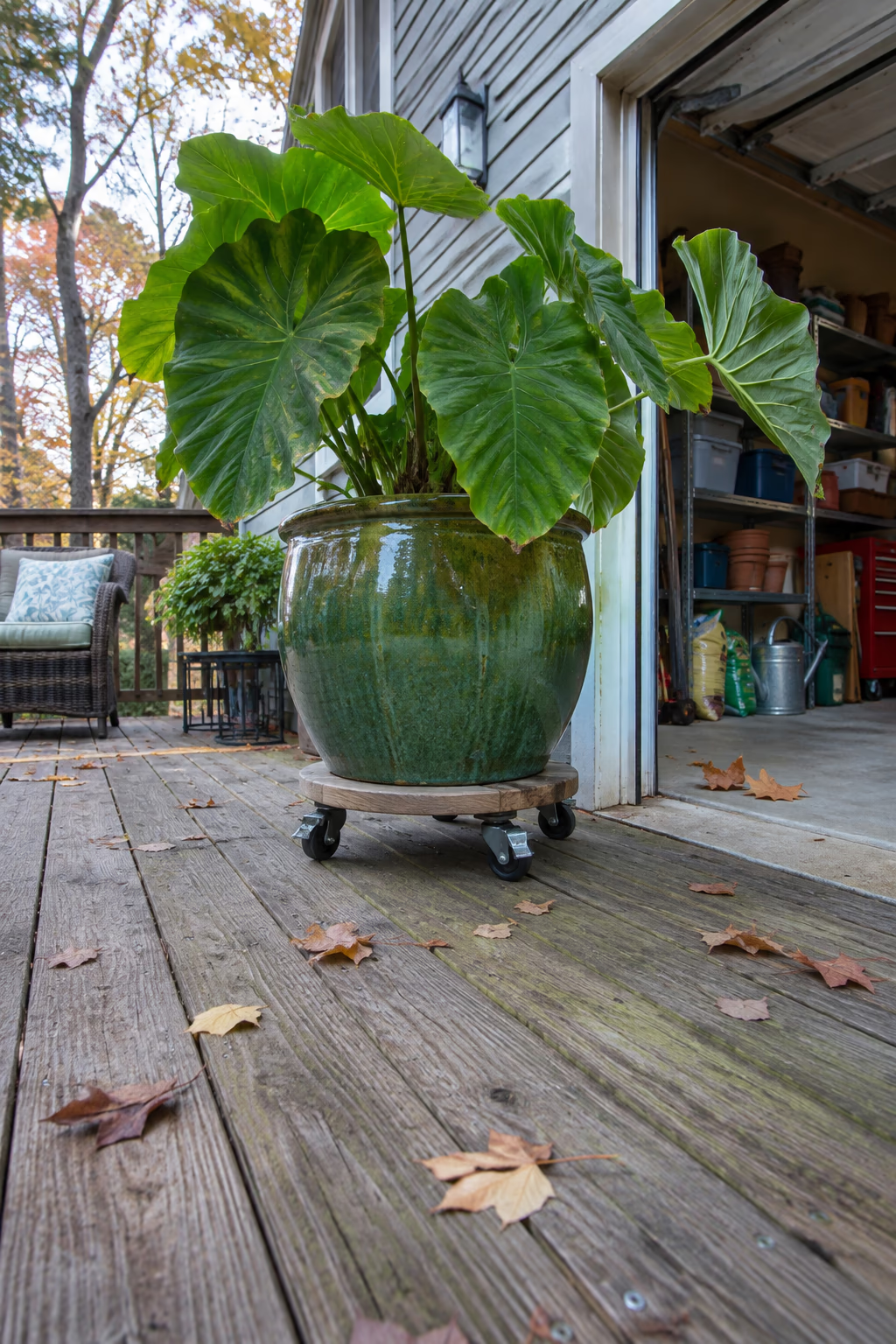
Move big pots without straining your back
Large pots filled with soil and plants can weigh well over 100 pounds. A rolling plant caddy with locking casters lets you move them to follow the sun, make room for gatherings, or wheel tender plants into a garage before frost.
Choose a caddy slightly larger than the pot’s base and rated for its full wet weight. Low-profile caddies stay mostly hidden under the pot.
Lock the wheels on sloped surfaces and windy decks. Raising pots slightly off the deck also helps protect wood from moisture stains.
How to Plan Your Container Garden
A thriving container garden starts with a little planning. Matching pots, plants, and placement to your space will save you time, money, and frustration later.
- Track your light first. Watch how many hours of direct sun each spot gets before you shop. Most flowering and fruiting plants need 6 or more hours, while ferns and many foliage plants prefer shade.
- Choose bigger pots when possible. Larger containers hold more soil and moisture, so they need watering less often and protect roots from heat and cold better than small pots.
- Insist on drainage. Every container needs at least one drainage hole. Without it, roots sit in water and rot, no matter how carefully you water.
- Use potting mix, not garden soil. Bagged potting mix stays light and airy in containers, while garden soil compacts and drains poorly.
- Feed regularly. Frequent watering washes nutrients out of pots. Add a slow-release fertilizer at planting time and supplement with liquid feed during the growing season.
- Check weight limits and rules. Filled pots, stock tanks, and troughs are heavy. Confirm that balconies, decks, and rooftops can support them, and check lease or HOA rules before adding large containers or railing planters.
Frequently Asked Questions
What are the easiest plants for a beginner’s container garden?
Good beginner choices include succulents, geraniums, coleus, marigolds, petunias, sweet potato vine, lettuce, and common herbs like basil and mint. They tolerate small mistakes and grow quickly enough to show results.
How often should I water outdoor containers?
It depends on heat, pot size, and the plants, but many containers need water every day or two in midsummer. Push a finger an inch into the soil, and water deeply when it feels dry.
What size pot do I need for a small tree or shrub?
Most small trees and shrubs need a pot at least 18 to 24 inches wide, or roughly 15 to 25 gallons. Bigger is usually better, since more soil means steadier moisture and more room for roots.
Can I leave containers outside in winter?
Frost-resistant pots made of concrete, fiberglass, resin, or high-fired clay can usually stay out. Thin terracotta and glazed pots may crack when wet soil freezes, so empty them or store them in a garage or shed.
Do I need to replace potting mix every year?
For annuals, refresh at least the top few inches each spring, or replace the mix entirely every year or two. For long-term plants like shrubs and small trees, top-dress with fresh mix yearly and repot every few years.
Final Thoughts
Container gardening is one of the most flexible ways to grow plants. A single citrus tree, a cluster of mismatched pots, or a bowl of succulents can bring life to a patio, porch, balcony, or driveway corner without digging a single bed.
Start with one or two ideas that suit your light and lifestyle, and add more as you learn what thrives. With the right pots and a little regular care, your container garden can grow into a space you look forward to stepping into every season.