Step outside before dinner, brush your hand across a bed of rosemary and thyme, and snip exactly what the recipe calls for. No limp plastic clamshells from the store, no wasted bunches wilting in the fridge, just fresh leaves a few steps from the back door.
Raising your herbs off the ground makes that routine even easier. A raised bed warms up faster in spring, drains better than heavy clay, keeps sprawling mint in check, and brings the harvest closer to your hands. Most culinary herbs come from dry, sunny places, so the loose soil and sharp drainage of a raised bed suit them well.
These 21 raised herb garden ideas cover stock tank beds, tiered planters, themed cooking beds, brick and willow edges, smart watering tricks, and season-stretching covers. Each one works in an ordinary yard, and many can be built in a weekend with basic tools.
1. Turn a Galvanized Stock Tank Into an Herb Bed
Farmhouse charm with almost no building
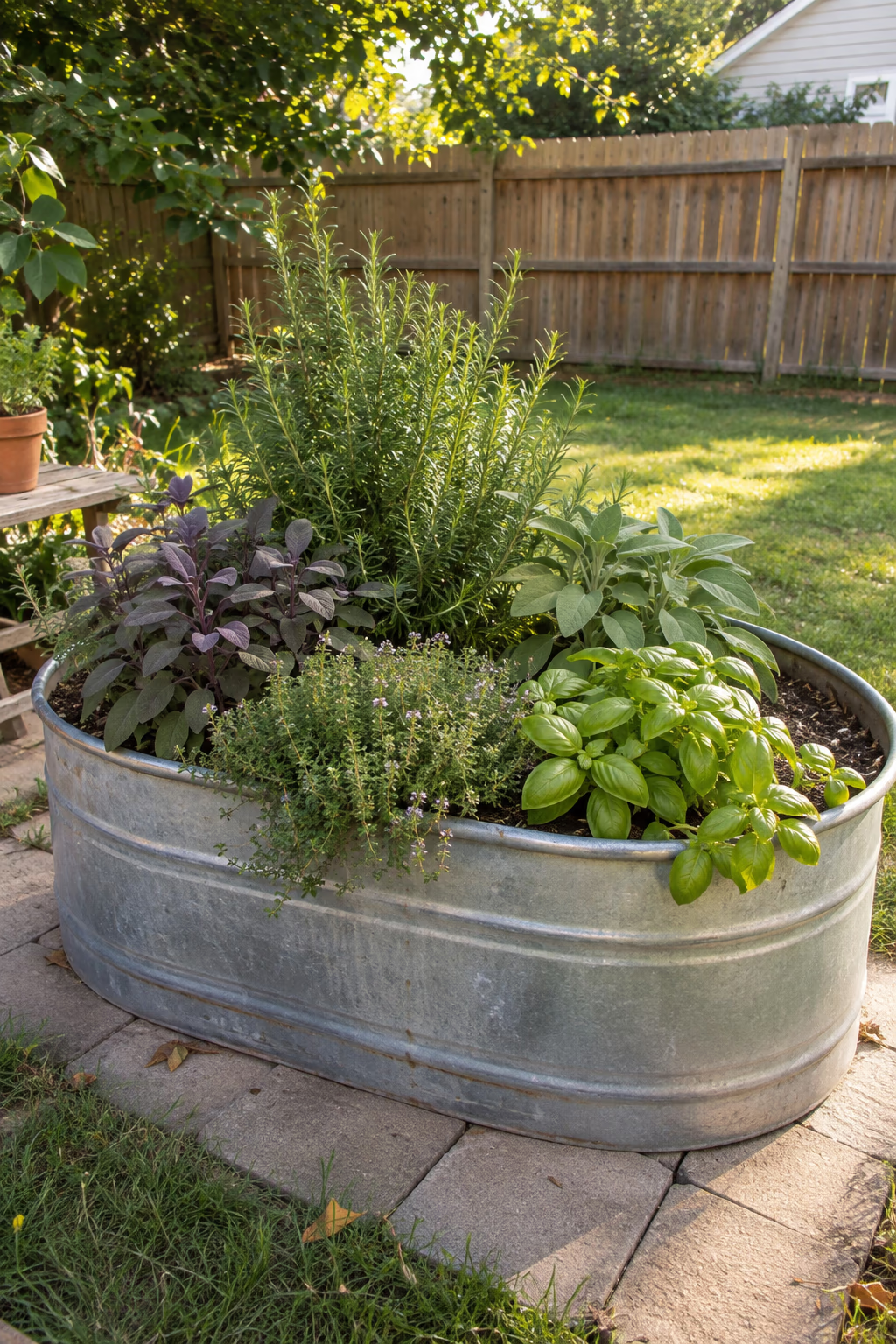
A round or oval galvanized stock tank, usually about 2 feet tall and 2 to 8 feet long, makes an instant raised herb bed. Drill several 1/2-inch drainage holes in the bottom, set the tank on level ground or a few pavers, and fill it with a raised bed mix blended with extra compost.
The silver metal looks crisp against green and gray herbs. Try a tall rosemary in the center, sage and thyme around it, and a ring of basil or parsley near the rim. Because the sides are smooth and tall, rabbits rarely bother the plants.
A full-depth tank takes a lot of soil. Fill the bottom third with logs, sticks, or upturned plastic nursery pots to save money. In very hot climates, place the tank where it gets some afternoon shade, since the metal can warm the soil along the edges.
2. Stack a Three-Tier Stepped Herb Bed
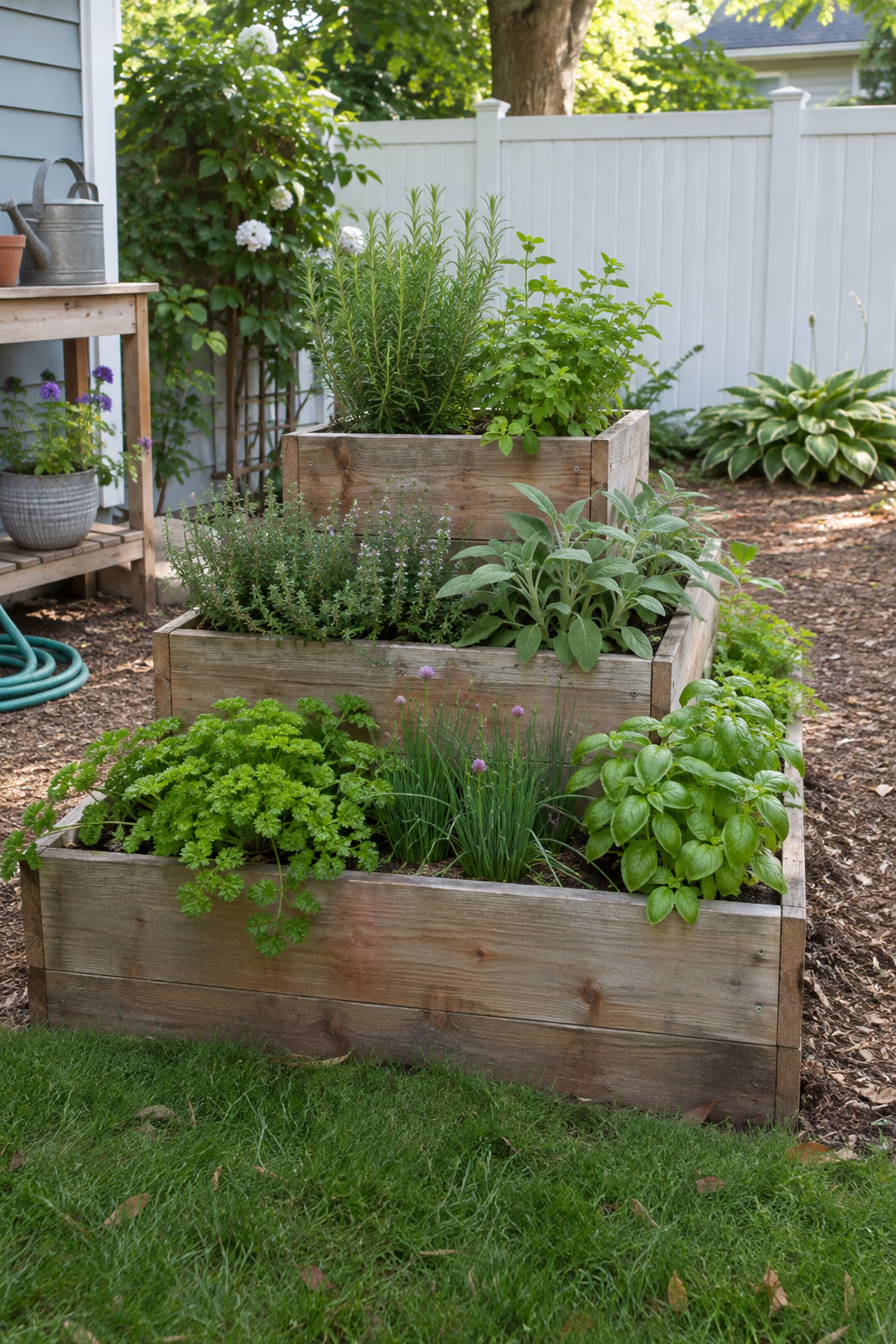
More herbs in a smaller footprint
Build three square cedar frames, for example 4, 3, and 2 feet across, and stack them so each one sits centered on the one below. You end up with a pyramid of planting rings that holds a surprising number of herbs in a space about the size of a small table.
Use the levels to your advantage. Plant drought-loving rosemary, oregano, and thyme on the top tier, where the soil drains fastest. Save the lowest ring for parsley, chives, and basil, which like steadier moisture.
The top tier dries out first on hot days, so check it with a finger before watering the whole stack. Prebuilt tiered kits are available, but simple 2×6 frames and corner brackets work just as well.
3. Divide a Square Bed Into Cuisine Quadrants
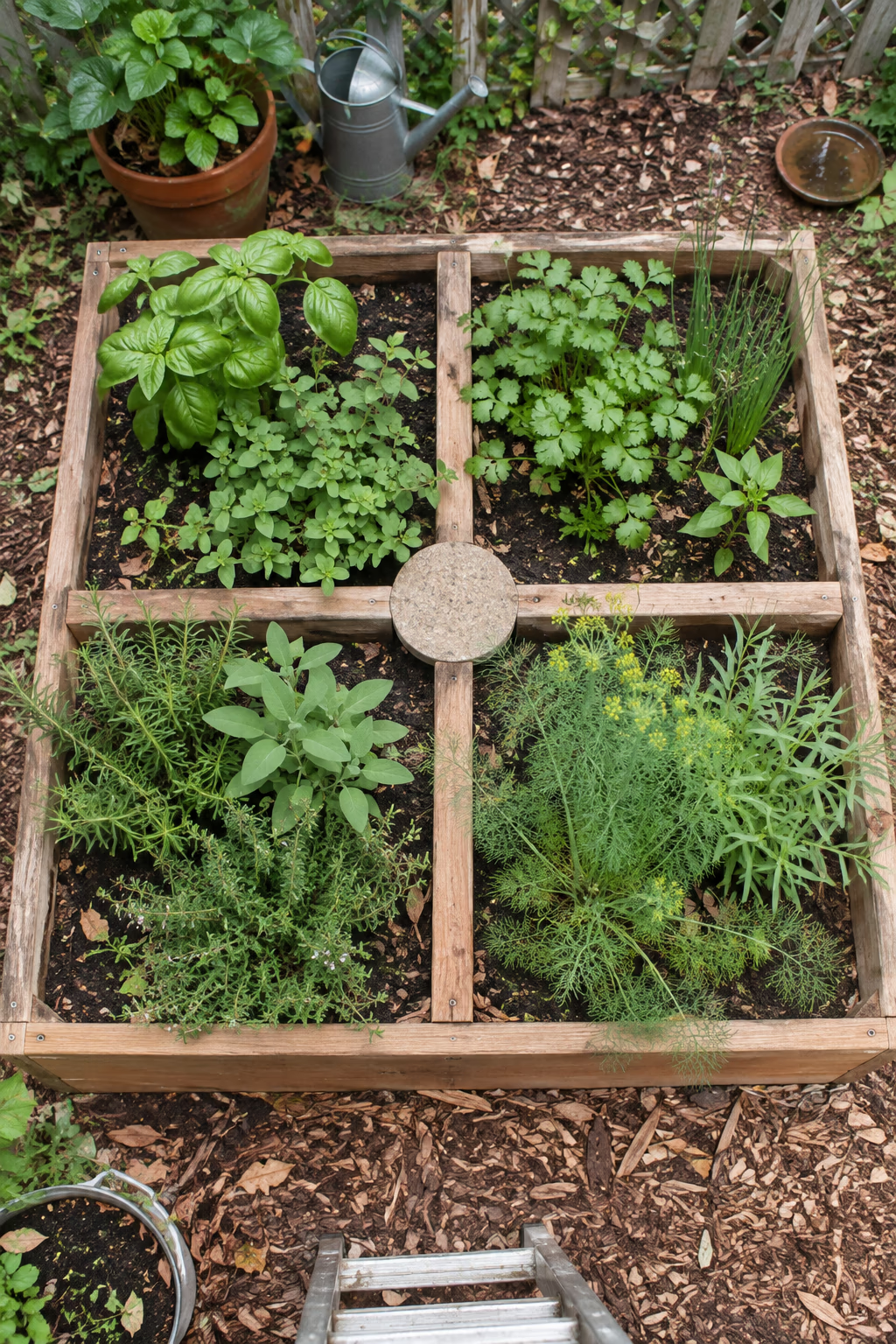
Plant by what you cook
Split a 4 by 4 foot bed into four sections with a simple cross of cedar boards or a stepping stone in the center. Then give each quarter a cooking theme: basil, oregano, and parsley for pizza and pasta; cilantro, chives, and a compact pepper for salsa; rosemary, sage, and thyme for roasts; and dill, chervil, and tarragon for fish and salads.
Grouping by cuisine makes harvesting quick, because everything for one dish sits together. It also makes the bed easier to explain to anyone else who helps in the kitchen.
Watch water needs inside each quarter. Basil and cilantro want more moisture than rosemary, so keep the woody roast herbs on the sunniest, best-draining corner of the bed.
4. Plant a Mediterranean Herb Bed With Gravel Mulch
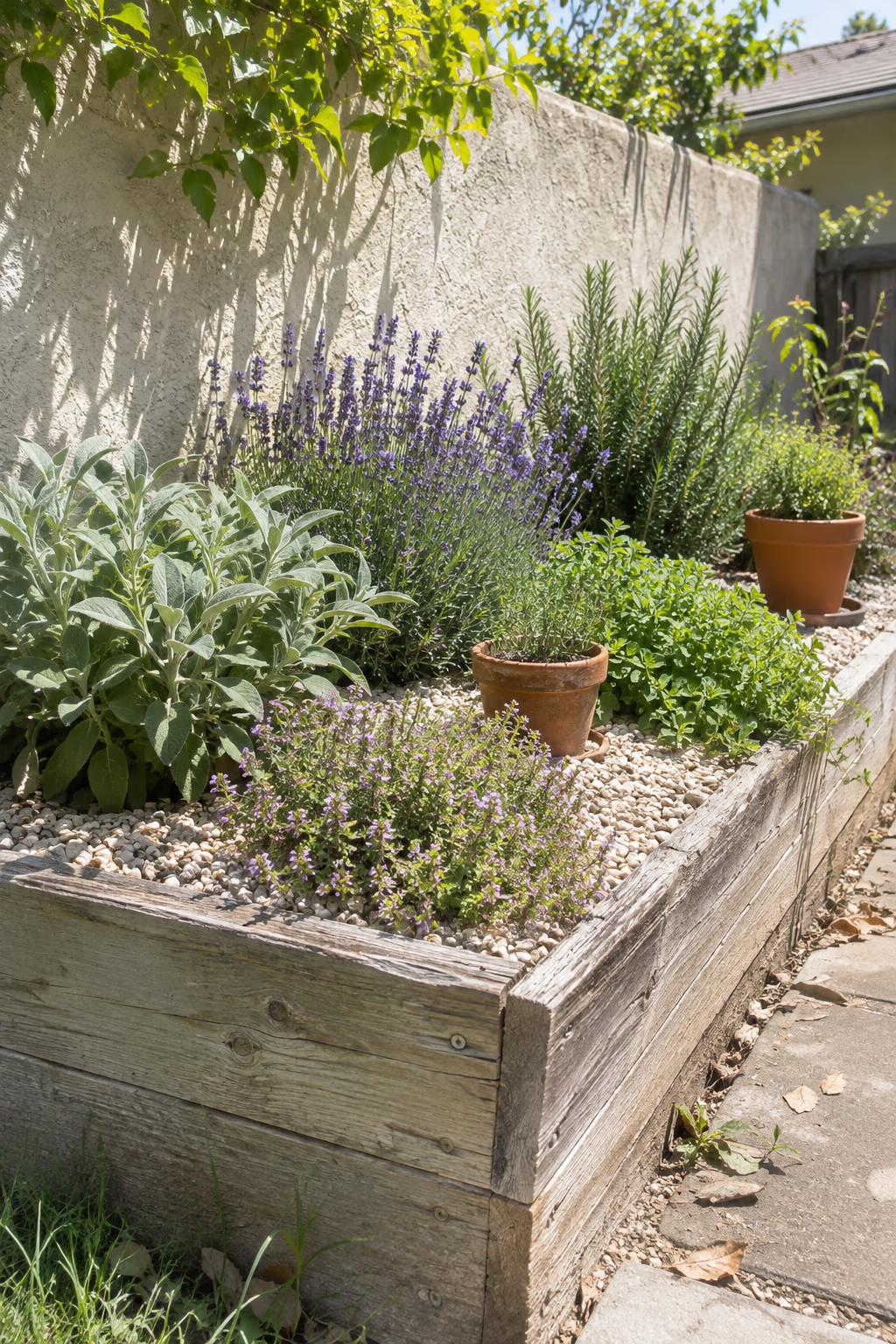
Sun-loving herbs in the conditions they prefer
Rosemary, thyme, oregano, sage, lavender, and savory all grow wild on dry, rocky hillsides. Recreate that in a raised bed by mixing about one part coarse sand or fine gravel into three parts raised bed soil, then topping the surface with an inch of pea gravel instead of bark mulch.
The gravel keeps the crowns of the plants dry, reflects warmth, and stops soil from splashing onto leaves. Pale gravel and silver foliage, with a few terracotta pots tucked in, give the bed a sunny, relaxed look.
Don’t overwater. Once established, these herbs often need water only during long dry spells. In USDA zones 6 and colder, rosemary usually won’t survive winter outdoors, so plant it in a pot set into the gravel and bring it inside in fall.
5. Grow a Cocktail Herb Bed Near the Patio Bar
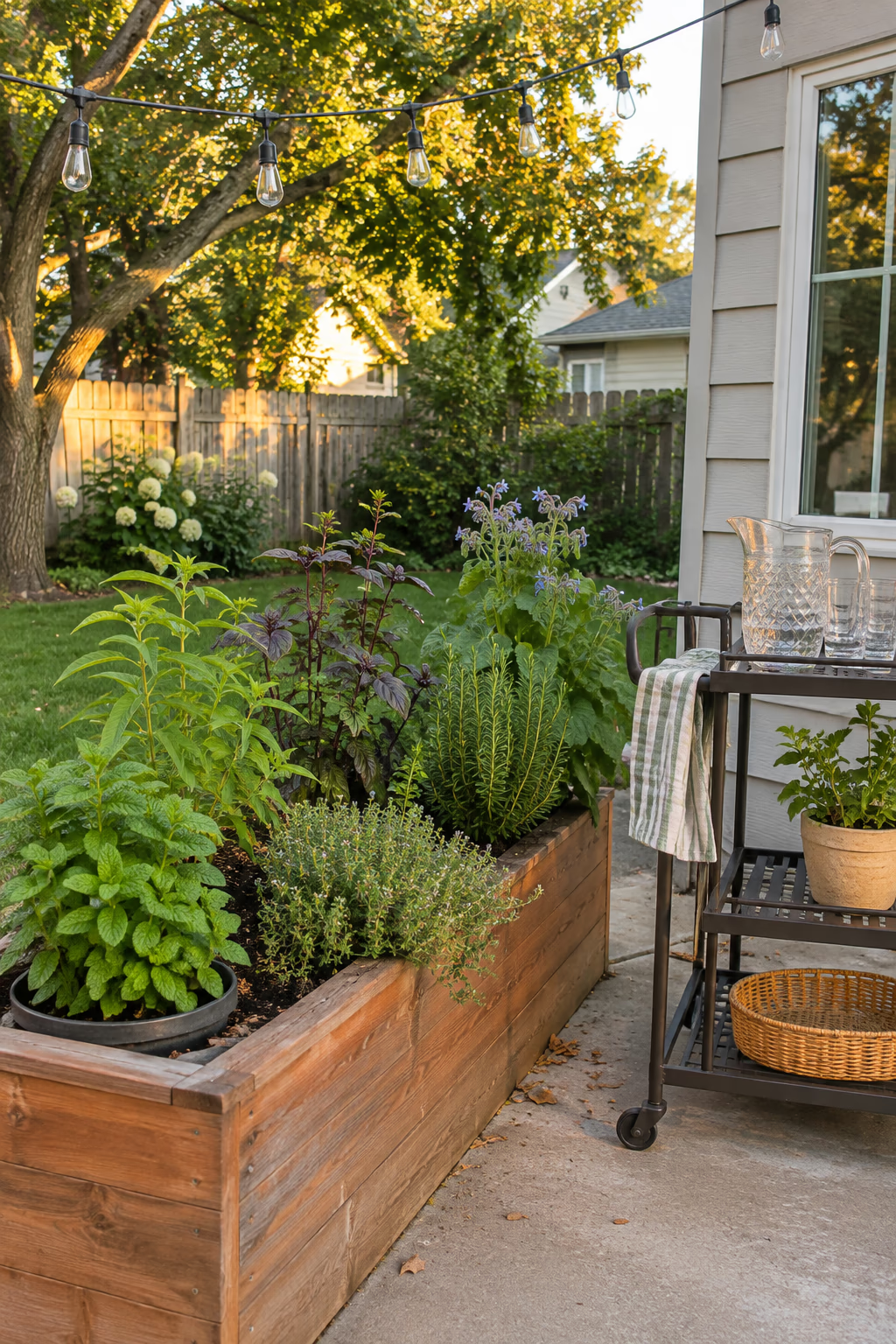
Fresh garnishes right where you mix drinks
Set a compact raised bed, around 2 by 6 feet, next to the outdoor bar cart or grill counter and fill it with herbs that end up in glasses: spearmint and mojito mint (in a sunken pot), lemon verbena, Thai basil, lemon thyme, rosemary, and lavender.
A cocktail bed is fun to show off, and the same plants work in iced tea, lemonade, and infused water for anyone skipping alcohol. Adding a few edible flowers, such as borage or violas, gives you pretty garnishes too.
Lemon verbena is tender below about USDA zone 8, so treat it as an annual or overwinter it indoors. Keep mint confined, or it will crowd out everything else within a season.
6. Build a Hexagon Cedar Bed as a Focal Point
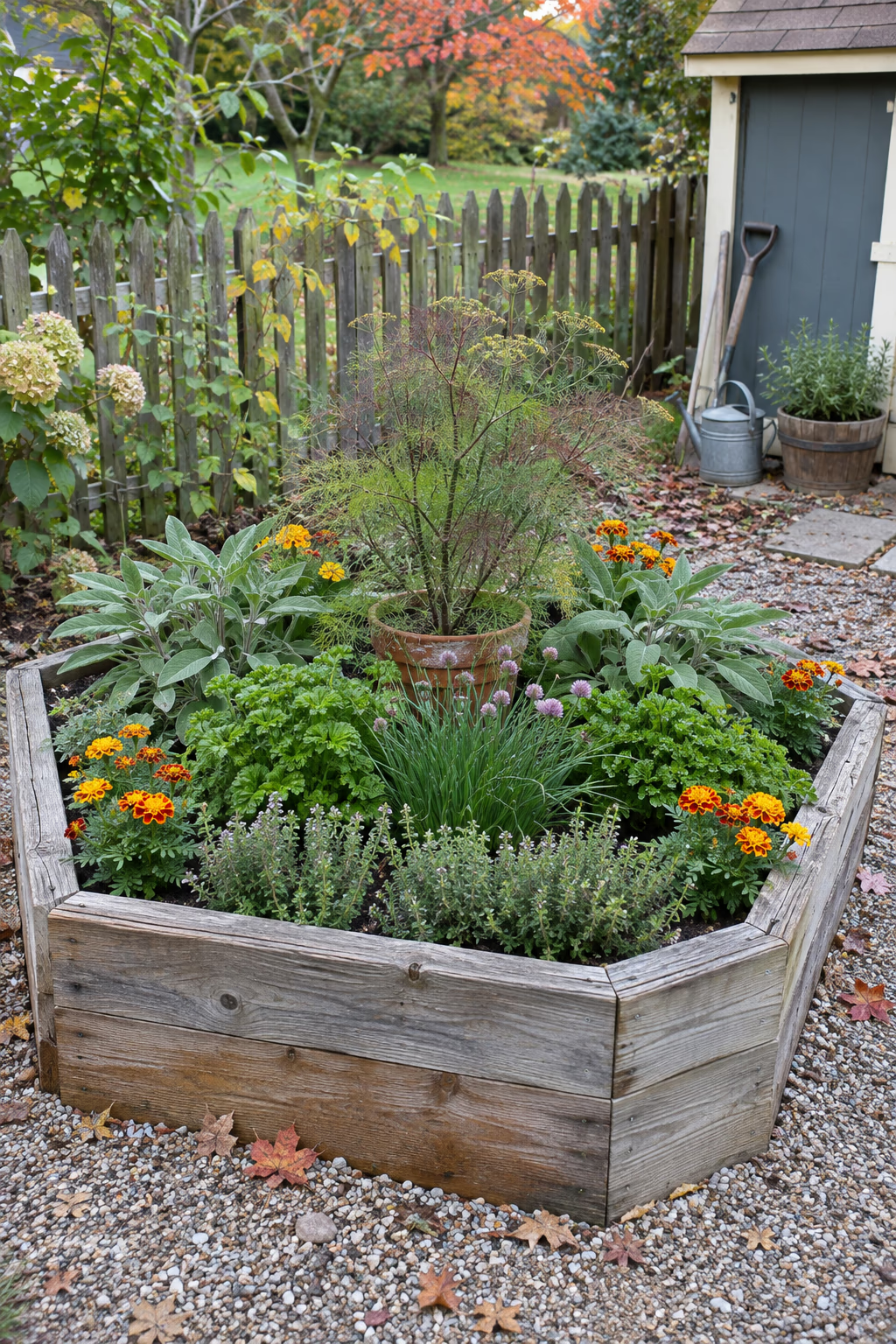
A shape that turns herbs into a centerpiece
A six-sided bed, about 5 feet across and 12 to 16 inches tall, looks more like a garden feature than a vegetable box. Cut cedar boards with 30-degree miters at each end and join them at the corners with screws and small blocks, or buy a hexagon kit.
Place a tall herb in the middle, such as bronze fennel in its own pot, lovage, or a standard rosemary, then radiate lower herbs outward. Every plant is within easy reach from one of the six sides, which makes harvesting comfortable.
Leave at least 2 feet of path around the bed so you can walk all the way around it. Untreated cedar weathers to soft gray in a few years; a plant-safe oil finish slows that if you prefer the warm color.
7. Edge the Front Walk With a Low Brick Herb Bed
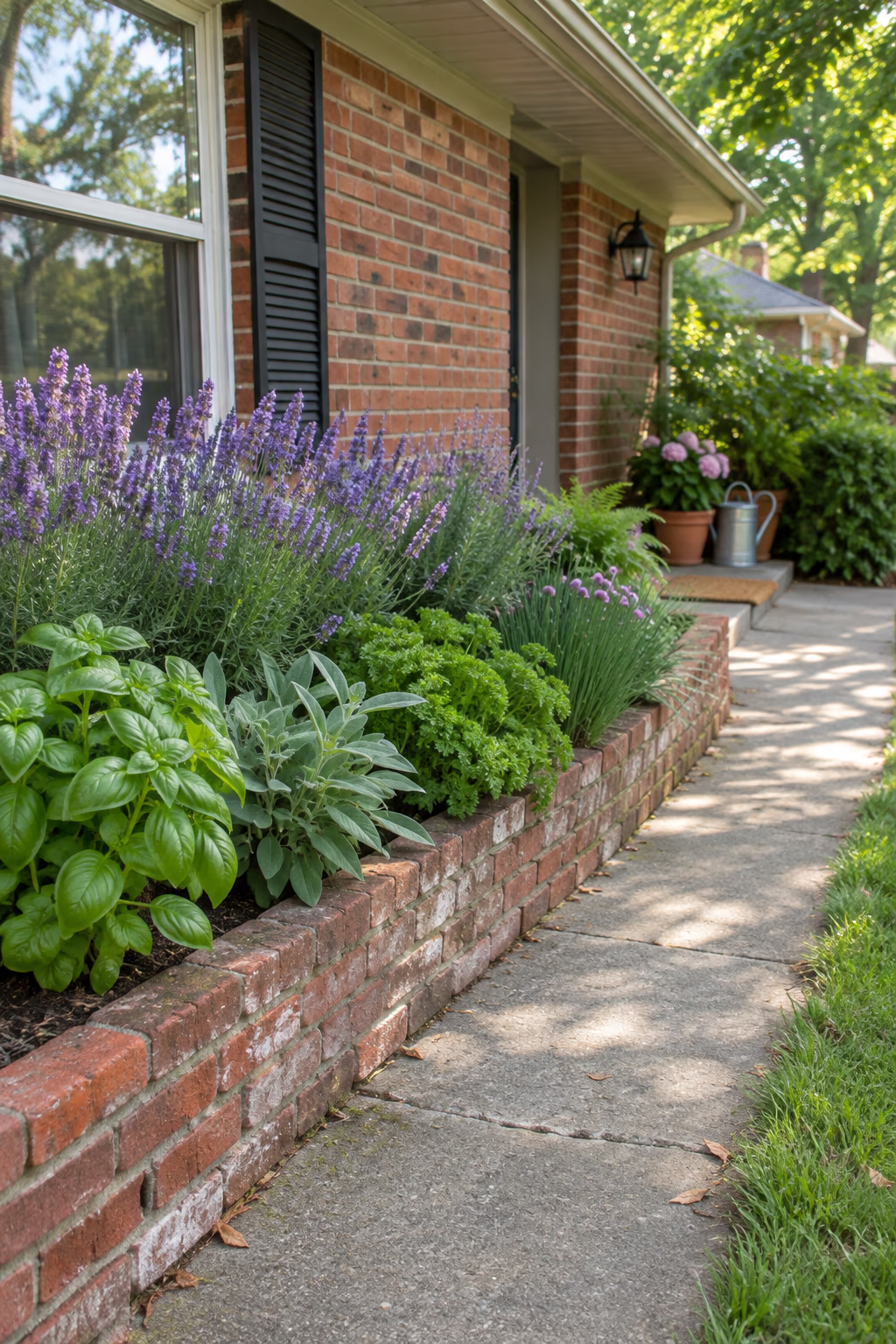
A tidy, fragrant welcome
Lay two or three courses of brick on a compacted gravel base to make a bed 8 to 12 inches tall beside the front walk. Fill it with compact, good-looking herbs: curly parsley, chives, dwarf sage, globe basil, and a row of lavender along the back.
Brick blends with traditional homes, and the low height keeps the bed neat without blocking views of the house. Visitors brush the plants as they walk by, releasing scent at the door.
Mortared brick walls need a proper footing in cold climates, but a short dry-laid edge is a reasonable DIY job. Check HOA rules before planting edibles in a front yard, and avoid spraying anything near beds you harvest from.
8. Weave a Willow Wattle Edge Around a Mounded Bed
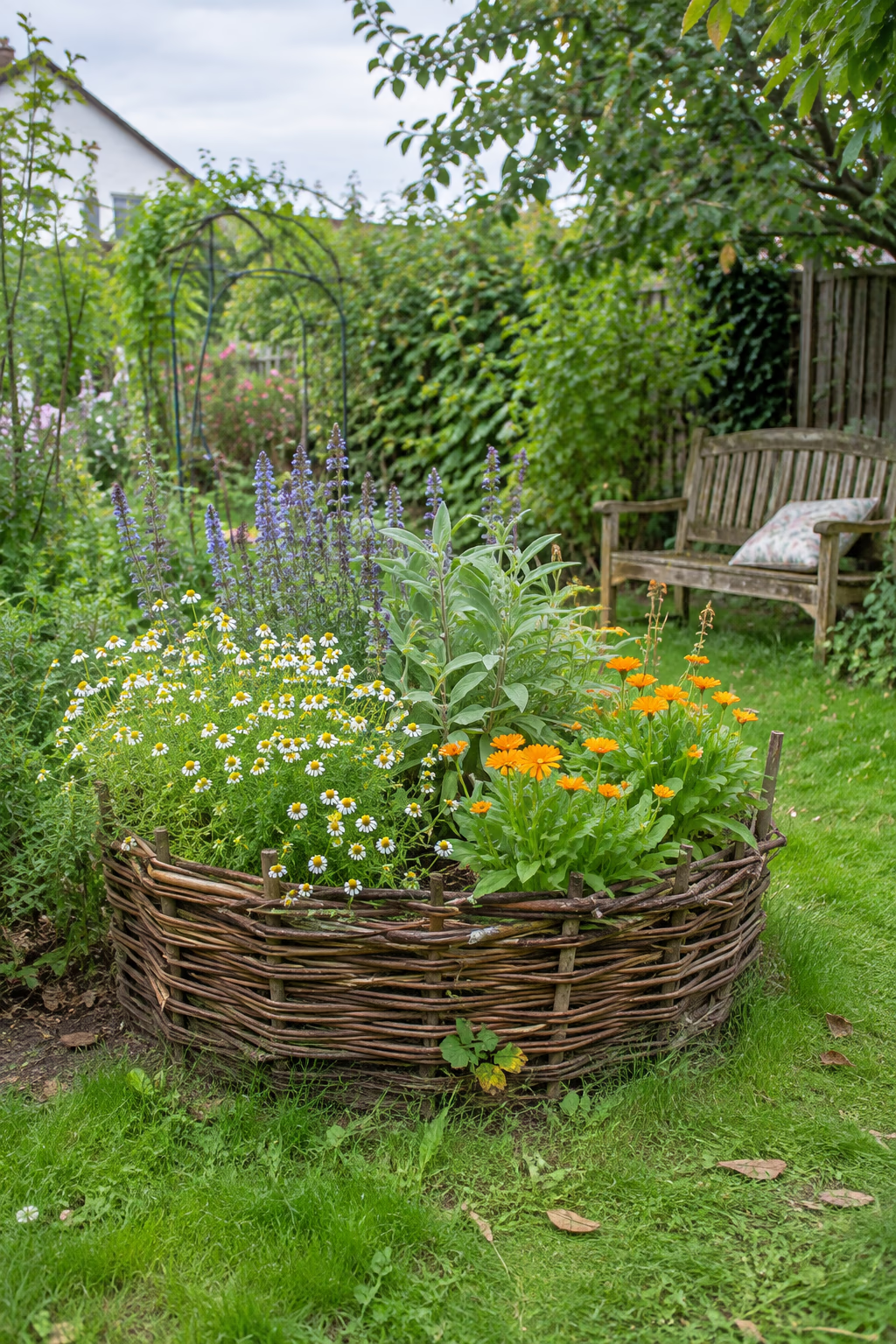
Old-world texture from flexible branches
Drive sturdy stakes about 12 inches apart around a round or oval bed, then weave pliable willow or dogwood whips in and out between them until the wall stands 12 to 18 inches high. Mound soil inside so it crowns slightly in the center for good drainage.
Wattle has a cottage, medieval-herb-garden feel that suits chamomile, calendula, sage, and hyssop. The woven sides also let air reach the soil, which herbs appreciate.
Natural wattle lasts a few seasons before it starts to break down, so expect to repair or rebuild it. Line the inside with burlap to keep soil from sifting through the gaps.
9. Let Trailing Herbs Spill Over a Tall Bed’s Edge
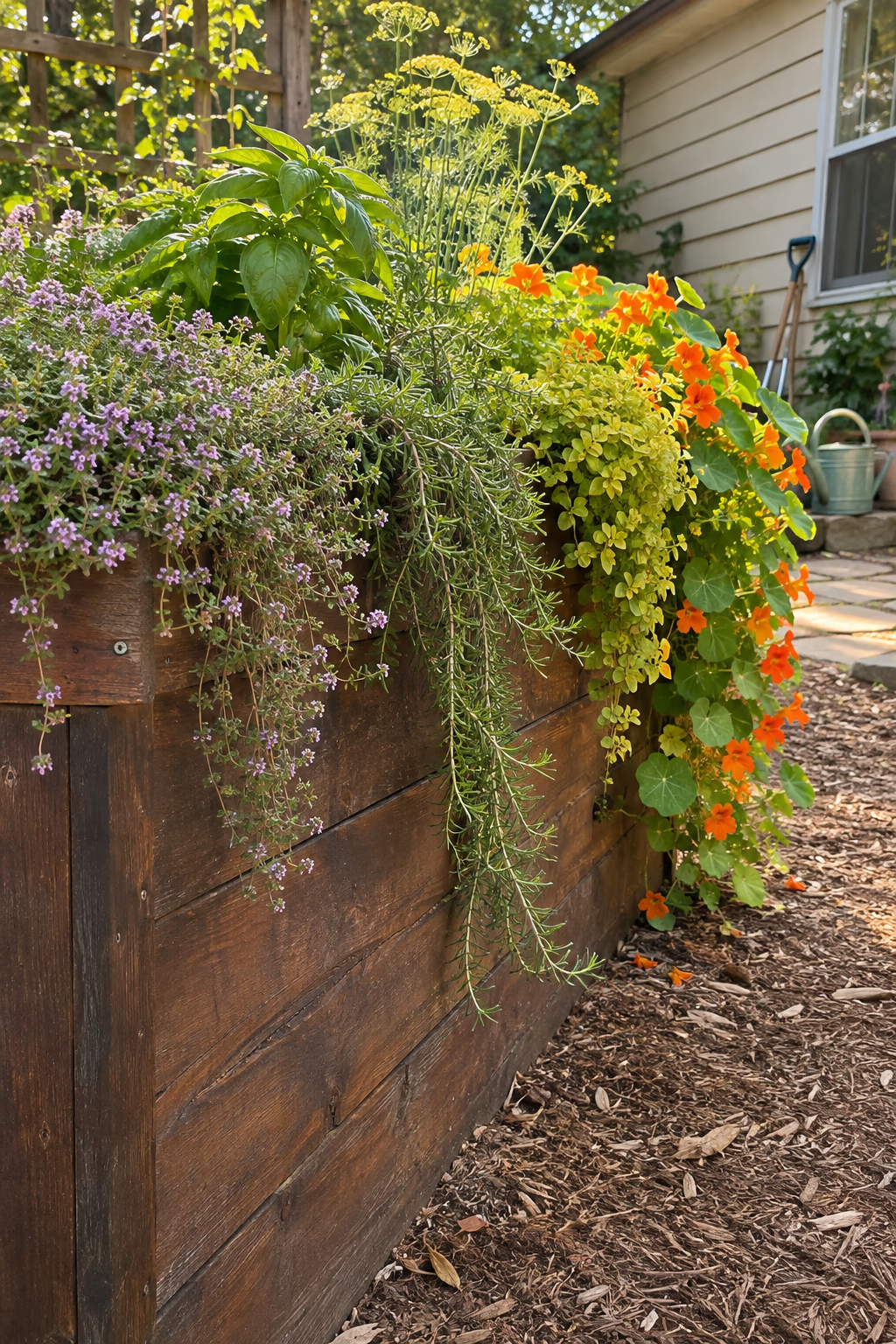
Soft curtains of green over hard sides
In a raised bed 24 to 30 inches tall, plant creeping thyme, trailing rosemary, golden oregano, and nasturtiums along the outer edge. Over a summer they drape down the sides, softening timber, block, or metal walls.
The trailing plants shade the bed’s sides, which helps keep the soil cooler in hot weather. They are also easy to snip from standing height, and the center of the bed stays free for upright herbs like basil and dill.
Prostrate rosemary is only reliably hardy in warmer zones, roughly zone 8 and above. In colder areas, creeping thyme and oregano are dependable perennial choices for the edges.
10. Give Mint Its Own Raised Box
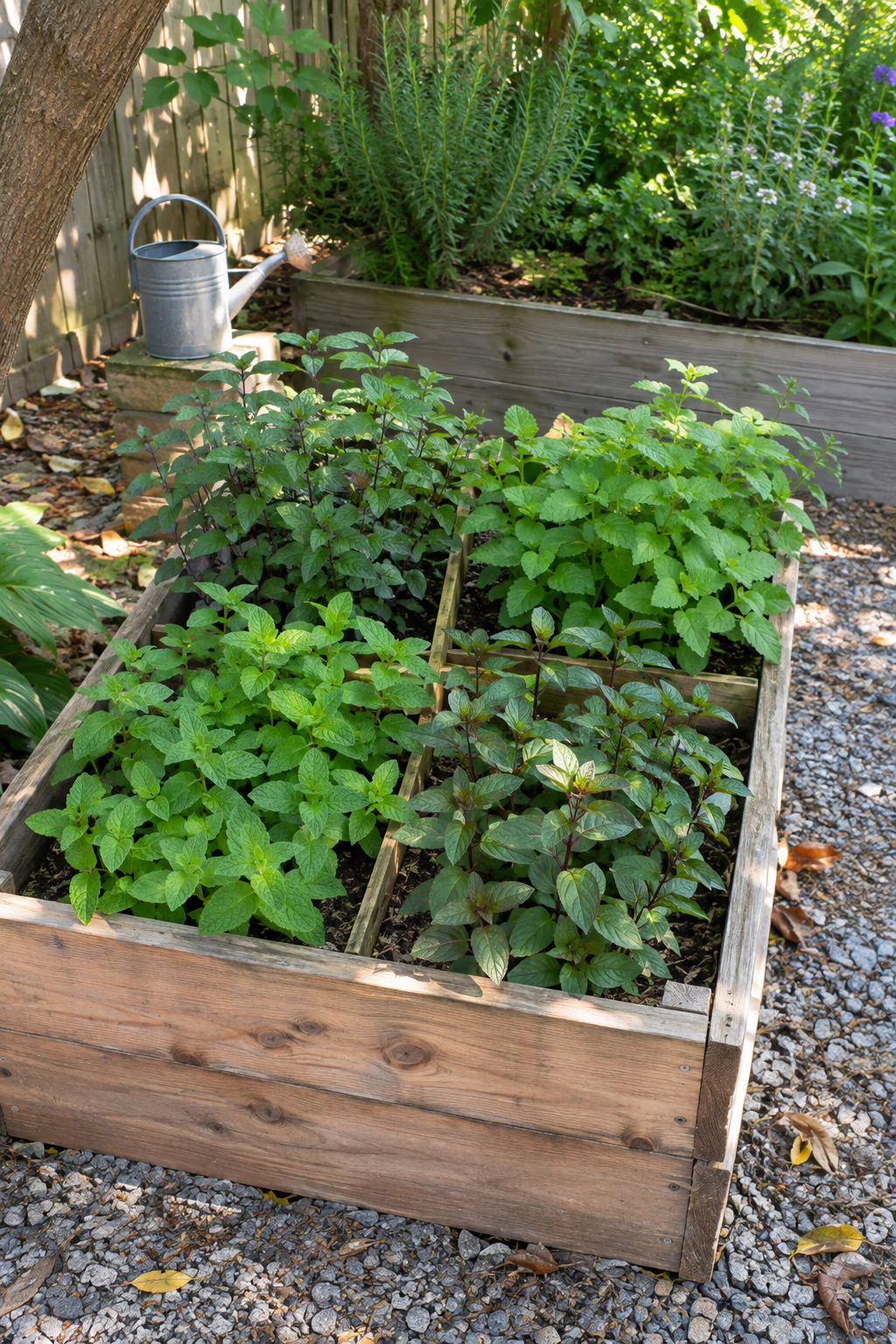
Keep the bully in its own corner
Mint spreads by underground runners and will take over a mixed bed within a year or two. Build a small, separate box, perhaps 2 by 3 feet and 12 inches deep, and dedicate it to spearmint, peppermint, chocolate mint, and lemon balm.
Giving mint a home of its own means you can harvest generously without worrying about it strangling thyme or parsley. Different mints planted side by side may blur together over time, so a few simple dividers help if you want to keep flavors separate.
Set the box on a gravel or paver pad, not directly on lawn, or runners can escape under the edges. Mint tolerates partial shade, so the box works on the less sunny side of the yard.
11. Frame a Raised Knot Bed With Clipped Germander
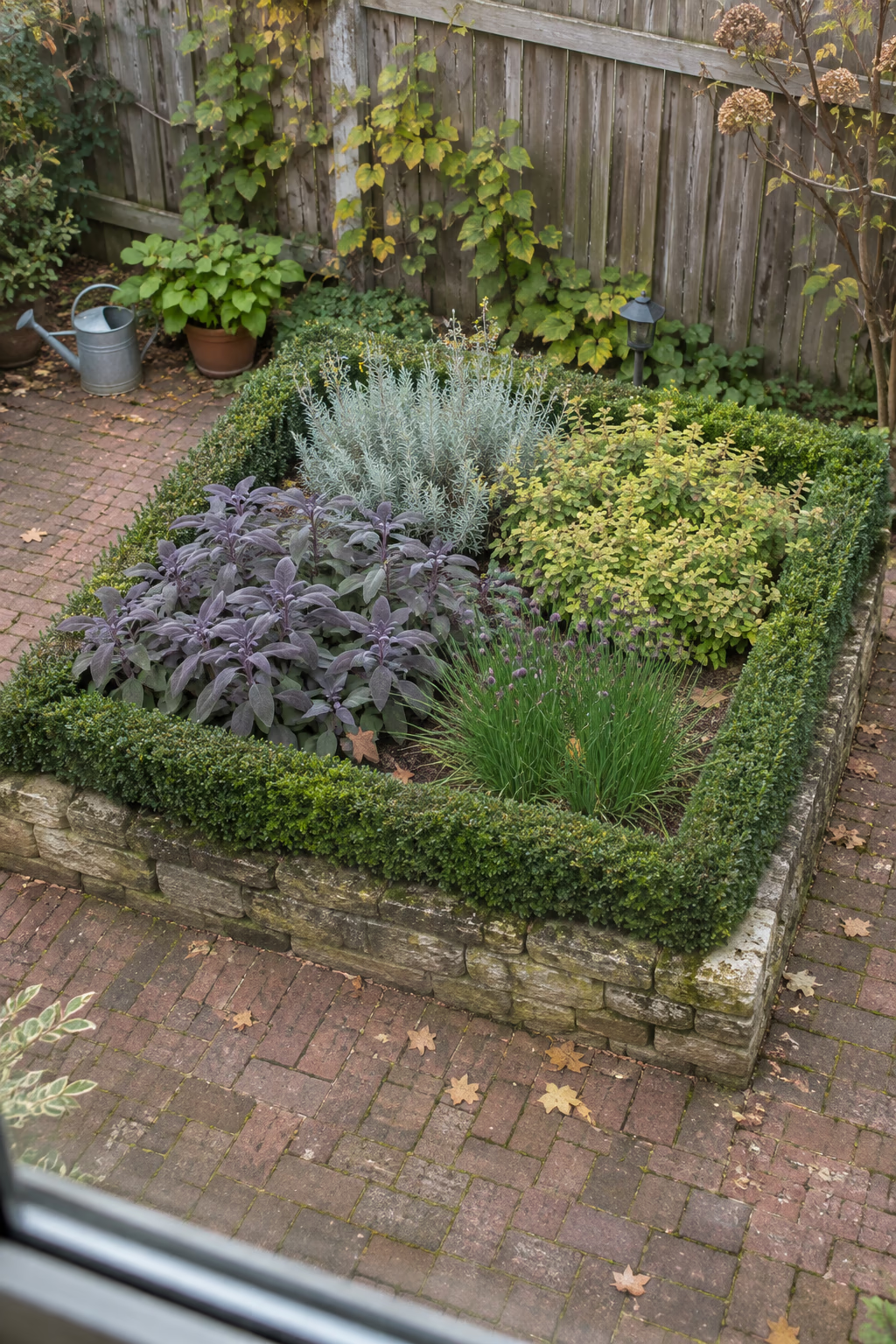
Formal structure with an herb-garden pedigree
Wall germander is a low, evergreen-leaved herb long used for the miniature hedges of traditional knot gardens. Plant small starts 8 to 10 inches apart around the edge of a raised bed, then clip them into a neat 8-inch hedge.
Inside the green frame, fill sections with contrasting herbs: purple sage, silver curry plant, golden marjoram, and chives. The clipped edge makes even loose herbs look orderly, and it stays attractive in winter in milder zones.
Germander is generally hardy in USDA zones 5 to 9. Shear it lightly two or three times per growing season, and expect the hedge to take about two years to fill in.
12. Tuck Herbs Into Cinder Block Planting Pockets
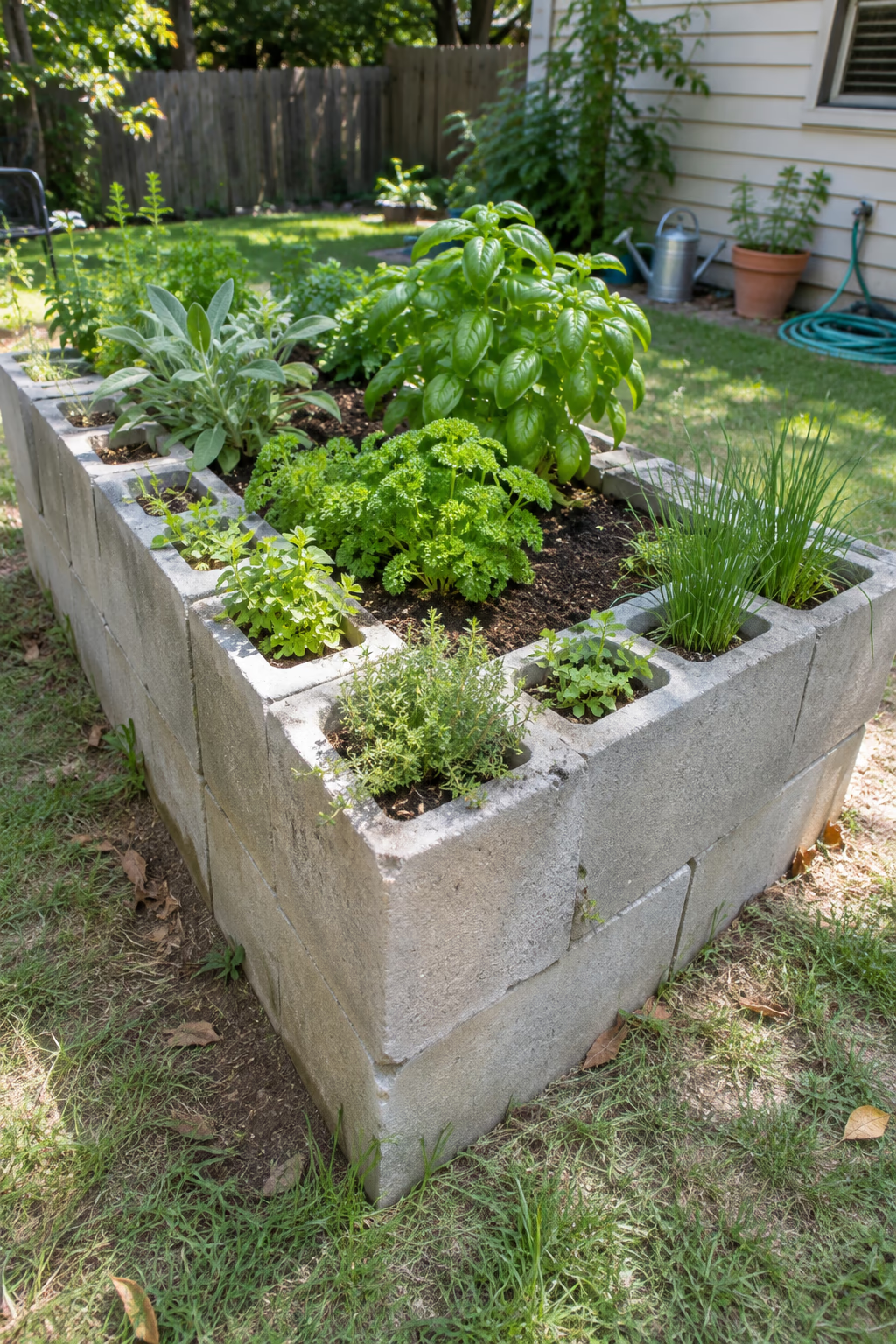
Budget walls with built-in planters
Standard 8 by 8 by 16 inch concrete blocks, laid on their sides with the holes facing up, form an inexpensive raised bed in an afternoon. Fill the main bed with herbs, then fill each block’s hollow cores with soil and plant them with thyme, chives, or small oregano plants.
The pockets nearly double the planting space, and the blocks hold heat, which Mediterranean herbs enjoy. Gray block also looks surprisingly modern once the plants fill in.
Concrete can nudge soil pH upward slightly, which most herbs tolerate. Buy new blocks rather than salvaging old ones of unknown origin, and water the shallow pockets more often, since they dry out fast.
13. Squeeze a Narrow Herb Bed Along the Fence
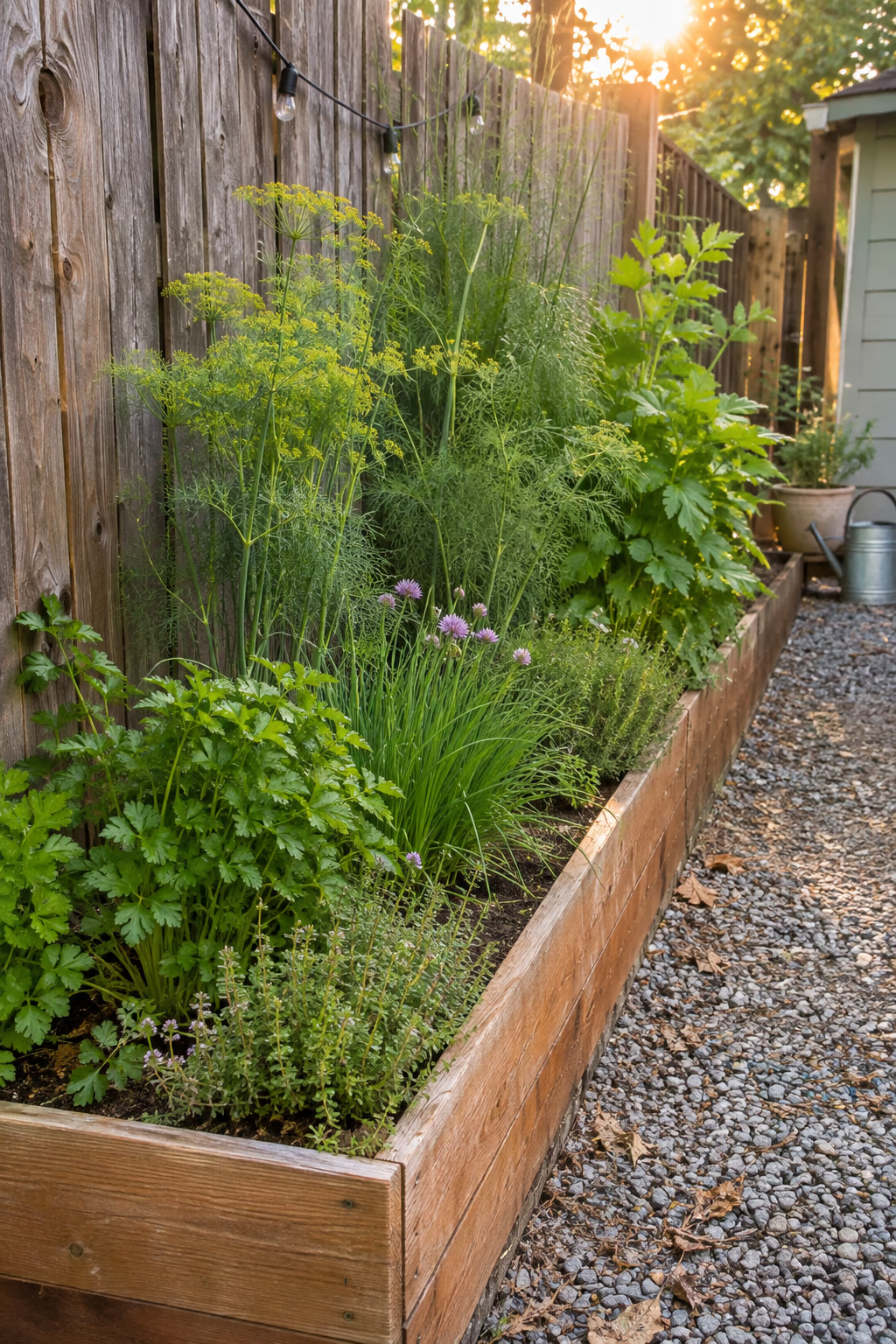
Turn an awkward strip into a harvest zone
A raised bed just 12 to 18 inches wide and 8 to 12 feet long fits along a sunny fence line where nothing else would go. Use cedar boards or a narrow metal kit, and keep it at least an inch off the fence to protect the fence boards from moisture.
Plant tall herbs, such as dill, fennel, and lovage, toward the fence and compact ones, such as parsley and chives, in front. Everything is reachable from one side, so there’s no need to step into the soil.
Check where the sun falls before building. A fence on the north side of a yard gets the most light, while a fence on the south side shades the bed for much of the day.
14. Fill a Bed With Flowering Herbs for Pollinators
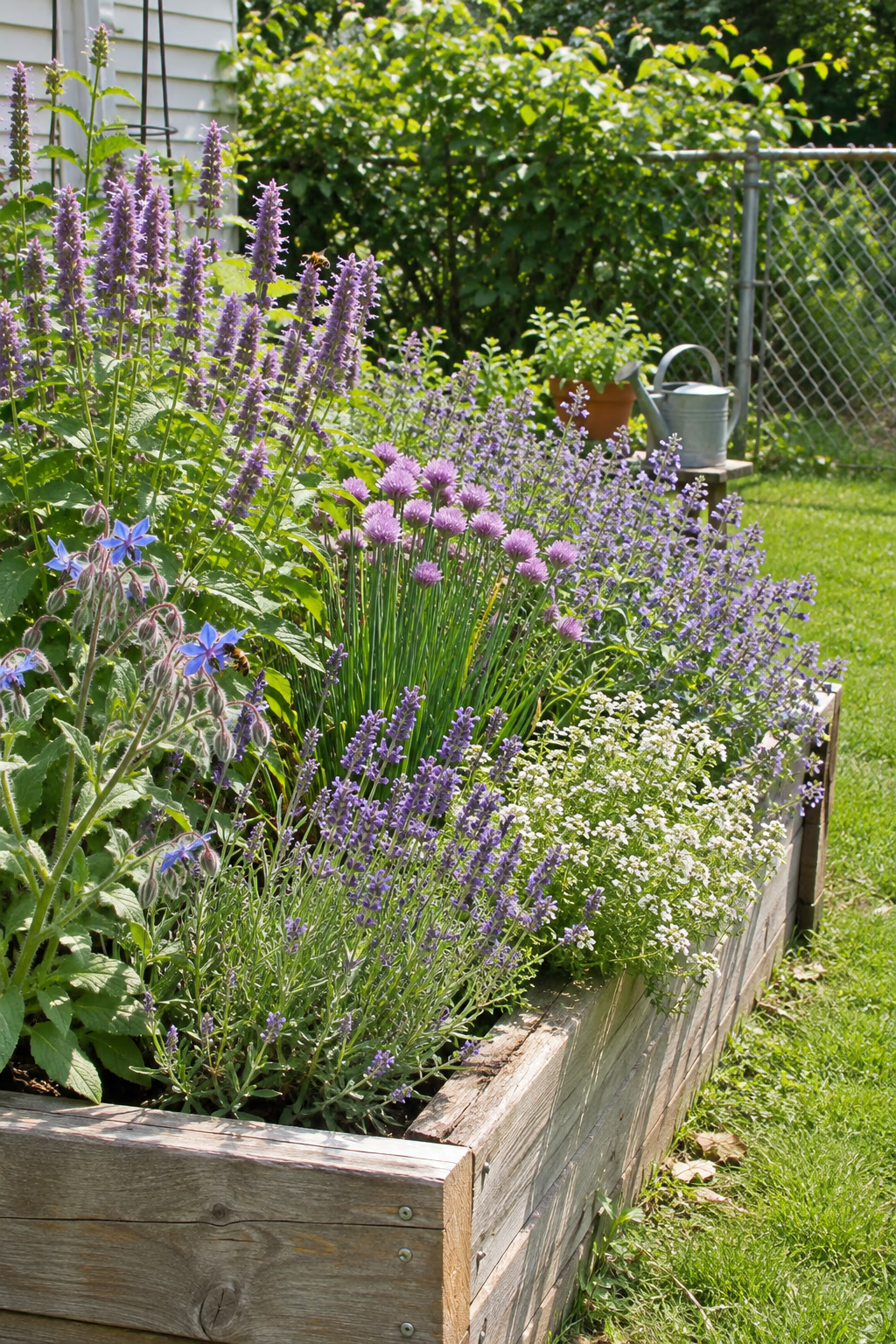
Flavor for you, nectar for bees
Many herbs bloom generously when allowed to. Dedicate one raised bed to herbs you grow partly for flowers: anise hyssop, borage, chives, oregano, thyme, lavender, catmint, and dill. Choose varieties with blue, purple, and white blooms, colors bees visit often.
A flowering herb bed hums with bees and butterflies through summer, and the blooms are edible too. Chive flowers and borage stars brighten salads, and anise hyssop makes a pleasant tea.
Letting herbs flower can change the flavor of the leaves, so keep a separate bed or a few plants for cutting. Skip pesticides here entirely, and leave some stems standing in fall for overwintering insects.
15. Set a Grill-Side Herb Bed on a Gravel Pad
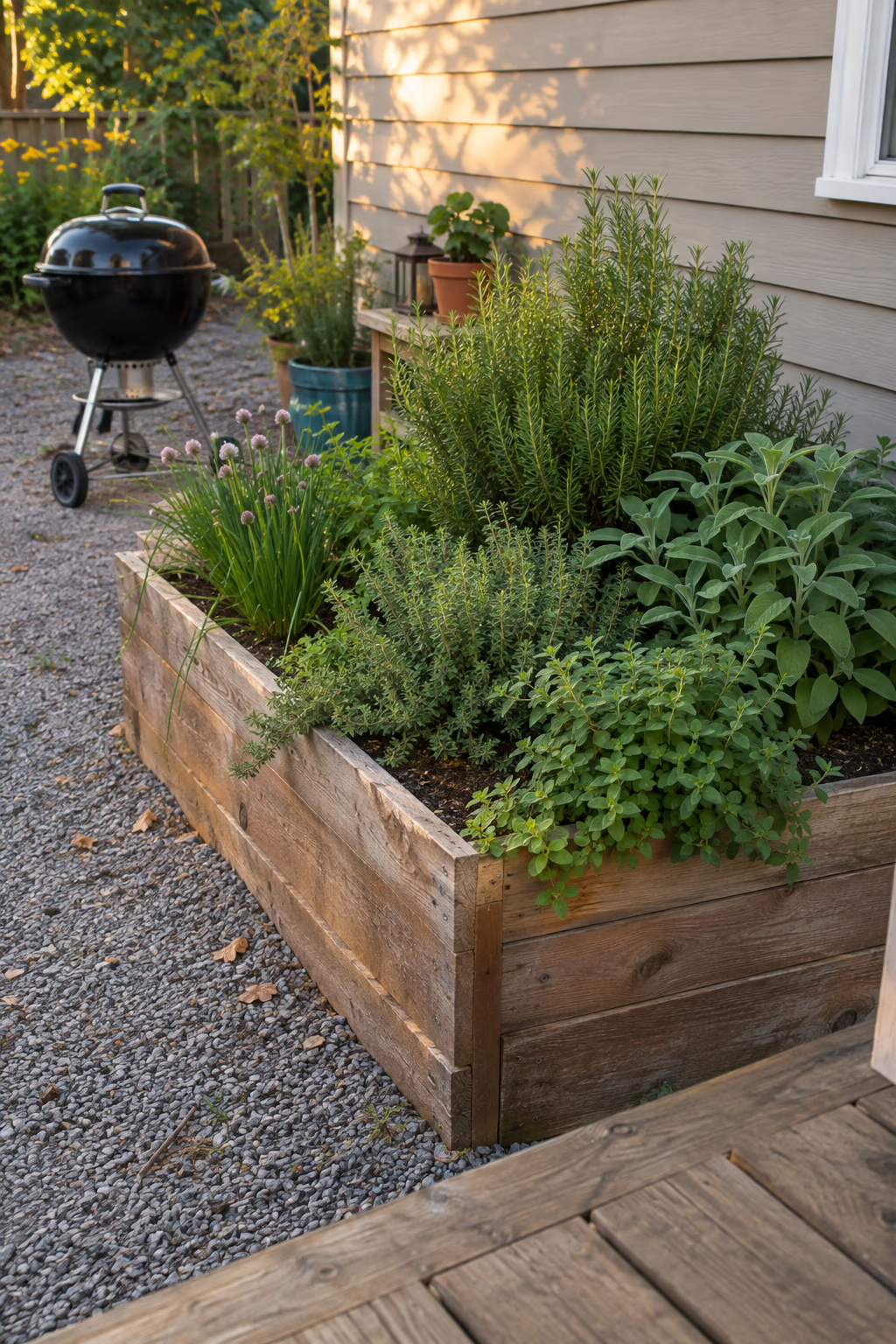
Seasoning within arm’s reach of the barbecue
Place a waist-high or knee-high raised bed about 4 to 6 feet from the grill, on a pad of compacted gravel that won’t turn to mud. Plant it with sturdy grilling herbs: rosemary for skewers, sage, thyme, oregano, and chives.
When the herbs are right beside the cooking area, you’ll actually use them. Woody rosemary stems can even be stripped and used as kebab skewers.
Keep a safe distance from hot grills and smokers, and never place wooden beds where sparks or grease can reach them. Follow the grill maker’s clearance guidelines and any local fire rules.
16. Grow Shade-Tolerant Herbs Along a North Wall
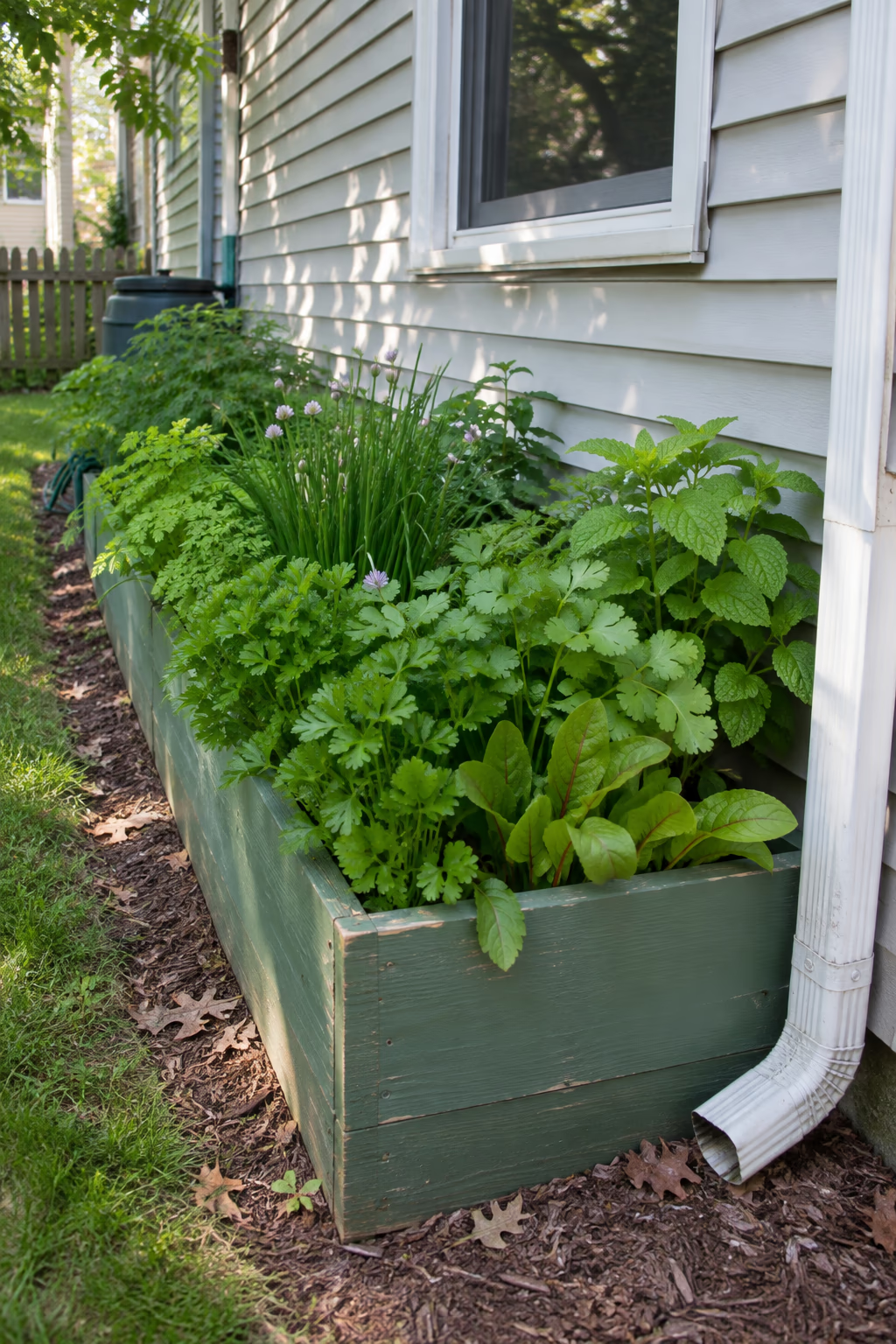
A raised bed for the less sunny side of the house
Not every herb needs blazing sun. A raised bed along a north-facing wall or under a high tree canopy can still grow parsley, chives, mint, chervil, cilantro, lemon balm, and sorrel, as long as it gets about 3 to 4 hours of direct sun or bright, dappled light.
Cilantro and chervil actually last longer before bolting in cooler, shadier spots. The bed’s raised soil also drains better than the damp ground typical of shady areas.
Expect slower growth and leafier plants than in full sun. Skip rosemary, basil, and lavender here, since they need at least 6 hours of direct light to thrive.
17. Plant Single-Variety Rows in a Modern Steel Planter
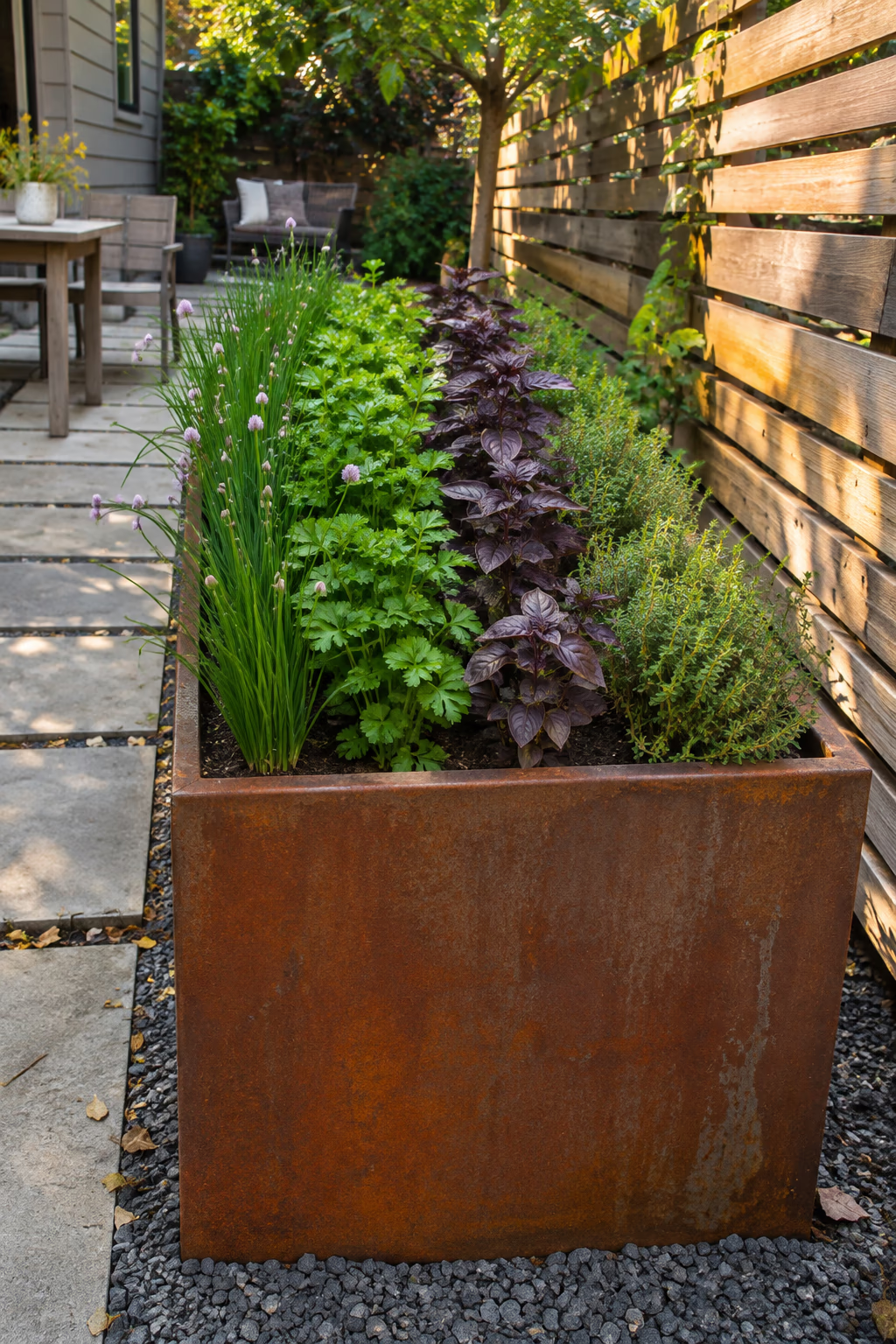
Clean lines for contemporary yards
A long rectangular planter in weathering steel or powder-coated metal, about 18 inches tall, suits modern homes. Instead of mixing plants, run each herb in its own straight row across the bed: a row of chives, a row of flat-leaf parsley, a row of purple basil, and a row of thyme.
Repeating blocks of a single plant create a calm, graphic look that pairs well with concrete pavers and gravel. Rows also make sowing, spacing, and replanting simple.
Weathering steel sheds rust while it forms its protective layer, which can stain light patios. Set it on gravel for the first few months, or choose a powder-coated finish instead.
18. Build a Low Sensory Herb Bed for Kids
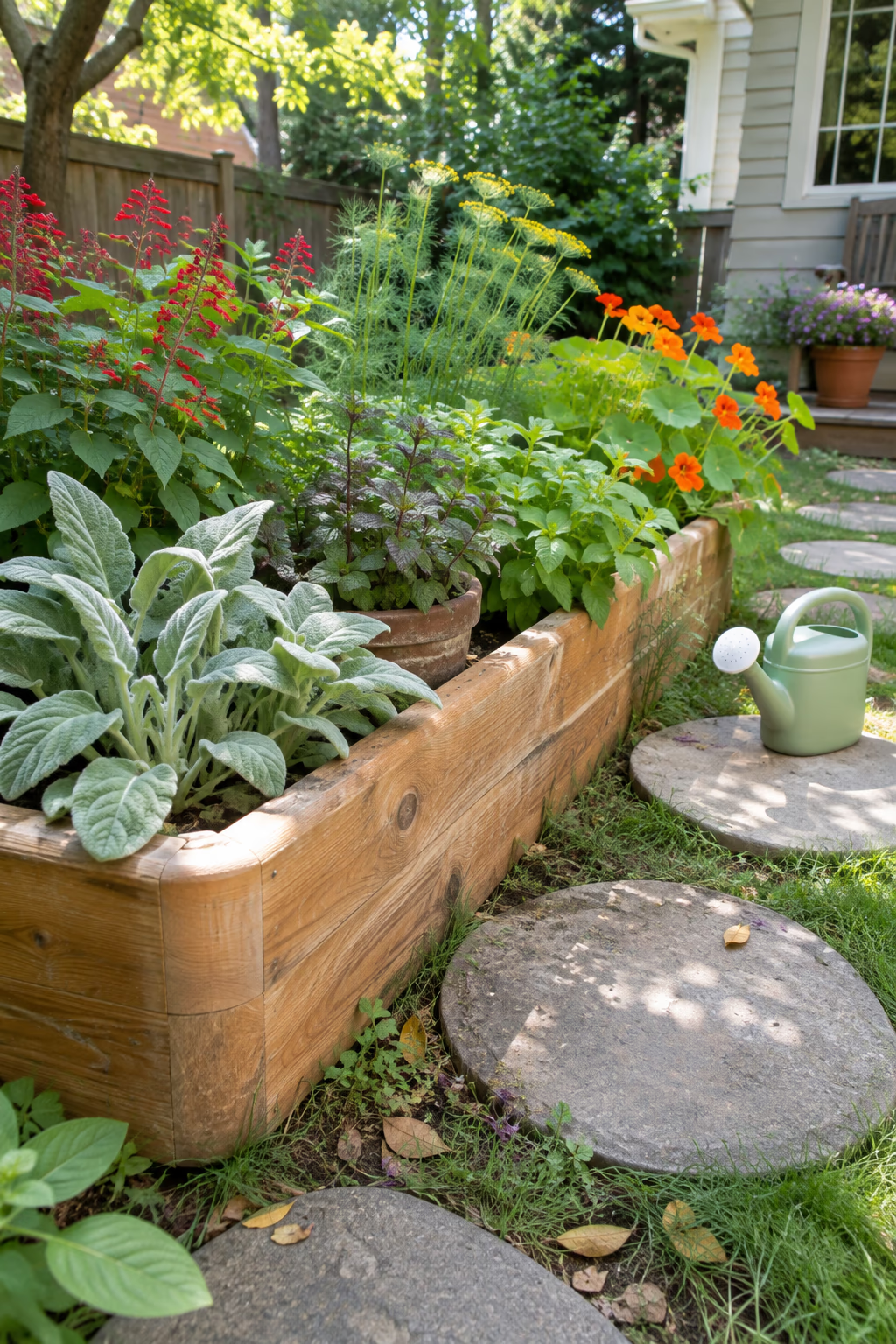
Herbs that beg to be touched and smelled
A wide, low bed about 10 to 12 inches tall puts plants at a child’s height. Fill it with herbs that are fun to touch, sniff, and taste: chocolate mint in a sunken pot, pineapple sage, lemon balm, feathery dill, fuzzy lamb’s ear for touch, and nasturtiums for peppery flowers.
Kids are far more likely to try new flavors when they’ve grown them, and herbs give quick results. A few large stepping stones next to the bed give small feet somewhere to stand.
Lamb’s ear is for touching rather than eating, so teach children which plants are for tasting and avoid adding anything toxic. Make sure the bed has smooth, splinter-free edges.
19. Bury a Clay Olla in the Center of the Bed
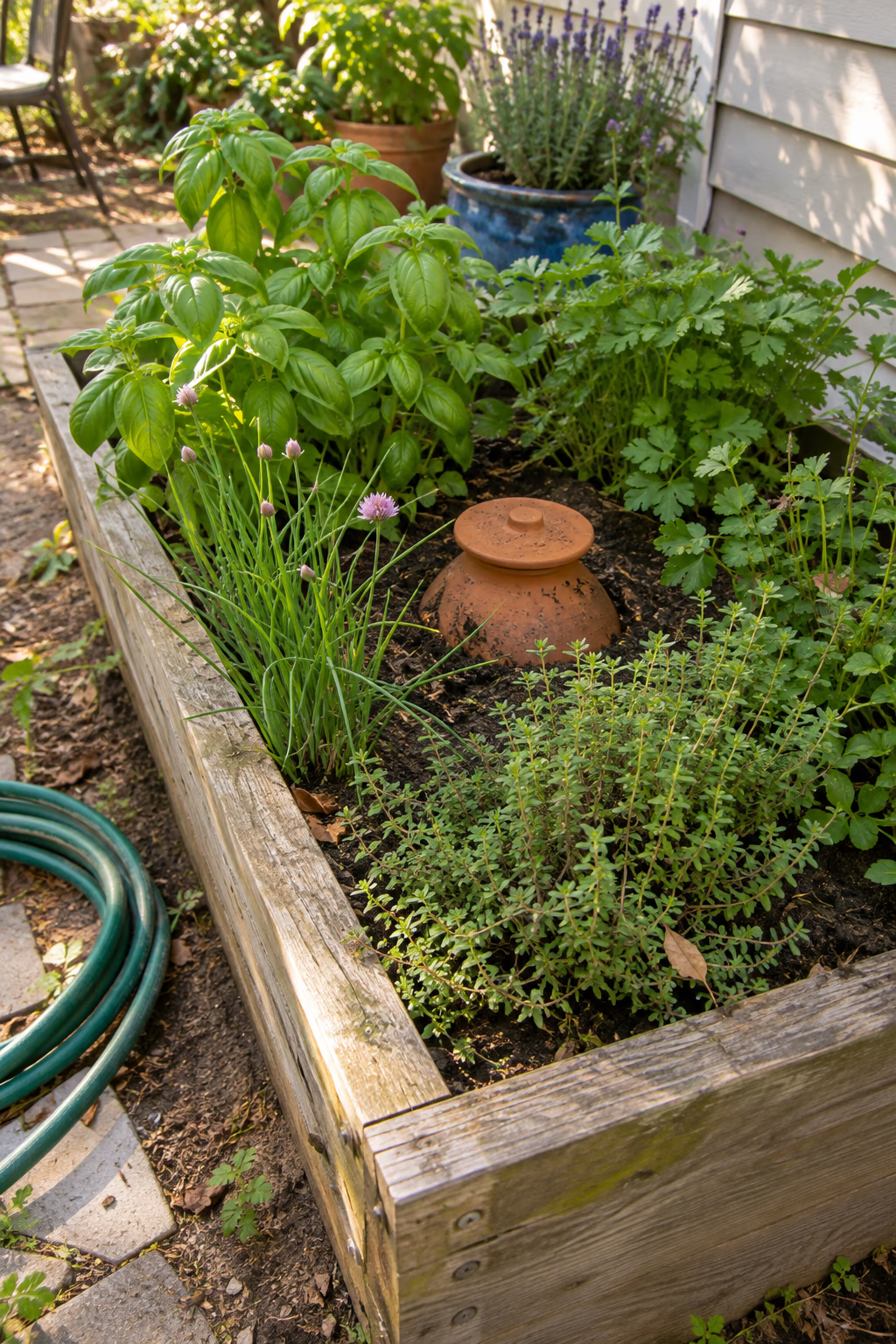
Slow, steady water straight to the roots
An olla is an unglazed terracotta vessel buried up to its neck in the soil. Fill it with water and the moisture seeps slowly through the clay toward nearby roots. One 1 to 2 gallon olla in the middle of a 4 by 4 foot bed keeps the surrounding herbs evenly watered.
Ollas use water efficiently, keep leaves dry, which helps prevent mildew, and reduce how often you need to water by hand. Basil, parsley, and chives planted near the olla benefit most.
Keep the lid on to block mosquitoes and debris, and refill it every few days in hot weather. In freezing climates, empty and lift ollas in late fall so they don’t crack.
20. Cover the Bed With Low Hoops to Stretch the Season
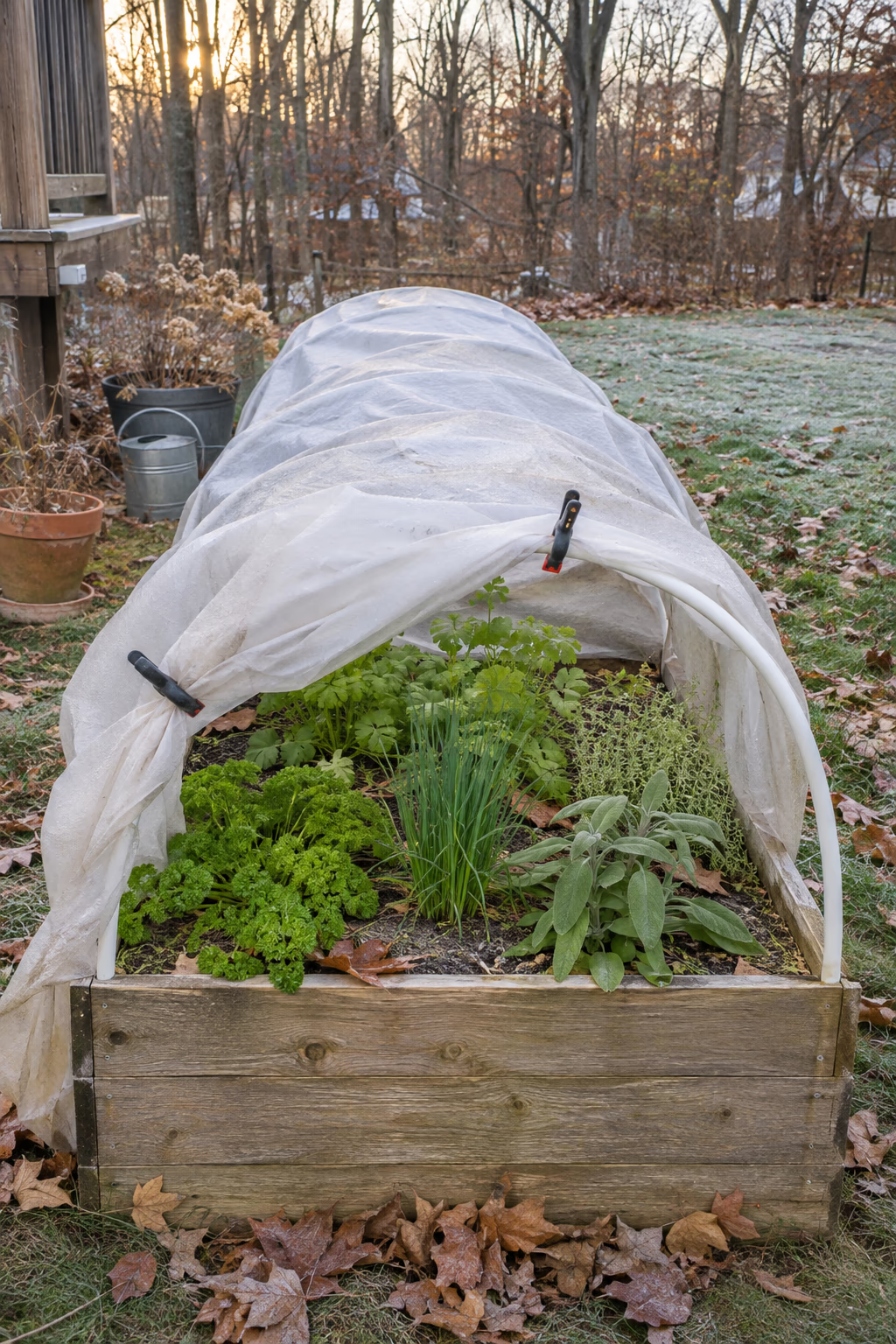
Fresh parsley and chives well into the cold months
Bend lengths of 1/2-inch PVC conduit or galvanized wire into arches across a raised herb bed and drape frost cloth or clear greenhouse plastic over them. Secure the edges with clips or boards.
A simple cover adds several degrees of protection on frosty nights, letting hardy herbs such as parsley, chives, cilantro, sage, and thyme keep producing into late fall, and in milder zones through winter. In spring, the same hoops give you an early start.
On sunny days, open plastic covers so plants don’t overheat. Frost cloth breathes better but offers less warmth. Tender basil won’t survive a frost even under hoops.
21. Split Annual and Perennial Herbs Into Twin Beds
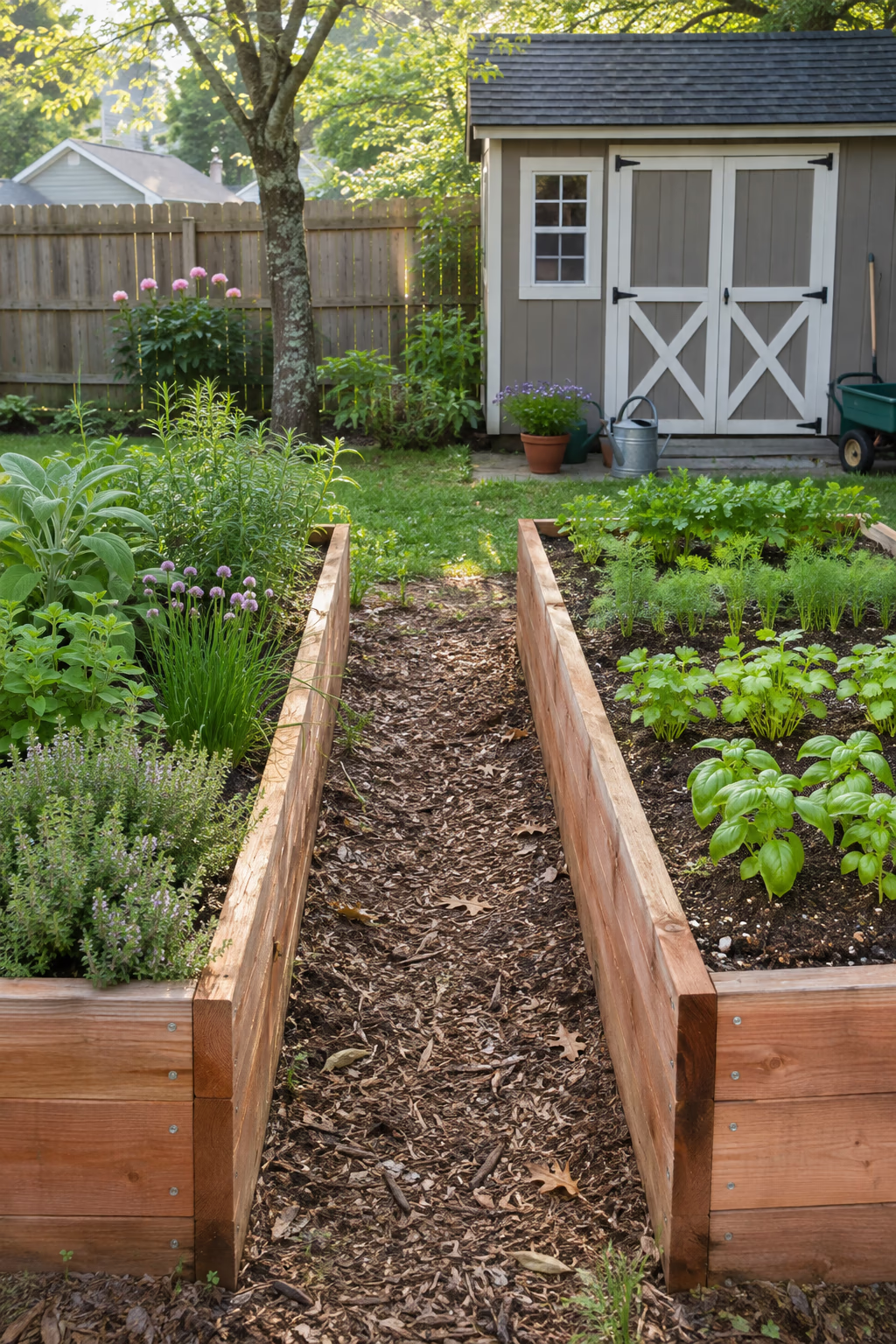
Easier replanting every spring
Build two matching raised beds side by side. Fill one with perennial herbs that come back each year, such as thyme, oregano, sage, chives, and tarragon. Use the other for annuals and short-lived herbs that you replant often: basil, cilantro, dill, and parsley.
This keeps you from digging around established perennial roots every spring. You can also amend and refresh the annual bed each season without disturbing the permanent plantings.
Parsley is technically biennial and will flower and go to seed in its second year, so it belongs in the annual bed. Use the same material and height for both beds so the pair looks intentional.
How to Plan Your Raised Herb Garden
Herbs are forgiving plants, but a raised bed works best when its size, soil, and location match what the herbs need. Keep these points in mind before you build.
- Follow the sun. Most culinary herbs need 6 to 8 hours of direct sun a day, so watch your yard for a full day before choosing a spot.
- Keep it reachable. Beds no wider than 4 feet, or 2 feet if they are against a wall or fence, let you reach the center without stepping on the soil.
- Give roots enough depth. Around 12 inches of soil suits most herbs, though shallow-rooted ones such as thyme and chives manage in less.
- Use a light, well-draining mix. Fill beds with raised bed soil or a blend of topsoil, compost, and coarse sand rather than heavy native clay.
- Group herbs by thirst. Plant woody, drought-tolerant herbs together and keep moisture-loving tender herbs on their own, and always contain mint.
- Choose safe, durable materials. Cedar, redwood, galvanized steel, brick, and stone are good options; avoid old railroad ties and wood of unknown treatment for edible beds.
Frequently Asked Questions
How deep should a raised herb bed be?
About 12 inches of soil is enough for most culinary herbs. Shallow-rooted herbs like thyme, chives, and oregano can grow in 6 to 8 inches, while deeper beds help in hot climates by holding more moisture.
Which herbs should not be planted together in a raised bed?
Keep mint in its own box, because it spreads aggressively. Fennel is best grown on its own or in a pot, and it’s smart to separate drought-loving herbs like rosemary and lavender from thirstier ones like basil and parsley.
What is the best soil for a raised herb garden?
Use a loose, well-draining mix such as bagged raised bed soil or roughly equal parts topsoil, compost, and coarse sand. Herbs generally prefer moderately fertile soil, so avoid heavy fertilizing, which can make growth soft and less flavorful.
How often should I water herbs in a raised bed?
Raised beds drain quickly, so check the soil with a finger and water when the top inch feels dry. In summer that may be every two to three days for basil and parsley, while established rosemary and thyme need far less.
Can herbs stay in a raised bed over winter?
Hardy perennials such as thyme, sage, oregano, chives, and mint usually overwinter in raised beds in most US zones, though a layer of mulch helps in cold areas. Tender herbs like basil die with the first frost, and rosemary needs protection or indoor shelter in zones 6 and colder.
Final Thoughts
A raised herb garden doesn’t need to be large or expensive to change how you cook. A single stock tank, a narrow fence-line bed, or a small tiered planter can supply fresh basil, parsley, and thyme for most of the year.
Pick one idea that fits your space and sun, fill it with good soil, and start with the herbs you use most. Once you get used to snipping fresh leaves before dinner, you’ll probably find yourself adding a second bed before long.