Imagine walking past your flower bed in the middle of August, weeks after you last watered or weeded it, and finding it still full of color. Purple spikes hum with bees, silvery foliage holds up in the heat, and the mulch underneath is still neat and tidy.
A bed like that isn’t luck. It comes from picking plants that suit your conditions, covering bare soil, and setting up edges and watering so the routine chores mostly look after themselves. You put in the effort once at the start, then spend the rest of the season enjoying it instead of tending it.
These 23 low maintenance flower bed ideas cover tough perennials, succulents, grasses, shrubs, bulbs, shade plants, and the practical tricks that cut down on weeding, watering, and trimming. Some are complete planting plans and others are fixes you can add to a bed you already have, so you can mix and match to fit your yard and your free time.
1. Plant a Drought-Tolerant Perennial Bed That Rarely Needs Water
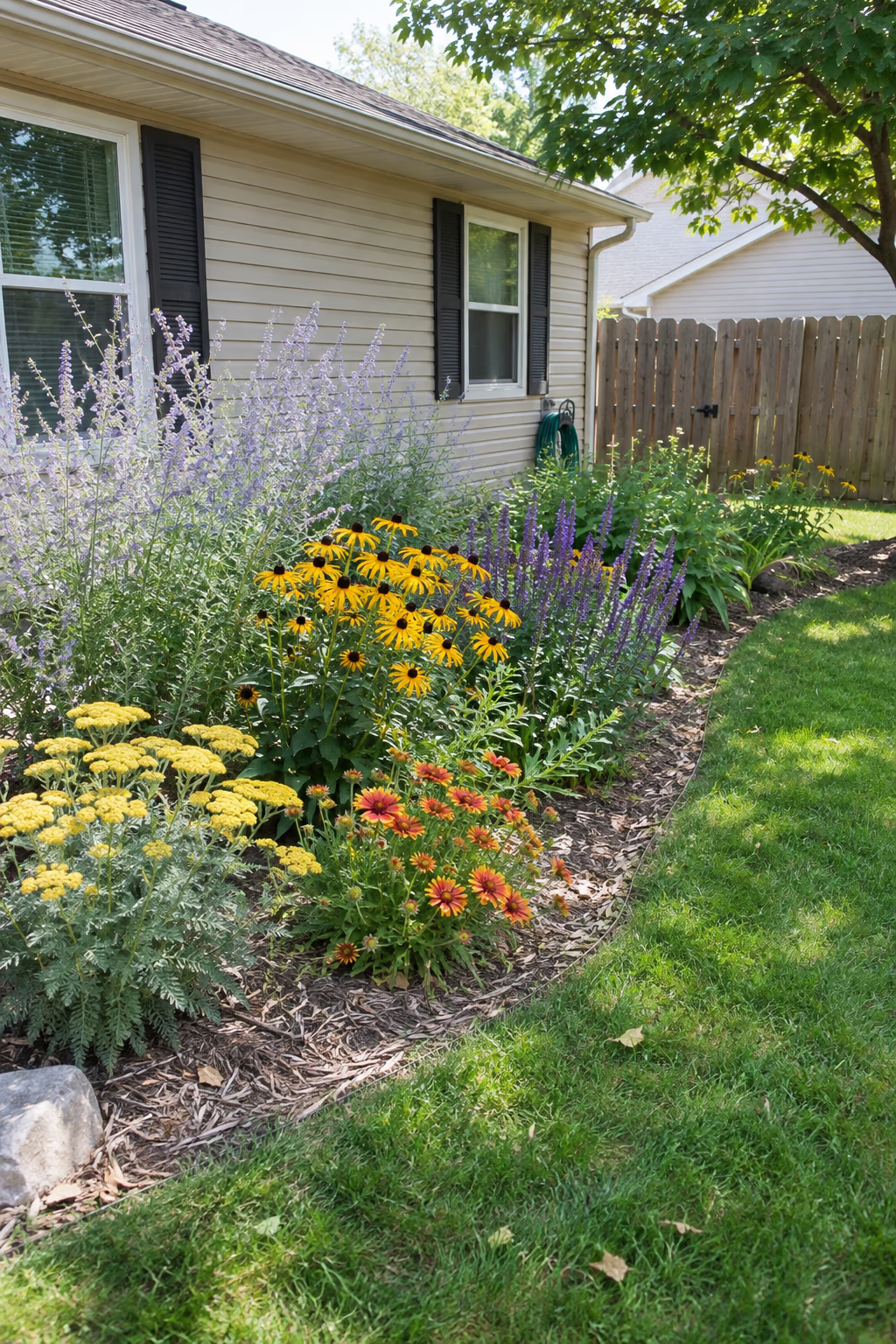
Heat-loving plants that shrug off dry spells
Start with a sunny spot that gets at least six hours of direct light a day and fill it with perennials that do well in dry soil: Russian sage, yarrow, black-eyed Susan, blanket flower, catmint, and perennial salvia. Put the taller Russian sage at the back, the mid-height black-eyed Susans and salvia in the middle, and low yarrow or blanket flower along the front edge.
Once these plants are established, which usually takes one full growing season of regular watering, their deep roots go after moisture on their own. Most of them need only a soak during long dry stretches, and they bloom from early summer into fall with very little fuss.
Don’t make the soil too rich. Lots of compost and fertilizer pushes floppy, leggy growth on these plants, so lean, well-drained ground and a light mulch work better.
2. Tuck Hardy Succulents Into a Gravel-Topped Bed
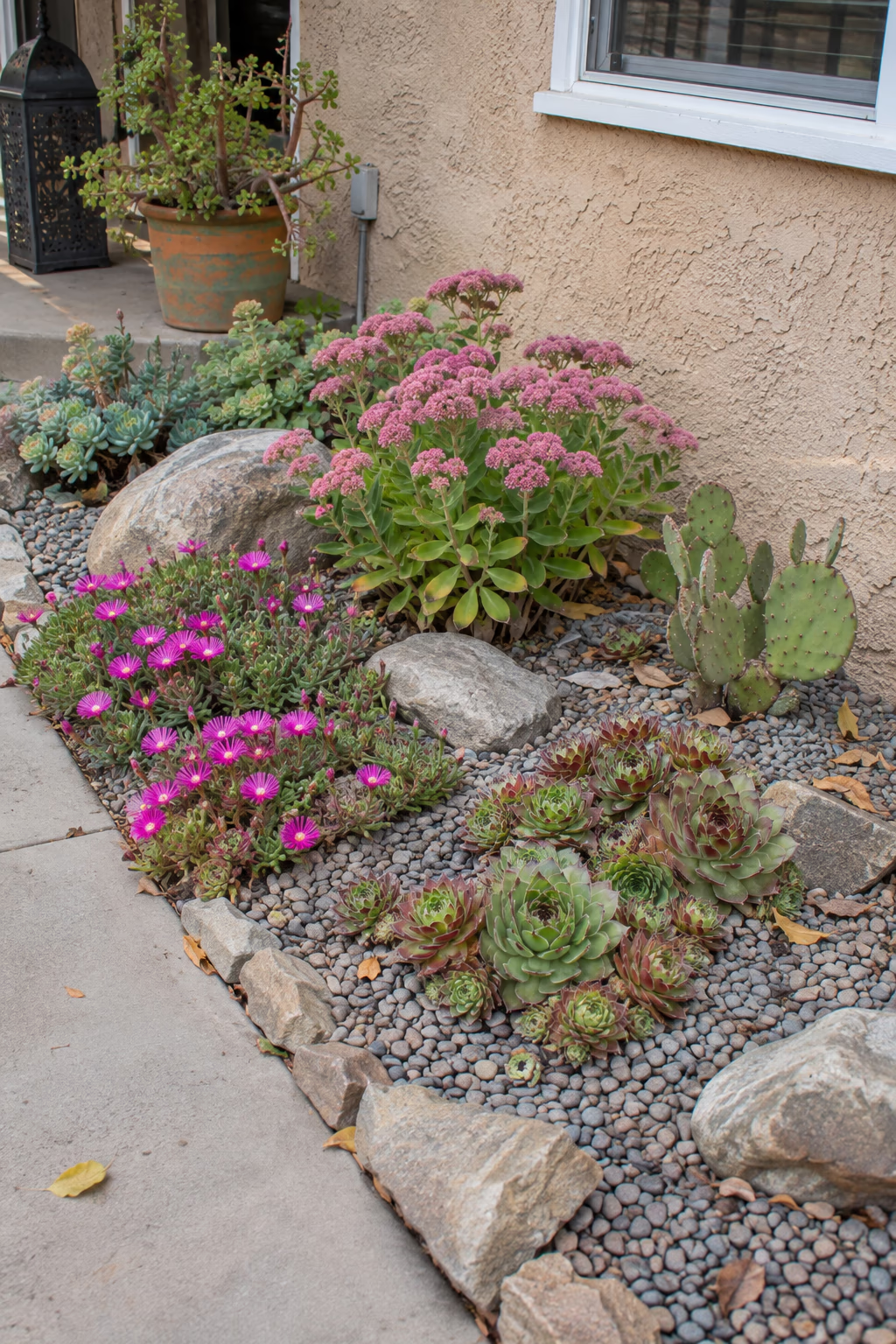
A textured bed that almost never needs weeding
Succulents can work in a flower bed even in cold-winter regions if you pick hardy types. Upright sedums such as ‘Autumn Joy’, hens and chicks, hardy ice plant, and cold-tolerant prickly pear handle freezing winters in many zones. In warmer areas you can add echeveria, agave, and aloe.
Loosen the soil and mix in coarse sand or fine gravel so water drains quickly. Plant in clusters, then top the whole bed with 1 to 2 inches of pea gravel or crushed granite. The gravel keeps the plants’ crowns dry, holds back weed seedlings, and makes the rosettes stand out.
Poor drainage is the one thing that will kill this bed. If your yard has heavy clay that stays wet, build the bed up several inches or pick another spot.
3. Line a Sunny Border With Lavender and Gravel Mulch
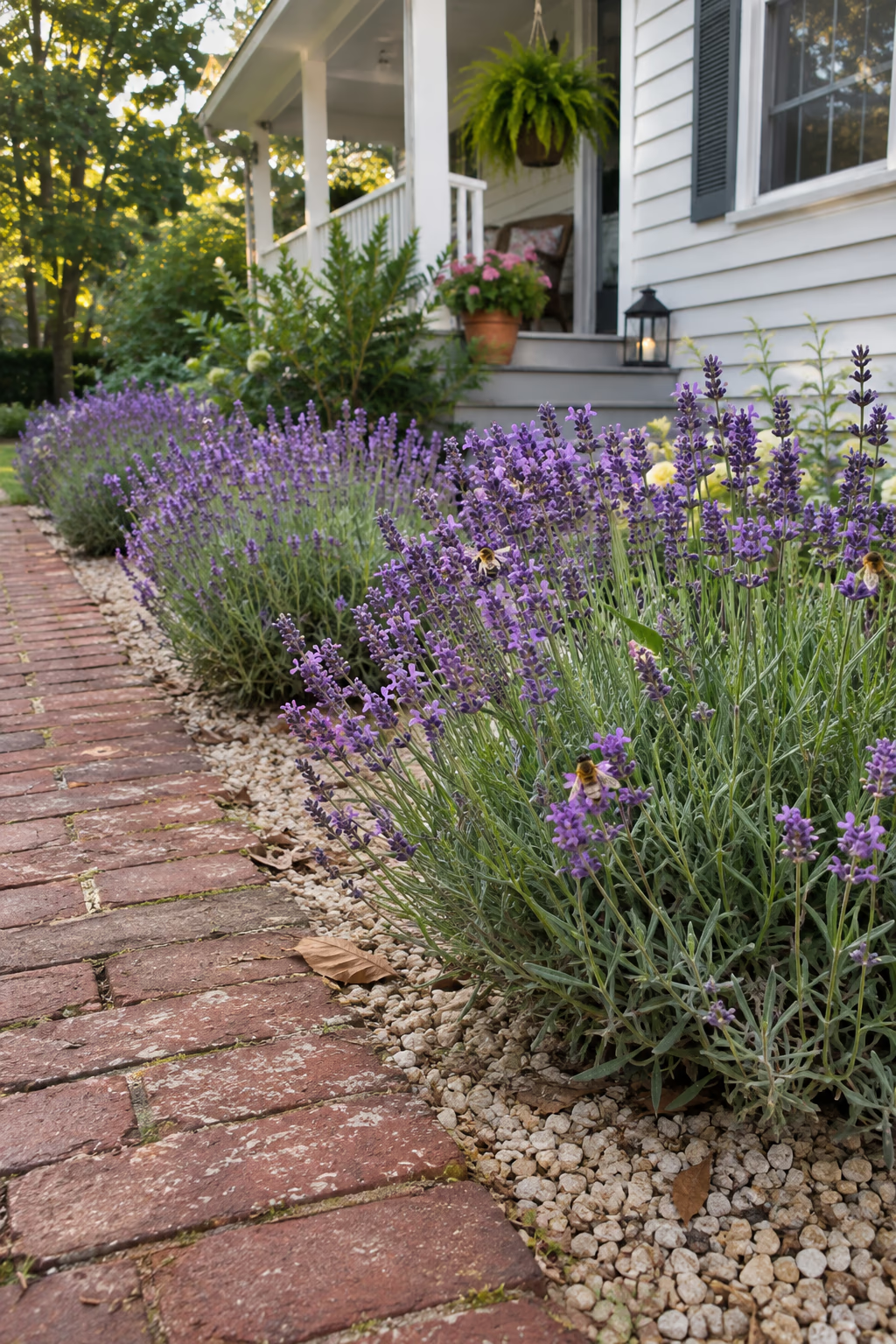
Fragrance and silver foliage with little upkeep
A row of lavender along a walk or the front of a sunny bed gives you scent, pollinators, and soft gray-green foliage all year. Space plants about 2 to 3 feet apart so they can grow into soft mounds, and finish with pale gravel instead of wood mulch. Gravel reflects heat and keeps moisture away from the base of the plants, which is what lavender likes.
English lavender types such as ‘Hidcote’ and ‘Munstead’ are the most cold-hardy picks for much of the country. In hot, humid regions, lavandin hybrids often hold up better.
Lavender needs only one real chore: a light shearing right after the main bloom. Don’t cut into old, bare wood, because it rarely grows back from there.
4. Build the Bed Around Clumping Ornamental Grasses
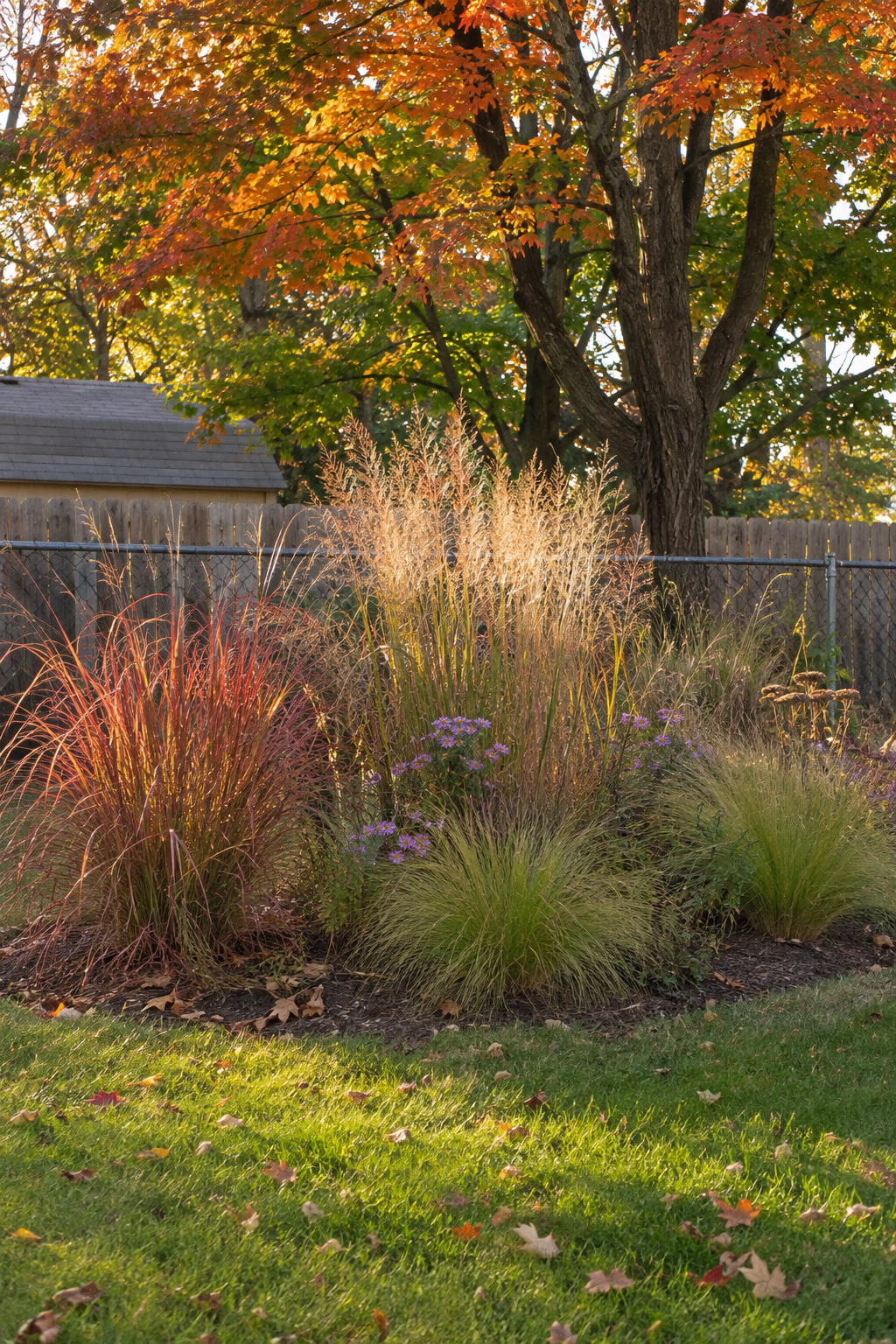
Movement and structure from one cut a year
Ornamental grasses give a bed motion, texture, and winter interest without any deadheading or staking. Good clumping choices include little bluestem, switchgrass, prairie dropseed, and blue fescue. Let them form the backbone of the bed, then tuck a few flowering perennials between them for seasonal color.
The only yearly job is cutting the grasses back to a few inches tall in late winter, before new growth starts. Bundle the clump with twine first and the cleanup takes minutes.
Stick with clumping grasses and avoid running types that spread by underground stems. Some grasses, including certain miscanthus and fountain grasses, reseed aggressively in parts of the country, so check your local invasive plant list before buying.
5. Anchor the Bed With Dwarf Flowering Shrubs
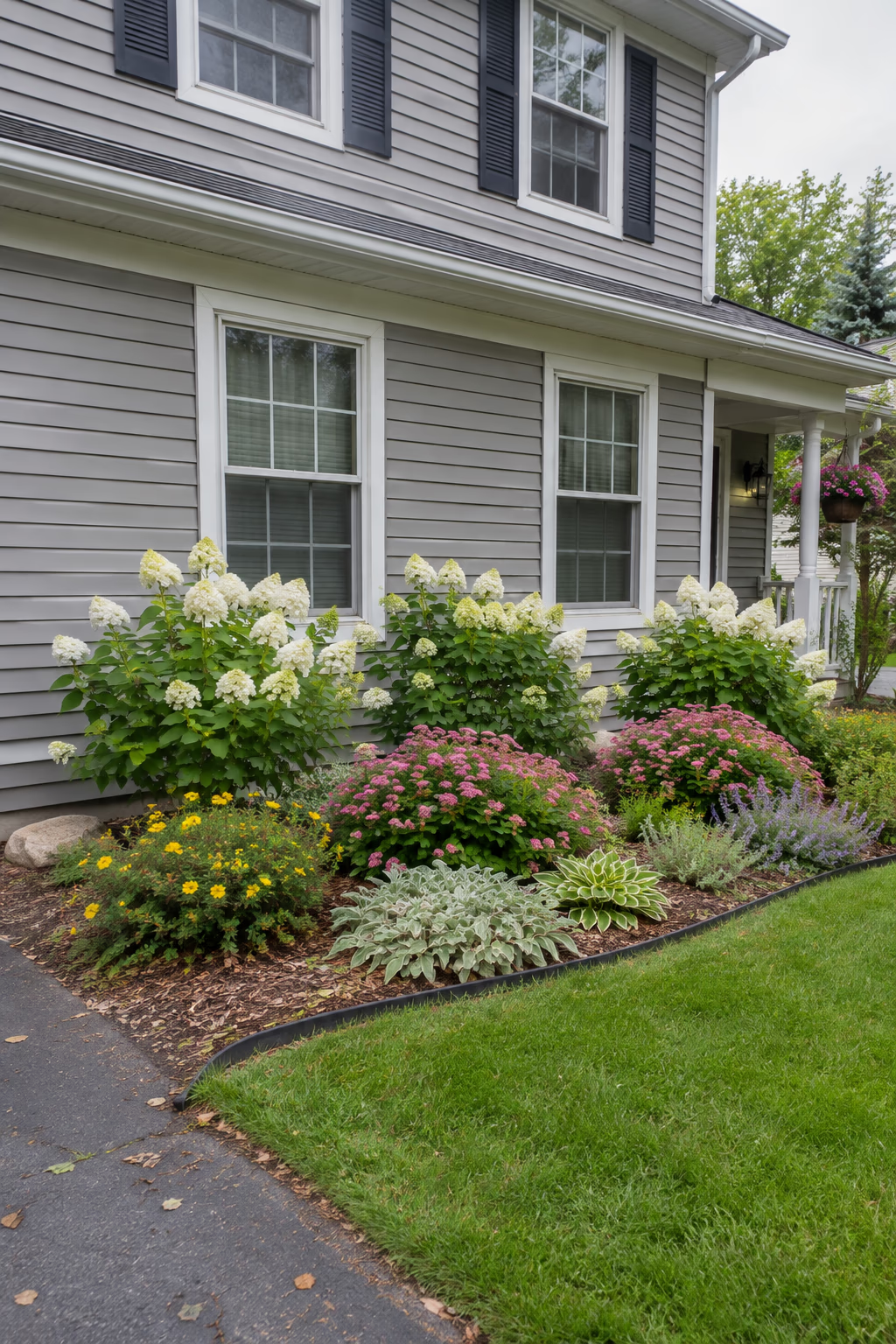
Lasting shape with seasonal blooms
Small flowering shrubs do the work of several perennials and never need dividing. Compact panicle hydrangeas, dwarf spirea, potentilla, and reblooming dwarf lilac stay roughly 2 to 4 feet tall and wide, so they fit in an ordinary bed without taking it over.
Space them in a loose zigzag through the bed and fill the gaps between them with low perennials or groundcovers. The shrubs give the bed its shape in every season, so it never looks empty after the perennials die back.
Read the mature size on the plant tag and space for it. Planting shrubs too close together is the most common reason people end up pruning far more than they planned.
6. Plant Bulbs Once for Years of Spring Color
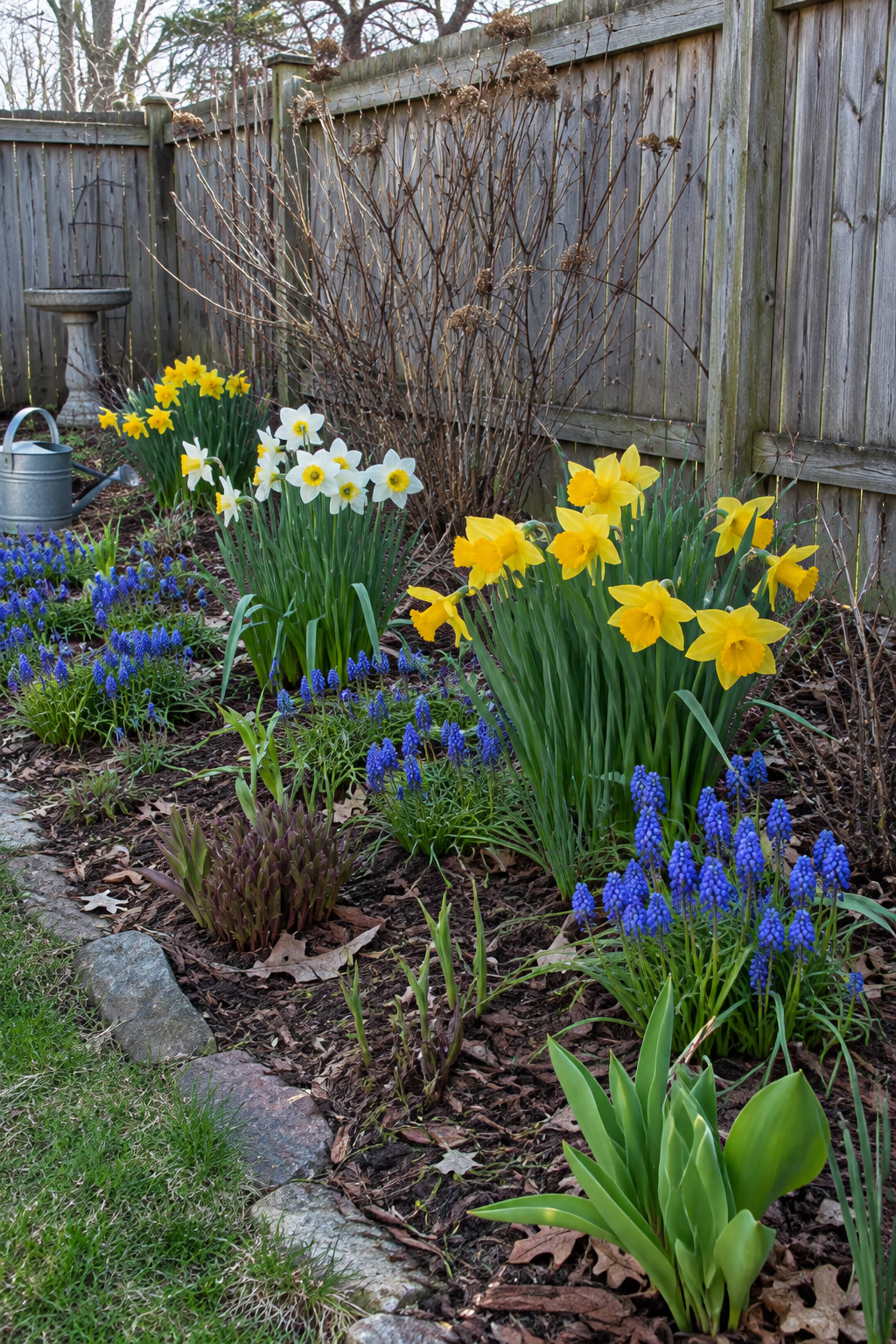
One afternoon of digging pays off every spring
Plant spring bulbs in fall and many of them will come back for years. Daffodils, alliums, grape hyacinths, and crocuses are the most dependable perennializers. Daffodils are especially useful because deer, rabbits, and squirrels usually leave them alone.
Plant bulbs in groups of 10 or more, about two to three times as deep as the bulb is tall, between your perennials. As the bulb foliage fades in late spring, the perennials grow up and hide it.
Let the bulb leaves yellow naturally for about six weeks before you cut them off. The leaves feed next year’s flowers, and cutting them early is a common reason bulbs stop blooming.
7. Fill a Shady Bed With Hostas, Ferns, and Heuchera
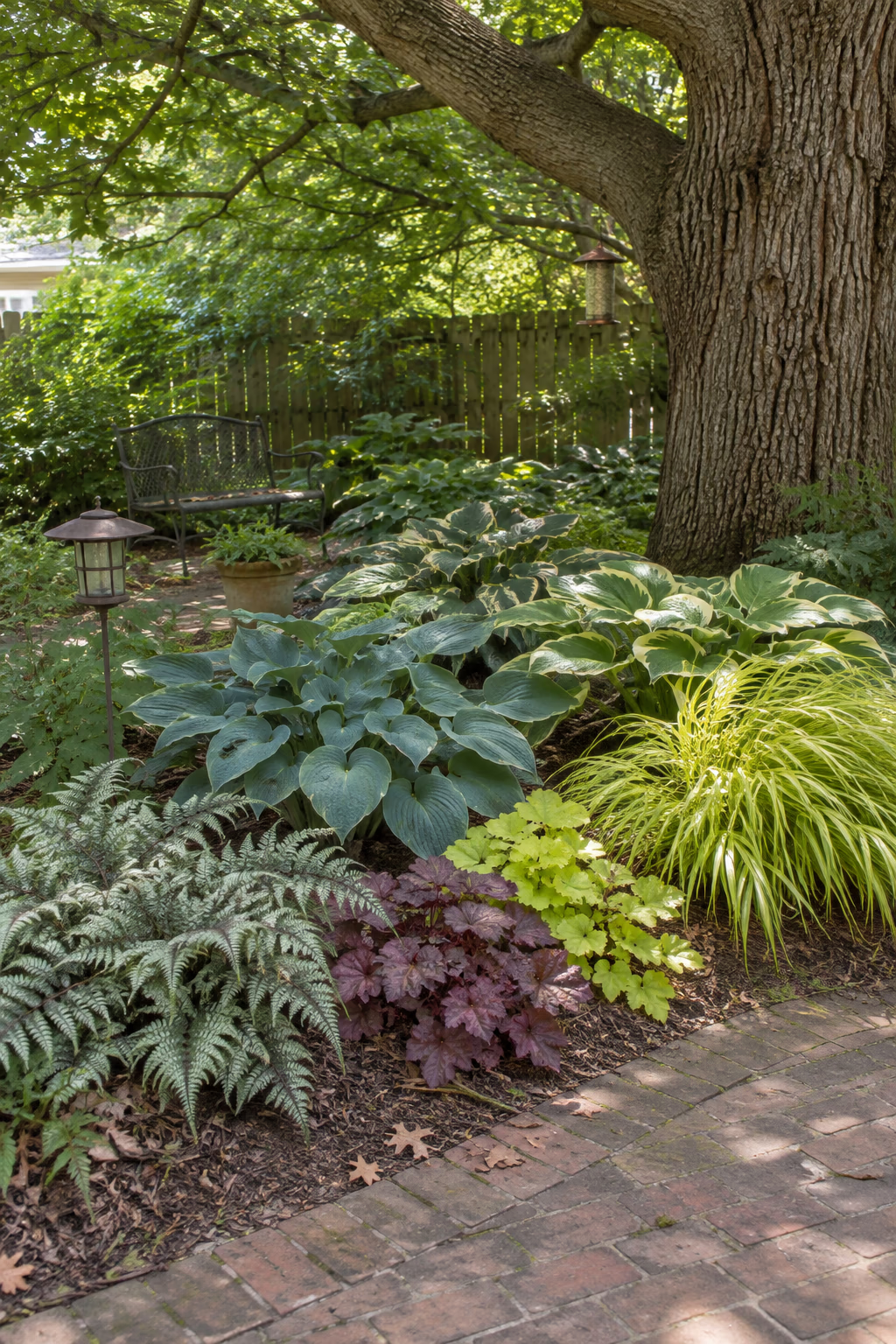
Easy foliage color where flowers struggle
Beds under trees or along the north side of a house often struggle with sun-loving flowers. Leaves are the easier route here. Combine hostas, hardy ferns such as Japanese painted fern or Christmas fern, heuchera in shades from lime to burgundy, and Japanese forest grass for a lush mix of textures.
Many shade plants grow slowly and stay put, so a shade bed often needs even less work than a sunny one. A layer of shredded leaves or fine bark mulch keeps the soil cool and moist.
Hostas are a favorite food for deer and slugs. If either is a problem in your area, lean more on ferns, heuchera, hellebores, and brunnera, which are usually left alone.
8. Install a Brick Mowing Strip Around the Bed
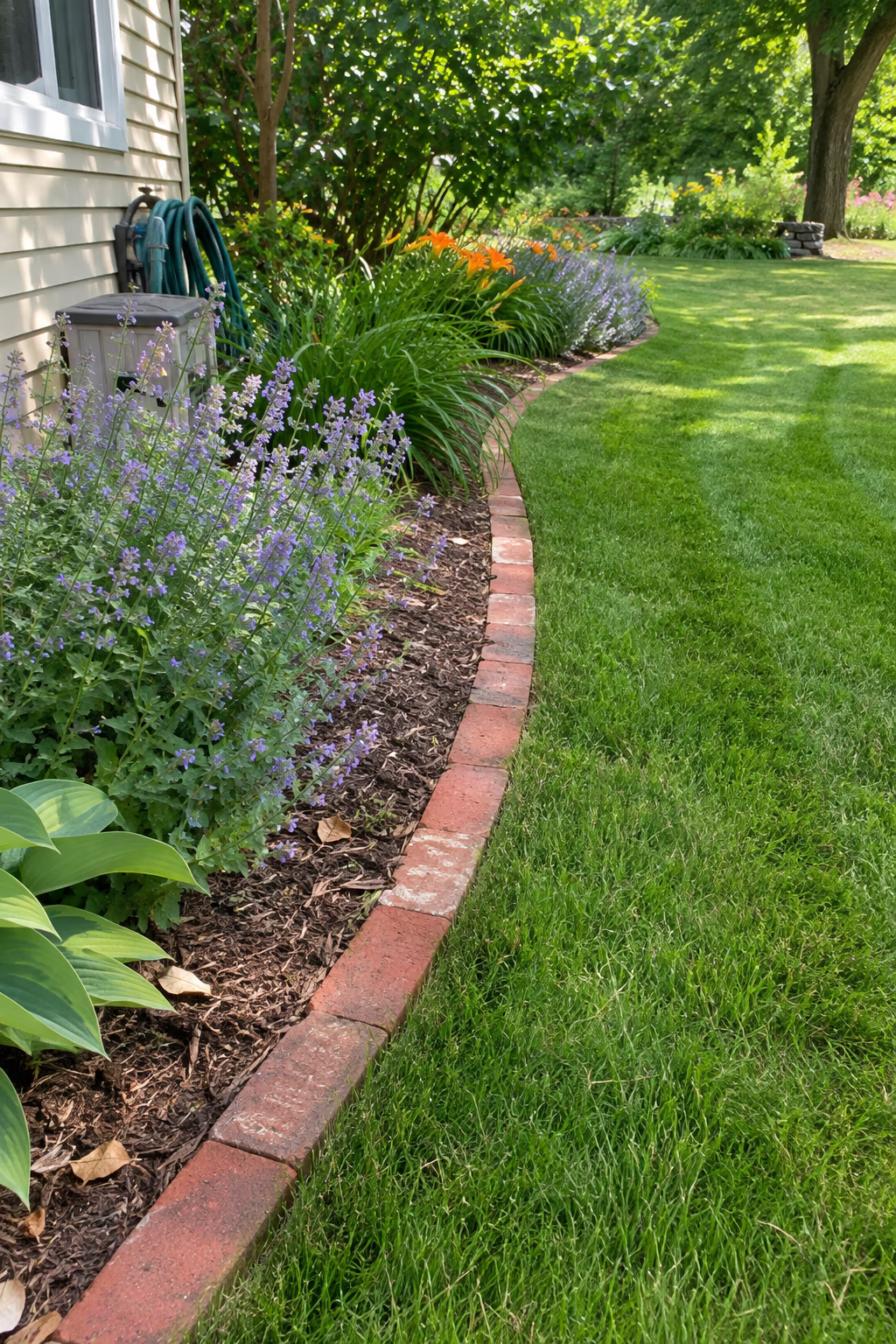
Mow right to the edge and skip the trimmer
A mowing strip is a flat band of brick or pavers set level with the lawn along the edge of a bed. The mower wheel rides along the strip, so the grass gets cut cleanly and you don’t need a string trimmer or edging tool afterward.
Dig a shallow trench about 2 inches deeper than the brick, add a compacted layer of paver base and sand, and lay the bricks flat so their tops sit even with the soil. A single row of standard bricks laid lengthwise works for most beds.
Lawn grasses that spread by runners, such as Bermuda grass, can still creep under or across a mowing strip. In those yards, add a deep plastic or metal barrier on the bed side of the bricks.
9. Spread a Thick Layer of Shredded Bark Mulch
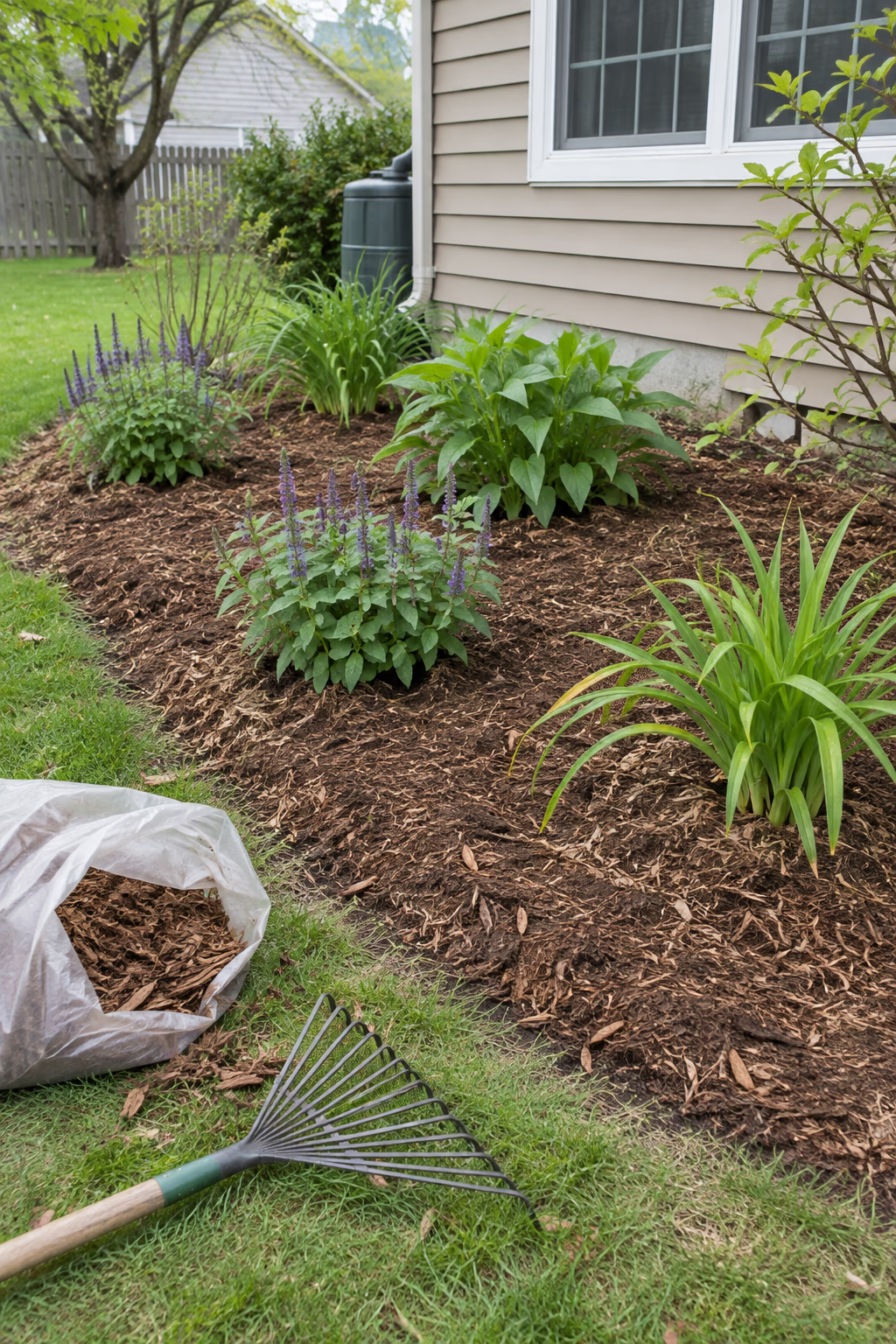
The single biggest chore-saver
If you do only one thing for an easier flower bed, mulch it. A 2- to 3-inch layer of shredded hardwood or pine bark blocks the light weed seeds need to sprout, slows evaporation so you water less, and evens out soil temperature through summer and winter.
Shredded bark knits together and stays put on gentle slopes better than chunky nuggets do. Natural brown or undyed mulch looks more relaxed and breaks down into the soil, feeding it over time.
Keep mulch a couple of inches away from plant stems and tree trunks to prevent rot, and top it up each spring as it breaks down. Piling it deeper than about 3 inches can smother roots.
10. Plant in Generous Drifts Instead of Single Plants
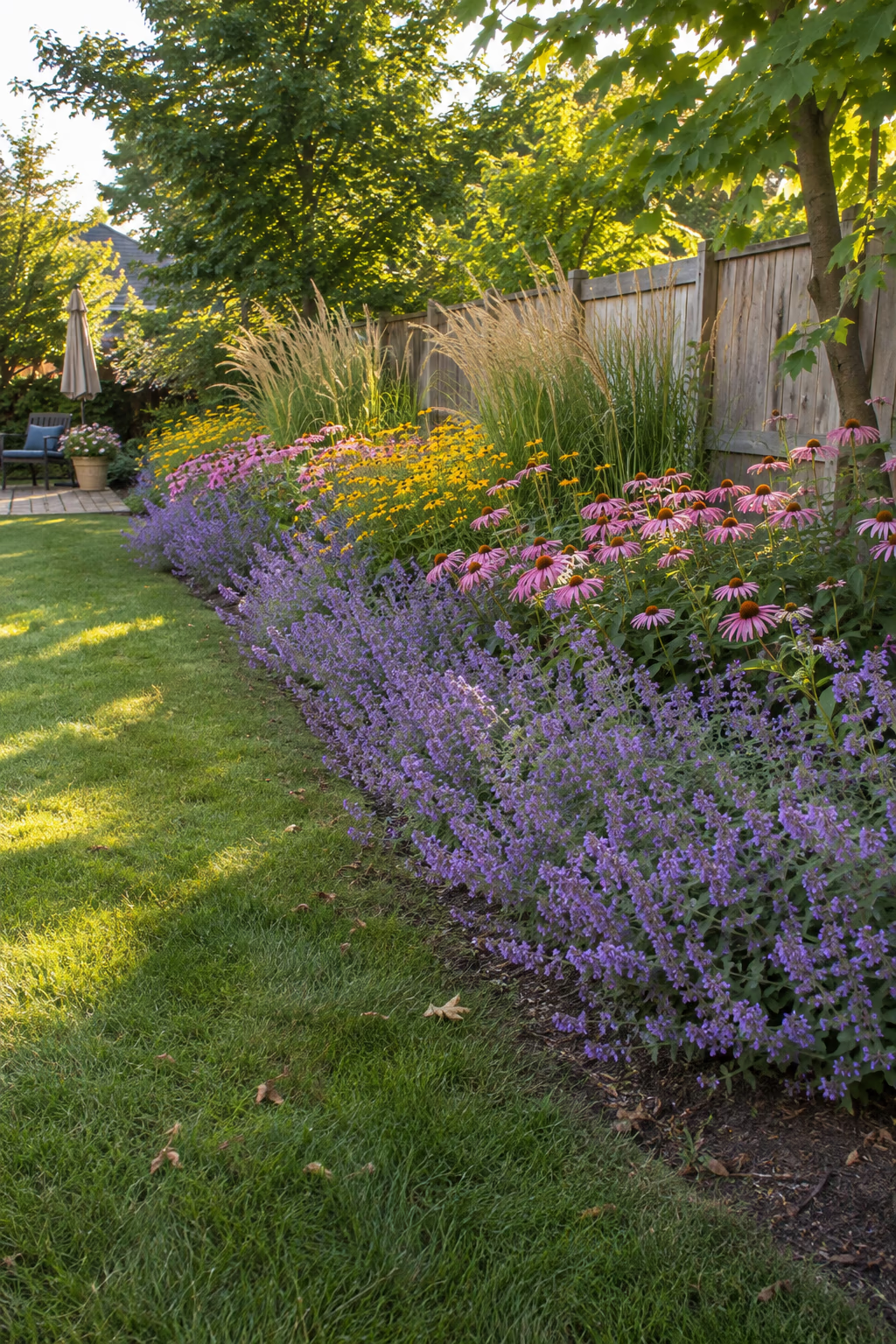
A calmer look that’s simpler to care for
A bed with one of everything takes a lot of work, because each plant has its own needs and timing. Pick five to seven reliable perennials instead and plant each one in a group of three, five, or more, so the bed reads as bold sweeps of color.
Drifts look fuller and more designed, and they make care easier. You can shear a whole patch of catmint in one pass, and when everything in a section needs the same water and light, there’s less to keep track of.
Buying several of the same plant can cost more at first. Smaller pots or plants divided from a neighbor’s garden fill in within a season or two and keep the budget down.
11. Carpet the Gaps With Creeping Groundcovers
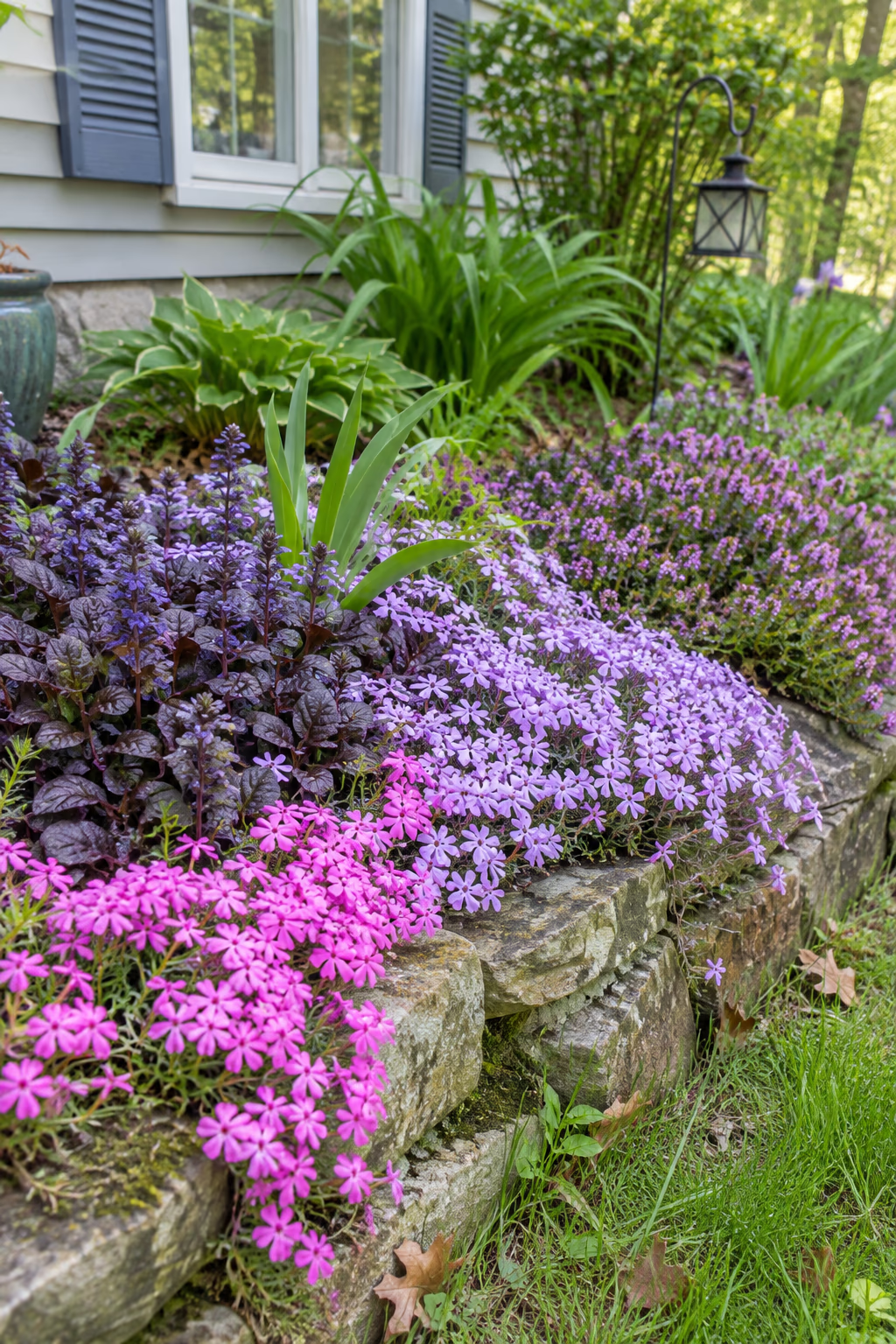
Living mulch that crowds out weeds
Bare soil between plants is an open invitation to weeds. Low, spreading plants such as creeping thyme, creeping phlox, ajuga, and low sedums knit into a mat that shades the ground and leaves weeds little room.
Plant groundcovers about 12 inches apart along the front of the bed and in the gaps between larger perennials. Many of them bloom in spring, adding a sheet of color at ground level before the main show starts.
Some groundcovers spread faster than others. Steer clear of aggressive choices such as goutweed and creeping Jenny in beds you want to keep neat, and check your local invasive list first.
12. Terrace a Sloped Bed With Stone and Sedums
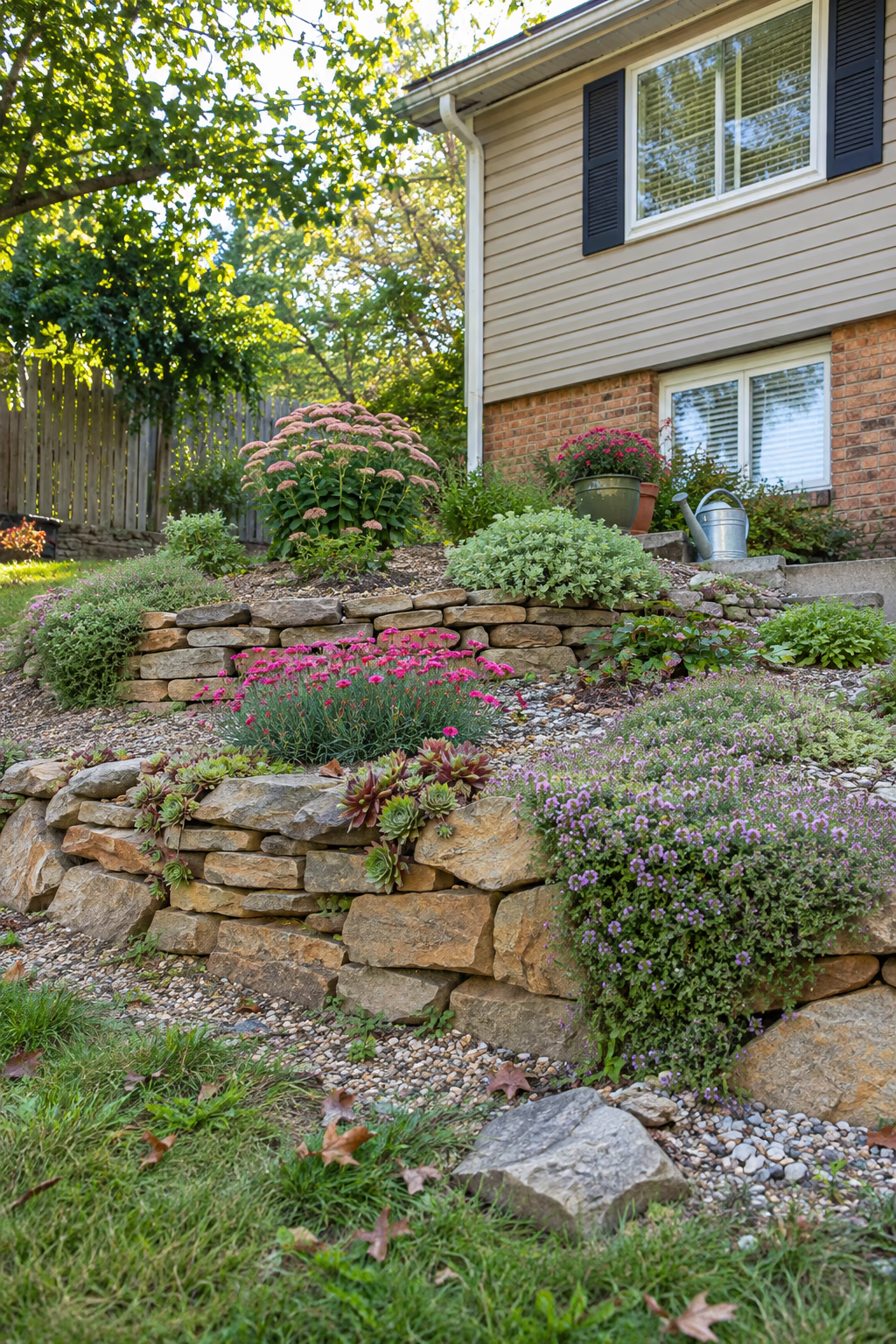
Tames a hard-to-mow hill
Mowing a steep slope is unpleasant and can be unsafe. Turn the slope into two or three shallow terraces held by low walls of stacked fieldstone or wall block, each about 12 to 18 inches tall, and plant the pockets with sedums, creeping thyme, dianthus, and hens and chicks.
These rock garden plants like the quick drainage a slope gives them, and the stones soak up warmth and protect their roots. Once they’re established, the bed needs only occasional weeding.
Low dry-stacked walls are a manageable DIY project, but taller retaining walls may need engineering, drainage, and a permit. Check local rules for anything over about 3 feet, and call 811 before you dig.
13. Let Self-Seeding Annuals Fill In Each Year
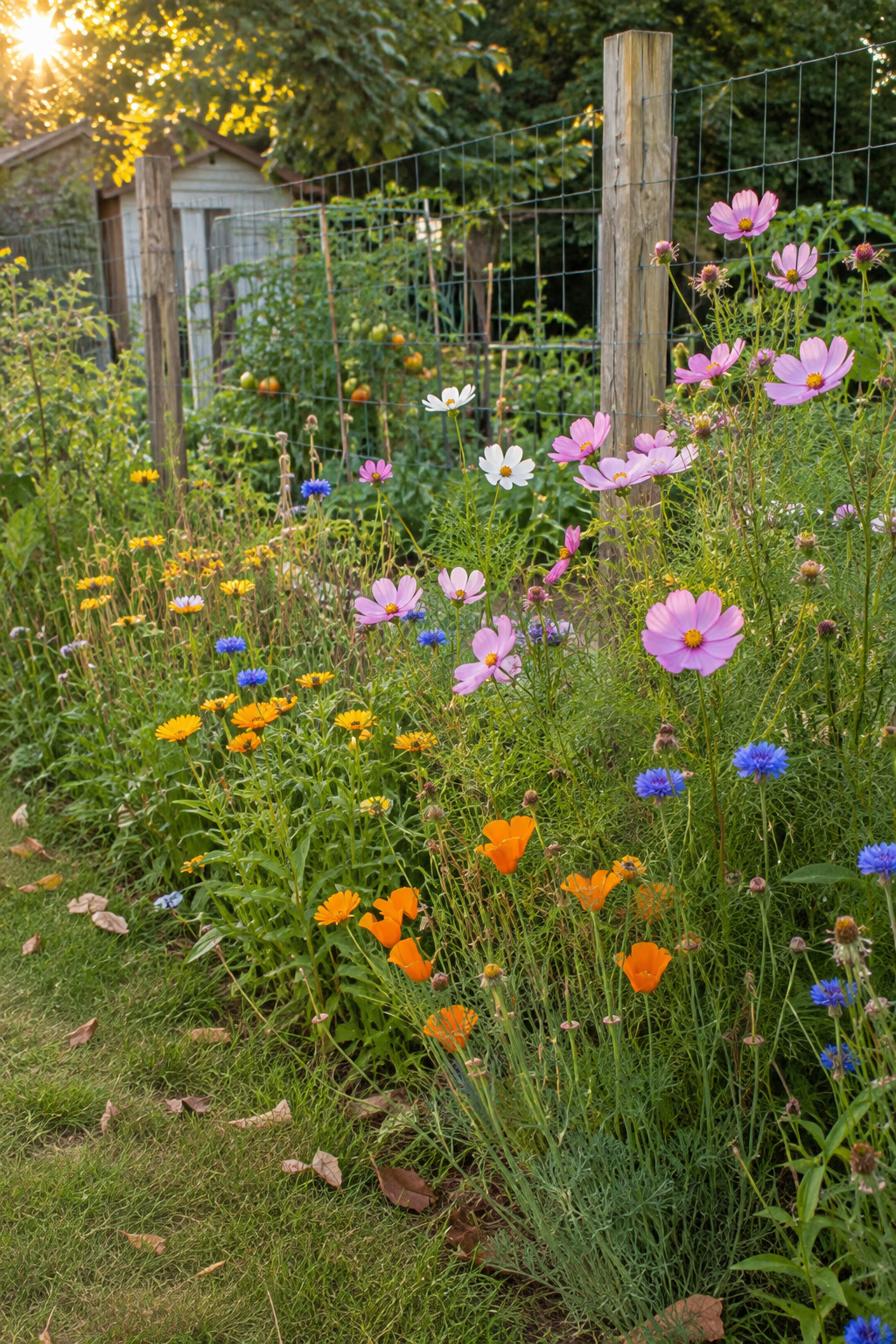
Sow once and let the bed replant itself
Some annuals drop seed that comes up again the next spring, giving you a loose, meadow-like bed you don’t have to replant. Cosmos, cornflowers, California poppies, calendula, and love-in-a-mist are easy self-sowers in many regions.
Scatter seed over loosened soil in fall or early spring, keep it damp until seedlings appear, and leave some flowers to set seed at the end of the season. Each year the plants move around a little, which keeps the bed looking natural.
Seedlings won’t come up through thick mulch, so leave some areas with only a light covering. Pull extras in late spring if they come up too thick.
14. Circle a Tree With a Shallow Groundcover Bed
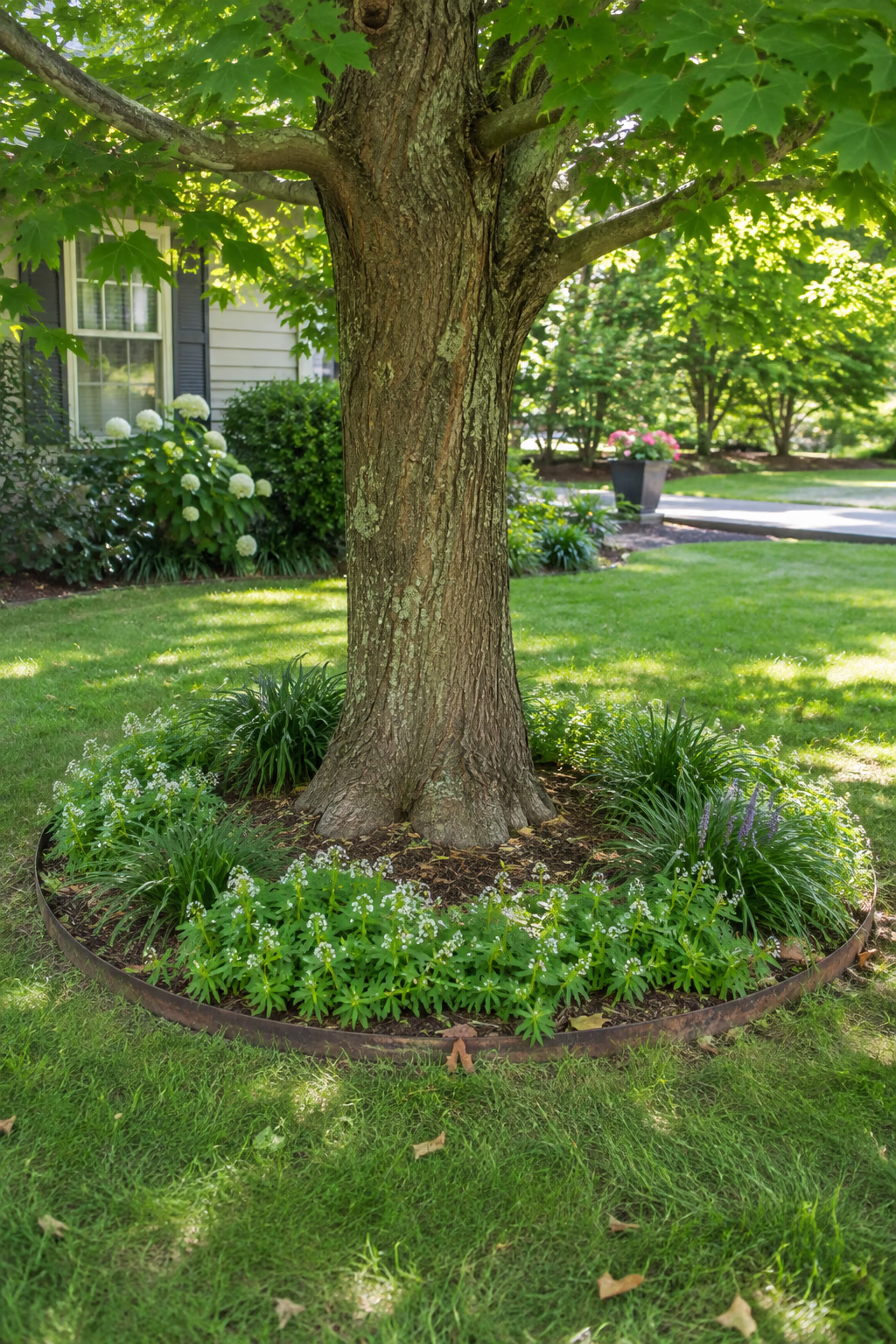
No more mowing around roots and trunks
Grass often thins out under trees, and mowing around the trunk risks bumping the bark. A ring-shaped bed around the tree solves both problems. Fill it with shade-tolerant groundcovers such as sweet woodruff, epimedium, wild ginger, or lilyturf, plus a few spring bulbs.
Work gently: use small plants, dig individual holes between the roots, and don’t cut roots thicker than about an inch. A light layer of mulch finishes the bed.
Never pile soil against the trunk or build a raised bed over the root zone. Even a few inches of extra soil can starve roots of oxygen and slowly damage the tree.
15. Turn a Soggy Low Spot Into a Rain Garden Bed
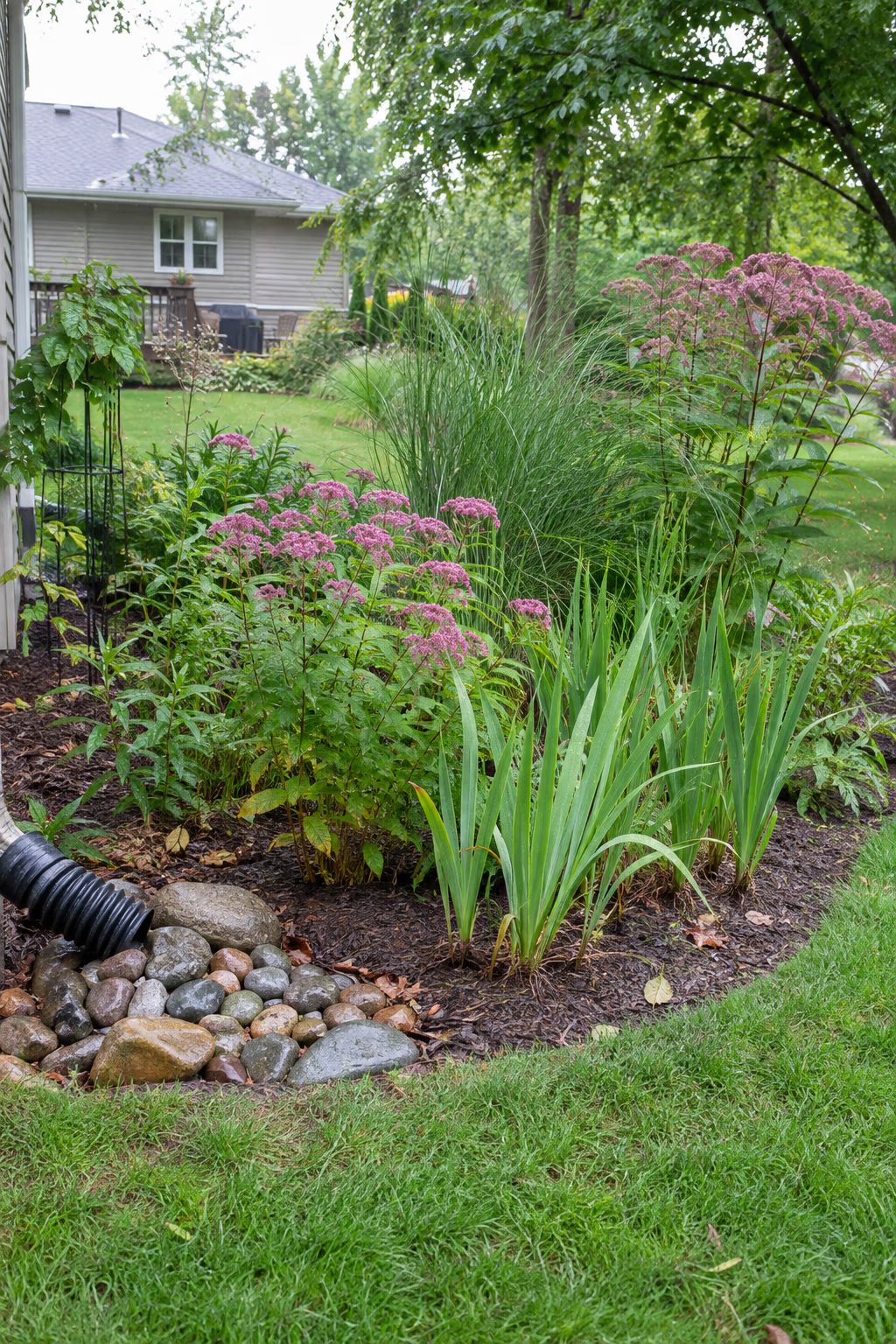
Puts a drainage problem to work
If one part of your yard stays wet after storms, plant a bed there that likes it. A rain garden is a shallow, bowl-shaped bed, usually 4 to 8 inches deep, that collects runoff and lets it soak in over a day or two. Fill it with plants that can take both wet and dry spells, such as swamp milkweed, blue flag iris, switchgrass, and Joe Pye weed.
These tough, mostly native plants need no extra watering once established and attract butterflies and other pollinators.
Keep a rain garden at least 10 feet from your house foundation, and don’t put one over a septic field. If water still sits for more than two days, the soil may need amending or the bed may need to be bigger.
16. Plant a Tough Mailbox Bed With Daylilies and Sedum
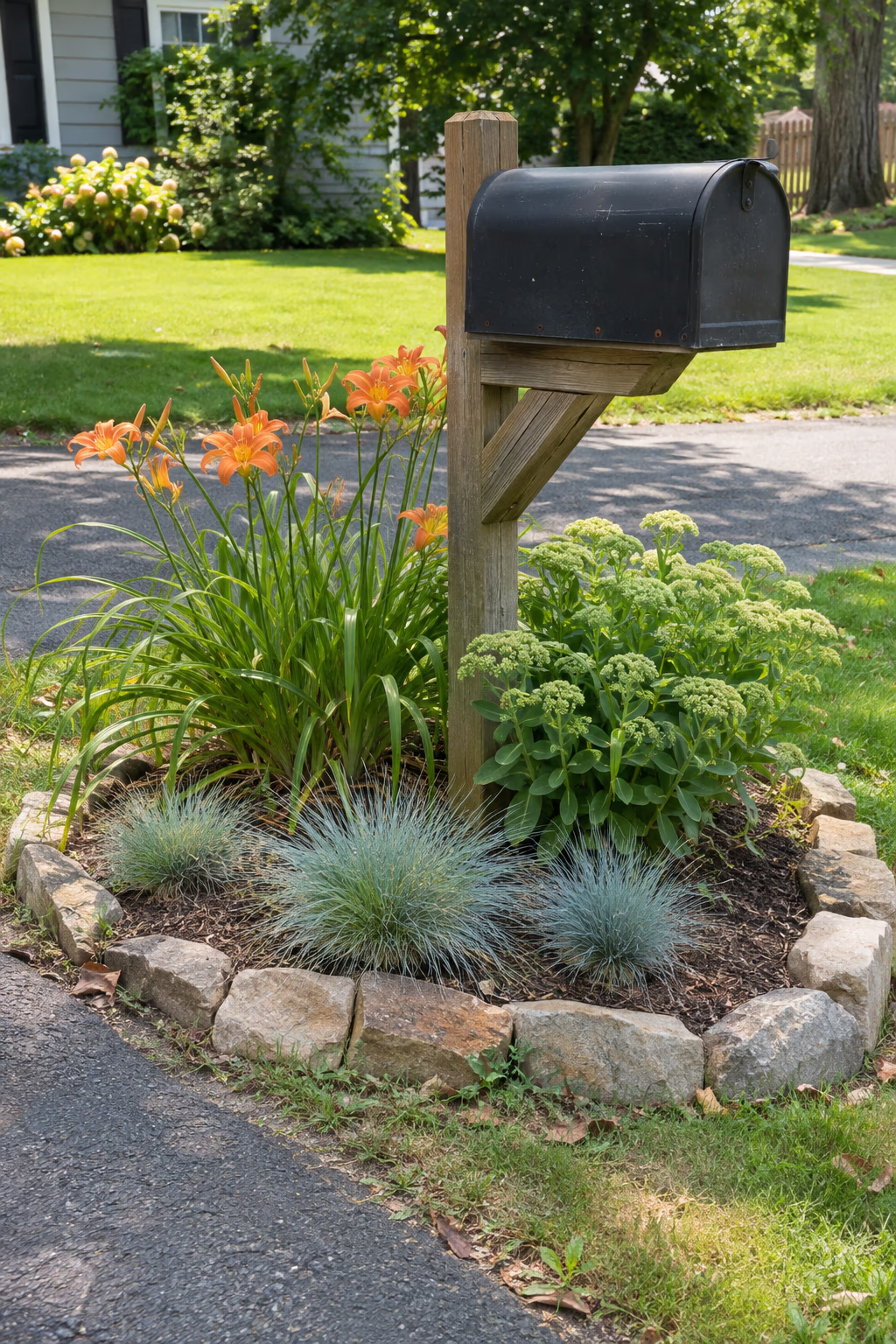
Survives heat, road salt, and neglect
The bed around a mailbox post usually gets hot reflected sun, little water, and the occasional splash of road salt. Daylilies and upright sedum are two of the toughest plants for the job. Add a low edge of blue fescue or creeping thyme for contrast.
A small bed about 3 to 4 feet across is plenty. Mulch it well, and the plants will bloom from early summer through fall with almost no care.
Keep plants low enough that they don’t block the mailbox door or the carrier’s reach, and leave space for snow from the plow in cold regions. Some towns and HOAs also have rules about plantings near the street.
17. Run Drip Irrigation Under the Mulch
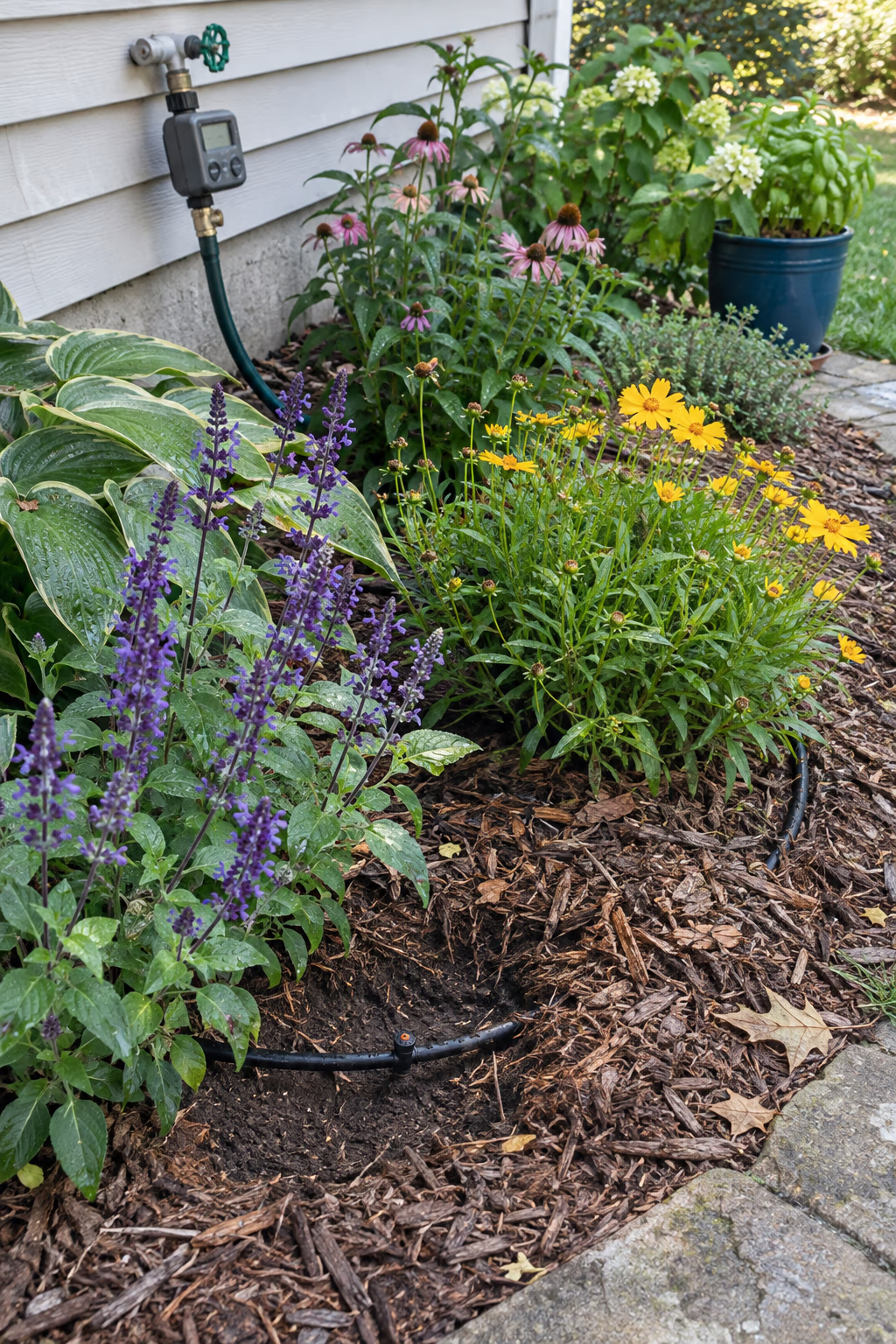
Water goes to the roots on autopilot
A simple drip system puts water right at the base of each plant, with less waste than a sprinkler and without wetting the leaves, which can lead to disease. Lay drip line or soaker hose in loops through the bed, cover it with mulch, and connect it to a battery-powered hose timer at the spigot.
Starter kits are inexpensive and easy to put together with basic tools. Set the timer to water deeply and less often, such as once or twice a week, to encourage deep roots.
Use a backflow preventer and pressure regulator if your kit includes them. Check the lines each spring for leaks or chewed tubing, and drain the system before a hard freeze.
18. Mound a Berm Bed for Better Drainage
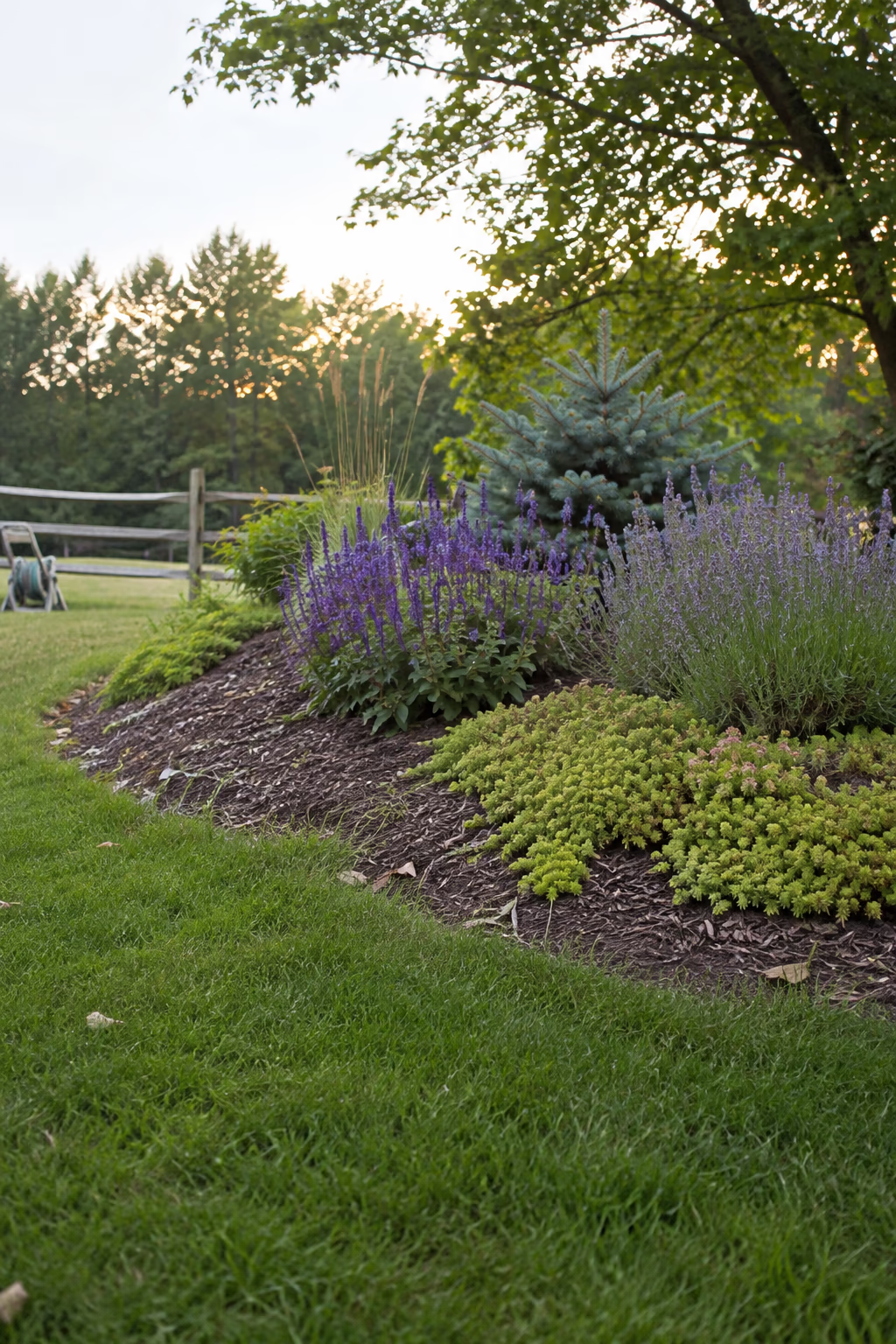
Gives plants that hate wet feet a lift
If your soil is heavy clay, a berm can help. Build a gently sloped mound of a topsoil and compost blend about 12 to 18 inches high at the center, with long, gradual sides. This raises the plants’ roots above soggy ground and lets you grow lavender, salvia, and other plants that rot in wet soil.
A berm also adds height and interest to a flat yard. Place the tallest plants near the top and let low ones spill down the sides.
Make the berm about four to six times wider than it is tall so the soil doesn’t wash away, and mulch it right away. A berm can also redirect runoff, so make sure it doesn’t send water toward your house or a neighbor’s yard.
19. Choose Self-Cleaning Annuals That Skip Deadheading
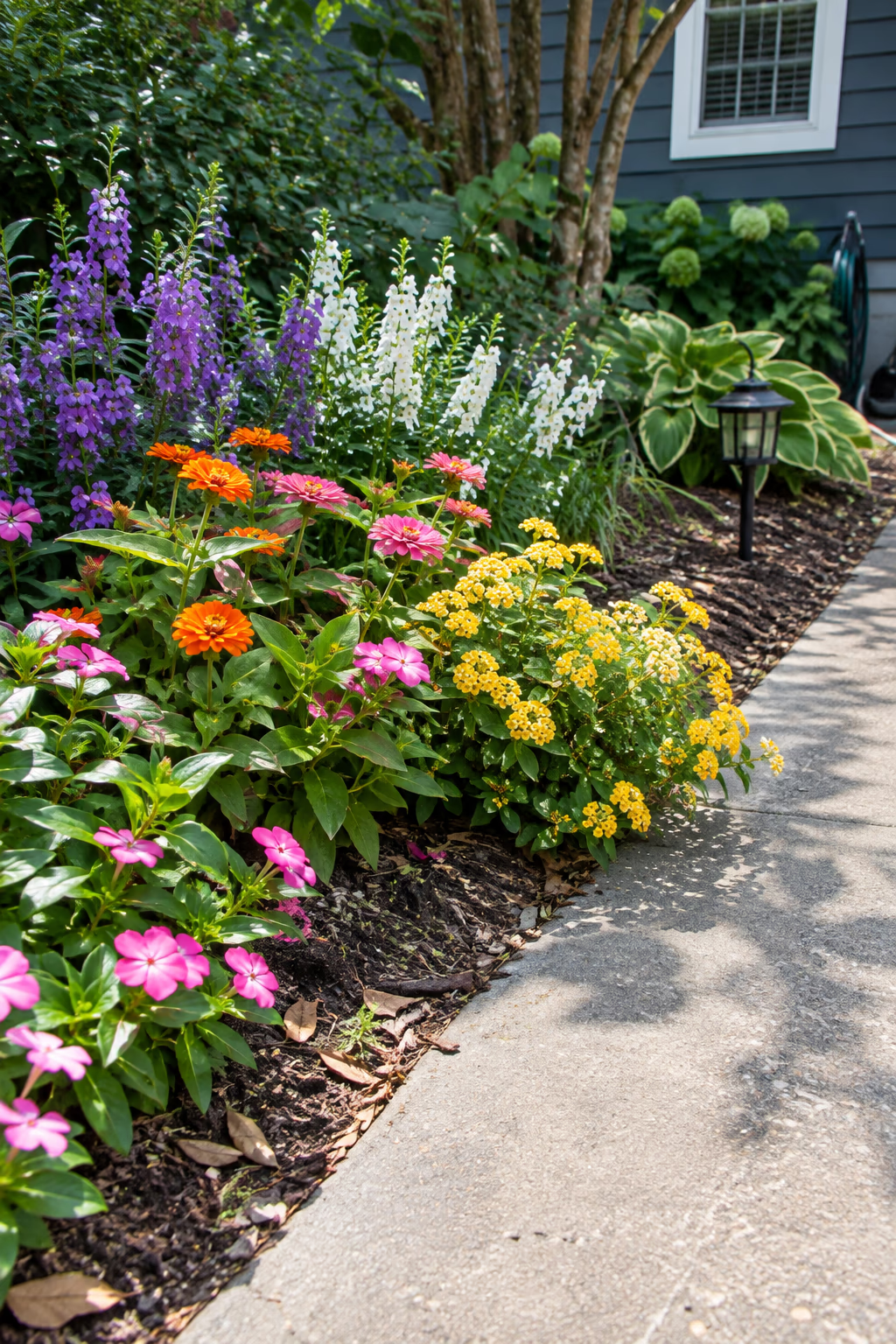
Nonstop color without the snipping
Many older annuals need spent flowers removed to keep blooming. Some newer ones drop their old blooms on their own and keep flowering until frost. Good picks include angelonia, compact disease-resistant zinnias, Madagascar periwinkle, wax begonias, and many lantanas.
Use them to fill gaps at the front of the bed or in a sunny section where perennials haven’t filled in yet. They handle summer heat well and need only occasional watering once established.
Annuals do need replanting each spring, which adds some cost. Keep them to a few small pockets so the bed’s main structure comes from perennials and shrubs.
20. Add Dwarf Conifers as Year-Round Bed Anchors
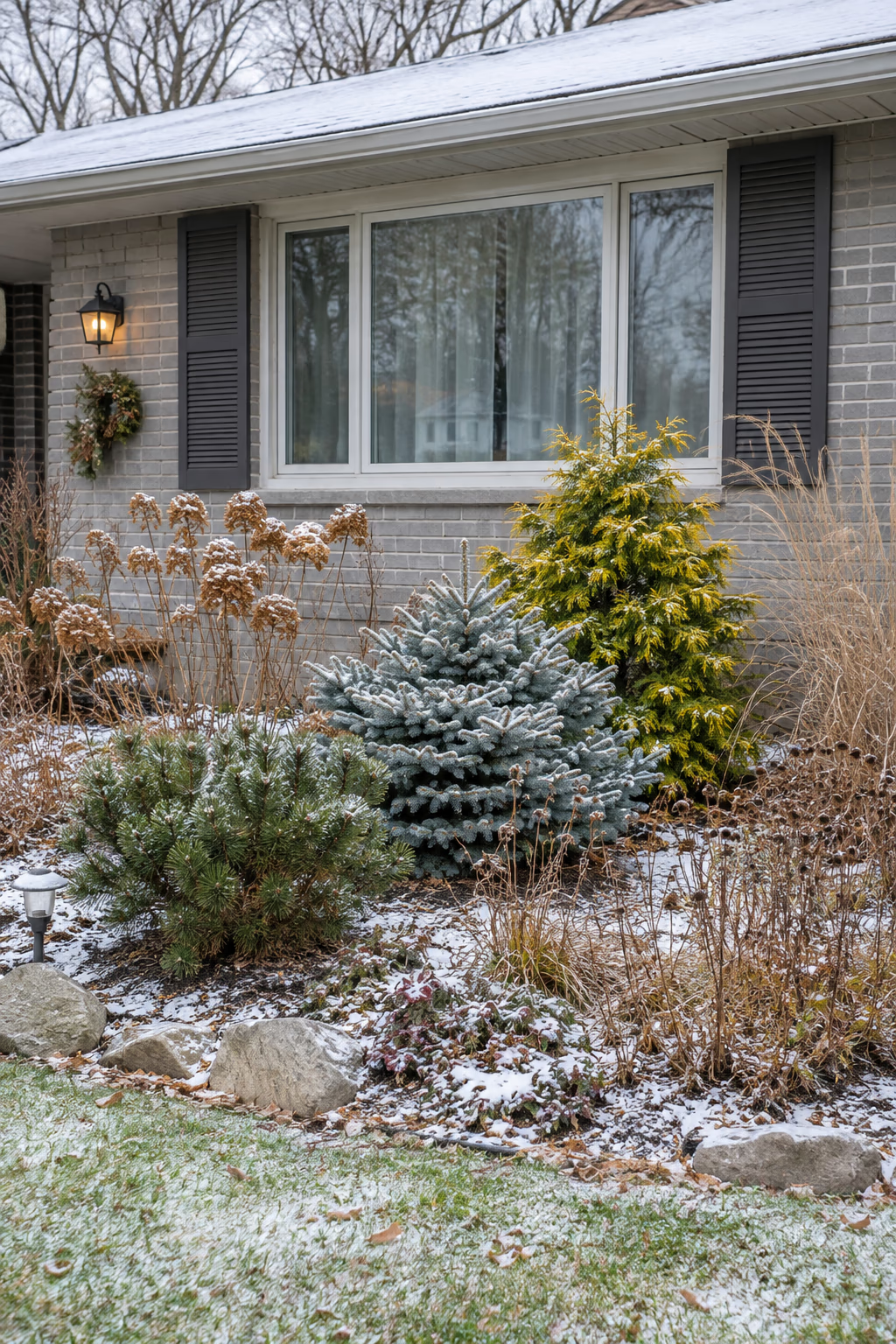
Green, blue, and gold through the winter
When perennials die back in fall, a flower bed can look bare until spring. A few dwarf conifers keep it looking finished. Dwarf globe blue spruce, dwarf Alberta spruce, mugo pine, and gold-tipped false cypress come in tidy, slow-growing shapes and bright foliage colors.
Place one or two as focal points, often near a corner or the front edge, and plant flowers around them. They rarely need pruning, and their shapes give the bed structure all year.
“Dwarf” means slow-growing, not tiny forever. Check the size at 10 years on the tag, and give these plants room to grow without crowding.
21. Leave Seed Heads Standing for a Lighter Fall Cleanup
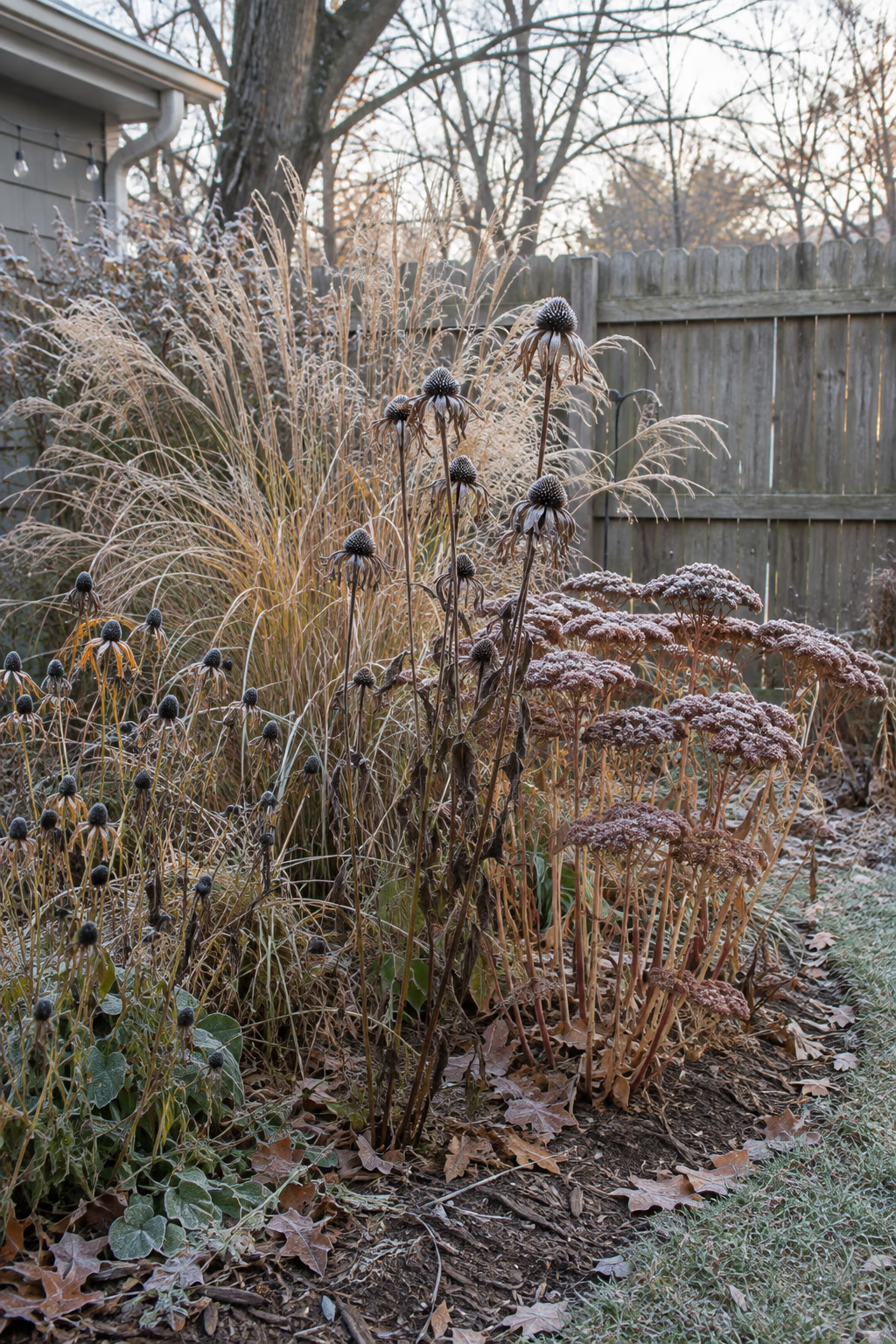
Less work in autumn and more winter interest
You don’t need to cut everything to the ground in fall. Coneflower, black-eyed Susan, sedum, and ornamental grass seed heads look beautiful with frost or snow on them, and birds such as goldfinches eat the seeds.
Hollow stems and leaf litter also give overwintering beneficial insects a place to shelter. Cut everything back in one session in early spring, before new growth gets tall.
Remove any foliage that showed disease, such as powdery mildew on bee balm or phlox, in fall. Leaving it in place can carry problems over to next year.
22. Smother Weeds With Cardboard Before You Plant
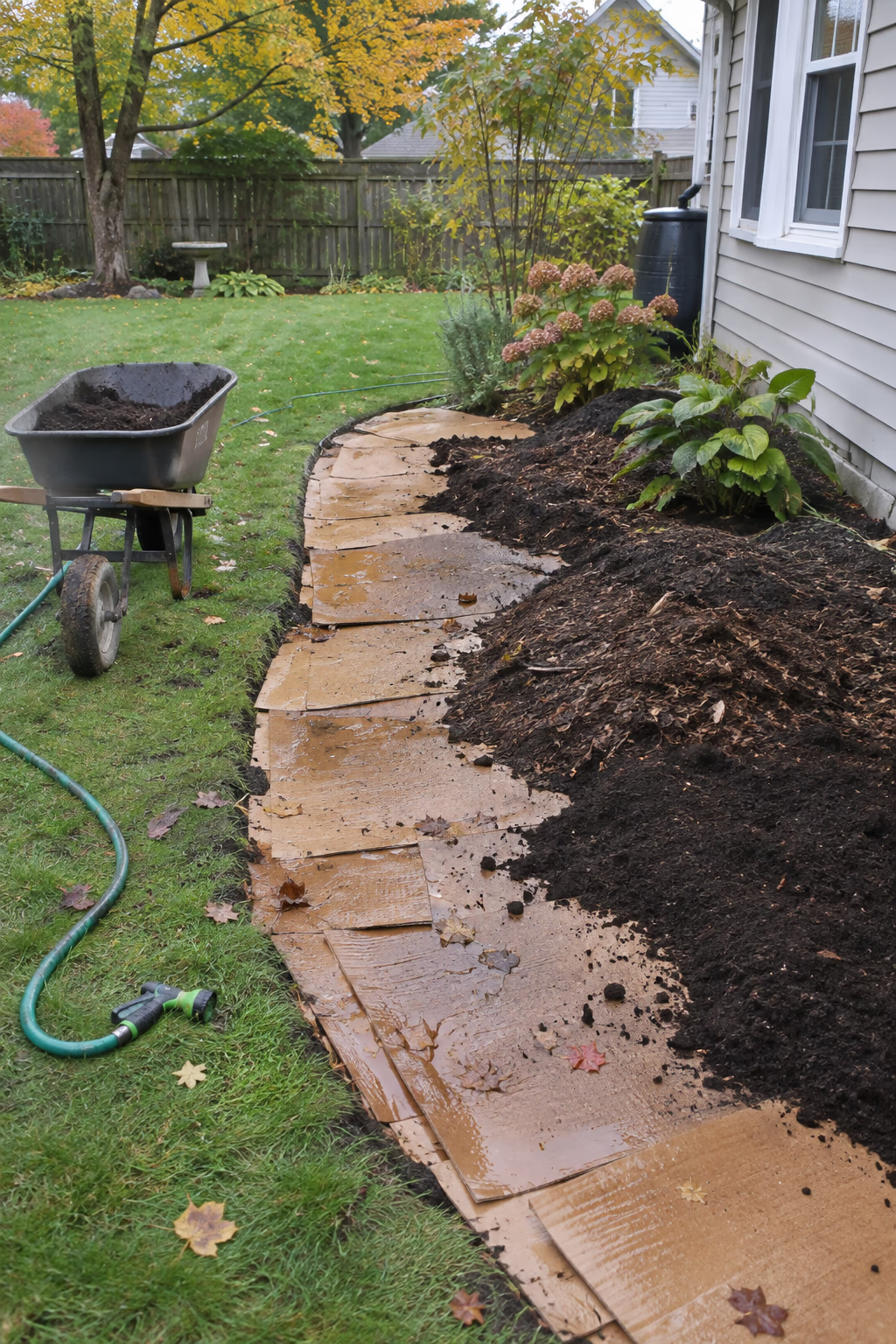
A new bed without digging up sod
Sheet mulching lets you turn lawn or a weedy patch into a flower bed without stripping turf. Mow the area short, lay plain brown cardboard with seams overlapping by several inches, soak it with water, then top it with 3 to 4 inches of compost and mulch.
The cardboard blocks light and smothers the grass and weeds underneath, then breaks down into the soil over a few months. When you’re ready to plant, cut through it to make planting holes.
Remove tape and labels, and avoid glossy or coated cardboard. Tough perennial weeds such as bindweed may still push through, so it works best with fall preparation for spring planting.
23. Fill a Hellstrip Bed With Heat-Proof Plants
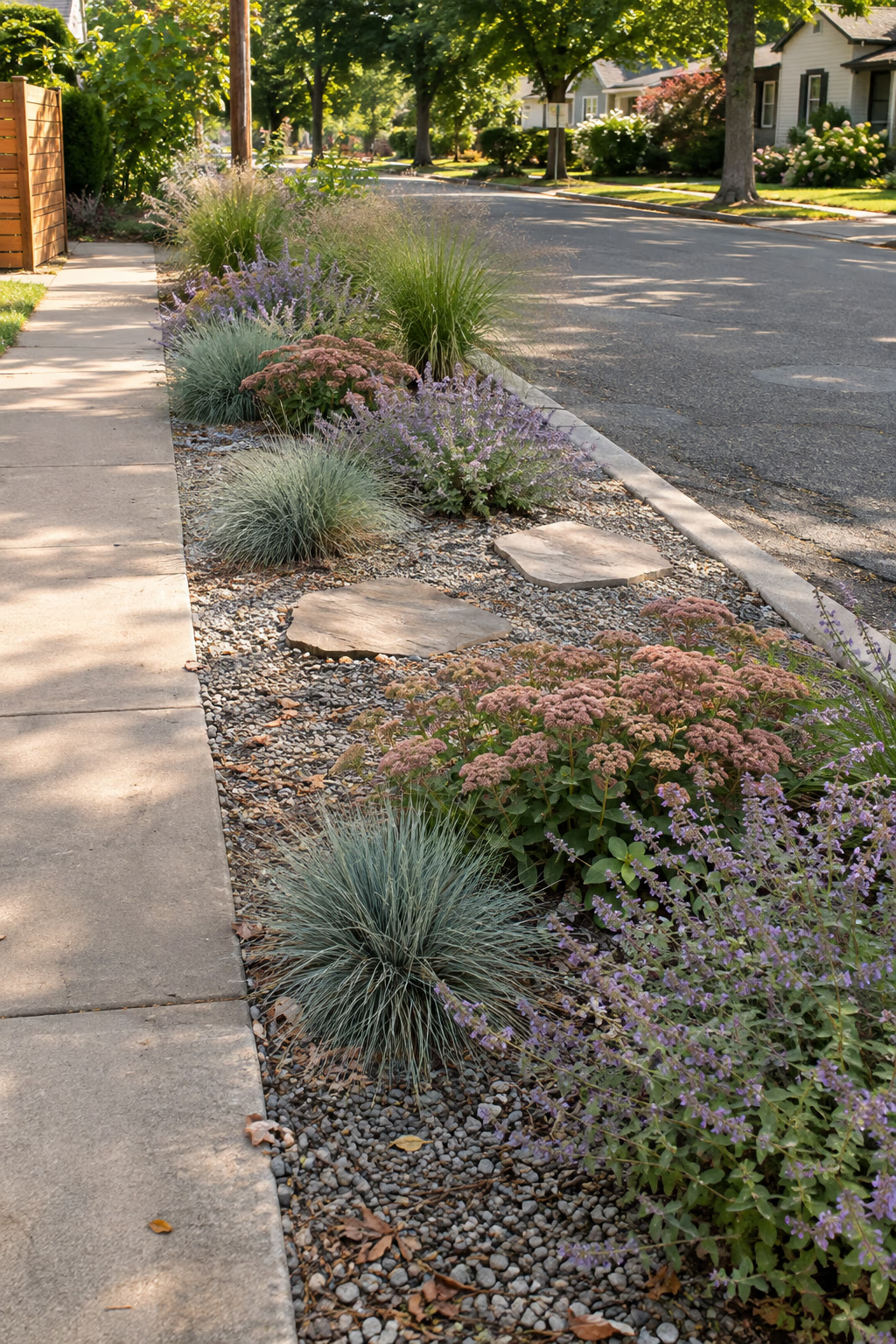
Turns the hardest strip of grass into a garden
The strip between the sidewalk and the street is hot, dry, and hard to water and mow. Plant it with tough, low growers such as blue fescue, catmint, prairie dropseed, sedum, and hardy ice plant instead of grass.
Keep plants under about 2 feet tall so they don’t block the view of drivers and people backing out of driveways. Leave a stepping-stone or gravel path every so often so people getting out of parked cars don’t trample the bed.
This strip often belongs to the city even though you maintain it. Check local rules before planting, and call 811 before digging, since utility lines often run under it.
How to Plan Your Low Maintenance Flower Bed
A flower bed that takes care of itself is mostly about good decisions made at the start. Spend a little time planning, and you’ll save many hours of work later.
- Watch your light first. Track how many hours of direct sun the spot gets on a summer day, then choose plants for those conditions instead of trying to change them.
- Know your zone and soil. Check your USDA hardiness zone and do a simple drainage test by filling a hole with water to see how fast it drains.
- Use fewer kinds of plants. A short list of proven performers planted in groups is easier to care for than a long list of single plants.
- Space for mature size. Plant to the width on the tag, and fill gaps with annuals or mulch while plants grow in.
- Cover every bit of soil. Use mulch, gravel, or groundcovers so weeds have nowhere to sprout.
- Set up edges and water early. Install edging, mowing strips, and drip lines before planting, when it’s easiest, and call 811 before any digging.
Frequently Asked Questions
What are the easiest flowers for a beginner’s bed?
Black-eyed Susan, daylily, catmint, yarrow, upright sedum, and coneflower are some of the most forgiving perennials. They handle a range of soils, come back reliably, and rarely need special care once established.
How often does a low-maintenance bed need watering?
New plantings need regular watering through their first season, often once or twice a week. After that, drought-tolerant beds may need watering only during long dry spells, depending on your climate and soil.
Is landscape fabric a good idea under a flower bed?
It can help under gravel paths or rock beds, but in perennial beds it often causes trouble. Mulch collects on top, weeds root into it, and it makes dividing or adding plants harder. A thick layer of organic mulch usually works better.
When is the best time to plant a new flower bed?
Early fall and spring are best in most of the country. Fall planting gives roots time to settle in cooler weather, and spring planting works well before summer heat arrives.
How much does it cost to create a low-maintenance flower bed?
A small DIY bed using small perennials, mulch, and simple edging may cost a few hundred dollars. Larger beds with shrubs, stone, drip irrigation, or professional installation can run much higher, so building in stages helps spread out the cost.
Final Thoughts
A low-maintenance flower bed isn’t a no-maintenance bed, but it comes close. Pick tough plants that match your sun and soil, cover the ground, and set up good edges and watering, and the bed can look good through most of the season with only a few hours of work.
Start with one or two ideas from this list, such as a drought-tolerant perennial bed or a fresh layer of mulch, and see how your yard responds. Over a few seasons, you can add more of these strategies and enjoy a yard that looks cared for without taking up your weekends.