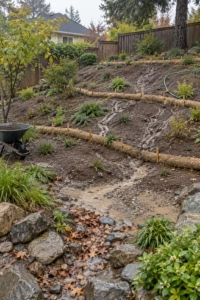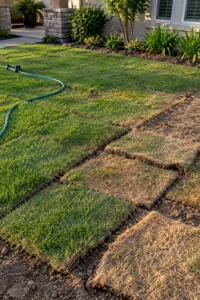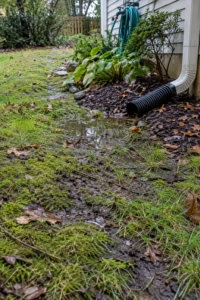
Every yard has one: the corner where two fence lines meet, where the patio stops, or where the driveway meets the street. The mower can’t quite reach it, weeds move in, and it quietly becomes the least attractive spot on the property.
Corners are also some of the easiest places to make a big impact. They come with built-in backdrops, they draw the eye naturally, and a single well-planted angle can make the whole yard feel finished. Because the space is defined on two sides, even a small bed looks intentional instead of random.
These 25 corner flower bed ideas cover curved fence beds, climbing roses, pollinator plantings, shady nooks, raised corner beds, gravel gardens, and practical fixes for driveway and downspout corners. Pick one that fits your light, budget, and style, or combine a few to turn every awkward angle into a highlight.
1. Sweep a Quarter-Round Bed Into the Fence Corner
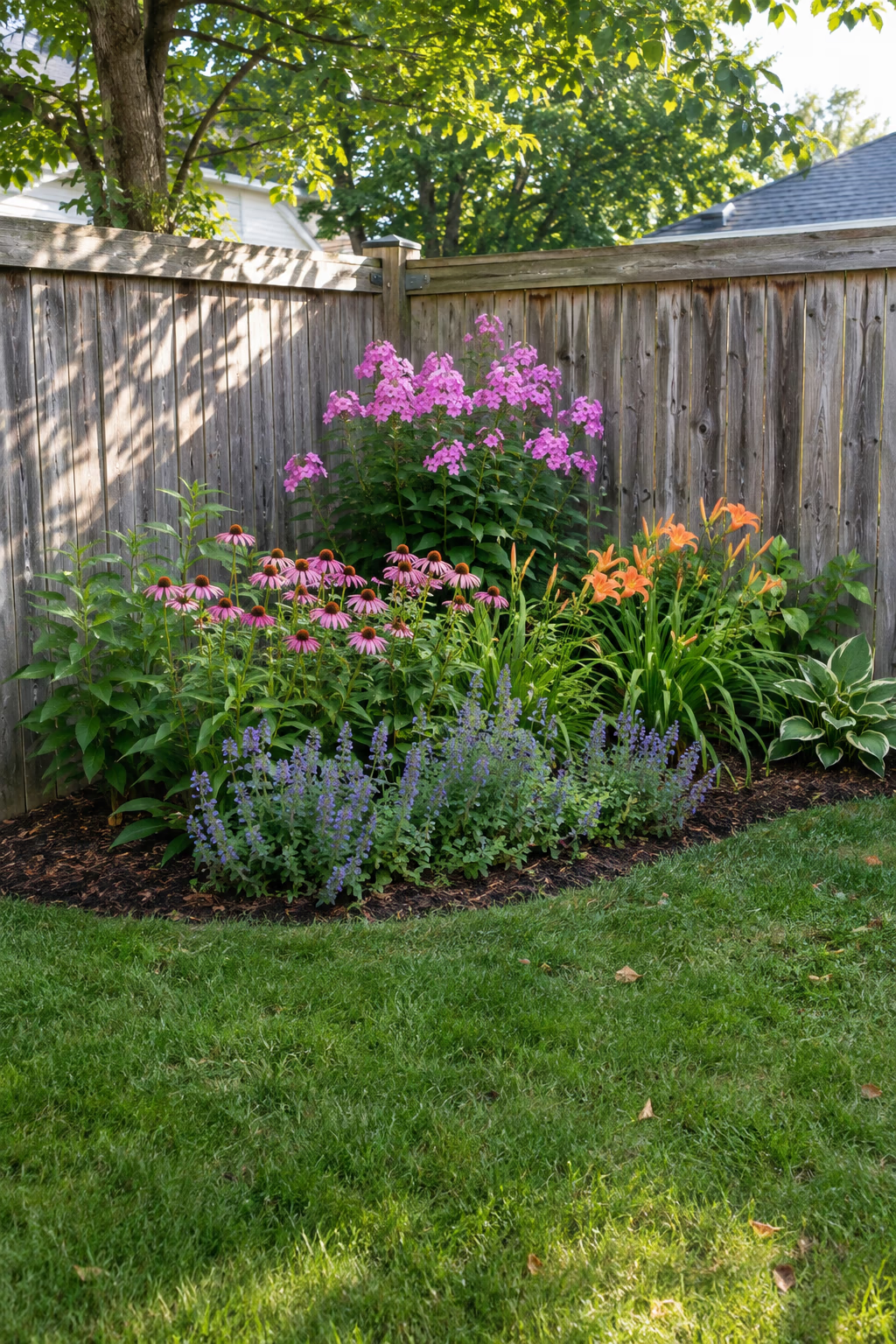
A soft curve that erases the hard angle
A quarter-round bed is the classic corner shape for good reason. Drive a stake into the exact corner, tie on a string 6 to 8 feet long, and walk it in an arc from one fence line to the other while marking the ground with spray paint. Strip the sod inside the line, loosen the soil, and work in 2 to 3 inches of compost.
The curved front edge is easy to mow around, and the shape naturally guides you to put the tallest plants at the back point, such as phlox or a compact shrub, with coneflowers, daylilies, and catmint stepping down toward the lawn.
Finish the curve with a crisp edge, either a hand-cut trench or flexible steel or plastic edging, so grass doesn’t creep back in. Leave a narrow strip open along the fence so you can reach the back for weeding and fence repairs.
2. Train a Climbing Rose and Clematis Up a Corner Trellis
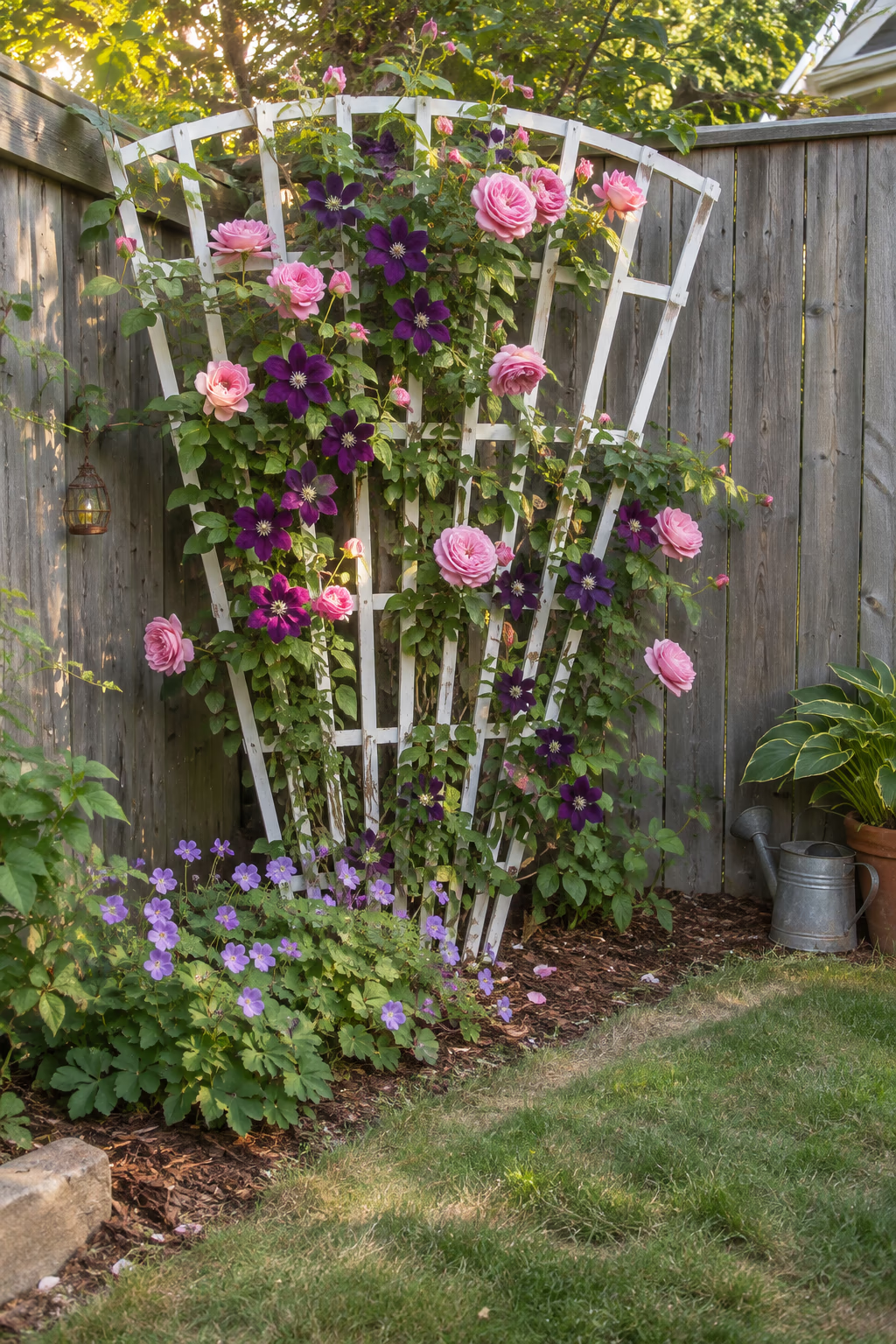
Vertical color where two fences meet
A corner is a natural place to go up instead of out. Set a fan-shaped or flat lattice trellis in the angle, mounted on posts or brackets 6 to 12 inches in front of the fence so air can circulate. Plant a repeat-blooming climbing rose on one side and a clematis on the other, and they will weave together into a wall of flowers.
The pairing works because the clematis can scramble through the rose’s canes, often extending the bloom season. Tie rose canes as close to horizontal as you can, since that encourages more flowering shoots.
Roses need at least six hours of sun, while clematis likes its roots cool, so shade the clematis base with a low perennial or a flat stone. If the fence belongs to a neighbor, use a freestanding trellis rather than attaching anything to their boards.
3. Plant a Butterfly Corner With Nectar-Rich Perennials
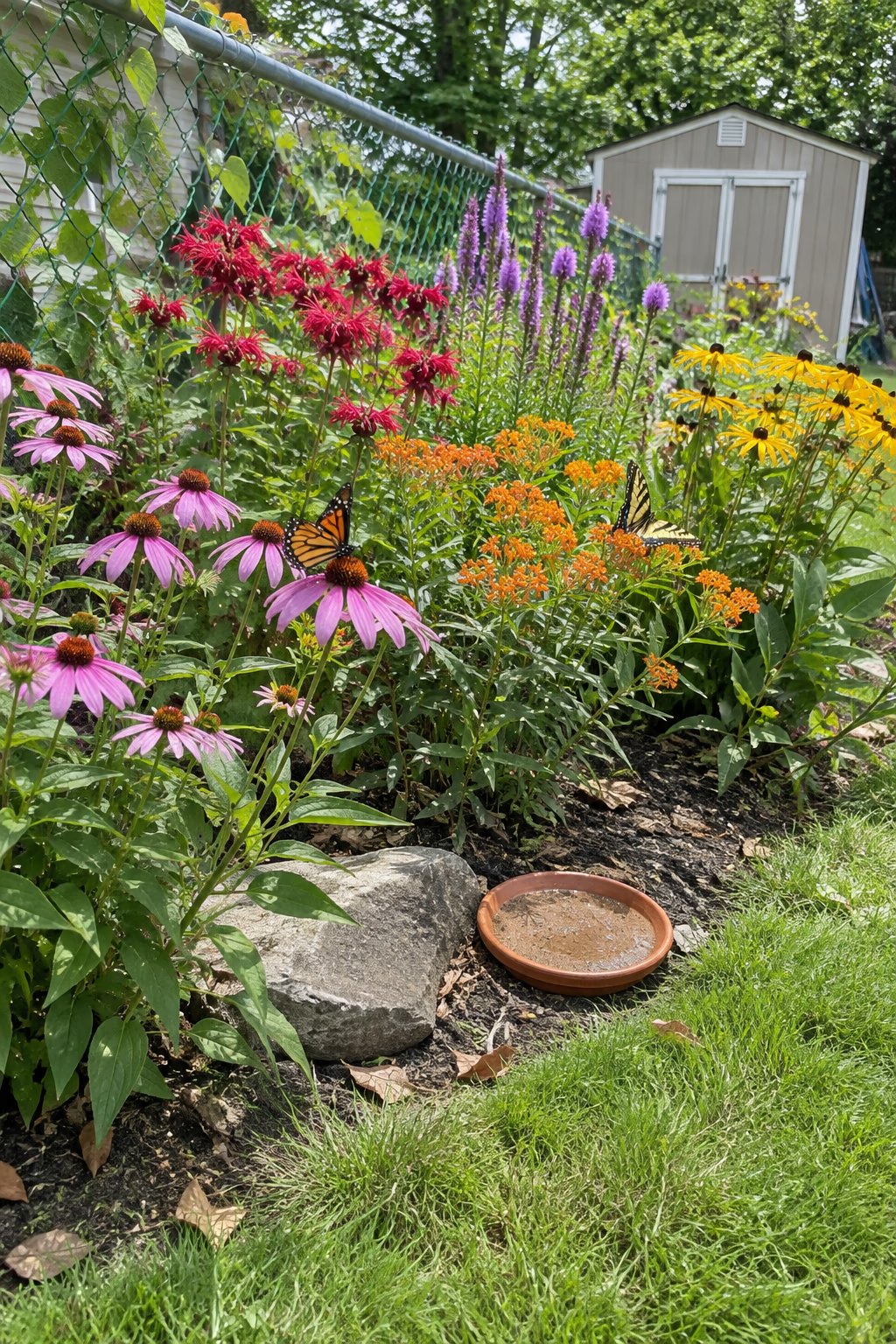
A busy, fluttering spot all summer
Sunny corners are often sheltered from wind on two sides, which makes them ideal for butterflies. Fill the bed with nectar plants that bloom in sequence: bee balm and milkweed in early summer, purple coneflower and blazing star in midsummer, and asters and goldenrod in fall.
Plant in clumps of three to five of the same flower so butterflies can find them easily, and add a few host plants such as milkweed for monarchs or parsley and dill for swallowtails. A flat stone for basking and a shallow saucer of wet sand make the corner even more inviting.
Skip broad-spectrum insecticides in this bed, and expect some chewed leaves on host plants. That damage is a sign the garden is doing its job.
4. Wrap an L-Shaped Bed Around a Patio Corner
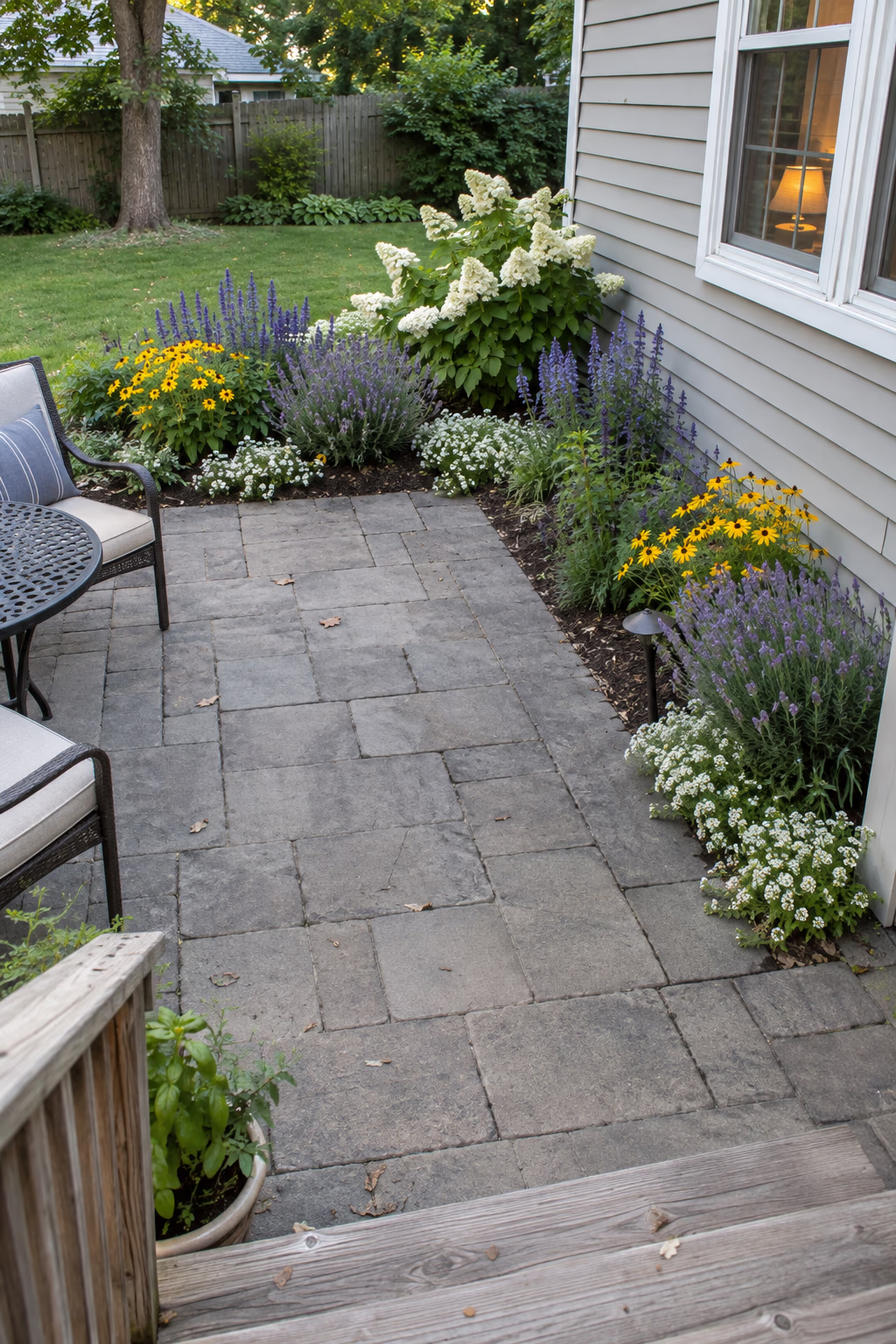
Soften hard edges right where you sit
A bare patio corner can feel stark. An L-shaped bed running 2 to 3 feet deep along both outer edges frames the seating area and makes the patio feel like an outdoor room.
Place a taller anchor plant, such as a dwarf panicle hydrangea or an upright grass, at the corner where the two arms meet, then fill the arms with lower bloomers like salvia, coreopsis, and lavender. Let trailing plants such as creeping thyme or sweet alyssum spill over the edge of the pavers to blur the line.
Keep plants near chairs low and thornless, and choose fragrant ones where you’ll actually smell them. Make sure soil and mulch sit just below the patio surface so rain doesn’t wash debris onto it.
5. Anchor the Corner With a Small Flowering Tree
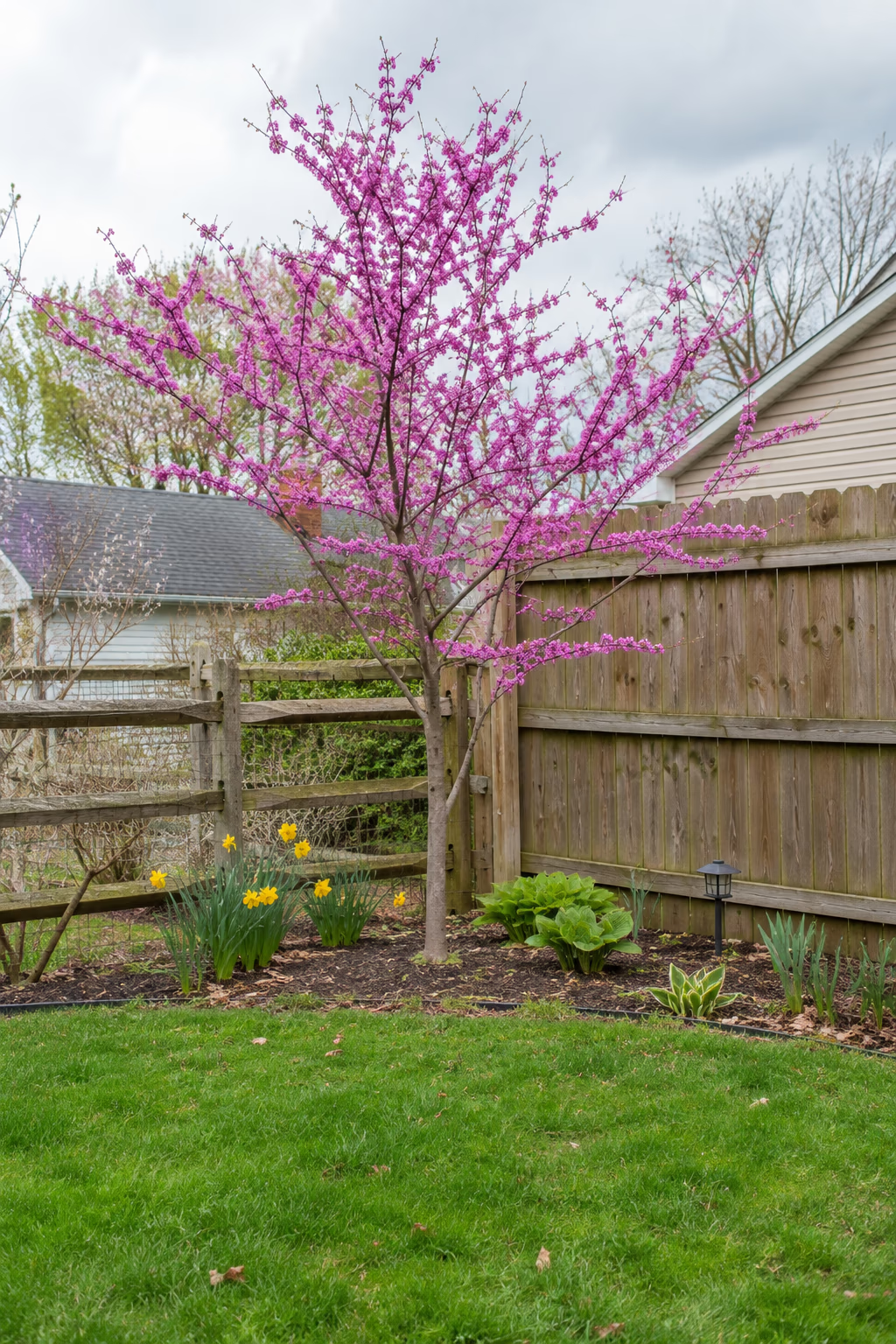
Height, shade, and spring blooms in one plant
A small ornamental tree gives a corner bed instant structure. Eastern redbud, serviceberry, flowering dogwood, and crabapple all stay roughly 15 to 25 feet tall and offer spring flowers, summer shade, and fall color.
Plant the tree slightly out from the corner, typically 6 to 10 feet from each fence depending on its mature spread, so branches don’t hang over the property line. Then ring it with spring bulbs, hostas, or hardy geraniums that tolerate the dappled shade it will eventually cast.
Check mature size on the plant tag, look up overhead power lines, and call 811 before digging the planting hole. A young tree needs regular deep watering for its first two summers.
6. Step Plant Heights Down From the Corner Point
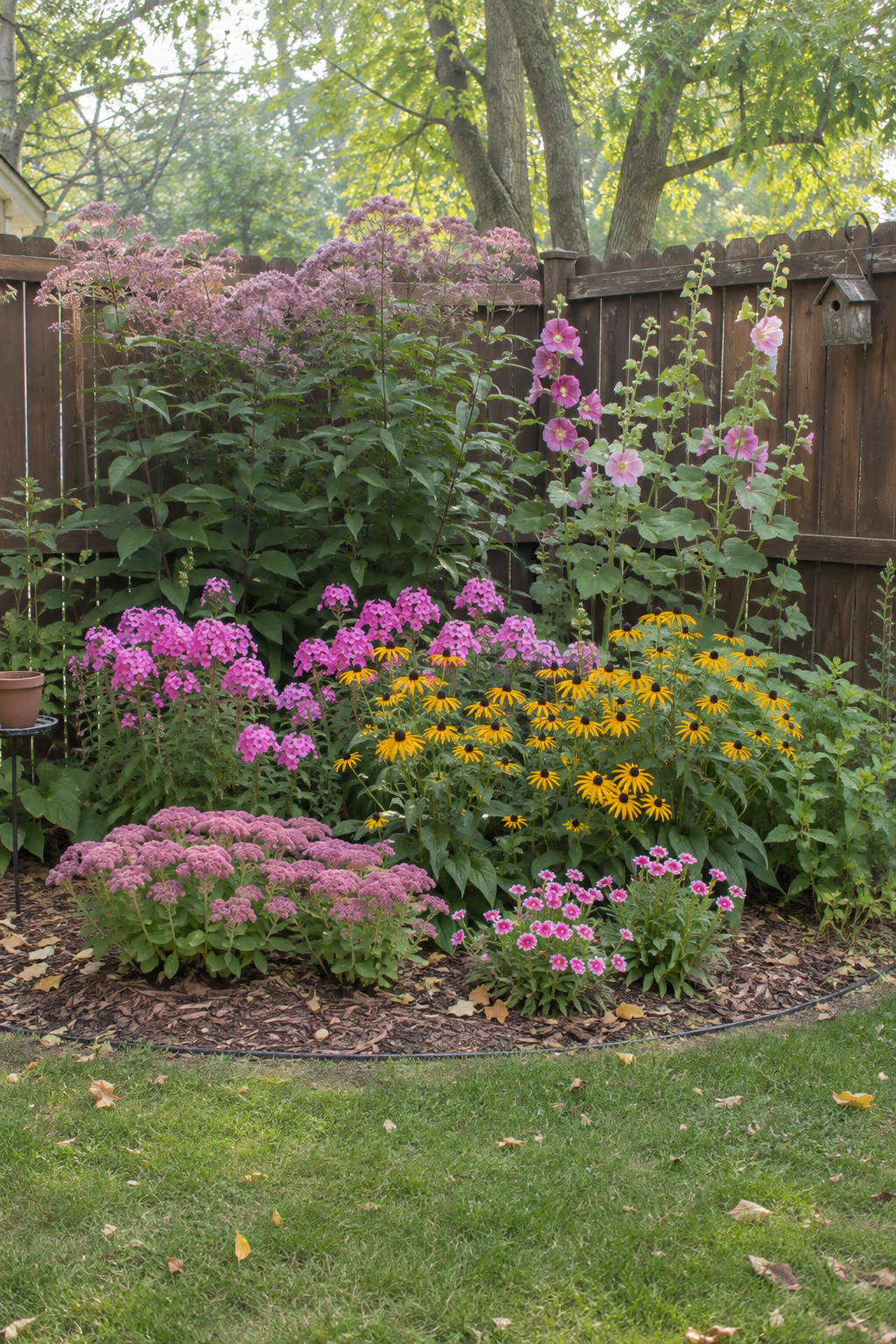
A tiered fan that shows off every plant
In a corner, the deepest point is the back angle, so that’s where your tallest plants belong. Think of the bed as a fan: 4- to 6-foot plants like Joe Pye weed, hollyhock, or a tall grass at the apex, 2- to 3-foot perennials such as phlox and black-eyed Susan in the middle band, and 6- to 12-inch edgers like dianthus or sedum at the front curve.
This arrangement keeps nothing hidden and creates a sense of depth even in a small space. Repeating one front-edge plant along the whole curve ties the design together.
Read mature height and spread, not the size in the nursery pot. Many perennials double in size by their third year, so leave room and fill gaps with annuals until they grow in.
7. Ring the Corner Bed With Fieldstone Boulders
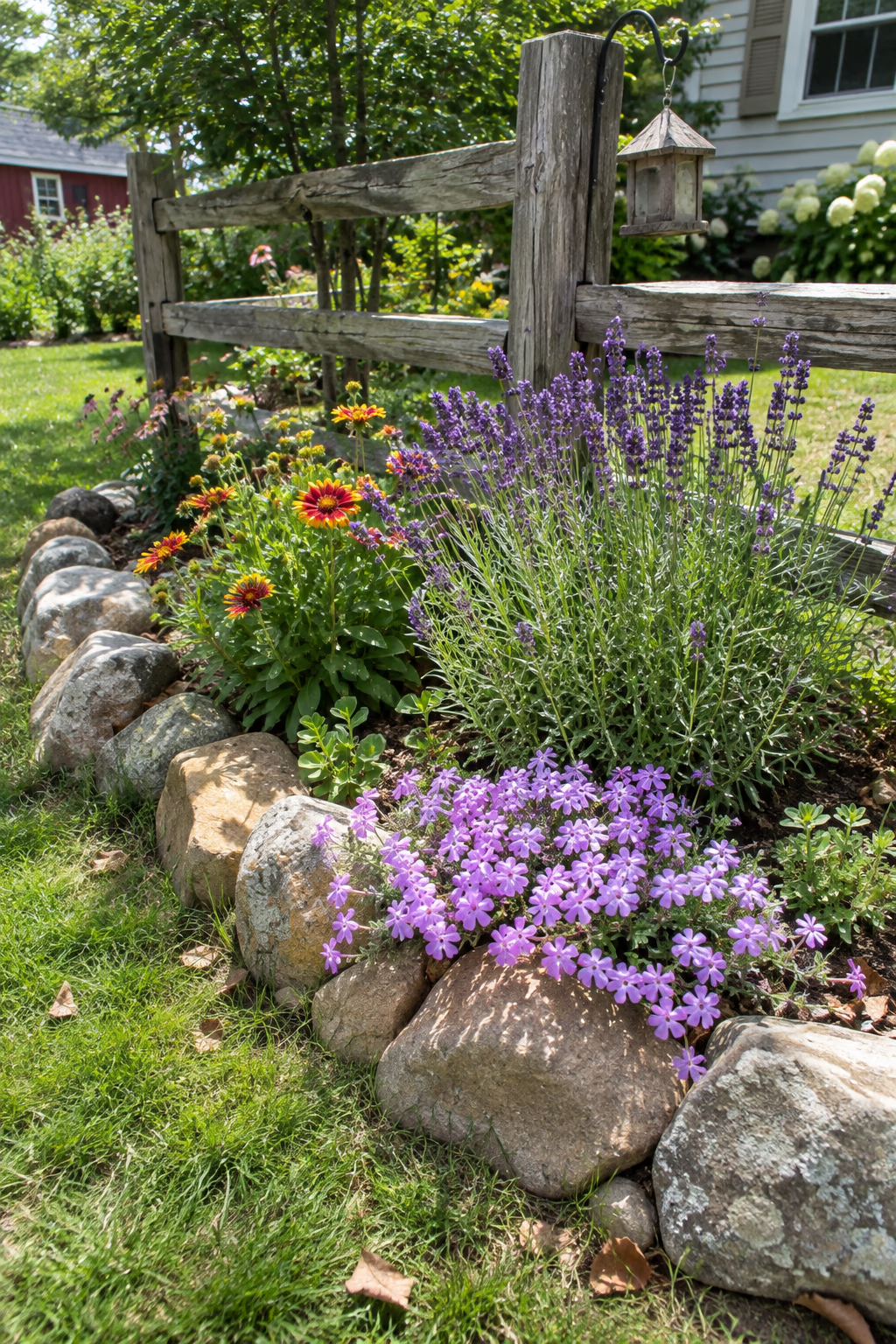
Natural edging that warms heat-loving flowers
Instead of a tidy row of pavers, outline the corner bed with irregular fieldstones or small boulders, roughly 12 to 24 inches across. Bury each stone about a third of its height so it looks settled, and nestle them close together to hold soil and mulch in place.
Stone absorbs daytime heat and releases it slowly, which suits sun lovers such as lavender, blanket flower, and creeping phlox tucked into the gaps. The rugged outline also suits rural, cottage, and mountain-style homes.
Fieldstone is heavy and priced by weight, so a corner border can cost more than expected. Local stone yards often sell mixed sizes, and some will deliver to the curb.
8. Center a Birdbath in the Corner Bed
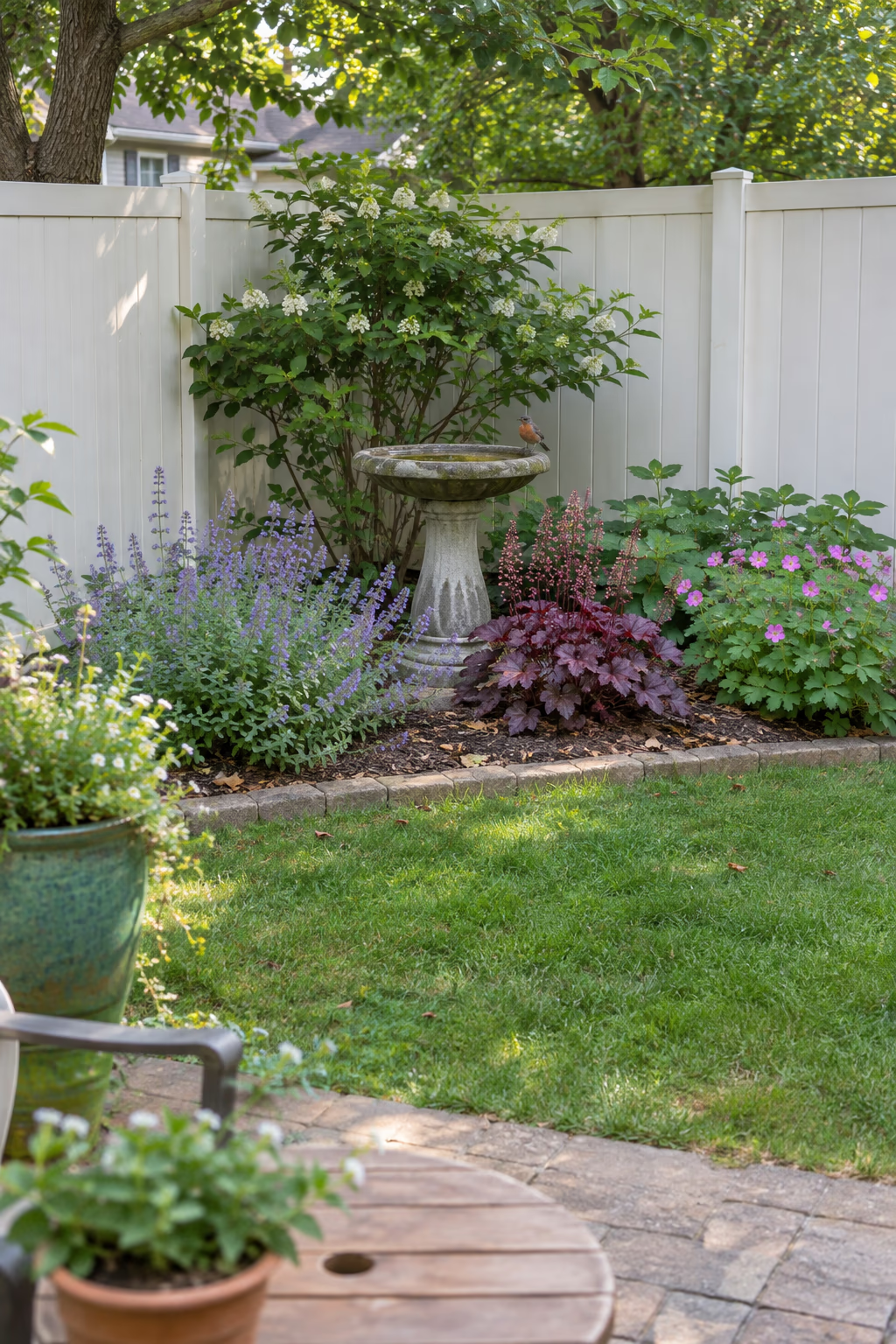
A focal point that brings in wildlife
A pedestal birdbath gives a corner bed a clear center of attention. Set it slightly forward of the apex so it’s visible from the house, then surround it with low, airy plants like coral bells, catmint, and hardy geraniums.
Birds feel safer when there is cover nearby, so a shrub or tall perennial behind the bath helps, but keep dense low plants a few feet back so cats can’t hide right beside it. A basin about 1 to 2 inches deep suits most songbirds.
Refresh the water every two to three days to prevent mosquito larvae and algae, and scrub the bowl regularly. In freezing climates, bring ceramic or concrete basins inside or tip them over for winter so they don’t crack.
9. Brighten a Shady Corner With Hostas, Ferns, and Astilbe
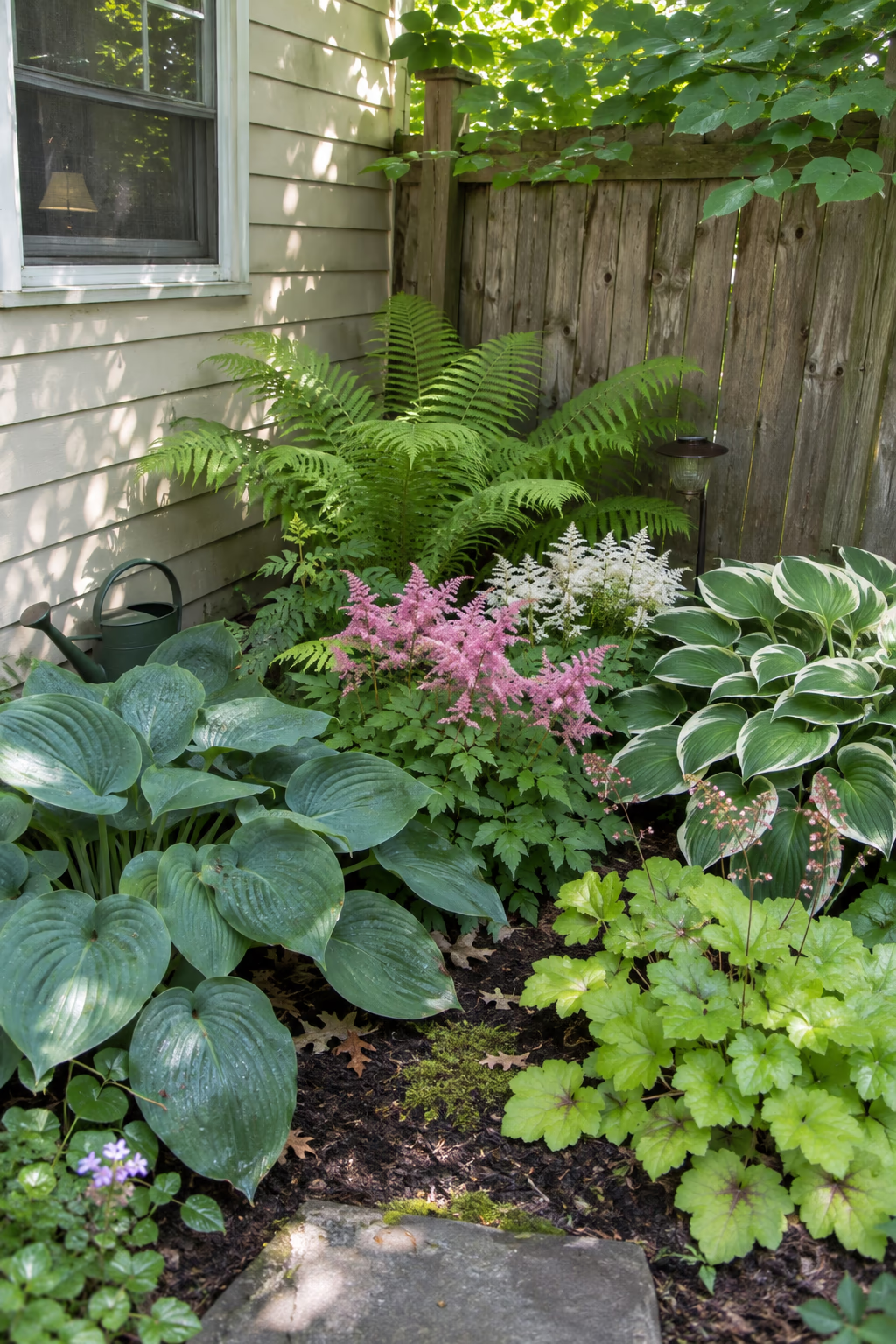
Cool, lush texture where flowers struggle
The north side of a house or a fence corner that gets only a few hours of morning sun can still be beautiful. Combine broad hosta leaves, lacy ferns, and feathery astilbe plumes in pink, white, or red, then add coral bells for leaf color.
Light colors read best in shade, so look for hostas with white or gold edges and white-flowering astilbe to light up the darkest angle. Annual impatiens or begonias can fill gaps with steady summer color.
Astilbe and ferns need consistently moist soil, so add compost and mulch generously. In areas with heavy deer pressure, hostas are a favorite snack, and you may need repellents or swaps such as hellebores and ferns.
10. Fill a Moody Corner With Burgundy and Deep Purple Blooms
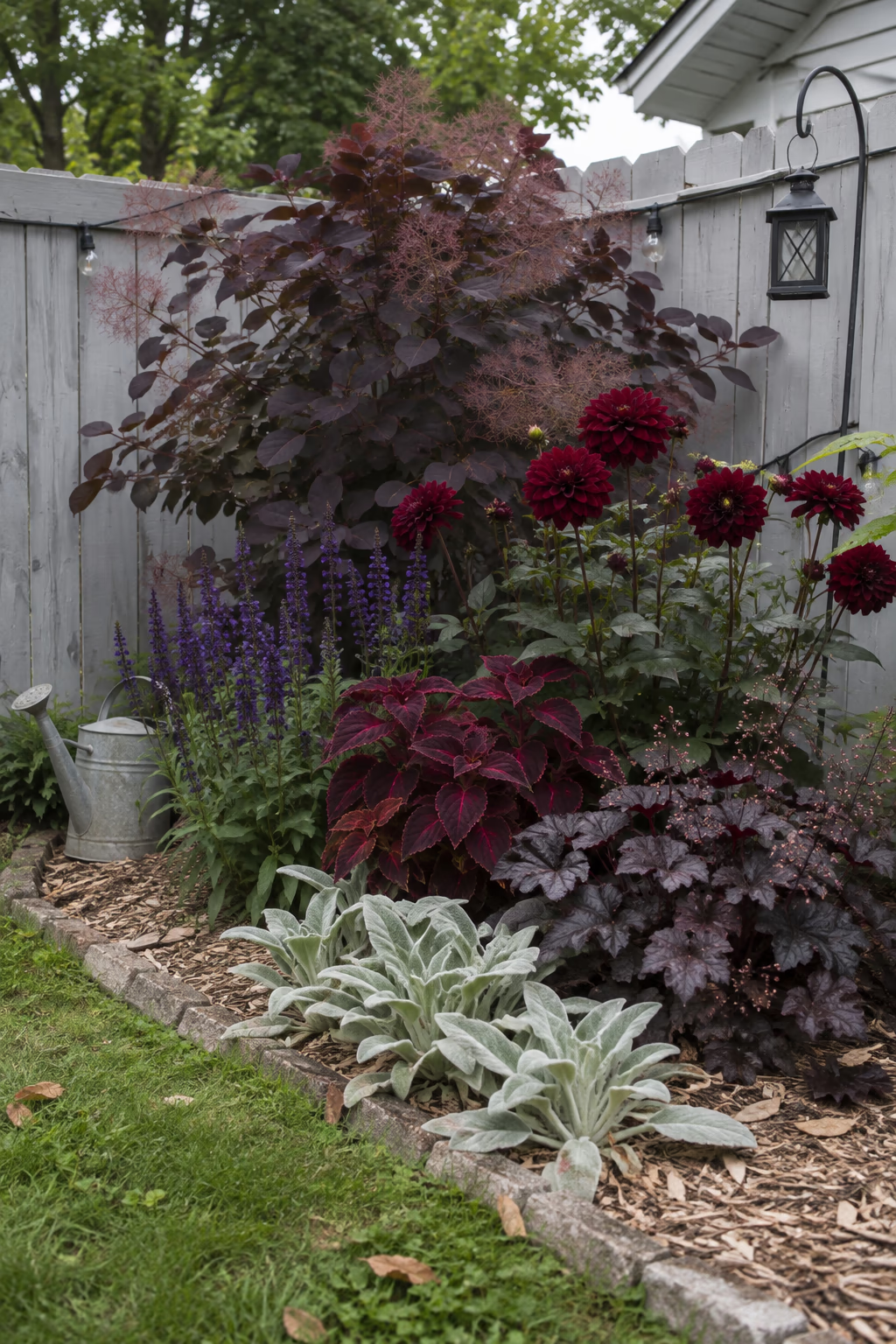
A rich, dramatic look that’s trending now
Dark, single-color beds are having a moment, and a corner is the perfect place to try one without committing a whole yard. Combine deep purple salvia, dark-leaved coral bells, burgundy coleus, wine-red dahlias, and a purple smoke bush at the back.
The trick is varying shades and textures within one color family so the bed doesn’t turn into a dark blob. Silver or chartreuse foliage, such as lamb’s ear or golden creeping Jenny, adds just enough contrast to make the deep tones glow.
Very dark plants disappear against dark mulch and in evening light. Use a lighter mulch or set the bed against a pale fence so the colors stand out.
11. Plant a Hot-Color Corner in Red, Orange, and Gold
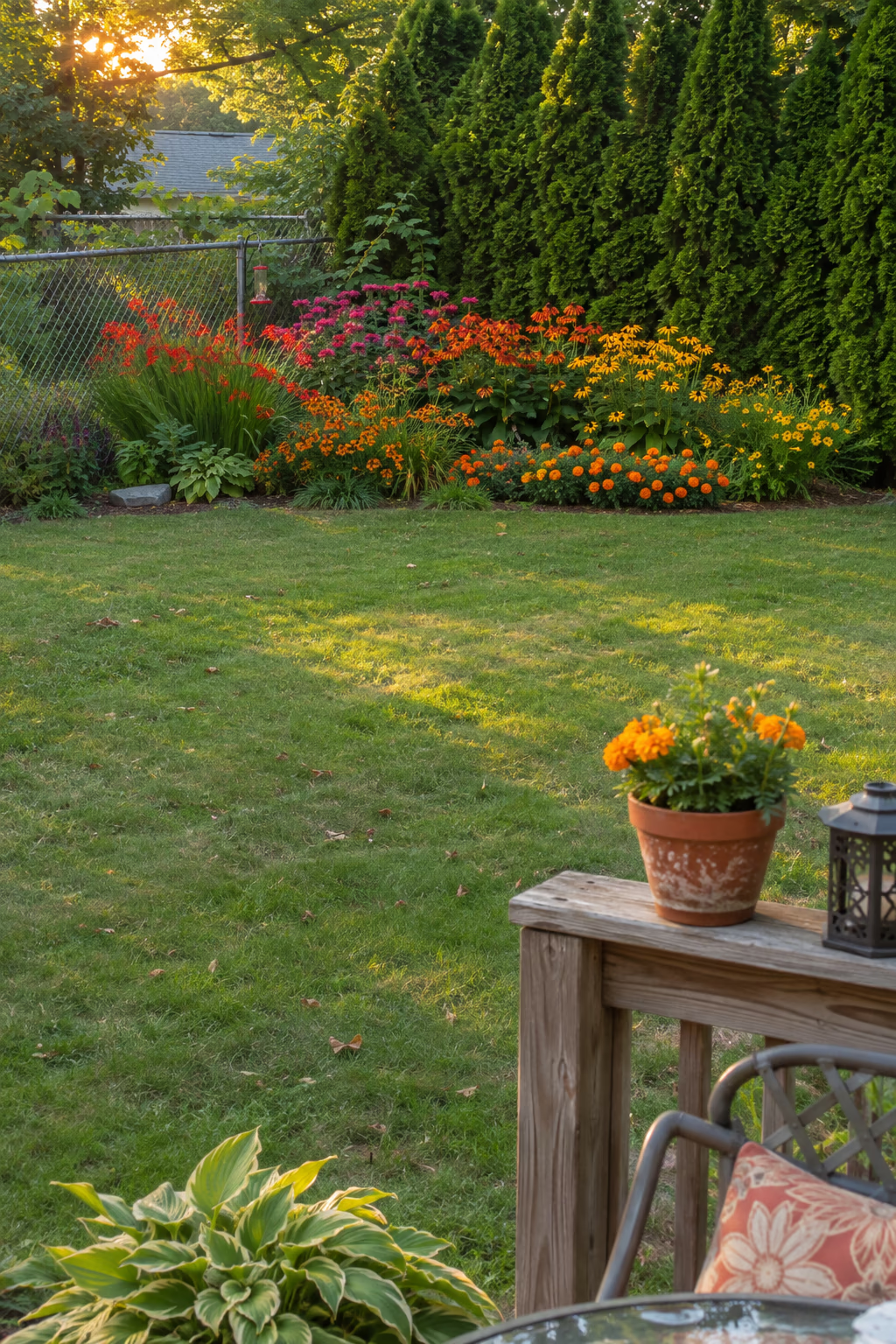
Bold color that’s visible from across the yard
If a corner sits far from the house, warm colors help it hold its own. Mix red bee balm or crocosmia, orange butterfly weed or helenium, and golden black-eyed Susan and coreopsis, then add marigolds and zinnias for nonstop annual color.
Warm hues appear to advance toward the viewer, so a distant corner seems closer and more vibrant. Dark green foliage or a backdrop of evergreen shrubs keeps the mix from feeling chaotic.
Most hot-color perennials want full sun and decent drainage. Deadhead annuals weekly in summer, and leave some perennial seed heads standing in fall for birds.
12. Build a Triangular Raised Bed for a Fence Corner
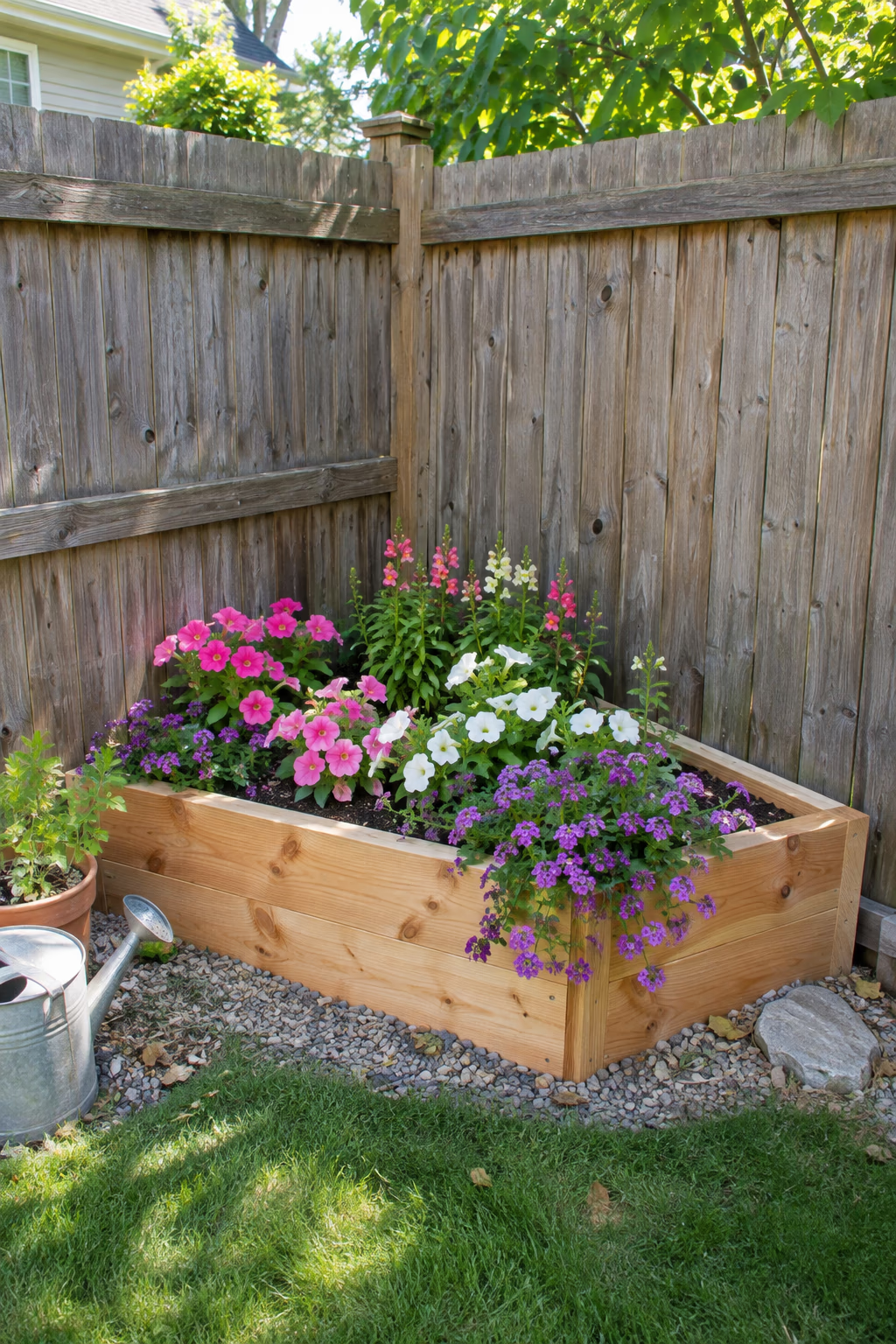
Better soil without fighting tough ground
When corner soil is compacted clay or full of roots, build up instead of digging down. A simple triangle made from untreated cedar or pre-cut corner boards, about 4 feet along each fence and 10 to 12 inches tall, fits neatly into the angle.
Fill it with a mix of topsoil and compost, then plant compact flowers like dwarf snapdragons, petunias, verbena, or a single rose with trailing annuals around its base. The raised height also gives the corner a clean, finished look.
Keep the back of the bed a few inches away from wooden fences so damp soil doesn’t rot the boards. Raised beds dry out faster, so plan on more frequent watering in summer.
13. Grow a Cutting-Flower Corner With Zinnias and Cosmos
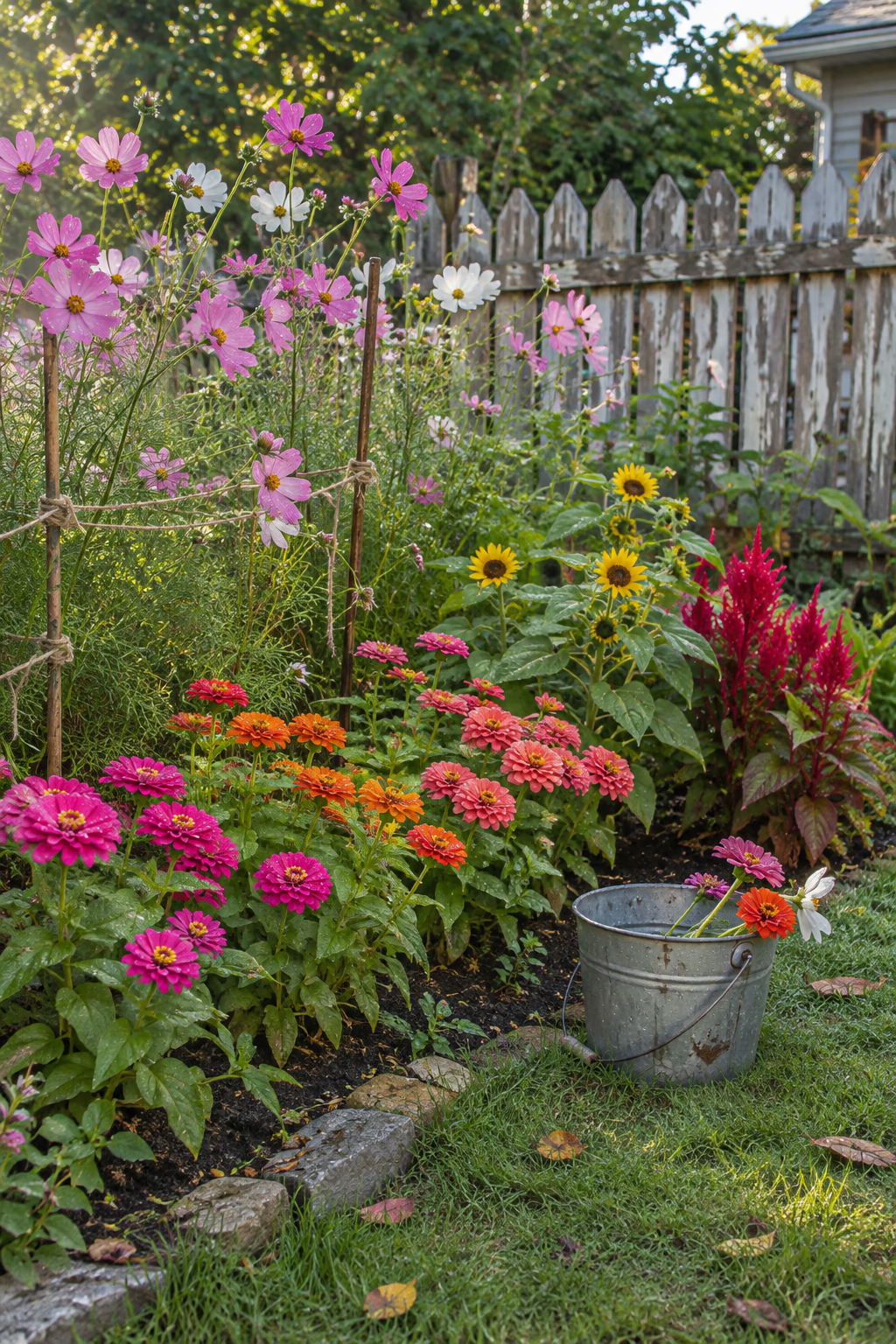
Fresh bouquets from a forgotten patch
A sunny corner of the backyard can supply flowers for the kitchen table all summer. Direct-sow zinnias and cosmos after the last frost, then add snapdragons, dwarf sunflowers, and celosia for variety in shape and color.
These annuals are inexpensive to grow from seed, and the more you cut them, the more they bloom. Planting in short rows or blocks makes harvesting easy and lets you reach every stem.
Cut flowers early in the morning and put them straight into water. Tall cosmos can flop in wind and rain, so add a few stakes or a loose net of twine.
14. Soften a House Corner With a Foundation Bed
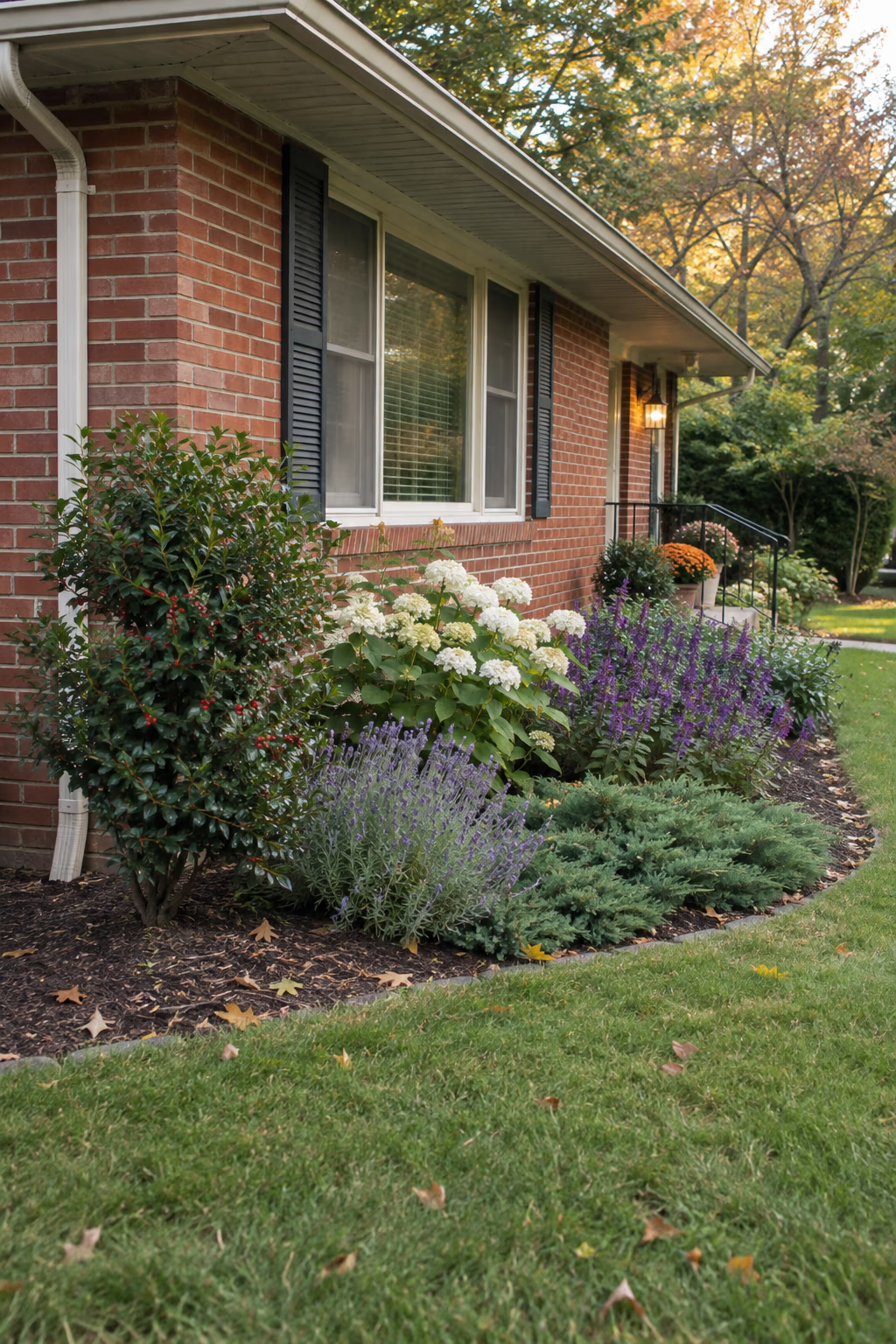
Blend the house into the landscape
The outside corner of a house is a sharp vertical line that plantings can soften beautifully. Place a taller evergreen or flowering shrub, such as an upright holly or a compact hydrangea, just off the corner, then curve the bed out with lower perennials and groundcovers.
A curved bed around a house corner breaks up the boxy shape of the building and makes the home feel settled into the yard. Evergreens keep the corner looking dressed in winter.
Plant shrubs at least 2 to 3 feet from the siding to allow airflow and room for maintenance. Keep mulch a few inches below siding and make sure the soil slopes away from the foundation.
15. Screen the Corner With Tall Ornamental Grasses
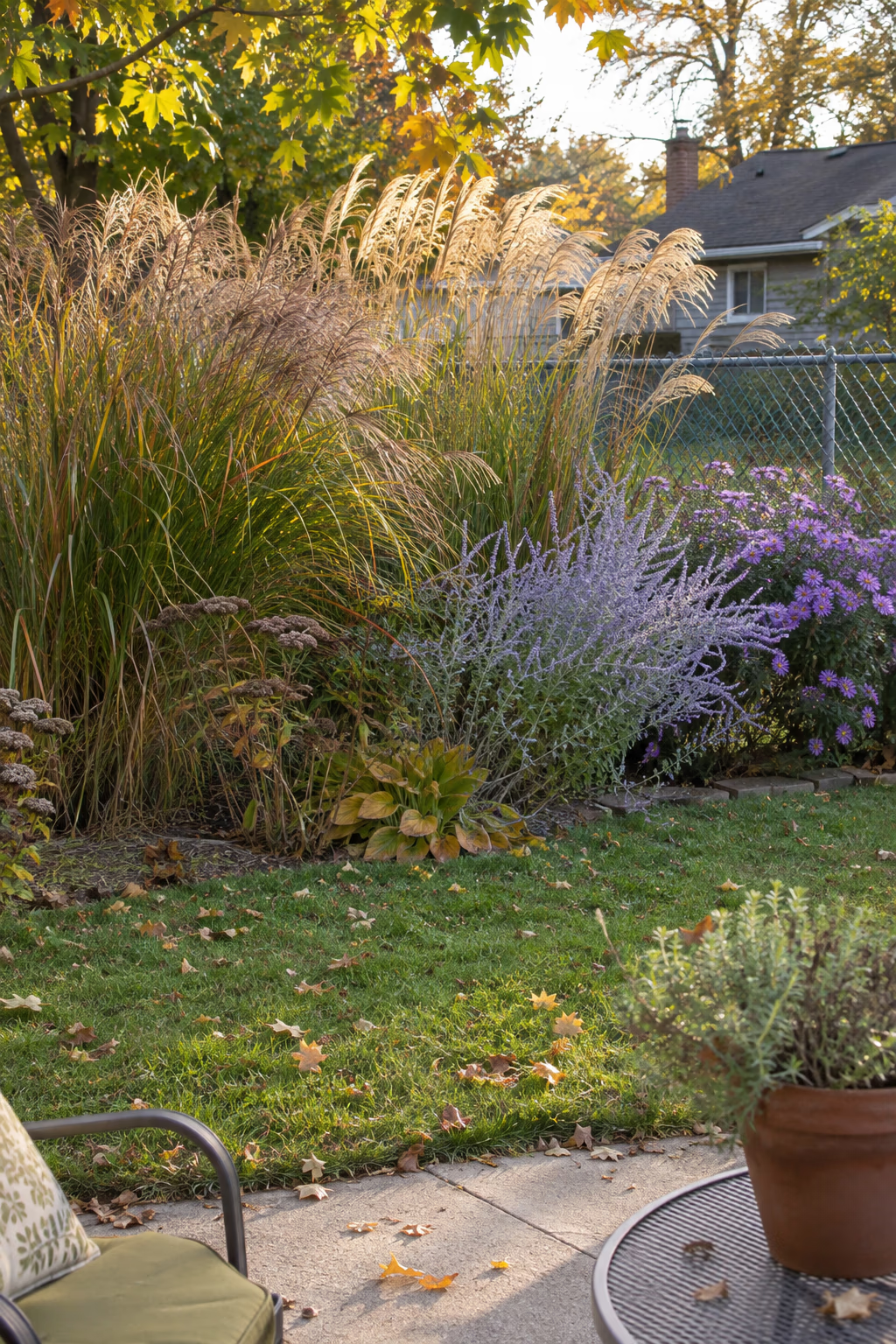
Privacy and movement without a hedge
A clump of tall ornamental grasses in a corner blocks views from neighboring windows and adds gentle motion. Switchgrass, tall varieties of little bluestem, and feather reed grass create a soft screen 4 to 6 feet high by midsummer.
Weave flowering perennials such as Russian sage, asters, and coneflowers in front of the grasses for color. In fall and winter, the dried plumes catch light and frost, keeping the corner interesting.
Cut grasses back to a few inches tall in late winter before new growth starts. Some grasses, including certain types of miscanthus and fountain grass, can self-seed aggressively, so check your local invasive species list.
16. Create a Gravel Corner With Drought-Tolerant Bloomers
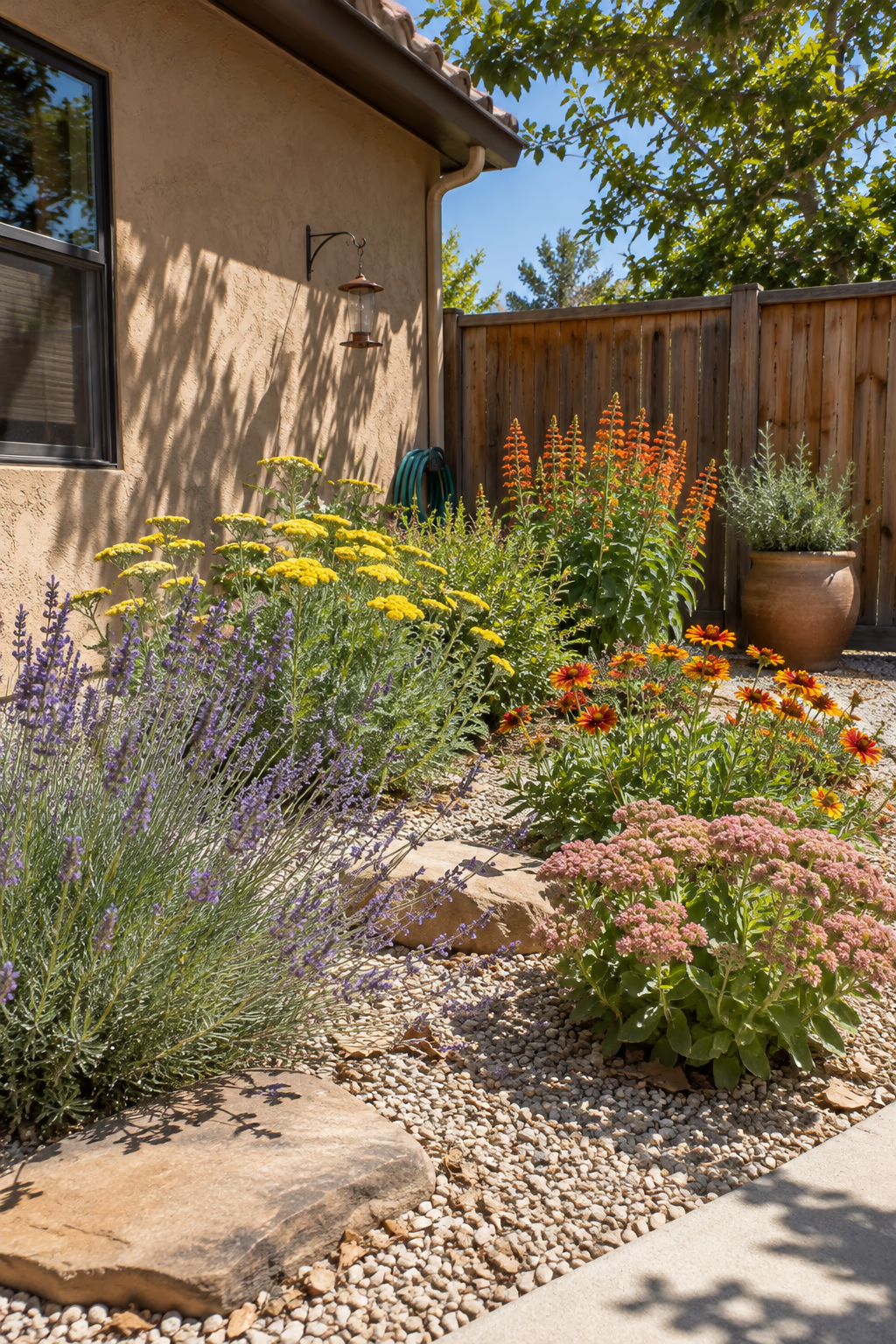
Low water, low weeding, lots of color
A hot, dry corner that bakes in afternoon sun is ideal for a gravel bed. Spread 2 to 3 inches of pea gravel or crushed stone over well-drained soil, then plant lavender, agastache, yarrow, sedum, and blanket flower in loose drifts.
Gravel keeps crowns dry, reflects heat, and suppresses many weeds. Once established, most of these plants need watering only during long dry spells.
Gravel beds don’t suit heavy clay that stays wet, so loosen the soil or build it up slightly first. Plan to pull the occasional weed seedling and rake fallen leaves off the surface in fall.
17. Dress Up a Driveway Corner With Tough Low Perennials
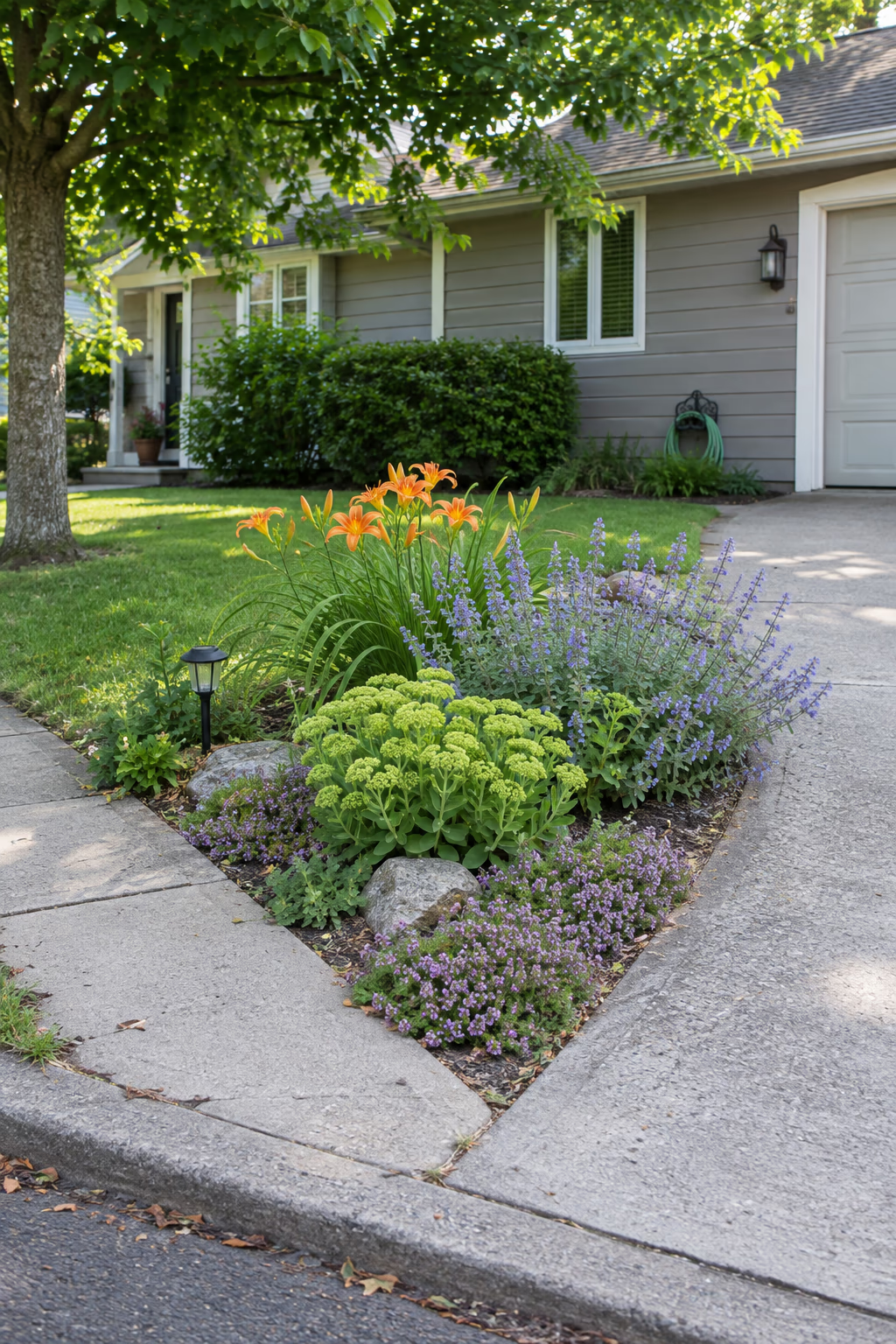
Curb appeal that survives snow and salt
Where the driveway meets the sidewalk or street, a small triangular bed adds instant polish. Choose tough, low plants such as daylilies, catmint, sedum, and creeping thyme that tolerate heat reflected from pavement.
Keep everything under about 24 inches so drivers can see pedestrians and traffic. Many towns and HOAs have sightline rules for corners near streets, so check before planting anything tall.
In snowy areas, this bed often becomes a dumping spot for plowed snow and de-icing salt. Choose salt-tolerant plants, avoid fragile shrubs, and mark the edge with stakes before winter.
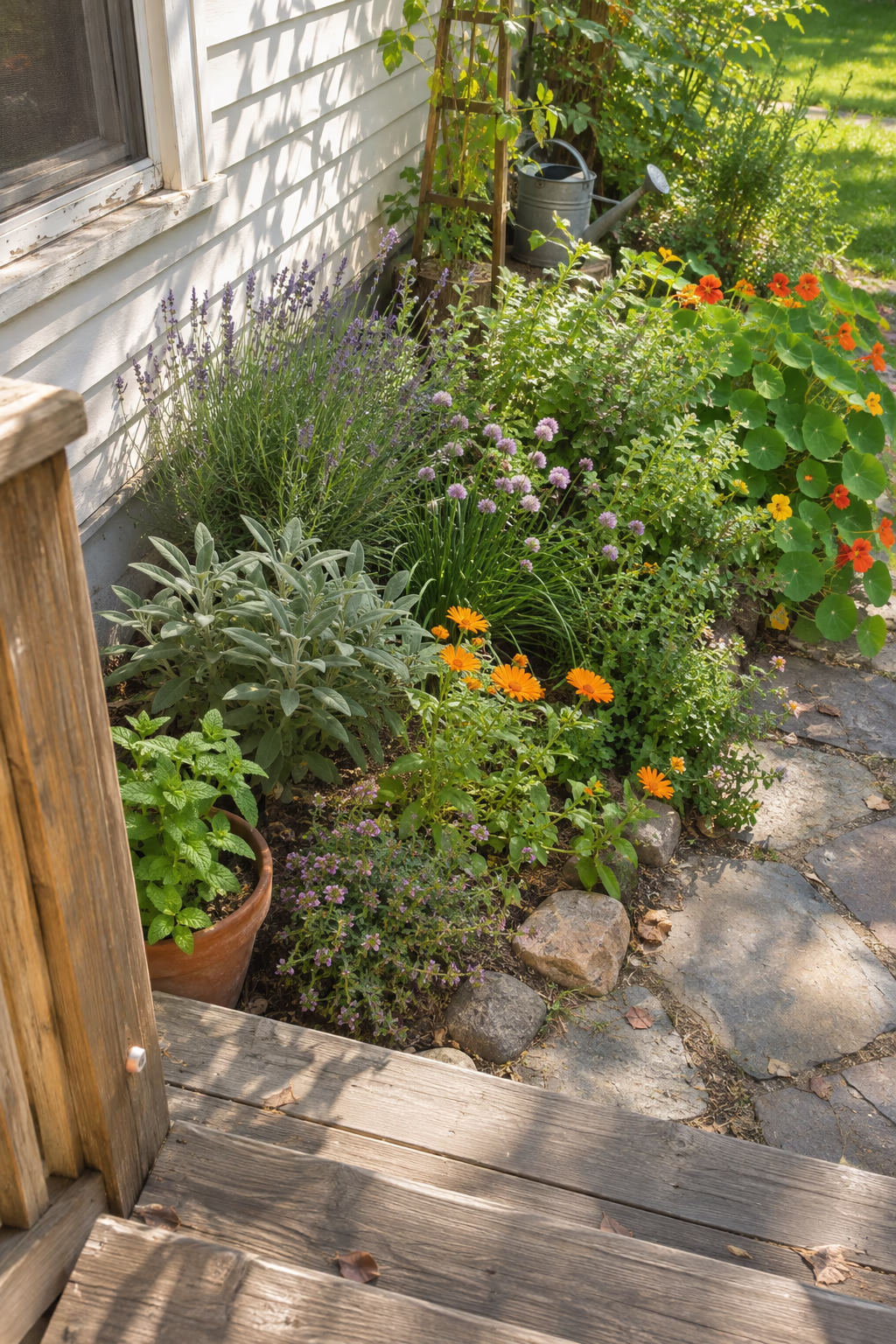
18. Plant a Fragrant Herb and Flower Corner by the Back Door
Pretty, practical, and steps from the kitchen
A sunny corner near the back steps is perfect for mixing herbs and flowers. Combine lavender, sage, thyme, chives, and oregano with edible flowers like calendula and nasturtiums for a bed that looks good and smells even better.
Brushing past the plants releases their scent, and you’ll actually use herbs that are a few steps away. Chive and oregano blooms also attract bees.
Most of these herbs want full sun and well-drained soil. Keep mint in a buried pot, since it spreads quickly, and treat rosemary as an annual or overwinter it indoors in colder zones.
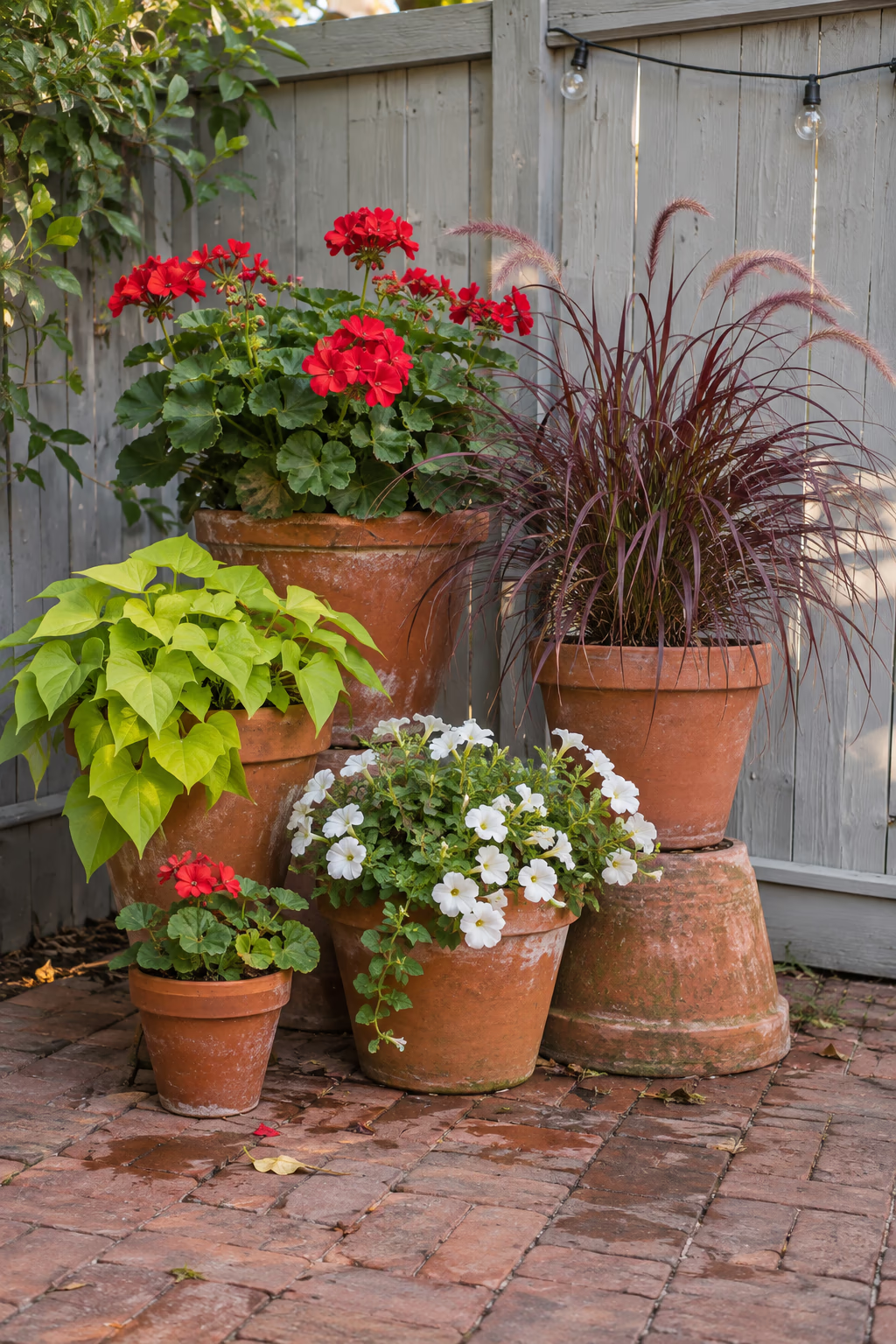
19. Cluster Tiered Pots in a Paved Corner
A flower bed where you can’t dig
If a corner is paved, gravel, or deck, create a bed out of pots. Group three to five containers in different heights, with the tallest at the back corner, and fill them with a mix of upright, mounding, and trailing plants such as fountain grass, geraniums, and sweet potato vine.
Using a consistent material, like terracotta or matching glazed pots, makes the grouping look planned. Setting one pot on an upturned container or a low stand adds extra height without buying a large planter.
Containers dry out quickly, sometimes daily in summer. Every pot needs drainage holes, and larger pots hold moisture longer than small ones.
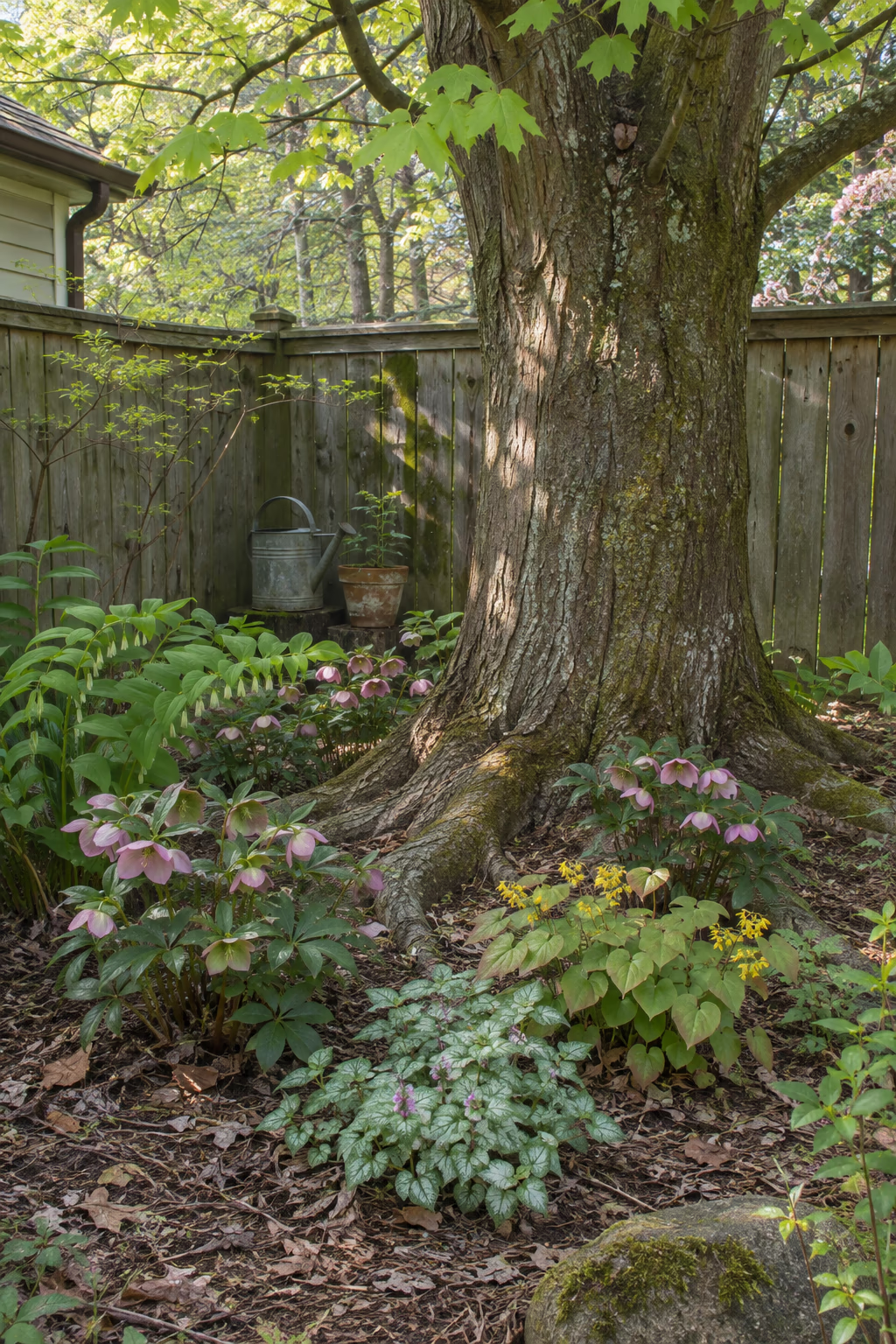
20. Underplant a Corner Tree With Dry-Shade Bloomers
Color where roots and shade compete
Corners often hold an existing tree, and the soil beneath is shady, dry, and full of roots. Tough plants like epimedium, hellebores, lamium, wild ginger, and Solomon’s seal can handle these conditions and still bloom.
Use small plants or plugs that fit into pockets between roots rather than large root balls. Spring bulbs such as snowdrops and scilla bloom before the tree leafs out and get the sunlight they need.
Don’t pile more than an inch or two of soil over tree roots, and avoid cutting large roots. Water new plantings regularly, since the tree will absorb much of the available moisture.
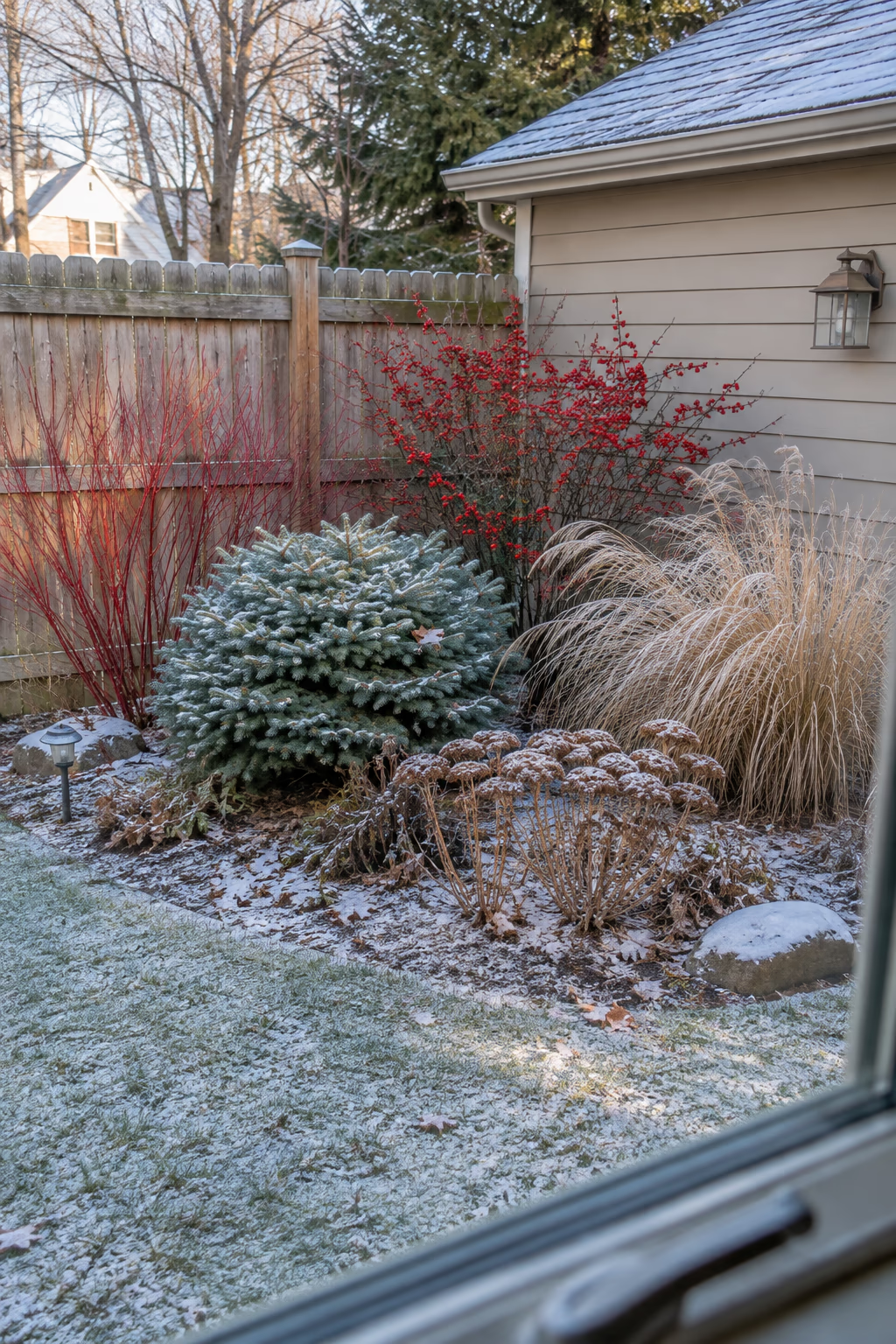
21. Design a Four-Season Corner With Evergreens and Winter Color
A corner that looks good in January
Many flower beds look empty in winter, but a corner visible from the house deserves year-round interest. Start with a dwarf conifer or boxwood for structure, add red-twig dogwood for bright winter stems, and include winterberry holly for red berries.
Fill in with hellebores for late-winter flowers, ornamental grasses that stand through snow, and perennials with sturdy seed heads like sedum and coneflowers.
Winterberry needs a male pollinator plant nearby for berries. Prune red-twig dogwood by removing some older stems each spring, since the newest growth has the brightest color.
22. Turn a Downspout Corner Into a Rain-Friendly Bed
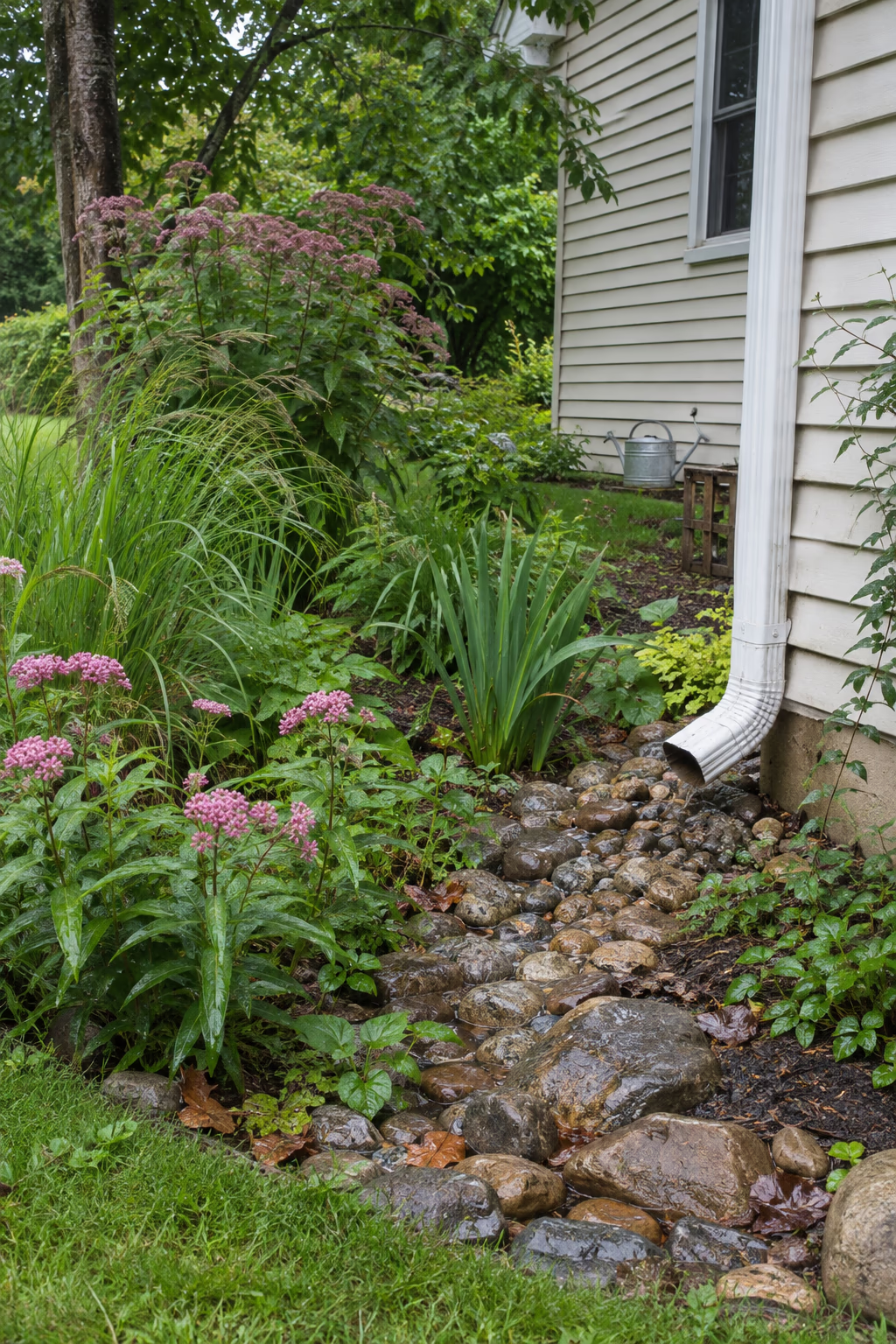
Put roof runoff to work
Downspouts usually sit at house corners, leaving a soggy, eroded patch. Extend the downspout or use a river-rock channel to carry water away from the foundation into a shallow, planted depression.
Plants like swamp milkweed, blue flag iris, Joe Pye weed, and switchgrass can handle both wet spells and dry periods. The bed slows runoff, reduces erosion, and turns a problem spot into a blooming one.
Direct water at least 10 feet from the foundation, and never toward a neighbor’s property. Rain gardens should drain within a day or two; if water sits longer, the soil needs amending or a different spot.
23. Lay Stepping Stones Through a Deep Corner Bed
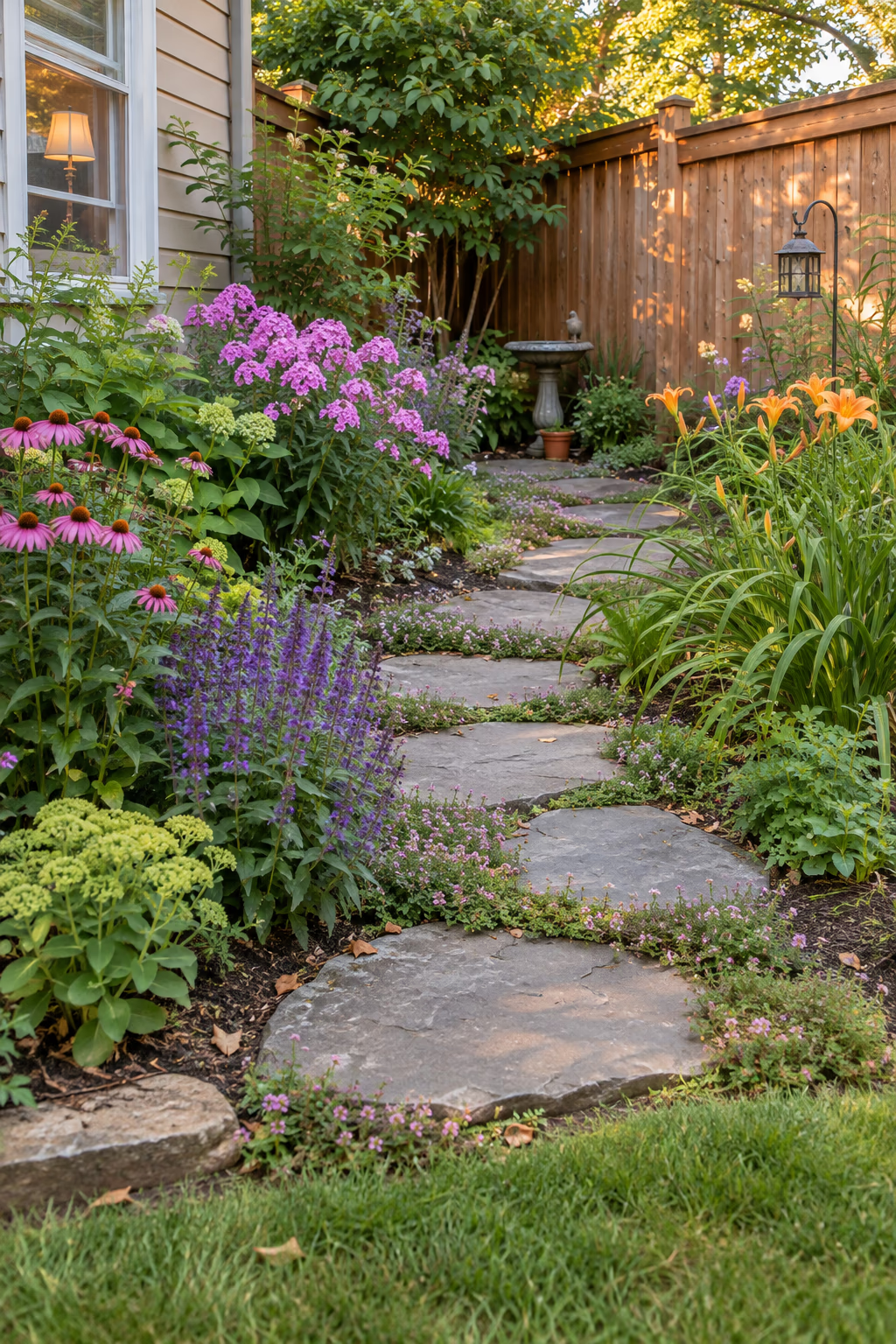
Easy access without trampling plants
Large corner beds are often deeper than you can reach from the edge. A few flat stepping stones, roughly 16 to 18 inches across, let you weed, deadhead, and divide plants without compacting soil or crushing stems.
Curving the stones toward the back corner also invites a closer look and makes the bed feel larger. Low creeping plants like thyme or sedum between the stones soften their edges.
Set stones on a level bed of sand so they don’t wobble, and space them to match a comfortable stride. Choose stones with textured surfaces to stay safe when wet.
24. Light the Corner Bed With Low Solar Fixtures
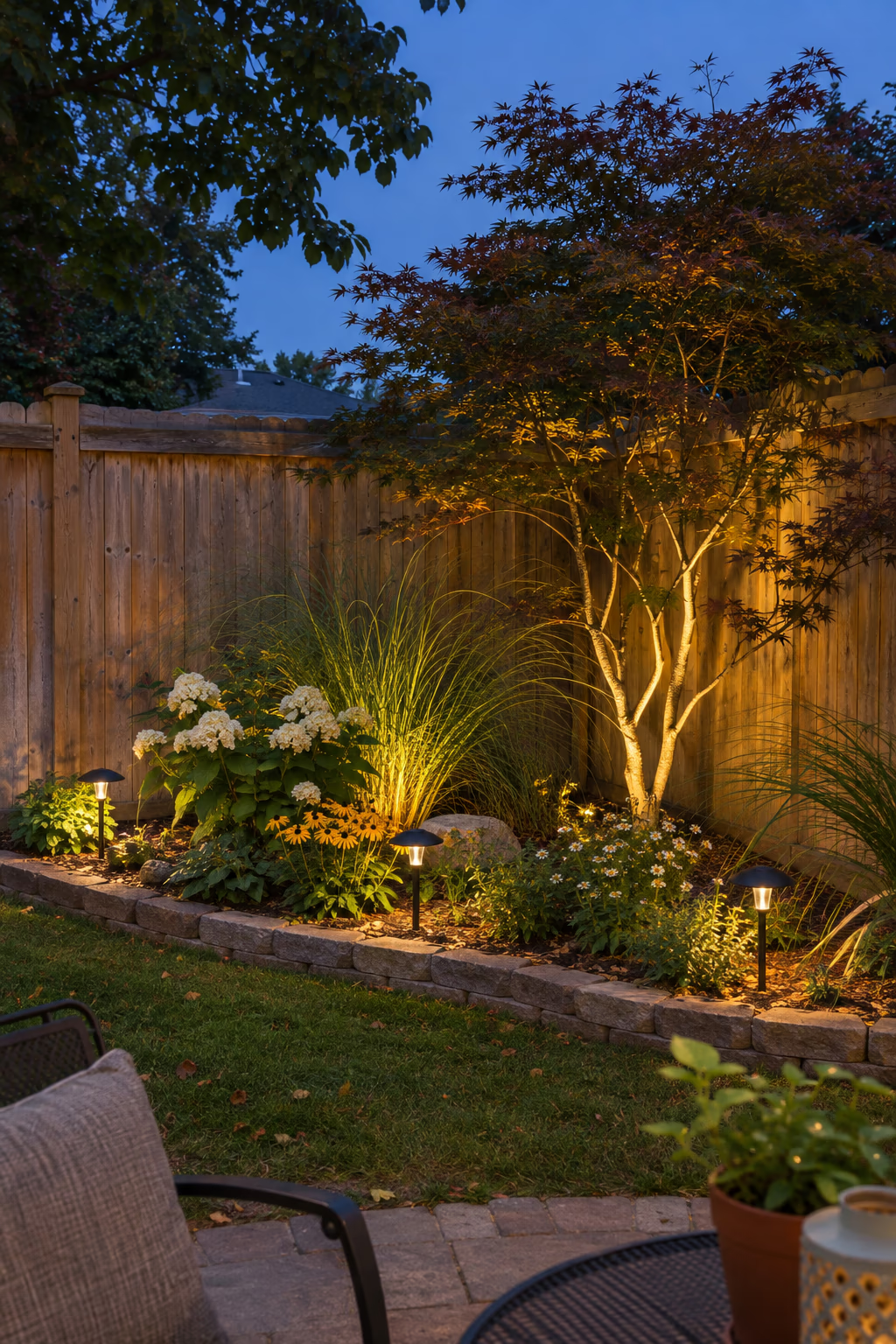
A glowing corner after sunset
A corner bed you enjoy by day can become a nighttime focal point with a few lights. Use solar spotlights to highlight a small tree, trellis, or tall grasses from below, and a few low path lights along the front curve.
Soft, warm-white light looks more natural than bright cool-white light. A few well-placed fixtures make more impact than a long row of small ones.
Solar lights need several hours of direct sun to charge, so place panels where they won’t be shaded by plants. In winter, shorter days usually mean dimmer lights.
25. Edge the Corner With Low Decorative Metal Fencing
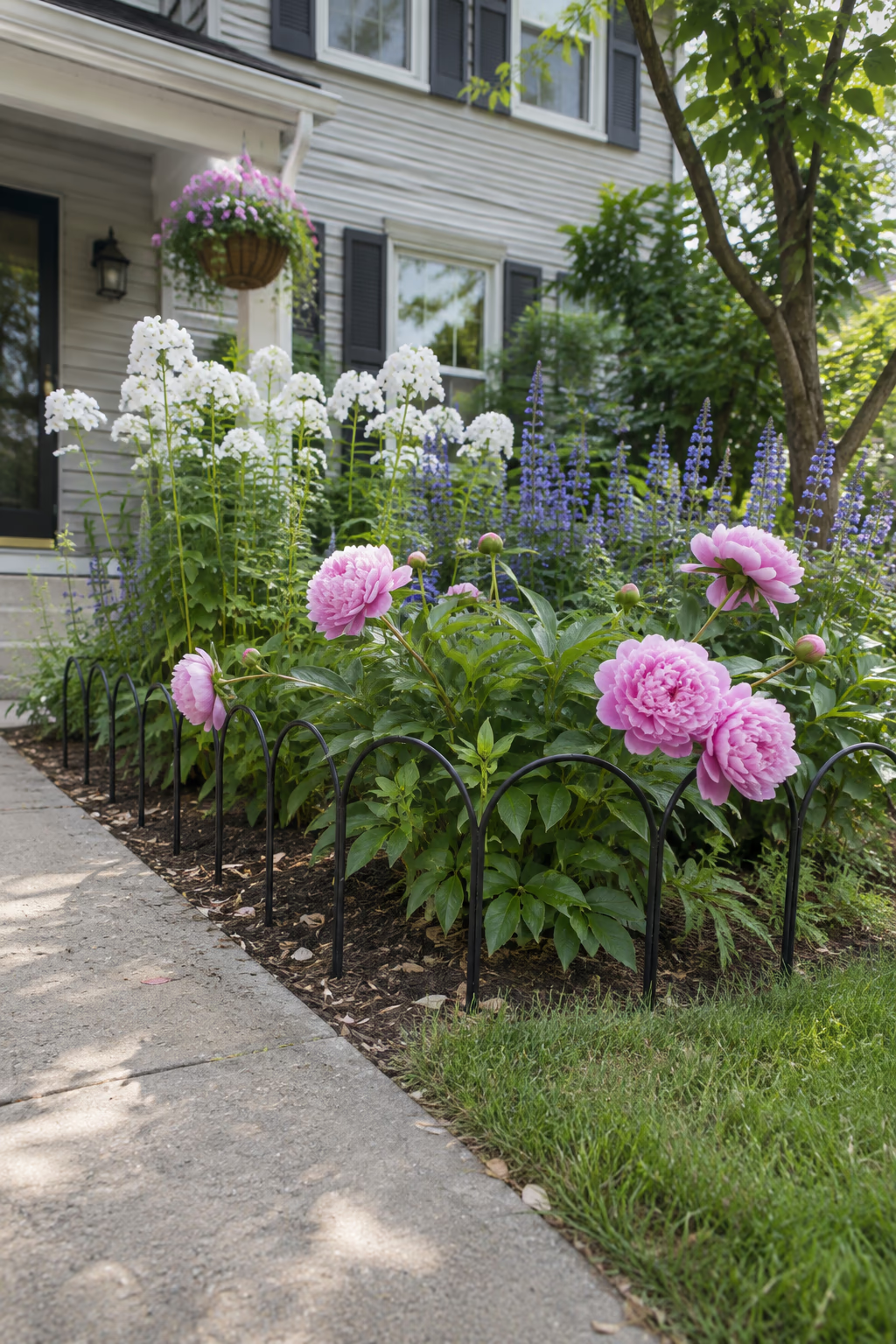
A finishing touch that defines the space
A short decorative fence, 12 to 18 inches high, outlines a corner bed and gives it a polished look. Arched hoop edging and spear-top panels come in black or bronze finishes that suit most homes.
The fence keeps foot traffic and pets out of the bed and acts as a light support for floppy plants such as peonies or tall phlox.
Most of these products are powder-coated steel rather than true wrought iron, so expect some rust over time. Push stakes deep into firm soil so the panels stay upright through winter freeze and thaw.
How to Plan Your Corner Flower Bed
A corner bed is small enough to finish in a weekend, but a little planning helps it look good for years. Before you dig, think through these points.
- Track the light. Watch the corner through a full day. Fences and house walls can cast more shade than you expect, and plants should match the actual sun hours.
- Size the bed to the space. Most corners look best with beds at least 4 to 6 feet deep along each side; anything smaller tends to look like a leftover strip.
- Check the soil. Corners often collect construction debris, compacted fill, or roots. Dig a test hole, and amend with compost or build a raised bed if needed.
- Plan for access. Leave room to reach the fence, house wall, and the back of the bed for maintenance and repairs.
- Know your boundaries. Confirm property lines, HOA rules, and corner sightline requirements, and keep large plants from overhanging neighbors.
- Call before you dig. In the United States, call 811 a few days before digging so buried utility lines can be marked.
Frequently Asked Questions
What shape works best for a corner flower bed?
A quarter-circle or curved shape is the most popular because it softens the angle and is easy to mow around. Triangular and L-shaped beds suit more formal yards, raised beds, and patio corners.
What should I plant in the back of a corner bed?
Place the tallest plants at the deepest point, such as a small shrub, ornamental grass, climbing rose, or tall perennials like Joe Pye weed or hollyhocks. Then step plant heights down toward the front edge.
How deep should a corner flower bed be?
For a layered look, aim for at least 4 to 6 feet along each side. Narrower beds work for small yards, but they have room for fewer plant layers.
What flowers grow well in a shady corner?
Hostas, ferns, astilbe, coral bells, hellebores, bleeding heart, and impatiens all handle shade. Add white or variegated leaves to brighten darker spots.
How much does a corner flower bed cost?
A small DIY bed planted with seeds, divisions, and a few perennials can cost under $100. Adding stone edging, a small tree, raised beds, or lighting can raise the total to several hundred dollars or more.
Final Thoughts
The best corner flower bed ideas take a forgotten angle and give it purpose. A curved bed of perennials, a rose-covered trellis, or a bed buzzing with butterflies can transform the most overlooked spot in your yard.
Start with the corner you see most often, match plants to its light and soil, and build it over a season or two. With a little care, those awkward angles can become some of the most beautiful parts of your garden.