Most fences start as a flat run of boards or wire that marks where your yard ends. Put a strip of flowers along the bottom, though, and that same boundary turns into a backdrop: roses climbing the posts, hydrangeas leaning forward, and a ribbon of color you can see from the kitchen window.
A fence line is one of the easiest places to start a flower bed. The fence gives taller plants support and some shelter from wind. It frames the blooms like a gallery wall. It also hides the bare soil, weeds, and mower-scalped grass that tend to collect there. Even a bed 2 or 3 feet deep can change how the whole yard feels.
These 19 flower bed ideas along fence lines cover sunny and shady exposures, picket, privacy, chain-link, and split-rail fences, raised and sloped beds, and plant combinations for different budgets and climates. Use one idea along a single fence panel or mix several down a long property line.
1. Train Climbing Roses and Clematis Along the Fence Panels
Turn the fence itself into the flower display
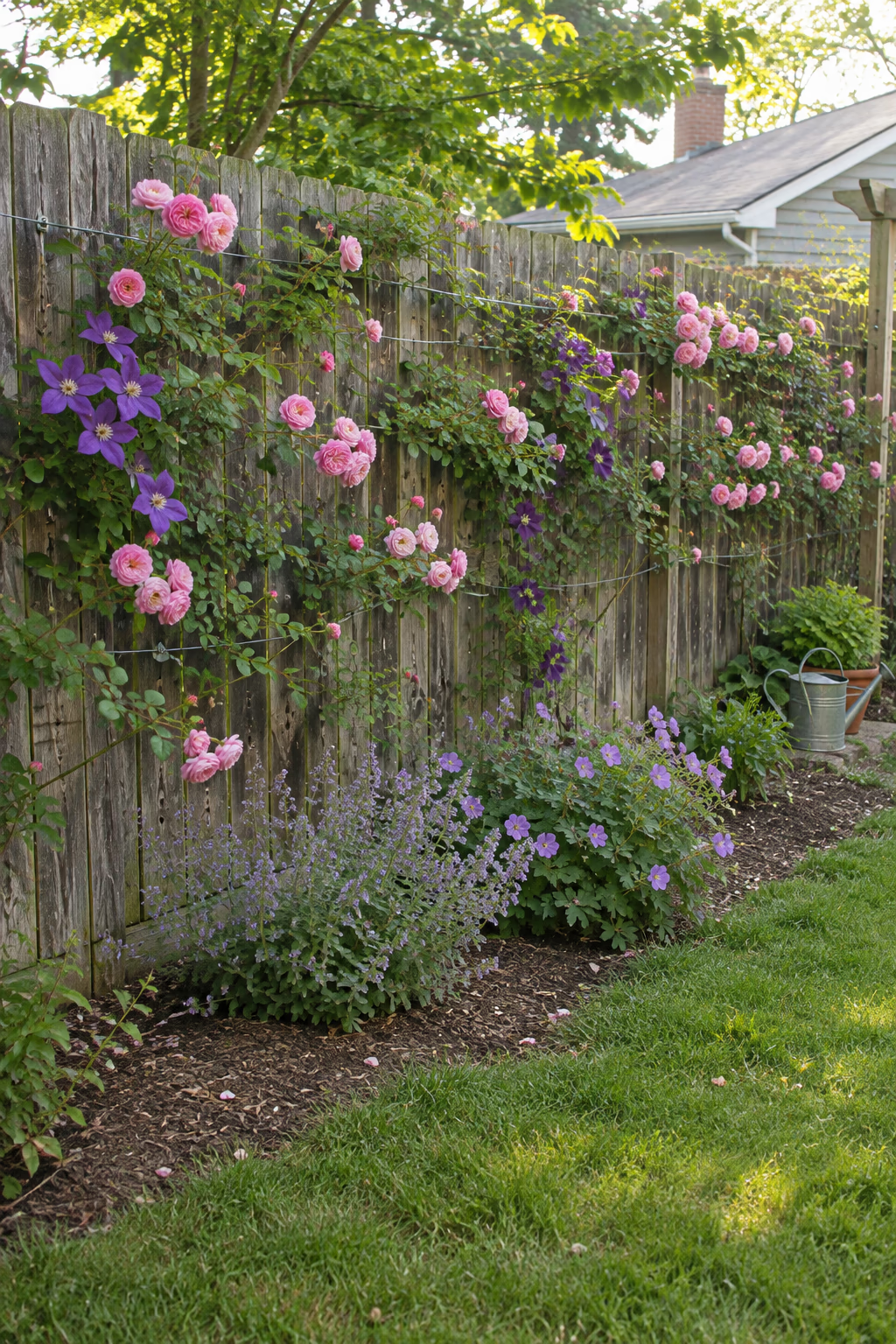
Climbing roses and clematis are a classic fence pairing because they bloom at different heights and often at slightly different times. Plant a climbing rose about every 8 feet, roughly 12 to 18 inches out from the fence. Set a clematis between each pair. Run galvanized wires horizontally across the panels about 12 inches apart, held 2 inches off the boards with screw eyes, so the canes have something to tie to and air can move behind them.
Fan the rose canes out sideways rather than straight up. Horizontal canes put out more flowering side shoots, so you get blooms along the whole panel instead of only at the top. Clematis climbs by twisting leaf stalks around thin supports, so it will scramble up the wires and through the rose without much help.
Both plants want at least six hours of sun on their leaves. Clematis prefers cool roots, so plant low perennials or add mulch around its base. Before attaching anything to a shared fence, check with your neighbor, because some will mind wires and screw holes.
2. Soften a Cedar Fence With a Hydrangea and Salvia Border
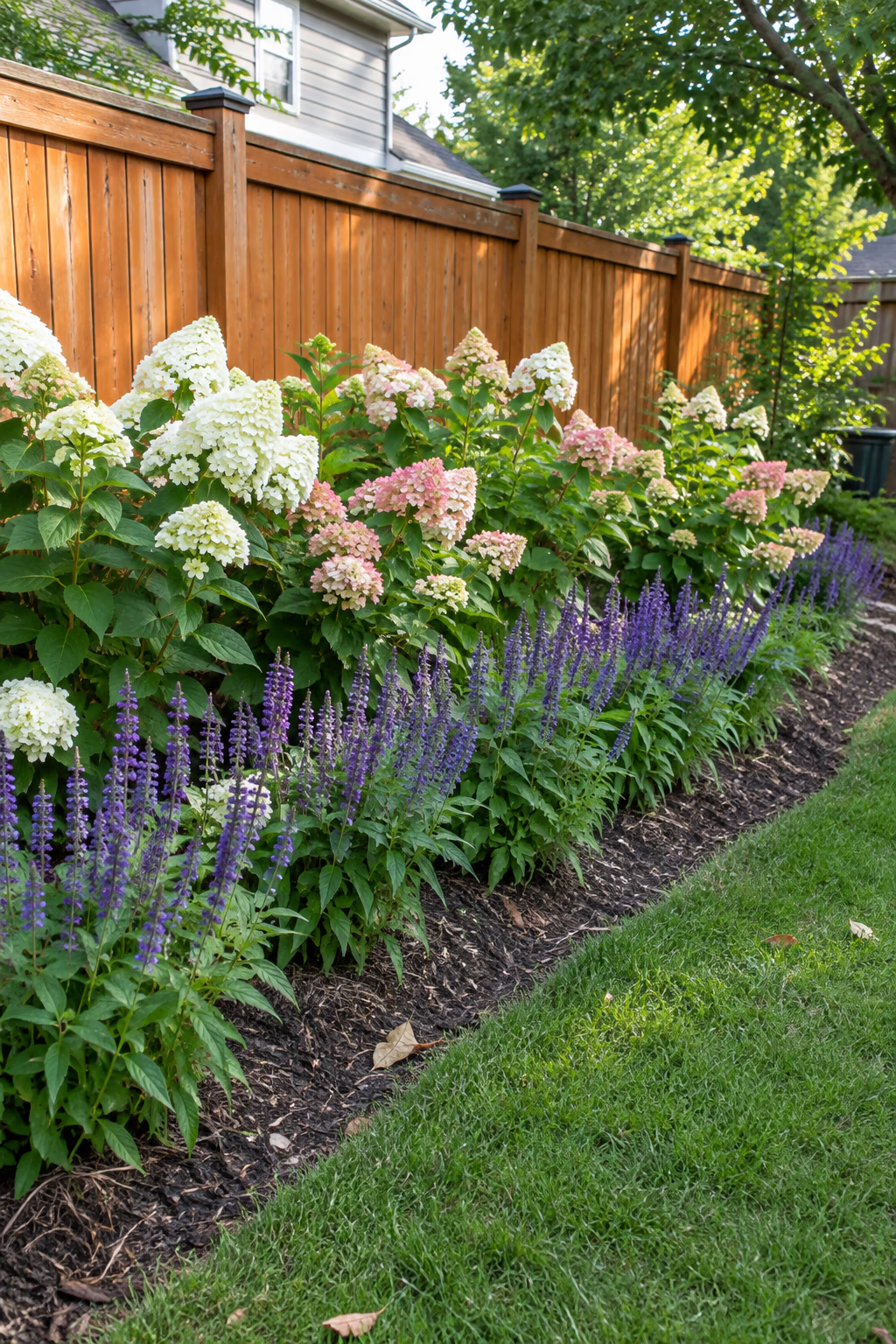
Big mopheads in back, spiky blue flowers in front
Warm cedar boards set off blue-purple flowers well. For a sunny fence, plant panicle hydrangeas about 4 to 5 feet apart along the back of a bed 3 to 4 feet deep. Then fill a front row with perennial salvia, such as violet sage, spaced about 18 inches apart. Finish the edge with a strip of dark mulch so the colors stand out.
The contrast in shape is what makes this work. Hydrangeas give big, rounded heads of white or blush, and salvia adds upright violet spikes that bloom for weeks if you deadhead them. Panicle hydrangeas flower on new wood, so they bloom reliably even after a cold winter.
If you want blue mophead hydrangeas, choose a fence that gets morning sun and afternoon shade, and swap the salvia for shade-tolerant plants such as hardy geraniums. Bigleaf hydrangeas wilt badly in hot afternoon sun, and their flower color depends on soil acidity.
3. Build a Long Raised Flower Bed Against the Fence
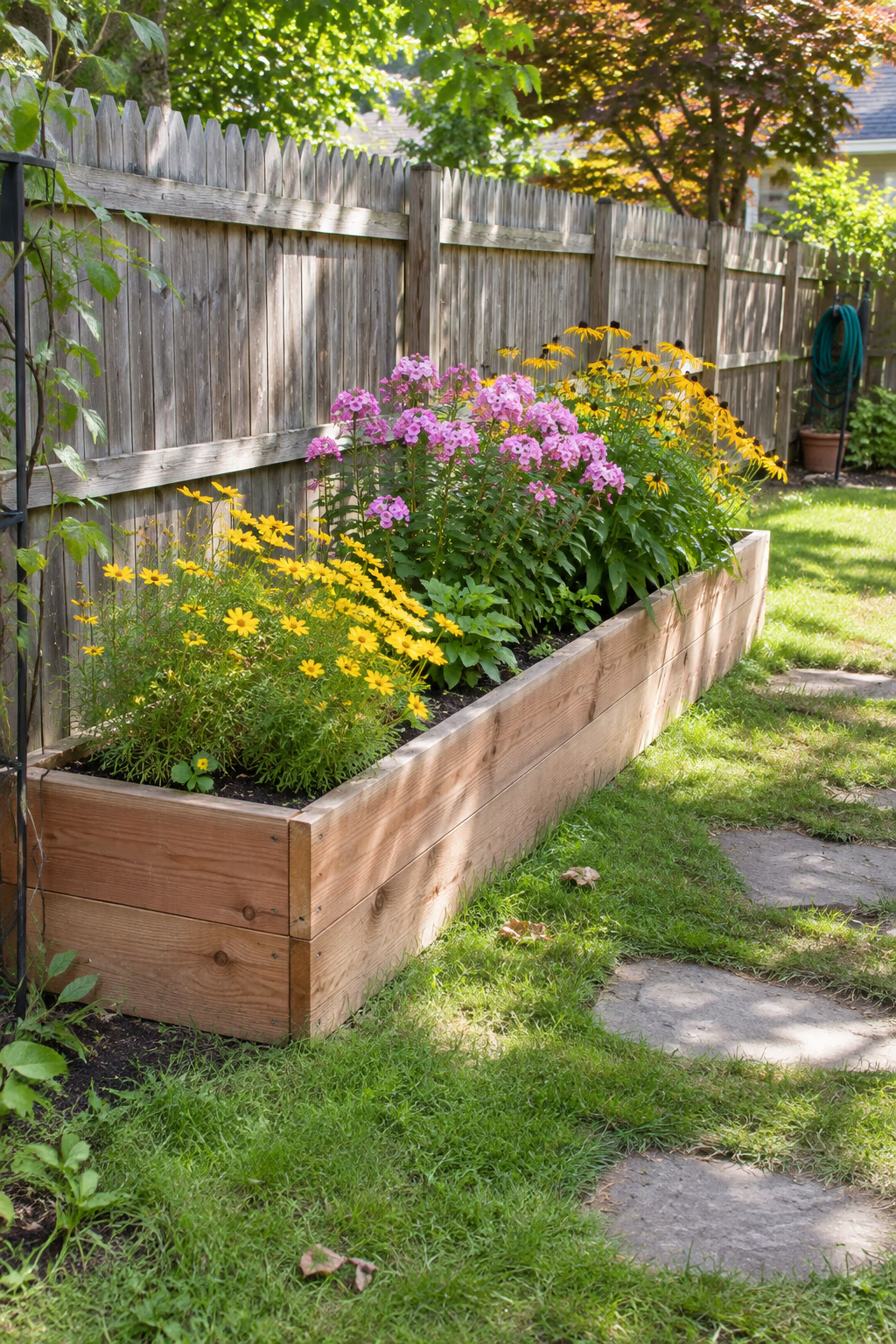
Better soil, easier reach, and a tidy edge
A raised bed running along the fence lets you start with fresh, loose soil instead of compacted ground full of roots. Build it 12 to 18 inches tall and 2 to 3 feet deep from untreated cedar boards, landscape timbers, or mortarless concrete wall block. Fill it with a blend of topsoil and compost, and plant it with mid-height perennials such as coreopsis, phlox, and black-eyed Susans.
The raised height brings the flowers closer to eye level and hides the bottom of a weathered fence. It also drains well in heavy clay, which many perennials need.
Don’t use the fence as the back wall of the bed. Wet soil packed against fence boards will rot them within a few seasons and may damage a neighbor’s property. Give the bed its own back side and leave at least a 3- to 4-inch gap so the fence can dry out.
4. Pair Lavender and Ornamental Grasses Along a Horizontal Slat Fence
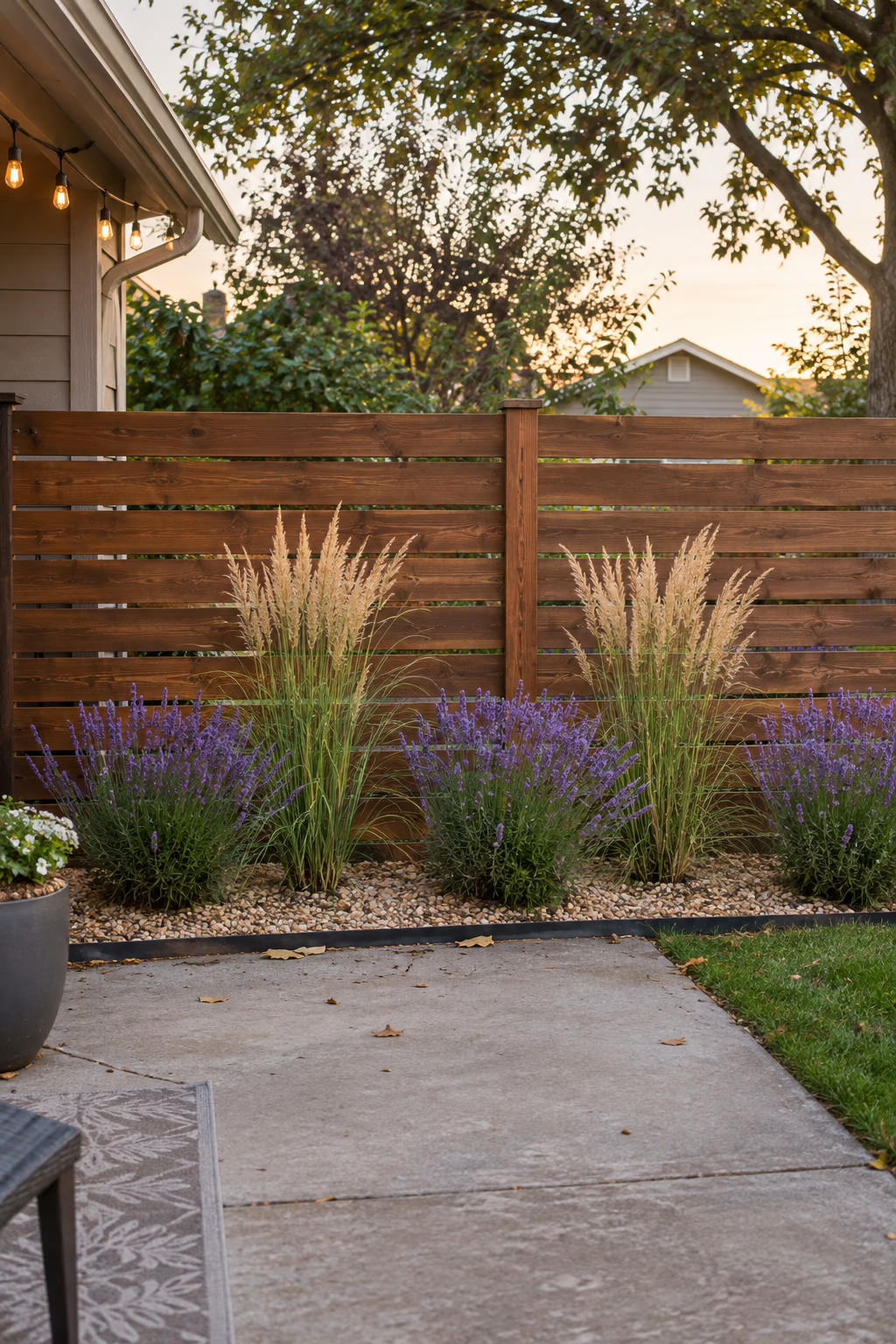
A clean, modern look that moves in the breeze
Horizontal slat fences suit simple planting. Alternate clumps of lavender with fine-textured grasses such as little bluestem or feather reed grass. Use groups of three lavenders about 2 feet apart, then a single grass, and repeat down the length of the fence. Top-dress with pea gravel instead of bark to keep the look crisp.
Silvery lavender and tan or blue-green grasses look calm against stained wood or gray composite boards. The grasses hold their shape through winter, so the bed still looks finished in January. Lavender adds fragrance every time you brush past it.
Lavender rots in wet, heavy soil. Mix gravel into clay or plant on a slight mound, and skip heavy irrigation. In humid Southern summers, lavandin types usually last longer than English lavender.
5. Paint the Fence Charcoal to Make Bright Dahlias Pop
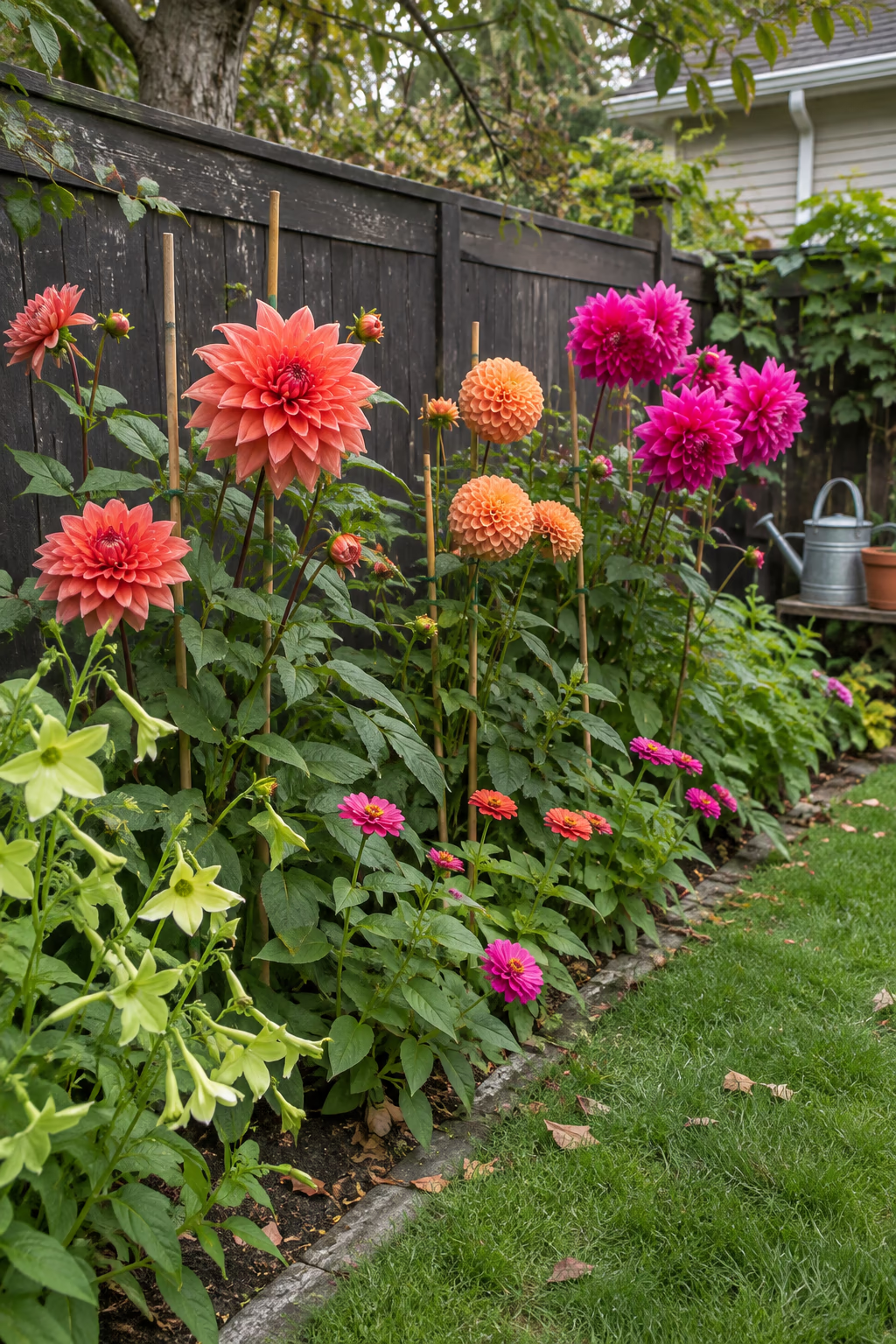
A dark backdrop makes warm colors glow
Painting or staining a plain wood fence deep charcoal or near-black makes flowers stand out. The dark wall seems to recede, and oranges, magentas, and corals look brighter in front of it. Dahlias in coral, apricot, and hot pink are an easy fit. Plant them about 18 to 24 inches apart, with zinnias or lime-green flowering tobacco filling the gaps in front.
Use an exterior solid stain made for fences rather than regular paint, since stain is less likely to peel. The dark color also hides weathered boards and mismatched panels, and it makes green foliage look richer.
Dahlias need staking once they pass about 3 feet. Their tubers survive winter in the ground only in roughly zone 8 and warmer, so in colder areas dig them in fall and store them in a cool spot. Dark surfaces also absorb heat, so water a south-facing bed more often.
6. Spill Shasta Daisies and Catmint Through a White Picket Fence
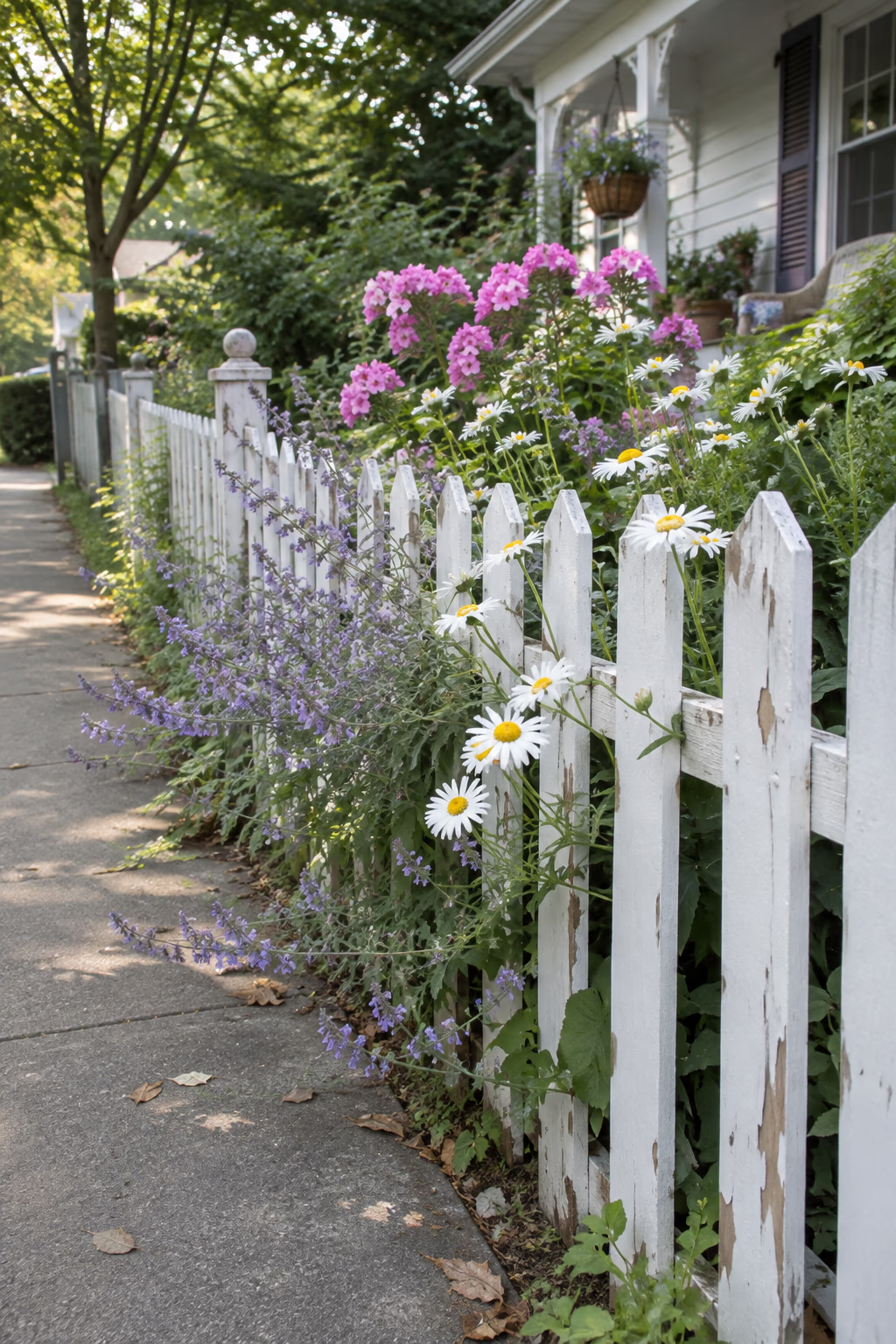
Let flowers lean through the gaps
Picket fences are made for plants that poke through and hang over. Plant a bed 2 feet deep on the inside of the fence with shasta daisies, catmint, and pink or white phlox. Let the catmint flop forward through the pickets and spill toward the sidewalk side.
White pickets go with almost any color, but crisp white daisies and soft blue catmint keep the look fresh rather than busy. Catmint blooms for months in sun. Cutting it back by half after the first flush gives you a second round of flowers.
Plants that lean on pickets keep the paint damp and make it harder to touch up. Trim them back from the boards each fall, and in a front yard, check HOA rules on how far plants may grow past the fence line.
7. Line a Tall Privacy Fence With Sunflowers and Cosmos
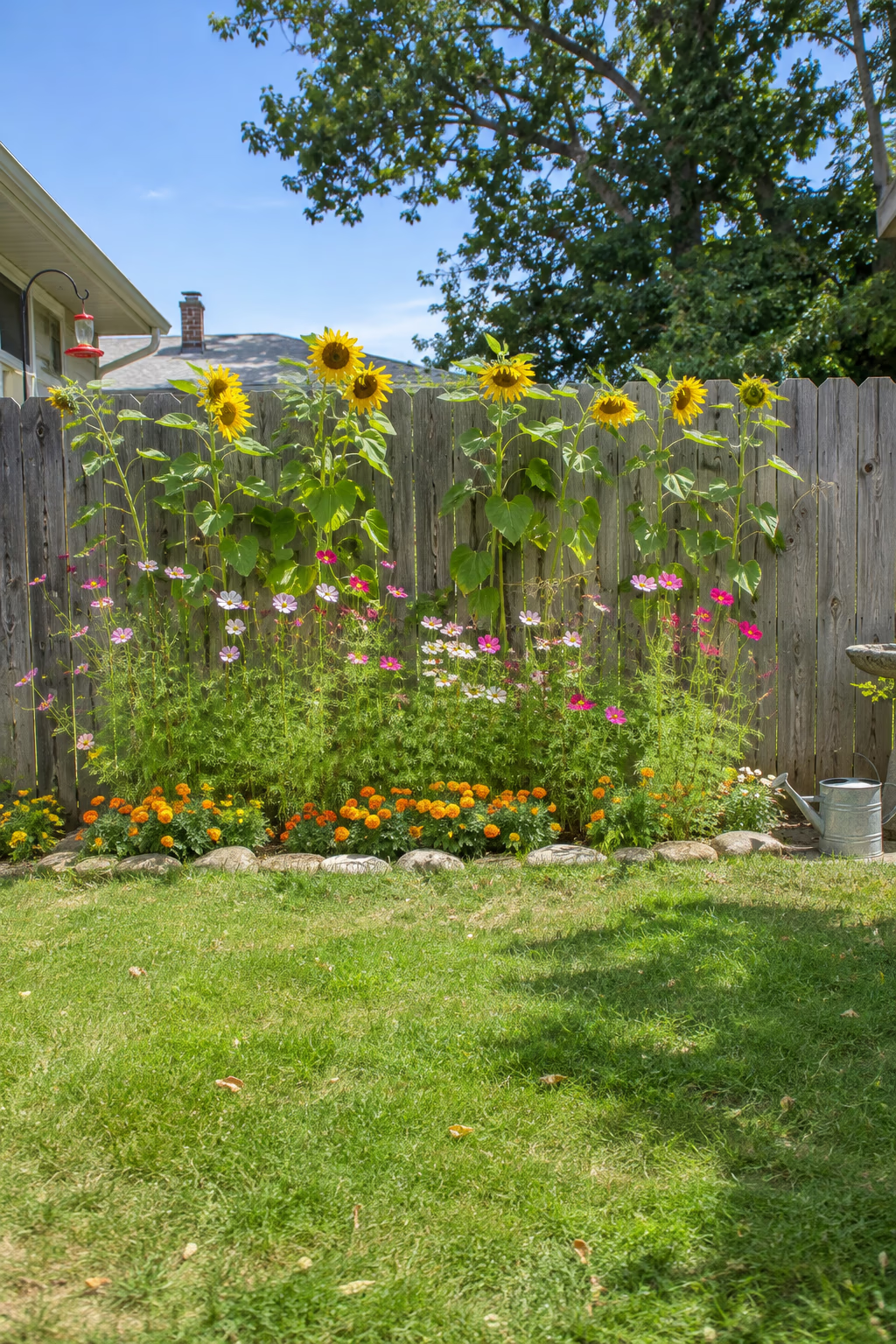
Big summer color from a few packets of seed
A plain 6-foot privacy fence can be a lot of bare wall to fill on a budget. Sunflowers and cosmos sown straight into the soil after your last frost can cover it in eight to ten weeks. Sow sunflowers in a back row about 12 to 18 inches apart. Then sow a band of cosmos in front, and finish with a low edging of marigolds.
Tall sunflower varieties can reach the top of the fence, while branching types give more flowers per plant for cutting. Cosmos fills in with feathery foliage and pink, white, and magenta flowers until frost, and both plants draw bees and finches.
Sunflowers turn toward the sun, so a bed along a south-facing fence works best. If the bed sits on the north side, the flower heads will face away from you. Tall stems may need loose ties to the fence in windy areas.
8. Fill a Shady Fence Bed With Hostas, Ferns, and Astilbe
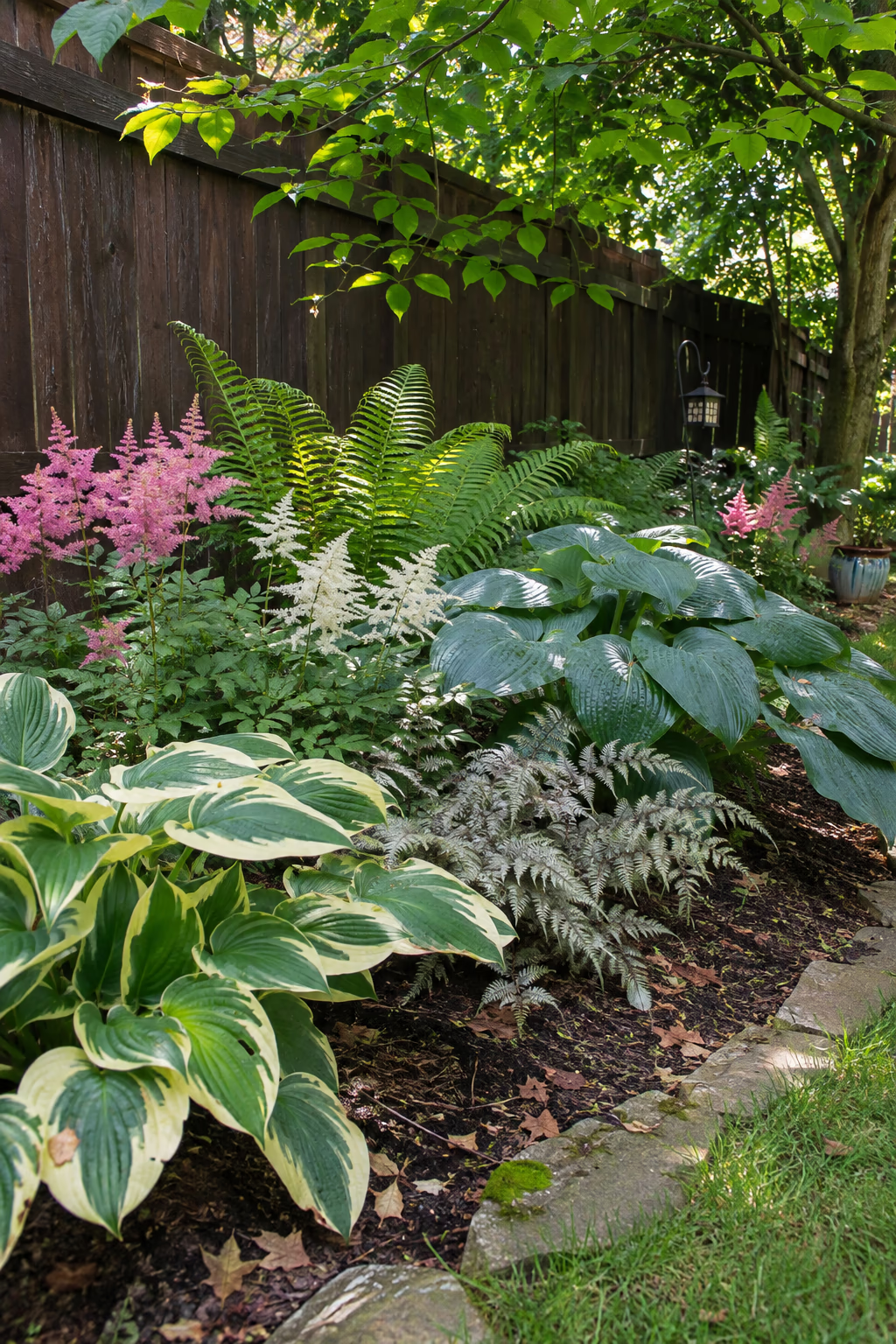
Layered leaves and soft plumes for the dim side
Every yard has a fence that gets only a few hours of sun, often along the north side or under a neighbor’s trees. Fill it with leaf texture. Plant large blue or variegated hostas every 3 feet, tuck ferns such as lady fern or Japanese painted fern between them, and add astilbe for pink, red, or white summer plumes.
Broad hosta leaves, lacy fern fronds, and feathery astilbe give the bed contrast even when little is in bloom. Pale and variegated foliage also brightens the shade.
Shade beds next to fences are often dry, because tree roots and the fence block rain. Add compost, mulch well, and water during dry spells, since astilbe browns quickly when it is thirsty. Where deer are common, expect them to eat hostas unless you protect the bed.
9. Plant a Narrow Pollinator Strip of Native Perennials
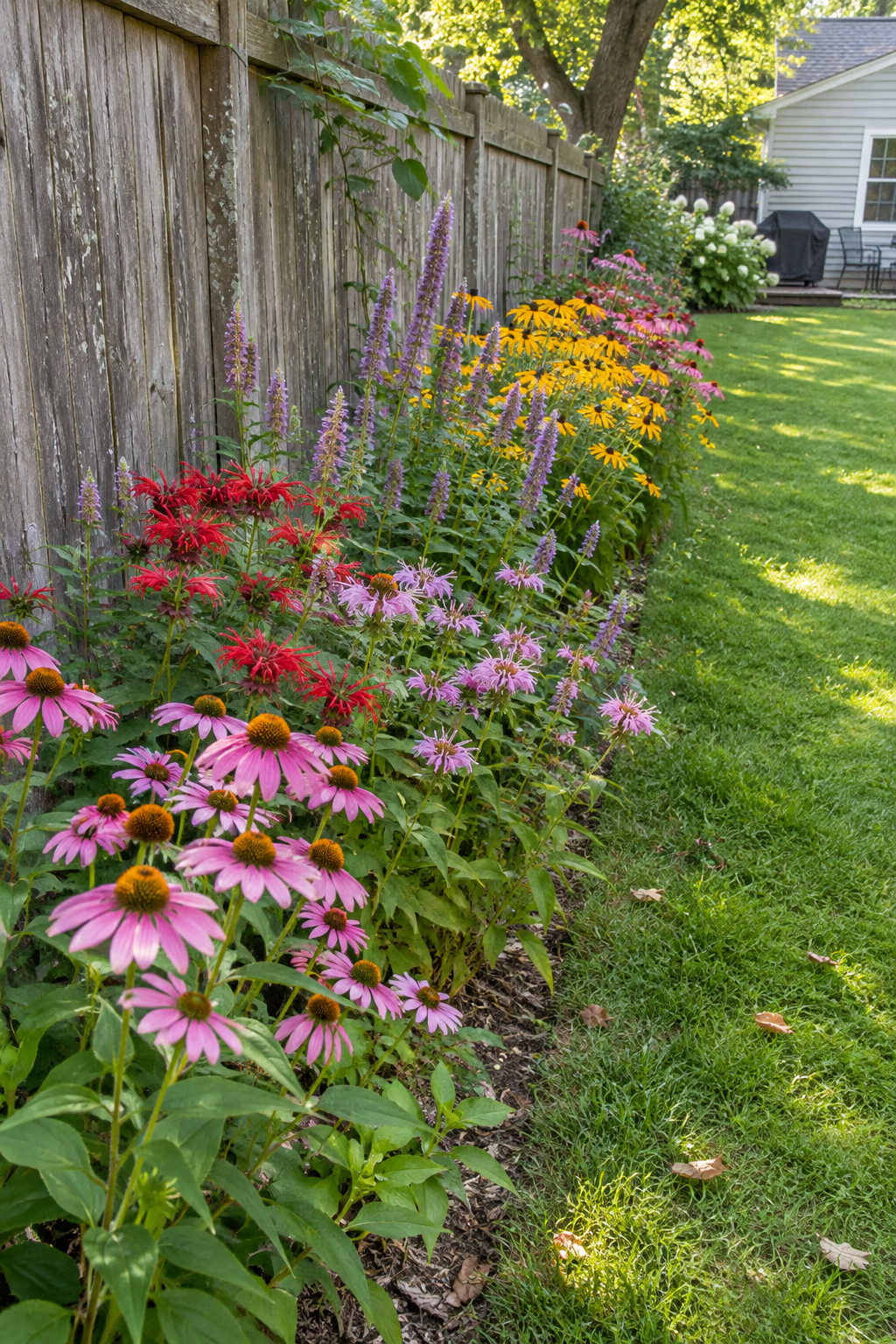
A busy, buzzing border in just 2 feet of space
Even a skinny strip between the fence and the lawn can feed bees and butterflies. Choose native perennials that suit your region, such as purple coneflower, bee balm, anise hyssop, black-eyed Susan, and narrow-leaf mountain mint. Plant them in drifts of three to five so pollinators can find them easily.
Natives adapted to your area usually need less water and fertilizer once established. Staggered bloom times, from early bee balm to late asters, keep the strip in flower from June into fall. Leave the seed heads standing in autumn for birds.
Some natives, including bee balm and mountain mint, spread quickly in good soil. Give them room or edge the bed with a buried barrier. Check your state’s native plant society list to see what is actually native to your area.
10. Alternate Russian Sage and Lady’s Mantle in a Repeating Rhythm
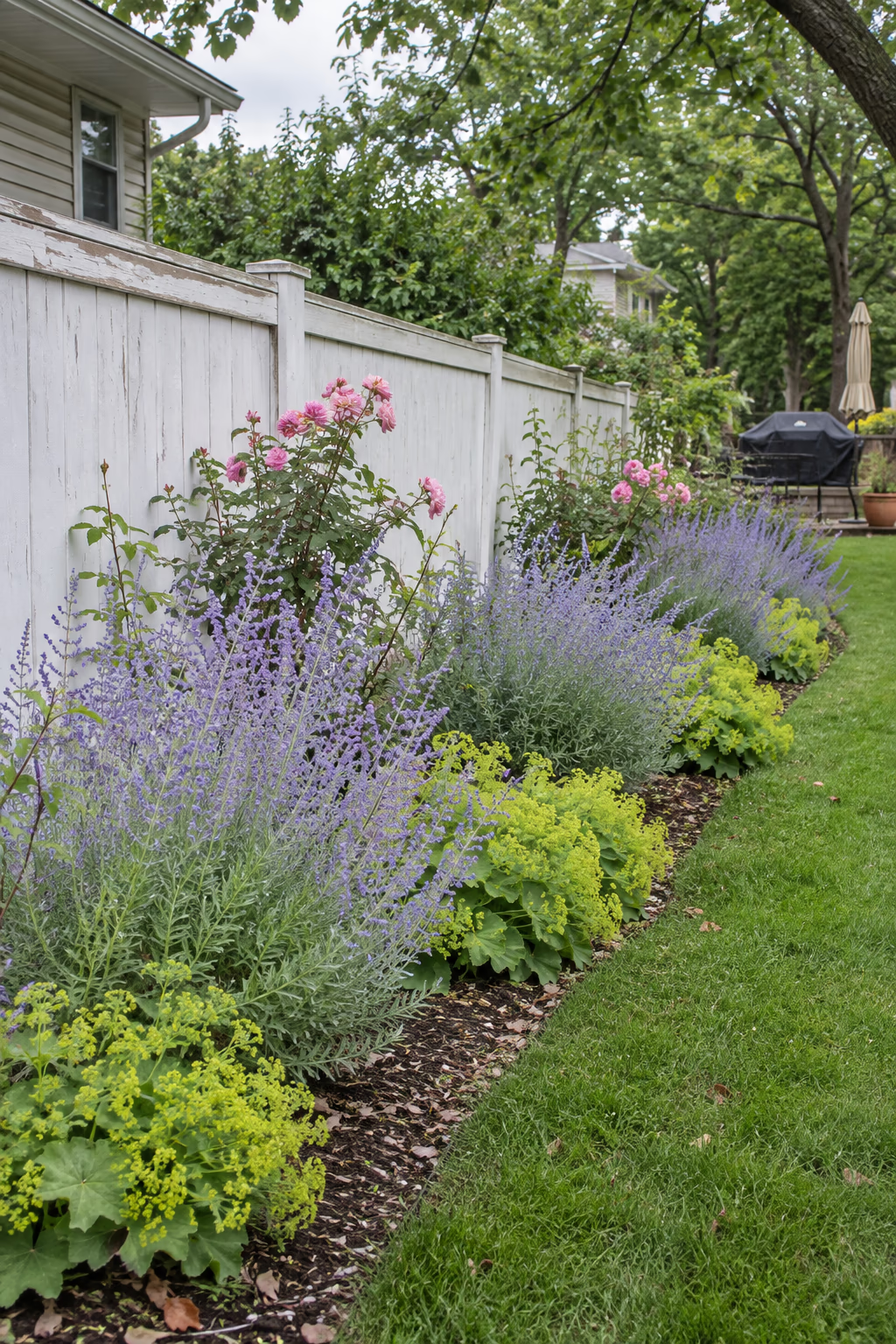
Simple repetition looks designed
Long fences look best when the planting repeats. Alternate airy Russian sage with mounds of chartreuse lady’s mantle every 3 feet along the front of the fence. Add a climbing or shrub rose behind every third or fourth pair for height.
The rhythm guides the eye down the fence and makes even a modest yard look planned. Lavender-blue haze against lime-green leaves and flowers is a gentle color pairing that goes with white, gray, or natural wood fences.
Russian sage loves hot, dry sun, while lady’s mantle prefers some afternoon shade in warm climates. This combination works best in cooler regions or along an east-facing fence. Cut lady’s mantle back after it blooms to stop heavy self-seeding.
11. Anchor the Back Row With Evergreen Shrubs
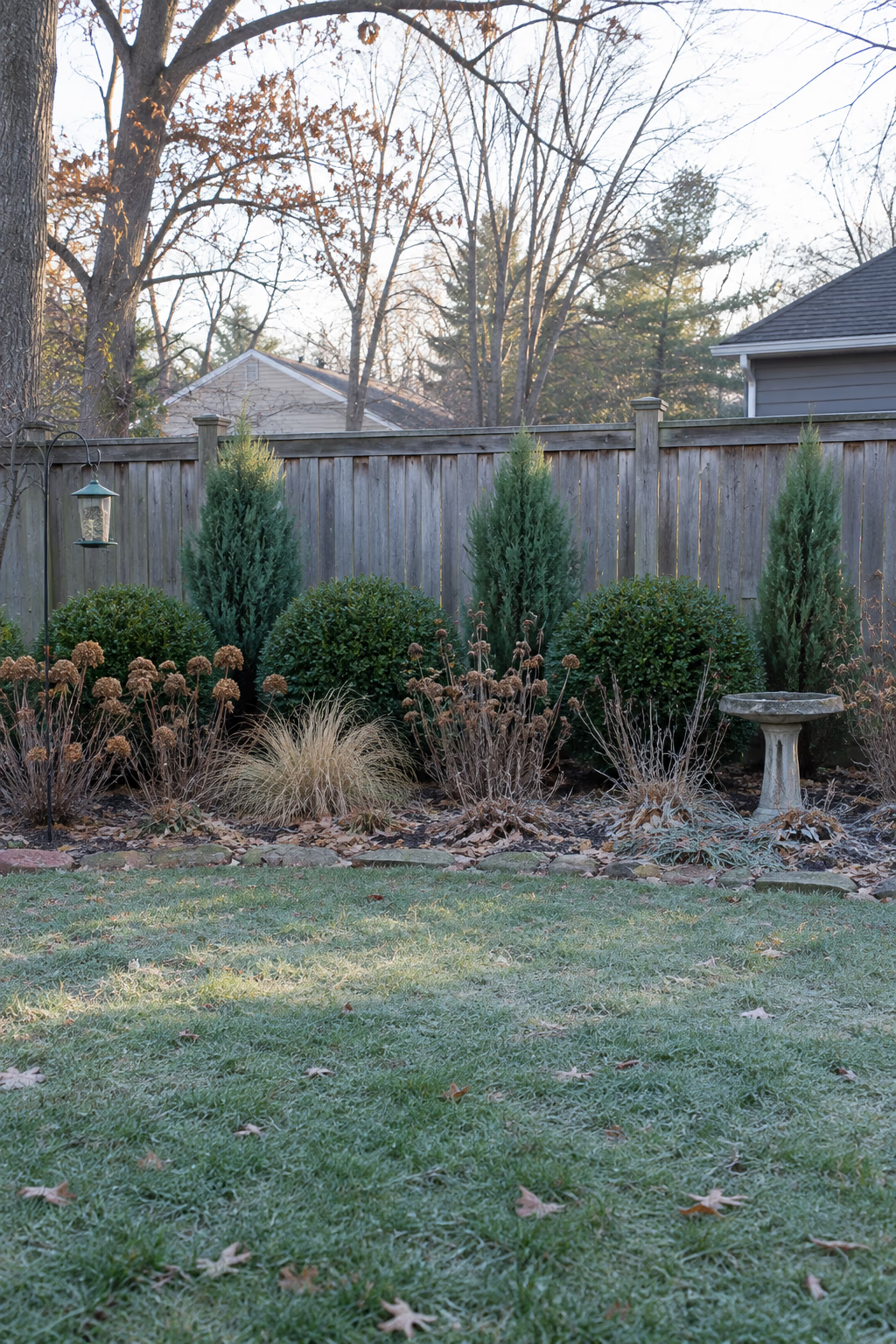
Year-round structure so the bed never looks empty
Flower beds along fences can look bare from November to April. Plant a back row of compact evergreen shrubs, such as boxwood, dwarf holly, inkberry, or upright junipers, every 4 to 6 feet. Fill the spaces in front with flowering perennials and spring bulbs.
The evergreens frame the flowers in summer and give the bed shape in winter. They also add a bit of privacy without the bulk of a full hedge, and they hide a dull fence when everything else has died back.
Check mature widths before planting. A shrub labeled 4 feet wide that is planted 1 foot from the fence will press into the boards. Boxwood can get blight in humid areas, so consider inkberry or dwarf yaupon holly instead.
12. Curve the Front Edge Away From a Straight Fence
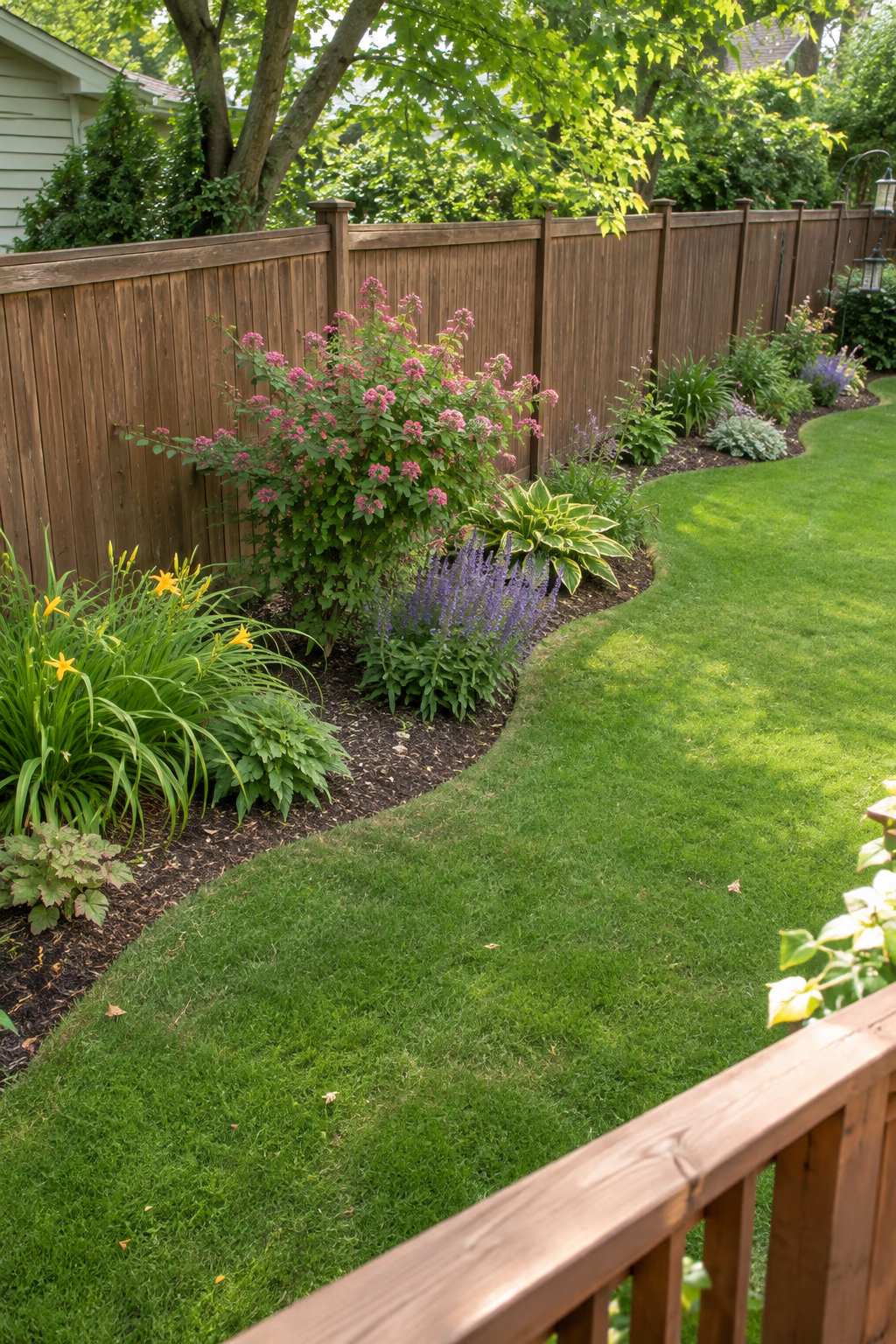
Gentle bays make a long fence look softer
A bed that runs in a straight line along a straight fence can feel stiff. Lay a garden hose on the lawn to mark a front edge that swings out to 5 feet deep in some places and pulls back to 2 feet in others. Cut along the hose with a half-moon edger, and plant the deeper bays with your largest perennials or a small shrub.
The curves create pockets for plant groupings and make the yard feel larger, because the eye follows the wavy edge rather than the fence. Wide, gentle curves are also easier to mow around than tight wiggles.
Keep the curves broad, at least as wide as your mower deck, or you’ll end up trimming by hand. A shallow trench edge or steel edging stops grass from creeping back into the bed.
13. Leave a Gravel Access Path Behind the Bed
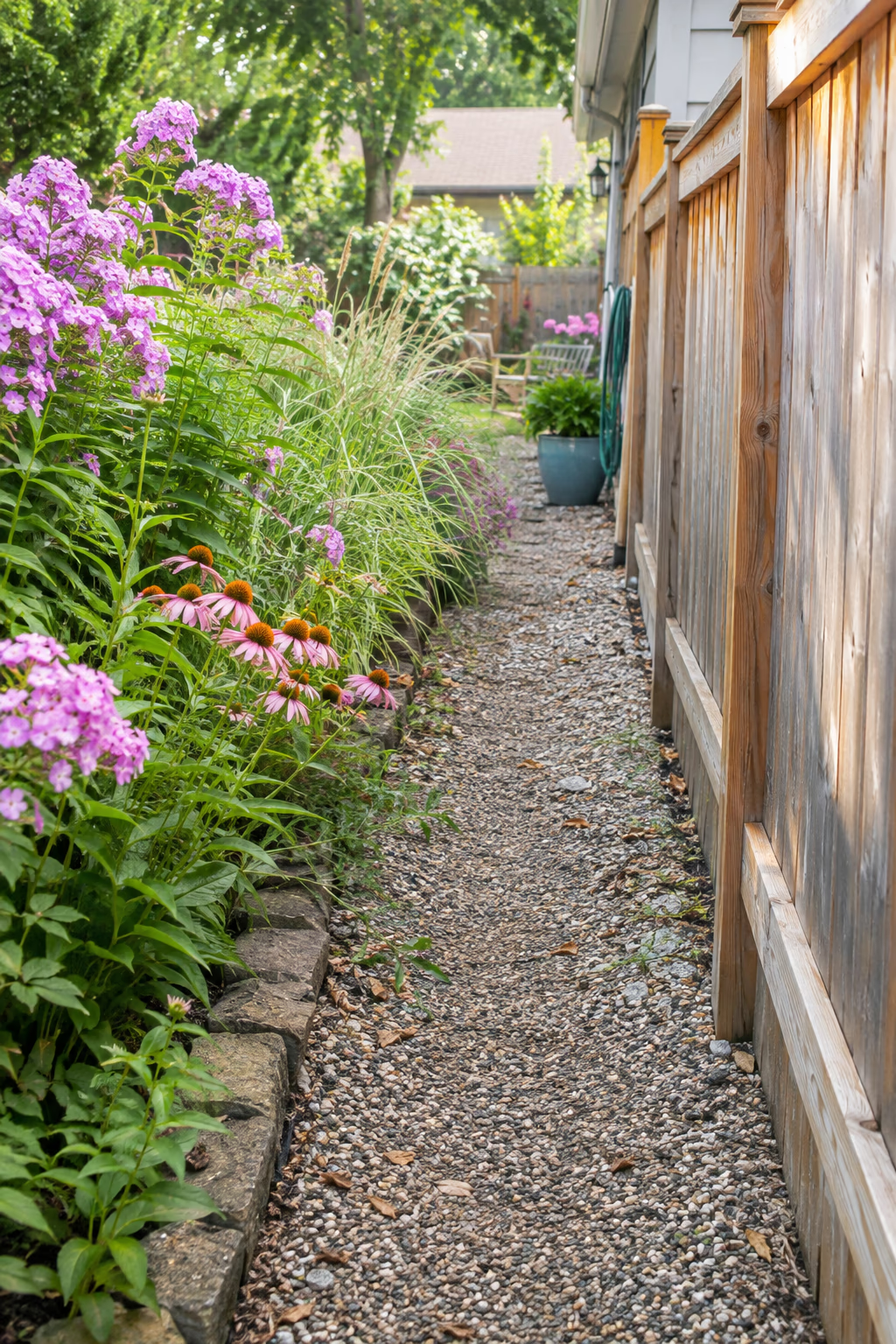
Room to reach the fence without trampling flowers
Fences need staining, repairs, and the occasional board replacement. A narrow path between the fence and the back of the bed makes those jobs much easier. Leave an 18- to 24-inch strip along the fence, cover it with landscape fabric and 2 inches of pea gravel or crushed stone, and start your plantings in front of it.
The path keeps plants and wet mulch off the boards, improves airflow, and lets you reach the back row for deadheading and pruning. From the lawn, tall plants hide the path, so the bed still looks full.
This idea takes up planting room, so it works best for beds at least 4 feet deep. Use stepping stones instead of gravel if the path will also be a shortcut for kids.
14. Retain a Sloping Fence Line With a Stacked Stone Bed
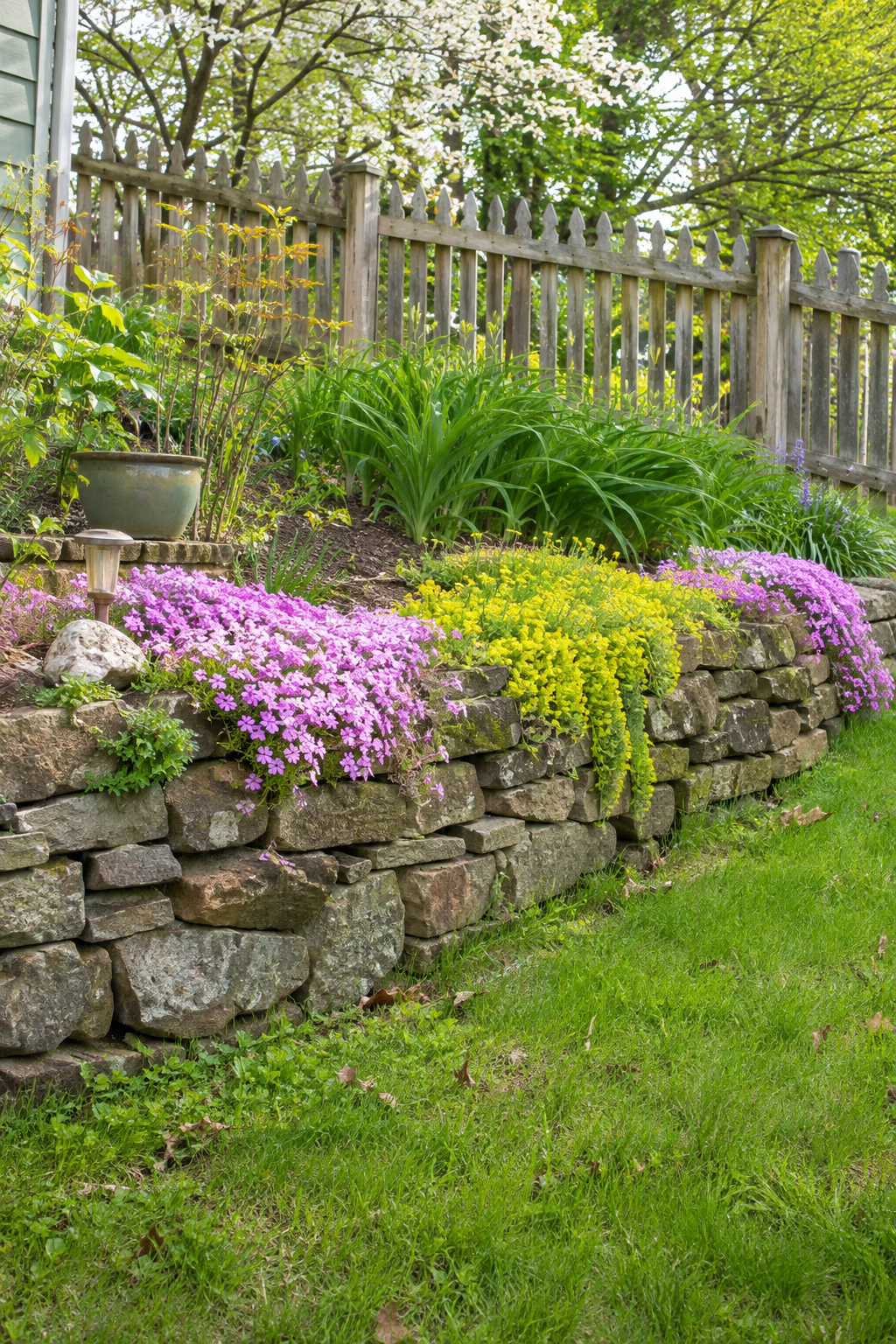
Level a hillside and plant it at the same time
Many fences run along a slope, which leaves loose soil washing toward the lawn. Build a low dry-stacked wall of fieldstone or flagstone 12 to 24 inches high, set slightly back into the hill, and backfill behind it to make a level planting shelf. Fill it with sun-loving perennials such as creeping phlox, sedum, and daylilies, and let some spill over the stones.
The wall holds back soil and turns an awkward slope into a terraced feature. Stone also retains heat, which suits drought-tolerant plants.
Set the bottom course on compacted gravel and lean each layer slightly back into the slope. Walls taller than about 3 feet often need engineering or a permit, so check local codes, and call 811 before you dig near property lines.
15. Disguise a Chain-Link Fence With a Mixed Flowering Border
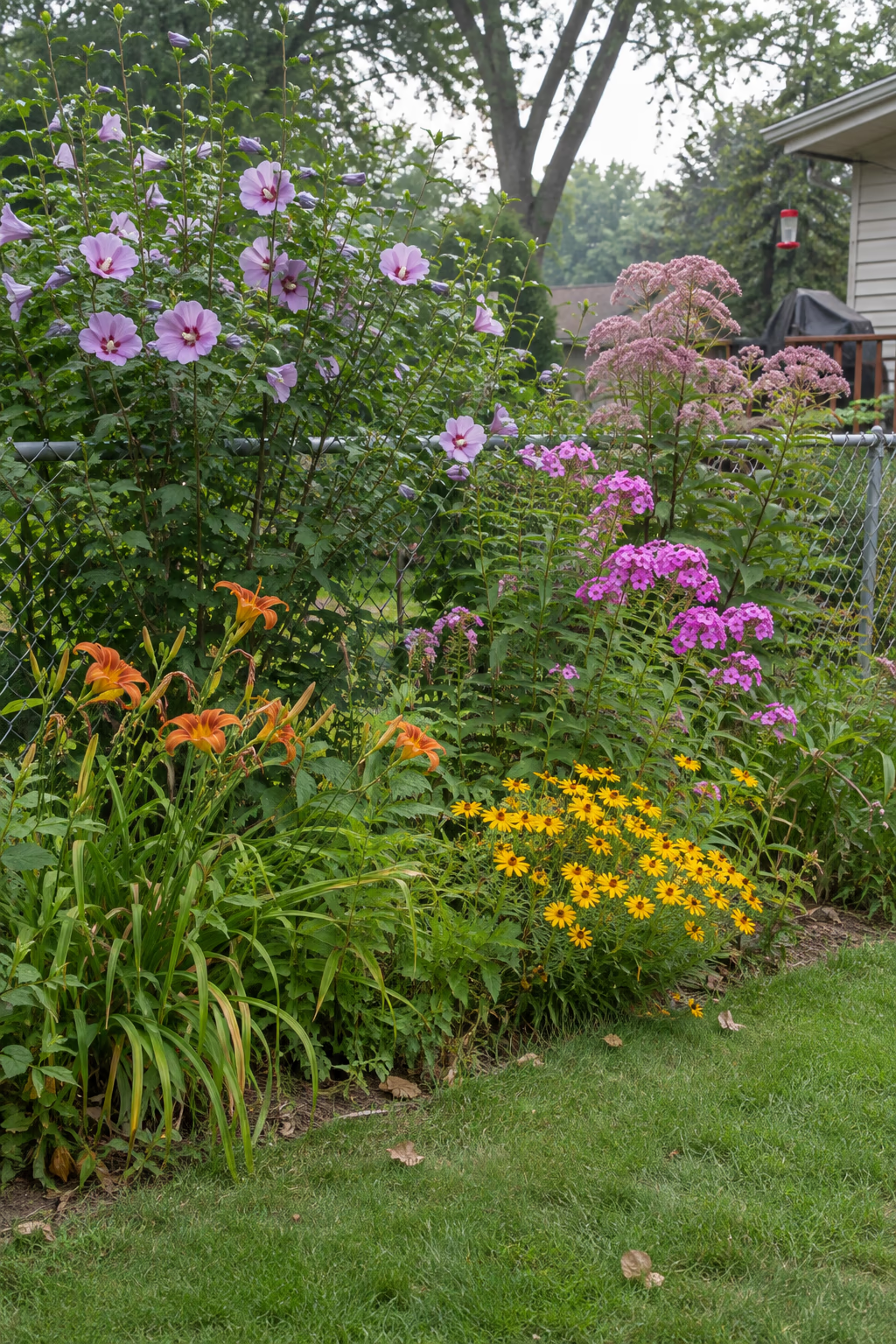
Hide the metal behind layered blooms
Chain-link fences are practical but rarely pretty. A bed 3 feet deep with tall, bushy plants can hide most of the wire within a season or two. Plant shrubs such as rose of Sharon or spirea and tall perennials such as phlox, Joe Pye weed, and ornamental grasses along the back, then add daylilies and coreopsis in front.
Dense, upright plants blur the gray mesh, and their foliage hides it from both sides. Chain-link does let in plenty of light, so plants close to the fence grow evenly instead of leaning forward the way they do against a solid wall.
Keep woody stems from growing through the mesh. They thicken over time, bend the wire, and make the fence almost impossible to repair or remove. Rose of Sharon self-seeds heavily, so choose seedless types or pull seedlings every spring.
16. Let Wildflowers Drift Along a Split-Rail Fence
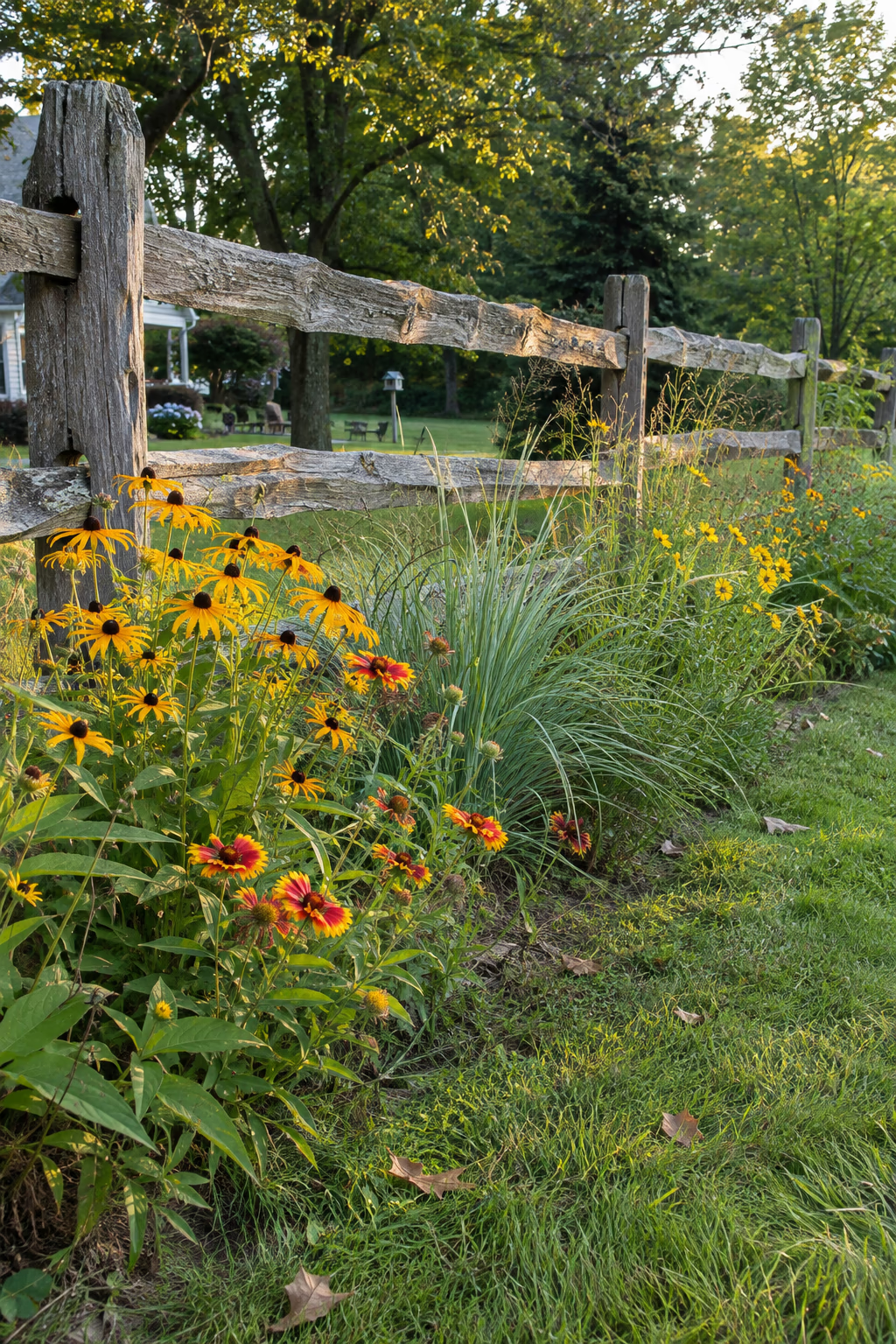
Relaxed country charm for an open boundary
Split-rail fences suit a loose, meadow-like planting. Prepare a strip 3 to 4 feet deep by removing turf. Then sow a regional wildflower mix in fall or early spring, or plant plugs of black-eyed Susans, blanket flower, and coreopsis among little bluestem or prairie dropseed.
The open rails frame the flowers rather than hiding them, so the planting looks natural from both sides. Once established, a wildflower strip needs little more than one mowing or cutback in late winter.
Wildflower seed mixes can include aggressive or non-native species. Read the label and choose one sold for your region. The first year can look weedy while perennials establish, so expect patience rather than an instant meadow.
17. Plant a Drought-Tolerant Gravel Bed Along a Hot Fence
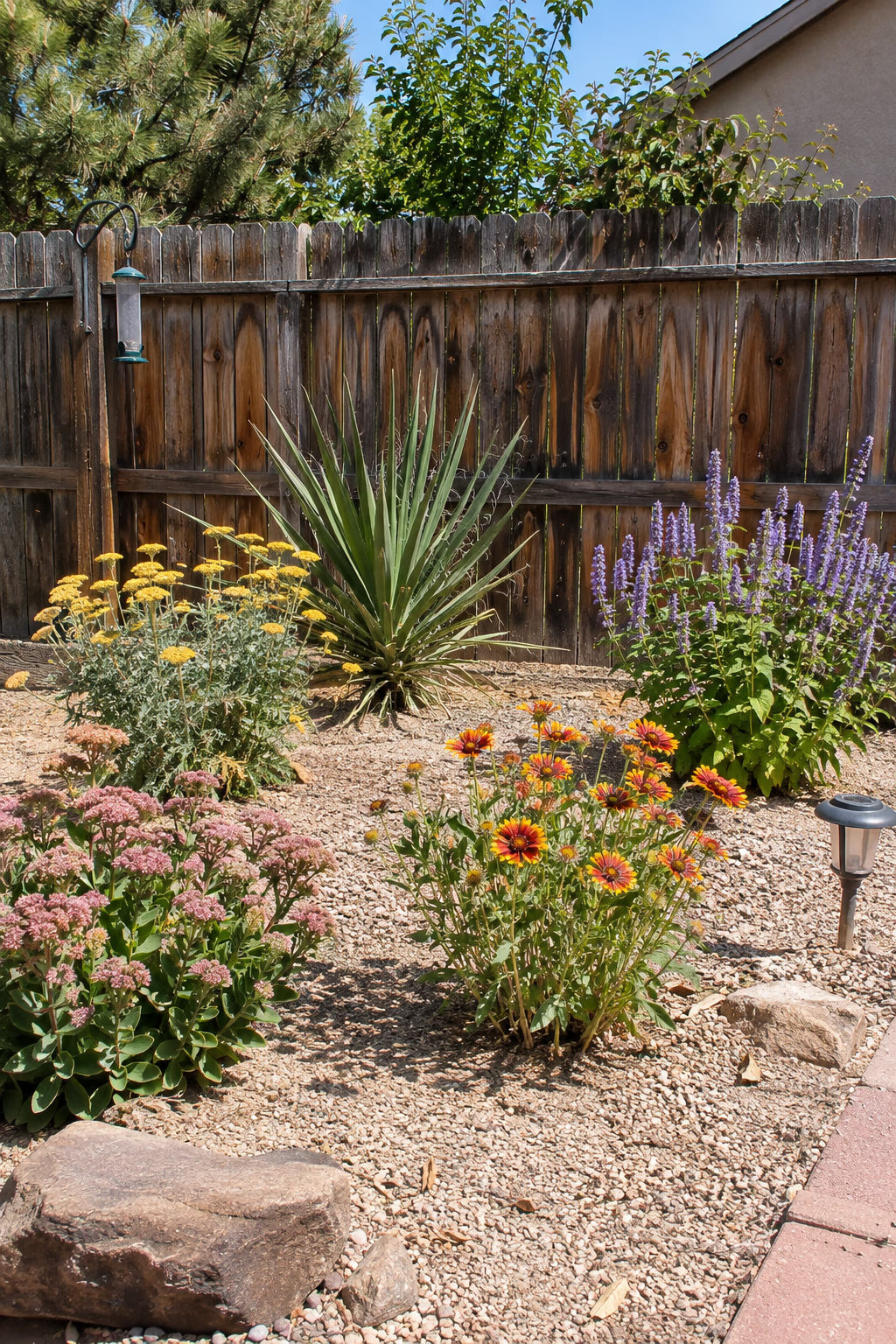
Little water for the hottest spot in the yard
Fences facing south or west reflect a lot of heat, and many flowers struggle there. Build a gravel garden instead. Mix coarse sand or small gravel into the soil, plant yarrow, blanket flower, agastache, sedum, and penstemon, and top-dress with 2 inches of decomposed granite or pea gravel. In the Southwest, add yucca or agave for structure.
Gravel mulch keeps roots cooler, sheds water away from the crowns, and gives the bed a neat, deliberate look. Once established, most of these plants need watering only during long droughts.
Skip landscape fabric under gravel in a planted bed. Weeds root into debris on top anyway, and the fabric makes it hard to add plants later. Expect to hand-pull seedlings in the gravel for the first year or two.
18. Sow Annual Vines at the Back of the Bed for Quick Color
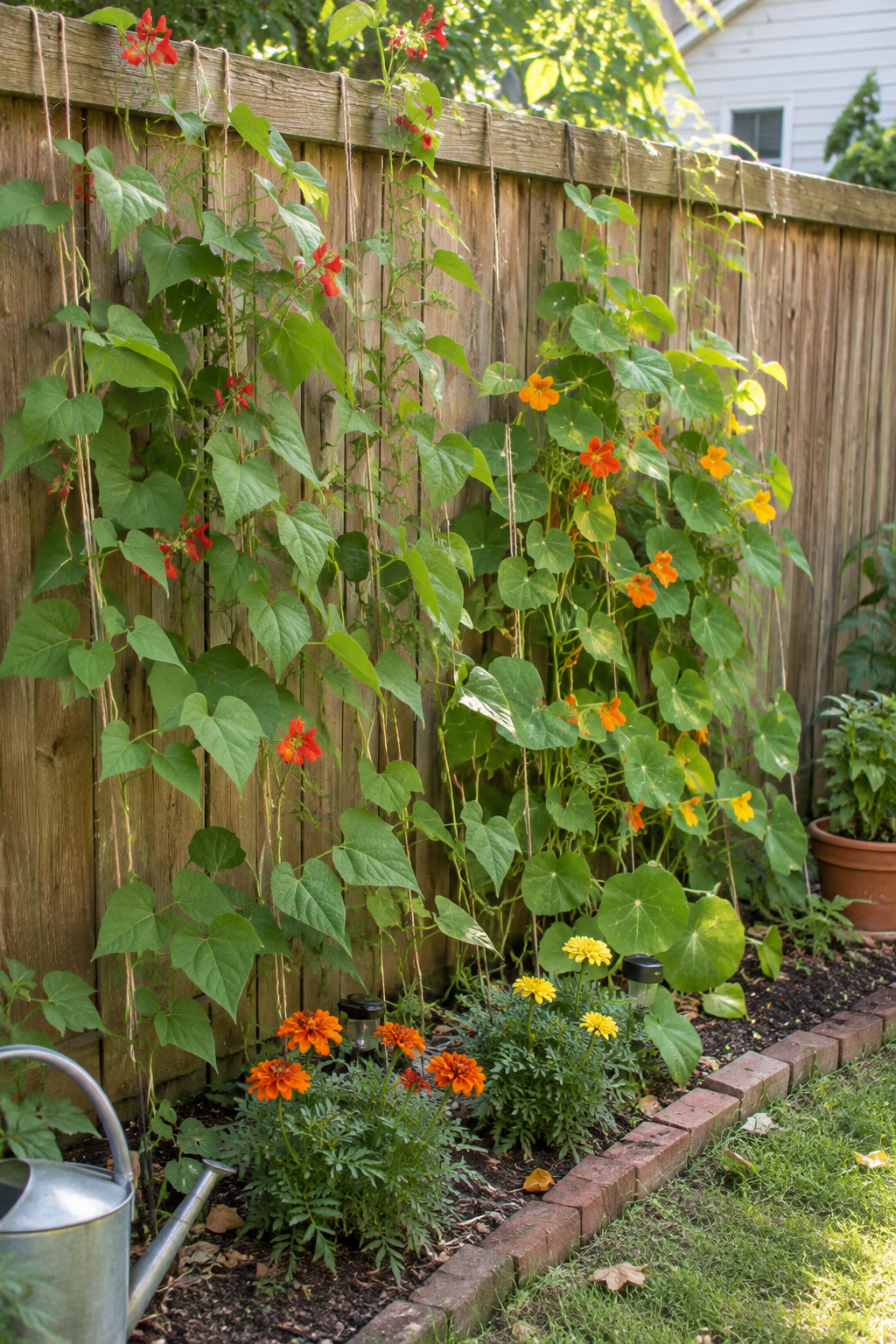
Cover a fence in one summer for the price of seeds
If you’re renting or waiting on slower climbers, annual vines fill the back of a fence bed fast. Tie jute twine or attach plastic netting to the fence, and sow climbing nasturtiums, scarlet runner beans, or hyacinth beans along the back of the bed after the last frost. In cool spring areas, sow sweet peas a few weeks earlier.
These vines grow quickly once the weather warms, softening the fence and attracting hummingbirds. At the end of the season, cut the twine and pull the plants, and you have a clean start next year.
Hyacinth bean seeds are toxic when raw, so avoid them where small children play. Morning glory, another common choice, reseeds aggressively and is considered a weed in some states, so check before sowing it.
19. Light the Fence Border With Low Solar Spotlights
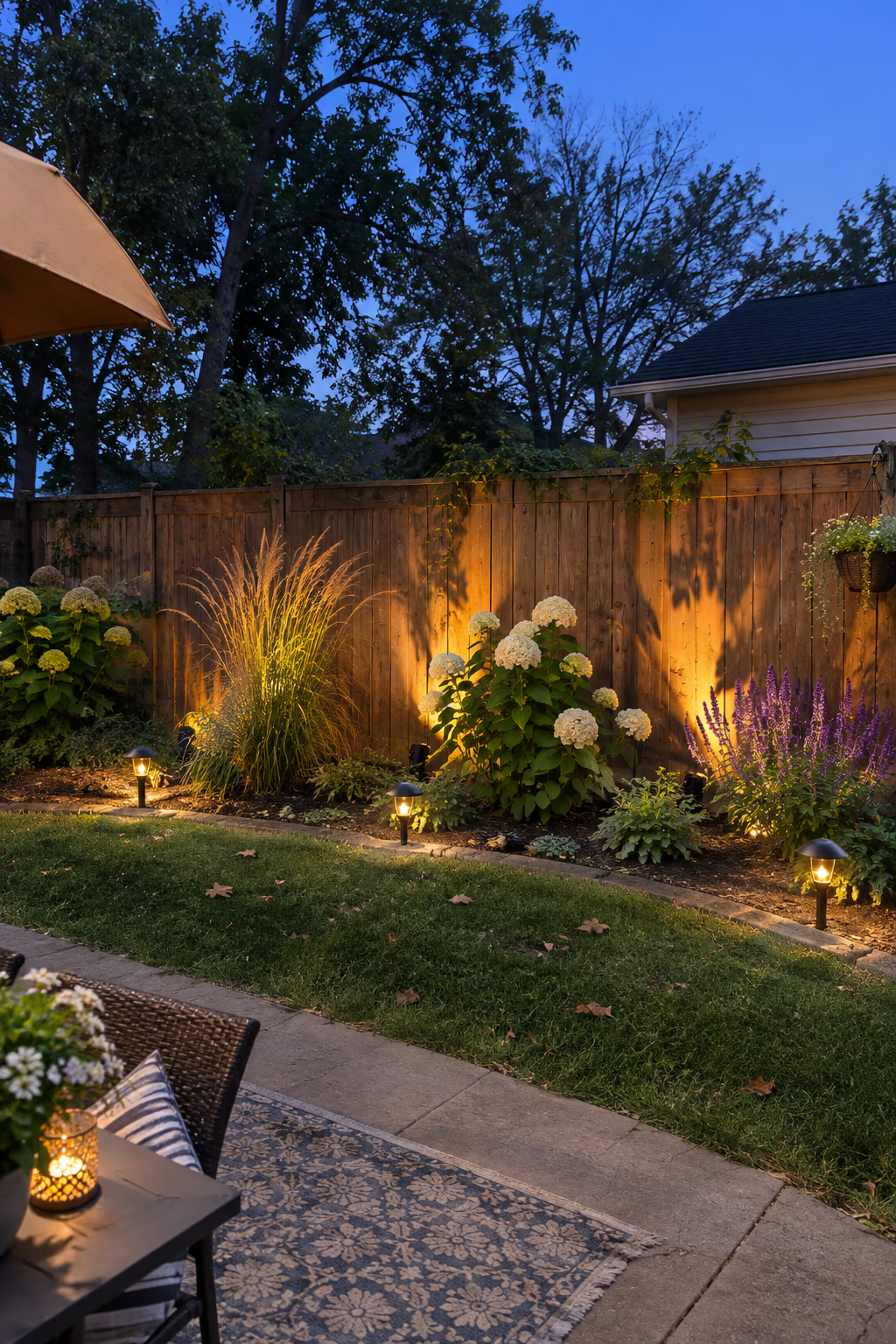
Enjoy the flowers after dark
A fence-line bed can stay visible on summer evenings. Place small solar spotlights every 6 to 8 feet, angled up toward the fence or a feature shrub, and add a few low path lights along the front edge. Warm white bulbs, around 2700K, flatter flowers and wood far more than cool blue-white light.
Uplighting casts plant shadows on the fence and gives the bed depth at night. Solar fixtures need no wiring, so they’re easy to move as plants grow.
Solar panels need several hours of direct sun to charge, so they work poorly in shady beds. Low-voltage wired lighting is brighter and more dependable there. Aim fixtures away from your neighbor’s windows.
How to Plan Your Flower Bed Along a Fence
A fence-line bed is long, narrow, and backed by a wall, so it behaves a little differently from a bed in the middle of the lawn. A few decisions up front will save replanting later.
- Watch the sun first. Track how many hours of direct sun the fence gets in summer. A south-facing fence can be hot, while a north-facing one may be shaded most of the day.
- Make the bed deep enough. Aim for at least 2 feet for a single row and 3 to 5 feet for layered planting with shrubs, perennials, and edging.
- Keep plants off the boards. Leave a few inches to a couple of feet between the fence and your plantings so the wood can dry and you can maintain it.
- Know whose fence it is. Confirm your property line before digging. Ask before attaching trellis or wire to a shared fence, and check HOA rules for front-yard beds.
- Plan for every season. Combine spring bulbs, summer perennials, fall bloomers, and a few evergreens so the bed isn’t bare for half the year.
- Prepare the soil and call first. Remove turf, add compost, and call 811 before digging, since utility lines often run along property boundaries.
Frequently Asked Questions
How far from a fence should I plant flowers?
Plant most perennials at least 12 to 18 inches from the fence, and shrubs at least half their mature width away. That spacing keeps foliage from rubbing the boards, improves air circulation, and leaves room for fence maintenance.
What flowers grow best along a fence?
For sun, good choices include climbing roses, clematis, salvia, coneflower, black-eyed Susan, catmint, lavender, and sunflowers. For shade, try hostas, ferns, astilbe, hardy geraniums, and coral bells. Always pick plants rated for your USDA hardiness zone.
Will a flower bed damage my wood fence?
It can if soil or wet mulch is piled against the boards or posts, which leads to rot and insect damage. Keep soil below the bottom rail, leave a gap behind raised beds, and keep sprinklers from soaking the fence.
Can I plant flowers along my neighbor’s fence?
You can usually plant on your own side of the property line. However, you shouldn’t attach anything to a fence you don’t own or let plants damage it. A friendly conversation first prevents most disputes, and local laws on overhanging plants vary.
How much does a flower bed along a fence cost?
A 20-foot bed planted from seed and small perennials can cost under $100. Shrubs, raised bed materials, stone, or professional installation can bring it to several hundred dollars or more. Planting in stages spreads out the cost.
Final Thoughts
A fence doesn’t have to be a blank edge at the back of your yard. With the right plants for its sun and soil, it becomes a backdrop for roses and clematis, hydrangeas and salvia, cheerful sunflowers, or a quiet shade bed of hostas and ferns.
Pick the idea that fits your fence and budget, start with one section, and expand as plants fill in. In a season or two, the line that once just divided properties will be a part of the yard you enjoy looking at.