A vegetable garden does not need to look like a collection of random plants squeezed into an empty corner of the yard. With the right layout, it can be practical, productive, easy to care for, and beautiful enough to become one of your favorite parts of the landscape.
And there is no single perfect vegetable garden layout.
A gardener with a sunny patio might need one compact raised bed. Someone with a long backyard may prefer several rectangular beds and wide paths. A family growing most of its summer vegetables might want rows, trellises, and dedicated crop beds. If appearance matters just as much as harvest, a formal potager may be a better fit.
The important part is designing around sunlight, access, plant size, harvesting, and how you actually use the garden.
Raised beds are commonly kept narrow enough that gardeners can reach the middle without stepping onto the growing soil. Permanent paths also reduce soil compaction, while vertical growing can free up valuable ground space.
If you are planning a new garden or reorganizing an existing one, these 31 vegetable garden layout ideas offer plenty of practical inspiration.
1. Classic Four-Bed Vegetable Garden
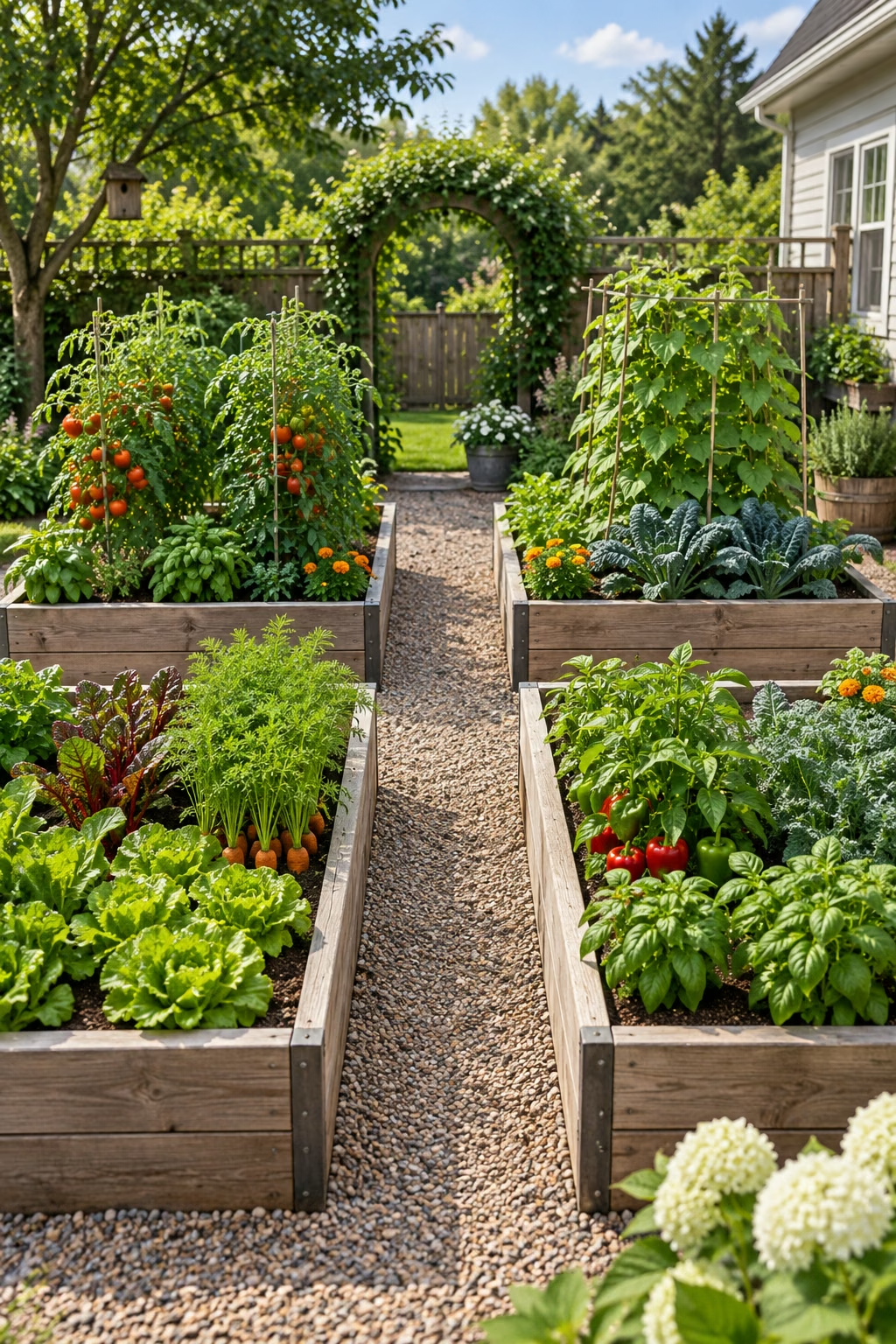
A four-bed layout is one of the easiest ways to make a vegetable garden feel organized.
Arrange four rectangular or square raised beds with paths running between them. You can dedicate each bed to a different crop group, such as tomatoes and peppers, leafy greens, root vegetables, and beans or peas.
The separate beds also make yearly crop rotation much easier.
Visually, four matching beds create balance without making the garden overly formal. Add gravel, bark mulch, or wood chips between them to create clean permanent paths.
This is a particularly good layout if you want a garden that can grow with you because individual beds can be replanted without disturbing everything else.
2. 4×4 Square-Foot Vegetable Garden
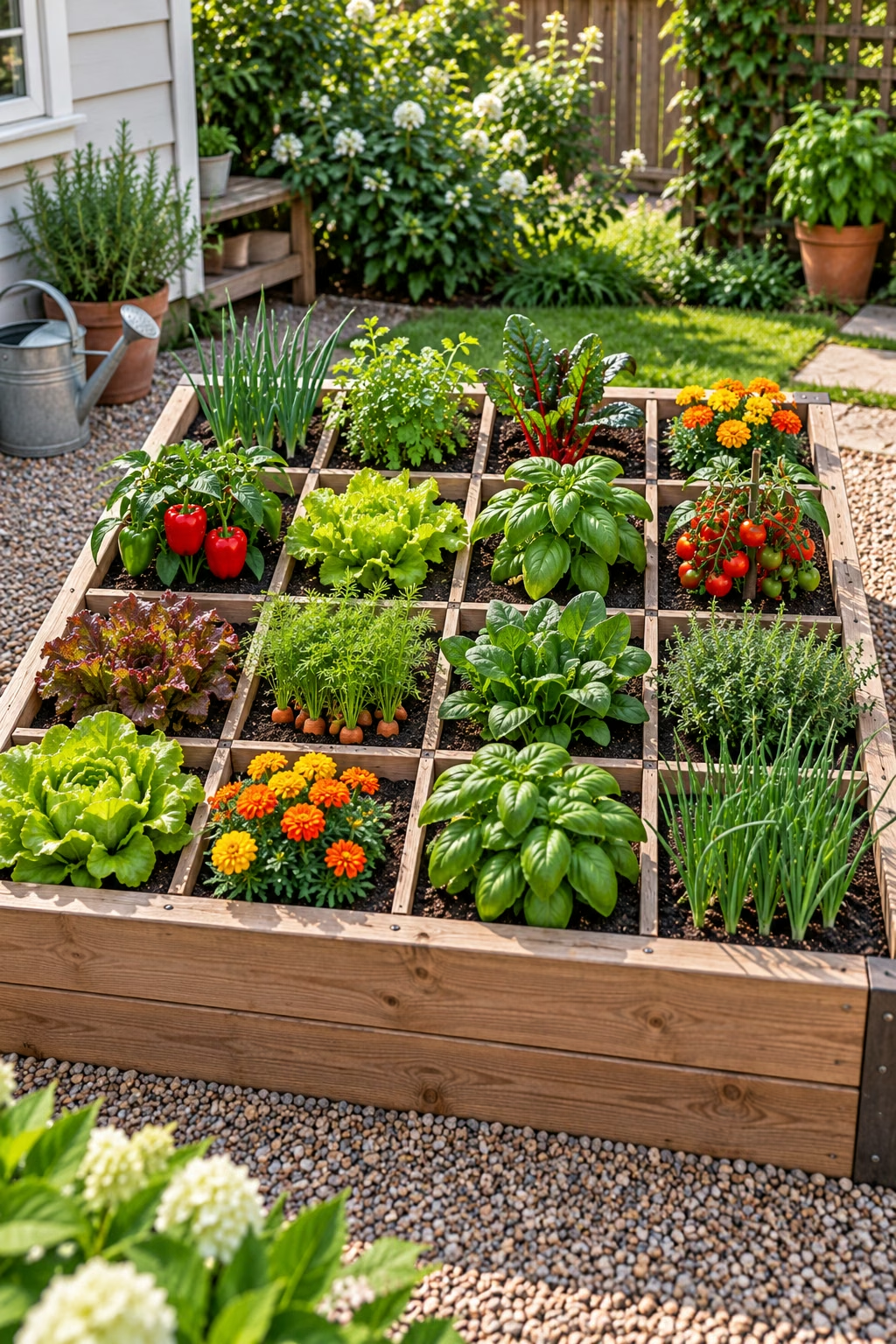
If you have very little room, start with a single 4-by-4-foot raised bed divided into sixteen 1-foot squares.
Instead of planting long rows, each square becomes its own small growing area.
One square might contain lettuce, another carrots, another basil, and another a pepper plant. The number of plants per square depends on their mature spacing.
Square-foot gardens are especially convenient for beginners because the grid makes planning much easier. University of Florida guidance describes dividing a 4-by-4-foot bed into sixteen individual square-foot sections and planting different vegetables, herbs, or flowers within them.
It is also one of the easiest layouts to photograph from above, making it especially attractive for a small backyard garden.
3. Long 4×8 Raised Bed Layout
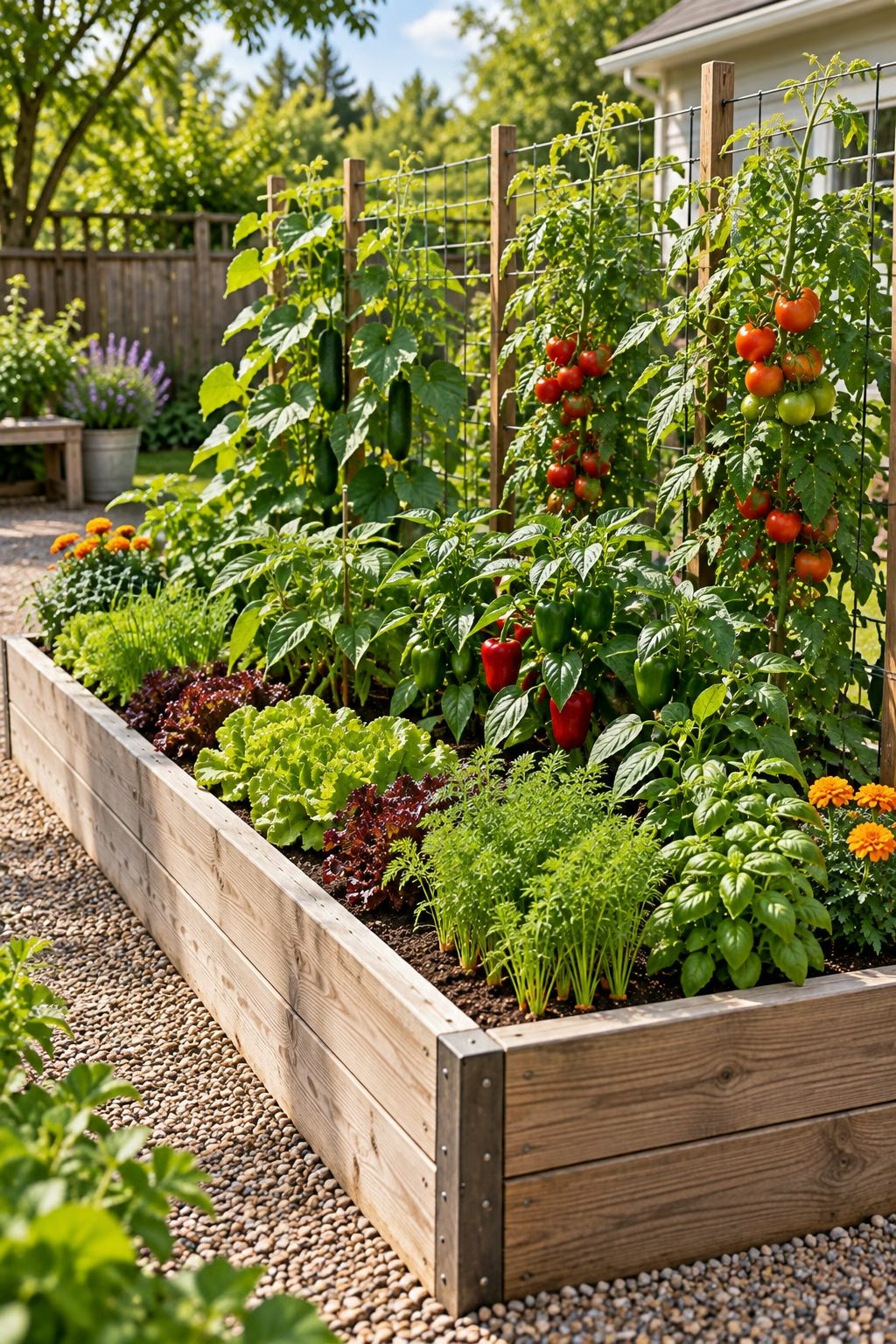
A 4-by-8-foot bed gives you twice the growing area of a 4-by-4 while remaining manageable from either side.
Instead of filling it randomly, organize the bed by plant height.
Put taller or trellised vegetables toward the north side in the Northern Hemisphere, medium-sized crops through the center, and shorter vegetables along the sunnier edge.
For example:
Tomatoes and cucumbers can grow along a trellis.
Peppers and bush beans can occupy the middle.
Lettuce, carrots, radishes, or herbs can fill the front.
Keeping tall crops from unnecessarily shading shorter sun-loving crops is recommended when planning vegetable beds.
4. Twin Raised Beds With a Central Path
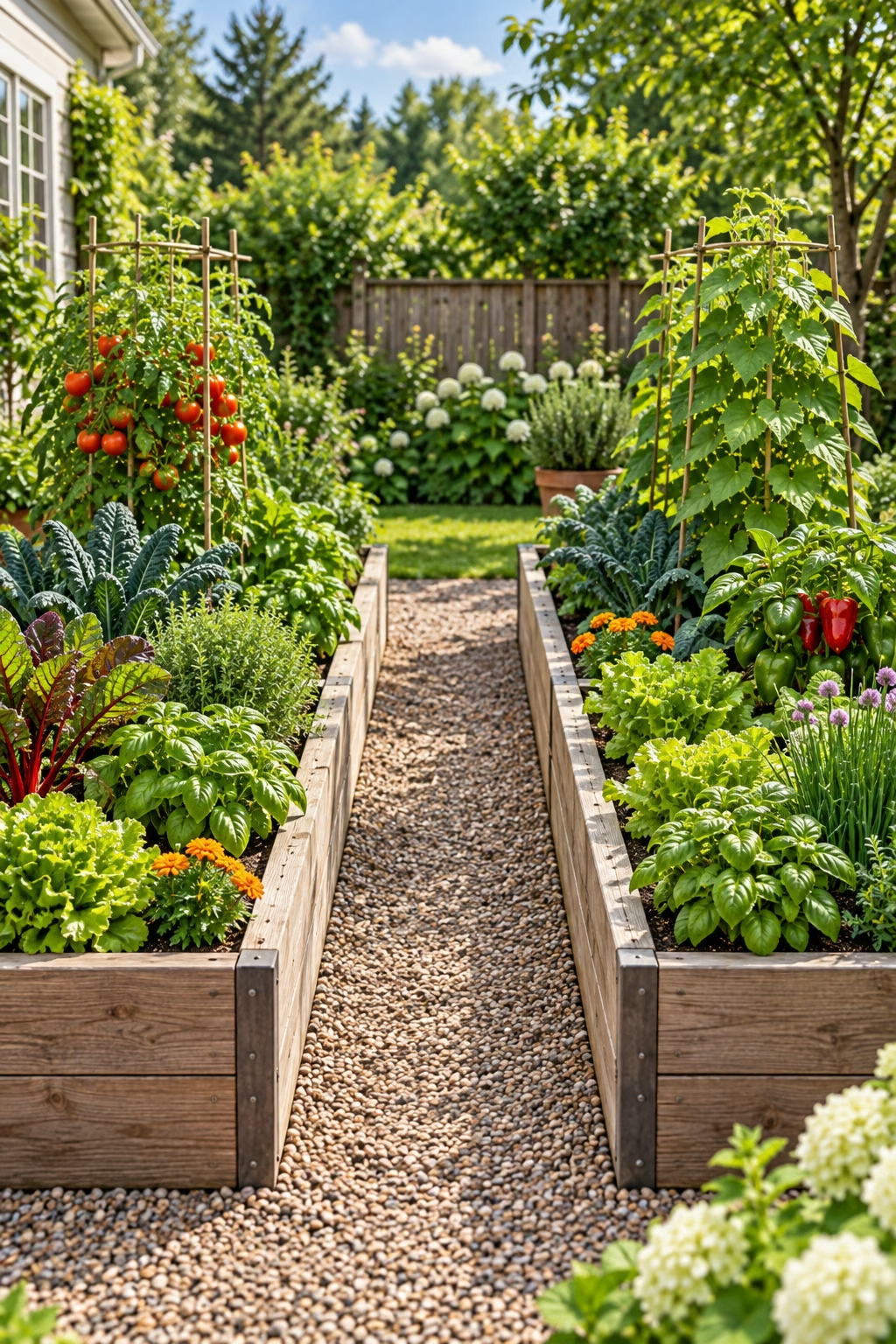
Two matching raised beds facing each other create one of the simplest beautiful kitchen garden layouts.
Leave a comfortable pathway between them and grow different vegetables on each side.
The symmetry instantly makes the garden feel intentional.
You can keep the design simple with two plain rectangular beds, or connect them with an arch trellis for cucumbers, beans, peas, or other climbing vegetables.
Gardenary highlights the twin-bed arrangement because two beds across a central path provide both symmetry and an opportunity for vertical growing.
This design works particularly well beside a patio, shed, fence, or sunny lawn.
5. Raised Beds With an Arch Trellis Walkway
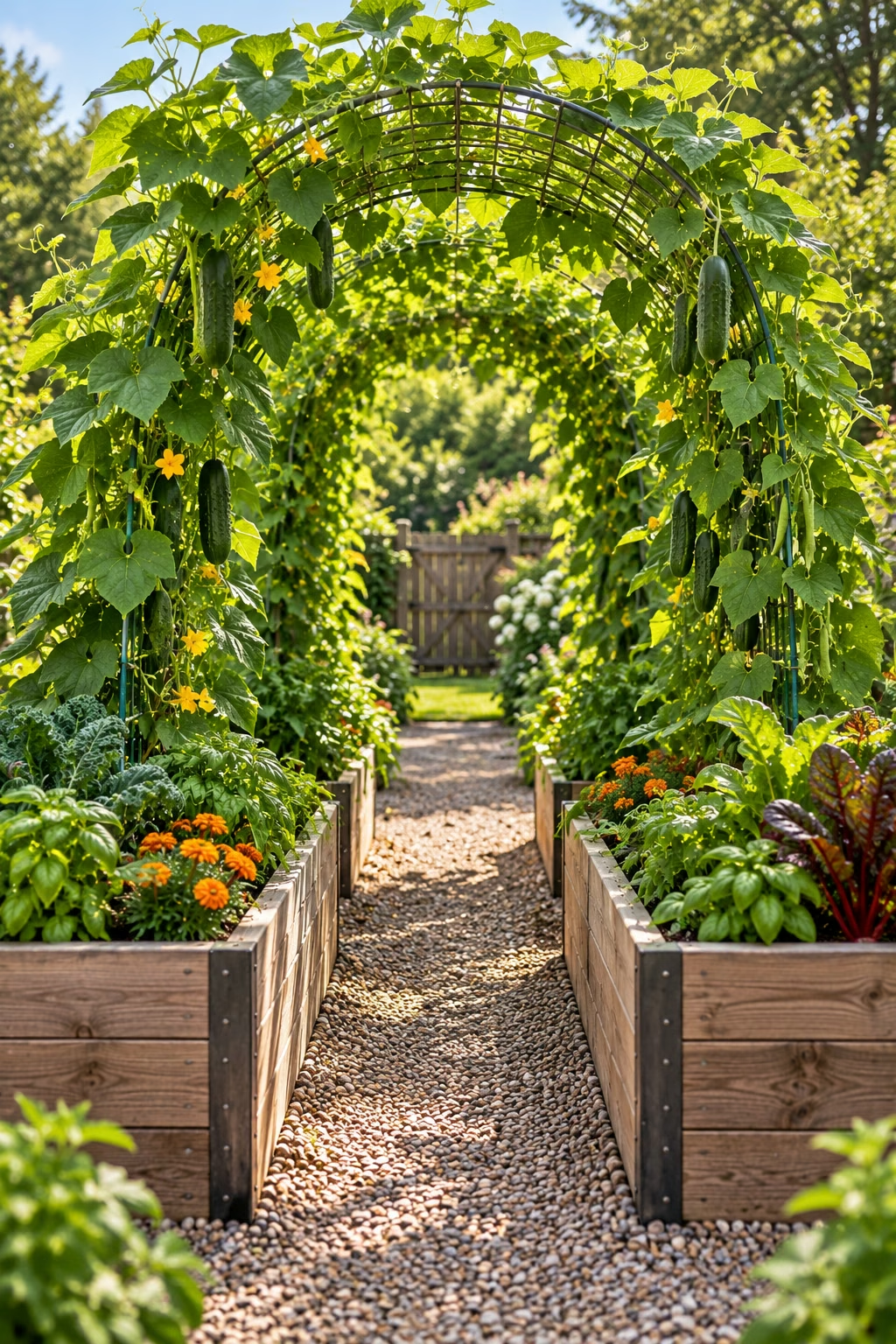
Place two raised beds opposite each other and connect them using a strong arched trellis.
Grow cucumbers, pole beans, small squash, gourds, or other suitable climbing crops up the sides.
As the plants meet above the path, you get a green tunnel that produces food without requiring additional ground space.
Trellising vining vegetables is a recognized way to conserve garden space.
Cattle-panel arches are especially popular in vegetable gardens, and garden videos demonstrate them positioned between raised beds to turn an ordinary pathway into vertical growing space.
From a Pinterest perspective, this is easily one of the most photogenic layouts in the article.
6. Four-Bed Garden With a Center Feature
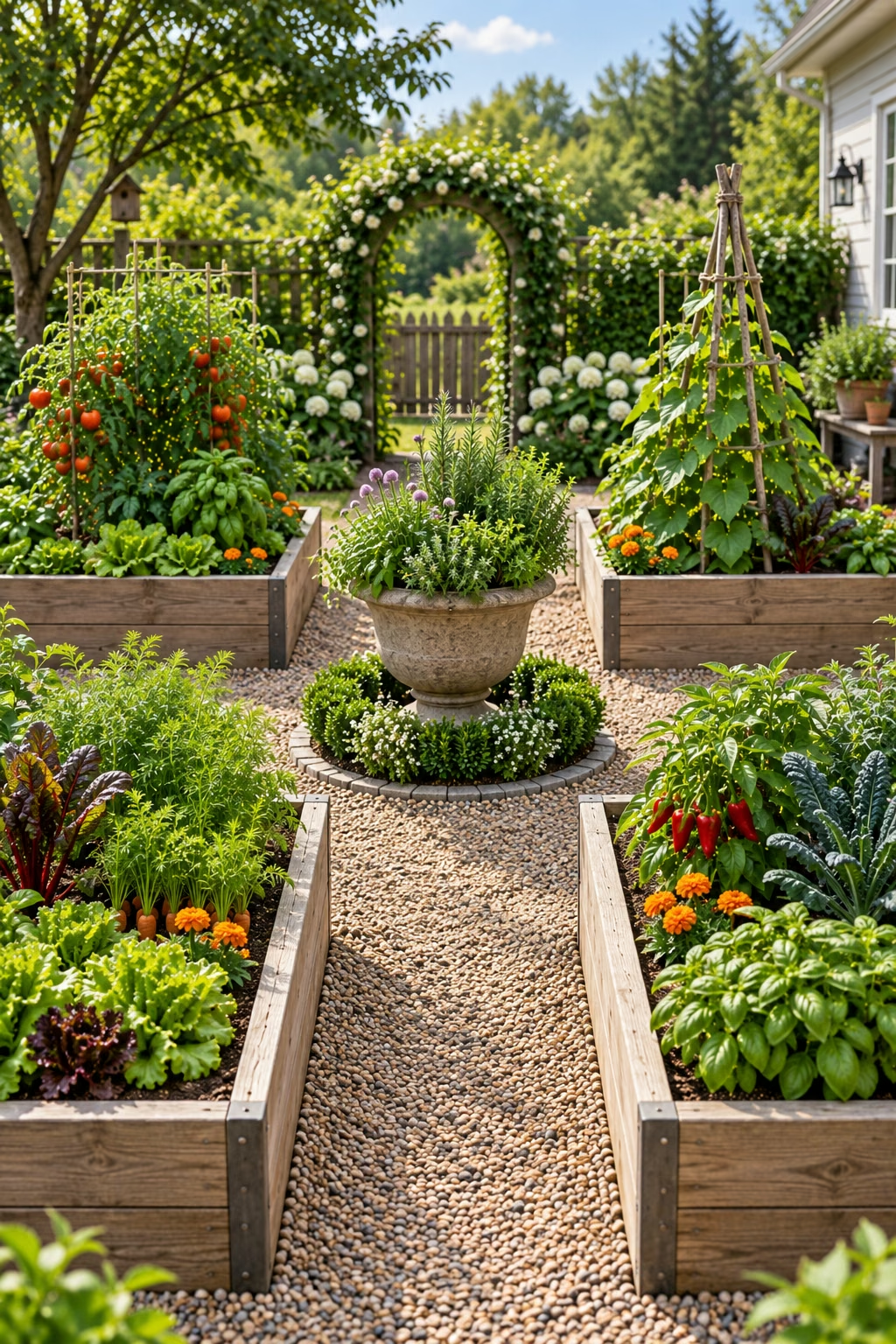
Arrange four beds around a central square or circular space.
The center does not have to be complicated. It could hold:
- a large herb planter
- an obelisk trellis
- a small fruit tree suited to the space
- a birdbath
- a container of edible flowers
- a simple decorative pot
The growing beds remain productive, while the center gives the garden a visual focal point.
This arrangement borrows from traditional formal kitchen gardens where geometry and pathways are part of the overall design.
7. Formal Potager Vegetable Garden
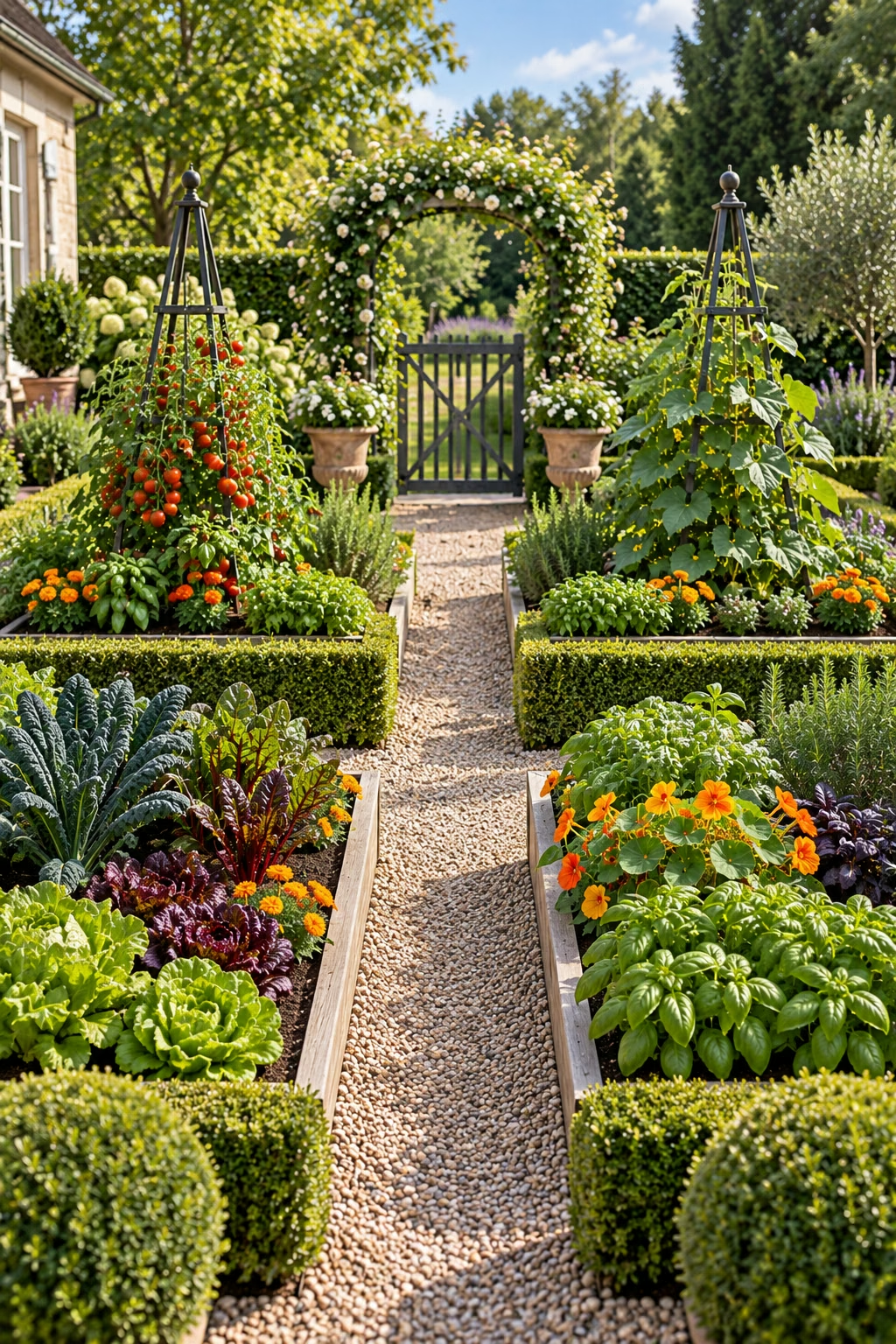
A potager combines vegetables, herbs, flowers, paths, and decorative structures into a garden that is meant to be both useful and beautiful.
Instead of hiding the vegetable patch, you make it a feature.
Use symmetrical beds, defined pathways, arch or obelisk trellises, and colorful crops such as Swiss chard, lettuce, purple basil, kale, peppers, and edible flowers.
Formal potagers often divide growing space into several beds surrounding a central area.
This is an excellent choice for a visible backyard or front-yard garden where appearance matters almost as much as harvest.
8. U-Shaped Raised Bed Garden
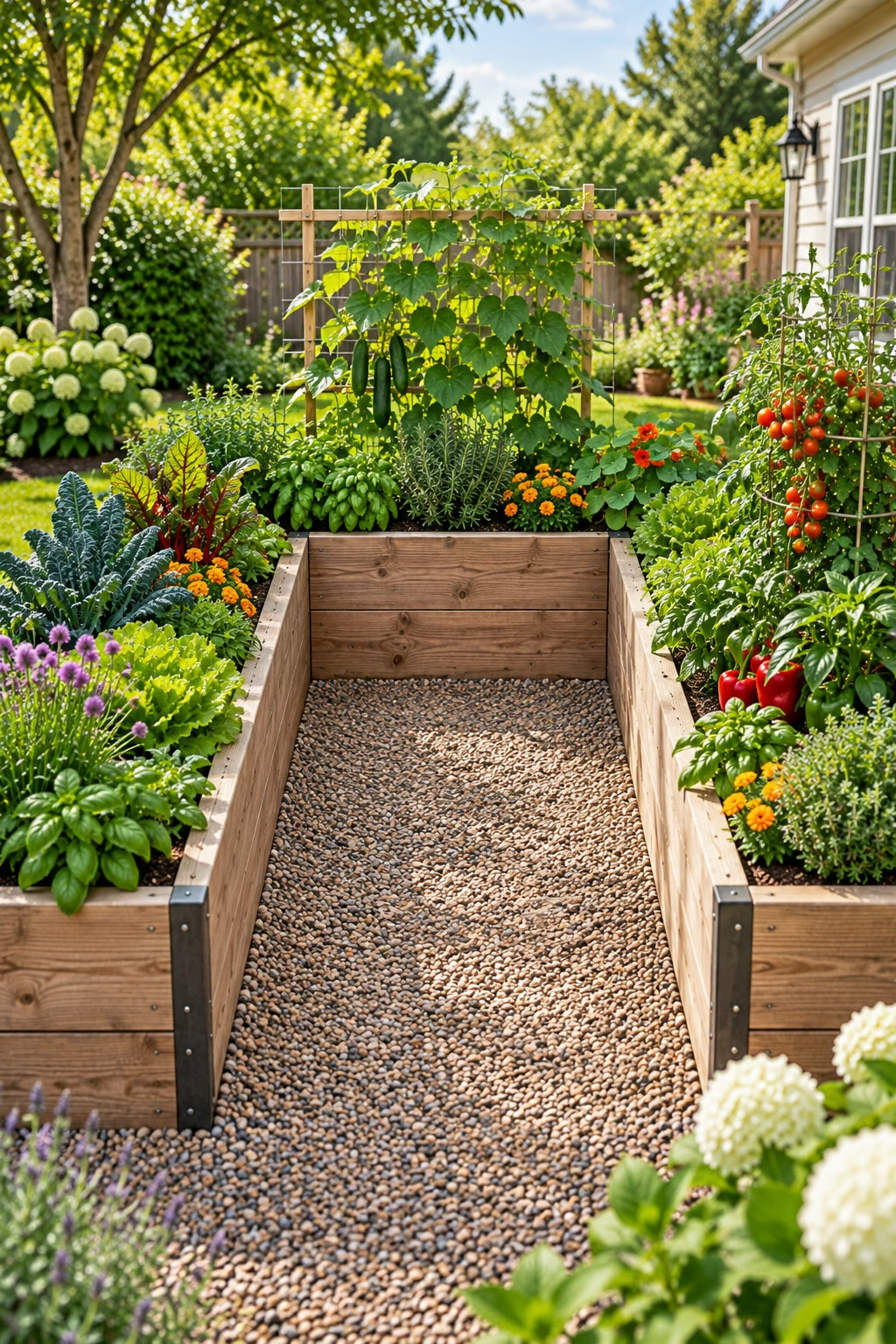
A U-shaped bed surrounds the gardener on three sides while leaving an opening for entry.
The design places a lot of growing space within easy reach without requiring many separate boxes.
Use the outside portions for larger vegetables and keep frequently harvested crops such as lettuce, parsley, basil, green onions, and radishes closer to the opening.
You can also add a trellis to the back of the U for peas, beans, or cucumbers.
Just make sure the arms of the bed are narrow enough that you can comfortably reach across them.
9. L-Shaped Corner Vegetable Garden
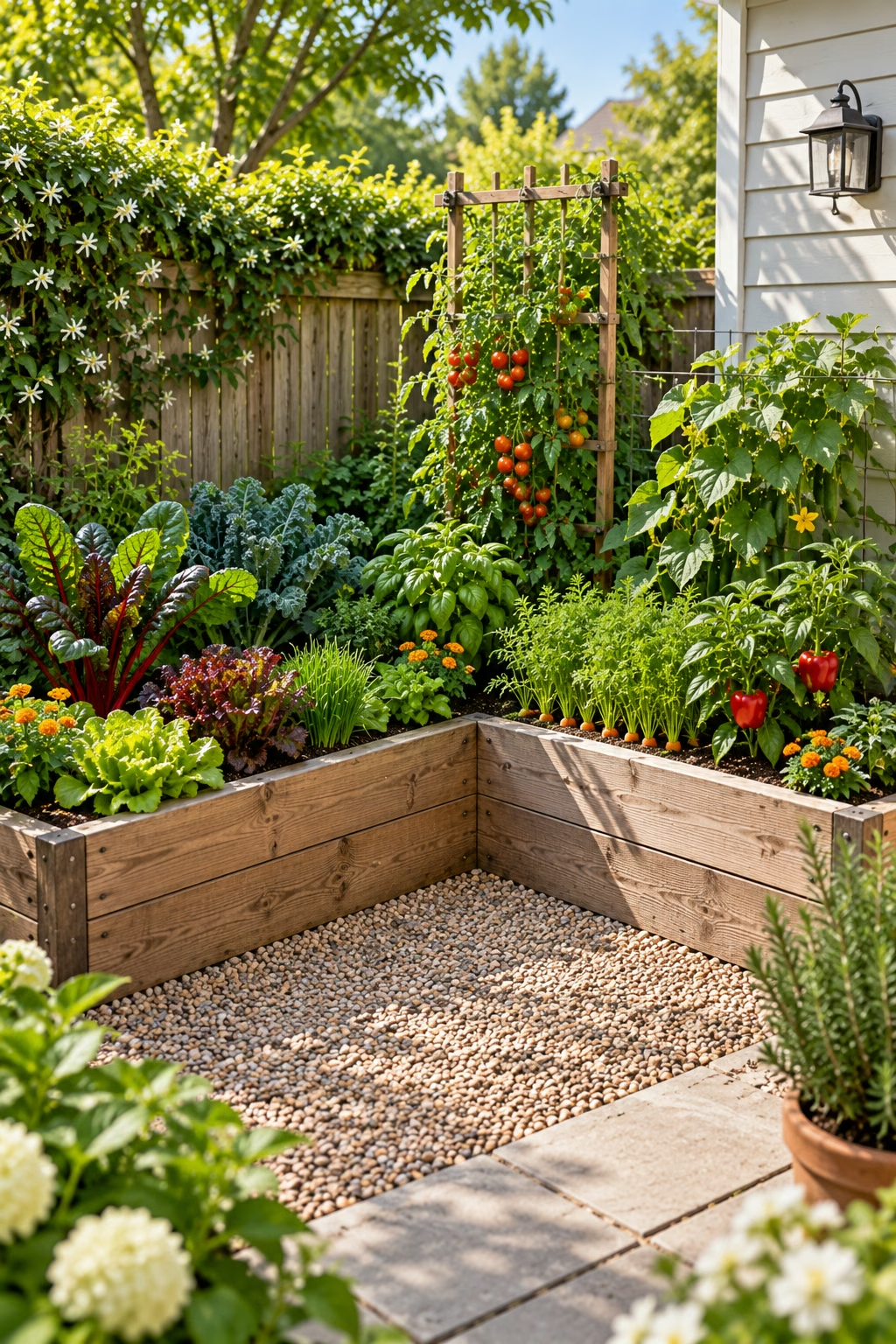
An unused sunny corner can become an efficient L-shaped vegetable garden.
Run one raised bed along each side of the corner or build a continuous L-shaped bed.
This arrangement works particularly well around patios, fences, garages, or small courtyards because it keeps the center open.
Compact square, rectangular, and corner beds are particularly useful where space is limited.
Add a tall trellis at the back and keep shorter vegetables toward the open edge.
10. Narrow Border Vegetable Garden
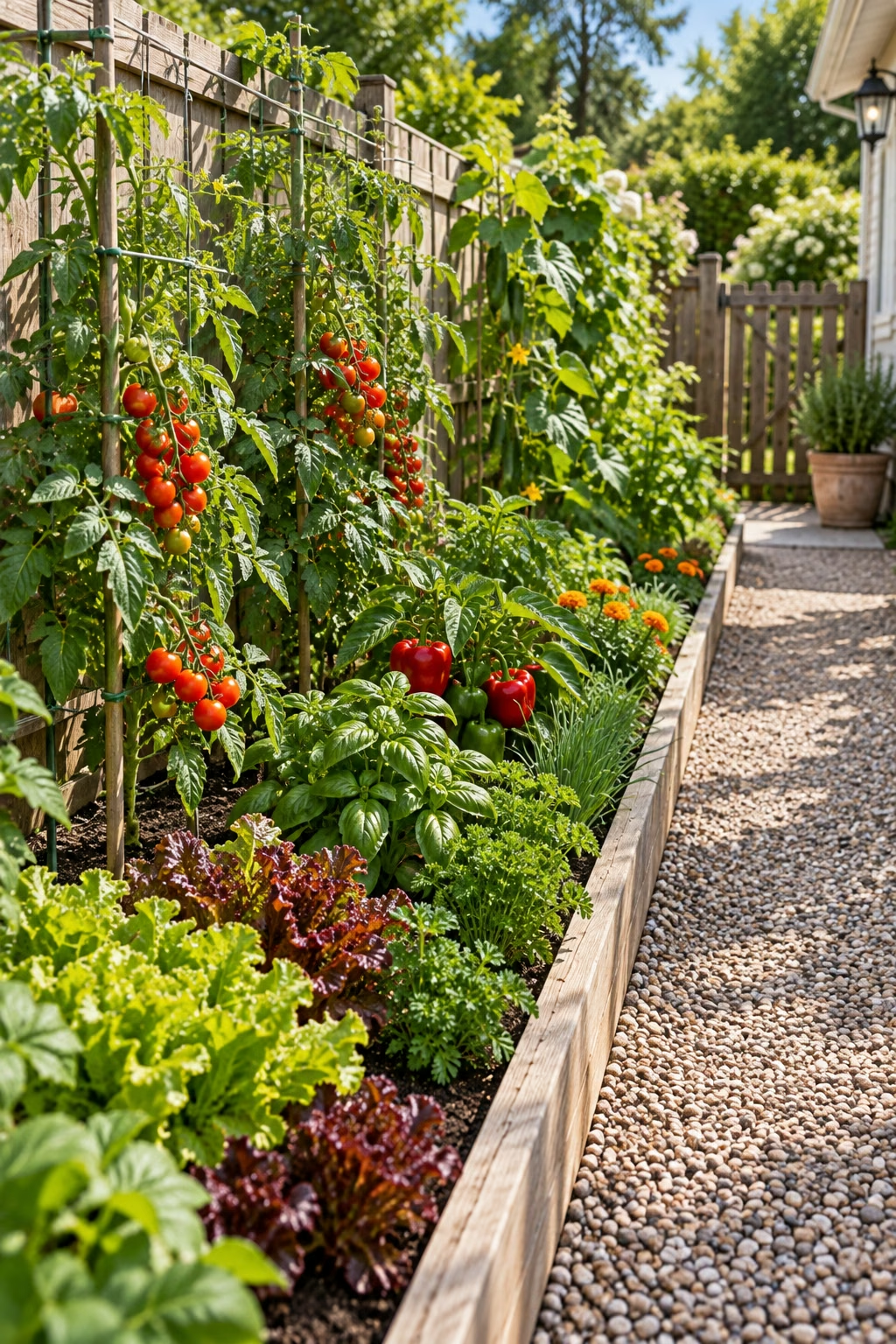
You do not need a large square patch of lawn to grow vegetables.
A narrow strip beside a driveway, patio, walkway, or fence may be enough.
Build a long bed approximately 2 to 2½ feet wide if you can approach it only from one side. Beds accessible from both sides can generally be wider because you do not need to stretch across the entire planting area.
Use the back for trellised tomatoes, cucumbers, or peas and the front for herbs, lettuce, onions, radishes, or compact peppers.
It turns an otherwise unused strip into productive garden space.
11. Traditional Row Vegetable Garden
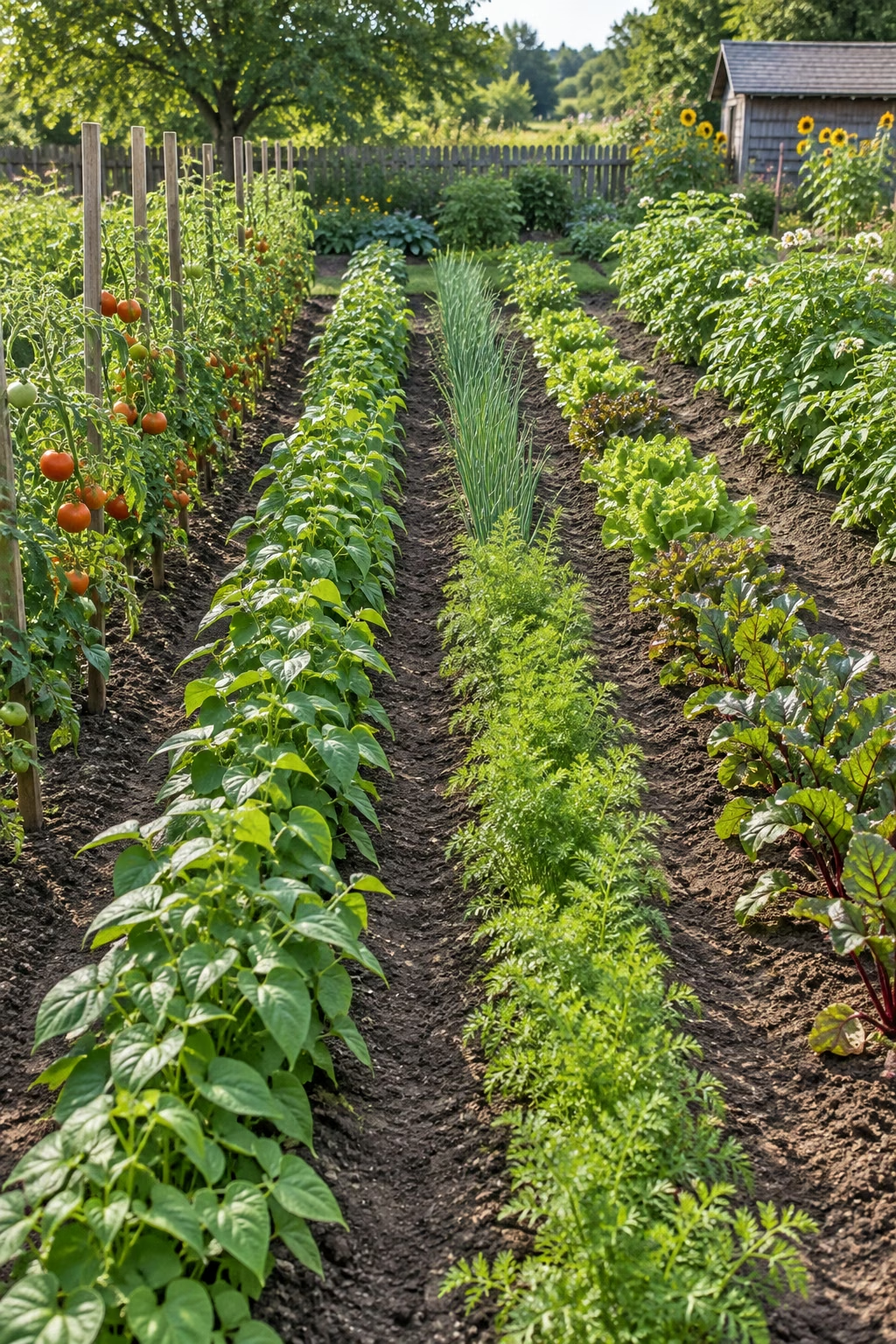
For a large backyard, traditional rows are still practical.
Rather than forcing every vegetable into raised beds, create long rows with enough walking space to plant, weed, harvest, and move equipment.
This works especially well for crops grown in larger quantities, including:
- potatoes
- onions
- beans
- sweet corn
- peas
- carrots
- beets
Rows are easy to understand and expand, which makes them useful for gardeners who want substantial harvests rather than an ornamental kitchen garden.
For home gardens where space is limited, however, more intensive bed layouts can reduce unnecessary walking space.
12. Wide-Row Vegetable Garden
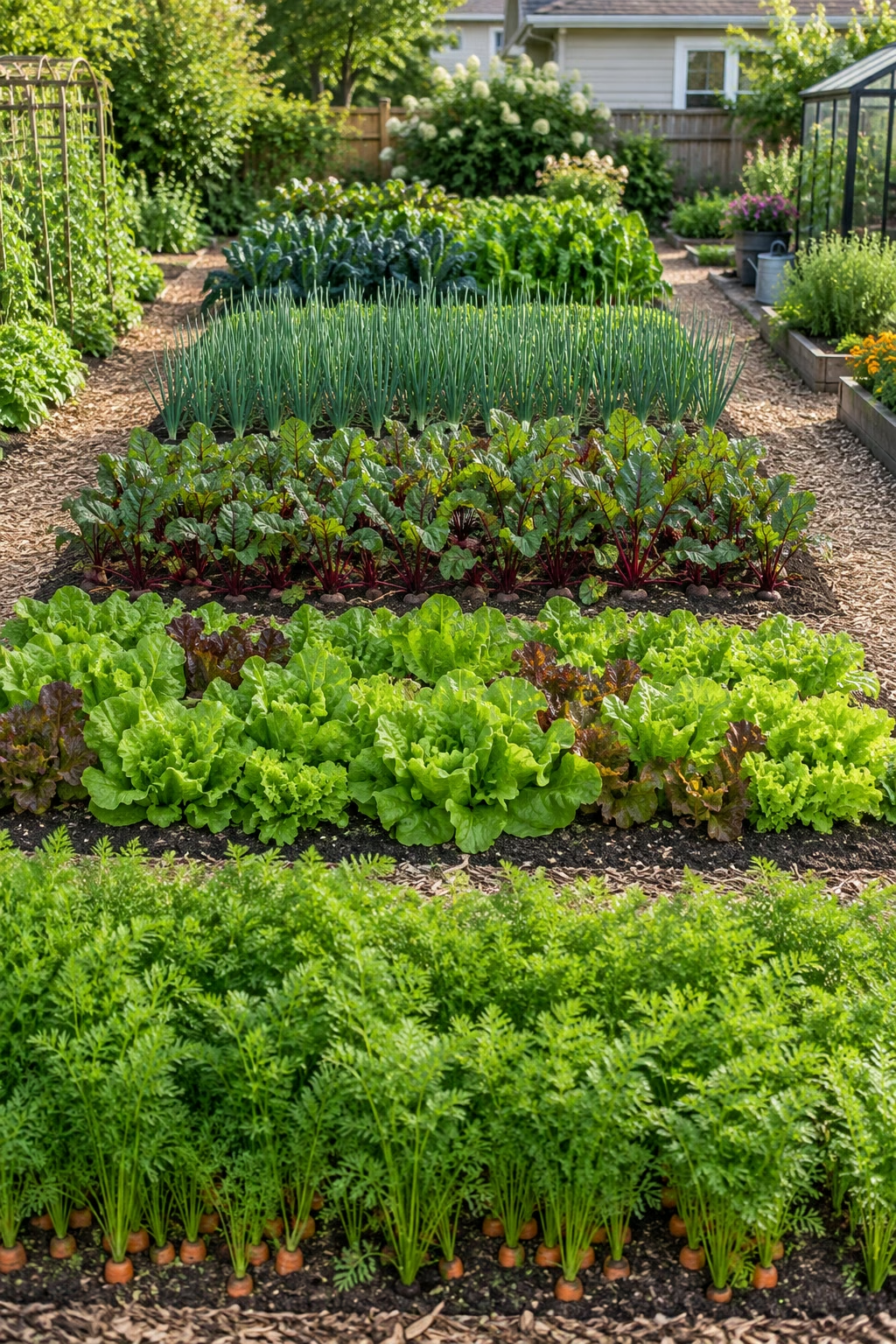
Wide-row planting sits somewhere between traditional rows and raised-bed gardening.
Instead of growing a single narrow line of vegetables, plant crops across a wider strip or block.
Carrots might fill one rectangular section, lettuce another, and beets another.
This makes better use of growing space while keeping designated pathways outside the planted area.
Colorado State University describes block-style layouts as planting crops in rectangular beds instead of long single rows and maintaining roughly equal spacing between neighboring plants.
It works particularly well for small and medium-sized vegetables.
13. Block-Style Raised Bed
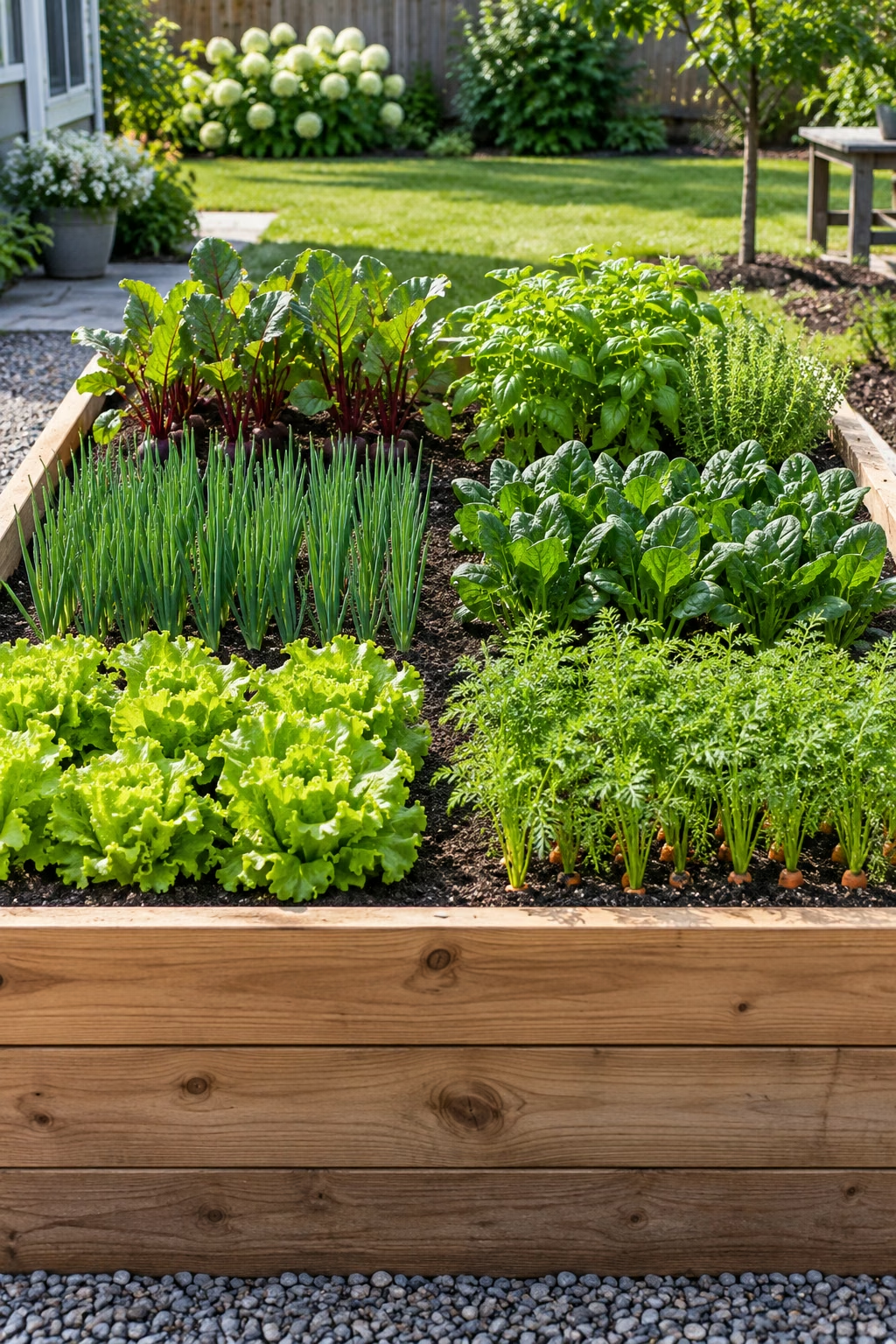
Divide a large raised bed into rectangular crop blocks instead of individual square-foot sections.
For example:
One block for carrots.
One for beets.
One for onions.
One for lettuce.
One for spinach.
The blocks can be different sizes depending on how much of each crop you actually eat.
This approach has much of the efficiency of square-foot gardening but looks less structured.
It is also easy to replant an entire block when one crop finishes.
14. Trellis Along the North Edge
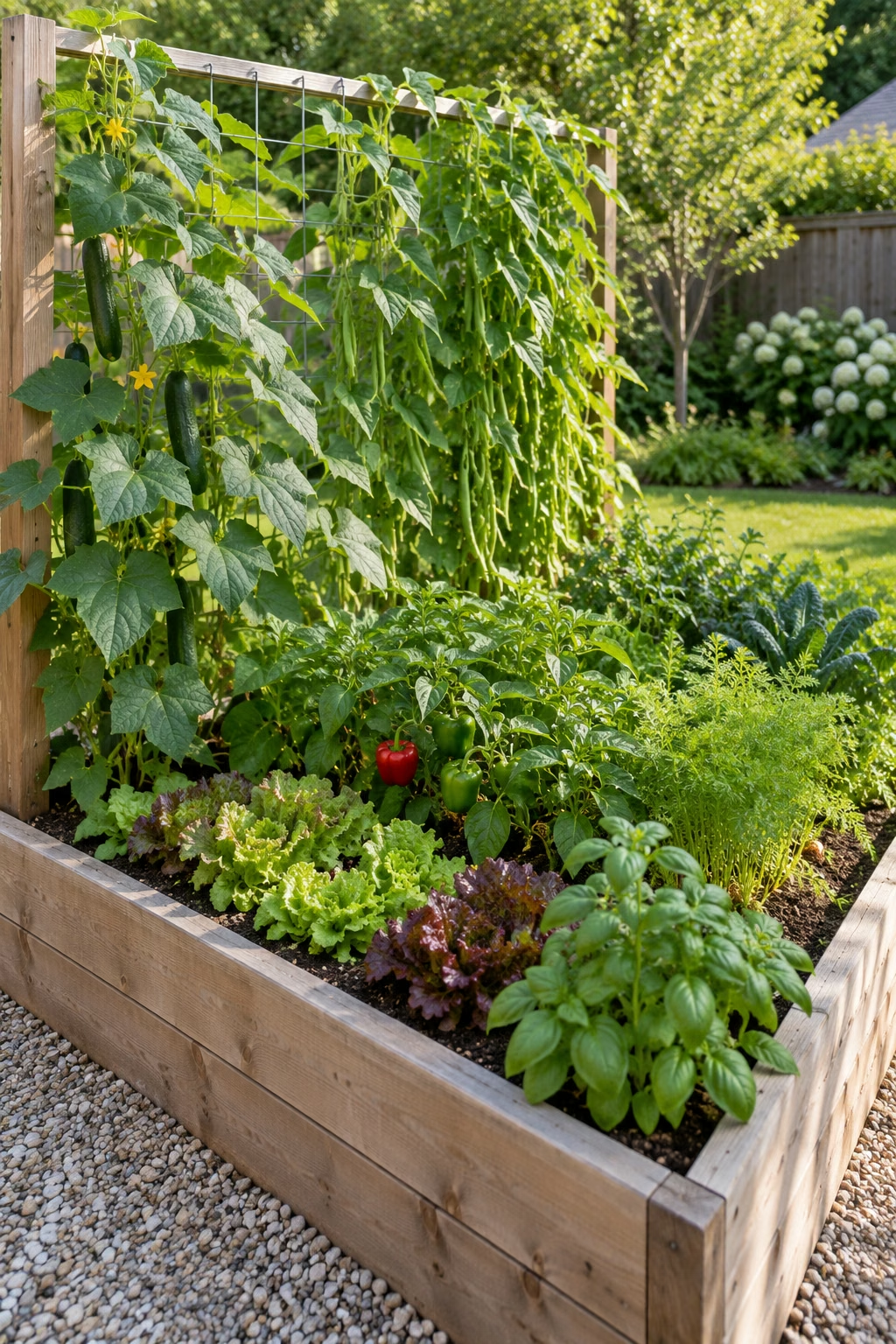
Sometimes the best garden layout change is simply moving all vertical crops to one side.
Install a sturdy trellis along the north side of a bed in the Northern Hemisphere and use it for pole beans, peas, or cucumbers.
The remaining space stays open for shorter plants.
Planning around shadows helps prevent tall vegetables from unnecessarily blocking sunlight from smaller crops.
This layout is simple, inexpensive, and effective for almost any rectangular vegetable bed.
15. Center-Trellis Raised Bed
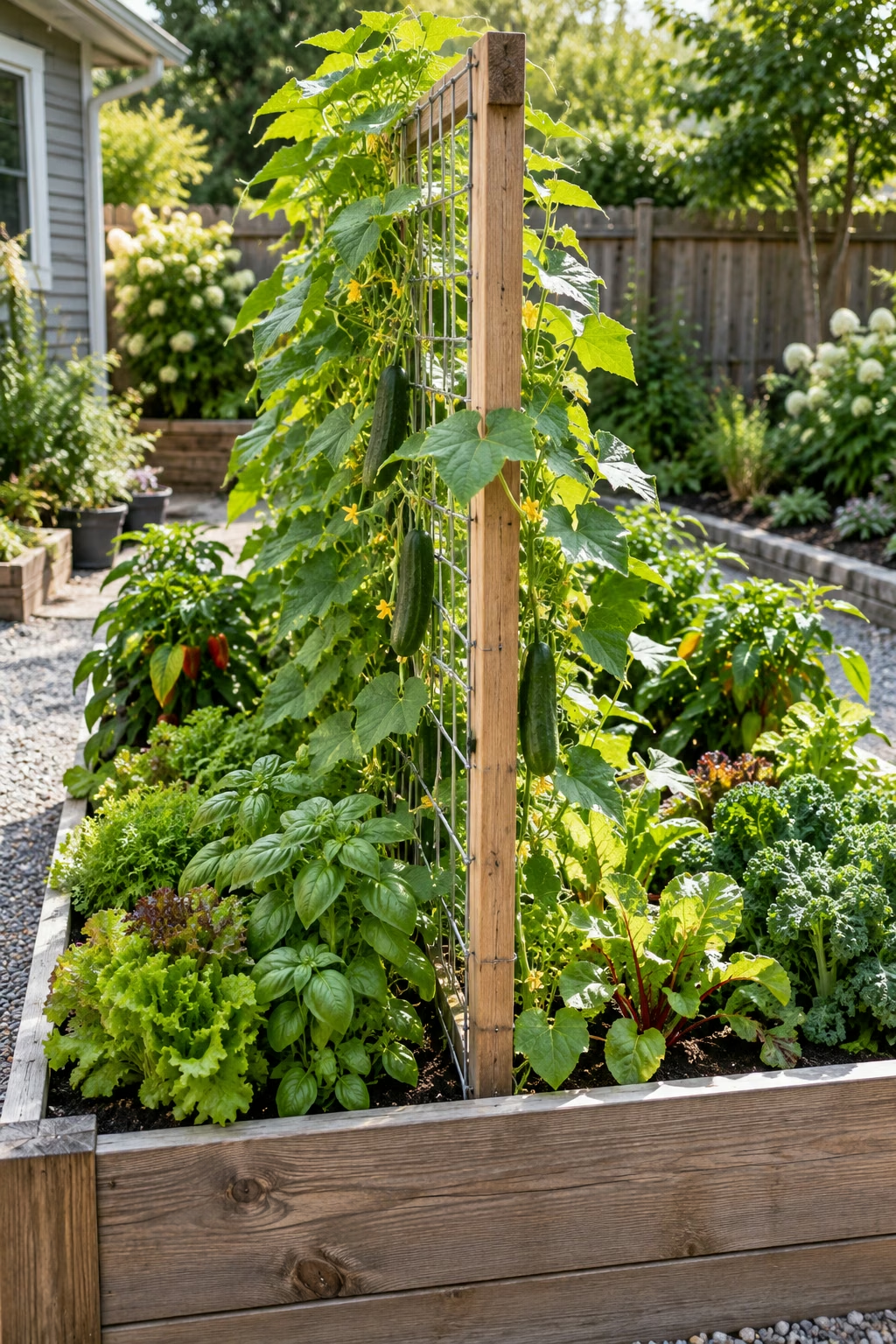
Instead of putting the trellis along the outside of the bed, place a panel trellis down the center.
Climbing plants can grow up both sides.
Plant lower crops along the outer edges where they remain easy to reach.
A 4-by-4 bed with a freestanding central panel is a particularly compact variation and can turn just 16 square feet into a garden with both horizontal and vertical growing space.
It works beautifully for peas, pole beans, and cucumbers.
16. Fence-Line Vertical Vegetable Garden
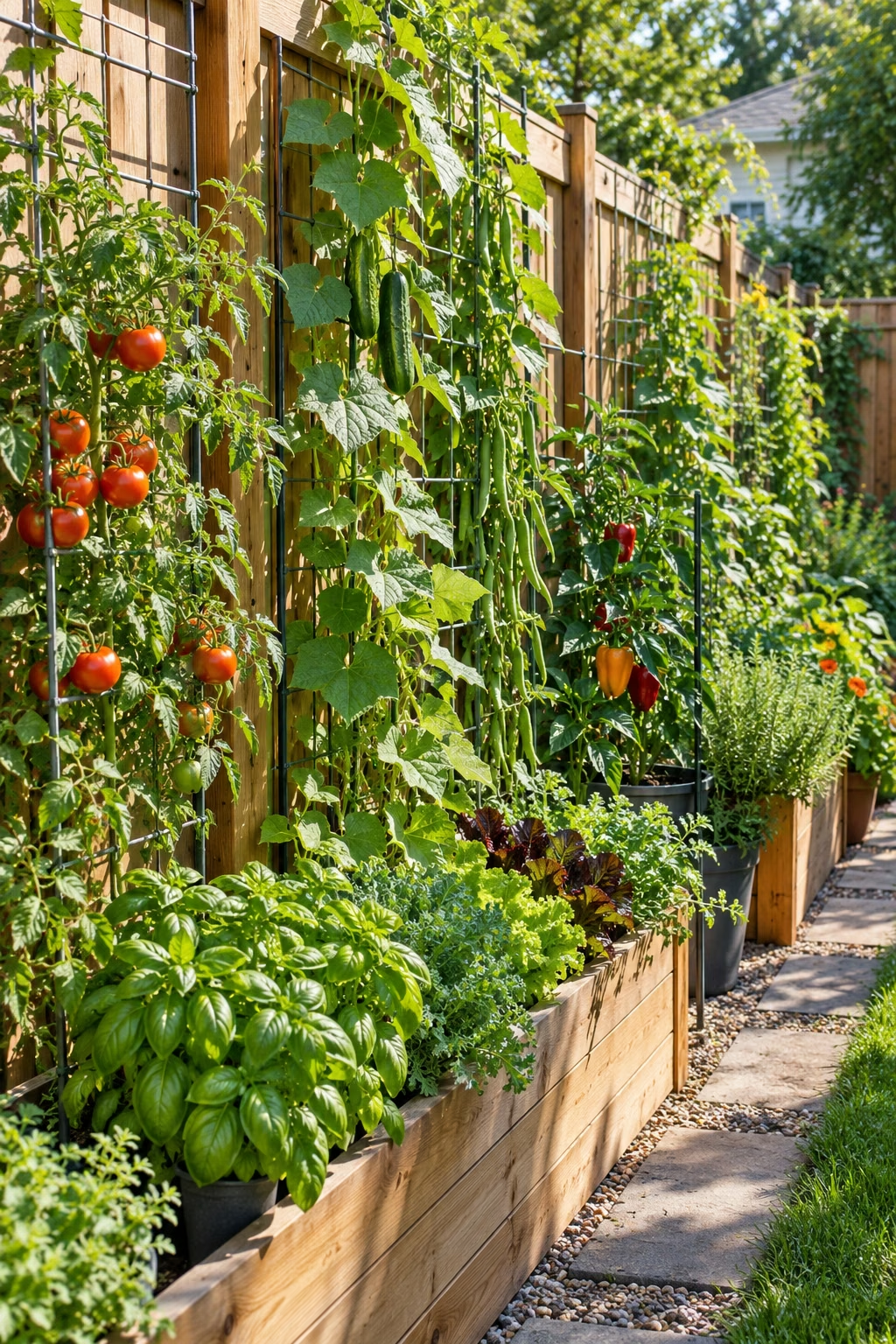
If you already have a sunny fence, use the vertical surface as part of the layout.
Position narrow beds or containers in front of it and add trellis panels where appropriate.
Grow climbing vegetables toward the fence and compact crops toward the pathway.
This layout keeps the vegetable garden around the perimeter instead of consuming the middle of the yard.
It can also work well for renters when containers or removable trellises are used instead of permanent beds.
17. Three Sisters Garden
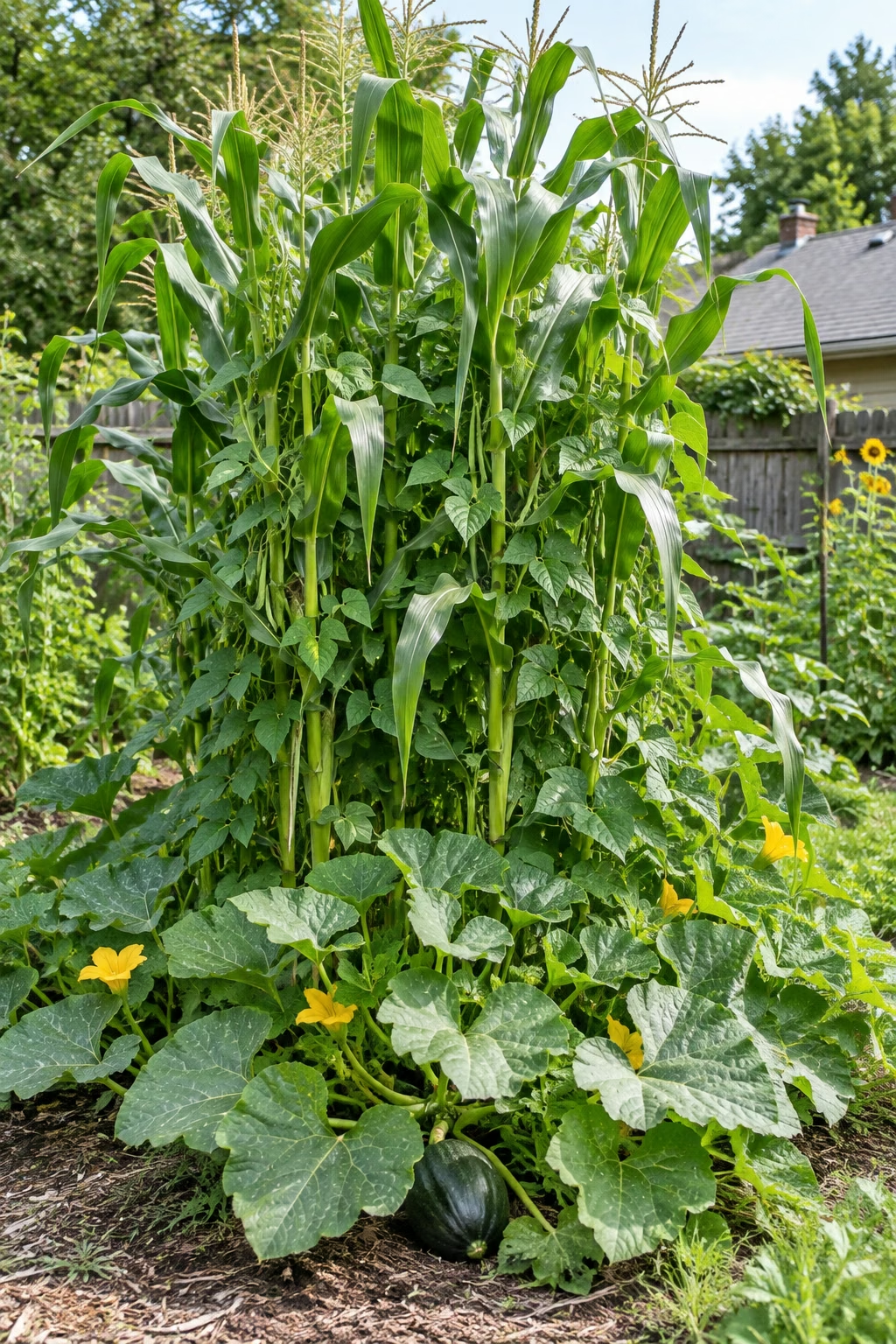
The Three Sisters method traditionally grows corn, climbing beans, and squash together.
Corn creates vertical support.
Beans climb upward.
Squash spreads across the soil.
This planting system has deep Indigenous agricultural roots and is frequently adapted for home gardens.
It needs enough space to work properly, particularly because corn performs better when grown in a block rather than as one isolated plant.
If you use this layout, research the appropriate method and spacing for your climate and varieties rather than simply placing three plants into a tiny container.
18. Salad Garden Layout
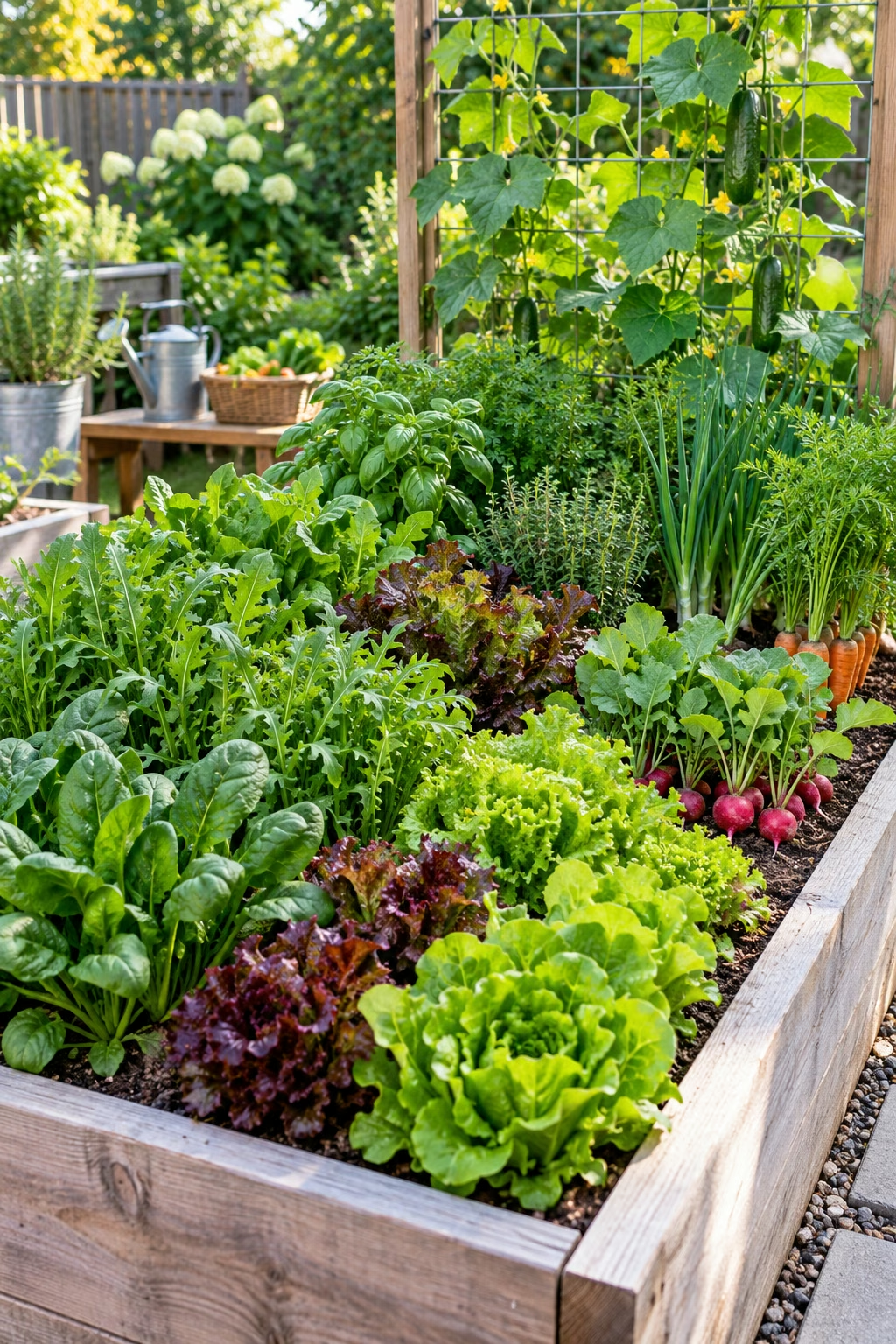
Dedicate one raised bed almost entirely to vegetables you regularly use in salads.
Depending on your season, this might include:
- leaf lettuce
- spinach
- arugula
- radishes
- green onions
- carrots
- cucumbers
- parsley
- dill
Keep the frequently harvested greens near the edges.
Use a trellis at the back for cucumbers or peas.
Because several salad crops mature quickly, this type of bed is also perfect for staggered sowing.
19. Salsa Garden Layout
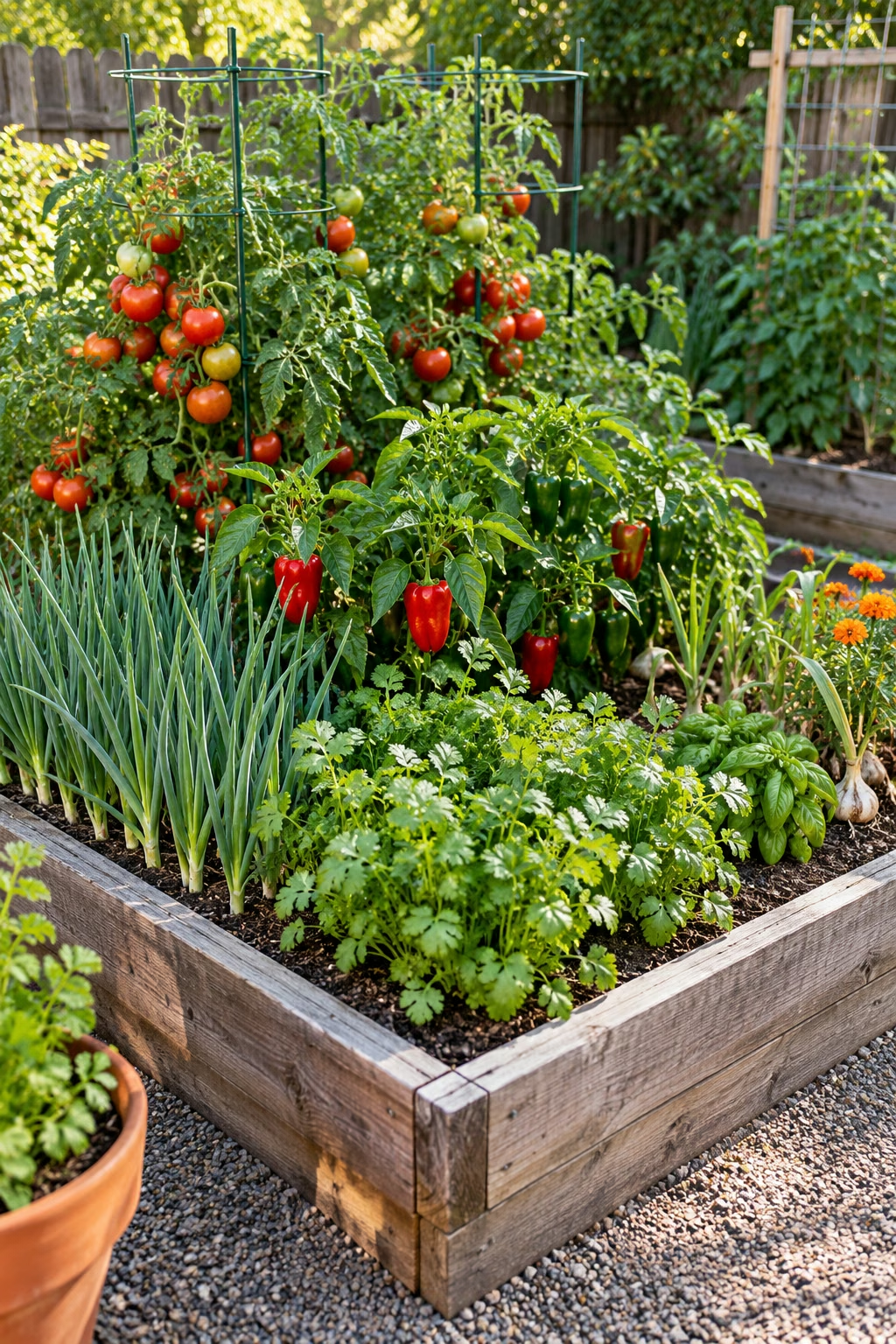
A themed vegetable garden can be genuinely practical when the crops are foods you already use together.
For a salsa garden, grow combinations such as tomatoes, peppers, onions, cilantro, and suitable herbs.
Place tomatoes where they can be supported and give spreading plants enough room to mature.
The Old Farmer’s Almanac features a real square-foot garden organized into themed areas including a Salsa Garden, Salad Garden, root beds, and tomato-focused beds.
A themed bed also makes an excellent beginner project because crop selection becomes much simpler.
20. Root Vegetable Garden
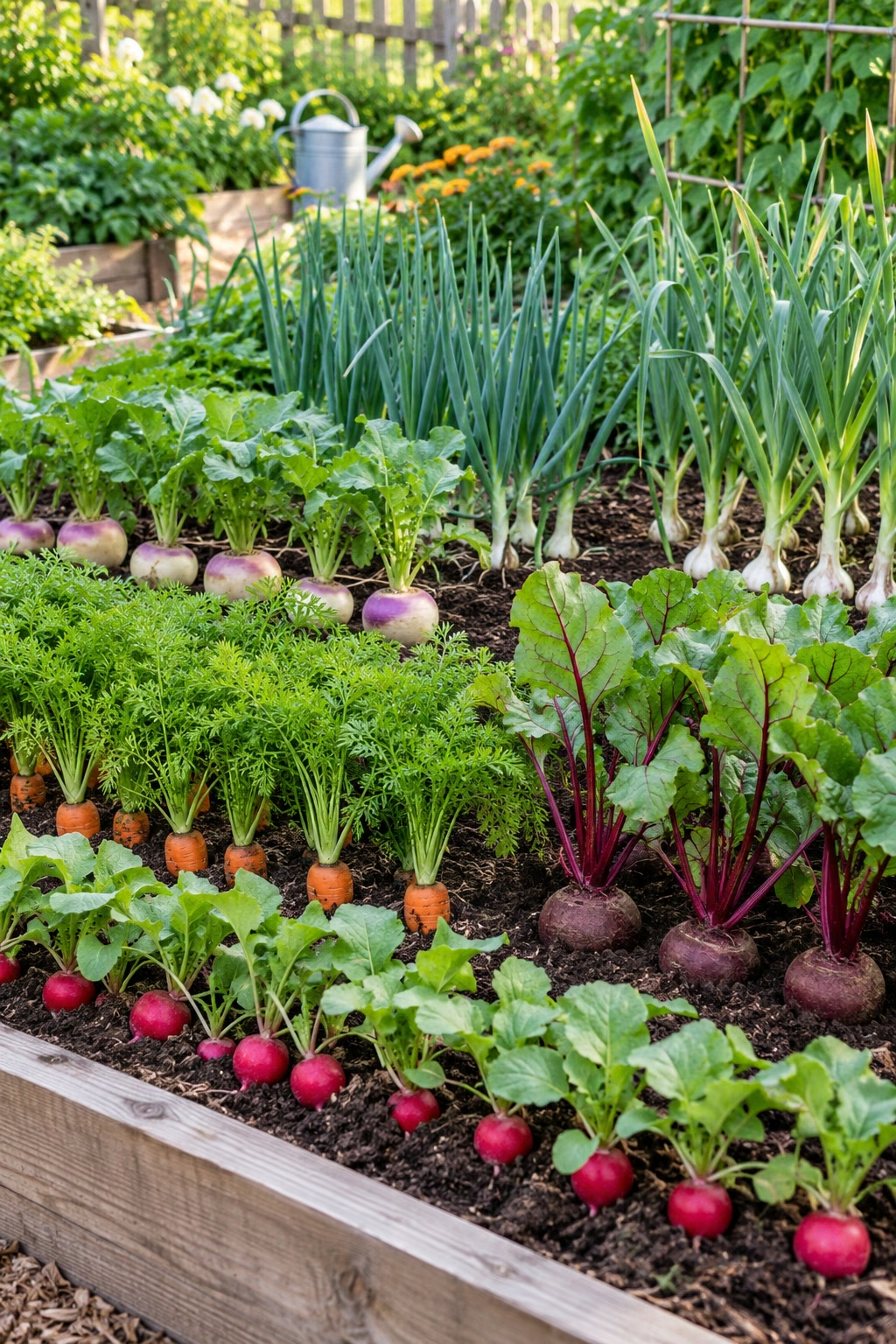
Give carrots, beets, radishes, onions, turnips, garlic, and other root crops their own bed.
The visual layout can be extremely neat because most are planted in blocks or short rows.
Group vegetables according to spacing and harvest time.
Fast-growing radishes can occupy spaces that will later be replanted, while longer-season roots remain in place.
Loose, workable soil is especially important in a root crop bed, so avoiding foot traffic through the growing area is useful.
21. Tomatoes With Early Greens Underneath
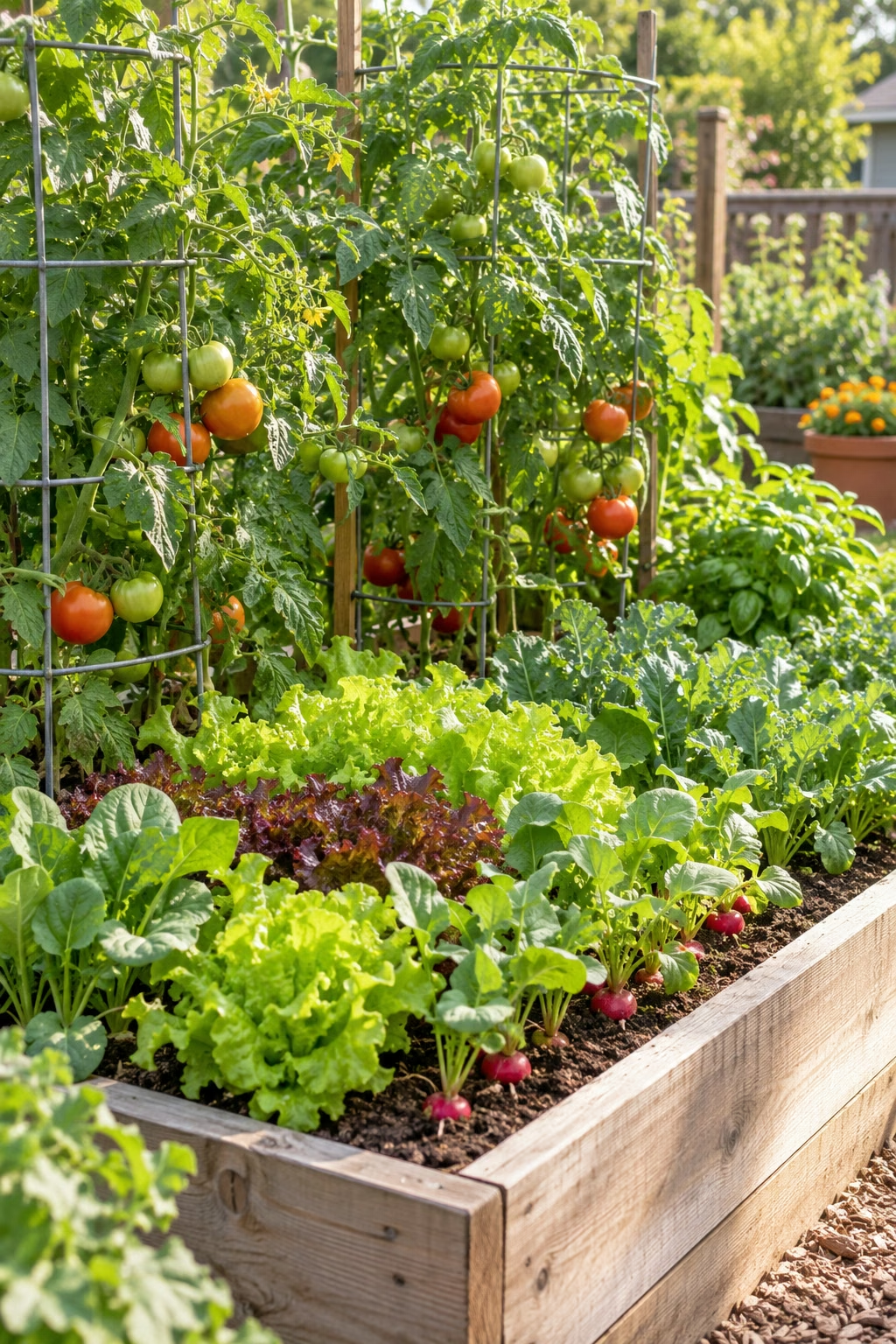
Tomatoes take time to fill their final space.
Use the open ground early in the season for faster vegetables such as lettuce or radishes.
As the tomatoes grow and their canopy expands, harvest the earlier crops and allow the tomatoes to take over.
This is a form of intercropping.
Illinois Extension gives the example of planting fast-growing vegetables such as radishes, lettuce, or green onions among slower-growing caged tomatoes.
It is a smart layout when you want to get more than one harvest from the same space.
22. Three-Season Succession Garden
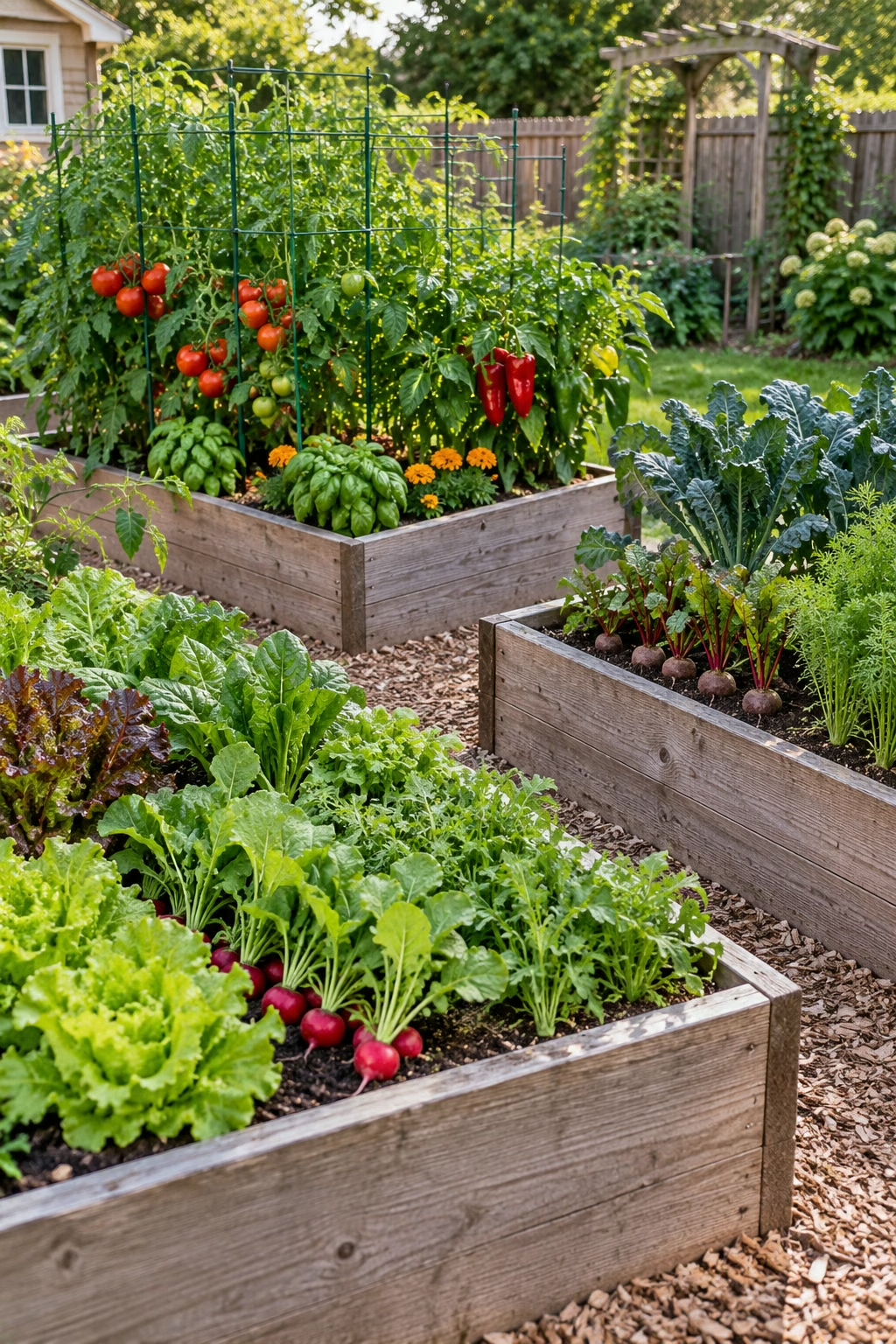
Instead of creating one garden map for the whole year, create three.
One for spring.
One for summer.
One for fall.
A section that grows lettuce in spring might grow beans in summer and return to another cool-season vegetable later.
University of Maryland recommends planning spring, summer, and fall maps when using succession planting, with cool-season vegetables followed by warm-season vegetables and potentially another cool-season crop or cover crop.
This dramatically changes how you think about layout because an empty patch after harvest becomes the next planting opportunity.
23. Staggered Harvest Garden
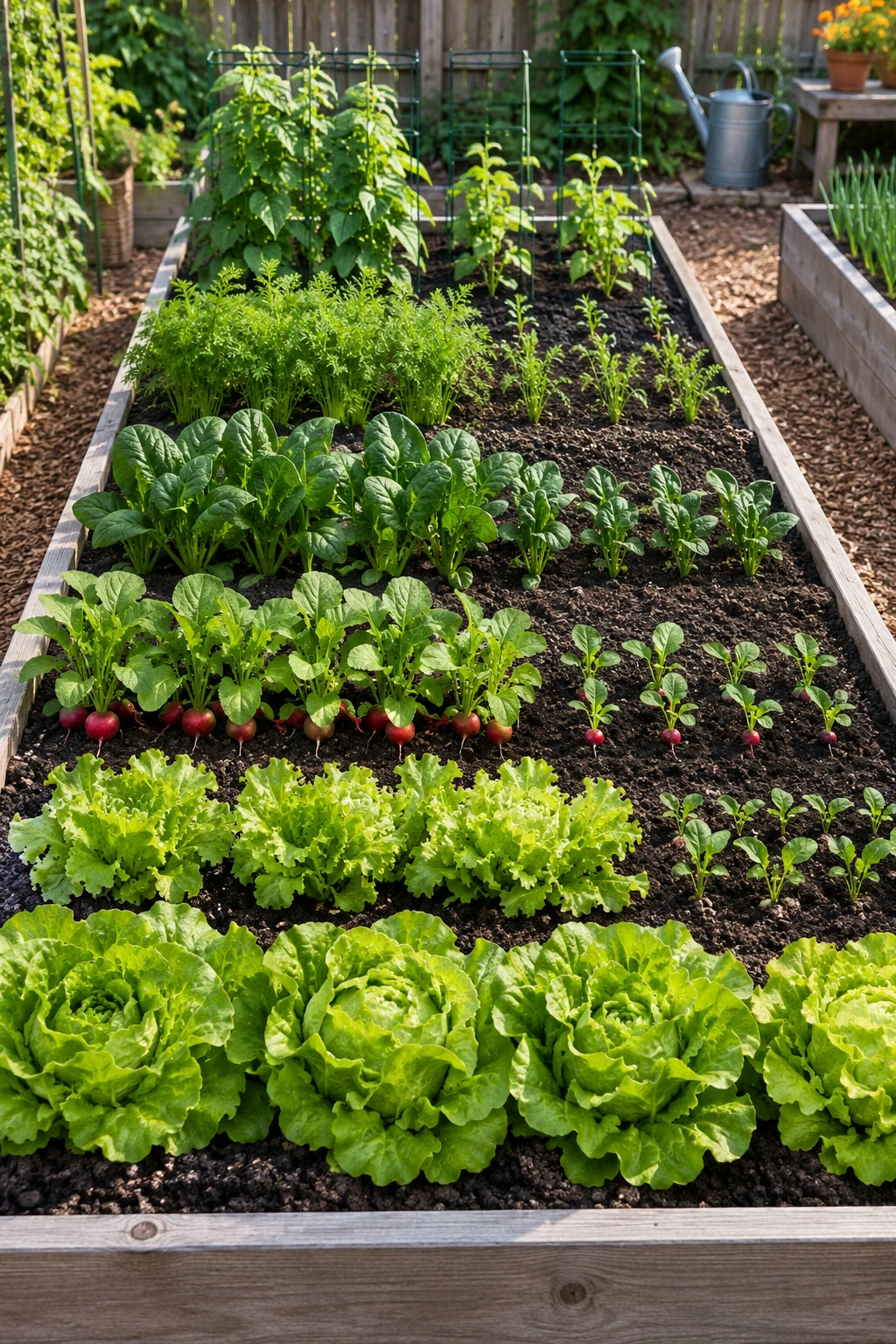
If your family loves beans, lettuce, radishes, spinach, or similar crops, avoid planting the entire supply on one day.
Divide the growing area into smaller sections.
Plant the first section.
Then plant another section a week or two later.
Continue until the allocated space is full.
The result is a succession of smaller harvests rather than one overwhelming harvest.
Extension guidance commonly recommends staggered sowing for crops that can provide continuous harvests.
24. Kitchen-Door Vegetable Garden
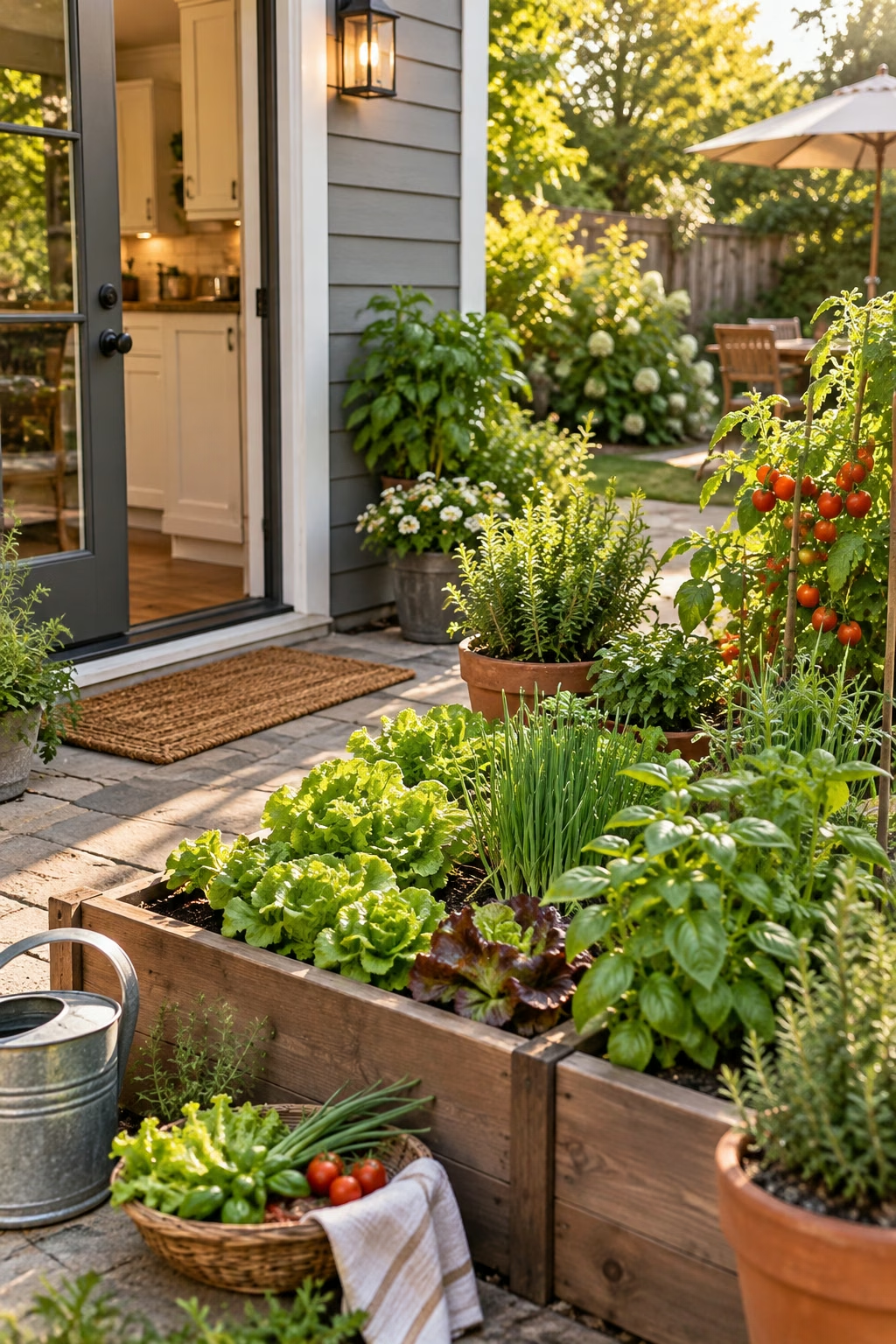
Place the vegetables you use most frequently closest to the house.
Herbs, lettuce, cherry tomatoes, green onions, and other regularly harvested foods are ideal.
Less frequently visited vegetables can grow farther away.
This layout is based less on appearance and more on daily behavior.
If you can step outside and pick parsley or lettuce in thirty seconds, you are much more likely to use what you grow.
For a Pinterest-friendly version, surround a small patio with two or three tidy raised beds and an attractive central path.
25. Vegetables With an Herb Border
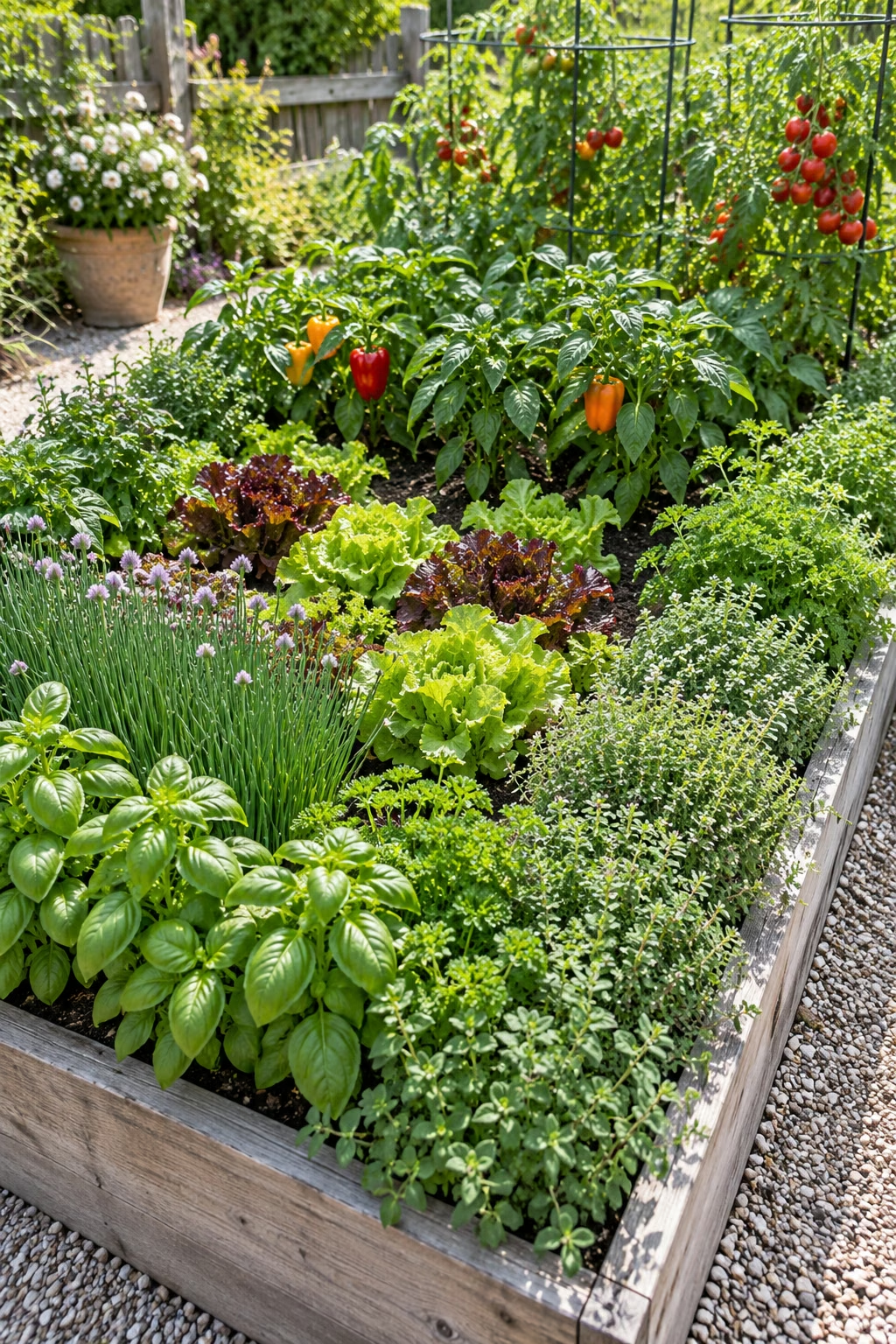
Use the center of the bed for vegetables and run herbs around selected edges.
Depending on your climate, possible border plants include parsley, basil, chives, thyme, oregano, or cilantro.
The arrangement makes the bed visually softer while giving you quick access to herbs.
Do not assume every traditional companion-planting claim is scientifically proven. Companion associations can be based on different mechanisms, and some popular combinations rely more on tradition or observation than strong research. South Dakota State University Extension specifically notes this distinction.
Use plant spacing, light, water needs, and growth habit as your primary planning rules.
26. Vegetable Garden With Flower Edges
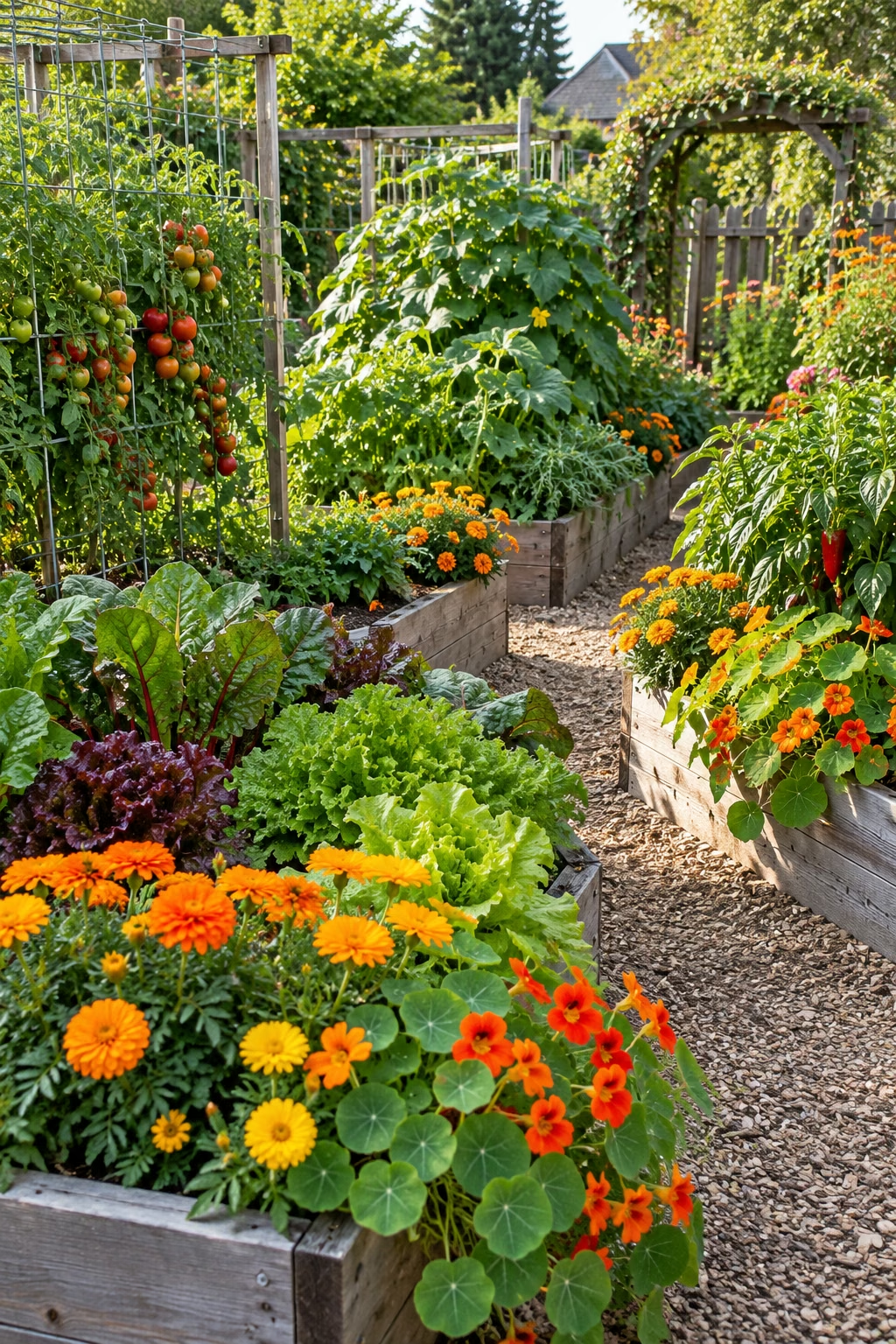
Vegetable gardens do not need to be vegetables only.
Add appropriate flowering plants around the perimeter or in strategic gaps.
Flowers can bring color into a mostly green garden and provide resources for beneficial insects and pollinators.
Choose flowers that fit the available space rather than letting aggressive plants crowd the vegetables.
Calendula, nasturtiums, compact marigolds, and other garden flowers are commonly mixed into edible gardens, but the exact choices should be based on climate and growing conditions.
The finished bed looks far more decorative, which is especially useful for front-yard or patio gardens.
27. Container Vegetable Garden Cluster
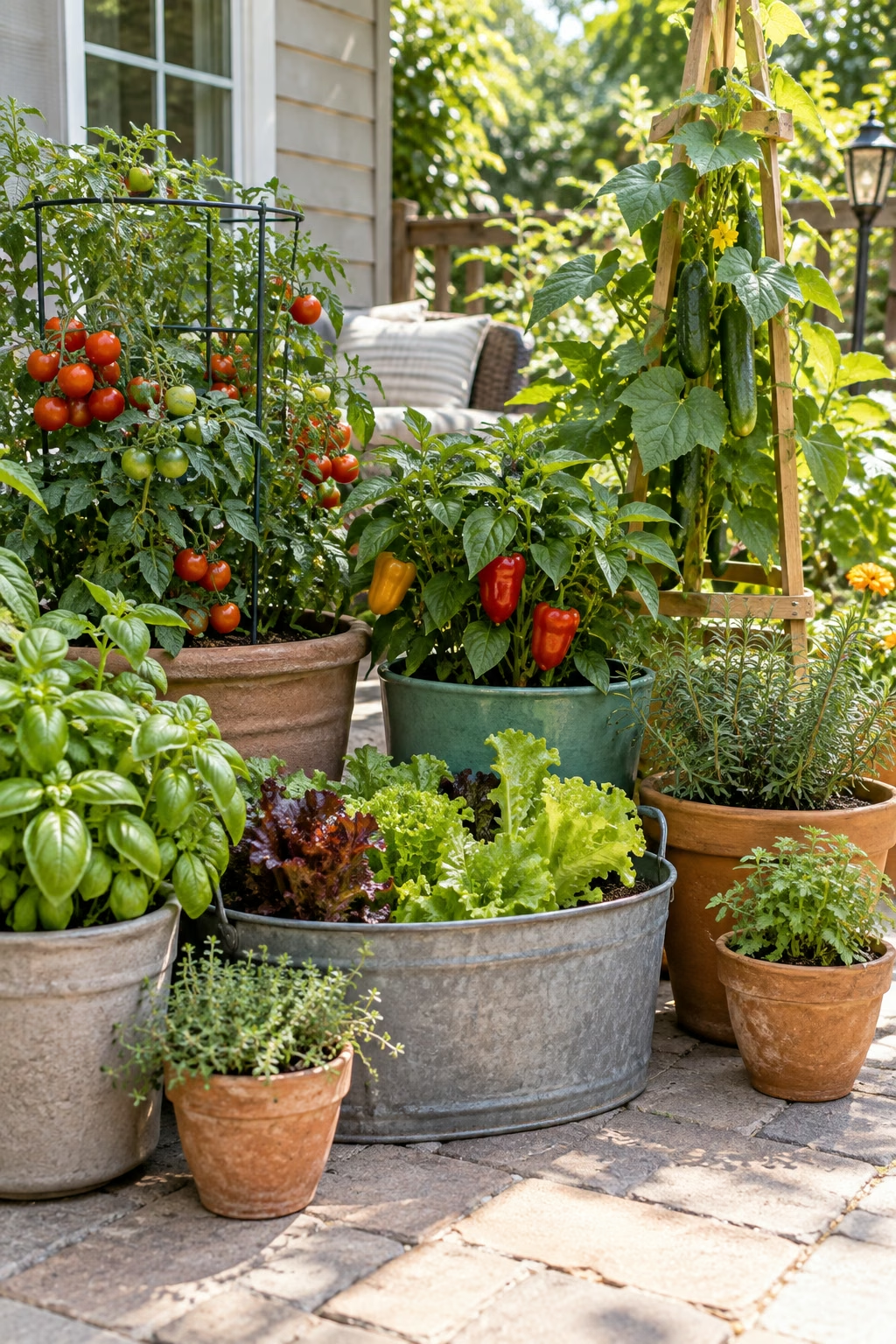
No soil?
No permanent garden?
No problem.
Group containers in a sunny location and treat the entire cluster as one vegetable garden.
Put larger containers toward the back and smaller ones toward the front.
Use pots with cages or trellises for tomatoes and climbing crops.
Containers can also be used for staggered leafy-green plantings. Illinois Extension suggests leaving room for later plantings so greens can mature in succession.
Keep containers close enough together to look cohesive but leave enough room for watering and harvesting.
28. Grow Bag Vegetable Garden
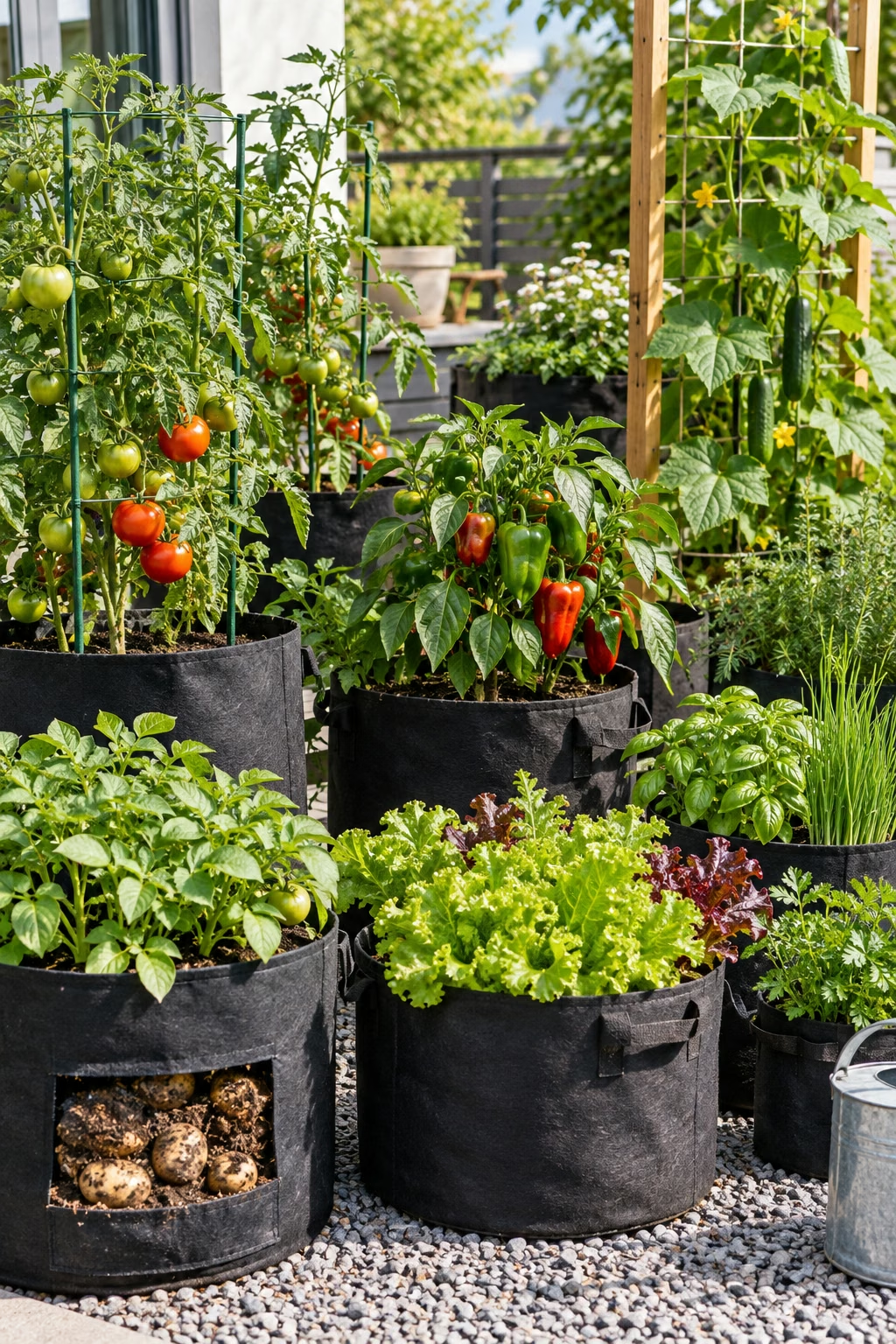
Grow bags offer a flexible layout when permanent beds are not practical.
Arrange them in tidy rows, a U shape, or groups according to crop.
For example:
Large bags for tomatoes.
Medium bags for peppers.
Separate bags for potatoes.
Smaller containers for herbs.
Add a freestanding trellis behind the bags that contain climbing vegetables.
This is particularly useful for renters because you can reorganize the garden from season to season instead of committing to fixed beds.
29. Elevated Accessible Vegetable Garden
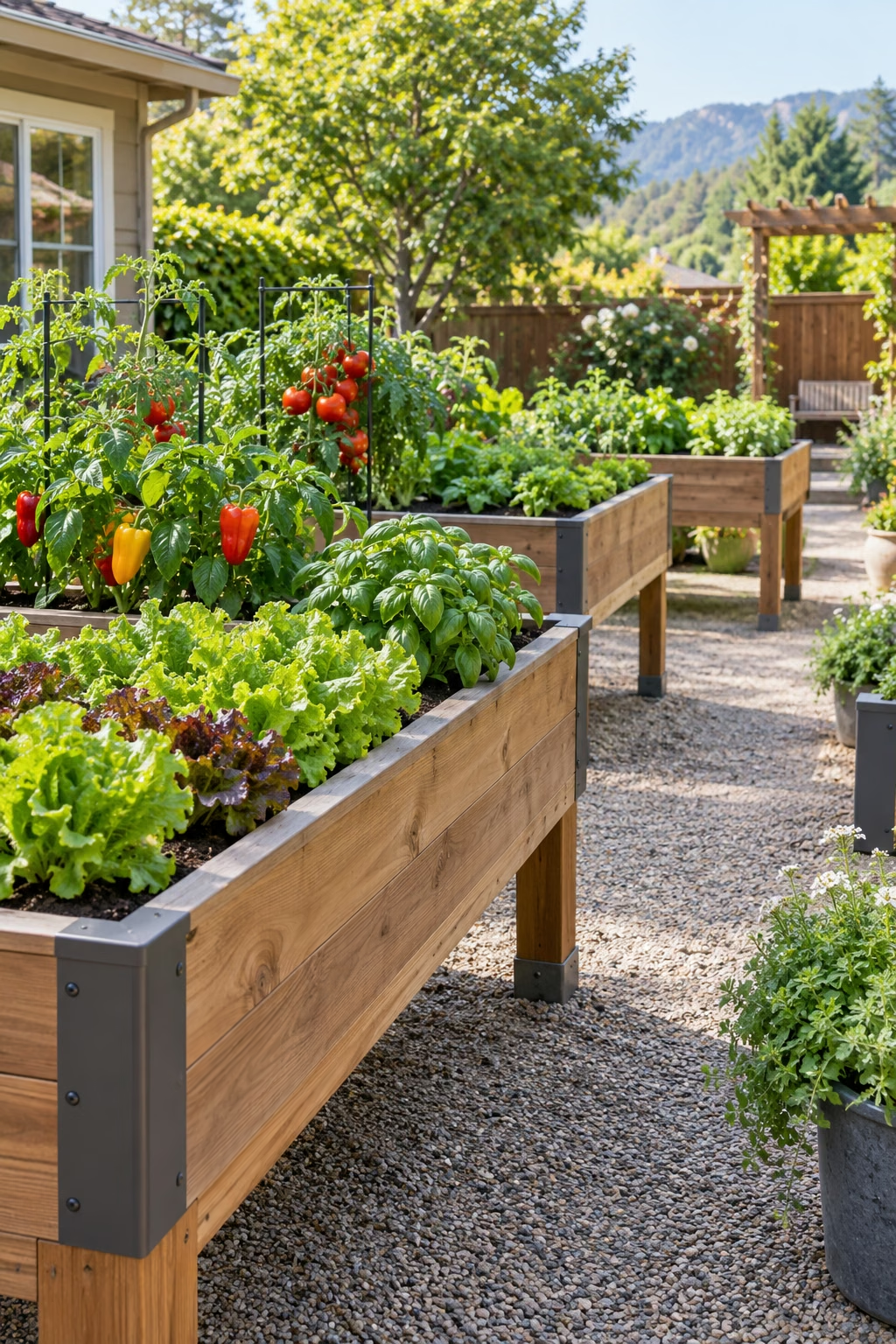
A productive vegetable garden should fit the gardener, not force the gardener to fit the garden.
Use elevated planters or taller raised beds if bending or kneeling is difficult.
Keep the growing area narrow enough to reach comfortably.
Provide wide, stable pathways.
Position frequently harvested vegetables where they are easiest to access.
Raised beds can improve accessibility, and extension guidance notes that taller beds can accommodate gardeners who garden while standing or using wheelchairs.
This can still be a beautiful design with matching planters and clean pathways.
30. Front-Yard Potager
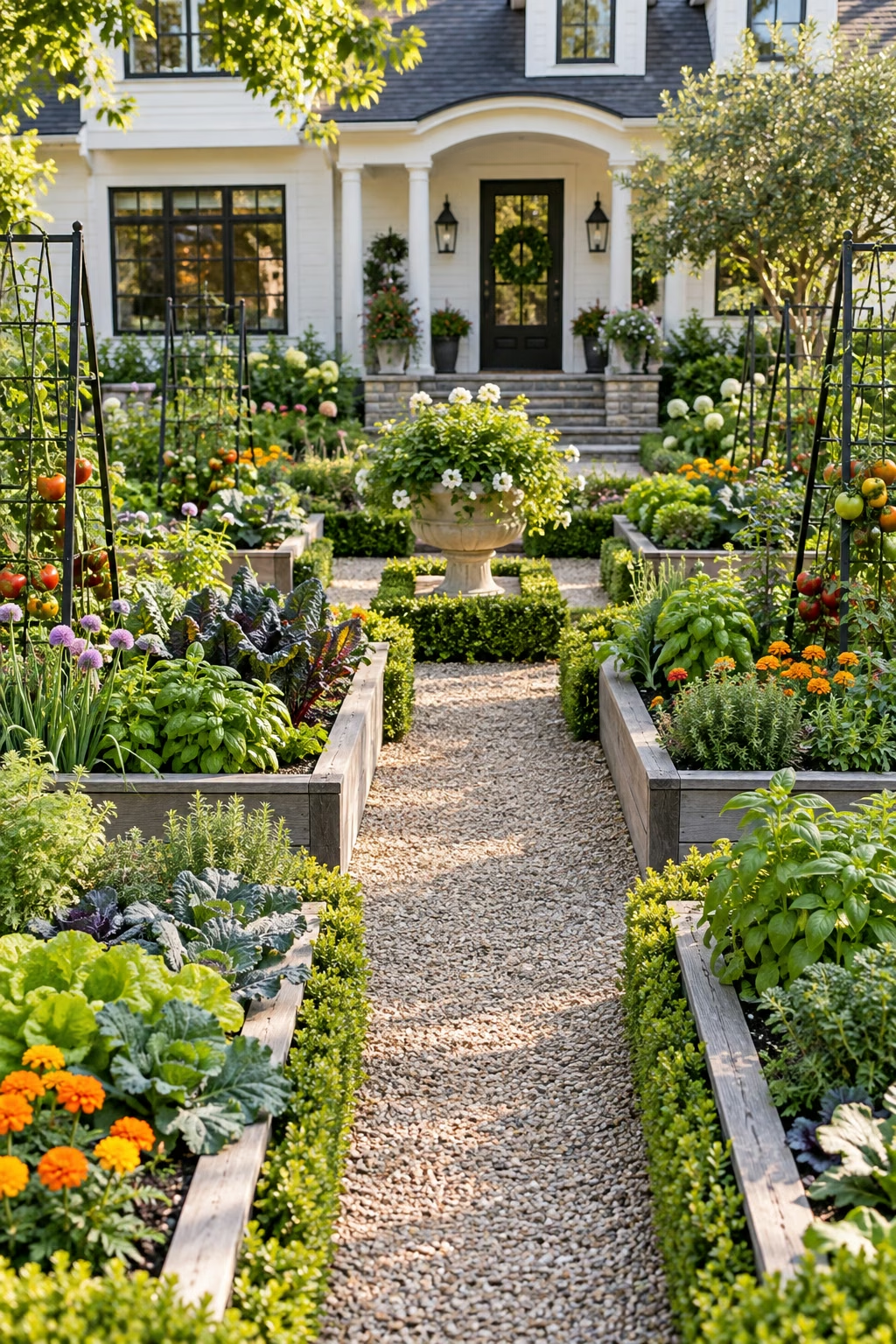
If the front yard gets the best sun, consider making the vegetable garden part of the landscape instead of hiding it behind the house.
The key is making it look intentional.
Use matching beds.
Create defined pathways.
Add trellises for height.
Mix attractive edible plants with herbs and flowers.
Keep edges neat and avoid random containers scattered throughout the lawn.
Front-yard edible gardens can successfully combine structured raised beds with ornamental planting and potager-style design.
Colorful lettuce, rainbow chard, kale, peppers, herbs, and climbing beans can be surprisingly ornamental.
31. Keyhole Vegetable Garden
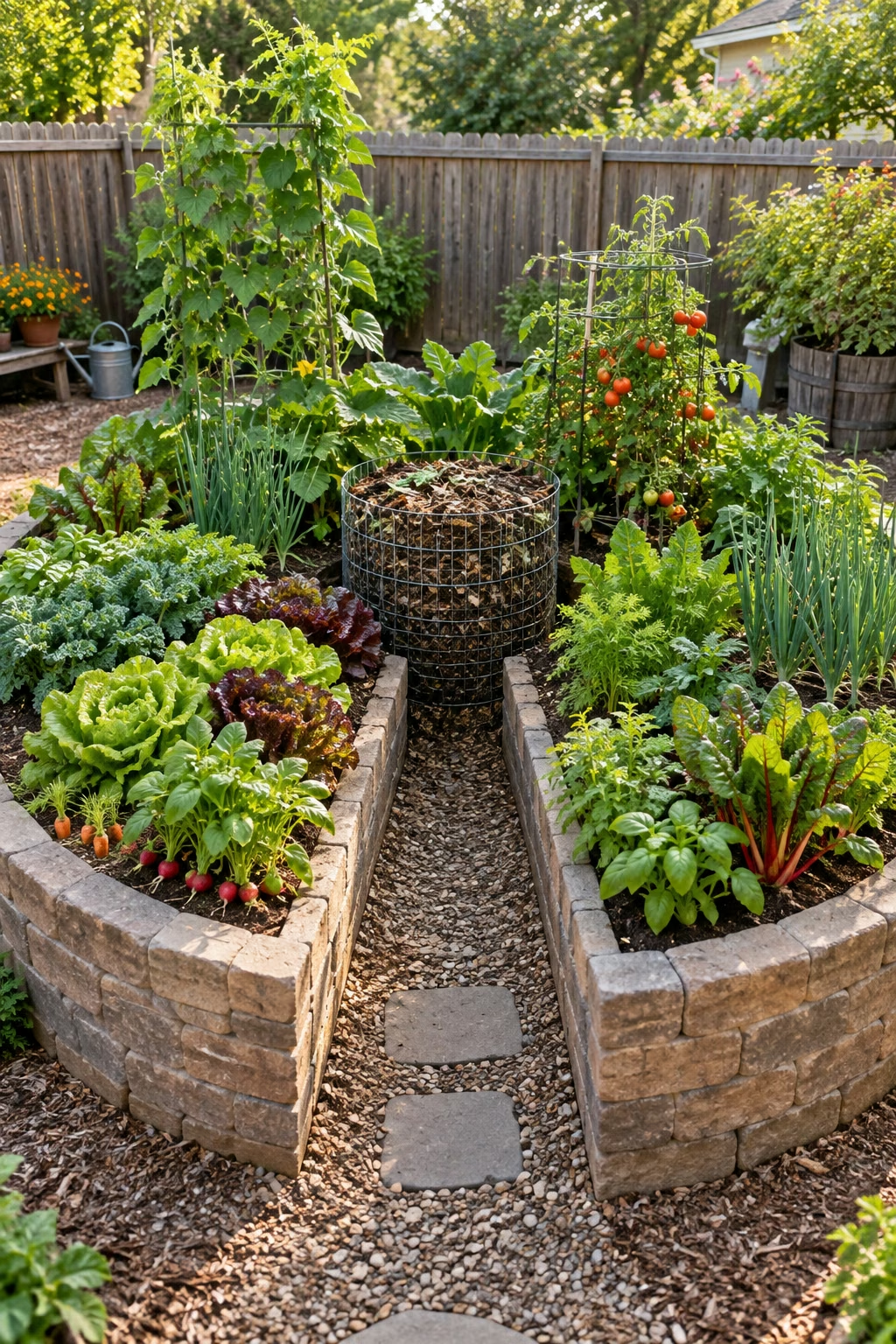
A keyhole garden uses a rounded or curved growing bed with an access path leading into the center.
From above, the opening resembles a keyhole.
The purpose of the layout is practical: increase growing area while still allowing the gardener to reach plants from the path and central access point.
University of Minnesota material describing keyhole gardens notes that the layout is designed to minimize walking area while maximizing growing area.
This makes it worth considering when you have an irregularly shaped yard or simply prefer curved garden beds over a grid of rectangles.
It can be planted with vegetables, herbs, and flowers just like other intensive beds.
How to Choose the Best Vegetable Garden Layout
With 31 ideas available, it is easy to start thinking about arches, beautiful raised beds, gravel paths, and perfectly arranged vegetables.
But begin with the basics.
Start With Sunlight
Most fruiting vegetables perform best with plenty of direct sunlight, so observe your yard before building permanent beds.
A beautiful raised bed in the wrong location will still be the wrong location.
Keep Every Plant Within Reach
Avoid creating a bed so wide that you need to step into it.
Regular foot traffic compacts growing soil, which is one reason permanent paths and reachable bed widths are repeatedly recommended in raised-bed gardening guidance.
Think Vertically
Cucumbers, peas, pole beans, some tomatoes, and appropriate vining crops can use trellises rather than spreading across valuable garden space.
Vertical supports can also create some of the most attractive features in the vegetable garden.
Plan for Full-Size Plants
Seedlings make an empty garden feel enormous.
Two months later, that same bed can feel completely full.
Always plan according to the mature size and recommended spacing of each crop, not the size of the transplant you bring home.
Use the Garden More Than Once
A vegetable bed does not have to produce only one crop each year.
With appropriate timing for your climate, spring vegetables can sometimes be followed by summer crops and then another cool-season planting.
Succession planting is one of the easiest ways to get more harvest from an existing layout without creating a larger garden.
Final Thoughts
The best vegetable garden layout is not necessarily the largest or most elaborate.
It is the one that makes planting, watering, harvesting, and replanting easy enough that you actually enjoy using it.
For a tiny space, that might be one 4-by-4-foot square-foot bed.
For a family backyard, two or four raised beds with permanent pathways may be ideal.
For gardeners who enjoy design as much as growing food, a potager with symmetrical beds, flowers, and arch trellises can turn the vegetable garden into a genuine landscape feature.
And if maximum harvest is your priority, block planting, vertical growing, intercropping, and succession planting can help you use the same space more efficiently.
Start with the space you already have, grow vegetables you genuinely eat, leave enough room to reach every plant, and build a layout that can change as your garden does.
A good vegetable garden should not only produce food.
It should make you want to walk outside and spend time in it.