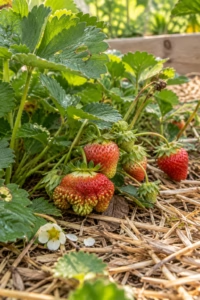
Small, deformed strawberries usually result from incomplete pollination, insect injury, frost, water stress, nutrient imbalance, or a cultivar-specific growth pattern. Each strawberry develops from many fertilized flower parts, so damage to one section produces puckering, hard green tips, button-shaped fruit, or berries that remain uniformly undersized.
Key Facts / Quick Answer
A strawberry is an aggregate accessory fruit: the red flesh is swollen receptacle tissue, while each outside “seed” is an achene.
Unpollinated achenes produce too little auxin, so the flesh beneath them does not expand normally.
A black flower center usually indicates frost injury; a brown, pinched tip on several berries suggests tarnished plant bug damage.
Uniformly small fruit more often indicates drought, excessive nitrogen, shade, overcrowding, poor root health, or a naturally small cultivar.
Do not apply boron without a soil or tissue test. The safe margin between deficiency and toxicity is narrow.
New flowers can produce normal fruit within roughly 2-6 weeks after weather, pollination, or pest conditions improve.
How Strawberry Fruit Develops
Strawberry fruit develops when pollinated achenes release growth signals that stimulate nearby receptacle tissue. The visible red berry is not the botanical fruit itself; the achenes on its surface are the individual true fruits.
A strawberry flower contains many pistils, each connected to an ovule that can become an achene. Bees, flies, wind, and other insects move pollen from anthers to receptive stigmas. Successful fertilization causes the developing achene to produce auxin and other signals that encourage the surrounding receptacle to swell.
That anatomy explains why a strawberry can be partly normal and partly misshapen. A cluster of unfertilized achenes leaves the underlying tissue small, hard, pale, or green while adjacent tissue enlarges. The result is a berry with a narrow tip, deep grooves, protruding lobes, or a puckered side.
The University of Minnesota Extension describes strawberries as aggregate fruits because many small fruits form across one enlarged flower receptacle. In practice, the number of visible achenes matters more than the number of bees you see: one visit does not guarantee even pollen transfer across the entire flower.
What Poor Pollination Looks Like
Poor pollination usually produces berries that are lopsided, ridged, puckered, or pointed on one side. The deformed area often corresponds to a section of the flower where achenes remained unfertilized.
Pollination problems are more likely when:
- Flowers opened during frost, cold rain, or strong wind.
- Daytime temperatures stayed below about 15°C or rose above approximately 27°C during bloom.
- Bees had few calm, dry hours to forage.
- Flowers were covered during bloom and pollinators could not reach them.
- A greenhouse lacked airflow or a suitable pollinator.
- Overhead irrigation repeatedly wet open flowers.
The 15-27°C range is a practical management range, not a universal biological cutoff. Cultivar, humidity, wind, flower temperature, and pollinator species change the outcome.
Why Are My Strawberries Small and Deformed?
The most useful distinction is whether the fruit is unevenly distorted or uniformly small. Uneven distortion points toward pollination failure, frost, or blossom-feeding insects, whereas a whole crop of small berries points more often toward root stress, shade, cultivar traits, overcrowding, or water and nutrient problems.
Symptom-Based Diagnosis
| Fruit or flower symptom | Most likely cause | Confirmation step | Typical response time |
|---|---|---|---|
| Deep puckering on one side | Incomplete pollination | Inspect matching flower scars and weather records | Next flower flush, 2-4 weeks |
| Hard brown or green tip | Tarnished plant bug | Tap blossoms over a white card and inspect nymphs | 1-3 weeks after control |
| Black center inside an opened flower | Frost injury | Cut or open flowers before fruit expands | Affected fruit cannot recover |
| Entire crop is small | Drought, shade, roots, cultivar, or crowding | Check soil moisture, canopy light, crown spacing | 2-8 weeks |
| Cracked or hollow fruit | Irregular watering, heat, poor pollination | Compare irrigation and weather timing | 1-3 fruiting cycles |
| Silvered petals or bronzed leaves | Thrips | Inspect flowers with a hand lens | 2-6 weeks |
| Twisted leaves and abnormal new growth | Herbicide drift or virus | Compare affected plants with wind direction and pattern | Remove or monitor |
An individual misshapen berry is not enough to diagnose a pest infestation. Look for a pattern across flowers, fruit, leaves, and the timing of the damage.
Is Pollination Failure the Main Cause?
Incomplete pollination is the leading explanation for strawberries that are lopsided, catfaced, or unevenly swollen. The flower may look healthy when open, yet a cold night, rain, poor bee access, or insufficient pollen movement can prevent some achenes from developing.
Weather Effects During Bloom
Frost damages the reproductive center of an open flower. A strawberry flower with a brown or black center after a freezing event will usually produce a deformed berry, even if later weather becomes ideal. The damaged tissue cannot resume normal fertilization.
Cold conditions also reduce bee activity and slow pollen-tube growth. Heavy rain can limit foraging and wash pollen from exposed anthers. Heat above the practical pollination range can shorten flower receptivity and increase water stress, particularly in containers and raised beds.
Floating row cover protects flowers from light frost and wind, but it creates a trade-off. A cover left over blooming plants blocks pollinators, so uncover beds during calm daylight hours unless the crop is being hand-pollinated or grown with managed pollination.
How to Improve Pollination
- Inspect open flowers at midday for accessible yellow anthers and active insects.
- Record overnight temperatures, rainfall, and wind during the 3-5 days after flowering begins.
- Remove frost covers after temperatures rise and before peak bee activity.
- Provide shallow water, pesticide-free flowering plants, and shelter from persistent wind.
- In a small greenhouse, touch each open flower with a clean, soft brush every day or use gentle plant vibration.
- Mark new flowers and compare fruit shape 2-3 weeks later.
Hand-pollination is useful for a few dozen greenhouse flowers, but it is not a practical substitute for outdoor pollinator habitat across a large bed. It also cannot repair flowers already blackened by frost.
Which Pests Make Strawberry Fruit Deformed?
Tarnished plant bug is strongly associated with “button berries,” small fruit with a hard, brown, or green tip. Thrips can scar flowers and young fruit, while slugs, earwigs, and birds usually damage ripe fruit after its shape has already been established.
Tarnished Plant Bug and Button Berries
Tarnished plant bug, Lygus lineolaris, feeds on flowers and young fruit with piercing-sucking mouthparts. Feeding near the developing tip can kill tissue, leaving a berry that expands around a rigid button-like end.
Scout early in the morning by tapping flower clusters over white paper. Look for small, fast-moving nymphs, adults with a distinctive pale triangle on the back, and repeated button berries across several plants. Mow nearby weeds and remove unmanaged flowering hosts, because plant bugs often move from weedy margins into strawberry beds.
Do not spray solely because one malformed berry appears. Confirm active insects first, then follow the product label and local extension guidance. Spray drift and broad-spectrum insecticides can reduce bees that are still needed for later flowers.
Thrips and Flower Scarring
Thrips are tiny, slender insects that scrape plant tissue and feed on flower parts. Their damage may cause bronze or silver streaks, distorted young fruit, browned petals, and fruit that remains small despite adequate pollination.
A 10x hand lens improves detection. Shake flowers over dark paper, inspect the bases of petals, and compare damaged blooms with unopened buds. Insecticidal soap works only when it contacts exposed insects and can injure flowers if applied in heat or during bee activity.
Neem and other botanical products are not automatically pollinator-safe. Use only a labeled product, spray at dusk when flowers are not being visited, and avoid treating open blossoms whenever possible.
| Diagnostic feature | Tarnished plant bug | Thrips | Frost |
|---|---|---|---|
| Typical insect size | 5-7 millimeters adult | 1-2 millimeters | None |
| Primary injury site | Young fruit tip | Petals, anthers, young fruit | Flower center |
| Common fruit result | Button berry | Scarred or bronzed fruit | Lopsided fruit |
| Best inspection method | White-card tapping | 10x hand lens | Open flower inspection |
| Main prevention | Weed and margin management | Sanitation and monitoring | Row cover and forecast timing |
Can Nutrients, Water, or Crowding Cause Small Fruit?
Water stress, weak roots, low light, overcrowding, and nutrient imbalance can reduce berry size across the entire plant. Nutrient deficiency is less likely when only a few berries are misshapen while leaves and neighboring fruit look healthy.
Strawberries need consistent moisture during flowering and fruit enlargement. A practical target is about 25-38 millimeters of water per week from rainfall and irrigation, adjusted for soil, temperature, mulch, and container size. Check the top 2-5 centimeters of soil, then water deeply enough to moisten the root zone without keeping crowns wet.
Excess nitrogen can produce lush leaves and runners at the expense of fruiting. Calcium sprays rarely fix a strawberry problem because calcium must move through actively transpiring tissue; correcting root-zone moisture and soil pH is usually more effective.
Boron deserves caution. Extension soil-test interpretations commonly place adequate boron near roughly 0.5-1.0 parts per million, but extraction methods differ by laboratory and crop. Boron deficiency can cause poor fruit set, distorted leaves, and growing-point injury, while a small overdose can burn leaf margins and damage roots.
Root-Zone Checks
- Confirm at least 6-8 hours of direct sun for reliable full-sized fruit.
- Space plants so mature leaves do not form a permanently wet, shaded canopy.
- Keep crowns at soil level rather than burying them.
- Check for compacted soil, standing water, root rot, and vole damage.
- Use a soil test before adding boron, lime, sulfur, or a high-rate fertilizer.
- Compare plants near bed edges with plants in the center to identify shading or drainage patterns.
Do Strawberry Varieties Naturally Produce Small Berries?
Some cultivars produce smaller fruit by design, particularly alpine strawberries and many day-neutral types. A healthy plant with evenly shaped, flavorful berries may simply have a smaller genetic fruit-size range than a June-bearing cultivar.
June-bearing strawberries often produce a large early crop, while everbearing and day-neutral plants distribute production over more weeks. Later berries may be smaller because the plant has limited carbohydrate reserves, weather is hotter, or many fruits compete simultaneously.
Runner age also affects yield. Newly rooted daughter plants may need a season to establish crowns, while old, crowded beds often decline after several productive years. Renovating June-bearing beds after harvest, thinning excess plants, and replacing weak crowns can improve future berry size.
Cultivar comparisons should use plants grown under the same light, irrigation, soil, and pollination conditions. Comparing a shaded alpine plant with a well-watered June-bearing plant can lead to the wrong diagnosis.
What Should You Do About Misshapen Strawberries?
The fastest solution is to identify the damage stage, protect flowers from the next weather event, and correct confirmed pest or root-zone problems rather than applying several treatments at once. Damaged berries will not become symmetrical, but later flowers can produce normal fruit.
A Practical Recovery Sequence
- Separate old damage from new damage. Mark open flowers and fruit that develops afterward.
- Inspect flowers. Look for black centers, missing petals, insects, silvering, and poor pollen release.
- Check moisture and light. Measure soil moisture at the root zone and remove competing shade.
- Scout for pests. Use white-card tapping for plant bugs and a hand lens for thrips.
- Protect the next bloom. Use row cover during frost threats, then uncover during pollination hours.
- Adjust irrigation. Apply water at the soil surface and maintain even moisture during fruit enlargement.
- Test before fertilizing. Use laboratory soil results and crop-appropriate recommendations.
- Remove unrecoverable fruit. Pick badly damaged berries to reduce rot and improve air movement.
Comparing Intervention Options
| Intervention | Typical home cost | Best use | Main limitation |
|---|---|---|---|
| Floating row cover | $15-$50 per bed | Light frost and wind protection | Blocks pollinators while installed |
| Soft-brush pollination | $5-$15 for a brush | Small greenhouse or indoor crop | Labor-intensive and flower-specific |
| Insecticidal soap | $10-$20 per bottle | Confirmed exposed soft-bodied pests | Contact-only action and flower risk |
| Soil test | $15-$40 per sample | Nutrient and pH diagnosis | Does not identify insects or frost |
| Compost or mulch | $10-$30 per bag | Moisture and soil structure support | Does not cure severe deficiencies |
| Commercial biocontrols | $150-$400 per acre, typical | Large-scale pest programs | Timing and release conditions matter |
Costs vary by region, bed size, product concentration, and whether labor is included. Borax is inexpensive, but a low purchase price does not make it a safe unscheduled treatment.
When Should You Replace Plants or Remove Fruit?
Remove individual fruit when it is badly misshapen, rotting, or pest-damaged, but do not remove a whole plant because of one abnormal berry. Replace plants when poor growth affects most of the bed, crowns are diseased, viruses are suspected, or corrected conditions fail across a full season.
A strawberry plant with healthy green leaves and new normal flowers can recover from one poor fruiting period. A plant with stunted crowns, recurring wilt, root rot, or distorted new leaves needs a wider diagnosis.
Herbicide drift can mimic pest and nutrient damage. Strawberries exposed to 2,4-D, dicamba, or similar products may show cupped leaves, twisted petioles, narrow growth, and malformed fruit. Symptoms often follow wind direction and affect the side of the bed nearest a treated lawn or field.
Fungal diseases usually produce lesions, gray mold, or rotting tissue rather than clean, symmetrical puckering. Botrytis fruit rot, for example, becomes soft and gray under humid conditions; it does not normally create a hard button tip before ripening.
Preventing Small Fruit Next Season
Prevention begins before flowering because pollination and frost injury cannot be reversed after the fact. Use healthy certified plants, a sunny site, free-draining soil, moderate fertility, and a plan for protecting flowers during the local frost window.
A reliable annual schedule is:
- Before planting: choose a cultivar suited to the local climate and test soil pH and fertility.
- Early growth: remove weeds, inspect crowns, and install drip irrigation or a soaker line.
- Before bloom: prepare row cover supports and check nearby pesticide use.
- During bloom: keep flowers accessible to pollinators, avoid daytime spraying, and watch for frost.
- Fruit enlargement: maintain even moisture, use clean mulch, and remove rotting fruit.
- After harvest: renovate June-bearing beds, control runners, and record which plants produced abnormal berries.
The most common management mistake is treating every misshapen strawberry as a mineral deficiency. In practice, the flower, weather record, and fruit pattern usually provide more diagnostic information than a bag of fertilizer.
Frequently Asked Questions About Why Are My Strawberries Small and Deformed?
Are small or deformed strawberries safe to eat?
Small or deformed strawberries are generally safe to eat if they are fully ripe, firm, and free from mold, rot, chemical contamination, or heavy insect damage. Shape alone does not indicate toxicity. Discard fruit with gray mold, leaking tissue, foul odors, or extensive feeding injury.
Why are my strawberries hollow in the middle?
Hollow strawberries can result from rapid growth during heat, uneven watering, cultivar traits, or incomplete pollination. Compare several berries and inspect flowers from the same flush. Hollow centers combined with puckering suggest pollination trouble, while uniformly hollow fruit with healthy shape may reflect cultivar or water conditions.
Can I fix a strawberry after it becomes deformed?
A strawberry cannot be reshaped after unfertilized tissue, frost injury, or insect damage has stopped part of its development. Remove severely damaged fruit and improve conditions for later flowers. New berries can develop normally within approximately 2-6 weeks when pollination, moisture, temperature, and pest pressure improve.
Do strawberries need bees to produce fruit?
Strawberries can self-pollinate, but insect movement improves pollen distribution across the whole flower and increases the chance of evenly shaped fruit. Bees are especially useful outdoors, while gentle brushing or vibration can supplement pollination in a small greenhouse where airflow and insect access are limited.
Should I add borax for misshapen berries?
Do not add borax based only on misshapen fruit. Boron deficiency is possible, but excess boron is toxic and the safe application rate depends on soil texture, laboratory extraction method, and product concentration. Obtain a soil or tissue test and follow a local extension recommendation before applying any boron source.
Why are my strawberries small even though the leaves look healthy?
Healthy leaves do not rule out small-fruit causes such as a naturally small cultivar, insufficient sunlight, poor pollination, crowded crowns, high fruit load, or inconsistent moisture. Measure direct light, compare berry size across cultivars, inspect flowers, and check root-zone moisture before changing fertilizer.
Conclusion
The answer to “Why Are My Strawberries Small and Deformed?” usually comes from the pattern: one-sided puckering indicates incomplete pollination, a hard button tip suggests tarnished plant bug, a black flower center indicates frost, and uniformly small fruit points toward cultivar, light, roots, water, or crowding. Inspect flowers and soil before treating, then protect the next bloom cycle with timely covers, pollinator access, measured irrigation, and tested nutrition.