Maybe your front porch is too small for the matching chairs you keep saving on Pinterest. Or perhaps you have plenty of room, but everything feels scattered: a planter here, a lonely chair there, and no real reason to sit down.
You don’t need to copy an entire porch to make yours feel welcoming. Start with what it needs most. That might be comfortable seating, a more coordinated color scheme, or something green beside the door.
These front porch ideas include simple decorating changes, small-space arrangements, and a few larger updates. Some suit a narrow entrance, while others make the most of a deep covered porch.
Choose the ideas that fit your space and how you’ll actually use it. You’re creating an entrance to enjoy, not a display you have to squeeze past.
1. Start with a Pair of Classic Rocking Chairs
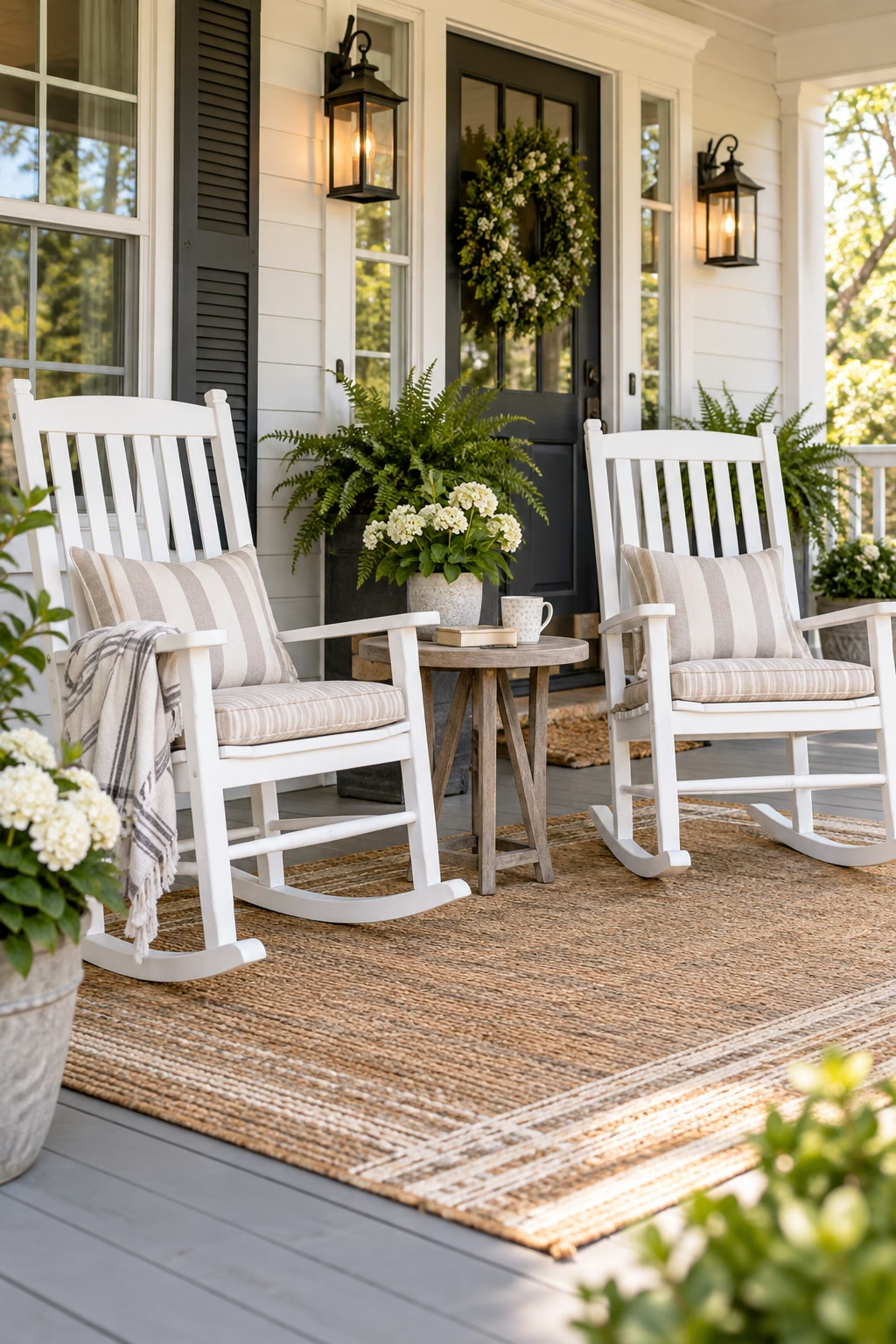
Two rocking chairs and a little table make a lovely starting point for a porch you’ll actually use. Try white chairs against darker siding, or natural wood beside a painted door.
Place them close enough for conversation, with the table between them for coffee or a book. One cushion on each chair is plenty.
Before settling on the arrangement, test the full rocking movement. The chairs should stay clear of the wall, railing, and route to the door.
2. Give the Front Door a Color You Love
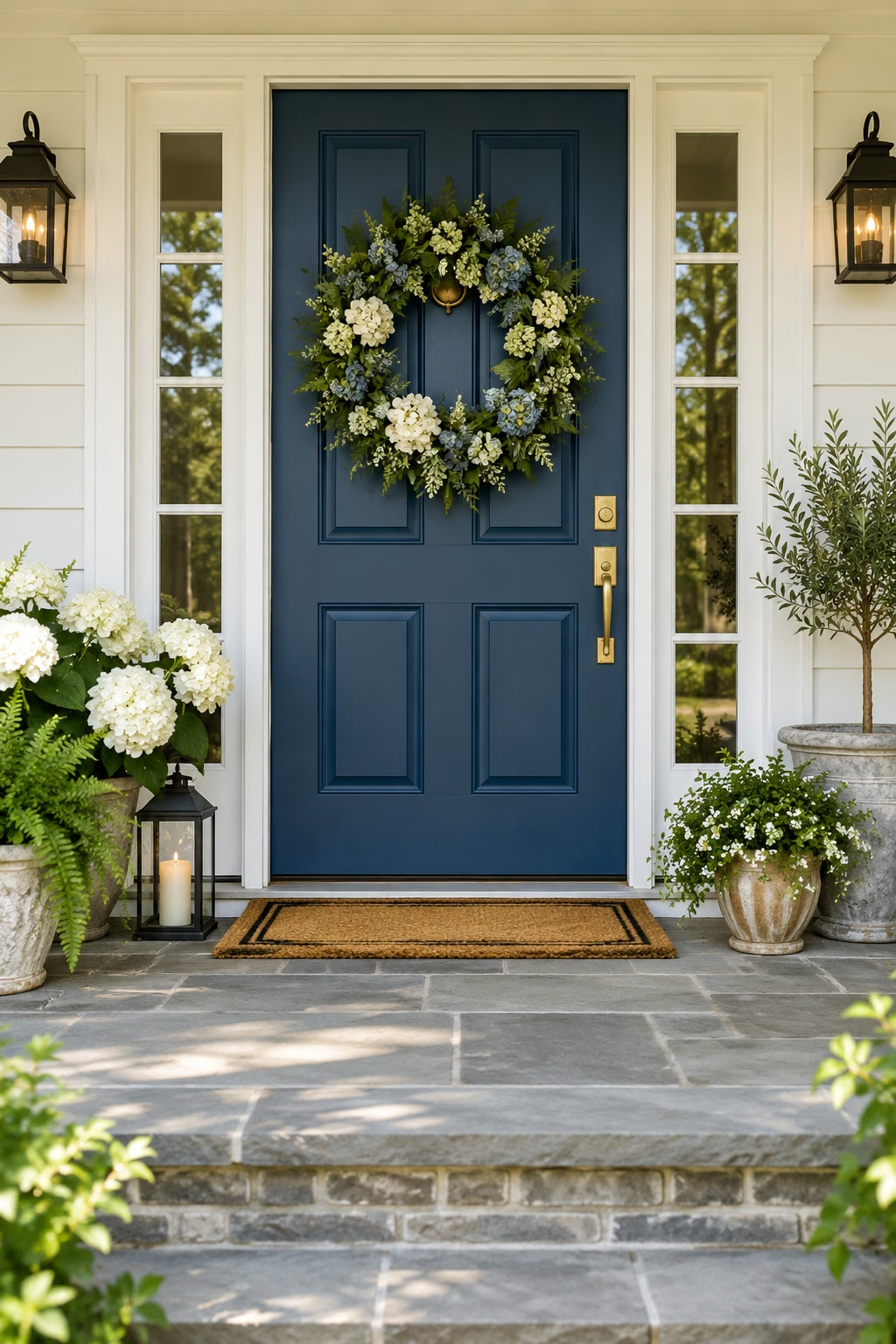
When there isn’t much room for furniture, let the front door do the decorating.
A muted green, warm red, or deep blue can become the starting point for the whole porch. Choose a shade that works with your brick, siding, roof, and trim rather than judging it on a screen alone.
Try a few samples at the entrance before committing. Once you’ve chosen your color, repeat it in one small detail, such as a cushion or planter. There’s no need to match every accessory.
3. Frame the Door with Matching Planters
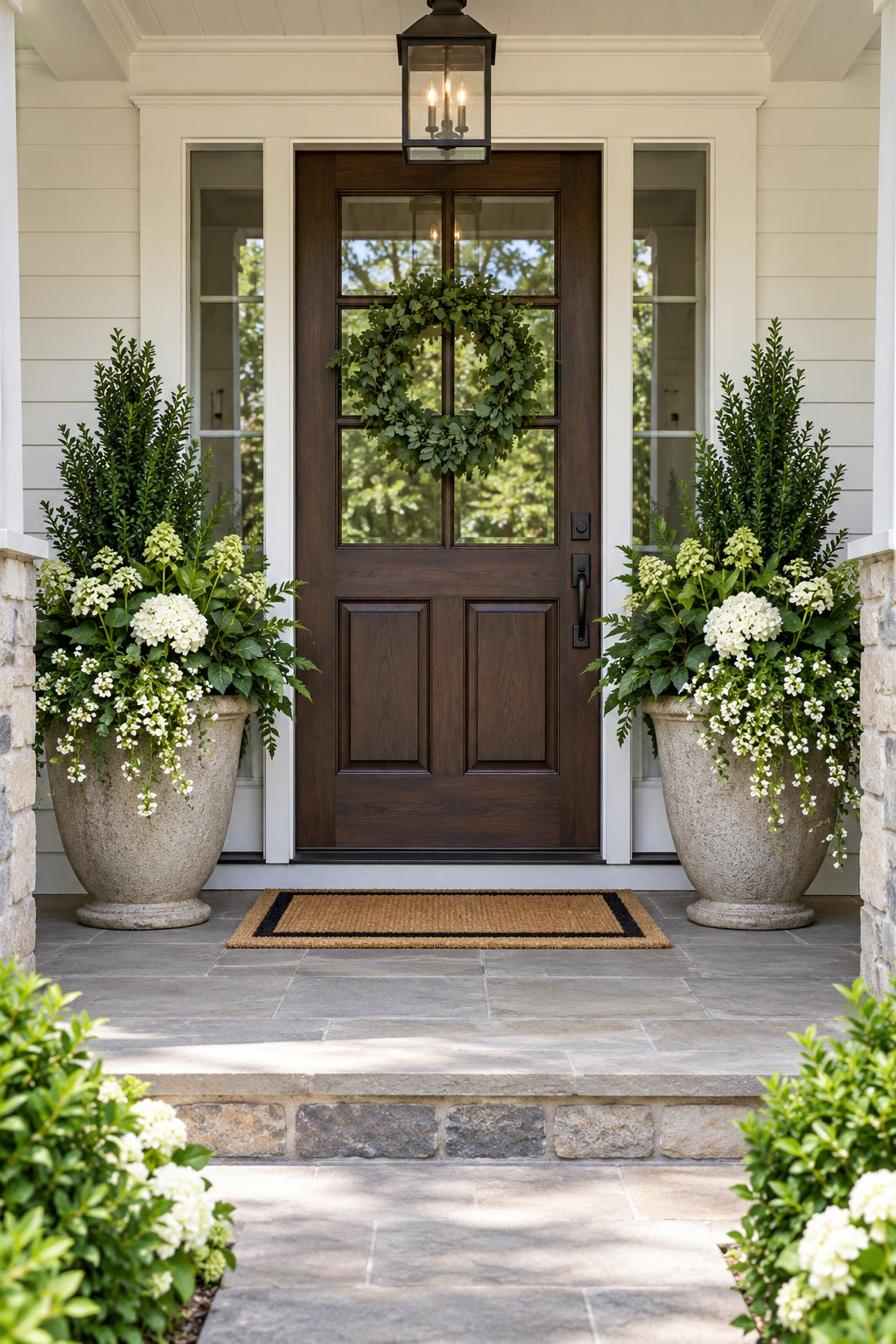
For a balanced entrance, place a matching planter on either side of the door. Keep the shape simple and choose a size that feels proportional to the doorway.
The containers can match even when the plants don’t. One side of a porch may receive more sunlight than the other, so choose plants for each position.
To keep the arrangement looking coordinated, repeat a flower color or similar foliage shape rather than forcing the same plant into different growing conditions.
4. Tuck a Slim Bench Against the Wall
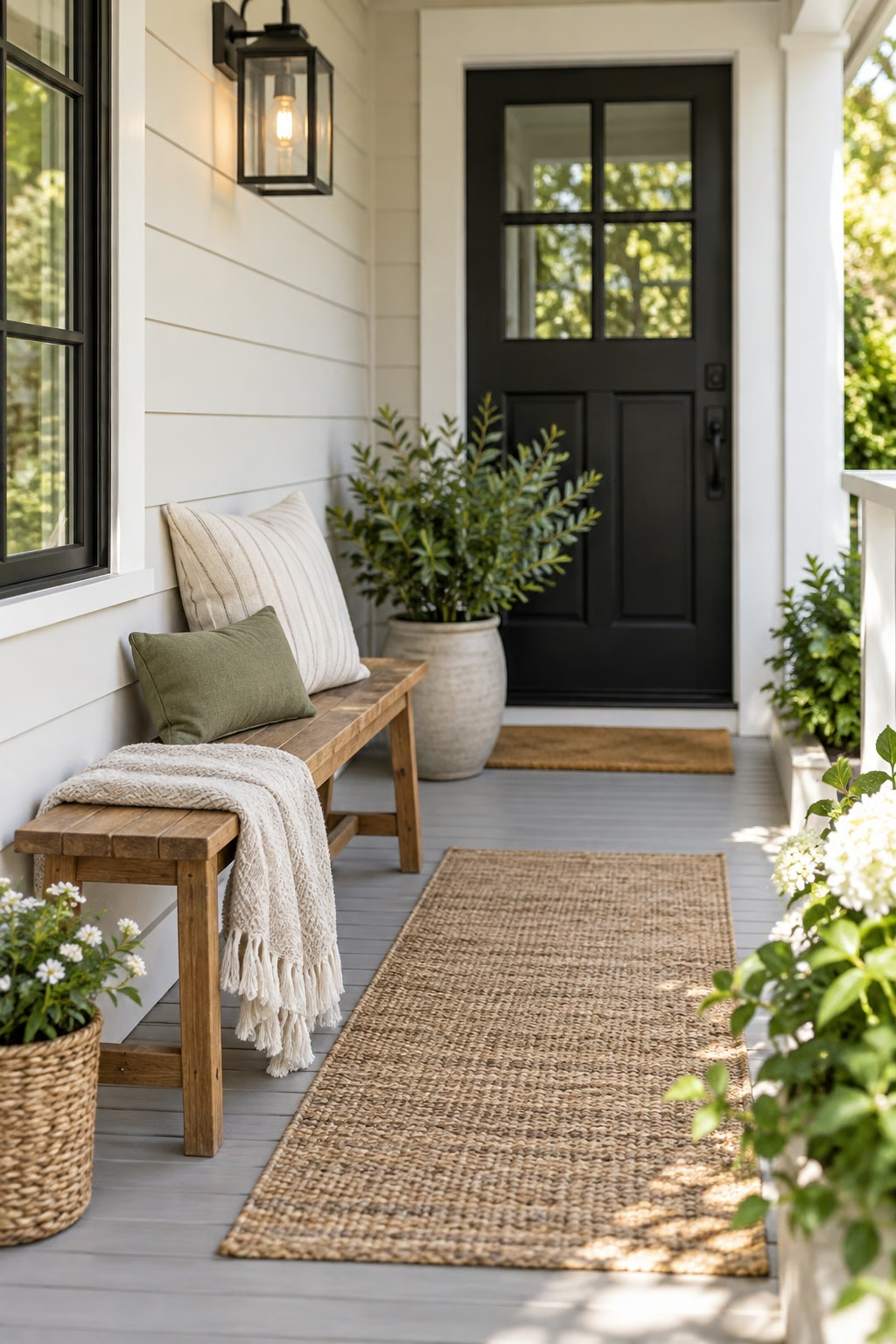
A narrow bench gives a small porch a useful place to sit without turning it into a full seating area.
Try a simple slatted bench with a fitted cushion and one patterned pillow. Leave part of the seat empty so it’s ready for someone to use, rather than filling it with decorative objects.
Measure the space with the door fully open before choosing the bench. A storage version is another option, provided it’s suitable for your porch’s weather exposure and still leaves comfortable walking room.
5. Create a Little Coffee Corner with a Bistro Set
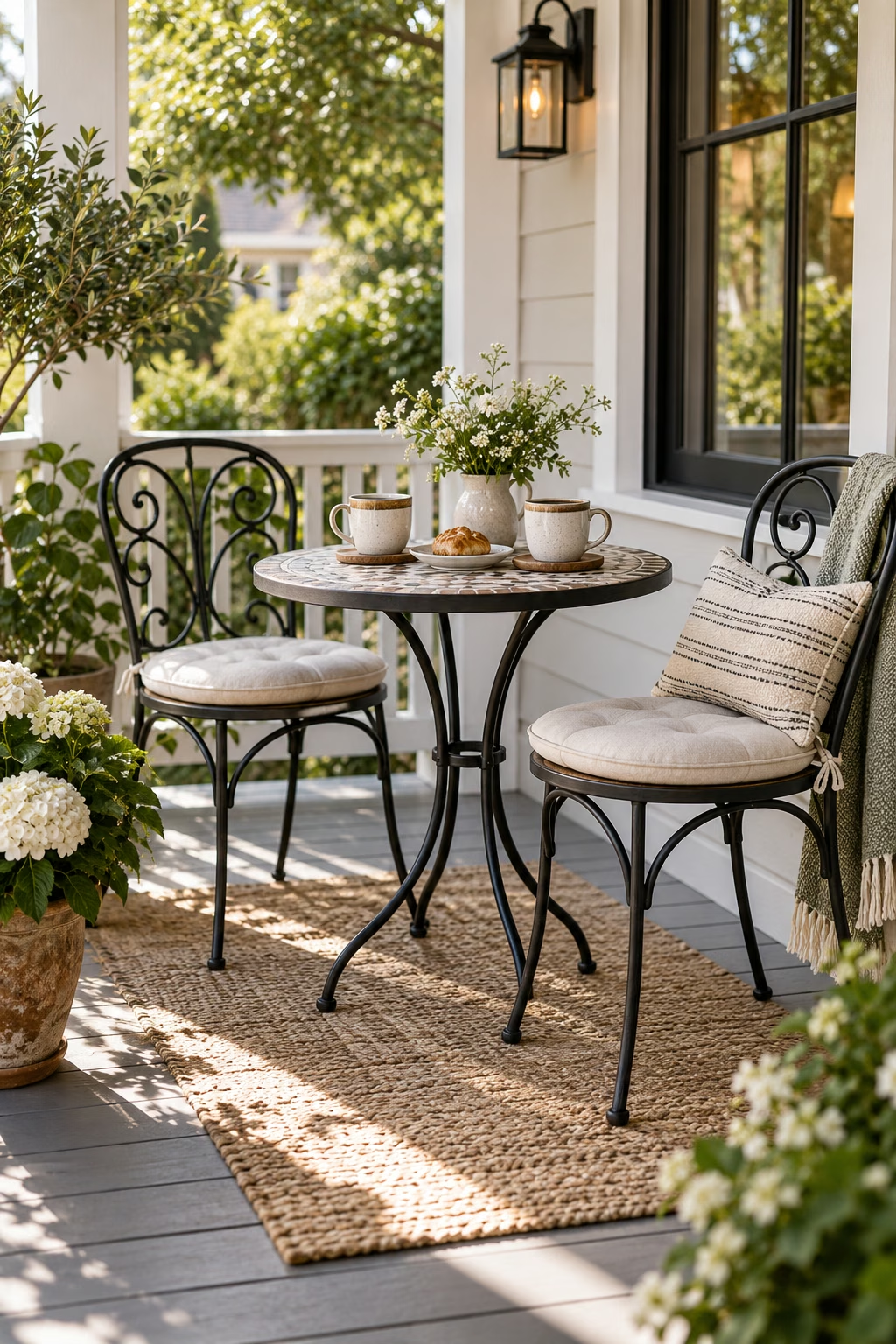
A small table and two chairs can turn an unused porch corner into a breakfast spot.
Try a folding metal bistro set in soft green, black, or cream. Keep the tabletop simple with a small plant and enough room for two mugs.
Check the arrangement with the chairs pulled out, not just tucked beneath the table. That’s the space you’ll need while using it. Folding furniture is especially useful when the same porch also needs room for deliveries or extra visitors.
6. Add a Porch Swing Where the Structure Allows
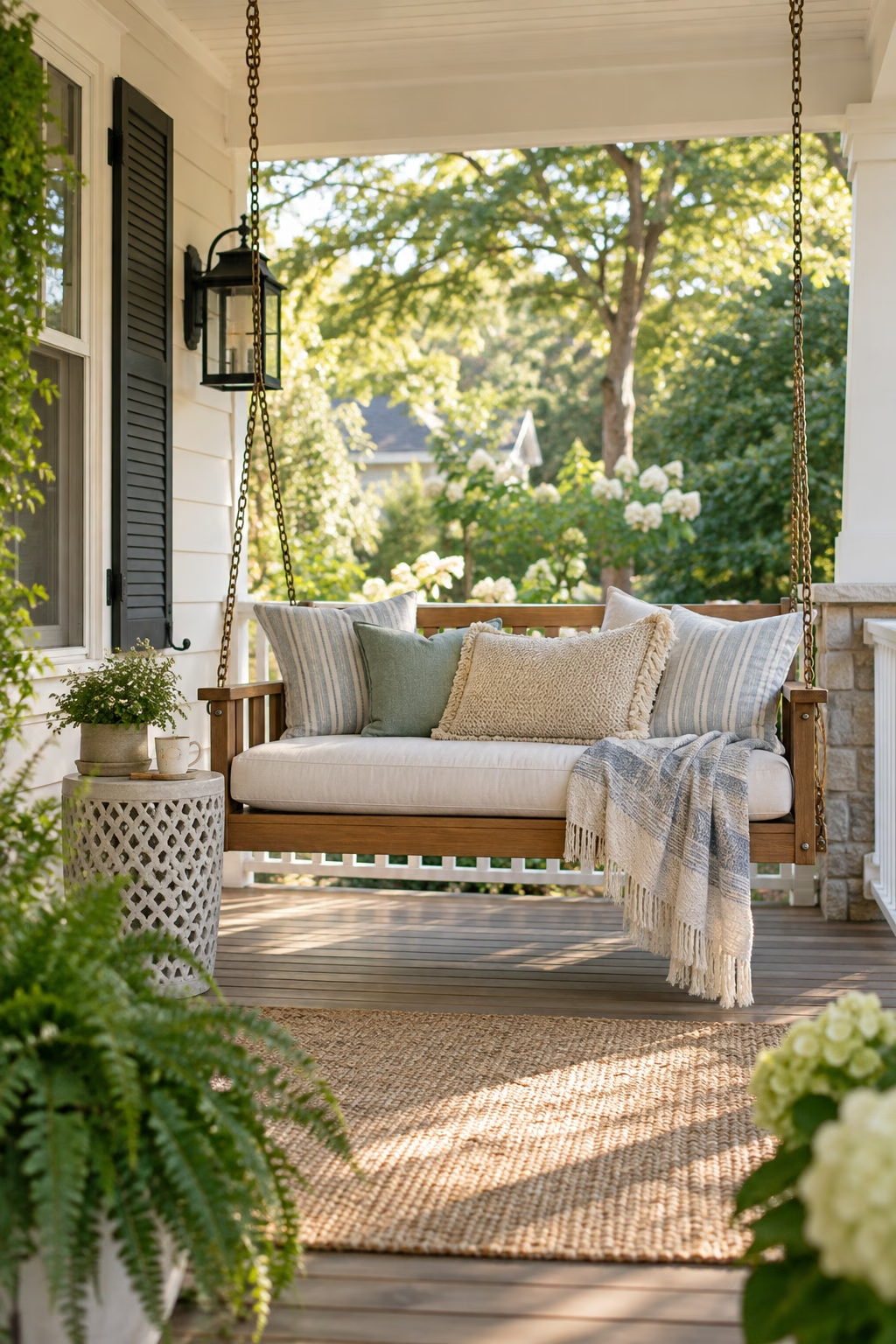
A porch swing is a lovely choice for a deeper covered porch. Style it with a comfortable seat cushion and a small table nearby, rather than surrounding it with furniture.
The important part is above the swing. It needs suitable load-bearing support, not just decorative ceiling panels or the strips holding those panels in place.
Have a qualified installer assess the structure and follow the swing manufacturer’s requirements. Leave enough clearance for movement so the swing doesn’t cross the main walkway or strike a wall.
7. Make a Comfortable Nook with an Outdoor Loveseat
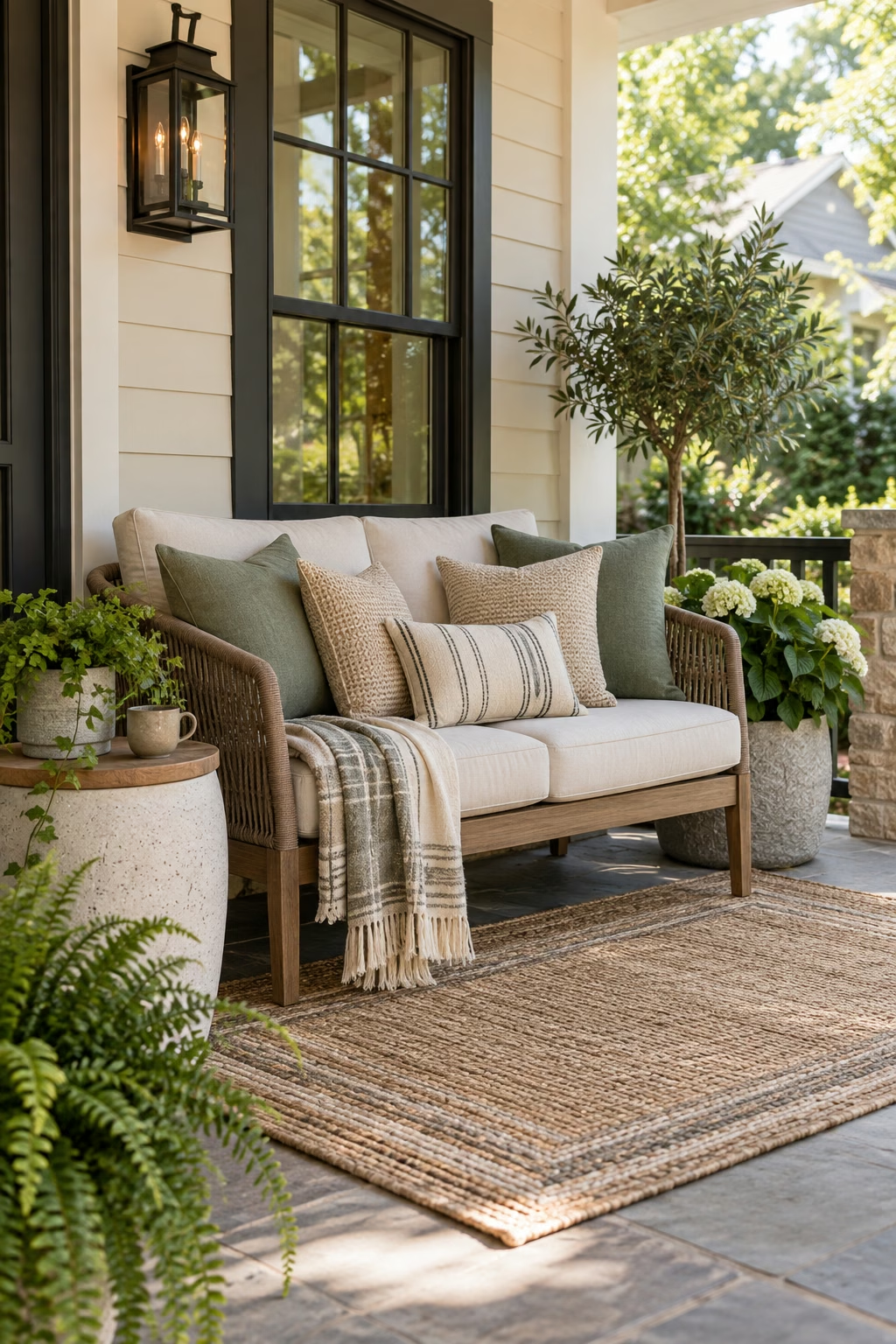
For a porch where you’d like to read or stretch out, try a compact outdoor loveseat instead of several separate chairs.
Place it against a solid wall and add a small side table at one end. A narrow table may be more practical than a coffee table when the porch isn’t very deep.
Choose a frame and cushions intended for the conditions they’ll face. Then keep the styling relaxed: one patterned pillow, one solid pillow, and a nearby plant. You don’t need a complete matching furniture collection.
8. Pull the Seating Area Together with an Outdoor Rug
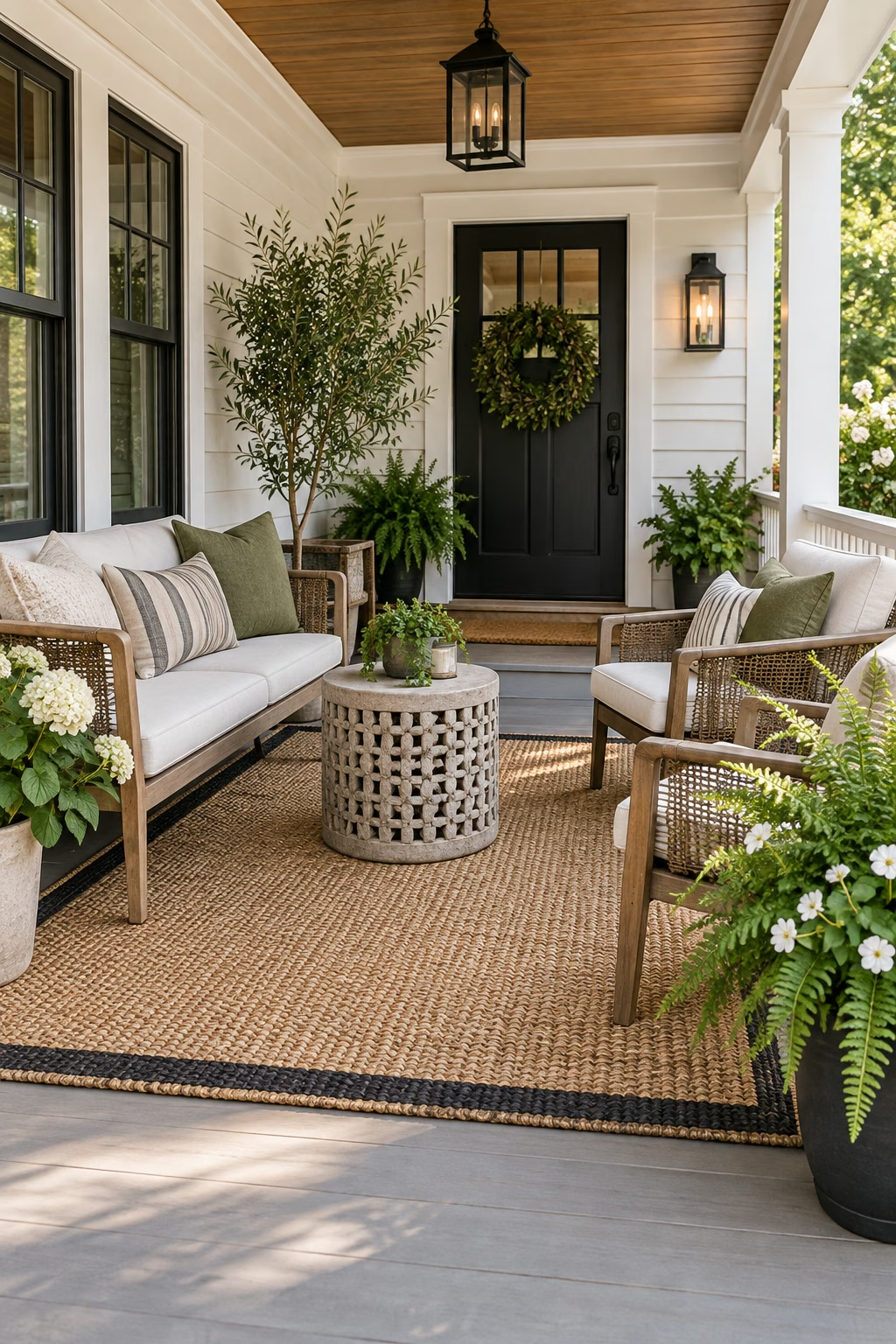
An outdoor rug can give separate pieces of furniture a shared place to belong.
Arrange the seating first, then measure for the rug. A useful starting point is a size that reaches beneath the front legs of the chairs or sofa.
Choose a rug labeled for outdoor use and suited to the porch’s exposure. Check beneath it as part of your cleaning routine, too. A pretty pattern isn’t worth ignoring moisture trapped against the floor.
9. Layer a Doormat over a Simple Pattern
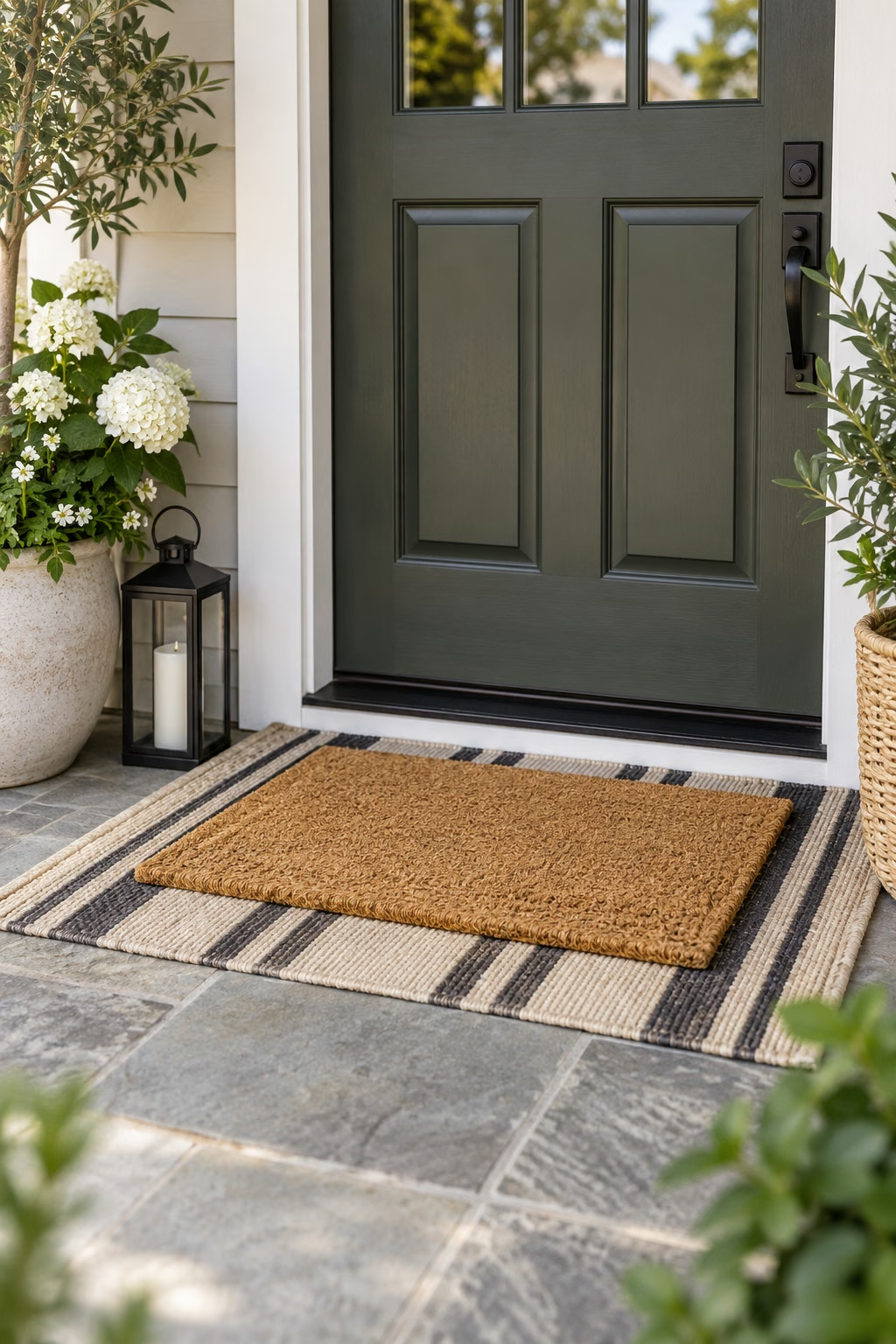
A plain doormat over a larger striped or checked rug gives the doorway a little extra detail.
Keep the combination straightforward. Try a natural-colored mat over a black-and-cream stripe, or pair a simple welcome mat with a muted plaid.
This is optional, not a rule for a well-decorated porch. Both layers should lie flat and stay secure without catching beneath the door. Where the extra thickness creates an awkward edge, choose one generously sized mat instead.
10. Hang Fern Baskets on a Shaded Porch
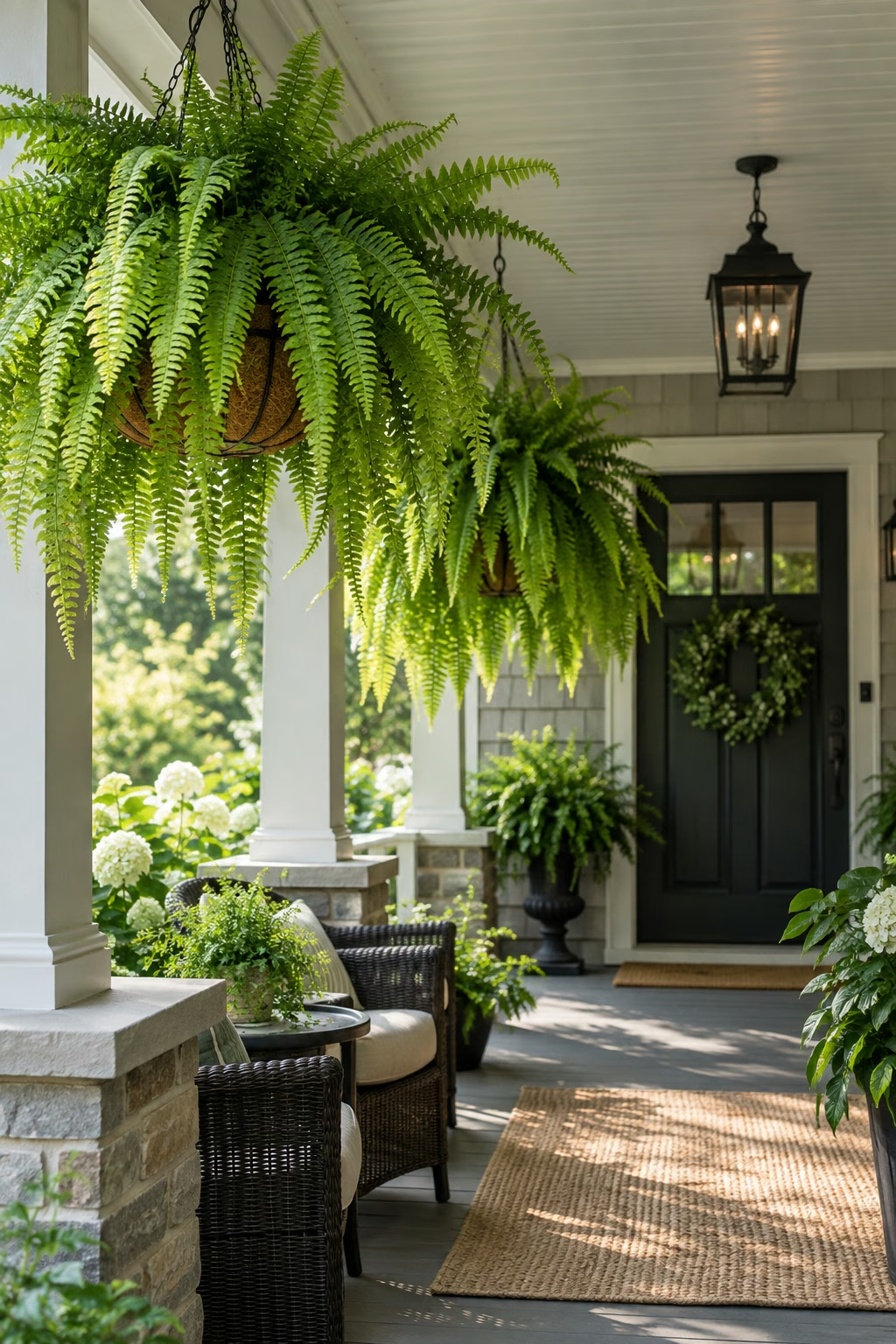
Hanging fern baskets bring greenery to the upper part of a porch while leaving the floor open.
Boston ferns are a familiar option for hanging baskets, and many ferns suit shaded or partly shaded positions. Check the needs of the particular fern rather than assuming every variety wants identical conditions.
Hang the baskets where they won’t brush people walking underneath. Make watering part of the plan, too. A basket that looks perfect but is difficult to reach can become an everyday nuisance.
11. Group Pots at Different Heights
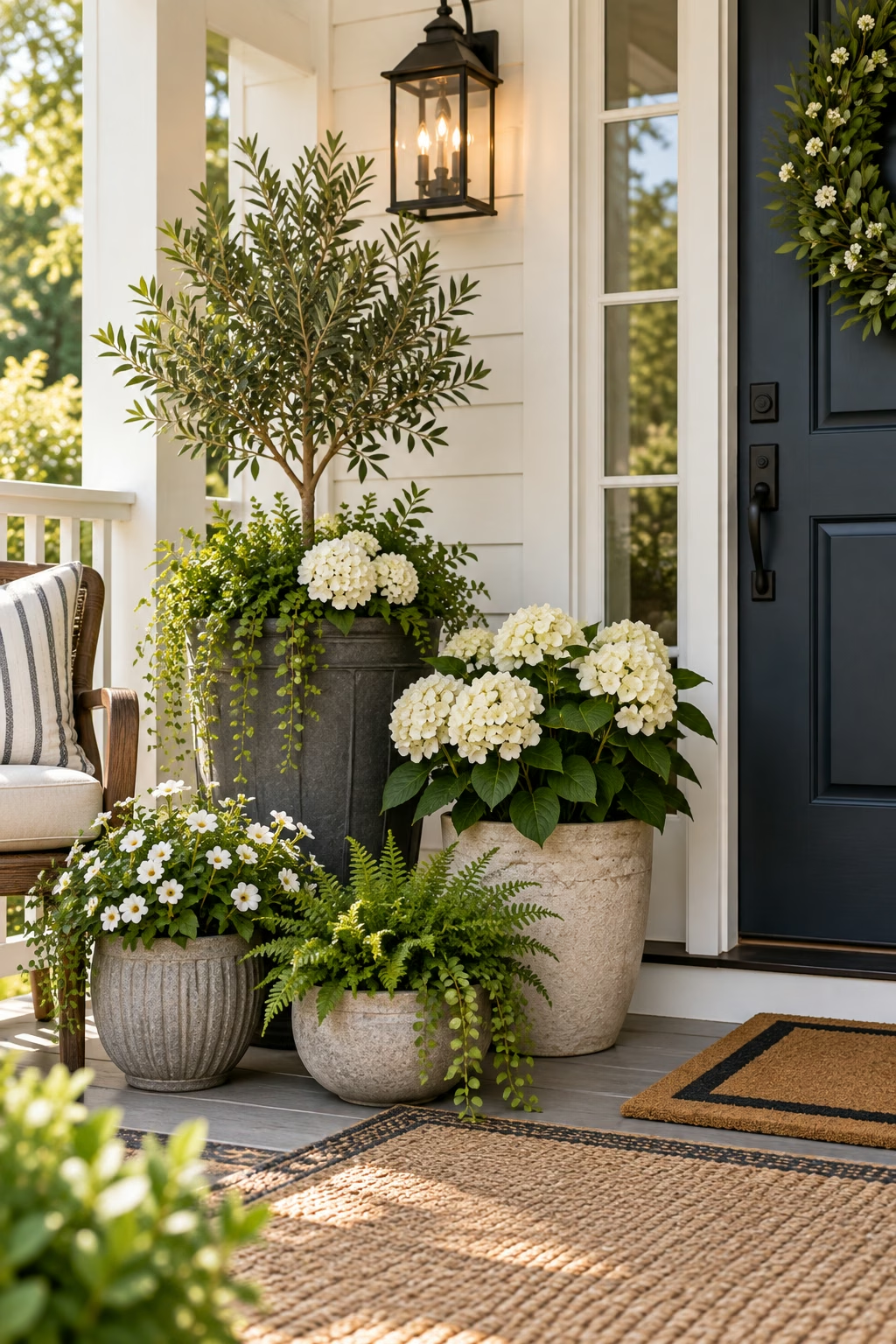
Rather than spreading small pots across the entire porch, gather a few into one planted corner.
Try a taller container at the back, a medium pot beside it, and a lower bowl in front. Repeat a material, such as terracotta, to make the collection feel connected.
Use containers sized for the plants and a suitable potting mix, with drainage that allows excess water to escape. Leave enough access to water each pot. The arrangement should be enjoyable to care for, not just attractive from the sidewalk.
12. Add Window Boxes Beside the Porch
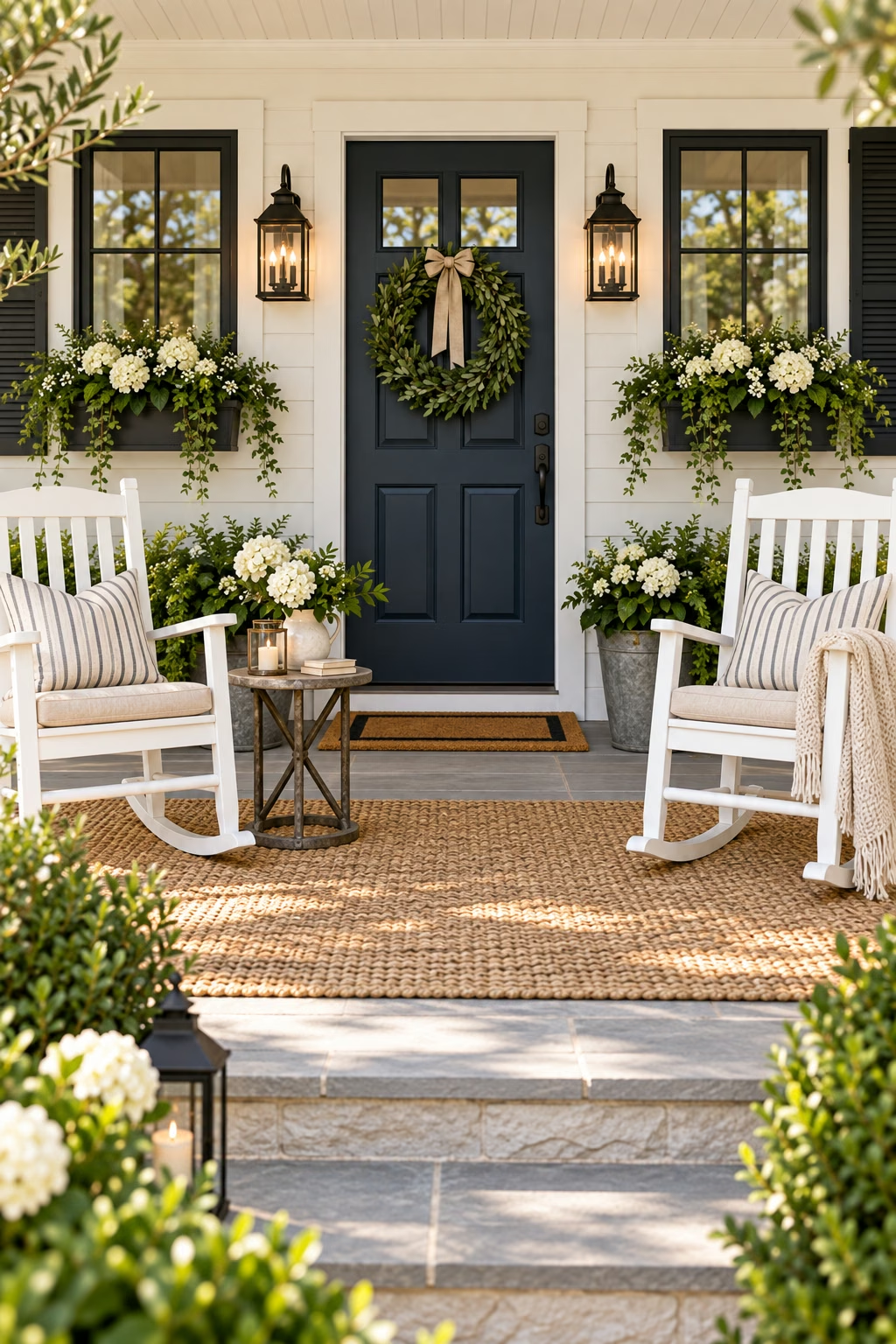
Window boxes let you carry planting across the front of the house without adding more objects to the porch floor.
Repeat a flower color from your doorway pots for a coordinated look. Where the windows receive different light, use plants with similar colors but different growing needs.
Keep the display manageable rather than packing in every flower you like. Plan how you’ll reach the boxes for watering before choosing their position.
13. Use Container-Friendly Evergreens for Lasting Structure
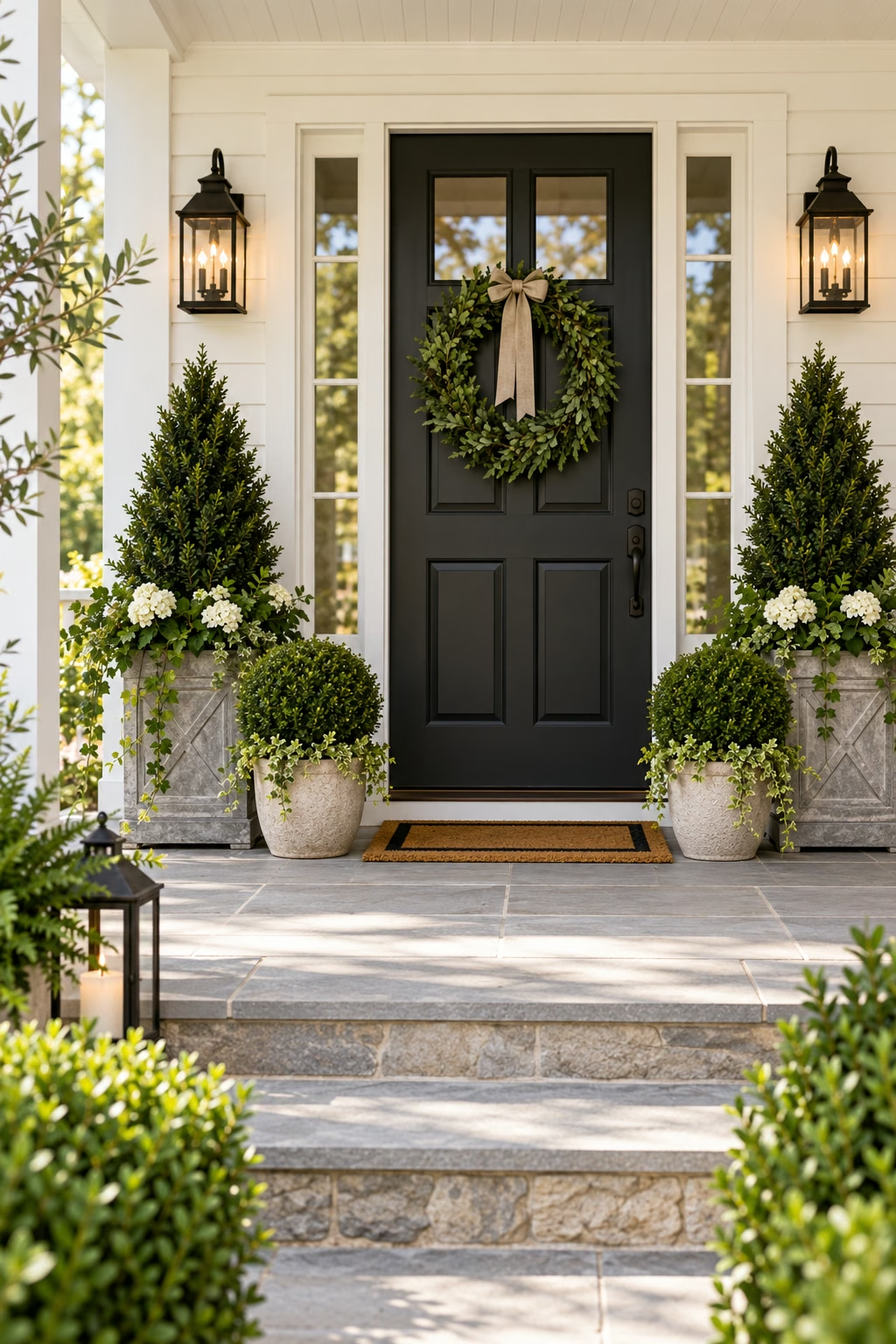
For a porch that doesn’t depend entirely on seasonal flowers, consider a container-friendly evergreen shrub.
A rounded plant in a simple pot creates a softer look, while a narrow upright shape gives the entrance more height. Choose the shape you like, then find a suitable plant rather than buying a shrub based on appearance alone.
Ask a local nursery about mature size, light requirements, and winter protection in containers. Not every shrub adapts well to a pot, and an evergreen still needs watering and ongoing care.
14. Move Some Greenery onto the Wall
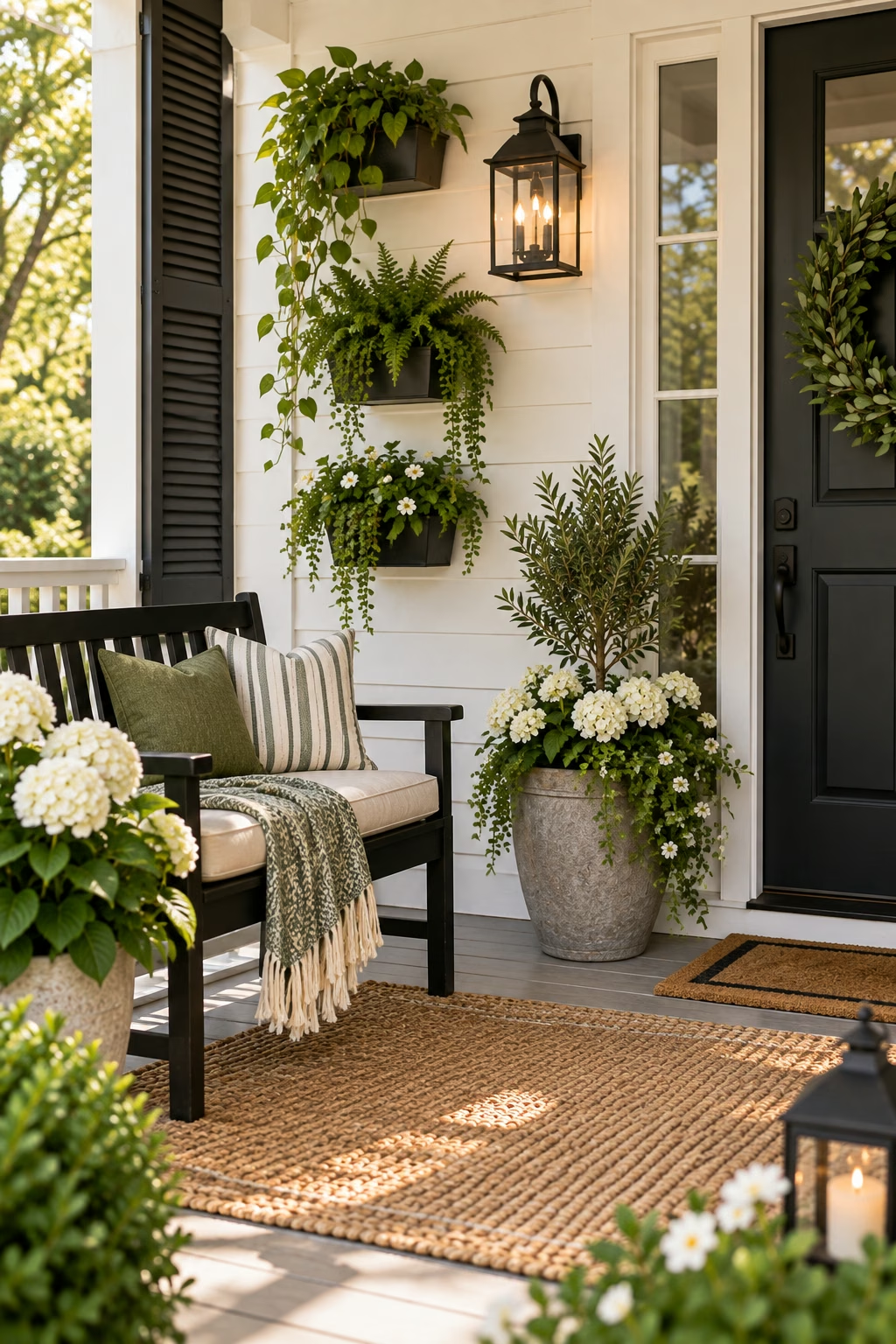
When floor space is tight, a few wall planters can add greenery beside a chair or along a blank porch wall.
Try two or three matching containers rather than covering every available surface. A simple vertical arrangement gives the plants room to stand out.
Choose the mounting method for the wall and the weight of the filled containers. Think about watering and runoff before installing them. Keep the planters away from door handles, frequently used switches, and places where people might brush against them.
15. Update the Porch Light to Suit the Entrance
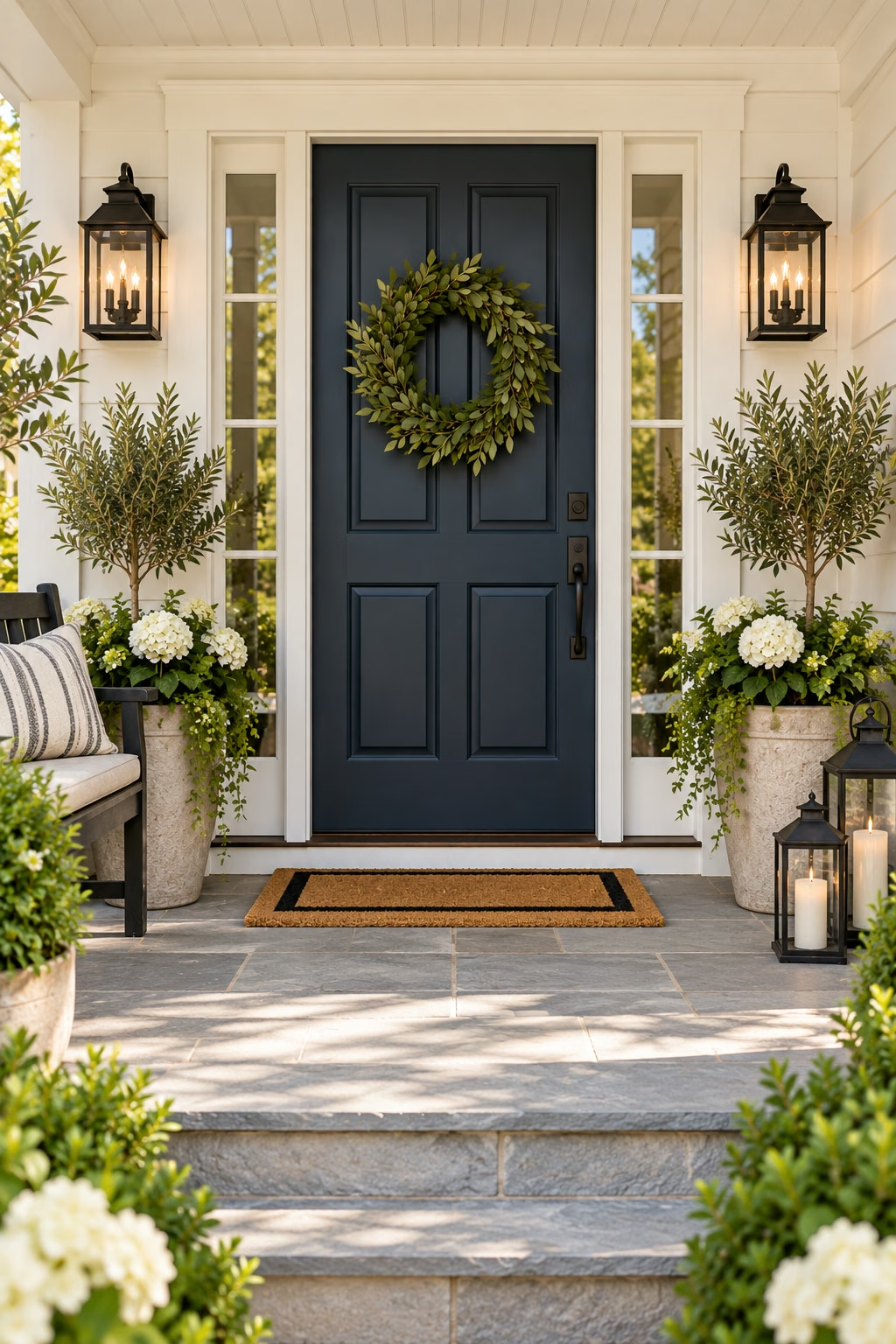
Before adding more decorations, take a look at the porch lighting. Does the fixture suit the size and style of the doorway?
A pair of simple outdoor sconces can frame a wide entrance, while a hanging lantern-style pendant can become the main detail on a taller covered porch.
Choose fixtures intended for their actual outdoor exposure. Have a qualified electrician handle hardwired changes, and aim for useful light at the entrance rather than decoration alone.
16. Add a Lantern to the Seating Area
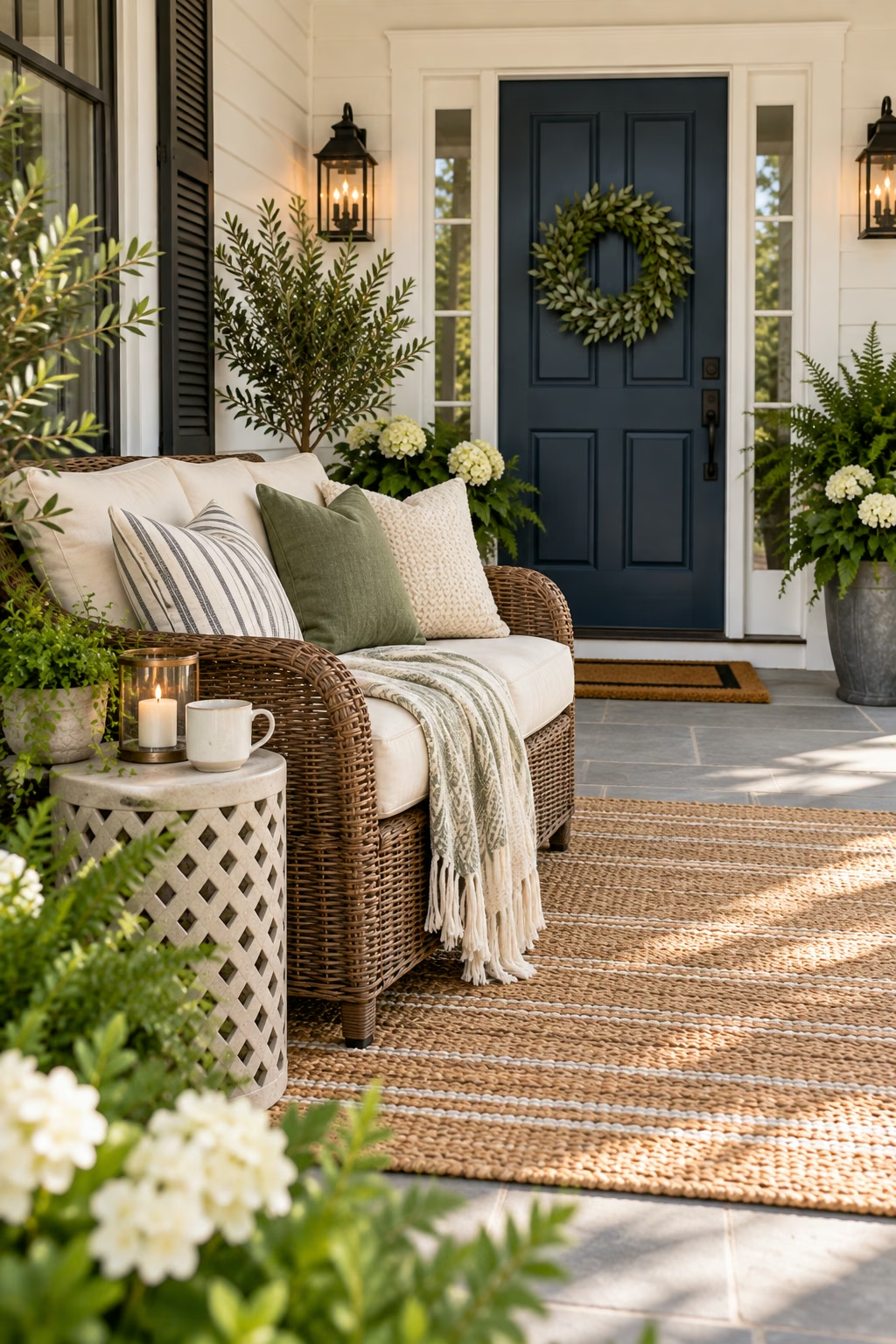
A lantern gives a porch another point of interest without requiring a large decorating project.
Place one on a side table or tuck a pair beside a bench, outside the walking route. Black metal works well with simple contemporary furniture, while a warm metal finish offers a different mood.
For candle-style lighting, choose a flameless candle rated for the conditions where it will sit. Keep the arrangement small enough that moving it for cleaning doesn’t become a chore.
17. Refresh the Seating You Already Own
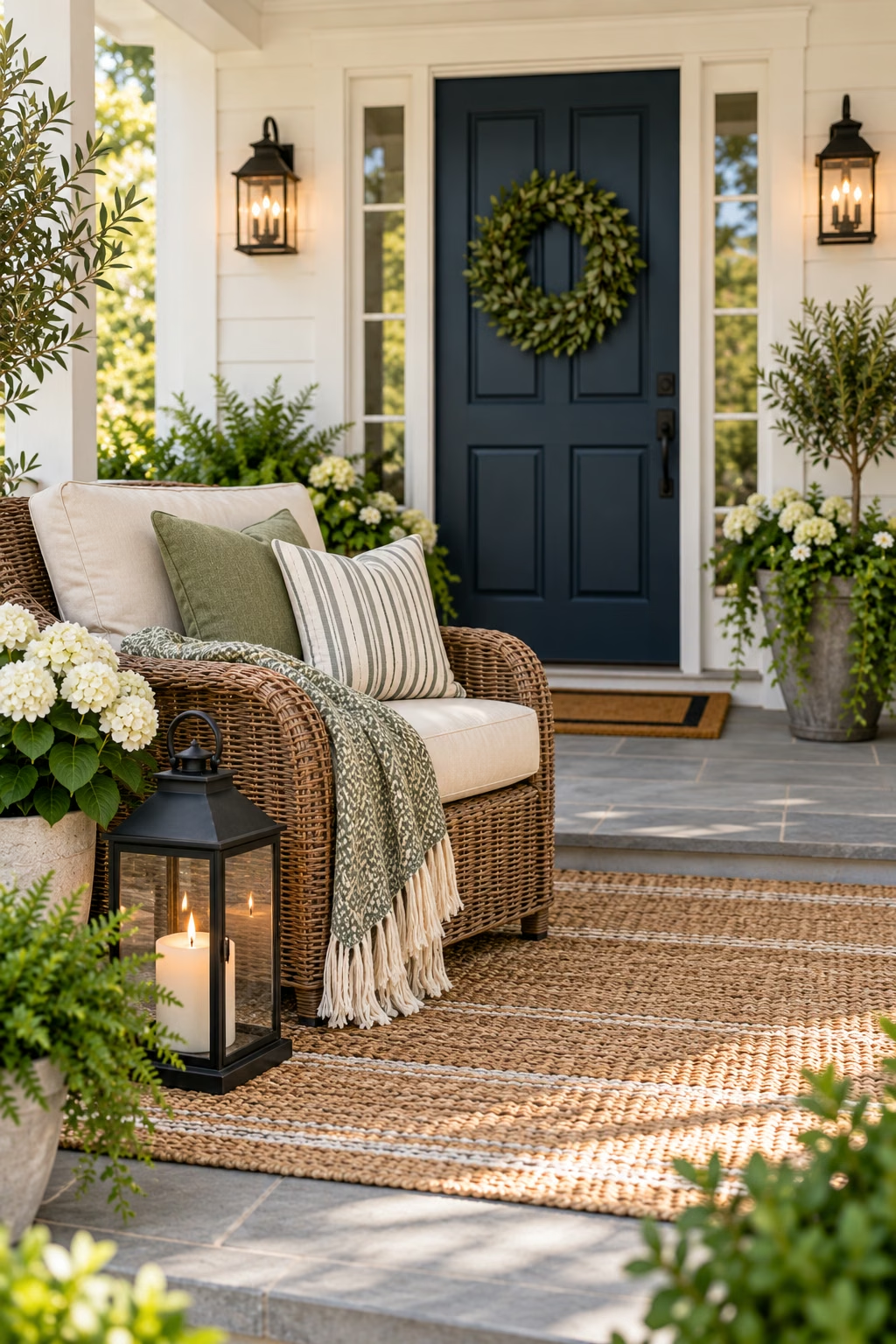
Your porch may need a new color combination more than it needs new furniture.
Start with sound pieces that still feel comfortable. A different cushion cover or an appropriate refinishing treatment may be enough to change the look.
Try deep green seating with cream cushions, or keep the furniture neutral and introduce a brighter pillow. Before repainting, check the furniture material and follow the coating manufacturer’s preparation instructions. Treat paint as a finish, not a way to hide damage.
18. Paint the Ceiling a Soft Blue
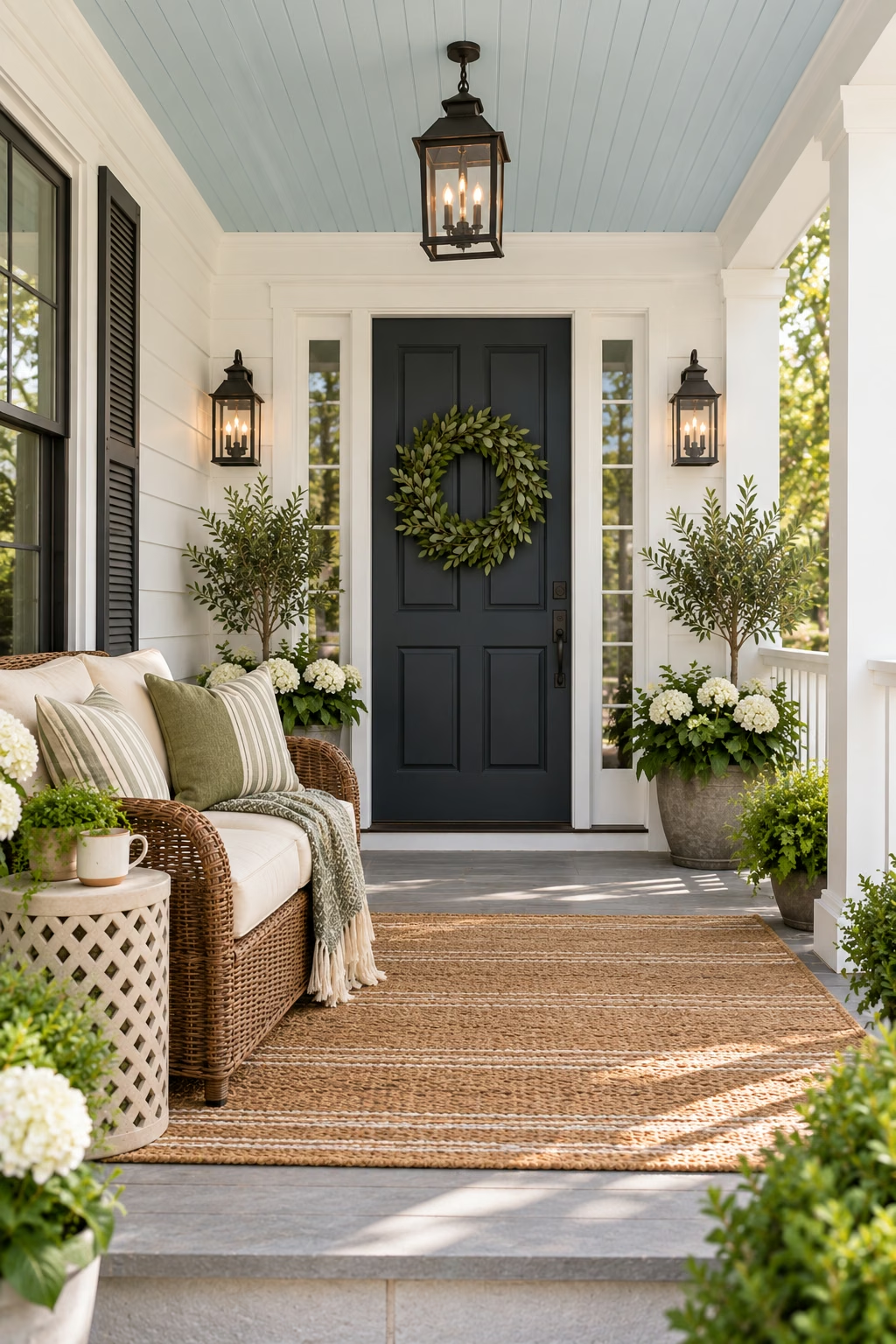
A pale blue ceiling adds color without taking up any space.
Try a muted blue-green or a soft gray-blue alongside white trim and natural wood. Keep the other large surfaces quiet so the ceiling feels like a gentle detail rather than another competing color.
Test the shade overhead before painting the whole ceiling. A color viewed above you can look different from the same sample held against a wall.
19. Bring Texture Overhead with Wood or Beadboard
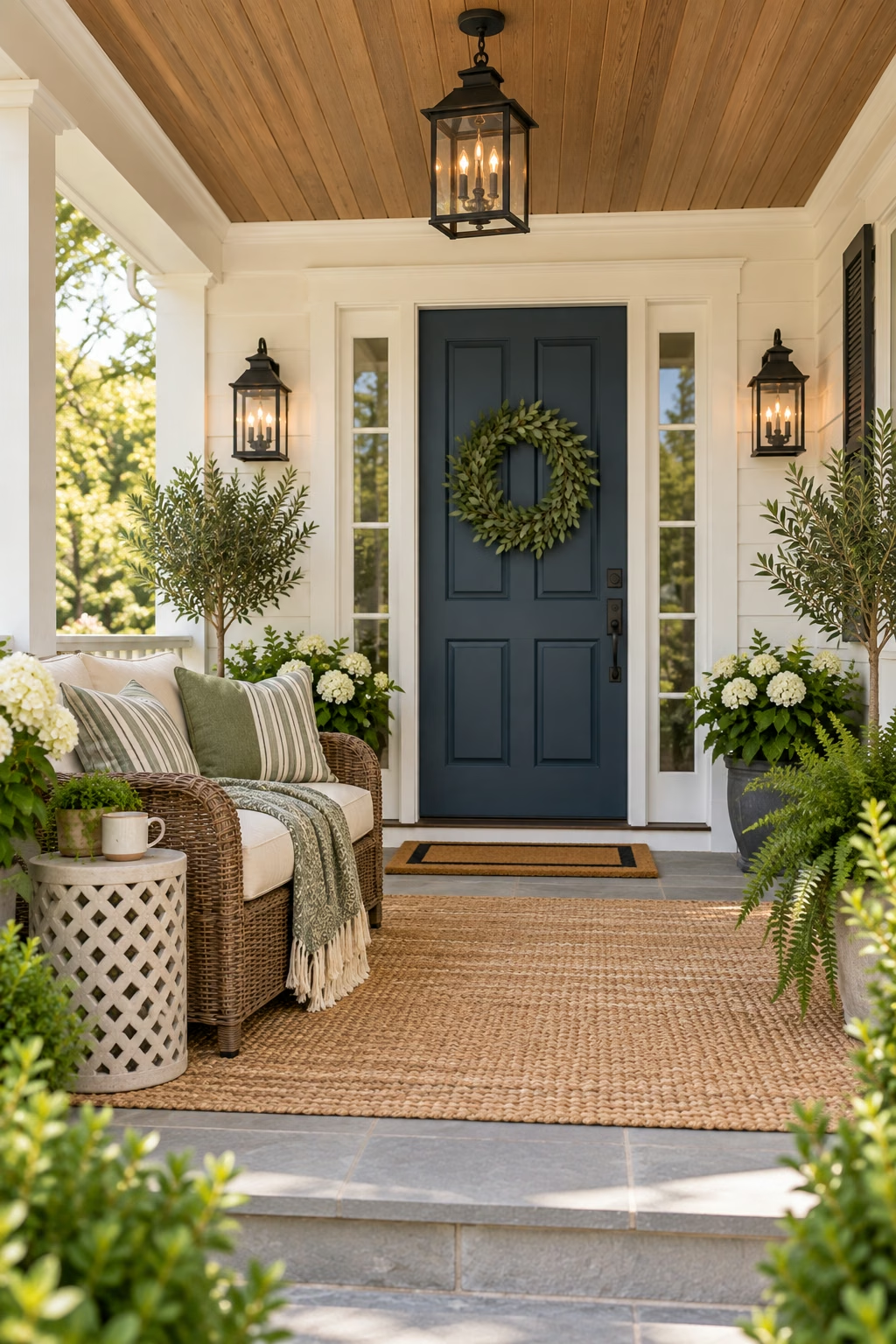
A plain porch ceiling is another place to introduce texture.
White beadboard suits a light, traditional scheme, while natural-looking wood can complement simple furniture and darker exterior colors. Choose one direction for the ceiling rather than combining several competing finishes.
This is more involved than changing accessories. Ask a qualified installer about materials suitable for the porch’s exposure and how the work will affect existing ventilation, lighting, and access points.
20. Give the Floor a Painted Pattern
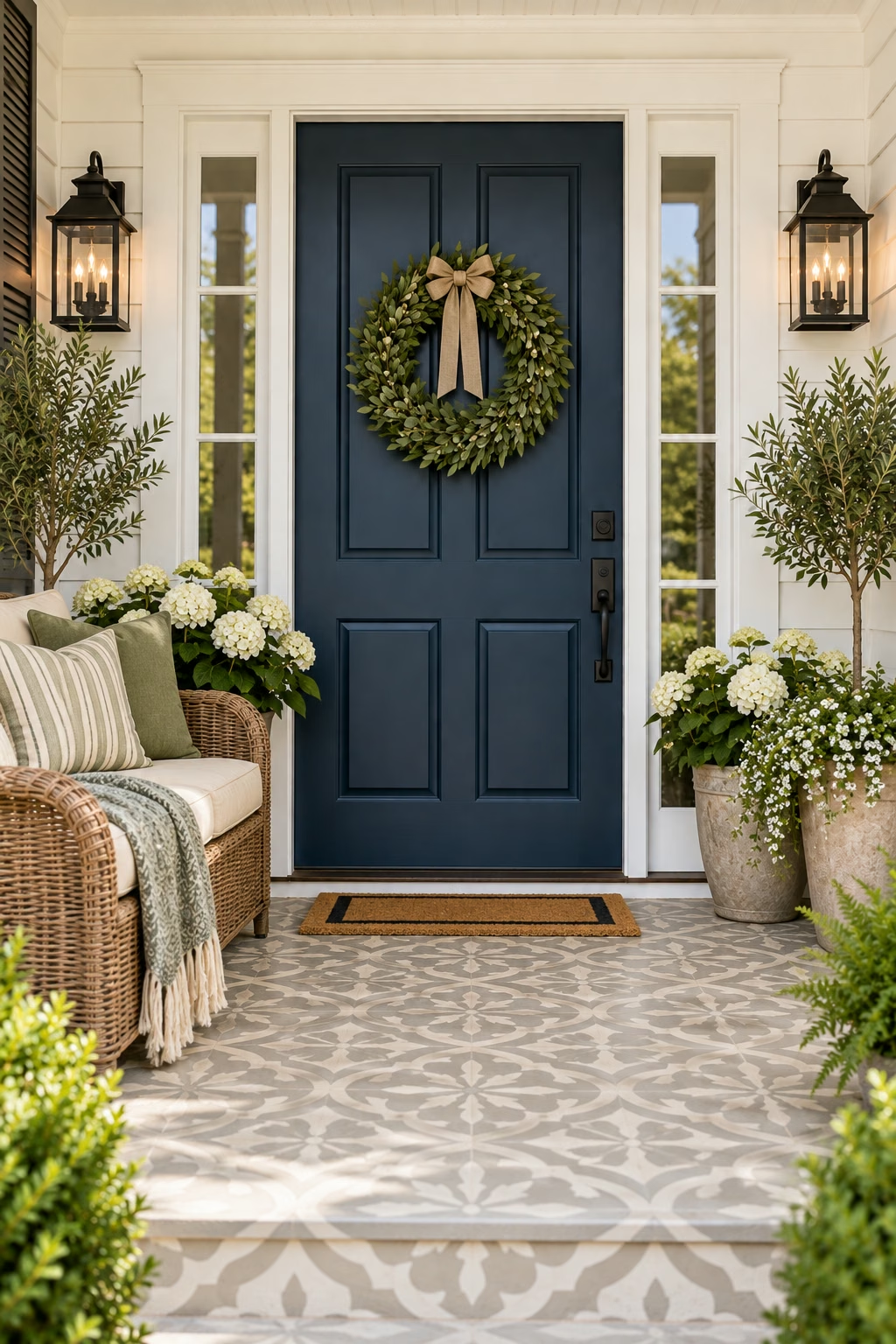
A stenciled design can make the floor the main decorative feature of a small porch.
Try a restrained two-color pattern, then keep the furniture and containers simple. A soft gray-and-cream combination is one option when you’d rather avoid a strong contrast.
Check that the coating is suitable for your actual floor material and exterior foot traffic. Preparation, drying, and curing requirements matter. Follow the product instructions rather than assuming a homeowner’s project timeline will work for your surface and weather.
21. Soften One Side with Outdoor Curtains
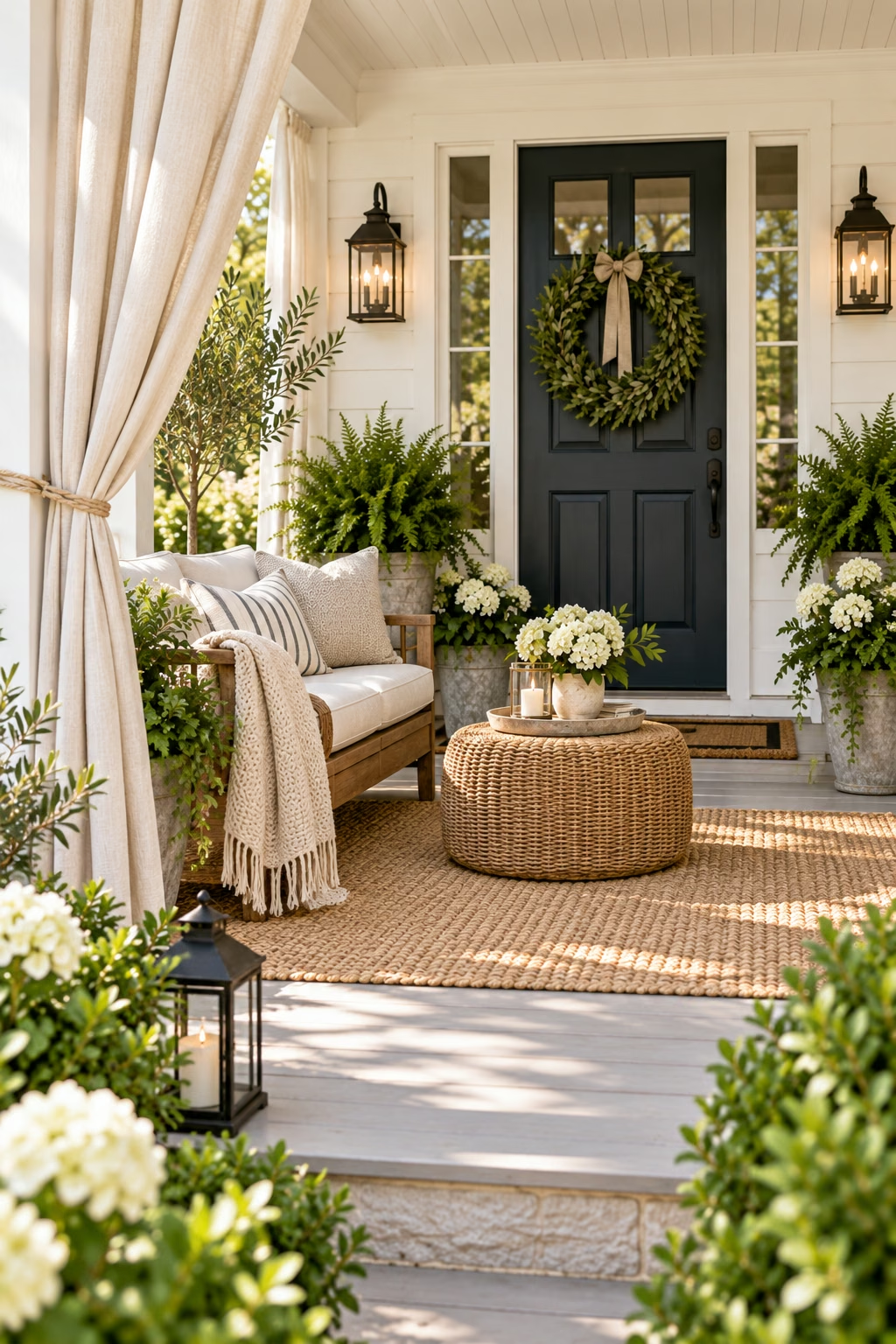
Outdoor curtains can make a seating corner feel more sheltered without enclosing the entire porch.
Try a pair of plain panels on the side facing a neighboring home or afternoon sun. Keep them tied back when they aren’t needed so the entrance still feels open.
Use outdoor-suitable fabric and securely mounted hardware. Plan for wind before installing them, including how you’ll secure or remove the panels during rough weather. They should never hang across the doorway or main route outside.
22. Add a Lattice Screen Beside the Seating
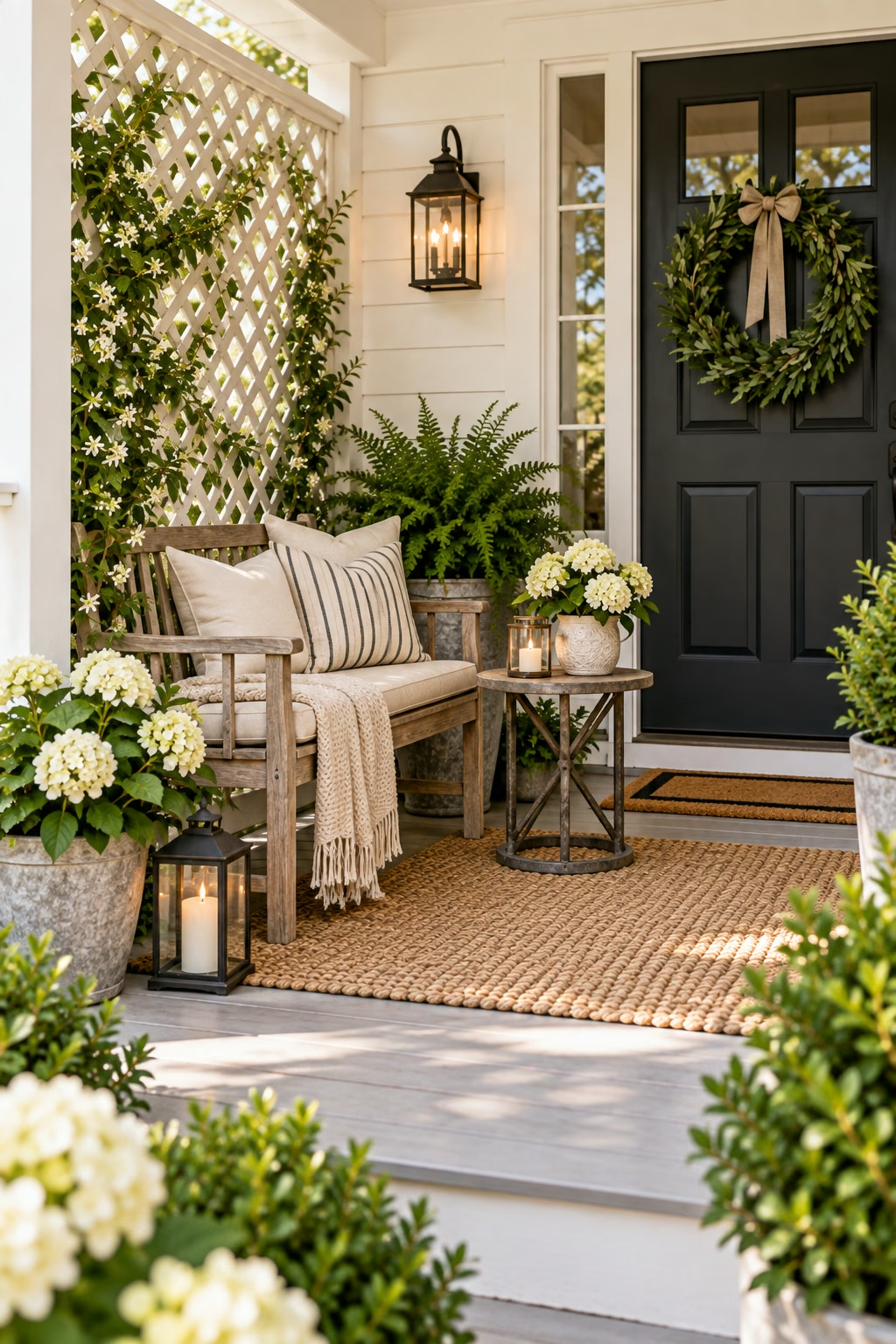
A lattice screen can give one end of the porch a little separation from the surroundings.
Place it beside the seating area rather than across the front of the house. Paint it to coordinate with the trim, or use a finish that relates to the furniture.
You can enjoy the pattern on its own or pair it with a suitable climbing plant. Have the screen secured appropriately for its position, and don’t treat a decorative screen as a replacement for a required protective railing.
23. Divide a Long Porch into Useful Areas
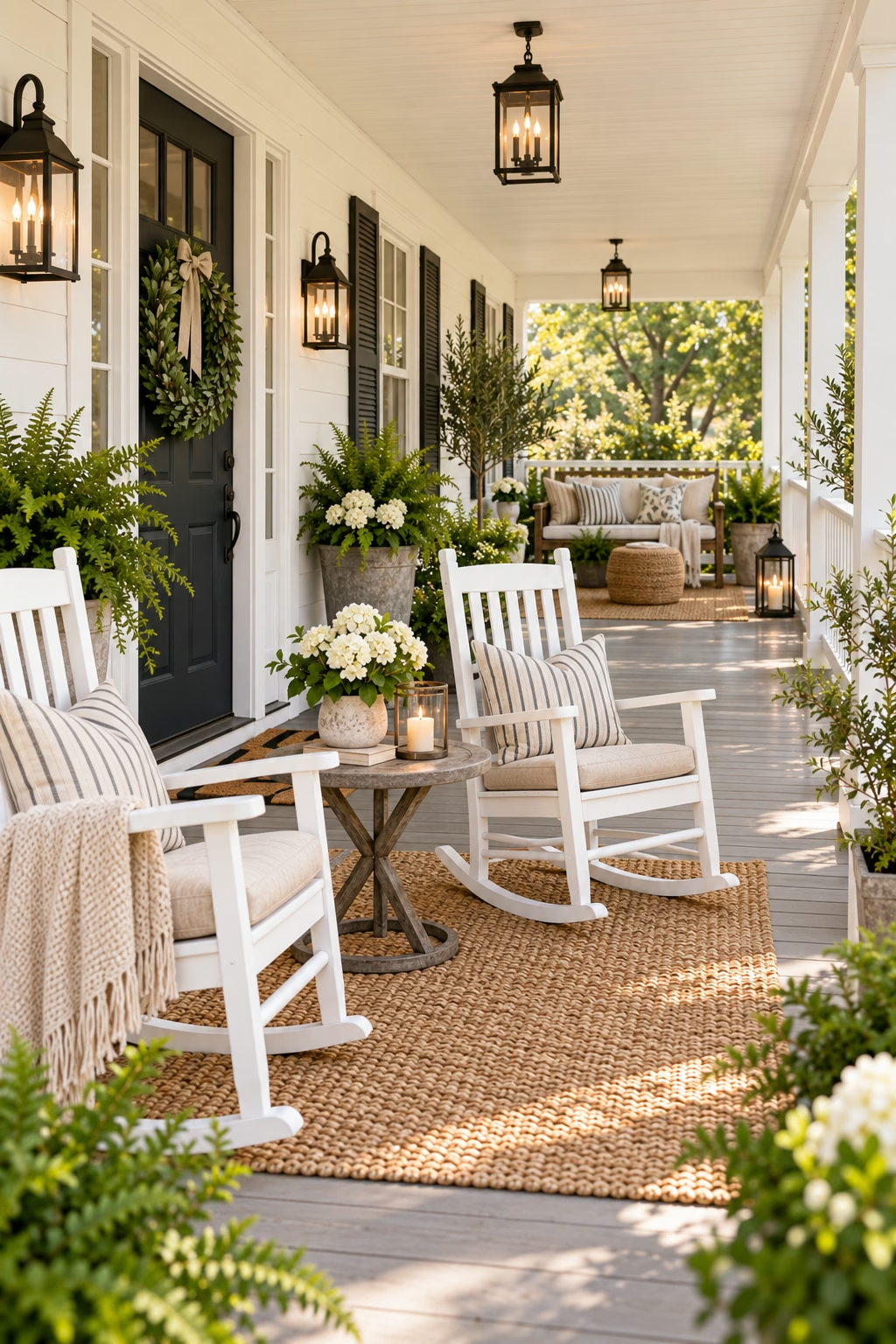
A long porch doesn’t need one continuous row of furniture.
Give each end a simple purpose. Put a coffee table and chairs near one corner, then create a quieter reading spot farther along. Keep the space directly in front of the door open.
Repeat a cushion color or furniture finish across both areas so they feel related. You can define the spaces through arrangement alone; extra screens and dividers aren’t always necessary.
24. Try a Relaxed Blue-and-White Coastal Look
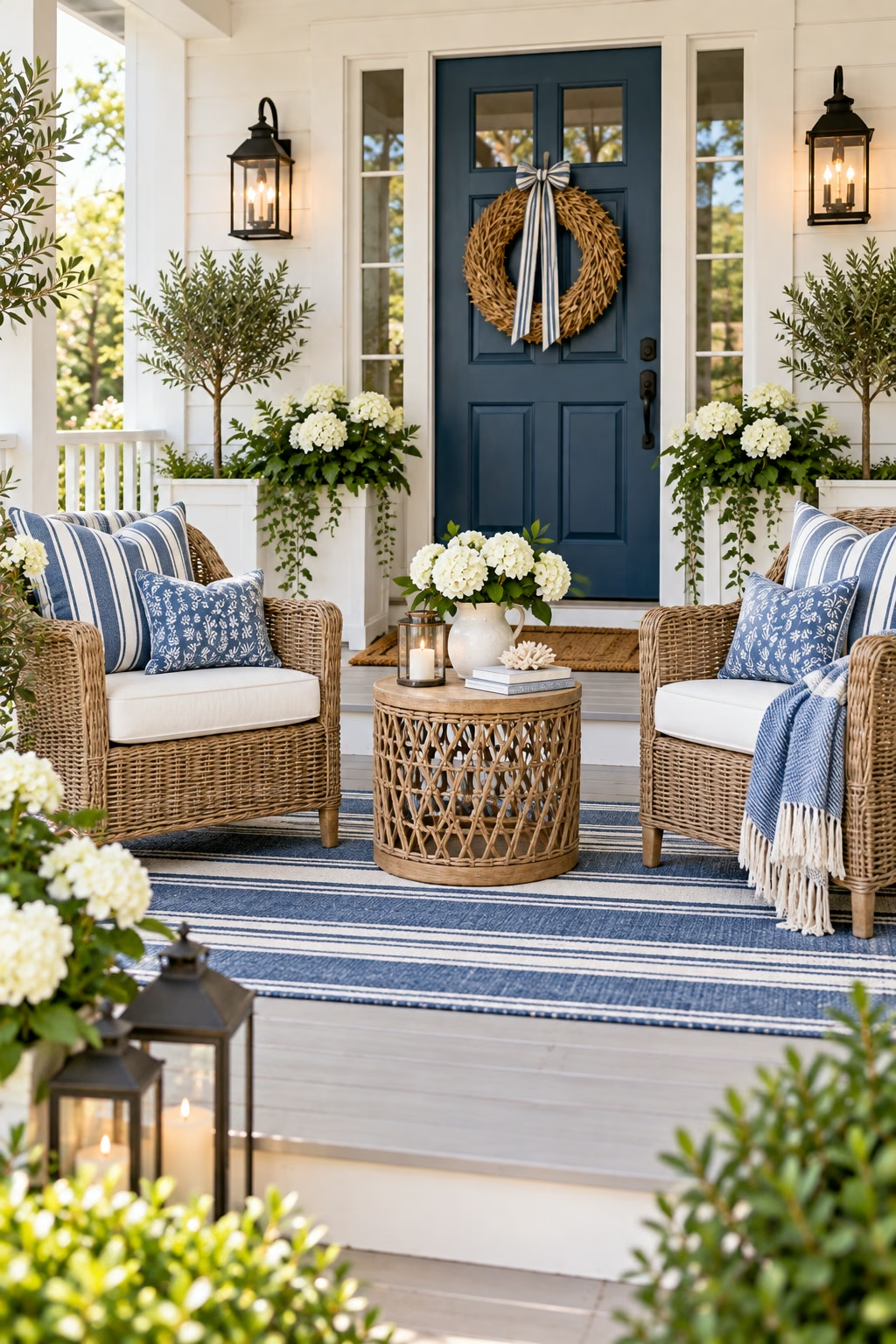
A coastal-style porch can be as simple as blue-and-white textiles paired with warm wood.
Try striped cushions on a wood bench, or a blue outdoor rug beneath neutral chairs. Add plain white containers and let the colors do the work.
Keep the theme subtle rather than filling the porch with nautical ornaments. The combination is easy to adapt: navy for stronger contrast, softer blue for a quieter look, and just enough pattern to keep the arrangement interesting.
25. Give the Porch a Modern Farmhouse Look
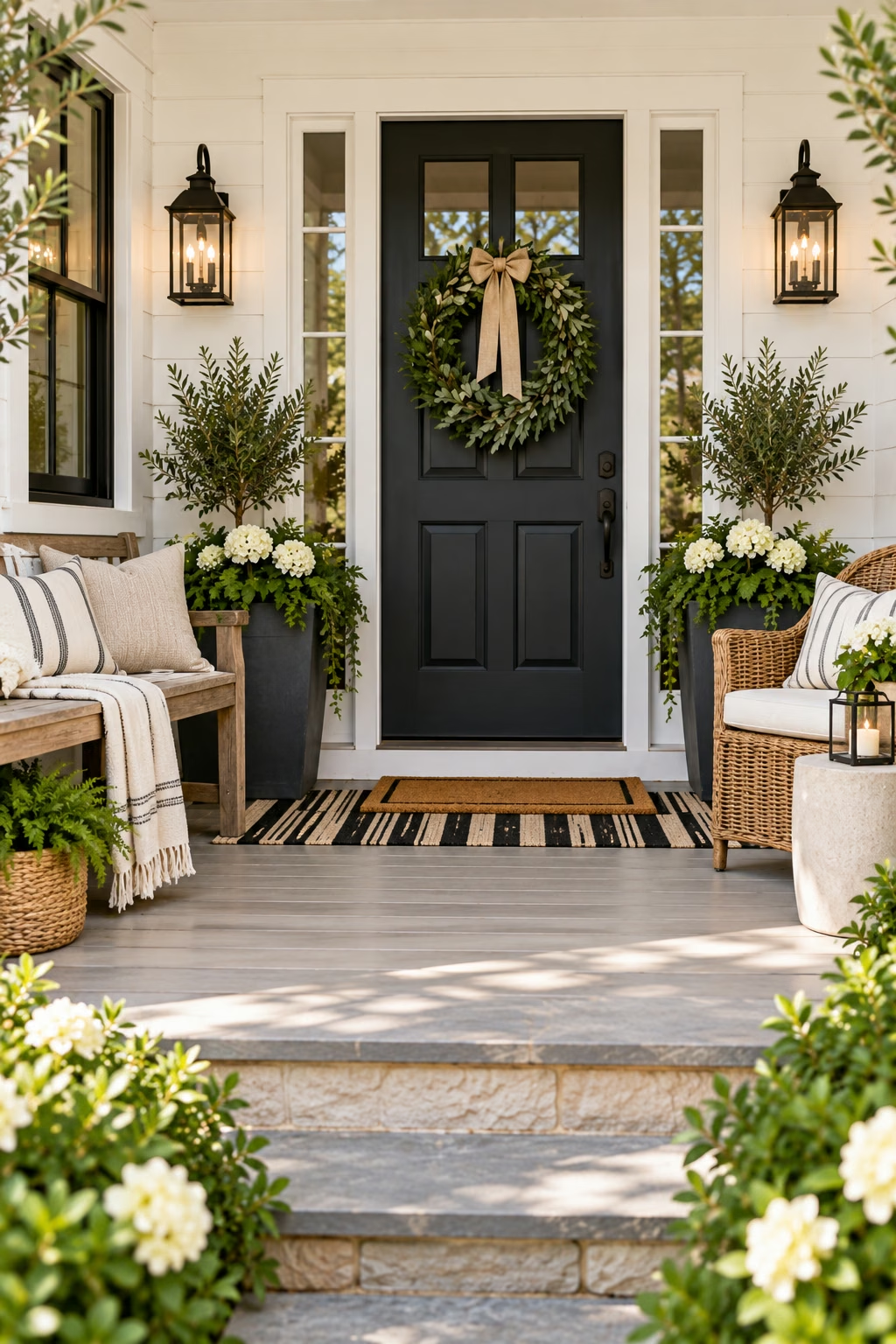
For a modern farmhouse-inspired porch, combine simple shapes with a few warm, traditional details.
Try a wood bench, black lantern-style lighting, plain cushions, and uncomplicated planters. Work with the columns, rails, and siding you already have rather than adding decorative features that compete with them.
Leave some open space between the pieces. This look doesn’t require a collection of signs and themed accessories; the materials and proportions can carry the style.
26. Plant a Cottage-Style Border Beside the Porch
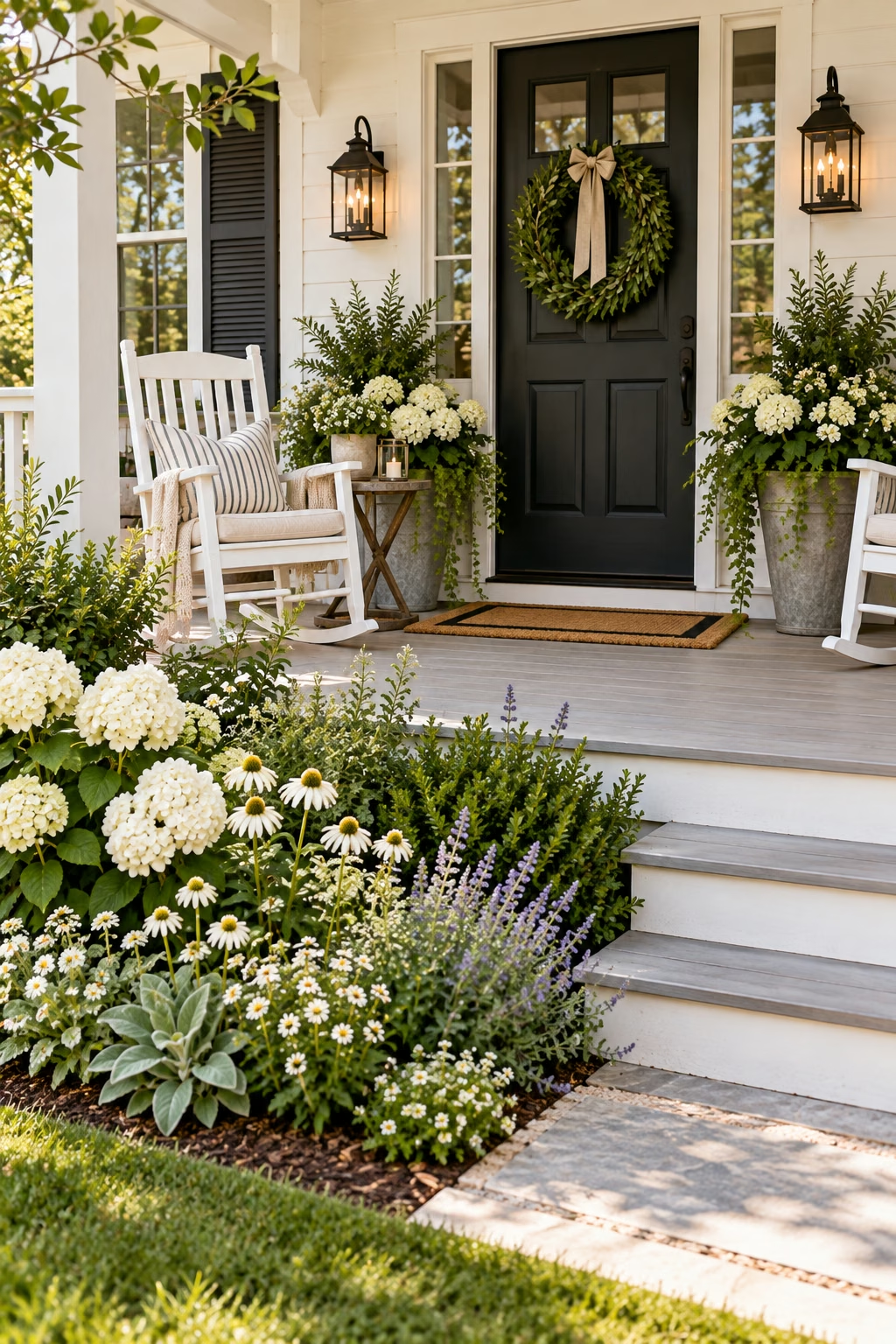
Your porch decorating doesn’t have to stop at its edge.
A planted border beside the steps or along the front can connect the seating area with the garden. Repeat a few flower colors instead of choosing a different color for every plant.
Keep taller growth away from the entrance and allow room for plants to reach their mature size. Choose varieties for your local conditions. For a simple starting point, carry one flower color from the garden into a pot beside the door.
27. Keep a Tiny Front Stoop Simple
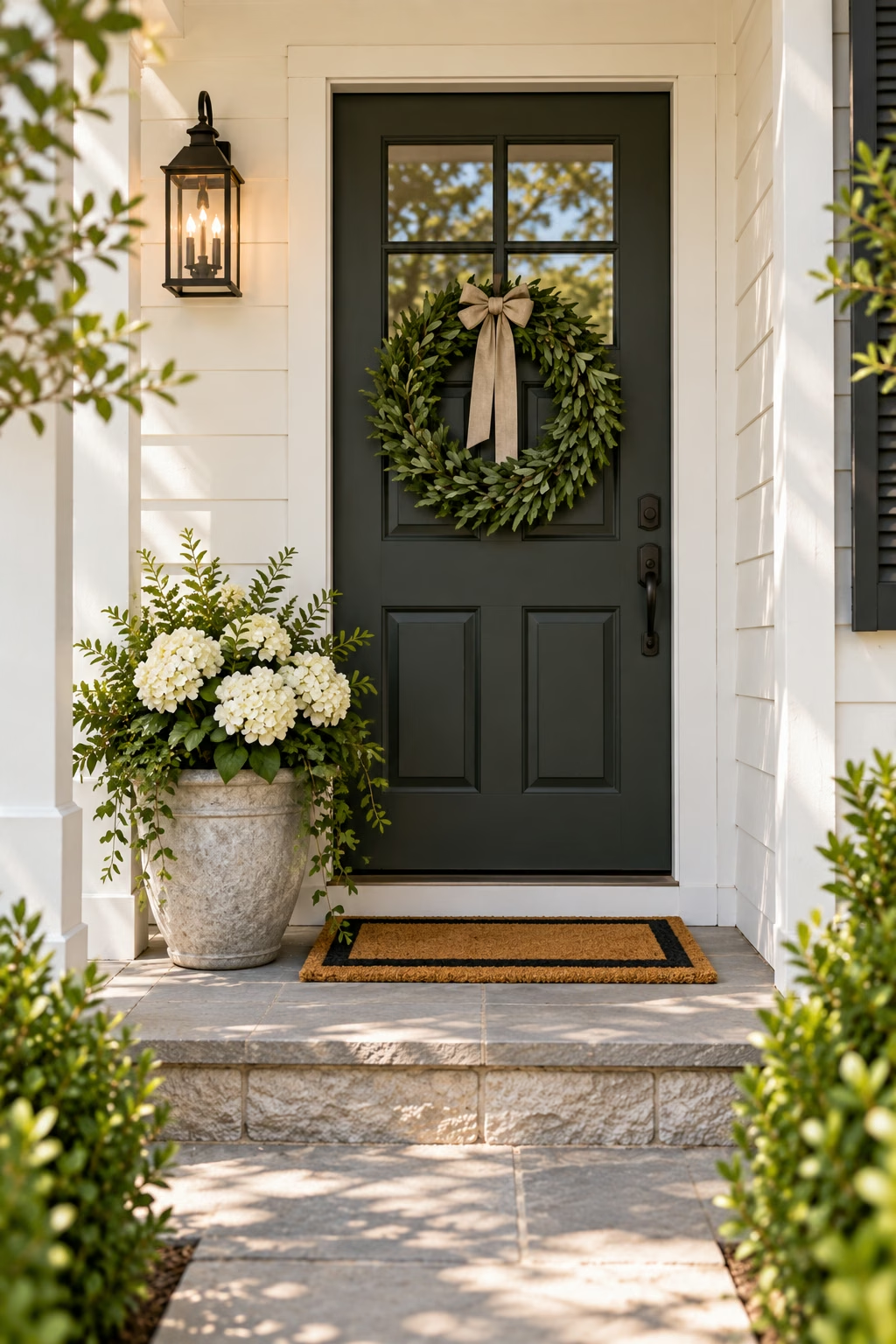
A tiny front stoop doesn’t need furniture to look finished.
Start with a clean doorway, a well-fitting mat, and one planter positioned where it won’t interfere with entering the house. Add a wreath or door color you love, then stop and look at the result before buying anything else.
This is especially useful when space is barely wider than the door. Put the decorative attention on the vertical surfaces and leave the standing area open. A clear entrance is more useful than a crowded miniature seating area.
28. Make the Door Wreath the Main Decoration
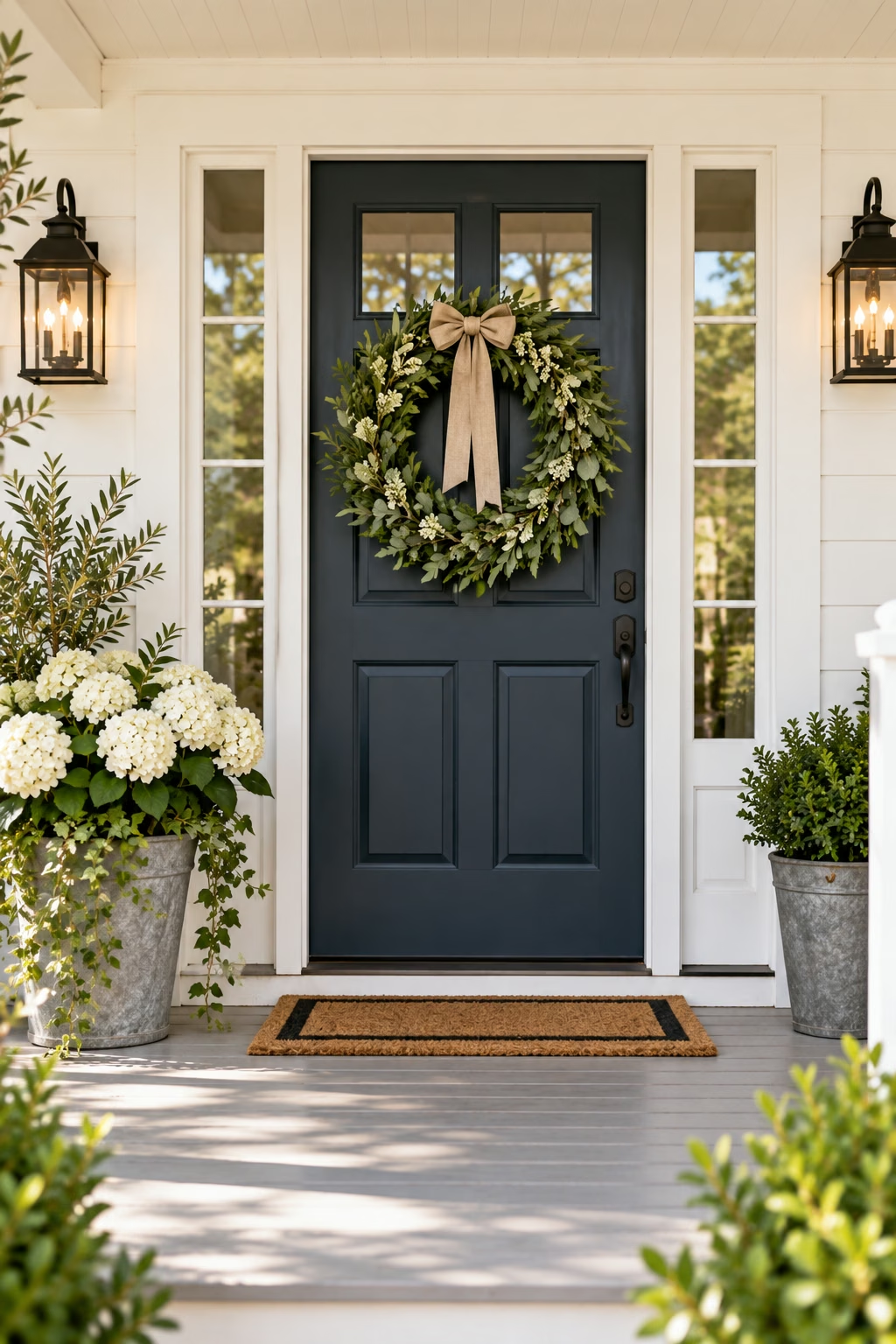
A wreath is a good place to add personality when the rest of the porch is simple.
Choose one that works with your door color and surrounding plants. Try a leafy green wreath for a restrained look, or introduce flowers that repeat a color already used in your containers.
Check the fit before hanging it. It shouldn’t cover the peephole, interfere with the handle, or prevent a storm door from closing. With the wreath as the main decoration, the rest of the entrance can stay pleasantly uncluttered.
29. Coordinate the House Numbers and Door Hardware
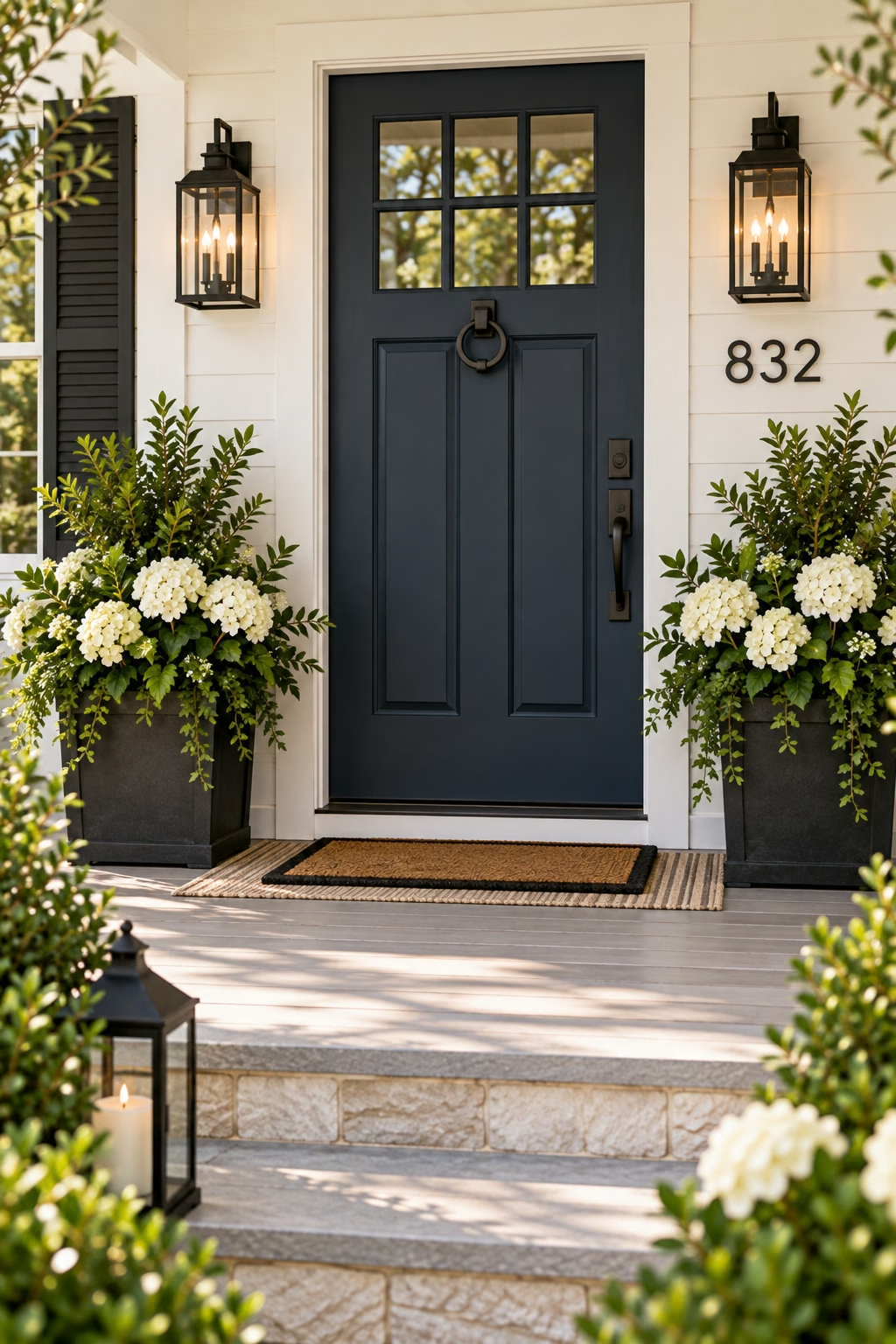
Small details are worth checking before you add another planter.
Look at the house numbers, door handle, knocker, and nearby light. They don’t have to match perfectly, but choosing finishes that work together can give the entrance a more deliberate look.
Try clear black numbers against a light wall, or a warm metal finish beside a dark door. Keep the numbers visible rather than hiding them behind foliage. Then remove any worn or unnecessary accessories that make the doorway feel busy.
30. Keep a Simple Base and Change the Seasonal Details
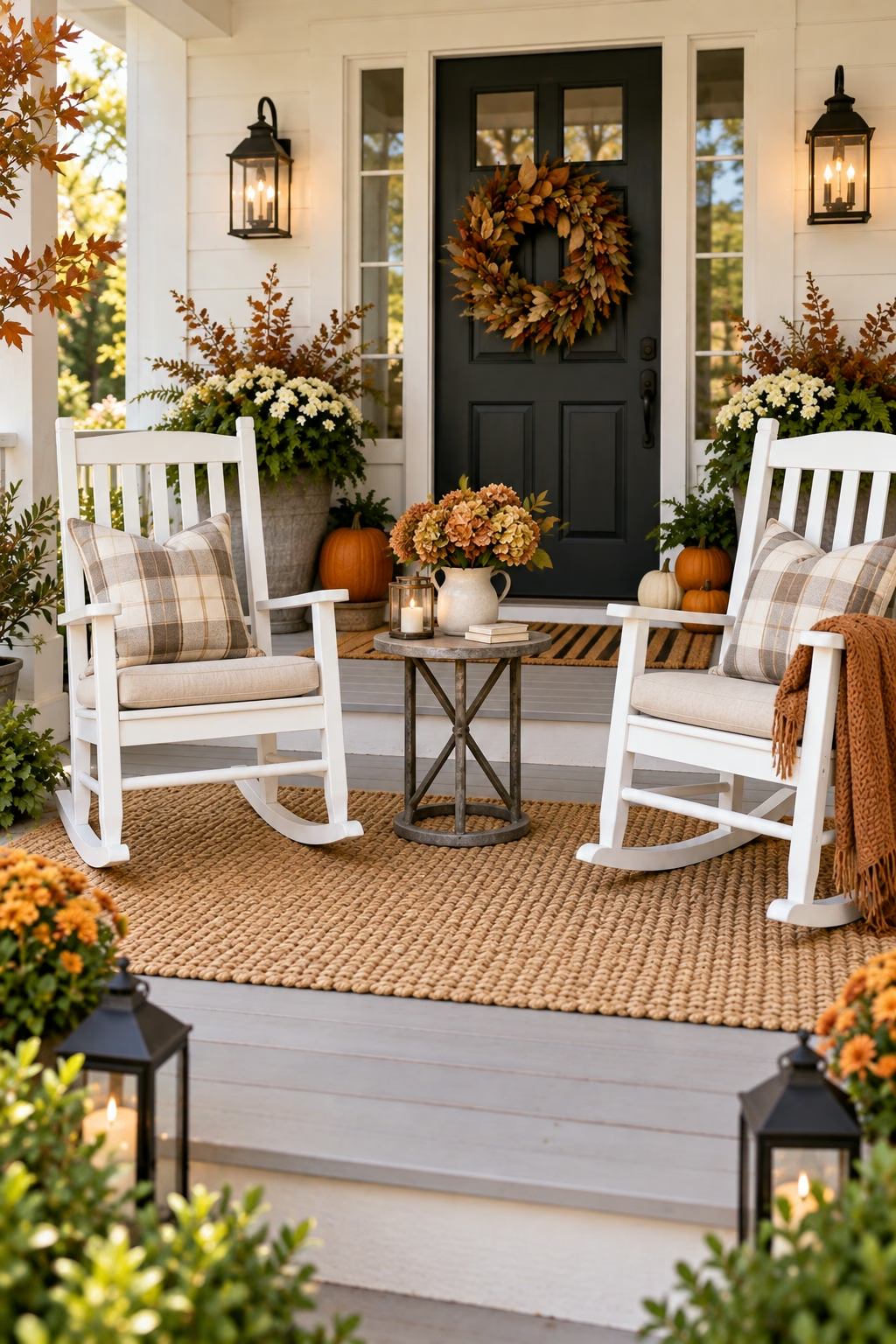
You don’t need to redecorate the entire porch every season.
Keep the main furniture and containers in place, then change a few smaller elements. Try fresh flowers in spring, a different cushion cover for summer, and a small pumpkin arrangement in fall.
For a coordinated result, repeat colors already used around the entrance. Give seasonal decorations a defined spot beside a bench or planter instead of spreading them across the steps. The porch should remain easy to use, even when it’s dressed for a celebration.
Start with the Change Your Porch Needs Most
Before choosing anything new, stand at the entrance and decide what feels missing. Is there nowhere comfortable to sit? Does the doorway need color? Are too many small decorations taking up the space?
Start with that one problem.
The most useful front porch ideas are the ones that make coming home feel better while keeping the entrance comfortable, practical, and easy to care for.