23 Front Yard Rock Landscaping Ideas for Better Curb Appeal
One scruffy strip beside the driveway can make the whole front yard feel unfinished. These front yard rock landscaping ideas show how to give that space a purpose, whether you want a curved flower bed, a welcoming walkway, or a small garden full of texture.
The appeal is in the combination: smooth river stones beside leafy plants, a weathered boulder tucked into flowers, or a simple stone path that makes the front door feel more inviting. There is plenty of room for color and greenery.
You can start with one corner. Choose a stone that works with your home, give it a clear role, and add plants that suit the space. The ideas below range from small decorative borders to larger projects for sloping yards.
Before choosing plants, check your sunlight, soil drainage, climate, and the space they will need when mature. Rock gardens also need weeding and plant care, so choose a size you can comfortably maintain.
1. Give Flower Beds a Curving River Rock Border
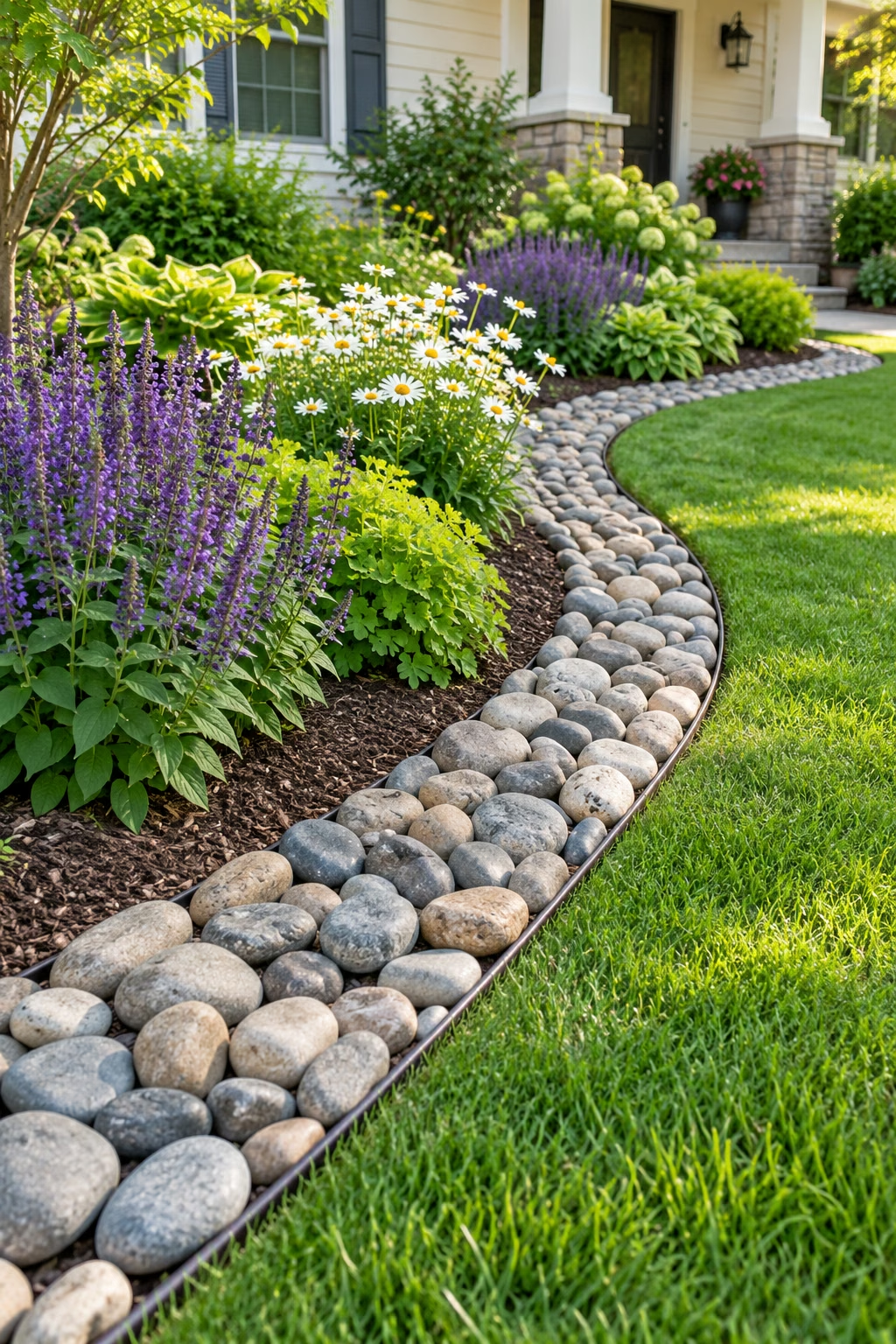
If your flowers look good but the bed feels messy around the edges, start here. A curved band of river rock gives the planting a clear outline and introduces a softer shape beside straight sidewalks or driveways.
Lay a garden hose along the proposed edge and look at it from the street. Aim for a broad, easy curve. Then choose stones in a related range of colors, such as gray, tan, and muted brown, so the border feels connected to the house.
Contain the loose stones with a discreet edge where they meet the lawn or path. This helps stop them from gradually spreading into places where you walk or mow. Keep enough room behind the border for flowers to reach their mature spread.
2. Let a Dry Creek Bed Wind Through the Yard
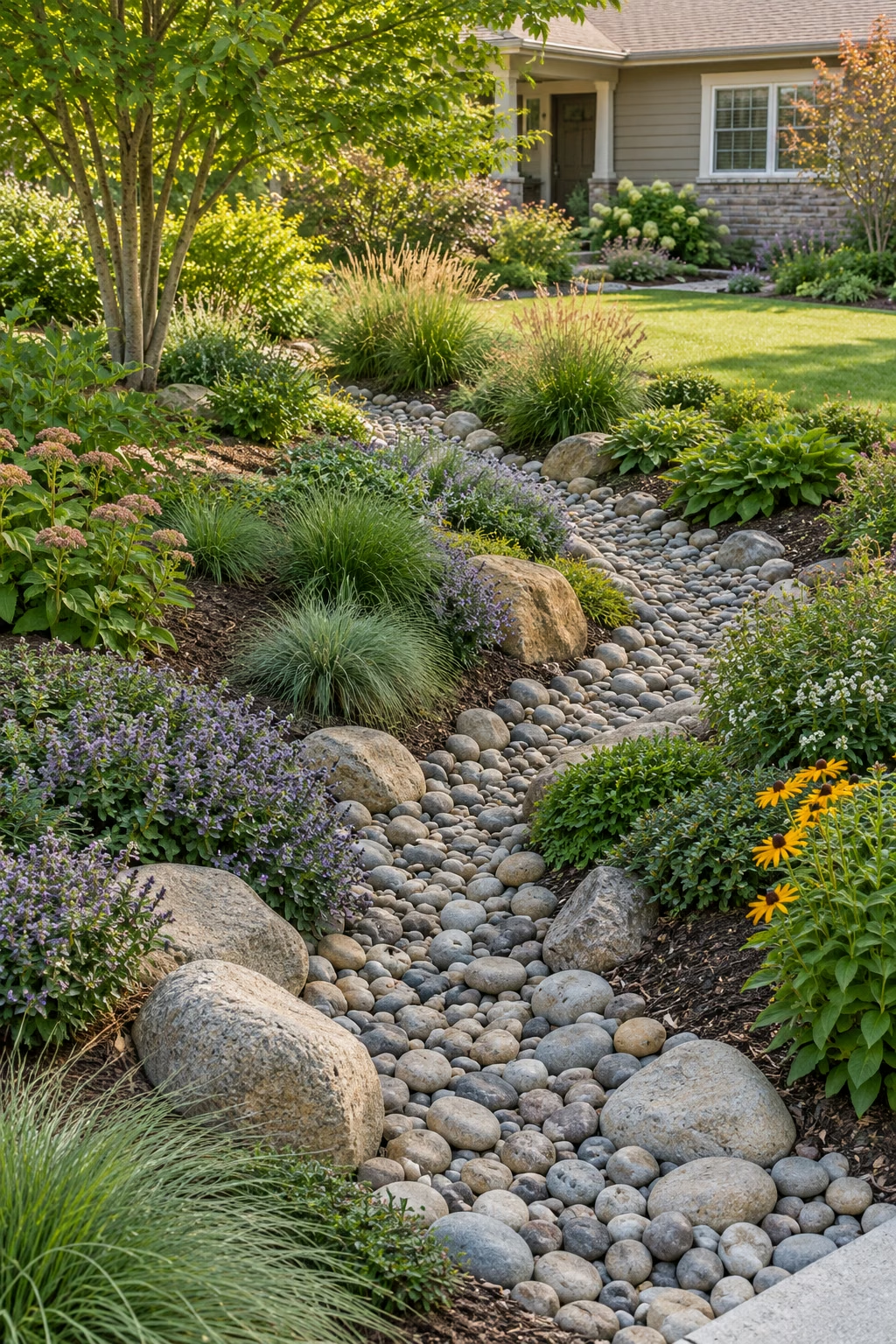
A dry creek bed gives the eye somewhere to travel. Picture a shallow, curving ribbon of river stones moving between planted beds, with a few larger rocks along the bends.
Vary the width slightly and use a mix of stone sizes to suggest a natural channel. Keep some stretches open and let plants soften the banks. This works especially well when the shape follows the yard’s existing contours.
Decide whether the creek is decorative or will carry runoff. A working channel needs the right slope, enough room for the expected water, and a safe place for it to go. Metro Blooms documents a real project that connects roof runoff to a rain garden through a dry creek. That connection is a planned drainage system; the stones alone do not create one.
3. Create a Welcoming Flagstone Front Walk
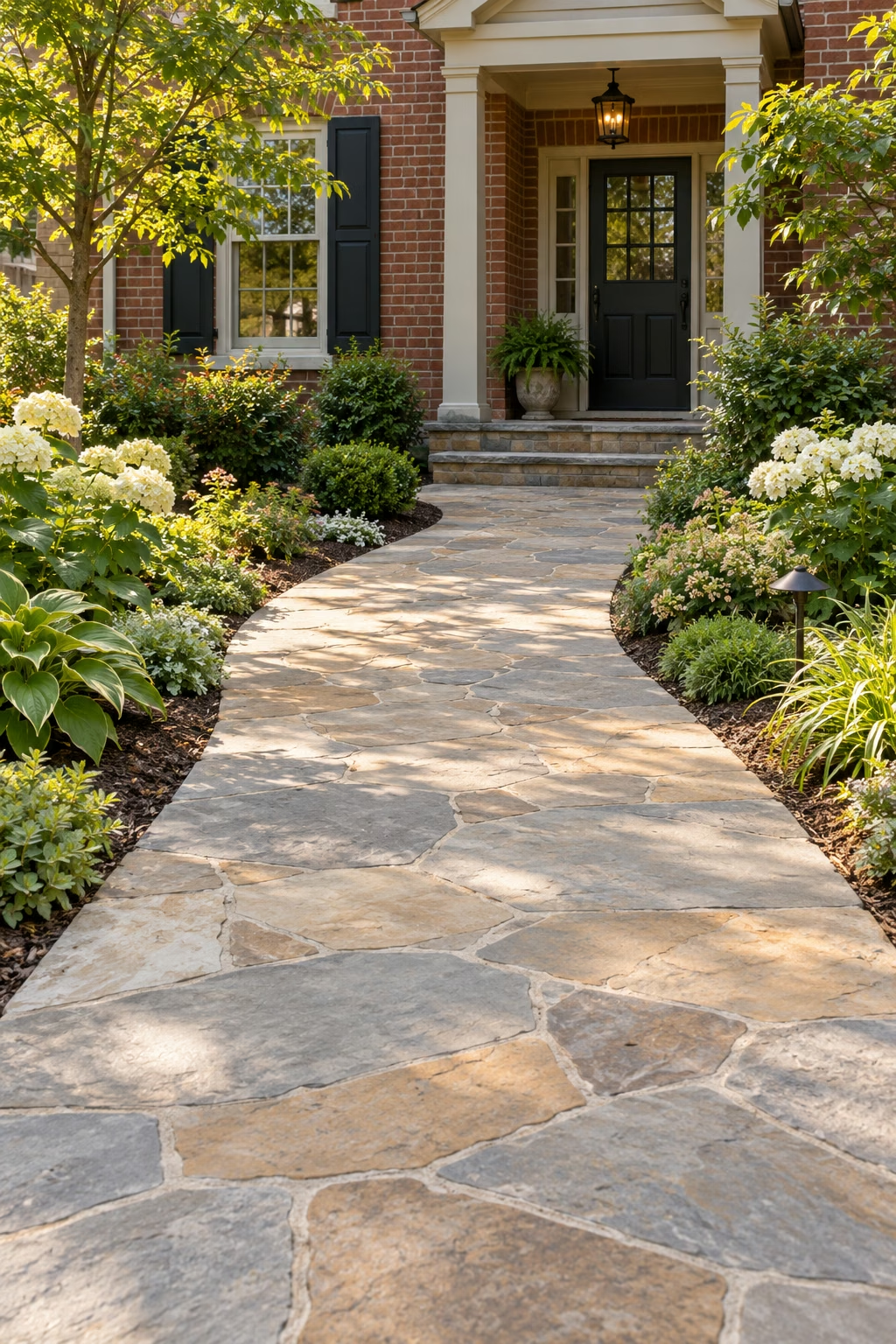
The walk to your front door is a good place to spend your design effort. Broad flagstones give that everyday route a more individual look, whether you choose irregular shapes for a cottage garden or cut stone for a more formal entrance.
Pick a color that relates to something already on the house, such as the brick, porch steps, or stone trim. Keep the route direct enough to be useful and give people room to walk comfortably while carrying bags.
For the main entrance, have the stones securely installed with an even walking surface and carefully finished joints. Keep taller planting back from the edge. A generous main walk gives the garden around it a clear framework and makes the entrance feel easier to approach.
4. Set Large Stepping Stones in Gravel
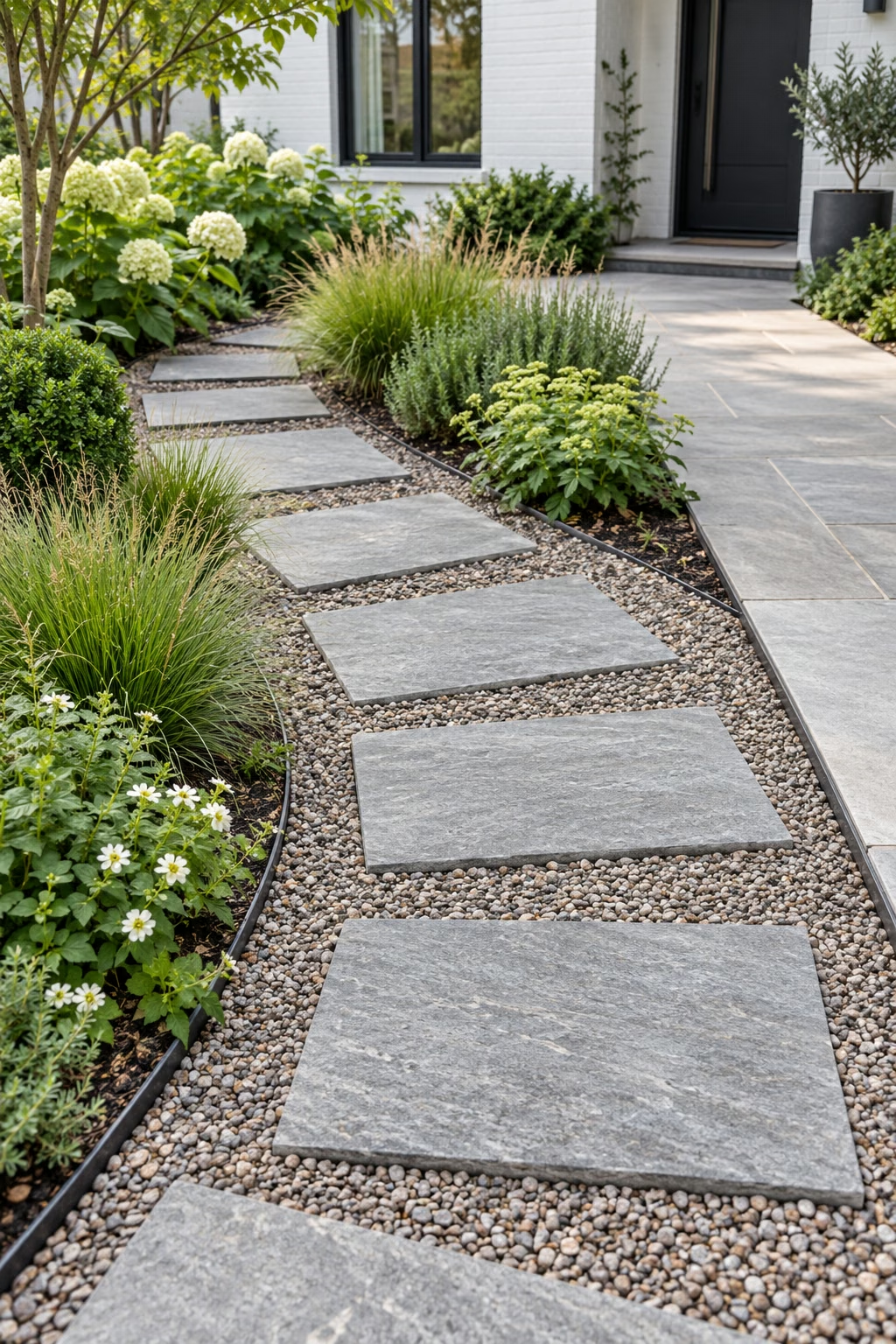
For a short route through a garden bed, separate stone slabs can create a lovely sense of rhythm. Their broad surfaces stand out against smaller gravel, making even a compact front garden feel thoughtfully arranged.
Try a straight arrangement beside a modern house or a gentle curve through informal planting. Lay out the stones first and walk the route several times. The spacing should fit an easy stride, and each slab should sit securely without rocking.
Use this idea for a secondary garden path while keeping a firm, continuous route to the front door. Loose gravel and widely separated slabs can be difficult for people using wheelchairs or walkers. A surface that looks tidy is not necessarily an accessible one.
5. Frame the Entrance With a Few Large Boulders
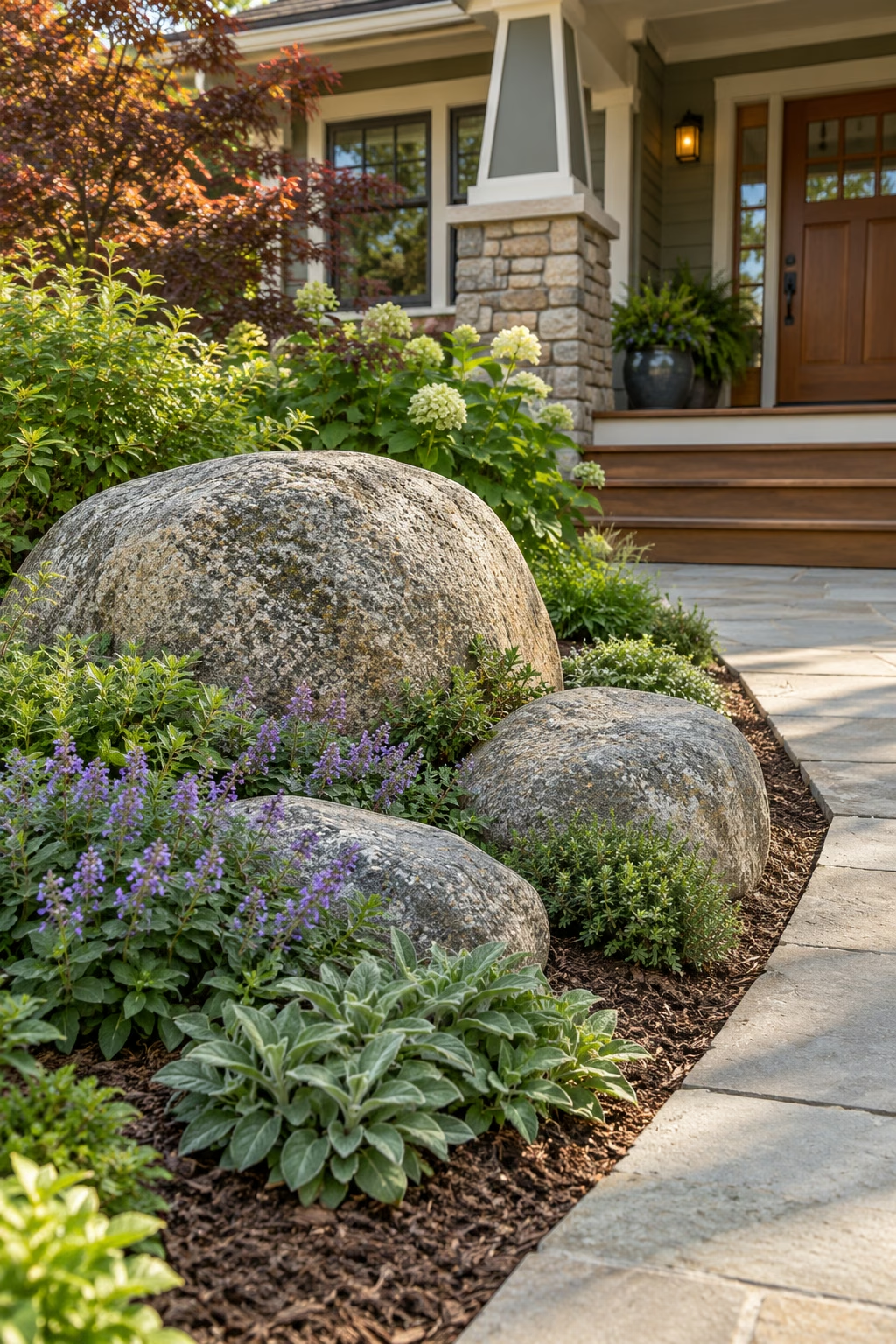
A small group of boulders can give a plain entrance an obvious focal point. Place them within a generous bed to one side of the approach, where they can be seen without narrowing the walk.
Choose rocks with related colors and textures, then vary their size and orientation. One prominent stone and a couple of smaller companions make a useful starting arrangement. View the grouping from the street, the front door, and your main window before settling on the layout.
Partially setting rocks into the ground helps them look as though they belong in the landscape. Leave soil pockets for planting around them. Have heavy boulders positioned and stabilized by a qualified installer, especially anywhere near a slope or pedestrian route.
6. Turn a Small Lawn Corner Into a Planted Gravel Garden
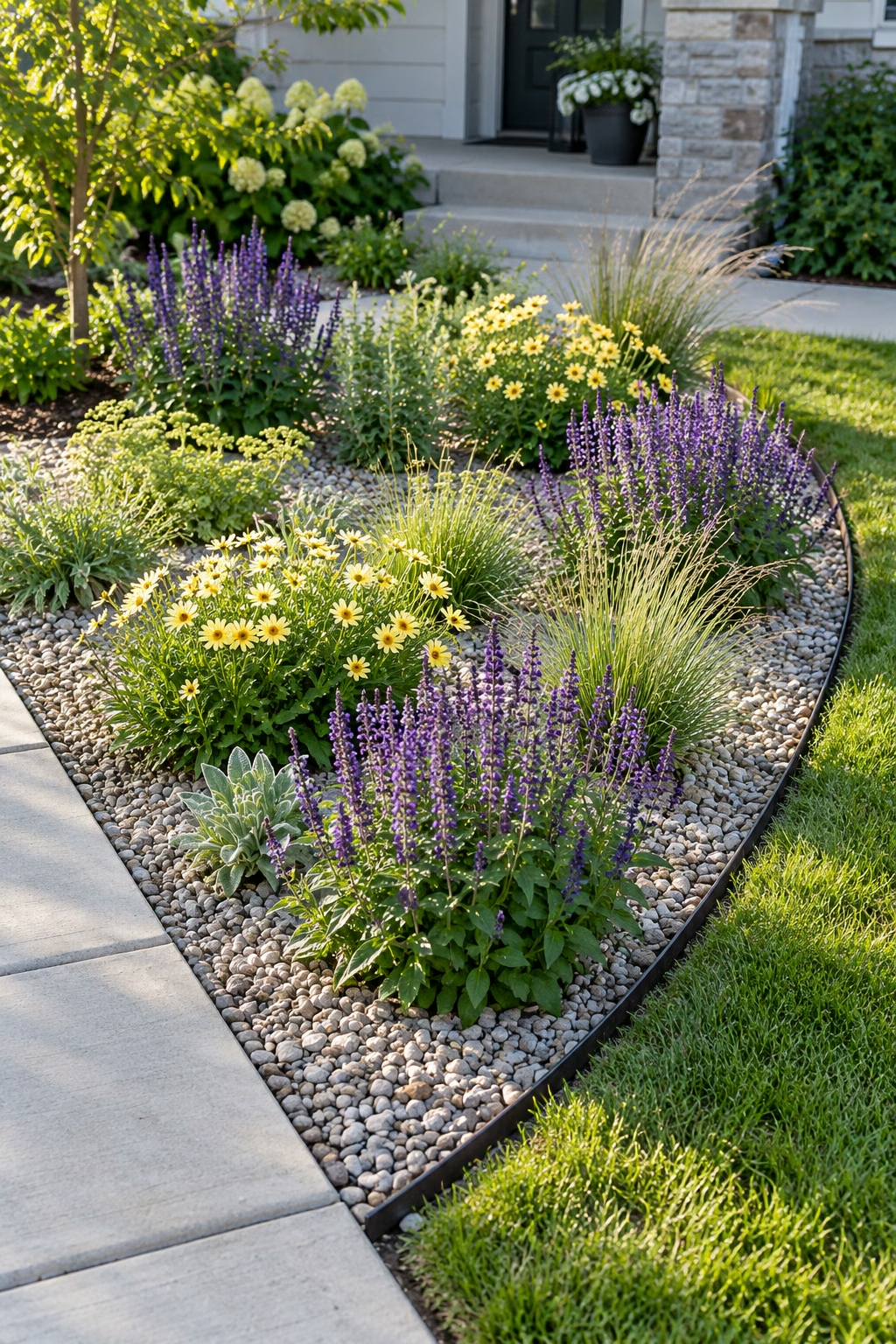
An awkward triangle of grass can become a surprisingly generous garden. Give it a defined edge, prepare a gravel bed suited to your soil, then plant grasses and flowering perennials through it.
Choose a small palette of plants that enjoy your site’s conditions, then repeat them in loose groups. Leave space for the planting to fill out. A successful planted gravel garden depends on preparation, plant selection, and the growing conditions beneath the gravel. Jeff Epping’s documented gardens offer a useful example of this approach.
Choose a well-drained spot clear of muddy runoff. Epping explains that sediment accumulating among the stones can create a home for weeds. Newly planted drought-tolerant plants also need water while they establish, so include watering in your first-season plan.
7. Soften Stone With Ornamental Grasses
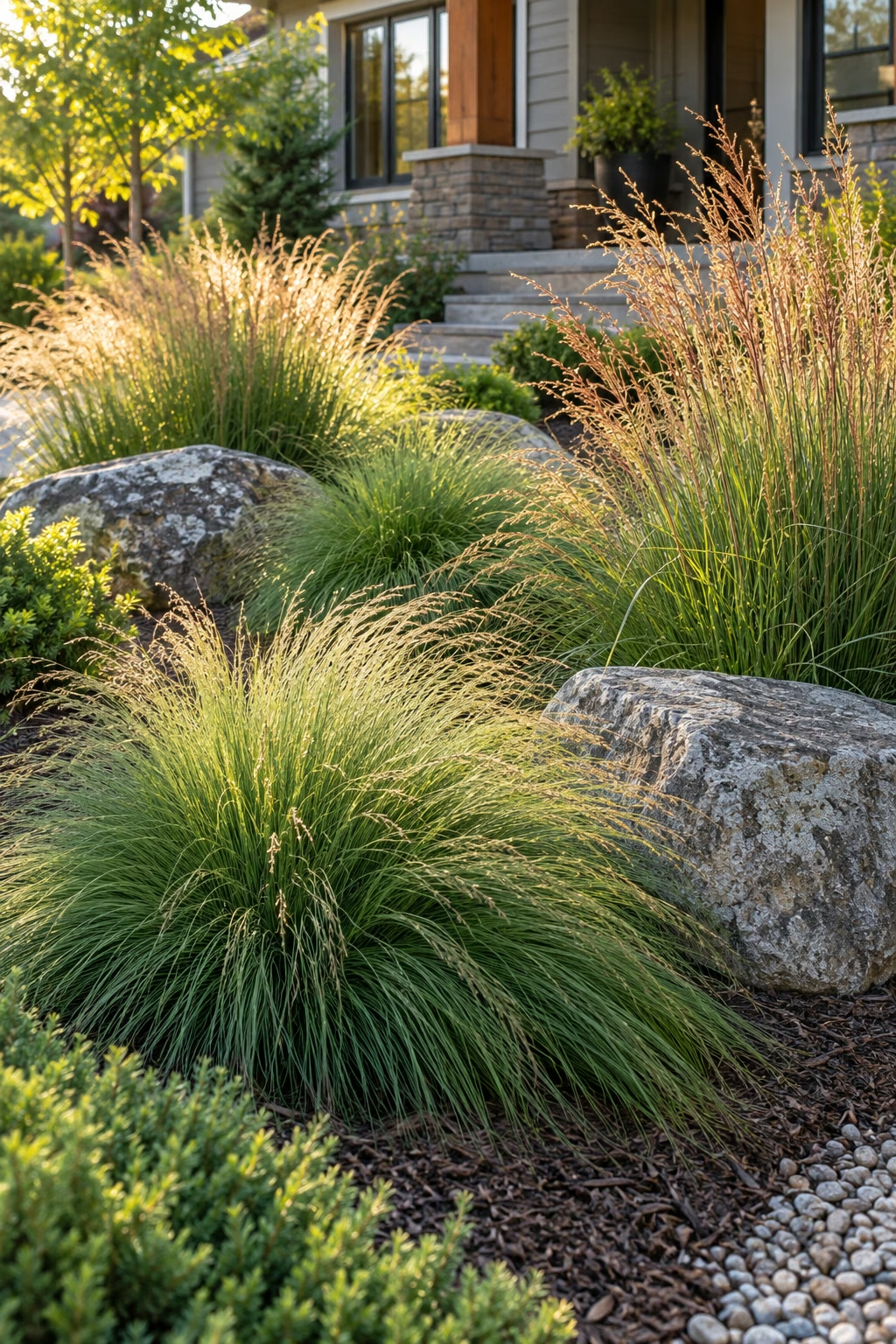
Rocks give a bed weight; grasses bring movement. Together, they make a front yard feel layered without requiring a complicated mix of flowers.
Set a few boulders among repeated clumps of one or two suitable grass species. Keep lower plants near the sidewalk and position taller grasses where their mature height will frame the house without blocking windows or views.
In suitable parts of the United States, little bluestem and prairie dropseed are worth considering for their texture and seasonal color. Check their local suitability and mature dimensions before buying. Missouri Botanical Garden describes both in its guide to plants for shallow, rocky soil.
Give the grasses room to arch naturally. A little visible space between the clumps and stones helps each shape stand out.
8. Build a Sunny Succulent Rock Garden
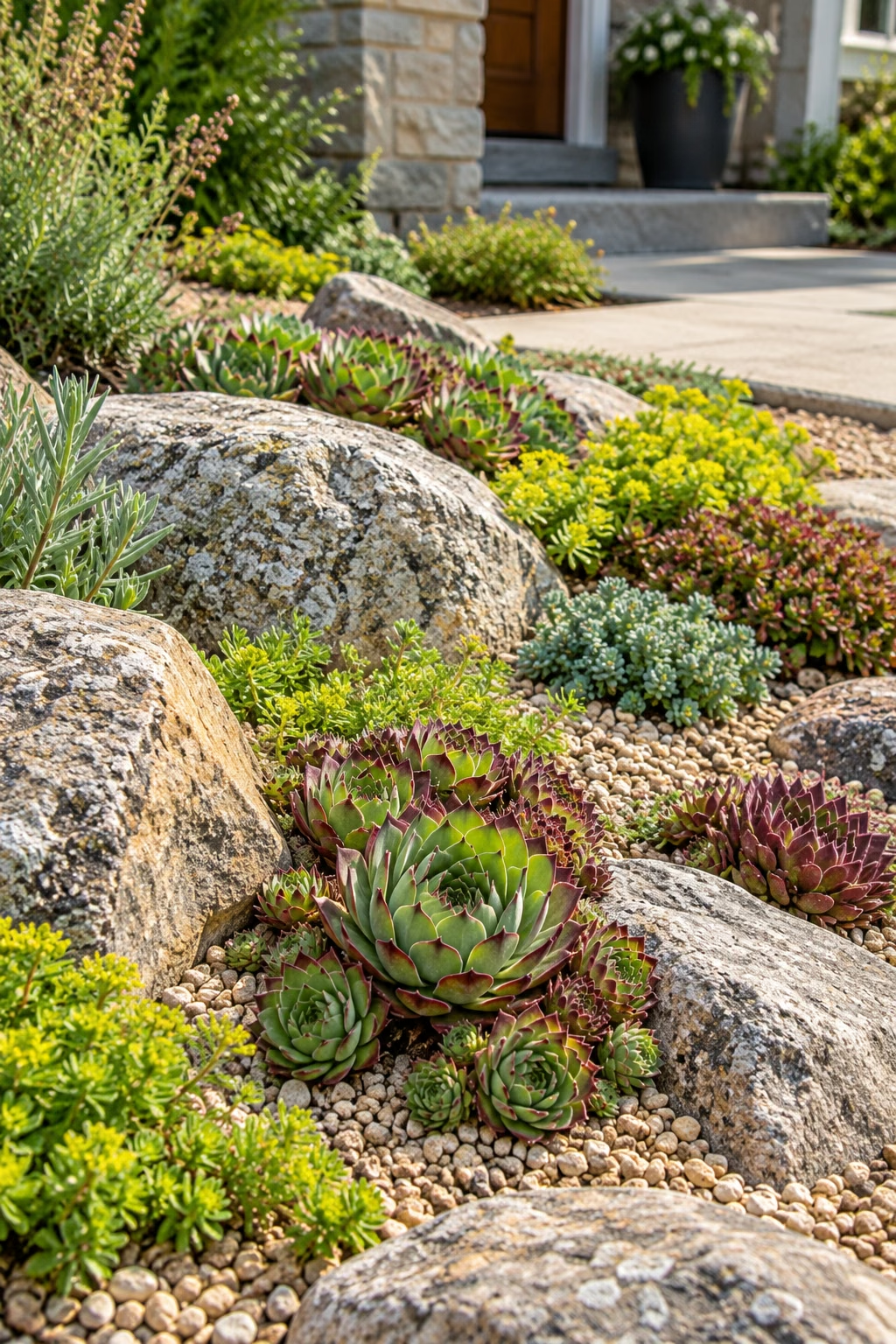
Succulent rosettes and natural stone make an appealing combination for a sunny bed. Repeat a few plant shapes between larger rocks, then use smaller gravel to give the whole arrangement a consistent background.
Match the plants to your winters as carefully as your summers. Suitable stonecrops and hens and chicks are options for many temperate rock gardens. The dramatic aloes and agaves seen in Southern California gardens need species-by-species climate checks. Both approaches have documented garden examples, but they are different planting palettes.
Keep spiny plants well away from the sidewalk and leave the centers of low rosettes uncovered. Make sure the roots have suitable soil and drainage beneath the decorative surface. Gravel over a soggy planting area will not provide the conditions these plants need.
9. Pair Boulders With Compact Evergreens
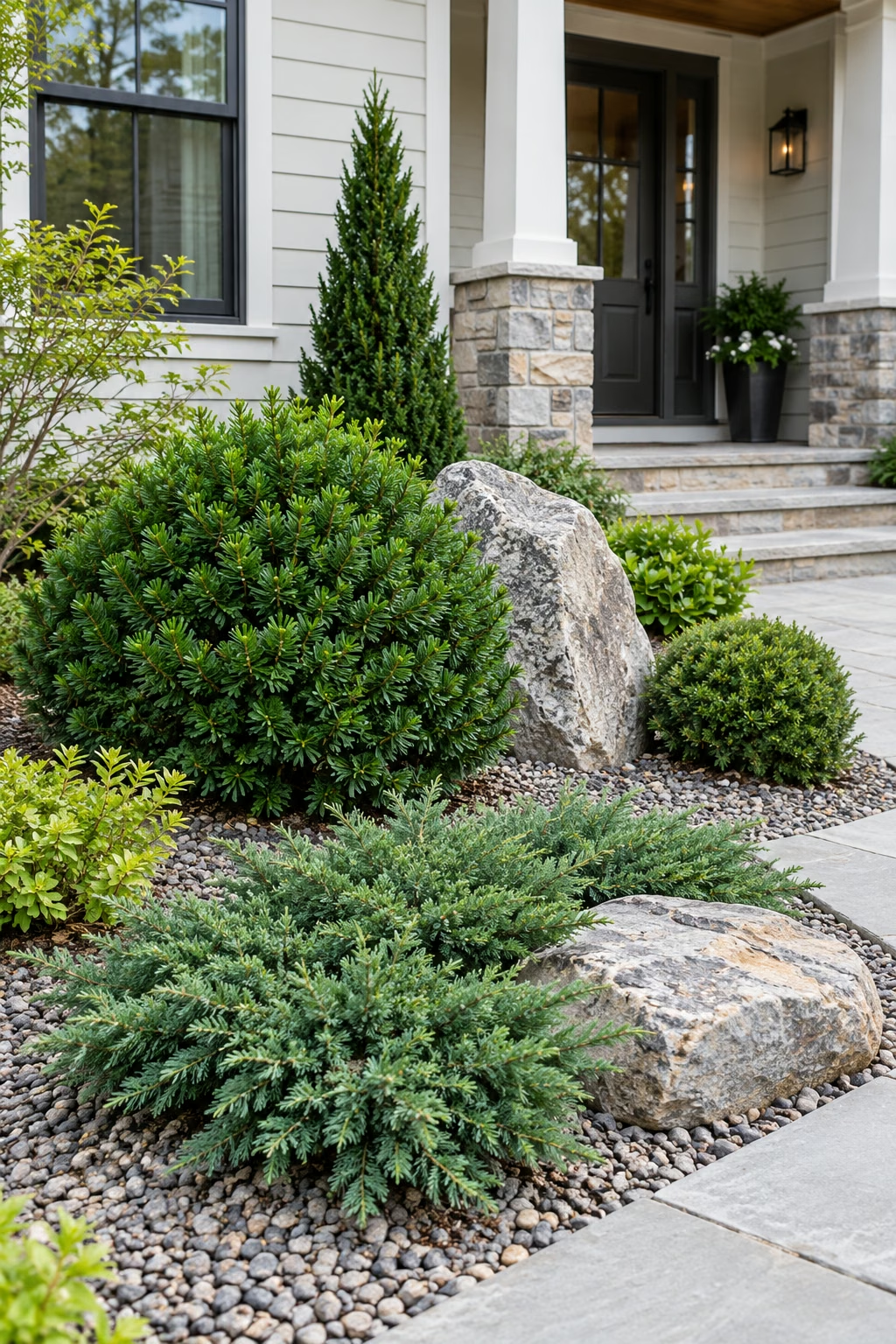
If you want the front bed to retain its shape through the seasons, build the design around compact evergreens and a few substantial stones.
Try one rounded shrub beside an upright rock, then a lower spreading plant near a flatter boulder. Repeating these shapes farther along the bed can tie a wide house frontage together. A restrained gravel color lets the foliage and stone do most of the visual work.
Read the mature size on every plant label. A conifer sold as dwarf may simply grow slowly and eventually become too large for the space. Choose plants for the room you actually have, including clearance from windows, steps, and the walk. The RHS specifically cautions against assuming dwarf conifers will remain small.
10. Group Terracotta Pots on a Gravel Pad
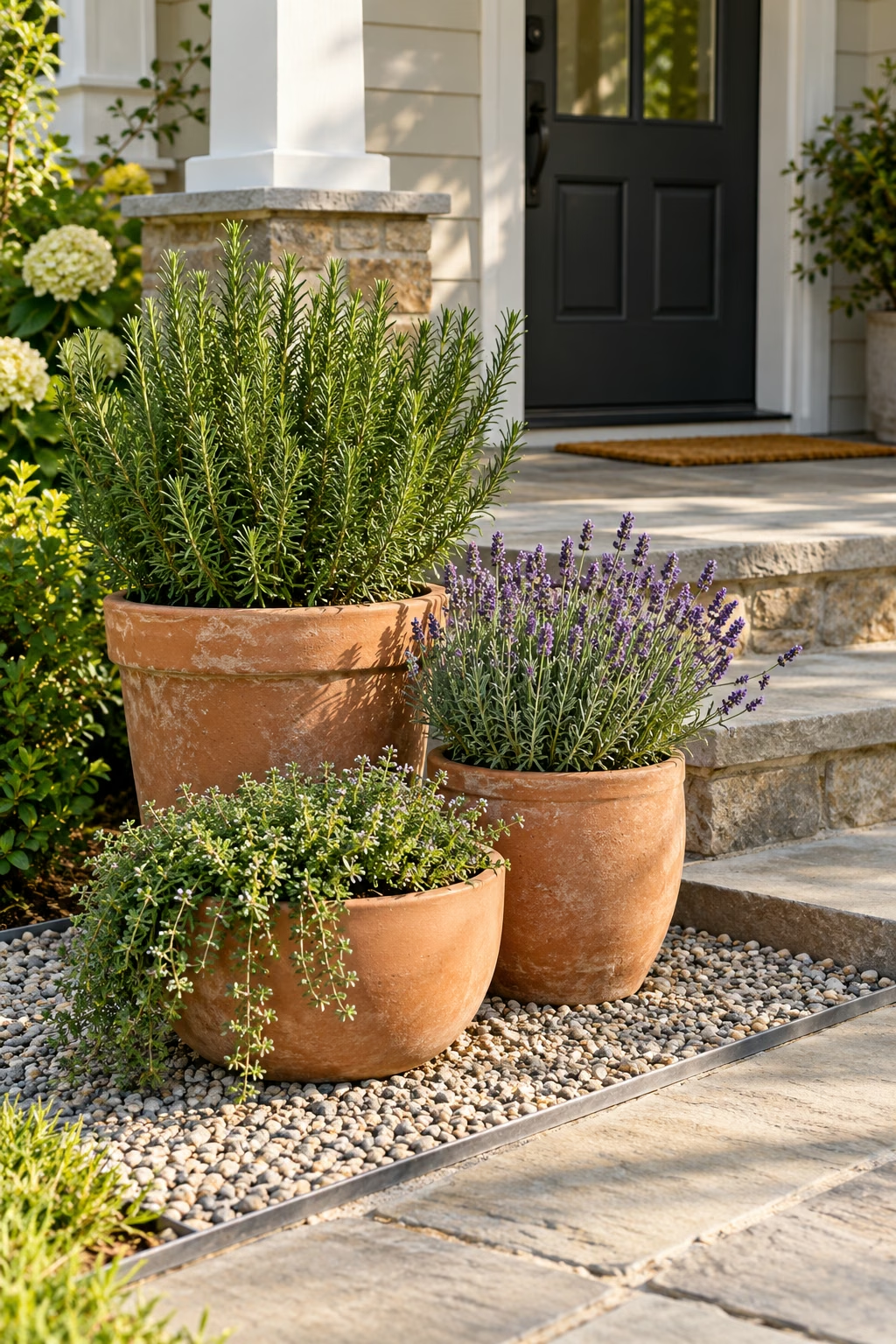
A few generous pots can finish an empty spot beside the porch without committing you to a large planting bed. Set them on a defined gravel pad and let the warm terracotta color contrast with the stone.
Choose pots in different heights but a similar finish. One upright plant, one rounded plant, and one that gently trails over an edge can give the grouping variety. Use plants with care needs that suit the same location, and leave space to water and move around them.
Make sure each planted pot has functioning drainage holes. Larger containers generally dry out less quickly than small ones, which can make summer care easier. Place the pots securely and keep the entrance and door swing clear.
11. Edge a Garden Bed With a Low Stacked Stone Wall
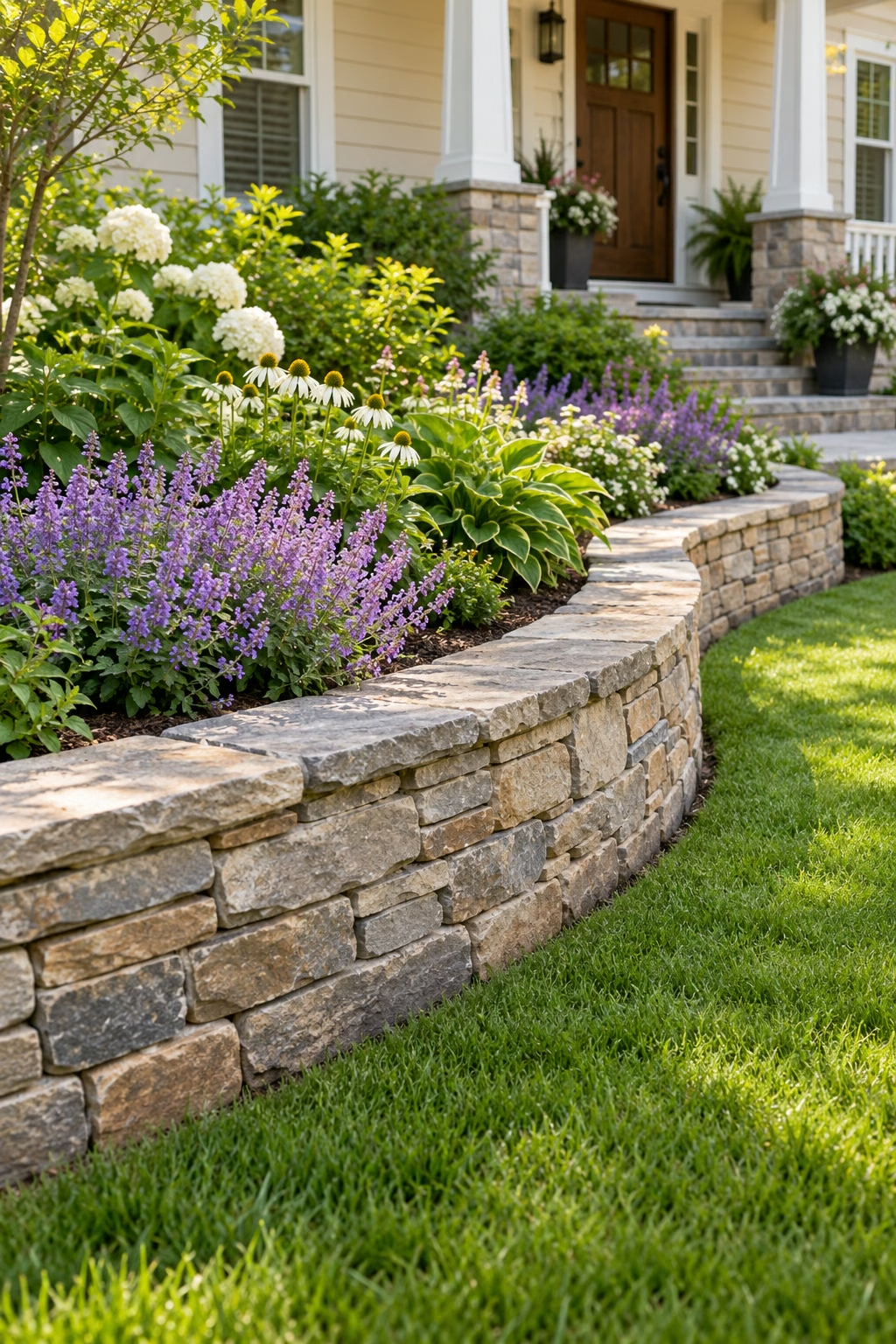
A low stone wall gives a flower bed a more substantial edge and adds another layer to the front garden. Weathered stone can suit a cottage-style home, while flatter, regularly shaped pieces create a more orderly appearance.
Use one stone type and let the wall follow a simple line. You might curve it beside the front steps or use a straight run beneath a planted border. A few low plants near the top can soften the edge as they grow.
A neatly finished top helps the wall look complete, even when the plants are small. If the wall will retain soil, plan it as a retaining structure with appropriate support and drainage. Have the construction assessed for the actual height, ground conditions, and load.
12. Break Up a Slope With Stone Terraces
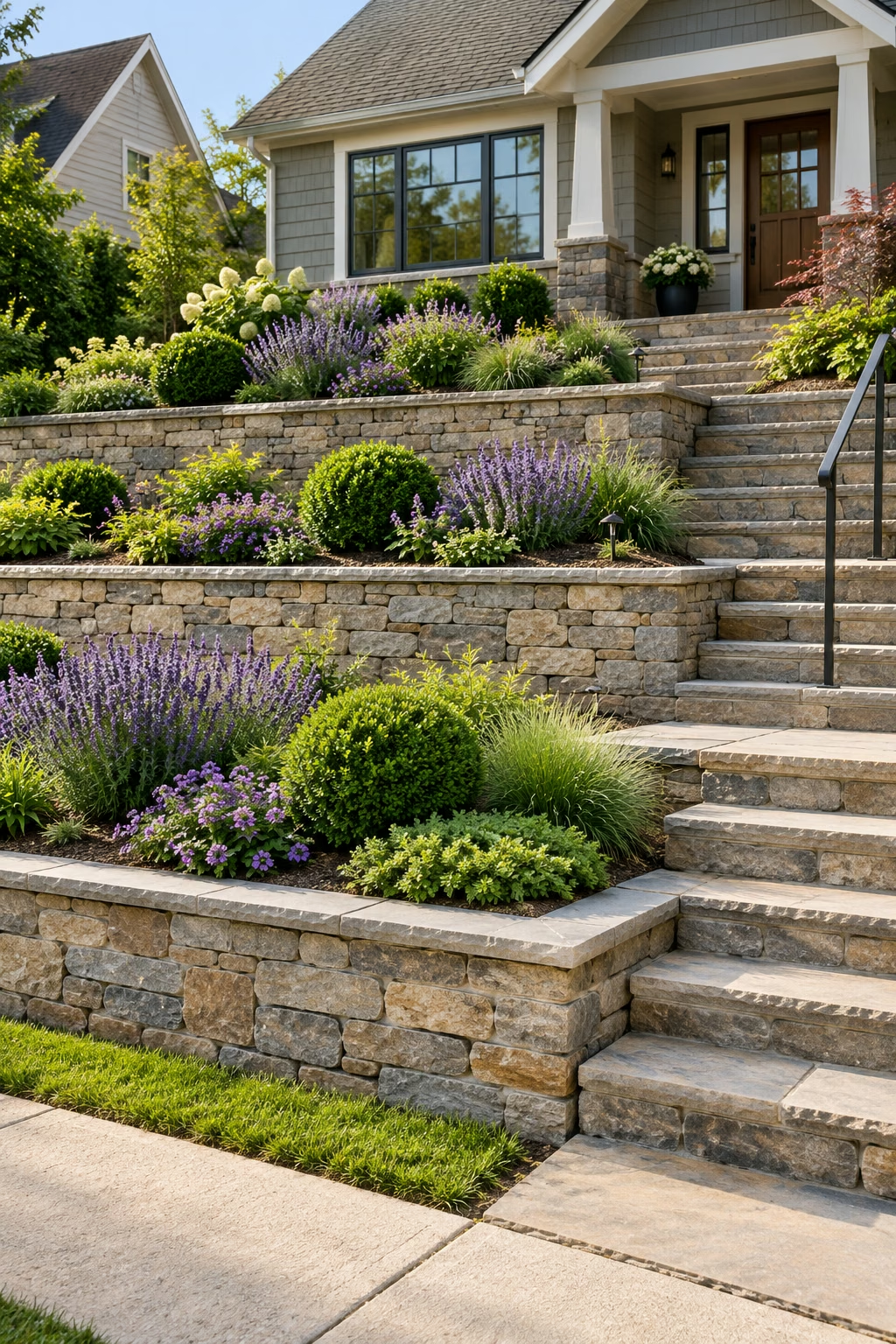
A sloping front yard can be difficult to plant and move through. Terraces create separate levels that give the landscape a clearer shape and offer places for planting.
Keep the material consistent from one level to the next. Repeating a few plant groups across the terraces also helps the slope read as one garden. Leave an intentional route for access so you can reach plants for watering, pruning, and weeding.
This is a larger landscaping project. Wall loads, drainage, soil conditions, and the slope itself determine what will work. Terracing may require engineering, so get a site-specific plan before construction. Protect existing trees from excavation or changes in soil level around their roots.
13. Cover a Sunny Rockery With Low Growing Flowers
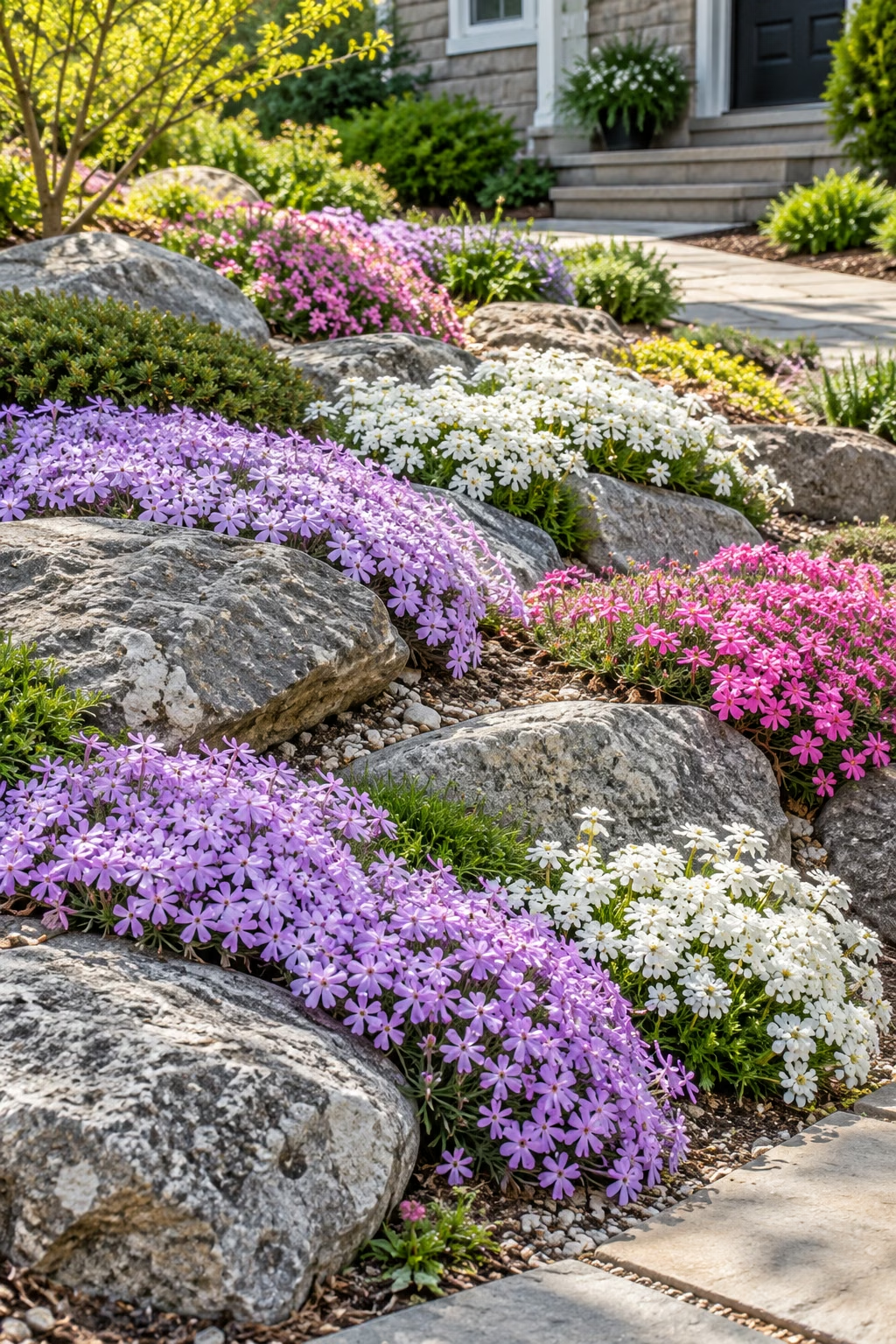
For a softer, flower-filled look, tuck low plants into the spaces between rocks. As they grow, the foliage can trail over stone edges while leaving enough of the rock visible to show the garden’s shape.
Creeping phlox, suitable dianthus, and candytuft are familiar options for sunny rock gardens with good drainage. Check which varieties suit your climate, then repeat a few colors through the bed. A limited palette of pink, white, or purple can be easier to pull together than a different flower in every gap.
Give roots real planting pockets and enough room to develop. Small plants can disappear behind oversized rocks, while vigorous spreaders can cover the whole feature. Match the plants and stones to each other’s scale.
14. Plant a Miniature Rock Garden in a Stone Trough
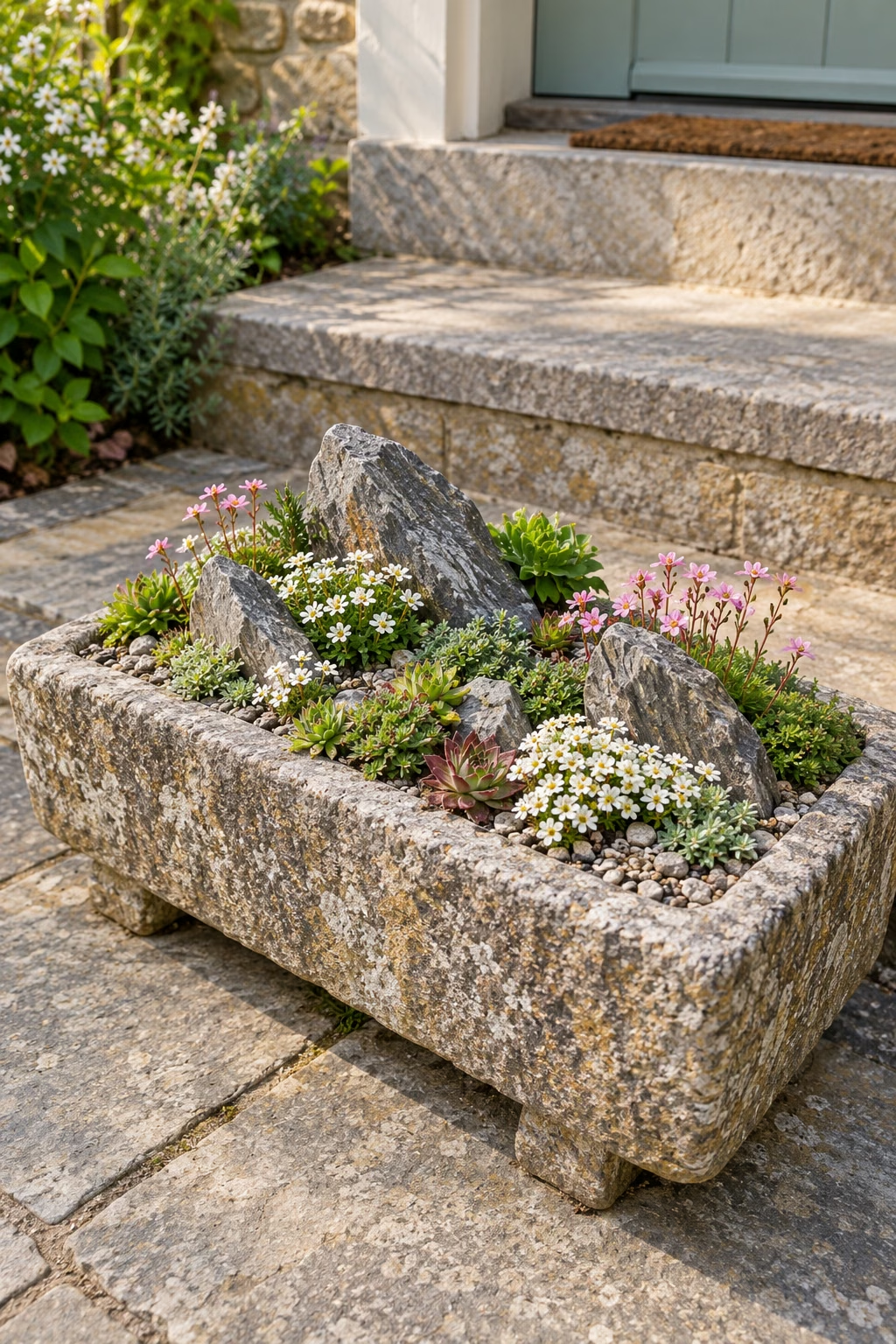
A stone trough brings the details of a rock garden up close. It is a good option beside front steps, at the edge of a small courtyard, or anywhere you would enjoy seeing tiny plants without creating a full bed.
Arrange a few proportionate stones inside the trough and plant compact alpines or other suitable small rock-garden plants around them. You can also set thin stones in a layered arrangement to create a miniature crevice garden. Leave some exposed grit between plants so the little landscape remains easy to see.
Use drainage holes and an appropriate gritty growing medium. The RHS advises that a layer of pebbles in the bottom is unnecessary and can hinder drainage. Check the trough regularly while the plants establish.
15. Make a Woodland Corner With Ferns and Weathered Rocks
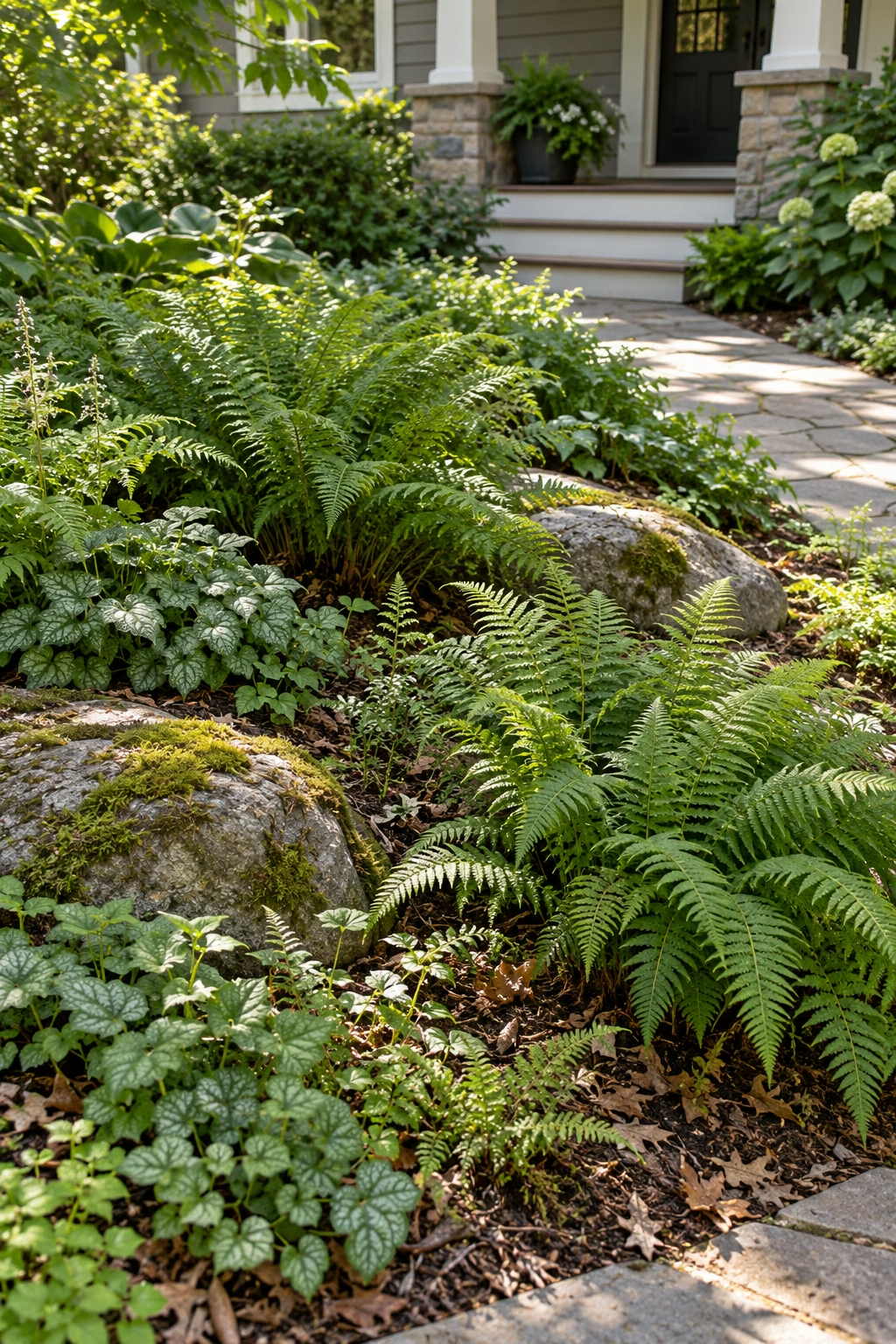
A shaded front yard has its own version of rock landscaping. Weathered stones, leafy ferns, and soft ground-level planting can make a quiet corner feel like a small woodland.
Place a few rocks among the plants and keep their arrangement loose. Choose foliage with different shapes, such as upright fern fronds beside a lower spreading plant. Christmas fern is one option for suitable shaded sites; check whether it belongs in your region and matches your soil.
Let the planting retain the soil conditions it needs, using an appropriate organic mulch where helpful. If the shade comes from an established tree, preserve the existing soil level and avoid digging through its roots to install rocks. A raised ring filled with new soil can harm the tree you are trying to frame.
16. Add a Neat Rock Border Along the Driveway
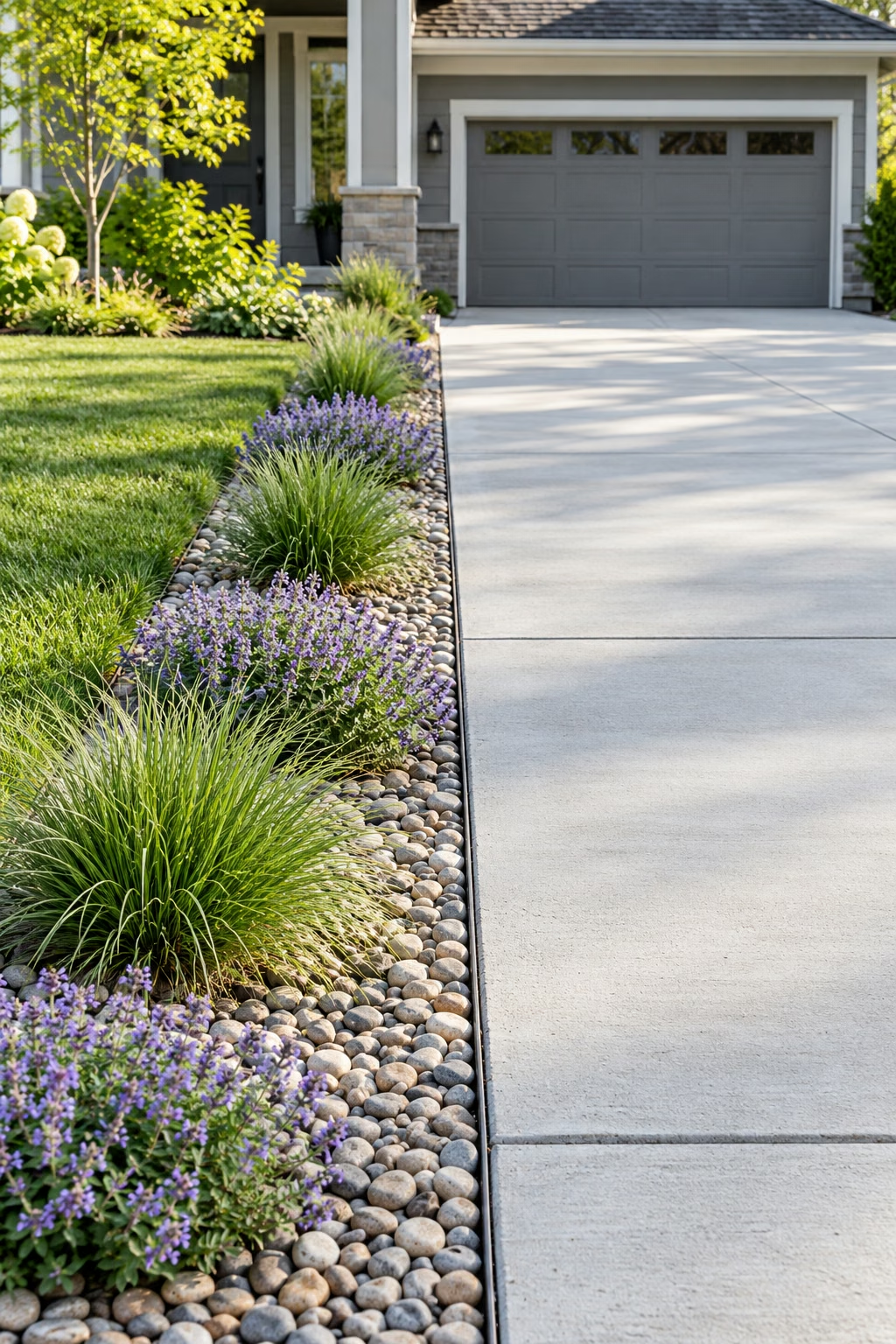
The strip beside a driveway often gets overlooked, yet it is one of the first places you see when arriving home. A narrow rock border with repeated planting can give that edge a more deliberate finish.
Choose a simple gravel or river-rock background, then add small groups of plants suited to the available width. Repeated pockets of greenery can soften a long paved edge and help parking fit more comfortably into the front garden.
Measure the space cars actually use before placing plants or larger stones. Leave room for doors, turning, and walking beside a parked vehicle. Contain loose rock so it stays out of the driving and walking surfaces, and preserve clear views where the driveway meets the street.
17. Give the Mailbox a Small Rock and Flower Bed
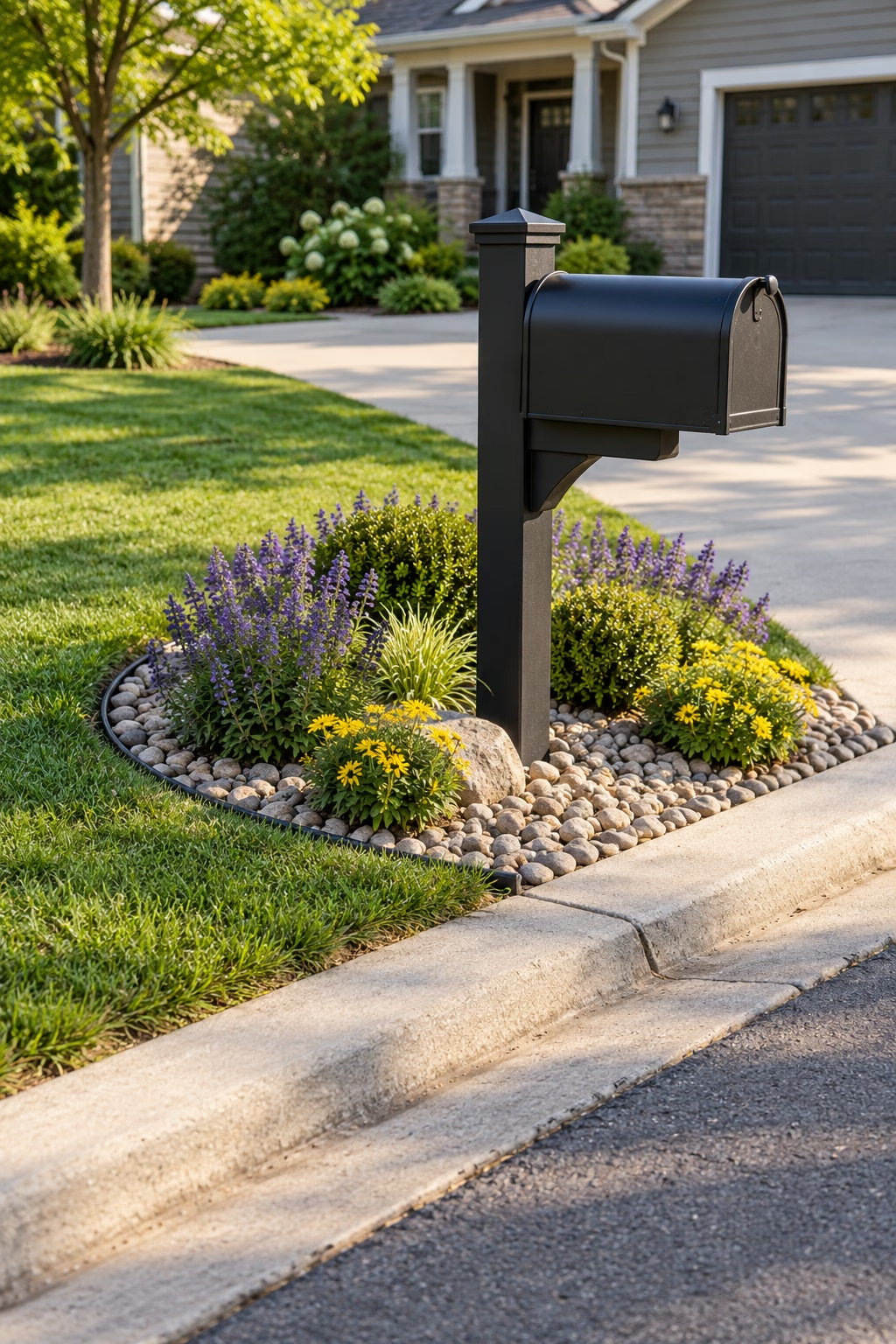
A mailbox bed is a manageable place to try rock landscaping. A rounded or gently tapered shape can turn the post into part of the garden and give the street edge a little color.
Use the same stone found nearer the house, then add a small group of compact flowers or foliage plants. The repetition helps the mailbox bed feel connected to the property. Keep the plants low enough that the mailbox remains easy to see and use.
Replacing the small patch of grass directly around the post can also simplify mowing and trimming. Give the bed a defined edge and keep the carrier’s approach clear. Leave enough room to open the mailbox without brushing past flowers or stepping over loose stones.
18. Combine Mulched Planting Pockets With a Gravel Foreground
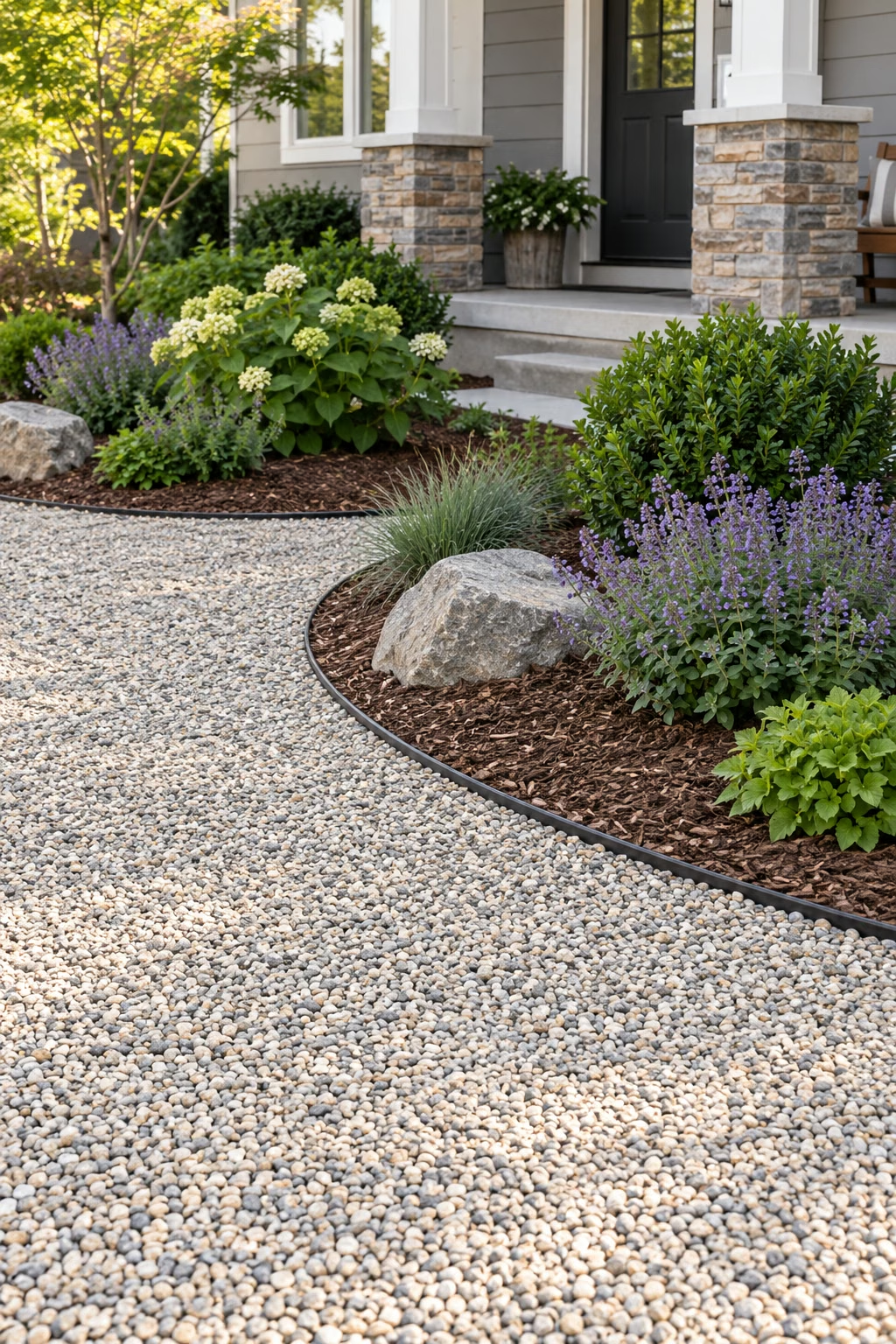
You can enjoy the appearance of stone while keeping organic mulch around plants that benefit from it. Try a gravel foreground with curved planting pockets behind it, using a few larger rocks to connect the two areas visually.
Natural brown mulch and gray or tan stone make a useful starting combination. Keep the shapes generous and simple, with a clear boundary between the materials. Too many narrow bands can make the bed look busy and give you more edges to maintain.
Organic mulch contributes organic matter as it decomposes, while the stones provide a lasting visual element. Choose each material for the plants and purpose of that part of the bed. Remove spilled mulch from the gravel so the division stays clear.
19. Design a Calm Japanese Inspired Gravel Corner
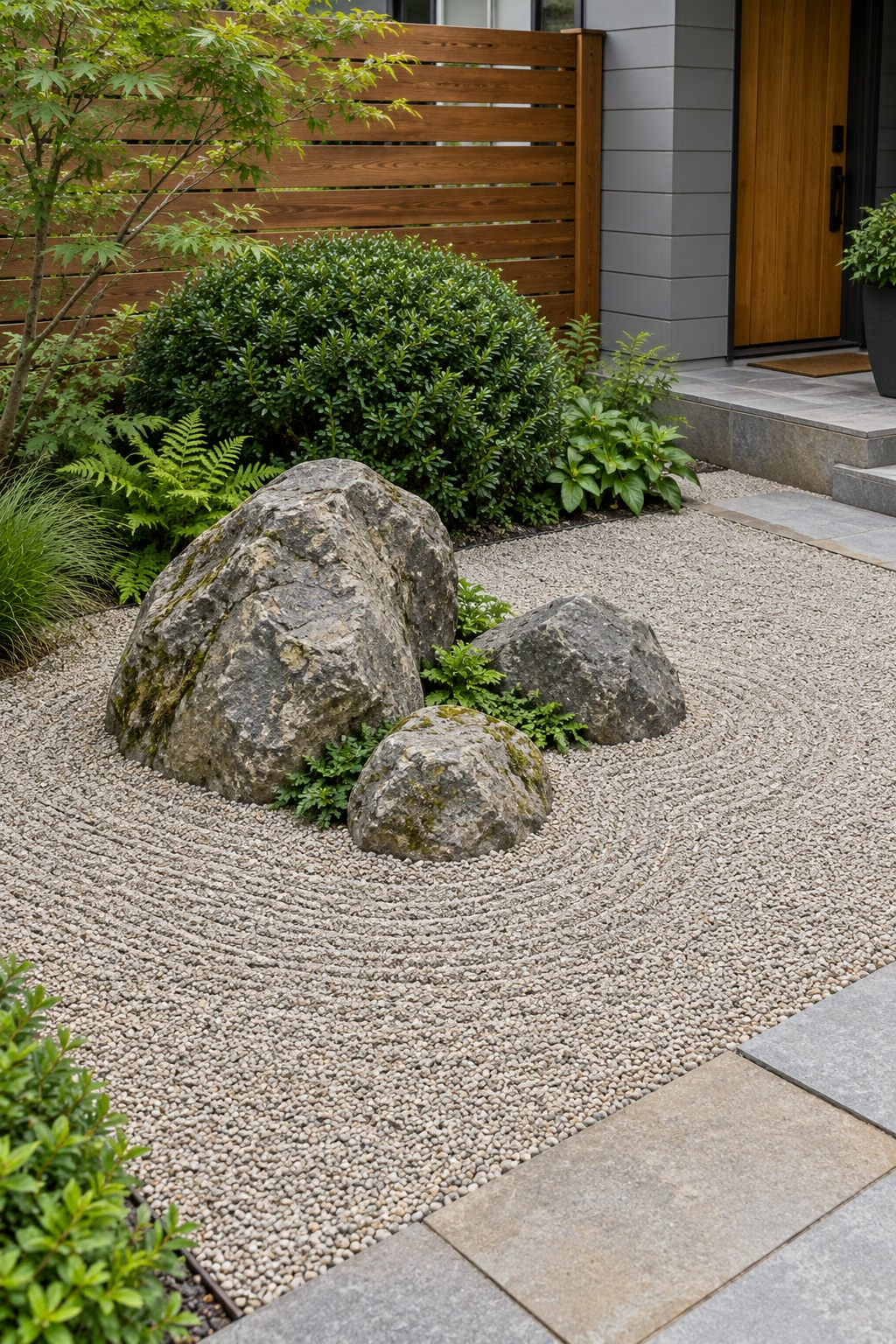
A small, sheltered corner can become a quiet composition of stones, gravel, and limited planting. Give the rocks room around them and choose their positions carefully so the arrangement looks balanced from the main viewing point.
Japanese dry landscape gardens offer a useful principle here: the open space is part of the design. Portland Japanese Garden describes the role of blank space in its Sand and Stone Garden. For a home adaptation, you might use a few weathered stones, a simple gravel surface, and a restrained evergreen backdrop.
Choose a location away from regular foot traffic if you want to rake patterns into the gravel. Keep nearby planting manageable so fallen leaves and spreading growth do not overwhelm the composition.
20. Create a Small Gravel Sitting Area by the Front Door
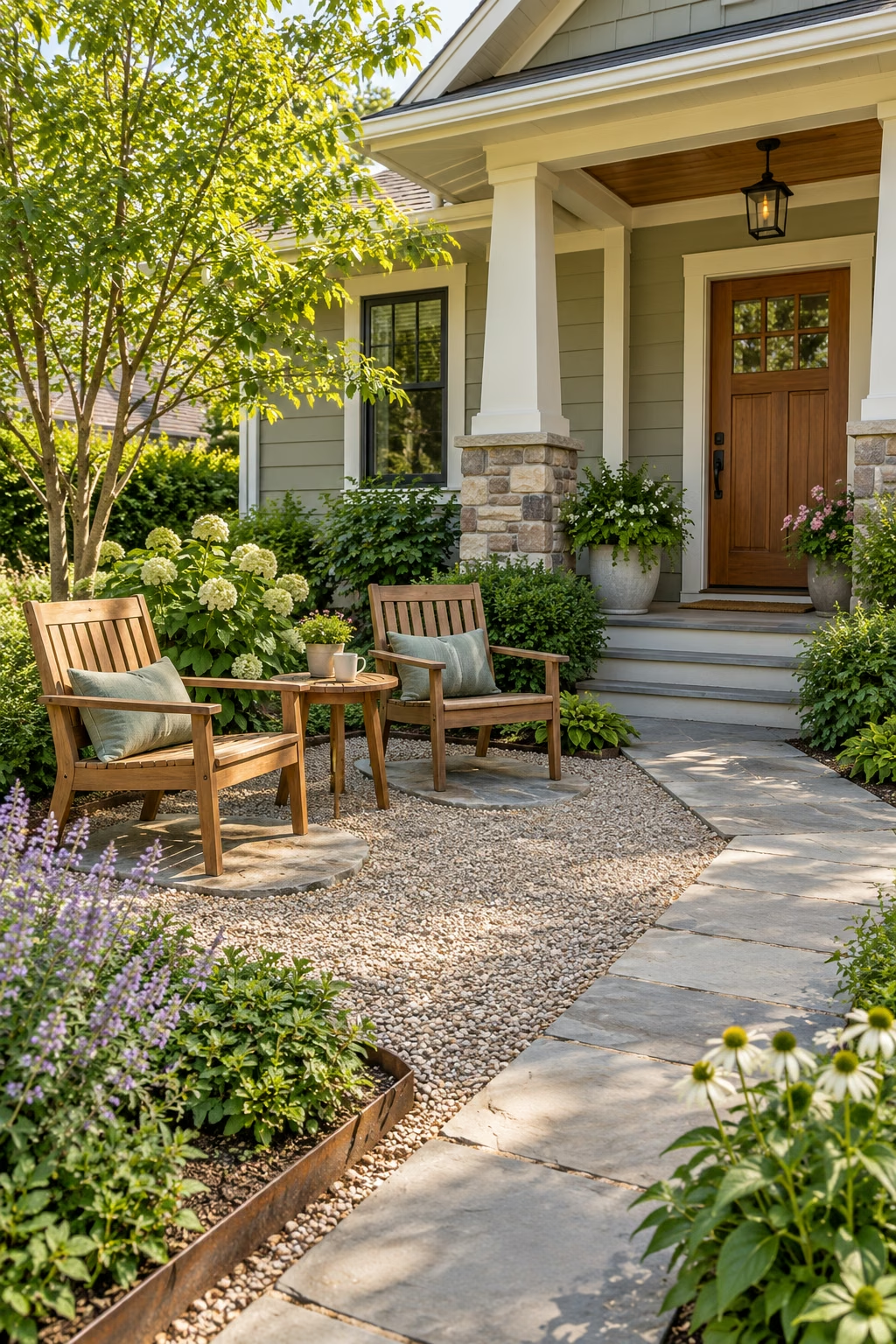
A front yard can be somewhere to enjoy your morning coffee. A small gravel sitting area gives a bench or a pair of chairs a defined place beside the porch.
Connect it clearly to the main walk and frame it with planting at the sides. Keep the furniture simple so the space feels open. Before building, set out the chairs and test whether you can sit, stand, and pass through comfortably.
Prepare a firm base, suitable drainage, and an edge that contains the gravel. This Old House’s gravel-patio project shows why the preparation matters. Use securely installed pads under furniture feet where needed, and maintain a firm route to the seating. Choose a surface that works for everyone who will use it.
21. Make a Stone Birdbath the Center of a Garden Bed
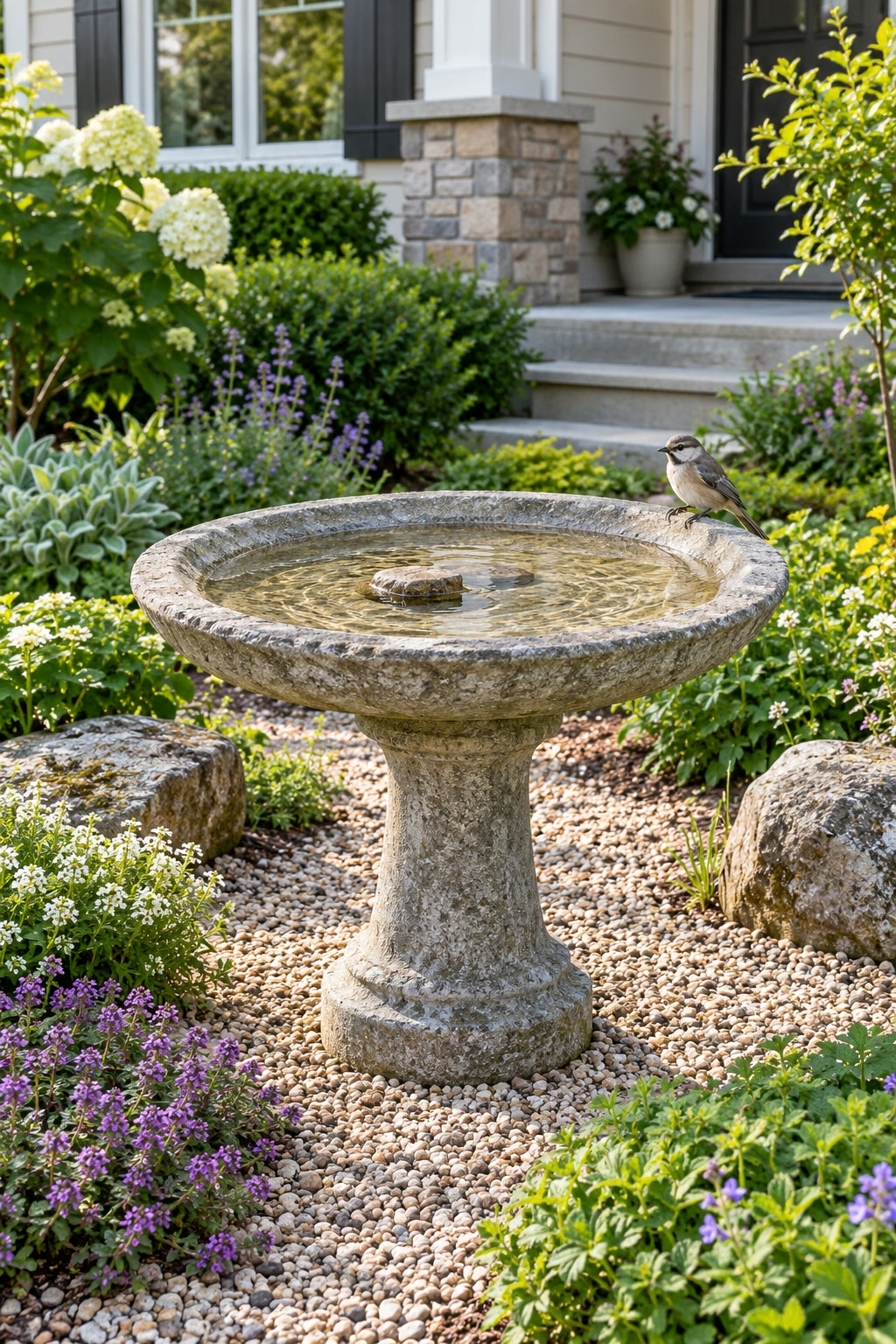
A stone birdbath gives a rock garden a focal point with a purpose. Place it where you can enjoy it from a front window, with a few low plants and larger stones supporting the arrangement.
Choose a shallow basin that is easy to empty and clean. Cornell Lab recommends water no deeper than about 1 inch at the edge, gently sloping to no more than 2 inches in the center. A flat stone can provide a place for birds to stand.
Leave open space between the bath and dense shrubs where a cat could hide. Refresh the water every day or two and clean the basin regularly. Make sure you can reach it easily, because a beautiful birdbath is more useful when keeping it clean is a simple job.
22. Nestle Native Pollinator Plants Around Rock Accents
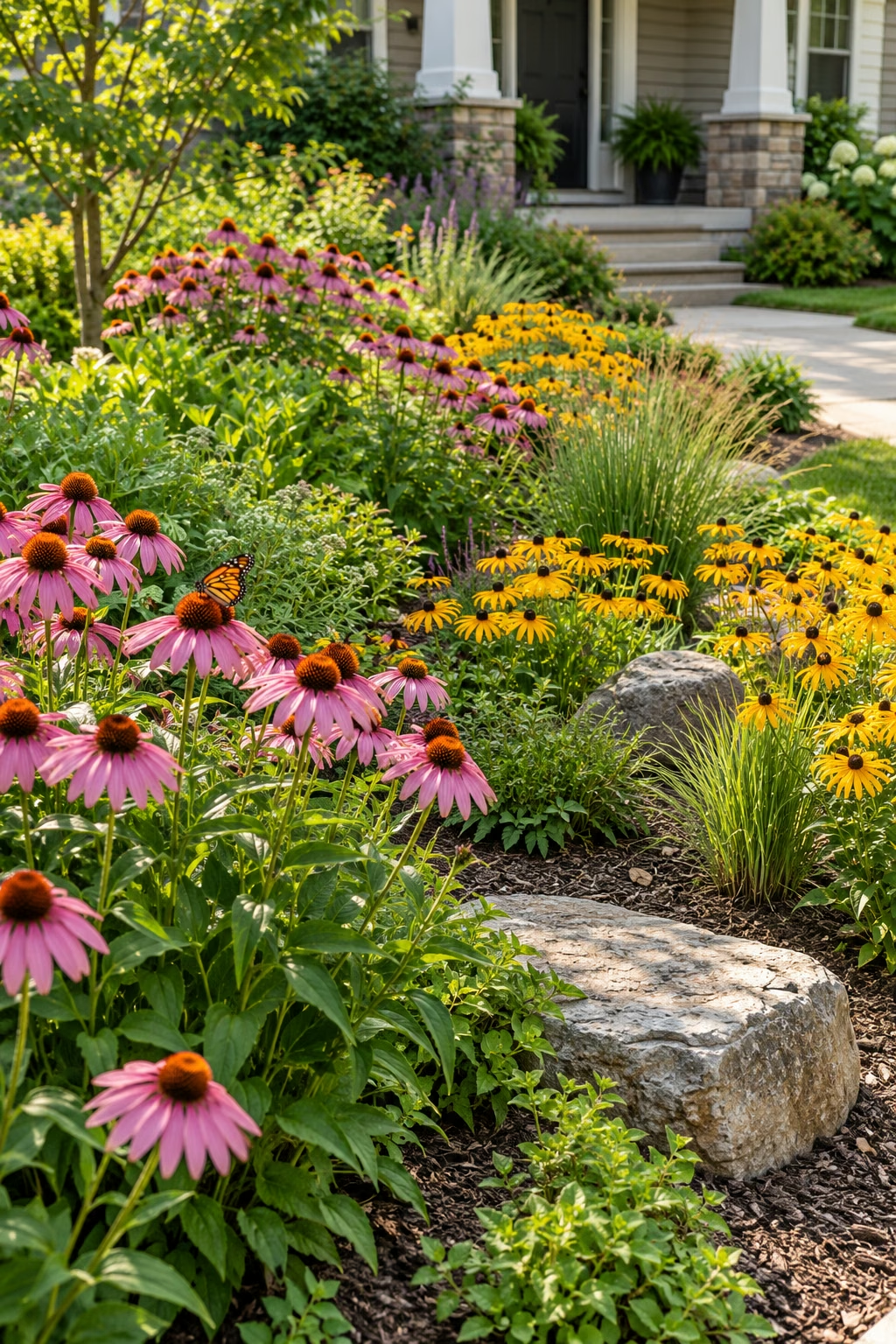
For a lively front garden, let locally suitable flowering plants fill most of the bed and use rocks as occasional accents. A boulder beside a patch of flowers gives the planting a clear focal point without taking away much growing space.
Choose native species for your actual site, including its soil moisture and sun exposure. A local native-plant nursery can help you combine flowers that bloom at different times. Group plants with similar watering needs so the whole bed is easier to care for.
Flat, sun-warmed rocks can provide basking spots for butterflies, while the surrounding flowers provide feeding opportunities. Leave generous planting areas, repeat a few species, and allow the garden’s color to change through the season. The stone gives the planting a steady visual framework.
23. Create a Curved Rock Garden Island in the Lawn
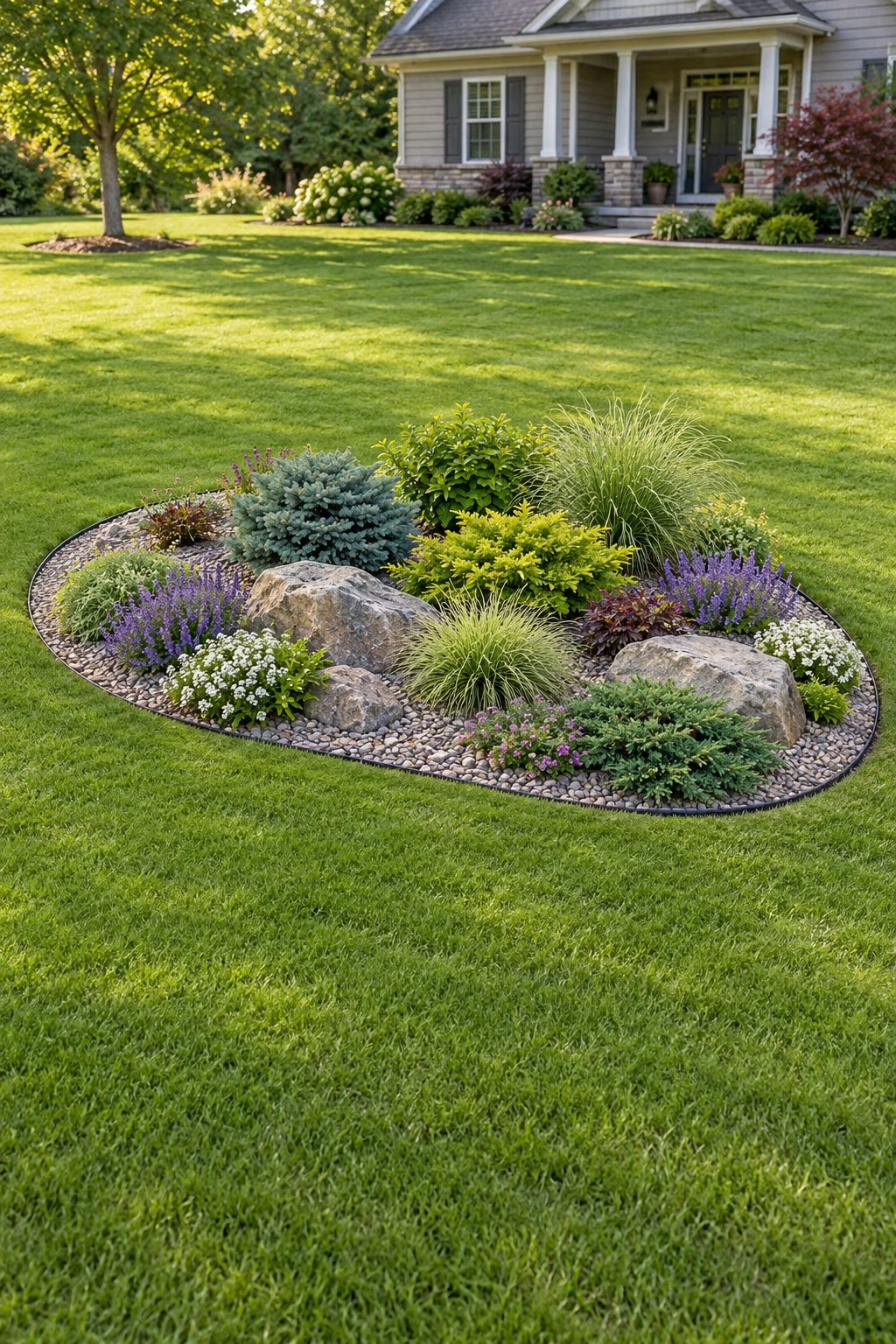
If you like having a lawn, a planted rock island can add interest while keeping plenty of open grass. Position it where it complements the front window, porch, or approach to the house.
Mark out a broad oval or kidney-shaped bed and check the outline from several angles. Keep the curve easy to mow around. Place the tallest plants toward the interior, then use lower planting around the perimeter so the bed looks finished from more than one direction.
A few related boulders can hold the composition together. Repeat a plant or stone already used near the house to connect the island to the rest of the yard. Keep its size manageable and leave enough room between plants for their mature growth.
Choosing Front Yard Rock Landscaping Ideas for Your Home
Start with the part of the yard you notice most: the unfinished flower-bed edge, the empty space beside the porch, or the strip that makes mowing awkward. Choose one idea that gives that area a clear purpose.
For a smaller first project, consider a river-rock border, a group of pots, or a mailbox bed. For slopes, large boulders, and drainage work, plan the construction before buying materials.
The most appealing front yard rock landscaping ideas feel connected to the home and the way you use the yard. Repeat a few materials, leave room for plants to grow, and build a garden you will enjoy both from the street and on the walk to your own front door.