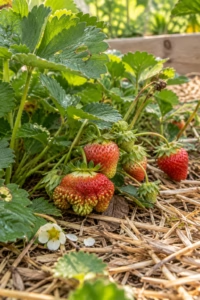
These budget friendly vertical garden ideas can help you fit herbs, flowers, and vegetables into a small yard, patio, or balcony. A bare fence or an unused corner might be enough to get started. Picture a few herb pots beside the kitchen door, strawberries hanging within reach, or bean vines climbing a simple bamboo frame.
The best starting point is something you already own. A sturdy shelf, a few spare pots, or a sound piece of fencing can become the main part of your garden. Some of the ideas below arrange containers in layers; others give plants a support to climb. Choose one that suits the space and the plants you actually want to grow.
Before you choose a setup, check its light and plan how you will reach it. Fruiting vegetables generally need at least six hours of direct sun; some leafy crops tolerate partial shade. Use draining containers with suitable potting mix, and supports strong enough for the watered weight. Direct runoff away from buildings and neighbors’ balconies.
1. Turn a Wooden Ladder Into an Herb Shelf
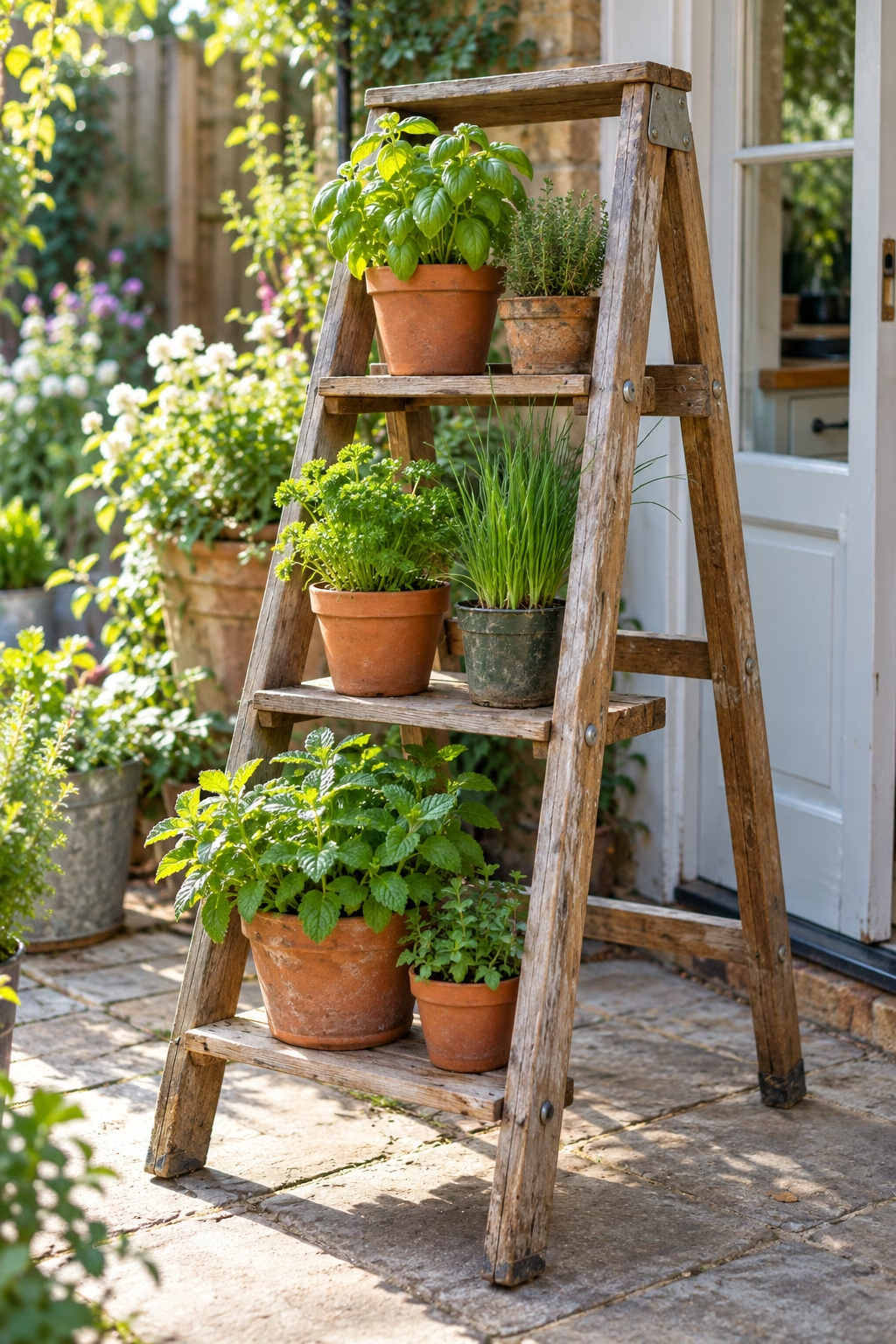
Keep everyday herbs close to the kitchen
A wooden ladder with a few herb pots looks right at home beside a back door or patio chair. Start with a sound stepladder, or make a small ladder-shaped stand from wood offcuts. Secure wider boards where shelves are needed, and check that the whole stand sits firmly on level ground.
Arrange the heaviest pots on the lower shelves and leave enough space between levels for the plants to grow. You can keep the nursery pots you already have; a tidy arrangement gives them a finished look without buying a matching set.
Chives, parsley, and basil are useful choices for separate pots. Give vigorous herbs such as mint their own roomy container. Keeping the herbs near the house makes it easy to step outside and snip what you need for dinner.
2. Make a Pallet Rack for Removable Pots
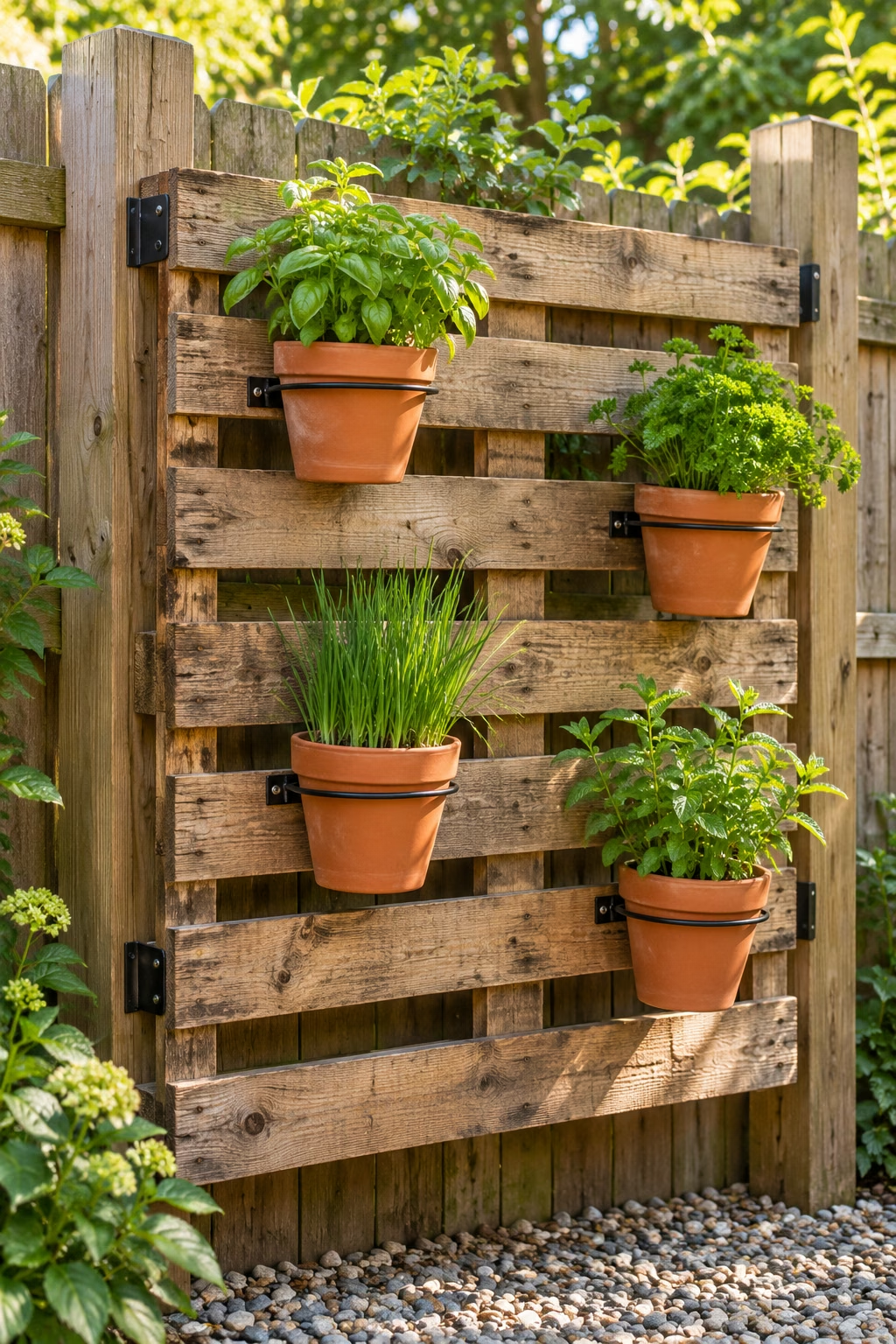
Build a small herb display a few pots at a time
A pallet can provide the background for a neat wall of plants. Attach suitable pot holders to its slats, then add a few individual pots. Keeping each plant in a removable container makes it easier to rearrange the display, replace a plant, or move one into a larger pot.
Start with three or four pots and add more later. Repeating one pot color or leaving the wood plain can make a small collection look intentional. Secure the pallet and its holders before filling the pots.
Choose sound wood with a known clean history. Reject stained pallets, ones with unknown treatment, and those marked MB. A treatment stamp alone does not tell you what the pallet carried or whether anything spilled on it.
3. Hang Small Pots on a Wire Grid
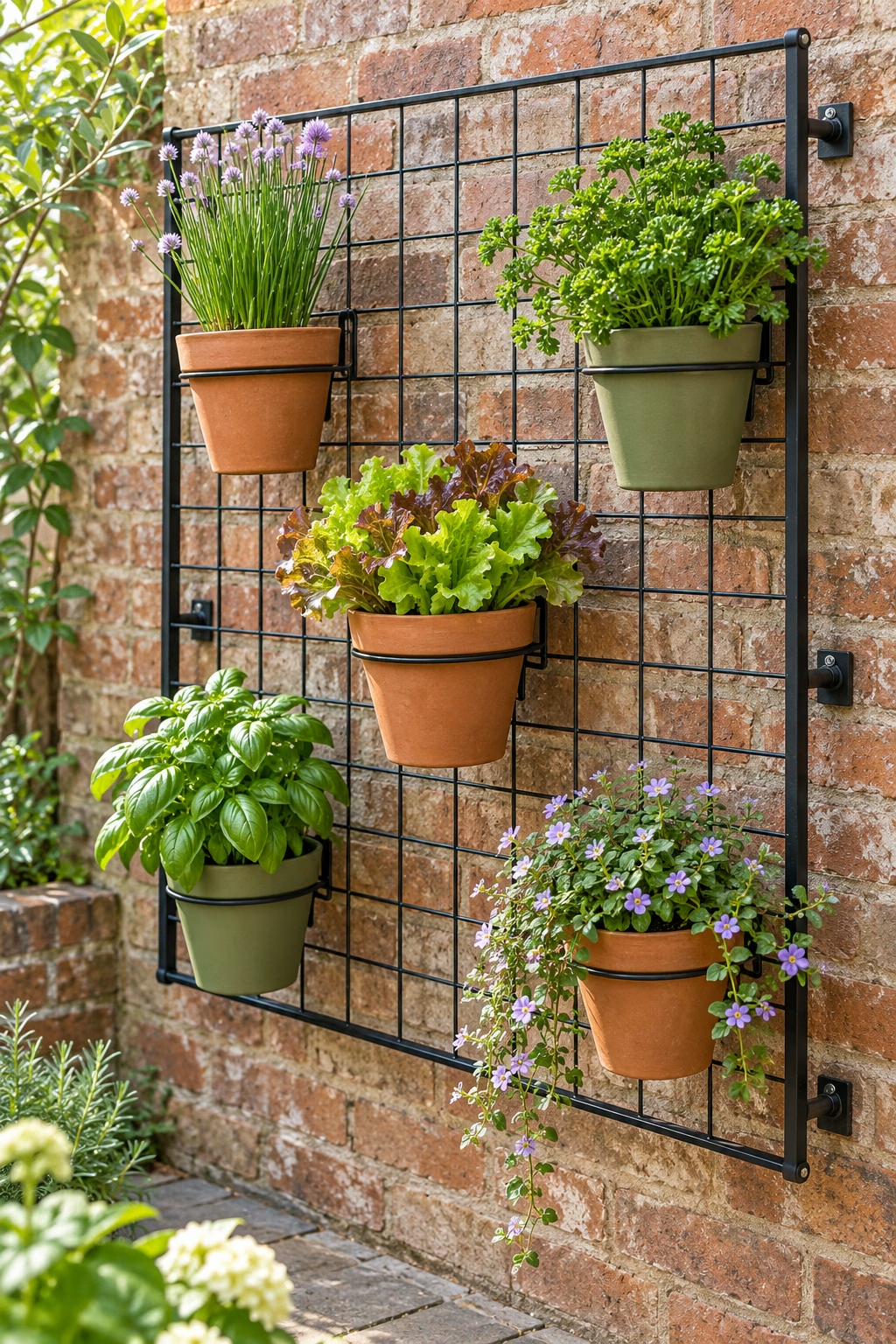
Give a blank wall a light and open display
A sturdy metal grid lets you place pots where they look best instead of committing to fixed rows. Mount it on suitable supports, leaving a gap behind it for airflow and attachments. Arrange a few individually secured containers across the grid, leaving room to reach between them.
Start with a modest panel and pots that suit the available light. A mix of upright and gently trailing plants gives the display some movement, while open spaces between pots keep the arrangement from feeling crowded. Use pot holders that fit securely; a decorative photo grid may not be strong enough.
Place frequently harvested herbs and salad leaves on the lower, reachable part of the panel. High pots are harder to water and can be more exposed to drying wind. Reusing a suitable piece of mesh is where this project can save money.
4. Turn a Clothes Rack Into a Hanging Garden
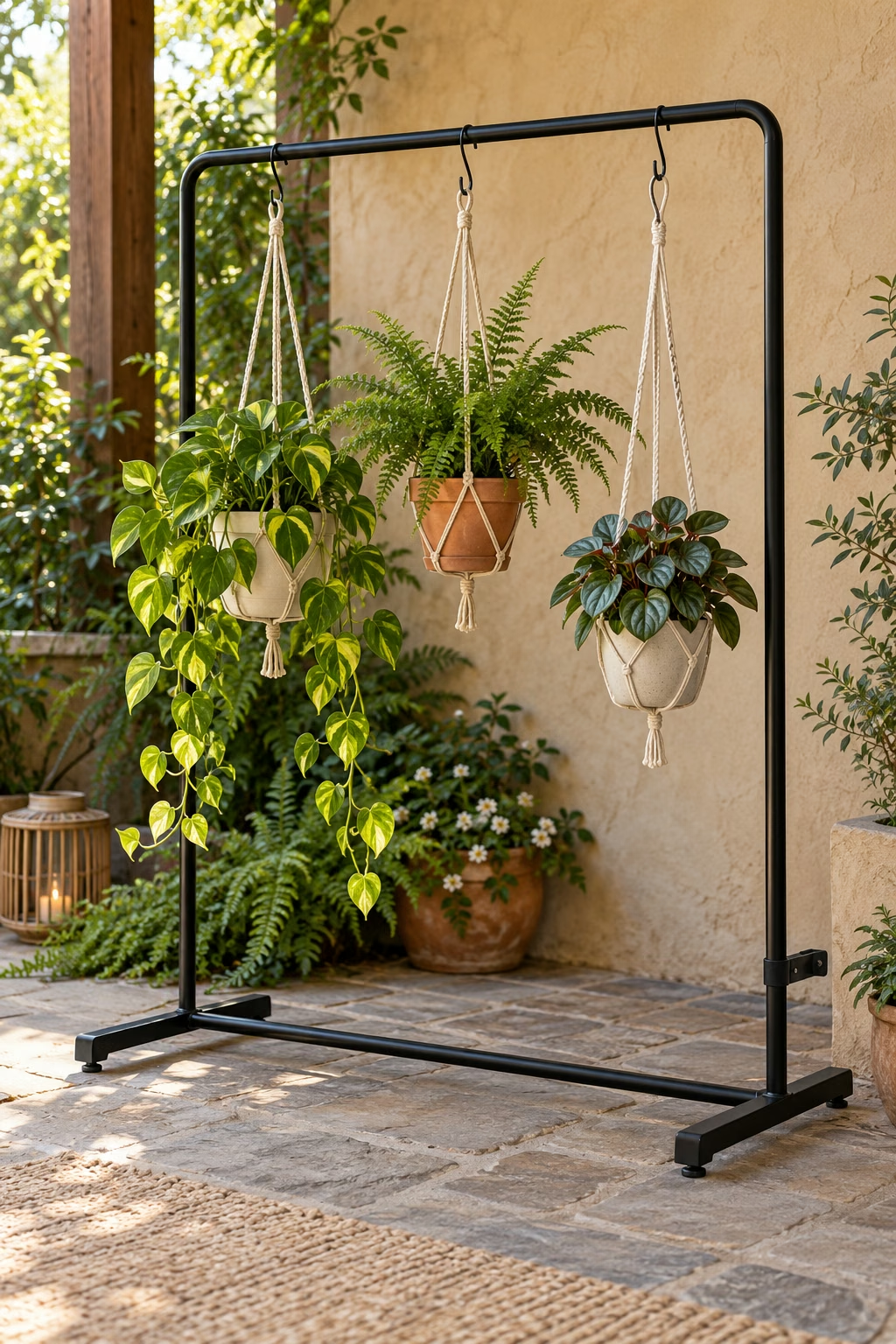
Create a freestanding display for a sheltered patio
If a sturdy clothes rack is sitting unused, it can become the frame for a small hanging garden. Suspend a few lightweight pots from proper plant hangers, spacing them along the rail. This is an established DIY idea and can work well when you want a display that stands independently of a wall.
Keep the arrangement restrained. Two or three plants give you room to reach the pots and judge how the rack behaves once everything is watered. A trailing plant at one end and a compact upright plant at the other can make an appealing combination.
Choose a rack and hanging hardware suitable for the wet load, with a broad, stable base. Keep it sheltered from wind and secure it against tipping. This idea makes the most financial sense when you already own the rack and suitable hangers; buying every part can erase the saving.
5. Plant an Outdoor Fabric Pocket Garden
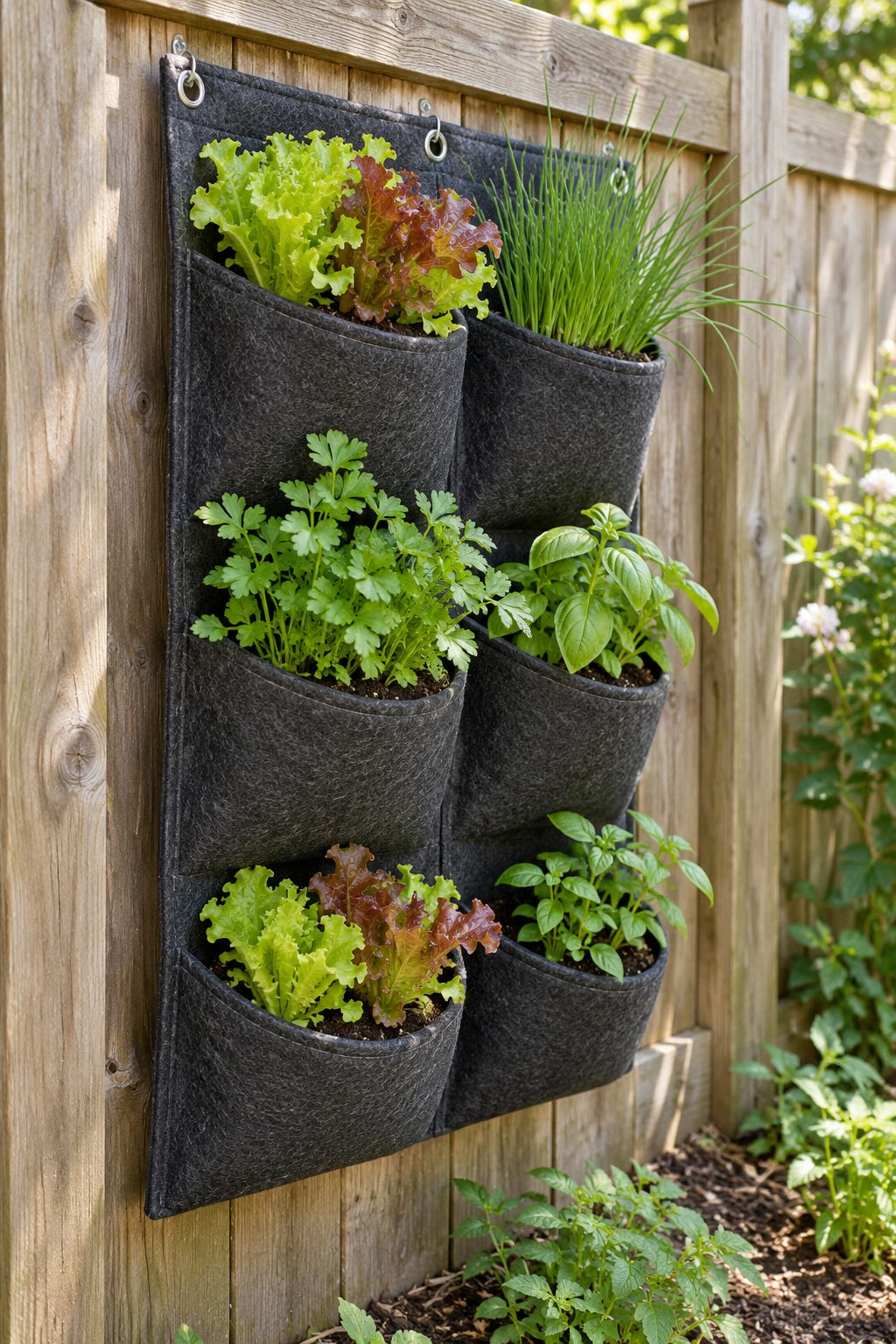
Add growing space to a narrow wall or fence
A fabric pocket planter creates several small planting spaces on one hanging panel. Choose a version intended for outdoor growing, with pockets that drain and have enough room for the plants you select. Pocket gardens are a practical way to introduce a little greenery where a shelf would stick out too far.
Start with a small panel and a few compact plants. Leaf lettuce grown for young leaves and modest-sized herbs are better candidates than large fruiting vegetables. Follow spacing guidance instead of filling every visible gap with seedlings. The pockets will look fuller as suitable plants establish.
Check that the attachment points can carry the watered planter, and keep its damp backing away from vulnerable wall surfaces. Small fabric pockets can dry quickly, so place this garden where checking the mix is easy. An old shoe organizer is only useful if its fabric, seams, drainage, and pocket size are suitable.
6. Turn Spare Guttering Into a Succulent Wall
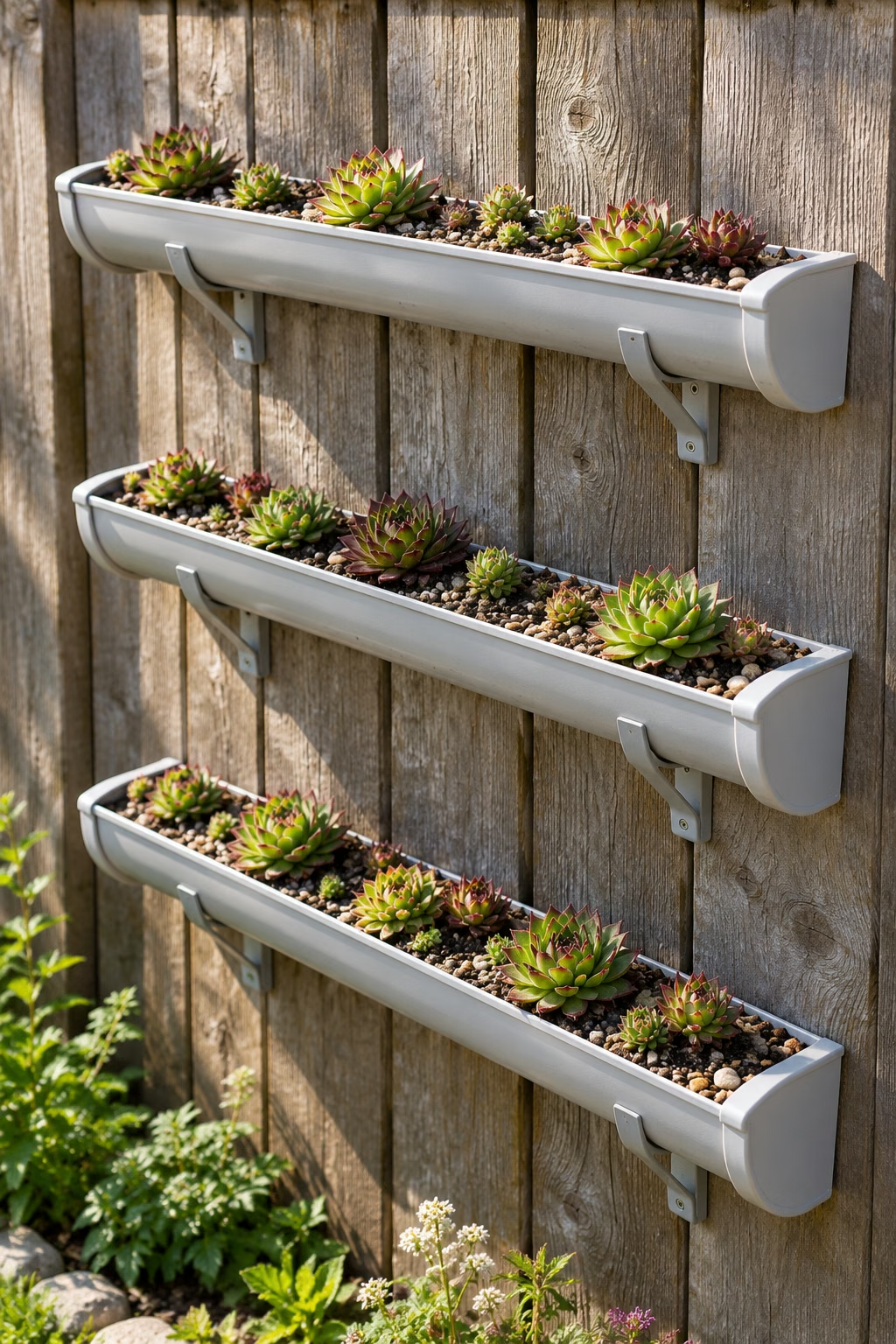
Use shallow rows for small rosettes
A few short lengths of guttering can create clean horizontal lines across a fence or wall. Fit end caps, add drainage holes, and support each section with appropriate gutter brackets. Keep the rows far enough apart to reach the plants and let light into the lower levels. Short offcuts keep the project manageable.
Hens and chicks, also called Sempervivum, are a useful option because they can grow in shallow containers with excellent drainage. Place the gutter rows in a sunny spot, use a free-draining mix suited to these plants, and choose types appropriate for your climate. Their small rosettes give the gutter rows texture without needing tall plants.
Use healthy offsets from plants you already own to fill the rows gradually. For this ornamental project, skip heavily rusted, flaking, or contaminated guttering. If you want to grow food instead, first verify that the gutter material and its history are suitable, and provide enough root space for the chosen crop.
7. Make a Tiered Garden From a Wooden Bookcase
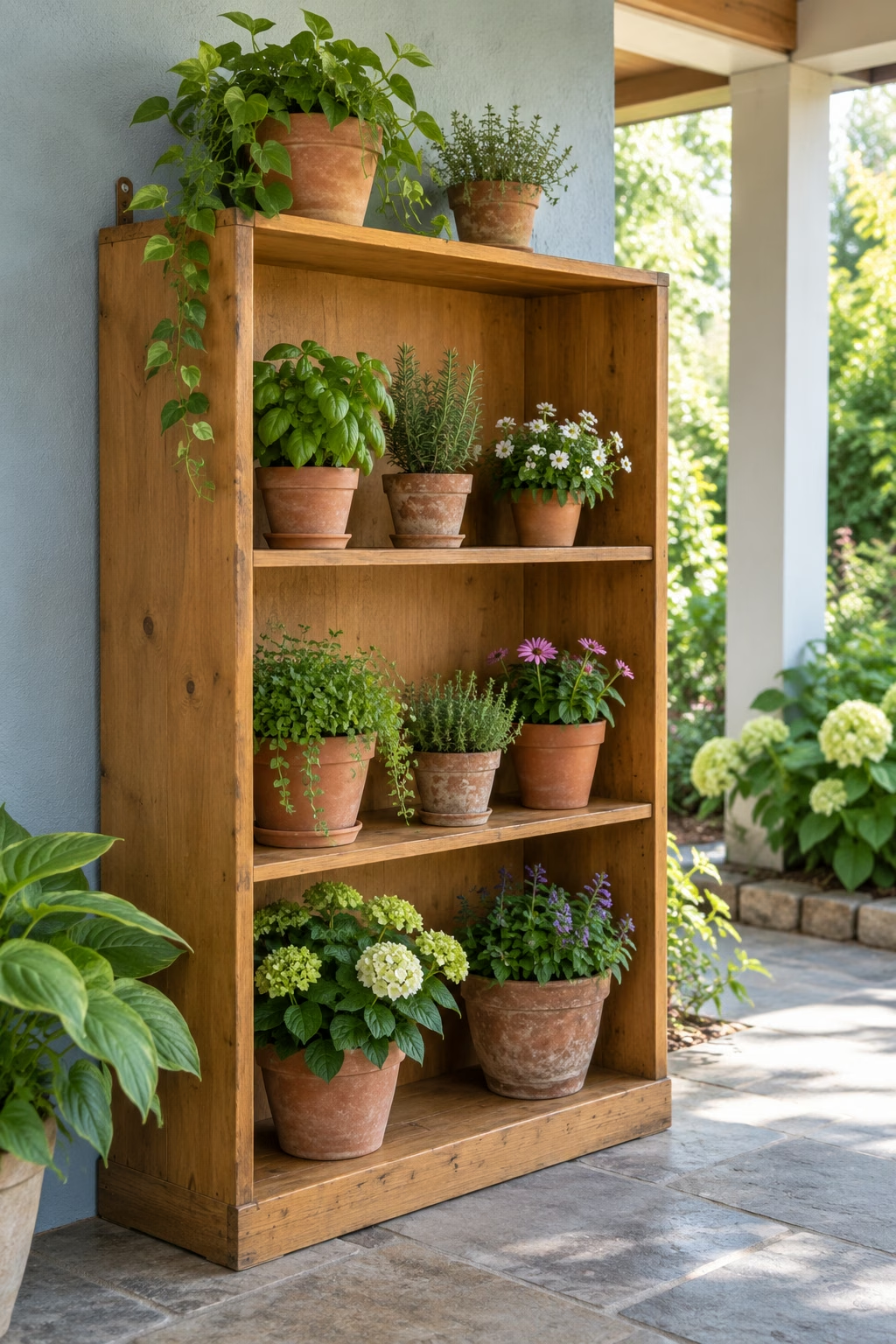
Give separate pots room to grow
A shallow bookcase can turn a sheltered patio corner into a tidy plant collection. A solid-wood unit can be converted into stacked planting troughs. A simpler adaptation is to keep suitable shelves level and use them to hold separate pots, which you can lift out for watering or repotting.
Choose solid wood in good condition. MDF furniture can swell or warp when wet, so it is a poor choice for this project. Secure the unit against tipping and make sure the shelves can carry the watered pots. Remove unnecessary backing only if doing so will not weaken the structure.
Leave open spaces around the plants instead of packing every shelf. Check that the lower levels receive enough light, and put larger containers near the bottom. The saving comes from giving useful furniture another job, so compare repair costs before taking home a badly damaged piece.
8. Stack Three Pots Into a Garden Tower
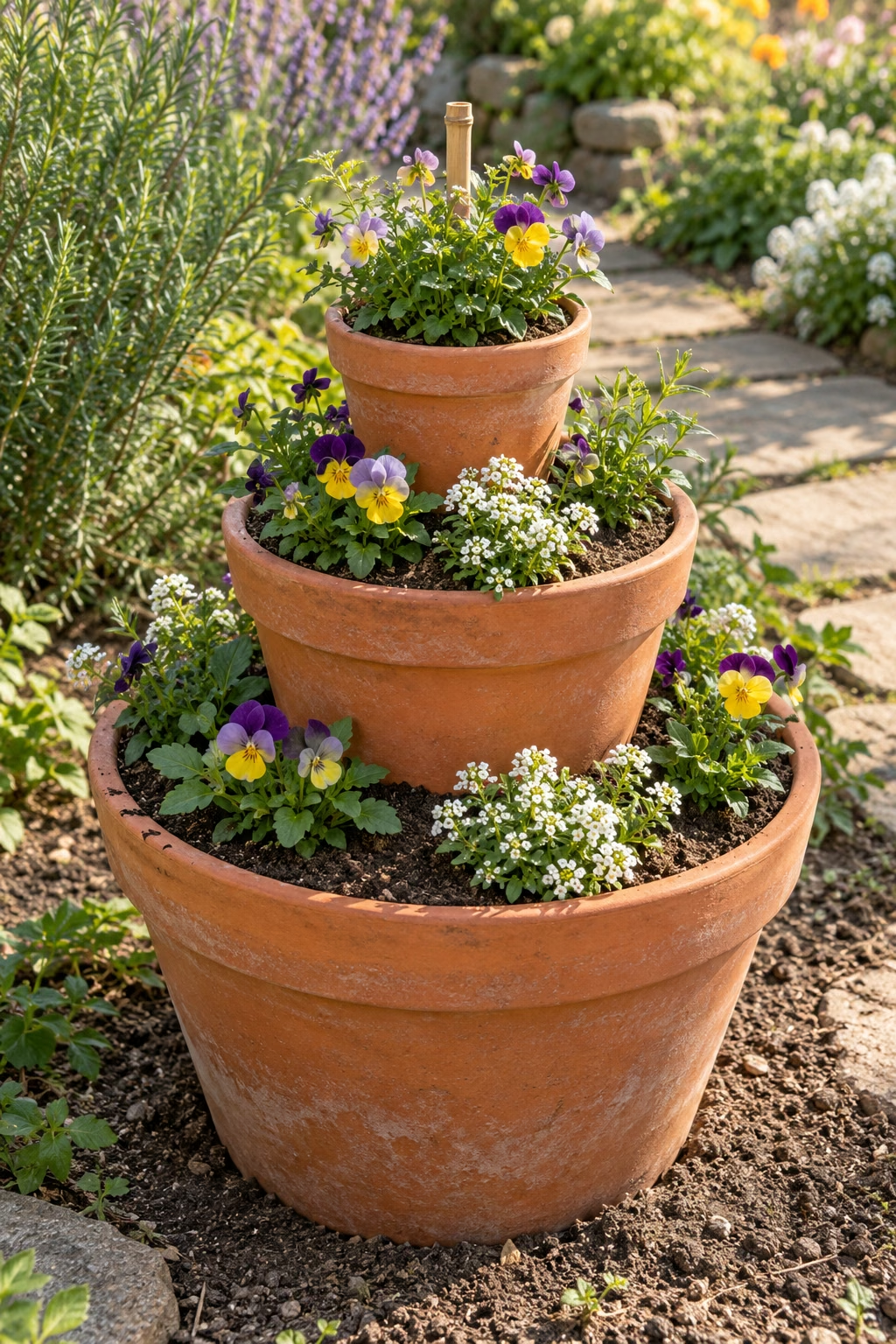
Make a small feature for a sunny corner
Graduated pots can create a compact tower with a ring of planting space at each level. Begin with a broad base pot and progressively smaller pots above it. A low two- or three-tier version is easier to manage than a tall display and needs fewer plants and less potting mix.
For a tower placed on soil, pass a sturdy central stake through the base pot’s drainage hole and anchor it firmly in the ground. Fill the pot, then rest the next smaller pot on the settled mix with the stake passing through its drainage hole. Repeat for a third level, keeping each pot centered and leaving a planting ring around it. A stake held only in loose potting mix does not provide the same anchorage.
Plant each level with compact herbs or flowers suited to its root space and light. Use pots you already own where their sizes work together. Water carefully and check the mix in every tier; runoff from the top does not guarantee that every lower root ball has received enough water.
9. Hang a Two Tier Plant Shelf
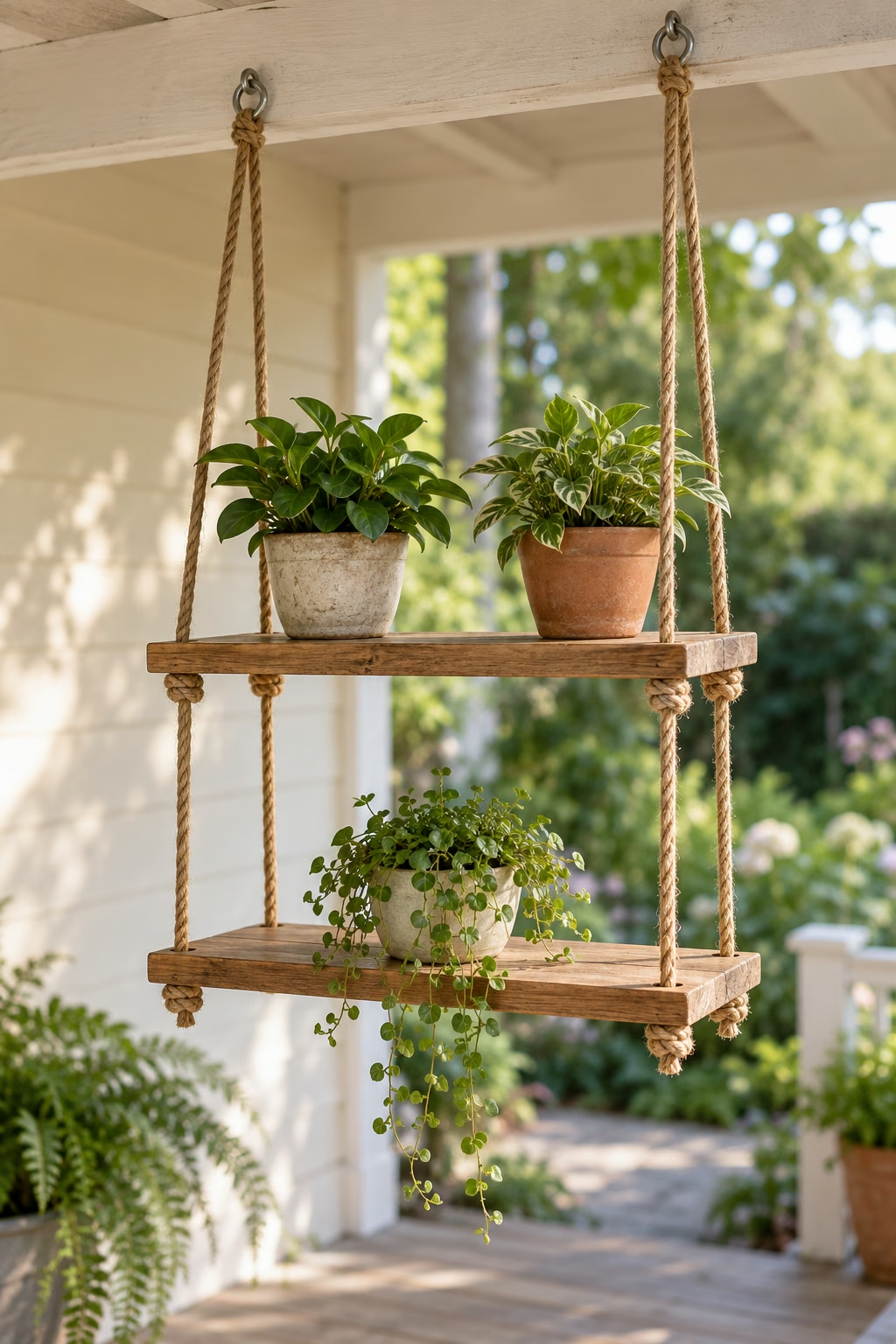
Display a few pots beneath a covered outdoor area
Two small wooden shelves suspended with rope can hold a few potted plants at different heights. Rope passes through holes near the corners, with secure knots supporting each shelf. For a sheltered outdoor version, choose boards, rope, and hardware suited to the conditions.
Keep the shelves short and the pots small. Balance the weight across each shelf and attach the hanger to a sound structural support. A sheltered location helps limit swinging, and a clear space underneath makes watering easier. This is a good project for usable wood offcuts.
Leave enough space above each plant for new growth and your watering can. You can lift the pots down to water them and let excess water drain before putting them back. That keeps routine care straightforward and helps protect the shelf surface.
10. Mount Window Boxes on a Fence
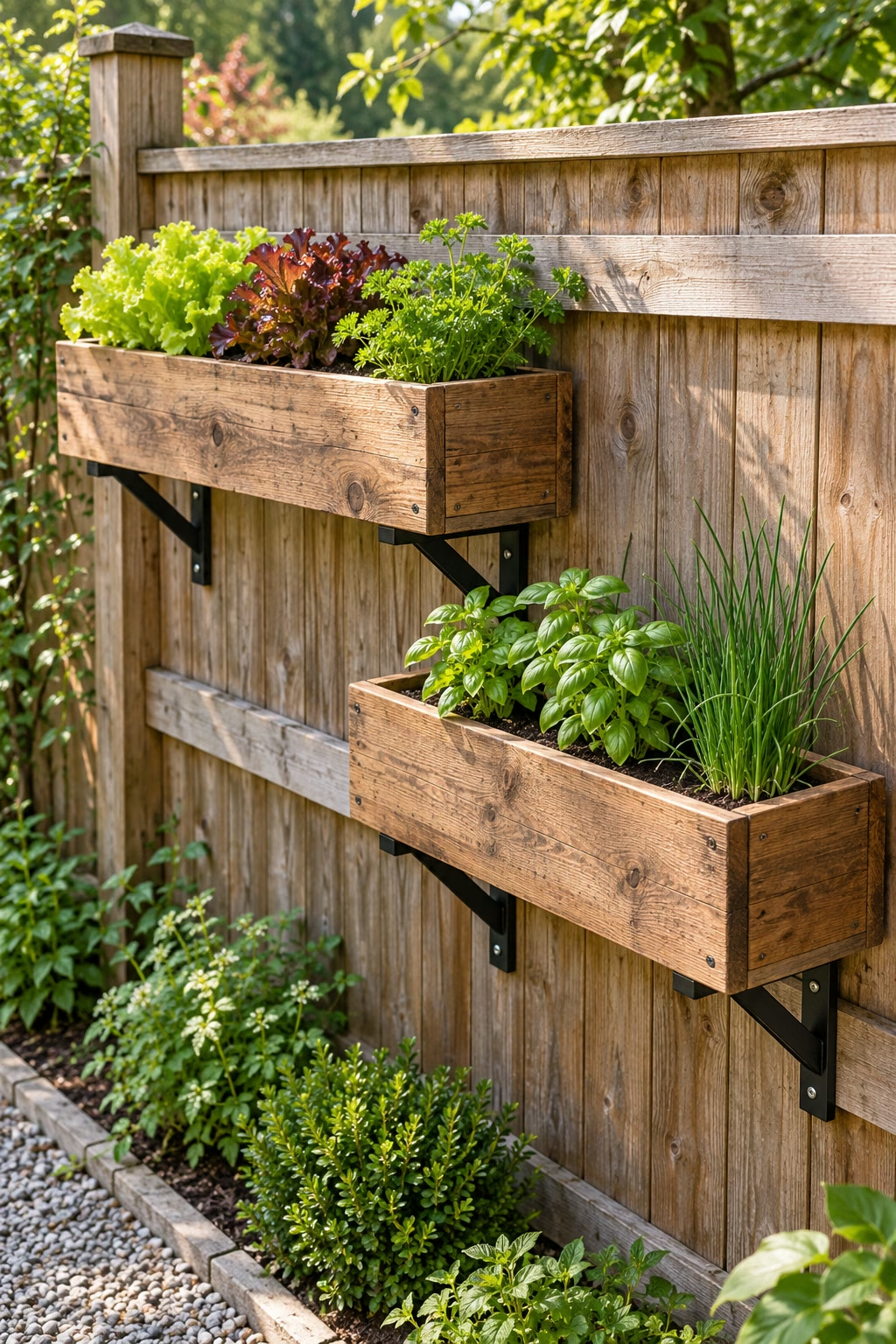
Create generous rows of herbs or salad greens
Window boxes can work along a fence as well as beneath a window. Arrange two short boxes at different heights, offsetting them so the upper planting does not shade the lower one completely. Removable planter-box systems provide useful inspiration because you can take each box down for planting and maintenance.
Use brackets appropriate for the filled boxes and fasten them into sound structural posts or rails. Thin decorative fence boards may be inadequate. Reusing existing boxes can keep the project affordable; building an entire new feature wall adds much more material.
Choose containers with enough depth and total volume for what you want to grow. Salad leaves and compact herbs are practical options, but even small plants need space between them. Keep drainage holes open and leave room to reach the back of each box.
11. Grow Herbs Along a Balcony Railing
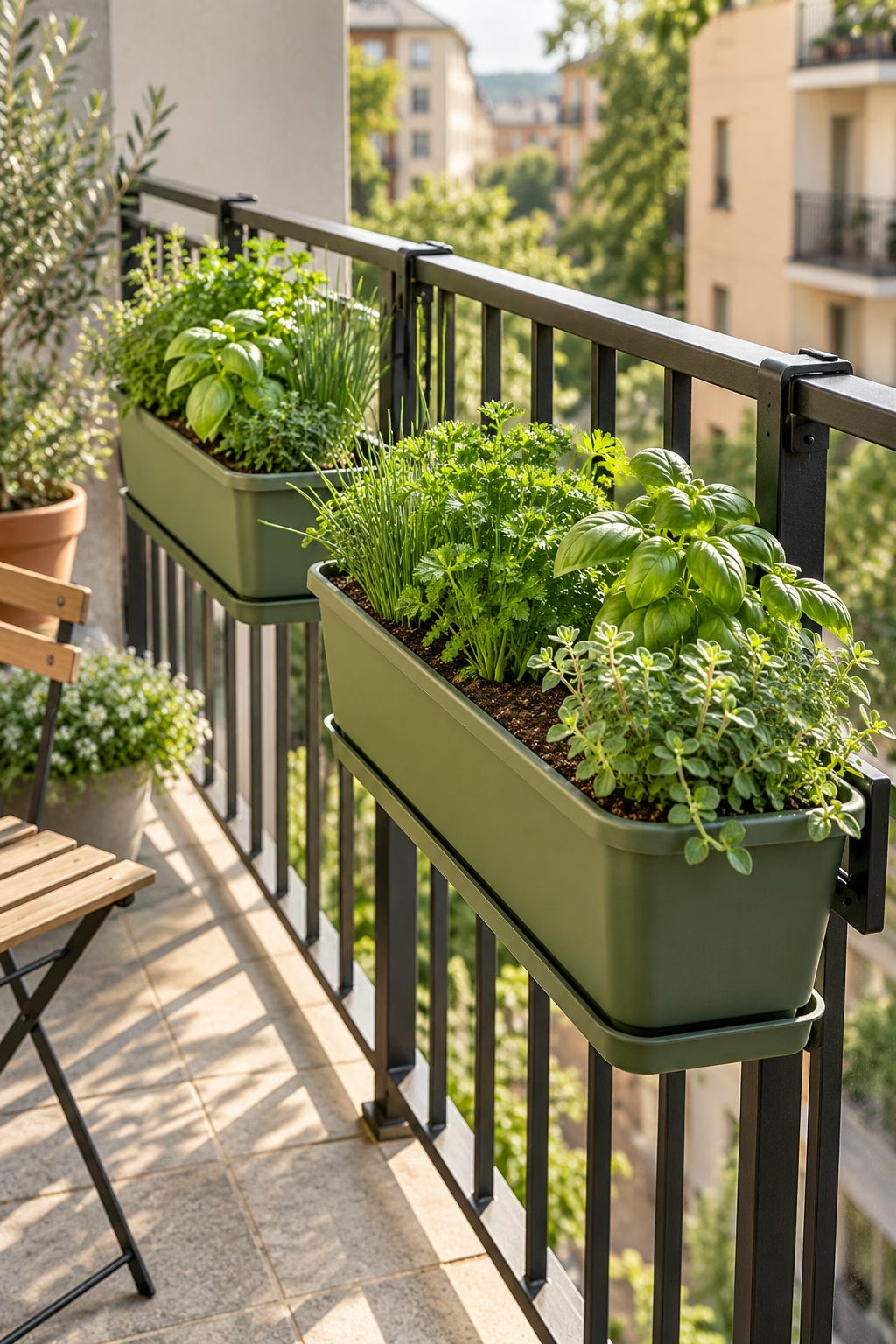
Move part of the garden above floor level
Railing planters can make room for plants while leaving more of a small balcony floor available for a chair or table. Use planters and mounting hardware made to fit the rail, or follow a properly secured wooden saddle-box design. Keep them on the inside of the railing where you can reach them.
A short row of herbs makes an inviting place to pause while you are outside. Start with a few pots in holders, or one manageable box. Reusing containers is worthwhile only when they fit securely and their drainage will not run onto the space below.
Check the site’s sun and wind before choosing plants. Use containers that leave room for mature roots, and verify the allowed loads and planter rules for your building. The hardware is an essential part of the project, so include it when comparing the cost with a freestanding shelf.
12. Hang Baskets at Different Heights
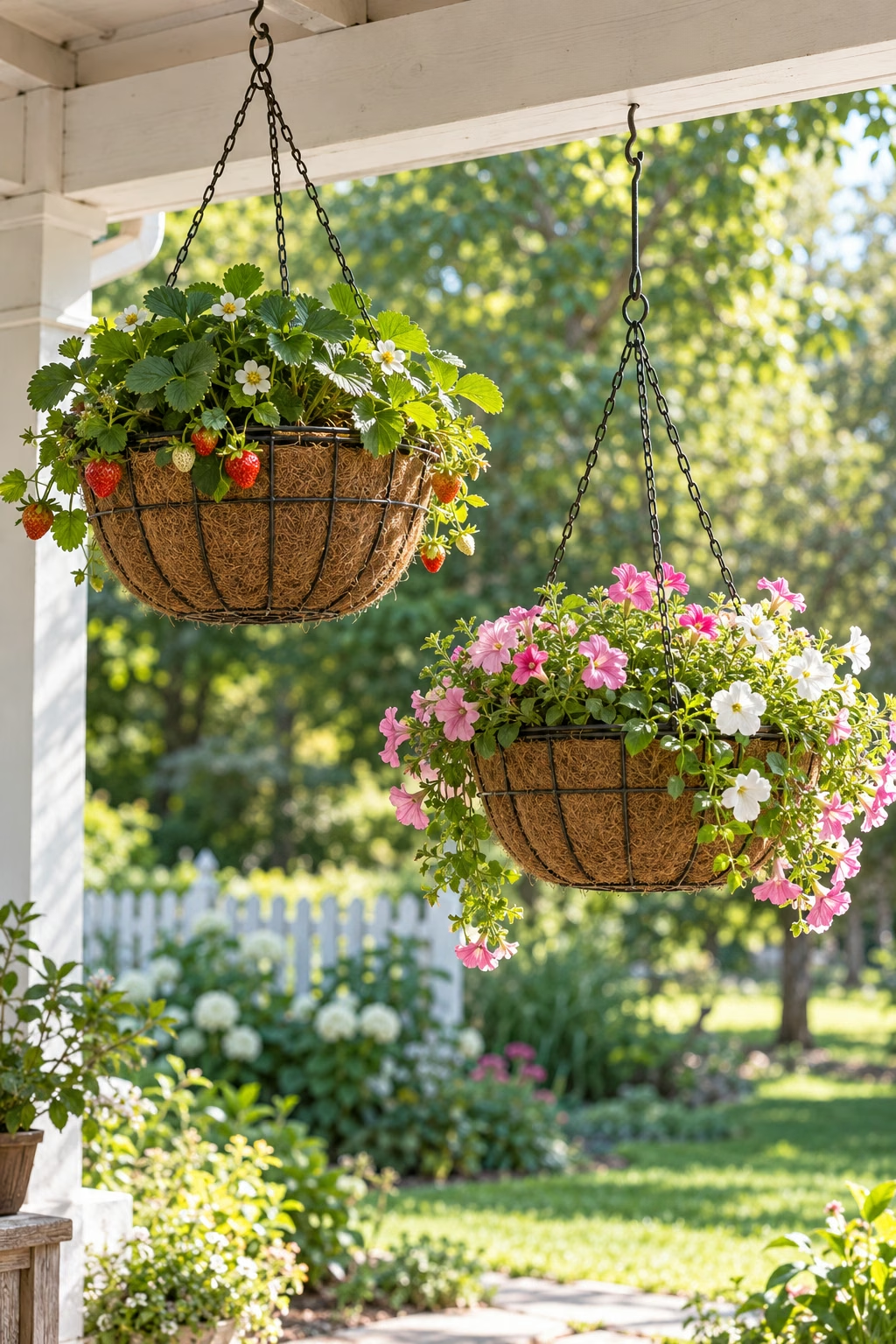
Bring flowers or strawberries within reach
Staggered hanging baskets can fill an empty porch edge with flowers or edible plants. Offset them sideways as well as vertically so they have room for foliage and receive suitable light. Refill baskets you already own with young plants, using sound liners and hanging hardware.
For an edible version, try strawberries in a generously sized basket in a sunny, sheltered position. Set the crowns, where the leaves meet the roots, at the surface of the potting mix. Leave space between plants rather than crowding them for an instant full display.
A basket of trailing flowers is another appealing option if color is your priority. Keep each basket at a height you can comfortably reach. Check moisture often in warm weather, because suspended containers can dry quickly; watering needs depend on the plants and conditions.
13. Frame a Small Succulent Garden
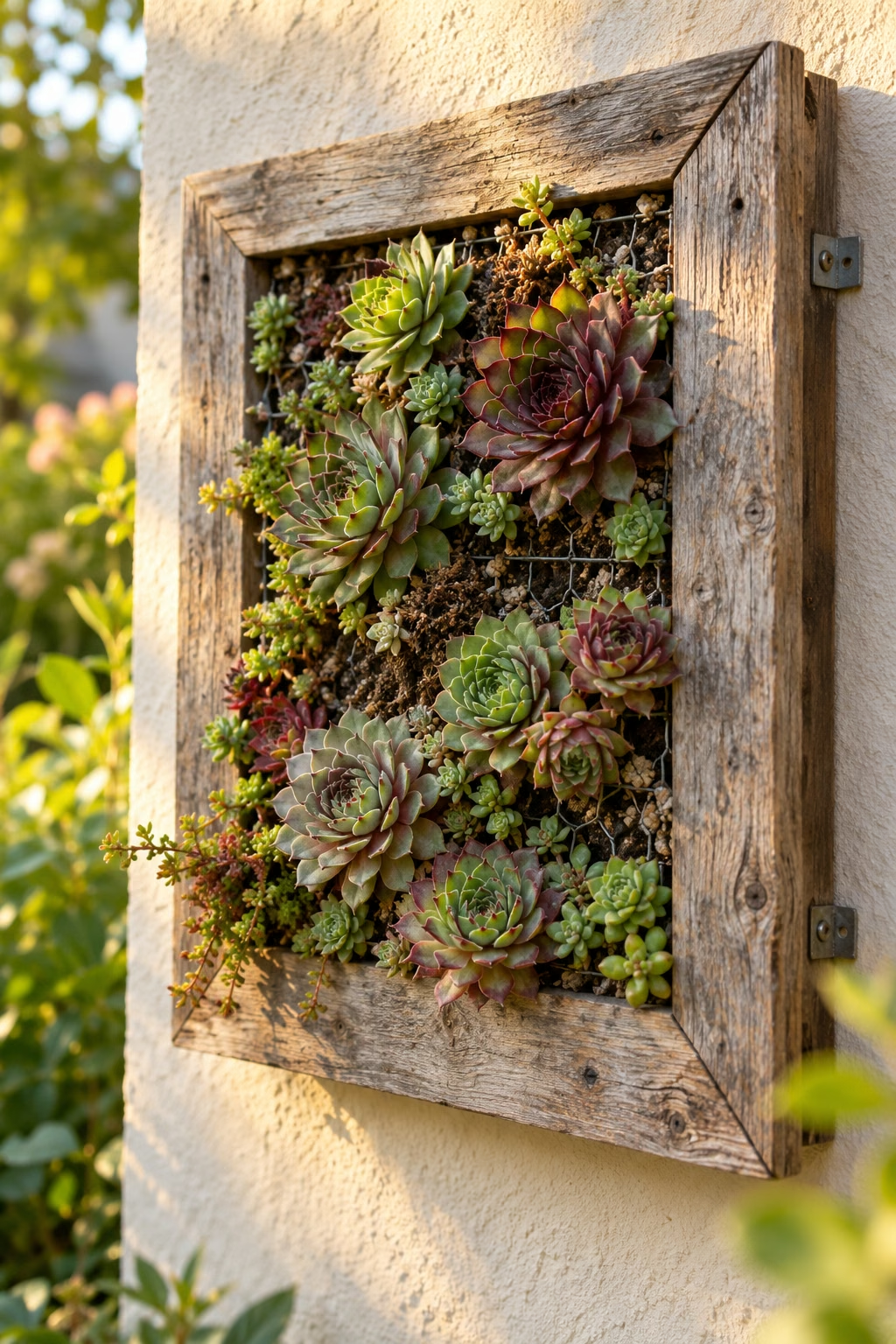
Make a living picture with a few existing plants
A small succulent frame gives a plain wall an interesting focal point. Attach a shallow planting box behind a sound wooden frame, with retaining mesh across the front and drainage in the design. ABC Gardening Australia demonstrates this project using salvaged materials and succulent cuttings.
Keep the frame small if budget is the priority. Buying enough plants to fill a large frame can cost more than the frame itself. Healthy offsets from suitable plants you already own can make a modest version much more affordable.
Use plants with similar light and watering needs. Keep the planted frame flat until roots have established enough to hold the plants, which may take several weeks. Mount it where you can take it down to water, then let it drain before rehanging.
14. Make a Bamboo Tripod for Pole Beans
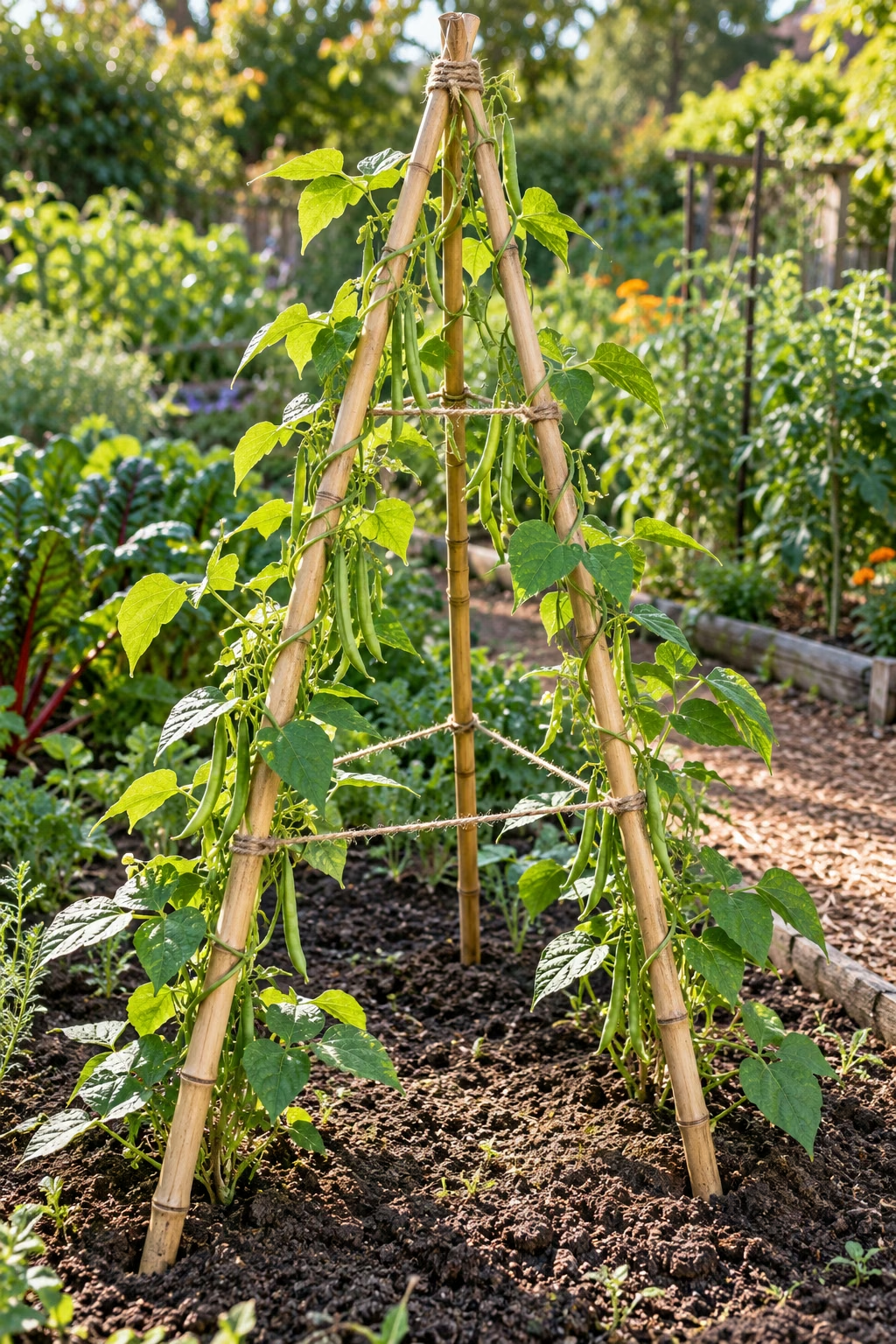
Grow a climbing crop with a few canes
A bamboo tripod adds height to a small vegetable bed with very little construction. Set sturdy canes firmly into the ground in a broad triangle and tie their tops together. Add more canes if the planting needs a wider support. A few horizontal runs of garden twine can provide additional places for vines to catch.
Choose pole beans, which climb by twining around their supports. Install the tripod when you plant so you can position it without disturbing established roots. Check the variety’s expected height and make the support substantial enough for the mature vines.
This is a sensible first project when you already have canes and a patch of suitable soil. You can grow the beans from seed and reuse sound poles in later seasons. Place the tripod where you can reach around it to harvest.
15. Use Pruned Branches as a Pea Trellis
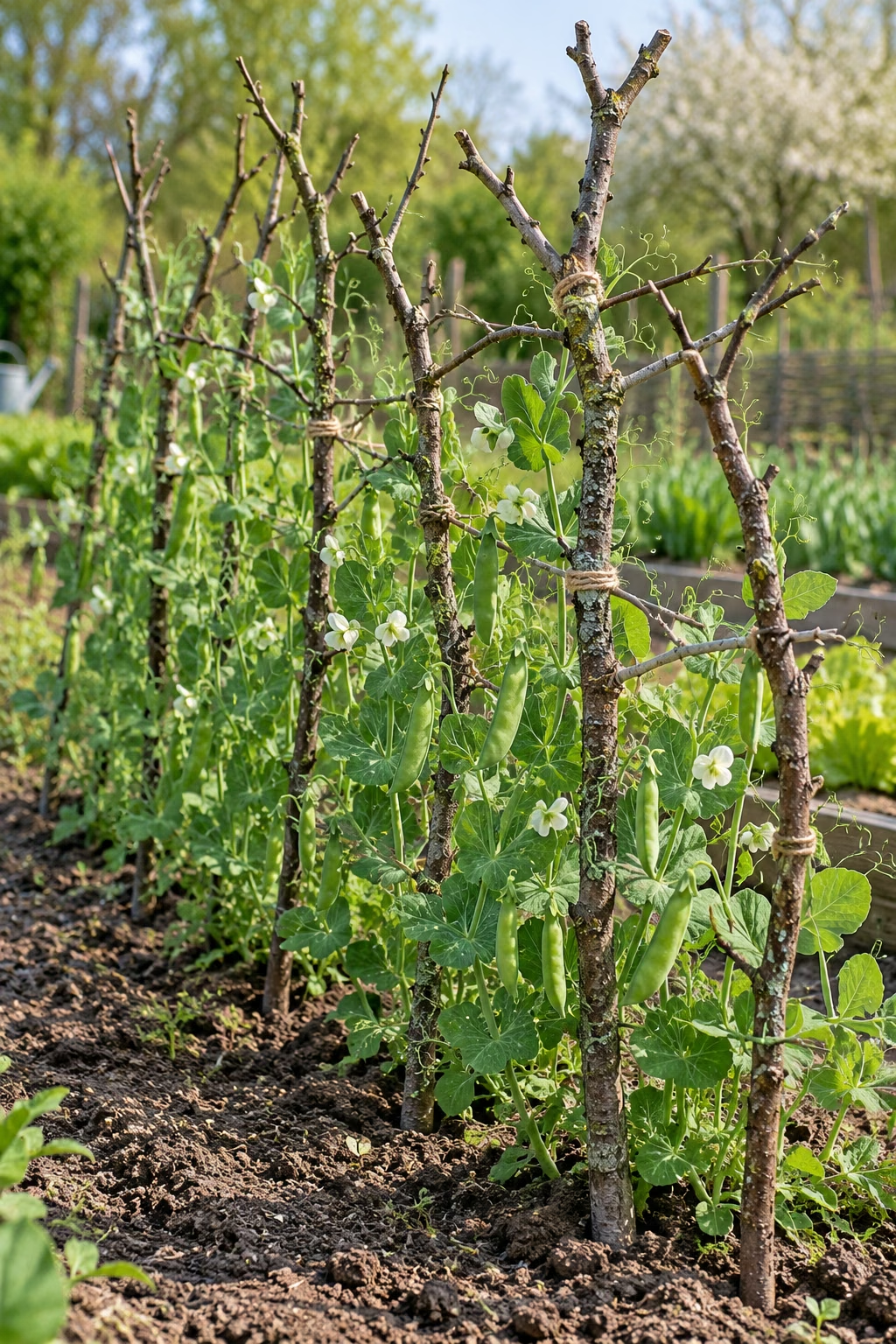
Turn suitable garden prunings into a seasonal support
Branched sticks have a relaxed look that fits easily into a vegetable bed. Push sound, twiggy branches firmly into the soil along the planting row, overlapping smaller branches so the peas have places to grip. Tie loose sections together where needed. Pruned branches are an established material for homemade climbing supports.
Choose edible garden peas, such as climbing snap or snow peas, and match the trellis height to the variety. These are cool-season crops, so use local planting guidance to avoid having their main growing period fall in intense heat.
The main saving is simple: useful prunings replace a bought support. Select branches that are strong enough for the crop and free of obvious disease. Keep sharp projecting ends away from paths, and replace brittle pieces before the vines grow through them.
16. Build a String Trellis Along a Narrow Bed
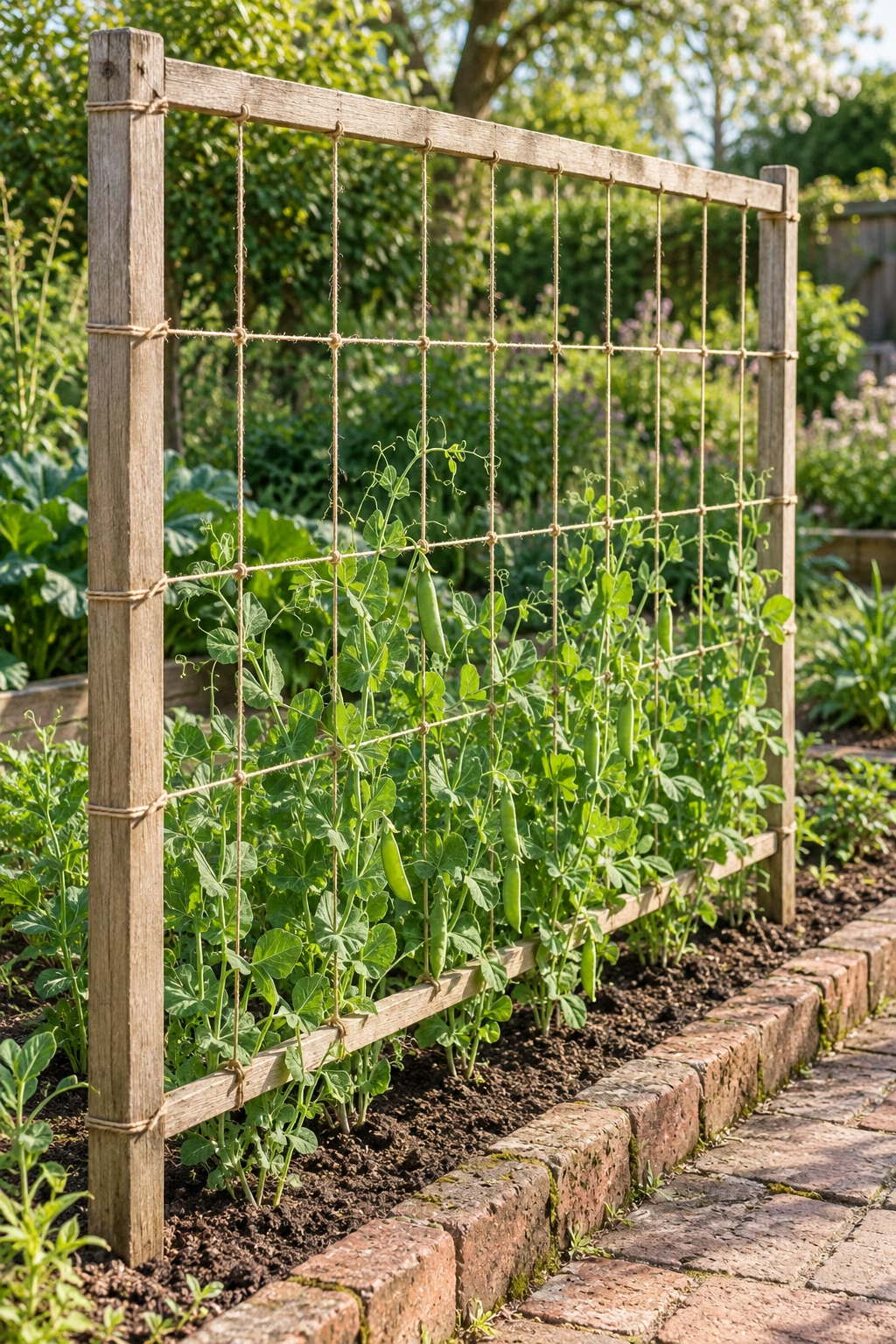
Make a row support you can take apart after harvest
A straight frame of canes or timber can be sized to fit a narrow planting row. Run garden twine between upper and lower crosspieces to make a simple pea trellis. This gives you a more regular layout than twiggy branches, and you can build it from sound materials already on hand.
Keep the strings taut and anchored at both ends. Add crosswise runs where the chosen plant needs more places to grip. The frame carries the crop’s weight, so secure it before growth begins. Choose outdoor garden twine that is strong enough to last through the growing season.
This approach leaves the roots in the ground or in a suitable container, so there is no wall of pots to build. It is also easy to take apart at the end of the season. Inspect the twine and ties as the crop gets heavier.
17. Build a Folding A Frame for Cucumbers
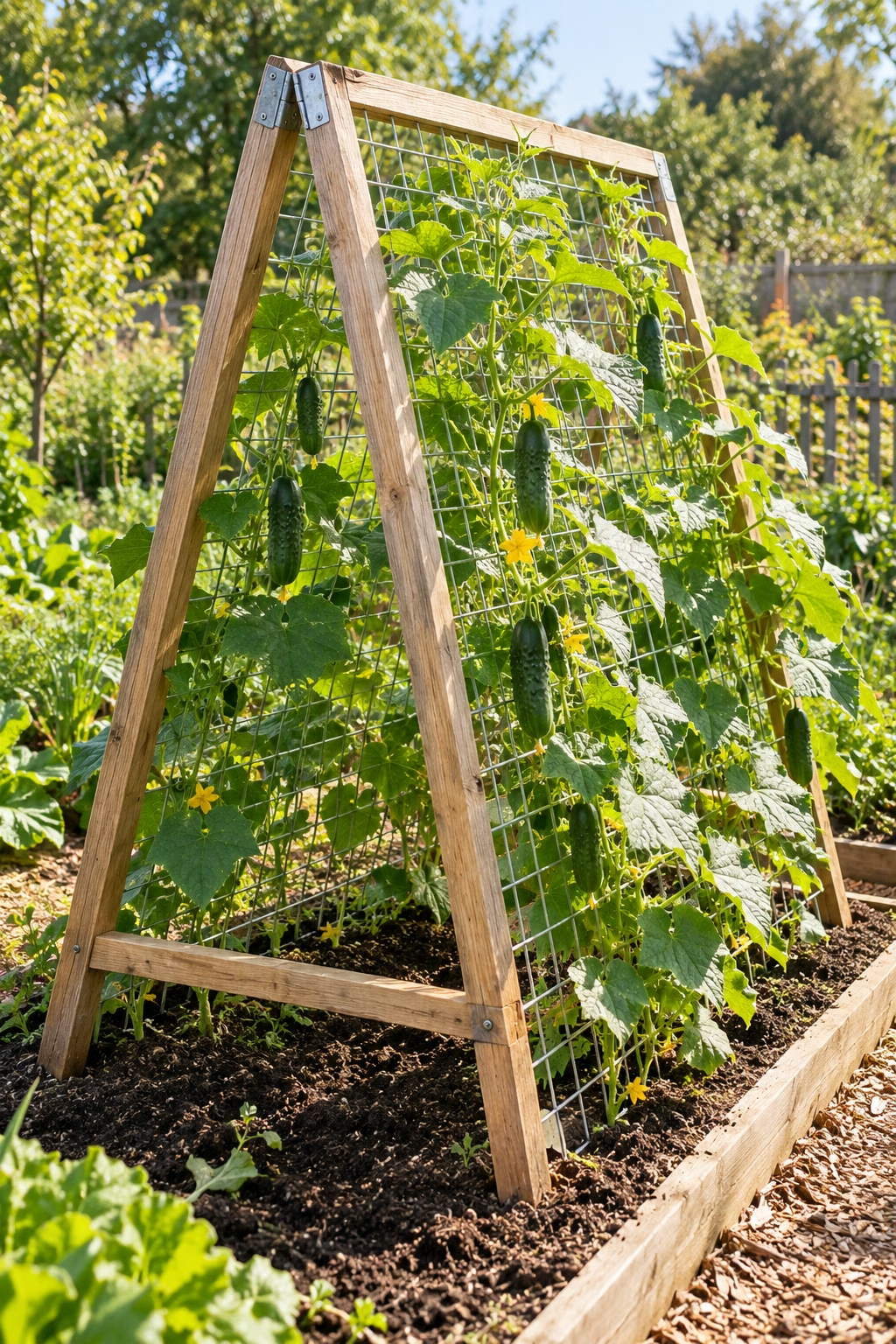
Keep climbing vines within a manageable footprint
An A-frame gives climbing plants two sloping surfaces and folds away when the season ends. Join two sturdy trellis panels with hinges at the top, then add a brace or restraint that prevents the legs from spreading. Reused mesh and sound timber can reduce the material cost.
Choose a vining cucumber variety and guide young growth toward the support. Trellising can save ground space and keep developing cucumbers off the soil. Shorter bush varieties behave differently, so read the plant label before buying seeds.
Position the frame so you can reach both sides for harvesting. Anchor it securely, and size the structure for the mature crop rather than the seedlings. This is a useful step up from a light pea trellis when you need a stronger seasonal support.
18. Add a Lattice Panel to a Large Planter
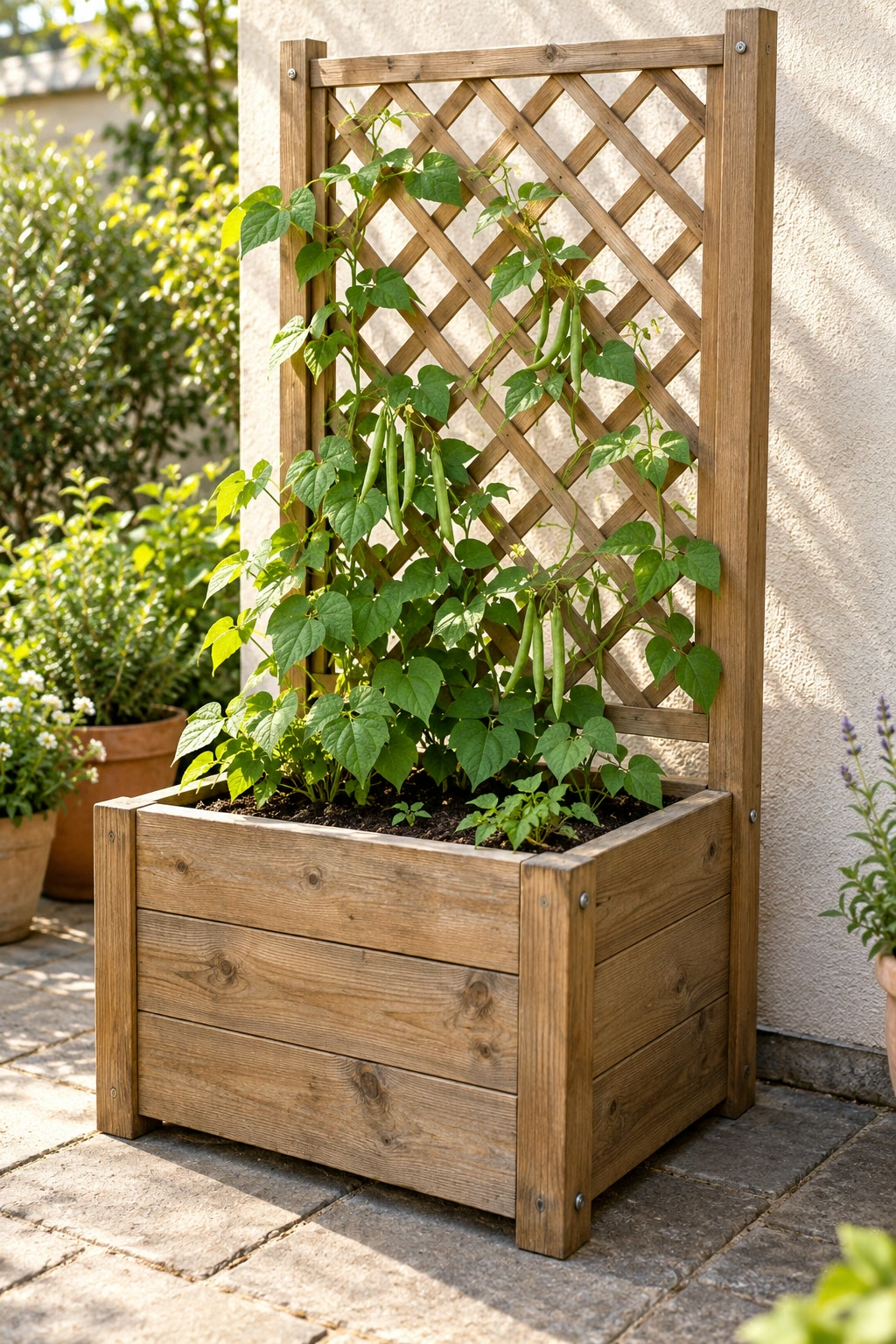
Create a climbing garden on a patio
A large container with a lattice panel behind it can make a small climbing garden where there is no ground to plant into. Reuse a sound section of lattice if you have one. Fasten it to a stable frame or substantial planter structure, accounting for the extra pull from wind once the foliage fills in.
For an edible option, choose a suitable climbing pea, bean, or cucumber variety. The roots still need generous space even though the stems grow upward. For example, the University of Maryland lists five gallons as a minimum container volume for cucumber; a larger container gives more margin for roots and watering.
If you reuse a bucket, choose food-grade material with a known suitable history and add drainage. Do not use containers that held paint, cleaning products, or other chemicals. Place the whole arrangement where the chosen crop receives enough direct sun.
19. Turn an Existing Wire Fence Into Growing Space
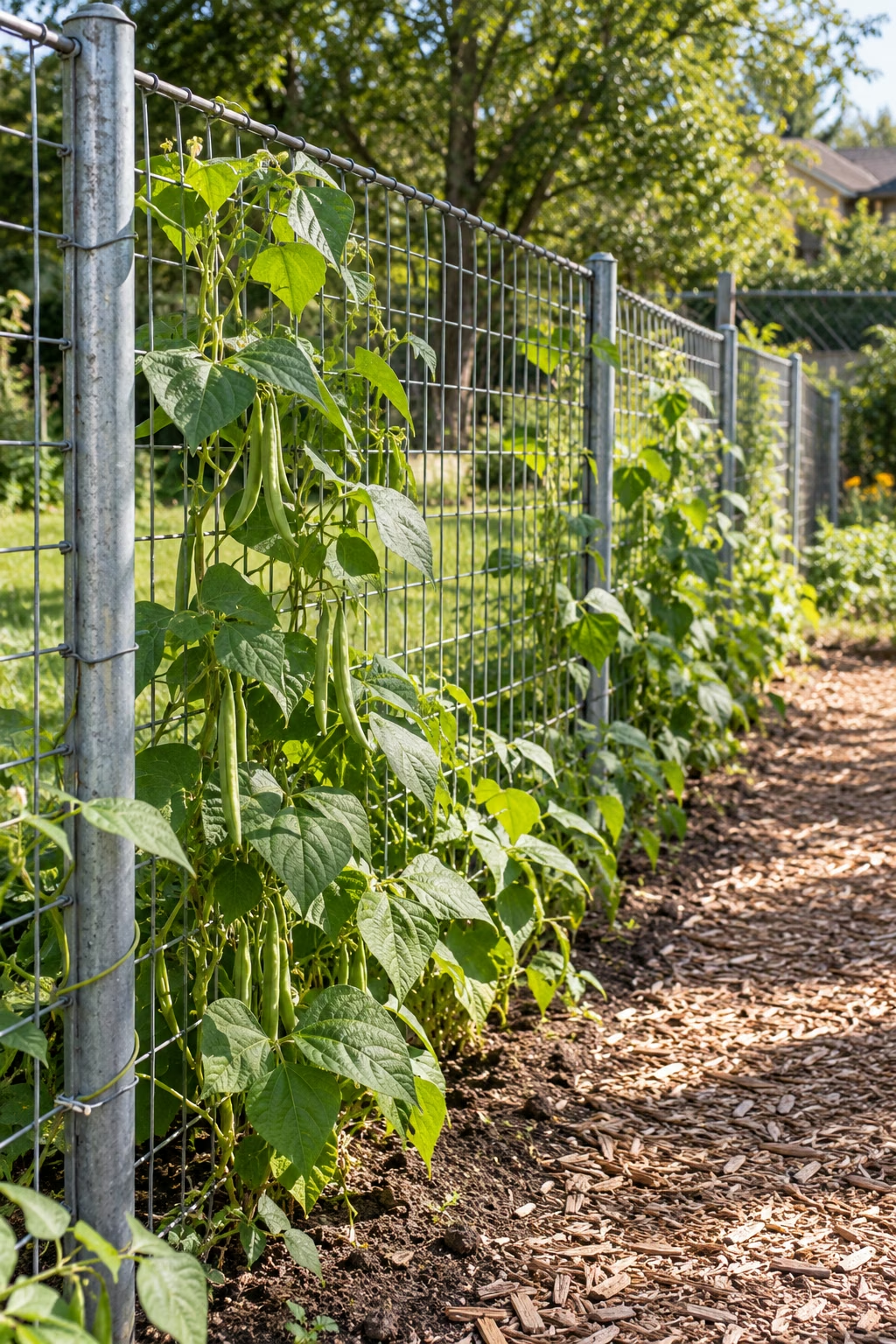
Use a support that is already in place
An existing wire fence may be the least expensive starting point in the garden. If it is yours to use, sound, and in a suitable position, plant a climbing crop along it and guide the young growth onto the mesh.
Pole beans, climbing peas, or vining cucumbers are possibilities. Choose a crop that fits the fence’s height, strength, and sunlight. A sturdy boundary fence can support a very different plant from a light decorative panel, so judge the actual structure.
Leave room to reach the plants and collect the harvest from your side. Follow the seed packet’s spacing instead of sowing an extra-dense row for quick coverage.
20. Reuse a Tomato Cage in a Large Container
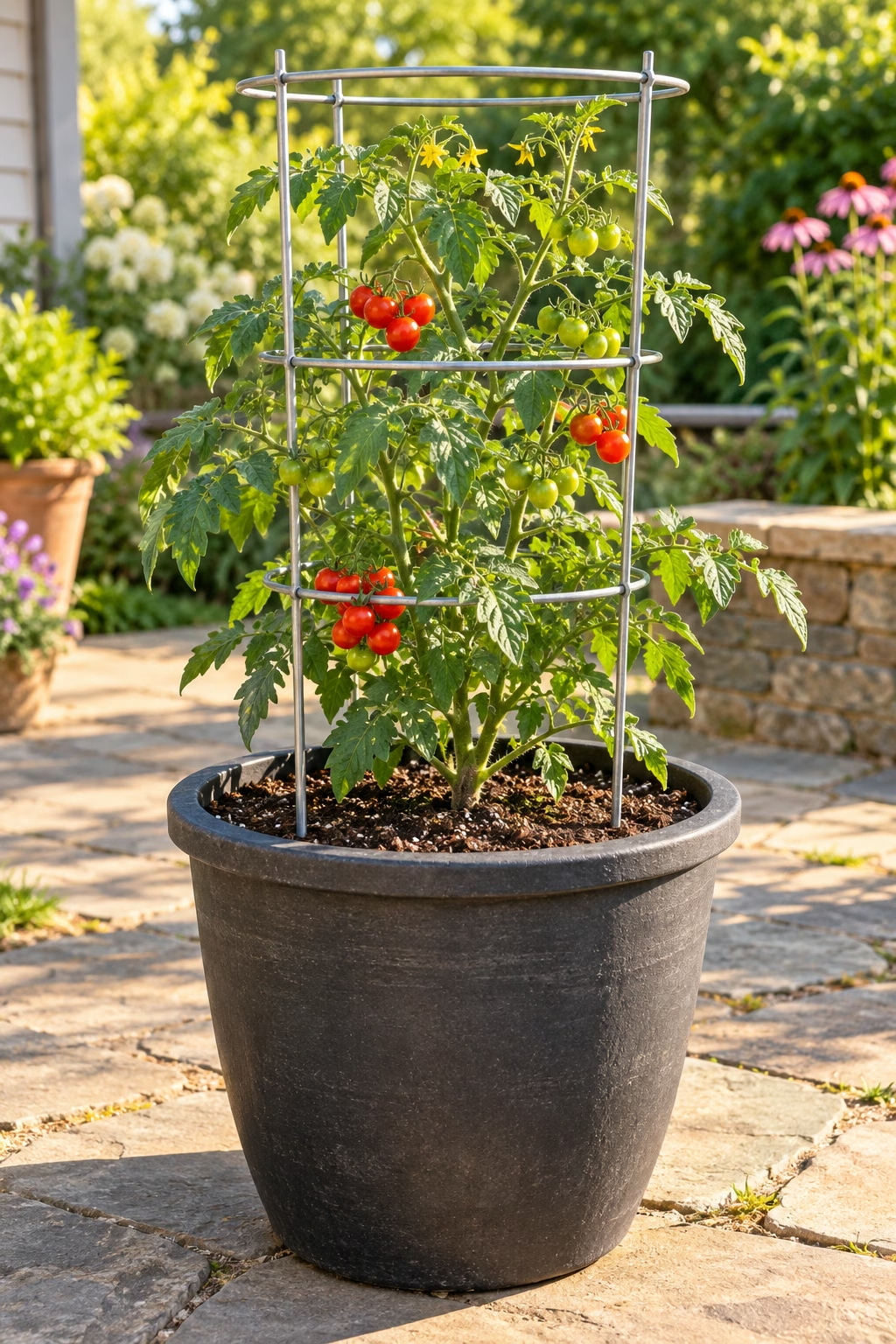
Keep a compact tomato upright
A spare tomato cage and a correctly sized pot can create a productive little garden on a sunny patio. Choose a compact tomato variety and a cage that can support its mature size. Small cages are useful for modest plants, but they are not strong enough for every large tomato or vigorous vine.
Set the cage in place at planting time, making sure it is firmly supported. Guide developing branches within the cage while they are still easy to handle. The rings support the plant as it grows; tomatoes do not cling to a trellis in the same way that peas do.
For one compact patio tomato, a 5-gallon or larger container is a practical starting point; check the variety’s own growing guidance. Larger plants need more room. Keep the pot on a stable surface and leave enough space around the cage to pick ripe tomatoes without damaging branches.
21. Make a Garden Arch From a Reused Cattle Panel
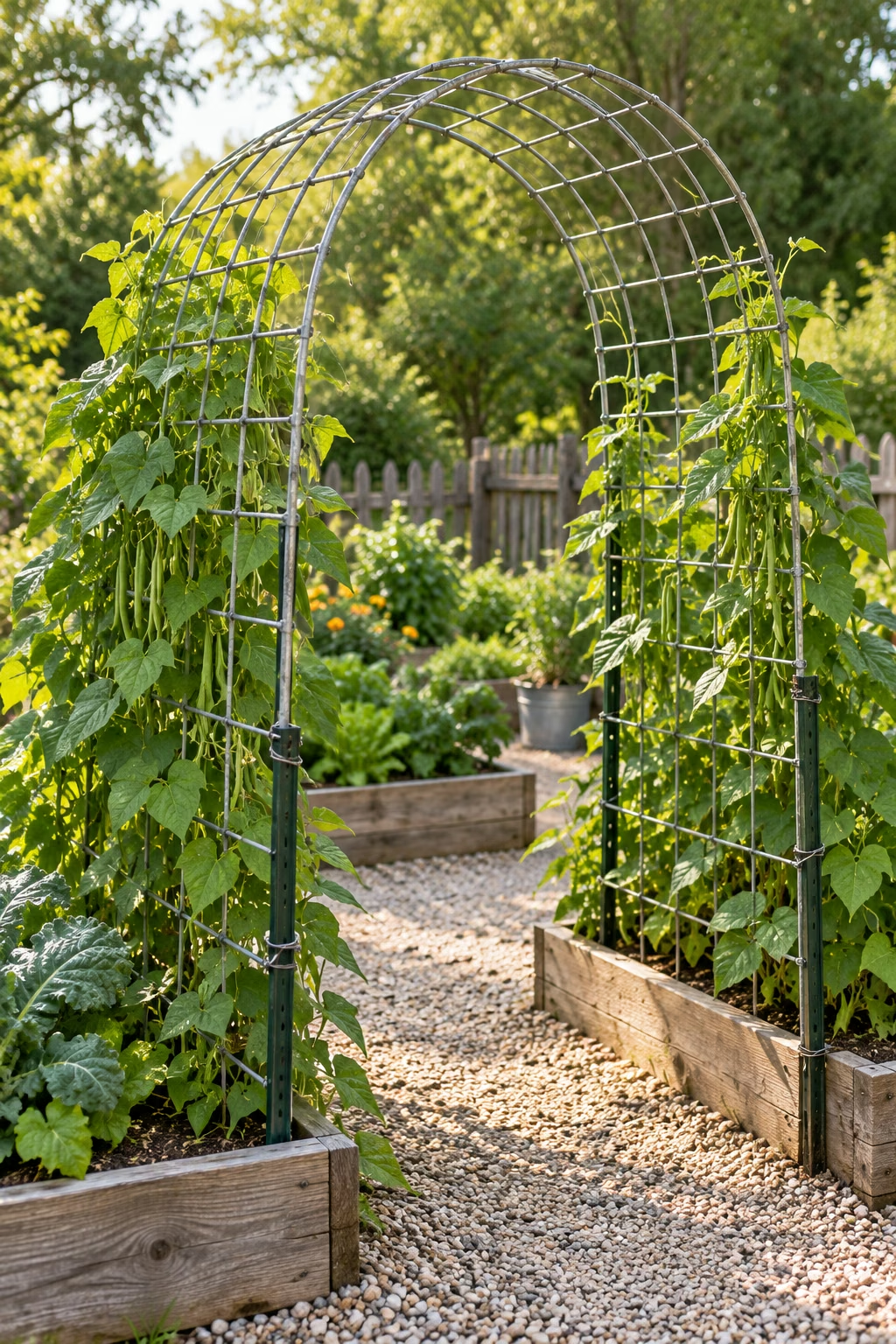
Put a larger salvaged support to work
If you already have a sound cattle panel, or can find one locally for little cost, an arch can turn a short garden path into growing space. This is the larger project on the list. Its budget appeal depends on the panel, posts, transport, and fasteners you would need; price those together before committing.
Bend a suitable panel into an arch and secure both sides to firmly installed supports with appropriate outdoor fasteners. Allow comfortable walking clearance and room for future foliage. Growing in the Garden documents cattle-panel arches between raised beds and notes that panels can be awkward to transport and install.
Climbing beans can make an attractive planting along the sides. Keep the crop manageable and the path accessible as the vines develop. When the right materials are already available, the arch adds a substantial garden feature without buying a decorative arbor.
How to Choose Budget Friendly Vertical Garden Ideas
Choose the setup that matches both your space and the useful materials you already have. These are straightforward starting points:
| What you have | Ideas to start with | Why they fit |
|---|---|---|
| A few pots and a sheltered corner | Ladder shelf or wooden bookcase | Arrange existing plants in tiers. |
| A narrow wall or fence | Wire-grid pots or a small pocket planter | Add planting spaces above the ground. |
| Garden prunings, canes, or twine | Branch trellis, bamboo tripod, or string frame | Keep the roots in a bed and reuse simple supports. |
| A sunny patio with no planting bed | Large planter with lattice or a compact tomato cage | Give an edible plant enough root room and support. |
| Existing hanging baskets | Staggered flowers or strawberries | Refresh the baskets with suitable young plants. |
Keep the Ongoing Costs Manageable
Begin with one small setup so you can see how the light and watering work before buying more plants. Use suitable divisions or cuttings from healthy herbs you already grow, where the plant allows it. RHS guidance includes dividing herbs such as mint, oregano, and thyme as ways to raise more plants.
Check small containers regularly during active growth. In hot weather, daily checks may be needed, but that does not mean every pot needs water every day. Feel the potting mix and respond to the plant’s needs. Pots sheltered by walls or eaves may still need attention after rain.
Leave space for roots and mature foliage, and feed container plants as needed for the crop and potting mix. A larger display is only useful if you can keep it growing well. With these budget friendly vertical garden ideas, you can start with a few useful materials, enjoy the first plants, and add another level when you are ready.