
Step out the back door at the end of a long day and hear water trickling into a stone bowl. Pale gravel crunches under your feet, a maple casts soft shade, and the noise of the street seems to fade. That’s the kind of backyard that helps you breathe a little slower.
A zen backyard isn’t about copying a temple garden or buying a pile of decor. It’s about calm: fewer things, natural materials, gentle sound, and places that invite you to sit, stretch, soak, or simply look. Because the style leans on gravel, stone, and a handful of well-chosen plants, it often costs less and needs less upkeep than a lawn filled with flower beds.
These 21 zen backyard ideas cover water features, minimal gravel courtyards, soft night lighting, meditation decks, spa-style soaking and shower spots, quiet plantings, and small finishing touches. Pick one project for this weekend or combine several into a full backyard retreat.
1. Build a Bamboo Spout Fountain Over a Stone Basin
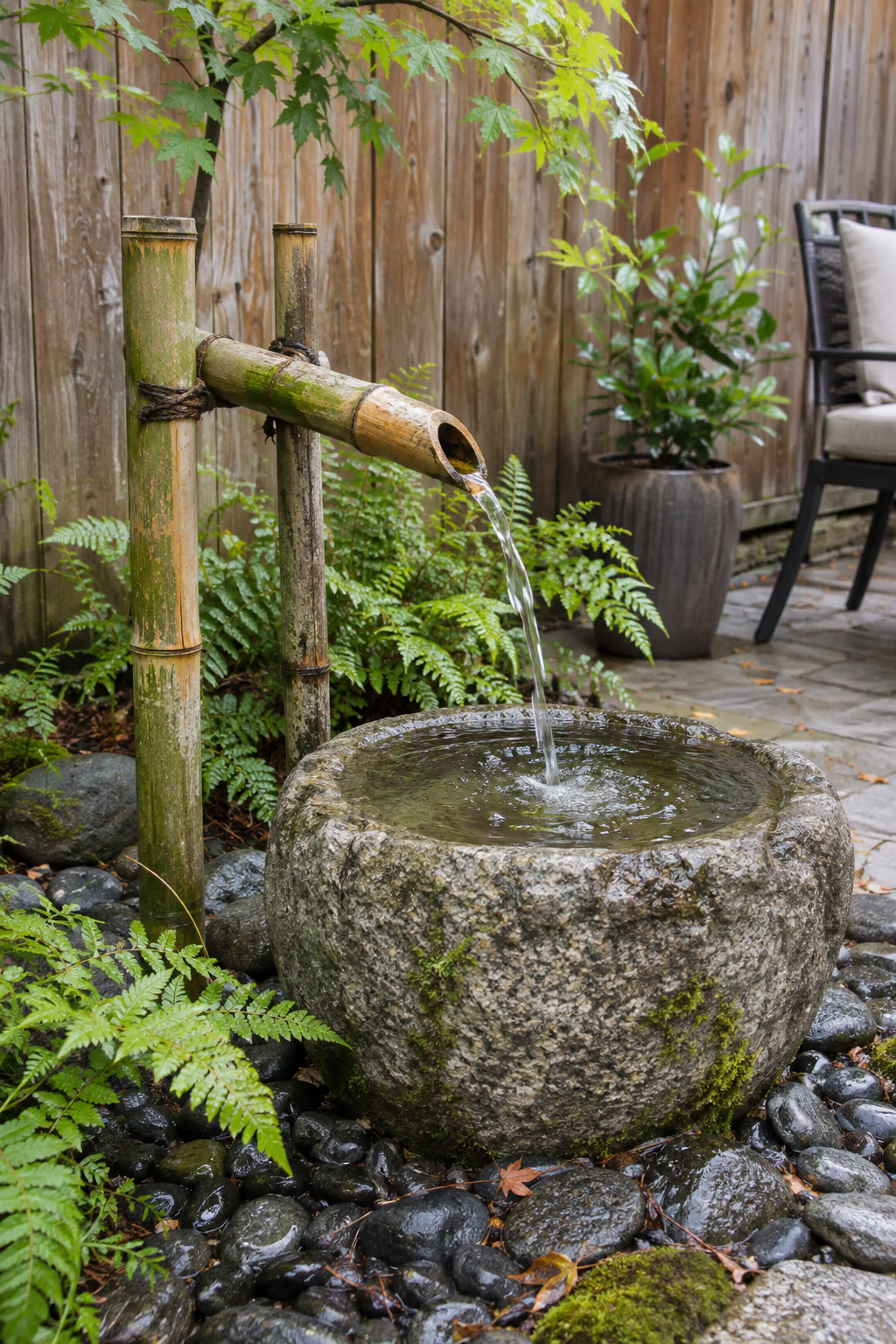
The gentle sound that sets the whole mood
A bamboo spout pouring a thin stream into a stone basin is one of the simplest ways to bring water into a zen backyard. The basin sits on a bed of river rock, and underneath is a buried plastic reservoir holding a small submersible pump. A tube runs up through the bamboo, the water spills into the bowl, overflows into the rocks, and drains back down to be pumped again.
The steady trickle masks traffic and neighbor noise without being loud, and it draws birds in for a drink. A basin around 16 to 24 inches across looks right beside a patio or at the end of a path.
The pump needs a GFCI-protected outdoor outlet, so plan the location near power or hire an electrician to add one. Top up the reservoir during hot spells, and in freezing climates drain the system and bring the pump indoors for winter.
2. Lay a Modern Courtyard of Square Pavers in White Gravel
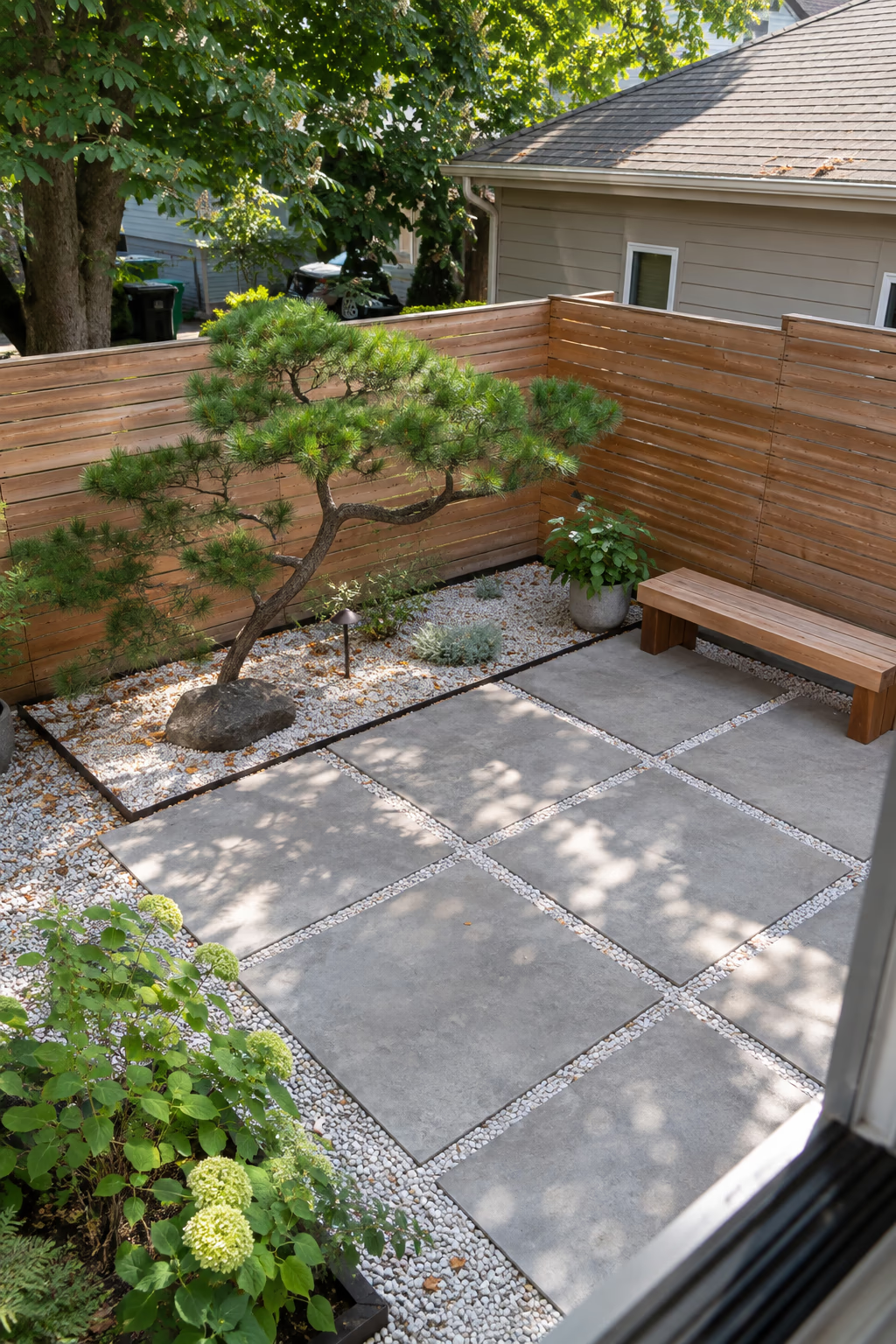
Clean lines that feel calm right away
Large square pavers, roughly 24 by 24 inches, set in a grid with 4- to 6-inch gaps filled with white or light gray gravel, create a crisp courtyard that feels both modern and peaceful. Smooth gray concrete, bluestone, or porcelain pavers all work. Add one low bench and a single sculptural plant, and the space is done.
The appeal is restraint. A repeating pattern and a pale, uniform surface give the eye somewhere to rest, and the gravel lets rain soak in instead of running off a solid slab.
Build it on a compacted base of crushed stone, set each paver level on a bed of screenings, and use steel or aluminum edging to hold the gravel in place. Light gravel shows leaves and dirt, so a leaf blower on low becomes a regular tool.
3. Light the Garden at Night With Lanterns and Low Glow
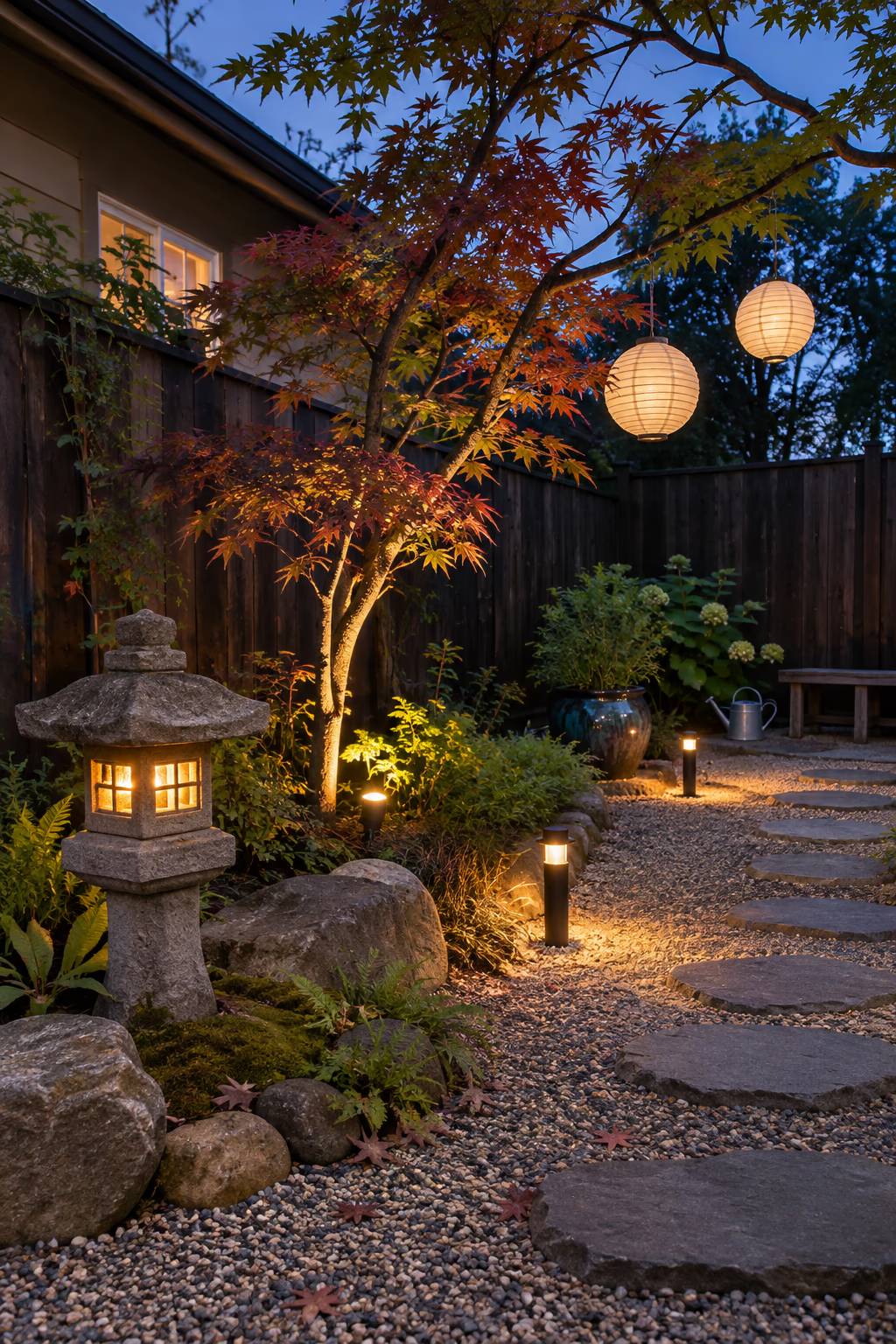
A soft evening atmosphere that invites you outside
Zen gardens look their best at dusk when the lighting stays low and warm. Set a stone or metal lantern near the water feature, tuck a few small uplights under a tree, and line the path with short bollards that wash light across the ground rather than into your eyes.
Choose warm white LED fixtures around 2700K and keep the light levels gentle. Pools of light separated by shadow feel restful, while a fully lit yard feels like a parking lot. Glowing orbs or paper-style outdoor lanterns hung from a branch add a quiet focal point.
A low-voltage system with a transformer and timer is safe for DIY and easy to expand. Solar lights cost less up front but often dim on cloudy days and in winter, so use them as accents rather than relying on them for path safety.
4. Dig a Small Koi Pond With a Stone Viewing Edge
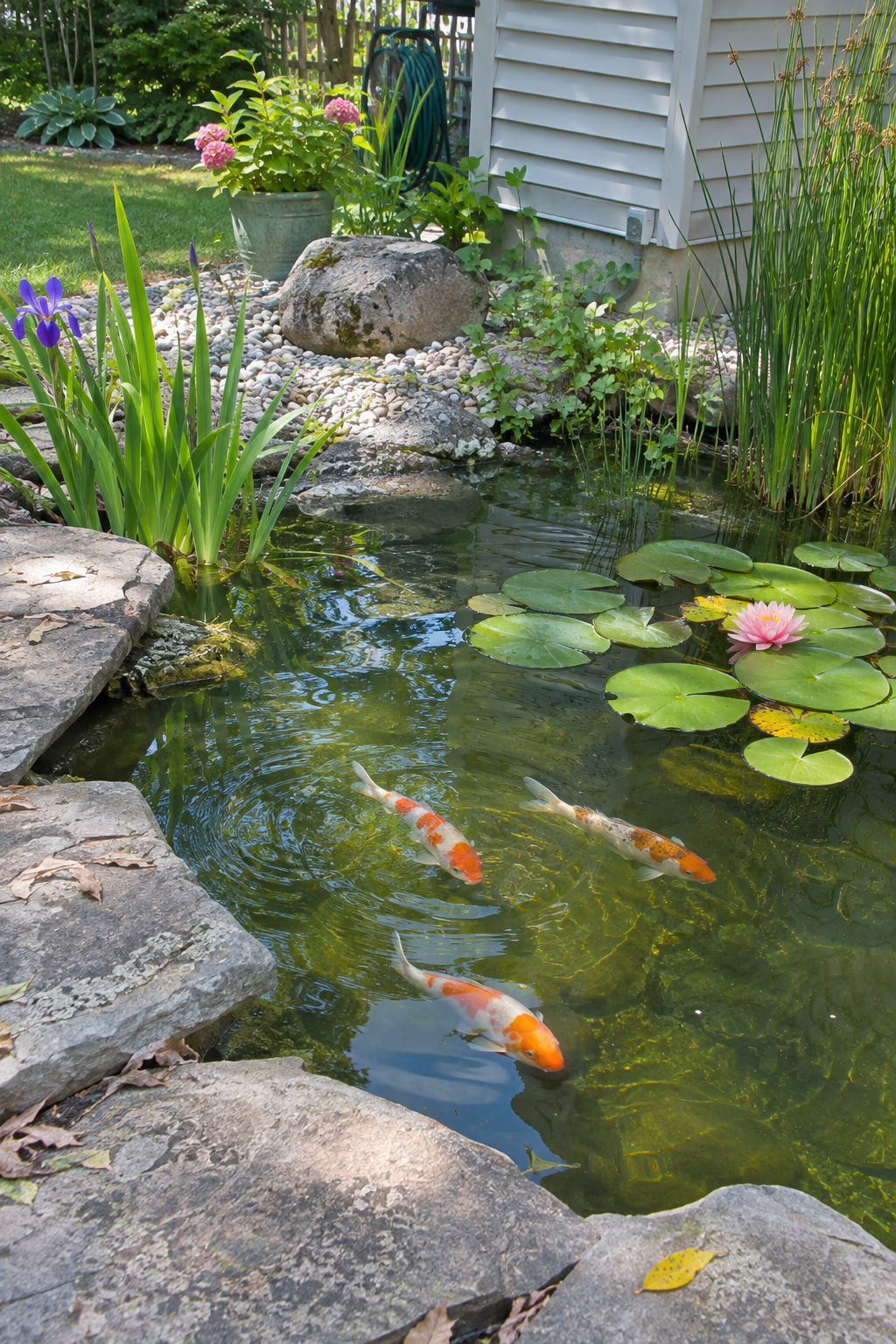
Slow-moving color you can watch for hours
A small pond stocked with a few koi or goldfish gives a zen backyard life and movement. Build the pond with a flexible rubber liner, a mechanical and biological filter, and a pump, then edge it with flat stones that hang slightly over the water so you can sit or crouch at the edge to watch the fish.
Koi need room. Plan on roughly 1,000 gallons or more for a few koi (goldfish are happy in smaller ponds) and a depth of 3 feet or more in cold-winter areas so they can rest below the ice. Water lilies and a few marginal plants provide shade and help limit algae.
Ponds take steady care: filter cleaning, water testing, and netting against herons and raccoons. Many towns treat ponds deeper than 18 to 24 inches like pools when it comes to fencing, so check local rules and your HOA before you dig, and call 811 first.
5. Build a Low Meditation Deck Surrounded by Gravel
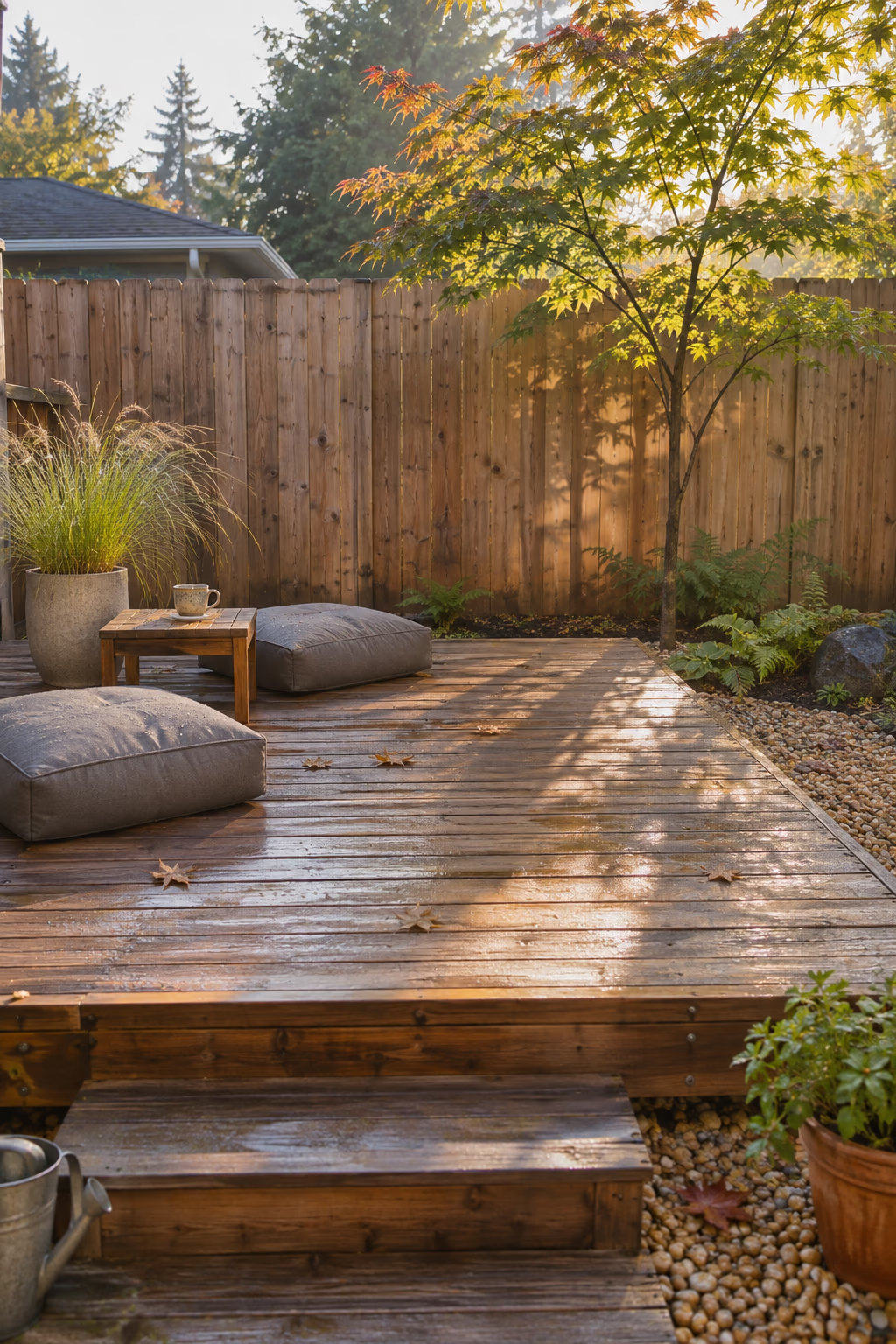
A dedicated spot to sit, stretch, and breathe
A small platform deck, about 8 by 8 or 10 by 10 feet, gives you a clean, level surface for morning stretches, meditation, or a cup of coffee. Build it just a few inches off the ground on deck blocks or a simple frame, and surround it with a band of gravel so it appears to float.
Cedar, thermally modified wood, or composite boards keep the look natural. A couple of floor cushions, a low side table, and a potted plant are all it needs. Place the deck where it faces your best view, whether that’s a tree, the fountain, or open sky.
Low freestanding decks often don’t need a permit, but rules vary, so ask your building department. Leave gaps between boards for drainage, and choose a shaded spot or add a sail if the deck sits in full afternoon sun.
6. Plant a Japanese Maple as the Single Focal Point
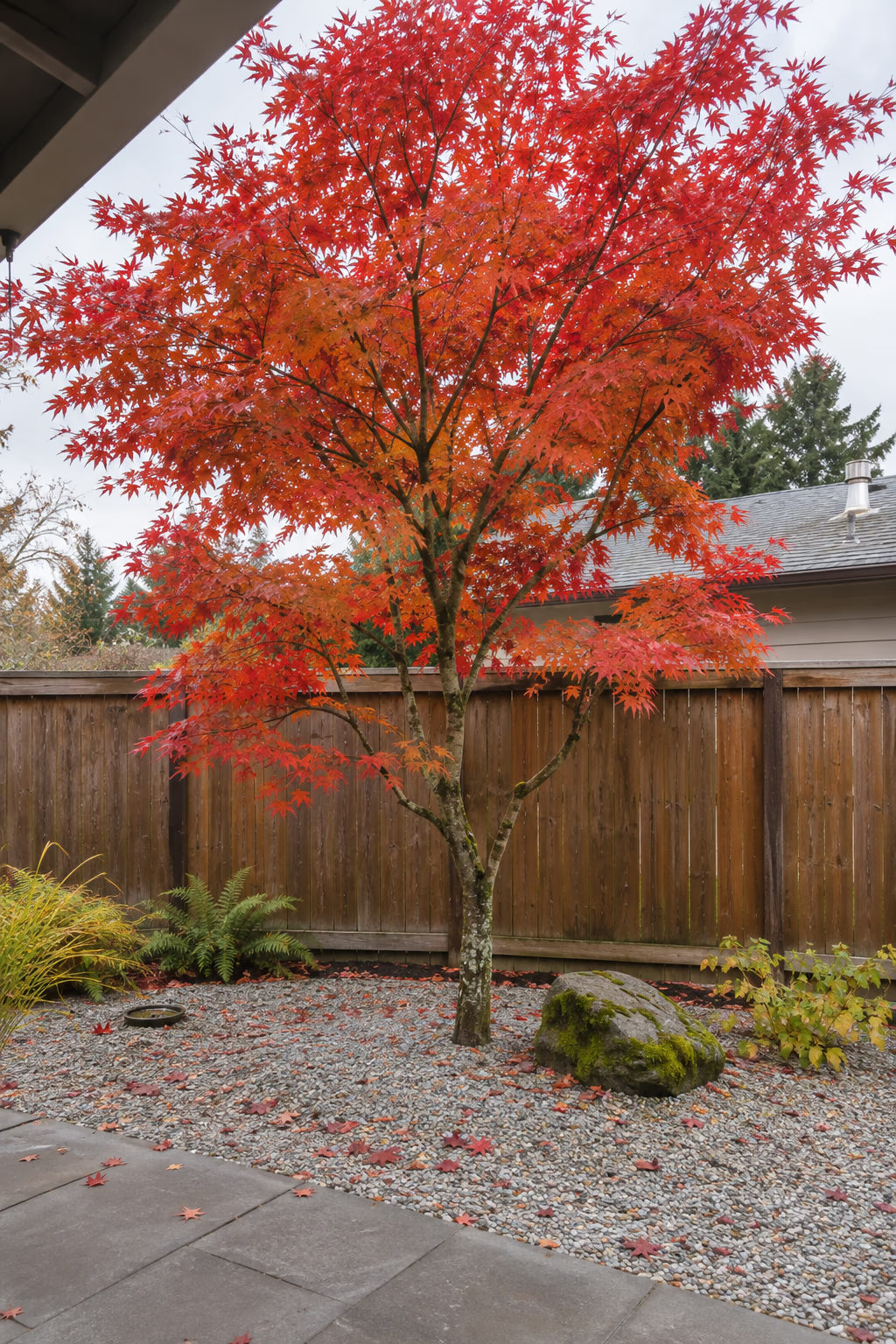
One tree that changes with every season
A single Japanese maple can carry the whole design. Its layered branches, fine leaves, and fall color in red, orange, or gold make it a natural centerpiece. Set it slightly off-center in a bed of gravel or moss, with one boulder nearby for balance.
Upright types reach 15 to 25 feet over many years, while laceleaf and dwarf types stay under 8 to 10 feet, which suits small yards. Keeping everything else quiet around the tree lets it stand out in spring leaf-out and again when the color turns in autumn.
Japanese maples generally grow well in USDA zones 5 to 8. In hot southern summers they need afternoon shade and steady water, and in windy, exposed spots the leaves can scorch. Buy from a local nursery that knows which varieties handle your climate.
7. Set a Buddha Statue in a Quiet Planted Nook
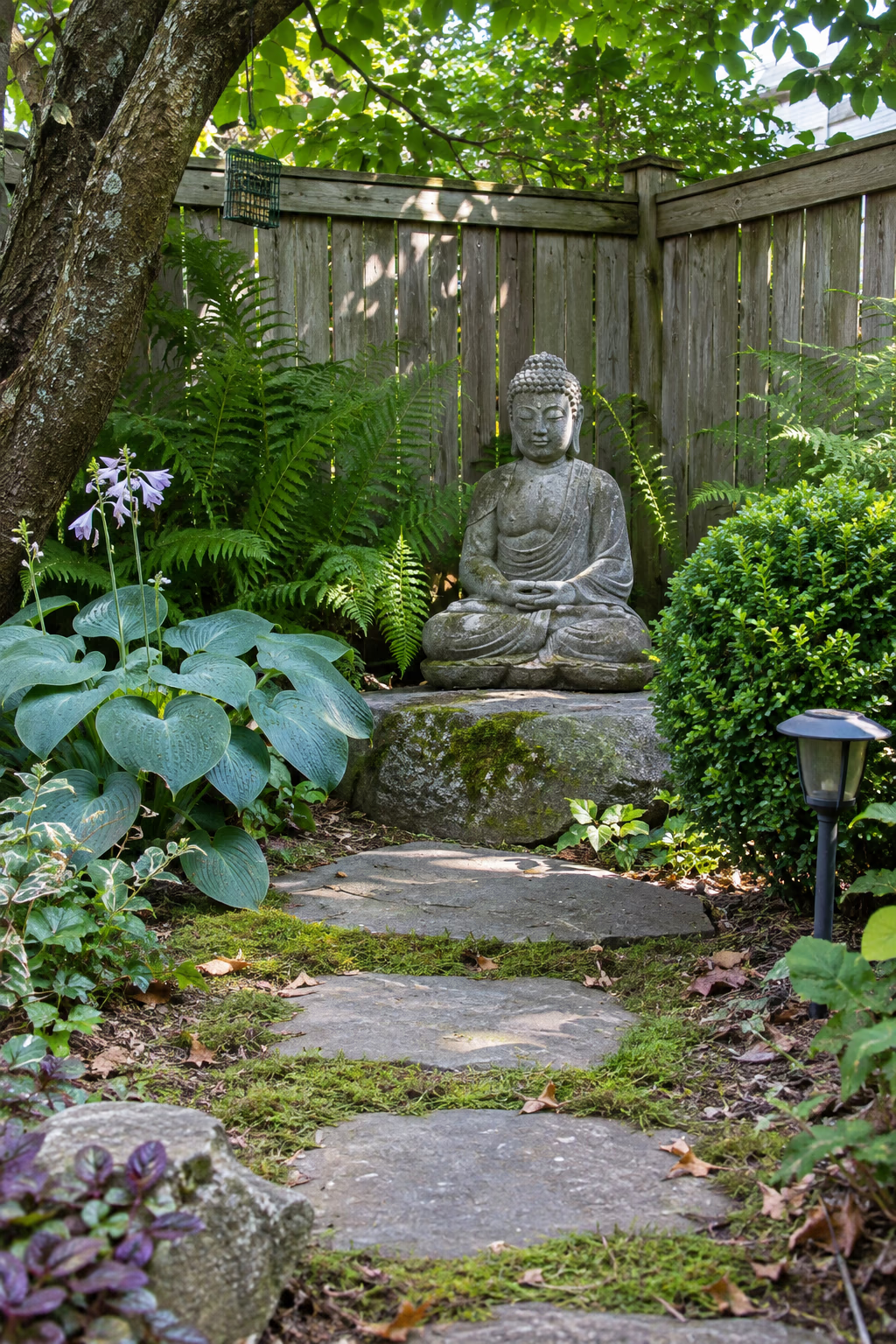
A peaceful destination at the end of a path
A seated stone or cast concrete statue, tucked into a corner and framed by ferns, hostas, or a clipped evergreen, creates a still point that draws the eye. Set it on a flat stone or low plinth so it doesn’t sink into the soil, and keep the surrounding planting soft and low.
A statue gives the garden a clear focus, and positioning it where a path ends or where you see it from a window makes it part of daily life. Moss and a little weathering only make cast stone look better.
Many people place statues of the Buddha thoughtfully, at or above ground level, in a clean spot, and not as a joke or a party prop. If that doesn’t fit your beliefs, a smooth abstract stone sculpture or a simple lantern creates the same calm focus.
8. Tuck a Hot Tub Into a Gravel Garden With a Slatted Screen
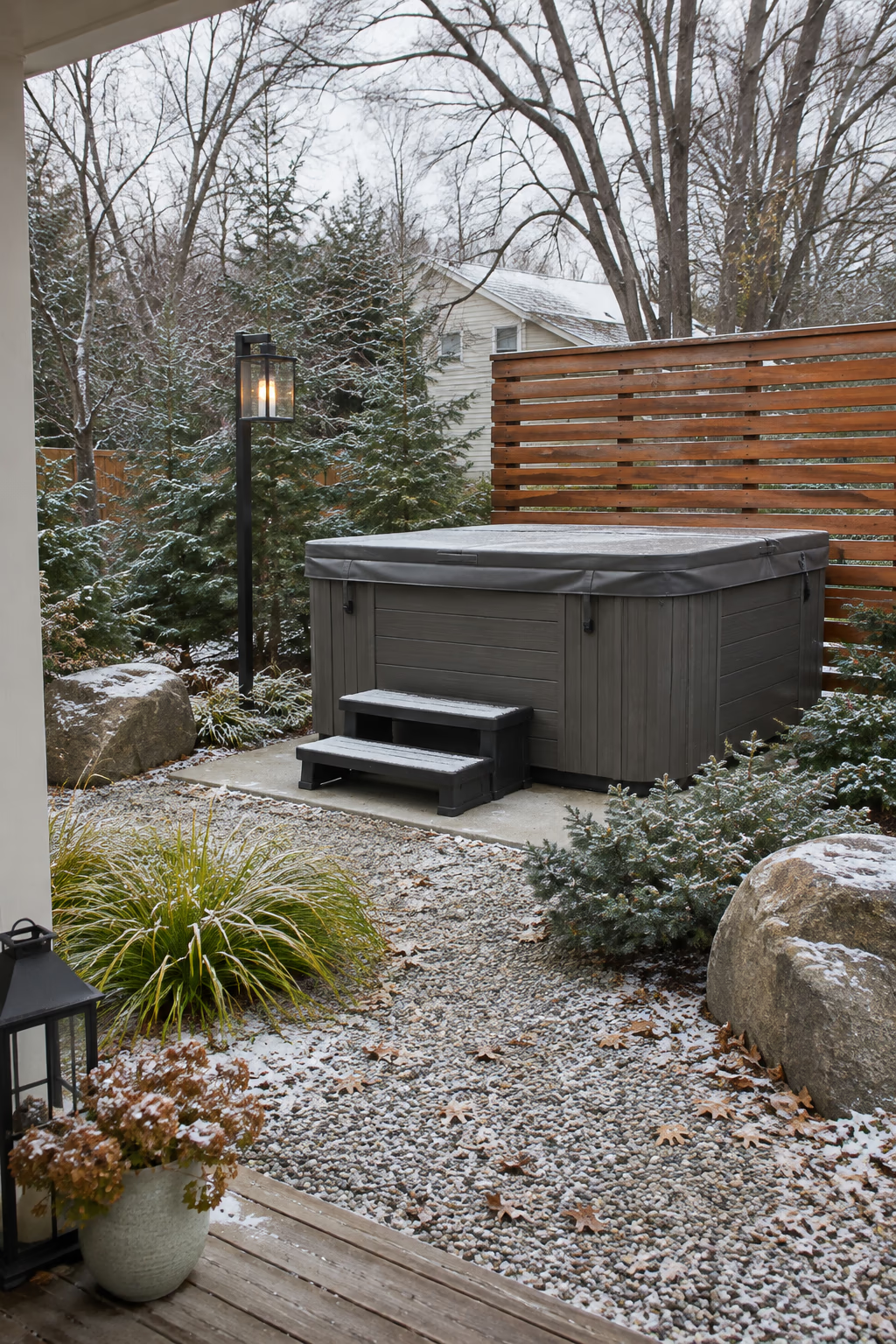
A private backyard spa for year-round soaking
A hot tub feels far more restful when it sits within the garden instead of on a bare slab beside the house. Set the tub on its required pad, surround it with gravel and a few large stones, and add a freestanding horizontal slat screen on one or two sides for privacy.
Plant soft greenery around the edges, such as Japanese forest grass, ferns, or dwarf conifers, and hang a lantern nearby for evening soaks. The screen blocks views from neighbors while still letting breezes through.
Hot tubs are heavy and need a level concrete pad or a deck engineered to carry the load, and most require a dedicated electrical circuit with a disconnect installed by a licensed electrician. Many communities also require a locking cover or barrier, so check local codes and HOA rules early.
9. Carve a Dry Creek Bed That Handles Rainwater
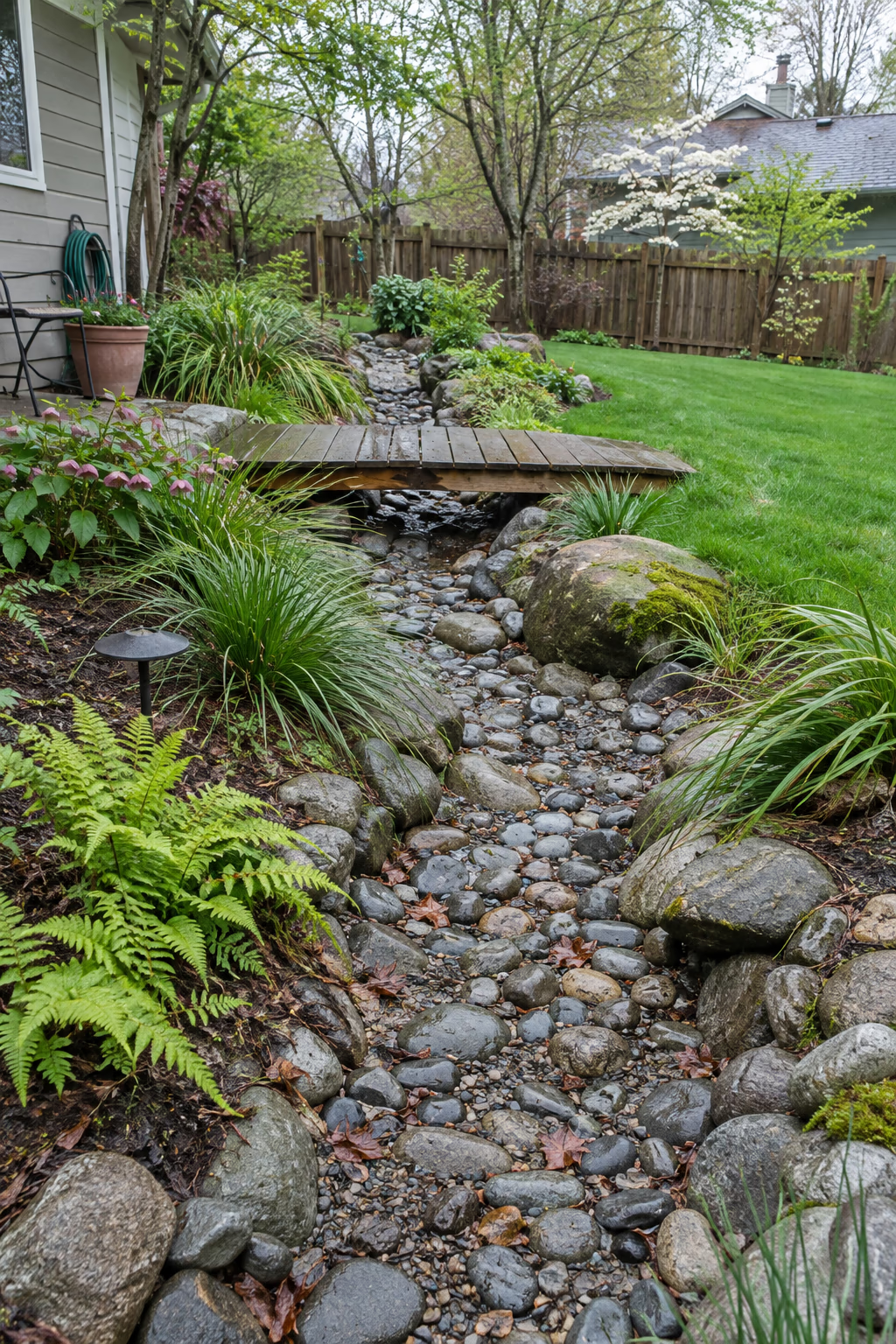
The look of a stream that solves a drainage problem
A dry creek bed winds through the yard like a streambed in late summer: smooth river rock lining a shallow channel, larger stones along the banks, and a few boulders where the creek bends. During storms it carries runoff away from the house, and the rest of the time it reads as quiet, flowing water in stone.
Dig a channel 6 to 12 inches deep and two to three times as wide, line it with landscape fabric, and lay rock from fist size down to pea gravel for a natural look. Edge the banks with sedges, ferns, or low grasses, and add a short plank bridge where a path crosses it.
Make sure the creek drains toward a safe outlet, such as a rain garden or the street, and never directs water onto a neighbor’s property. River rock is heavy and sold by the ton, so get it delivered close to the work area.
10. Wrap the Fence in Rolled Bamboo Reed Panels
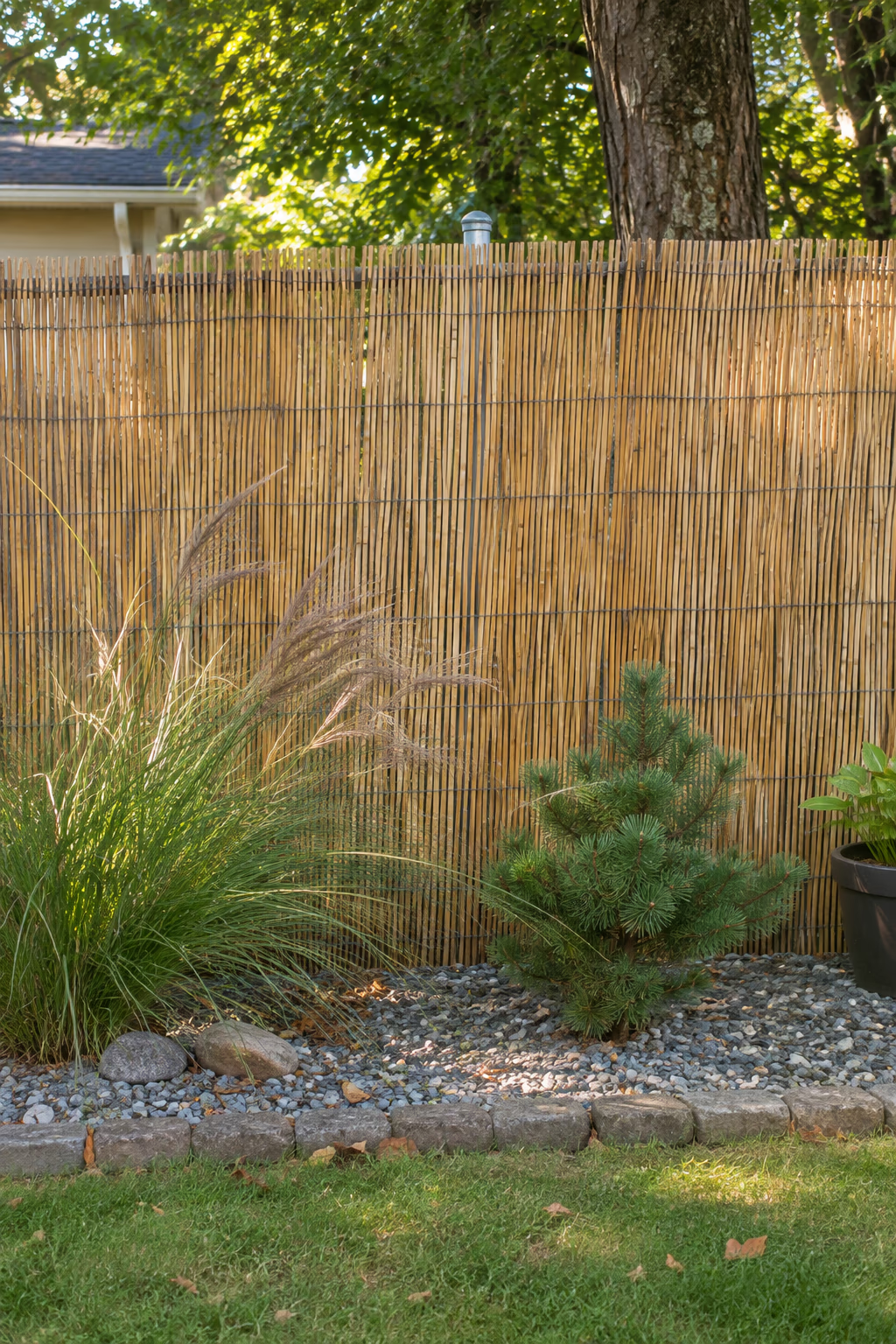
Instant natural texture over a plain fence
Rolled bamboo or reed fencing comes in rolls about 6 feet tall and can be attached to an existing chain-link, wire, or worn wood fence in an afternoon. It instantly turns a utilitarian boundary into a warm, natural backdrop for plants and stone.
Fasten it with galvanized wire or stainless screws every foot or so, and tuck the bottom edge just above the soil or gravel to slow rot. The vertical lines and golden tone suit gravel, maples, and lanterns, and you get the bamboo look without planting bamboo that can spread.
Reed and bamboo panels fade to gray and usually last several years before needing replacement, depending on sun and moisture. A clear sealer can extend that a little, and some HOAs regulate fence materials, so check before covering a front-facing fence.
11. Set Up an Outdoor Shower Among Lush Greenery
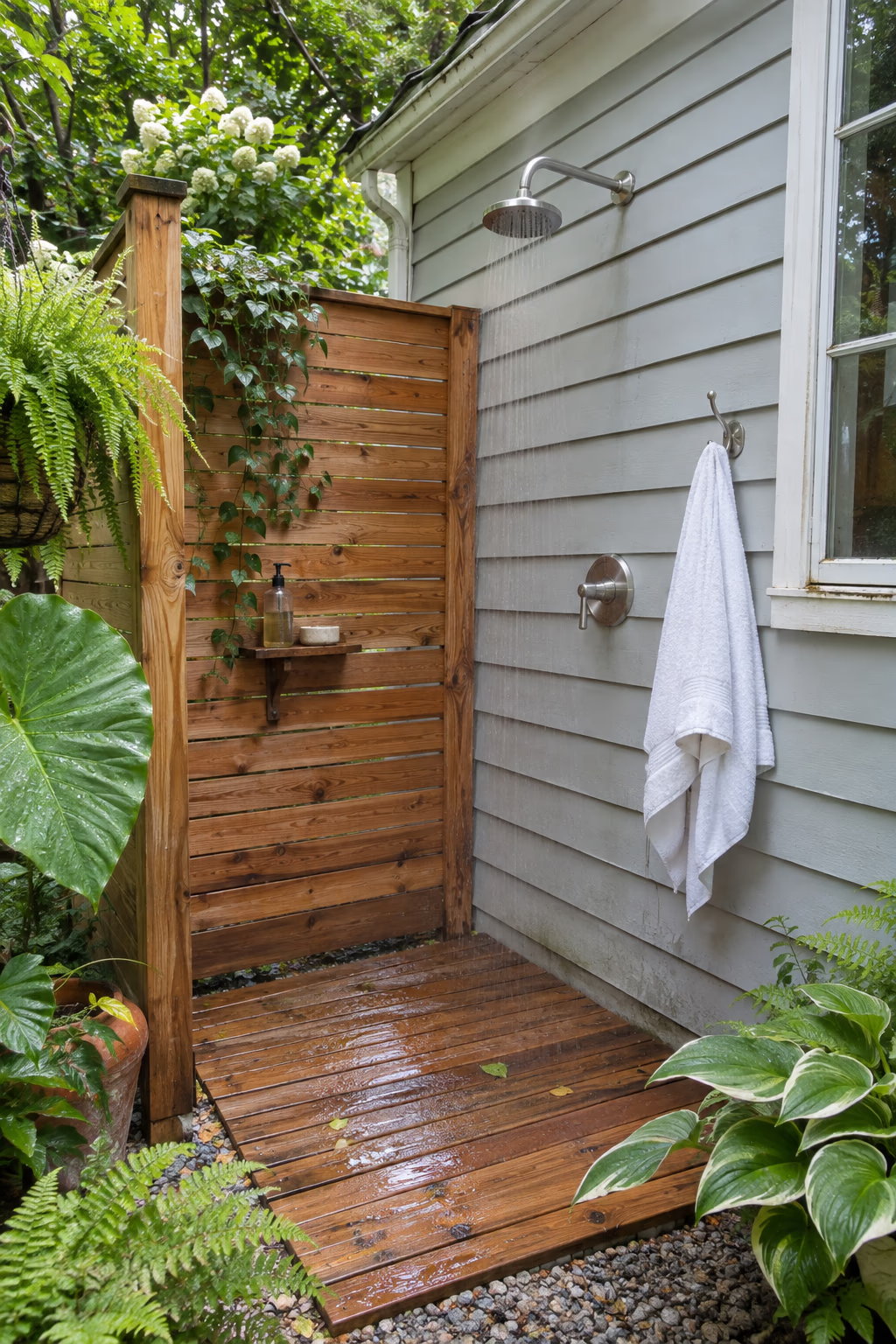
A spa moment after gardening or a swim
An outdoor shower tucked against the house or fence, with a cedar slat floor, a wood screen, and big leafy plants around it, feels like a resort. Even a simple wall-mounted showerhead with a hot and cold mixer over a gravel base works.
Rinsing off under open sky is one of those small luxuries that makes a backyard feel like a retreat. Surround the area with ferns, hostas, or other moisture-loving plants that appreciate the extra water.
Plumbing, especially hot water, usually needs a permit, and some areas restrict where shower water can drain. A gravel-filled dry well works where allowed, and in cold climates the supply lines need shutoff valves and draining before the first freeze.
12. Replace Shady Lawn With a Soft Moss Carpet
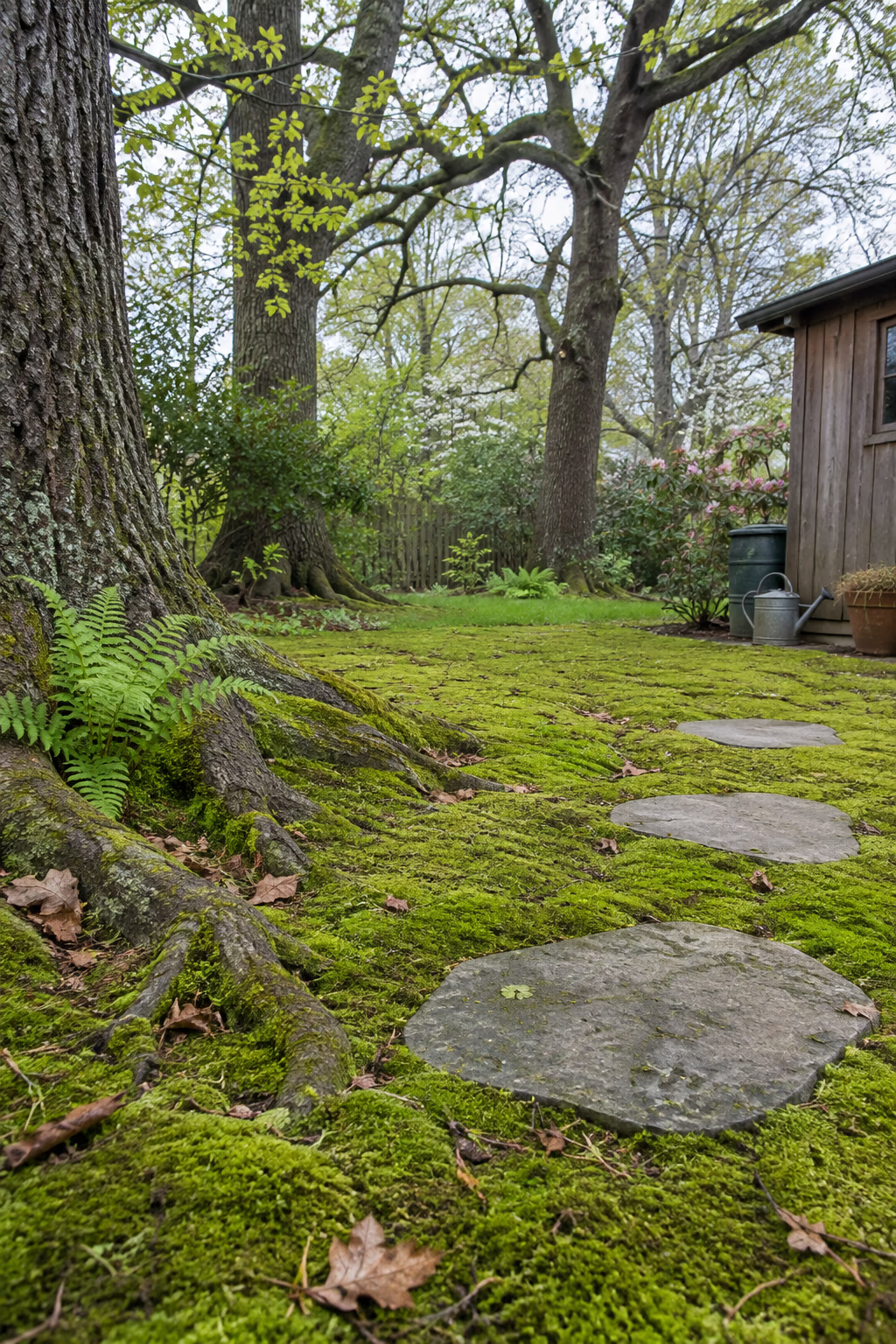
Green ground cover that thrives where grass struggles
Under trees and along the north side of a house, grass often thins out while moss creeps in. Instead of fighting it, remove the struggling turf, rake the soil smooth, and transplant or encourage moss to form a velvety green carpet around stones and tree roots.
Moss never needs mowing or fertilizer, and it stays green much of the year in moist, shady areas. Mixed with a few ferns and stepping stones, it gives a shady backyard a cool, old-garden feel.
Moss needs shade, regular moisture, and fairly acidic, compacted soil, and it struggles in hot, dry, sunny spots. Keep it clear of fallen leaves, which smother it, and water lightly during dry spells while it establishes.
13. Add a Simple Garden Pavilion for Tea and Quiet Reading
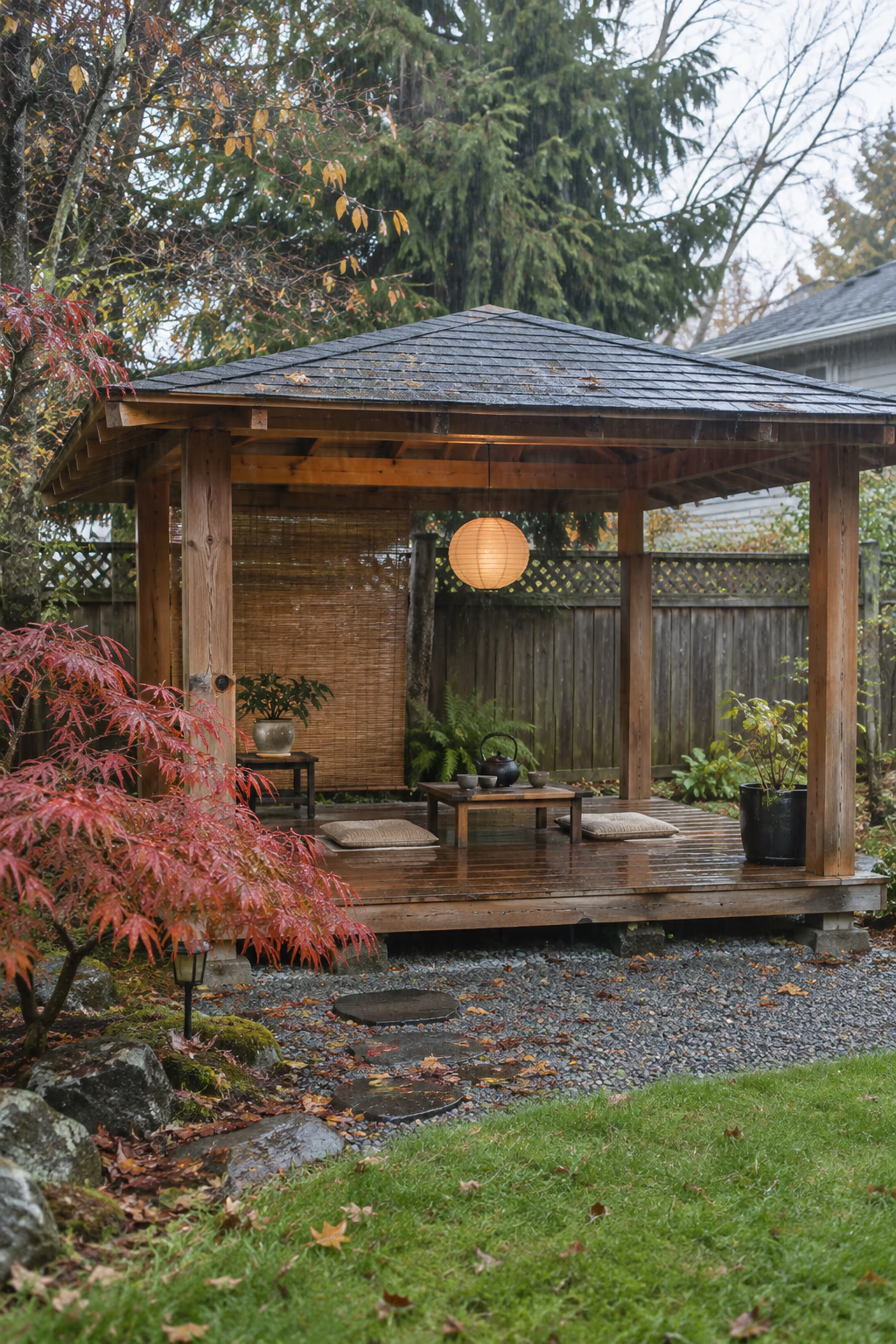
A sheltered retreat you’ll use in any weather
A small open-sided pavilion with a low-pitched roof, simple posts, and a raised wood floor gives you a covered spot to sit with tea, read, or listen to rain. Keep the furnishing minimal: a low table, two cushions or chairs, and a hanging lantern.
Shelter extends the hours and seasons you can enjoy the garden. Set the pavilion so it looks across the yard toward a maple, pond, or gravel bed rather than back at the house.
Many towns require a permit for roofed structures above a certain size, often somewhere between 120 and 200 square feet, and setback rules apply. Kits are available, but anchoring posts on footings below the frost line is what keeps the structure square and safe.
14. Plant a Desert Zen Garden With Succulents and Decomposed Granite
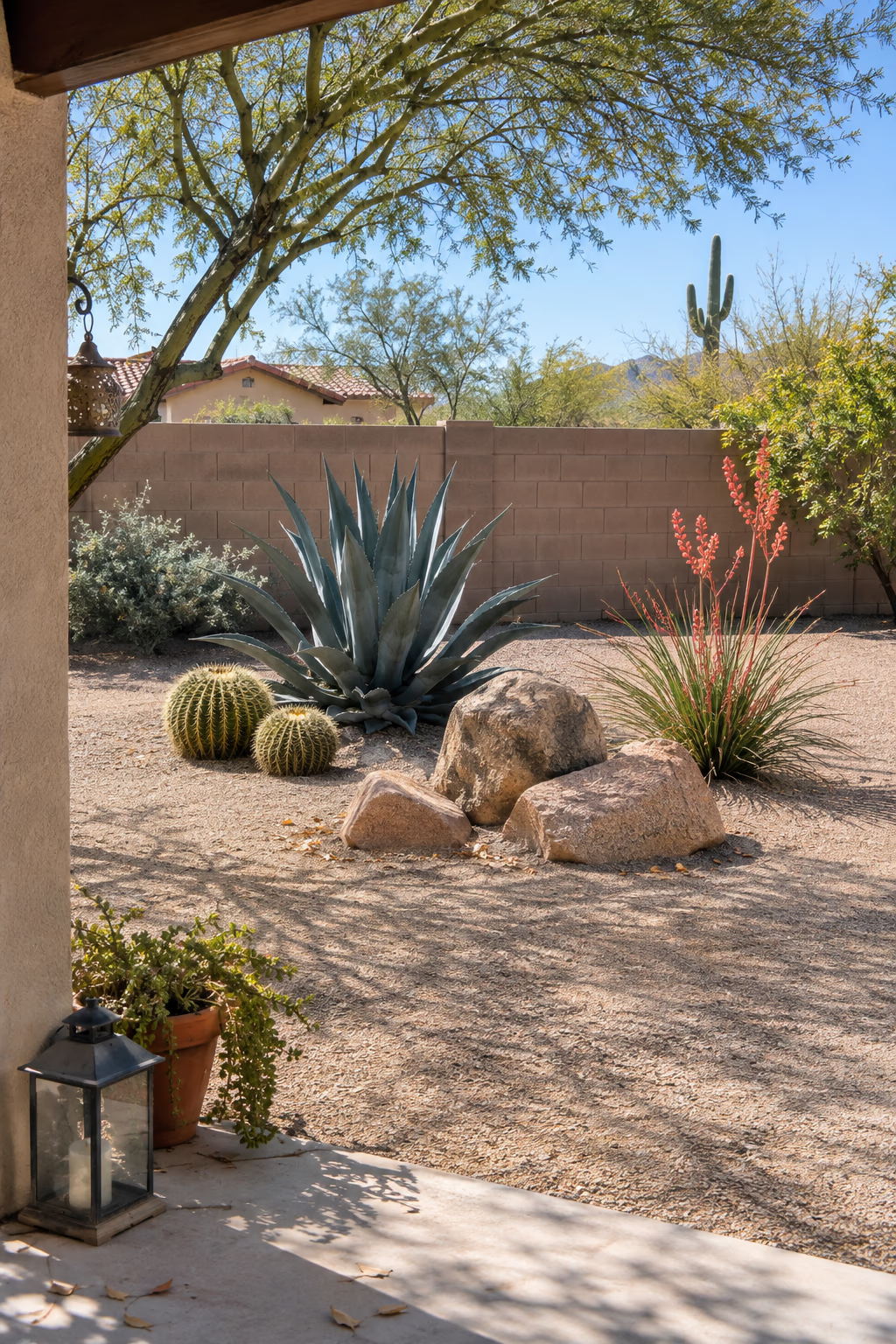
Zen calm for hot, dry climates
In the Southwest and other dry regions, swap moss and maples for sculptural succulents. Spread tan decomposed granite as the ground surface, group a few boulders, and plant agave, yucca, golden barrel cactus, or red yucca in loose clusters with plenty of open space between them.
The same zen principles of restraint and balance apply, but the plant choices respect local water limits. Once established, many of these plants need little or no supplemental water, and stabilized decomposed granite makes a firm, natural-looking path.
Spiny plants should sit well back from paths and seating. Many of these succulents are only hardy in warmer zones, so in colder dry areas look for hardy yuccas, prickly pear, and ornamental grasses instead.
15. Turn the Side Yard Into a Pebble-Lined Zen Walk
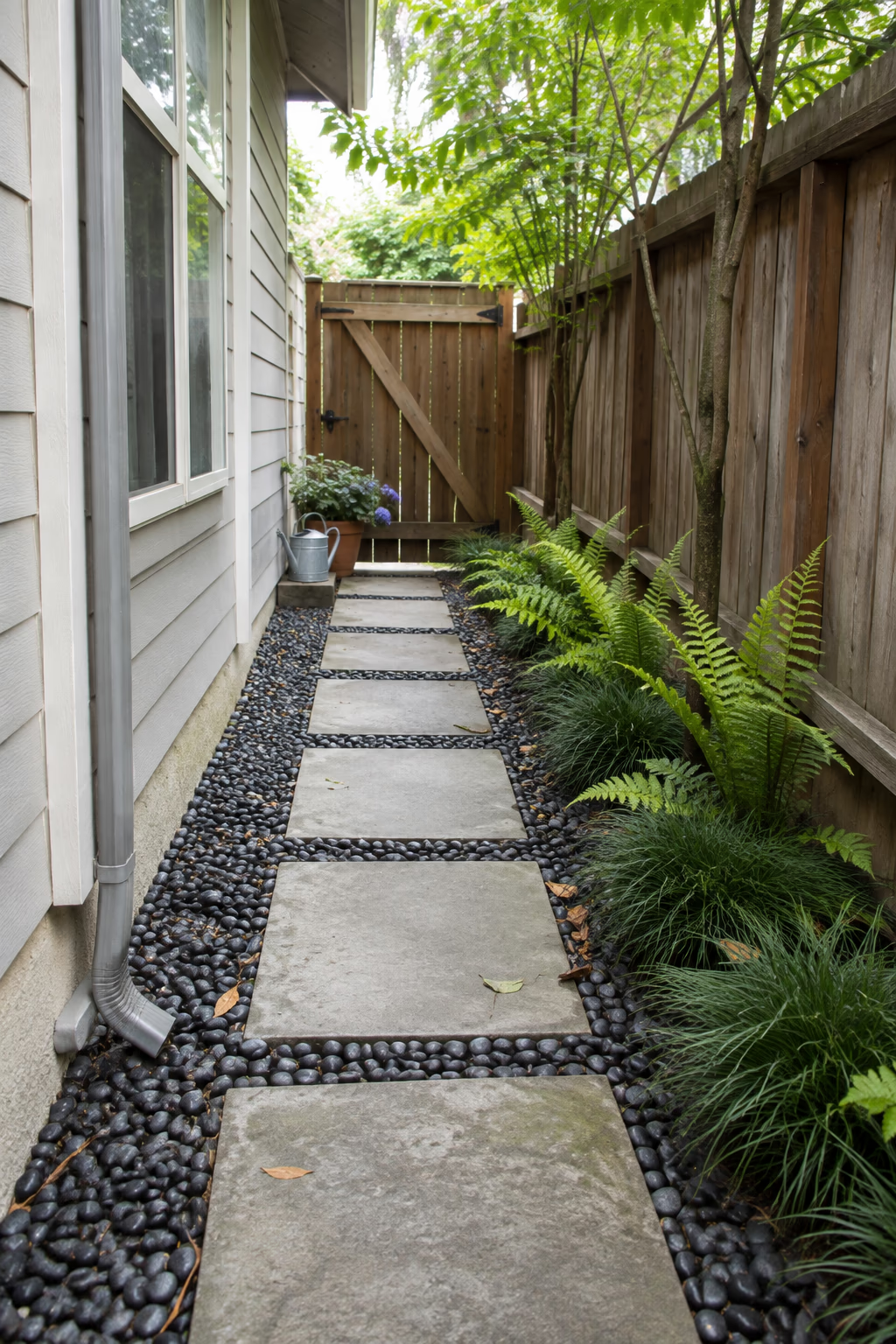
A forgotten strip becomes a calm passage
Narrow side yards are often just storage for trash bins and hoses. Clear the space, lay a line of rectangular stepping stones down the center, and fill on either side with dark river pebbles or black Mexican beach stones. A row of clumping ferns, hostas, or mondo grass along the fence finishes it.
Walking through a cool, green passage on the way to the backyard sets the tone before you even arrive. The dark pebbles contrast with pale stones and hide dirt well.
Side yards often carry drainage from the roof, so keep gutters and downspouts directed away from the foundation. Leave a clear route for meter readers and utility access, and don’t block air conditioner units with tall plants.
16. Plant Swaying Grasses for Soft Sound and Movement
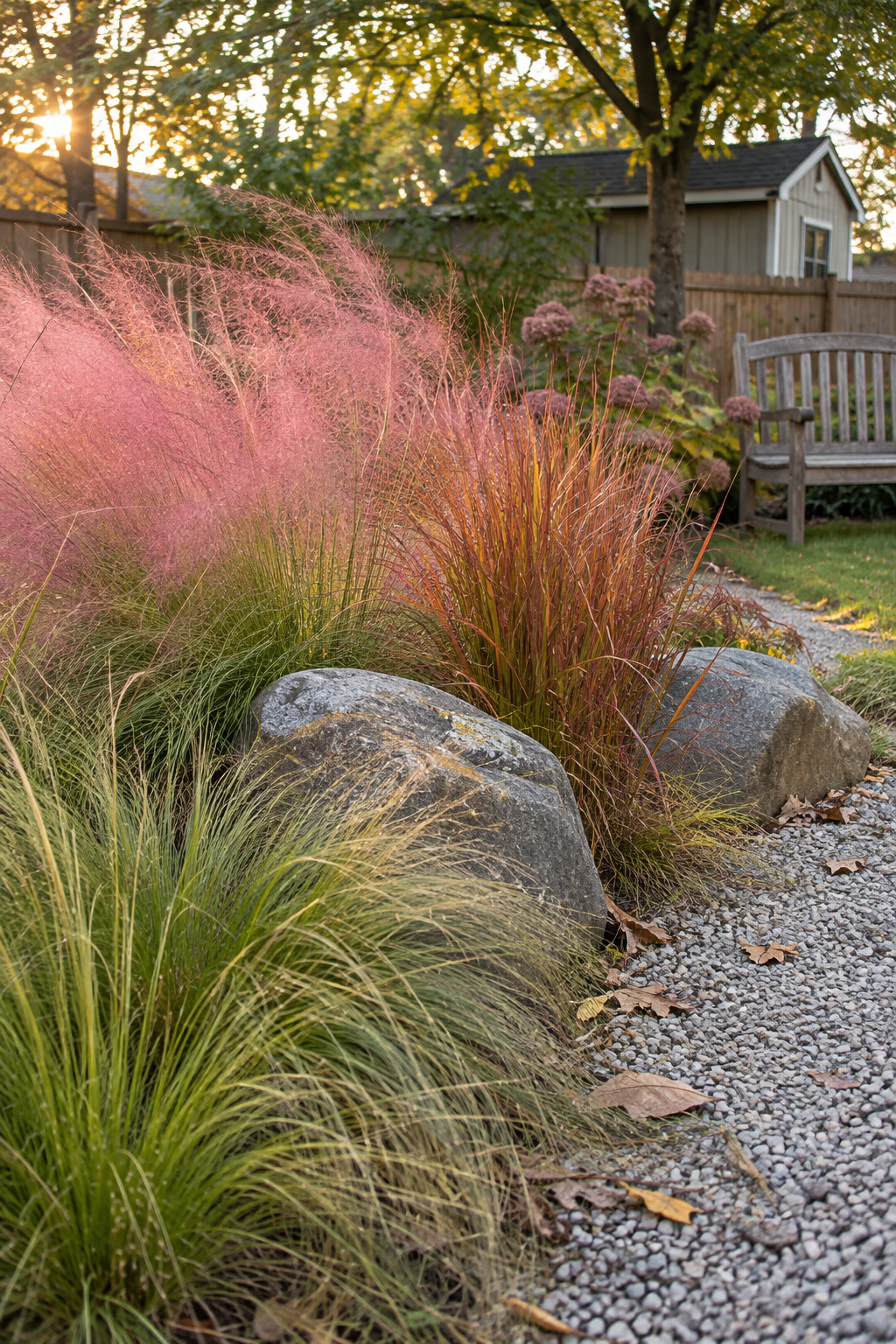
Gentle motion that softens hard edges
Ornamental grasses bring movement and a quiet rustle to a garden filled with stone. In shade, Japanese forest grass forms cascading golden or green mounds. In sun, little bluestem, prairie dropseed, and pink muhly sway in the breeze and catch evening light.
Plant grasses in drifts of three, five, or seven rather than single specimens, and let them spill over gravel edges or around boulders. Their seedheads and fall color keep the yard interesting into winter.
Cut most grasses back to a few inches in late winter before new growth starts. Avoid maiden grass and other varieties that reseed aggressively in your region, and check local invasive plant lists before buying.
17. Prune Evergreen Shrubs Into Soft Rounded Mounds
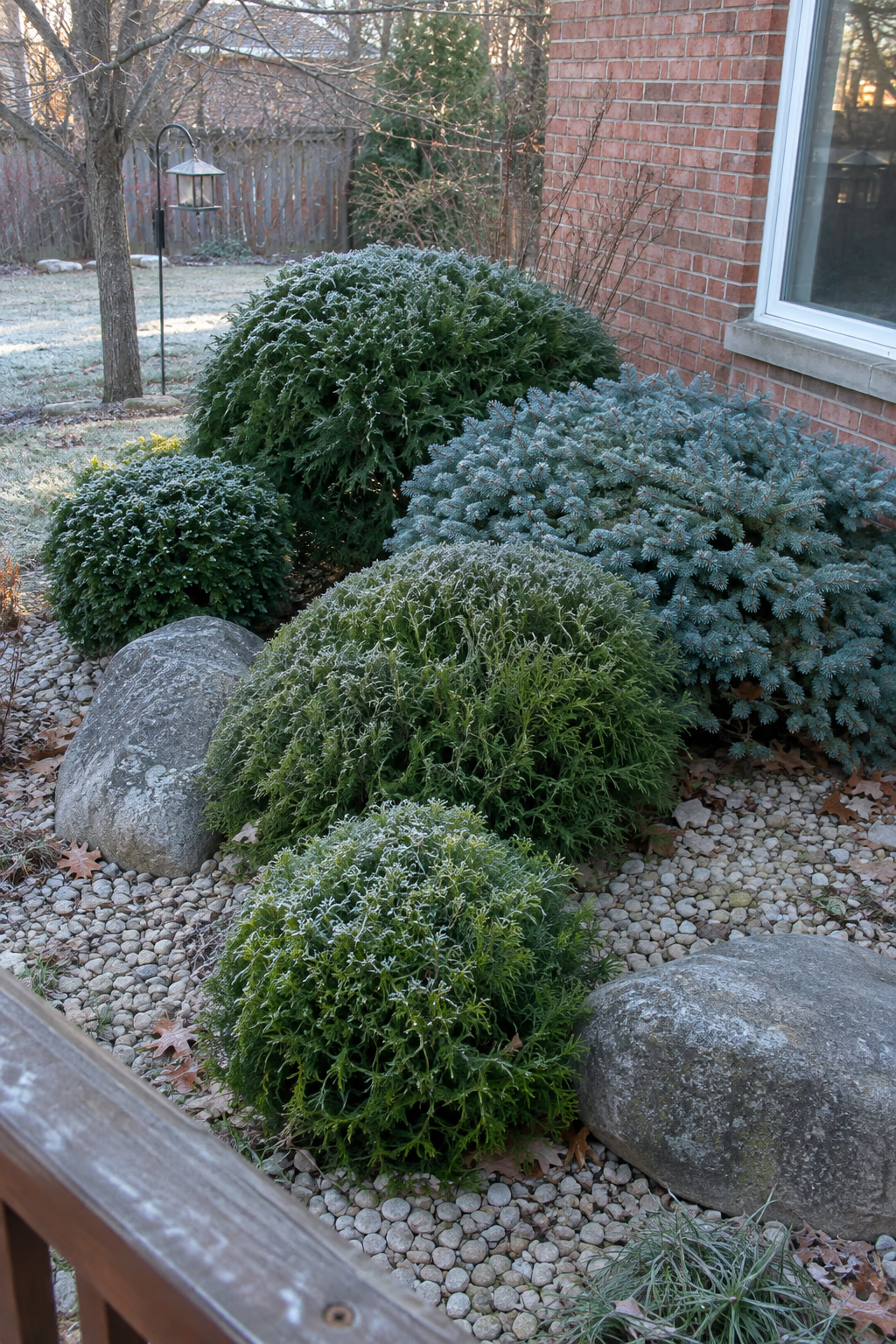
Year-round structure with a calm, sculpted look
Rounded evergreen shrubs, clipped into soft mounds of varied sizes, give a zen backyard shape and structure in every season. Boxwood, inkberry holly, dwarf yaupon, and compact junipers can all be shaped into loose cushions that echo the form of boulders.
Group them in odd numbers near stones and gravel, letting some touch to form a rolling green layer. The repetition of round forms feels soothing and keeps the garden looking tidy even in winter.
Shape shrubs once or twice a year with hand shears rather than power trimmers for a softer outline. Boxwood can suffer from blight and leaf miners in some areas, so ask a local nursery about resistant varieties or alternatives.
18. Stack Balanced Stones Into Simple Cairns
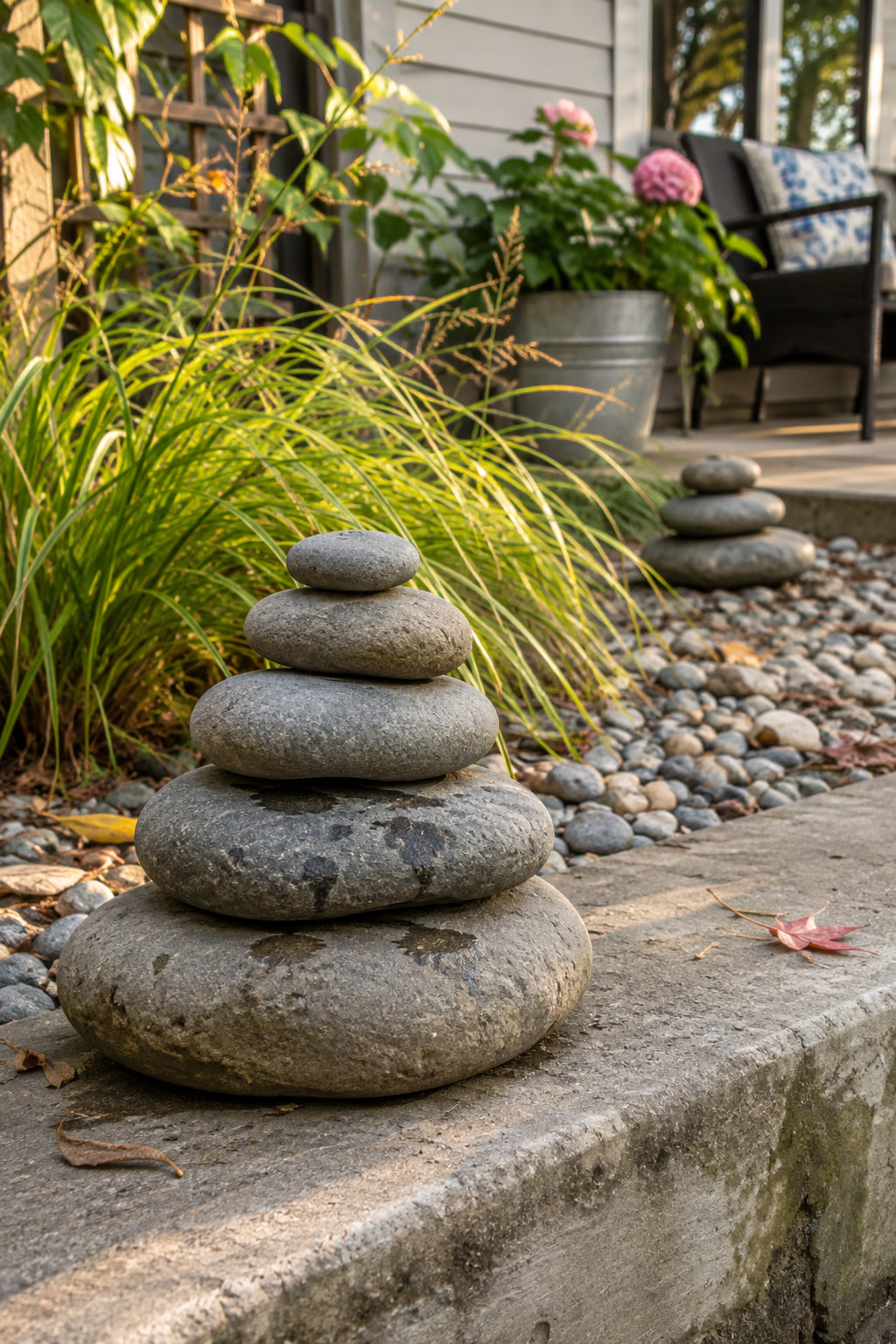
A small, meditative project with a big visual payoff
A few flat, smooth stones stacked from largest to smallest make a cairn that suggests balance and patience. Place one or two on a patio ledge, at the edge of a gravel bed, or beside a water basin where they catch the eye.
The act of stacking is calming in itself, and the result costs almost nothing. Choose stones in similar colors, like gray river rock or slate, so the cairn looks natural rather than busy.
For a permanent outdoor cairn, use a dab of exterior construction adhesive between stones so wind or curious animals don’t topple them. Buy your stones from a landscape supplier rather than taking them from creeks or parks, where removal is often prohibited.
19. Mark the Entrance With a Wooden Garden Gate
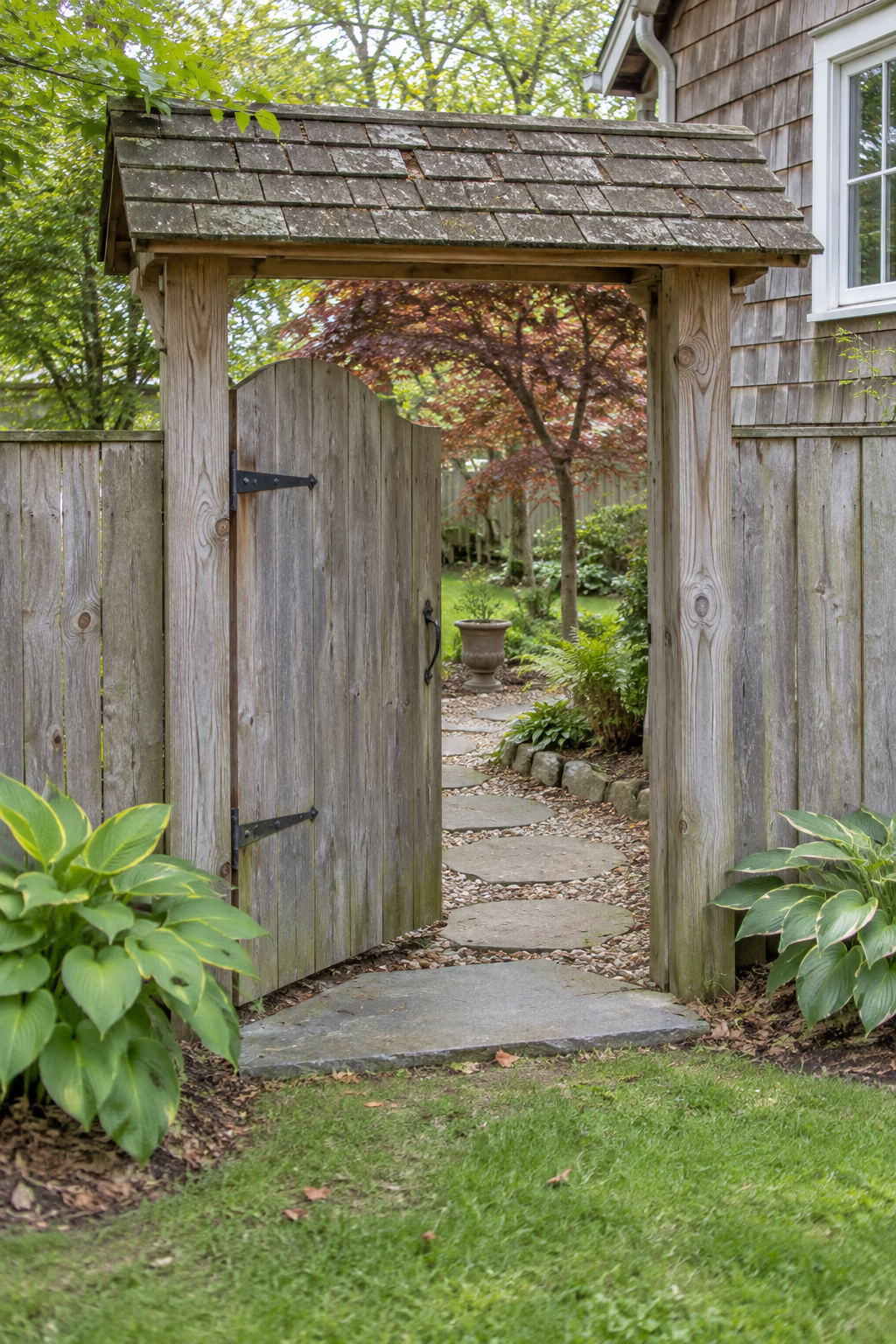
A threshold that signals a change of pace
A simple wooden gate, perhaps with a small shingled roof over the top, marks the moment you leave the busy part of the yard and enter the quiet one. It can sit in an existing fence line, between two hedges, or as a freestanding frame at the start of a path.
Cedar or redwood with a natural oil finish weathers to a soft silver that suits stone and gravel. Keep the design simple, with vertical boards or a lattice panel, and add a stepping stone at the threshold.
Gates need sturdy posts set in concrete to prevent sagging. If the gate is part of a pool or hot tub barrier, it must meet local self-closing and latching rules.
20. Group Potted Pines and Maples on the Patio
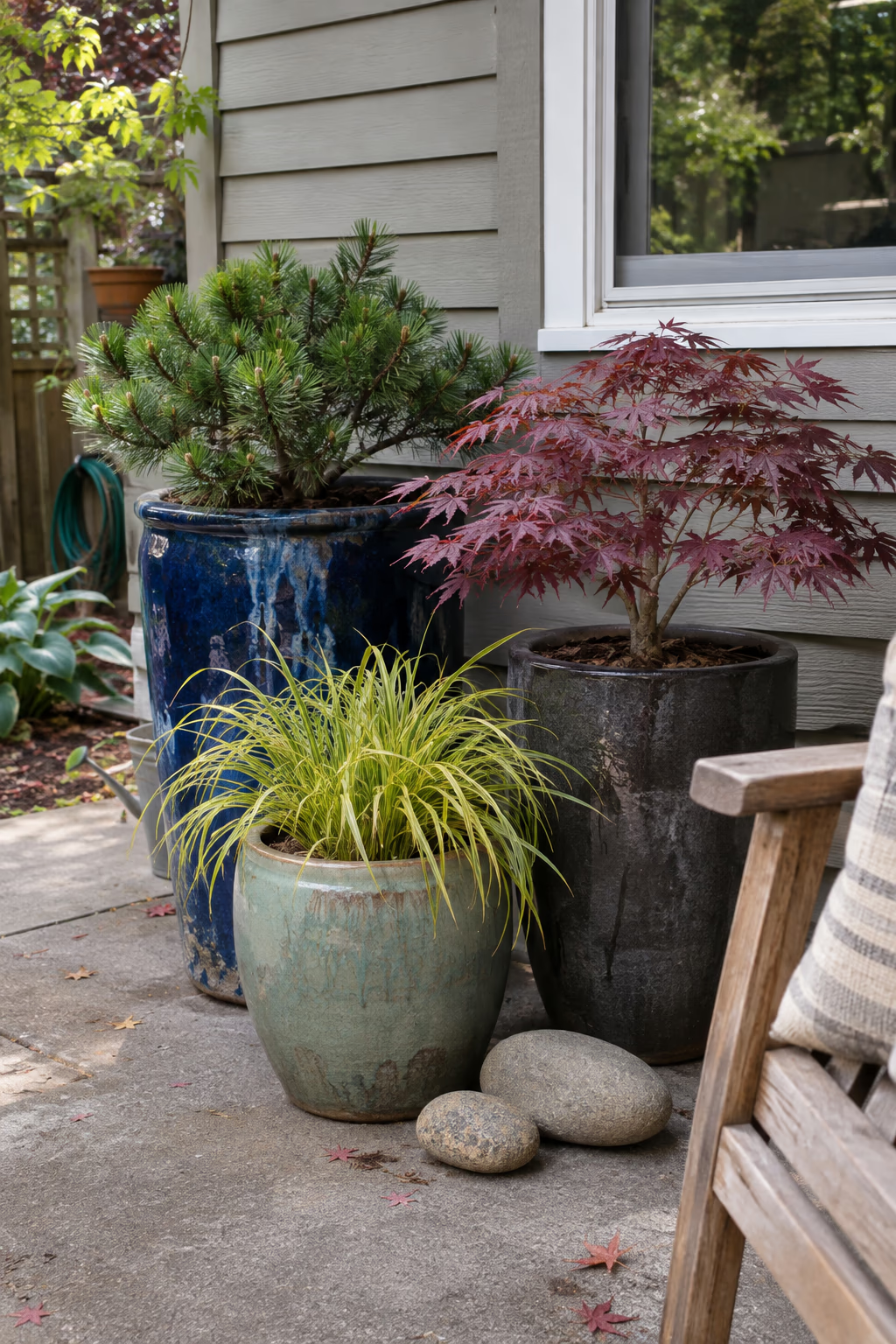
Zen greenery for small patios and renters
No room to plant in the ground? Glazed ceramic pots in deep blue, charcoal, or celadon hold dwarf pines, mugo pines, dwarf Japanese maples, or clumping grasses beautifully. Group three pots of different heights on a patio or deck corner with a smooth stone or two at their feet.
Containers let you create the zen look on a balcony, a rental patio, or a small concrete pad. You can move pots to follow the light or rearrange them as the seasons change.
Roots in pots are far more exposed to cold than roots in the ground, so in snowy climates choose plants rated two zones colder than yours, or move pots against the house for winter. Use frost-resistant pots with drainage holes and water regularly in summer.
21. Hang a Rain Chain Over a Gravel Basin
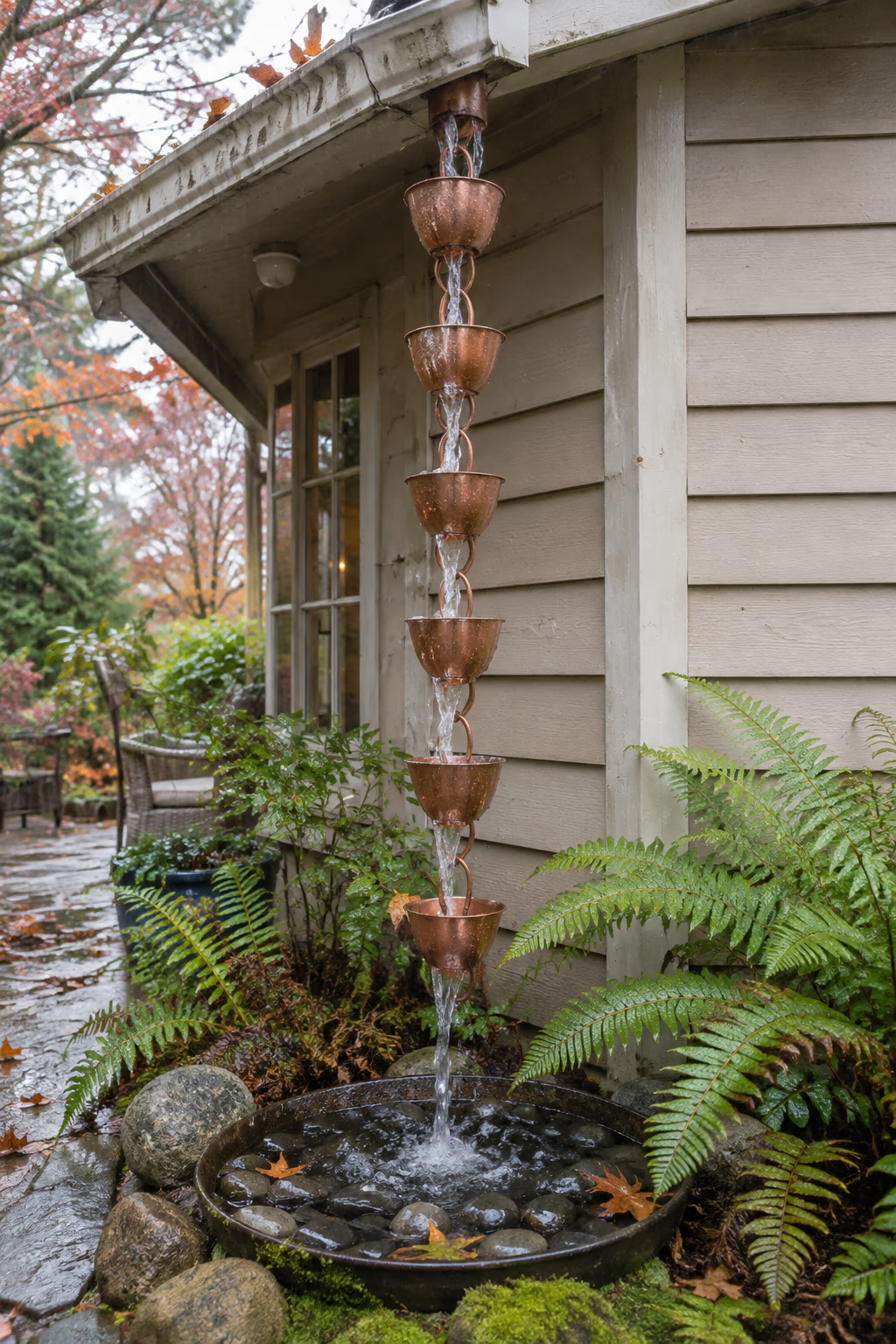
Turn every rainstorm into a water feature
A rain chain replaces a standard downspout with a series of copper or steel cups or links that guide water down from the gutter. Below it, set a shallow stone basin or a bed of river rock to catch and slow the flow.
Watching and hearing rain trickle down a chain is unexpectedly soothing, and it adds a bit of zen character to the house itself. Over time copper develops a warm patina that complements stone and wood.
Rain chains can’t move as much water as a closed downspout, so they work best on smaller roof sections. Make sure the basin directs overflow away from the foundation, and in icy climates consider taking the chain down in winter, since ice buildup adds weight.
How to Plan Your Zen Backyard
A zen backyard comes together best when you plan around how you want to feel and use the space, not around a shopping list. These steps help keep the design calm and realistic.
- Start with how you’ll use it. Decide whether the yard is mainly for meditation, soaking, reading, or entertaining, then put the seating or deck in the spot that suits that use.
- Pick one focal point per view. A fountain, maple, statue, or lantern should anchor each area, with gravel, groundcover, and simple planting supporting it.
- Keep the palette small. Two or three hardscape materials, such as gray stone, pale gravel, and cedar, look far calmer than a mix of many colors and textures.
- Choose plants for your climate. Check your USDA hardiness zone, sun, and rainfall, and pick drought-tolerant alternatives in dry regions or shade lovers under trees.
- Plan power, water, and drainage early. Fountains, lights, hot tubs, and showers need outlets, lines, and drainage, which are easier to add before gravel and plants go in. Call 811 before digging.
- Build in phases. Start with grading, paths, and structure, then add water features, lighting, and accents as your budget allows. Check permits and HOA rules for decks, pavilions, ponds, and hot tubs.
Frequently Asked Questions
What makes a backyard feel zen?
A zen backyard relies on simplicity, natural materials, and calm sensory details. Open space, pale gravel, stone, gentle water sound, soft lighting, and a limited plant palette work together to slow the pace and reduce visual clutter.
Can I create a zen backyard on a tight budget?
Yes. Gravel, a few salvaged stones, rolled reed fencing, potted plants, and solar lanterns can transform a small area for a few hundred dollars. Save larger projects such as ponds, hot tubs, and pavilions for later phases.
What is the best ground cover for a zen backyard?
Pale gravel and pea gravel are the most popular choices for sunny areas because they are affordable and drain well. In shade, moss or low ground covers work beautifully, and in dry climates stabilized decomposed granite is a smart option.
Do zen backyards attract mosquitoes?
Moving water, such as a fountain or recirculating pond, discourages mosquitoes from breeding. Avoid standing water in saucers, unused basins, and clogged gutters, and keep pond fish, which eat larvae.
How do I keep gravel areas looking neat?
Install firm edging to keep gravel in place, use a weed barrier beneath it, and rake or blow off leaves regularly. Top up the gravel every year or two as it settles or scatters onto paths.
Final Thoughts
The best zen backyard ideas don’t require a big yard or a big budget. A trickling fountain, a gravel courtyard with a few square pavers, or a lantern glowing under a maple can shift how your yard feels the first evening you use it.
Start with the spot where you most want to relax, add one calming element at a time, and give plants a season or two to settle in. Over time, your backyard can become the quiet place you look forward to stepping into every day.


