
Step out the back door on a summer evening, pinch off a few basil leaves and a sprig of thyme, and walk back inside with dinner already smelling better. That small moment is the reason so many people want a few herbs within easy reach of the kitchen.
Herbs are made for small spaces. Most of them stay compact, many come back year after year, and a single plant of rosemary or chives can keep a household supplied all season. A tidy herb patch also looks good, smells wonderful when you brush past it, and costs far less than buying little plastic clamshells at the grocery store every week.
These 21 small herb garden ideas cover clever layouts, themed plantings, edging and paths, color combinations, and simple tricks for handling shade, aggressive spreaders, and winter. Each one fits an ordinary yard, side strip, or patio edge, so you can start with a few square feet and grow from there.
1. Build a Stone Herb Spiral in a Sunny Corner
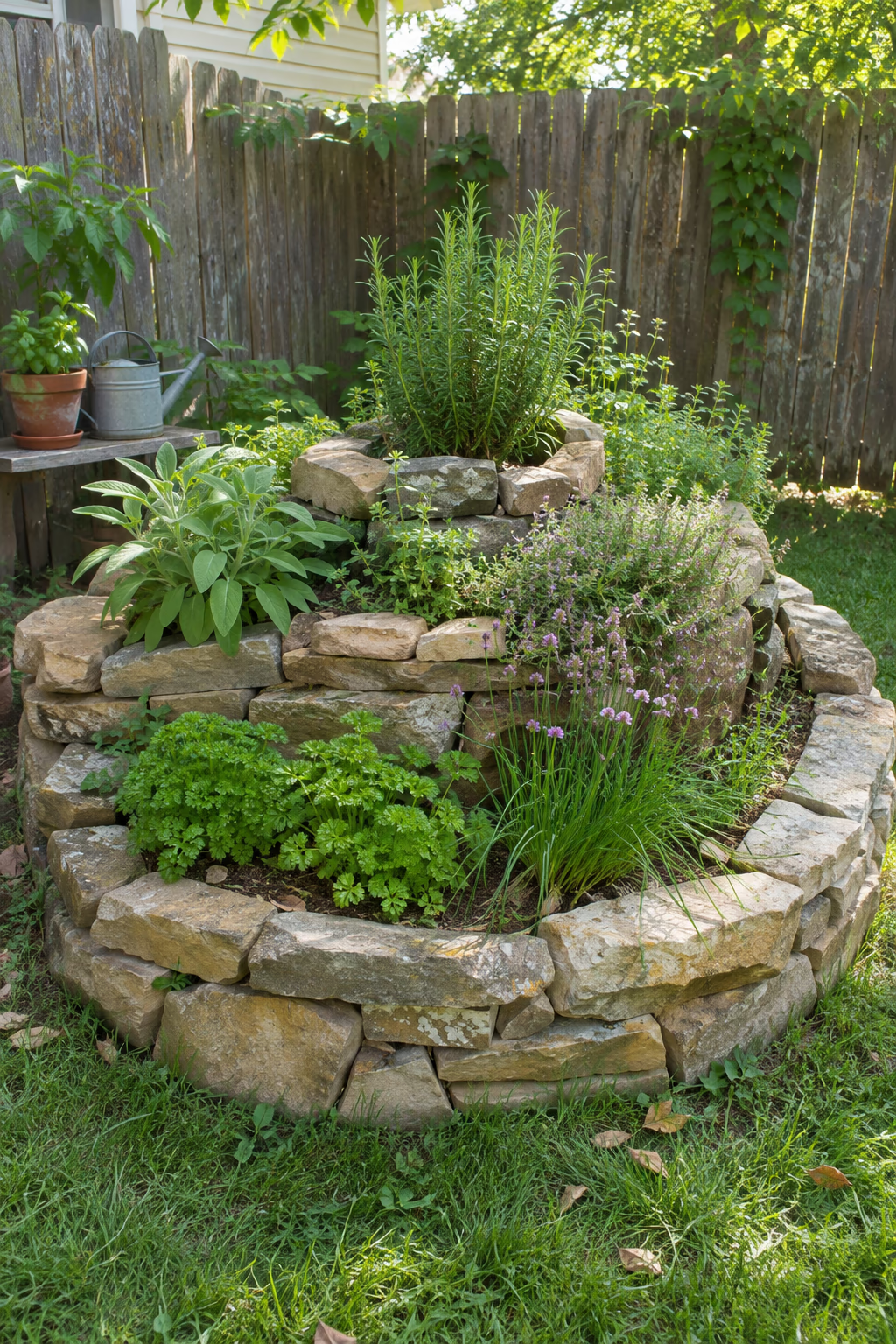
Several growing zones in one compact mound
An herb spiral is a raised mound of soil held in place by a low stone wall that coils upward toward the center. A footprint about 5 to 6 feet across, rising to roughly 2 to 3 feet in the middle, is plenty for a dozen or more plants. Fieldstone, broken concrete, or salvaged brick all work for the wall.
The shape is clever because it creates different conditions in a tiny space. The dry, sharply drained top suits rosemary, thyme, sage, and oregano, while the lower, moister end of the coil is better for parsley, chives, and cilantro. Face the low end of the spiral to the south so most of the planting gets full sun.
Fill the core with gravel or rubble for drainage, then top it with a gritty mix of garden soil and compost. Expect it to settle a few inches over the first season, so keep extra soil handy for topping up.
2. Plant a Kitchen Door Herb Bed
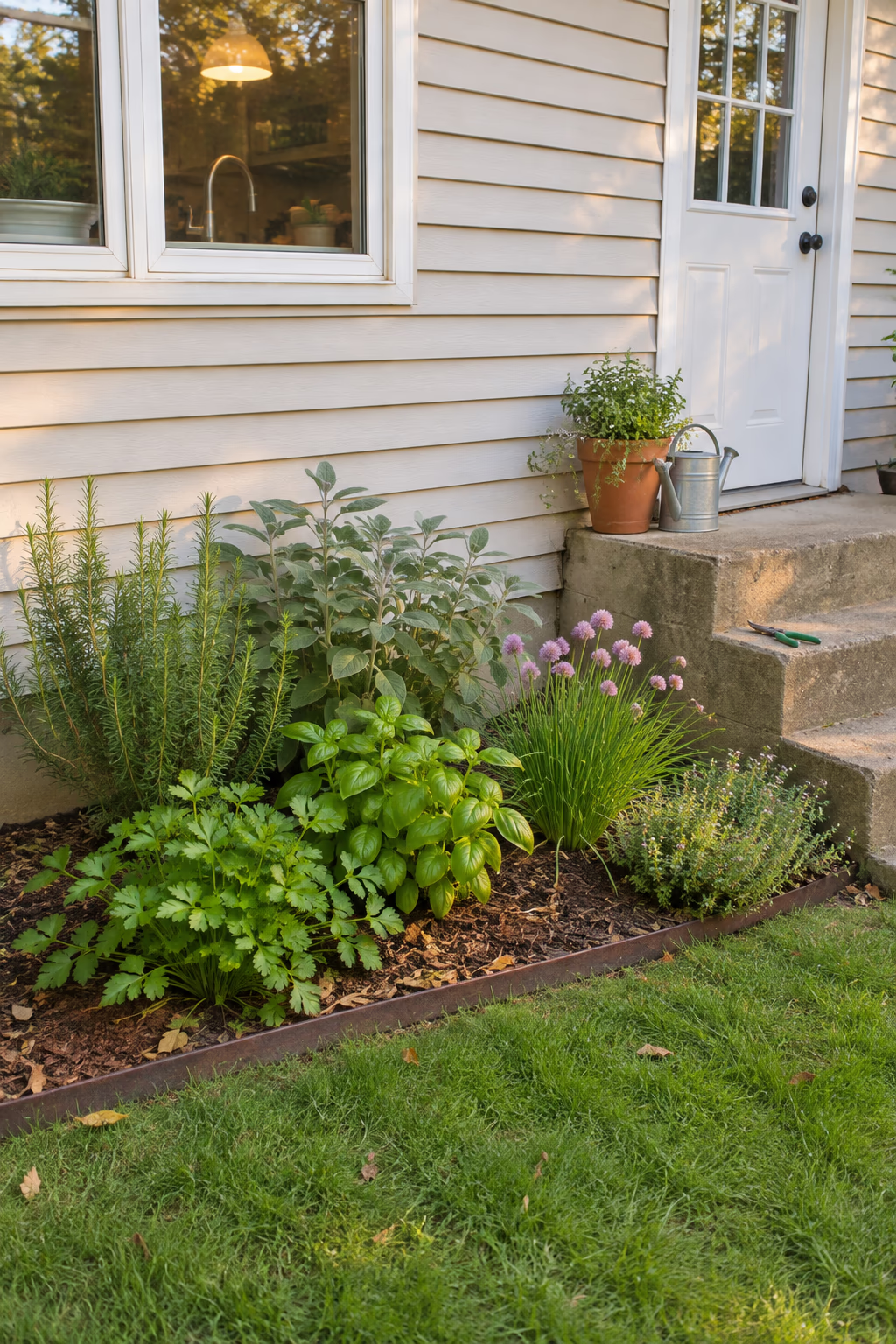
The herbs you actually use, a few steps from the stove
The most-used herb garden is the one closest to the cook. A simple bed about 3 feet deep and 6 to 8 feet long beside the back steps or kitchen door makes it easy to grab a handful of parsley in slippers, even on a rainy night.
Fill it with everyday staples: chives, flat-leaf parsley, thyme, oregano, and a couple of basil plants in summer. Keep taller plants such as rosemary and sage toward the house wall and low growers along the front edge so nothing gets trampled.
Check the light before you dig. Herbs need at least six hours of direct sun for good flavor, so a door on the shady north side may need the shade-tolerant herbs later in this list instead. Keep the bed a few inches below siding and away from dryer vents.
3. Lay Out a Symmetrical Herb Square Around a Bay Tree
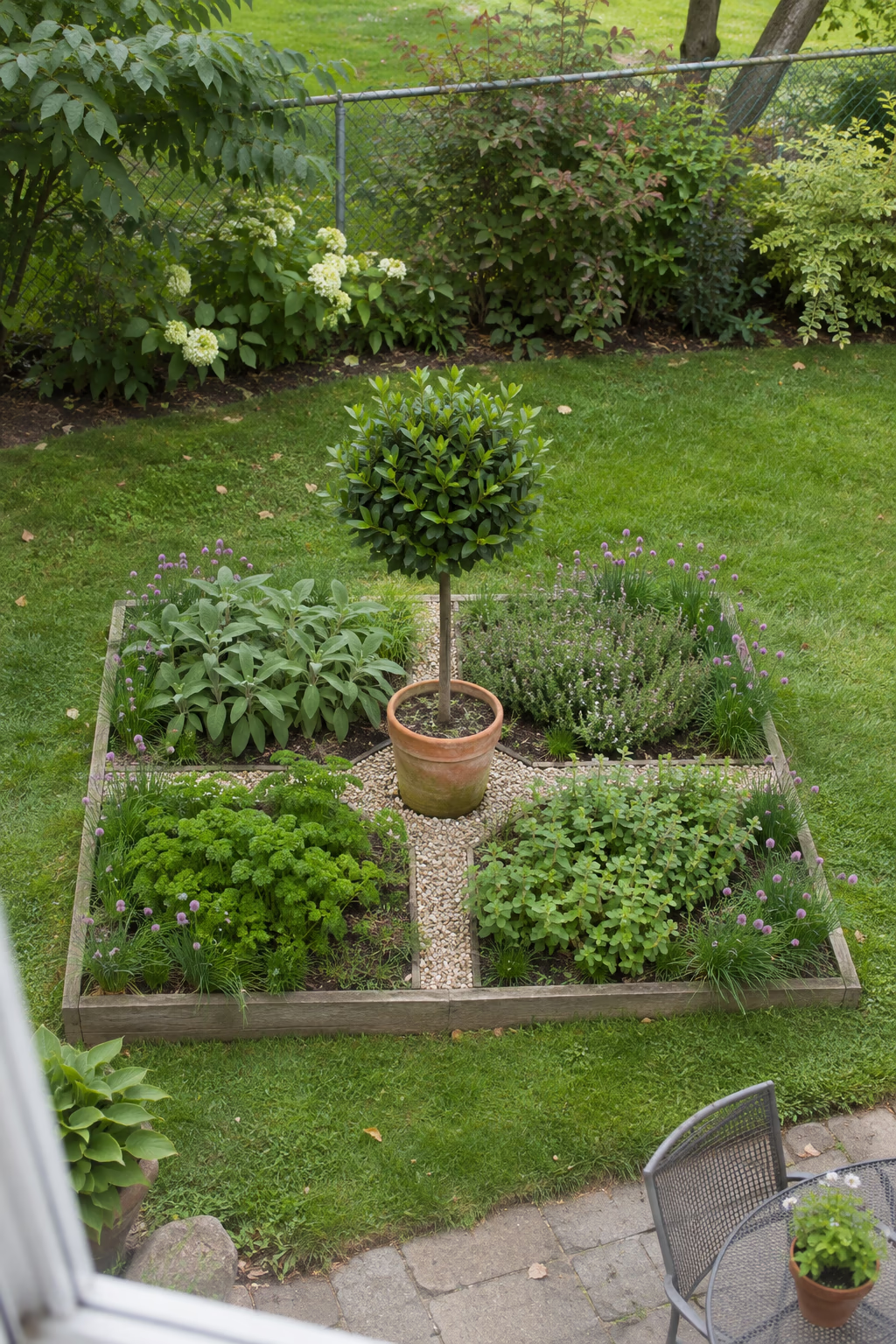
A formal little garden with a clear centerpiece
Mark out a square bed about 6 by 6 feet and set a single feature plant in the middle, such as a clipped bay laurel. Divide the rest into four matching quarters using narrow gravel or brick paths, and plant each quarter with the same pattern so the whole thing reads as one design.
A typical mix might include a ring of chives around the outside, thyme and parsley in the corners, and sage, oregano, and tarragon filling the middle of each quarter. The repetition makes even a small bed look deliberate and polished from a window or patio.
Bay is only reliably hardy in about USDA zones 8 to 10. In colder areas, keep it in a large pot sunk into the center position and move it to a bright, cool room for winter, or use a standard-trained rosemary or lemon verbena as a seasonal centerpiece.
4. Fill a Checkerboard of Pavers With Herbs
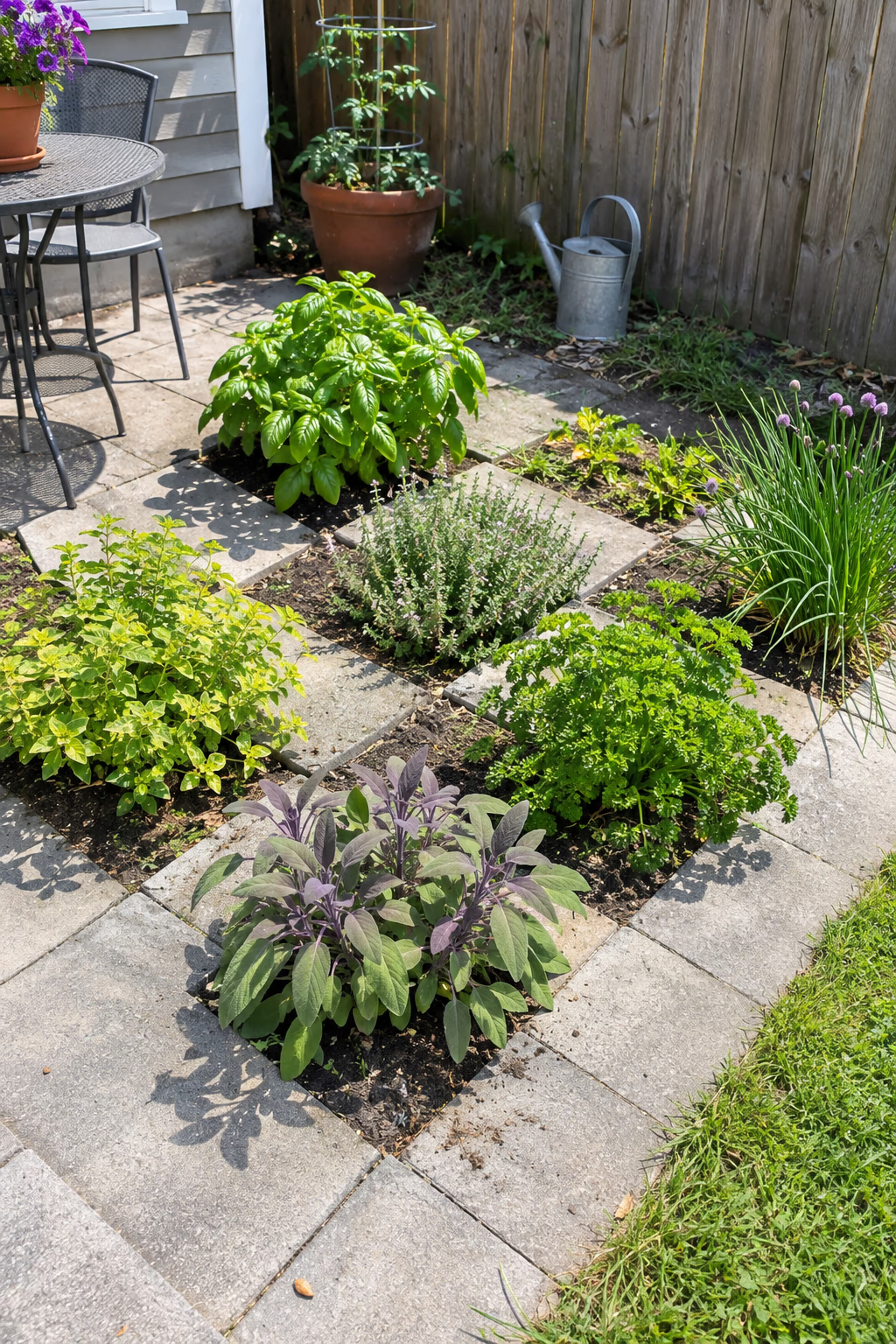
Neat squares that keep every herb in its place
Alternate square concrete pavers with open planting squares of the same size to create a checkerboard. Standard 12- or 16-inch pavers work well, and a 4-by-6 grid fits into a small sunny patch of lawn or a corner of a patio.
Each open square gets one herb, so the layout naturally limits spreading and makes it simple to see what needs harvesting. The pavers double as stepping spots, letting you reach the middle without compacting soil, and they warm in the sun, which Mediterranean herbs enjoy.
Set the pavers on a compacted base of gravel and sand so they stay level, and improve the soil in each planting square with compost before you plant. Keep vigorous spreaders such as mint out of the grid, because they will escape under the pavers.
5. Turn an Old Wagon Wheel Into Herb Bed Dividers
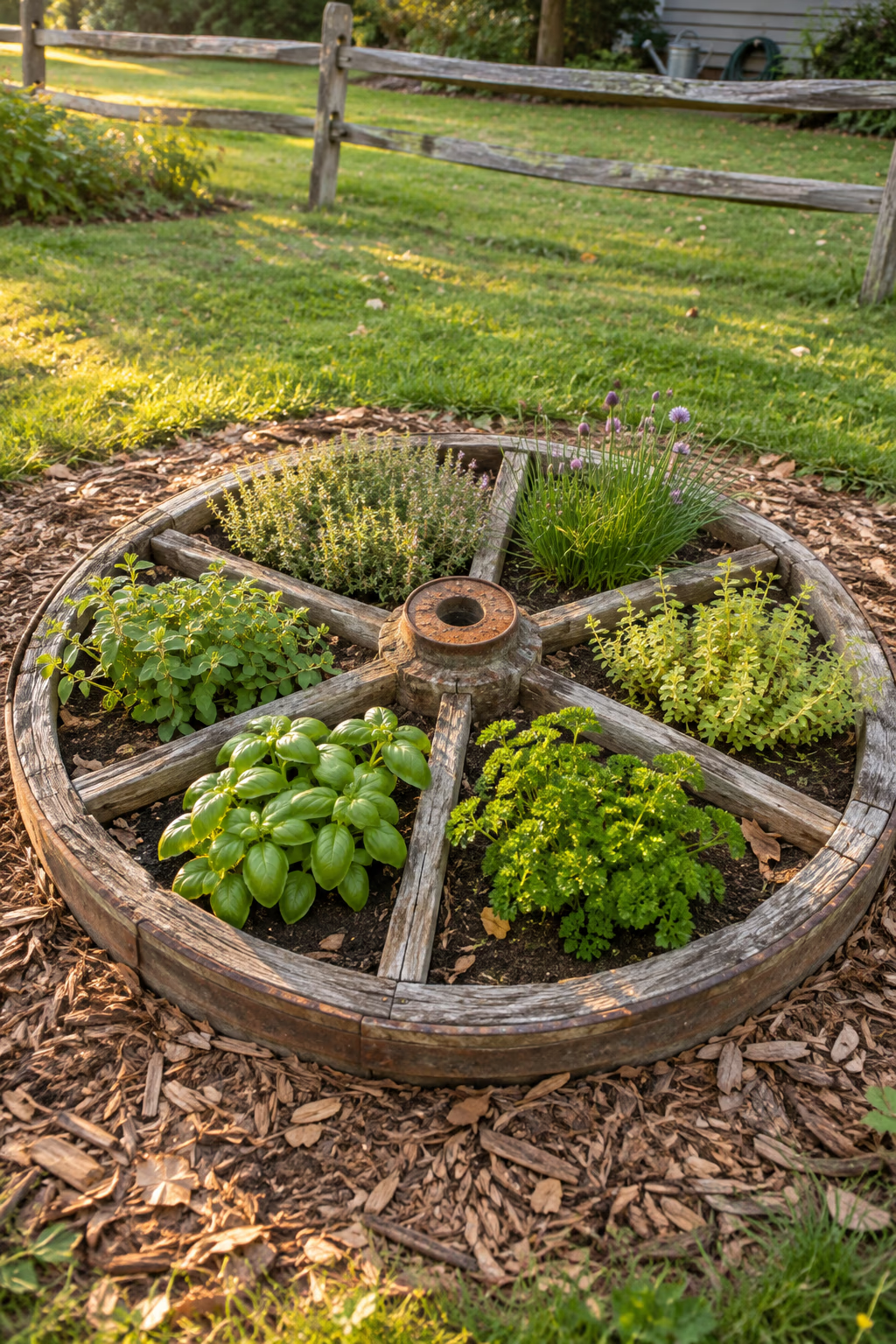
Ready-made sections with country charm
Lay a wooden wagon wheel flat on a prepared circle of soil and plant a different herb between each pair of spokes. A wheel 3 to 4 feet across gives you eight to twelve wedge-shaped pockets, enough for a full cook’s selection.
The spokes act as natural dividers and make the planting look orderly even when the herbs are a little overgrown. Use low and medium herbs such as thyme, chives, marjoram, parsley, and dwarf basil so the wheel stays visible.
Genuine antique wheels are getting scarce and pricey. Reproduction wheels, a circle of bricks laid like spokes, or a painted wood replica built from cedar boards give the same effect. Wood in contact with soil will eventually rot, so expect to replace it after several seasons.
6. Divide a Round Bed Into Pizza Herb Wedges
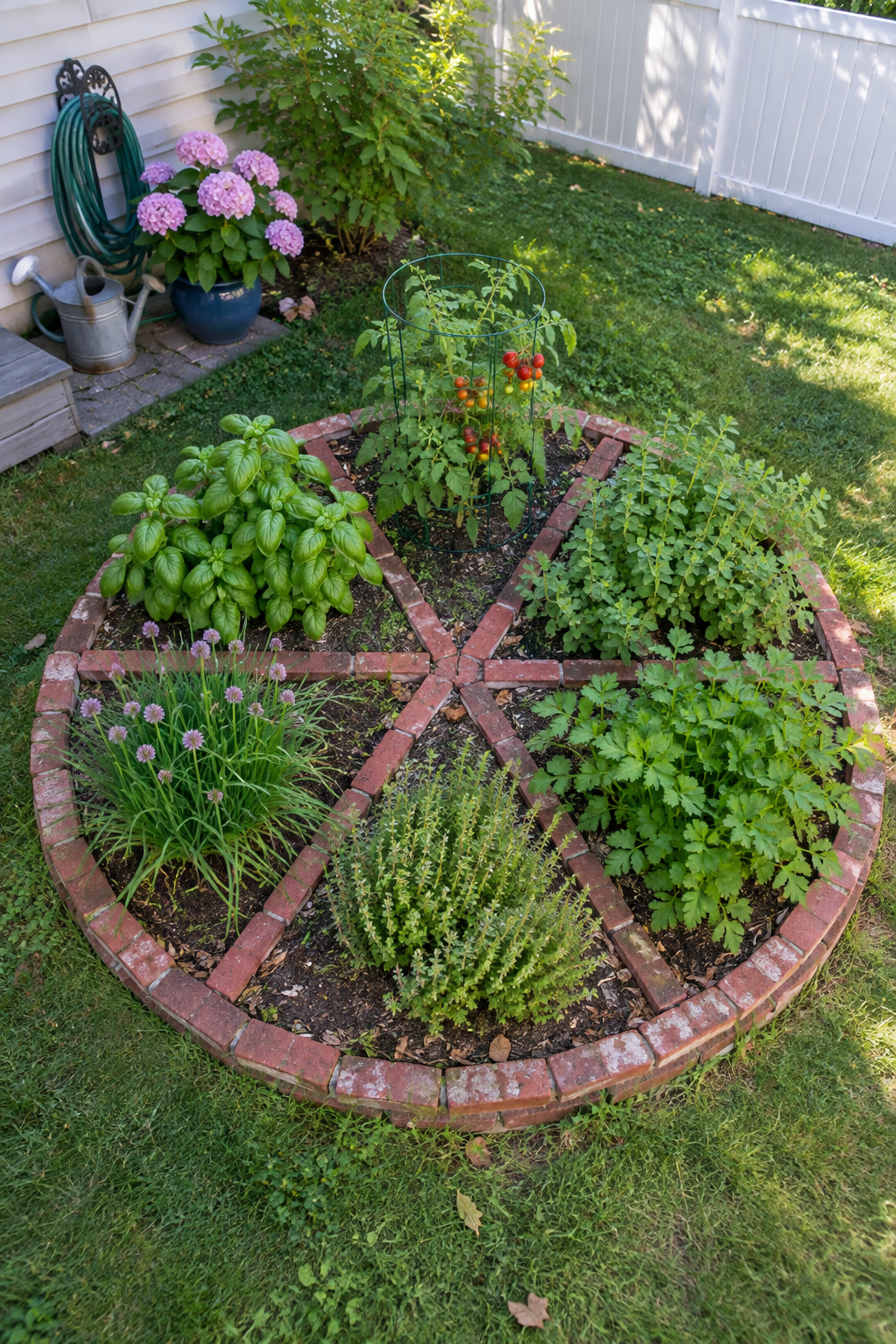
A themed garden kids and cooks both love
Shape a circular bed about 6 to 8 feet across and split it into slices like a pizza, using thin strips of brick, pavers, or edging. Plant each slice with a pizza and pasta ingredient: basil, oregano, parsley, thyme, and garlic chives, plus a compact tomato or pepper plant if space allows.
The wedge layout is easy to understand at a glance, which makes it a fun first garden for children and a clear plan for beginners. It also spaces plants so each one gets airflow and sun from at least one side.
Put the taller tomato or pepper on the north side of the circle so it does not shade the herbs. Basil is frost tender, so wait to plant it until nights stay above about 50 degrees Fahrenheit.
7. Create a Mediterranean Herb Corner in Gravel
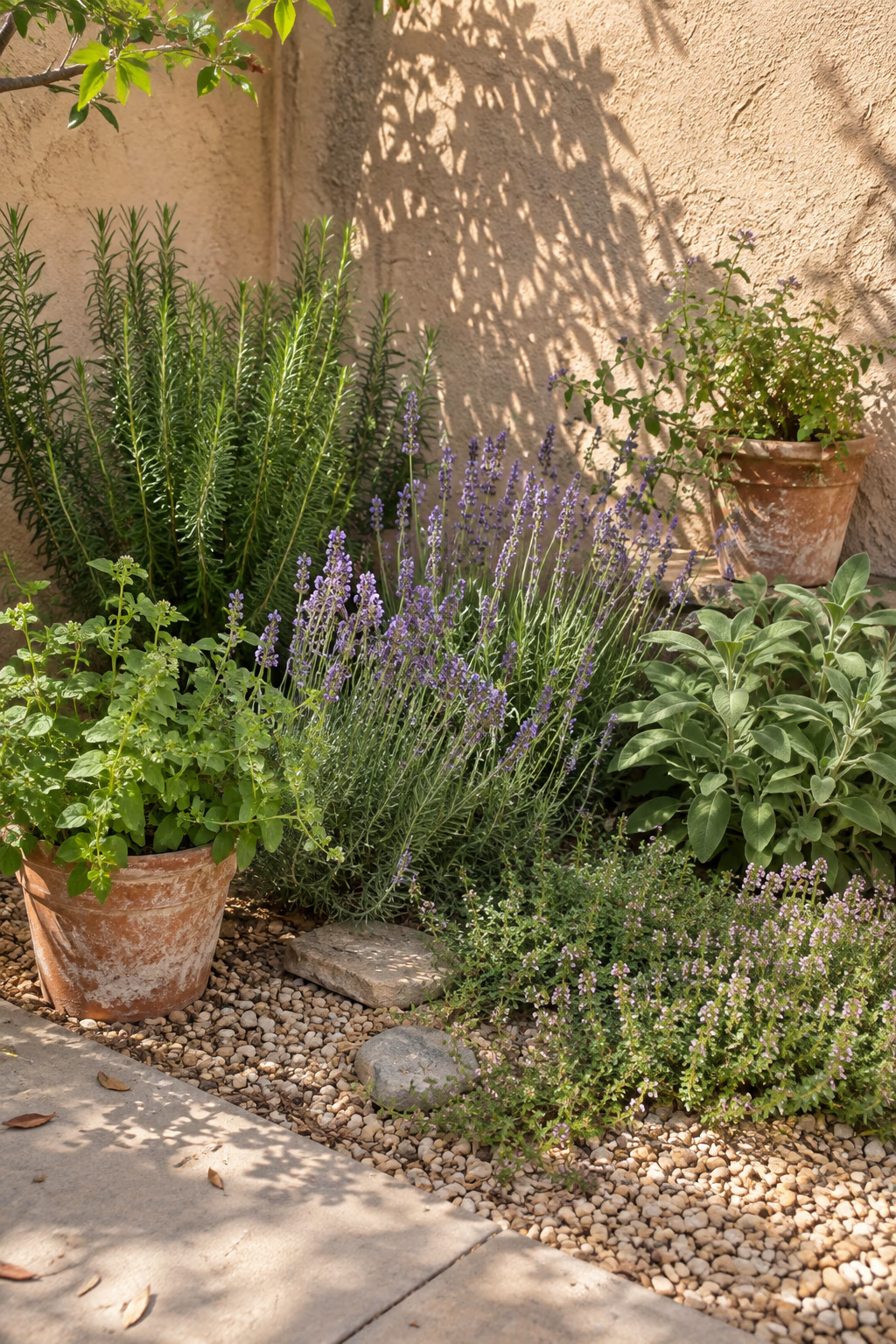
Warm, sunny, and happy with little water
Many favorite cooking herbs come from dry, rocky hillsides, and they grow best when you mimic those conditions. Choose the hottest corner of your yard, mix coarse grit into the soil, and plant rosemary, thyme, oregano, sage, and lavender in loose drifts. Finish with 2 inches of pea gravel or crushed stone mulch and a couple of terracotta pots for accent.
Gravel reflects heat, keeps leaves dry, and discourages the soggy crowns that kill these herbs in wet winters. Once established, the planting needs only occasional deep watering in most of the country.
Heavy clay is the main obstacle. If water sits after rain, build the bed up 6 to 8 inches with gritty soil before planting. Rosemary may not survive winters below about zone 7, so treat it as an annual or grow it in a pot in colder regions.
8. Hang a Herb Window Box Under the Kitchen Window
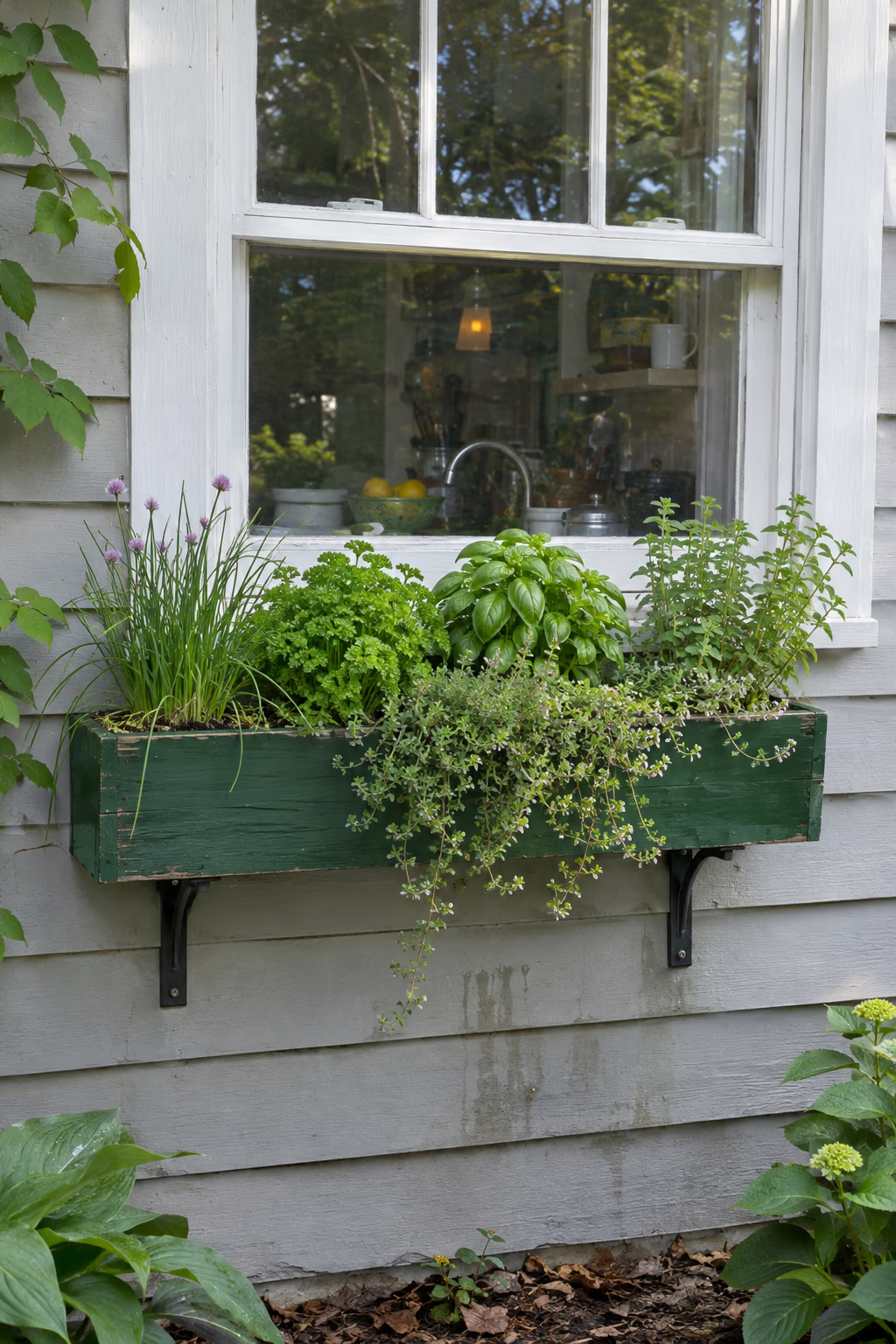
Snip herbs without even going outside
If the kitchen window faces south or west, a window box can become a tiny herb garden you can almost reach from the sink. Choose a box at least 8 inches deep and as long as the window is wide, and mount it on sturdy brackets screwed into studs or masonry, not just siding.
Compact herbs do best here: chives, thyme, parsley, oregano, and a dwarf globe basil. Trailing thyme or creeping oregano softens the front edge, while upright herbs fill the back.
Window boxes dry out quickly in summer and may need water daily in hot weather. A self-watering liner helps, and renters should check with the landlord before drilling into the exterior.
9. Mix Purple and Gold Herbs for Colorful Foliage
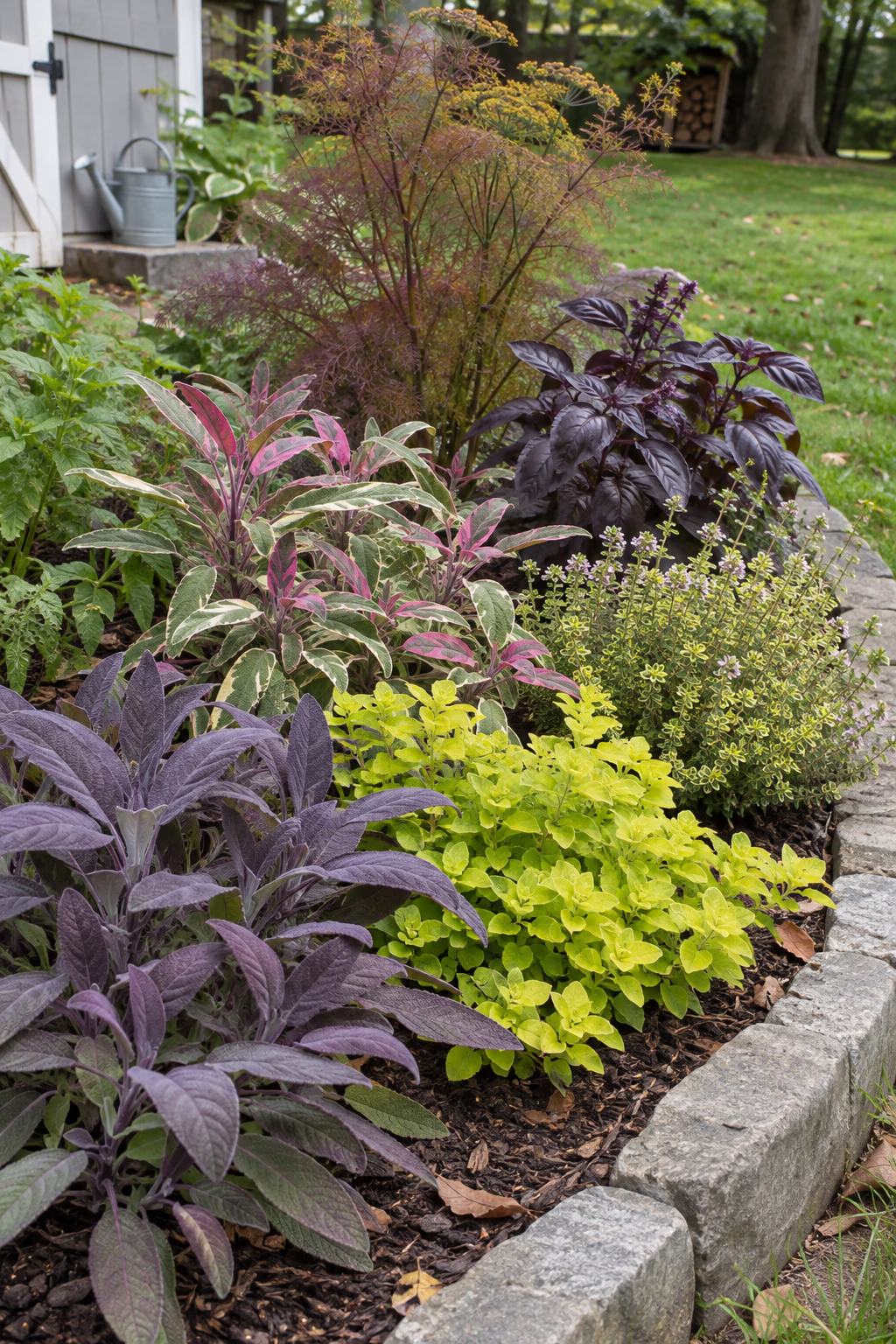
Herbs that look as good as ornamentals
Plenty of herbs come in variegated, purple, or golden forms that taste just like their green cousins. Combine purple sage, golden oregano, tricolor sage, purple basil, lemon thyme with yellow-edged leaves, and bronze fennel for a small bed that glows like a flower border.
Color makes a small herb garden feel intentional and keeps it attractive long after spring flowers fade. Repeat each color two or three times across the bed so the effect looks planned rather than random.
Colored-leaf varieties are often slightly less vigorous than the standard green types, and golden foliage can scorch in intense afternoon sun in hot climates. Give them good drainage and a little relief from the harshest late-day heat.
10. Grow a Herbal Tea Garden in One Small Bed
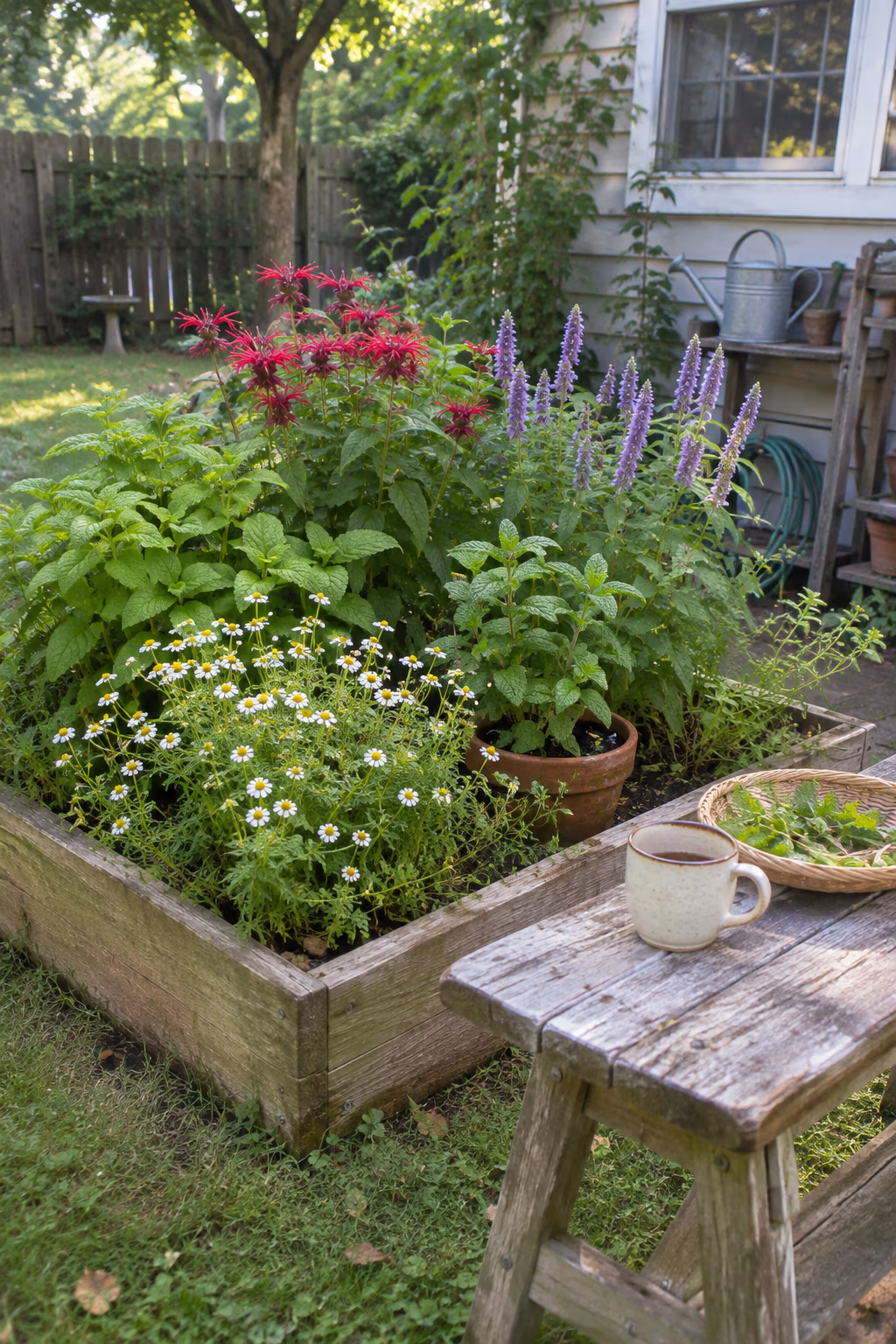
Fresh cups of tea from a few square feet
Devote a bed about 4 by 4 feet to plants you can steep: chamomile, lemon balm, peppermint in a sunken pot, lemon verbena, anise hyssop, and a clump of bee balm. Add a small bench or flat stone nearby so harvesting feels like part of the ritual.
Tea herbs are forgiving and productive, and most are pick-and-come-again plants. Frequent snipping keeps them bushy, and extra leaves dry easily on a screen indoors for winter use.
Lemon balm and mint both spread, by seed and runners respectively, so trim lemon balm before it sets seed and keep mint contained. Check with a doctor before drinking new herbal teas if you are pregnant or take medications.
11. Plant a Cocktail Herb Patch Beside the Patio
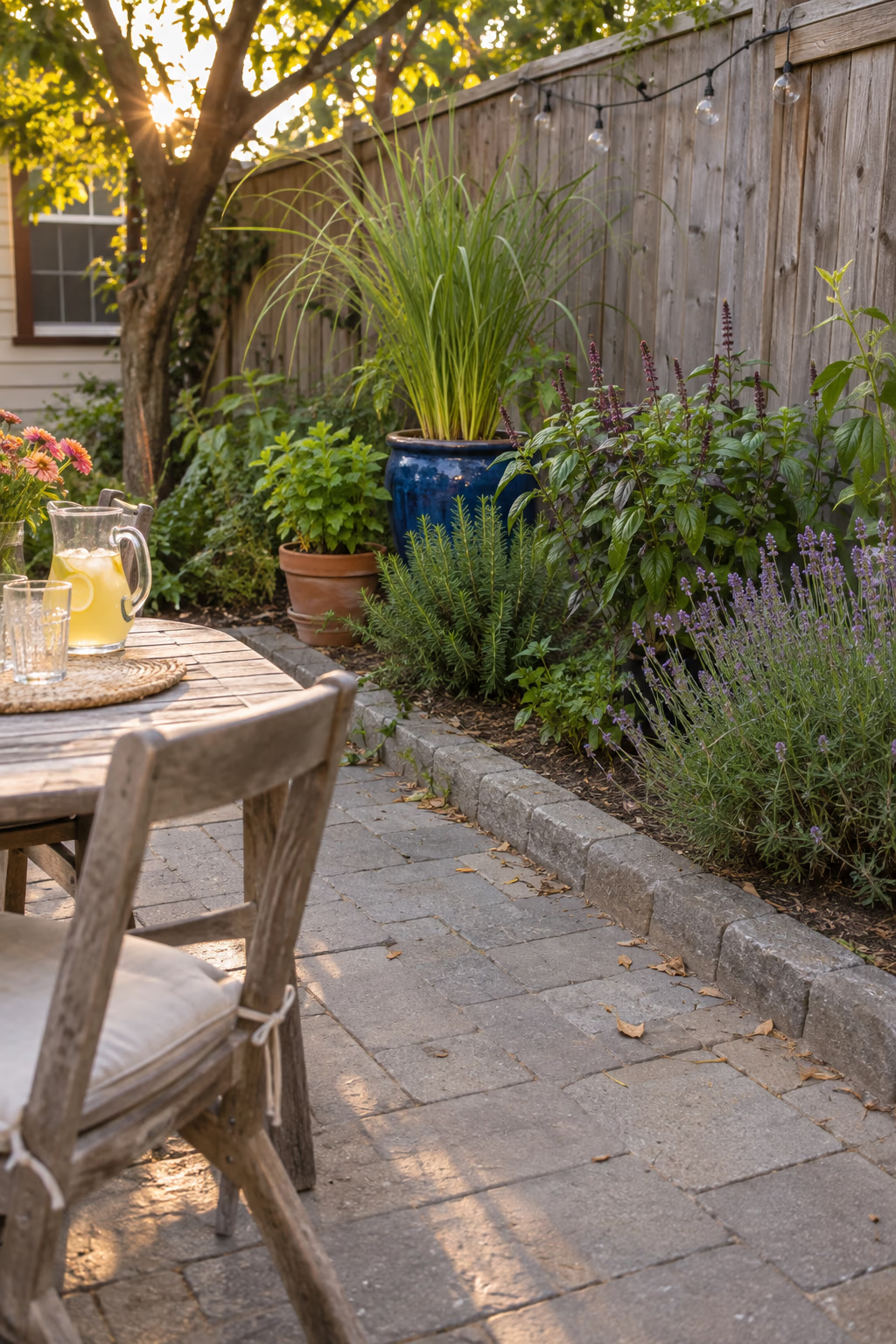
Garnishes ready when friends come over
Place a narrow bed or a few planters along the edge of the patio and fill them with herbs for drinks: spearmint, Thai basil, lemon verbena, rosemary, and lavender. A little lemongrass in a pot adds height and a citrus scent.
Keeping these herbs right where you entertain means guests can pick their own sprig for lemonade, iced tea, or mocktails. The fragrance alone makes the seating area feel more inviting on warm evenings.
Lemongrass and lemon verbena are tender in most of the country. Grow them in containers so they can come indoors before the first frost, and keep mint potted so it cannot creep between patio pavers.
12. Weave Culinary Herbs Into the Front Flower Border
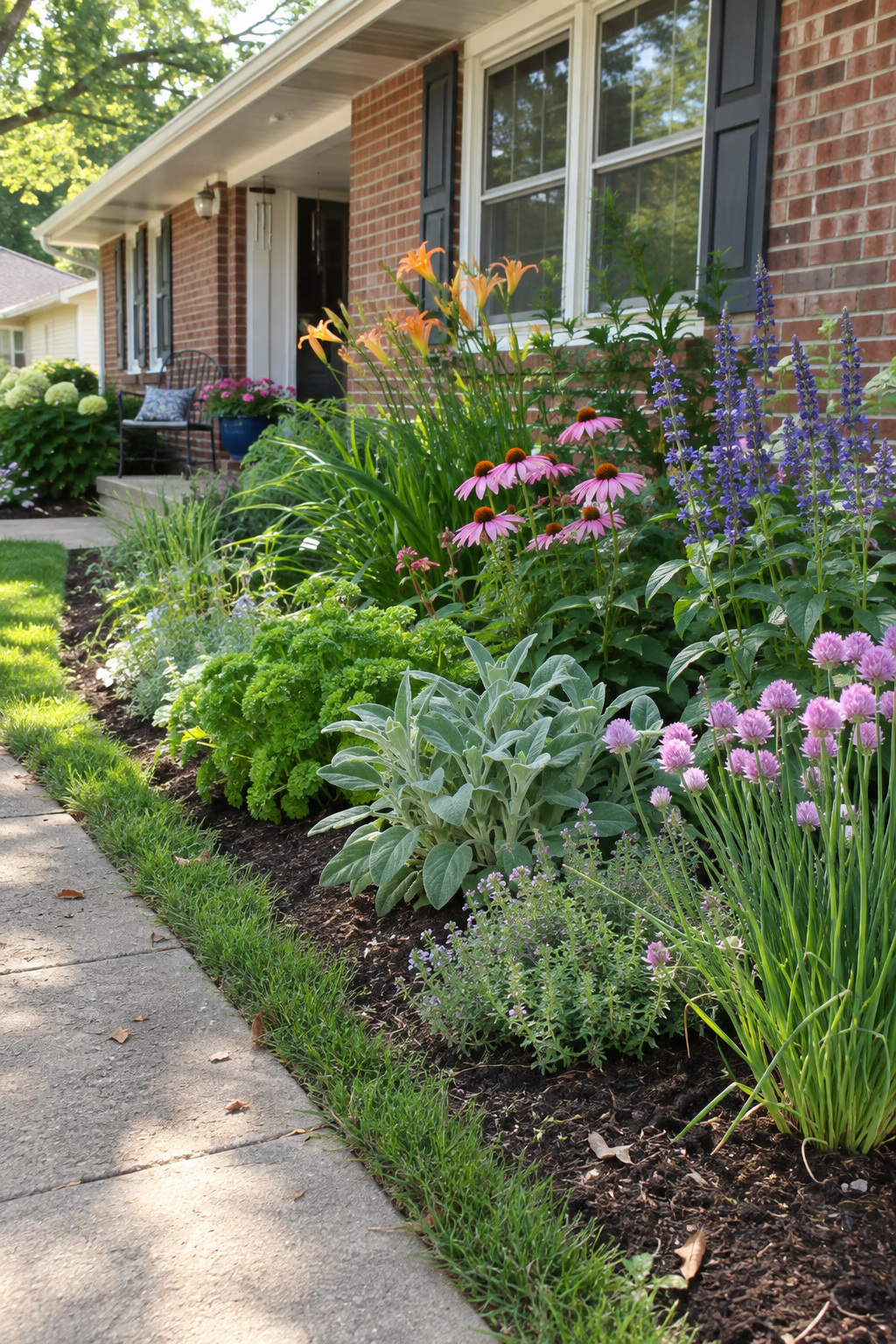
Edible plants that blend right into the landscape
You do not need a dedicated herb bed at all. Many herbs make handsome ornamental plants, so tuck chives, curly parsley, sage, and thyme along the front of an existing flower bed. Purple-flowered chives and silver sage look right at home next to coneflowers, salvia, and daylilies.
This approach is ideal for small yards and for HOA neighborhoods where a vegetable-style bed out front might draw complaints. The herbs fill gaps, edge the bed neatly, and help draw pollinators to the whole planting.
Avoid spraying pesticides or herbicides near herbs you plan to eat, and keep edible plants a few feet back from busy streets and sidewalks where dogs pass.
13. Frame the Herb Bed With a Low Lavender Hedge
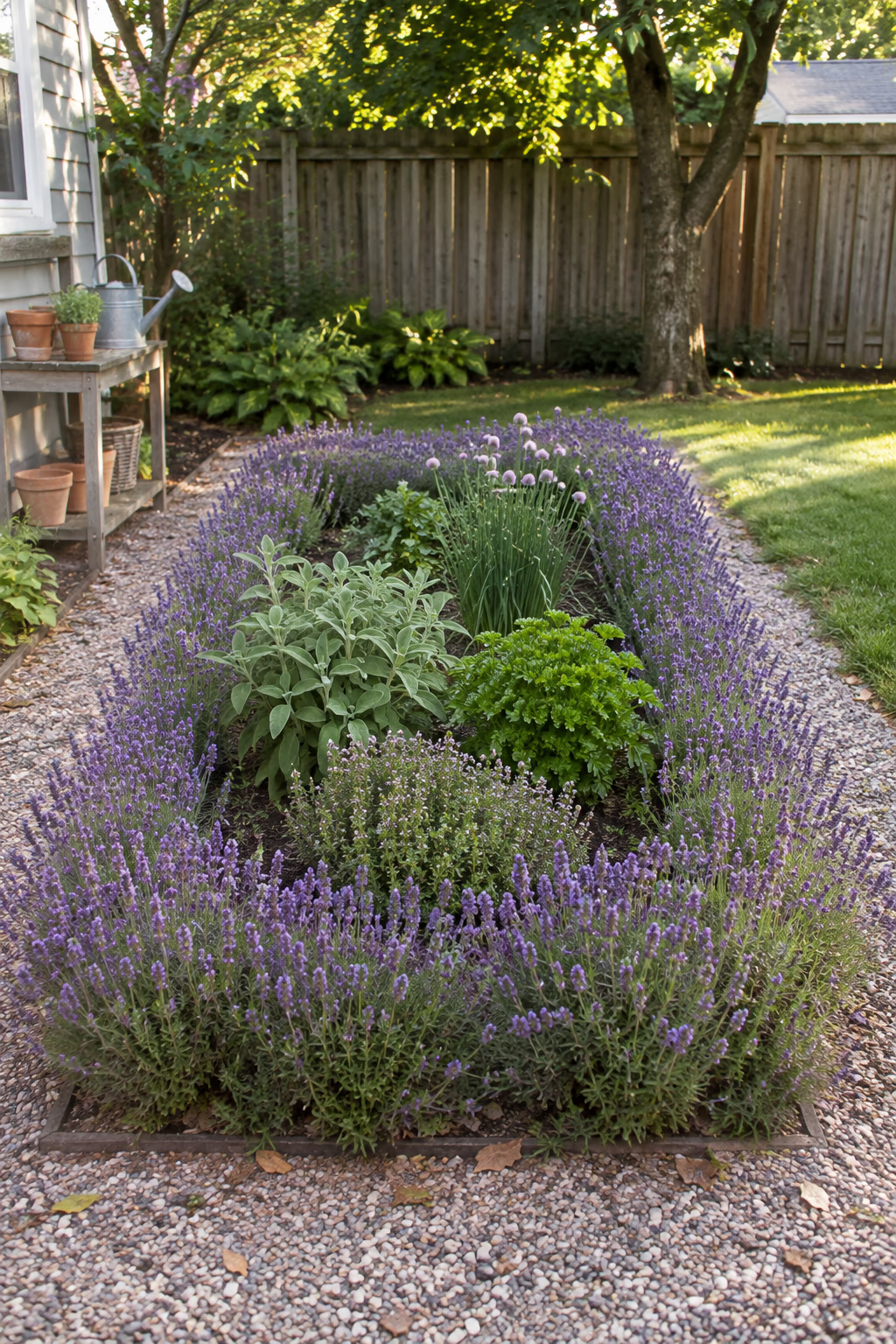
A fragrant edge that defines the space
Plant a single row of compact English lavender around the outside of a small herb bed, spacing plants about 12 to 18 inches apart. Varieties such as Munstead and Hidcote stay roughly 18 inches tall and are hardy to about zone 5.
The silvery hedge gives a small bed a finished outline, softens hard edges in early summer when it blooms, and releases its scent every time you brush past on the way to pick herbs. In mild-winter areas, a low rosemary or germander hedge works the same way.
Lavender hates wet feet, so it needs full sun and sharp drainage. Shear it lightly after flowering, but avoid cutting back into bare old wood, which often does not regrow.
14. Set Stepping Stones Through the Herb Bed
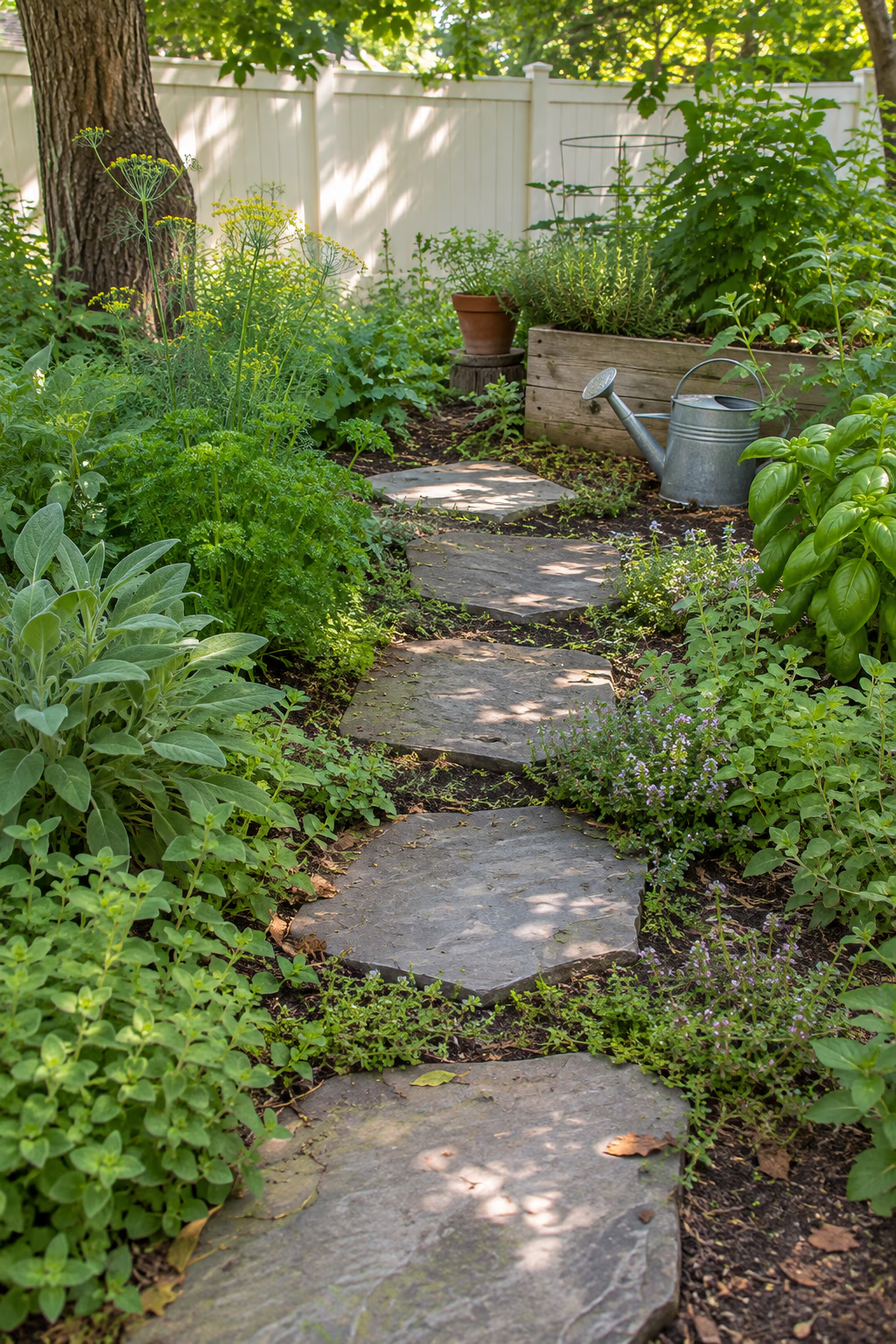
Reach every plant without packing the soil
A bed deeper than about 4 feet is hard to harvest from the edges. Lay a short line of flat stepping stones, roughly 12 to 18 inches across, through the middle so you can step in and snip without crushing plants or compacting the soil.
The stones break up the green mass, give a small garden a sense of journey, and make weeding and watering easier. Low herbs such as creeping thyme or Roman chamomile can be allowed to spill over the edges for a soft, lived-in look.
Set the stones so their tops sit just above soil level and they do not rock when stepped on. Space them to match a comfortable stride, usually about 20 to 24 inches center to center.
15. Line a Sunny Fence Base With a Narrow Herb Strip
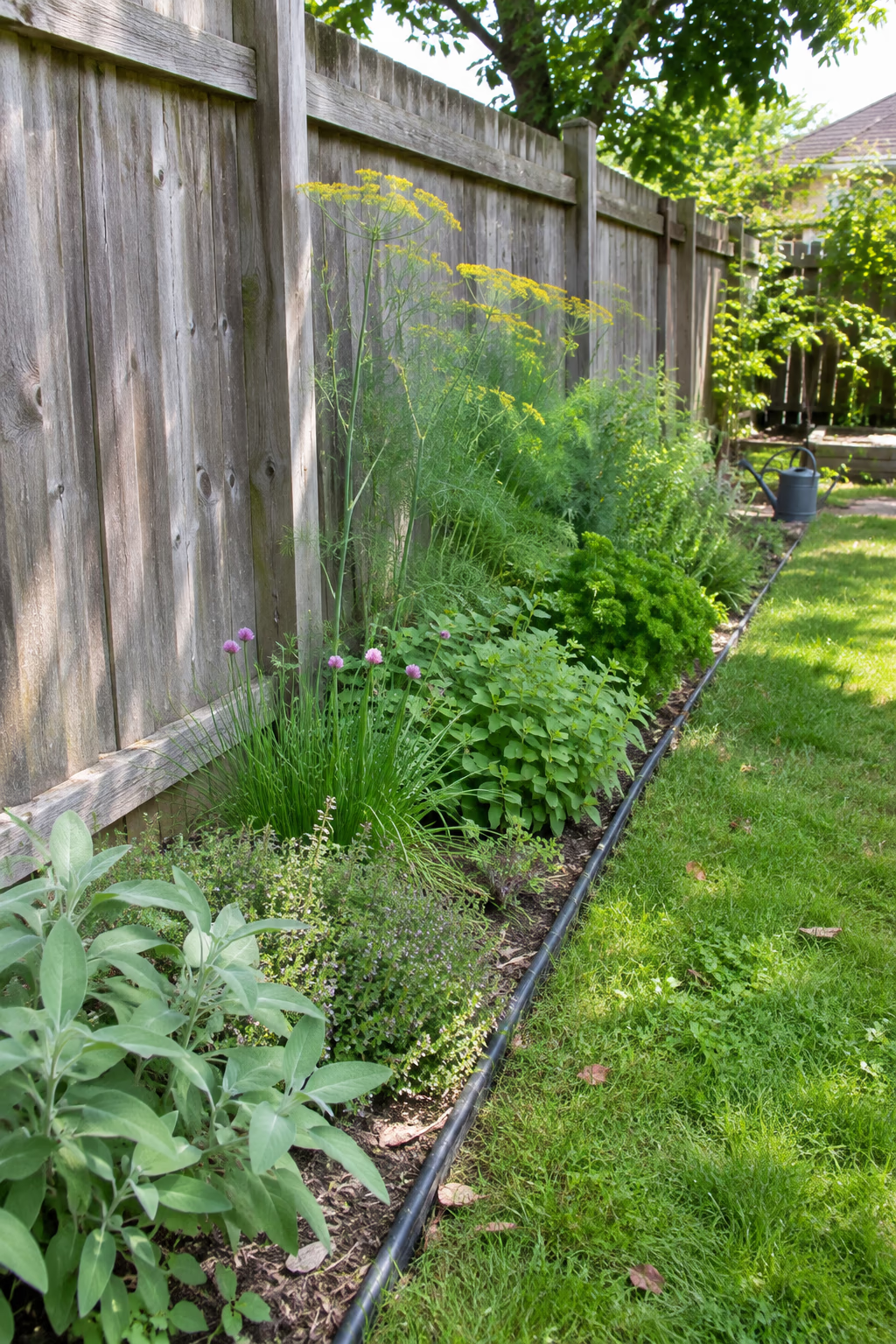
Use the forgotten edge of the yard
The strip along a south- or west-facing fence is often wasted space, but it is perfect for herbs. A bed just 18 to 24 inches wide can hold a long row of sage, thyme, oregano, chives, and parsley, with dill or fennel at the back for height.
A fence reflects warmth, shelters plants from wind, and creates a tidy backdrop that makes a simple row look like a garden. Because the bed is narrow, everything is easy to reach from the lawn or path.
Soil right next to fences can be dry and compacted, so loosen it well and mix in compost. Leave a few inches of clearance from wood fence boards to help them last, and confirm the fence line before digging if the fence belongs to a neighbor.
16. Let a Few Herbs Bloom for Bees and Butterflies
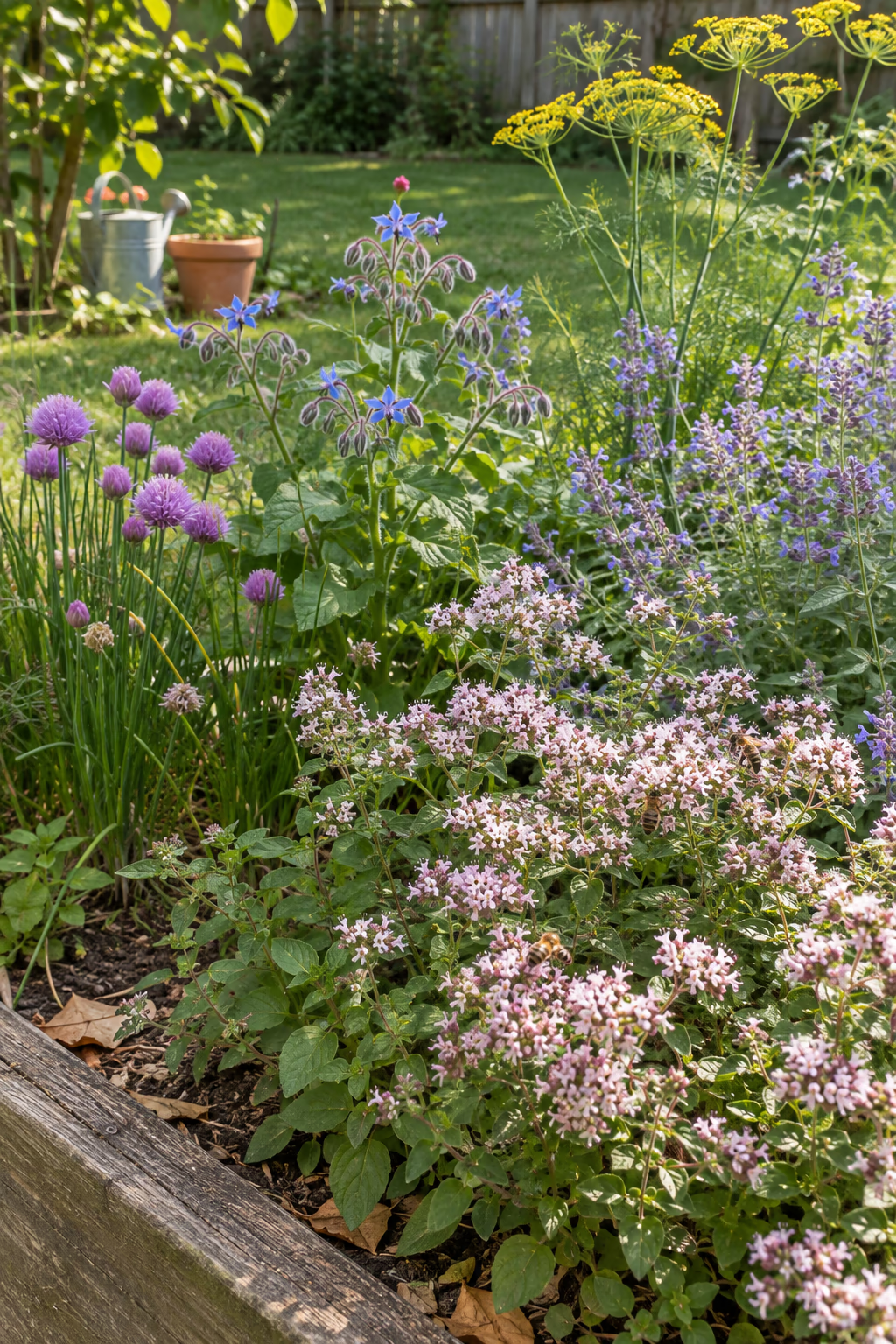
A small herb garden that feeds pollinators too
Most cooks pinch off herb flowers, but letting a few plants bloom turns a small herb patch into a pollinator magnet. Oregano, thyme, chives, borage, hyssop, and catmint flowers are covered in bees in midsummer, and dill and fennel feed swallowtail caterpillars.
A good compromise is to grow two plants of a favorite herb: harvest one hard for the kitchen and let the other flower. Blooms also add a pretty haze of purple, white, and blue to the bed.
Flowering can make some herbs, like basil and cilantro, turn bitter or stop producing leaves, so choose which plants to let go. Avoid pesticides, and leave caterpillars alone on a sacrificial dill plant.
17. Tuck a Shade-Tolerant Herb Nook Into a Dim Corner
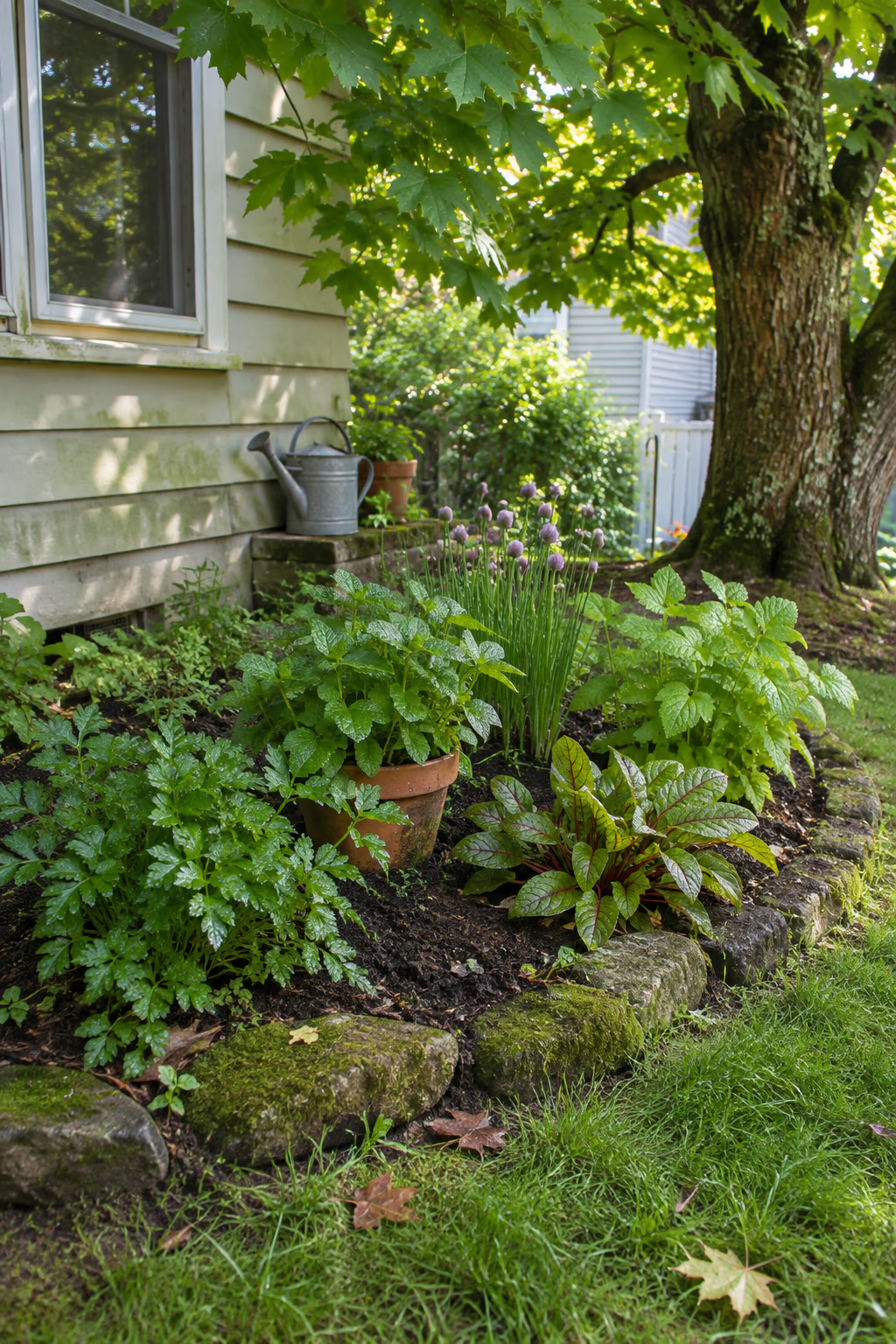
Herbs for spots that only get morning sun
Not every small yard has a sunny corner. Areas with three to five hours of sun, especially morning sun, can still grow parsley, chives, mint, lemon balm, chervil, sorrel, and cilantro. Plant them in a small bed under a high tree canopy or along the east side of the house.
These leafy herbs actually tend to stay tender longer and bolt later when they are spared harsh afternoon sun, which is a real benefit in hot Southern summers.
Growth will be a bit slower and leaves less intensely flavored than in full sun. Woody Mediterranean herbs such as rosemary and lavender will struggle here, so save them for brighter spots. Watch for slugs in damp, shady beds.
18. Edge the Herb Bed With Sawtooth Brick
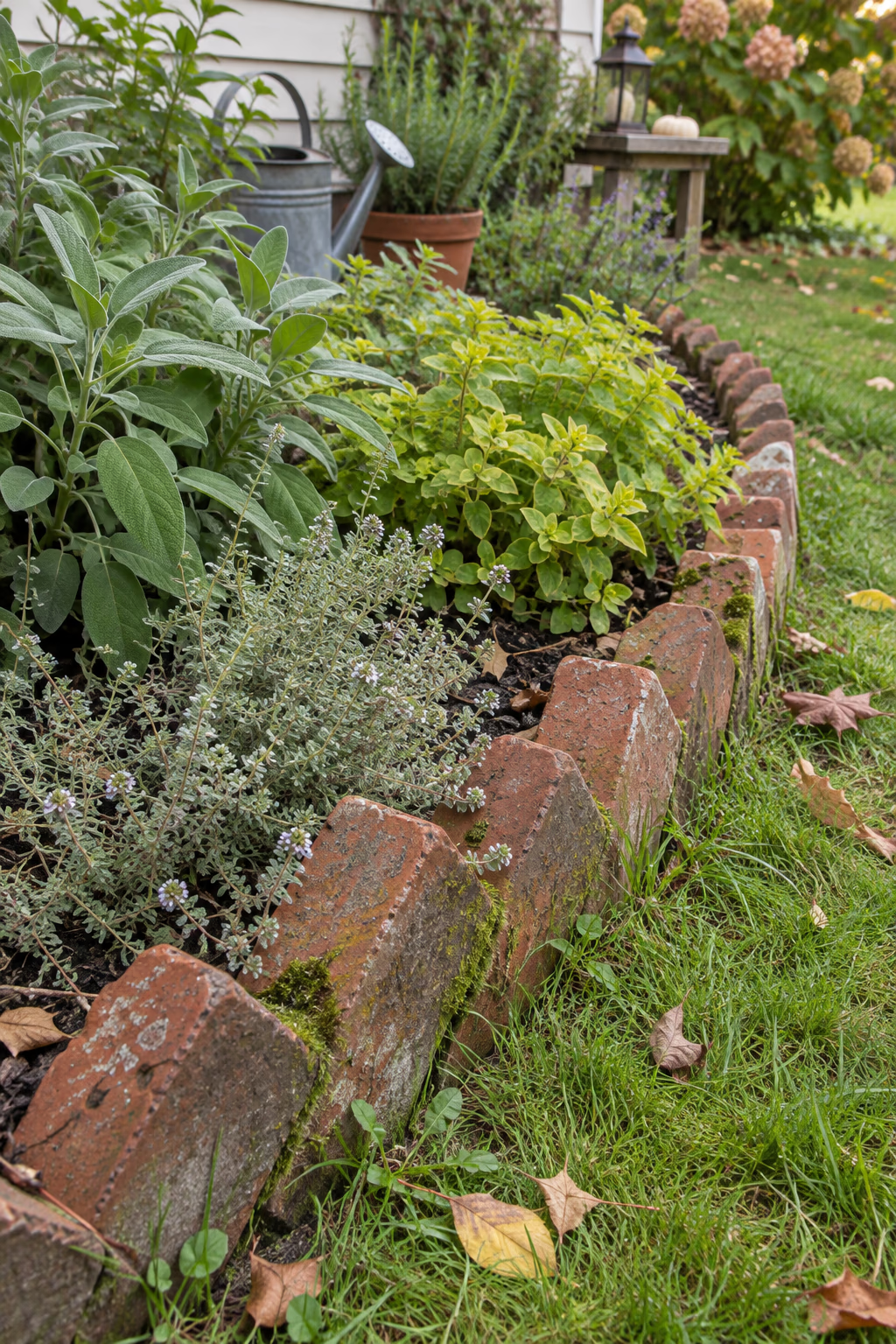
A classic border that costs very little
Set bricks at a 45-degree angle, half buried in a shallow trench, so their corners form a zigzag line around the bed. Reclaimed bricks are often free or very cheap and give a small herb garden an old-fashioned, cottage-kitchen feel.
The edging keeps mulch and soil in the bed, stops lawn grass from creeping in, and gives a clean outline that makes even a tiny patch look cared for. Red brick also pairs beautifully with gray-green sage and silver thyme.
Dig the trench about half the height of the brick and tamp soil firmly around each one so frost does not heave them. Grass will still try to sneak between gaps, so plan to trim the edge a few times each season.
19. Corral Mint in Sunken Pots
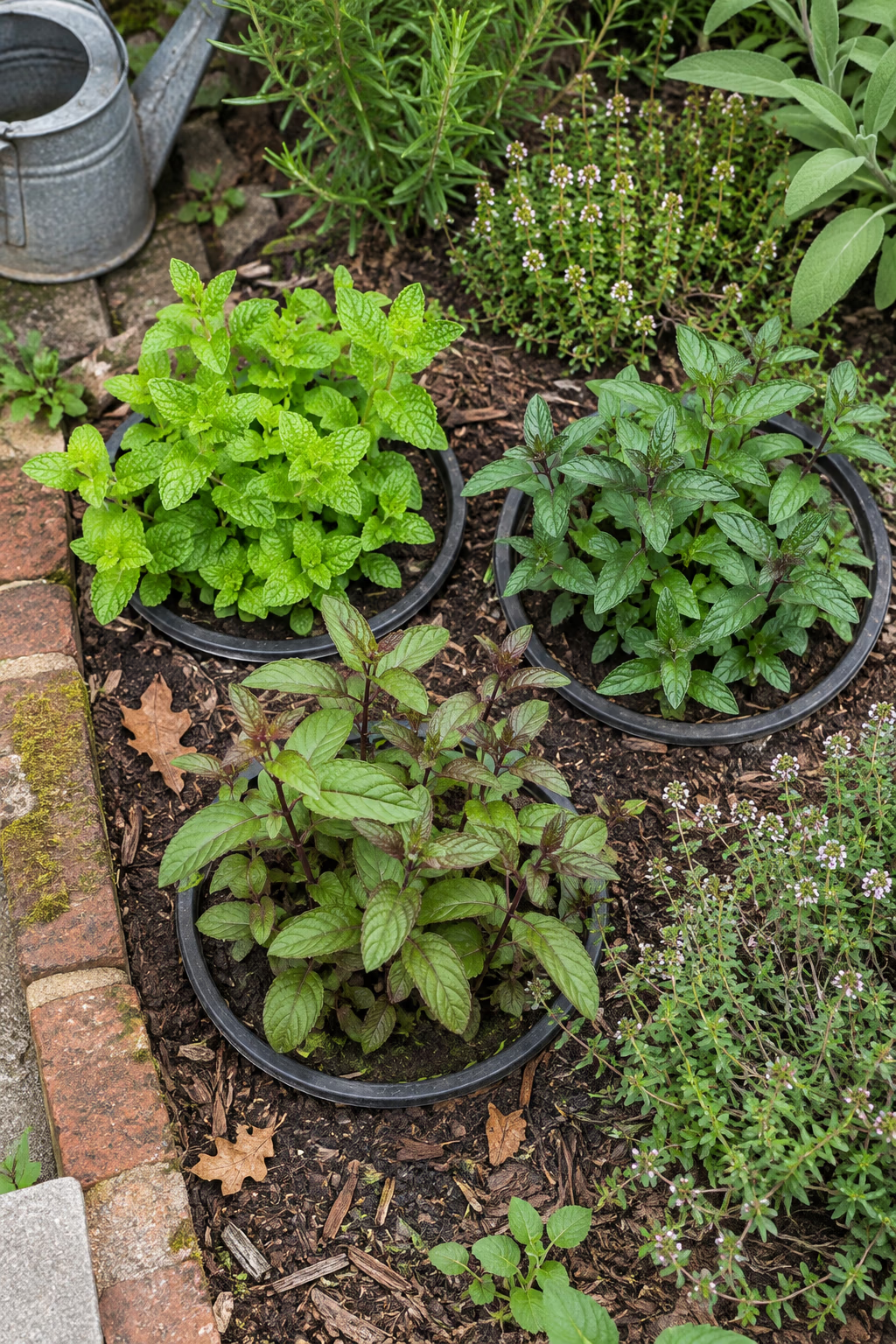
Enjoy mint without letting it take over
Mint is easy to grow and almost impossible to remove once its runners spread through a bed. The simple fix is to plant it in a sturdy pot at least 10 to 12 inches wide and sink the pot into the ground, leaving the rim 1 to 2 inches above soil level.
The buried pot keeps roots cool and moist like they would be in the ground while stopping runners from escaping sideways. You can grow spearmint, peppermint, and chocolate mint side by side in separate pots without them mixing.
Check the rim every few weeks, because stems that flop over can root outside the pot. Lift and divide the plant every year or two when the pot fills with roots. The same trick works for lemon balm and oregano.
20. Sow Succession Rows of Cilantro and Dill
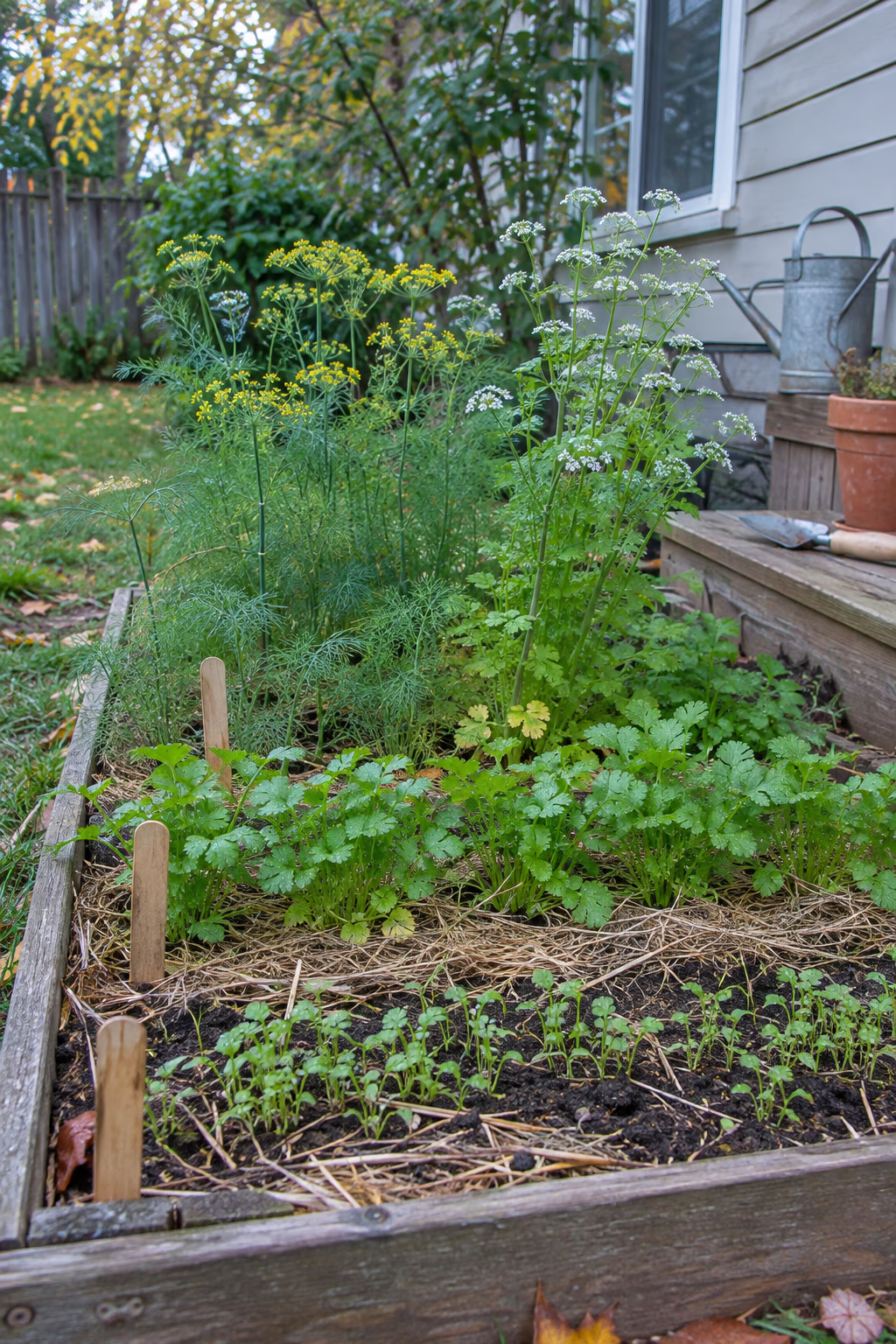
Keep fast herbs coming all season
Cilantro and dill grow fast, then quickly run to flower and seed, especially in hot weather. Instead of planting them once, sow a short row every two to three weeks in spring and again in late summer for a fall crop.
A few short rows, each about 2 feet long, keep a steady supply of fresh leaves without overwhelming a small garden. These herbs dislike transplanting, so direct seeding is easier and produces sturdier plants.
In much of the South, cilantro grows best through fall, winter, and early spring rather than summer. Let one row flower and set seed if you want coriander seeds or dill heads for pickling.
21. Move Tender Herbs to a Sunny Windowsill for Winter
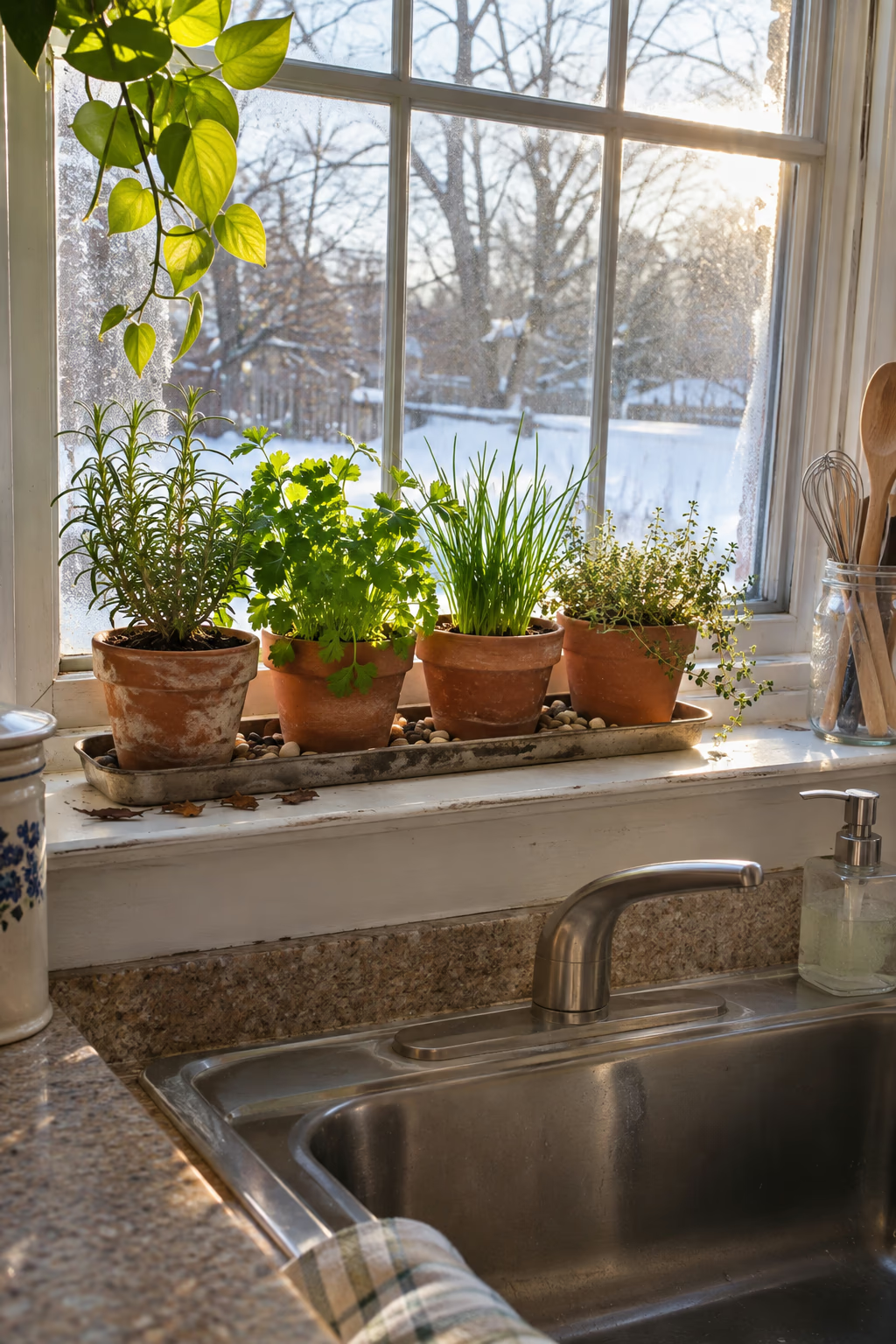
Stretch the harvest past the first frost
Before frost arrives, pot up a few tender or favorite herbs such as rosemary, parsley, chives, and thyme, or root fresh cuttings in small pots, and bring them inside to a bright south-facing window. A shallow tray of pebbles under the pots catches drips.
Even a few small plants mean fresh garnishes through winter, and rosemary often survives better indoors than outside in colder zones. In spring, the same plants go back outside to restart the garden.
Winter windows rarely give enough light for strong growth, so a simple LED grow light on a 12- to 14-hour timer helps a lot. Water sparingly, check for aphids and spider mites before bringing plants in, and keep pots away from heating vents.
How to Plan Your Small Herb Garden
A small herb garden works best when it is placed well and planted with herbs you actually cook with. A little planning up front saves wasted plants and money.
- Follow the sun. Most culinary herbs need at least six hours of direct sun. Watch your yard for a full day before choosing a spot, and save shady corners for parsley, mint, and chives.
- Keep it close to the kitchen. Herbs within a short walk of the door get used far more often than a bed at the back of the yard.
- Group by water needs. Put dry-loving rosemary, thyme, sage, and lavender together and keep thirstier basil, parsley, and cilantro in their own section.
- Prioritize drainage. Soggy soil kills more herbs than cold does. Loosen clay, add compost and grit, or raise the bed slightly if water lingers.
- Know your zone. Check your USDA hardiness zone so you know which herbs are perennial for you and which will need to be replanted or brought indoors each year.
- Start small and harvest often. Six to eight herbs you love are plenty for a first season. Regular snipping keeps plants bushy and productive. Call 811 before digging new beds near utility lines.
Frequently Asked Questions
How big should a small herb garden be?
A bed of about 4 by 4 feet, or a strip 2 feet wide and 6 to 8 feet long, holds enough herbs for most households. Even one or two square feet per herb is plenty for compact plants like chives, thyme, and parsley.
Which herbs are easiest for beginners?
Chives, mint, thyme, oregano, parsley, and basil are reliable starting points. They grow quickly, tolerate a range of soils, and recover well from frequent harvesting.
Which herbs come back every year?
In most of the US, chives, thyme, oregano, sage, mint, tarragon, and lavender are perennial. Rosemary and bay survive outdoors only in milder zones, while basil, cilantro, and dill are annuals, and parsley is usually grown as one.
Can I plant different herbs together in the same bed?
Yes, as long as the plants share similar light and water needs. Keep Mediterranean herbs together in drier soil, keep basil and parsley where they get regular water, and always contain mint so it does not crowd out its neighbors.
How often should I water a small herb garden?
In-ground herbs usually need a deep watering about once a week, more often in heat or sandy soil. Let the top inch of soil dry between waterings for woody herbs, and check containers and window boxes daily in summer.
Final Thoughts
The best small herb garden ideas are the ones that put fresh flavor right where you will use it. A stone spiral, a bed by the back door, or a single row along a sunny fence can supply your kitchen for months and make the yard smell wonderful at the same time.
Pick a sunny spot, plant a handful of herbs you love, and keep snipping. As you learn what grows best in your yard, add a themed corner, a fragrant hedge, or a few pots for winter, and your little herb patch will keep getting better every season.


