
Picture a compact front yard where a ribbon of flat stones curves through soft green and lavender, a small tree leans over the walk, and the front door glows a welcoming color. Nothing is huge, yet every square foot has a job.
That’s the appeal of a small front yard done well. Limited space forces you to make confident choices, and those choices often look more polished than a sprawling lawn ever could. Better still, a small footprint means smaller bills, quicker weekend projects, and less upkeep.
These 29 small front yard ideas cover paths, plantings, hardscape, lighting, fences, and finishing touches that work on ordinary lots and budgets. Pick one project to start, or combine several to transform your curb appeal.
1. Lay a Curving Stepping Stone Path to the Door
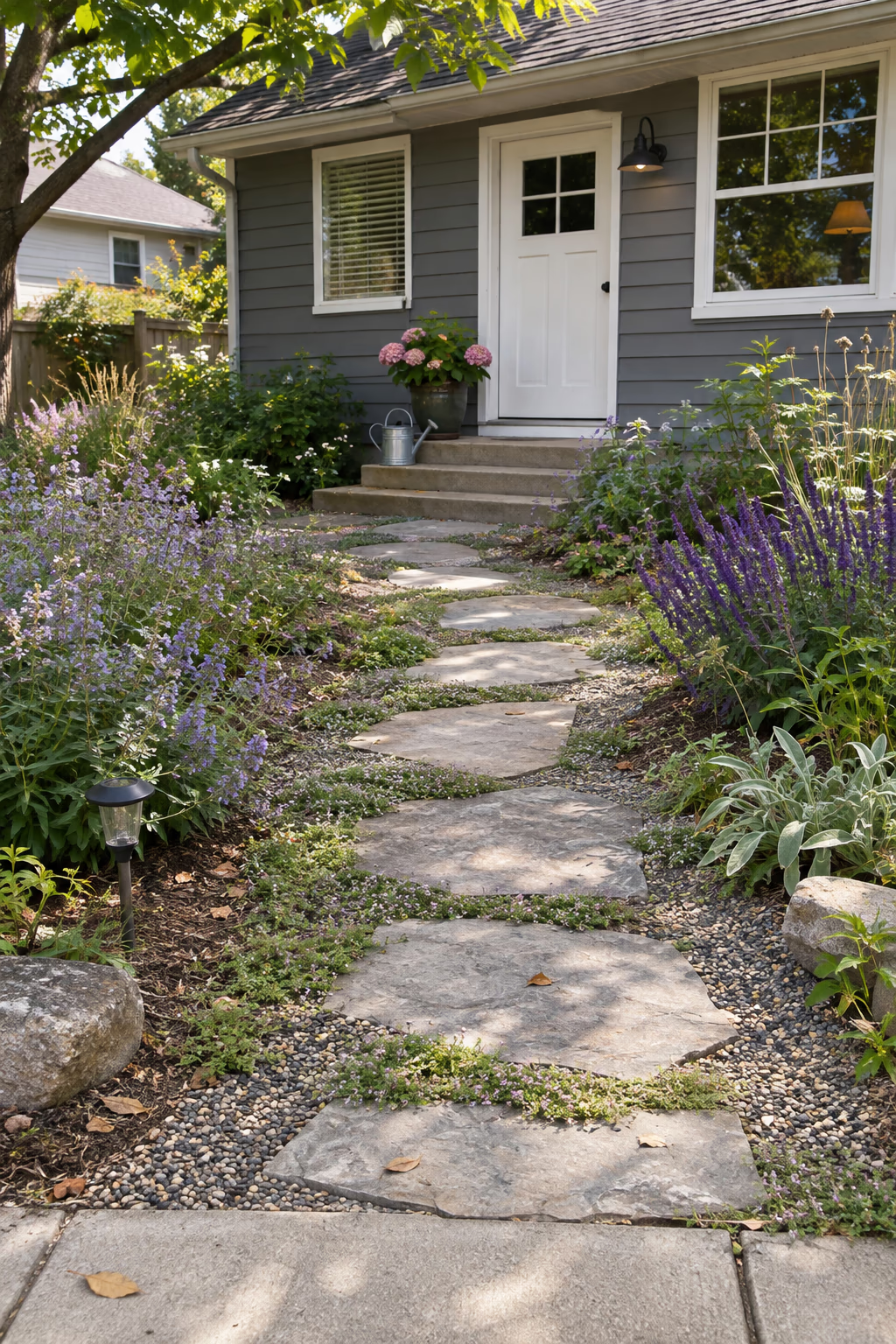
A gentle curve makes a short walk feel longer
Straight paths are efficient, but a soft S-curve slows the eye and makes a small yard feel more generous. Set flagstone, concrete stepping pads, or large pavers about 24 inches wide, with 2 to 4 inches of gaps between them.
Dig out 4 inches of soil, add compacted gravel and a thin layer of sand, then bed each stone so it sits flush with the ground. Fill the gaps with low creeping thyme, moss, or fine gravel.
Keep the path wide enough for comfortable walking, ideally 36 inches for the main route to the door. Space stones so your natural stride lands in the center of each one.
2. Replace Part of the Lawn With Native Plantings
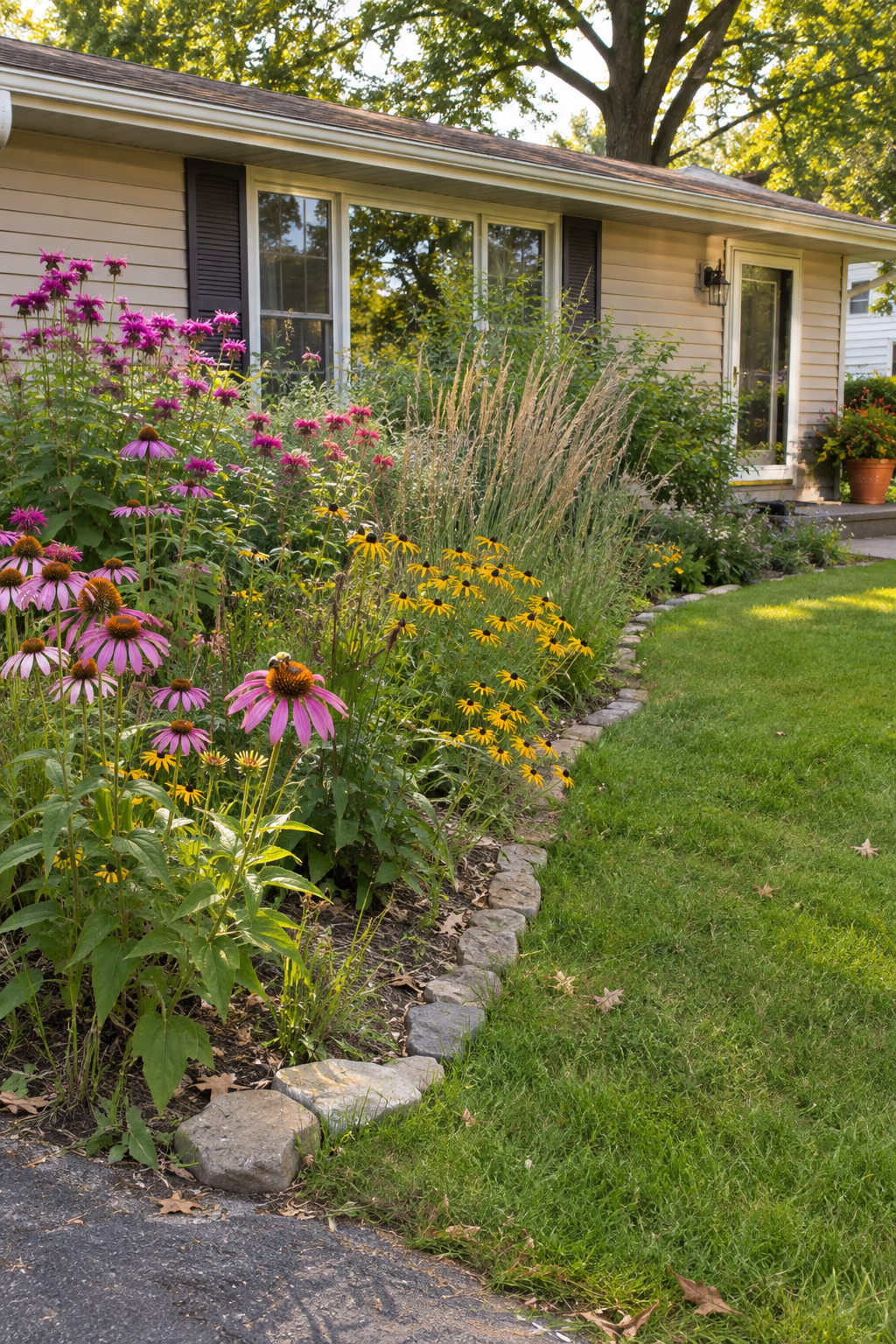
Less mowing and more life in the same space
You don’t have to remove every blade of grass. Replacing the half of the lawn that’s hardest to mow with native perennials and grasses cuts upkeep and brings in bees, butterflies, and birds.
Choose species native to your region, such as coneflower, black-eyed Susan, little bluestem, or bee balm in much of the country. Smother the turf with cardboard and mulch, or remove it, then plant in drifts of three to five of each type rather than one of everything.
Native beds look scruffy in their first year. Keep the edges crisp and add a tidy border so neighbors read the planting as intentional. Check HOA rules and local weed ordinances first.
3. Plant a Cottage Garden Border Along the Walk
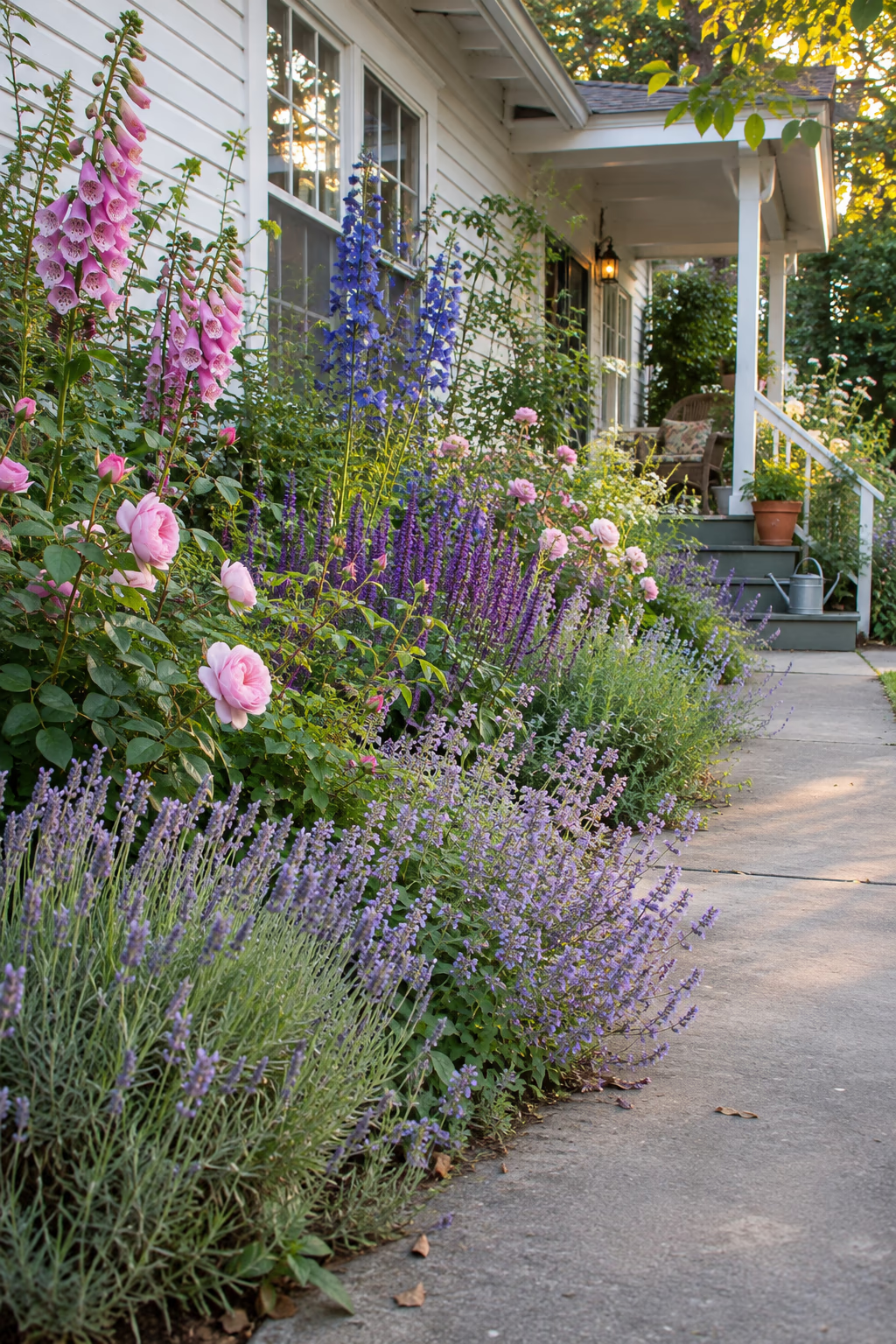
Soft, overflowing color with a casual charm
A cottage border mixes flowers of different heights in a loose, generous way. Place taller plants like foxglove or delphinium at the back, mid-height roses and salvia in the middle, and lavender, catmint, or dianthus spilling toward the path.
A bed just 3 to 4 feet deep is enough. Stick to a limited palette, such as purple, pink, and white, so the planting feels abundant rather than chaotic.
Plant closely so weeds have little room, and expect to deadhead and divide plants every few years. Choose varieties rated for your sun and hardiness zone.
4. Add a Dwarf Tree as the Focal Point
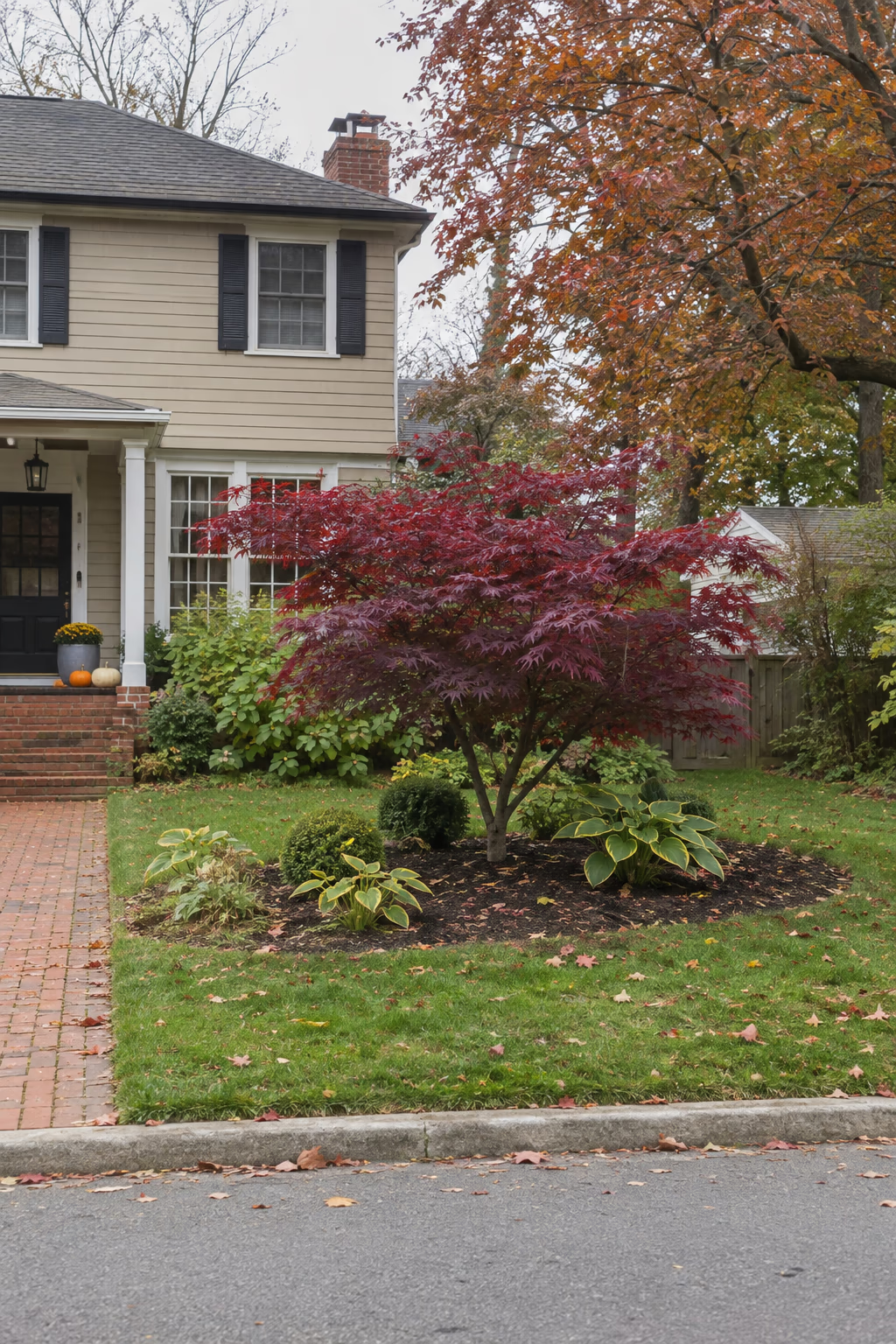
One small tree adds height and depth
A yard that’s all low plants can feel flat. A single dwarf or compact ornamental tree, such as a Japanese maple, dwarf crabapple, serviceberry, or compact redbud, gives you height, seasonal color, and a place for the eye to land.
Check the mature size on the plant tag and keep the trunk at least 6 to 10 feet from the house, depending on the tree. Off-center placement usually looks more natural than a tree dead in the middle.
Stay clear of overhead utility lines and underground services. In the United States, call 811 before digging, and mulch a ring around the trunk without piling it against the bark.
5. Build a Raised Bed Along the Porch
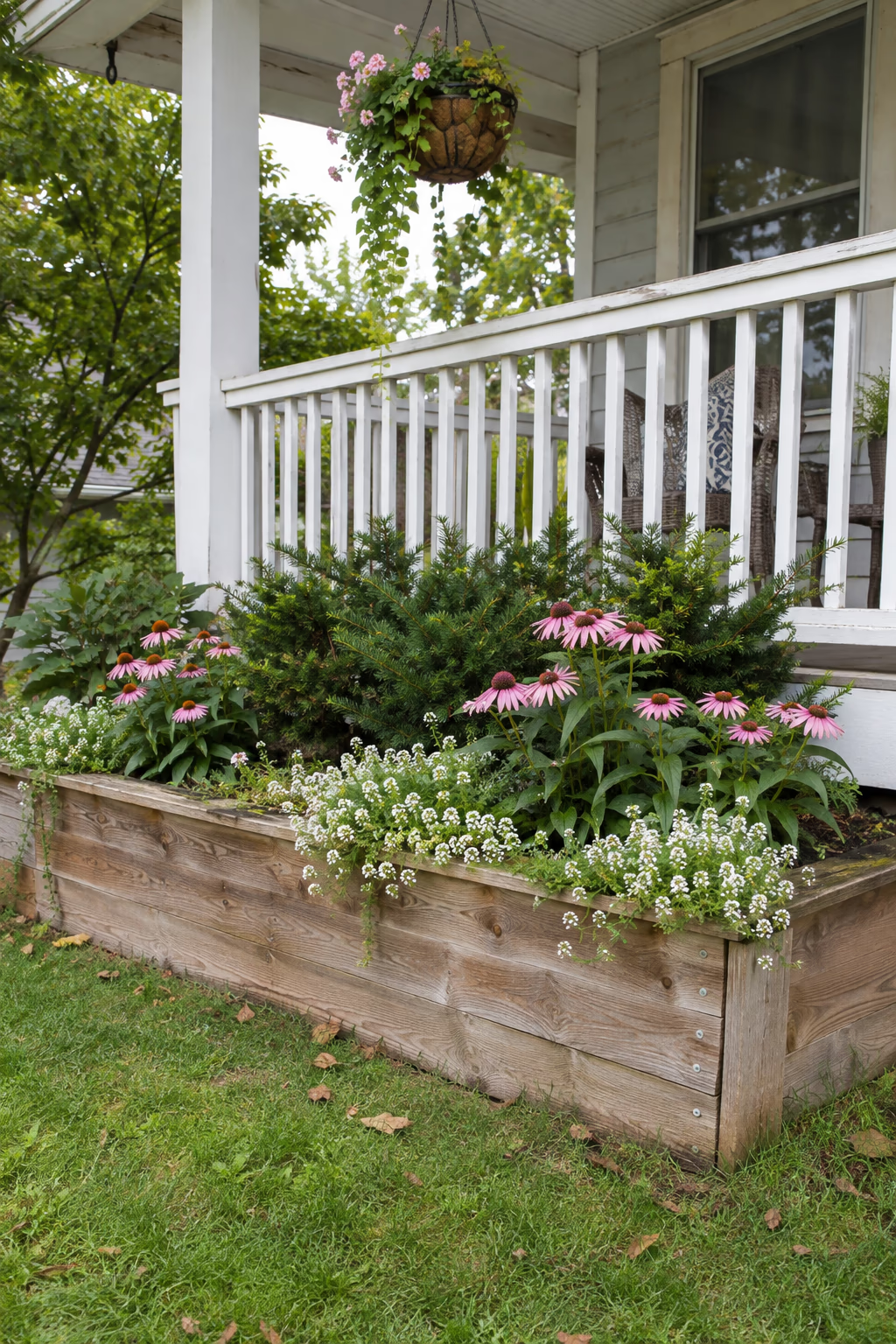
Layered planting right where people look
A raised bed 12 to 18 inches high softens the base of the porch and hides unattractive foundation lines. Cedar boards, stone veneer, brick, or concrete block all work, and the added height improves drainage in heavy soil.
Fill it with good topsoil and compost, then plant evergreen shrubs at the back, flowering perennials in front, and trailing plants along the edge. Keep soil a few inches below the siding to avoid moisture damage.
Leave room for water to drain away from the foundation, and use rot-resistant wood. Pressure-treated lumber is fine for ornamentals, but avoid it around edible plants.
6. Swap Turf for a Gravel Garden With Boulders
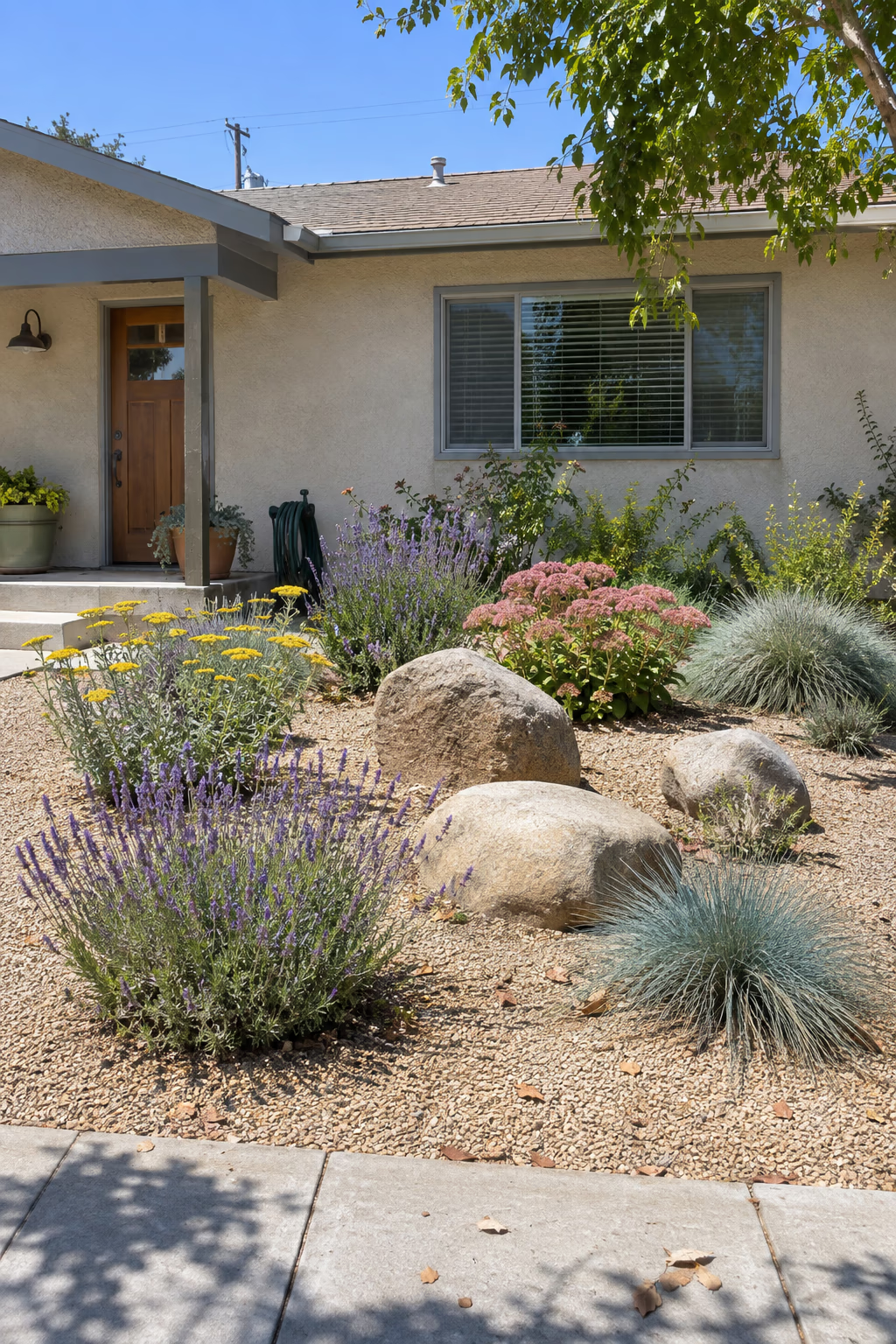
A tidy, low-water look that stays neat
For a small, sunny yard, a gravel garden is hard to beat. Remove the sod, lay landscape fabric, and spread 2 to 3 inches of crushed stone or pea gravel. Then set a few boulders and plant clumps of lavender, sedum, ornamental grasses, and yarrow.
Plant through the fabric, not on top of it, and place boulders first so they appear to rise naturally from the ground. Bury about a third of each stone.
Gravel can heat up in full sun and collect leaves, so keep a leaf blower handy. Avoid the very smallest gravel near walks, where it tends to migrate onto the path.
7. Light the Path With Low-Voltage Fixtures
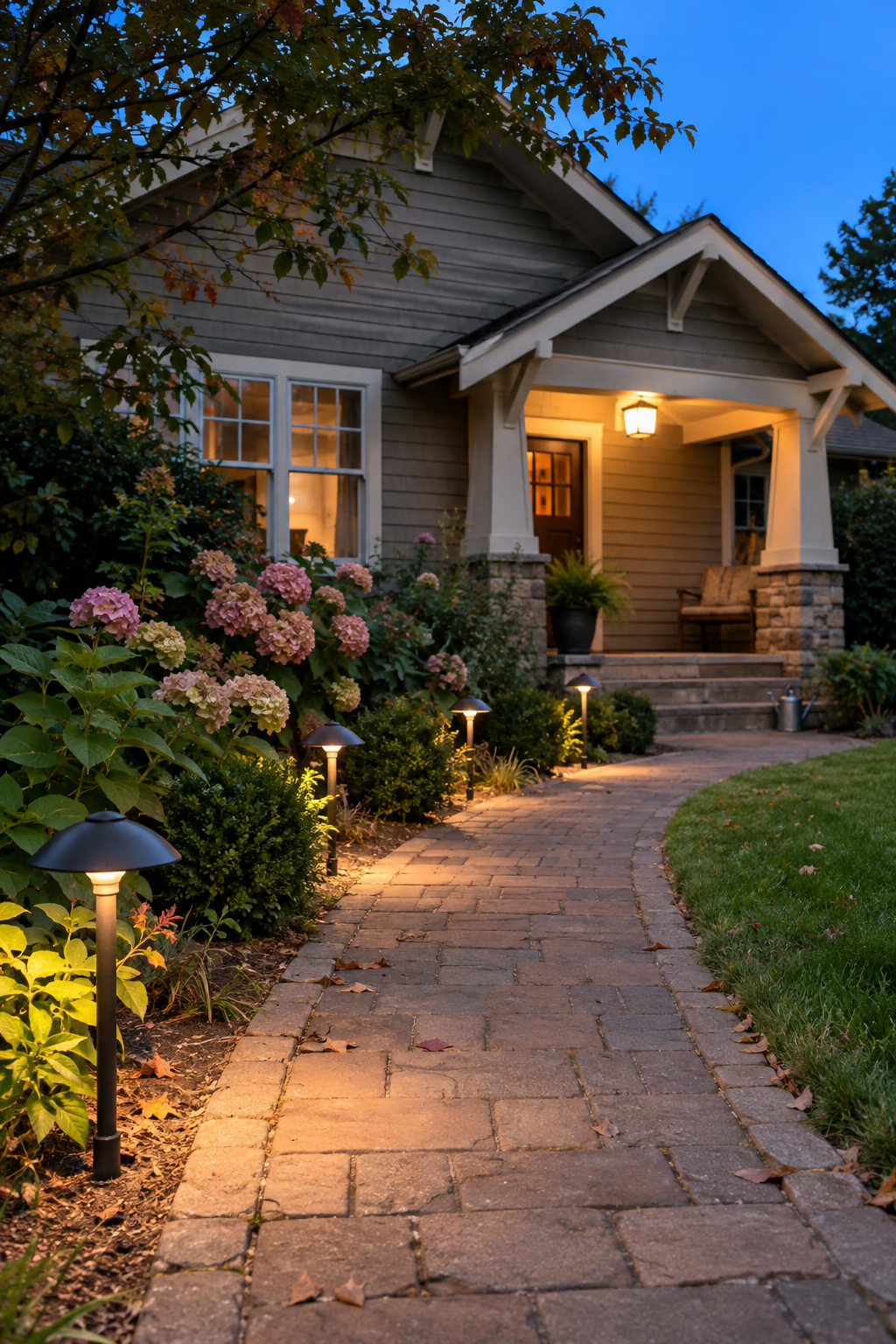
Safer steps and a warm evening glow
Good lighting makes a small yard feel bigger after dark. Low-voltage LED path lights spaced 6 to 8 feet apart along the walk wash the ground in a soft pool of light without glare.
Choose warm white bulbs around 2700K, and consider a small uplight aimed at your tree or a wall wash on the porch. Shielded fixtures keep light on the ground and out of the neighbors’ windows.
Solar lights are easy to install but vary in brightness, especially in shady yards. A wired transformer with a timer or dusk sensor is more dependable for entries and steps.
8. Paint the Front Door a Bold Color
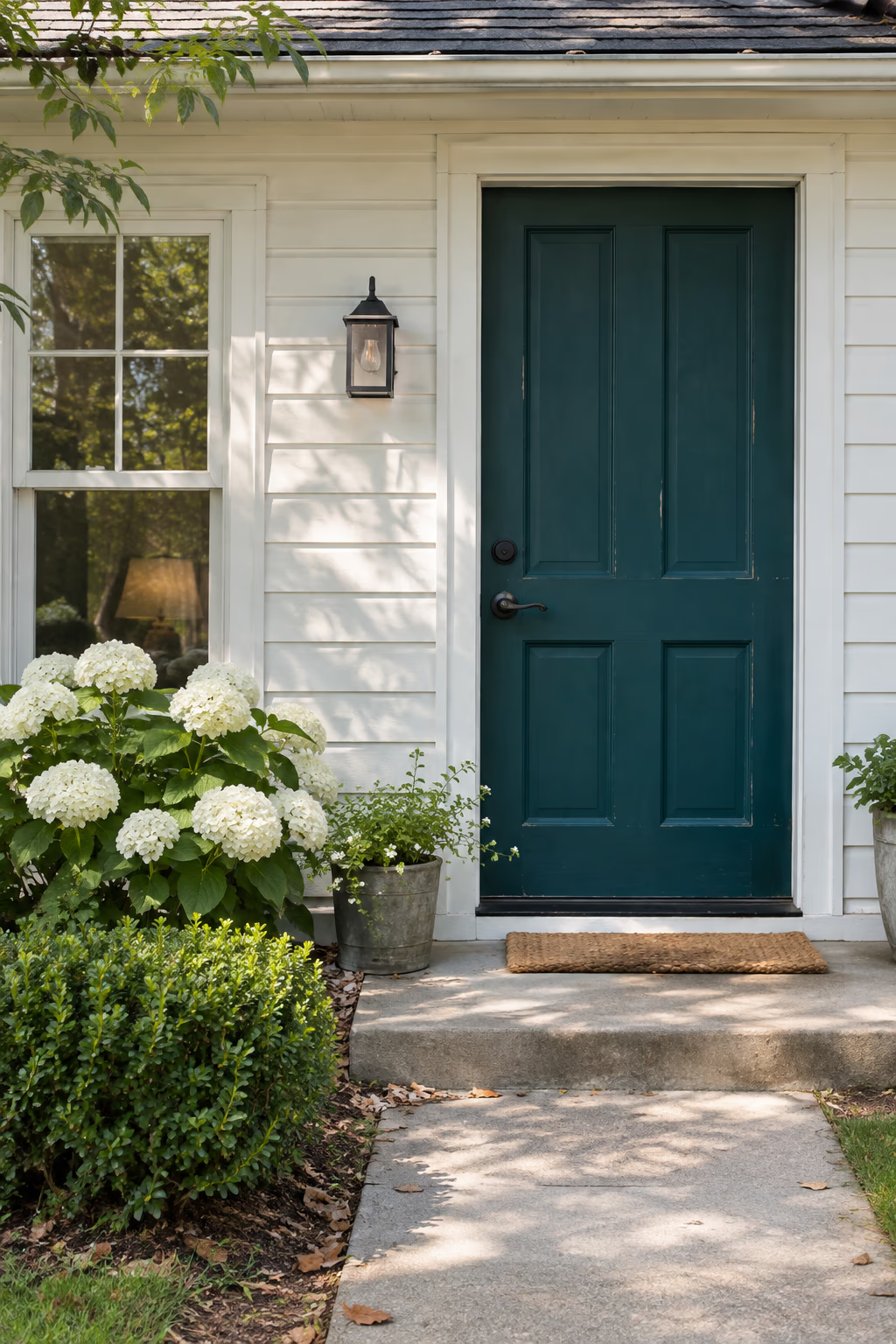
The fastest focal point you can create
A fresh coat of paint on the door costs very little and changes the whole facade. Deep green, navy, mustard, terracotta, or a soft sage all look good against brick, white siding, or gray exteriors.
Clean and lightly sand the door, prime if needed, and use an exterior-grade satin or semi-gloss paint. Take the hardware off or tape it carefully for a clean finish.
Hold a few sample swatches against the siding and roof at different times of day. A color that looks perfect in the store can read quite differently in direct sun.
9. Frame the Entry With Matching Container Pots
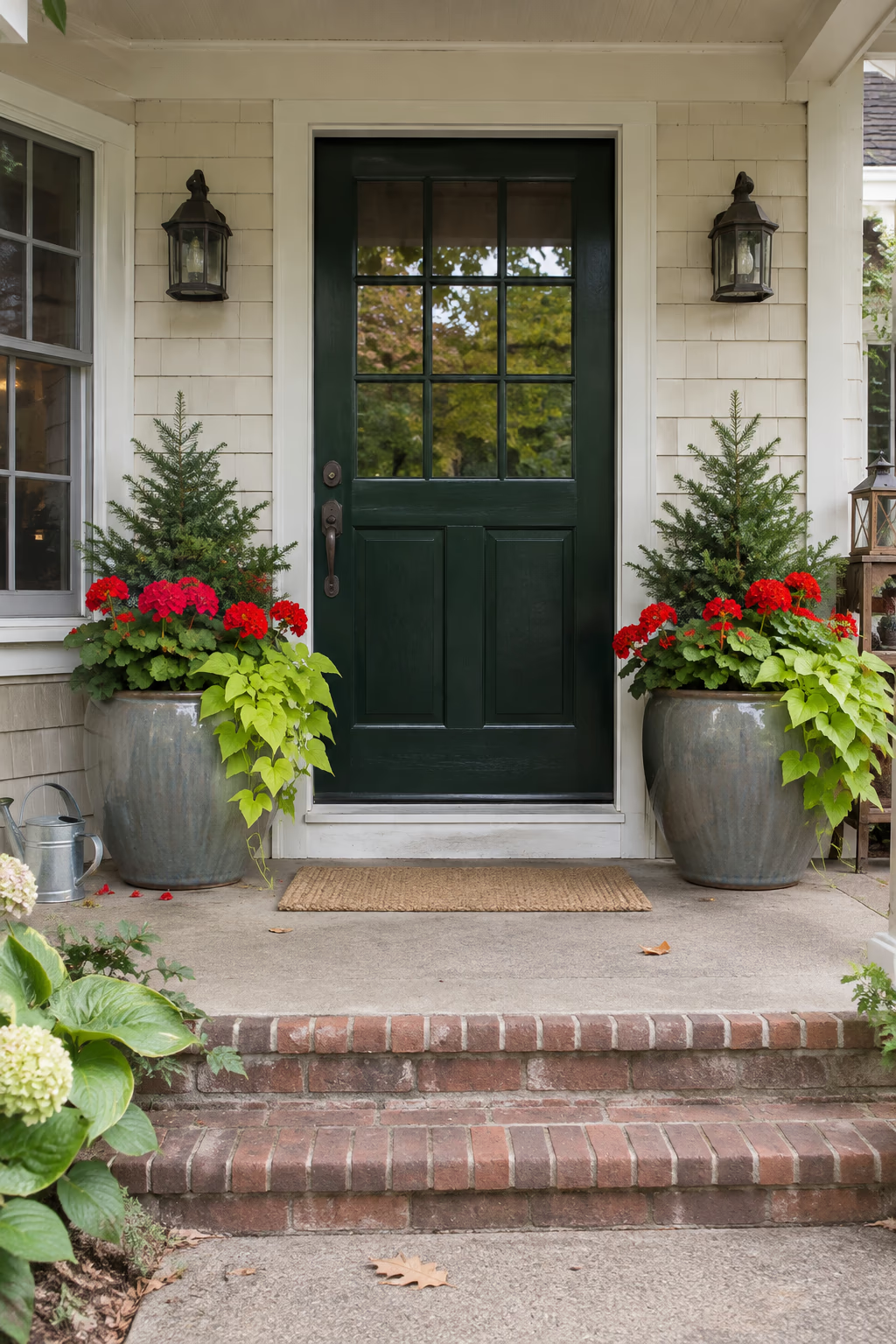
Instant symmetry without digging
A pair of large pots on either side of the door feels welcoming and works even when there’s no bed at all. Aim for containers at least 16 to 20 inches wide, since small pots dry out fast and look timid.
Use the classic formula of a tall thriller such as a dwarf evergreen or grass, a filler like geranium or coleus, and a spiller like sweet potato vine or ivy. Make sure each pot has drainage holes and use quality potting mix.
Containers need regular watering, sometimes daily in summer heat. Self-watering inserts or a simple drip line on a timer saves a lot of effort.
10. Train Climbing Vines on a Trellis
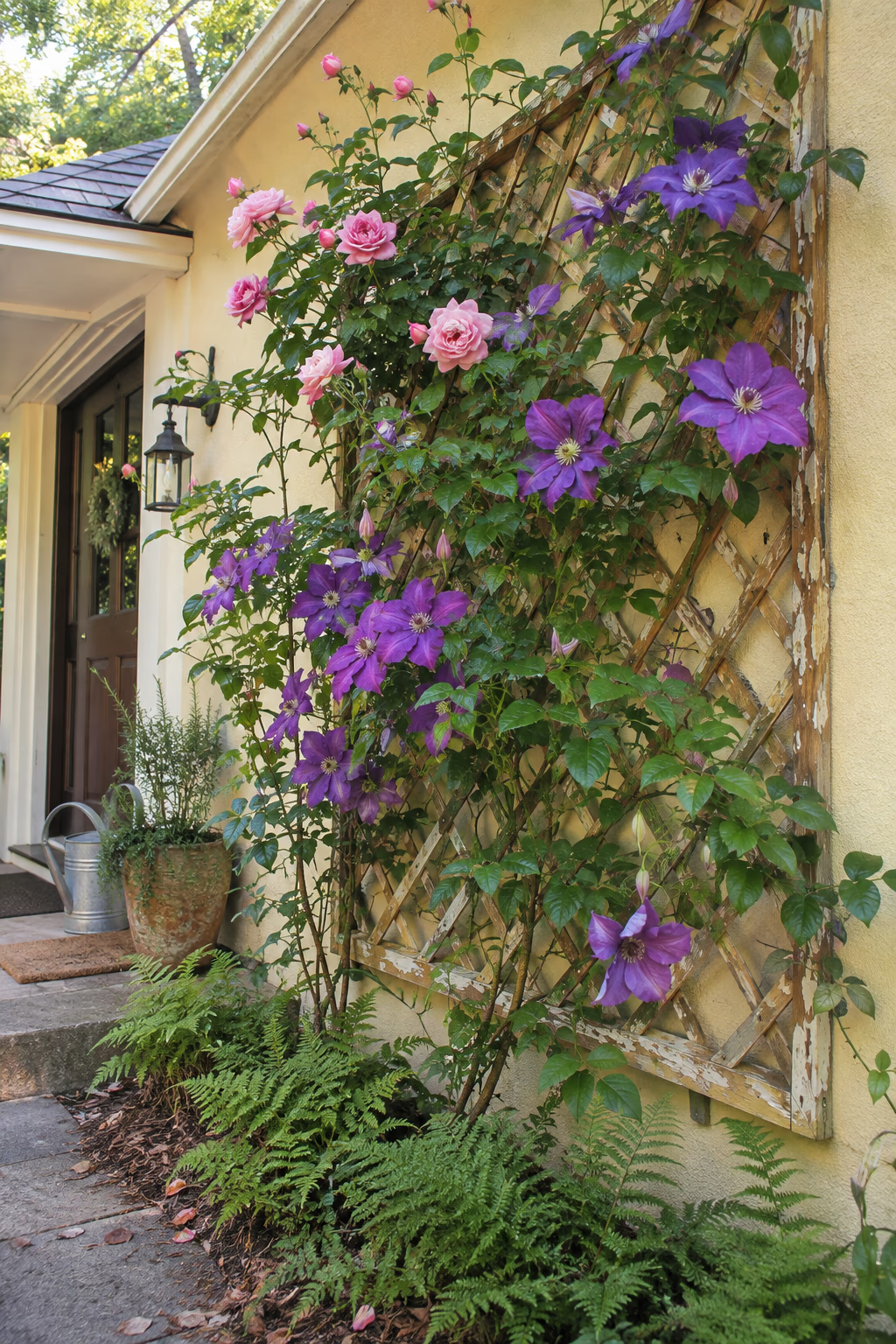
Go vertical when the ground is limited
A trellis or wall-mounted wire grid adds greenery without using any floor space. Clematis, climbing roses, sweet autumn clematis, and honeysuckle are popular choices, depending on your zone.
Anchor the trellis firmly, and keep it a couple of inches off the wall for airflow. Freestanding trellises or an obelisk in a large pot work well for renters or for siding you don’t want to drill into.
Avoid letting aggressive vines such as English ivy or Virginia creeper climb directly on wood siding or brick mortar, where they can cause damage and are tough to remove.
11. Define Beds With Steel or Stone Edging
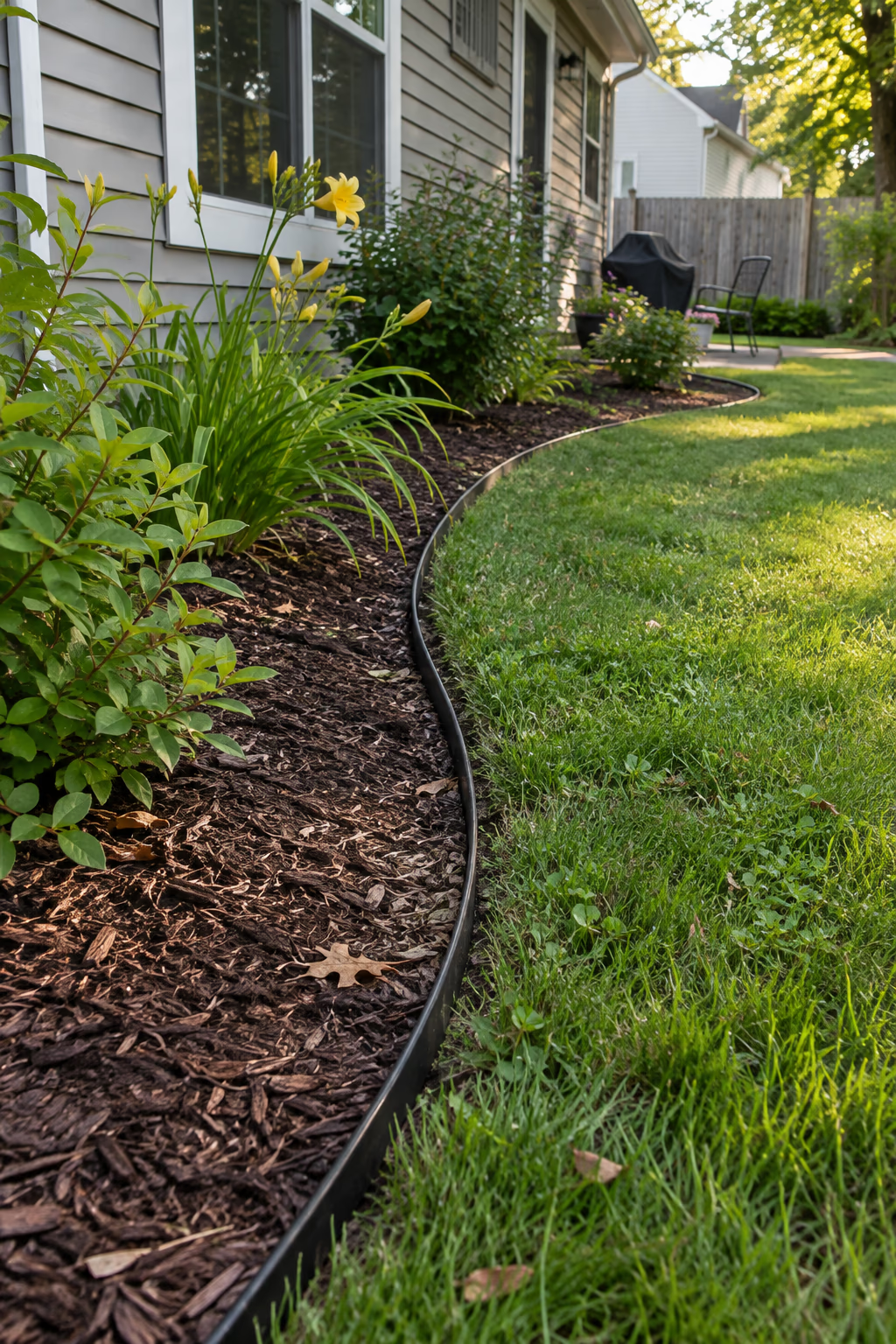
Crisp lines make a small yard look cared for
Clean edges are one of the cheapest upgrades in landscaping. Steel or aluminum edging, a row of cobblestones, or a shallow brick border separates beds from the lawn and keeps mulch where it belongs.
Use a flat spade to cut a neat trench, set the edging with the top about an inch above the soil, and tamp the soil back firmly. Gentle curves are easier to mow around than tight corners.
Steel edging is slim and almost invisible, while stone and brick add a visible design feature. Pick whichever suits your home’s style.
12. Anchor the Yard With Evergreen Shrubs
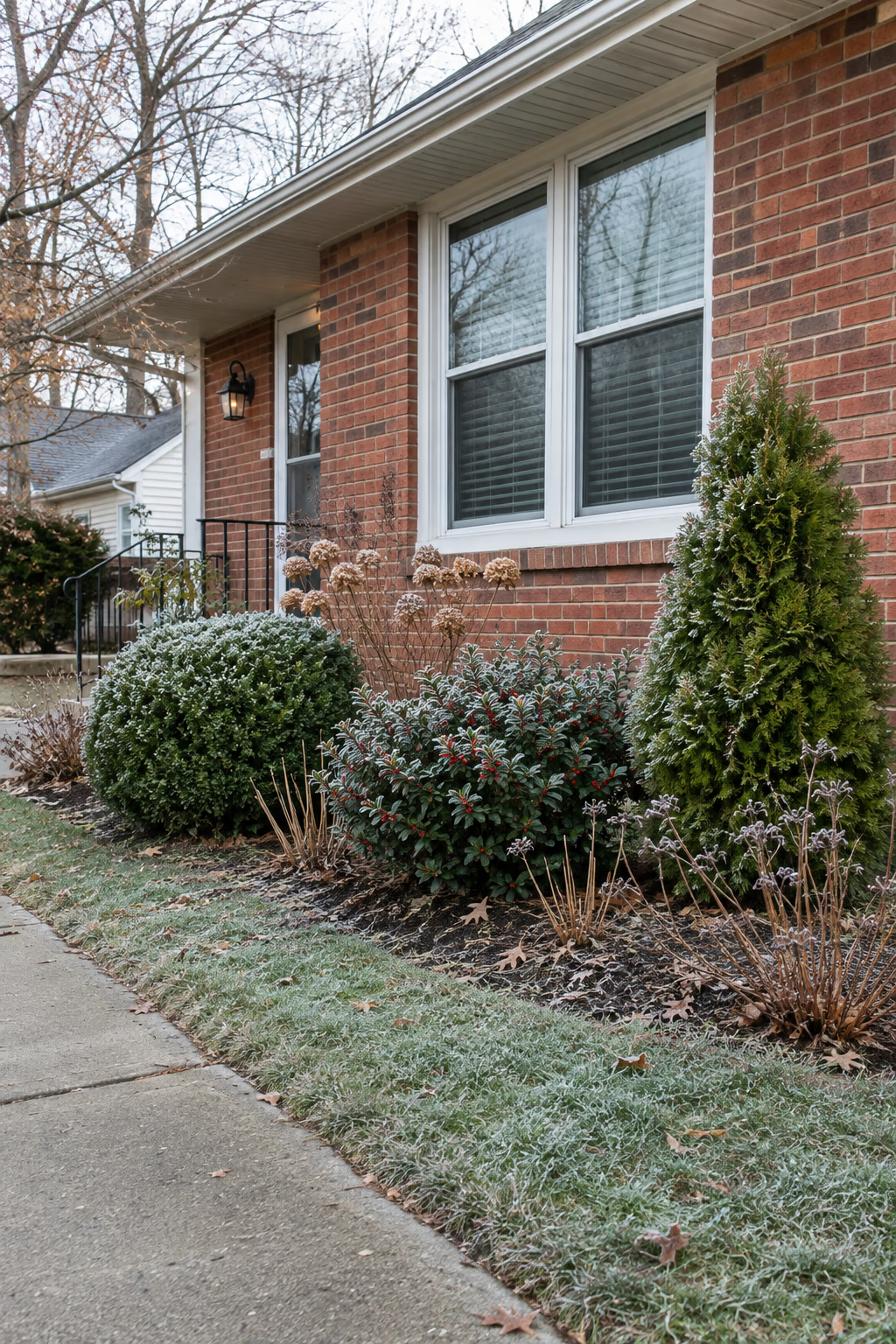
Year-round structure that never looks bare
A few evergreens give a small yard its bones. Boxwood, dwarf holly, compact juniper, or dwarf arborvitae hold their shape through winter and offer a calm backdrop for seasonal flowers.
Choose varieties that top out at the height you want, rather than planting a fast-growing shrub you must constantly cut back. Space them according to their mature width, not their size at the nursery.
Keep a few feet between plants and the house for airflow and for easier maintenance. In deer country, look for resistant options such as boxwood or certain junipers.
13. Tuck a Small Bench Into a Corner
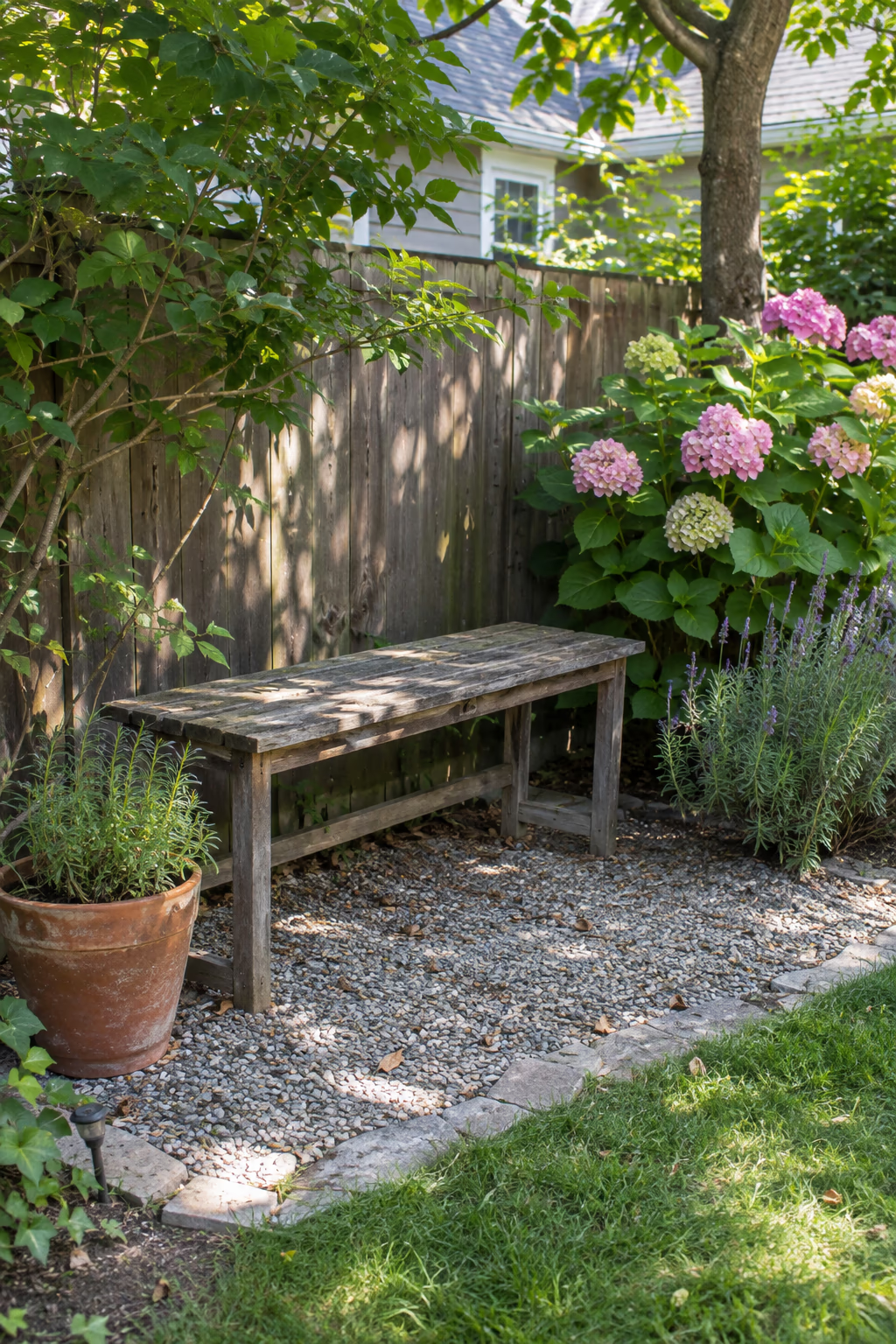
A pause spot that makes the yard feel lived in
Even a tiny yard can hold a spot to sit. A narrow bench or a pair of small chairs by the door or at a corner gives you a place for morning coffee and a friendly visit with neighbors.
Choose weather-resistant materials such as teak, cedar, powder-coated metal, or recycled plastic lumber. Set the bench on a small gravel or paver pad so it stays level and the grass doesn’t creep underneath.
Put the seat where there’s a view of something pleasant, such as a flowering shrub or birdbath, and keep it out of the main walking route.
14. Enclose the Yard With a Low Picket Fence
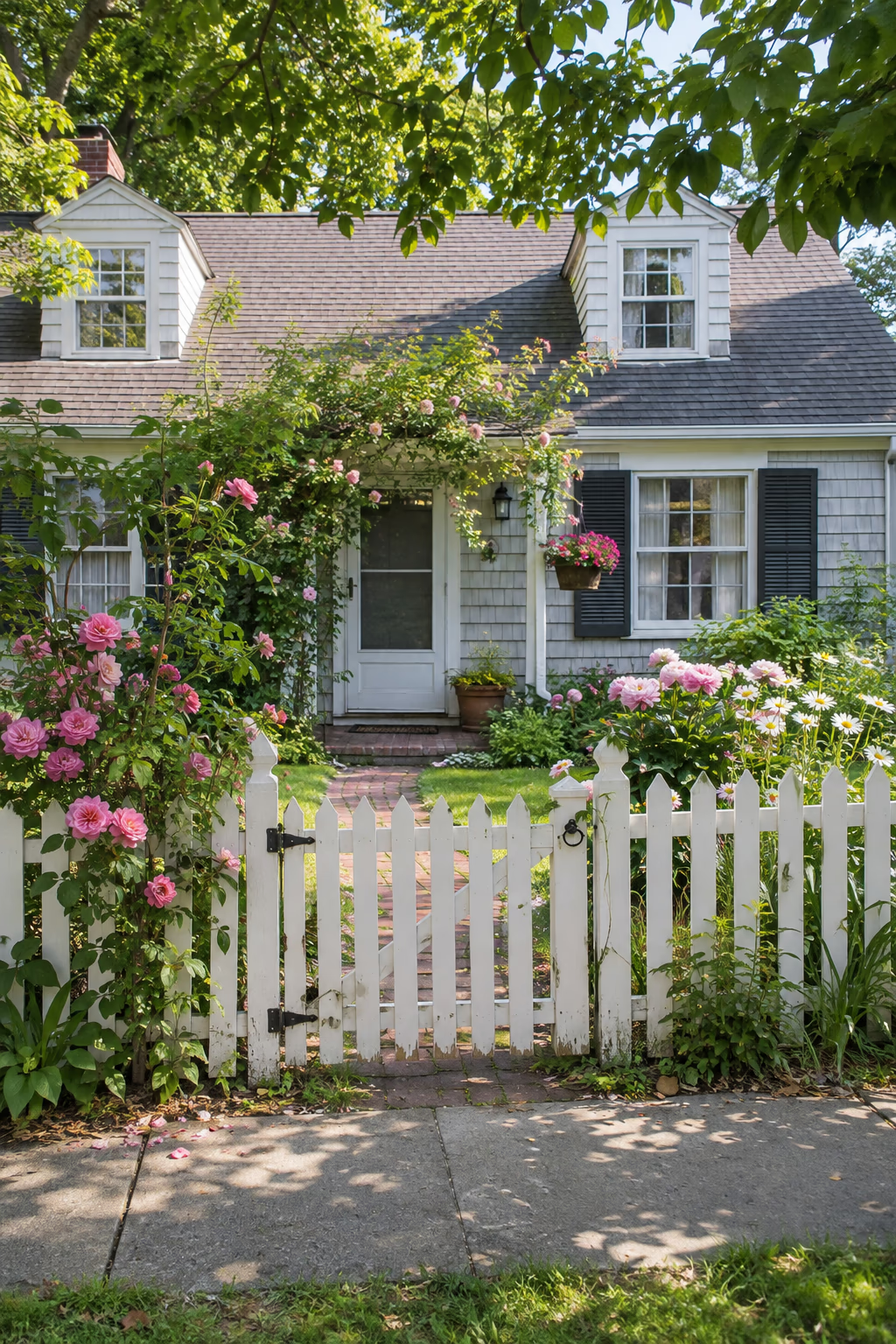
Define the edge without blocking the view
A fence 30 to 36 inches tall creates a sense of enclosure and a sweet storybook look while keeping the yard open to the street. Painted white, soft gray, or natural cedar, it also gives climbing roses and clematis something to lean on.
Post spacing is usually 6 to 8 feet, and posts should be set in concrete below the frost line in cold climates. Rot-resistant cedar or composite lasts longest.
Front-yard fence height, style, and setbacks are often regulated, so check local codes and any HOA rules before you build. Allow a gate wide enough for a wheelbarrow or stroller.
15. Build a Low Stone Wall With Planting Pockets
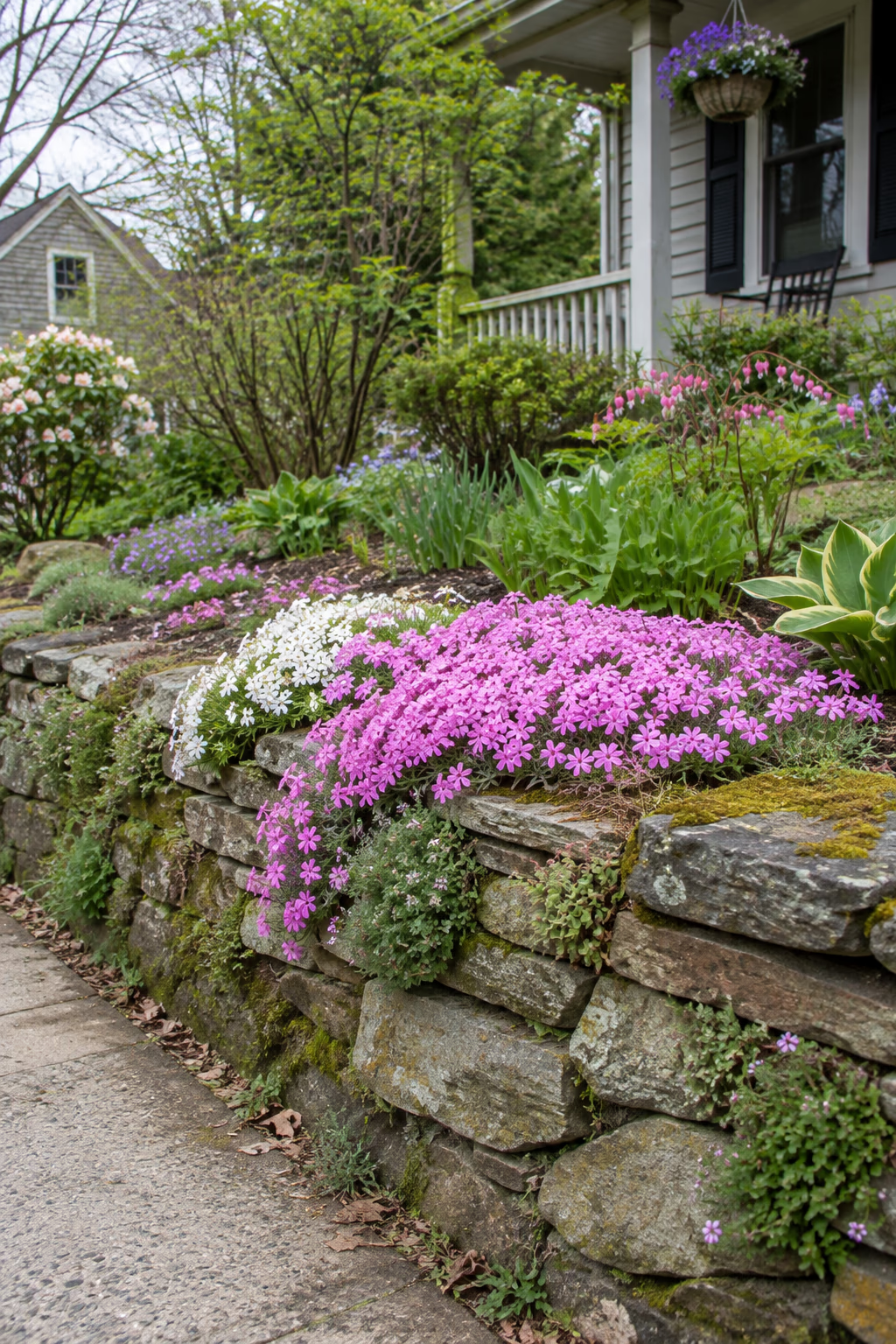
Add levels to a flat or sloped yard
A dry-stacked or mortared wall about 18 to 24 inches high turns a slope into usable beds and adds texture. Leave gaps in a dry-stacked wall and tuck in creeping phlox, sedum, or aubretia for a soft, tumbling effect.
Start with a compacted gravel base, set the first course slightly below grade, and angle each layer back a little into the slope. Add drainage gravel behind the wall to relieve water pressure.
Walls taller than about 3 or 4 feet usually need permits and engineered design, so keep it modest unless you hire a professional.
16. Add Ornamental Grasses for Movement
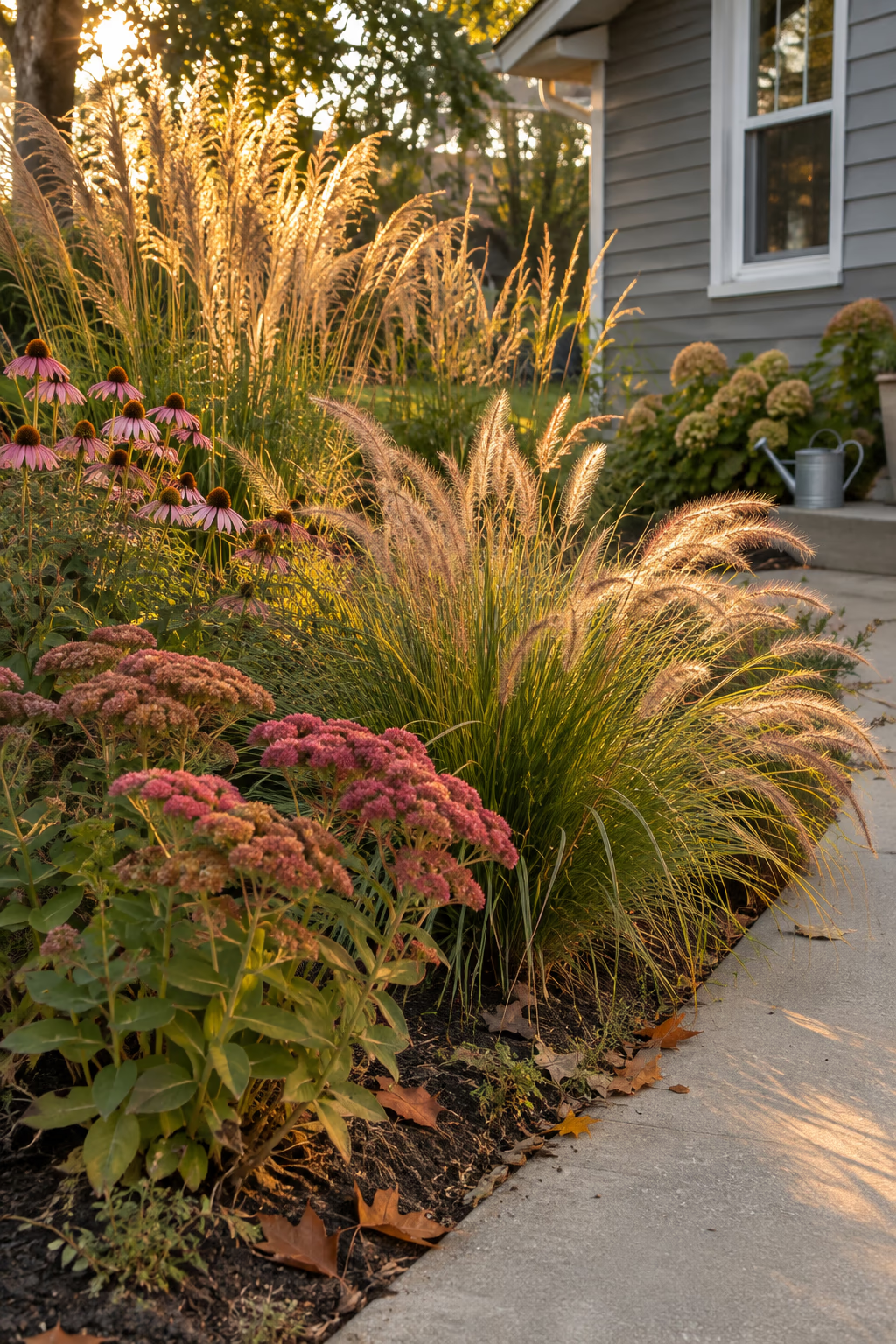
Texture that sways and glows in low light
Grasses bring motion and a relaxed feel to a tight space. Feather reed grass, little bluestem, fountain grass, and Japanese forest grass suit different sun levels and look lovely backlit by morning or evening light.
Plant them in clusters of three to five or as a repeating accent among flowers. Many stay attractive through winter, and you cut them back to a few inches in late winter before new growth begins.
Check how aggressively a variety spreads. Some, such as certain miscanthus types, can self-seed or be invasive in some regions, so ask a local nursery for recommendations.
17. Grow a Low Clover and Thyme Lawn
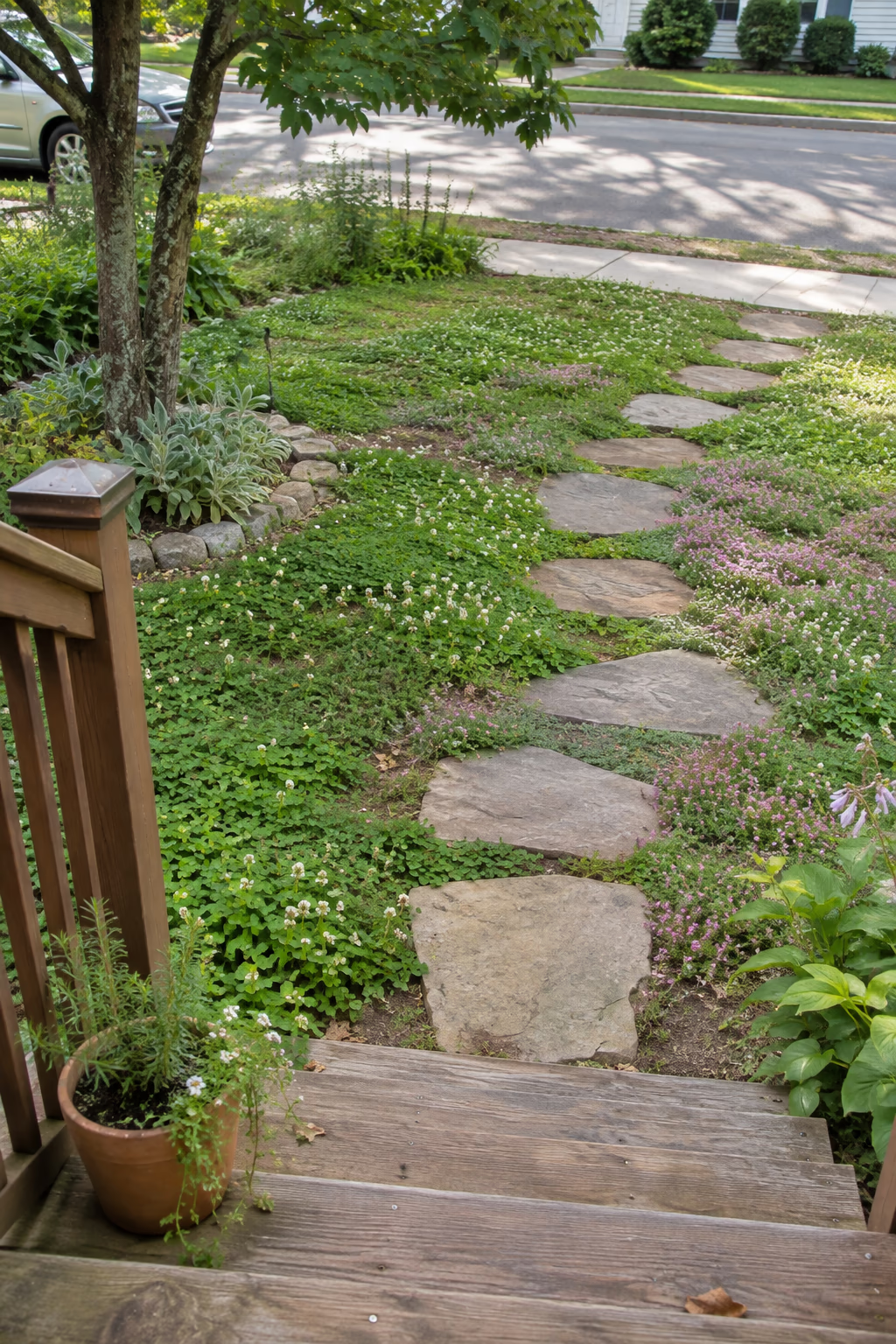
A soft, green carpet that needs less mowing
If you still want a lawn-like surface, a mix of micro clover and creeping thyme stays low, tolerates light foot traffic, and feeds pollinators. It also stays greener in dry spells than many grass lawns.
Sow seed in spring or early fall on bare, loosened soil, keep it moist until established, and mow once or twice a season on a high setting if it gets leggy.
This surface suits a front yard that’s walked on occasionally, not a spot where kids play ball every day. Clover flowers attract bees, so watch where bare feet go in summer.
18. Hang Window Boxes Under the Front Windows
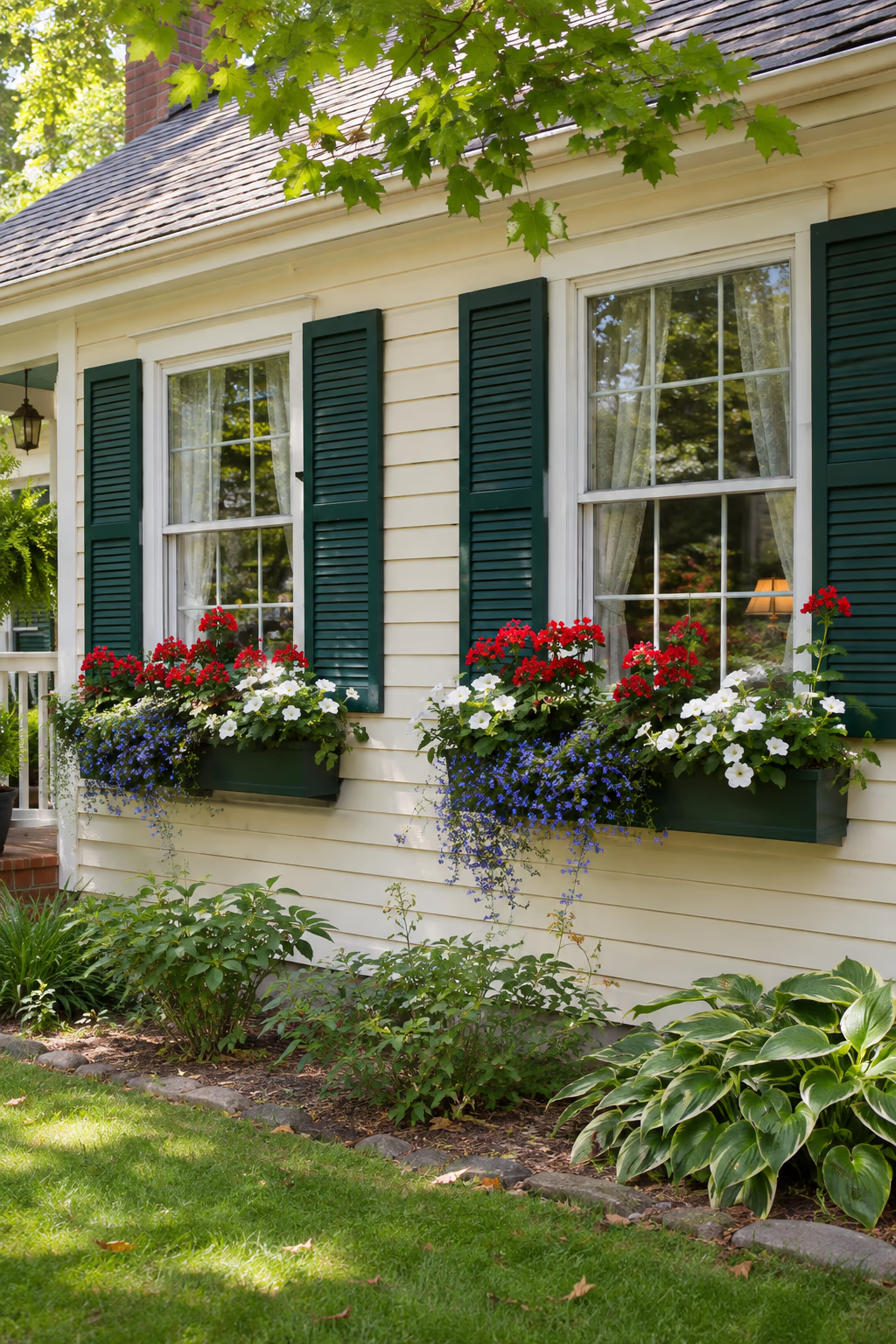
Color at eye level without using any ground
Window boxes add charm to plain facades and bring flowers up where people see them. Size the box to match the width of the window, and fill with petunias, trailing lobelia, geraniums, or herbs.
Mount boxes with sturdy brackets screwed into studs, not just siding, as wet soil is heavy. Line them with drainage holes and a tray, or use a liner so water doesn’t stain walls.
Plan for regular watering, and swap in pansies and ornamental kale for cooler seasons. Faux evergreen boughs and pinecones can carry the look through winter.
19. Capture Runoff in a Small Rain Garden
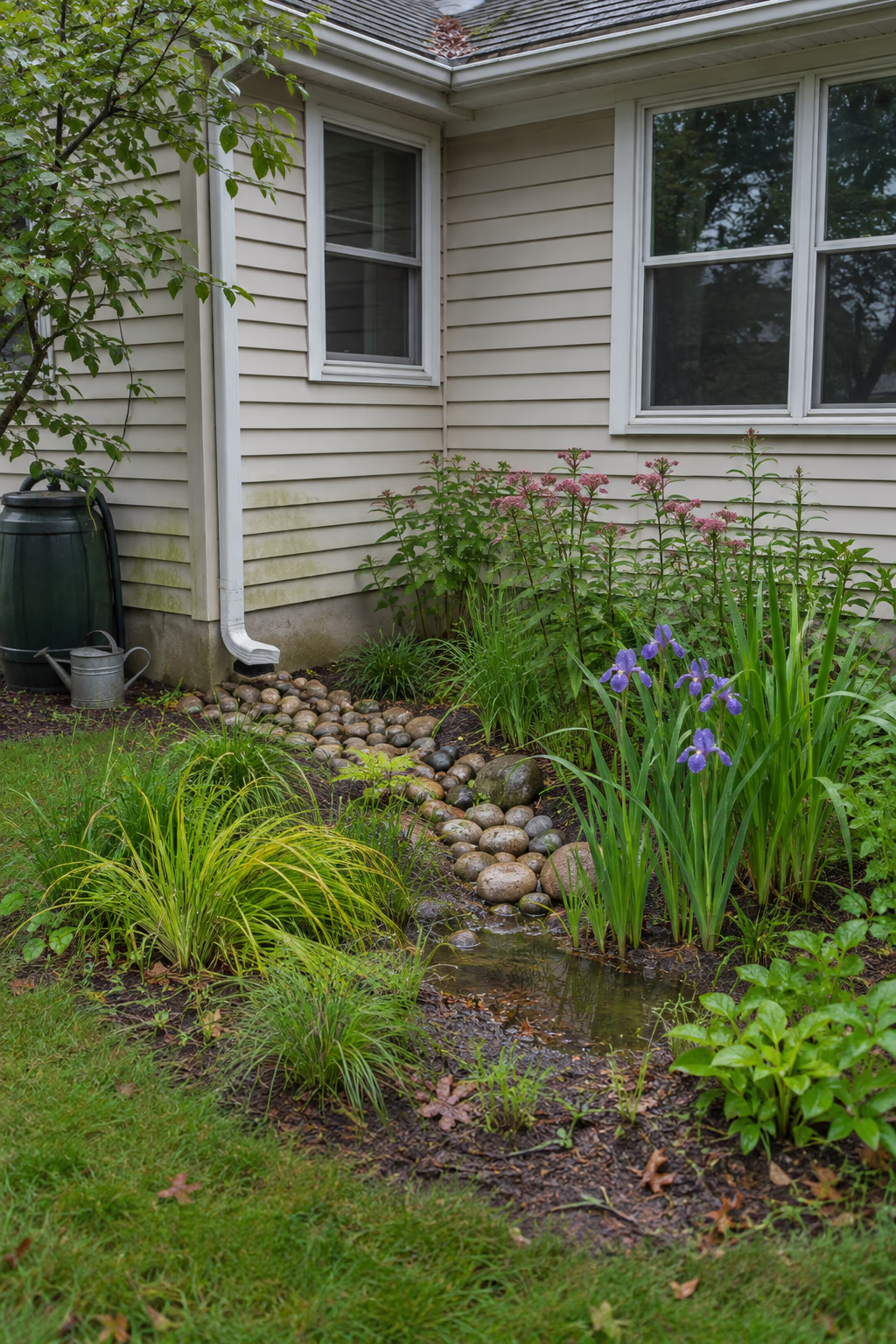
Turn soggy spots into a feature
If a downspout empties onto the lawn or water pools near the walk, a shallow rain garden can handle it. Dig a gentle depression 4 to 8 inches deep, fill with amended soil, and plant moisture-tolerant natives such as blue flag iris, swamp milkweed, and sedges.
Direct the downspout into the bed with a buried pipe or a dry creek bed of river rock. Keep it at least 10 feet from the foundation, and make sure the overflow runs away from the house.
Rain gardens should drain within a day or two. If the soil stays soggy for longer, ask a local landscaper or extension office about better options.
20. Fill a Shady Corner With Hostas and Ferns
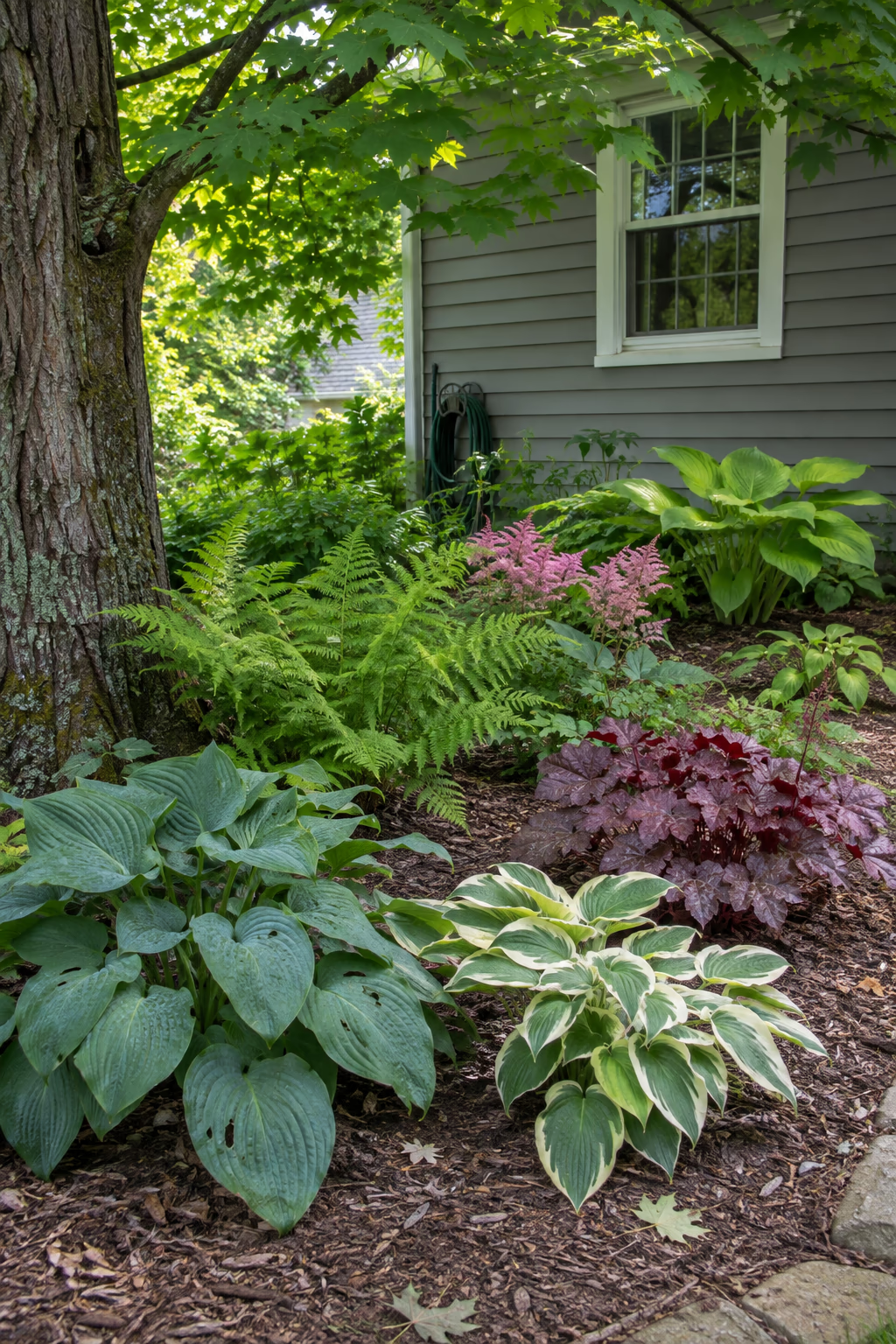
Lush texture where grass struggles
Many small front yards have a shaded patch beside a tall tree or house wall. Instead of battling thin grass, fill it with hostas, ferns, heuchera, astilbe, and bleeding heart for a calm layered look.
Mix leaf colors and shapes, such as blue-green, chartreuse, and variegated, for interest that doesn’t depend on flowers. Add compost and mulch to keep the soil cool and moist.
Slugs and deer love hostas. Choose thick-leaved varieties, use slug baits safe for pets, and add deer-resistant ferns in problem areas.
21. Add a Bubbling Fountain or Birdbath
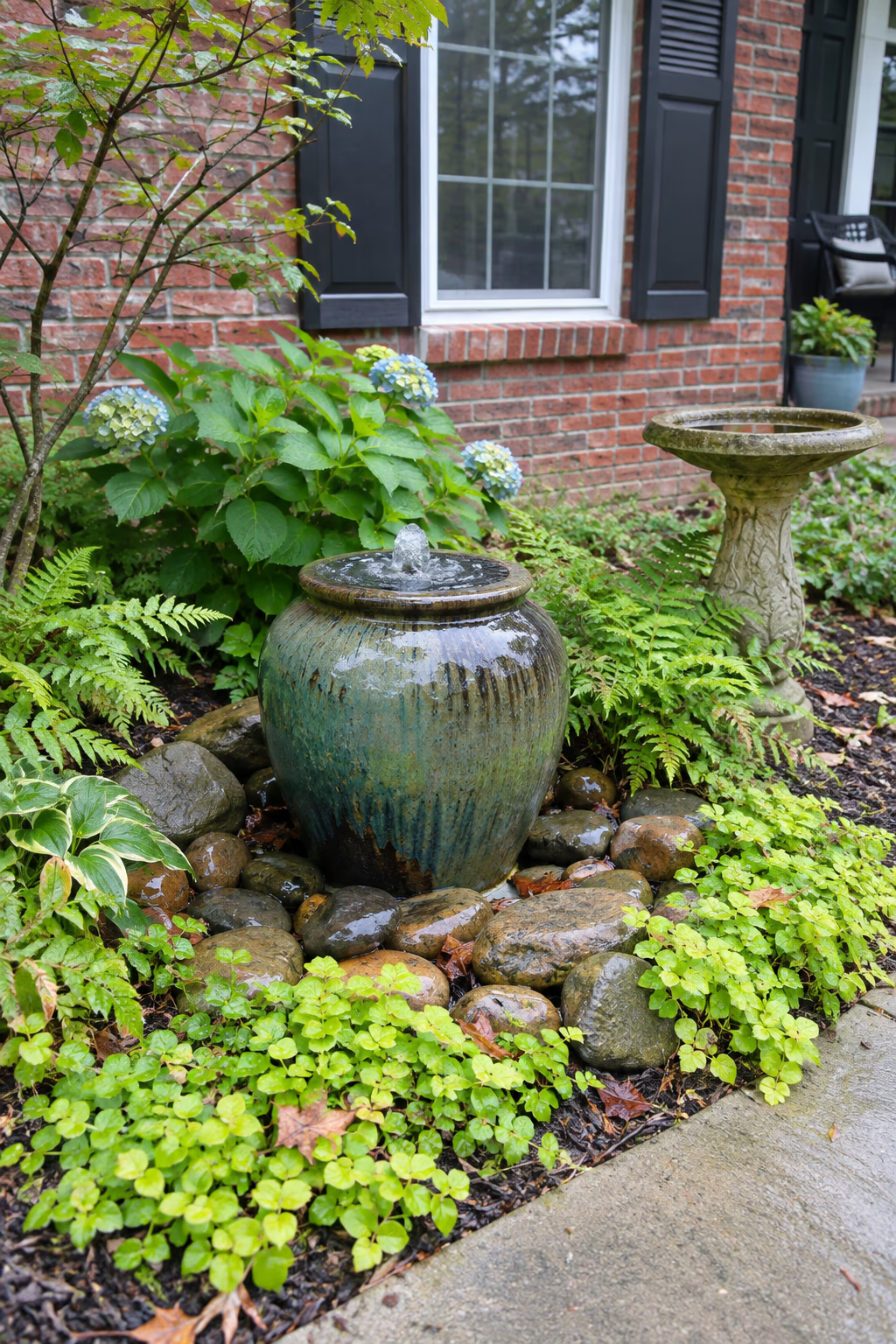
Water sound and wildlife in a tiny footprint
A small self-contained fountain, or a simple birdbath on a pedestal, brings movement and sound that mask street noise. Many plug into an outdoor outlet or run on a solar panel.
Place it where you can see it from a window or the porch, and surround the base with low plants or river stones. Clean birdbaths every week or two and refresh the water frequently.
In freezing climates, drain pumps and bring fountains inside or cover them for winter to prevent cracking. Keep electrical components on a GFCI-protected outlet.
22. Screen Trash Bins and Utilities With Plants
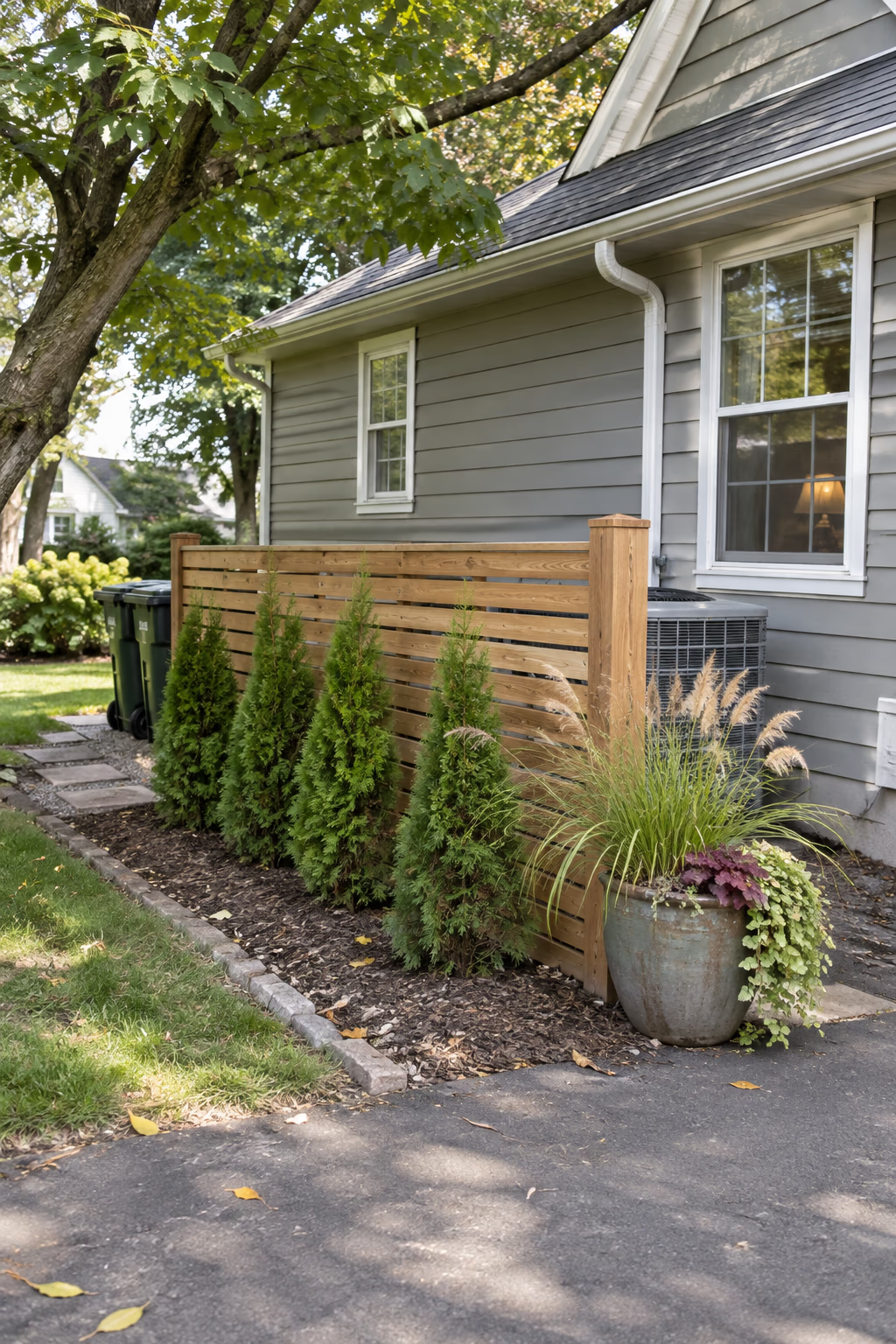
Hide the practical stuff gracefully
Trash cans, meters, and air conditioning units rarely belong in your favorite view. A slatted wood screen, a narrow row of arborvitae, or a pair of planters with tall grasses can tuck them out of sight.
Leave clear access for utility workers and for airflow around equipment, usually 2 to 3 feet. Never block meters or cleanouts completely.
Keep plants a safe distance from the AC condenser so leaves and seeds don’t clog it, and choose slow-growing, compact varieties that don’t need constant clipping.
23. Pave a Compact Entry Patio
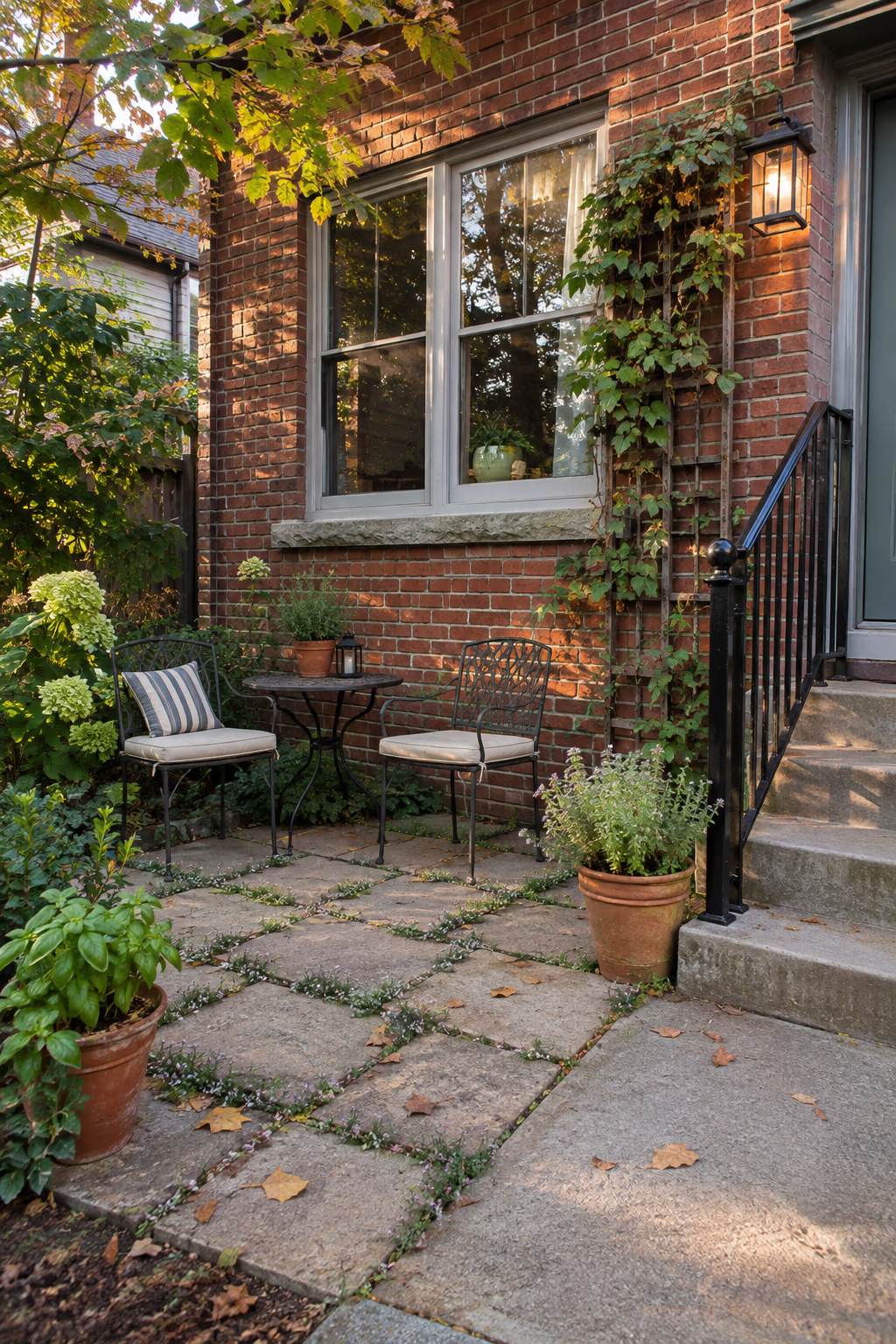
A welcoming landing spot at the front door
A small paved area at the front steps, perhaps 6 by 8 feet, gives you room for pots, a chair, and a place to greet guests. Concrete pavers, brick, or flagstone set over compacted gravel and sand are durable options.
Slope the surface a quarter inch per foot away from the house so rain drains properly. Pick materials that echo the home’s brick, siding, or stone for a cohesive look.
Check how much hard surface your area allows and where water will go. Permeable pavers or wide joints planted with creeping plants help reduce runoff.
24. Mix Edible Herbs and Berries Into the Beds
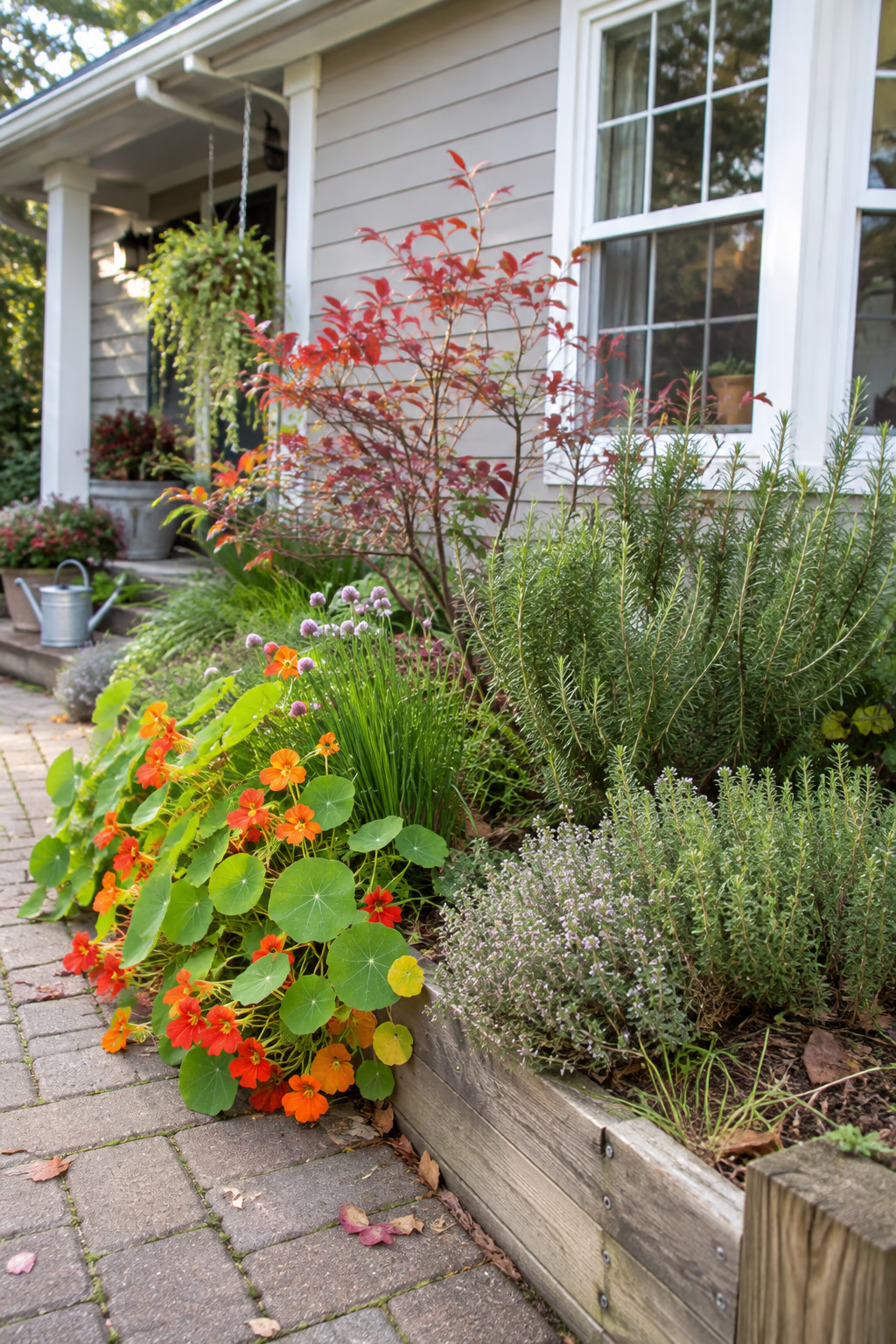
Pretty plants you can actually eat
Edibles can look just as good as ornamentals. Rosemary, thyme, chives, and sage form tidy mounds, while blueberries give white spring flowers and red fall color, and dwarf varieties of other berries suit large pots.
Choose a spot with at least 6 hours of sun, and mix edibles with flowers such as marigolds or nasturtiums. Blueberries need acidic soil, so amend or use containers if yours is neutral.
Avoid spraying chemicals on plants you plan to eat. Check that your HOA allows front-yard edibles and wash harvests well, particularly near busy roads.
25. Install Weathered Steel Planters
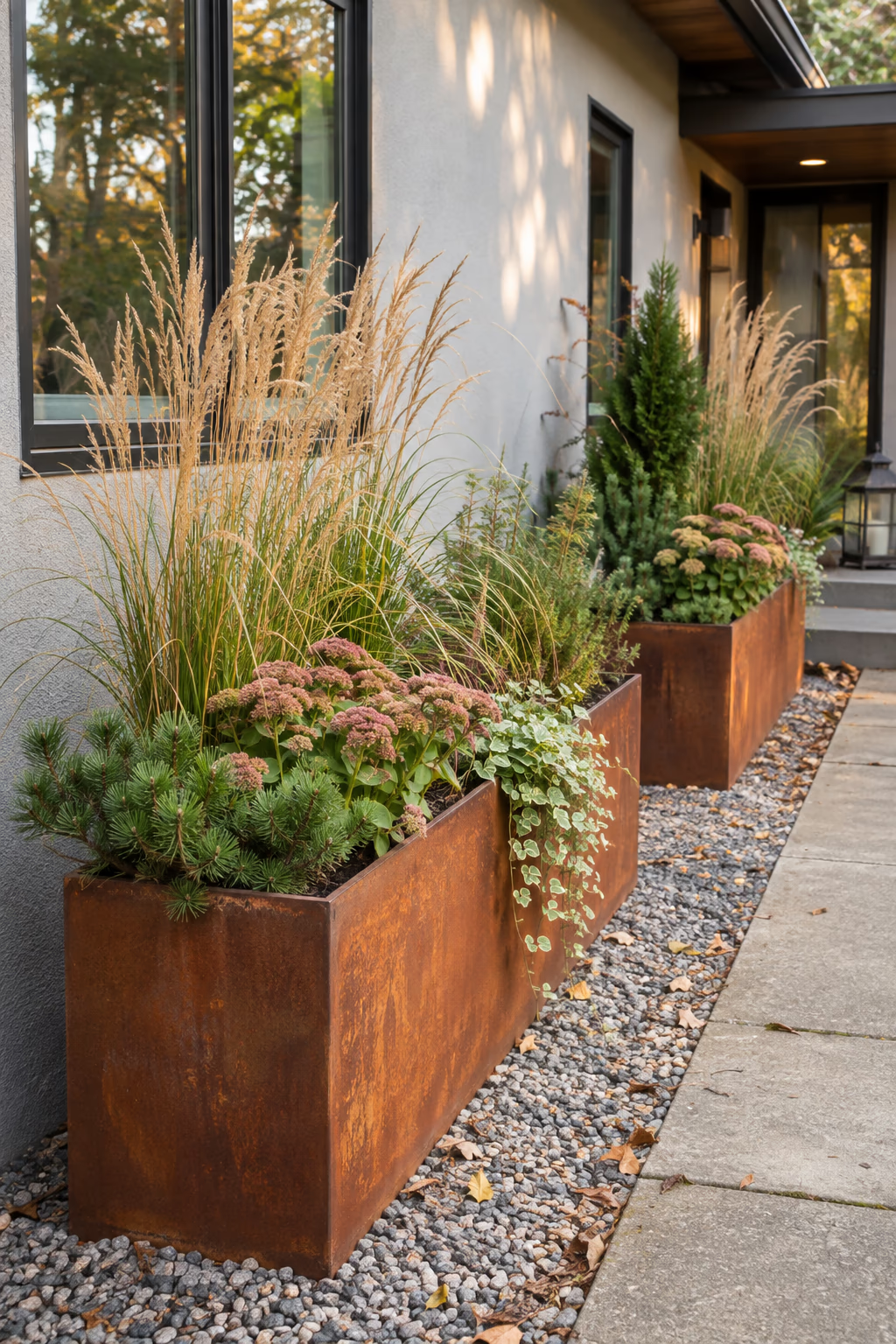
Modern lines with a warm rusty patina
Corten-style steel planters develop a rich orange-brown finish that pairs well with grasses, gravel, and green foliage. Long, narrow troughs fit against walls or along the walk and add height without much width.
Fill them with lightweight potting mix and plant ornamental grasses, sedum, or small evergreens. Raise them slightly so water can drain without staining concrete or pavers beneath.
They heat up in direct summer sun, which can stress roots, so choose heat-tolerant plants and water regularly. Early runoff can leave rust marks, so test the spot first.
26. Plant a Drought-Tolerant Succulent Bed
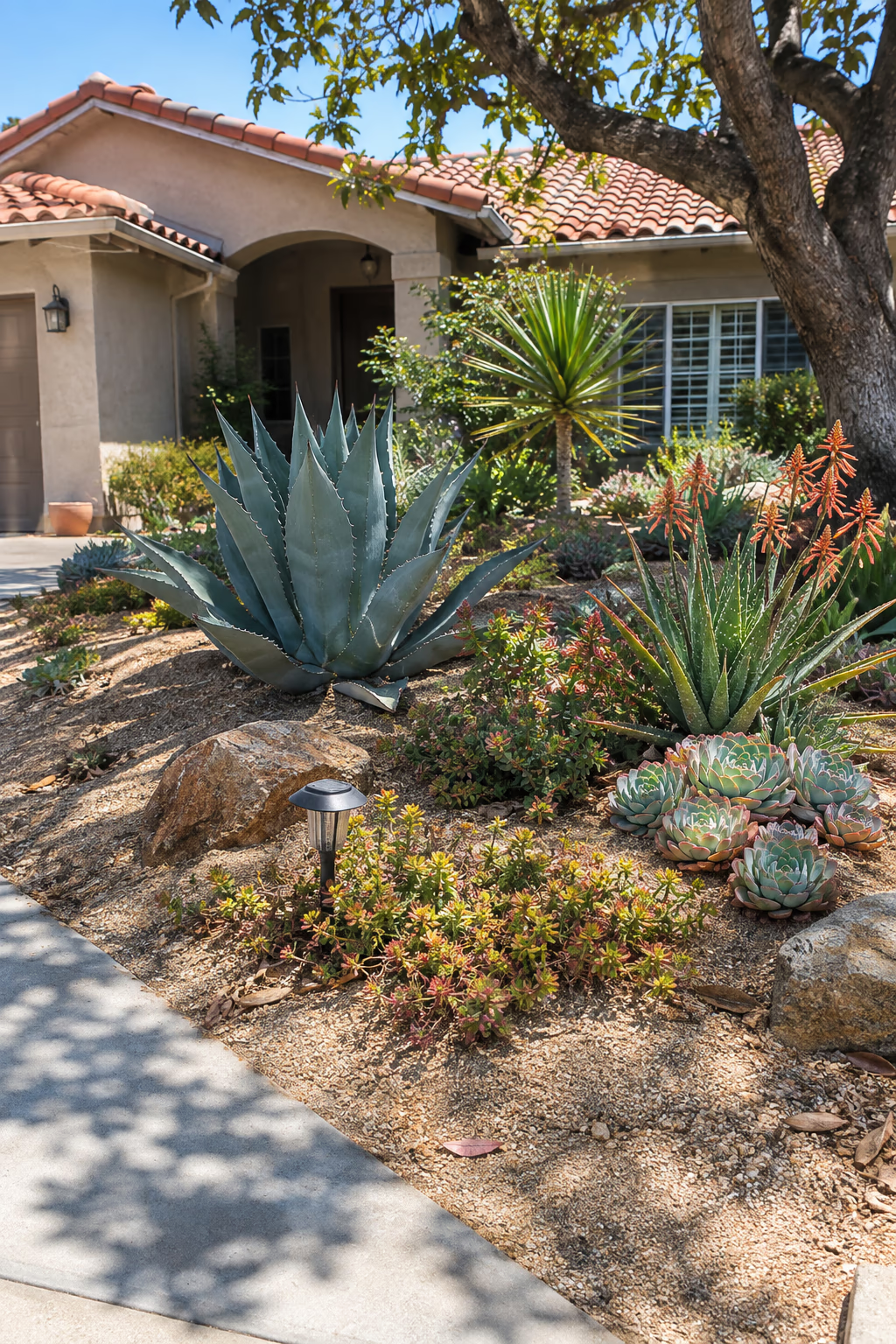
Sculptural plants for hot, dry spots
In warm, dry climates, a bed of agave, aloe, sedum, echeveria, and low yucca forms a bold, sculptural display with almost no watering once established. Surround plants with decomposed granite or small rock.
Excellent drainage is essential. Mix coarse sand or pumice into heavy soil, or build a small mound so water runs away from the crowns.
Many succulents are not frost hardy. In colder zones, use hardy options like sempervivum, hardy sedum, and prickly pear, or grow tender types in pots that can move indoors.
27. Dress Up the Mailbox With a Mini Garden
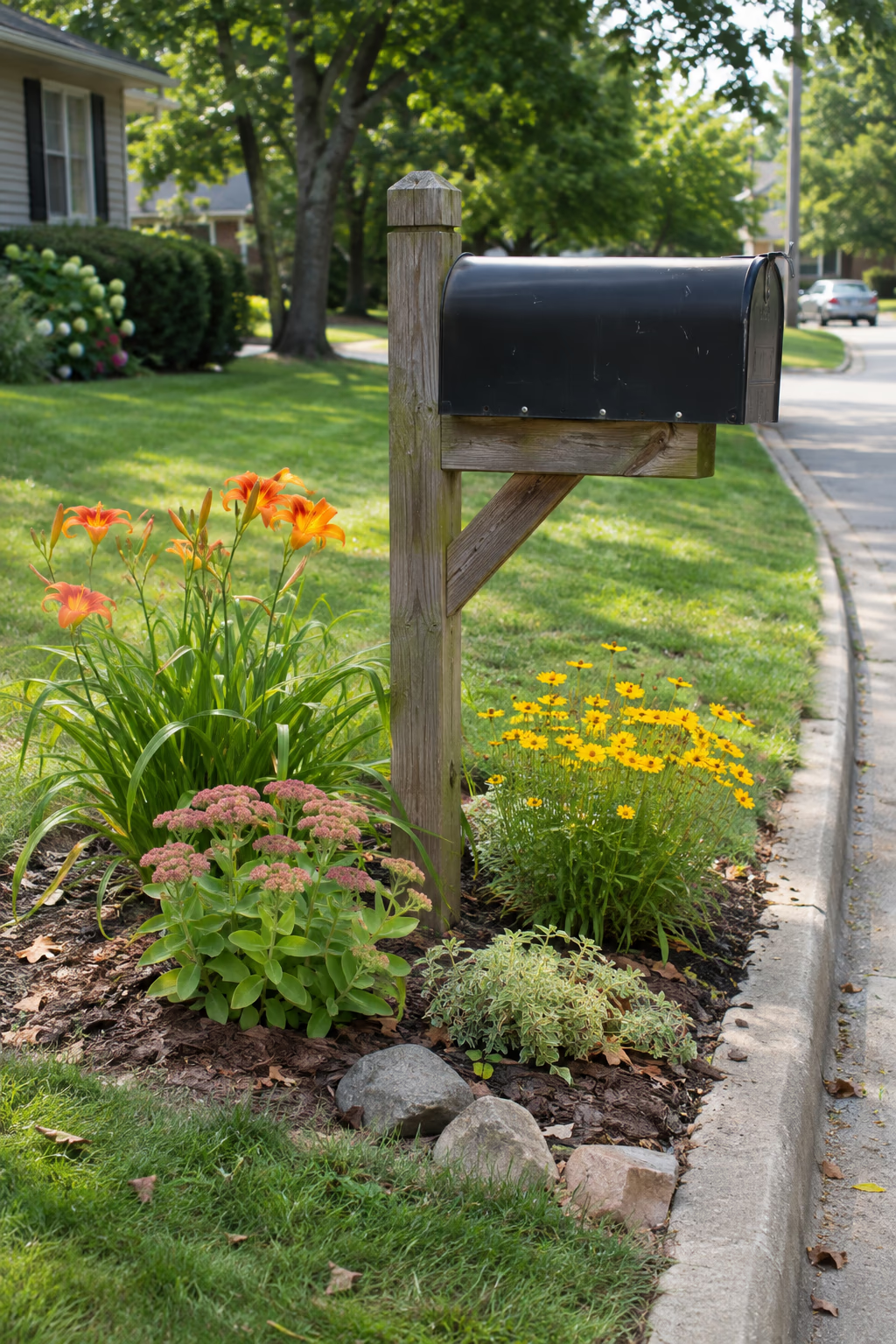
A small detail that sets the first impression
The mailbox is often the first thing visitors see. A small bed around the post, with low-growing perennials like daylilies, coreopsis, and sedum, makes it feel like part of the design.
Keep plants short, around 18 inches or less, so mail carriers can reach the box and drivers can see traffic. Avoid thorny plants such as roses right at the opening.
Check with local postal rules, which require clear access, and stay clear of the road shoulder where plow and salt spray may damage plants in winter.
28. Plan for Winter Interest With Colorful Stems and Berries
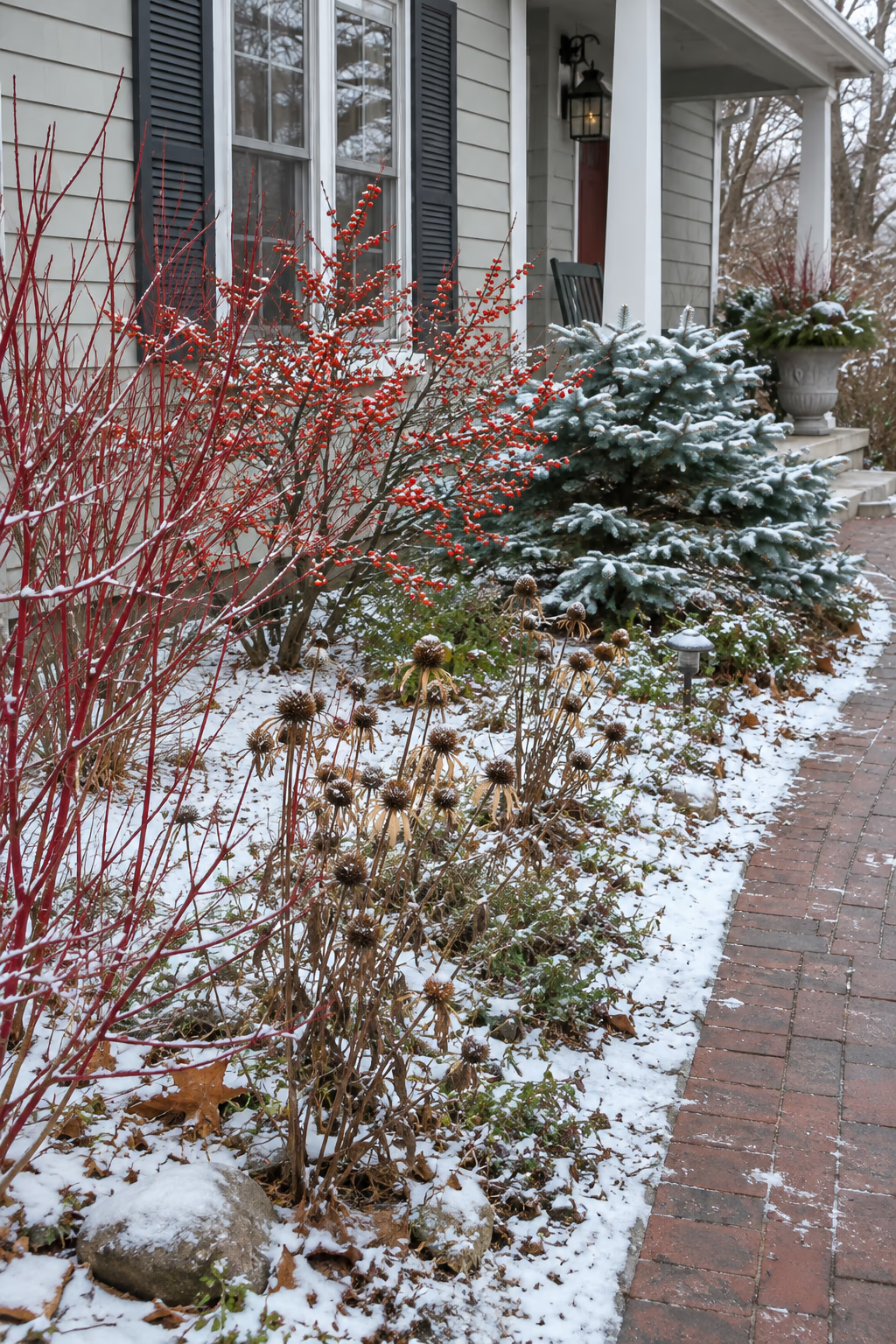
Keep the yard attractive when flowers fade
A front yard is on display all year. Red twig dogwood, winterberry holly, evergreen conifers, and seed heads of coneflower or sedum add color and shape when everything else is bare.
Plant red twig dogwood where winter sun hits it, and prune a third of the oldest stems each late winter to encourage bright new growth. Winterberry needs both male and female plants for berries.
Birds feed on berries and seed heads, so hold off on tidying until spring. A touch of snow on these plants makes a front yard look beautiful.
29. Place a Single Sculptural Focal Point
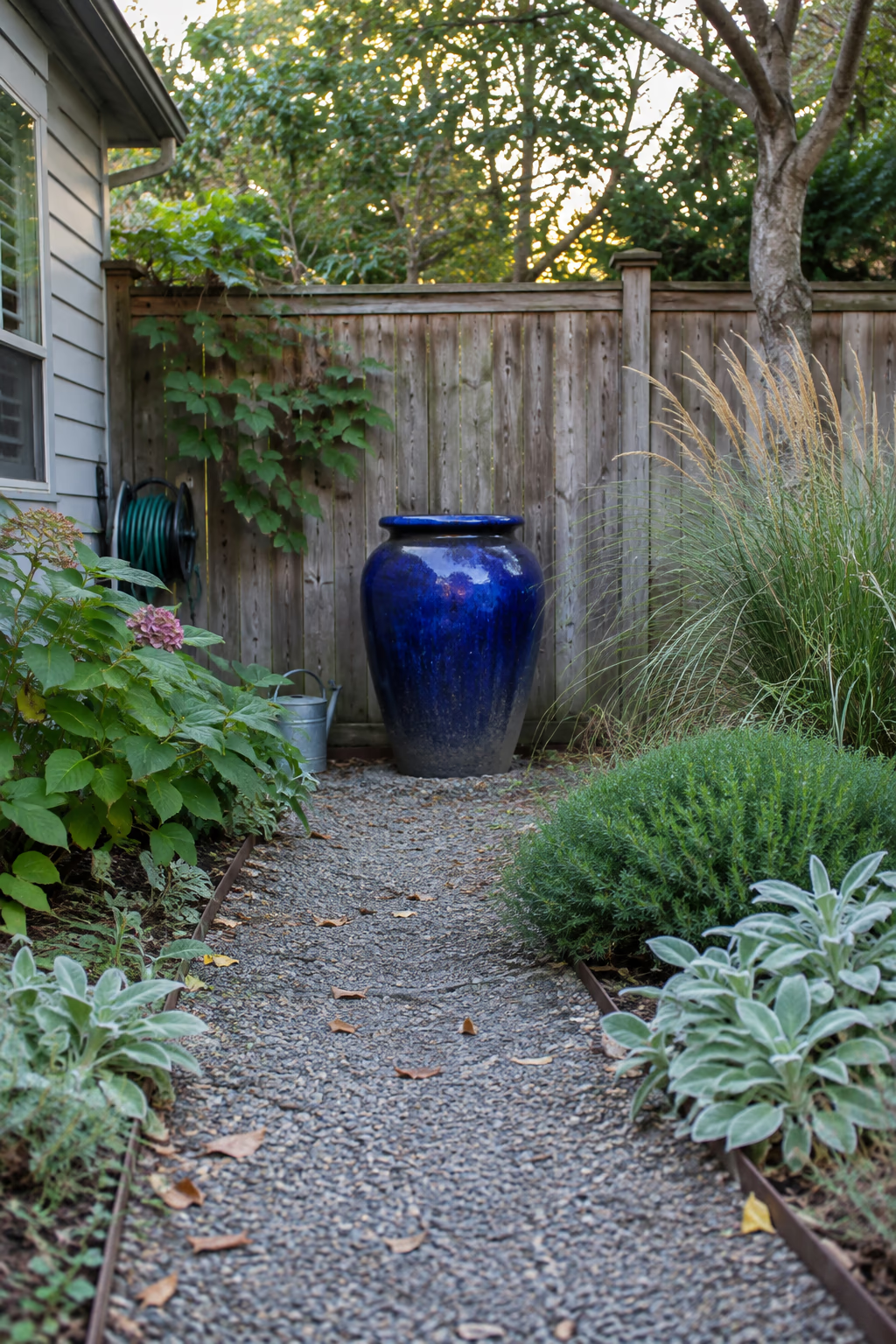
One strong piece that anchors the whole scene
A single decorative element can tie a small yard together. Consider a large glazed ceramic pot, a sundial, an armillary sphere, a boulder with an interesting shape, or a metal garden sculpture.
Place it where it draws the eye from the street or at the end of the path, and give it breathing room with simple plantings around it. Choose scale carefully, since a piece that’s too small gets lost.
Weatherproof materials such as stone, cast metal, and frost-proof ceramic last longest. Secure larger items so they can’t tip over in wind.
How to Plan Your Small Front Yard
A little planning helps a small space look intentional, and it prevents costly do-overs. Sketch your yard to scale, mark sun and shade, and decide what you want visitors to see first.
- Start with the path. Decide how people walk from the street or driveway to the door, because paths shape every other choice.
- Pick one focal point. A tree, door color, or sculpture should lead, with everything else playing a supporting role.
- Layer by height. Place tall plants at the back or corners, mid-height shrubs in the middle, and low plants along the front edge.
- Match plants to conditions. Check your USDA hardiness zone, sun exposure, and soil drainage before buying anything.
- Check rules first. Review HOA guidelines, fence height limits, and setbacks, and call 811 before any digging in the United States.
- Build in phases. Start with paths, beds, and structure, then add lighting, containers, and accents as your budget allows.
Frequently Asked Questions
How can I make a small front yard look bigger?
Use curving paths, layered planting, and a limited color palette. Keep the foreground low and open, put taller plants toward the edges, and add a focal point at the far end to create depth.
What is the cheapest way to improve a small front yard?
Paint the front door, edge the beds, add fresh mulch, and place a pair of container plants by the entry. These changes usually cost far less than major hardscape work and make a big visual difference.
What are the best low-maintenance plants for a small front yard?
Evergreen shrubs, ornamental grasses, sedum, catmint, daylilies, and native perennials are dependable. Choose varieties suited to your climate and light so they thrive with minimal care.
Should I get rid of my front lawn?
You don’t have to. Many homeowners keep a small patch of grass and replace the rest with beds, gravel, or low groundcovers. Consider how you use the space, local water costs, and any HOA requirements.
How much does it cost to landscape a small front yard?
Costs vary widely by region and materials. A simple DIY refresh with plants, mulch, and edging can cost a few hundred dollars, while hardscape, walls, and professional design can run into the thousands. Phasing the project helps you manage the budget.
Final Thoughts
The best small front yard ideas make careful use of every foot. A curving path, a handful of well-chosen plants, and one memorable focal point can give a modest lot the character of a much bigger one.
Start with the project that bothers you most or excites you most, and build from there. With a little patience and plants suited to your climate, your front yard will grow into a welcoming space you enjoy every time you come home.


