
A small front garden is the first thing neighbors, guests, and delivery drivers see. A few feet of soil between the sidewalk and your door can look like leftover space, or it can feel like a real welcome, with a clipped hedge, a rose by the door, and flowers spilling from the window boxes.
Small plots have one big advantage: every choice shows. You don’t need a truckload of plants or a landscaping crew. A handful of good decisions about edges, height, scent, and color can make a compact front garden look finished and cared for all year, and it’s much easier to keep tidy than a large lawn.
These 23 small front garden ideas cover boundary hedges, climbers, window boxes, lawn-free planting, scented paths, hellstrip beds, low-water designs, smart lighting, and practical fixes like hiding trash bins. Use one to refresh a tired entry or mix several into a plan you can build over a few seasons.
1. Frame the Garden With a Low Boxwood Hedge and Iron Railing
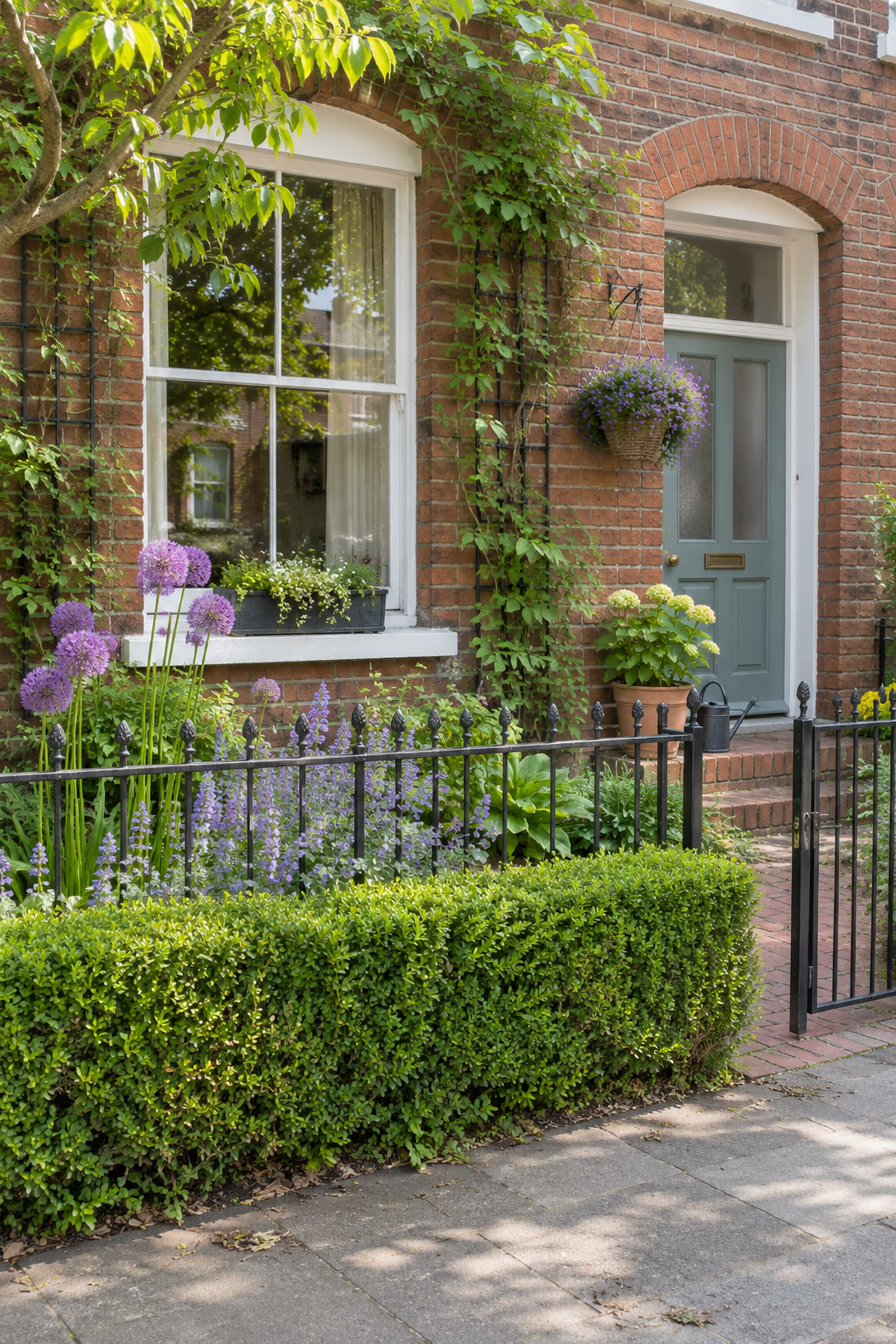
A crisp edge that makes a tiny plot feel intentional
Few things make a small front garden look as polished as a defined boundary. Plant a low hedge about 18 to 24 inches tall just inside the property line, then add a simple black metal railing or low open fence beside or behind it. The open railing marks the edge without hiding the house.
Boxwood is the classic choice, but boxwood blight and box tree moth are problems in parts of the country. Disease-resistant boxwood cultivars, dwarf inkberry holly, or compact Japanese holly give a similar clipped look. Space small plants 12 to 18 inches apart so they knit together within a few seasons.
Fill the space inside the hedge with tulips in spring and alliums or catmint in early summer for color against the dark green. Before installing any fence, check your property line and any HOA or city height limits for front-yard fencing.
2. Train a Climbing Rose Up the Wall Beside the Door
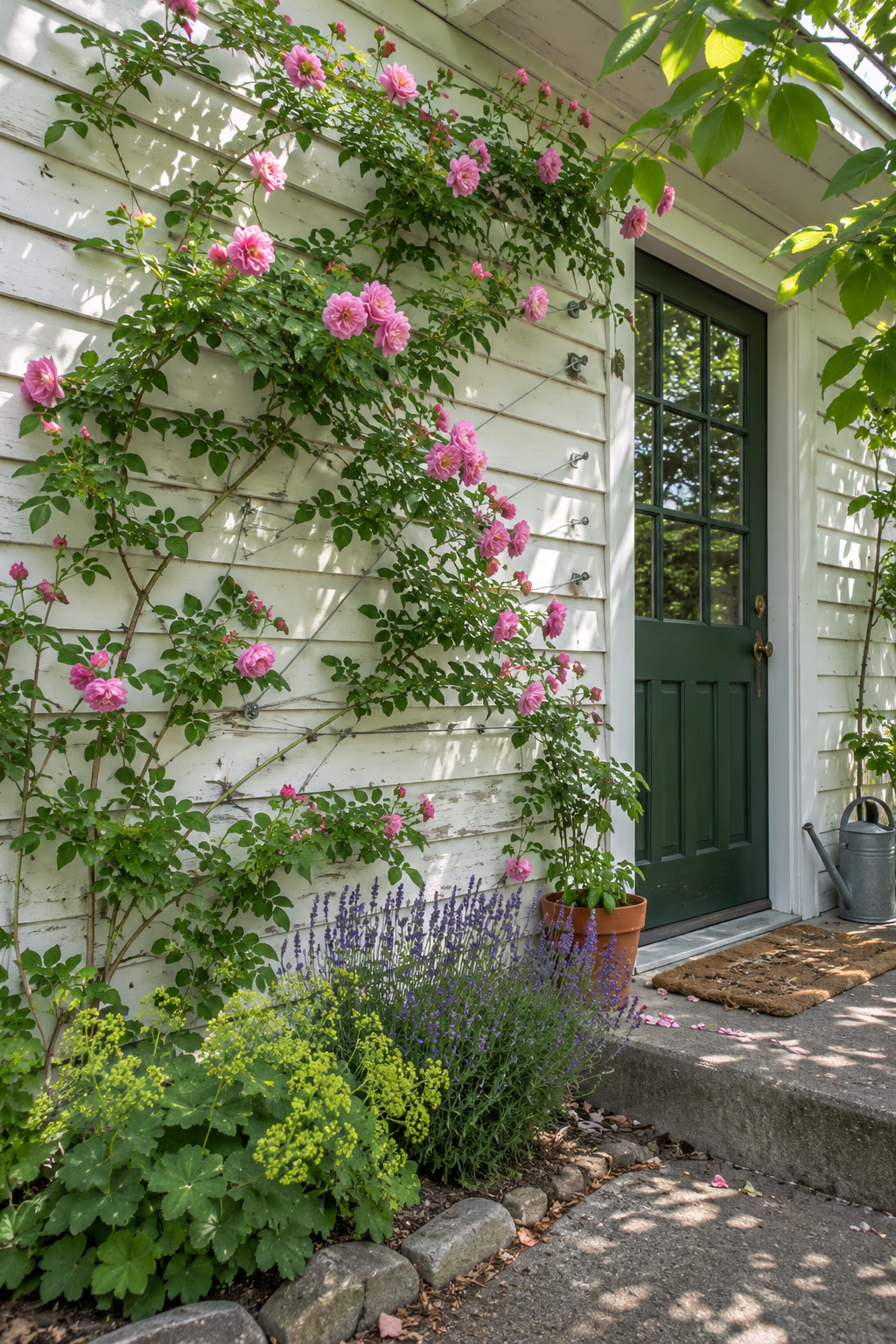
Romantic height without using up ground space
When a front garden is only a few feet deep, the walls of the house become valuable planting space. A climbing rose trained up a trellis beside the door adds height, scent, and that storybook look while taking up a planting hole about 2 feet square.
Fix a wooden or metal trellis, or a grid of tensioned wires, so it sits 2 to 3 inches away from the siding or brick. Plant the rose 12 to 18 inches out from the wall, where the soil gets more rain, and lean the canes back toward the support. Tying canes out sideways encourages far more blooms than training them straight up.
Pick a repeat-blooming, disease-resistant climber suited to your zone and sun. Most roses want at least six hours of direct sun, so a north-facing entry is better suited to climbing hydrangea or a shade-tolerant clematis.
3. Hang Window Boxes Under Every Front Window
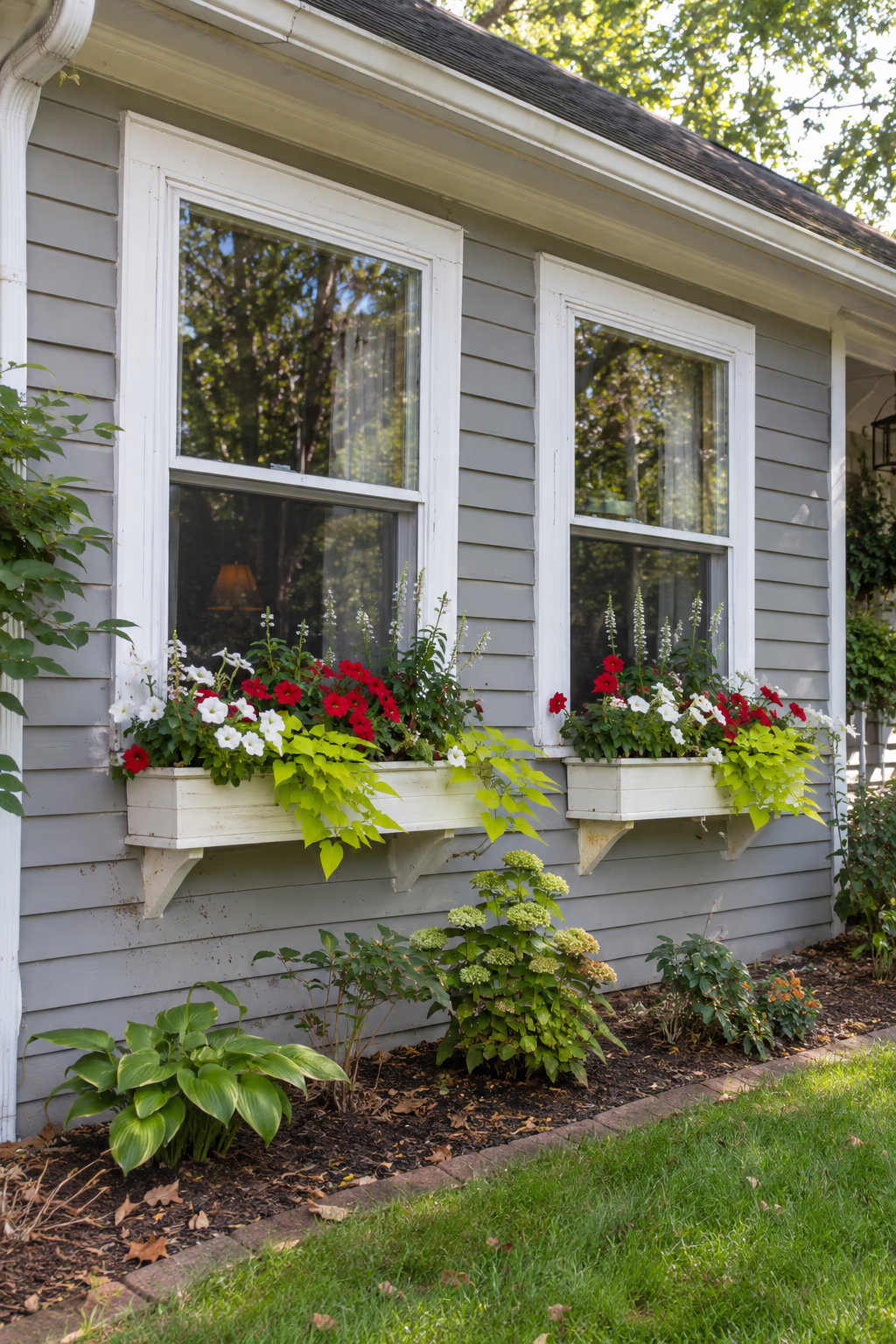
Flowers at eye level, even with no yard at all
Window boxes turn a flat facade into a garden, which makes them ideal for homes with only a sliver of soil out front. Choose boxes that are roughly the width of the window, or slightly wider, and at least 8 inches deep so the soil doesn’t dry out within hours.
Mount them with sturdy brackets screwed into studs or masonry anchors, because wet soil is surprisingly heavy. Fill with a quality potting mix, then plant something upright at the back, a mounding flower in the middle, and a trailing plant like sweet potato vine, ivy geranium, or bacopa along the front edge.
Window boxes need frequent watering in summer, often daily in full sun. Swap in pansies for spring, mums for fall, and evergreen cuttings for winter.
4. Create a Formal Layout With Clipped Spheres and a Standard Tree
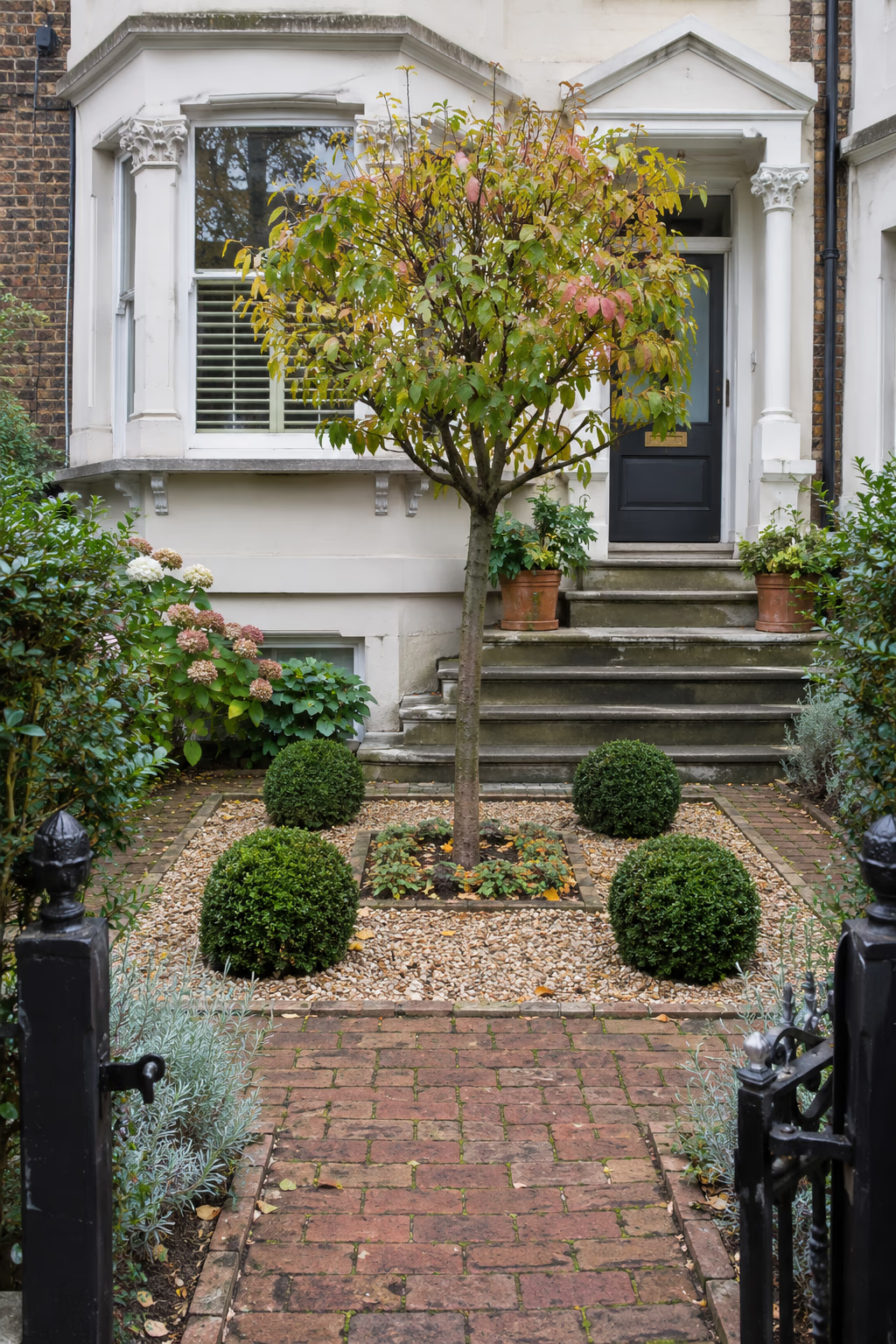
Classic symmetry that suits narrow city lots
Formal gardens are built on repetition and balance, and they shrink down beautifully. Center a single standard tree, sometimes called a lollipop tree, in a square bed or large planter, then set matching clipped evergreen spheres in each corner.
A standard bay, ligustrum, or holly works in mild climates. In colder regions, a standard-form dwarf lilac, hydrangea tree, or an upright crabapple can play the same role. Keep the spheres to 18 to 24 inches so they stay in proportion with the space.
This look depends on neat shapes, so plan on shearing two or three times a growing season. Stop trimming about six weeks before your first frost so new growth can harden before winter.
5. Swap the Lawn for Layered Perennials and Grasses
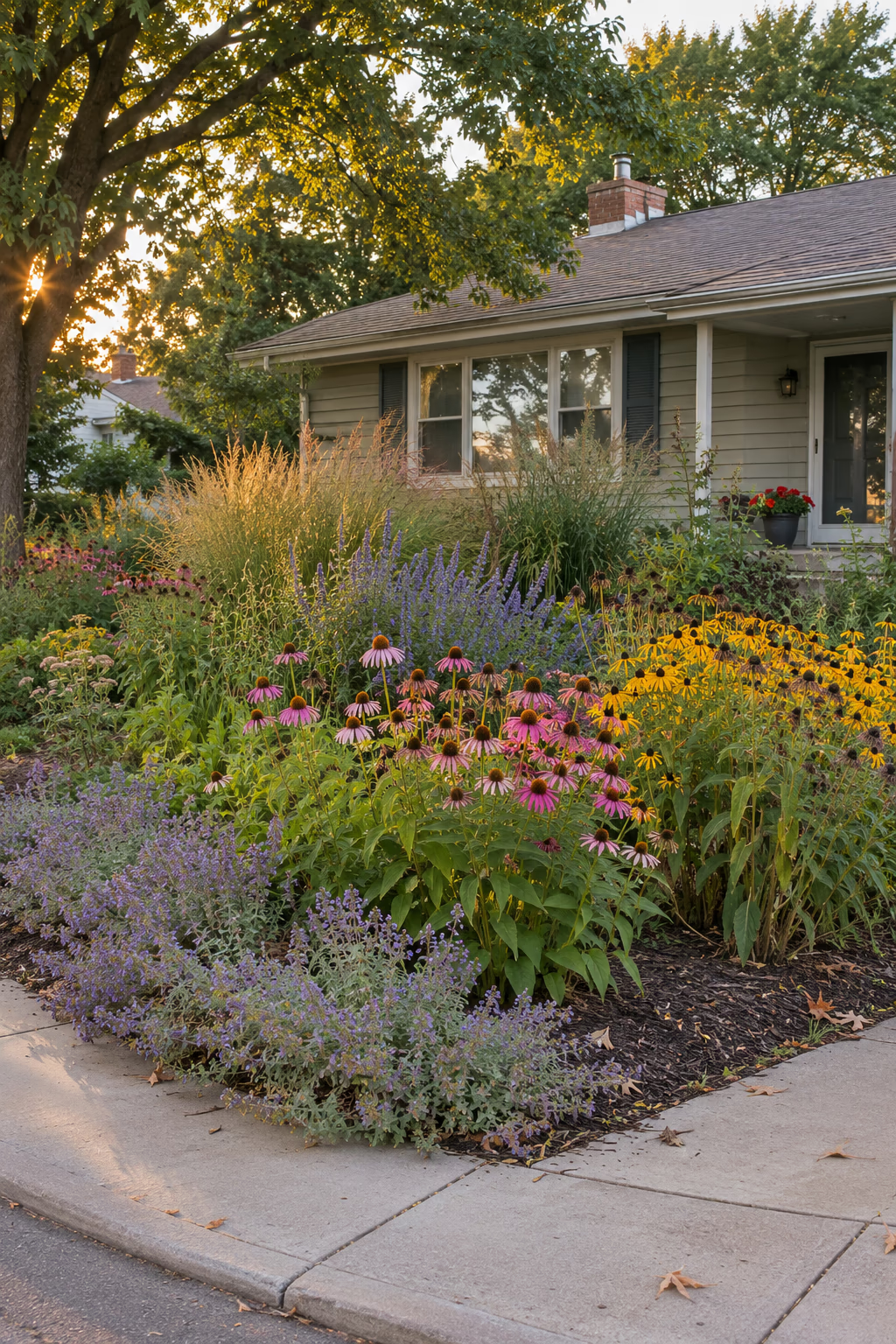
More color and less mowing in a postage-stamp yard
A patch of grass the size of a parking space is hard to mow neatly and rarely looks its best. Replacing it with layered perennials and ornamental grasses gives the yard color, movement, and wildlife value with far less weekly work.
Smother the turf with cardboard and 3 to 4 inches of mulch in fall, or strip it in spring. Then plant in drifts: a few taller plants like Russian sage or switchgrass toward the house, mid-height coneflower, black-eyed Susan, and salvia in the middle, and low catmint, hardy geranium, or blue fescue along the sidewalk edge.
The first summer still needs regular watering and weeding while plants fill in. After that, a spring cutback and fresh mulch handle most of the upkeep. Some HOAs require a certain amount of lawn, so check before you dig.
6. Line the Front Walk With Fragrant Lavender
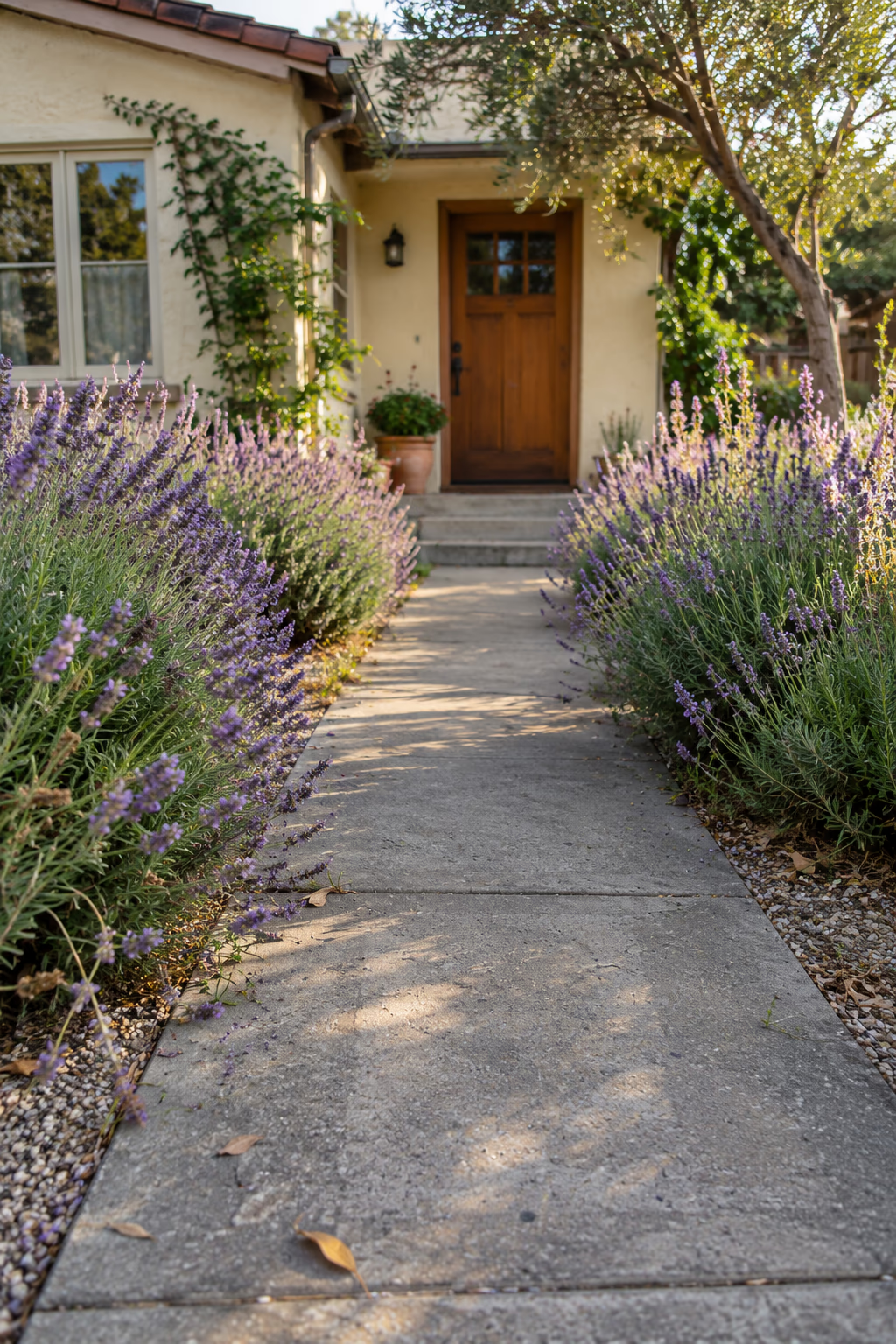
Scent and soft purple color with every step
A row of lavender along the walkway releases its scent as you brush past, and the silvery leaves look good long after the flowers fade.
Plant lavender 18 to 24 inches apart, set back about a foot from the path so the mounds can spill without blocking feet. Hardy English and hybrid types handle cold winters better than Spanish or French lavender. Shear plants by about a third after the main bloom to keep them compact.
Lavender needs full sun and sharp drainage. In heavy clay or wet spots it tends to rot, so build up a slightly raised strip with gritty soil or choose catmint, which gives a similar look and tolerates more average conditions.
7. Cut Planting Pockets Into a Paved Entry
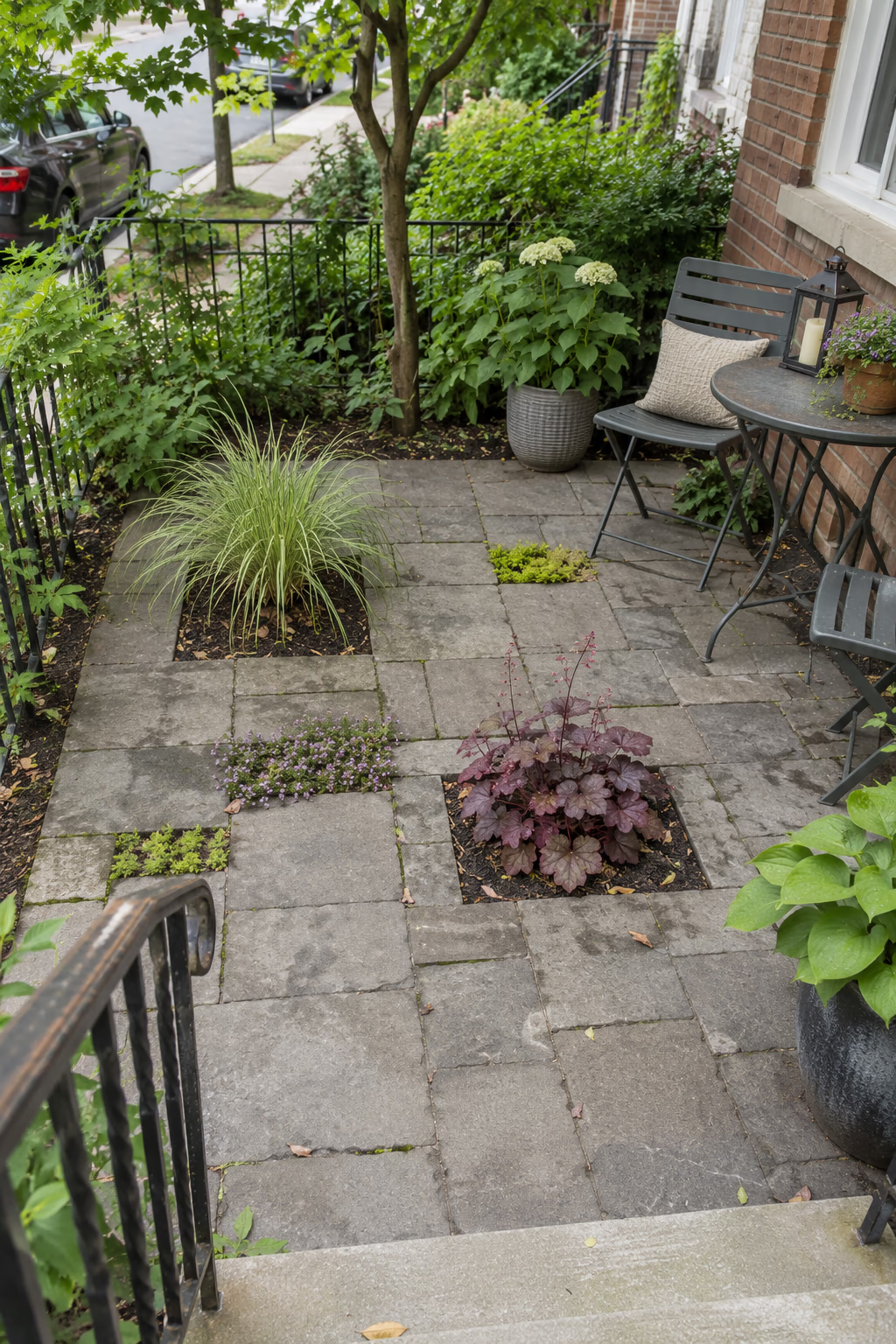
Softens hard surfaces without losing practicality
Many small fronts are mostly paving, especially where a driveway or parking pad takes up room. Instead of adding pots, lift a few pavers or cut a square or rectangular bed into the patio and plant it directly. A 3-by-3-foot pocket is enough for a small shrub, grasses, or a cluster of perennials.
Low, tough plants like creeping thyme, sedum, and dwarf grasses can also go into the gaps where you remove single pavers.
Before cutting into concrete, find out what’s under it. Older slabs can be thick or reinforced, so renting a saw or hiring a pro may be worth it. Replace the base gravel with good soil in each pocket so roots have room to grow.
8. Build a Low Brick Raised Bed Along the Sidewalk
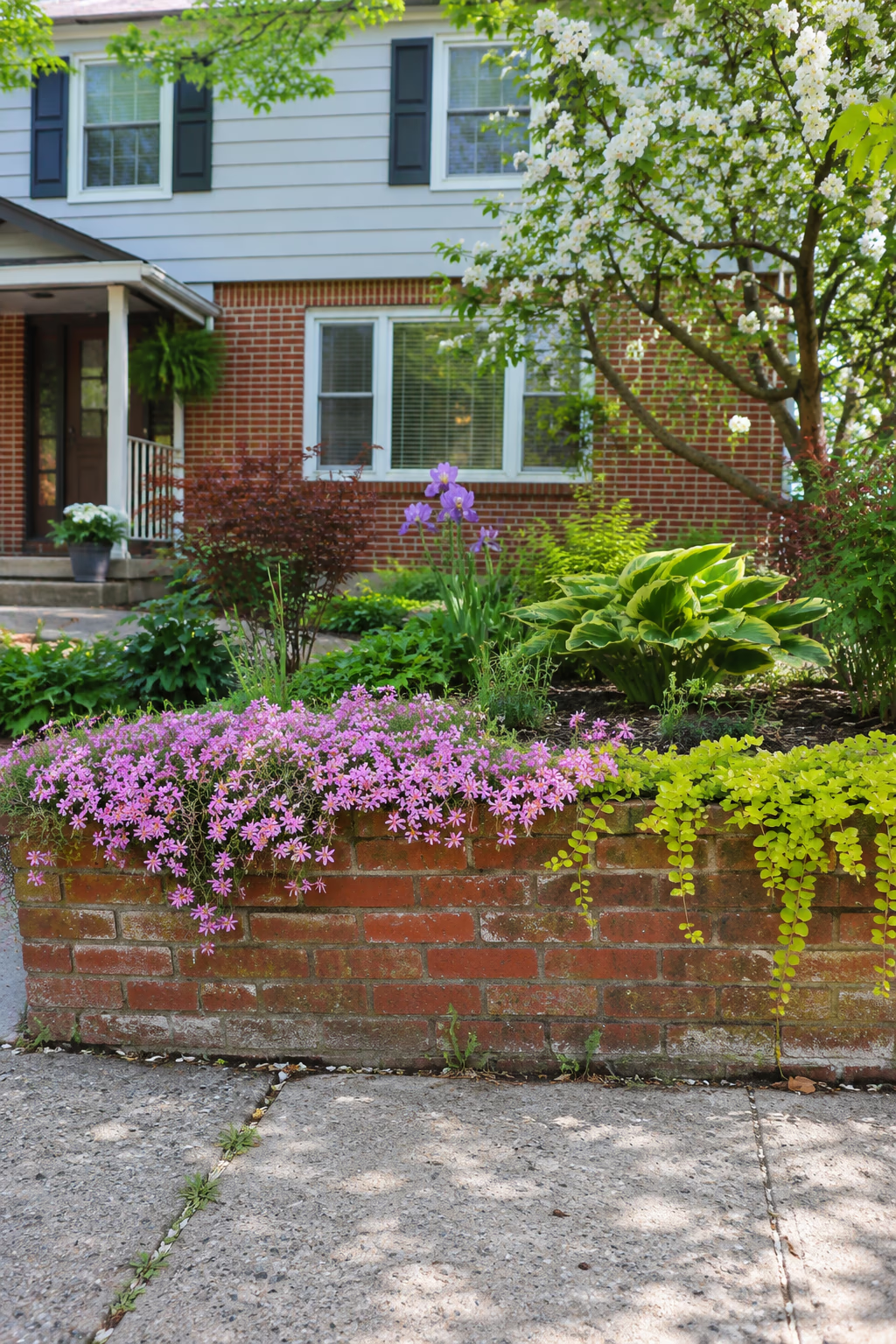
A tidy edge with better soil for your plants
A low raised bed of brick or stone between the sidewalk and your garden creates a clear border and lifts plants closer to eye level. Even 12 to 18 inches of height makes a bed feel more substantial.
Build the wall on a compacted gravel footing, leave weep holes or gaps for drainage, and fill the bed with a mix of topsoil and compost. Plant trailing plants like creeping phlox, creeping Jenny, or dwarf rosemary along the edge to soften the masonry.
Keep the wall on your side of the property line, and check whether your city has rules about structures near the sidewalk. Raised beds dry out faster than ground-level beds, so mulch well and consider a drip line.
9. Plant a Serviceberry for Four-Season Interest
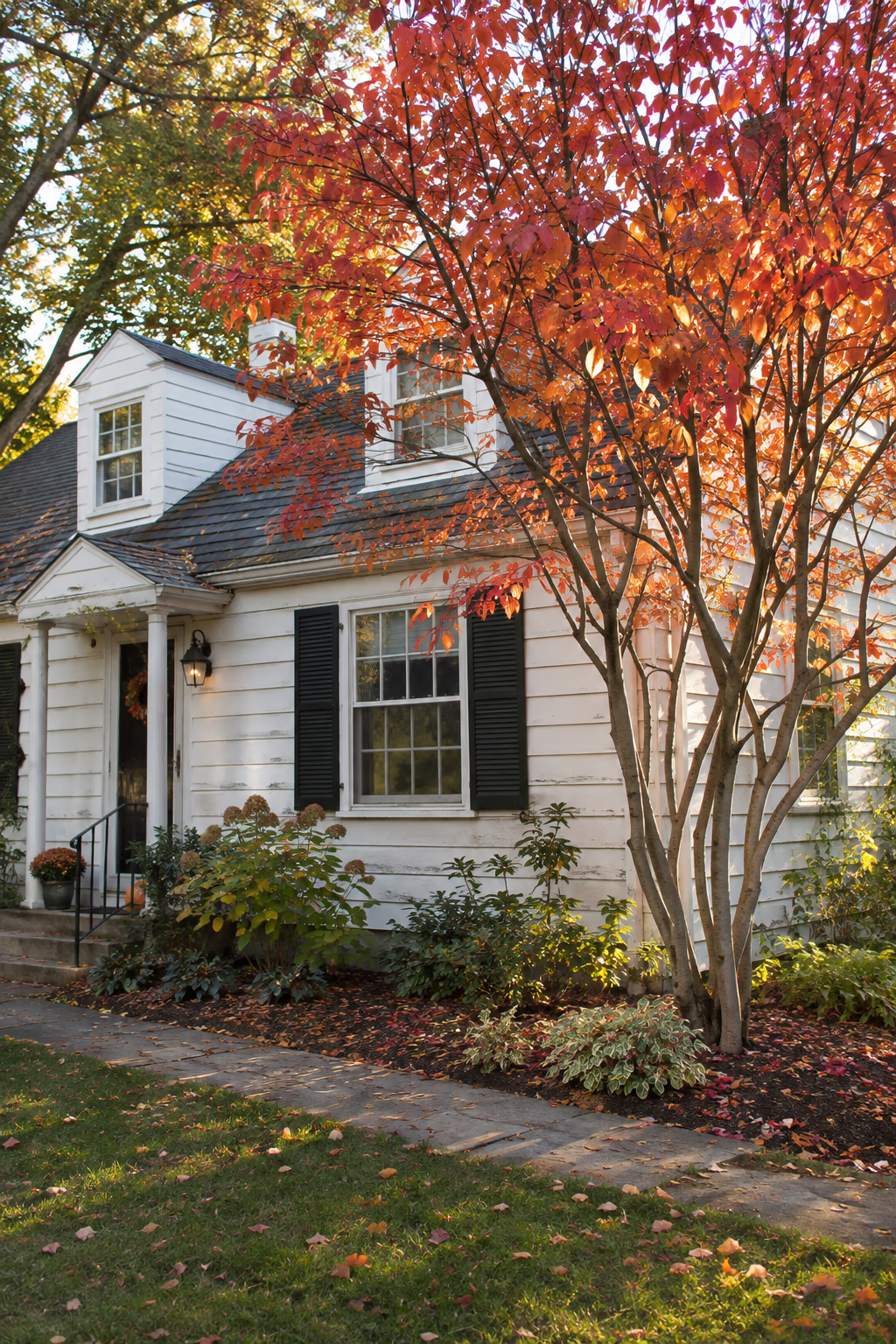
One small tree that earns its place all year
A small front garden usually has room for only one tree, so it should look good in every season. Serviceberry is one of the best choices for many US regions. It offers white spring flowers, berries that birds love in early summer, orange-red fall color, and smooth gray bark in winter.
Most serviceberries mature at 15 to 25 feet tall, often as a multi-stem shape that looks natural near a house corner. Plant it at least 10 to 15 feet from the foundation and well away from overhead lines.
Underplant the tree with spring bulbs and shade-tolerant groundcovers rather than lawn, which competes with young roots. Water deeply once a week through the first two summers.
10. Tuck a Bench Into a Sunny Corner
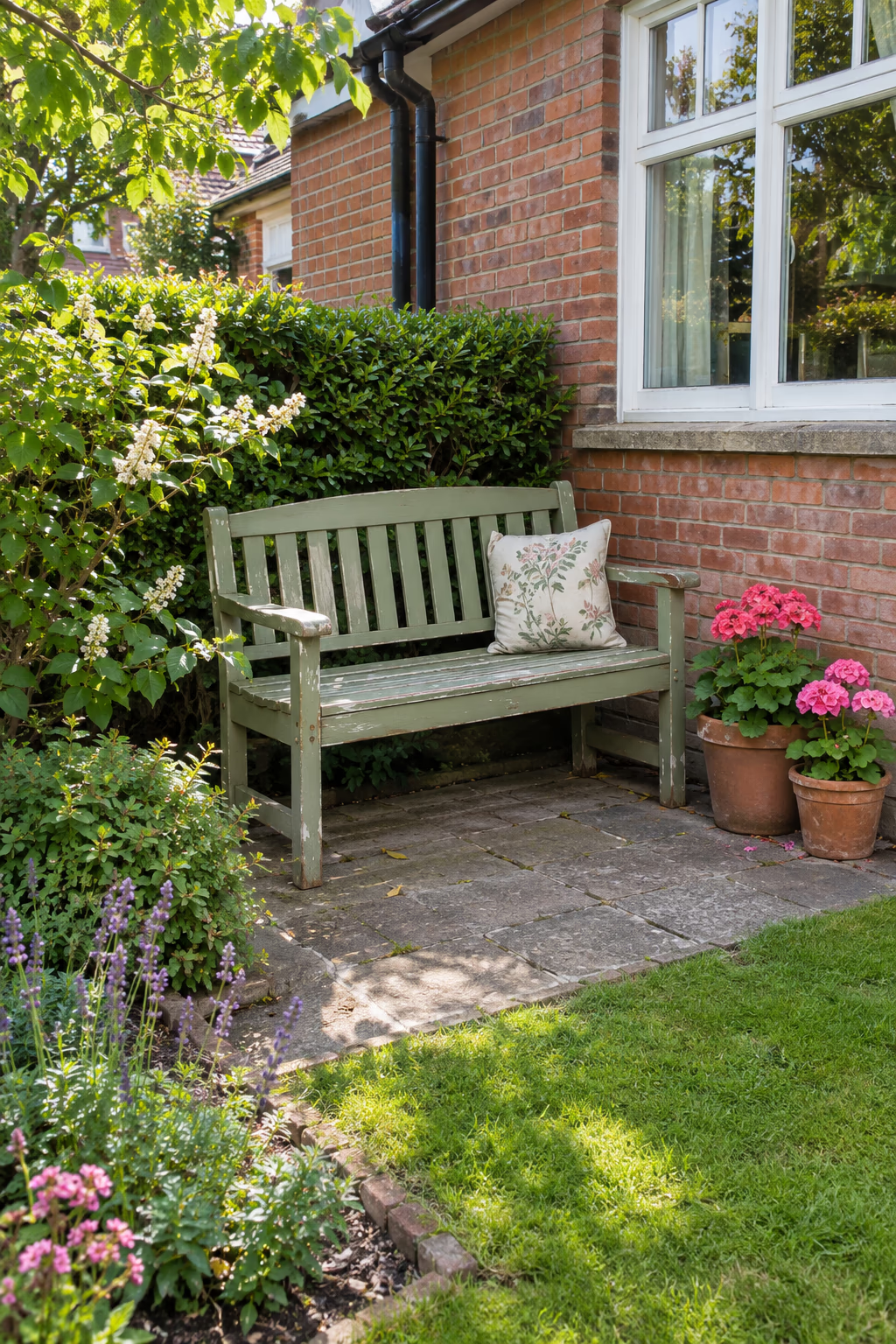
Turns the front garden into a place to linger
Front gardens are often just something to walk through, but a small seat changes that. A 3- to 4-foot bench tucked against the house, under a window, or beside a hedge gives you a spot to drink coffee, chat with neighbors, or wait for the school bus.
Set the bench on a small pad of pavers or compacted gravel so the legs stay level and dry. Frame it with a pair of pots or a fragrant shrub so it looks like part of the garden rather than an afterthought.
Pick a spot with morning sun or afternoon shade depending on your climate. In hot southern and western regions, a west-facing bench may be too warm to use in summer without a tree or umbrella nearby.
11. Grow a Mini Woodland Garden Under an Existing Tree
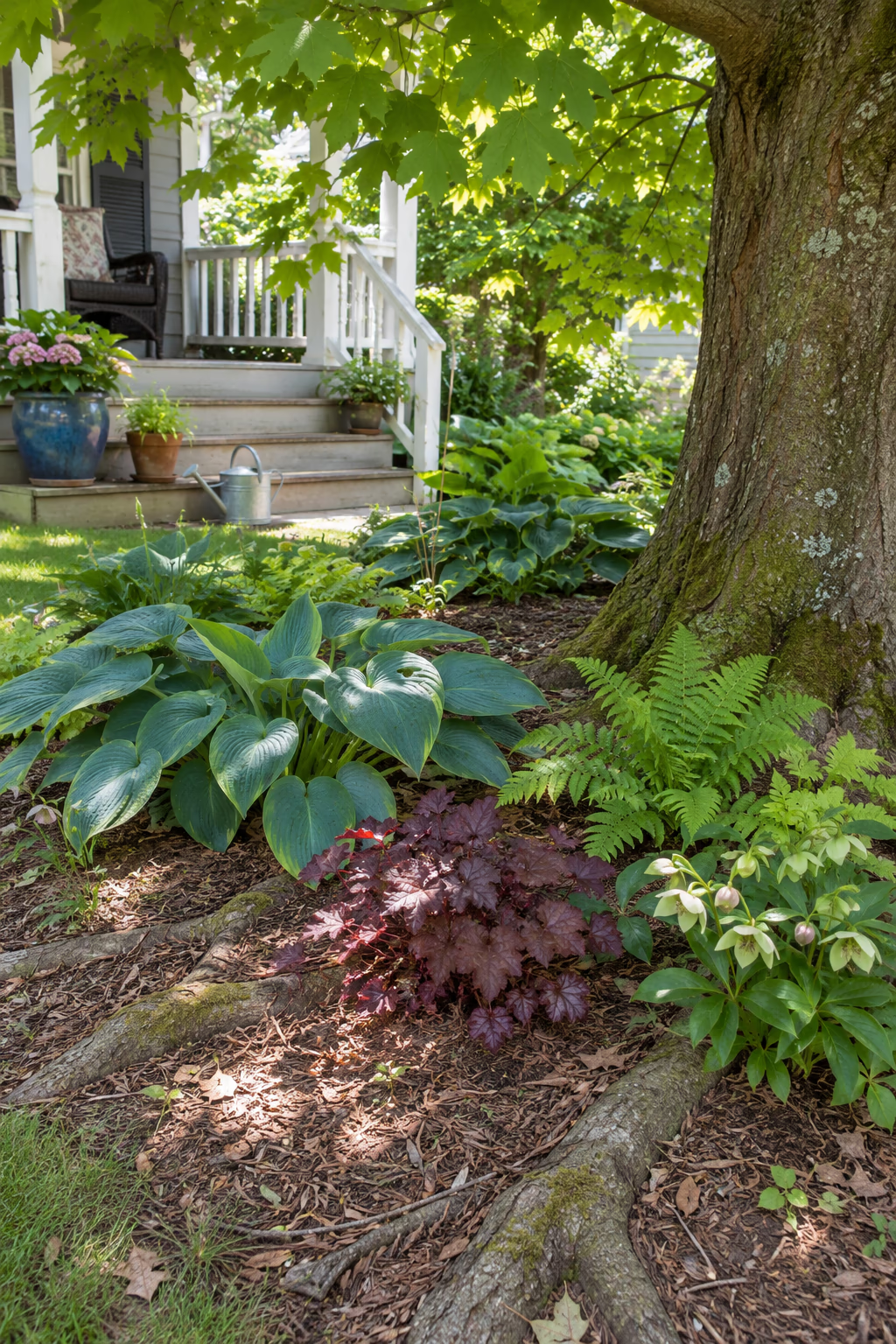
Makes shady, root-filled ground look lush
Grass often struggles under a mature front-yard tree, leaving bare dirt and exposed roots. Instead of fighting it, turn the area into a small woodland bed with shade-loving plants and a layer of shredded bark or leaf mulch.
Hostas, ferns, heuchera, hellebores, foamflower, and woodland phlox all handle partial to full shade. Small pot sizes fit between roots with less digging.
Avoid piling soil over the roots or against the trunk, which can harm the tree. A few inches of mulch is fine, but keep it pulled back from the bark. Water new plants regularly, since tree roots compete for moisture.
12. Carpet the Ground With Low Evergreen Groundcovers
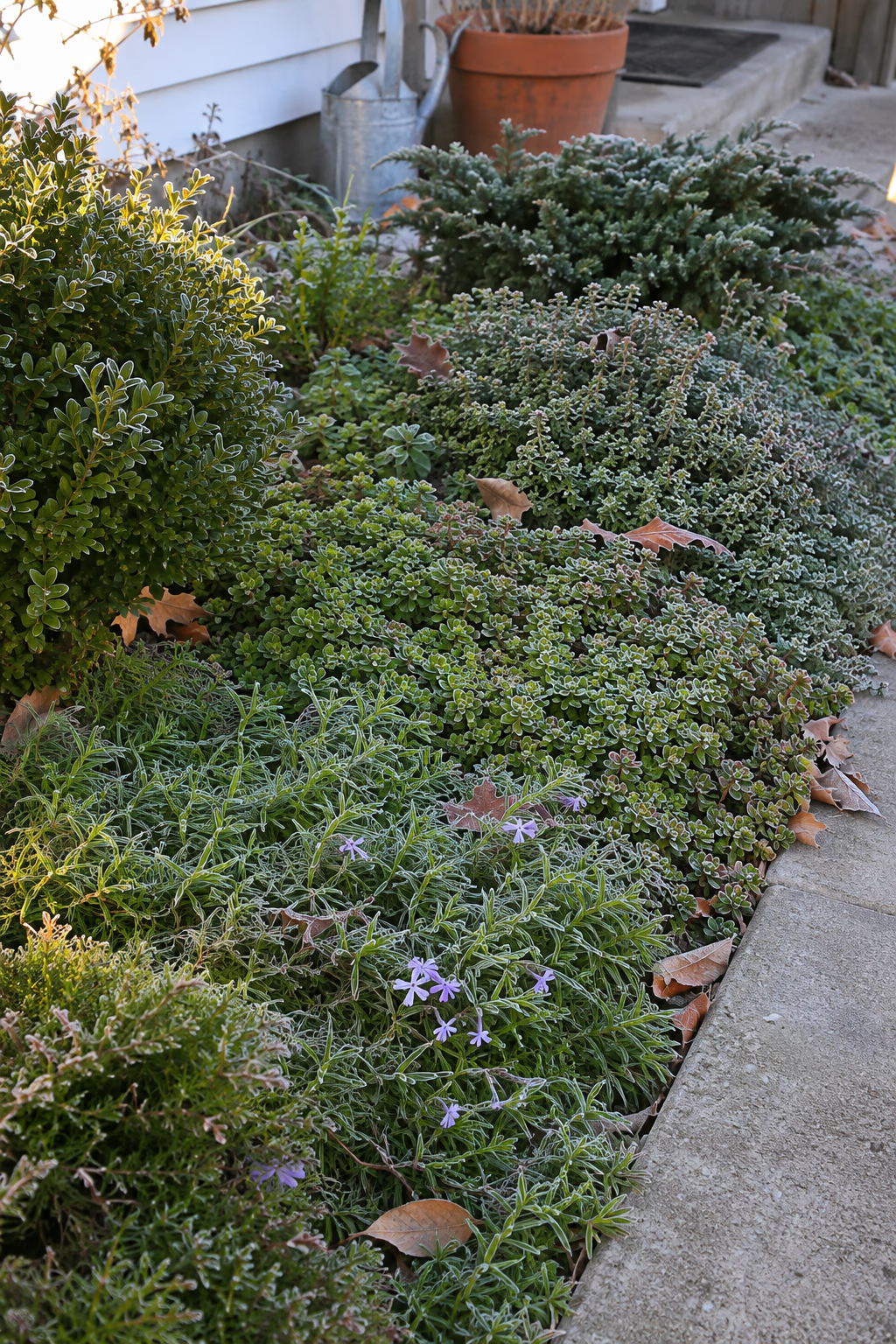
A living mulch that stays green year-round
Bare soil and constant mulch top-ups can make a small garden look unfinished. Low evergreen groundcovers fill gaps between shrubs, suppress weeds, and keep the front looking green in winter.
In sun, try creeping thyme, creeping phlox, or low sedum. In shade, wild ginger, barrenwort, and creeping mazus work well in many regions. Plant in a staggered grid 8 to 12 inches apart, and they’ll usually close up within two seasons.
Some popular groundcovers, including English ivy, vinca, and pachysandra, are invasive in parts of the US. Check your state’s invasive plant list before buying, and choose native or well-behaved options where you can.
13. Plant a Hellstrip Garden Between Sidewalk and Curb
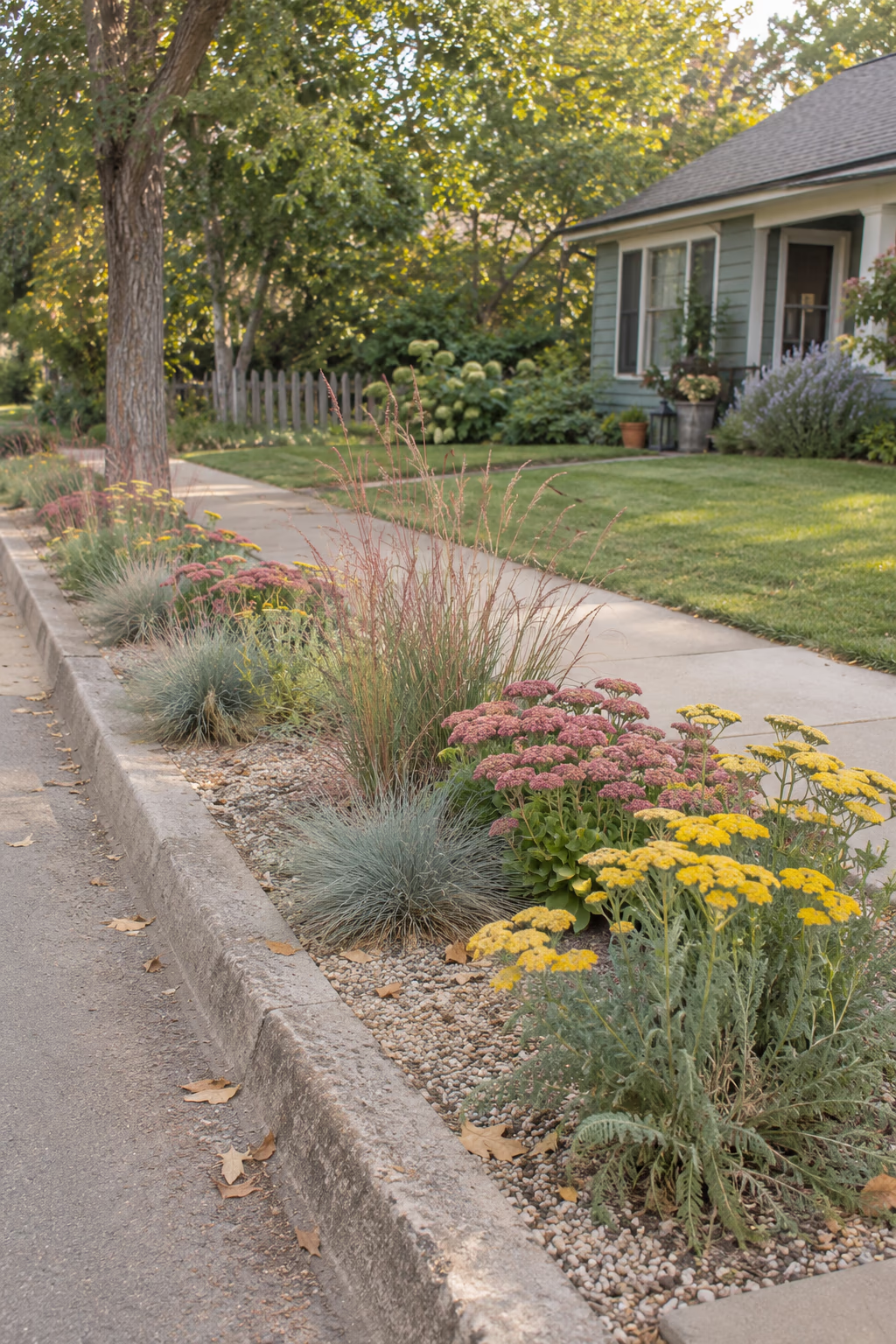
Claims the most overlooked strip on the block
The strip of grass between the sidewalk and the street, often called a hellstrip, is hot, compacted, and hard to mow. Planted with tough, low perennials, it becomes a cheerful extension of your front garden and a nice view for everyone walking by.
Choose drought-tolerant plants that stay under about 24 inches so drivers can see clearly. Yarrow, sedum, little bluestem, blue fescue, dianthus, and prairie dropseed are good candidates.
This strip is usually city-owned, so check local rules first. Many towns limit plant height or ban raised edging there. Call 811 before digging, since utility lines often run beneath it, and expect some road salt in snowy climates.
14. Design a Low-Water Front Garden With Desert Plants
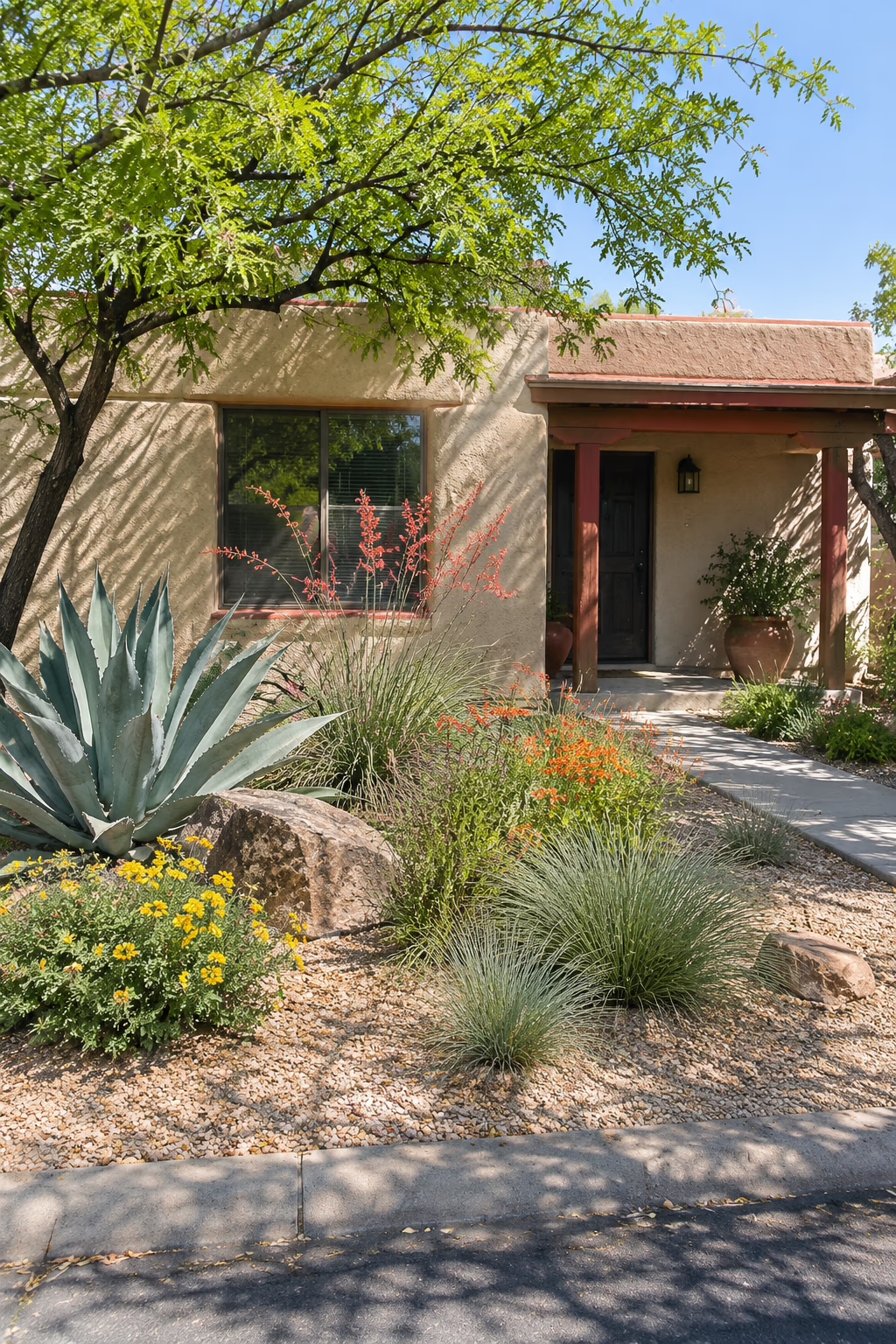
Beautiful color with a fraction of the watering
In the Southwest and other dry regions, a small front garden built around drought-tolerant plants looks right at home and saves water. Start with a base of decomposed granite or gravel, then add a few boulders and sculptural plants for structure.
Agave, yucca, and red yucca provide strong shapes, while penstemon, desert marigold, salvia, globe mallow, and blue grama grass add color and softness. Use drip irrigation for the first year.
Avoid dark landscape fabric under gravel where you want plants to spread, and watch for spiny plants near walkways. Many western water utilities offer rebates for removing turf, so check before you start.
15. Turn a Sloped Front Into Planted Terraces
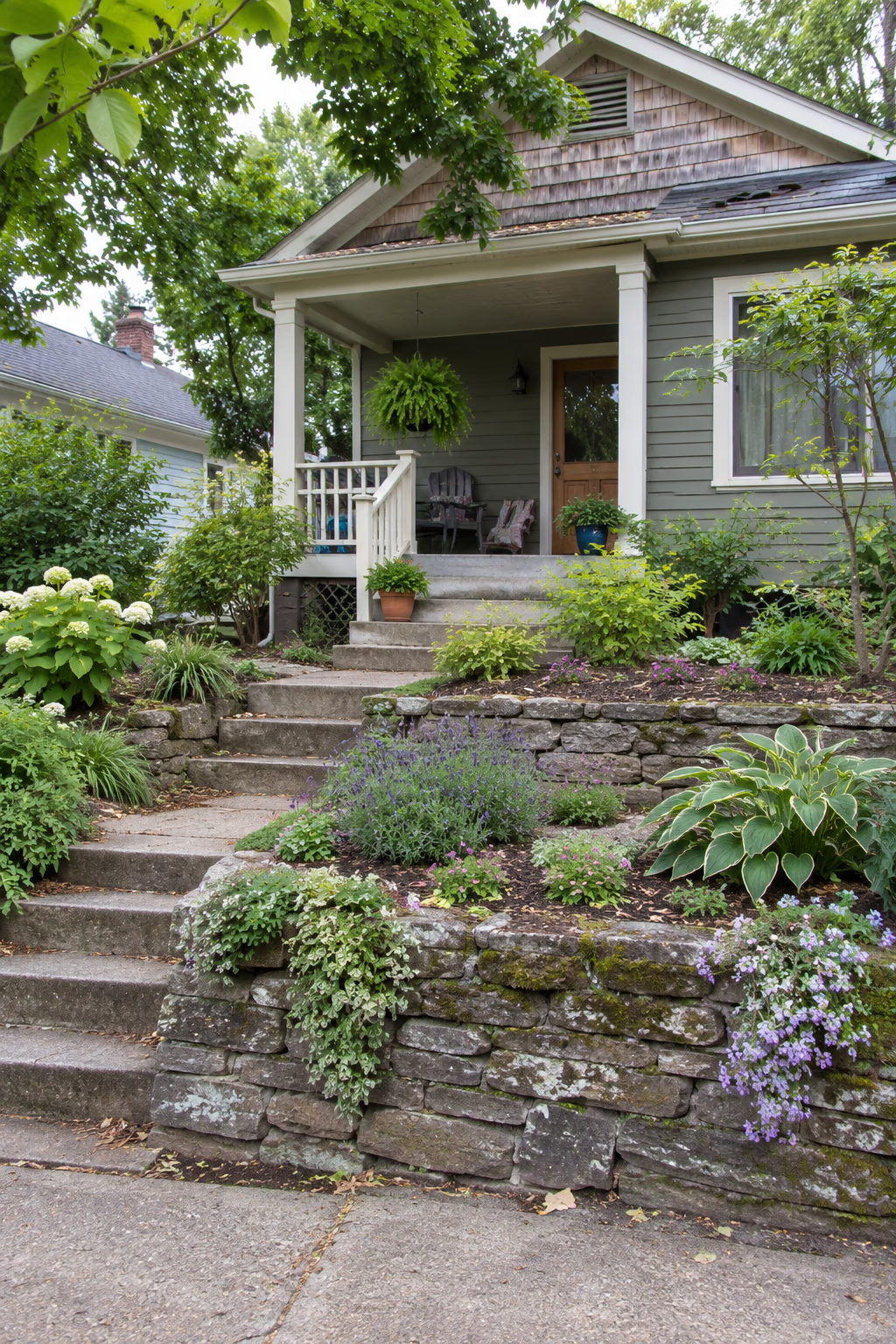
Makes a steep, awkward yard usable and attractive
A small front yard that slopes up to the house is hard to mow and tends to wash out in heavy rain. Breaking it into two or three low terraces turns the slope into level planting beds that are easier to maintain.
Use stacked stone, interlocking retaining wall block, or timber to build walls about 12 to 24 inches high. Plant each level with a mix of shrubs, perennials, and trailing plants that spill over the edge, and connect the levels with a few wide steps.
Walls taller than about 3 to 4 feet often need engineering or a permit, and all retaining walls need proper drainage behind them. For steep or large slopes, getting a landscape contractor’s input is money well spent.
16. Mix Ornamental Edibles Into the Front Border
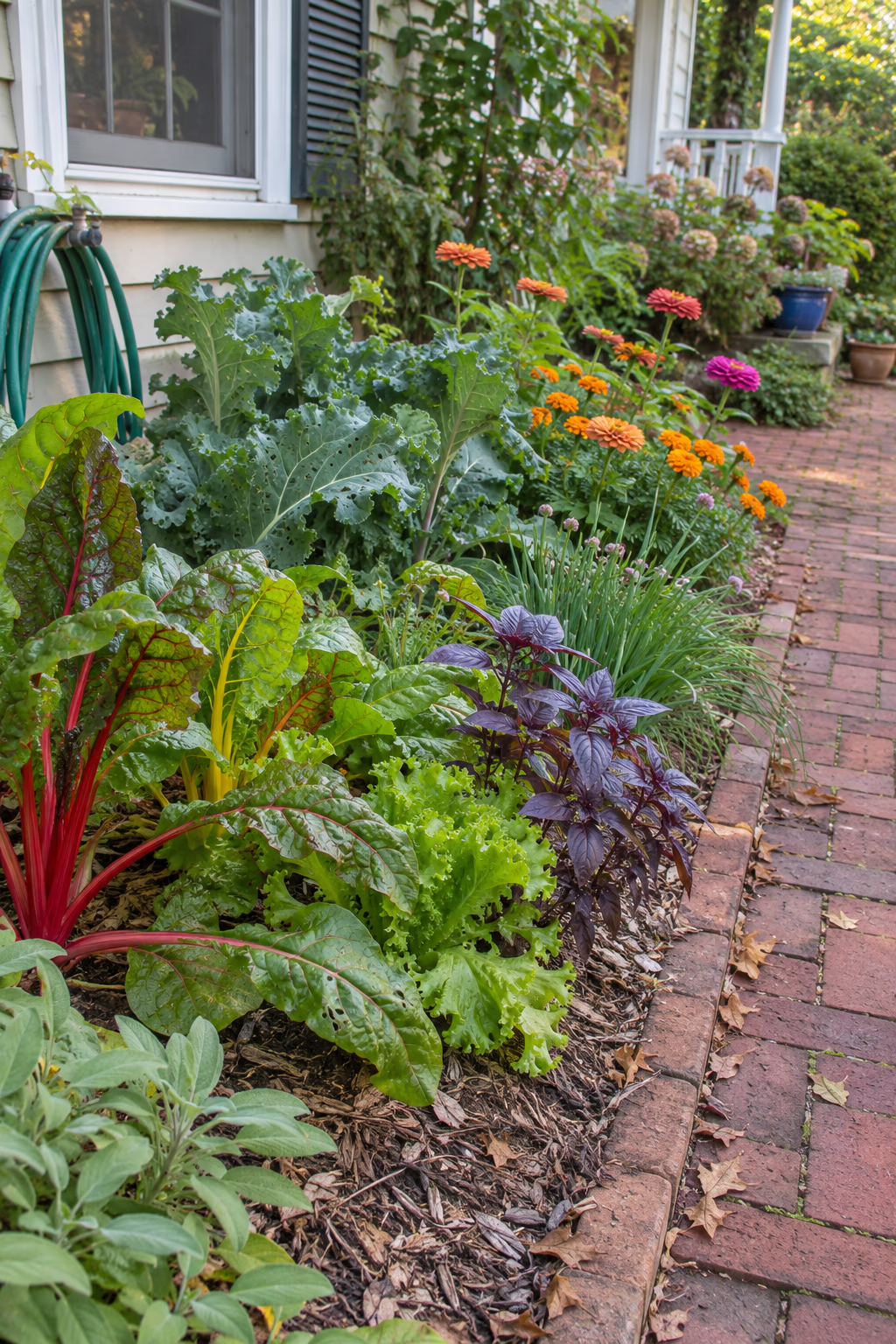
Pretty plants you can also harvest
Growing food out front doesn’t have to look like a vegetable patch. Many edibles are attractive enough to mix right into flower beds.
Rainbow chard, purple basil, curly kale, and frilly lettuce add color and texture. Herbs like sage, thyme, chives, and rosemary make tidy edging plants. A compact blueberry bush offers spring flowers, summer fruit, and red fall leaves, though it needs acidic soil.
Keep edibles away from the street edge where road dust and pet traffic collect, and avoid using chemical sprays near anything you plan to eat. Replace annual crops as they fade so the bed never looks picked over.
17. Plant a Pollinator Pocket Around the Mailbox
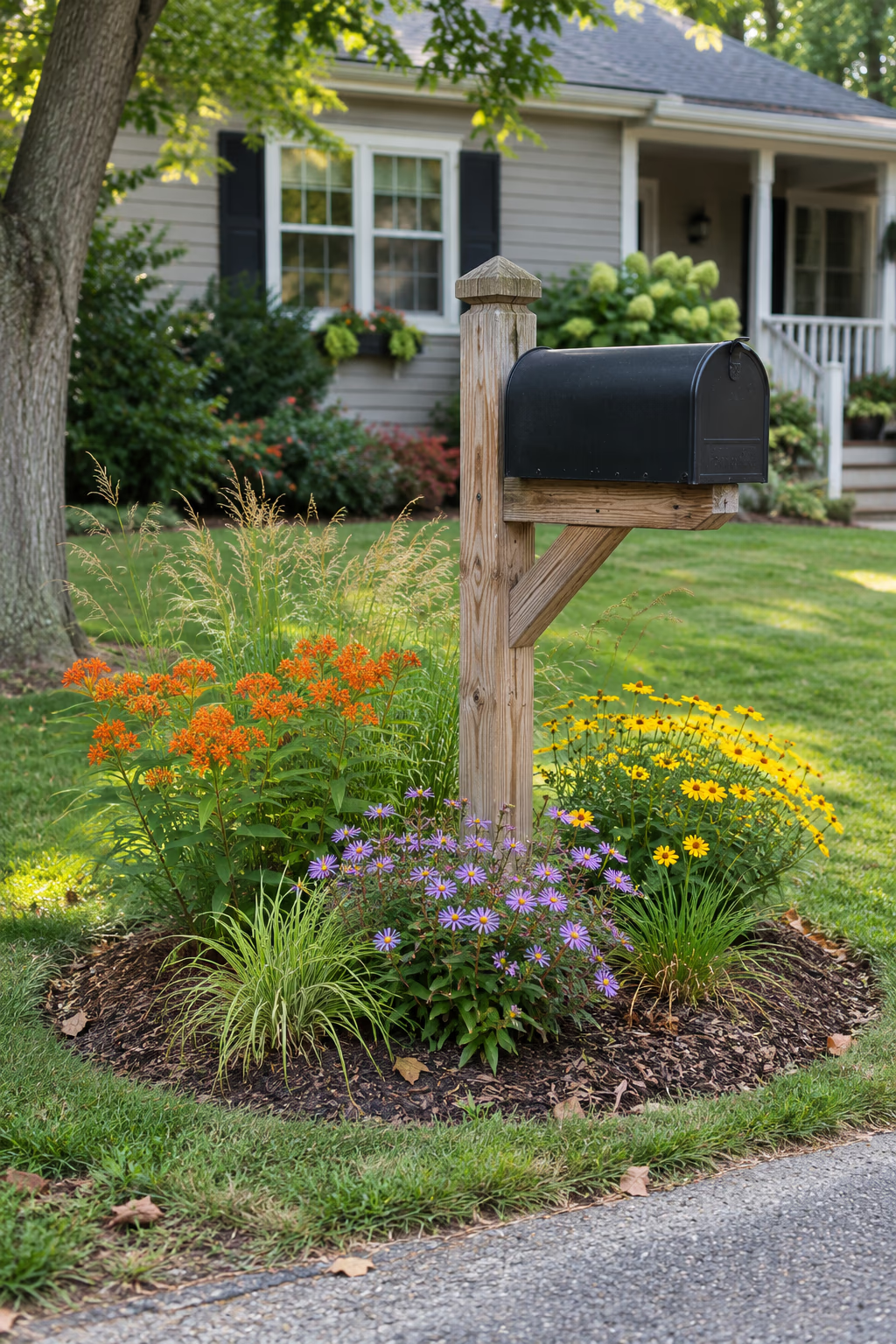
A small bed that feeds bees and butterflies
The mailbox post is often surrounded by a scruffy patch of grass that’s hard to trim. A small circular or square bed around it, about 3 to 4 feet across, makes a perfect pollinator pocket and adds curb appeal right at the street.
Choose compact, sun-loving plants that bloom at different times: creeping phlox in spring, butterfly weed and coreopsis in summer, and aster or goldenrod in fall. Native plants from your region usually support the most local insects.
Leave a clear path so your mail carrier can reach the box easily, and keep plants low enough that they don’t hide the house number.
18. Edge Every Bed With Crisp Steel Borders
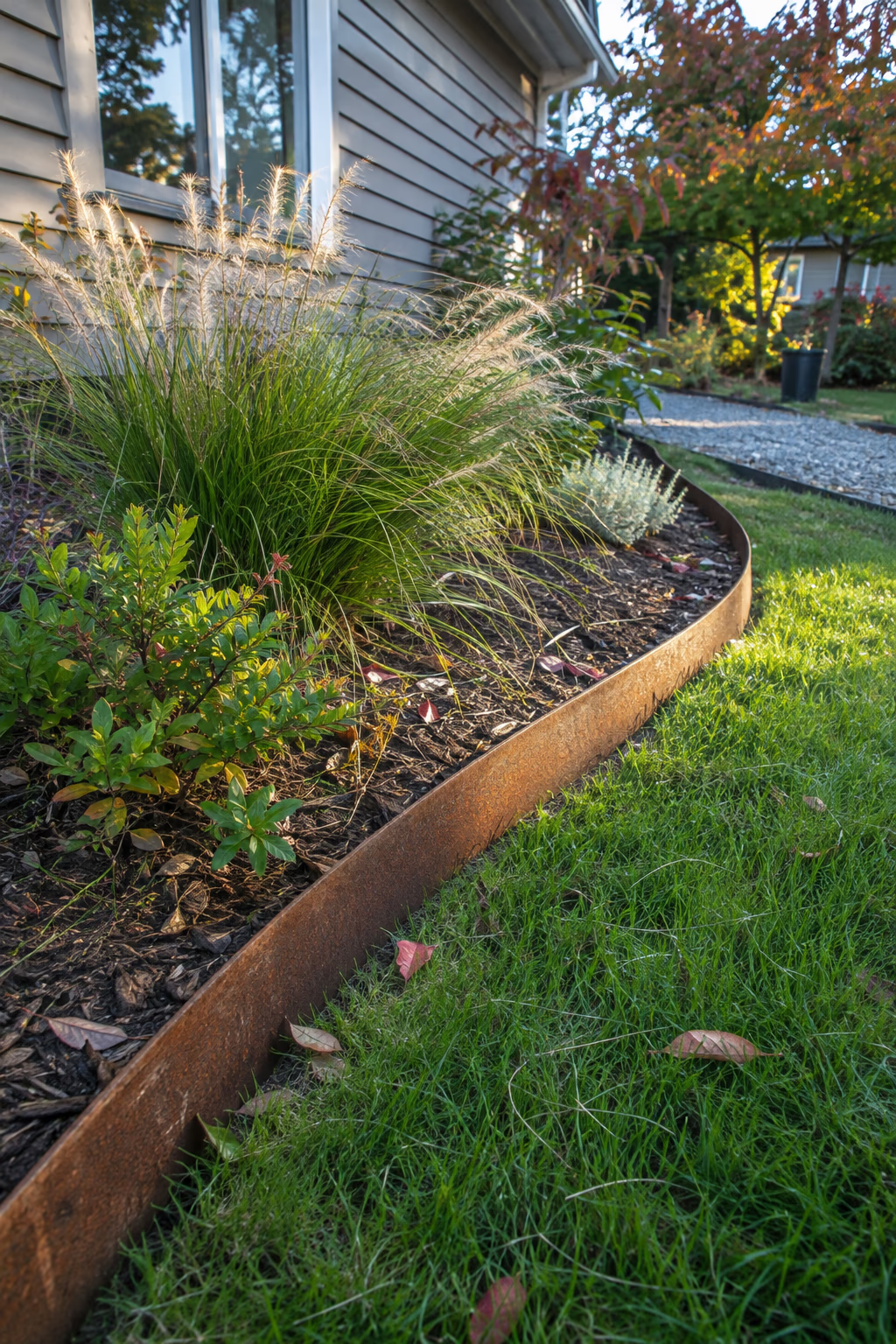
Sharp lines that make a little garden look designed
Clean edges are one of the simplest ways to make a small front garden look professional. Thin steel edging creates a nearly invisible line between beds and lawn or gravel, and it holds mulch and stone in place.
Corten-style weathering steel develops a warm rusty patina, while black powder-coated steel nearly disappears. Most kits are 4 to 6 inches tall and stake into the ground.
Steel edging costs more than plastic, but it lasts far longer and won’t heave out of the ground. Round over or cap the top edge in areas where children play, since thin metal edges can be sharp.
19. Layer Spring Bulbs Beneath Your Perennials
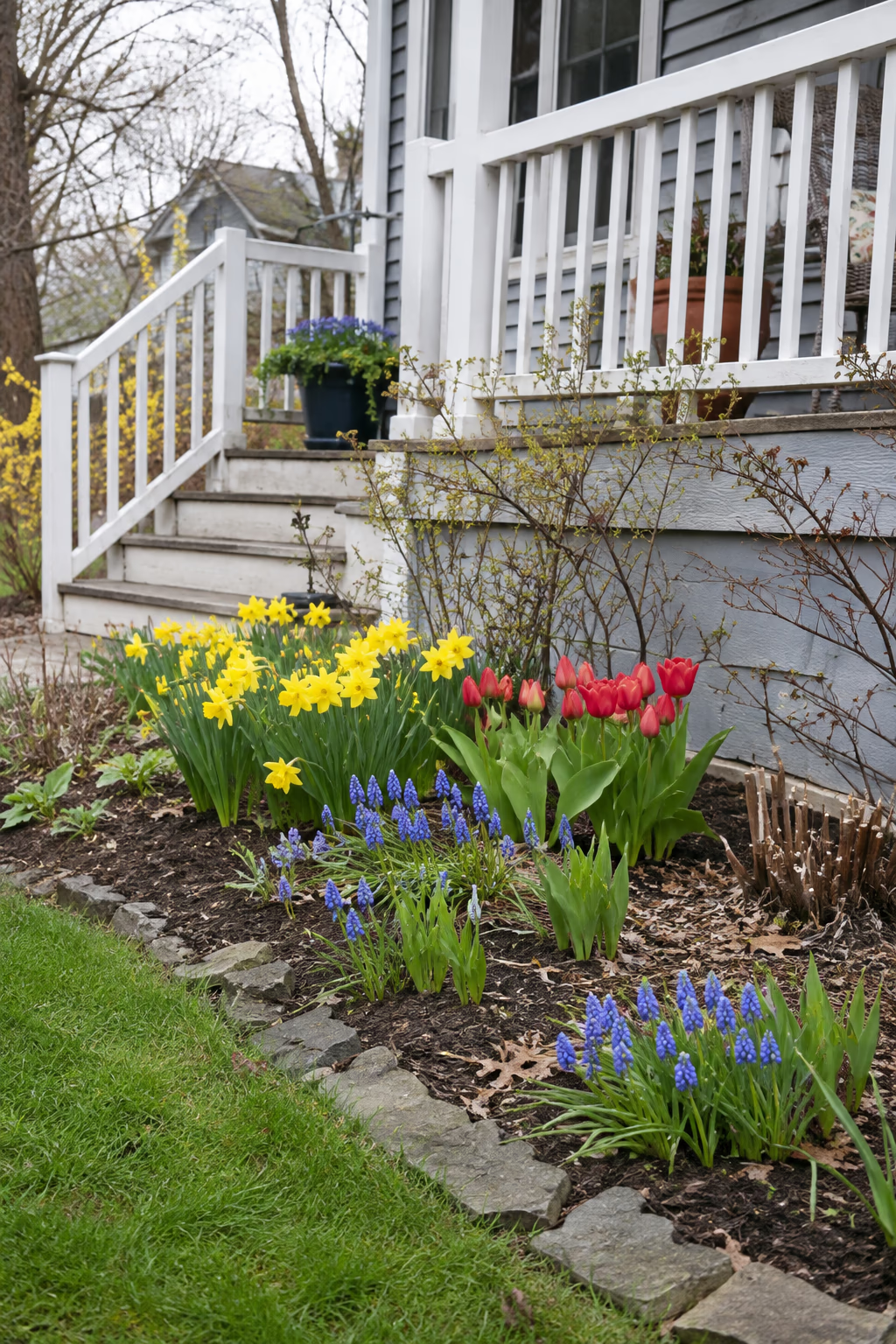
Early color before the rest of the garden wakes up
In a small front garden, every square foot should work as long as possible. Planting bulbs between perennials lets the same soil bloom twice: first in early spring with bulbs, then later as perennials grow up and hide the fading bulb foliage.
Plant in fall, before the ground freezes. Set tulips and daffodils about 6 to 8 inches deep and smaller bulbs like crocus, grape hyacinth, and squill about 3 to 4 inches deep. Plant in clusters of 10 or more rather than single rows for a fuller look.
Daffodils and alliums resist deer and squirrels, while tulips and crocus are often eaten. Let bulb foliage yellow naturally before cutting it back so the bulbs store energy for next year.
20. Add a Bubbling Urn Fountain Near the Entry
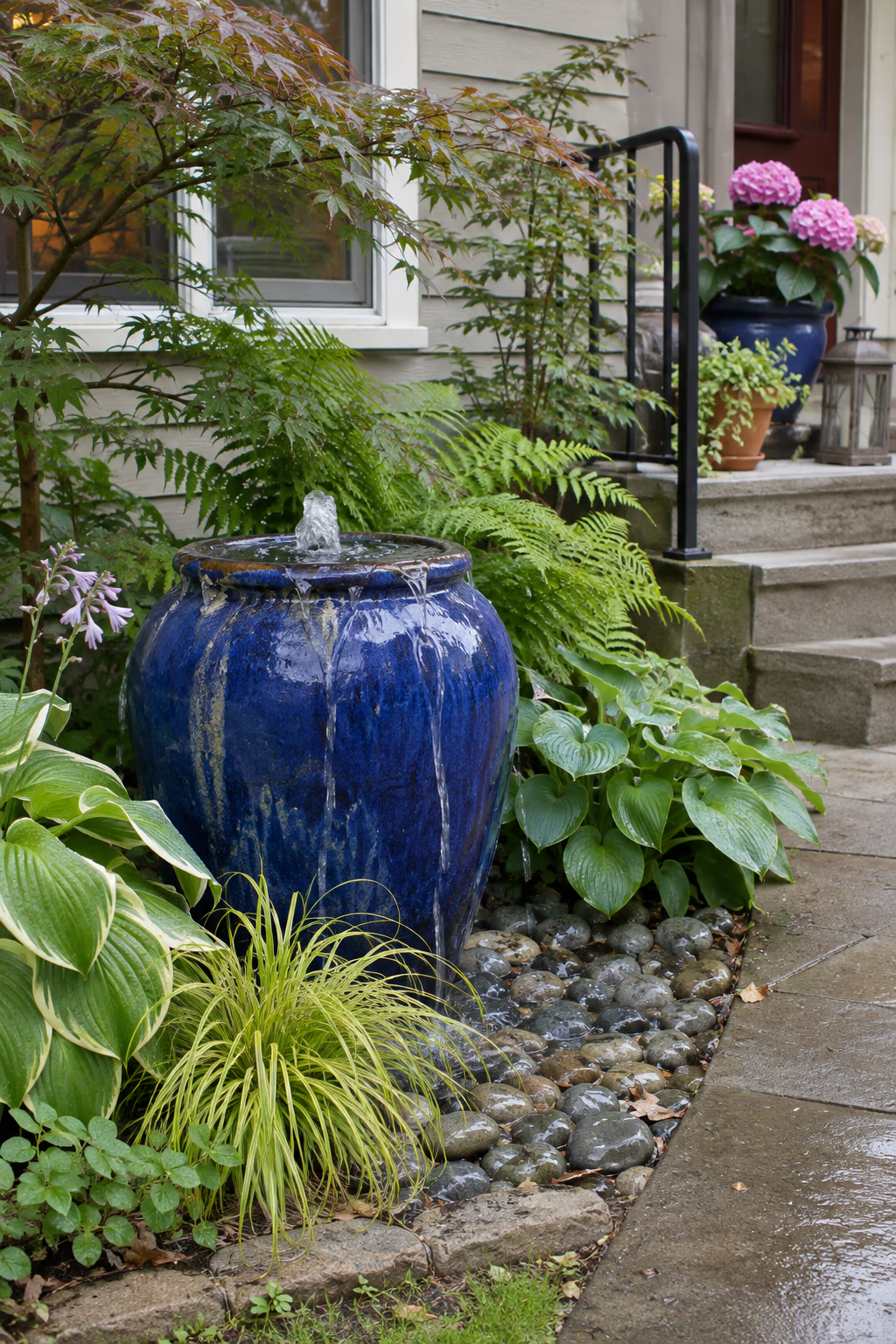
Gentle sound that masks street noise
The sound of moving water makes a front garden feel calm, even on a busy street. A bubbling urn fountain fits into a tight space, uses little water, and doesn’t need a pond.
These self-contained fountains use a hidden reservoir, often a buried basin covered with a grate and pebbles. Water is pumped up through the urn and spills down its sides back into the reservoir.
A fountain needs an outdoor GFCI outlet nearby, and in cold climates the pump should be removed and stored for winter. Top off the reservoir regularly during hot weather to keep the pump from running dry.
21. Hide Trash Bins Behind a Planted Screen
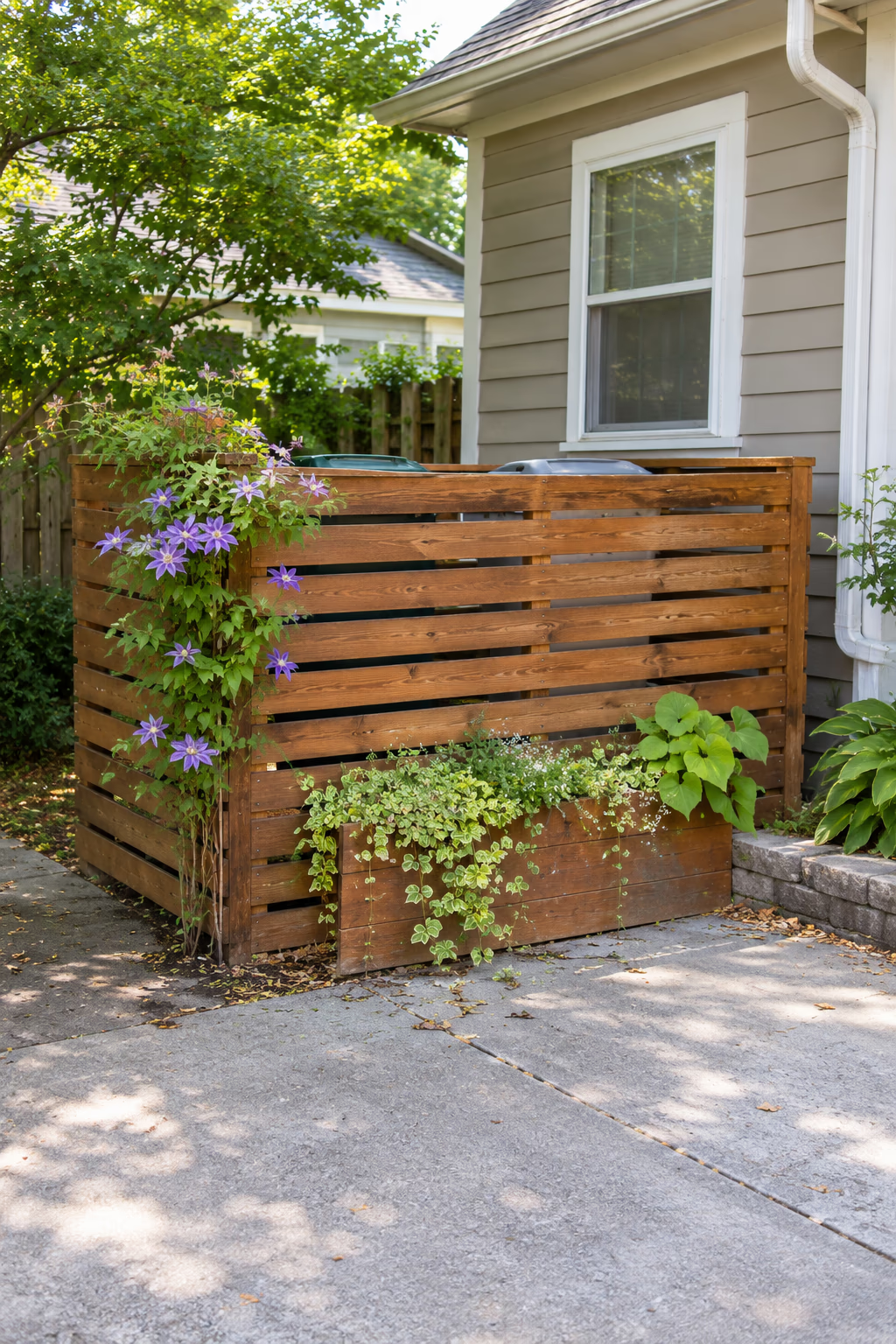
Removes an eyesore without losing easy access
In many small front yards, the trash and recycling bins sit right in view. A short, three-sided screen made of wood slats, lattice, or a living hedge hides them while keeping them easy to roll out on pickup day.
A screen about 4 to 5 feet tall usually covers standard bins. Paint or stain it to match the house trim, and add a planter box along the front or train a vine up one side so it blends into the garden.
Leave enough room to open the lids fully and maneuver the bins in and out. Some HOAs have rules about where bins are stored and what screens can look like, so check before building.
22. Paint the Gate and Fence a Soft Garden Color
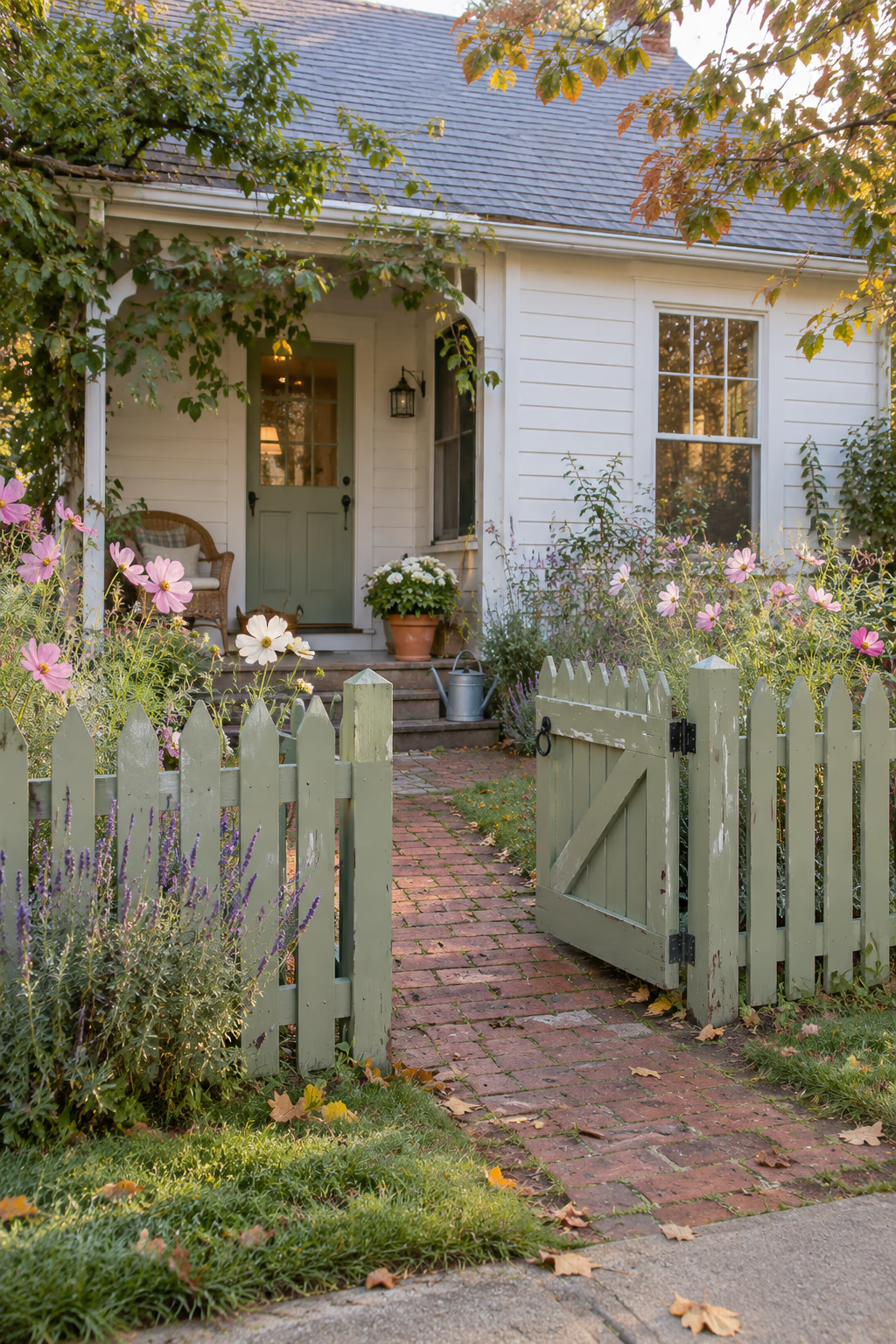
An easy refresh that makes plants look brighter
If your small front garden already has a gate or short fence, a coat of paint can change the whole mood. Soft sage green, warm gray, or muted blue lets plants stand out without the starkness of bright white.
Clean, sand, and prime bare wood first. A slightly darker shade than the house body usually looks more polished than an exact match.
Paint works best on dry, mild days between about 50 and 85 degrees. Painted wood needs a touch-up every few years, so consider a solid exterior stain if you’d like a longer-lasting finish with less peeling.
23. Light the Garden With Warm, Shielded Fixtures
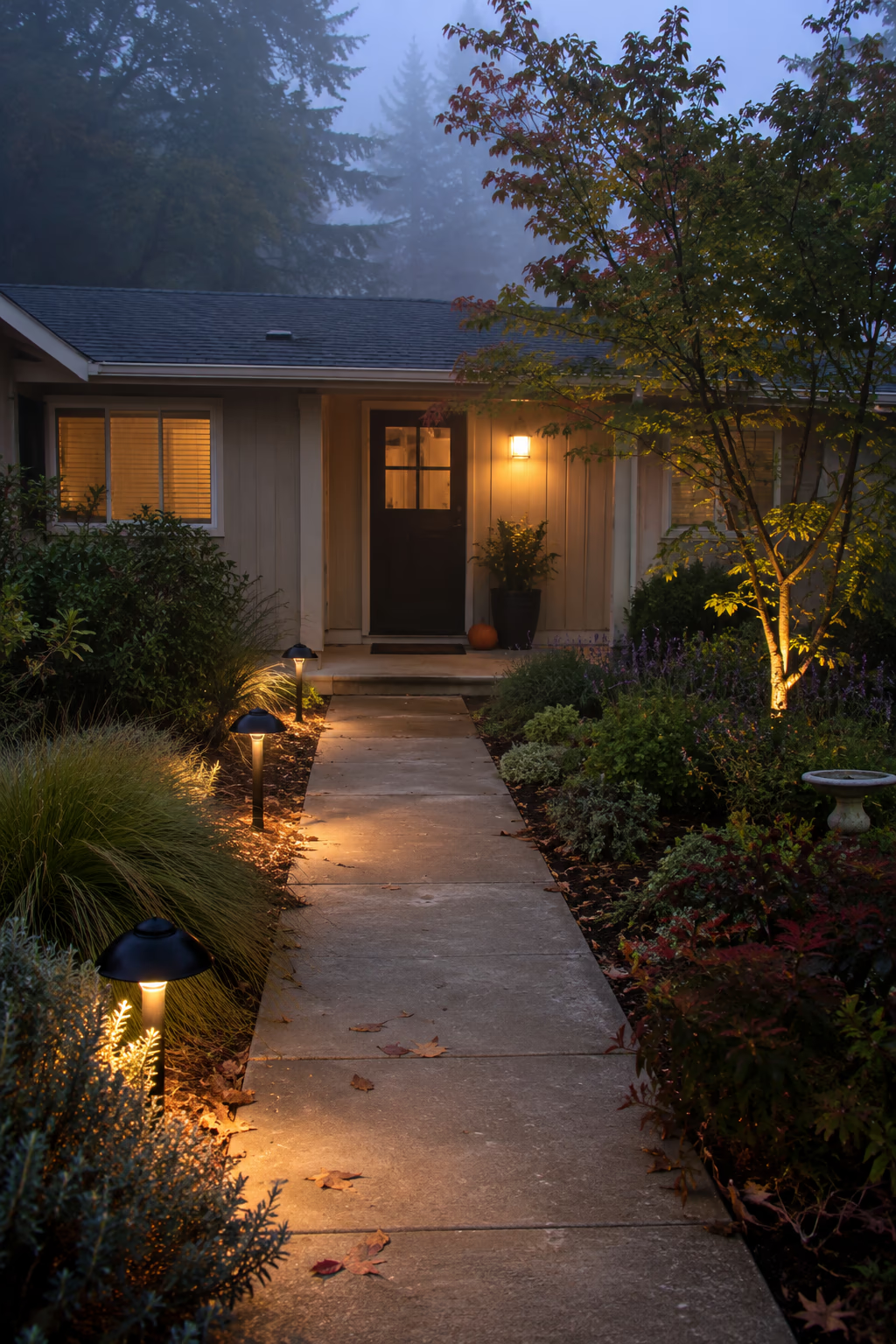
Safe evenings and a welcoming glow at night
A few well-placed lights let you enjoy the front garden after dark and make the entry safer. Choose warm white bulbs, around 2700K, and fixtures that direct light downward rather than up into the sky or neighbors’ windows.
Place path lights every 6 to 8 feet along the walk, and add a single uplight or downlight to highlight a tree, a climbing rose, or a hedge.
Solar lights are simpler but often less bright, especially in shady spots or winter. Avoid lighting every plant, since a few soft pools of light look more natural and are friendlier to wildlife.
How to Plan Your Small Front Garden
Because a small front garden is so visible, a little planning helps everything feel connected. Use these tips before you buy plants or start digging.
- Note your sun and soil. Watch how much direct sun the area gets at different times of day, and check whether the soil drains well or stays soggy after rain.
- Pick one main feature. A hedge, small tree, climbing rose, or window boxes should anchor the design, with other plants supporting it.
- Limit your palette. Repeat three to five main plants and two or three colors so the garden looks calm rather than crowded.
- Think about all four seasons. Include evergreen structure, spring bulbs, summer perennials, and fall color so the garden never looks empty.
- Check local rules. Look up HOA guidelines, city rules for hellstrips and fences, and call 811 before any digging.
- Build in stages. Start with edging, hardscape, and structural plants, then add perennials, containers, and lighting as your budget allows.
Frequently Asked Questions
What is the best low-maintenance plant for a small front garden?
Compact evergreen shrubs like dwarf holly or inkberry, ornamental grasses, catmint, and sedum all need little care once established. Choose plants suited to your climate and light, and group them in repeated drifts.
Should a small front garden have a lawn?
Not necessarily. Very small yards are often easier to care for and more attractive without grass. Perennials, groundcovers, gravel, or paving with planting pockets can replace a lawn while still looking tidy.
How do I make a small front garden look bigger?
Use a limited color palette, repeat plants, keep edges crisp, and add height with a small tree, climbers, or window boxes. A see-through fence or low hedge also keeps the space open.
How much does it cost to redo a small front garden?
Costs vary widely. A DIY plant refresh with mulch can cost a few hundred dollars, while new walls, paving, or professional installation can reach several thousand. Working in phases helps spread the expense.
When is the best time to plant a front garden?
Fall and spring are usually best, when temperatures are mild and rain is more reliable. Fall is ideal for bulbs, trees, and shrubs in many regions, while spring suits most perennials and annuals.
Final Thoughts
The best small front garden ideas focus on a few strong features rather than trying to squeeze in everything. A low hedge, a rose by the door, or a row of window boxes can give your home a welcoming face that looks good from the curb.
Start with the idea that solves your biggest frustration, whether that’s a patchy lawn, a bare wall, or a view of the trash bins, then build from there. With the right plants for your climate and a little patience, your small front garden will look better every year.


