
Step through a back door into a small space walled in brick, wood, or stucco, and the world gets quieter right away. Vines climb the walls, a little water trickles somewhere, and the only sky you see is a neat square above the leaves. A courtyard feels private in a way an open yard rarely does.
That sense of enclosure is exactly what makes a courtyard such a rewarding place to garden. The walls give you shelter from wind, support for climbing plants, and a ready-made backdrop for lighting and color. Because the footprint is small, every plant, paver, and chair gets noticed, so a few good choices make a big difference without a big budget.
These 19 small courtyard garden ideas cover walls, floors, seating, water, light, shade, and the practical details that make a compact space comfortable to use. Whether your courtyard is a townhouse patio, a walled side space, or an enclosed area between house and garage, you can mix and match the ideas that suit your light, climate, and lifestyle.
1. Cover the Walls in Fragrant Star Jasmine
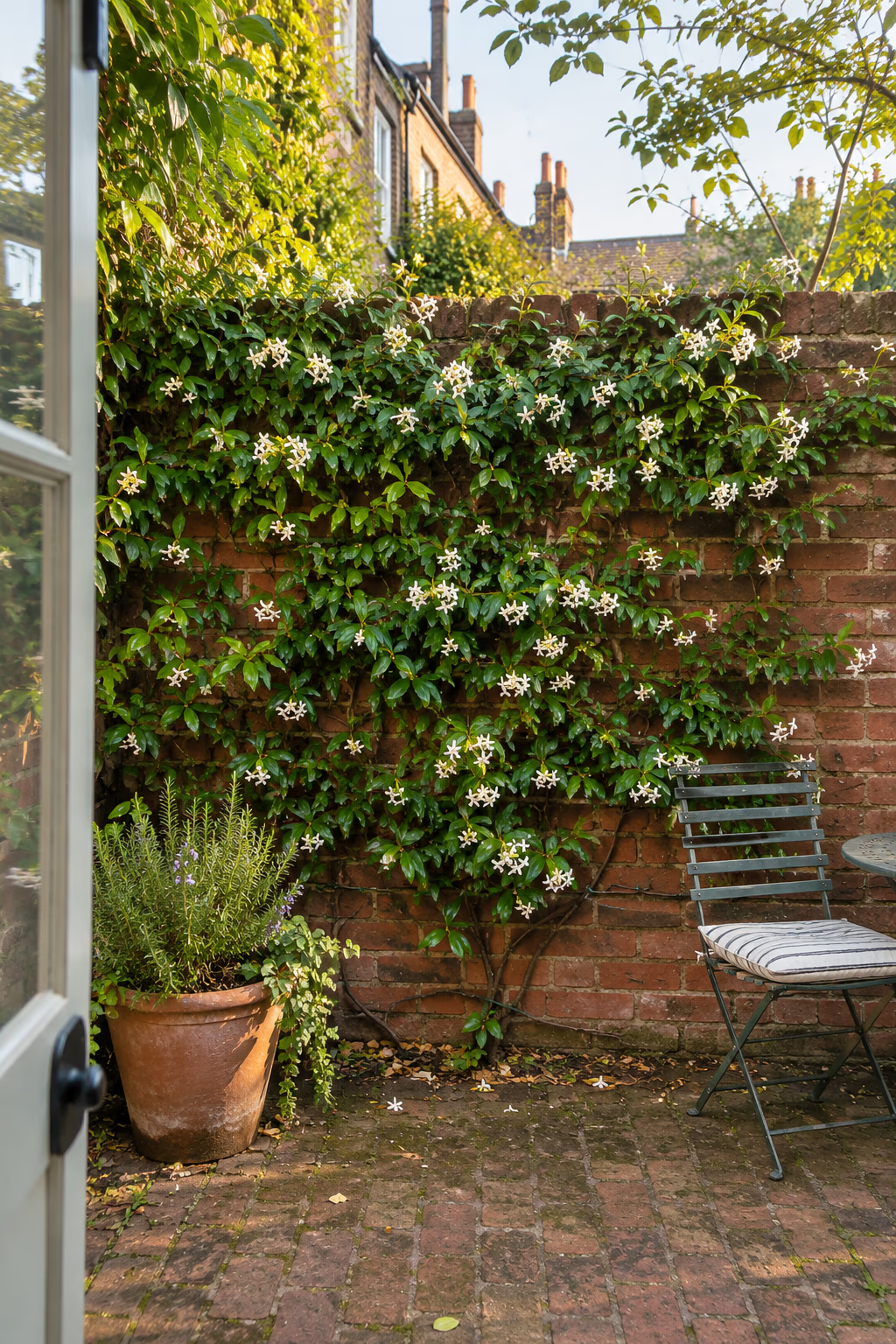
Evergreen walls that smell sweet in late spring
Star jasmine is a twining evergreen vine with glossy leaves and clusters of small white flowers that release a rich scent from late spring into early summer. Planted at the base of a courtyard wall and trained onto horizontal wires spaced about 12 to 16 inches apart, it can cover a 6-foot-tall section of wall in two or three seasons.
A planted wall turns hard surfaces into soft green ones, which makes a small courtyard feel cooler, quieter, and larger. The walls also hold warmth, which helps the vine bloom and lets the fragrance linger on still evenings.
Star jasmine is reliably hardy only in about USDA zones 8 to 10. In colder regions, try climbing hydrangea for shady walls or a large-flowered clematis for sunny ones, and always use wires or a trellis rather than letting vines cling directly to painted siding.
2. Build an L-Shaped Bench Around the Edges
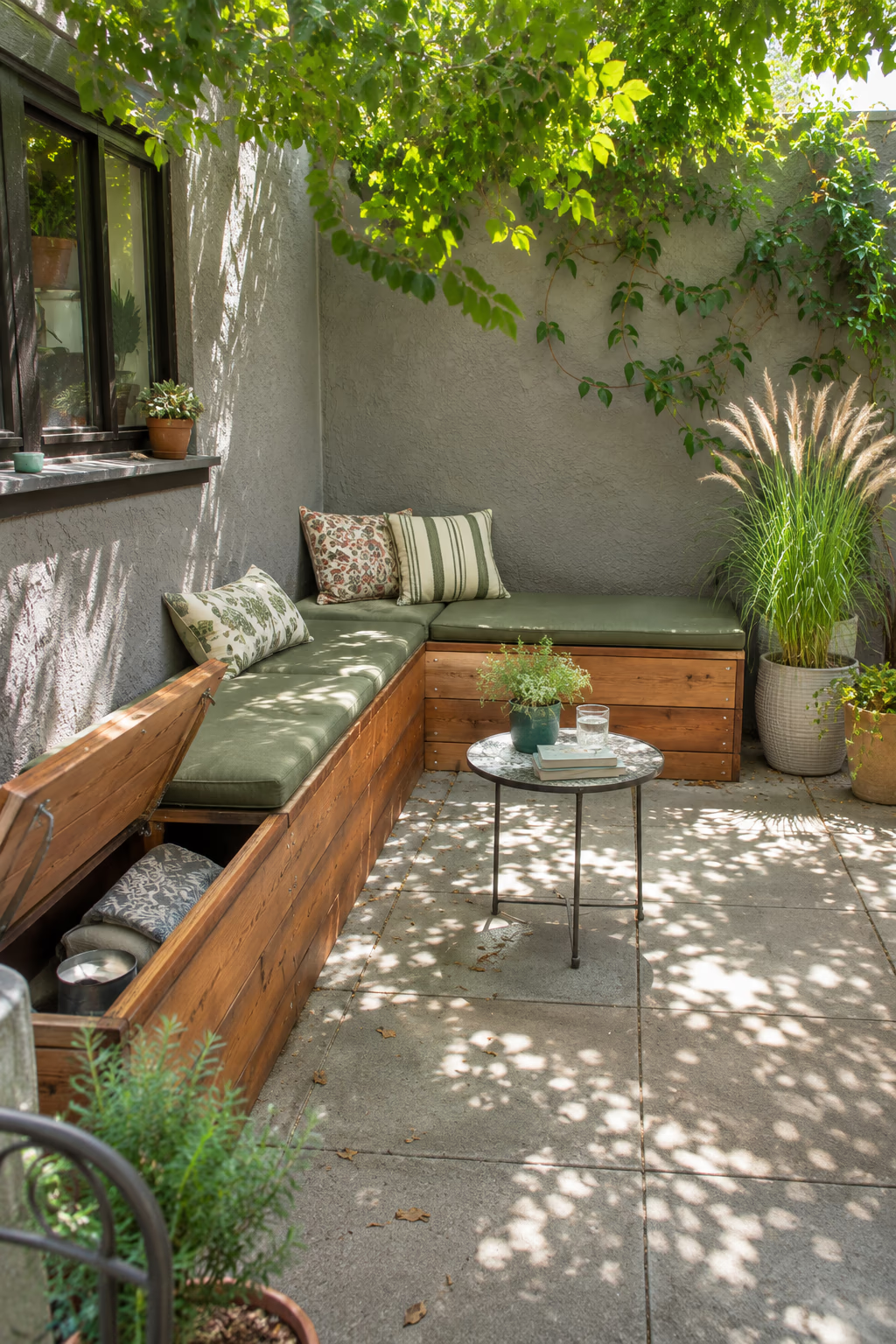
Seating that leaves the middle wide open
A built-in bench that runs along two walls and meets in a corner seats more people than loose chairs and takes up far less visual space. Build it from cedar or pressure-treated lumber with a seat height of about 17 to 19 inches and a depth of 18 to 20 inches, then add outdoor cushions and a few pillows against the wall.
Pushing seating to the perimeter keeps the center free for a small table, a planter, or simply room to move. Hinged lids on the bench give you dry storage for cushions, hoses, and tools, which is valuable in a courtyard without a shed.
Leave a small gap between the bench back and the wall so air can circulate and moisture doesn’t rot the wood or stain the masonry. If the wall is part of your house, keep wood clear of siding and never block weep holes or vents.
3. Set a Bubbling Water Bowl in the Center
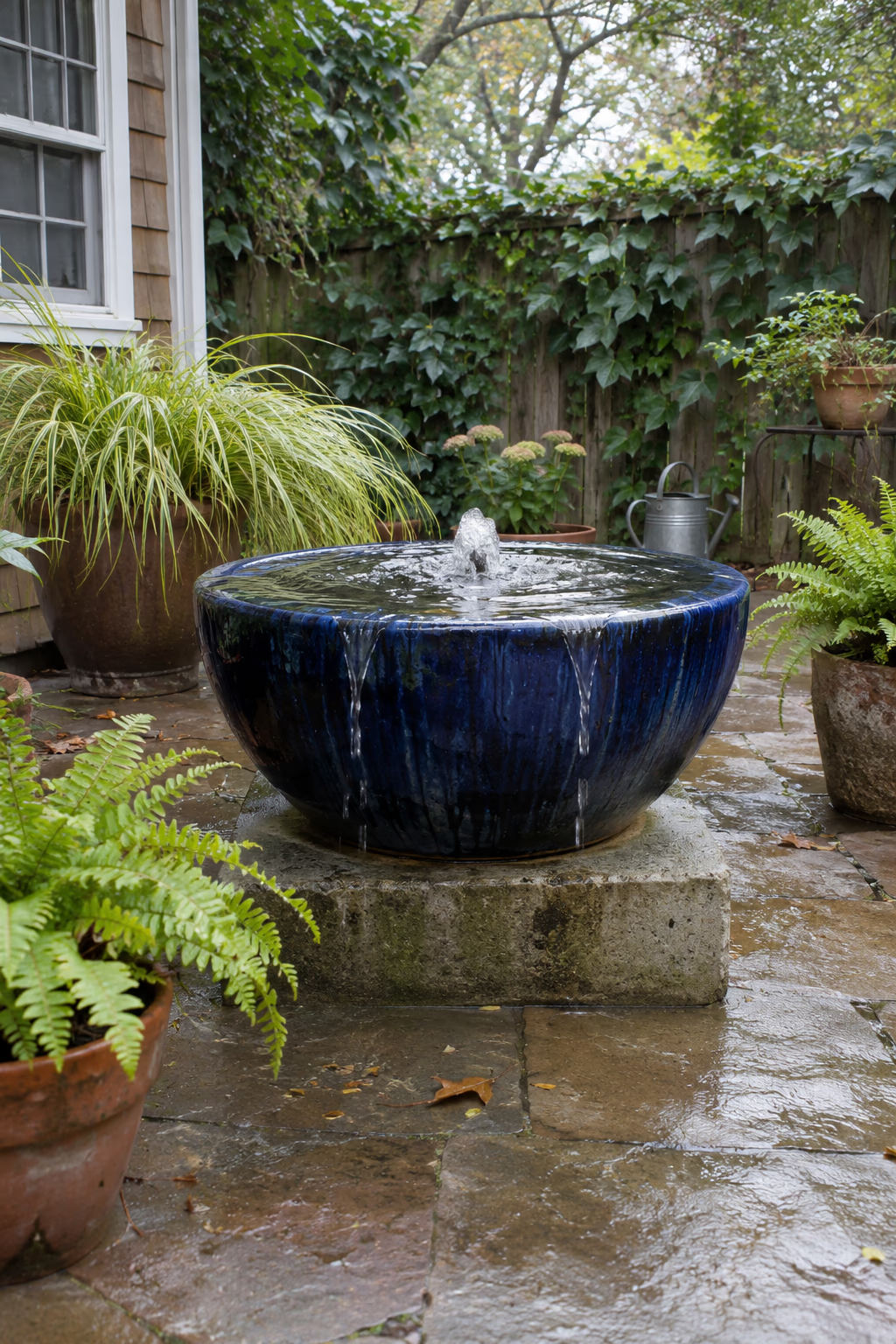
Gentle sound that masks street noise
A self-contained bowl fountain is one of the easiest water features for a small courtyard. A glazed ceramic or cast concrete bowl about 24 to 30 inches wide sits on a sturdy base, and a small recirculating pump pushes water up through a center spout so it bubbles over the surface.
In an enclosed space, the soft splash bounces off the walls and drowns out traffic, air conditioners, and neighbors. The reflective surface also brings a little sky down to ground level, which is welcome when the courtyard feels boxed in.
The pump needs a GFCI-protected outdoor outlet, and the water will need topping up often in hot weather. In freezing climates, drain the bowl and bring the pump indoors before the first hard frost so the glaze doesn’t crack.
4. Paint the Walls a Soft, Light-Bouncing White
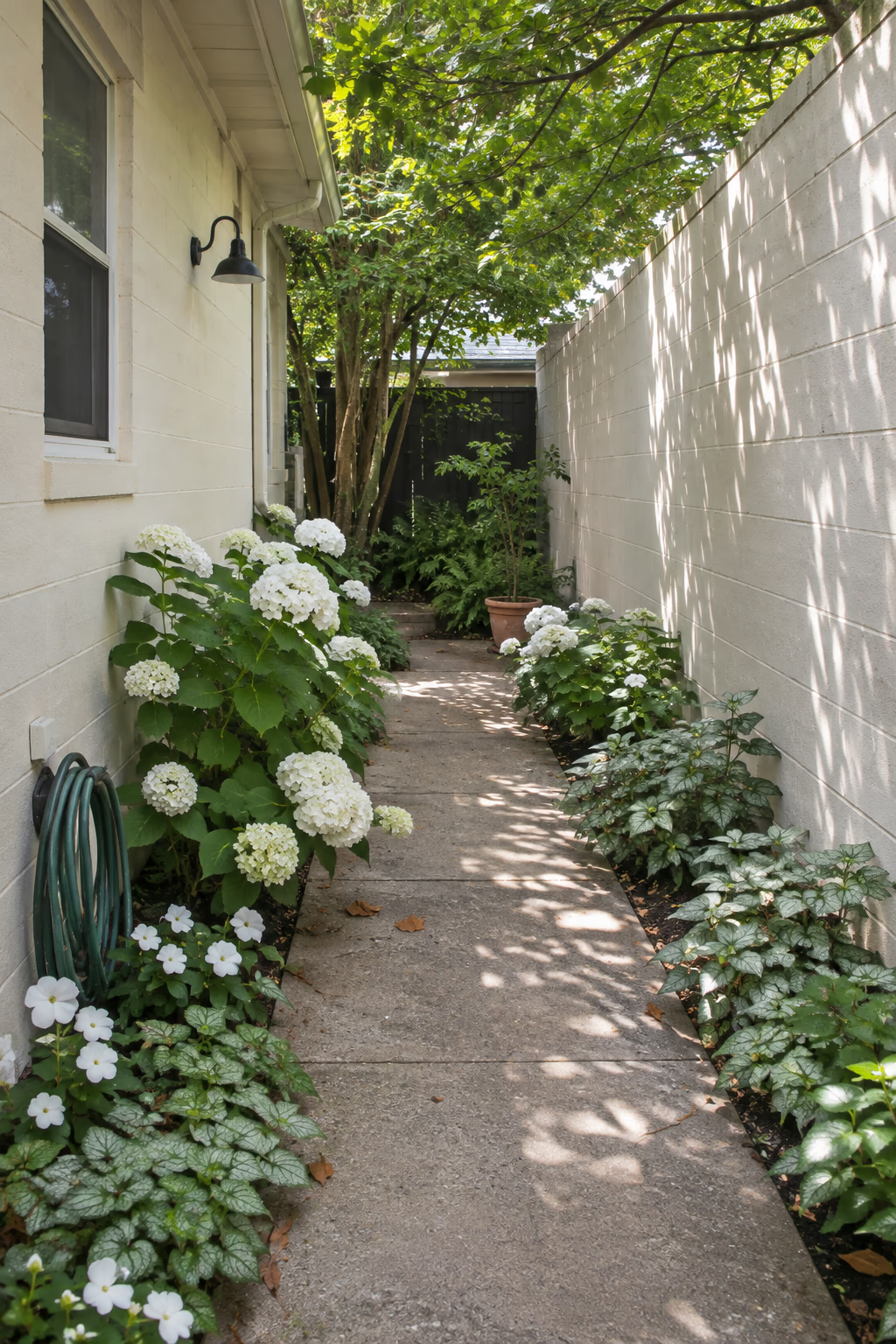
A brighter courtyard without cutting anything down
Courtyards that sit between tall buildings or fences can be dim for much of the day. Painting masonry or fence walls a warm off-white with exterior masonry or acrylic paint reflects the daylight you do get down onto the floor and plants.
Pair the pale walls with white-flowering plants such as hydrangeas, impatiens, or white nicotiana and silvery foliage, and the whole space reads as crisp and calm. Pale walls also make shadows from leaves and furniture stand out beautifully.
Choose a slightly warm white rather than a stark bright white, which can create glare in a sunny courtyard. Plan on cleaning or touching up the paint every few years, especially near planters where soil splashes.
5. String Cables Overhead for a Vine Canopy
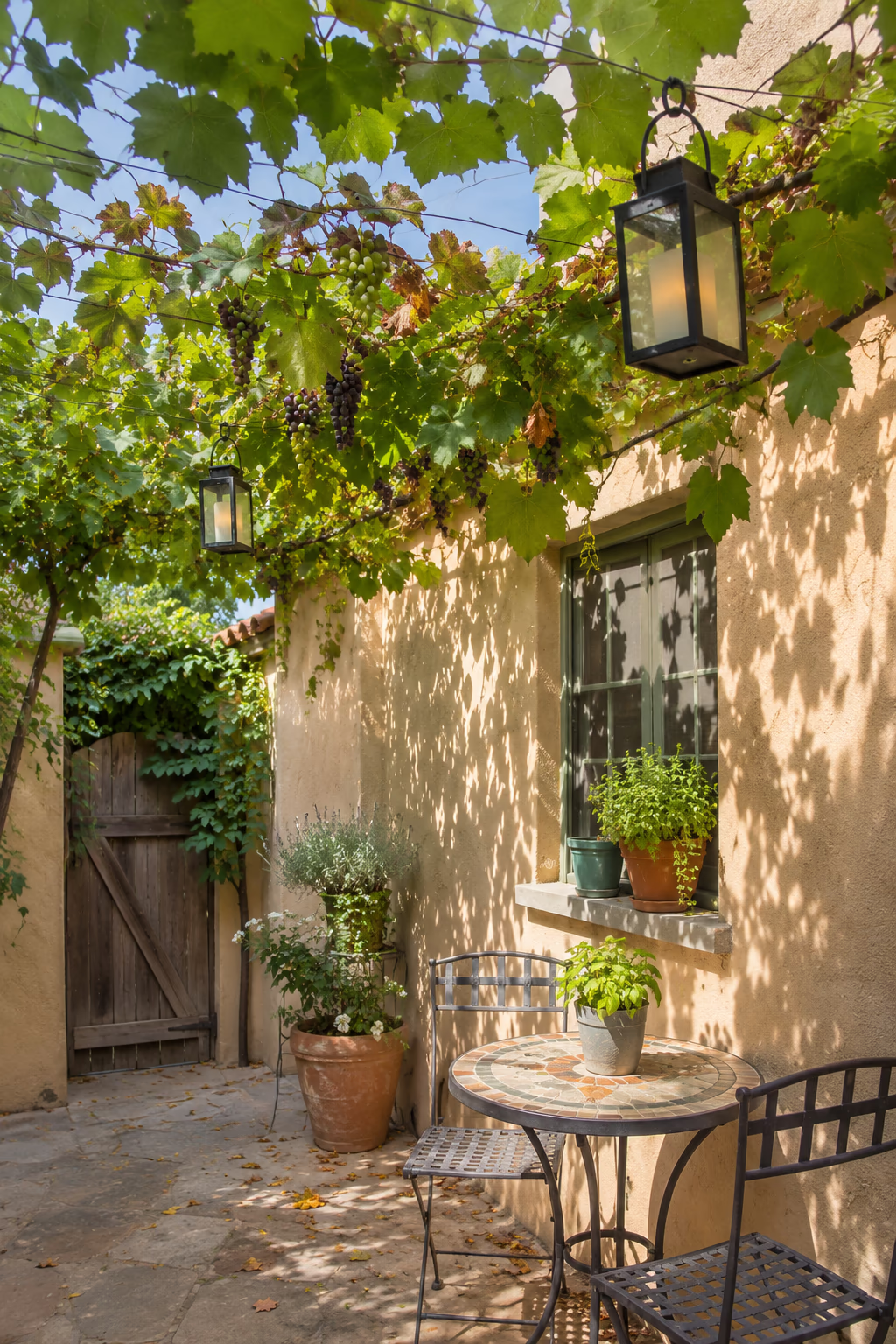
A green ceiling without building a full structure
In a narrow courtyard, you can skip posts entirely and run stainless steel cables from wall to wall at about 8 feet high. Fasten them with eye bolts set into solid masonry or framing, spacing the cables 18 to 24 inches apart, and train a vine such as hardy kiwi, a grapevine, or annual hyacinth bean along them.
As the vine fills in, you get dappled shade and a sense of being in an outdoor room. Battery lanterns or a few hanging planters clipped to the cables add interest before the canopy is fully grown.
Vines get heavy, so anchors must go into structural material, not just siding or stucco. Renters and HOA residents should get permission first, and anyone unsure about wall strength should consult a contractor.
6. Lay Large Pavers With Gravel Joints
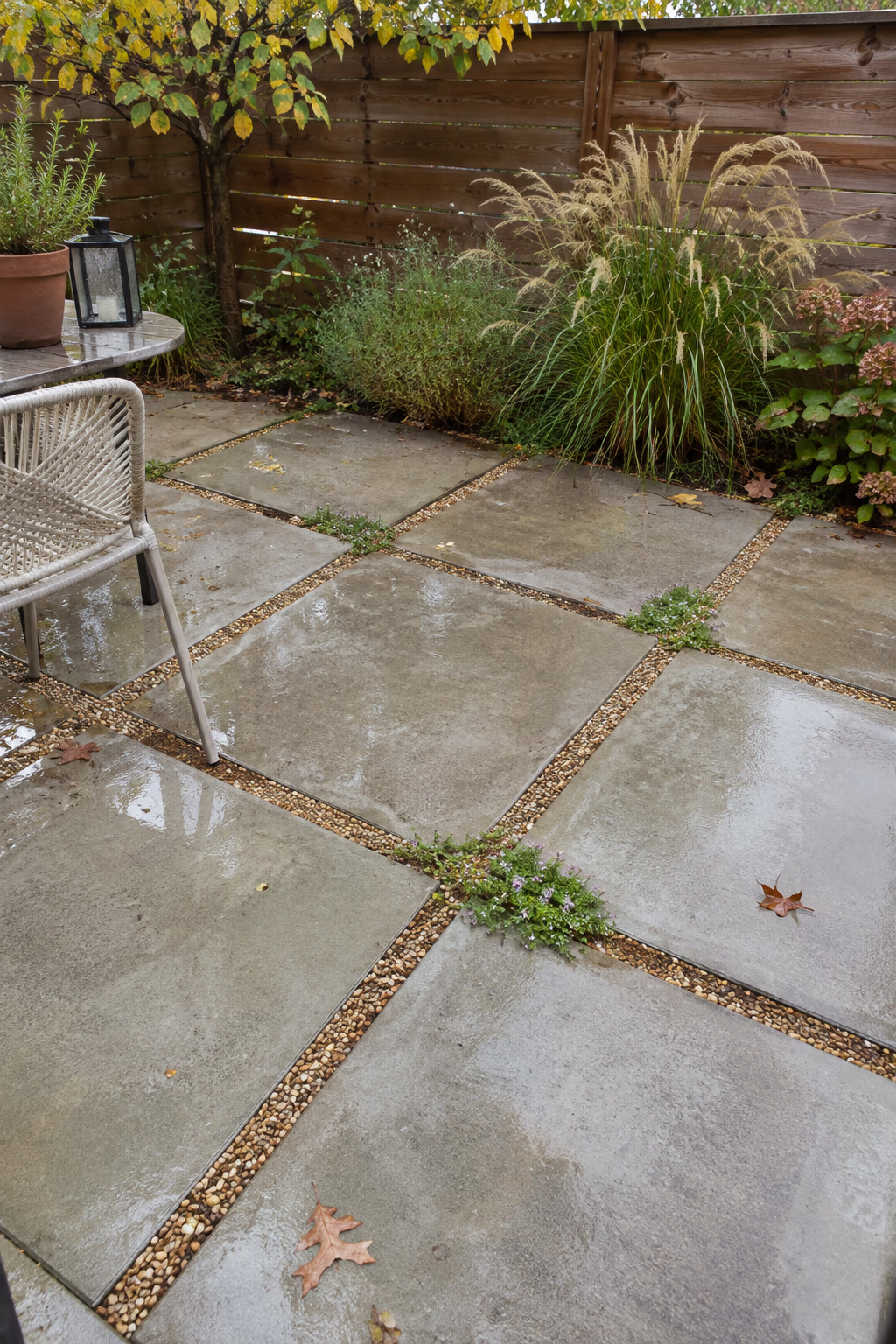
A floor that looks bigger and drains better
Large-format concrete or stone pavers, such as 24 by 24 inches or 24 by 36 inches, create fewer lines across the floor, so a small courtyard appears more spacious. Set them on a compacted gravel base 4 to 6 inches deep and leave 1- to 2-inch joints filled with fine gravel or creeping thyme.
The open joints let rainwater soak in instead of pooling, which matters in courtyards with no easy runoff path. The grid also gives a tidy, modern look that pairs well with almost any planting style.
Make sure the surface slopes slightly away from the house, about 1/8 to 1/4 inch per foot. Large pavers are heavy and awkward, so plan for two people or rent a paver cart for installation.
7. Hang an Outdoor Mirror to Double the View
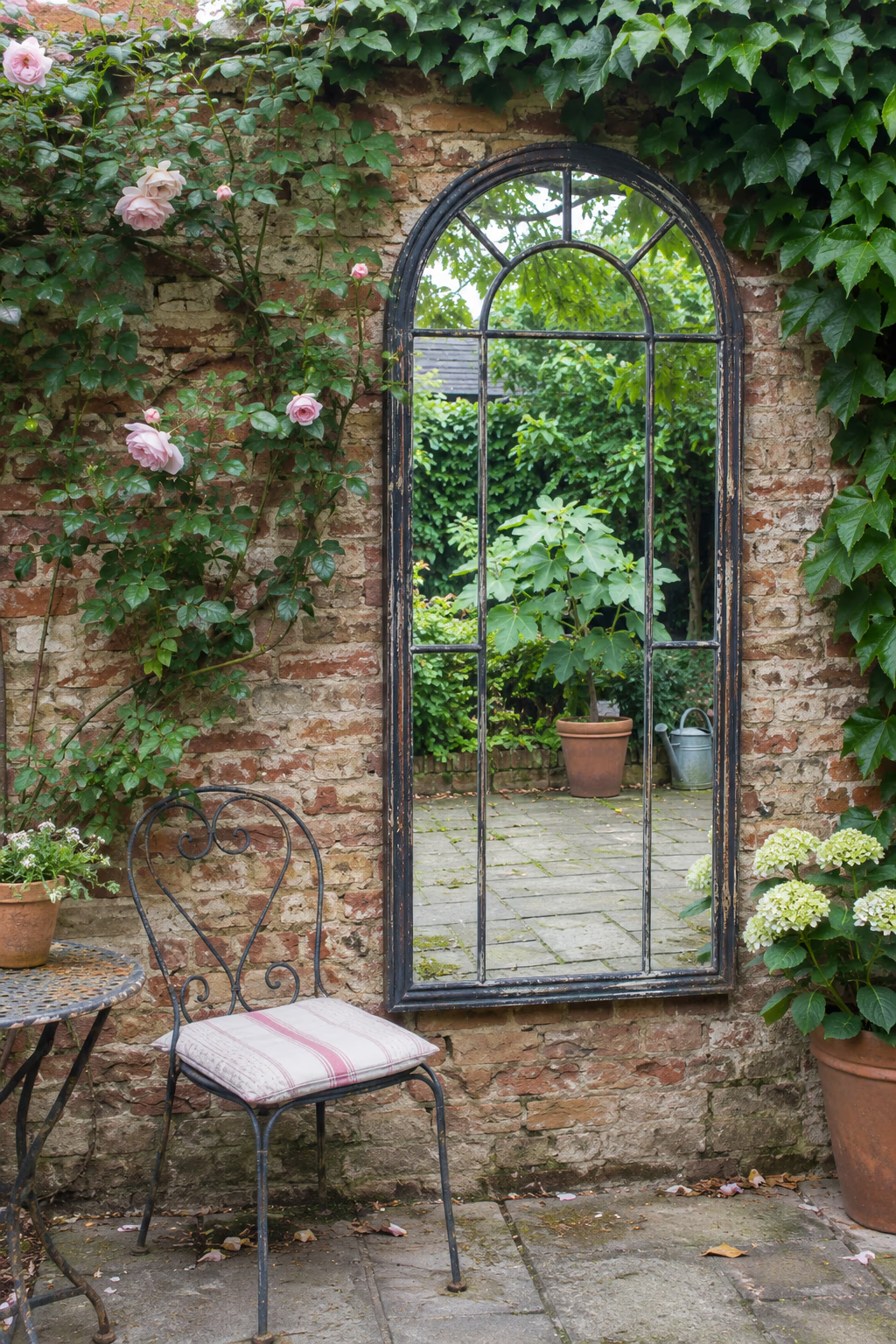
An old trick for making walls disappear
A large mirror mounted on a wall reflects plants and light back into the space and creates the illusion of a second garden beyond. Look for mirrors rated for outdoor use with sealed edges, or choose a shatter-resistant acrylic mirror in a weathered metal or wood frame.
The effect works best when the mirror reflects something attractive, like a planted wall or a pot of flowers, rather than a bare corner. An arched or window-style frame adds to the illusion of a doorway.
Birds can mistake mirrors for open space. Angle the mirror slightly, partly frame it with foliage, or add small bird-safe decals. Avoid placing it where it will bounce harsh afternoon sun into windows or onto delicate plants.
8. Plant Four Standard Trees for a Leafy Roof
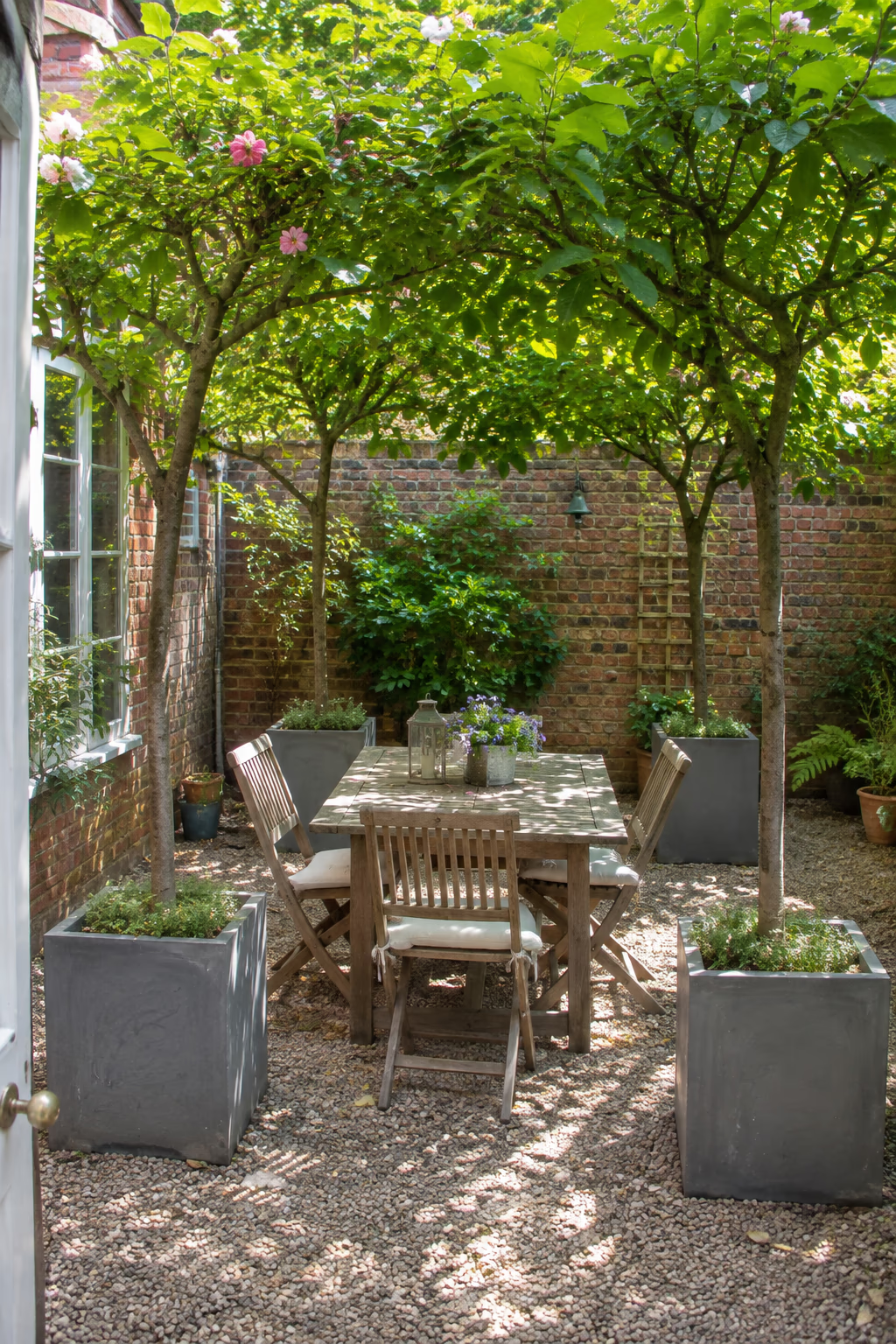
Shade for dining with a formal touch
Standard trees are trained with a single clear trunk and a rounded head of branches. Planting four of them in a square, either in the ground or in matching planters at least 24 inches wide, creates a leafy canopy over a small dining table.
Single-trunk crape myrtles suit warm regions, while standard crabapples or flowering cherries work in colder areas. The trunks take up very little floor space, but the heads give you shade, seasonal flowers, and a feeling of being inside a green room.
Trees in containers dry out quickly and may need watering daily in summer. Check mature heights and spreads before buying, and keep trees far enough from walls and gutters that branches won’t rub.
9. Edge the Patio With a Narrow Lavender Strip
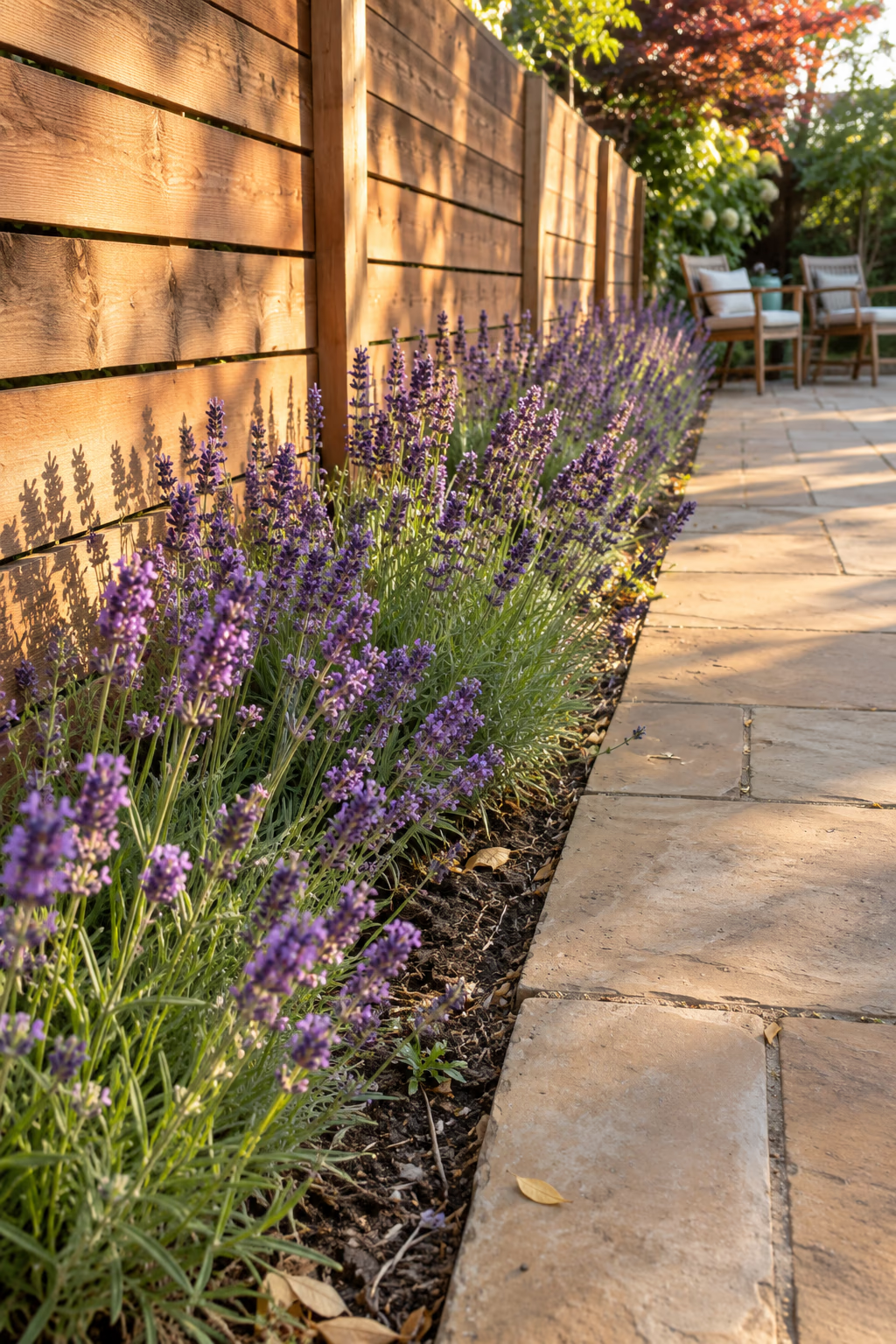
Color and scent along the walls you brush past
A planting strip just 12 to 18 inches wide along a sunny wall or fence is enough for a line of compact lavender. Space plants 12 to 18 inches apart in gritty, well-drained soil, and the row will knit together into a soft purple edge by midsummer.
Lavender releases scent when you brush past it, attracts bees, and needs little water once established. A single repeated plant along the edge also looks calm and deliberate, which suits a small space better than many mixed varieties.
Lavender needs at least six hours of direct sun and rots in heavy, wet soil. Compact English types are hardy in roughly zones 5 to 9. Shear lightly after flowering to keep plants from turning woody.
10. Go Moody With Dark Walls and Big Leaves
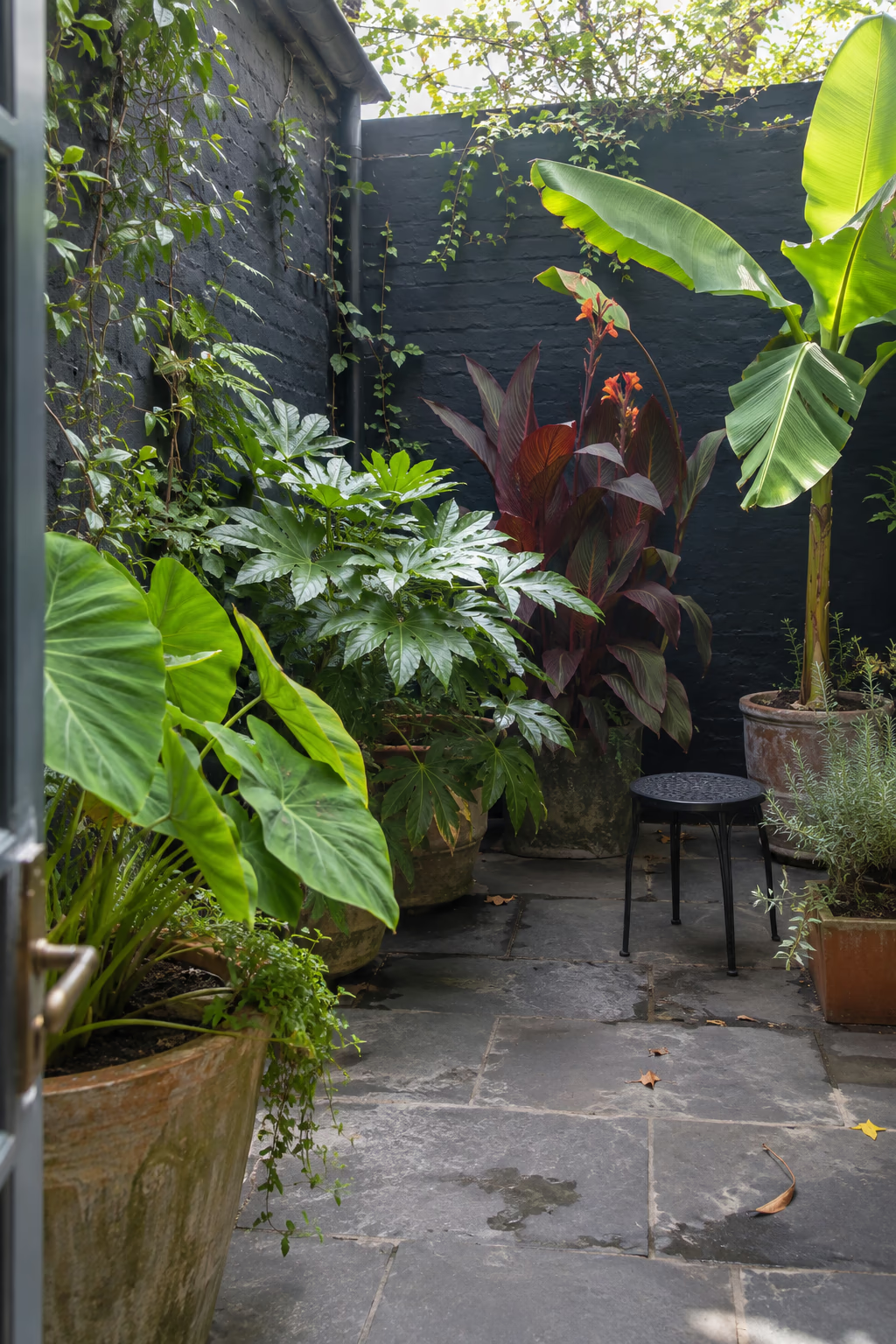
Drama and seclusion in a tiny footprint
Instead of fighting a shady, enclosed space, lean into it. Paint walls a deep charcoal, navy, or forest green, then fill the courtyard with bold-leaved plants such as fatsia, elephant ears, canna, and potted banana in large containers.
Dark walls seem to recede, so the boundaries blur and the green leaves glow in front of them. Oversized foliage creates a lush, tropical feeling that makes a small courtyard feel like a secret hideaway.
Dark paint absorbs heat, so this approach works best in partly shaded courtyards rather than sun-baked ones. Many big-leaf plants are tender, so in cold regions treat elephant ears and bananas as summer plants and store or replace them each year.
11. Lay an Outdoor Rug Under the Seating
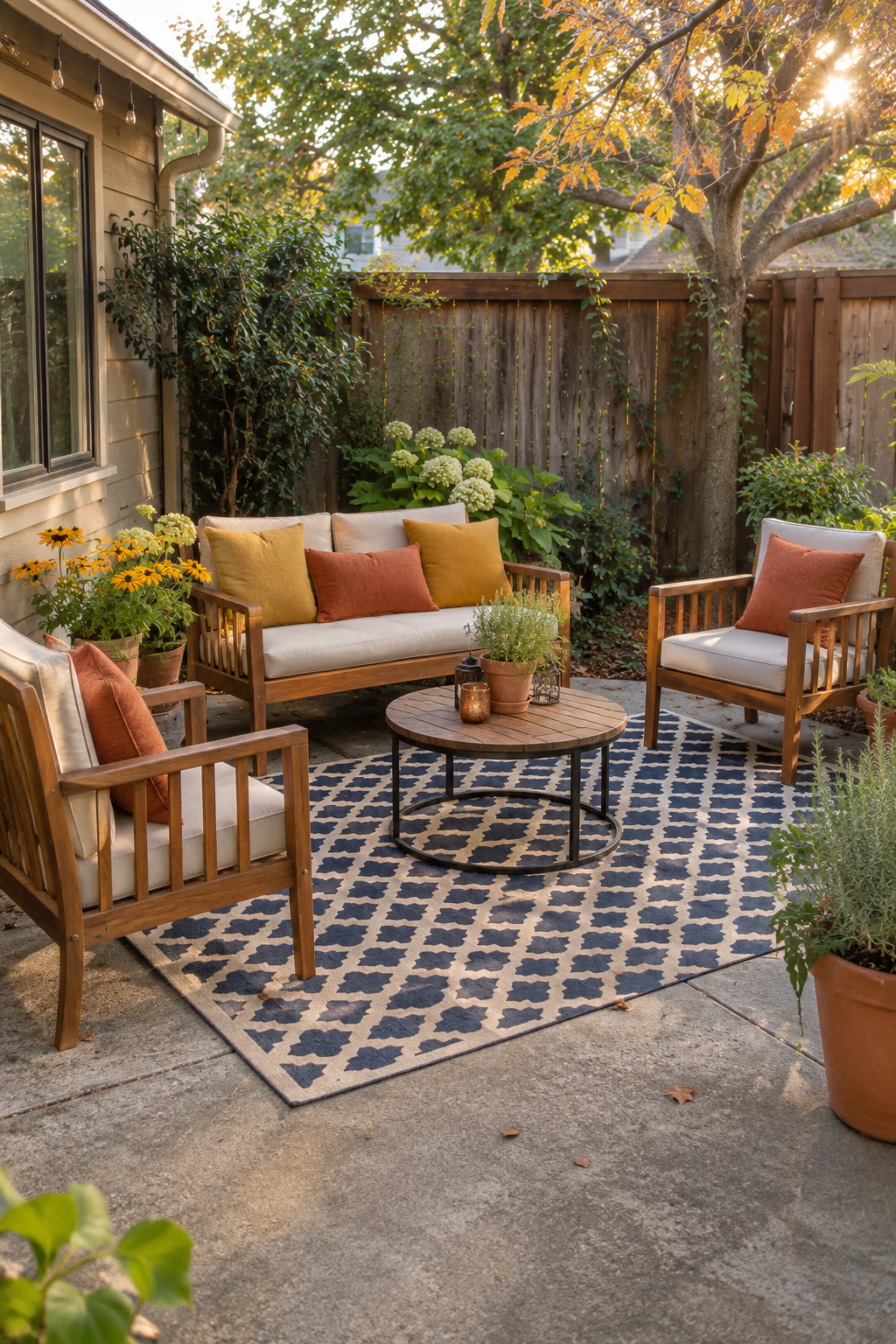
Instant warmth for hard paving
An outdoor rug made from polypropylene or recycled plastic fibers defines a seating zone and softens a floor of concrete or brick. A 5-by-7-foot rug fits under a loveseat and two chairs in most small courtyards.
Pick up a color from your cushions or flowers, or use a bold geometric pattern to add personality. The rug also makes the space feel more like an indoor room, which encourages you to spend time there.
Even outdoor rugs fade in strong sun and can trap moisture underneath. Lift and dry the rug after heavy rain, hose it off now and then, and roll it up for winter storage.
12. Flank the Table With Matching Columnar Planters
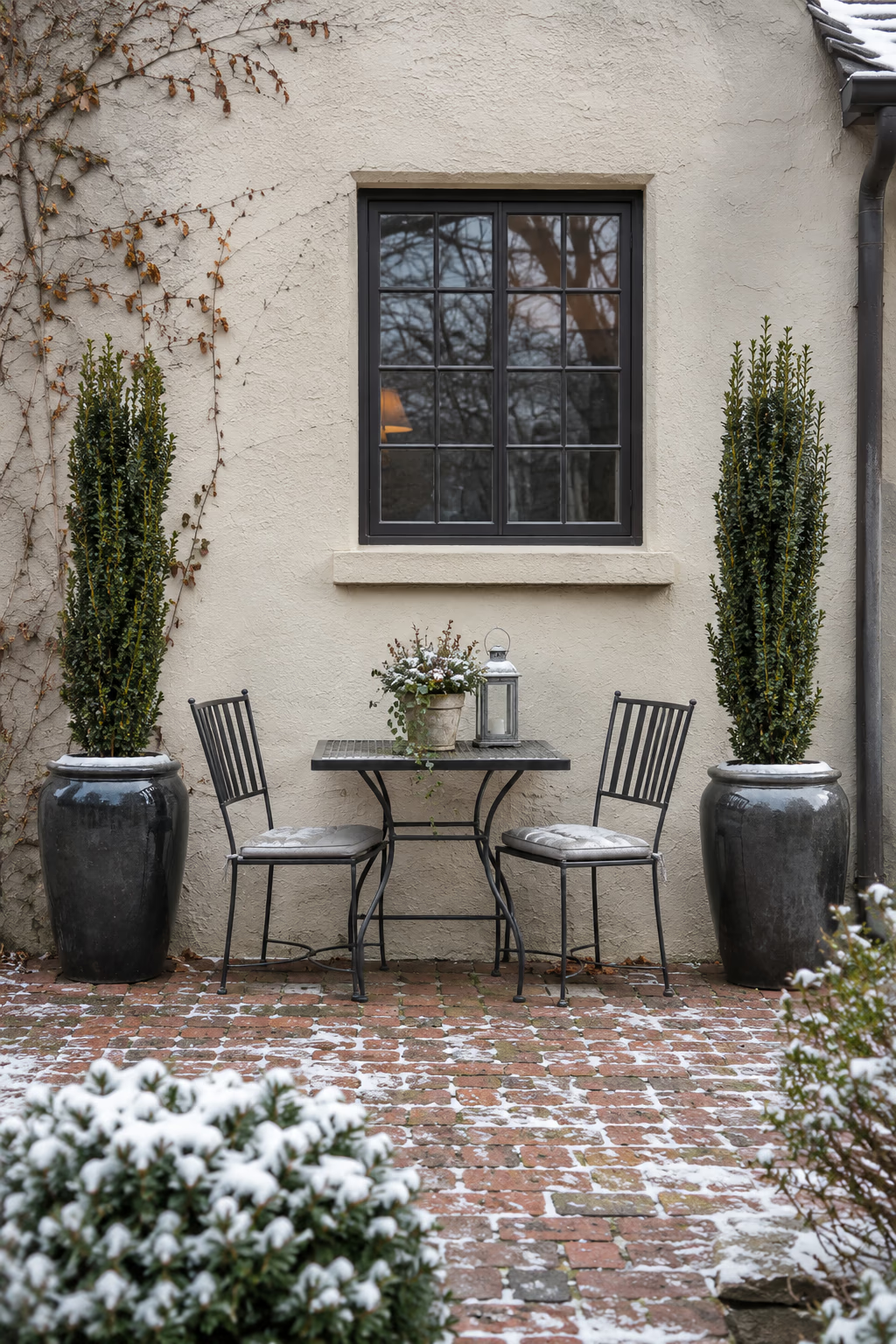
Symmetry that makes a courtyard look designed
Place two identical tall planters on either side of a small table, bench, or doorway, and plant each with a narrow evergreen such as Sky Pencil holly or a columnar juniper. Fiberglass or glazed planters about 18 to 24 inches wide keep weight manageable.
Symmetry creates a strong sense of order, which is calming in a tight space. The vertical shapes draw eyes upward, and evergreens keep the courtyard structured through winter.
Container plants are less cold-hardy than the same plants in the ground. In cold zones, choose shrubs rated at least one or two zones colder than yours, and use frost-resistant pots with drainage holes.
13. Uplight the Walls With Warm Low-Voltage Lights
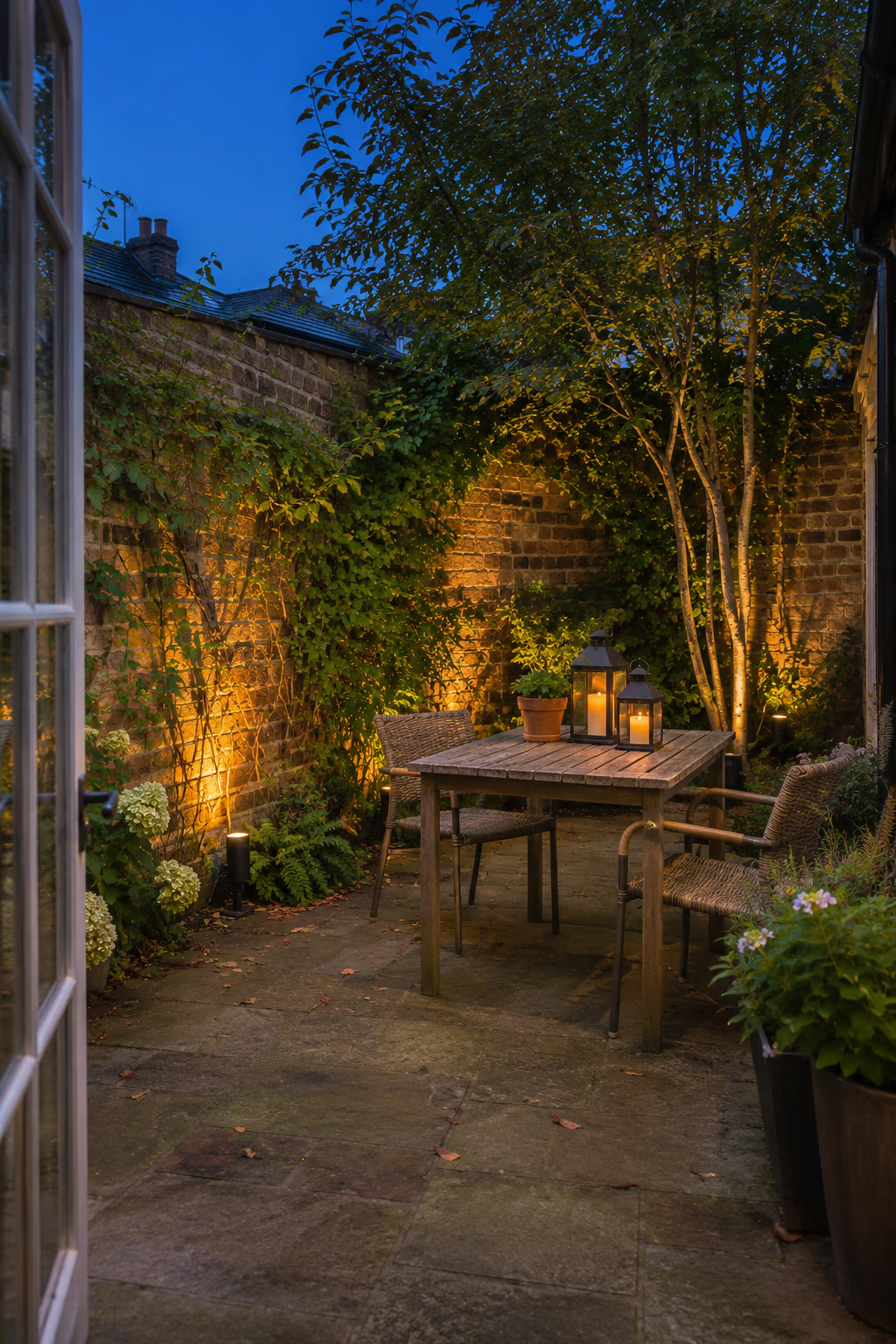
Evening glow that makes the space feel bigger
Small spotlights placed at the base of a planted wall or under a tree wash light upward, so leaves and textures stand out after dark. Low-voltage LED fixtures with a warm color temperature around 2700K give a soft, inviting glow.
Lighting the walls rather than the center pushes the edges of the courtyard outward visually. Add a few lanterns on the table and you have layered light for dinners outside.
A low-voltage system needs a transformer plugged into a GFCI outdoor outlet. If you have no outlet, solar spotlights are an easy option, though they are dimmer and depend on daytime sun reaching the panels.
14. Gather Around a Tabletop Fire Bowl
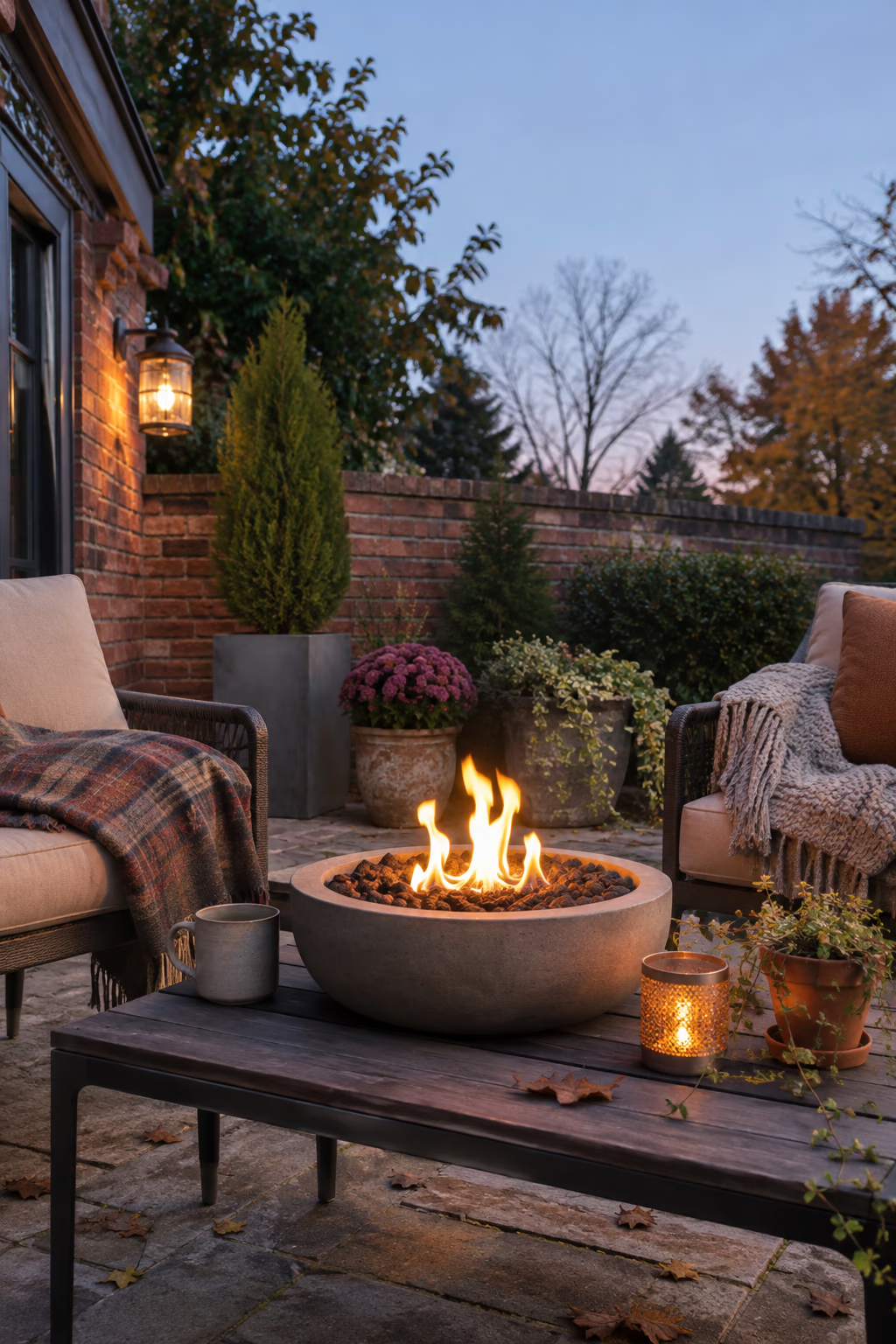
Flickering warmth for cool evenings
A full fire pit is often too large for a small courtyard, but a tabletop fire bowl fueled by propane or bioethanol brings flames to a coffee table. Some models include a lid that turns the bowl into a regular tabletop when not in use.
Fire extends the season into spring and fall and becomes a natural gathering point. In an enclosed courtyard, the walls also reflect a little warmth back to the seating.
Always follow the manufacturer’s clearance guidelines, never use fire under awnings, vines, or low overhead covers, and check local burn rules and HOA policies. Wood-burning fires are usually a poor choice for tight spaces near neighbors because of smoke.
15. Mount a Retractable Awning for Shade
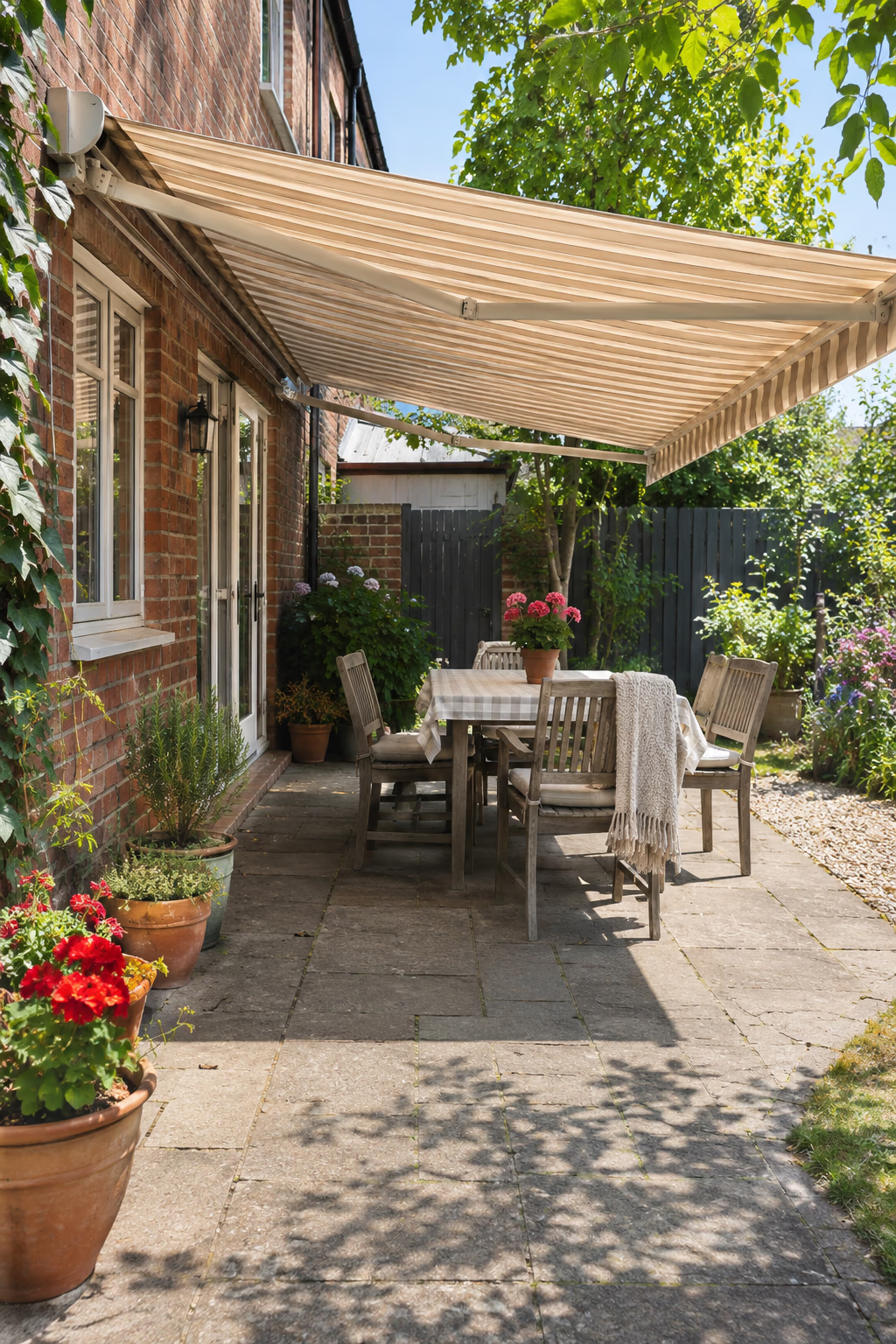
Shelter from sun and showers that folds away
A wall-mounted retractable awning gives shade over seating or a dining area without posts taking up floor space. Manual crank models extend roughly 8 to 10 feet and roll back against the wall when you want sun.
Shade makes a sunny courtyard usable on hot afternoons, and a light-colored fabric keeps the space bright underneath. Being able to retract it means plants still get the light they need.
Awnings must attach to solid framing or masonry, and some cities or HOAs require approval. Retract the awning in strong wind and heavy rain to avoid damage.
16. Fill a Shady Courtyard With Ferns and Hellebores
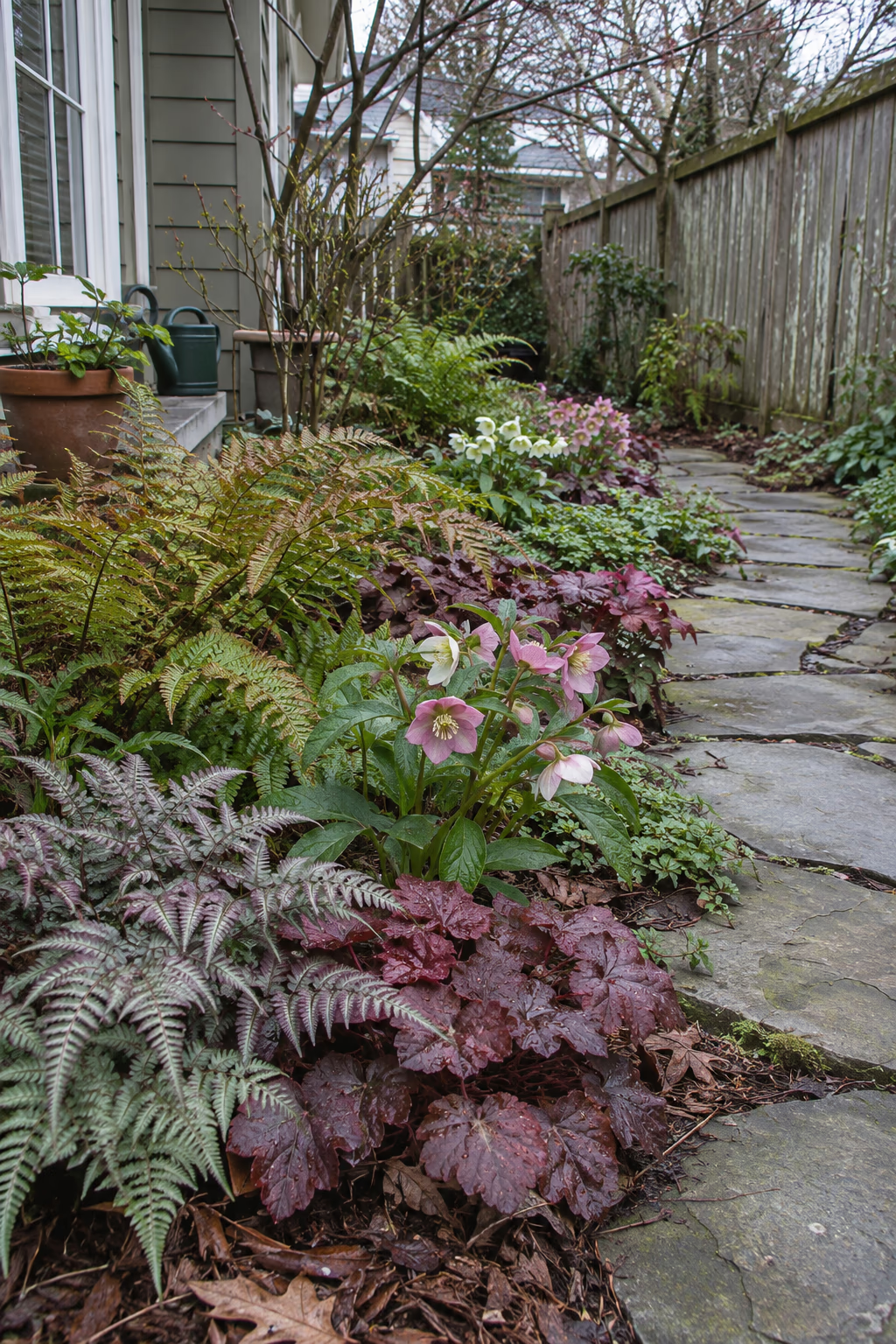
A woodland feel where flowers struggle
Courtyards on the north side of a house may get only an hour or two of direct sun. Embrace it with shade-loving plants such as autumn fern, Japanese painted fern, hellebores, heuchera, and brunnera planted in beds or deep containers.
These plants offer varied leaf shapes, silvery markings, and burgundy or lime foliage, so the courtyard has color even without many blooms. Hellebores add flowers in late winter, which is a real treat when little else is happening.
Shady courtyards can also be dry because walls block rain. Water regularly, mulch the soil, and amend beds with compost so roots stay cool and moist.
17. Curve a Circle of Pavers Under a Round Table
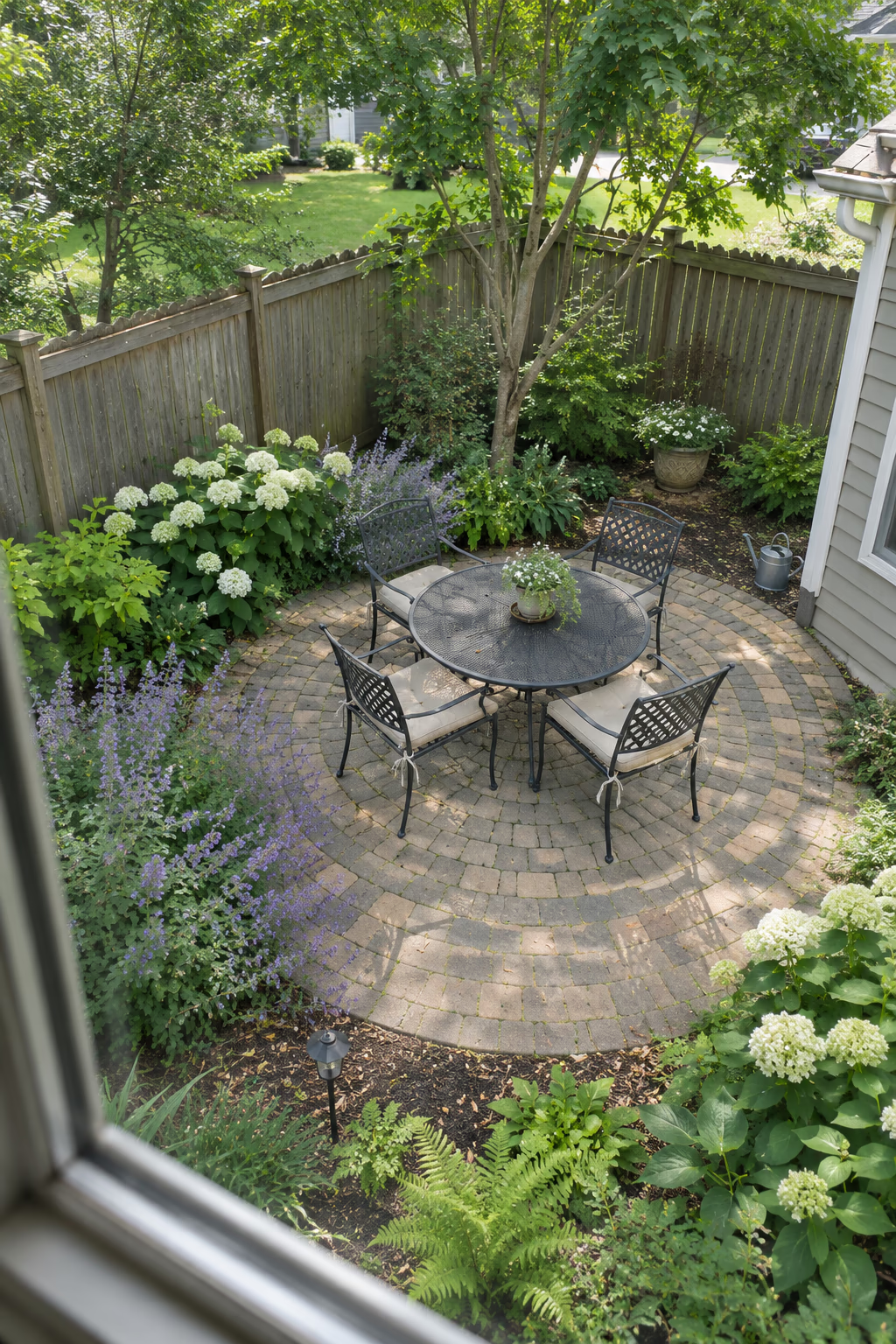
Soft shapes in a space full of straight lines
A paver circle kit or a circle of brick laid in a fan pattern creates a round dining spot about 7 to 9 feet across, just right for a 36-inch round table and four chairs. Plant the curved edge with low, rounded plants such as dwarf hydrangea, catmint, or heuchera.
Courtyards are usually all right angles, so a curve instantly softens the space and makes it feel more relaxed. The circle also clearly defines the dining area.
Cutting pavers to fit a curve takes time and a masonry saw, so a kit with pre-shaped pieces saves a lot of effort. Lay it on the same compacted base you would use for any patio.
18. Hide the AC Unit Behind a Slatted Screen
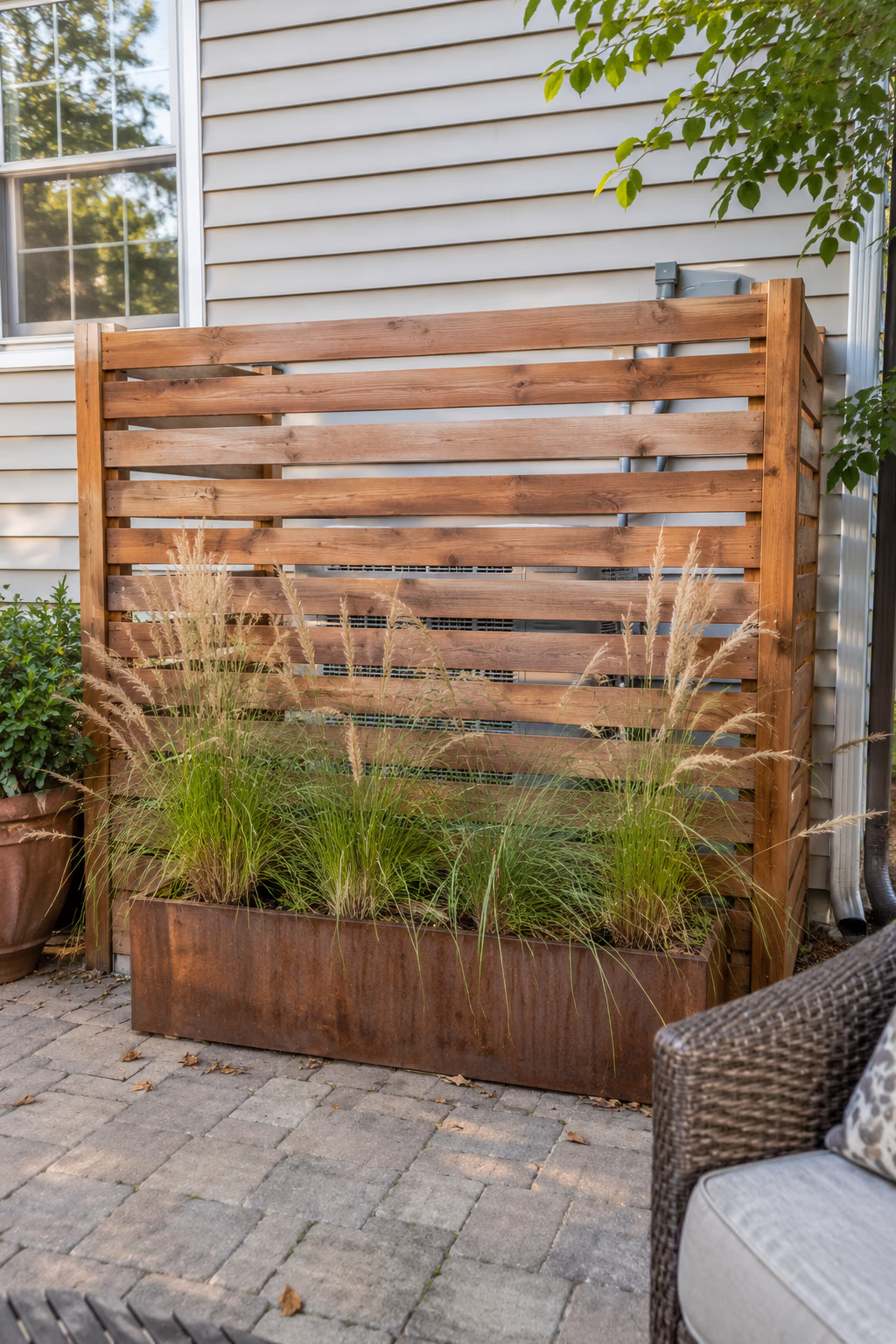
Make the eyesore part of the garden
Many courtyards share space with an air conditioner condenser, trash bins, or utility meters. A freestanding slatted screen of cedar or composite boards with 1-inch gaps hides the equipment while letting air move freely.
Paint or stain the screen to match your fence, and add a planter of grasses in front or a vine on the side. The screen turns a distraction into a backdrop.
Condensers need open space around and above them to work efficiently and safely. Follow the manufacturer’s clearance guidance, keep the top open, and make the screen easy to remove for service.
19. Turn a Blank Wall Into an Outdoor Movie Screen
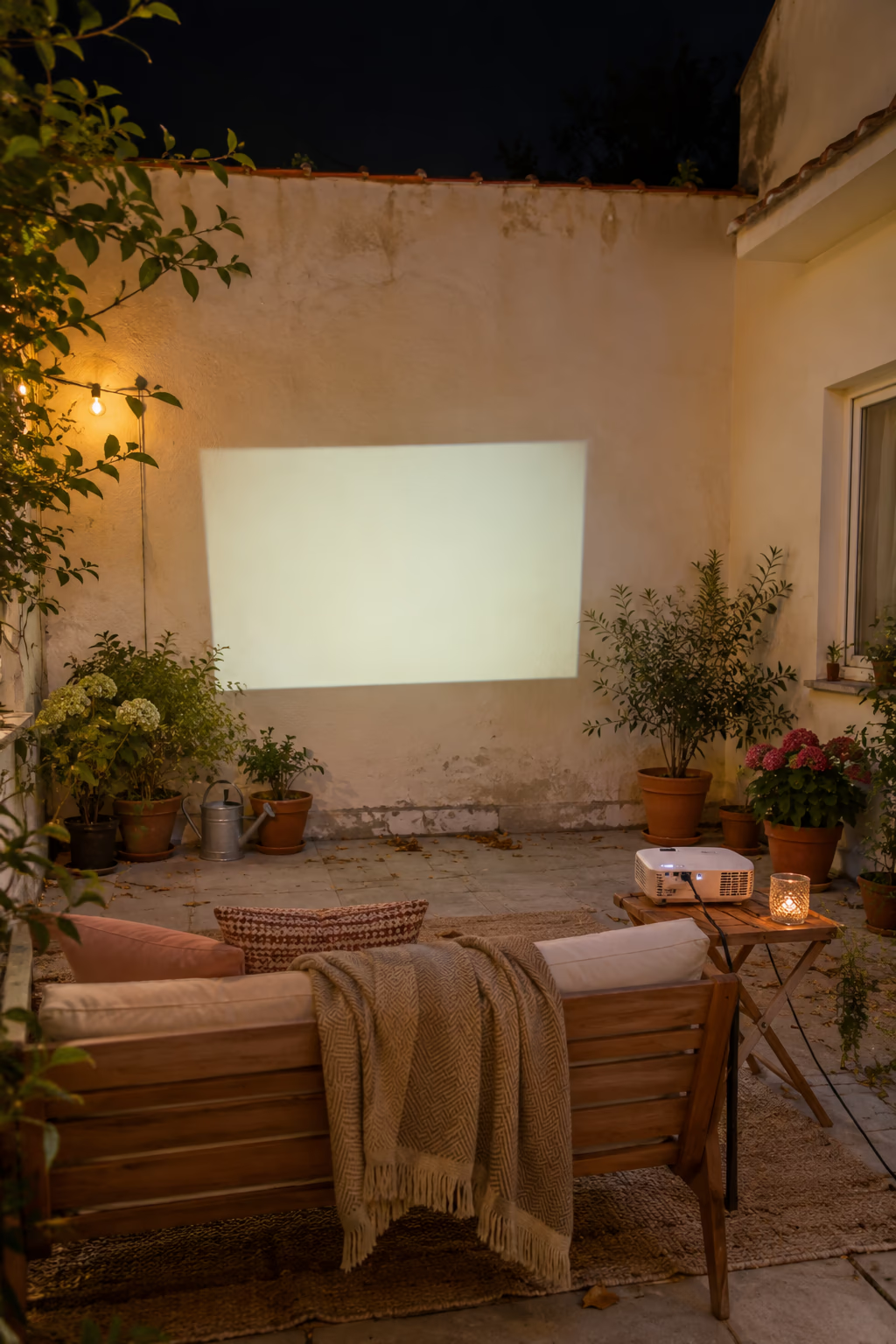
Your courtyard becomes a summer night theater
A smooth, pale wall or a tightly stretched white outdoor screen is all you need for movie nights. A portable projector on a side table, a compact speaker, and cushions on your bench turn the courtyard into a cozy theater.
The enclosed walls block stray light and contain sound, so courtyards often make better outdoor theaters than open yards. It’s an easy way to get more use out of the space on warm evenings.
Keep volume low and check local noise rules, since sound carries between close houses. Bring electronics indoors afterward because dew can damage them overnight.
How to Plan Your Small Courtyard Garden
A small courtyard works best when every element has a job. Before buying plants or furniture, take a few days to watch how light, wind, and foot traffic move through the space.
- Track the sun. Note how many hours of direct sun each wall and corner gets, since that determines which plants will thrive there.
- Decide how you’ll use it. Choose whether the courtyard is mainly for dining, lounging, or planting so the layout supports that first.
- Keep the palette tight. Two or three paving and wall materials and a limited plant list look calmer than many competing choices.
- Plan for water. Check where rain drains, keep surfaces sloped away from the house, and consider a hose bib or drip system nearby.
- Check rules first. Shared walls, condo bylaws, and HOA guidelines may limit paint colors, attachments, or fire features.
- Build in phases. Start with flooring, seating, and climbers, then add lighting, water, and accessories as budget allows. Call 811 before digging in the US.
Frequently Asked Questions
How do I make a small courtyard feel bigger?
Use large pavers, pale or very dark walls, a mirror, and seating along the edges so the center stays open. Vertical planting and lighting on the walls also expand the space visually.
What plants grow well in an enclosed courtyard?
It depends on light. Sunny courtyards suit lavender, herbs, and star jasmine in warm zones, while shady ones suit ferns, hellebores, heuchera, hostas, and climbing hydrangea. Courtyards are often warmer and more sheltered than the rest of the yard.
Can I garden in a courtyard with no soil?
Yes. Containers, raised planters, and wall planters work well on paving. Choose pots with drainage holes, use quality potting mix, and expect to water more often than you would for plants in the ground.
How much does it cost to redo a small courtyard?
A refresh with paint, plants, a rug, and lighting may cost a few hundred dollars. New paving, built-in benches, awnings, and water features can raise the total to several thousand, especially with professional installation.
How do I keep a courtyard low maintenance?
Choose evergreen structure plants, a drip irrigation system for containers, and a hard floor with gravel joints instead of lawn. Fewer, larger pots are also easier to care for than many small ones.
Final Thoughts
A small courtyard has something many big yards lack: walls that frame, shelter, and support a garden. A scented vine, a bench along the edges, or a bowl of moving water can turn an overlooked space into the favorite room of your home.
Work with your light and climate, choose a few ideas that suit how you live, and let the plants fill in over time. Season by season, your courtyard will become a private retreat right outside the door.


