
The side yard is often the most overlooked part of a home’s outdoor space. It might be a narrow strip between the house and the fence, a shady walkway leading to the backyard, or an awkward patch of ground where nothing seems to grow.
But with a little planning, even a small side yard can become one of the most charming parts of your landscape.
Imagine walking along a beautiful stone pathway surrounded by greenery, turning an empty fence into a wall of flowering vines, or creating a peaceful garden filled with ferns and soft outdoor lighting.
The best part? You don’t necessarily need a large budget or a spacious yard to make it happen.
These 27 side yard landscaping ideas include practical solutions for narrow spaces, low-maintenance gardens, shady areas, and sunny side yards. Whether you prefer modern landscaping, a cozy cottage garden, or a simple gravel walkway, you’ll find plenty of inspiration to make that forgotten space feel intentional.
Before choosing a design, consider how much sunlight the area receives, how rainwater drains, and whether you need access to gates, outdoor equipment, or utility connections. These small details can make a big difference in how well your finished landscape works.
1. Create a Stepping Stone Pathway With Gravel
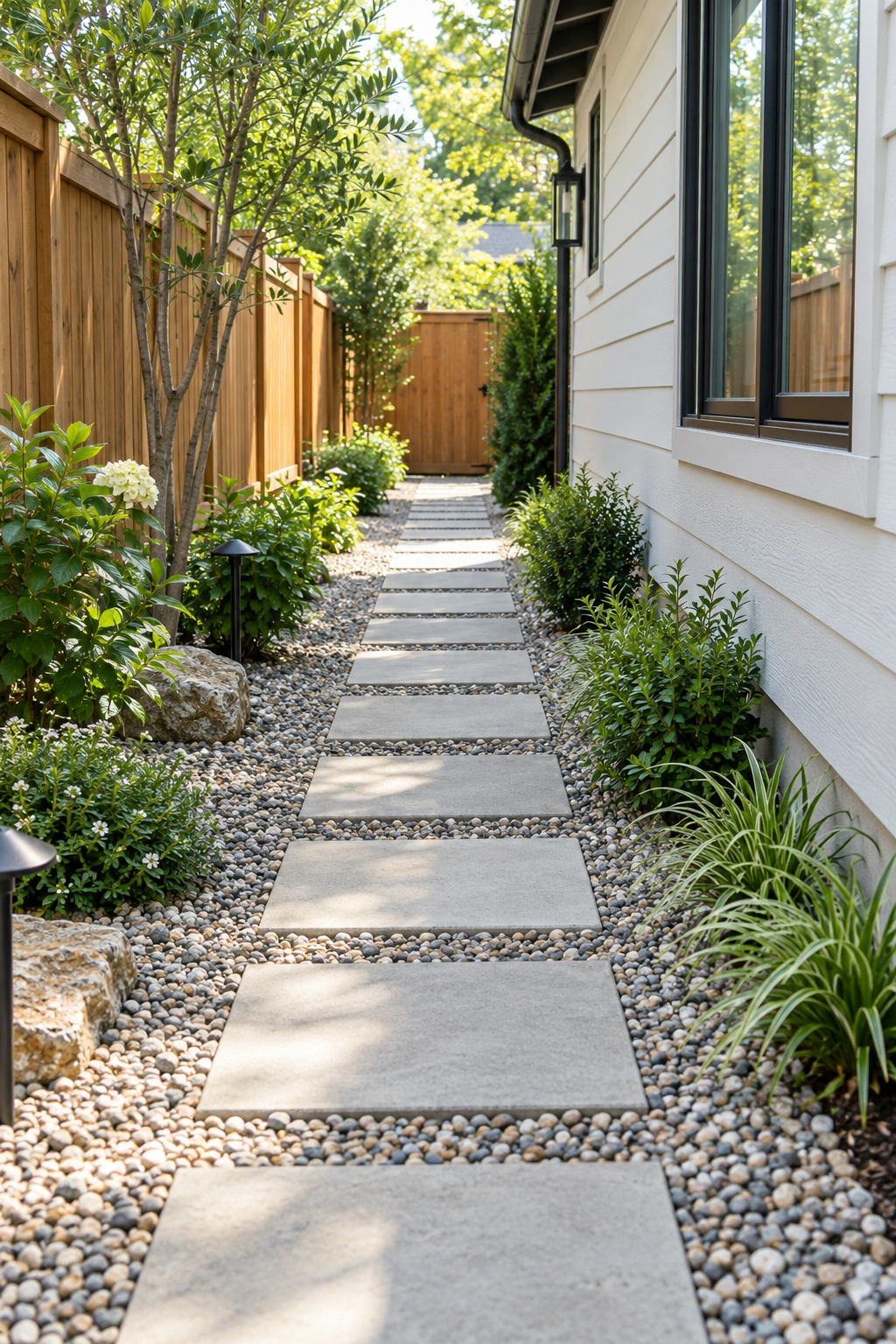
A stepping stone pathway is one of the easiest ways to give a narrow side yard a beautiful, finished appearance.
Large square or rectangular stones surrounded by decorative gravel create a clean walkway that looks particularly attractive alongside modern homes.
You can use light-colored gravel with gray concrete stepping stones for a contemporary look or choose warmer natural stone for something more rustic.
Add low-growing greenery along the edges to soften the design. Small ornamental grasses, compact shrubs, or shade-loving perennials can make the pathway feel like part of a garden instead of a simple passage.
Design tip: Choose comfortably spaced stepping stones with stable, level surfaces. A well-prepared base and proper drainage are important, especially in areas that receive frequent rain.
2. Design a Classic Brick Walkway
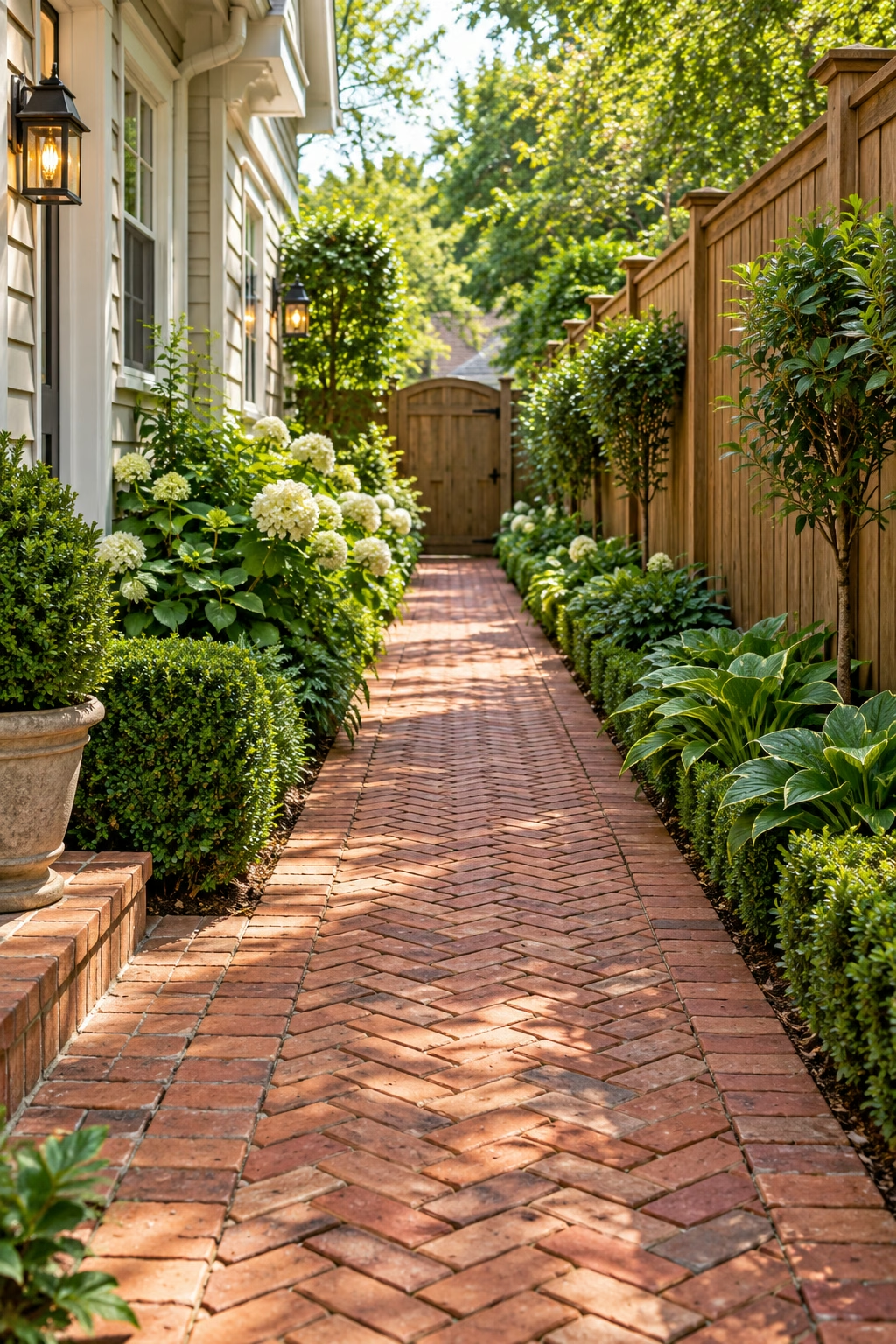
Brick walkways bring timeless charm to side yard landscaping, particularly around traditional, colonial, and cottage-style homes.
The warm red and earthy tones of brick look beautiful against green plants, wood fencing, and flowering garden beds.
For a simple design, arrange bricks in a running bond pattern. If you prefer something more decorative, a herringbone pattern gives the pathway a classic garden appearance.
Narrow planting beds alongside the bricks can hold small flowering perennials or neatly trimmed greenery.
Brick is also a good choice when you want the side yard to feel connected to an existing patio or front walkway.
Use paving bricks intended for outdoor foot traffic, installed over a suitable base, rather than ordinary building bricks.
3. Add a Curved Natural Stone Garden Path
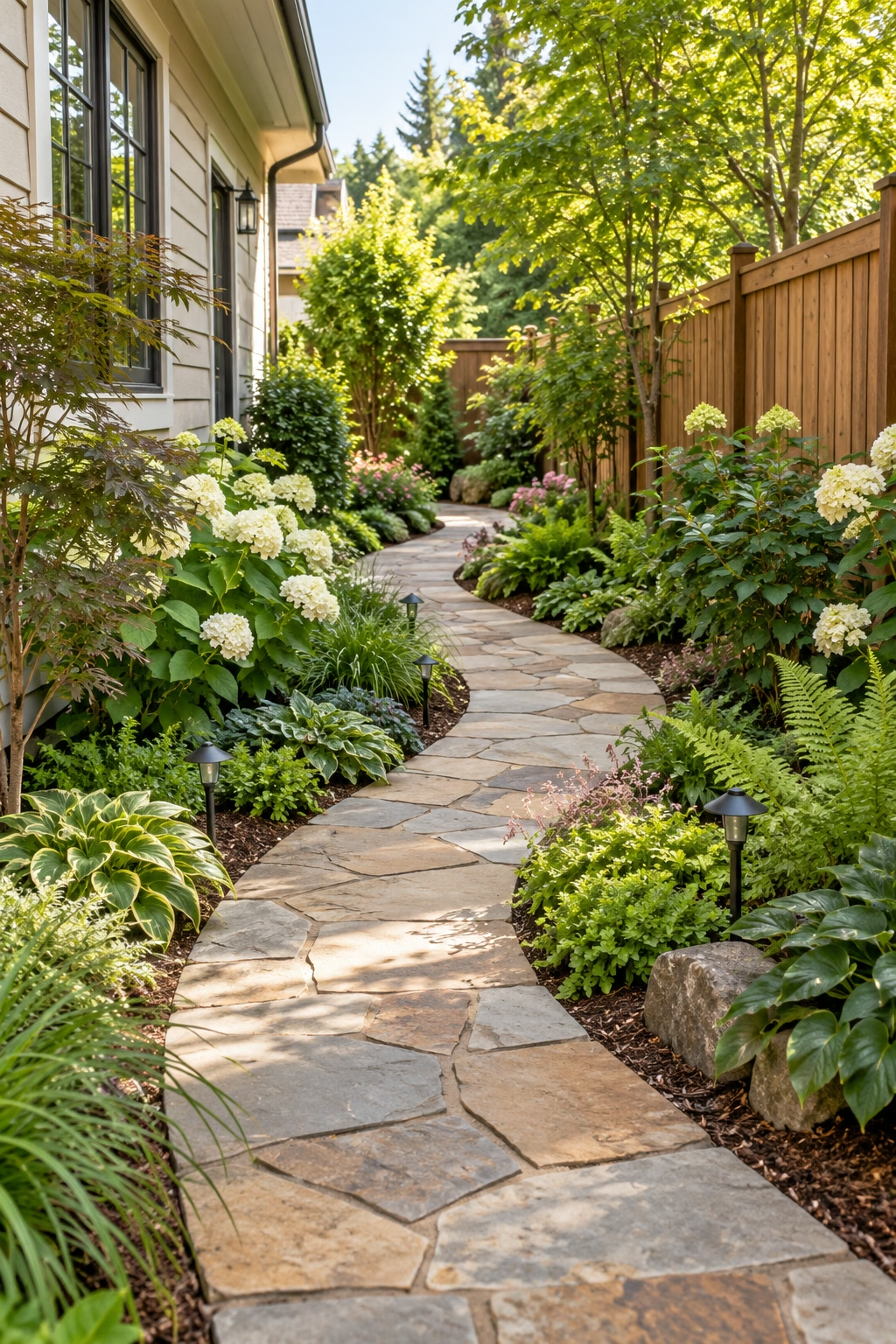
A gently curved pathway can make a long, narrow side yard feel more interesting.
Instead of looking straight down a passage toward the backyard, your eyes follow the curves of the stones and the plants beside them.
Irregular flagstones work especially well for this approach. Their natural shapes create a relaxed, organic appearance that suits woodland gardens, cottage landscapes, and rustic homes.
Fill the surrounding spaces with gravel or suitable low-growing plants, depending on the amount of foot traffic.
For additional interest, place a decorative planter or small shrub near the end of the path.
Keep the curves gentle enough that the walkway remains easy to use.
4. Try a Modern Concrete Paver Walkway
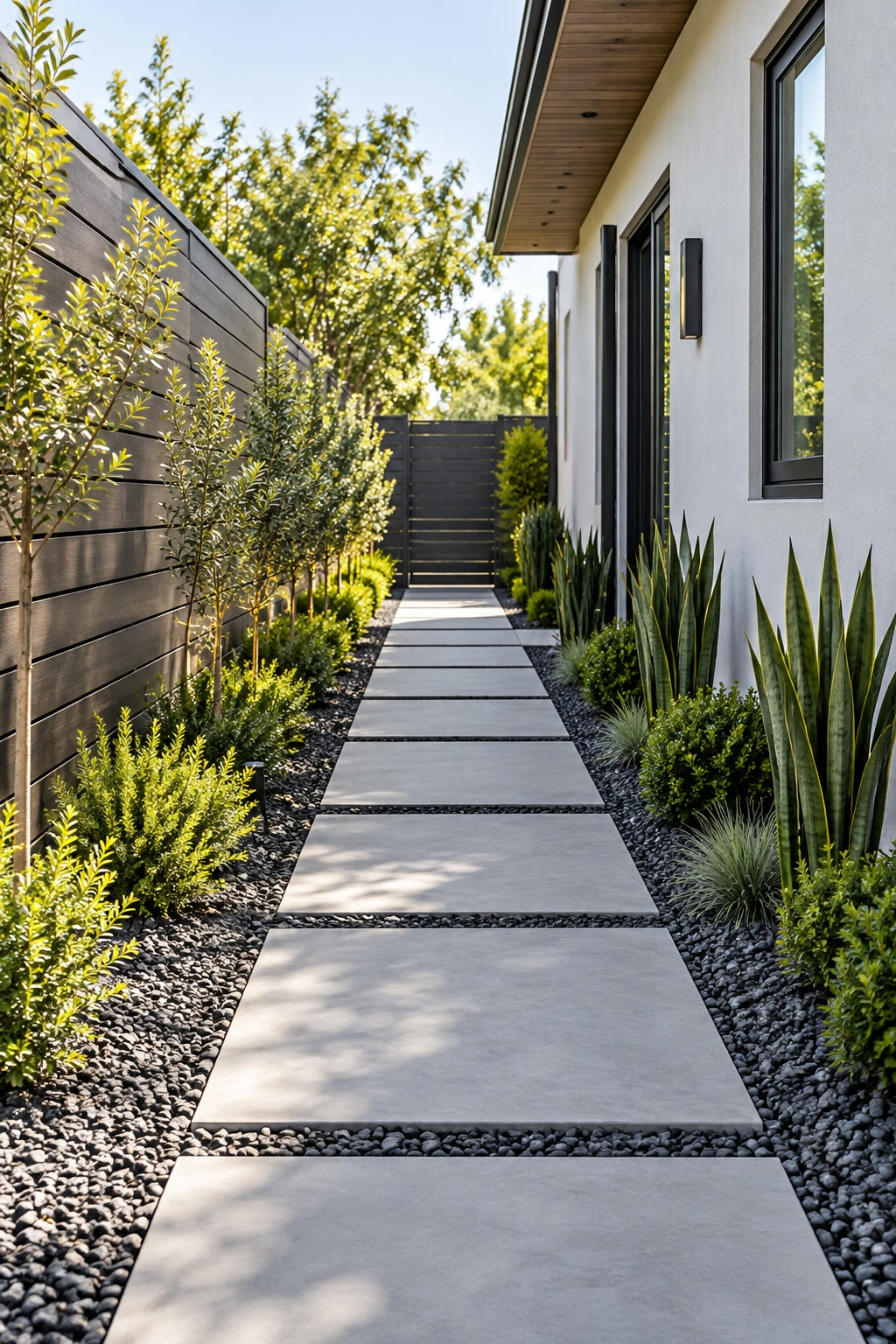
If you love clean lines and minimalist landscaping, a concrete paver walkway can completely change the appearance of your side yard.
Large rectangular pavers arranged in a straight line create a structured look that complements contemporary architecture.
Dark gravel, metal landscape edging, and neatly planted green borders provide contrast without making the design feel too busy.
One attractive combination is light gray concrete pavers, charcoal gravel, and compact evergreen shrubs.
You can also use continuous paving where you need a smooth route for a stroller, trash bin, or garden cart.
Keep the planting palette simple. Repeating just two or three plant varieties often makes a modern side yard look more organized than using too many different plants.
5. Turn a Sunny Side Yard Into a Gravel Garden
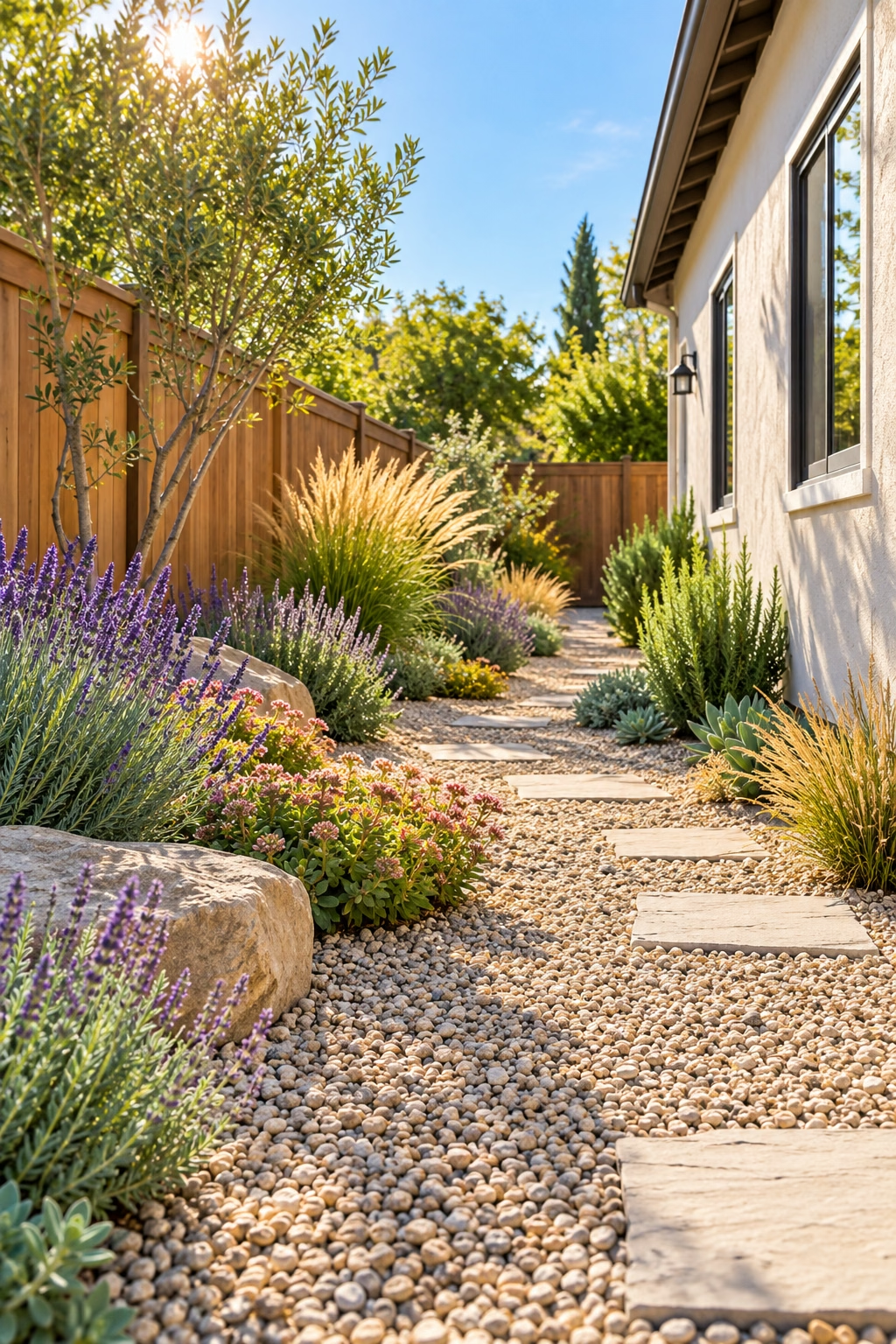
A gravel garden is a practical solution for a sunny side yard where traditional grass struggles or requires too much maintenance.
Instead of maintaining a narrow lawn, cover planting areas with decorative gravel and add groups of drought-tolerant plants.
Depending on your climate, lavender, sedum, santolina, and compact ornamental grasses can create a beautiful combination of colors and textures.
Choose one or two gravel shades that complement your home’s exterior. Natural beige, warm gray, and muted brown tones often blend well with surrounding landscaping.
Keep enough open space for walking and maintenance.
This approach works best with suitable soil drainage; adding gravel alone will not fix a poorly drained yard.
6. Create a Lush Shade Garden With Hostas and Ferns
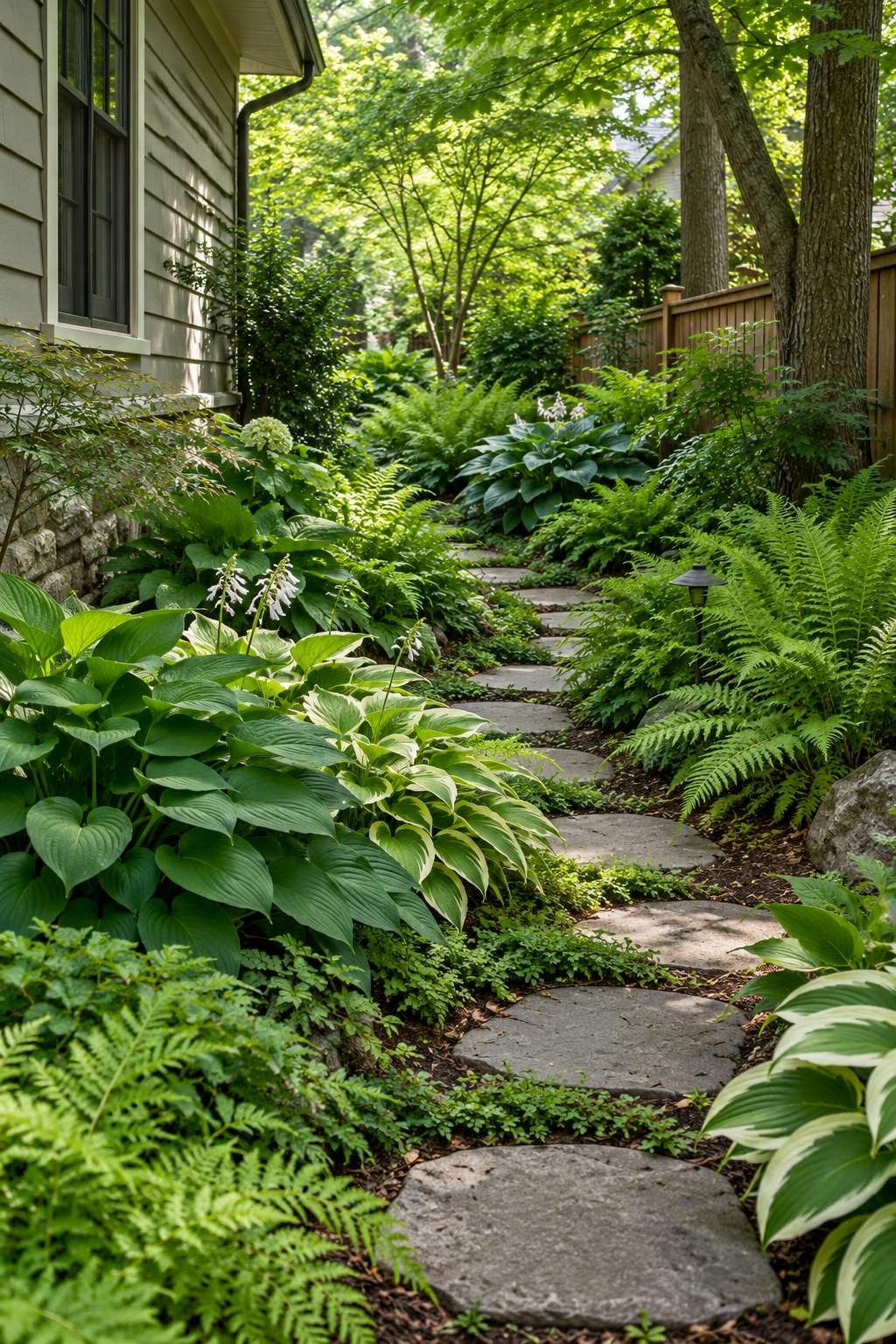
A shady side yard doesn’t have to be a gardening problem. It can become a peaceful green retreat.
Hostas and ferns are excellent starting points for this type of landscaping in climates where they grow well.
Hostas provide broad, attractive leaves, while ferns introduce delicate textures and a soft woodland feeling.
Combine different leaf shapes and shades of green to make the planting look layered and natural. You can also include brunnera or suitable sedges for added variety.
A simple stone or gravel pathway through the garden completes the look.
Remember that shade doesn’t always mean moist soil. Side yards sheltered by roof overhangs may be surprisingly dry, so choose plants based on both light and soil conditions.
7. Line the Side Yard With Ornamental Grasses
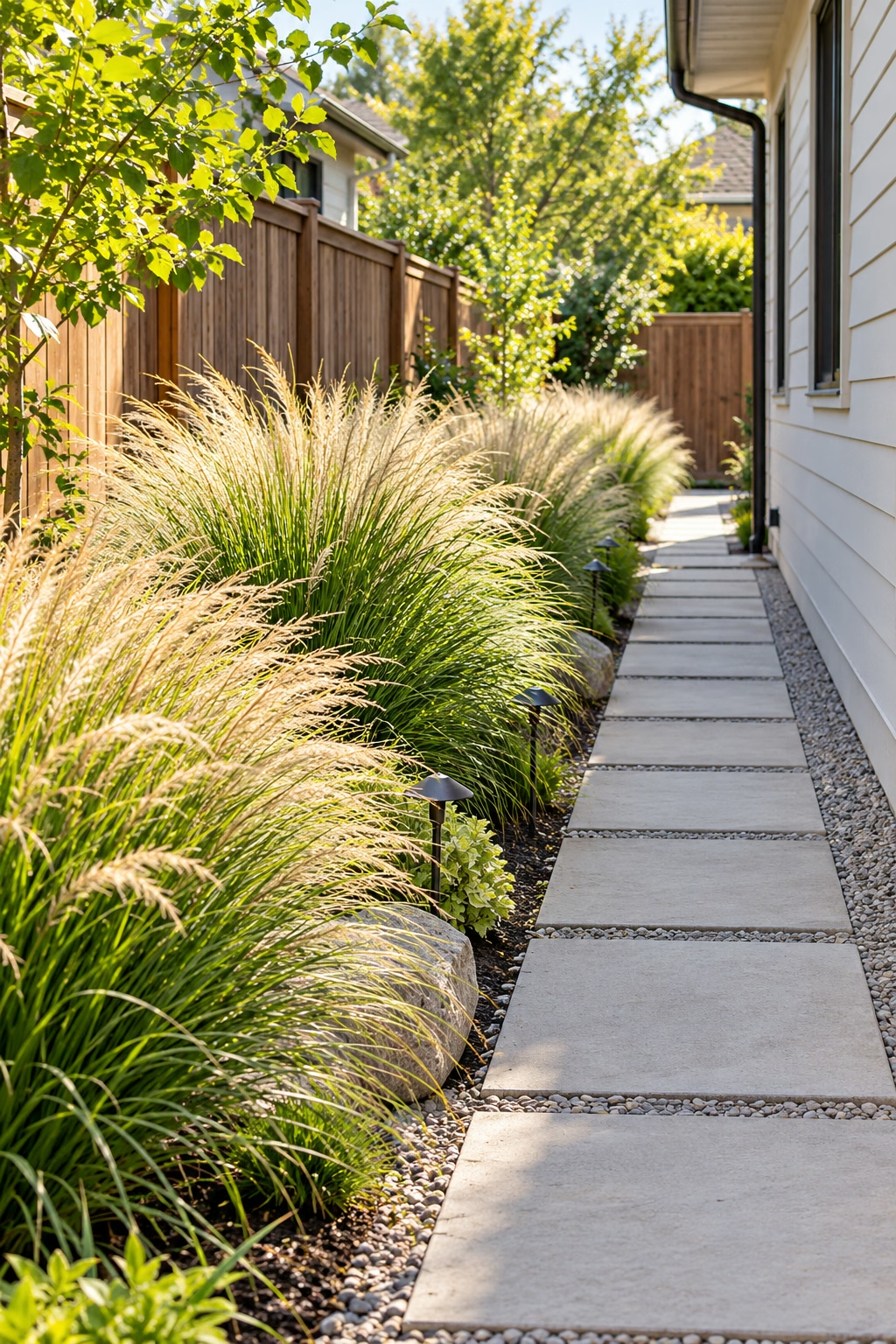
Ornamental grasses can bring movement, softness, and a natural appearance to a narrow side yard.
Planting grasses in repeated groups along a fence or walkway creates a flowing landscape design without requiring an elaborate garden layout.
For sunny spaces, consider climate-appropriate compact grasses such as blue fescue or little bluestem.
In partly shaded gardens, certain sedges or Japanese forest grass may be better suited.
Pair the grasses with simple gravel or natural stone edging to keep the overall design tidy.
One important detail is mature plant size. Choose varieties that won’t spread across the entire walking area or overwhelm nearby windows and pathways.
8. Create a Colorful Cottage Garden Border
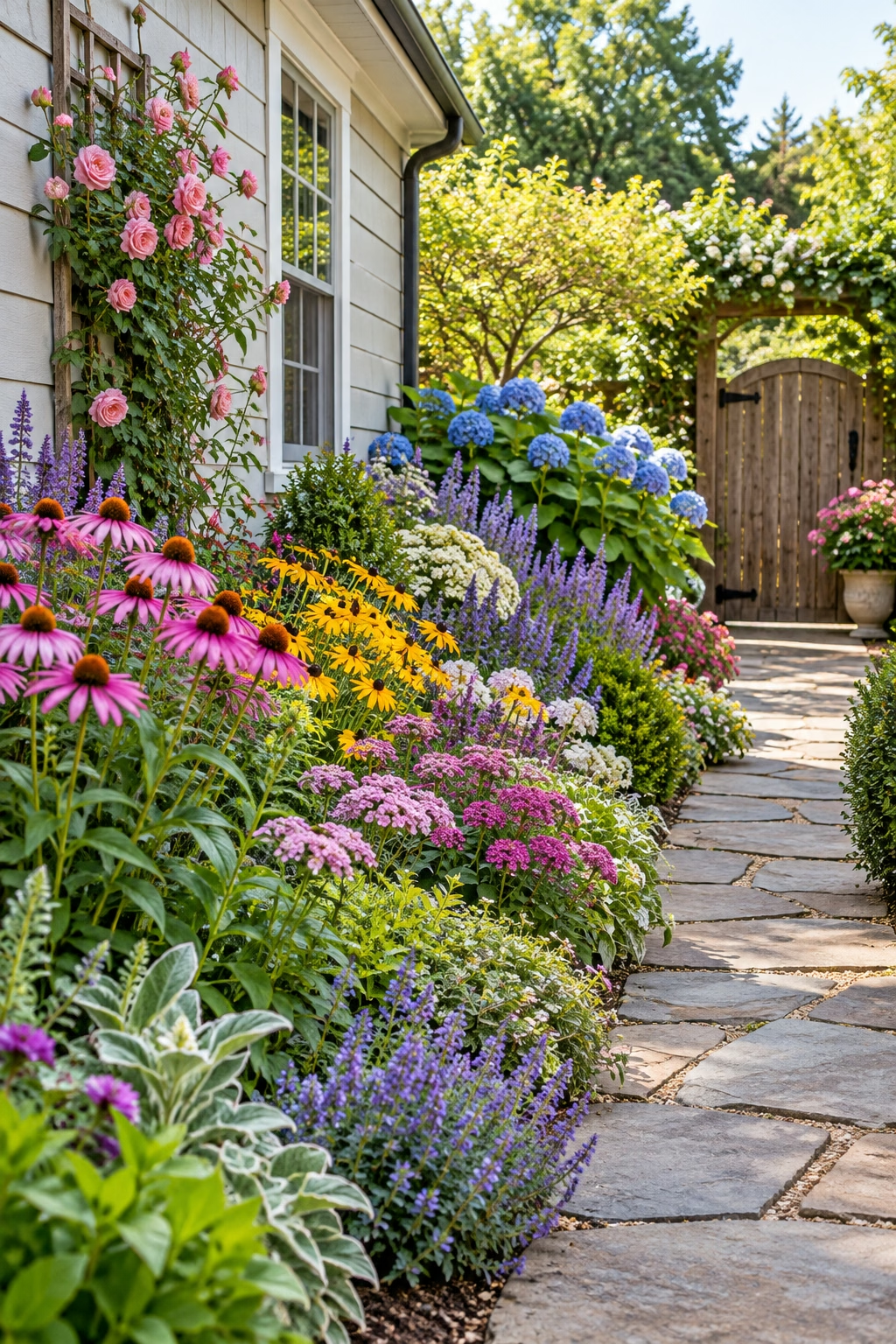
A cottage-style garden is perfect for anyone who loves flowers and a welcoming, slightly informal landscape.
Use narrow flower beds along a side yard fence and fill them with a coordinated mix of flowering perennials.
Depending on the sunlight and climate, plants such as coneflowers, salvia, catmint, and coreopsis can provide colorful displays.
A combination of taller flowers toward the fence and shorter varieties near the pathway creates a layered appearance.
Natural stone edging or a brick walkway adds to the traditional garden style.
To avoid a crowded look, repeat a few favorite plants throughout the border instead of using a completely different flower in every spot.
The result can feel charming and full without becoming visually messy.
9. Replace Patchy Grass With Attractive Groundcover
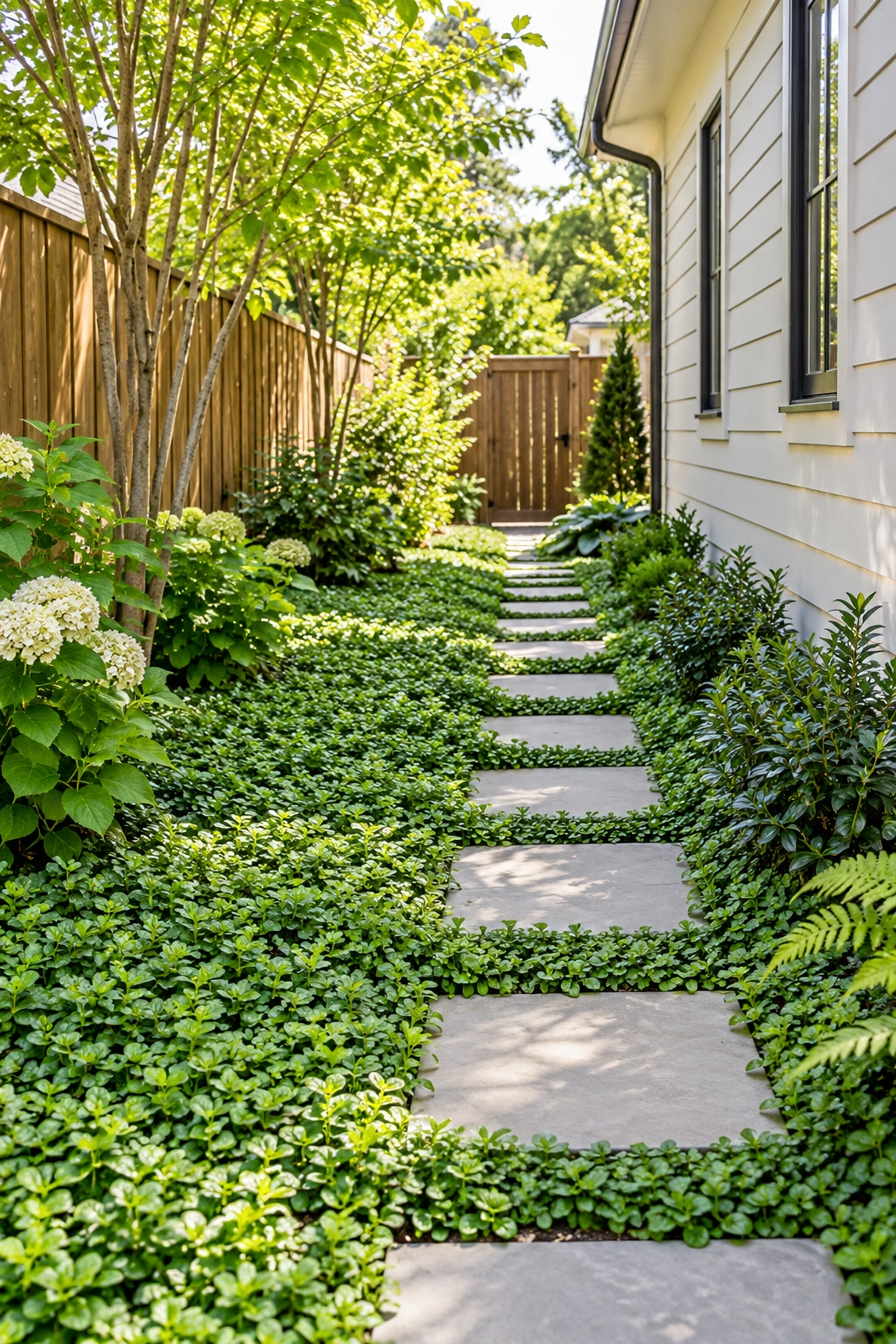
Sometimes the narrow strip beside a house simply isn’t a good place for lawn grass.
Buildings and fences can block sunlight, while tree roots compete for moisture and nutrients.
Replacing patchy turf with suitable groundcover plants can create a greener, more consistent landscape.
For shaded areas, options may include Pennsylvania sedge, foamflower, or other regionally appropriate woodland groundcovers.
Sunny areas offer different possibilities, such as creeping thyme in well-drained locations with relatively light foot traffic.
Select plants that suit your local growing conditions and check whether they spread aggressively.
Groundcovers are most useful in planting areas alongside a path rather than as a replacement for a heavily used walkway.
10. Plant Narrow Evergreen Shrubs for Privacy
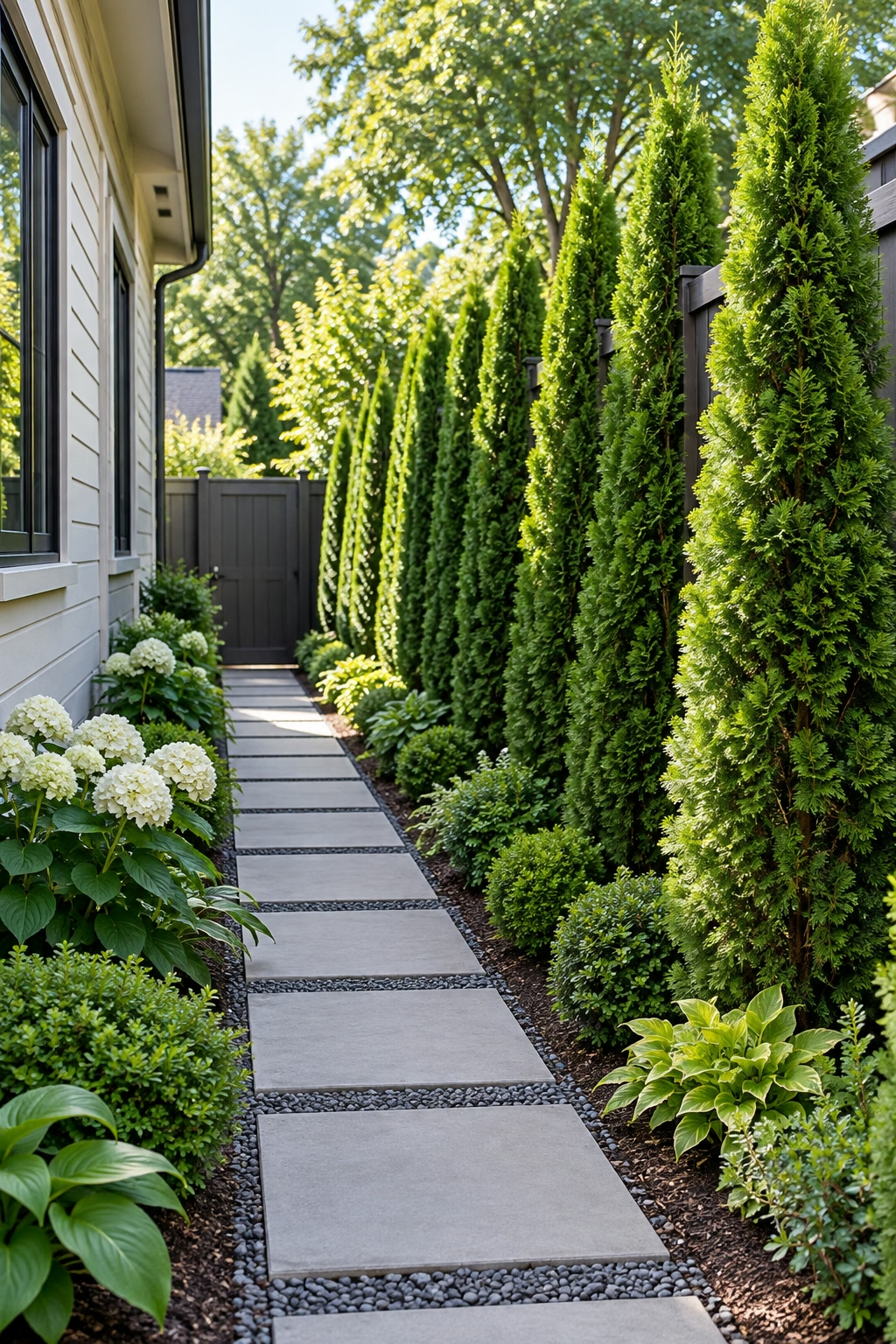
A row of well-chosen evergreen plants can turn an exposed side yard into a more private outdoor space.
Tall, narrow shrubs are particularly useful when the area is visible from neighboring properties.
Depending on your climate, columnar junipers, compact hollies, or other upright evergreen varieties may work well.
Their vertical growth creates a green backdrop without necessarily requiring the width of a conventional hedge.
You can combine evergreen screening with a simple gravel walkway and low plants near the ground.
Before planting, check the variety’s mature width and root requirements. Even plants marketed as narrow can grow much larger than expected.
Leave adequate room for pruning, fence maintenance, and access to utilities.
11. Install a Trellis With Climbing Vines
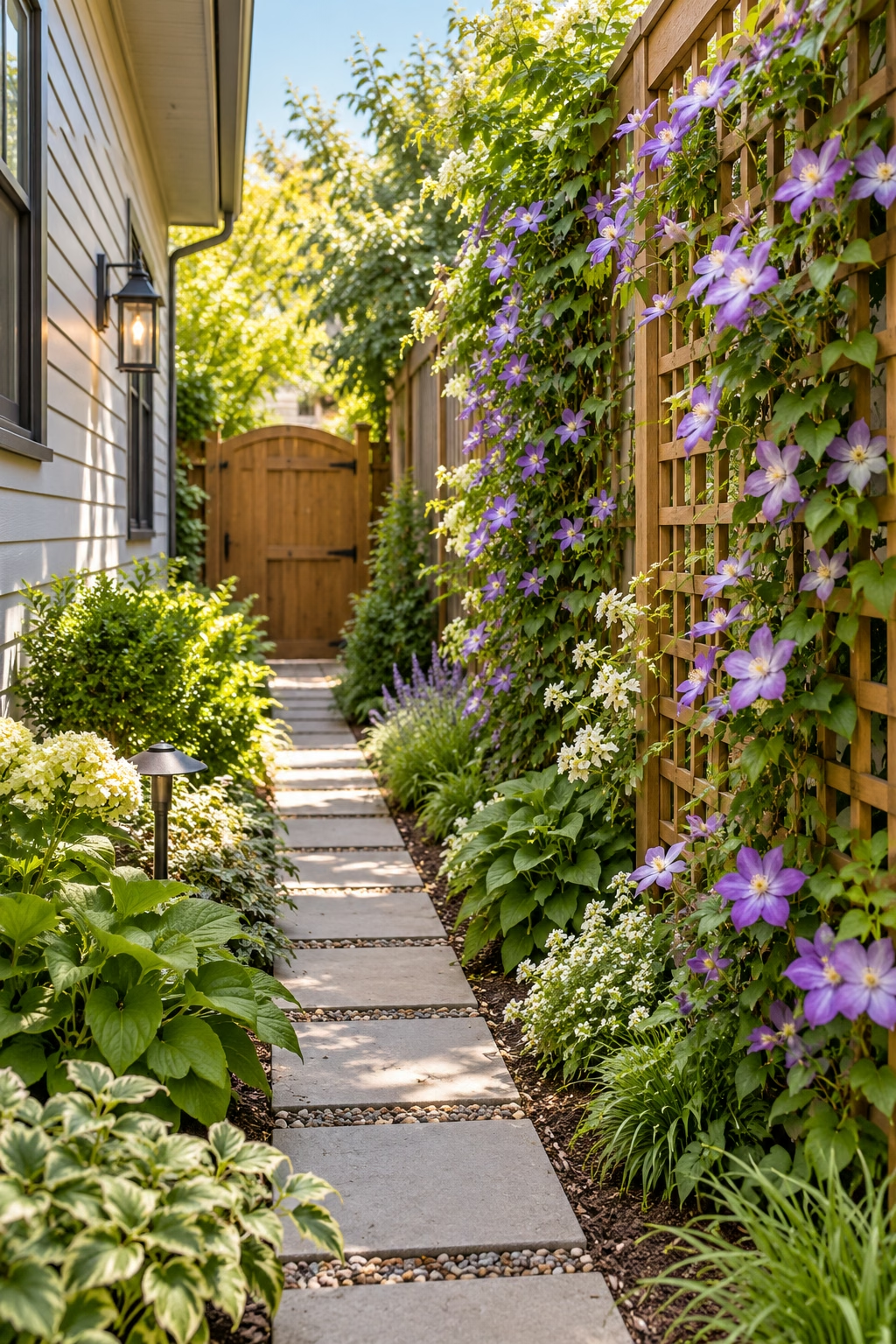
When your side yard doesn’t offer much planting space, make use of the vertical surfaces instead.
A trellis attached to a suitable fence or supported by freestanding posts can transform an empty boundary into a beautiful green feature.
Climbing plants such as clematis, honeysuckle, or star jasmine may be suitable choices, depending on your climate and sunlight.
Flowering vines bring color and soften the appearance of wood, brick, or other hard surfaces.
For a coordinated design, combine the trellis with a narrow planting bed and a simple pathway.
Choose a support strong enough for the mature vine. Some climbers become heavy and require regular pruning to prevent them from blocking the walkway.
12. Add a Decorative Wooden Privacy Screen
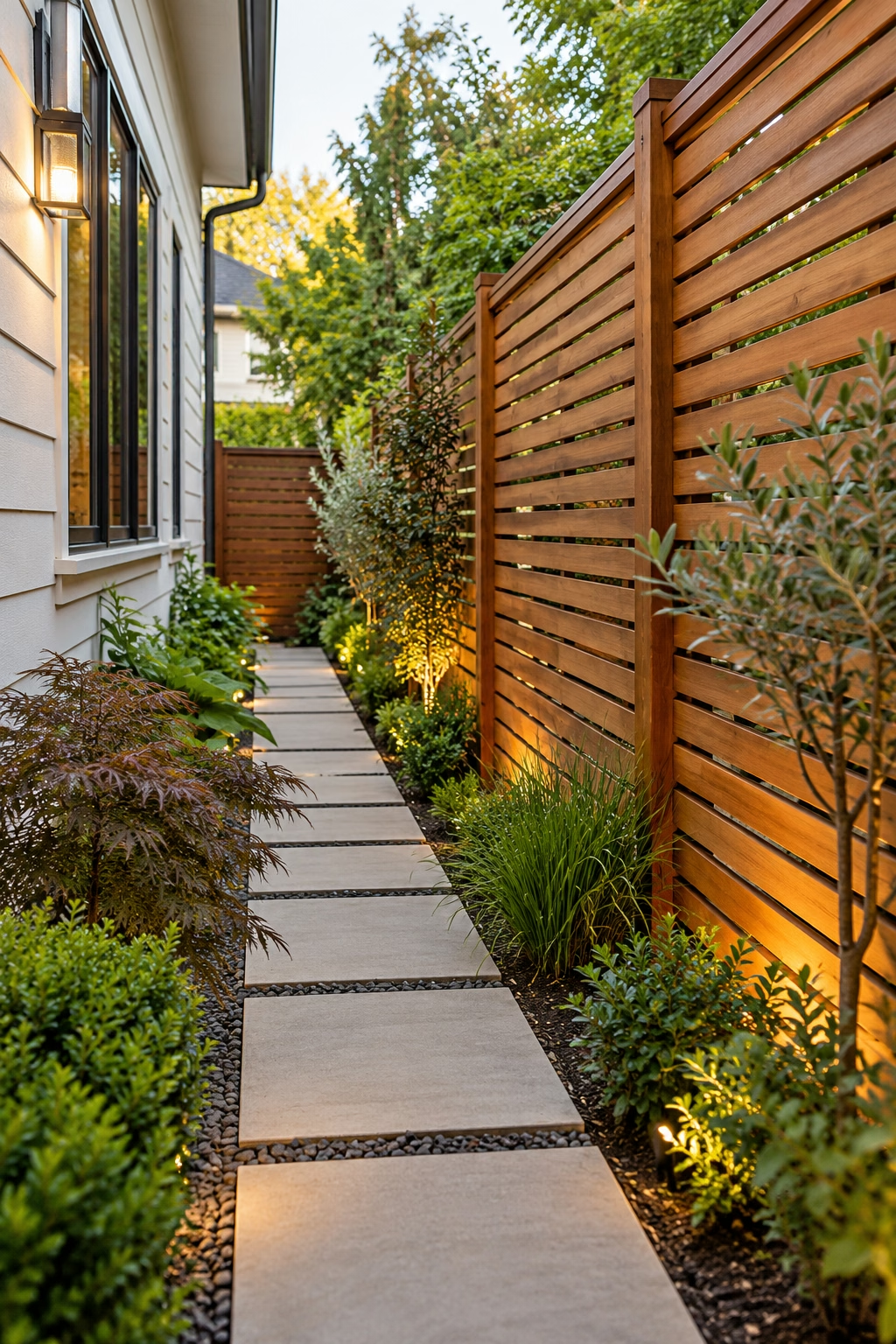
Wooden privacy screens offer a practical alternative to tall hedges, especially in side yards where there isn’t enough room for large shrubs.
A vertical or horizontal slatted screen can create separation from neighboring properties while adding an attractive architectural feature.
Natural cedar tones work beautifully with green foliage and stone pathways.
For a more contemporary appearance, a dark-stained screen paired with pale gravel and simple plants can look striking.
You don’t necessarily need to screen the entire length of the yard. A short section near a seating spot or visible window may provide enough privacy.
Check property boundaries and local fence rules before installation.
13. Build a Vertical Garden Along the Fence
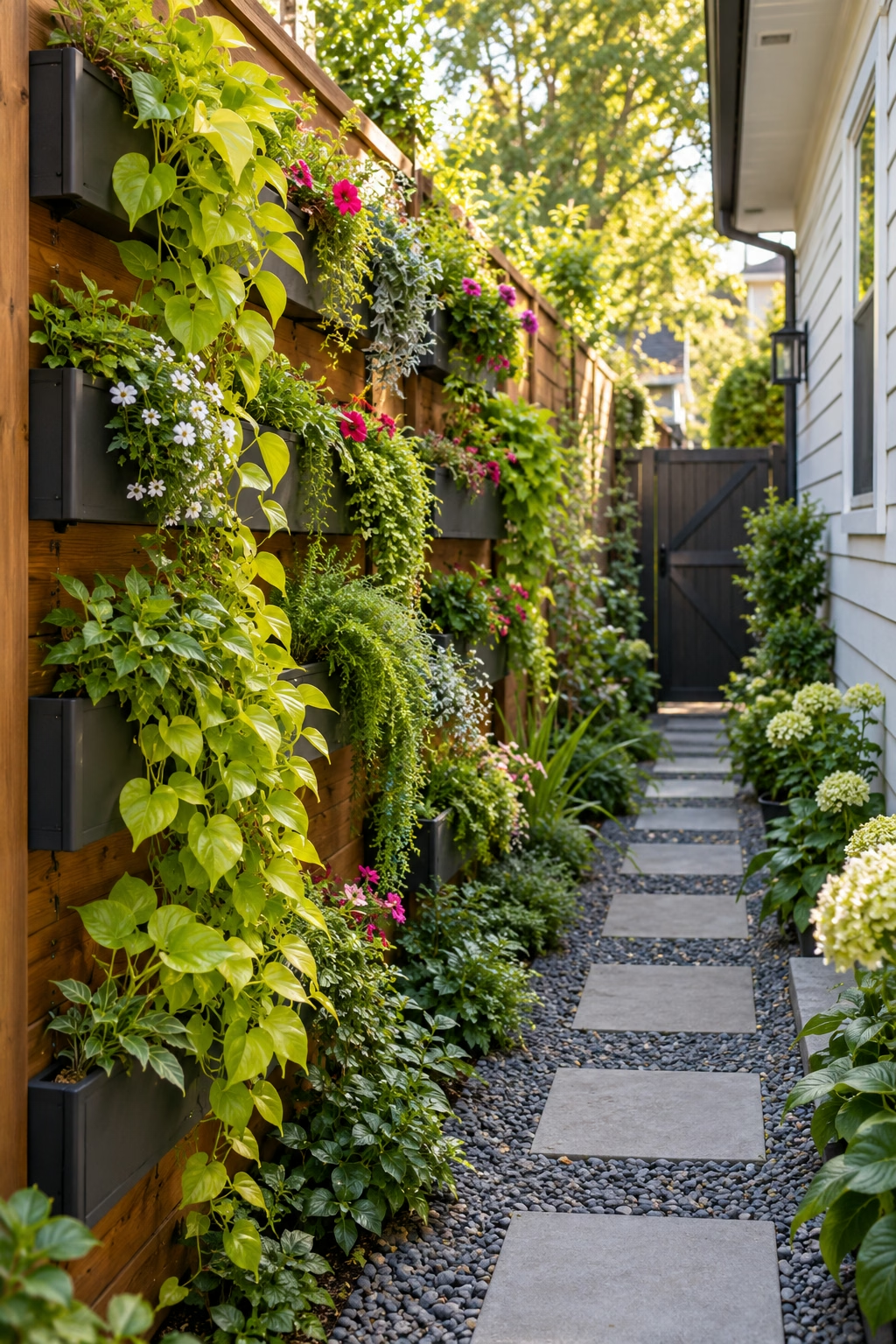
A vertical garden lets you grow plants without sacrificing much ground space.
Wall-mounted planters, modular planting systems, and sturdy railing containers can all work in a narrow side yard.
You might grow trailing foliage, small flowering plants, or herbs in individual containers arranged along a fence.
Using matching planters helps create a consistent look, while different plant textures add visual interest.
Choose lightweight containers with drainage holes and use a support system rated for the total weight of wet soil and plants.
This approach is especially useful when you want greenery but need to keep the ground-level passage clear.
14. Grow Vegetables in Narrow Raised Garden Beds
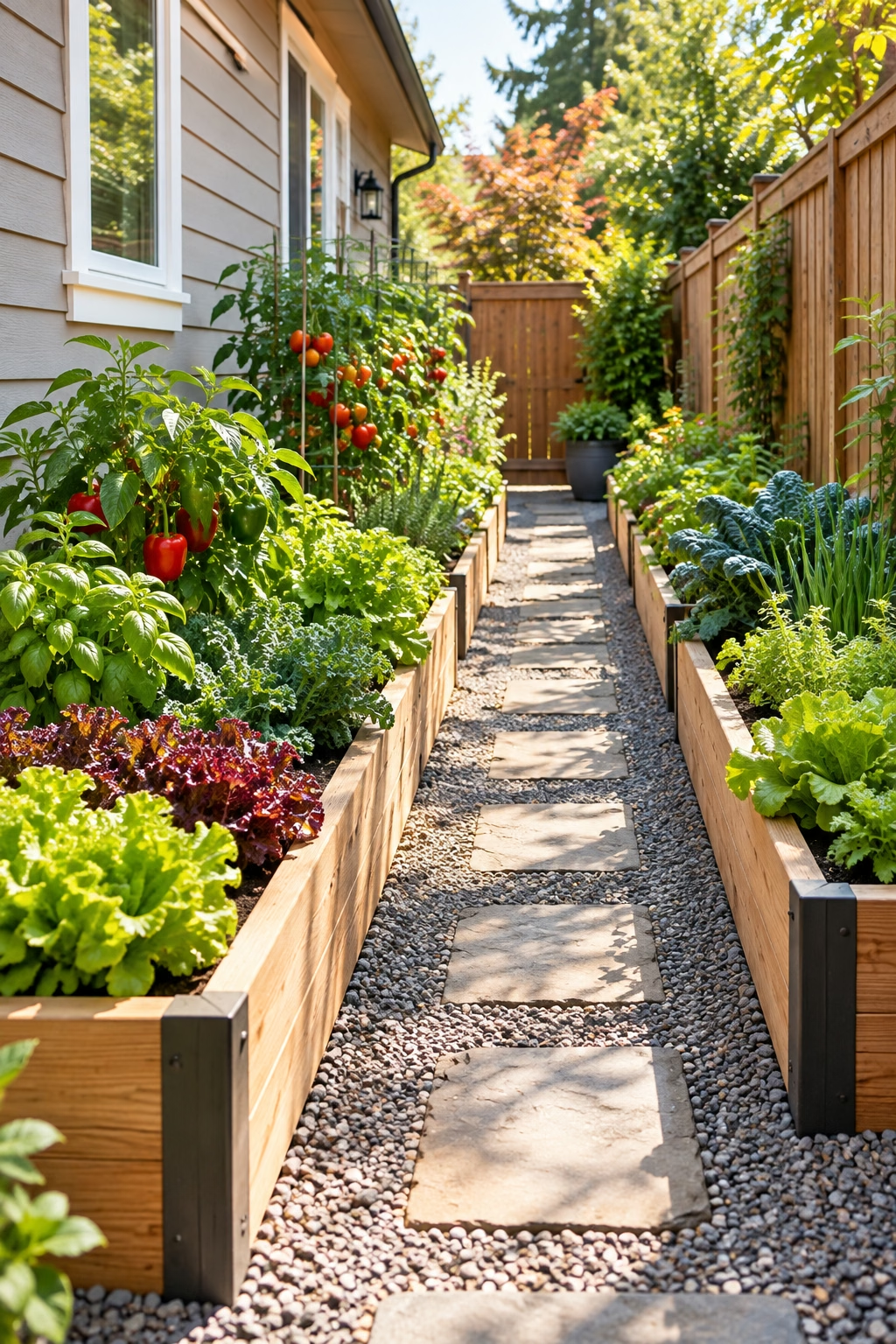
If your side yard receives enough direct sunlight, you could turn part of it into a productive vegetable garden.
Long, narrow raised beds can fit neatly alongside a fence while leaving room for a walkway.
Depending on the season and local climate, grow leafy greens, lettuce, radishes, peppers, or other vegetables suited to the available sunlight.
Raised beds help create defined planting areas and make gardening feel more organized.
Use a suitable soil mix, provide drainage, and place the beds where you can reach plants comfortably.
For crops that need abundant sun, make sure the building or fence doesn’t shade them for most of the day.
15. Train an Espalier Fruit Tree Against a Fence
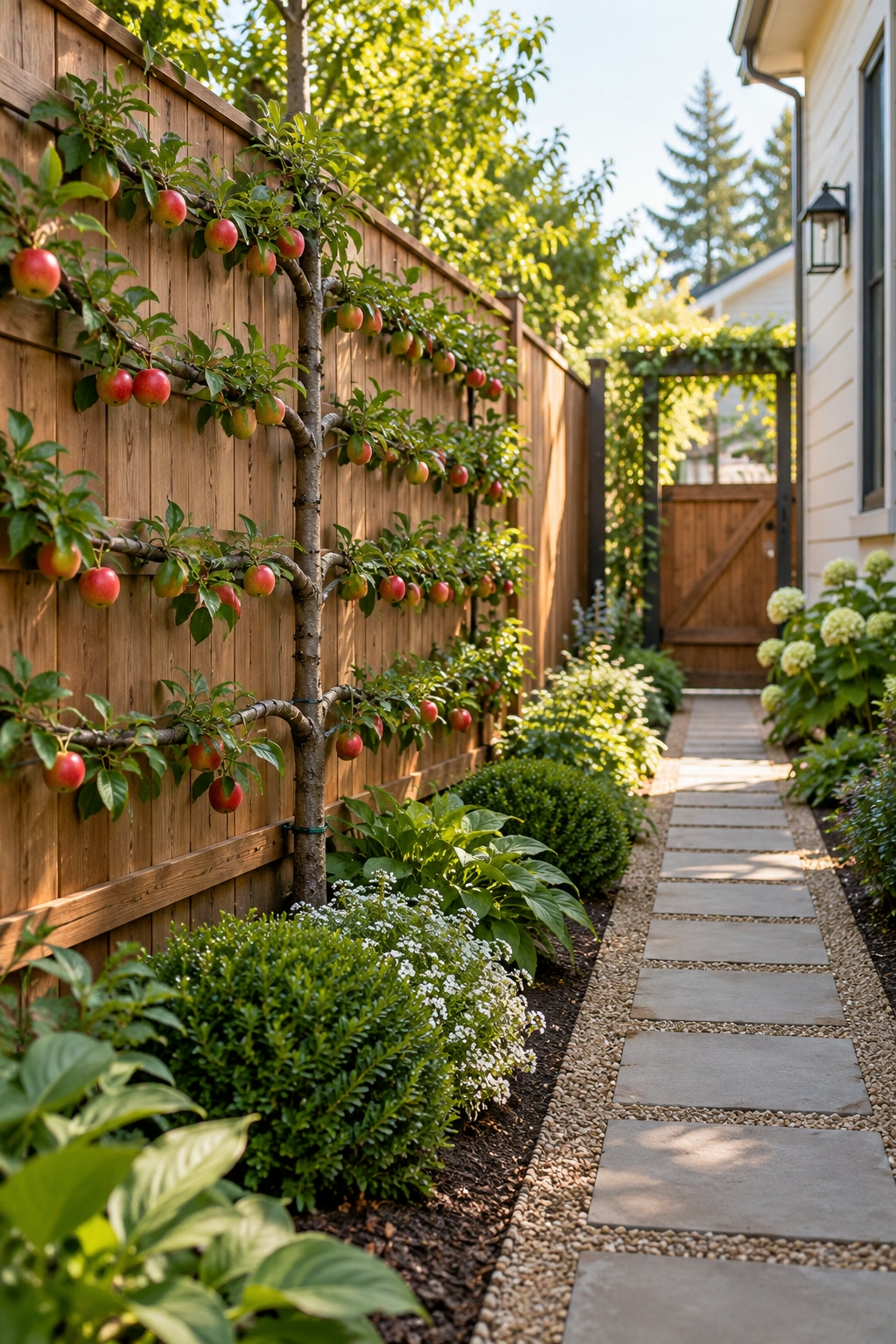
Espalier is a traditional technique for growing a fruit tree in a flat, controlled shape along a support.
It can be an attractive option for a sunny side yard where a conventional fruit tree would occupy too much space.
Apple and pear trees are commonly trained this way, with branches arranged horizontally along wires.
The resulting shape creates an organized, decorative display that offers spring flowers and, under suitable conditions, fruit.
Espalier trees require careful training, pruning, and suitable rootstocks. They also need more horizontal fence space than many people expect.
For a homeowner who enjoys gardening, however, this can be a rewarding way to use an otherwise empty fence.
16. Arrange a Beautiful Container Garden
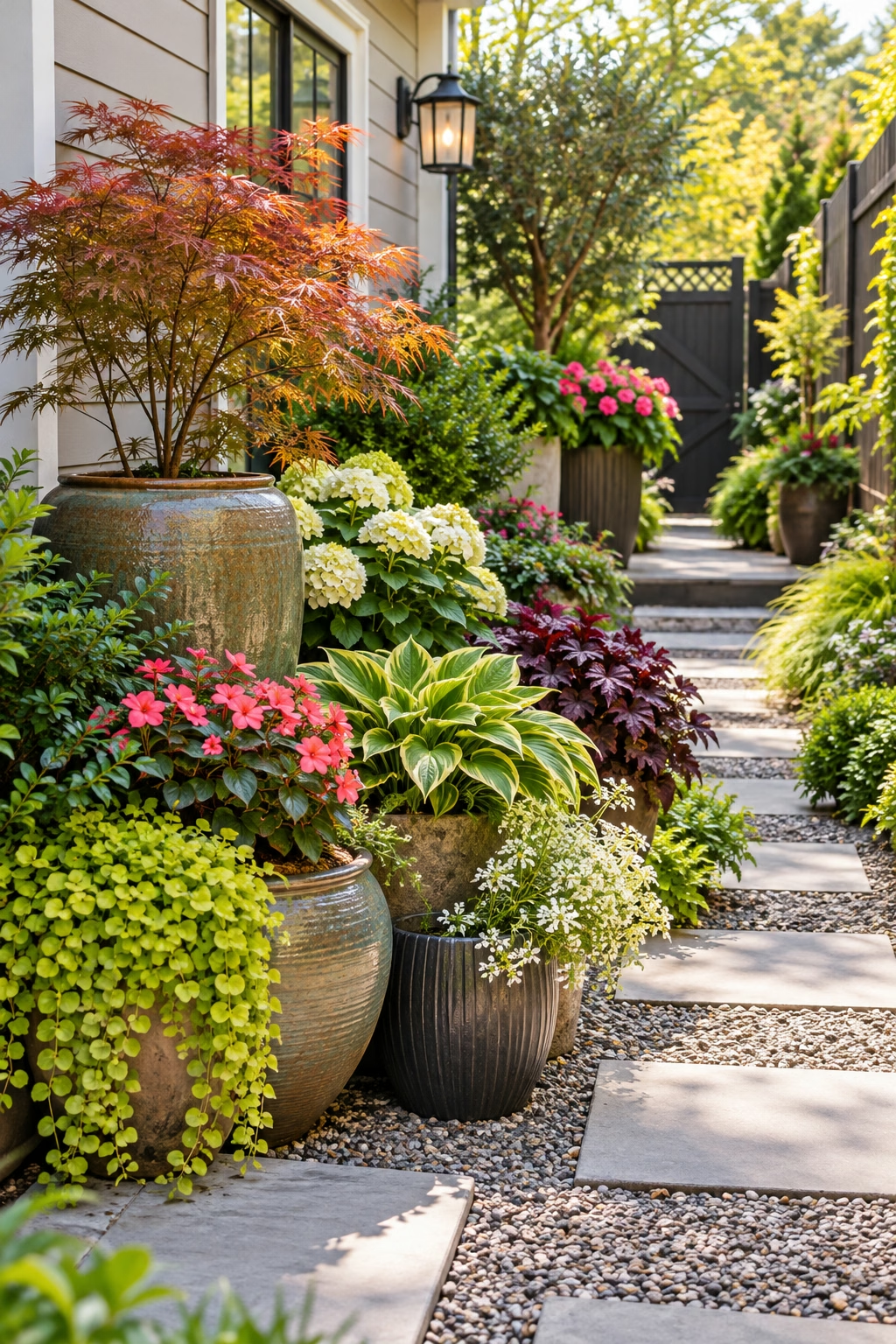
Container gardening is an excellent choice when you don’t want to dig into the ground or make permanent changes.
Arrange several pots along the side of the house or against a fence, combining plants with different heights and leaf shapes.
Tall containers can hold compact shrubs or upright foliage plants, while smaller pots can display colorful seasonal flowers.
Terracotta pots offer a traditional garden feeling, while matching black or concrete-colored planters suit modern homes.
For a visually balanced arrangement, choose a consistent material or color and vary the container sizes.
Make sure every container has proper drainage, and avoid placing pots where they will obstruct doors, gates, or walking routes.
17. Create a Small Herb Garden
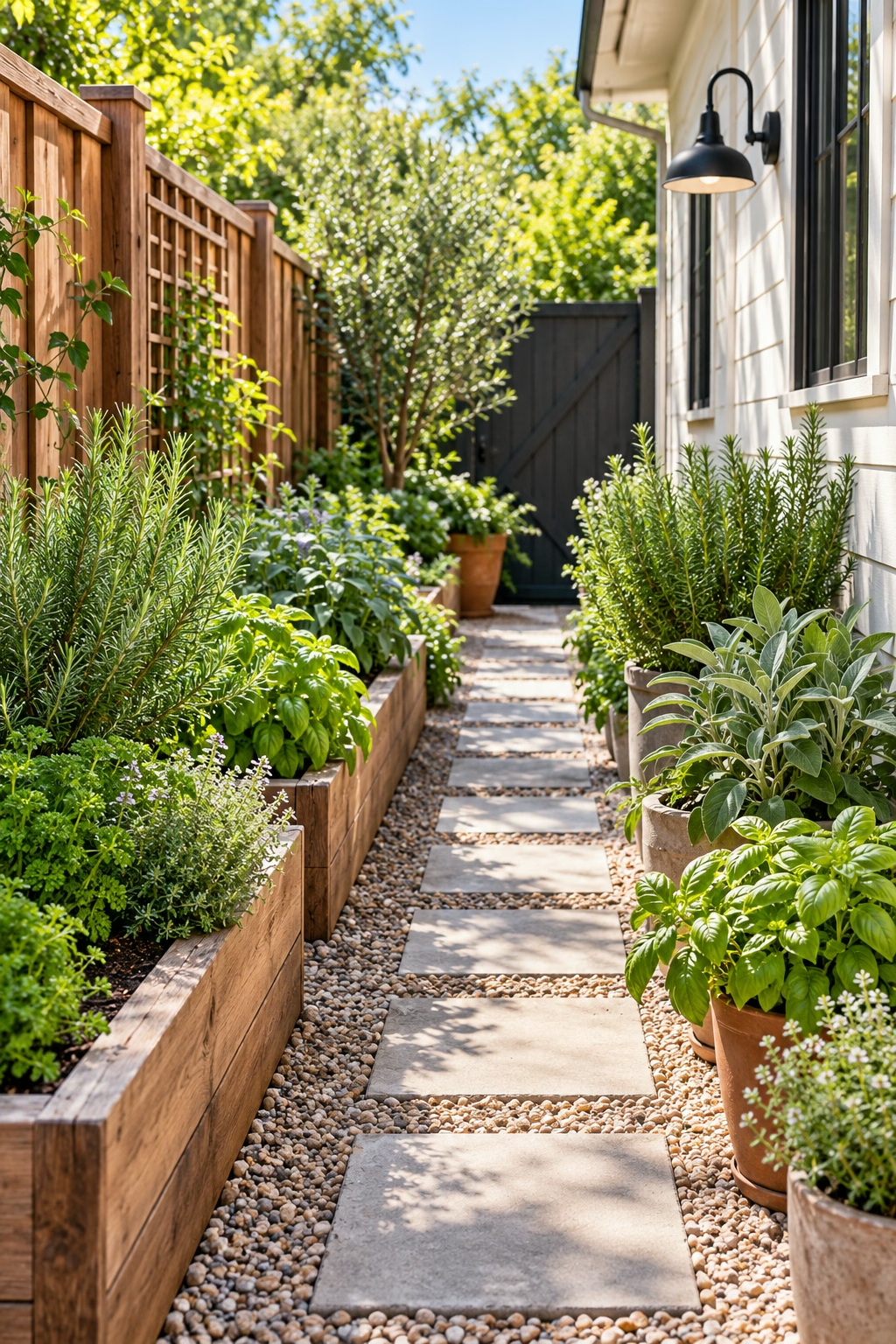
A sunny side yard can provide a convenient place to grow fresh culinary herbs.
Instead of dedicating a large garden bed to herbs, use a narrow planting strip, raised planter, or a series of containers.
Rosemary, thyme, sage, basil, and parsley are popular options, although their sunlight, watering, and temperature needs differ.
Arrange the plants so that taller varieties don’t shade smaller ones.
A gravel path beside the herb garden makes harvesting and maintenance more convenient.
This idea works especially well for a side yard near the kitchen, where fresh herbs are easy to reach while cooking.
Be sure to choose a location with clean soil and enough light for the herbs you want to grow.
18. Give the Side Yard a Tropical Garden Look
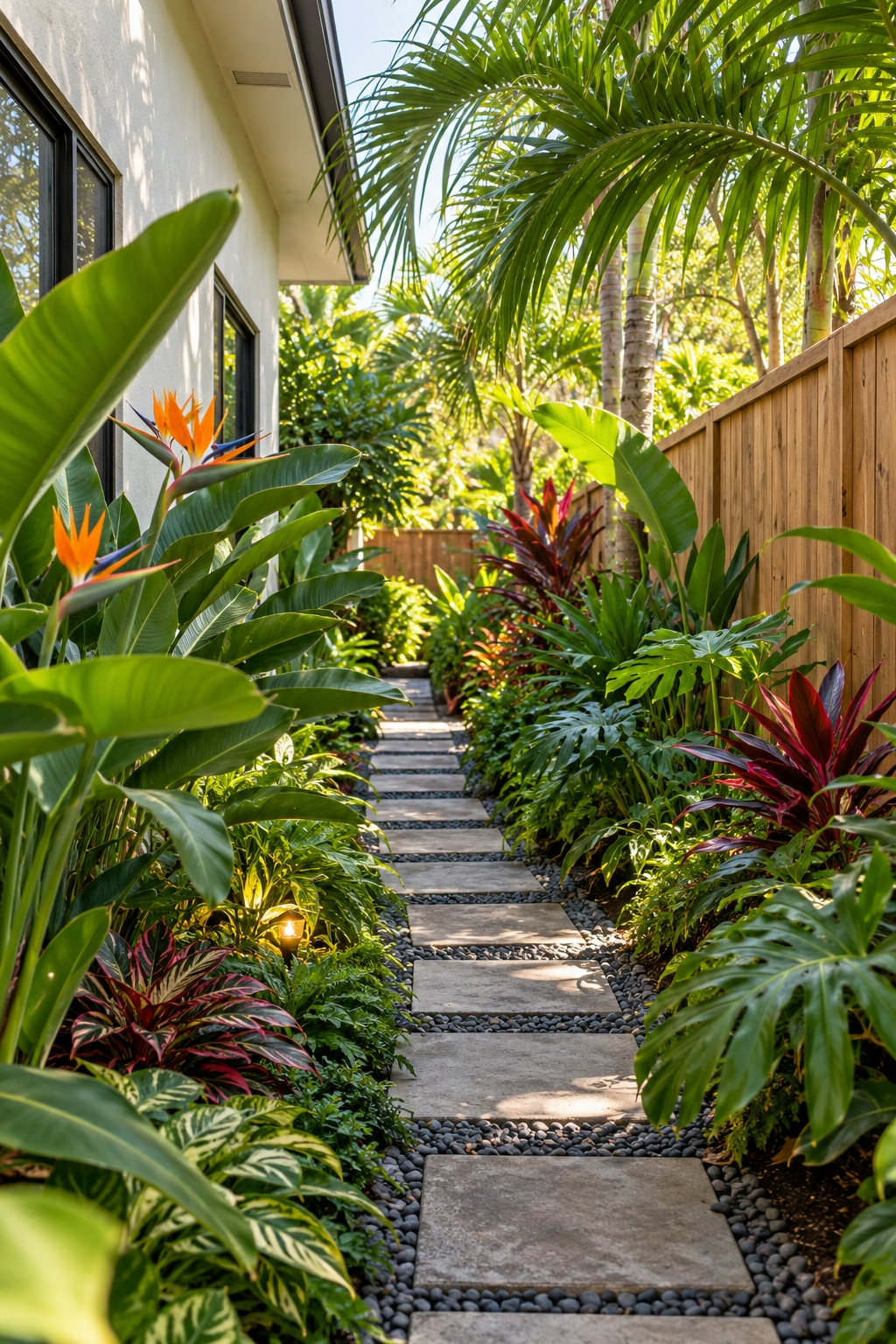
A tropical-inspired side yard can make an ordinary passage feel lush and inviting.
Large leaves, layered foliage, and rich green planting create a dramatic contrast with stone walkways and wooden fences.
In warm climates, suitable palms, philodendrons, bird of paradise, or other tropical plants may provide the effect you want.
In cooler climates, choose cold-hardy plants with bold foliage or use tropical plants in containers that can be protected during winter.
A narrow pathway through dense but carefully spaced greenery creates an attractive garden setting.
Use a few larger foliage plants as focal points instead of trying to squeeze too many varieties into the space.
19. Design a Japanese-Inspired Rock Garden
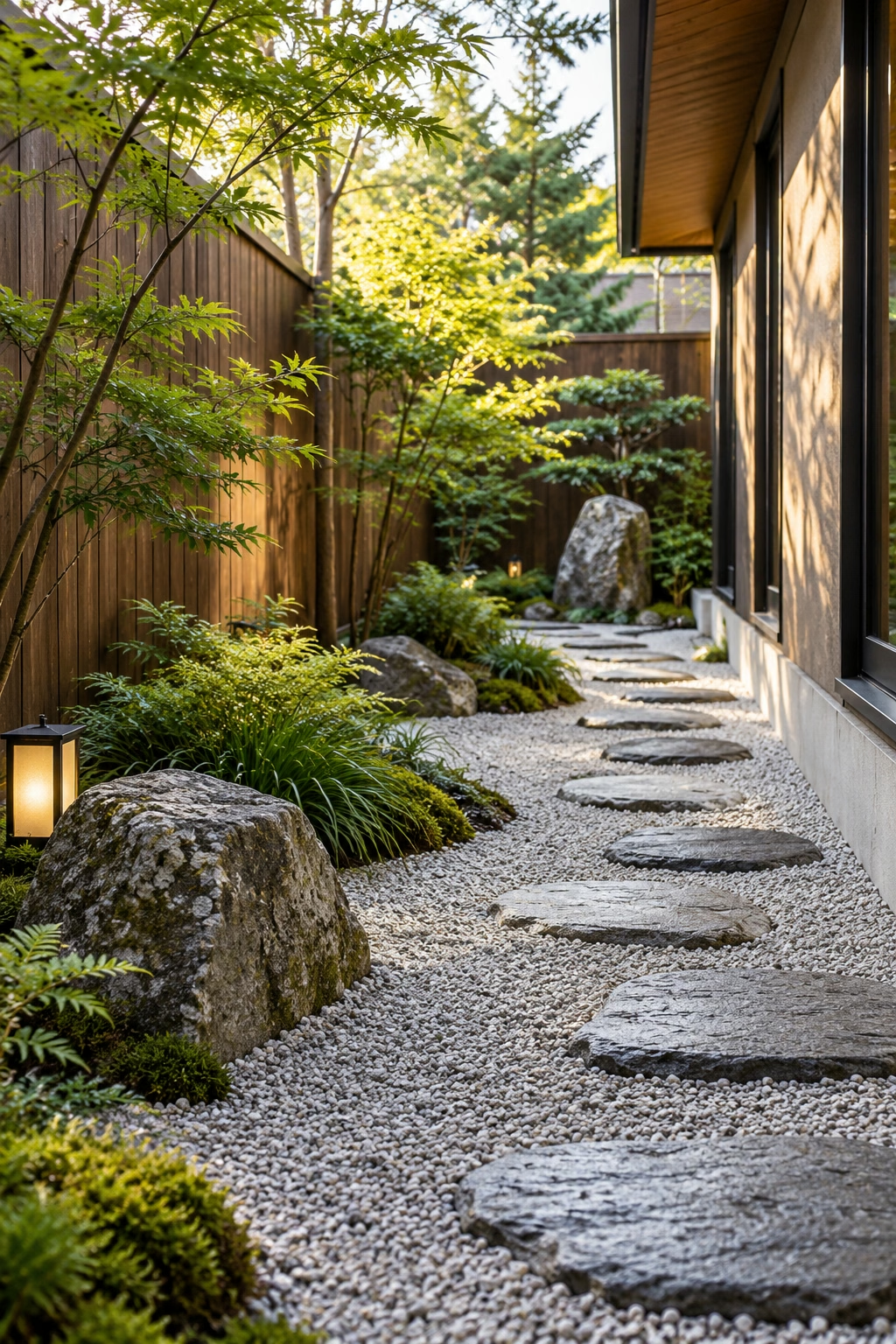
If you prefer simple, peaceful landscaping, a Japanese-inspired garden can be a beautiful choice.
Start with a restrained combination of natural stone, gravel, and carefully placed plants.
A few larger rocks can create visual structure, while low-growing greenery softens the edges.
Depending on your climate, compact evergreens, ferns, moss-like groundcovers, or a small Japanese maple in a suitable location can complement the design.
Avoid overcrowding the space with too many decorative elements.
The beauty of this style comes from balance, texture, and thoughtful placement.
A narrow side yard is particularly well suited to a small, minimalist composition that can be appreciated from a nearby window or walkway.
20. Add a Decorative Dry Creek Bed
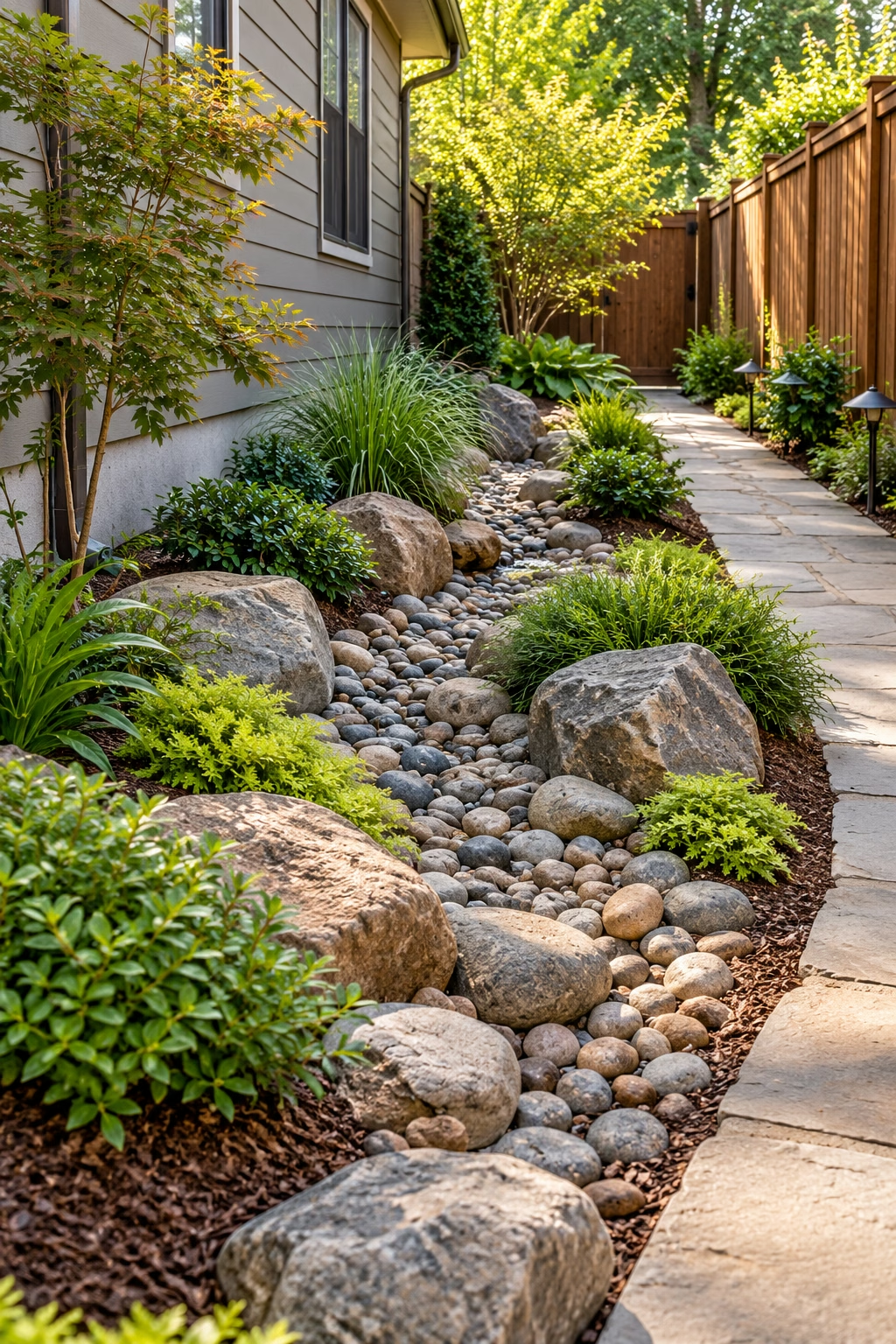
A dry creek bed can bring a natural landscape feature to a side yard while also serving as part of a drainage design.
The idea is to create a shallow, stone-lined channel that resembles a small streambed.
Use a mix of appropriately sized river stones and larger rocks for a natural appearance. Add ornamental grasses or suitable perennials along the edges to soften the hard surfaces.
In a yard with stormwater runoff, the creek bed may help guide water toward a properly designed drainage outlet.
However, a decorative rock channel isn’t automatically a drainage solution. Its slope, capacity, destination, and relationship to the home’s foundation all need to be considered.
21. Build a Rain Garden Where Space Allows
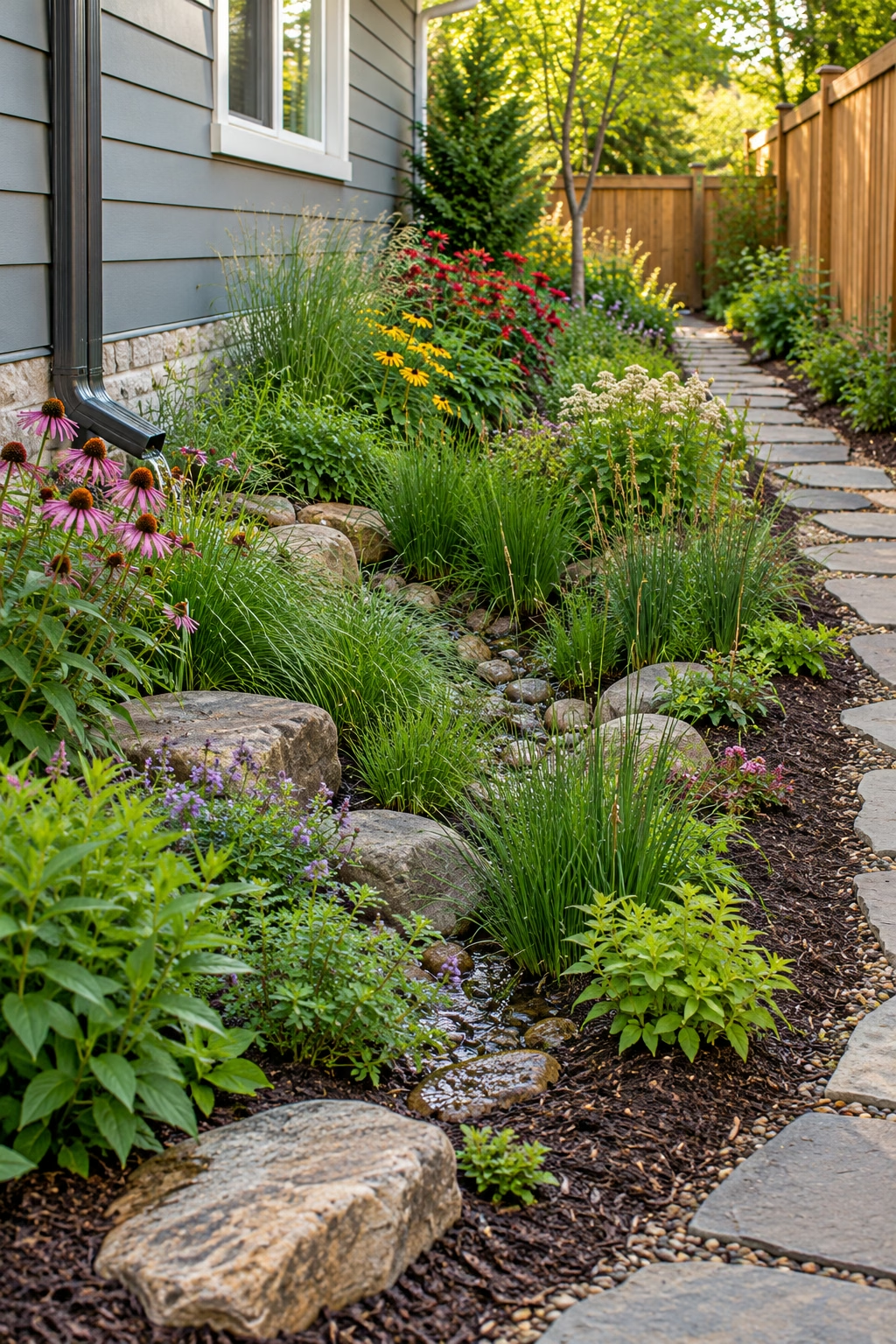
A rain garden is a planted depression designed to collect and absorb stormwater runoff.
It can provide a beautiful landscape feature while helping manage water from roofs, walkways, or other outdoor surfaces.
Use plants adapted to temporary wet conditions as well as the drier periods between rainfall.
Native flowers, grasses, and sedges may be suitable depending on your location.
A rain garden can bring seasonal color and wildlife interest to a landscape.
However, it is not appropriate for every narrow side yard. University extension guidance generally recommends keeping rain gardens at least 10 feet from building foundations and avoiding underground utilities, septic systems, and permanently waterlogged sites.
If your side yard cannot meet the required setbacks, choose another drainage solution.
22. Illuminate the Walkway With Outdoor Lighting
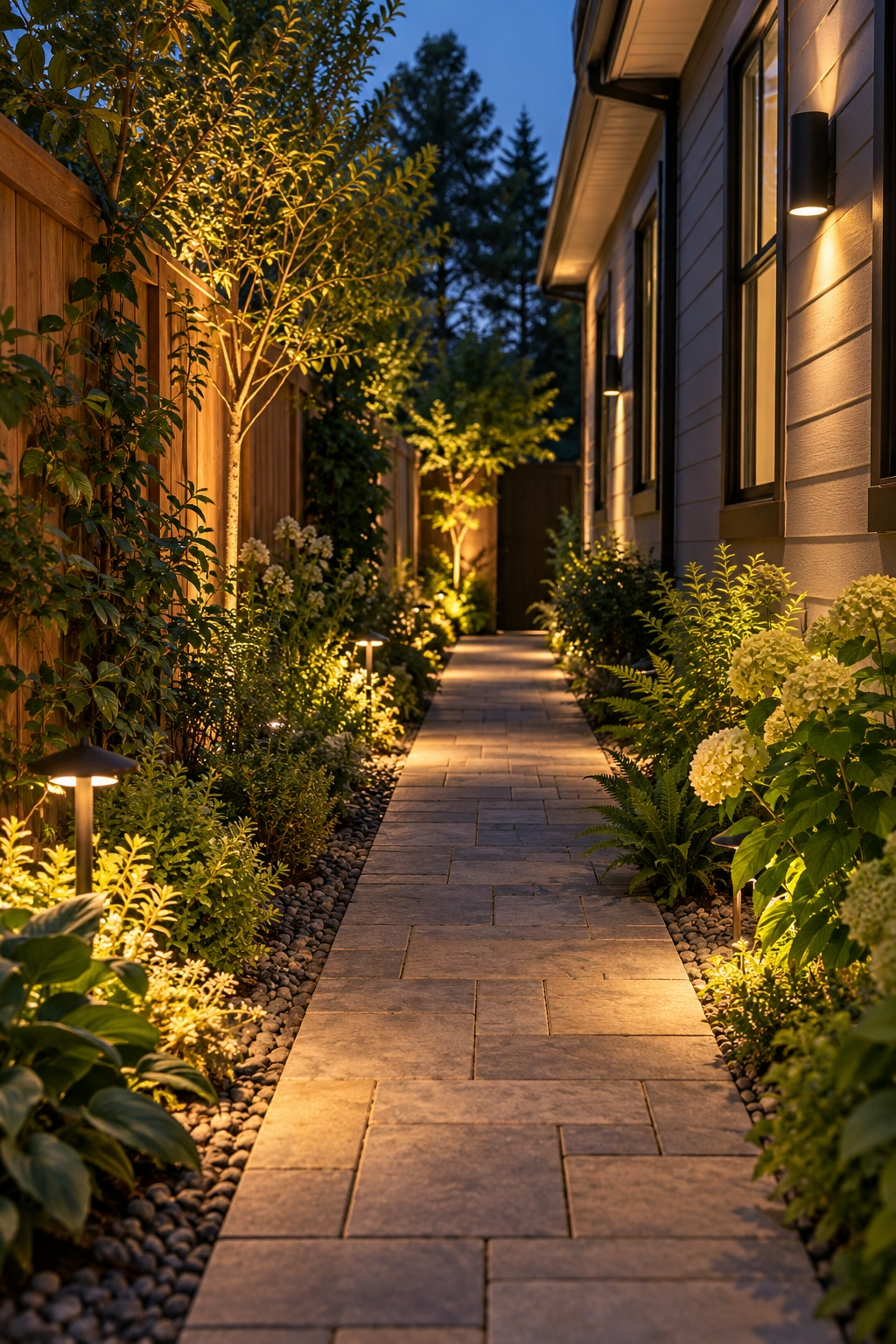
Outdoor lighting can turn a simple side yard into a welcoming passage after sunset.
Small path lights positioned along a walkway help define the route, while carefully placed wall lights can illuminate gates, steps, and entrances.
Warm lighting often looks particularly attractive against natural stone, wooden fences, and green foliage.
For a modern design, consider understated fixtures that blend into the planting rather than dominating the landscape.
You can also use low-voltage landscape lighting for a more permanent installation.
Keep the lighting practical and comfortable. Shield fixtures, direct light toward the ground, and avoid shining bright lights into neighboring windows. Timers or motion sensors can reduce unnecessary nighttime illumination.
23. Create a Cozy Side Yard Seating Nook
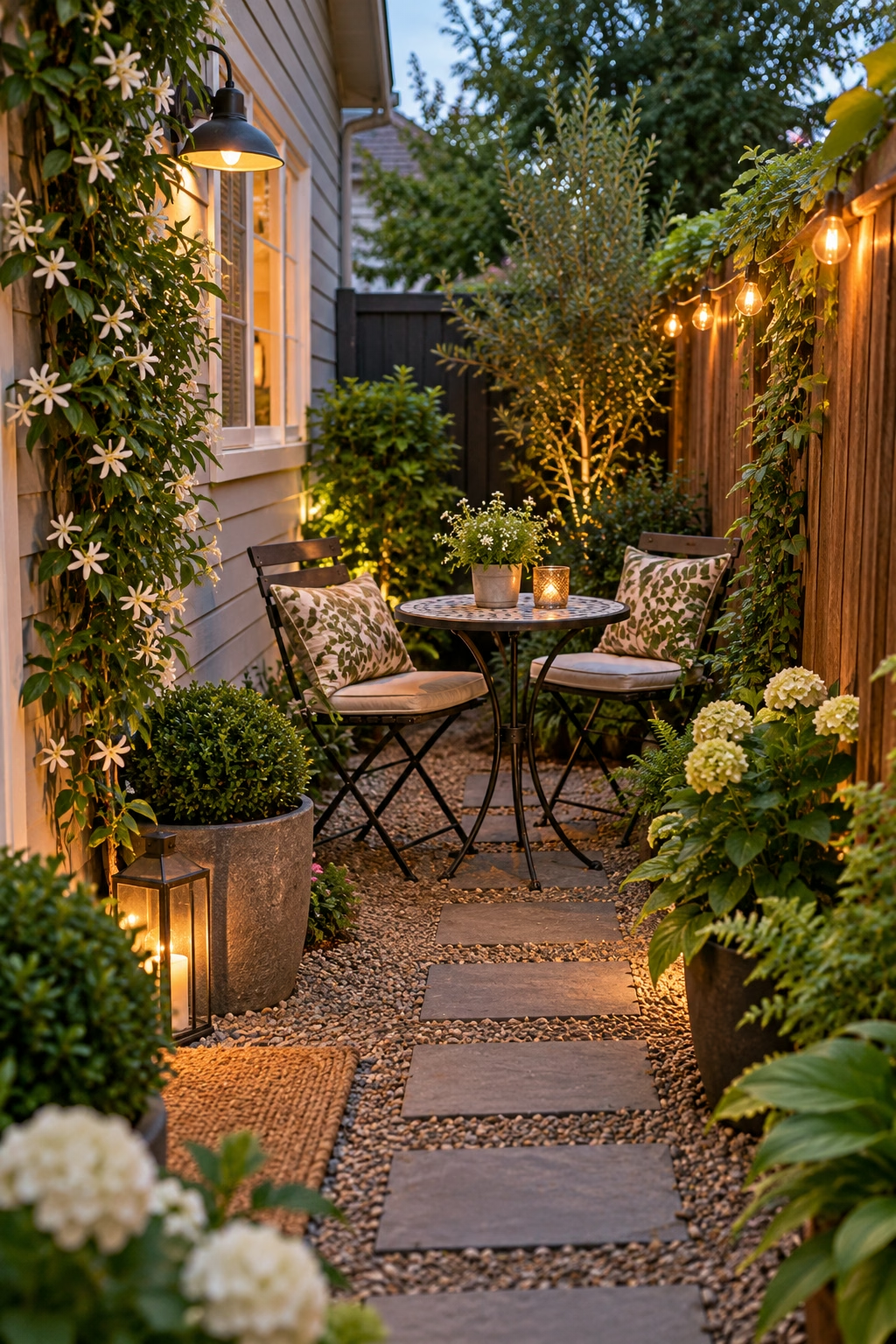
If your side yard is wide enough, consider turning a small section into a private seating area.
A compact bistro table and two chairs can create a charming spot for morning coffee or an afternoon break.
Start with a stable surface such as patio pavers, then add a few container plants or a narrow flower bed.
A wooden privacy screen or trellis can help separate the seating area from neighboring views.
Soft outdoor lighting can make the space enjoyable in the evening.
Keep the furniture proportional to the available area. The seating should feel comfortable without blocking the path to the backyard or nearby doors.
24. Refresh the Space With Mulch and Simple Garden Edging
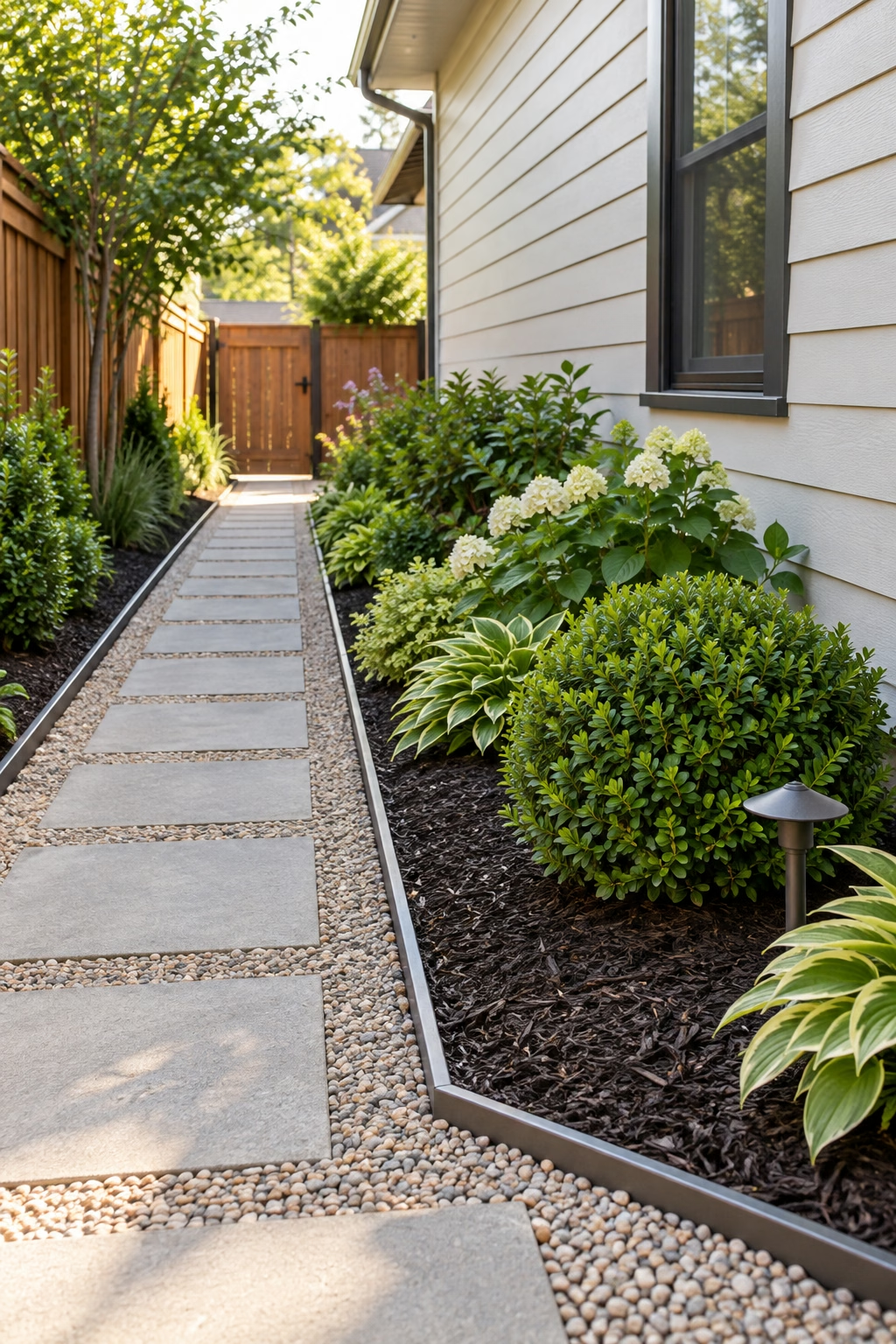
A side yard makeover doesn’t always need expensive materials or major construction.
Sometimes a few tidy planting beds and fresh mulch can make the biggest difference.
Define the edge of the garden with metal edging, bricks, or natural stone. Remove unwanted weeds and add a suitable layer of organic mulch around existing plants.
Choose a mulch color that works with the house and surrounding landscape.
A combination of dark mulch, compact shrubs, and simple edging can create a clean, finished appearance.
Avoid piling mulch against plant stems or the home’s siding, and keep soil and mulch levels below areas where they could create moisture problems.
This is an especially practical option for homeowners working with a limited landscaping budget.
25. Add a Garden Arbor or Decorative Gate
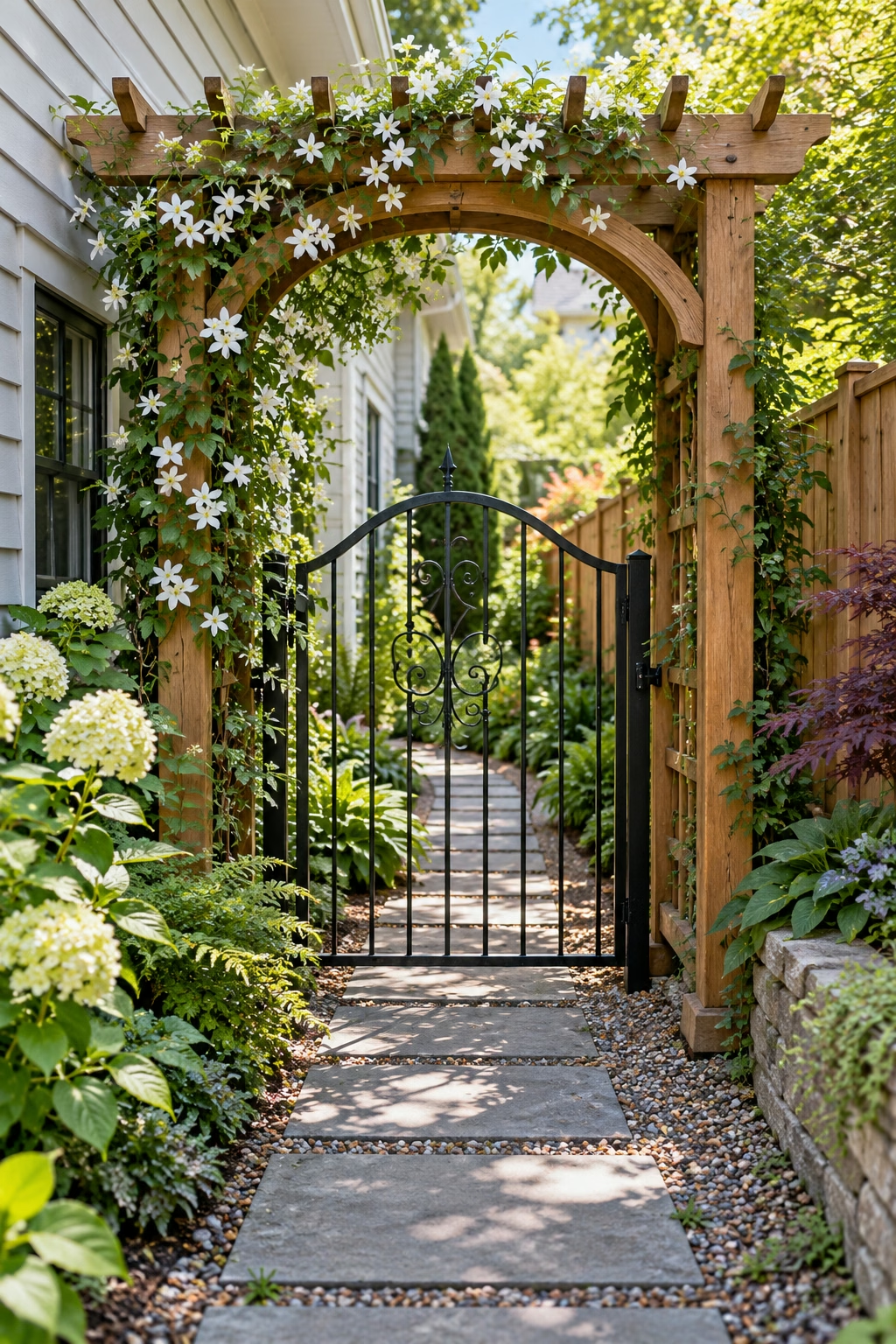
A garden arbor can turn the entrance to a side yard into an inviting feature.
Position a simple wooden or metal arbor where the pathway begins or where it opens into the backyard.
You can leave the structure unplanted for a clean architectural look or train suitable climbing vines over it for a softer garden appearance.
A decorative gate can provide privacy and give the side yard a more defined identity.
For traditional homes, natural wood and flowering vines create a cottage-style entrance.
For modern homes, simple black metal or clean-lined wood structures can work beautifully.
Always check the available clearance and ensure the entrance remains convenient for everyday access.
26. Create a Practical and Attractive Dog Run
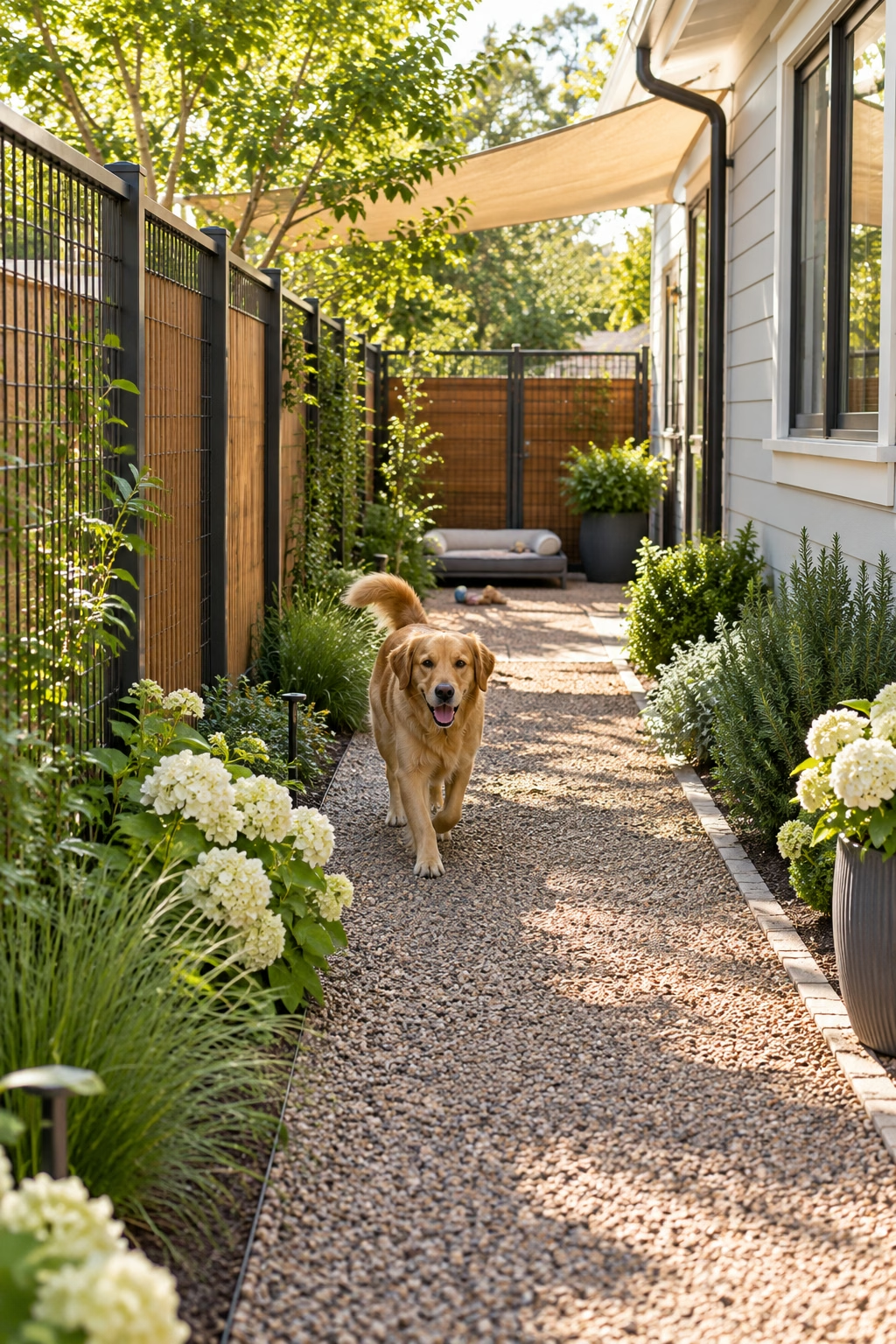
A side yard can sometimes work well as a designated outdoor area for a dog, especially if it’s already enclosed by fencing.
A functional dog run should have secure gates, suitable shade, access to water, and a surface that is comfortable for the animal.
Depending on drainage and maintenance needs, the ground may include durable turf, pet-appropriate groundcover, or specially designed dog-run surfacing.
Avoid sharp stones, irritating materials, and plants that may be toxic to pets.
You can keep the area attractive by placing hardy, pet-safe shrubs behind protected planting borders.
Remember that a narrow dog run still needs enough room for the dog to turn around and move comfortably. It should complement regular exercise, not replace it.
27. Hide Trash Bins With a Stylish Storage Screen
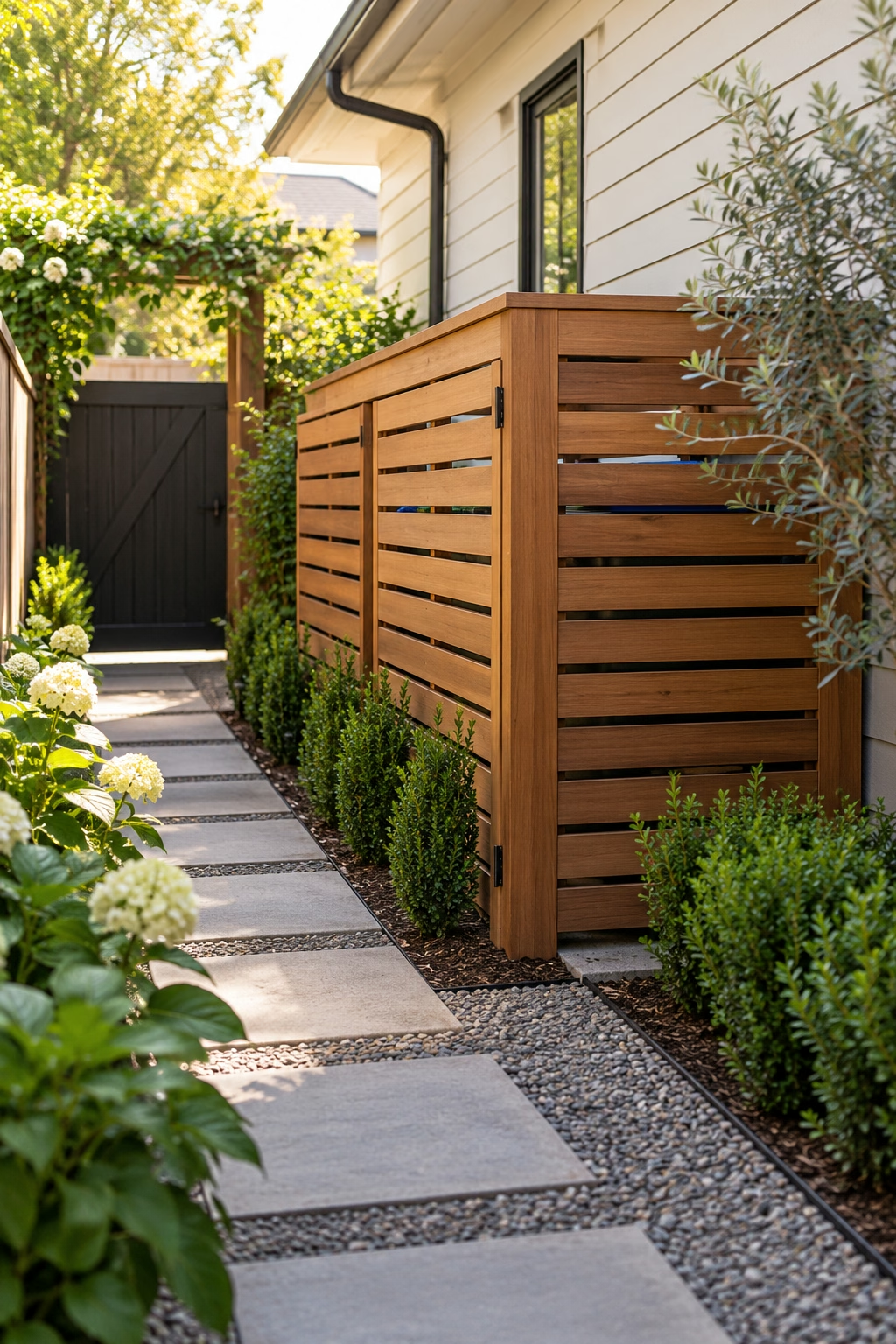
Not every side yard needs to become a decorative garden. Some spaces are most useful for everyday storage.
A simple wooden screen or purpose-built enclosure can help conceal trash and recycling bins while keeping them easy to access.
Horizontal wooden slats work particularly well with modern landscaping, while traditional vertical fencing may better suit a cottage-style home.
Pair the enclosure with a firm walkway and a narrow border of greenery to make the space look intentional.
Keep the enclosure easy to open and large enough for bins to be moved without difficulty.
Avoid blocking utility meters, air-conditioning equipment, drainage systems, or required service access.
A well-organized utility area can be just as valuable as a decorative garden.
How to Choose the Best Side Yard Landscaping Idea
The right design depends on how you use the space and the conditions around your home.
| Side yard condition | Ideas worth considering |
|---|---|
| Very narrow passage | Stepping stones, trellises, vertical planters |
| Mostly shaded | Ferns, hostas, woodland groundcovers |
| Hot and sunny | Gravel garden, drought-tolerant plants, herb garden |
| Limited budget | Mulch, edging, simple gravel paths, container planting |
| Privacy concerns | Narrow evergreen shrubs, wooden screens, climbing vines |
| Poor lawn growth | Groundcover, gravel garden, paved walkway |
| Enough room to relax | Small bistro nook, decorative garden seating |
| Drainage concerns | Proper grading, professionally planned drainage, suitable rain garden |
| Family with dogs | Secure, pet-appropriate dog run |
| Utility and storage needs | Concealed trash bins, unobstructed service path |
Before digging, homeowners in the United States should contact 811 to have underground utilities marked. Ensure water continues to drain safely away from the house, and preserve access to outdoor equipment and necessary exits.
Frequently Asked Questions
What is the cheapest way to landscape a side yard?
Some affordable options include fresh mulch, simple garden edging, container plants, and a basic gravel walkway. Reusing existing healthy plants and improving one section at a time can also help control costs.
What can I plant on the shady side of my house?
Hostas, ferns, brunnera, sedges, and certain woodland groundcovers can work well in shady side yards. Your choices should depend on your local climate, soil moisture, and the amount of available sunlight.
How do I make a narrow side yard look bigger?
Use a clear walking route, repeat a limited number of plants, and take advantage of vertical growing space. Gentle path curves, open sightlines, and carefully placed focal points can also help the area feel less like a long corridor.
What is the best low-maintenance landscaping for a side yard?
A stable pathway combined with appropriately sized shrubs, native plants, and mulched planting beds is often easier to maintain than a narrow lawn. Gravel gardens can also be a good option in sunny areas with suitable drainage.
Can I landscape my side yard without grass?
Absolutely. Gravel, pavers, stepping stones, planting beds, and groundcovers can create a beautiful landscape without traditional lawn grass. Choose materials that suit the space’s drainage conditions and the amount of foot traffic.
Final Thoughts
Your side yard might be small, narrow, shady, or awkwardly shaped, but that doesn’t mean it has to stay forgotten.
Sometimes all it takes is a beautiful stone pathway and a few well-placed plants. Other spaces may benefit from a privacy screen, colorful flower border, or a comfortable little garden nook.
The secret is to work with what you already have.
Choose plants suited to the sunlight, select materials that complement your home, and keep everyday access and maintenance in mind.
Whether you’re planning a complete transformation or a simple weekend improvement, these side yard landscaping ideas can help you create an outdoor space that looks beautiful and works for your lifestyle.


