
Walk past a house with smooth gray and tan stones tucked around its shrubs, spilling along a path, and edging the patio, and the whole yard looks tidy and settled. Nothing is fading, washing away, or begging to be raked. The stones simply sit there looking good, rain or shine.
River rock earns that reputation because it does real work while it looks nice. The rounded stones drain quickly, hold soil in place, never need to be replaced the way bark mulch does, and come in natural colors that suit almost any home, from a brick ranch to a modern farmhouse. Used well, it softens hard edges and brings a little of the creek bank into an ordinary yard.
These 21 river rock landscaping ideas cover paths, foundation strips, rock-mulched beds, pond and fountain edges, fire pit pads, practical fixes for downspouts and slopes, and a few creative touches. Each one includes sizing, plant pairings, and honest notes about cost and upkeep so you can pick the projects that fit your yard.
1. Lay a River Rock Path With Flagstone Stepping Stones
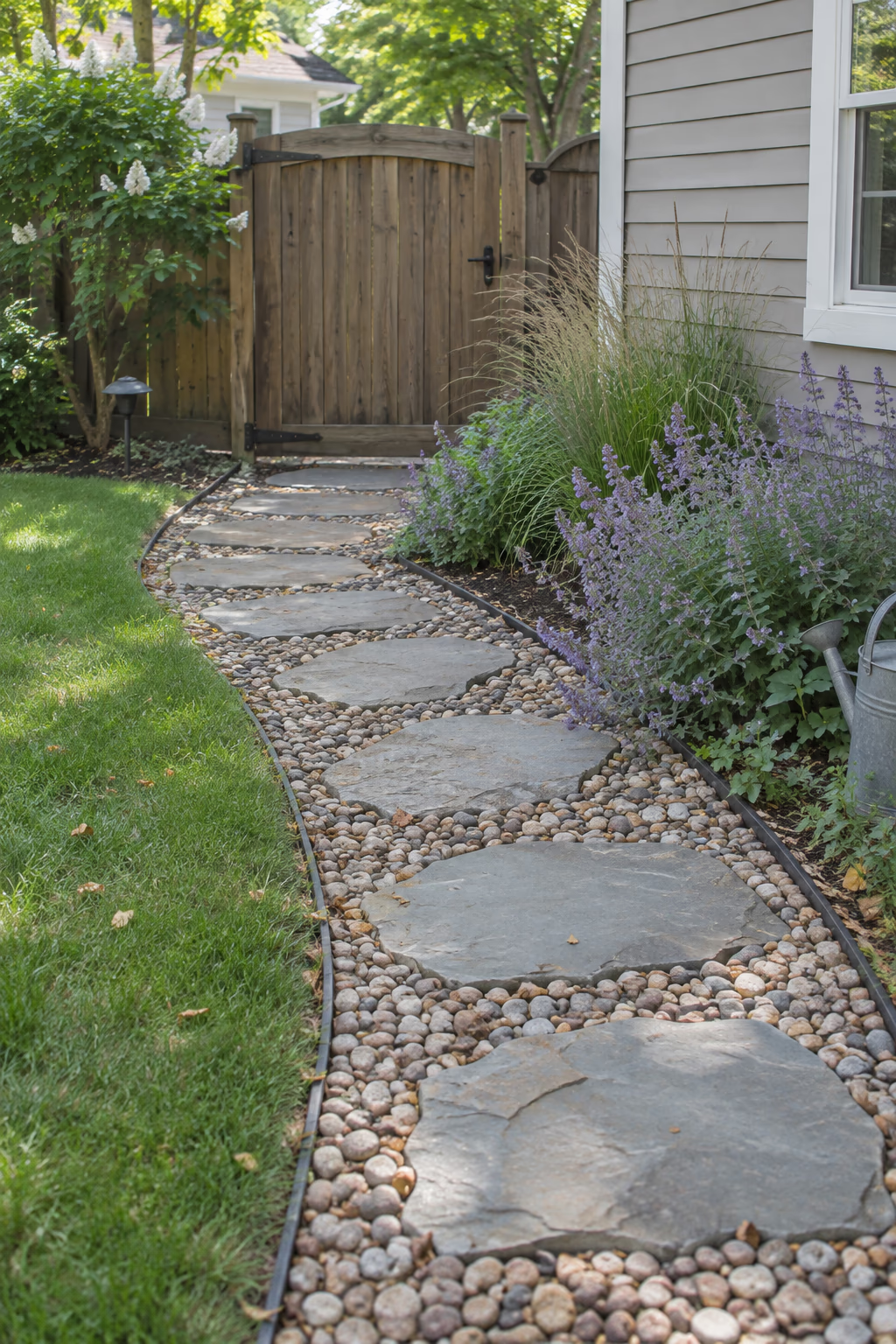
A natural walkway that drains fast and looks finished
Set large flagstones about 24 inches apart, center to center, so they land under a comfortable stride, then fill the gaps and edges with 1- to 2-inch river rock. A path 3 to 4 feet wide feels generous for a front walk or a route to the back gate, while 30 inches is fine for a garden side path.
Dig out 4 to 5 inches, add 2 to 3 inches of compacted crushed gravel under each flagstone, and lay landscape fabric before spreading the rock. Seat the flagstones so they sit about half an inch above the stones; that keeps feet on solid footing and stops pebbles from rolling underfoot.
Install metal or paver edging on both sides, or the rock will gradually drift into the lawn. Loose stones between steppers are not ideal for wheelchairs or strollers, so use larger, closer-set pavers if accessibility matters.
2. Wrap the Foundation in a River Rock Splash Strip
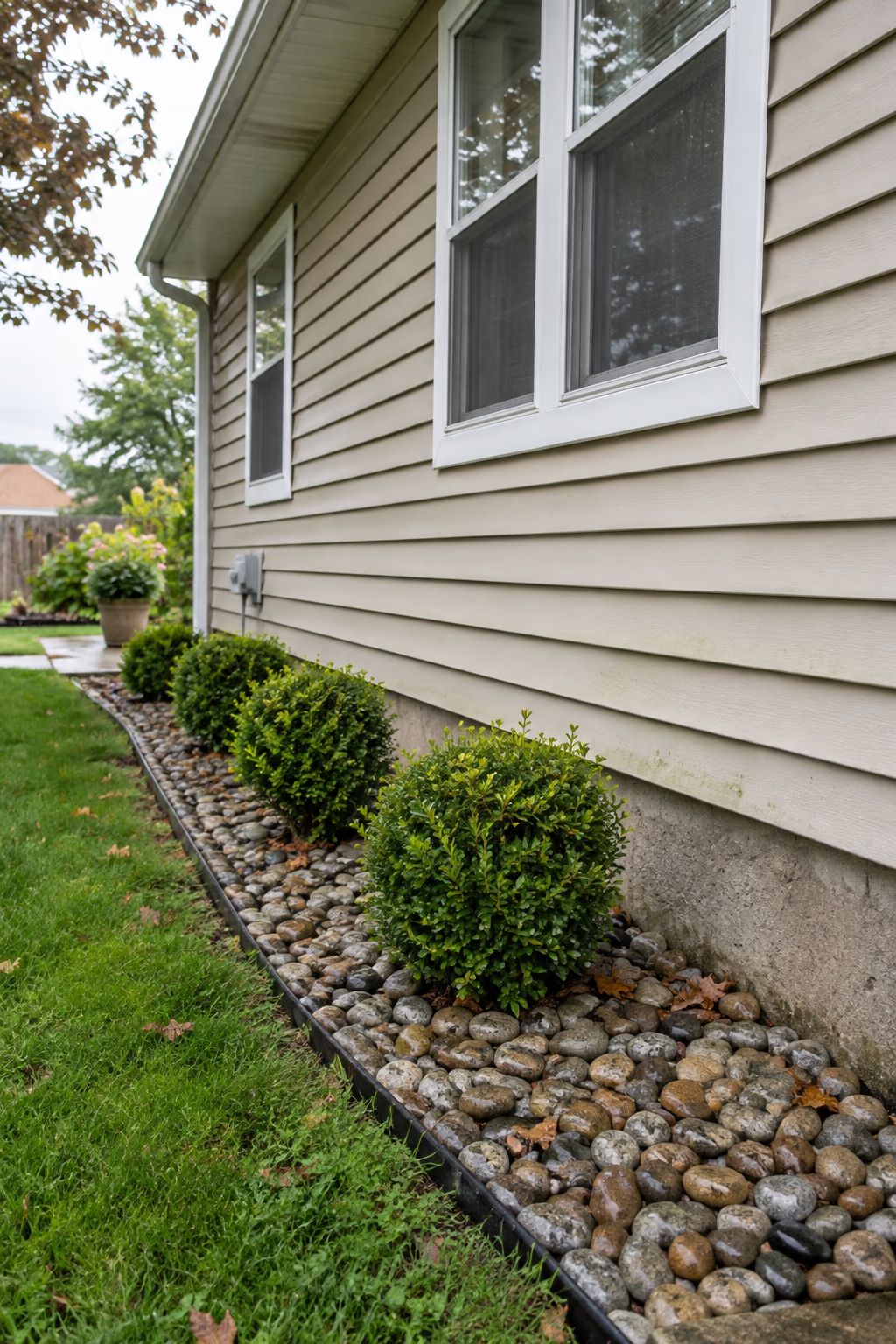
Protect siding and stop mud splashing
A strip of river rock 18 to 24 inches wide along the base of the house catches roof drip, stops soil from splashing onto siding, and gives the front of the home a crisp, clean line. Medium stones in the 1- to 3-inch range stay put better than pea gravel when water drops from the eaves.
Before you add rock, check that the soil slopes away from the house; a common guideline is a fall of about 6 inches over the first 10 feet. Lay fabric, add 2 to 3 inches of rock, and keep the top of the stones several inches below siding, stucco weep screeds, and wood framing.
In areas with termites, a clear rock strip actually makes inspections easier than thick mulch against the foundation. Just avoid piling stones up against vents or covering the termite treatment zone your pest control company relies on.
3. Swap Bark Mulch for River Rock Around Shrubs
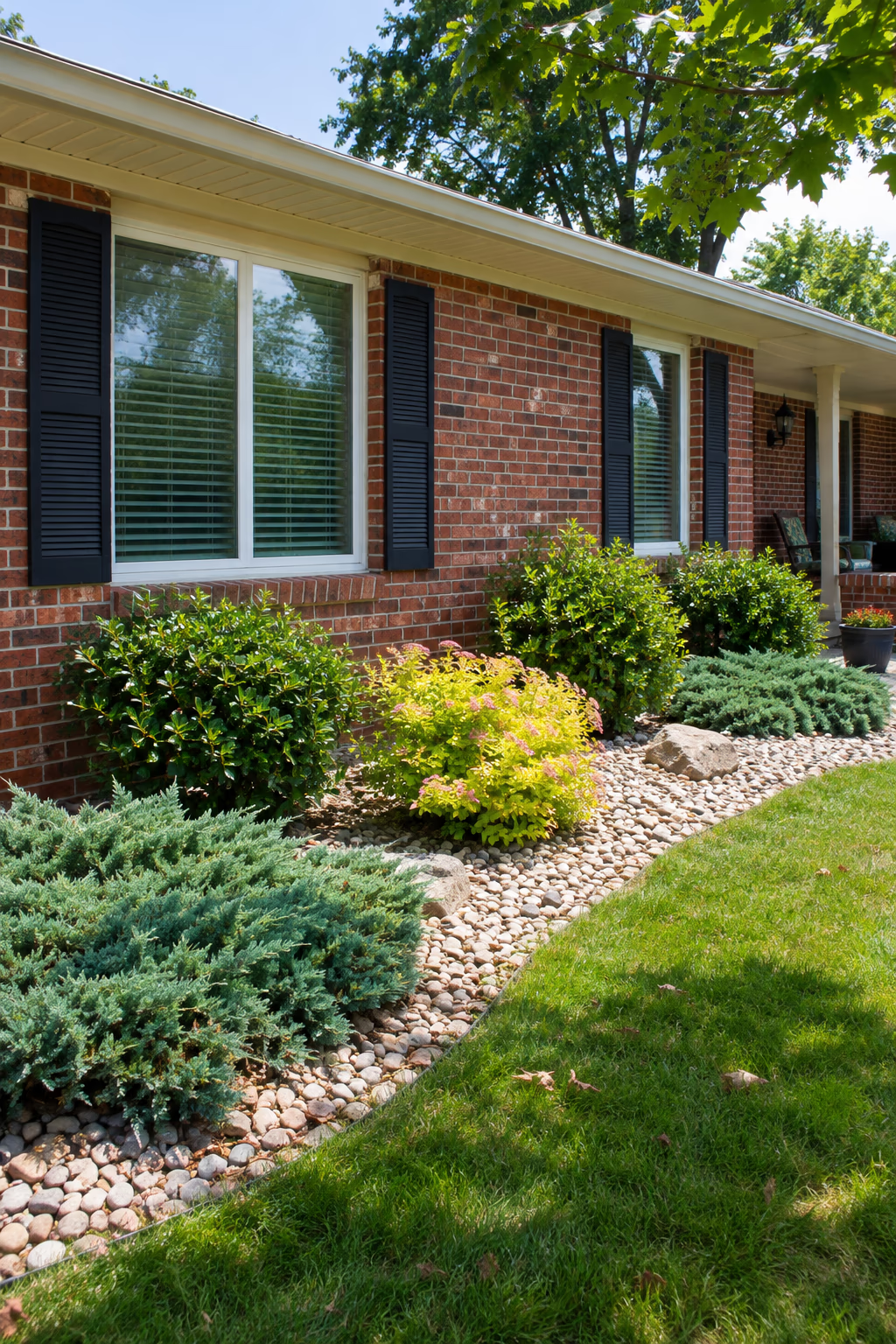
A permanent ground cover that never needs topping off
Replacing shredded bark with river rock around foundation shrubs such as boxwood, dwarf yaupon holly, juniper, or spirea gives the bed a polished look year-round. Spread a 2- to 3-inch layer of 1- to 2-inch rock over landscape fabric, and pull the stones a few inches back from each trunk.
Rock does not blow away, float off in storms, or break down, so you skip the yearly mulch run. It also suits fire-wise landscaping near the house in dry Western states, where combustible mulch is discouraged close to walls.
The tradeoff is heat and soil health. Stones hold warmth in full sun and add no organic matter, so choose tough, heat-tolerant shrubs and avoid this swap around azaleas, rhododendrons, and other plants that want cool, rich, acidic soil.
4. Edge Flower Beds With a Band of Smooth Cobbles
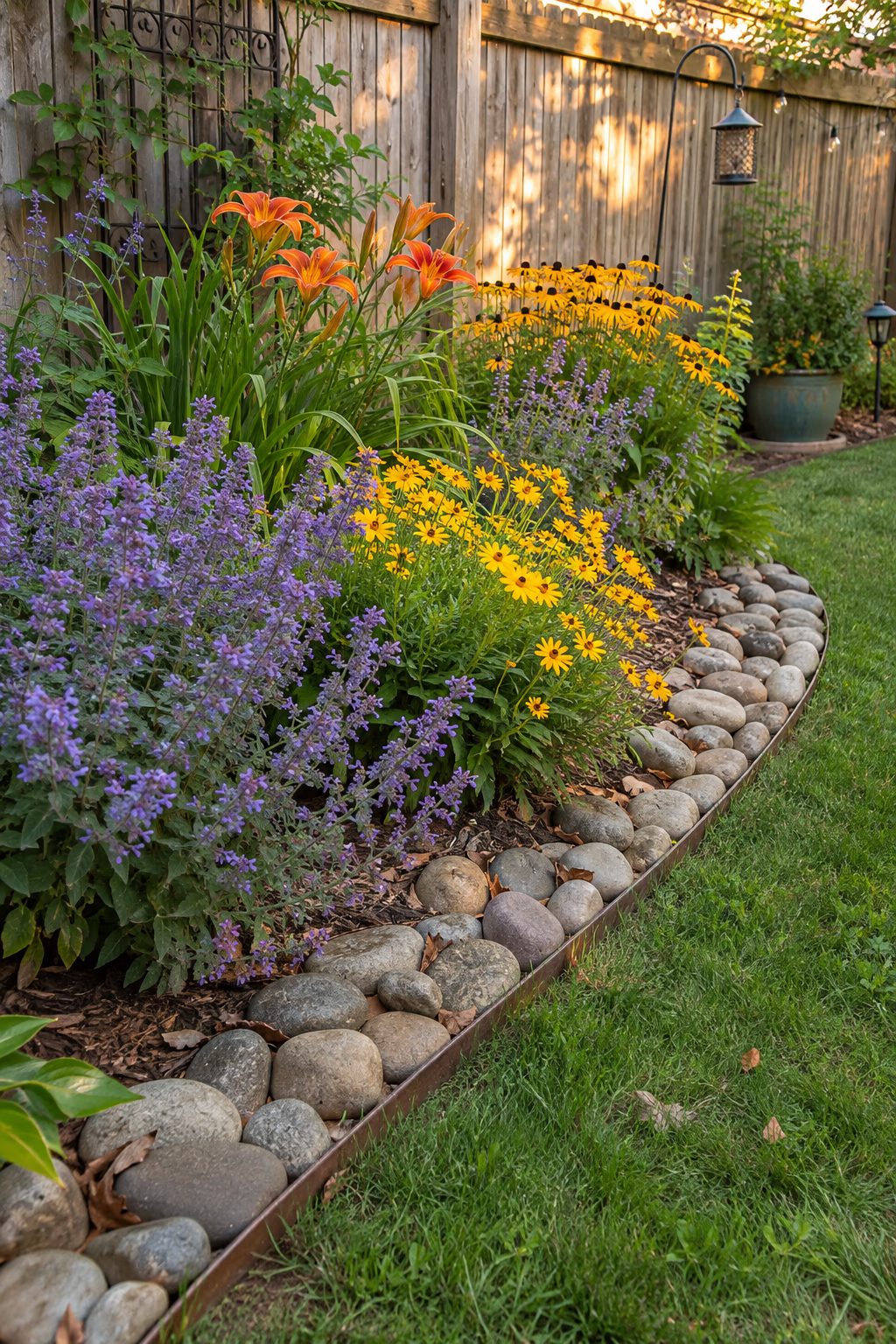
A soft border that keeps soil and mulch in place
Instead of plastic edging, run a band of 3- to 5-inch cobbles about 8 to 12 inches wide around the front of a perennial bed. The larger rounded stones create a gentle, natural line that follows curves easily and frames plants like catmint, coreopsis, black-eyed Susans, and daylilies.
Cut a shallow trench about 3 inches deep, line it with fabric, and nestle the cobbles in so they sit snugly against each other. Keeping the cobble band slightly lower than the lawn lets a mower wheel ride along the edge.
Never let a mower blade touch the stones. A thrown rock can break windows or hurt someone, so a strip of steel edging between the lawn and the cobbles is a smart safety barrier.
5. Pair Succulents With a River Rock Ground Cover
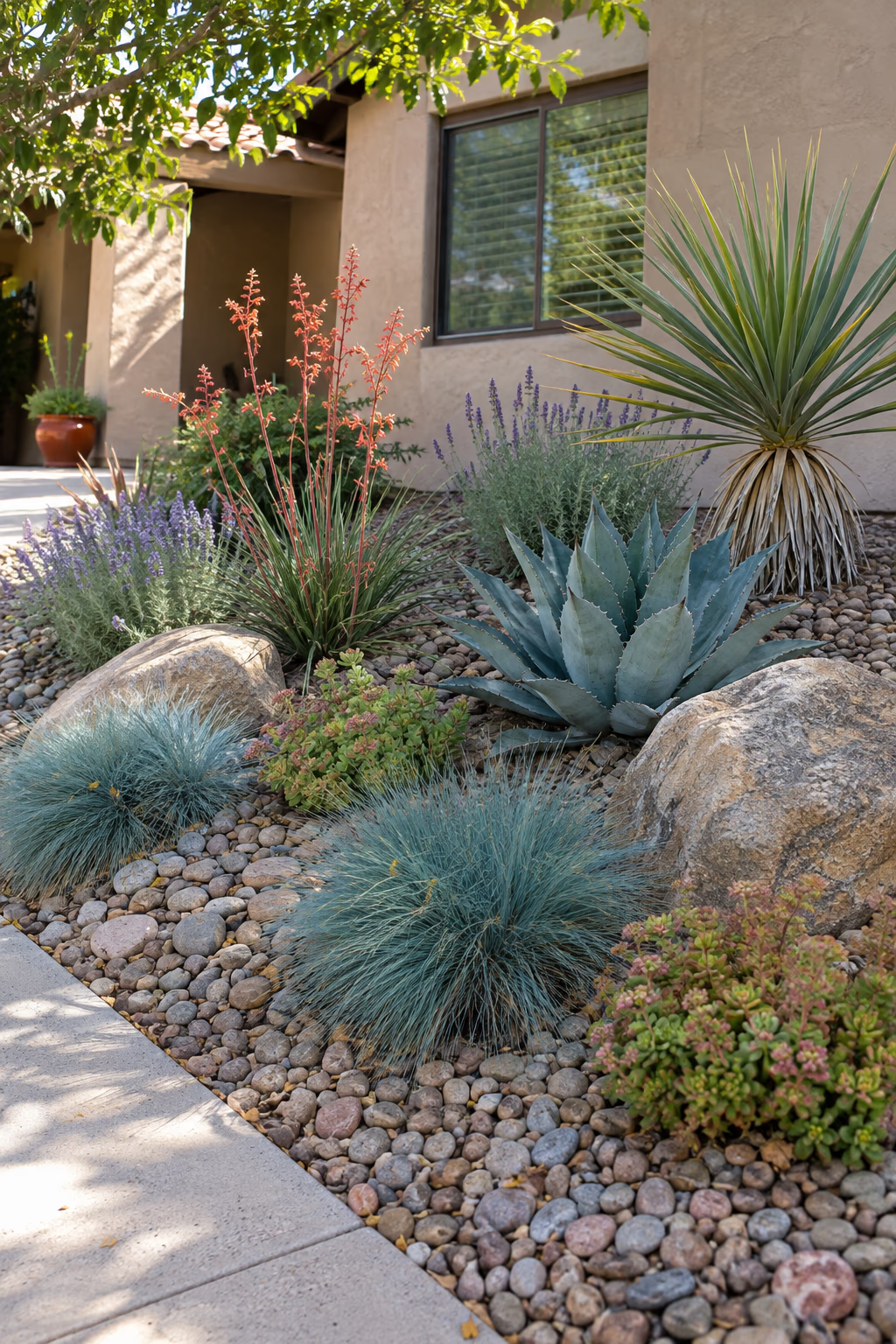
A water-wise bed that shows off sculptural plants
River rock makes a clean backdrop for drought-tolerant plants such as agave, yucca, hens and chicks, blue fescue, red yucca, sedum, and lavender. Muted tan and gray stones are popular right now because they let the blue, silver, and purple foliage take the spotlight.
Mound the planting area slightly and mix in grit or coarse sand where soil is heavy clay, since most succulents rot in soggy ground. Plant first, then spread 2 inches of rock by hand around each crown, and add a few half-buried boulders for height.
Check your zone before buying. Many agaves and aloes are only hardy in the South and Southwest, while hardy yucca, sedum, ice plant, and prickly pear are good choices for colder regions.
6. Frame a Backyard Pond With Rounded River Rock
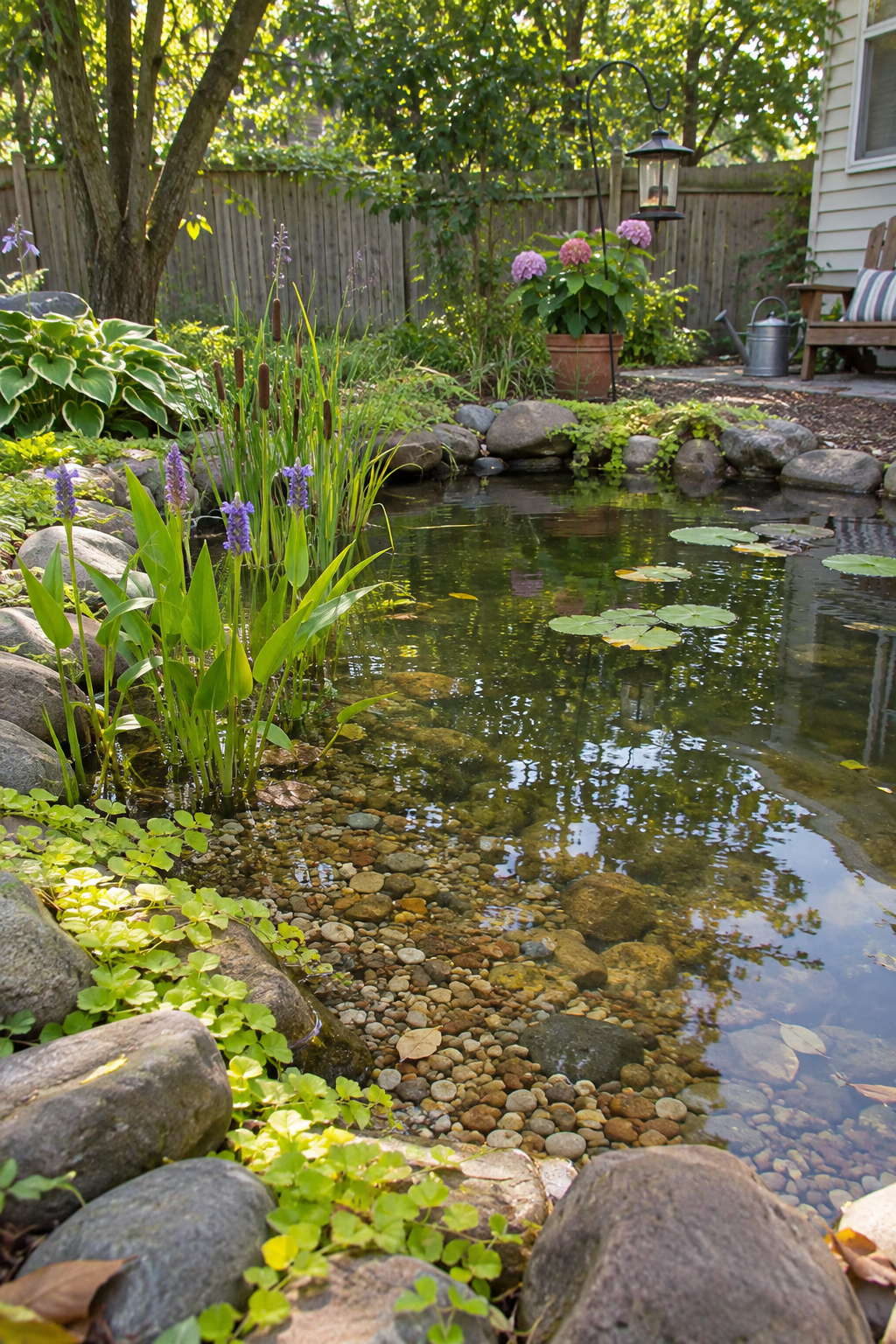
Hide the liner and soften the water’s edge
Smooth stones are the easiest way to make a preformed or flexible-liner pond look natural. Layer a ring of 4- to 8-inch rock over the liner lip, then let smaller 1- to 2-inch stones slope gently into the shallows.
A gradual pebble beach on one side lets birds drink and gives frogs and toads an easy way in and out. Tuck marginal plants such as dwarf cattail, pickerelweed, or creeping Jenny into the rocks to blend the edge into the yard.
Don’t fill the whole pond floor with gravel unless you’re ready to vacuum it; deep pebble layers trap debris and can foul water. Many towns also require fencing or a barrier for ponds deeper than a set depth, so check local codes before you dig.
7. Ring a Shade Tree With Pale River Rock
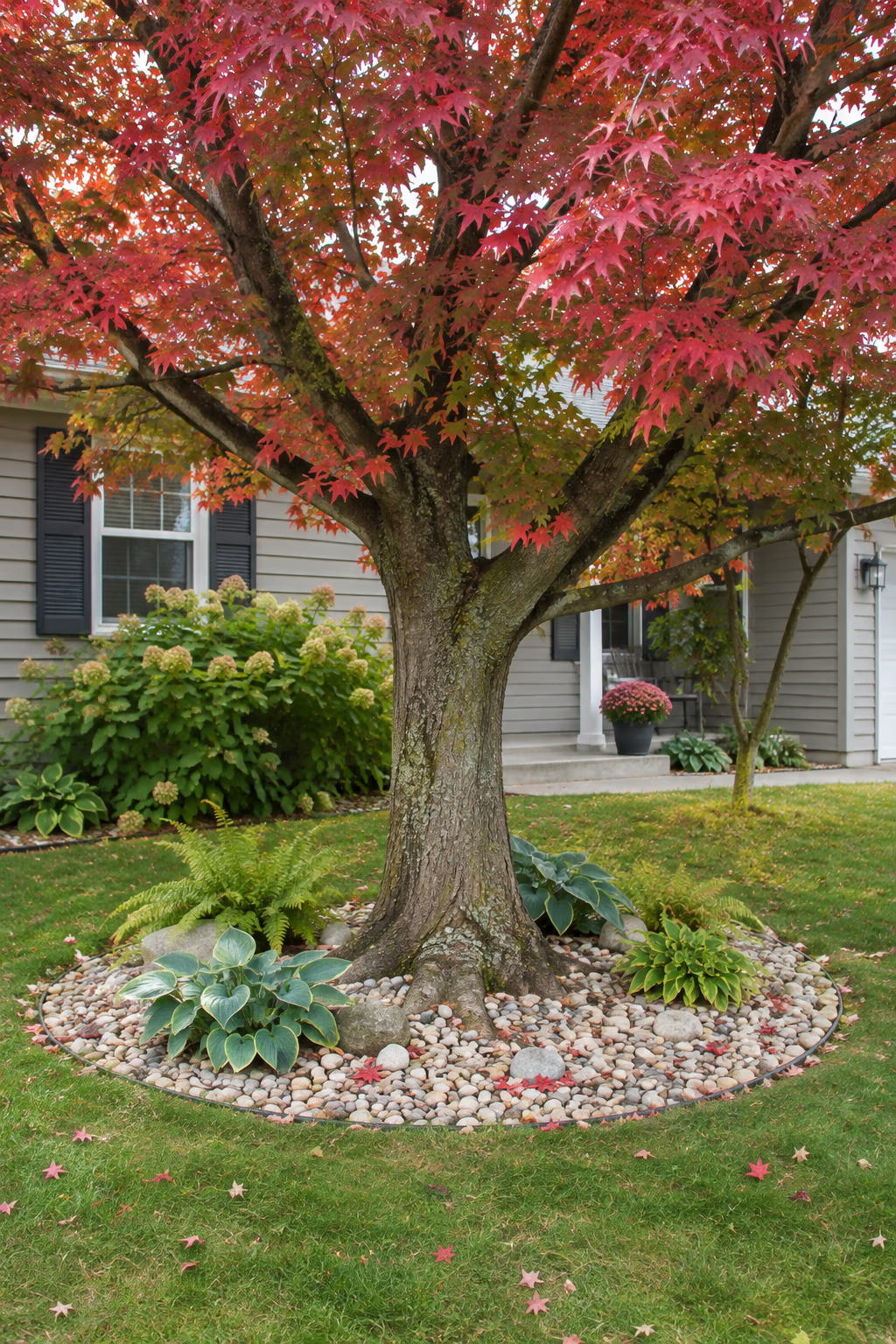
Brighten bare ground where grass refuses to grow
Dry, shady ground beneath a maple or oak often turns to patchy dirt. A wide ring of light gray or buff river rock brightens that dim spot and gives the trunk a neat frame that the mower doesn’t have to work around.
Keep the stones a few inches away from the trunk flare and spread them only 1 to 2 inches deep so roots can still get air and water. Skip heavy digging; cutting surface roots can harm the tree, so lay fabric or cardboard right on the ground and build up rather than down.
Leave a few pockets for shade lovers such as hostas, coral bells, or ferns, and plan to blow off fallen leaves each autumn so they don’t rot into the gaps.
8. Hide a Bubbling Urn Fountain in a Bed of Pebbles
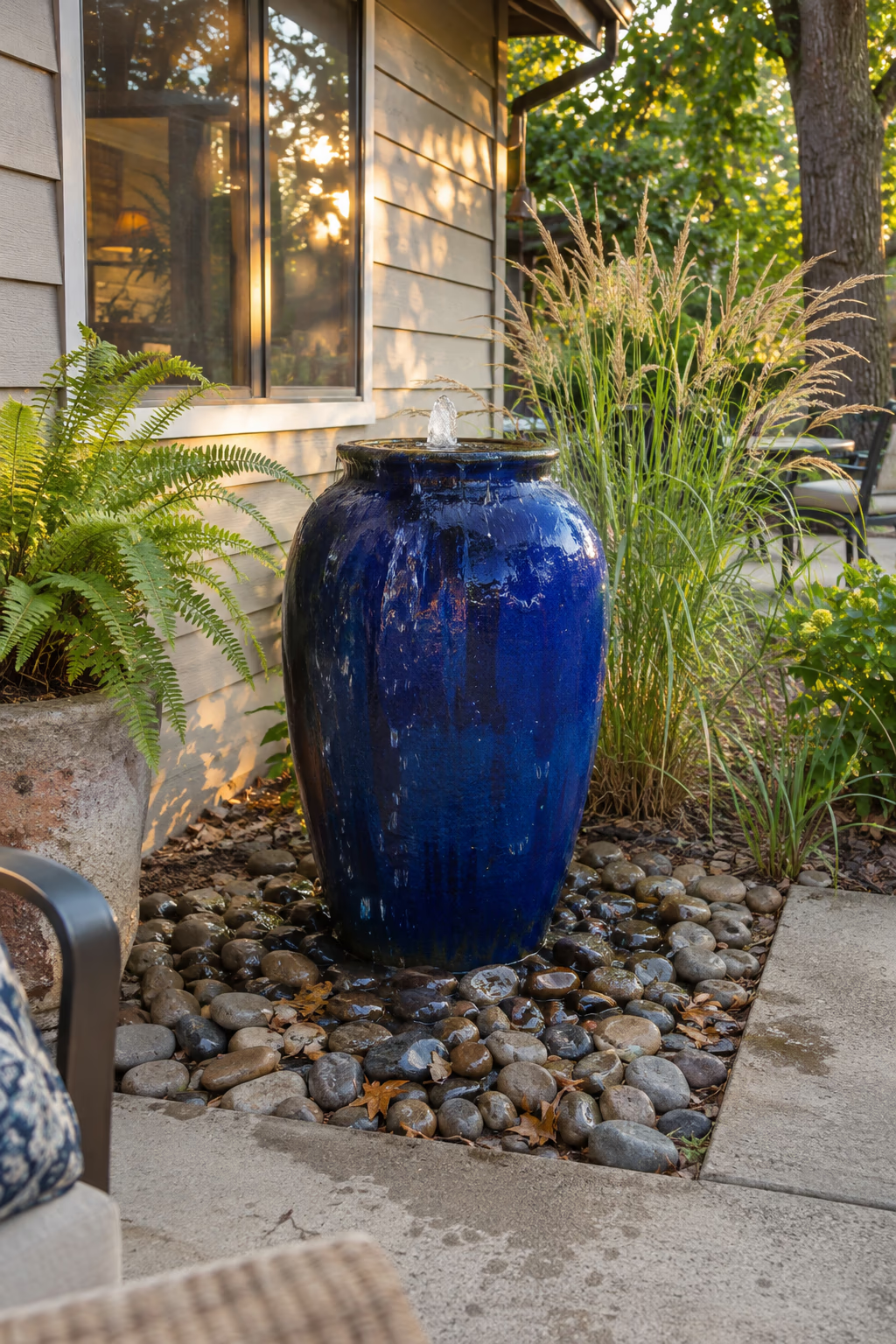
The sound of water without a pond to maintain
A pondless fountain uses a buried basin with a small pump, covered by a sturdy grate and a layer of river rock. Water bubbles out of a glazed urn or drilled boulder, runs down its sides, and disappears through the stones back into the basin.
Pebbles 1 to 3 inches across hide the grate and hardware completely, and they make the water sparkle as it trickles through. Kits that include the basin, pump, and urn are widely sold, and a small setup fits in a 4-by-4-foot bed beside a patio.
You’ll need a GFCI outdoor outlet nearby, and the basin will need topping off during hot spells. In cold climates, drain the pump and store it indoors before freezing weather.
9. Mix Two River Rock Colors for Contrast
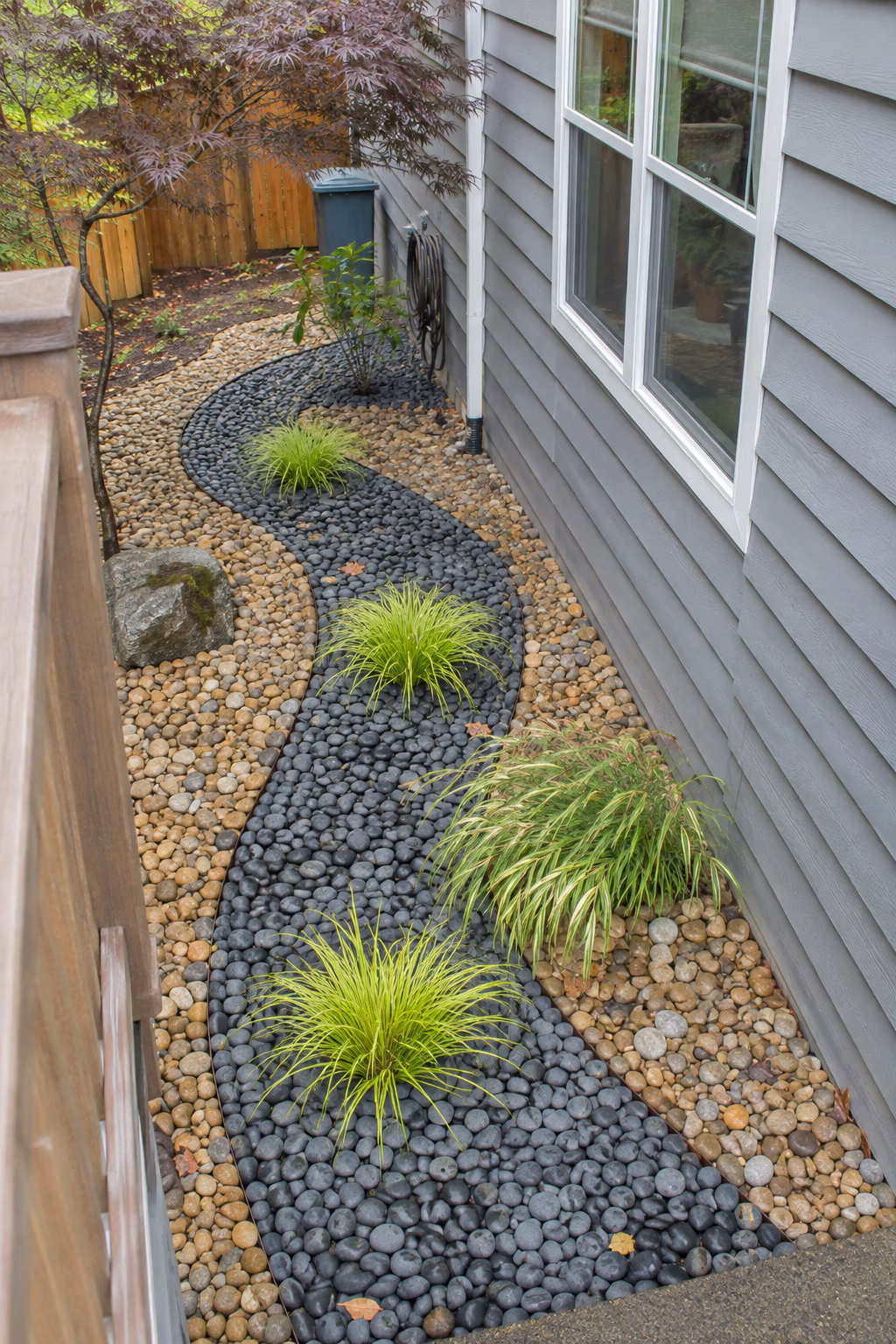
Add pattern and depth without adding plants
Pairing two river rock colors, such as charcoal Mexican beach pebbles with tan rock or white stones with mixed gray, creates a bold, intentional look. Use one color for the main ground cover and the second as a band, swirl, or border to guide the eye.
Separate the colors with a buried strip of steel or plastic edging so they stay crisp. Sample a few bags side by side and look at them both wet and dry, since river rock darkens and shows more color after rain.
Keep the palette to two tones that relate to your home’s brick, siding, or trim. Three or more colors in a small area can look busy, and the current trend leans toward softer, earthy pairings over stark black-and-white.
10. Border the Patio With Matching River Stones
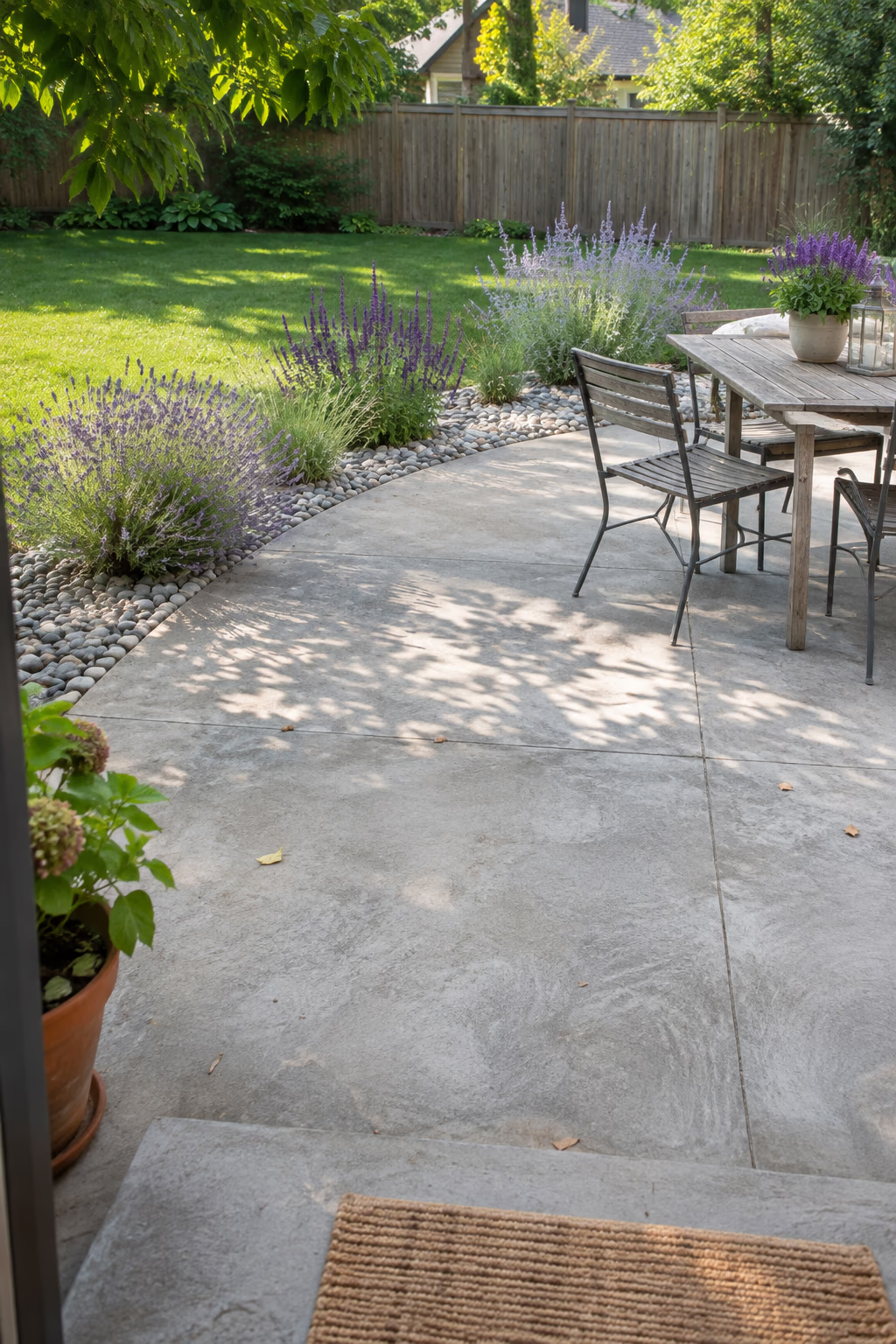
A neat frame that hides the slab’s edge
A strip of river rock 12 to 18 inches wide around a concrete or paver patio hides rough edges, keeps grass from creeping onto the surface, and gives patio runoff somewhere to soak in. Pick stones that echo the paving color so the border reads as part of the patio.
Add a few container plants or drought-tolerant perennials like lavender, Russian sage, or salvia in the rock band for color. They thrive in the warm, well-drained conditions next to pavement.
Use stones at least 1 inch across so they don’t get kicked onto the patio and scratch furniture feet. A fresh blast from a leaf blower keeps the edge looking clean.
11. Set a Fire Pit on a River Rock Pad
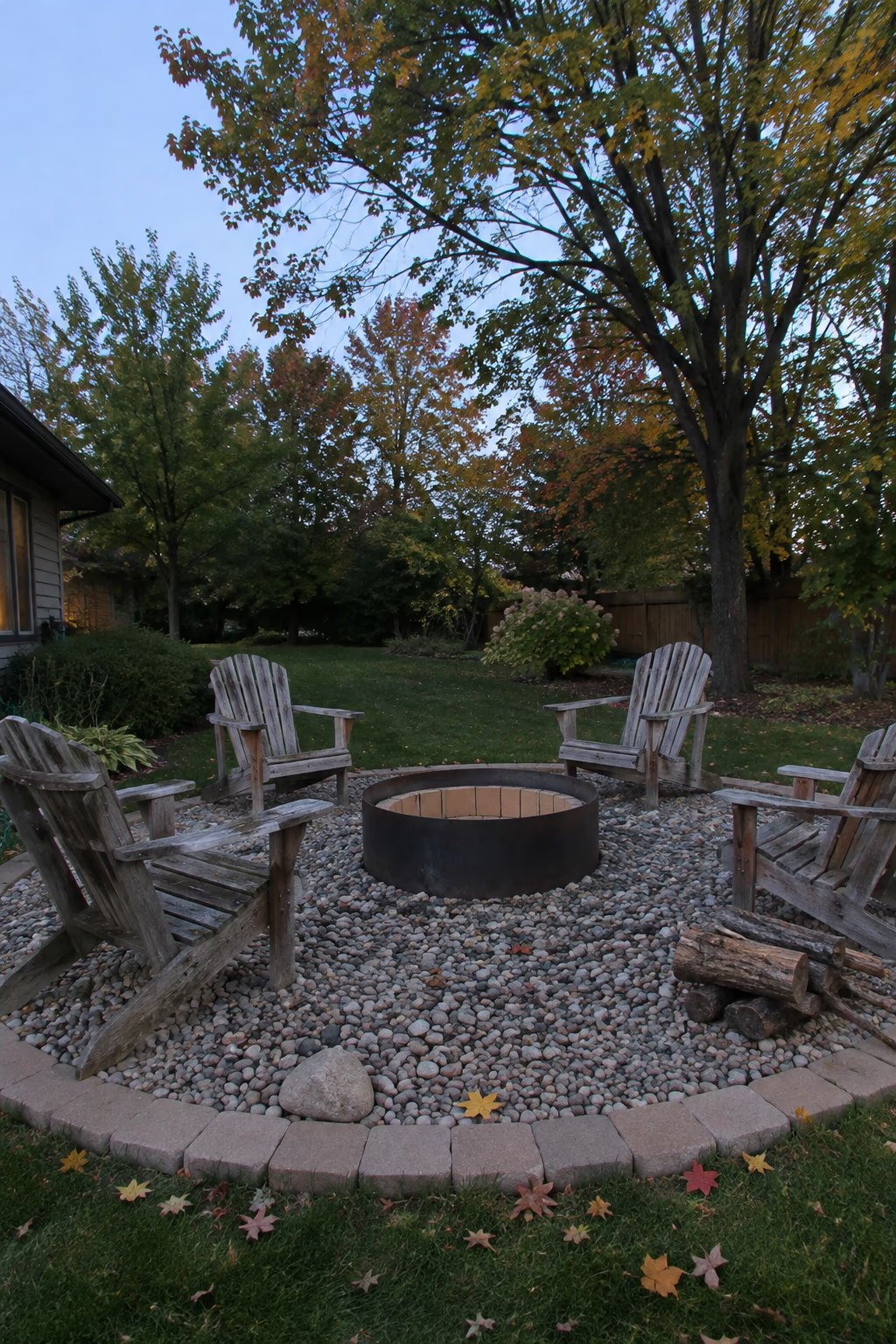
A fire-safe floor that costs less than pavers
A circle of river rock about 12 to 16 feet across gives a fire pit and its chairs a level, noncombustible floor. Excavate 3 inches, lay fabric, add 2 to 3 inches of 1-inch rock, and edge the circle with steel or a ring of pavers to hold everything in.
The loose surface drains quickly after rain and makes it easy to scoot chairs closer to the fire. It also costs far less than a full paver patio, especially if you already own a fire pit kit or steel ring.
Keep river rock outside the fire bowl itself. Stones from wet sources can hold moisture and may crack or pop when heated, so line the pit with fire-rated brick or a steel insert, and follow local burn rules and setback distances.
12. Fill the Driveway Strip With River Rock
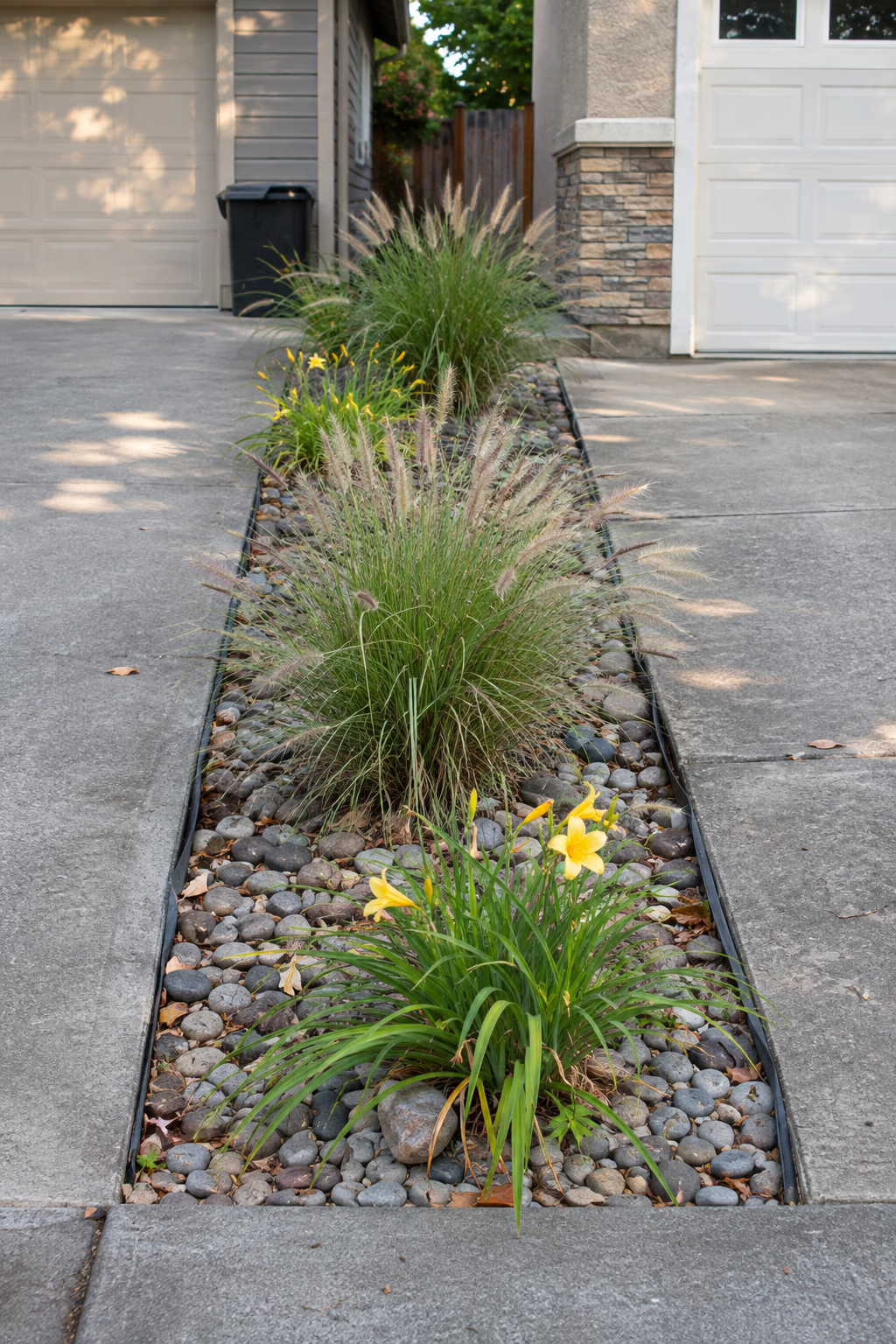
Retire a skinny strip of hard-to-mow grass
Narrow strips between driveways, along the curb, or beside a garage are awkward to mow and often brown out from heat bouncing off the pavement. River rock turns them into a clean, low-care border, and a few ornamental grasses or daylilies add life.
Choose 1- to 2-inch rock, set it slightly below the driveway surface, and edge it so tires and shovels don’t scatter it. Medium stones resist being kicked onto the concrete better than tiny pebbles.
In snowy areas, rock near the driveway can be caught by a snowblower and thrown. Either mark the edge with stakes before winter or use larger cobbles that the auger will skip over.
13. Tame Downspout Runoff With a River Rock Splash Pad
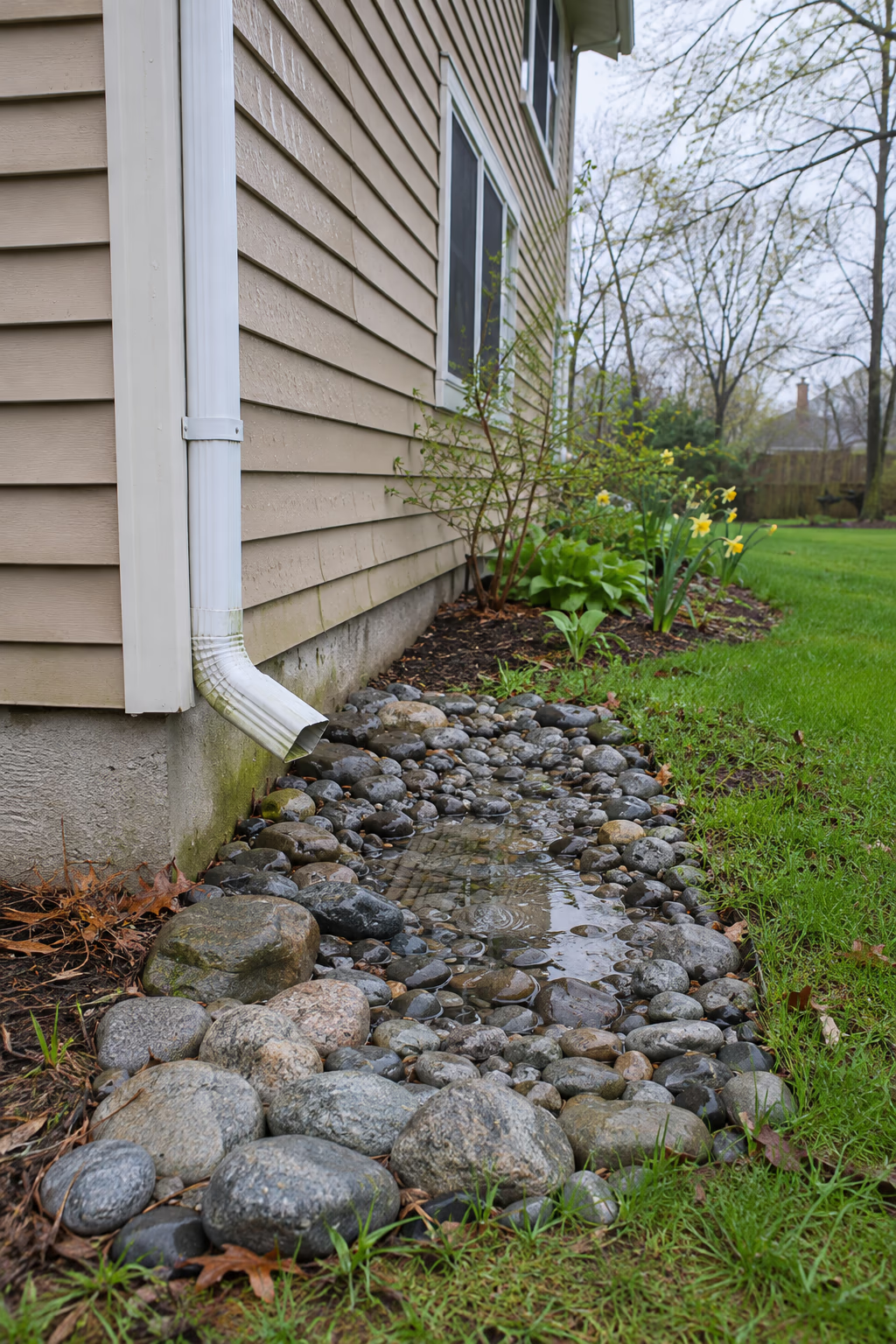
Stop puddles and gullies at the gutter outlet
A downspout that dumps water on bare soil quickly carves a muddy trench. A pad of 2- to 4-inch river rock about 2 feet wide and 4 to 6 feet long spreads the flow, slows it down, and protects the soil and foundation.
Extend the downspout so it releases water several feet from the house, and shape the pad so it slopes away from the foundation. Larger stones on the bottom with a top layer of 1- to 2-inch rock hold up to heavy storms without washing out.
Never direct runoff onto a neighbor’s property or a sidewalk where it can freeze. If water pools for days, a dry well or a professional drainage assessment may be the better fix.
14. Plant a Moon Garden With White River Rock
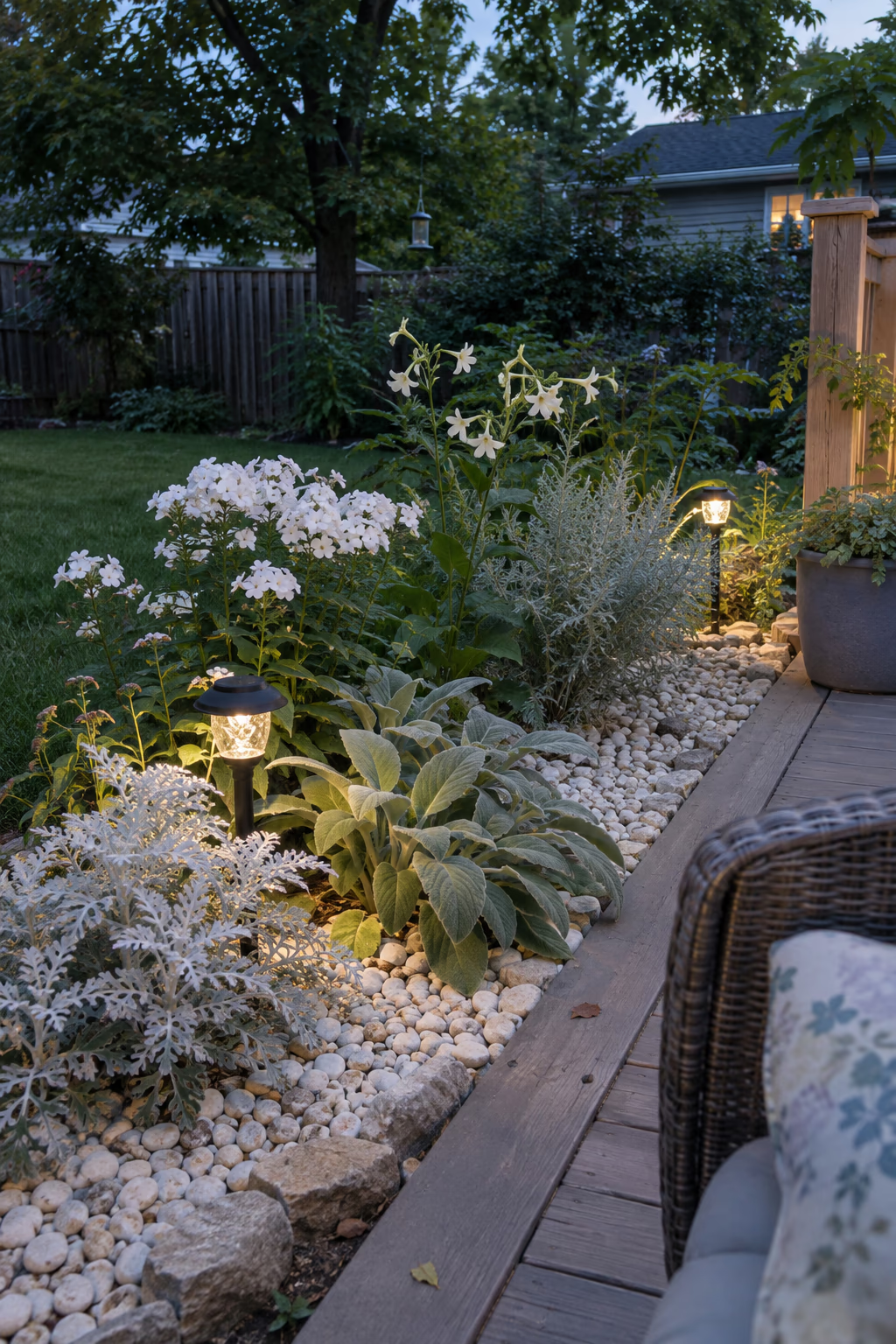
A bed that glows after the sun goes down
White or very pale river rock reflects moonlight and porch light, which makes it a natural base for an evening garden. Pair it with white-blooming and silver-leaved plants such as moonflower, white phlox, nicotiana, lamb’s ears, artemisia, and dusty miller.
Place the bed near a patio or bedroom window where you’ll actually see it at night. A few low solar path lights tucked between plants extend the glow without harsh glare.
Bright white rock can look stark at midday and shows dirt and leaf litter more than gray stone. Plan to rinse it with a hose now and then, and consider a creamy white rather than pure white if you want a softer daytime look.
15. Fill Flagstone Joints With Pea-Size Pebbles
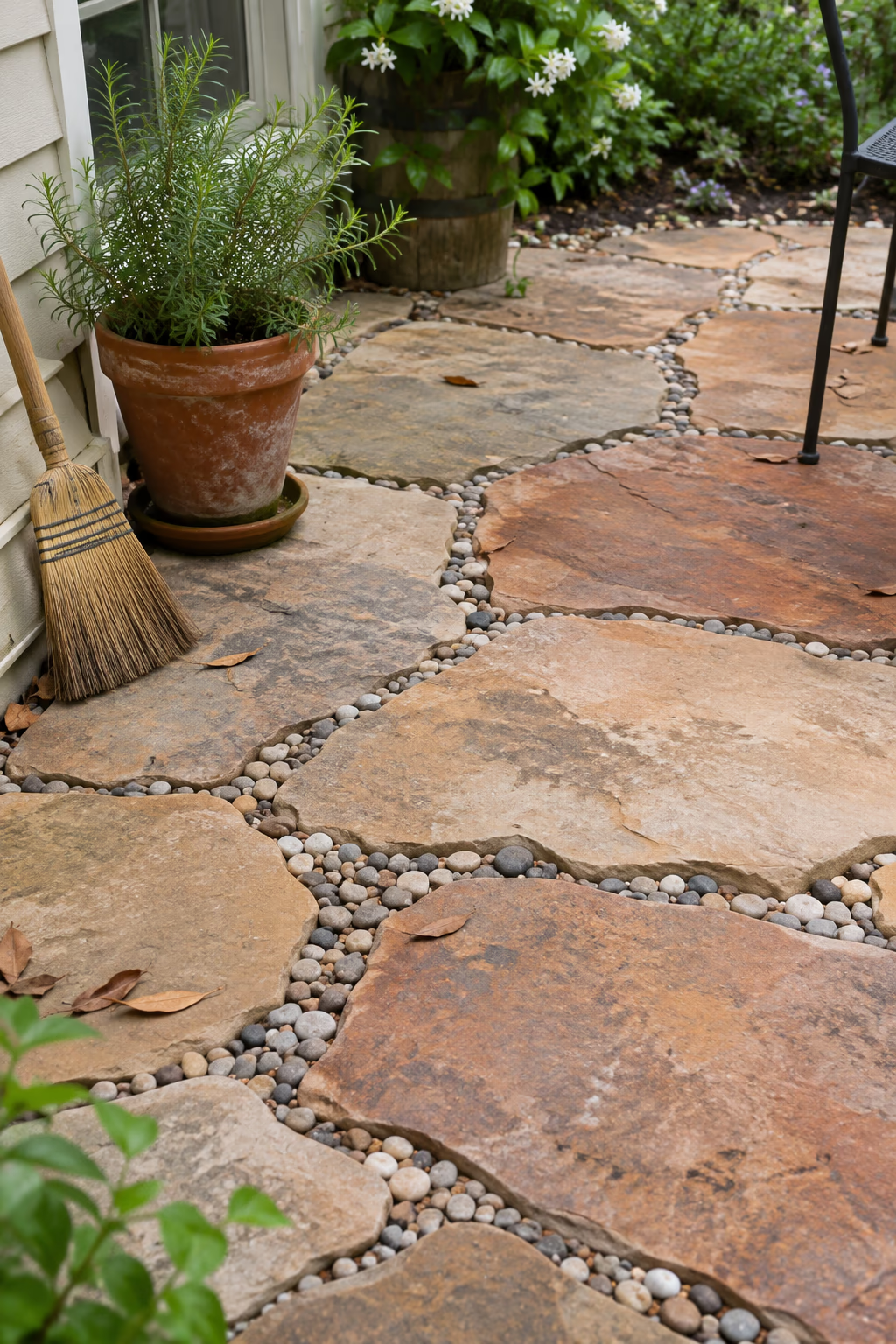
A tidy alternative to weedy dirt gaps
On a dry-laid flagstone patio or walk, the gaps between stones tend to fill with dirt and weeds. Sweeping 3/8- to 1/2-inch river pebbles into joints 1 to 3 inches wide gives the surface a finished, cobbled look and lets rainwater soak in.
Brush out loose soil first, then pack the pebbles in with a stiff broom and top them off after the first few rains. Pebbles work best on flagstone laid over a compacted gravel base rather than directly on soil.
Small stones can stick in shoe treads and get tracked indoors. If that bothers you, use creeping thyme or polymeric sand in joints closest to the door and pebbles farther out.
16. Press River Rock Into a Concrete Mosaic Walkway
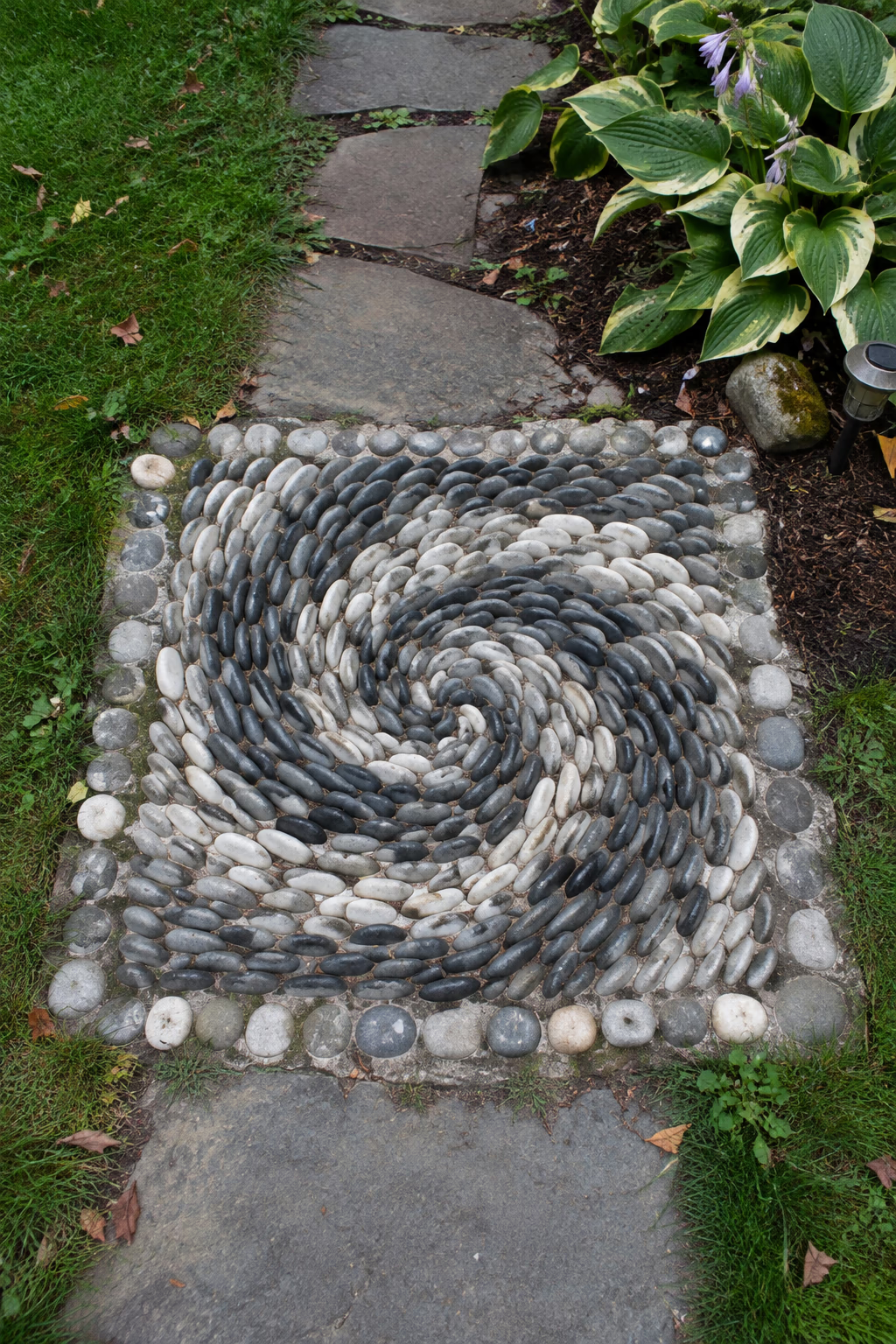
A one-of-a-kind path with a handmade feel
For a creative weekend project, press flat river stones into wet concrete or a thick mortar bed to form spirals, waves, or simple borders. Flat, oval stones set on edge or laid flat create the classic pebble mosaic look seen in old European courtyards.
Start with a small section, such as a 3-by-3-foot landing or stepping pads, since you have limited working time before the mix sets. Sort stones by color and size in advance, and soak them so they don’t pull water from the concrete too fast.
Set stones so their tops sit close to level; stones that protrude become tripping hazards. In freeze-thaw climates, a properly reinforced base and good drainage help keep the mosaic from cracking.
17. Line the Fence With a Low-Care River Rock Border
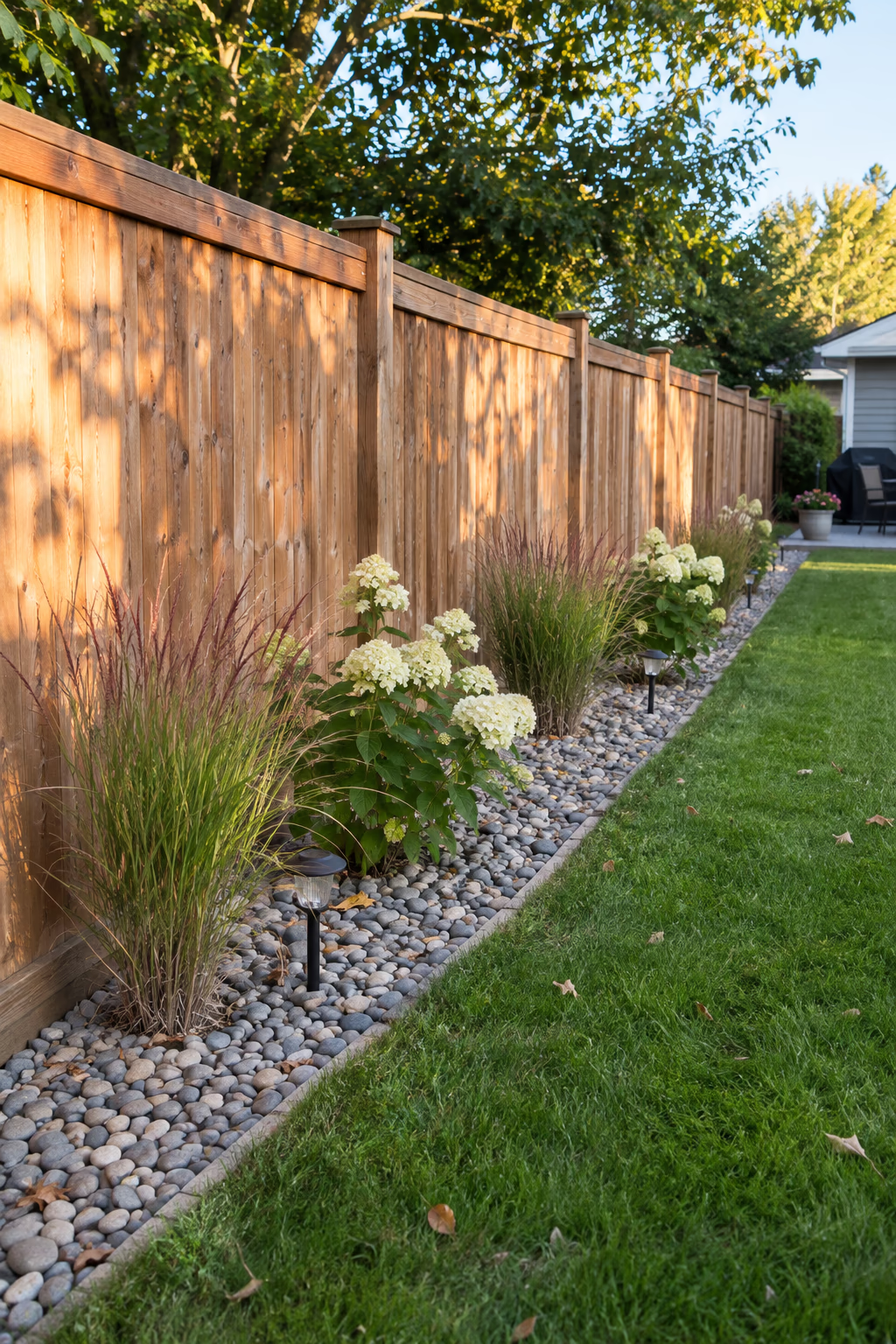
Clean up the strip where the mower can’t reach
The narrow zone along a fence is usually a mess of weeds and string-trimmer damage. A 2-foot band of gray river rock solves both problems and keeps moisture away from wooden fence boards and posts.
Break up the band with a few shrubs or clumping grasses, such as dwarf fountain grass, little bluestem, or compact hydrangeas, spaced every 6 to 8 feet. Solar stake lights or a single garden ornament keep the long run from looking empty.
If the fence sits on the property line, confirm that you’re placing rock on your side only and check HOA rules about fence-line landscaping. Leave a little access space for future fence repairs and staining.
18. Set the AC Unit on a Clean River Rock Bed
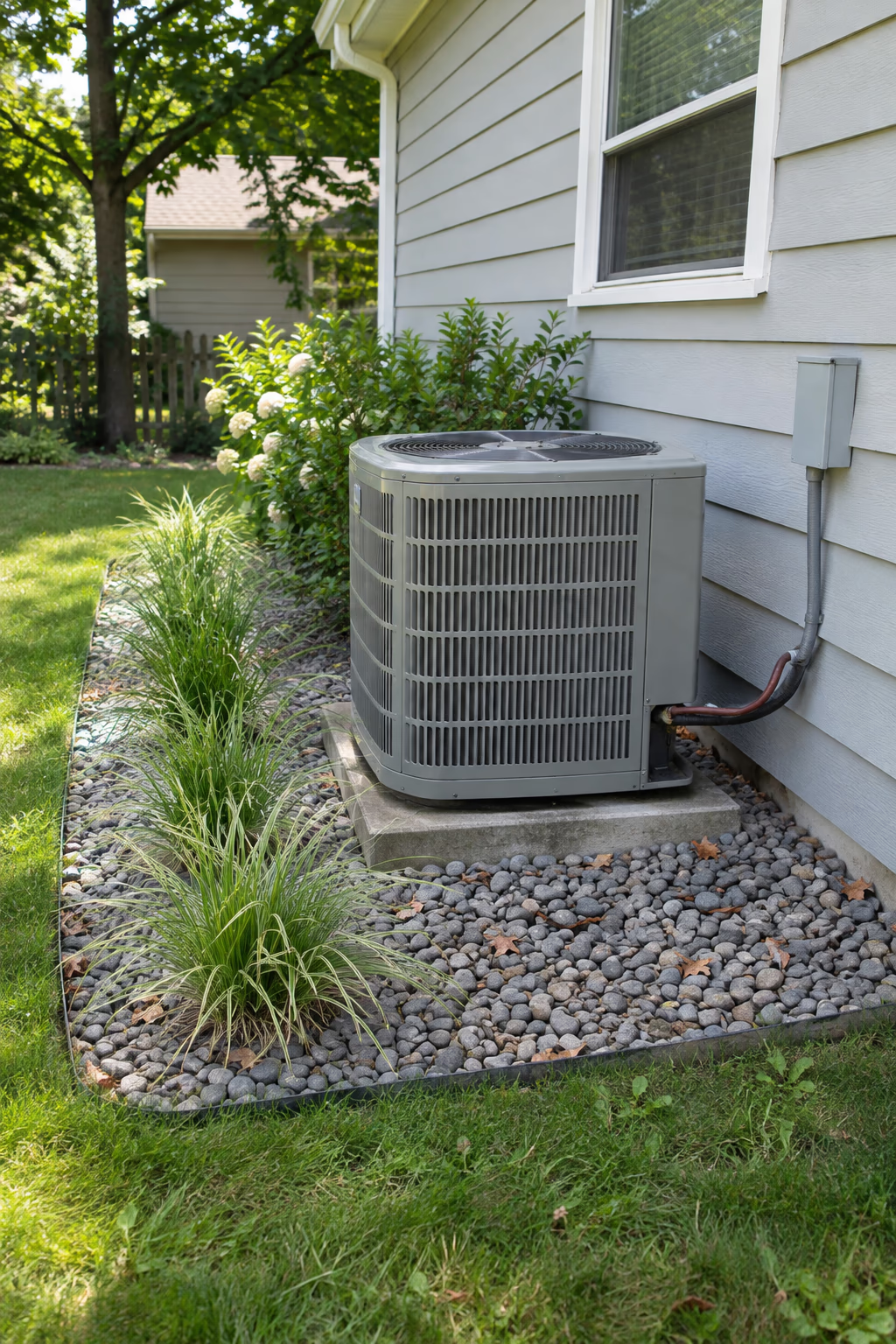
Keep the utility corner neat and free-draining
Mulch, weeds, and grass clippings around an outdoor AC condenser can clog the coils. A bed of 1- to 2-inch river rock around the unit’s pad keeps debris down, drains condensate, and makes the area look cared for.
Keep plantings and screens at least the clearance your unit’s manufacturer recommends, often around 2 feet on the sides, so airflow isn’t blocked. A low row of ornamental grasses or a simple lattice panel beyond that zone hides the unit from the street.
Don’t pile rock against the unit’s base or the refrigerant lines, and avoid tiny pebbles that a technician’s boots will scatter. Larger stones stay put during service visits.
19. Edge the Vegetable Garden With River Rock Walkways
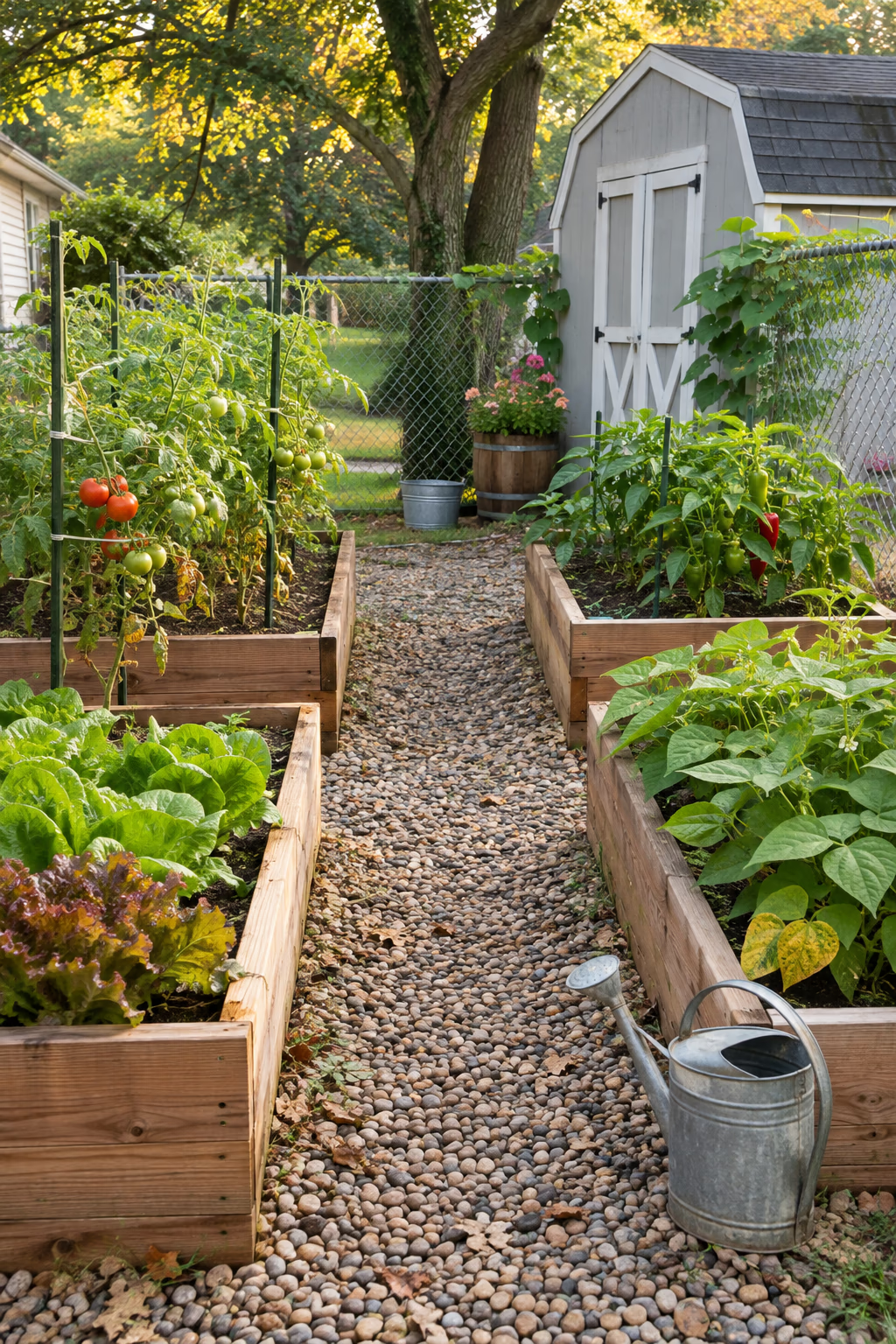
Mud-free aisles between raised beds
River rock walkways between raised vegetable beds stay firm after rain, keep weeds out of aisles, and look tidy all season. Aisles 2 to 3 feet wide leave room for a wheelbarrow and kneeling pad.
Lay heavy-duty landscape fabric, overlap the seams by several inches, and spread 2 inches of 3/4- to 1-1/2-inch rock. Wooden or metal raised bed frames act as natural edging that keeps the rock out of the soil.
Rock reflects heat, which warm-season crops like tomatoes and peppers appreciate but leafy greens may not. Shift lettuce and spinach to the beds with afternoon shade during summer.
20. Hold a Slope in Place With River Rock and Ground Covers
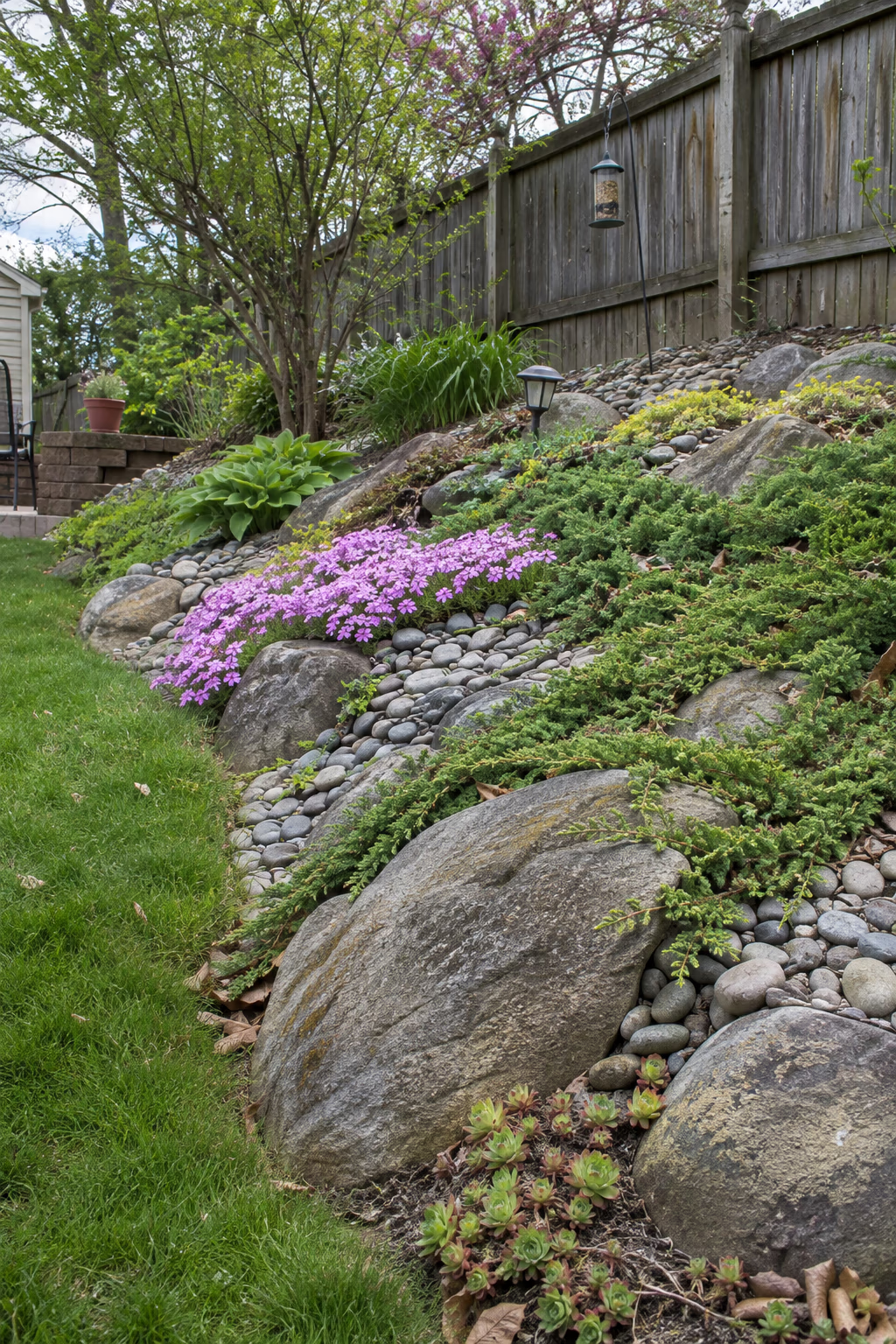
Slow erosion on banks too steep to mow
Gentle slopes that shed soil every storm can be stabilized with a mix of river rock, half-buried boulders, and spreading plants such as creeping juniper, creeping phlox, sedum, or native sumac. The rocks break up flowing water while plant roots knit the soil together.
Work from the bottom up, setting larger 6- to 12-inch stones at the base, and use coir erosion netting instead of slick fabric so rock doesn’t slide downhill. Plant through the netting and fill around plants with smaller stones.
Steep banks over a few feet high, or slopes near a foundation or driveway, may need a retaining wall designed by a professional. Many areas require a permit for walls above a set height, so check before you build.
21. Top Container Plants With River Rock Mulch
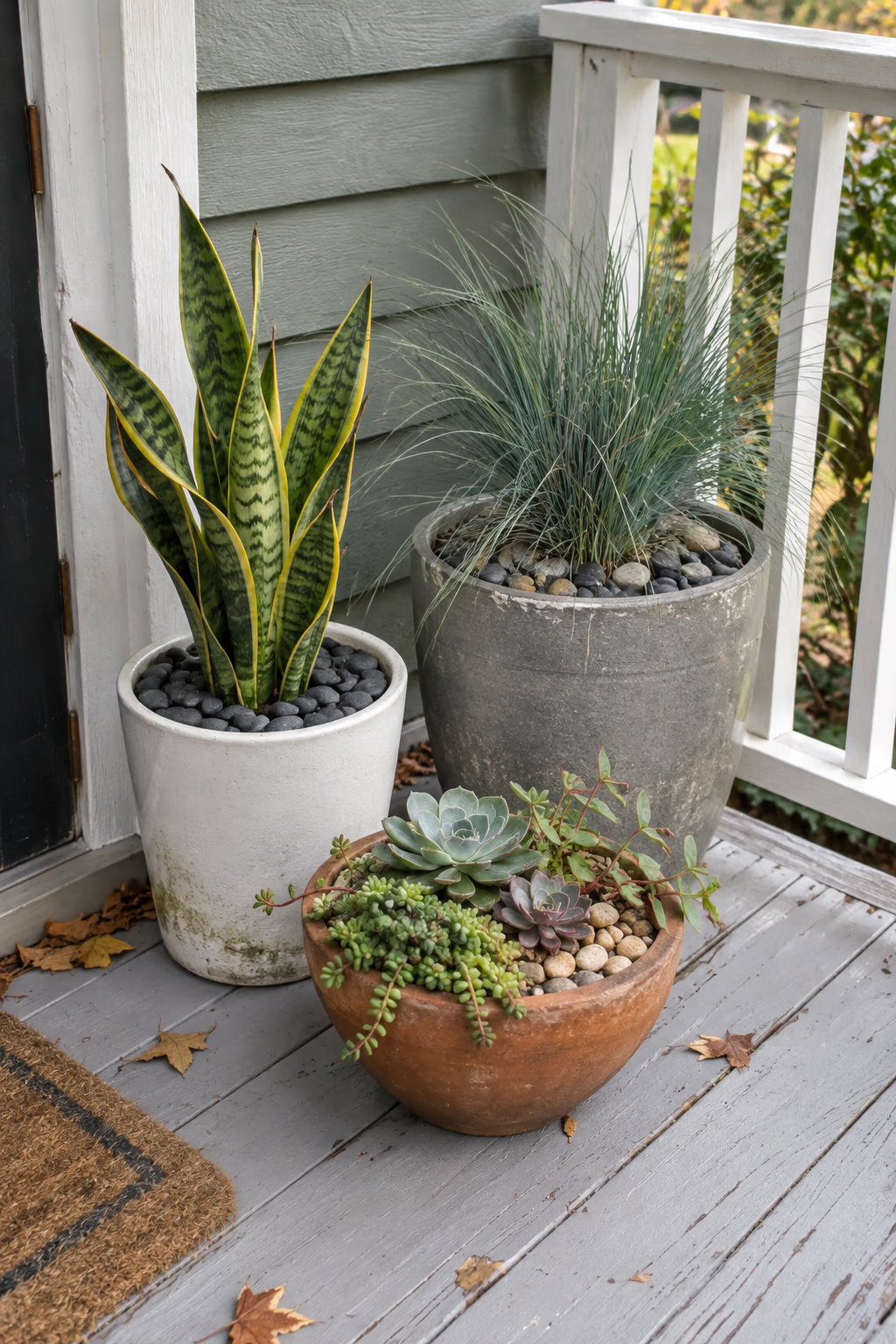
A finishing touch for pots on the porch and patio
A thin layer of small river pebbles on top of potting soil makes containers look finished, slows evaporation, keeps soil from splashing during watering, and discourages squirrels from digging. It’s a quick, inexpensive way to bring the river rock look onto a porch or balcony.
Use 1/2- to 1-inch pebbles in a single layer about 1 inch deep, and match the stone tone to the pot, such as charcoal pebbles in a white planter or tan stones in terracotta. Succulents, snake plants, and ornamental grasses look especially sharp.
Pebbles hide the soil surface, so check moisture with a finger before watering. Rinse the stones every few months to clear mineral crust and keep them looking fresh.
How to Plan Your River Rock Landscaping
River rock lasts for decades, which is a blessing and a commitment. A bit of planning up front helps you buy the right amount, choose the right size, and avoid moving tons of stone twice.
- Measure and order with some extra. As a rough guide, a ton of 1- to 3-inch river rock covers about 80 to 100 square feet at 2 to 3 inches deep. Bulk rock from a landscape supply yard costs far less per ton than bagged stone from a garden center, though delivery fees vary.
- Match the stone size to the job. Use 3/8- to 1-inch pebbles for joints and containers, 1- to 3-inch rock for beds, paths, and strips, and 3- to 8-inch cobbles for edges, downspouts, and ponds.
- Prepare the ground first. Remove grass and weeds, grade the soil so water flows away from the house, and use a woven, water-permeable landscape fabric rather than plastic sheeting.
- Edge every installation. Steel, aluminum, paver, or heavy plastic edging keeps stones out of the lawn and away from mower blades, and it gives beds a sharp, professional outline.
- Consider heat and plant choice. Rock absorbs and radiates heat in full sun, so choose drought- and heat-tolerant plants for sunny beds and save organic mulch for moisture lovers and woodland plants.
- Check rules and utilities. Review HOA guidelines and local codes on lawn replacement, drainage, and ponds, and in the United States call 811 before you dig so buried lines are marked.
Frequently Asked Questions
How deep should river rock be in a landscape bed?
For most beds and strips, 2 to 3 inches of 1- to 3-inch rock is enough to cover fabric and block weeds. Smaller pebbles can be a little thinner, while larger cobbles naturally sit deeper. Going much thicker adds cost and weight without much benefit.
Do I need landscape fabric under river rock?
Fabric is strongly recommended for most river rock projects because it keeps stones from sinking into the soil and slows weeds. Choose a woven or permeable type so water can pass through. Small decorative areas, like a few cobbles under a downspout, can work without it.
Will weeds grow through river rock?
Some weeds will eventually sprout as dust, leaves, and seeds settle between the stones. Blowing off debris a few times a year and pulling weeds while they’re small keeps the problem minor. A thicker layer over good fabric makes a big difference.
Is river rock bad for plants?
River rock is fine for many plants, especially drought-tolerant shrubs, succulents, grasses, and Mediterranean herbs. It can be too hot for shade and moisture lovers in full sun, and it won’t improve soil the way organic mulch does, so match the plants to the setting.
How hard is it to remove river rock later?
Removing it is heavy, slow work, which is why planning matters. Stones over fabric are much easier to rake and shovel up than rock mixed into soil. If you think you’ll change a bed in a few years, start with a smaller area or use bark mulch there instead.
Final Thoughts
The best river rock landscaping ideas pair good looks with a practical job, whether that’s a stepping stone path that stays dry, a foundation strip that keeps siding clean, or a rock-mulched bed that never needs a fresh delivery of bark. The smooth, natural stones work with almost any home style and grow more settled as plants fill in around them.
Start with one project where the payoff is obvious, choose stone sizes and colors that suit your house, and take the time to grade, edge, and lay fabric properly. A little careful groundwork now gives you a handsome, easy-care yard that keeps looking good for years.


