
Slide open a glass door and step into a walled pocket of green: a maple throwing lacy shade across pale gravel, water trickling from a bamboo spout, and a cedar screen hiding the neighbors from view. The street noise fades, and the space feels far bigger than its square footage.
Courtyards and Japanese design were made for each other. Traditional Japanese townhouses tucked tiny gardens between rooms to pull in light, air, and a bit of nature, and that same approach works beautifully for an American patio, side yard, atrium, or walled entry. Because the space is enclosed, every stone, plant, and sound gets noticed, so a few good choices go a long way.
These 19 Japanese courtyard ideas cover specimen trees, water basins, privacy screens, low wooden decks, lanterns, shade-loving plants, and simple details that make an enclosed outdoor room feel calm year-round. Pick one or two to start, or layer several to build a complete retreat just outside your door.
1. Center the Courtyard on a Single Japanese Maple
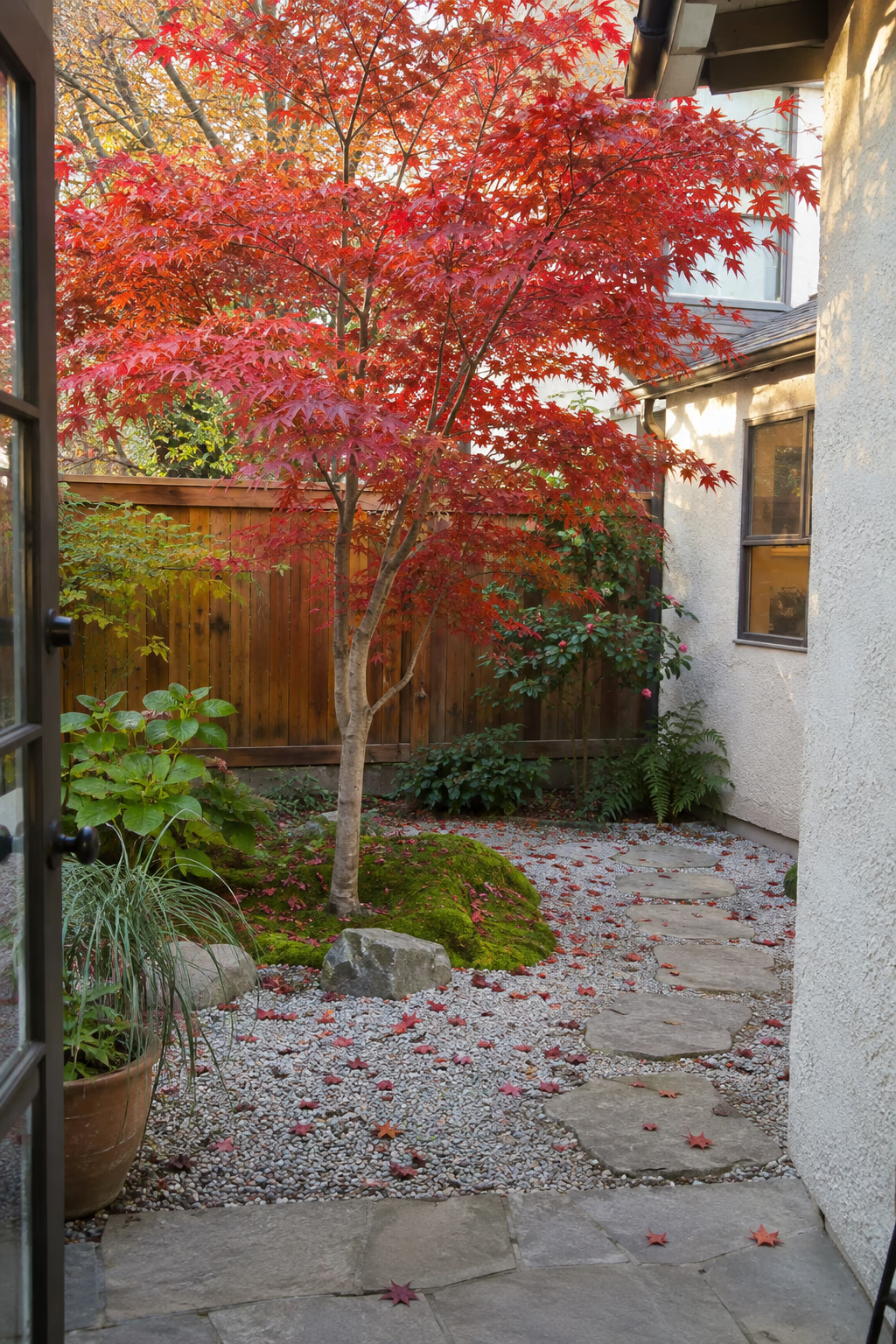
One tree that changes with every season
In a courtyard, a single well-chosen tree does more than a dozen shrubs. A Japanese maple gives you fresh spring leaves, summer shade, brilliant fall color, and a sculptural branch pattern in winter. Upright varieties that mature at 10 to 15 feet suit most courtyards, while laceleaf types that stay 6 to 8 feet tall fit tighter spaces.
Set the tree slightly off center rather than in the exact middle, so it feels natural and leaves room for a path or bench. Underplant it with moss, low ferns, or a ring of gravel to keep the base clean and let the trunk show.
Japanese maples generally grow well in USDA zones 5 to 8 and prefer morning sun with afternoon shade. In hot, reflective courtyards with lots of pavement and walls, leaf scorch is common, so choose a spot that gets relief from the harshest afternoon light and water deeply during dry spells.
2. Add a Bamboo Fountain Over a Stone Basin
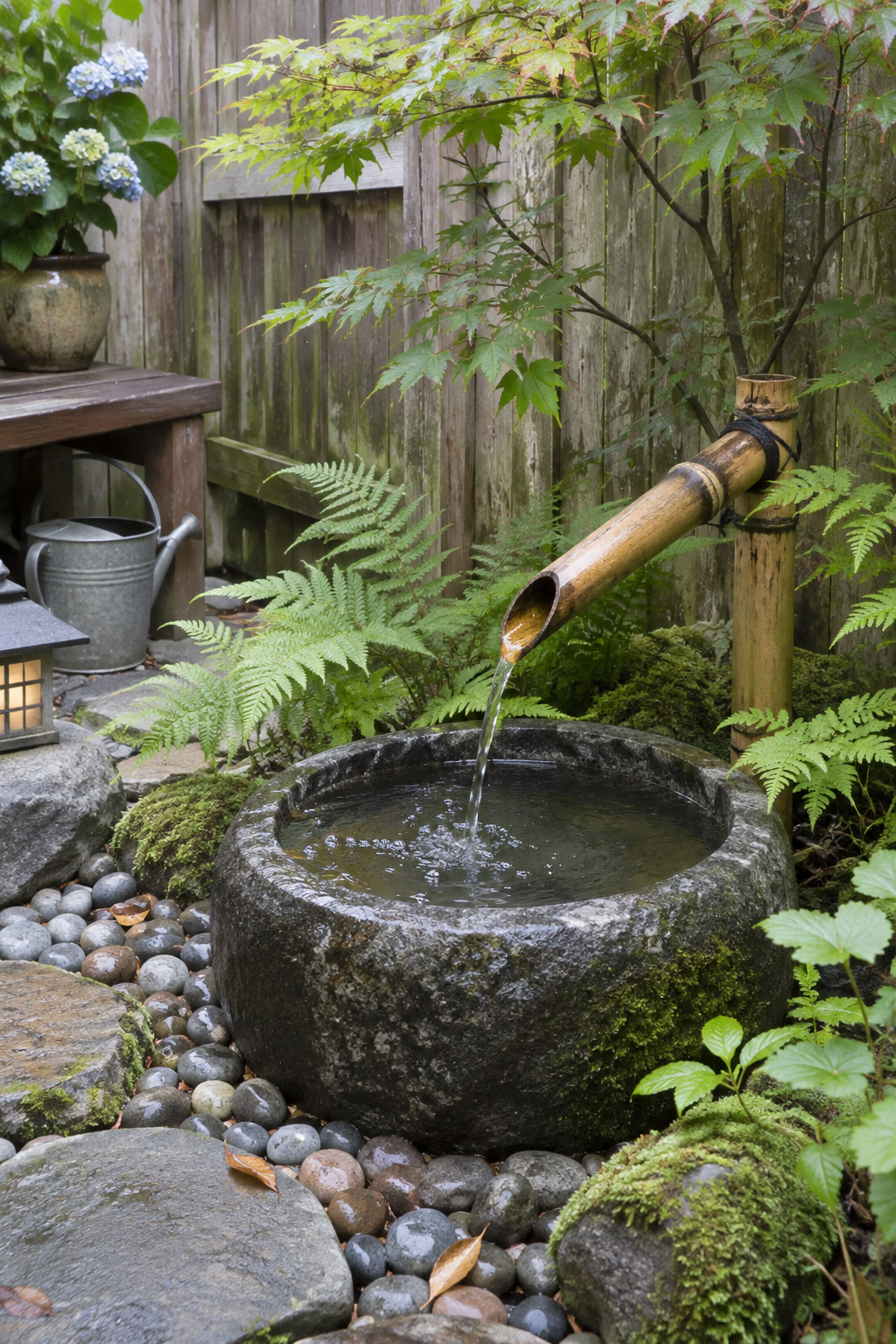
A gentle water sound that masks traffic
A bamboo spout dripping into a low stone basin, often called a tsukubai, is one of the most recognizable courtyard features. The basin sits low to the ground, surrounded by a few flat stones and a bed of river pebbles that hides a small reservoir and pump below.
Kits with a recirculating pump and a plastic reservoir make this a weekend project. Dig a hole for the reservoir, cover it with sturdy mesh, set the basin on top, and run the tubing up through the bamboo spout. The steady trickle softens the hum of air conditioners and nearby streets, which matters a lot in an enclosed space where sound bounces off walls.
You’ll need an outdoor GFCI-protected outlet nearby, and the reservoir will need topping off in hot weather. Bamboo spouts weather and crack after a few seasons, so plan to replace them, or choose a cast or resin version that looks similar and lasts longer.
3. Frame a Tsubo-Niwa View From an Indoor Window
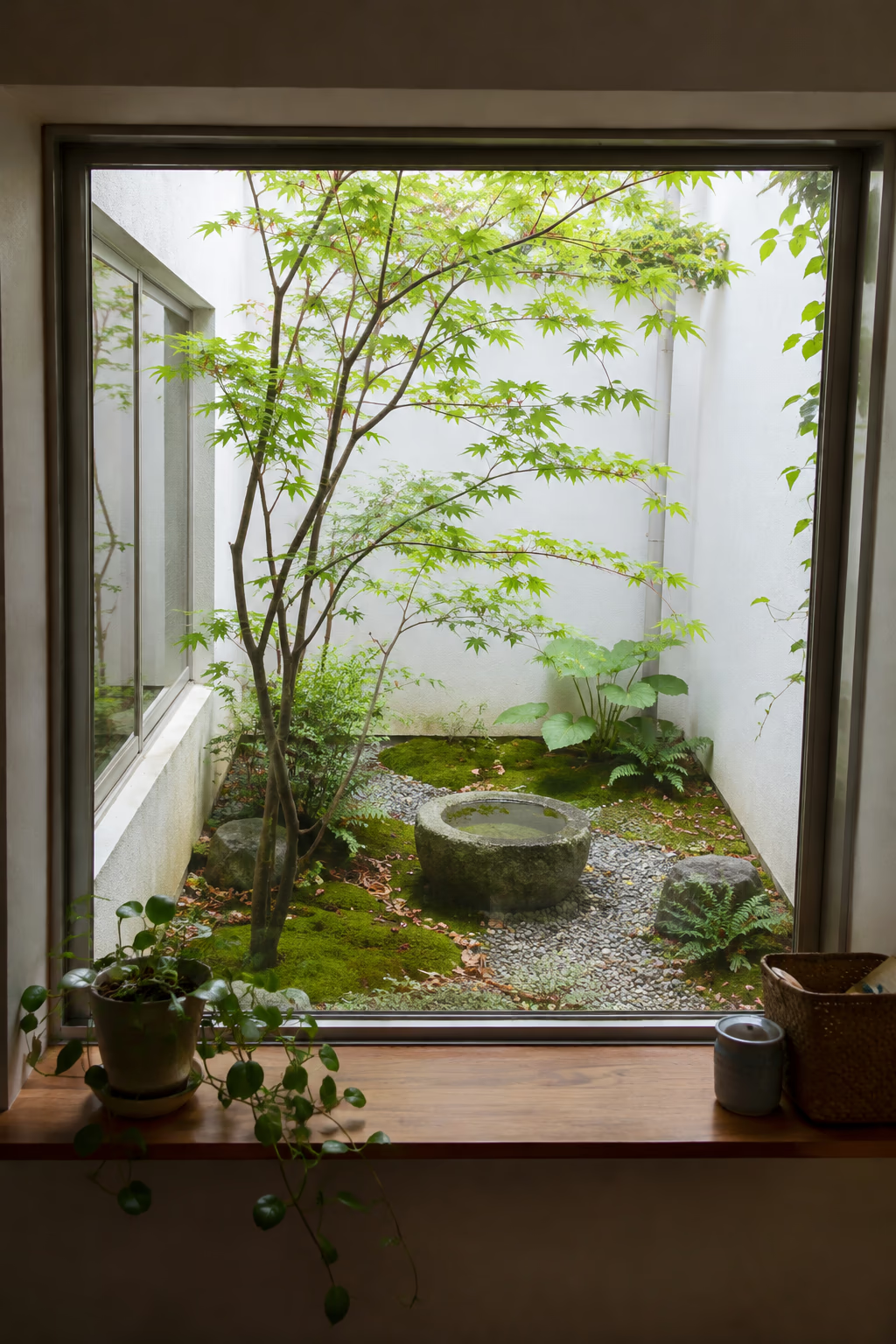
Design the garden as a living picture
A tsubo-niwa is a tiny courtyard garden meant mainly to be seen from inside the house. If you have a light well, an atrium, or a small enclosed strip outside a kitchen or bathroom window, treat it like a framed painting that changes with the weather.
Stand inside where you’ll look out most often and build the composition from that viewpoint: one small tree or clump of bamboo, a single stone or basin, and a carpet of moss or gravel. Keep taller elements toward the back and leave a little empty ground so the view doesn’t feel crowded.
These spaces are often shady and damp, so pick shade-tolerant plants and make sure water drains away from the foundation. Low-voltage lighting aimed at the tree turns the view into a glowing nighttime scene from inside.
4. Enclose the Space With a Bamboo or Cedar Screen
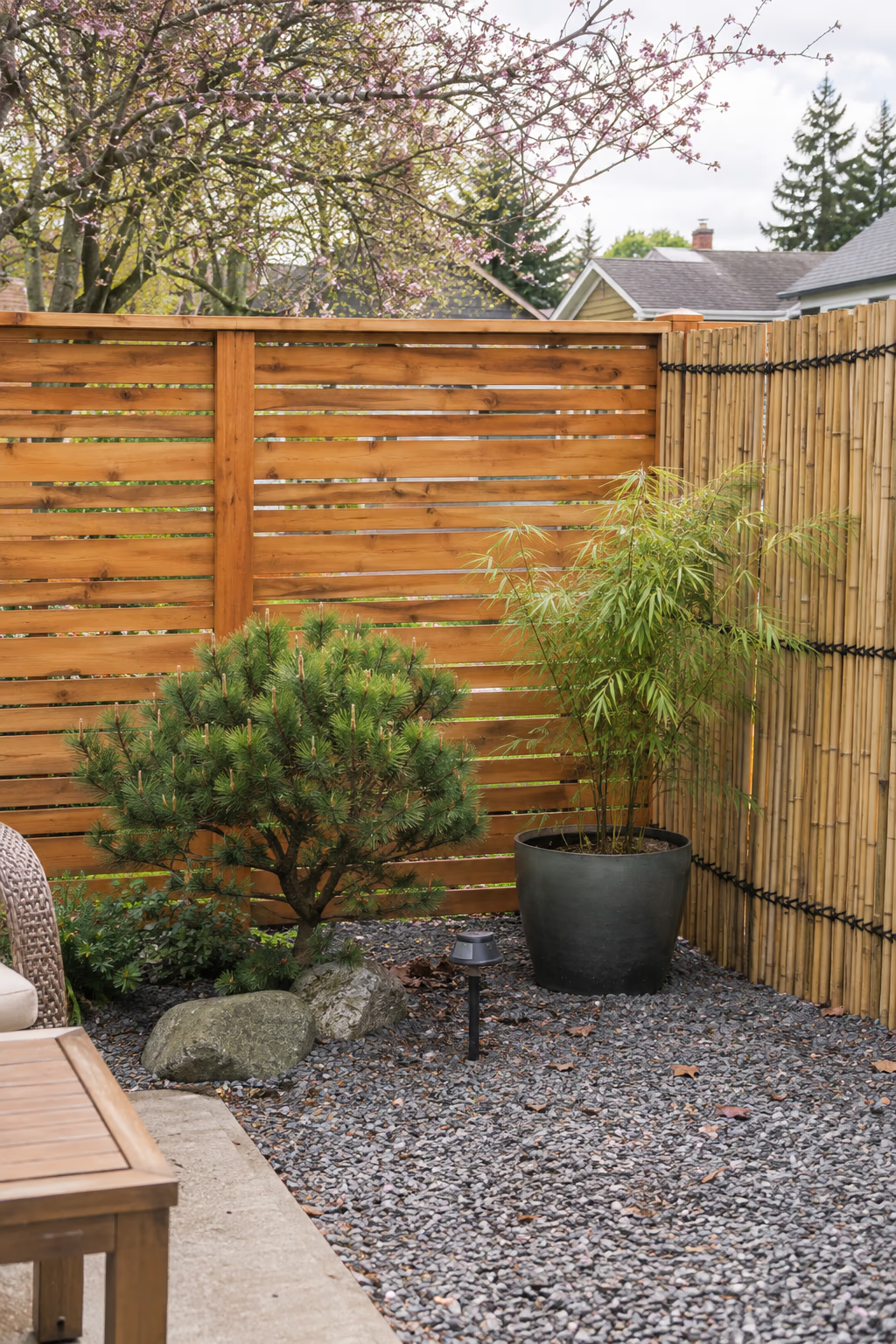
Privacy that feels natural, not boxed in
A good screen turns an open patio into a true courtyard. Natural bamboo poles lashed with black twine give a traditional look, while horizontal cedar slats with narrow gaps of about half an inch feel more modern and work well with Japandi-style homes.
Many homeowners attach bamboo panels to an existing chain-link or wood fence to save money. For a freestanding cedar screen, set 4×4 posts in concrete about 6 feet apart and fasten 1×4 or 1×6 boards with stainless-steel screws to prevent dark streaks.
Natural bamboo fades to silver-gray within a year or two and may last only several years outdoors, especially in wet climates. Check your local fence height limits and any HOA rules before building, since many areas cap backyard fences at 6 feet.
5. Build a Low Engawa-Style Wooden Deck
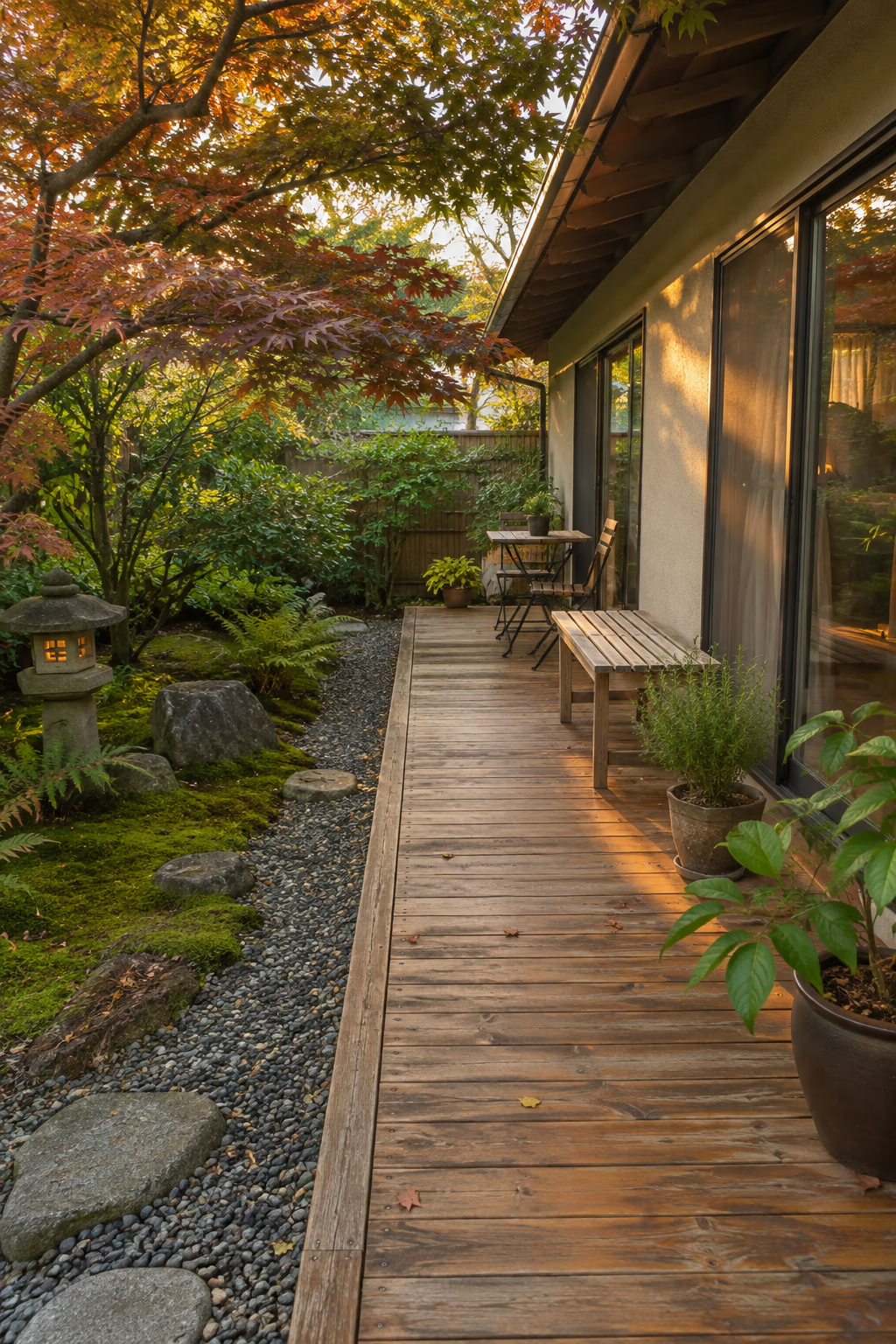
A soft edge between house and garden
The engawa is a narrow wooden veranda that runs along a Japanese house, a place to sit and look into the garden. Recreate it with a simple low deck, 4 to 6 feet deep, set just a step down from your back door and running along one side of the courtyard.
Use cedar, redwood, or a quality composite in a warm brown or weathered gray. Run the boards parallel to the house wall to emphasize length, and keep railings off if the deck is low enough that local code doesn’t require them.
Keep the deck at least slightly above grade with good airflow underneath to prevent rot, and leave a narrow gravel strip along the edge to catch rain dripping from the roof. A ground-level deck usually doesn’t need a permit, but rules vary, so check with your building department first.
6. Place a Stone Lantern as an Evening Focal Point
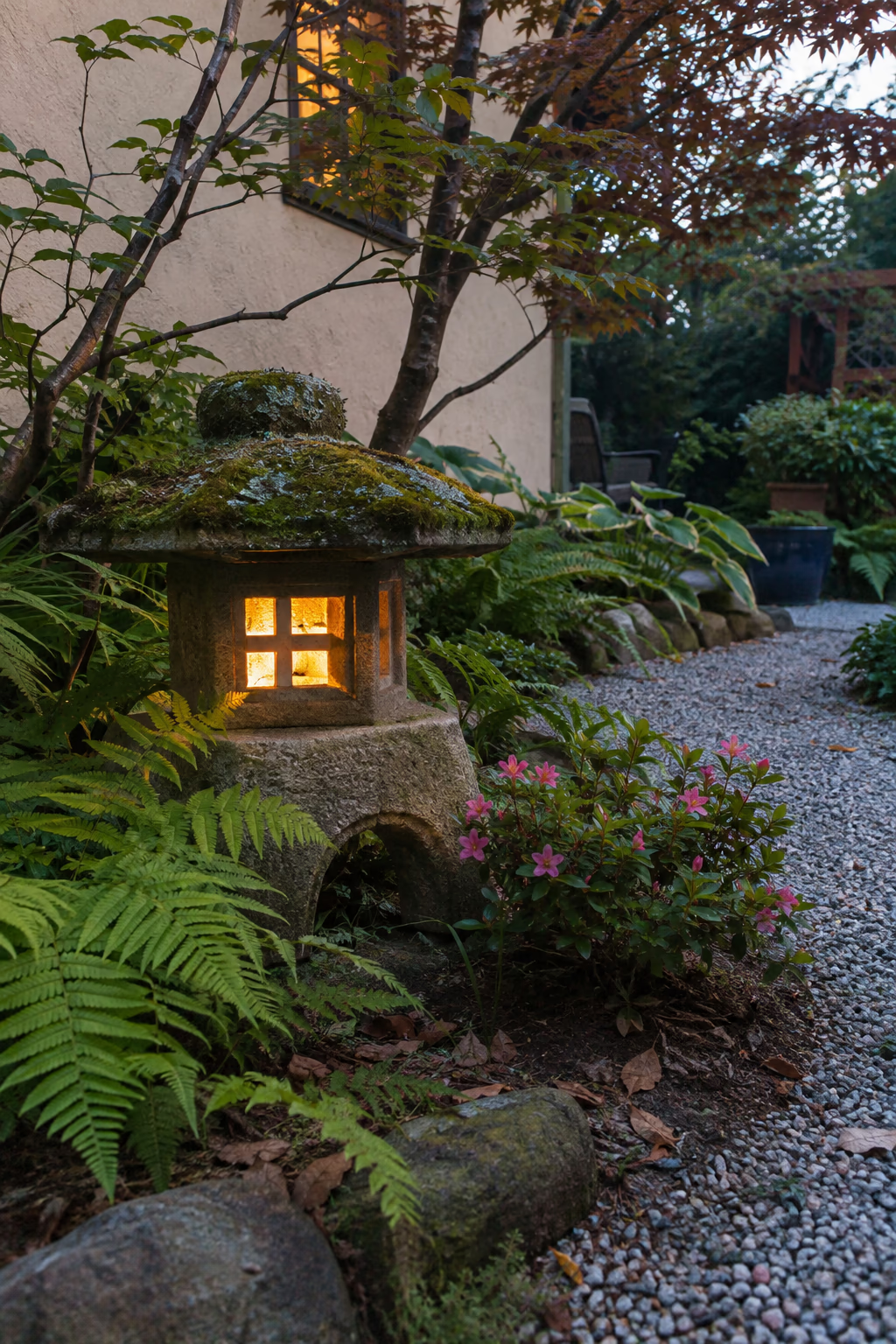
A quiet glow when the sun goes down
A stone lantern gives a courtyard structure during the day and atmosphere at night. A short yukimi-style lantern with a wide roof suits small spaces, while a taller post-style lantern works where you need vertical interest near a corner.
Tuck the lantern beside a basin, at a bend in the path, or partly behind a shrub so it feels discovered rather than displayed. Inside, a battery LED candle or a small low-voltage bulb gives a warm flicker without open flame.
Cast-concrete lanterns cost far less than carved granite and age nicely as moss and lichen take hold. Set the lantern on a compacted gravel base so it stays level, since a leaning lantern in a small courtyard is hard to ignore.
7. Cover Shady Ground With Moss and Mondo Grass
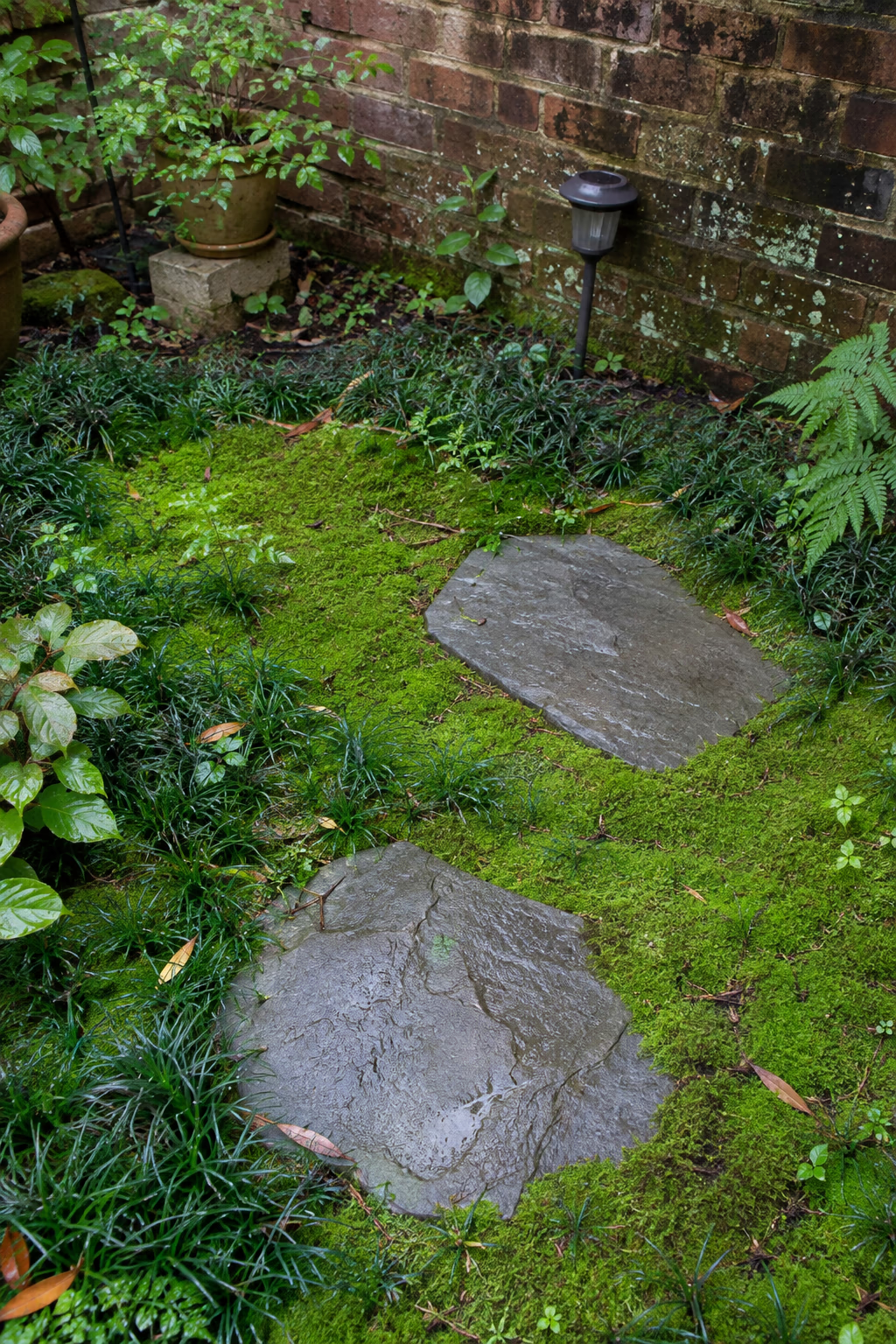
A green carpet for spots where lawn fails
Walled courtyards are often too shady for turf, which is good news for a Japanese-style planting. Moss thrives in shade on compacted, slightly acidic soil, while dwarf mondo grass forms dense, dark green tufts only 2 to 4 inches tall that read like a soft rug.
Clear weeds, rake the soil smooth, and press moss pieces firmly into place, misting daily for the first few weeks. Plug dwarf mondo grass about 4 to 6 inches apart; it fills in slowly over a couple of seasons and never needs mowing.
Moss struggles in hot, dry, sunny spots, and dwarf mondo grass is usually reliable in zones 6 or 7 through 10. Colder-climate gardeners can use creeping sedges or wild ginger instead. Keep fallen leaves blown off both, or the moss underneath will yellow.
8. Swap Concrete for Crushed Granite Underfoot
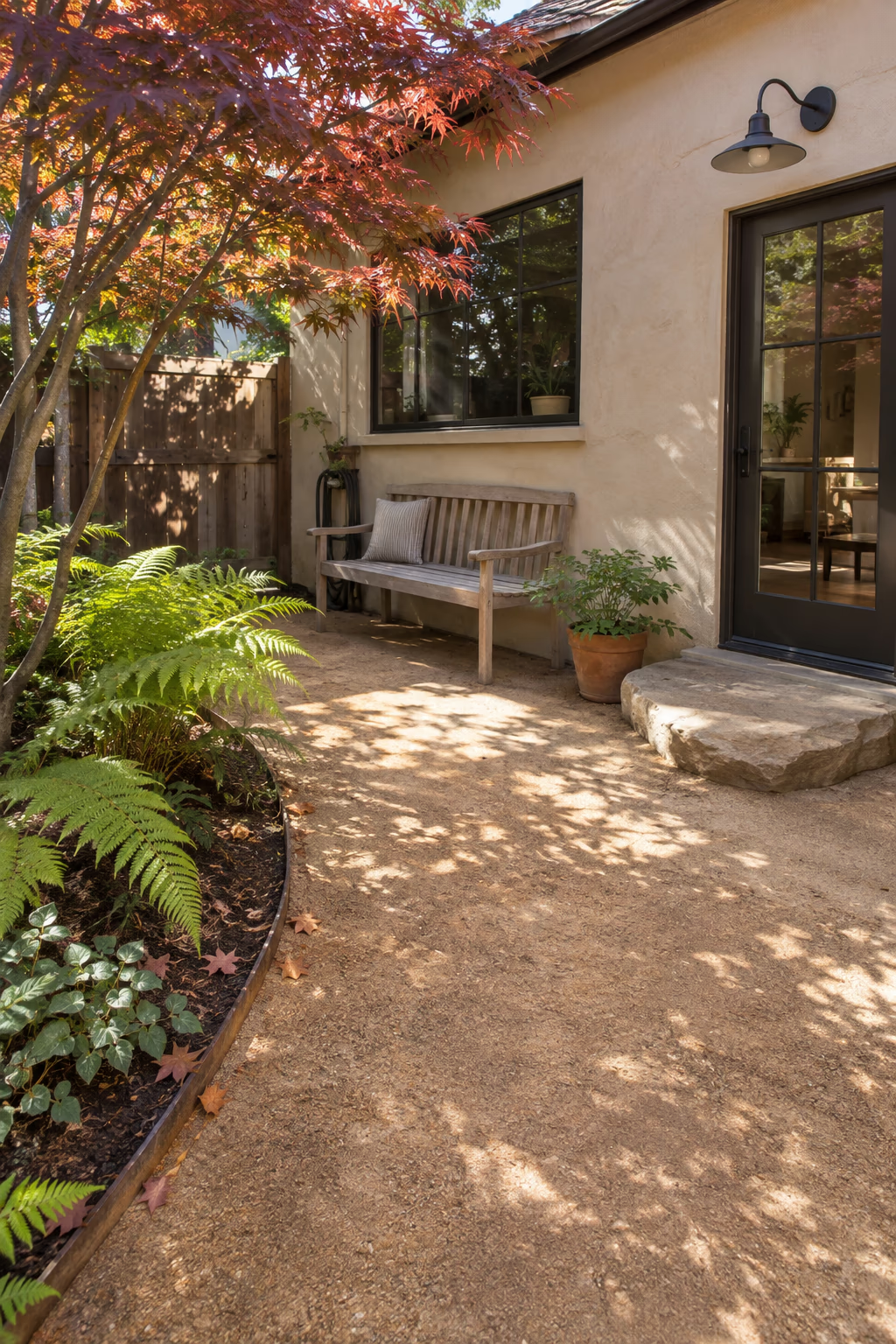
A softer, permeable courtyard floor
Replacing a slab or plain pavers with crushed granite or decomposed granite instantly makes a courtyard feel more like a garden. The surface crunches softly underfoot, lets rain soak in, and gives plants a neutral backdrop in warm tan or cool gray.
For a firm walking surface, excavate about 4 inches, lay landscape fabric, add compacted base rock, and top it with 2 to 3 inches of fine crushed granite compacted in layers. Steel or aluminum edging keeps the gravel from drifting into planting beds.
Gravel tracks into the house, so place a large flat stone or doormat at every entry. Removing an old slab can be heavy, dusty work; renting a jackhammer or hiring a crew for the demolition saves a lot of strain.
9. Install a Simple Wooden Garden Gate
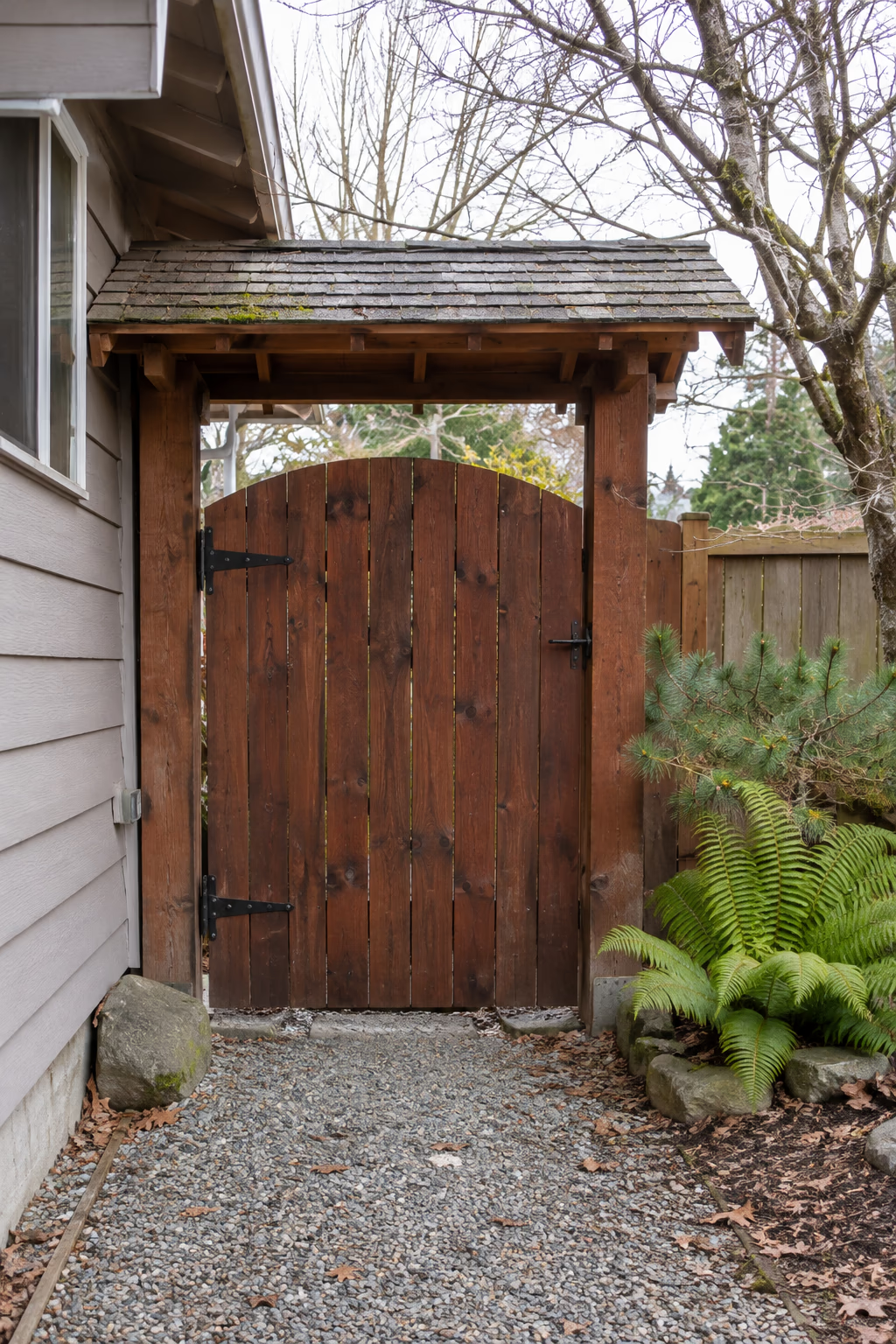
A welcoming threshold that adds privacy
A courtyard feels more special when you pass through something to enter it. A simple wooden gate with a small overhanging roof, or a plain slatted gate in dark-stained cedar, creates that sense of arrival from a driveway or side yard.
Keep the design restrained: vertical slats, black iron hinges, and a wooden latch or simple pull. Frame it with a pair of sturdy posts and plant a low shrub or fern on one side so the entry feels anchored.
Gates take a lot of abuse, so use heavy-duty hinges, a diagonal brace on the back to stop sagging, and posts set deep in concrete. If the gate opens onto a pool area, check local pool safety rules, which usually require self-closing, self-latching hardware.
10. Plant Clumping Bamboo in a Narrow Border
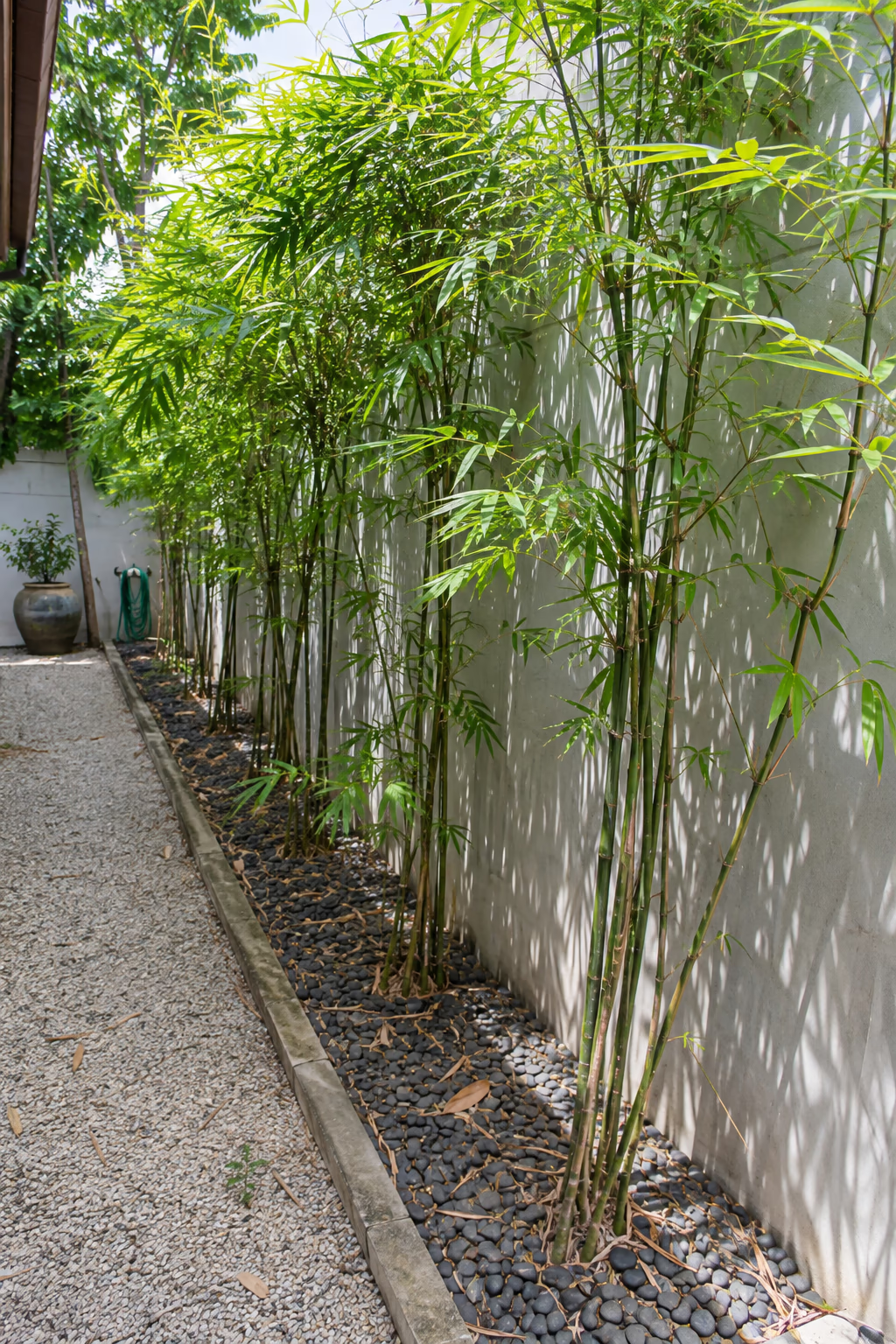
Tall, airy greenery for tight spaces
A narrow strip along a courtyard wall is the perfect place for bamboo. Its tall, slender canes add height and movement without taking up much floor space, and the rustling leaves bring sound to an enclosed garden.
Choose clumping bamboo rather than running types. Cold-hardy clumpers such as fountain bamboo grow 8 to 12 feet and are suited to many zones 5 through 9, while warmer regions have more options. A bed 2 to 3 feet wide is enough for a row of clumps planted 3 to 5 feet apart.
Avoid running bamboo near the house or property line; it spreads aggressively and can be nearly impossible to remove. Many clumping types prefer shade from hot afternoon sun, and they need steady moisture during their first couple of years.
11. Display a Potted Pine or Bonsai on a Stand
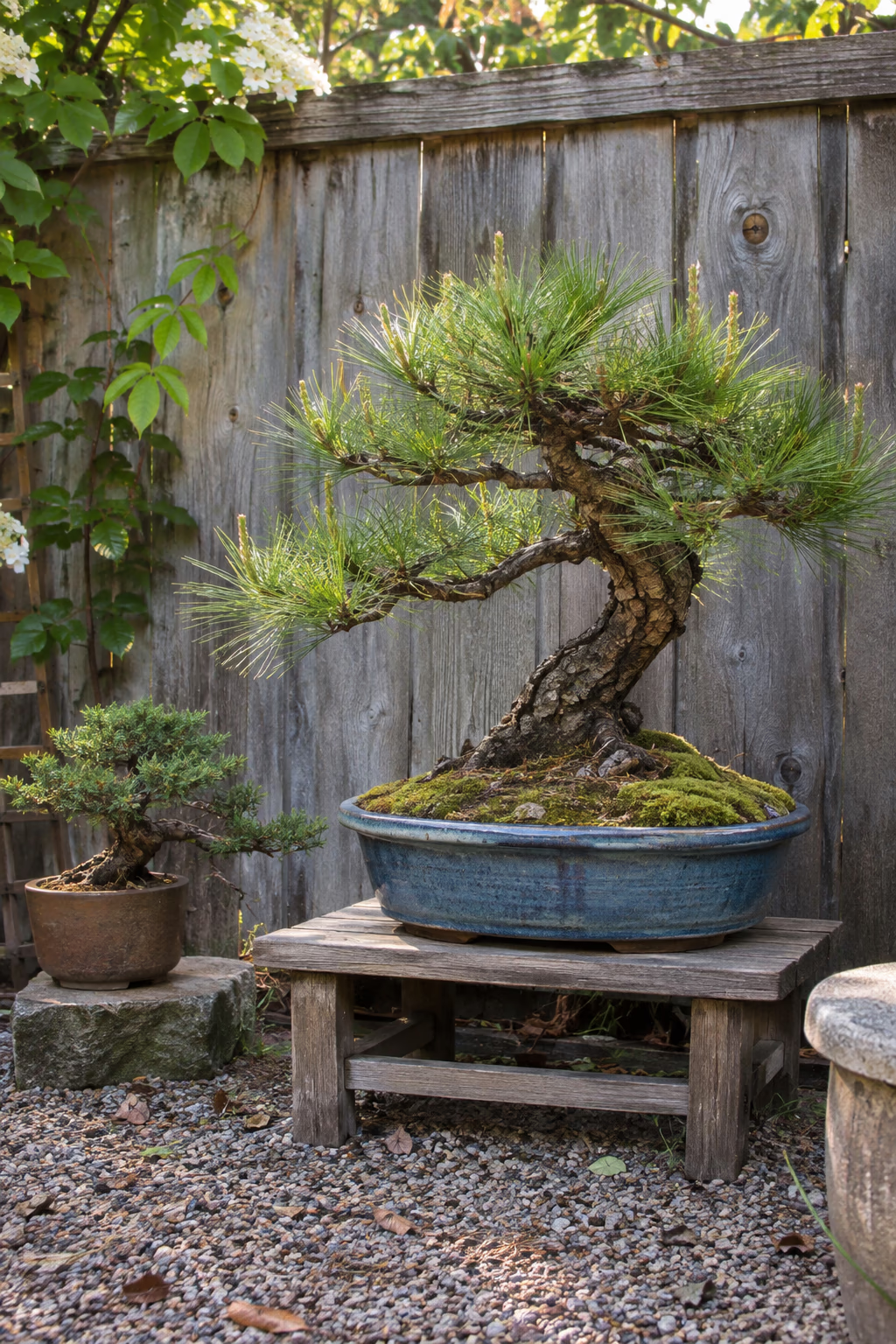
A sculptural accent you can move around
When there’s no room in the ground for a tree, a container can carry the same spirit. A dwarf pine, juniper, or bonsai-style maple in a low, glazed pot gives a courtyard a focal point that feels refined and personal.
Raise the pot on a wooden stand, a flat stone, or a weathered stump so it sits closer to eye level. Choose pots in muted blues, browns, or charcoal with drainage holes, and use a gritty, fast-draining potting mix.
Containers dry out quickly, especially shallow bonsai pots, so check soil moisture daily in summer. Outdoor species like pines and junipers need winter cold to stay healthy, but in colder zones, move pots against a sheltered wall or into an unheated garage to protect the roots from hard freezes.
12. Grow a Living Fern Wall on a Bare Facade
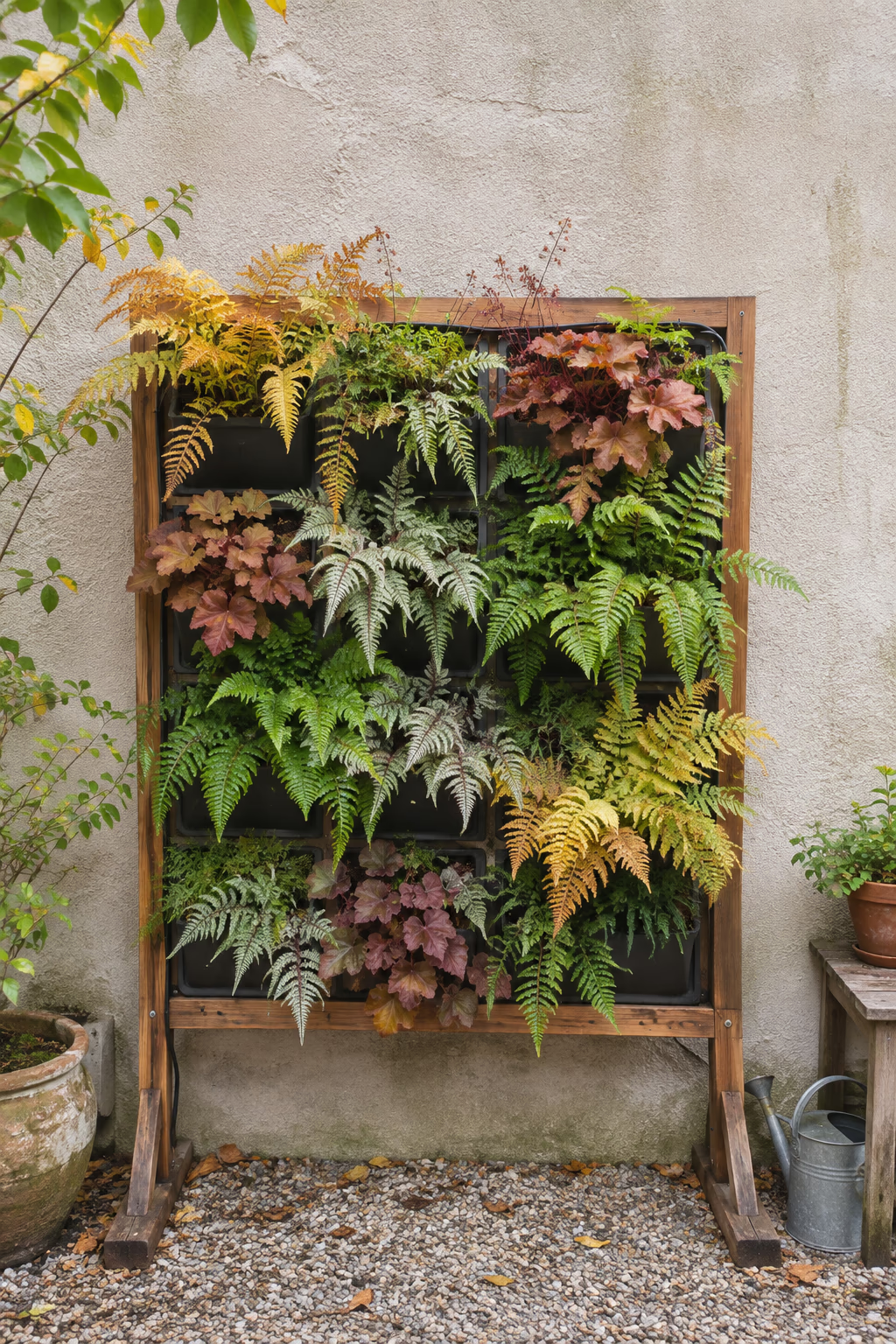
Turn a blank wall into a lush backdrop
Tall walls can make a small courtyard feel like a box. A vertical planting of ferns and other shade lovers softens that hard surface and makes the space feel like a forest clearing, without taking any ground space.
Modular planter panels or felt pocket systems mounted on a freestanding frame or fence work well. Plant them with autumn fern, holly fern, Japanese painted fern, and small heucheras for a mix of greens, bronzes, and silvers.
Living walls need regular water, so plan on a simple drip line with a timer. Don’t mount wet planters directly against your house siding; use a separate frame or a fence with an air gap so moisture can’t damage the wall.
13. Create a Tea Corner With a Low Bench
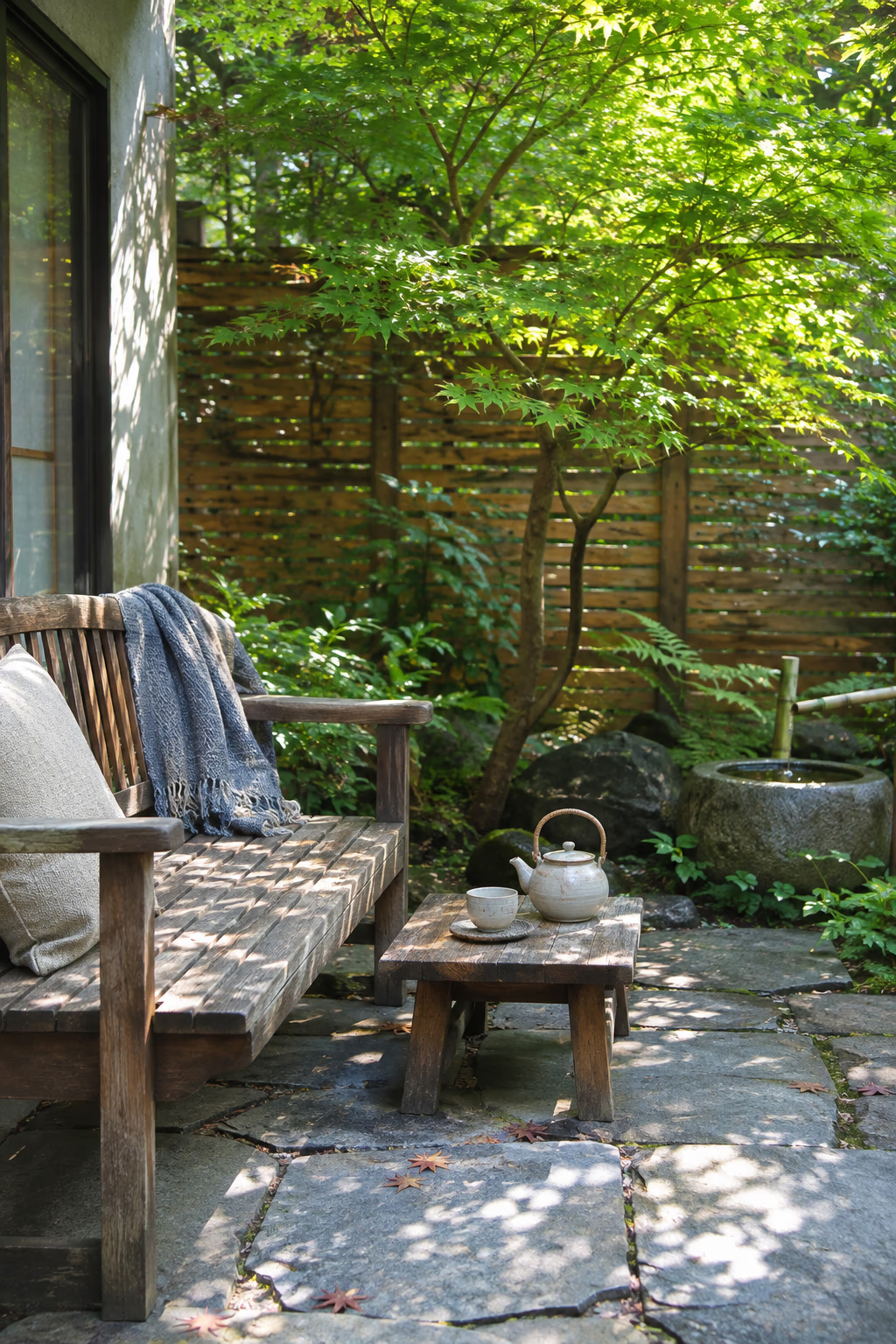
A small spot made for slowing down
A courtyard is more than a view when it has a place to sit. A simple wooden bench, a pair of low stools, and a small side table tucked into a quiet corner make an inviting spot for morning tea or reading.
Pick furniture in natural teak, cedar, or dark-stained wood with clean lines. Set it on a few large flat stones or a small wooden platform, and place it so you face the tree, basin, or lantern rather than a blank wall.
Keep cushions minimal and store them indoors when it rains to prevent mildew. A small overhead sail or the shade of a maple makes this corner usable even on hot summer afternoons.
14. Soften Edges With Forest Grass and Hostas
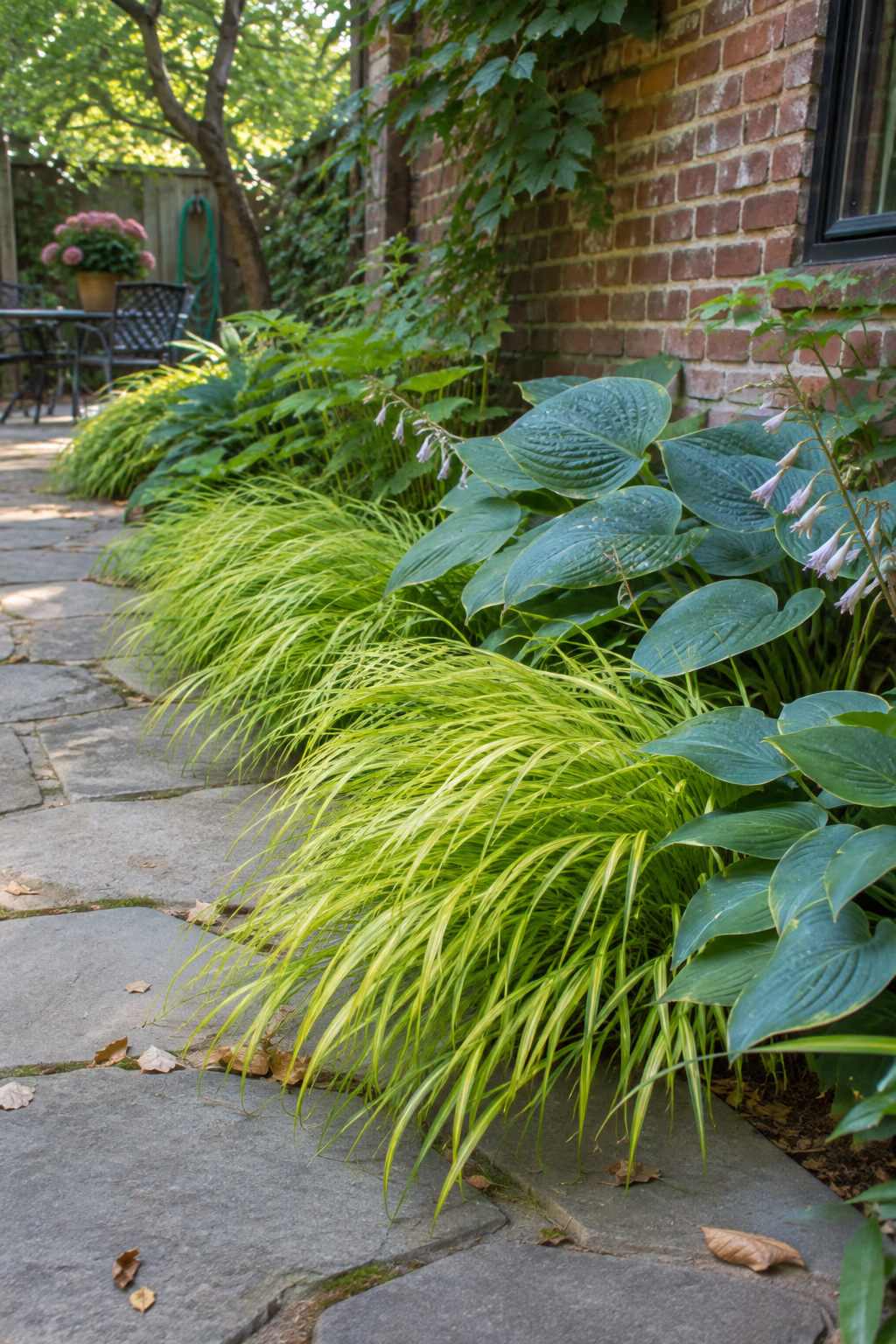
Flowing texture along walls and paths
Straight walls and paved edges can look harsh in a small enclosed garden. Japanese forest grass, with its arching, cascading leaves in bright gold or green, softens those lines and seems to flow like water in the slightest breeze.
Pair it with blue or green hostas for broad leaves and contrasting shape. Plant in drifts of three or five along the base of a wall or edge of a path, spacing forest grass about 18 inches apart so the clumps knit together.
Both plants prefer part shade and moist, rich soil, and forest grass is usually hardy in zones 5 to 9. Hostas are a favorite of slugs and deer, so check leaves often and use barriers or repellents if you notice damage.
15. Hang a Rain Chain Over a Gravel Basin
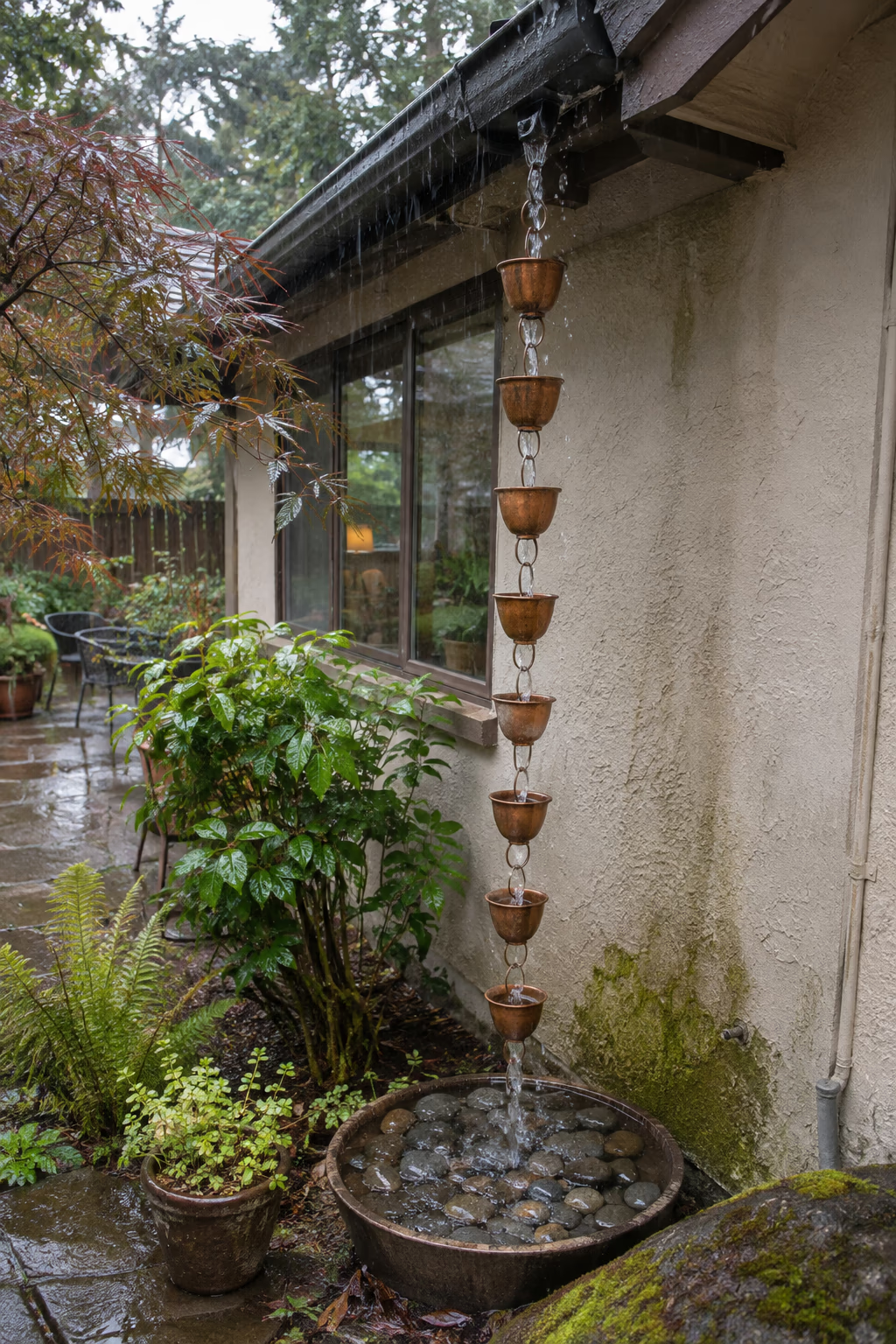
Make every rainstorm part of the garden
Instead of a plain downspout at the corner of your roof, hang a copper or iron rain chain that guides water down in a series of cups or links. During a storm it becomes a moving sculpture with a soft, splashing sound.
Attach the chain to the gutter outlet with an installation bracket, and let it end in a shallow basin or bowl of river rock. Anchor the bottom of the chain with a stake or weight so wind doesn’t swing it against the wall.
Rain chains carry less water than a downspout, so heavy storms may splash. Grade the gravel basin so water flows away from the foundation, and consider a hidden drain pipe underneath if your courtyard collects a lot of runoff.
16. Shade the Courtyard With Bamboo Roll-Up Blinds
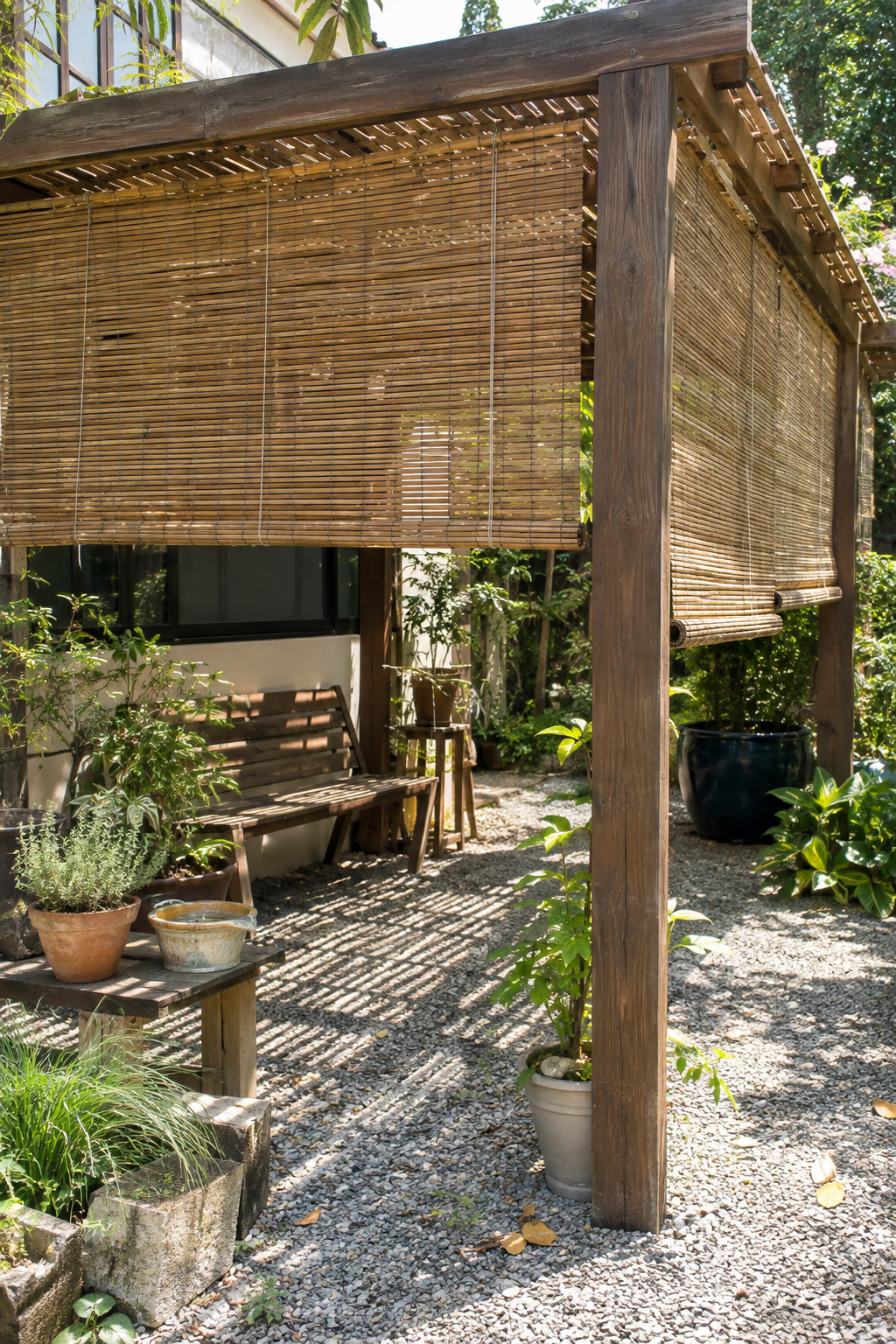
Filtered light without a heavy roof
In Japan, thin bamboo or reed blinds called sudare have long been used to soften summer sun. Hung from a pergola beam, a covered walkway, or the edge of a roof overhang, they cast striped shadows and make a hot courtyard far more comfortable.
Look for natural split-bamboo or reed roll-up shades sized to fit between pergola posts. Secure them with hooks and a tie-down cord at the bottom so they don’t flap in the wind, and roll them up on cool or cloudy days.
Natural blinds fade and weaken from sun and rain within a few seasons, so take them down in winter to extend their life. In windy areas, a fabric shade cloth in a neutral color may hold up better while giving a similar filtered effect.
17. Embrace Wabi-Sabi With Weathered Materials
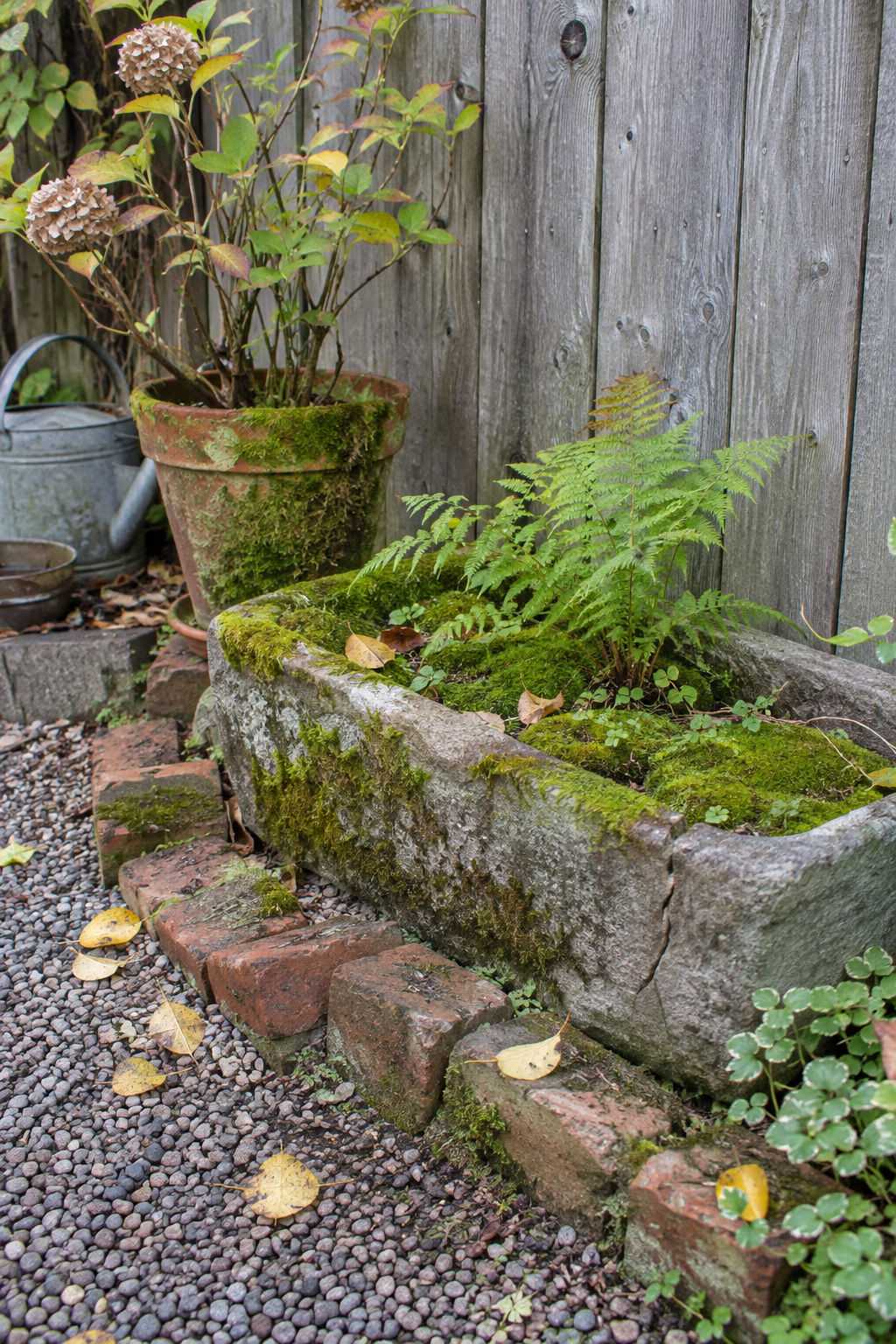
Beauty that improves with age
Wabi-sabi is the Japanese appreciation of imperfect, aging, and humble things. In a courtyard, that might mean a cracked old stone trough, reclaimed bricks with chipped edges, a moss-covered pot, or a fence board left to weather gray.
Shop salvage yards, estate sales, and stone yards for pieces with character rather than buying everything new. Let moss grow on north-facing stones, leave a few fallen maple leaves on the gravel in autumn, and resist pressure washing every surface.
This approach is easy on the budget and lowers upkeep, but it still needs care. Inspect reclaimed materials for sharp edges or instability, and keep walking surfaces free of slippery moss and algae.
18. Turn the Front Entry Into a Japanese Courtyard
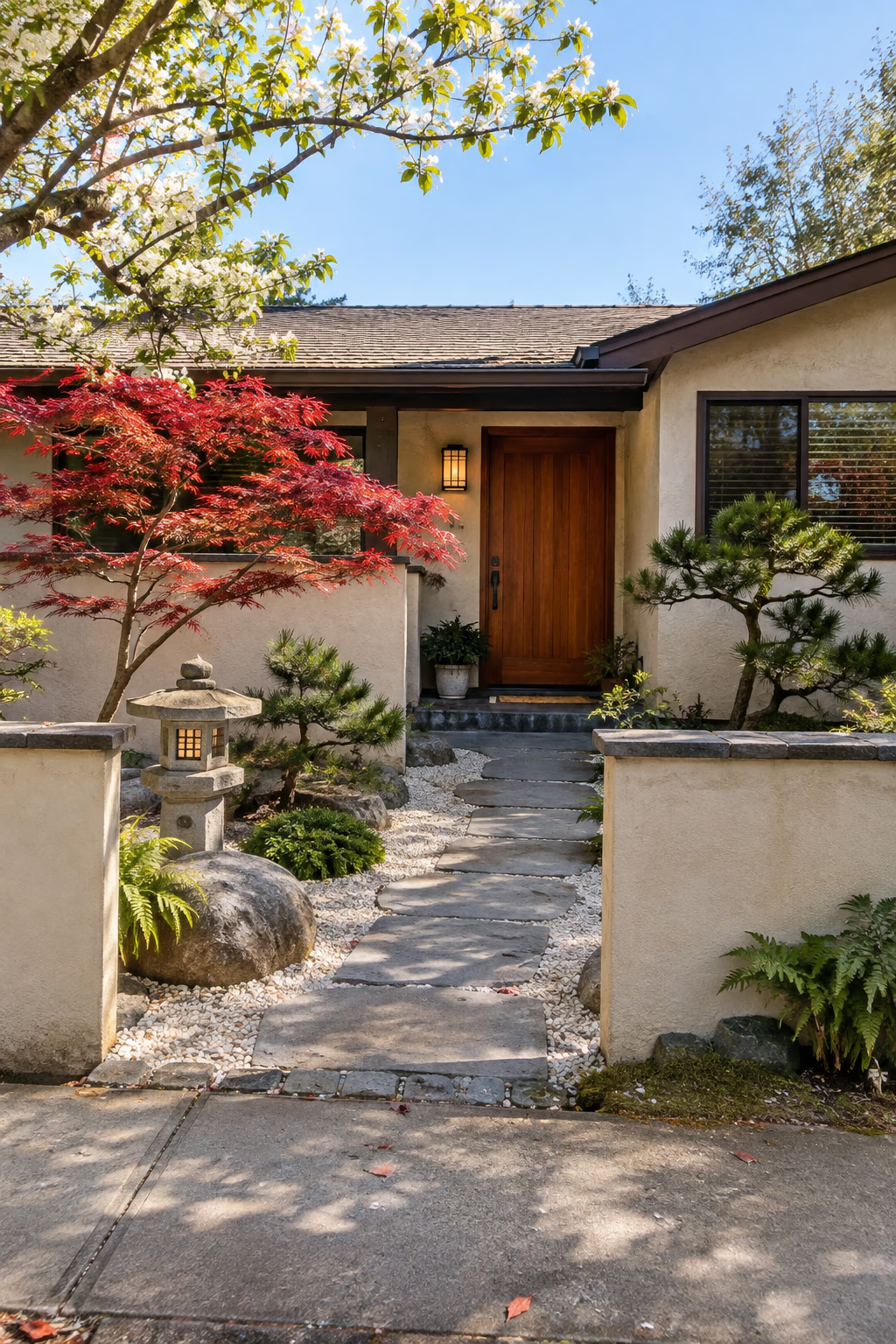
Calm begins before you reach the door
Many homes have a small walled or partly enclosed area near the front door that’s usually ignored. Low walls, a short screen, a single small tree, and a gravel bed can transform it into a welcoming Japanese-style entry courtyard.
Keep the layout simple and clear so the path to the door stays obvious. Add one feature, such as a lantern or water basin, to one side, and plant evergreen shrubs like dwarf pines or boxwood for year-round structure.
Front yards are more visible to neighbors and HOAs, so check any rules on fences, screens, and gravel. Make sure the path is well lit and level, with no loose stones or tripping hazards near the door.
19. Pave a Cut-Stone Walk With Pebble Joints
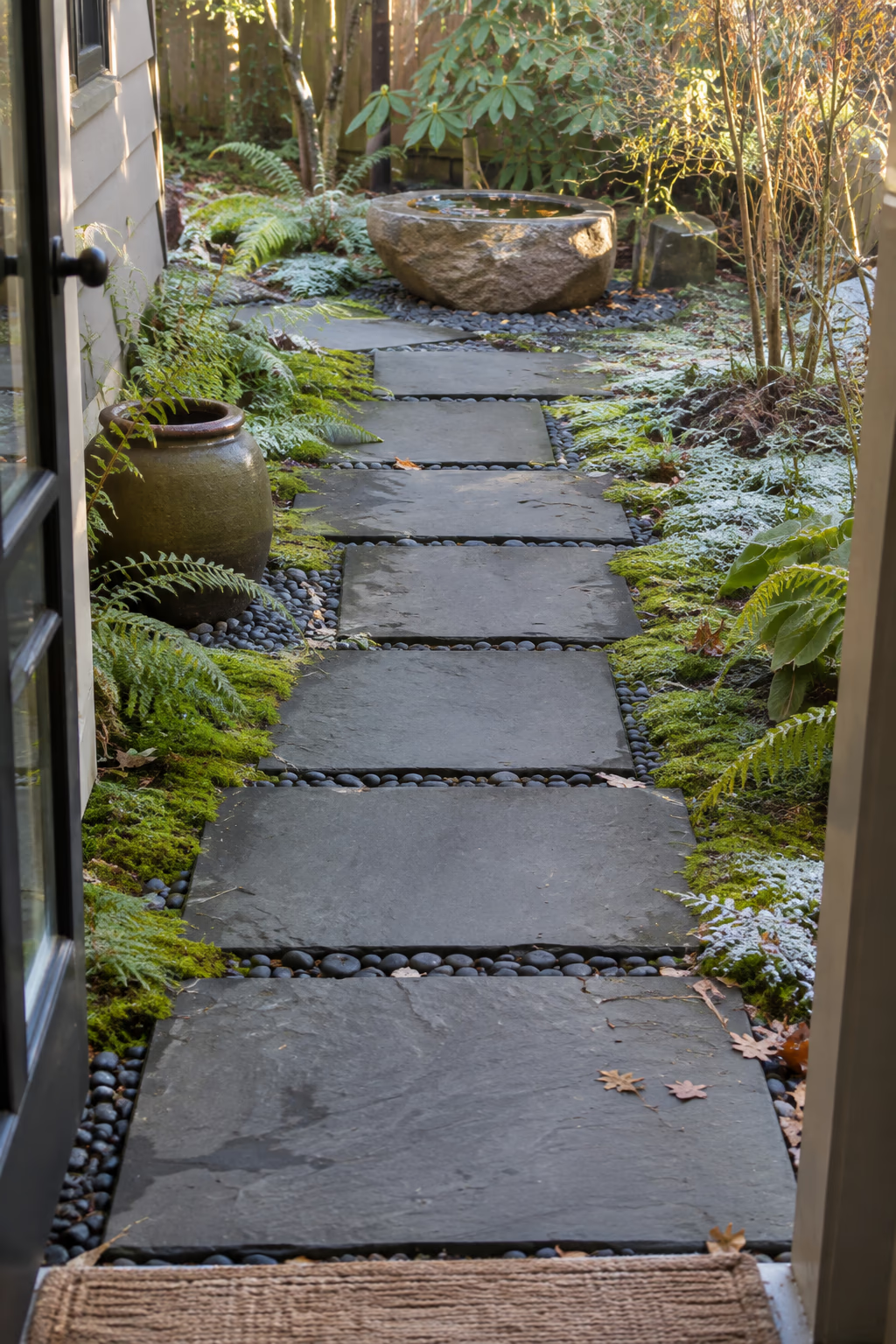
A refined path that ties the courtyard together
Instead of round, scattered stepping stones, lay a straight walk of rectangular cut stones in a staggered or offset pattern, with river pebbles or small gravel filling the gaps. This style suits modern homes and gives the courtyard a tidy, crafted look.
Use bluestone, granite, or concrete pavers in gray or charcoal tones, set on a compacted gravel base. Leave 2 to 4 inch joints and fill them with smooth black or gray pebbles, and run the path from a door or gate directly to the main feature.
Set stones level and flush with each other to avoid trips, and check for rocking after the first winter frost. Pebble joints may need occasional topping up and weeding, but they let water soak in and keep the path looking crisp.
How to Plan Your Japanese Courtyard
An enclosed space magnifies every choice, so a little planning helps you get light, drainage, and scale right before you buy plants or stone.
- Map the sun and shade. Watch the courtyard through a full day, since walls can leave some corners in deep shade and turn others into heat traps that scorch tender plants.
- Decide where you’ll view it from. Plan the layout from your most-used window, door, or seat so the main tree or feature looks its best from that spot.
- Choose one focal point. Let a maple, basin, or lantern lead, and keep other elements quieter and fewer in number so the space never feels cluttered.
- Solve drainage first. Enclosed courtyards can collect water, so grade surfaces away from the house and consider gravel or a hidden drain where runoff gathers.
- Pick plants for your zone. Check USDA hardiness and light needs, and choose clumping bamboo and noninvasive species to protect your home and neighbors.
- Check rules and utilities. Review HOA guidelines and local codes for fences, decks, and electrical work, and call 811 before digging for basins, posts, or drains.
Frequently Asked Questions
What makes a courtyard look Japanese?
A sense of enclosure, natural materials like stone, wood, and bamboo, restrained planting, and a few carefully placed features such as a maple, a water basin, or a lantern. Open space and asymmetry matter just as much as the objects themselves.
What plants grow well in a shady Japanese courtyard?
Moss, ferns, Japanese forest grass, hostas, dwarf mondo grass, clumping bamboo, and Japanese maples that receive some morning sun usually perform well. Confirm hardiness for your USDA zone before planting.
How big does a space need to be for a Japanese courtyard?
Very little. A tsubo-niwa can fit into an area of roughly 35 square feet, and even a narrow side yard or entry nook can hold a tree, a basin, and a small patch of moss or gravel.
Can I create a Japanese courtyard on a budget?
Yes. Start with gravel, a few salvaged stones, and one tree, then add a bamboo fountain kit, a cast-concrete lantern, or a screen as your budget allows. Doing paths and planting yourself saves the most money.
How do I keep a Japanese courtyard looking tidy?
Blow or rake leaves off gravel and moss, prune trees and shrubs lightly each year, top up the fountain reservoir, and pull weeds from gravel joints. Regular, light upkeep is easier than occasional big cleanups.
Final Thoughts
A Japanese courtyard proves that a small, enclosed space can feel restful and complete. A single maple, the trickle of water, a cedar screen, and a soft carpet of moss can turn an overlooked patio or entry into a place you look forward to stepping into.
Begin with the elements that matter most to you, choose plants and materials suited to your climate, and let the space mature with time. As moss spreads and wood weathers, your courtyard will feel more peaceful and personal every season.


