
Picture sitting on your front porch with a cup of coffee, and not once feeling watched by every car, jogger, and dog walker that passes. A few well-placed plants or a simple screen can make that happen.
Front yards are tricky. They face the street, they set the tone for your home, and they usually come with height limits and neighborhood expectations. The goal is rarely a fortress. It is a yard that feels calmer and more yours while still looking friendly and open to guests.
These 25 front yard privacy ideas cover hedges, slat fences, trees, grasses, planters, trellises, curtains, and clever tricks for small or paved lots. Pick one that fits your budget and your local rules, or layer a few together for a screen that looks natural.
1. Plant a Layered Evergreen Hedge
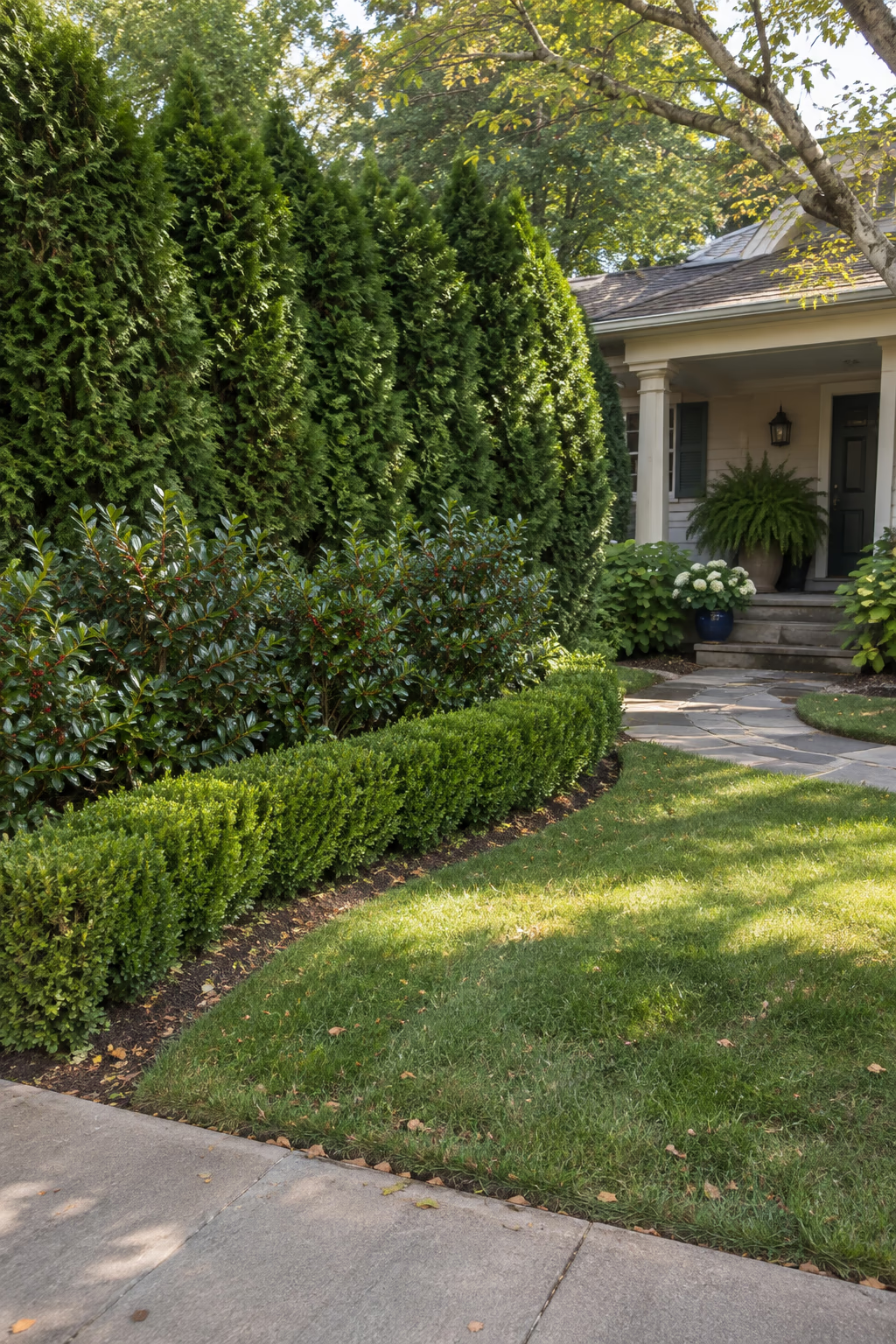
Year-round screening that looks like landscaping
A hedge is the classic answer, and layering makes it better. Plant a back row of tall evergreens such as arborvitae, a middle row of holly or laurel, and a low edge of boxwood or similar shrubs in front. The mix looks fuller than a single flat wall of green.
Stagger the plants in a zigzag instead of a straight line, and follow the spacing on the plant tag so they can mature without crowding. Most hedges need two to five years to fill in, so buy slightly larger plants if you want faster coverage.
Check how tall a hedge is allowed to be near the sidewalk or street, and keep it out of the sight triangle at driveways so drivers can see pedestrians.
2. Build a Horizontal Slat Fence With Climbing Plants
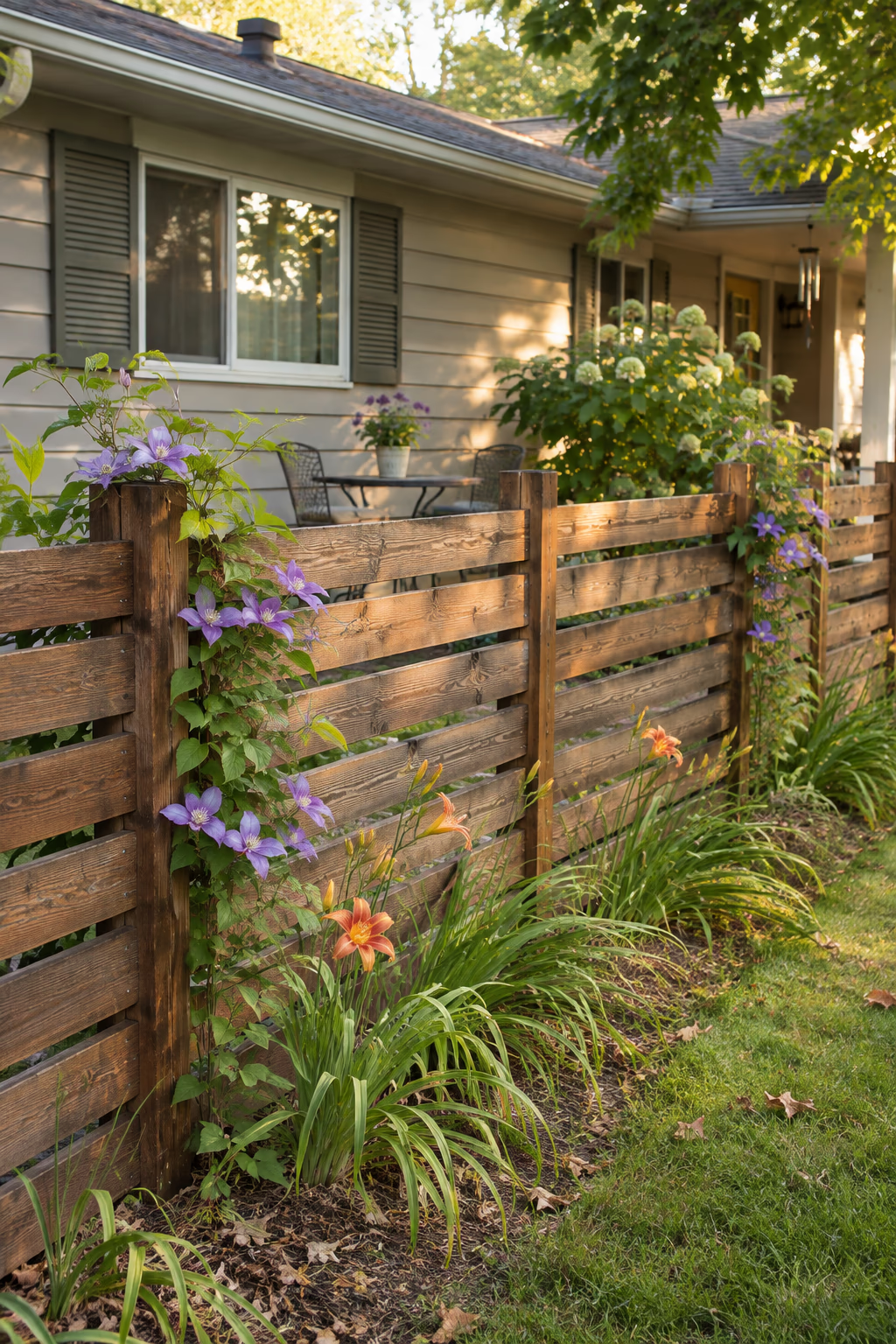
Privacy that still feels friendly
A fence of horizontal cedar or composite boards, about 4 to 5 feet tall, blocks most direct views from the street without feeling like a wall. Leave small gaps of a quarter inch or so between boards for airflow and a lighter look.
Soften it with clematis, climbing hydrangea, or jasmine on wires attached to the posts, and plant perennials at the base. A stain or a natural gray weathered finish blends in better than bright paint.
Many towns limit front yard fences to around 3 or 4 feet, and some HOAs have style rules, so confirm before you buy lumber.
3. Plant Columnar Trees for a Slim Green Wall
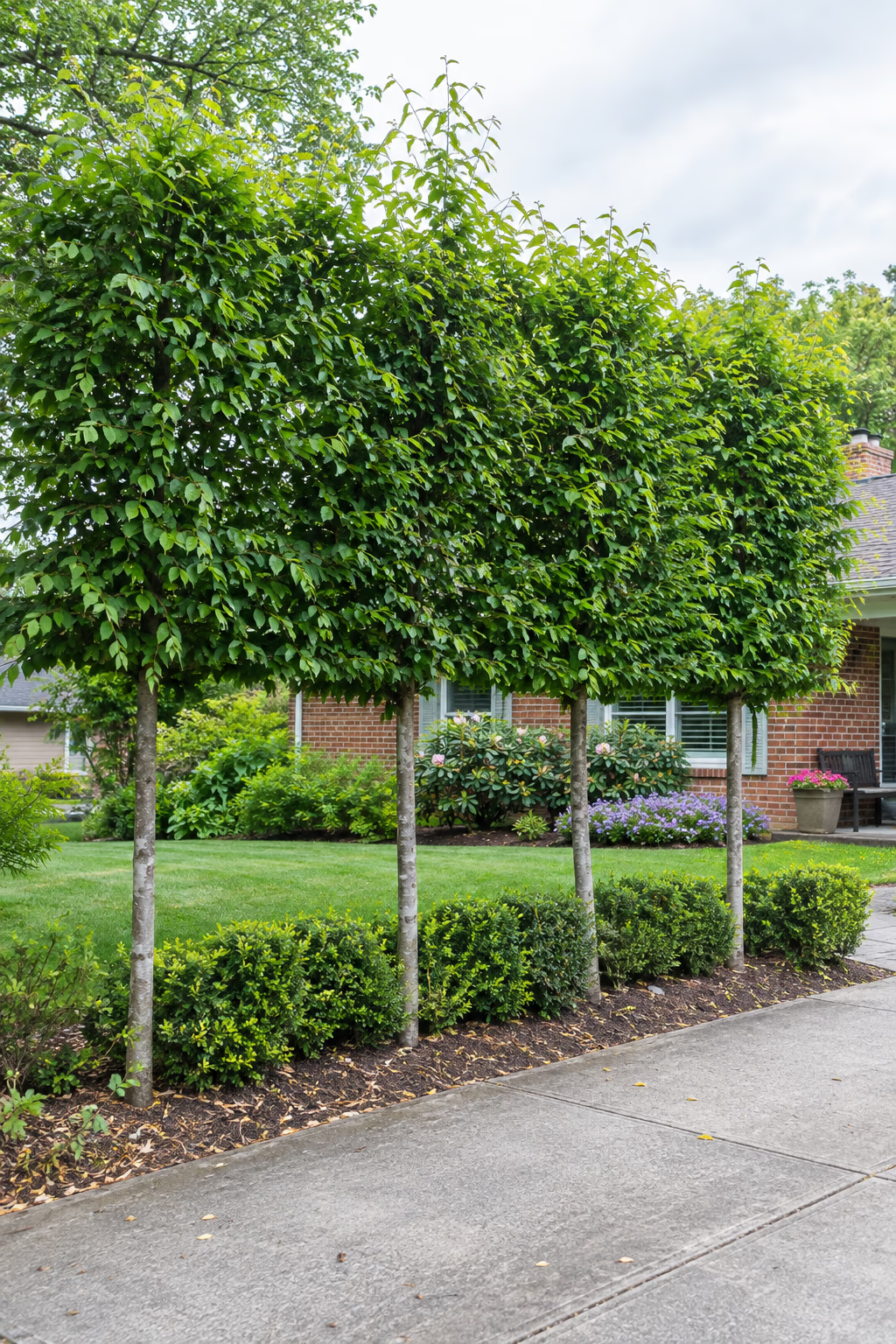
Height without taking up much width
Narrow trees such as columnar hornbeam, upright junipers, or slender arborvitae give you height in a strip only 3 to 5 feet wide. Pleached trees, which have trimmed trunks and a flat screen of foliage up high, work well above a low hedge or fence.
They are especially good where a house window or porch faces a neighbor’s second story, because they block the sightline from above. Space them according to the mature spread listed on the label.
Look up the roots and mature height for your species, and keep trees well away from sewer lines, overhead power lines, and your foundation.
4. Grow Ornamental Grasses as a Soft Screen
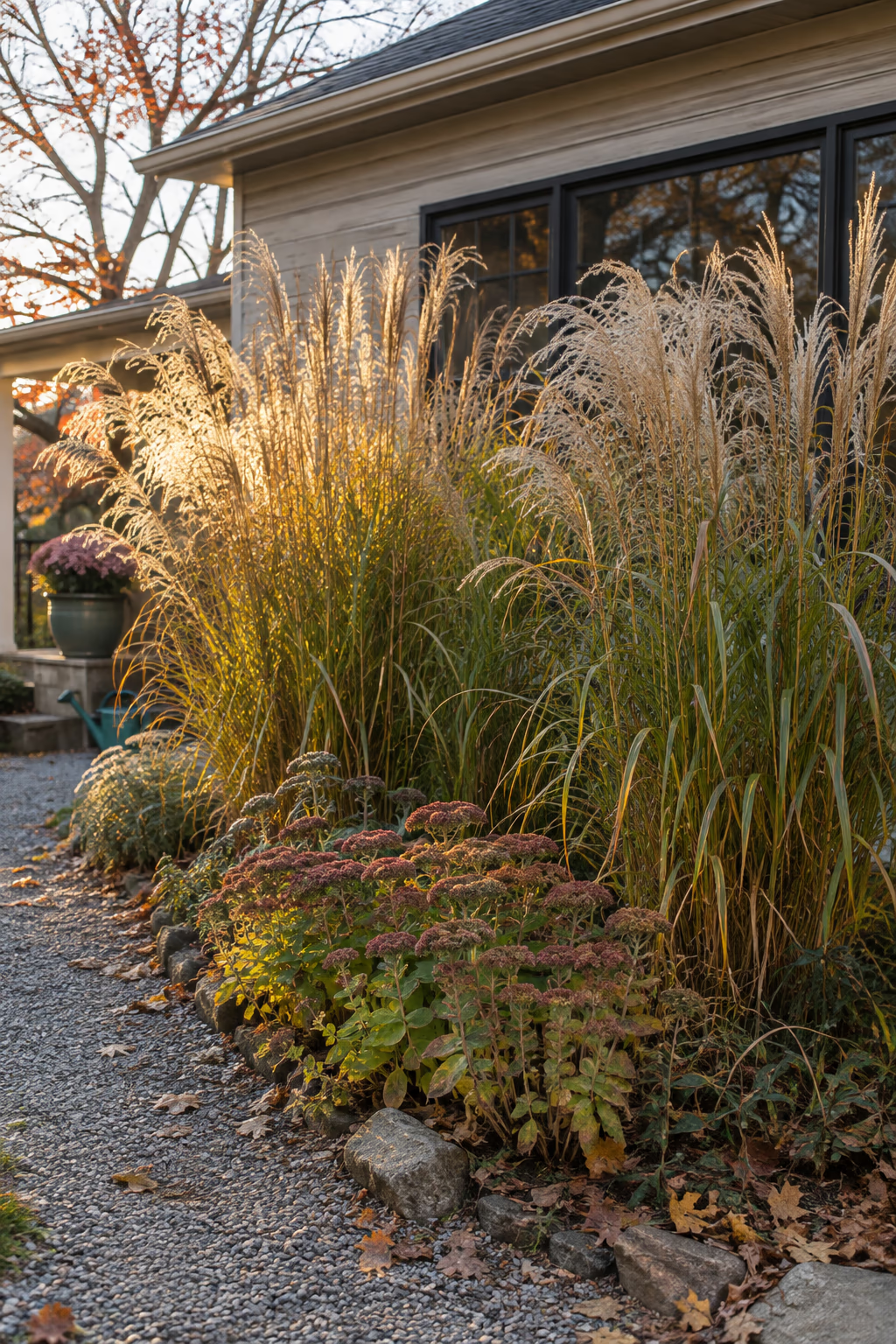
Fast, airy, and budget friendly
Tall grasses such as feather reed grass, miscanthus, and switchgrass can reach 5 to 8 feet in a single season. They move in the breeze and glow in autumn light, which makes a screen that feels alive instead of blocked off.
Plant them in groups of three to seven, with shorter perennials like sedum or coneflower in front. Most grasses like full sun and are cheap compared to fencing.
Many grasses are cut back to the ground in late winter, so they offer less cover for a couple of months. Pair them with a few evergreens if you need winter privacy. Avoid species listed as invasive in your state.
5. Line the Walkway With Large Planters
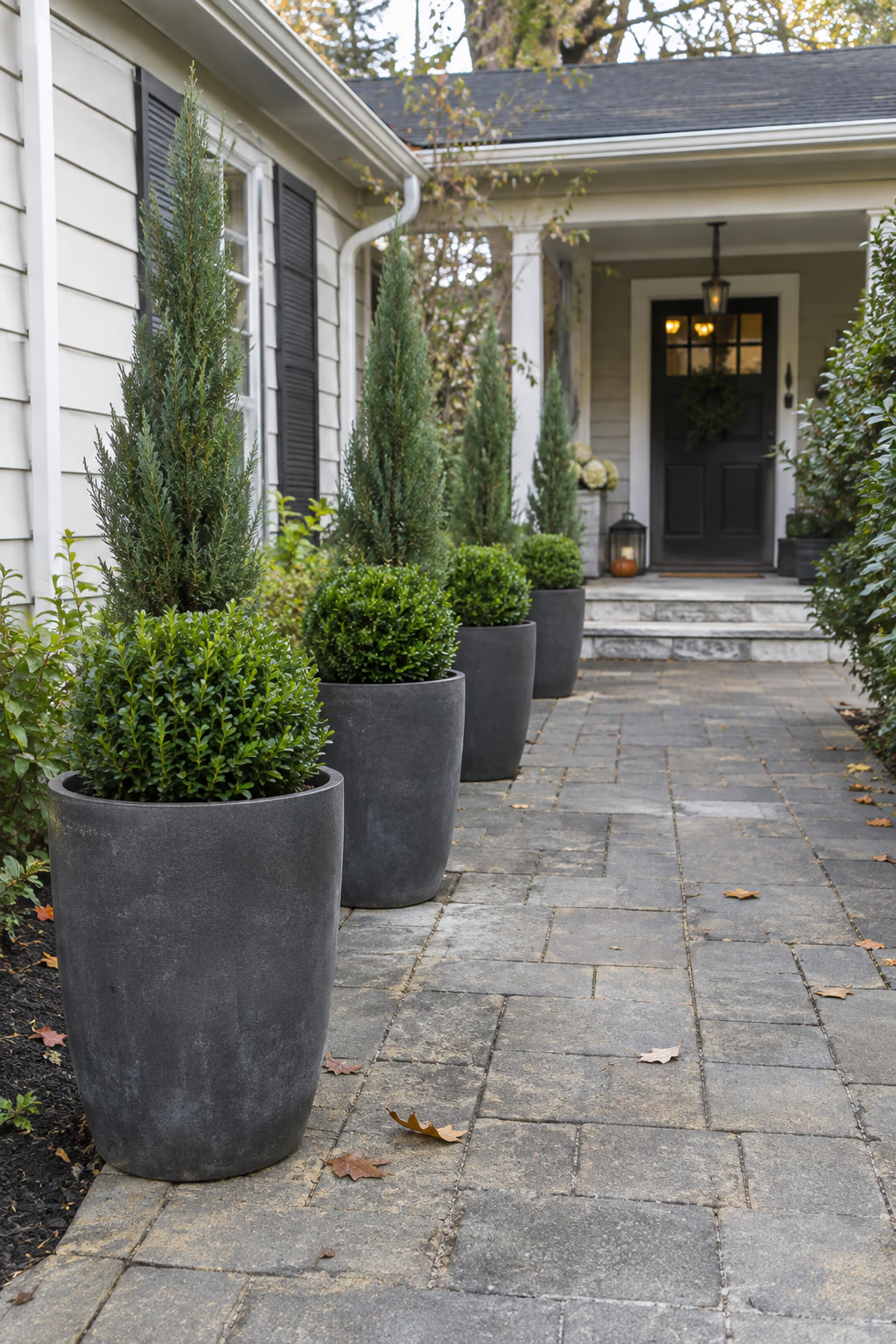
Movable screens for paved or small yards
If your front yard is mostly concrete or pavers, big containers can create privacy without digging. Choose pots at least 18 to 24 inches wide and plant tall evergreens, bamboo that stays in a clump, or dwarf conifers.
Use a quality potting mix and a pot with drainage holes, and set heavy pots on pot feet so water can escape. You can move them as the seasons or your needs change.
Large pots dry out quickly in summer, so plan on regular watering or a simple drip line. In cold climates, choose plants hardy at least one zone colder than yours.
6. Pair a Low Fence With a Clipped Hedge
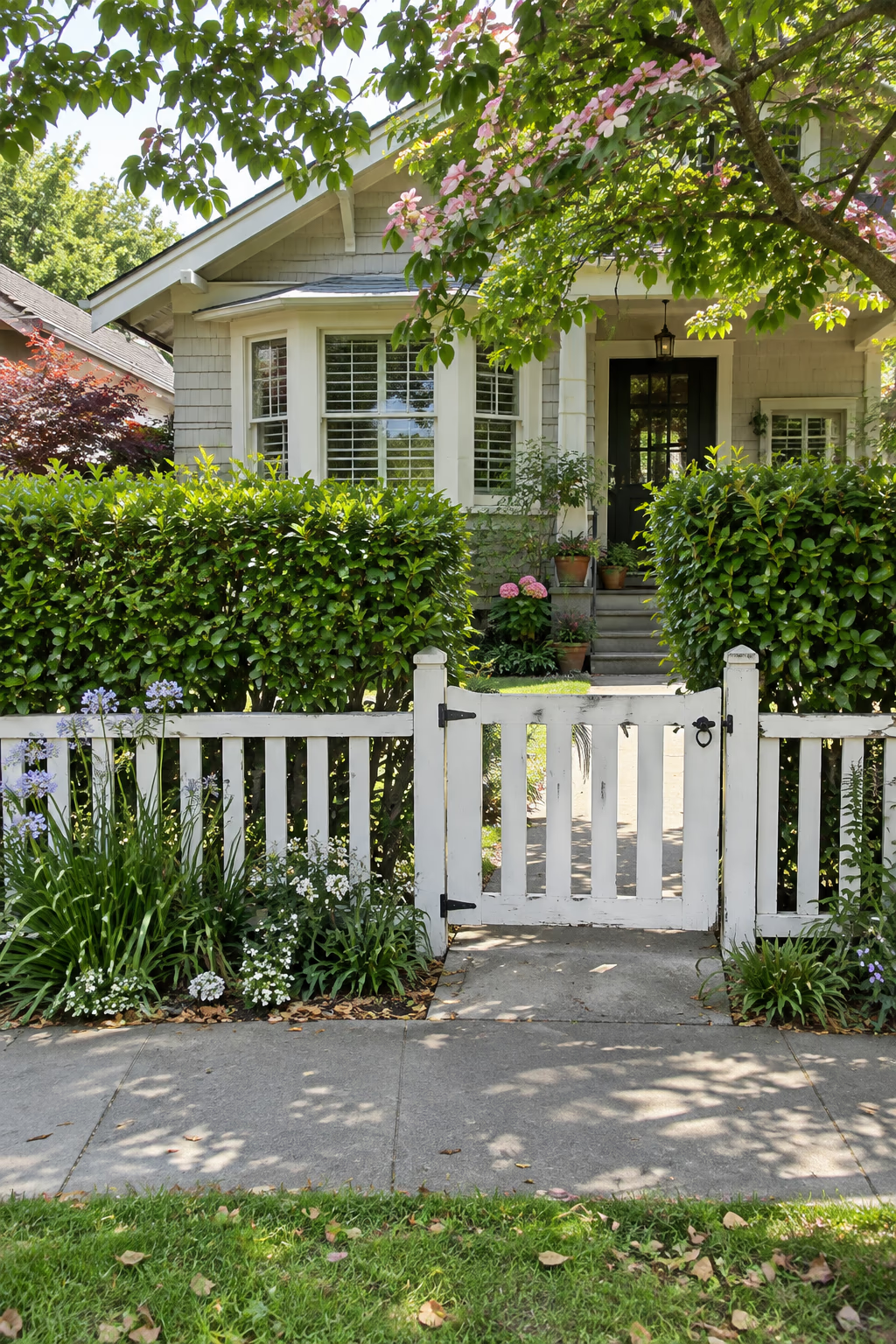
A clever way to meet height limits
Where a tall fence is not allowed, a 3-foot fence combined with a hedge just behind it can reach 5 or 6 feet over time. From the street, you see a charming fence with greenery above, not a barrier.
Privet, yew, and holly work well because they take regular clipping. Keep the hedge on your side of the property line.
Check whether your local code regulates plants as well as fences, since some areas do. Trim two or three times a year to keep the shape crisp.
7. Train Vines Over a Garden Trellis
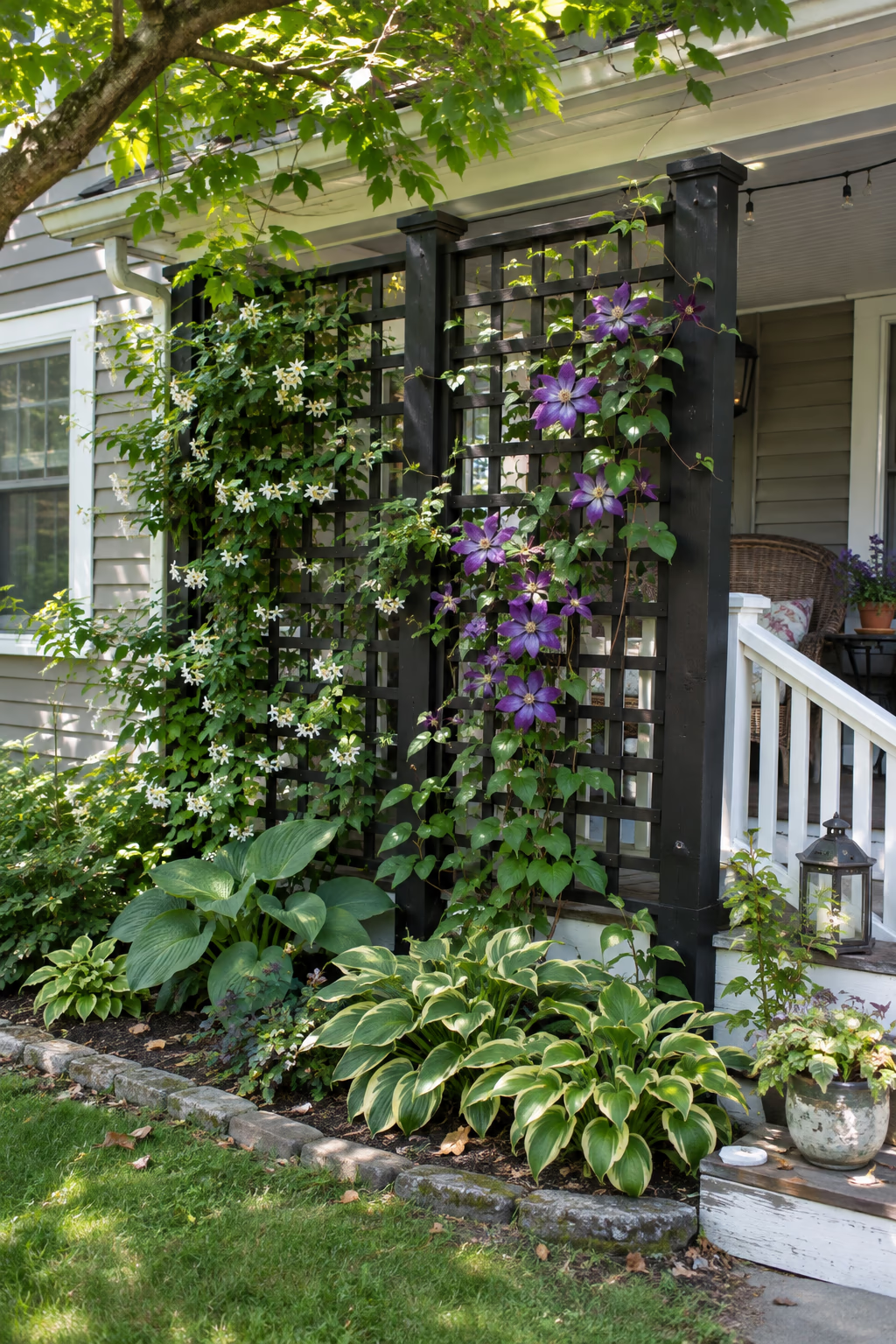
Vertical cover in a tiny footprint
A trellis panel 6 feet tall and 3 to 4 feet wide can shield a porch end or a seating nook. Wood, powder-coated metal, or vinyl all work, as long as it is anchored to sturdy posts set in the ground.
Match the vine to the climate: clematis, honeysuckle, climbing roses, or passionflower in warmer areas. A pot at the base works if you cannot dig.
Vines can damage siding and gutters, so keep a trellis a few inches off the wall. Pick non-invasive vines, as some honeysuckle and wisteria spread aggressively.
8. Hang Outdoor Curtains on the Porch
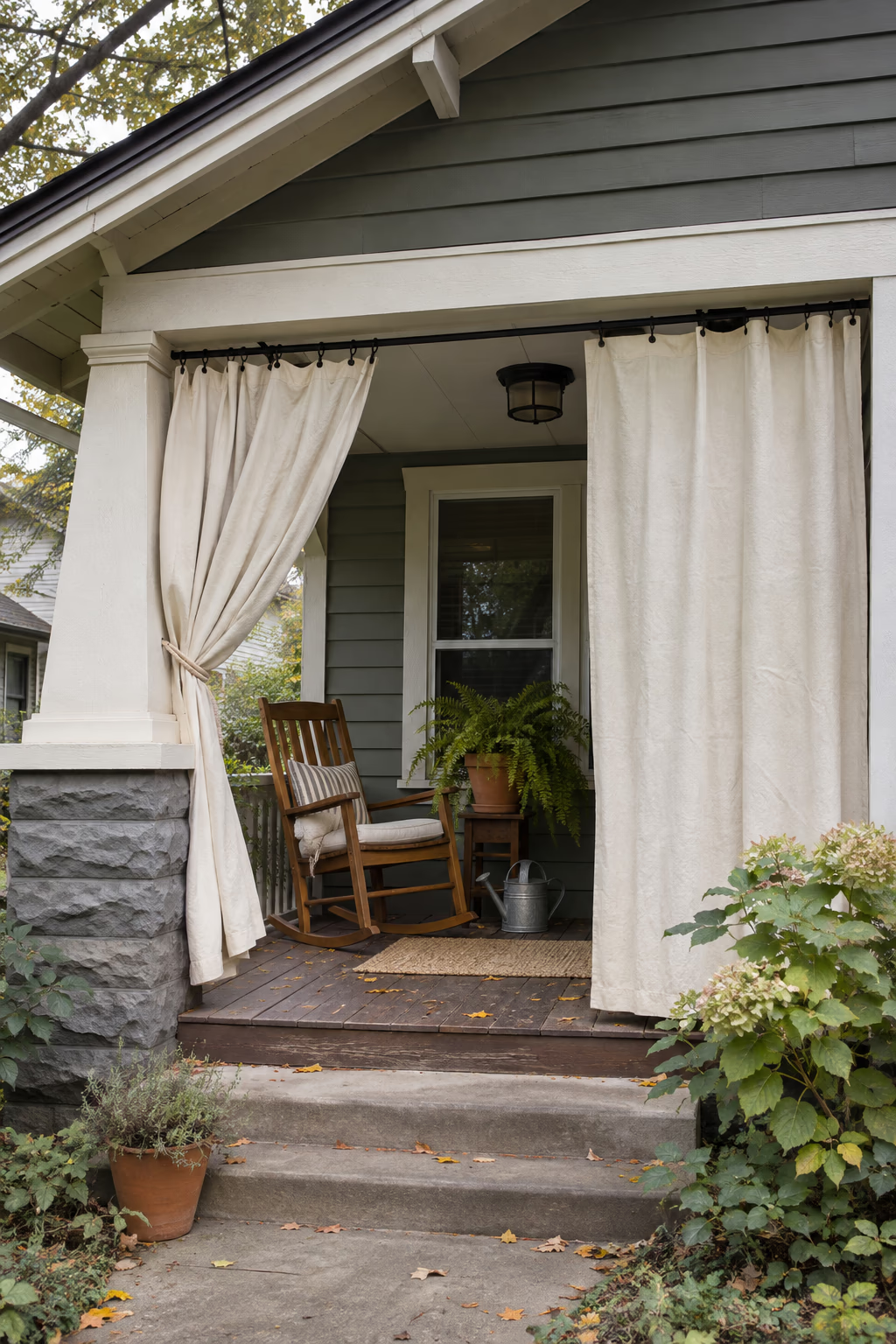
Instant privacy you can open and close
Weather-resistant outdoor curtains on a rod between the porch posts give you a quick screen on busy afternoons, and tie back easily when you want an open view. Look for solution-dyed acrylic or polyester fabric designed for outdoor use.
Use curtain rods that carry the weight and add weighted hems or ties so panels do not flap in wind. Neutral cream, gray, or sage looks classic.
Take them down or tie them tight in storms and wash them once or twice a season to prevent mildew.
9. Install a Laser-Cut Metal Screen
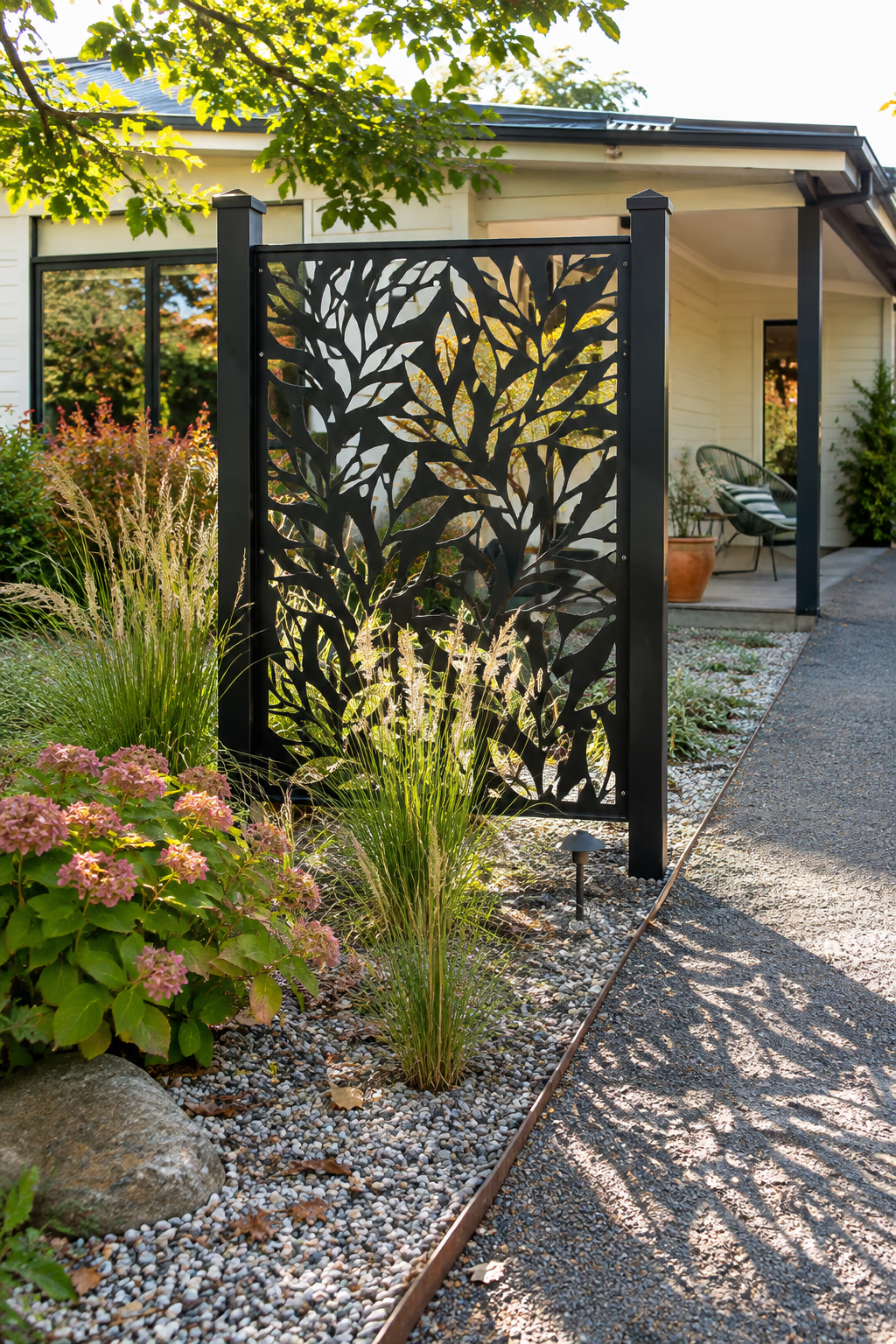
A modern look that casts beautiful shadows
Powder-coated steel or aluminum panels with patterns of leaves, geometric shapes, or slots block part of the view while letting in light. Mount them between steel posts set in concrete, or buy freestanding styles.
Black or dark bronze finishes look sharp against green plants. Place one panel in front of a window or seating area rather than running it across the whole yard.
Custom panels can cost more than wood, so start with a single section. Rust-prone untreated steel will stain paving, so choose a coated finish.
10. Stack a Gabion Wall With Plantings
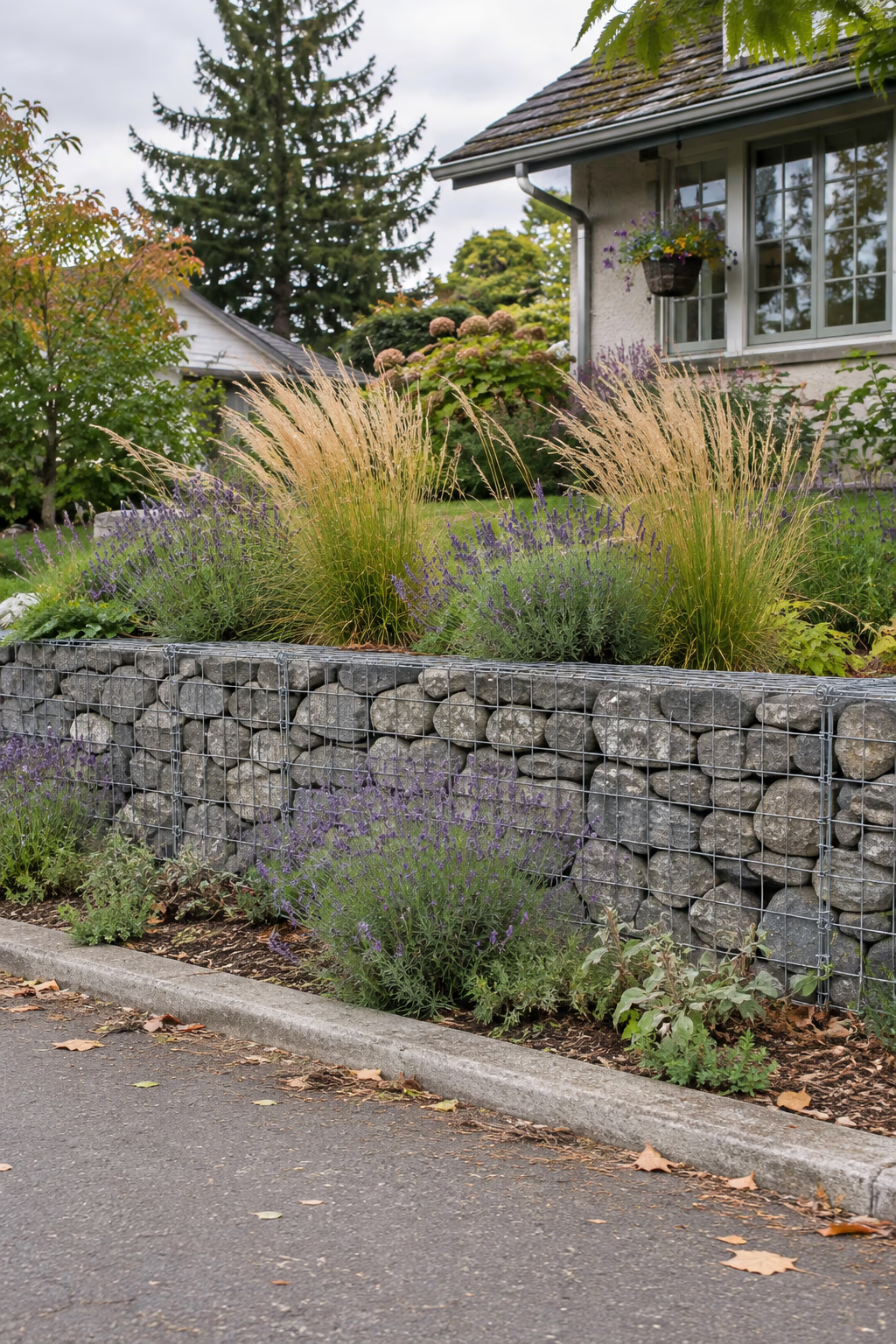
Stone texture that doubles as a retaining wall
Gabions are wire baskets filled with stone. A wall 3 to 4 feet high and at least a foot thick looks modern or rustic depending on the rock, and it can hold back soil on a sloped yard.
Fill with local fieldstone or crushed granite, and plant grasses or lavender in a strip on top or in front to blend it in.
The baskets are heavy to fill and a wall over about 4 feet may require a permit or engineering. Buy rock by the ton from a local supplier to keep costs down.
11. Mix a Flowering Shrub Border
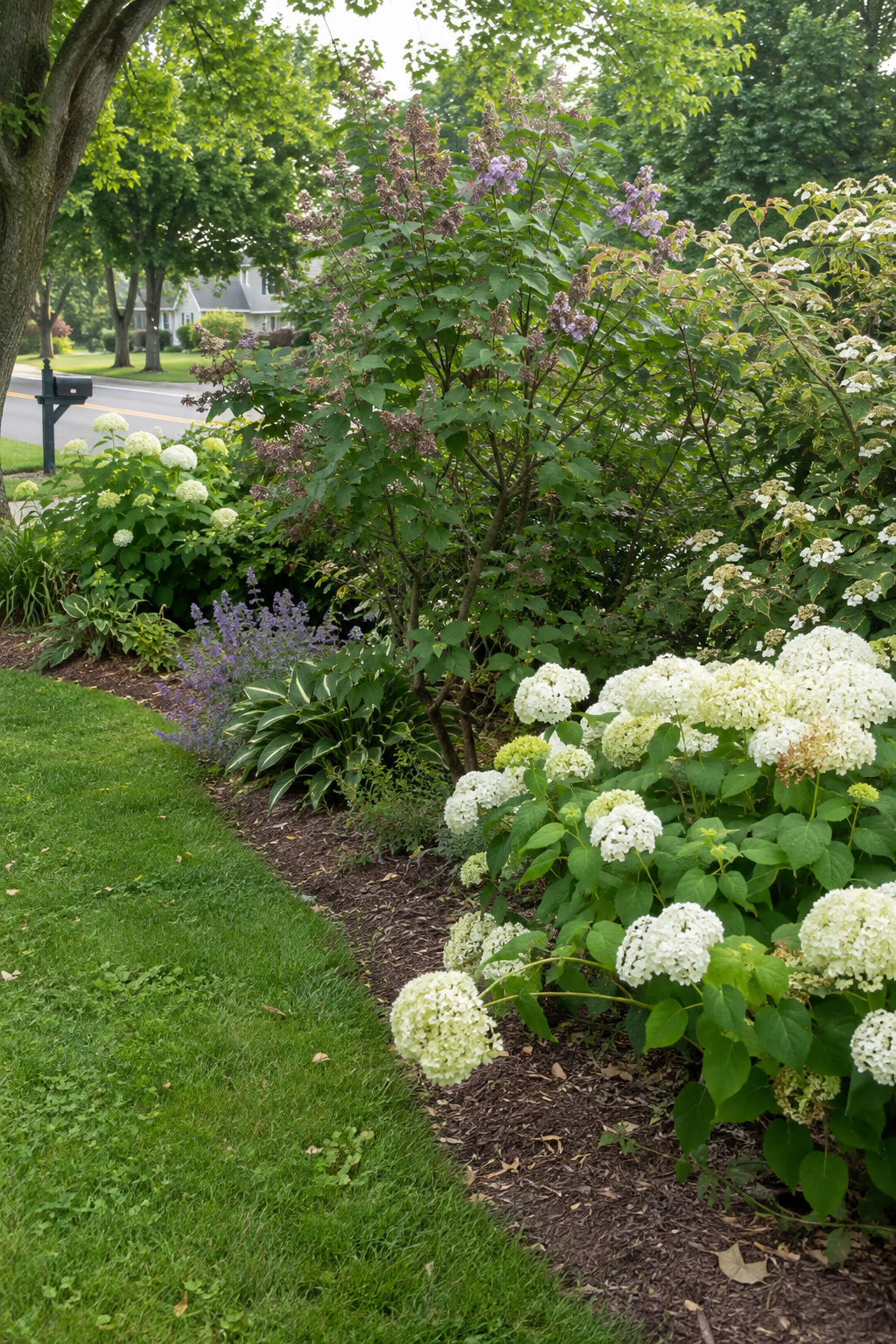
Seasonal color with a natural screen
Hydrangeas, lilacs, viburnums, and weigela grow 5 to 10 feet tall and flower in different months. Planted in staggered groups, they form a deep border that looks like a garden instead of a barrier.
Mix in a few evergreens such as holly or inkberry so the screen is not bare in winter. Mulch 2 to 3 inches deep to keep roots cool and cut down on weeding.
Deciduous shrubs lose leaves, so expect less coverage from late fall to spring. Pick varieties suited to your zone and soil.
12. Build a Planted Earth Berm
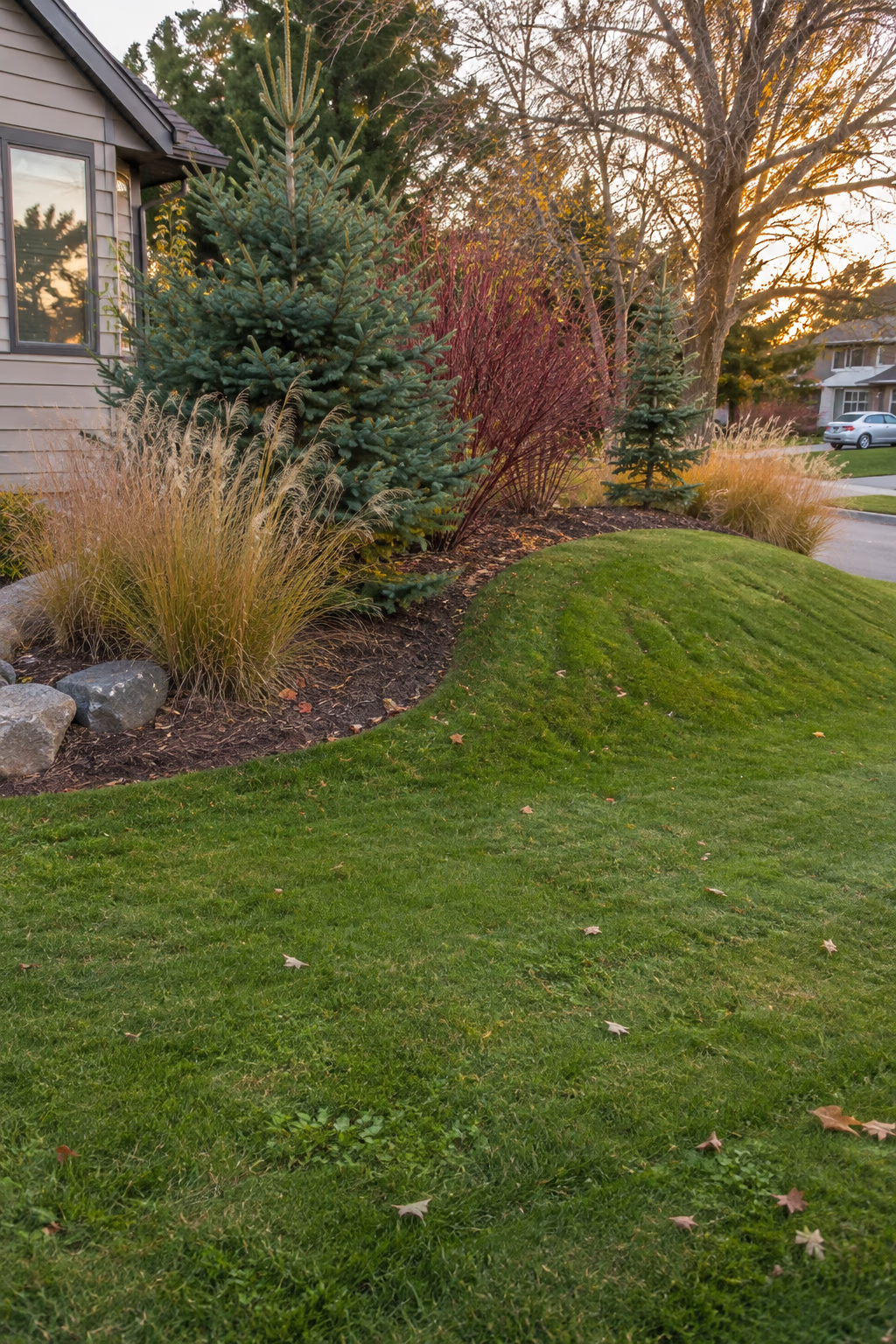
Raise the planting line, not a fence
A berm is a long, gently sloped mound of soil, often 2 to 3 feet high. Planting shrubs and grasses on top gives you the effect of a 7 to 8 foot screen while the plants only need to grow 4 to 5 feet.
Keep slopes gentle, about 3 to 1 horizontal to vertical, so they are easier to plant and mow. Cover with mulch or groundcover to prevent erosion.
Make sure a berm does not redirect rain toward your house or a neighbor’s yard, and check with your town before moving a lot of soil. Leave utility lines and drainage swales clear.
13. Frame the Entry With a Lattice Panel
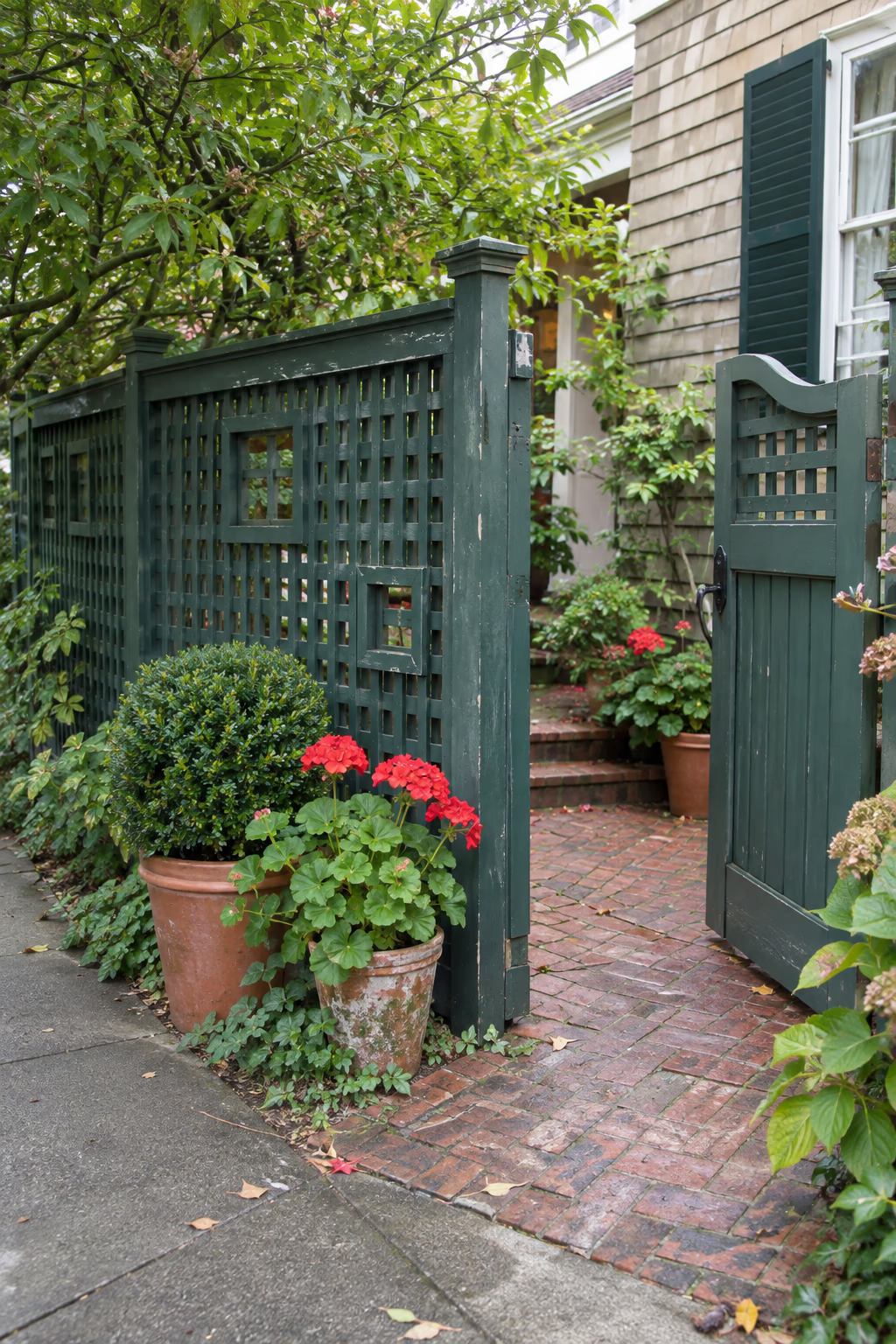
Light screening with a cottage feel
A lattice section beside the gate or front path gives partial privacy while letting air through. Small window cutouts add character and let you see visitors approaching.
Use pressure-treated or cedar lattice in a sturdy frame, and paint or stain it to match the house trim. Plant roses or clematis at the base for extra coverage.
Thin vinyl or untreated lattice can warp, so choose a thicker panel and frame it well. Repaint every few years to keep it looking fresh.
14. Plant Clumping Bamboo
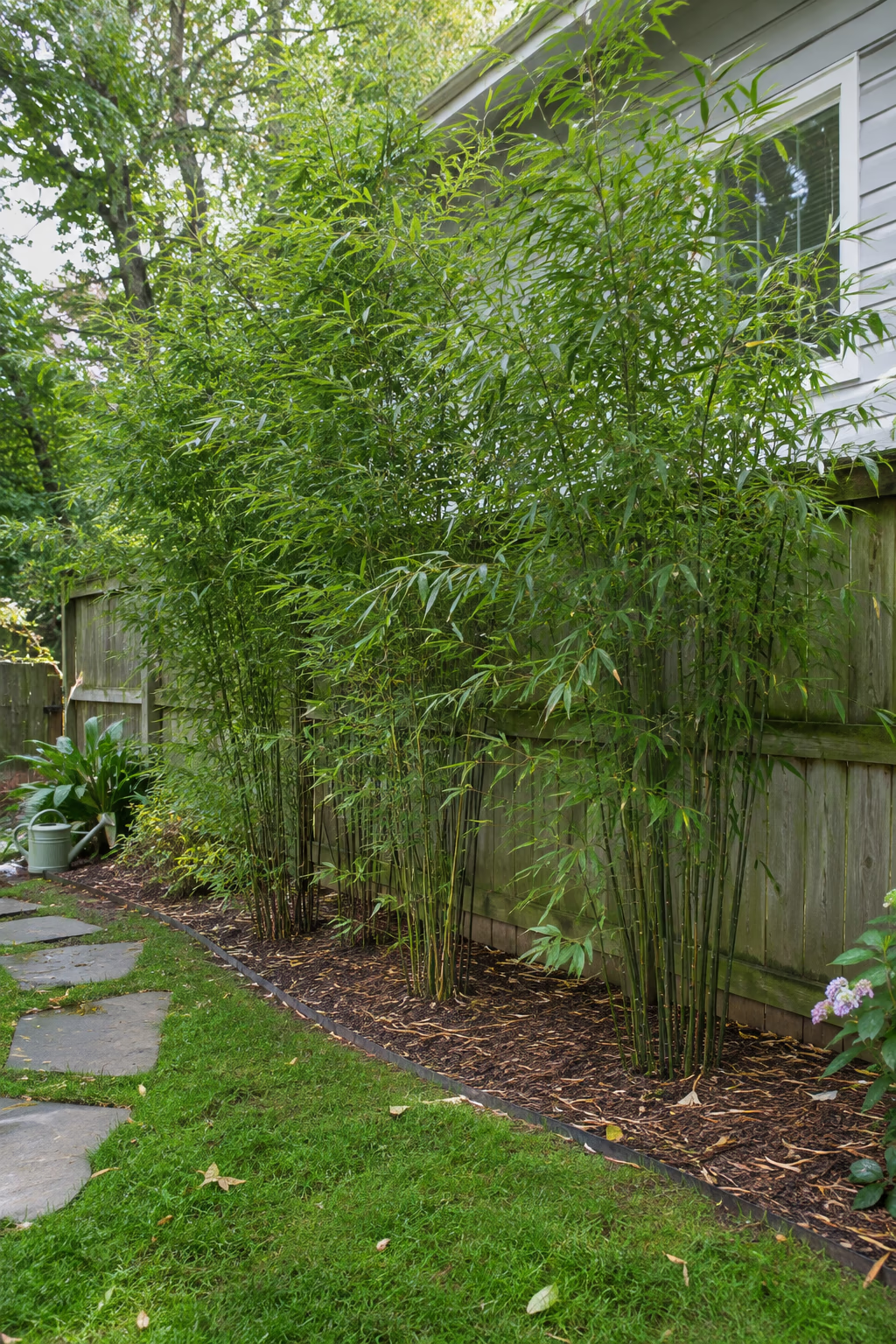
A fast evergreen wall in a narrow strip
Clumping bamboo, such as fargesia, grows 6 to 12 feet tall in a footprint only 3 or 4 feet wide, and stays evergreen in many climates. It makes a quick, dense screen for a tight side or front border.
Give it moderate moisture and some shade from hot afternoon sun. Thin out old canes each year to keep it looking fresh.
Avoid running bamboo, which can spread aggressively into neighbors’ yards. Even clumping types spread slowly, so plant them a few feet from the property line.
15. Stack Raised Planter Boxes as a Living Wall
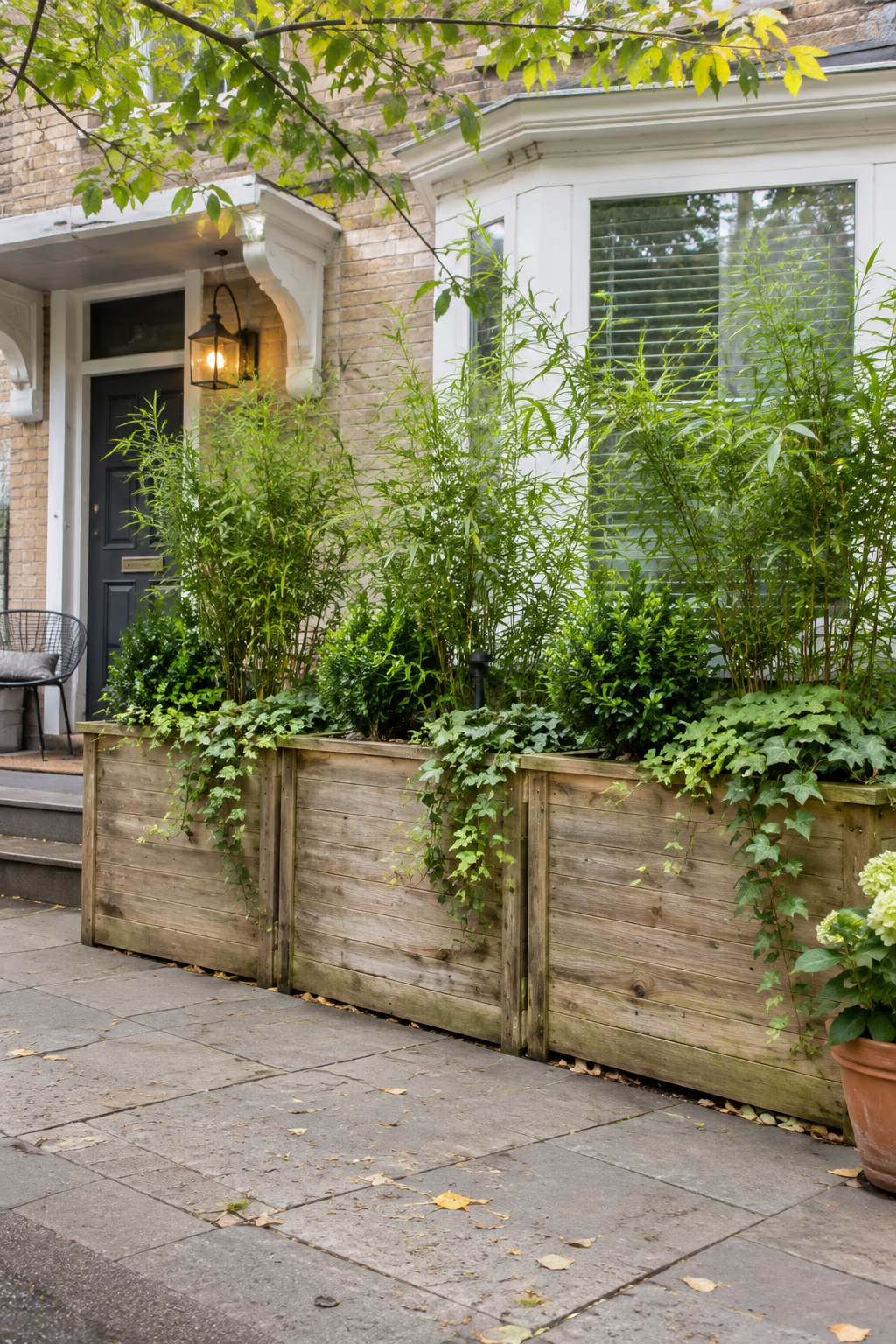
Green privacy for patios and townhouse fronts
Long cedar or metal planter boxes, 30 to 36 inches tall, can run along a patio or stoop. Fill them with tall grasses, boxwood, and trailing ivy for a layered green wall.
Line wood boxes with landscape fabric and add drainage holes, and use light potting mix with some compost. You can build them from basic lumber with simple tools.
Raised boxes need consistent watering, especially in summer. A drip irrigation kit saves time, and a layer of mulch on top slows evaporation.
16. Roll Down Bamboo Shades on the Porch
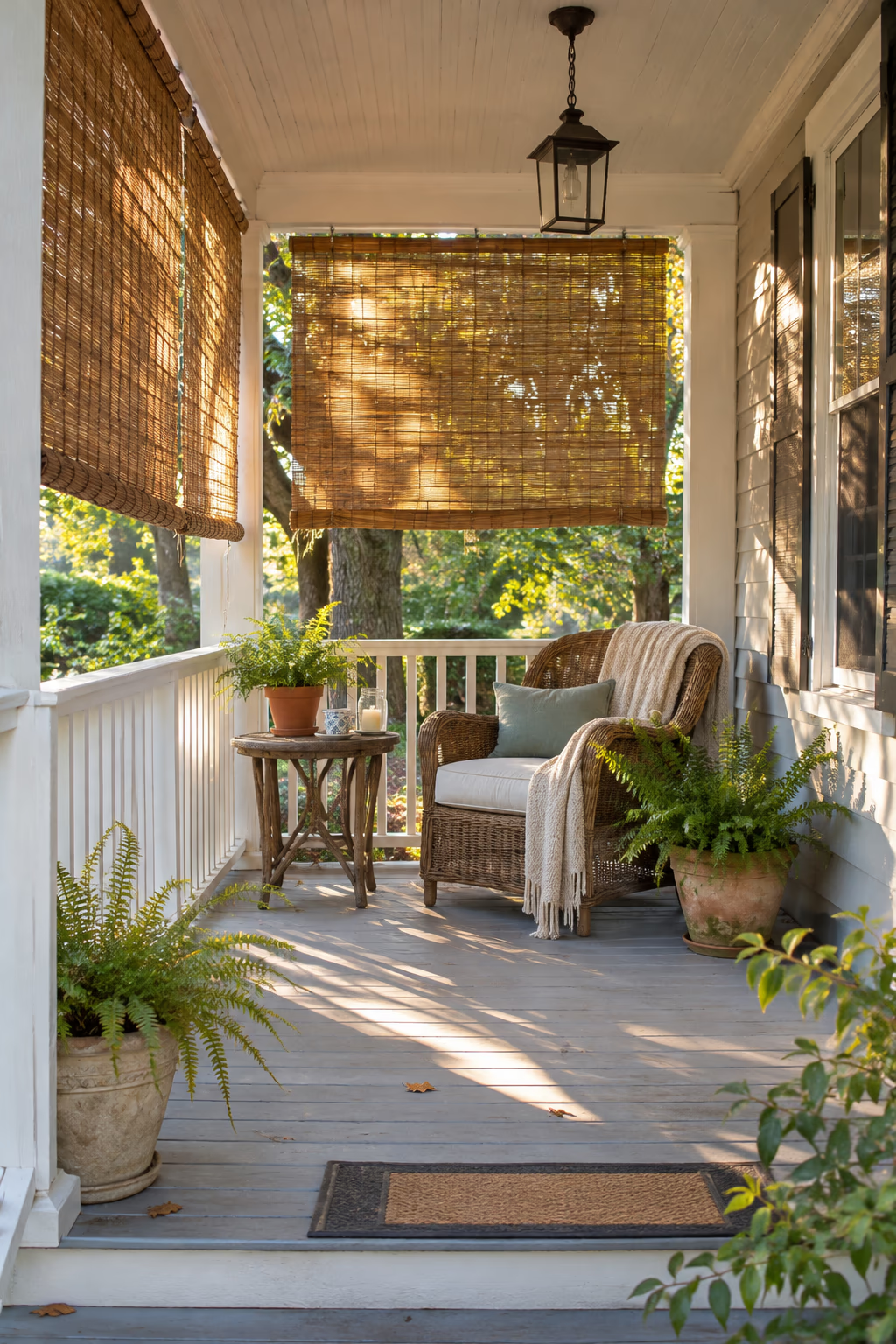
Budget privacy that is easy to adjust
Outdoor roll-up shades in bamboo or woven wood hang from the porch beam and cost much less than a built wall. Lowered halfway, they hide the seating area from the street while letting breezes through.
Mount them with sturdy hooks into the beam and use cord or clips to keep them from swinging. Natural tones suit most porches.
Natural fibers fade and can mildew in wet weather. Roll them up when not needed, and look for treated or synthetic versions in rainy climates.
17. Build a Courtyard Wall With a Gate
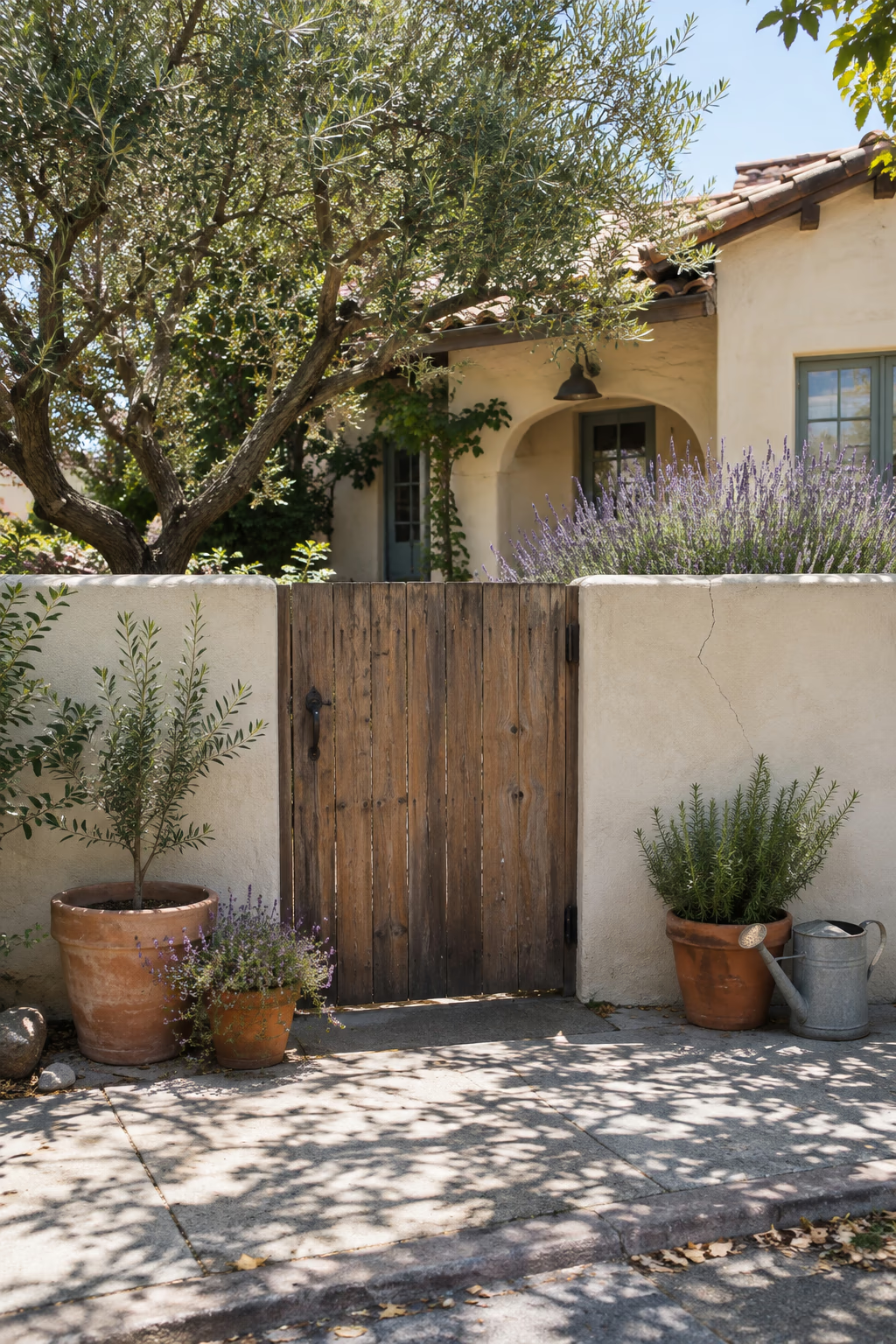
A private entry garden you can enjoy
A 3- to 4-foot wall of stucco, brick, or block around the front entry creates a small courtyard, especially in the Southwest or Spanish-style homes. A wooden gate invites guests in while keeping the space sheltered.
Plant olive, lavender, or small citrus in the courtyard, and add a bench or pots to make it livable.
A masonry wall is a bigger investment, usually the most expensive idea here, and usually needs a permit and proper footings. Get quotes and check local height rules first.
18. Add a Pergola With Side Panels
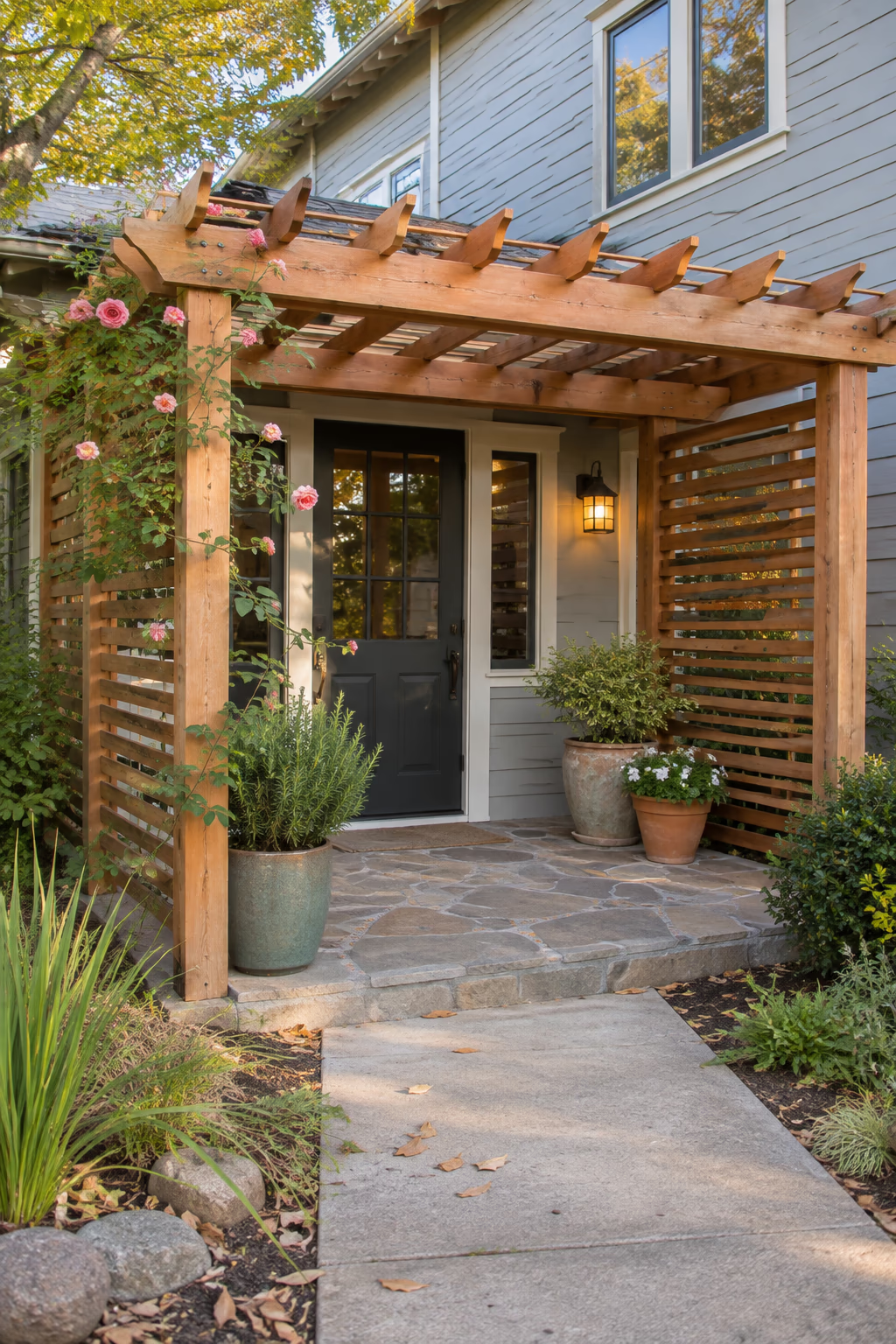
A shaded, sheltered front entry
A pergola over the front door or walkway with slatted side panels makes the entry feel like a room. Cedar or pressure-treated posts at least 6 by 6 inches are a good starting point.
Add climbing roses or wisteria-alternatives like trumpet vine for green cover. Side slats set a half inch apart give privacy and ventilation.
Attach it securely and follow wind and snow load guidelines. Most towns require a permit for permanent structures near the front of the house.
19. Stagger Dwarf Conifers in a Row
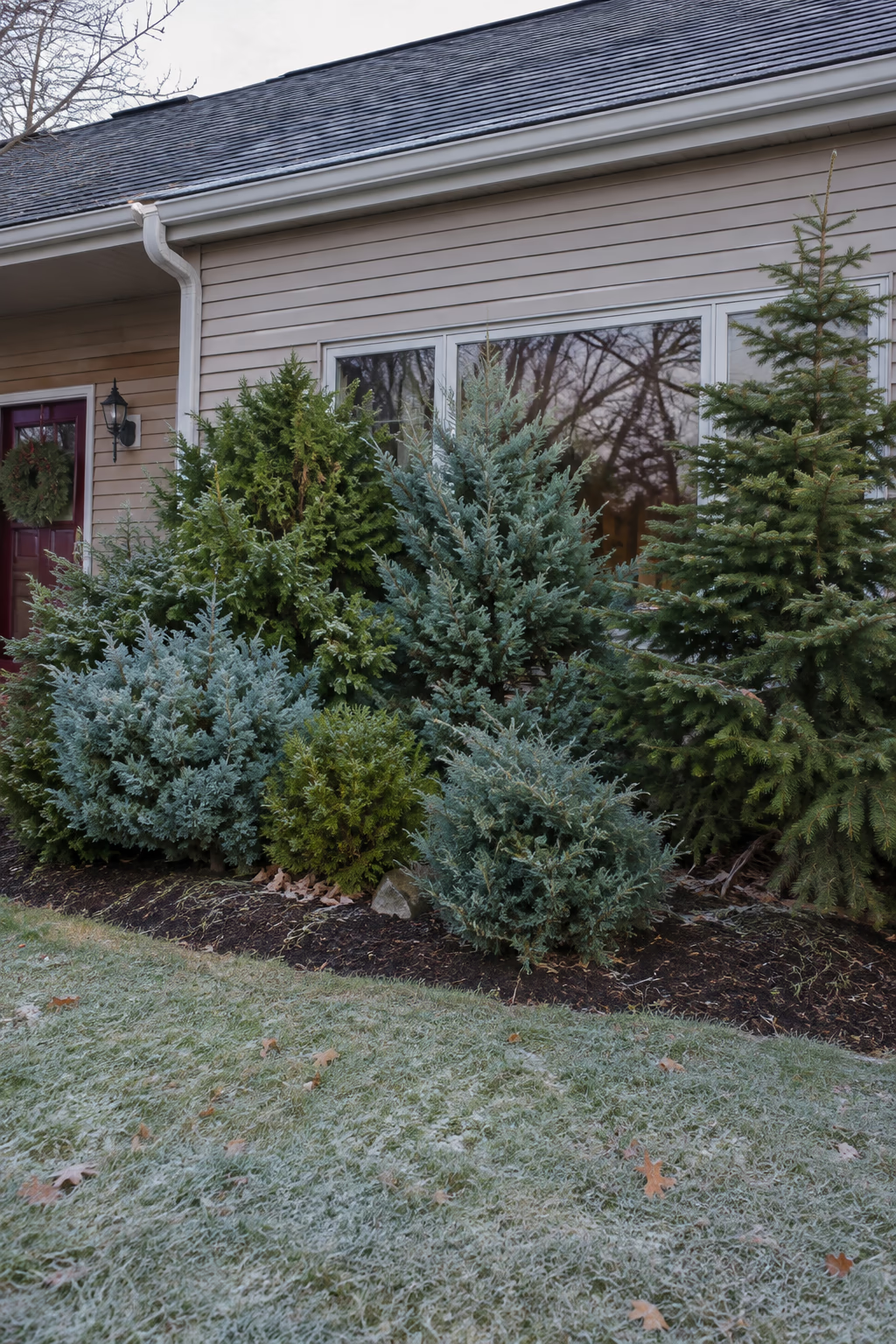
Winter-friendly color in smaller spaces
Dwarf Alberta spruce, blue-green junipers, and compact pines top out at 4 to 8 feet, so they suit lower-height limits. Mixing shapes and shades gives the planting texture, even in snow.
Plant them in a staggered double row with enough gap between plants for growth, and add mulch around them. They prefer well-drained soil and sun.
Some dwarf conifers grow bigger than expected, so check the mature size listed on the label. Spider mites can bother spruce in hot, dry summers.
20. Weave Privacy Slats Into Chain-Link
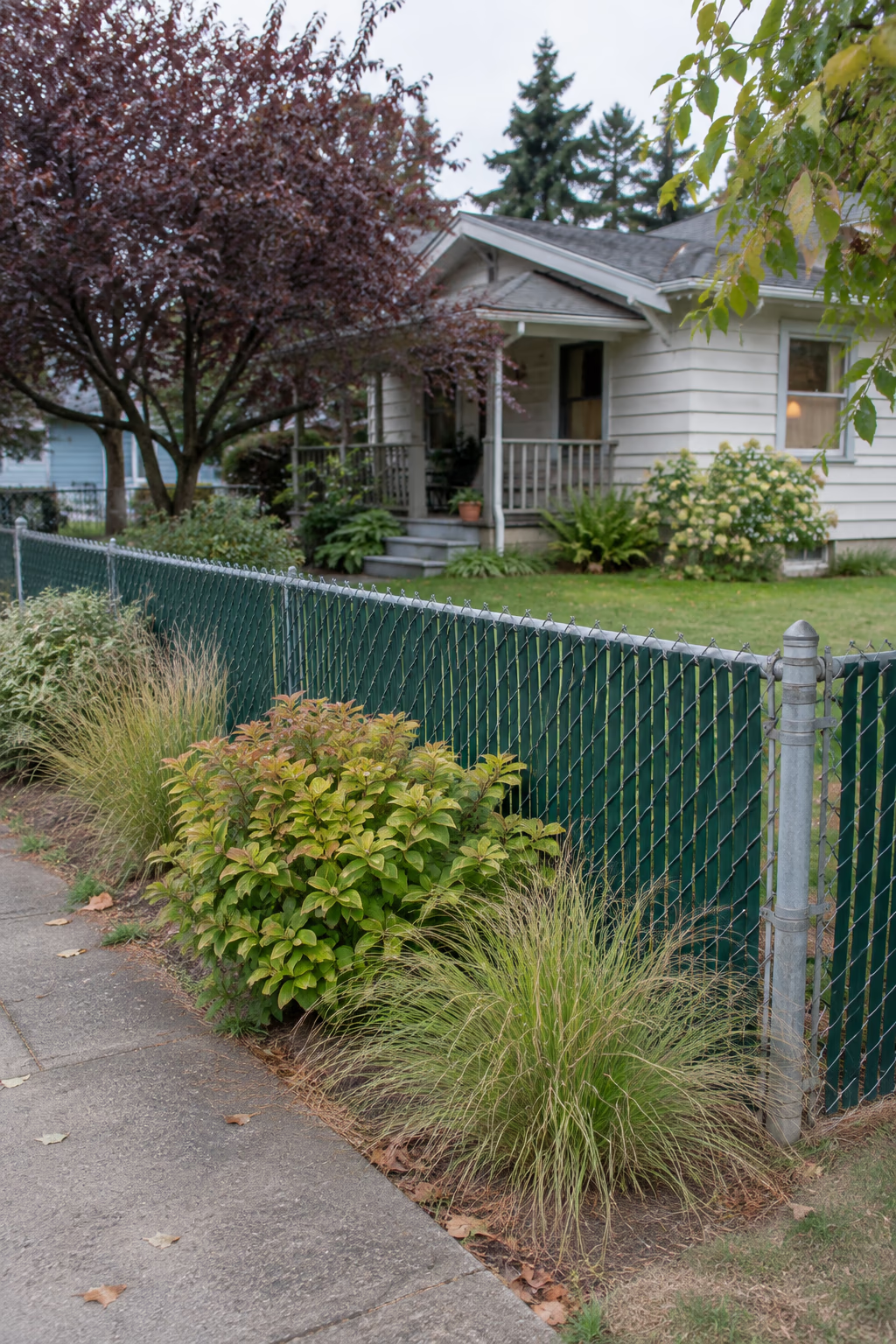
Upgrade a fence you already own
If you already have a chain-link fence, vertical slats woven into the diamonds can add privacy for a few hundred dollars instead of thousands. Green, brown, and black slats blend well with plants.
Plant shrubs and grasses in front of the fence to hide the metal and make it feel more like a garden border.
Slats catch wind, so make sure the posts are firmly set. Check that your HOA allows chain-link fencing before spending money.
21. Place a Sculptural Screen as a Focal Point
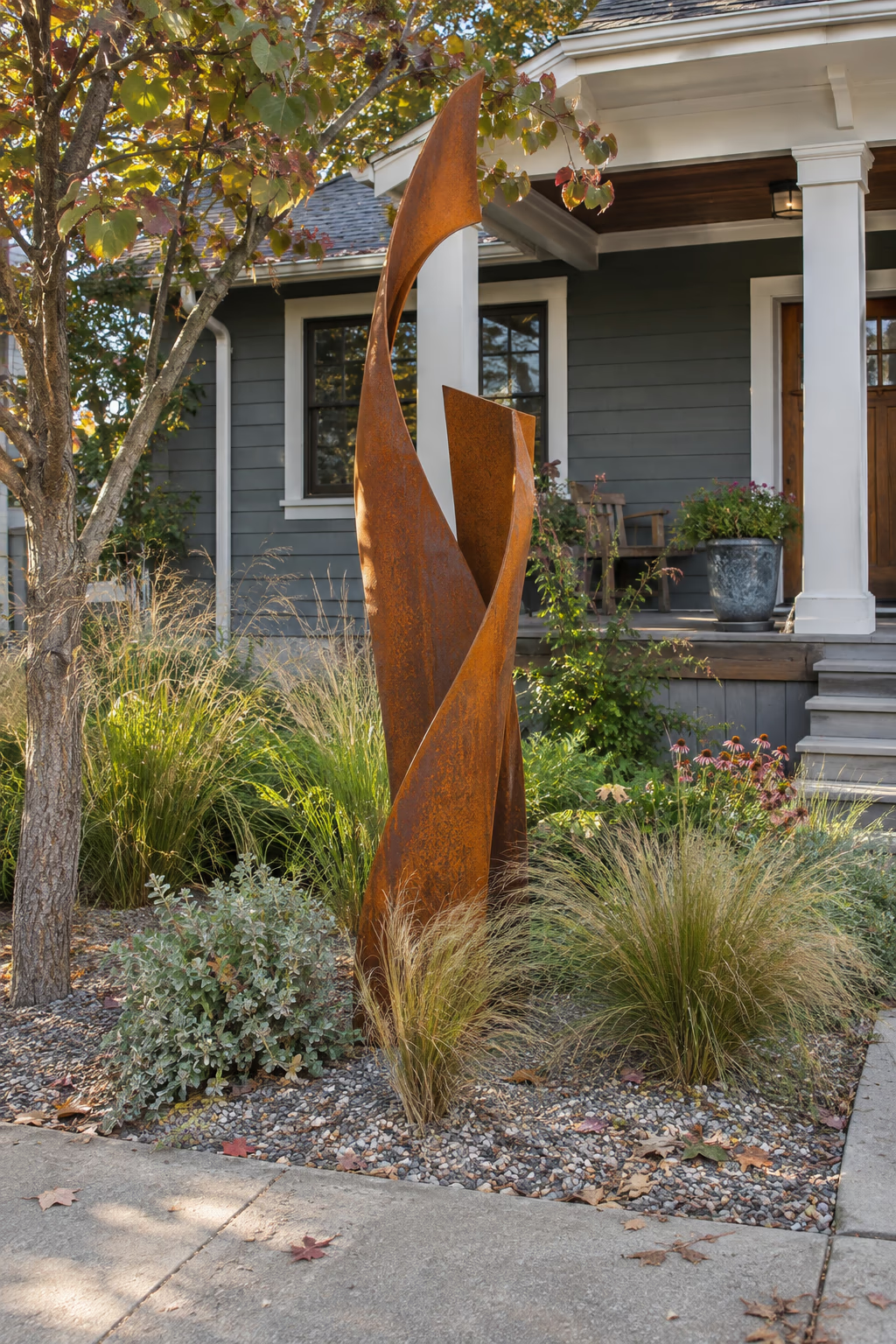
Art that blocks the view
One tall sculpture or decorative panel, set between the sidewalk and your porch, interrupts sightlines and gives passersby something to look at besides your windows. Weathered steel, wood, or stone all age well outdoors.
Place it so it is visible from the sidewalk but does not block the walkway. Surround it with grasses or low shrubs.
Anchor tall pieces securely, and avoid anything with sharp edges near paths. A single large piece often looks better than several small ones.
22. Plant Foundation Shrubs Below Windows
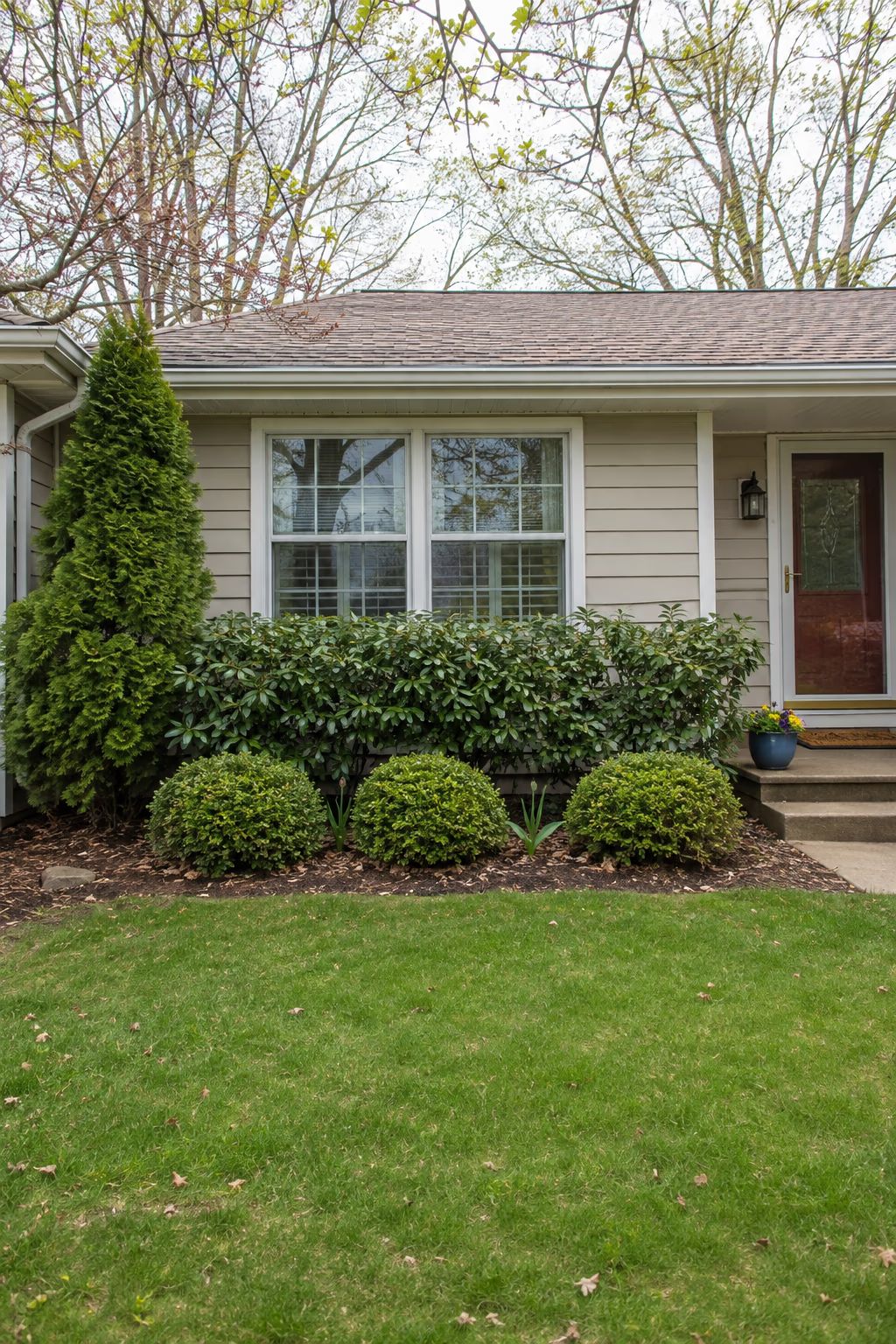
Block the view into your living room
Often the most private fix is simply screening the windows. Plant evergreen shrubs such as holly, boxwood, or compact yew that grow to a height just above the sill, 4 to 6 feet.
Keep them 3 feet or more from the wall so air can flow and so you can prune. Add taller plants at corners to anchor the planting.
Avoid blocking more than a third of the window light, and do not plant fast-growing trees against the foundation. Window film is a good low-cost option indoors too.
23. Espalier Fruit Trees Along a Wire Frame
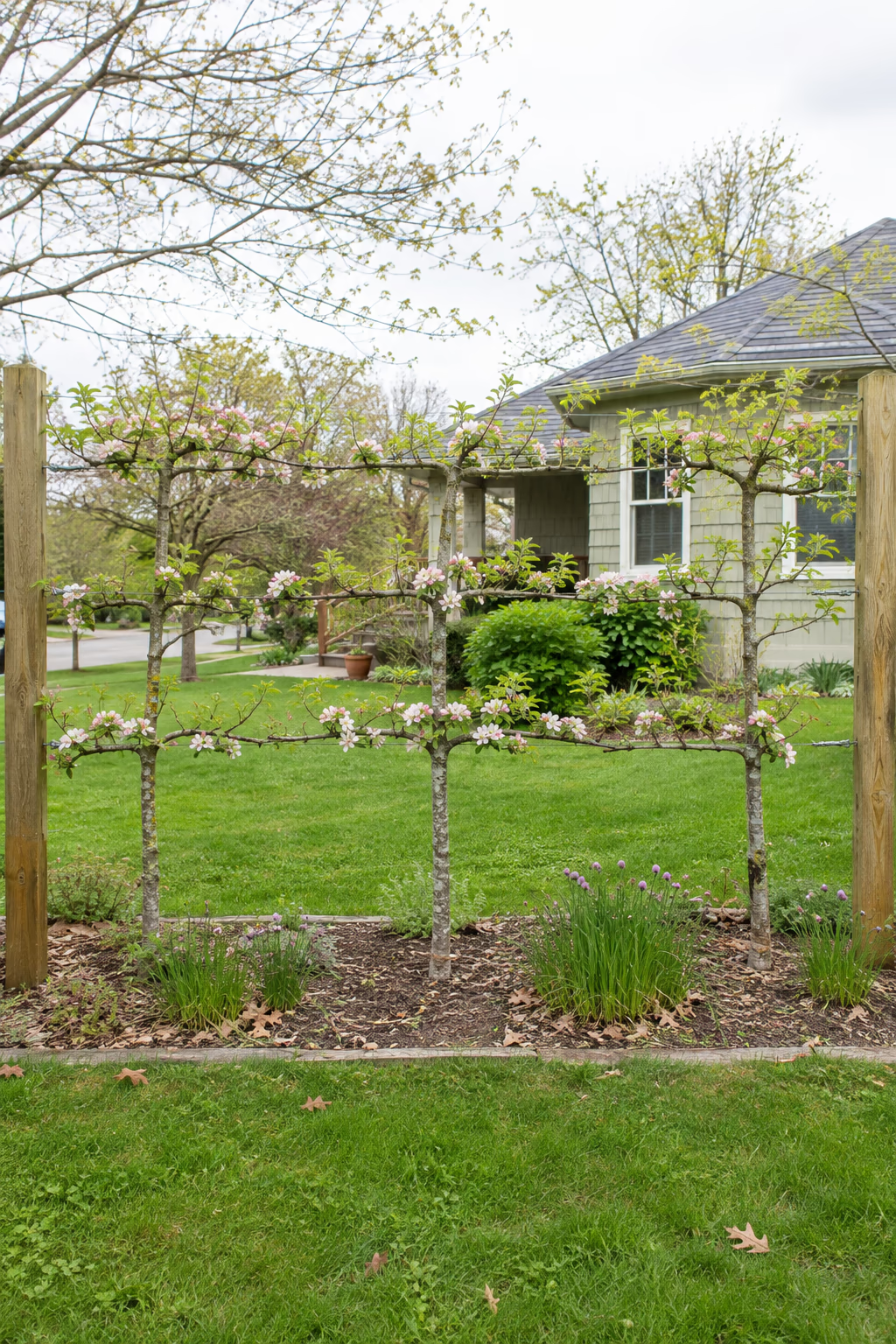
A living fence you can harvest
Espaliered apples or pears are trained flat on horizontal wires between posts, making a slim screen only about a foot deep. They give spring blossoms, summer shade, and fall fruit.
Use dwarf trees, tie branches gently to wires, and prune in late winter and summer to maintain the shape. Full sun is best.
It takes patience, since a good shape takes several years, and fallen fruit needs cleaning up. Pick varieties that suit your region and check if you need two for pollination.
24. Add a Fountain to Mask Street Noise
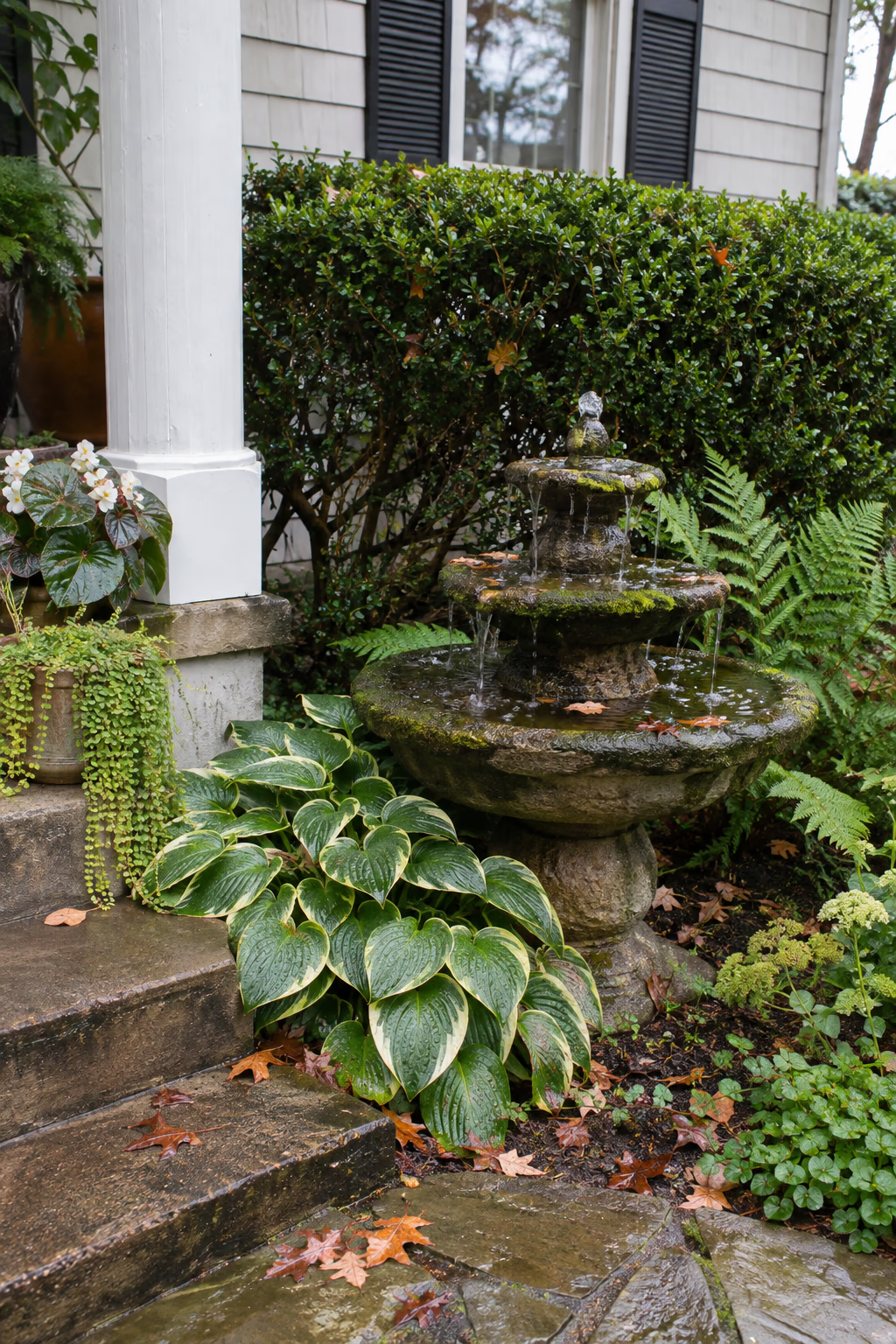
Sound privacy as well as visual
Privacy is also about sound. A small tiered or bubbling fountain near the porch creates gentle white noise that softens passing traffic and conversations.
Choose a self-contained model with a recirculating pump, set on a level base near an outlet with a weatherproof GFCI cover. Hostas and ferns around it make it feel natural.
Clean the pump and refill water regularly to prevent algae and mosquitoes, and drain it before freezing weather.
25. Use Landscape Lighting to Soften Evening Views
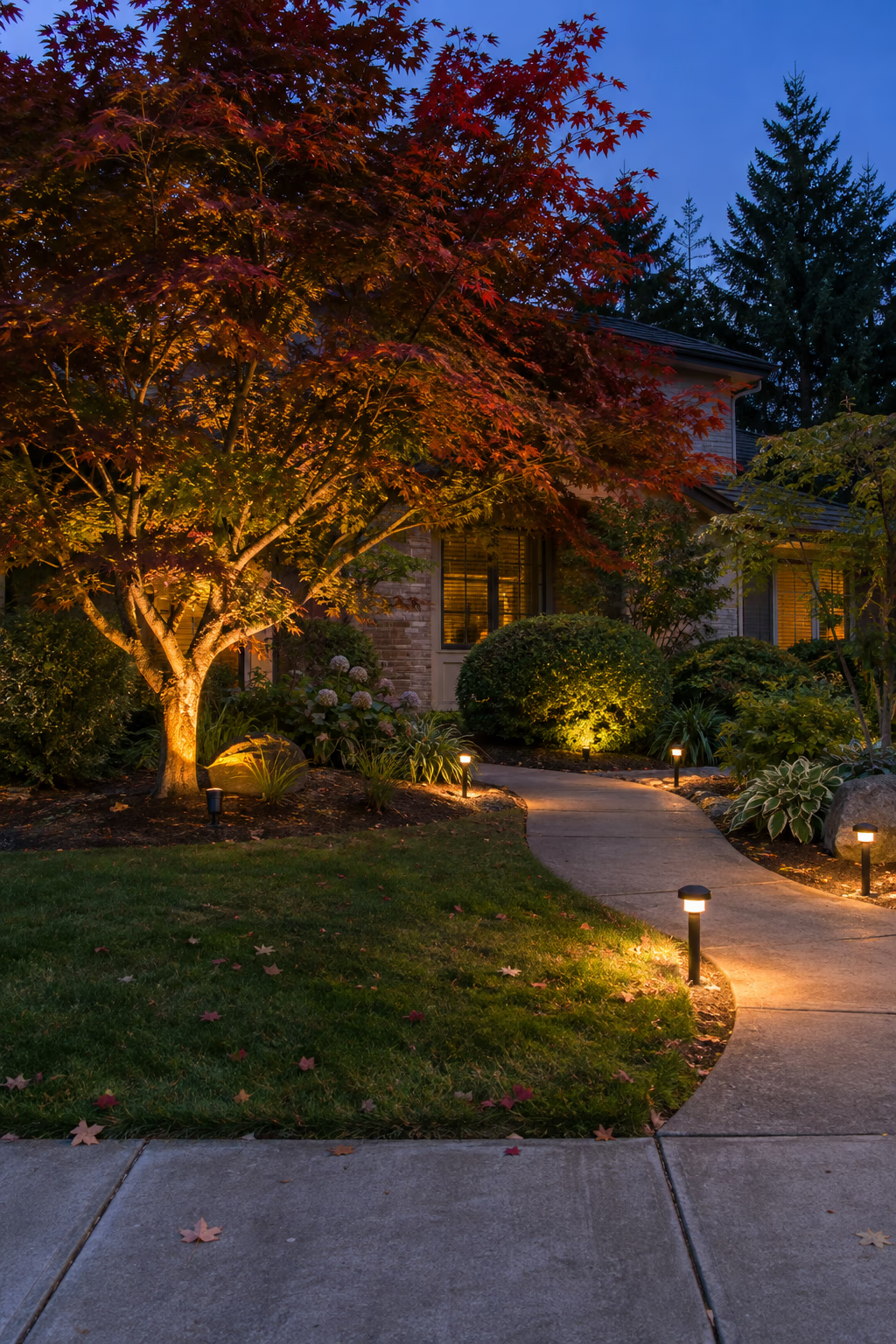
Draw eyes toward plants, not windows
At night, lit windows act like a stage. Low-voltage path lights and a few uplights aimed at trees and shrubs draw attention outward, and the glow makes it harder to see in.
Use warm white bulbs, about 2700K, and keep fixtures shielded so they do not shine into neighbors’ windows. A simple kit with a timer is affordable and easy to install.
Lighting alone does not block views, so pair it with plants or screens. Close blinds or curtains at night for the best result.
How to Plan Your Front Yard Privacy Project
A little planning helps you get privacy without regrets. Start by standing where people see in, then design from there.
- Find the real sightlines. Sit on the porch and inside by the window, and note where eyes actually land from the street and from neighbors.
- Check local rules first. Look up fence height limits, sight triangles, and HOA guidelines before you buy materials or plants.
- Layer instead of walling off. Combine a lower structure with plants so the yard feels inviting and not closed in.
- Match plants to your climate. Check your USDA hardiness zone, sun, and soil, and avoid plants listed as invasive in your state.
- Keep access clear. Leave a visible path to the door, space for mail and deliveries, and clear views at the driveway.
- Build in phases. Start with the spot that matters most, and call 811 before any digging in the United States.
Frequently Asked Questions
What is the cheapest way to get privacy in a front yard?
Ornamental grasses, small shrubs started from young plants, and potted evergreens usually cost far less than fencing. They take time to fill in, so choose a larger size for faster results.
How tall can a front yard fence be?
It depends on your city and neighborhood. Many places limit front yard fences to about 3 or 4 feet, with taller heights allowed in back. Always check local codes and HOA rules first.
What is the fastest-growing privacy plant?
Some bamboo, arborvitae varieties, and tall ornamental grasses grow quickly, often a foot or more per year. Faster growth often means more trimming later, so choose a plant you will maintain.
How do I get privacy on a small or paved front yard?
Use large planters with tall evergreens, a trellis with vines in a pot, outdoor curtains, or a slim screen panel. These need little or no digging and fit tight spaces.
Will privacy features hurt my home’s curb appeal?
Not if you keep them open and layered. Mixing plants with low fences or screens usually improves the look, while tall solid walls can feel unfriendly.
Final Thoughts
The best front yard privacy ideas do not shut your home off from the neighborhood. They simply soften the view, add greenery, and give you a spot where you can relax without feeling on display.
Start with your biggest problem area, choose materials that suit your climate and budget, and add layers over time. A year from now, those small plants will have grown into a yard that feels like a refuge.


