
Picture pulling up to a house where the front yard hums with bees, a flagstone path curves through silvery foliage, and nobody has pushed a mower across it in weeks. It looks intentional, relaxed, and a lot more interesting than a flat green rectangle.
That’s why so many homeowners are rethinking their lawns. Grass needs water, fertilizer, and weekly mowing, and in many climates it struggles anyway. Replacing it with plants, stone, and smart layout can cut upkeep, support wildlife, and give your home more personality from the street.
These 21 front yard landscaping ideas without grass cover native gardens, gravel beds, paths, rain gardens, edible beds, and more. They suit ordinary homes and budgets, so pick one or combine several to match your climate and style.
1. Replace the Lawn With a Native Plant Garden
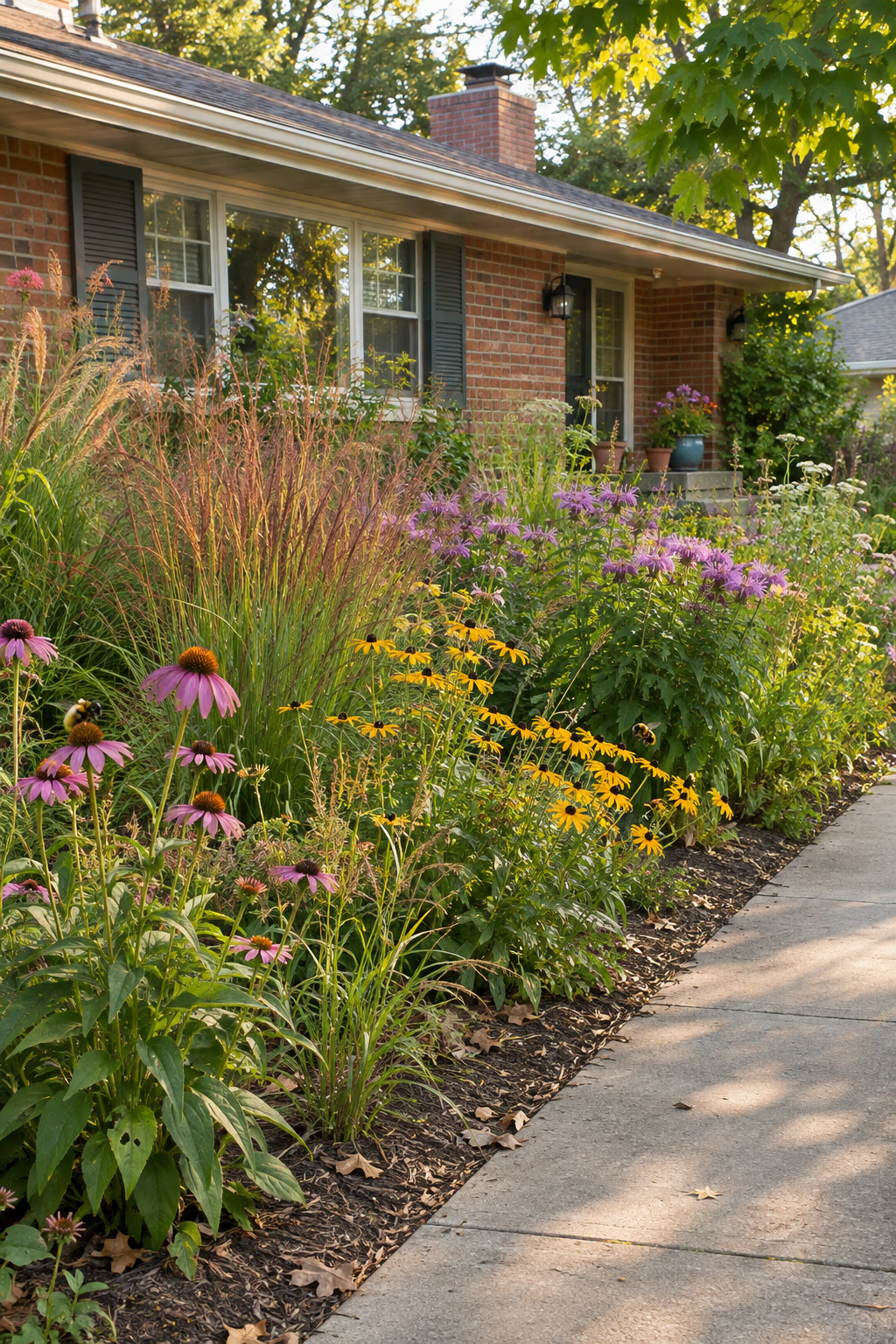
Color, wildlife, and less watering once established
Native plants evolved in your region, so they usually handle local rainfall, soil, and temperature swings better than imported lawn grass. In much of the Midwest and East, think purple coneflower, black-eyed Susan, bee balm, and little bluestem. In the West and Southwest, penstemon, yarrow, and native sages do the same job.
Remove the turf, loosen the soil, and plant in drifts of three to seven of the same plant rather than single specimens. Repeating shapes and colors keeps the bed from looking random. Finish with a 2 to 3 inch layer of mulch between plants.
Expect the first season to look sparse and need regular watering and weeding. By year two or three, plants fill in and the garden becomes much easier to care for. A tidy edge along the sidewalk helps neighbors see it as designed.
2. Build a Gravel Garden With Drought-Tolerant Plants
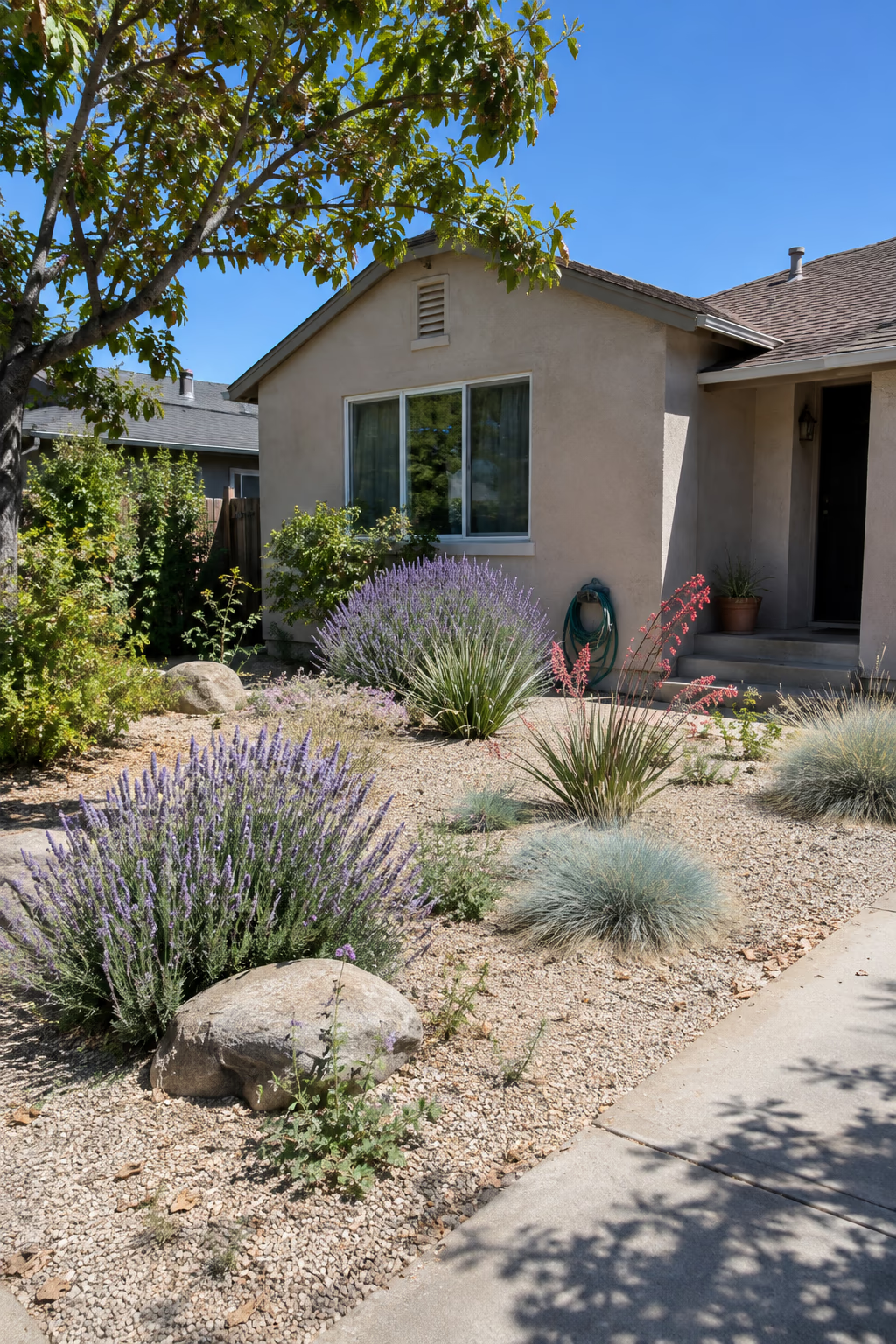
A sunny, dry yard that thrives on neglect
A gravel garden pairs a mineral surface with plants that like lean soil and heat, such as lavender, blue fescue, yarrow, red yucca, and ornamental sage. The gravel works as a mulch, keeps roots cooler, and lets rain soak straight in.
Spread 2 inches of 1/4 to 3/8 inch gravel over compacted soil and plant through it. Use warm tan or gray tones that suit your house color, and mix in a few larger rocks so the surface doesn’t read as one flat sheet. Plants should cover much of the ground, not just poke up here and there.
Plain gravel with a few scattered shrubs can look stark and bake in summer. Use landscape fabric sparingly, since it can trap debris and make planting harder later. Many gardeners skip it and pull the occasional weed by hand.
3. Lay a Curving Flagstone Path Through Planted Beds
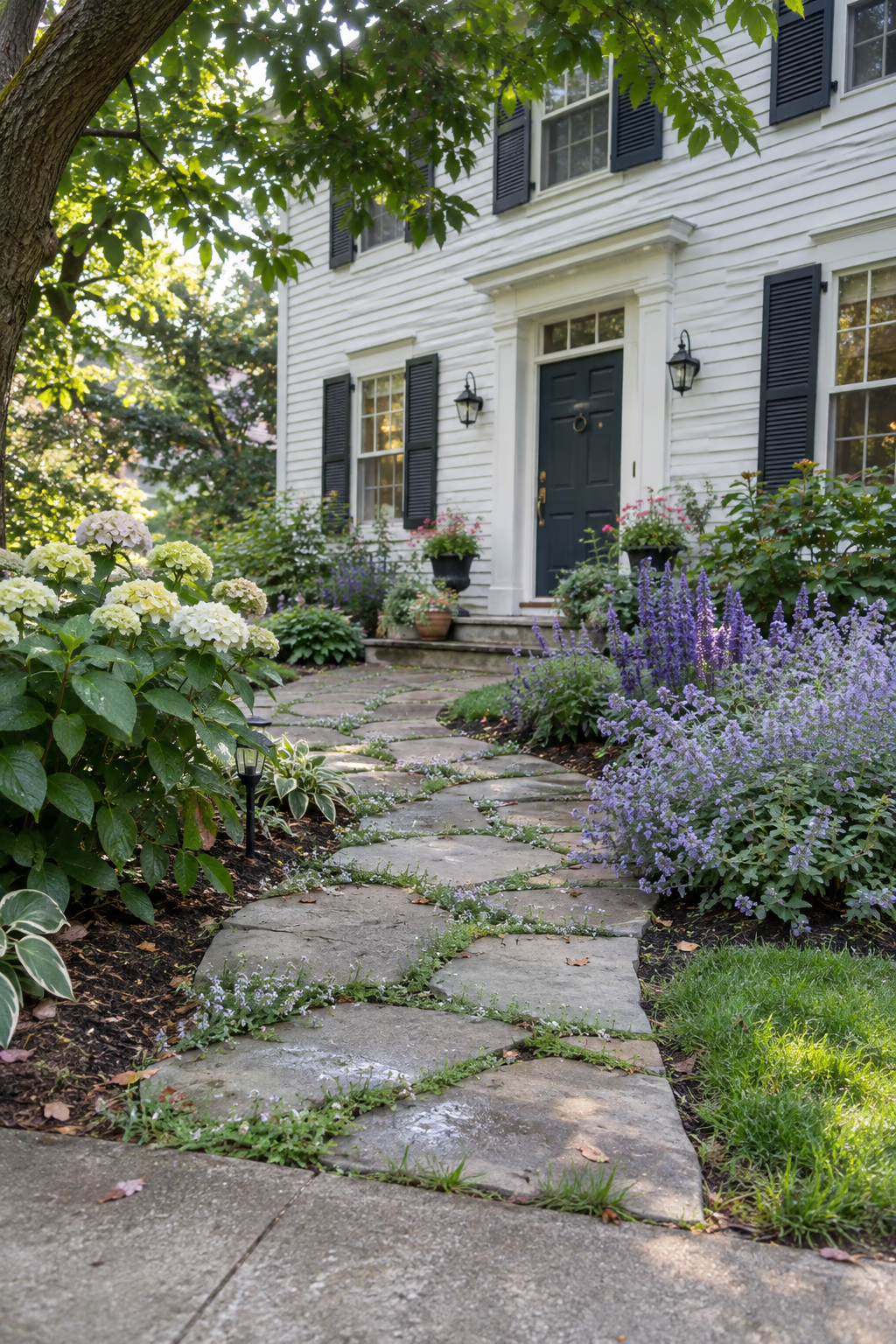
Lead the eye from the sidewalk to the door
A path does more than carry you to the porch. It gives the whole yard structure, so the planting around it feels planned. Irregular flagstone looks natural and works well with soft, billowy plants like catmint, salvia, and hydrangea.
Set stones 1 to 2 inches thick on a compacted base of about 4 inches of crushed stone topped with an inch of coarse sand. Leave 1 to 2 inches between stones and plant creeping thyme or Irish moss in the joints. Keep the path at least 36 inches wide so two people can walk side by side.
Curves look pleasant, but avoid wiggles with no purpose. A gentle bend around a shrub or small tree feels natural, and the most direct route should still be easy to follow.
4. Sow a Wildflower Meadow Along the Street
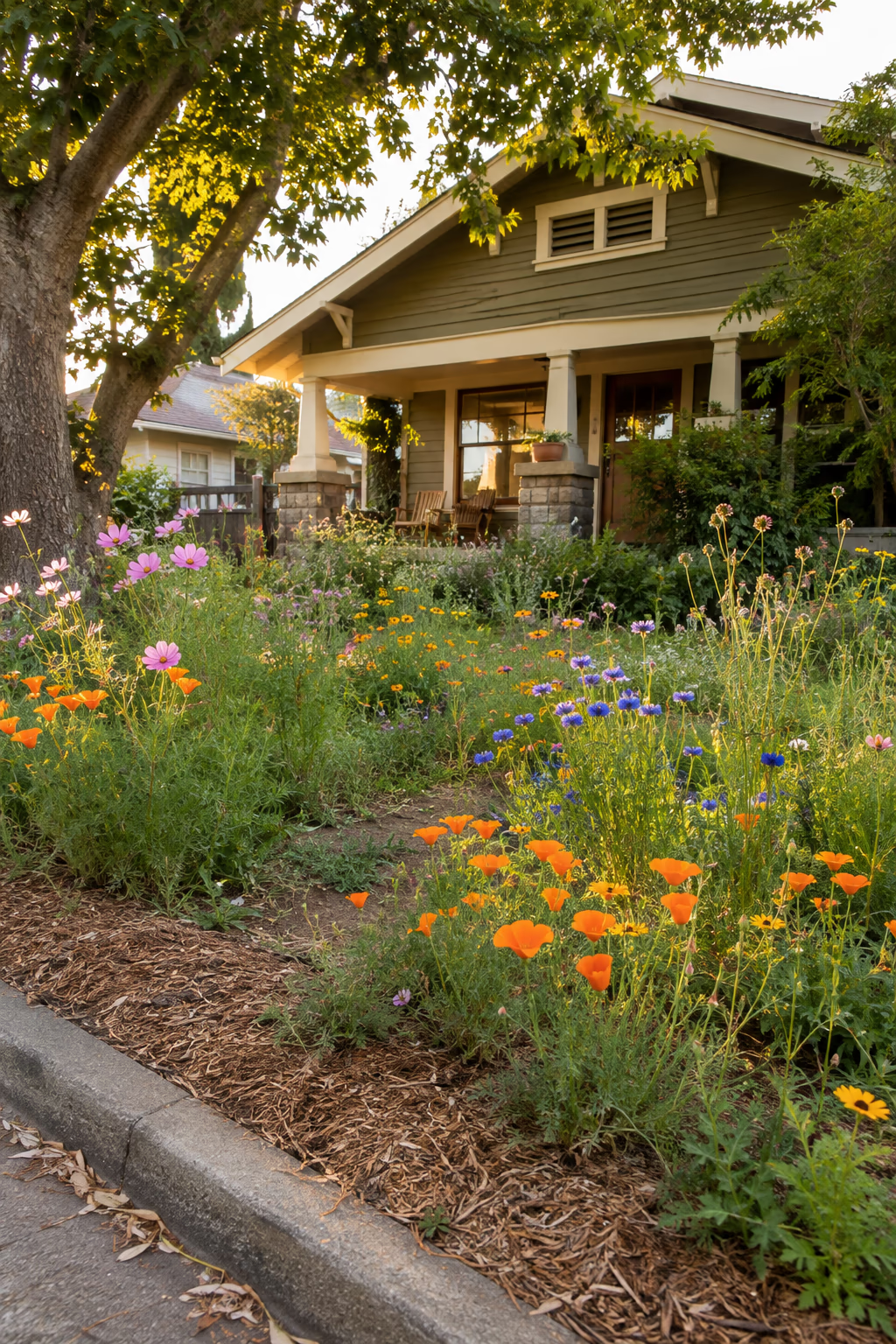
Seasonal bloom with a loose, cheerful look
A small meadow turns a strip of lawn into a changing show of poppies, cosmos, coreopsis, and cornflowers. Choose a regional seed mix that suits your sun and soil, and avoid generic blends full of plants that aren’t native to your area.
Clear the sod completely, rake the soil lightly, and sow seed in fall or early spring, pressing it in rather than burying it. Water regularly until seedlings are established. A mowed or mulched border around the meadow keeps it looking intentional.
Meadows look scruffy in their first year and in late winter. Many cities have weed ordinances that count tall unmanaged growth as a violation, so check local rules and consider a small sign-free, neat-edged planting in a front yard.
5. Create a Rock Garden With Boulders and Succulents
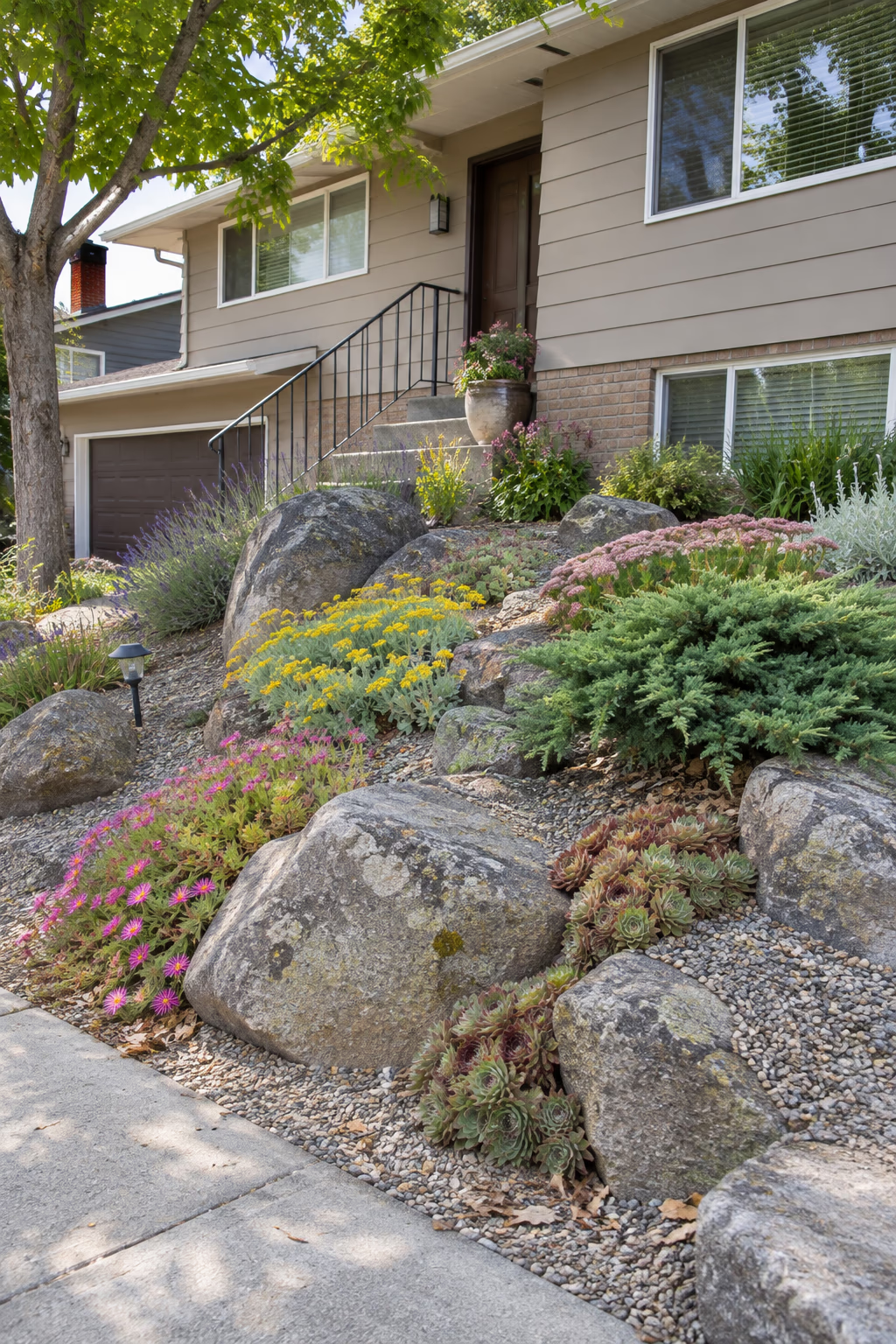
Sculptural interest for slopes and poor soil
A rock garden uses large stones as the main design element and tucks tough plants among them. Hens and chicks, sedum, ice plant, dwarf junipers, and creeping phlox all handle sharp drainage and sun.
Choose stone that matches your region, set each boulder one-third buried, and group them in odd numbers at different sizes. Use a gritty mix of soil and sand or fine gravel around the plants, since most rock garden plants rot in heavy, wet soil.
Large boulders are heavy, so ask the stone yard about delivery and placement. Many succulents are not hardy in cold winters, so check the label and pick cold-hardy sedums where freezing temperatures are common.
6. Add a Dry Creek Bed for Drainage and Style
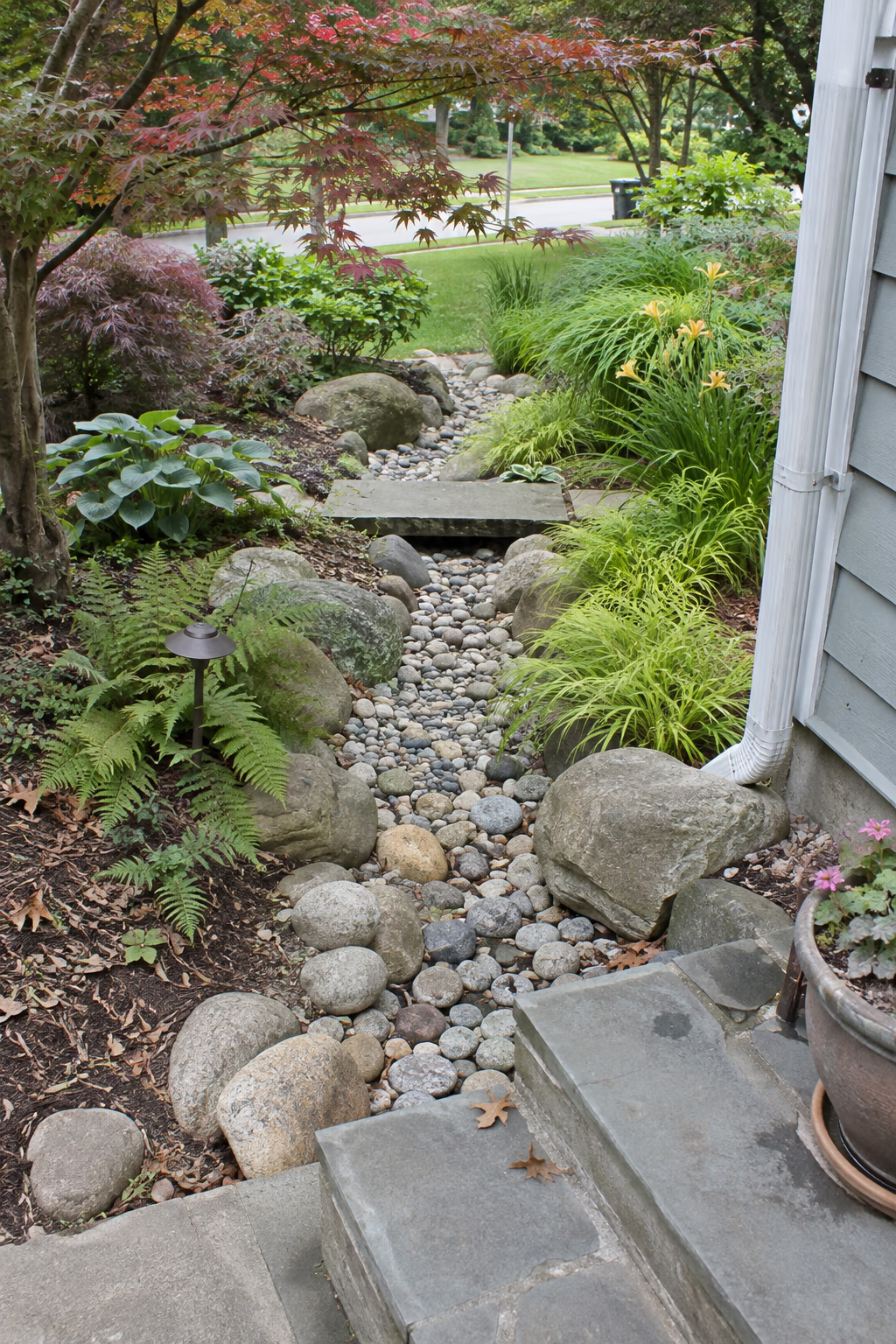
Move runoff while adding a natural focal point
A dry creek bed is a shallow channel lined with rounded river rock that looks like a seasonal stream. It can carry water from a downspout or low spot away from the foundation, then look attractive the rest of the year.
Dig a channel 6 to 12 inches deep with a gentle slope, line it with landscape fabric, and fill with a mix of fist-size and larger river rock. Set a few boulders on the banks and plant ferns, Japanese forest grass, or daylilies along the edges to soften the line.
For best results, the creek should end somewhere water can safely soak in, such as a planted bed or rain garden, not at the neighbor’s property line. A small footbridge or stepping stones can double as a crossing.
7. Carpet the Ground With Creeping Thyme and Sedum
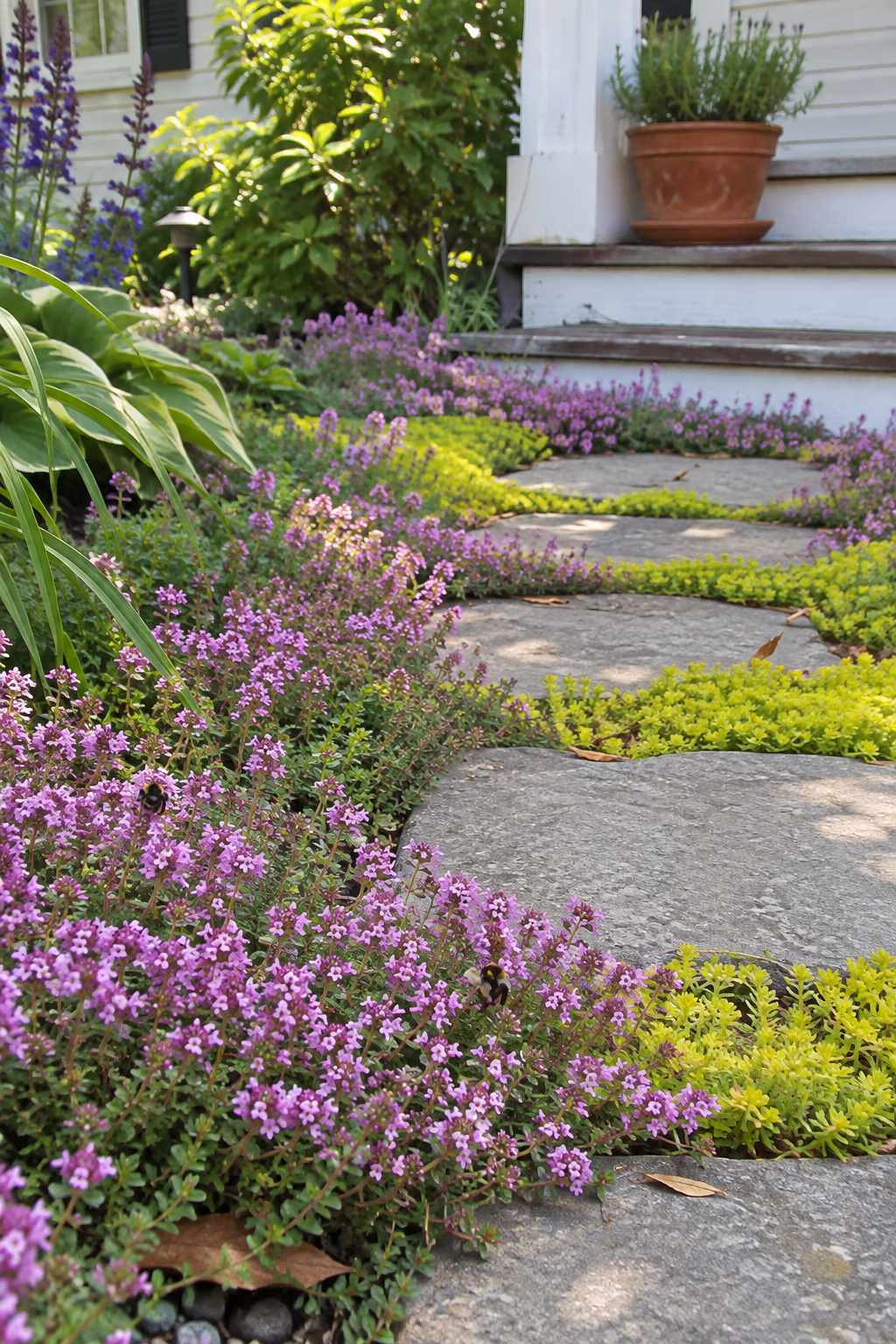
A soft, flowering ground cover in sunny spots
Low, spreading plants can cover open areas with texture and color. Creeping thyme, low sedums, and similar ground covers bloom in summer, attract pollinators, and tolerate occasional footsteps.
Plant small starts 6 to 12 inches apart in loosened, well-drained soil and water well for the first season. Mulch lightly between plants until they knit together, and weed carefully because young ground covers don’t compete well.
These plants fit best in sun and light traffic. They won’t replace a football-field lawn, but they work well between stepping stones, around a mailbox, or across a small front yard that gets full sun.
8. Plant a Rain Garden in the Low Spot
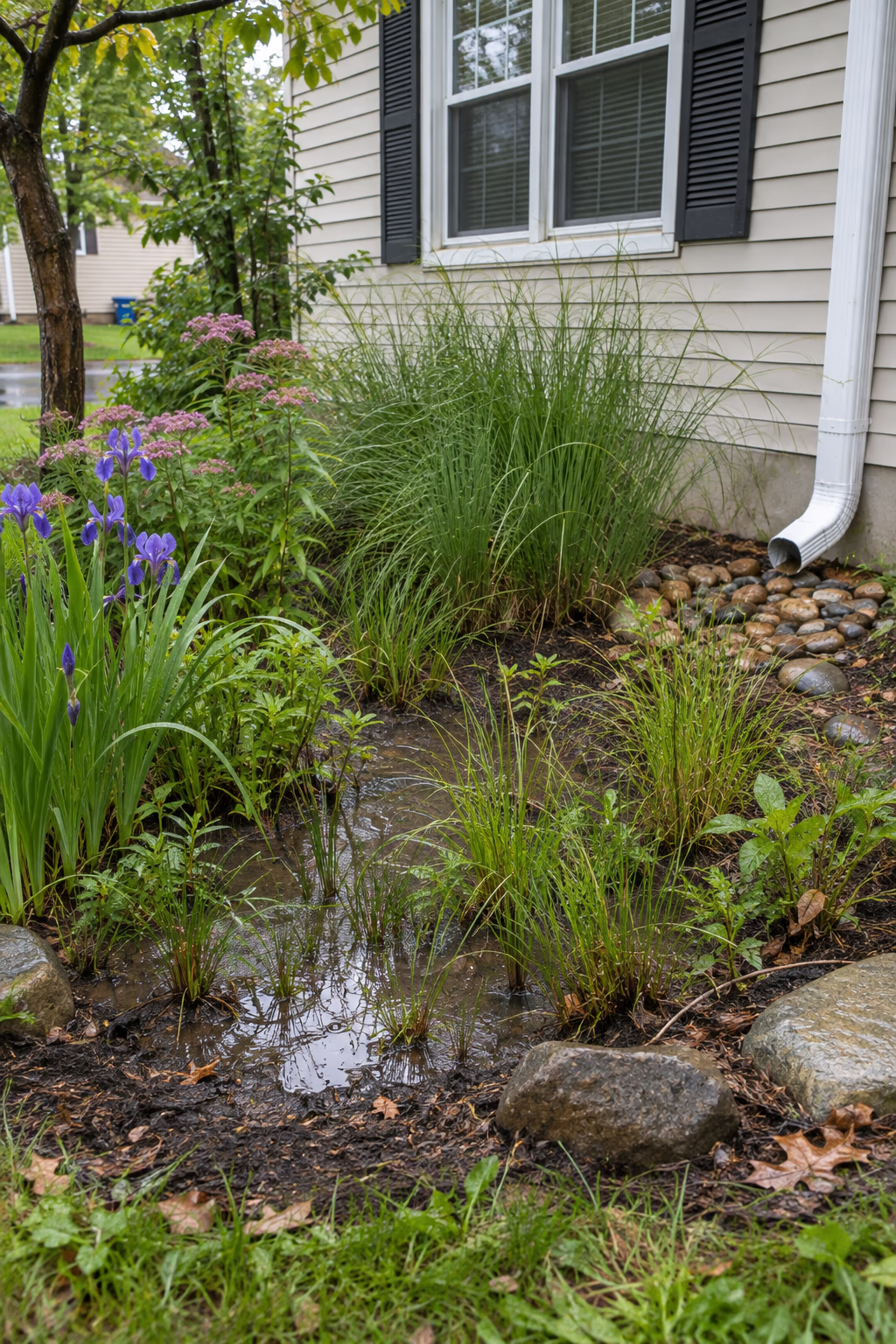
Turn a soggy patch into a useful garden
A rain garden is a shallow, planted depression that collects runoff from a roof or driveway and lets it soak in over a day or so. Blue flag iris, swamp milkweed, switchgrass, sedges, and joe-pye weed are common choices because they tolerate both wet and dry spells.
Site it at least 10 feet from the foundation, dig 4 to 8 inches deep, and amend heavy clay with compost if needed. A ring of river rock where the downspout enters helps prevent erosion, and a layer of mulch holds moisture.
Rain gardens work where water drains within a day or two, not in permanently wet ground. Call 811 before digging, and check with your local extension office for plant lists suited to your area.
9. Grow an Edible Front Yard With Raised Beds
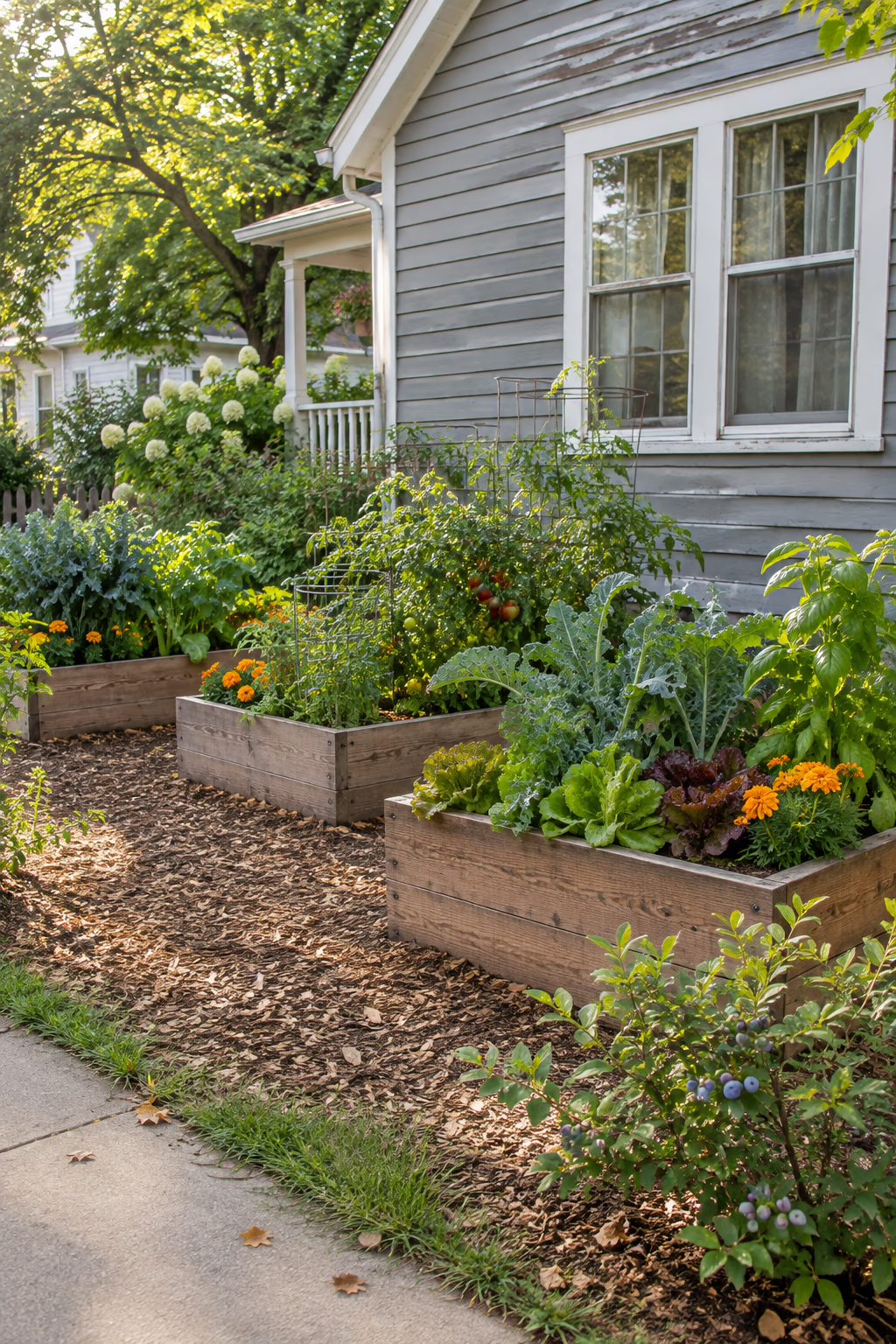
Fresh food that looks good from the street
The sunniest part of your property is often the front. Raised beds there can grow kale, lettuce, peppers, tomatoes, herbs, and marigolds, with a blueberry or dwarf fruit tree to anchor a corner.
Build uniform beds from cedar or similar rot-resistant boards, 4 feet wide so you can reach the middle from either side, and fill with a quality soil and compost mix. Wood chip paths between beds suppress weeds and give a tidy look.
Keep the layout neat, with straight edges and a few flowers mixed in, since an edible yard that looks cared for is easier to get approved by neighbors. Check HOA rules first, as some restrict front-yard vegetables.
10. Frame the Entry With Layered Foundation Plantings
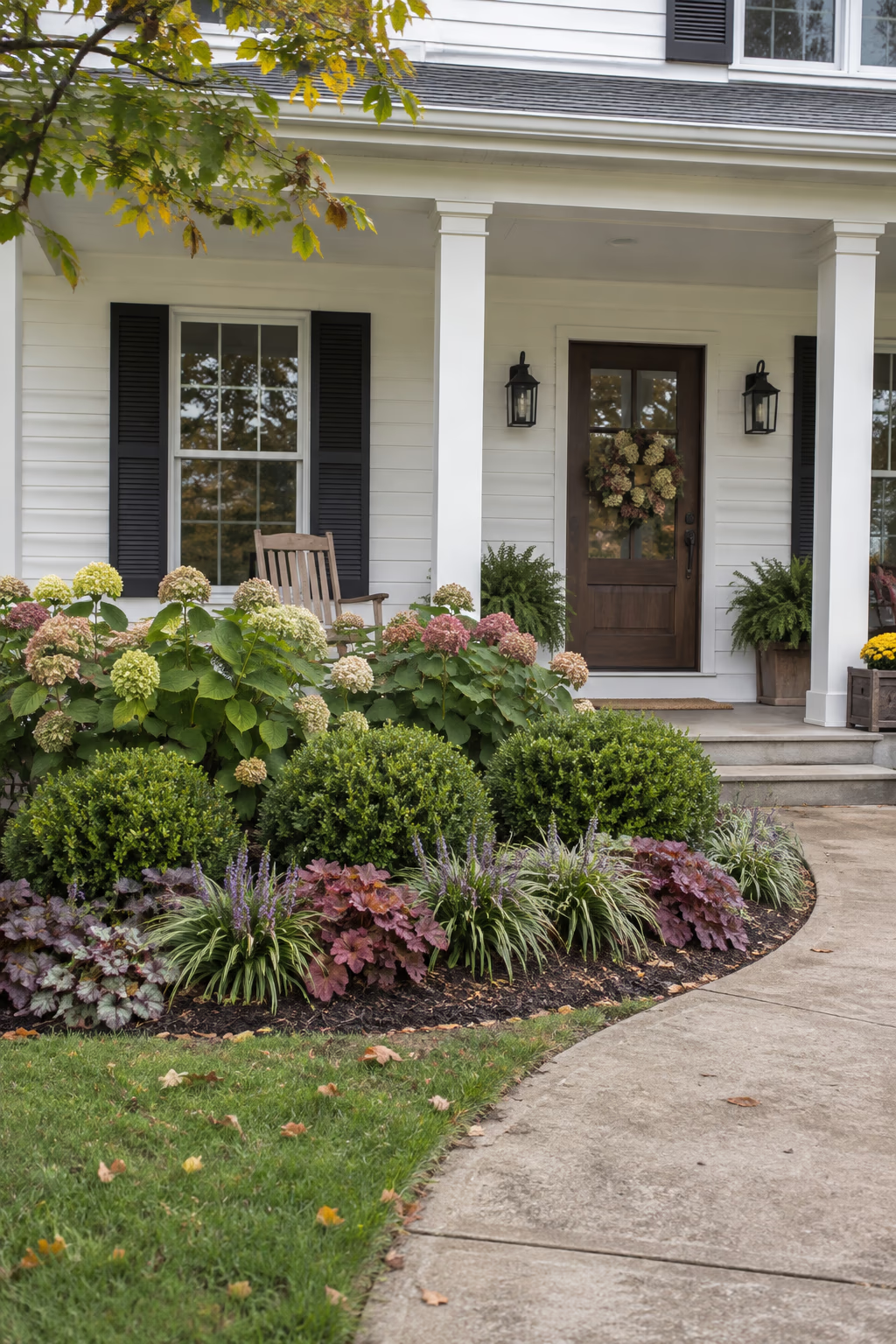
Give the house a polished, welcoming base
Instead of a thin line of shrubs against the siding, plant in layers that step down in height. Taller shrubs like hydrangea go at the back, rounded boxwood or spirea in the middle, and low perennials like heuchera or liriope along the front edge.
Keep plants far enough from the house for airflow, usually 3 feet or more depending on mature size, and curve the bed line gently rather than running it straight along the wall. Mix evergreens with flowering plants so the bed looks good in winter.
Check mature sizes on plant tags before buying. Shrubs that outgrow their spot and cover windows are one of the most common front yard problems.
11. Define the Beds With Crisp Metal Edging
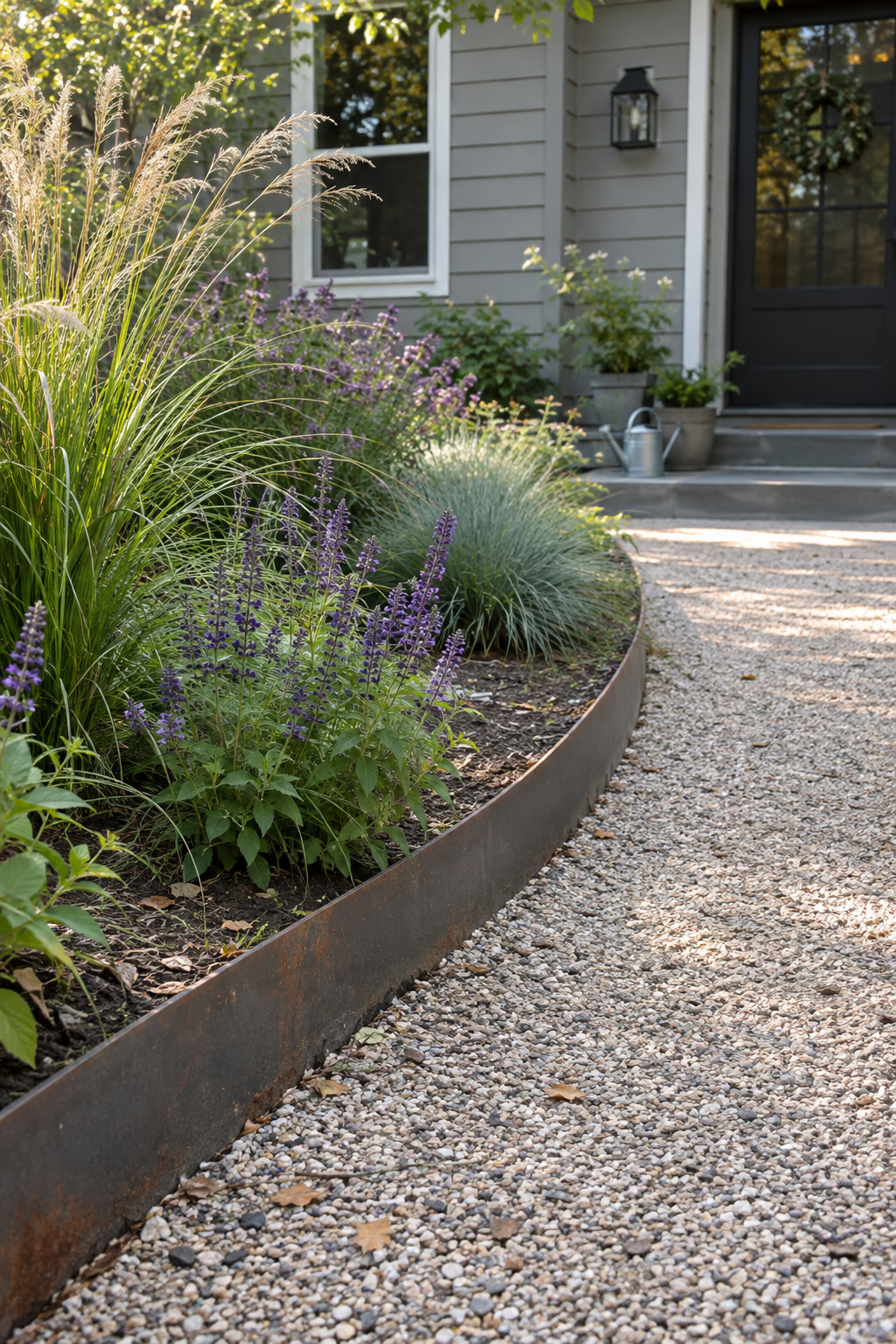
Sharp lines make any planting look intentional
Without a lawn, the border between plants and paths decides whether a yard looks deliberate or messy. Steel or aluminum edging gives a thin, clean line that holds mulch and gravel in place and handles gentle curves.
Use edging about 4 to 5 inches tall, tap it into the ground so only an inch or so shows, and stake it every few feet. Steel will develop a rusty patina over time, which many people like, while aluminum stays darker and cooler in tone.
Plan curves before installing, because tight bends are hard to adjust later. For budget projects, simple trenched edges or brick borders work too.
12. Widen the Walkway With Pavers
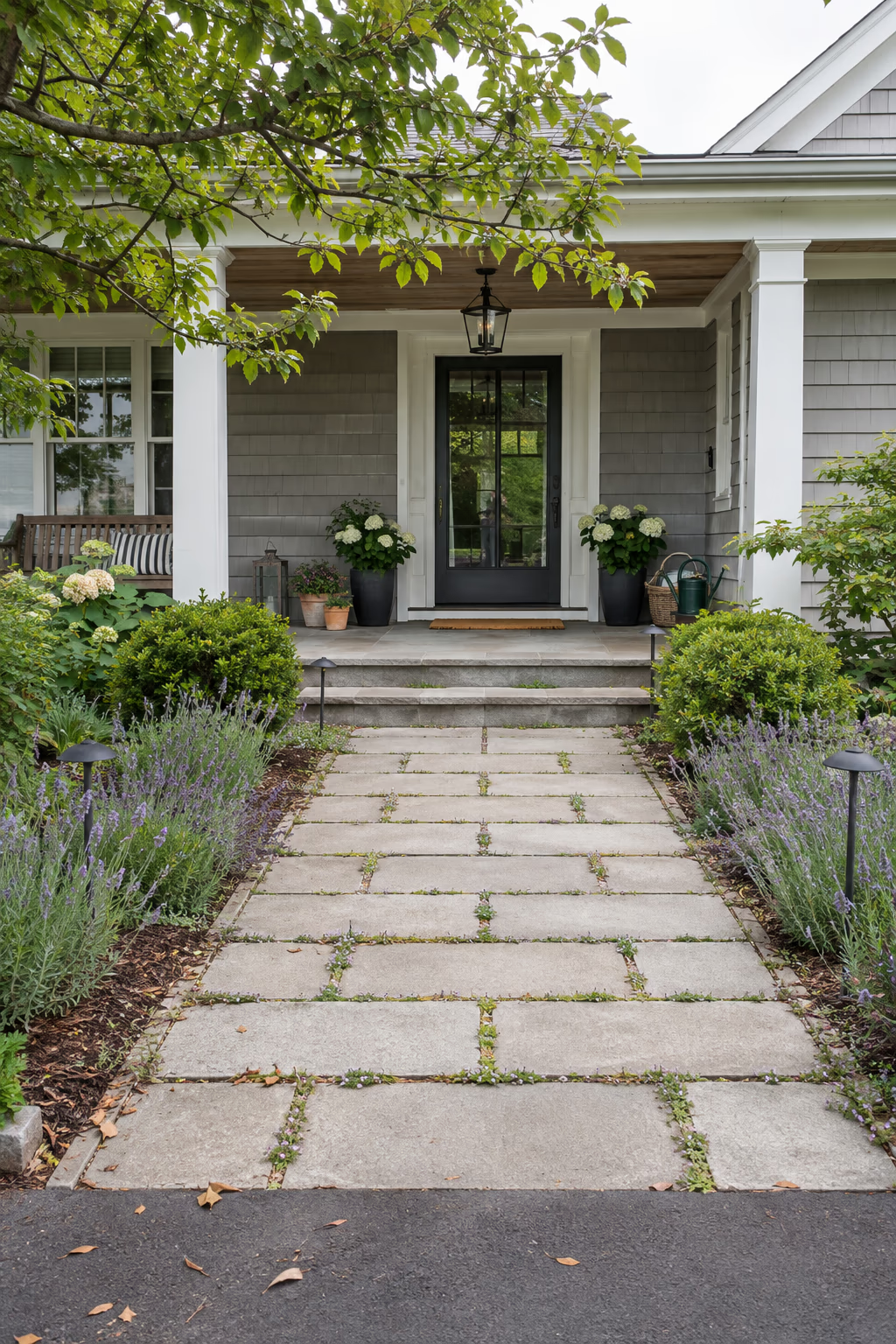
A welcoming, safe route for guests and deliveries
Many builder-standard front walks are only 3 feet wide, which feels tight. Widening it to 4 or 5 feet with pavers makes the entry more welcoming and gives you room for planting beds on both sides.
Concrete pavers set on compacted gravel and sand are durable and come in many colors. Keep joints slightly open and fill them with polymeric sand, or plant thyme between them for a softer look.
Make sure the surface drains away from the house, with a slight slope of about 1/4 inch per foot. If the walk meets the street or sidewalk, check local requirements before changing the apron.
13. Tuck a Small Courtyard Patio Near the Door
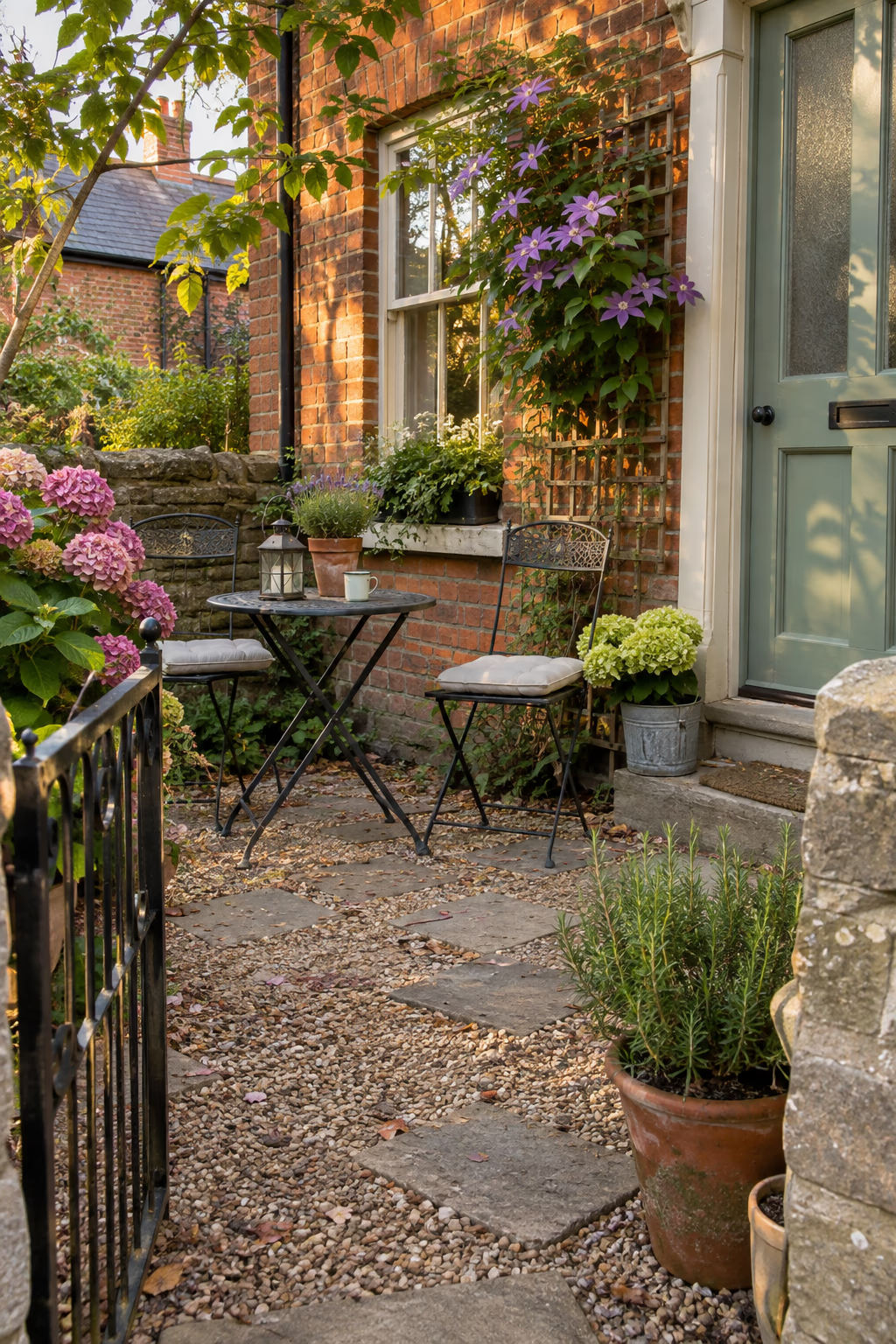
Use the front yard as living space
A small seating area at the front gives you a spot to enjoy mornings and greet neighbors. A patch of roughly 8 by 10 feet is enough for two chairs and a small table.
Build it with flagstone, pavers, or compacted gravel, then surround it with a low wall, pots, or hedging so it feels like a defined room. A trellis with clematis or climbing roses adds height and a bit of privacy.
Check setbacks and HOA rules, because some communities limit hardscape in front yards. Keep the walkway to the door clear so the patio doesn’t block entry.
14. Add Movement With Ornamental Grasses
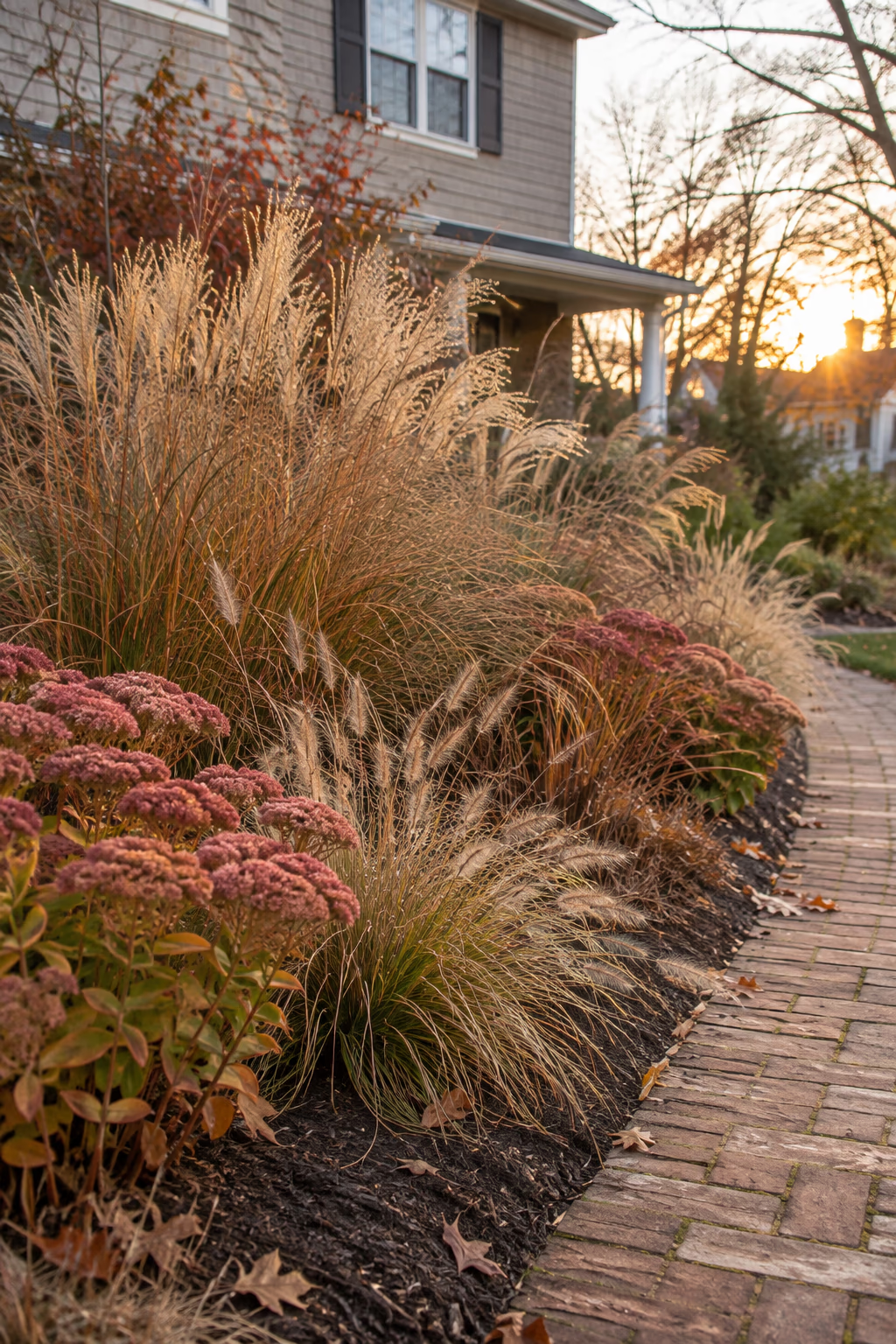
Texture that shifts with every breeze
Ornamental grasses aren’t lawn, and they give beds a soft, airy feel. Feather reed grass, little bluestem, switchgrass, and fountain grass all look good through fall, when seed heads catch the light.
Plant them in drifts of odd numbers and pair them with sturdy perennials like sedum, coneflower, and asters. Give each clump room, since many grow 3 to 5 feet wide at maturity.
Cut most types back to a few inches in late winter before new growth starts. Avoid aggressive spreaders and any grass listed as invasive in your state.
15. Mulch Generous Beds With Shredded Bark
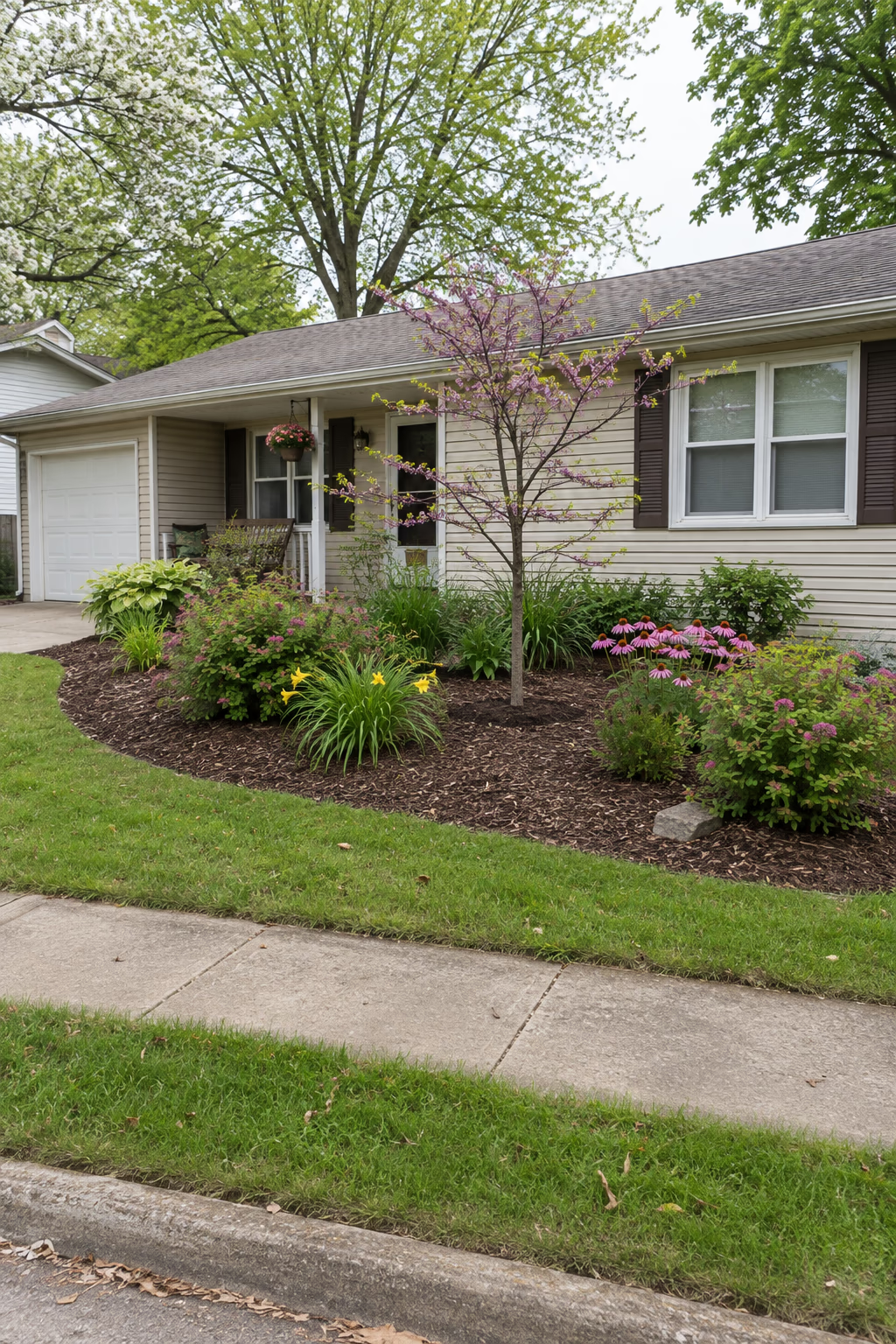
The simplest way to replace lawn quickly
Wide planting beds with shrubs, perennials, and a small tree are one of the easiest and cheapest ways to cover ground. Shredded bark knits together and stays in place better than loose chips on slopes.
Apply a layer about 2 to 3 inches deep and keep it a few inches away from trunks and stems so bark doesn’t rot. Refresh the top inch every year or two as it breaks down.
Mulch alone is not a landscape. Plant densely enough that mulch becomes a background rather than the main feature, and avoid piling it deeper than 3 inches, which can smother roots.
16. Surface Paths With Decomposed Granite
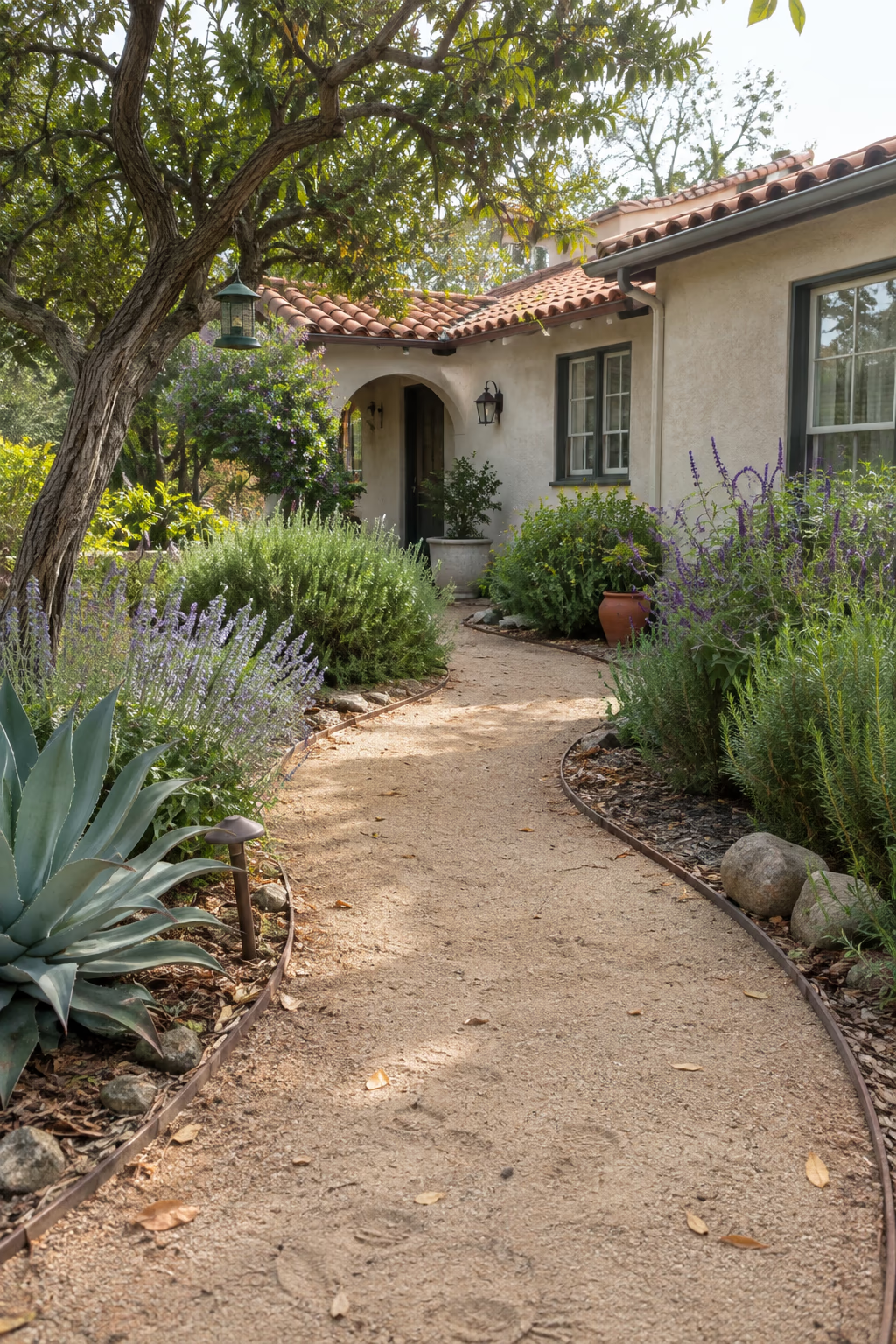
A soft, natural walking surface
Decomposed granite is crushed rock that packs into a firm, warm-toned surface. It suits dry gardens and Mediterranean-style plantings of rosemary, lavender, and agave.
Excavate 4 inches, lay a compacted base, then add 2 to 3 inches of decomposed granite and compact it in layers after wetting. Edging holds it in place, and a stabilizer can reduce loose material.
It can track into the house and wash out on steep slopes or in heavy rain. It is also less suitable where strict accessibility standards apply, so choose pavers if you need a very firm surface.
17. Terrace a Slope With Low Retaining Walls
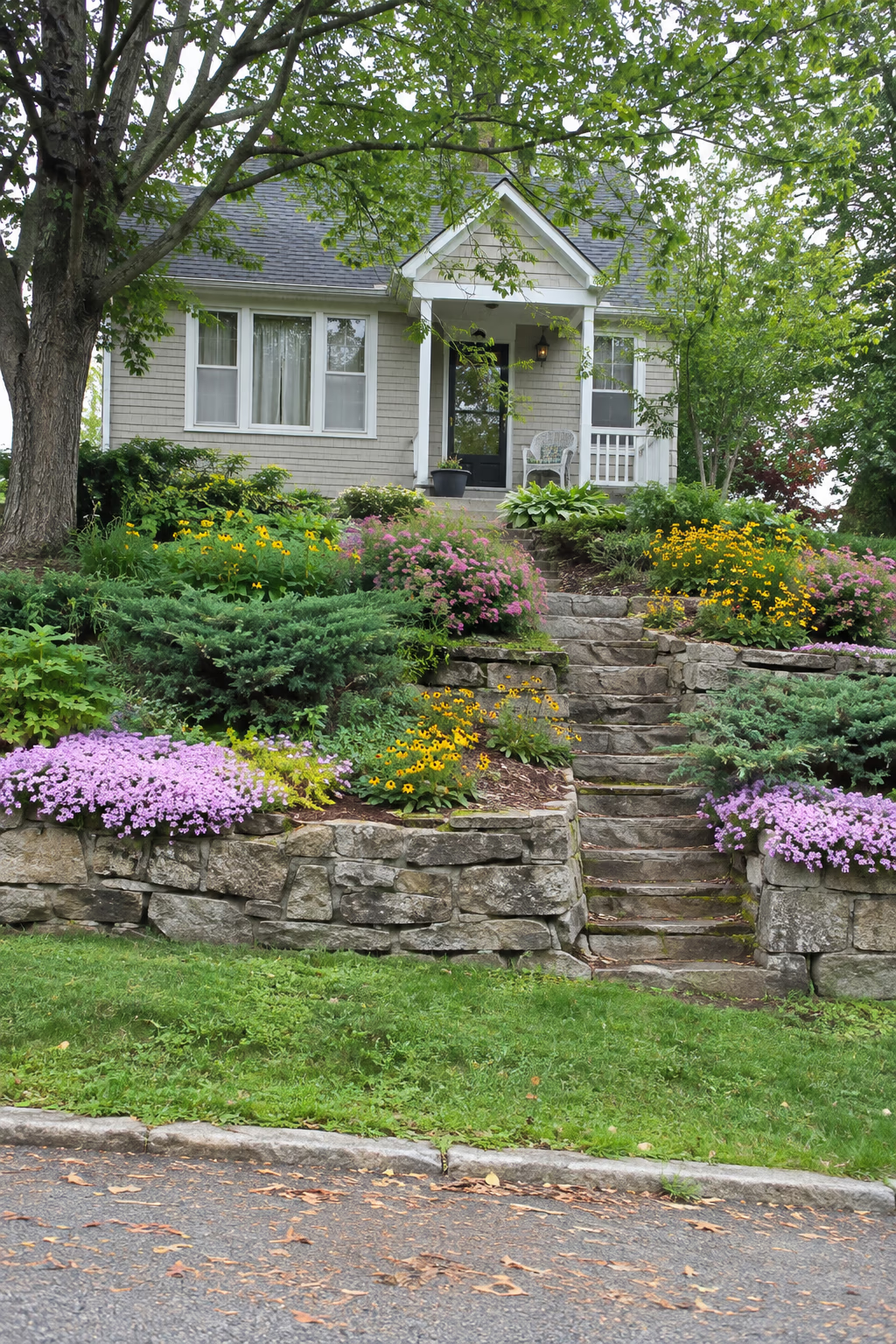
Turn a hard-to-mow hill into planting space
Steep lawns are tiring to mow and prone to erosion. Low walls create flat planting shelves that hold soil and give you places for creeping phlox, juniper, and spirea.
Keep walls under about 3 feet tall for DIY work, set the first course below grade, and slope the wall back slightly. Add drainage stone and a pipe behind the wall so water doesn’t push it over.
Taller walls often need permits and an engineer, so check local rules. A stone staircase through the terraces provides safe access.
18. Light the Landscape With Low-Voltage Fixtures
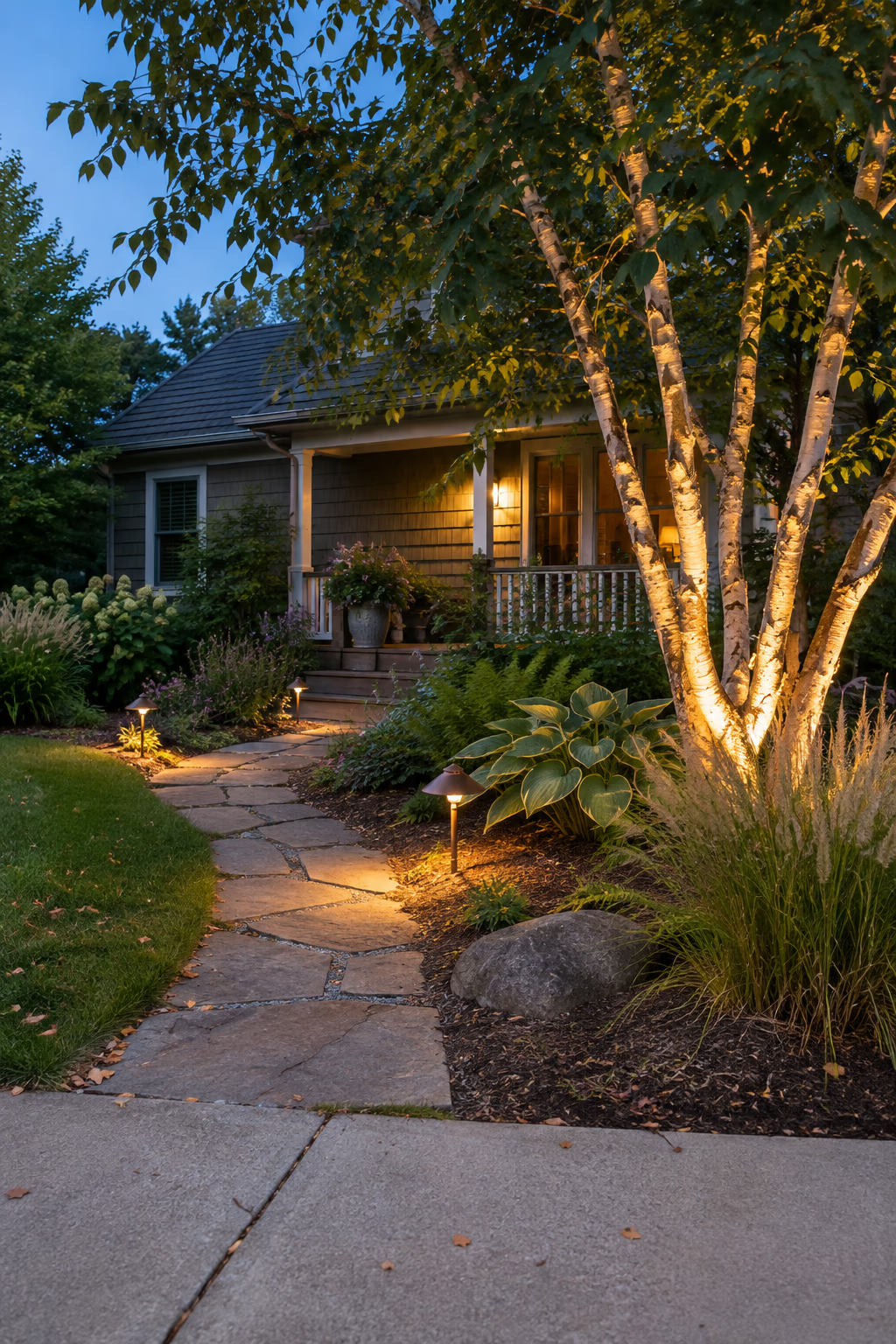
Keep the yard attractive after dark
Good lighting makes a grass-free yard look even better at night. Small path lights along walks, an uplight on a favorite tree, and a few spotlights on the entry create depth and improve safety.
Low-voltage LED kits are affordable and can be installed without an electrician. Choose warm white bulbs around 2700K, shield fixtures to avoid glare, and keep light levels modest.
Less is more, since too many fixtures create a runway look. Many communities encourage dark-sky-friendly lighting, so aim light downward and use timers.
19. Plant a Small Flowering Tree as a Focal Point
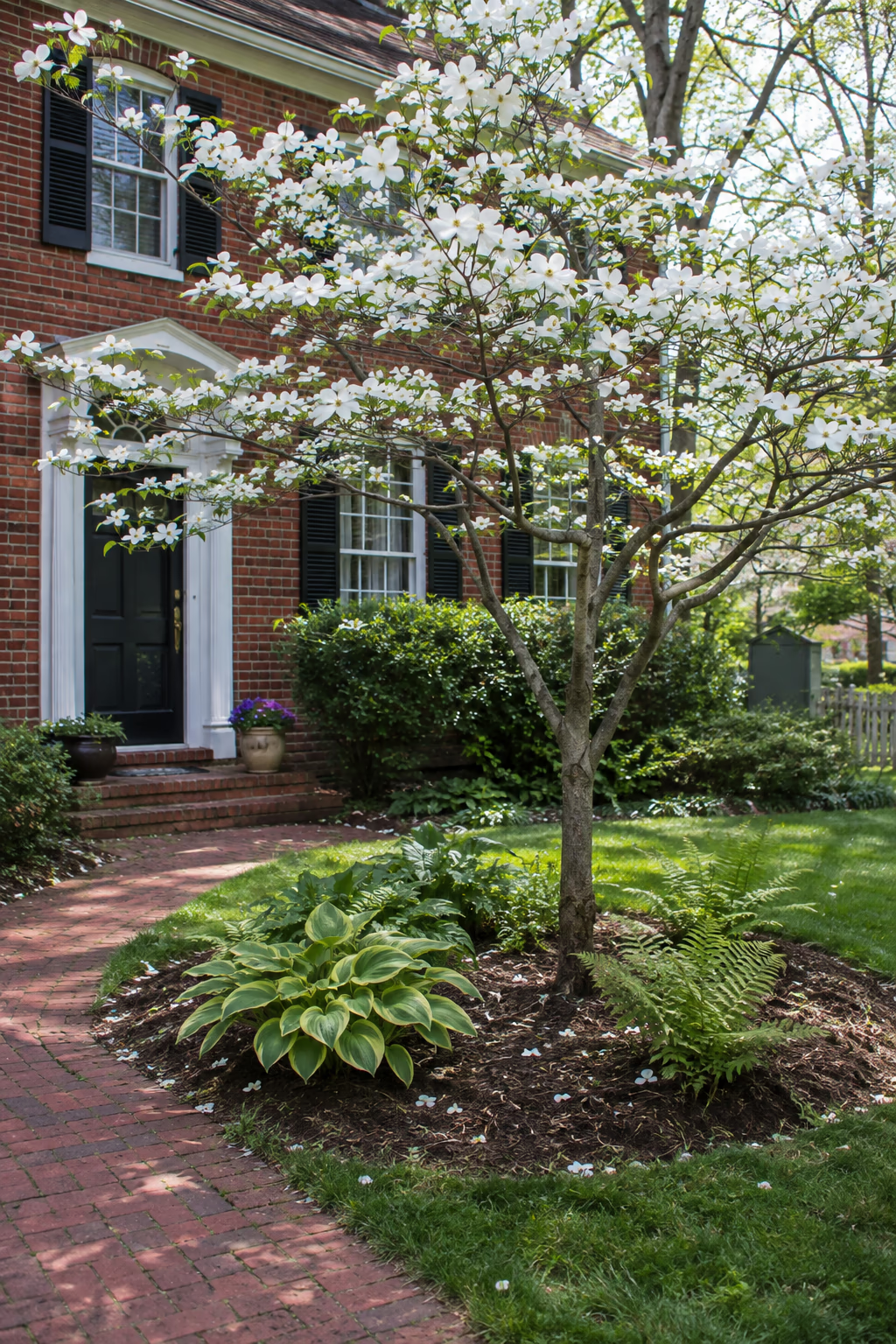
Seasonal beauty and shade without a lawn
One well-chosen tree can anchor a whole front yard. Dogwood, redbud, serviceberry, and crabapple offer spring flowers, and many have good fall color or attractive bark.
Plant it off-center, give it a wide mulched bed instead of a narrow ring, and underplant with hosta, ferns, or spring bulbs. Choose a size that suits your space and keep it at least 10 to 15 feet from the house.
Before digging, call 811 and look overhead for power lines. Pick a species that thrives in your hardiness zone and soil, since some, like dogwood, dislike heat and dry soil.
20. Line the Steps With Container Plantings
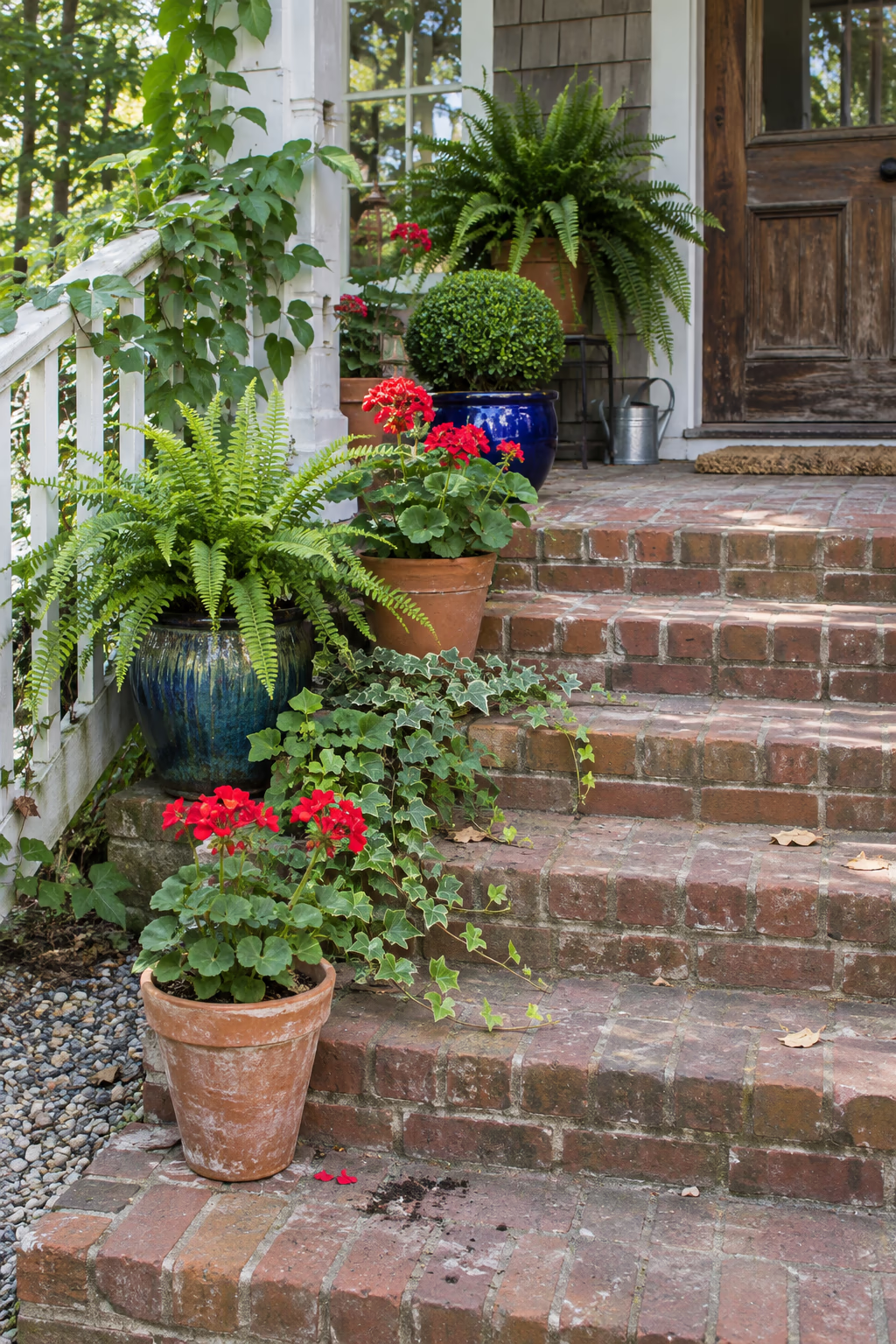
Instant color with no digging
Pots are an easy way to add polish, especially if you rent or have poor soil. Group three to five containers of different heights near the steps and mix flowers, trailing plants, and a clipped evergreen.
Use pots with drainage holes and a good potting mix, and pick large containers because small ones dry out fast. Repeating one or two colors keeps the display from looking cluttered.
Containers need regular watering, sometimes daily in summer heat. Move tender plants indoors before frost, or choose hardy shrubs for year-round pots.
21. Grow a Layered Hedge for Privacy
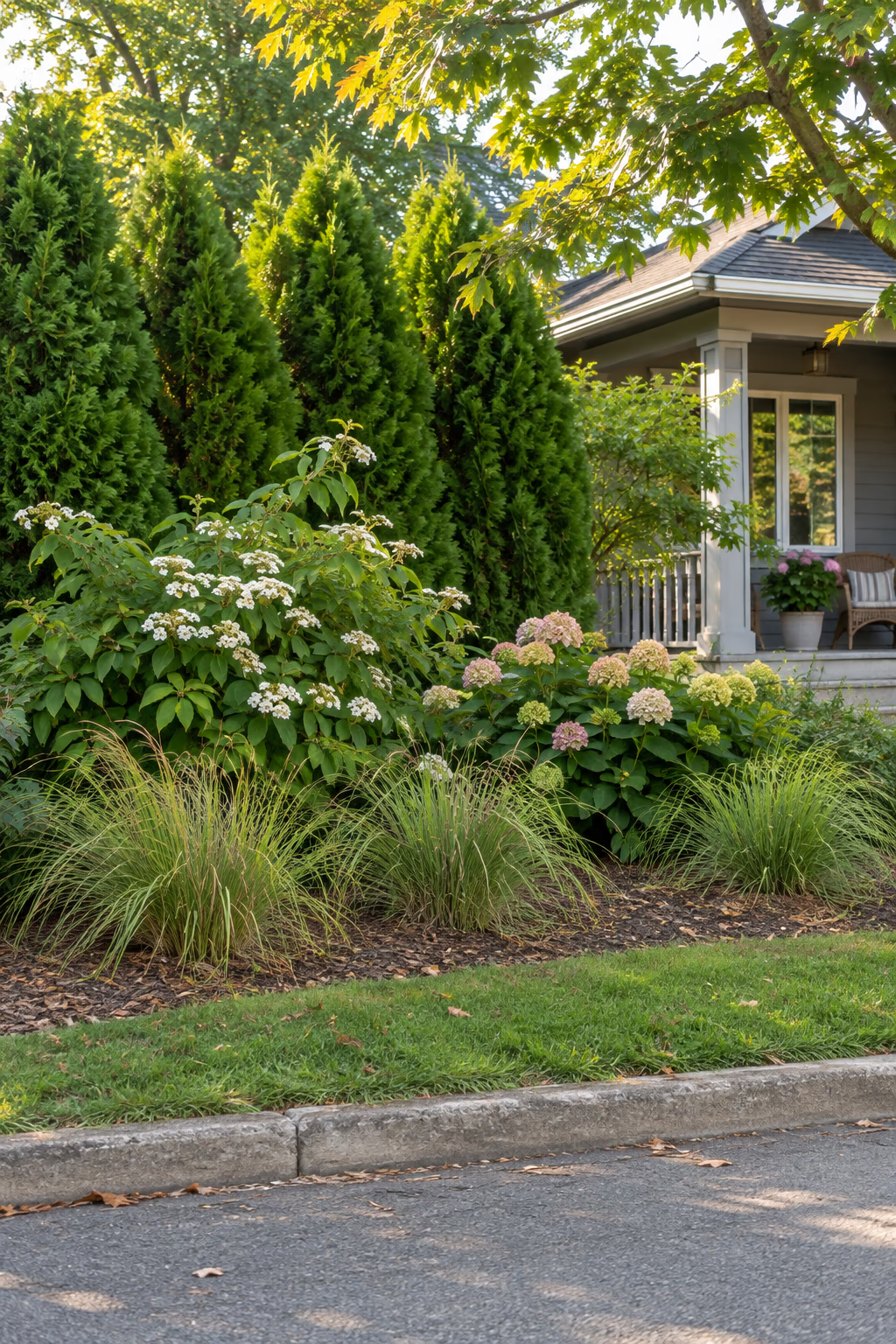
Screen the street with living walls
A planted screen can add privacy and soften street noise. Combine tall evergreens like arborvitae at the back, flowering shrubs like viburnum in the middle, and low grasses at the front for a hedge that looks natural instead of like a wall.
Space plants according to their mature width, and stagger them rather than planting in a straight row. Mulch the bed and water deeply during the first two years.
Check local height limits for front yard fences and hedges, and keep sight lines clear at driveways and corners. A mixed planting also holds up better than a single species if disease strikes.
How to Plan Your Grass-Free Front Yard
Removing a lawn goes better when you plan the whole picture first. A few decisions made early prevent expensive fixes later.
- Check the rules first. Review HOA covenants, city ordinances, and utility easements before removing turf, and call 811 before any digging.
- Plan the path and the view. Decide how people reach the door and what you want to see from the street, then fit planting around that route.
- Match plants to your site. Check your USDA hardiness zone, sun hours, and soil type, and choose natives or regionally proven plants.
- Manage water. Without grass, rain runs off faster, so direct downspouts to beds, rain gardens, or dry creek beds and slope hard surfaces away from the house.
- Remove turf properly. Strip sod, or smother it with cardboard and mulch for a season, to keep grass from coming back through your new beds.
- Work in phases. Start with paths and structure, then plant, then add lighting and details so costs and effort stay manageable.
Frequently Asked Questions
What can I put in my front yard instead of grass?
Popular options include native plant gardens, gravel gardens, groundcovers, wildflower meadows, rain gardens, mulched planting beds, and hardscape such as paths and courtyards. Most good designs combine several of these.
What is the cheapest way to replace a front lawn?
Mulched beds, seed-grown meadows, and small starter plants are the most affordable. Smothering sod with cardboard and mulch avoids rental equipment, and planting in phases spreads out the cost.
Is a front yard without grass really low maintenance?
It is usually lower maintenance than a lawn once plants are established, but not zero. Expect weeding and watering in the first year or two, then seasonal pruning, mulch refreshing, and occasional cleanup.
Will removing grass cause drainage problems?
It can, since lawns absorb a surprising amount of rain. Use permeable materials like gravel and mulch, direct downspouts into planted areas, and consider a rain garden or dry creek bed for heavy runoff.
Do I need permission to remove my front lawn?
Often not, but some HOAs and cities set rules on front yard plantings, hardscape, and plant height. Check covenants and local ordinances before you start, and ask for approval in writing if required.
Final Thoughts
A front yard without grass doesn’t have to look bare or wild. With a clear path, layered plants, and a few well-chosen materials, it can look more welcoming than a lawn ever did.
Start with one area, such as the strip by the sidewalk or the sunny bed by the door, and expand as you learn what thrives. Over a few seasons, your yard will fill in, need less from you, and give your home real character.


