
Picture the corner of a front yard where the sidewalk turns: a ribbon of grass ends in a bare patch, a few weeds push through the mulch, and every passerby cuts across the edge. It is the spot most homeowners walk past a hundred times without noticing.
That is exactly why a corner is such a rewarding place to start. It is the first thing neighbors and visitors see, it has a natural frame, and a small, well-planned planting can make the whole house look cared for. You don’t need a big budget or a full yard makeover to get a big visual return.
These 23 front yard corner landscaping ideas cover curved beds, stone walls, grasses, boulders, lighting, hedges, and plants that suit sun, shade, dry spells, and busy streets. Pick one that fits your space or combine a few for a layered look.
1. Shape a Curved Island Bed With Layered Plantings
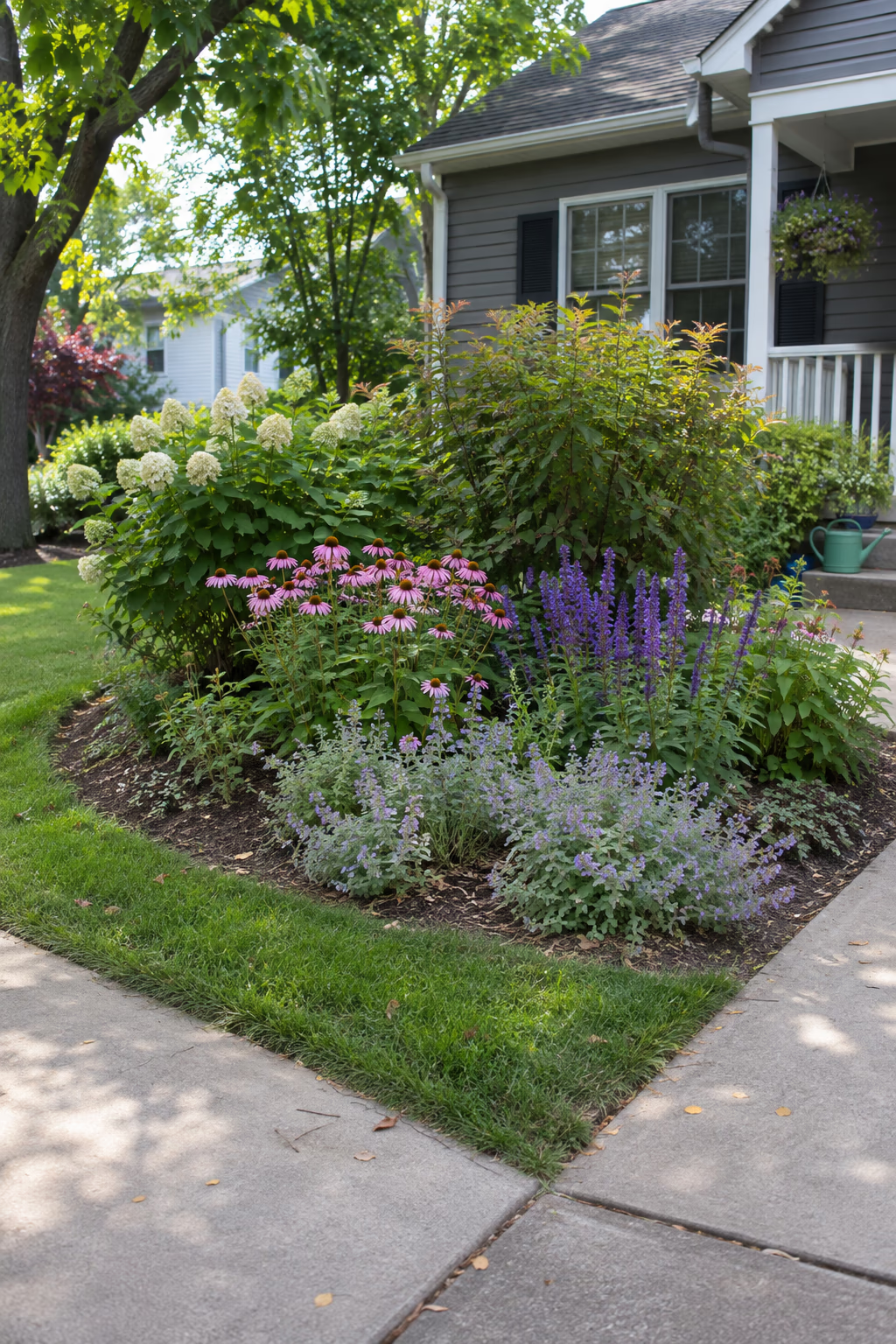
Soft lines that make a corner look designed
A sweeping, crescent-shaped bed turns a hard corner into a gentle curve. Lay a garden hose on the lawn to test the shape, aiming for a bed roughly 5 to 8 feet deep at its widest point, then cut the edge with a flat spade.
Plant in layers: a few taller shrubs toward the back, mid-height perennials such as coneflower and salvia in the middle, and low groundcover or edging plants along the front. Repeat a few plants in groups of three or five so the bed looks planned rather than random.
Finish with 2 to 3 inches of shredded bark mulch, and keep the mulch a few inches away from stems. If your corner touches a street intersection, keep the plants nearest the curb low.
2. Build a Curved Stone Planter Wall for Hydrangeas
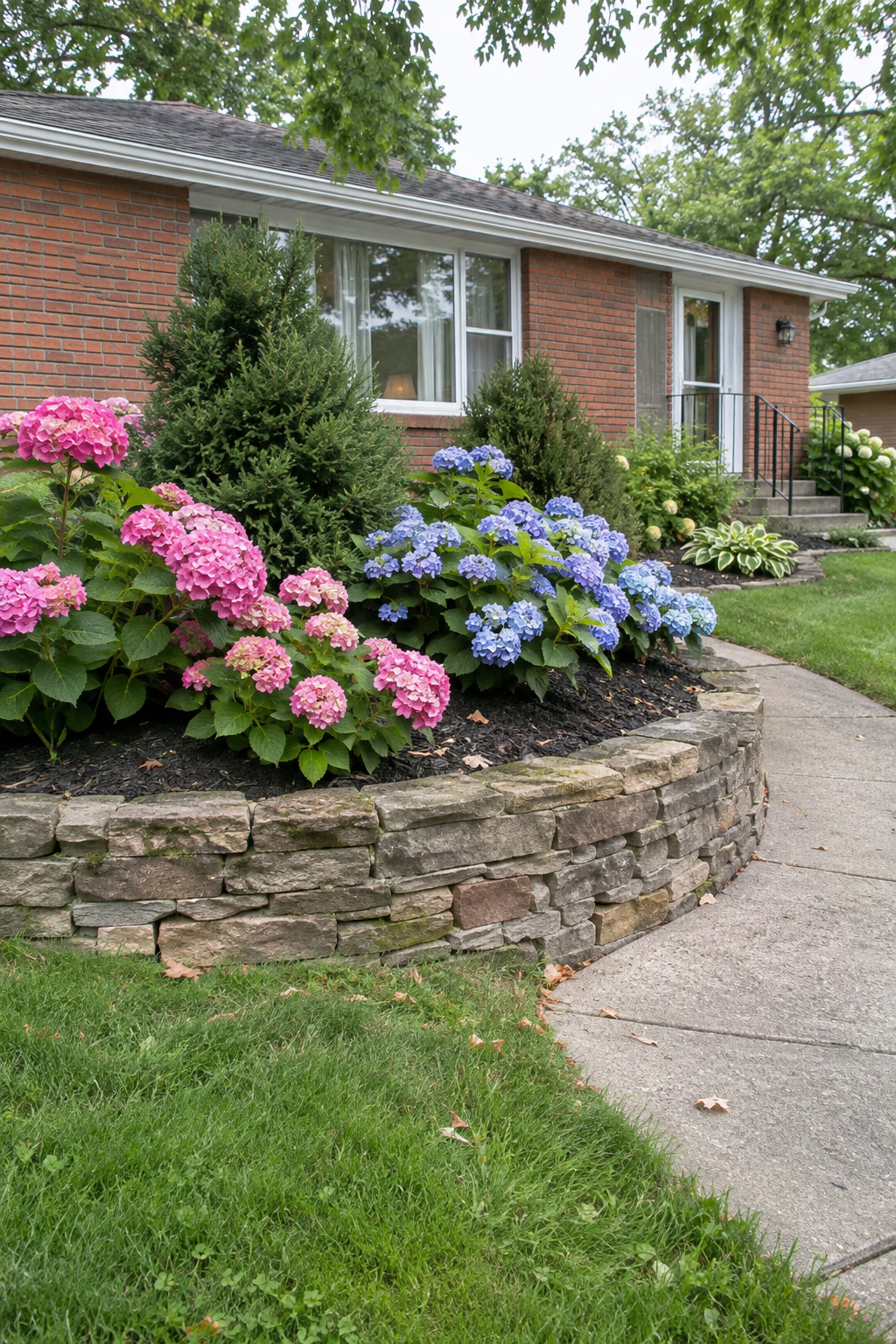
Height and structure in one weekend project
A low, curved wall about 18 to 24 inches tall gives a corner instant presence. Stacked natural stone or interlocking concrete retaining blocks both work, and the curve is easier to build with small blocks than with large flat stones.
Fill the planter with good loamy soil and plant hydrangeas, which love the extra drainage and the look of blooms spilling over stone. Panicle hydrangeas tolerate more sun, while bigleaf types prefer morning sun and afternoon shade.
Dig a level base of compacted gravel before stacking, because a wobbly foundation is the most common reason these walls fail. Walls over about 3 feet usually need a permit or engineering in many towns, so check before you build high.
3. Frame the Corner With a Low White Picket Fence and Cottage Flowers
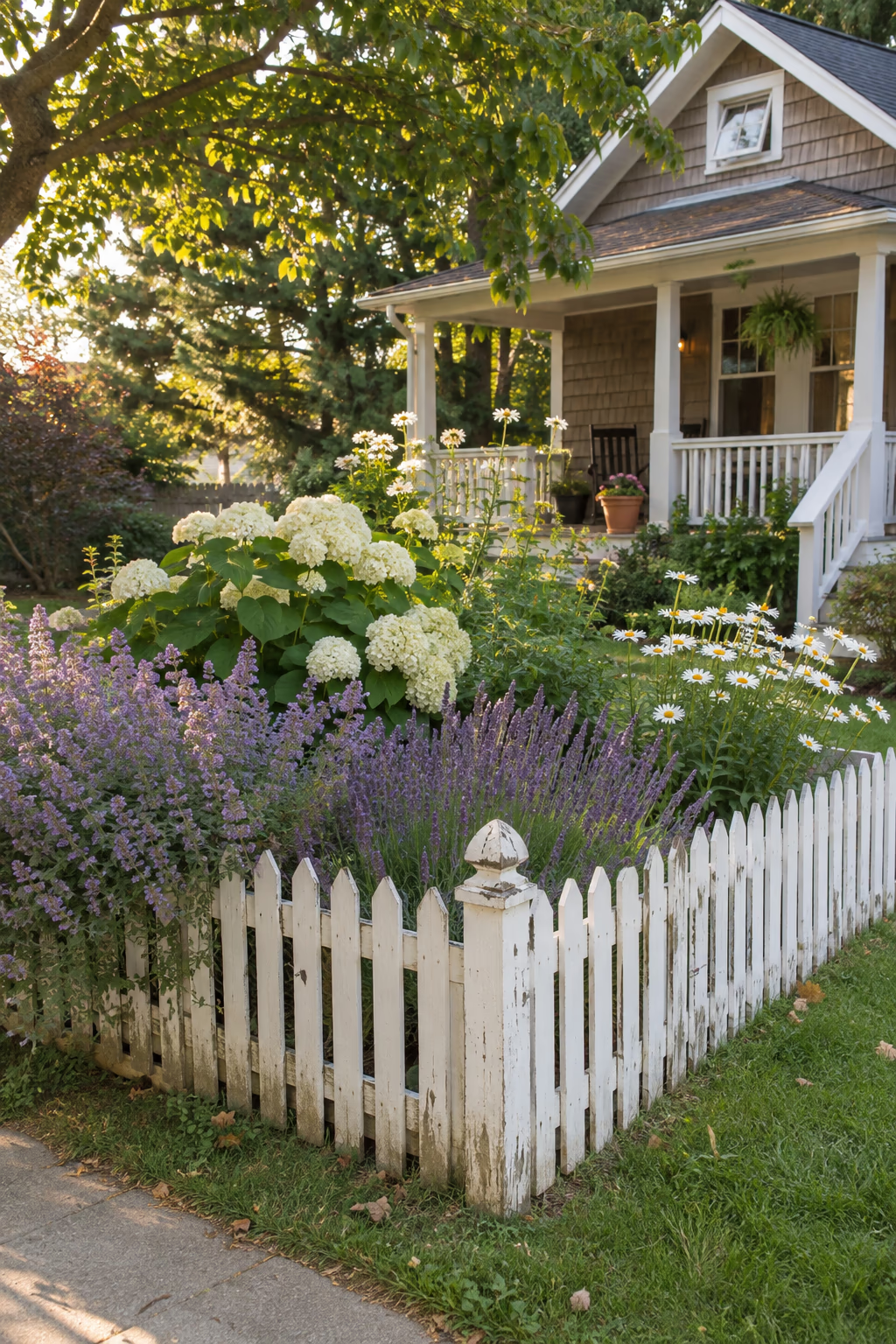
Classic charm in a small footprint
A short picket fence, about 24 to 30 inches tall, gives a corner bed a crisp border and a storybook look. Fill the space behind it with lavender, catmint, peonies, daisies, and white hydrangea for a mix of bloom times.
Pressure-treated pine, cedar, or low-maintenance vinyl all work. Painted wood looks the warmest, but plan on repainting every few years, while vinyl stays bright with only an occasional wash.
Many neighborhoods limit front yard fence height or style, and corner lots often have extra sight-line rules, so check with your city and HOA before ordering materials.
4. Plant a Low-Water Corner With Ornamental Grasses
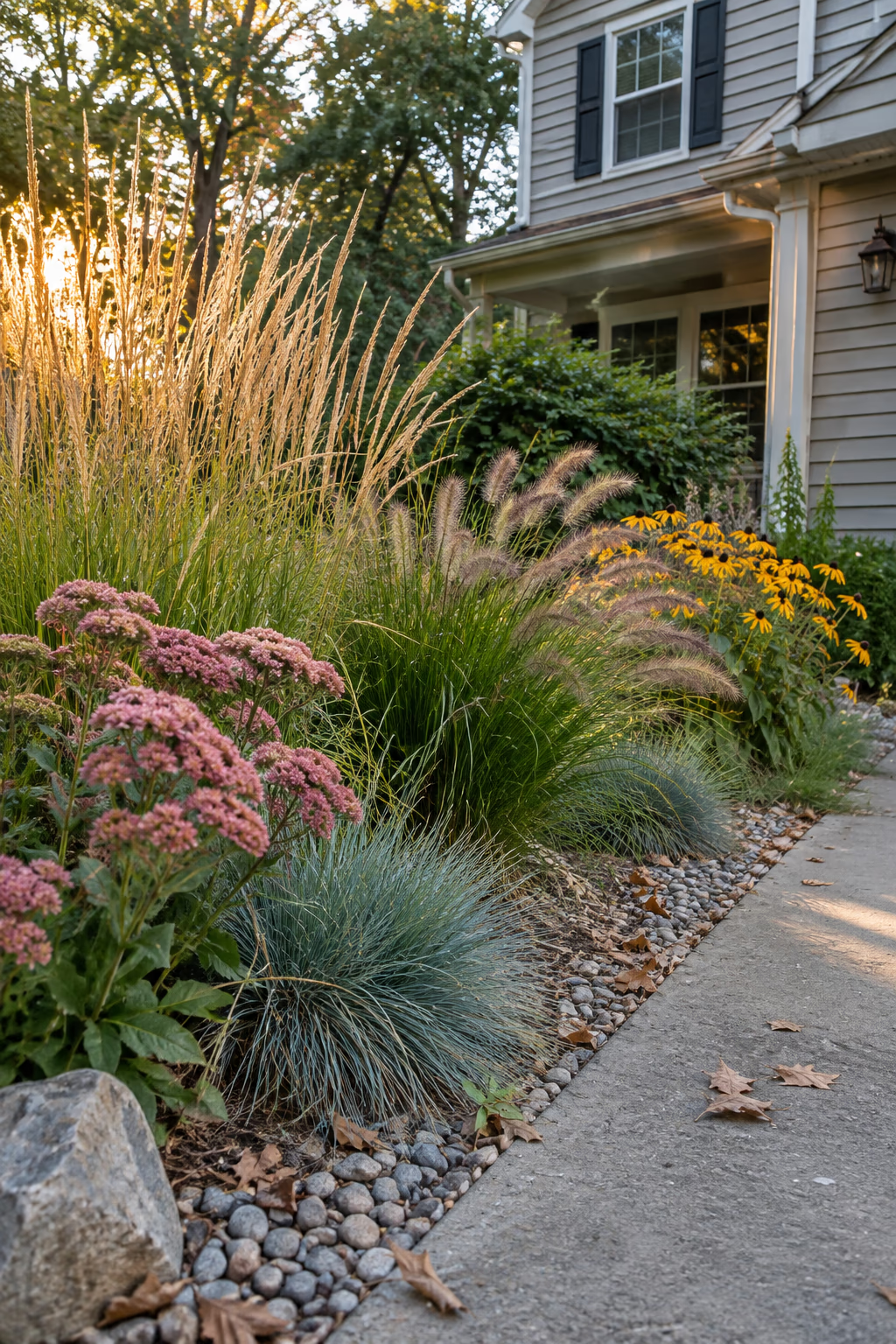
Movement and texture with very little watering
Ornamental grasses sway in the breeze, catch low sun, and stay attractive through fall and winter. Feather reed grass, little bluestem, fountain grass, and blue fescue are popular choices, and the mature size of each varies from about 1 to 5 feet.
Combine two or three grasses with sturdy perennials such as sedum, black-eyed Susan, and yarrow. Once established, this style needs far less water and fertilizer than turf.
Grasses look best when cut back to a few inches in late winter before new growth starts. Choose varieties that suit your zone, and avoid species that self-seed aggressively in your region.
5. Raise a Gentle Berm for Height and Depth
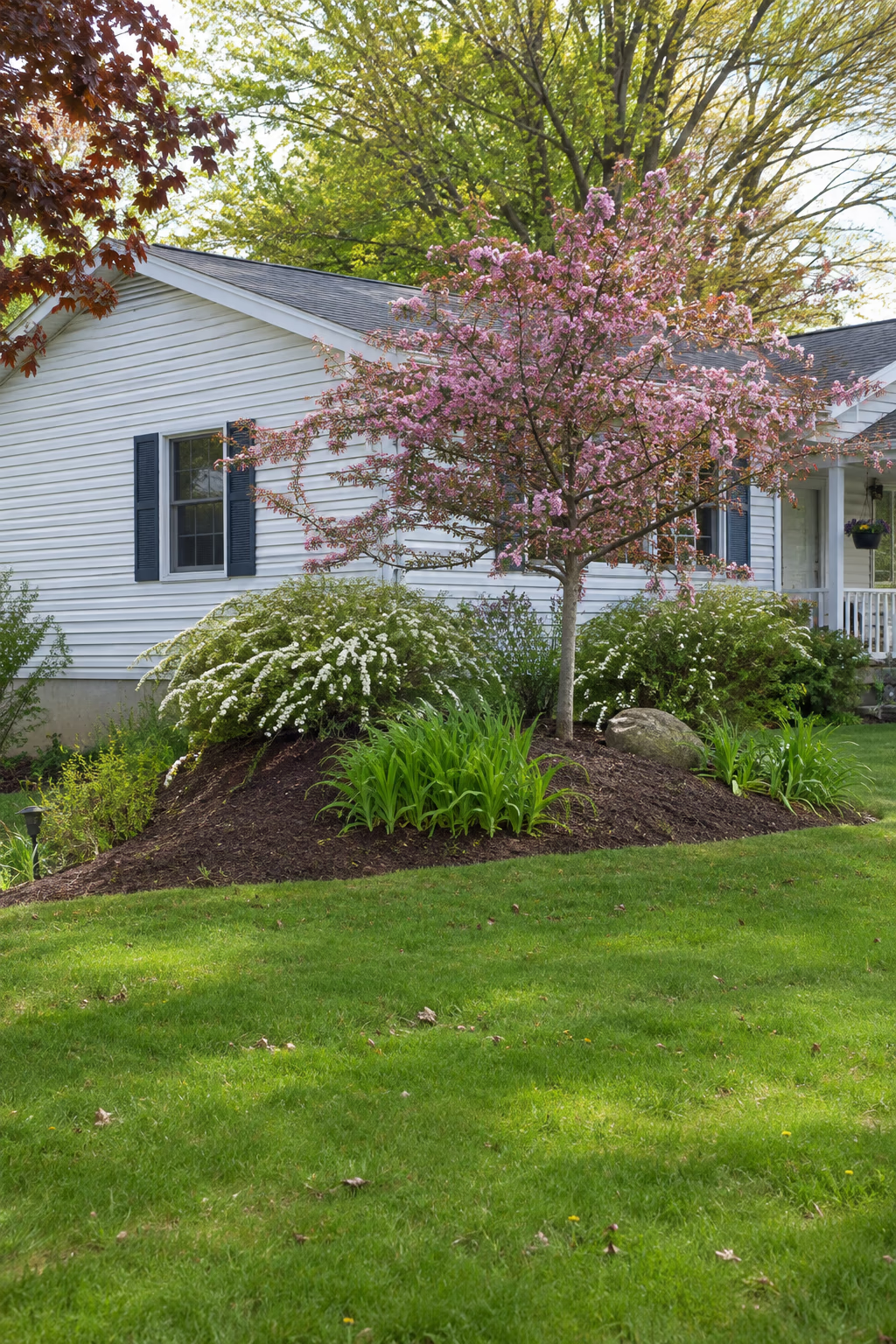
Add shape to a flat corner without a wall
A berm is a low, rounded mound of soil planted like a bed. Even 12 to 24 inches of height gives a flat corner dimension, helps frame the house, and can help move water away from low spots when it is shaped correctly.
Build it with a mix of topsoil and compost, shaped with long, gradual slopes rather than steep sides, and top it with a small tree or shrub group plus perennials and grasses. Mulch well, since the soil dries faster on a mound.
Keep the berm away from the house foundation, utility lines, and drainage paths, and make sure it doesn’t push runoff onto a neighbor’s property.
6. Anchor the Corner With Rounded Boxwoods
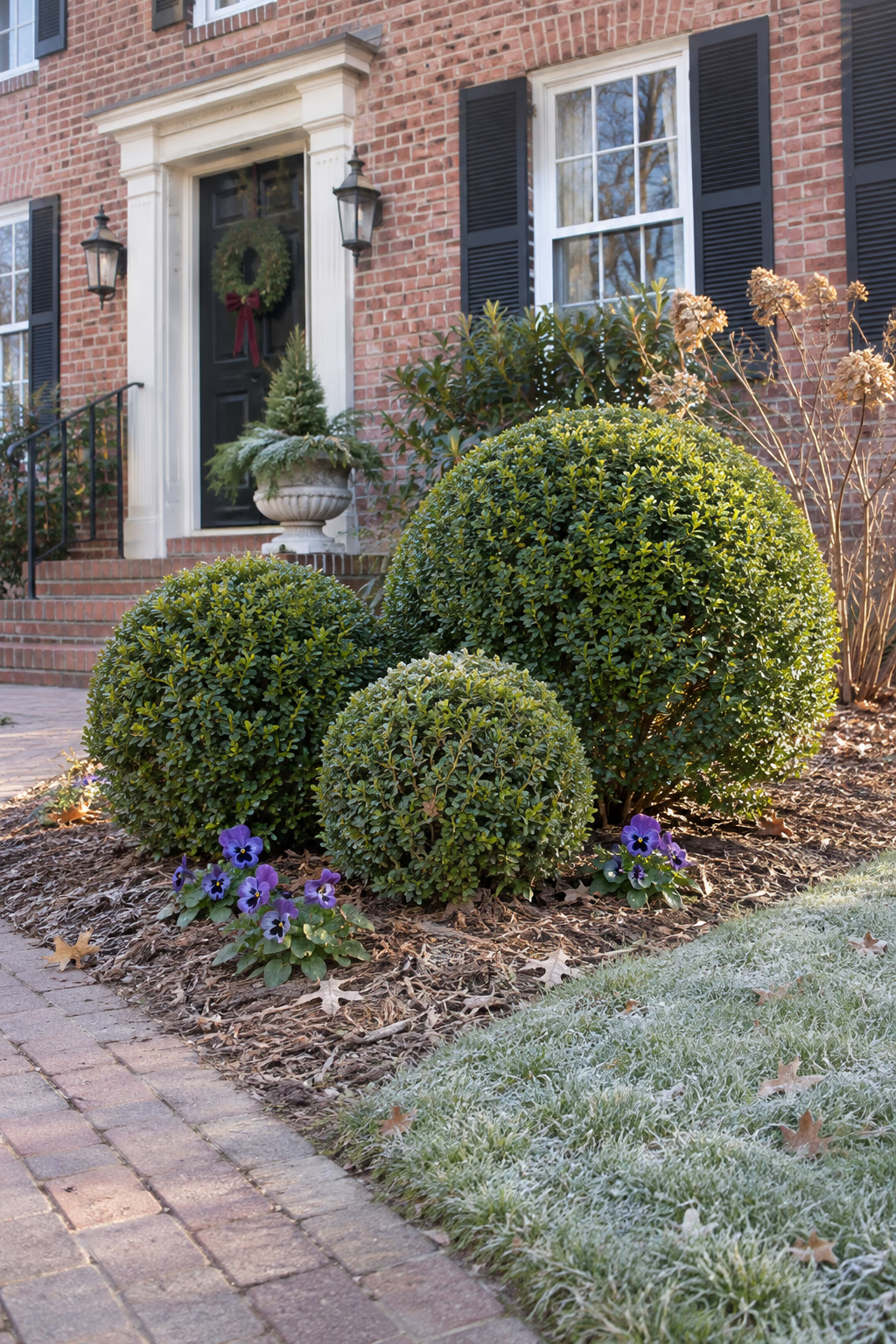
Year-round green that always looks tidy
A trio of clipped evergreen globes gives the corner structure even in winter, when other plants have gone dormant. Boxwood is the classic choice, but Japanese holly, dwarf yaupon, and compact spruce globes are good alternatives.
Space plants according to their mature width, usually 3 to 4 feet apart for a mid-size variety. Surround them with a light-colored mulch or fine gravel, then add a few seasonal flowers at their feet for color.
In regions with boxwood blight or boxwood leafminer problems, ask a local nursery which resistant varieties or substitutes perform best.
7. Set Boulders in River Rock With Drought-Tolerant Plants
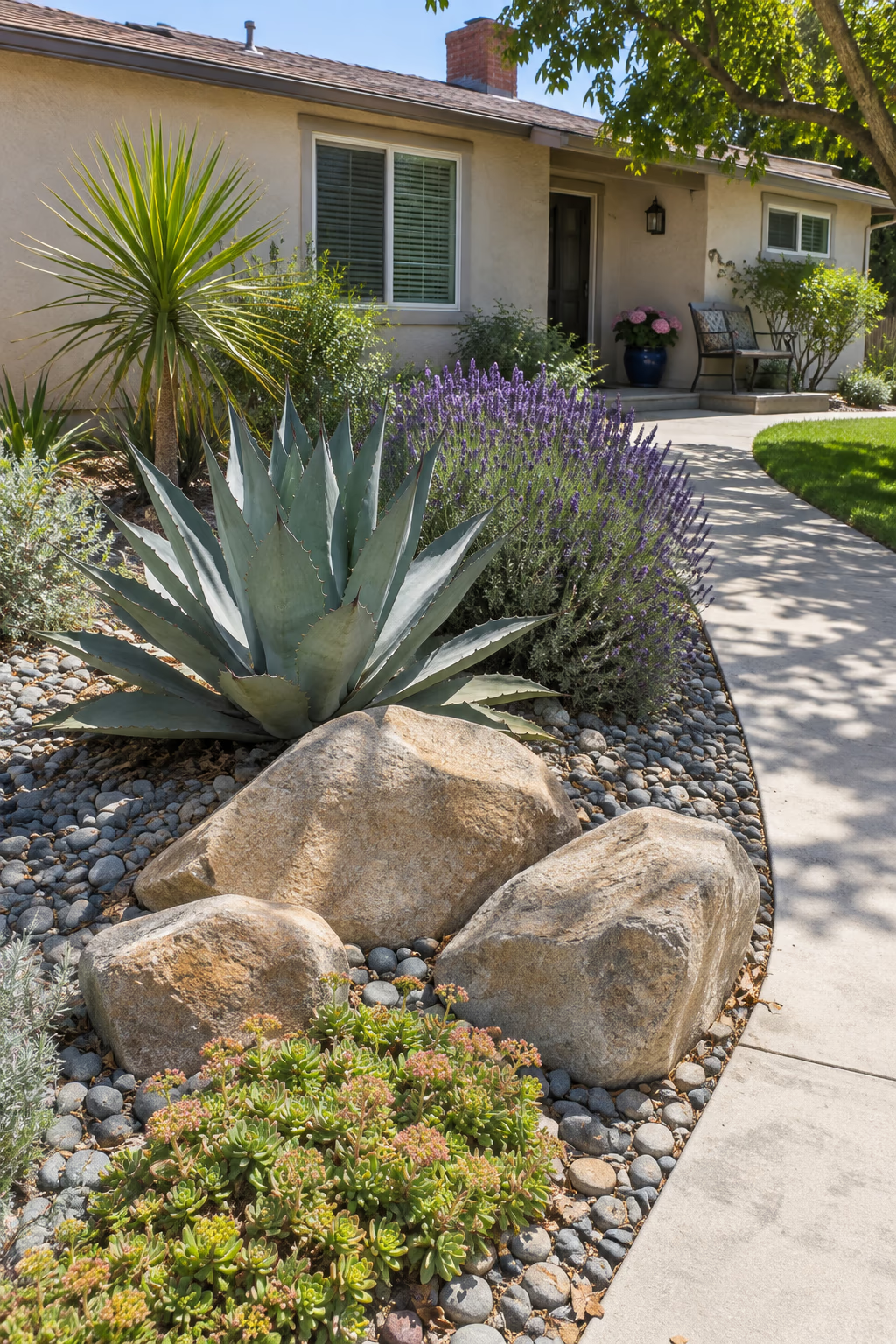
A dry, sculptural look that handles heat
A grouping of three boulders of different sizes, partly buried, looks natural and needs no care. Surround them with 2 to 3 inches of river rock or crushed stone over landscape fabric, and plant clusters of lavender, agave, yucca, sedum, or hardy ice plant depending on your climate.
Rock mulch works best in dry or fast-draining areas and can run hot in full summer sun. It also makes weed control easier than bark, since you can pull weeds that sprout in the gravel.
Boulders are heavier than they look, so order delivery and placement from a stone yard rather than moving them yourself.
8. Light the Corner With Low-Voltage Uplighting
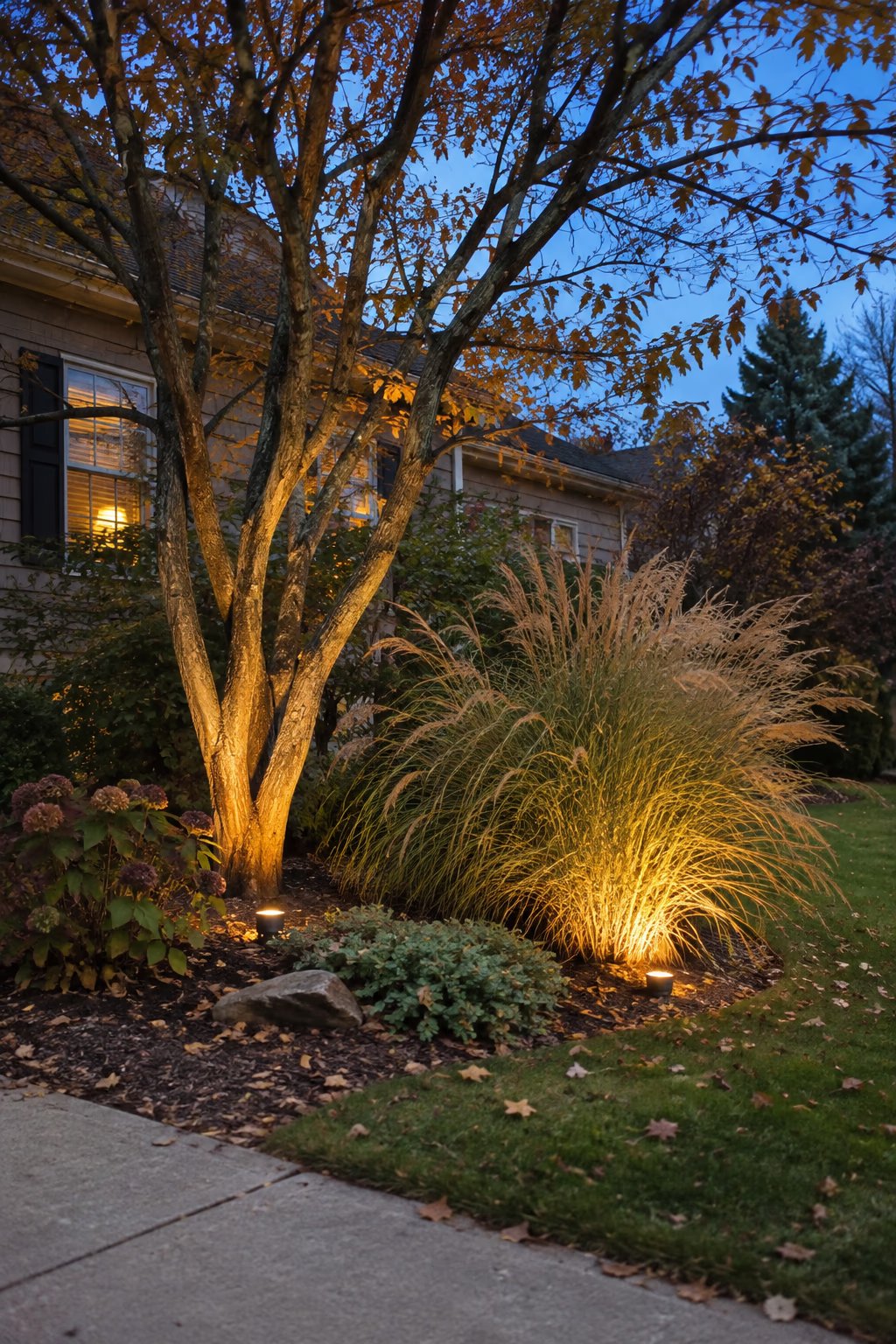
Make the corner glow after dark
Two or three small LED spotlights aimed up at a tree trunk, a boulder, or a tall grass clump turn the corner into a nighttime feature. Low-voltage systems run on a plug-in transformer and are safe and simple to install without trenching deeply.
Use warm white bulbs around 2700K for a natural look, and aim lights from the side so the fixtures stay hidden among plants. Solar lights are an option for sunny spots, though they are dimmer and less reliable.
Shield the bulbs from the street so you don’t create glare for drivers, and be considerate about neighbors’ windows.
9. Add a Small Japanese Maple as a Focal Point
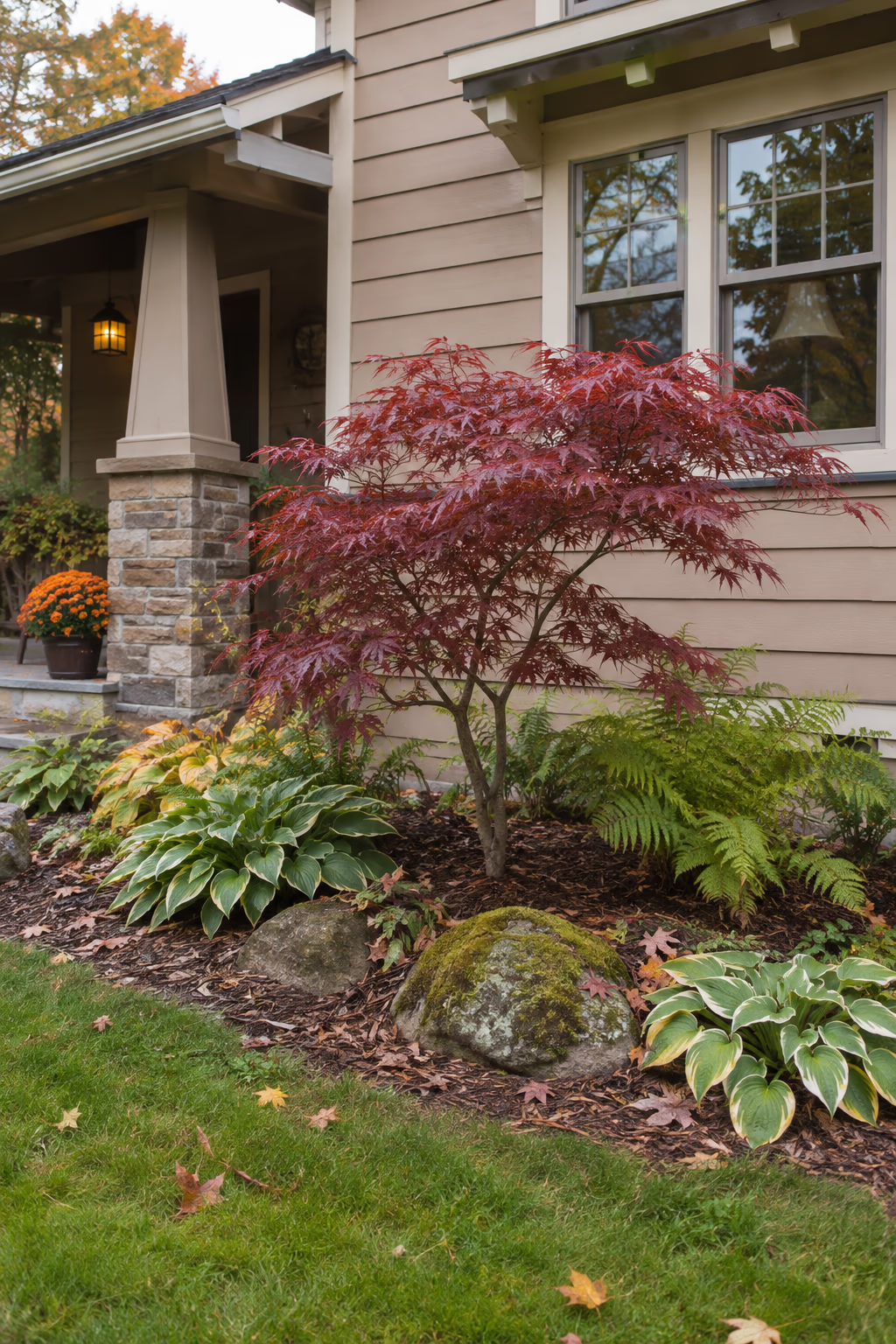
One elegant tree that carries every season
A compact Japanese maple, usually 6 to 15 feet tall at maturity, brings delicate leaves, graceful branching, and fall color to a corner without overwhelming the yard. Red and burgundy forms stand out against green shrubs, while weeping types add a softer shape.
Plant it in well-drained soil with morning sun and afternoon shade, especially in hot climates where the leaf edges can scorch. Underplant with ferns, hostas, or low sedges, and mulch the root zone.
In colder zones, pick a hardy cultivar. Also keep any tree trunk and canopy clear of the street sight-line triangle near an intersection.
10. Grow a Pollinator Garden With Native Wildflowers
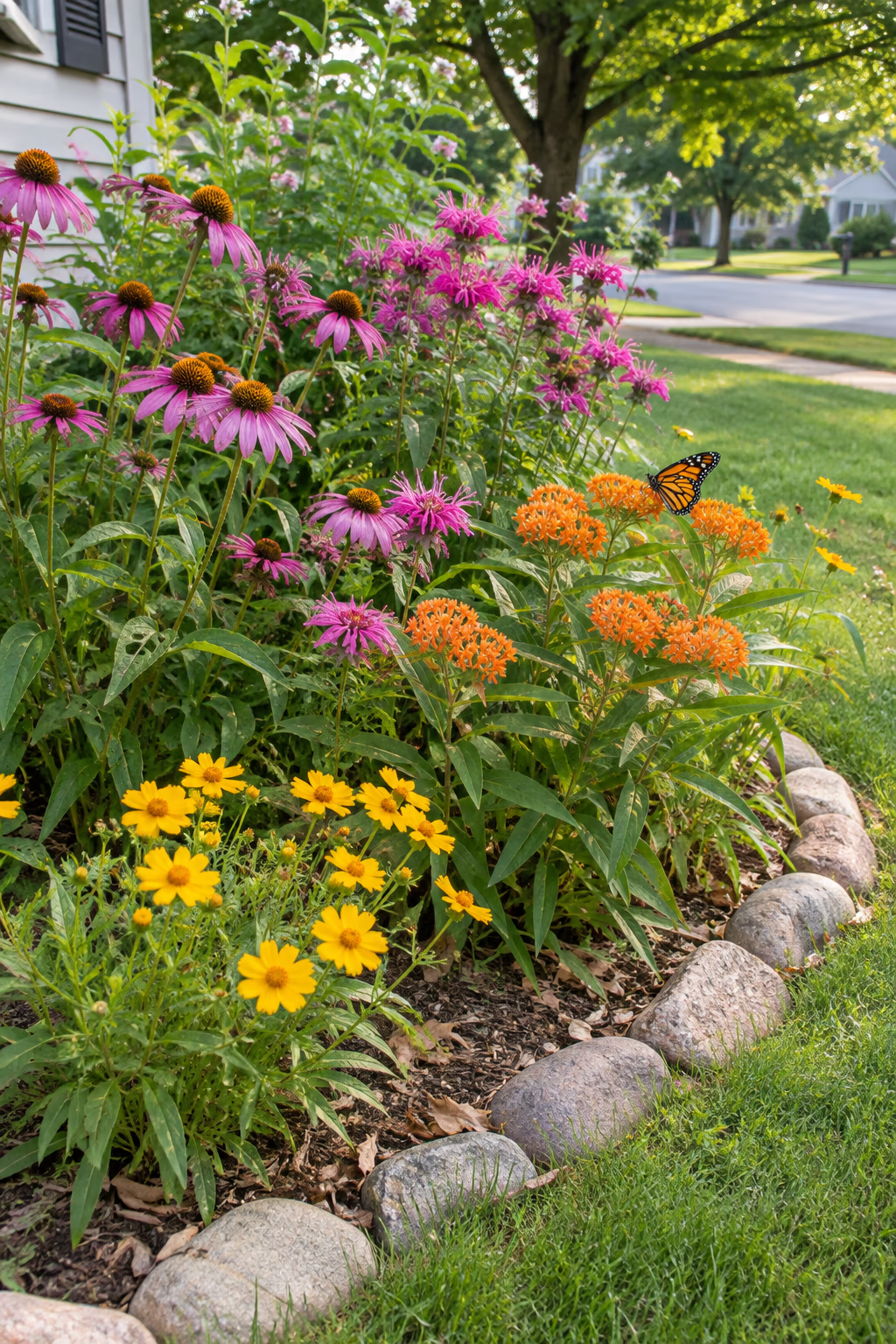
Color for you, food for bees and butterflies
Native perennials such as purple coneflower, bee balm, milkweed, asters, and goldenrod are tough, long-blooming, and valuable to local wildlife. A corner bed packed with a mix of them stays colorful from early summer through fall.
Look up plants native to your state or region, and buy from nurseries that sell untreated plants. Group the same species in drifts of three to seven so the bed looks intentional rather than messy, and add a tidy edge or a low border.
Native beds can look scruffy in winter, so leave some seed heads for birds and then cut back in early spring. Some HOAs prefer a neat appearance, so a clear edge helps.
11. Lay Pavers in Gravel to Create a Shortcut Path
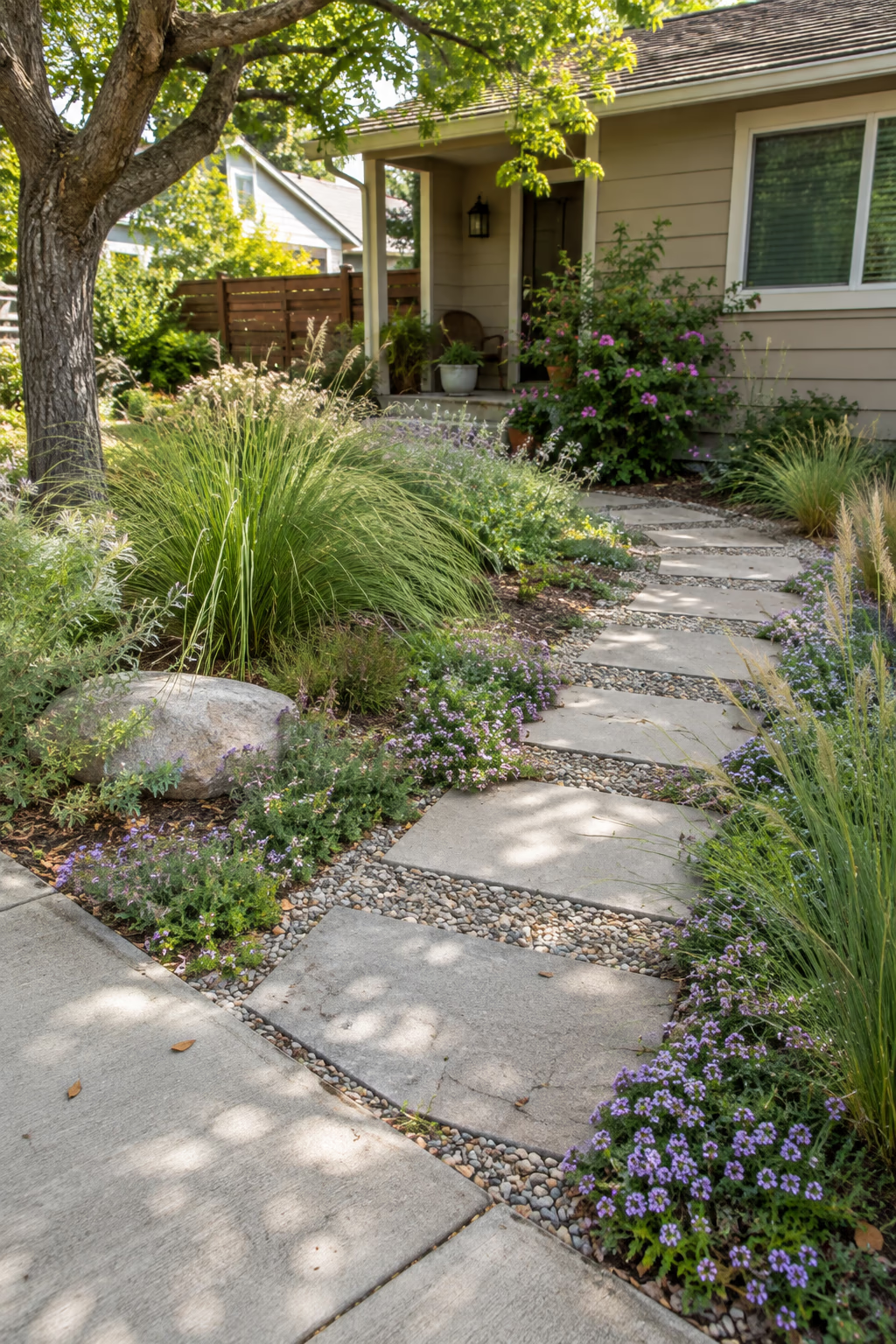
Give foot traffic a place to go
If people cut across your corner anyway, plan for it. A strip of concrete pavers or flat stones set into compacted gravel gives walkers a clear route, and plants can grow on either side.
Excavate about 4 inches, add a compacted gravel base, and set pavers with 2 to 3 inches of space between them for low creeping thyme or gravel. Make the path at least 2 to 3 feet wide so it feels comfortable.
The path should connect naturally to the sidewalk and look inviting rather than blocked. It also protects the lawn and plants from a worn dirt trail.
12. Plant an Evergreen Privacy Hedge Behind the Sight Line
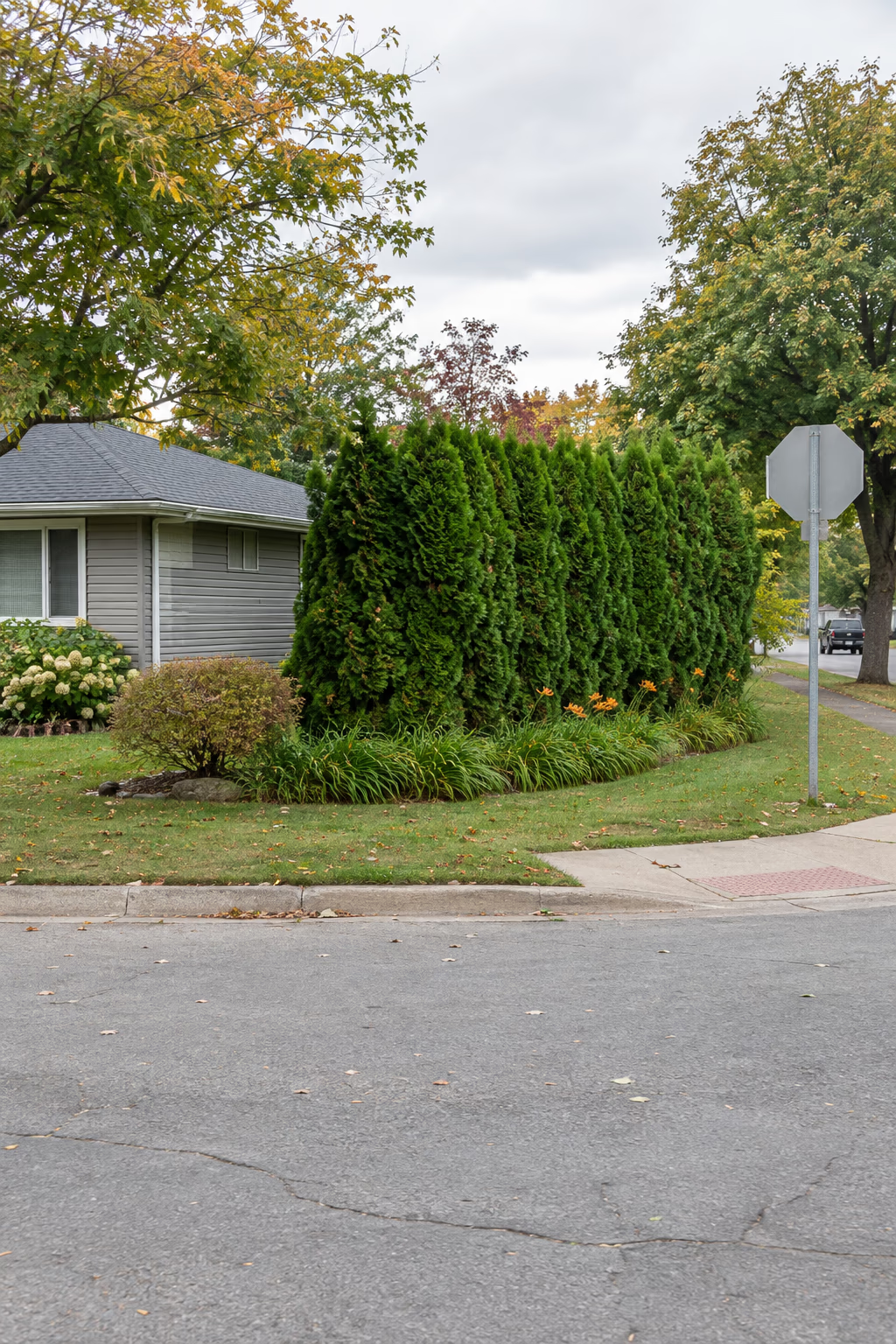
Block noise and reclaim your yard
Corner properties are open on two sides, so a row of evergreens along the side yard can cut down on visual clutter and some road noise. Arborvitae, holly, juniper, and cherry laurel are common choices, depending on your hardiness zone.
Space plants according to the tag, often 3 to 5 feet apart, and stagger two rows if you want a denser screen. Water deeply during the first two summers to help roots establish.
Many towns restrict hedge height near the intersection, often to about 30 to 36 inches within a triangle at the corner. Set the hedge back behind that zone and check local rules.
13. Circle the Mailbox With Cottage Perennials
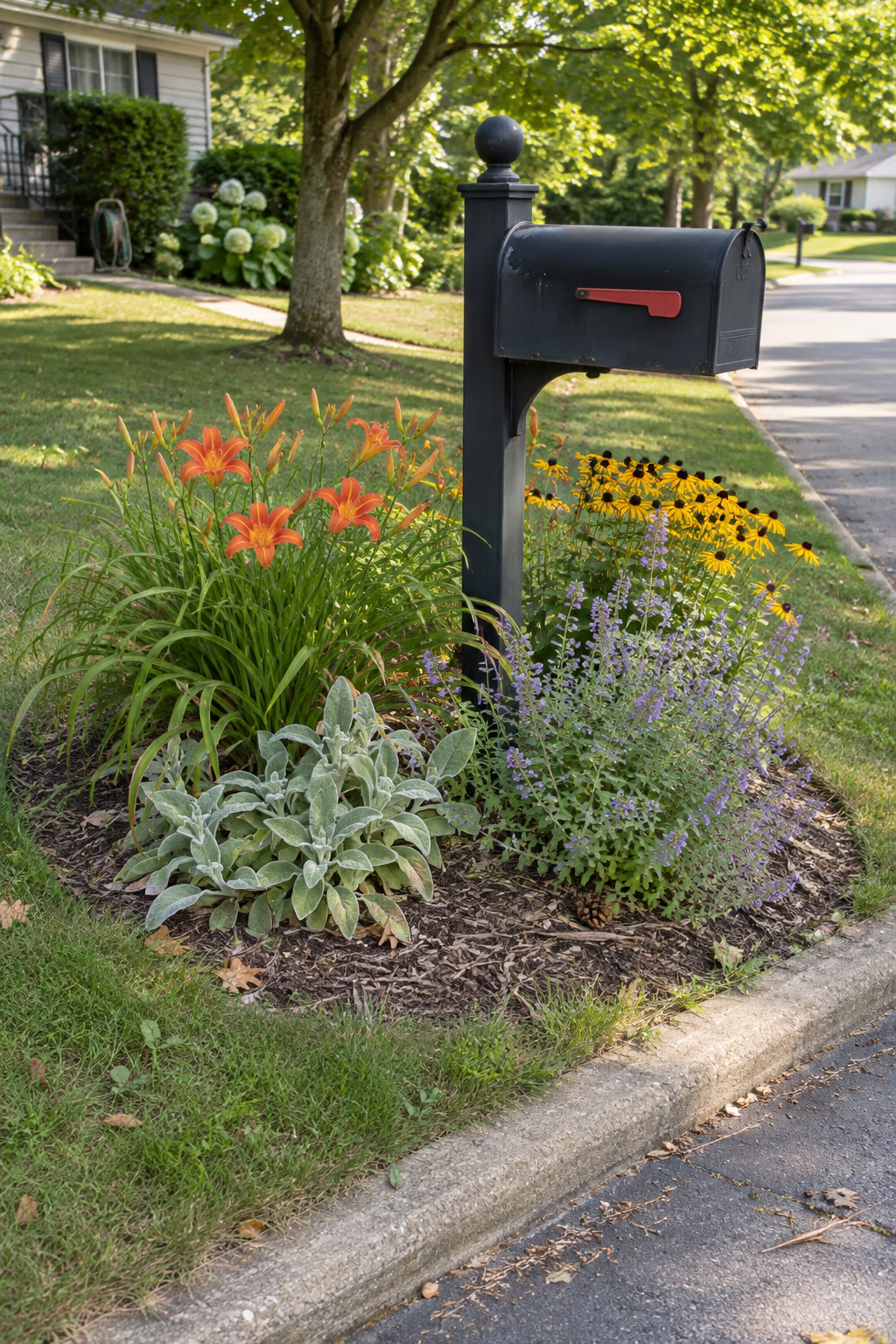
A friendly welcome at the curb
A mailbox bed adds a dash of color right where visitors and carriers see it. Daylilies, black-eyed Susan, salvia, lamb’s ear, and catmint all tolerate sun and street heat, and a taller plant like a small shrub can stand behind them.
Keep the area directly around the post clear enough for mail delivery, and keep plants short enough that they don’t hide the box or brush against vehicles. A circle or kidney-shaped bed about 3 to 4 feet wide is plenty.
Roadside soil may collect road salt or compaction, so choose tough plants and improve the soil with compost.
14. Place a Bubbling Fountain as a Focal Point
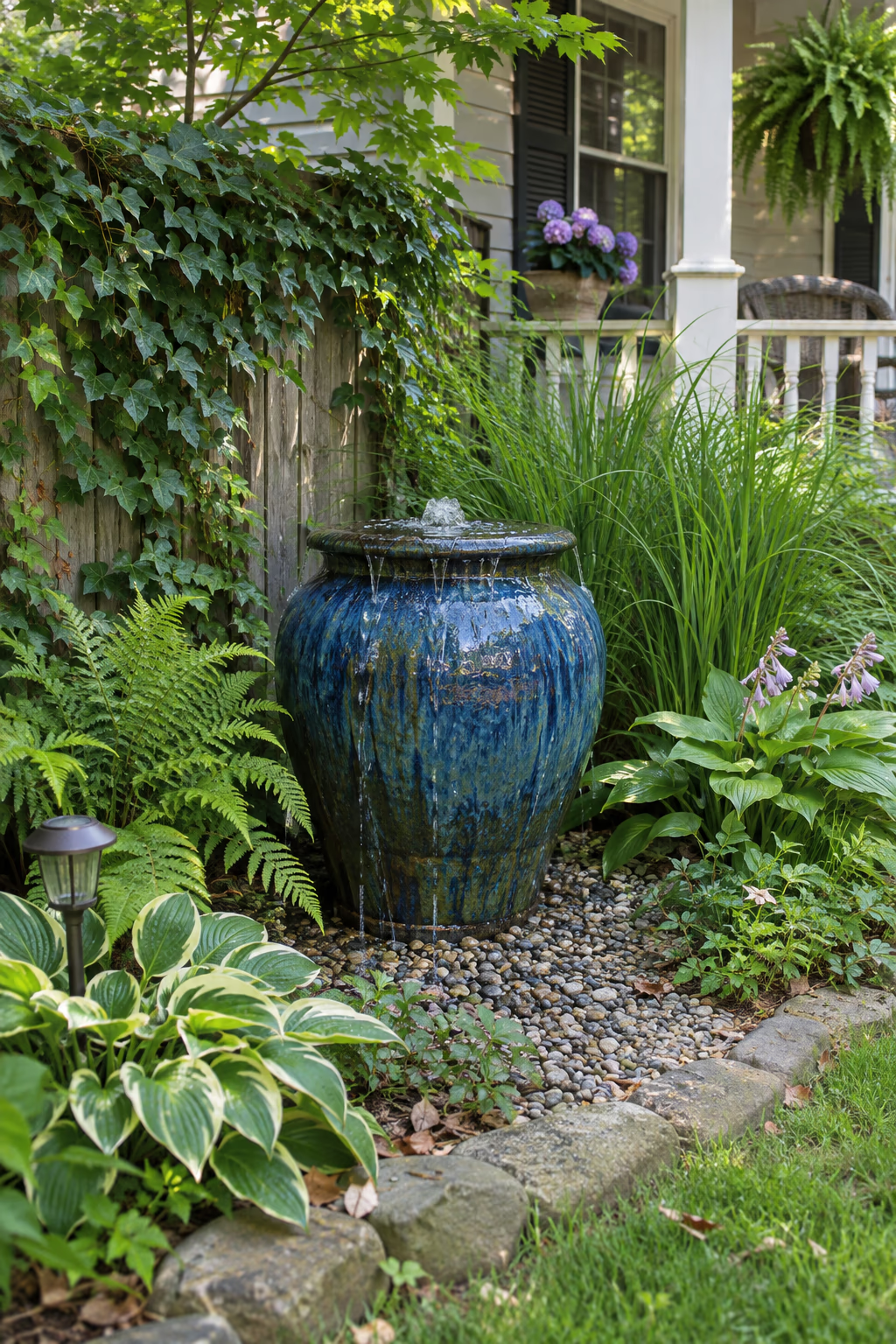
The gentle sound helps cover traffic noise
A self-contained fountain, such as a ceramic urn or a stacked stone basin that recirculates water, needs no pond digging. Set it on a level, compacted base surrounded by plants such as ferns, hostas, and ornamental grasses.
Choose a size in proportion to the space, often 2 to 4 feet tall, so it reads as a feature rather than clutter. A pump needs an outdoor-rated, GFCI-protected outlet, so plan the electric supply before you buy.
Keep water topped up in summer and drain or cover the fountain before freezing weather to prevent cracks.
15. Replace Corner Lawn With Low Groundcovers
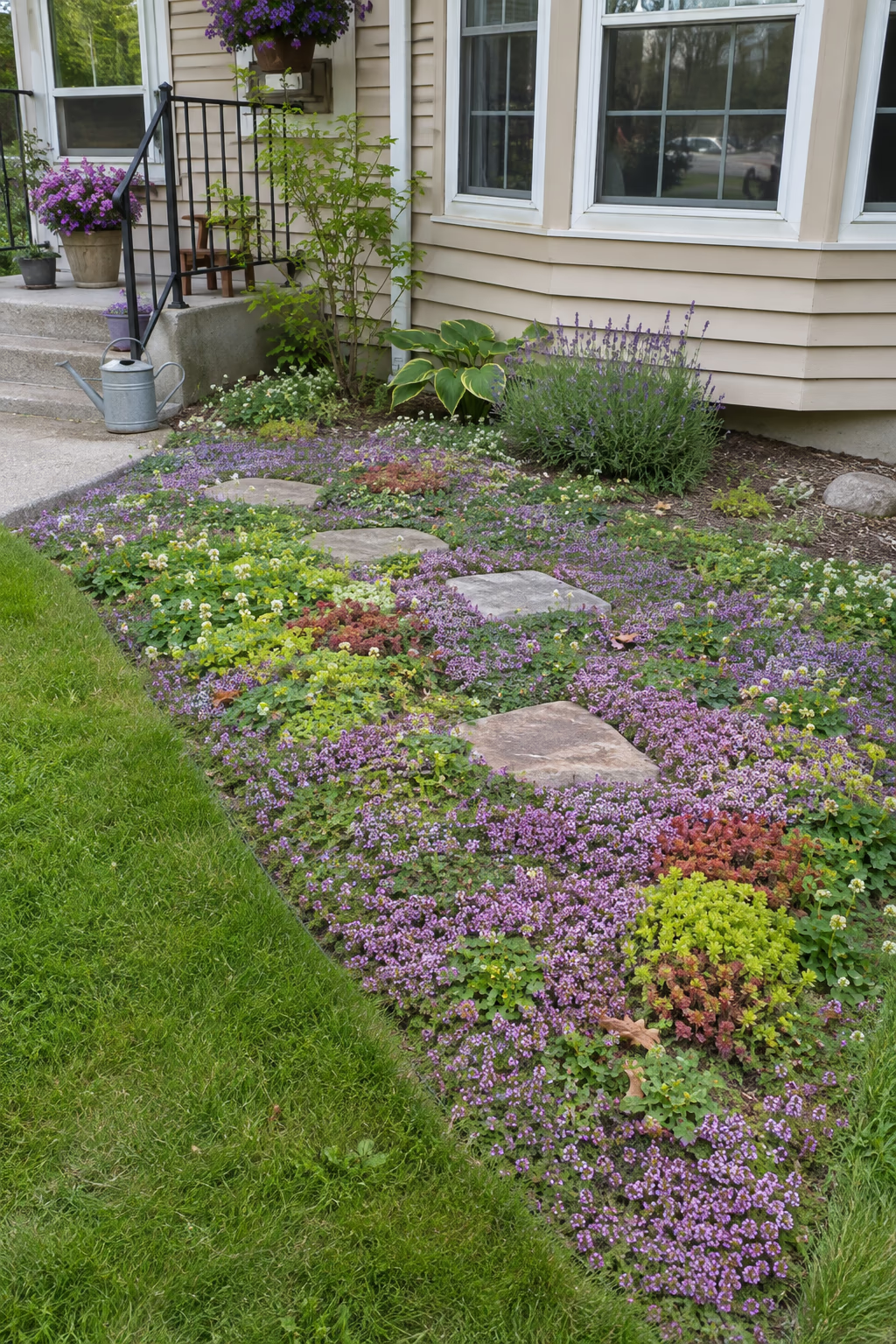
Less mowing on a tricky corner
Grass on a pointed corner is awkward to mow and often gets worn down or dried out. Replace it with a low, tough groundcover such as creeping thyme, sedum, creeping juniper, or clover, depending on sun and foot traffic.
Remove the turf, loosen the soil, add compost, and plant small plugs spaced 6 to 12 inches apart. Mulch between plants until they fill in, which can take a full season or two.
Most groundcovers tolerate only light foot traffic, so pair them with a path or stepping stones if people walk through.
16. Train Climbing Roses on a Garden Obelisk
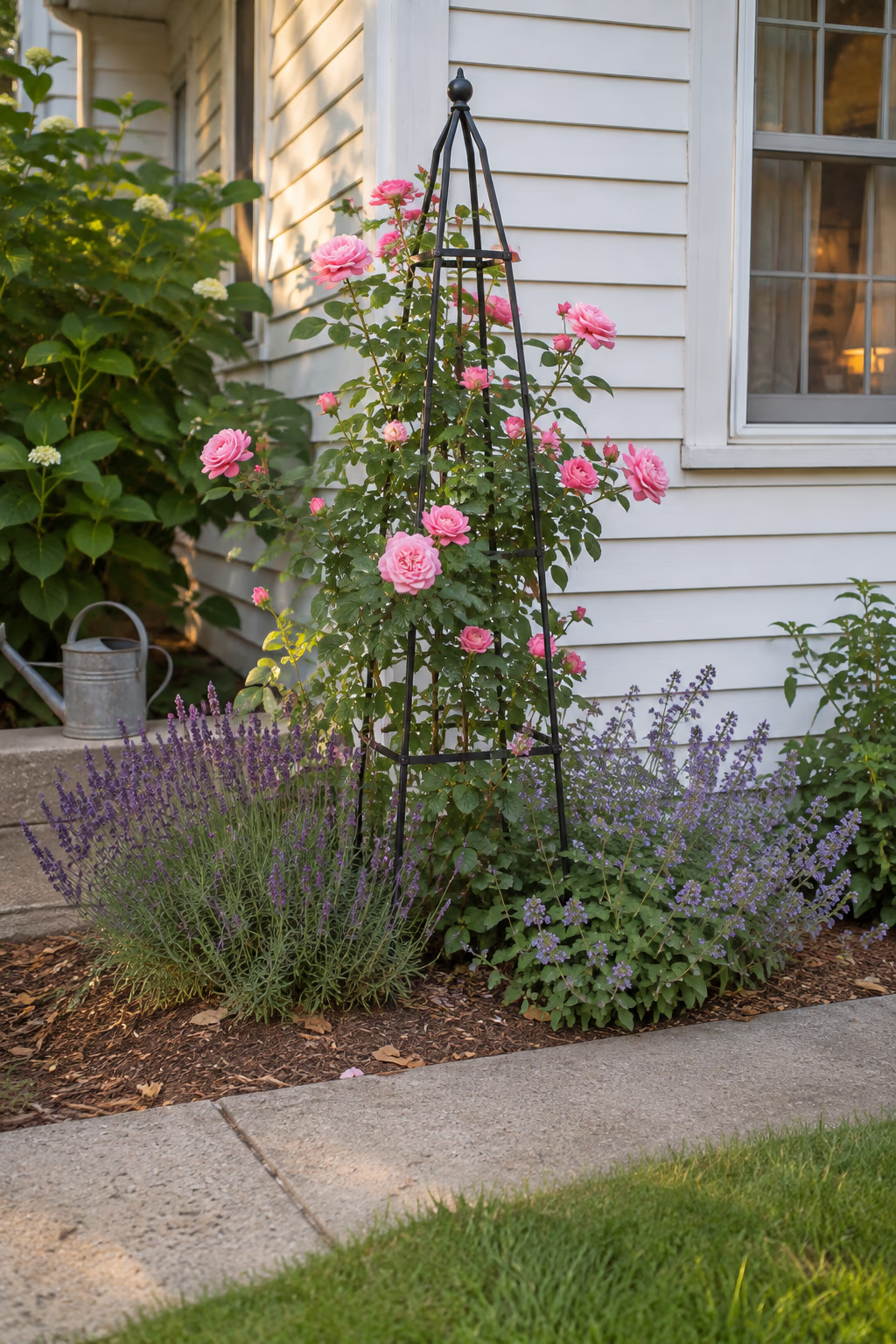
Vertical color in a small space
A 5- to 6-foot metal or cedar obelisk lets you grow a climbing rose or clematis upward instead of outward. It adds height to the corner without needing much ground space.
Choose a repeat-blooming, disease-resistant rose suited to your zone, and tie canes loosely to the frame as they grow. Plant in full sun with good air circulation and water at the base to limit leaf disease.
Roses can be thorny near sidewalks, so place the obelisk well back from the walkway and outside the corner sight line.
17. Lay a Dry Creek Bed Along the Corner
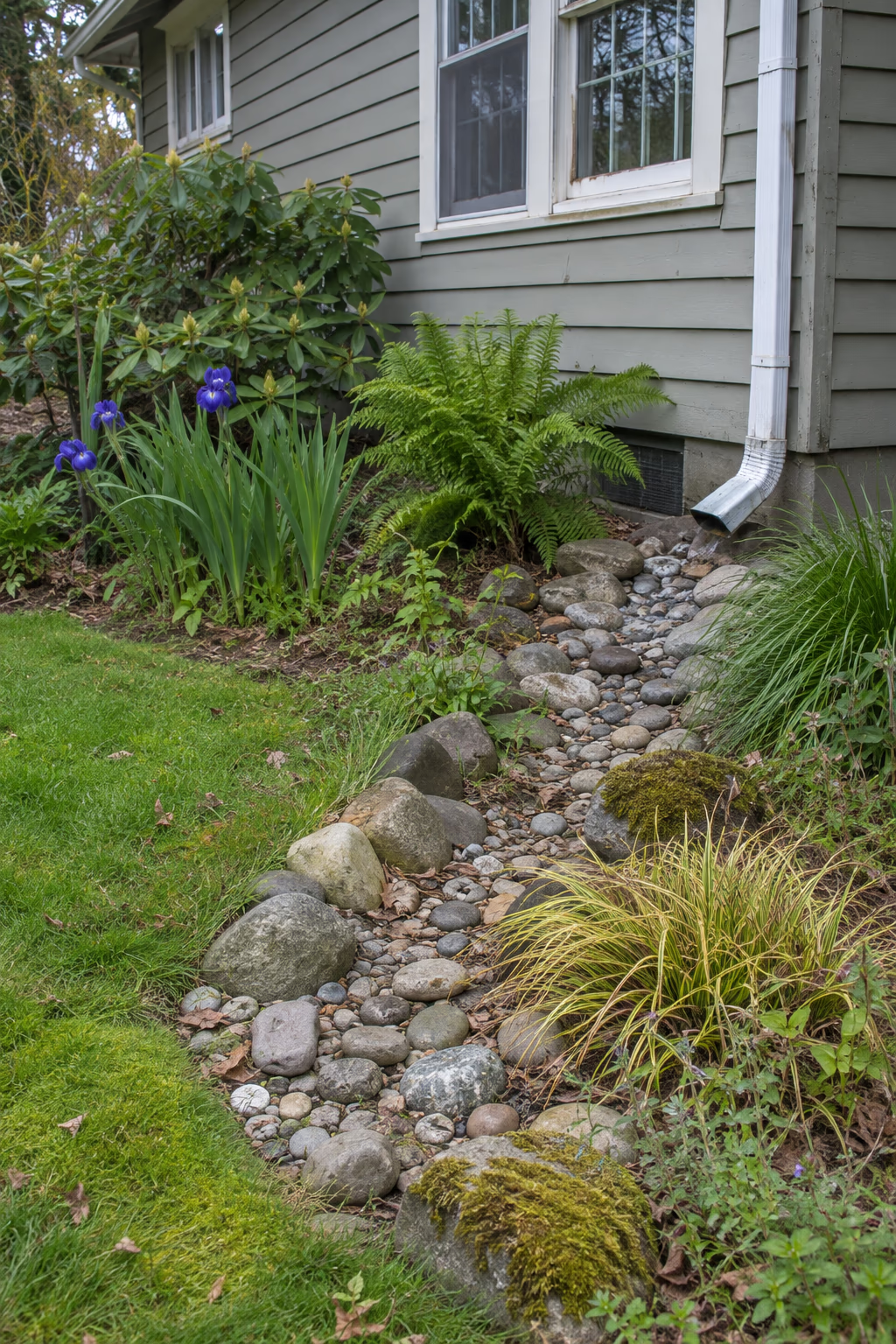
Handle runoff and add a natural feature
A dry creek bed is a shallow, winding channel lined with rounded stones that look like a streambed. It can guide rainwater from a downspout or low spot to a safer place, and it looks pretty even when it’s dry.
Dig a gently sloping channel about 12 to 18 inches wide and 4 to 6 inches deep, line it with landscape fabric, and fill it with a mix of river stones from fist-sized to melon-sized. Plant ferns, grasses, and iris along the banks.
Direct water away from foundations and neighbors, and call 811 before digging in the United States.
18. Define the Bed With Crisp Steel or Stone Edging
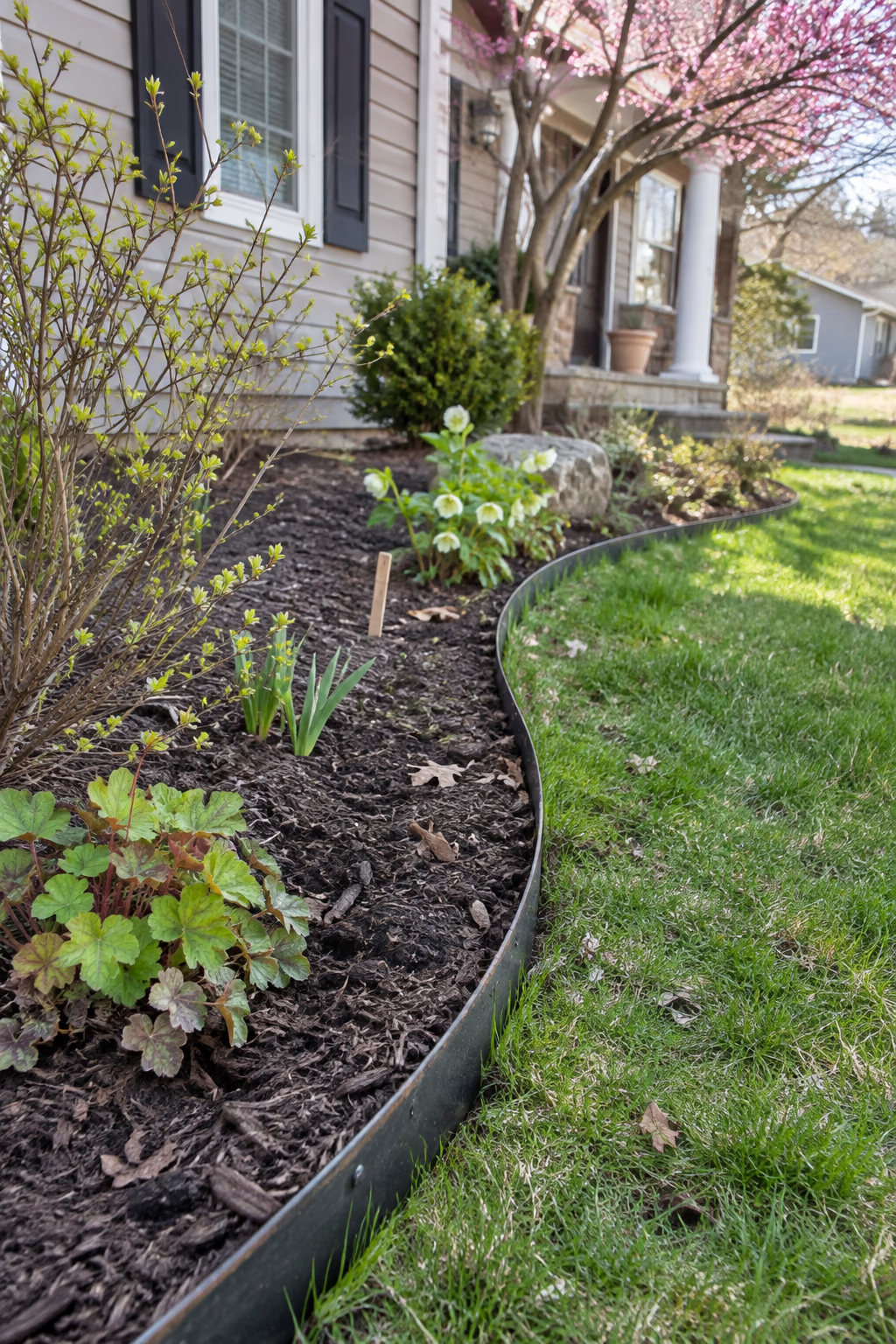
A clean line is the cheapest upgrade
Nothing makes a corner look more finished than a crisp separation between lawn and bed. Steel edging is nearly invisible and holds curves well, while stone or brick borders add a deliberate, traditional look.
Install edging so about 1 to 2 inches show above ground, and backfill the soil firmly. Curves look best when they are wide and gentle rather than wiggly.
Plastic edging is cheap but can heave or fade, so choose steel, stone, or concrete for a long-lasting border.
19. Tuck a Small Bench Into the Planting
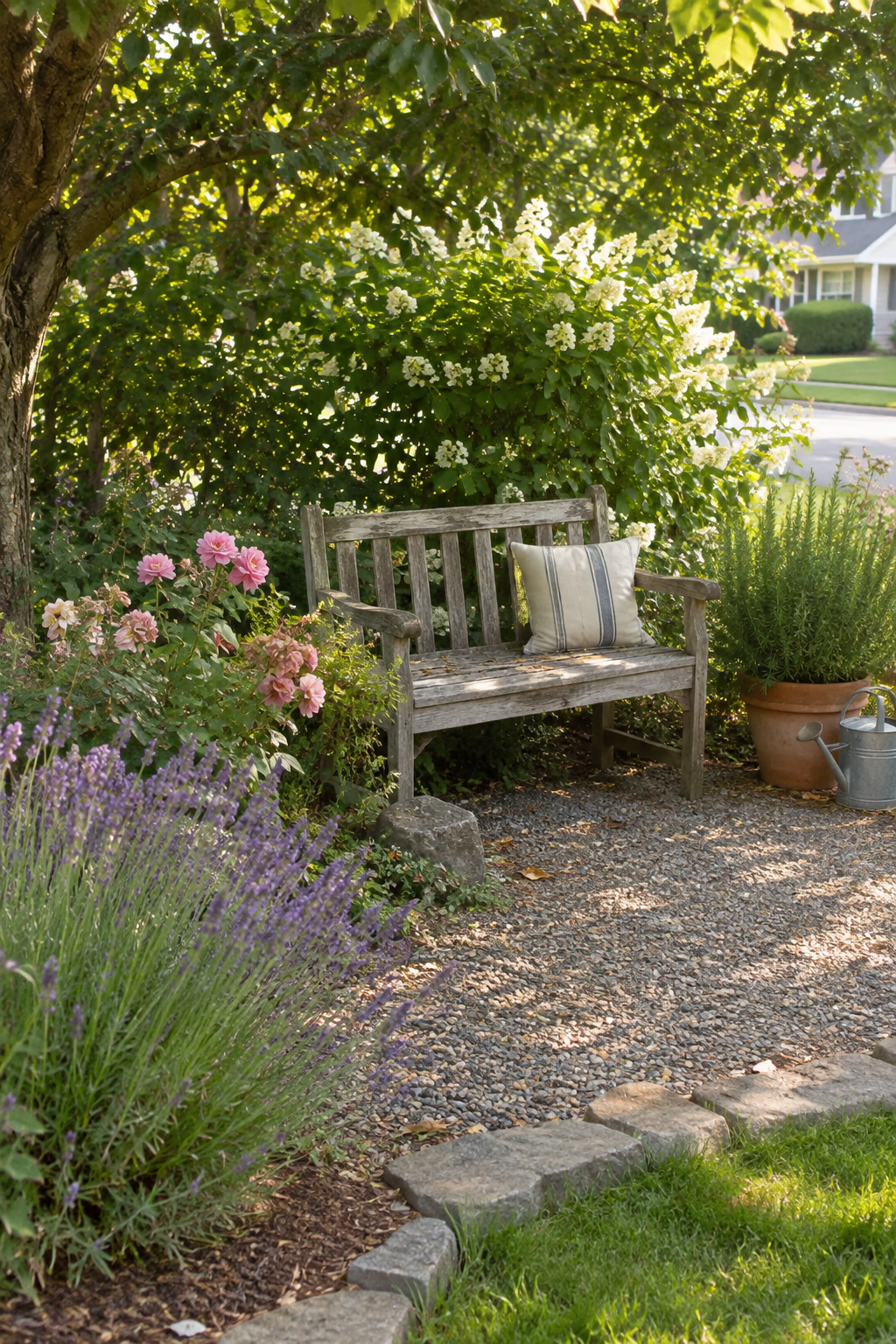
A pause point that invites the neighbors in
A small wooden or metal bench set at the back of a corner bed makes the garden feel like a destination. Place it on a gravel or paver pad, and surround it with fragrant plants like lavender, roses, or herbs.
Choose rot-resistant wood such as cedar or teak, or powder-coated metal, and keep the seat low-profile so it doesn’t block views of the street. A bench 3 to 4 feet wide is enough.
Think about privacy too: a bench works best where a shrub or small screen softens traffic views.
20. Grow Herbs and Edibles in a Decorative Bed
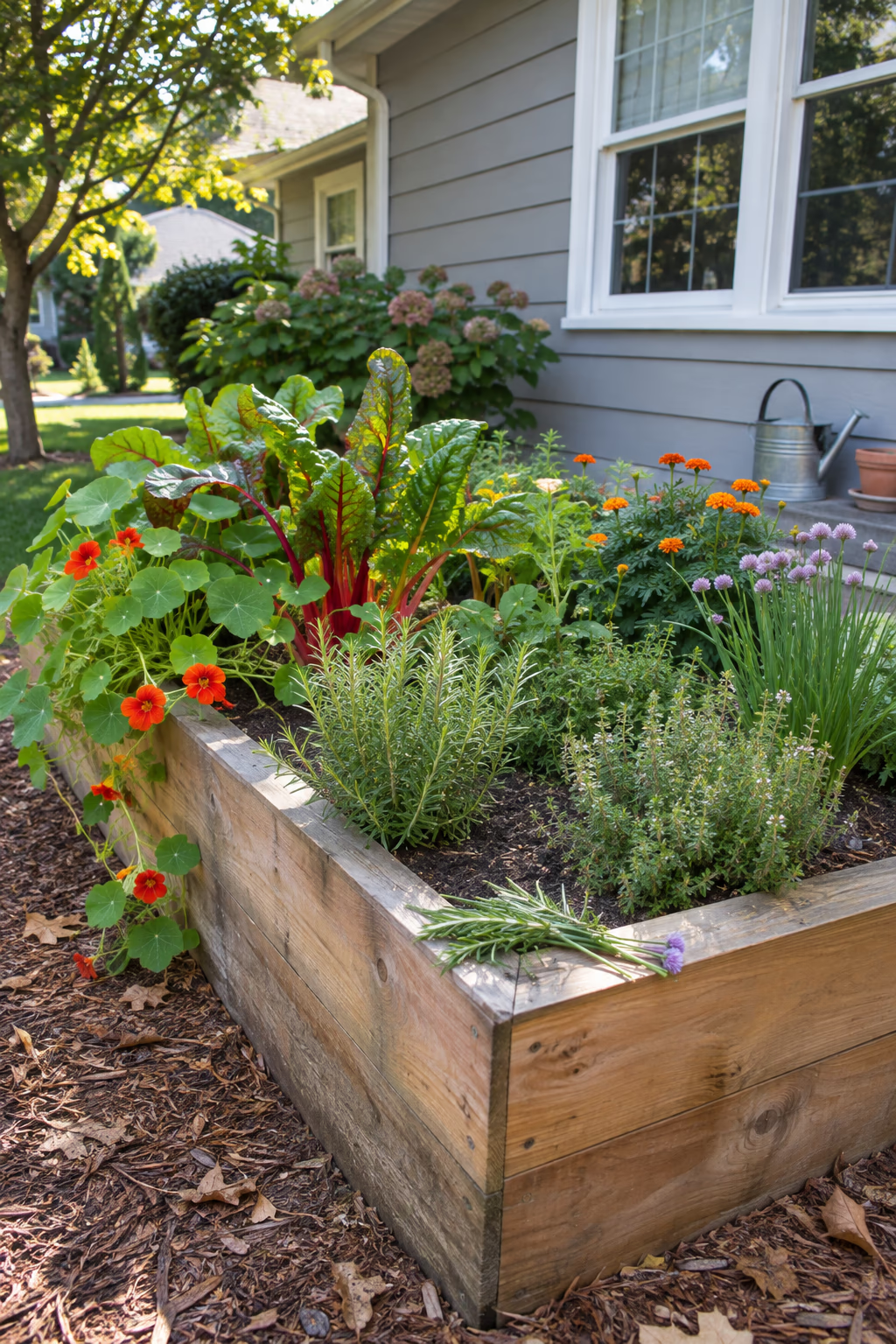
Pretty plants you can also eat
Many herbs and vegetables look great mixed with flowers. Try rosemary, thyme, chives, sage, and oregano, plus blueberry shrubs, rainbow chard, or compact tomatoes, in a sunny corner that gets at least 6 hours of light.
A small raised bed of 4 by 6 feet, framed in cedar or stone, keeps soil rich and the look tidy. Mix in marigolds and nasturtiums for color.
Avoid planting edibles right beside a busy road, where exhaust and dust can settle on leaves, and check HOA rules about front yard vegetable gardens.
21. Group Large Containers for Season-Long Color
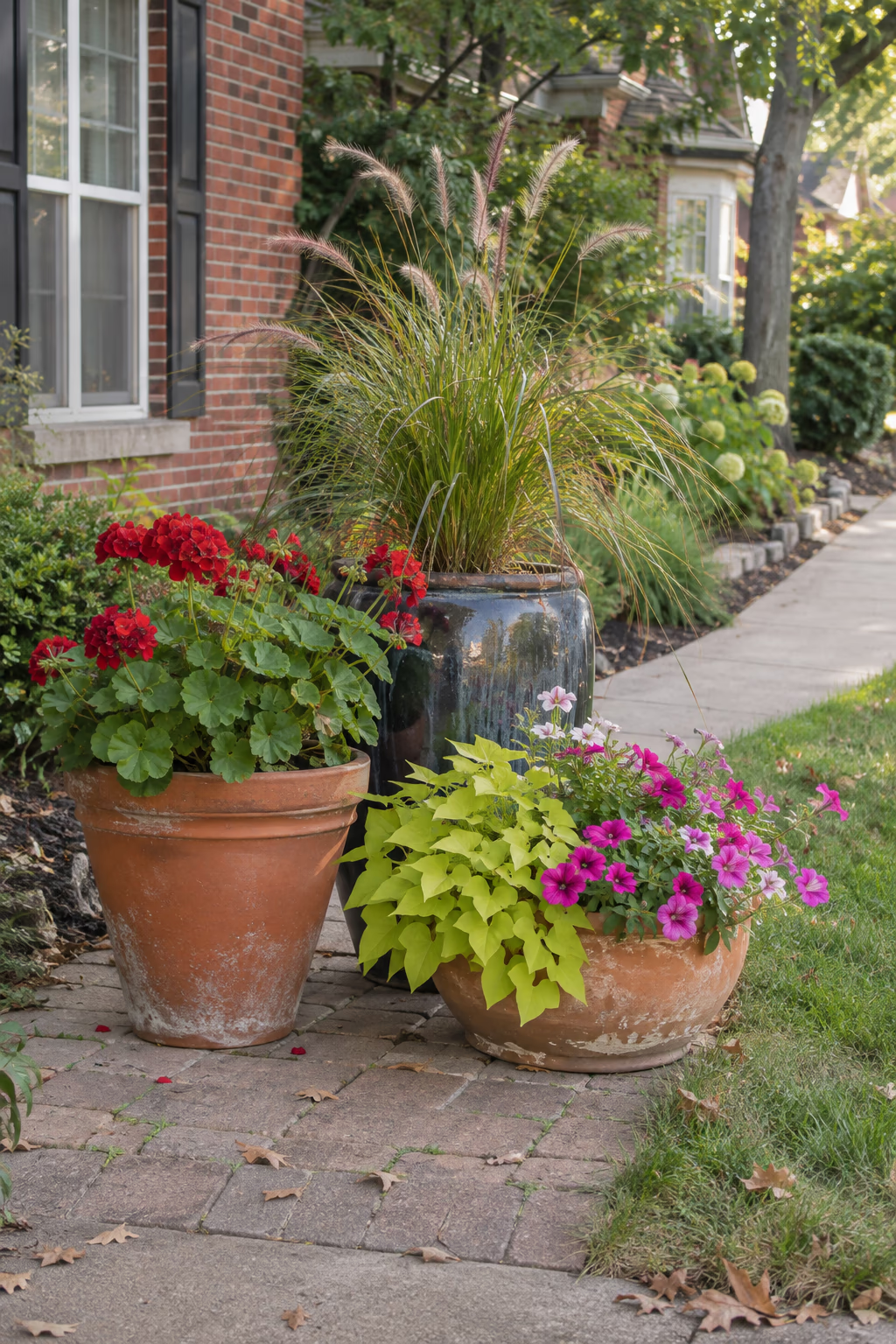
Flexible, renter-friendly and easy to change
If digging isn’t possible, a cluster of three large pots on a gravel or paver pad gives the corner a lush look. Use pots at least 16 to 24 inches wide, since small pots dry out quickly.
Follow a simple formula: a tall plant such as a grass or dwarf evergreen, a mounding flower like geranium or petunia, and a trailing plant like sweet potato vine. Swap in mums and ornamental kale for fall.
Use potting mix rather than garden soil, and water often in summer. Heavy pots stay put better in windy corners.
22. Plant a Deer-Resistant Border
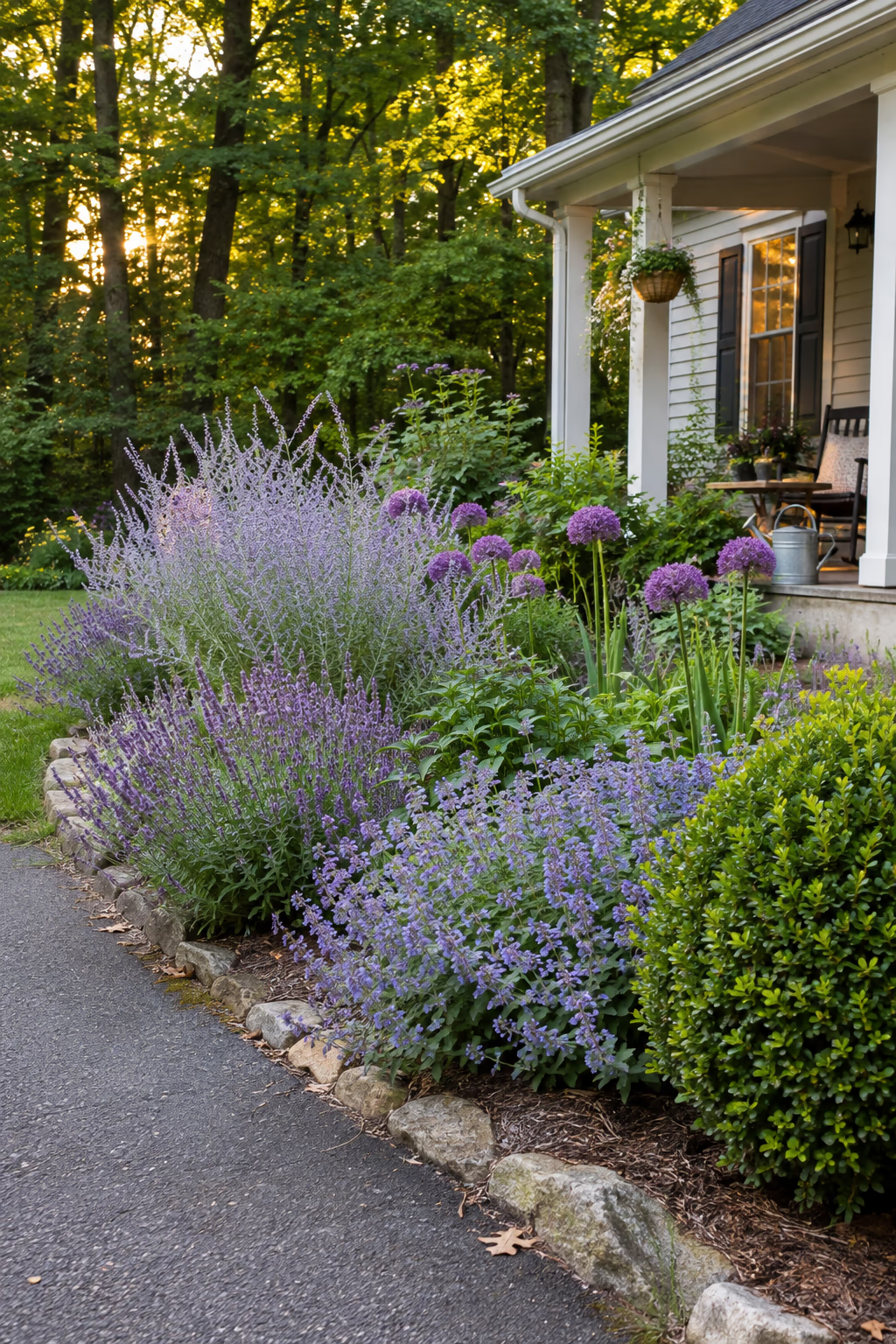
Beautiful plants that browsers usually skip
If deer munch on your plants, build the bed from varieties they tend to avoid: lavender, Russian sage, catmint, ornamental onion, boxwood, and many ornamental grasses all have scents or textures deer dislike.
Plant in bold drifts, with the most appealing plants tucked closer to the house. No plant is completely deer-proof, especially in hard winters when food is scarce, so expect some trial and error.
Ask a local nursery which plants deer ignore in your area, because browsing habits vary by region.
23. Shade a Tree Base With Hostas and Ferns
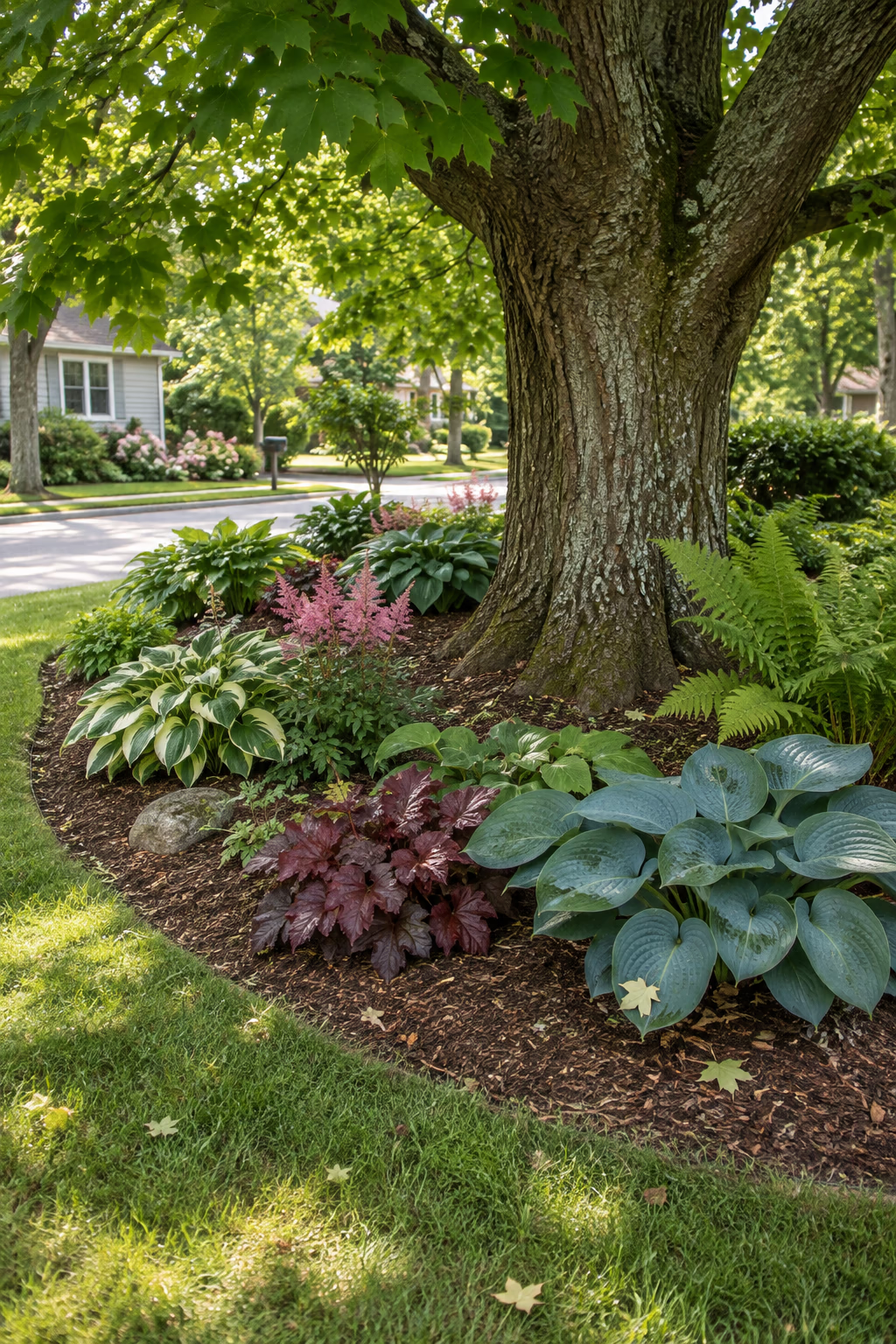
Turn a dull, grassless patch into a lush green nook
Grass struggles beneath a mature tree, so replace it with shade-loving plants. Hostas, ferns, astilbe, heuchera, and brunnera thrive in dappled shade and add texture and color.
Build the bed outward in a wide circle or gentle curve, keeping soil level near the trunk and adding no more than 2 to 3 inches of mulch. Don’t pile soil or mulch against the trunk, which can cause rot.
Dig carefully around the roots and avoid cutting large ones. Hostas attract slugs and deer in some regions, so choose ferns if those are a problem.
How to Plan Your Front Yard Corner
A little planning helps a corner planting look good and stay safe. These steps cover most yards.
- Check the sight lines. On a corner lot, keep plants, fences, and walls low near the intersection, often under about 30 to 36 inches, and confirm local rules.
- Know your sun and zone. Watch the corner for a full day and check your USDA hardiness zone before buying plants.
- Test the soil and drainage. Improve poor soil with compost, and make sure water drains away from the house.
- Repeat a few plants. Choose 4 to 6 plant types and repeat them for a unified look, rather than one of everything.
- Check HOA and permit rules. Fences, walls, and tall plants may require approval, and call 811 before any digging.
- Build in stages. Start with edging and structure, then add plants and lighting as your budget allows.
Frequently Asked Questions
How tall can plants be at a corner lot intersection?
Rules vary by city, but many towns limit plants and fences to roughly 30 to 36 inches inside a triangle at the intersection so drivers can see. Check your local code.
What is the best low-maintenance plant for a front yard corner?
Ornamental grasses, sedum, catmint, and compact evergreen shrubs are popular low-care options. The best choice depends on sun, soil, and climate.
How do I make a small corner look bigger?
Use a curved bed edge, layer plants from short to tall, and repeat a few plants. Light-colored flowers and foliage also make a small space feel more open.
How much does it cost to landscape a front yard corner?
A simple DIY bed with plants and mulch can cost a few hundred dollars. Stone walls, lighting, and fountains can raise the cost to several thousand, so build in stages.
When is the best time to plant?
Early fall and spring are usually best for shrubs, trees, and perennials because the weather is mild. Avoid planting during extreme heat or frozen ground.
Final Thoughts
A front yard corner is small, but it has a big effect on how the whole property feels. Whether you go with flowing grasses, a stone planter, or a cottage fence, a bit of structure and a few well-chosen plants can turn an overlooked spot into a highlight.
Start with the idea that fits your sun, budget, and local rules, and add to it over time. In a season or two, your corner can become the part of the yard that people slow down to enjoy.


