
Picture a front porch where two big pots of boxwood and geraniums stand beside a freshly painted door, a basket of trailing petunias sways from the beam, and the whole entry smells faintly of lavender. It feels like the house is greeting you before you even reach the steps.
That welcome is a big part of why front porch gardens are so popular. A porch sits at the meeting point of home and yard, so a few plants can soften hard edges, add color to an otherwise plain entrance, and make everyday arrivals feel a little special. Best of all, most of these projects work with containers, so renters and first-time gardeners can join in.
These 21 front porch garden ideas move from the most-loved classics, like matching planters and hanging baskets, to practical upgrades such as self-watering pots, rain gardens, and lighting. Mix a few that suit your light, climate, and budget, and your porch will look finished all season.
1. Flank the Door With Matching Planters
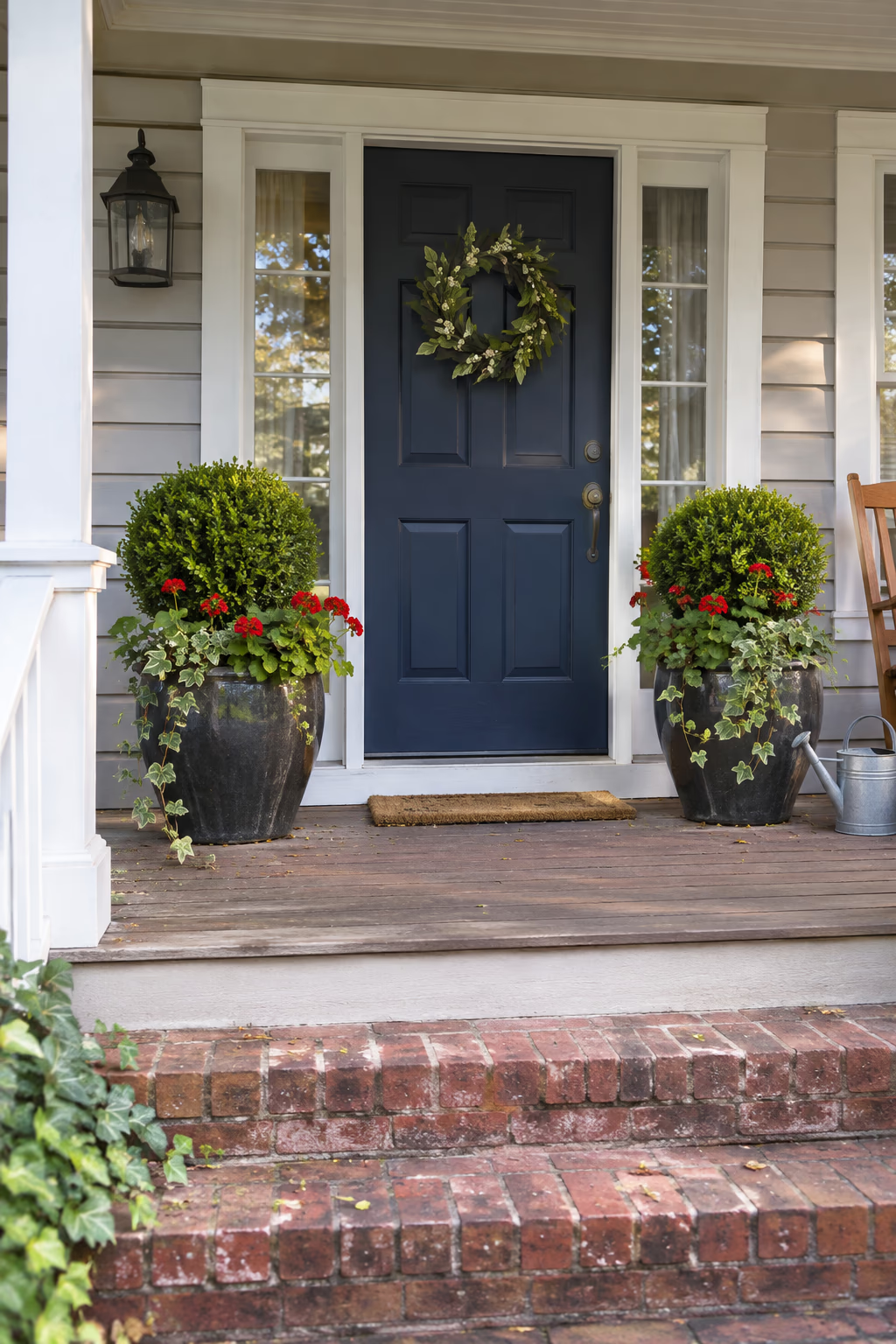
A classic pair that instantly looks polished
Two identical large pots on either side of the door create balance that reads as tidy and intentional. Choose containers at least 16 to 20 inches wide so the plants don’t dry out in an afternoon, and pick a finish, such as glazed charcoal, terracotta, or black resin, that suits your siding and door color.
A reliable recipe is a tall center plant like boxwood, dwarf spruce, or ornamental grass, with seasonal color around it and a trailing plant such as ivy or sweet potato vine spilling over the rim. Repeat the same planting in both pots so the pair feels cohesive.
Make sure every pot has drainage holes and sits on small feet so water can escape. Leave enough room to open the door fully and keep the walkway clear.
2. Hang Baskets Along the Porch Edge
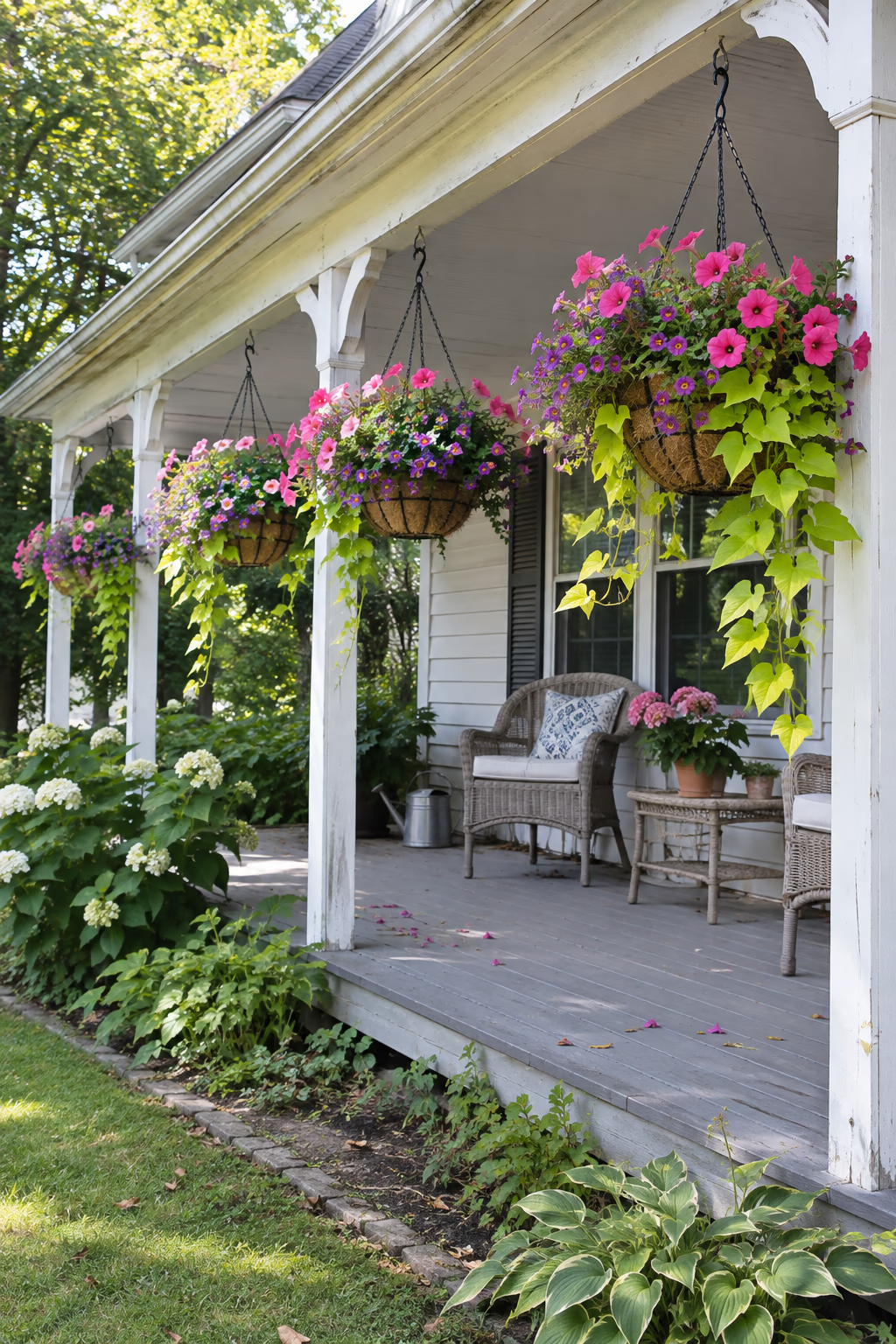
Color at eye level without using floor space
Hanging baskets turn the empty air under a porch roof into planting space. Space three or four along the beam, about 3 to 4 feet apart, and use sturdy hooks screwed into a rafter or beam rather than decorative nails.
Match plants to light. Petunias, calibrachoa, and geraniums like sun, while fuchsia, begonias, and impatiens prefer shade. Coir-lined or self-watering baskets in 12 to 14 inch sizes hold more soil, which helps in summer heat.
Baskets dry out fast, sometimes daily in hot weather, so hang them where you can reach a watering can or wand easily. Trim spent flowers weekly and feed every couple of weeks to keep blooms coming.
3. Layer Container Plants at Different Heights
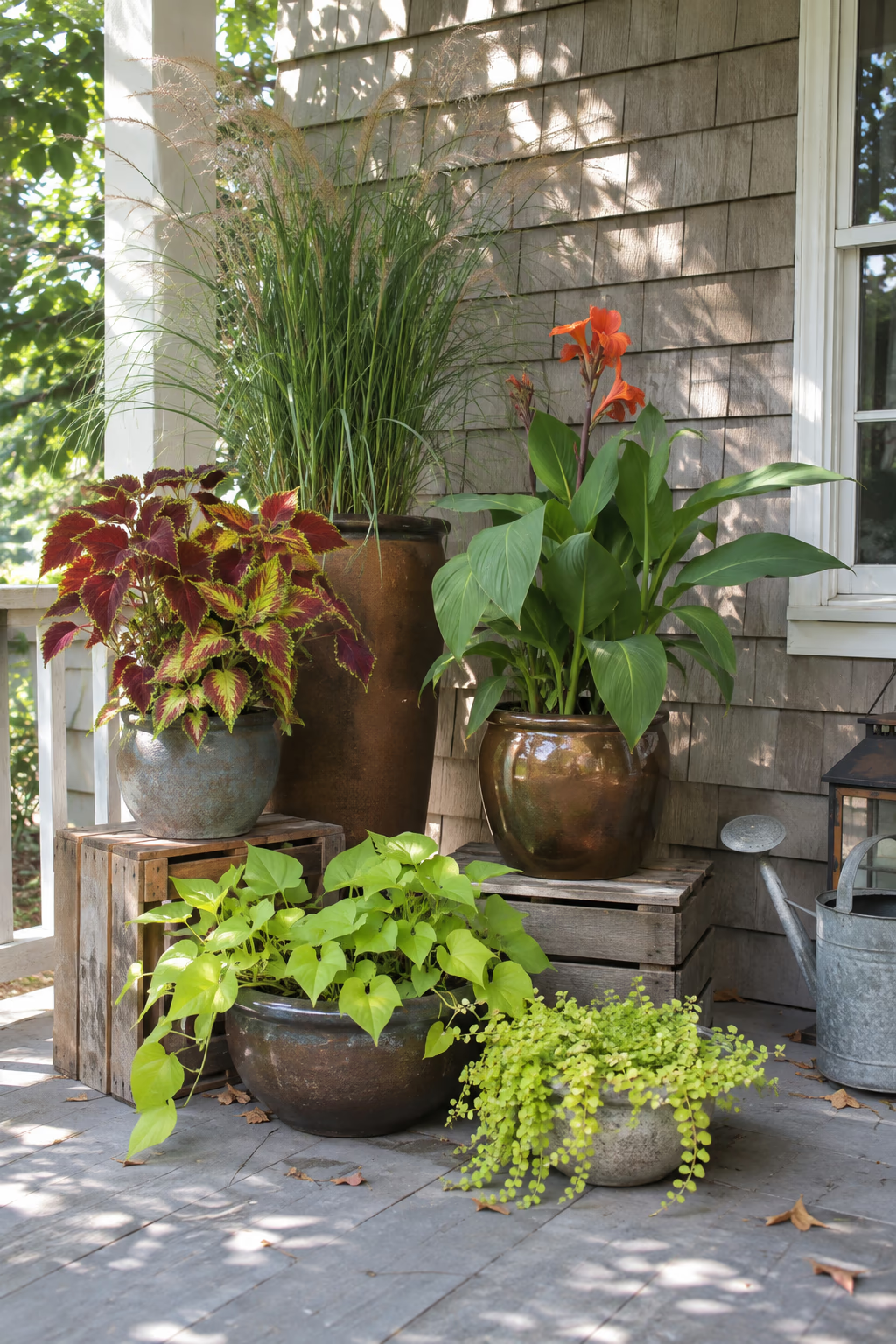
Build a lush look from a handful of pots
Instead of lining pots in a single row, group five to seven containers in a corner and vary their height. Put tall plants like grasses or canna in back, mid-sized foliage such as coleus in the middle, and low trailing plants in front.
If your pots are all the same size, raise some on overturned crates, bricks, or sturdy upside-down planters. Limit yourself to two or three pot colors and repeat one plant or color through the group so it looks designed rather than random.
Leave a gap of a few inches between pots for airflow and easy watering. Heavy groupings on wood decks can stain boards, so use saucers or pot feet.
4. Plant a Cottage Flower Bed Along the Porch
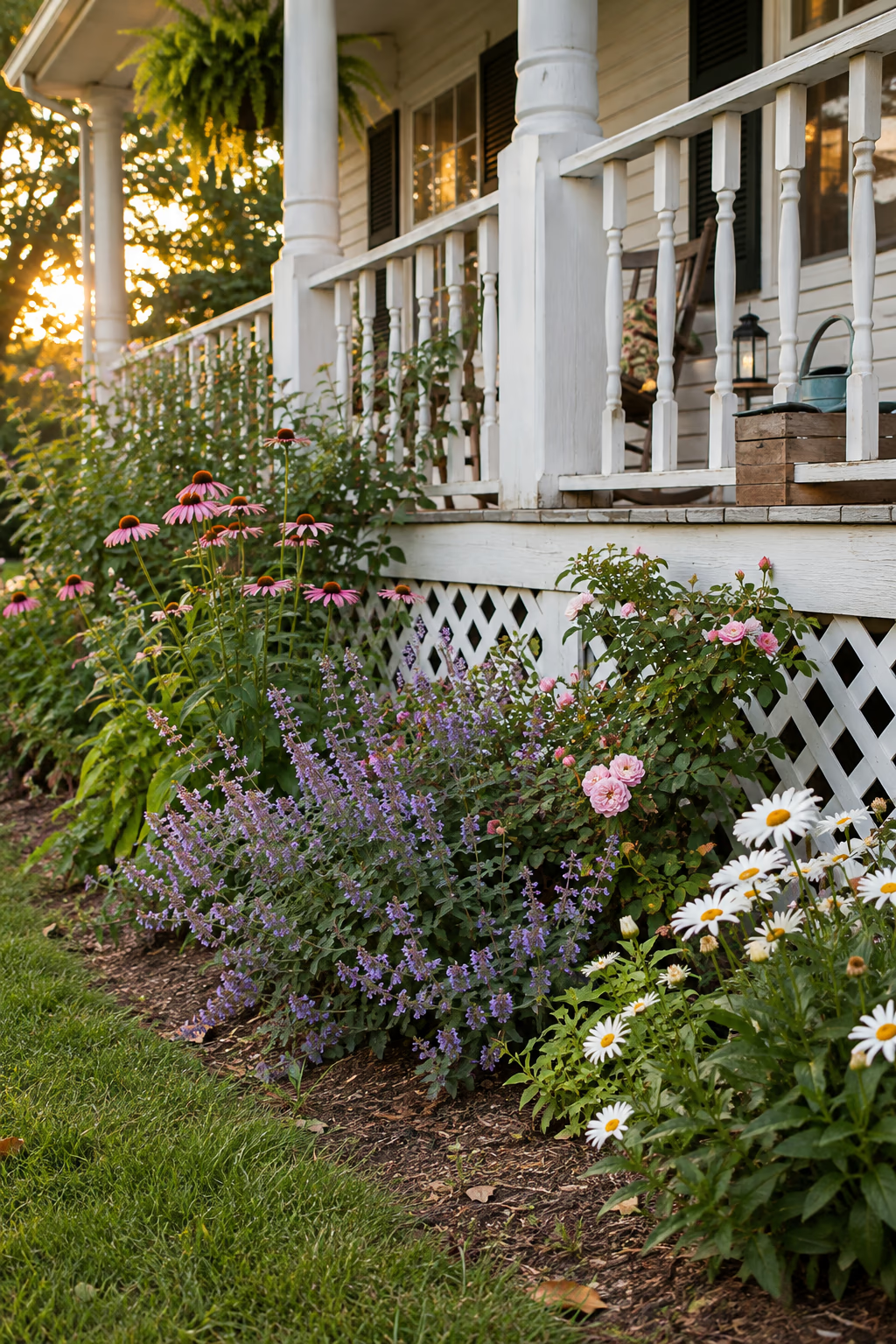
Soft, abundant color right where you walk
If you have a strip of soil along the porch skirt, fill it with a relaxed mix of perennials: coneflower, catmint, shasta daisy, salvia, and a small shrub rose. Plant in drifts of three or five of the same variety rather than one of everything.
Place taller plants nearest the porch and shorter ones toward the lawn, but let a few plants drift forward for a natural look. Add 2 to 3 inches of mulch to hold moisture and cut weeds.
Check how much sun the bed gets before shopping, since porch roofs often create deep shade. Keep plants about 12 inches from the foundation for airflow, and avoid planting anything that will overgrow the steps.
5. Fill Shady Corners With Ferns and Hostas
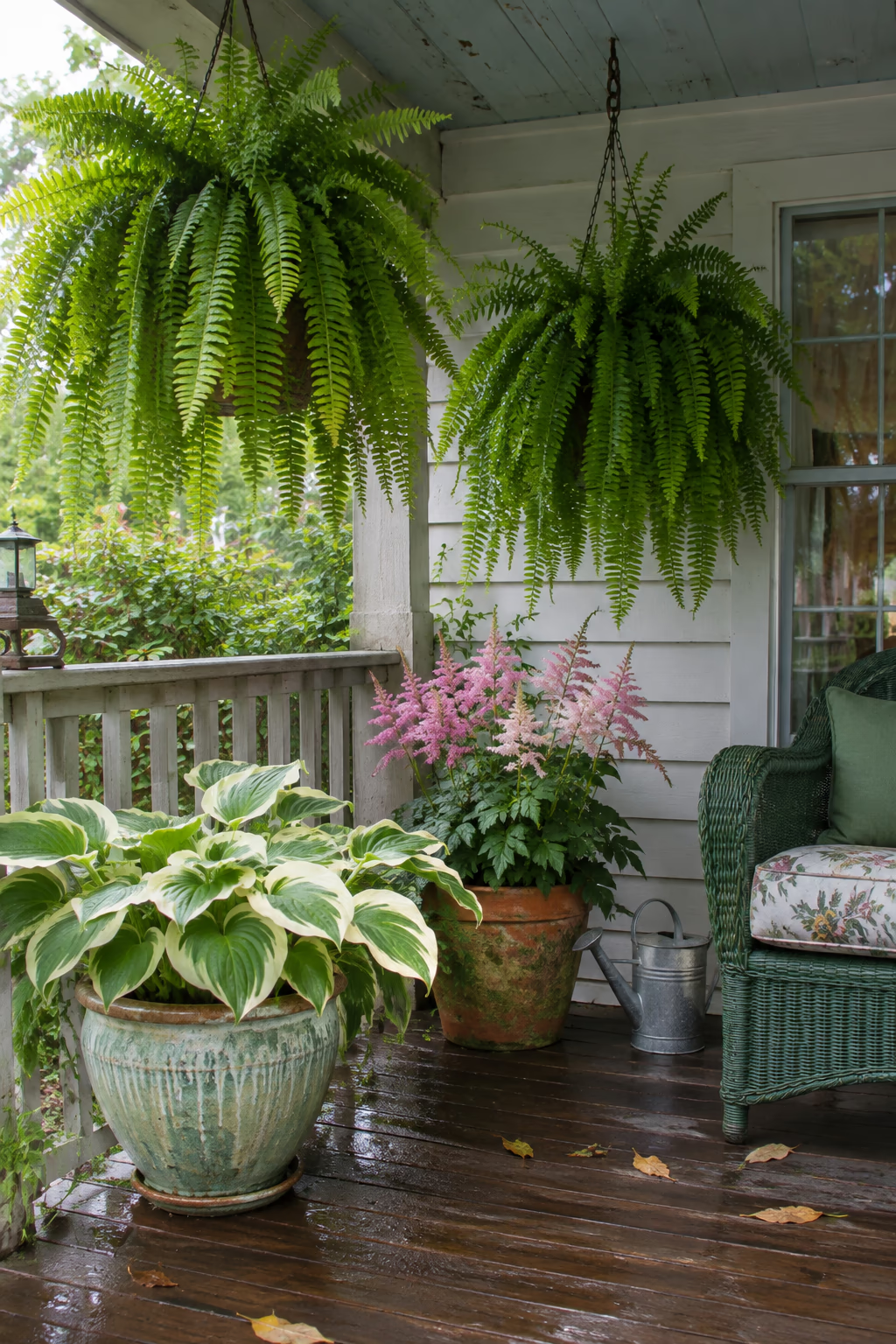
Lush greenery for porches that rarely see sun
Deep porch roofs and north-facing entries are tough on sun-lovers, but ferns, hostas, astilbe, and heuchera thrive there. Boston ferns hung in pairs look full and graceful, while hostas in large pots add bold, broad leaves.
Mix leaf shapes and shades, such as a blue-green hosta next to a lacy fern and a burgundy heuchera, since flowers are few in shade. A pop of white impatiens or begonias brightens the scene.
Shade plants still need water, and porch roofs block rain, so check pots by hand every few days. Bring tender Boston ferns indoors before frost.
6. Paint the Front Door to Match Your Flowers
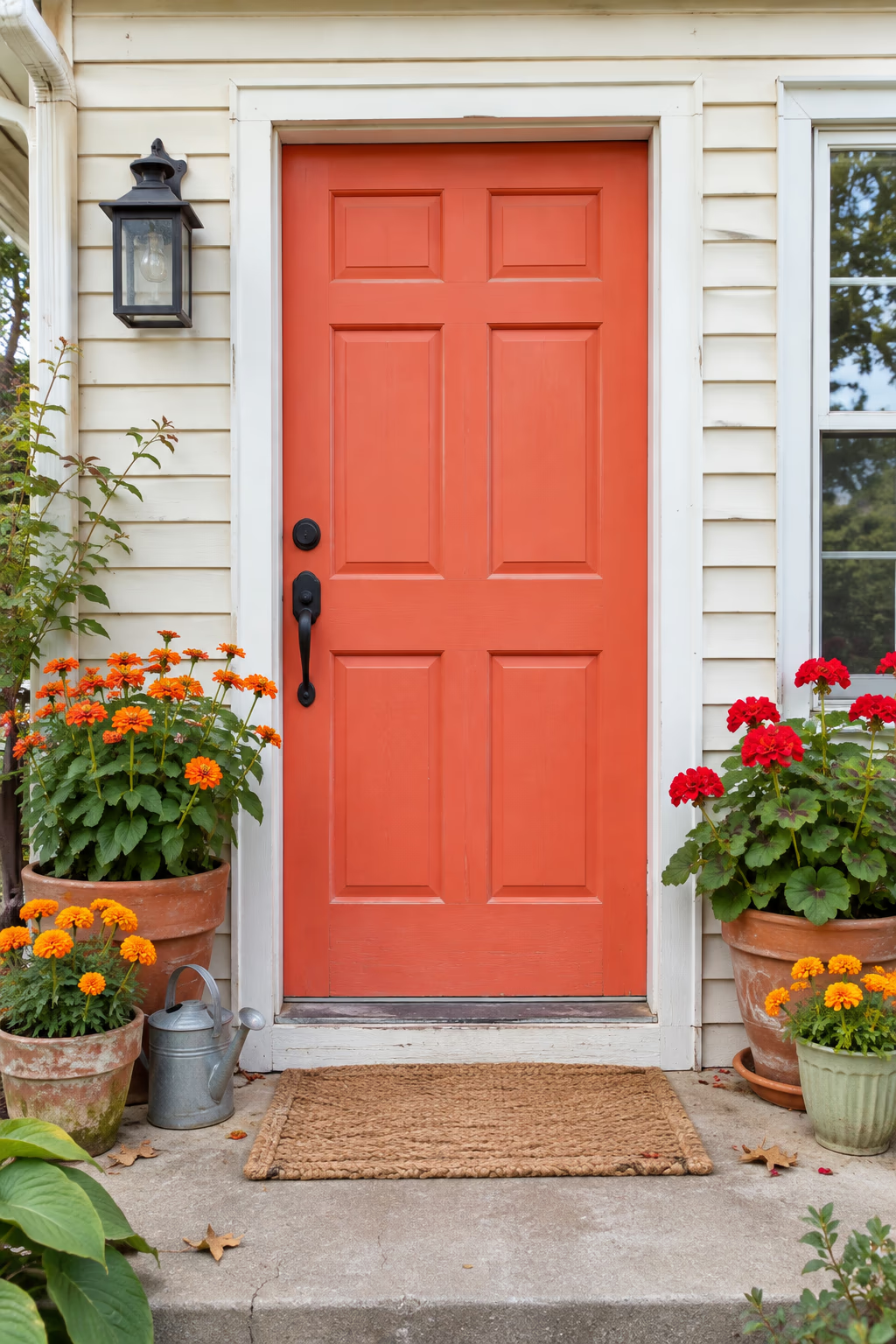
One bold color ties the whole entry together
A new door color is one of the cheapest ways to shape a porch garden. Pick a shade that echoes your plants, such as coral with orange zinnias, navy with white and yellow blooms, or deep green with red geraniums.
Use exterior-grade paint in a satin or semi-gloss finish, and sand and prime the door first so it lasts. Test a sample patch and view it morning and evening, since outdoor light changes colors a lot.
Then repeat that color in two or three pots, a cushion, or the planter finish, but not everywhere. If you live in an HOA, check whether door colors need approval before you paint.
7. Mount Window Boxes Under the Front Windows
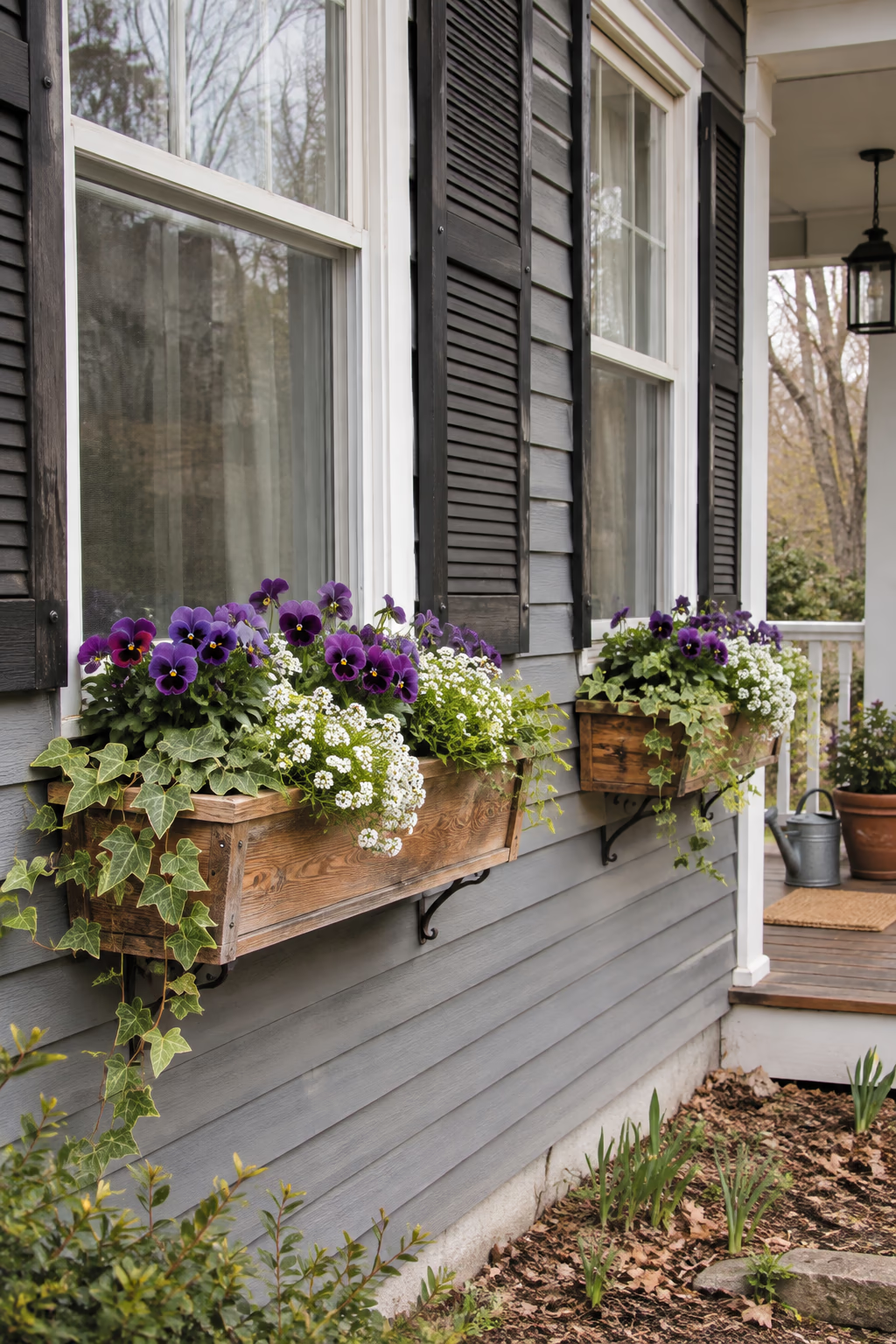
Extend the porch garden up to the house
Window boxes carry plants up the facade and frame windows beside the porch. Choose boxes about as wide as the window, at least 8 inches deep, and mount them with heavy-duty brackets screwed into studs, since wet soil is surprisingly heavy.
Repeat plants from your porch pots, such as trailing ivy, alyssum, and pansies in cool seasons or petunias and geraniums in summer, so the front of the house feels unified. A liner or plastic insert helps protect wood from rot.
Make sure boxes have drainage and that water won’t stain siding. Easy-to-reach boxes are far simpler to water than those above a second-story window.
8. Grow a Pollinator Garden Beside the Seating
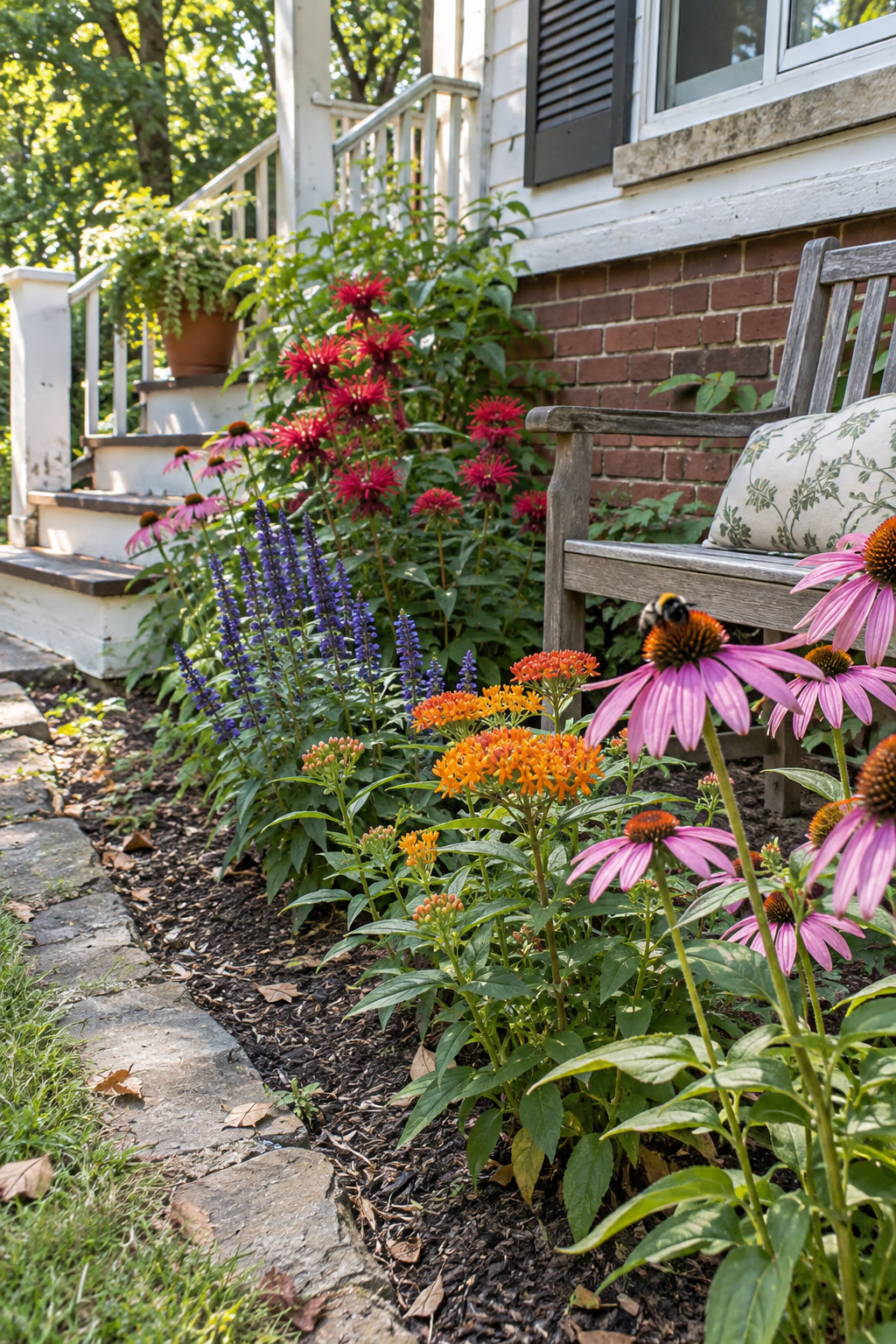
Watch bees and butterflies from your chair
Bench or chair nearby? Plant a small bed beside it with coneflower, bee balm, salvia, butterfly weed, and anise hyssop. A long succession of blooms from early summer to fall keeps pollinators visiting.
Group flowers in clusters and choose single-petaled varieties, which are easier for insects to use than heavily doubled ones. Nectar-rich plants also attract hummingbirds.
Bees rarely bother people who sit quietly, but if someone in your household has a serious sting allergy, place the bed a few steps away from the seating. Skip pesticides in this area.
9. Surround a Rocking Chair With Potted Plants
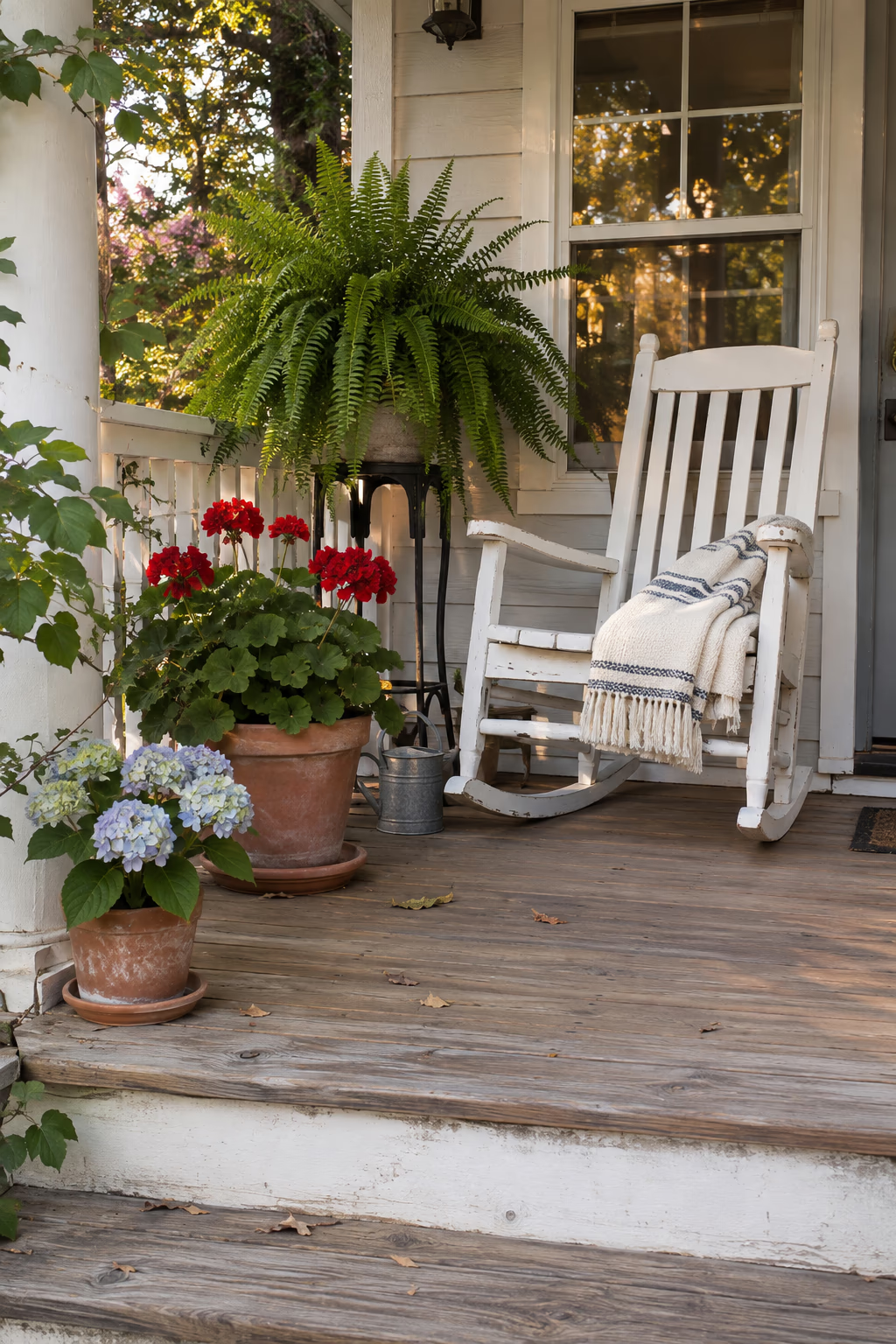
Turn the porch into a leafy sitting nook
A single rocking chair or small bench becomes a destination when plants frame it. Set a tall fern on a stand on one side, a pot of geraniums on the other, and a small hydrangea or dwarf shrub nearby for height.
Keep the layout loose so you can still walk past and sit comfortably. A folded throw or outdoor cushion makes the seat inviting, and a small side table is handy for a drink and a watering can.
Don’t crowd the seat. Plants that drip sap or shed heavily, like some fruiting plants, are best kept a little farther from where you sit.
10. Line the Walkway With Flowers
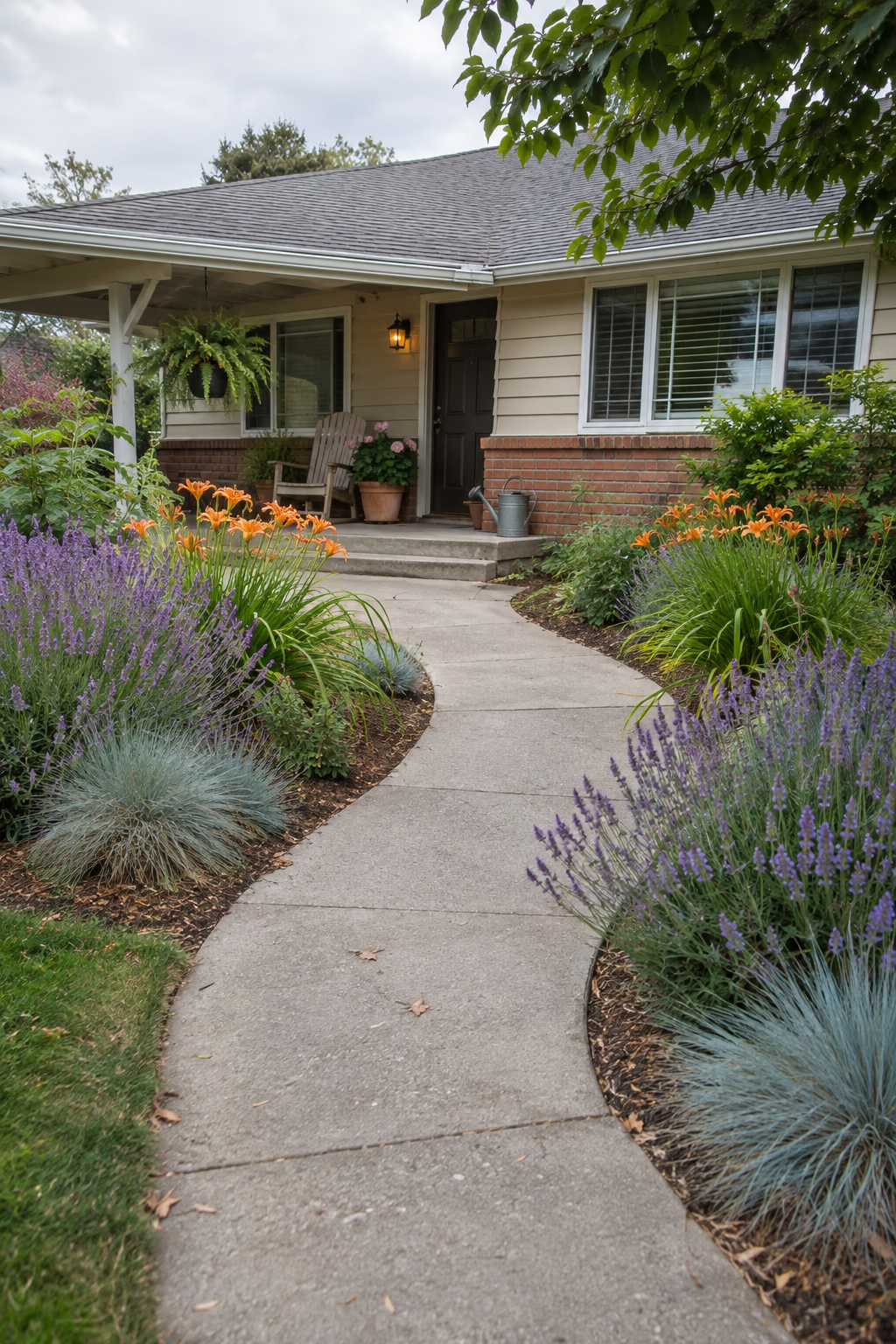
Guide visitors to the door with color
A planted border along the path to your porch makes the approach part of the garden. Lavender, daylily, coreopsis, and blue fescue handle sun and stay compact, while hosta and coral bells suit shady paths.
Use a repeating pattern, such as lavender every 2 feet with daylilies between, to create rhythm. Keep plants low, ideally under 24 inches near the path, so walkers can see and step safely.
Leave at least 3 feet of clear walking width and trim plants that flop onto the path. A clean mulch edge or a row of bricks gives the border a crisp finish.
11. Train Climbing Vines on a Trellis
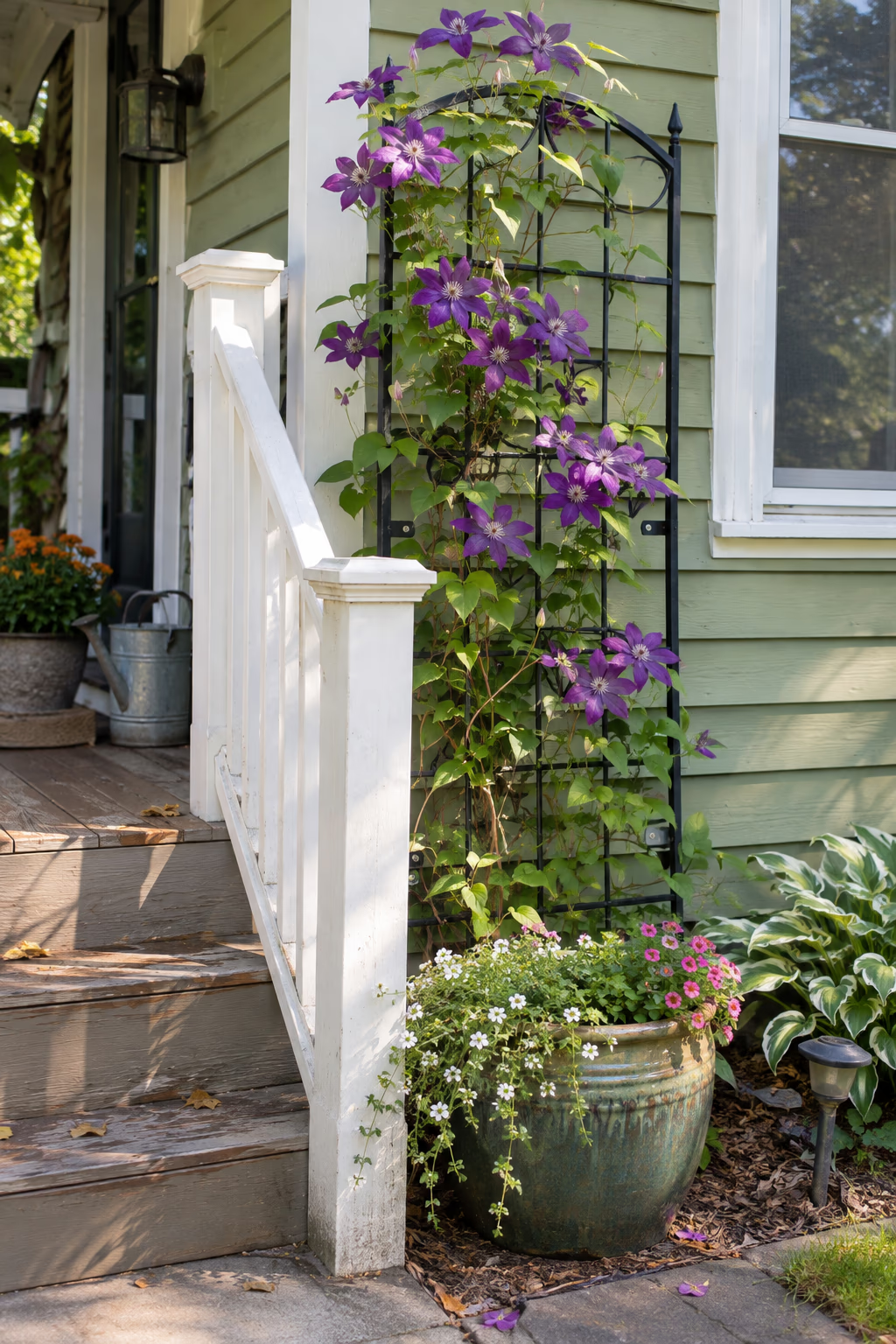
Add height in a narrow space
If floor space is tight, grow upward. A 6-foot metal or wood trellis beside the steps can support clematis, sweet peas, morning glory, or a climbing rose.
Mount the trellis a couple of inches away from siding so air flows behind it and the wall stays dry. Plant clematis with its roots shaded by a small shrub or mulch, since it likes cool roots and sunny tops.
Avoid vines that cling to or damage walls, like English ivy and Virginia creeper, on wood or brick. Check which vines are invasive in your region before planting.
12. Create a Monochrome Flower Bed
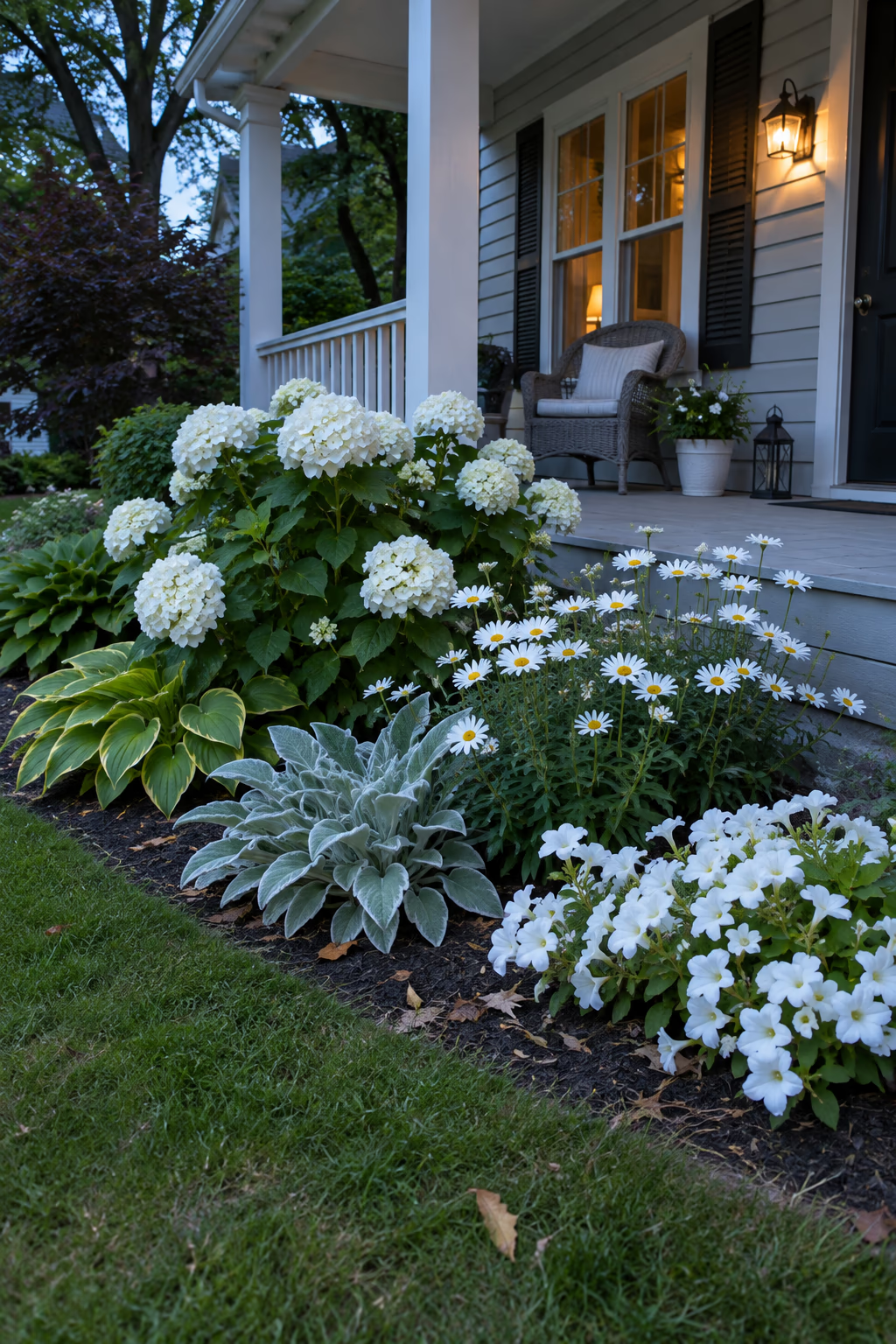
One color for a calm, designer look
A single-color bed can look surprisingly sophisticated. White is a classic choice, with hydrangea, shasta daisy, white petunia, and silvery lamb’s ear, but a bed of blues and purples or warm pinks works just as well.
Add interest through different leaf shapes and textures, since color variation is limited. Green foliage and silver accents keep the bed from looking flat.
Choose a color you genuinely like and that suits your siding. Light colors stand out at dusk, while deep shades can disappear against dark brick or shade.
13. Hang a Vertical Garden on the Porch Wall
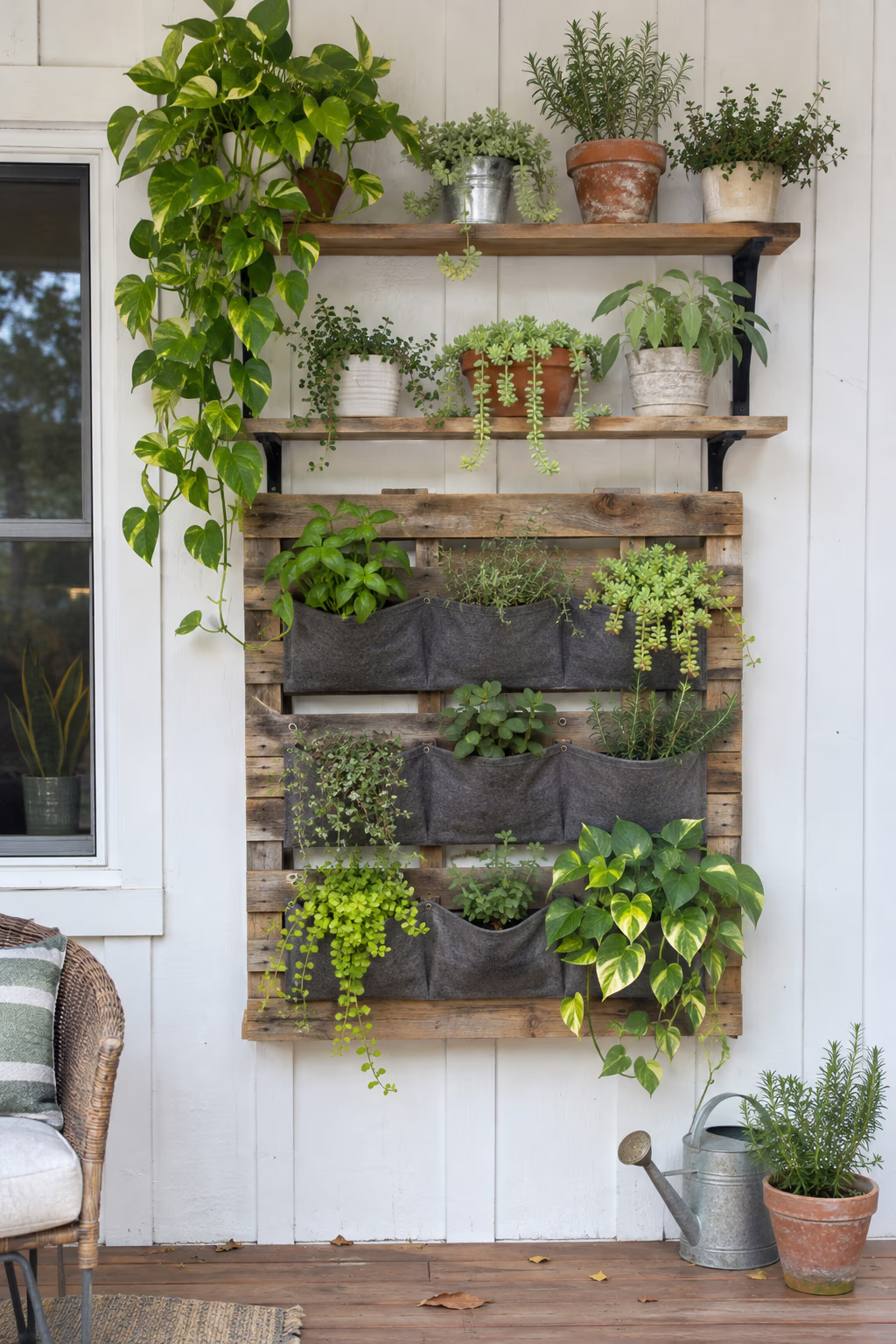
Grow more where there is no floor space
Wall-mounted felt pockets, shelf planters, or a pallet-style frame turn a blank wall into a living display. Use them for trailing sedum, small herbs, ferns, or shade annuals like begonias.
Anchor frames into studs, since a soaked wall planter can weigh 30 to 50 pounds or more. Use a waterproof backing or a spacer so moisture doesn’t damage siding.
Small pockets dry quickly, so choose tough plants or add a drip line. Rotate plants seasonally and replace tired ones to keep the display fresh.
14. Switch to Self-Watering Pots
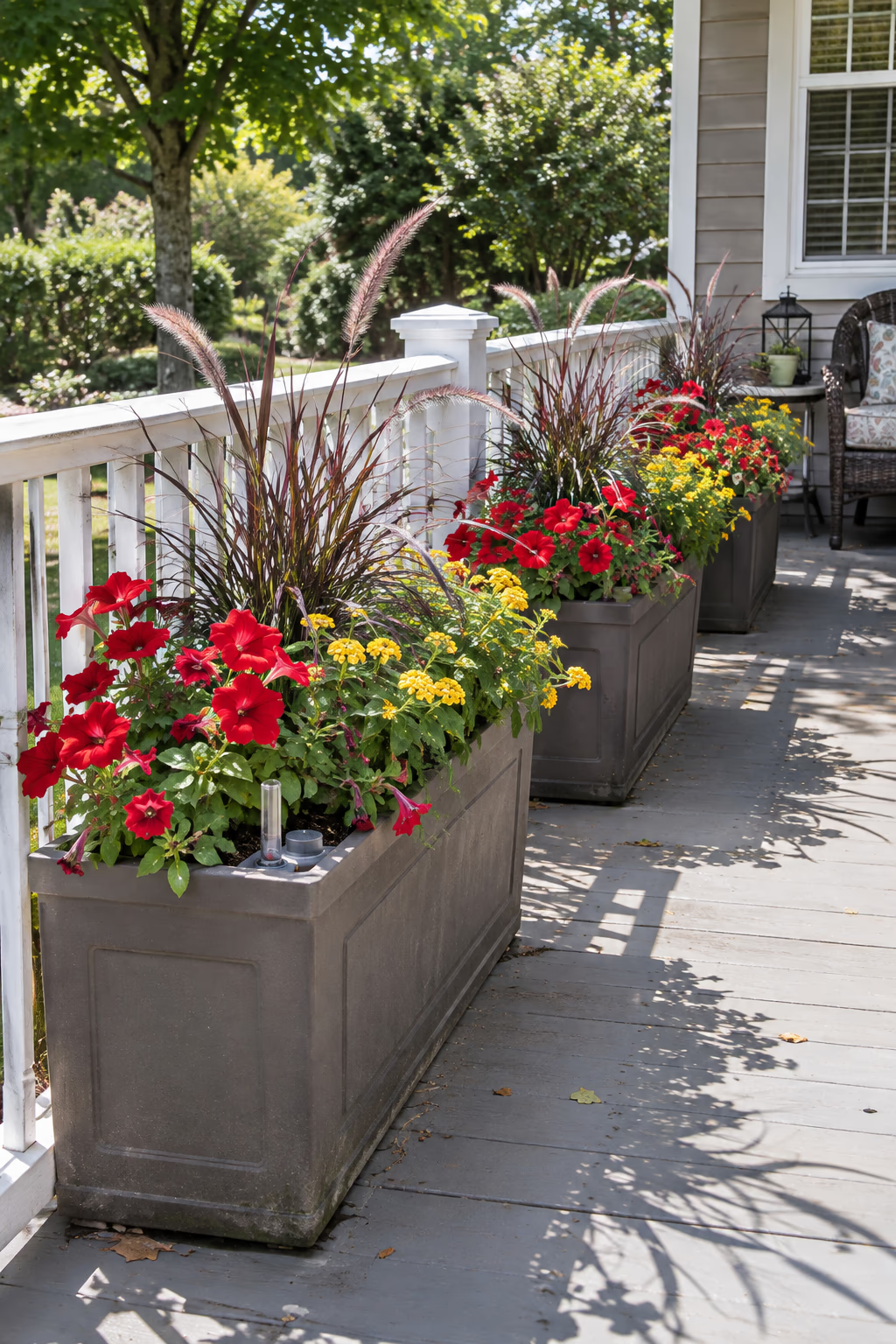
Less watering, healthier plants
Self-watering planters have a hidden reservoir that feeds the soil through a wick or capillary action. They are helpful on sunny porches where regular pots dry out daily, and they stretch out the time between waterings during busy weeks or short trips.
Pick larger sizes for thirsty plants like petunias, lantana, and tomatoes, and use a quality potting mix rather than garden soil. Look for a visible fill spout so you can check the water level.
Reservoir pots can stay too wet for drought-loving plants like lavender and succulents, so match plants to the system. Empty the reservoirs before hard freezes.
15. Plant an Herb and Edible Container Garden
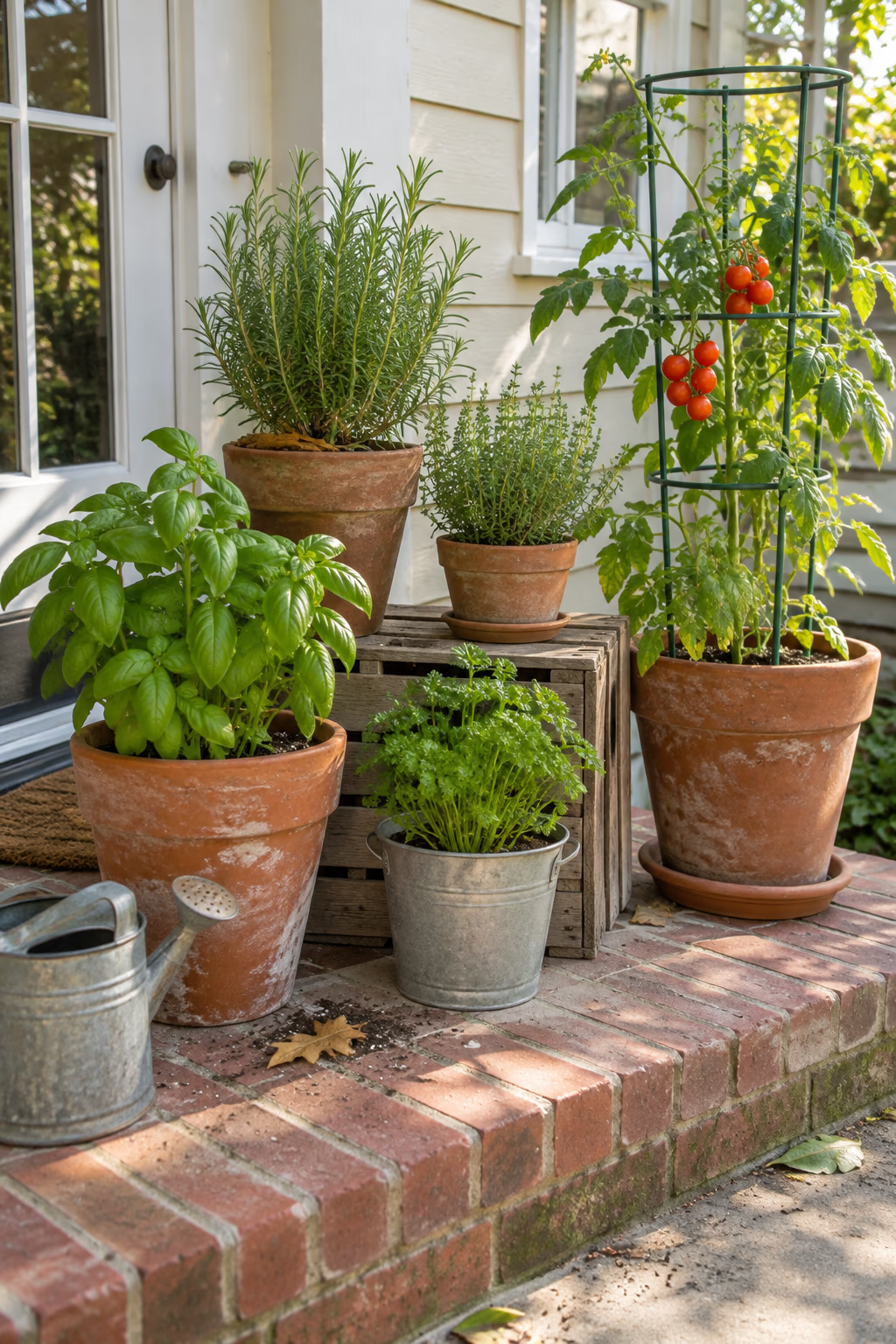
Beauty you can snip for dinner
Basil, parsley, thyme, rosemary, chives, and cherry tomatoes all do well in pots near the door, where you can grab a handful on your way out. Many herbs are attractive, with silvery or deep green leaves that look good next to flowers.
Give them at least 6 hours of sun, use pots with drainage holes, and group by water needs: Mediterranean herbs like rosemary and thyme prefer drier soil, while basil and parsley like more moisture. A tomato needs a deeper 5-gallon pot and a cage.
If your porch is shady, try mint, chives, or parsley, which tolerate less light. Keep mint in its own pot because it spreads aggressively.
16. Add Evergreens for Winter Interest
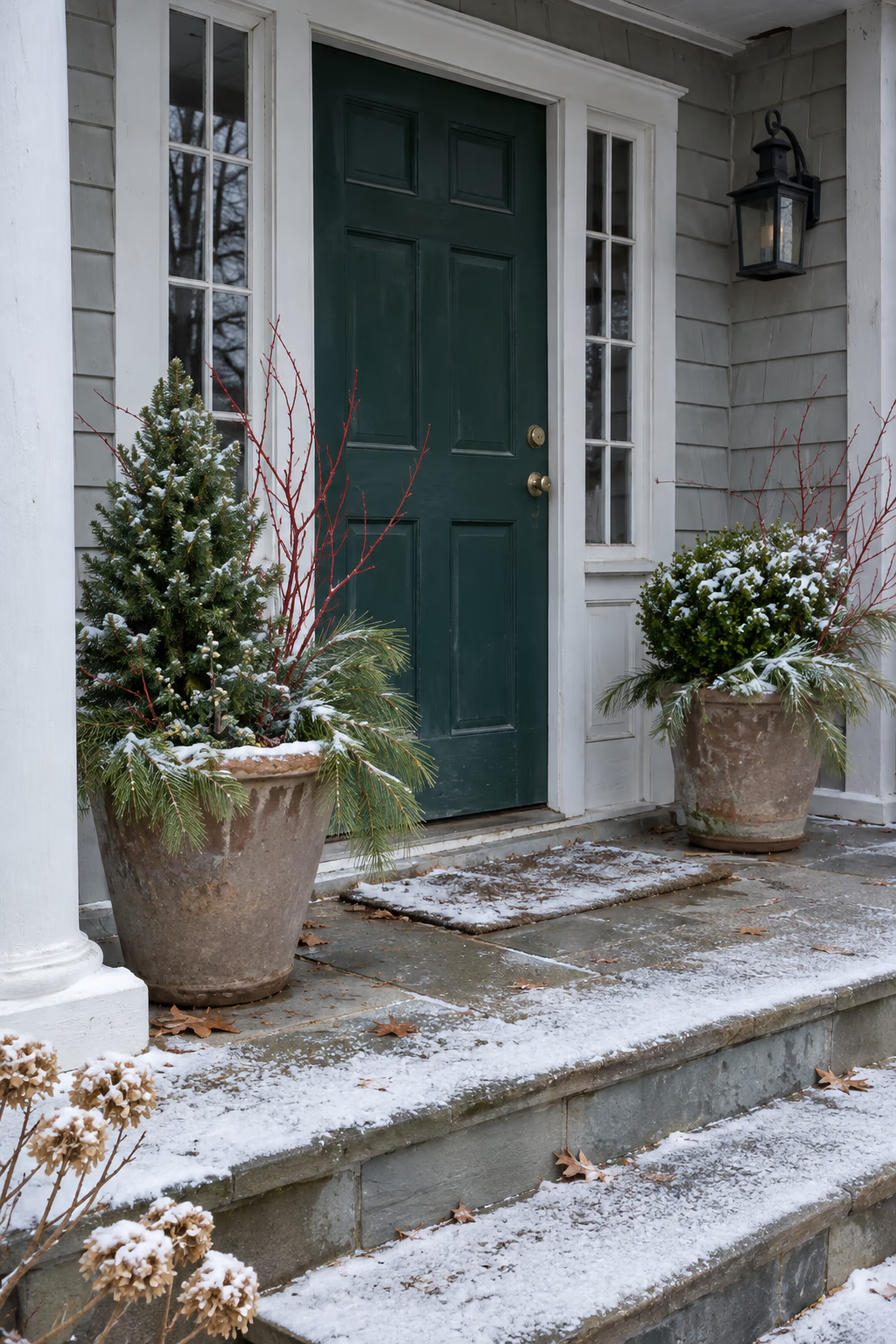
Keep the porch green when flowers fade
Dwarf Alberta spruce, boxwood, juniper, and hollies hold their color through cold months. Place them in your door-flanking pots, then tuck in pine boughs, red twig dogwood stems, and winter pansies in milder areas.
Plants in pots are less insulated than those in the ground, so choose varieties rated for at least one or two zones colder than yours. Large, thick-walled pots protect roots better than thin plastic ones.
Water pots during dry winter spells when the soil isn’t frozen, and avoid ice-melting salt near containers. In spring, move the evergreens to the garden if they’ve outgrown their pots.
17. Build a Native Plant Bed at the Porch Steps
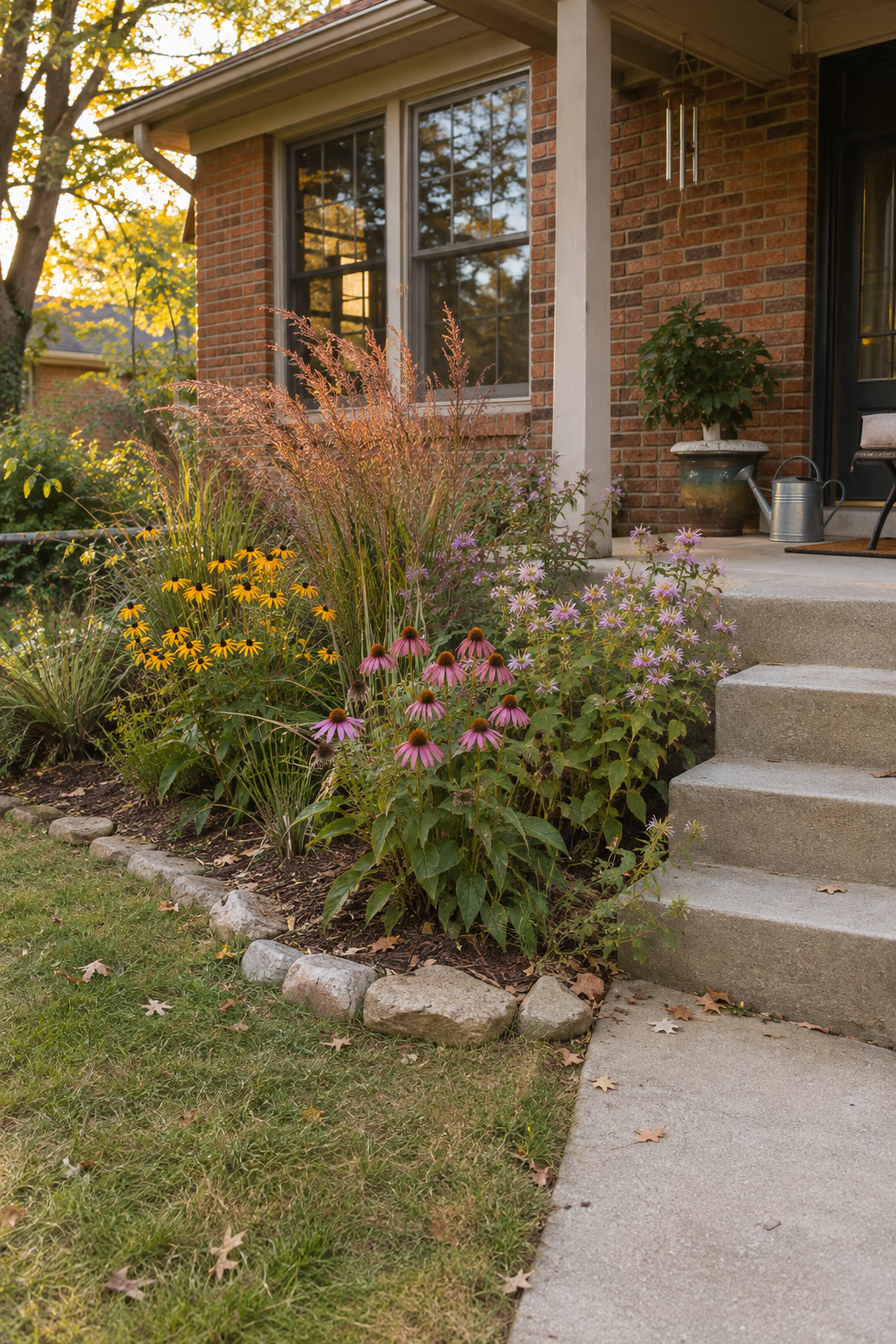
Low-maintenance beauty that suits your region
Native plants adapt to local rainfall and soil, so they usually need less watering and fertilizer once established. In much of the eastern and central US, purple coneflower, black-eyed Susan, little bluestem, and wild bergamot make a colorful, tough combination.
Check your state extension service or a native plant society for species that grow in your area, since natives vary widely from region to region. Buy from nurseries that grow their own plants when possible.
Natives can look wild at first. A tidy stone edge, a mulch border, and a few evergreen shrubs keep the bed looking cared for, which also helps with neighbors and HOA rules.
18. Light the Porch Garden With Warm String Lights
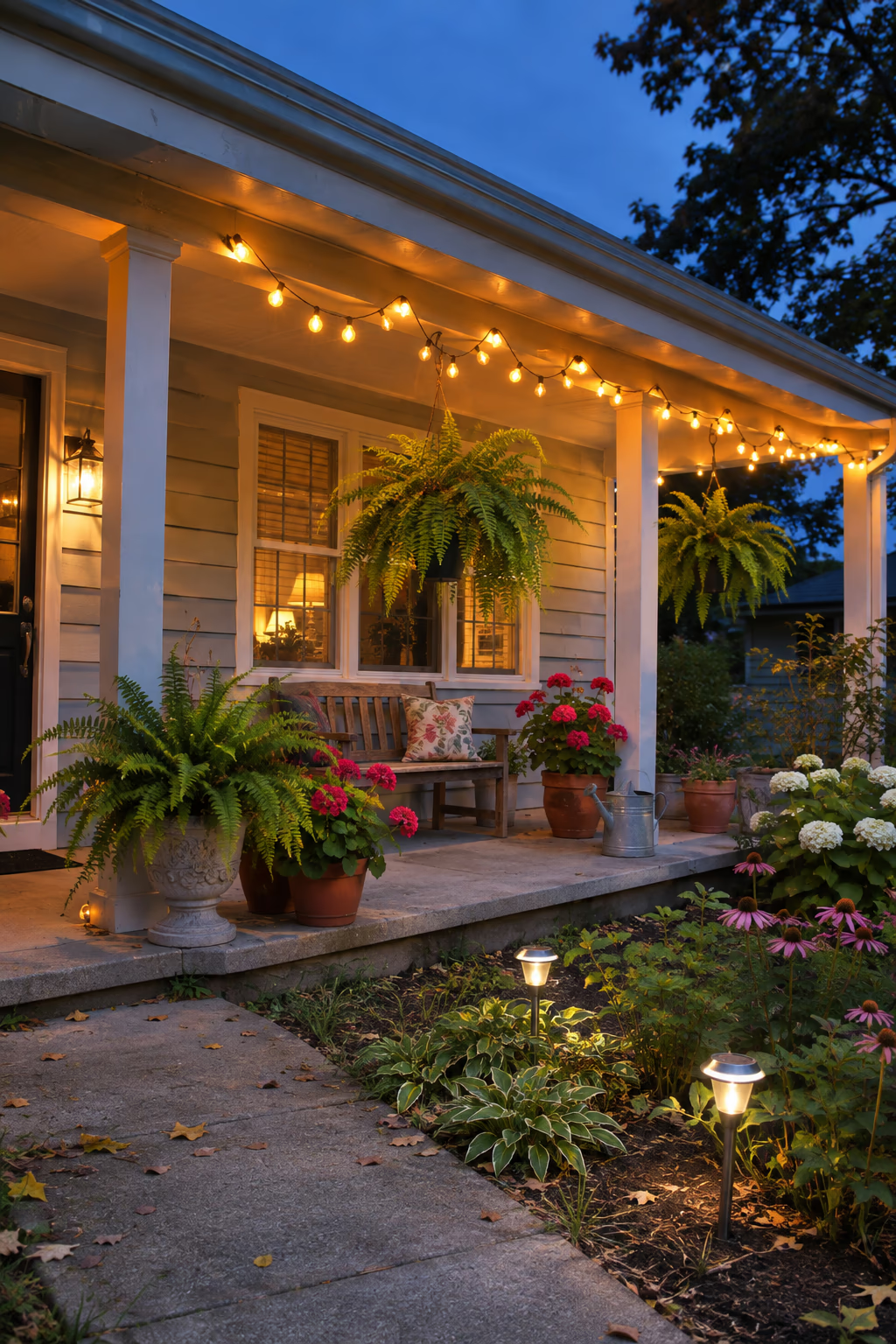
Extend the garden into the evening
Warm white string lights draped across the porch ceiling make plants glow at dusk. Look for outdoor-rated strings with shatter-resistant bulbs, and use clips or hooks rather than staples that can nick the wiring.
Add solar stake lights low in flower beds and a small lantern on a table for layers of light. Warm color temperatures of about 2700K are flattering to foliage and flowers.
Keep lights away from dry hanging baskets and trim plants so leaves don’t touch bulbs. Plug-in strings should use a covered outdoor outlet and a weatherproof connection.
19. Display Plants on Tiered Stands and Ladder Shelves
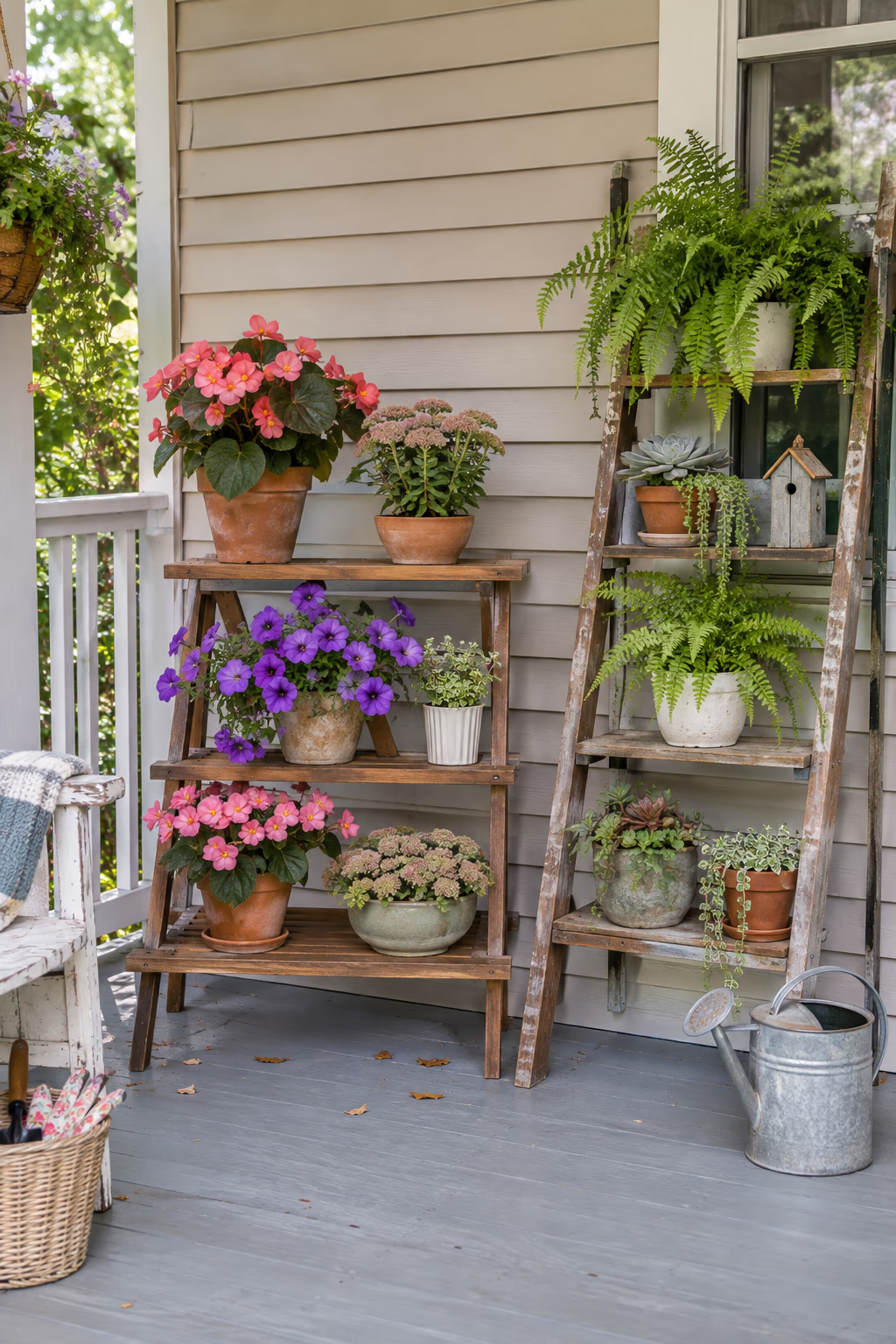
Add height to a small porch
A three-tier plant stand or leaning ladder shelf lets you show off a dozen small pots in the footprint of one. They suit small porches, apartment stoops, and spots where the floor is limited.
Put sun-lovers on the top rungs and shade plants lower, and keep heavier pots near the bottom for stability. Wood, metal, or powder-coated steel all work outdoors, though untreated wood needs sealing.
Secure tall shelves against a wall in windy areas. Place saucers under pots so water drips don’t stain pieces below.
20. Turn a Downspout Corner Into a Small Rain Garden
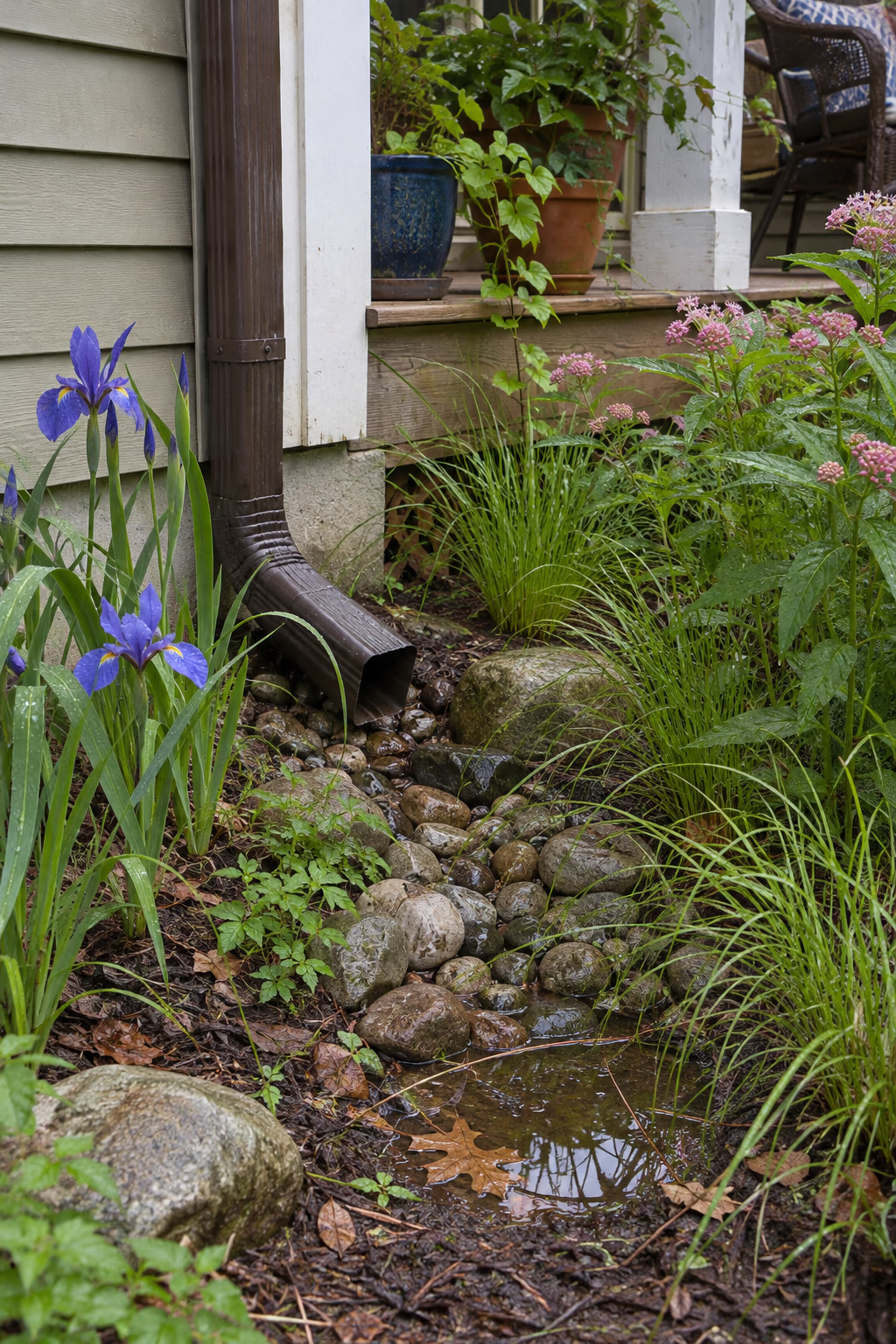
Manage runoff while adding plants
If a downspout empties near your porch, a shallow planted basin can absorb the water and look attractive. Extend the downspout a few feet away from the foundation with a pipe, then dig a gentle dip about 4 to 6 inches deep filled with soil that drains well.
Plant moisture-tolerant species such as blue flag iris, sedges, swamp milkweed, and cardinal flower, and add river rock where water enters to prevent erosion. After storms, the basin should empty in about a day.
Keep the basin at least 10 feet from the foundation, and call 811 before digging. Ask your local municipality whether rules apply to drainage changes.
21. Add a Bubbling Urn Water Feature
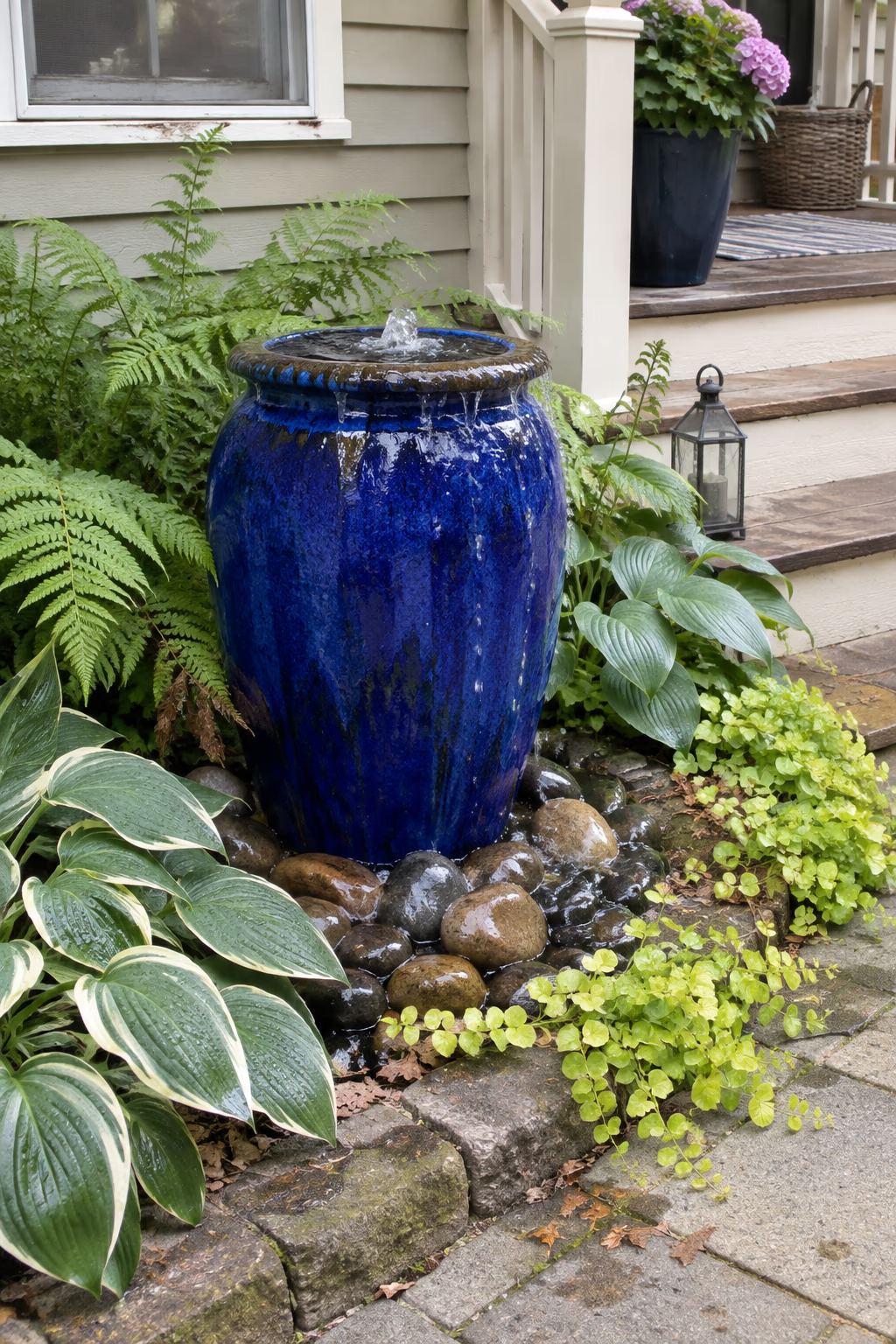
Gentle sound and a cooler feel
A self-contained bubbling urn needs only a hidden basin, a small submersible pump, and a nearby outlet. It takes up about 2 feet of space and the sound of trickling water softens street noise.
Surround the urn with hostas, ferns, and creeping Jenny so it looks tucked into the planting. Place it on a level, firm base, since a full reservoir is heavy.
Top up the water every week or so in summer, and clean the pump occasionally. Drain it before freezing weather, and cover the outlet with a weatherproof cover. Avoid it if small children are around who might reach the basin.
How to Plan Your Front Porch Garden
A little planning helps your porch garden look good for months rather than weeks. These steps keep the process simple and affordable.
- Check your light first. Watch how much sun the porch gets over a day, since a covered north-facing porch needs very different plants than a sunny south-facing one.
- Pick a simple color scheme. Choose two or three colors that suit your siding and door, then repeat them across pots, beds, and baskets.
- Mix sizes and textures. Combine tall, mid-height, and trailing plants, and blend leaf shapes so the display looks full even between blooms.
- Invest in good containers and soil. Larger pots with drainage and fresh potting mix hold moisture better and give plants a stronger start.
- Plan for watering. Keep a hose, wand, or watering can near the porch, and consider self-watering pots for the thirstiest containers.
- Know your rules and zone. Check your USDA hardiness zone, HOA guidelines, and local codes, and call 811 before any digging.
Frequently Asked Questions
What plants are best for a front porch?
It depends on light. Geraniums, petunias, lantana, and ornamental grasses thrive in sun, while ferns, hostas, begonias, and impatiens suit shade. Evergreen shrubs like boxwood and dwarf spruce give year-round structure.
How do I make a small front porch look bigger?
Use vertical space with hanging baskets, wall planters, and trellises, and keep floor clutter to a minimum. A limited color palette and a clear path to the door also make the space feel larger.
How often should I water porch plants?
Check pots daily in summer by pushing a finger an inch into the soil. Small containers and hanging baskets may need water every day in hot weather, while larger pots and self-watering planters can go longer.
Can I have a front porch garden without full sun?
Yes. Many beautiful plants prefer shade, including ferns, hostas, astilbe, heuchera, and begonias. Pick foliage with interesting color and texture for a rich look without much direct light.
How much does it cost to create a porch garden?
You can start for under $100 with a few pots, potting mix, and annuals. Larger planters, trellises, lighting, and water features raise the cost, so build in stages and reuse containers from year to year.
Final Thoughts
The best front porch garden ideas don’t require a big yard or a big budget. A pair of matching planters, a few hanging baskets, and a door painted to suit your flowers can change how the whole house feels as you walk up to it.
Start with one or two ideas that fit your light and routine, then add more as you learn what thrives. Over time your porch will become a welcoming spot that you, your guests, and even the bees look forward to visiting.


