
Imagine opening a creaky gate and stepping onto a path where roses hang heavy over your shoulder, foxgloves stand taller than the fence, and lavender brushes your ankles as you walk. Bees drift from bloom to bloom, and nothing looks quite planned, yet everything feels like it belongs.
That relaxed abundance is why the English cottage style has never really gone out of fashion. It mixes flowers, herbs, climbers, and weathered materials into a garden that looks generous rather than fussy. It also forgives mistakes, since a plant in the “wrong” spot often just adds to the charm.
These 23 English cottage garden ideas cover the signature looks, from flower-covered sheds and rose-draped houses to tall flower spires, picket fences, painted gates, birdbaths, herbs, and small wildlife ponds. Each one is adapted for ordinary American yards and climates, so you can pick a single project or blend several into your own storybook garden.
1. Turn a Garden Shed Into a Flower-Covered Hideaway
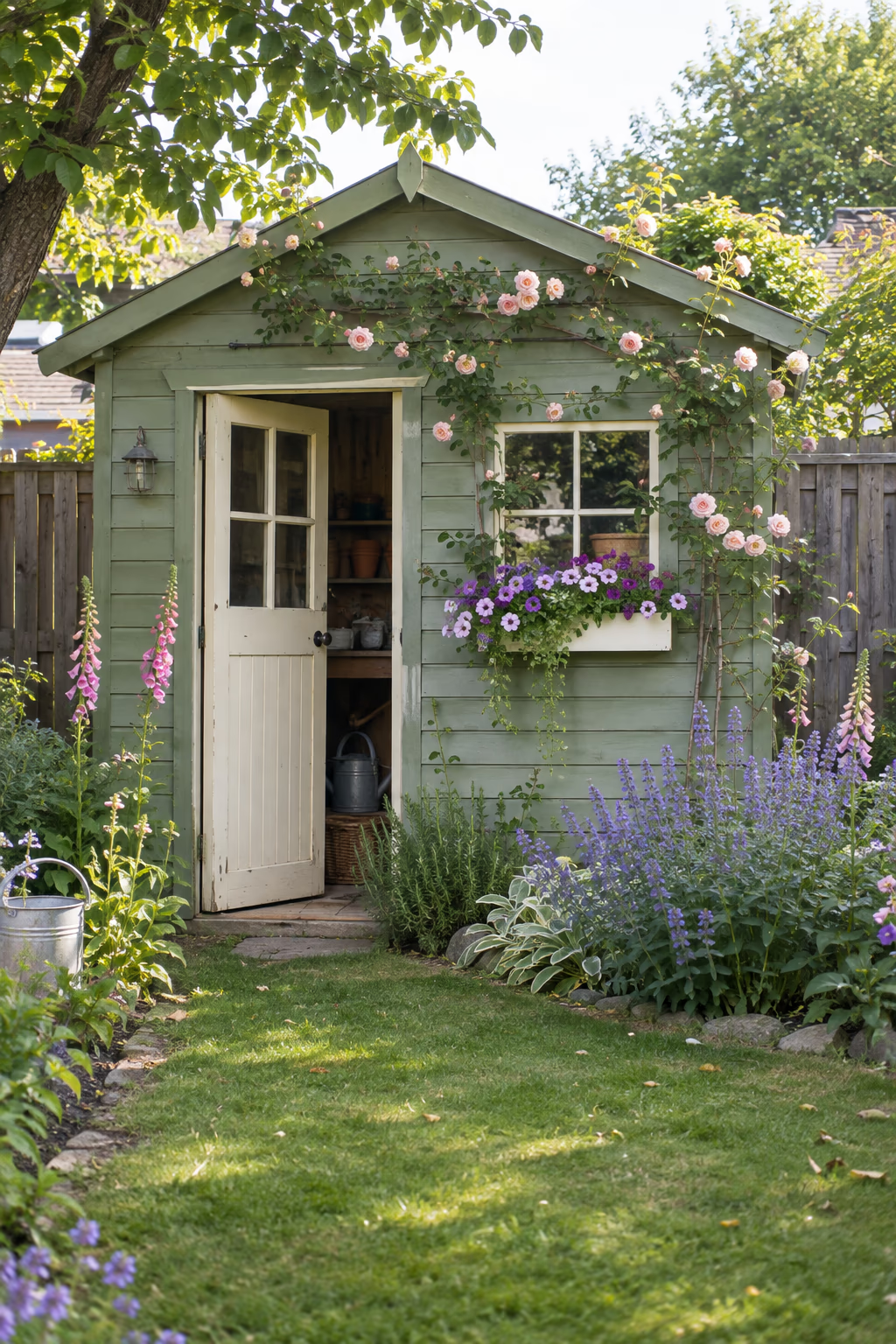
A storybook focal point that also stores your tools
A plain prefab shed becomes the heart of a cottage garden once it gets a coat of soft paint, a pair of window boxes, and a climber or two. Try a muted sage, cream, or dusty blue on the siding with a contrasting door, then fix a sturdy trellis or galvanized wire about 2 inches off each wall so air can circulate behind the plants.
Plant a repeat-blooming climbing rose on the sunny side and a clematis or climbing hydrangea on a shadier wall. Surround the base with a loose skirt of catmint, hardy geraniums, and foxgloves so the building looks like it grew out of the border rather than being dropped onto a slab.
Leave a clear 2- to 3-foot path to the door so you can still reach your tools. Check HOA rules and local setback requirements before placing a new shed, and avoid letting vigorous vines creep under the roof edge, where they can lift shingles.
2. Train Climbing Roses Across the Front of the House
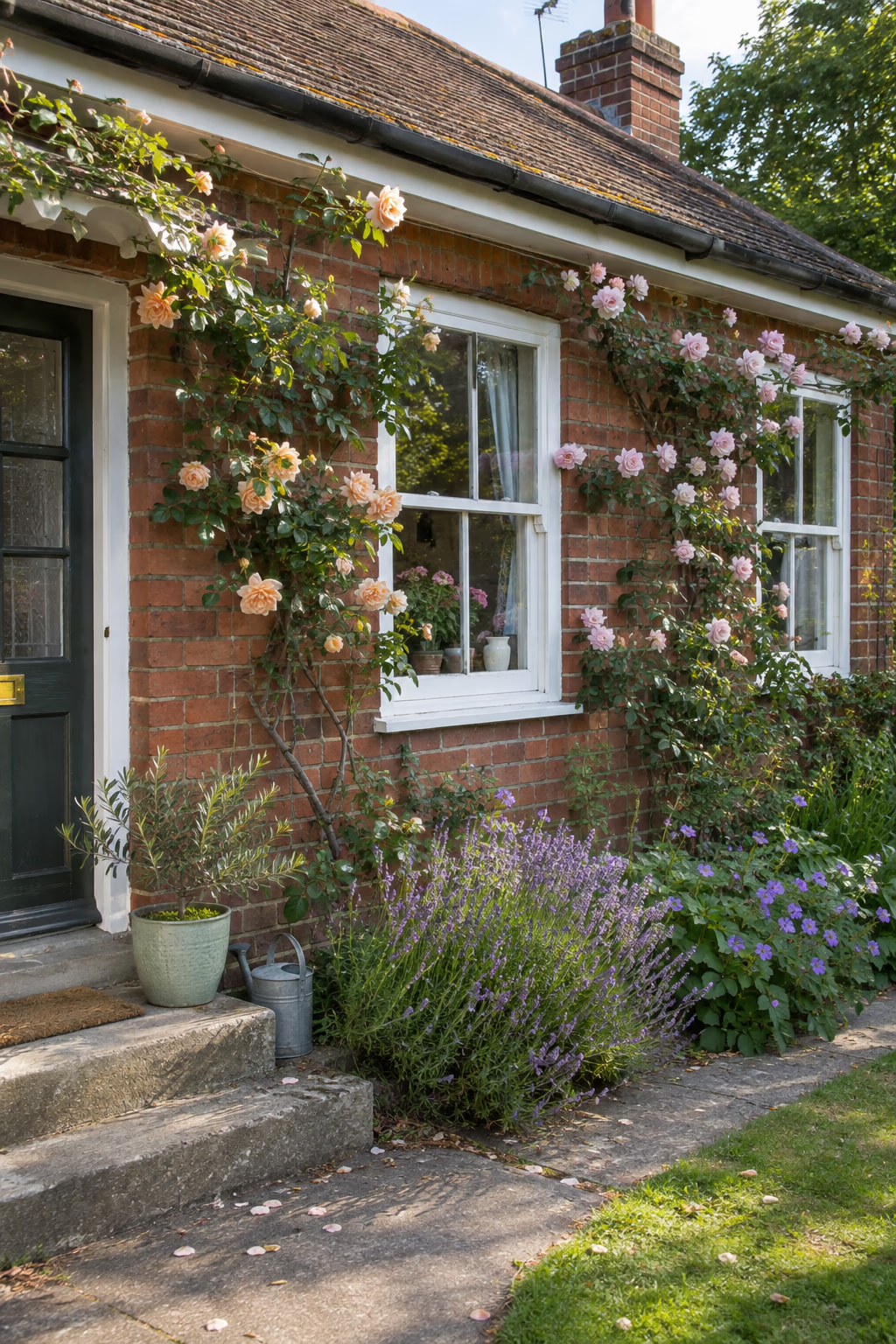
The classic cottage look right at your front door
Few things say English cottage faster than roses framing the front windows. Mount horizontal wires or a slim wooden trellis on the facade, spaced about 12 to 18 inches apart, and tie the long canes out sideways in a fan. Bending canes toward horizontal encourages flowers all along their length instead of just at the tips.
Brick and painted clapboard both make a beautiful backdrop. Choose a disease-resistant climber suited to your zone, and look for one with good fragrance, since you will smell it every time you open a window. Pale pink, apricot, and creamy white all look softer against red brick than bright red does.
Keep the canes a few inches away from siding so it can dry after rain, and plan for annual pruning and tying in late winter. On vinyl siding, attach supports to a freestanding trellis rather than screwing directly into the panels.
3. Plant Tall Spires of Hollyhocks, Foxgloves, and Delphiniums
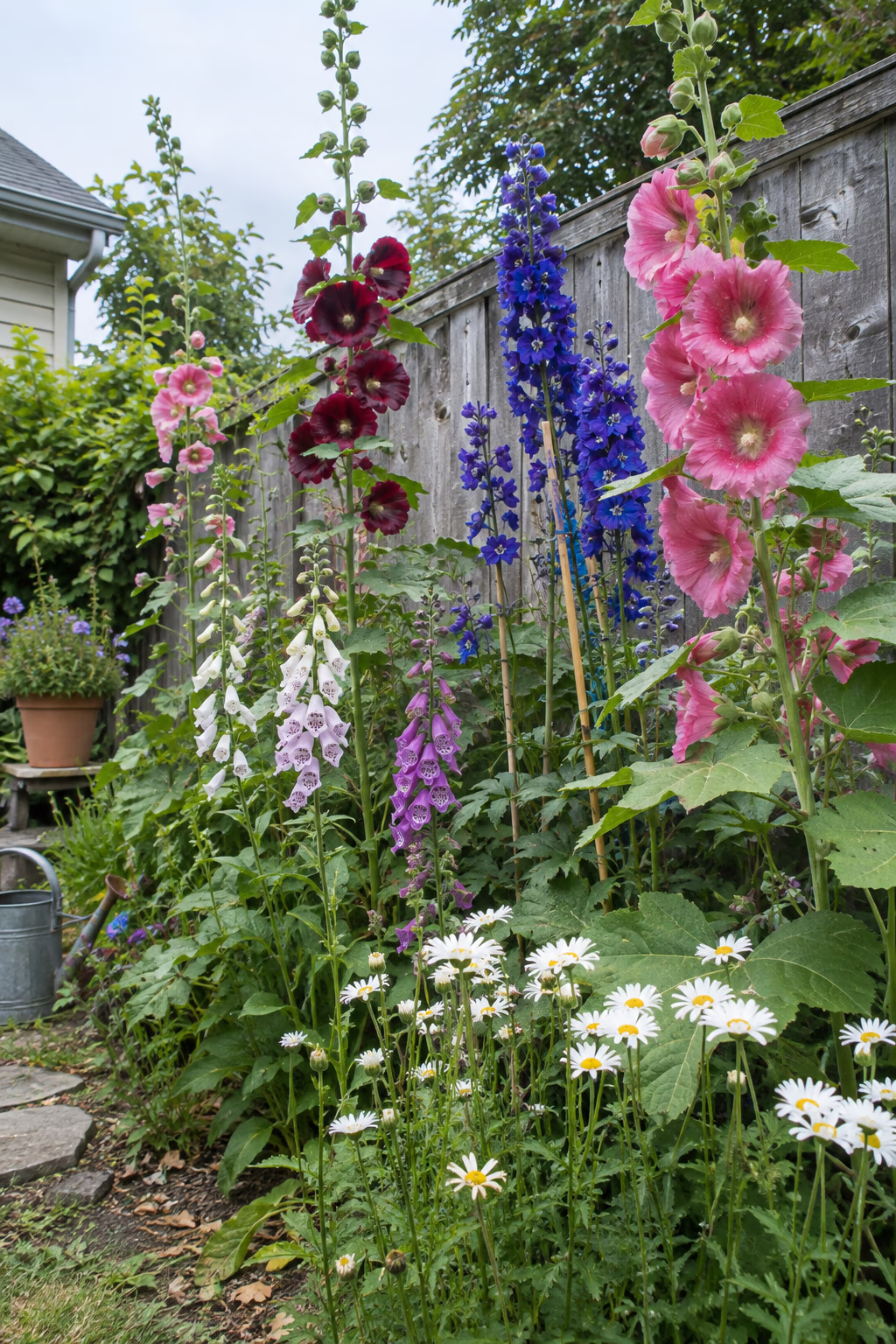
Vertical drama that defines the cottage silhouette
These three flowers create the towering spikes that make cottage borders look so lush. Hollyhocks can reach 6 to 8 feet in pink, maroon, white, and pale yellow; foxgloves reach 3 to 5 feet with speckled bells; and delphiniums add true blues and purples that few other flowers can match.
Set them at the back of a bed or against a fence or wall in groups of three or five, where the height reads as a backdrop rather than a barrier. Hollyhocks and most foxgloves are biennials or short-lived perennials, so let a few flowers go to seed each year and new plants will keep the display going.
Delphiniums sulk in hot, humid summers, so gardeners in the South often treat them as cool-season annuals or swap in larkspur. All three can need staking in windy spots, and foxgloves are toxic if eaten, which matters if small children play nearby.
4. Let Flowers Spill Through a White Picket Fence
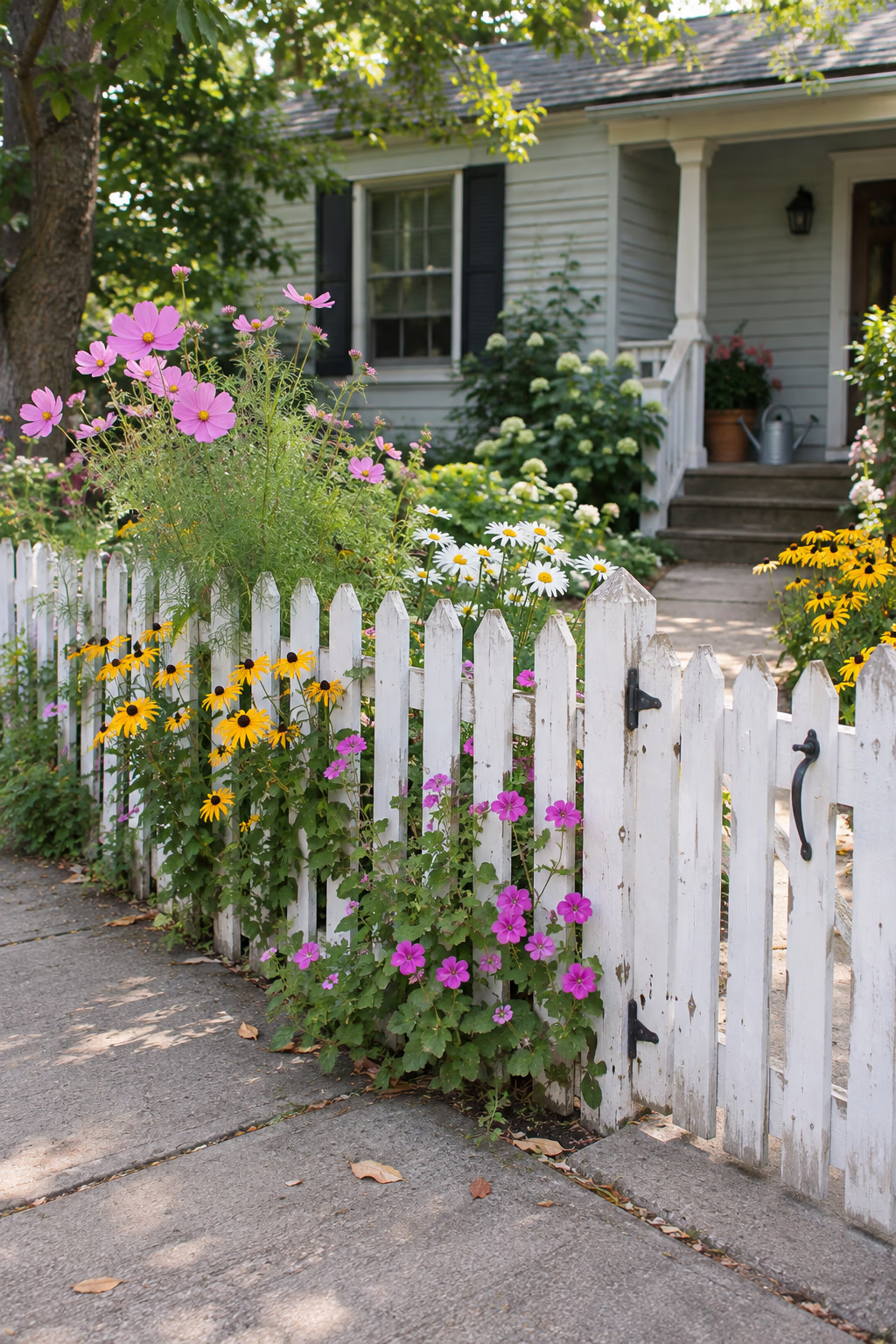
A friendly boundary that softens at the edges
A low picket fence about 3 to 4 feet tall marks the front garden without hiding it, and it becomes truly cottage-like when flowers push between and over the pickets. Plant a strip at least 2 feet deep on both sides with sprawling growers such as hardy geraniums, black-eyed Susans, cosmos, and Shasta daisies.
The contrast of crisp white wood with loose, colorful planting is what makes the look work. Taller blooms leaning over the top rail invite people walking by to slow down, and a simple gate at the walk gives the whole front yard a welcoming entrance.
Painted wood needs a fresh coat every few years, while vinyl or composite pickets save that chore at a higher upfront price. Many towns and HOAs limit front fence height and placement, so confirm the rules and your property line before you dig post holes.
5. Shade a Tea Spot Under a Clematis-Covered Pergola
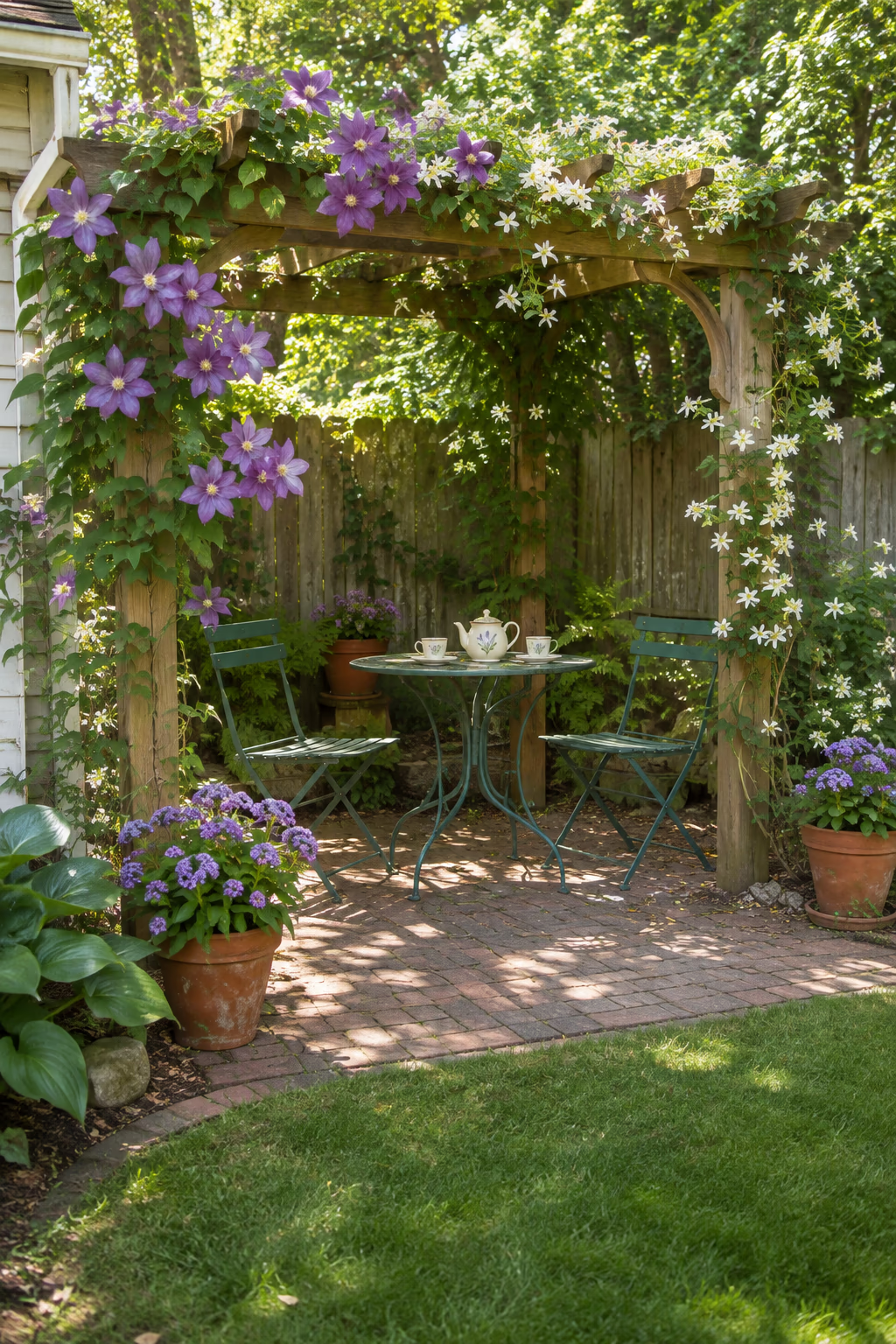
A dappled retreat for slow afternoons
A small wooden pergola, roughly 8 by 10 feet, gives you an outdoor room for a bistro table, two chairs, and a teapot. Grow two or three clematis up the posts in different bloom times, such as an early large-flowered purple and a late-summer small-flowered white, so the roof keeps flowering for months.
Clematis are lighter than many vines, which makes them easy on a modest DIY structure. Mix in a climbing rose if you like, and set pots of scented geraniums or heliotrope near the seats for fragrance at nose level.
Clematis like their roots cool and their tops in sun, so shade the base with low perennials or a flat stone. Anchor pergola posts in concrete footings below your frost line, and check whether your town requires a permit for permanent structures.
6. Plant a Deep Double Border Along a Lawn Walk
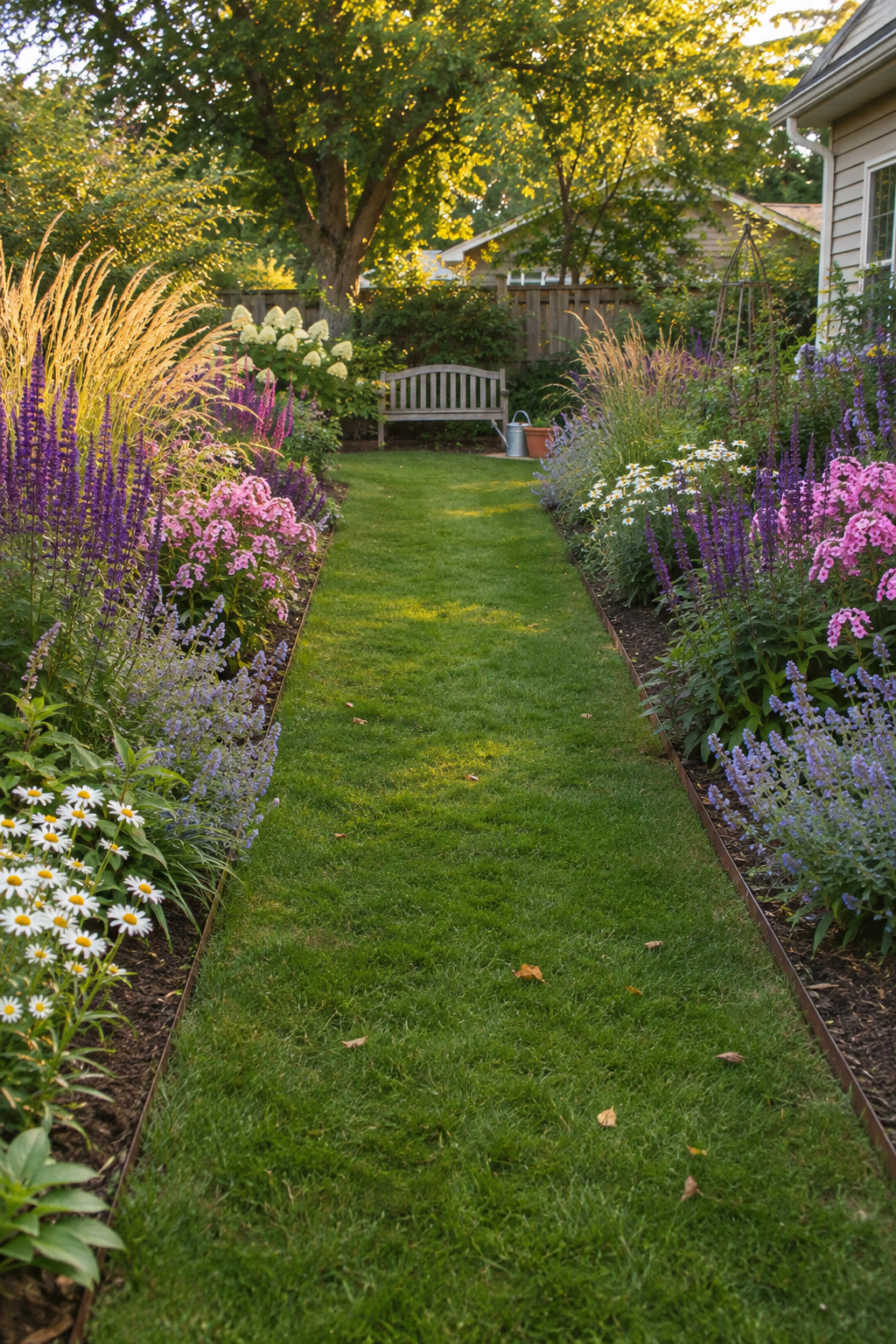
Twin ribbons of color that lead the eye
The double border, two mirrored flower beds running along either side of a grass or gravel walk, is one of the grandest traditions of English gardens, and it scales down surprisingly well. Even two beds 4 to 5 feet deep and 20 feet long along a mown strip create a strong sense of journey.
Repeat a handful of anchor plants, such as salvia, phlox, catmint, and ornamental grasses, at intervals on both sides, then fill around them with seasonal favorites. Repetition keeps the loose planting from looking chaotic and makes a small yard feel more designed.
Make the grass walk at least as wide as your mower, and add a steel or brick mowing edge so you are not trimming by hand every week. Deep borders need a stepping stone or two hidden at the back so you can reach plants for deadheading.
7. Paint the Garden Gate a Soft Heritage Green
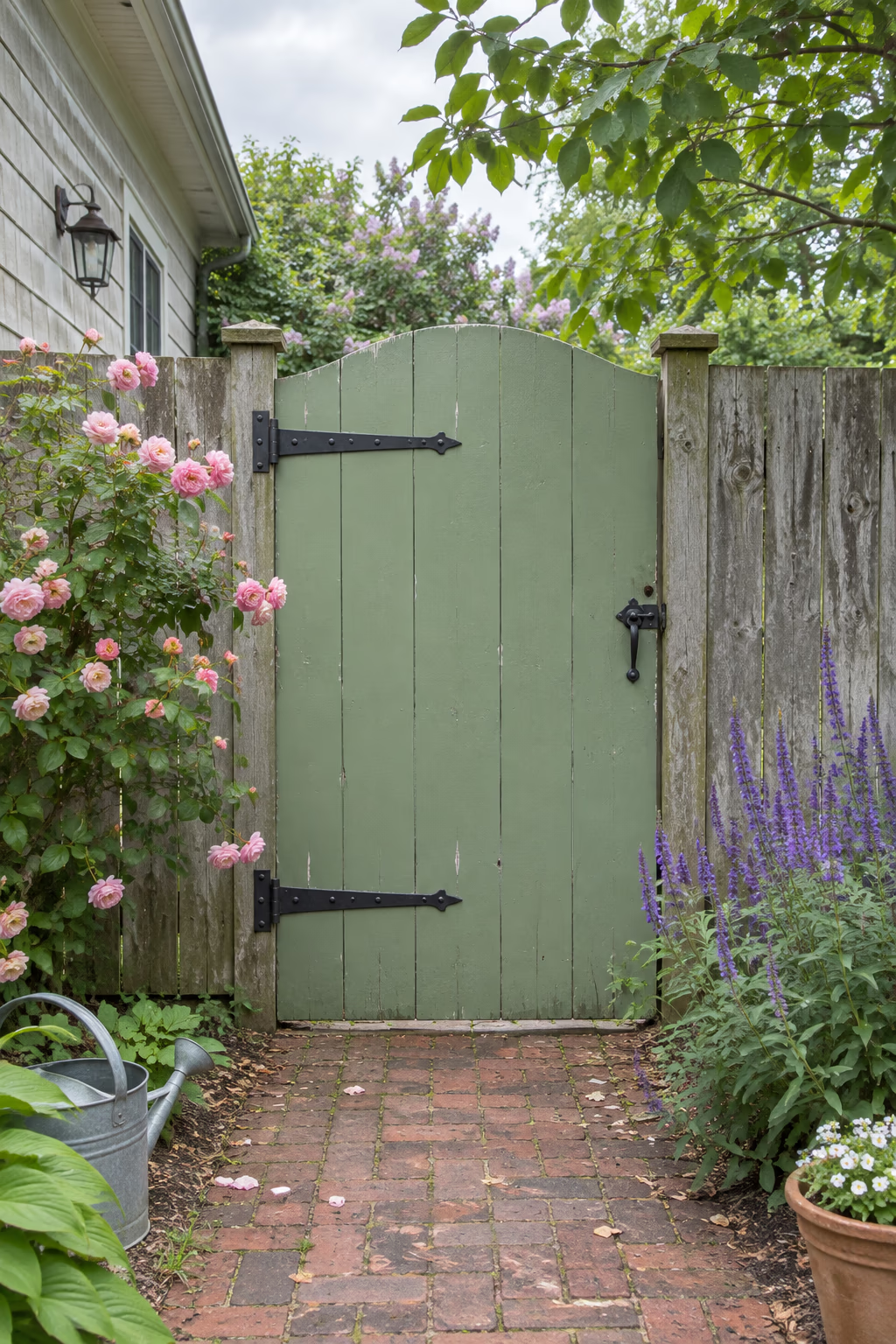
A small project with outsized charm
A painted gate is one of the cheapest ways to add English character. Muted greens such as sage, olive, or a deep gray-green look at home against brick, stone, and planting, and they age gracefully as the paint softens over time.
Frame the gate with a pair of shrubs, tall perennials, or a climber trained along the fence on each side, so it feels like a doorway into something special. Black iron hardware such as a thumb latch and strap hinges completes the old-fashioned look.
Use exterior paint made for wood and sand away loose flakes first. If the gate swings over a path, keep plants trimmed back from the latch side so it opens easily, especially after a rainy week of growth.
8. Fill a Sunny Bed With Old-Fashioned Peonies
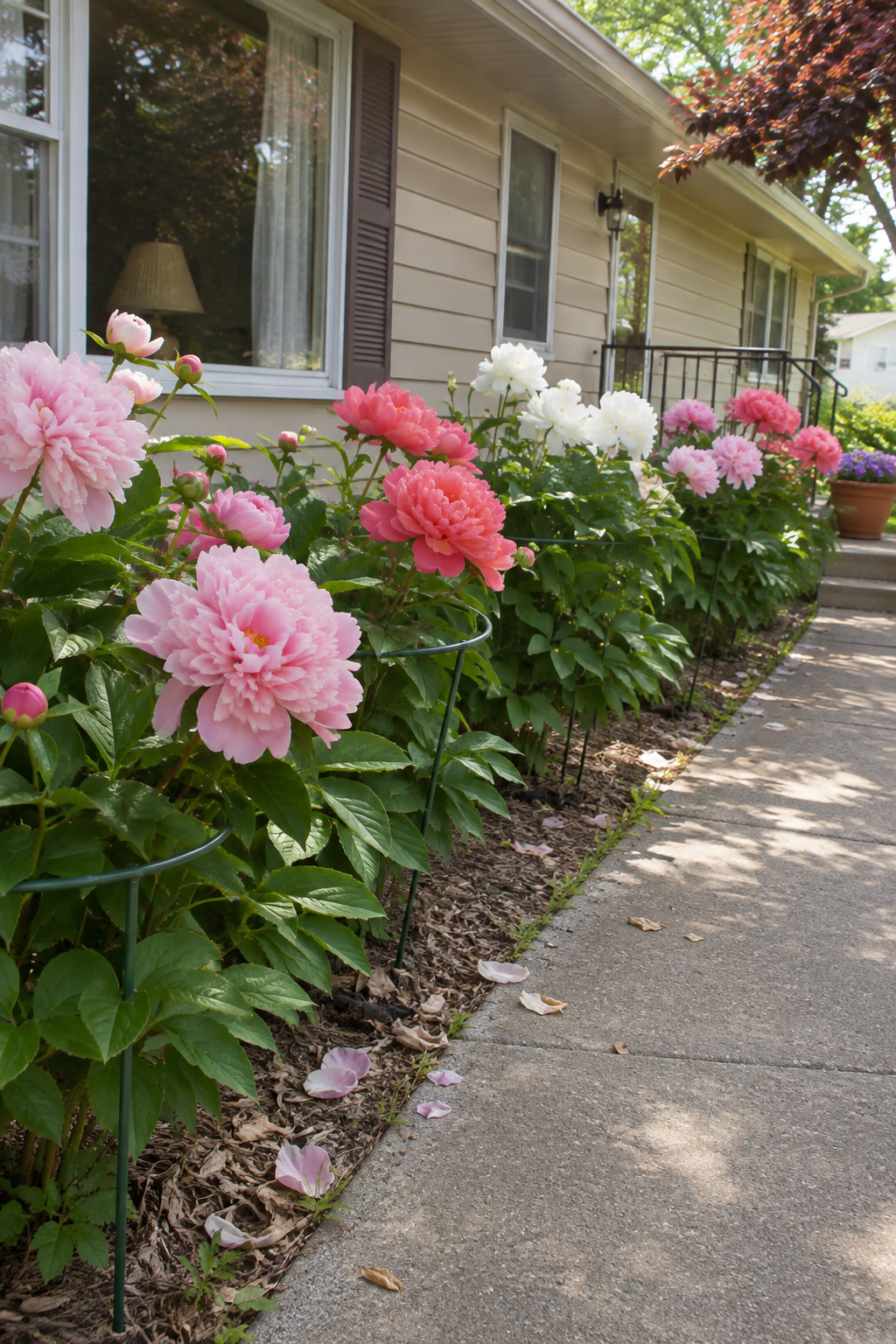
Huge, fragrant blooms that last for decades
Peonies are a late-spring highlight in cottage gardens, with fluffy pink, white, and coral blooms that can be as big as a dessert plate. A row of three to five plants along a walk or under a window creates a short but unforgettable show, and their glossy foliage stays tidy all summer.
Plant bare-root divisions in fall in full sun with the pink buds, or eyes, no more than 2 inches below the soil surface. Planting too deep is the most common reason peonies fail to bloom. Once settled, they can live for many decades with very little fuss.
Herbaceous peonies need winter chill and do best in roughly Zones 3 to 8. Heavy double flowers flop after rain, so add grow-through rings in early spring. Ants on the buds are normal and do no harm.
9. Anchor Shady Corners With Mophead Hydrangeas
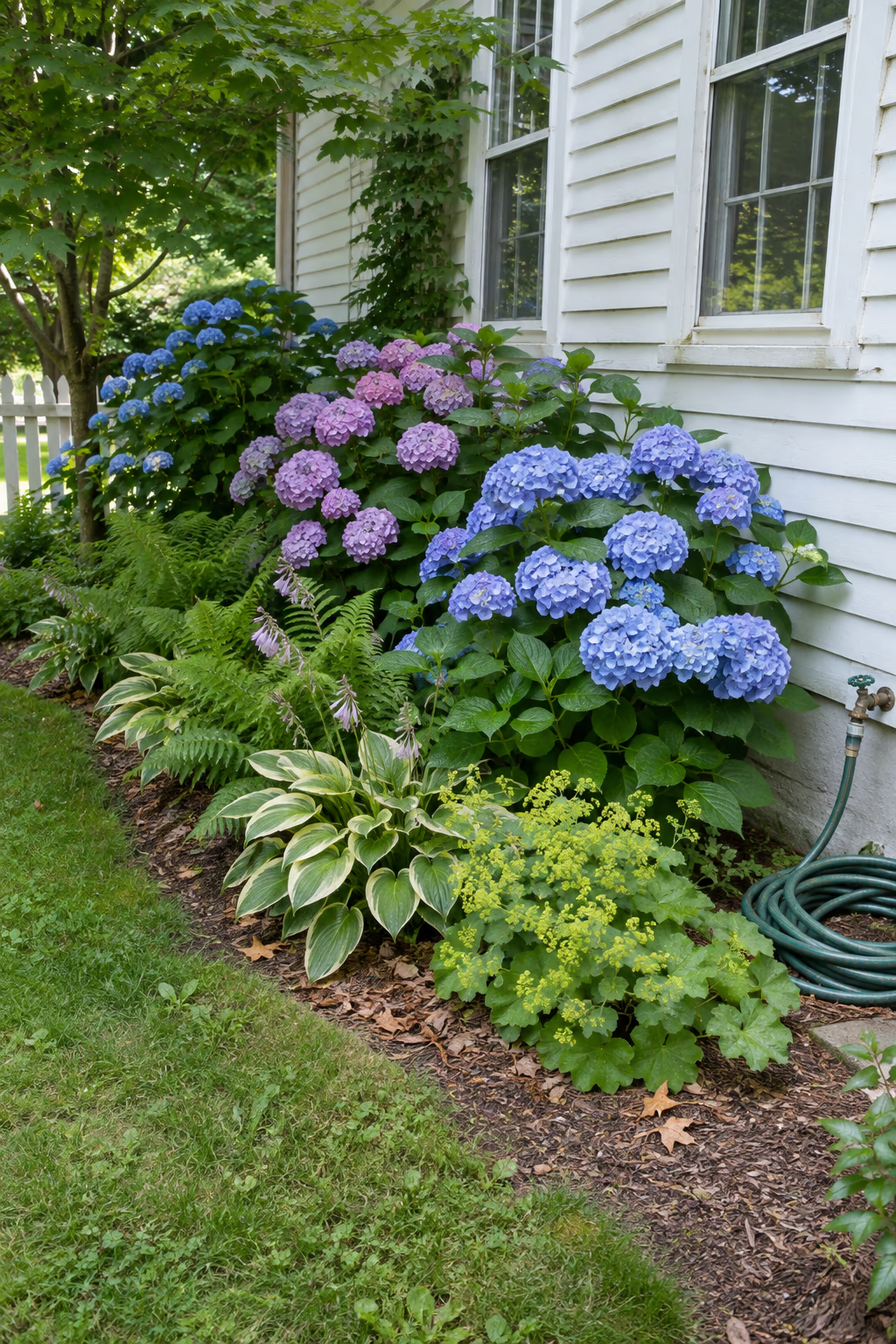
Big, romantic flowers where the sun runs short
Bigleaf hydrangeas bring the round, billowing blooms that soften the shady side of a house or a corner under trees. They thrive with morning sun and afternoon shade, and a group of three in blue, pink, or white makes a strong statement in a cottage bed.
In many types, flower color follows soil chemistry: acidic soil tends to produce blue, while neutral to alkaline soil leans pink. Underplant them with hostas, ferns, and lady’s mantle for a lush, layered look that holds up through summer.
Some older varieties bloom only on last year’s stems, so a cold snap or a fall pruning can wipe out flowers. Choose a reblooming variety and prune lightly after flowering. They also need regular water in hot spells, so keep them within reach of a hose.
10. Drape Native Wisteria Along a Porch Rail
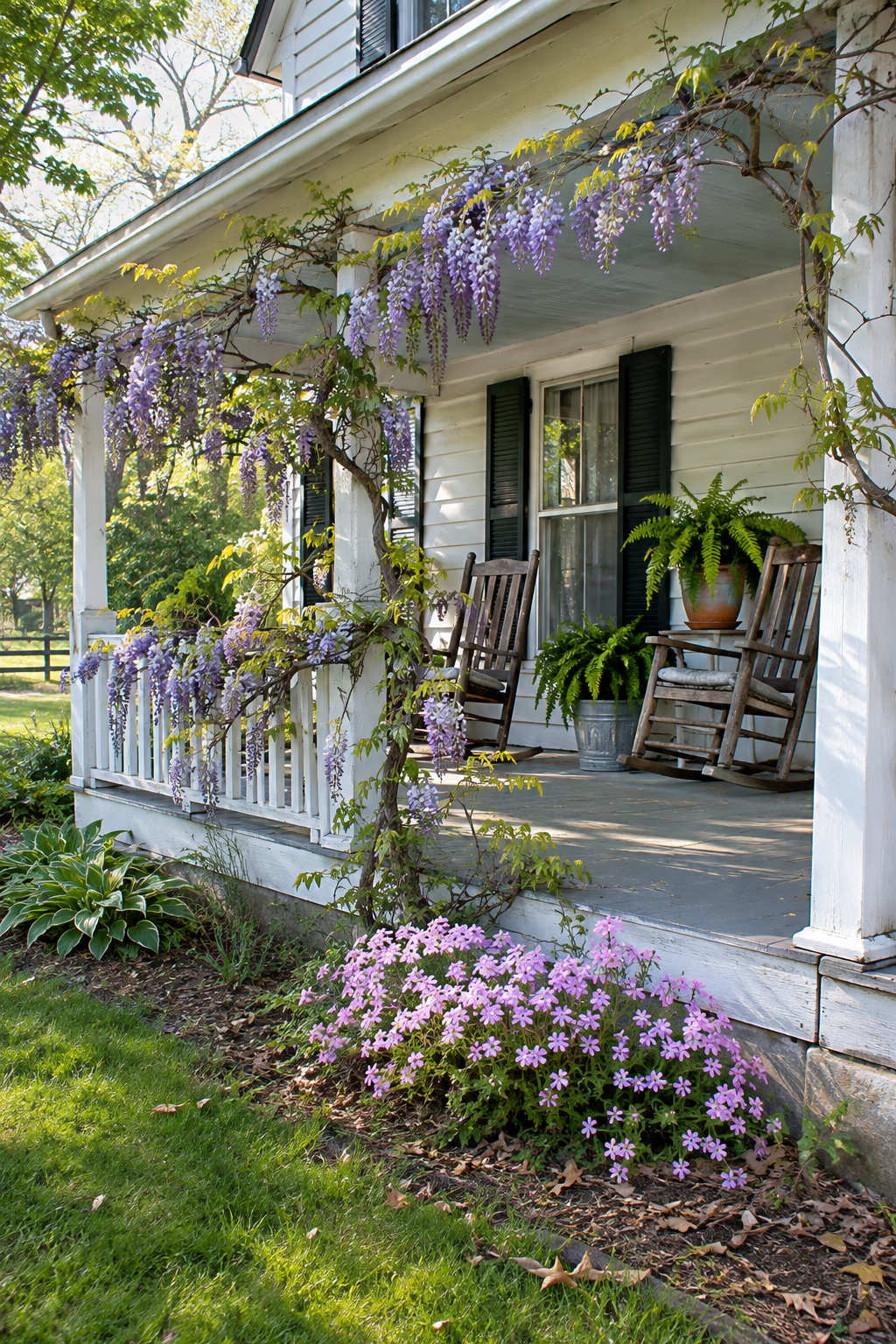
Cascading purple flowers without the takeover
Wisteria trailing along a porch is a dreamy cottage image, but the common Asian species are aggressive and invasive in many states. American wisteria is a smarter choice: it is far tamer, blooms young, and still produces fragrant lilac-purple clusters in late spring with repeat flushes in summer.
Train it along a porch rail, beam, or sturdy fence using galvanized wire. A single plant can cover about 15 to 20 feet once established, which is plenty for a front porch without swallowing the roof.
Even native wisteria is a vigorous twiner, so prune long shoots back in summer and again in winter. Keep it off gutters and downspouts, and give it full sun for the best flowering.
11. Hedge a Sunny Bed With English Lavender
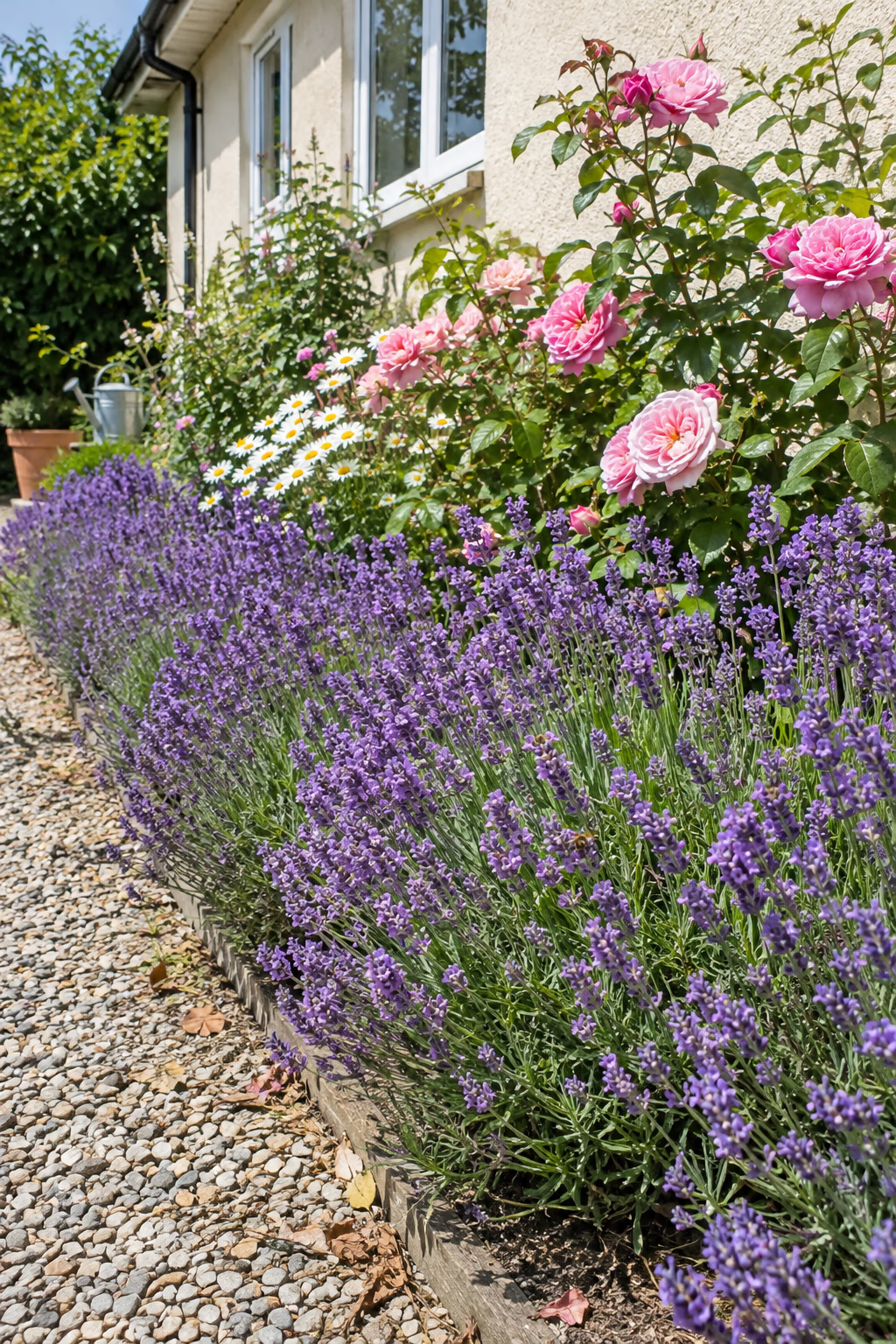
Fragrant structure that bees adore
A low lavender hedge along the front of a bed gives a cottage garden silvery structure and a scent that drifts with every breeze. Space compact English lavender about 18 inches apart in a single row so the plants knit into a soft, rounded band within two seasons.
Lavender looks wonderful beside pink roses, white daisies, and purple salvias, and it is one of the best plants for drawing bees. Harvest stems when the first flowers open for drying, sachets, or kitchen use.
It needs full sun and sharp drainage, so it struggles in wet clay or humid Southern summers. Plant on a slight mound or in amended, gritty soil, avoid heavy mulch around the crowns, and shear lightly after flowering without cutting into old bare wood.
12. Set a Weathered Stone Birdbath Among the Blooms
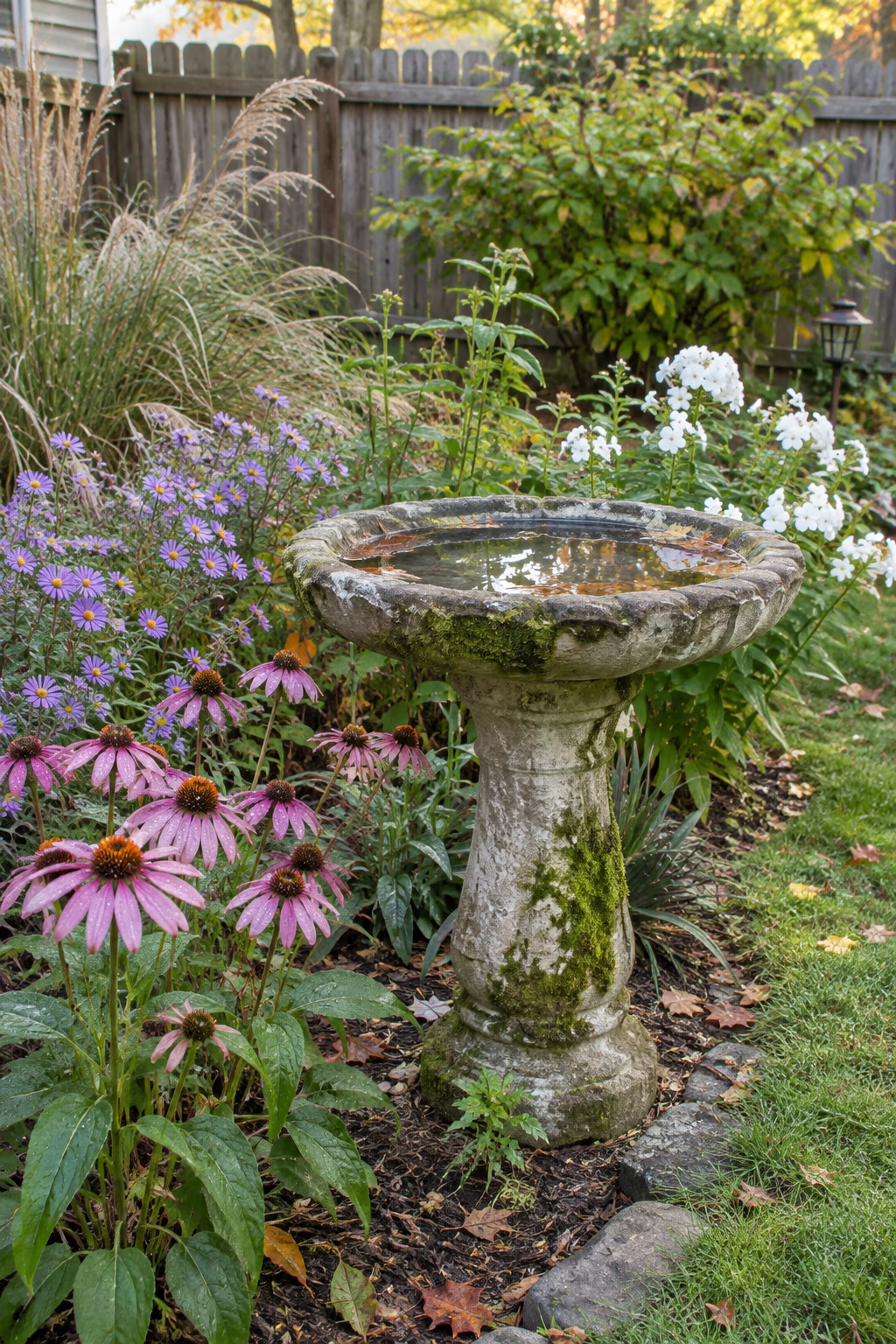
A quiet focal point that draws in wildlife
A birdbath nestled among the flowers gives the eye a place to rest and brings birds to the garden every day. A cast stone or concrete bath about 2 to 3 feet tall with a shallow basin feels right, especially once it develops a little moss and patina.
Place it where plants rise around the pedestal but leave the bowl open, ideally in view of a window or seat. Birds feel safer when there is a shrub within about 10 feet for quick cover, but not so close that cats can hide right beside it.
Change the water every couple of days to keep it fresh and discourage mosquitoes, and scrub the basin regularly. In freezing climates, empty concrete baths for winter or switch to a heated bowl so frost does not crack the stone.
13. Weave Culinary Herbs Through the Flower Beds
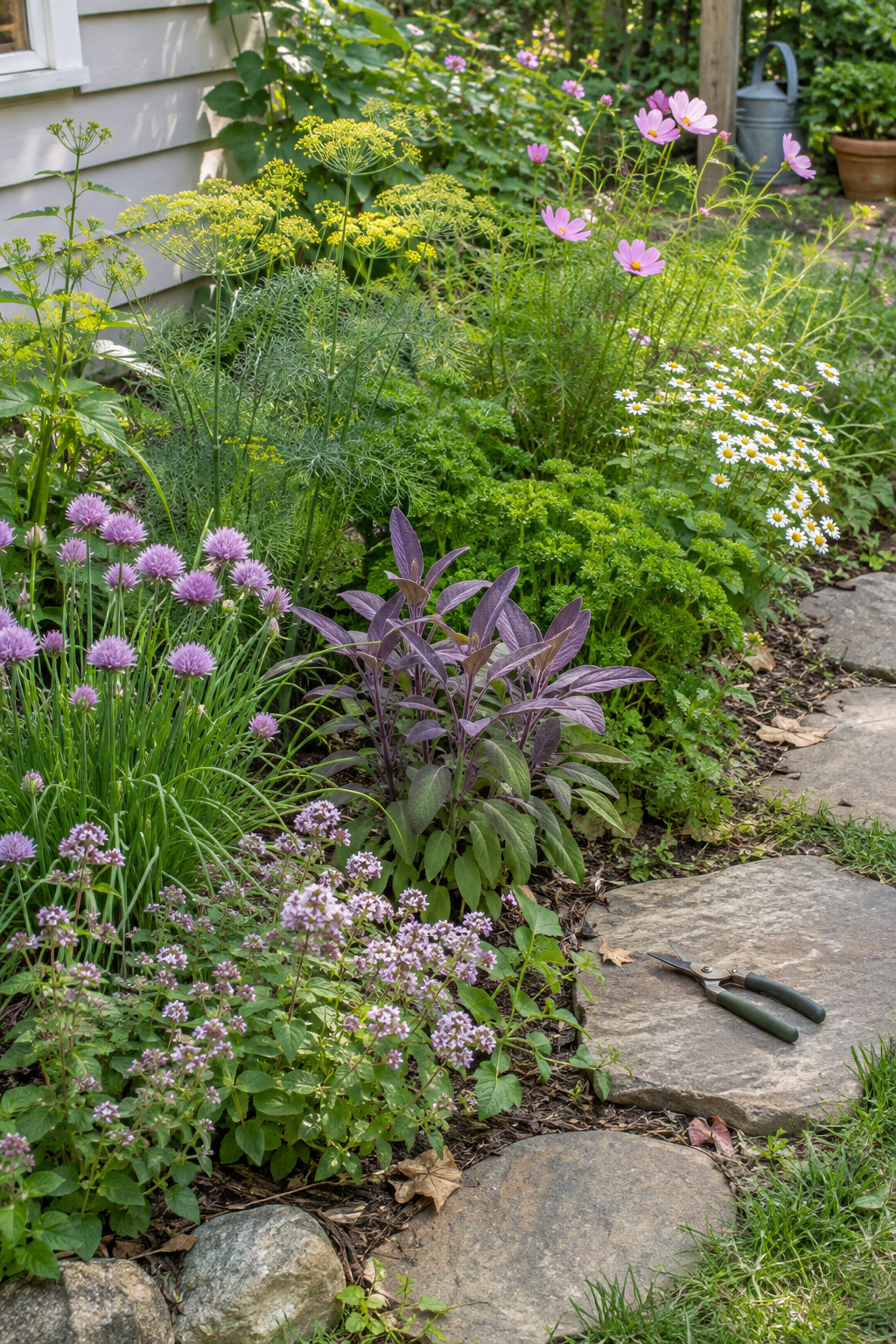
A useful, fragrant mix in the old cottage tradition
Historic cottage gardens were working gardens, and herbs were grown right alongside the flowers. Tuck clumps of chives, sage, oregano, parsley, and rosemary among your perennials, especially near the edges where you can snip them easily.
Many herbs flower beautifully too. Chive pompoms, purple sage, and blooming oregano attract pollinators, while dill and fennel add airy texture and feed swallowtail caterpillars. Silvery and purple-leaved varieties blend smoothly with pastel blooms.
Mint spreads aggressively, so grow it in a sunken pot. If you cook with your herbs, avoid spraying nearby flowers with pesticides, and group Mediterranean herbs together in the sunniest, best-drained spots.
14. Let Self-Sowing Annuals Fill Every Gap
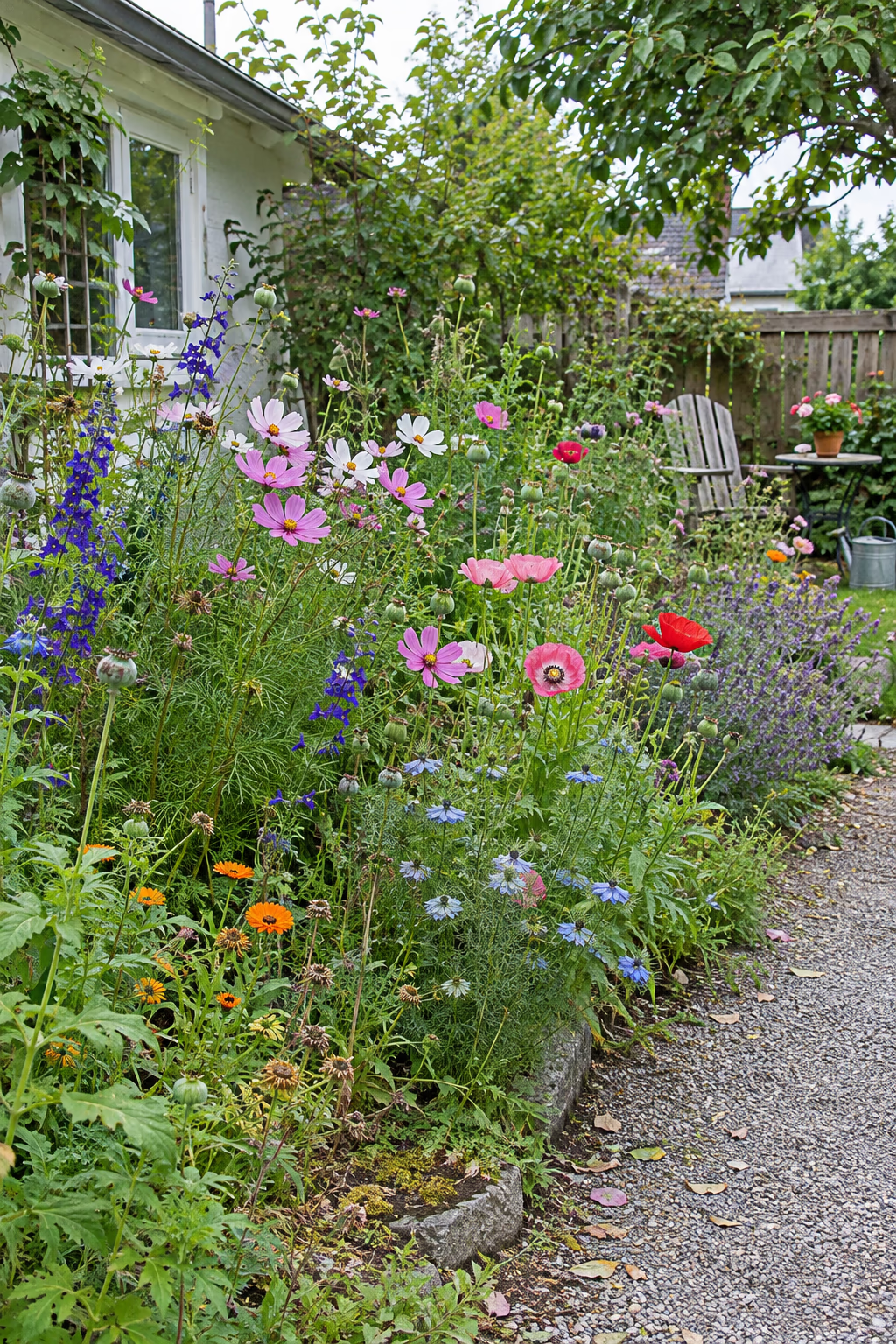
Free flowers that keep the look relaxed
Much of the casual charm of a cottage garden comes from plants that pop up wherever they please. Scatter seed of cosmos, larkspur, love-in-a-mist, calendula, and annual poppies in bare patches in fall or early spring, and many will return year after year on their own.
The results are never exactly the same twice, which keeps the garden feeling alive and spontaneous. It is also a cheap way to fill a new bed while slower perennials grow in.
Learn what the seedlings look like so you do not pull them as weeds, and thin crowded clusters. Heavy mulch smothers self-sowers, so leave some soil bare where you want them. Avoid plants listed as invasive in your region.
15. Grow Sweet Peas Up a Rustic Willow Tepee
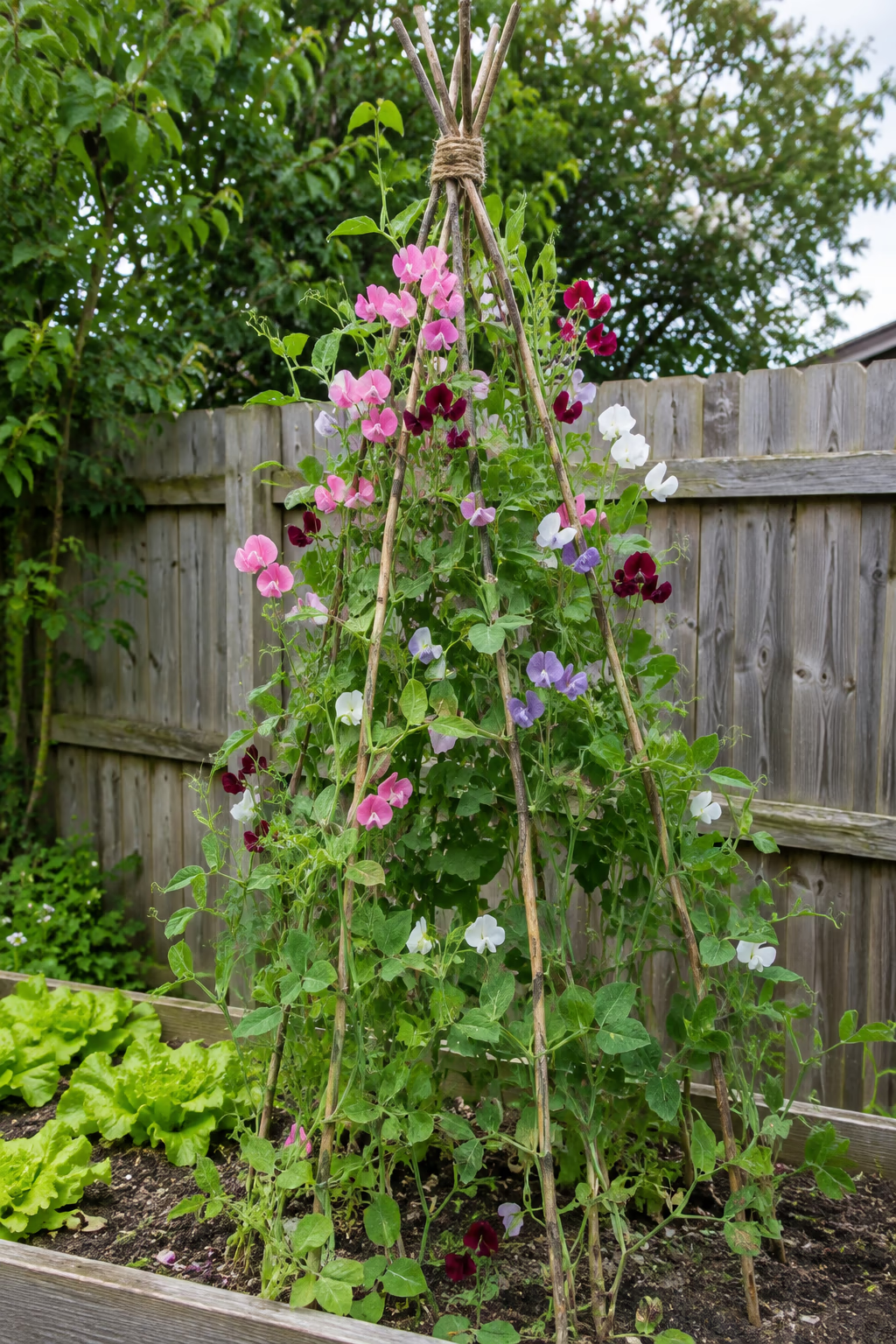
Old-fashioned fragrance with a handmade support
Sweet peas are a cottage garden essential for their ruffled pastel flowers and rich scent. A tepee of willow, hazel, or bamboo poles about 6 feet tall, tied at the top with twine, gives them something to climb and adds height to a bed or vegetable patch.
Sow seeds around the base as early as the soil can be worked in spring in northern zones, or in fall in mild Southern areas. Pinch young plants to encourage branching, and cut flowers often, since picking keeps them blooming longer.
Sweet peas fade quickly once summer heat arrives, so plan to replace them with morning glories or runner beans on the same tepee. The seeds are toxic, so do not confuse them with edible garden peas.
16. Build a Low Stone Wall With Plants in the Crevices
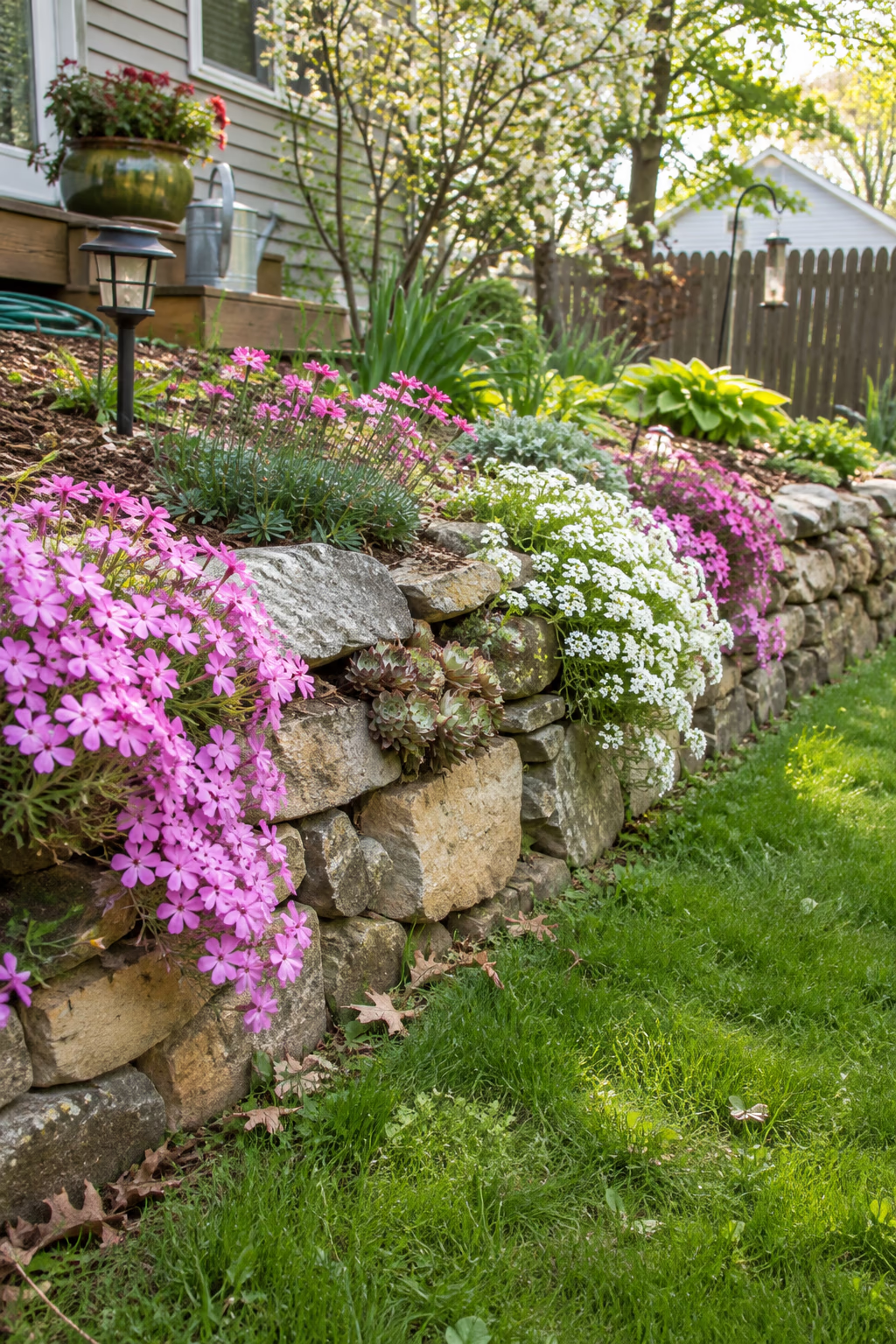
Rugged texture softened by tumbling flowers
A dry-stacked stone wall 18 to 24 inches tall is a natural fit for a cottage garden, whether it holds back a gentle slope or simply edges a raised border. Leave a few pockets of soil between stones as you build, and tuck in small plants that like sharp drainage.
Good crevice plants include creeping phlox, rock cress, dianthus, sedums, and hens and chicks. Over a couple of seasons they spill over the face of the wall in soft cushions, making new stonework look like it has been there for generations.
Set the bottom course on a compacted gravel base and tilt the wall slightly back into the slope. Walls taller than about 3 to 4 feet often need engineering and a permit, so keep DIY walls low and call 811 before digging.
17. Sink a Small Wildlife Pond Among the Flowers
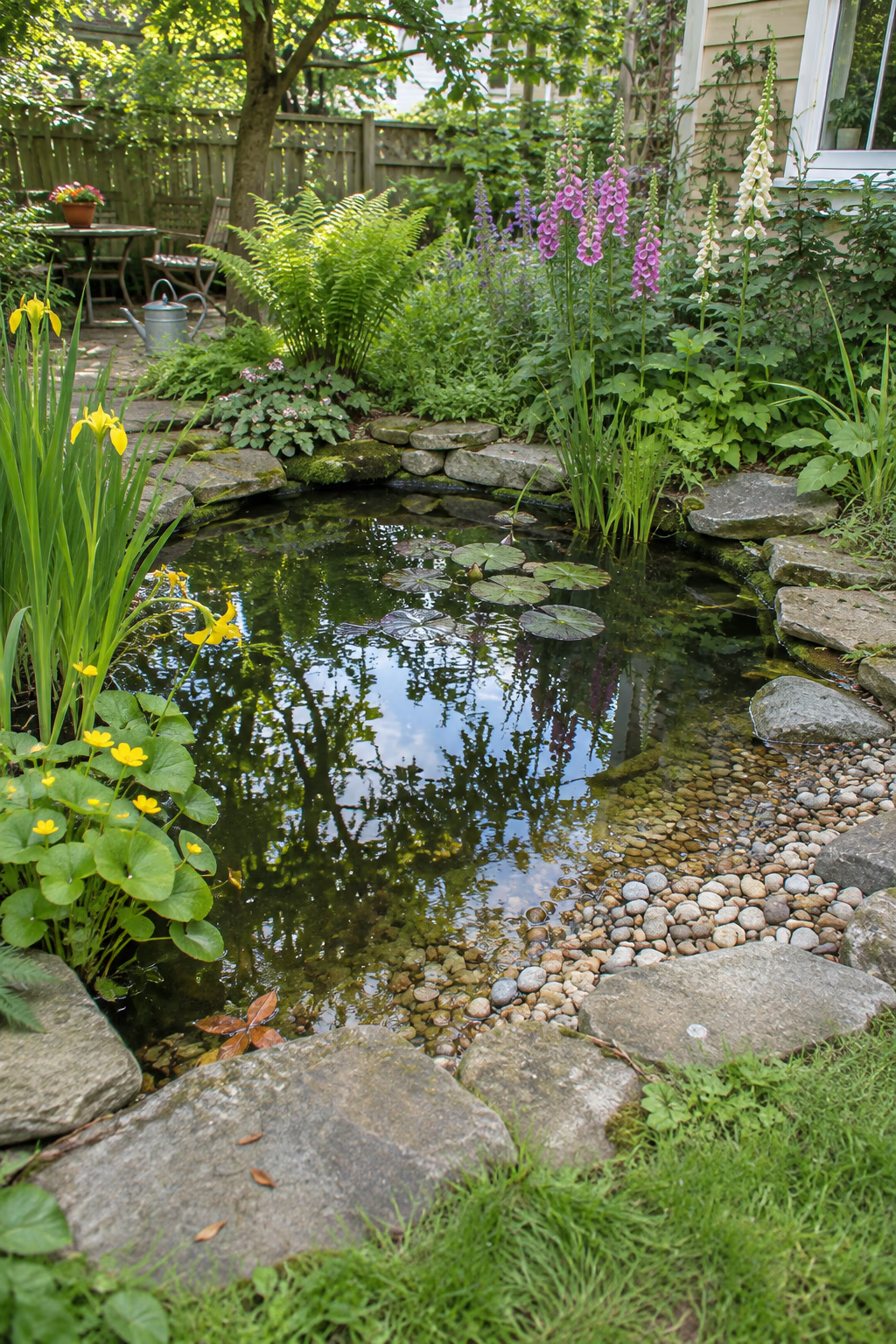
A magnet for frogs, birds, and dragonflies
A small pond, even one about 4 by 6 feet, adds reflections and the sound of wildlife to a cottage garden. Use a flexible liner or preformed shell, create a shallow sloping beach on one side, and edge it with flat stones and moisture-loving plants such as iris, marsh marigold, and ferns.
The gentle slope lets birds bathe and small creatures climb in and out safely. Add a few native aquatic plants and leave out fish if you want frogs and dragonflies, which tend to keep mosquito larvae in check.
Check local codes, since some areas require a fence around water over a certain depth. Keep the pond away from overhanging trees to reduce leaf cleanup, and consider fencing or a grate if young children visit the yard.
18. Cluster Terracotta Pots Beside the Kitchen Door
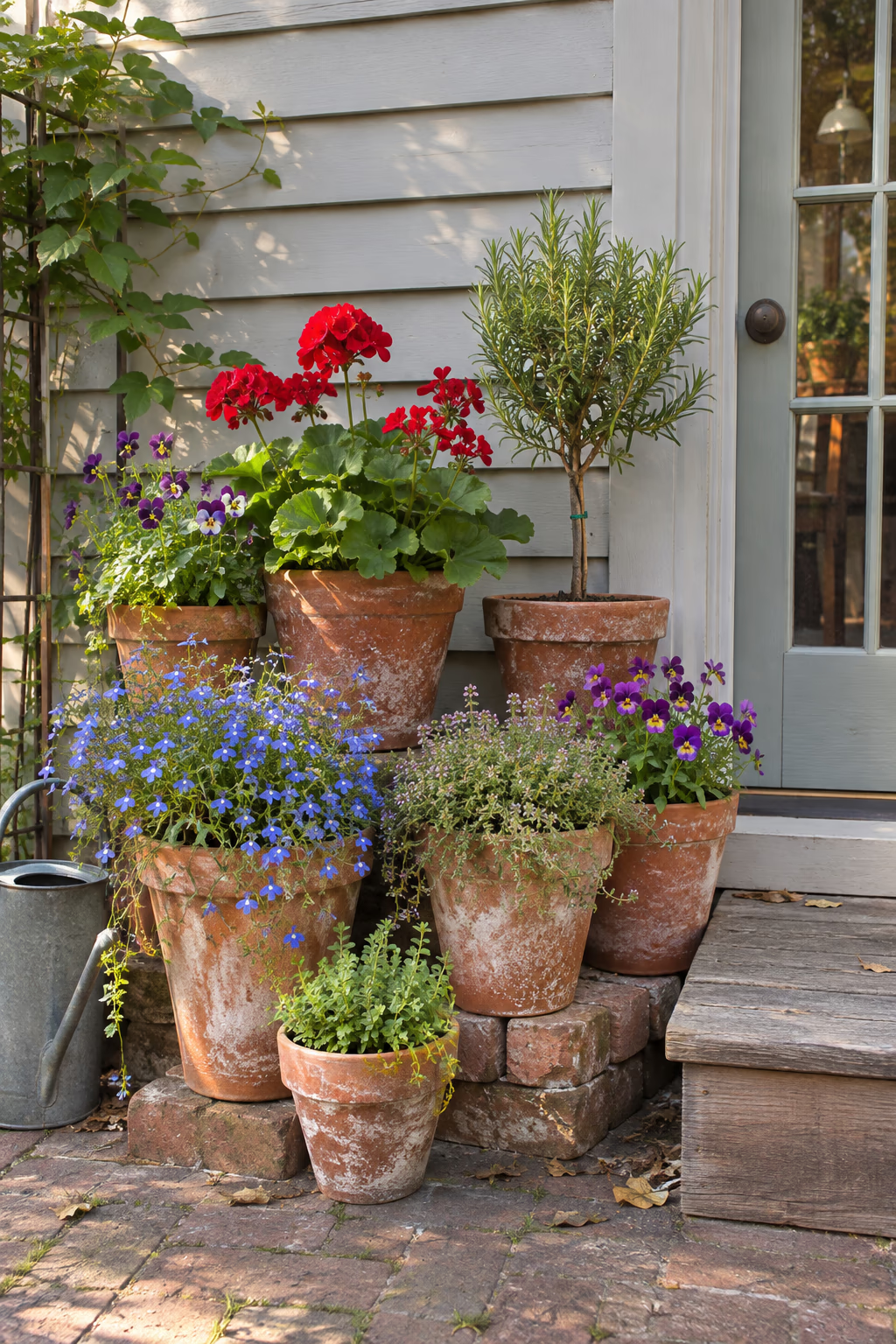
A grab-and-go corner of color and herbs
A group of mismatched terracotta pots by the back door creates a cozy cottage moment and puts flowers and herbs within arm’s reach. Combine three to seven pots of different sizes, stacking a few on bricks or an old step for height.
Fill them with geraniums, trailing lobelia, violas, thyme, and a small standard rosemary. Weathered pots with a bit of white bloom on the clay look especially charming, and the collection can change with the seasons.
Clay dries out fast, so expect to water daily in hot weather. In cold climates, empty and store pots over winter or choose frost-resistant clay, since wet terracotta can crack when it freezes.
19. Plant Creeping Thyme Between Patio Stones
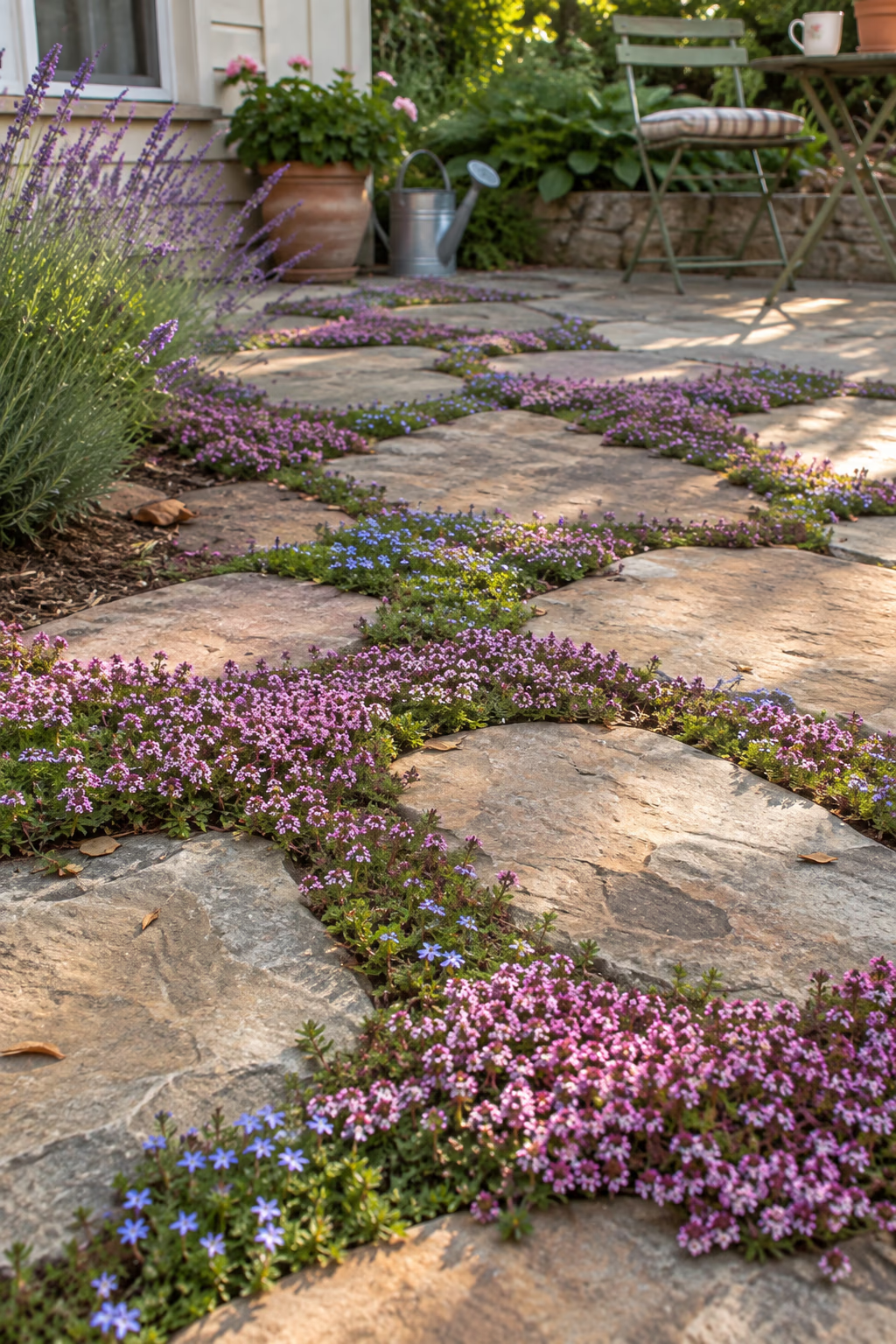
A fragrant carpet that softens hard edges
Low, mat-forming plants growing in the joints of a flagstone patio give it the lived-in look of an old English terrace. Creeping thyme is the classic choice, releasing a light herbal scent when brushed and covering itself in tiny pink or purple flowers in early summer.
Fill joints at least 1 to 2 inches wide with a mix of sand and compost, then plant small plugs about 6 to 12 inches apart. Other good options include Corsican mint for shady, damp spots and blue star creeper for gentle foot traffic.
These plants handle light foot traffic, not furniture legs or heavy wear, so keep them away from table areas. Thyme flowers attract bees, so anyone walking barefoot should watch their step during bloom.
20. Display Vintage Watering Cans and Galvanized Tubs
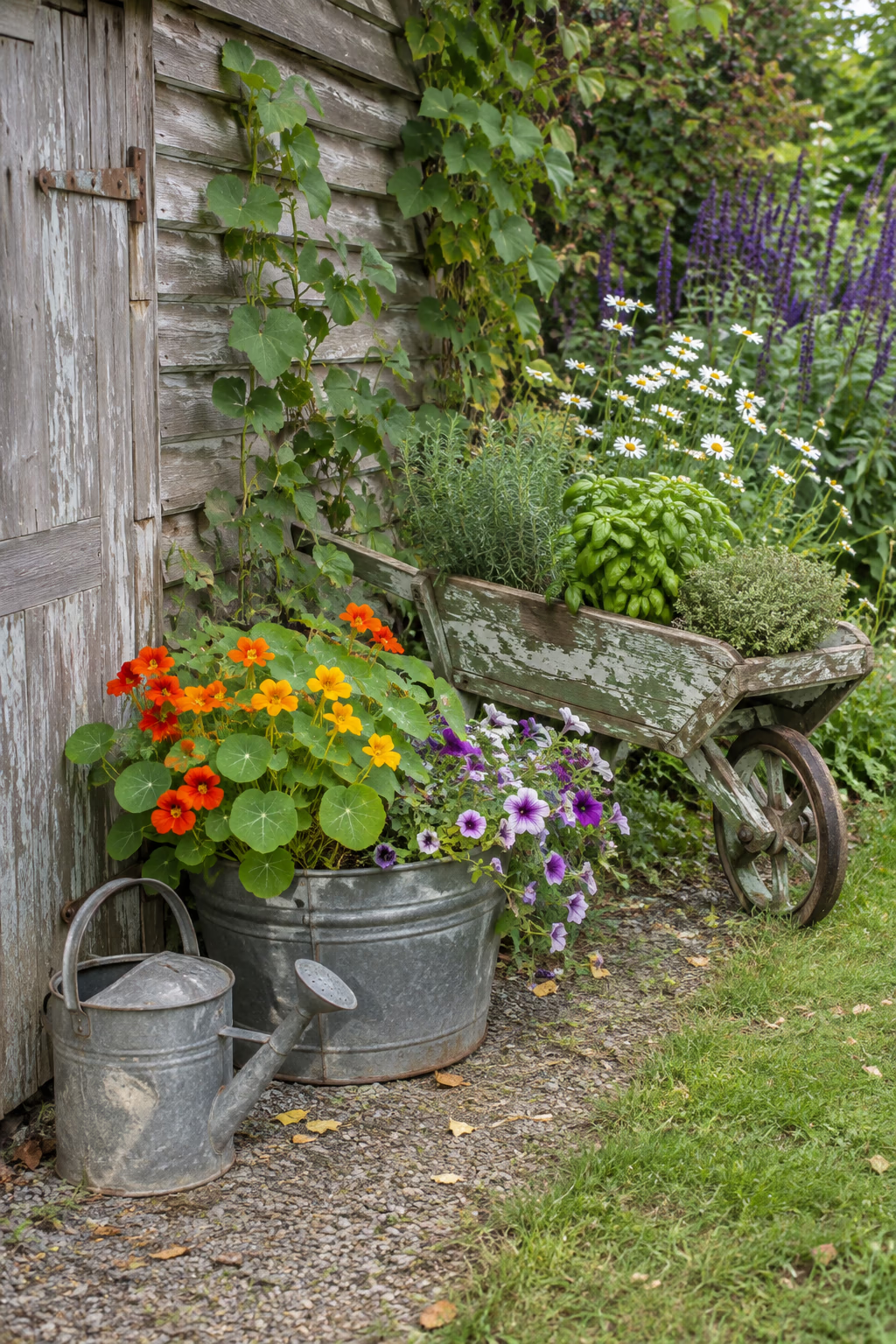
Salvaged charm with a useful purpose
Old garden tools and containers add personality that new decor cannot match. Galvanized watering cans, wash tubs, buckets, and an old wooden wheelbarrow make great planters or simple accents tucked into a border or beside a shed door.
Look for pieces at flea markets, estate sales, and secondhand shops. Group them in small vignettes of two or three items rather than scattering them across the yard, and plant tubs with petunias, nasturtiums, or herbs for a casual look.
Drill drainage holes in any container you plant, and line rusted pieces with a plastic pot if you want them to last. Avoid growing edibles in old containers with flaking paint, which may contain lead.
21. Punctuate the Borders With Clipped Evergreen Balls
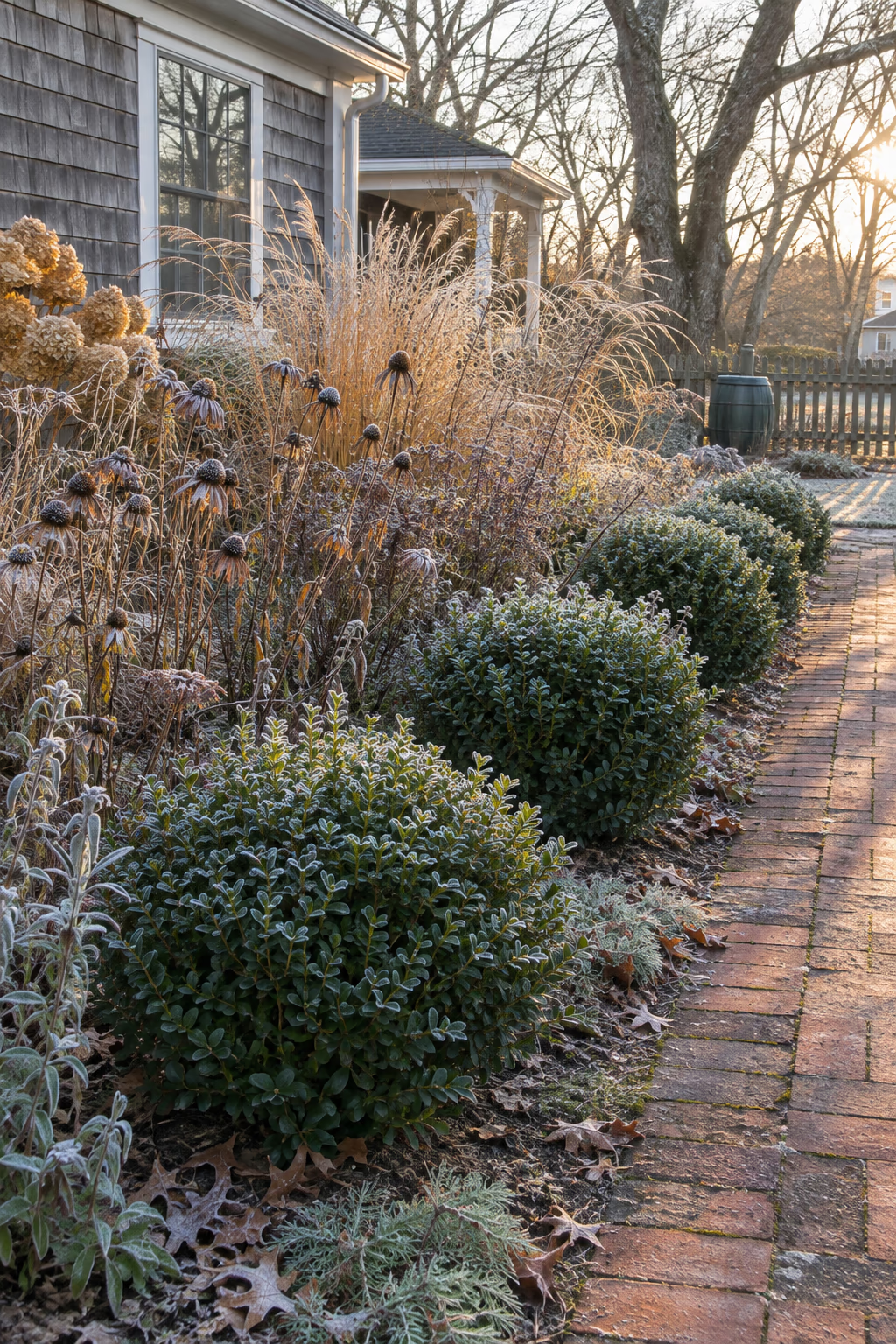
Year-round structure for a loose planting style
A few rounded evergreens placed along a border give the eye something solid amid all the soft flowers. They also keep the garden interesting in winter, when most perennials are cut back or dormant.
Boxwood is traditional, but it faces boxwood blight in many regions. Compact inkberry holly, dwarf yaupon holly, and small-leaved Japanese holly are dependable alternatives. Space them at intervals of 6 to 10 feet along the front of a bed or pair them at the start of a path.
Shear them once or twice a year, usually in late spring and midsummer. Avoid heavy pruning late in the season, since tender new growth can be damaged by early frosts.
22. Light the Garden With Lanterns for Summer Evenings
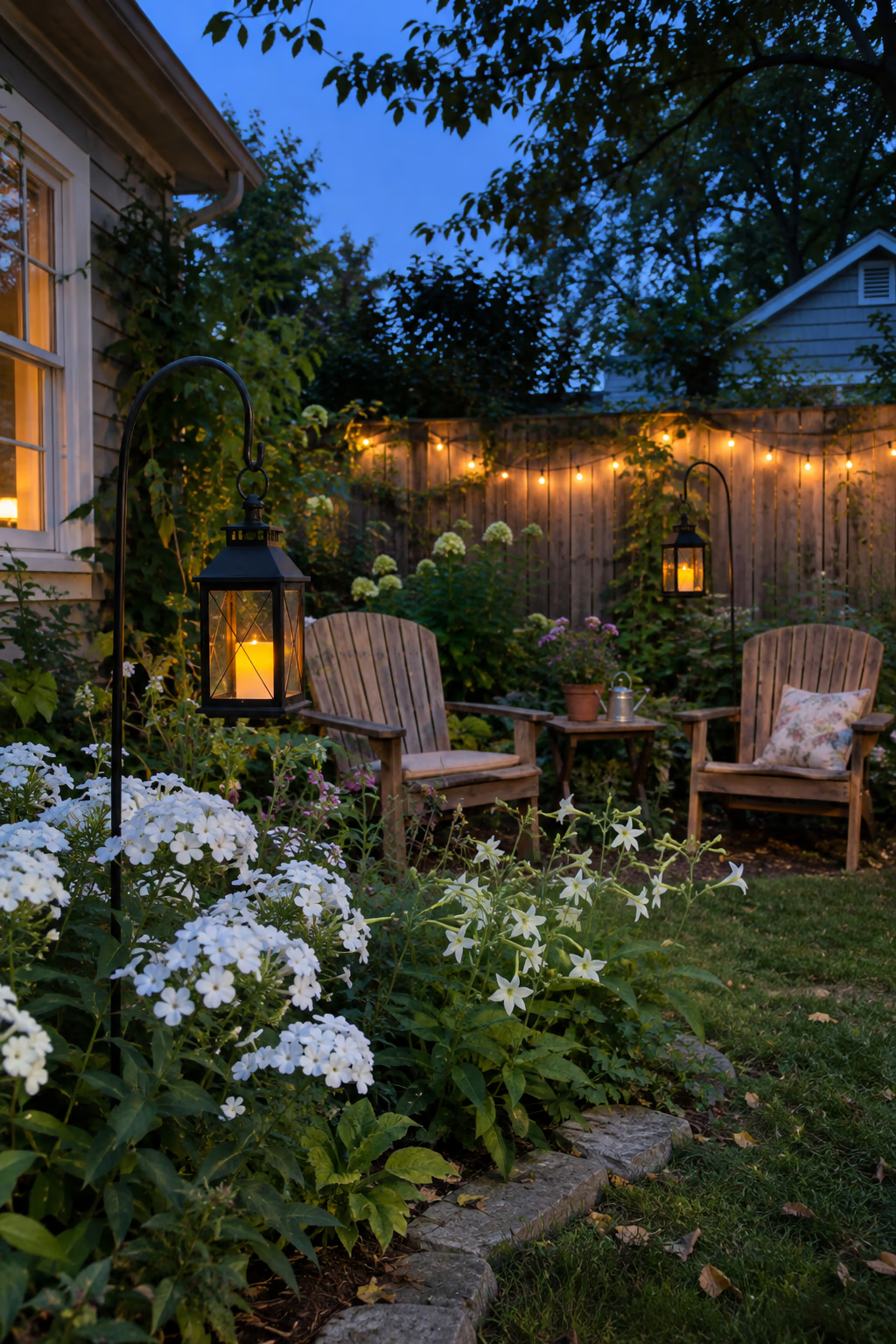
A warm glow that extends your garden hours
Soft lighting turns a cottage garden into a magical place after dark. Hang metal or glass lanterns from shepherd’s hooks, tree branches, or pergola beams, and run warm white string lights along a fence or across a seating area.
Solar lanterns are easy to place without wiring, while low-voltage path lights can highlight steps and plant groupings. White flowers such as phlox, nicotiana, and moonflower glow beautifully under soft light, especially on warm summer nights.
Use outdoor-rated lights and GFCI-protected outlets for anything plugged in. Avoid bright cool white bulbs, which feel harsh and can disturb wildlife, and use battery candles instead of real flames near dry plants or wooden structures.
23. Tuck Spring Bulbs Beneath Late-Rising Perennials
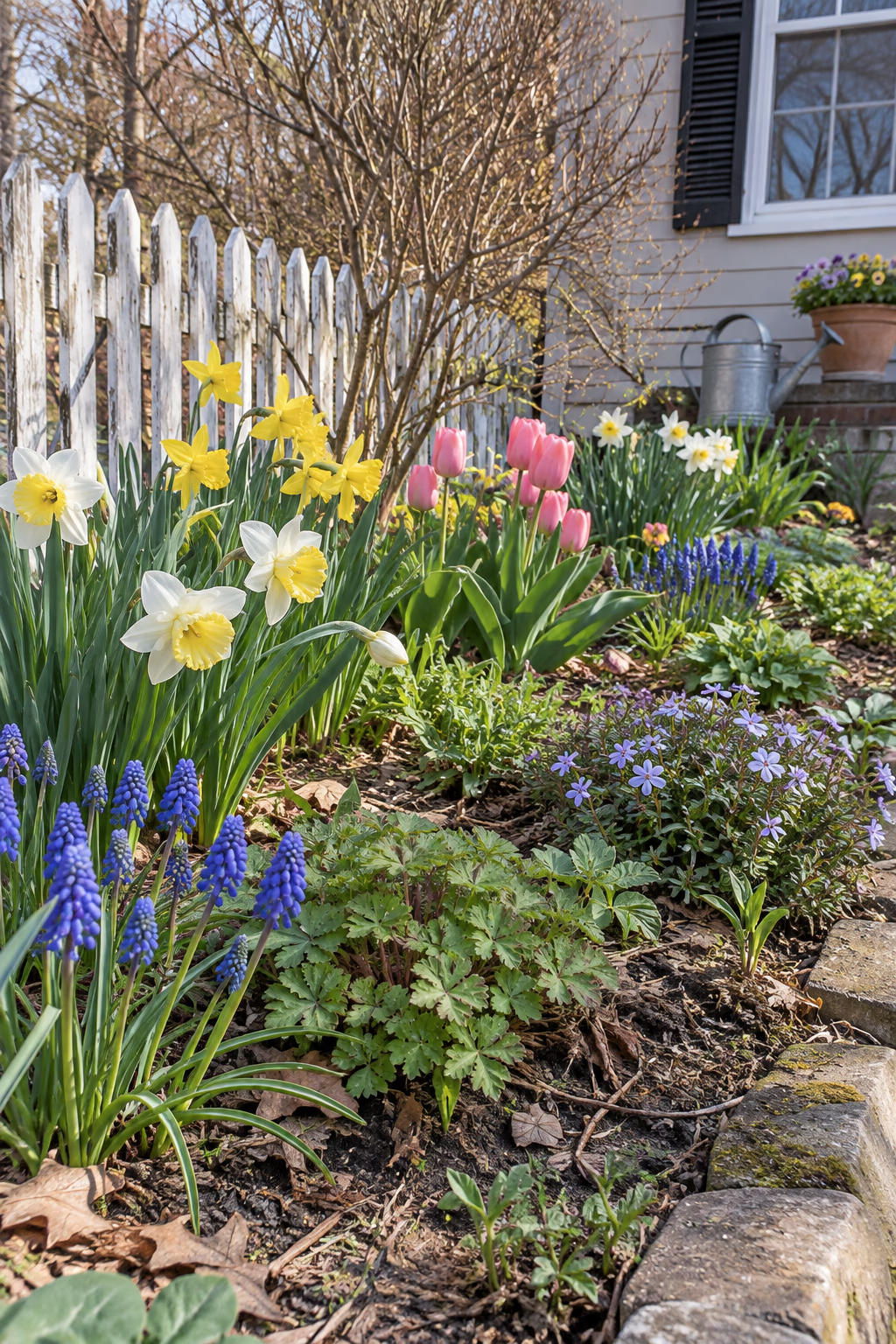
Early color from beds that would otherwise be bare
Many cottage perennials wake up late, which leaves beds empty in early spring. Planting bulbs between them fills that gap with color, starting with snowdrops and crocus, followed by daffodils, tulips, and alliums.
Plant in fall, setting bulbs about three times as deep as their height, in loose drifts of a dozen or more rather than single rows. As the bulbs fade, the emerging foliage of perennials such as hardy geraniums, asters, and phlox hides their yellowing leaves.
Many tulips decline after a year or two, so treat them as short-lived or choose species tulips. Daffodils and alliums are more reliable and generally ignored by deer and rodents. Leave bulb foliage in place until it yellows, since that feeds next year’s flowers.
How to Plan Your English Cottage Garden
A cottage garden looks effortless, but a bit of planning helps the abundance feel intentional and keeps maintenance manageable over time.
- Start with structure. Decide on paths, fences, seating, and any shed or pergola first, then let the planting fill in around them.
- Choose a soft color palette. Pinks, purples, blues, whites, and soft yellows blend easily, while a few deeper accents keep the mix from feeling washed out.
- Match plants to your region. Check your USDA hardiness zone, summer heat, and humidity, and swap in heat-tolerant lookalikes where classic English plants struggle.
- Plan for bloom in every season. Combine spring bulbs, early perennials, summer flowers, and late bloomers so something is always in flower.
- Prepare the soil well. Work in compost before planting, since densely packed beds need rich, well-drained soil to stay healthy.
- Grow in stages. Begin with one bed or area and expand over several seasons, dividing perennials and saving seed to fill new spaces for free.
Frequently Asked Questions
What makes a garden look like an English cottage garden?
The style relies on densely planted, informal beds of flowers, herbs, and climbers, softened edges, and weathered features such as picket fences, stone walls, arbors, and vintage containers. Plants spill over paths and mingle freely, so the garden feels abundant and relaxed rather than formal.
Can I grow an English cottage garden in a hot climate?
Yes, with smart substitutions. In hot or humid areas, swap delphiniums for larkspur or salvia, choose heat-tolerant roses, and lean on plants such as coneflower, black-eyed Susan, verbena, and zinnias. Afternoon shade and consistent watering also help.
When is the best time to start a cottage garden?
Fall is ideal in many regions, since perennials, shrubs, peonies, and bulbs root well in cool soil. Spring also works for planting perennials, annuals, and seeds once the danger of hard frost has passed.
Do English cottage gardens need a lot of maintenance?
They need steady attention, including deadheading, staking tall plants, weeding, watering in dry spells, and dividing crowded perennials. Dense planting helps shade out weeds, and choosing tough, disease-resistant plants keeps the workload reasonable.
Are cottage gardens good for pollinators?
Very much so. The mix of flower shapes, colors, and bloom times supports bees, butterflies, and hummingbirds. Including native plants and avoiding pesticides makes the garden even more welcoming to wildlife.
Final Thoughts
An English cottage garden is less about perfection and more about generosity. A flower-wrapped shed, roses climbing the house, or a simple bed of peonies and lavender can quickly give your yard that timeless, storybook feeling.
Begin with one or two ideas that suit your space, climate, and budget, and let the garden grow and evolve over time. Each season brings new blooms, self-sown surprises, and a garden that feels more like home every year.


